Providing for consideration of the bill (H.R. 1561) to amend title 35, United States Code, with respect to patent fees, and for other purposes.
Legislative Activity
Stay on top of the latest movement without scrolling through every action
Motion to reconsider laid on the table Agreed to without objection.
March 3, 2004 • 4:30 PM
View full timeline
Introduced in House
March 2, 2004
The House Committee on Rules reported an original measure, H. Rept. 108-431, by Mr. Linder.
March 2, 2004
It shall be in order to consider as an original bill for the purpose of amendment under the five-minute rule the amendment in the nature of a substitute recommended by the Committee on the Judiciary now printed in the bill.
March 2, 2004 • 7:36 PM
Placed on the House Calendar, Calendar No. 151.
March 2, 2004
Considered as privileged matter. (consideration: CR H790-793)
March 3, 2004 • 4:07 PM
DEBATE - The House proceeded with one hour of debate on H. Res. 547.
March 3, 2004 • 4:08 PM
The previous question was ordered without objection.
March 3, 2004 • 4:30 PM
Passed/agreed to in House: On agreeing to the resolution Agreed to by voice vote.(text: CR H790)
March 3, 2004 • 4:30 PM
On agreeing to the resolution Agreed to by voice vote. (text: CR H790)
March 3, 2004 • 4:30 PM
Motion to reconsider laid on the table Agreed to without objection.
March 3, 2004 • 4:30 PM
Floor Debate
17 membersWhat members said about H.Res. 547 on the floor
 FJS
FJS HLB
HLB LS
LS MK
MK JPM+12
Floor Debate
17 membersWhat members said about H.Res. 547 on the floor
Mr. Chairman, I yield myself such time as I may consume. Mr. Chairman, H.R. 1561 will help implement the Patent and Trademark Office's Strategic Business Plan to transform the agency's operations.…
Mr. Chairman, I yield myself such time as I may consume.
Mr. Chairman, H.R. 1561 will help implement the Patent and Trademark Office's Strategic Business Plan to transform the agency's operations. The bill incorporates a revised fee schedule previously submitted by the PTO that will generate much-needed additional revenue. The plan also includes a true structural reform of the office, which demonstrates that the PTO is not simply saying give us more money and we will solve the problem. The implementation of the strategic plan is the first step forward toward improving patent and trademark quality while reducing application backlogs and pendency at the agency.
These goals are critical to the health of cutting-edge industries in particular and our economy in general. Americans lead the world in the production and export of intellectual property and related goods and services. Time is money in the intellectual property world. If the PTO cannot issue quality patents and trademarks in a timely manner, then inventors and trademark filers are the losers.
By granting patents and registering trademarks, the PTO affects the vitality of businesses and entrepreneurs, paving the way for investment in research and development. Industries based on intellectual property, like biotechnology and motion pictures, represent the largest single sector of the United States economy. Approximately 50 percent of American exports depend upon some form of IP protection.
While intellectual property protection is increasing in importance, the PTO is collapsing under an increasingly complex and massive workload. Patent pendency, the amount of time of patent application is pending before a patent is issued, now averages over 2 years. Without fundamental changes in the way the PTO operates, average pendency in these areas will likely more than double to 6 to 8 years in the next few years.
I would point out that the patent term is 20 years from the date of filing. So if it takes 6 to 8 years before the PTO can decide whether or not an application is indeed patentable and grants a patent, that will be that much less time that the patent is actually good, and, thus, that much less valuable to the person who has successfully invented a new technology or product and patented it.
Moreover, the backlog of applications awaiting a first review by an examiner will grow from the current level of 475,000 to over a million. These delays pose a grave threat to American businesses and entrepreneurs. The nature of technology and the nature of the marketplace make these delays unacceptable and unsustainable.
And what I would point out to the gentlewoman from Ohio and others who complain about this bill and the fee increases that are contained to modernize the system is that if our competitors in an increasingly globalized economy, in Europe and in Japan and elsewhere, are able to obtain more prompt decisions from their patent offices, that will put American inventors at a disadvantage considerably.
To fund the initiatives set forth in the strategic plan, the administration has proposed in H.R. 1561 an increase in patent and trademark fees. The proposed fee changes accurately reflect the PTO's cost of doing business. They will benefit the PTO's customers by reducing application filing fees and allowing applicants to evaluate the commercial value of their inventions and recover the cost of search and examination as the situation warrants. Most importantly, the new fee structure will enable the PTO to reduce pendency time, improve quality and customer service through electronic processing, and pursue greater enforcement of intellectual property rights abroad.
For example, the additional revenue provided by the fee bill will allow the PTO to hire an additional 2,900 patent examiners, these are Federal employees, not outsourced employees, and move to full electronic processing of patent and trademark applications.
The Committee on the Judiciary unanimously approved this bill on July 9, 2003. The administration and private sector strongly advocated the adoption of the fee bill as a necessary means to address the workload crisis at the PTO. Failure to pass the restructuring contained in H.R. 1561 will result in further degrading of PTO operations and increasing the already unacceptable delays to patent and trademark applicants.
Mr. Chairman, I will soon offer a bipartisan compromise amendment on section 5 of this bill. This portion of the bill, as reported, would essentially have taken the PTO off budget, a result that our friends at the Committee on Appropriations strongly opposed. My amendment, developed with their input, as well as that of the majority leader's office, the Congressional Budget Office, and the Committee on the
Budget, would deposit any fees collected in a given fiscal year in excess of that actually appropriated in a Fee Reserve Fund. At the end of the fiscal year, the director would then be empowered to rebate the reserve-fund revenue to users of the agency.
I understand that the CBO and the Committee on the Budget believe this compromise accomplishes the twin goals set forth by the majority leader's office in backing these discussions; that we will have eliminated the incentive to use PTO revenue for non-agency purposes without compromising the ability of the Committee on Appropriations to exercise their oversight prerogatives in providing appropriations for the agency. The mainstream user groups have signaled their intent to support the amendment based on this interpretation.
I appreciate very much the cooperation of the appropriators in working out this compromise, and I would call on them to take this opportunity to fully fund the strategic plan. Full funding will be crucial to achieving the changes that we all want to see at the PTO.
Now, let me say a couple of words of what the consequence will be if this bill is voted down. First, if this bill is voted down, the current fee diversion that occurs, where up to 30 percent of the fees that are collected by the PTO are not spent on PTO activities but instead are diverted into other areas under the jurisdiction of the Subcommittee on Commerce, Justice, State, Judiciary and Related Agencies of the Committee on Appropriations, will continue.
Patent and trademark applicants should no longer be required to fund functions of the Federal Government that have no relationship whatsoever to Patent and Trademark Office operations. This bill, and the amendment that I will be proposing at the conclusion of the general debate, will end the fee diversion and will mean that fees that are collected by the PTO will either be used by the PTO or refunded to the applicants and other users.
Second, if this bill gets voted down, instead of having a 2-year delay between the time of the application and the time that the application is acted upon, within the next several years that will expand to 6 or 8 years. And if it is 8 years, that means that the patent will only be good and effective for 12 years, because the patent term is 20 years from the date of application. That puts our successful patent applicants at a considerable disadvantage over those competitors who choose to patent their inventions overseas, where patent and trademark offices will work in a more expeditious manner.
I would point out that the small- and medium-sized enterprises who apply for patents under the compromise that is worked out will get a significant fee reduction from a large corporation that is applying for a patent. So there still is a break for small inventors. But there are fee increases; and we need these fee increases to be able to prevent unacceptably long backlogs from occurring, because it is anticipated that the business of the PTO will double in the next few years.
If we do not give them more money and we do not make this into a user fee, then the constitutional protection that the gentlewoman from Ohio and others are referring to will end up becoming very much debased in terms of their worth. I do not think that we want to see this happen, and that is why this legislation is essential to maintain the competitiveness of American intellectual property inventions and the inventiveness that has marked American society since the beginning days of our Republic.
The amendment that I offer in this bill is necessary for the improved performance of the PTO, and failure to enact this legislation will truly be a disaster for American innovation. I urge Members to support this bill.
Mr. Chairman, I reserve the balance of my time.
Mr. Chairman, I yield 3 minutes to the gentlewoman from Pennsylvania (Ms. Hart).
Mr. Chairman, I yield myself 4 minutes.
Mr. Chairman, I rise today to express my sincere gratitude and appreciation to my good friend, the distinguished chairman of the Subcommittee on Commerce, Justice, State, Judiciary and Related Agencies of the Committee on Appropriations, for his work with me on this bill. Working to reform the PTO to ensure timely and effective intellectual property protection for American inventors and businesses has been a multiyear effort for many of us, authorizers and appropriators, on both sides of the aisle. Today, we see the fruits of these efforts. Thanks to the support of Chairman Wolf and full committee Chairman Young, our committees have come together and reached an agreement on a funding mechanism that will enable the USPTO to fully fund its restructuring and reform activities. It is my understanding that this rebate mechanism would ensure that all revenue from patent and trademark fees would in fact go to the USPTO or would be rebated to those who have paid the fees. As a result, the USPTO, which receives no taxpayer dollars and is fully fee-funded, would now be able to retain its fee revenue and to fully fund their widely supported 5-year strategic plan. Is that the gentleman from Virginia's understanding?
Mr. Chairman, I yield myself 4 minutes.
Mr. Chairman, one of our jobs in Congress is to make the government work. We have heard ample data that has been presented on both sides of the aisle that the PTO is in crisis and unless we pass legislation, things will get worse rather than better. What this bill does is that it allows the PTO to
add an additional 2,900 patent examiners, government employees, so that there will be more people on the government payroll to examine these applications. If the bill goes down, those 2,900 people will not be there.
And we have heard a lot about diversion from the gentleman from California (Mr. Berman), the gentlewoman from California (Ms. Lofgren) and others. This bill ends the diversion. So we will not be using PTO fees for other government programs. If the bill goes down, the diversion will continue. The outsourcing issue, the amendment that has been agreed to will, number one, require that the outsourcing if it is done be done by a U.S. corporation; two, it will be done by American citizens; and, three, it will be done in the United States of America.
If we do not do that, then we are going to further complicate the patent process. I would point out that our patent law is such that if there is an infringement suit the patent holder must prove that the patent is valid. That is not the case under foreign patent laws. So if there is a bad patent that is issued because the PTO is rushed, then it is going to cost the patent holder more when an infringement suit is filed. That does not happen in the case of a patent that is issued by a foreign country. This bill makes the quality of the patents that are issued by the Patent Office better because we have got more people looking at them and they are not as rushed.
I yield to the gentlewoman from Ohio.
The answer to the question is that it speeds up the process. And with the WTO treaty changing the patent term to 20 years from the date of filing, every day that there is a delay in actually determining whether the application results in the patentable invention means that there is one less day of patent protection before that patent expires. So if it takes 8 years for the PTO to act on an application, that means that somebody who has invented something only has got 12 years left. With software technology increasing at such a rapid rate, by the time the PTO acts if we do not do something about it, the invention is going to be practically useless.
If the gentlewoman from Ohio will refresh her recollection, the WTO treaty was ratified by Congress. It was urged upon us and signed by President Clinton. I joined the gentlewoman from Ohio in opposing the WTO treaty when it came up in 1994 but we lost on that and the extension or the change in the patent term from the previous 17 years of the date of granting of the patent by the Patent Office was changed to 20 years from the date of filing. The gentlewoman and I voted against it but it is the law and we have to face up to the fact that the longer the PTO delays in issuing a patent, the less time of patent protection there is for an applicant for a patent who succeeds.
Mr. Chairman, I yield 1 minute to the gentleman from Illinois (Mr. Manzullo).
Mr. Chairman, I yield 5 minutes to the gentleman from Texas (Mr. Smith), who is the chairman of the subcommittee.
Mr. Chairman, I yield back the balance of my time.
Mr. Chairman, I offer an amendment.
Mr. Chairman, I yield myself such time as I may consume.
I have a lengthy statement that I will not read in full, but will insert in the Record. But let me state that a significant part of this amendment deals with the agreement that we have reached with the appropriators that was discussed in the colloquy which I had earlier today with the gentleman from Virginia (Mr. Wolf), the distinguished chairman of the Subcommittee on Commerce, Justice, State, Judiciary and Related Agencies of the Committee on Appropriations.
Let me also state that the amendment contains various provisions that the gentleman from Illinois (Mr. Manzullo) and I have agreed upon relative to our previous differences over the treatment of small entities under this bill. And pursuant to this agreement, my amendment applies a 50 percent discount to all searches for small entities, prohibits commercial searches that apply to classified matters, prevents commercial entities from performing searches when they have a financial interest or other conflict at stake, caps the search fee after the 6th year, and requires a joint PTO and Small Business Administration study regarding the effects of the fee structure on small entities.
This, I believe, meets the objections that members of the Committee on Small Business had relative to the cost to small business of applying for and hopefully obtaining a patent. I hope that this amendment clears the way for the other body to consider this bill and bring real reform to the PTO.
Mr. Chairman, I am delighted to report that this amendment reflects a thoughtful compromise between myself and Mr. Wolf, chairman of the CJS Appropriations Subcommittee, as well as a fair deal between the Judiciary Committee and the chairman of the Small Business Committee, the gentleman from Illinois, Mr. Manzullo. I want to thank both of them for working so steadfastly and productively on this important issue.
Mr. Chairman, the heart of my amendment creates a ``refund'' program to eliminate the potential incentive for diverting PTO revenue to non- PTO programs. Briefly, if fee collections in a given fiscal year exceed the amount appropriated to the agency, the excess or overage shall be deposited in a PTO ``Reserve Fund.'' At the end of the fiscal year the Director determines if there are sufficient funds to make payments to persons who paid fees during that year.
The Director is empowered to determine which recipients qualify and in what amounts, except that the payments in aggregate must equal the amount of revenue in the Reserve Fund during that fiscal year, less the cost of administering the program.
This text is crucial to the bill before us. We have been at loggerheads with the Appropriations committee on this matter for nearly a decade, so I am glad to say that we have struck an acceptable compromise that serves the interests of both committees. I am grateful to the appropriators and the majority leader for working with us on this point. I emphasize that without this language, support for the bill dissipates.
In addition, the bill as reported contains a pilot program to determine the efficacy of allowing commercial entities to perform the search function, thereby relieving the agency of the burden and freeing up examiners to do other work. The amendment specifies that participation in the pilot program will be restricted to American businesses and American citizens. We have worked closely with Chairman wolf's staff on this point.
Also, in furtherance of the ongoing modernization efforts at PTO, the Director is required to reduce the filing fee for any small entity, independent inventor, or nonprofit organization by 75 percent provided those so qualified file their applications electronically.
As I noted a moment ago, Mr. Manzullo, and I have resolve dour differences over the treatment of small entities under H.R. 1561. Pursuant to recently agreed-upon changes, my amendment: Applies a 50 percent discount to all searches for small entities; prohibits commercial searches that apply to classified matters; prevents commercial entities from performing searches when they have a financial interest or other conflict at stake; caps the search fee after the sixth year; and requires a joint PTO-SBA study regarding the effects of the fee structure on small entities.
Mr. Chairman, by addressing the fee diversion and other issues, this amendment clears the way for the other body to consider H.R. 1561 and bring real reform to the PTO. I urge its adoption.
I yield to the gentleman from California.
Mr. Chairman, I have no further requests for time, and I yield back the balance of my time.
Mr. Speaker, on that I demand the yeas and nays.
Mr. Chairman, I yield myself such time as I may consume. Mr. Chairman, H.R. 1561 is a wonderful illustration of the principle that something does not have to be interesting to be important. This bill…
Mr. Chairman, I yield myself such time as I may consume.
Mr. Chairman, H.R. 1561 is a wonderful illustration of the principle that something does not have to be interesting to be important.
This bill is of critical importance to the health of our information economy. Intangible property, such as patents, trademarks and copyrights, now constitute well over 50 percent of the assets of U.S. corporations, both large and small. Most of the great advances in pharmaceuticals, telecommunications, biotechnology, and Internet fields began as patented inventions. Patent protection played a critical role in the creation and dissemination of inventions from the telephone to fiberoptics, from injectable insulin to laser eye surgery.
The Patent and Trademark Office, which issues both patents and trademarks, has a critical role to play in creating and securing these assets. By facilitating many needed reforms, H.R. 1561 ensures that the PTO plays a positive role in stimulating our information economy, rather than becoming an obstacle to it.
Furthermore, H.R. 1561 does not saddle the U.S. taxpayer with the cost of these reforms. The PTO is fully funded by fees from the patent and trademark applicants, and this bill raises some of those fees to enable those reforms. H.R. 1561 pays for other reforms by ending the innovation tax. Throughout the last decade, over $650 million in fees paid to PTO by American inventors and small businesses have been diverted to unrelated agencies. H.R. 1561 stops this tax on innovators by ending diversion once and for all.
The PTO is in a crisis that threatens the stability and usefulness of our patent and trademark systems. At congressional urging, the PTO has crafted a 21st-century strategic plan to address this crisis, but it needs this legislation to implement that plan.
H.R. 1561 is necessary because the patent system is coming apart at the seams. A perfect storm of sorts has hit the PTO, which administers the patent system. This storm threatens to make the patent system dysfunctional. This perfect storm involves a tremendous growth in the amount and complexity of PTO workload, matched by a decreasing ability to handle that workload. The number of patent applications received annually by the PTO doubled between 1992 and 2003 to a figure of over 350,000 last year. What is more, the number of applications continued to grow throughout our recent recession and is expected to increase another 5 percent this year. This growth is fed in part by the expanding scope of patentability. Due to a string of court opinions, patentable inventions now include software, business methods, and anything else made under the sun by man.
The technology boom in the United States has also resulted in applications for patents on inventions in areas of technology that did not exist just a few years ago. On a daily basis, PTO is asked to review applications for patents on such things as genetic tests and laser vision technologies.
The numerical growth, and the expanding scope, are matched by a growth in complexity. For instance, some biotechnology patents covering genetic sequences can occupy the equivalent of 10,000 pages. The PTO must hire new examiners with the requisite skills in these areas or fund extensive retraining for current examiners.
The PTO's decreasing ability to deal with this increasing workload is the result of several factors. Most responsible is the cumulative effect of more than a decade of fee diversion. The PTO is entirely funded by user fees. Patent and trademark holders and applicants pay the PTO a variety of fees to obtain and retain their patent and trademark rights. The fees are supposed to reflect the cost of services provided by the PTO; but between 1992 and 2003, Congress denied the PTO the ability to spend $654 million of the fees paid to it. Instead, Congress appropriated these fees for unrelated programs. This will stop as a result of this bill.
As a result of that diversion, the PTO has been forced to gradually cannibalize itself. It has deferred critical information technology upgrades. It has squeezed every ounce of possible productivity out of examiners, and appears now to be asking them to review applications in an unrealistic time frame. It even laid off almost one-third of its trademark examining corps. Despite these drastic measures, the PTO only managed to delay, not avert, a train wreck. By all objective measures, that train wreck is upon us.
I could go through, and my the statement in the Record will contain a full
statistical explanation of the incredible increase in the backlog for patent applications, but in conclusion, it takes more than 2 years now for a patent application to be granted or disposed. In many cases, more than 60 months is the pendency for a patent application.
Why does this pendency matter? Why do we care about these backlogs? It affects both the patent applicants and society at large. Patent ownership enables individual inventors and small businesses to obtain capital. Patent ownership gives prospective financiers, such as venture capitalists and banks, important reassurance that investment in a small entity is sound.
Long patent pendency also negatively affects society at large. Long patent pendency and patent backlogs creates substantial uncertainty in the marketplace and thus makes it difficult for all businesses to operate. A backlog of 500,000 patent applications may cover business methods now common in the financial service business, software contained in every personal computer, or a type of computer chip that will cost billions to manufacture.
As troubling as the lengthy patent pendencies are, they are not the gravest problem facing the PTO. Even greater concern should be given to the quality of the patents granted by PTO. When PTO grants patents in error to things that are not true inventions, many negative side effects occur. Low-quality patents can deter scientific research, create obstacles to legitimate commercial activities, and create opportunities for illegitimate rent-seeking. A bad patent on a pharmaceutical drug means that consumers cannot obtain a cheaper generic version. A bad patent on Web browser technology may force the redesign of every piece of software interoperating with current Web browsers.
Using a random sampling methodology, the PTO estimates its error rate for patents issued in fiscal year 2003 at 4.4 percent. That means more than 7,000 patents were issued in error. That means that at any given time given the 7-year pendency term for patents, there are over 120,000 bad patents in force.
Enactment of this legislation will enable the PTO to substantially improve patent quality. It will also enable the PTO to hire 750 new patent examiners a year between 2004 and 2006, and additional numbers in subsequent years. It will take time to train these new examiners. They will eventually be able to shoulder some of the patent examination workload that threatens to swamp the current examining corps. With an expanded examining corps, the PTO will be able to give patent examiners more flexibility in the amount of time they spend on any one application.
I am convinced that H.R. 1561 is an important part of the solution to the pendency and quality problems. It is a first absolutely necessary step to reforming the PTO. There are other legislative proposals that deal with a number of these issues, but this is the key first step. I urge my colleagues to approve H.R. 1561.
Mr. Chairman, I reserve the balance of my time.
Mr. Chairman, I yield 3 minutes to the gentlewoman from California (Ms. Lofgren), a member of the Committee on the Judiciary and the first articulator of the principle ``no end to diversion, no fee increase.''
Mr. Chairman, notwithstanding the difference of view we have on this issue, I yield 3 minutes to the gentlewoman from Ohio (Ms. Kaptur), a tenacious fighter for that in which she believes.
Mr. Chairman, I yield myself 30 seconds.
The gentlewoman argued in favor of her position, take more time. There is no problem with taking time. The fact is we want a thorough investigation. We want a good quality patent. But simply taking more time, the argument against that is not simply the one made by the chairman about the patent term and how much of it will be left, it is that in that backlog that is getting longer and longer and longer are lifesaving medical devices, new drugs, new technologies to make America more productive and efficient, fascinating and important inventions that need to be disseminated and distributed and will not be until that patent issues.
That time is costing our economy and our people both in terms of quality of life, health care, and economic efficiency.
Mr. Chairman, I yield 2 minutes to the gentleman from Florida (Mr. Wexler), a member of the subcommittee.
Mr. Chairman, I yield 2 minutes to the gentleman from Washington (Mr. Inslee).
(Mr. INSLEE asked and was given permission to revise and extend his remarks.)
Mr. Chairman, I yield myself such time as I may consume.
I have no further requests for time, but I do want to address this issue of outsourcing just to get the record straight here. As a general principle, I am opposed. I share the feelings of the gentlewoman from Ohio regarding the general proposition, the farming government responsibilities and jobs out to private entities and particularly when we are dealing with core government functions; and I think searches performed by patent examiners may be such core functions. But in H.R. 1561 what we took was an open-ended proposal from the Patent Office to allow outsourcing of searches, and working with the gentleman from Texas (Chairman Smith), with other committee members, with the PTO, with PTO employee unions, and with all the various industry groups, we put constraints on the ability to outsource allowed by the bill. Together with the gentleman from Texas (Chairman Smith), we developed a limiting amendment that was accepted with essentially no opposition in the Committee on the Judiciary; and the bill, as so amended, was reported out with Democrats and Republicans expressing just about unanimous support for the bill.
H.R. 1561 prohibits the PTO from outsourcing until all of the following criteria are met: the PTO conducts a pilot project of limited scope for not more than 18 months to test the efficacy of outsourcing patent searches; secondly, that the pilot program must demonstrate that the searches performed by commercial entities are accurate and at least meet or exceed the standards conducted and used by the PTO; the director, third, must submit a report to Congress detailing the methodology of the pilot and containing a comparative evaluation of outsourced and patent examiner searches, addressing factors such as productivity, costs, and quality; fourth, and very importantly, the Patent Public Advisory Committee, an independent entity consisting of patent union representatives and PTO user groups, has to submit a report to Congress with a detailed analysis of the pilot project.
And even after that, if that independent committee, all that concludes that it makes sense to outsource patent searches, nothing can happen until after 1 year so that Congress has a year to decide whether or not to continue to prohibit search outsourcing despite the results of these reports.
H.R. 1561 prohibits the PTO from outsourcing searches unless all of these criteria are met. The National Treasury Union, every patent user organization that I know of, large companies, small companies, universities, nonprofits, all of them involved in the patent process all think this bill does not destroy the Patent Office. This bill is the most important thing to saving the whole patent process. And the whole point of even entertaining the idea of outsourcing is simply to deal with better quality, better productivity, and more time. I urge that H.R. 1561 be passed.
Mr. Chairman, I yield back the balance of my time.
Mr. Chairman, will the gentleman yield?
Mr. Chairman, I thank the gentleman for yielding.
Mr. Chairman, I simply want to express my strong support for this amendment. If I were a betting man, I would have bet a lot of money that the chairman would not have been able to deal with the end of diversion in the fashion that he was able to without at least 25 or 30 appropriators on the House floor. I congratulate both him and the subcommittee chairman for their excellent work, and I urge the manager's amendment be adopted.
Mr. Chairman, first of all, I would like to personally thank the gentleman from Wisconsin (Chairman Sensenbrenner); the gentleman from Illinois (Chairman Manzullo); the gentleman from Florida…
Mr. Chairman, first of all, I would like to personally thank the gentleman from Wisconsin (Chairman Sensenbrenner); the gentleman from Illinois (Chairman Manzullo); the gentleman from Florida (Chairman Young); the gentleman from Virginia (Chairman Wolf); and also the gentleman from California (Mr. Berman), ranking member, for their help in pulling this bill together. They helped to iron out the wrinkles. They helped resolve the differences between many parties, and it is much appreciated.
Mr. Chairman, this legislation that I authored modernizes the U.S. Patent and Trademark Office. It was inspired by two principles essential to a democracy: the protection of intellectual property rights and the freedom to exchange goods and services.
The Patent and Trademark Office does not receive the attention of other government agencies such as the Department of State and Department of Justice, but it should. The Patent and Trademark Office is crucial to the health of our economy and to the lives of millions of Americans.
The Patent and Trademark Office protects the rights of all American inventors. From the lone individual working in their garage to the small business owner with a breakthrough idea to the large high-tech company that applies for hundreds of patents, all rely on a responsive Patent and Trademark Office. Without a strong PTO, our economy would be devastated, our quality of life would be diminished, and jobs would be lost or never created in the first place.
Mr. Chairman, this bill prevents the diversion of Patent and Trademark Office fees paid by inventors to fund government programs unconnected to the agency. The diversion of fees to the office is unfair, counterproductive, and an obstacle to sustained economic
growth. Approximately $750 million has been diverted from the PTO in the last decade alone. Such a large revenue loss has deprived the Patent and Trademark Office of the resources it must have to serve the patent and trademark holders of the United States. At a time when the office is struggling to pay its examiners enough and to keep up with applications, particularly in high-tech areas, Congress should take an interest in protecting our economy by keeping patents and trademark fees within the Patent and Trademark Office.
This bill enables the Patent and Trademark Office to hire 2,900 new patent examiners. Today the average time to process a patent exceeds 2 years. Without the new examiners, agency delays will soon reach 3 or even 4 years. If this fee bill does not become law, it is estimated that 140,000 patents will not be issued over the next 5 years. That is 140,000 missed opportunities for the American people.
If nothing is done, if the status quo continues, it means new products will not make it to the market, jobs will not be created, and the inventors who came up with new ideas and products will not have their intellectual property protected and so will not market their inventions.
This bill helps small businesses and nonprofit institutions. It provides a 50 percent discount on most services to small businesses, universities, and other nonprofit entities. The benefits of an improved and streamlined PTO will help small businesses and universities and encourage new research and innovation.
Mr. Chairman, I would like to again thank the gentleman from Wisconsin (Mr. Sensenbrenner), chairman of the Committee on the Judiciary, for making this issue a priority for our committee and working with the appropriators to resolve our differences on PTO funding.
Since U.S. Patent No. 1 was issued in 1837 for traction wheels, the patent system and the creativity, genius, and talent that defined it have benefited all Americans. From the revolutionary electric light bulb to the latest software technology, patents reflect America and contribute to our economic prosperity.
This bipartisan bill is supported by these organizations: the Information Technology Industry Council, Chamber of Commerce, the National Association of Manufacturers, the Intellectual Property Owners, the International Trademark Association, the Association of American Universities, and the Association for Competitive Technology, as well as many others.
Mr. Chairman, this bill is good for innovation, good for the economy, and good for the American people. The PTO has rarely been more important than it is today. It must have the resources it needs to professionally and expeditiously process patent and trademark applications. American jobs, profits, and the future of entrepreneurial capitalism are literally at stake.
Mr. Chairman, I strongly support this amendment, which is the result of careful negotiations between the Judiciary and Appropriations Committees.
The two goals of the underlying bill are to improve PTO operations and to end fee diversion. This amendment makes sure those goals are achieved.
In order to eliminate the incentive to divert fees from the PTO, the amendment establishes a rebate program that will deposit any fee collections that exceed the amount of money appropriated to the PTO in a ``reserve fund.'' At the end of each year, the PTO Director will determine whether there are sufficient funds to make payments to users who paid applicant fees that year. By ending fee diversion and allowing the PTO to keep the fees its users pay each year, the agency will be able to make many much-needed reforms to increase its efficiency and productivity.
This amendment also contains provisions that will ensure the PTO will operate effectively. It establishes a pilot program to allow
private entities to perform the search function associated with obtaining a patent. This will free up patent examiners to focus on other work.
Some have mischaracterized this provision as ``outsourcing'' that will cut American jobs and send work overseas. In fact, this amendment specifies that participation in the pilot program is restricted to American businesses and American citizens. By allowing patent searches to be performed by commercial entities, this pilot program will simply allow the private sector to take some of the load off of an already overburdened patent evaluation system at the PTO.
Twenty-five to thirty percent of the 355,000 patent applications the PTO receives each year come from small businesses. The Sensenbrenner amendment has many provisions to help small businesses obtain patents.
The PTO is one of the most important agencies in the country. It is the agency behind the innovation and invention that drives our economy. We must give it the funding it needs to implement meaningful reform and improve its operations.
This amendment strengthens the underlying bill and I urge my colleagues to support it.
Mr. Speaker, I thank the gentleman from Florida for yielding me time. Mr. Speaker, I would like to strongly oppose this bill, H.R. 1561, and I do so because it is based on our good old Constitution,…
Mr. Speaker, I thank the gentleman from Florida for yielding me time.
Mr. Speaker, I would like to strongly oppose this bill, H.R. 1561, and I do so because it is based on our good old Constitution, which says the Congress shall have power to promote the progress of science and useful arts by securing for limited times to authors and inventors the exclusive right to their respective writings and discoveries, and from the very founding of the republic that knowledge has been housed in the U.S. Patent Office where inventors around our country had confidence that those inventions belonged to them, protected by the Constitution of our Nation. So important patents are listed, patents inventors, congressional protection.
Today, we have a bill before us, H.R. 1561, that really is another episode in the outsourcing of American jobs. Yes, the outsourcing craze continues. It is like a virus that cannot be stopped. The American people cannot understand why their officials in Washington do not step in and put an end to this nonsense, but guess what, now the Federal Government is getting into the act and the outsourcing of jobs from our government, in this case the U.S. Patent Office, has infected the heart of American ingenuity.
Mr. Speaker, the bill before us authorizes the Patent and Trademark Office to outsource work. There is some palliative, feel-good language about companies being organized under the laws of the United States in the bill, but under U.S. law Honda is a U.S. company, Toshiba is a U.S. company. Saudi companies, if they operate on U.S. soils, are U.S. companies. That does not give me a lot of comfort. This is an insult to the entrepreneurs and inventors of this country.
As someone who comes from the State of Ohio, home of Thomas Edison and Charles Kettering, the thought of outsourcing patent application reviews from the U.S. Patent and Trademark Office is inconceivable. One might think that with this outsourcing, well, the price is going to go down to inventors. Are they going to get anything out of this? That is the way the free trade fundamentalists try to tell the story, send the work overseas if it can be done, send it out of the government, but guess what. They are going to raise the cost to patent holders. So the same old bankrupt theory is at work.
Patent application reviews will be outsourced, but the price to the small inventor or the small entrepreneur would not decrease. In fact, they put an additional fee, an additional tax on them. Currently, a small entity pays $385. The proposed fee would be $675 with an e-file and $750 without an e-file. Total fees for the life of a patent currently are $4,160, which is a lot of money for a small inventor. The proposed fee with an e-file would raise it to $4,875.
Call it what you want, fee increase, user fee adjustment, search fee. I will tell my colleagues what it really is. It is another tax, and a tough one, on the very people who are trying to invent America's future, the very people on whom we are counting for the intellectual moxie to fuel the information-based economy or knowledge-based economy that the experts say are supposed to lead us out of the doldrums that this economy is in.
The people in this country who tinker with objects and machines and ideas, why should they be taxed and why should we want to outsource anything from the U.S. Patent and Trademark Office?
If my colleagues vote for this bill, they are voting for a tax increase, and a rather large increase at that, on the best and brightest minds of our country. It is bad enough they want to outsource such an important function such as patent application search and examination. This is so important that it still remains right here in the Constitution of our country, and now we are talking about outsourcing constitutional responsibility. That in itself is an outrage, but to raise taxes on our inventors and our bright minds actually, in this environment, verges on insanity.
Where does it stop? Where does it stop? I urge my colleagues to vote against H.R. 1561.
I yield to the gentleman from California.
Mr. Speaker, this is a very important point, and I respect my dear colleague from California (Mr. Berman), but the facts are we are outsourcing patent review procedures from the U.S. Patent and Trademark Office. In other words, it is going to go to private companies, not the government of the United States, protected by what the Constitution demands. It is going to be outsourced to companies.
The question is what is a U.S. company? If we look into the law, a U.S. company operating within the boundaries of the United States, even if it is Honda Motor Corporation, is a U.S. company. Foreign corporations operating within the United States are defined as U.S. corporations because they operate within our soil.
But they are not U.S. corporations, because their profits are booked back to their home country. So I have a real problem with this.
Number one, we should not be outsourcing the jobs from the Patent Office. That is the most important line that we are breaching here. Never before in the history of this country has this been done. It has never been done. And then we are saying, well, you know, it will be a U.S. company. But then look to the law. How do we define what a U.S. company is? Any company operating within the boundaries of the United States? It could be Honda, it could be Toshiba, it could be Daemler, it could be any company.
Mr. Speaker, reclaiming my time, and I thank the gentleman from California for those comments, but it is interesting because our submarine technology happened to end up in the hands of the former Soviet Union through a subsidiary of a company operating here and also in Europe. It does not matter if U.S. citizens are in those jobs; what matters is who owns the company. And beyond that, why should we be outsourcing anything from the Patent and Trademark Office?
I totally oppose this bill. At least I want on the record that there was one Member standing to say that the constitutional protections to America's patent holders and inventors should not be breached. It has been working. Why change it?
Announcement by the Speaker Pro Tempore
Mr. Chairman, I rise in support of the U.S. Patent and Trademark Fee Modernization Act (H.R. 1561). This legislation builds upon a strong foundation first established back on April 5, 1790, when the…
Mr. Chairman, I rise in support of the U.S. Patent and Trademark Fee Modernization Act (H.R. 1561).
This legislation builds upon a strong foundation first established back on April 5, 1790, when the first patent statute was passed by the Congress of the 12 United States. That's right, we had our first patent law before Rhode Island became our 13th State.
At the time, the first law directed the Secretary of State, the Secretary of War and the Attorney General to determine if they, or any two of them thought ``the invention or discovery sufficiently useful and important'' to merit a patent.
A hefty fee between $4 and $5 was collected to process and approve each patent petition. Interestingly, the payment did not go to the newly created Federal Government but to a government employee, the Chief Clerk of the Department of State. The funds went to support the patent operations and later financed the construction of the first Patent Office, not to support the general funds of the U.S. Treasury.
Today, the U.S. Patent and Trademark Office, an office that I am proud to say resides in my congressional district, is struggling with an increasingly complex and voluminous workload. Last year, the office received more than 330,000 patent applications and more than 260,000 trademark applications.
Patent applications have doubled since 1992. As a result, patent pendency (the amount of time a patent application is pending before a patent is issued) now averages over 2 years and is even longer in more complicated technologies.
Without more examiners, average pendency in areas such as computer- related technologies will double to 6 to 8 years in the next few years. This delay is a drag, holding back our economy's full potential, unfairly punishing American businesses and entrepreneurs at a time when intellectual-property-based industries are essential to economic growth.
As application processing times grow, the incentives for investment diminish, especially for individuals and small entities with limited resources whose inventions are in greater danger of being counterfeited or pirated.
The status quo is a recipe for disaster, and H.R. 1561 represents a well-conceived and bipartisan way out of this dilemma. Without the bill, the backlog of unexamined patents will more than double--from 475,000 today to 1 million by 2008.
This legislation will allow the Patent and Trademark Office to implement its 21st Century Strategic Plan by improving productivity, patent quality, and e-government. It will give the agency the revenue it needs to hire 2,900 needed new patent examiners.
I support the compromise that was brokered between members of the Judiciary and Appropriations Committees that will give the appropriators the deference they need to set the funding levels, but will provide the authorizers and the patent community the assurances they need to make sure that any additional funds raised through the fees will be spent for their designated purpose. Any balance of funds are to be returned to the patent applicants, and not be spent elsewhere by the Federal Government.
Let me also make it clear that while I have some concerns about outsourcing and potential liability issues outsourcing might create, let's recognize that this is just a pilot program with ample opportunity for Congress to exercise appropriate oversight. Whatever civil service jobs might one day be lost by outsourcing will more than be made up by the thousands of jobs this legislation will help create.
The Patent and Trademark Office plans to increase its patent examining staff by about 1,000 annually in fiscal years 2005 and 2006, reaching and maintaining a stable level of about 4,500 examiners after that.
Mr. Chairman, our future is made more secure through a system that protects the rights of inventors.
At the centennial celebration of the U.S. Patent Office in 1890, Commissioner Charles Elliot Mitchell eloquently stated the important decision of our Founding Fathers to provide protections for intellectual property when drafting the Constitution:
For who is bold enough to say that the Constitution could
have overspread a continent if the growth of invention and
inventive achievement had not kept pace with territorial
expansion. It is invention which brought the Pacific Ocean to
the Alleghanies. It is invention which, fostered, by a single
sentence in their immortal work, has made it possible for the
flag of one republic to carry more than forty symbolic stars.
My colleagues for the sake of this great Nation, modernize the Patent and Trademark Office; support the U.S. Patent and Trademark Fee Modernization Act of 2003.
Show 8 more
Mr. Speaker, by direction of the Committee on Rules, I call up House Resolution 547 and ask for its immediate consideration. Mr. Speaker, for the purpose of debate only, I yield the customary 30…
Mr. Speaker, by direction of the Committee on Rules, I call up House Resolution 547 and ask for its immediate consideration.
Mr. Speaker, for the purpose of debate only, I yield the customary 30 minutes to the gentleman from Florida (Mr. Hastings), pending which I yield myself such time as I may consume. During consideration of this resolution, all time yielded is for the purpose of debate only.
Mr. Speaker, H. Res. 547 is a fair, structured rule that provides for the consideration of H.R. 1561, the U.S. Patent and Trademark Fee Modernization Act. This rule provides for 1 hour of general debate equally divided and controlled by the chairman and ranking minority member of the Committee on the Judiciary.
H. Res. 547 provides that the amendment in the nature of a substitute recommended by the Committee on the Judiciary now printed in the bill shall be considered as an original bill for the purpose of amendment, and shall be considered as read. The rule waives all points of order against the Committee amendment in the nature of a substitute.
H. Res. 547 makes in order only those amendments to the Committee amendment in the nature of a substitute which are printed in the Committee on Rules report accompanying the resolution.
The rule provides that the amendments made in order may be offered only in the order printed in the report, may be offered only by a Member designated in the report, shall be considered as read, shall be debatable for the time specified in the report equally divided and controlled by the proponent and an opponent, shall not be subject to amendment, and shall not be subject to a demand for division of the question in the House or in the Committee of the Whole.
H. Res. 547 waives all points of order against the amendments printed in the report and provides one motion to recommit with or without instructions.
With respect to the underlying legislation, H.R. 1561, the U.S. Patent and Trademark Fee Modernization Act, represents the beginning of the implementation of the revised Strategic Business Plan to transform the Patent and Trademark Office's operations by improving patent and trademark quality and reducing application backlogs and delays. The bill incorporates a revised fee schedule previously submitted by the PTO that would generate an additional $201 million in revenue. Specifically, H.R. 1561 amends Federal patent law to lower patent filing and basic national fees; increase appeal, excess claims, disclaimer, extension, revival, and maintenance fees; and add new fees for application examination, patent search, and patent issuance.
As our former colleague and former director of the PTO, Jim Rogan, noted, the implementation of the revised Strategic Plan hinges on the passage of H.R. 1561. He stated, ``Without the ability to hire and train new examiners and also improve infrastructure, our hands will be tied . . . The consequences of failing to enact the fee bill and giving the (PTO) access to those fees will mean quality and pendency will continue to suffer. We will be unable to hire needed examiners, and over 140,000 patents will not issue over the next 5 years. The inventory of unexamined patent applications will skyrocket to a backlog of over 1 million applications by 2008, more than double the current amount, and pendency (as measured from the time of filing) will jump to over 40 months average in the next few years. This would represent the highest pendency rates in decades.''
I agree with former Director Rogan's account, and I believe that H.R. 1561 will benefit our Nation in the processing of patent and trademark applications. I have always supported the rights of independent inventors to seek protections under Federal patent laws.
Undoubtedly, some of the world's greatest innovations have come from America's great independent inventors, including Thomas Edison and Alexander Graham Bell.
Nevertheless, it is also necessary to expedite patent applications to help protect small independent inventors.
Mr. Speaker, this rule was approved by the Committee on Rules last night. I urge my colleagues to support the rule and the underlying bill.
Mr. Speaker, I reserve the balance of my time.
Mr. Speaker, I am pleased to yield 4 minutes to the gentleman from North Carolina (Mr. Coble).
Mr. Speaker, I have no further requests for time, and I yield back the balance of my time.
Mr. Chairman, I want to thank the gentleman from California for allowing this institution to function as it should and to allow those who disagree with this bill an opportunity to speak. Mr.…
Mr. Chairman, I want to thank the gentleman from California for allowing this institution to function as it should and to allow those who disagree with this bill an opportunity to speak.
Mr. Chairman, across our country we see the dismantling of jobs and business in this country. This particular bill, H.R. 1561, dismantles the Patent and Trademark Office as we have known it. If one reads article 1, section 8, it says, the Congress shall have the power to secure for inventors the exclusive right to their respective writings and discoveries. Throughout the over 200-year history of our country, that has been done through the U.S. Patent and Trademark Office. The bill before us on page 11 reads, the Director can provide that searches be done by commercial entities.
That is not what the Constitution says. That is not the U.S. Patent Office. That is a commercial entity. Yes, searches will be outsourced from the U.S. Patent Office. You could say they would be contracted out. That is not the U.S. Patent Office. We have plenty of examples in this world of copycatting of inventions, of counterfeiting of intellectual property, particularly by the Chinese and by patent thieves and by submarine patents. There are plenty of things going on in this world that contracting out or outsourcing of the Patent Office does not help because you cannot secure the honesty or the integrity of those instrumentalities. And though the bill says business concerns, it does not say corporations, it says business concerns organized under the laws of the United States that indeed can be a foreign corporation, because a foreign corporation operating inside the United States, be it Chinese, Japanese, Bangladeshi, Indian, whatever, is defined as a U.S. corporation. That is not the Patent and Trademark Office of the United States of America. Patent holders actually will not know if their search is being outsourced or contracted out and they will not know to whom. And in terms of the fees being charged, the additional tax being put on small inventors and small companies, all this bill has, with all due respect to the Committee on Small Business, is a study. It does not stop those fees and taxes from being imposed. It increases them. How in heaven's name does this make America any more secure?
I might point out to my dear friend from Wisconsin, as good a Badger as he is, that indeed the Japanese patent system and the European patent system are not the American system. We have the protections here, which is why other countries want to file their patents here. We do not want to harmonize with systems unlike ours. We want them to be like us. Why are we doing this? And if a patent search takes a while, that is a good thing. It protects my rights, particularly my rights as a small inventor. So I would say with all due respect to the authors of this legislation, changing the U.S. Patent Office, why? Why dismantle it after over two centuries of success?
I deeply thank the gentleman from California for yielding me this time. At least we had the opportunity to put our views on the record. I would ask my colleagues to vote ``no'' on H.R. 1561.
Mr. Chairman, will the gentleman yield?
I thank the gentleman very much for yielding and would just wish to ask him this question. If there are additional staff that will be working directly for the U.S. Patent and Trademark Office, then why does this bill permit commercial entities to do the review process, which means you are outsourcing or contracting out work that should legitimately be done by the office?
If the gentleman could clarify, he has stated then that because of the World Trade Organization, the WTO requirements, this is why we are having to pass this bill?
Mr. Chairman, I have a parliamentary inquiry.
Mr. Chairman. I just wanted to ask, is this the final amendment in the series, and then will we move to final passage?

Mr. Chairman, I thank the gentleman from Wisconsin (Mr. Sensenbrenner) for yielding me this time. I rise in support of the legislation, H.R. 1561. Congress has been working on this legislation for a…
Mr. Chairman, I thank the gentleman from Wisconsin (Mr. Sensenbrenner) for yielding me this time.
I rise in support of the legislation, H.R. 1561. Congress has been working on this legislation for a number of years, in fact, since before I got here. I know since the 106th Congress, they have attempted to solve the problem that exists in the Patent and Trademark Office, that is, funding problems, structural problems, and approval-time problems.
Passage of this bill is imperative, and it is long overdue. Unfortunately, quality, pendency, and overall efficiency have continued to be a problem throughout these years. In fact, there is a greater threat to the health of American's intellectual property system than ever. The longer we wait to confront these issues and pass this bill, the more costly and time consuming it will be to overcome the problems.
Through working on the legislation, it has become clear to me that a strong patent and trademark system is not only essential for continued growth of the high-tech industry here in this country, but for our entire economy.
H.R. 1561 has fee readjustments that will enable the Patent and Trademark Office to fund its operations as needed to ensure that the long-term goals of enhanced efficiency and proficiency of staff are met by providing a more vibrant, seamless, and cost-effective intellectual property system.
The readjustment of the fees will generate an additional $201 million in revenue for improvements at the Patent and Trademark Office. That means less time to review a patent, better quality staffing, and better quality patents.
While fee readjustment alone is insufficient, the enactment of this bill is a necessary precursor to the implementation of crucial administrative changes, such as quality checks at every stage of the examination process, improvements in patent practitioners in customer service and ability to provide competent analysis of applications, refinement of training and performance assessment programs, testing for and evaluations of these patent examiners to ensure thorough understanding of relevant technology, applicable law, and related internal procedures.
Also of key importance is acceleration of processing time by transitioning from paper to e-government processing, hiring of almost 3,000 examiners, reduction in the pendency of these applications and the backup at the PTO. All of these issues will be addressed under this bill.
Failure to enact the bill will mean that quality and pendency issues will continue to cause harm to American innovators and to American job creators. Without this legislation, the backlog of applications will skyrocket to over 1 million applications by 2008, more than double the current amount. The pendency time will also continue to increase. This cannot be tolerated. We need to pass this bill.
Finally, families in the communities I represent are dependent upon this bill's success. A significant number of the people in my communities are employed in the coatings industry, in the glass industry, plastics, specialty steel, not to mention high-technology communications and technology for health care devices. These products are unique processes and are unique products. We need to have these products patented to keep these jobs in the United States, to keep these people in my community employed.
I know that employers and innovators are at the heart of providing these jobs. We need to protect their innovations and their processes. We need to make sure that our Patent and Trademark Office works for them. I urge my colleagues to support this bill.
Mr. Speaker, I yield myself such time as I may consume, and I thank the gentleman from Georgia (Mr. Linder) for yielding me the time. Mr. Speaker, I rise today in opposition to the U.S. Patent and…
Mr. Speaker, I yield myself such time as I may consume, and I thank the gentleman from Georgia (Mr. Linder) for yielding me the time.
Mr. Speaker, I rise today in opposition to the U.S. Patent and Trademark Fee Modernization Act of 2003, as well as the rule providing for its consideration.
As the majority member of the committee previously mentioned, I agree that the premise of our patent system lies in its mutual benefit to both the inventor and our country. With the constant evolution of science and technology, spurred by the monetary incentive the U.S. patent system offers to inventors, new inventions have led to new technologies, job creation and improvements to our quality of life. Indeed, Congress should be creating legislation that fosters and nurtures the relationship between the United States Patent Office and the entrepreneur and business communities.
The underlying legislation, however, does nothing of the sort, and the rule which the majority is asking us to approve today stifles debate and limits our ability to improve this legislation.
I really find it outrageous that the bill in its current state hurts aspiring small businesses by inflicting additional fees on their patent and trademark applications. It should be our mission to build an enterprise society in which small firms of all kinds thrive and achieve their potential. We should not allow small businesses to fail before they even get started.
An amendment will be offered later today by our colleague the gentlewoman from Texas (Ms. Jackson-Lee) that I strongly support. This amendment will aid in the promotion of enterprise across society, particularly in underrepresented and disadvantaged groups. I urge my colleagues to support this amendment.
In examining the underlying legislation, it is becoming increasingly clear that we should not call this bill the U.S. Patent and Trademark Fee Modernization Act. Instead, we should call it what it really is, the Increased Fees on Small Businesses Act of Fiscal Year 2003.
To make a bad bill worse, the majority is once again seeking to outsource the jobs of Federal employees. Simply put, the patent examining and processing are core governmental functions and should be performed by Federal employees. Yet, my friends in the majority are using the bill as another opportunity to fail Federal employees by outsourcing their jobs.
Mr. Speaker, Congress must protect the jobs of Federal employees. Like any workforce, the primary interests of Federal employees lie in opportunities for reward, professional development and job satisfaction. The United States Government trails behind the private sector when it comes to investing in its employees. When I see bills such as the underlying legislation, it seems unrealistic to think that change will occur under this leadership. Perhaps it will take their jobs to be on the line before we institute change.
Mr. Speaker, this bill has many glaring problems, and as I previously mentioned, I oppose the underlying legislation, and I will oppose the rule, and I urge my colleagues to do the same.
Mr. Speaker, I reserve the balance of my time.
Mr. Speaker, I yield 7 minutes to the gentlewoman from Ohio (Ms. Kaptur).
Mr. Speaker, I have no further requests for time, and I yield back the balance of my time.

Mr. Chairman, I thank the ranking member of the subcommittee and the chairman. Yes, it is true that we have been objecting to the diversion of fees from the Patent and Trademark Office for some time.…
Mr. Chairman, I thank the ranking member of the subcommittee and the chairman. Yes, it is true that we have been objecting to the diversion of fees from the Patent and Trademark Office for some time. In fact, since 1962 some $6 million has been diverted from the PTO and put to other uses; and according to the Patent Public Advisory Committee, this has created a crisis at the PTO. There is inadequate funding, and there is also a significant increase in patent and trademark applications.
The diversion of fees is not the cause of the problems in the Patent Office. It is the cause of the inability to deal with the problem in the Patent Office. We know that we have to spend more to implement the plan that Jim Rogan, our prior colleague, headed up when he was at the Patent Office. We need to upgrade the computer system so we have a priority search that really is worthy of our country. We know that the amount of time that each patent examiner has to examine a patent is insufficient. It is impossible to do the kind of job that we want them to do and they want to do in the time available.
Because of the problems in the act and the diversion of fees, I think we have had some problems with some of the patents that have been generated in recent times. There have been substantial questions generated about some of them. We hear a lot about the business methods patents, but it is not
just about those patents; and it is important that we do not grant a patent that cannot withstand a court challenge. It is costly and wastes valuable resources; but more importantly, it grants unwarranted rights of exclusivity that deter otherwise lawful activity and impedes competition and innovation.
Furthermore, the pendency for patents is now averaging 24.7 months, which is an unbelievable delay. When we think about the pace of technological change that a patent should on average take, 24.7 months is really not a good thing for the innovation high-tech economy. To quote a former First Lady, those of us on the Committee on the Judiciary believe we should just say no to patent fee diversion. Patentors and inventors do not object to being taxed on their income just the way other Americans are taxed on their income but to divert patent fees to general purposes is basically a tax on innovation, a special tax on innovation. That is something that we should object to.
I believe that the bill before us with the compromises that have been made is one that I can support. I think in the end it will well serve our country. It will well serve our economy. Because as someone from Silicon Valley, I know as well as anyone that it is innovation that really grows the American economy and by making the Patent Office better, by precluding the diversion of fees, we will help that innovation economy.
I would note further that in all of my dealings with innovators in Silicon Valley and really around the country, not one has objected to the increase in fees. Not a single one. What they object to is the diversion of fees. I recommend this bill.
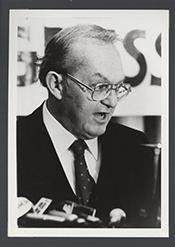
Mr. Speaker, I thank the gentleman from Georgia for yielding me the time. I appreciate that. Mr. Speaker, this bill implements the revised Strategic Business Plan proposed by Director Rogan when he…
Mr. Speaker, I thank the gentleman from Georgia for yielding me the time. I appreciate that.
Mr. Speaker, this bill implements the revised Strategic Business Plan proposed by Director Rogan when he was at the Patent and Trademark Office to update the services and structure of the office. The Strategic Business Plan will enhance the quality of the patent and trademark examining operations, accelerating the application pendency period, making it more consumer friendly and efficient.
The manager's amendment to the bill addresses the fee diversion problem and prevents the PTO funds from being used to fund general revenue programs throughout the Federal Government.
Under the agreement reached between the gentleman from Wisconsin (Chairman Sensenbrenner) and the Committee on Appropriations, PTO fees collected in a given fiscal year that exceed the appropriation to PTO for that year would be placed in what will be known as a PTO reserve fund. At the end of that fiscal year, the Director of the Patent and Trademark Office may determine if, and how, these funds should be allocated back to the eligible applicants.
Mr. Speaker, I have been a proponent of modernizing the patent and trademark fee structure and have fought on this floor year after year to protect these dollars from being used to fund non-PTO programs, as have my chairman the gentleman from Wisconsin and other Members of the Committee on the Judiciary. They have fought equally diligently to this end.
A fully funded United States Patent and Trademark Office is vital to sustaining the strength and growth of United States companies, inventors and innovations, and this legislation is integral to preserving the United States' worldwide leadership in the intellectual property industry.
I say to my friend from Georgia, who yielded to me, I was at the PTO office about 5 years ago for an event. I was invited to take part in an event there, and I said to those people, from the Director to all the patent examiners who were there and trademark examiners, I said I want to send a message to Capitol Hill and I want to tell everybody up there to keep their grubby paws out of the PTO coffers. Now that may have been an indelicate way of saying it, but I wanted to make clear to everyone up here that these funds should not be removed from PTO custody and control.
The opponents of such a proposal indicate that some sort of unjust enrichment will ensue if the PTO gets to keep these funds. That is poppycock. That is nonsense. These funds belong to the PTO, and I am confident that with the passage of this legislation, the diversion anathema that has plagued us for so long hopefully will finally be resolved.
I again thank the gentleman from Georgia for yielding me time.
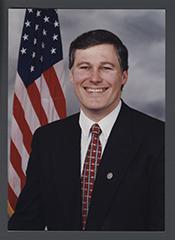
Mr. Chairman, this bill is consistent with an idea expressed by a former Member of this Chamber who did pretty well for himself, Abraham Lincoln. Lincoln said that the Patent Office adds the flame of…
Mr. Chairman, this bill is consistent with an idea expressed by a former Member of this Chamber who did pretty well for himself, Abraham Lincoln. Lincoln said that the Patent Office adds the flame of interest to the light of creativity. And that is why we need to improve the effectiveness of our Patent Office. We need to do so because what we all recognize in this Chamber is one answer to the $64,000 question of how we are going to grow jobs in this country, is we are going to do this by playing to our American unique strength; and the uniquely American strength is we are the best innovators, we are the best technologists, we are the best creators for new devices the world has ever seen. And we need to play to this unique American strength in our strategy on how to deal with the development of the global economy. And this bill, although it will be little noted, it should be long remembered in our ability to play to that strength because we have people in every district in this country who today are working on inventions who will have the added flame of interest to their light of creativity.
Let me give the Members an example. I have got some folks this afternoon who are working on a potential drug in Bothell, Washington, that could potentially actually cure in a meaningful way one type of diabetes. Those folks who are laboring over their computers and bunsen burners today deserve an American Patent Office that will process patents in a timely fashion, which we simply do not have now. We do not want to see the time period move from a horrendous 2-year delay today up to a 4- or 6-year delay in 5 or 6 years.
So I want to show my appreciation for the chairman and the gentleman from California (Mr. Berman), who have worked on this to get this bill to the floor. It is one answer to how we are going to really compete in a global economy. Let us play to the American strength. Let us improve the Patent office. Let us grow jobs in this country.

I rise today in strong support of the U.S. Patent and Trademark Fee Modernization Act. America's commitment to protecting intellectual property gives America a distinct competitive advantage in the…
I rise today in strong support of the U.S. Patent and Trademark Fee Modernization Act.
America's commitment to protecting intellectual property gives America a distinct competitive advantage in the global marketplace. When a country provides an atmosphere that is conducive to innovation and encourages the aggressive enforcement of intellectual property rights, businesses will seek the protection of
that country and will make conscious decisions to innovate there. America must continue to be the world leader in protecting intellectual property so that it will continue to be the world leader in innovation.
H.R. 1561, the U.S. Patent and the Trademark Fee Modernization Act, would codify a revised fee schedule that would give the USPTO the resources it needs to increase the quality of issued patents and trademarks, to hire additional examiners, and to reduce the backlog of applications that is currently pending.
In addition, H.R. 1561 represents an important compromise that effectively ends ``fee diversion,'' the current practice of diverting the excess fees collected by the USPTO to the Federal Government. Under the compromise, if the USPTO collects more in fees than it is appropriated, the balance would be rebated back to the users.
Furthermore, the bill protects small businesses by reducing the filing fee for any small entity or independent inventor by 75 percent if those entities file their applications electronically, in addition to other protections for small businesses.
This legislation is an important step in the ongoing effort to enhance the quality and timeliness of patent and trademark processing. Our Nation's investors deserve nothing less than the most efficient and accurate patent and trademark office in the world. I urge each of my colleagues to support this important legislation.
Show 6 more

If the gentleman from Wisconsin will yield, I concur with the reading of the intent of this funding mechanism. I would add that an important tool the Committee on Appropriations uses in its oversight…
If the gentleman from Wisconsin will yield, I concur with the reading of the intent of this funding mechanism. I would add that an important tool the Committee on Appropriations uses in its oversight of the Patent and Trademark Office as a Federal agency is control over its discretionary appropriation. We will ensure that this new funding mechanism maintains that control and does not give the Patent and Trademark Office a blank check particularly at a time when all discretionary spending is tight.
The USPTO must modernize. The Committee on the Judiciary and USPTO's user groups have developed a comprehensive 5-year blueprint to streamline the operations of the office. Given the significant increase in funding that this bill would provide, I have asked the General Accounting Office and the National Academy of Public Administration to conduct comprehensive reviews to ensure the moneys are spent to reduce pendency and increase the quality of our patent and trademark system.
Particularly in the high-tech sector, a company's competitiveness is directly related to the amount of time it takes to receive a patent for their new product. They are disadvantaged when the life cycle of their products expires before they are able to get a patent. I would also like to thank the chairman for including language to ensure that searches are not outsourced offshore. I think it is important for Members to know under no circumstances should this be outsourced to another country and under no circumstances should these searches be conducted by non-U.S. citizens.
I commend and thank the gentleman from Wisconsin for his work on this measure, and I urge its adoption.

Mr. Chairman, I rise today in favor of the United States Patent and Trademark Fee Modernization Act (H.R. 1561). This legislation is crucial to America maintaining its role as the world leader in…
Mr. Chairman, I rise today in favor of the United States Patent and Trademark Fee Modernization Act (H.R. 1561). This legislation is crucial to America maintaining its role as the world leader in innovative technology.
Intellectual Property is the currency that drives innovation in America's high-tech economy, and the U.S. Patent and Trademark Office (PTO) is charged with granting the important patents and trademarks for these innovations. The PTO serves a critical role in the promotion and development of new products and commercial activity in our country.
The PTO is of vital importance to the technology sector of our economy, and it is vital that this agency have proper funding to execute its mission. This legislation will allow the PTO to accomplish this goal--while allowing small business innovators to compete with larger corporations.
H.R. 1561 will eliminate patent fee diversion and will ensure that all fees paid to the PTO will be used to expedite the time-consuming and costly procedures associated with granting patents and trademarks.
This legislation is the first step toward improving patent and trademark quality while reducing application backlogs. This reform will help eliminate some of the bureaucracy that hinders businesses from success in the marketplace and hinders the advancement of technology in America.
I urge final passage of H.R. 1561.
Mr. Speaker, will the gentlewoman yield? Mr. Speaker, I thank the gentlewoman for yielding and appreciate her comments. At this time I will not get into the issue of the restricted nature under which…
Mr. Speaker, will the gentlewoman yield?
Mr. Speaker, I thank the gentlewoman for yielding and appreciate her comments.
At this time I will not get into the issue of the restricted nature under which outsourcing is permitted, but I think the gentlewoman accurately described the base bill. The chairman of the Committee on the Judiciary will be offering an amendment with respect to outsourcing outside the United States that restricts even the limited outsourcing that is allowed under this bill to companies organized under the laws of the United States. As the gentlewoman mentioned, that in and of itself does not protect against international outsourcing, or any State, and employ U.S. citizens to perform the searches.
So there will be an amendment to the base bill at the time that once the rule is adopted, if it is adopted, that will deal with that specific issue very specifically and prohibit that kind of outsourcing that the gentlewoman was concerned about.
Mr. Speaker, I take the gentlewoman's point about U.S. companies and who might be called a U.S. company. I simply wanted to point out that the chairman of the Committee on the Judiciary has a manager's amendment that will not simply limit this to U.S. companies, but limit it to searches only by companies employing U.S. citizens to perform the searches. So there is that as an additional element.
Mr. Chairman, as a member of the Subcommittee on Courts, the Internet, and Intellectual Property and as a co-chair of the Congressional IP Caucus, I rise in strong support of H.R. 1561, and I am…
Mr. Chairman, as a member of the Subcommittee on Courts, the Internet, and Intellectual Property and as a co-chair of the Congressional IP Caucus, I rise in strong support of H.R. 1561, and I am quite pleased that the House leadership has allowed this compromise to be reached and that we have the debate today.
The Patent and Trademark Office is in severe need of additional resources to ensure the expedience and quality of the patent examination process. Without these valuable changes, an overburdened and slow patent examination system will deter the innovations of American business. Given the importance to our lives and our economy, patent reform is one of the most important issues for increasing the growth and strength of the economy for both small and large businesses. Congress has the opportunity with this bill to give the PTO the flexibility they have been asking for to strengthen and improve America's patent system.
The gentlewoman from Ohio (Ms. Kaptur) is correct to raise the issue and the concern of loss of jobs in America and the outsourcing of jobs. I would respectfully argue that one of the ways in which to assist American workers in regaining what they have lost over the past 3 years is to allow the Patent and Trademark Office these reforms that are in desperate need and should have been done years ago.
Mr. Chairman, I stand in support of H.R. 1561. The legislation is the culmination of years of hard work between the appropriators and the members of the Judiciary Committee. It allows the…
Mr. Chairman, I stand in support of H.R. 1561. The legislation is the culmination of years of hard work between the appropriators and the members of the Judiciary Committee. It allows the appropriators to retain oversight of the Patent and Trademark Office, while permanently ending the practice of diverting fees paid by users of the Patent and Trademark Office. In the past, these fees were used for unrelated government programs. I am pleased because these fees will specifically go to improving patent quality, reducing the time it takes to examine a patent and increasing efficiency of the Patent and Trademark Office in total. These are the goals of the 21st Century Strategic Plan that was developed by the Patent Office and reviewed by the Congress.
Finally and most importantly this bill ensures that companies can and will continue to have opportunities to innovate and remain competitive in this global economy.

Mr. Chairman, I want to thank Chairman Sensenbrenner and Chairman Lamar Smith for their very important changes for small entities and other Patent and Trademark Office users. I also want to thank…
Mr. Chairman, I want to thank Chairman Sensenbrenner and Chairman Lamar Smith for their very important changes for small entities and other Patent and Trademark Office users. I also want to thank their dedicated and excellent staffs, Phil Kiko, Steve Pinkos and Blaine Merritt. I also want to thank the majority leader and his staff led by Brett Loper for crafting a very excellent amendment to this bill that as the chairman of the Committee on Small Business I am satisfied that the small inventor is protected.
Bill Text
2 versions available
        [Congressional Bills 108th Congress]
[From the U.S. Government Publishing Office]
[H. Res. 547 Engrossed in House (EH)]

In the House of Representatives, U.S.,

March 3, 2004.
Resolved, That at any time after the adoption of this resolution the Speaker
may, pursuant to clause 2(b) of rule XVIII, declare the House resolved into the
Committee of the Whole House on the state of the Union for consideration of the
bill (H.R. 1561) to amend title 35, United States Code, with respect to patent
fees, and for other purposes. The first reading of the bill shall be dispensed
with. General debate shall be confined to the bill and shall not exceed one hour
equally divided and controlled by the chairman and ranking minority member of
the Committee on the Judiciary. After general debate the bill shall be
considered for amendment under the five-minute rule. It shall be in order to
consider as an original bill for the purpose of amendment under the five-minute
rule the amendment in the nature of a substitute recommended by the Committee on
the Judiciary now printed in the bill. The committee amendment in the nature of
a substitute shall be considered as read. All points of order against the
committee amendment in the nature of a substitute are waived. No amendment to
the committee amendment in the nature of a substitute shall be in order except
those printed in the report of the Committee on Rules accompanying this
resolution. Each such amendment may be offered only in the order printed in the
report, may be offered only by a Member designated in the report, shall be
considered as read, shall be debatable for the time specified in the report
equally divided and controlled by the proponent and an opponent, shall not be
subject to amendment, and shall not be subject to a demand for division of the
question in the House or in the Committee of the Whole. All points of order
against such amendments are waived. At the conclusion of consideration of the
bill for amendment the Committee shall rise and report the bill to the House
with such amendments as may have been adopted. Any Member may demand a separate
vote in the House on any amendment adopted in the Committee of the Whole to the
bill or to the committee amendment in the nature of a substitute. The previous
question shall be considered as ordered on the bill and amendments thereto to
final passage without intervening motion except one motion to recommit with or
without instructions.
Attest:

Clerk.