Providing for the consideration of the resolution (H. Res. 581) expressing the sense of the House of Representatives regarding rates of compensation for civilian employees and members of the uniformed services of the United States.
Legislative Activity
Stay on top of the latest movement without scrolling through every action
Motion to reconsider laid on the table Agreed to without objection.
March 31, 2004 • 10:49 AM
View full timeline
Introduced in House
March 30, 2004
The House Committee on Rules reported an original measure, H. Rept. 108-454, by Mr. Linder.
March 30, 2004
Rule provides for consideration of H. Res. 581 with 1 hour of general debate. Previous question shall be considered as ordered without intervening motions except motion to recommit. Measure will be considered read. Bill is closed to amendments.
March 30, 2004 • 6:25 PM
Placed on the House Calendar, Calendar No. 163.
March 30, 2004
Considered as privileged matter. (consideration: CR H1750-1751)
March 31, 2004 • 10:38 AM
DEBATE - The House proceeded with one hour of debate on H. Res. 585.
March 31, 2004 • 10:38 AM
The previous question was ordered without objection.
March 31, 2004 • 10:49 AM
Passed/agreed to in House: On agreeing to the resolution Agreed to by voice vote.(text: CR H1750)
March 31, 2004 • 10:49 AM
On agreeing to the resolution Agreed to by voice vote. (text: CR H1750)
March 31, 2004 • 10:49 AM
Motion to reconsider laid on the table Agreed to without objection.
March 31, 2004 • 10:49 AM
Floor Debate
14 membersWhat members said about H.Res. 585 on the floor
 EJI
EJI TD
TD ALH
ALH DKD
DKD SHH+9
SHH+9
Floor Debate
14 membersWhat members said about H.Res. 585 on the floor
Mr. Speaker, I yield myself such time as I may consume. Mr. Speaker, I rise in opposition to this resolution. Certainly everybody always wants to be better paid. I do not know anybody that is an…
Mr. Speaker, I yield myself such time as I may consume.
Mr. Speaker, I rise in opposition to this resolution. Certainly everybody always wants to be better paid. I do not know anybody that is an exception to that particular rule. So there is always tension between what people would like to be paid and what an employer can afford to be able to pay. The employer in this case is the taxpayers of the United States of America.
This is not necessary to give what this resolution proposes, that would be supersized raises, jumbo COLAs, to the Federal workforce. We have been very generous with the Federal workforce. In the last 7 years, for every $1 increase in the cost of living index, or for that matter in the cost of living adjustments to Social Security, for every $1 that the cost of living has gone up, Federal workers have gotten a raise of $1.66. They have gotten raises two-thirds higher than the actual inflation rate. In fact, in the past 4 years, Federal workers have gotten raises at twice the rate of inflation.
The President's budget proposes that the across-the-board raise for the Federal civil service should be 1.5 percent, consistent with the actual cost-of-living adjustment. This resolution, however, says that they should get 3.5 percent.
Why? Well, they say it is because we are going to give the military a larger raise and therefore we have to give the Federal civil service a larger raise, too. I do not think that is accurate. People that work at civil service jobs are not taking the same risks on behalf of their country as people that are working in our Armed Forces. We do not have the retention problems in the civil service sector as we do in the Armed Forces.
There is a letter that has been submitted by the administration, by the Office of Management and Budget, opposing this resolution and points out that we are almost at a record low on the turnover in the Federal civil service. About 1.5 percent a year, that is the whole turnover of people in Federal civil service jobs.
This is not a matter of retaining people. This is a matter of giving extra raises to people that, frankly, the taxpayers do not have the money to afford. This would cost us $2.2 billion this year and a similar amount next year and the year after and in perpetuity to give these extra large raises rather than holding the line as we should.
For State workers, the average pay raises in the last 4 years have been only about a third of what the pay raises have been for the Federal workers. The private sector is significantly behind what we have already done for Federal workers. This is not the time when we have record deficits to be giving more than a cost-of-living adjustment to the Federal civil service.
Mr. Speaker, we have been overly generous. It is not needed to retain people; and, frankly, the taxpayers are the ones that are being asked to foot this multi-billion dollars of expenses. This is the taxpayers' money. We are being fair. We should stay that way.
The supposed pay gap, people say Federal workers are 32 percent underpaid. Actually, that particular survey does not calculate all the factors. It does not calculate the locality pay that boosts Federal civil service workers,
which cuts that gap in half; and it does not cover the benefits they receive under which that gap evaporates.
We are being fair, and we should oppose this resolution on behalf of the taxpayers of the United States of America.
Mr. Speaker, I reserve the balance of my time.
Mr. Speaker, I yield 3 minutes to the gentleman from Indiana (Mr. Buyer).
Mr. Speaker, I yield myself 15 seconds.
I include in the Record a copy of the letter from the Executive Office of the President of the Office of Management and Budget in opposition to this resolution.
We hear people say, well, we have Federal civil service workers that go in harm's way. The vast majority do not. But for those who do, what we have to do is avoid this across-the-board increase that consumes $2.2 billion so that we can target the extra assistance where it is needed.
Office of Management and Budget,
Washington, DC, March 30, 2004.
Hon. Dennis Hastert,
Speaker, House of Representatives, Washington, DC.
Dear Mr. Speaker: As the House of Representatives begins
consideration of a resolution on Federal pay policy, I
strongly urge the House to support the Federal employee pay
policy reflected in the President's FY 2005 Budget. The
Administration believes this approach, rather than the one
reflected in the proposed resolution, is the most effective
way to achieve the desired result: to recruit, retain, and
reward quality employees.
The President's Budget proposes to increase compensation
for civilian employees by 2 percent, or by over $2 billion,
targeted to address specific needs and opportunities. The
proposal includes: a 1.5 percent across-the-board pay
increase to maintain civilian employee buying power; $200
million spread across the agency budgets for use in
addressing specific recruitment and retention needs; and,
$300 million for the Human Capital Performance Fund, which
agencies can use to reward their highest performing
employees. The resolution under consideration would instead
support the same across-the-board increases for civilian
workers that the President has proposed for military
personnel.
The Administration strongly supports the proposed
resolution's goal of providing sufficient compensation for
civilian and military employees to support our critical
efforts to recruit, retain, and reward quality employees
effectively and responsibly. The Administration, however,
does not believe that providing the same across-the-board
increases for civilian workers that the President proposes
for military personnel will help us achieve this goal.
If added to the President's proposal for $2 billion in pay
increases for civilian employees, the additional cost of
providing every civilian employee with the identical across-
the-board raise proposed for the military would be about $2.2
billion. Because Congress cannot provide this funding without
exceeding budget limits or shifting money away from higher
priorities, this increase essentially acts as an ``unfunded
mandate'' that agencies must cover within existing funds.
Federal civilian employees have enjoyed cumulative annual
pay increases of 45.1 percent since 1993. For the last five
years, Federal employees have received raises that exceed
overall private sector wage growth. State governments, by
contrast, have provided smaller increases for their employees
when faced with similar resource constraints. In the past
four years, many States have frozen pay completely at various
points in time, and we are not aware of any State that in
2004 gave its workers as large an across-the-board raise as
is being proposed for Federal workers this year.
In addition, Federal employees receive other types of pay
increases. In 2005, we estimate the value of within grade and
quality step increases as 1.3 percent, the value of
promotions as 1.2 percent, and the value of cash awards as
1.3 percent of civilian payroll. While not everyone will
receive these increases, with the 3.5 percent across-the-
board pay increase that the proposed resolution supports,
overall Federal employee compensation in 2005 would increase
by about $5 billion.
Federal employee benefits are also increasingly more
attractive relative to those available in the private sector.
These include a
defined benefit annuity and lifetime health benefits for as
little as five years of service, as well as transit
subsidies, long-term care insurance, preferential tax
treatment of health insurance premiums, and flexible spending
accounts for dependent and healthcare expenses. The Federal
civilian benefits package increasingly stands out as one of
the most comprehensive available anywhere.
Both civilian and military employees perform crucial
functions on behalf of the American public. The
Administration believes, however, that giving every civilian
employee the identical raise proposed for the military does
not support the goal of providing compensation to effectively
and responsibly recruit, retain, and reward quality
employees. Advocates for providing identical pay raises to
civilian and military employees cite recruitment and
retention problems, but we have no evidence that the Federal
Government has widespread recruitment and retention problems.
With respect to retention, the voluntary attrition rate is at
a near historic low of 1.6 percent. Only in relatively few
occupations are recruitment and retention problems an issue,
and President's pay policy gives agencies the tools and
resources to address these concerns.
The President's pay proposal provides sufficient pay not
only to recruit and retain needed workers, but also to reward
the government's highest performing employees. The
Administration is implementing better agency performance
appraisal systems that will be able to distinguish superior
performance. Such systems will enable agencies to reward
employees with funds from the Human Capital Performance Fund.
These incentives will produce improved performance and
results for the American people.
Our civilian and military employees are vital to the
success of the Federal government in meeting its commitments
to the American people. Federal workers should be rewarded
with a pay policy that most effectively recruits, retains,
and rewards quality employees. The Administration believes
the pay policy included in the FY 2005 Budget supports those
goals. While we recognize that the proposed Sense of the
House resolution has no binding effect on either the budget
or appropriations processes, we urge Members to oppose the
resolution.
Sincerely,
Joshua B. Bolten,
Director.
Mr. Speaker, I yield 3 minutes to the gentleman from California (Mr. Hunter), the chairman of the Committee on Armed Services.
Mr. Speaker, I yield myself such time as I may consume.
Mr. Speaker, were we to adopt this policy of across-the-board raises, we would prevent the ability to prioritize for those people who actually put their lives at risk and put themselves in harm's way. I have worked in local government, I have worked in State government, I have worked in the Federal Government. Typically we make a distinction between people, whether they are police, whether they are fire, whether they are law enforcement, whether they are in the military. We make a distinction between those who put themselves in harm's way when we consider what we need to do in employment.
But if all the resources are consumed on saying, no, we have got to give everybody an across-the-board increase, then we cannot target our efforts towards those people who do put themselves in harm's way. That is what the President's proposal seeks to do, have an adequate across- the-board cost-of-living increase, so that you therefore retain the resources to target the additional assistance where it is most justified. This resolution wipes out that approach. This resolution says, no, somebody that works at a desk, and maybe doing a very important job at that desk, has to be given the same increase as someone who puts their life in harm's way. That is a wrong approach.
The people that we have a challenge retaining are those who do put their lives in harm's way. But across-the-board, they virtually never had as little a retention problem as they do now in the Federal Government. A 1.6 percent attrition rate. That is it.
This is not a matter of keeping the Federal employees in general. This is a matter of conserving the resources so that we can target them, as the President's budget proposal wants to do, to where it is most needed.
I wanted to cite from the letter that the White House sent over: ``If added to the President's proposal for $2 billion in pay increases for civilian employees, the additional cost of providing every civilian employee with the identical across-the-board raise proposed for the military would be about $2.2 billion dollars. Because Congress cannot provide this funding without exceeding budget limits or shifting money away from higher priorities, this increase essentially acts as an unfunded mandate.''
The letter goes on to state: ``The President's proposal is for targeting resources to where it is most needed, rather than taking this across-the-board approach that prevents us from making sure that we retain the people who have the specialties that are in highest demand and for whom we must compete with the private sector.''
This is a sop to people who wanted to treat everyone the same because perhaps they are part of the same employee organization. That is not what we need to do.
We go to great measures to protect Federal employees. As the Representative of most of Oklahoma City, come out and see the new Federal building that is being dedicated in about a month's time and look at the extraordinary security measures that we have put into place to protect our Federal civilian workforce, because we know their value, we know their importance. But that does not mean that we treat everyone as though they were putting their lives in harm's way and, therefore, undercut what we do to keep the good people that do put their lives in harm's way on behalf of the citizens of this country.
We do not have the extra $2 billion for the across-the-board increase this resolution seeks to do. We have got enough problems with the deficit already.
I ask people to oppose this resolution.
Mr. Speaker, I reserve the balance of my time.
Mr. Speaker, will the gentleman yield?
Mr. Speaker, is the gentleman aware that we did not have the money to fund it because the very across-the-board language that you propose today had already been put in and soaked up the money?
Mr. Speaker, I yield myself such time as I may consume.
Mr. Speaker, we had some interesting discussion about, well, why have we not gone to this system of saying let us reward people based upon their performance. Let us target, let us target funds, as the President wants to do. And the gentleman asked, well, why was it not done in the appropriations bill last year?
That program has not been created. There is no program to fund. We could not put it in the subcommittee mark. The gentleman from Virginia chairs the committee that has the ability to bring the legislation to the floor, to promote what the President wants to do. Let us not undercut.
If the gentleman agrees it is a good idea, I agree it is a good idea, if the gentleman from Virginia (Mr.Tom Davis) agrees it is a good idea, and certainly the White House promotes it, then instead of doing this one-size-fits-all across the board, why do we not support the President's proposal and bring that Human Capital Performance Fund, that is what he calls it, why do we not bring that legislation to the floor? But, for goodness sakes, do not pass this resolution soaking up the resources that would have to go to pay for performance.
The ball is in the court of the committee of the gentleman from Virginia. I know he is sympathetic toward the President's approach, but I am sure he would not want to adopt a resolution that defeats his ability to move the Federal Government to be more responsible, to say, we know that not all employees perform equally, not all are placing themselves in the same level of risk as others are, and we ought to be able to make distinctions.
Do the cost-of-living adjustment, the 1.5 percent that is proposed, that is already in the budget, but do not pass this resolution to take away the ability of pay for performance. Do not say that just because we have retention problems in the military and they are so poorly underfunded that, therefore, we have to do the same for the Federal civil service.
The Federal civil service, in the last 7 years, for every dollar increase in the cost of living, has already gotten $1.66 in increases, faster than anybody else. It is time to have a year where we say, let us hold back. Let us only do the cost of living adjustments, but, at the same time, put the pay for performance in place.
We do not need this. The turnover rate for Federal employees is at virtually an all-time low. There are spots where we need to be able to keep people with specific skill sets, and the President's proposal would let us address those. But we do not do it by giving a pay raise to the people that we do not have a problem retaining and then not be able to retain the people that do have the special skills.
Do not pass this resolution. Do not try to handcuff us and prevent us from reforming the Federal civil service process. We are being more than fair with the 1.5 percent. We do not need to go overboard.
Mr. Speaker, I reserve the balance of my time.
Mr. Speaker, I yield myself the balance of my time.
Mr. Speaker, I do not think that people should vote for this resolution based upon someone's claim that, well, it really does not do anything, because the language, the very last phrase, makes it clear that it calls for the compensation for the civilian employees of the United States to be adjusted at the same time and in the same proportion as the rates of compensation for members of the Armed Forces. If the Armed Forces, as is proposed and as we know is going to happen, get 3.5 percent, then the Federal civil service would have to get 3.5 percent as well, rather than the 1.5 percent that is proposed.
Again, this has been looked at by the Office of Management and Budget, and I quote once more from their record about what this would cost. They say, ``It would be about $2.2 billion, and because Congress cannot provide this funding without exceeding budget limits or shifting money away from higher priorities, this increase essentially acts as an unfunded mandate that agencies must cover.''
We are talking about a vote to spend an extra $2.2 billion. That is what we are here about this morning. We are here because some people in the House insist that that ought to be the case, and they want to use this vote to leverage the appropriations process and everything else.
But the taxpayers are looking over our shoulders. They know that the Federal workers have gotten twice the cost of living over the last 4 years, and they have not. Federal workers have had their pay improved far beyond what has happened in the private sector. It is not out of line to say, let us just hold it down to inflation this year, but let us make sure that we hold back the resources to target, to target pay where we most need it for recruitment or for people who are putting their lives at risk. That is what we ought to be doing. We should not be voting for this resolution.
I ask my fellow Members, Mr. Speaker, to join me in opposing this resolution.
Mr. Speaker, I yield back the balance of my time.
Mr. Speaker, I object to the vote on the ground that a quorum is not present and make the point of order that a quorum is not present.
Mr. Speaker, pursuant to House Resolution 585, I call up the resolution (H. Res. 581) expressing the sense of the House of Representatives regarding rates of compensation for civilian employees and…
Mr. Speaker, pursuant to House Resolution 585, I call up the resolution (H. Res. 581) expressing the sense of the House of Representatives regarding rates of compensation for civilian employees and members of the uniformed services of the United States, and ask for its immediate consideration.
Mr. Speaker, I ask unanimous consent that I be allowed to control 20 minutes, the gentleman from Illinois (Mr. Davis) would control 20 minutes, and the gentleman from Oklahoma (Mr. Istook) would control 20 minutes.
Mr. Speaker, I ask unanimous consent that all Members may have 5 legislative days within which to revise and extend their remarks and to include extraneous material on the resolution now under consideration.
Mr. Speaker, I yield myself such time as I may consume.
Mr. Speaker, the issue today is of the utmost importance to our Federal employees, the Federal Government, and the American taxpayer. The Federal Employees Pay Comparability Act, FEPCA, of 1990, Public Law 101-509, sought to help achieve comparability through annual pay adjustments based upon the change in private sector wages and salaries. Despite our efforts, the Bureau of Labor Statistics currently estimates a 32 percent pay gap and a 10 percent gap between the military and the private sector.
In order to deliver what was promised, the Federal Salary Council recommends a 25 percent locality pay for 2005. There is clearly much work to do to fulfill the intent of Congress, and the resolution here before us is a step in that direction.
Mr. Speaker, I yield 3 minutes to the gentleman from Virginia (Mr. Wolf), my colleague and coauthor of this resolution, along with the gentleman from Maryland (Mr. Hoyer) and myself.
Mr. Speaker, I yield myself such time as I may consume.
I think the gentleman is aware that the Federal Employee Pay Comparability Act calls on the Federal Salary Council every year to make recommendations in terms of what the Federal employees would make. We could put a chart up here that would show that every year we have failed to come close to what the Federal Salary Council has recommended under the existing law of the land which is FEPCA, the Federal Employee Pay Comparability Act. This year, they have recommended a 25.73 locality rate for 2005.
Congress has a long history on this issue. This resolution merely reiterates the sense of the House. Annual pay adjustments for civil employees and military members provided through the appropriations process have been identical in nearly every year over the last two decades. In addition, language to this end was included in the budget resolution for fiscal years 2002, 2003 and 2004.
In 1999, the last time the Senate held a freestanding vote on this issue, the Senate voted 94-6 in favor of an amendment expressing the same sense of Congress that we do here today.
I used to work for a billion-dollar company out in Fairfax, Virginia. Our greatest asset was not our building. It was not our computers. It was not the land. It was our employees. They walked out the door every night, and we did what we had to to make sure they came back the next day. In an information age, people are the number one asset of any organization.
The same is true with the Federal Government. We are in danger of losing in the procurement force over 60 percent of our qualified workers over the next 5 years. These are people that can walk across the street to the private sector and make more money than they are making for the Federal Government and leave with their full retirement. These kind of minor incentives in a 3.5 percent pay raise that I do not think anybody except maybe the gentleman opposing this resolution would call a gargantuan pay raise or a huge pay raise, this is in line with what we are seeing in many cases in the private sector and in State and local governments and in my own counties that I represent in Congress.
We have to be able to recruit and retain the best and the brightest to fulfill the policies that this Congress passes and sends on. To do that, pay comparability is important, and we continue to lag significantly in that respect. The Federal Government may never be able to compete with the private sector dollar for dollar, but we have to ensure that we do not fall further behind in the war for talent.
While wages are not the only factor in our recruitment and retention efforts, what employer can hope to succeed in a labor market where it is offering salaries so far below the average? This is not a cost-of- living allowance as some have argued, saying it is too generous. The purpose is to assist the Federal Government in providing salaries comparable to those in the private sector. This is achieved through annual pay adjustments based on the change in private sector wages and salaries, not the cost of living. That is the fundamental precept behind the Federal Pay Comparability Act. This is achieved through our annual pay adjustments.
The fact remains that Federal pay is not competitive. It is also important to note that providing a higher annual adjustment would not result in any budgetary increase. As they have over the last two decades, agencies pay for all their salaries, including these annual adjustments, with discretionary funds from their salaries and expense accounts. This does not score under CBO.
I think we can all agree that both armed services and the Federal civilian workforce are integral to fulfilling the role of government in America and both must be compensated accordingly. In the coming fiscal year, parity and pay adjustments remain the vehicle to help achieve comparability between the public and the private sectors on the issue of pay so that the government can continue to perform. This resolution is integral to this effort. I urge my colleagues to support it.
Mr. Speaker, I reserve the balance of my time.
Mr. Speaker, I yield myself such time as I may consume.
I include in the Record a letter addressed to me from Steven Strobridge, who is a colonel, U.S. Air Force, retired, and director of Government Relations for the Military Officers Association of America, supporting this.
Military Officers Association
of America,
Washington, DC, March 30, 2004.
Hon. Tom Davis,
Chairman, Committee on Government Reform, House of
Representatives, Washington, DC.
Dear Mr. Chairman: On behalf of the nearly 380,000 members
of the Military Officers Association of America (MOAA), I am
writing to express MOAA's support of the principle of pay
raise parity for the federal civilian workforce.
Pay comparability with private sector workers is a
fundamental statutory requirement for both federal civilians
and the uniformed services. To the extent such comparability
is not sustained over time, our government will not be able
to attract and retain the kinds and numbers of personnel it
needs for a professional, highly qualified career work force.
Improved military pay raises in recent years have been
aimed at restoring long-term comparability with private
sector pay after decades of military pay caps. Those in the
federal civilian workforce also have had their raises capped
below comparability for many years.
Improved military pay raises in recent years have been
aimed at restori8ng long-term comparability with private
sector pay after decades of military pay caps. Those in the
federal civilian workforce also have had their raises capped
below comparability for many years.
While MOAA would not presume to recommend a particular
civilian pay standard for the long term, we believe the
resolution you propose, along with Representatives Wolf and
Hoyer, represents a reasonable step in the right direction,
given the well-documented years of federal pay raise caps.
Sincerely,
Steven P. Strobridge,
Colonel, USAF (Ret),
Director, Government Relations.
Mr. Speaker, I yield 2 minutes to the gentleman from Oklahoma (Mr. Cole), a strong advocate for military and Federal employees.
Mr. Speaker, I yield 1 minute to the gentleman from Virginia (Mr. Moran).
Mr. Speaker, I yield myself such time as I may consume.
We have heard discussions about how the vast majority of Federal employees do not go in harm's way. Let me make a comparison.
The gentlewoman from the District of Columbia (Ms. Norton) has just raised an important point, and that is in the war on terrorism and protecting the homeland we are relying on our Federal employee workforce, and many of these people were drafted into this.
We look at the Oklahoma City bombings in my friend's home State, over 100 Federal employees died just for being Federal employees and for being there as a symbol of this government, their lives involuntarily on the line, dying for this country.
Officer Johnny Spann was killed in an Afghan prison uprising on November 25, 2001, the first American combat death in Afghanistan, a Federal civilian employee, a CIA employee.
Inspector Tom Murray, a 31-year veteran of the Customs Service, died from toxic fume inhalation during an inspection of the hold of a vessel at the Port of Gramercy in Louisiana in October of 2001.
Twenty-three firefighters died in wildland fire-fighting incidents in 2002, primarily in California and Colorado, where the fire season was especially severe. These account for almost a quarter of the on-duty deaths of firefighters in 2002, Federal employees.
Who are our Federal employees? Hundreds of Federal firefighters spent weeks without pause, working day and night to quell the multiple wildfires that consumed much of Southern California.
Coast Guard Chief Kevin Concepcion directed the safe and orderly seaborne evacuation of 70,000 confused and frightened people from Lower Manhattan amidst the chaos of the September 11 attacks.
FBI agents William Fleming and Ben Herren brought to justice two of the men responsible for the infamous 1963 bombing of an African American church in Birmingham, Alabama, 40 years after they committed the crime.
Dozens of foreign service officers have returned to the embassies in Nairobi and Kenya after bombs demolished the embassy buildings in 1998, killing and wounding dozens of embassy officials.
Employees from the Federal Highway Administration, the Social Security Administration, HUD, DEA, Agriculture, Secret Service, all of these died in the Oklahoma City bombings in April of 1995.
Three-and-one-half percent. Over 20 percent under what the Federal Salary Council recommended to the President Federal employees ought to get this year.
Mr. Speaker, I urge Members to support this resolution.
Mr. Speaker, I reserve the balance of my time.
Mr. Speaker, I yield myself 2 minutes.
Mr. Speaker, let me assure the gentleman, and maybe I can talk him into supporting this resolution when I ask him to read it here, the language of the resolution itself makes it clear this is not across the board. It says: ``Compensation for civilian employees and members of the uniform services must be sufficient to support our critical efforts to recruit, retain and reward quality people in government service, and to help achieve this objective, compensation for civilian employees should be adjusted at the same time and at the same proportion as our rates of compensation for members of the uniform services.''
Nothing in there mandates across-the-board. This language, in fact, was changed from previous years to accommodate some of OMB's concerns.
But I have got to tell you, where I get the most concerned is that last year on this floor I put an amendment on this floor to add $500 million for a Human Capital Compensation Fund so we could give out bonuses and award people on the basis of merit, and the gentleman's subcommittee did not fund it.
I am happy to yield to the gentleman from Oklahoma.
Mr. Speaker, reclaiming my time, no, I am not aware of that.
I am happy to yield to the gentleman from Maryland.
Mr. Speaker, reclaiming my time, as the gentleman is aware, this authorization was authorized by the full House in an
up-or-down vote. Unfortunately, we called on the appropriators to fund it, the money was there, as the gentleman noted, earlier on before the additional money was appropriated; and it still was not funded. So it is easy to talk one way, but we have to look at consistency and action.
All we are asking the House to do today is do what we did last year, the year before, the year before, what the Senate did in their budget resolution. This is 20 percent below what the Federal Salary Council has recommended this year.
Mr. Speaker, I reserve the balance of my time.
Mr. Speaker, I yield 1 minute to the gentleman from Illinois (Mr. Davis).
Mr. Speaker, I yield myself 1 minute, and then allow the gentleman from Oklahoma (Mr. Istook) to respond and close, and then I will make a very brief closure.
I think it is important to note again that this resolution does not mandate
across the board. We took any language here that mandates that out. In fact, we have agencies right now where pay for performance is the rule. They are working under it at DHS. DOD passed a performance review last year. The IRS and FAA already have those provisions of pay for performance in there. Before this last Congress, GAO came and asked for it. They have it. These are agencies that our committee and other committees in the House, working together, are already working to pay for performance.
But if we do not pass this legislation, there can be no pay for performance. There will be no pay for performance without pay comparability. Otherwise, they do not even get the 1.5 percent, Federal employees. So this is a natural precursor to get what the gentleman from Oklahoma, what the administration, and what we all want. This has got to be there first.
So I think maybe we have a chicken-and-the-egg situation, but we have to have the money, I say to my friend from Oklahoma, before we can do the other kinds of things. And we took the mandatory, across-the-board language out of this resolution exactly for that purpose: to give us all an opportunity to work together, to give Federal employees pay comparability, but to do it in an appropriate fashion.
Mr. Speaker, I reserve the balance of my time.
Mr. Speaker, I yield myself the remaining time.
The world has changed. It might have been a decade ago where you looked at the Federal workforce being uninvolved and in a different light from our men and women in uniform somewhere else across the world. But, today, the battleground has shifted here to the Pentagon, to Oklahoma City, to Manhattan, to our embassies abroad, and it has seen in each instance Federal employees dying on the front lines, just performing their day-to-day duties as targets of terrorists. We see that the first individual killed in the Afghan war was a Federal civil servant. Every Federal employee now, as they go to work, is a potential target of a terrorist.
In addition to that, OMB's opposition to this is nothing new. We saw this under the previous administration. That is traditionally the line they take. That is why Congress passed and President Bush won, signed the Federal Employee Pay Comparability Act in 1990, to try to have an independent body review what it would take to get pay comparability. Because the American taxpayer does not want an underfunded rocket scientist, a cancer researcher at NIH that we are not paying appropriately. We do not get top talent on the cheap, and that is not what they want.
So the Federal Salary Council appointed by President Bush made the recommendation. They recommended a 25 percent increase; and the administration said, no, we want 1.1 percent. All we are saying today is comparability says this ought to be at 3.5 percent, the same as military, and how we spend that money we can decide through the process as we move forward in the appropriations process.
This resolution does not even mandate it across the board. In fact, in some agencies, those have gone by the wayside as we formed the pay schedules there.
This is an important issue for this Congress. It is an important issue to our Federal workforce and our military workforce, of which we have shown support to some of those groups as well.
I urge my colleagues to vote for this. Let us send a message to our Federal employees and our military personnel that we honor what they do, we value what they do, and we are going to pay them appropriately. I ask for support of this resolution.
Mr. Speaker, I yield myself such time as I may consume. Mr. Speaker, I rise today in support of the Military and Civilian Employees Pay Parity Resolution and the rule providing for its consideration.…
Mr. Speaker, I yield myself such time as I may consume.
Mr. Speaker, I rise today in support of the Military and Civilian Employees Pay Parity Resolution and the rule providing for its consideration. This underlying resolution is imperative for it expresses the sense of Congress that the government should provide fair compensation for Federal employees in order to encourage citizens to pursue a life of public service.
Federal employees consistently demonstrate the best that our government has to offer, and their contributions directly improve the lives of all Americans.
When we speak of Federal employees, we speak not only of the brave men and women of the Armed Forces but also of the men and women of literally hundreds of agencies dealing with thousands of issues. With nearly 1 million employees, the Federal Government is the largest employer in the United States. Thirty-two thousand Federal employees live in and/or around my south Florida district alone.
Employees of the Central Intelligence Agency work in oftentimes arduous conditions to safeguard our country from those who mean to do us harm.
Federal Emergency Management Agency employees provide disaster relief assistance, supplying shelter, food and funds to victims of natural disasters.
Customs agents and Transportation Security Administration officials protect our borders and our skies, and firefighters and other Federal law enforcement personnel across the Nation are our first responders to a range of hazards that can affect entire cities or single homes.
These are just a few of those Federal employees, including the fine people that do the work here transcribing our words, the clerks that work with us, the Capitol Police, the security guards, all are Federal employees; and, in my judgment, many of them do not receive fair compensation for their hard work.
Mr. Speaker, much of the world comes to know the face of America from the dedicated Federal employees living in this country and working abroad.
All of these hard-working employees deserve the unequivocal support of this body. Even more, they deserve just and fair compensation that competes with the private sector and rises to meet the living standards enjoyed by many Americans.
Increases in the pay of military and Federal civilian employees have not kept pace with the overall pay levels of private sector employees. There currently exists a gap of 32 percent between compensation levels of Federal civilian employees and those of private sector workers and an estimated 5.7 percent gap between compensation levels of members of the uniformed services and those of private sector workers. This glaring discrepancy greatly hampers the ability to recruit and retain quality employees.
To run efficiently and effectively, and to provide necessary services to
the American people, the Federal Government needs to attract skilled, educated, and motivated people. We must provide Federal employees with an appropriate level of salary and benefits to encourage people to pursue a career of Federal service, whether civilian or military. Potential Federal employees must be made to understand that choosing a career of public service is not akin to taking a vow of poverty. The contributions one can make within the Federal service are lasting, desirable, and beneficial to the entire country.
I stand with my Democratic colleagues today as we point out that instead of debating a resolution expressing the sense of Congress, we should be debating a bill that actually establishes just compensation as public policy. It is shameful that while the administration and this body insist on providing a $1 trillion tax cut for the wealthiest among us, the Republican-passed budget leaves Federal employees to cope with rising health care and education costs without adequate compensation for their jobs.
This body's failure to ensure just compensation is yet another sad example of enriching the wealthy at the expense of middle-class America. I look forward to a day when this Congress will act to provide an equitable living standard for the middle class instead of just simply raising the idea.
Mr. Speaker, let me conclude by again expressing my support for this legislation and encouraging my colleagues to support it. As the old saying goes, though, talk is cheap. It is now time for this body to put its money where our mouths are and include real pay parity in the budget resolution.
Mr. Speaker, I do have additional comments that are unrelated to the parity issue. Because I do serve with my colleague on the Committee on Rules, I also feel the need to make a comment on recent issues which have taken place in the Committee on Rules.
We are experiencing a greater and greater breakdown of comity within the Committee on Rules that has me very troubled. The minority no longer receives timely notice of when the majority intends to make announcements. We no longer receive materials or even a notice that materials are available on a timely basis.
We did not, for example, receive notice from the majority that the chairman of the Committee on Rules was going to make a unanimous consent agreement last night on transportation. Although we knew from our leadership that this was going to take place, it is only a common courtesy between the majority and the minority of a committee that the minority be notified before the chairman makes announcements on the floor. Similarly, the manager's amendment for the transportation bill was apparently made available to the majority last night, but Democrats received it this morning.
I raise these issues here, Mr. Speaker, not in derogation of the issue before us, but because this is just the tip of the iceberg. No one in the minority disputes that the majority of the committee, in conjunction with the Republican leadership, controls what happens here on the House floor. But there are rules for each committee, rules which the majority is supposed to follow. And the frequency with which the majority on the Committee on Rules has taken to violating those rules and practices is increasing; and it needs to stop, Mr. Speaker.
Mr. Speaker, I yield back the balance of my time.
Mr. Speaker, I yield myself such time as I may consume. Mr. Speaker, I rise in strong support of H. Res. 581. For the last 3 years, we have been hearing the right things being said about Federal…
Mr. Speaker, I yield myself such time as I may consume.
Mr. Speaker, I rise in strong support of H. Res. 581. For the last 3 years, we have been hearing the right things being said about Federal employees coming from the White House but doing just the opposite. In the July 10, 2002, speech we heard the administration say, and I quote, ``The important thing for the American people is to know that our public servants are working longer hours and working harder and working smarter to defend the American people.'' The White House went on to say that ``public service in America today is not just another job, it is an important act of citizenship. It is a way to fulfill our obligation to those who have gone before us and those who will follow after us, those who have sacrificed and died for us.''
That is all correct. One thing that we all know is that public service is not just another job. But unfortunately, those who will follow, unless we make some changes, will have less pay, less due process and appeal rights, and no right to collectively bargain. Indeed, there will be no civil service because jobs will be contracted out. Is that the way we want to say thanks to our Federal employees for working longer hours and working harder?
Then if that is the case, we certainly would not be doing our employees any favor. There are plenty of accolades and platitudes for the civilian Federal employees who perished or were severely injured in the 9-11 attacks, but now we hear that Federal employees are a lesser priority than military employees. How many Federal civilian workers have died beside their military counterparts in Afghanistan or Iraq? What about the Federal civilian workers who died in the Murrah Federal Building in downtown Oklahoma City? Can we tell their families that they are a lesser priority? How quickly we forget.
Mr. Speaker, I have not forgotten the arguments this administration and some of my colleagues used to justify rolling back Federal employees' collective bargaining rights. At that time, Federal employees were critical to homeland security at the Transportation Security Agency, at the Department of Defense, and at the Department of Homeland Security. Now we hear that there is a significant difference in the demands we place upon those in the Armed Forces and those in the civilian workforce.
Historically, Congress has expressed strong bipartisan support for parity in pay between our military and Federal civilian sectors in recognition of their important roles in our Nation's defense and general service to the American people. So I join with those who say, Stop the rhetoric and platitudes. It is time that we put our money where our mouths are. We have to stop this attack, this misuse and abuse of civilian Federal employees, and grant them equal status and equal pay.
Mr. Speaker, I reserve the balance of my time.
Mr. Speaker, I am pleased to yield 6 minutes to the gentleman from Maryland (Mr. Hoyer), the Democratic whip.
Mr. Speaker, I yield 3 minutes to the gentleman from Virginia (Mr. Moran).
Mr. Speaker, I yield 3\1/2\ minutes to the gentlewoman from the District of Columbia (Ms. Norton).
Mr. Speaker, it is my pleasure to yield 4 minutes to the gentleman from California (Mr. Waxman), the ranking member of the Committee on Government Reform.
Mr. Speaker, I yield myself the remaining time.
Mr. Speaker, I want to thank the gentleman from Virginia for yielding me the time, as well as for his leadership on this issue.
Mr. Speaker, the concepts of equality, equal justice, equal opportunity, and equal pay have undergirded and guided the development of this Nation. One of the things that Americans have always been able to think ahead for is the idea that they are going to be treated equally, they are going to be treated fairly, and they are going to be compensated justly. We are simply talking about fair compensation. We are talking about the fact that we have an aging workforce in the civilian sector.
Recruitment is not as easy as one might think. Individuals are about to retire in large numbers, and there is a great deal of concern about our human capital, individuals to carry on the work of this great Nation.
So, again, I commend and compliment the gentleman from Virginia (Mr. Tom Davis) for initiating this resolution, I urge its strong passage, and suggest that it is not a slight in any way. We do not undervalue the importance of our military, but equally important are those in the civilian sector.
Mr. Speaker, I yield back the balance of my time.
I thank my friend from Illinois for yielding me this time. Mr. Speaker, number one, I was the sponsor of the Federal Employee Pay Comparability Act back in 1990. We included it in the Treasury-…
I thank my friend from Illinois for yielding me this time.
Mr. Speaker, number one, I was the sponsor of the Federal Employee Pay Comparability Act back in 1990. We included it in the Treasury- Postal bill. It was signed by President George Bush. It was signed on the theory that we needed to pay Federal workers comparable wages to their private sector counterparts. In other words, if you are a scientist at NIH or if you are an FBI agent or if you are a CIA agent or you are a defense analyst, a civilian in the Defense Department, you would get paid comparably what your training and responsibilities required in the private sector. That was the whole theory. It was passed overwhelmingly in a bipartisan fashion. In fact, it is the law today.
My friend from Oklahoma has always opposed this adjustment. Always. This is not a new posture for my friend from Oklahoma. He simply does not believe in the comparability act and does not believe in compensating Federal employees fairly.
He talks about ECI. I wish my friend from Oklahoma would listen to these figures because I think he will find them interesting because he misrepresents what the facts are. I know he would be very interested.
Using 1969 as a base year of Federal service pay, average annual wage adjustments and CPI, which are all different figures, we specifically used wages because that is what we are competing with, not CPI. We are competing with wages in the Federal sector. Listen to this and I think you will be shocked.
Since 1969, if you take wages as the base, they are now at 614 percent. If you take CPI, it is at 509 percent over those 44 years. If you take civil service wages, they are 371.8. So they are still about 100 points behind the CPI adjustment, and they are 180 points behind what private sector wages have been adjusted. That is what this is about.
The Federal Salary Council under the law makes findings. They are in the Department of Labor. They make findings. Let me read their findings of this past year:
Based on calculations provided by the Office of Personnel Management, taking a weighted average of two sets of pay gaps, et cetera, the overall gap between base general schedule average salaries locality and non-Federal average salaries surveyed by BLS, the difference between private sector salaries and public sector salaries was 31.8 percent. In other words, for comparable responsibilities, Federal employees were making 31 percent less than their private sector counterparts.
The law said back in 1990 we get to 95 percent of private sector, saying that we are not going to put Federal employees on a par per se with the private sector but the objective is to get to 95 percent of what the private sector makes. We are not there.
The Federal council goes on to say that the overall average pay gap in 2003, including a current average locality rate of 12.12 percent, which of course we do not do, is 17.57 percent. This is the Federal pay council, out of OPM. Therefore, we recommend an overall average locality rate adjustment of 25.54 percent. That is in addition to the
Mr. Speaker, the gentleman is not characterizing me as having said that.
Personal privilege.
I ask for personal privilege.
Parliamentary inquiry.
Mr. Speaker, will the gentleman yield?
Mr. Speaker, I thank the gentleman for yielding to me.
I simply wanted to make the point, what I said was treating them disparately implied that they were second-class citizens. The implication in the gentleman's comments was that he disagreed with the implication that they were second class. There was no implication of that, clearly.
Mr. Speaker, I also want to congratulate the gentleman from Virginia (Mr. Moran) for his extraordinary leadership in the Committee on the Budget which has led to the 3 past years of this very provision being included in the budget.
Mr. Speaker, with all due respect to the chairman of my committee, Mr. Chairman, that is inaccurate. It is inaccurate, because, as you know, you did not fund that in subcommittee. In subcommittee, the provision to which you refer had not been added.
So you are inaccurate. You had the money available. And, by the way, as you know, I supported that $500 million so that we could give additional compensation above and beyond what the law requires. The law.
This is not some speculation. The law requires that we give special compensation to high performers. I agree with that premise, as does the gentleman from Virginia (Mr. Tom Davis).
Show 8 more
Mr. Speaker, I thank the gentleman from Illinois (Mr. Davis) for his previous statement, as well as the gentleman from Virginia (Mr. Tom Davis) for his statement and his initiative in introducing…
Mr. Speaker, I thank the gentleman from Illinois (Mr. Davis) for his previous statement, as well as the gentleman from Virginia (Mr. Tom Davis) for his statement and his initiative in introducing this with the gentleman from Virginia (Mr. Wolf), and I thank the gentleman from Maryland (Mr. Hoyer).
I yield to the gentleman from Maryland.
Mr. Speaker, I thank my friend and the leader of our caucus for his statement.
This is a very important issue, not just to those who represent large numbers of Federal employees but to the entire American people. We are talking about adequately compensating those who serve, who serve all of the interests of all of the American public.
At no time when we introduced this resolution or in the budget resolution have we ever suggested that the military should only get their pay increase if civilians get their pay increase. That is a total mischaracterization by the gentleman from Indiana (Mr. Buyer). That is not the case. But we do want to make the case that there are a great many civilian employees serving their country in a dedicated, brave way as well.
Just a couple of weeks ago, two DOD civilian employees were killed in what the Coalition Provisional Authority in Baghdad called ``a targeted act of terrorism.'' There were hundreds of Federal civilian employees killed in a targeted act of terrorism in Oklahoma. The FBI, the CIA, the whole Department of Homeland Security, we can raise up the stature of people who are willing to put their lives on the line; but we can also point to all those clerks and managers and accountants and all the people who make the government run.
It is so easy to take it for granted because we have always had the most professional civil service with the highest integrity of any civil service in the world, and we take it for granted. But we are not going to be able to if we do not act responsibly here.
Health insurance premiums have been going up by double digits for the last several years. If we restrict Federal civilian employees to 1\1/2\ percent, their take-home pay is likely to be even less than it was last year.
We heard from the assistant secretary for Army Acquisitions. This is not a function that clearly should be contracted out. Army Acquisitions. He told us about the fact that in the last 10 years, the number of civilian employees working for the Army has declined from 100,000 to 50,000; and they have doubled their workload. They have twice as much work to do. But he shared with us his very deep concern, his very deep concern, that over the next 2 years half of that workforce is eligible for retirement. What happens then? These are dedicated professional employees.
This is a very important issue for all the people of this country. We as the people that the executive branch works for, we make the laws. We tell them what their priorities are. And the American people, who depend upon them for all their Social Security checks, their Medicare benefits, all of the various programs that have an enormous, profound impact on their lives, these people have to know that they are appreciated, they are respected. And how do we do that? More than words. We have to do that by giving them the level of compensation they are entitled to. That is what this is about. It is not a matter of talking the talk. We walk the walk by showing them that we appreciate what they do day in and day out.
I appreciate the gentleman for introducing this resolution, and let us get it passed.
Mr. Speaker, I thank the gentleman for yielding me time, and I thank my good friend, the gentleman from Virginia (Mr. Tom Davis), and my other colleagues who have exercised leadership on this…
Mr. Speaker, I thank the gentleman for yielding me time, and I thank my good friend, the gentleman from Virginia (Mr. Tom Davis), and my other colleagues who have exercised leadership on this resolution.
This is an unusual procedure, because we are facing an unprecedented denial. In war and peace, there has always been pay parity. This is not the time to set up invidious comparisons between people who do the same kind of jobs, sometimes on the home front, sometimes overseas.
It has never been considered a reflection on the military for there to be pay parity, and we ought not inject that into this debate now. We take nothing from their sacrifice now, as we have taken none in the past. We know we have a volunteer army. We know most of our troops are support troops. We know that almost all of them do the same things that we do in civilian life. There are very few, in fact, in combat.
This is no time to break with pay parity, because if you think this will be remembered as the era of war, I tell you, this will always be remembered as the era of homeland security. This will be remembered as the era when we in fact called Federal employees to do what they have never had to do before, and that is to protect the homeland. The homeland is not being protected by the military. The homeland is being protected by civil servants here during alerts, by civil servants who in fact are taking care to see that we are not at risk right here. The last thing we need to do is to tell them that we are going to break pay parity, right when we expect more from them, right when we are counting on them to save us from risks that none of us know about today.
Indeed, these employees are being asked to do much more. The great bulk of them who are in DOD and Homeland Security are having their lives turned upside down with all kinds of systems being proposed that are revolutionary in the way you would pay them, evaluate them, involve them in collective bargaining; and now we want to say we are going to deny you, as well, as the pay parity you were entitled to when none of this was going on.
You want to do comparisons between Federal workers and the private sector? I do not think you want to go there. That has been one of the most controversial issues for decades, and we are still not at pay comparability. Indeed, for many years Federal service has been uncompetitive.
Young people for many years now have been going far more into the private sector than the Federal sector, and the quality of the Federal workforce is going to suffer for it. Both the House and Senate have had hearings and joint hearings on, of all things, recruitment and retention in the Federal civil service, because half of these folks could go out the door tomorrow or shortly after tomorrow.
They are greatly unappreciated as it is. Do not make it worse. Do not break the precedent of pay parity right when we are asking more from civilian employees of the civil service.

Mr. Speaker, I thank the gentleman for yielding me time. Mr. Speaker, I am pleased to be an original cosponsor of this resolution. However, it is regrettable that this resolution even needs to be…
Mr. Speaker, I thank the gentleman for yielding me time.
Mr. Speaker, I am pleased to be an original cosponsor of this resolution. However, it is regrettable that this resolution even needs to be offered. In my opinion, it should be a well-settled principle that Federal civilian employees will receive the same annual pay raise as military personnel. Unfortunately, we are faced with an administration that does not appreciate the importance of the Federal workforce.
We have seen countless examples of Federal employees coming under attack from this administration. Over the past 2 years, 800,000 civilian employees at the Departments of Homeland Security and Defense have seen the revocation of their collective bargaining rights, due process rights and appeal rights. We have seen an ideologically driven campaign to privatize Federal jobs.
This administration wants to use arbitrary numerical goals for converting Federal jobs; and when there are competitions between Federal employees and the private sector, the administration wants employees to compete with one arm tied behind their backs.
Now we see the continuation of efforts to shortchange Federal employees. In this year's budget, the President has proposed giving civilian employees a 1.5 percent raise, less than half, less than half the raise that military personnel will receive. That is unfair to the hard-working Federal workers who make personal and financial sacrifices to serve their country.
Much has been made of the enormous sacrifices of the military personnel serving in Iraq and Afghanistan. These brave men and women deserve our deepest gratitude. However, we should not forget that civilian employees at the Defense Department and other agencies are playing an instrumental role in supporting both the war effort abroad and the war on terrorism at home.
Ironically, while the administration cannot seem to find enough money to give raises to civilian employees, it has no problem awarding financial bonuses to its political appointees. In some agencies, the average bonus to political employees has exceeded $11,000. That is outrageous.
Now, we have heard this is a matter of priorities. The priority for this administration is to give tax cuts to billionaires, not to adequately pay for civilian employees of the Federal Government.
I am pleased to be part of a bipartisan coalition of Members who value the contributions of Federal civil servants and believe they should not be treated as second-class employees. I strongly urge my colleagues to support this resolution. It is the only fair thing to do to keep faith with those who are working for us and deserve a pay raise and should not be excluded because of priorities for billionaires getting tax cuts while our civilian employees do not get the parity that they deserve.

Mr. Speaker, I thank the gentleman for yielding me this time. I reluctantly rise to oppose this measure. I know the gentleman from Virginia (Mr. Tom Davis), the author of the resolution, is one of…
Mr. Speaker, I thank the gentleman for yielding me this time.
I reluctantly rise to oppose this measure. I know the gentleman from Virginia (Mr. Tom Davis), the author of the resolution, is one of the great advocates, as are many of the Members who have spoken, of our folks who are in civil service who support not only lots of domestic operations but also military operations, and I appreciate his advocacy for these great Americans.
And I also appreciate the gentleman from Virginia (Mr. Wolf), the cosponsor, perhaps a guy that I feel is to some degree the conscience of this body and a great leader of this civil service constituency in his district, and also all the other Members who have spoken on behalf of the resolution.
The problem I have with the resolution is this: we have a limited amount of money to operate national defense with this year; and, according to CBO, we are some $30 billion a year behind in modernization. That means new equipment for our forces. That means replacing those 18-year-old helicopters and those 15-year-old fighter aircraft and making up that 8 to $10 billion shortfall in munitions. And we pledged this year, and I pledged, to try to make sure that we shape the defense budget this year in such a way that we try to shift as much as $2 billion into the theater, into the fighting theater where our soldiers and Marines are right now fighting against a very deadly enemy in the theaters in Iraq and Afghanistan.
And that means coming up with extra money for force protection; that means armor for vehicles; new sensor capability to be able to see the battlefield, tell where the enemy is at, and work surgically against him; and also munitions, which are in short supply. We need to recharge our munitions stockpiles because we have expended a great many of them.
For that reason, I hate to see that, if this action is followed by an appropriations shift that takes money from the operational military, and we have calculated roughly $1 billion would come from the operational military, to move it over to accommodate the pay increases above the President's proposal, that means we take $1 billion away from the accounts that do fund the force protection and the munitions and the extra surveillance and sensor capability that we are trying to direct and focus in the Afghan and Iraq battlefields this year. So for that reason, I reluctantly oppose this very well-intentioned motion. I think we need to focus on the task at hand. The emergency at hand is this shooting war that we are in right now.
Mr. Speaker, by direction of the Committee on Rules, I call up House Resolution 585 and ask for its immediate consideration. Mr. Speaker, for the purpose of debate only, I yield the customary 30…
Mr. Speaker, by direction of the Committee on Rules, I call up House Resolution 585 and ask for its immediate consideration.
Mr. Speaker, for the purpose of debate only, I yield the customary 30 minutes to the gentleman from Florida (Mr. Hastings), pending which I yield myself such time as I may consume. During consideration of this resolution, all time yielded is for the purpose of debate only.
Mr. Speaker, H. Res. 585 is a closed rule that provides for the consideration of H. Res. 581, expressing the sense of the House regarding rates of compensation for civilian employees and members of the uniformed services of the United States.
The rule provides for 1 hour of debate in the House equally divided and controlled by the chairman and ranking minority member of the Committee on Government Reform. The rule also provides one motion to recommit which may not contain instructions.
Mr. Speaker, with respect to H. Res. 581, the underlying resolution, I want to commend the gentleman from Virginia (Mr. Tom Davis), chairman of the Committee on Government Reform, who has spent significant time working on this important issue for this Nation's Federal civilian employees and military personnel.
The Committee on Government Reform has held several hearings on the state of the Federal workforce. At the conclusion of those hearings, it determined that some managers may not be able to attract or retain skilled employees to the Federal workforce due to a pay gap between Federal civilian employees and their private sector counterparts.
The concept of pay parity is based on two factors: first, an acknowledgment that the pay for civilian Federal employees and military personnel has not kept pace with the private sector; and, second, a belief that there is a need to reduce the disparity in pay between civilian Federal employees and military personnel.
The pay parity issue was not addressed in the House-passed fiscal year 2005 budget resolution. Therefore, H. Res. 581 offers every Member of the House the opportunity to express their opinion on whether or not they believe that pay for civilian Federal employees should be adjusted at the same time and in the same proportion as pay for the members of the uniformed services.
Mr. Speaker, I urge my colleagues to support this rule so that we may proceed to debate H. Res. 581.
Mr. Speaker, I reserve the balance of my time.
Mr. Speaker, I yield back the balance of my time.
Mr. Speaker, I thank the gentleman for yielding me this time, and I rise in strong support of this resolution. Mr. Speaker, I would ask Members to think about the following thing: the first person…
Mr. Speaker, I thank the gentleman for yielding me this time, and I rise in strong support of this resolution.
Mr. Speaker, I would ask Members to think about the following thing: the first person that was killed in Afghanistan fighting the war on terror was a constituent of mine, a CIA agent in Afghanistan. The FBI agents who are working in Afghanistan and Iraq are living under the same conditions.
The first person that everyone in this body would call if they were to find out that a loved one had been kidnapped sometime today would be the FBI. We would call an FBI agent.
The NIH cancer researchers and people doing research on juvenile diabetes and other important diseases would be affected by this resolution. Those that are guarding our borders under very difficult conditions along the northern border and the southern border would be helped and impacted by this resolution.
We hear a lot of people talking about how bad drugs are and we want to do everything we can to keep drugs from coming into our country. The DEA agents, some of whom have been killed in the line of duty, who are working full time to keep drugs out of our schools, are Federal employees and would be affected and impacted by this resolution.
The people in the fire service, that this summer as we are listening and hearing about forest fires taking place around the country, are all Federal employees who would be impacted by this resolution.
The nurses and the doctors that are working in VA hospitals that are taking care of our veterans are all Federal employees who would be impacted by this resolution.
Lastly, the Secret Service agents that are guarding the President. Secret Service Agent Timothy McCarthy, who stopped the bullet that would have killed the President of the United States, Ronald Reagan, was a Federal employee.
The resolution is very, very important. I commend the gentlemen on both sides of the aisle and ask Members for an ``aye'' vote to send the message to the CIA, to the FBI, to the NIH and the border control, to DEA agents, to the Forest Service, the Park Service, to VA nurses, the Secret Service agents, and Social Security and other people who are working very, very hard that this is an important issue. I strongly urge Members to support it.
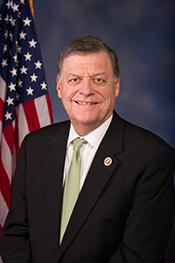
Mr. Speaker, I thank the gentleman from Virginia for yielding me this time. I rise in support of H. Res. 581, not simply because I have the great honor to represent 15,000 civilian employees at…
Mr. Speaker, I thank the gentleman from Virginia for yielding me this time.
I rise in support of H. Res. 581, not simply because I have the great honor to represent 15,000 civilian employees at Tinker Air Force Base and 6,000 at Ft. Sill Army Post and thousands of others throughout the district; not just because my own father, who had a distinguished 20- year career in the United States Air Force, followed that with, I think, an equally distinguished 20-year career as a civilian employee at Tinker Air Force Base, but because I think H. Res. 581 expresses equity, good management, smart personnel policy, and, frankly, is also an asset to our national defense.
Opponents of the idea of equal pay for military and civilian personnel quite often point to the inflation issue as something that they focus on. Frankly, I think the real question is the 32 percent wage gap between private sector and public sector employees, something that this House and this government has historically tried to address over time. I think we should continue on that path.
I also think it is of the utmost importance that we retain qualified personnel in Federal civilian service. Over 50 percent of that workforce is now within 5 years of retirement at Tinker Air Force Base. It is an extraordinarily skilled force. It needs to be encouraged; and, frankly, we need to have the incentives to recruit equally qualified people in the future.
I think in the end, Mr. Speaker, this is simply a matter of good policy. I have good friends on both sides of this issue. I think the motives are very good, but the reality is we know we need a first-rate military. We know we need to pay for that. We need a first-rate civilian personnel force to back them up when we are in conflict and, frankly, when we are not. So I am very proud to support this particular resolution.
Mr. Speaker, I rise in favor of H. Res. 581, which urges this administration to provide pay parity to civilian government workers and uniformed government workers. I was greatly disappointed at the…
Mr. Speaker, I rise in favor of H. Res. 581, which urges this administration to provide pay parity to civilian government workers and uniformed government workers.
I was greatly disappointed at the President's meager pay raise for Federal workers and feel it should be closer in line to the raise our uniformed service members received. I represent the Rock Island Arsenal, which employs about 6,000 civilian Department of Defense workers. Many of these employees are directly supporting our uniformed personnel in the war on terror. This includes many working around the clock to produce an urgent order of armored kits for our Humvees and trucks being sent to Iraq. Hundreds of other workers are either deployed or recently deployed from service in the Middle East to support our service members. Yet, unlike their uniformed counterparts, they only received modest pay increases.
Not only are Defense Department civilian workers serving in the war on terror, but Federal fire fighters, police, marshals, and armed agents of the FBI, DEA, ATF, Amtrak, Postal Service, and numerous other agents.
This administration wants to outsource our Federal employees, rewrite their labor rules, and ask them to do more with less. And then they hit them in their pocket book. We need to support our Federal workers and this resolution sends a strong message.
I urge my colleagues to support this bill and let the President know our Federal workers deserve his respect.
Mr. Tom Davis of Virginia. Mr. Speaker, I yield back the balance of my time.
Show 1 more
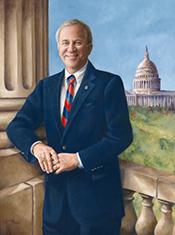
Mr. Speaker, I disagree with the gentleman from Maryland's characterization of Federal civilian employees as second-rate citizens. I have the time. Do I have the time? No, I do not. I yield to the…
Mr. Speaker, I disagree with the gentleman from Maryland's characterization of Federal civilian employees as second-rate citizens.
I have the time. Do I have the time?
No, I do not.
I yield to the gentleman from Maryland for clarification.
Mr. Speaker, I accept the correction, and I thank the gentleman.
Just the point I want to make to the gentleman from Maryland (Mr. Hoyer), I know he is a very strong advocate, along with my other colleague for the Federal civilian workforce. I stand here an advocate of the military, and there is a tremendous pay gap; and every time we try to close that pay gap for the military, it has been hard because we come here to the floor, in the 12 years I have been here, and he says he agrees with me, but we have got to move the Federal civilian at the same time. And I just want him to know it is very hard.
Bill Text
2 versions available
        [Congressional Bills 108th Congress]
[From the U.S. Government Publishing Office]
[H. Res. 585 Engrossed in House (EH)]

In the House of Representatives, U.S.,

March 31, 2004.
Resolved, That upon the adoption of this resolution it shall be in order to
consider in the House the resolution (H. Res. 581) expressing the sense of the
House of Representatives regarding rates of compensation for civilian employees
and members of the uniformed services of the United States. The resolution shall
be considered as read for amendment. The previous question shall be considered
as ordered on the resolution and preamble to final adoption without intervening
motion except: (1) one hour of debate equally divided and controlled by the
chairman and ranking minority member of the Committee on Government Reform; and
(2) one motion to recommit which may not contain instructions.
Attest:

Clerk.