H.Res. 628
Providing for consideration of the resolution (H. Res. 627) deploring the abuse of persons in United States custody in Iraq, regardless of the circumstances of their detention, urging the Secretary of the Army to bring to swift justice any member of the Armed Forces who has violated the Uniform Code of Military Justice, expressing the deep appreciation of the Nation to the courageous and honorable members of the Armed Forces who have selflessly served, or are currently serving, in Operation Iraqi Freedom, and for other purposes.
Show full titleHide full title

Legislative Activity
Stay on top of the latest movement without scrolling through every action
Motion to reconsider laid on the table Agreed to without objection.
May 6, 2004 • 12:59 PM
View full timeline
Introduced in House
May 5, 2004
The House Committee on Rules reported an original measure, H. Rept. 108-480, by Mr. Hastings (WA).
May 6, 2004
Rule provides for consideration of H. Res. 627 with 1 hour of general debate. Motion to recommit allowed. Measure will be considered read. Bill is closed to amendments.
May 6, 2004 • 7:47 AM
Placed on the House Calendar, Calendar No. 173.
May 6, 2004
Considered as privileged matter. (consideration: CR H2666-2678)
May 6, 2004 • 11:28 AM
DEBATE - The House proceeded with one hour of debate on H. Res. 628.
May 6, 2004 • 11:29 AM
On ordering the previous question Agreed to by the Yeas and Nays: 218 - 201 (Roll no. 147). (text: CR H2678)
May 6, 2004 • 12:59 PM
Passed/agreed to in House: On agreeing to the resolution Agreed to by voice vote.(text: CR H2666)
May 6, 2004 • 12:59 PM
On agreeing to the resolution Agreed to by voice vote. (text: CR H2666)
May 6, 2004 • 12:59 PM
Motion to reconsider laid on the table Agreed to without objection.
May 6, 2004 • 12:59 PM
Voting History
1 vote recorded • Roll call available
Floor Debate
23 membersWhat members said about H.Res. 628 on the floor
 JPM
JPM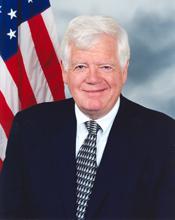 JM
JM DH
DH IS
IS DRO+18
Floor Debate
23 membersWhat members said about H.Res. 628 on the floor
Mr. Speaker, I yield myself such time as I may consume. (Mr. McGOVERN asked and was given permission to revise and extend his remarks.) Mr. Speaker, I thank the gentleman from Washington for yielding…
Mr. Speaker, I yield myself such time as I may consume.
(Mr. McGOVERN asked and was given permission to revise and extend his remarks.)
Mr. Speaker, I thank the gentleman from Washington for yielding me the customary 30 minutes.
Mr. Speaker, we are here this morning to carry out a very grave duty. We are here to express the horror felt by the American people upon seeing the graphic images and learning of the torture, abuse, brutalization, and humiliation of Iraqi detainees at the Abu Ghraib prison.
We are here to condemn such acts.
But we are also here to do much more. We need to make clear that this Congress not only condemns these actions, but demands a full investigation and accountability for those who perpetrated these acts, those who ordered these acts, those who turned a blind eye to these acts, and those in the chain of command who failed to act upon repeated warnings and reports of abuse of Iraqi detainees.
Mr. Speaker, I firmly believe that the overwhelming majority of our uniformed men and women currently on active duty in Iraq, Afghanistan and elsewhere carry out their duties in an exemplary manner. They have represented the United States in perilous times with great distinction and great honor. And it is critical that Congress not blindly accept the scapegoating of a few enlisted men and women when there is a much more serious, troubling, high-ranking, and systemic problem that needs our most serious attention.
In December last year, Human Rights Watch issued a searing report on inhumane conditions and abuses of detainees under U.S. authority in Afghanistan.
We now know from the media that the International Committee for the Red Cross has also been urging U.S. military authorities to make substantial changes on how detainees are treated at prison facilities throughout Iraq.
Mr. Speaker, this is a grave and serious crisis, and I do not use the word ``crisis'' lightly. It is a crisis for our relations with the people of Iraq. It is a crisis for our relations with our allies. It is a crisis for our intentions to create a stable and more democratic Middle East. It is a crisis for our Armed Forces, whose honor has been stained by these revelations. It is a crisis for our Nation whose honor, intentions, reputation, and moral authority are now suspect throughout the world. It is a crisis for the safety of our troops in the field and the safety of our homeland.
Mr. Speaker, I fear for every American, military and civilian, who is now held captive in Iraq. For how can we demand standards for the humane treatment of our own citizens when it appears to many that we have turned our backs on those very standards and international law in our treatment of foreign detainees?
Mr. Speaker, Congress needs to carry out its own thorough investigation, not just about what happened at one isolated prison in Iraq, but in the breakdown in chain of command and the context within the Armed Forces that created such a climate for these crimes to take place.
I believe the conditions that led to abuse were created at the very top when our Secretary of Defense announced early in the war against terrorism that the Geneva Conventions would not apply to many of our actions, especially those concerning detainees.
I believe the conditions that led to abuse were created at the very top when independent monitors were denied access to prisons and detention facilities.
I believe the conditions that led to abuse were created at the very top when decisions were made to assign troops, many of whom were inexperienced in prisoner treatment and the rights of prisoners, rather than to troops who have been trained for such duty.
I believe the conditions that led to abuse were created at the very top when information and reports were withheld from the relevant intelligence, defense, and foreign policy Congressional committees regarding these abuses.
Mr. Speaker, I also believe that this Congress needs to take a hard and serious look at the use of private contractors engaged in interrogation of prisoners and ensure that their role in these abuses is fully investigated and punished.
But even more importantly, I believe the President of the United States must act. The President must demonstrate exactly how serious the United States is about changing the conditions that led to these abuses.
The President prides himself on being a plain-spoken, straight- shooting man of action. This moment desperately calls for some plain speaking and accountability. Anonymous leaks to the news media about the President of the United States ``privately chiding'' the Secretary of Defense simply will not do.
Mr. Speaker, Donald Rumsfeld needs to resign as Secretary of Defense, and if he does not do so, President Bush should fire him. No other action, no other words would send as strong a signal to the world that the United States is serious about fixing what is wrong in Iraq.
Mr. Speaker, I regret that this resolution required a rule for debate. I regret that unanimous consent could not be obtained. But I firmly believe that this resolution needs to assert the oversight responsibilities, our own accountability, and investigate these abuses and the systems that created a climate of abuse. We cannot call for accountability by others and then shirk our own responsibilities. I firmly believe that we must investigate the roles of both our uniformed personnel and private contractors in these abuses, and I would have hoped that the majority would believe the same.
Mr. Speaker, at the conclusion of this debate, I will move the previous question. If defeated, I will offer an amendment to the rule allowing for the consideration of an amendment to be offered by the gentleman from Missouri (Mr. Skelton), the ranking member of the House Committee on Armed Services, affirming the need for a bipartisan congressional investigation to
be conducted immediately into these allegations of abuse, including those by civilian contractor personnel and into systemic chain of command and other systemic deficiencies that contributed to such abuse.
I hope that my colleagues on both sides of the aisle will join me in this effort to affirm the need for the Congress to carry out its constitutional duties of oversight.
Mr. Speaker, I reserve the balance of my time.
Mr. Speaker, I yield 3 minutes to the gentleman from Florida (Mr. Hastings), a member of the Committee on Rules and the Permanent Select Committee on Intelligence.
Mr. Speaker, I yield 2 minutes to the gentlewoman from California (Ms. Lee).
Mr. Speaker, I yield 1\1/2\ minutes to the gentleman from Washington (Mr. Inslee).
(Mr. INSLEE asked and was given permission to revise and extend his remarks.)
Mr. Speaker, I yield 3 minutes to the gentleman from Wisconsin (Mr. Obey).
Mr. Speaker, I yield 2 minutes to the gentleman from Oregon (Mr. Blumenauer).
Mr. Speaker, I yield 1 minute to the gentleman from Michigan (Mr. Levin).
(Mr. LEVIN asked and was given permission to revise and extend his remarks.)
Mr. Speaker, I yield 1 minute to the gentlewoman from Oregon (Ms. Hooley).
Mr. Speaker, I yield 3 minutes to the gentleman from Georgia (Mr. Lewis).
Mr. Speaker, I yield 1 minute to the gentlewoman from Illinois (Ms. Schakowsky).
Mr. Speaker, I yield 1\1/2\ minutes to the gentleman from Washington (Mr. McDermott).
(Mr. McDERMOTT asked and was given permission to revise and extend his remarks, and include extraneous material.)
Mr. Speaker, I yield 2\1/2\ minutes to the gentleman from Massachusetts (Mr. Frank).
Mr. Speaker, I yield 15 seconds to the gentleman from Massachusetts (Mr. Frank).
Mr. Speaker, I yield myself the balance of my time.
Mr. Speaker, all Americans have been horrified by the pictures and accounts of inhumane treatment of detainees in Iraq. The conduct in those pictures is absolutely intolerable, and the United States must take swift and decisive action to investigation and resolve this terrible incident and make sure it never happens again.
While this resolution calls on the Secretary of the Army to conduct a full and thorough investigation into the allegations of mistreatment, take corrective action against those responsible and ensure that it never happens again, I believe Congress must also do its job and conduct its own investigation.
Mr. Speaker, Congress was never notified about the problems at Abu Ghraib prison, even though the Department of Defense had a report outlining the conditions there 3 months ago. As a partner in the War on Terror, Congress absolutely has not only the right, but the responsibility to investigate what went wrong up and down the chain of command.
So today, Mr. Speaker, I urge a ``no'' vote on the previous question. If the previous question is defeated, I will offer an amendment to the rule allowing for the consideration of an amendment offered by the gentleman from Missouri (Mr. Skelton) affirming the need for bipartisan congressional investigations into these allegations are of abuse, including those by U.S. civilian contractor personnel or other U.S. civilians, and into the chain of command and other deficiencies that contributed to such abuse.
Let me be clear, Mr. Speaker, voting ``no'' on the previous question will not prevent this House from voting on the underlying resolution, it will simply allow for the consideration of the Skelton amendment and allow the House to conduct a bipartisan investigation. It will allow us to do our job, what the people we represent expect us to do.
Congress is a full partner in the war on terror. We need to do our job. We cannot call for accountability by others and then shirk our own responsibility. Let us do our part to resolve this awful situation and restore confidence and trust in our Nation and in our military.
I urge a ``no'' vote on the previous question.
Mr. Speaker, I include the following material for the Record.
[From the New York Times, May 6, 2004]
Restoring Our Honor
(By Thomas L. Friedman)
We are in danger of losing something much more important
that just the war in Iraq. We are in danger of losing America
as an instrument of moral authority and inspiration in the
world. I have never known a time in my life when America and
its president were more hated around the world than today. I
was just in Japan, and even young Japanese dislike us. It's
no wonder that so many Americans are obsessed with the finale
of the sitcom ``Friends'' right now. They're the only friends
we have, and even they're leaving.
This administration needs to undertake a total overhaul of
its Iraq policy; otherwise, it is courting a total disaster
for us all.
That overhaul needs to begin with President Bush firing
Secretary of Defense Donald Rumsfeld--today, not tomorrow or
next month, today. What happened in Abu Ghraib prison was, at
best, a fundamental breakdown in the chain of command under
Mr. Rumsfeld's authority, or, at worst, part of a deliberate
policy somewhere in the military-intelligence command of
sexually humiliating prisoners to soften them up for
interrogation, a policy that ran amok.
Either way, the secretary of defense is ultimately
responsible, and if we are going to rebuild our credibility
as instruments of humanitarian values, the rule of law and
democratization, in Iraq or elsewhere, Mr. Bush must hold his
own defense secretary accountable. Words matter, but deeds
matter more. If the Pentagon leadership ran any U.S. company
with the kind of abysmal planning in this war, it would have
been fired by shareholders months ago.
I know that tough interrogations are vital in a war against
a merciless enemy, but outright torture, or this sexual-
humiliation-for-entertainment, is abhorrent. I also know the
sort of abuse that went on in Abu Ghraib prison goes on in
prisons all over the Arab world every day, as it did under
Saddam--without the Arab League or Al Jazeera ever saying a
word about it. I know they are shameful hypocrites, but I
want my country to behave better--not only because it is
America, but also because the war on terrorism is a war of
ideas, and to have any chance of winning we must maintain the
credibility of our ideas.
We were hit on 9/11 by people who believed hateful ideas--
ideas too often endorsed by some of their own spiritual
leaders and educators back home. We cannot win a war of ideas
against such people by ourselves. Only Arabs and Muslims can.
What we could do--and this was the only legitimate rationale
for this war--was try to help Iraqis create a progressive
context in the heart of the Arab-Muslim world where that war
of ideas could be fought out.
But it is hard to partner with someone when you become so
radioactive no one wants to stand next to you. We have to
restore some sense of partnership with the world if we are
going to successfully partner with Iraqis.
Mr. Bush needs to invite to Camp David the five permanent
members of the U.N. Security Council, the heads of both NATO
and the U.N., and the leaders of Egypt, Jordan, Saudi Arabia
and Syria. There, he needs to eat crow, apologize for his
mistakes and make clear that he is turning a new page.
Second, he needs to explain that we are losing in Iraq, and
if we continue to lose the U.S. public will eventually demand
that we quit Iraq, and it will then become Afghanistan-on-
steroids, which will threaten everyone. Third, he needs to
say he will be guided by the U.N. in forming the new
caretaker government in Baghdad. And fourth, he needs to
explain that he is ready to listen to everyone's ideas about
how to expand our force in Iraq, and have it work under a new
U.N. mandate, so it will have the legitimacy it needs to
crush any uprisings against the interim Iraqi government and
oversee elections--and then leave when appropriate. And he
needs to urge them all to join in.
Let's not lose sight of something--as bad as things look in
Iraq it is not yet lost, for one big reason: America's
aspirations for Iraq and those of the Iraqi silent majority,
particularly Shiites and Kurds, are still aligned. We both
want Iraqi self-rule and then free elections. That overlap of
interests, however clouded, can still salvage something
decent from this war--if the Bush team can finally screw up
the courage to admit its failures and dramatically change
course.
Yes, the hour is late, but as long as there's a glimmer of
hope that this Bush team will do the right thing, we must
insist on it, because America's role in the world is too
precious--to America and to the rest of the world--to be
squandered like this.
Mr. Speaker, I yield back the balance of my time.
Mr. Speaker, will the gentleman yield?
Mr. Speaker, I just want to point out a couple of things.
First of all, hearings are not investigations, and a lot of us feel that what we are doing here is just kind of shirking our responsibility. So a vote for the previous question means a vote against bipartisan congressional investigations. No one on the other side has yet explained to us why, in fact, a bipartisan investigation is a bad idea, why we should not be allowed to do our job. That is what we are asking for here.
Mr. Speaker, I object to the vote on the ground that a quorum is not present and make the point of order that a quorum is not present.
Mr. Speaker, we all know what is going on out here today. We are passing a CYA resolution to limit the damage. The Christian Science Monitor carries the story of Mr. Miklaszewski from NBC News who…
Mr. Speaker, we all know what is going on out here today. We are passing a CYA resolution to limit the damage. The Christian Science Monitor carries the story of Mr. Miklaszewski from NBC News who asked the question of a Pentagon official about the soldiers involved. He said, ``You mean the six morons who lost the war?''
The decision has been made in the Pentagon what they are going to do to those six, but this resolution does not go wide and deep like it ought to. This was not six young people that we are going to blame and make scapegoats and send them out in the wilderness. This has to go all of the way to Mr. Rumsfeld, the Secretary of War.
A Scottish newspaper, the Sunday Herald, said, ``The pictures that lost the war. The grim images of American and British soldiers torturing Iraqi prisoners has taken the moral high ground from Blair and Bush.'' And the article finishes with a quote from Lieutenant Colonel Retired Bill Cowan of the United States Marines, ``We went to Iraq to stop things like this from happening; and, indeed, here they are happening under our tutelage. If we do not tell this story, these kinds of things will continue and we will end up getting paid 100 or 1,000 times.''
The other side can try and limit the damage here with this and say let us keep it in the Secretary of the Army, but the fact is that the world knows much more broadly.
[From the Sunday Herald, May 2, 2004]
The Pictures That Lost The War
(By Neil Mackay)
It's an image that would do Saddam proud. A terrified
prisoner, hooded and dressed in rags, his hands out-stretched
on either side of him, electrodes attached to his fingers and
genitals. He's been forced to stand on a box about one-foot
square. His captors have told him that, if he falls off the
box, he'll be electrocuted.
The torture victim was an Iraqi and his torturers were
American soldiers. The picture captures the moment when
members of the coalition forces, who styled themselves
liberators, were exposed as torturers. The image of the wired
and hooded Iraqi was one of a series of photographs, leaked
by a horrified U.S. soldier inside Saddam's old punishment
centre, Abu Ghraib--now a U.S. POW camp.
When the images were flashed around the world by America's
CBS television network last Wednesday, there was a smug
feeling within the U.K. that British troops would never
behave like that to their prisoners. But on Friday night, the
U.K. was treated to images--courtesy of the Daily Mirror--of
British soldiers urinating on a blood-stained Iraqi captive,
holding guns against the man's head, stamping on his face,
kicking him in the mouth and beating him in the groin with a
rifle butt.
The pictures of U.S. soldiers torturing their captives have
the added horror of sexual abuse. In five of the 14 images
that the Sunday Herald has seen, a female soldier--identified
as Lynndie England, a 21-year-old from a West Virginia
trailer park--is playing up to the camera while her captives
are tortured. In one picture, she's smiling and giving the
thumbs-up. Her hand rests on the buttocks of a naked and
hooded Iraqi who has been forced to sit on the shoulders of
another Iraqi prisoner.
In another, she is sprawled laughing over a pyramid of
naked Iraqis. A male colleague stands behind her grinning.
Later, she's got a cigarette clenched between grinning lips
and is pointing at the genitals of a line of naked, hooded
Iraqis. A third snap shows her embracing a colleague as a
naked Iraqi lies before them.
In other pictures, two naked Iraqis are forced to simulate
oral sex and a group of naked men are made to clamber on to
each other's backs. One dreadful picture features nothing but
the bloated face of an Iraqi who has been beaten to death.
His body is wrapped in plastic.
Other pictures, which the world has not seen, but which are
in the hands of the U.S. military, include shots of a dog
attacking a prisoner. An accused soldier says dogs are ``used
for intimidation factors''.
There are also pictures of an apparent male rape. An Iraqi
POW claims that a civilian translator, hired to work in the
prison, raped a male juvenile prisoner. He said: ``They
covered all the doors with sheets. I heard the screaming . .
. and the female soldier was taking pictures.''
The British pictures show a hooded Iraqi aged between 18-20
on the floor of a military truck being brutalized. According
to two squaddies who took part in the torture, but later blew
the whistle, the Iraqi's ordeal lasted eight hours and he was
left with a broken jaw and missing teeth. He was bleeding and
vomited when his captors threw him out of a speeding truck.
No one knows if he lived or died.
One of the British soldiers said: ``Basically this guy was
dying as he couldn't take any more. An officer came down. It
was `Get rid of him--I haven't seen him'.'' The other
whistle-blower said he had witnessed a prisoner being beaten
senseless by troops. ``You could hear your mate's boots
hitting this lad's spine . . . One of the lads broke his
wrist off a prisoner's head. Another nearly broke his foot
kicking him.''
According to the British soldiers, the military police have
found a video of prisoners being thrown from a bridge, and a
prisoner was allegedly beaten to death in custody by men from
the Queen's Lancashire Regiment. Although there is a debate
about the veracity of the images, Armed Forces Minister Adam
Ingram said that if the pictures were real, they were
``appalling''. A Downing Street spokesman said Tony Blair
expected ``the highest standards of conduct from our forces
in Iraq''. The U.K.'s most senior army officer, General Mike
Jackson, said that if the allegations were true then those
involved were ``not fit to wear the Queen's uniform.'' The
Defense Ministry is in crisis over the pictures as top
brass know they ruin any hope of U.K. forces winning Iraqi
hearts and minds.
The U.S. torture pictures were taken by members of the
American 800th Military Police Brigade sometime late last
year. Following an investigation, 17 soldiers were removed
from duty for mistreating captives. Six face court martial.
Brigadier General Janice Karpinski, who ran Abu Ghraib and
three other U.S. military jails, is suspended and faces court
martial. Prior to the relevations, Karpinski assured the U.S.
media that Abu Ghraib was run according to ``international
standards''.
Brigadier General Mark Kimmitt, deputy director of
coalition operations in Iraq, said he was ``appalled''. He
added: ``These are our fellow soldiers. They were the same
uniform as us, and they let their fellow soldiers down. Our
soldiers could be taken prisoner as well--and we expect our
soldiers to be treated well by the adversary, by the enemy--
and if we can't hold ourselves up as an example of how to
treat people with dignity and respect . . . we can't ask that
other nations do that to our soldiers as well. This is wrong.
This is reprehensible. But this is not representative of the
150,000 soldiers over here.''
But these soldiers aren't simply mavericks. Some accused
claim they acted on the orders of military intelligence and
the CIA, and that some of the torture sessions were under the
control of mercenaries hired by the U.S. to conduct
interrogations. Two ``civilian contract'' organizations
taking part in interrogations at Abu Ghraib are linked to the
Bush administration.
California-based Titan Corporation says it is ``a leading
provider of solutions for services for national security''.
Between 2003-04, it gave nearly $40,000 to George W. Bush's
Republican Party. Titan supplied translators to the military.
CACI International Inc. describes its aim as helping
``America's intelligence community in the war on terrorism''.
Richard Armitage, the current deputy U.S. secretary of state,
sat on CACI's board.
No civilians, however, are facing charges as military law
does not apply to them. Colonel Jill Morgenthaler, from
CentCom, said that one civilian contractor was accused along
with six soldiers of mistreating prisoners. However, it was
left to the contractor to ``deal with him''. One civilian
interrogator told army investigators that he had
``unintentionally'' broken several tables during
interrogations as he was trying to ``fear-up'' detainees.
Lawyers for some accused say their clients are scapegoats
for a rogue prison system, which allowed mercenaries to give
orders to serving soldiers. A military report said private
contractors were at times supervising the interrogations.
Kimmitt said: ``I hope the investigation is including not
only the people who committed the crimes, but some of the
people who might have encouraged the crimes as well because
they certainly share some responsibility.''
Last night, CACI vice-president Jody Brown said: ``The
company supports the Army's investigation and acknowledges
that CACI personnel in Iraq volunteered to be interviewed by
army officials in connection with the investigation. The
company has received no indication that any CACI employee was
involved in any alleged improper conduct with Iraqi
prisoners. Nonetheless, CACI has initiated an independent
investigation.''
However, military investigators said: ``A CACI
investigator's contract was terminated because he allowed
and/or instructed military police officers who were not
trained in interrogation techniques to facilitate
interrogations which were neither authorised nor in
accordance with regulations.''
One of the U.S. soldiers facing court martial is reservist
Staff Sergeant Chip Frederick--the equivalent of a part-time
territorial army squaddie. In civvy street, he was a prison
warder in Virginia. Frederick has said he will plead not
guilty and blame the army for the torture at Abu Ghraib. ``We
had no support, no training whatsoever,'' he said, claiming
he had never been shown the Geneva Convention. ``I kept
asking my chain of command for certain things like rules and
regulations and it just wasn't happening.''
Frederick also blamed the intelligence services for
encouraging the brutality.
Among the agencies coming to the prison were ``military
intelligence'', said Frederick, adding: ``We had all kinds of
other government agencies, FBI, CIA.''
In letters and e-mails home, he wrote: ``Military
intelligence has encouraged and told us `Great job'.'' He
added: ``They usually don't allow others to watch them
interrogate. But since they like the way I run the prison,
they have made an exception . . . We help getting [the PoWs]
to talk with the way we handle them . . . We've had a very
high rate with our style of getting them to break. They
usually end up breaking within hours.''
Frederick said prisoners were made to live in cramped
windowless cells with no clothes, running water or toilet for
up to three days. Others were held for 60 days before
interrogation. He said one prisoner with a mental health
condition was ``shot with non-lethal rounds''. An
interrogator told soldiers to ``stress one prisoner out as
much as possible [as] he wanted to talk to him the next
day''. Frederick also said one prisoner was ``stressed so bad
that the man passed away''. Prisoners were covered in lice
and some had tuberculosis. None were allowed to pray.
Frederick said his commander sanctioned all this.
The former commander of Guantanamo Bay prison, Major
General Geoffrey Miller, has now been made deputy commander
for containment operations to overhaul the Iraqi detention
centres.
Frederick, unlike mercenaries, faces jail and being thrown
out of the army. His lawyer, Gary Myers said: ``The elixir of
power, the elixir of believing that you're helping the CIA,
for God's sake, when you're from a small town in Virginia,
that's intoxicating. And so, good guys sometimes do things
believing that they are being of assistance and helping a
just cause . . . and helping people they view as important.''
Kimmitt admitted: ``I'd like to sit here and say that these
are the only prisoner abuse cases that we're aware of, but we
know that there have been others.''
This also applies to Britain. A Sunday Herald investigation
has found that at least seven civilians have died in British
custody in Iraq.
Describing the images of abuse as an ``atrocity'', Abdel
Bari Atwan, editor of the newspaper Al-Quds Al-Arabi, said:
``The liberators are worse than the dictators.'' His
sentiments have been echoed around the world. It is hard to
find a country or agency that hasn't condemned the torture of
Iraqi prisoners. From the Red Cross to the UN and from
Amnesty to the coalition's loyal ``deputy in the Pacific'',
the Australian premier John Howard, the world is united in
horror against the actions of the US and UK forces.
The awful cost of these acts of barbarism by Britain and
America is summed up by ex-US Marine Lieutenant Colonel Bill
Cowan: ``We went to Iraq to stop things like this from
happening, and indeed, here they are happening under our
tutelage . . . If we don't tell this story, these kind of
things will continue, and we'll end up getting paid back 100
or 1000 times over.''
Mr. Speaker, pursuant to House Resolution 628, I call up the resolution (H. Res. 627) deploring the abuse of persons in United States custody in Iraq, regardless of the circumstances of their…
Mr. Speaker, pursuant to House Resolution 628, I call up the resolution (H. Res. 627) deploring the abuse of persons in United States custody in Iraq, regardless of the circumstances of their detention, urging the Secretary of the Army to bring to swift justice any member of the Armed Forces who has violated the Uniform Code of Military Justice, expressing the deep appreciation of the Nation to the courageous and honorable members of the Armed Forces who have selflessly served, or are currently serving, in Operation Iraqi Freedom, and for other purposes, and ask for its immediate consideration.
Mr. Speaker, I yield myself such time as I may consume.
Mr. Speaker, during the debate on the rule, I think every Member who was listening to the debate as they listened to a number of speeches being made over and over, sometimes the same things being said by different Members, they understand the subject which we are addressing today, which is the criminal acts of what has been identified so far as six individuals, with three of them having been recommended under article 32 of the UCMJ to the court martial convening authority for general court martial for abuse of prisoners, assault, and dereliction of duty.
That is one of the purposes of this resolution, for this House to condemn those activities. Understand that the criminal prosecutions have not taken place yet, the trials have not been held and that we are not passing judgment at this point on people who are being focused on as potential defendants in these cases. But I thought it was important, Mr. Speaker, to talk about the other people, because the tendency of the media and the discussion has been to forget about the 300,000 uniformed Americans who are serving our country with bravery, with compassion, with ingenuity and doing great things, not in their own communities, but in communities thousands of miles away where the only reward they may receive is from a kid that they have given a soccer ball to like hundreds of the 101 Airborne members, or for people whom they have hooked up a water supply as people have done in all of the cities throughout central Iraq or children that have been vaccinated by American medics. The only thanks they are going to get, obviously, is not going to come from the American press at this point because the American press is fixated on what you might call the six bad apples who have been identified to date, and there may be more. We all know that.
But the 300,000 who served honorably, they are not going to get too much attention here because it is not in keeping with a good sound bite today if you want to get on television to talk about the good things that have been done in the country.
My great partner on this Committee on Armed Services, the gentleman from Missouri (Mr. Skelton), was in full accord with this. We wanted to make sure that the good people got talked about and that this did not turn into the action of the demoralization of our fighting forces in Iraq.
So we wanted to talk about the good things they have done. And this resolution, and I would commend it to every Democrat and Republican, from the gentlewoman from California (Ms. Pelosi) and all of the others who may have had trouble or problems with this resolution, I would commend it to them to approve and to support and to vote for.
I just wanted to say, Mr. Speaker, I am looking at right now some of the untold stories; and I wanted to cite an untold story to you, a couple of them. It is true that there were abuses so far by six people who have been identified in this Abu Ghraib prison; but while that was going on, Gunnery Sergeant Jeffrey Bohr of the United States Marine Corps was awarded the Silver Star posthumously for conspicuous gallantry and intrepidity in action against the enemy while serving as Company Gunnery Sergeant, Company A, 1st Battalion, 5th Marine Regiment, Regimental Combat Team 5, 1st Marine Division.
While moving through narrow streets toward the objective, the convoy took intense small arms and rocket-propelled grenade fire. Throughout this movement, Gunnery Sergeant Bohr delivered accurate effective fires on the enemy, while encouraging his Marines and supplying critical information to his company commander. When the lead vehicles of the convoy reached a dead end and were subjected to heavy enemy fire, Gunnery Sergeant Bohr continued to boldly engage the enemy while calmly maneuvering his Marines to safety.
Upon learning of a wounded Marine in a forward vehicle, Gunnery Sergeant Bohr immediately coordinated medical treatment and evacuation. Moving to the position of the injured Marine, Gunnery Sergeant Bohr continued to lay down a high volume of suppressive fire, simultaneously guiding the medical evacuation vehicle until he was mortally wounded by enemy fire.
Yes, we had abuses by some six people. We have had apparent abuses by some six people who are now going through the criminal justice system of the U.S. Army, which I think our Members will find moves a lot faster than the domestic justice system. But at the same time, Corporal Marco Martinez was undertaking actions which led to him being awarded the second highest award that our government can give for heroism, the Navy Cross.
So I thought I might take a little bit of this time that was intended to beat up the U.S. military, to congratulate some of those 300,000 people who have served U.S. so well.
Mr. Speaker, I reserve the balance of my time.
Mr. Speaker, I yield 2 minutes to the gentleman from North Carolina (Mr. Hayes).
Mr. Speaker, I yield 2 minutes to the gentlewoman from Virginia (Mrs. Jo Ann Davis).
Mr. Speaker, I yield 2 minutes to the gentleman from Connecticut (Mr. Simmons), one of our great veterans.
Mr. Speaker, I yield 3 minutes to the gentleman from New Jersey (Mr. Ferguson).
Mr. Speaker, I yield myself 2 minutes.
Mr. Speaker, I would like to address what the gentlewoman just said because she has made a mistake. She said that the 3-month-old investigation has only now come to light. I have in front of me the news release that I will give to the gentlewoman. As of January 16, which was 3 days after the soldier came forward and gave to his commanding officer the evidence that bad things were taking place at the prison, CENTCOM released a news release to every news agency in the world stating that an investigation has been initiated into reported incidents of detainee abuse.
So they announced to the world 3 days after the soldier came forward in January that an investigation had been started; and General Kimmet announced to the combined audiences of Fox News, MSNBC and CNN, by my calculations over 20 million people, on January 16 that an investigation had been started. Outside of that, nobody was told.
I yield to the gentlewoman from Connecticut.
Mr. Speaker, I will tell the gentlewoman the entire world was told by this news release.
Mr. Speaker, reclaiming my time, I think this is a very important point. The soldier came forward on January 13 and gave this evidence to his commanding officer that prisoners were being abused. CENTCOM announced to the world through their official news release that they were investigating this 3 days later; and General Kimmet, who was before an audience of some 20 million people three days later, January 16, announced it was in fact being investigated.
So the statement that the investigation has just now come to light is not accurate.
Mr. Speaker, will the gentleman yield?
Mr. Speaker, I would say that the investigation, there are now six investigations ongoing, the investigation that was started has identified some six individuals. Those are all people wearing uniform.
If the investigation reveals further people who are civilian contractors, those people can be punished under the laws of the United States which have been extended to theater.
Mr. Speaker, I yield 1 minute to the gentleman from Texas (Mr. Thornberry).
Mr. Speaker, I yield myself such time as I may consume.
I say to my good distinguished colleague I invite him to come to our committee hearing in which we are conducting oversight in this matter at 3 o'clock tomorrow afternoon, and I also remind him that we have now carried out by those people that we have trusted in uniform in the Iraqi theater and elsewhere, six investigations now ongoing into this particular matter, six investigations.
I yield to the gentleman from South Carolina.
Mr. Speaker, I would say to my colleague that we have three of the people involved in this who have been bound over to the court-martial convening authority for general courts martial, that is, for criminal prosecutorial activity, and to say to my colleague again, who has told me many times about how much he respects our people in uniform, that our people in uniform themselves, starting with the private who reported this, have six investigations ongoing. And I think part of our job is not just to have oversight, but also to trust to the honor and integrity of the people who wear the uniform, and we now have six investigations going forward.
So let us have this hearing tomorrow and see where we go from there, but
my feeling is we have good, competent, honorable people undertaking these investigations.
Mr. Speaker, I yield 2 minutes to the distinguished gentleman from Oklahoma (Mr. Cole), who cares so much about America's men and women in uniform.
Mr. Speaker, I yield myself 15 seconds.
To address the distinguished majority whip, the distinguished majority whip, like the previous speaker, is wrong. The statement was put out by the Army on January 15 that this investigation was taking place, 2 days after the soldier came forward. And 3 days after the soldier came forward, it was given in General Kimmitt's address to the combined audiences of Fox News, MSNBC, and CNN. That is not turning a blind eye.
I will give the gentleman the notice. It was put out on January 14. He can look at it.
Mr. Speaker, I yield 2 minutes to the gentleman from California (Mr. Cox).
Mr. Speaker, I yield myself 10 seconds.
Mr. Speaker, let me just say to my friend, you say some knew about this. The combined audiences of Fox News, MSNBC and CNN heard this in the daily briefing in January. So your statement that the administration turned a blind eye to it is not true. They initiated an investigation, once again initiated by General Sanchez, 3 days after the soldier came forward.
Mr. Speaker, I yield 2 minutes to the gentleman from Nebraska (Mr. Terry).
Mr. Speaker, I yield 2 minutes to the gentleman from Indiana (Mr. Buyer), a former member of the Committee on Armed Services, who is a colonel in the Army Reserve and was in fact a JAG officer at our POW camps in Gulf War I.
Mr. Speaker, I yield myself such time as I may consume just to reiterate the same thing that I have been stating, and that is that 2 days after the soldier in January reported to his superiors that abuses were taking place, the United States announced to the world in their press release that we were undertaking an investigation. And a few days after that, 4 days after the facts came forward, we announced to the combined audiences of Fox News, MSNBC and CNN, millions of people, that the investigations were taking place.
The investigations proceeded. We now have three individuals who are being recommended to the Court-Martial Convening Authority for court- martial for prisoner abuse, assault, dereliction of duty, and a large number of people in the chain of command have had their career ended, not because we found any connection between them and the acts, but because it was on their watch that these things took place.
I want to say just one thing about Mr. Rumsfeld before I recognize another speaker, Mr. Speaker. We have 135,000 good, hard-working, courageous uniformed men and women in theater. They are in contact in firefights on a daily basis. The job of the Secretary of Defense is to see to it that we win this war. He assigned to the legitimate, appropriate departments this investigation and told them to go forward, which they did, resulting in the criminal prosecution machine being set in motion under our court-martial authority, and he went back to trying to win this war. That is the appropriate action for the Secretary of Defense.
Mr. Speaker, I yield 2 minutes to my good friend, the gentleman from California (Mr. Thompson), a great member of the 173rd Airborne in the Vietnam War.
Mr. Speaker, I yield our remaining time to the gentleman from Texas (Mr. DeLay), the majority leader.
Mr. Speaker, I demand a recorded vote.
Mr. Speaker, I yield myself such time as I may consume. Mr. Speaker, I rise with heavy heart, a heavy heart for two reasons. The first reason is that a group of American soldiers forgot that they…
Mr. Speaker, I yield myself such time as I may consume.
Mr. Speaker, I rise with heavy heart, a heavy heart for two reasons. The first reason is that a group of American soldiers forgot that they were soldiers and they forgot that the middle name of a soldier is ``honor,'' in doing the despicable acts that they did in that prison. That breaks my heart. I know it breaks the hearts of Americans who saw those pictures and learned of those acts which border on the unspeakable.
But the seconds reason my heart is broken is that the occurrences happened between October and December of last year; they were reported in January of this year. A two star general in the Army, Major General Taguba was called to investigate and his report was rendered in February. And as ranking member on this committee, I found out about it this month, in May, not by any official sources, but through the news media.
Mr. Speaker, that also breaks my heart. We in Congress under the Constitution are the first of the three parts of government listed. We are the ones that raise the money and write the rules for those who serve in the military. We are an important part of the national security, and I think that we should be informed as quickly as possible when these very, very tragic occurrences happen.
Recently in the Wall Street Journal, on April 22, an administration official in response to the expenditure of appropriations funds regarding Iraq and the Middle East stated, ``If lawmakers do not ask questions, they do not get answers.''
Mr. Speaker, it is incumbent upon them to keep U.S. informed because we are the genesis of their funding. We are the genesis of the rules by which they in uniform operate and the defense of our Nation are concerned.
This error has become a mistake. The late John F. Kennedy once said, ``An error does not become a mistake until you refuse to correct it. Without debate, without criticism, no administration, no country can succeed and no republic can survive.''
We seem, Mr. Speaker, to have forgotten that.
I support this resolution, and I think it is necessary. It is a shameful series
of acts. I support this resolution because it deplores and condemns the abuse of those in custody. And it is not just about isolated cases of abuse. This incident could very well be the tipping of the security and reconstruction of Iraq. I hope that is wrong. But if we lose the trust of the Iraqi people, if we lose their hearts and minds, we cannot bring anything else effectively to that part of the world.
We must win back the trust, the safety of our troops, and the future of these citizens of Iraq. For that reason, I support this resolution. It urges the Secretary of the Army and the appropriate military authorities to complete a thorough investigation to bring anyone who committed crimes to justice. This applies regardless of who committed the crimes, military personnel, government agencies or private contractors.
The Iraqi people must see U.S. taking swift and strong action. As a matter of fact, we here in Congress and our chairman, the gentleman from California (Mr. Hunter), has announced that we will have a hearing on this very subject tomorrow in the hearing room 2118 at 3 o'clock with Secretary Rumsfeld. I think that is the right thing for the gentleman to have called, and I thank him for it publicly.
It is an important role for U.S. to have continuing oversight of this issue. We do need, in addition thereto, a congressional inquiry by the staff on the broader policy issues that were raised by this incident. I will underline that.
Finally, I believe this resolution appropriately points out that so many of our troops have served honorably, and the chairman is correct on that, done extraordinarily well in difficult circumstances.
Not long ago I attended a funeral over here at Arlington Cemetery of a staff sergeant from the Fourth District of Missouri, which I am privileged to represent. And these soldiers who forgot that they were soldiers caused his death, in so many respects, to have been in vain. We have to correct this and make sure that those who pay the ultimate sacrifice will be remembered and will be honored for the work that they do in Iraq to bring stability and some sort of representative government there.
We have to look at the chain of command. We have to look at the command atmosphere that allowed these occurrences to happen. So for this reason and the reason that we were not told promptly and the fact that we need not only the hearing tomorrow, which I am pleased we will have, we need a thorough investigation to go forward on this subject.
We must be successful in Iraq. We must show not just the Iraqi people, we must show the world the values of our country. We need to. And one way to do it is to proceed to investigate this and make this a very transparent, clear picture for the world to see.
Mr. Speaker, I thank you for this time. It would be well for those in authority to understand the admonition that sat on the desk of the late President Harry S Truman: ``The buck stops here.''
Keeping that in mind, let U.S. move forward and do the right thing, for the Iraqi people, for those who served so honorably and so well, and for those who paid for the sacrifice of their service. Let this be a reflection of the decency and honesty and thoroughness of the values of America in what we do.
Mr. Speaker, I reserve the balance of my time.
Mr. Speaker, I yield 3 minutes to the gentleman from New York (Mr. Rangel), who is the ranking member of the Committee on Ways and Means.
Mr. Speaker, may I inquire as to how much time we have remaining, please?
Mr. Speaker, I yield 3 minutes to the gentlewoman from California (Ms. Harman), who is the ranking member on the Permanent Select Committee on Intelligence.
Mr. Speaker, I yield to the gentleman from Maryland (Mr. Cardin) for the purpose of making a unanimous consent request.
(Mr. CARDIN asked and was given permission to revise and extend his remarks.)
Mr. Speaker, I yield 3 minutes to the gentlewoman from Connecticut (Ms. DeLauro), a senior member of the Committee on Appropriations.
Mr. Speaker, I yield for the purpose of making a unanimous consent request to the gentlewoman from California (Ms. Woolsey).
(Ms. WOOLSEY asked and was given permission to revise and extend her remarks.)
Mr. Speaker, I yield 1 minute to the gentleman from Michigan (Mr. Dingell), the ranking member of the Committee on Energy and Commerce.
(Mr. DINGELL asked and was given permission to revise and extend his remarks.)
Mr. Speaker, I yield for the purpose of making a unanimous consent request to the gentlewoman from Texas (Ms. Jackson- Lee).
(Ms. JACKSON-LEE of Texas asked and was given permission to revise and extend her remarks.)
Mr. Speaker, I yield 4 minutes to the gentleman from South Carolina (Mr. Spratt), the ranking member on the Committee on the Budget and also a senior member of the Committee on Armed Services.
(Mr. SPRATT asked and was given permission to revise and extend his remarks.)
Mr. Speaker, I yield 5 minutes to the gentleman from Maryland (Mr. Hoyer), who is the minority whip.
(Mr. HOYER asked and was given permission to revise and extend his remarks.)
Mr. Speaker, I yield 1 minute to the gentleman from Maryland (Mr. Hoyer), the minority whip.
Mr. Speaker, may I inquire how many minutes are left.
Mr. Speaker, I yield for the purpose of making a unanimous consent request to the gentleman from Massachusetts (Mr. Olver).
(Mr. OLVER asked and was given permission to revise and extend his remarks and include extraneous material.)
Mr. Speaker, I yield myself 30 seconds.
Mr. Speaker, I might say there was a serious attempt to have a bipartisan resolution today; but let me say that on this side we were not shown a draft until almost 6:30 last evening, and we were not permitted to share a copy with our leadership until 9:45. Our leadership was not given the opportunity to make a change on the draft that was given at that time, and we were not given a copy of the final version of the bill until after it had been introduced. When the leadership could not reach unanimous consent; we were not given the opportunity to offer an alternative, an amendment or even a motion to recommit. I was hoping we could do a better job of being bipartisan, but we are here and I intend to vote for this.
Mr. Speaker, I yield the balance of my time to the gentlewoman from California (Ms. Pelosi), the minority leader.
Mr. Speaker, this resolution will be minimally useful at best. I intend to vote for it. But it falls far short of what this House ought to be doing today. Lou Dobbs two days ago on CNN I think said…
Mr. Speaker, this resolution will be minimally useful at best.
I intend to vote for it. But it falls far short of what this House ought to be doing today.
Lou Dobbs two days ago on CNN I think said it best when he said that the reason the Commander in Chief needed to make a public apology for what happened in the prisons in Iraq was not just because that conduct was offensive to the Arab world but because it was offensive to basic American values. And I think Mr. Dobbs had it dead right.
Later on in that same program, Anthony Cordesman, a well-known defense expert, made the observation that the worst thing about this from the standpoint of American troops is that because the pictures associated with these violations of human rights will have inflamed the Arab world, that unfortunately it is likely that additional Americans will die because of that. And unfortunately, he also had it dead on.
This resolution needs to be amended, and there will be an effort to do that, to amend it to affirm that we need a bipartisan congressional investigation to conduct an investigation into these allegations of abuse, including those by U.S. civilian contractors and other civilians, and an investigation into the chain of command and other systemic deficiencies including the command atmosphere that may have contributed to such abuse. That is the minimum that is necessary.
Now, months ago I called for the resignation of the Secretary of Defense because I think the conduct of the civilian leadership of the Defense Department in conducting the affairs in Iraq after the war was spectacularly incompetent. So I do not need to go into that today.
Mr. Speaker, the following is an article from a Washington Post editorial on Mr. Rumsfeld's performance on this issue.
[From the Washington Post, May 6, 2004]
Mr. Rumsfeld's Responsibility
The Horrific abuses by American interrogators and guards at
the Abu Ghraib prison and at other facilities maintained by
the U.S. military in Iraq and Afghanistan can be traced, in
part, to policy decisions and public statements of Secretary
of Defense Donald H. Rumsfeld. Beginning more than two years
ago, Mr. Rumsfeld decided to overturn decades of previous
practice by the U.S. military in its handling of detainees in
foreign countries. His Pentagon ruled that the United States
would no longer be bound by the Geneva Conventions; that Army
regulations on the interrogation of prisoners would not be
observed; and that many detainees would be held incommunicado
and without
any independent mechanism of review. Abuses will take place
in any prison system. But Mr. Rumsfeld's decisions helped
create a lawless regime in which prisoners in both Iraq and
Afghanistan have been humiliated, beaten, tortured and
murdered--and in which until recently, no one has been held
accountable.
The lawlessness began in January 2002 when Mr. Rumsfeld
publicly declared that hundreds of people detained by U.S.
and allied forces in Afghanistan ``do not have any rights''
under the Geneva Conventions. That was not the case: At a
minimum, all those arrested in the war zone were entitled
under the conventions to a formal hearing to determine
whether they were prisoners of war or unlawful combatants. No
such hearings were held, but then Mr. Rumsfeld made clear
that U.S. observance of the convention was now optional.
Prisoners, he said, would be treated ``for the most part;''
in ``a manner that is reasonably consistent'' with the
conventions--which the secretary breezily suggested, was
outdated.
In one important respect, Mr. Rumsfeld was correct: Not
only could captured al Qaeda members be legitimately deprived
of Geneva Convention guarantees (once the required hearing
was held) but such treatment was in many cases necessary to
obtain vital intelligence and prevent terrorists from
communicating with confederates abroad. But if the United
States was to resort to that exceptional practice. Mr.
Rumsfeld should have established procedures to ensure that it
did so without violating international conventions against
torture and that only suspects who truly needed such
extraordinary handling were treated that way. Outside
controls or independent review could have provided such
safeguards. Instead, Mr. Rumsfeld allowed detainees to be
indiscriminately designated as beyond the law--and made
humane treatment dependent on the goodwill of U.S. personnel.
Much of what has happened at the U.S. detention center in
Guantanamo Bay is shrouded in secrecy. But according to an
official Army report, a system was established at the camp
under which military guards were expected to ``set the
conditions'' for intelligence investigations. The report by
Maj. Gen. Antonio M. Taguba says the system was later
introduced at military facilities at Bagram airbase in
Afghanistan and the Abu Ghraib prison in Iraq, even though it
violates Army regulations forbidding guards to participate in
interrogations.
The Taguba report and others by human right groups reveal
that the detention system Mr. Rumsfeld oversees has become so
grossly distorted that military police have abused or
tortured prisoners under the direction of civilian
contractors and intelligence officers outside the military
chain of command--not in ``exceptional'' cases, as Mr.
Rumsfeld said Tuesday, but systematically. Army guards have
held ``ghost'' prisoners detained by the CIA and even hidden
these prisoners from the International Red Cross. Meanwhile,
Mr. Rumsfeld's contempt for the Geneva Conventions has
trickled down: The Taguba report says that guards at Abu
Ghraib had not been instructed on them and that no copies
were posted in the facility.
The abuses that have done so much harm to the U.S. mission
in Iraq might have been prevented had Mr. Rumsfeld been
responsive to earlier reports of violations. Instead, the
publicly dismissed or minimized such accounts. He and his
staff ignored detained reports by respected human rights
groups about criminal activity at U.S.-run prisons in
Afghanistan, and they refused to provide access to facilities
or respond to most questions. In December 2002, two Afghan
detainees died in events that were ruled homicides by medical
officials; only when the New York Times obtained the story
did the Pentagon confirm that an investigation was underway,
and no results have yet been announced. Not until other media
obtained the photos from Abu Ghraib did Mr. Rumsfeld fully
acknowledge what had happened, and not until Tuesday did his
department disclose that 25 prisoners have died in U.S.
custody in Iraq and Afghanistan. Accountability for those
deaths has been virtually nonexistent: One soldier was
punished with a dishonorable discharge.
On Monday Mr. Rumsfeld's spokesman said that the secretary
had not read Mr. Taguba's report, which was completed in
early March. Yesterday Mr. Rumsfeld told a television
interviewer that he still hadn't finished reading it, and he
repeated his view that the Geneva Conventions ``did not
precisely apply'' but were only ``basic rules'' for handling
prisoners. His message remains the same: that the United
States need not be bound by international law and that the
crimes Mr. Taguba reported are not, for him, a priority. That
attitude has undermined the American military's observance of
basic human rights and damaged this country's ability to
prevail in the war on terrorism.
Mr. Speaker, I would just make this observation. The Congress has only two real abilities to effect events. The first is to use the power of the purse, and preliminary to doing that, to ask the right questions about what the intent of our government is before we get into something like Iraq. The Congress, unfortunately, settled for spongy answers beforehand.
But the second power that Congress has is the power of investigation. At least after the fact, this Congress ought to investigate from top to bottom what contributed to this outrageous chain of events that has been such a disgrace to our ability to stand up for basic American values. At least if we do that, we can try to ensure that something like this never happens again in the name of the United States of America.
Show 8 more

Mr. Speaker, I thank the gentleman for yielding time and for his tremendous leadership on behalf of the national security of our country. I also thank the gentleman for his attempt to develop a…
Mr. Speaker, I thank the gentleman for yielding time and for his tremendous leadership on behalf of the national security of our country. I also thank the gentleman for his attempt to develop a bipartisan resolution that would bring us all together and take the opportunity to send a true message to the world of democratic values.
Mr. Speaker, last Thursday, Secretary Rumsfeld came to the Congress and he briefed Members of the House of Representatives on the situation in Iraq. He neglected to tell Members of Congress that the situation in Iraq included this most unfortunate, disgraceful situation in the prison. He withheld that information from the Congress of the United States when he had full knowledge of it and apparently had full knowledge for a while.
Indeed, that very evening, ``60 Minutes'' broke the story, a story it had been working on for a while. So why was Congress the last to know, especially on a day when the Secretary was briefing the Congress on the situation in Iraq?
The distinguished chairman of the Committee on Armed Services has said repeatedly in the course of this debate that this information was made public in January by a public statement by General Kimmett. I do not know when that constituted keeping Congress informed; and if that is the standard, if a sentence that does not really explain the situation expressed in a press conference in Iraq meets the standard for informing Congress, then we are in a lot more trouble than we even thought.
Please do not bring that up as an example of ``letting us know,'' because I do not think anybody, even within the administration, would have called that sufficient notification to Congress.
Since last Thursday when the Secretary of Defense withheld information from the Congress, the Senate has held robust hearings. They stopped in their tracks. They stopped the business of the Senate, which was the reauthorization of the Defense Act, and went into committee as the Committee on Armed Services because of the urgency of this matter. Yet this House had to be dragged kicking and screaming into having hearings on the subject. We should have hearings not only in the Committee on Armed Services, but in the Committee on International Relations. We should be having these hearings in the Committee on the Judiciary as well. We should be having these hearings in the Permanent Select Committee on Intelligence, it touches so many jurisdictions in this House, because we must get to the bottom of this.
So today we have this resolution that has come to the floor, missing an opportunity to send a very clear, forceful, values-based message to the world and to the American people about who we are and what we stand for and what we will not tolerate in the behavior of our people.
We all agree that our troops, our men and women in uniform, and even the civilians over there, are courageous, patriotic, and have acted with great courage. They are willing to sacrifice their lives. We owe them our deepest gratitude and respect and our prayers. This resolution acknowledges that fact, and it is right to do so.
Some U.S. personnel, military and civilian, abused Iraqi prisoners in ways that are shocking and reprehensible. The resolution acknowledges that fact and deplores it. Unfortunately, by including a number of causes that seek to compare life in Iraq after the invasion with conditions that existed before, the resolution creates an inference that whatever post-invasion improvements exist, somehow they mitigate the abhorrent nature of the treatment of the prisoners. These ``whereases'' have no place in the same resolution.
The resolution should be focused tightly on the scandal and the need to find out why it occurred and who should be held accountable. Diffusing the focus conceals an important fact: this scandal increases the danger to our troops in Iraq, makes their mission more difficult to accomplish, and threatens the interests of the United States around the world. Even with a concerted effort in which a better-crafted resolution could have played an important part, it will be a very long time before the standing of the United States is restored in the eyes of the world, unless we face up to this matter.
Congressional oversight of the war in Iraq has not been aggressive enough. The administration's failure to provide accountability for its policies and an accounting of the money already provided has not been questioned adequately. Compounding that record of inaction by not investigating this matter thoroughly will be inexcusable.
This resolution could have called clearly for congressional investigations, to include a review of the role that the U.S. civilian contractors and other civilians may have played in it. That suggestion was outright rejected by the Republicans, saying we will not include the investigation and the contractors in this resolution; we will not add it. And it begs the question, Why?
Today, America has an opportunity to show the world our greatness by sending a message to the American people and to the world that we deplore this conduct, that we understand the significance of these abuses in the eyes of the Arab world, and that we will act to uncover the facts to find out who is responsible and to make sure that it will never happen again.
Every opportunity we get, we will always offer our praise and gratitude to our troops. We could have done that in a resolution that would have had bipartisan support, because it was very important that we send a message to the Arab world that we do understand the significance of these abuses to them. This is very, very, very significant; but it has been lost in the resolution before us.
Mr. Speaker, I urge my colleagues to support the motion to recommit to be offered by the gentleman from Maryland (Mr. Hoyer), which delivers a message that truly reflects America's values.
It does so clearly and forcefully, and there is a reason for that. The gentleman from Maryland (Mr. Hoyer) has
been a champion for human rights for as long as he has been in the Congress, and probably longer. His leadership on the Helsinki Commission, his bipartisan work on these issues gives him standing and authority to speak in a way, again, that clearly reflects America's values.
The Republican resolution does not do that; the Hoyer motion to recommit does.
Let us leave no doubt in the hearts and the minds of the world that we will live by the principles that we preach.
Mr. Speaker, by direction of the Committee on Rules, I call up House Resolution 628 and ask for its immediate consideration. Mr. Speaker, for the purpose of debate only, I yield the customary 30…
Mr. Speaker, by direction of the Committee on Rules, I call up House Resolution 628 and ask for its immediate consideration.
Mr. Speaker, for the purpose of debate only, I yield the customary 30 minutes to my friend, the gentleman from Massachusetts (Mr. McGovern), pending which I yield myself such time as I may consume. During consideration of this resolution, all time yielded is for the purpose of debate only.
(Mr. HASTINGS of Washington asked and was given permission to revise and extend his remarks.)
Mr. Speaker, House Resolution 628 is a closed rule providing for the consideration of House Resolution 627, deploring the abuse of persons in United States custody in Iraq, regardless of the circumstances of their detention, urging the Secretary of the Army to bring to swift justice to any member of
the Armed Forces who has violated the Uniform Code of Military Justice, and expressing the deep appreciation of the Nation to the courageous and honorable members of the Armed Forces who have selflessly served, or are currently serving, in Operation Iraqi Freedom, and for other purposes.
Mr. Speaker, the rule provides for 1 hour of debate in the House, equally divided and controlled by the chairman and ranking minority member of the Committee on Armed Services. The rule provides one motion to recommit, which may not contain instructions.
Mr. Speaker, Members of this House, and indeed millions of concerned Americans, have been appalled by reports that Iraqi prisoners have been severely mistreated by their U.S. captors. President Bush has rightly pledged to ensure that those responsible for this abuse are brought to justice, and that process is already under way.
Mr. Speaker, in a society like ours that prides itself on its commitment to civil and human rights, there is no place for the sorts of atrocities depicted in recent days in newspaper and television accounts from Iraq.
Thankfully, it appears that the reported abuses have been the exception, rather than the rule, during this conflict. But that does nothing to excuse those who carried out or permitted the acts in question to take place. They must be punished swiftly and surely.
At the same time, Mr. Speaker, we must not permit the outrageous acts of a relative few to stain the service of more than 100,000 of our brave American men and women who are risking their lives every day in the cause of freedom. They are doing what is right, and they are doing it the right way. Their services make us all proud to be Americans.
Therefore, in addition to strongly condemning the acts of abuse by U.S. personnel against Iraqi prisoners, House Resolution 627 also pays tribute to the selfless service of our men and women in uniform.
Mr. Speaker, the President has spoken loudly and clearly on this subject, and it is imperative that we in the House do the same. Accordingly, I ask my colleagues to support both the rule and House Resolution 627.
Mr. Speaker, I reserve the balance of my time.
Mr. Speaker, I am pleased to yield 3 minutes to the gentlewoman from North Carolina (Mrs. Myrick).
Mr. Speaker, I am pleased to yield 3 minutes to the gentleman from Florida (Mr. Goss), the distinguished chairman of the Permanent Select Committee on Intelligence in the House.
(Mr. GOSS asked and was given permission to revise and extend his remarks.)
Mr. Speaker, I yield 3 minutes to the gentlewoman from Ohio (Ms. Pryce), the distinguished Republican Conference chairman.
Mr. Speaker, how much time remains?
Mr. Speaker, I reserve the balance of my time.
Mr. Speaker, I am pleased to yield 4 minutes to the gentleman from California (Mr. Cunningham).
Mr. Speaker, I am pleased to yield 3 minutes to the gentleman from North Carolina (Mr. Hayes).
Mr. Speaker, I am pleased to yield as much time as he may consume to the gentleman from California (Mr. Dreier), the distinguished chairman of the Committee on Rules.
(Mr. DREIER asked and was given permission to revise and extend his remarks.)
Mr. Speaker, I yield 3 minutes to the gentleman from California (Mr. Hunter), the distinguished chairman of the Committee on Armed Services and the author of this resolution.
Mr. Speaker, I yield 2 minutes to the gentleman from California (Mr. Hunter).
Mr. Speaker, I yield 15 seconds to the gentleman from California (Mr. Hunter).
Mr. Speaker, I yield myself such time as I may consume.
This is an important resolution, and I think it is fitting we have this debate on this. But I would remind my friends on the other side of the aisle that we have a system here where we break down this big body into committees. That is the proper way we get to the heart of some of the issues that confront us. And I just talked to the chairman of the Committee on Armed Services, and they are going to have hearings on this. There will be probably several hearings as this process goes through, and I suspect that there will be probably some other committees that will find out if they will have jurisdiction and will look at that.
So I just want to say that this is a start of a process that we need to address. Everybody is outraged by what happened over there with that small group of individuals in Iraq. That is not America, and we all know that. We all know that is not America, and that is why I think this resolution will be pass with strong bipartisan support.
And I would say this, Mr. Speaker: I thought the President, in his two interviews with the Arab TV stations, said it very well. He was very forthright. And in many respects, what we are just saying here today is a message to the Iraqis and to the Middle East that our form of government and the form of government they are struggling to have, does not condone what went on, and I think that is a very strong message.
I yield to the gentleman from Massachusetts.
Mr. Speaker, reclaiming my time, I appreciate what the gentleman is asking for, and as I mentioned in my remarks, we do have a committee system. The chairman of the committee said that there are going to be those investigations, and I suspect there will be others that will look at it.
Mr. Speaker, reclaiming my time, I would just remind my friend that we do not know what is going to come out of these hearings. There may be some legislation that comes out. It will go through the process, and if there is something, it will get to the floor and we will have that debate.

Mr. Speaker, the fact that we are on this floor today considering a resolution condemning outrageous conduct by American soldiers and perhaps some civilians against defenseless Iraqi detainees is an…
Mr. Speaker, the fact that we are on this floor today considering a resolution condemning outrageous conduct by American soldiers and perhaps some civilians against defenseless Iraqi detainees is an unmitigated and shameful embarrassment for this Nation. This abuse, which is as criminal as it is un-American, demands full accountability. And full accountability must be demanded not just at the bottom of the military chain of command, but for the highest ranking military and civilian officials who knew or should have known about this behavior and either turned a blind eye to it or failed to immediately address it.
Let us be clear. The buck should not and it must not stop with a 20- year-old enlisted man or woman who may well have thought they were acting within the framework of a psychology that permitted them to demean and deny basic decency of treatment to detainees.
Mr. Speaker, 43 years ago, I stood in front of this Capitol building as President Kennedy told the American people in one of the most famous inaugural addresses in our history that Americans, he said, are ``unwilling to witness or permit the slow undoing of those human rights to which this Nation has always been committed and to which,'' he said, ``we are committed today at home and around the world.''
Mr. Speaker, I believe we are still committed to those. That is the America that every Member of this body knows and loves; an America that stands for the rights and dignity of every human being; an American America that fights oppression, inhumanity, and intolerance wherever it rears its head.
This Congress, the elected representatives of 290 million Americans, must fulfill its constitutional duty as a co-equal branch of government and demand accountability for these criminal acts. This means that we must hold hearings so that the American people and all the world know the truth about this episode.
I am pleased to see the chairman of the committee is holding hearings. Some 4 days ago, he said they were not necessary and the leader of his party said they were not necessary. Those who perpetrated these criminal acts and those who created the environment in which such acts were thought to be acceptable should be, must be, held accountable.
Today we learn that the Secretary of Defense has known for months that prisoners in Iraq and Afghanistan have been humiliated, beaten, tortured, and even murdered. Twenty-five prisoners have died in U.S. custody. And, still, there is virtually no accountability for those deaths. No House congressional inquiry, no presidential or secretarial condemnation, and no end.
The buck must stop somewhere. Private admonishments are not sufficient. Full public accountability must be demanded. If the Secretary of Defense failed to perform his duty, he should be held responsible. If anybody below him failed to perform their responsibility, they too should be held responsible, as should those perpetrators.
Mr. Speaker, it is nothing short of tragic that this indefensible conduct threatens to overshadow the extraordinary courage and sacrifice of our brave men and women in our Armed Forces. I have supported their efforts and supported the President in removing Saddam Hussein. We have liberated 25 million Iraqis from the clutches of a ruthless dictator. How proud we are of our men and women in uniform.
The only way we can remove that dark cloud that now hangs over their noble efforts is to ensure that those who have acted outside the law are required to answer to it and those who allowed it to go unchecked and unpunished are removed from positions of responsibility.
Finally, Mr. Speaker, let me say that the damage inflicted upon our image and standing in the world is incalculable. As Tom Friedman pointed out in the New York Times this morning, it has been quoted before but let me quote it again: ``We are in danger,'' he said, ``of losing something much more important than just the war in Iraq. We are in danger of losing America as an instrument of moral authority and inspiration in the world.''
I will offer a motion to recommit, which makes more clear our outrage and more pointed our demand for full investigation and responsibility. I urge my colleagues to support it.
I thank the gentleman for yielding me this time.
Mr. Speaker, first, let me say to the gentleman from California (Mr. Cox) that I associate myself with his remarks and thank him for those comments. Let me say to my friend, the chairman of the Committee on Armed Services, he and I voted together probably 95 percent on issues of defense.
I will tell my friend, he has repeated the fact that we knew this in January at least four or five times, that I have heard. If that is the case, and I take him at his word, frankly, I did not focus on it, the chairman did not focus on it, there have been no hearings, there have been no investigations. It is a shameful reality that perhaps some knew this as early as January, and we are here today, some 4 months later, with the public getting that information and the Members of Congress being energized by it. And this resolution did not come from your committee, I say to my friend, until almost mid-May, notwithstanding the fact that you read that disclosure over and over and over again.
Mr. Speaker, I offer a motion to recommit.
I am in its present form.
I do.
Mr. Speaker, is it the contention that the rule, as presented and as passed by the majority, prevents the minority from offering a substantive substitute under the rule so that the alternative felt to be preferable by the minority may not be heard? Is that the condition under which the rule places the minority?
I understand that, Mr. Speaker. My question is, does that preclude us, therefore, from offering an alternative that gives an alternative proposal to have that proposal be considered on the floor?
I thank the Speaker. He has answered my question.
I withdraw my reservation because, under the rule, we have been gagged.
Mr. Speaker, I have a parliamentary inquiry.
That means not only can it not be considered on the floor, but it cannot even be disclosed to the Members?
Mr. Speaker, I ask unanimous consent to enter the motion into the Record.
Mr. Speaker, I appeal the ruling of the Chair.
Mr. Speaker, I withdraw the appeal.

Mr. Speaker, I rise to strongly condemn the mistreatment of prisoners and detainees in Abu Ghraib prison in Iraq. These abuses are outrageous, deplorable, un-American, and contrary to the values and…
Mr. Speaker, I rise to strongly condemn the mistreatment of prisoners and detainees in Abu Ghraib prison in Iraq. These abuses are outrageous, deplorable, un-American, and contrary to the values and ethics that our country espouses. The atmosphere that allowed this to happen shows a level of tolerance for abuse that is intolerable.
The United States has suffered a blow to its credibility and effort to bring democracy to the Iraqi people. Photographs showing the abuse that Iraqi prisoners and detainees have suffered at the hands of American personnel damage the standing of the vast majority of U.S. troops in Iraq, who are performing with honor, bravery, and professionalism.
The response of the Bush administration to reports of systemic abuse has been both problematic and disquieting. Major General Antonio M. Taguba's report detailing these abuses, prepared in late February, should have been recognized as a serious matter. Instead, it was largely ignored. I am also disappointed that the administration chose to keep Congress and the public in the dark about this situation until the national news media decided to run the story last week. The administration has a responsibility to inform Congress and act decisively when volatile situations arise.
The U.S. Congress has a critical responsibility to conduct thorough and bipartisan oversight investigations to ensure that those involved are held accountable for their actions. These investigations must address possible abuse by U.S. civilian contractor personnel or other U.S. civilians, as well as the command structure and systemic deficiencies that contributed to such abuse.
The abuse that has occurred at Abu Ghraib is the latest in a series of very serious failures of leadership from military and civilian leaders. The President and his team were wrong about weapons of mass destruction in Iraq. They were wrong about the way American soldiers would be greeted by the Iraqi people. They were wrong about how much the war would cost and how long it would last. And they were wrong about the number of soldiers necessary to win the war and secure the peace. Now, in light of serious human rights violations, they did nothing to get to the bottom of it. This mishandling has created an international crisis that could set the Iraqi people against American efforts in the Middle East for generations. The President must recognize these consistent failures and take decisive action.
I ask unanimous consent to include in today's Congressional Record a letter that I sent to Secretary of Defense Donald Rumsfeld of February 5, along with six of my House colleagues. This letter inquires about the policy of CPA forces detaining Iraqis without due process and notification to their families. I also ask unanimous consent to include the response that we received from Thomas L. Carter, Senior Counselor to Ambassador L. Paul Bremer, III. Though the response is dated March 22, it was not received until May 3, three months after my initial inquiry. This response testifies that the processes established ``afford all persons in Coalition custody all the rights and safeguards set out in applicable International Humanitarian Law.''
Congress of the United States,
Washington, DC, February 5, 2004.
Hon. Donald H. Rumsfeld,
Office of the Secretary of Defense,
The Pentagon, Washington, DC
Dear Secretary Rumsfeld: I write to inquire about the
policy of Coalition Provisional Authority (CPA) forces in
Iraq detaining Iraqis without due process and notification of
family.
Several news outlets and international advocacy
organizations have criticized the CPA's treatment of Iraqi
detainees. I am concerned that CPA tactics designed to secure
the region are in fact compromising the long-term interests
of Iraqis, other internationals, and even the CPA.
I request your response to the following concerns: What is
the current procedure for communication between CPA forces
and the families of detained Iraqis? Are they able to receive
prompt and accurate information regarding the health and
legal status of their family member; and what is the status
of detainees who were to be freed under the provisional
release program, and have family members of these detainees
been kept abreast of developments?
I believe that CPA forces have the moral obligation to
demonstrate respectful treatment of detainees and, of course,
the legal responsibility to uphold the provisions of the
Geneva Convention. Further, we must make sure that our
treatment of detainees does not sow the seeds of resentment
by Iraqis, subjecting CPA forces, other internationals, and
Iraqis cooperating with the CPA, to great danger.
Seizing suspects in the middle of the night and leaving a
bewildered, uninformed family behind brings to my mind the
``disappeared'' victims of detestable regimes around the
world in the past. No American wants to see the CPA regarded
as being in any way like those discredited regimes.
I understand the need to employ forceful tactics in a
region that is still largely insecure and home to many
insurgents and Saddam Hussein loyalists. However, I am
concerned that CPA forces are not balancing the need to
secure the region and arrest insurgents with their obligation
to fair treatment of detainees and with the need for the
cooperation of the general populace in force protection and
eventual transition of political power to the people of Iraq.
I look forward to your reply. If it is necessary to present
your response in a classified setting, I would be willing to
make such arrangements. I thank you for your cooperation with
this matter.
Sincerely,
Rush Holt,
Member of Congress.
Robert Wexler,
Member of Congress.
Raul Grijalva,
Member of Congress.
Fortney Pete Stark,
Member of Congress.
Dennis Kucinich,
Member of Congress.
Barney Frank,
Member of Congress.

Mr. Speaker, I rise in opposition to this resolution as written. Like so many resolutions we have seen here on the Iraq war, this one is not at all what it purports to be. Were this really a…
Mr. Speaker, I rise in opposition to this resolution as written. Like so many resolutions we have seen here on the Iraq war, this one is not at all what it purports to be. Were this really a resolution condemning abuse of prisoners and other detainees, I doubt anyone here would oppose it. Clearly the abuse and humiliation of those in custody is deplorable, and the pictures we have all seen over the past week are truly horrific.
But why are we condemning a small group of low-level servicemembers when we do not yet know the full story? Why are we rushing to insert ourselves into an ongoing investigation, pretending that we already know the conclusions when we have yet to even ask all the questions? As revolting as the pictures we have seen are, they are all we have to go by, and we are reacting to these pictures alone. We do not and cannot know the full story at this point, yet we jump to condemn those who have not even yet had the benefit of a trial. We appear to be operating on the principle of guilty until proven innocent. It seems convenient and perhaps politically expedient to blame a small group of ``bad apples'' for what may well turn out to be something completely different--as the continuously widening investigation increasingly suggests.
Some of the soldiers in the photographs claim that their superior officers and the civilian contractors in charge of the interrogations forced them to pose this way. We cannot say with certainty what took place in Iraq's prisons based on a few photographs. We have heard that some of those soldiers put in charge of prisons in Iraq were woefully unprepared for the task at hand. We have heard that they were thrown into a terribly confusing, stressful, and dangerous situation with little training and little understanding of the rules and responsibilities. What additional stresses and psychological pressures were applied by those in charge of interrogations? We don't know. Does this excuse what appears to be reprehensible behavior? Not in the slightest, but it does suggest that we need to get all the facts before we draw conclusions. It is more than a little disturbing that this resolution does not even mention the scores of civilian contractors operating in these prisons at whom numerous fingers are being pointed as instigators of these activities. While these individuals seem to operate with impunity, this legislation before us all but convicts without trial those lowest in the chain of command.
But this resolution is only partly about the alleged abuses of detainees in Iraq. Though this is the pretext for the legislation, this resolution is really just an enthusiastic endorsement of our nation- building activities in Iraq. This resolution ``expresses the continuing solidarity and support of the House of Representatives . . . with the Iraqi people in building a viable Iraqi government and a secure nation.'' Also this resolution praises the ``mission to rebuild and rehabilitate a proud nation after liberating it. . . .'' At least the resolution is honest in admitting that our current presence in Iraq is nothing more than a nation-building exercise.
Further, this resolution explicitly endorses what is clearly a failed policy in Iraq. I wonder whether anyone remembers that we did not go to war against Iraq to build a better nation there, or to bring about ``improvements in . . . water, sewage, power, infrastructure, transportation, telecommunications, and food security . . .'' as this resolution touts. Nor did those who urged this war claim at the time the goals were to ``significantly improv[e] . . . food availability, health service, and educational opportunities'' in Iraq, as this legislation also references. No, the war essential, they claimed, to stop a nation poised to use weapons of mass destruction to inflict unspeakable harm against the United States. Now historical revisionists are pointing out how wonderful our nation-building is going in Iraq, as if that justifies the loss of countless American and Iraqi civilian lives.
This resolution decries the fact the administration had not informed Congress of these abuses and that the administration has not kept Congress in the information loop. Yet, Congress made it clear to the administration from the very beginning that Congress wanted no responsibility for the war in Iraq. If Congress wanted to be kept in the loop it should have vigorously exercised its responsibilities from the very beginning. This means, first and foremost, that Congress should have voted on a declaration of war as required in the Constitution. Congress, after abrogating this responsibility in October 2002, now is complaining that it is in the dark. Indeed, who is to say that the legal ambiguity created by the Congressional refusal to declare war may not have contributed to the notion that detainees need not be treated in accordance with the Geneva Convention, that governs the treatment of prisoners during a time of war? Until Congress takes up its Constitutional responsibilities, complaints that the administration is not sufficiently forthcoming with information ring hollow.
This resolution calls on the administration to keep Congress better informed. But Congress has the power--and the obligation--to keep itself better informed! If Congress is truly interested in being informed, it should hold hearings--exercising its subpoena power if necessary. Depending on the administration to fulfill what is our own Constitutional responsibility is once again passing the buck. Isn't this what has gotten us into this trouble in the first place?
I urge my colleagues to oppose this resolution.
Mr. Speaker, I think it is time for us to refocus. The focus should be on the fact that we have had over 300,000 Americans in uniform serving in this theater. The vast majority of them have served…
Mr. Speaker, I think it is time for us to refocus. The focus should be on the fact that we have had over 300,000 Americans in uniform serving in this theater. The vast majority of them have served honorably and courageously, I would say to my colleague who just spoke who said, sure, we have some criminal acts, but why can we not convict more people up the chain of command for those acts.
The facts are in this country when somebody commits a criminal act, they are held accountable for that act. They are being held accountable. I want to remind my colleagues once again of the numbers. The numbers are 300,000 Americans serving honorably in Iraq. The numbers further at this point are that six of them have been recommended for criminal prosecution under UCMJ for these acts.
Once again, I saw in The Washington Post this morning that picture of that same lady undertaking a reprehensible act with respect to a prisoner. We have seen thousands of pictures. The ones that I have seen at least that have come forward all have the same several individuals. My point is 300,000 people serving honorably, over 3,000 Purple Hearts awarded, thousands of Bronze Stars awarded, 127 Silver Stars awarded for valor, four Distinguished Service Crosses or Navy Crosses awarded for valor in this war, and our troops in contact right now.
So while we have potentially six bad apples, and I want to set the record straight, three have been recommended to the court martial convening board for court martials. It is the convening board's decision whether or not those court martials go forward and when. So three out of the six who have been recommended for court martial under article 32 are now before the court martial convening authority. That is six people.
Sure, investigations may show more people, but they do not show thousands of people. They do not show tens of thousands of people, and what the record in Iraq does reflect is 300,000 courageous Americans serving our country.
One other thing that we put in this resolution, while all of this national media and international media is going to the six, to the six bad apples who have been identified so far, and the careers have been ended of about seven superior officers up through the chain of command up to the general who is the brigade commander, not because they knew anything about it, in fact, in some cases probably because they did not know anything about it, but because it was on their watch it happened, those careers have been ended.
We have thousands of acts of compassion and nation-building and government-building carried on by the men and women who wear the uniform of the United States. They have started city councils, repaired sewage lines, and inoculated kids so they will not get sick. They have done great things, and we put that in this resolution because they deserve a little attention, not just the six bad apples.
Mr. Speaker, let me just answer the gentleman who has just spoken. There are three investigations going on right now. There is a CENTCOM investigation, a criminal investigation going on right now. If there are other people involved beyond these six, those people will be picked up in that investigation. There is also a Department of the Army investigation and a Department of the Navy investigation going on.
Further, let me say to my friends, the ranking member, the gentleman from Missouri (Mr. Skelton), and I worked on this together. The Committee on Armed Services was the appropriate standing committee to do this. We worked on this until late last night, and the people who vetoed what we thought we had an agreement on were the Democrat leadership.
Let me tell Members the two paragraphs they vetoed. They wanted to kick out the two paragraphs that referred to the good works in terms of providing food, providing education, providing medical capability to the Iraqi people that were given by our people in uniform. I thought it was appropriate since we have 300,000 people who have done right to continue to mention the fact that they have done some good things in Iraq. I think the gentleman from Missouri (Mr. Skelton) agreed with that also.
The Democrat leadership did not want to include those good things in this particular resolution, and that is why this had to come forward not under unanimous consent agreed to by the gentleman from Missouri (Mr. Skelton) and myself, but it had to come forward through the rules process.
I yield to the gentleman from Massachusetts.
Mr. Speaker, reclaiming my time, I would simply say, before we knew about this, the criminal procedures were going forward. It was the United States Army soldier, not a press, not an IG who brought this forward. It was a United States Army soldier who brought this forward. Criminal investigations are going on, undertaken by the Army. The court martial process is in process.
Mr. Speaker, let me say to my colleague that when the publicity flush is finished on what was done by who we have identified as some six individuals now, they will have received thousands and thousands, as much time and publicity as the 300,000 good Americans who have served this country, and as much attention from this Congress.
Mr. Speaker, the abuse of Iraqi prisoners by American soldiers and personnel constitute deplorable, despicable acts. We are all sickened by the pictures of our troops laughing and pointing at Iraqi…
Mr. Speaker, the abuse of Iraqi prisoners by American soldiers and personnel constitute deplorable, despicable acts. We are all sickened by the pictures of our troops laughing and pointing at Iraqi prisoners who had been stripped naked, possibly beaten, and forced to pose in sexually explicit positions. These actions have compromised not only our mission in Iraq, but also the reputation of the American governments and its agents. Let me be clear: All but a few of our
soldiers and military personnel perform their jobs honorably on behalf of the American people, and our military is playing an important role in keeping the peace and promoting democracy around the world.
Our next step is clear: Congress must hold an open, complete and bipartisan investigation into these terrible allegations. We have a responsibility to oversee our military and intelligence services, and only through an independent investigation by Congress will we be able to regain our Nation's credibility as a champion for human rights. I am disappointed that the pending resolution does not reference an independent inquiry by Congress. The Pentagon must also take quick action to punish those involved, including holding those superiors who knew, encouraged, condoned, or should have known about those abuses. The resolution rightly points out the military must undertake corrective action to address chain of command deficiencies and systemic deficiencies in the military. We must also examine the role played by American civilian contractors in performing governmental functions such as interrogation of enemy prisoners.
Mr. Speaker, I serve as the Ranking Member of the Commission on Security and Cooperation in Europe (CSCE), commonly known as the Helsinki Commission. The United States is one of the fifty-five nations that serve as members of the Organization for Security and Cooperation in Europe (OSCE), the largest regional security organization in the world.
The United States has agreed to a number of Helsinki commitments beginning in 1989 in Vienna regarding democracy, rule of law, and human rights. We regularly criticize other governments in Europe and Central Asia when they use, condone, or fail to stop acts of torture in their prisons. Part of our commitments include: The education and training of all personnel--whether civil, medical, or military--that handle prisoners; systematic review of interrogation rules, methods, and practices; and a systematic review of arrangements for custody and treatment of detained persons, with a view to preventing any cases of torture. The OSCE publishes a ``preventing torture'' handbook to help Participating States eradicate torture.
As the United States seeks to wage a global war on terrorism, many questions have been raised regarding U.S. efforts to combat terrorism and whether related actions are consistent with our international obligations and commitments. Last year on June 26, on the International Day in Support of the Victims of Torture, President Bush declared that ``Torture anywhere is an affront to human dignity everywhere.'' He observed that ``Freedom from torture is an inalienable human right.'' The State Department has also noted that ``Freedom from torture is an inalienable human right, and the prohibition of torture is a basic principle of international human rights law. This prohibition is absolute and allows no exception.'' Finally, as the General Counsel to the Defense Department, William Haynes wrote to Senator Leahy that, ``the United States does not permit, tolerate, or condone any such torture by its employees under any circumstances.''
Mr. Speaker, last year I offered, and then withdrew, an amendment to the Department of Defense Appropriations bill for FY 04 that would prohibit the use of any funds in the bill from being used to carry out torture. I was disturbed by a December 2002 article in the Washington Post. The article cited a number of defense and intelligence sources which allege that some detainees in Afghanistan and elsewhere may have been tortured.
The abuse of Iraqi prisoners by American soldiers not only harmed the victims, but also harmed our country. It has damaged our mission in Iraq. It has soiled our reputation in pursuit of humanitarian issues.
What happened in Baghdad's Abu Ghraib prison does not reflect U.S. values. We must speak out and take action against torture anywhere in the world, even if it occurs under our watch. We must act decisively.

Mr. Speaker, there is nothing we hold in trust more sacred than the good name of America, and the good name of our great country is at stake. We have been defiled, maligned, if not damaged…
Mr. Speaker, there is nothing we hold in trust more sacred than the good name of America, and the good name of our great country is at stake. We have been defiled, maligned, if not damaged irreparably in some parts of the world; and we cannot diminish the consequences.
Just as the world has been fixated on those revolting photographs, the world is watching now to see what America will do, not what we will say, but how we will respond in fact. We should first of all rise up in indignation and outrage and condemn these atrocities and not diminish them. I do not care whether six soldiers or 600 were involved. We should make it unmistakably clear that this is conduct that Americans will not tolerate, we will not diminish, we will not excuse, and we will punish with severity.
But our response cannot end with just indignation or even an abject apology. We must make every effort to find out what was involved in these atrocities, who was involved in these atrocities, directly involved, and involved in a supervisory capacity up the chain of command and down the chain of command, wherever it leads; and we must punish everybody who is culpable in a way that makes clear this is despicable conduct which we will not abide in the United States of America.
That quest for facts must ask candidly, painfully whether or not these were isolated acts, these atrocities were isolated acts of poorly trained, undisciplined reservists, or whether they arise out of a culture that permitted and allowed interrogation techniques that call for hoods, sleep deprivation, and incessant questioning.
These are hard questions. We have got to ask them. Was this military intelligence, military police, or was it both? Where did the system break down?
In the committee room of the Committee on Armed Services, Mr. Speaker, we have cast in bronze a plaque with article 1 clause 8 of the Constitution which gives Congress the power to raise and support an Army, a Navy, and provide for their regulation. This was the way that the Parliament in the 17th century gained control of the government by gaining control of the military, among other things, by keeping on a short leash the law that permitted courts martial.
The Department of Defense is and ought to be conducting its own investigation; but if we are worth our salt, if we are up to the powers the Constitution vests in us, we must conduct our own investigation.
Woodrow Wilson once said that our greatest power is the power to investigate, to inform, to check the Commander-in-Chief, to notify, to make the American people understand what is happening in their government. So this is not a matter that we can delegate. This is not a matter that we can trust anyone else. This is a matter where we must not take the role of outsiders looking in. We should launch our own investigation. And one of the places where this resolution stops short, I would say to my good friend, the chairman of the committee, is that it does not emphatically call for our own independent investigation to lead wherever the facts may take us. We should do it because it is our duty. We should do it because of the trust we hold. We should do it for the sake of the soldiers, the vast majority of soldiers, who have are served honorably, who have served and sacrificed and secured the interests of our country.
But here, as in many places, this resolution pulls its punch. I support it. I will vote for it, but I think it should be more emphatic, more outraged, and I think it should be more of a beginning to our effort than an end, to the constitutional trust that we all hold, to find the facts, to ask why we are so late ourselves in being informed, and to see that the truth and the whole truth comes out.
Mr. Speaker, will the gentleman yield?
Mr. Speaker, I have great respect for the gentleman, and he and I served together, as he will recall, on one investigative panel that looked into what happened in Beirut in 1983. We had both been there a month before, both talked about what happened, and that was an investigation that really did unearth new facts. And it is a good illustration of why we need to have a similar investigation here where our committee has searched its constitutional authority and gets to the bottom of this matter.
Show 11 more

Mr. Speaker, I join my colleagues in expressing revulsion at the deeply disturbing images that have ricocheted around the world, showing abuses committed by members of the U.S. armed forces against…
Mr. Speaker, I join my colleagues in expressing revulsion at the deeply disturbing images that have ricocheted around the world, showing abuses committed by members of the U.S. armed forces against Iraqi detainees. I have seen first-hand the abuse of civilians and others during wartime. I understand the dehumanizing humiliation that can be perpetrated against an individual. At the same time, I also know that if it were not for the bravery and heroism of the U.S. military, I probably would not be walking on this earth--and there are countless people around the world who could say the same thing.
It is important to keep in mind that the overwhelming majority of our men and women in
uniform have acted honorably in fulfilling their duty in Iraq. They have risked their lives and suffered personal hardship to fulfill their responsibilities, and we continue to respect their sacrifices. These loyal soldiers have been tainted by the appalling acts of a small number of individuals.
Mr. Speaker, among the most important values that we as Americans share are our profound respect for freedom and the rule of law, our respect for the value and worth of the individual, and our commitment to protect and respect human dignity. In this context, the images that we have seen in the past few days were simply sickening to me. They do not represent our American character. They do not represent the selfless sacrifice of more than a hundred thousand American soldiers in Iraq, trying to bring a new dawn to that country after decades of nightmare.
On a purely personal level, I find the actions of these individuals abhorrent. On behalf of all Americans, let me express my deepest regret and apologies to all those who were wrongfully mistreated at the hands of a few. There can be no excuse for these actions. Any American should know that they are wrong. Indeed, the Geneva Conventions adopted after the Second World War clearly prohibit this behavior and were accepted by virtually every nation in the world to prevent these abuses.
But Mr. Speaker, as everyone knows, these events are not merely about wrongdoing by a few foolish and misguided individuals that caused profound personal suffering. They have also damaged our credibility and crippled our efforts to pursue critical national security goals in the Middle East and around the world.
I welcome this resolution that we are considering today, Mr. Speaker, but this resolution is not enough. We must take action to be certain that such tragic and unfortunate actions do not occur again. Our standing and our goals and objectives in the Middle East require that we do more. The entire detention system in Iraq must be investigated and those responsible for perpetrating these horrendous events must be brought to justice.
Mr. Speaker, the responsibility for this episode is not only borne by the few who committed these offenses. These events represent a failure of leadership--not only in Iraq but throughout the chain of command. We must determine where and why those leadership failures occurred, and take appropriate remedial action. And we must also examine why it has taken months for this failure to be addressed. The initial reaction was slow and tepid at best. These atrocities should have generated an immediate and powerful response.
Mr. Speaker, it is not enough to say that the Iraqi people are better off today than they were under Saddam Hussein. It is not enough to say that the atrocities and human indignities that were carried out by his despicable and detested regime were more horrendous or more widespread than what we have seen in the last few days. We are--and we should be-- judged by a higher standard. Because of our history and our commitment as a Nation to respect for human rights, human dignity and the rule of law, we must meet higher standards. This is who we are, and this is why we are different.
Mr. Speaker, I urge support for this resolution today, but more importantly, I urge our political and military leadership to act and to act quickly and decisively to deal with these despicable acts and the failures that allowed them. Our credibility as a Nation committed to the rule of law and our efforts in the Middle East in the war against terrorism are at risk.
Mr. Speaker, I agree that the great majority, overwhelming majority of Americans serving in Iraq, military and civilian, are honorable people who have gone to great risk. They are among the victims…
Mr. Speaker, I agree that the great majority, overwhelming majority of Americans serving in Iraq, military and civilian, are honorable people who have gone to great risk. They are among the victims of these outrages. It is a shameful thing that their bravery, their good work, their integrity has been besmirched. We owe it to them to do a full investigation.
We heard reference to the six. I hope it is only six, but I am skeptical. Months ago I would have said it would not be six. Had these accusations been made months ago, I would have said, no, Americans do not act like that. We now have to acknowledge, tragically, sadly, heartsickeningly, that we do; and we owe it to everyone to have a full investigation. But we owe something more. We owe the people of this country and the people of adherence to the democratic process.
What troubles me about this resolution is the persistence of the Republican majority in a pattern of using the
rules of this House and their small majority to frustrate open democratic procedures. We have had a terrible blow to this country. We hope it was perpetrated only by a few, but the incompetence and indifference of superiors clearly contributed to it.
We owe ourselves and the American people a full investigation. We are not even allowed under the majority's rules to put forward a motion calling for such an investigation. The other side of the aisle has already decided it is only the six. We are abusing the democratic process here.
We are trying to teach the people of Iraq about democracy. One of the things we have been worried about is that a particular majority, the Shia, might not understand the importance of minority rule. We are trying to get them to understand how you do that difficult thing of reconciling majority control and majority's right to decide with full minority participation.
The majority, Mr. Speaker, are giving them exactly the wrong example of how to do that. I suppose we ought to say to the people of Iraq who watch this narrow majority, for partisan purposes refuse to allow an open debate on this extraordinary issue. Please do not try this at home. We are giving them exactly the wrong example of how to proceed. This is a chance to show democracy. Yes, some people made a mistake. Let us throw this open and do everything possible to purge ourselves of this error and not appear to be cutting it off.
So we are compounding the terrible misdeeds of that certain number of people, and we do not know how many in the prisons, by a partisan manipulation of the process. The other side of the aisle is doing a terrible thing.
Mr. Speaker, will the gentleman yield?
Mr. Speaker, I would say two things. First, the gentleman from California (Mr. Hunter) and the cosponsor, the gentleman from Missouri (Mr. Skelton), are entitled to their decisions; but so is the whole House. It is the House that should decide whether paragraphs go in or out. I do not understand why the majority does not allow the House to vote.
Secondly, I appreciate that some investigation is going on; but I am not a great believer in people investigating themselves and nobody else. I believe an outside investigation is necessary.
Mr. Speaker, the gentleman from California (Mr. Hunter) apparently thinks that the Army has been the exemplar of good self-investigation. Many of us do not.
But aside from that substantive issue, why is this not in a democracy a subject for full debate of the House, not a 1-hour constricted debate with no amendments allowed constructed by the majority?
Mr. Speaker, I appreciate the fact that we
have a committee system, but it is not a substitute for debate and amendment on the floor of the House, even to debate whether or not we do this and the substance. The committee system should not be something behind which you hide to avoid debate that you might find uncomfortable.
Mr. Speaker, I would just say to the gentleman the committees are the servants of the House, not the other way around. The committees exist to do the will of the House. The full democratic House does not wait for the committees.
Mr. Speaker, I rise in opposition to this resolution. Mr. Speaker, the whole world now knows about the abhorrent behavior of American interrogators and guards at the Abu Ghraib prison and at other…
Mr. Speaker, I rise in opposition to this resolution.
Mr. Speaker, the whole world now knows about the abhorrent behavior of American interrogators and guards at the Abu Ghraib prison and at other facilities maintained by the U.S. military in Iraq and Afghanistan. Unaccountably, neither Secretary of Defense Rumsfeld nor Chairman of the Joint Chiefs of Staff, General Meyers, took the matter seriously enough to brief the President on the Pentagon report that there were numerous, specific instances of ``sadistic, blatant, and wanton criminal abuses'' by American prison guards at Abu Ghraib. The President knew since January that a general investigation into the treatment of prisoners was ongoing, but neither the Pentagon nor the White House acknowledged that investigation until this week when hundreds of extremely graphic photographs were made public.
I opposed the war in Iraq in part because I was convinced that unilateral American military action in Iraq would lead to an increase in the number of terrorists. The behavior of American prison guards at Abu Ghraib will further breed hatred for the United States and sympathy for those who do us harm. The images of American soldiers humiliating prisoners in Iraq have caused severe damage to our efforts to establish Iraq self-rule and hold free elections. Our standing in the Islamic world is now far worse than it was even last week.
I am convinced that two actions are now necessary.
First, Secretary of Defense Rumsfeld must resign. The events at Abu Ghraib prison were the inevitable result of the Secretary's policy of ignoring the Geneva Accords that govern the rights of prisoners. Despite overwhelming criticism at home and around the world, Secretary Rumsfeld insisted that the United States will no longer by bound by the Geneva Convention and decades of previous practice by the U.S. military in its handling of detainees in foreign countries will be ignored. the Secretary's insistence on handling prisoners in secret and outside the law has led to an unaccountable regime in which prisoners in both Iraq and Afghanistan have been humiliated, beaten, tortured, sexually abused and killed.
Second, there must be a comprehensive investigation by Congress into the treatment of prisoners of war. There must be an investigation independent of the Department of Defense, where the abuses occurred, that includes an examination of the role of civilian contractors and other civilians who may have played a role in the incidents of prisoner abuse. A thorough investigation by Congress would reveal the systemic deficiencies that contributed to such abuse. Among the questions that must be answered are: How widespread were these incidents of prisoner abuse? Were personnel trained adequately to do the jobs to which they were assigned? When did senior leadership of the Department of Defense learn of these allegations? Was their response timely and did it reflect the profound seriousness of this situation?
The American people must have answers to these questions. I realize that congressional investigations will take months, but Secretary Rumsfeld must resign. By ignoring international law and insisting on a policy that allowed these prisoner abuses in Iraq to occur, the Secretary has greatly damaged our country's standing in the world and compromised our national security.
America cannot win the peace in Iraq while, in America's name, some, however few, commit outrages, as part of the occupation, more akin to those attributed to Saddam Hussein.
Mr. Speaker, I want to thank the ranking member, the gentleman from Missouri (Mr. Skelton) and the chairman, the gentleman from California (Mr. Hunter) for bringing this resolution to the floor. When…
Mr. Speaker, I want to thank the ranking member, the gentleman from Missouri (Mr. Skelton) and the chairman, the gentleman from California (Mr. Hunter) for bringing this resolution to the floor.
When I spoke to the chairman of the Committee on Armed Services, I asked him what we should do about this incident. There was a lot of discussion about a lot of things, but we were talking about doing this resolution. I told him at the time that we wanted to make sure that this was bipartisan, and he expressed himself that we needed to have a resolution that condemned the actions at Abu Ghraib prison but, at the same time, we needed to talk about our troops. That is what this resolution does.
When others tried to come in and impose politics into the resolution, it was rejected.
This resolution is exactly written the way it should have been written, and I congratulate the gentleman from Missouri (Mr. Skelton) and the gentleman from California (Mr. Hunter) for doing it the right way.
The alleged abuses inside Abu Ghraib Prison in Iraq are an outrage. They are crimes by any definition of any terms in any culture, and their perpetrators must be dealt with swiftly and fully. Our government has a responsibility to find out exactly what happened, what went wrong, and make sure it never happens again. But while we meet that responsibility, we cannot allow these shameful crimes to undermine or distract the American people or ourselves from the task, the clear moral imperative at hand.
Operation Iraqi Freedom, whatever difficulty we have faced since the end of major combat, has been an absolute good for the cause of human freedom in the world. The men and women serving the United States in Iraq won the swiftest and most humane military campaign in history, and they turned from that victory in major combat to a protracted, difficult, and bloody guerilla war against terrorist insurgents that still takes American lives every week.
We must, I say to my colleagues, we must not forget that while we have this chance to speak with one voice condemning what has happened in the Iraqi prisons, the war still rages. Attempts to politicize the abuse revelations will rightly be seen by our enemies as opportunities to recruit, to propagandize, and to incite.
The world must know that the abuses we have seen in recent days do not reflect the views, policies, or fabric of this Nation.
Our men and women in uniform are fighting today. Indeed, American blood is flowing in Iraq as we speak, and it is, therefore, incumbent on this body to offer our support for our troops and their mission all the more strongly today.
Our troops are changing the world and building a future for the people of Iraq, sacrificing more than most of us can know for the survival and success of liberty. They are the finest ambassadors, wherever they go everywhere in the world. They are the only thing that separates us from another 9-11. And in their time in Iraq, our servicemen and women have helped to rebuild schools, hospitals, food security systems, and infrastructure. They are an Army of charity. They are laying down their lives and their futures so that others might have themselves the freedom that we all take for granted.
``Greater love hath no man than this, Mr. Speaker.'' Our heroes must know that even in these troubling times, that love is returned.
Mr. Speaker, while the recent reports and graphic photographs of the alleged prisoner abuse at the Abu Ghraib prison sound similar to the atrocities that occurred under the cruel dictatorship of…
Mr. Speaker, while the recent reports and graphic photographs of the alleged prisoner abuse at the Abu Ghraib prison sound similar to the atrocities that occurred under the cruel dictatorship of Saddam Hussein, these unbelievable instances of brutality and inhumanity, instead, allegedly took place under American command, perpetrated by American troops. Sadly, the Abu Ghraib prison-- the very prison that epitomized all that was evil under Saddam Hussein's regime to the Iraqi people--still represents evil, only under a new name.
Accordingly, Congress must send an unwavering message to the Iraqi people and to the rest of the world that the United States will not tolerate the alleged atrocities that have occurred in the Abu Ghraib prison. While I will vote for this resolution, I do not want to simply join my colleagues who want to pay lip-service to a solution without any subsequent action. Congress must ensure that the perpetrators of the alleged brutality, as well as those leaders who let such inhumanity occur under their watch, be brought to justice. Just as importantly, Congress must investigate the scope of this problem; the increasing number of revelations of alleged prisoner abuse at Abu Ghraib and other prisons in Iraq, leads me to believe that such brutality may not be isolated to six or seven individuals. We need to ensure that such abuse is not systemic within and outside of the chain of command by conducting a bipartisan Congressional investigation and by holding Congressional hearings.
Additionally, we must make sure that all people who participated in this alleged abuse are held accountable. This includes the private contractors who were allegedly involved in the brutality that took place at Abu Ghraib. While the Department of Defense has reportedly launched several investigations, none has yet to address the role that the private contractors played. In fact, several reports indicate that the private contractors who were named specifically in the classified Taguba report are still working as paid contractors in Iraq. Not only must Congress hold hearings to investigate the alleged role of the private contractors in the alleged prison abuses, the U.S. Department of Justice must also exercise its ability to investigate, and if warranted, prosecute those individuals to the fullest extent of the law.
Congress must also guarantee that this Administration is held responsible for its actions or more precisely, its inaction, and for its policies that may have allowed such atrocities to occur. The actions of Secretary Rumsfeld and the Pentagon, including the decision that the United States would no longer adhere to the Geneva Convention as well as the ruling that detainees would be held without due process, have arguably helped to create a standard for the treatment of prisoners, which allows for humiliation, torture and murder.
Even worse, Mr. Rumsfeld has not only not read the Taguba report in its entirety, he has failed on numerous instances to respond to other reports of alleged violations and abuse. There is no excuse for his woeful negligence. If Mr. Rumsfeld had responded to these reports, these abuses may not have occurred to this degree, or at all. Mr. Rumsfeld must be held responsible for his part and if doing so requires his resignation, such action must then be called for.
Mr. Speaker, all of us on both sides of the aisle come to the well and to discuss the different events on this resolution. First of all, I am very, very proud of the men and women that serve in our…
Mr. Speaker, all of us on both sides of the aisle come to the well and to discuss the different events on this resolution.
First of all, I am very, very proud of the men and women that serve in our
armed services, and I served with in Vietnam and all the conflicts up to that point, but time has witnessed a sine wave of activities.
In business we had Enron. We have had a Member of this body sexually abuse a page. We have had a Nixon break-in and impeachment of a President. Harassment in our military academies and we look at the scandal in the Catholic church, but Mr. Speaker, there are good people in Enron, there are good Members of Congress. The harassment in our military academies, most of those men and women serve honorably, and the same thing in the Catholic church, but good people is not the question here.
The question is what happened in our interrogation facility, and I sit and I questioned myself, what are the key reasons why everybody is so upset? What factors bother us? One thing, leadership at the point of infraction, and secondly, the timeliness. Let me give my colleagues a good example.
I had an admiral that brought us, his commanding officers, together, and said if I have a single commanding officer that gets busted with a DUI or DWI, I am going to fire you, and not a single CO received a DUI or DWI. If they went to a party, they had a designated driver. Prior to that, many of the commanding officers got picked up for a DUI or DWI.
I would bet, Mr. Speaker, that no one at that prison sat those kids down and said this is the expected conduct. I just witnessed from the services all kinds of paper, all kinds of rules, people that had been there to investigate, look at the different things that go on, but I want to tell my colleagues, not a single officer sat down with those sergeants, with those people and said if this is your conduct these are the consequences, like that admiral did with us and the DUI's. The breakdown was at the point of leadership at the prison.
Secondly is the timeliness. I had a squadron and I had exceptions to the chain of command. My friend over here the gentleman from New York (Mr. Rangel) knows about the chain of command. He was in the service, but as commanding officer, a person could walk into my office, past my chief, past my division officer, past my executive officer for several things: any known sexual abuse, because I had women in the squadron; anything racial, even verbal, because it could destroy the unit; any known drugs within the unit; the thing that I have recommended to the military, anything, any conduct that would affect the unit, negatively, the Services or United States of America, and I think those two things were overlooked in this case, that it did not go up the chain of command fast enough. There was not enough action taken, and that there was a breakdown in leadership and cutting through the chain of command.
The last thing I would recommend to our military is that when they have something so critical that is a blight on the United States of America, that we sit down and we take care of this, but let us not forget the people that serve us are the best of the best, and yes, there are Enrons, there are Catholic churches, there are others, but the majority of our people are very good people.

Mr. Speaker, I rise today in support of this resolution, and I want to thank the gentleman from California (Chairman Hunter) for bringing it to the floor. First, I want to stress my unwavering…
Mr. Speaker, I rise today in support of this resolution, and I want to thank the gentleman from California (Chairman Hunter) for bringing it to the floor.
First, I want to stress my unwavering support for our men and women in uniform. I am absolutely convinced that recent reports of prisoner abuses are in no way representative of the majority of those who serve in our armed services.
Our fellow Americans who are in Iraq are some of the most dedicated and honorable people in our whole country. It is a rare thing these days to find them with such strong commitment to the values that have made this Nation so great.
Our military is known throughout the entire world for upholding and fighting for human rights, and that is why the American people are so
shocked at the recent reports of prisoner abuse and torture. I, too, am shocked, and it is unfortunate that a few soldiers have harmed the reputation of our entire military.
There is no excuse for abusing and torturing any human being. We are there to restore dignity to the Iraqi people, not to demean and humiliate them.
It absolutely cannot and should not be tolerated. We would not want American POWs abused, and we should not abuse those who we hold as prisoners of war.
The United States has always held very strictly to the standards of the humane treatment of POWs that are universally accepted as international law. We should hold those standards now more than ever.
As the world's superpower, we are an example to every Nation and are viewed as the defenders of life and liberty.
One of the reasons we are in Iraq is because we wanted to liberate the Iraqi people from the torture and abuse of Saddam Hussein's regime. What kind of message do these very few soldiers send to the people of Iraq and to the entire Middle East by now abusing the people that we once rescued? There is absolutely no excuse.
The vast majority of Iraqi people have been treated with respect and dignity by our service members, and I know will continue to be treated properly. Our men and women in uniform know they have a moral and legal obligation to treat prisoners of war humanely and with decency.
These very few individuals who have not acted in this upright tradition should be quickly brought to justice.
Already, the Army has placed a new unit leadership at this facility. As of April 1, we now have one single person responsible for all the detainee activities in Iraq.
Additional training on the Geneva convention and the rules of engagement have been given to all new units going into these facilities.
A mobile training team of corrections and legal experts is on the ground working to help train soldiers to improve operations at the facilities.
I am encouraged and I applaud the quick response by our military leaders. I hope this incident, which involved just a very small group of individuals, will not overshadow the integrity of our soldiers.
The 138,000 Americans in uniform in the Iraqi theater are some of the most dedicated and honorable people, and they are doing a tremendous job. Because of the sacrifices that they are making, our Nation is more secure, and Iraq is on the path to becoming a free and prosperous Nation.
May God bless America and may God bless our men and women in uniform.

Mr. Speaker, this Member is absolutely not satisfied with the language of H. Res. 627, as I believe it does not adequately convey how intensely this House and the American people feel about the…
Mr. Speaker, this Member is absolutely not satisfied with the language of H. Res. 627, as I believe it does not adequately convey how intensely this House and the American people feel about the exceptionally repugnant, insensitive, and damaging the alleged, but obviously documented, actions of the abusers of the Iraqi detainees are to all of us.
From Abu Ghraib prison, and perhaps from elsewhere, we have reports, with photographs, graphically telling and showing the outrageous abuses of Iraqi detainees by U.S. military personnel and possibly by military contractors. The international damage to the credibility and reputation of our country and our military absolutely cannot be overstated, especially in the Arab and Islamic communities. The alleged actions by at least a few members of our military, already confirmed by very recent disciplinarian action, makes the job being done by our dedicated and courageous military personnel in Iraq and Afghanistan just that much harder and much more dangerous. The extraordinary gravity of this matter, the insensitivity and the degrading abuse, which has apparently been visited upon Iraqi detainees, call for swift and just accountability.
What has allegedly happened is so foreign to our country's principles and traditions and
those of our Armed Forces that these people conducting or condoning such abuse do not deserve to be called Americans. If the use of such tactics of physical abuse and sexual humiliation is not dishonorable conduct, this Member does not know what is. If supervisors of such military personnel were inappropriately unaware or unconcerned about such conduct, then this is a clear case of dereliction of duty, and this accountability should apply several levels up the chain of command. If military contractors were involved, at a minimum, the contracts with the firm which employed them should be immediately terminated.
Mr. Speaker, it is hard to imagine a more politically damaging set of actions, hopefully by just a few individuals, for American and for coalition efforts to replace the brutal regime of Saddam Hussein and to win the hearts and minds of the Iraqi people. We must have swift accountability, justice, and a demonstration that the American people repudiate such conduct and will not let it continue or happen again.
While the resolution fails to convey an important part of what needs to be said, or is at least inadequate in the aforementioned manner, it is probably impossible to vote against this resolution without seeming to denigrate the dedicated, courageous, and patriotic actions of the members of the armed forces of the United States. This Member wants our armed forces to know that their extraordinary service is greatly appreciated by this Member and the American people despite the horrendous conduct of a few service personnel, despite the failures of command and active notification procedures. Therefore, this Member will vote for the inadequate resolution as his only choice to avoid a misunderstanding by the members of our armed forces.

Mr. Speaker, I thank the gentleman for yielding me the time and commend him for his leadership, along with that of the Chairman of the House Committee on Armed Services, a committee on which I was…
Mr. Speaker, I thank the gentleman for yielding me the time and commend him for his leadership, along with that of the Chairman of the House Committee on Armed Services, a committee on which I was privileged to serve for 6 years.
Mr. Speaker, I rise in support of this resolution, though I wish it had called for a thorough investigation by Congress of the acts described in it. Our Nation is strong, not only because of our military might, but because of our values. In peacetime, those values may seem easy to uphold, but in wartime, they are inevitably going to be tested. To keep us strong, we must reaffirm to the American people and the world that those values permeate everything we do as a Nation, at home and all over the world.
We are not naive. We know that the fog of war is thick, and we understand, certainly those of us on the House Permanent Select Committee on Intelligence understand, that interrogation is an integral part of gathering intelligence about the enemy. Good intelligence hopefully prevents and disrupts attacks. That saves lives.
Many of us on the House Permanent Select Committee on Intelligence care deeply that we get it right. I have traveled to Guantanamo three times to assess the effectiveness of our interrogations and to assure that detainees are being treated properly. While I strongly disagree with the lack of legal status for Guantanamo's detainees, I have been increasingly impressed by the tangible improvements in prisoner treatment and by the yield from interrogations.
I have been to Baghdad twice, again focused on intelligence issues. There was no hint in my second visit to Baghdad in February of this year, a month after the devastating photos were delivered to the Pentagon, that anything was amiss with respect to interrogations in Iraq.
Mr. Speaker, my colleagues and I were doing our job to make sure things were done right, but the failure to alert us to the circumstances that led to the request of General Taguba to prepare his report was a failure by the intelligence community to keep our Committee informed. It was a failure by the executive branch to keep Congress informed.
After everything this country has been through over the past 3 years, the horrors at Abu Ghraib made crystal clear the need for major intelligence reform. It is not acceptable for people to retreat into ``chain of command'' stovepipes. It is not credible that a few bad apples carried out what the Taguba report calls ``numerous incidents of sadistic, blatant and wanton criminal abuse'' without any explicit or implicit tolerance from those who supervised them.
Tom Friedman writes today, ``We are in danger of losing something much more important than just the war in Iraq. We are in danger of losing America as an instrument of moral authority and inspiration in the world.''
Mr. Speaker, I thank my colleague and friend, the gentleman from Washington (Mr. Hastings) for yielding me this time. Mr. Speaker, we have always known that the war on terrorism was going to be…
Mr. Speaker, I thank my colleague and friend, the gentleman from Washington (Mr. Hastings) for yielding me this time.
Mr. Speaker, we have always known that the war on terrorism was going to be lengthy and difficult. President Bush told us that from the very beginning.
Americans everywhere have girded up for a sustained conflict across the globe, around the world. We have great and justifiable pride in our troops and all they have accomplished. We have accepted the necessary sacrifices in the war on terrorism with a heavy, but a resolute heart in places like Afghanistan and Iraq.
However, it is impossible to accept the apparently isolated, but nonetheless totally deplorable instances of blatant prisoner mistreatment that have surfaced in the past week. These actions, particularly when contrasted with the courageous and honorable decisions made day in and day out by the vast majority of our American soldiers in difficult circumstances, must be strongly condemned.
The charges of abuse will be examined fully and immediate corrective measures taken to prevent against their reoccurrence. That is assured. No equivocation can be tolerated. Wrong is wrong. The international community will be watching America's actions closely, and now is the time to demonstrate anew that the American soldier respects the rules of engagement and always values justice and humane treatment of detainees and prisoners. We all abhor the slaughter and maiming and carnage of innocent victims, which, of course, is the terrorists' hallmark.
Mr. Speaker, I rise today because our military has worked too hard and accomplished too much to be stained by the actions of a few. By acknowledging that this is a tremendously hurtful anomaly in an otherwise impressive effort, I hope that justice may be swiftly served and the trust in America restored.
The House Permanent Select Committee on Intelligence routinely and regularly oversees interrogation activity for intelligence purposes, and we are giving comprehensive attention, of course, to these newly- discovered abusive treatment cases. In fact, as we speak, our committee is receiving briefings upstairs and asking some very tough questions, and I will return to that meeting forthwith.
The conduct of appropriate and professional interrogation is extremely important to the successful prosecution of the war on terrorism and the protection of our troops and citizens at home and abroad.
Terrorism is a bad thing, and interrogation on a proper level of a terrorist is an important tool for us to preempt the mischief that they can cause us.
This rule brings forward a clear resolution that supports the views I espouse and that other Members have espoused articulately. I urge passage for this rule and for this resolution.
Mr. Speaker, it is unfortunate that I find myself opposing this resolution. I do so because it is only a half way measure that attempts to gloss over the scope of the problem regarding the treatment…
Mr. Speaker, it is unfortunate that I find myself opposing this resolution. I do so because it is only a half way measure that attempts to gloss over the scope of the problem regarding the treatment of prisoners and detainees in Iraq.
First of all the resolution is limited to only the situation in Iraq when we are given to understand that the problem extends to the treatment of detainees in Afghanistan and in Guantanamo Bay.
Second, the resolution fails to call on the administration to provide assurances that it will treat all classes of detainees, prisoners and enemy combatants to the standards established by the Geneva Convention.
Third, it does not call on the leadership of this Congress to embark on an investigation of these ``abhorrent'' acts, as President Bush described this very sad episode that has left an indelible impression throughout the Arab world.
Fourth, the resolution seems to limit accountability to those in our Armed Services, principally the enlisted ranks of our Army, and exculpates those higher-level officers and civilian authorities within the chain of command.
Fifth, the resolution says nothing about investigating civilian, private military firms (PMFs) who are working under contract with the Coalition Provisional Authority (CPA). The CPA has relied on PMFs to perform security functions that are normally performed by U.S. military personnel, including logistical support, interrogation of prisoners, convoy security, guarding vital facilities and personnel, and more.
Sixth, the resolution fails to hold Defense Secretary Donald Rumsfeld accountable. The day the story broke about the abuses of Iraqi prisoners at Abu Ghraib Prison Secretary Rumsfeld was briefing the Senate and made no mention of the problem. I find myself in agreement with Sen. John McCain of Arizona that there is a lack of communication between the administration and the Congress when it comes to the issue of Iraq. Secretary Rumsfeld is responsible for that lack of communication and this resolution is evidence enough that the leadership of this Congress is covering for him. I join with others in calling for the Secretary's resignation.
The Washington Post is right on target when it said: ``The Pentagon ruled that the United States would no longer be bound by the Geneva Convention, that Army regulations on the interrogation of prisoners would not be observed; and that many detainees would be held incommunicado and without any independent mechanism of review.''
This administration has mastered the art of deniability. No one has been held accountable. It is time we hold the Secretary of Defense to account and ask for his resignation.
For these reasons, I cast my vote in opposition to this resolution.
Bill Text
2 versions available
        [Congressional Bills 108th Congress]
[From the U.S. Government Publishing Office]
[H. Res. 628 Engrossed in House (EH)]

In the House of Representatives, U.S.,

May 6, 2004.
Resolved, That upon the adoption of this resolution it shall be in order to
consider in the House the resolution (H. Res. 627) deploring the abuse of
persons in United States custody in Iraq, regardless of the circumstances of
their detention, urging the Secretary of the Army to bring to swift justice any
member of the Armed Forces who has violated the Uniform Code of Military
Justice, expressing the deep appreciation of the Nation to the courageous and
honorable members of the Armed Forces who have selflessly served, or are
currently serving, in Operation Iraqi Freedom, and for other purposes. The
resolution shall be considered as read for amendment. The previous question
shall be considered as ordered on the resolution to final adoption without
intervening motion or demand for a division of the question except: (1) one hour
of debate equally divided and controlled by the chairman and ranking minority
member of the Committee on Armed Services; and (2) one motion to recommit which
may not contain instructions.
Attest:

Clerk.