Expressing the gratitude of the House of Representatives to its Parliamentarian, the Honorable Charles W. Johnson, III.
Legislative Activity
Stay on top of the latest movement without scrolling through every action
Motion to reconsider laid on the table Agreed to without objection.
May 20, 2004 • 11:39 AM
View full timeline
Introduced in House
May 20, 2004
Considered as privileged matter. (consideration: CR H3394-3404)
May 20, 2004 • 10:16 AM
DEBATE - The House proceeded with one hour of debate on H. Res. 651.
May 20, 2004 • 10:16 AM
The previous question was ordered without objection.
May 20, 2004 • 11:38 AM
Passed/agreed to in House: On agreeing to the resolution Agreed to without objection.(text: CR H3394)
May 20, 2004 • 11:38 AM
On agreeing to the resolution Agreed to without objection. (text: CR H3394)
May 20, 2004 • 11:38 AM
Motion to reconsider laid on the table Agreed to without objection.
May 20, 2004 • 11:39 AM
Floor Debate
24 membersWhat members said about H.Res. 651 on the floor
 DD
DD MF
MF NP
NP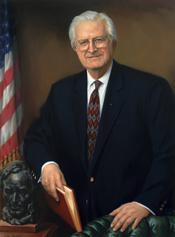 HJH
HJH DB+19
DB+19
Floor Debate
24 membersWhat members said about H.Res. 651 on the floor
Mr. Speaker, parliamentary inquiry. Mr. Speaker, is a motion to table this resolution in order at this time? Mr. Speaker, I yield myself such time as I may consume. Mr. Speaker, this is a very…
Mr. Speaker, parliamentary inquiry.
Mr. Speaker, is a motion to table this resolution in order at this time?
Mr. Speaker, I yield myself such time as I may consume.
Mr. Speaker, this is a very challenging time for all of us, because Charlie has been such a great friend and enormous asset to this institution.
Many of us are proud to be institutionalists, and as the gentleman from Maryland (Mr. Hoyer) said, I am one of them; and there are an awful lot of people here who, over the last decades have seen attacks made on this institution itself, but many of us, you included, Mr. Speaker, have had a strong commitment to this institution.
The Office of the Parliamentarian began in 1857 when Speaker James L. Orr of South Carolina appointed Thaddeus Morrice as ``Messenger.'' Morrice was said to have a marvelous memory and his ability to recall the House precedents and other decisions of the Chair required him to be near the Speaker in his role as presiding officer of the House.
The title was later changed to ``Clerk to the Speaker,'' then to ``Clerk at the Speaker's Table,'' and in 1927 to ``House Parliamentarian.'' The first person to actually have the title of Parliamentarian was Lehrn Fess.
Today, we are honoring Charles W. Johnson, III as he steps down from that most important position. There are few people, including those Members who have been elected to serve, who have contributed more to this institution than Charlie Johnson.
In fact, Mr. Speaker, I believe that Charles W. Johnson, III is the greatest Parliamentarian to have served this House and our country. His dedication and service to this great institution is unparalleled in our history.
Oh, yes, great men have served before, as we have heard, but he has distinguished himself from them by his desire and ability to not only assist the Speaker and other presiding officers, but to reach out and teach Members and staff the rules of this institution.
Moreover, he has been an example as to how we should conduct ourselves in office and in life. He has always been a gentleman who has dealt with Members honestly and fairly. He has worked with Members from both sides of the aisle evenhandedly and without prejudice. His advice and counsel have always been sound and thoughtful. He has been steady and consistent, even when there has been turmoil in the House and in the country at large.
Charlie has helped this institution during some of the most trying times that our country has endured. He has competently served this House and our country by assuring that this great Chamber proceeds in order when there has been chaos and conflict in the world around us. He has been at our side from the Vietnam War to the War on Terror.
There is not enough time to ever fully explain how much Charlie has contributed. Every piece, every single piece of legislation, every amendment considered, every motion, every floor event, every law enacted over the past several decades, bears his mark. Who else among us can actually say that?
I am humbled at the thought of how much he has done for me personally as a Member of this body and as chairman of the Committee on Rules. He has assisted me through major reforms and minor jurisdictional squabbles.
But today I want to say thank you very much, Charlie, not only for what you have done for me, but I want to thank you for what you have done for this great institution, the greatest deliberative body known to man and to our country as a whole.
Yesterday morning, not unusually, the House Committee on Rules convened at 7 a.m. to proceed with consideration of the Department of Defense authorization rule and the conference report on the budget. At the end of that meeting, I joined with the gentleman from Texas (Mr. Frost), the ranking minority member of the Committee on Rules, in asking for an agreement to be unanimous, and, thank heavens for you, Charlie, no one did call a vote, but we unanimously did pass a resolution that had been crafted by our able Staff Director, Billy Pitts, who, as you know, is a great institutionalist and very committed to this body, and Kristi Walseth, who worked in fashioning the resolution.
I should say that we actually have many more staff people on the House floor, I think, than Members at this moment, because there are so many staff members with whom you have worked closely. I mentioned Billy Pitts, but I want to say on behalf of the bipartisan staff membership of the House Committee on Rules, working closely with you and your team, I see here on the floor Seth Webb and a number of people from the Speaker's office who work, I know, very closely with you. These staff members will not have an opportunity to speak here on the House floor, but I know that every single one of them would want us to express our appreciation to you for your effort.
I would like to take just a moment to read the resolution, which we overnight have gotten on parchment, and I am going to personally present to you here. This was voted unanimously by the Committee on Rules at 7 o'clock, foggy, yesterday morning.
Whereas Charles W. Johnson, III has served the House of
Representatives with dedication and devotion in the Office of
the Parliamentarian since May 20, 1964; and
Whereas Charles W. Johnson, III learned the Rules,
practices and precedents of the House under the tutelage of
Lewis Deschler, who served the House as Parliamentarian from
1928 until 1974, and his good and great friend W. Holmes
Brown, who served as the House Parliamentarian from 1974
until 1994; and
Whereas Charles W. Johnson, III has used those lessons to
honorably serve as a universally respected Parliamentarian of
the House from 1994 until today; and
Whereas Charles W. Johnson, III has, as a teacher of House
rules, its practices and precedents, taught respect for the
institution of the United States House of Representatives to
countless Members of Congress and their staff; and
Whereas Charles W. Johnson, III has provided to the
Committee on Rules countless hours of advice and counsel as
well as assistance in its work as the traffic cop of the
House; and
Whereas Charles W. Johnson, III has ensured that the Office
the Parliamentarian will continue to operate with the high
standards and non-partisan manner that he and his
predecessors have demanded by assembling a knowledgeable,
skilled and experienced staff who serve as a vital part of
the operation of the House; and
Whereas Charles W. Johnson, III, or ``Charlie'' as he is
known in the House, will continue to serve the House as he
continues the work of Lew Deschler and Bill Brown by
finishing the Precedents of the House; and
Whereas his good humor, kind smile and love of baseball
will be missed by all who know him in the House of
Representatives; and
Whereas Charles W. Johnson, III will officially retire from
the United States House of Representatives on May 20, 2004,
exactly 40 years after he first came to this body: Now,
therefore be it
Resolved, That the Members of the Committee on Rules
express their deep and lasting appreciation for the service
Charles W. Johnson, III has given to the Committee, the House
of Representatives and the people of the United States of
America.
I look forward to giving this to you personally, Charlie.
Mr. Speaker, I reserve the balance of my time.
Mr. Speaker, at this time, I am happy to yield 1 minute to my friend, the gentleman from Sanibel, Florida (Mr. Goss), the very distinguished vice chairman of the Committee on Rules.
Mr. Speaker, I yield 2 minutes to the distinguished gentleman from Wisconsin (Mr. Petri).
(Mr. PETRI asked and was given permission to revise and extend his remarks.)
Mr. Speaker, I am very happy to yield 2 minutes to the gentleman from Nebraska (Mr. Bereuter), a Member who has chosen to retire at the end of this term but has served extraordinarily well on both the Committee on International Relations and the Committee on Financial Services.
(Mr. BEREUTER asked and was given permission to revise and extend his remarks.)
Mr. Speaker, I yield 2\1/2\ minutes to the gentleman from Savannah, Georgia (Mr. Kingston), the very distinguished vice chairman of the Republican Conference.
Mr. Speaker, I yield 1\1/2\ minutes to the gentleman from Buffalo, New York (Mr. Quinn), another Member who unfortunately has chosen to retire at the end of this term.
(Mr. QUINN asked and was given permission to revise and extend his remarks.)
Mr. Speaker, I ask unanimous consent, in light of the fact that we have so many requests to talk about Charlie, that we extend the debate on this for an additional 5 minutes; and I would like to yield that 5 minutes to the control of my friend from Dallas, Texas (Mr. Frost).
Mr. Speaker, I am happy to yield 1 minute to the gentleman from Texas (Mr. Thornberry), who often presides very ably over this institution.
(Mr. THORNBERRY asked and was given permission to revise and extend his remarks.)
Mr. Speaker, I am very happy to yield 1 minute to the gentleman from Ohio (Mr. LaTourette).
(Mr. LaTOURETTE asked and was given permission to revise and extend his remarks.)
Mr. Speaker, I am very pleased to yield 1 minute to my good friend, the gentleman from Atlanta, Georgia (Mr. Isakson).
Mr. Speaker, we have many, many Members who want to have an opportunity to be heard on this and so, at this moment, I am going to ask unanimous consent that general leave be provided so that all Members may include statements in the Record upon Charlie Johnson's retirement.
Mr. Speaker, I ask unanimous consent that my friend from Texas (Mr. Frost) be given an additional 1\1/2\ minutes for debate.
Mr. Speaker, I am happy to yield 1 minute to my very, very good friend, the gentleman from Idaho (Mr. Simpson).
Mr. Speaker, I yield 2 minutes to the gentleman from Peoria, Illinois (Mr. LaHood), who, as has been pointed out, time and time again so ably presides over this institution as Speaker pro tempore.
Mr. Speaker, I yield 30 seconds to the gentleman from Georgia (Mr. Linder), the chairman of the Subcommittee on Technology and the House of the Committee on Rules.
Mr. Speaker, I yield myself such time as I may consume.
I would like to close again by expressing appreciation on behalf of all of the many staff members here in this institution who work so closely with Charlie Johnson, all of those who are working for us here today and the members of committee staffs and personal staffs who have worked so closely with him.
And I would like to close by sharing with our colleagues a note that was handed to me a few minutes ago. It says: ``Dear Charlie, thanks for your 40 years of service to the House and our country. I wish you all the best. Keep your arm loose. We may need to call you in from the bullpen.'' This is a handwritten note from the President of the United States, George W. Bush, which I will give to you, Charlie, as soon as we have the resolution.
Mr. Speaker, I yield back the balance of my time, and I move the previous question on the resolution.
The previous question was ordered.
Mr. Speaker, I yield 4 minutes to the gentleman from Maryland (Mr. Hoyer), the Democratic whip. Mr. Speaker, I yield myself such time as I may consume. (Mr. FROST asked and was given permission to…
Mr. Speaker, I yield 4 minutes to the gentleman from Maryland (Mr. Hoyer), the Democratic whip.
Mr. Speaker, I yield myself such time as I may consume.
(Mr. FROST asked and was given permission to revise and extend his remarks.)
Mr. Speaker, I want to thank you and the Democratic leader for bringing this resolution to the Floor this morning so that Members of the House may pay tribute to our friend Charles W. Johnson.
Charlie is taking leave of his position as Parliamentarian of the House today, exactly 40 years after he began as a young lawyer fresh out of law school in the Parliamentarian's office. On his last day in the House it is only fitting that the Members of this body can take the floor to pay tribute to him and express our gratitude and our friendship.
To say that Charlie is a creature of the House or a servant of this institution does him a disservice, for without him, many of us would never have learned the intricacies of the Rules of the House, its practices and its procedures. Without his sage advice and counsel, so many of us, as well as our staff, would be lost in the maze of legislative practice.
His office, just off this floor, is more than just an office; it has served as a focal point for discussions both pointed and prosaic, political and procedural, but always, always, non-partisan.
Quite frankly, Mr. Speaker, Charlie is the institution. During his 40 years as a Parliamentarian, he has served Democratic Speakers and Republican Speakers. He has shown fairness to all and malice to none. Not an easy task, where tempers can run high and where blame is easily cast.
He has served through peace and war and through times of great national triumph and tragedy. Charlie has always risen to the challenge, and in doing so, has challenged so many of us to do so as well.
Charlie took over the job as the Parliamentarian in 1994 following the retirement of his dear friend and colleague Bill Brown. Just as Bill was a voice of calm, deliberative reason, so is Charlie. Far too often we, as Members, fail to recognize the importance of those qualities in the people who ensure that the business of the House can proceed, regardless of which political party holds the majority. I know that it is often the case with regard to Charlie and the entire staff of the Office of the Parliamentarian.
Charlie is so good at what he does that he makes the job look easy. But I, for one, know it is not. But his talents, his intellect and his love for this institution have made our job as legislators all the more easy, and I am grateful.
When I was first elected to the House 26 years ago, I became only the second freshman Member in the 20th century to take a seat on the Committee on Rules. Had it not been for Bill and Charlie, my acclimation to that difficult post would have been far more difficult. I know because of their patient tutelage, their willingness to just sit down and talk, their careful guidance, my knowledge of the Rules and how to use them now runs both deep and wide.
I want to take just a moment, Mr. Speaker, to kind of talk about my personal experience with Charlie and his office.
From time to time, I, my staff, would go to see Charlie and we would ask very direct questions, questions that were vital to formulating strategy on our side of the aisle. What he would do would be to respond to every question and to answer every question truthfully. He did not go beyond that. He did not try to suggest what strategic steps we should take. He only answered what we asked. And I know he did that for the other side as well.
He was truly acting in the best, non-partisan position in helping us as partisans understand what we could and could not do. But he never went beyond that. He never said, ``By the way, you know, you could do this also.'' And that is the role of a Parliamentarian, to answer truthfully the questions of both sides of the aisle, and then let those Members on both sides of the aisle figure out where they go with the information.
I cannot tell you how important that is to the functioning of this body and how important it has been to me as a Member to know that I can go to someone and get an honest answer; who will answer my questions, but who will not necessarily go beyond that. And I respect that.
I know we will all miss Charlie, but I also know we all wish him well. He has earned the respect of hundreds of Members and more staff than he can count. He is a man of the House and a deep and true friend of the House. He has ensured that his office will continue to serve the House by assembling a talented staff.
I owe him so much, and there are not words to express my deep gratitude and affection. I can only wish you the best, Charlie. And while I know he has taken great pains to ensure the institution will go on without him, I know it will not be the same.
Mr. Speaker, I reserve the balance of my time.
Mr. Speaker, I yield 3 minutes to the gentleman from Michigan (Mr. Dingell), the dean of the House.
(Mr. DINGELL asked and was given permission to revise and extend his remarks.)
Mr. Speaker I yield 3 minutes to the gentleman from Missouri (Mr. Gephardt), the former Democratic leader of the House.
Mr. Speaker, I yield 3 minutes to the gentleman from Wisconsin (Mr. Obey).
Mr. Speaker, I yield 4 minutes to the gentleman from California (Mr. Waxman).
Mr. Speaker, I yield 3 minutes to the gentleman from South Carolina (Mr. Spratt).
Mr. Speaker, I yield 30 additional seconds to the gentleman from South Carolina (Mr. Spratt).
Mr. Speaker, I yield 1 minute to the gentleman from Georgia (Mr. Lewis).
Mr. Speaker, I yield 1 minute to the gentleman from Maryland (Mr. Cardin).
Mr. Speaker, I yield 30 seconds to the gentleman from New York (Mr. McNulty).
Mr. Speaker, I yield 30 seconds to the gentleman from New Jersey (Mr. Pascrell).
(Mr. PASCRELL asked and was given permission to revise and extend his remarks.)
Mr. Speaker I yield 30 seconds to the gentleman from Oregon (Mr. Blumenauer).
Mr. Speaker, I yield 30 seconds to the gentleman from Washington (Mr. Baird).
Mr. Speaker, I yield 30 seconds to the gentleman from Wisconsin (Mr. Kind).
Mr. Speaker, I yield myself such time as I may consume. To the gentleman from California's (Mr. Dreier) question as to whether it was appropriate to table the resolution, I think we should have…
Mr. Speaker, I yield myself such time as I may consume.
To the gentleman from California's (Mr. Dreier) question as to whether it was appropriate to table the resolution, I think we should have tabled the letter.
Mr. Speaker, it is with personal and official pride that I rise to pay tribute to Charles Johnson on his retirement as House Parliamentarian and to thank him for his many years of outstanding service to this body.
To praise Charlie Johnson is easy, and it is one thing that brings Democrats and Republicans together. I have only served for 17 years of Charlie's 40, and during that time I have observed, and we have all witnessed, profound changes in how this body conducts its business. But through every change and difficult time, the House has always been able to count on the expert, honest, and fair advice of Charlie Johnson.
Charlie began his service in the House in 1964, as acknowledged by the Speaker, shortly after graduating from the University of Virginia Law School. When he was appointed House Parliamentarian in 1994, he joined a distinguished line that includes Clarence Cannon, Lewis Deschler, and Bill Brown. Think of this, my colleagues: Charlie is just the third Parliamentarian since 1928.
Respected on both sides of the aisle, Charlie was first appointed by a Democratic Speaker, Speaker Tom Foley, and reappointed by Republican Speakers Newt Gingrich and the gentleman from Illinois (Mr. Hastert).
Charlie exemplifies the best of this House. With his unquestioned integrity and keen intellect, he has consistently maintained the highest standards of nonpartisanship and scholarship for the Office of Parliamentarian. Charlie has guided us carefully, but firmly, through turbulent floor debates; and he knows of what we speak here and has provided sound and discreet advice to individual Members and staff.
He has served as a mentor to the outstanding Parliamentarians that serve under him, among them his respected successor, John Sullivan. And we are all pleased with the Speaker's announcement that John Sullivan will be named the Parliamentarian; and that, of course, is the suggestion of Charlie Johnson. So respected is he that he can even suggest his own successor.
On top of everything, Charlie Johnson is truly a kind man. The Speaker and others will reference Camp Dudley, one of his acts of kindness.
As a San Franciscan, and, Charlie, I am going to spill the beans on you, I am delighted that Charlie is also a devoted San Francisco Giants fan. But Charlie is not just a fan. When he leaves us, he will take up his true calling as a major league batting practice pitcher, beginning with a Dodgers-Expos game soon.
Perhaps, Mr. Leader, we can use our collective influence to have this event covered by C-SPAN. Maybe we could just do it right here on the floor and then it will be covered by C-SPAN.
Although Charlie will relinquish his daily duties here, Charlie's dedication to this House, of course, will remain. Charlie will continue the difficult, but essential, work on the Precedents of the House of Representatives.
Earlier this week when the Speaker told me of the news of Charlie's submitting this letter, which I agree should be tabled, I received the news with mixed emotions. We all know how great Charlie is as the Parliamentarian and what a great friend he is to many of us, but of course we want to see him go on after 40 years to fulfill himself personally in other ways. And so we know he will teach professionally at the University of Virginia Law School and he will collaborate with the Parliamentarian in the House of Commons of the U.K. on a book of parliamentary procedures that will surely be a great contribution on that important topic.
But I was delighted to hear Charlie talk about his own personal plans. Of course he will have more time with his wonderful family, and he is very lucky his grandchildren live in the region. In fact, we are lucky his grandchildren live in the region because hopefully that will mean that Charlie will visit us frequently.
As you leave us, Charlie, please go forth with the knowledge that anyone who values the work of this House of Representatives indeed values the work of democracy, is deeply in your debt, and that goes well beyond those of us who have served here, with the knowledge that you will be deeply missed and with the hope for us that you will visit us often. Good luck to you. Congratulations. Thank you. Thank you. Thank you. And thank you to your family for sharing you with us.
Mr. Speaker, I reserve the balance of my time.
Mr. Speaker, I yield the balance of my time to the very distinguished gentleman from Texas (Mr. Frost), ranking member on the Committee on Rules. He and the Committee on Rules and staff, as well as other Members, know full well the quality of the excellence of the work of Charlie Johnson, and I ask unanimous consent that he be allowed to control that time.
Mr. Speaker, I rise today to oppose the acceptance of the ill-advised attempt by the finest Parliamentarian I have ever known to tender his resignation. While I do not disagree with any of the…
Mr. Speaker, I rise today to oppose the acceptance of the ill-advised attempt by the finest Parliamentarian I have ever known to tender his resignation. While I do not disagree with any of the language contained in H. Res. 651 expressing the House's gratitude to Charlie Johnson, I will vote to table the consideration of the resolution since I strongly oppose the House accepting Charlie's resignation.
Charlie Johnson has served two separate roles during his distinguished 40-year career in the Office of the Parliamentarian. First, he has steadfastly guided the proceedings of the House on a day- to-day basis by assisting the presiding officer in a fair and evenhanded manner. His objectivity, dedication to fairness, and respect for precedent have made him an invaluable asset to the people's House.
Just as importantly for the long-term continuation of the fair and consistent workings of the House, Charlie has been an educator. He has assembled what I consider to be the very best office on Capitol Hill, and clearly the most professional. Charlie and his staff work in a collegial and dedicated manner, frequently in the eye of the hurricane, and sometimes even in front of it. The Office of the Parliamentarian has historically been nonpartisan.
One of the very best things Newt Gingrich did when he was elected Speaker in 1995 was to ensure that the Rules and Precedents of the House would continue to guide the proceedings of the House. He recognized that Charlie and his staff are the institutional memory of the House. Speaker Gingrich knew it was important to have nonpartisan professionals guiding the proceedings of the House.
While Members come and go, the Office of the Parliamentarian, led by Charlie for the last decade, has continued its proud history. Charlie has continued the legacy of his mentor and friend, the late Bill Brown.
My own experience with Charlie has been gratifying and truly educational. When I was in the minority, I learned to understand and appreciate the nonpartisan nature of the Office of Parliamentarian, and of each and every member of that staff. While I'm sure Charlie has his own strong personal opinions on the great issues of the day which we debate, I do not know what those opinions are, nor, I venture, does any other Member. Those personal feelings have never been a part of the way in which Charlie carries out his professional duties.
When I became the Chairman of the Judiciary Committee in 1995, and as part of the new majority, the Committee took on the responsibility for consideration of many of the items outlined in the Contract with America. At that time, I became even more aware of the importance of the Parliamentarian and the necessity of that office being nonpartisan. A great majority of the matters in the Contract, including amendments to our founding document, the Constitution, were considered and processed by the Judiciary Committee. Having the advice and counsel of Charlie was crucial to that endeavor. It was a difficult and heated period of leadership transition, and, through it all, Charlie maintained his impartiality, professionalism, and desire to preserve the integrity of the proceedings of the House.
Little did I know at that time that I was to find myself in a position several years later when I would need Charlie's help in an even more difficult and heated endeavor--the consideration of the impeachment of the President of the United States. Throughout those long and agonizing proceedings, Charlie was always in the background with answers to questions, and a nonpartisan professional attitude. He was a crucial part of the proceedings in the Committee and on the House floor.
During the entirety of my working relationship with Charlie, he has taken his job seriously, but not himself. He is a man with a wonderful sense of humor. That quality helped both him and the Members get through some difficult times. I know Charlie is a great fan of the one- liner. One of his favorite comedians was the late Henny Youngman of ``Take my wife--Please'' fame. I have it on good authority that when Henny Youngman visited the House, Charlie was given a gift of two of his joke books which Henny autographed, and which Charlie keeps right next to his House Manual. It has been said that, occasionally, Charlie has grabbed the wrong volume and based some of his rulings on the Henny Youngman book, but I doubt that.
We frequently throw around cliches in this body, but, in this case, I say without a doubt that Charlie Johnson has served his country well. He has also served well the Members of this House, the House as an institution, and the American people with distinction and dignity, and I honor him here today.
I wish Charlie and his family a long and happy retirement.
Mr. Speaker, I thank the gentleman from California for yielding me this time and for his statement. It is people that make an institution function, that make it great, that sustain and build respect…
Mr. Speaker, I thank the gentleman from California for yielding me this time and for his statement.
It is people that make an institution function, that make it great, that sustain and build respect for it; and Charles W. Johnson is certainly one of those people. He has helped the Congress respect and assert the best traditions and decorum of the House.
I said to him, Charlie, you cannot retire before I do. I will miss you too much. And yet I guess we were born in the same vintage year. Nevertheless, we have great respect for John Sullivan, and we look forward to his service here as Parliamentarian.
I think it was just a few minutes ago that the distinguished gentleman from Maryland (Mr. Hoyer) said Charlie Johnson is not only a knowledgeable man but he is a wise man and a caring man, and that is certainly the case. I respect the contributions so much that he has made to help young people who have less advantages than most others.
Charles Johnson has had a tremendous and very positive impact on the U.S. House of Representatives during his service here, 40 years to the month in the Office of the Parliamentarian, and 10 years as our Parliamentarian. Tremendous service!
I remember a day back on January 21, 1997. I do not preside over the House that much, but it has been my lot to preside on some of the most difficult days, and I recall that difficult and historic day. And it was the strategy and advice of Charles Johnson that helped set the tone and the order and demeanor of the House that day, through me, which was so crucial. I thank him for that and for so many other occasions.
It has been my privilege to travel with Charlie as I led the House delegation to the NATO-Parliamentary Assembly, and not only going to Brussels but, as the gentleman from Wisconsin (Mr. Petri) said, visiting the House of Commons where Charles Johnson is very well known. Charlie has lots of friends there and in the leadership of the House of Representatives.
If Charlie and this Member ever talk about nonessential things here, like sports, we have talked about college football. And I have never until yesterday really known how much of an interest Charlie Johnson had in baseball. But I think I am shortly going to join him as a fan of the San Francisco Giants. A couple of years ago, the Wall Street Journal ran a piece on the chronic shortage of left-handed batting practice pitchers in major league baseball. So shortly thereafter, Charlie's ability to throw strikes from the port side was tested as he auditioned and then he started pitching for the Los Angeles Dodgers when they came to Camden Yards to play the Orioles. Then he pitched for them in Philadelphia, helping the Dodgers, and soon they became better hitters of left-handed pitchers.
If it had not been for yesterday's rework of the schedule because of rain, I understand he would have been doing the same thing for the Dodgers in the Phillies' new stadium. So that is a remarkable side of Charlie that I did not know about at all.
Mr. Speaker, as he leaves here, our outgoing Parliamentarian is going to be working with the recently retired Clerk of the British House of Commons, William McKay, on an updated comparative book on Parliament and Congress. Charlie's appreciation of the value of comparative studies through his work with counterparts in other countries, especially with that Mother of all Parliaments, has played an essential role in the development of programs of mutual exchange. You have heard that already referenced. People on every continent know Charlie Johnson because they have worked with him in their parliamentary efforts. So he is going to be working with Sir William in that respect.
Mr. Speaker, if it were consistent with American tradition, we would make you Sir Charles. But, nevertheless, we know that this is going to be another major contribution and it has some impact here. As you leave the House, Charlie Johnson should feel good to know that the recently established Office of Interparliamentary Exchange reflects his interest in improving not only the conduct of activities here in this parliament but in parliaments around the world.
So Charlie Johnson, best wishes to you and your family. Thank you for your public service and your service to the U.S. House of Representatives. You will be greatly missed.
Show 8 more
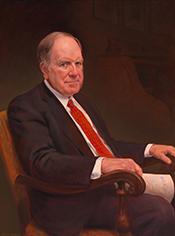
Mr. Speaker, I have served in the House for more than half of the 40 years that Charlie Johnson has served as Parliamentarian. As a matter of fact, I had just become a Member of the House with no…
Mr. Speaker, I have served in the House for more than half of the 40 years that Charlie Johnson has served as Parliamentarian. As a matter of fact, I had just become a Member of the House with no more than 3 weeks of experience when I wandered onto the floor one day, having mistaken the bells and thought there was about to be a vote.
Before I could get off the floor and go back about my business, Charlie beckoned me to the chair; and the next thing I knew I was wielding the gavel, presiding over the House, never having done that before in my life. I was never more thankful to have someone who knew what he was doing sitting behind me whispering instructions, and I have been thankful ever since that Charlie Johnson was in that position.
For all those 22 years that I have known him, his chair behind the Speaker, his office across the hall have been sources of civility in a House that is often contentious, sometimes bitter and pugnacious and embattled. For all those years, the Parliamentarian has been an authority that everyone in this House, both sides of the aisle, have recognized and respected because his rulings and his advice and his good judgment have always been based on precedent and on sound thinking.
His office made him powerful. Anyone who became the Parliamentarian of the House would be powerful inherently, but his knowledge, his ability and his manner made him authoritative. The House could not be the House that the Framers intended us to be, the people's House, without sometimes passionate, hard-hitting debate; but the House could not operate in that mode, sometimes pushing the envelope of civility, without a referee that everybody trusted and respected. For a long, long time, Charlie has been such a referee.
My respect for Charlie Johnson on our side, the Democratic side of the aisle, was established over the years and well-founded, but his great ability, his inherent decent fairness, was recognized to his credit and theirs when our Republican colleagues moved into the majority and made him their Parliamentarian, too. He proved his fairness, his basic inherent fairness, by serving both parties without ever breaking stride. I do not think anyone in the years that I have served here has ever accused him of bending with partisan winds. Charlie Johnson has called them the way he saw them for the last 40 years.
The House of Representatives is losing, we should not fool ourselves, a huge amount of institutional memory with the loss and retirement of Charlie Johnson. Four decades in the Parliamentarian's office, 10 years as Chief Parliamentarian, and during all those 40 years he has embodied those qualities that we need most in a parliamentarian: erudition and evenhandedness, great authority and great good humor, too, and overall a keen understanding of this great institution of the Republic.
He has made the people's House deserve its name. He has helped us make this complex system that we call democracy work and work well.
Though he is leaving, he leaves behind him a legacy that will inform the proceedings of this House for a long time to come, and he is leaving a well-trained staff of Parliamentarians.
Mr. Speaker, I remember when John Sullivan was first appointed and moved from the House Committee on Armed Services. The day after he took his office as the Deputy Parliamentarian, the staff on the House Committee on Armed Services concocted a convoluted parliamentary problem, which I presented to him as an innocent junior Member of the House, which John was immediately stumped by before he realized that it was all a hoax. Today, if we presented him that Gordian knot, I think he could probably cut it.
Charlie, you have taught us not just the procedures of the House and taught us well, but you have taught us the reasons that those rules must prevail. That is a legacy that will last for a long, long time. I think the brooding omnipresence of Charlie Johnson will loom over this House for a long time to come.
Thank you for everything you have done for us and this great institution.
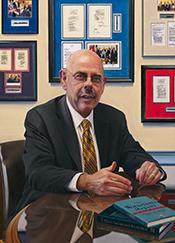
Mr. Speaker, so much of the time in this institution in recent years has been partisan, rancorous comments back and forth, difficult feelings among the Members; and this year, which is an election…
Mr. Speaker, so much of the time in this institution in recent years has been partisan, rancorous comments back and forth, difficult feelings among the Members; and this year, which is an election year, has exacerbated all of that. So it is important to note that Democrats and Republicans are joined together because what we are all experiencing is a significant loss for this institution, for the people's House, the House of Representatives.
Charlie Johnson has served as an integral part of the legislative process, and I feel privileged to have had the opportunity to work with him over the years. We have been the beneficiaries of his intellect, thoughtfulness, and integrity time and time again. Several years ago, Charlie noted that his predecessor, William Brown, had set a standard of ``intellectual vigor, sharing of information, and a sharing of responsibility with a grace that was accompanied by a total devotion to the House of Representatives.'' Charlie has more than met that standard.
He does serve an important role, but it is more than just the role he serves. He has embodied the person that all of us can look to as one who will judge the issues with fairness based on the rules, based on the idea that laws govern not just individuals, and that when he makes his determination on all of the precedents and the exact wording of the rules, we know that is the course that we all have to agree to.
I came here from the California State legislature, and I think many legislatures are like this, the speaker has complete control. The speaker gets to appoint the Members to the committees and the chairmen, and assigns the members' offices and staff, and the speaker can make the rulings, and it is the speaker's authority alone to make the rulings.
So when I came here, I was surprised to find out that the Speaker could not just make a decision that benefited those of us on a certain side of the issue. He had to go to Charlie Johnson to find out what the rules were, and he had to abide by that decision.
I have come to realize how important that is for an institution to be able to have someone with such integrity and knowledge that we can look to to be the final say on what the rules are because we have to follow the rules in this institution and in a country that looks to the rule of law as essential.
I have come to recognize that as important, just as I have come over the years to recognize even the importance of seniority, which I more and more appreciate the longer I am here.
I want to say that I have not only benefited from Charlie's wisdom and advice but from his friendship. I have not had the opportunity to travel with him. Maybe now that Charlie is leaving, we will have to go on an Elder Hostel trip together because we are advancing in age. He has been a terrific friend to me, someone I have tremendous respect for, and it is shared by everyone in this institution. He is certainly going to be missed.
This is a change that many of us hoped we would not see, not only with Charlie's absence but a change in his guidance for all of us; and I join all of my colleagues, Democrats and Republicans, liberals and conservatives, in supporting this resolution to thank him for a job well done.

Mr. Speaker, I thank the distinguished gentleman from Texas, the ranking member of the Committee on Rules, for yielding me this time. Those who will speak have been here for some years. Most of us…
Mr. Speaker, I thank the distinguished gentleman from Texas, the ranking member of the Committee on Rules, for yielding me this time.
Those who will speak have been here for some years. Most of us who speak are known as institutions. We love this House. We believe this House plays a very unique role in this democracy. It is called the People's house, a House to which one can be elected but not appointed. It is a House where the passions and wisdom of the people are joined in this crucible of decision-making process. It is a House that is composed of persons of different views, different regions, indeed different races and nationalities. It is a House where our Founding Fathers designed American democracy to be realized.
And in that context it is extraordinarily important to have a House that plays by the rules. Our Founding Fathers knew that if we were to have democracy, it would have to be governed by rules.
The gentleman from Missouri (Mr. Gephardt), my good friend, the former majority leader, is on the floor; and I have heard him say so often that democracy is a substitute for war.
In that context, it is sometimes confrontational; and we need a wise person helped by wise staff to, in effect, be the referee, to say to both sides that we are a democracy and we resolve questions in a peaceful way, perhaps animated, perhaps heated, but nevertheless in a way that seeks to realize the dream of our Founding Fathers, a dream which has been sustained now since 1789 because of people like Charles W. Johnson, III. Not elected to serve but selected, selected by persons who themselves are elected and who know the value of this institution and the absolutely essential position that Charles Johnson III was called to serve in.
I am not objective. Those of us who speak will not be objective. We are his friends. We are his admirers. We are appreciative of the service that he has given to this House but, much more importantly, to this country. He is wise. He is also thoughtful. He is also caring of the institution, its staff and its Members but, most of all, of his country.
Mr. Speaker, I rise with my colleagues to thank Charlie Johnson for his service. Charlie's service will be long remembered. He will write a book, and like his predecessors, that book will be used for generations to come to help manage this center of democracy, the people's House.
I somewhat lament the fact that Charlie is leaving and will be replaced by John Sullivan, not because John Sullivan is not a worthy successor, but because I prefer Gary Williams to Bobby Knight, and Drew went to the University of Maryland and therefore leavened Charlie Johnson's University of Virginia experience.
But, Charlie, as you leave, as we honor you, as we thank you, we wish you God speed and wish you many years of the kind of productivity and success that you have enjoyed here in this House. You have been and continue to be a great American in the tradition of your predecessors who ensured that the people's House would be revered by its Members and respected by those it serves. Godspeed.
Mr. Speaker, I offer a resolution (H. Res. 651) expressing the gratitude of the House of Representatives to its Parliamentarian, the Honorable Charles W. Johnson, and ask unanimous consent for its…
Mr. Speaker, I offer a resolution (H. Res. 651) expressing the gratitude of the House of Representatives to its Parliamentarian, the Honorable Charles W. Johnson, and ask unanimous consent for its immediate consideration.
Mr. Speaker, I yield myself such time as I may consume, after which I yield my time to the gentleman from Texas (Mr. DeLay) and ask unanimous consent that he be allowed to control that time.
Mr. Speaker, 40 years ago Charlie Johnson, fresh out of Virginia Law School, came to work for the Office of the Parliamentarian. Little did he know that 40 years later, almost to the day, he would be announcing his retirement from that same office.
Charlie, we are going to miss you.
You have been a rock. You have advised seven different Speakers and countless Speaker pro tems on how they should rule on various parliamentary questions. You have advised thousands of Members and even more staff in how to draft their amendments. You have given us advice on committee jurisdiction, the favorite part of my job.
The Parliamentarian in the House takes on special significance, more so than any other legislative body. You
have to be exceedingly fair and judicious, and have to be seen as fair and judicious by both sides. And I know that is not always easy.
Charlie replaced Bill Brown as Parliamentarian. Bill started the process of demystifying the precedents used by his predecessor, Lew Deschler. That is a pretty good pedigree of institutional knowledge. Charlie has continued to make the Parliamentarian's office more accessible and more open to Members and staff.
Charlie is a man of many talents. He is dedicated to education and talks endlessly about his beloved Camp Dudley, a place for kids to learn about the great outdoors. He is a baseball fanatic, a southpaw who pitches batting practice for the Los Angeles Dodgers. And he has an avid interest in the English House of Commons. In fact, he is writing a book with his counterpart in London comparing our procedures with those of the Parliament.
I am sure he thinks he will get the chance to spend more time with his lovely wife Martha and his two boys, Charles and Drew, once he retires, but let us not kid ourselves. If I know Charlie Johnson, I know he will keep as active as he ever has with his many interests in many things.
I have asked John Sullivan to replace Charlie, and he has accepted the offer. John is well respected by both Republicans and Democrats and has served in the Parliamentarian's office since 1987. John is a graduate from the Air Force Academy and got his law degree from Indiana School of Law. John is an avid college basketball fan whose allegiance tends to flow to any team that Bobby Knight coaches. John is an able successor to Charlie Johnson, Bill Brown and Lew Deschler, and he will do a fine job.
Once again, best wishes to Charlie Johnson in his golden years. We wish you the best.
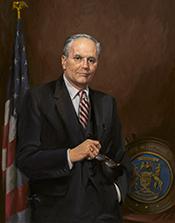
Mr. Speaker, I rise with great personal sadness about the departure from this institution of a great friend, wise counselor, mentor, and superb public servant. I do speak, however, with pride about…
Mr. Speaker, I rise with great personal sadness about the departure from this institution of a great friend, wise counselor, mentor, and superb public servant. I do speak, however, with pride about the accomplishments of Charlie Johnson, who has served us, the House, and his country well.
He is in all particulars a great patriot and a great American. He has been wise counselor to us, mentor; he has given us good advice; and he has seen to it that we understood the history and the traditions of this institution.
He has served us in the great traditions of Clarence Cannon, Lewis Deschler, Bill Brown, and now the fine work which he has done. He is going to be missed by this institution. He has served as an example to all of us and to those who will follow in his particular task as Parliamentarian.
It has been his responsibility to see to it that the House function as it should, in accord with the great traditions that we have here of respect, of decency, and of love of this institution. And for that and all of the other things that we can say good about Charlie, we have to recognize that we should say thank you; that we should say well done; that we should wish him well for what it is that he has accomplished.
The House is a better institution for his wonderful service to this body. And all of us here, as individual Members, particularly those of us who have had frequent occasion to consult with him about the rules, about the traditions, about how this institution does work and how it should work have a special reason to be grateful to him and to have a special burden of gratitude to him for what he has done.
I am proud, indeed, that he has been my friend. I am grateful to him as my mentor. I am appreciative to him of his wise counsel and guidance. And I know that I am not alone in feeling a singular debt of gratitude to my good friend, our Parliamentarian, as he leaves us.
I would note that other Members have these same feelings and all have good reasons. And I would note that the House of Representatives is a better institution, and one more in keeping with the traditions and with the principles and practices, and in keeping with what it is we would like to say it was, a great institution, the House of the people, and a place which serves all of us.
All of us have reason to miss him, and we will indeed. We will wish him well. We will pray that God will be good to him and that He will give him many years to enjoy a reflection upon the great service which he has given to this great country.
I say again to him, Charlie, well done, good and faithful servant. You have made this a great institution, and we are all grateful to you. Thank you, my friend.
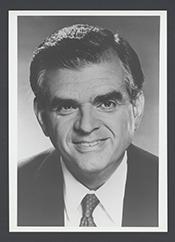
Mr. Speaker, I think people watching this would find it kind of odd that I would have to step down off the podium in order to speak, but Charlie would never allow me to speak from up there because it…
Mr. Speaker, I think people watching this would find it kind of odd that I would have to step down off the podium in order to speak, but Charlie would never allow me to speak from up there because it is not according to the rules of the House.
And I think people would find it odd that Charlie cannot speak today. Charlie has spoken many, many times on this floor through those of us who have had the great opportunity and privilege to serve as Speaker pro tempore. But it is not according to the rules. And if it is not according to the rules, it does not happen. And if it is not according to the rules by Charlie Johnson, it does not happen.
I was quoted in CQ as saying that Charlie runs the House, and I hope our leadership does not take offense at that; but Charlie really has run the House for many years, and thank goodness for that.
I think many people do not realize that in 1994 not one of us in the majority presided. When we were sworn in in 1995, not one of us in the majority had ever presided over the House. And if it were not for the magnificent work of Charlie and his entire staff, think of the chaos that could be created when we turn over an entire House to a new majority of people who obviously maybe know a little bit about the rules but not much. And if it were not for the great work of Charlie and all of his people, think of the kind of chaos.
And we were dealing with some really important issues here. I know you do not like to hear about the Contract with America, but that was the agenda for 3 months, and that was major legislation. And we could not have done it, and those of us who had the privilege early on of presiding could have never done it. It would not have been possible for us if we had not really paid attention to Charlie Johnson and the people that work in his office, and they really are the ones that allow us to do the things that we were able to do throughout the 10 years that we have been in the majority.
When people say to me, How did you get so good at presiding? It is a very simple answer. I listened to Charlie Johnson. That is the answer. And when one listens to Charlie, they get good advice.
I want to say one word about these jobs that we have: we could not do without the kind of spouses that allow us to do them, and I want to say a word about Martha. Martha is here.
And, Martha, I want to say to you, thank you for giving us this extraordinary human being who has given us so much. We are in your debt for the kind of, I think, tolerance that you have lent to the job that Charlie has done, the long nights, the late nights, and the good work.
Charlie, job well done. God speed.
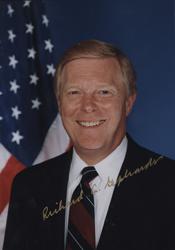
Mr. Speaker, I found out something I did not know about Charlie today. I found out from our leader that he is a San Francisco Giants fan. If I had known that, I would not have come today. On a more…
Mr. Speaker, I found out something I did not know about Charlie today. I found out from our leader that he is a San Francisco Giants fan. If I had known that, I would not have come today.
On a more serious note, I have had some time lately to do some things
that I usually have not had time to do, so I have been watching on television the early part of the proceedings here in the House, and I hear these rules being explained. I have tried to put myself in the shoes of an average citizen, and I think it is gobbledygook, and I do not understand what they are talking about. But that really is the magic of this place.
As the gentleman from Maryland (Mr. Hoyer) said earlier, I am fond of saying that politics is a substitute for violence. It really is. And the only thing that allows us to resolve our differences peacefully is that we have a process. We have rules. We have laws. We have parliamentary procedure. And that process is what makes this place work and makes democracy work in our country.
The keeper of those rules has been our subject today, Charles Johnson. He has done it, in my view, as well as it can be done. He has always been fair. No one questions his judgment or his enunciation of the precedents of the House, whether it comes down in your favor or it does not. He is a professional. No one ever doubts his knowledge or his dedication to knowledge about the process.
Finally, his character, his human character, has been impressive to everybody who has come in contact with him. Whether a Member, staff, people visiting, everyone knows that this is a man of great character.
I guess the best story I can tell to kind of sum up my feelings about Charlie is that we had a common friend, someone that I went to Northwestern University with and was one of my best friends there, wound up at the University of Virginia Law School and became a friend of Charlie's. So we, in that common friendship, got somewhat of a personal relationship; and we, unfortunately, saw our friend die of cancer some years back. But even with that personal relationship I had with Charlie, I never, ever felt that in anything he did while I was leader or in anything I have done here was anything other than fair. Never prejudiced. Never giving in to human relationships. Always calling it the way he saw it and making judgments on the process, which is at the heart of our democratic experiment, fairly and with honesty and good character.
Charlie, we truly will miss you. We welcome the successor, who is going to do a great job; and we wish you the greatest time in retirement that anybody could ever have. Thank you.
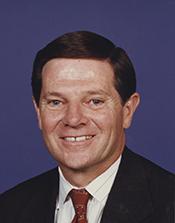
Mr. Speaker, I yield half of my time to the gentlewoman from California (Ms. Pelosi) and ask unanimous consent that she be allowed to control that time. Mr. Speaker, I yield myself such time as I may…
Mr. Speaker, I yield half of my time to the gentlewoman from California (Ms. Pelosi) and ask unanimous consent that she be allowed to control that time.
Mr. Speaker, I yield myself such time as I may consume.
Mr. Speaker, it is with mixed feelings that I come to the House today to wish farewell to our respected and beloved Parliamentarian Charlie Johnson. It is a happy day because it provides us with an opportunity to recognize one of the true giants of the United States House of Representatives and finally give one of our often underappreciated officials his due and also because we know he is on his way to a happy retirement.
But it is a sad day, as well, for the House is losing one of its true institutions. For more than 4 decades, Charlie has provided Members of both parties the benefit of his guidance and his judgment and his experience. Charlie is an honest man, one of the few in Washington whose staff can honestly claim that they rarely make mistakes and honestly claim that they take responsibility for them when they do.
For instance, when I took over as majority leader, Charlie and I often butted heads over the length of floor votes. I urged the Chair to gavel votes closely right at 15 minutes, even as Members were scrambling to the floor to cast their votes. I thought that imposing a little discipline in the voting would encourage a more efficient use of floor time in the House.
But Charlie's experience taught him the value of tolerance and understanding in these matters; and particularly during certain votes late last year, I finally saw the wisdom of Charlie's way of thinking in leaving some of those votes open. For those of you on the other side of the aisle, that was a Tom DeLay's idea of a joke.
Along with Charlie's experience, we will also miss his undying support for the Amherst College Lord Jeffs, which, to those of you who follow the perennial NESCAC, the cellar-dwellers, know, is vocal, enthusiastic, and honestly a little sad.
Seriously, Mr. Speaker, the job of the Parliamentarian is a job of trust, of integrity, and of honesty. These are the qualities without which no description of Charlie Johnson would be complete. The House has been honored by his service, and we have been honored by his presence.
Good luck, Charlie. God bless you and your family, and of course we always thank you for your exemplary and distinguished service to the House of Representatives and to this Nation.
Mr. Speaker, I yield the balance of my time to the gentleman from California (Mr. Dreier) and ask unanimous consent that he be allowed to control that time.
Show 11 more
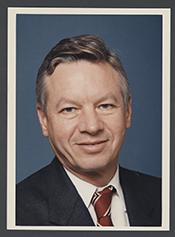
Mr. Speaker, it is with a sense of real loss that I first heard the news that Charlie Johnson was leaving after so many years of dedicated service to all of us in the House, and I want to take this…
Mr. Speaker, it is with a sense of real loss that I first heard the news that Charlie Johnson was leaving after so many years of dedicated service to all of us in the House, and I want to take this occasion to join with my colleagues in paying tribute to him today.
I personally take great comfort in seeing Charlie each day at his post on the Speaker's podium, monitoring our proceedings, guiding the Member who has been appointed to preside over the House, and making the determinations and rulings needed to keep this House running in a manner that respects the rights and the privileges of all Members. I know that we are in good hands.
The person who serves as Parliamentarian influences the daily activities of the House, and though not known by many Americans, has had a great impact on some of the most dramatic moments that have occurred in this Chamber. From his perch, he literally has a front seat to history. I am sure at times he found himself in situations he never expected; but through it all, his behavior was beyond reproach.
Perhaps what impressed me most as I got to know Charlie over the years was his commitment to and interest in parliamentary procedure, not only here in the U.S. but in other legislative bodies as well. Charlie often traveled to consult with others and has participated in conferences and hearings explaining our rules and procedures.
Speaking from my own experience, he joined us on trips to London as part of the British-American Parliamentary Group. He spent at least part of the time consulting with his counterpart in the British Parliament regarding a cooperative project on parliamentary procedures and comparing the two institutions.
Charlie was an educator. In addition to writing and editing books about parliamentary procedure, he spent a lot of time meeting with school kids and others to explain how our House works and the importance of parliamentary procedure and its literal impact on the history of our House and this Nation.
As he leaves us, we can thank him too for the way he ran the Office of Parliamentarian and mentored the deputy and assistant Parliamentarians under his direction. His deputy, John Sullivan, will become the Parliamentarian next month. This also reflects well on the standards Charlie set for his office.
I will miss Charlie, but I will value always his integrity, professionalism, his attention given to each Member no matter what party they may have represented, his principled advice and conduct, his love and respect for the House and its traditions, and, most importantly, for his friendship.
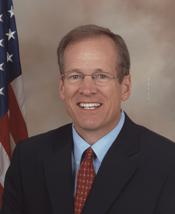
Mr. Speaker, I want to say a few remarks about our great friend and departing parliamentarian. If Members think about the world we live in today and all the technology and all the feats of…
Mr. Speaker, I want to say a few remarks about our great friend and departing parliamentarian. If Members think about the world we live in today and all the technology and all the feats of engineering, we take so much for granted. We get in our cars, and our cars are almost a mechanical and a computer platform now, and we never marvel, we never question. We just flip a switch, and we expect something to happen. We take it all for granted.
That is somewhat how we are as we come down to the floor of the House. As 435 independent contractors, we come down here and we expect bills to be on the table, we expect to have a learned staff who can ask why a certain amendment was germane and why it was allowed and why it was not allowed. We expect to have some professionals who can keep their eyes on our distinguished brethren and sisters on the Committee on Rules, for example.
We need a neutral body as our motions flow that can say this is how the procedure must go on. And I think the House should be very proud of what Charlie and his entire team have done and all of the staff members that make this body click. Lord knows what would happen if we did not have this. We might look like the U.S. Senate.
I do not know if my words will be taken down, Charlie. I know there is a whole list of things I am not supposed to say. For example, I cannot turn to my friend, David Obey or John Lewis and say, John. I have to say my distinguished friend from. Right now, this is like fingernails going against a blackboard. He keeps Members like me who can be somewhat flippant, who might say the wrong thing, who may deserve to have words taken down. He is the guy who says I may agree with what he just said about the fellow Member of the House, I might agree with his politics, I might disagree, but I am going to stick with the rule books. We need to have somebody like that. And he keeps people like the gentleman from Illinois (Mr. LaHood) watching that clock.
There was a great TV commercial of Motel 6 years ago. Tom Bodett made famous the line, ``I am going to keep the light on for you.'' I always liked that because my mom would keep the light on for us when we were teenagers going home because the light represented security, the light represented home and wisdom and fairness. Charlie has kept the light on for all of us for many, many years, a source of wisdom, a source of fairness, a bright spot no matter what the legislative agenda of the day was; and we thank Charlie for all of his hard work.
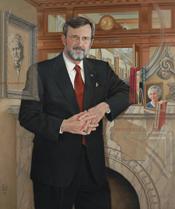
Mr. Speaker, parliamentary inquiry, is it correct that the Speaker accepted Mr. Johnson's resignation? Mr. Speaker, I appeal the ruling of the chair. Mr. Speaker, I often refer to Archie the…
Mr. Speaker, parliamentary inquiry, is it correct that the Speaker accepted Mr. Johnson's resignation?
Mr. Speaker, I appeal the ruling of the chair.
Mr. Speaker, I often refer to Archie the cockroach. This is my political bible, and Archie has something for almost every occasion. One thing he said once was ``Boss, I believe the millennium will come, but there is a long list of people who have to go first.'' I think Charlie misunderstood. Charlie, Archie was not talking about you, and I hope you reconsider.
Mr. Speaker, for 40 years Charlie has been at the center of every effort of this institution to live up to the responsibility which it has to the oldest democracy in the world. Democracy can thrive only when all of our citizens believe that there is at least one place, some forum to which they can go in order to make their case and to have their arguments heard. They do not have to win, but they have to know that there is a place where they will receive a fair hearing. When that happens, democracy thrives; and when it does not, democracy dies a little.
I think more than anyone in this institution, Charlie Johnson has dedicated himself to see to it that on this floor, democracy thrives. He has been dedicated to the proposition that the rules ought to be applied in a way that enabled the majority to meet their responsibilities to govern and at the same time to enable the minority to offer and be heard on its alternative visions.
To the extent that the House has on occasion not been used that way, the fault certainly does not lie on the shoulders of Charlie Johnson. Charlie Johnson, I think, has met his responsibility to the institution, to the country, to both political parties; and we are all the better for it.
I know people have said a lot of good things about him today, and I know that on occasions like this people often exaggerate. For instance, I understand that Charlie's own wife was watching this on C-SPAN, and she heard so many good things about him that she rushed to the Chamber to see if we were talking about the same fellow. We are, Charlie. We are all talking about you. If Dick Bolling were here, who was my mentor in this place and who as a Member I think knew more about the rules than any other Member I ever knew, if Dick Bolling were here today, he would say, ``Well done, thou good and faithful servant.''
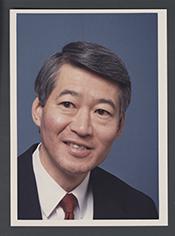
Mr. Speaker, it is with great pleasure that I rise today to congratulate Parliamentarian Charles Johnson on four decades of service to the U.S. House of Representatives, and to wish him the very best…
Mr. Speaker, it is with great pleasure that I rise today to congratulate Parliamentarian Charles Johnson on four decades of service to the U.S. House of Representatives, and to wish him the very best for a well-earned retirement.
As all Members are aware, the job of House Parliamentarian is an exceedingly difficult one. One must have a scholarly grasp of the rules governing this institution, the integrity to be an honest and fair judge, and an ability to work with both sides of the aisle in contentious moments. Throughout my twenty-five years of service in the House, I have seen Charlie exhibit these qualities with the highest distinction.
Charlie began his service in the Parliamentarian's office in 1964, shortly after graduating from the University of Virginia School of Law. In 1994, he was appointed Parliamentarian by a Democratic Speaker, Tom Foley. In a testament to his character, he was then reappointed by two Republican Speakers, Newt Gingrich and Dennis Hastert. All Members of this body have relied on Charlie's keen intellect and sound judgment, day in and day out. He has served with the greatest integrity and will be missed. However, all Members welcome his respected successor John Sullivan, who Charlie has mentored.
Fittingly, Charlie will continue to serve our country in other ways when he retires from this institution. In collaboration with the Parliamentarian of the House of Commons in the United Kingdom, he plans to produce a book on parliamentary procedure that will be a welcome addition to the field. In addition, after an activity that is dear to my heart, he will lend his talents to the San Francisco Giants as a batting practice pitcher.
I want to thank Charlie for his wisdom, his commitment to being a nonpartisan advisor, and above all his forty years of service to the United States House of Representatives. We thank him for sharing his life with us these many years, and wish him the very best in his endeavors to come.
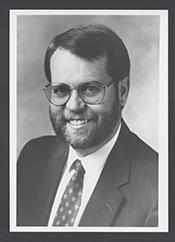
Mr. Speaker, when we are all here on the floor, there are often calls for regular order. The fellow who has kept regular order has been Charlie Johnson during my 10 years. A lot of platitudes have…
Mr. Speaker, when we are all here on the floor, there are often calls for regular order. The fellow who has kept regular order has been Charlie Johnson during my 10 years.
A lot of platitudes have been spoken and they are all well deserved. I want to extend my voice in saying thanks for giving me the guidance when I have had the honor of presiding over the House from time to time.
I do want to tell just one quick story in the minute that I have been given because the majority leader made sort of a joke about the 3-hour vote on prescription drugs and some Members in the House, when they scream regular order, because we are all busy, we do not take time to read the rules, do not know that the votes are a minimum of 15 minutes and not a maximum of 15 minutes.
But I can recall during a rather contentious vote the Republicans were up 206-204 and time had expired. A rather excited Member from the West Coast, California, came running up, it was not the gentleman from California (Mr. Dreier), and said, ``You've got to close this thing down. We have to win this vote. You need to shut it down.''
We looked and saw that earlier in the day 420 Members had voted, we were about 10 Members short; it was late in the evening, everybody was out having dinner, coming back; it was raining in the Capital. Charlie Johnson then said, ``When you're in the minority, you understand that you're not going to win a lot of votes here, and when you're in the majority you can and probably should win most votes, but what you can't do when you're in the majority is steal a vote. We need to keep this vote open to make sure that those 10 Members who voted just a half an hour ago have the opportunity to be here and cast their ballots.''
We wound up winning and the Member on that occasion who was excited came up later and apologized for screaming. Charlie Johnson has been fair, fair to the Republicans, fair to the Democrats, and I shall miss him very much.
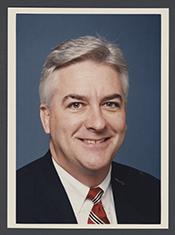
Mr. Speaker, I want to join my colleagues this morning, mostly in leadership positions, who have come to the floor this morning, Charlie, to talk about your wisdom and fairness and work ethnic; and I…
Mr. Speaker, I want to join my colleagues this morning, mostly in leadership positions, who have come to the floor this morning, Charlie, to talk about your wisdom and fairness and work ethnic; and I want to associate myself with their remarks, of course. But I am one of those dozens of the Speaker pro tempores. Charlie has made us all look good, both on C-SPAN and back home for our constituents, and for our colleagues here in the Chamber.
I was in the chair one day and some rule question came up. After I answered it, my mother called me on the phone and said, ``How did you know all of those rules so quickly?''
I said, ``It was easy, Charlie Johnson was there.''
She said, ``Who is he?''
I said, ``Well, he is the guy that does the trick. He talks into the microphone
so you hear him, but so nobody else hears him, and he explains the rules.''
Charlie, on behalf of all of the Speaker pro tempores, some with a little more experience than others, who you have made look good across the country and in front of our colleagues, I want to thank you for knowing those rules, for sharing those rules, and for keeping this place a place of order when we are in the chair trying to keep order.
I guess the trick for you then and your staff is to be heard, but not to be heard when you do your job best. And I would submit to my colleagues here in the Chamber that we all can take a lesson from this gentleman as he leaves us. When we do our business, we should try to be heard, and maybe not be heard so loud during those times of emotion, during those times of debate, during those times of political arguments, to be heard, of course, but to not be heard. And Charlie, for that service to us as that group of people that chair these sessions, and on behalf of all our constituents across the country, I want to say thanks for a job well done. We appreciate it. We will always remember you.
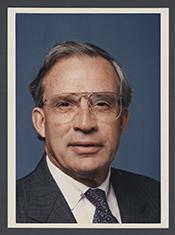
Mr. Speaker, I thank the distinguished chairman for yielding me time. I too wish to associate myself with the praise and gratitude for the man and his service to our institution. I would characterize…
Mr. Speaker, I thank the distinguished chairman for yielding me time.
I too wish to associate myself with the praise and gratitude for the man and his service to our institution. I would characterize Charlie as the true north on the compass of this institution and the man who had the good judgment to understand when magnetic declinations were in order. He has had seasoned patience with seasoned Members, and he has had extraordinary patience with new Members, to try to explain how things happen here. I think many of us feel that his personal judgment is as much a hallmark as the knowledge of the institution, which is matched by none.
The reason I asked for time to speak is that Charlie will always be in my memory on a fateful day in this country, September 11, 2001. The Speaker of the House desired that the House be opened for a prayer on that fateful day even as events were transpiring around us. It was not the right time, there was concern about precedent. Parliamentarians always worry about precedent.
Charlie found a way for us to get the House opened, the prayer said, and the House evacuated. And I have, to this day, that official Record hanging on my wall in my office and it will always be a memory of my life. Because I think it was very important that that day was recorded that way about this institution, and it would not have happened without him, of course.
Charlie is well regarded here and overseas, as we know. I have talked to parliamentarians, as I am sure others will testify, who come and wonder how this democracy works; how the people's House works. He has imparted that knowledge and wisdom and judgment around the globe, and I have heard it expressed many times from visitors who come here.
He has added value. He has brought credit to our institution. We are going to miss you a lot, Charlie, and I wanted to say thanks.
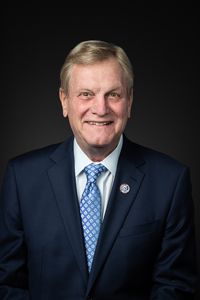
Mr. Speaker, I thank the gentleman for yielding me this time. Charlie, we are certainly going to miss you. Sometimes that does not seem like enough, but all of the Members of the House and the fellow…
Mr. Speaker, I thank the gentleman for yielding me this time.
Charlie, we are certainly going to miss you. Sometimes that does not seem like enough, but all of the Members of the House and the fellow staff members here in the House are certainly going to miss you. Sometimes simple words are the best.
Parliamentary procedure, as has been stated here, the Rules of the House equally and uniformly applied to all, are what make this emotional and sometimes polarized place work. Charlie and I have sometimes disagreed about the interpretation of those rules and we have debated it a little bit.
Yielding to the superior wisdom of Charlie, I found out that you can end debate with a nondebatable motion here in the House, but if we were back in Idaho, you could not do that. We have had some very interesting debates.
I always found, when I practiced dentistry, that when I was hiring a new chairside assistant, it was sometimes often easier to hire somebody that had no experience because then you did not have to untrain them before you retrained them. Sometimes I think Charlie's toughest job here is to take some of us who have been presiding officers in State legislatures and untrain us of the rules that we learned in our State legislatures before he retrained us about the Rules of the House.
I know that you have done a fantastic job. We have all enjoyed working with you. Sometimes the measure of an individual's performance is what those around him think about the job that he has done. As I have talked to other staff members here, I can tell you one of the things that was said yesterday, someone said, ``If I had to think of one word to describe Charlie, it would be `integrity.''' That is not a bad legacy to leave.
Thank you, Charlie. We are going to miss you.
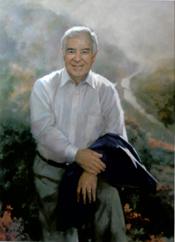
Mr. Speaker, as many have already stated, and as many more Members are eager to express, Charlie Johnson's departure will be a loss to this great institution we serve, and which Charlie has served so…
Mr. Speaker, as many have already stated, and as many more Members are eager to express, Charlie Johnson's departure will be a loss to this great institution we serve, and which Charlie has served so well for 22 years.
I am actually one of the few Members of the House who can say I was already here before Charlie was, although he arrived here within only a couple of short years after I did. Since that time, we've had the opportunity to grow older together.
Throughout his tenure, Charlie has been a wise counselor, a trusted confidant, and an impartial adjudicator who has served both parties without pride or prejudice.
For those who don't readily grasp the significance of the role of Parliamentarian, it is the Parliamentarian who makes sure that we can continue to conduct the House's business every hour of every day.
Those visiting, or watching at home on C-SPAN, may understand the importance of the House Parliamentarian as Members come and go from the Speaker's Chair. When they see Members in the Chair making procedural decisions, they also see the Parlimentarian's staff providing helpful advice on a timely basis.
For those of us who serve in the House, the Parliamentarian is an absolute lifeline. He's also the occasional judge, father confessor, and calm in the storm of the House floor as Members and parties seek to advance their own interests.
Although it seems that we increasingly can't find ourselves in agreement on many things, too many things for that matter, one thing that is beyond dispute is that Charlie has embodied the ideal of the civil servant who tirelessly has served the interests of the American people.
I, like so many others, am proud to have served with him.

Mr. Speaker, I rise to join my colleagues in paying tribute to and saying a word of thank you to Charles Johnson, the distinguished Parliamentarian of the House of Representatives. This is my 18th…
Mr. Speaker, I rise to join my colleagues in paying tribute to and saying a word of thank you to Charles Johnson, the distinguished Parliamentarian of the House of Representatives.
This is my 18th year of serving in this House, and this Member can testify to the fact that Charles Johnson has been a fair, hardworking, committed and dedicated public servant. When new Members were given the chance to preside over the House, he was always patient and eager to help Members make it through the process.
The House is a better House, and the country is a better country because of Charles Johnson.
It is my belief that when historians pick up their pens and write the history of this House during the latter part of the 20th century and the beginning of the 21st century, they will have to write that a man called Charles Johnson made a lasting contribution to maintaining order and peace in this House.
But he did more than maintain order and peace with his talents, skills and ability. He helped guide this House through some of the most important and sometimes bitter debates and discussions. Charles Johnson has helped guide this House through the discussion and debate on voting rights, civil rights, Medicare, the Higher Education Act, war and peace.
I want to join my colleagues to thank Charles Johnson for all of his good work and for his contribution toward the strengthening of our democracy. Charles Johnson, Mr. Parliamentarian, we wish you well in the days and years to come.
Mr. Speaker, Members come to this Congress with a policy agenda or a political agenda. We spend our time and effort trying to make some change we think is good for the country. Yet there is something…
Mr. Speaker, Members come to this Congress with a policy agenda or a political agenda. We spend our time and effort trying to make some change we think is good for the country. Yet there is something bigger and more enduring than any one of us or any one of our issues. That something is the institution of the House of Representatives.
I believe that every elected Member has a responsibility to that institution, but it is the professionals who serve as the officers and staff of the House that make sure it is preserved and protected. They serve the House and the Nation day and night through heated debates and even through long, dull special orders.
Nobody has served this House more faithfully and more nobly than our Parliamentarian, Charles Johnson. He is smart and insightful as his job required, but he also has the integrity to be trusted by both sides of the aisle during heated debate and controversial rulings. He has a sense of history and, I think, a sense of responsibility for this institution going back 217 years to the Constitutional Convention on through today and on through generations to come.
The House has been in good hands during Charlie Johnson's tenure, and part of his legacy, part of his lasting influence, will be felt through his successor. I join in expressing sadness at his leaving, but also admiration and gratitude for his service.
Bill Text
Latest available legislative text
        [Congressional Bills 108th Congress]
[From the U.S. Government Publishing Office]
[H. Res. 651 Engrossed in House (EH)]

In the House of Representatives, U.S.,

May 20, 2004.
Whereas Charles W. Johnson, III was appointed to the Office of the
Parliamentarian of the House of Representatives in May 1964 and, over
the ensuing 40 years, has continuously served in that Office under seven
successive Speakers, the past 10 years as Parliamentarian of the House
of Representatives under the appointments of three successive Speakers;
Whereas Charles W. Johnson, III has unfailingly endeavored to apply pertinent
precedent to every parliamentary question, in recognition of the
principle that fidelity to precedent promotes procedural fairness and
legitimacy; and
Whereas Charles W. Johnson, III has institutionalized in the Office of the
Parliamentarian his demonstrated commitment to consistency in
parliamentary analysis: Now, therefore, be it
Resolved, That the House of Representatives expresses its profound gratitude
to the Honorable Charles W. Johnson, III for his unrivaled record of devoted
service and steady, impartial guidance as its Parliamentarian.
Attest:

Clerk.