Recognizing and honoring the 40th anniversary of congressional passage of the Civil Rights Act of 1964.
Legislative Activity
Stay on top of the latest movement without scrolling through every action
Referred to the Subcommittee on the Constitution.
June 28, 2004
View full timeline
Introduced in House
June 15, 2004
Referred to the Committee on the Judiciary, and in addition to the Committee on Education and the Workforce, for a period to be subsequently determined by the Speaker, in each case for consideration of such provisions as fall within the jurisdiction of the committee concerned.
June 15, 2004
Mr. Sensenbrenner moved to suspend the rules and agree to the resolution.
June 23, 2004 • 1:38 PM
Considered under suspension of the rules. (consideration: CR H4802-4808)
June 23, 2004 • 1:38 PM
DEBATE - The House proceeded with forty minutes of debate on H. Res. 676.
June 23, 2004 • 1:38 PM
At the conclusion of debate, the Yeas and Nays were demanded and ordered. Pursuant to the provisions of clause 8, rule XX, the Chair announced that further proceedings on the motion would be postponed.
June 23, 2004 • 2:12 PM
Considered as unfinished business. (consideration: CR 6/25/2004 H4929)
June 24, 2004 • 2:05 PM
Passed/agreed to in House: On motion to suspend the rules and agree to the resolution Agreed to by the Yeas and Nays: (2/3 required): 414 - 1 (Roll no. 304).(text: CR 6/23/2004 H4802-4803)
June 24, 2004 • 2:12 PM
On motion to suspend the rules and agree to the resolution Agreed to by the Yeas and Nays: (2/3 required): 414 - 1 (Roll no. 304). (text: CR 6/23/2004 H4802-4803)
June 24, 2004 • 2:12 PM
Motion to reconsider laid on the table Agreed to without objection.
June 24, 2004 • 2:13 PM
Referred to the Subcommittee on the Constitution.
June 28, 2004
Voting History
1 vote recorded • Roll call available
Floor Debate
23 membersWhat members said about H.Res. 676 on the floor
 DRO
DRO JN
JN JCJ
JCJ SJL
SJL BL+18
BL+18
Floor Debate
23 membersWhat members said about H.Res. 676 on the floor
Mr. Speaker, as the designee of the minority leader, I rise in support of the resolution. Mr. Speaker I yield myself 9 minutes. Mr. Speaker, this resolution is bringing to the House floor a debate on…
Mr. Speaker, as the designee of the minority leader, I rise in support of the resolution.
Mr. Speaker I yield myself 9 minutes.
Mr. Speaker, this resolution is bringing to the House floor a debate on how best to make this country stronger and more just. The distinguished gentleman from Texas has just said that this is about raising taxes. One of the worst problems that can happen to you in Washington D.C. is when you begin to believe your own baloney. That is not what this resolution is about.
The situation is very simple: we have a war. That war by next year will have cost us $250 billion. And the question is, how are we going to pay for it? We have two choices. One is to charge the bill mostly to our kids by raising the deficit, which is what is happening, and along with that making every American pay through the nose with less security for our homeland on our borders, in our ports, in our air ports, less security for veterans who are not receiving adequate health care, less educational opportunity for middle-class families because of budget squeezes, less health coverage for hundreds of thousands of children all over this country, less help for workers who are
out of work; or will we choose the other way, as this resolution seeks to do.
Will we choose to ask the most well-off 200,000 people in this country, less than 1 percent of all taxpayers, will we ask them to make the supreme sacrifice? Those who make more than $1 million a year, will you ask them to make the sacrifice of limiting their tax cut to $24,000 on average rather than the $120,000 average that they will otherwise get under the existing budget of this House? I think the answer is quite clear.
I plead fully guilty to wanting to see the most privileged and blessed people in this society accept a somewhat smaller tax cut in order to provide greater opportunity for others in society to get the basic requirements on education, health care, veterans health care, and the rest.
Now, this resolution is very simple. It raises over $18 billion by limiting the average size tax cut for persons who make more than $1 million a year to about $24,000 a year. That is what the average tax cuts will be for someone who makes between $500,000 a year and $1 million. We are asking those that make $1 million to live by that same amount. That is hardly an outrageous sacrifice.
We then use 25 percent of that money for deficit reduction. We use the remaining $14 billion to eliminate the real reductions in domestic appropriations that are contained in the President's budget. If this amendment is adopted, we will simply be adjusting education, health, veterans programs and all the rest by the amount that is equivalent to inflation plus population growth. That is all. We would get back to a standstill level on that score.
We put $3 billion into homeland security. Why? Because the Hart- Rudman Commission told us we have a need of $190 billion at the local level, and we have only met 15 percent of that need so far. We do it because only 13 percent of fire departments in this country are equipped to handle a full-blown hazardous material attack. We do it because only a tiny fraction of cargo in passenger planes is presently inspected for explosives. We do it because we have some 2,000 fewer people on the northern border protecting our border than the PATRIOT Act told us that we would have. We do it because only 20 of the most important 45 ports in America which ship goods into the United States have adequate inspection systems to make certain that there is not nuclear material or explosive material in ships that come to our shores.
We then put $1.3 billion into veterans health care so that we can cut the claims backlog of 327,000 veterans so that we can shorten the waiting time of veterans at VA hospitals, so that we can strengthen critical mental health services for returning veterans. We add $1 billion to military housing because more than 120,000 of military families in this country serve in lousy housing, and they deserve better.
We put $5.7 billion into education to close the gap between what this Congress promised it would provide local schools and what it is actually giving them. We put a billion and a half dollars into Title I so that 500,000 more poor kids and disadvantaged kids can get better instruction in reading and math.
We put $1.2 billion into special education so that local school districts will receive more help from the Federal Government to meet Federal mandates to educate every disabled child. We put $300 million in in order to help 400,000 more children receive adequate child care and after school care.
We put $2 billion in so that we can increase Pell grants to help those who otherwise could not afford to go to college. We want to increase the maximum grant by $450. Pell grants today pay only for 35 percent of the cost of instruction at a 4-year university. Twenty years ago they paid for 75 percent. Can we not do better than that?
Then we use $200 million to provide additional employment and training opportunities for people who have lost their jobs. We also address a number of other matters. We fund a number of other programs that are high priority programs, as demonstrated by the letters from the minority side as well as the majority side of this House to our own committee, asking that our committee provide funding for these programs.
So that is what we do, and I would ask support for this resolution, and I repeat the same thing that I said when I began. We have one choice. We can either pay for this war by shoving the bill to our kids and by cutting back on educational opportunities, cutting back on veterans health care, cutting back on decent housing for the military, squeezing dangerously our homeland security expenditures, or we can ask the most well-off, the most prosperous people in this country to share a little bit more of the load by limiting the size of their tax cut to $24,000 rather than the average $120,000 tax cut they would ordinarily get.
I believe the majority of those people are patriotic enough to say, ``Do it, we do not need that extra supersized tax cut as much as this country needs to have its fiber strengthened by providing the investments that I have just talked about.'' I would urge a ``yes'' vote for the resolution.
Mr. Speaker, I yield 4 minutes to the distinguished gentleman from New York (Mr. Rangel), the ranking member of the Committee on Ways and Means.
(Mr. RANGEL asked and was given permission to revise and extend his remarks.)
Mr. Speaker, I yield myself 30 seconds. Let me simply say, Mr. Speaker, that this is no less binding than is the budget resolution passed by the Republican majority.
Let me also say that we have heard a lot of concern about small business. I would like to see how many small businesses in each of our districts have profits of $1 million per owner to qualify under this bill.
Thirdly, we are not raising taxes; we are asking people who make $1 million a year or more to limit themselves to a $24,000, on average, tax cut, which is still 25 times as much as the average person in this country making $50,000 a year will get.
Mr. Speaker, I yield 1 minute to the gentlewoman from California (Ms. Pelosi), the distinguished minority leader.
Mr. Speaker, I yield 4 minutes to the distinguished gentleman from South Carolina (Mr. Spratt), ranking member of the Committee on the Budget.
(Mr. SPRATT asked and was given permission to revise and extend his remarks.)
Mr. Speaker, I yield 4 minutes to the distinguished gentleman from California (Mr. George Miller).
(Mr. GEORGE MILLER of California asked and was given permission to revise and extend his remarks.)
Mr. Speaker, could I inquire how much time is remaining.
Mr. Speaker, I yield 3\1/2\ minutes to the gentleman from Maryland (Mr. Hoyer), the distinguished minority whip.
Mr. Speaker, I yield 4 minutes to the distinguished gentleman from Texas (Mr. Edwards).
Mr. Speaker, I yield myself 10 seconds.
Mr. Speaker, despite the fiction we have just heard, you have to make $1 million a year profit in order to be covered by this. To suggest small businessmen are hurt by that is laughable.
Mr. Speaker, I yield 2 minutes to the distinguished gentleman from Pennsylvania (Mr. Fattah).
Mr. Speaker, I yield myself 30 seconds.
Mr. Speaker, again, despite all of the misinformation that we have just heard, the IRS has told us that fewer than six-tenths of 1 percent of all returns with small business income have incomes of more than $1 million. To suggest that this is even laying a glove on small business is a colossal red herring fiction.
Mr. Speaker, I yield myself 30 seconds.
The gentleman refers to one-third of the top bracket. This does not touch everybody in the top bracket. The top bracket is $319,000 or more. We do not touch anybody with an income of less than one million bucks, less than one million bucks. That is not $300,000. Do not try to bamboozle people.
Mr. Speaker, I yield myself 30 seconds.
Line 22 and line 23 of page 6: The only taxpayers that are affected are ``taxpayers with adjusted gross income above $1 million.'' Period.
Mr. Speaker, I yield 1\1/2\ minutes to the gentleman from Massachusetts (Mr. Olver).
(Mr. OLVER asked and was given permission to revise and extend his remarks.)
Mr. Speaker, I yield 1\1/2\ minutes to the gentleman from New York (Mr. Engel).
Mr. Speaker, I yield 5 minutes to the distinguished gentleman from New Jersey (Mr. Andrews).
(Mr. ANDREWS asked and was given permission to revise and extend his remarks.)
Mr. Speaker, I yield 30 seconds to the gentleman from Illinois (Mr. Emanuel).
Mr. Speaker, I yield myself the remainder of the time.
Mr. Speaker, this amendment is pure and simple about shared sacrifice, as the gentleman from Illinois has just indicated. What we are asking is that those lucky people in this country who make more than $1 million a year, that includes the one-half of 1 percent of small businessmen who make profits of over $1 million a year, we are asking them to accept a scaled-back tax cut so that they only get, on average, $24,000 in tax cuts. That is 24 times as large as someone will get if they make $50,000 a year.
And, instead, we are saying please, for the sake of the country, take a little bit smaller tax cut so that we have some room in the budget to strengthen protection on our borders, to strengthen protection in our ports, to strengthen protection at our airports, to provide stronger opportunities for education, to provide more civilized health care for our veterans, to provide better housing for our military personnel, to provide a little better shot at protecting the environment, to help local communities so that they do not have to lay off hundreds of thousands of kids from health care programs like SCHIP and Badger Care in my own State. This is an effort to see to it that we can enrich the many and enrich the few at the same time.
Trickle-down economics is what we have heard from our friends on the
other side of the aisle today. They say if you just give enough to the people at the top, eventually some will trickle down to people at the bottom.
My old friend Harvey Dueholm in the legislature used to describe it this way. He said trickle-down economics is the theory that if you just feed the horses enough oats, eventually some of it will filter down to the sparrows. Think about it. And vote ``yes.'' It is the fair, it is the right, it is the just thing to do.
Mr. Speaker, I yield myself 1 minute before I yield to the gentleman from Ohio. Mr. Speaker, I hear from Members on both sides of the aisle that this is really a waste of time today. It is kind of a…
Mr. Speaker, I yield myself 1 minute before I yield to the gentleman from Ohio.
Mr. Speaker, I hear from Members on both sides of the aisle that this is really a waste of time today. It is kind of a silly exercise. We ought to be having appropriation debate on the floor. We have got appropriations bill that are waiting in line with no prospect of getting them done on time this year, and yet we have got to do this.
I hear from some that this is really an exercise as a price to prevent obstructionism on the floor for consideration of appropriation bills, that if we do not debate that, somebody is going to obstruct the floor.
Regardless, let me say a couple of things. There is a budget. The House has deemed the budget. We await consideration in the other body of the budget, and this is a nonbinding resolution that we are about to talk about for the next couple of hours here instead of talking about appropriation bills, but I guess we are going to go through this exercise.
As the majority leader said, we are going to have some fun because we get to point out our differences, but let us just face it. This is a nonbinding, somewhat silly exercise, but we are going to go through the process and talk about the differences.
Mr. Speaker, in order to do that, I yield 5 minutes to the gentleman from Ohio (Mr. Portman), a member of the Committee on Ways and Means and a member of the Committee on the Budget.
Mr. Speaker, I yield 3 minutes to the gentleman from Florida (Mr. Mario Diaz-Balart), a member of the Committee on the Budget to continue the debate on the Democrat increase-taxes-and- spending proposal.
Mr. Speaker, I yield myself 30 seconds to read the last line of the bill. The minority leader may want to read page 5 of the resolution she just defended. It is not a tax increase? My goodness. What does ``changes in tax laws sufficient to increase revenues by $18 billion'' mean? I heard one time if it walks like a duck, it looks like a duck and quacks like a duck, it might be a duck. This is a tax increase.
Mr. Speaker, I yield 2 minutes to the gentleman from Texas (Mr. Brady), a member of the Committee on Ways and Means, to talk further about this Democrat tax increase resolution.
Mr. Speaker, to continue the debate on this small business job-killing bill, I yield 2 minutes to the gentleman from Texas (Mr. Hensarling), a member of the Committee on the Budget.
Mr. Speaker, I yield 4 minutes to the gentleman from New Jersey (Mr. Garrett), a member of the Committee on the Budget, to continue the debate on this more-money-solves-all-problems proposal.
Mr. Speaker, to continue our debate on this Democrat increased-taxes bill, I yield 4 minutes to the gentleman from Georgia (Mr. Burns).
Mr. Speaker, to continue our debate on this tax-increase, job-killing bill, I yield 5 minutes to the gentleman from Georgia (Mr. Kingston).
Mr. Speaker, I reserve the balance of my time.
Mr. Speaker, to continue the debate on the Democrat tax- increase proposal, I yield 2 minutes to the gentleman from Wisconsin (Mr. Ryan), a member of the Committee on Ways and Means.
Mr. Speaker, I yield 1 minute to the gentleman from Wisconsin (Mr. Ryan) to respond.
Mr. Speaker, we do not want to ``bamboozle,'' so I would yield 1 additional minute to the gentleman from Wisconsin (Mr. Ryan).
Mr. Speaker, will the gentleman yield?
Mr. Speaker, the point of this all is, this is a tax increase. They are admitting it. There were so many Members who came to the floor and said, oh, no, no, no, we are not really increasing taxes. But what the colloquy between the two gentleman from Wisconsin proves is, once and for all, this is a tax increase.
So if one wants to come to the floor today in the middle of an economic recovery and vote to increase taxes on small business, knock yourself out.
Mr. Speaker, I yield 1 minute to the gentleman from Michigan (Mr. Smith).
Mr. Speaker, I yield myself such time as I may consume.
Respectfully, because I know the Speaker is from New York, let me yield myself 30 seconds and say I think a lot of that money we borrowed was sent up to New York. So when the gentleman is talking about what happened and Alice in Wonderland, let me just remind the gentleman that we sent a lot of that to New York. We had a terrorist attack. I know the gentleman knows that, and he voted for it then, and he did not say a word about it then. He said send the money. We need it. Do whatever it takes. Now he comes to the floor and he says, gee, I guess we borrowed too much money.
Well, maybe we did, but the gentleman should have complained about it then.
Mr. Speaker, I yield 2 minutes to the gentleman from Kansas (Mr. Tiahrt).
Mr. Speaker, I yield 3 minutes to the gentleman from Connecticut (Mr. Shays), the vice chairman of the Committee on the Budget.
Mr. Speaker, I yield myself the balance of the time.
Mr. Speaker, that is the difference between Republicans and Democrats. It all comes down to who is doing the feeding of the oats. The government does not feed oats. That is not where the economic advantage of this country comes from. We do not pass out money to people here and say here is government money, we printed it, you get to have it. They get it from working. They get it from farming. They get it from taking risk. They get it from unlocking their door in the morning and letting in the public to their flower shop, to their shoe store, to their bank, to whatever it might be, unlocking that door and letting the energy and the economic engine of this country work.
That is what we want to continue: working. We do not want this to kill jobs. Just at the moment when we are increasing jobs, look what we have done. Yes, there was a downturn. In the aftermath of 9/11 and in the aftermath of the dot-com bubble busting and the aftermath of the Clinton recession, there is no question, look right here; that is what that is, that little downturn. But look how it is going back up.
And it is going up because the engine of America is working. It is not going up because of the chart on spending. When we increase spending in Washington, that does not drive the economy. That does not do anything except it spends money in Washington. What drives the economy are people in Wisconsin and Iowa taking a risk, building a business, employing people so that when they balance their checkbook around their kitchen table and they meet their obligations and pay for their kids' college and pay for health care and turn on the lights and pay for groceries, they can do it. It is not because, with all due respect to the gentleman from Wisconsin (Mr. Obey), we send them a check. Because that does not do anything.
The check they want to make is a paycheck, not a government check. Every single person in America wants a paycheck. And that is what we have done. We have created paychecks. Look what the spending side of this does. They are saying we are not spending enough in Washington. Look at all of this increase. Look at all of the debt that they are complaining about. And on top of all of that, they say, no, the problem is we are still not spending enough money in Washington. And the thing they misconnect is that that money in Washington came from somebody, a taxpayer.
Money does not start in Washington. Money starts in Iowa, in Wisconsin, across the country, in people's pockets, in small businesses. That is where it starts. And they want to take more of it, they want to kill those jobs, so that they can hand out more money, so that they in Washington can have the power. We do not want that to happen. We want the power to be around the kitchen tables of Iowa and Wisconsin. That is why we have opposed their big tax increases.
As far as the spending, the taxes, that is obvious those increases are ridiculous. But the increases in spending, one can always say we want to hand out more money in order to demonstrate our compassion. And we have told them about the increases in education, the increases in veterans, the increases in health care, the increases for the environment, for all sorts of programs, and to make sure our country was protected. But on top of that, they say, you know what, I think we can even be more compassionate. We are going to hand out money and tell people we care.
Well, quite honestly, I think it is time for to us start looking around for the waste. I believe that, instead of this debate on the floor today, what we should have done is had an appropriation bill come up. That is what we should have done. We should have started going through all the accounts and look for ways where the Federal Government is not spending that money as wisely as the people back home in Iowa and Wisconsin.
We do not want to kill jobs; we do not need to increase spending. We do not need a resolution like the Democrat proposal on the floor today to tax and spend and tax and spend and tax and spend and tax and spend more and more in Washington. This needs to be done around the kitchen tables of Iowa, not the committee tables in Washington.
Mr. Speaker, I hope Members vote against this ill conceived proposal.
Mr. Speaker, I object to the vote on the ground that a quorum is not present and make the point of order that a quorum is not present.
Mr. Speaker, I rise to recognize and commemorate the 40th anniversary of the Civil Rights Act of 1964. I commend my colleague, Congresswoman Eleanor Holmes Norton, for authoring H. Res. 676 and…
Mr. Speaker, I rise to recognize and commemorate the 40th anniversary of the Civil Rights Act of 1964. I commend my colleague, Congresswoman Eleanor Holmes Norton, for authoring H. Res. 676 and ensuring that this Congress appropriately marks the passage of the most comprehensive civil rights legislation in our Nation's history.
This year our Nation has honored and celebrated several extraordinary accomplishments that were born of the Civil Rights Movement. Last month we observed the 50th anniversary of the May 19, 1954, Brown v. Board of Education decision. That landmark decision not only struck down the doctrine of ``separate, but equal'' and desegrated public schools. It ultimately led to the passage of key federal legislation that desegregated every segment of our society--the Civil Rights Act of 1964.
the civil rights act of 1964
In every real sense, the 1964 Act was a response to the Civil Rights Movement sweeping the country. This Act could not have been achieved without the tireless effort of the great, civil rights leader, Dr. Martin Luther King, Jr. It was Dr. King that motivated hundreds of thousands of activists--of all colors--to demand that this Nation realize equality for all. It was because of his leadership that the Civil Rights Act of 1964 was conceptualized and implemented.
The Act, which was signed into law on July 2, 1964 by President Lyndon B. Johnson, established safeguards and legal remedies to combat both the dejure and defacto discrimination that plagued minorities in almost every aspect of their lives.
First, and foremost, the Act moved to ensure an equal right to vote. The unequal application of voter registration requirements that effectively disenfranchised millions of African-Americans--poll taxes, literacy tests, grandfather clauses--was deemed unlawful in Title I of the Act. This provision made state and local governments accountable to their citizens and opened the path for equal political participation.
Titles II and III of the Act created a federal remedy to fight discrimination in public accommodations. Through these provisions, the Attorney General had the appropriate means to obtain injunctive relief and bring suit in instances where equal access to a public facility had been denied. The lunch counter sit-ins and marches now had real effect in that the federal government could intervene to ensure equal treatment in society, regardless of race or other factors.
The language of ``all deliberate speed'' in the Brown decision was given meaning, as the federal government now had the tools in Title IV of the Act to end segregation in public schools. The Civil Rights Act of 1964 would serve as strong legislative policy against discrimination in public schools and colleges because it stood on the shoulders of the profound Brown decision, in which Chief Justice Warren, writing for a unanimous court, declared that ``in the field of education, the doctrine of `separate, but equal' has no place.''
More broadly, under Title V of the Civil Rights Act of 1964, the Commission on Civil Rights, established in 1957, was provided with additional guidance in its charge to study, investigate, and report on civil rights policy.
Title VI of the Act protects persons from discrimination based on their race, color, or national origin in programs and activities that receive federal financial assistance. This provision has been broadly used to ensure that entities receiving federal funds cannot deny service, provide different services, or segregate or separately treat individuals.
The Title VII provision of the Act would grow to become one of its most important and extensively utilized provisions. Going beyond its impact in the racial and ethnic minority community, Title VII acknowledged that sex discrimination in the workplace was a major problem and would be widely used to ensure protections for women in the workplace.
The Equal Employment Opportunity Commission (EEOC), which was also created in the 1964 Act to serve as the premier vanguard of workplace discrimination, had its authority enhanced with amendments in 1972 and 1991.
In 1972, the EEOC was given the right to sue non-government respondents and the federal government, state and local governments, as well as educational institutions, were made subject to Title VII. The 1991 amendments allowed plaintiffs to recover fees and costs in suits in which they prevailed, as well as entitled plaintiffs to recover compensatory and punitive damages in intentional employment discrimination suits.
Injustices Remain in 2004
Without doubt, substantial progress toward equality has been made as a result of the passage of the 1964 Act, but there remains substantial work. I can recount a list of sobering statistics in the realm of employment, education, healthcare, and the political process:
In terms of employment, the average white woman earns only 73 cents for every dollar earned by the average white man. The average African American woman earns just 63 cents to every dollar earned by the average white man.
With regard to education, today, sadly, most schools have become resegregated. In the 2001-2002 school year, the Civil Rights Project found that the average African American attended a school where minorities formed almost 70 percent of the student body. The average Latino school child attended a school that was 71 percent minority. By contrast, the average white student attended a school where whites composed 79 percent of the student body.
In the realm of healthcare, the disparities are startling. Minority Americans are at least twice as likely as white Americans to be uninsured. More than 30 percent of Latinos and 20 percent of African Americans do not have health insurance.
Minorities remain disenfranchised from the political process. The precious right to vote was repeatedly violated in the much contested Presidential election of 2000. In the state of Florida and at polling booths across the county, a disproportionate number of people of color were excluded from the political process.
In addition to the modern day disparities that serve to undermine the Act, several Supreme Court decisions have whittled away at some of its key protections. In Alexander v. Sandoval, 532 U.S. 275 (2001), the Supreme Court held that there is no private right of action to enforce Title VI regulations forbidding practices that have an unjustified discriminatory effect on the basis of race, national origin, or color. Also, a dangerous precedent may have been set in Barnes v. Gorman, 536 U.S. 181 (2002), a case in which the Supreme Court held that punitive damages are unavailable for intentional violations of laws protecting those with disabilities. We must ensure that such punitive damages that are awarded for intentional discrimination under Title VI and Title VII are protected. We must also ensure that the true intent of the Act is adhered to.
The Future of the 1964 Act
Congresswoman Norton's resolution encourages all Americans to recognize and celebrate the important historical milestone of the passage of the Civil Rights Act of 1964. However, rather than engaging in mere self congratulation, we should recommit ourselves to continuing and building on the progress created by the 1964 Act. We must pledge to acknowledge and address the modern day disparities that prevent the country from fully realizing the potential embodied in the Civil Rights Act. I look forward to working with every Member of Congress in doing just that in the months and years ahead.
Mr. Speaker, my first thought was to come to this podium with a prepared text to be able to salute the 40th anniversary of the congressional passage of the Civil Rights Act of 1964. But I thought it…
Mr. Speaker, my first thought was to come to this podium with a prepared text to be able to salute the 40th anniversary of the congressional passage of the Civil Rights Act of 1964. But I thought it would be more appropriate to speak from the heart and recollection of the pain that was experienced by many in this country without the passage of this act.
Might I first give my accolades and appreciation to the gentlewoman from the District of Columbia (Ms. Norton) for her fight on the battlefield for civil rights; to the gentleman from Georgia (Mr. Lewis), our own special icon and warrior for peace; to the members of the Committee on the Judiciary and others, chairman and ranking member, for allowing us this small moment of acknowledgment in the backdrop of the death of Schwerner, Goodman and Chaney, three young men of different backgrounds and religious faiths who came together in destiny down in Mississippi just to be able to stand up for the opportunity and freedom for a people who had been disenfranchised from the time that they came to this Nation.
Is it not interesting that the 1964 act prohibited discrimination, if you will, in voter registration and public schools. Some would say, did we not have Brown v. Board of Education in 1954? And yet 10 years later we needed the Civil Rights Act to encourage desegregation in our schools. There are reasons that many of us support specific political philosophies because Lyndon Baines Johnson, a President from Texas, helped to be part of the movement of this bill and we had to organize, yes, some Southerners and Northerners and moderates, to come together to push for the support and legislation of this bill.
But most of all I believe that this day allows us to remember that we are on a journey of freedom and that journey is not yet complete, for now we suffer with unequal educational systems in our public schools, inner cities that are crumbling; and, yes, we suffer from an election system that is yet not fair.
So I stand before you to acknowledge the fact that we are grand and greater because of the 1964 Civil Rights Act; but what I would simply say to America, our journey is yet not finished and we would join together in working in our Congress to be able to have a fair and equitable system of health care, of an educational system, and of an economic system that treats all of us fairly.
I hope, finally, that we will address the question of an unequal criminal justice system because the Civil Rights Act of 1964 is that. It is the planting of the seed to ensure that all America joins in civil rights, not just African Americans, not just Hispanics, but immigrants, Anglos, Asians and all will join together and recognize that this Nation is a better place if you acknowledge first that race is a factor in this country and if you acknowledge first that we have not yet finished the journey for civil rights in America.
Mr. Speaker, I rise in strong support of H. Res. 676, a bill recognizing and honoring the 40th anniversary of Congressional passage of the Civil Rights Act of 1964. It is imperative that we take a step back to recognize the years of bondage and enslavement; needless lynching and bloodshed; and the years of discrimination and hatred that Civil Rights Act of 1964 sought to curtail.
The legal protection of U.S. citizens, regardless of race, color, sex, religion and national origin against the vice of discrimination in the workplace and places of public accommodation; the prohibition of unequal application of voter registration requirements; the encouragement of continued desegregation of public schools; and the establishment of the Equal Employment Opportunity Commission highlight the basic tenets set forth in the Civil Rights Act of 1964.
I speak out today to commemorate the progress we have made in casting out the demons of prejudice and discrimination. I speak out today to recognize the steps we have taken as a nation to get closer to the American Creed. However, I must speak out today to call attention to the progress we have yet to make in order to fulfill the tenets of Civil Rights Act of 1964. I speak out today to challenge this nation to uphold our founding principles of equal opportunity for all, regardless of race, color, sex, religion and national origin.
Despite the 40 year life span of the Civil Rights Act of 1964, in 2004, we still attempt to take the life out of this act by violating its principles. Although the U.S. Supreme Court affirmed Prairie View A&M University student voter rights in 1979 when it was challenged in Waller County, Texas, attempts to disenfranchise Prairie View A&M University students continue today.
On November 5, 2003, the Waller County, Texas District Attorney requested that the county Elections Administration bar the students at Historically Black College Prairie View A&M University from voting locally by virtue of his unilateral interpretation of ``domicile'' for voting purposes. Texas voter registration law only requires a person to be a resident of the county at least 30 days prior to the elections. African-American students represent the majority of Prairie View A&M's student body of 7,000 members, and these students, constitute a major voting bloc in Waller County. The District Attorney's request sought to effectively disenfranchise African-American college students in this area; as such, this request suggested a form of voter intimidation and likely had the effect of denying or abridging the right to vote on account of race or color. Despite a prolonged dialogue with Texas officials regarding this matter, relief from the pressures and intimidation experienced by the students when attempting to exercise their
rights was never provided. This example does not stand alone among the long list of discriminatory acts that continue to plague our nation.
I ask you, Mr. Speaker, my colleagues: Have we truly upheld the Civil Rights Act of 1964? If your answer is no, you are one step closer in helping us to realize our U.S. commitment to equality. You must now join the front lines in the battle against discrimination and injustice. If your answer is yes, I ask that you call your attention to all of the overt and covert discriminatory acts that occur across our nation, such as the attempted disenfranchisement of the Prairie View A&M University students in Waller County, Texas.
Mr. Speaker, in closing, I would like to ask my colleagues to support H. Res. 676 because of the significant and far-reaching impact the Civil Rights Act of 1964 continues to have on our nation. The Civil Rights Act of 1964 is one of the essential, yet fragile threads that keep our nation civil. In fact, the passage of the Civil Rights Act of 1964, helped to mend our nation's worn fabric, tattered by hostility and hatred, into a nation that strives for the liberties and rights of all.
The fight to achieve equality is by far not over, but honoring and reflecting upon legislation such as the Civil Rights Act of 1964 will bring this nation one step closer to upholding unity and justice for all. I implore all of my colleagues to keep the spirit of equality and equal opportunity, the spirit of the Civil Rights Act alive, when governing this nation. As an original cosponsor of this bill, I find this resolution not only pertinent, but a necessary reminder to encourage us to move in the right nation, which is a nation for all.
Mr. Speaker, I rise in strong support of this resolution. First, I would like to thank the gentlewoman from the District of Columbia, Ms. Norton, for introducing House Resolution 676, which…
Mr. Speaker, I rise in strong support of this resolution.
First, I would like to thank the gentlewoman from the District of Columbia, Ms. Norton, for introducing House Resolution 676, which recognizes and honors the 40th anniversary of congressional passage of the Civil Rights Act of 1964, and for her work in getting this bill on the House floor today.
H. Res. 676 recognizes the advancements we have made in the 40 years since the Civil Rights Act was passed, and reaffirms the work we need to do, not only to retain what progress has been made, but also to continue to move toward greater social existence and inclusion.
But I want to take a step back for a moment and trace some of the history that led up to the passage of the Civil Rights Act.
Many of us can remember what it was like in America back in the tumultuous era of the 1960's. It was a time of social unrest marked by riots and protests across the country.
Growing up in this era, we were all galvanized by the passion and commitment of our civil rights leaders who worked to end America's immoral practice of discrimination.
The 1960's and the decades preceding were marked by unprecedented resistance to racial segregation and discrimination captured by the `freedom rides' throughout the south, the Lunch counter sit-ins, forced school integration in segregated schools, Supreme Court cases challenging Jim Crow practices and the individual stances that our parents took at their jobs and in their neighborhoods.
Here in Washington, A. Phillip Randolph and Bayard Rustin, along with a young activist from Georgia by the name of John Lewis, coordinated and organized a non-violent march on Washington on August 28, 1963 bringing more than 200,000 people to the Nation's Capital to hear Dr. Martin Luther King Jr., and other speakers and to demand the dignity, justice, and jobs that were promised by the government, and to have their economic and political concerns heard.
To be Black in America at the time meant you had no voice in the government, could not attend good schools, could not get good jobs, and in short, could not live a free life.
For over 100 years after slavery was abolished, Blacks and other minority groups were relegated to second class citizenship.
And because of all these facts, the March on Washington was nothing short of revolutionary in the precedent it set as the culmination of a national social movement.
But the real test of the movement was whether it could accomplish change.
As Bayard Rustin wrote of the March in his magazine, Liberation in 1963:
``What counted most at the Lincoln Memorial was not the
speeches, eloquent as they were, but the pledge of a quarter
million Americans, black and white, to carry the civil rights
revolution into the streets. Our task is now to fulfill this
pledge through nonviolent uprisings in hundreds of cities.''
It was on February 10, 1964 that Congress finally passed an unprecedented and highly contentious bill to support and protect the civil liberties and rights of all people.
The Civil Rights Act of 1964 in many ways turned a new page on the history of our nation, and all people, regardless of race, class or gender, were acknowledged as equal citizens of our nation.
Signed into law on July 2, 1964, the Civil Rights Act of 1964 outlawed segregation in businesses such as theaters, restaurants, and hotels.
It banned discriminatory practices in employment and ended segregation in public places such as swimming pools, libraries, and other public facilities.
And while it is often misconceived that the Civil Rights Act only affected the lives of Black Americans in the 1960s, this landmark legislation also protected the rights of women for the first time in history.
But as we all know, by itself the legislation could not transform the hearts and minds of those who truly believed in segregation. Only time could truly do that.
Yet the injustices that Blacks and other minorities faced with the tacit approval of the government were finally over.
But today our March, our struggle, and our cause are not over.
Today we are still attempting to understand and counteract the ramifications of the physical and mental enslavement which our ancestors were subjected to.
Profound inequalities remain imbedded in American society.
For example, black women are less likely to have breast cancer, but are more likely to die from this terrible disease because of the discrepancies in our health care system.
And according to the AFL-CIO, the average 25-year-old working woman will lose more than $523,000 due to unequal pay during her working life.
Facts such as these indicate that our work is far from complete.
Our Nation's capital, the icon of our collective American legacy pays sparse tribute to the African forefathers of this country and our Civil Rights leaders.
Despite the fact that this country was built on the backs of slaves, there are few commemorative statues or paintings that demonstrate as much.
Perhaps most glaringly, there is still no national memorial dedicated to Dr. Martin Luther King, Jr. on our National Mall.
And in this day and age, it is even more important that we continue to fight for our civil right and civil liberties, especially in light of the Patriot Act.
The resolution we are discussing today not only recognizes how far our country has come along, but it also praises the sweat and blood that was sacrificed to make sure that we got here.
This commemorative resolution is a testament to the shift in this country toward the spirit of inclusion and equality.
It also reminds us of how much we have left to do.
Our great society is highly regarded around the globe because of our laws, which ensure the integrity of our constitution and perpetuate the belief that all men and women are created equal.
The legacies of those who marched, protested, and died for our cause capture the true sentiment of our nation. By passing this resolution we continue to commemorate their struggle, our struggle.
It is the ultimate sacrifice of individuals like Dr. Martin Luther Ling Jr., from which we all benefit.
We must honor their memory by continuing to work to realize their vision.
And today we will honor their memory by passing this resolution.
Show 8 more
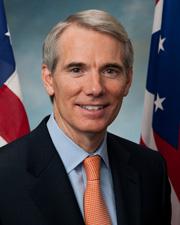
Mr. Speaker, I thank my chairman for allowing me to speak this morning, and it is true, this is a non-binding exercise. On the other hand, it is a very important debate, and it is a philosophical…
Mr. Speaker, I thank my chairman for allowing me to speak this morning, and it is true, this is a non-binding exercise. On the other hand, it is a very important debate, and it is a philosophical difference.
I appreciated the comments from my colleague from Wisconsin talking about the need to get the deficit down. I think what we have learned over the last couple of decades is the only way to get the deficit under control is to grow the economy and restrain spending. We learned it in the 1990s. We are relearning it now, and what is exciting to me is the fact that part of that, which is restraining spending, we are doing with regard to the budget and the budget that the House passed and based on the deeming resolution will keep our spending under control in the House this year. That is very important, keeping spending at about 4 percent, trying to keep it close to what the family budget is is extremely important.
Second, we are growing the economy, and there is an incredible story out there. It is probably the most underreported story of the year. The only economic indicator that is not improving right now is what we are hearing from the other side of the aisle about the economy. Jobs are increasing, fastest growth in 20 years. The unemployment rate is now 5.6 percent in this country, down from 6.3 percent. That makes it lower than the average unemployment in the vaunted 1990s, in the 1980s or the 1970s. People are going back to work.
Just last month, we created over 225,000 new jobs in this country. We have created over 1.4 million jobs in this country in the last 9 months. People are going to work, and not only are
jobs increasing but they are good jobs. Wages are going up. Wages are going up faster than they did in the 1990s. We are seeing actual take- home pay going up. We are seeing productivity high, inflation low, interest rates are low. We are seeing the economy that is the envy of the rest of the industrialized world.
Part of the reason for that, I believe a big part of it, is that this Congress has taken the right steps in terms of fiscal policy, keeping spending under control and growing the economy by smart tax relief that provides incentives for growth. That is what the Bush tax cuts were all about. That is what is under attack today.
If my colleagues are to vote for the gentleman from Wisconsin's (Mr. Obey) amendment, my colleagues are showing that they have a philosophical difference with that. Instead, my colleagues believe that just as the economy has turned, just as jobs are coming back, just as we have seen real growth and real wages, that we ought to be repealing the very tax relief that has led to that. I do not get that.
Here is a chart showing that today there are more Americans working than ever before. Employment is at a record high in May of 2004, 138.8 million people. Here is what unemployment would be without the tax relief that we passed in the last 3 years. Again, 5.6 percent unemployment today. Without the tax relief, we believe it would be over 7 percent. Now, what does that translate into? Over 2 million jobs. Over 2 million jobs.
I just think it is crazy that at the point at which we are turning the corner, we are bringing back jobs, things are going so well, that again the rest of the world is looking up and saying now America is the engine of economic growth again, that the people back home who punch a time clock every day are seeing their wages going up, that we would want to jeopardize that.
Increasing spending is, again, a philosophical divide. We can talk about whether we should be increasing spending within the allocation we have for homeland defense, intelligence and so on as we did yesterday on the floor of the House, but let me show my colleagues what would happen with the gentleman from Wisconsin's (Mr. Obey) amendment.
He said it is an increase in spending of about $14.2 billion next year. Well, over a 10-year period, that is $150 billion. Here is the spending increase that is in the legislation that is before us today or in the resolution before us. Again, we are not going to get the deficit under control unless we restrain that spending. Adding another $150 billion over 10 years is not the solution, $194 billion over 10 years. It is more than 150.
Now, let us talk about the tax increase. The tax increase, the gentleman from Wisconsin (Mr. Obey) said, is $18.9 billion in fiscal year 2005, and it is, but we have to take that over 10 years, too. Let us look at the 10-year number there. We are talking about individual income tax increases by $269 billion, over $250 billion over the next 10 years.
I know, again, we have a philosophical difference on who should be paying. Let me just make the point that if those tax returns that the gentleman from Wisconsin (Mr. Obey) talked about, that he wants to affect, over 75 percent of those tax returns have business income. Why is that? Because 90 percent of small businesses in this country are not C corporations. They are so-called pass-through entities. What does that mean? They pay taxes at the individual level.
So part of what my colleagues are doing, there is no free lunch around here. When they are saying they are going to go after the rich, who are they going after? They are going after a lot of businesses. These are the entrepreneurial businesses, the small businesses that are pass-through entities, so-called subchapter S companies, sole proprietors, LLC companies, partnerships that are creating the jobs out there.
Look, in our districts, it is not the large companies that are creating these net new jobs. It is these companies. It is the entrepreneurial companies that are taking a risk, that are pass-through entities. Ninety percent of small businesses pay taxes at the individual level. We are hitting them hard if we do this.
Again, let us not take this risk. Let us go back to what we know works. Let us restrain our spending. Let us grow this economy. Let us not go back to taxing and spending. That does not work. It is going to hurt our economy. It is going to hurt the very workers the gentleman from Wisconsin (Mr. Obey) said he would like to help.
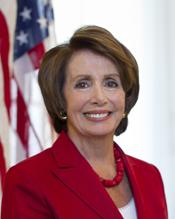
Mr. Speaker, I thank the gentleman for yielding me this time and for his exceptional leadership in this House on behalf of America's working families. He is a champion for middle-class families in…
Mr. Speaker, I thank the gentleman for yielding me this time and for his exceptional leadership in this House on behalf of America's working families. He is a champion for middle-class families in our country, and once again that is reflected in the initiative that he has put forth today. Democrats are united behind the gentleman and his efforts.
As we all know, the budget should be a blueprint for meeting our obligations and moving forward as a country. But the Republican budget is a blueprint for disaster. Today, thanks to the gentleman from Wisconsin (Mr. Obey), we have an opportunity to have a real impact on the budget. We have a chance to correct some of the imbalance in the Republicans' distorted priorities.
This vote matters. Congress will choose between giving tax cuts to people making over $1 million a year or making critical investments in homeland security, education, our veterans, health care, and the environment.
Mr. Speaker, we all know, and it has been said over and over again on this floor, that our budget should be a statement of our national values. What is important to us as a country should be reflected in that budget. So I ask my colleagues, is it a statement of your values to give a tax cut, an additional tax cut to people making over $1 million per year and leaving children behind because they are not receiving the proper education? Would you rather give a tax cut to people making over $1 million a year or would you rather improve education by adding $1.5 billion for disadvantaged schools, putting us on a path for full funding of the No Child Left Behind?
If the Republican budgets had prevailed over a 10-year period, nearly $20 billion would have been spent on education, and they can see this. It is below the line for every year except fiscal year 2002, and it is just slightly above the line. Ask any economist, and certainly Bob Rubin would attest to this, educating the American people is the best investment that we can make, certainly from a humanitarian standpoint; but from a practical budgetary and fiscal standpoint nothing brings more money into the Treasury than educating the American people.
Early childhood, K through 12, higher education, post-grad, and life- time learning brings more money into the Federal Treasury than any tax cut or anything that you can name. And yet, and yet, the Republicans reject that, despite what it does for the growth of our country, what it does to bring money into the Treasury, and, instead, want to give tax cuts to people making over $1 million a year.
Is it a statement of my colleagues' values to give a tax cut to people making over $1 million a year instead of improving veterans health care and shortening waiting times at VA health care facilities? The Paralyzed Veterans of America call this bill vital. They call this bill vital because, instead of those tax cuts, it truly honors our veterans. We talk a lot about veterans on this floor and how we honor their service to our country, but we dishonor them if we say they do not get the proper priority they should have; that we do not value them in our budget.
Is it a statement of Republican values that in this time of uncertainty in terms of our homeland security to give a tax cut to people making over $1 million a year instead of improving our homeland security; adding $3 billion to give our first responders the equipment and training they need to increase security at our ports and at our airports? Most of the wealthy people I know who make over $1 million a year say they do not need the tax cut, and they would rather have investments in America's children and in America's security. They know that it comes to them at a cost to our society.
This bill is also fiscally responsible. What the gentleman from Wisconsin (Mr. Obey) has proposed would reduce the deficit by almost $5 billion. That would be about 25 percent of this money that comes from these people making over $1 million a year. He has investments in education, in veterans, in homeland security, in the environment, and a major investment in deficit reduction. What happened to the Republican deficit hawks? Have you become an endangered species?
Let us be clear. This bill does not raise taxes. The previous gentleman from Florida spoke about this raising taxes on every living being. If everybody he knows makes over $1 million a year, maybe that is the circle he travels in; maybe that is his awareness of society. But it simply ain't so. And the
gentleman is right, the speaker previous to him said ``there ain't no free lunch.'' There certainly is not. We should be paying as we go, and we will be addressing that in the substitute of the gentleman from South Carolina (Mr. Spratt) later.
But let us be clear that this does not raise taxes. It does make major investments in our education, health care, homeland security, and environment. It does reduce the deficit by nearly $5 billion, but it does not raise taxes. It halts a future tax cut, for those, again I keep repeating, making over, making over $1 million a year, and stopping the fiscally irresponsible giveaway of $19 billion next year to those who need it least.
And let us be equally clear, we would not spend one penny more than the Republicans would. We just spend it differently. They have passed an ill-conceived Medicare bill that will cost taxpayers $534 billion and which gives $149 billion in windfall profits to big drug companies. They have chosen to ignore a bipartisan approach to pay as you go.
Today, we see the stark difference between the two parties: Democrats are focused on the aspirations and the needs of all Americans; Republicans are solely focused on tax cuts for the wealthy few, many of whom, as I have said, realize that these tax cuts for them take a tremendous toll on society in general.
The gentleman from Wisconsin's bill is a fiscally sound bill that invests in the American people. I urge my colleagues to support this bill.
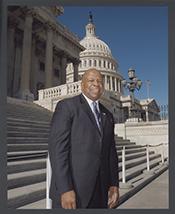
Mr. Speaker, I rise in support of H. Res. 676, a resolution recognizing and honoring the 40th anniversary of the passage of the Civil Rights Act of 1964, brought to the floor by Eleanor Holmes Norton…
Mr. Speaker, I rise in support of H. Res. 676, a resolution recognizing and honoring the 40th anniversary of the passage of the Civil Rights Act of 1964, brought to the floor by Eleanor Holmes Norton from the District of Columbia and spearheaded by the venerable House Judiciary Committee ranking member, Representative John Conyers. I thank you both for your unwavering leadership.
Mr. Speaker, July 2, 2004 marks the 40th anniversary of President Lyndon B. Johnson's signing into law of the Civil Rights Act of 1964. This landmark legislation ended the disenfranchisement of millions of Americans and struck a final blow to the Jim Crow laws that existed in many parts of our country.
As many of us know, the Civil Rights bill ended de jure segregation and discrimination in public accommodations, publicly owned or operated facilities and schools, employment and union membership, and voter registration. Just imagine what this country would be like without the enactment of these laws--a country where some people are treated like second-class citizens solely because of the color of their skin? How atrocious a thought? Where people are denied employment because of their color, national origin, religion or sex? The Civil Rights Act of 1964 and its progeny secured equal rights under the law for all Americans--the importance of passage of this bill cannot be overstated.
In the early 1960s, millions of Americans continued to suffer under the oppressive hand of Jim Crow laws. The Freedom Rides of the 1960s, led by religious leaders, civil rights activists, students and many others, empowered African Americans to organize and attempt to vote throughout the Deep South. Many Freedom Riders, such as Chaney, Schwerner and Goodman gave their lives for the cause of equal rights for all. Their names are indelibly inked in our collective consciousness, but there were many equally brave and courageous individuals whose names will not be recorded in the history books. However, none are forgotten. Due to their courage, we celebrate the 40th anniversary of the passage of the Civil Rights Act of 1964. I believe that commemorating passage of the Act reflects our commitment to bring this Nation closer to the ideals and values that each of us holds dear--equality for all.
Mr. Speaker, while I have come here to commemorate these great laws, I must also recognize that while the Act brought our Nation closer to fulfilling the promises guaranteed in the Constitution, de facto discrimination continues to pervade many of our institutions. Though we are a country on the brink of embodying a truly democratic Nation, we are also a Nation grappling with ensuring that the goals of the Act are achieved. We only need look to the 2000 Presidential Election in which many African Americans reported being turned away from voting polls. Our election process was marred by the disenfranchisement of thousands in Florida and on a smaller scale in other states polling places. These incidents of disenfranchisement show that though we are close, we are not there yet.
Mr. Speaker, as we honor the enactment of this momentous law, it is imperative that we also acknowledge that many of our Nation's communities have not progressed much since 1964 and still suffer the ravages of discrimination. Though the Civil Rights Act of 1964 brought us closer to dismantling the legacy of slavery, many American men, women and children still feel its impact. Many of our schools remain segregated (de facto) and underfunded. In fact, the No Child Left Behind Act, which authorizes funding and establishes accountability for our public schools, will be underfunded by at least $8 billion in the FY 05 budget. Many African Americans remain in the lowest economic brackets, where unemployment often reaches double digits in some communities, including my own. Women still earn $0.76 on the dollar to men for the same work and the same hours.
On that note, as my time to speak is short, I leave with two quotes from Reverend Dr. Martin Luther King, Jr., whose name is synonymous with the peaceful advancement of the civil rights movement. The first is one of my favorites and is taken from writings during his time spent imprisoned for standing up to the ugly face of discrimination and segregation--``injustice anywhere is a threat to justice everywhere.'' (Letter from a Birmingham Jail, April 16, 1963). Until we promote economic and educational policies that level the playing field for those that have been left behind--left behind many times in fact--then the injustice of second class citizenship will persist.
The last is a quote by Dr. King that is not as often quoted but is equally remarkable in its insight--``[A]ll progress is precarious, and the solution of one problem brings us face to face with another problem.'' (Martin Luther King, Jr., ``Strength to love,'' 1963). I find these words encouraging because they are wrought with optimism for the future. We are progressing steadily in our fight toward equality, and although we have many more problems to overcome and to confront, united, I am confident we will win this fight.
We must sustain the legacy of the Civil Rights Act of 1964 by continuing to enact legislation that represents what it stands for--our country's highest ideals of equality and opportunity for all citizens.
I call upon my colleagues to join me in honoring the 40th anniversary of the Civil Rights Act of 1964 by voting in favor of passage of this resolution.

Mr. Speaker, I move to suspend the rules and agree to the resolution (H. Res. 676) recognizing and honoring the 40th anniversary of congressional passage of the Civil Rights Act of 1964. Mr. Speaker,…
Mr. Speaker, I move to suspend the rules and agree to the resolution (H. Res. 676) recognizing and honoring the 40th anniversary of congressional passage of the Civil Rights Act of 1964.
Mr. Speaker, I ask unanimous consent that all Members may have 5 legislative days within which to revise and extend their remarks and include extraneous material on H. Res. 676, currently under consideration.
Mr. Speaker, I yield myself such time as I may consume.
Mr. Speaker, I rise in support of H. Res. 676, which recognizes the 40th anniversary of Congress' passage of the Civil Rights Act of 1964, and calls on all Americans to recognize and celebrate the historical milestone that it represents.
The Civil Rights Act of 1964 has been a cornerstone in the effort to end discrimination on the basis of race, color, national origin, religion, and sex. It has been used successfully by Federal prosecutors to desegregate hotels, motels, restaurants, theaters, and other places of public accommodation engaged in interstate commerce. Together with the Voting Rights Act of 1965 and the Fair Housing Act of 1968, and the Supreme Court's decision in Brown v. Board of Education, the Civil Rights Act of 1964 has done much to remedy the sad legacy of discrimination in America.
As I noted in my comments on the resolution commemorating the 50th anniversary of Brown on the House floor last month, the quest for civil rights has been, and must continue to be, a bipartisan effort. This was particularly true in the passage of the 1964 Civil Rights Act.
Recognizing that segregationists in the Democratic Party could forestall the passage of any civil rights legislation, the Kennedy administration actively sought to build a bipartisan consensus in favor of the bill from the moment of its introduction. In that spirit, Republican ranking member William M. McCulloch joined with Democratic chairman Emanuel Celler to guide the bill through the House Committee on the Judiciary. Their efforts ultimately led 138 Republicans to join 152, mostly Northern Democrats to overwhelmingly pass a compromise measure in the full House on February 10, 1964.
In the Senate, bipartisanship was even more important for passage of the act. Due to the rules of that body, a minority of Senators, mostly Southern Democrats, were able to prevent a vote on the act for 52 days. Against this backdrop, Republican Minority Leader Everett McKinley Dirksen succeeded in drafting an alternative clean bill with Majority Leader Mike Mansfield that kept most of the substantive provisions of the House bill, while tweaking it sufficiently to gain the support of a few swing Republican Senators. The Dirksen-Mansfield substitute worked. After an impassioned floor speech by Senator Dirksen, the Senate voted 71 to 29 to invoke cloture on June 10, 1964. After a few more days of procedural wrangling, 28 Republicans joined with 45 Democrats to pass the Civil Rights Act by a 73 to 27 margin.
When the Senate-passed measure returned to the House for final action, a bipartisan coalition succeeded in ensuring that the bill would go to the floor without an amendment. On July 2, 1964, the House passed the Civil Rights Act with yet another bipartisan vote of 289 to 126. The bill went to the White House where President Johnson signed it into law before a live television audience the same day.
The legislative history of the Civil Rights Act demonstrates what can happen when Republicans and Democrats work together. Neither side got everything it wanted, but they succeeded in passing landmark legislation that, while imperfect, did a great deal to remedy discrimination and promote equality of all Americans, regardless of color, creed, or sex.
Passage of the Civil Rights Act of 1964 was one of the highlights of the history of Congress, and I hope that all Members will join me in recognizing its importance.
Mr. Speaker, I reserve the balance of my time.
Mr. Speaker, I yield such time as he may consume to the gentleman from California (Mr. Cox).
Mr. Speaker, I yield myself the balance of my time.
Mr. Speaker, in listening to my friends from the other side of the aisle talk in support of this very important and meritorious resolution, they seem to have forgotten that the advances of civil rights that were passed in Congress in the 1960s were only made possible due to the fact that civil rights was a bipartisan project. Republicans and Democrats joined together to pass not only the civil rights bill of 1964 but the Voting Rights Act of 1965 and the Fair Housing Act of 1968.
When we talk about civil rights in the 21st century, it seems to me that we ought to hearken back on repeating what worked in the 20th century. I did not hear very much praise for the Republican efforts to get the civil rights acts passed. I would remind my friends on the Democratic side of the aisle that we are just as much for civil rights as you are; and when we work on this on a bipartisan basis, we can accomplish a lot more while each side maybe strikes a few fewer political points.
I urge the adoption of this resolution.
Mr. Speaker, I yield back the balance of my time.
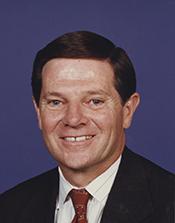
Mr. Speaker, pursuant to the order of the House of June 22, 2004, I call up the resolution (H. Res. 685) revising the concurrent resolution on the budget for fiscal year 2005 as it applies in the…
Mr. Speaker, pursuant to the order of the House of June 22, 2004, I call up the resolution (H. Res. 685) revising the concurrent resolution on the budget for fiscal year 2005 as it applies in the House of Representatives, and ask for its immediate consideration.
Mr. Speaker, I yield myself such time as I may consume.
Mr. Speaker, I rise in strong and, frankly, enthusiastic opposition to this resolution. But I should add I rise in strong and enthusiastic support for its addition to the House calendar this week.
The resolution before us, bravely introduced by the gentleman from Wisconsin (Mr. Obey), crystallizes the debate in this country between Republicans and Democrats to a degree rarely witnessed in these days of homogenized, air conditioned, political discourse. And for this debate, I thank the gentleman from Wisconsin who, even in an election year, has the courage and confidence to know that vigorous partisan debates between conservatism and liberalism are all together good and healthy for American democracy.
What this resolution before us comes down to is two questions: First, are small business taxes in America too high or too low? And, second, does the Federal Government spend too much money or too little?
Now, if you pay attention, you will notice the proponents of this resolution will speak grandly about the needs for shared sacrifice and will assert that this resolution would only impact taxpayers earning more than $1 million in 2005. It is a clever debating trick, this impression that this tax increase will only get the idle rich to pay their fair share, but it is false. As proponents of this resolution no doubt know, 83 percent of the taxpayers fleeced by this resolution report business income.
Small businesses, Mr. Speaker, sole proprietorships, subchapter S corporations, partnerships, family farms, we are not just talking about the cast of ``Friends'' here. Instead, we are talking about the people, the entrepreneurs, the risk-takers, the opportunity makers who are creating the jobs that are fueling what is now, beyond dispute, a full- fledged economic recovery. Indeed, these are the exact same taxpayers for whom Democrats just last week proposed cutting taxes. I guess it is just another example of Democrats voting for something before they vote against it.
Mr. Speaker, this resolution is a direct punitive attack against the men and women of American small businesses, against the owners who have risked and invested to compete in the marketplace, against the managers who have generated the economic growth of the last 2 years, and against the new employees who have leapt at the opportunities those owners and managers have created.
Hiking taxes on those small businesses, farmers, doctors, and families would immediately stifle the economic recovery that we are now enjoying, a recovery it must be noted, that is already producing government revenues greater than would have been generated without the Republican tax relief this resolution is trying to undo.
How bad would it be? Estimates suggest damage in the neighborhood of 100,000 lost jobs, $11 billion in lost GDP, and $30 billion in lost family income in just the first 5 years. The 12-digit tax increase that is being proposed, therefore, would only serve to increase government revenues by $19 billion over the next 5 years, and thereby add to the deficits he says he wants to cut, add to them, in fact, by more than $82 billion in the same time frame.
And as if that is not enough, Mr. Speaker, this resolution, after gutting the economic expansion and failing to generate sufficient government revenue to meet our needs, would then go for the Triple Crown of fiscal suicide, massive spending increases.
I know Democrats often complain that Republicans try to cast them as just tax-and-spend liberals. Well, Mr. Speaker, this resolution only does two things, tax and spend. I would love to call them tax-cutting, fiscally-sound supply-siders, Mr. Speaker, but if a party wants to tax like Mondale, spend like Dukakis, and stagnate the economy like Carter, and the worst thing we call them is liberal, frankly, I think they are getting off pretty easy.
Mr. Speaker, the ideas at the very core of the proposal of the gentleman from Wisconsin (Mr. Obey), indeed at the core of the Democrat Party today, is that the government will be making more decisions, and individuals families and small businesses should be making fewer; that Washington should have more money and more power, and the American people, they should have less. That is what the Democrats believe is what this resolution would write into law, and that is why it must fail.
Now, while I thank the gentleman from Wisconsin (Mr. Obey) for bringing this, albeit bad idea, to the floor for debate, I must urge all Members to vote ``no'' and make sure American jobs, economic health, and fiscal security are protected from the bone-crushing futility of liberal economic incompetence.
Mr. Speaker, I reserve the balance of my time, the remainder of which is to be controlled by my designee, the gentleman from Iowa (Chairman Nussle).

Mr. Speaker, I thank the chairman for yielding me this time. Today, we celebrate the anniversary of the Civil Rights Act of 1964, which was the subject of debate in this very body 40 years ago and…
Mr. Speaker, I thank the chairman for yielding me this time.
Today, we celebrate the anniversary of the Civil Rights Act of 1964, which was the subject of debate in this very body 40 years ago and which was enacted into law almost on this very day, on July 2. This anniversary is important because guaranteeing the equal treatment, the equal recognition of every American before the law has been a work in progress for the entirety of the existence of this Nation and it remains a work in progress still.
It is important also because with this enactment, the United States finally established in permanent, positive law the fulfillment of the vision of the grand words of our founders; that our Nation would not treat its citizens differently any more than they are treated differently in the eyes of God, their creator. The Act said that we will not tolerate discrimination against women or against men of any race or background or belief, even when the offense is not committed by a State government or by the Federal Government.
When the Congress finished this momentous work in 1964, our Nation had already made significant progress in advancing the rights of women and minorities. In 1964, Senator Margaret Chase Smith became the first woman to be considered by a major party for nomination to the Presidency of the United States. She finished second in the balloting to Barry Goldwater. But in that same year, reflecting how far we still had to go, and may have to go, a former Klu Klux Klansman filibustered the Civil Rights Act on the floor of the other body for 14 hours.
History will record that one of the great leaders in the passage of the 1964
Civil Rights Act was Senator Everett Dirksen, who indeed led the fight to protect the rights of all Americans here in the United States and, ultimately, to extend that vision around the world. Today, we can look back at the Civil Rights Act of 1964 in even greater appreciation, if not awe, of its significance.
Remember that this legislation had been enacted in prototypical form, in the 19th century by this Congress, but it had been stricken down by the Supreme Court. In 1964, the Congress acted and we made it stick. This legislation finally said to the world that if you are an American, our government will protect your freedom not only from outside aggressors, but from those in your own country who would deny employment benefits to you or deny you access to a public place because of your race, color, religion, sex or national origin.
This Act created a law enforcement organization, the Equal Employment Opportunity Commission, and it enhanced the power of the U.S. Department of Justice, which had been created initially to prevent discrimination against American citizens. Now the Department of Justice was given more tools to combat public and private discrimination. There were major steps in continuing a national tradition of expanding protection for individuals that dates back to the establishment of our Nation.
From the statement of equality in the first line of the Declaration of Independence to the founding of the Republican Party for the purpose of opposing slavery in 1854, to the first attempts to enact effective civil rights legislation in the years after the war, to the establishment of voting rights for women, to the defeat of fascism and Soviet communism, our Nation has moved deliberately, if not promptly, to become the Nation in which freedom for individuals is paramount.
As a legal act, the Civil Rights Act of 1964 required courage, persistence, and dedication to enact. Countless lives were taken and sacrificed in attacks against the ideas it embodies. There were battles for this rule of law that made it possible. America had its very own domestic terrorist organization, the Ku Klux Klan, organized to murder opponents and to destroy the principle of freedom that we fight to protect today from terrorists around the world. As we memorialized President Reagan a few weeks ago, we were reminded of our national mission to protect freedom, and we once again heard the final line of the ``Battle Hymn of the Republic.'' That simple line speaks to us even now as our soldiers are deployed around the world: ``Let us die to make men free.''
Forty years ago, this and the other body approved the Civil Rights Act with overwhelming bipartisan support. What we do here today while our soldiers still give their lives to make others free is remind the world once again that our Nation stands for freedom and equality. To us, these are priceless. I commend the authors of this resolution for so doing and urge its adoption.

Mr. Speaker, I want to thank my friend and colleague for yielding me this time. Mr. Speaker, I rise today in support of House Resolution 676, recognizing the 40th anniversary of the congressional…
Mr. Speaker, I want to thank my friend and colleague for yielding me this time.
Mr. Speaker, I rise today in support of House Resolution 676, recognizing the 40th anniversary of the congressional passage of the Civil Rights Act of 1964. I want to thank my good friend of many years, a colleague in the student nonviolent coordinating committee during the early 1960s, the gentlewoman from the District of Columbia (Ms. Norton), for bringing forth this resolution.
In addition, Mr. Speaker, I want to thank her for all of her hard work for many years for civil rights and social justice, and for having the courage during and after law school at Yale University to come south and work in Mississippi during one of the most difficult periods in the history of our country and in the history of our struggle for civil rights. And for helping to organize the march on Washington 41 years ago, I thank her, thank her for keeping the faith, thank her for keeping her eyes on the prize.
Mr. Speaker, the Civil Rights Act of 1964 just did not happen. It just did not happen. It took many years, many months of struggle on the part of a disciplined and organized movement that created a climate, created an environment for action on the part of the President of the United States and the Members of the Congress.
One must understand that in the American south during the 1950s and 1960s, there were signs that said, ``white men, colored men; white women, colored women; white waiting, colored waiting.'' Segregation and discrimination were the order of the day. As a child growing up in the American south, and as a participant in the civil rights movement, I saw those signs. There were separate water fountains in department stores, in public buildings. A sign in front of the fountain marked ``white'' and a spigot marked ``colored'' for people to get water to drink.
Black people could not go into a store, buy a pair of shoes. And sometimes they were not even allowed to try on those shoes. They would go into a store and they were not even allowed to try on a suit, and women were not allowed to try on a dress. They were welcome to go into a drugstore to get a prescription filled, but they were not allowed to sit down at the lunch counter and have a soda or something to eat. They had to take it out on the streets and stand up to drink or eat. There were separate waiting rooms in bus stations and train stations. People could not stay in the same hotel. People could not ride in the same taxi cabs.
When I look back on it, Mr. Speaker, the drama of the movement, the sit-ins, the freedom rides, the stand-ins at the theaters, the marches, all were the action of an ordinary people using the philosophy and the discipline of nonviolence. People had been beaten, people had been arrested and jailed, some had been shot and even killed. Medgar Evers was shot and killed in May of 1963 at his home in Jackson, Mississippi. Police Commissioner Bull Connor in Birmingham, Alabama, used fire hoses and dogs on nonviolent protestors. Four little girls were killed while attending Sunday school on Sunday morning September 15, 1963, when their church was bombed. Because of what happened in Birmingham, Alabama, and other parts of the American south, there was a sense of righteous indignation.
All across America, by the hundreds and thousands, people started demanding that the Federal Government act. People sent letters, telegrams, and petitions to Members of Congress and to the White House. And President Kennedy responded on June 11 in a nationally televised address to the Nation and he urged the Congress to pass a Civil Rights Act.
The Congress debated the proposed Act for many days, long nights, and it was finally passed on July 2, 1964. Forty years ago, President Lyndon Johnson signed into law that Act. I think it is fitting and appropriate, Mr. Speaker, for us to pause and celebrate the distance we have come and the progress we have made. Because of the actions of hundreds of our citizens, and because of the response of the United States Congress, President John F. Kennedy, and President Lyndon Johnson we have witnessed what I like to call a nonviolent revolution in America, a revolution of values, a revolution of ideas.
Today, because of the actions of 1964, we are a better Nation, we are a better people, better in the process of laying down the burdens of race. The signs that I saw back then, the young people today will never see. The only place they will see those signs will be in a museum, in a book, or a video. Those signs are gone, and they will never, ever return to America.

Mr. Speaker, it is unfortunate that we are forced to debate these very important topics within a nonbinding resolution, but the public ought to know that we are forced to debate these topics within a…
Mr. Speaker, it is unfortunate that we are forced to debate these very important topics within a nonbinding resolution, but the public ought to know that we are forced to debate these topics within a nonbinding resolution because of the corruption of the process by the Republican leadership in this House where we cannot debate these same items in the budget resolution.
Yesterday we saw that they would not face up to the debt limit extension, so they had to hide it in the defense bill to be added someday in the dark of night in some conference committee in the future. We have seen the corruption of legitimate debate and the exchange of ideas on the floor of the House. I do not know if the Republicans would really want the American public to know that over the last 10 years, the House Republicans have voted for $20 billion less in education spending than was finally appropriated by the Congress of the United States. I do not know if the Republicans really want in real debate the public to know that the House Republicans have decided that we will never have full funding of special education, special education that is very expensive for the school districts of this Nation, where school boards and superintendents and parents and children have come and lobbied this Congress and we have a bipartisan coalition to vote for full funding of special education.
But the Republicans will never get there. They have turned back the promises, they have turned back their votes of the past, they have decided they will add $1 billion a year to special education, and that means we will never get to the promise we made to this country of full funding. The gentleman from Wisconsin adds another $1.2 billion to that and in 6 years we would achieve the goal of full funding and take the pressure off those school districts to increase taxes at the lower level, but more importantly to be able to provide them the resources necessary for the education of those children with special needs.
I do not think the Republicans want to have a real debate about their position on the Pell grants that they have frozen over the last 3 years after the President of the United States promised that these young people would have access to a Pell grant to help them achieve their college education. But the Republicans do not really want to have a real up or down vote on increasing the Pell grants. Once again, they have promised to do that, they simply do not want to get caught voting against that promise, so they have us in a nonbinding resolution.
I do not think the Republicans want to get in a real vote on whether or not they are going to fully fund No Child Left Behind, where currently they are $29 billion behind the curve that they have promised America's schoolchildren, their parents, their families that they would provide because we have provided the most significant reforms in the last 35 years in Federal education policy.
What does that mean? That means that if they do not adopt this resolution, and it is nonbinding, that means that 500,000 low-income children will not get the academic assistance that they need. That means that over 350,000 children will not have access to afterschool care that they need where they get tutored and they get mentored and they get academic help. That means that thousands of teachers will not complete the process by which they become highly qualified teachers in the classrooms of our children. So another year goes by and thousands of more teachers enter the classroom without the professional development, without the credentials, without the certifications necessary to provide a first-class education to America's children.
The Republicans have so corrupted the process that they can continue to make the promises to the public that they are for full funding of No Child Left Behind, they are for increasing the Pell grants to $5,100, they are for full funding of special education, but they do not have to deliver on them because they hide their budget in a conference committee. It was due out here weeks, months ago, it has not been passed, so they deemed a budget, not a budget that they voted on, they just deemed a budget. What incredible dishonesty in the face of the needs of America's families and children to acquire a good education to participate to the full extent of their potential in the American society and in the American economy. What corruption. What dishonesty by the Republican leadership.
Show 11 more

Mr. Speaker, I strongly support H.R. 676, which recognizes and honors the 40th anniversary of congressional passage of the Civil Rights Act of 1964. On July 2nd, we will mark the passage of this…
Mr. Speaker, I strongly support H.R. 676, which recognizes and honors the 40th anniversary of congressional passage of the Civil Rights Act of 1964.
On July 2nd, we will mark the passage of this historic act, which finally guaranteed equal rights for minorities in America. It is hard to believe that it was only 40 years ago when, facing prejudice and stubborn odds, President Lyndon Johnson guided the Civil Rights Act through the House and Senate and signed into law legislation that guaranteed rights that so many of our fellow citizens had been denied.
The Act made racial discrimination in public placed illegal and established standards to thwart the rigged voting system in the South. It also required employers to provide equal employment opportunities no matter a person's race. Projects involving federal funds could be halted if there was evidence of discrimination based on color, race or national origin. These are things inherent in our society today, but for much of the 20th century, these protections only existed for white Americans--not blacks.
Mr. Speaker, were it not for the unshakable faith and fierce determination of members of the civil rights movement--many who literally sacrificed their lives--the Civil Rights Act may have taken many more years to arrive.
Our own colleague, and my good friend, Senior Chief Deputy Whip John Lewis, was one of the leaders of that civil rights movement. He was just out of his teens when he was beaten because of his participation in the Freedom Rides. Yet he was not deterred. At the age of 23, he joined Dr. King on the steps of the Lincoln Memorial for the March on Washington, and in the years that followed, he continued the fight for freedom and human rights, despite more than 40 arrests, physical attacks and serious injuries.
In the years that followed its passage, the Civil Rights Act opened doors and created opportunities for black and minority Americans that were long overdue. With federal protections, blacks could attend any school or university, be hired for any job, and finally enjoy the Constitutional freedoms so many of us take for granted.
However, Mr. Speaker, despite much progress, minority Americans still struggle for equal access and advancement. Right now we face a struggling economy that is not producing enough jobs, and it has imposed even greater hardships on minorities. Since March 2000, black unemployment has soared to nearly 11 percent, almost double that of
whites. And there is still a glaring wage gap confronting minorities in the workforce. Black men earned 73.9 percent of what white men earned in 2002, measured by median full-time wages and salaries. That's barely up from 73.4 percent a decade ago.
In our health system, minorities still repeatedly receive inferior care. Last year's Institute of Medicine report found that health care delivery is very unequal depending on the race or ethnicity of the patient. That inequality is thought to be a major reason that African- Americans frequently have worse health outcomes than whites. The black infant mortality rate in fact remains twice as high as the white rate, and 20 percent of black Americans lack regular access to health care compared with less than 16 percent of whites.
Without early and advanced education, individuals face a great handicap in this world. Yet in our school system today separate and unequal is still the reality in far too many places. Even in higher education, there exists a large gap between the percentage of whites with a college degree and the percentage of blacks.
So Mr. Speaker, today let us acknowledge that the Civil Rights Acts we passed in Congress was a crucial step forward for our Nation. Our laws require vigilance so that every citizen has an equal shot at the American dream. As Dr. Martin Luther King, Jr., said, ``Human progress is neither automatic nor inevitable . . . Every step toward the goal of justice requires sacrifice, suffering, and struggle; the tireless exertions and passionate concern of dedicated individuals.''
Today, we must redouble our commitment to the Civil Rights Act and the America envisioned by John Lewis and every citizen who fought for equal rights four decades ago, and continue the effort for justice and equality. We have not yet reached the Promised Land, but it is up to us to ensure that America achieves the full measure of its promise.
Mr. Speaker, I thank the gentleman for yielding me time. Mr. Speaker, I wanted to put in my comments on this very good debate here, and it is a debate that is good, because it shows clashing two…
Mr. Speaker, I thank the gentleman for yielding me time.
Mr. Speaker, I wanted to put in my comments on this very good debate here, and it is a debate that is good, because it shows clashing two philosophies: one of higher taxes for more spending, versus lower taxes for more private sector growth, more jobs through the private sector.
The proposal in front of us today is for a $270 billion tax increase over a 10-year period of time. So taxes would go up in a fashion like that, $270 billion; and the justification that we are hearing is so that we can spend more money.
But I want to say this as a fiscal conservative: if you look at what we have been doing since 1994, we have in fact been spending a lot of money, and, ironically, in the very areas where we are being accused of not spending enough.
But this is a Committee on the Budget chart, and it shows since 1994 how much our spending has in fact increased. We are being accused of not spending enough on education; but here is one education program alone, title I. Since 1999, it has gone up this much, nearly, I am going to guess, about $6 billion. The exact math is available, but I just want to show the chart to illustrate.
Pell grant funding, an important scholarship program, has increased in a similar fashion of about maybe $5 billion. The gentleman from Iowa can correct me if my quick, on-the-spot-math is wrong.
No Child Left Behind. The irony about No Child Left Behind, an important Bush initiative on education, is we hear a lot of critics say, you are not funding it. Yet look at No Child Left Behind. Growth in education under President Bush has increased 40 percent.
Special education, something that has a lot of bipartisan support, since 1999 we have gone from about $4 billion in spending to nearly $12 billion in spending. So where is the cut in education? There is not one to show.
Veterans programs. Often the liberals hide behind veterans programs and say, you are not spending enough. But here, again, since 1985 to 2004, budget authority has gone from $27 billion to $60 billion. The gentleman from New York (Chairman Walsh) and the gentleman from New Jersey (Chairman Smith) have worked hard to champion that and done it on a good bipartisan basis. Spending per veteran during that period of time has gone from $950 to $2,400. Veterans spending has in fact increased.
Another criticism we are getting is spending to combat terrorism has not increased. Here we are, from 2001, spending about $20 billion, to $87 billion today. So where are these cuts that we are suffering from? There are not any cuts.
Now, as I said, I am a fiscal conservative. I wish these charts did go in a different direction in many cases. I wish that I could honestly be accused of cutting a lot of government programs. Unfortunately, we failed in that. But the will of the House, the will of the Senate takes a long time for the process to go through. I am just saying that the spending cuts are not there.
But who do we propose to get the income from? We keep hearing about these big, bad, horrible people called millionaires in American society today. Let us examine who these millionaires are.
These millionaires, for the most part, are small business owners; people who are farmers, people who own bicycle shops, people who are contractors. They have $1 million in revenue, and therefore they are taxed in the 35 percent bracket. How many? Is that just a few? Hardly. It is 73 percent of them.
What about in the group that earns from $200,000 to $499,000? 68 percent. What about in the big bad group that grosses from $500,000 to $1 million? 76 percent. And $1 million in revenue and above, 82 percent of them are small business owners.
So what are we talking about doing? What we are talking about doing is beating up on the small employers out there, the folks who are turning this economy around.
Here we are looking at the job charts, what is happening in the economy. Right now we have nearly 140 million Americans working, the highest level in history. Yet we want to reverse that trend by killing the goose that is laying the golden egg, and that is the small business owner.
If you are for jobs, the correct vote on this is ``no.'' If you want to kill economic prosperity, if you want to kill
the small business employer, if you want to kill jobs, vote ``yes,'' because that is exactly what will happen.
This amendment, and furthermore any move that would raise taxes on American workers and businesses, is going to reverse the positive effects of the progrowth economic initiatives that this House…
This amendment, and furthermore any move that would raise taxes on American workers and businesses, is going to reverse the positive effects of the progrowth economic initiatives that this House passed just last year. Those initiatives were the largest tax relief since Ronald Reagan. The U.S. economy is strong, it is growing stronger, and it is proving that the Republicans' clear, comprehensive progrowth agenda is working for America.
This Republican-led Congress understands that the best way to expand the economy and further great jobs is simply to leave more money in the hands of the people who earned it.
Now, if the Democrats do not believe this, all they have to do is look at the negative effects that States such as California, the Democrats there have spent with the tax-and-spend policies, it has had on that State.
California's tax and regulatory structure crippled that State. In 1 month alone, California lost 21,000 jobs, more than any other State, more than the rest of the country combined. When you compare that to other States, the once invincible California economy was suffering from competitiveness crisis.
Simply this, when taxes are raised, businesses leave, and jobs and wages are lost, negatively affecting the economy.
This week in my home State of New Jersey, the Democratic Governor, Jim McGreevey, passed what he is calling the millionaire's tax, a tax increase on New Jersey taxpayers. It is set to increase the marginal tax rate by 41 percent, the fifth highest now in the country. It is really a Robin Hood-like grab Democratic Governor Jim McGreevey has taken from these taxpayers, money that the Federal tax relief measures that we passed before restored to them, that were put in place by this Republican Congress to spur the economy along.
The Democratic Governor, Jim McGreevey justified his scheme of this millionaire's tax by saying, ``I will only tax that which the rich have gotten back from the Bush tax cuts.''
Well, now the gentleman from Wisconsin wants to eliminate that Bush tax cut altogether. So I ask, when is enough enough? The Democrats really are speaking from both sides of this argument, and they have shown their true colors: if given an inch, they will take a mile.
The small business owners of New Jersey, they are the ones who have spurred on the economy, and it was due to the tax cuts initiative of last year. And now under this initiative in our own State, they would lose the State tax cuts, and now by the initiatives on the other side of the aisle, they would lose the Federal tax cuts as well.
So I say to the Democrats in my home State of New Jersey in Trenton, and the Democrats in Washington as well, I say stop killing the Nation's economic recovery. No more taxes.
Mr. Speaker, the Democratic Governor of New Jersey's, Mr. McGreevey, move to take away this tax savings will wreak havoc on the positive economic upswing that is occurring right now in my home State of New Jersey. As a matter of fact, the Center For Policy Research in New Jersey has shown that the tax cuts that we are talking about now will result in 28,000 jobs lost in the next 5 years, proving that this tax hike will only hurt the people of New Jersey.
Today, many of the new jobs that are created in New Jersey are by employers that were fleeing to the other States' higher tax levels. Businesses will flee now out of New Jersey, just as businesses fled out of California.
With this amendment on the other side of the aisle, we will now be raising taxes across the entire country, and the question will be, where are we telling businesses to flee to, then?
I would ask the sponsor of this amendment and Governor McGreevey, the Democrats in New Jersey as well, to take a look at the crippling effects that their policies have had in New Jersey and California and to say let us have some common sense to leave our economic recovery alone and let the people keep their own money. I urge my colleagues to vote against the amendment.
Mr. Speaker, the previous speaker has not listened to the debate. We are going to ask people making over $1 million a year to make a small sacrifice during this time of war. That is who is going to…
Mr. Speaker, the previous speaker has not listened to the
debate. We are going to ask people making over $1 million a year to make a small sacrifice during this time of war. That is who is going to pay for investment into America's future.
In Congress, our values are expressed more by our budget priorities than by our speeches. And the Obey resolution reflects American values far better than this year's Republican budget, and this is why: the Republican budget continues the same old status quo, a failed philosophy that has led to unprecedented deficits. That philosophy was expressed by the gentleman from Texas (Mr. DeLay), majority leader, on March 12, 2003: ``Nothing is more important in the face of war than cutting taxes.'' A direct quote.
That bizarre philosophy flies in the face of the basic American value of shared sacrifice during time of war. Can anyone imagine Franklin Roosevelt having stood here on December 8 of 1941 saying to the American people it is time to cut taxes, nothing is more important than that after Pearl Harbor? In World War II, fortunately, President Roosevelt did something different. He inspired all Americans to make sacrifices to support the war and our servicemen and -women, and it was the right thing to do.
Unfortunately, as we now face the war on terrorism, the Republican budget reflects the gentleman from Texas's (Mr. DeLay) flawed philosophy that tax cuts should trump sacrifice and services for veterans and military families during time of war. What is the result of this ideologically driven budget? First, the consequence is that this year's deficit is the largest deficit in American history. With massive unpaid-for tax cuts, we are borrowing billions of dollars to pay for the Iraqi war, and that means that young soldiers from my district at Fort Hood fighting in that war today will have to come home and help pay for it after the war is over. Billionaires living safely here at home, getting multimillion-dollar-a-year tax cuts while young soldiers have to fight for the war in Iraq and then pay for it. Where is the fairness in that?
To add insult to injury, the Republican budget pays for its tax cuts to the wealthiest 1 percent of Americans by reducing veterans health care and freezing military housing improvement programs. If the American people find out about this dirty little secret in the Republican budget, they will be outraged, as they should be. And as a representative of nearly 40,000 soldiers who fought in Iraq over the last 18 months, I am certainly outraged.
These are the facts: fact number one, the gentleman from New Jersey (Mr. Smith), Republican chairman of the Committee on Veterans' Affairs, has said it would take $2.5 billion of increased VA health care spending just to keep from having to reduce veterans health care services because of health care inflation.
Fact number two: The Republican budget underfunds present services for VA health care by $1.3 billion. That means real cuts to millions of real veterans.
Fact number three: several weeks ago, on the same day the House Republican leadership voted to give Members of Congress a tax cut, they pushed through a Defense authorization bill that will freeze the most important military housing improvement program in American history. Over 24,000 military families will not receive the new housing they deserve. No new housing for thousands of military families, while we get thousands in tax cuts, we Members of Congress. Where is the fairness in that? Where is the American value in that?
There is a better choice, a clear choice, a choice that reflects the true values of the American people. The Obey resolution will prevent cuts in veterans health care and will prevent cuts in military housing. It is the right thing to do for America.
Mr. Speaker, I thank my friend, the gentleman from Wisconsin, for putting this very important motion forward. The Republicans cannot win this argument in the world of reality, so they have created a…
Mr. Speaker, I thank my friend, the gentleman from Wisconsin, for putting this very important motion forward.
The Republicans cannot win this argument in the world of reality, so they have created a world of illusion that they are speaking to today.
One of their illusions is that this is a tax increase bill. If you make less than $1 million a year of taxable income, this bill has absolutely nothing to do with you. The second illusion is that this bill will have a devastating and crushing effect on those who do file more than $1 million a year of adjusted gross income.
Well, first of all, we have heard the statistic over and over and over again about small businesses. Fewer than 4 percent of the small businesses in this
country file more than $1 million a year of adjusted gross income. And for those that do, under this proposal, their taxes would be $24,000 a year lower than they were 3 years ago. This makes their tax cut smaller than it was; their taxes would still be $24,000 a year lower than they were 3 years ago.
And the third illusion is that we are disrupting this masterful economic strategy that is bringing this boon to our country.
Well, this masterful economic strategy has lost 1.9 million more jobs than it has created. The rate for people making more than $1 million a year that is in this bill is the strategy that resulted in 23 million more jobs being created than were lost. So much for the world of illusion.
In the world of reality, the Republicans cannot explain this vote, if they vote no, because when they go to the VFW hall and they are asked by the members of the VFW why they are not doing something about reducing the waiting lines at the VA health clinics, they will not be able to explain why they did not vote for more money for VA health care. When they sit down with the members of the Board of Education in their towns and the board members say, why do you not fully fund special education, and they all sign letters that say they support that and they introduce bills that say they support that, they will not be able to explain why they did not vote for a $1 billion-plus increase in special education that would lower property taxes and go right to the local schools.
When they visit with the environmental community in their hometowns, and they hear, why can you not do more to clean up the Superfund sites that are in our area, and why can you not do more to bring environmental progress to our area, they will not be able to explain why they voted against a bill that significantly increases investments in environmental protection.
This bill is filled with all of the promises that everyone here makes: more veterans' health care, more money for education. When they visit the fire company and police department in their hometown and they are asked why those guys and women still do not have biochem suits and training to deal with the terrorist attack, they will not be able to explain why they voted against this bill, which adds money for those firefighters and first responders.
So because they will not be able to explain this vote at the fire station or the Board of Education or the VFW hall or the local Sierra Club, they have created a world of illusion: It is a tax increase. No, it is not. It will crush small businesses. No, it will not. It will interfere with the masterful management of the U.S. economy by this administration, which has lost nearly 2 million more jobs than it has created.
Mr. Speaker, if the argument against this bill is that it disrupts the Bush economic policy, I say that is the finest argument I could hear to vote yes on this bill. If there ever was a policy that needed disruption, this is the one.
Vote yes for the things that you say that you support when you are back home.
Mr. Speaker, the Republicans in this House believe if you say something enough, long enough, somebody somewhere will believe it. I have heard on this floor somebody refer to the famous Russell Long,…
Mr. Speaker, the Republicans in this House believe if you say something enough, long enough, somebody somewhere will believe it. I have heard on this floor somebody refer to the famous Russell Long, who said, ``Don't tax me. Don't tax thee. Tax the man behind the tree.'' They did so, of course, properly with derision, and the public who hears that must hear it with derision as well; but my friends, the Republicans have found out how to do that; and during the 8 years of the Reagan administration, they plunged this Nation deeper and deeper and deeper into debt, and during the 4 years of the Bush One administration, they plunged this country deeper, deeper, deeper into debt.
And then in 1993 those Republicans who were here came on the floor and said those Democrats are proposing a program that will plunge us deeper into debt, cause large unemployment and destroy our economy. You have heard me say it before on the floor. They were 180 degrees wrong, absolutely, incontrovertibly wrong. And they are wrong today.
The Republicans have said charge overseas. Spend more money overseas, $25 billion in a bill just yesterday. Did we pay for it? We did not. Who was the man behind the tree who will pay for it? My three daughters and my three grandchildren. They are the man behind the tree. They will pay this bill, because you continue to spend. You spend more than was spent before. You create more debt than was created before. In fact, in the last 4 years of the Clinton administration, we never once raised the debt. Not once. Because we had a responsible economic policy. But you will raise it $2.1 trillion in 4 years. That is a pretty stark difference, my friends.
What the gentleman from Wisconsin (Mr. Obey) says is we need to invest in America. If we are going to invest overseas, if we need to help the people in Iraq, that is fine, but do not leave behind America's children. Do not leave behind America's veterans. Do not leave behind America's infrastructure while we help those overseas.
That is what the gentleman from Wisconsin (Mr. Obey) is saying. And the gentleman from Wisconsin (Mr. Obey) is saying, yes, we have a problem. Terrorism needs to be confronted, needs to be defeated, and America needs to be kept safe. So what does the gentleman from Wisconsin (Mr. Obey) say?
Let us follow what the gentleman from Florida (Mr. Young), the Republican chairman of the Committee on Appropriations and the gentleman from Wisconsin (Mr. Obey), the Democratic ranking member, said we ought to do 2 years ago: invest further funds in the safety of our people here in America. Invest in homeland security.
Mr. Speaker, we have heard it and the public has heard it. Eighty- three percent of the small businesses are going to be affected by that. That is baloney, baloney. That is the politest word I can think to use at this present period of time. The IRS says there are 3.8 percent of small businesses who claim more than $1 million in taxable income. That is almost as much of a mistake as you made on your Medicare bill and almost as much of a mistake as this administration made in terms of telling us how much their Medicare bill was going to cost. They only missed by 25 percent.
And we heard about waste, fraud, and abuse, as if somebody else is in charge of Washington. For 40 months, 40 months, the Republicans have had the Presidency, the Senate, and the House; and there is still waste in Washington.
What is wrong with your administration? We have a larger infrastructure than we had when you took office. You talk about smaller government. It was smaller under President Clinton.
Mr. Speaker, vote for the Obey amendment. Vote for honesty and investment in America and Americans.
Mr. Speaker, first let me thank the gentleman from Wisconsin (Mr. Obey) for giving us an opportunity to define who we are as a Congress. There are some who truly believe that we are going through a…
Mr. Speaker, first let me thank the gentleman from Wisconsin (Mr. Obey) for giving us an opportunity to define who we are as a Congress. There are some who truly believe that we are going through a political period of polarization and disdain for each other and that this is corrupting the system. That may be so, but I think we might look at it in a more optimistic way is that we are making it abundantly clear to the American people, especially those who decide not to participate politically, that they will never, never be able to say this year that there is no difference between Republicans and Democrats, and I think that this is so important.
We do not need lectures on Economics 101. All we want to know is are you working, do you have health care and do you think you are getting a fair shake from the government, and not as a Democrat, but also as an American, I would also add, and do you think our kids in the Armed Forces and our Reservists and the National Guard are getting a fair shake? Are we doing all that we can to protect them?
I do not really think people are going to be looking at our label, Democrats and Republicans; but they want to know what we stand for. If some of you believe that it is more important to excite the economy by finding the wealthiest people in America, that God has already blessed and given them large incomes, that by exciting them that you are helping the guy looking for a job, do not explain it to us. And do not get annoyed with us if we do not understand it.
Explain it to the people out there listening to us each and every day. Ask them whether or not the Republican majority has made their life any easier. Ask them why over half of the budget is appropriated for things that do not concern education and health care and improving the quality of life. Ask them whether or not they are prepared, given the opportunity, to pay for it.
I really, truly believe, from the bottom of my political heart, that most Americans are willing to say, if you can make this great country of ours better educated, if you can make them healthier, if you can make them more productive, then this is what I do not mind spending my dollars for.
If you believe that obligation is not a national obligation, but should be one that should be picked up by local and State governments and charitable organizations, even as the IRS steps up the investigations of not-for-profit organizations, then, for God's sake, between now and November do not change your minds. Stick to your guns. Provide the tax cuts for the rich, and let those people who are not as fortunate fend for themselves. If they cannot do it, let the mayors do it. If they cannot do it, let the government do it. And if they cannot do it, vote with your feet and forget about them.
We have to vote for the bottom line, as you say, and that is profits. So stick with your guns, and we will be here to publicize your position every chance we get. And that is why we appreciate the gentleman from Wisconsin (Mr. Obey). He is not saying tax and spend, he is saying invest and give Americans an opportunity to have the revenues to do it.
For those of us who have grandchildren, we wonder what we can say, if we live long enough and they ask us, well, granddad, what were you doing when they sold away our country? What were you doing when this debt increased to such an extent that you knew that they were leaving it for me to pay? Well, the gentleman from Wisconsin (Mr. Obey) has given us a chance to say what we would do is to vote against those injustices.
It is wrong. It borders on being corrupt. And the people understand what this body is all about. Thank you, thank you, thank you, Mr. Obey.
Mr. Speaker, I rise in support of the amendment offered by the gentleman from Wisconsin, Mr. Obey, and I want to express my appreciation to the gentleman for recognizing the great need in the…
Mr. Speaker, I rise in support of the amendment offered by the gentleman from Wisconsin, Mr. Obey, and I want to express my appreciation to the gentleman for recognizing the great need in the veterans' health care system.
I also want to state my opposition to some of the other measures we are considering today that would cap discretionary spending and reinstate pay-as-you-go measures through fiscal year 2009. These rules would have significant impacts on VA health care and many other domestic discretionary and mandatory programs.
This February, Veterans Affairs Chairman Chris Smith and I recommended that the budget committee add $2.5 billion to the President's request for VA discretionary programs. We agreed, on a bipartisan basis, that this was the bare minimum necessary to continue to operate current services in fiscal year 2005.
Mr. Obey's amendment adds the other half of the recommended funding that the House neglected to provide in passing its budget resolution. This will ensure that veterans can rely upon the system created to serve their special needs rather than being subjected to increased copayments, new enrollment fees and the waiting lists for care that could reappear and worsen in the absence of adequate funding.
As dangerous as the budget proposed by the Administration for fiscal year 2005 is, the budget planned for future years is even more perilous for our veterans' programs. Ranking Member Spratt and I have produced a report to be released tomorrow that will identify some of the scenarios that could come from the planning guidance issued by the Office of Management and Budget.
The planning guidance leaked to the press recently indicates that VA should find $910 million to cut from its fiscal year 2006 budget request for VA discretionary programs. This guidance was offered in the absence of discretionary caps and pay-as-you-go enforcement for mandatory funding. We could expect even worse if there were an overall ceiling applied to discretionary spending. In the Spending Control bill, only the tax cuts that benefit our wealthiest Americans are protected.
We could do things far differently and far more fairly. If we must impose discipline upon ourselves, we should subject tax cuts to the same enforcement we would impose upon our veterans' benefits. As it now stands, tax cuts are driving vital funding and policy decisions for all of our veterans' programs. Tax cuts have taken so much out of the pie that all of our appropriated programs are fighting to keep what they've got rather than growing to fulfill new or evolving needs. There is no question that we must provide adequate resources to our fighting men and women in Iraq and Afghanistan for as long as we choose to continue these engagements. Prioritizing tax cuts in a time of war is flat out irresponsible.
If we trust ourselves to impose self-discipline on decisions regarding tax cuts, why shouldn't we trust ourselves to have the same restraint in regard to high-priority programs? Why subject Congress to the double standard H.R. 3973 would impose?
I hope Congress will wake up and realize that we do have limited resources and our funding choices must reflect our priorities. Those who value tax cuts from the wealthiest Americans more than social programs for veterans, for the environment, for our less fortunate Americans, for children and education, and for our seniors will make that clear by supporting Mr. Nussle's bill.
Mr. Obey's resolution on Democratic priorities is a much better reflection of my values than the standing House-passed budget resolution. I urge my colleagues to support it.

Mr. Speaker, the choices we make define us, our priorities, and our values. The Obey resolution before the House today gives members of Congress the clearest choice possible. Our vote on this measure…
Mr. Speaker, the choices we make define us, our priorities, and our values. The Obey resolution before the House today gives members of Congress the clearest choice possible. Our vote on this measure today will speak volumes about our priorities and values and what we stand for as representatives in the People's House.
Four years ago, the President came before Congress and proposed a sweeping tax cut. Citing a large projected surplus in the budget over ten years, the President said that he was here to claim a refund on behalf of the American people. I voted against the President's proposal for two key reasons: The lion's share of tax relief in the President's plan goes to the very richest households in America, instead of the middle-income families I represent. Indeed, millionaires receive annual tax cuts averaging over $120,000, while middle-income families receive annual tax cuts averaging somewhere between $317 and $1,186 a year.
The other reason I voted against the President's tax plan is because it relied on improbable blue-sky economic forecasts that left no margin for error. As we have seen, the economy has not performed as well as the Administration predicted. The tax plan has left this nation with insufficient resources to fund the wars in Iraq and Afghanistan as well as the improvements needed in this country's homeland security in the aftermath of 9-11. This has led the Majority Party in Congress to short-change fundamental commitments we have made in the areas of education, veterans health care, medical research, public health, homeland security, and protecting our environment.
The resolution before the House presents us with a clear choice. We can stay on the path we are on and continue to underfund the most basic needs of our children, veterans and communities, or we can make a small adjustment in the tax code and ask the very richest among us--those with incomes exceeding $1 million a year--to accept a smaller tax cut next year than they currently receive. The taxpayers affected by this resolution would still receive tax cuts that average thousands of dollars--even tens of thousands of dollars--more than most other American families receive.
This small adjustment in revenue would generate $18.9 billion. This resolution would redirect a quarter of this, $4.7 billion, to deficit reduction. The balance would go to fulfill basic needs that this Congress and the Bush Administration have underfunded. It would invest $3 billion to bolster homeland security and ensure that first responders have the equipment and training they need. The resolution would also provide $1.3 billion to keep our promise to fund veterans' health care. It also provides $5.7 billion for key education programs and help our community schools meet the requirements Congress imposed on them in the No Child Left Behind Act. In addition, it provides additional funds for Pell Grants to help families afford college. It would also invest in critically needed medical research at the National Institutes of Health and help control infectious diseases and expand immunizations.
Mr. Speaker, the answer to every problem is not to throw money at it. But we must acknowledge that some problems won't be addressed without spending money. As I said, this Congress faces a defining choice today. Do we stay the course we set four years ago, or do we act to address the most pressing needs confronting this country? For me, this is not a difficult choice. Vote for the Obey resolution.
Mr. Speaker, we have sat here for 3 or 4 years and watched tax cuts erode away the surplus and then, after the surplus was gone, watched tax cuts add to the budget deficit. We have asked ourselves…
Mr. Speaker, we have sat here for 3 or 4 years and watched tax cuts erode away the surplus and then, after the surplus was gone, watched tax cuts add to the budget deficit. We have asked ourselves where are we headed? What is the point of all of this? And we have suspected, long suspected, that the next step was to take us to the stage we are in now where we will hear increasingly, we just don't have the funds to meet our obligations for veterans' health care, we don't have the funds to fund education at the level we promised when we passed the Leave No Child Behind bill, and the pitch will be that all of this has been forced upon us by some outside events and we can't help it, we simply have to conform the budget to fiscal reality.
Well, we do have a choice and this bill today shows us in one clear illustration what that choice is. We have a choice. It is not inevitable that we cut veterans' health care. It is not inevitable that we do not fully fund education or health care generally. We have a choice. We can move around, just a little bit, $18.9 billion and do a world of good. Where does the money come from? From those making over $1 million. How much do we take? $18.9 billion and still leave them a tax cut. And where does it go? $4.7 billion goes to deficit reduction. $14.2 billion goes to various selected needs.
Let me give my colleagues just a few examples. Veterans' health care. Our own Veterans' Committee tells us we have funded veterans' health care at $1.3 billion below what is needed to meet our obligations. We have promises to keep and surely this is one we could keep, should keep, to our veterans. Selected pay increases for junior officers and senior NCOs. We did not fund it this year. We could fund it with this bill.
Education. We passed a bill called Leave No Child Behind. We set a high level because we were imposing mandates on school districts across this country. We promised them money. We are $8.8 billion below the level that we set for ourselves in passing Leave No Child Behind.
Homeland security. There are a host of unmet needs here. We are skating on thin ice. One is port security, funded at all of $124 million in this year's bill. That is twice what the administration requested. The Coast Guard tells us they need $5.8 billion over the next 10 years. We are not on that track. We can at least provide more for needs like that, glaring needs in that particular area.
After 9/11, one of the questions quickly raised was what about the fire next time? What if this had been a radiological attack or a biological attack? A number of Members went down to CDC, the Centers for Disease Control, in Atlanta. They were really troubled when they saw those facilities and security at that facility in particular. So what do we do with CDC this year? The budget request from the President called for a $410 million cut in CDC. This amount of money would allow us to plus it up.
Allied health care professions. We all know there are acute shortages of nurses coming up. The President's request this year cuts allied health care professions by 64 percent. Will this money be used better? Will it do more good for more people if we take some away from those whose AGI, adjusted gross income, is above $1 million and put it to these pressing needs? You better believe it will. That is why we should vote for this bill.
Mr. Speaker, I thank the gentleman for yielding me time. Mr. Speaker, I want to repeat a couple things said in the past. If a small business makes $1 million, what does that mean? That means they are…
Mr. Speaker, I thank the gentleman for yielding me time.
Mr. Speaker, I want to repeat a couple things said in the past. If a small business makes $1 million, what does that mean? That means they are making money and hiring people. Two-thirds of our jobs in America come from small businesses. Two-thirds of all those who file in the top bracket are small businesses. In this new rate structure being proposed, this new tax increase, 75 percent of those people are small business people.
Why would we want to tax the recovery of this economy at this time? What we accomplished in the last tax bill was finally lowering the tax rate on small businesses down to a level large corporations pay.
Remember, Mr. Speaker, that before the July tax cuts, we were charging small business owners higher tax rates than we charged the largest corporations in America, like Exxon or IBM or General Motors. What this bill will do is do that again. It will increase taxes on small businesses and make small businesses pay higher tax rates than the largest corporations in America. Why would we want to reintroduce that injustice back into the Tax Code?
We want to keep low tax rates on small businesses. That is who are creating jobs right now. Two-thirds of our jobs today come from small businesses. This big tax increase on small businesses is not the way to go. We want small businesses making money. This is a tax on their income that they reinvest in their businesses.
More importantly, this proposal adds $130 billion to our deficit over the next 10 years. It is fiscally irresponsible, taxing small business and spending more money. Adding to the deficits is what has given us this hole we are trying to dig out of in the first place.
Mr. Speaker, two-thirds of all those who file their taxes in the top bracket are people who report small business income, subchapter S corporations, limited liability corporations. Seventy-five percent of all those in this new tax bracket covered in this bill are those who report small business income.
Small businesses do not pay taxes as corporations; they pay taxes as people. So we are not talking about tax increases on millionaires who are hanging out on yachts. We are talking about tax increases on people who are running businesses. They have 25 employees, they have 50 employees, they have 100 employees, they have two employees, they have five employees.
The point is, these small businesses, the engine of economic growth, the job creator of this economy, pay their taxes on the individual rate; and these are the people whose taxes are being increased under this proposal.
Mr. Speaker, my friend and I, we get along very well personally when the mikes are not on; but I just have to say, that is not what this proposal says. This proposal says ``reduction in tax cuts for taxpayers with incomes above $1 million,'' period, end of story. The committee figures out how to do the rest of it.
The point is, if businesses are becoming successful, that means they are going to start hiring people again. We do not want to raise their taxes
I yield to the gentleman from Iowa.
Bill Text
2 versions available
        [Congressional Bills 108th Congress]
[From the U.S. Government Publishing Office]
[H. Res. 676 Engrossed in House (EH)]

In the House of Representatives, U.S.,

June 24, 2004.
Whereas 2004 marks the 40th anniversary of congressional passage of the Civil
Rights Act of 1964 (Public Law 88-352);
Whereas the Civil Rights Act of 1964 was the result of decades of struggle and
sacrifice of many Americans who fought for equality and justice;
Whereas generations of Americans of every background supported Federal
legislation to eliminate discrimination against African Americans;
Whereas a civil rights movement developed to achieve the goal of equal rights
for all Americans;
Whereas President John F. Kennedy on June 11, 1963, in a nationally televised
address proposed that Congress pass a civil rights act to address the
problem of invidious discrimination;
Whereas a broad coalition of civil rights, labor, and religious organizations,
culminating in the 1963 march on Washington, created national support
for civil rights legislation;
Whereas during consideration of the bill a historic prohibition against
discrimination based on sex was added;
Whereas the Congress of the United States passed the Civil Rights Act of 1964,
and President Lyndon Johnson signed the bill into law on July 2, 1964;
Whereas the Civil Rights Act of 1964, among other things, prohibited the use of
Federal funds in a discriminatory fashion, barred unequal application of
voter registration requirements, encouraged the desegregation of public
schools and authorized the United States Attorney General to file suits
to force desegregation, banned discrimination in hotels, motels,
restaurants, theaters, and all other places of public accommodations
engaged in interstate commerce, and established the Equal Employment
Opportunity Commission;
Whereas title VII of the Act not only prohibited discrimination by employers on
the basis of race, color, national origin, and religion but sex as well,
thereby recognizing the national problem of sex discrimination in the
workplace;
Whereas the Congress of the United States has amended the Civil Rights Act of
1964 from time to time, with major changes that strengthened the Act;
Whereas the 1972 amendments, among other things, gave the Equal Employment
Opportunity Commission litigation authority, thereby giving the EEOC the
right to sue nongovernment respondents, made State and local governments
subject to title VII of the Act, made educational institutions subject
to title VII of the Act, and made the Federal Government subject to
title VII, thereby prohibiting Federal executive agencies from
discriminating on the basis of race, color, sex, religion, and national
origin;
Whereas the 1991 amendments to the Civil Rights Act overruled several Supreme
Court decisions rendered in the late 1980s and allowed for the recovery
of fees and costs in lawsuits where plaintiff prevailed, for jury
trials, and for the recovery of compensatory and punitive damages in
intentional employment discrimination cases, and also expanded title VII
protections to include congressional and high level political
appointees;
Whereas the Civil Rights Act of 1964 is the most comprehensive civil rights
legislation in our Nation's history; and
Whereas we applaud all those whose support and efforts lead to passage of the
Civil Rights Act of 1964: Now, therefore, be it
Resolved, That the House of Representatives--
(1) recognizes and honors the 40th anniversary of congressional
passage of the Civil Rights Act of 1964; and
(2) encourages all Americans to recognize and celebrate the
important historical milestone of the congressional passage of the Civil
Rights Act of 1964.
Attest:

Clerk.