Providing for consideration of the bill (H.R. 5025) making appropriations for the Departments of Transportation and Treasury, and independent agencies for the fiscal year ending September 30, 2005, and for other purposes.
Legislative Activity
Stay on top of the latest movement without scrolling through every action
Motion to reconsider laid on the table Agreed to without objection.
September 14, 2004 • 4:39 PM
View full timeline
Introduced in House
September 14, 2004
The House Committee on Rules reported an original measure, H. Rept. 108-686, by Mr. Reynolds.
September 14, 2004
Rule provides for consideration of H.R. 5025 with 1 hour of general debate. Previous question shall be considered as ordered without intervening motions except motion to recommit with or without instructions. Measure will be read by paragraph. Bill is open to amendments.
September 14, 2004 • 3:31 PM
Placed on the House Calendar, Calendar No. 222.
September 14, 2004
Considered as privileged matter. (consideration: CR H7121-7126)
September 14, 2004 • 3:33 PM
DEBATE - The House proceeded with one hour of debate on H. Res. 770.
September 14, 2004 • 3:35 PM
On ordering the previous question Agreed to by the Yeas and Nays: 235 - 170 (Roll no. 451). (consideration: CR H7125-7126)
September 14, 2004 • 4:39 PM
Passed/agreed to in House: On agreeing to the resolution Agreed to by voice vote.(text: CR H7121)
September 14, 2004 • 4:39 PM
On agreeing to the resolution Agreed to by voice vote. (text: CR H7121)
September 14, 2004 • 4:39 PM
Motion to reconsider laid on the table Agreed to without objection.
September 14, 2004 • 4:39 PM
Voting History
1 vote recorded • Roll call available
Floor Debate
20 membersWhat members said about H.Res. 770 on the floor
 EJI
EJI JPMTMR
 GG
GG JPM+15
Floor Debate
20 membersWhat members said about H.Res. 770 on the floor
Mr. Chairman, I yield myself such time as I may consume, and I am pleased to present to the House the appropriations bill H.R. 5025, making appropriations for the Departments of Transportation and…
Mr. Chairman, I yield myself such time as I may consume, and I am pleased to present to the House the appropriations bill H.R. 5025, making appropriations for the Departments of Transportation and Treasury, and independent agencies for fiscal year 2005.
Mr. Chairman, this is one of the most fiscally responsible bills that we have considered this year. It is a large bill. It is a diverse bill. It includes funding for the Department of Transportation, the Treasury Department, the General Services Administration, the Executive Office of the President, National Archives, Office of Management and Budget, Office of Personnel Management and many other agencies that are
critical to the functioning of our Federal Government.
This measure is also one that includes a number of government-wide general provisions that are there to facilitate efficiency and effectiveness in the day-to-day functions of large and small Federal agencies.
Mr. Chairman, we have a lot of budget constraints this year. In examining the budget picture for this particular bill, it is important to note that this bill is within the budget that has been produced by this House of Representatives and the allocation that has been provided to this subcommittee.
Of course, the Congress, working with the President and his administration, has rightfully put a priority on spending for the ongoing conflict in Iraq and the war on terror. At the same time, we have a serious Federal deficit. These have forced this body and our Committee on Appropriations and our subcommittee to make many difficult and challenging choices. This bill reflects the difficulty of those choices.
In fact, if you look at this bill, Mr. Chairman, and compare it with last year's parallel bill, you will find that this particular measure is $3 billion below the amount that we spent on the same accounts last year. There are reasons that it is not a pure apples-to-apples comparison, but, nevertheless, the bill is below what the similar funding was for last year. That reflects, again, the priority choices and the tough choices we have made.
So we will hear, during debate upon this measure, many people say, ``Oh, I wish we had more money for this program or that or some other.'' But the answer is that we do not. We are in deficit spending already, and this is about as fiscally responsible a bill as you will find before this body this year.
Overall, the bill provides a total of $89.9 billion for the Department of Transportation, for the Treasury Department, the Internal Revenue Service, highways, transit, rail programs, seafaring programs, and the heart of the executive branch, including the White House itself.
Overall, for salary and expense accounts, the bill does provide increases, some 2.6 percent, but that is within the context of a bill that overall is $3 billion less than the bill last year, so many agencies will have to do some belt tightening. We have tried to give them the maximum flexibility to manage those resources.
I appreciate the fact that the gentleman from Florida (Chairman Young) did not have the funds he would have liked to have had to put into highways and other forms of transportation, but he gave us a fair allocation and I am grateful for it. Not only is it $3 billion below last year's spending on these accounts, it is below the amounts requested by the President in his budget.
There were some highly controversial provisions we did not include. Some Members said if you can put a provision in the bill to end a process known as dumping, which has to do with reparation payments to industry to offset unfair trade practices, then you can grab over a billion dollars to put back into the bill. That would not have been good because whatever Members' position on dumping is, it has not passed the House and we cannot assume we will have the money.
Despite the budget constraints we have, I am pleased we have been able to improve the most important part of our transportation network, and that is funding for highways. The $34 billion in this bill for highway funding is a billion dollars above the funding level for highways last year. So in the context of a bill that itself is $3 billion below last year, when we are still able to improve highway funding, that shows we have addressed priorities and tried to put the money where it is most important.
That money for highways is going to be good news for the economy because each billion dollar investment is estimated to create some 40,000 jobs.
There is also some confusion in the context of this bill, Mr. Chairman, because we have a two-stage process. We have still pending in the conference committee a surface transportation highways and transit reauthorization bill. I do not want to confuse this bill with that. The reauthorization bill establishes a framework for spending transportation dollars, but this bill actually provides the money. We do not have a new framework created, so we have had to assume the old framework remains in place, but we are going to have some controversy over that because we have not been able to achieve passage into law of a highway reauthorization bill. We have some technicalities, some rules of this House, and I know many Members are going to come forward and raise points of order. They are going to say you have to strike this part out of the bill because we have not authorized it.
Well, we have been waiting a year for an authorization bill which has not happened. We had to do our work anyway. Some Members may want to pick the bill apart and say you are putting money into something that is not authorized. Under the rules of the House they may be successful in doing that. But I want to reassure every Member of this body that we are going to repair those things when it gets to conference. We are going to have the same kind of responsible bill that the Committee on Appropriations has produced that comes out of conference regardless of how Members may want to pick at it with parliamentary tactics on the House floor today.
It is not the fault of the Committee on Appropriations that a reauthorization measure has not passed as the rules of the House dictate it should have been a year ago.
Looking at some other details of the bill, the FAA, the Federal Aviation Administration, will receive a 3 percent increase for its operations, less than they requested, but more than the government-wide average for nondefense, nonhomeland security programs. That again is because we have put priority into aviation funding, just as we have in highway funding, and we have put cuts in place elsewhere in the bill to compensate for that.
The bill meets the aviation funding guarantees mandated by authorizing legislation which has passed this body. It provides the budget request for the capital investment programs of the FAA and grants-in-aid for airports all across America.
The essential air service program, which I am not personally fond of, but one which is important to many Members of this body, receives the same funding as it did in fiscal year 2004. And there is $20 million for the small community air service program.
Amtrak is always a point of controversy in this House. The bill proposes $900 million for Amtrak, the same amount suggested by the administration in their budget proposal, and I believe it is a responsible number for Amtrak because Amtrak still has not resolved its long-term problems, and we have not developed the kind of partnerships that we need with States and communities that want Amtrak service investing in Amtrak service. The administration believes and I agree that realistic Amtrak reform has to be enacted before we start putting more money into that passenger rail service.
The Secretary of Transportation and the President and his administration believe the amount in this bill is sufficient to keep that rail service operating in the next year, and I agree with them.
Funding for transit in the bill is essentially at the level of fiscal year 2004, also the same as the administration requested, but we have done some adjustment inside of the numbers. Within the overall total, we have put more of the transit funding into the formula grant program that goes into every community in every State in the country on a formula basis. That benefits everyone. We put more money through the formula and less in the so-called new starts program which is fixed guideway and light rail programs, and so forth, which only benefit a handful of communities. We have tried to put the transit funding more than ever before into a formula that benefits everyone, not just select areas of the country.
I want to make one more comment about the new starts program. We do not know how much money is going to be available over the next 5 years to fund these expensive rail systems that a lot of communities want and often do not do the necessary cost-benefit analysis. The Department of Transportation Inspector General told us this year there are far more systems being proposed than we will ever have money to pay for. The requests exceed the resources by billions of dollars, so this
bill takes a prudent step to slow down that program, put money instead into the formula grants instead of making some decisions that we might regret tomorrow on how we prioritize the new starts program. But the bill does fund all of the existing full funding grant agreements on new start programs that are between different communities and the Federal Transit Administration.
In the Treasury Department of this bill, which includes the Internal Revenue Service, we essentially have funded it at the same level of fiscal year 2004. Some of the proposals we believe need further refinement. New initiatives such as the IRS initiative to increase its hiring to improve collections are too financially ambitious for the budget climate we have.
One of the largest increases in the bill, 12.7 percent, goes to what is known as FinCEN, the Financial Crimes Enforcement Network. It is part of the Department of Treasury and it is part of counterterrorism activities, trying to disrupt the financial basis of terrorists.
When we look at another part of the bill, the Executive Office, the President, the White House and the offices that work with the White House, it is actually a little below last year's because we have reduced contract programs. The bill includes funding for the majority of the construction program of the GSA, General Services Administration. That is the landlord for the Federal Government. But even though it includes the majority of the GSA construction program and GSA says it has something like a $7 billion backlog, we have shaved back those requests to meet our budget allocation.
All 12 border stations that are proposed in the budget request are fully funded because of the priority that we have given to homeland security. A more complete summary of all of the funding levels in the bill, as well as significant provision, is in the committee report at pages 3 and 4, and I direct Members to those pages.
Mr. Chairman, a final comment before I close my debate for now. My final comment is about the messiness that I know we are going to experience with the points of order and money in the bill being stricken. We are probably going to have to offer some amendments on what do we do with the money. I would just as soon have it go to pay the national debt, but in our protocol that is not how it works in this process. So if some money is stricken on points of order, I will offer the necessary amendments to park that money into some of the major accounts with the understanding that when we get to conference we will be overcoming the parliamentary problems of those points of order and restoring that money to the transportation programs which I think some people are going to try to take it from with their points of order.
I thank the gentleman from Massachusetts (Mr. Olver), our ranking member. The gentleman presents his personal views and the views of the minority tenaciously and effectively and is good to work with. I appreciate that and his no-nonsense approach to things.
I also appreciate our staff that has worked so well and will reiterate a thank you to them later on before we close this debate.
This is a good, solid bill. It is responsible. It merits and deserves the support of every Member of this body, and I ask that Members support it when we come to passage of the bill.
Mr. Chairman, I reserve the balance of my time.
Mr. Chairman, I yield myself such time as I may consume.
I appreciate the help of the gentleman from Massachusetts (Mr. Olver) in trying to expedite the time for the benefit of everyone.
Let me just make a couple of responses to things that a couple of speakers mentioned on the Help America Vote Act. We have provided federally something like a little bit over $3 billion in the last couple of years to improve voting systems around the country. A billion dollars of that remains unspent. The States are not prepared for us to add more money on this bill or any other bill because they have got $1 billion that has not been spent yet. They are waiting on some voting standards that are supposed to be coming from the Federal Commission, which has not produced those standards yet. So I do not think it would be responsible for us to take away from other urgent and pressing priorities to put more money into an account that already has much more money than it is able to spend. So I figured it was important to mention that.
Let me, in closing, Mr. Chairman, repeat something I said before, and I realize it is confusing to anyone that may be listening as well as to Members. We will be having in this bill a number of parliamentary tactics, points of order brought up. It is not because we on the Committee on Appropriations have not produced a responsible piece of legislation, trying to fund the most important priorities in transportation and in the Federal agencies that are a part of this bill. However, because the authorizing committee has not been able to complete its work, it is overdue by over a year now, we have some things that technically are unauthorized programs. It is unauthorized for this Congress to provide Federal highway transportation dollars.
Now, it is authorized to collect the gasoline tax that our citizens and our constituents pay at the pump. They are paying the fuel tax, but it is not authorized with that money to go back into the roads. That is not right, so we went ahead and we provided that transportation funding. We provided the highway funding and the transit funding and the aviation funding, even though the authorizers say, Well, it is not authorized.
So because of that, they are going to come to this floor, and people are going to say: Well, strike out this part of the bill. Strike out funding for highways. Strike out provisions, some of which spend money and some of which, frankly, save money. We are going to have a messy process.
But ultimately, when this committee produces the House-Senate conference report, we are going to take care of those things that are addressed in this. We will resolve the parliamentary problems because, frankly, the points of order, the parliamentary points of order do not lie against a conference report as they do against legislation in the House.
I yield to the gentleman from Massachusetts.
Mr. Chairman, the gentleman is certainly correct.
Reclaiming my time, this Committee on Appropriations is doing its work, whether the rest of Congress is able to for whatever reason fulfill their work or not. I regret that this is going to be a messy process. We are going to have some things stricken out of the bill. If the things that the Committee on Transportation and Infrastructure want stricken out of the bill are all out, we would be above our budget allocation. We would be in violation of the rules of this House on the amount of money that we have to spend. That is pretty bad when we have a deficit already to make it worse.
We are not going to do that. We will make sure appropriate amendments are offered and that this bill ultimately is within the amount of money that has been allocated to our subcommittee. There may be some money that has been shifted about to what essentially will be a holding account, just to make sure that we reserve it, and we will resolve those things in committee.
I realize it is confusing, Mr. Chairman, but I appreciate the trust and patience of the Members of this body in resolving it.
I do, in final comment, want to make sure that I express my appreciation for the people that work behind the scenes so hard and so diligently to help us present this legislation: The chief clerk of our subcommittee, Rich Efford; the staff members of the subcommittee, Cheryle Tucker, Leigha Shaw, Dena Baron, Kristen Jones; and a member of my staff who works on these issues, Kurt Conrad, as well as my chief of staff, John Albaugh.
We are grateful because we, as Members of Congress, could not do our work without the good support of these people.
I thank the gentleman from Massachusetts and other Members for their comments. I ask every Member to support this bill.
Mr. Chairman, I was ready to yield back the balance of my time, but I yield such time as he may consume to the gentleman from Florida (Mr. Mica).
Mr. Chairman, I appreciate the comments of the gentleman from Florida (Mr. Mica).
Mr. Chairman, I yield back the balance of my time.
Mr. Chairman, the point of order, if I understand it correctly, is made against a portion, rather than an entirety, of the paragraph. I believe the House rules require the point of order must lie against the entire paragraph and not just a portion thereof. I believe the point of order is incorrectly offered accordingly.
If the gentleman's point of order lies against the entire paragraph, I concede the point of order.
Mr. Chairman, I insist that the point of order lie against the entire paragraph, that it be expanded against the entire paragraph.
Mr. Chairman, with it expanded to include the entire paragraph, I must concede the point of order.
Mr. Chairman, for the purposes of clarity, the Chair has ruled to strike the entire paragraph?
Mr. Chairman, I wish to be heard on the point of order.
First, I believe the point of order would properly lie against the entire paragraph. However, in this case, and I want to make sure this is agreeable with my counterpart, the gentleman from Florida (Mr. Mica), I intend to offer an amendment after the sustaining of the point of order to insert the language, ``of which $4.972 billion shall be derived from the airport and airway trust fund,'' effectively reinserting the stricken provision but changing the dollar figure from $6.2 billion to $4.972, which I believe satisfies the parliamentary requirements.
Mr. Chairman, with that in mind, I will not ask that the point of order be expanded.
I do.
Mr. Chairman, I offer an amendment.
Mr. Chairman, this simply changes the figure that comes from the airport trust fund to satisfy the point of order that was raised without doing further damage to this section of the bill. I ask that it be adopted.
Mr. Chairman, I insist that the point of order be expanded to lie against the entire paragraph.
Mr. Chairman, will the gentleman yield?
I thank the gentleman from North Dakota for raising this important issue. I welcome the opportunity to set record straight.
As you know, the fiscal year 2005 House Transportation Appropriations bill provides the FAA with an additional $9 million for additional hiring and training of air traffic controllers. This $9 million is above the amount already budgeted by the FAA.
Our report does not specify how much has to go for salaries and how much for training, but we can safely assume the majority will go for salaries. Probably no more than $2 million to $4 million more of those funds would be for the actual training.
The base budget for the FAA includes $47.5 million for controller training. Our bill allows that money to be used at the discretion of the FAA at the CTI programs, at the FAA Academy or elsewhere. Contrary to inaccurate press report, this report language does not affect the role of CTI programs as a vital source of air traffic control candidates for the FAA. The language only directs that the portion of the extra $9 million that is used for training is to be used at the FAA Academy. But that leaves the overwhelming majority of training funds that are in the base budget, $47.5 million, at the discretion of the FAA, which can include the CTI programs at the same level as currently.
This report language does not affect the role that CTI programs play in the training process of the FAA. There is nothing in this bill that prevents CTI programs such as the one in the gentleman's district at the University of North Dakota from continuing in the same level and scope as they do currently.
Mr. Chairman, I move to strike the last word.
I do want to speak against the amendment offered by the gentleman from Louisiana (Mr. Jefferson). This particular language has been carried in this bill, I understand, for several years. The airport is actually in the district of the gentleman from Louisiana (Mr. Tauzin), who I understand is in the hospital currently, but he strongly desires the provision to remain in the bill and not be stricken.
I am also advised that the gentleman from Louisiana (Mr. Vitter), another of the Louisiana Members whose district adjoins the airport, strongly supports keeping this provision in the bill.
Members should have the right, Mr. Chairman, to protect their district. The runway would not, as I understand it, be in the district of the gentleman from Louisiana (Mr. Jefferson), though I understand his concern for his State and for the overall community. I do ask, however, that the amendment be opposed, that it remain in the bill, and that we respect the wishes of the Members who are most closely involved and fully informed on this problem.
I yield to the gentleman from Louisiana.
I understand that. I appreciate the gentleman. I do not want to be incorrect on any of these things.
It is obviously a project that affects a multiplicity of districts, the way the boundaries are configured. I do ask that the language remain in the bill.
Mr. Chairman, I yield myself such time as I may consume. I appreciate the gentleman from Illinois (Mr. Gutierrez) and his concerns over this issue; and it is my understanding, and I am sure he will…
Mr. Chairman, I yield myself such time as I may consume.
I appreciate the gentleman from Illinois (Mr. Gutierrez) and his concerns over this issue; and it is my understanding, and I am sure he will correct me if I am wrong, that after we spend
the time on the debate that the amendment is actually going to be withdrawn.
But it does not mean that the gentleman does not raise important issues.
The conflict between chartering and laws related to State banks and national banks is an ongoing one and, frankly, I have not studied it enough to know whether I would agree or disagree with the gentleman and his comments.
But I do know that this is not the proper forum to have this debate. This is something that probably should be brought up by the authorizing committee, because this goes so much to the heart of the very structure of the banking system in the United States. It should not be decided lightly. It should not be the subject of quick debate and superficial thought by this body. It demands long consideration. It requires hearings, and it requires very, very careful scrutiny.
The regulations which the gentleman mentions have already been in effect for a great number of months. Catastrophe has not happened. I do not believe that it is necessary for this House to adopt this amendment, and certainly, it is not proper for us to decide banking structure of the entire country in a few minutes of superficial debate on this crucial issue.
This is not the bill where we should decide this issue. This is not the time. This is not the place, and I oppose adoption of this amendment.
Mr. Chairman, I reserve the balance of my time.
Mr. Chairman, I move to strike the last word.
Mr. Chairman, I just wanted to use this as an opportunity to notify Members who are listening: We are here on the floor. We have entered into time agreements for discussion on amendments, but the Members who are to present those amendments are not here on the floor. We need them to come to the floor to present their amendments so that we may move forward and resolve the consideration of this bill.
We know that we are not going to be able to complete bill consideration today because we have a short day so that Members can be home for Rosh Hashana observances later today, but I want to make sure that Members who have amendments are notified that they need to be coming to the floor. They need to be coming to the floor right now if they expect to present their amendments. Otherwise, they would lose the opportunity, of course, to do so.
Mr. Speaker, at this time, I am not aware of any amendments that are ready with Members here on the floor to present them.
So I have nothing further to add to my remarks at this time if the Chair wants us to wait a few minutes for Members to arrive. But I wanted to give that information.
Mr. Chairman, I reserve a point of order.
Mr. Chairman, I yield myself such time as I may consume, and I rise in opposition to the amendment.
With all due respect to my good friend from Colorado, I do rise in opposition to his amendment not because I oppose reducing spending. I wish the budget that we have adopted for this year was spending less money than we are overall. However, at some point, we make decisions, we develop a group consensus and we have to go ahead with that.
We made those decisions, Mr. Chairman, when we adopted the budget earlier this year. There were proposals for lower spending limits along the lines of what the gentleman from Colorado (Mr. Hefley) is talking about. I believe I supported those efforts, but we did reach a decision on what is the total amount of spending in this year's budget. We made the allocation to the individual subcommittees, and now we need to work within that particular framework.
If we adopted a revisiting of the amount today on one bill, then we do on other bills and so forth, that is fine; but we could do it at the next stage and next stage and so forth. We have to have a concept of finality. We have reached conclusions on the overall spending level for this year. Once we have done those, we need to work within those guidelines.
Secondly, when my colleagues want to reduce spending, as I do want to reduce Federal spending, it is much better to take a thoughtful approach and go through bills and say if we are not going to spend as much, this is where we cut because it is not as high a priority as some other things that we are doing in that piece of legislation.
The gentleman from Colorado's (Mr. Hefley) approach is not as good as that. It is an across-the-board approach. It reduces high-priority programs by the same amount that it reduces low-priority programs. That is not the best approach that we should be taking.
Again, we have made the decision on the overall spending for this year, and we should accept that decision and move forward with the appropriations process.
I yield to the gentleman from Colorado.
Mr. Chairman, I appreciate the gentleman's comments. I have a lot of faith in this administration. However, when we are deciding
what is high priority and what is a lower priority and, therefore, where our reductions should be made, I want to make sure that this Congress is involved in exercising our judgment, not only the administration.
Mr. Chairman, I yield 2 minutes to the gentleman from Massachusetts (Mr. Olver).
Mr. Chairman, I yield myself such time as I may consume.
Mr. Chairman, I appreciate Mrs. Capito's amendment and the seriousness of this issue. When we talk about private collection of debts, we should understand that the Federal Government is already using private debt collectors in other areas. One significant example is student loans. I have certainly visited facilities where private companies are handling the confidential information involved. They are handling it with responsibility. They are handling it in compliance with all legal standards, and they are doing a very good job for the Government, not only getting revenue that we would lose otherwise if we did not collect on the debts but collecting on debts that the Federal Government was having difficulty being able to collect upon.
Not only is this happening in the Federal Government, it is happening in State government. We have a number of States that already use private vendors to collect delinquent taxes on behalf of their State government. Again, they manage to handle these issues of confidentiality in a very responsible manner. There is no reason to believe that a private entity is unable to do this.
There is reason to believe, however, that we have to do some serious things about improving the collection process. There is some $16 billion that the IRS says is not only owed but is collectible. However, it is not always efficient for the IRS to be the entity that does so. We need to have a mix of the people that are working directly for the IRS and those that are working for a private entity to collect these debts.
And for those that are concerned about our shifting jobs away from a particular area where debt collectors may be located, remember those same people can be hired in that area just as easily, in fact, sometimes more easily than they can in another. It is not a job loss issue for local communities. We have seen so often, when we make a transition to try to involve private enterprise, that often they will be in the same area as the public enterprise was located to collect these.
This is an issue that is, frankly, premature, however, because even though there are good reasons to go to this, we do not have legislation that now permits it. Mrs. Capito's amendment says: Do not do this. Well, guess what? Under
the current law, we cannot do it anyway. So it is not necessary to adopt an amendment to say do not do something that the law currently does not permit you to do.
I would like us to move in that direction. I will certainly acknowledge that, but we are not there yet, and it is unnecessary to have an amendment that stops us from doing something we cannot do at the current time. For these reasons, I oppose the gentlewoman's amendment.
Mr. Chairman, I reserve the balance of my time.
Mr. Chairman, how much time remains on either side?
Mr. Chairman, I yield 3 minutes to the gentleman from Massachusetts (Mr. Olver).
Mr. Chairman, I yield 3 minutes to the gentleman from Minnesota (Mr. Ramstad).
Mr. Chairman, I yield myself the balance of my time.
I want to repeat my opposition to this amendment. I think Members recognize that private debt collectors sometimes behave in an abusive manner. I think we also realize that sometimes government debt collectors sometimes behave in an abusive manner. It is not a question of whether that person is employed by the government or in the private sector, it is the question of whether that person is a responsible individual that is well-trained and is handling themselves with integrity. That can be just as true in the private sector as in the public sector.
Many States already use private debt collection and have seen their rate of collections increase because of that. The Federal Government already employs private debt collectors to assist in collecting other Federal debts. For example, student loans that involve sensitive personal and financial information, that is done successfully as well.
The amendment is not only something that opposes something which I think is a promising opportunity, but it is also unnecessary because current law does not permit the IRS to hire private debt collectors. Therefore, the amendment really accomplishes no change from the current law and is unnecessary. I oppose the amendment.
Mr. Chairman, I yield back the balance of my time.
I yield to the gentleman from Arizona.
Mr. Chairman, I would like to be clear for the record and inquire of the gentleman from Arizona (Mr. Flake), this means the gentleman is not offering the Flake amendment either at this time or at any later time?
Mr. Chairman, I ask unanimous consent that the pertinent portion of the existing unanimous consent agreement be amended accordingly to indicate the Flake amendment will not be considered.
Mr. Chairman, I yield 2 minutes to the gentleman from Wisconsin (Mr. Ryan).
Mr. Chairman, I yield 2 minutes to the gentleman from Minnesota (Mr. Gutknecht).
(Mr. GUTKNECHT asked and was given permission to revise and extend his remarks.)
Mr. Chairman, I yield myself 1 minute.
I fail to understand how anybody is threatened by opportunity. When people say I want to keep the type of health plan I already have, they still have that option. They are not hurt by saying they have the options they have already and they have a new option; if they do not want it, do not take it. If somebody else wants it, let them take it. Why do we want to shut it off?
That is what the Moran amendment is all about, shutting off opportunity, telling people that if they do not like any of their current options, too bad, they do not get any other choices. The Office of Personnel Management has acted in a responsible manner to expand choices for people. We should let it happen. We should not have a knee- jerk reaction from people who feel threatened, for what reason I do not know; but there is no reason to fear what is going on here. We should reject the Moran amendment accordingly.
Mr. Chairman, I yield 2 minutes to the gentleman from Texas (Mr. Sam Johnson).
(Mr. SAM JOHNSON of Texas asked and was given permission to revise and extend his remarks.)
Mr. Chairman, I yield 2 minutes to the gentlewoman from Connecticut (Mrs. Johnson).
Mr. Chairman, I yield 1 minute to the gentleman from Wisconsin (Mr. Ryan).
Mr. Chairman, I offer an amendment.
Mr. Chairman, I yield myself such time as I may consume.
This is a simple housekeeping amendment. As we noted yesterday, the various points of order that were raised would have the effect of increasing the amount of spending in the bill beyond our subcommittee's allocation. This amendment simply brings the bill back within our allocation pursuant to our 302(b) allocation and with what we told the House before.
Mr. Chairman, I reserve the balance of my time.
Mr. Chairman, I claim the time in opposition, and I yield myself such time as I may consume.
I will be brief on this because I do not think this amendment does any damage, and I will not oppose its adoption to our bill.
However, I think it is a mistake to pretend that it accomplishes anything. I know of no serious effort to change the definition of manufacturing that the gentleman from Ohio (Mr. Brown) wants to make sure that we do not. But I do think it is important to address some of the other things that he mentioned.
For example, if we look at the fast food sector, typically, most of us see the counter. And maybe we get a glimpse into the kitchen behind it. Maybe, sometimes, we are there when a large semi truck pulls up to deliver some of the product that is involved in there. But there is a lot more that we do not see.
For example, let me tell you about Lopez Foods, a minority-owned business in Oklahoma City. Lopez Foods is one of the principal suppliers to McDonald's. It is a part of the fast food industry, but we do not see it when we are in the restaurant. If one visits their facility, one will see that it is a large, modern, clean facility, and it is filled with high-tech. You would not believe the kind of computer systems and mechanical systems that are necessary for the quality control to make sure the ingredients are in the same universal proportion for the product that is going to be shipped to McDonald's all over the country.
We do not see that in the fast food sector. It is a very different image from that of the smiling, young person or perhaps senior citizen that may be waiting on you on the other side of the counter. We need to understand that every sector, fast food included, has a supply chain. It has a logistics chain that is a part of that industry the same as the person who waits on you is a part of it. We need to understand that and realize that there are a lot of contributions to the economy of the United States of America that come from the restaurants that are sometimes demeaned with the term fast food, but it should not be considered a term of lightness at all.
So we will not oppose the amendment, but I certainly do oppose some of the characterizations that we heard earlier on it.
Mr. Chairman, I yield back the balance of my time.
Mr. Chairman, if the gentleman will yield, as the gentleman is well aware and the gentlewoman is also, of course, the Department of Transportation, which is within the jurisdiction of our subcommittee, no longer has jurisdiction over transportation security issues. That is with the subcommittee that oversees the Department of Homeland Security.
I know that the gentleman from Kentucky (Chairman Rogers) is diligently reviewing this issue with the Transportation Security Administration and will be attentive to the comments that need to be referred, as the gentleman mentioned, to him.
The gentleman opines that perhaps we might be a part of the same package bill. I do not know that that will be the case, but I do know we will be in communication with the gentleman from Kentucky (Chairman Rogers).
Mr. Chairman, I move that the Committee do now rise.
Mr. Speaker, I yield myself such time as I may consume. (Mr. McGOVERN asked and was given permission to revise and extend his remarks.) Mr. Speaker, I want to thank the gentleman from New York (Mr.…
Mr. Speaker, I yield myself such time as I may consume.
(Mr. McGOVERN asked and was given permission to revise and extend his remarks.)
Mr. Speaker, I want to thank the gentleman from New York (Mr. Reynolds) for yielding me the customary 30 minutes.
Mr. Speaker, sadly, the best that can be said of this fiscal year 2005 Transportation, Treasury, and Independent Agencies Appropriations bill is that it represents a valiant effort to fund the important agencies it covers despite a grossly deficient budget allocation. The subcommittee's fiscal year 2005 budget allocation is $389 million less than the President's request and $2 billion than the level of budget authority provided in the fiscal year 2004 Omnibus Appropriations bill.
So, therefore, I want to be begin by thanking the gentleman from Oklahoma (Mr. Istook), subcommittee chairman, and the gentleman from Massachusetts (Mr. Olver), ranking member, for their hard work and diligence in bringing this bill forward under very difficult and trying circumstances. The gentleman from Florida (Chairman Young) and the gentleman from Wisconsin (Mr. Obey), ranking member, also deserves credit for helping to craft a bipartisan bill that attempts to spread the pain of this pitifully inadequate budget allocation equally.
That being said, the fact remains that this appropriations bill does not meet the very real and growing needs of our Nation in a number of areas, particularly with respect to our deteriorating transportation infrastructure. And, Mr. Speaker, that simple fact is especially hard to reconcile with this administration's reckless fiscal policies of tax cuts for the wealthy.
This fiscal year 2005 Transportation, Treasury Appropriations bill provides $89.9 billion in total funding, an increase of $1 billion over the President's request and $495 million below the fiscal year 2004 level. Discretionary spending is capped at $25.4 billion, which is $2.9 billion below the fiscal year 2004 level.
Among the more glaring shortcomings of this appropriations bill is the continued, conscious and deliberate underfunding of Amtrak. This recurring game of brinksmanship with our national passenger rail system has simply got to stop. During their brief tenure, David Gunn and his management team have made significant improvements in the operational efficiency of Amtrak by cutting waste and reducing expenses while increasing ridership and raising revenues. However, despite these impressive gains, there still exists a massive $6 billion backlog of critical capital improvements, created in large part by years of deferred maintenance along the Northeast Corridor, which absolutely must be addressed.
No less than the Inspector General has stated that Amtrak needs $1.5 billion annually just for its capital needs. Mr. Speaker, this capital backlog is not imagined. It is very real and we need to provide sufficient funding to address it.
The $900 million provided for Amtrak in this appropriations bill is half of the $1.8 billion Amtrak says it needs next fiscal year to keep the system operating reliably and to begin to address its capital backlog. If this $900 million in funding is allowed to stand, Amtrak will likely cease operations in mid-2005. If my colleagues doubt that, perhaps they should update their resume and apply for Mr. Gunn's job. Otherwise, do not be surprised when the trains stop running in the spring of next year and no private rail carrier steps up and offers to operate passenger service without a public subsidy. My colleagues should consider themselves warned.
Mr. Speaker, the underfunding of Amtrak in this appropriations bill is compounded by a reduction in spending on new starts projects within the Federal Transit Administration's budget. At a time when our cities and towns are choking from congestion and the transportation reauthorization bill is mired in election year politics, we can scarcely afford to underfund projects which promote public transit. I have cities in my congressional district like Fall River in Massachusetts, which has 92,000 residents and is located only 50 miles south of Boston but has no access to commuter rail service. In these tough fiscal times, the FTA's new start program represents the only hope of expanding commuter rail to cities like Fall River. We should be increasing funding for new starts, not reducing it.
Equally as troubling to me is the dramatic decrease in funding for Federal Aviation Administration facilities and equipment. This fiscal year 2005 appropriations bill provides $392 million less for FAA facilities and equipment than the fiscal year 2004 enacted level. As the commercial airline industry continues to recover from the terrorist attacks of 9/11 and consumer confidence returns, we must not jeopardize the safety and the security of America's airways by short-changing the agency's staffing equipment or facilities.
In the Committee on Rules earlier today, Mr. Speaker, several amendments were offered to the rule, motions that would have provided protections for important amendments so that they could be debated and voted on right here on the House floor today. If the Committee on Rules had approved these motions, the House would have had the opportunity to debate and to vote on these amendments today. Unfortunately, as has become kind of regular order in the Committee on Rules, the Committee on Rules, on party-line votes, denied providing the necessary protections for these amendments, and they cannot be voted on today.
The first amendment brought to the Committee on Rules by the ranking member, the gentleman from Massachusetts (Mr. Olver), would have increased funding for Amtrak by $300 million. The cost of the amendment would be paid for by a small reduction in the 2001 and 2003 tax cuts for any person making more than $1 million. This amendment would provide badly needed funds for Amtrak; and, as we all know, Amtrak desperately needs increased funds if it is to continue providing the services that all of our constituents rely on.
The second amendment would have protected from a point-of-order language already included in the bill that allows government jobs to be privatized only if such actions would save at least $10 million or 10 percent of the program's cost. The Office of Management and Budget has been working on a proposed rule that puts civilian employees at a competitive disadvantage to noncivilian employees. This language would ensure that the civilian employees have a level playing field when it comes to competition with noncivilian employees.
Additionally, it would provide that taxpayer funds are properly spent, which is simply not the case under the new OMB guidelines. In other words, by leaving this provision unprotected, this important language, originally adopted in the committee, can be struck from the bill, making it much easier to privatize important Federal jobs.
The third amendment offered in the Committee on Rules today would have protected a provision in the bill that provides a 3.5 percent COLA for Federal civilian employees. This is the same level the President proposed for members of the Armed Forces; and while all of us support our troops and we want to ensure that our troops and their families are paid what they deserve, we cannot and we must not forget about the jobs that civilian and Federal employees do each and every day. In fact, I strongly believe we should provide Federal employees with equal pay adjustments.
Beyond that, a fair pay adjustment is needed to keep pace with private sector salaries so the Federal Government can compete for quality employees in the future.
Finally, Mr. Speaker, on a special note, I want to publicly commend the gentleman from Wisconsin (Mr. Obey) for raising the very important issue of foreign truck certification in the full committee markup of this appropriations bill. As a former member of the House Committee on Transportation and Infrastructure and the lead sponsor of the Safe Highways and Infrastructure Preservation Act, I am keenly aware of the danger bigger trucks, foreign or domestic, pose to the American driving public on our interstates and highways. I would strongly encourage Members to take this issue very, very seriously and to immediately insist on stringent safety and environmental standards for foreign trucks.
Mr. Speaker, I reserve the balance of my time.
Mr. Speaker, I yield myself such time as I may consume.
I just want to say I appreciate the gentleman's response, but I would just suggest that his priorities and the priorities of his leadership are wrong. What we are suggesting here is that we do have serious needs in this country, and the gentleman admitted it, in terms of transportation and infrastructure needs, and we need to address them. The gentleman and his party think that it is more important to give millionaires tax cuts rather than take those resources and invest it in our infrastructure so our communities can become more competitive, so that we can create more jobs. I mean, this mess we are in is wholly created by those of you who run this Congress, and it is an unfortunate situation that we find ourselves in right now.
There are communities all across this country, States all across this country, Governors all across this country, Republicans and Democrats, who are frustrated that the Republican leadership cannot get their act together and get a highway and transportation bill before both the House and the Senate that we could put on the President's desk. I think when they look at the underfunding of some very important public transportation needs, that frustration is going to continue.
So you are making choices, and I am suggesting that you are making the wrong choices.
Mr. Speaker, I yield 2 minutes to the gentleman from Utah (Mr. Matheson).
Mr. Speaker, I yield myself such time as I may consume.
I would just simply respond to the gentleman that the Committee on Rules makes its own rules, as we have seen so clearly since the majority has taken over control of that committee. So one of the frustrations that Members of Congress have is that the only way for their issues to be heard, the only way to bring up these different points of view is to go before the Committee on Rules and to ask the Committee on Rules for protections or for waivers, which, to be honest with my colleagues, is something that has happened in the past. So I would simply say to the gentleman, that is all we want, is to be able to, in the people's House, have a good debate and to be able to bring up the issues that our constituents talk to us about.
With regard to this bill in particular, which many of us think is sadly underfunded because of some bad priorities of the people who are running this House, we would like to have the opportunity to correct that. When we go home, and I suspect when the gentleman goes home and he talks to his mayors and his town managers and to his Governor, they will tell him that there is a desperate need for additional transportation infrastructure funding. There are bridges that are collapsing in this country, there are road projects that are not being done; and the longer we put them on hold, the more expensive they are going to be. I would say also, it has a negative impact on economic development.
I would also suggest to the gentleman, since his party does not seem very interested in creating jobs, since they have a job-loss record that is on par with Herbert Hoover, that this is a way to create jobs. We might actually do something different and get up and actually pass a piece of legislation that will stimulate economic growth and create some jobs, and I think a lot more people would be happy in this country.
Mr. Speaker, I reserve the balance of my time.
Mr. Speaker, I yield myself such time as I may consume.
I would just respectfully disagree with the gentleman, that it is the job of the Committee on Rules to go through and to analyze each and every amendment and every proposal that every Member of this House, Republican and Democrat, brings before the committee. Everybody in this Chamber should have the right to be able to go to the Committee on Rules and have
their amendment considered, be given fair consideration. All of us were elected. We represent the same number of people; all of us have the same right to be able to do that.
I would also say to the gentleman when he mentioned about the budget, to the best of my knowledge, Congress has not approved a budget yet, notwithstanding the fact that the Republican Party controls both the House and the Senate. So we are kind of operating under kind of imaginary budget caps that the Republican Party has decided to put into place. I would again say that to the extent that there is a shortfall here, it is because the gentleman and his leadership and his party have chosen to devote these resources to something else, namely, tax cuts for very wealthy people in this country.
I think that is the wrong choice. I think it would be better to invest some of that money in a strong infrastructure. I think it would be better for our economy, and it would create more jobs.
Mr. Speaker, I yield 5 minutes to the gentleman from Wisconsin (Mr. Obey).
Mr. Speaker, I yield 1 minute to the gentleman from Wisconsin (Mr. Obey).
Mr. Speaker, I yield myself such time as I may consume.
Mr. Speaker, let me clarify to the gentleman, the point I was trying to make is your priorities are all messed up. The bottom line is there is a real need out there, all across this country, even in your State, for more transportation funding, more public transportation funding, more support. It is essential for economic growth. It is essential for job creation and you are short-changing it, and those are your priorities, and I think they are messed up.
Mr. Speaker, I yield 2 minutes to the gentleman from New Jersey (Mr. Andrews).
(Mr. ANDREWS asked and was given permission to revise and extend his remarks.)
Mr. Speaker, I yield myself such time as I may consume.
Let me conclude again by saying what I said at the beginning of this debate and that is that it is unfortunate that we are dealing with such an inadequate allocation. Our cities, our towns, our States deserve much better than this. This reflects poorly on the priorities of the leadership of this Congress. This has to change. Our communities cannot afford to be short-changed on important transportation dollars.
This undercuts their economic development. This undercuts job growth. We need to do much better.
Mr. Speaker, I yield back the balance of my time.
Mr. Speaker, by direction of the Committee on Rules, I call up House Resolution 770 and ask for its immediate consideration. Mr. Speaker, for the purpose of debate only, I yield the customary 30…
Mr. Speaker, by direction of the Committee on Rules, I call up House Resolution 770 and ask for its immediate consideration.
Mr. Speaker, for the purpose of debate only, I yield the customary 30 minutes to the gentleman from Massachusetts (Mr. McGovern), pending which I yield myself such time as I may consume. During consideration of this resolution, all time yielded is for the purpose of debate only.
(Mr. REYNOLDS asked and was given permission to revise and extend his remarks.)
Mr. Speaker, House Resolution 770 is an open rule that provides for consideration of H.R. 5025, the Departments of Transportation, Treasury, and Independent Agencies Appropriations Act for fiscal year ending September 30, 2005. The rule waives all points of order against consideration of the bill.
The rule also provides for 1 hour of general debate to be equally divided between the chairman and ranking minority member of the Committee on Appropriations. The rule provides that the bill shall be considered for amendment by paragraph. Further, the rule authorizes the Chair to accord priority in recognition to Members who have pre-printed their amendments in the Congressional Record. And, finally, the rule provides one motion to recommit with or without instructions.
Mr. Speaker, the Committee on Appropriations had an extremely difficult task this year in funding the many needs of our Nation. They answered the call by diligently working to produce a bill that deals with our needs in a whole host of areas, including the Department of Transportation, the Department of the Treasury, along with the Postal Service and the Executive Office of the President.
In total the bill provides $89.8 in total budgetary resources. This funding represents the commitment of this Congress to provide the necessary resources for programs and projects across the Nation. The bill provides close to $35 billion in highway spending, a boost of $1 billion over last year's guarantee. This amount fully funds the House- passed authorization level and will go a long ways towards constructing and improving highways and roads in our communities.
Transit spending of over $7 billion includes over $1 billion for new fixed guideway systems. Amtrak is provided with $900 million, which is equal to the President's request. Included in this funding is $500 million for capital improvements and $60 million to ensure that important commuter operations continue.
Mr. Speaker, the underlying bill also provides significant support for the Federal Aviation Administration with a total of $14 billion. This includes $3.5 billion for the Airport Improvement Program and $102 million for Essential Air Service. The total FAA funding also includes $9 million above the budget request in order to hire and train additional traffic controllers.
From highways and transit programs to airports and the FAA, the underlying bill ensures that we have a reliable and stable transportation infrastructure. Mr. Speaker, the underlying bill also gives support to the Treasury Department, bringing their appropriation to over $11 billion. Included under the General Services Administration is over $90 million in funding for new border stations. This will not only enhance protection of our borders but also improve commercial efficiency. The bill also includes an increase of $2.8 million for the Financial Crimes Enforcement Network, which is tasked with implementing the Treasury Department's anti-money laundering regulations.
Also included in the bill is considerable funding for support of national anti-drug efforts. The Office of National Drug Control Policy is provided with just over $468 million. Within that funding is assistance to the National Youth Anti-Drug Media Campaign and full funding for the Drug-Free Communities program. This funding is essential to keep our children safe from drugs through education and community support.
Mr. Speaker, there are many more vital programs funded in the appropriations bill that I have not mentioned but that I know will be highlighted in detail during our debate later today.
I would like to commend the chairman and ranking member of both the full Committee on Appropriations and the subcommittee for their hard work on this extensive bill.
Mr. Speaker, I urge my colleagues to support the bill and the underlying rule.
Mr. Speaker, I reserve the balance of my time.
Mr. Speaker, I yield myself such time as I may consume.
Mr. Speaker, I looked over the transcript from last year and noticed how similar the debate is coming from my colleague, as the presentation was: we have to keep spending more money. There is not a district or a State or, quite frankly, a region of the country that does not feel that there is more need in transportation appropriations, whether it be this or from the trust fund; but the reality is, it becomes a time to look at working within a budget, working within the allocations.
I also want to remind my colleague that while the Committee on Rules is a traffic cop, deciding many things that comes before the Congress as it comes from committees to the floor, we have to be a little careful of just how much legislating we do on appropriations bills. I do not have to remind my colleague that there was a great deal of legislating on the appropriations bills via the amendments offered before the Committee on Rules today, thus making a decision not to make them in order, as they were not germane; and also there becomes the subject of looking at paying for some of this by raising taxes.
Now, I look at the fact that there is a tax cut on the books and it is the law of the land, and that is the rate and what people are going to pay. Every
time we want to add something by taking it from the tax cut, we are raising taxes. I think the Committee on Rules, at least on the Republican side of the aisle, did not want to get into raising taxes.
So, Mr. Speaker, this is not an easy budget. The entire 13 appropriations bills and the transportation bill is no easier than the others that we have moved before us or a few that we have to complete our work on. But the fact is, the Committee on Appropriations has worked hard. They have worked under the allocations that they had available, and we should always be on the lookout for an opportunity where we can provide assistance in transportation needs as money becomes available.
Mr. Speaker, I reserve the balance of my time.
Mr. Speaker, I was listening to my colleague, the gentleman from Massachusetts (Mr. McGovern). I know that he is an expert on rules and rules policy. That is, with an open rule, any Member can offer any germane amendment to change however they want this transportation and postal bill. So as we bring the rule, which is an open rule, to the body and the House makes its decisions of passing the rule, it allows us to get into the debate on the appropriations report. That certainly allows, under an open rule, any germane amendment to be offered that any Member chooses, and I know we will have many. This bill always has a tremendous amount of amendments to it.
So I look forward to the debate and the votes as they come, and I am sure there will be many where individual Members will offer amendments that they deem are important for consideration here; and if they are germane, they will be entertained by the House.
Mr. Speaker, I reserve the balance of my time.
Mr. Speaker, I yield myself such time as I may consume.
Again, the Committee on Rules has to sort it all out. I suppose each of us would like our own personal waiver of something that we would like to add into this appropriations bill, whether it is our favorite road, our favorite bridge, our favorite railroad station or track or some other aspect, or ports or harbors or whatever else we can stick in the bill.
The reality is that we have a budget. We have 302(b) allocations to 13 appropriations bills, and we have some tough work to do. Our appropriators on this subcommittee have done their job, and they have brought the bill here. It is now, as we consider it under an open rule on the appropriations bill, one that will come to the floor so that any Member can provide any amendment they so desire that is germane to this bill for consideration, and that becomes the process of a decision of whether 218 Members of this body decide in favor of that amendment or not.
It is not up to the Committee on Rules to sort through each and every personal agenda item that may come up through the rules hearings for deliberation. This is a fair and open rule that is before this House for decisions today and as long as it takes to complete this appropriations bill.
Mr. Speaker, I reserve the balance of my time.
Mr. Speaker, I yield myself such time as I may consume.
Mr. Speaker, first of all I want to make sure that there was no question in my comments earlier as the gentleman from Massachusetts (Mr. McGovern) brought forth some thought.
I believe it is for the Committee on Rules to listen to each and every Member on its amendments. What I said was that the Committee on Rules, that it was not responsible and necessary to give every member a waiver on everything they wanted as they came up there, which you well know.
A couple of things that become important also while I listen to both the ranking member of the Committee on Appropriations as well as the minority member managing this rule, and that is that appropriations has a very unique aspect here. They can move privileged measures right to the floor without any rule. Now, I know the ranking member of the Committee on Appropriations knows that because last year the Committee on Appropriations Subcommittee on Agriculture, Rural Development, Food and Drug Administration, and Related Agencies came through exactly that way, as a privileged measure that was regular order and never had a rule, and it came right to the floor as they have that opportunity here in the House of Representatives.
In fact, as we look at this bill, this bill started with the aspect that the Committee on Appropriations was going to move it to the floor as a privileged measure that would not require a rule at all. And it was also, as I understand, that the Committee on Appropriations did not want to accommodate waivers, they did not want waivers on this bill, so they elected that the Committee on Rules would come to play, make its decisions and bring the bill to the floor without those waivers under an open rule where every single Member of this body can introduce any germane amendment he or she so desires. And that is what will happen today if this rule is passed and we are able to move on to the appropriations matter.
When we look at the discussion, and there is a debate. I remember when we had a discussion saying I want to add back all this stuff and I want to raise taxes to do it, as the minority ranking member of the Committee on Appropriations brought a measure before this House. I respect his ability to bring that amendment. I also think we were fortunate that it was defeated so we did not raise taxes on the American people. But the fact is there was the opportunity to have that vote after the debate and the decision was not to raise taxes.
I accept those in the minority who want to raise taxes to spend. It is a fact of life over some of the policies that this body had when the other party was in power. But the fact is that we are holding the line on spending. We are making difficult choices. And today as we move this appropriations bill to the floor, it gives everyone ample opportunity to amend it with germane amendments how they see fit.
Mr. Speaker, I reserve the balance of my time.
Mr. Speaker, I yield myself such time as I may consume.
Mr. Speaker, I must recall it has only been about a half hour when I listened to my colleague, the gentleman from Massachusetts (Mr. McGovern), who
brought his viewpoint to the floor that said there is not enough money in this thing because there was a tax cut and, therefore, we have got to increase taxes in order to have more money to spend. And so while I did not necessarily hear that from the gentleman today, the ranking member led the debate on increasing taxes so we could put more stuff back into programs that you put forth in a line by line fashion that you wanted back from money.
That was not today but you certainly brought that forth and it was something that you very much wanted to bring forth and we have accommodated that opportunity. But today the Member managing this rule on the minority side did bring forth the fact that he did not see the goals of what he wanted to see in a transportation bill because the tax cut did not allow him to have that.
Again, I want to remind my colleagues that we have ample opportunity for every Member to offer whatever amendment they want that is germane to this bill; and I am sure we will see many of those in the forthcoming hours on this Committee on Appropriations item.
Mr. Speaker, I reserve the balance of my time.
Mr. Speaker, I yield myself such time as I may consume.
Mr. Speaker, there is no question when we look at our infrastructure and our roads and bridges and our transit systems and our ports and our airports, there is always an additional need for money. That is why we have invested so much as what we have done in our trust funds as well as annual appropriations. But there also comes a time where you cannot just keep taxing and spending on the aspect of wanting to provide a big government to the entire country on every single item, every single day.
It requires some of the tough looks of where we have to hold some line item spending. It comes to looking at a budget, and 302(b) allocations that set forth those tough decisions that both the appropriators and then this body have to do. Just as the difficulty that everyone knows we have in bringing forth the final solution for
Mr. Chairman, I thank the gentleman for yielding me time. I want to agree in most part with what the chairman said about this issue. It probably is not the appropriate time to have a big debate about…
Mr. Chairman, I thank the gentleman for yielding me time.
I want to agree in most part with what the chairman said about this issue. It probably is not the appropriate time to have a big debate about pension policy, but I come to a completely different conclusion.
He said this amendment does not belong on this bill. It is a shame that we have to talk about this amendment on this bill, because it really is about pension policy, and it is about age discrimination, and it is about one company in particular. Now, I do disagree with the gentleman from Vermont (Mr. Sanders). I do not think all of these cash balance plans are inherently evil. And, frankly, there have been a number of companies that have converted their pension plans working with the collective bargaining units, working with their employees, giving employees their choice that have done things the right way. So these are not inherently evil things in terms of pension.
As we go forward as a society, as people change jobs more often, the idea of a cash balance plan may make some sense; but it does not make sense when you have a system that works the way it did in the IBM employees' case, and that is where they were given no choice, they were given no say. These were people with vested benefits.
Let me remind Members about what vested says about things. This is the quotation from Webster's Collegiate Dictionary. It says: ``Fully and unconditionally guaranteed as a legal right, benefit, or privilege.''
Now, these employees showed up for work one day, and they thought they had a pension benefit plan that was vested, that was theirs, that was fully and unconditionally guaranteed; and all of the sudden they found out that day that vested does not mean what they thought it meant. And they finally wound up getting this case before a Federal judge in a Federal court. And the Federal court, and I believe the Federal court in this case was absolutely right, said, wait a second. You cannot do this because the way pensions accrue value is you get most of the benefit.
There is sort of an ascending curve in pension benefits, and it is toward the end of your working career when you get the most benefit. So people who had worked for IBM for 20 years and were going to retire in 5 or 6 years, and I will say that IBM under enormous pressure did rescind the original package that they put in front of the employees, they made it a little better for older workers.
But it did not change the basic facts. First of all, the employees were given no choice even if they were vested. What it did and the reason why IBM and a lot of other employees wanted to convert to these cash balance plans is because they understood that it was a way to shave off those benefits for older workers in the last 5 or 6 years that they might be working for the company.
The bottom line is this: what they were really trying to do is get their hands in the pension funds, because they realized and their actuaries realized that most of these pension funds were overfunded, and they could literally move that money from the pension fund to their bottom line by making these conversions.
Companies are now coming and saying, gee whiz, this is going to cost us billions of dollars. Well, yes, it is going to cost billions of dollars because that was the employees' money. It did not belong to the employer. In fact, in some respects pension funds do not belong to the employee or employer. It is money being held in trust. And one company broke that trust, and the
Federal courts have come down on them very heavily.
I agree with the chairman, we should not have to be offering this amendment today because it is just outrageous for us to think that our own Federal Government would attempt to intervene in a case in which they are not a party to try and overturn a hard-won victory for the employees of IBM. This is an outrage. This is where we, whether Republicans or Democrats, ought to stand together and say it is wrong to steal from pension funds.
Support the Gutknecht-Sanders amendment.
I come to the floor as a cosponsor of this important amendment. IBM employs about 5000 people in my district and there are close to 5000 IBM retirees across the state of Minnesota. Their employees are also my constituents and I, therefore, have a vested interest in ensuring IBM employees are treated fairly.
Fifty years ago a salary was the most important thing to workers. Times have changed. today pensions and other benefits are the main reasons workers choose a particular company. It is important we encourage employers to keep their promises to their employees and not change their pension plans in midstream.
When an employee becomes vested in a pension plan he or she expects to receive those benefits. ``Vested'' according to my Webster's Collegiate Dictionary means ``fully and unconditionally guaranteed as a legal right, benefit, or privilege.'' These expected benefits should not be taken away.
Unfortunately, IBM did just that. Perhaps IBM received bad business advice, but the method by which IBM went about switching to a cash balance pension plan was far from exemplary. Let me remind you we're not talking about a company in dire fiscal straits. We're talking about a very healthy company.
Originally IBM offered only those employees within five years of retirement a choice between the old and new pensions plans. While I am pleased they expanded this choice to cover more employees after the employees rightly expressed their outrage, I believe the court case brought against IBM should proceed without intervention by the U.S. Treasury Department.
I wish IBM had adopted models used by other companies when they switched to alternatives to traditional defined benefit pension plans.
For example, Honeywell, another company with many employees in Minnesota, across America, and around the world, switched to a pension equity plan in 2000. Honeywell offered all their employees a choice between remaining in the old plan and switching to the new plan. This is the model of how I feel companies should proceed in this area.
The Director of Benefits for Eaton Corporation, Ellen Collier, testified in front of the House Education and Workforce Committee this year that her company has given employees the choice between two retirement plans. Motorola, Deloitte & Touche, Northern States Power, Eastman Kodak and many other companies have all given their employees choice between old and new plans.
I understand that cash balance plans are a reality of the modern world and we should not discourage companies from offering them. I, however, do feel there are right and wrong ways to go about converting from one plan to another.
IBM handled this inappropriately and I believe the court case should proceed without federal government involvement.
This amendment overwhelmingly passed the House last year by a vote of 258 to 160 with strong support from both sides of the aisle. It is supported by the AARP. I urge my colleagues to support the Sanders/ Gutknecht Amendment.
Hon. Gil Gutknecht,
House of Representatives,
Washington, DC.
Dear Representative Gutknecht: AARP supports the Gutknecht-
Sanders amendment to the Transportation, Treasury and
Independent Agencies Appropriations Act for Fiscal Year (FY)
2005 to ensure that the Internal Revenue Service (IRS) does
not use any funds in contravention of current law
prohibitions on age discrimination in pension plan funds and
to specifically prohibit the IRS from issuing regulations or
implementing any other measure that would conflict with the
July 31, 2003, federal court ruling in Kathi Cooper, et al.
v. IBM Personal Pension Plan, et. al.
AARP has long been concerned with the legal basis for the
hybrid cash balance formula and the significant age
discriminatory issues that arise when employees convert
defined benefit pension plans to a cash balance formula. We
believe that a careful review of the legal distinction
between defined benefit and defined contribution plans such
as was conducted by the federal court in Cooper makes clear
that the most common designs for hybrid cash balance plans do
not fit within the current legal framework of the Internal
Revenue Code (IRC), the Age Discrimination in Employment Act
(ADEA), and the Employee Retirement Income Security Act
(ERISA).
As the court concluded in Cooper, the cash balance plan
formula discriminates against older workers, and older
workers are particularly disadvantaged when an employer
converts from a defined benefit pension plan to a cash
balance plan. These longer-term employees have given up wages
and accepted a lower pension in the early years of their
employment in exchange for the larger future benefits from
their employer's traditional defined benefit pension plan.
Without adequate protection, older workers will now lose some
of the benefits they were promised. Older workers generally
have less time to accumulate benefits under a new cash
balance formula, have a harder time leaving their current job
if compensation and benefits are cut, will have fewer
prospects of finding a new job, and are less able to adjust
to the changes that may dramatically reduce their retirement
security (for example, they have less time to adjust by
increasing their savings for retirement).
In September 1999, the IRS imposed a moratorium on
corporate plans that convert traditional defined benefit
plans to a cash balance formula so the agency could review
the matter. The moratorium suspended consideration of
approximately 300 pending applications submitted by
corporations to convert an existing plan to a cash balance
formula. The Treasury initially proposed regulations in
December 2002 that would have lifted the moratorium and
permitted corporations to establish cash balance plans.
However, the IRS withdrew the proposed regulations in July of
this year.
In its FY 2005 budget, the Administration proposed
legislation that would have addressed some of the concerns
related to cash balance plan conversions. AARP was pleased
that the legislative proposal recognized the problem with so
called ``wear-away'' and recommended a ban on the wear-away
of any benefits at any time after a cash balance plan
conversion. In recognition of the transition problem faced by
workers, the Administration's proposal also included a five-
year ``hold harmless'' period after each cash balance plan
conversion.
While the proposal is a step in the right direction, it
does not go far enough. More can be done to ensure that older
workers are adequately protected from the impact of a
``pension pay cut'' in any conversion to a cash balance plan.
In fact, many of the recent pension conversions--recognizing
the harm to older workers--have provided older and longer-
service workers with more generous transition relief,
including a choice to remain in the old plan rather than move
to the new cash balance plan. This is further confirmation
that business can and should do the right thing for their
older, longer-service employees.
AARP believes that Treasury should not take any action that
would encourage companies to change their pension plans in a
manner that is contrary to the age discrimination laws and
the federal court ruling. Rather, Congress should act to
ensure that older workers are protected in any cash balance
conversion. We urge adoption of this amendment.
Thank you for your leadership and dedication to
strengthening the private pension system and protecting the
pension benefits of workers. Please let me know, or have your
staff call Frank Toohey (202-434-3760) of our Federal Affairs
office, if we can be of further assistance.
Sincerely,
Michael Naylor,
Director of Advocacy.
Show 8 more
Mr. Chairman, I offer an amendment. Mr. Chairman, I yield myself such time as I may consume. Mr. Chairman, this amendment would prohibit the Office of Personnel Management from being able to offer or…
Mr. Chairman, I offer an amendment.
Mr. Chairman, I yield myself such time as I may consume.
Mr. Chairman, this amendment would prohibit the Office of Personnel Management from being able to offer or administer health savings accounts or health reimbursement accounts as part of the Federal Employee Health Benefits Plan.
Just yesterday, the Office of Personnel Management announced that starting on January 1, the Federal Employee Health Benefits Plan will include the option of Federal employees to enroll in high deductible health plans which offer health savings accounts or health reimbursement accounts.
A bipartisan group of Members in both the House and Senate have expressed very strong concern that these plans are untested in either the public or the private sector. For that reason, they should be viewed very cautiously in terms of whether or not they should be included in the Federal Employee Health Benefits Plan.
As Members know, Mr. Chairman, the Medicare prescription drug bill which was enacted this past December included a provision unrelated to either Medicare or to prescription drug coverage. It expanded and renamed medical savings accounts as health savings accounts. They are the same thing. Because there was so much controversy surrounding medical savings accounts, I guess they felt renaming it,
they will have a better chance of getting it through, but the same objections apply.
Health savings accounts are plans that combine a high-deductible, catastrophic insurance policy with a tax-exempt savings account dedicated for health care expenses. Health reimbursement accounts are similar to these HSAs except that they are not tax-exempt and the plan account credits may only be used for health care expenses.
The general concern is that health savings accounts and health reimbursement accounts circumvent the fundamental principles of group health insurance by dividing healthy people from sick people, putting them into different coverage options. Healthier enrollees tend to gravitate to the health savings accounts and other so-called consumer- driven financing schemes because low health care users, those who are younger and healthier, oftentimes more affluent, they are rewarded with unspent balances or credits at the end of each year. But the less healthy enrollees, the older enrollees, the poorer enrollees, they avoid health savings accounts and these so-called consumer-driven plans because they could pay out-of-pocket costs in the thousands of dollars. They are almost sure to use up the entire deductible, so it becomes prohibitively expensive for older people to use these kinds of plans. As a result, higher health care users use the traditional comprehensive plans. The phenomenon is called adverse selection. And it forces insurance carriers to raise premiums, to cut benefits, in fact, to squeeze the people who need health insurance coverage out of the market. They are not going to be able to afford the kind of health insurance cost that they need because they are reducing the risk pool.
Adverse selection occurred when these health savings accounts as similar plans were offered to public employees in Ada County, Idaho and in Jersey City, New Jersey. As a result, the county and city stopped offering these plans to their employees. They did not work. We have that empirical experience. The nonpartisan Congressional Budget Office says that legislation introduced in the 105th Congress to make medical savings accounts available to the Federal Employees Health Benefits Program would have cost taxpayers $1 billion over 5 years. This plan will cost taxpayers $1 billion over 5 years and there is no offset in this bill for that additional cost. It is also projected that enrollee costs would skyrocket above the average annual premium increases. Obviously they are going to skyrocket because as you reduce the pool to the older, the sicker, the less affluent, it is a much higher risk pool and the insurance premiums are going to go through the roof.
Mr. Chairman, the Federal Employee Health Benefits Program has long been heralded as the model health care plan. However, the inclusion of these health savings accounts or health reimbursement accounts will jeopardize the quality and it will raise the cost, the FEHBP program will not be as successful as it has been in the past, and many people will suffer as a result. We should not proceed with implementing these untested plans without knowing the impact of these very high deductible health plans, what impact they will have on the future of the Federal Employees Health Benefits Plan.
That is why this amendment is absolutely necessary. It is essential for the future viability of the Federal Employee Health Benefits Plan. We should not be making Federal employees a Petri dish for these ideological ideas, Mr. Chairman. They have not been tested. In the few places where they have been tested they have not worked.
Mr. Chairman, I reserve the balance of my time.
Mr. Chairman, I yield myself 30 seconds.
I would say to my very bright friend who I know feels very strongly about this, but the statistics that he cites are not with regard to public employees nor does it apply to the Federal Employees Health Benefits Plan, a very successful plan, one of the most successful in the country, where every Federal employee participates.
I would say to my friend that I do not know any Federal employee that has asked for this. Every Federal employee wants the system the way it is working now. I know thousands of Federal employees who are opposed to this.
Mr. Chairman, I yield 3 minutes to the gentlewoman from the District of Columbia (Ms. Norton).
Mr. Chairman, I yield myself the balance of my time.
Mr. Chairman, I appreciate the information we were just provided by the gentleman from Minnesota, but the fact is that none of the employees that he cites would be affected by this amendment. This amendment only affects Federal employees, and every Federal employee organization is in favor of my amendment and opposes putting health savings accounts, the same thing as MSAs, into the Federal Employees Health Benefits Plan. I have a letter from the National Association of Retired Federal Employees. This is their biggest issue. Don't do this to us. More than a million people are saying, don't do this. I have a letter from the National Treasury Employees Union supporting my amendment, opposing what this bill would do. The American Federation of Government Employees opposes it.
The gentleman from Wisconsin cited some other employees apparently that said it was a good thing, but they are not members of the Federal Employees Health Benefits Plan. Those who would be affected do not want it.
Support this amendment.
Mr. Chairman, I thank the gentleman from Massachusetts for yielding to me and for his leadership on this bill.
Mr. Chairman, there are several things that have been said that need to be clarified. First of all, this concept of medical savings accounts, health savings accounts, that is the same thing, has, in fact, not been shown to be successful. It has not even been tested. It just passed in December with the Medicare prescription drug bill. I mentioned two situations where they tried it out in Ada County, Idaho, and in Jersey City, New Jersey; and it was so unsuccessful, they had to terminate it. This does not work.
The gentlewoman from Connecticut talked about the need to be able to buy eyeglasses and dentures and so on. That is flexible spending accounts. We are in favor of flexible spending accounts. There is no problem with flexible spending accounts. That is not what we are talking about. We are talking about introducing a relatively radical new concept and using Federal employees as the guinea pigs.
The Federal employees health benefits plan has 249 different options, 249 different plans. This is not a problem with choice. The gentleman from Minnesota (Mr. Gutknecht), I believe it was, mentioned several public employees. They may not have the options. I am quite confident they do not have the options that Federal employees have. But the Federal employees health benefits plan is working. It is working better than any other health plan in the country, as far as I can see.
And now what do we want to do and why is this amendment so important? People who for ideological reasons, I think, more than any, perhaps to save some money, they are offering to young people, people who are the least likely to get sick, people whose priorities are buying a home, providing for their start-up family, any number of things, purchasing an automobile and so on, health care costs are not a big priority because they are young and they are healthy. And relative to the rest of the country, they are relatively affluent.
So it makes sense for them to purchase these HSAs. Some will because there will be a lot of aggressive marketing telling them how much they will save. But the deductibles are enormous. If they do get sick, if there is an accident, then they are in tough shape. But a lot of young people are willing to take the chance. I would have taken the chance. Most of us, when we were in our 20s and early 30s, take the chance. But that chance is not availability to older and sicker people. That is why the National Association of Retired Federal Employees has this as their number one priority. Because what happens when these younger healthier people choose these HSAs, MSAs, they pull out of the risk pool. They are no longer insured. And as a result, we have two different classes. We have the young and the healthy who are insured by these HSAs, and we are going to have the older and the sicker who are in the traditional comprehensive plans because health care is a much greater priority for them.
So what happens to these traditional plans for the older, the less healthy, to some extent the less affluent people, what happens? The risk pool is reduced. It is more exclusively the people who are most likely to have serious illnesses, and so the premiums go through the roof. They skyrocket. What we have done is to divide up the health benefits plans between the young and healthy and the older and the sicker, and it is the older and the sicker who will not be able to afford the medical care they need.
What happens to the medical profession? We are going to start squeezing. The same thing is going to happen to Medicare. We will start squeezing reimbursement because we cannot afford the kinds of premiums. We cannot afford to pay 72 percent of the average cost of premiums. The Federal Government cannot; so we will be cutting back. So doctors will have their reimbursement back. Everyone is going to suffer except those folks who are willing to take the risk. And one day, 20 or 30 years from that decision-making point, they are going to wish that they were part of the larger pool.
This is terribly dangerous, Mr. Chairman. We cannot let this happen. Do not do this to Federal employees. Do not do it to the Federal employees' health benefits plan. Support this amendment.
Mr. Chairman, I demand a recorded vote.

Mr. Chairman, I thank the gentleman for yielding me this time. Mr. Chairman, the Comptroller of the Currency's regulations, preemption regulations, are a huge expansion of that office's power. They…
Mr. Chairman, I thank the gentleman for yielding me this time.
Mr. Chairman, the Comptroller of the Currency's regulations, preemption regulations, are a huge expansion of that office's power. They exceed the OCC's congressionally-granted preemption authority. The rules effectively deny citizens the protections of their State's predatory lending and other consumer protection laws.
The OCC claims that it can provide the consumers protection equal to that currently provided by State consumer protection agencies. However, replicating the functions of 50 State consumer protection agencies will require an enormous increase in their budget and power. Congress did not grant, in any understanding of mine, the OCC unlimited preemption authority so the OCC could preempt all State consumer laws applicable to the national banks and, thus, become a national consumer protection agency.
Even supporters of this expansion should be concerned when such changes in policy are undertaken without the explicit consent of Congress. Expanding OCC's preemption authority should come only after a full debate and a vote by the people's representatives in this Congress, not by the agency's unilateral action.
This amendment, which is a limitation amendment, a limitation on funds, is the only opportunity to have this debate. Since stand-alone legislation is not likely to be considered by Congress this year, despite the efforts of the opponents of OCC's preemption to work with the Committee on Financial Services to advance legislation dealing with this issue.
Because it is a limitation amendment, while I agree with the chairman of my subcommittee that the issue ought to be taken up at the authorizing level, it is entirely appropriate to be brought up here as a limitation amendment by the gentleman from Illinois, and I support the amendment as a limitation amendment as entirely legitimate in controlling this abuse of power and this grab of power that, it seems to me, is not authorized by the legislation as it sits.
Mr. Chairman, I move to strike the last word.
Mr. Chairman, I would like to take this opportunity to say that the chairman has already indicated that we have a list of about 20 people who supposedly have amendments. And some of these have been planned for specific times, but some of them are open and have been planned for today. And if they have their amendments and they have been planned for today, then they should be here at this time.
But, in the meantime, I think it is worth spending just a few minutes in reviewing the situation that we found ourselves in last night. The legislation that we have before us is the yearly appropriations bill for the Subcommittee on Transportation, Treasury, and Independent Agencies appropriations. Year after year, this committee operates within the authorization by the Committee on Transportation and Infrastructure, and now, in this particular year, we do not have an authorization for at least 11-plus months of the year. And the authorization for most of the major transportation issues, which include the Federal Highway Administration, the Federal Transit Administration and the Federal Rail Administration, are all included in that bill which has not yet been passed. The authorization for even the extensions of authorization are only until September 24, just a matter of a week or so away, a little bit more than a week away, and do not extend into the fiscal year for which we are passing legislation.
So the Committee on Transportation and Infrastructure, which obviously has been trying to get an authorization bill through, and there has been tension between the House and the other body and with the President, with the administration, over what that bill should look like, have clearly not been able to make a bill that can be passed by the House and the other body and passed into law so that we could operate within our normal authorization process.
So, I think, while I am not sure of this, but in order to get to that point where they can get a bill passed, they felt it necessary to essentially eliminate all of the sections, all of the money sections, a total of $50 billion in expenditures which have to do with transportation procedures, and to eliminate essentially all of that last night, through points of order which, under our rules, were sustained, and therefore, $50 billion of expenditure for all of our important transportation programs got held up, taken out of the bill.
Construction dollars are worth 40 to 45,000 jobs per billion dollars of construction moneys. Not all of that was construction dollars, but a great portion of it was construction dollars; and so that has a very major effect upon the whole economy of the country.
So in the process, we have now a situation where we will not be able to do an authorization bill within the time frame of the fiscal year apparently; and, therefore, we will be stuck in a process where this appropriations bill itself cannot be completed, maybe it was not going to be completed, until some time in November; but it may not now be possible to complete it until some time into next year. Probably will not be possible to complete it until there is an authorization bill, whenever that happens to be.
So it has been a really horrendous kind of a process, a real failure of the
legislative process. It has been impossible to get an authorization bill prior to the appropriation legislation.
Amendment Offered by Mr. Butterfield
Mr. Chairman, I thank the gentleman for yielding me time.
I, too, oppose this amendment. This is a bill which I had already indicated last night is very underfunded. Every one of the transportation programs in the bill, even before last night's activities of striking out parts of the bill, had been underfunded, and that includes, at least in terms of an inflationary increase, even the Highway Administration; but the Federal Aviation Administration and the Federal Rail Administration and the Federal Transit Administration are all below last year's 2004 enacted numbers in their totality, as well as the Treasury being in a similar situation.
They are in a situation where even before the things that had been removed last night had been done, the Rail Administration was $365 million below the enacted 2004 number. Under the Federal Transit Administration, the New Starts was $130 million below last year's enacted amount. The FAA's facilities and equipment program was $362 million below the enacted amount. The Secretary of the Treasury and the Department were $120 million below last year's enacted amounts, and the Internal Revenue Service was $107 million below last year's enacted amount.
All of these throughout the bill, there are those kinds of things which are already considerably more than 1 percent kinds of cuts from the previous year, and so I think that we are far from where we ought to be with this bill at the moment, and I am hoping the gentleman's amendment is not adopted.
Mr. Chairman, I thank the gentleman for yielding me this time.
Mr. Chairman, I must admit that I find the idea of putting private, sensitive information in the hands of debt collectors very troubling, and tax collection is a fundamental responsibility of government.
However, in this instance, this program is limited to the effort, the proposal at least. And there is, as the chairman has pointed out, there is no legislation yet allowing this to be done. The proposal that has been put forward is only to use private collectors to go after what monies have already been adjudicated but not collected, that have just not been paid in after the judgments have been reached and the determinations by the normal staff of the IRS as to what was owed has been determined.
So there is out there for years people who have just avoided doing that. And it is not our business, necessarily, to go after them and waste a lot of time on the part of our staff in the IRS to go after that, nor is it necessary that there be any particular information, sensitive information, that has to be involved in that kind of process. The collection agency, as proposed, would merely go out and take what record is there of the determination of the tax case and try to negotiate a payment so that that record could be cleared. There are billions of dollars of that sort.
Now, that has nothing to do with the $300 billion of unpaid tax monies each year that are essentially evaded year by year, people who just are not paying what is owed under the tax laws in the normal process on a year-by-year basis. That kind of money is not involved in this whatsoever.
It is also true that the process has been tried a couple of times in a pilot form and has not been particularly successful. So it needs to be looked at rather carefully. I do not, as the chairman has said, think that we really have a problem, but I do not think we should eliminate the possibility of having that arrangement as a way that we can collect the delinquent, long-time unpaid judgments that the IRS has obtained over time.
It is my understanding, at least in the proposal that had been put forward, that there would be no effect upon the number of employees that were the regular employees of the Internal Revenue Service. So it is quite apart, but it has not been authorized and really does not require this. The amendment is not really needed.
Mr. Chairman, I move to strike the last word.
Mr. Chairman, I yield to the gentleman from Virginia (Mr. Moran).
Mr. Chairman, I do not seek time in opposition. I rise merely to accept the amendment.
Mr. Chairman, I move to strike the last word.
Mr. Chairman, I yield to the gentlewoman from Texas (Ms. Jackson-Lee) for purposes of a colloquy with the chairman and myself.
Mr. Chairman, reclaiming my time, in response to those comments, I would address the chairman, that I agree that it is appropriate for the conferees on the Subcommittee on Transportation, Treasury, and Independent Agencies to be concerned about security, security for rail operations, which operate actually under the jurisdiction of our subcommittee, but as to the security on them, the primary jurisdiction does fall within the Subcommittee on Homeland Security of the Committee on Appropriations.
Mr. Chairman, reclaiming my time, I, again, agree with the urgency of the issue that has come up in terrorism, and I think it does appropriately ask for collaboration. I think is the word that the gentlewoman has used, collaboration with the other committee, and I hope that the gentleman from Oklahoma (Mr. Istook), within that context, that the gentleman and I might be able to work together as this subcommittee goes to conference since, probably, the Subcommittee on Homeland Security will be part of the same overall omnibus conference in that process and to make certain that rail somehow is not left out and that the security on rail is to our liking as well.
Mr. Chairman, I yield myself such time as I may consume. Mr. Chairman, I would like to thank the gentleman from Oklahoma (Chairman Istook) for working so hard to get this bill to the floor. I suspect…
Mr. Chairman, I yield myself such time as I may consume.
Mr. Chairman, I would like to thank the gentleman from Oklahoma (Chairman Istook) for working so hard to get this bill to the floor. I suspect from the comments the gentleman has made and what I know about what is likely to go forward today, he is going to be working even harder to keep this bill moving in the days ahead.
I would also like to thank the staff on both sides of the aisle for their work on the bill: On the minority side, Mike Malone and Bob Bonner from our appropriations staff; and on the majority side, Rich Efford, Cheryle Tucker, Leigha Shaw, and Kurt Dodd. I may be missing somebody, but at least those for the majority. This bill has become more complex than any of us thought it would, and I appreciate all of their efforts and all of the efforts that they will be asked to make.
As Members know, the Congress has not adopted a budget resolution for fiscal year 2005. Instead, the deemed resolution under which the House is operating and which placed tax cuts number one among all priorities, resulted in a severely constrained 302(b) allocation for this subcommittee, along with several other subcommittees of the Committee on Appropriations.
I give credit to the gentleman from Oklahoma (Mr. Istook) to distribute the pain broadly, if not totally evenly, and for making significant adjustments during the subcommittee and full committee deliberations, particularly in regard to hiring additional air traffic controllers in anticipation of the impending wave of controller retirements which everyone except the Department of Transportation seems to know is coming, and in regard to better funding the Financial Crimes Enforcement Network, one of the Treasury Department's front lines against terrorism, yet the subcommittee's abysmal allocation precluded us from fixing several more serious problems with the bill.
On the transportation side, Mr. Chairman, every major account in the Department of Transportation is underfunded. The bill only provides $900 million for Amtrak, which I would say parenthetically, to parse the chairman's words, is another program of which he is not particularly fond. At this level there should be no surprise next spring when Amtrak must curtail services. And furthermore, as critical maintenance is further deferred, we risk serious to catastrophic accidents on the very trackage for which Congress has direct responsibility in our budgetary process.
Transit programs are also underfunded. The new starts transit account is $300 million below the President's request.
There are so many new urban areas growing in this country, areas that are rising in population at substantially larger than the average population increase year by year in this country where it is becoming totally unthinkable to simply add additional lanes of highways and where more and more of them are thinking about how to use bus transit, rail transit, various kinds of programs, under the transit administration; and the new starts transit account is $300 million below the President's request to deal with those needs.
The FAA's operations account is well below the President's fiscal year 2005 request and the FAA facilities and equipment account is nearly $400 million below the fiscal year 2004 enacted level. The two highway safety agencies, the Motor Carrier Safety Administration and the National Highway Traffic Safety Administration, taken together, are cut by 25 percent below the President's request. Those are two major highway safety programs. They are not terribly large, but they are cut from the President's request by 25 percent, one much higher than the other.
Even the Federal Highway Administration, which is up 1.5 percent from the enacted fiscal year 2004 budget, is underfunded because 1.5 percent is well below the standard overall inflation rate. Fifteen percent of our whole economy comes from the transportation industry, broadly taken, and the chairman has already pointed out that construction in transportation infrastructure produces, he used the number 40,000 jobs per $1 billion. My understanding is that the Department of Transportation typically uses 45,000 jobs per $1 billion of construction, but we do not need to quibble about that. I will accept his number and he probably would accept my number as being in the ballpark.
So that moneys in the transportation budget and in the Federal highway budget, particularly vitally important for infrastructure improvements all over the country, construction in every mode of transportation costs more every year as the population and congestion increase.
I do not understand what the benefit is to us as individuals in our districts and to the people of America in general cutting below inflation, at least below inflation and in some cases far beyond below inflation, of programs in the transportation area.
On the Treasury portion of this budget, the IRS tax law enforcement account is $286 million below the President's request and nearly half a billion
dollars below what the IRS oversight board says is needed to properly enforce tax laws in fiscal year 2005.
Since we have had sworn testimony that moneys expended properly on tax law enforcement brings in on average a six-to-one return, thereby the proper use of $286 million would bring in nearly $2 billion of additional revenue. In effect, we are giving tax cuts to tax cheaters by not fully funding the tax law enforcement request that the President made.
Secondly, on the Treasury portion, language is included that bars the use of matricula consular identification cards, language which is harmful to homeland security and the Department of Treasury's fight against terrorist financing. I am hopeful that that language will be taken out of this bill before it becomes law.
On the floor today and in conference, I hope we will be able to rectify these problems and have strong bipartisan support for the end product that we hope to produce as expeditiously as possible.
Mr. Chairman, I yield 5 minutes to the gentleman from Oregon (Mr. Blumenauer).
Mr. Chairman, I yield 5 minutes to the gentleman from Maryland (Mr. Hoyer), the distinguished minority whip.
Mr. Chairman, I yield 4 minutes to the gentleman from New Jersey (Mr. Holt).
Mr. Chairman, I yield 4 minutes to the gentlewoman from the District of Columbia (Ms. Norton).
Mr. Chairman, I have no further requests for time, and I yield back the balance of my time.
Mr. Chairman, will the gentleman yield?
Mr. Chairman, I thank the gentleman for yielding.
I would like to clarify on the point that the gentleman just made and the example that you just used, that the authorization bill on T&I highway programs has an extension. As of the moment, it is an extension to September 24. If there is not a full bill, authorization bill that has passed by then, there will be another extension into the next fiscal year. And the irony is that we would then be operating within the authorization of the extension into the next fiscal year in what we would be doing.
Mr. Chairman, I am sorry to raise this, but there are apparently different versions, different copies floating around, and I would like to know, if I could, what is it that has now been stricken?
All right. I thank the Chair very much, because my recollection was that one of the Members on the other side was reading from a different section at one point, and the words did not correspond to what is in that section, so I got a little confused.
Mr. Chairman, I move to strike the last word.
If I understand, Mr. Chairman, the argument that was used, the reasoning that was used by the chairman and then the correction that was made by the gentleman from Louisiana (Mr. Jefferson), it would appear to me that using the gentleman from Oklahoma's (Mr. Istook) argument, that this language should be stricken from the bill because the area involved is in the district of the member from Louisiana (Mr. Jefferson). So I would support the gentleman from Louisiana (Mr. Jefferson) in his position.

Mr. Chairman, I offer an amendment. Mr. Chairman, I yield myself 7 minutes. Mr. Chairman, this tripartisan amendment is cosponsored by the gentleman from Minnesota (Mr. Gutknecht), the gentleman from…
Mr. Chairman, I offer an amendment.
Mr. Chairman, I yield myself 7 minutes.
Mr. Chairman, this tripartisan amendment is cosponsored by the gentleman from Minnesota (Mr. Gutknecht), the gentleman from California (Mr. George Miller), the gentleman from New York (Mr. Hinchey), and the gentleman from Illinois (Mr. Emanuel). This amendment also has the strong support of the AARP, the largest senior citizen group in this country, representing over 35 million Americans; the AFL-CIO, representing all of organized labor; and the Pension Rights Center.
Mr. Chairman, last year, this amendment passed the House by a vote of 258 to 160. Two years ago, a similar amendment passed by a vote of 308 to 121. By voting for this amendment today, we will be protecting the retirement benefits of some 8 million American workers who have seen their pensions slashed by as much as 50 percent through age discriminatory cash balance pension schemes and the 14 million more American workers who still have traditional, defined benefit plans that could be converted to cash balance schemes. That is the issue today: standing up for those workers and protecting the pensions that they have been promised.
The reason that this amendment is coming up again today is, despite the very strong, tripartisan support that we have seen in the House, this bill has yet to be implemented into law, and it is imperative that we keep fighting and keep standing with American workers who want us to do that.
Mr. Chairman, this amendment is simple and straightforward. In July of 2003, a Federal court ruled that IBM's cash balance pension plan violates Federal anti-age discrimination law. The judge in this case is expected to award damages to IBM employees any day now, after which the company will appeal to the Seventh Circuit Court of Appeals.
Our amendment today would simply prohibit the Federal Government from assisting in overturning this pro-worker court decision. IBM deserves its day in court, like every other litigant, but taxpayer money should not be used to support an age-discriminatory cash balance plan. And this amendment gives Congress the opportunity to make that very clear.
Mr. Chairman, let us be very clear. While this particular lawsuit involves IBM's conversion to a cash balance plan, there are hundreds of other companies that have done exactly the same thing. This is not just IBM; it is hundreds of companies, companies like AT&T, Duke Energy, CBS, Bank of America, Enron, WorldCom and many others. It is not only IBM employees who are hurting but millions of workers from one end of this country to the other who have also been affected, people whose retirement dreams have been shattered when companies change the rules of the game and slash the retirement benefits that were promised to their employees.
This precedent-setting court ruling against cash balance plans confirms what American workers have been saying for years: Cash balance pension conversions discriminate against workers based on age, are illegal and, without adequate protections for older workers, must be stopped. And that is what we are here to do today.
Mr. Chairman, let me just read a brief excerpt from the ruling of Judge Murphy: ``In 1999, IBM opted for a cash balance formula. The plan's actuaries projected that this would produce annual savings of almost $500 million by 2009. These savings would result from reductions of up to 47 percent in future benefits that would be earned by older IBM employees. The 1999 cash balance formula violates the literal terms of the Employee Retirement Income Security Act. IBM's own age discrimination analysis illustrates the problem.'' That was Judge Murphy.
Mr. Chairman, I became involved in this issue several years ago when hundreds of IBM employees in Vermont contacted my office and told me that the pensions that they had been promised by the company had been cut by 20 to 50 percent. In fact, the largest town meeting that I have ever held in Vermont, and I have held many, was for some 700 IBM workers who came out to demand that the company rescind the changes that had been made in their pension plan.
Mr. Chairman, think about it. Think about workers staying at a company through good times and bad times, providing loyalty to their employers because, among other reasons, they expect to receive certain agreed-upon pensions when they retire. And then, Mr. Chairman, one day, out of nowhere, the company sends a document, maybe it is an e-mail, which says, in so many words: Thank you, employees, for your dedicated service to the company, but forget about the promises that we made to you regarding the retirement that you and your family were anticipating. Forget about it. That is gone.
And, in many instances, while pulling the rug out from under their employees, we are seeing older workers, years of service to a company, suddenly find that the pensions that they had been planning on, the retirement dreams that they had been expecting, slashed by up to 50 percent.
Mr. Chairman, for those Members who will tell us that cash balance conversions are good things and should be supported, and there will be some today, I would remind them of a report from the Congressional Research Service that I requested. And very simply, what I asked the CRS to tell me is, what impact would a conversion to cash balance mean for Members of Congress, because I hear over and over again, Members of Congress, they want the American people to have what they have.
Well, surprise, surprise. What the CRS reported was that, if Congress converted to cash balance payment plans, our retirement benefits would go down, down, down. So, if any Member today thinks that it is a great idea to force cash balance payment plans on the workers of America, I hope that they will do the same thing for the Members of Congress and cut their pensions by up to 50 percent.
Mr. Chairman, all over this country today, there is enormous pension anxiety. People who have worked for decades are wondering whether the promises made to them will be kept. That is the issue today. Let us vote for this tripartisan amendment.
Mr. Chairman, I reserve the balance of my time.
Mr. Chairman, I yield 4 minutes to the gentleman from Minnesota (Mr. Gutknecht), a gentleman who has been very active in supporting workers on pension issues.

I thank the gentleman from Massachusetts for his generous yielding of time. Mr. Chairman, I would like to express my concern about the funding in this bill. I realize the chairman's hands are tied by…
I thank the gentleman from Massachusetts for his generous yielding of time.
Mr. Chairman, I would like to express my concern about the funding in this bill. I realize the chairman's hands are tied by the allocation given to the subcommittee which is in turn driven by the budget resolution passed by the House earlier this year, but not passed by the Congress. I thank Chairman Young and Ranking Member Obey for doing the best they could with the limited resources available to this committee, but this committee did not have sufficient funds to meet its responsibilities.
This highlights the fact that the decisions we make about the budget and taxes have real consequences. With this bill today, we unfortunately see one major result of our decisions. We have failed to live up to the commitments we made to our constituents.
I am, however, pleased in certain instances that we have followed the President's recommendation. The FDA consolidation which we are about has been included in the bill, an extraordinarily important effort that a bipartisan effort of the administration and the Congress has pursued. These funds will go a long way in helping to relocate FDA employees from their current substandard facilities into modern, state-of-the-art facilities. The consolidation would bring to an end the practice of extending costly leases for various FDA offices throughout the region. We in fact will save money as a result of this.
On the other hand, I am deeply disappointed that the bill does not provide any election reform grants. We have funded the commission. That is appropriate. We had a press conference this morning with the president of the National Association of Secretaries of State. One of the most important things that remains left to do on election reform is revising the statewide election system of recording registrants and having those registrants available to each and every precinct. The grants that are due under the authorization are not included in this bill.
The administration, in my opinion, Mr. Chairman, must show a stronger commitment to election reform, including calling for more funding, if this Nation is to avoid a repeat of the 2000 election debacle. We will not do anything between now and November 2 with this money; but very frankly the registration that we require in the bill be a statewide system must be online
by January of 2006. That is a very brief period of time, some 14 months from now.
And if we do not fully fund the authorization, I fear the States will not meet that deadline. We made a promise to the States that the efforts to address the most serious deficiencies in their electoral systems would not turn into another unfunded federal mandate. By failing to fund fully the commitment of the authorization bill, we have mandated something and we have not helped pay for it.
Also, Mr. Chairman, I remain concerned that the proposed funding for tax law enforcement is insufficient to adequately enforce compliance and make our tax system fair and efficient. I am also disappointed there are no funds to reimburse small airports in the Washington region for the losses incurred when the Federal Government shut them down. I have had extensive discussions with the chairman on this issue. There is some language in the bill that hopefully will make this a conferencable item, but I will tell the chairman once again and I will tell the chairman of the caucus it is ironic that small business people who have invested and taken a risk in being entrepreneurs, as the majority party says it supports, are left hanging in the wind by governmental action and, through no fault of their own, none, zero, find themselves one of the few people who have not been reimbursed for the losses they have incurred. That is, I think, ironic and wrong.
While the bill recognizes that the Department of Transportation should consider ways to reimburse general aviation, the failure to provide funds will only leave small airports, specifically College Park, Potomac, and Washington Executive, dangling on the brink of financial ruin. We should do more for general aviation and small business, what we did for the airlines, large airports, and the insurance industry in the aftermath of the terrorist attacks, help ease the burden our actions have caused. Those actions were caused by terrorists.
I urge the chairman to include funds for general aviation reimbursement as we move forward to make fair restitution to the small airports.
Finally, Mr. Chairman, the failure to provide funds for DOT headquarters is short-sighted, in my opinion, and leaves the Department of Transportation headquartered in an aging building with an infrastructure well beyond the end of its useful life. I urge the chairman to correct this oversight, and we ought to look for the resources to do that.
I appreciate the committee's hard work, and I hope we can make some changes and make this a better bill. And I thank the gentleman for yielding me this time.

Mr. Chairman, I appreciate the gentleman's courtesy in permitting me to speak on this bill, and I do appreciate the hard work that the subcommittee has been grappling with. Clearly, there is not…
Mr. Chairman, I appreciate the gentleman's courtesy in permitting me to speak on this bill, and I do appreciate the hard work that the subcommittee has been grappling with. Clearly, there is not enough money that is allocated to meet all of the varied transportation interests that we have. I also appreciate that this is a dynamic process and that there is going to be probably more give and take on top of the give and take that has occurred.
I would like to speak briefly on behalf of three simple points. First, I heard the chairman talk about the new starts being oversubscribed and talked about how there is more in the pipeline than is likely to be funded at current levels for some time. I agree wholeheartedly, but I would think that that is a signal, a signal about the popularity and the importance of these programs across the country, the way the chairman a moment ago talked about the need for more highway funding because of the need for highways.
We have an extraordinarily popular and important program for communities across the country, including some that may not leap to mind for people thinking about multimodal transportation systems, like in Houston, Texas, where the voters there just this last fall, actually against formidable political opposition, the voters decided that they were going to extend that program. It simply as yet does not keep pace with demand, but we have a broad and growing range of interest around the country.
I would suggest that unlike the highway projects which are basically an entitlement that are not subjected to rigorous analysis in terms of cost-benefit, I know of no projects in the Federal arena in terms of major capital outlay that are subjected to more aggressive cost-benefit analysis than what we do now to the new starts. I think they meet the test. They are in community after community proving to be the most cost-effective ways of reducing congestion, far more effective than spending a similar amount simply widening roads as has been the case in the past. That is why it is popular. That is why it has been supported by Republican and Democratic administrations. That is why we see it in communities large and small across the country.
I am concerned, because I know that there has been some report language that talks about how to deal with the weighing of land-use considerations. I would respectfully suggest that this is an area that I think the FTA can, in fact, improve its performance; but it is rather, I would suggest, looking at the value of land use rather than to undervalue land-use criteria.
What community after community is finding is that if you do not look at supportive land uses around transportation facilities, without proper land use you can have them be ineffective, you can have a road project that is basically producing congestion the day it is opened if you are not careful with what the land uses are there. We ought to strengthen the land use provisions, not weaken them. That was part of the original ISTEA. That was part of TEA-21. That is part of what is going through the process now if we ever reauthorize the Surface Transportation Act. This is in TEA-LU.
I would hope that we could work with the FTA to balance, to strengthen, to give more of these choices and, frankly, to provide some weight to the economic development potential of these activities. My concern is at the FTA now there is not enough weight for the economic development potential of transportation. I have seen it, and I can give example after example where it has arisen. I would hope that we are able to provide proper weight for it.
The final point that I wanted to raise deals with Amtrak. I am concerned that the Republican leadership, with their Rules Committee, that we have not been able to protect the spending under Amtrak and maybe subject it to a point of order.
This continues an ongoing drama we have here where the administration proposes to undercut it, where there are proposals here in the House to chop it down even further, but it is always restored because it is something the public understands is an essential part of our transportation infrastructure. It is critical in corridors like in the Northeast. It is something that we have historically starved and underfunded. We have spent less in total of Amtrak's entire history than we do in 1 year of highway spending.
I would hope that we not get involved with that charade this time where we go through the motions of cutting Amtrak funding or even eliminating it, because the American public will not stand for it. It will ultimately be reinstated, but it undercuts the effective administration that we see with the new director, Peter Gunn, who is the best I have seen since I have been in Congress. They deserve better and so does the rail passenger public.
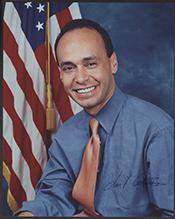
Mr. Chairman, I offer an amendment. Mr. Chairman, I yield myself such time as I may consume. I regret having to offer this amendment, which blocks funds to implement and enforce the OCC preemption…
Mr. Chairman, I offer an amendment.
Mr. Chairman, I yield myself such time as I may consume.
I regret having to offer this amendment, which blocks funds to implement and enforce the OCC preemption regulations issued earlier this year. The last time we addressed this issue on the House floor was during consideration of the Commerce, Justice, State appropriations bill. The gentleman from California (Mr. Sherman) and the gentleman from Idaho (Mr. Otter), my able colleagues, offered an amendment at that time that would have prevented any funds in that bill from being used to enforce these preemption regulations.
At that time the opposition did not argue against the substance of our concerns, these ill advised preemption regulations that prevent State attorneys general from protecting their consumers. Instead, those opposed to our amendment merely put forward procedural arguments and indicated that this matter should be taken up under regular order, considered in the Committee on Financial Services.
We strongly agreed with those sentiments. In fact, 10 members of the Committee on Financial Services sent a bipartisan letter to the chairman of the committee as well as to the chairman of the Financial Institutions and Consumer Credit Subcommittee. In this letter, we asked for consideration of legislation to overturn the preemption regulations that I introduced in April of this year. This letter was sent 2 months ago, July 21, 2004, and we have not received the courtesy of an acknowledgment, much less a substantive reply. Therefore, we are forced to once again address this issue on appropriation legislation.
That is truly unfortunate, Mr. Chairman, because many Members on both sides of the aisle believe that these regulations not only represent a drastic expansion of the OCC's power but they also greatly exceed the OCC's congressionally granted preemption authority. Furthermore, the OCC's regulations effectively deny citizens the protections of their States' predatory lending and other consumer protection laws. While the OCC claims that it can provide consumer protection equal to that currently provided by State consumer protection agencies and the State attorneys general, we are concerned that replicating the functions of 50 State consumer protection agencies would require an enormous increase in the budget and the power of the OCC, yet will still deny millions of consumers the same level of protection they currently enjoy today from their State regulatory agencies.
Perhaps the most important question regarding the preemption amendments is whether Congress intended to allow the OCC to preempt all State consumer protection laws applicable to national banks. Clearly it was not the intent of Congress to create a national banking consumer protection agency when it granted the OCC limited preemption authority.
I thank the gentleman from Texas (Mr. Paul) for his cosponsorship in support on this issue. But there is still time to enact on this legislation before the end of session. After all, we are only asking that we have a subcommittee hearing.
Mr. Chairman, I reserve the balance of my time.
Mr. Chairman, I yield 4 minutes to the gentleman from California (Mr. Sherman).
Mr. Chairman, I yield 3 minutes to the gentleman from Massachusetts (Mr. Olver), the ranking member of the subcommittee.
Mr. Chairman, I yield myself such time as I may consume.
Let me just say that we wrote this letter on July 21, after we had the appropriations markup here on the House Floor. And it was stated by the gentleman from Alabama (Mr. Bachus) that we should go back to our committee.
Well, 10 Members, bipartisan, sent the letter and said, Let us have that markup; let us look at the OCC.
I just want everyone to understand that they have said continuously that local government, State government at the local level are the incubators of democracy, and we should let local governments do it because they do it best, and we should get the Federal bureaucracy less and less out of people's lives. Well, guess what the OCC, the big Federal bureaucracy has just done to every Attorney General across this country? It said, Step aside, we are in charge of consumer protection. That is wrong.
Lastly, just so that my colleagues know, you only can call them Monday through Thursday, Monday through Thursday if you have a complaint. I have checked all the 50 States and all of the attorneys general of all the 50 States. Fortunately, they work 5 days a week, some of them more than 5 days a week, with local offices closely accessible.
So I am going to withdraw the amendment but suggest that we are going to continue to have these debates until we have a vote up or down on the OCC and whether it can or cannot do this.

Mr. Chairman, I offer an amendment. Mr. Chairman, I yield myself such time as I may consume. When it comes to jobs, President Bush has a credibility problem, not just the White House applauding the…
Mr. Chairman, I offer an amendment.
Mr. Chairman, I yield myself such time as I may consume.
When it comes to jobs, President Bush has a credibility problem, not just the White House applauding the offshore outsourcing of American jobs as a ``good thing'' then trying to explain that a good thing does not really mean a good thing; not just his Labor Department issuing guidelines to help companies avoid paying overtime to middle-class and low-income workers then insisting that they did not really mean for employers to actually use that guidance to avoid paying overtime; not just the fact that George Bush promised 6 million jobs with his tax cuts and has fallen 7 million short of that goal; not just that President Bush, in a 63-minute speech at the Republican Convention, mentioned the word ``jobs'' one time.
The particular credibility problem I am talking about can be summed up in one word: McManufacturing.
In the President's Economic Report, this is put out every year, signed by the President of the United States, by George Bush, this report referred to, in trying to answer the problem of lost manufacturing jobs in our country, and my State alone has lost 170,000, my State of Ohio alone has lost 170,000 manufacturing jobs, 150 jobs every single day since George Bush was sworn in 3\1/2\ years ago. So to deflect that, they have talked about changing the definition of manufacturing, and here is what they said. This is on page 73 of the President's economic report: ``The definition of a manufactured product is not straightforward. When a fast food restaurant sells a hamburger, is it providing a service, or is it combining inputs to manufacture products?''
So here is what we got, according to the Bush administration, who knows they have a problem with the loss of manufacturing jobs, we got the kid in the restaurant at McDonald's or Burger King, whatever. He is setting up an assembly line. He unwraps the package, and then he puts the bun out. And then they chemically treat the beef. We call it cooking, but in George Bush administration legalese, I guess they call it chemically treat the beef. They put that on the bun. And then they take the lettuce, and they put that on and slice the tomato, part of the manufacturing process, and put that on. Then they chemically treat the cheese. We would call it melting the cheese. And then they get a foreign component. They bring french fries in and make some kind of happy meal of some sort.
I am not making this up. This is in this economic report.
My point is, Mr. Chairman, that we know what manufacturing is. We know what manufacturing is not, and these are the kinds of games the Bush administration plays to try to deflect attention away from what they have done with American manufacturing.
In my State of Ohio, we have lost one out of every six, one out of every six manufacturing jobs since George Bush took office. And his answer every time is more tax cuts for the richest people. If you are making $1 million, you get a $123,000 tax cut. That is not creating jobs in Ohio and across the Midwest in this country.
His other response is more trade agreements that continue to ship jobs overseas. It is clear, Mr. Chairman, we need a different direction. That different direction is to extend unemployment benefits to the 60,000 or 70,000 Ohioans who are looking for jobs but have lost their benefits; they have expired. This Congress will not extend unemployment benefits.
We also need to quit giving incentives to companies that send their jobs overseas. We continue to give them tax breaks instead of passing the bipartisan Crane-Rangel bill, which will give those companies that manufacture domestically, give them incentives. We need to stop those tax breaks, as I said, that ship jobs overseas and stop those tax breaks for those companies, in giving those companies contracts with the Government, like Halliburton and other companies, that continue to violate so much of what we stand for in our country.
Then the President wants to pass the Central American Free Trade Agreement which will, again, be more of the same. We need to stop these kinds of trade agreements. We need to pass unemployment compensation. We need to pass bipartisan legislation to give incentives to those companies who manufacture in America.
This amendment, while modest in its goals, I believe at least is honest in its goals and honest in deciding what really is manufacturing, what is not manufacturing. It stops the games. This Congress needs to stay in session and pass legislation that really will create jobs.
Mr. Chairman, I yield back the balance of my time and ask support of the amendment.
Show 11 more

Mr. Speaker, I intend to vote against the previous question on the rule. I intend to vote against the rule. And if the House does what I think it is going to do on this bill in the next 2 days, I…
Mr. Speaker, I intend to vote against the previous question on the rule. I intend to vote against the rule. And if the House does what I think it is going to do on this bill in the next 2 days, I intend to vote against the bill as well.
The gentleman from New York (Mr. Reynolds) indicates that the Committee on Appropriations has done its job. That is correct. But what is happening now, the Committee on Appropriations is trying even though we are at the end of the fiscal year and even though many of the programs that we are supposed to appropriate money for have not yet been authorized because of failure of the authorization process, the Committee on Appropriations is going to see its product shredded because of the inability of the authorizing committee and the White House and the majority leadership in both the Senate and the House to get together on a reasonable compromise, which hopefully would also include Members of the minority.
And so now what is happening is that a rule is being produced which is theoretically an open rule, but which in reality will result in about 80 percent of this bill being shredded. The carcass of this bill will then go to conference, and in conference the Committee on Appropriations will be asked to reconstruct the legislation which will have been shredded on the House floor. No individual member will have any input into what the final product that comes out of conference will be.
The reason we have a Committee on Rules is to avoid this kind of chaos. The reason we have a Committee on Rules is to bring adult supervision to the House floor from time to time, and the fact is that the Committee on Rules is being derelict in its duty and the House leadership is being derelict in its duty when it does not step in to resolve what Dick Bolling used to call these dung hill fights between different committees. Dick Bolling used to bemoan the fact that Members of this House seemed to think that they had a greater obligation to their committee than they do to the House as a whole. They do not. At least they should not.
We were not elected to be members of the Committee on Appropriations or members of the Committee on Transportation and Infrastructure or members of the Committee on Rules. We were elected to be Members of the House of Representatives, and it is our job to sometimes defend the House against the arbitrary actions of individual committees. And when the Committee on Rules does not step in to guarantee that, then the result is chaos.
That is what we are going to see here today. We are going to have three different factions of the majority party each trying to impose its own will by taking advantage of the fact that the Committee on Rules did not do its job. So in protest, I mean, we only have about 2 weeks before the end of the fiscal year. We only have passed one appropriations bill. And in my view it is this lack of leadership which has resulted in this miserable record of performance or rather miserable record of nonperformance on the part of the House of Representatives on appropriations issues.
The Committee on Appropriations on both sides of the aisle has worked and worked and worked to try to overcome an inability to perform on the part of other committees, and yet the product that the committee has tried to produce is going to be shredded today because the leadership did not pull people in and knock their heads together to get them to act like adults. That is nothing new around here, but I wish to God it would not be routine.
I found the gentleman's response interesting, Mr. Speaker. He starts to talk about taxes. This bill and my position on it has nothing whatsoever to do with taxes. It has everything to do with the fact that the leadership on your side of the aisle will not meet their responsibility in choosing which individual Members they are going to discipline in order to bring a coherent piece of legislation to the floor. This has nothing to do with tax levels.
Mr. Chairman, will the gentleman yield?
Mr. Speaker, that is absolutely correct. The majority knows it but they try to hide it at every opportunity because they do not have the guts to take the issue on directly.
Mr. Speaker, will the gentleman yield?
Mr. Speaker, that is also absolutely correct.

Mr. Chairman, I rise in support of the Gutierrez amendment barring the use of funds to enforce the OCC preemption regulations. This amendment is supported by a bipartisan group of members of the…
Mr. Chairman, I rise in support of the Gutierrez amendment barring the use of funds to enforce the OCC preemption regulations. This amendment is supported by a bipartisan group of members of the Financial Services Committee who have been
frustrated in our efforts to bring legislation on this important issue before the Committee for full debate and action. We are concerned that the recently issued OCC preemption and visitatorial regulations deny our constituents the benefits of State predatory lending and other consumer protection laws.
The OCC's assertions that it will provide the same level of consumer protection are simply not realistic. To duplicate the State regulatory apparatus would require a huge increase in the size and budget of the OCC--and more to the point, a huge increase in regional experience and intelligence that the agency simply does not have. Recent crises such as the Riggs Bank fiasco have put in doubt whether the OCC can do the job it has now, let alone taking over the job of the 50 State banking regulators.
Legislation has been introduced to address this issue. Ten members of the Financial Services Committee, including myself, signed a letter asking that it be brought up under regular order. But there has been no action to allow members of the Committee to debate and vote on it, and to bring it to the floor.
This matter is urgent, and it is not appropriate to simply bury it by inaction. Thus, we are forced to offer this amendment as a way to arrest the regulations so that we can have the appropriate process to debate and vote on this important issue. It is a regrettable, but, unfortunately necessary, step.
I ask for your support for the Gutierrez amendment so that this body can all have a chance to examine the OCC preemption regulations before they take effects and damage our State regulatory systems.
Mr. Chairman, this bill funds many good projects and will be a welcome relief to many communities. Unfortunately, the current version is woefully deficient because it provides no funding whatsoever for a project that is one of the best in the Nation--the Second Avenue Subway. The Second Avenue Subway is recommended by the Federal Transit Administration and was included in President Bush's FY2005 budget.
On day one, the Second Avenue Subway will move more people than any other project currently planned anywhere in the country. It will (i) relieve overcrowding on the most overcrowded subway in the nation, (ii) add capacity to a subway system that has not added capacity in 60 years and (iii) reach areas of New York City that currently are not served by any subway system. A report released by the Regional Plan Association December 2003 shows that Second Avenue Subway can create 156,000 jobs, boost business creation and retention, improve air quality, save travel time and create alternative routes to the city's business centers-- something 9/11 proved is essential to New York's security.
There is already a strong market for mass transit in New York. Because 70-75 percent of all the people commuting to jobs along the route of the subway use mass transit to get to work, the highest proportion of mass transit use anywhere in the United States. There are
1.2 million jobs and nearly 650,000 residents along the proposed route of the Second Avenue Subway.
This project is moving ahead in a timely fashion. It received a record of decision from the FTA in July and is expected to go into Final Design and Engineering shortly.
The Second Avenue Subway, a sure mass transit success, should be among the earmarks included in this appropriation bill. The Second Avenue Subway was funded in the last four appropriations bills and, thanks to the efforts of Senators Schumer and Clinton, is included in the Senate bill. I hope that the conferees will accept the Senate language and that the Second Avenue Subway will receive funding in the final bill.
Sequential Votes Postponed In Committee of the Whole
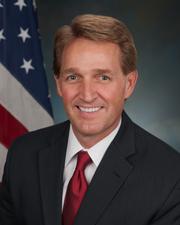
Mr. Chairman, will the gentleman yield? Mr. Chairman, I thank the gentleman for yielding. Mr. Chairman, I have stood to offer this same amendment, an amendment to restore the basic right of Americans…
Mr. Chairman, will the gentleman yield?
Mr. Chairman, I thank the gentleman for yielding.
Mr. Chairman, I have stood to offer this same amendment, an amendment to restore the basic right of Americans to travel to Cuba. The Flake amendment has, for the past 3 years, enjoyed broad bipartisan support in Congress, and for good reason.
For the last 45 years, we have attempted to bring about regime change in Cuba, only to see Fidel Castro outlast nine U.S. Presidents, all the while his countrymen have been denied their most basic human rights. A compelling case could be made that our policy of isolating Cuba made sense during the Cold War. As a part of the Soviet Union, Cuba was actively exporting revolution with its troops around the world, but we are more than a decade removed from the Cold War. We now face new challenges, challenges that it can be safely said do not include the spread of Cuban-style communism.
Our challenge is to export freedom to Cuba, and for this cause our current policy is as outdated as the cars that ply the highways of Havana. How can we promote liberty in Cuba with a policy that denies our own citizens the right to travel to the island? How can we foster respect for basic human dignity when we tell Cuban Americans they can no longer send soap and toothpaste to their long-suffering relatives in Cuba? Have we failed to see the long-term consequences of our policy? In a word, yes.
I should note that this blindness does not only inflict the Republican Party; the Democratic leadership has not offered a vision that is much clearer. Unfortunately, neither party can see past Florida when trying to decide what to do about Cuba.
With this bill today, and in other bills this year, we will appropriate tens of millions of dollars relating to Cuba. It is fitting that we ask for what purpose. So the think tanks in Miami can churn out more reports telling the Congress, unsurprisingly, that we ought to continue the current policy which includes giving them more money; so that daily television programs can be produced in Miami that Cubans will never see; so that a Little League team in Arizona will not be able to play baseball with their peers in Cuba; so that faith-based groups in Indiana distributing Bibles in Cuba can be fined for their evangelical zeal; or so a grieving daughter in South Carolina will not be able to attend her mother's funeral in Cuba?
As a Republican, I fail to see anything conservative about these policies. There is a saying no man is an island, yet our policy assumes that Fidel Castro is Cuba's only resident. The people of Cuba have suffered decades under his rule. Our policies, particularly those enacted just months ago, which limit family charity, have only added to their burdens.
Unfortunately, the timing of this legislation this year does not lend itself to a reasoned and thoughtful debate about our policy toward Cuba. Our efforts in this area have always been bipartisan in nature, but with elections so close and politics so raw, this debate would not receive the thoughtful deliberation it deserves.
I would like to thank those Members of Congress on both sides of the aisle who are working so hard for a more effective and reasonable Cuban policy, those who believe that promoting freedom in Cuba is best achieved by giving Americans more freedom. Our efforts will resume as soon as the electoral smoke clears.
It is my understanding that the gentleman from Florida (Mr. Davis) will offer an amendment to roll back the new restrictions on family travel by Cuban Americans to Cuba. My colleagues and I look forward to helping the gentleman with his worthy efforts.
Mr. Chairman, if the gentleman would continue to yield, that is correct.

Mr. Chairman, I thank the gentleman for yielding me this time. Mr. Chairman, following on the comments of the gentleman from Maryland (Mr. Hoyer), I rise to express my disappointment that this bill…
Mr. Chairman, I thank the gentleman for yielding me this time.
Mr. Chairman, following on the comments of the gentleman from Maryland (Mr. Hoyer), I rise to express my disappointment that this bill does not fully fund the amounts authorized in the Help America Vote Act for Fiscal Year 2005. We were proud to pass, on the eve of the 2002 election, ground-breaking election reform legislation that authorized almost $4 billion in Federal funding that would, among other things, improve the administration of elections; provide for increased accessibility to voting equipment and polling places for people with physical disabilities; fund the replacement of obsolete voting equipment; pay for protection and advocacy systems; provide for the establishment of State-based administrative procedures to remedy grievances, including grievances pertaining to accessibility; call for the establishment of an Election Assistance Commission to serve as a national clearinghouse and resource for the compilation of information and review procedures with respect to the administration of Federal elections; and to call for the establishment of a Standards Board, a Board of Advisors and a Technical Guidelines Development Committee, all of which would assist in the development of good voting systems.
Although over the past couple of years I have been primarily focused on standards for voting systems, specifically the lack of meaningful security standards for such systems, the Help America Vote Act funded many important things. And considering how important it is to our democracy to have fair, accessible, auditable elections and considering how many doubts citizens have had about elections in recent years, I am deeply disappointed that this appropriations bill provides so little HAVA funding, only $15 million, a pittance on the amount yet to be funded authorized under HAVA. Fifteen million dollars provided in this bill, leaving unappropriated more than $700 million of HAVA's total $4 billion in authorized sums.
The absence of consistent funding for HAVA has caused a fundamental problem; namely, that Federal funding of election systems outpaced the critical need for implementation of meaningful security standards. The Committee on Appropriations recognizes this. With respect to the $15 million appropriated for the Election Assistance Commission, $5 million is specified ``to address the desperate need for research and standardization of election systems.'' The committee urged the EAC to ``address standards and technology issues related to voting equipment.'' That is their quote. But the committee does not provide adequate funding. Forty million dollars was authorized to fund the protection and advocacy systems to ensure full participation in the election process for individuals with disabilities. Less than a third of that amount has been appropriated. One hundred million dollars was authorized to fund polling place accessibility and education and outreach to disabled voters. Only about a third, less than a third of that, has been appropriated. HAVA has called for the establishment of a Help America Vote college program and Help America Vote high school program. Each of those has received only about half of the authorized amount. HAVA called for $3 billion in payments to States to help them meet their audit trail, accessibility, language and other voting system requirements, and we fall far short of the appropriations in that category.
HAVA, I believe, will have to be amended. There are some improvements that need to be made. But that is no excuse for not fully funding this central part of the American democratic system to make sure that we have fair, accessible, and auditable elections.
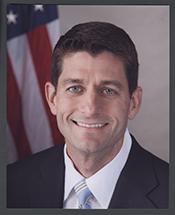
I thank the gentleman for yielding time. Mr. Chairman, I want to address just the main criticism the gentleman from Virginia just mentioned. Two things. He says adverse selection, which means healthy…
I thank the gentleman for yielding time.
Mr. Chairman, I want to address just the main criticism the gentleman from Virginia just mentioned. Two things. He says adverse selection, which means healthy and wealthy people will leave other health care plans and premiums will go up for everybody else. Point number one. The Office of Personnel Management took this concern very seriously. So when they constructed this new health savings account option within the Federal Employee Health Benefit Plan, an additional option for Federal employees, they designed the premium so that that would not happen. Specifically, Federal employees would pay $42.25 every 2 weeks for the Mail Handlers high deductible plan compared to $45.16 for the standard coverage, an insignificant difference of $2.81 for every 2 weeks. For family coverage, the difference would be 11 cents. These very small differences in premiums will ensure that healthy employees are not attracted to HSAs by their premium. So the concern of the gentleman, which is a concern, was already addressed by the OPM.
But one more point and the second point is this. All of the data on adverse selection has been coming back and none of it has been true. This was a concern that we were very concerned about. We want to make sure that the healthy and wealthy were not fleeing traditional health care plans, leaving them in jeopardy, raising premiums for other people.
Since these plans have been offered since January and believe me, Mr. Chairman, they have been really proliferating, the data is showing us the opposite has occurred. The data is showing us that sicker, older people are being more attracted to health savings accounts.
A couple of statistics. Assurant Health Care Plan, the leading provider of these in America, happens to be located in Milwaukee; 43 percent of their HSA applicants did not have any prior coverage at all. Forty-three percent of the people who bought these HSAs were uninsured. Thirty-two percent of HSA applicants had not had coverage for at least 6 months prior to enrollment. Half of all HSA applicants had incomes under $35,000. That is from eHealthInsurance, the major clearinghouse of all HSA products, the big Web site you go to to buy an HSA. Half of all their applicants earned under $35,000. EHealthInsurance again, the clearinghouse, 46 percent of HSA purchasers have family incomes less than 50 grand.
We are seeing that lower income workers and families are going toward HSAs and older, less healthy people are going toward HSAs. So the data is showing that that is not true.
Mr. Chairman, just three points need to be made about this amendment.
Point number one, this is an option from which Federal employees can choose. Why deprive them of this additional choice? They do not want the
product, they do not have to have it. Why take it away from them?
Point number two, just in case these adverse selection concerns are valid, that is why OPM designed this product with identical premiums so it does not occur. So they already addressed the concern just in case there is any adverse selection that occurs out there.
But now what we are seeing from the data is that adverse selection not only is not happening. The opposite is happening. Lower-income, older, sicker people are buying health savings accounts. The data we get every day is disproving this notion of adverse selection. But just in case OPM designed this so that the premium is virtually identical to the rest of the premiums so that there is a safety valve, an insurance policy, to make sure that those concerns are not validated, do not manifest themselves.
Do not take this option away from 8 million families. I urge a vote ``no'' on this amendment.
Mr. Chairman, I claim the time in opposition to the amendment. Mr. Chairman, I yield myself such time as I may consume. Mr. Chairman, maybe people do not realize what we are actually debating. We are…
Mr. Chairman, I claim the time in opposition to the amendment.
Mr. Chairman, I yield myself such time as I may consume.
Mr. Chairman, maybe people do not realize what we are actually debating. We are not debating pension plans. We are not debating conversion of pension plans from one type to another. We have before us the amendment by the gentleman from Vermont to this Transportation and Treasury appropriation bill, and maybe people do not realize what the amendment says.
The amendment says that you cannot use any of the money appropriated in this bill to assist in overturning the judicial ruling on a particular court case. That case, which was in the Southern District of Illinois, decided last year, was the action of Kathi Cooper, Beth Harrington and Matthew Hillesheim, Individually and on Behalf of All Those Similarly Situated v. IBM.
The amendment says, do not use any of the money in this appropriations bill to assist in overturning a court case to which the United States Government is not even a party. It is a case between IBM and some workers at IBM. Not only that, this bill does not contain funding for the judicial system, nor do I believe it is the role of this Congress to say, when I like a court decision, I am going to come here with a bill that says, nobody can overturn this court decision. If I do not like a court decision, I am going to come here with a bill that says, we must overturn the court decision.
Now, we can change underlying law. That is our job. But it is not our job to say, we are going to decide a particular court case. If we want to change the law that governs the entire country, we ought to do it, but not come with a bill that has nothing to do with the judicial system and say, you cannot use this to overturn a court case between IBM and some of its workers.
Now, there is a lot of controversy, we know, about types of pension plans and conversions of pension plans. We have legislation that is being considered. We have the Treasury Department, which is working on potential regulations relating to those conversions. And the Treasury Department works with every company in the country and every individual covered by a pension plan in the country, and you cannot say you do not communicate with each other.
But, again, that is not what this says. It says, do not help somebody overturn a court case to which you are not a party. Come on, get real. Besides which, there has been other litigation on this case, and other courts came down on the other side. I think there have been four cases around the country. Three went one way; this one went the other.
If we want to talk about the issues, let us bring legislation to talk about what pension laws should be generally, not try to say we are going to overturn a court case with an action before this Congress in the amendment.
One final thing just because I know that the proponents of the amendment are getting into the merits of the case. Basically, that case said, well, it is age discrimination if somebody is going to work for a company longer and so their benefits earn more interest than somebody that works for a shorter period of time. And this court decided that was age discrimination. If money accrues more interest because it is invested longer, they call that age discrimination. I do not. I do not think most people who apply common sense would think that.
But this amendment does not belong on this bill. This is not changing the law of the land. This is trying to change the outcome of a lawsuit that is now on appeal to which the United States is not even a party. We should not be doing that.
I ask for opposition to this amendment.
Mr. Chairman, I reserve the balance of my time.

Mr. Chairman, I rise in support of the Sanders Amendment. The Sanders Amendment would ensure that the Treasury department not use any of its funds to undermine the federal court decision in Cooper v.…
Mr. Chairman, I rise in support of the Sanders Amendment.
The Sanders Amendment would ensure that the Treasury department not use any of its funds to undermine the federal court decision in Cooper v. IBM that held that cash balance conversions violate federal pension and age discrimination law.
We've been here many times before.
In fact, this is the fourth time that the House is voting to protect older workers' pensions under cash balance pension plan conversions. The last 2 times the amendment passed by 308-121 and 258-160.
Instead of voting to prevent the Treasury department from undermining workers' pensions, I wish we were voting on affirmative legislation to set standards for cash balance plans.
This issue has been going on since 1999.
In 1999, IBM converted its pension plan to a cash balance plan.
Luckily, it's computer savvy workers quickly figured out that the conversion would reduce their expected pensions.
The workers mobilized and got Congress to hold hearings.
The Clinton administration imposed a moratorium on approvals of conversions in September 1999.
But then, the new Bush administration tried to issue regulations lifting the moratorium and permit conversions without any worker protections.
Immediately 218 members of Congress wrote to the President urging him to revise the regulations and protect older workers.
Four times the House and Senate have voted to require Treasury to withdraw its regulations and protect older workers.
Finally, this year, in 2004, the Bush administration relented and withdrew the regulations. The administration even sent up a revised legislative proposal that contained a modicum of older worker protections though it did not go far enough to protect older workers.
But, still the issue is not resolved.
Either Congress or the courts must set standards for cash balance plans and conversions to such plans.
The Republican Congress has done nothing on this issue for almost six years.
If anything, Republican leaders would defer to employer lobbying and simply permit cash balance conversions without any protections for older workers.
That's why the Courts may have to be the body that resolves some of these issues.
One court, the federal district court for the state of Illinois, determined that conversions are illegal. Other courts have disagreed. These cases and others still waiting to be heard will take years to resolve.
This amendment makes clear that the Treasury department shall not interfere in these cases.
Today worker pension security is in crisis.
This administration has done nothing to protect workers' pensions and done everything to undermine them.
They didn't protect workers after Enron and WorldCom from employers loading pension plans with employer stock and letting the executives protect themselves while leaving the workers stuck with worthless stock.
They didn't protect participants in 401(k) plans from a broad range of mutual fund abuses that have decimated retirement nest eggs.
And they are not protecting workers now from rampant pension underfunding. The PBGC, the agency that insures traditional pensions, has a $10 billion deficit. And if the airlines go under, the deficit will increase by another $30 billion. Over 1,000 pension plans are more than $50 million underfunded. And workers don't even know because the PBGC is required to keep the information secret.
The administration and the Republican majority are doing nothing to protect worker pensions.
I urge my colleagues to vote once again and remind the majority that it is the will of the Congress that older workers be protected in cash balance pension plan conversions.
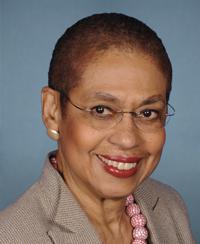
Mr. Chairman, I thank the gentleman from Massachusetts for yielding me this time, and I recognize that there is a lot of hard work that the chairman and the ranking member have done on this bill and…
Mr. Chairman, I thank the gentleman from Massachusetts for yielding me this time, and I recognize that there is a lot of hard work that the chairman and the ranking member have done on this bill and we are grateful for the bill despite its horrific shortcomings. The subcommittee has worked hard.
Secretary Ridge was before the Select Committee on Homeland Security today, and an issue came forward that I think simply must be discussed during this debate. I said to the Secretary, whose hard work I very much appreciate, how much it looked like we were fighting the last war. The private sector, the business sector does not even have up on the website of the Department of Homeland Security some guidance as to what they should do, except that is where all the people are and that is where all the revenue is raised in our country. And where the people are in transportation, on rail, on public transportation, it is not even on the radar when it comes to homeland security.
I have got an act that has a lot of cosponsors called the Safe Transportation Act, and I have to tell my colleagues that terrorists really do have an open field. Not in aviation anymore. We have shored up some of that. But they have an open field in public transportation and in rail. That is where the people of the United States spend their time going to and from one part of the country and the other and one city and the other. We have allocated about $14 billion for aviation security, and we are sure we are doing the right thing there. I am on the Subcommittee on Aviation. That was the right thing to do. There is more still to be done there.
But even after Madrid, there is something approximating $300 million for all of rail and public security. People go down into subways. People get on buses. And there is almost a blank
slate there. There are 9 billion passenger trips annually on public transportation. I first learned of this problem when Amtrak security here in the Nation's capital came to see me, and I tell my colleagues that my hair stood on end because Union Station is here, and he told me what his work had been with transportation security, and he told me that virtually nothing had been done here or in Penn Station or in Philadelphia's 30th Street Station. Do not even let us get to the tracks and the tunnels. Amtrak accounts for only 22,000 of U.S. rail routes. There are 140,000, and sometimes they are a big company like Amtrak. Most of the time they are much smaller.
We are living in the post-Madrid era, not the post-9/11 era. There were 200 innocent civilians killed there, 1,500 injured. One-third of terrorist attacks in the world target public transportation systems because they are the easiest to get at. I sat in on a Subcommittee on Railroads hearing a couple of months ago, and I was horrified. There were two agencies there who are supposed to be responsible, the Federal Railways Administration and the Department of Homeland Security official. Nobody is in charge. There is no national security plan for rail security, for subways, for buses. There is no assessment of our rail security, of our public transportation security. And here we have a transportation bill before us. Hey, not a word about it. It simply has to be inserted into this debate. It is no way to run a railway, no way to run a public transportation system. And we are in mortal danger when we leave the major form of transportation used by Americans hanging out there with $300 million while we have fought the last $14 billion war in the air. Let us begin to fight this war.
Mr. Chairman, the gentleman from Virginia, whose opinion I respect on many issues, I think is just wrong on this. He mentioned a few minutes ago that he knows of no other Federal employees who would…
Mr. Chairman, the gentleman from Virginia, whose opinion I respect on many issues, I think is just wrong on this. He mentioned a few minutes ago that he knows of no other Federal employees who would like to have this option. I cannot speak for all of the Federal employees, but I can speak for over a quarter of a million Minnesota public employee union members who want to have access to health savings accounts. Will they all choose them? I do not know. But I have letters here from the Minneapolis Police Relief Association thanking me and encouraging me to make certain that they have access to health savings accounts. I have a letter here from Teamsters Local 320 that represents public and law enforcement employees in the State of Minnesota both at the State and local level. They are encouraging me to make certain that they have access to health savings accounts. I have a letter here from the Minneapolis Firefighters' Relief Association. They want access to health savings accounts. I have a letter here from the Public Employees Retirement Association of Minnesota representing over 150,000 Minnesotans who want access to health savings accounts. I have a letter here from the Minnesota State Retirement System.
Mr. Chairman, what we have here is a conflict of visions. This is an important and very critical debate in where we go with health care reform. The question is whether or not we are smart enough to make all of these decisions on behalf of these folks or if we allow them to make more decisions on their own behalf. I can only say that we have gone out and visited with representatives of public employee unions in the State of Minnesota, we have shown them the facts, we have shown them how these programs work, we have allowed them to make the decision, and the answer is almost unanimous, they at least want to have access to this option.
No one says that Federal employees or State employees have to choose this option. But if the Moran amendment passes, you will take that option away from them. Please do not do that. Please listen to the employees themselves.
Minneapolis Police
Relief Association,
Minneapolis, MN, June 30, 2004.
Congressman Gil Gutknecht,
Cannon House Office Building,
Washington, DC.
Dear Congressman Gutknecht: We are writing to you seeking
your continued leadership in addressing Health Savings
Accounts (HSA's). As you are well aware, in the 2003 Medicare
Act, individuals over the age of 65 were excluded from
participating in the newly created HSA's.
It is important that not only do the changes to the
Medicare Reform Act of 2003 include participation for those
over age 65 in the HSA's but the language which ties Medicare
ineligibility to HSA participation must also be removed. HSA
participation would provide a very modest way in which our
over 65 retiree's could tax defer some of their financial
resources.
Our public safety retirees put in their time and duty and
had planned on living out their retirement years with not
having to face financial difficulties. However, health care
costs for those over 65 years of age have increased
dramatically over the last decade. Supplemental insurance to
Medicare can cost a retired couple up to $8,000 per year.
We strongly encourage you to work with other members of
Congress and the Bush Administration to correct his
discrimination against our retirees.
Again, thank you for all your support and past leadership
in the HSA's. Please continue to assist us in this battle for
affordable health care.
Sincerely,
Richard M. Nelson,
Vice President.
Mr. Chairman, I would like to bring the House's attention to the important issue of election reform funding in H.R. 5025, the fiscal year 2005 appropriations bill for the Departments of…
Mr. Chairman, I would like to bring the House's attention to the important issue of election reform funding in H.R. 5025, the fiscal year 2005 appropriations bill for the Departments of Transportation and Treasury, and independent agencies.
Late last year, the four members of the U.S. Election Assistance Commission were finally confirmed and able to begin their work to provide election assistance grants and guidelines to the states. Since they assumed office and the Commission began its work in earnest, it has provided over $1.5 billion to the states to meet the requirements of the Help America vote Act (HAVA) for the development of innovative election technology, pilot programs to test election technology, and programs to promote youth involvement in elections.
I am very pleased that in the past two years, we in Congress have provided most of the funds promised for implementing the Help America vote Act. There remains, however, an unpaid balance of $800 million. I am disappointed that this bill does not pay off that balance. While some may say that the funds we have already appropriated for election reform grants has not been spent, and therefore more funds are not necessary at this time, I would argue that now that we have a functioning EAC, we can expect the pace of grants provided to the states to increase sharply.
I am very encouraged that this bill contains funding needed by the EAC to become fully operational. In particular, I support the bill's appropriation of $10 million for the EAC's operating expenses and $5 million for research authorized by HAVA. I hope that these funding provisions will receive wide support from my colleagues and remain intact as this bill works its way through the legislative process.
The EAC is currently understaffed and stretched thin to fulfill its mission. With the funds provided by this bill, the EAC will be able to more quickly provide states with their election assistance grants, and fulfill other mandates of the Help America Vote Act. These are critical to restoring the trust in our elections that was so greatly damaged by the deficiencies in our electoral system exposed by the 2000 general election. One of the most important functions of the EAC that this bill will fund is the development of voting system guidelines that states are waiting for in order to make important decisions about which voting systems to acquire. These guidelines will be developed in consultation with the National Institute of Standards and Technology and the technical Guidelines Development Committee, and will also result in a national program to test, certify, and decertify voting system.
HAVA created many new requirements in election administration, and many states are looking toward the EAC for guidance on how to implement these requirements, such as provisional voting, voting information requirements, implementation of identification provisions, and implementation the statewide computerized voter registration databases. With the operating funds included in this bill, the EAC will be able to provide such guidance and states will in turn be able to appropriately spend the election assistance grants they have received so far.
Other important EAC functions that this bill funds are audit and oversight responsibilities to ensure that states are appropriately administering their grants and submitting relevant reports required by
Mr. Chairman, I offer an amendment. Mr. Chairman, I yield myself such time as I may consume. My amendment to H.R. 5025 seeks to keep the collection of taxes in the IRS and not to a private debt…
Mr. Chairman, I offer an amendment.
Mr. Chairman, I yield myself such time as I may consume.
My amendment to H.R. 5025 seeks to keep the collection of taxes in the IRS and not to a private debt collector. I wish to make it clear today that I am in complete support of efficient and effective enforcement of tax collection activities at all levels of the Federal Government. I also realize that we must recover the billions and billions of dollars in uncollected and delinquent tax revenue, but at what cost.
If we authorize the Treasury to allow the IRS to contract with private companies to collect delinquent Federal taxes, I am extremely concerned that harm could result from handing over sensitive personal and financial tax information to private sector businesses to carry out what OMB and IRS have officially characterized as an inherently governmental function.
Allowing for private debt collection contracts could create a multitude of problems. For instance, any negligent or criminal disclosure of sensitive taxpayer data by private sector tax collectors could result in fraudulent charges through identity theft and ruined credit histories for innocent taxpayers.
Moreover, the potential for harassment by debt collectors is compounded by the private sector tax collection practice of using incentive-based commission compensation. In other words, the more aggressive one is in their collection practices, through misrepresentations or threatening to take actions a person should not take, the more money they can personally make as a private sector tax collector. This system could encourage much more confrontational and abusive tactics that could violate the Fair Debt Collection Practices Act.
Additionally, the Federal Government has tested this concept of private sector tax collection in the past. In 1996, a pilot program provided $13 million to examine the impact of private tax collection. The General Accounting Office reported that private companies collected $3.1 million in revenue while incurring expenses to the Federal Government in the exact same amount. Moreover, the GAO found that the pilot program caused the Internal Revenue Service to lose as much as $17 million in lost collection opportunities. We cannot afford to implement this type of inefficiency.
Mr. Chairman, the Reagan administration rejected private sector tax collection in 1986; and they stated: ``The public must be assured at all times that the person collecting taxes derives no personal benefits from that activity and that the integrity of the tax system will not be compromised.''
I urge my colleagues to support this amendment so that we can continue to ensure the integrity of our tax system and the American taxpayers are protected.
Mr. Chairman, I reserve the balance of my time.
Mr. Chairman, I yield 4 minutes to my colleague, the gentleman from Maryland (Mr. Van Hollen).
Mr. Chairman, I yield 1 minute to the gentleman from Connecticut (Mr. Simmons).
Mr. Chairman, I yield 2 minutes to the gentleman from New Jersey (Mr. Ferguson).
Mr. Chairman, I yield 1 minute to the gentleman from Michigan (Mr. Rogers).
Mr. Chairman, I yield the balance of my time to the gentleman from South Carolina (Mr. Wilson).
(Mr. WILSON of South Carolina asked and was given permission to revise and extend his remarks.)
Bill Text
2 versions available
        [Congressional Bills 108th Congress]
[From the U.S. Government Publishing Office]
[H. Res. 770 Engrossed in House (EH)]

In the House of Representatives, U.S.,

September 14, 2004.
Resolved, That at any time after the adoption of this resolution the Speaker
may, pursuant to clause 2(b) of rule XVIII, declare the House resolved into the
Committee of the Whole House on the state of the Union for consideration of the
bill (H.R. 5025) making appropriations for the Departments of Transportation and
Treasury, and independent agencies for the fiscal year ending September 30,
2005, and for other purposes. The first reading of the bill shall be dispensed
with. All points of order against consideration of the bill are waived. General
debate shall be confined to the bill and shall not exceed one hour equally
divided and controlled by the chairman and ranking minority member of the
Committee on Appropriations. During consideration of the bill for amendment, the
Chairman of the Committee of the Whole may accord priority in recognition on the
basis of whether the Member offering an amendment has caused it to be printed in
the portion of the Congressional Record designated for that purpose in clause 8
of rule XVIII. Amendments so printed shall be considered as read. At the
conclusion of consideration of the bill for amendment the Committee shall rise
and report the bill to the House with such amendments as may have been adopted.
The previous question shall be considered as ordered on the bill and amendments
thereto to final passage without intervening motion except one motion to
recommit with or without instructions.
Attest:

Clerk.