Waiving points of order against the conference report to accompany the bill (H.R. 4818) making appropriations for foreign operations, export financing, and related programs for the fiscal year ending September 30, 2005, and for other purposes, and providing for consideration of the joint resolution (H.J. Res. 114) making further continuing appropriations for the fiscal year 2005, and for other purposes.
Legislative Activity
Stay on top of the latest movement without scrolling through every action
Motion to reconsider laid on the table Agreed to without objection.
November 20, 2004 • 2:17 PM
View full timeline
Introduced in House
November 20, 2004
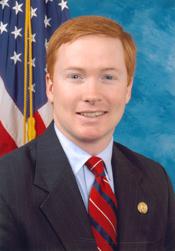
The House Committee on Rules reported an original measure, H. Rept. 108-794, by Mr. Putnam.
November 20, 2004
Rule provides for consideration of H.J. Res. 114 with 1 hour of general debate. Previous question shall be considered as ordered without intervening motions except motion to recommit. Measure will be considered read. Bill is closed to amendments.
November 20, 2004 • 11:10 AM
Placed on the House Calendar, Calendar No. 257.
November 20, 2004
Considered as privileged matter. (consideration: CR H10087-10096; text of measure as reported in House: CR H10087)
November 20, 2004 • 11:12 AM
DEBATE - The House proceeded with one hour of debate on H. Res. 866.
November 20, 2004 • 11:12 AM
DEBATE - The House resumed debate on H. Res. 866.
November 20, 2004 • 11:29 AM
POSTPONED VOTE - At the conclusion of debate on H. Res. 866 the Chair put the question on adoption of the resolution and by voice vote announced that the ayes had prevailed. Mr. Baird objected to the vote based on the absence of a quorum and the Chair postponed further proceedings on the question of agreeing to the resolution until later in the legislative day. The point of no quorum was considered as withdrawn.
November 20, 2004 • 12:33 PM
Considered as unfinished business. (consideration: CR H10097)
November 20, 2004 • 1:58 PM
Passed/agreed to in House: On agreeing to the resolution Agreed to by the Yeas and Nays: 233 - 158 (Roll no. 540).
November 20, 2004 • 2:17 PM
On agreeing to the resolution Agreed to by the Yeas and Nays: 233 - 158 (Roll no. 540).
November 20, 2004 • 2:17 PM
Motion to reconsider laid on the table Agreed to without objection.
November 20, 2004 • 2:17 PM
Voting History
1 vote recorded • Roll call available
Amendments
1 amendmentOffered to this bill
Amendments
1 amendmentOffered to this bill
Floor Debate
23 membersWhat members said about H.Res. 866 on the floor
 DAM
DAM CWB
CWB DROAHP
 JK+18
JK+18
Floor Debate
23 membersWhat members said about H.Res. 866 on the floor
Mr. Speaker, on November 20, 2004, the House took up consideration of and passed H.R. 4818, the Consolidated Appropriations Act for 2005. Division K of H.R. 4818 contains the Small Business…
Mr. Speaker, on November 20, 2004, the House took up consideration of and passed H.R. 4818, the Consolidated Appropriations Act for 2005. Division K of H.R. 4818 contains the Small Business Reauthorization and Manufacturing Assistance Act of 2004. Since the act was incorporated directly into the Consolidated Appropriations Act for 2005, no committee report accompanies the legislation. As chairman, I am submitting for insertion in the Record, the attached explanation of the Small Business Reauthorization and Manufacturing Assistance Act of 2004. I would expect the Administrator, in implementing the provisions of this act, to accord the enclosed explanation the same weight in defining congressional intent that the Administrator would give to a report after a mark-up prior to floor action or the language in a conference report. This expectation is particularly apt in this circumstance because the provisions were negotiated and agreed to in cooperation with my counterpart in the United States Senate.
Joint Explanatory Statement of Division K of H.R. 4818 Filed by
Chairman Manzullo
Section 101. Express loans
Section 7(a)(25)(B) authorizes the Administrator to create
pilot loan programs. In exercising that authority, the
Administrator created an ``Express Loan Pilot Program.'' The
program authorizes lenders to use their own forms in
submitting requests to the Administrator for the issuance of
guarantees. Two significant restrictions are imposed by the
``Express Loan Pilot Program:'' the guarantee cannot exceed
50 percent of the loan and the maximum loan amount is
$250,000.
Section 101 codifies, with a few significant differences,
the provisions of Pub. L. No. 108-217, which addressed the
Express Loan Program. The two most significant changes are
the permanent authorization of the Express Loan Program by
creating a new paragraph (31) in Sec. 7(a) of the Small
Business Act and the statutory increase in the size of such
loans to $350,000.
Section 101 defines an ``express loan'' as any lender
authorized by the Administrator to participate in the Express
Loan Program. Congress expects that the Administrator will
establish by rule the standards needed to qualify as an
Express Lender.
Section 101 defines an ``express loan'' as one in which the
lender utilizes, to the maximum extent practicable, its own
analyses of credit and forms. Congress fully expects that the
conditions under which express loans are made will not vary
significantly from those conditions that currently exist
under the ``Express Loan Pilot Program.'' Nevertheless,
Congress understands that the Administrator may wish to
revise the standards and operating procedures associated with
``express loans.'' Nothing in the statutory language should
be interpreted as prohibiting the Administrator from imposing
these additional requirements that are otherwise consistent
with the statutory language.
Section 101 codifies the existing concept of the
Administrator's ``Express Loan Pilot Program.'' In other
words, the ``Express Loan Program'' is one in which lenders
utilize their own forms and get a guarantee of no more than
50 percent.
Section 101 restricts the program, including the increased
loan amount of $350,000, to those lenders designated as
express lenders by the Administrator. Designation as an
express lender does not limit the lender to making express
loans if the lender has been authorized to make other types
of loans pursuant to Sec. 7(a) of the Small Business Act.
Although a lender may only seek status as an express lender,
this section was included to ensure that the Administrator
not limit the ability of an express lender to seek other
lending authority from the Administrator. Nor is the
Administrator permitted to change its standards for
designating an express lender in a manner that only
authorizes the lender to make express loans. To the extent
that the lending institution wishes to offer a full range of
loan products authorized by Sec. 7(a) and is otherwise
qualified to do so, the Administrator shall not restrict that
ability on the lender's status as an express lender.
Section 101 prohibits the Administrator from revoking the
designation of any lender as an express lender that was so
designated at the time of enactment. This prohibition does
not apply if the Administrator finds the express lender to
have violated laws or regulations or the Administrator
modifies the requirements for designation in a way that the
express lender cannot meet those standards. Congress does
not expect that the Administrator will impose new
requirements for express lenders that prohibit them from
making loans under other loan programs authorized by the
Small Business Act for which they have approval from the
Administrator.
Congress, at the request of the Small Business
Administration, determined that it was appropriate to expand
the size of ``express loans'' to $350,000. Any change in the
size of an express loan now will require action by Congress.
Congress is concerned that the Administrator will take
regulatory actions that unduly favor express lending over
other types of lending authorized by Sec. 7(a) of the Small
Business Act. As such, Congress incorporated a provision
prohibiting the Administrator from taking any action that
would have the effect of requiring a lender to make an
express loan rather than a conventional loan pursuant to
Sec. 7(a). Any significant policy change in the operation of
the lending programs authorized by Sec. 7(a) of the Small
Business Act requires notification to the House and Senate
Small Business Committees. Furthermore, the statutory
language on notification goes beyond that which is required
pursuant to Sec. 7(a)(24) of the Small Business Act.
Section 102. Loan guarantee fees
Section 103 increases the loan guarantee amount to a
maximum of $1.5 million. Given the fact that borrowers are
getting an additional increment in loan guarantees, the
sponsors determined that it would be appropriate to require
an additional 0.25 percent fee for the amount of guarantee in
excess of $1 million. Thus, on the amount of the guarantee
between $1 million and $1.5 million, the upfront fee
authorized pursuant to Sec. 7(a)(18) of the Small Business
Act increases from 3.5 percent to 3.75 percent but only for
that portion of the loan guarantee in excess of $1 million.
This is consistent with typical commercial lending practices
of charging fees that are commensurate with the lenders'
exposure to risk.
Section 102 also raises the fee collected by the
Administrator from banks of the unpaid balance of deferred
participation loans. To avoid situations such as those that
occurred at the end of calendar year 2003 in which the
Administrator was required to drastically reduce lending and
impose other restrictions on the program, Congress determined
that it would be appropriate for the Administrator to have
some discretion in setting the fee paid by lenders on the
unpaid balance. The total amount of the fee cannot in, any
year, exceed 0.55 percent of the unpaid balance. Congress
expects the Administrator to use this authority only when
needed to drive the cost, as that term is defined in the
Federal Credit Reform Act, of the loan program to zero, i.e.,
not need an appropriation. Any use of this discretion to
raise the fee beyond the current level of 0.5 percent should
trigger the notification provisions in Sec. 7(a)(24) of the
Small Business Act. As a further oversight tool, Congress
expects that the Administrator would satisfy any relevant
committee's request for information on the utilization of
this discretion.
Finally, Congress determined that the Administrator also be
given the authority to lower fees charged to borrowers and
lenders if the subsidy cost becomes negative, i.e., the fees
will actually take in more money to the government than it
costs to operate the Sec. 7(a) loan program. Congress adopted
an approach that the Administrator should it undertake a fee
reduction first consider reducing the fees set forth in
clauses (i)-(iii) of subsection 7(a)(1 8)(A) and then reduce
fees on lenders. As a further restriction on the discretion
of the Small Business Administration, the fees that were
charged to borrowers on the date of enactment of this
conference report may not be raised. Congress adopted this
language to ensure that any fee increases to borrowers
beyond the statutory limits requires the action of
Congress.
Section 103. Increase in guarantee amount and, institution of
associated fee
Access to capital is vital to the growth of small
businesses. Particularly for manufacturers and high
technology research and development businesses, typical
amounts of capital available under the existing loan limits
authorized by Sec. 7(a) of the Small Business Act often are
inadequate. Given the importance of capital to grow small
businesses, Congress determined that it would be appropriate
to permanently increase the amount of the loan guarantee from
$1 million to $1.5 million. No additional changes were made
in the overall statutory cap of a gross $2 million loan.
Thus, the Administrator will be able to guarantee up to $1.5
million of a $2 million loan rather than the current limit of
$1 million. Congress expects that this will increase the
number of lenders willing to make loans to small
manufacturers who face significant global competition.
Section 104. Debenture size
Congress raised all of the loan limitations for qualified
state and local development companies (``CDCs'') because they
had not been raised in many years and the long-term financing
needs of small businesses were not being met by loans that
did not exceed the thresholds for loans made pursuant to
Sec. 7(a) of the Small Business Act. Raising the loan
limitations has two effects. First, it signifies the
recognition that Title V of the Small Business Investment Act
and Sec. 7(a) of the Small Business Act has very different
purposes in mind. Second, an increase in the threshold allows
more effective economic development projects to be funded by
CDCs.
Congress believes that the increases to $1,500,000 for
regular projects, $2,000,000 for public policy goal projects,
and $4,000,000 for small manufacturers will provide
significant new financial inputs to small businesses in
general and to small manufacturers in particular.
While all small businesses whose primary industrial
classification is in North American Industrial Classification
sectors 31, 32, and 33 (the sectors for manufacturing), not
all small business concerns in those sectors are considered
small manufacturers. Congress adopted a requirement that
small manufacturers should be limited to those small business
concerns that have all of their production facilities are
located in the United States. Congress does not intend that
small business concerns that have manufacturing facilities
situated outside of the United States should be denied
assistance under programs operated by the Small Business
Administration. However, special benefits should be afforded
to those manufacturers whose production facilities are
located in the United States. Finally, the definition in
Sec. 106 is identical to the definition in this section
thereby avoiding any potential interpretive concerns about
what the legislature meant when it used the same term in
different sections of legislation.
Section 105. Job requirements
The Administrator has promulgated regulations, pursuant to
Sec. 501 of the Small Business Investment Act mandating that
a loan made by a CDC must create or save one job for each
$35,000 in guarantee. This standard has not been revised
since it was adopted in 1990. The standard clearly does not
reflect inflation or the dramatic increases in productivity
that has led to higher wages for all employees. Congress
determined that the standard should be revised to take
account of the changes in the economy during the past 14
years. Therefore, 105 statutorily raises the job creation
standard to one job for every $50,000 in guarantees.
Manufacturing requires greater capital investment than
other businesses. Such investment may lead to higher
productivity for small manufacturers and therefore fewer jobs
created per investment. Congress does not want to prejudice
the ability of CDCs to fund projects that would assist small
manufacturers. Section 106 establishes a standard that
authorizes CDC loans to small manufacturers if the project
creates one job for each $100,000 of guarantee.
CDCs do not need to meet job creation standards for
individual loans if the loan is used to further one of the
public policy objectives in Sec. 501(d). Section 105 modifies
that requirement slightly by exempting a particular project
from the job creation standards if the project was meeting a
public policy objective and if the CDC's overall loan
portfolio creates one job for $50,000 in guarantees.
Since the basic premise of loans made pursuant to Title V
of the Small Business Investment Act is to encourage economic
development, Congress concluded that it made sense to
establish a different standard for job creation in
economically-depressed areas or places with unusually high
wage requirements. Congress believes that CDCs should be
provided more leeway in creating jobs in economically-
depressed areas and Alaska and Hawaii. As a result, CDC loans
in these areas only need to meet a more lenient job creation
standard of one job per $75,000 of guarantee in certain
areas.
Given the importance of small manufacturing to economic
development, Congress excluded loans to small manufacturers
from the calculations needed to determine whether a CDC's
loan portfolio meets the overall job creation standard of one
job per $50,000 of guarantee or the $75,000 standard for
high-wage and economically depressed areas. Congress intends
that the public policy goals set forth in Sec. 501 should be
accomplished without reference to job creation for small
manufacturers. Section 105 also authorizes the Administrator
to waive any of the standards when appropriate. Congress
expects that the Administrator will promulgate regulations
specifying when the job creation standards will be waived.
Two restrictions are imposed on the Administrator's
discretion. First, the Administrator may not waive the
requirements concerning small manufacturers. Second, the
Administrator may not mandate a job creation standard with a
number lower than that set forth in Sec. 105 but does have
the liberty to set a higher dollar guarantee per job
standard. These restrictions ensure that the Administrator
does not undermine the ability of CDCs to lend to small
manufacturers.
Section 106. Report regarding national database of small
manufacturers
Institutions of higher education can play a vital role in
reviving small manufacturers. Universities must purchase
large amounts of standard manufactured products (often on an
annual basis--such as furniture for dormitory rooms). They
also often purchase very sophisticated tools and laboratory
equipment that small manufacturers may produce. Congress
believes that some mechanism should be in place so that
institutions of higher education can identify suppliers from
the universe of small manufacturers. While not an ideal
system, a database similar to PRO-NET represents a useful
model for making institutions of higher education aware of
the capabilities of small manufacturers. PRO-NET is a
database operated by the federal government in which the
capabilities of numerous small businesses are outlined.
Contracting officers use PRO-NET to find small businesses
capable of providing goods and services. Section 106
requires the Administrator and the Association of Small
Business Development Centers to study the
viability of creating a PRO-NET-like database that all
institutions of higher education can use to identify small
manufacturers (the definition is identical to the
definition in Sec. Sec. 104-05) capable of providing their
procurement needs. The bill also requires a report to
Congress on the viability and cost to establish such a
database.
Section 107. International trade
All Sec. 7(a) loans can be used to refinance existing debt
except for international trade loans. Congress determined
that the restriction did not make sense especially since
businesses harmed by unfair international competition will be
more competitive if their debt service payments are lower.
Therefore, Congress authorized businesses otherwise eligible
for an international trade loan to use it for refinancing of
debt but only to the extent that the Administrator determines
the applicant's existing debt is not structured with
reasonable terms and conditions. Congress expects that the
Administrator examine the interest rate being charged
relative to the interest rates generally available for
similar businesses to determine whether the terms and
conditions are not reasonable.
To obtain an international trade loan, the applicant must
demonstrate that the business either is engaged in or
adversely affected by international trade. To avoid the
necessity of having to prove adverse effects if other
government agencies already reached that conclusion in the
same industry as the borrower, Congress mandated that the
Administrator must accept as conclusive proof of injury a
finding by the Secretary of Commerce issued pursuant to
chapter 3 of Title II of the Trade Act of 1974 or any
determination by the International Trade Commission. If an
applicant is in an industry for which the Commission or the
Secretary has made an injury finding, Congress concluded that
it would be pointless to require the small businesses so
suffering to go through the additional expense of presenting
new evidence to the Administrator of injury.
Congress intends that the utilization of the findings by
the Secretary or the Commission is not a limiting factor if a
small business can present other evidence of injury. For
example, the Commission or Secretary may not find that an
industry was injured or that no claims were made to either
agency. Nothing in Sec. 107 prevents a small business from
presenting of evidence of specific injury to his or her
business. The Administrator then would be required to rule on
the adequacy of the proof, and if sufficient evidence was
found of injury, make a loan under Sec. 7(a)(16).
Section 107 also provides for an increase in the size of
international trade loans. Given the nature of international
trade, Congress typically has mandated that loan caps be
$250,000 higher than those for conventional Sec. 7(a) loans.
This section maintains that practice and increased the cap
for international trade loans based on the increase in the
guarantee fees for conventional loans.
Section 121. Program authorization levels
This section amends Sec. 20 of the Small Business Act and
provides for authorization of appropriations. Congress
selected authorization levels with sufficient room to allow
for expected growth and expansion of programs authorized by
the Small Business Act and Small Business Investment Act.
Congress also determined that an authorization of
appropriations not elsewhere provided should apply to all of
the Small Business Investment Act.
Finally, Congress concluded that the existing standing
authorization of appropriations only for carrying out title
IV of the Small Business Investment Act was illogical.
Section 121 amends Sec. 20 to provide for an authorization of
appropriations not elsewhere provided for carrying out both
the Small Business Act and all titles of the Small Business
Investment Act.
Section 122. Addition reauthorizations
The Small Business Development Center (SBDC) program's
authorization levels are set forth in Sec. 21 of the Small
Business Act. Congress provided modest authorization
increases for the SBDCs to take account of necessary growth
in providing services to entrepreneurs. In addition, Congress
also extended the authority of SBDCs to provide drug-free
workplace counseling. This authority would have lapsed
without the change. The extension of authority will give the
SBDC grantees sufficient time to coordinate their actions
with the grantees under the revised drug-free workplace
program.
Given the SBDCs expertise in providing assistance to
entrepreneurs, Congress established a program authorizing
grants to SBDCs that are willing to offer advice in
communities that are economically challenged due to business
or government facility down-sizing or closing. Congress
expects that this assistance will first be offered to
communities suffering from plant closings, then to
communities suffering from government office closings, and
finally to base realignments. To the extent that other bases
are closed in future years, Congress expects that legislation
concerning such closures will provide additional assistance
to the surrounding communities and that assistance provided
under Sec. 122 should be utilized in other areas that do not
receive the directed assistance associated with base
closures.
Section 123. Paul D. Coverdell Drug-Free Workplace Program
authorization provisions
Congress recognizes that small businesses need drug free
workplaces. Drug-free workers boost productivity and reduce
the costs of health care coverage and absenteeism. As a
result, Congress reauthorized the program for two years at
the five million dollar level. In addition, to ensure that
funding is maximized to eligible intermediaries that
specialize in providing drug-free workplace assistance to
small businesses, Congress adopted a limitation on the amount
of funds that can be awarded to SBDCs for carrying out the
purposes of the Paul D. Coverdell Program. Furthermore,
Congress, again in an effort to maximize limited dollars,
restricts the use of funds for administrative purposes to
five percent of the total made available to grantees. Nothing
in this limitation restricts the drug-free workplace advice
that SBDC grantees are authorized to provide in their normal
course of operations.
Section 124. Grant provisions
Congress recognized that improvements in coordination
between the activities of drug-free workplace eligible
intermediaries and SBDCs might improve delivery of services
to small businesses. As a result, Congress established a
grant program within the Paul D. Coverdell Drug-Free
Workplace Program to promote cooperation between eligible
intermediaries and SBDC grantees. Congress expects that the
Administrator award the two-year grants to those applicants
that best demonstrate the capacity to deliver advice in a
coordinated manner between SBDCs and eligible intermediaries.
Section 125. Drug-free communities coalitions as eligible
intermediaries
Congress recognizes that there are numerous entities that
receive grants under chapter 2 of the National Narcotics
Leadership Act of 1988 but are not currently authorized to
participate as eligible intermediaries under the Paul D.
Coverdell Drug-Free Workplace Program. This section makes
these National Narcotics Leadership Act grantees, which could
provide valuable insight into establishing drug-free
workplaces, eligible to receive awards under the Paul D.
Coverdell Drug-Free Workplace Program. Inclusion of new
additional parties should not be interpreted as directing the
Administrator to favor them over others that apply for grants
under the Paul D. Coverdell Drug-Free Workplace Program.
Section 126. Promotion of effective practices of eligible
intermediaries
To ensure that the Paul D. Coverdell Drug-Free Workplace
Program operates optimally, Congress mandates that the
Administrator provide best practices to eligible
intermediaries. The Administrator should use all of its
available outreach resources, including SBDCs, Women Business
Centers, and district offices to ensure that eligible
intermediaries are kept apprised of best practices.
Congress also believes that the performance of eligible
intermediaries should be assessed and measured. Such
evaluations will be useful to Congress when it considers what
changes, if any, need to make the program even more
effective. This section establishes the procedures for
collecting data needed to evaluate the efficacy of the
program.
Section 127. Report to Congress
This section requires the Administrator to use the data
collected under Sec. 126 and report to Congress on the
efficacy of the program and dissemination of drug-free
workplace information. Congress expects the relevant
committees to examine the report and make necessary
legislative changes as a result to ensure optimal operation
of the Paul D. Coverdell Drug-Free Workplace Program.
Section 131. Lender examination and review
Current practice authorizes SBIC licensees to pay for
examination and reviews conducted by the Administrator.
Congress determined that the same principles should apply to
lenders authorized to make government-guaranteed loans under
Sec. 7(a). This section grants the Administration the
authority to charge for examinations and reviews. The section
also requires that the fees be directed to lender oversight
activities including the payment of salaries and expenses of
Administration personnel involved in such functions. This
authority does not imply that the fees may be directed to the
reimbursement of other functions of the Administration.
Section 132. Gifts and co-sponsorship of events
Gifts and co-sponsorships play a useful role in the Small
Business Administration's performance of its outreach
function to small businesses. Congress determined that even
broader language than is currently permitted was necessary to
ensure the Administration's continued ability to obtain gifts
and seek co-sponsorships. In particular, Congress recognized
that in many instances the Administration does not receive
gifts but rather contributions are made by a co-sponsoring
entity to an Administration event, such as small business
forum. In other instances, the SBA uses gifts to pay for
promotional materials, such as cards that are handed out in
district offices to promote an event. This section clarifies
and broadens the existing authority of the Small Business
Administration to obtain gifts and co-sponsorships in order
to expand the agency's outreach. To ensure appropriate
clarity, Congress added the term ``recognition events''
which would include Small Business Week and sponsorship of
dinners during that period. The section also requires the
Administration to recognize the co-sponsors of such events
but only to the extent of their contributions. No
endorsements of the co-sponsors products or services are
permitted.
In order to ensure that conflicts of interest do not arise
in the solicitation or acceptance
of gifts, Congress requires the General Counsel to determine
whether a conflict of interest exists. If a determination
that a conflict of interest exists, the General Counsel is
empowered to prohibit the solicitation or acceptance.
Finally, the language clarifies that the Administrator may
delegate the approval of co-sponsorships to the Deputy
Administrator, Associate Administrators, and Assistant
Administrators. No personnel located in district or regional
offices are permitted to approve co-sponsorships. Congress
adopted this restriction to ensure close cooperation with the
General Counsel of the Administration.
Congress also requires that the Inspector General audit the
use of such gifts and co-sponsorships. This avoids potential
abuses of the program through independent oversight of an
official whose investigations cannot be impeded by the
Administrator or Administration personnel. Congress wanted
additional assurances (beyond the Inspector General audit)
that the Small Business Administration achieved a proper
balance between this new expanded authority and
accountability. As a result, a sunset date of 2006 was added
in order to properly monitor this new authority before
considering making this language permanent in the Small
Business Act.
Section 141. Service Corps of Retired Executives
Currently, the Administrator has the discretion whether to
permit the Service Corps of Retired Executives (SCORE) to
maintain offices at the headquarters of the Administration
and pay employees of SCORE. Congress determined that the
vitality of SCORE should not be subject to whims of the
Administrator and therefore require that the Administrator
maintain SCORE's offices at the Administration's headquarters
and continue to pay for the salaries of SCORE personnel.
Congress notes that this will not require any increased
appropriation since these services and expenses are currently
included in the Small Business Administration's budget.
Section 142. Small Business Development Center Program
Congress remains concerned that SBDCs were and may continue
to be revealing the name of businesses that seek their advice
to Administration employees for functions unrelated to the
financial auditing or client surveys needed to oversee the
operations of the SBDC grantees. Congress believes that such
behavior is intolerable. This section prohibits the
disclosure of client information (including the name,
address, telephone and facsimile numbers, and e-mail address)
of any concern or individual receiving assistance from a SBDC
grantee or its subcontractors (who operate service centers
that business owners can utilize to obtain advice) unless the
Administrator is ordered to make such disclosure pursuant to
a court order or civil or criminal enforcement action
commenced by a federal or state agency. Congress expects that
SBDC grantees will only respond to formal agency requests,
such as civil investigative demands, and subpoenas.
Congress also recognizes that the Administrator has
significant management responsibilities to ensure that
federal taxpayer dollars are wisely used by grantees and are
in compliance with the law, regulations, and the cooperative
agreements signed by SBDC grantees. Congress authorizes the
SBDC grantees to provide client names for the purposes of
financial audits conducted by the Administrator or
Inspector General and for client surveys to ensure that
the SBDC grantees are satisfying certain aspects of their
grant agreements. Congress recognizes that client surveys
may be misused and impose restrictions on their use. Until
regulations are in place to ensure that SBDC grantee
client's privacy is protected to the maximum extent
practicable given the management oversight responsibility
of the Administrator, Congress requires client surveys to
be approved by the Inspector General and any approval
incorporated into the semi-annual report made to Congress.
This section also makes a technical change in wording of
the SBDC program. It renames the certification program as an
accreditation program. The change was made because
institutions are accredited not certified. Since the program
determines the quality of SBDCs, it makes sense to have them
accredited not certified. An identical change is made in
20(a)(1)(D)-(E).
Section 143. Advisory Committee on Veterans Business Affairs
Congress has determined that the federal government must
provide better assistance and support to veterans in their
efforts to form and expand small businesses. In 1999, as part
of this effort, Congress established an Advisory Committee on
Veterans Business Affairs. Its responsibilities included
providing advice to Congress and the Small Business
Administration on policy initiatives that would promote
entrepreneurship by veterans. The responsibilities of this
advisory board were to be taken over by the National Veterans
Business Development Corporation on October 1, 2004. Congress
determined that the Advisory Committee's role was
sufficiently beneficial that it should not be subsumed within
the National Veterans Business Development Corporation. As a
result, Congress authorized an extension of the Advisory
Committee as a separate entity to continue its functions
through September 30, 2006.
Section 144. Outreach grants for veterans
The Administration is authorized to provide outreach grants
to help disabled veterans start and expand small businesses.
Congress determined that the outreach grants should not be
limited to disabled veterans. This section extends the
authority to provide outreach programs to veterans and
reservists.
Section 145. Authorization of appropriations
To express Congress' concern about adequate efforts to
assist veterans, Congress determined that the Small Business
Administration's Office of Veterans Affairs should have a
separate authorization. This section provides for that
separate authorization for fiscal years 2005 and 2006.
Section 146. National Veterans Business Development
Corporation
A ruling by the Department of Justice concluded that the
National Veterans Business Development Corporation was a
federal agency for all purposes and thus subject to, among
other things, federal administrative, personnel, and
procurement laws. Congress, when it created the corporation,
never intended that it would be considered a federal agency.
The legislation mandated sufficient fundraising by the
corporation that would eliminate the need for federal
funding. While that fundraising continues, Congress
determined that its original intent concerning the status of
the corporation should be honored. This section makes it
clear that the corporation is to be considered and treated as
a private entity and not an agency or instrumentality of
the federal government.
Section 147. Small Business Manufacturing Task Force
Manufacturing jobs in the United States have declined since
their historic peak in 1979 and that loss has accelerated in
recent years. Small business manufacturers constitute over 98
percent of our nation's manufacturing enterprises. It is
impossible to overstate the role of small manufacturers
within the overall manufacturing industry and our nation's
economy. The House and Senate Small Business Committees have
placed a high priority on trying to resuscitate the small
business industrial base because economic security in the
United States cannot occur in a purely post-industrial
economy.
Section 147 establishes a Small Business Manufacturing Task
Force within the Small Business Administration, charged with
ensuring that the Administration is properly addressing the
particular needs of small manufacturers. Specifically, the
Small Business Manufacturing Task Force will: (a) evaluate
and identify whether existing programs and services are
sufficient to serve small manufacturers' needs, or whether
additional programs or services are necessary; (b) actively
promote the SBA's programs and services that serve small
manufacturers; and (c) identify and study the unique
conditions of small manufacturers, and develop and propose
policy initiatives to support and assist them. This section
also instructs the Small Business Manufacturing Task Force to
submit a report of its findings and recommendations to the
President and the Senate and House Small Business Committees
not later than 12 months after the effective date of the bill
and annually thereafter. In carrying out their obligations
under this section, Congress expects that the Task Force will
consult with other agencies that have manufacturing
responsibilities, such as the Department of Commerce.
Section 151. Streamlining and revision of HUBZone eligibility
requirements
The Historically Underutilized Business Zone (HUBZone)
program was designed to direct portions of federal
contracting dollars into areas of the country that in the
past have been out of the economic mainstream. HUBZone areas,
which include qualified census tracts, poor rural counties,
and Indian reservations, often are out-of-the-way places that
the stream of commerce passes by, and thus tend to be in low
or moderate income areas also characterized by comparatively
high unemployment. These areas can also include certain rural
communities and tend generally to be low-traffic areas that
do not have a reliable customer base to support business
development. As a result, businesses have been reluctant to
move into these areas and expend the necessary funds to
develop the infrastructure for creation of jobs. It simply
has not been profitable, without a customer base, to keep
those businesses operating.
The HUBZone program seeks to overcome these problems by
providing the means for Federal procurement activities to
become customers for small businesses that locate in
HUBZones. While a small business works to grow, expand its
payroll, and establish a solid base of commercial or other
customers, federal business opportunities can be of vital
importance. Federal prime and subcontracts can become an
important source of revenue for a HUBZone small business, and
prime contracts in particular can help stabilize revenues,
establish valuable past performance record, and maintain
future profitability.
In past years, the HUBZone program has encountered issues
relating to the statutory requirement that a HUBZone firm be
entirely owned and controlled by individual U.S. citizens.
This requirement means that all HUBZone applicants need to
be owned by human beings directly and not human beings
organized as business entities. However, many small
business owners and small business investors prefer to
take advantage of
various corporate forms in order to limit the personal
liability for themselves and their families. Exceptions
for Alaska Native Corporations, Indian tribal governments,
and community development corporations were added by the
Small Business Act reauthorization legislation in 2000.
Even with those changes, the presence of a corporate
entity or a limited liability company with an ownership
stake in a small business would have automatically
disqualified an otherwise eligible firm from participation
in the HUBZone program. Small agricultural cooperatives,
which already maintain presence in rural HUBZones, would
have faced similar restrictions. These rules unnecessarily
impede the flow of capital to the very areas that need it
the most and create compliance conflicts with other small
business procurement programs.
Section 151 addresses this problem through streamlining and
revision of the eligibility requirements for HUBZone small
businesses to include small businesses that are 51 percent
owned by United States citizens, as well as to include small
businesses which are small agricultural cooperatives or are
owned and controlled by small agricultural cooperatives.
In addition, HUBZone firms owned by the Indian tribes have
been facing peculiar challenges due to statutory requirements
that they must hire a certain percentage of its workforce
performing a federal contract or subcontract from Indian
reservations or adjacent areas. These requirements, while
motivated by the desire to spur economic development of the
tribes, over time had the unintended consequence of putting
tribally-owned firms at a disadvantage in comparison with all
other HUBZone concerns by imposing a geographic restriction
on the kinds of contracts that tribally-owned HUBZone firms
could perform. Geographic restrictions also impeded business
synergies between tribally-owned HUBZone firms and Alaskan
Native Corporations. To remedy this disparity, Section 151 is
providing tribally-owned HUBZone concerns the option of
qualifying for the program based on locating in, and hiring
workers from, either Indian reservations or any other
HUBZones on the same terms as available to other HUBZone
firms. Congress notes that the Indian tribes, as owners of
the HUBZone firms, will be receiving expanded economic
benefits from new contracting opportunities.
Section 152. Expansion of qualified areas
Congress observes that the HUBZone area qualifications are
also in need of improvement. Paradoxically, economically
distressed rural communities in states with high
unemployment--among the neediest of needy areas--currently do
not qualify for the HUBZone program because rural areas
currently must qualify in relation to the statewide
unemployment average. As an example, in calendar year 2003,
Alaska had a statewide unemployment rate of 8.0 percent. To
qualify as a HUBZone area, it was necessary for an Alaskan
rural community to have an 11.2 percent unemployment rate.
But, in 25 of the 50 states, a rural community could have
qualified as a HUBZone with an unemployment range of 7.8
percent or less.
Section 152 addresses this problem by modifying the
definition of a ``qualified nonmetropolitan county'' to
provide the option of comparing the unemployment statistic
for that area to the statewide average or to the national
average. The new statutory HUBZone definition should give the
Small Business Administration flexibility to address both
national and state-wide unemployment disparities without
hurting the states that have comparatively low
unemployment overall, but with pockets of serious
unemployment.
Congress recognizes the drastic economic ramifications of
military base closures and that the HUBZone program can
uniquely harness the strength and the creativity of the
private sector by providing incentive for small businesses to
relocate to areas suffering such ramifications. According to
congressional research, more than 300 military bases closed
or realigned between 1988 and 2003 and more than 50 percent
of these bases were located outside of a designated HUBZone.
Therefore, Congress intends that, upon the later of the
enactment of this act or the date of final closure, existing
as well as future military base closure areas be designated
as HUBZones for a period of five years in order to
reinvigorate the productive capacity of such areas and
leverage existing local customers and a skilled workforce.
Congress believes that new businesses and new jobs created
through the HUBZone small firms mean new life for areas
affected by base closure.
Additionally, Congress notes the existence of numerous
complaints that the current definition of HUBZone qualified
areas based on census income data, in conjunction with the
definition of HUBZone qualified redesignated areas, fail to
provide adequate time to recoup a return on investment. These
concerns appear justified. Congress observes that the HUBZone
program is relatively young, and the federal government is
not even close to meeting its statutory prime contracting
goal of 3 percent. Because the HUBZone program was enacted
into law in 1997, the initial HUBZone areas were designated
on the basis of the 1990 Census. However, the federal
government conducted another census in 2000. As a result,
many areas were redesignated after only 3 years of the
program's existence. The statute currently grandfathers the
redesignated areas into the program for 3 years.
Congress notes that, at the time of the last redesignation,
the small business community received comparatively few
benefits from the HUBZone program despite the substantial
workforce recruitment, compliance, and business development
efforts that must be expended by each of the HUBZone firms.
These small businesses, which made business decisions to
pursue the HUBZone strategy by locating in a HUBZone,
adjusting their ownership structure, and recruiting HUBZone
residents are in danger of being penalized for the federal
government's slow initial implementation of the HUBZone
program. Further, anecdotal evidence indicates that it may
take a long time for a new firm to secure a federal contract,
and that multiple-order contracts commonly envision task
orders over a number of years. In these circumstances, a 3-
year grandfather clause would appear not to provide
sufficient time for a small business to generate a return on
the HUBZone investment. By comparison, companies under the
8(a) program can maintain such a designation for 9 years, and
a general small business designation can be maintained
indefinitely. Therefore, Congress imposes a moratorium on
HUBZone area redesignations by providing for an extension of
the redesignation period until the conclusion of the 2010
Census. No certified HUBZone firm shall be decertified as a
result of either the redesignation process based on the 2000
Census data or any revised unemployment data subsequent to
December 21, 2000, the date of passage of enactment of the
HUBZone in the Native America Act. It is the intent of
Congress to have the Small Business Administration reinstate
any HUBZone firm previously decertified based on these two
criteria.
Congress also finds that, concurrently with the moratorium,
a study on the effectiveness of the HUBZone area definitions,
including the redesignation period, must be conducted by the
Office of Advocacy of the United States Small Business
Administration. The Office of Advocacy is chosen to conduct
this study for its particular expertise in small business
procurement, rural small business development, and general
small business matters. Congress directs the Office of
Advocacy to examine the impact and effectiveness of the
HUBZone definitions on small business development and jobs
creation, and expect that the Office of Advocacy will
periodically consult with congressional small business
committees on matters concerning this study. Findings and
recommendations of the study must be reported to
congressional small business committees by May 1, 2008.
Section 153. Price evaluation preference
With regards to the application of existing HUBZone price
preferences to international food aid procurements conducted
by the United States Department of Agriculture (USDA),
Congress concludes that the preferences as they currently
stand are hindering the goals of U.S. foreign humanitarian
food assistance programs. This view is supported by extensive
consideration of market data from the Kansas City auction
office of the USDA Farm Service Agency, the structure of
auction tenders and other auction processes, as well as data
supplied by the industry. It appears that there is a risk of
various unintended and undesirable consequences to applying
the current HUBZone mandate to international food aid
acquisitions. In particular, it appears that, in the context
of food aid tender auctions, the claimed job gains fostered
by the current price preference are offset by job losses in
other communities, the non-HUBZone small businesses
attempting to compete may experience undue harm, and the
competitive supplier base may atrophy. In turn, this may
undermine USDA's capacity to secure adequate foodstuffs for
malnourished persons and increase the costs to the food aid
programs without realizing adequate jobs creation and
business development benefits.
The HUBZone price preference alternative adopted in this
act (a 5 percent price evaluation preference on 20 percent of
the contract) would alleviate these potentially damaging
effects on the U.S. food aid system. Congress believes that
this approach would preserve the HUBZone program's goal of
providing HUBZone-eligible companies with a meaningful
opportunity to compete while ensuring that the USDA has an
adequate capacity of supply from which to draw to deliver
emergency food aid in catastrophic situations. This approach
would also eliminate the current HUBZone program's
application problem which directly penalizes non-HUBZone
small businesses due to the nature of the food aid auctions.
The potential for job losses in other communities would be
limited. Importantly, this approach also reflects the
cornerstone of America's efforts to provide food assistance
to the world's neediest people through competitive markets.
According to President Dwight D. Eisenhower and
congressional architects of the Small Business Act, an
overarching purpose of small business procurement programs is
to assure a vibrant, competitive supplier base for the
federal government. Price preferences are employed to further
this purpose, and should be structured accordingly. Congress
notes that, in general, price preferences have been a
valuable tool for encouraging a more robust supplier base.
Nevertheless, Congress believes that, in these very special
circumstances, it is important to encourage competition by
keeping multiple vendors actively bidding in our food
assistance programs to secure the lowest cost procurement
and emergency supply chains in
the case of humanitarian crisis. This approach builds on
the current small business 10 percent set-aside by an
additional 20 percent allocation of every tender to small
businesses and HUBZone applicants. It guarantees full and
open competition, including competition pursuant to the
Small Business Act, in food aid procurement tenders to
assure that U.S. food aid programs do not suffer
consequences inconsistent with the intent of the price
preference program. The approach in this legislation
safeguards the dual interests of a vibrant small business
presence in federal procurements and robust food aid
programs.
Section 154. HUBZone authorizations
Congress notes that the federal government has failed to
meet its statutory HUBZone contracting goals every single
year these goals have been in effect. Continuous, dedicated
authorization of the HUBZone program is essential to continue
the effort to bring economic opportunities to the HUBZone
areas. Therefore, Congress extends the current authorization
of appropriations of $10,000,000 for the SBA's HUBZone
program through Fiscal Year 2006.
Section 155. Participation in federally funded projects
Section 155 removes the burdensome paperwork requirements
for additional certification by firms seeking to perform any
State, or political subdivision projects that utilize federal
dollars if they are currently certified, or otherwise meet
the applicable qualification requirements, for participation
in any program under Sec. 8(a) of the Small Business Act.
This change will: (1) provide federally certified Sec. 8(a)
small businesses with access to all State and local projects
funded in whole or in part by the federal government; (2)
eliminate the burden of requiring Sec. 8(a) small businesses
to get certifications from the State or local government or
both in addition to their federal certification under
Sec. 8(a); and, (3) decrease certification costs and
eliminate time delays associated with the burden of receiving
additional state or local government certifications for
businesses authorized to participate in program established
by Sec. 8(a) of the Small Business Act.
Section 161. Supervisory enforcement authority for small
business lending companies
This section creates a new Sec. 23 of the Small Business
Act. It gives the Administrator specific enforcement and
supervisory authority over Small Business Lending Companies
(SBLCs) and Non-Federally Regulated SBA Lenders as those
terms are defined in Sec. 162 of this conference report. The
vast majority of lenders authorized to make loans pursuant to
the Small Business Act have their lending and other
activities overseen and regulated by federal financial
regulators, including loans and corporate transactions
related to their general lending practices. The Administrator
makes no effort at regulating lending institutions except for
their authority to make Sec. 7(a) loans.
In contradistinction, there are a few institutions that are
authorized to make loans pursuant to Sec. 7(a) of the Small
Business Act that are not typical lending institutions. SBLCs
(except for two which are wholly-owned by national banks) are
subsidiaries of industrial corporations and thus not subject
to any regulation by financial regulators, other than certain
filings made with the Securities and Exchange
Commission. Non-federally regulated SBA lenders have some
state oversight but the extent varies according to state
law. The only authority that the Administrator has with
respect to these lenders is the ability to prohibit them
from making loans pursuant to Sec. 7(a). The Administrator
has no authority to take other regulatory action, similar
to that available to banking regulators, to protect the
public and the federal treasury. Congress concurs with the
Administrator's request that greater authority is needed
to regulate SBLCs and Non-Federally Regulated SBA Lenders.
The basic approach adopted by Congress enables the
Administrator to supervise the soundness and safety of
institutions authorized to make loans pursuant to Sec. 7(a)
but are not otherwise subject to the strict oversight imposed
by federal financial regulators. Congress concurs with the
Administrator's request that specific enforcement and
supervisory authority are needed. These authorities include
the power to: issue cease and desist orders, impose civil
money penalties, mandate capital standards, and remove
officers and directors who are acting in an unsafe and
unsound manner. The power and authority tracks closely the
powers granted to the Administrator with respect to
regulation of SBICs and their officers and employees. In some
cases, Congress differentiated regulatory powers applicable
to SBLCs and those applicable to Non-Federally Regulated
Lenders. Nothing in this section grants the Administrator the
authority to be extended to overall corporate management of
the parent that owns a SBLC.
Congress provides for the Administrator to issue capital
directives mandating maintenance of certain capital
standards, including the requirement to increase its level of
capital. The section also authorizes the Administrator to
issue cease and desist orders by the SBLC or Non-Federally
Regulated Lender. To ensure that the capital directive is
used sparingly and only in appropriate circumstances, the
Administrator is required to promulgate regulations on
capital directives and may only delegate the authority to the
Associate Administrator for Capital Access.
The Administrator also is empowered to suspend or remove
officials that have management responsibility for the
entity's lending pursuant to Sec. 7(a) of the Small Business
Act. No authority, explicit or implied, is authorized to
remove or suspend officials that do not have management
responsibilities with respect to Sec. 7(a) lending. Thus,
Congress expects that the Administrator take action not to
suspend the Chief Executive Officer of General Electric
Corporation but only its SBLC subsidiary.
Prior to the issuance of any order under this section
except for a capital directive, the Administrator is required
to provide any target of the order a hearing pursuant to
Sec. Sec. 554, 556, and 557 of the Administrative Procedure
Act. The section delegates the responsibility of conducting
the hearing to administrative law judges but the final
responsibility on determining whether an order should issue
rests with the Administrator based on the record developed at
the adjudication. The approach is similar to that used by
independent federal regulatory agencies such as the Federal
Communications Commission or Federal Trade Commission. Those
agencies use administrative law judges to conduct hearings
and the commissioners use that record as the basis for their
legal and policy determination. This bifurcation of the
hearing from the decisionmaker ensures that the hearing will
be fair and provide an opportunity for the target of an order
to make the best possible case before an impartial fact-
gathering tribunal.
The Administrator is authorized to issue orders prior to a
hearing if extraordinary circumstances exist and the order is
needed to protect the financial or legal position of the
United States. The Administrator only should use the power to
issue orders without a hearing only under those circumstances
in which an agency issues a rule without notice and comment,
i.e., a truly exigent circumstance, see, e.g., NRDC v. Evans,
316 F.3d 904, 912 (9th Cir. 2002); Utilities Solid Waste
Group v. EPA, 236 F.3d 749, 754 (D.C. Cir. 2001) (good cause
to forgo notice and comment applies only in emergency
circumstances), or when a federal court would issue an ex
parte temporary restraining order (but in order to preserve
and protect the federal government rather than the status
quo). Cf. Granny Goose Foods, Inc. v. Brotherhood of
Teamsters & Auto Truck Drivers, 415 U.S. 423, 439 (1974)
(noting that ex parte restraining orders necessary evil to
protect status quo). The section then provides that the
procedures for holding a hearing, including the notice
requirement, be commenced within 2 days after the issuance of
the order. Congress believes that this comports with the
fundamental fairness exhibited by federal courts when issuing
an ex parte temporary restraining order.
Congress' approach defines final agency action for purposes
of a challenge to the issuance of an order by the
Administrator and authorizes that a challenge may be
commenced in federal court within 20 days after issuance of a
final order. For purposes of fundamental fairness to
individuals, Congress also believes that interim relief in
federal court is appropriate for a stay of an order issued
prior to hearing until the hearing itself is completed. Both
of these provisions were added out of an abundance of
caution. Although Congress believes that federal court
jurisdiction challenging the Administrator's action may
constitute a ``federal question'' pursuant to Sec. 1331 of
the Title 28, United States Code, Congress determined that
explicit authority to challenge the Administrator's orders in
federal court removes any question that this decision has
been remitted solely to the discretion of the agency and is
not subject to review under Heckler v. Chaney, 470 U.S. 821
(1985).
This section authorizes a court to appoint a receiver for
the entities subject to regulation pursuant to this section.
The receiver is entitled to take possession of assets of the
SBLC or Non-Federally Regulated SBA Lender. Congress intends
this authority to extend only to the SBLC or Non-Federally
Regulated Lender's portfolio of loans or other instruments
guaranteed by the Administrator including any debentures,
participating debt, or securities issued pursuant to the
Small Business Investment Act.
Congress believes that suspension, revocation, or cease and
desist is an extraordinary remedy. Each requires an extremely
high burden of proof related to willful misconduct that may
present a difficult case for the Administrator to prove.
Therefore, the bill also provides the Administrator with the
authority to seek court-imposed civil penalties for the
failure to file reports required by the Administrator. Such
penalties shall issue when the failure to file is willful and
not due to neglect. The failure to file required reports for
more than two reporting periods is, in the opinion of
Congress, sufficient, but not the only evidence of willful
neglect. Congress expects the Administrator to promulgate
regulations outlining the factors that determine willful
neglect for the purposes of civil penalties (as an aid to the
entities regulated pursuant to Sec. 23). These regulations
also must contain standards for exempting SBLCs and Non-
Federally Regulated Lenders from the civil penalty provisions
as well as the procedures used for determining whether the
institution qualifies.
Section 162. Definitions relating to small business lending
companies
Almost all of the lenders authorized by the Administrator
to issue guaranteed loans pursuant to Sec. 7(a) are lending
institutions regulated by a federal financial regulator.
However, there are a few institutions that make guaranteed
loans that are not subject to federal financial regulatory
oversight or regulation by a state banking authority. The
Administrator classifies these institutions generically as
``small business lending companies.'' However, that universe
actually consists of two separate entities--small business
lending companies (not financial institutions) and financial
institutions not subject to any agency authorized to review
the safety and soundness of depositary institutions. Since
Sec. 161 adds a new Sec. 23 granting the Administrator power
to regulate these entities, Sec. 162 adds two new subsections
to the definitions in the Small Business Act defining small
business lending companies and non-federally regulated SBA
lenders.
Section 201. Amendment to definition of equity capital with
respect to issuers of participating securities
Congress determined that changes were needed in the
definition of equity capital with respect to any company that
issues participating securities. Such companies,
participating securities SBICs, commit to invest an amount
equal to the outstanding face value of participating
securities solely in equity capital. Equity capital refers to
common or preferred stock or a similar instrument, including
subordinated debt with equity features. Equity capital issued
by participating securities SBICs previously provided for
interest payments to be made to the Administration contingent
upon--and limited to--the extent of earnings on equity
capital. However, since the inception of the Participating
Security SBIC program, the majority of SBICs have not
realized sufficient profits with which to meet their
financial obligations to the federal government. This has
resulted in serious financial loss for the federal
government. In order to mitigate these losses, the definition
of equity capital has changed so that participating security
SBICs do not have to realize profits on their investments in
order to make payments to the Administration. If a
participating security SBIC is experiencing overall losses on
their investments but has other sources of funds such as
invested excess funds, royalty payments, licensing fees and
the like, Congress intends that these funds may be used to
meet their obligations to the Administration.
Section 202. Investment of excess funds
This section provides SBICs with additional flexibility for
handling funds prior to investments in small businesses by
allowing SBICs to invest such funds in additional types of
securities. Currently, SBICs holding cash, prior to investing
in a small business, are only permitted to invest directly in
obligations of the United States, obligations guaranteed by
the United States, or in certificates of deposit maturing
within one year or savings accounts that are in institutions
insured by the Federal Deposit Insurance Corporation or the
Federal Savings and Loan Insurance Corporation. This section
modifies the current restriction by permitting SBICs to
invest in securities, mutual funds, or instruments, which
themselves invest solely in the obligations that are
currently permitted. For instance, Congress expects that
SBICs will be able to invest in mutual funds that, in turn,
invest in the government-backed obligations already
authorized for investment in SBICs. Congress believes that
this modification will provide SBICs with greater flexibility
and a wider range of short-term investment options.
Section 203. Surety Bond Amendments
Section 203(a) clarifies that the current $2 million limit
on surety bonds applies to the bond guarantee and not the
contract size. Congress adopted this clarification to
prohibit contracting officers from determining that small
businesses would not qualify for an Administration-backed
surety bond for a contract worth less than $2 million even
though it was part of a bundle of contracts that exceeded $2
million. For example, a small business might be denied a
surety bond if the small business had a contract for $1.5
million, but that contract was part of a $12 million bundle
of contracts that had been awarded simultaneously.
Section 203(b) requires that an audit of each participating
surety shall occur every three years instead of annually.
This reduction in the frequency of audits will save
participating sureties time and money and allow them to
allocate these resources to more productive uses. In
addition, this will enable the Administrator to focus on more
critical elements since the sureties already provide reports
on a periodic basis that would identify problems during the
interregnum between audits.
Currently certain sureties designated by the Administrator
may issue, monitor, and service surety bonds issued pursuant
to Title IV of the Small Business Investment Act. This
authority ceased to be operative on September 30, 2003 (but
has been extended for short periods of time on a temporary
basis). Congress determined that the authority for this
program should be made permanent. Section 203(b) makes that
change by repealing 207 of the Small Business Reauthorization
and Amendment Act of 1988.
Section 204. Effective Date of Certain Fees
Loans made pursuant to Title V of the Small Business
Investment Act do not require any appropriation. Fees charged
to borrowers and CDCs absorb the costs associated with the
issuance of such loans. When the zero-subsidy for the program
was instituted, Congress made the fee authority temporary to
see whether the program could survive without an
appropriation. The program has succeeded admirably and
Congress does not expect that an appropriation to fund loans
made by CDCs will be made for the foreseeable future. As a
result, Congress determined it was pointless to continue, as
temporary, the Administrator's authority to charge fees for
loans made pursuant to Title V of the Small Business
Investment Act. Section 204 grants the Administrator
permanent authority to charge fees.
Pursuant to House Resolution 866, I call up the conference report on the bill (H.R. 4818) making appropriations for foreign operations, export financing, and related programs for the fiscal year…
Pursuant to House Resolution 866, I call up the conference report on the bill (H.R. 4818) making appropriations for foreign operations, export financing, and related programs for the fiscal year ending September 30, 2005, and for other purposes, and ask for its immediate consideration.
Mr. Speaker, I yield myself such time as I might consume.
Mr. Speaker, the bill we bring to the floor today is a conference report on the omnibus appropriations bill which includes nine bills that were not concluded prior to the end of the fiscal year. The good news is that the House had passed every one of our bills but one. And the other good news is that this bill concludes the appropriations business for fiscal year 2005.
I compliment the Committee on Appropriations on both sides of the aisle. I compliment the Members of the House for having moved all of our bills expeditiously; but this will conclude our business, and now the 109th Congress can start fresh, with a new budget resolution, hopefully, and a new appropriations process.
The bill that we are discussing today has already been discussed in great detail during consideration of the rule. The bill itself has been available for more than 14 hours for Members to review, and there is a 10-page summary on all of the desks that is available so Members can look at the highlights of the bill.
Considering the fact that we had to include nine bills here, and some extraneous material, this is a pretty good bill. It is a clean bill. It is a lean bill. It is within the budget limitations set by the House and set by the President; and so I would just hope, Mr. Speaker, that we can conclude this work and move on to whatever is next.
[GRAPHIC] [TIFF OMITTED] TH20NO04.001
[GRAPHIC] [TIFF OMITTED] TH20NO04.002
[GRAPHIC] [TIFF OMITTED] TH20NO04.003
[GRAPHIC] [TIFF OMITTED] TH20NO04.004
[GRAPHIC] [TIFF OMITTED] TH20NO04.005
[GRAPHIC] [TIFF OMITTED] TH20NO04.006
[GRAPHIC] [TIFF OMITTED] TH20NO04.007
[GRAPHIC] [TIFF OMITTED] TH20NO04.008
[GRAPHIC] [TIFF OMITTED] TH20NO04.009
[GRAPHIC] [TIFF OMITTED] TH20NO04.010
[GRAPHIC] [TIFF OMITTED] TH20NO04.011
[GRAPHIC] [TIFF OMITTED] TH20NO04.012
[GRAPHIC] [TIFF OMITTED] TH20NO04.013
[GRAPHIC] [TIFF OMITTED] TH20NO04.014
[GRAPHIC] [TIFF OMITTED] TH20NO04.015
[GRAPHIC] [TIFF OMITTED] TH20NO04.016
[GRAPHIC] [TIFF OMITTED] TH20NO04.017
[GRAPHIC] [TIFF OMITTED] TH20NO04.018
[GRAPHIC] [TIFF OMITTED] TH20NO04.019
[GRAPHIC] [TIFF OMITTED] TH20NO04.020
[GRAPHIC] [TIFF OMITTED] TH20NO04.021
[GRAPHIC] [TIFF OMITTED] TH20NO04.022
[GRAPHIC] [TIFF OMITTED] TH20NO04.023
[GRAPHIC] [TIFF OMITTED] TH20NO04.024
[GRAPHIC] [TIFF OMITTED] TH20NO04.025
[GRAPHIC] [TIFF OMITTED] TH20NO04.026
[GRAPHIC] [TIFF OMITTED] TH20NO04.027
[GRAPHIC] [TIFF OMITTED] TH20NO04.028
[GRAPHIC] [TIFF OMITTED] TH20NO04.029
[GRAPHIC] [TIFF OMITTED] TH20NO04.030
[GRAPHIC] [TIFF OMITTED] TH20NO04.031
[GRAPHIC] [TIFF OMITTED] TH20NO04.032
[GRAPHIC] [TIFF OMITTED] TH20NO04.033
[GRAPHIC] [TIFF OMITTED] TH20NO04.034
[GRAPHIC] [TIFF OMITTED] TH20NO04.035
[GRAPHIC] [TIFF OMITTED] TH20NO04.036
[GRAPHIC] [TIFF OMITTED] TH20NO04.037
[GRAPHIC] [TIFF OMITTED] TH20NO04.038
[GRAPHIC] [TIFF OMITTED] TH20NO04.039
[GRAPHIC] [TIFF OMITTED] TH20NO04.040
[GRAPHIC] [TIFF OMITTED] TH20NO04.041
[GRAPHIC] [TIFF OMITTED] TH20NO04.042
[GRAPHIC] [TIFF OMITTED] TH20NO04.043
[GRAPHIC] [TIFF OMITTED] TH20NO04.044
[GRAPHIC] [TIFF OMITTED] TH20NO04.045
[GRAPHIC] [TIFF OMITTED] TH20NO04.046
[GRAPHIC] [TIFF OMITTED] TH20NO04.047
[GRAPHIC] [TIFF OMITTED] TH20NO04.048
[GRAPHIC] [TIFF OMITTED] TH20NO04.049
[GRAPHIC] [TIFF OMITTED] TH20NO04.050
[GRAPHIC] [TIFF OMITTED] TH20NO04.051
[GRAPHIC] [TIFF OMITTED] TH20NO04.052
[GRAPHIC] [TIFF OMITTED] TH20NO04.053
[GRAPHIC] [TIFF OMITTED] TH20NO04.054
[GRAPHIC] [TIFF OMITTED] TH20NO04.055
[GRAPHIC] [TIFF OMITTED] TH20NO04.056
[GRAPHIC] [TIFF OMITTED] TH20NO04.057
[GRAPHIC] [TIFF OMITTED] TH20NO04.058
[GRAPHIC] [TIFF OMITTED] TH20NO04.059
[GRAPHIC] [TIFF OMITTED] TH20NO04.060
[GRAPHIC] [TIFF OMITTED] TH20NO04.061
[GRAPHIC] [TIFF OMITTED] TH20NO04.062
[GRAPHIC] [TIFF OMITTED] TH20NO04.063
[GRAPHIC] [TIFF OMITTED] TH20NO04.064
[GRAPHIC] [TIFF OMITTED] TH20NO04.065
[GRAPHIC] [TIFF OMITTED] TH20NO04.066
[GRAPHIC] [TIFF OMITTED] TH20NO04.067
[GRAPHIC] [TIFF OMITTED] TH20NO04.068
[GRAPHIC] [TIFF OMITTED] TH20NO04.069
[GRAPHIC] [TIFF OMITTED] TH20NO04.070
[GRAPHIC] [TIFF OMITTED] TH20NO04.071
[GRAPHIC] [TIFF OMITTED] TH20NO04.072
[GRAPHIC] [TIFF OMITTED] TH20NO04.073
[GRAPHIC] [TIFF OMITTED] TH20NO04.074
[GRAPHIC] [TIFF OMITTED] TH20NO04.075
[GRAPHIC] [TIFF OMITTED] TH20NO04.076
[GRAPHIC] [TIFF OMITTED] TH20NO04.077
[GRAPHIC] [TIFF OMITTED] TH20NO04.078
[GRAPHIC] [TIFF OMITTED] TH20NO04.079
[GRAPHIC] [TIFF OMITTED] TH20NO04.080
[GRAPHIC] [TIFF OMITTED] TH20NO04.081
[GRAPHIC] [TIFF OMITTED] TH20NO04.082
[GRAPHIC] [TIFF OMITTED] TH20NO04.083
[GRAPHIC] [TIFF OMITTED] TH20NO04.084
[GRAPHIC] [TIFF OMITTED] TH20NO04.085
[GRAPHIC] [TIFF OMITTED] TH20NO04.086
Highlights of the Final FY05 Spending Bills
The final spending package fully complies with the spending
targets agreed to by the Congress and the Administration,
totaling $821.9 billion in FY05 Discretionary spending. This
represents a freeze or zero percent growth in non-defense
discretionary. Total discretionary spending in the bill is
$388.4 billion. All additional spending is paid for by an
across the board cut of .80% in all non-defense and non-
homeland security spending, $300 million rescission in non-
war, non-emergency defense funds, $283 million from
limitations on expenditures from the Crime Victims Fund. All
figures listed below are subject to a .80% reduction. The
bill drops provisions relating to overtime regulations and
the Administration's competitive sourcing initiative.
``This is a lean and clean package that adheres to the
budgetary limits agreed to by the Congress and the President.
We have resisted many requests for additions to the package
that would have busted the budget by billions of dollars. The
bill also is free of controversial legislative riders. The
only provisions that were included had bipartisan, bicameral
support,'' said C.W. Bill Young, Chairman of the House
Appropriations Committee.
Agriculture
Bill Highlights: In total, the bill provides nearly $17
billion in total discretionary resources. This level
represents an increase of $393 million over the President's
request and nearly $123 million over the FY04 enacted level.
FY 04 Funding Level: $16.84 billion ($69.746 billion total
mandatory).
FY 05 President's Request: $16.57 billion ($66.370 billion
total mandatory).
FY 05 Bill: $16.96 billion ($66.294 billion total
mandatory).
Protecting Human Health and Safety:
Food Safety and Inspection Service is increased by $44
million over last year, for a total of $824 million, $15
million below the President's request.
Animal and Plant Health Inspection Service activities are
funded at $98 million above last year for a total of $820
million, and a decrease of $14 million below the President's
request. This includes an increase of $33 million for an
animal identification system.
Food and Drug Administration is funded at $1.462 billion,
$76 million above last year and $33 million below the
President's request. This includes the full amount requested
for the medical device program.
Bovine Spongiform Encephalopathy (BSE) detection and
prevention activities are increased $20 million, the same as
the President's budget request.
Fulfilling Commitments to Important Food and Nutrition
Programs:
Child Nutrition Programs (Mandatory) are funded at $11.8
billion, $365 million above last year and $406 million above
the President's request.
Special Supplemental Nutrition Program for Women, Infants,
and Children (WIC) is funded at $5.3 billion, $666 million
above last year and $190 million above the President's
request.
Food Stamp Program (Mandatory) is funded at $35.2 billion,
an increase of $4.2 billion above last year and $1.5 billion
above the President's request.
Food for Peace Program (PL 480) Title II is funded at a
program level of $1.18 billion, a decrease of $2.5 million
below the President's request and last year's level.
Commodity Supplemental Food Program (CSFP) is funded at
$108 million, an increase of $9 million above last year and
the President's request.
Supporting Farmers, Ranchers, and Rural America:
Farm Service Agency salaries and expenses are funded at
President's request of $1.008 billion, an increase of $25
million above last year, to continue delivery of farm
programs.
Agricultural Research Service is funded at $1.299 billion,
an increase of $153 million above last year's level and $133
million above the President's request. Funding of $122
million is included for construction of the National Centers
for Animal Health.
Conservation Operations activities are increased by $127
million over the President's request, bringing FY05 funding
to $837 million, and a decrease of $11 million below last
year.
Rural Community Advancement Program (RCAP) is funded at
$716 million, a decrease of $37 million below last year and
an increase of $174 million above the President's request.
Included in the increase is an additional $111 million for
rural water and waste grants above the President's request.
fy05 commerce justice state
Funding Levels:
FY05 Funding: $40.0 billion.
FY05 President's Request: $39.6 billion.
FY04 Funding: $37.6 billion.
Provides a total of $20.6 billion for the Department of
Justice, $975 million above FY04 and $804 million above the
President's request, including the following:
$5.22 billion for the Federal Bureau of Investigation, an
increase of $625 million above FY04 and $100 million above
the President's request. This funding provides enhanced
training, information technology, and staff (1,194 new
positions) to improve intelligence and counterterrorism
capabilities, while continuing to fight white-collar and
violent crime.
$1.65 billion for the Drug Enforcement Administration, an
increase of $69 million above FY04 and $8 million below the
President's request.
$758 million for the United States Marshals Service, an
increase of $32 million above FY04 and $14 million above the
request, to meet protection requirements of the Federal
judiciary and to enhance fugitive apprehension activities.
$890 million for the Bureau of Alcohol, Tobacco, Firearms
and Explosives, an increase of $63 million above FY04 and $21
million above the President's request.
Provides $3 billion for assistance to State and local law
enforcement for crime fighting initiatives, $906 million
above the President's request and $132 million below FY04
including:
$634 million for the Edward Byrne Justice Assistance Grants
program (as authorized by H.R. 3036); $384 million for
juvenile delinquency prevention and accountability programs,
$387 million for violence against women prevention and
prosecution programs, $110 million to eliminate DNA analysis
backlogs, $139 million for law enforcement technologies, and
$305 million to reimburse States for criminal alien detention
costs.
Department of Commerce and Related Agencies receives $6.7
billion, $761 million above FY04 and $645 million above
President's request including:
$1.54 billion for the Patent and Trademark Office to reduce
the growing backlog and increase quality of patent
processing, $322 million above FY04 and $21 million above the
request.
$3.94 billion for the National Oceanic Atmospheric
Administration (NOAA), $239 million above FY04 and $567
million above the request, including $791 million for the
National Weather Service, the full request, to improve
forecasting.
$709 million for the National Institute of Standards and
Technology (NIST), including $109 million for the
Manufacturing Extension Partnership (MEP) program.
$755 million for the Census Bureau, including $146 million
for the American Community Survey (ACS).
Federal Judiciary: Provides $5.16 billion for the Federal
Judiciary, $315 million above FY04, to process increased
workload, including an all-time high number of criminal cases
and bankruptcy filings, and for supervision of an increasing
number of offenders by probation officers.
State Department and the Broadcasting Board of Governors
receives $8.8 billion, $704 million above FY04 (excluding
supplemental appropriations).
Includes $1.6 billion to continue worldwide security
improvements and replacement of vulnerable embassies.
Provides $4.2 billion for Diplomatic and Consular Programs
to fund the operating costs of the Department, which is $165
million above FY04, to respond to diplomatic requirements in
Haiti, Libya, and Afghanistan; strengthen visa adjudication
and border security, and increase public diplomacy activities
in the Arab and Muslim world.
Provides $1.67 billion for Contributions to International
Organizations and International Peacekeeping Activities to
fund anticipated assessments for the UN and other
international organizations.
Provides $600 million for International Broadcasting to
expand broadcasting to the broader Middle East.
Provides $60 million for the National Endowment for
Democracy, $20 million above the FY04 level.
Other Items of Interest:
Federal Communications Commission (FCC) Bill includes $281
million, $7 million above FY04.
Securities and Exchange Commission (SEC) Bill includes
total budget authority of $913 million, $102 million above
FY04 and the same as the request.
Legal Services Corporation (LSC) Bill includes total budget
authority of $335 million, the same as last year.
Small Business Administration (SBA) Bill provides $580
million for the SBA, and supports a record 7(a) business loan
program level to help America's small businesses access
capital.
fy 2005 energy and water development appropriations
Funding Levels: The Chairman's mark provides a total of
$28.0 billion in new discretionary spending authority for the
U.S. Army Corps of Engineers-Civil, the Department of
Interior including the Bureau of Reclamation, the Department
of Energy, and several Independent Agencies. This bill is
$734.5 million above fiscal year 2004 and $49.6 million above
the President's budget request.
Corps of Engineers: The conference report supports a
vigorous Civil Works program. The recommendation of $4.7
billion is $125 million over fiscal year 2004.
Bureau of Reclamation: The Chairman's mark provides funding
necessary to maintain, operate, and rehabilitate Bureau
projects throughout the western United States and protect the
considerable Federal investment in western water
infrastructure. Funding for the Bureau of Reclamation is $1
billion, $40 million over last year's level.
Department of Energy: The recommendation of $23 billion for
the Department of Energy is $145 million under the
President's request and $1 billion above fiscal year 2004.
The Committee funds the Yucca Mountain repository at last
year's level of $577 million and does not include the
proposed authorization language to reclassify the fees paid
into
the Nuclear Waste Fund or the radiation standard language.
The Power Marketing Administrations are funded at $210.5
million, the same as the President's request and $1.2 million
below last year. Reimbursable purchase power and wheeling
activities are maintained at the fiscal year 2004 levels.
The National Nuclear Security Administration (NNSA), which
includes the nuclear weapons program, defense nuclear
nonproliferation, naval reactors and the office of the
administrator, is funded at $8.8 billion, an increase of $156
million over last year. Funding of $6.5 billion is provided
for Weapons Activities; $1.42 billion for Defense Nuclear
Nonproliferation programs;
Foreign Operations
FY04 Enacted: $17.5 billion.
FY05 President's Request: $21.4 billion.
FY05 Bill: $19.8 billion.
Addressing the AIDS Pandemic: Provides a total of $2.3
billion in global assistance to combat HIV/AIDS, tuberculosis
and malaria, $99 million above the President's request and
$690 million more than FY04. Within this $2.3 billion, $858
million is provided for bilateral assistance through the
Child Survival and Health Programs Fund and $1.385 billion is
provided to the Global AIDS initiative. $600 million in
global assistance is anticipated in the Labor-HHS
appropriations bill, bringing total funding to $2.9 billion,
$99 million above the president's request and the highest
level in history.
An Innovative Approach to Foreign Assistance:
The bill provides record level funding the President's
signature foreign assistance initiative, the Millennium
Challenge Corporation. Total funding is $1.5 billion, $500
million above last year.
Supporting the Global War on Terror: The bill provides
significant increases in security assistance to our allies in
the global war on terrorism. It also increases resources for
our anti-narcotic programs abroad.
Provides $73 million increase for Foreign Military
Financing for Israel to assist in their security and counter-
terror efforts. Total funding is $2.2 billion, the same as
the President's request. Also fully funds the President's
$360 million request for economic assistance to Israel.
The bill provides an increase of $350 million, for a total
of $400 million to train and equip the new Afghan National
Army.
A new base program of $300 million for military assistance
for Pakistan as they assist us in hunting terrorists along
the Afghan border.
Fully funds the President's $1.3 billion request for
Foreign Military Financing for Egypt. Also fully funds the
President's $535 million request for economic assistance to
Egypt.
International Narcotics Control is funded at $329 million,
$89 million above last year and $30 million below the request
and fully funds the President's request for Mexico and
Afghanistan.
The Andean Counter drug Initiative is funded at $731
million, the same as the President's request.
Other Items of Interest:
Provides $403 million in humanitarian and refugee
assistance for Sudan. Including $93 million as an emergency
appropriation, $75 million of which is for logistical and
equipment support of the Africa Union Security Force. $95
million in humanitarian assistance was provided earlier this
year in the FY05 Defense appropriations bill.
Includes $800 million for refugee programs, $50 million
more than the President's request and $14 million more than
last year's level.
Provides $441 million for bilateral international family
planning programs, and $25 million for the UNFPA. Retains
current law on restrictions and prohibitions on assistance.
Peace Corps is funded at $320 million, $12 million above
FY04 and $81 million below the President's request.
Total funding of the Agency for International Development
(USAID) is $4.2 billion, $221 million above the request and
$254 million less than FY04.
The U.S. contribution to the multilateral development banks
are funded at a level of $1.2 billion, $264 million less than
the request and $154 million less than last year.
The Global Environment Facility (GEF) is funded at $108
million, $13 million below the President's request and $31
million below last year.
Mr. Speaker, I yield for the purpose of a unanimous consent request to the gentleman from New York (Mr. Walsh).
(Mr. WALSH asked and was given permission to revise and extend his remarks.)
Mr. Speaker, I yield 2 minutes to the gentleman from Indiana (Mr. Burton) for the purpose of a colloquy.
Mr. Speaker, will the gentleman yield?
Mr. Speaker, I would be happy to do that.
Mr. Speaker, if the gentleman would yield, I thank the gentleman for his inquiry, and I can assure the gentleman from Indiana that this bill contains no provision that would impede the right of families with vaccine-injured children from having their day in court.
Mr. Speaker, if the gentleman will continue to yield, again, I appreciate the gentleman from Indiana's personal and deeply felt concerns, and I can assure him that nothing in the bill before the House alters, changes or reforms the structure, rules, procedures, or operation of the National Vaccine Injury Compensation Fund.
Mr. Speaker, I yield such time as he may consume to the gentleman from Virginia (Mr. Wolf).
(Mr. WOLF asked and was given permission to revise and extend his remarks.)
Mr. Speaker, I reserve the balance of my time.
Mr. Speaker, I yield 1 minute to the gentleman from Missouri (Mr. Blunt), the distinguished majority whip.
Mr. Speaker, I yield 2 minutes to the gentleman from California (Mr. Thomas) for the purpose of a colloquy.
Mr. Speaker, the gentleman is correct. The Committee on Appropriations needs access to IRS field facilities to do our oversight work. That work does not require the Committee on Appropriations to review individual tax returns under section 6103, but it does require access to the facilities.
Mr. Speaker, I yield 1 minute to the gentleman from Illinois (Mr. Kirk), for the purpose of a colloquy.
Yes, Mr. Speaker, this language was to have been included in the conference report and inadvertently was not. But the gentleman is correct.
Mr. Speaker, I yield such time as he may consume to the gentleman from Texas (Mr. DeLay), the very distinguished majority leader.
Mr. Speaker, I yield myself the balance of my time.
First I would like to make this announcement, that following the vote on this omnibus appropriations bill, there will be a vote on a continuing resolution. The CR that we are operating under today expires at midnight tonight. So in order for us to have time to move this bill from the House to the Senate and go through the enrolling process and get it transmitted to the President's office and give the President time to review it and OMB time to
review it, we thought we should do a CR just to make sure that there were no difficulties. We will take that CR up right after we pass this.
As my colleagues have heard, because of term limits on the Republican side of the House, this chairman will be term-limited at the end of this Congress and will not be chairing the Full Appropriations Committee. But I wanted to say as I depart this post that it has been a real honor to serve in this capacity. It has been a tremendous challenge. There have been days when I almost wished I was back in the minority. But nevertheless it has been a good work.
The gentleman from Wisconsin has been the ranking member during the 6 years that I have chaired the committee. He and I have had some very strong differences, but we have also had some very strong agreements. Regardless of whether we agreed or disagreed, whether we were happy or unhappy with the situation, we were able to conduct the business of the House, I think, with respect for the institution.
I yield to the gentleman from Wisconsin.
I appreciate the gentleman's comments. I want him to know, I am not going anywhere. I plan to be back with all our appropriations bills as we proceed.
I would like to call attention to all of the members of the Appropriations Committee on both sides because this is a working committee. I know that in some cases the committee is really admired and respected and appreciated. In other cases we are probably sort of hated on occasion, but nevertheless we have the responsibility of adopting legislation that is must-pass legislation. Without the appropriations bills, the government does not function. The committee has worked really well, and I am proud of the committee. I am proud of the members. I am proud of the staff. We have great staff. I want to call particular attention to, and there are too many to refer to everybody by name today, but the front office staff, the main staff headed by the clerk of the committee, Jim Dyer, and his very, very able assistants, John Blazey, and Therese McAuliffe and Dale Oak, and I do not know of anybody who knows more about the numbers in these bills than Dale Oak, and John Scofield and Doug Gregory who is the man who I rely on considerably to make sure that I am in touch with everything that is happening to the best of our ability. We have a really great staff and they work together very well.
The gentleman from Wisconsin has a very great staff on the minority side. We do our very best to make sure that we do not have any surprises for them, and they have been very good about not having any surprises for us. We are open and honest with each other and that is, I think, important to the type of work that we are responsible to do.
I appreciate the gentleman's comments. I wanted to make particular mention of the staff for the Energy and Water subcommittee. I think everybody understood that Energy and Water was not going to be in this bill, that there were great difficulties in Energy and Water, and so it was going to be on a long-term CR.
Senator Stevens and I were determined that that was not going to happen, and we worked really hard with the House, both sides of the House, both sides of the Senate. We were finally able to get agreement to include the energy and water in this package. So this bill includes everything. That is why it is so big. It is nine bills. That is why the stack is so high.
But the Subcommittee on Energy and Water Development staff only had 2 days to prepare this legislation and to write it and to read it and to get it fit into the bill. And these 2 days they went 48 hours without a break, without sleep, with an occasional snack and something to drink. But they really worked hard because they were only given 2 days to get their work done.
As we conclude the business of the Congress, as we conclude the appropriations business, I wish that I was able under the House rules to say what a great honor it is to work with the chairman of the Appropriation Committee in the Senate. Senator Stevens, while he is a tough negotiator and he takes really good care of Alaska, he is a good, honest guy, and he is good to work with, and I appreciate him very much.
And Senator Byrd, it is an experience to work with Senator Byrd as the ranking member. He is such a distinguished gentleman and is very knowledgeable about what it is that we do here.
So as we close the session and close this bill, I want to wish everybody a very safe and happy return to their homes and Thanksgiving, Christmas, Hanukkah, New Year's, and whatever other celebrations that we might have between now and the time we come back together. And I would like everyone, as they recognize all of these holidays and they remember and they enjoy their family times together, to think about our troops. Think about our Americans who are deployed overseas in harm's way and their families and just give them a little extra prayer for their safety and a successful completion of their mission.
Mr. Speaker, God bless everybody in this institution.
Mr. Speaker, I yield back the balance of my time.
Announcement by the Speaker pro tempore
Mr. Speaker, I yield myself 3\1/2\ minutes. Mr. Speaker, I will reserve my comments on the contents of this bill for a later point in the proceedings; but right now, I would simply like to say two…
Mr. Speaker, I yield myself 3\1/2\ minutes.
Mr. Speaker, I will reserve my comments on the contents of this bill for a later point in the proceedings; but right now, I would simply like to say two things.
First of all, I want to express my great admiration and appreciation for the gentleman from Texas (Mr. Frost) who handled the rule on this bill. It was the last time he will do so in this House. Martin Frost has provided his district, his State, the country, and this institution with a superb record of public service. I honor him for it. They could not beat him on the square, so they had to rig the reelection lines; but he has served his district with great dignity, with great ability. His mentor, when he first came here, Dick Bolling, would be very proud of him; and I know we are all proud of him.
I also would like to say with respect to the gentleman from Florida (Mr. Young), the chairman of the committee, the budget resolutions usually come to this floor, they are vague, they have large generic numbers; but after they are passed, then the appropriations legislation has to translate those resolutions into reality and into specifics. At that point, we get many Members who have voted for those budget resolutions then writing us letter after letter after letter on the committee demanding that we increase funding for this program or that program or another. They do it for LIHEAP. They do it for NIH. They do it for health programs, for agriculture. The gentleman from Florida (Chairman Young) has the job of cutting through that hypocrisy; and he has tried to do so many, many times.
Bill Young to me epitomizes what the American dream is all about. Bill Young grew up in hardscrabble circumstances in Pennsylvania. He rose from serious poverty. He became the first Republican to serve in that State senate in Florida. He was the only Republican serving the first year he went there, and he has thrived and prospered; and now he is completing his service as the chairman of the Committee on Appropriations.
I simply want to say, representing the minority, that Bill has recognized that when you are a chairman of a committee, you have a different responsibility than you do when you are an individual Member of this House. You have separate and sometimes conflicting obligations to your country, to the Congress itself, to your committee, to your district, to your State and to your party, in that order.
The gentleman from Florida has always tried to exercise those responsibilities. He has done it with charm and grace and fairness, and I would simply say that the fact that he will no longer be chairman of the committee after this year is a greater loss to the House itself than it is to him, and I think we all owe him a round of applause for his stewardship.
Mr. Speaker, I reserve the balance of my time for the moment.
Mr. Speaker, I ask unanimous consent to revise and extend my remarks later in the proceedings and to include immediately after my remarks charts and other extraneous material.
Mr. Speaker, I yield 4 minutes to the gentleman from Maryland (Mr. Hoyer), the distinguished minority whip.
Mr. Speaker, I yield 1 minute to the gentleman from California (Mr. George Miller).
(Mr. GEORGE MILLER of California asked and was given permission to revise and extend his remarks.)
Mr. Speaker, I yield 1 minute to the gentlewoman from California (Ms. Pelosi), the minority leader, who has some scathing remarks she wants to utter about the chairman of the committee.
Mr. Speaker, I yield for purposes of a unanimous-consent request to the gentleman from Minnesota (Mr. Oberstar).
(Mr. OBERSTAR asked and was given permission to revise and extend his remarks.)
Mr. Speaker, I yield myself 14 minutes.
Mr. Speaker, this is a sad bill. There are countless good reasons to vote against it. In fact, this bill is a poster child for institutional failure. That is true for several reasons. First of all, because the nine appropriation bills which are wrapped into this early Thanksgiving turkey should have been dealt with by the House months ago.
Secondly, it is totally inadequate to meet the Nation's needs in education, health care, and the environment. It falls so far short from meeting our investment obligations for the future that it could only be brought to the floor by the majority party after the election.
Third, there are things that have been added in this omnibus bill which have never been voted on by anybody. Some of them are reasonable; some of them certainly are not. An example, Republicans chose to take this opportunity to slip a number of anti-environmental provisions into this bill which I will list in full in my extended remarks.
Fourth, the Republicans have taken out several provisions that were supported by the majority of this body and should have been retained. I will again expand more fully on them in my extended remarks, but those provisions include eliminating the contracting-out provision, the bipartisan Chabot-Andrews amendment prohibiting road building in the Tongass National Forest, provisions to ease the economic embargo on Cuba, the Sanders cash-balance pension plan amendment, the MILC reauthorization bill which the President twice claimed to favor, and they also stripped out the language which would have protected 6 million workers from being chiseled on their overtime rights.
Another troubling feature of this bill is that it misleads people into thinking that funding for the programs in this bill is more generous than it actually is because it applies an across-the-board cut to the accounts in this bill, but it does not show the impact of those cuts on individual programs.
I have often quoted my friend Archie the cockroach and I am moved to do so once more in commenting on this action by the committee. Archie said once that ``man always fails because he is not honest enough to succeed. There are not enough men continuously on the square with themselves and with other men. The system of government does not matter so much; the thing that matters is what men do with any kind of system they happen to have.''
The problem we have today is there are all kinds of papers floating around this floor that profess to describe what is the funding provided for each of the programs provided in this bill, but they significantly overstate the amount of money in those accounts because the effect of the across-the-board cut is not counted.
I would also say that this bill is not here in a lame duck session because of any delaying action by the minority party. The record shows that the minority party has procedurally cooperated with the majority to bring all these bills to the floor. Of the 12 appropriation bills brought to the floor before the election, eight were expedited by unanimous consent agreements from the minority; four of the bills not considered under unanimous consent agreement were completed in a single day while the Labor-Health-Education bill took only two days.
Despite that procedural cooperation, even though they control both Houses of Congress and the White House, Republicans could not enact these bills. Why? Well, it was not because the majority party could not compromise with the minority; it was because the majority party could not compromise with itself. Why was that? Because rank-and-file members of the majority party, especially in the Senate, did not want to act on these bills with inadequate funding for education, health, science and environmental protection until they were safely past the election.
This bill shows some examples. This bill slashes funding for the EPA by $335 million. The biggest cut, $259 million, comes from the Clean Water State Revolving Fund, even though surveys have shown that we will confront a $388 billion investment deficit in that program alone over the next 20 years.
This Congress just finished doubling the NIH budget over the past 5 years, but NIH in the long run is heavily dependent upon basic initial research done by agencies like the National Science Foundation. Congress is on record supporting the need to double NSF funding, and yet the bill cuts funding for the NSF by $107 million below last year. This is the most Luddite provision in the bill.
Support for housing and community development block grant funding is so pitiful I cannot even talk about it. One of the most reckless actions is a $332 million cut to the FAA after the bill's across-the- board cut is taken into account. FAA will lose staff, including safety inspectors and air traffic controllers, and forgo needed safety technology improvements, all at a time when clogged and overcrowded airways make the skies dangerous.
But perhaps the most serious neglect of our responsibilities is reflected in what this bill does on education. Unbelievably, it cuts the President's request for title I education funding, the prime mover of education reform, by $607 million, almost 50 percent. It falls $482 million below the President's request for special education. It cuts funding for after-school programs by $25 million below the request and below last year's level, denying 1.3 million kids the educational opportunities they were promised in No Child Left Behind.
Flu vaccine. This Congress has still managed once again to cut the President's request for flu vaccine, by a small amount admittedly, but it is still $800,000 below the President's request.
On low-income heating assistance, despite the fact that the increased costs are expected to be 28 percent for home heating oil this year, this bill provides only half that increase in funding. That means a real reduction in assistance provided to the most vulnerable people in our society.
Let there be no doubt that if Democrats were running this place, this bill would look far different. In June, we had a vote on a bill that detailed our Democratic priorities, H. Res. 685. If that bill were before us today, we would be providing an additional $3 billion for homeland security, police, fire and emergency services, an additional $5.7 billion to strengthen education, an additional $2.3 billion to fully fund veterans health care and improve housing for military families and an additional $1.3 billion to improve health care by expanding community health centers, rural health clinics, mental and child health programs.
If today we were voting on the Democratic priority package rather than this bill, we would be providing $1.5 billion more for title I, serving an additional 500,000 low-income children so that they can meet the high standards of No Child Left Behind; we would be providing $1.2 billion more to serve the special education needs of 6.9 million children with disabilities; and we would be providing $2.2 billion more for Pell grants, increasing the maximum Pell grant to $4,500.
Based on the debate yesterday on the debt ceiling and on the majority leader's comments just a few moments ago, I know that some people on the other side of the aisle would claim that the Democrats' proposals to increase these investments in education, health, science and the environment would add to the deficit, but that is simply not the case.
If the Democrats' priority plan were before us tonight, this legislation would actually reduce the deficit by $5 billion because our priorities package would limit the jumbo-sized tax cuts for persons making over $1 million a year to the same amount provided to
other less fortunate Americans. It would redirect $14 billion of the money saved to crucial additional investments and would use the other $5 billion for deficit reduction. This bill would be at the same time more fiscally responsible and more humane than the bill brought before us tonight.
So Democrats have demonstrated what our priorities are. We have done everything we possibly can to improve the warped priorities of the majority budget, but the majority has rejected and defeated those efforts. At this point, we are at the end of the calendar, and we are out of options. We need to move on. At this point our choice is simply to continue to vote ``no'' as a protest for the misshapen priorities in the bill or to grudgingly vote ``yes'' because this bill is $4 billion closer to meeting our responsibilities than Congress would be if we turned this bill down and we had to live with a continuing resolution.
So, Mr. Speaker, I will reluctantly vote for this bill, but I will certainly not be leading the cheers because this body should have been able to do much better. I know the chairman of the committee and the various subcommittee chairmen have by and large done their best with what resources have been made available to them. That limitation has been imposed upon them by their own party leadership and by the White House. This bill could have been made much more humane and much more socially responsible by a relatively small adjustment.
$14 billion more for our top domestic priorities as we have in the Democratic priority package is a lot of money, but it pales in comparison to the $280 billion that this Congress passed out in tax cuts this year alone with so much of it aimed at high-end taxpayers. For only 5 percent of that amount that was provided in tax actions this year, so much of which has gone to the most privileged and well-off among us, we could have made responsible investments in the future and had bipartisan agreements in support of these bills long before the election.
One more point. In response to the majority leader's reshaping of history, to put it kindly, let me state what the facts are with respect to the national debt. The last President to balance a budget was Bill Clinton. The last President to balance a budget over his full term of office was President Truman. The last time I looked, they were both Democrats. The facts are also these: since 1946 at the end of World War II, under Democratic and Republican administrations alike and under a Democratic Congress for all of those years, from 1946 to 1979, the Nation's debt as a percentage of our total national income declined from 126 percent to 25 percent. In other words, we cut it by more than 75 percent. Then President Reagan came to power and he doubled that to 50 percent. Bill Clinton came to power and again brought that debt down.
In contrast to just a few years ago when Bill Clinton left office, in large part because of the actions of this Congress and this President, economists today are predicting deficits as far as the eye can see. That is why Democrats sought to improve investments in this bill, not in a free-lunch way, but by engaging on our own pay-as-you-go proposition in order to see to it that even as we increased crucial investments in the economy, we still were trying to keep some money available for deficit reduction. If the majority party were doing that, this bill would be a lot more palatable today.
Mr. Speaker, I will, as I said, reluctantly vote for this bill, but this bill is no great product. As the press finds out more and more about what the impact is on various programs, I think the Congress is going to wish that we spent considerably more time dealing with this in a rational manner.
Some examples of how the Omnibus would be different if Democratic priorities were being voted on today rather than the Republican majority's plan:
----------------------------------------------------------------------------------------------------------------
Issue H. Res 685--Democratic priorities FY 2005 Republican omnibus ---------------------------------------------------------------------------------------------------------------- Health care for veterans......... +$1.3 billion over the Republican -$235.1 million below the House
budget resolution to fully fund Republican budget resolution.
veterans' medical care at levels
advocated on a bipartisan basis by
the House Veterans' Affairs
Committee. Investments in education......... +$5.7 billion over the President's -$779 million below the President's
request. request. Title I.......................... +$1.5 billion over the President's -$607 million below the President's
request to support reading and math request.
instruction for 500,000 additional
low-income children. Child Care and After-School +$300 million over the President's $25 million below the President's Learning. request to double the number of request and last year's level.
children receiving quality after-
school care in five years. Special Education................ +$1.2 billion over the President's -$482 million below the President's
request to meet the promise the House request.
Republicans themselves made on
special education funding. Pell Grants...................... +$2.2 billion over the President's -$468 million below the President's
request to increase the maximum Pell request, freezing the maximum Pell
Grant by $450 to $4,500 for more than Grant at $4,050.
5 million low-income students. The
average public 4-year college tuition
has increased $1,400 (36 percent)
since 2001. ----------------------------------------------------------------------------------------------------------------
Public health ---------------------------------------------------------------------------------------------------------------- Infectious diseases and +$100 million over the President's Provides only $9 million over the immunizations. request to protect the public against President's request.
infectious diseases (like SARS, West
Nile Virus, tuberculosis, and AIDS)
and for child and adult immunization. ----------------------------------------------------------------------------------------------------------------
Health care and medical research ---------------------------------------------------------------------------------------------------------------- Core health ``safety net'' +$400 million over the President's -$32 million below the President's programs. request for community health centers, request, including -$103 million for
rural health clinics, mental and community health centers and -$12
child health programs. million for mental health programs. NIH research..................... +$500 million over the President's $170 less than the President's
request for health research in areas request.
such as liver cancer, SARS, breast
cancer, Parkinson's disease, and
Alzheimer's disease. National nursing shortfall....... +$35 million over the President's Provides only $4 million over the
request for the ``Nurse Reinvestment President's request.
Act'' authorization. Dental care...................... +$50 million over the President's No funding included.
request for dental services in rural
and other underserved areas. ----------------------------------------------------------------------------------------------------------------
Clean water standards and environmental protection ---------------------------------------------------------------------------------------------------------------- Land protection and preservation. +$325 million over the President's -$62 million below the President's
request for conservation programs request.
covered by the bipartisan commitment
reached in 2001. Water infrastructure............. +$500 million over the President's -$259 million below the FY 2004
request for the Clean Water State levels.
Revolving Fund. ----------------------------------------------------------------------------------------------------------------
Basic services in rural communities ---------------------------------------------------------------------------------------------------------------- Community assistance for refugees +$50 million over the President's Provides only $11 million over the
request for States and local President's request.
communities to offset the cost of the
dramatic influx of refugees
anticipated as result of the
Administration's commitment to permit
resumption of refugee flow to pre-
September 11 levels. ----------------------------------------------------------------------------------------------------------------
The best that can be said about this bill is that if it passes, it will provide $4 billion more than a Continuing Resolution.
Mr. Speaker, I yield back the balance of my time.
Mr. Speaker, will the gentleman yield?
I would simply like to say that I have enjoyed very much the relationship between both of us. But I have enjoyed nothing in that relationship more than in the days after 9/11 when the gentleman and I worked so closely with each other, visiting all of the security agencies in town to discover what they needed. We worked arm in arm providing $40 billion when it was needed and seeing to it in the process that congressional prerogatives were protected. It was a great bipartisan experience. I wish that we had been allowed to continue that on many more fields of endeavor.
I intend at some point to insert in the Record the names of all of the staff, including associate staff, but I just want the House to appreciate the fact that many members of that staff have been working on this bill for 2 and 3 days without sleep. I do not think the public or the Members understand that, but their dedication to this place is phenomenal.
House Committee on Appropriations Staff Listing--(September 20, 2004)
Front Office--H-218 Capitol--52771
Jim Dyer, Dale Oak, John Blazey, Therese McAuliffe, Di
Kane, Sandy Farrow, John Howard, Jane Porter, Theo Powell.
Communications--H-218 Capitol--65828
John Scofield.
Editor--B-301A Rayburn--52851
Larry Boarman, Cathy Edwards.
Computer--B-305 Rayburn--52718
Vernon Hammett, Tim Buck, Carrie Campbell, Jay Sivulich,
Linda Muir.
Surveys & Investigations--283 Ford--53881
Rob Pearre, Mike Welsh.
Agriculture--2362-A Rayburn--52638
Martin Delgado, Maureen Holohan, Leslie Barrack, Joanne
Perdue, (Detailees: Tom O'Brien, Mike Gregoire).
Commerce-Justice-State--H-309 Capitol--53351
Mike Ringler, Christine Kojac, John Martens, Anne Marie
Goldsmith, (Detailee: Jonathan Miettallo).
Defense--H-149 Capitol--52847
Kevin Roper, Betsy Phillips, Doug Gregory, Alicia Jones,
Paul Juola, Steve Nixon, Leslie Albright, Greg Lankler, Paul
Terry, Sarah Young, Kris Mallard, Kevin Jones, Sherry Young,
Callie Michael.
District of Columbia--H-147 Capitol--67500
Joel Kaplan, Clelia Alvarado.
Energy & Water Dev--2362-B Rayburn--53421
Kevin Cook, Dennis Kern, Scott Burnison, Tracey LaTurner,
(Detailee: Timothy Winchell).
Foreign Operations--HB-26 Capitol--52041
John Shank, Alice Hogans, Rob Blair, Rodney Bent, Lori
Maes.
Homeland Security--B-307 Rayburn--55834
Michelle Mrdeza, Stephanie Gupta, Jeff Ashford, Tom
McLemore, Terry Tyborowski, Kelly Wade, (Detailees: Ben
Nicholson, Brian Dunlop).
Interior--B-308 Rayburn--53081
Debbie Weatherly, Loretta Beaumont, Chris Topik, Greg
Knadle, Andria Oliver, (Detailee: Darren Benjamin).
Labor-HHS-Ed--2358 Rayburn--53508
Craig Higgins, Susan Firth, Meg Thompson, Sue Quantus,
Francine Salvador, Nicole Kunko, (Detailee: Timothy
Monteleone).
Legislative--H-147 Capitol--67252
Liz Dawson, Chuck Turner, (Detailee: Kathy Rohan).
Military Const--B-300 Rayburn--53047
Carol Murphy, Walter Hearne, Mary Arnold, (Detailee: Eric
Elsmo).
Transportation--2358 Rayburn--52141
Rich Efford, Dena Baron, Cheryle Tucker, Leigha Shaw,
(Detailee: Kristen Jones).
VA-HUD--H-143 Capitol--53241
Tim Peterson, Jennifer Miller, Doug Disrud, Tad Gallion,
Tammy Hughes.
Minority--1016 Longworth--53481
Rob Nabors, Mark Murray/Foreign Ops, Cheryl Smith/Labor,
Education, David Reich/HHS, Soc. Sec., William Stone, Tom
Forhan/Legis/Mil Con, Mike Stephens/Interior/EPA, NSF, Martha
Foley/Agric/DC, Michelle Burkett/VA-HUD-NASA, Beverly Pheto/
Homeland, Christina Hamilton, Linda Pagelsen/Justice-
Judiciary, David Pomerantz/Commerce-State, Mike Malone/Trans-
Treas, David Morrison/Defense, David Helfert/Press, Dixon
Butler/Energy & Water, Bob Bonner/CIS, FLETC/Postal, MARAC,
SLSDC, Paul Carver, Lesley Turner, Chris Fitzgerald, Mandy
Swann, Heather Wilson, Beth Houser, (Detailees: Bill Gnacek/
Laura Hogshead/Amy Lazor).
Mr. Speaker, by direction of the Committee on Rules, I call up House Resolution 866 and ask for its immediate consideration. Mr. Speaker, for the purpose of debate only, I yield the customary 30…
Mr. Speaker, by direction of the Committee on Rules, I call up House Resolution 866 and ask for its immediate consideration.
Mr. Speaker, for the purpose of debate only, I yield the customary 30 minutes to the gentleman from Texas (Mr. Frost), pending which I yield myself such time as I may consume. During consideration of this resolution, all time yielded is for the purpose of debate only.
(Mr. PUTNAM asked and was given permission to revise and extend his remarks.)
Mr. Speaker, it is a beautiful Saturday morning all across America and people are waking up and taking their morning coffee, reading the paper, getting the kids off to soccer practice, and slipping into the woods to do a little hunting.
As I say, on this glorious Saturday morning, people are going about their lives and doing the things that they do, enjoying time with their family and their business, and they are undoubtedly thinking to themselves, as they find out that Congress is in session on a Saturday, that it is about time those guys did some work.
It is an important issue indeed that finds us here doing the people's business this weekend as we wrap up a very productive 108th Congress. The omnibus package that is here before us today, this rule, H. Res. 866, provides for consideration of H.R. 4818, making appropriations for foreign operations, export financing, and related programs for the fiscal year ending September 30, 2005.
Mr. Speaker, this rule waives all points of order against the conference report and against its consideration. Section 2 of the resolution provides for consideration of H.J. Res. 114 under a closed rule and provides for one hour of debate in the House, equally divided and controlled by the chairman and
ranking minority member of the Committee on Appropriations. All points of order against consideration of the joint resolution are waived. Finally, the rule provides for one motion to recommit H.J. Res. 114.
Mr. Speaker, this legislation represents a tremendous amount of work on the part of our appropriators, working in conjunction with the authorizing committees on a bipartisan, bicameral basis. It is important to note, Mr. Speaker, that this omnibus represents the work of nine different subcommittees on appropriations. There are nine different bills combined in there, but it is not because of the work of the House that that is the case. The House has passed all but one of those bills, and, unfortunately we find ourselves here at the end of the 108th Congress passing them en blanc as a result of issues not related to the House, as the chairman of the Committee on Appropriations, the gentleman from Florida (Mr. Young), and the ranking member of that committee, the gentleman from Wisconsin (Mr. Obey), have done a tremendous job of making sure that the House appropriation train runs on time.
This legislation includes funding for the majority of our agencies and departments, along with very important infrastructure appropriations and needs. It is vital that we pass this to ensure the smooth and continued operation of the Federal Government. The final spending package fully complies with the spending targets agreed to by the Congress and the administration, totaling $821.9 billion in fiscal year 2005 discretionary spending.
Mr. Speaker, it is important to note and to reinforce the fact that this fully complies with the spending targets laid out by this Congress and represents a freeze, or zero percent growth, in nondefense discretionary spending. Total discretionary spending in this bill is $388.4 billion. All additional spending is paid for by an across-the- board cut of 0.83 percent in all nondefense and nonhomeland security spending, a $300 million recession in nonwar, nonemergency defense funds, and $283 million from limitations on expenditures from the Crime Victims Fund.
Mr. Speaker, discretionary funding in the fiscal year 2001 budget, the last budget of the last administration, was 15 percent. Fifteen percent. Mr. Speaker, for the past 4 years, we have been able to hold the line on discretionary spending. This year's freeze demonstrates this Congress' commitment to fiscal responsibility during a time when our men and women in uniform are in harm's way.
In our restraint, however, we continue to make provisions for those who rely on America's promises. The bill provides a record level of resources for veterans health, including a total of over $30 billion for the Veterans Health Administration; $19.5 billion for medical services; $4.7 billion for medical administration; $3.7 billion for medical facilities; and $385 million for medical research. In addition, the bill does not contain additional fees or surcharges for America's veterans.
The bill also provides a significant boost in the manpower and resources of the Federal Bureau of Investigation. The bill includes over $5 billion for the FBI, an increase of over $625 million above last year, and $100 million above the President's request. This funding provides enhanced training, information technology, and staff to the tune of over 1,100 new positions for the FBI to improve intelligence and counterterrorism capabilities, while continuing to fight white collar and violent crime.
The package we consider today prioritizes our Nation's needs in a fiscally responsible manner, and I urge my colleagues to support both the rule and the underlying bill.
Mr. Speaker, I reserve the balance of my time.
Mr. Speaker, I yield 2 minutes to the gentleman from Florida (Mr. Diaz-Balart).
Mr. Speaker, I yield 3 minutes to the gentleman from Indiana (Mr. Burton).
Mr. Speaker, I yield myself such time as I may consume.
Mr. Speaker, I certainly share the gentleman's concern about the situation that people up north find themselves in. It is a situation, to be honest, that is somewhat unfamiliar to me, having been raised in Florida and never having seen snow until I was 30. But I understand the plight. I am proud of the work that the appropriators have done, undoubtedly from the Northeast and around the country, who share the gentleman's concern at funding LIHEAP at $2.2 billion, an increase of $84 million over last year. They are certainly doing everything they can to make sure that the winters in Boston are a little bit less cold and a little bit less dark.
Mr. Speaker, I reserve the balance of my time.
Mr. Speaker, I yield 5 minutes to the gentleman from Florida (Mr. Weldon), a distinguished physician.
Mr. Speaker, I am delighted to yield 4 minutes to the gentleman from Ohio (Mr. Regula), the distinguished chairman of the subcommittee who has played a key role in putting this bill together.
(Mr. REGULA asked and was given permission to revise and extend his remarks.)
Mr. Speaker, it is an honor to yield 1 minute to the distinguished gentleman from San Diego, California (Mr. Cunningham), a decorated war hero and outspoken supporter of all men and women in uniform.
Mr. Speaker, I yield myself such time as I may consume.
I am delighted to see that the work of the appropriators has been so well received as it relates to transportation needs and defense needs and continuing our support for international issues and the fight against AIDS and malaria and tuberculosis, the investments that they have made in basic medical research. I am glad to see that their work is so highly regarded that the focus of the opposition is limited to a single issue.
Mr. Speaker, I reserve the balance of my time.
Mr. Speaker, I yield myself such time as I may consume.
The gentleman has presented two rhetorical questions, and I will respond to one. It is a pleasure to be here with the distinguished gentleman from Washington, a man who represents a very technologically savvy constituency and a very environmentally concerned constituency. And that tremendous pile of paper was available on the Web last night at 12:15 that would have taken advantage of the skills that are out there as well as saving a few trees.
This is an important work. And I might also ask how long it took for the gentleman to read cover to cover all of the nine bills that had already passed this House in due time?
Mr. Speaker, I yield 1 minute to the gentlewoman from Florida (Ms. Ginny Brown-Waite).
Mr. Speaker, I yield 2 minutes to the gentleman from Tennessee (Mr. Wamp), who also serves on the Committee on Appropriations and has worked very hard toward this final product.
Mr. Speaker, I yield myself such time as I may consume.
I would just point out that this bill is within budget and that the House has done its work in hearing and passing the individual spending bills, and whatever inadequacies there may be in this process would not be a result of this half of the legislative branch.
Mr. Speaker, I reserve the balance of my time.
Mr. Speaker, I yield 2 minutes to the gentleman from New Jersey (Mr. Smith), the distinguished chairman of the Committee on Veterans' Affairs.
Mr. Speaker, I yield myself such time as I may consume.
Mr. Speaker, I certainly tip my hat to the distinguished ranking member of the Committee on Rules. The gentleman has served on that committee for 26 years, and I certainly wish him and his family all the best.
Mr. Speaker, it is a pleasure to bring the debate on this rule over this critically important continuation of the Federal Government to a close. I want to thank our great Floridan, the gentleman from Florida (Mr. Young), for what he and his staff, his great committee, have done in meeting the needs and prioritizing the needs of this Nation.
As a Nation and as a State, we are indebted to the gentleman from Florida (Mr. Young) for the leadership and service he has provided. As a Congress, we are indebted to him for the patience and honor and dignity and demeanor that he has brought to these ever-so-difficult times. No one can understand the burdens that are placed on the chairman, and he has always handled them so well.
As we debate the issues contained within this omnibus and what it means for this Nation going into the Thanksgiving week, it is important that we keep in mind as we celebrate that uniquely American holiday that the safety and comfort that is provided for us by the men and women who are funded by this bill and the infrastructure that takes us to be with family and friends is provided by investments made in this bill. And as we give thanks to the Almighty for our family and our friends and for the blessings, it is important to take the opportunity to give thanks for the blessings of just being an American and the liberty and freedom that that means and the people who provide it for us who are in uniform, who are in law enforcement and who benefit greatly by the priorities in this bill.
Amendment Offered by Mr. Putnam
Mr. Speaker, I offer an amendment.
Mr. Speaker, I yield back the balance of my time, and I move the previous question on the amendment and on the resolution.
The previous question was ordered.
Mr. Speaker, I rise to speak in strong support of the Foreign Operations, Export Financing, and Related Programs Appropriations Act for fiscal year 2005, which is included as Division D of this…
Mr. Speaker, I rise to speak in strong support of the Foreign Operations, Export Financing, and Related Programs Appropriations Act for fiscal year 2005, which is included as Division D of this consolidated appropriations legislation. This conference agreement provides important funding for programs designed to support the global war on terrorism, the battle against HIV/AIDS and other infectious diseases, and to support the national interests of the United States. It provides new funding of $93 million to help address the humanitarian disaster in Sudan, including $75 million to support an African Union security force to help end the violence that is plaguing the people of Darfur.
This portion of the conference report contains $19.7 billion in new discretionary budget authority for fiscal year 2005, excluding $93 million in emergency spending to meet the very real emergency in Darfur. This is still $1.6 billion below the President's request, but represents an increase of $318 million above the level passed by the House. The primary reason for the increase is a conference decision to fund the President's highest priority in this bill, the Millennium Challenge Corporation, at a level of $1.5 billion.
We had many challenges in dealing with the Senate bill and reaching a final agreement, but I think we were successful in crafting a bill that is balanced and promotes United States foreign policy objectives.
The Millennium Challenge Corporation will be an important innovation in the way we deliver foreign assistance. It will reinforce and reward efforts in developing countries to strive for poverty reduction by emphasizing a country's commitment to fighting corruption and investing in its people. It was our appropriation bill last year that incorporated the authorization creating the MCC. The President can continue to count on me as a strong supporter.
In addition, we provide important military assistance and counter narcotics funding for our allies in the global war on terrorism, including: an increase of $350 million, for a total of $400 million, to train and equip the new Afghan National Army; an increase of $90 million for law enforcement and counter narcotics programs in Afghanistan, to help reduce record opium harvests; a new base program of $300 million for military assistance for Pakistan to help us in hunting terrorists along the Afghan border; and an increase of $73 million, for a total of $2.22 billion, for our closest alley in the Middle East, the State of Israel.
The conference agreement includes full funding for these increases, both through new budget authority and, in the case of Pakistan, the use of $150 million in transfer authority.
In addition, the conference agreement includes $2.3 billion for combating HIV/AIDS and related diseases, an increase of $690 million over last year and $93 million over the President's request. Together with $624 million recommended by the Subcommittee on Labor/HHS, over $2.9 billion will be available for HIV/AIDS programs in fiscal year 2005.
The conference agreement includes a contribution of $338 million for the Global Fund to Fight AIDS, Tuberculosis and Malaria. The figure for the Global Fund has gotten a lot of attention, and I want to set the record straight. The $338 million that the conference included in $238 million over the President's request. I hope everyone keeps in mind that in order to meet our budget target we had to cut $1.6 billion from the President's request for foreign assistance. Given such a challenge, I'm personally very satisfied that we are able to find bicameral, bipartisan support for such a significant contribution.
My colleagues should know that the U.S. contribution is limited by law to one-third of all contributions to the Global Fund. Because other countries, particularly some European countries, did not step up to the plate last year, $88 million of our money intended for the Global fund could not be spent. We've included bill language to direct those funds back to the Global Fund; otherwise they would not be available for that purpose. When the challenge of AIDS is so large, we must put every dollar to work.
Finally, the Fund has grown tremendously in its three years. It currently has over 200 grants under management for billions of dollars. The funding included in the conference agreement provides enough-- again, assuming
other countries contribute their share--to cover the ongoing and renewal costs of these grants.
The Fund needs to take the next several months to make sure it's strong enough to fulfill its mandate efficiently and transparently. The conference agreement includes guidance for steps the Fund should take, such as making sure funds are disbursed only on the basis of proven results.
This conference agreement also provides $950 million for other health activities aside from HIV/AIDS. This amounts to an increase of $130 million over the President's request and a $31 million increase over last year.
The conference agreement also provides $404 million in assistance for Sudan, including Darfur. I visited Darfur a few months ago with Mr. Jackson of Illinois, and we returned convinced that no long-term solution can be found for that troubled region without security. The African Union observers and protection mission in Darfur is a step in the right direction, and $75 million of this assistance is specifically intended to support and sustain that mission. Our bill is explicit in providing that no funds from these accounts can be made available for the government of Sudan in Khartoum until it acts in good faith to find a lasting peace in Darfur. The rest of the funding will remain available for humanitarian assistance for the people of Sudan.
We continue an emphasis in agreement on helping developing countries build their capacity to participate in the international trading system. The conference agreement provides $507 million for trade capacity building, the same amount as last year. It also includes $20 million specifically intended to help the countries of Central America develop the labor and environmental standards that will help facilitate implementation of the Central American Free Trade Agreement, which I hope Congress can make a reality in the coming session.
The conference agreement also responds to emerging needs, such as the provision of $85 million in assistance for Haiti. This legislation also funds the export finance agencies that help promote U.S. investment overseas and create jobs in the United States export sectors. It provides over $250 million for these agencies, including the Export- Import Bank, the Overseas Private Investment Corporation, and the Trade and Development Agency, which is offset by $311 million in collections.
The narcotics industry has become a source of funding for terrorists, especially in countries like Colombia and Afghanistan. As part of the war on terror, the conference agreement fully funds the President's request for the Andean Counterdrug initiative at a level of $731 million, for anti-narcotics, interdiction, development programs, and rule of law and institution building programs in Colombia, Bolivia, Peru and Ecuador.
Under the general anti-narcotics account, the conference report fully funds anti-narcotics and law enforcement programs in Afghanistan at a level of $90 million, and in Mexico at a level of $40 million.
To support continuing United States leadership in the world for providing humanitarian responses to refugee crises, the conference agreement provides $800 million for refugee programs, $50 million more than the President's request.
To conclude, Mr. Speaker, I believe this balanced conference agreement provides important support for our most critical national security needs while substantially increasing funding to respond to the global HIV/AIDS pandemic. It also enhances our support for our overseas development assistance and humanitarian assistance activities. It meets the high priority needs of the President in these areas, and accommodates Congressional concerns as well. It is a conference agreement that I think all members of this body should support.
Before I yield, Mr. Speaker, I want provide special thanks to my full committee chairman, Bill Young of Florida, for his help and support to the Foreign Operations Subcommittee over the past 6 years. He is leaving as committee chairman, but remains a valued member of our committee, and I look forward to working with him closely in the future.
I also want to pay tribute to the ranking minority member of the full committee, Mr. Obey, and my ranking minority member, Nita Lowey. They both have been extremely helpful in this process, and I very much appreciate the House Foreign Operations bill, and in reaching a conference agreement. I also appreciate all the members of the Subcommittee who contributed so much to this final agreement.
Show 8 more
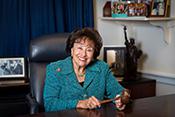
Mr. Speaker, I rise in support of this conference report. I'd like to take a few moments to focus on the foreign operations section, which I strongly support and which I believe represents the very…
Mr. Speaker, I rise in support of this conference report. I'd like to take a few moments to focus on the foreign operations section, which I strongly support and which I believe represents the very best of bipartisan cooperation in the pursuit of a sound and effective foreign policy.
Despite representing a cut of $1.9 billion below the President's request, the conference agreement will accomplish many good things. It increases the President's request for international HIV/AIDS programs by about $100 million, and by about $700 million over last year's level. It provides a total of $400 million for basic education, which is a $75 million increase above last year. Since Chairman Kolbe and I began working together, we have quadrupled funding for basic education, and I am pleased the Senate agreed to include the House-passed level for this valuable priority.
The Millennium Challenge Corporation will receive $1.5 billion, which is $500 million above last year. We have also restored cuts proposed by the President to USAID's core programs for health, the environment, democracy building, and economic growth. This is the second consecutive year that Congress has had to restore the administration's cuts, and I hope the administration will take notice. Congress has no intention of cutting our core programs in Africa and Latin America to make room for new initiatives.
The agreement fully funds our commitments to Israel and other Middle Eastern countries and provides increases for new programs designed to mitigate conflicts. I am pleased that we have extended the loan guarantee program for Israel by 2 years, which will enable Israel to take full advantage of the authority already granted by Congress. I am also pleased that the statement of managers expresses concern about the need for more vigorous oversight of the United Nations Relief and Works Agency, and requests a report on oversight measures from the State Department.
The agreement also provides significant funding for both Pakistan and Afghanistan as we continue our partnership in fighting the war on terrorism. As reconstruction proceeds in Afghanistan, it is increasingly clear that the $1 billion in this bill will have to be augmented by as much as an additional $1 billion in supplemental funds. I hope that we will have the opportunity to provide these funds after the New Year--we have a responsibility to our own national security, and to the people of Afghanistan, to get the reconstruction job done right.
We have increased funds for both Sudan and Haiti because of the serious humanitarian crises in both countries. For Haiti, we have provided $85 million, which is $58 million above the request. For Sudan, the bill contains the $311 million included in the House-passed bill plus an additional $93 million specifically for the Darfur emergency. This funding, which should have come in the form of a mandatory transfer from the billions of unspent Iraq reconstruction funds, will instead be provided as new, emergency funding. I am simply baffled that, despite bipartisan support for this transfer, the administration has fought tooth and nail against it. While I am pleased the funds have been provided, I am surprised that we have not taken advantage of the authority to use already-appropriated funds for this clearly important purpose.
Once again, I am disappointed with the disposition of the outstanding issues surrounding international family planning. While I am pleased that the conference agreement provides $441 million for our bilateral family planning programs, these programs are still subject to the senseless global gag rule policy.
We have also failed to rationalize restrictions on funding the United Nations Population Fund, which as received no U.S. support since 2001.
I am pleased that we have clearly stipulated that any fiscal year 2005 funds blocked from UNFPA will go to bolster our bilateral family planning programs. I am deeply disappointed that the administration has only allowed us to provide half of the fiscal year 2004 funds meant for UNFPA for family planning. I support anti-trafficking initiatives, but urge the President to actually request them for the upcoming fiscal year, instead of simply announcing that he will take them from other programs.
One last issue I feel compelled to address is the potential cut-off of economic assistance to a number of countries based on their failure to sign so-called Article 98 agreements. The House bill contained language extending the reach of current law by cutting off Economic Support Fund assistance to the government of countries that have not signed agreements exempting U.S. troops from the jurisdiction of the International Criminal Court. Current law cuts off military assistance to countries with no signed Article 98 agreements, but also gives the President broad waiver authority.
The conference agreement contains a narrow waiver for non-NATO allies, but no waiver for the remainder of the world. The ultimate result is the potential cutoff of economic assistance to Jordan, Cyprus, Lebanon, Ecuador, Kenya, South Africa, Angola, and other countries.
I understand and share the concerns many of my colleagues have about the International Criminal Court. But I also do not believe that these concerns should be the cornerstone of U.S. foreign policy.
Jordan is not only our most reliable partner in the Arab world, the country now serves as the primary staging point for much of our Iraq reconstruction effort. The new Iraqi police force upon which so much depends is now being trained in Jordan. Threatening a cutoff of economic assistance simply flies in the face of common sense. Our program in Cyprus has been in place for many years and funds efforts to help end the conflict there--a key U.S. foreign policy goal. In other countries, our efforts include a wide range of programs relating to drug trafficking, dealing with environmental problems, and providing economic advisors. It seems shortsighted to discard these goals because of concerns over the poorly organized and ineffective ICC.
Personally, I believe this provision should have been dropped--I opposed it when it was offered during House consideration of the bill. However, if a waiver must be included, it should have included all countries and not simply NATO and major non-NATO allies. This would allow the administration to let aid flow unimpeded to key countries in Latin America and Africa that might otherwise be forgotten. As it stands now, many of these programs are likely to be curtailed or halted.
Mr. Speaker, I also want to express my concern with the Weldon refusal clause provision included in the LHHS section of the bill. For over 30 years, there have been Federal laws that allow doctors, nurses, and hospitals to refuse to provide abortion services because of their religious beliefs.
However, just as the law protects religious or moral objections, it protects the rights of patients--ensuring that women have access to accurate and complete medical information when making decisions about their own health. The Weldon provision would unravel these protections--gutting the patient protections included in the Title X family planning program, which require that all legal options are presented to a woman; denying rape and incest survivors access to legal abortion services, which is a longstanding provision in current law, and overriding State constitutional patient protections.
I am very disappointed that my and my colleagues' efforts to strip this provision from the final bill did not prevail. This will hurt women all around our country, and it is shameful.
In closing, I want to thank Chairman Kolbe for his hard work on this bill, and express my deep appreciation of this close working relationship we have enjoyed. I think it is clear from the bipartisan way in which this bill was written--from the very first day--that we both share a strong commitment to our Nation's foreign assistance programs, and that we both understand that foreign assistance, along with diplomacy and defense, is a pillar of U.S. national security strategy. Chairman Kolbe and his staff--John Shank, Alice Grant, Rodney Bent, Rob Blair, Lori Maes, and Sean Mulvancy--have been wonderful partners in this process.
And I would like to thank the minority staff--Mark Murray and Beth Tritter--for their work as well.
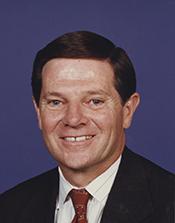
Mr. Speaker, I thank the gentleman for yielding me this time. I do not know if I am sad or happy that I am coming to the floor today to talk about this bill because this is the last bill that the…
Mr. Speaker, I thank the gentleman for yielding me this time.
I do not know if I am sad or happy that I am coming to the floor today to talk about this bill because this is the last bill that the gentleman from Florida (Mr. Young) will handle as chairman of the Committee on Appropriations. It is sad that he is no longer going to be chairman of the Committee on Appropriations because for the last 6 years he has done a stellar job under very difficult circumstances.
As the gentleman knows, when the committee is trying to put an appropriation bill together, in the end it is very difficult. There is incredible pressure on the chairman. But the gentleman is a man of incredible patience because he has put up with me, has incredible stamina, and big, big shoulders because he has carried big, big responsibilities, particularly in light of the fact that after 9/11 much tougher issues have come before the gentleman because of 9/11. He has the respect of the entire House. Actually, he has the respect of this entire Congress, both the House and the Senate, and certainly the President of the United States and the American people.
Mr. Speaker, we greatly appreciate the service of the gentleman from Florida (Mr. Young). We are very excited that he is continuing to serve in the House and on appropriations.
I come in support of this bill, and I want to reflect on a couple of things. This has been an interesting week on the same subject, raising the debt limit on the United States and bringing the government appropriations, the government spending bills, here to the floor today. Most of the debate centered around philosophy, economic philosophy on where this country should go.
I was amused in watching the debate on the debt limit and on this bill, the comments from the other side of the aisle. They have many ideas about fiscal responsibility, fiscal restraint, how to lead us into the future. Part of their understanding of history is a little off. I lived through that same period of time. The other side of the aisle takes credit for the balanced budget and the surplus in the 1990s because they passed higher taxes and more spending in 1993. And they point to what happened in the late 1990s when we actually balanced the budget for the first time in, I do not know, 30, 40, 50 years, and we were in a surplus.
The problem in 1993 was business as usual. I remind the body that in 1993 the Democrats had the majority of the House, had the majority of the Senate, had the President of the United States. They could do anything they wanted to, and they did. So their philosophy was the policy of the United States. It was very interesting if raising taxes and increasing spending, taking money out of the economy so you are not creating jobs or not creating an economy that can sustain this government, it was the right way to go, then why did their subsequent budgets and all of their economists project that there were going to be growing deficits as far as the eye could see?
If they were very strong in their philosophy, they would have had their economists look at their philosophy and understand if they raise taxes and they increase the size of government by increasing spending, then we could predict out into the future that deficits would go away, you would balance the budget and you would create surpluses. At no time in the 40 years that the Democrats controlled this body did they ever, ever present a budget that balances or did they ever present a budget that predicted a balance. So to take credit for balancing the budget in the 1990s, which we did, and having surpluses holds no water whatsoever.
What actually happened was the Republicans came into the majority in 1995. In 1996 we did what we are doing here today. We did not just freeze nondefense discretionary spending; we cut nondefense discretionary spending. Our philosophy is if you cut taxes, the economy grows; and if the economy grows and there are more jobs created, there is more revenue to the government. That is exactly what happened in 1981 when we cut taxes and we froze spending in 1981 under Ronald Reagan. They should have taken credit for that because they were in the majority in 1981. Unfortunately, in 1982 they started spending again. In 1987 we were able to freeze spending again because the economy dictated it and tried to cut taxes again. They should have taken credit for that because they were in the majority. But right before that and right after that they started spending again.
The best part about this debate is if Members really listen to what they are saying, and they criticize this bill, they have said there is not enough spending in this bill. This bill actually freezes nondefense, non-homeland security, the first time we have done that since 1996; and I am very proud that we held the line and made Congress make choices and set priorities because it fits our philosophy. You cut taxes, grow the economy, more revenue for the government. You hold down spending and let those revenues catch up, sooner or later we are going to get to balance. That is exactly what we did in the Balanced Budget Act of 1997.
By the way, I was also amused in the opening of the Clinton Library, Bill Clinton took credit for that. He vetoed it twice. He never proposed it; he vetoed it twice, and finally he signed it because he insisted over and over again that we were going to balance the budget, not by raising taxes but by increasing the economy and holding down spending. We can do it again. It is much more difficult now that we are at war. At no time has this country ever balanced the budget while we were at war because we will spend whatever it takes to win this war and protect our troops. So it is going to be difficult to balance the budget, particularly if we do not raise taxes.
What they really want and what they are so mad about is we are lowering taxes when they want to increase them so they can continue to spend more and increase the size of government. But we are not doing that, and we are not doing it as exhibited in this bill. This is part of our philosophy. This is a part of where we want to lead the country.
We have been cutting taxes. In fact, this House has cut taxes every year for the last 10 years that we have been in the majority, and we will continue to cut taxes because we believe American families should keep more of what they earn so they can spend it and invest it and thereby grow the economy. And we will continue fiscal restraint and hold down spending, as difficult as it is, so we will get to a balanced budget because we are the only ones that have the credibility because we have done it before. We did it in the 1990s, we can do it again, and we will because our budgets have a projected balanced budget over the next 4 or 5 years. Actually, if we could do that. If we could implement some of the policies we want to, we will get to it faster.
The crux of the matter is when we bring a balanced budget amendment to the Constitution to the floor of this
House, they will be the first ones to vote against it because they know what it means.
Mr. Speaker, make no mistake about it, there are two philosophies. They presented their philosophy in the election; we presented our philosophy in the election. With all due respect, the American people chose. The American people chose, so we are going to continue down this road of fiscal responsibility.
Mr. Speaker, I am very proud of the bill that the chairman has presented. I am very proud of the fact that we actually froze spending for the first time in a long time. I am very pleased to support this bill and urge my colleagues to do the same.

Mr. Speaker, in 1973, Congress passed the Church Amendment to protect the conscience rights of hospitals and health care providers from being forced into involvement with abortion. The amendment…
Mr. Speaker, in 1973, Congress passed the Church Amendment to protect the conscience rights of hospitals and health care providers from being forced into involvement with abortion. The amendment provides that the receipt of Federal funds in various health programs will not require hospitals or individuals to participate in abortions if they object based on moral or religious convictions. It also forbade hospitals in these programs to make, willingness or unwillingness to perform abortions a condition of employment.
Since 1973, and I think many Members know this, various conscience protections, many of which deal specifically with abortion, have been enacted into law. Unfortunately, over the years, gaps in the protection of existing law have been exploited by pro-abortion organizations which have now undertaken a nationwide campaign to require all health care providers to participate in abortion. That campaign has met with some success, and there are a number of those which I will put into the Record, including trying to compel Catholic hospitals as a condition of a merger and acquisition to provide abortions. In one case in my own State, they compelled a $2 million settlement that had to go into a trust that paid for abortions. That's outrageous. To counteract this extreme campaign--to force health care providers to participate in abortion--Federal conscience law when signed by President Bush, will now be strengthened.
The principle of the Hyde amendment was that no one should be forced to participate in abortions in any way, and that needs to be affirmed. That is what this Weldon-Hyde amendment will do. The addition of conscience protection to the Hyde amendment remedies current gaps in Federal law and promotes the right of conscientious objection by forbidding federally funded government bodies to coerce the consciences of health care providers who respect fundamentally the right to life and basic human rights for the unborn.
The Campaign To Force Hospitals to Provide Abortion
Forty-five States and the Federal Government protect the
right of health care providers to decline involvement in
abortion. Pro-abortion groups seek to abolish these legal
protections:
abortion access project
Operating in 24 States, the project's goal is ``increasing
access to abortion services by expanding . . . the number of
hospitals offering abortion services.'' The project admits
that its tactics include ``pressuring hospitals'' and it does
so through both political and legal pressure.
The ``Hospital Access Collaborative'' division reports on
the State projects' legal and regulatory interventions
challenging mergers. See www.abortionaccess.org/AAP/ campaigns/hospital/hospital.htm (accessed 09/07/03).
american civil liberties union--reproductive freedom project:
``Religious refusals and reproductive rights.''
The ACLU has published a report and advocacy kit aimed at
requiring all hospitals, including Catholic hospitals, to
provide abortions. The report argues: ``When . . .
religiously affiliated organizations move into secular
pursuits--such as providing medical care or social services
to the public or running a business--they should no longer be
insulated from secular laws. In the public world, they should
play by public rules.'' ACLU, ``Religious Refusals and
Reproductive Rights,'' January 2002, page 11, www.aclu.org/ Reproductive Rights/ReproductiveRights.cfm?ID=10516&c=30
(accessed 09/10/03).
george gund foundation, pro-choice resource center and aclu
reproductive freedom project national meeting
``Much of the debate focused on strategy, with participants
wonder whether it was better to work toward improving and
narrowing conscience clauses or to fight to eliminate them
altogether . . . Although reproductive rights activists
should still work to improve conscientious exemptions, [ACLU
executive director Ira Glaser] said, their ultimate goal
should be getting rid of them.'' See ``Conscientious
Exemptions and Reproductive Rights,'' Executive Summary, page
10, www.prochoiceresource.org/about/CERR_Body.pdf (accessed
09/07/03).
In one session at the national meeting, the group analyzed
a same conscience protection which ``allowed hospitals, their
staffs, or `any other person' to opt out of providing
abortions, sterilizations, and contraception if they objected
to such services.'' The participants decided ``the measure
couldn't be fixed and should be opposed at all costs.'' Id.
at page 11.
Maryland NARAL Hospital Provider Project
``The goal of the Hospital Provider Project is to increase
access to abortion services by requiring Maryland hospitals
to provide abortion . . .'' www.mdnaral.org/initiatives.htm
(accessed 04/05/2002).
Planned Parenthood Federation of America
``While everyone has the right to their [sic] opinions
about reproductive health care, including . . . abortion, it
is important to remember that the conscience that matters
most belongs to the patient . . . Health care providers who
object to providing certain services still have an obligation
to respect the rights of their patients and to enable them to
access the health care they need.''
www.plannedparenthood.org/articles/exemptions.html (accessed
09/12/03).
pro-choice resource center
``Through its Spotlight Campaign, PCRC [Pro-Choice Resource
Center] organizes regional meetings to build a network of
opposition to `conscience' or patient abandonment clauses
that allow doctors, pharmacists and entire hospital systems
to deny women access to services like abortion . . .'' See
www.prochoiceresource.org/programs/rg_meet.html (accessed 09/
05/03).
``Right now, so-called `conscience' clause laws are in
place in 45 or 50 States, allowing doctors, pharmacists,
clinics, hospitals, managed care plans and even employers to
refuse to provide, or to pay for, abortion . . . The
MergerWatch program is taking action to expose and overturn
these `conscience' clauses.'' See. www.prochoice
resource.org/programs/spot.html (accessed 09/05/03).
current threats
Unfortunately, gaps in the protections of existing laws
have been exploited by proabortion organizations, which have
undertaken a nationwide campaign to require all health care
providers to participate in abortion. That campaign has met
with some success. Novel legal and administrative strategies
have resulted in:
Forcing a private community hospital to open its doors for
late-term abortions,
Denying a certificate of need to an outpatient surgical
center that declined involvement in abortion, after an
abortion rights coalition intervened in the proceedings,
Forcing a private non-sectarian hospital to leave a cost-
saving consortium, because the consortium abided by a pro-
life policy in its member hospitals,
Dismantling a hospital merger, after abortion advocates
approached a State attorney general to challenge the merger,
Pressuring a hospital to place $2 million in trust for
abortions and sterilizations before allowing the hospital to
consolidate,
Attempting to require a Catholic hospital to build an
abortion clinic and pay for abortions,
Threatening a Catholic-operated HMO with loss of State
contracts because it declines to provide abortions,
Prohibiting hospitals from ensuring that the property they
sell is not used for abortions.

Mr. Speaker, I thank the gentleman from Florida for yielding me this time, and I yield myself such time as I may consume. (Mr. FROST asked and was given permission to revise and extend his remarks.)…
Mr. Speaker, I thank the gentleman from Florida for yielding me this time, and I yield myself such time as I may consume.
(Mr. FROST asked and was given permission to revise and extend his remarks.)
Mr. Speaker, for months now, Republicans have held hostage some of the foremost priorities of the American people. Key national level needs like education, veterans health care, and highway construction have all been put on the back burner. The hard legislative choices and spending decisions that had to be made were delayed so that Republicans could ensure their success at the polls.
Well, now that the election is over, we have returned to Washington to finally finish our budget for fiscal year 2005, and I am certain that my Republican friends will come down to the floor, pat each other on the back, and proclaim this giant $388.4 billion spending bill a great success that finishes their work for the year.
But, Mr. Speaker, this bill does not even come close to accomplishing what our constituents expect from this Congress. Republicans in this House just returned from the campaign trail where they promised to create more jobs and more economic opportunity. They promised they would do all they could to keep our homeland safe. They promised they would work hard to provide Americans with affordable health care and lower prescription drug prices, and they promised they would balance the budget.
However, their record tells a very different story.
This Congress has failed to act on job creation. There is a 1.6 million private sector job deficit in this country, yet Republicans have failed to pass a long-term highway bill that would create more than a million new jobs, and they have failed to end tax breaks for companies that ship jobs overseas.
This Congress has failed to provide adequate resources for our national security. This Congress has failed to provide resources for our national security. Not only have Republicans failed to give our police and firefighters the resources they need, they have failed to secure our borders and ports and failed to complete action on the critical recommendations of the bipartisan 9/11 Commission.
This Congress has failed to provide quality, affordable health care for Americans. Republicans have failed to hold down the price of prescription drugs, failed to reduce the number of uninsured, and failed to give Americans the right to import lower-priced prescription drugs from abroad.
This Congress has failed to keep America fiscally sound. Republicans repeatedly refuse to enact sensible measures to pay for any new spending or tax cuts enacted. Their policies and mismanagements have sent the budget deficit skyrocketing from $159 billion in fiscal year 2002 to a record $422 billion today, and just this week forced Congress to raise the debt limit by $800 billion, saddling our children with a massive debt that they cannot afford.
Our work is nowhere near done, Mr. Speaker. It is shameful Republicans are rushing to finish our final spending bills and leave town without taking these very serious and very important matters under consideration. Perhaps while Republicans are enjoying their Thanksgiving vacation they will take a moment to give thanks that they do not have to face the electorate for 2 more years. I do not think the American people would approve of this do-nothing Congress.
Mr. Speaker, I reserve the balance of my time.
Mr. Speaker, I yield 3 minutes to the gentlewoman from New York (Ms. Slaughter).
Mr. Speaker, I yield 3 minutes to the gentleman from Massachusetts (Mr. McGovern).
Mr. Speaker, I yield 2 minutes to the gentlewoman from California (Ms. Woolsey).
Mr. Speaker, I yield for the purpose of making a unanimous
consent request to the gentlewoman from California (Ms. Lofgren).
(Ms. LOFGREN asked and was given permission to revise and extend her remarks.)
Mr. Speaker, I yield 2 minutes to the gentlewoman from Illinois (Ms. Schakowsky).
Mr. Speaker, I yield 2 minutes to the gentlewoman from California (Ms. Lee).
Mr. Speaker, I yield 2 minutes to the gentlewoman from Texas (Ms. Jackson-Lee).
(Ms. JACKSON-LEE of Texas asked and was given permission to revise and extend her remarks.)
Mr. Speaker, I yield 2 minutes to the gentleman from Virginia (Mr. Moran).
(Mr. MORAN of Virginia asked and was given permission to revise and extend his remarks.)
Mr. Speaker, I yield 1 minute to the gentleman from Washington (Mr. Baird).
Mr. Speaker, I yield 2 minutes to the gentlewoman from New York (Mrs. Maloney).
(Mrs. MALONEY asked and was given permission to revise and extend her remarks.)
Mr. Speaker, I yield 2 minutes to the gentleman from New York (Mr. Nadler).
Mr. Speaker, I yield 1\1/2\ minutes to the gentleman from California (Mr. Sherman).
(Mr. SHERMAN asked and was given permission to revise and extend his remarks.)
Mr. Speaker, I yield 2 minutes to the gentlewoman from Colorado (Ms. DeGette).
Mr. Speaker, I yield 1 minute to the gentlewoman from California (Ms. Pelosi), the distinguished minority leader.
Mr. Speaker, I yield myself the remaining time.
Mr. Speaker, I have no further requests for time; but I would like to take a moment, if I may, to speak on a more personal note.
This will be my last speech before the House and the last rule that I will manage. First, let me say that serving on the Committee on Rules has been the highlight of my congressional career, and although I will not miss attending our midnight and 7 a.m. meetings, I will miss the committee, its members, and the good work we tried to do every week.
It has been my distinct honor to have served in this great body for 26 years. During my time here, I have had the privilege to work alongside some of the most talented and dedicated Members that this body has ever known. I want to thank them, my colleagues, for their constant efforts on behalf of this great Nation, and I want to thank them for their friendship. I also want to thank my constituents for their trust and support. I have always tried to serve my constituents as honestly and diligently as I could, and although my time here has come to an end, I do hope in some way that I may have been able to give a little something back to the people and to the country that has given me so much.
Mr. Speaker, I yield back the balance of my time.
Mr. Speaker, I commend the gentleman for bringing this important rule to the floor. I would also like to join in the chorus of others commending the gentleman from Florida (Mr. Young). He has been an…
Mr. Speaker, I commend the gentleman for bringing this important rule to the floor. I would also like to join in the chorus of others commending the gentleman from Florida (Mr. Young). He has been an outstanding chairman of the Committee on Appropriations. I guess this is the gentleman's last bill as full committee chairman. I thank the gentleman for being a friend and a mentor to me, and I am certainly glad we are going to continue to have the gentleman on the committee.
Several Members have risen to criticize the included Weldon language in this bill, and I want to clarify that this is the Weldon-Hyde language. This is a continuation of the Hyde policy of conscience protection.
The reason I sought to include this provision in the bill is my experience as a physician, and I still see patients, is that the majority of nurses, technicians and doctors who claim to be pro-choice who claim to support Roe v. Wade always say to me that they would never want to participate in an abortion, perform an abortion, or be affiliated with doing an abortion. This provision is meant to protect health care entities from discrimination because they choose not to provide abortion services.
The measure was adopted during the full committee consideration, and those who opposed it had an opportunity to call for a vote in committee and on the floor, and they did not. This provision is intended to protect the decisions of physicians, nurses, clinics, hospitals, medical centers, and even health insurance providers from being forced by the government to provide, refer, or pay for abortions. This is a reasonable Federal policy, one that was overwhelmingly approved by this very body by a vote of 229-189. The policy simply states that health care entities should not be forced to provide elective abortions, a practice to which a majority of health care providers object, and I can tell Members from personal experience, and which they will not perform as a matter of conscience.
Forty-five States and the Federal Government protect the right of health care providers to decline participation in abortions, and abortion advocates are working to abolish these legal protections in the courts and through the regulatory process. Abortion advocates have launched a campaign to force hospitals and health care entities to provide, refer, and pay for abortions. Abortion advocates argue that the term ``health care entity'' only covers individuals and not institutions. Abortion advocates argue that because an entity receives Federal funds they are required to provide abortions.
By twisting the law, they have successfully used the court and State and local governments to violate the objections to abortions of health care entities and providers. Let me give some examples of what I am talking about. In July 2002, an Alaskan court forced a community hospital to provide elective late-term abortions contrary to its policy and the sentiment of the community.
In New Jersey, abortion advocacy groups urged the State of New Jersey to require a Catholic health system to build an abortion clinic on its premises to serve what they stated was a right of access to abortion.
This year the State of New Mexico refused to approve a hospital lease because the community-owned hospital declined to perform elective abortions.
This provision makes two simple changes in the existing law to prevent discrimination. It explicitly clarifies existing law to state that a health care entity includes a hospital, a health professional, a provider-sponsored organization, a health maintenance organization, a health insurance plan or any other kind of health care facility. It goes on further to state that existing law protects health care entities from discrimination based on three kinds of participation in abortion: performing, training and referring. This amendment strengthens existing law, and it is appropriate language for us to have in the bill.
This provision only applies to health care entities that refuse to provide abortion services. Furthermore, the provision only affects instances when a government requires that a health care entity provide abortion services. Therefore, contrary to what has been said, this provision will not affect access to abortion, the provision of abortion-related information or services by willing providers or the ability of States to fulfill Federal Medicaid legislation.
The right of conscience is fundamental to our American freedoms. We should guarantee this freedom by protecting all health care providers from being forced to perform, refer or pay for elective abortions. This is a good provision. I encourage all of my colleagues to vote ``yes'' on the rule and ``yes'' on the underlying bill.
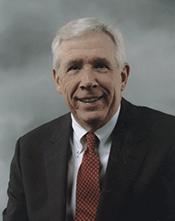
Mr. Speaker, I rise in support of the conference report, and I want to associate myself with all the remarks with regard to the gentleman from Florida (Mr. Young). No Member in this history of this…
Mr. Speaker, I rise in support of the conference report, and I want to associate myself with all the remarks with regard to the gentleman from Florida (Mr. Young). No Member in this history of this Congress has ever done a better job with appropriations than Mr. Young.
Mr. Speaker, I rise in strong support of this conference report. Division B of this Omnibus bill is the conference report on the fiscal year 2005 Commerce, Justice, State and Judiciary Appropriations Act, which represents the work of the subcommittee that I chair.
I would like to thank my colleague, Mr. Serrano, for his support throughout this process. He helped us to get a strong bill through the House, with a vote of 397 to 18.
I would also extend my thanks to our Senate counterparts Chairman Gregg and Senator Hollings.
Within a very tight allocation, we were able to provide funding for a variety of critical national priorities.
The bill includes $20.6 billion for the Department of Justice, $975 million above fiscal year 2004 and $804 million above the budget request to address terrorism, drugs, violence and white collar crime. The bill addresses recommendations of the 9/11 Commission by enhancing the FBI's personnel and retirement authorities to attract and retain critical intelligence staff and provides an increase of $625 million to improve training and information technology and provide additional agents, analysts, translators, and support staff.
For Federal law enforcement overall, the conference report represents a 6.2 percent increase over last year to strengthen counterterrorism and crimefighting capabilities.
The conference agreement provides $3 billion for State and local law enforcement, $906 million above the administration's request, including $634 million for Byrne Justice Assistance grants, $305 million for State Criminal Alien Assistance, $110 million to addresses critical DNA backlogs, $387 million for violence against women prevention, and $384 million for juvenile justice.
The conference report includes $913 million for the Securities and Exchange Commission, $102 million above last year, to provide the necessary resources to protect investors from corporate abuse.
For the State Department, we have provided $8.7 billion, $693 million above last year, including $1.6 billion, the full requested level for worldwide embassy security upgrades. It also includes $1.28 billion for public diplomacy programs including international broadcasting, focusing on expanded programs for the Arab and Muslim world.
For the Department of Commerce, the conference report provides $6.7 billion for the Department of Commerce and other trade agencies, $761 million above last year. Increases will result in more accurate economic statistics, improved weather forecasting, better management of the Nation's fisheries, and more accurate and timely census data. The bill also includes a 4.5 percent increase for the Nation's trade agencies to negotiate, enforce and verify free and fair trade agreements.
For the Federal judiciary, the conference report provides $5.16 billion, $315 million above last year. This includes funding to process all-time high numbers of criminal and bankruptcy cases, and to fund the judiciary's security requirements.
Overall, Mr. Speaker, this conference agreement represents a sound and fair resolution of the multitude of issues that we faced in conference, and it does so in a fiscally responsible manner. I urge my colleagues to support this conference report.
Mr. Speaker, I want to thank the members of my subcommittee staff who have put in very long hours to produce the FY 2005 C-J-S appropriations bill. All members of the staff have worked long, hard hours to produce a bill that I believe will help our country.
I would like to particularly thank Mike Ringler, clerk of the subcommittee, who has led the subcommittee through the House Appropriations process. I would also like to thank Christine Kojac, John Martens, and Anne Marie Goldsmith for their tireless efforts. Their work is much appreciated.
I also would like to thank the detailee, Jonathan Mattiello, who has also lent his support to the bill.
In my personal office, I would like to thank Dan Scandling, Janet Shaffron, J.T. Griffin, Samantha Stockman, and Neil Siefring for their efforts and work with the subcommittee.
From the minority staff, I would like to thank David Pomerantz, Lucy Hand, Linda Pagelsen, and Rob Nabors who have worked with my staff in a bipartisan manner to produce this bill.
Thank you all very much.

Mr. Speaker, I thank the gentleman from Texas (Mr. Frost) for yielding me this time and for his leadership. He has brought many rules to the floor over the course of many sessions of Congress. Our…
Mr. Speaker, I thank the gentleman from Texas (Mr. Frost) for yielding me this time and for his leadership. He has brought many rules to the floor over the course of many sessions of Congress. Our country, this Congress, and the American people have all been well served, especially the people of Texas who took great pride in his leadership, the dean of the Texas delegation, a diligent and, when it comes to the Committee on Rules, that is part of what one has to be, a diligent and very astute and wise leader for the House Democrats on that committee.
The gentleman's service here will be long remembered. We will all be positively impacted for a long time to come, and I want to thank the gentleman and congratulate him for his service to our country.
Mr. Speaker, I rise in opposition to the Weldon amendment, an extraordinary sneak attack on women's rights and a disgraceful display of ideology over health.
This amendment is a radical change in policy that the House has not passed this session and that the Senate has never considered, debated, or voted on. Republicans slipped it into the appropriations in the dark of night when they thought no one was looking. It is entirely outside the scope of this omnibus spending bill, yet it is part of a must-pass bill at the insistence of House Republican leaders.
This language makes a mockery of Roe v. Wade. Under this provision, a woman will not know where her right to choose will be honored or where it will be denied.
This was first advertised to me as an expansion of the conscience clause which we all respect, as a person who served under the leadership of the gentleman from Wisconsin (Mr. Obey) on the Labor-HHS committee and with our distinguished chairman of the Committee on Appropriations, the gentleman from Florida (Mr. Young), I knew full well the importance of the conscience clause to Catholic doctors or other faith doctors, but particular mention was always made of Catholic doctors. It was said to me that this was merely an expansion of that from the doctors to the hospitals, Catholic hospitals. But, I say to my colleagues, it is so very much more than that. We all respect a conscience clause, but this goes well beyond that.
If a hospital, a health insurance company, or a doctor opposes Roe v. Wade, they could simply ignore it. They could simply ignore it. This is the law of the land; a constitutional right could simply be ignored. The Weldon amendment
is essentially a domestic gag rule, restricting access to abortion counseling, referral, and information. Health care companies should not be able to prevent doctors from giving medically necessary information.
This language, again, makes a mockery of existing State and local laws, including many State constitutions. Under the Weldon amendment, any law or regulation currently on the books to protect access to reproductive health services is at risk. The term ``discrimination'' in this amendment is so vague that it could be used against any Federal, State, or local government effort to provide reproductive health services.
This language makes a mockery of title X. The title X family planning program provides much-needed reproductive health services that reach millions of low-income, uninsured individuals; and it really is sad because we all want to reduce the number of abortions in our country. That is a goal that we all share, and reproductive family planning is one way to do that.
But under this amendment, clinics could participate in title X programs without providing a full range of reproductive health services. Federal dollars should not be used to deny the federally protected right to choose. Let me repeat that. Federal dollars should not be used to deny the federally protected right to choose.
Roe v. Wade is the law of the land, but Republicans are gutting it step by step.
The Weldon amendment will have a major and harmful impact on women's health. This sweeping new exemption from current laws and regulations should not be the law of the land, and it certainly should not be a part of the omnibus appropriations bill.
The Republican assault on women's rights must be stopped. I urge my colleagues to oppose the Weldon amendment.

Mr. Speaker, I rise today to explain my vote in favor of H.R. 4818, the massive omnibus appropriations act, which incorporates the nine unfinished spending bills into a single package. I reluctantly…
Mr. Speaker, I rise today to explain my vote in favor of H.R. 4818, the massive omnibus appropriations act, which incorporates the nine unfinished spending bills into a single package.
I reluctantly supported this legislation. On the positive side, it includes millions of dollars I requested for important projects in southwest Oregon. For example, the bill includes $2 million for the North Bend Airport Air Traffic Control Tower; $475,000 for the Port of Brookings Harbor Boardwalk Expansion and $418,250 for the Port of Brookings Harbor Seafood Processing Plant; $60,000 for Coos and Curry County METH Reduction and $150,000 for Coos County Law Enforcement Technologies; $265,000 for the Benton County Health Services in Monroe for facilities and equipment; and $200,000 for the Springfield Public Schools, Schools Plus Program.
It provides a significant investment in our Nation's roads, bridges, and water infrastructure. For southwest Oregon, the bill includes $5 million for the Courthouse District Transportation Improvements in Eugene; $2 million for the Lane Transit District Bus and Bus Facilities; $3 million for the Coburg/I-5 Interchange Improvements; and Wastewater Improvement Funds, including $150,000 for Sweet Home, $300,000 for Coburg, and $250,000 for Coquille.
I am pleased the bill restores at least some funding for the dredging of small ports in my district, though more funding is needed. Despite the fact that these small ports are the economic lifeblood of coastal communities in my district, President Bush had proposed to zero out funding for these ports in his budget.
I was also pleased that H.R. 4818 boosts funding for veterans' health care by $1.9 billion over last year and by $1.2 billion above the level requested by the President. Though, as I will discuss in a minute, veterans need and deserve more.
And, I am pleased the bill falls within the spending cap set by the President. Our Nation cannot continue to run up hundreds of billions of dollars in debt every year. Reversing the dangerous accumulation of debt will require discipline on both spending and taxes.
While I supported the bill, I want to note for the record my disappointment with the inadequate funding levels in several important areas. These areas could have been funded at higher levels even within the spending cap
set by the President if lower priority items, such as the President's plan to send spacecraft to Mars or military and economic aid to dozens of countries, were reduced or eliminated.
For example, I am concerned that the bill cuts funding for the Small Business Administration by 19 percent below its current funding level. Small businesses are the primary employers and innovators in our economy. I cannot understand why the House Republican leadership elected to slash support for small businesses in this bill.
As I mentioned, while funding for veterans' health care was increased in this bill, I am concerned that the funding level still falls $1.3 billion below the level requested on a bipartisan basis by the House Committee on Veterans' Affairs.
I am disappointed that H.R. 4818 underfunds the education programs under the No Child Left Behind Act by $9.6 billion. Title I, Head Start, IDEA, and after-school programs, among others, are underfunded. Thousands of children will be left behind by the funding levels in this bill.
Older students won't make out much better. H.R. 4818 freezes the maximum award for Pell grants for the second year in a row, despite the fact that college tuition has risen 36 percent since 2001.
Finally, I think it is outrageous that the House Republican leadership stripped a variety of important provisions that were adopted on a bipartisan basis by the House and, in some cases, the Senate as well. For example, the House leadership cut a provision to protect overtime pay for millions of American workers. And, a provision to allow Americans to safely reimport cheaper drugs from overseas was eliminated at the behest of the pharmaceutical industry.
So, again, I will support this bill, but I will not do so enthusiastically.
Show 11 more

Mr. Speaker, I thank the distinguished gentleman from Wisconsin, our ranking member, who does such an extraordinary job on the Committee on Appropriations in focusing us on our priorities as a…
Mr. Speaker, I thank the distinguished gentleman from Wisconsin, our ranking member, who does such an extraordinary job on the Committee on Appropriations in focusing us on our priorities as a Nation.
Mr. Speaker, initially I want to rise and say that the gentleman from Florida (Mr. Young), our chairman, is like Sara Lee, nobody doesn't like Bill Young, and that goes for everybody on our side of the aisle.
I want to say some nice things, and let me take just one second, but I said earlier, Mr. Speaker, during the consideration of the rule that I perceive Bill Young as one of the fairest, most decent, and most positive leaders in this House. It is an honor to serve with him. I will tell my colleagues, as an opponent of term limits, I think the fact that Bill Young is leaving as chairman of the committee is another compelling argument against term limits. His talent, his fairness, his vision will be missed as our chairman. Thankfully, he will still be on our committee, giving us his sound counsel and leadership.
And, Bill, I want to thank you from the bottom of my heart for the example you have set for all of us of what it means to be an American, working together on behalf of our country and not on behalf of our party, on either side. I thank you for that, sir.
Mr. Speaker, here we are yet again this year considering an end-of- session omnibus appropriations bill not because of our Chairman Young but because of the disagreements, frankly, within his party. This is the fourth in the last 5 years and the eighth time in 10 years since our Republican friends regained the House majority that we have not passed appropriation bills as they should have been passed.
This clearly is not how our appropriations process should work, with this House rolling nine separate appropriation bills into one and giving the Members just a few hours to review it. My chairman said 14 hours. The distinguished ranking member of the Committee on Agriculture is reviewing the bill right now. It is, I judge, at least two feet tall, right in front of her. I do not know whether the camera panned to that, but it is an extraordinary document.
It epitomizes this failed 108th Congress in which Republicans failed to enact the budget, failed to enact an energy plan, failed to enact a transportation bill, failed to enact welfare reform, failed to enact higher education reauthorization, and failed to enact a patients' bill of rights.
Now, despite this dreadful appropriations process, there are many good provisions, as Chairman Young has said, in this bill. Not only that, I am going to vote for this bill.
For example, there are more than $90 million to support an African Union peacekeeping force intended to end genocide in Darfur, Sudan. We must act on that. This bill also maintains the Federal commitment to election reform, providing $14 million for the new Election Assistance Commission. And we again recognize the dedicated service of our Federal civilian employees by providing a 3.5 percent pay raise, which is consistent with the pay increase for our men and women in uniform. Our staffs, hopefully, will all receive that as well. These funds also allow FDA employees to move from substandard workplaces into modern, state-of-the-art facilities.
Finally, let me say that I am disappointed, however, that the A-76 outsourcing, supported by the majority of this House and the majority of the Senate, was nevertheless dropped out of the conference report. This will put Federal employees at greater risk.
Let me conclude, Mr. Speaker, by saying that I am disappointed that we once again failed to reimburse small airports in the Washington, D.C., area. The Republicans and ourselves say we are on the side of small business. These airports have been disadvantaged by the actions of the terrorists and by our security concerns closing them down. We should have made them whole in this bill. We did not. I hope that in the future we will.
Again, I thank Bill Young for his leadership and for his service.
Mr. Speaker, I rise today to express my displeasure with the current state of the appropriations bills. First, I regret that we are using an omnibus bill to finish the appropriations process for FY…
Mr. Speaker, I rise today to express my displeasure with the current state of the appropriations bills.
First, I regret that we are using an omnibus bill to finish the appropriations process for FY 2005. It is not a good procedure, under any circumstances, when we are required to vote on a bill with insufficient time for review, especially a bill as important as appropriations for most of government funding other than Defense and Homeland Security.
My most serious concern with the omnibus is the appropriation for the National Science Foundation, (NFS), which is $227 million below the President's request for FY 2005. The amount is even $60 million lower than last year's appropriation--before accounting for the .83 percent across-the-board cuts, meaning the cut is actually larger than $60 million--primarily in the critical areas of research and education, and even reduces the support for basic research. In the last 20 years this has happened only twice, and I am sorry to see that this year we will make it a third.
While I understand the need to make hard choices in the face of fiscal constraint, I do not see the wisdom in putting science funding far behind other priorities. We have cut NSF despite this omnibus bill spending more money for the 2005 fiscal year, so clearly we could find room to grow basic research while maintaining fiscal constraint. But not only are we not keeping pace with inflationary growth, we are actually cutting the relative size basic research comprises of the overall budget.
NSF has been praised as a model of administrative efficiency--over 95 percent of its funds go directly to support education and research programs. Former OMB director, Mitch Daniels, praised NSF as a model of administrative efficiency and called NSF one of the ``true centers of excellence in this government'' for its low overhead costs and efficient use of tax dollars. Furthermore, NSF has earned a reputation as the premiere basic research institution with only 4 percent of the total federal research and development budget. I am concerned about the kind of message that we are sending by cutting funding at agencies that succeed so well with already lean budgets, while rewarding those less efficient agencies by increasing their funding.
This decision shows dangerous disregard for our nation's future, and I am both concerned and astonished that we would make this decision at a time when other nations continue to surpass our students in math and science and consistently increase their funding of basic research. We cannot hope to fight jobs lost to international competition without a well-trained and educated workforce. If we want to remain competitive in the international marketplace, we must provide funding that stimulates innovation and supports education. Within our borders, NSF supports technological innovation that has been, and remains crucial to the sustained economic prosperity that America has enjoyed for several decades. This innovation is made possible, in large measure, by NSF support of basic scientific research, particularly in the physical sciences. Research at NSF not only underpins physical science research, but lays the foundation for work in the health science and medicine as well. Reducing this funding is extremely short-sighted.
While I strongly oppose the reduced budget for the National Science Foundation, I recognize that the omnibus contains many important pieces of legislation that are necessary to pass. Therefore, under protest, I will vote for the bill, but my vote does not in any way represent my approval for the funding cuts to the NSF.
Mr. Speaker, I rise in support of H.R. 4818. We have put a lot of thoughtful deliberation into these bills, and we are pleased to get this job done. By taking into consideration the priorities of the…
Mr. Speaker, I rise in support of H.R. 4818. We have put a lot of thoughtful deliberation into these bills, and we are pleased to get this job done. By taking into consideration the priorities of the President and the Members of this House, we have produced a bill that meets the needs of all Americans, 280 million. Let me share with you the funding we have provided in a few of the programs in the Labor, Health and Human Services and Education appropriations bill. I might say there are 500 programs in that bill, but I think there are some worth highlighting.
First is education. It is essential to the preservation of democracy, and an investment in education is an investment in people. Mr. Speaker, Federal education spending has more than doubled since fiscal year 1996, from $23 billion to nearly $57 billion today. The bill supports teachers and students by increasing funding for title I by $500 million. Title I provides additional resources to low-income schools to help principals, teachers and students close education achievement gaps.
Yesterday, we voted to reauthorize IDEA. Many of my colleagues speak with me about the financial demands of special education and the needs of the children in their local school districts. We hear from parents about the need to support adequate special education funding to ensure their special needs children receive a quality education. In this bill, funding for special education totals over $11 billion, a $607 million increase over fiscal year 2004, a 380 percent increase since 1996.
Secondly, health care is a critical part of our Nation's economic development. To assist in protecting the health of all Americans and provide essential human services, the bill provides the Department of Health and Human Services over $64 billion for fiscal year 2005. Mr. Speaker, similar to the Department of Education, we have more than doubled funding for health and human services since fiscal year 1996.
Funding for NIH, that is the place where they do the research on health needs, is increased by $800 million, bringing its total budget to $28.6 billion. As a result of our commitment to the National Institutes of Health, our citizens are living longer and better lives.
Health centers operating at the community level provide regular access to high-quality, family-oriented comprehensive primary and preventive health care, regardless of ability to pay, and improve the health status of underserved populations living in inner city and rural areas. By the end of fiscal year 2004, it is estimated that these facilities around the country will have served more than 13 million patients. Funding is increased in this bill.
Children's hospitals are the training grounds for pediatricians and pediatric specialists. Again, $303 million to educate these people to serve the children of this Nation.
Mr. Speaker, our society is judged not only by the care we provide to our young but also how we treat the elderly. This bill provides over $1.4 billion to the Administration on Aging to enhance health care, nutrition and social supports to seniors and their family caregivers.
The bill also includes $21 million for a Homeless Veterans Reintegration Program to operate employment programs that reach out to our homeless veterans.

Mr. Speaker, I thank the gentleman for yielding me this time, and I rise to express my great regrets about the inclusion of the Weldon-authored provision that undermines the rights of a State to…
Mr. Speaker, I thank the gentleman for yielding me this time, and I rise to express my great regrets about the inclusion of the Weldon-authored provision that undermines the rights of a State to enforce its own laws.
If this bill passes, and I am sure it will, that means that from now on State and local governments failing to comply with the Weldon provision put at risk all of their State Medicaid funding, all their SCHIP funding, all their Head Start money, all their child care development block grant money, and all their social services block grant money. In short, anything that comes to the State or local government from the Labor-HHS bill. How is that for coming down with a pretty heavy hand?
Simply put, it restricts the States' autonomy and right to self- governance and undermines States' ability to enforce their own constitutional protections.
If a State chooses to enforce its own laws and require an HMO to provide abortion counseling or services, it will pay a very heavy price. None of us, I believe, are going to want to explain to the senior citizens that the nutrition programs are over, that Medicare is gone, that the Social Security check will not be there, denying the Federal funds for State and local governments that attempts to ensure that a woman has full access to reproductive health services and information. Information. Once again, the land of the free and the home of the brave is going to control the information going to its citizens.
In fact, the way the proposal is worded, even Federal programs could be stripped of their funds if they were to comply with this law. Moreover, it interferes with State and local governments' responsibility to set the parameters of their Medicaid programs, something that they are very concerned about. And I know that New York, which I represent, is very concerned about the cost of Medicaid.
Right now, if a woman is raped and receives her health care from Medicaid, States can force all HMOs that participate in Medicaid to either pay for her abortion or tell her that she is eligible to get that coverage and where she can get it. If this provision passes, the States will not be able to enforce this requirement and Medicaid HMOs can simply refuse to cover the woman's abortion and not give her any information that she can get coverage elsewhere. I am sure that is what the intent is.
It even interferes with, and possibly overrides, current Federal laws, such as the Emergency Medical Treatment and Active Labor Act, which ensures that women in life-threatening circumstances receive the medical care they need.
Suppose a woman comes into the emergency room of a hospital with an incomplete miscarriage which can threaten her life. Under present law, the hospital must stabilize her. If stabilizing requires completing the abortion, they have to do it no matter what their religious belief. But when Weldon passes, the hospital can say it is discrimination to force them to do this and so the woman can just die.
I call on my colleagues to understand what is happening here. I know when the women in America find out what is happening here, there is going to be great outrage.
Mr. Speaker, had time permitted, I would have asked the following question of the Chairman of the Committee, the Gentleman from Florida (Mr. Young): Given that earlier this week the Majority insisted…
Mr. Speaker, had time permitted, I would have asked the following question of the Chairman of the Committee, the Gentleman from Florida (Mr. Young):
Given that earlier this week the Majority insisted that Congress increase the debt limit by $800 billion, and that this bill includes an across-the-board cut of everything from cancer research to highway funding, why does this bill, specifically section 108 of Division J, appropriate $2 million to purchase a Presidential yacht, the Sequoia? At a time when we are sending American men and women to war in Iraq without the necessary body armor and equipment, why in the world are we spending taxpayer money on a Presidential yacht?
The background of this issue deserves some elaboration.
Division J of H.R. 4818 appropriates $2 million for the Secretary of the Navy to purchase the Presidential yacht Sequoia. President Jimmy Carter ordered that this yacht be sold to eliminate signs of an ``imperial presidency''. It is unclear whether the purpose of purchasing the yacht, a national historic landmark, is to provide a yacht for the President, or to bail out the current owner of the vessel, or to donate the vessel to a maritime museum. When the Navy previously owned the vessel, it cost $800,000 a year to keep the vessel running safely and securely.
The Sequoia was built in 1925; President Herbert Hoover was the first President to use the yacht. It was used by all Presidents until
Jimmy Carter became President. President Nixon used the Sequoia approximately 100 times--including the evening on which he decided to resign the Presidency. The yacht is owned by Gary Silversmith, a lawyer and collector of presidential memorabilia, who purchased the vessel in 2000 for $1.9 million. In recent years, the Sequoia has been available for charter on the Potomac for $10,000 per day.
A nonprofit group, the Presidential Yacht Sequoia Foundation, has been raising money to make the privately owned vessel ``public.'' According to an April 17, 2003, Washington Times article, Bill Codus, vice president of the foundation, said that the foundation had the ear of certain Members of the Congress for future appropriations, but he understood if, during tough economic times, the yacht is not at the top of Congress' list. He specifically stated: ``We have to be patient. A lot is going toward defense now, and we understand that.''
This body ought not to be patient with a frivolous expenditure of $2 million to buy a yacht that the Federal Government does not need and which, in fact, was once sold by the Government as excess property. This $2 million could be put to much better use by the U.S. Coast Guard to help buy a high speed cutter to interdict drug runners and illegal immigration in the U.S. coastal waters, for example.
There are, no doubt, numerous other such unwarranted expenditures buried in this bill which should be excised--nontheless, I will vote for the conference report: it is better than the ``C.R.'', and I consider an ``aye'' vote necessary to keep the Government functioning.
Mr. Speaker, I ask that my statement be included at the appropriate place in the Record in its entirety and request permission to revise and extend my remarks. Mr. Speaker, as other members on the…
Mr. Speaker, I ask that my statement be included at the appropriate place in the Record in its entirety and request permission to revise and extend my remarks.
Mr. Speaker, as other members on the Democratic side of the aisle have stressed, the Republican majority has allowed us only a handful of hours to examine the content of this mammoth bill, which numbers in the thousands of pages, before holding a vote on final passage. This rushed vote on the omnibus appropriations bill for fiscal year 2005 represents more than a serious disservice to the American people. It signifies a disgraceful denigration of our role as elected representatives and a serious blow to our democratic form of government.
Although I therefore lack any time to sift through, let alone examine carefully, the lion's share of provisions in this omnibus measure, I have seen two labor clauses which cause me the gravest of concerns. First, this conference report reverses a provision--which passed both the House and the Senate with clearcut bipartisan support--to ensure that workers who put in overtime hours get paid overtime wages. The Republican leadership in Congress has therefore joined with the Bush Administration in pilfering the pockets of hard-working Americans and their families. By taking away the right of millions of American workers to earn overtime pay, the Republican leadership is also turning back the clock more than half a century. They do so to the detriment of hardworking women and men and their families across this nation.
Secondly, a clause in this bill that would seriously erode worker protections against tuberculosis (TB) and bioterrorism. This provision prohibits the Occupational Safety and Health Administration (OSHA) from enforcing any part of its respirator standard for workers at risk of exposure to TB and other deadly infections. At a time when the Bush Administration is invoking daily, color-coded terrorist alerts, it is senseless to weaken the only standard we have to protect health care workers against air-borne pathogens or air-borne ``weapons of mass destruction.'' By prohibiting OSHA from enforcing either an initial as well as an annual fit test for workers' masks, that is exactly what is possible. According to Dr. Margaret Hamburg, Vice President for Biological Programs at the Nuclear Threat Initiative, drug-resistant TB is a biological agent that might be used as a weapon, in addition to small pox, pneumonic plague, and others. To undercut the only protection that front-line health care workers would have against such agents--namely, their respirators--is worse than irresponsible and reckless. It is entirely without conscience. Mr. Speaker, I hope my colleagues in the 109th Congress will see the wisdom of reversing this provision, which seriously undermines workers' protections against TB and bioterrorism.

Mr. Speaker, I know it is late in the process, but I regret that this omnibus appropriations bill is wholly short on funding for the Low-Income Home Energy Assistance program, otherwise known as…
Mr. Speaker, I know it is late in the process, but I regret that this omnibus appropriations bill is wholly short on funding for the Low-Income Home Energy Assistance program, otherwise known as LIHEAP. I am compelled to speak on this issue because of the very real national crisis facing residents of the Northeast and the Midwest in the weeks and months ahead.
Mr. Speaker, this omnibus bill provides a total funding for LIHEAP of $2.2 billion. That is approximately $800 million of the level needed to ensure that this program has the same purchasing power as when it was created in 1982.
According to the Center For Budget and Policy Priorities, across this country Americans will see a 24 percent increase in the price of home heating. Heating oil is going up 32 percent, propane 22.3 percent, and natural gas 12.1 percent. Our most vulnerable Americans depend on this program to protect them in the harsh winter months.
Regrettably, the LIHEAP level of funding in this omnibus appropriations bill does not give them that protection. Millions of them will be left out in the cold.
Mr. Speaker, I tried, without success, to amend the conference report in the Rules Committee to increase LIHEAP funding by approximately $800 million. I hope Members of this body, as they return home for the holidays, will remember that they had a chance to address this issue and they were denied that opportunity.
Mr. Speaker, there probably are some good things in this omnibus. Time will tell. This appropriations bill was brought before the Committee on Rules at 9 a.m. this morning. It is a huge bill, as Members see. It probably weighs more than I do, and it will take some time for all of us to sift through the paper. But it frustrates me that those without a powerful lobby or special interest PAC oftentimes are forgotten. This place is about priorities and choices, and this omnibus bill fails to make LIHEAP the priority it needs to be.
Mr. Speaker, the sun is shining on American corporations that choose to take advantage of a special tax loophole by incorporating in the Caribbean Islands. But here at home, in particular my home State of Massachusetts, it is going to be a cold, dark winter for many seniors and low-income families. People in America should
never have to choose between paying for their prescription drugs and heating their homes, and people in America should never have to choose between heating their homes and putting food on the table. Yet because of our lack of action, those are the choices that too many Americans will have to make this winter. We could have and we should have done better.
Mr. Speaker, I commend the gentleman from Texas (Mr. Frost) for his many years of service in this Congress. We are all very proud to have served with him. I wish the gentleman well.

Mr. Speaker, let me begin by thanking the gentleman for yielding me this time and for his great service to this body, to the people of the United States. And let me express my regret that he will not…
Mr. Speaker, let me begin by thanking the gentleman for yielding me this time and for his great service to this body, to the people of the United States. And let me express my regret that he will not be yielding time in the future.
Mr. Speaker, this bill comes before us is an omnibus bill because we did not take all the bills, vote on them on the floor, and the Senate did not do it either. This bill has some real inadequacies in its appropriation. In what promises to be a very cold winter, an inadequate LIHEAP appropriation; a $10 million cut in housing for people with AIDS, as if that scourge is going away from us; and a lot of other inadequacies in funding.
What I want to focus on is a major policy change that has been referred to by several other speakers, the so-called Weldon gag rule. This Federal refusal clause would allow not just hospitals but insurance companies, HMOs, to order their doctors not to perform abortions, not to refer people to abortions, not to tell people about abortion as an option. So whose conscience are we protecting? The board of directors
of the insurance company? The doctors? The patients?
This is an outrage, because it will mean that women who want to have abortions, that women who might want to have abortions, that doctors who think they ought to tell women about their options are told to shut up. By Federal law they cannot do this, because we care about limiting access to a constitutional right, because that is the real purpose of this.
The proposal would preclude State and local governments with oversight authority from enforcing basic health care certifications and licensing requirements in the area of abortion; and in deciding whether to approve a hospital merger, for instance, they could not say no if this would decrease the availability of abortion services or even referral services in an area. Under the bill, States would be precluded from requiring that health care companies provide even referrals for abortion services as a condition for participating in the Medicaid program.
Now, this invasion of States rights, this invasion of the conscience of the women, this invasion of the conscience of the doctors is very deliberate. It is because the people who wrote this clause do not want people to have the freedom to decide for themselves, do not want them to be able to avail themselves of their constitutional rights.
This is not a conscience protection clause. This is a gag rule, and it ought to be defeated.
Mr. Speaker, I thank the gentleman for yielding me this time. It is good to see the gentleman from Florida (Mr. Putnam) on the Committee on Rules, managing the bill. I also recognize the…
Mr. Speaker, I thank the gentleman for yielding me this time. It is good to see the gentleman from Florida (Mr. Putnam) on the Committee on Rules, managing the bill.
I also recognize the distinguished gentleman from Florida (Mr. Young) for 6 awesome, fair, reasonable, very effective years as the chairman of the Committee on Appropriations. I cannot think of a better gentleman in the House than the gentleman from Florida (Mr. Young), and he has goodwill from every corner from this place and all across the country for so many of the right reasons, and I am grateful for his leadership. I am also grateful that he is going to continue working on the Committee on Appropriations in the days ahead.
We are here today before Thanksgiving finishing all of the years' appropriations work because the staff on the majority and minority side did a lot of work while we were gone being reelected, and I am grateful. My 8 years on the Committee on Appropriations have seen these things slide beyond Thanksgiving, even into the next Congress, which this year we should be proud we are not allowing to happen.
And it is complicated. We have honored the President's request to hold the line on spending. It was a big issue, and we have spent too much in previous years. This year we actually can take pride knowing we are meeting the responsibilities and not spending too much and holding the line on excess riders.
I know there are some differences today over individual aspects of this bill, but, overall, it is a fairly clean product, considering the history of this body. Both sides, the gentleman from Wisconsin (Mr. Obey) and the gentleman from Florida (Mr. Young), and the professional staff can take a lot of pride in knowing that we have got a good work product here and we are meeting the responsibilities of the government.
We are doing it in a timely manner, compared to other years. While we are 6 weeks into it, the fact is this is early compared to previous years. I am very proud of that work.
I am grateful, most importantly, to the staff. There is a changeover when term limits set in, and some staff may leave. I am not going to mention names but just say this staff on the Committee on Appropriations, minority and majority side, deserve a lot of credit. It is a 24/7 job, and they do an outstanding job for the country, and I am grateful.
Mr. Speaker, I thank the distinguished gentleman from Wisconsin for yielding me this time and in jest describing the remarks I wanted to make. I want to join him, I know he is a friend of the…
Mr. Speaker, I thank the distinguished gentleman from Wisconsin for yielding me this time and in jest describing the remarks I wanted to make. I want to join him, I know he is a friend of the gentleman from Florida (Mr. Young). The two of them have worked together, despite their differences on some issues, in a very courteous and constructive way for this House.
Mr. Chairman, I want to convey to you not only my personal congratulations and appreciation for your very distinct leadership on this committee but that of all the House Democrats. As a former member of the Committee on Appropriations, I saw firsthand the fairness, the intelligence, and the humor that you brought to the chairmanship. Our Congress was greatly served by your leadership, by your demeanor, by your friendship to each and every Member, and by the respect that you gave us all on the committee. You were a model of bipartisanship where you could be, where it was possible to be, and I think you always gave us the opportunity for that bipartisanship.
I want to again congratulate you, wish you well in whatever the arrangement of chairs is on the Republican side, and to say not only to you but to Mrs. Young, thank you for the attention you have paid to our men and women in uniform, to our troops in battle and when they come back. Again, congratulations. Thank you, my friend, Mr. Young.
I hope that bought you enough time. I have plenty more to say about you.
I will just make one comparison. When Mr. Livingston came in as the Chair of the Committee on Appropriations, my colleagues on the committee will remember he brought, some would call it a machete, but I think it was called something else in Louisiana, and he was swinging this blade around, and that was how we started the term. It was humorous to some, frightening to others, a mystery to most.
In any event, when Mr. Young came, it was a much less menacing beginning and a much more fruitful, I think, opportunity for us all to work together. No offense to Mr. Livingston, but your approach and friendship was much more inviting. So, again, Mr. Young, thank you so much for your service and for your leadership. We are all in your debt.
Mr. Speaker, first I rise to say good-bye to the gentleman from Texas (Mr. Frost). Good-bye for now, and to thank him for all of his contributions to the people of this Nation and to all of us in…
Mr. Speaker, first I rise to say good-bye to the gentleman from Texas (Mr. Frost). Good-bye for now, and to thank him for all of his contributions to the people of this Nation and to all of us in this body. He has been the ultimate Energizer Bunny. I have never seen such steady, good energy in anybody in my life. I thank the gentleman, and I want him to know he will be missed.
Next, I rise in opposition to the anti-choice, anti-woman provisions in H.R. 4818. This is a misguided measure which is very dangerous for our health care system as a whole. Let me be clear, this provision is nothing more than a payoff to the religious right. The majority party has made it quite clear that winning an election is worth sacrificing the health of American women.
This bill robs women of their right to access comprehensive health care. No matter how Members look at it, this provision goes one step further by making it impossible for women to exercise their reproductive choices and once again subjects them to the wrath of the anti-choice movement.
The current state of our health care system is weakening by the day. Many of our constituents are experiencing increased premiums with others being dropped by their health plans altogether. This provision would effectively strip States of their right to enforce laws that were designed to protect women's health. Instead of putting patient access to care in further jeopardy, we should be figuring out how to improve access to quality health care. Not only is this a direct assault on women's health and the authority of health care providers; it is a slap in the face to State and local governments that have implemented policies that put a woman's health ahead of bad politics.
We cannot fall for this outrageous antic of the anti-choice community. We cannot let them twist another health care issue into a political one. That is why I implore my colleagues on both sides of the aisle to vote against this extremely harmful measure.
Bill Text
2 versions available
        [Congressional Bills 108th Congress]
[From the U.S. Government Publishing Office]
[H. Res. 866 Reported in House (RH)]

House Calendar No. 257
108th CONGRESS
2d Session
H. RES. 866

[Report No. 108-794]

Waiving points of order against the conference report to accompany the
bill (H.R. 4818) making appropriations for foreign operations, export
financing, and related programs for the fiscal year ending September
30, 2005, and for other purposes, and providing for consideration of
the joint resolution (H.J. Res. 114) making further continuing
appropriations for the fiscal year 2005, and for other purposes.

_______________________________________________________________________

IN THE HOUSE OF REPRESENTATIVES

November 20, 2004

Mr. Putnam, from the Committee on Rules, reported the following
resolution; which was referred to the House Calendar and ordered to be
printed

_______________________________________________________________________

RESOLUTION

Waiving points of order against the conference report to accompany the
bill (H.R. 4818) making appropriations for foreign operations, export
financing, and related programs for the fiscal year ending September
30, 2005, and for other purposes, and providing for consideration of
the joint resolution (H.J. Res. 114) making further continuing
appropriations for the fiscal year 2005, and for other purposes.

Resolved, That upon adoption of this resolution it shall be in
order to consider the conference report to accompany the bill (H.R.
4818) making appropriations for foreign operations, export financing,
and related programs for the fiscal year ending September 30, 2005, and
for other purposes. All points of order against the conference report
and against its consideration are waived. The conference report shall
be considered as read.
Sec. 2. Upon the adoption of this resolution it shall be in order
without intervention of any point of order to consider in the House the
joint resolution (H.J. Res. 114) making further continuing
appropriations for the fiscal year 2005, and for other purposes. The
joint resolution shall be considered as read for amendment. The
previous question shall be considered as ordered on the joint
resolution to final passage without intervening motion except: (1) one
hour of debate on the joint resolution equally divided and controlled
by the chairman and ranking minority member of the Committee on
Appropriations; and (2) one motion to recommit.

House Calendar No. 257

108th CONGRESS

2d Session

H. RES. 866

[Report No. 108-794]

_______________________________________________________________________

RESOLUTION

Waiving points of order against the conference report to accompany the
bill (H.R. 4818) making appropriations for foreign operations, export
financing, and related programs for the fiscal year ending September
30, 2005, and for other purposes, and providing for consideration of
the joint resolution (H.J. Res. 114) making further continuing
appropriations for the fiscal year 2005, and for other purposes.

_______________________________________________________________________

November 20, 2004

Referred to the House Calendar and ordered to be printed