Disaster Area Health and Environmental Monitoring Act of 2003
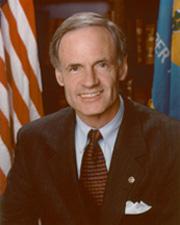
 Sen. George V. Voinovich (R-OH)
Legislative Activity
Stay on top of the latest movement without scrolling through every action
Referred to the Subcommittee on Health.
December 4, 2003
View full timeline
Introduced in Senate
June 18, 2003
Read twice and referred to the Committee on Environment and Public Works. (text of measure as introduced: CR S8131-8133)
June 18, 2003
Committee on Environment and Public Works. Ordered to be reported with an amendment in the nature of a substitute favorably.
July 30, 2003
Committee on Environment and Public Works. Reported by Senator Inhofe with an amendment in the nature of a substitute. With written report No. 108-183.
November 3, 2003
Placed on Senate Legislative Calendar under General Orders. Calendar No. 360.
November 3, 2003
Measure laid before Senate by unanimous consent. (consideration: S15503-15507; text of measure as reported in Senate: CR S15503-15505)
November 21, 2003
The committee substitute as amended agreed to by Unanimous Consent.
November 21, 2003
Passed Senate with an amendment by Unanimous Consent. (text: CR S15503-15507)
November 21, 2003
Message on Senate action sent to the House.
November 25, 2003
Received in the House.
November 25, 2003 • 12:02 PM
Referred to the Committee on Transportation and Infrastructure, and in addition to the Committee on Energy and Commerce, for a period to be subsequently determined by the Speaker, in each case for consideration of such provisions as fall within the jurisdiction of the committee concerned.
November 25, 2003
Floor Debate
9 membersWhat members said about S. 1279 on the floor



 +4
+4
Floor Debate
9 membersWhat members said about S. 1279 on the floor
Madam President, today I introduce legislation that would take one more step toward finding answers for veterans who may have been exposed to radiation, Agent Orange, or other hazards during their…
Madam President, I rise today to introduce the Postal Accountability and Enhancement Act of 2003, legislation that makes the reforms necessary for the Postal Service to thrive in the 21st Century and…
Madam President, today I am introducing the Seniors Safety Act of 2003, a bill to protect older Americans from crime. I am pleased to have Senators Daschle, Kennedy, Feingold, and Bingaman as…
Mr. President, I rise to introduce the Law Enforcement Discipline, Accountability, and Due Process Act of 2003, along with the Chairman of the Judiciary Subcommittee on Crime, Corrections and…
Mr. President, I ask unanimous consent that the Committee on Environment and Public Works be authorized to meet on Wednesday, July 30, at 9:30 a.m., to conduct a business meeting to consider S. 930,…
Show 6 more
Madam President, I rise today to introduce a bill that will amend Title V of the Higher Education Act. Specifically, this bill will eliminate the ``50 percent'' low-income assurance constraint…
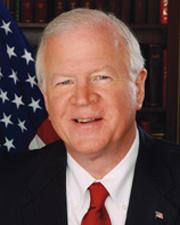
Madam President, I rise today to introduce legislation, along with my colleague Senator Miller of Georgia, that would amend the Medicare portion of the Social Security Act to exclude brachytherapy…

Mr. Speaker, today I am introducing the Disaster Area Health and Environmental Monitoring Act with my colleagues Representatives Tim Bishop, Shays, Serrano, McIntyre, McDermott, and Schakowsky.…

I ask unanimous consent that the Senate now proceed to consideration of Calendar 360, S. 1279. I ask unanimous consent that the Inhofe amendment at the desk be agreed to; the committee substitute…
Mr. President, I ask unanimous consent that the text of the Disaster Area and Health and Environmental Monitoring Act of 2003 be printed in the Record.
Mr. President, I ask unanimous consent that the text of the Disaster Area and Health and Environmental Monitoring Act of 2003 be printed in the Record.
Bill Text
4 versions available
        [Congressional Bills 108th Congress]
[From the U.S. Government Publishing Office]
[S. 1279 Referred in House (RFH)]

1st Session
S. 1279

_______________________________________________________________________

IN THE HOUSE OF REPRESENTATIVES

November 25, 2003

Referred to the Committee on Transportation and Infrastructure, and in
addition to the Committee on Energy and Commerce, for a period to be
subsequently determined by the Speaker, in each case for consideration
of such provisions as fall within the jurisdiction of the committee
concerned

_______________________________________________________________________

AN ACT

To amend the Robert T. Stafford Disaster Relief and Emergency
Assistance Act to authorize the President to carry out a program for
the protection of the health and safety of residents, workers,
volunteers, and others in a disaster area.

Be it enacted by the Senate and House of Representatives of the
United States of America in Congress assembled,

SECTION 1. SHORT TITLE.

This Act may be cited as the ``Disaster Area Health and
Environmental Monitoring Act of 2003''.

SEC. 2. PROTECTION OF HEALTH AND SAFETY OF INDIVIDUALS IN A DISASTER
AREA.

Title IV of the Robert T. Stafford Disaster Relief and Emergency
Assistance Act is amended by inserting after section 408 (42 U.S.C.
5174) the following:

``SEC. 409. PROTECTION OF HEALTH AND SAFETY OF INDIVIDUALS IN A
DISASTER AREA.

``(a) Definitions.--In this section:
``(1) Individual.--The term `individual' includes--
``(A) a worker or volunteer who responds to a
disaster, including--
``(i) a police officer;
``(ii) a firefighter;
``(iii) an emergency medical technician;
``(iv) any participating member of an urban
search and rescue team; and
``(v) any other relief or rescue worker or
volunteer that the President determines to be
appropriate;
``(B) a worker who responds to a disaster by
assisting in the cleanup or restoration of critical
infrastructure in and around a disaster area;
``(C) a person whose place of residence is in a
disaster area;
``(D) a person who is employed in or attends
school, child care, or adult day care in a building
located in a disaster area; and
``(E) any other person that the President
determines to be appropriate.
``(2) Program.--The term `program' means a program
described in subsection (b) that is carried out for a disaster
area.
``(3) Substance of concern.--The term `substance of
concern' means a chemical or other substance that is associated
with potential acute or chronic human health effects, the risk
of exposure to which could potentially be increased as the
result of a disaster, as determined by the President.
``(b) Program.--
``(1) In general.--If the President determines that 1 or
more substances of concern are being, or have been, released in
an area declared to be a disaster area under this Act, the
President may carry out a program for the protection,
assessment, monitoring, and study of the health and safety of
individuals to ensure that--
``(A) the individuals are adequately informed about
and protected against potential health impacts of any
substance of concern and potential mental health
impacts in a timely manner;
``(B) the individuals are monitored and studied
over time, including through baseline and followup
clinical health examinations, for--
``(i) any short- and long-term health
impacts of any substance of concern; and
``(ii) any mental health impacts;
``(C) the individuals receive health care referrals
as needed and appropriate; and
``(D) information from any such monitoring and
studies is used to prevent or protect against similar
health impacts from future disasters.
``(2) Activities.--A program under paragraph (1) may
include such activities as--
``(A) collecting and analyzing environmental
exposure data;
``(B) developing and disseminating information and
educational materials;
``(C) performing baseline and followup clinical
health and mental health examinations and taking
biological samples;
``(D) establishing and maintaining an exposure
registry;
``(E) studying the short- and long-term human
health impacts of any exposures through epidemiological
and other health studies; and
``(F) providing assistance to individuals in
determining eligibility for health coverage and
identifying appropriate health services.
``(3) Timing.--To the maximum extent practicable,
activities under any program established under paragraph (1)
(including baseline health examinations) shall be commenced in
a timely manner that will ensure the highest level of public
health protection and effective monitoring.
``(4) Participation in registries and studies.--
``(A) In general.--Participation in any registry or
study that is part of a program under paragraph (1)
shall be voluntary.
``(B) Protection of privacy.--The President shall
take appropriate measures to protect the privacy of any
participant in a registry or study described in
subparagraph (A).
``(5) Cooperative agreements.--
``(A) In general.--The President may carry out a
program under paragraph (1) through a cooperative
agreement with a medical institution, including a local
health department, or a consortium of medical
institutions.
``(B) Selection criteria.--To the maximum extent
practicable, the President shall select to carry out a
program under paragraph (1) a medical institution or a
consortium of medical institutions that--
``(i) is located near--
``(I) the disaster area with
respect to which the program is carried
out; and
``(II) any other area in which
there reside groups of individuals that
worked or volunteered in response to
the disaster; and
``(ii) has appropriate experience in the
areas of environmental or occupational health,
toxicology, and safety, including experience
in--
``(I) developing clinical protocols
and conducting clinical health
examinations, including mental health
assessments;
``(II) conducting long-term health
monitoring and epidemiological studies;
``(III) conducting long-term mental
health studies; and
``(IV) establishing and maintaining
medical surveillance programs and
environmental exposure or disease
registries.
``(6) Involvement.--
``(A) In general.--In establishing and maintaining
a program under paragraph (1), the President shall
involve interested and affected parties, as
appropriate, including representatives of--
``(i) Federal, State, and local government
agencies;
``(ii) groups of individuals that worked or
volunteered in response to the disaster in the
disaster area;
``(iii) local residents, businesses, and
schools (including parents and teachers);
``(iv) health care providers; and
``(v) other organizations and persons.
``(B) Committees.--Involvement under subparagraph
(A) may be provided through the establishment of an
advisory or oversight committee or board.
``(7) Privacy.--The President shall carry out each program
under paragraph (1) in accordance with regulations relating to
privacy promulgated under section 264(c) of the Health
Insurance Portability and Accountability Act of 1996 (42 U.S.C.
1320d-2 note; Public Law 104-191).
``(c) Reports.--Not later than 1 year after the establishment of a
program under subsection (b)(1), and every 5 years thereafter, the
President, or the medical institution or consortium of such
institutions having entered into a cooperative agreement under
subsection (b)(5), shall submit to the Secretary of Homeland Security,
the Secretary of Health and Human Services, the Secretary of Labor, the
Administrator of the Environmental Protection Agency, and appropriate
committees of Congress a report on programs and studies carried out
under the program.''.

SEC. 3. NATIONAL ACADEMY OF SCIENCES REPORT ON DISASTER AREA HEALTH AND
ENVIRONMENTAL PROTECTION AND MONITORING.

(a) In General.--The Secretary of Homeland Security, the Secretary
of Health and Human Services, and the Administrator of the
Environmental Protection Agency shall jointly enter into a contract
with the National Academy of Sciences to conduct a study and prepare a
report on disaster area health and environmental protection and
monitoring.
(b) Expertise.--The report under subsection (a) shall be prepared
with the participation of individuals who have expertise in--
(1) environmental health, safety, and medicine;
(2) occupational health, safety, and medicine;
(3) clinical medicine, including pediatrics;
(4) toxicology;
(5) epidemiology;
(6) mental health;
(7) medical monitoring and surveillance;
(8) environmental monitoring and surveillance;
(9) environmental and industrial hygiene;
(10) emergency planning and preparedness;
(11) public outreach and education;
(12) State and local health departments;
(13) State and local environmental protection departments;
(14) functions of workers that respond to disasters,
including first responders; and
(15) public health and family services.
(c) Contents.--The report under subsection (a) shall provide advice
and recommendations regarding protecting and monitoring the health and
safety of individuals potentially exposed to any chemical or other
substance associated with potential acute or chronic human health
effects as the result of a disaster, including advice and
recommendations regarding--
(1) the establishment of protocols for the monitoring of
and response to chemical or substance releases in a disaster
area for the purpose of protecting public health and safety,
including--
(A) chemicals or other substances for which samples
should be collected in the event of a disaster,
including a terrorist attack;
(B) chemical- or substance-specific methods of
sample collection, including sampling methodologies and
locations;
(C) chemical- or substance-specific methods of
sample analysis;
(D) health-based threshold levels to be used and
response actions to be taken in the event that
thresholds are exceeded for individual chemicals or
other substances;
(E) procedures for providing monitoring results
to--
(i) appropriate Federal, State, and local
government agencies;
(ii) appropriate response personnel; and
(iii) the public;
(F) responsibilities of Federal, State and local
agencies for--
(i) collecting and analyzing samples;
(ii) reporting results; and
(iii) taking appropriate response actions;
and
(G) capabilities and capacity within the Federal
Government to conduct appropriate environmental
monitoring and response in the event of a disaster,
including a terrorist attack; and
(2) other issues as specified by the Secretary of Homeland
Security, the Secretary of Health and Human Services, and the
Administrator of the Environmental Protection Agency.
(d) Authorization of Appropriations.--There are authorized to be
appropriated such sums as are necessary to carry out this section.

SEC. 4. PREDISASTER HAZARD MITIGATION.

Section 203(m) of the Robert T. Stafford Disaster Relief and
Emergency Assistance Act (42 U.S.C. 5133(m)) is amended by striking
``December 31, 2003'' and inserting ``September 30, 2006''.

Passed the Senate November 21, 2003.

Attest:

EMILY J. REYNOLDS,

Secretary.