A bill to designate the Department of Veterans Affairs Medical Center in Salt Lake City, Utah.
Legislative Activity
Stay on top of the latest movement without scrolling through every action
Sponsor introductory remarks on measure. (CR S14390)
November 11, 2003
View full timeline
Introduced in Senate
November 4, 2003
Read twice and referred to the Committee on Veterans' Affairs.
November 4, 2003
Sponsor introductory remarks on measure. (CR S14390)
November 11, 2003
Floor Debate
24 membersWhat members said about S. 1815 on the floor
 CDRRFB
 JSC
JSC LE
LE FRL+19
Floor Debate
24 membersWhat members said about S. 1815 on the floor
Madam Speaker, I yield myself such time as I may consume. Madam Speaker, I rise in support of S. 1156, as amended, the Veterans Health Care, Capital Assets and Business Improvement Act of 2003. This…
Madam Speaker, I yield myself such time as I may consume.
Madam Speaker, I rise in support of S. 1156, as amended, the Veterans Health Care, Capital Assets and Business Improvement Act of 2003.
This legislation draws the best from provisions offered in this body and the Senate. I have worked closely on the bill with the chairman of the Subcommittee on Health, the gentleman from Connecticut (Mr. Simmons). I want to thank him for his graciousness and the hard work. I would also like to thank the gentleman from New Jersey (Mr. Smith) and also the ranking member, the gentleman from Illinois (Mr. Evans), for their assistance in finalizing this bill.
I am very pleased that the bill includes important provisions from H.R. 2433, as amended, a bill I introduced with the support of the gentleman from Connecticut (Mr. Simmons). I also appreciate the persistence of the gentleman from California (Mr. Thompson), who will be speaking, in ensuring that these tests were brought to light in the items that we would be bringing before in this piece of legislation.
This bill will take important steps to remedy the serious wrong done to some of our veterans during the Cold War era. The military conducted a series of about 50 tests over almost a decade to determine the effects of the number of biological and chemical exposures to military operations and whether such exposures could be adequately protected. Many of these veterans participated without their knowledge, and too often veterans who participated in these tests were not properly protected from exposure to the number of stimulants as well as, occasionally, live agents. These agents included sarin and VX nerve gas, as well as biological war agents including Q fever and rabbit fever.
The military has now completed a number of investigations into the operations of the Deseret Test Center and concluded that as many as 6,000 veterans may have been involved. Veteran participation is unacceptable, and we recognize this, and we are concerned; and we want to assure them that if they are suffering lasting health consequence that we will do something about this.
I am very pleased that this legislation does something about that. This bill provides high-priority eligibility for the next 2 years to allow them to seek and receive VA treatment for the health problems including those that may be related to the problems, especially to the exposure of these hazardous agents.
This authority will allow them, and it will not adequately compensate them for what they have gone through, but we are at least beginning to try to correct the situation that we find ourselves in. Allowing them to have their health care concerns addressed may begin to give them the peace of mind this Nation owes them.
I am also pleased the final bill includes many provisions on the bill H.R. 1720, as amended. Madam Speaker, this bill authorizes many worthy construction projects to which the VA has given high priority. Unfortunately, the VA major medical construction has suffered for years as Congress has waited for the results of the CARES program, which is Capital Assets Realignment for Enhanced Services. I hope now that VA is about to approve a final plan, Congress will see fit to provide the appropriations VA requires to invest in its outdated infrastructure that we know is lacking. So we are hoping that we can do more as the report comes out.
A provision in our bill is designed to assure Congress that we are also adequately informed of some less positive developments that may result from this process, facility closures, staff realignments, as well as consolidations that may affect many veterans.
I am also pleased that this bill would give us both the assurance of this notification and the time to respond to these developments. Regardless of its outcome, CARES gave us at least one thing of value and that is the information that it has provided us. Last fall, the VA came forward with data that confirmed the ongoing concerns. I, along with my good friend, the gentleman from Texas (Mr. Ortiz), have talked about the veterans of south
Texas. I know the gentleman from Texas (Mr. Ortiz) will be speaking today. They suffered long, miserable journeys, up to 6 hours one way, to receive hospital care and some specialized services. And I do not think that anyone knew many of our veterans had the worst access to acute hospital care in the Nation like in south Texas.
I am pleased this bill will require the VA to report to us on the steps it intends to take to resolve this long-lasting problem in south Texas.
This bill will also provide new benefits to former prisoners of war. Under the current law, neither Jessica Lynch nor her comrades who suffered internment in Iraq would be eligible to receive outpatient dental care from the VA. Why? Because they were in captivity for fewer than 90 days. Veterans who have experienced the trauma associated with being prisoners of war deserve dental care regardless of the time of the captivity.
This bill will also do away with these veterans medication co- payments. Surely we can all agree that these veterans have paid enough. This bill will extend and enhance long-term care and mental health programs. The VA continues to study how it will provide care in the future. Congress must remain vigilant about the programs that are needed by some of the most vulnerable veterans in the system.
I am pleased we have continued to support two internal watchdogs to monitor and report to Congress on the methods of improving mental health programs within the VA for the seriously mentally ill and for victims of post-traumatic stress disorder.
With troops who have seen the consequences of combat still in the field, we need the VA permanent programs to be available to both men and women who have trouble readjusting to civilian life.
Madam Speaker, there are numerous additional provisions in the bill that will allow the VA to provide better care to our veterans. I would like to thank the committee leadership and the staff for their hard work on this bill.
Madam Speaker, I rise in support of S. 1156, as amended, the Veterans Health Care, Capital Asset And Business Improvement Act of 2003. The bill draws the best from provisions offered in this body and in the Senate. I have worked closely on this bill with the Chairman of the Health Subcommittee, Mr. Simmons. I would also like to thank Chairman Smith and Ranking Member Evans for their assistance in finalizing this bill.
I am most pleased that the bill includes important provisions from H.R. 2433, as amended, a bill I introduced with the support of my Chairman, Mr. Simmons. I also appreciate the persistence of the gentleman from California, Mike Thompson in ensuring that these tests were brought to light. This bill will take important steps to remedy a serious wrong done to some veterans during the Cold War era. The military conducted a series of about 50 tests over almost a decade to determine the effect of a number of biological and chemical exposures on military operations and whether such exposures could be adequately detected. Too often veterans who participated, sometimes unwittingly, in these tests were not properly protected from exposures to a number of stimulants and, occasionally, live agents. These agents included Sarin and VX nerve gas as well as biological war agents including Q fever and rabbit fever.
The military has now completed a number of investigations into the operations of the Deseret Test Center and concluded that as many as 6000 veterans may have been involved. Veteran participants are understandably concerned and want assurances that they are not suffering lasting health consequences related to these tests. This bill provides high-priority health care eligibility to these veterans for the next two years to allow them to seek and receive VA treatment for any health problems, including those they believe may be related to exposures to these hazardous agents. This authority will never adequately compensate veterans for their participation in dangerous tests, but allowing them to have their health care concerns addressed may begin to give them the peace-of-mind the nation owes them.
I am also pleased that the final bill includes many of the provisions from H.R. 1720, as amended. Madam Speaker, this bill authorizes many worthy construction projects to which VA has given high priority. Unfortunately, VA's major medical construction has languished for years as Congress has waited for the results of the Capital Assets Realignment for Enhanced Services (CARES) study. I hope now that VA is about to approve a final plan, Congress will see fit to provide the appropriations VA requires to invest in its outdated infrastructure. If so, this will be a positive outcome of CARES. A provision of our bill is designed to ensure Congress that we are also adequately informed of some less positive developments that may result from this process-- facility closures, staff reassignments and consolidations that may affect many veterans. I am pleased that this bill will give us both the assurance of this notification and the time to respond to these developments.
Regardless of its outcomes, CARES gave us at least one thing of value--information. Last fall, VA came forward with data that confirm ongoing concerns I, along with my good friend Solomon Ortiz, have had about the veterans of South Texas. We knew they often suffered long, miserable journeys--up to 6 hours one way--to receive hospital care and some specialized services, but I don't think anyone knew many of our veterans had the worst access to acute hospital care in the nation! I am pleased this bill will require VA to report to us on steps it intends to take to resolve this longstanding problem.
This bill will provide new benefits to former prisoners-of-war. Under current law, neither Jessica Lynch nor her comrades who suffered internment in Iraq would be eligible to receive outpatient dental care from the VA. Why? Because they were in captivity for fewer than 90 days. While this limitation on eligibility was based on a rationale, it now seems capricious. Veterans who have experienced the trauma associated with being a prisoner of war deserve dental care regardless of their time in captivity. This bill will also do away with these veterans' medication copayments. Surely we can all agree that these veterans have paid enough.
This bill will extend and enhance long-term care and mental health problems. As VA continues to study how it will provide health care in the future Congress must remain vigilant about these programs that consume many resources but are needed by some of the most vulnerable veterans in the system. I am pleased we will also require two internal watchdogs that have made solid recommendations for improving mental health programs to continue to report to Congress on the VA's services for the seriously mentally ill and for veterans with Post-Traumatic Stress Disorder. With troops who have seen the consequences of combat still in the field we will need VA's pre-eminent programs to be available to the men and women who have trouble readjusting to civilian life.
Madam Speaker, there are a number of additional provisions in this bill that will allow VA to provide better care to our veterans. I thank the Committee leadership and the staff for their hard work on the bill and want to commend it to all of my colleagues.
Madam Speaker, I reserve the balance of my time.
Madam Speaker, I yield 2 minutes to the gentleman from Illinois (Mr. Evans), the ranking Democrat.
Madam Speaker, I yield 3 minutes to the gentleman from California (Mr. Filner).
Mr. Speaker, I yield 3\1/2\ minutes to the gentlewoman from Nevada (Ms. Berkley), a member of the committee.
Mr. Speaker, I yield 3 minutes to the gentlewoman from California (Ms. Millender-McDonald).
Mr. Speaker, I yield 3 minutes to the gentleman from California (Mr. Thompson), who has been in the forefront of the issue of Project SHAD and Project 112.
Mr. Speaker, I yield 2 minutes to the gentleman from Texas (Mr. Ortiz), whom we consider our dean, who is also responsible for some of this legislation.
(Mr. ORTIZ asked and was given permission to revise and extend his remarks.)
Mr. Speaker, I yield myself such time as I may consume.
Mr. Speaker, let me take this opportunity, first of all, to thank the gentleman from New Jersey (Chairman Smith) and the gentleman from Illinois (Chairman Simmons) for their hard work on this particular bill.
I also want to take time to also recognize our leading Democrat, the gentleman from Illinois (Mr. Evans), for his hard work on this specific bill. I also want to take this opportunity to thank all the Members who participated to make this happen, such as the gentleman from Texas (Mr. Ortiz) and the gentleman from California (Mr. Thompson), as well as those on the Republican side.
Mr. Speaker, I have no further requests for time, and I yield back the balance of my time.
Mr. President, on Veterans Day, it is fitting to pause, remember and recognize the contributions of those who have defended America throughout our history. Today, I would also like to recognize a man…
Mr. President, on Veterans Day, it is fitting to pause, remember and recognize the contributions of those who have defended America throughout our history. Today, I would also like to recognize a man who risked his life to save his fellow marines in the horrific World War II battle for Iwo Jima.
Historian David Kennedy, in his book ``Freedom from Fear,'' describes the battle of Iwo Jima:
The twenty-one-thousand-man Japanese garrison had
honeycombed Iwo's basaltic ridges and Suribachi's ashen
flanks with reinforced concrete-and-steel bunkers and stuffed
them with artillery, antiaircraft guns, mortars, and machine
guns. They were so well and deeply entrenched that seventy-
two days of aerial bombing and three days of naval shelling
barely scratched them. At first light on February 19 two
divisions of marines, each man carrying up to a hundred
pounds of gear, stepped from their amphtracs onto Iwo's
beaches and sank to their boot-tops in the powdery mixture of
sand and volcanic ash. Vehicles, including tanks and half-
tracks, soon bogged down in the quicksand-like topping of
pumice and cinder that blanketed the island. From the
Japanese bunkers and pillboxes a hellish rain of shells and
bullets pelted the beaches, where the marines seemed to be
moving in slow motion through the sucking sand . . .
The battle ground on . . . with unmatched barbarity.
Japanese soldiers stubbornly refused to surrender. When the
fighting ended at last in late March, only a few hundred
Japanese, mostly wounded, had allowed themselves to be taken
prisoner.
From February 19 to March 25, 1945, 6,140 Marine and Navy soldiers were killed on Iwo Jima and 17,372 were wounded. Nearly two of three soldiers who fought on Iwo Jima were killed or wounded. Twenty-two Marines and four corpsmen received medals of honor.
During those terrible days of February and March of 1945, George E. Wahlen was a medical corpsman. James Bradley, in the book, Flags of our Fathers said this:
. . . In the European theater, my dad (a navy corpsman)
would have worn a red cross on his helmet and expected the
Germans to spare him as a noncombatant. And he would have
been unarmed, according to the Geneva Convention. but the
Pacific theater was different. . . . The Japanese on Iwo Jima
had been trained to look for corpsmen by identifying their
telltale medical pouch--and shoot them on the spot. Without a
corpsman to save the wounded, the Japanese knew, their kill
ratio would be much higher . . .
Though seriously wounded three times in 26 days, corpsman George Whalen refused evacuation and repeatedly defined heavy mortar and rifle fire from the enemy to find and treat his wounded comrades. Disregarding his own safety, he continued to cross open terrain under fire to aid his friends, until he was so badly wounded, he could no longer walk. Even then, he carried on, crawling across the ground through the raging battle to administer aid to yet another fallen comrade. For his unselfish and steadfast courage, and for ``conspicuous gallantry and intrepidity at the risk of his life above and beyond the call of duty.'' George Wahlen was awarded the Medal of Honor, and is Utah's only living recipient of that rare recognition.
We are all familiar with the language of military honors, but, in these challenging times, where American soldiers and sailors, airmen and marines, once again are serving in foreign lands and showing the same gallant spirit of sacrifice and courage in the face of battle, we need to hear it again. I would like to quote from Mr. Wahlen's citation:
Painfully wounded . . . he remained on the battlefield,
advancing well forward of the front lines to aid a wounded
marine and carrying him back to safety despite a terrific
concentration of fire. Tireless in his ministrations, he
consistently disregarded all danger to attend his fighting
comrades as they fell under the devastating rain of shrapnel
and bullets. . . . When an adjacent platoon suffered heavy
casualties, he defied the continuous pounding of heavy
mortars and deadly fire of enemy rifles to care for the
wounded, working rapidly in an area swept by constant fire
and treating 14 casualties before returning to his own
platoon. Wounded again . . . he gallantly refused
evacuation, moving out with his company the following day in
a furious assault across 600 yards of open terrain and
repeatedly rendering medical aid while exposed to the
blasting fury of powerful Japanese guns. Stouthearted and
indomitable, he persevered in his determined efforts as
his unit waged fierce battle and, unable to walk after
sustaining a third agonizing wound, resolutely crawled 50
yards to administer first aid to still another fallen
fighter. By his dauntless fortitude and valor, Wahlen
served as a constant inspiration and contributed vitally
to the high morale of his company during critical phases
of this strategically important engagement. His heroic
spirit of self-sacrifice in the face of overwhelming enemy
fire upheld the highest traditions of the U.S. Naval
Service.
James Bradley, in an article in the Wall Street Journal on November 10, 2002, considered the phrase ``Uncommon Valor was a Common Virtue'' in his search to learn the story of his dad, and others at Iwo Jima. Mr. Bradley wrote:
Corpsman George Wahlen was injured in the eye and shoulder,
but patched himself up secretly so he would not be evacuated.
When an exploding shell shattered his ankle, leaving his foot
dangling and all but disconnected from the leg, he shot
himself with morphine, taped up his ankle, and crawled back
to the fight with one good eye, one good arm, and one good
leg. Corpsman Wahlen had to be dragged off the field of
battle. ``Why?'' I asked. He answered, ``I just did what
anyone else would have done in the situation.''
. . . I thought to myself, ``If uncommon valor was so
common on Iwo Jima, why can't I find the Rambos of my
imagination?'' All I could find were humble guys who insisted
they hadn't done much . . . But I realized then that what my
dad's life and words, and the words and lives of these other
heroes, were trying to tell me, was that it was all about
common virtue.
My dad and his comrades were men of common virtue before
Iwo Jima, on Iwo Jima, and after Iwo Jima. Their actions and
lives were consistent . . . I realized that the key to my
dad's life was the attitude of common virtue he practiced
throughout his days. . . . My dad, running through bullets on
Iwo Jima, doing his duty in the Pacific. My dad having the
patience to teach me, a young son, how to tie his shoes. My
dad, just lending a hand in his community. . . . And I am
confident that if my dad were here to read these words about
common virtue being the root of heroism, he would shake his
head in agreement and say: ``It's as simple as that.''
Mr. Wahlen has demonstrated common virtue throughout his life and continues to do so. He did not end his service on Iwo Jima. Following World War II, true to the code of what Tom Brokaw called ``the greatest generation,'' he went on to serve his country in two more wars and to dedicate countless volunteer hours in following years to the service of his fellow veterans.
It is to honor this fine and humble man, who would be the last to claim such an honor for himself, that I am proposing to change the name of the Department of Veterans Affairs' Medical Center in Salt Lake City, UT to the ``George E. Wahlen Department of Veterans Affairs Medical Center.'' Senator Hatch and I introduced this legislation, S. 1815, last week.
This is a proper and fitting thing to do, not only because of Mr. Wahlen's accomplishments and service, but also because he is beloved by his fellow veterans. This is made clear by the unanimous support I received in support of this change from all of the State commanders and directors of Utah's veterans' organizations and State and Federal agencies: the American Legion, the Disabled American Veterans, the Veterans of Foreign Wars, the VA Regional Office, the Utah Division of Veterans Affairs, and the VA Medical Center itself.
When carrying the 2002 Olympic Torch George Wahlen said, ``It's an honor, but I feel like I'm representing all the veterans in the State of Utah.'' He has represented veterans so often over the last 30 years. In this circumstance, we honor George Wahlen, as a veteran, a Medal of Honor recipient, a man of both valor and virtue, and as a representative of all of the veterans who have served their country.
Many veterans who returned as heroes are often uncomfortable with the designation of heroes. James Bradley, in Flags of our Fathers, recounted a story where his third grade teacher referred to James's father as a hero and wanted him to come and speak to his
class. He recounts the exchange with his father:
``Jim, your teacher said something about heroes . . .''
I shifted expectantly in my chair, waiting to hear some
stories of valor. Instead he looked me directly in my nine-
year-old eyes, signaling that he'd like to embed an idea in
my brain for the rest of my life. He said ``I want you to
always remember something. The heroes of Iwo Jima are the
guys who didn't come back.''
Today, we remember those who came back and those who didn't--those who didn't come back from Iwo Jima, from Guadalcanal, from Normandy, from Vietnam, from Korea, from Afghanistan, from Iraq.
While words fail to make an adequate tribute to those who lost their lives and paid a price in sacrifice for what we enjoy today, I will borrow from what has already been written. In 1940, Winston Churchill spoke to the House of Commons in relation to the Battle of Britain. He said, ``Never in the field of human conflict was so much owed by so many to so few.''
There are heroes that never came back. There are heroes that did. Let us not forget.
Mr. President, I rise to call attention to the importance of the Veterans Day commemoration ceremonies and private remembrances, both formal and informal, being observed today by Americans around the…
Mr. President, I rise to call attention to the importance of the Veterans Day commemoration ceremonies and private remembrances, both formal and informal, being observed today by Americans around the Nation and across the world.
Given the many demands on this body and the hectic pace of modern life, it is all too easy for the Senate, as well as for all Americans, to fail to give this day--Veterans' Day the attention it demands. It is all too easy to let the date on the calendar pass without stopping and reflecting.
But, as citizens, as well as public servants, we must never fail to commemorate, honor, and remember in our hearts our veterans and their sacrifices and what those sacrifices have meant to our country.
A mere once a year we are called to publicly applaud and honor the many Americans, living and deceased, men and women of every ethnic group and walk of life, who have given of themselves, their time, their youth, their sweat, and, all too frequently, their blood, and their lives. Their sacrifices have kept us free and enabled us to remain the last best hope of the world.
About this nation's revolution, Thomas Paine wrote:
These are the times that try men's souls. The summer
soldier and the sunshine patriot will shrink from the service
of their country; but he that stands it now, deserves the
love and thanks of man and woman.
In observing Veterans Day today, we offer our love and thanks to those Americans, over the course of our history, who did not shrink from the service of their country.
Most came to military service willingly, even eagerly, many with good humor and high hopes, some more reluctantly, and more than a few who, frankly, would rather have been elsewhere.
I can remember myself some years ago, as a young marine humping an 81-millimeter mortar tube across the California desert, wishing very sincerely to be elsewhere at that moment.
What they all have in common, and what we all honor today, is that they did not shrink from the service to their country, and still don't.
As they did not shrink from service during World War II in the Pacific and in Europe, in long and bitter wars in Korea and Vietnam, in Lebanon and Grenada, in Saudi Arabia and Kuwait, and, today, in Iraq and in Afghanistan, on hundreds of ships in every ocean of the world; in Minot, ND; and in Fort Dix, NJ; on Diego Garcia and in Misawa, Japan; at Ft. Benning, GA; on Paris Island, SC; and at Walter Reed Army Hospital and Bethesda Naval Hospital here in Washington.
They responded to a sense of duty, obligation, and a desire to belong to or strive for something separate and apart from personal ambition.
They may not even see or clearly understand at the time their own motivations, but they do not shrink from service all the same, and our country is the better for it.
A simple choice on the face of it--the willingness to serve--but one that, given the unparalleled abundance of choices that Americans today enjoy--we must recognize, honor and support.
As we stop to honor our veterans, we must go beyond rhetorical support.
We must provide for those who have served the rest of us so well, and we need to do so in practical and concrete terms, for our debt to our veterans' demands that we respond to their needs and their concerns, and demands that we deliver the benefits they have earned through their service and sacrifice.
First, full accountability for all MIA/POW's, without exception. There is no higher obligation for a country than to keep faith with those of its fighting men and women who may still be in enemy hands. We must not turn away.
In this regard, I urge the administration and the Defense Department to continue their search for CAPT Michael Scott Speicher, United States Navy, whose family is from New Jersey and whose aircraft was shot down over Iraq in 1991.
Then-Commander Speicher was reported as the first American service member killed in action in Desert Storm. His status, however, was changed by the Department of Defense from killed in action to MIA and then, in 2002, to POW. More indications suggesting Captain Speicher may have survived his 1991 shoot-down came to light after our liberation of Iraq.
The Defense Department's search for him, with the urging of my Senate colleagues and me, must continue until Captain Speicher's fate is fully accounted for.
Turning to the VA health care system, tens of thousands of veterans now must wait six months and more for appointments. Some find they have to wait as long as one to two years to be seen.
This kind of delay and lack of access to healthcare is unacceptable and yet is all too common. It is also completely unnecessary. The difficulties faced by our veterans are caused by chronic underfunding of the VA health system.
The VA system relies on the annual appropriations process, a process which is contentious and unpredictable and which makes it all too tempting to slash current year funding regardless of how this affects our veterans.
This year, for example, veterans organizations estimate that the VA health system needs $1.8 billion more than the President requested.
As a result, veterans advocates have once again found themselves playing catch-up.
The solution is mandatory funding of VA health needs so that veteran's benefits are no longer subject to the politics of the annual appropriations process.
Without such a mechanism, the VA system will remain chronically underfunded, and veterans needing care will continue to have to wait disgracefully long periods of time.
I also wish to note that today I am introducing the Comprehensive Hepatitis C Health Care Act, to provide increased testing and care for veterans at risk of or infection with hepatitis C.
Most veterans who have hepatitis C don't even know it, and often don't get treatment until it's too late.
Yet despite recent advances in care, the VA still lacks a comprehensive approach to testing and treating veterans for the virus.
The legislation I am introducing would improve access to hepatitis C testing and treatment for all veterans, ensure that the VA spends all allocated hepatitis C funds on testing and treatment, and set new, national policies for hepatitis C care.
I have also introduced and will continue to push for a measure to lower the retirement age for reservists to 55.
This measure is a way to ensure fairer treatment for reservists in their career planning and to make a reserve career more attractive to military members who might otherwise opt out of further service.
We need to think about equity for reservists, and about the attractiveness of Reserve careers as our global strategy comes to rely ever more heavily on reservist citizen-soldiers.
We also owe our veterans full concurrent receipts.
There should be no conflict between a veteran's right to receive his or her retirement benefits and a disabled veteran's right to disability income. And yet, incredibly enough, disabled veterans continue to pay what is, in effect, a tax on their disability payments. It is time-- once and for all--to eliminate this tax.
Ensuring that all veterans have access to quality healthcare is a small repayment for the contributions veterans have made in service to this Nation.
Unfortunately, the current Veterans Administration healthcare funding formula--VERA--puts veterans in high-cost areas, such as New Jersey, at a severe disadvantage in getting adequate medical care.
Vets shouldn't be forced to wait months for an appointment at a veterans medical clinic or to shoulder excessive fees because of a quirk in the formula that funds VA health care.
That is why I introduced legislation to make VA healthcare funding fairer by accounting for the distinct financial challenges confronting veterans and healthcare providers in different parts of the country.
This legislation, S. 1014, would replace the national income threshold for classification as a low-income veteran--currently $24,000 for all parts of the country--with regional thresholds defined by the Department of Housing and Urban Development.
This adjustment would help low-income veterans across the country afford quality health care and help ensure that Veterans Integrated Service Networks, VISN's, receive adequate funding to care for their distinct veteran populations.
In thinking about our veterans, we must also consider the brave men and women fighting for us now in Iraq and in Afghanistan and elsewhere.
As we honor their service, we must never forget what we owe them--now and when they return.
With so many Guard men and women and Reservists serving, it is critical that we extend to them the benefits they deserve.
One benefit for which we have had to fight is the extension of TRICARE coverage to all reservists. We have succeeded in getting this critical benefit for a year. We will, therefore, be revisiting this issue next year. I and like-minded colleagues remain advocates of extending such coverage to reservists.
As we asked our young citizens in the past, we are again today asking them to do extraordinary things, and we need to see that they have the proper care and assistance when they come home. There is no excuse for failing them.
We all remember that Veterans Day began as a commemoration of the Armistice which ended World War I, a catastrophic event which this body described as ``the most destructive, sanguinary and far reaching war in human annals'' to that point.
We pause and remember, and we again commit ourselves to honor and to stand by the veterans of the Great War and of all America's wars, past and present.
Madam Speaker, I rise to support the Veterans Health Care, Capital Asset and Business Improvement Act of 2003. I want to start out by thanking the gentleman from New Jersey (Mr. Smith) again for his…
Madam Speaker, I rise to support the Veterans Health Care, Capital Asset and Business Improvement Act of 2003. I want to start out by thanking the gentleman from New Jersey (Mr. Smith) again for his willingness to work closely with me and the Democratic members of the committee to develop this as a final package. Credit goes to the gentleman from Connecticut (Mr. Simmons) and the ranking member, the gentleman from Texas (Mr. Rodriguez), for moving these measures to the floor today.
The bill anticipates the final approval of the CARES plan, identifying Congress's priorities requiring notification of major initiatives that come before the plan. I will continue to work behind the curtain and in front of the public to get this legislation passed.
The bill memorializes two great friends of mine: Bob Stump, who was an advocate for veterans throughout his career. We truly miss him not being on the committee anymore. He was a great American, and we salute his courage in standing up for what he believed in. Also, Jesse Brown, a veterans advocate as well, the former Secretary of Veterans Affairs for veterans. And we recognize these contributions of these two veterans with the passage of this bill.
This is a laudable effort for improving services for elderly and mentally-ill veterans. It strives to make VA the first choice. I am proud of the committee's work.
Madam Speaker, I rise to support the Veterans Health Care, Capital Asset and Business Improvement Act of 2003. I want to thank Chairman Smith for his ongoing commitment to veterans and his willingness to work closely with us on the development of this final package.
There are many important provisions in this bill. I appreciate the good bipartisan work of Chairman Simmons and Ranking Member Rodriguez in shepherding these measures from the Health Subcommittee to our consideration of a final conference package on the floor today.
This bill anticipates the final approval of the National Capital Asset Realignment for Enhanced Services (CARES) Plan. This Plan may set the framework for the first significant investment in the VA medical care system's infrastructure in several years. We are now way behind in making the needed investments--some estimate that the deficit is as high as $6 billion in delayed VA projects. VA's Phase I Study in VISN 12 has offered interested parties a view to the future under a CARES- like process. I had to look no further than upstate Illinois to see how the administration might handle the hundreds of new proposals it has on tap if most of the recommendations in the Draft CARES Plan are adopted.
The answers I received about the plan for VISN 12 were unsettling. This is particularly true since this Phase I study is the prototype for the larger National plan. VA planned to close one of the divisions of VA Chicago without sure funding for a modern new bed tower at the other division. This replacement facility was, in my view and many others, the linchpin to a successful integration. There are still no plans to develop the on-site multispecialty outpatient clinic veterans were promised.
This spring I introduced H.R. 2349 which authorized funds to construct the new bed tower at the West Side division of VA in Chicago. It also attempted to hold VA's feet to the fire to fund and build the new bed tower by prohibiting VA from disposing of the closed facility until it began construction on its replacement. Instead of the restrictions I put on VA in my bill, I have agreed to establish priorities for spending appropriations designated for CARES projects. This conference package gives the highest priority to facilities, such as West Side, that are needed to replace capacity at facilities that CARES will recommend closing, consolidating or converting in some fashion. It also gives high priorities to projects that remedy life safety and seismic deficiencies.
My bill contained additional projects that are worthy of our appropriators' consideration. It authorizes $48,600,000 for the correction of seismic deficiencies in San Diego, California, and $50,000,000 for medical care and research renovations in West Haven, Connecticut. My bill included lease authority for Las Vegas. We have since learned that VA's needs there may be evolving and settled on appropriating advance planning funds in the amount of $25,000,000 for a major medical facility project there.
The bill also adopts language inspired by a provision introduced by my friend from Kansas, Dennis Moore. His bill has tremendous and broad- based support in this body. The provision requires VA to notify Congress in writing of actions proposed under the CARES initiative that would result in medical facility closures, significant staff realignments or medical facility consolidations and prohibits VA from taking these actions before 45 days following the notification or 30 days of continuous session of Congress.
I plan to continue to look behind the CARES process to ensure that VA is making its decisions in the best interest of veterans--not the bottom line.
In addition to honoring my friend, the late Jesse Brown, the former Secretary ``for'' Veterans Affairs by naming the VA Medical Center (West Side Division) in Chicago for him, this final package will name the Prescott VA Medical Center for our Committee's former Chairman, and my personal friend, the late Bob Stump. We honor two true veterans' advocates with the passage of this bill, and I am pleased to be associated with it.
Madam Speaker, I am pleased that we are finally able to authorize VA to provide health care to certain Filipino World War II veterans of the Philippines Commonwealth Army and former Philippines ``New Scouts'' who permanently reside in the United States, in the same manner as provided to U.S. veterans. I commend my colleague, Mr. Filner, for his persistence in seeing this to fruition.
Several years ago, my friend from California, Mike Thompson, discovered that many veterans had participated in a series of dangerous tests to identify the military's ability to detect and protect itself from biological and chemical attacks. His doggedness led the military to admit responsibility for conducting these tests which involved spraying American troops with agents that were, in some cases, extremely potent. The ranking member of the Health Subcommittee, Ciro Rodriguez, saw an opportunity to do some justice for these veterans by giving them access to VA health care for any condition for two years. This will allow these veterans to seek care for conditions they believe may be related to their exposures. I am pleased to support this provision.
This bill is laudable for improving services for elderly and mentally ill veterans. One provision allows VA authority to provide work skills training and development services, employment support services and job development and placement services as part of a more comprehensive rehabilitation package. This is likely to improve the therapeutic outcomes for seriously mentally ill veterans, homeless veterans and veterans with substance use disorders--those who can truly benefit from hands-on job coaching services. It extends authority for VA to provide properties foreclosed under its home loan program to nonprofit homeless service providers. VA has made extensive use of this authority and nonprofits have provided many nights of care to homeless veterans as a result.
The bill extend VA's authority to provide a range of non- institutional extended care services and a mandate to provide medically necessary, institutional nursing care services to severely service- connected disabled veterans through December 31, 2008. It allows VA to extend and add a site to its important pilot program on assisted living for veterans. It provides earmarked funding for specialized mental health services for veterans in each of the next three fiscal years. It also continues the reports of two important VA advisory groups who have made a series of solid recommendations to the Under Secretary for Health and the Congress about programs for seriously mentally ill veterans and veterans with post-traumatic stress disorder.
Finally, this bill strives to make VA an employer of choice. We have reached one of those rare compromises that seem to offer something to everyone by creating a new appointment and promotion authority for certain clinical personnel, such as clinical psychologists, social workers, audiologists, kinesiologists, and others in the Veterans Health Administration (VHA). This authority will allow these employees to enjoy some of the same protections other Federal workers have, but will also provide VA with greater hiring and promotion flexibility. Some health care workers, mostly nursing assistants, will enjoy Saturday premium pay under this bill. It will allow VA to appoint employees of the Veterans' Canteen Service taking into consideration their time in service in that capacity. We have offered VHA the authority to hire chiropractors to enhance the types of health care services it routinely offers veterans.
Madam Speaker, I am proud of the Committee's work on this bill and encourage all of my colleagues to approve it.
Mr. President, I thank the Senator from Texas for making the inquiry. The fact is I need about 10 minutes and the Senator from North Dakota needs 5 minutes. If that could be accommodated on an equal…
Mr. President, I thank the Senator from Texas for making the inquiry. The fact is I need about 10 minutes and the Senator from North Dakota needs 5 minutes. If that could be accommodated on an equal exchange basis, I suggest we ask unanimous consent to do so.
Fifteen.
Right. I appreciate the fact the Senator from Pennsylvania has other obligations, but this is Veterans Day. I want to talk about veterans. I think we have that particular obligation since we are here today and we are not in our home States, able to visit veterans, visit cemeteries, and talk to people about veterans.
Mr. President, I thank the Senator from Texas.
Mr. President, I ask that I be reminded at the 9- minute mark, if I have gotten that far, please, that I have 1 minute remaining.
I was in Newark yesterday, at our cathedral there, attending the funeral of SGT Joel Perez. Sergeant Perez had been deployed to Iraq as part of the Army's 2nd Battalion, 5th Field Artillery Regiment. He died on November 2 when the Chinook helicopter he was in was shot down. An article appeared in the New York Times on Sunday, and it listed the 16 soldiers, including Sergeant Perez, the 16 young people who perished on behalf of our country, our interests, our liberty.
The names of those who died along with Joel Perez when that Chinook helicopter was shot down are: Daniel A. Bader, Ernest G. Bucklew, Steven D. Conover, Anthony D. D'Agostino, Paul F. Fisher, Darius T. Jennings, Karina S. Lau, Keelan L. Moss, Brian H. Penisten, Ross A. Pennanen, Brian D. Slavenas, Bruce A. Smith, Frances M. Vega, Paul Anthony Velazquez, and Joe N. Wilson.
We salute their bravery and their courage and their sacrifice.
Sergeant Perez was on that helicopter because he had been granted leave to come home to celebrate his third wedding anniversary. And now he has come home, in a flag-draped casket. Yesterday was his third anniversary and his funeral. He was 25 years old. He leaves behind his wife Milagros, an infant daughter Jaileen, his mother Luisa and father Edwin, and three brothers, Elvin, Michael, and Leo.
As I said at the funeral yesterday, it is a sobering moment when you see the reality of a life that has passed so quickly. All you have to do is look at the date of his birth--1978--and the date of his death-- 2003--they are much too close together.
Sergeant Perez is the ninth New Jersey resident killed in Iraq. The other eight are: Army SP Simeon Hunte, who was 23 years old, of Newark; Army 2LT Richard Torres, who was 25 years old, of Passaic; Army SFC Gladimir Philippe, who was 37 years old, of Roselle; Army SP Kyle A. Griffin, who was 20, of Emerson; Army SP Narson B. Sullivan, who was 21, of North Brunswick; Army SP Gil Mercado, who was 25, of Paterson, my home town; Army SSG Terry W. Hemingway, who was 39, of Willingboro; and Army SP Michael Edward Curtin, who was 23, of Howell.
I feel a special kinship to these young people because they were from my State. I also feel a special kinship because I am a veteran. I enlisted when I was 18 years old, right out of high school. I served in Europe during World War II.
Today is Veterans Day. It has been nearly 50 years since President Eisenhower signed a bill into law making November 11 Veterans Day.
The history of Veterans Day goes back even further, to 1918, when an armistice between the Allied and Central Powers brought World War I to an end at the 11th hour of the 11th day of the 11th month.
On November 11, 1920, the British interred an unidentified British soldier in Westminster Abbey to commemorate the Armistice. The French interred an unidentified French soldier under the Arc de Triomphe in Paris.
In 1921, an American soldier's remains were disinterred in France and sent on the transatlantic voyage to Washington, D.C., where they lay in state in the Capitol Rotunda for three days. Then, at 11:00 a.m. on November 11, the remains of this Unknown Soldier were buried at Arlington National Cemetery beneath a marble block which reads, ``Here rests in honored glory an American soldier known but to God.''
Since the founding of our country, nearly 50 million men and women have answered the call of duty. There are about 25 million veterans alive today.
Right now, we have 130,000 troops in Iraq, another 10,000 in Kuwait, and 10,000 in Afghanistan. Other Americans are serving in South Korea, in Bosnia and Kosovo, and in every other corner of the globe.
We owe our veterans and the brave young men and women who currently serve in our military more than we can calculate. It is very tough duty. I know that from personal experience. That is why I deeply regret that the Senate is in session today. I do not ever recall the Senate being in session on Veterans Day before. Frankly, I think it is disrespectful to veterans across America and to the veterans in this body for the Senate to be in session today.
Why are we doing it? Why are we here? Well, we are told that we have a full agenda and that we have very few days left to get our work done--work that was supposed to be done six weeks ago. But how are we going to spend the precious few days before we hope to adjourn? We are going to take 30 hours of that time to debate a handful of highly controversial judges whose nominations Democrats object to.
I feel compelled to put this chart up on the floor for everyone to see because it is kind of a scorecard that shows the Clinton years and how many nominees were confirmed in those years and the dozens of nominees who were blocked by the Republicans. Then we can see how many of President Bush's nominees have been confirmed and how many have been blocked by Democrats.
Democrats are objecting to a total of four nominees who have neither the experience nor the temperament to be confirmed to lifetime positions in the federal judiciary. Four nominees have been blocked, 2 percent of the total. And we are being told that we cannot afford the time today to be at home with our veterans or go to the cemeteries or go to the veterans hospitals so that we can pay our respects to those who have served or are serving this country. We cannot be with our veterans today because we have to spend 30 hours starting tomorrow to talk about four nominees.
So, in all candor, I have to say that I am upset by our being here. It is not the question of another day's work--we can do the work--but that the majority could not find time to permit Senators to be in their States with their constituents, especially veterans, with the families who have lost loved ones in Iraq or Afghanistan or Beirut or Vietnam or Korea or so many other places.
When I look at the reason why we are here today, it rings hollow, as far as I am concerned. I regret that we are here. This is the day we should meet with veterans groups. This is the day when we remember the sacrifice that so many have made on our behalf. This is the day we ought to be thinking about how we respond to our need for
additional troops in Iraq. This is the day we ought to think about what it is our brave young service men and women should come home to when they have fulfilled their duty: adequate health care and jobs and opportunity.
What kind of a message do we send to our veterans and to those who currently serve in our military? What kind of message do we send to the young men and women we are trying to recruit? Today is a solemn day deliberately set aside to pay tribute to our veterans, and the Senate is in session because we have to spend a day and a half starting tomorrow talking about four judges.
I want the veterans across the country and the young men and women currently in harm's way to know they are appreciated, to know that some of the misery they are going through now is understood. How do you do that? Ideally, you do that by taking the time necessary to go and greet them personally. You do it by making sure veterans' benefits are adequate. You do it by making sure the medical care will be there, and the educational opportunities. That is the appropriate way to show our veterans that we appreciate them. We are not going to show it by working here today when, in fact, the veterans back home would like to see us back home.
Be that as it may, we are stuck here today. So I want to take this opportunity to say in the most heartfelt way possible that I appreciate our veterans. And I salute the brave young men and women who currently serve, especially those who serve in the Reserves and the National Guard. I appreciate the enormous, enormous sacrifice that many of them are making now that we are asking them to serve a year or more at a time, taking them away from their families, their communities, and their jobs. Today reminds us of just how much we have to be thankful for.
Mr. President, I yield the remainder of the time we have to our friend from North Dakota.
Show 8 more
Mr. President, on this Veterans Day, I rise to recognize a group of truly deserving American veterans--the Tuskegee Airmen of World War II. This heroic group of African American flyers fought in two…
Mr. President, on this Veterans Day, I rise to recognize a group of truly deserving American veterans--the Tuskegee Airmen of World War II.
This heroic group of African American flyers fought in two types of battles--the battle of World War II and the battle against racism at home.
The Tuskegee airmen were dedicated, determined young men who enlisted to become America's first black military airmen, at a time when rampant racism led many people to falsely assume that black men lacked intelligence, skill, and patriotism. And boy, were they proved wrong.
The military feats of this group can be described as nothing less than phenomenal.
In Order to enter the training program, the young men were held to the same demanding physical and mental standards as all other military pilots and soldiers of supporting fields. And between 1942 and 1946, 992 black American pilots graduated from the rigorous program offered at Tuskegee Army Air Field, not to mention the black navigators, bombardiers, and gunnery crews that were trained at selected military bases elsewhere due to a lack of facilities at Tuskegee.
Four-hundred and fifty of the Tuskegee trained pilots headed to the Selfridge Air Base in Michigan for combat preparation, before bravely heading overseas as proud members of either the 99th Fighter Squadron or the 332nd Fighter Group, later to be conjoined. As the only four- squadron fighter group performing bomber escort missions in the 15th Air Force, the 332nd Fighter Group had extraordinary and unprecedented success. They flew all of their bomber escort missions--over 200-- without the loss of a single bomber to enemy aircraft.
The bomber escort missions of the famed 332nd ``Red Tail'' fighters were so daunting to the enemy that they served as an immensely strong deterrent to challenges. The bomber crews that the group escorted offered abundant expressions of appreciation since they faced far fewer challenges than other crews in the 15th Air Force.
Sadly, while these men were defending liberty for the people half a world away, they were also fighting for their own liberation right here in the United States. Despite their valiant deeds abroad, racism and bigotry impeded their success at home. Due to strict segregationist policies, their assignments were restricted to only two fighter groups, and one fighter wing. Their morale suffered more damage due to the lack of opportunities for advancement than their air fleet did by enemy fire.
Despite this setback, these soldiers still performed splendidly. In 1949, Tuskegee pilots took first place in the Air Force National Fighter Gunnery Meet, surpassing the performances of all the white units.
The bigotry against these men only served to hurt America. During the war, many white units badly needed additional qualified soldiers, but could not draw upon the superb skills of the Tuskegee airmen due to the military's segregationist policies.
But this cloud had its silver lining. The willpower and skill that brought success for the Tuskegee airmen abroad also helped in the war against racism at home. President Harry Truman, recognizing the need for an integrated air force, enacted an executive order demanding equality of treatment and opportunity in all of the armed forces.
The Tuskegee airmen were instrumental in the passing of this executive order, which paved the way for broader victories later on, including the end of racial segregation in all military forces, and eventually in the United States as a whole.
These soldiers are a vibrant part of America's history and a part of Michigan's. Not only did many of the soldiers train at Selfridge Air Base, but the cadet classes drew heavily from the Detroit citizenry. One such citizen made Michigan understand the value of the Tuskegee program to its own history.
Lieutenant Coleman Young, later to become a long-time mayor of Detroit, was a product of the Tuskegee experience. Assigned to the 477th bombardier, he and his colleagues were never sent into combat due to racism from senior officers. Determined to preserve the memory of the Tuskegee airmen, with the help of other Detroit members, he fostered what has become the National Tuskegee Airmen Historical Museum, housed at historic Fort Wayne. This small but dignified museum, occupying an old officer's quarters, perpetuates the great story the Tuskegee have to tell.
A story I believe we should all listen to. All in all, these soldiers gave over 150 lives in the name of their country and in the name of freedom. I now call on that country, the United States, to provide them the recognition they deserve on this Veterans Day.
According to existing records, 155 Tuskegee soldiers originated from Michigan, I wish to recognize each one of them:
Tuskegee Airmen
Kermit Bailer; Clarence Banton; James Barksdale of Detroit;
Hugh Barrington of Farmington Hills; Naomi Bell; Thomas
Billingslea; Lee Blackmon; Charles Blakely of Detroit, Robert
Bowers of Detroit; James Brown of Ypsilanti; Willor Brown of
Ypsilanti; Ernest Browne of Detroit; Archibald Browning; Otis
Bryant; Joseph Bryant, Jr. of Dowagiac; Charles Byous; Ernest
Cabule of Detroit; Waldo Cain; Clinton Canady of Lansing;
Carl Carey of Detroit; Gilbert Cargil; Nathaniel Carr of
Detroit; Donald Carter of Detroit; Clifton Casey; David
Cason, Jr; Peter Cassey of Detroit; Robert Chandler of
Allegan; Pembleton Cochran of Detroit; Alfred Cole of
Southfield; James Coleman of Detroit; William Coleman of
Detroit; Eugene Coleman; Matthew Corbin of Detroit; Charles
Craig of Detroit; Herbert Crushshon; John Cunningham of
Romulus; and John Curtis of Detroit.
Donald Davis of Detroit; Cornelius Davis of Detroit; Eugene
Derricotte of Detroit; Taremund Dickerson of Detroit; Walter
Downs of Southfield; John Egan; Leavie Farro, Jr.; Howard
Ferguson; Thomas Flake of Detroit; Harry Ford, Jr. of
Detroit; Luther Friday; Alfonso Fuller of Detroit; William
Fuller of West Bloomfield; Frank Gardner; Robert Garrison of
Muskegon; Thomas Gay of Detroit; Charles Goldsby of Detroit;
Ollie Goodall, Jr. of Detroit; Quintus Green, Sr.;
Mitchell Greene; James Greer of Detroit; Alphonso Harper of
Detroit; Bernard Harris of Detroit; Denzal Harvey; James
Hayes of Detroit; Ernest Haywood of Detroit; Minus Heath;
Milton Henry of Bloomfield Hills; Mary Hill; Charles Hill,
Jr. of Detroit; Lorenzo Holloway of Detroit; Lynn Hooe of
Farmington Hills; Heber Houston of Detroit; Ted Hunt; and
Hansen Hunter, Jr.
Leonard Isabelle Sr., Leonard Jackson; Lawrence Jefferson
of Grand Rapids; Alexander Jefferson of Detroit; Silas
Jenkins of Lansing; Richard Jennings of Detroit; Louie
Johnson of Farmington; Ralph Jones; William Keene of Detroit;
Laurel Keith of Cassopolis; Hezekiah Lacy of River Rouge;
Richard Macon of Detroit; Albert Mallory; Thomas Malone;
Ralph Mason of Detroit; J. Caulton Mays of Detroit; William
McClenic; Arthur Middlebrooks; Oliver Miller of Battle Creek;
Vincent Mitchell of Mt. Clemens; Wilbur Moffett of Detroit;
Dempsey Morgan of Detroit; Russell Nalle, Jr. of Detroit;
Robert O'Neil of Detroit; Frederick Parker; Robert Pitts of
Detroit; Wardell Polk of Detroit; Walter Poole; Calvin Porter
of Detroit; Calvin Porter; Leonard Proctor; Della Rainey;
Sandy Reid of Southfield; Edward Rembert; Harry Riggs of
Bloomfield Hills; Walter Robinson of Detroit; Major Ross of
Oak Park; Washington Ross of Detroit; John Roundtree of
Westland; Calude Rowe of Detroit; William Ruben; William
Rucker; Jesse Rutledge of Detroit; and Issac Rutledge.
Calvin Sharp; Albert Simeon, Jr. of Detroit; Paul Simmons,
Jr. of Detroit; Leon Smith; Chauncey Spencer; William
Stevenson; Chester Stewart of Detroit; Harry Stewart of
Bloomfield Hills; Roosevelt Stiger of Jackson; Howard Storey;
Willie Sykes of Detroit; Willis Tabor; Kenneth Taitt of
Detroit; William Taylor, Jr. of Inkster; Lucius Theus of
Bloomfield Hills; Donald Thomas of Detroit; Austin Thomas;
Wm. Horton Thompson of Detroit; Jordan Tiller; Paul Tucker of
Detroit; Edward Tunstall of Detroit; Allen Turner of Ann
Arbor; Cleophus Valentine of Detroit; Charles Walker of
Jackson; Robert Walker; Roderick Warren of Detroit; Theodore
Washington of Detroit; Richard Weatherford of Aibion; Jimmie
Wheeler of Detroit; William Wheeler of Detroit; Cohen White
of Detroit; Harold White of Detroit; Paul White; Peter
Whittaker of Detroit; Leonard Wiggins of Detroit; David
Williams of Bloomfield Hills; Willie Williamson of Detroit;
Robert Wolfe; William Womack; and Coleman Young.

Mr. President, once again we find our young men and women in harm's way in a foreign land. As they have so many times in our history, Americans in uniform carry the torch of freedom in their hands…
Mr. President, once again we find our young men and women in harm's way in a foreign land. As they have so many times in our history, Americans in uniform carry the torch of freedom in their hands and the promise of peace in their hearts as they face those who would rule by tyranny and violence. On this Veterans Day, I rise not only to commend our veterans but also to recognize the men and women of the State of Maine engaged on the front lines in the Global War on Terrorism.
Maine is well represented by young men and women serving on active duty in our Army, Navy, Air Force, Marines, and Coast Guard. Since September 11, 2001, citizen-soldiers from across the State of Maine from all Reserve and Guard components have closed ranks with those on active duty to protect our shores and secure our future.
The men and women from Maine have left homes, jobs, and loved ones to answer the call to duty. Senior Master Sergeant Stephen Valley is among them. Steve, who hails from Millinocket, ME, left the active Air Force in 1994 after nearly eighteen years of service. In 1998, he joined the Air Force Reserve, and despite family challenges, including a father sick with Parkinson's disease, stepped forward and mobilized in November of 2001. Steve served nearly continously in the Middle East since then, including duty in Iraq and Afghanistan, until he retired from active service on November 1. He is a man of courage and character. He represents the best we offer to a world longing for freedom and peace.
Mainers are deployed around the globe. Nearly twenty-five percent of the Maine Army National Guard is on alert, mobilized, or deployed. Maine National Guard soldiers are guarding prisoners at Guantanamo Naval Station in Cuba. Soldiers of Company E, 120th Aviation of Bangor are controlling air traffic in Afghanistan. Members of the 112th Air Ambulance Unit
from Bangor are performing medivac missions in Iraq. Soldiers of the 11-36 Transportation Company from Bangor and Sanford are moving supplies across Iraq and Kuwait. Soldiers from the 94th Military Police Company of Maine and New Hampshire are performing police missions across Iraq and are helping to train Iraqi forces to assume security responsibilities.
This past summer, I went to Iraq. I met hundreds of American and British troops. I saw people from Maine performing key roles in rebuilding the country after the fall of Saddam Hussein's brutal regime. In the city of Kirkuk, I ate lunch with five service members from Maine--Specialist Gregory Norster of Phillips, Chief Warrant Officer Brian Mucci of Shapleigh, Specialist Wayne Goodrich from Oakland, Specialist Erin Maynard from Washburn, and Senior Airman Bill Spreng from Ellsworth. The contributions of Mainers to bring freedom to the people of Iraq make me very proud.
The courage and commitment of the American and other coalition troops were strikingly clear during my visit. By night, many of the soldiers conduct raids on pockets of resistance; by day, they renovate schools, rebuild roads and utilities, and help Iraqis take their first steps toward democracy. Despite the continuing danger, the harsh living conditions, and the oppressive heat, morale among the soldiers and Marines I met was high. Army Sergeant Michael Levesque of Winslow put it best when he told me how proud he was to have ``helped to give the Iraqi people a precious gift: their freedom.'' In Kirkuk, where I met Michael, morale was particularly high because the Iraqis there are so grateful. Everywhere we went in this city south of the Kurdish section, local citizens waved and called out ``thank you, America!''
By contrast, conditions--both in July and today--remain hostile in and around Baghdad. Our troops face near daily ambushes and sniper attacks. The fighting goes on for many of our troops who must contend with the threat of rocket-propelled grenades, improvised explosive devices, and rogue gunmen.
Of all the places I have visited as a member of the Senate Armed Services Committee, including Afghanistan, Bosnia, Kosovo, and Korea, nowhere have I found the challenges more difficult and the dangers more present than in Iraq. In the end, the commitment of the Iraqi people will determine whether Iraq will prosper in peace and freedom, or succumb to a violent minority bent on division, destruction, and domination. The dedicated young men and women serving in uniform, from Maine and from all over America, are giving the Iraqi people the opportunity to seize what all humanity desires and deserves.
On this day set aside to honor sacrifice, we must also honor the sacrifices made by the spouses, parents, children and other loved ones of our troops. The families left behind must face the challenges of daily living as they suffer from the separation and from the relentless worry. The news of any casualty strikes a chilling chord in their hearts. Every death, every injury, is a blow to them as they wait, and hope, and pray.
In September, I met with family members of the deployed soldiers of the 94th Military Police company. These families have had to endure two extended deployments in three years: the 94th conducted a peacekeeping rotation to Bosnia that ended in 2001; in 2002, the 94th was called to arms again and is performing admirably in Iraq. The soldiers of the 94th are proud and professional and committed to getting the job done. Their families bear the burden of absence and uncertainty. Among them was Penny Mills, wife of Sergeant Curtis Mills of Shapleigh, ME.
Just one week later, soldiers of the 94th were ambushed in Iraq. Two were severely wounded: Specialist Christopher Kotch of Brunswick and Sergeant Curtis Mills. Soon after, I visited them at Walter Reed Army Medical Center. There was Penny, standing by her husband. We had no idea we would meet again--not so soon, not under those circumstances. Sergeant Mills, with the support of his wife and family, is recovering well. After reconstructive surgery and extensive physical therapy, he will one day return to work as a letter carrier. Specialist Kotch, after his recovery, will likely return to college and a life of possibility and promise.
In times of peace and in times of trial, we rely on our young men and women to step forward for our defense. The citizens of Maine have answered the call. America's first casualty in the War on Terrorism was Master SGT Evander Earl Andrews of Solon, ME, who lost his life in Qatar on October 10, 2001. Today, in Litchfield, ME, a father grieves for his daughter, Army Warrant Officer Sharon Swartworth, who miraculously survived the attack on the Pentagon two years ago but who did not survive an attack on a Black Hawk helicopter in Iraq last Friday. These are but two of the soldiers who died not just in the service of their country, but also in the service of mankind. They did so on behalf of millions of people they did not know--innocent Iraqis, Afghans, and Americans who died on 9-11, and all peace-loving people everywhere.
Our service members and veterans--whether they served in World War I or II, Korea, Vietnam, Haiti, Kosovo, Bosnia, Kuwait, or now in Afghanistan or Iraq--share a common bond: their uniform is not that of a conqueror, but of a liberator. We can never fully pay the debt we owe those who put their lives on the line to advance the cause of freedom.
Nor can we repay the debt we owe those families and loved ones they leave behind. The enormity of that debt was best summed up one-hundred thirty-nine years ago in a President's letter to a mother who lost five sons in the war to preserve this Nation. I will close with the words of Abraham Lincoln:
I feel how weak and fruitless must be any words of mine
which should attempt to beguile you from the grief of a loss
so overwhelming. But I cannot refrain from tendering you the
consolation that may be found in the thanks of the Republic
they died to save.
I pray that our Heavenly Father may assuage the anguish of
your bereavement, and leave you only the cherished memory of
the loved and lost, and the solemn pride that must be yours
to have laid so costly a sacrifice upon the altar of freedom.
Mr. President, how much time remains on the Democratic side? Mr. President, I ask unanimous consent to speak for 10 minutes. Mr. President, I rise today in honor of Veterans Day, our national day of…
Mr. President, how much time remains on the Democratic side?
Mr. President, I ask unanimous consent to speak for 10 minutes.
Mr. President, I rise today in honor of Veterans Day, our
national day of remembrance established to solemnly honor the sacrifices of American men and women who have served in military actions in behalf of our country.
We recognize these men and women for preserving our liberty, freedoms and democratic way of life. For me, as a first-year Senator representing the men and women of Arkansas, this is an especially noteworthy Veterans Day. Since September 11th, numerous Arkansans have engaged in our battle against terrorism, serving in Afghanistan and other points abroad. This fall, over 3,000 men and women of Arkansas, members of our 39th Infantry Brigade of the Arkansas National Guard, are preparing to travel to Iraq in support of Operation Iraqi Freedom.
Every day my prayers include the brave men and women of Arkansas who serve, and have served, in our armed forces. I pray that every single one of our brave Americans in uniform will return safely home to the loving arms of their families.
Sadly, many of our veterans have not returned safely home. Many of our veterans have paid the ultimate price, sacrificing their lives on the altar of freedom. We must never forget their sacrifices. We must never forget the cost of freedom paid by our veterans.
As he gazed on the battlefield at Gettysburg in 1863, Abraham Lincoln uttered, ``The brave men, living and dead, who struggled here, have consecrated it, above our poor power to add or detract. The world will little note, nor long remember, what we say here, but it can never forget what they did here.''
I am in a similar situation today, unable to articulate anything which even comes close to capturing the debt of gratitude each and every one of us owes our veterans. No words can capture my gratitude, or the gratitude of Arkansas, towards our veterans.
Yet, as I mentioned, Veterans Day is a day of remembrance. This is a day to honor and remember those who have served in our armed service. Last week, I had the distinct pleasure and unique opportunity to talk with Johnie ``Chick'' Matthews. Chick, at 102 years old, is Arkansas's oldest living veteran.
Mr. Johnie ``Chick'' Matthews, a resident of Greenbrier, Arkansas, first answered the call to duty to serve this country in 1917. That was 86 years ago.
He was given the nickname Chick because he enlisted into the United States Army when he was only 16 years old. He was the youngest at his training facility at Camp Pike, AR.
His mother was a widow with mouths to feed and he realized that he needed to help shoulder the financial responsibilities of caring for his mother and brothers.
He went to Little Rock to enlist in the Army. He lied about his age. The recruiter said: We are not sure we believe you, so go home and get your mother to sign this document. When he went back home, he was scared to take it to his mother because he was afraid she would not sign the age waiver so he went to a neighbor woman and said: Mother hurt her hand and she cannot sign this. Can you sign this on her behalf? She did, and he was enlisted in the U.S. Army.
At the age of 16, he was the youngest soldier in his unit, probably one of the youngest in the Army. But when it was all said and done, as he ended his military career, Chick had completed 46 years of military service spanning World War I through Vietnam. That is truly remarkable. In addition, he served in four branches--the Army, Navy, Coast Guard, and the Merchant Marine.
When I talked to Chick, I was entertained and captivated by his stories, but most of all I was impressed by his sense of duty. In fact, when I asked him if he would recommend military service to others, he said: If they would let me in, I would be there tomorrow morning to sign up.
In addition to Chick Matthews, I recognize another veteran who is a bit younger, but no less committed, to his country and to the State of Arkansas. Randy Massanelli is a native Arkansan who dutifully served in the U.S. Army for 15 years. While in the Army, he rose to the rank of major and served in Desert Storm where he was awarded the Bronze Star. Now he serves as my State director in Little Rock. I am grateful for the knowledge, experience, and perspective he brings to the office as I work to do what is best, not just for veterans and the troops around the country and around the world, but also for the people of Arkansas.
I have known Randy since we were both at the University of Arkansas as undergraduates. I thank him today. He has shown me time and time again what true devotion to his country really is. I am lucky to have him on my team and I am proud to call him a friend. I honor him today as a great veteran.
Last, I want to recognize another veteran on my staff, Wayne Palmer, who also served in Desert Storm. Wayne is a tremendous asset to my office. I thank him for his service to our country.
Arkansans throughout the years have followed Chick's, Wayne's, and Randy's lead. I am proud to boast about my State's tradition of military service. As veterans continue to risk life and limb for us, I will work as hard as I can to make sure they are taken care of before, during, and after their mission is completed.
In the coming days, we will vote on the Defense authorization conference report. As a conferee, I was proud to work on this legislation, which includes a 3.7 percent across-the-board military pay increase, expands TRICARE coverage for the Guard and Reserve personnel and their families, and provides benefits and programs to improve the overall quality of the pay for our service men and women.
This legislation also authorizes disabled military retirees to collect their retirement pay and disability compensation, otherwise known as concurrent receipt. This measure would benefit millions of Americans who have served our country for years but have been prohibited from receiving both retirement compensation and VA disability benefits.
Correcting this inequity for our veterans is long overdue--in fact, 110 years overdue. I made a promise to take care of our service men and women who put their lives on the line for our country. This provision indicates Congress's intention to finally honor its word.
I am also looking forward to debating the VA/HUD appropriations bill where I have an understanding we will be looking to add $1.3 billion to veterans health care. We cannot discount the importance of this funding, especially as more veterans come home from Afghanistan and Iraq and the global world on terrorism. We must ensure that the Veterans' Administration has the resources it needs to look after those men and women who look after us.
Mostly, this Veterans Day fills me with a sense of security and pride because of my faith in the ability and skills of our men and women in uniform. This faith nourishes my hope for a peaceful future for my children and the children of Arkansas.
I know our men and women in uniform are the most capable fighting force on Earth. I know these individuals will willingly endure personal sacrifice and danger to defend our democratic values, just as our veterans of yesteryear endured personal sacrifice and danger to provide us the freedom and democracy we enjoy today. I know our Armed Forces will be victorious in their mission.
On this Veterans Day, I extend my gratitude and the gratitude of every Arkansan to our veterans and their families.
I yield the floor.
Mr. President, in the past few days, the tragic headlines from Iraq have reminded us of the selfless sacrifices our soldiers, sailors, marines and airmen make every day to keep this country strong…
Mr. President, in the past few days, the tragic headlines from Iraq have reminded us of the selfless sacrifices our soldiers, sailors, marines and airmen make every day to keep this country strong and safe. The conflict in Iraq brings home again the debt we owe to America's veterans for their service and their sacrifices.
In North Dakota, we are extremely proud to have the highest per capita participation in the Guard of any State and to be among the leaders in per capita participation in the Reserves. More than 1,000 North Dakota National Guardsmen and reservists in Iraq, Kuwait and Afghanistan are serving with distinction. Behind these statistics, though, are individual soldiers who have left behind families. With the wonders of modern technology, I can hear directly from soldiers who are on the frontlines in Iraq. I hear of their accomplishments, when they've helped make life just a little better for an Iraqi family or even a whole community. I hear of their pride in doing a job well for their country. But I also hear
of their frustration with searing heat, swirling dust, and irregular access to showers and the other comforts we take for granted. I hear of their worries about family at home, how their loved ones are coping with their absence and their concern that the news of deaths and injuries among their fellow soldiers are adding to the stress on their families. I hear their longing to get back to home and family. In short, I hear of the sacrifices they are making on our behalf.
And every day I hear from the family members of our activated servicemen and servicewomen. I hear how proud they are that their beloved ones are serving the country they love. But I also hear of the added burden that those left behind must bear. I hear the frustration of not knowing when a loved one will come home and of learning that the deployment has been extended. I hear of the hit on the family finances for Guardsmen or reservists who have left higher paying jobs to serve their country--and of the spouses who are left to keep the family business running on their own. I hear of the added work as one parent takes on the work normally done by two--the caregiving, the helping with homework, the coaching, the meal preparation--all the little chores that add up and are starting to become a source of stress for some families. I hear the added anxiety of knowing that a loved one is serving in a dangerous role far from home. Each time the phone rings, they hope that it will be a rare opportunity to hear that everything is going well and to say ``I love you,'' but they fear that it could be news of a casualty. In short, I hear of the sacrifices that they are making on our behalf.
And I hear of the tremendous impact on small communities throughout North Dakota. The current call-up has meant the loss of valued employees in small businesses on main streets across the state. It has meant the loss of teachers, volunteer firefighters, policemen, and medical personnel. And it has meant the absence of church leaders, PTA leaders, Little League coaches. In short, it has meant sacrifices great and small.
So this Veterans Day, we are reminded of the tremendous sacrifices of our veterans and their families. Today is a Federal holiday. But it is more than that. It is an opportunity to stop and thank veterans for their service and their sacrifice. It is an opportunity to tell them how proud they make you. And it is an opportunity to remember those who made the ultimate sacrifice and the debt of gratitude and honor this country owes to their heroism.
I deeply regret that the business of the Senate is keeping me here in Washington so that I am not able to deliver that message personally to the tens of thousands of North Dakota veterans who served in past conflicts and wars. More than 50,000 veterans currently live in my State. Their service is rich in history. I remember reviewing historical accounts of one of the most significant engagements involving North Dakotans in 1942, when members of the 164th Infantry Regiment of the ND Army National Guard were the first Army unit to engage in combat action in the Pacific Theater on Guadalcanal. I was honored to have introduced a resolution that passed the Senate in 1992 paying tribute to the heroic actions of the 164th Infantry unit.
Today, as I noted earlier, military personnel from our State continue to protect our homeland and to serve in hostile environments around the world. Active duty personnel from the Minot and Grand Forks AFB, Air National Guard from Fargo, and the more than 1,000 Army National Guardsmen and reservists continue to play a vital role in homeland security and in the fight against terrorism. We owe these active duty personnel and their families a deep debt of gratitude for responding to the extraordinary challenges posed by international terrorism.
As we observe Veterans Day, let us remember that the respect and appreciation that we show our veterans and active duty personnel on this day is an act that we should demonstrate every day of the year. It is especially important that we honor veterans and their families by making certain that our active duty personnel and veterans receive the benefits that we have promised and that they are entitled to receive. We can do no less for the sacrifices that they have made.
That is why I am working hard in the remaining days of the 1st Session of the 108th Congress to make certain that our veterans receive significant increases in funding for VA health care, funding that should come as close as possible to the recommendations of our national veterans service organizations in the annual Independent Budget. I am hopeful that Congress will increase the VA health care budget by $1.3 billion, bringing the level close to $27.2 billion. I strongly support that increase. Additionally, I am very concerned by the uncertainty of annual appropriations for VA health care every year, and believe that we need to make VA health care funding mandatory to guarantee that veterans get the health care they need and deserve. I am pleased to be a cosponsor of legislation, S. 50, that would guarantee full funding for VA health care.
I also believe that it is time to end the penalty against our disabled veterans, and am pleased that we are making progress on providing full concurrent receipt of veterans disability compensation and military retirement pay for more veterans. While final action has not been completed on the concurrent receipt, I am hopeful that an agreement to expand significantly the number of veterans eligible for concurrent receipt and military retirement pay, without an offset, will be enacted by Congress in the very near future. We must, however, continue our efforts to provide full concurrent receipt for all veterans entitled to this benefit.
Let me close by saying thank you. Thank you to our veterans. Thank you to our military personnel now on active duty around the world. Your service and your sacrifice make me, and you make America, very, very proud.
Madam Speaker, I move to suspend the rules and pass the Senate bill (S. 1156) to amend title 38, United States Code, to improve and enhance provision of health care for veterans, to authorize major…
Madam Speaker, I move to suspend the rules and pass the Senate bill (S. 1156) to amend title 38, United States Code, to improve and enhance provision of health care for veterans, to authorize major construction projects and other facilities matters for the Department of Veterans Affairs, to enhance and improve authorities relating to the administration of personnel of the Department of Veterans Affairs, and for other purposes.
Madam Speaker, I yield such time as he may consume to the gentleman from Connecticut (Mr. Simmons), the chairman of our Subcommittee on Health, who is the prime author of this legislation.
Madam Speaker, I yield 3 minutes to the gentleman from Indiana (Mr. Buyer), the distinguished chairman of our Subcommittee on Oversight and Investigations.
(Mr. BUYER asked and was given permission to revise and extend his remarks.)
Madam Speaker, I yield 2 minutes to the distinguished gentleman from Arizona (Mr. Renzi), a member of the committee, and a very active one at that.
(Mr. RENZI asked and was given permission to revise and extend his remarks.)
Mr. Speaker, because there have been so many requests for time on our side, as well as on the Democratic side, I ask unanimous consent that we extend this debate by 10 minutes equally divided between the minority and majority.
Mr. Speaker, I yield 2 minutes to the gentleman from Colorado (Mr. Hefley), the distinguished chairman of the Committee on Standards of Official Conduct.
Mr. Speaker, I yield 2 minutes to the distinguished gentleman from Colorado (Mr. Beauprez), who along with the gentleman from Colorado (Mr. Hefley) worked very, very hard for the Fitzsimons Hospital, and I am very grateful for their help.
(Mr. BEAUPREZ asked and was given permission to revise and extend his remarks.)
Mr. Speaker, I yield 1 minute to my good friend, the gentleman from Nevada (Mr. Gibbons).
(Mr. GIBBONS asked and was given permission to revise and extend his remarks.)
Mr. Speaker, I yield 2 minutes to the distinguished gentleman from Nebraska (Mr. Osborne).
Mr. Speaker, I yield 2 minutes to the distinguished gentleman from Florida (Mr. Miller), and thank him for the great work he did on the Pensacola Outpatient Clinic, the $45 million that he was instrumental in putting in there.
Mr. Speaker, I yield 1 minute to the gentleman from Ohio (Mr. Tiberi), and thank the gentleman for his work on the Columbus, Ohio project which has advance planning funds to the tune of $9 million in this bill.
Mr. Speaker, I yield 1 minute to the gentleman from Connecticut (Mr. Simmons).
Mr. Speaker, I yield myself the balance of my time.
Mr. Speaker, first of all, I thank the gentleman from Illinois (Mr. Evans). Again, we have collaborated on a bill working with the subcommittee chairman, the gentleman from Connecticut (Mr. Simmons), and the ranking member, the gentleman from Texas (Mr. Rodriguez), and we have produced an extraordinarily good piece of legislation.
We worked with the other body, and I want to thank Senator Arlen Specter, the chairman, and the ranking member, Senator Graham. There was give and take, obviously. We began working on this very comprehensive product last spring. Again, this is a combination of a number of bills rolled and packaged into one bill. Project Shad was mentioned earlier by my colleague from California, and the gentleman from Texas (Mr. Rodriguez) mentioned it as well. This bill is not everything we would like. The next time I find a bill on this floor that is will be the first time.
We did pass over to the other body the full money for the Columbus project, and we got back advance planning funding from the other body. While it is not everything we wanted, it certainly will ensure that that project goes forward. The $9 million is not chump change and will be sufficient to get the job done. I want to assure my colleagues we have done our due diligence. This is a very good piece of veterans legislation.
I want to thank our staff, Pat Ryan; John Bradley, who is the staff director for the subcommittee; Kingston Smith, our deputy chief counsel; Jeannie McNally; Mary McDermott; Peter Dickinson; Steve Kirkland; Bernie Dotson; Summer Larson; Kathleen Greve; Delores Dunn; Paige McManus; Devon Seibert; and Veronica Crowe. As my colleague mentioned, we have had great cooperation with our friends on the other side of the aisle.
Again, this is a quintessential bipartisan piece of legislation, something that this entire body can be proud of, and it will advance the ball significantly when it comes to veterans health care as well as the construction project.
Let me also remind my colleagues that we have passed over to the other body H.R. 11 and another bill that I sponsored and a bill that the gentleman from Kansas (Mr. Moran) sponsored in the last Congress, and they never came back. They listed a number of projects that should have but did not get funded and were not authorized. Now, finally in this Congress, under the great leadership of the gentleman from Connecticut (Mr. Simmons), we have gotten that product back from the Senate, and it will go to President Bush for his signature. This is a great day for veterans. Again, I thank all of my colleagues for their cooperation and leadership.
Mr. Speaker, I include for the Record a joint explanatory statement.
Explanatory Statement on S. 1156, as Amended, Veterans Health Care,
Capital Asset, and Business Improvement Act of 2003
S. 1156, as amended, the Veterans Health Care, Capital
Asset, and Business Improvement Act of 2003 (``Compromise
Agreement'') reflects a negotiated agreement reached by the
Senate and House of Representatives Committees on Veterans'
Affairs concerning provisions in a number of bills considered
by the House and Senate during the 1st session of the 108th
Congress. The measures considered in this compromise are: S.
1156, as amended, as reported by the Senate Committee on
Veterans' Affairs on November 10, 2003; S. 1815 introduced on
November 4, 2003 (``Senate Bill''); H.R. 2357, as amended,
passed the House on July 21, 2003; H.R. 2433,
as amended, passed the House on September 10, 2003; H.R.
1720, as amended, passed the House on October 29, 2003; H.R.
3260, as introduced in the House on October 8, 2003; and H.R.
3387, as introduced in the House on October 29, 2003 (``House
Bill'').
The House and Senate Committees on Veterans' Affairs have
prepared the following explanation of the Compromise
Agreement. Differences between the provisions contained in
the Compromise Agreement and the related provisions of the
Senate bill and the House bills are noted, except for
clerical corrections, conforming changes made necessary by
the Compromise Agreement, and minor drafting, technical, and
clarifying changes.
Mr. Speaker, I yield back the balance of my time.
Mr. Speaker, on that I demand the yeas and nays.
Mr. President, I ask unanimous consent to add five additional minutes on each side. Mr. President, on this Veterans Day, I want to share a few ideas about the meaning this day holds for my family and…
Mr. President, I ask unanimous consent to add five additional minutes on each side.
Mr. President, on this Veterans Day, I want to share a few ideas about the meaning this day holds for my family and for thousands of families throughout Washington State.
Today is a day to honor the sacrifices that generations of Americans have made to defend our country and to support freedom throughout the world. It is a day to reflect on the courage and bravery of our soldiers. And it is made even more special as we think of all our military personnel who are deployed in Iraq, Afghanistan and other hostile environments. But it is much more than that.
It is a day to make sure that we are living up to the promise we make to all veterans--a promise that President Lincoln described as:
. . . to care for him who shall have borne the battle, and
for his widow and his orphan.
Today throughout Washington State, people are coming together to honor our veterans at places such as the Tahoma National Cemetery, the Washington Veterans Home, and in communities large and small. Washington State is home to almost 700,000 veterans, and every day I am honored to represent them in the United States Senate.
Growing up, I saw firsthand the many ways that military service can affect both veterans and their families.
My father served in World War II. He was among the first soldiers to land on Okinawa. He came home as a disabled veteran and was awarded the Purple Heart. I should note that, like many soldiers of his generation, my father did not talk about his experiences during the war. In fact, we only really learned about them by reading his journals after he passed away.
And I think that experience offers a larger lesson about veterans in general. They are reluctant to call attention to their service, and they are reluctant to ask for help. That's why we have to publicly recognize their sacrifices and contributions. It is up to use to make sure that they get the recognition they have earned--and not just on Veterans Day. It is one of the reasons why a few years ago I worked to ensure that all veterans could get the military funeral honors. My father had them, and they meant a great deal to our family.
I was proud to introduce legislation and to work with the VA and veterans service organizations to ensure that any family that requests military funeral honors can get them.
In addition to my own family experiences, when I was a senior in college at Washington State University, I spent a semester interning at the Seattle Veterans Hospital, helping to treat young soldiers returning from Vietnam. They were my age at the time. I will never forget the sound of the door locking behind me after walking on to the hospital's psychiatric ward to spend the day with these heroes. While these combat veterans were my age, they had endured experiences most of us could never imagine.
Today, as I see an administration that is considering closing veterans hospitals in Washington State--even as today's veterans have to wait 6 months just to see a doctor, and as the war in Iraq adds to the number of veterans who will need medical care--I get upset, and I fight with everything I have. Our veterans have already fought for our country, they should not have to fight to get the healthcare or benefits they were promised, so we've got to fight on their behalf.
Today we must ask, Are we keeping our promise to America's veterans? Here are some facts to help us answer that question.
Fact: Right now, 80,000 veterans are waiting 6 months or longer for an appointment at VA hospitals.
Fact: For the past 2 years, an average of 14,000 veterans have been waiting more than 15 months for their ``expedited'' disability claims to be finalized.
Fact: Veterans could face new fees and higher co-payments--just to get the healthcare they are already entitled to.
Fact: Each year in Congress there is a debate over how much money we should spend on veterans' healthcare. Too often, our veterans lose out to other budget priorities.
Fact: Disabled veterans pay a high penalty through what is called the ``Disabled Veterans Tax.'' They must give up a dollar of their pension for every dollar of disability pay they receive.
Fact: The VA is looking to ``reconfigure'' veterans' health care and is now studying the closure of two VA facilities in Washington State.
And finally, the war in Iraq--and the tremendous toll it is taking on our soliders--is increasing the number of veterans who will need medical care for years down the road.
Those are all facts. To me, they show that we are coming up short in keeping our promise to America's veterans. So what can we do about it?
Simply put, we need to make veterans services a priority once again. No. 1, to cut down on the long waits that veterans endure; to help expedite claims; and to avoid higher fees and co-payments. We need to increase funding for veterans services.
To end the annual appropriations game, we should make VA healthcare funding mandatory. That is why I support the Veterans' Health Care Funding Guarantee Act. It would make veterans' healthcare an automatic priority for our Nation.
The VFW, AMVETS, the Disabled American Veterans and many other veterans groups strongly support this bill.
We must also make sure that the Department of Veterans Affairs does not close critical medical facilities at a time when more are seeking VA healthcare.
In addition, we must end the disabled veterans tax and ensure that veterans are not penalized just because they receive disability pay.
I am proud to be a cosponsor of a plan that would authorize full payment of both retirement pay and disability compensation to half a million disabled military retirees. And unlike other proposals, our plan would take effect immediately, instead of over 10 years.
And finally, we have to do right by today's veterans and by tomorrow's veterans. The brave men and women who are serving in Iraq and Afghanistan today will need our help when they return home. How we treat them will send a signal to a generation of young people who may be considering military service.
We have to keep our promise today and tomorrow.
So while we are currently coming up short, I am going to keep pushing for the solutions that will truly serve our veterans. America's veterans have earned our respect, and they have earned the benefits they were promised when they signed up. They should not have to fight for the care and support they were promised.
On this day--and every day that I am given the honor of representing them--I will stand up and fight for Washington's veterans and the freedom and security they have given us through their sacrifices in war and peace.
I hope we keep our promise.
Thank you, Mr. President, I yield the floor.
Madam Speaker, I thank the gentleman from New Jersey (Mr. Smith) the distinguished chairman of the Committee on Veterans' Affairs, for all the hard work that he has done over the course of this year,…
Madam Speaker, I thank the gentleman from New Jersey (Mr. Smith) the distinguished chairman of the Committee on Veterans' Affairs, for all the hard work that he has done over the course of this year, and in previous years, in an effort to bring this legislation to final passage today. He is truly a friend of America's veterans.
Madam Speaker, the bill before us combines substantial portions of seven House and Senate bills dealing with veterans health care matters. As the Subcommittee on Health chairman, I am pleased that we are proposing to rebuild substantial portions of the Department of Veterans Affairs aging capital infrastructure, which is a fancy way of saying their hospital and health care facilities.
Most Members know that America cares for her veterans more than any other country in the world and has provided health care facilities for her veterans for over 100 years. That is the good news. Regrettably, the bad news is that many of these facilities, which provide excellent health care services to our veterans, show signs of aging. They need upgrading or replacement, and that is one of the purposes of the bill before us today.
This legislation is the result of compromise between the House and the Senate. It is the product of many minds. And I am grateful to my ranking member, the gentleman from Texas (Mr. Rodriguez) for all of his help in bringing us to this point here today.
In summary, the bill would authorize six new medical building probables at a total cost of $276.6 million in Chicago, San Diego, West Haven, Lebanon, Beckley, and Pensacola. It also authorizes advance planning of $86.5 million for the Veterans Administration to design five new projects in Denver, Colorado, Columbus, Ohio, Pittsburgh, Pennsylvania, Las Vegas, Nevada, and East Central, Florida. I am confident these projects will be funded once they are fully designed with the authorization provided in this bill.
The Denver project, for example, is a joint venture involving the Veterans Administration and the Air Force to establish a new Fitzsimmons Hospital Center. We believe this project will move forward with $26 million from the VA added to $4 million from the Air Force. And I thank my colleagues, the gentleman from Colorado (Mr. Beauprez) and the gentleman from Colorado (Mr. Hefley) for all of their hard work on this project.
Another very important planning project in our bill is for Columbus, Ohio. It would relocate and expand an existing VA clinic to available Federal property. And while this committee wanted to provide the full authorization this year, and, in fact, this body did so, that was opposed by the other body. In the spirit of compromise the committees agreed to provide $9 million for advance planning for the new clinic in Columbus. I thank the gentleman from Ohio (Mr. Hobson) for his leadership and help with this matter. I personally look forward to going out to Ohio, hopefully, in the company of Secretary Principi, to review the project.
In Pittsburgh, Pennsylvania, the VA needs a new health facility to replace two aging hospitals, both of which are over 50 years old. The committee has agreed to provide planning funds of $9 million for this project as well.
In addition to these projects, the bill with also delegate to Secretary Principi the ability to prioritize construction projects coming out of VA's so-called ``CARES'' process, provided appropriations to support these projects would be available. And we are confident this approach is a responsible way to proceed. With this delegation of authority to the Secretary, however, we also impose some limits on the VA in this bill. If, for example, as a result of CARES, the Secretary is closing VA medical facilities, or significantly reducing health care staff or consolidating two or more hospitals, we request that VA report these plans to Congress and wait 60 days before proceeding.
In closing, Madam Speaker, I would like to mention two hospital or facility naming pieces of this legislation. First of all, I had the honor as a member of the Committee on Armed Services to serve under Chairman Bob Stump, who also was a distinguished chairman of the Committee on Veterans' Affairs. There is no truer friend to America's veterans than Bob Stump. And we lost him earlier this year, unfortunately, to a long illness. But we wanted to memorialize his service to American veterans in an appropriate and respectful way, which is why our bill names the Prescott, Arizona, VA Medical Center the Bob Stump Department of Veterans Affairs Medical Center.
As well, I want to honor a very distinguished veteran from my own district, John McGuirk, a native of Connecticut, who enlisted in the United States Navy during World War II, serving as a salvage diver. He hazarded death and injury every day of his service, serving in the South Pacific from Pearl Harbor to Manila in the Philippines, including service aboard the salvage ship U.S.S. Laysan Island.
John McGuirk was instrumental in establishing a community-based outreach clinic in New London, Connecticut, on the grounds of the U.S. Coast Guard Academy. And this legislation will memorialize him by naming this clinic after him.
Madam Speaker, I urge all Members to vote in support of final passage of this legislation, the Veterans Health Care Capital Asset and Business Improvement Act of 2003.
Mr. Speaker, I would like to briefly respond to the gentleman from Ohio (Mr. Tiberi) to say that it is a start, it is a good start, and we are going to be with the gentleman all the way. I look forward to coming to Ohio with Secretary Principi to visit the facility.
I would also like to thank the subcommittee staff director, John Bradley, and the minority staff director, Susan Edgerton for their hard work, and I would like to make a comment. Over 100 years ago, the U.S. Marine Corps was dispatched to China to relieve the diplomatic legations in that country that were under great pressure from the Boxer Rebellion, and when they came back, they adopted the term ``gung-ho.'' To be gung-ho, to be enthusiastic, to be filled with vigor for something. But the term ``gung-ho'' comes from the Chinese. I see the gentleman from Illinois (Mr. Evans) is smiling, he probably knows, which means work together.
Under the leadership of the chairman and the ranking member, we have worked together on this legislation, and we have accomplished something that we have not accomplished for 5 years, which is an authorization bill, hopefully, heading to the White House for the President's signature.
Mr. President, November 11, Veterans Day, is the day of reverence for American veterans. It is the day of the year set aside to honor the people who have defended our country, our way of life, and…
Mr. President, November 11, Veterans Day, is the day of reverence for American veterans. It is the day of the year set aside to honor the people who have defended our country, our way of life, and our freedom. It is the day that allows us to pause to recognize their patriotism, their love of country, their willingness to serve, and their willingness to sacrifice.
Just last year, President Bush called Veterans Day the day that we ``show our gratitude to the veterans of the United States Armed Forces''--a day when ``we honor veterans and we honor their families, and we offer the thanks of a grateful Nation.''
The very origins of this day are both historic and symbolic. It began at the 11th hour on the 11th day of the 11th month--that is, 11/11/11-- of 1918 when the allied powers signed a cease-fire agreement with the central powers, thus bringing to an end the 4-year bloody nightmare known as World War I.
The next year, the United States set aside November 11 as Armistice Day to remember and honor the sacrifices that men and women made during World War I.
In 1926, a congressional resolution officially named November 11 Armistice Day. Twelve years later, in 1938, Congress made Armistice Day a national holiday.
In 1954, following World War II and the Korean war, Congress made November 11 a day to honor veterans of all wars, and therefore changed the name of this most important day to Veterans Day. President Dwight D. Eisenhower, the President of the United States at the time, asked Americans to use this day to ``remember the sacrifices of all those who fought so valiantly on the seas, in the air, and on foreign shores, to preserve our heritage of freedom.'' In the first Presidential ``Veterans Day Proclamation,'' President Eisenhower proclaimed:
It is my earnest hope that all veterans, their
organizations, and the entire citizenry will join hands to
insure proper and widespread observance of this day.
Just how important and symbolic this day had become to the American people and, especially, our veterans, was demonstrated in the reaction to the Uniform Holiday bill of 1968. This legislation was part of an overall plan to make holidays part of a 3-day weekend, which would, in turn, encourage travel, recreational and cultural activities, and stimulate greater industrial and commercial activity. In so doing, this legislation changed the observance of Veterans Day from November 11 to the fourth Monday in October.
Seldom in all of my 51 years in Congress has Congress so misjudged the feelings of the American people. American veterans in particular, and Americans in general, demanded that the observance of Veterans Day be restored as November 11. It was all right to monkey around with Columbus Day, we learned, and even the birthday of the father of our country. But we should have never touched November 11.
According to the Veterans of Foreign Wars, November 11 has a special meaning to veterans of all wars and is a part of American history. Of all the days in the year, the one day which has the most significance to those citizens who made an extra sacrifice in the national interest by their service in the Armed Forces is November 11.
Many States simply continued to celebrate November 11 as Veterans Day.
Immediately, Members of Congress introduced legislation to redesignate November 11 as Veterans Day. My former colleague in this Chamber, Senator Robert Dole, who himself was a World War II veteran and was destined to become a majority leader of the Senate and a nominee of the Republican Party for Vice President and President, proposed such legislation. He called November 11 a ``legal holiday that provides a unique and fitting day of recognition for our American veterans.'' It is the day, Senator Dole declared, when the Nation pays ``tribute and homage to the men and women who have given so much in their quest for world peace and freedom.''
By 1975, 42 States, including my own State of West Virginia, had returned to the practice of celebrating Veterans Day on November 11. In that year, Congress approved legislation to return the annual observance of Veterans Day to November 11. President Gerald R. Ford signed the bill, stating:
It has become apparent that the commemoration of this day
on November 11 is a matter of historic and patriotic
significance to a great many of our citizens. It is a
practice deeply and firmly rooted in our customs and
traditions.
More recently, when legislative ideas were circulating through Congress to bolster voter participation in Federal elections, at least one proposal centered on designating Veterans Day as the national election day. In response to that proposal, my office was flooded with phone calls from veterans, saying: ``Please don't take away our special day.''
Mr. President, November 11 is their special day. It is for this reason that during the years in which it was my privilege to serve as the majority leader of the U.S. Senate, I was always determined that this legislative body would not be in session on this most important and symbolic date. I always wanted to make sure that my colleagues and I had the opportunity to take part in the many ceremonies that take place on this day in honor of the courage and the sacrifice of America's veterans. I always wanted to make sure that this Chamber paid proper homage to the men and women to whom we owe so much.
Writing about the thousands of soldiers who lost their lives during the bloody battle at Antietam, Civil War historian, Bruce Catton, pointed out that these men did not die for a few feet of a cornfield or a rocky hill; they died that this country might be permitted to go on, and that it might be permitted to fulfill the great hope of our Founding Fathers.
So may it be said of most every person who has worn our Nation's uniform. These people served and they sacrificed to permit this country to go on to fulfill the great hope of our Founding Fathers. And it is proper and it is right that we take one day a year to pay our most profound respect to the men and the women who have worn our Nation's uniform, and to thank them.
I thank them and we here in the Senate thank them on this day for what they have given, for what they have sacrificed, and for their love of country.
Mr. President, I yield the floor.
Show 11 more
Mr. President, if this is a unanimous consent request for more time, I would like to accommodate my colleagues. I have come to the floor with the expectation to speak at noon, which it is now, on the…
Mr. President, if this is a unanimous consent request for more time, I would like to accommodate my colleagues. I have come to the floor with the expectation to speak at noon, which it is now, on the Syria Accountability Act, and actually I had some time on veterans as well. I have other commitments, such as, to go to the White House for the bill signing ceremony with the President.
So I am glad to accommodate my colleagues, but if it is going to run for 28 more minutes, that is going to preclude my speaking on the Syria Accountability Act.
Mr. President, reserving----
Mr. President, today, Veterans Day, we honor America's veterans. It is to serve as 85 years of recognition after armistice was declared on November 11, at 11 a.m., in 1918. We pay tribute to our veterans today, but I suggest to my colleagues and fellow Americans we ought to pay more tribute to veterans every day.
The first veteran I knew was my father, Harry Specter, who was a veteran of World War I. My father had come to the United States as an immigrant, at the age of 18, in 1911. The Czar in control of Russia at the time wanted to send my father, among many others, to Siberia. My father chose instead to come to America. He literally walked across Europe, barely a ruble in his pocket, and traveled at the bottom of the boat to the United States to make a new life for himself. He did not know at that time that he had a round-trip ticket to France, not to Paris and the Folies Bergeres with the dancing girls, but to the Argonne Forest where he was wounded in action.
My father carried shrapnel in his legs until the day he died. The U.S. Government promised the veterans of World War I a $500 bonus and, as has been the case so frequently with the U.S. Government, the promise was broken. The veterans then mounted a march on Washington in 1932 to seek redress, exercising their constitutional right to petition their Government, and also in petitioning their Government, to have the Government fulfill the promise the Government had made to pay the veterans a $500 bonus.
Today, when there is a demonstration in Washington, the red carpet is rolled out. On that day, in 1932, the cavalry was rolled out with drawn sabers, led by MAJ George C. Patton. In command was the Chief of Staff of the Army, Douglas MacArthur. There is a famous picture of General MacArthur, with his aide de camp, MAJ Dwight Eisenhower. On that day, veterans were killed. It is one of the blackest days in American history.
That was the way the U.S. Government responded to the pleas of the World War I veterans who were asking only for what they had been promised--their $500 bonus. In a sense, in a metaphor, I have been on my way to Washington ever since to get my father's bonus. I have not gotten it yet, so I am still here and running for reelection.
When we honor the veterans today, we ought to make note of the fact that the medical services that are available to veterans are, realistically viewed, insufficient. We are about to take up, in the course of the next several days, the appropriations bill for veterans. We are endeavoring to get an additional $1.3 billion to help on veterans medical benefits.
I have the honor to chair the Veterans Affairs Committee in the Senate. Later today, I will join President Bush at the White House for a bill-signing ceremony, where we are creating additional veteran cemeteries across America, so that the families of veterans can be near their departed loved ones and can pay tribute without traveling long distances.
At the present time, families of veterans who live in southeastern Pennsylvania have to travel about 100 miles to Indiantown Gap, to Annville, to pay respects, where veterans are now interred, buried, from the southeastern part of the State. After a great deal of effort, going back about 6 years, I am paying tribute to former Congressman John Fox, who worked with me initially to introduce the legislation that was finally passed by both Houses of Congress. Jim Gerlach is the current sponsor in the House of Representatives--Congressman Gerlach-- and there will be a bill-signing ceremony today where President Bush will affix a signature and we will at least have done that for veterans.
There are many issues pending to take care of America's veterans. We are currently in the Veterans Affairs Committee reviewing a proposal by the Department of Veterans Affairs to alter the hospital accommodations across America. We are determined to see to it that any changes which are made benefit rather than hurt veterans.
Mr. President, on the subject of the proposals which are now pending, I am very much concerned, as chairman of the committee, for the entire Nation about what will happen to many of the facilities which are under review--facilities in New York, facilities in California, facilities across the country, and one very hotly contested facility in Waco, TX. I am concerned about what will happen in Pittsburgh where there are proposals to close Highland Drive. If that is done, there has to be an adequate accommodation so that the facilities are at least equal to, if not better than what is currently available. There are concerns about Butler, PA, Erie, PA, and across my State. A new facility is due in Lebanon.
So on this day when we are concerned about veterans, when we pay honor to them, we ought to remember
that the veterans have created the climate of freedom. When we pause and remember the veterans on Armistice Day of 1918, remember that it is a continuum of veterans who have served America since the Revolutionary War. My brother served in World War II, as did my brother-in-law in the South Pacific. I was in the service during the Korean war and served stateside.
We now have many aging veterans from World War II and the Korean war who need more accommodations. We have veterans from Vietnam and the gulf war and from Iraq. As we pay tribute to the veterans for what they have done for America, America should reciprocate and see to it that the needs of veterans are adequately responded to.
Mr. Speaker, I thank the gentleman for yielding me the time. Mr. Speaker, I am proud to speak today in support of the Veterans Health Care Capital Asset and Business Improvement Act of 2003. Like…
Mr. Speaker, I thank the gentleman for yielding me the time.
Mr. Speaker, I am proud to speak today in support of the Veterans Health Care Capital Asset and Business Improvement Act of 2003.
Like many systems in the VA, the Denver Medical Veterans Center in Colorado was constructed about 50 years ago primarily to provide low- volume inpatient care to our veteran population in Colorado. Today, we have an opportunity to provide health care in a much more efficient manner.
This legislation, as has already been mentioned, will allow for the relocation of the VA hospital to the new Fitzsimons campus. Such relocation would allow for a modern facility to deliver modern health care on a state-of-the-art medical campus. The VA would be able to continue the synergistic University of Colorado partnership which will provide numerous operational efficiencies, as well as access to an extensive staff of doctors, technicians and specialists. S. 1156 would authorize this critical relocation.
It is my belief that the savings in operational efficiencies at Fitzsimons in itself will pay for the construction of the new hospital. Construction of a new hospital at Fitzsimons also allows for the ability to build a much-needed spinal cord injury center.
This new hospital and the strengthened partnership holds potential for cutting edge enhancements in veteran health care through collaborative research with the university. The unparalleled quality of health care that will be afforded to our veterans with this unique partnership is not something that we should deny our veterans. In addition to the university and the VA, this legislation authorizes the DOD to join the Fitzsimons VA partnership to provide health care to the nearby Buckley Air Force Base. Many of us believe that the new Fitzsimons VA Hospital may become a new model for delivery of health care for our veteran population.
Regardless of where our veterans happen to live, they deserve the best care possible, and as the House votes today on this measure, I ask that we all keep in mind the long-term planning mission of the VA, which is to improve access to and the quality and
cost-effectiveness of veteran health care.
I want to particularly thank and commend my colleagues, the gentleman from Colorado (Mr. Hefley), especially the gentleman from New Jersey (Mr. Smith), the chairman; and the gentleman from Connecticut (Mr. Simmons), subcommittee chairman; the gentleman from Texas (Mr. Rodriguez), the subcommittee ranking member, and the gentleman from Illinois (Mr. Evans), the ranking member, for their passionate, unrelenting service on behalf of our veterans and for bringing this legislation to the floor. I commend them, and I also thank my colleagues in the other body for looking favorably on this critical project. I strongly support the passage of S. 1156.
Mr. Speaker, I am proud to speak today in support of S. 1156, the Veterans Health Care Capital Asset and Business Improvement Act of 2003. Many facilities in the VA healthcare system are run-down, decrepit buildings that are not conducive to providing quality healthcare to our veterans.
The Denver Veterans Medical Center in Colorado was constructed about 50 years ago primarily to provide low-volume inpatient care to our veteran population. In Colorado today, we have an opportunity to provide health care in a much more efficient manner.
The Denver Veterans Medical Center in its decaying state is faced with two main alternatives with regard to their facility. The first alternative is to invest in the renovation of this facility to make it capable of handling the medical needs of our current veteran population, and the changing needs of that population over the next 20 years. After such a renovation, not only would the VA still be left with a 50-year old buildings, but it would also be an orphaned medical center, as the University of Colorado Health Science Center--the VA partner for 50 years--is relocating to the redeveloping Fitzsimons Army Base.
The second alternative is to relocate the VA Hospital to the new Fitzsimons campus, as well. Such relocation would allow for a modern facility to deliver modern health care on a state of the art medical campus. The VA would be able to continue the synergistic University of Colorado partnership, which will provide numerous operational efficiencies as well as access to an extensive staff of doctors, technicians, and specialists. S. 1156 would authorize this critical relocation.
It is my belief that the savings in operational efficiencies at Fitzsimons in itself will pay for the construction of the new hospital. Construction of a new hospital at Fitzsimons also allows for the ability to build a much-needed Spinal Cord Injury center.
One final reason construction of a new VA hospital at Fitzsimons is a better option, lies in the hospital's potential for cutting-edge enhancements in veteran health care through collaborative research with the university. The unparallel quality of healthcare that will be afforded to veterans with this unique partnership is not something we can deny to our veterans. Additionally, this legislation authorizes the DOD to join in the Fitzsimons VA partnership to provide healthcare to the nearby Buckley Air Force Base. Many of us believe that the new Fitzsimons VA Hospital may become a new model for delivery of healthcare for our military veterans.
Regardless of where our veterans happen to live, they deserve the best care possible. As the House votes on this measure today, I ask that we all keep in mind the long-term planning mission of the VA: ``to improve access to, and the quality and cost effectiveness of, veterans health care.'' I would like to thank my colleagues Mr. Hefley, Chairman Smith and Chairman Simmons for their leadership on their efforts to bring this measure to the floor. I also thank my colleagues in the other body for looking favorably on this critical project. I strongly support S. 1156 and hope my colleagues will join me in passing this important legislation.
I yield up to 7 minutes to the Senator from Virginia, Mr. Warner. Mr. President, I yield up to 4 minutes to the Senator from Wyoming, Mr. Thomas. I yield up to 4 minutes to the senior Senator from…
I yield up to 7 minutes to the Senator from Virginia, Mr. Warner.
Mr. President, I yield up to 4 minutes to the Senator from Wyoming, Mr. Thomas.
I yield up to 4 minutes to the senior Senator from Missouri, Mr. Bond.
I yield up to 3 minutes to the Senator from Idaho, Mr. Craig.
I yield up to 4 minutes to the Senator from New Mexico, Mr. Domenici.
I yield up to 1 minute to the Senator from Mississippi, Mr. Lott.
Mr. President, how much time is remaining on our side?
Mr. President, I ask unanimous consent that I be allowed to take up to 4 minutes.
Mr. President, I rise today to pay tribute to the remarkable men and women who have, over the years, placed their lives in danger to preserve ours. On this Veterans Day, we remember those who made the ultimate sacrifice. We express sincere gratitude for those who continue to serve and protect our freedom, and we honor those families who also contribute every day in service of our country.
On the heels of Operation Enduring Freedom in Afghanistan and Operation Iraqi Freedom, this Veterans Day is particularly significant. As we speak, American and allied soldiers continue to fight and die in defense of our liberty. Many are face to face with danger at this very moment.
It is these remarkable men and women, past and present, who embody the democratic ideals that are the foundation of our great Nation. I would like to share with you the story of one soldier who recently lost his life in Iraq. The following commentary was written by LTC John Kem, a former Army legislative fellow who worked on the Subcommittee on Military Construction during his year here. He wrote:
There are very few events more poignant than a memorial
service for a fallen Soldier. The service finishes with a
final roll call by the company first sergeant of the
Soldier's squad members. Each Soldier in turn responds:
``Here, first sergeant.'' Then, three times in a row, the
first sergeant calls out the dead Soldier's name. Finally,
after the third silent pause, waiting for a response that
will never come, a lone bugler sounds Taps.
This evening [he said] I went to a memorial service for
Private Second Class Jonathan Falaniko. Jonathan was killed
on Oct. 27 in Baghdad by a rocket-propelled grenade. As you
would expect, the memorial service was sad, but it was also a
profound lesson on faith, selfless service and a family's
love.
Jonathan's unit, the 70th Engineer Battalion, is part of
the Army's 1st Armored Division Engineer Brigade. The senior
enlisted soldier in the brigade happened to be Jonathan's
father, Command Sergeant Major Ioakimo Falaniko.
After the company commander and a few of Jonathan's friends
spoke at the memorial service, the command sergeant major
stepped forward and spoke. He spoke about Jonathan as both a
soldier and a son.
Sergeant Major Falaniko read from a few of Jonathan's
recent letters.
For a point of reference, Jonathan was a new soldier who had been in the Army less than 6 months. He attended basic training beginning in May 2003 and deployed to Iraq in August of this year. The following quotes are from some of his letters in the last few months of his life:
Dad, I love being in the Army and I love serving my
country.
Dad, this is where I belong, and this is where I need to be
with you and the other iron soldiers.
Dad, I push myself hard because I know the drill sergeants
expect a lot out of me.
Dad, Iraq is a mess and I am glad we are here to fix it.
Sergeant Major Falaniko finished by sharing from his heart talking about the kind of kid his was; the kind that loved his sisters and sent them money on every payday just to let them know he was thinking about them.
He concluded by saying to the hundreds of soldiers there at their memorial service, from the three-star general to the private:
What our country brings to Iraq is a chance for freedom and
democracy . . . making a difference every day. My son died
for a good cause . . . he answered the Nation's call like a
typical American soldier. Jonathan was accomplishing his
mission, doing what he was supposed to be doing. He had a big
heart and he was proud to be a soldier.
Then, First Sergeant Allen called:
Private Falaniko.
And there was silence.
Again, he called:
Private Jonathan Falaniko.
And finally:
Private Jonathan Ioakimo Falaniko.
Silence prevailed.
Jonathan Falaniko was a hero who made the ultimate sacrifice. Both he and his father are examples of what makes our Army and our country great.
The Army and our Nation mourn his death. That young man--a soldier for not even a full year--was buried at Arlington National Cemetery on Friday.
On this Veterans Day, I think we should reflect on the wonderful young men and wonderful fathers who would put service to country above all else, for they are the ones who are protecting the freedom that we enjoy today.
Thank you, Mr. President. I yield the floor.
Mr. President, I ask what the allocation of time is.
Mr. President, let me ask the Democratic Senator in the Chamber if that is enough time for them to finish. We need to be through at 12:15.
How much more would that extend the time on the other side? How much more time would
that give us if we equally divided that, our 5 minutes plus the extra?
Mr. President, I do not think we need 28 minutes. I was going to ask for 5 minutes for the Senator from Alabama, which we have left on our side. I think if you wanted----
Fifteen?
Mr. President, if I could ask a unanimous consent request and see if this is what people want: that there be 15 minutes divided on the Democratic side as they wish and 5 minutes to the Senator from Alabama, for a total of 20 minutes from now. Is that an acceptable unanimous consent request to all on the floor?
Mr. President, today, I had hoped to be in Sutton, WV to fully celebrate Veterans Day with West Virginia veterans and their families. Since the Senate is in session, I must be in Washington, but I do…
Mr. President, today, I had hoped to be in Sutton, WV to fully celebrate Veterans Day with West Virginia veterans and their families. Since the Senate is in session, I must be in Washington, but I do want to recognize some of our Nation's finest men and women who have served to protect that which we hold most dear, our very freedom.
Last weekend, I was in West Virginia and I had the chance to talk with Army Sergeant Jared Welker of Putnam County. Sergeant Welker is a tank gunner who saw considerable action in Iraq, and who has just recently returned home. I had the privilege to spend a few hours with this young soldier. Hearing about the war in Iraq from his point of view, a young man serving in a tank division entering Baghdad, made me very proud of the men and women serving in the military--where ever they are stationed. Sergeant Welker's description of his days in Iraq will stay with me. His courage and his commitment to duty are truly inspiring.
And it is also a sobering reminder of the obligations that we in Congress have to fully support our troops in the field, and at home, and as veterans later in their lives.
On Veterans Day, we should take time to pay our respect to those who put their lives on the line and sacrificed in our defense. We have a duty to honor all veterans in both word and deed.
We honor them by remembering their courage, their loyalty, and their love of country. My State has one of the strongest traditions of military service, and I could not be more proud of that. When the call has come to defend this Nation, West Virginians have answered in great numbers. In a State as patriotic as our Mountain State, reminders of our veterans, heroes and heroines, are everywhere. They stand as a reminder of the battles fought defending the principles of democracy.
Understanding the sense of patriotism of the people of West Virginia is what caused me to seek a seat on the Senate Committee on Veterans' Affairs the day I arrived in the Senate 19 years ago. Joining the committee was one of the best decisions I ever made.
These last few weeks in Congress have been extremely important ones for our Nation=s veterans. One of the most important issues of concern today
is the President's budget request for the Department of Veterans Affairs for fiscal year 2004. Everything provided by VA will be a direct result of the proposed budget now before Congress. Regrettably, the President's budget request for VA health care for fiscal year 2004 will barely cover the cost of inflation at our VA Medical Centers, but there is still time to fix those misplaced priorities.
Full funding is needed for a health care system that is besieged with responsibilities. I am fighting, along with a number of my Senate colleagues, to get an additional $1.8 billion appropriated for VA health care before Congress recesses this year.
In addition to our veterans who depend upon VA for their health care and prescription drugs today, current law allows members of the military, who serve during an armed conflict, to use VA upon their return. This includes currently deployed Reservists and National Guardsmen, who are such a big part of West Virginia's contribution to our war effort. The system must be adequately funded for all these veterans.
Another critical issue of concern continues to be long-term care for veterans. As our veteran population grows older, VA must make sure that it can meet the need for long-term care. A bill I introduced earlier this year extending, for five years, the congressional mandate requiring VA to provide long-term care for veterans through both nursing homes and community-based options still has potential to be enacted this year. This is extremely important legislation, and I will continue to push until this become law. If I cannot convince my colleagues to act this year, I will be right back next year fighting for it until it is done.
I was thrilled to be in Clarksburg last month for the ground breaking of our new State veterans' home, which will be built adjacent to the Clarksburg VA Medical Center. I have worked closely with both State and Federal officials on this project over the last several years, and I am very proud of everyone who has been involved in making this much needed nursing home a reality. It is time that West Virginia had a State veterans' nursing home.
In closing, I would like to read a paragraph from a letter found in the gear of a 20-year-old boy from Beckley serving during World War II. I think it is appropriate on this Veterans Day.
Private First Class Walter Walker was killed in battle in 1944 and he had written a letter to be delivered to his parents in case of his death.
He wrote:
Frankly I think I will come back, but you never can tell
what little accident will happen. I am doing this for my
country and people I love. So that little children may grow
up to be free and not have to take orders from devils like
Hitler and Tojo. I will gladly give my life to keep you and
dad free as long as you may live.
Private Walker was a hero of WWII.
Sergeant Welker, and the more than 100,000 brave men and women serving today, are the heroes of Iraq.
Today, we honor all our young men and women who have paid the ultimate sacrifice for freedom, and all those who have served in our military. We need to remember to stand proud when we see the American flag waving high in the air, and nod our heads in respect when we pass by a veterans' cemetery. We need to remember that behind each of these symbols of America are the people who have made them so remarkable--our Nation's veterans.

Mr. President, today, on Veterans Day, we commemorate and pay special honor to all the veterans who have made such great sacrifices in the name of country and democracy. This day is particularly…
Mr. President, today, on Veterans Day, we commemorate and pay special honor to all the veterans who have made such great sacrifices in the name of country and democracy.
This day is particularly poignant as our Nation is at war. There are more than 150,000 military service members in harm's way, fighting overseas in Iraq and Afghanistan.
They fight for freedom of the Iraqi people, who have faced decades of extreme oppression and brutality under Saddam Hussein, and against the Taliban forces, who continue to pose a challenge in Afghanistan.
Sadly, nearly 500 have paid the ultimate sacrifice and many more have sustained life altering injuries.
And as we prepare to send thousands more in harm's way, I believe that it's our obligation to ensure that our military service members and veterans receive full support from Congress, and that our efforts are tailored to benefit those who proudly serve this Nation.
We have recently granted the Administration an additional $87 billion dollars in supplemental funding for Iraq and Afghanistan.
While I would have preferred that some of those funds be in the form of a loan to Iraq, and that there be more safeguards to ensure the funds are well-used, I believe that it was necessary to provide these funds.
It is clear to me that we must stay the course, and we must rebuild the infrastructure, prevent civil war, and see to it that Iraq does not become a base for terror and instability throughout the region.
We must see to it that a stable governmental structure and viable economy apart from Saddam's tyrannical dictatorship can be put in place.
And most importantly, we must see to it that our troops are given all the tools necessary to accomplish these objectives.
Approving the additional funding was the only way to truly support our military service members and aid their ultimate success.
As we seek to ensure that the current war efforts are well funded, we also need to realize that very soon, the young men and women of our armed forces will be returning home.
Some will require extraordinary care for a long period of time. It is incumbent upon us to ensure that they have adequate facilities to aid them in their recovery and recuperation.
There must not be any doubt by any of our injured veterans that they did the right thing in sacrificing health to defend our nation's interest.
The best way to prove to them that they have our full support is to ensure that they receive good health care and adequate benefits once they return home.
It is our responsibility to make sure that our veterans are not waiting six months or longer for appointments at VA hospitals, nor should they have to wait for 15 months for disability claims to be finalized, as is now often the case.
And prescriptions costs must be affordable.
We need to make room available in VA hospitals to ensure that all of our veterans whether active duty or reserves are adequately served.
In order to accomplish this task we must be cautious as we close hospitals under the Capital Assets Realignment for Enhanced Services-- CARES--program to ensure that we don't leave our veterans stranded without accessible services.
As our veterans return home, some with great and debilitating injuries, we must also ensure that their compensation is just, full, and reflective of the American spirit.
Finally, we need to remember the families of the great men and women who are separated from their loved ones.
We must make sure that their concerns are the Nation's concerns. While their loved ones are overseas fighting for America's interest, Congress must ensure that their medical needs are covered.
As I reflect on the origin of Veterans Day, it brings me great hope that our service members will be home and peace will reign again.
On June 4, 1934, Congress enacted a concurrent resolution, recognizing November 11, 1918. The resolution states: ``Whereas the 11 of November 1918, marked the cessation of the most destructive, sanguinary, and far reaching war in human annals and the resumption by the people of the United States of peaceful relation with other nations, which we hope may never again be severed, and Whereas it is fitting that the recurring anniversary of this date should be commemorated with thanksgiving and prayer and exercises designed to perpetuate peace through good will and mutual understanding between nations; . . . ''
On May 13, 1938, the 11 of November was approved as a legal holiday dedicated to world peace, known as Armistice Day. Finally, on June 1, 1954, Congress renamed Armistice Day to Veterans Day, thereby commending all veterans.
Veterans Day is often associated with war, but its true significance lies in peace and humanity.
Since September 11 this country has undergone tremendous struggle and uncertainty.
We have shown that our resiliency is greater than our fears and our convictions of freedom and right can not be compromised.
This country is great because its citizens are great. This country was born from the sacrifice of its citizens and the vision they saw.
Today we honor the citizens who served and continue to serve our great country. They are the protectors of our democracy and our way of life; they are our veterans.

Mr. President, I thank my colleague from Texas and the others who have spoken. It is a great honor and privilege to be on the Senate floor on this Veterans Day to acknowledge the sacrifices of…
Mr. President, I thank my colleague from Texas and the others who have spoken.
It is a great honor and privilege to be on the Senate floor on this Veterans Day to acknowledge the sacrifices of America's veterans and the priceless service our veterans have rendered to a grateful Nation.
Earlier this morning Senator Thomas, Senator Inhofe, and I visited the Washington VA hospital to say thank you. Previously, I had been to Walter Reed and Bethesda National Naval Medical Center, as I know many Members have, to say thanks also to those returning from the current war. In all of these visits and in everything we do, we should express our thankful appreciation to America's veterans, particularly while we find ourselves embroiled in a war against those seeking to destroy all America stands for, what we hold most dear, our freedom.
It is the soldier, sailor, airman, and the marine to whom we have turned for protection from terrorists and the failed nation states that support them. Our troops are performing in an exemplary manner, taking the fight to those who would harm us on enemy territory and on our terms. The events of September 11 and the military operations that have ensued since then have brought a renewed understanding and respect for our Nation's military and our veterans.
In response to the horrendous acts carried out on 9/11, our men and women in uniform have taken action, as our veterans have done countless times throughout history.
We are fighting the war on terrorism on many fronts, using all the tools at our disposal. We will win this conflict through the patient accumulation of successes, by meeting a series of challenges with determination, with will and with purpose. This campaign is a marathon, not a sprint. We must be mindful to think not only in the near term but to look ahead 5, 10, 15 years and to take this opportunity to shape our future world. We must find a way to help contribute to the peace and stability of what is clearly still a dangerous and unpredictable world.
After 9/11, President Bush said:
In the months ahead, our patience will be one of our
strengths . . . patience and understanding that it will take
time to achieve our goals; patience in all the sacrifices
that may come.
Today, sacrifices are being made by our troops who defend us far from home, and by their proud yet worried families. The sacrifices they make are the same sacrifices made by those who served before them. We ask an awful lot of those who wear the uniform. We ask them to leave their loved ones, to travel great distances, to risk injury, even risk death. They are dedicated, they are honorable, and they represent the very best of our country. We are indeed grateful for these countless sacrifices. We can never repay our debt to those who serve our Nation, but we can ensure they know they will never be forgotten. Today, we have some very real reminders of the cost of freedom. It is an absolute that we would not enjoy the freedoms we have today were it not for the willingness of our men and women to serve each of us and our country by committing to fight on our behalf in the armed services.
We are fighting every day on the many fronts around the world and those of us in this body work to provide not only the resources we need to ensure that our men and women in the field are the best trained, best equipped, best prepared, and the best protected, but we also work to ensure we meet the commitments made to our veterans who have served in the past.
As former Secretary of Defense William Cohen once said, we are ``unwilling to live in a world in which evil triumphs. And as a result, the flag of freedom flies not only over America, but over those countries whose people had to yield to the terror of tyranny and under the heel of boots of dictators.'' Our veterans have kept the flame of freedom alive, and they are a true reflection of the American spirit.
There are many accolades for veterans, but the one I like best is from Father Dennis Edward O'Brien's ``What Is A Vet?''
He is an ordinary yet extraordinary human being, a person
who offered some of his life's most vital years in the
service of his country and who sacrificed his ambitions so
others would not have to sacrifice theirs . . .
He is a soldier and savior and a sword against the
darkness, and his is nothing more than the finest, greatest
testimony on behalf of the finest, greatest nation ever
known.
So remember, each time you see someone who served our
country, just lean over and say thank you. That is all most
people need, and in most cases will mean more than any medals
they could have been awarded or were awarded.
President Bush said it best when he described the will of our Nation by saying:
We will not waiver; we will not tire; we will not falter;
and we will not fail. Peace and freedom will prevail.
That peace and freedom will prevail because of the commitment of those who serve in uniform. America's veterans are the rock on which we have defended America's shores and are the reason our President can make such promises.
May God bless our veterans for their service, and may He continue to bless America.
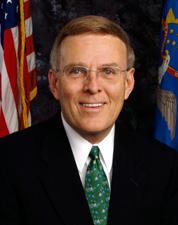
The Senator from Texas just inquired whether the Senator from Alabama might go next. I understand I have 5 minutes remaining; is that correct? I would be happy to have the Senator from Alabama finish…
The Senator from Texas just inquired whether the Senator from Alabama might go next. I understand I have 5 minutes remaining; is that correct?
I would be happy to have the Senator from Alabama finish his remarks which are 5 minutes. I will take 5 minutes, and then we will finish.
Mr. President, how much time remains?
Mr. President, in April of this year I was in Italy. I had stopped at an American military cemetery about 15, 20 minutes outside of Florence. On a beautiful morning, the sun was shining on the graves of 5,000 American soldiers who left their homes, left their families, and answered the call to serve their country and gave their lives during the Second World War. Their final resting place is now a cemetery, a beautifully kept military cemetery maintained by the Battlefield Monuments Commission of our country south of Florence.
I was thinking of that prose that says: When the night is full of knives and the lightning is seen and the drums are heard, the patriots are always there, ready to fight and ready to die, if necessary, to defend their country. Those patriots have given the ultimate sacrifice all across the world in defense of freedom here.
I was thinking this morning of a telephone call last week. I called a German hospital in which Brandon Olson was resting. He had just been wounded in Iraq. I called him in the hospital and I called his mother. Brandon Olson's mother called him on Thursday. On
Friday he had his foot amputated. She called him prior to surgery. When I talked to her, she told me her son was under heavy medication. She could tell when she called him that he was in pain and his voice was weak.
This mother told her son, lying in the German hospital: You don't have to talk. I just want to hear you breathe.
It is a mother, concerned about her son, who left this small town of Hazen, ND to answer the call of his country. That is Brandon Olson. But it was also Brandon Ericson and Jason Frey, young men and women, in this case three North Dakotans, who lost their lives fighting in Iraq.
Finally, I believe, after some long period, this country is reaching out to its veterans and finally understanding its requirement, its obligation to say thank you--thank you for your sacrifice and thank you for honoring our country.
This morning in the newspaper in our largest city, Fargo, ND, they pointed out that:
The planeload of civilian passengers in a metropolitan airport terminal a couple of weeks back who stood and cheered in unison when asked by United Airlines to give up their seats on an overbooked flight and take a later flight so that soldiers headed home on 14-day leaves from Iraq could get there a few hours earlier. Every soldier got a seat on that airplane.
They all got on that flight because other passengers gave up their seats. That is what is happening in this country today as we face danger, difficulty, and challenges as a nation in Iraq and Afghanistan, and danger from terrorists around the world. Our country is saying to those who wear our uniform: Thank you. We owe you a great debt, one which we may never be able to repay, but we recognize your sacrifice and commitment to our country.
As I looked at those gravesites south of Florence, Italy, in that beautiful cemetery on that April morning, I thought of John McCrae's wonderful poem ``In Flanders Fields.'' He wrote:
In Flanders fields the poppies blow
Between the crosses, row on row,
That mark our place; and in the sky
The larks, still bravely singing, fly
Scarce heard amid the guns below.
We are the Dead. Short day ago
We lived, felt dawn, saw sunset glow,
Loved and were loved, and now we lie,
In Flanders fields.
Take up our quarrel with the foe:
To you from failing hands we throw
The torch; be yours to hold it high.
If ye break faith with us who die
We shall not sleep, though poppies grow
In Flanders fields.
It reminds us again--especially today, on Veterans Day--all across America that the liberty we enjoy, the freedom we take for granted was paid for by the blood of patriots, and every American family has been touched by those patriots who have given the ultimate sacrifice. Every American community can and should recognize today those who live up the block or down the block or on the farm, who went all across this world and have fought valiantly for America's freedom, and have come home to live quietly among neighbors, never talking much about their service to our country.
But that service is what has made this the wonderful country it is. There is no place like it on Earth. There is no place quite as free as the United States of America, and that freedom has not been achieved without great sacrifice by young men and women. When America sends its sons and daughters to war, when America asks its sons and daughters to fight, then we must resolve to do everything we can to make that a successful fight on behalf of America's freedom.
Today, we honor wonderful veterans who have served this country for many decades.
I yield the floor.
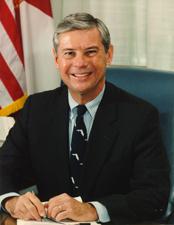
Madam President, I rise today to urge swift passage of S. 1156, which is essentially a conference report on various veterans' health care measures. This bill will dramatically assist the Department…
Madam President, I rise today to urge swift passage of S. 1156, which is essentially a conference report on various veterans' health care measures. This bill will dramatically assist the Department of Veterans Affairs in providing quality health care to our Nation's veterans. I would like to highlight some of the key provisions.
The compromise agreement would authorize $17.5 million in advanced planning funds for a new medical facility in East-Central Florida. While this is only an authorization, I note that the VA-HUD appropriations bill will likely contain an unspecified pot of construction funding--up to $600 million total. These funds will likely be used for East-Central Florida and other worthy projects stemming from VA's realignment effort.
Veterans living in East-Central Florida are in dire need of a full- fledged VA hospital. One VA report found that since 1996, ``the Central Florida market sustained the greatest workload expansion of the entire VA system--105 percent.'' Other VA studies have deemed the region as ``the logical choice for infrastructure investment for all major Inpatient and Outpatient categories.'' The decision about where to place a new VA hospital in this region falls to VA, but I encourage Secretary Principi to carefully study all the options to ensure that the most appropriate location is chosen.
The demand for care in East-Central Florida heretofore has also been validated by the Capital Asset Realignment for Enhanced Services (CARES) process. CARES is a multi-stage analysis that VA has undertaken of its assets and infrastructure nationwide, for the purposes of making according adjustments to meet the projected health
care needs of veterans over the next 20 years. The process has reached its final stages, with the release of a Draft National Plan currently under review by a commission.
The CARES initiative will have profound ramifications for hospitals all across the country. As such, the compromise agreement includes a provision that I fought for, granting Congress a 60-day notice and wait period before commencing any closures or consolidations that result from CARES recommendations. It is imperative that Congress have a role in this process, as the delivery of health care to our nation's veterans will be greatly affected by its outcome. This became particularly apparent when the Draft National Plan was unveiled, revealing the targeting for closure of up to 6,000 beds nationwide-- including some 1,500 long-term care and 800 psychiatry beds. As long- term care and mental health were not factored into the original CARES model, many questions were raised about the validity of the process.
The Veterans Health Care, Capital Asset, and Business Improvement Act of 2003 would also authorize the construction of a comprehensive outpatient medical care facility at the Pensacola Naval Air Station, in Pensacola, FL. The clinic, as envisioned, would be a joint venture between VA and the Department of the Navy. This area of my home state is greatly underserved in terms of medical facilities for servicemembers and veterans, and I am pleased to be a part of bringing vital health care services to the region.
Because of the need for quality, accessible hospital services for veterans in the Pensacola area and surrounding counties, this bill would require VA to develop a plan to meet their inpatient needs. While there is no doubt that the VA-Navy clinic would provide vital outpatient services, inpatient care will still be lacking. This provision seeks to address that facet of the health care continuum for veterans in the Panhandle.
Another important provision of the compromise agreement would expand VA's assisted living pilot program to one additional site. The assisted living pilot program is designed to help the large numbers of men and women in the VA system over the age of 65, who either need long-term care now or potentially will need it in the future. The pilot program was first established through The Veterans Millennium Health Care and Benefits Act, which gave VA clear authority to furnish an assisted living service, including to the spouses of veterans.
The CARES Draft National Plan also puts emphasis on assisted living programs. No fewer than 19 sites are proposed to be converted into assisted living facilities. The assisted living pilot program seeks to help VA address inequities in availability of noninstitutional services by developing models for proliferating the program nationwide. I am hopeful that Network 8 will apply to be the next pilot program. There is a great need for long-term care services in my home state of Florida.
I am proud to have worked on this valuable piece of legislation for our Nation's veterans, and I urge my colleagues to support it.
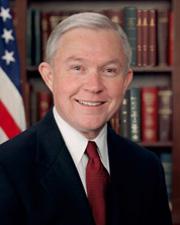
I thank the Senator from North Dakota and appreciate his courtesy. I don't think veterans are going to be unhappy we are here working today. They might have been happy to see the scene yesterday when…
I thank the Senator from North Dakota and appreciate his courtesy. I don't think veterans are going to be unhappy we are here working today. They might have been happy to see the scene yesterday when we should have been able to make progress on a number of things, and we had the assistant Democratic leader speaking 8 hours plus and reading from a book about cactus and rabbits. They might be unhappy about that.
We have soldiers in the field this very day at risk, carrying out the policy of this Senate, this Congress, that we passed by over a three- fourths vote. We ought to be here talking about our country and doing some of the country's business.
In fact, I was in Walter Reed Hospital this morning. I had the honor to meet with the service men and women who have been injured, some fairly seriously, in the service of their country.
I met with Sergeant Larry Gill who grew up in Mobile, AL, went to Murphy High School where my daughter went. I knew his father, Lieutenant James Gill, in the Mobile police department, a great officer. Larry Gill had a severe injury to his lower leg. He has been there over a month now. It is getting better. He was so optimistic. It was so wonderful to see his wife Leah who is a school teacher at Murphy High School, and his two children, Sean and Ryan, and be able to talk with them and see the positive attitude he had, the commitment to serving his country. It was so inspiring. Larry Gill in 1983 was a young Marine serving in Beirut, Lebanon when that embassy was attacked, guarding the embassy as a marine, as he was often called upon to do. He was knocked unconscious and had to be dug out from the rubble of the attack. He was a victim of terrorism in 1983. Now he comes back as part of our war on terrorism and is injured again.
As he said, he thought he ought to start collecting baseball cards rather than Purple Hearts. That just is an example of his spirit.
At the time he was injured, he was part of a National Guard unit from Alabama, the 1165th MP company. SPC Chris Harris and SGT Richard Barns and SPC4 Jose Garcia were injured.
I see Senator Lautenberg here.
SPC4 Garcia, from New Jersey, was assigned to the unit. He was injured, and he refused to go home; said, no, he wanted to stay with his unit, as did Specialist Harris. Both had flesh wounds that could have caused them to be removed from the theater. They said, no, they wanted to stay with their troops. That is the kind of character and courage we have out there today. It is a pleasure to see them.
I also visited PFC Chris Busby from Valley Head, AL, a town of 600. He was injured in Baghdad. He was in an uparmored Humvee. That is important because we have been trying to make sure every uparmored Humvee possible is there because it is much more resistant to attack than regular Humvees. His foot was out the door as he was speaking and a mortar round hit. He said had he not been in an uparmored Humvee, he may well have been far more seriously injured, if not killed. His arm and leg which were outside the door were both severely injured.
Asking how he happened to join, he said: Well, it was after September 11. I thought I ought to serve my country.
He is 20 years old. His father was there. His father served 7 years as an MP. His brother is in Germany. He is also an MP. That is the kind of great, rock-solid Americans who preserve, protect, and defend our country on a daily basis. I am so proud of them. They serve us so well.
Just a little over a week ago I had the burden of calling Mrs. Roxy Bell. Her son, Aubrey Bell, 33, a sergeant with the 214th MP Company, National Guard Company from the Alabama National Guard, was killed in a firefight through an improvised explosive device in Baghdad at the Al Bayra police station where he was working. Sergeant Bell was part of the 214th MP company from Baldwin County, AL. I had the pleasure to visit with them when I was in Iraq in August. I had supper with them. I talked to them. They talked about patrolling the streets of Baghdad with the Iraqi police who had been brought on, which is exactly what we need to do to stabilize that country, bring on more Iraqi police. They were so positive, had such extraordinarily good morale. I was exceedingly proud of them. It was most painful to have to call and talk to his mother at the loss of her fine son who lost his life serving his country.
All of us need to remember that. We have sent those young men and women out. They are serving at our direction. They are placing their lives on the line for us on a daily basis.
We ask God's blessing and protection be with each one of them and that we are given the wisdom to help guide them in the application of their abilities and their lives in an effective way.

Mr. President, today I wish to pay my respects to my fellow veterans. It is only through the leadership, dedication and sacrifice of our men and women in uniform, that we are able to enjoy the…
Mr. President, today I wish to pay my respects to my fellow veterans. It is only through the leadership, dedication and sacrifice of our men and women in uniform, that we are able to enjoy the freedoms that being an American entails.
No matter what your views on the war on terror or the war in Iraq, all Americans can unite behind our brave men and women in uniform. These fine Americans have truly answered our Nation's highest calling and we are better off for it. Today is a day to give thanks to these heroes.
On Veterans Day, I like to share the story of one of my heroes during my service, Mike Christian. I have shared his story before and it has become familiar to many, yet it bears repeating. This year, as Americans serve across the globe in important battles against error and tyranny, Mike Christian's story takes on even more meaning. In the same manner as service in Vietnam, a new generation of heroes is emerging in Iraq.
In the early years of our imprisonment in Hanoi, the North Vietnamese kept us in solitary confinement, or if we were fortunate, two or three to a cell. In 1971, the North Vietnamese moved us from these conditions of isolation into large cells with as many as 30 to 40 men to a room. This was, as you can imagine, a wonderful chance. And was a direct result of the efforts of millions of Americans, led by people like Nancy and Ronald Reagan, on behalf of a few hundreds POWs, 20,000 miles from home.
One of the men who moved into my cell was Mike Christian. Mike came from a small town near Selma, AL. He didn't wear a pair of shoes until he was 13 years old. At 17, he enlisted in the U.S. Navy. He later earned a commission. He became a naval aviator, was shot down and captured in 1967. Mike had a keen and deep appreciation for the opportunities this county--and our military--provide for people who want to work and want to succeed.
The uniforms we wore in prison consisted of a blue short-sleeved shirt, trousers that looked like pajama trousers and rubber sandals that were made out of automobile tires. I recommend them highly; one pair lasted my entire stay.
As part of the change in treatment, the Vietnamese allowed some prisoners to receive packages from home. In some of these packages were handkerchiefs, scarves, and other items of clothing. Mike got himself a piece of white cloth and a piece of red cloth and fashioned himself a bamboo needle. Over a period of a couple, of months, he sewed the American flag on the inside of his shirt.
Every afternoon, before we had a bowl of soup, we would hang Mike's shirt on the wall or our cell, and say the Pledge of Allegiance. I know that saying the Pledge of Allegiance may not seem the most important or meaningful part of our day now, but I can assure you that--for those men in the stark prison cell--it was indeed the most important and meaningful event of our day.
Our day, the Vietnamese searched our cell and discovered Mike's shirt with the flag sewn inside, and removed it. That evening they returned, opened the door of the cell, called for Mike Christian to come out, closed the door of the cell, and for the benefit of all of us, beat Mike Christian severely for the next couple of hours.
Then they opened the door of the cell and threw him back inside. He was not in good shape. We tried to comfort and take care of him as well as we could. The cell in which we lived had a concrete slab in the middle on which we slept. Four naked light bulbs in each corner of the room.
After things quieted down, I went to lie down to go to sleep. As I did, I happened to look in the corner of the room. Sitting there beneath that dim light bulb, with a piece of white cloth, a piece of red cloth, another shirt and his bamboo needle, was my friend, Mike Christian. Sitting there, with his eyes almost shut from his beating, making another American Flag. He was not making the flag because it made Mike Christian feel better. He was making the flag because he knew how important it was for us to be able to pledge our allegiance to our flag and country.
Duty, Honor, Country. We must never forget the millions of Americans who, with their courage, with their sacrifice, and with their lives, made those words live for all of us.
This year, as we pause to remember those men and women currently serving their country, as well as our family and friends who serve before us, we need to remember the sacrifices of people like Mike Christian who made this Nation what it is today.
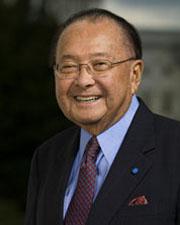
Madam President, I commend Senator Arlen Specter and the Committee on Veterans Affairs for their efforts in support of S. 1156, the Veterans Health Care Authorities Extension and Improvement Act of…
Madam President, I commend Senator Arlen Specter and the Committee on Veterans Affairs for their efforts in support of S. 1156, the Veterans Health Care Authorities Extension and Improvement Act of 2003, which would improve the provision of long-term health care for veterans by the Department of Veterans Affairs.
I would like to take this opportunity to comment on the section of S. 1156 that authorizes the VA to provide Filipino veterans residing in the United States the same medical benefits that are currently provided to veterans of the Armed Forces of the United States. Approximately 9,500 Filipino veterans residing in the United States would be eligible for these benefits.
Many of you are aware of my continued support and advocacy on behalf of the Filipino World War II veterans, and the importance of addressing their plight. As an American, I believe the treatment of Filipino World War II veterans is bleak and shameful. Throughout the years, I have sponsored several measures to rectify the wrongs committed against these World War II veterans, and I am grateful to the committee for the assistance and consideration given to my past initiatives. While some strides have been made, I believe more needs to be done to assist these veterans who are in their twilight years. Of the 120,000 who originally served in the Commonwealth Army during World War II, approximately 59,899 Filipino veterans currently reside in the United States and the Philippines. According to the Department of Veterans Affairs, the Filipino veteran population is expected to decrease to approximately 20,000, or roughly one-third of the current population, by 2010.
I support the provision in S. 1156 that authorizes the VA to provide Filipino veterans residing in the United States the same medical benefits that are currently provided to veterans of the Armed Forces of the United States. However, I remain concerned that these benefits are restricted to only those veterans residing in the United States. In my view, a distinction should not be made between veterans residing in the United States and those residing in the Philippines.
As a result of a citizenship statute enacted by the Congress in 1990, some Filipino veterans who were able to travel came to the United States to become United States citizens. At the same time, many other Filipino World War II veterans were unable to travel to the United States and take advantage of the naturalization benefit because of their advanced age. The law was subsequently amended in the Fiscal Year 1993 Departments of State, Justice, Commerce and the Judiciary Appropriations Act, Public Law 102-395, to allow the naturalization process for these veterans to occur in the Philippines. Since then, a distinction has been made, and benefits have been provided to only those Filipino veterans residing in the United States.
I believe it is unfair to make this distinction. The Commonwealth Army of the Philippines was called to serve with the United States Armed Forces in the Far East during World War II under President Roosevelt's July 26, 1941, military order. Together, these gallant men and women stood in harm's way with our American soldiers to fight our common enemies during World War II. Because all Filipino veterans stood in equal jeopardy during World War II, I do not believe we should draw a distinction based on their current residency in the U.S. or in the Philippines. All of them were at equal risk, and so all should receive equal benefits.
Accordingly, I introduced S. 68, the Filipino Veterans' Benefits Improvements Act of 2003, which provides health and disability compensation benefits that are similar to the provision included in S. 1156, but without limitations based on the residency of the veterans. I strongly urge Chairman Specter and members of the Committee to give consideration to S. 68, and to work with me in the coming year to provide health benefits to veterans residing in the Philippines.
Heroes should never be forgotten or ignored, so let us not turn our backs on those who sacrificed so much. Many of the Filipinos who fought so hard for our nation have been honored with American citizenship. Let us now work to repay all of these brave men and women for their sacrifices by providing them the veterans' benefits they deserve.
Bill Text
Latest available legislative text
        [Congressional Bills 108th Congress]
[From the U.S. Government Publishing Office]
[S. 1815 Introduced in Senate (IS)]

108th CONGRESS
1st Session
S. 1815

To designate the Department of Veterans Affairs Medical Center in Salt
Lake City, Utah.

_______________________________________________________________________

IN THE SENATE OF THE UNITED STATES

November 4, 2003

Mr. Bennett (for himself and Mr. Hatch) introduced the following bill;
which was read twice and referred to the Committee on Veterans' Affairs

_______________________________________________________________________

A BILL

To designate the Department of Veterans Affairs Medical Center in Salt
Lake City, Utah.

Be it enacted by the Senate and House of Representatives of the
United States of America in Congress assembled,

SECTION 1. DESIGNATION OF DEPARTMENT OF VETERANS AFFAIRS MEDICAL
CENTER, SALT LAKE CITY, UTAH.

(a) Findings.--Congress makes the following findings:
(1) On October 5, 1945, President Harry Truman presented
George E. Wahlen with the Medal of Honor for his efforts as a
medical corpsman on behalf of his comrades at the battle of Iwo
Jima.
(2) In a 26-day period, George E. Wahlen was seriously
wounded 3 times. However, he continued to risk his life to
provide aid to wounded members of his company.
(3) The official citation presented by President Truman
reads: ``For conspicuous gallantry and intrepidity at the risk
of his life above and beyond the call of duty while serving
with the 2d Battalion, 26th Marines, 5th Marine Division,
during action against enemy Japanese forces on Iwo Jima in the
Volcano group on 3 March 1945. Painfully wounded in the bitter
action on 26 February, Wahlen remained on the battlefield,
advancing well forward of the frontlines to aid a wounded
marine and carrying him back to safety despite a terrific
concentration of fire. Tireless in his ministrations, he
consistently disregarded all danger to attend his fighting
comrades as they fell under the devastating rain of shrapnel
and bullets, and rendered prompt assistance to various elements
of his combat group as required. When an adjacent platoon
suffered heavy casualties, he defied the continuous pounding of
heavy mortars and deadly fire of enemy rifles to care for the
wounded, working rapidly in an area swept by constant fire and
treating 14 casualties before returning to his own platoon.
Wounded again on 2 March, he gallantly refused evacuation,
moving out with his company the following day in a furious
assault across 600 yards of open terrain and repeatedly
rendering medical aid while exposed to the blasting fury of
powerful Japanese guns. Stouthearted and indomitable, he
persevered in his determined efforts as his unit waged fierce
battle and, unable to walk after sustaining a third agonizing
wound, resolutely crawled 50 yards to administer first aid to
still another fallen fighter. By his dauntless fortitude and
valor, Wahlen served as a constant inspiration and contributed
vitally to the high morale of his company during critical
phases of this strategically important engagement. His heroic
spirit of self-sacrifice in the face of overwhelming enemy fire
upheld the highest traditions of the U.S. Naval Service.''
(4) George E. Wahlen is currently the only living recipient
of the Medal of Honor in Utah. Born on August 8, 1924, in
Ogden, Utah, George E. Wahlen served his country in three wars.
He continues to serve as a voice on behalf of the veterans of
Utah.
(b) Designation of Medical Center.--The Department of Veterans
Affairs Medical Center in Salt Lake City, Utah, shall after the date of
the enactment of this Act be known and designated as the ``George E.
Wahlen Department of Veterans Affairs Medical Center''. Any reference
to such facility in any law, regulation, map, document, record, or
other paper of the United States shall be considered to be a reference
to the George E. Wahlen Department of Veterans Affairs Medical Center.
<all>