Sanctions Policy Reform Act
A bill to provide a framework for consideration by the legislative and executive branches of proposed unilateral economic sanctions in order to ensure coordination of United States policy with respect to trade, security, and human rights.
 Sen. Richard G. Lugar (R-IN)
Legislative Activity
Stay on top of the latest movement without scrolling through every action
Read twice and referred to the Committee on Foreign Relations.
November 14, 2003
View full timeline
Introduced in Senate
November 14, 2003
Sponsor introductory remarks on measure. (CR S14815-14816)
November 14, 2003
Read twice and referred to the Committee on Foreign Relations.
November 14, 2003
Floor Debate
14 membersWhat members said about S. 1861 on the floor


 +9
Floor Debate
14 membersWhat members said about S. 1861 on the floor
Mr. President, I rise to day to introduce, along with my colleagues Senator Smith from Oregon, the multiemployer Pension Plan Procedural Fairness Act of 2003. The purpose of this legislation is to…
Mr. President, I rise to introduce the Sanctions Policy Reform Act. The fundamental purpose of my bill is to promote good governance through thoughtful deliberation on those proposals involving…
Mr. President, I rise to introduce the Sanctions Policy Reform Act. The fundamental purpose of my bill is to promote good governance through thoughtful deliberation on those proposals involving…
Mr. President. I rise to introduce with my colleagues, Senators Biden and Grassley, ``The Office of National Drug Control Policy Reauthorization Act of 2003.'' This bill is a forward-looking measure…
Mr. President, I rise today to add my comments to those of Senator Hatch and Senator Biden on the re-authorization of the Office of National Drug Control Policy. Drug use in America may not be on the…
Show 8 more
Mr. President, I rise today to introduce legislation to reauthorize the so-called ``Drug Czar's'' office with Senator Hatch, the Chairman of the Judiciary Committee and Senator Grassley, the Chairman…
Mr. President, I rise to introduce a joint resolution regarding the status of Jerusalem, and its potential in catapulting the Middle East Peace process forward. Just prior to returning from the…

Mr. President, like every loyal Red Sox fan, I believe that next season, my team will be victorious. I bring this same level of optimism to my efforts to reduce the amount of wasted resources and…

Mr. President, I rise today to introduce the Michigan Lighthouse and Maritime Heritage Act, a bill to promote and protect Michigan's Great Lakes history including its lighthouses and maritime…
Mr. President, I have sought recognition today to introduce a bill to authorize Federal funding for the rehabilitation of the Benjamin Franklin National Memorial. This memorial, an attraction for…

Mr. President, today, I am introducing a bill that would not only lower the retirement age for reservists but offer incentives for members of the National Guard and Reserves to remain longer in the…

Mr. President, I rise to introduce a bill that will increase the minimum funding level for low population States for the U.S. Department of Housing and Urban Development's HOME Investment…
Mr. President, I am pleased to join the chairman of the Committee on Agriculture, Nutrition and Forestry, Senator Cochran, to introduce the National Veterinary Medical Service Act. This bill will…
Show 2 more

Mr. President, the United States is experiencing a serious shortage of veterinarians in rural agricultural and inner-city areas. Veterinarians are needed in these areas to support our Nation's…
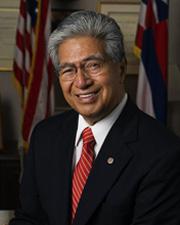
Mr. President, I am pleased to be an original cosponsor for the National Beverage Producer Responsibility Act of 2003, a bill introduced today by Senator Jim Jeffords. This bill serves a need that we…
Bill Text
Latest available legislative text
        [Congressional Bills 108th Congress]
[From the U.S. Government Publishing Office]
[S. 1861 Introduced in Senate (IS)]

108th CONGRESS
1st Session
S. 1861

To provide a framework for consideration by the legislative and
executive branches of proposed unilateral economic sanctions in order
to ensure coordination of United States policy with respect to trade,
security, and human rights.

_______________________________________________________________________

IN THE SENATE OF THE UNITED STATES

November 14 (legislative day, November 12), 2003

Mr. Lugar introduced the following bill; which was read twice and
referred to the Committee on Foreign Relations

_______________________________________________________________________

A BILL

To provide a framework for consideration by the legislative and
executive branches of proposed unilateral economic sanctions in order
to ensure coordination of United States policy with respect to trade,
security, and human rights.

Be it enacted by the Senate and House of Representatives of the
United States of America in Congress assembled,

SECTION 1. SHORT TITLE.

This Act may be cited as the ``Sanctions Policy Reform Act''.

SEC. 2. PURPOSE.

It is the purpose of this Act to establish an effective framework
for consideration by the legislative and executive branches of
unilateral economic sanctions in order to ensure coordination of United
States policy with respect to trade, security, and human rights.

SEC. 3. STATEMENT OF POLICY.

It is the policy of the United States--
(1) to pursue United States interests through vigorous and
effective diplomatic, political, commercial, charitable,
educational, cultural, and strategic engagement with other
countries, while recognizing that the national security
interests of the United States may sometimes require the
imposition of economic sanctions on other countries;
(2) to expand trade and investment with the developing
world to create the conditions for free market democracies and
the rule of law;
(3) to foster multilateral cooperation on vital matters of
United States foreign policy, including promoting human rights
and democracy, combating international terrorism, proliferation
of weapons of mass destruction, and international narcotics
trafficking, and ensuring adequate environmental protection;
(4) to promote United States economic growth and job
creation by expanding exports of goods, services, and
agricultural commodities, and by encouraging investment that
supports the sale abroad of products and services of the United
States;
(5) to maintain the reputation of United States businesses
and farmers as reliable suppliers to international customers of
quality products and services, including United States
manufactures, technology products, financial services, and
agricultural commodities;
(6) to avoid the use of restrictions on exports of
agricultural commodities as a foreign policy weapon;
(7) to oppose policies of other countries designed to
discourage economic interaction with countries friendly to the
United States or with any United States national; and
(8) when economic sanctions are necessary--
(A) to target them as narrowly as possible on those
foreign governments, entities, and officials that are
responsible for the conduct being targeted, thereby
minimizing unnecessary or disproportionate harm to
individuals who are not responsible for such conduct;
and
(B) to the extent feasible, to avoid any adverse
impact of economic sanctions on the humanitarian
activities of United States and foreign nongovernmental
organizations in a country against which sanctions are
imposed.

SEC. 4. DEFINITIONS.

In this Act:
(1) Unilateral economic sanction.--
(A) In general.--The term ``unilateral economic
sanction'' means any prohibition, restriction, or
condition on economic activity, including economic
assistance, with respect to a foreign country or
foreign entity that is imposed by the United States for
reasons of foreign policy or national security,
including any of the measures described in subparagraph
(B), except in a case in which the United States
imposes the measure pursuant to a multilateral regime
and the other members of that regime have agreed to
impose substantially equivalent measures.
(B) Particular measures.--The measures referred to
in subparagraph (A) are the following:
(i) The suspension of, or any restriction
or prohibition on, exports or imports of any
product, technology, or service to or from a
foreign country or entity.
(ii) The suspension of, or any restriction
or prohibition on, financial transactions with
a foreign country or entity.
(iii) The suspension of, or any restriction
or prohibition on, direct or indirect
investment in or from a foreign country or
entity.
(iv) The imposition of increased tariffs
on, or other restrictions on imports of,
products of a foreign country or entity,
including the denial, revocation, or
conditioning of nondiscriminatory (normal trade
relations) trade treatment.
(v) The suspension of, or any restriction
or prohibition on--
(I) the authority of the Export-
Import Bank of the United States to
give approval to the issuance of any
guarantee, insurance, or extension of
credit in connection with the export of
goods or services to a foreign country
or entity;
(II) the authority of the Trade and
Development Agency to provide
assistance in connection with
projects in a foreign country or in which a particular foreign entity
participates; or
(III) the authority of the Overseas
Private Investment Corporation to
provide insurance, reinsurance, or
financing or conduct other activities
in connection with projects in a
foreign country or in which a
particular foreign entity participates.
(vi) A requirement that the United States
representative to an international financial
institution vote against any loan or other
utilization of funds to, for, or in a foreign
country or particular foreign entity.
(vii) A measure imposing any restriction or
condition on economic activity of any foreign
government or entity on the ground that such
government or entity does business in or with a
foreign country.
(viii) A measure imposing any restriction
or condition on economic activity of any person
that is a national of a foreign country, or on
any government or other entity of a foreign
country, on the ground that the government of
that country has not taken measures in
cooperation with, or similar to, sanctions
imposed by the United States on a third
country.
(ix) The suspension of, or any restriction
or prohibition on, travel rights or air
transportation to or from a foreign country.
(x) Any restriction on the filing or
maintenance in a foreign country of any
proprietary interest in intellectual property
rights (including patents, copyrights, and
trademarks), including payment of patent
maintenance fees.
(C) Multilateral regime.--As used in this
paragraph, the term ``multilateral regime'' means an
agreement, arrangement, or obligation under which the
United States cooperates with other countries in
restricting commerce for reasons of foreign policy or
national security, including--
(i) obligations under resolutions of the
United Nations;
(ii) nonproliferation and export control
arrangements, such as the Australia Group, the
Nuclear Supplier's Group, the Missile
Technology Control Regime, and the Wassenaar
Arrangement;
(iii) treaty obligations, such as under the
Chemical Weapons Convention, the Treaty on the
Non-Proliferation of Nuclear Weapons, and the
Biological Weapons Convention; and
(iv) agreements concerning protection of
the environment, such as the International
Convention for the Conservation of Atlantic
Tunas, the Declaration of Panama referred to in
section 2(a)(1) of the International Dolphin
Conservation Act (16 U.S.C. 1361 note), the
Convention on International Trade in Endangered
Species, the Montreal Protocol on Substances
that Deplete the Ozone Layer, and the Basel
Convention on the Control of Transboundary
Movements of Hazardous Wastes.
(D) Economic assistance.--As used in this
paragraph, the term ``economic assistance'' means--
(i) any assistance under part I or chapter
4 of part II of the Foreign Assistance Act of
1961 (including programs under title IV of
chapter 2 of part I of that Act, relating to
the Overseas Private Investment Corporation),
other than--
(I) assistance under chapter 8 of
part I of that Act,
(II) disaster relief assistance,
including any assistance under chapter
9 of part I of that Act,
(III) assistance which involves the
provision of food (including
monetization of food) or medicine, or
(IV) assistance for refugees; and
(ii) the provision of agricultural
commodities, other than food, under the
Agricultural Trade Development and Assistance
Act of 1954.
(E) Financial transaction.--As used in this
paragraph, the term ``financial transaction'' has the
meaning given that term in section 1956(c)(4) of title
18, United States Code.
(F) Investment.--As used in this paragraph, the
term ``investment'' means any contribution or
commitment of funds, commodities, services, patents, or
other forms of intellectual property, processes, or
techniques, including--
(i) a loan or loans;
(ii) the purchase of a share of ownership;
(iii) participation in royalties, earnings,
or profits; and
(iv) the furnishing of commodities or
services pursuant to a lease or other contract.
(G) Exclusions.--The term ``unilateral economic
sanction'' does not include--
(i) any measure imposed to remedy unfair
trade practices or to enforce United States
rights under a trade agreement, including under
section 337 of the Tariff Act of 1930 (19
U.S.C. 1337), title VII of that Act (19 U.S.C.
1671 et seq.), title III of the Trade Act of
1974 (19 U.S.C. 2411 et seq.), sections 1374
and 1377 of the Omnibus Trade and
Competitiveness Act of 1988 (19 U.S.C. 3103 and
3106), and section 3 of the Act of March 3,
1933 (41 U.S.C. 10b-1);
(ii) any measure imposed to remedy market
disruption or to respond to injury to a
domestic industry for which increased imports
are a substantial cause or threat thereof,
including remedies under sections 201 and 406
of the Trade Act of 1974 (19 U.S.C. 2251 and
2436), and textile import restrictions
(including those imposed under section 204 of
the Agricultural Act of 1956 (7 U.S.C. 1784));
(iii) any action taken under title IV of
the Trade Act of 1974 (19 U.S.C. 2431 et seq.),
including the enactment of a joint resolution
under section 402(d)(2) of that Act;
(iv) any measure imposed to restrict
imports of agricultural commodities to protect
food safety or to ensure the orderly marketing
of commodities in the United States, including
actions taken under section 22 of the
Agricultural Adjustment Act (7 U.S.C. 624);
(v) any measure imposed to restrict imports
of any other products in order to protect
domestic health or safety;
(vi) any measure authorized by, or imposed
under, a multilateral or bilateral trade
agreement to which the United States is a
signatory, including the Uruguay Round
Agreements, the North American Free Trade
Agreement, the United States-Israel Free Trade
Agreement, the United States-Jordan Free Trade
Agreement, the United States-Chile Free Trade
Agreement, the United States-Singapore Free
Trade Agreement, and the United States-Canada
Free Trade Agreement;
(vii) any prohibition or restriction on the
sale, export, lease, or other transfer of any
dual-use article under the Export
Administration Act or similar prohibitions or
restrictions under the International Emergency
Economic Powers Act; and
(viii) any prohibition or restriction on
the sale, export, lease, or other transfer of
any defense article, defense service, or design
and construction service under the Arms Export
Control Act, or on any financing provided under
that Act.
(2) Agricultural commodity.--The term ``agricultural
commodity'' has the meaning given that term in section 102(1)
of the Agricultural Trade Act of 1978 (7 U.S.C. 5602(1)).
(3) Appropriate congressional committees.--The term
``appropriate congressional committees'' means the Committee on
Agriculture, the Committee on International Relations, the
Committee on Ways and Means, and the Committee on Financial
Services of the House of Representatives, and the Committee on
Agriculture, Nutrition, and Forestry, the Committee on Finance,
and the Committee on Foreign Relations of the Senate.
(4) Contract sanctity.--The term ``contract sanctity'',
with respect to a unilateral economic sanction, refers to the
inapplicability of the sanction to--
(A) a contract or agreement entered into before the
committee of primary jurisdiction provides notice of
the opportunity for public comment in the Congressional
Record pursuant to section 6(a) or the President
publishes notice in the Federal Register pursuant to
section 7(a), or to a valid export license or other
authorization to export; and
(B) actions taken to enforce the right to maintain
intellectual property rights, in the foreign country
against which the sanction is imposed, which existed
before the committee of primary jurisdiction provided
notice of the opportunity for public comment in the
Congressional Record pursuant to section 6(a) or the
President published notice in the Federal Register
pursuant to section 7(a).
(5) Unilateral economic sanction legislation.--The term
``unilateral economic sanction legislation'' means a bill or
joint resolution that imposes, or authorizes the imposition of,
any unilateral economic sanction.

SEC. 5. GUIDELINES FOR UNILATERAL ECONOMIC SANCTIONS LEGISLATION.

It is the sense of Congress that any unilateral economic sanction
legislation that is introduced in or reported to a House of Congress on
or after the date of enactment of this Act should--
(1) state the foreign policy or national security objective
or objectives of the United States that the economic sanction
is intended to achieve;
(2) provide that the economic sanction terminate 2 years
after it is imposed, unless specifically reauthorized by
Congress;
(3) provide contract sanctity, except that contract
sanctity shall not be required in any case--
(A) in which execution of the contract is contrary
to law;
(B) in which the contract involves assets that will
be frozen as a consequence of the proposed sanction; or
(C) in which the contract provides for the supply
of goods or services directly to a specific person,
government agency, or military unit that is expressly
named as a target of the proposed sanction;
(4) provide authority for the President both to adjust the
timing and scope of the sanction and to waive the sanction, if
the President determines it is in the national interest to do
so;
(5)(A) target the sanction as narrowly as possible on
foreign governments, entities, and officials that are
responsible for the conduct being targeted;
(B) not include restrictions on the provision of medicine,
medical equipment, or food; and
(C) seek to minimize any adverse impact on the humanitarian
activities of United States and foreign nongovernmental
organizations in any country against which the sanction may be
imposed;
(6) include findings based on the report provided by the
Secretary of Agriculture pursuant to section 6(c)(2)
regarding--
(A) the extent to which the proposed sanction is
likely to restrict exports of any agricultural
commodity or is likely to result in retaliation against
exports of any agricultural commodity from the United
States; and
(B) the extent to which the sanction is proposed to
be imposed, or is likely to be imposed, on a country or
countries that constituted, in the preceding calendar
year, the market for more than 3 percent of all export
sales from the United States of an agricultural
commodity;
(7) direct the Secretary of Agriculture to expand
agricultural export assistance under United States market
development, food assistance, or export promotion programs to
offset any potential damage to incomes of producers of any
affected agricultural commodity, to the maximum extent
permitted by law and by the obligations of the United States
under the Agreement on Agriculture referred to in section
101(d)(2) of the Uruguay Round Agreements Act (19 U.S.C.
3511(d)(2));
(8) take into account any findings of the Secretary of the
Treasury regarding how the sanction will impact capital
markets; and
(9) take into account any findings of the Secretary of
Energy regarding how the sanction will impact United States
energy markets and the supply of energy in the United States.

SEC. 6. REQUIREMENTS FOR UNILATERAL ECONOMIC SANCTIONS LEGISLATION.

(a) Public Comment.--Not later than 15 days prior to the
consideration by the committee of primary jurisdiction of any
unilateral economic sanction legislation, the chairman of the committee
shall cause to be printed in the Congressional Record a notice that
provides an opportunity for interested members of the public to submit
comments to the committee on the proposed sanction.
(b) Committee Reports.--In the case of any unilateral economic
sanction legislation that is reported by a committee of the House of
Representatives or the Senate, the committee report accompanying the
legislation shall contain a statement of whether the legislation meets
all the guidelines specified in section 5 and, if the legislation does
not, an explanation of why it does not. The report shall also include a
specific statement of whether the legislation includes any restrictions
on the provision of medicine, medical equipment, or food.
(c) Reports.--
(1) Report by the president.--Not later than 30 days after
a committee of the House of Representatives or the Senate
reports any unilateral economic sanction legislation, the
President shall submit to the House of the committee reporting
such legislation a report containing--
(A) an assessment of--
(i) the likelihood that the proposed
unilateral economic sanction will achieve its
stated objective within a reasonable period of
time; and
(ii) the impact of the proposed unilateral
economic sanction on--
(I) humanitarian conditions,
including the impact on conditions in
any specific countries on which the
sanction is proposed to be or may be
imposed;
(II) humanitarian activities of
United States and foreign
nongovernmental organizations;
(III) relations with United States
allies;
(IV) other United States national
security and foreign policy interests;
and
(V) countries and entities other
than those on which the sanction is
proposed to be or may be imposed; and
(B) a description and assessment of--
(i) diplomatic and other steps the United
States has taken to accomplish the intended
objectives of the unilateral sanction
legislation;
(ii) the likelihood of multilateral
adoption of comparable measures;
(iii) comparable measures undertaken by
other countries;
(iv) alternative measures to promote the
same objectives, and an assessment of their
potential effectiveness;
(v) any obligations of the United States
under international treaties or trade
agreements with which the proposed sanction may
conflict;
(vi) the likelihood that the proposed
sanction will lead to retaliation against
United States interests, including agricultural
interests; and
(vii) whether the achievement of the
objectives of the proposed sanction outweighs
any likely costs to United States foreign
policy, national security, economic, and
humanitarian interests, including any potential
harm to United States business, agriculture,
and consumers, and any potential harm to the
international reputation of the United States
as a reliable supplier of products, technology,
agricultural commodities, and services.
(2) Report by the secretary of agriculture.--Not later than
30 days after a committee of the House of Representatives or
the Senate reports any unilateral economic sanction legislation
affecting the export of agricultural commodities from the
United States, the Secretary of Agriculture shall submit to the
House of the committee reporting such legislation a report containing
an assessment of--
(A) the extent to which any country or countries
proposed to be sanctioned or likely to be sanctioned
are markets that accounted for, in the preceding
calendar year, more than 3 percent of all export sales
from the United States of any agricultural commodity;
(B) the likelihood that exports of agricultural
commodities from the United States will be affected by
the proposed sanction or by retaliation by any country
proposed to be sanctioned or likely to be sanctioned,
and specific commodities which are most likely to be
affected;
(C) the likely effect on incomes of producers of
the specific commodities identified by the Secretary;
(D) the extent to which the proposed sanction would
permit foreign suppliers to replace United States
suppliers; and
(E) the likely effect of the proposed sanction on
the reputation of United States farmers as reliable
suppliers of agricultural commodities in general, and
of the specific commodities identified by the
Secretary.
(3) Report by the congressional budget office.--Any bill or
joint resolution that imposes a unilateral economic sanction
shall be treated as including a Federal private sector mandate
for purposes of part B of title IV of the Congressional Budget
and Impoundment Control Act of 1974 (2 U.S.C. 658 et seq.) and
the Congressional Budget Office shall report accordingly. The
report shall include an assessment of--
(A) the likely short-term and long-term costs of
the proposed sanction to the United States economy,
including the potential impact on United States trade
performance, employment, and growth;
(B) the impact the proposed sanction will have on
the international reputation of the United States as a
reliable supplier of products, agricultural
commodities, technology, and services; and
(C) the impact the proposed sanction will have on
the economic well-being and international competitive
position of United States industries, firms, workers,
farmers, and communities.
(d) Rules of the House of Representatives and Senate.--This section
is enacted by Congress--
(1) as an exercise of the rulemaking power of the House of
Representatives and the Senate, respectively, and as such these
rules are deemed a part of the rules of each House,
respectively, and they supersede other rules only to the extent
that they are inconsistent therewith; and
(2) with full recognition of the constitutional right of
either House to change the rules (so far as relating to the
procedure of that House) at any time, in the same manner and to
the same extent as in the case of any other rule of that House.

SEC. 7. REQUIREMENTS FOR EXECUTIVE ACTION.

(a) Notice.--
(1) In general.--
(A) Notice of intent to impose sanction.--
Notwithstanding any other provisions of law, the
President shall publish notice in the Federal Register,
at least 45 days in advance of the imposition of any
new unilateral economic sanction under any provision of
law with respect to a foreign country or foreign
entity, of the President's intention to implement such
sanction. The Federal Register notice shall provide the
opportunity for interested persons to submit comments
regarding the proposed new unilateral economic
sanction. The purpose of such notice and opportunity
for comment shall be to allow the formulation of an
effective sanction that advances United States national
security and economic interests, and to provide an
opportunity for negotiations to achieve the objectives
specified in the law authorizing imposition of a
unilateral economic sanction.
(B) Waiver of advance notice requirement.--The
President may waive the provisions of subparagraph (A)
if the President determines that the national interest
would be jeopardized by the requirements of this
section.
(C) Authority to negotiate.--Notwithstanding any
other provision of law, the President is authorized to
negotiate with the foreign government against which a
unilateral economic sanction is proposed to resolve the
underlying reasons for the sanction during the 45-day
period following the publication of notice in the
Federal Register.
(2) New unilateral economic sanction.--For purposes of this
section, the term ``new unilateral economic sanction'' means a
unilateral economic sanction imposed pursuant to a law enacted
after the date of enactment of this Act or a sanction imposed
after such date of enactment pursuant to the International
Emergency Economic Powers Act (50 U.S.C. 1701 et seq.).
(b) Consultation.--
(1) In general.--The President shall consult with the
appropriate congressional committees regarding a proposed new
unilateral economic sanction, including consultations regarding
efforts to achieve or increase multilateral cooperation on the
issues or problems prompting the proposed sanction.
(2) Classified consultations.--The consultations described
in paragraph (1) may be conducted on a classified basis if
disclosure would threaten the national security of the United
States.
(c) Requirements for Executive Branch Sanctions.--Any new
unilateral economic sanction imposed by the President--
(1) shall--
(A) provide contract sanctity, except that contract
sanctity shall not be required in any case--
(i) in which execution of the contract is
contrary to law;
(ii) in which the contract involves assets
that will be frozen as a consequence of the
proposed sanction; or
(iii) in which the contract provides for
the supply of goods or services directly to a
specific person, government agency, or military
unit that is expressly named as a target of the
proposed sanction;
(B) terminate not later than 2 years after the
sanction is imposed, unless specifically extended by
the President in accordance with this section;
(C)(i) be targeted as narrowly as possible on
foreign governments, entities, and officials that are
responsible for the conduct being targeted; and
(ii) seek to minimize any adverse impact on the
humanitarian activities of United States and foreign
nongovernmental organizations in a country against
which the sanction may be imposed; and
(D) not include any restriction on the export,
financing, support, or provision of medicine, medical
equipment, medical supplies, food, or other
agricultural commodity (including fertilizer), other
than restrictions imposed in response to national
security threats, where multilateral sanctions are in
place, or restrictions involving a country where the
United States is engaged in armed conflict; and
(2) should direct the Secretary of Agriculture to expand
agricultural export assistance under United States market
development, food assistance, and export promotion programs to
offset any potential damage to incomes of producers of any
affected agricultural commodity, to the maximum extent
permitted by law and by the obligations of the United States
under the Agreement on Agriculture referred to in section
101(d)(2) of the Uruguay Round Agreements Act (19 U.S.C.
3511(d)(2)).
(d) Report by the President.--
(1) In general.--Prior to imposing any new unilateral
economic sanction, the President shall provide a report to the
appropriate congressional committees on the proposed sanction.
The report shall include the report of the International Trade
Commission under subsection (f) (if timely submitted prior to
the filing of the report). The report may be provided on a
classified basis if disclosure would threaten the national
security of the United States. The President's report shall
contain the following:
(A) An explanation of the foreign policy or
national security objective or objectives intended to
be achieved through the proposed sanction.
(B) An assessment of--
(i) the likelihood that the proposed
sanction will achieve its stated objectives
within the stated period of time; and
(ii) the impact of the proposed sanction
on--
(I) humanitarian conditions,
including the impact on conditions in
any specific countries on which the
sanction is proposed to be imposed;
(II) humanitarian activities of
United States and foreign
nongovernmental organizations;
(III) relations with United States
allies; and
(IV) other United States national
security and foreign policy interests,
including countries and entities other
than those on which the sanction is
proposed to be imposed.
(C) A description and assessment of--
(i) diplomatic and other steps the United
States has taken to accomplish the intended
objectives of the proposed sanction;
(ii) the likelihood of multilateral
adoption of comparable measures;
(iii) comparable measures undertaken by
other countries;
(iv) alternative measures to promote the
same objectives, and an assessment of their
potential effectiveness;
(v) any obligations of the United States
under international treaties or trade
agreements with which the proposed sanction may
conflict;
(vi) the likelihood that the proposed
sanction will lead to retaliation against
United States interests, including agricultural
interests; and
(vii) whether the achievement of the
objectives of the proposed sanction outweighs
any likely costs to United States foreign
policy, national security, economic, and
humanitarian interests, including any potential
harm to United States business, agriculture,
and consumers, and any potential harm to the
international reputation of the United States
as a reliable supplier of products, technology,
agricultural commodities, and services.
(2) Report on other sanctions.--In the case of any
unilateral economic sanction that is imposed after the date of
enactment of this Act, other than a new unilateral economic
sanction described in subsection (a)(2) or a sanction that is a
continuation of a sanction in effect on the date of enactment
of this Act, the President shall not later than 30 days after
imposing such sanction submit to Congress a report described in
paragraph (1) relating to such sanction. The report may be
provided on a classified basis if disclosure would threaten the
national security of the United States.
(e) Report by the Secretary of Agriculture.--Prior to the
imposition of a new unilateral economic sanction by the President, the
Secretary of Agriculture shall submit to the appropriate congressional
committees a report that shall contain an assessment of--
(1) the extent to which any country or countries proposed
to be sanctioned are markets that accounted for, in the
preceding calendar year, more than 3 percent of all export
sales from the United States of any agricultural commodity;
(2) the likelihood that exports of agricultural commodities
from the United States will be affected by the proposed
sanction or by retaliation by any country proposed to be
sanctioned, including specific commodities which are most
likely to be affected;
(3) the likely effect on incomes of producers of the
specific commodities identified by the Secretary;
(4) the extent to which the proposed sanction would permit
foreign suppliers to replace United States suppliers; and
(5) the likely effect of the proposed sanction on the
reputation of United States farmers as reliable suppliers of
agricultural commodities in general, and of the specific
commodities identified by the Secretary.
(f) Report by the United States International Trade Commission.--
Before imposing a new unilateral economic sanction, the President shall
make a timely request to the United States International Trade
Commission for a report on the likely short-term and long-term costs of
the proposed sanction to the United States economy, including the
potential impact on United States trade performance, employment, and
growth, the international reputation of the United States as a reliable
supplier of products, agricultural commodities, technology, and
services, and the economic well-being and international competitive
position of United States industries, firms, workers, farmers, and
communities.
(g) Waiver Authority.--The President may waive any of the
requirements of this section in the event that the President determines
that such a waiver is in the national interest of the United States. In
the event of such a waiver, the requirements waived shall be met during
the 60-day period immediately following the imposition of the new
unilateral economic sanction.
(h) Sanctions Review Committee.--
(1) Establishment.--There is established within the
executive branch of Government an interagency committee, which
shall be known as the Sanctions Review Committee, which shall
have the responsibility of coordinating United States policy
regarding unilateral economic sanctions and of providing
appropriate recommendations to the President prior to any
decision regarding the implementation of any unilateral
economic sanction. The Committee shall be composed of the
following 11 members, and any other member the President
considers appropriate:
(A) The Secretary of State.
(B) The Secretary of the Treasury.
(C) The Secretary of Defense.
(D) The Secretary of Agriculture.
(E) The Secretary of Commerce.
(F) The Secretary of Energy.
(G) The United States Trade Representative.
(H) The Director of the Office of Management and
Budget.
(I) The Chairman of the Council of Economic
Advisers.
(J) The Assistant to the President for National
Security Affairs.
(K) The Assistant to the President for Economic
Policy.
(2) Chair.--The President shall designate one of the
members specified in paragraph (1) to serve as Chair of the
Sanctions Review Committee.
(i) Inapplicability of Other Provisions.--This section applies
notwithstanding any other provision of law.

SEC. 8. ANNUAL REPORTS.

(a) Annual Report.--Not later than 6 months after the date of
enactment of this Act, and annually thereafter, unless otherwise
required under existing law, the President shall submit to the
appropriate congressional committees a report detailing with respect to
each country or entity against which a unilateral economic sanction has
been imposed--
(1) the extent to which the sanction has achieved foreign
policy or national security objectives of the United States
with respect to that country or entity;
(2) the extent to which the sanction has harmed
humanitarian interests in that country, the country in which
that entity is located, or in other countries; and
(3) the impact of the sanction on other national security
and foreign policy interests of the United States, including
relations with countries friendly to the United States, and on
the United States economy.
(b) Report by the United States International Trade Commission.--
Not later than 6 months after the date of enactment of this Act, and
annually thereafter, the United States International Trade Commission
shall report to the appropriate congressional committees on the costs,
individually and in the aggregate, of all unilateral economic sanctions
in effect under United States law, regulation, or Executive order. The
calculation of such costs shall include an assessment of the impact of
such measures on the international reputation of the United States as a
reliable supplier of products, agricultural commodities, technology,
and services.

SEC. 9. PRESIDENTIAL WAIVER AUTHORITY.

(a) Waiver Authority.--The President may waive the application of
any sanction or prohibition (or portion thereof) contained in section
101 or 102 of the Arms Export Control Act, section 620E(e) of the
Foreign Assistance Act of 1961, or section 2(b)(4) of the Export Import
Bank Act of 1945 if the President determines that such a waiver would
advance the purposes of such Acts or the national security interests of
the United States.
(b) Consultation.--Prior to exercising the waiver authority
provided in subsection (a), the President shall consult with the
appropriate congressional committees. Such consultations may be
conducted on a classified basis if disclosure would threaten the
national security of the United States.
(c) Reports.--At least once every 6 months after exercising the
waiver authority in subsection (a), the President shall report to
Congress with respect to the actions taken since the submission of the
preceding report, and the reasons that continuation of any waiver under
subsection (a) remains in the national security interest of the United
States.

SEC. 10. EFFECTIVE DATE.

This Act shall take effect on the date that is 20 days after the
date of enactment of this Act.
<all>