Medicare Education Payment Clarification Act of 2003
Legislative Activity
Stay on top of the latest movement without scrolling through every action
Read twice and referred to the Committee on Finance.
November 20, 2003
View full timeline
Introduced in Senate
November 20, 2003
Read twice and referred to the Committee on Finance.
November 20, 2003
Floor Debate
24 membersWhat members said about S. 1897 on the floor
OJS KC
KC EMK
EMK CG
CG JM+19
JM+19
Floor Debate
24 membersWhat members said about S. 1897 on the floor
Mr. President, today, we stand at the precipice of opportunity. Culminating a decade of work, we have before us legislation that will forever change the face of Medicare--providing every senior in…
Mr. President, today, we stand at the precipice of opportunity. Culminating a decade of work, we have before us legislation that will forever change the face of Medicare--providing every senior in America with a prescription drug benefit under a Medicare program that will experience the largest expansion in its 38- year history.
We would not have arrived at this day without the exceptional commitment made by Finance Chairman Grassley to advance this issue and meld the considerable political and policy differences that have marked the development of this bill. His efforts were nothing short of Herculean from the outset, and guided us through a challenging conference. He, as well as Ranking Member Baucus, have remained committed to the bipartisan principles that forged the Senate legislation, which garnered the support of 16 members of the Finance Committee, and a remarkable 76 members of the full Senate.
I want to recognize the outstanding leadership of the President--who in 2001 challenged Congress to enact the Medicare Prescription drug benefit . . . propounded a set of principles . . . and has provided strong impetus during this ``home stretch'' for Congress to complete our work and send to his desk legislation he can sign this year. I know firsthand from my conversations with the President that this is a cornerstone of his agenda and absent his driving force we wouldn't be here today.
So, too, has the Majority Leader redoubled his longstanding and unflagging commitment to enacting into law a bipartisan bill, moving us ever closer to that goal. Thanks to the unique confluence of his skills . . . his unparalleled knowledge and grasp of the issue . . . and his single-mindedness of purpose, more than three quarters of the Senate came together to support S. 1, the Senate's prescription drug bill. And in bringing us to the eve of final passage of this conference report, he has been typically respectful of--and responsive to--all the wide- ranging concerns and recommendations voiced to him, and I thank him for his leadership and for guiding and shaping this process to its ultimate and successful conclusion.
I also want to extend my appreciation to my colleagues Senators Hatch, Breaux, and Jeffords, with whom I've worked so closely on a prescription drug benefit over the past 3 years--they have been stalwarts in this fight and together we developed the template for the ``tripartisan'' proposal that helped frame the proposal before us. And certainly no one has more fiercely championed the cause than another colleague I've joined with in this battle in the past--Senator Kennedy--who I recognize does not support this conference report, but whose early, longstanding involvement and passionate policy advocacy unquestionably built momentum for this issue in Congress.
Finally, I want to thank my good friend and colleague, Ron Wyden, with whom I began my ``prescription drug coverage journey'' almost 6 years ago, when we developed the first bipartisan prescription drug coverage bill in the Senate, which established the principles that I believed were critical to shaping this bill.
We reached across the party isle because we recognized that only a bipartisan plan could ever ``see the light of day''. And we joined forces as members of the Budget Committee to establish in the 2001 budget a $40 billion, 5-year reserve fund. Well, look how far we've now come--from the $370 billion tripartisan plan developed last year, to the historic passage of S. 1 in the Senate this past June.
But I can tell you from my own personal and professional experience that Congress' journey along this road has never been easy--although it has been infinitely more arduous for America's seniors. The process has borne witness to a multiplicity of goals and philosophies across the spectrum.
Some have wanted to add a drug benefit to the existing Medicare program to leverage the purchasing power of 40 million seniors, while others have sought to use the issue either as a vehicle for the wholesale privatization of Medicare, or full-scale, Government administered benefits.
Some have said we are providing too great an incentive for people to enroll in private plans, while others argue we are starving those very same plans.
And some have argued the benefits provided in a particular bill are inadequate, while others submit that they are, in fact, too generous and should be limited to a low-income catastrophic plan.
Yet, today, we essentially all agree we are well beyond one question--the question of need. Therefore, it is imperative we acknowledge the reality that, just as the journey thus far has been imperiled by the ``slings and arrows'' of those on all sides of this issue, it will not become easier with the passage of time--not when you're debating the creation of the largest domestic program in nominal terms ever.
Not when you're attempting the largest expansion in the history of the third largest Federal domestic spending program.
And not when significant challenges loom on the horizon such as strengthening Social Security and Medicare as 77 million baby-boomers begin to retire in 2013--all while we face record-setting Federal deficits.
We did have an optimal window for positive change just 2\1/2\ years ago when the Congressional Budget office was projecting surpluses ``as far as the eye could see''--about $5.6 trillion through 2011. Now, next year's deficit alone is projected at nearly $500 billion. That is how quickly the tide can turn. That is how quickly opportunities can be lost.
Just think--a little over a year ago, the Senate was presented with a choice between a ``tripartisan'' plan that ensured coverage would be available to
all seniors . . . was comprehensive, with the maximum benefit possible for lower-income seniors . . . and was a permanent part of the Medicare program--and the alternative, which was temporary and would have ``sunset'' . . . and would have statutorily restricted access to drugs. Talk about lost opportunities! Indeed, those who are dissatisfied with what we have before us today should fondly recall that tripartisan bill, and lament its unfortunate demise.
So here we are. The conference report before us is the result of an attempt to balance the competing viewpoints not only among Members, but between the stunningly disparate House and Senate legislation. The simple truth is, while I continue to prefer the Senate bill, it is this conference report upon which we will vote. And after careful review, I have concluded that while it isn't everything it could be, it isn't everything it should be. In the end, millions of seniors will benefit over the stagnation of the status quo.
To quote AARP, ``Enactment of this legislation is essential to strengthening health security for all Americans. This is an important step toward fulfilling a longstanding promise to older and disabled Americans and their families. While this legislation is not perfect, it will help millions of people, especially those with low incomes and high drug costs.''
Margaret Thatcher once said, ``You may have to fight a battle more than once to win it.'' Well, some of us have been fighting this battle now for nearly 6 years. The bottom line is, we cannot hold hostage our seniors' futures to a political unwillingness to compromise. And this bill provides us with our best available opportunity to secure, for the first time, a legislative foothold that honors the same basic principles I have expounded upon since I first came to this issue--
That, in keeping with the basic tenets of Medicare, the prescription drug benefit must be universal, comprehensive, affordable, voluntary, permanent, and provide equal benefits across all plans. And that--like the Senate bill and the tripartisan proposal before that--it directs the most assistance toward those seniors with the lowest incomes . . . includes a reliable Government fallback of last resort . . . and continues to ensure seniors access to, and the stability of, the traditional Medicare program. In its totality, this conference report fulfills all of these principles.
In evaluating the individual components of the package, Mr. President, we should be mindful of how we arrived at this destination. As the Senate passed a bill with overwhelming bipartisan support, the House passed its bill with the most razor thin margin of just one vote--and as we witnessed it passed the conference by a mere five vote margin, after an historic three hour vote held open to secure the necessary votes.
And we see the result in the starkest terms, reflected in the nature of the benefit designed out of necessity by the conferees. It includes aspects modeled after each bill--the deductible was set at the House's lower level of $250 and the conferees worked to improve this proposal by offering a benefit with an actuarial value higher than the benefit from both bills. However, in providing these improvements concessions had to be made--in doing so the Senate's $4,500 benefit cap was lowered to $2,250. But in the same respect the cost sharing provided under this cap was lowered from 50 percent provided for in the Senate bill to 25 percent. So as you can see, while not perfect this benefit represents the art of compromise.
Recognizing that this bill is not perfect, I find it imperative to note I was disappointed to see two provisions that I oppose are included in the conference report--means testing of the Part B premium and indexing of the Part B deductible. The Senate-passed bill did not include language to means test the Part B premium and I successfully fought to defeat efforts on the Senate floor to add it. Unfortunately, the House bill did contain this concept and the conferees chose to include in it the conference report. And while the Senate bill did contain language to index the Part B deductible, I opposed this provision in the Finance Committee and had hoped it would be removed by the conferees.
But in recognizing the flaws of this proposal, at the same time, the conference report will at least get the federal ``foot in the door'' in providing a significant level of assistance to the one-out-of-four Americans who right now have no coverage whatsoever. Most seniors--for a $35 monthly premium--will save 50 percent on their cost of prescription drugs. For example, a senior who spends $3,600 will realize $1,714 annually in savings.
And in examining the assistance provided to the lowest income, I am relieved to know that the conferees utilized the model set by the Senate bill. Most critically, in keeping with the Senate bill, seniors with incomes below 150 percent of poverty who qualify for one of the low income categories will not experience a gap in coverage--and will receive a generous level of assistance. This means that in Maine over 93,450 beneficiaries, or more than 40 percent of the Medicare population, will receive a generous benefit with no gap in coverage.
And while the Senate bill may have extended this coverage to a greater number of seniors, unlike the Senate bill, this proposal ensures that all seniors, even the so-called ``dual eligibles''--those who qualify for both the Medicare and Medicaid programs--receive a Medicare drug benefit. This will ``federalize'' 47,100 beneficiaries in Maine and approximately 6 million nationally. This results in a savings of $161 million over eight years to the State of Maine. So, while this benefit does not achieve all that I would like, it has laid the foundation from which we can and must build in the future.
Yet, not only do seniors deserve a subsidy to help make prescription drugs more affordable, they should also have the benefit of choice when it comes to the coverage they purchase.
Because seniors shouldn't be limited in their options for coverage, we ensure that all seniors will have a choice of at least two privately delivered drug plans. Furthermore, all drug plans are required to offer access to two drugs from each therapeutic class and category. Not only does this provide seniors with options, it helps ensure they will receive the drug their doctor determines is the most appropriate.
And let us not forget, there was a time when it was proposed that if seniors desired prescription drug coverage, they would be obligated to enter an HMO. Well, thankfully--and appropriately--this conference report shuns the ``one size fits all'' philosophy of placing all seniors into managed care and maintains the critical protection of choice of ensuring seniors can remain in the Medicare program. Seniors absolutely should have the option of staying where they're comfortable--without sacrificing guaranteed and equal prescription drug benefits.
Still others on the opposite end of the spectrum have said that the privately delivered stand-alone drug coverage option is doomed to fail--that this type of plan doesn't exist in nature and insurance companies won't participate. However, this conference report includes key principles developed in the Senate bill--including risk corridors, reinsurance and stabilization accounts--which are intended to build a stable, productive model that I believe will attract and keep companies in the program.
Ultimately, however, there is no way to guarantee private companies will deliver services in every region of the country. Therefore, as we were developing the Senate bill, many of us who represent the 12 rural States in which no Medicare+Choice programs operate included a fall back of last resort--which I'm pleased to say is sustained in this conference report. This key provision will serve to provide security to beneficiaries by knowing that no matter where they live, they will be assured of coverage even when private plans choose not to participate.
Throughout this debate, concerns have been voiced that with the enactment of a Medicare prescription drug benefit some employers will be provoked into reducing coverage that they offer to their former employees. Indeed, I have expressed concern about this issue throughout my six years of involvement in developing Medicare prescription drug legislation. And while I have concluded that we can take steps to mitigate the problem of employers ending coverage, I do not believe we can eliminate it.
That is because this bill is not causing employers to cease coverage--in fact, from 1999 to 2002--prior to the enactment of a Medicare prescription
drug benefit--almost 10 percent of employers stopped offering retiree coverage. So this bill cannot be held responsible for this problem that exists regardless of the enactment of this bill. But we most definitely should use this bill as an opportunity to help reverse the trend of the last decade and offer incentives that will prompt employers to maintain their retiree benefits.
This conference report takes important steps toward alleviating the problem. Looking back to the development of the Senate bill, the Congressional Budget Office estimated that S. 1 would prompt 37 percent of employers to reduce the drug coverage they offer to their former employers. In comparison, the conference report includes a combination of options--both policy and tax incentives--that CBO, and most importantly employers, believe will provide incentives strong enough to encourage the maintenance of private sector coverage. It reduces the expected drop rate from the Senate bill's 37 percent to 16 percent; this means an additional 1.6 million seniors will retain their employer-sponsored coverage--seniors who might have lost this coverage regardless of the outcome of this bill.
This proposal also takes vitally important steps to create better balance within the Medicare program to ensure that all providers, regardless of where they are located, receive adequate and appropriate payments. For too long, States like Maine, which ranks number 47 in Medicare reimbursement, have been underfunded simply because they are rural. This bill, thanks to the leadership and persistence of Chairman Grassley, finally brings Medicare payments into equilibrium.
This proposal provides an additional $25 billion over ten years to help States, like Maine, receive more equitable Medicare payments. Hospitals in Maine stand to gain an additional $125 million through payment improvements for our Disproportionate Share Hospitals (DSH), teaching hospitals, critical access hospitals and rural hospitals. Further, Maine's rural home health care providers will see increases to their reimbursement rates, along with rural ground and air ambulance providers to name just a few. And let us not forget our physicians. This bill reverses the 4.5 percent reimbursement cut expected for 2004 and provides an additional increase to payment rates for rural doctors, which together total more than $22 million.
I was especially pleased to have been able to work with the Chairman to add, in the Senate Finance Committee, a provision that would ensure the continuation of the country's rural health care residency training programs. This provision reiterated the Congress' intent to allow physicians to volunteer their time as supervisors of residents, and allowed programs to use Medicare funding to support these residents instead of utilizing funding provided by the community.
I added this provision in an effort to protect policy that I worked to include in the 1997 Balanced Budget Act, which, for the first time, allowed residency training programs to place their trainees outside of hospitals, most often in rural communities, and receive Medicare reimbursement. Unfortunately, the Centers for Medicare and Medicaid Services (CMS) recently tried to regulate around that law and prohibit programs from utilizing this option by making it so onerous that programs instead choose to move the residents back into the hospital instead of complying with the agency's new rules.
While I was able to include the corrective policy in the Senate- passed Medicare bill, some of the House conferees refused to maintain this critical Senate provision. But, working with the Chairman, who recognized the importance of this provision to rural States, I was able to secure support to provide a one-year moratorium that prohibits CMS from taking action against programs that allow physicians who supervise residents to volunteer their time. the provision also calls on the Secretary of Health and Human Services to perform a review of this issue and report to Congress on the impact to rural training programs if physicians are not allowed to volunteer their time as a supervisor.
Though the moratorium is helpful, it does not resolve the issue, and I, therefore, will continue to fight on behalf of these vital programs. I have introduced as a separate bill, S. 1897, which contains the language from the Senate-passed Medicare bill that will in fact protect these programs and ensure their continued viability.
This bill also includes a key provision that corrects an inequity that has disadvantaged millions of Medicare beneficiaries who suffer from cancer. This bill directs the Secretary to establish a 2 year transitional benefit in 2004 and 2005 utilizing at least $200 million to allow Medicare to cover all available oral anticancer treatments.
Currently, Medicare provides coverage of a limited number of oral anti-cancer drugs that originally were available in intravenous, IV, form. However, since Congress first expanded coverage to this limited type of oral anti-cancer treatments, the technology has advanced and many of the most innovative and effective drugs do not qualify for coverage because they did not evolve from the IV form. By including in the conference report authority for CMS to extend coverage to all oral cancer treatments, we ensure that in 2004 and 2005, prior to implementation of the comprehensive prescription drug benefit, seniors will have access to the best treatment options available.
The conference report before us, includes another noteworthy improvement to the Medicare program, one that will help make an important tool in the fight against breast cancer more accessible for women--diagnostic mammography. This year alone, 211,300 women in the U.S. will be diagnosed with invasive breast cancer, and almost 40,000 will die from the disease. Yet, the FDA reports that the number of mammography facilities closing now number over 700 nationwide. These closures have led to longer waiting periods for women scheduling annual and follow-up mammography visits which could lead to delayed diagnosis and delayed treatment. This is not acceptable.
The bill before us includes provisions closing the gap between the Medicare reimbursement and the actual cost of diagnostic mammography by removing the reimbursement of diagnostic mammography performed in a hospital setting from the Ambulatory Payment Classification and placing the procedure in the Medicare Fee Schedule. This would bring the hospital technical number closer to the actual cost of the procedure, thus reducing the financial disincentive for hospitals to continue these services.
Having been the lead Republican cosponsor of this bill for a number of years, I am pleased the conference report before us today seeks to turn the tide on these closures as too many imaging facilities can no longer afford to offer these procedures due to low Medicare reimbursement.
One million additional women become age-eligible for screening mammography each year. This action will help ensure that these women will have access to the screening they need to detect and combat this disease earlier and, hopefully, with less invasive procedures. This inexpensive provision in the Medicare conference report could save countless lives, and I am pleased that it will be enacted into law along with the rest of this bill.
Finally--and fortunately--this conference report unquestionably represents the end of the House bill's open-ended efforts to move Medicare toward a national, privatized system through an untested, untried policy known as ``premium support'' that could have led to the patchwork delivery of health care that existed prior to the creation of Medicare in 1965.
This approach would have fostered wild fluctuations in premiums for the traditional Medicare program. Whereas, incredibly, Medicare now provides all seniors the same benefit for the same premium, under this proposal premium variations would have occurred not just from State to State, but within a State and even within a congressional district!
And you don't have to take my word for it. According to the Centers for Medicare & Medicaid seniors living in Miami, FL, would pay $2,100 a year for traditional Medicare, compared to $900 that seniors would pay in Osceola for the same benefit. And when you compare this to North Carolina, the variation from State to State grows even wider with Rowan County, North Carolina paying just $750 for traditional Medicare. So let there be no mistake,
this House-backed provision was a full frontal assault on traditional Medicare. Yet, according to CBO, this proposal that supporters touted as the savior of the program ultimately would have saved Medicare less than $1 billion.
I happen to believe that prescription drug legislation should be about providing seniors with a drug benefit. And while we certainly can consider and incorporate new policies that improve and enhance the underlying program. The drug benefit should not be used as what someone appropriately described as a ``Trojan Horse'' to open the door to the privatization of Medicare.
I ask unanimous consent that this letter, as well as another letter my colleagues and I sent in October, and an editorial from the Bangor Daily News be printed in the Record.
In a letter that 43 colleagues sent, we expressed our strong opposition to this ideological venture.
It is rewarding to note that significant changes were made that transformed the full-scale national premium support proposal into a limited bona-fide demonstration project, as seen in this chart.
Where once efforts centered on the wholesale national privatization of Medicare under a proposal that offered seniors zero protections from premium fluctuations, conferees shifted to crafting a bona-fide demonstration project.
Notably, this proposal exempts seniors from the demonstration who have incomes below 150 percent of poverty.
This bill includes a sunset that ends the demonstration project after six years, limits premium increases to 5 percent annually; and because the demonstration is phased in over 4 years, the actual impact to premiums is significantly less than 5 percent. In fact, the true cap on premiums during the first 4 years of the 6 year demo is only one- quarter of the five percent increase.
Further, under the initial proposal the premium increases would have compounded annually, which could have resulted in a net increase in the traditional Medicare premiums of over 30 percent during the 6 year project. But we worked with the conferees and even this component was removed so that the increases are not compounded.
Finally, we were able to secure support to include selection criteria that identifies qualifying MSAs. Sites must have at least 25 percent private plan participation and seniors living within the MSA must have access to at least two local private plans. Further, the demo must include--one of the largest MSAs--one with low population density--one multi-State MSA--and all must be from different parts of the country. Under this criteria, Maine will not qualify as a demonstration site.
According to CBO this criteria serves to limit the scope of the project to between 650,000 and 1 million seniors, as opposed to the proposal we addressed in our letter, which would have captured 10 million seniors.
Looking back it is remarkable how far this provision has come. Where discussion back in October once focused on the House-passed provisions that created a national premium support program, we now are considering a limited, bona-fide demonstration project that is a legitimate avenue for exploring new ideas to ensure the future of Medicare.
Looking back on the development of the Senate bill, many notions existed about how best to encourage private plans to participate in Medicare. But as we discovered, expectations about the impact and results produced by these proposals often were in conflict. With one proposal, while CMS predicted 43 percent of seniors would participate in private plans, CBO estimated only two percent. Yet at a later point, in considering a measure to establish a payment system for the MedicareAdvantage program, CBO estimated it would cost hundreds of billions of dollars, while CMS predicted it would save Medicare money.
Clearly, it is imperative that we first test proposals before sending Medicare down a path of change. To do otherwise would be to potentially imperil the very health care system seniors have come to reply upon.
So I am pleased that in the final analysis the premium support proposal that once threatened to unravel the very thread of Medicare has been reduced to a limited, focused, true demonstration project, which starts in 2010; is limited to 6 years; is limited to 6 MSAs that according to CBO captures only 1 million seniors; limits premium increases to 5 percent per year without a compounding affect; terminates the financial incentives offered to private plans under the MedicareAdvantage program; and protects seniors whose incomes are below 150 percent of poverty by holding them entirely harmless.
There is one place where this conference report fails to hold seniors harmless, and that is in the skyrocketing costs of prescription drugs which are increasing at a rate seven times higher than the rate of inflation and grew 16 percent between 1999 and 2002.
One effective means to reduce the cost of prescription drugs is through importation. Regrettably, this conference report perpetuates the status quo by insisting on maintaining the safety certification requirements that have to date made it impossible for either the former or current Secretary of Health and Human Services to certify the integrity of imported drugs. Yet one in eight American households already use imported prescription drugs, and according to William Hubbard, senior associate commissioner at the FDA, in his testimony before the House Government Reform Committee in June, there is ``no evidence that any American has died from taking a legal drug from another country.''
The FDA has a critical role to play in the Secretary's ability to certify the safety of imported drugs--and they're not fulfilling that responsibility. Rather than expending the resources to develop the tools necessary to improve safety, and thus open access to this medications, the FDA is instead directing their efforts to threaten consumers. This is astounding because we know we have the ability to improve safety. For a few pennies, anti-counterfeiting packaging can be used. We use it on a twenty dollar bill--a lifesaving prescription deserves no less. Further, drug manufacturers were mandated back in 1992 to track their products using a ``pedigree'', something which has yet to be enforced.
I challenged the FDA to commit itself to improve packaging and require better tracking to protect consumers, and maintain high confidence in the products of our pharmaceutical industry. The public cannot be held hostage to the seemingly never-ending increase in the cost of prescription drugs, and this a fight that will continue to be waged in the halls of Congress, our citizens deserve no less.
So taken in its totality, while I am disappointed with aspects of this legislation, passage of this legislation will be looked upon as a transformational moment in the history of the Medicare program, because now there will be no going back.
There will be no returning to the days when Medicare lived in the dark ages, oblivious to the fact that remarkable drugs were available to save lives, prevent disease, and halt the progression of disease.
There will be no returning to the days when many needed to be convinced that prescription drug coverage was even a topic worthy of serious debate in the United States Congress.
There will be no returning to the days when a quarter of our Nation's seniors struggled without any assistance whatsoever in paying for the prescription drugs that can be the difference between a decent quality of life--and life itself.
With this bill, we will finally pass the point of no return--and thankfully so. This bill--while far from perfect--is the new baseline, the new benchmark which future progress will be measured--and attained. To paraphrase Winston Churchill, in viewing this legislation, it is not the end. It is not even the beginning of the end. But it is, perhaps, the end of the beginning.
For all of these reasons, I will support this conference report, and I encourage my colleagues to do likewise.
Mr. President, I rise to engage the chairman of the Finance Committee in a colloquy regarding pending committee action with respect to the tax treatment of company-owned life insurance, COLI. Let me…
Mr. President, I rise to engage the chairman of the Finance Committee in a colloquy regarding pending committee action with respect to the tax treatment of company-owned life insurance, COLI. Let me again express my appreciation for the efforts the chairman made on October 1 in securing the committee's unanimous consent to conduct a hearing on issues surrounding COLI and to mark up a COLI provision shortly thereafter.
I welcomed the opportunity the chairman provided in the committee hearing on COLI that occurred on October 23. By the end of
that hearing, I believe committee members had a solid grasp of the legitimate problems that still remain after the numerous legislative reforms of COLI over the last 20 years.
Since the hearing, the chairman and I have worked toward the development of a COLI proposal that would garner the support of the broadest possible consensus in the committee and in the full Senate. I believe that last week we were close to an agreement on a proposal that responded to every legitimate criticism of COLI heard during the course of the October 23 hearing.
I regret that the crush of Finance Committee legislation on the Senate floor in October and November has so far prevented the chairman from scheduling a markup. Unfortunately, it is now clear that the markup agreed to on October 1 cannot before the end of this session of Congress.
Mr. President, I support the Medicare conference report that is before us.
This was not an easy decision, because the conference report is far from perfect, but I believe it is the right decision for three reasons.
First, most basically, the bill provides $400 billion to add a voluntary prescription drug benefit in Medicare. Prescription drugs are an integral part of modern medicine. Yet they are not covered by Medicare today. No other health insurance program in this country today fails to cover prescription drugs. It is long past time to add drug coverage to Medicare.
The bill before us creates a voluntary prescription drug benefit in the Medicare program starting in 2006. Here's how it would work. Those beneficiaries who choose to sign up for this benefit will pay a premium estimated to average $35/month starting in 2006. Beneficiaries would then have to meet a deductible of $250 in out-of-pocket spending on prescription drugs. Above $250, Medicare will pay 75 percent of the next $2000 in drug costs. Then, the benefit cuts off. Medicare will pay nothing until the beneficiary has paid an additional $2850 out-of- pocket. Beyond this gap in coverage, Medicare will then pay 95 percent of all additional drug costs.
Obviously, this is not a perfect drug benefit. It is not the drug benefit I would have designed. And it is going to fall short of many seniors' expectations. The simple reality is that one cannot produce a comprehensive drug benefit that looks like the private health insurance coverage most Americans are used to for just $400 billion.
But the $400 billion in drug benefits provided by the conference report will mean a significant improvement in health coverage for millions of seniors across the country. It will provide a meaningful-- if imperfect--benefit to seniors who currently have no coverage, and it will offer more comprehensive coverage and catastrophic protection to seniors who currently rely on medigap plans. This is a step forward. If we do not pass the bill before us today, seniors could be forced to wait years before we get another opportunity to update the Medicare Program. In my view, we need to take this opportunity to lock in a prescription drug benefit now. We can come back later to fill in the gaps in coverage and fix the other troubling provisions of this bill.
Second, the bill provides a very generous benefit for low income seniors--those with incomes below 150 percent of the Federal poverty level, or about $13,470 for singles and $18,180 for couples. Seniors in this category--about 40 percent of the seniors in my State--
will not face a gap in coverage. They will get the vast majority of their drugs covered, with minimal out-of-pocket costs. In addition, they will get a $600 annual credit toward their drug costs in 2004 and 2005 before the main drug benefit takes effect. These low income seniors by definition are the ones who most need help paying prescription drug costs.
In particular, all seniors with incomes below the Federal poverty level--about $8,980 in annual income for singles and $12,120 for couples--will pay no premium. They will pay no deductible. They will have no gap in coverage. They will pay just $1 for generic prescriptions and $3 for brand-name drugs.
Those with incomes up to 135 percent of the poverty level and less than $6,000 in countable assets will also pay no premium. They will pay no deductible. They will have no gap in coverage. And they will pay only $2 for generic drugs and $5 for most brand-name medications.
Those seniors with incomes above these thresholds, but still below 150 percent of the poverty level, will pay a sliding scale premium based on income. They will pay a $50 deductible. And they will pay 15 percent coinsurance on all their medications, until their drug costs reach $3600. After that, they will pay only 5 percent coinsurance. Seniors who qualify for any of these low income benefits will get an extremely generous drug plan. In my view, this benefit alone is a very significant achievement.
Third, the bill includes a whole host of rural provider provisions that I authored or coauthored. Currently, rural areas face huge payment disparities. For example, Mercy Hospital in Devils Lake, ND, gets paid just half as much as Our Lady of Mercy Hospital in New York City for treating exactly the same patient with exactly the same illness. Yet hospitals in North Dakota don't pay half as much for equipment as their urban counterparts. And rural hospitals have much smaller patient loads over which to spread their costs. As a result, rural hospitals are on the brink of financial failure. These hospitals are critical economic anchors in their communities. Other rural health care providers, from clinics to home health to ambulance services, face similar payment inequities. This bill will go a long way to eliminating some of the Medicare funding inequities that have hurt rural health care. It will help make sure rural Medicare beneficiaries continue to have adequate access to health care.
Specifically, this bill will close the gap in standardized payment rates, which will ensure rural hospitals' base payments are equal to those of urban providers. The legislation also takes important steps to address inequities in the wage index system, which is intended to account for labor costs. And it provides a new, low-volume adjustment payments for facilities serving the smallest communities in the state. In addition, the Medicare bill includes important provisions to improve the Critical Access Hospital Program. Today, about 28 hospitals in my state have this designation. This bill will place them on sounder financial footing.
Along with the provisions to assist North Dakota hospitals, the Medicare bill will also address payment inequities experienced by our physicians and will ensure they do not face payment cuts in the coming years. There are also new adjustments for home health care providers and ambulance services. I hope these provisions will make a real difference in their ability to continue providing quality care across our state. In total, this part of the bill is a very significant victory for rural America.
For these three reasons, I have concluded that we should pass this bill, but we should not oversell it either. As I noted at the outset, this bill is--in many respects--very disappointing. Quite simply, it could and should have been a much better bill.
Democrats in the last Congress put together a prescription drug bill that I was proud to sponsor. It provided a good drug benefit to all seniors. It did not have any gaps in coverage, where seniors would continue to pay monthly premiums but get no assistance from Medicare with their drug benefits. It did not rely on creating a whole new type of insurance plan to meet the drug needs of seniors. Instead, it used the delivery mechanism that the private sector uses to provide drug coverage. It was a bill that would have provided much more comprehensive prescription drug coverage to seniors at a reasonable price. Compared to what we have before us today, it was simple and easily understandable for seniors. It did not have a complex scheme of differing copayments, coverage gaps, and premiums. But that bill was blocked by Republicans.
This year, the leadership on the other side appears to have put ideology and special interests ahead of the interests of seniors in crafting many of the details of this drug bill. As a result, seniors will be facing an untested delivery model that may not provide the advertised benefits at the advertised prices. The simple fact is that there is no such thing as a private, drug-only insurance plan in the commercial insurance market anywhere in this country. They just do not exist. By contrast, we have a proven, successful delivery model in the traditional Medicare program. It works just fine in providing medical and hospital coverage to seniors today. Yet, in drafting this bill, the authors insisted that the plan rely on untested private, drug-only insurance plans. However, it is possible that no such plans will materialize. Or they may be highly unstable--entering a region one year, just to turn around and leave the next year if they are not making a profit.
In my view, it is a serious mistake to set up a system that could force seniors to change drug plans every year. Under this approach, each year seniors could face a different premium, different coinsurance charges, and different lists of covered drugs. I think seniors will be very surprised to learn that they will not have the same benefit from year to year. During consideration of the Senate version of this bill, I fought to correct this plan. My amendment would have allowed seniors to stay in a government-sponsored back-up plan if they liked it. But that effort was rejected by those who insist--in a triumph of hope over experience--that private drug-only plans will work even though they do not exist today.
In the conference, the option was further scaled back to make it even less likely that seniors can choose a stable, government sponsored backup. The Senate bill required that seniors be given the option of enrolling in the so-called fallback plan if they did not have at least two private drug-only plans to choose from. But the conference report will not give seniors the fallback option if there is just one private drug only plan available, so long as there is also a managed care Preferred Provider Organization plan in the region. I fear that this will give seniors an unpalatable choice if they want access to drug benefits. Either they will have to join a PPO that restricts their access to health care providers of their choice, or they will have to join the one private drug-only plan even if it charges excessive premiums.
That brings me to another area that I think will be a surprise to seniors: the variation in premiums. The authors of this bill like to talk about how the premiums will be $35 a month. But what they don't tell seniors is that $35 a month is just an estimate. Individual drug plans will have premiums that can vary substantially. If the drug plan's projected cost for delivering the benefit is only slightly higher than the national average--a real concern in many areas--the premium would be substantially higher than $35 a month. I think seniors will be very surprised to learn that their premiums may actually be as much as $45 or $50 a month instead of the $35 that has been advertised. These differences will be compounded because monthly premiums will increase each year in line with the increase in prescription drug costs.
The thing about this bill that might be the biggest surprise for seniors will be the coverage gap, sometimes called the donut hole. The authors of the bill understandably don't want to advertise this gap in coverage. Many seniors probably don't even know that it exists. But when they hit this gap in coverage, they are going to be mighty surprised. The will discover that Medicare isn't covering one penny of their drug costs even though their monthly part D premium keeps coming out of their Social Security checks. And they're
going to be doubly surprised when they find out that the gap isn't a little more than $1000 wide, but is closer to $3000.
The authors of the bill like to talk about a coverage gap from $2250 in drug costs to $3600 in drug costs. When you read the fine print, you learn that the real gap is from $2250 to $5100. That's because the $2250 counts all drug costs, by both Medicare and the beneficiary. But the $3600 counts only spending by the beneficiary. When total spending hits $2250, the beneficiary has paid $750--the $250 deductible and 25 percent coinsurance on the amount from $250 to $2250. So Medicare won't pay another dime until the beneficiary has paid an additional $2850 out-of-pocket.
Some who are watching might ask, Who in their right mind would design a drug benefit that starts, then stops, then starts again, the way this one does? Why does the benefit have this gap in coverage? The answer is simple: money. It would cost tens of billion of dollars to close this gap. The folks on the other side of the aisle made tax cuts for the wealthy a higher priority than a prescription drug benefit for middle income seniors. As a result, they didn't have enough money left over to provide a drug benefit without this gap in coverage. By most estimates, about one third of all seniors will reach a point at some time during the year when Medicare just stops paying any part of their drug bills. They will keep paying premiums, but Medicare will not pay another dime until and unless they reach the catastrophic spending threshold.
Finally, I am concerned about the effect of this contorted benefit structure on retiree drug coverage. Millions of seniors currently have retiree health coverage that provides more generous prescription drug coverage than this bill will provide. When the Senate passed its bill last June, the Congressional Budget Office estimated that one third of those with retiree drug coverage would lose that coverage because spending by an employer plan does not count toward reaching the catastrophic coverage threshold. In other words, if you have employer coverage, no drug spending by your employer plan counts toward the $3600 you have to spend out of your own pocket before the catastrophic coverage kicks in. This provision creates a clear incentive for employers to cut back or drop coverage so that a beneficiary will more quickly reach the catastrophic coverage threshold and Medicare--not the employer--will pay the remaining costs.
When this bill passed the Senate, I said it was not a Cadillac drug plan. It wasn't even a Chevy drug plan. Instead, it was a bare bones plan. To stretch that analogy, in conference, some of the bones got fractured, leaving the plan even weaker, and some of those bones were replaced with untested artificial substitutes that may not work the way they have been advertised.
The conferees did not just widen the coverage gap and decrease the stability of the fallback drug plans that will be important in many rural and other areas of the country. They also loaded down those weak old bones with a new, heavy load: This bill now is carrying a number of provisions that, in my view, will harm the Medicare program and our health care system.
For example, the bill requires demonstration projects to privatize the Medicare program, taking the first steps in turning it from a defined benefit entitlement to a voucher program. I am pleased that this demonstration has been limited to just six areas. I am hopeful that even these few demonstrations may not get off the ground. I, nonetheless, strongly oppose this effort. This policy will allow private plans to cherry-pick younger, healthier beneficiaries, leaving older, sicker beneficiaries to face higher premiums in the traditional Medicare program. This is terrible health policy, and I hope we will succeed in reversing it in the future.
The bill also contain a $10.5 billion ``stabilization fund'' that allows the Secretary of HHS to make additional payments to managed care plans. This slush fund will just add to the substantial overpayment of managed care plans that already exists in the Medicare plan. To me, it makes no sense to talk about managed care saving money for Medicare when it costs Medicare more to move people into managed care. Why should we pay managed care billions and billions of dollars more than we would pay in traditional Medicare to provide the same benefit? That money could have been put to far better use in other ways, either by improving the drug benefit or by devoting money to chronic care disease management in traditional Medicare.
The fact is that about 5 percent of Medicare beneficiaries account for roughly 50 percent of total Medicare spending. These beneficiaries often have a number of conditions, but they don't get coordinated care because they see different doctors for different problems. This can result in adverse drug interactions, the failure to treat underlying causes rather than symptoms, and higher spending than necessary. Yet Medicare does nothing today to coordinate care in the traditional Medicare program that serves nearly 90 percent of all beneficiaries. Spending a little money up front in this bill could produce significant cost savings over time for the Medicare program. I hope we will be able to find money to expand the chronic care demonstrations in the bill.
The bill also expands health savings accounts that are both bad tax policy and bad health policy. These accounts will allow both untaxed contributions and untaxed withdrawals, a terrible precedent. If it is copied for other tax-preferred savings accounts, this policy could have devastating consequences for the future of our tax base. Moreover, like the privatization voucher program, health savings accounts fragment the health insurance market, undermining the fundamental principle of spreading risk that allows insurance markets to work. Health savings accounts will pull wealthier, healthier workers out of the insurance pool, giving upper income taxpayers significant tax savings. Those who remain in traditional insurance plans--average workers who would gain little in tax benefits from the HSAs and those with significant medical costs--will then face higher premiums. This is the first step toward creating a two-tiered health system in this country. I oppose this policy. The money spent on these tax giveaways could have been far better spent to help ensure that existing retiree health coverage is not eroded.
Finally, the bill fails completely to impose any restraint on the costs of prescription drugs. One of the chief complaints I hear from North Dakota seniors is that drugs cost far too much. I had hoped that Medicare--which has been more successful in holding down health care cost increases than the private sector--could use its enormous market clout to negotiate lower costs for prescription drugs. Unfortunately, the bill does not do that. In fact, the bill contains language that specifically prohibits Medicare from using its market clout to negotiate with pharmaceutical companies.
In addition, the conference failed to include a strong provision on drug reimportation that was passed by the House of Representatives. As a result, Americans will not be able to access lower cost medications from other countries. Reimportation will not serve as a brake on rising drug costs in this country. As a result, the Congressional Budget Office tells us the bill will accelerate increases in the costs of prescription drugs.
These are serious flaws. I wish many of the provisions were far, far better. I wish other provisions had never been included. But at the end of the day, we are faced with the question: Is this bill, with all its flaws, better than doing nothing?
For me, the answer is yes. For millions of seniors who do not have access to any kind of prescription drug coverage at any price, this will give them a new option to have a portion of their drug costs covered. Millions of low income seniors will be significantly better off, with a new generous drug benefit that they do not now have. Rural health care facilities that are now on the brink of closure because they are underpaid for their services will get a new life from the rural Medicare reimbursement provisions in the bill.
Even with these significant victories, if I thought this bill fundamentally threatened the existing Medicare program, I could not support it. I know that there are some who sincerely believe that the privatization demonstrations will fundamentally undermine the program. Although I share their view that these demonstrations are bad policy-- perhaps even terrible policy--I
do not believe that six demonstration projects affecting less than 5 percent of all Medicare beneficiaries will destroy Medicare.
Although this bill is far from perfect, I have concluded that we should pass it. On balance, this bill is a step in the right direction. We do not know when we will have another, better bill that can pass the Congress and be signed into law. In my view, it would not be fair to those seniors--including tens of thousand of North Dakota seniors--who have no access to drug coverage of any kind at any price to deny them this first step in the uncertain hope that we might be able to do better at some point in the future. Rather, we must take the $400 billion opportunity that is on the table today and start providing prescription drug coverage to America's seniors. Then we can and we will go to work to improve the prescription drug benefit provided by this bill.
Mr. President, on the question of time, we have the last 5 minutes. That will probably be leader time. The leader, obviously, ought to have whatever time he needs. I thank the Chair. Mr. President, I…
Mr. President, on the question of time, we have the last 5 minutes. That will probably be leader time. The leader, obviously, ought to have whatever time he needs.
I thank the Chair.
Mr. President, I bring to the attention of the Members a picturesque description of what the reaction is to this proposed legislation. It is written in a very explicit article this morning in the Boston Globe. I want to share the article with the Members.
The title is ``In Dorchester, Seniors Weigh Changes Against Their Needs.''
It reads:
Thomas Lombardi dropped his private health insurance a few
years ago when the price rose steeply. Then he switched from
Coumadin, a prescription anticoagulant he took for heart
disease, to half an aspirin to save about $15 a month. Living
on Social Security and a bit of savings, Lombardi, 75, says
he frequently has ``to cut corners to stay alive.''
But over lunch at the Kit Clark Senior Center in
Dorchester, he said he doesn't support the $400 billion
Medicare drug benefit that is about to become law and provide
coverage to millions of seniors like him. Echoing the
comments of many others at the center yesterday, he said it's
far too complicated and probably won't go far enough to help
him because of gaps in the coverage designed to keep down the
cost of the new benefit. Besides, many said, it will be two
years before the full benefits kick in.
``I don't believe it's good for me,'' said Lombardi, who
owned a welding business in Dorchester.
``This is part of the Bush strategy to . . . destroy
programs put in place years ago,'' Said Richard Schultz, who
qualifies for Medicare at 60 because he is disabled. ``I
understand that it would benefit some low-income people in
the short term, but combined with huge tax cuts, this is
going to drive the deficit up. Then they're going to decide
they don't have the money, and, in the long run, the program
will be dissolved''. . . .
Barbara Burke, who operates the switchboard at the senior
center, disparagingly called the new benefit ``a Band-Aid.''
It's not enough with the high cost of medicines,'' said
Burke, who said she's still working at 66 because she
won't be able to afford her prescriptions if she retires.
The center does not pay health benefits for retirees, she
said, and she has chronic lung disease that costs her more
than $200 a month for inhalers alone.
``People that can't afford to buy medications should get it
at a minimum charge,'' she said. . . .
An Kim Hoang, 67, said she can't afford a copayment of $3
for a brand-name drug, which will be required under the new
plan for those below the poverty level. Those with incomes
from $8,980 to $12,123 will face copayments up to $5 per
prescription. Seniors currently getting drug coverage through
the MassHealth, the state-federal Medicaid program for the
poor, would be shifted to the federal program.
In fact, that is going to be eliminated in terms of coverage. That is part of the 6 million low-income seniors who will pay more.
Hoang, speaking through a translator, said she borrows from
friends to cover the $2 copayment required by Medicaid for
each of the eight prescriptions she takes to treat mental
illness. ``$1 is OK,'' she said, ``but $2 is too much.''
This is the real world, Mr. President. This is putting a face and name on the 6 million low-income seniors who will pay more.
``$1 is OK,'' she said, ``but $2 is too much.''
That was put in here to save some $12 billion to $15 billion put into a slush fund to provide additional benefits to the HMOs.
Because of the Medicaid copayment, her friend Quy Nguyen,
71, said she limits herself to four prescriptions she needs
most and tries to get by without several others. She said she
envisions that choice becoming more difficult under [this
program.]
Josephine DeSantis said the new benefit would help her
immensely, since she struggles to scrape together the $157
she spends every three months for drugs to prevent ulcers and
dizziness. But at 78, she said, she's upset that the benefit
won't start until 2006.
``In two years,'' she said, ``I'll probably be dead.''
There you have it, Mr. President, reaction in a working class community in Dorchester. We have the reaction in real life about what the low-income seniors pay.
When we talk and bring out these charts, as we have in the past few days, this is the very instance about which we are talking. It did not have to be this way. This is just an illustration of the overall challenges of this legislation and a reason that it should not pass the Senate.
How much time do I have, Mr. President?
Mr. President, I yield 7 minutes to the Senator from Florida.
Mr. President, I oppose the Medicare bill before the Senate, but I want to express my understanding of the refinements of the Hatch-Waxman Act found in Title XI of the Medicare bill now before the Senate. I was deeply involved in the negotiations of these provisions in the conference. The Hatch-Waxman Act, which passed in 1984, reflects efforts by the Congress to promote two policy objectives: to encourage brand-name pharmaceutical firms to make the investments necessary to research and develop new drug products, and to enable competitors to bring cheaper, generic copies of those drugs to market as quickly as possible.
The Hatch-Waxman Act has worked very well for almost 20 years. It has provided the incentives necessary to bring the many medicines to market that have so transformed the shape of modern medical practice. And it has brought generic drugs to market faster than ever, saving consumers billions of dollars.
As the Federal Trade Commission has shown, however, in recent years both brand-name and generic drug companies have exploited certain aspects of the Hatch-Waxman Act to delay generic competition. The changes to the Hatch-Waxman Act found in Title XI represent refinements to the present system that will stop these abuses, will restore the original balance the law intended, and will ensure Americans more timely access to affordable pharmaceuticals.
Most significantly, the Hatch-Waxman provisions in this bill limit brand-name drug companies to only one 30-month stay of approval of generic drugs. This change will stop the multiple, successive 30-month stays that the Federal Trade Commission identified as having delayed approval of generic versions of several blockbuster drugs and cost consumers billions of dollars.
It also restructures how the 180-day generic exclusivity provisions work. The 180-day exclusivity gives a generic company 180 days during which it is the only generic competitor to the brand drug. The exclusivity is a very valuable incentive for generic companies. The exclusivity encourages generic companies to challenge patents that are likely invalid or not infringed and, because it goes to the first generic applicant to challenge a brand-name drug patent, it encourages challenges of those patents as soon as possible. These incentives mean that consumers will be able to enjoy the lower prices provided by generic companies sooner rather than later.
The Federal Trade Commission reports that the exclusivity has at times been parked through collusive agreements between brand and generic companies. Parking the exclusivity has blocked other generic companies from getting to market and has cost consumers billions of dollars. The Hatch-Waxman provisions in this bill are intended to prevent parking of the exclusivity. It does this by providing for several situations in which a generic company with the exclusivity forfeits the exclusivity, clearing the way for other generic companies to bring their products to market.
The Hatch-Waxman provisions in this bill also make the exclusivity available only with respect to the patent or patents challenged on the first day generic applicants challenge brand drug patents, which makes the exclusivity a product-by-product exclusivity rather than a patent- by-patent exclusivity, and the exclusivity is available to more than one generic applicant, if they all challenge patents on the same day.
Yes, I will yield to my friend from New York.
That is correct.
The Senator is correct.
Yes, I very much appreciate your question on this point. We do intend that a court decision like the one in the D.C. Circuit's 1999 decision in Teva v. Shalala--a decision dismissing a declaratory judgment action for lack of subject matter jurisdiction because the patent owner has represented that the patent is not infringed--will count as a court decision under the new ``failure to market'' provision. Under the failure to market provision, the conditions for forfeiture are intended to be satisfied when a generic company has resolved patent disputes on all the patents that earned the first-to- file its exclusivity. After a court decision such as that at issue in Teva v. Shalala, the patent owner is estopped from suing the generic applicant in the future and the patent dispute is resolved. So these sorts of decisions should be recognized as court decisions under the failure to market provision.
I'd also like to point out the importance of the declaratory judgment provisions that are in the Senate bill and are retained in modified form by the conferees in the conference report now before the Senate. Amendments made by this bill to both the Federal Food, Drug, and Cosmetic Act and Title 35 clarify that generic applicants may bring declaratory judgment acts to ensure timely resolution of patent disputes. These provisions authorize a generic applicant to bring a declaratory judgment action to obtain a judicial determination that a listed patent is invalid or is not infringed if the applicant is not sued within 45 days of having given notice to the patent owner and brand-name drug company that it is challenging the patent. This clarification of a generic applicants right to bring a declaratory judgment action is crucial to ensuring prompt resolution of patent issues, which is essential to achieve our goal of speeding generic drugs to market.
It's worth pointing out that the Hatch-Waxman Act has always provided that patent owners and brand drug companies can bring patent infringement suits against a generic applicant immediately upon receiving notice that the generic applicant is challenging a patent. The declaratory judgment provisions in Title XI of this bill simply level the playing field by making it clear that the generic applicant can also seek a prompt resolution of these patent issues by bringing a declaratory judgment action if neither the patent owner nor the brand drug company brings such a suit within 45 days after receiving notice of the patent challenge.
Yes, I will yield.
Certainly. The provision in Title 35 is intended to clarify that Federal district courts are to entertain such suits for declaratory judgments so long as there is a ``case or controversy'' under Article III of the Constitution. We fully expect that, in almost all situations where a generic applicant has challenged a patent and not been sued for patent infringement, a claim by the generic applicant seeking declaratory judgment on the patent will give rise to a justiciable ``case or controversy'' under the Constitution. We believe that the only circumstance in which a case or controversy might not exist would arise in the rare circumstance in which the patent owner and brand drug company have given the generic applicant a covenant not to sue, or otherwise formally acknowledge that the generic applicant's drug does not infringe.
The mere fact that neither the patent owner nor the brand drug company has brought a patent infringement suit within 45 days against a generic applicant does not mean there is no ``case or controversy.'' The sole purpose of requiring the passage of 45 days is to provide the patent owner and brand-name drug company the first opportunity to begin patent litigation. Inaction within the 45-day period proves nothing, as there are tactical reasons why a patent owner or brand drug company might refrain from bringing suit on a patent within 45 days.
For example, the brand drug company might have several patents listed in the Food and Drug Administration's Orange Book with respect to a particular drug. It could be in the company's interest to bring suit within 45 days on one patent and to hold the others in reserve. The suit on one patent would automatically stay approval of the generic application until the lawsuit is resolved or the 30 months elapses. Holding the other patents in reserve would introduce uncertainty that could discourage generic companies from devoting resources to bring the generic drug to market and that would give the brand drug company a second opportunity to delay generic competition by suing the generic company for infringement of the reserved patents after the resolution of the initial infringement suit.
Or for patents on which no 30-month stay is available, the brand drug company could sit back to create uncertainty and similarly delay generic entry by delaying resolution of those patents. Or when generic applicants are blocked by a first generic applicant's 180-day exclusivity, the brand drug company could choose not to sue those other generic applicants so as to delay a final court decision that could trigger the ``failure to market'' provision and force the first generic to market.
In each of these and in other circumstances, generic applicants must be able to seek a resolution of disputes involving all patents listed in the Orange Book with respect to the drug immediately upon the expiration of the 45-day period. We believe there can be a case or controversy sufficient for courts to hear these cases merely because the patents at issue have been listed in the FDA Orange Book, and because the statutory scheme of the Hatch-Waxman Act relies on early resolution of patent disputes. The declaratory judgment provisions in this bill are intended to encourage such early resolution of patent disputes.
I agree with the distinguished Senator from Arizona. It is clearly our intent that, under these
provisions, courts considering jurisdictional challenges to declaratory judgment actions brought by generic drug companies should apply the standards set forth in this bill to such challenges in any case pending (either in the trial court or on appeal) at the time of enactment in order to resolve patent issues as soon as possible and to clear the way for quicker generic entry.
Mr. President, I ask unanimous consent to use the 5 minutes reserved for the leader. That has been cleared on both sides.
I yield 7 minutes to the Senator from Connecticut. How much time remains on each side?
So we have 12 minutes. I yield 7 minutes to the Senator from Connecticut.
Mr. President, how much time do we have remaining?
I yield 1 minute to the Senator from Illinois.
Mr. President, how much time remains?
I withhold our time.
How much time is on the other side?
Mr. President, I yield myself 5 minutes.
Mr. President, my friend from Iowa talked about what is happening to the retiree programs. This is the most recent study. Firms offering retiree health benefits dropped 40 percent in the last 8 years. With this legislation, it will go right down through the cellar, make no mistake. We brought that out in this debate.
My friend from Connecticut has talked about what will happen in his State, about the retirees. It happens in Connecticut, it happens in Massachusetts, it is happening in every State of this country, the losing of retirees. The low-income elderly and disabled will pay more. Thousands are going to fail the assets test. That is what is happening in the bill.
In my early years of service in the Senate I was privileged to participate in the final stages of the long debate that culminated in the enactment of Medicare.
Today, Medicare is so much a part of the essential fabric of our society that it is hard to remember the harsh reality the elderly faced before its enactment. Too often, their lives were blighted by the fear of a costly illness that would swallow the savings of a lifetime and leave them impoverished. Too often, their lack of access to affordable medical care made a mockery of the dignified and secure retirement that should be the birthright of every American. Private health insurance had failed the elderly, and Medicare was the response.
Today, Medicare and Social Security are the most beloved and successful government programs ever enacted. They form the cornerstone of our nation's retirement system. But they are also under assault from a heartless right-wing ideology that ignores the lessons of the past.
This ideology views health care as just another commodity. It sees Medicare as another potential profit center for HMOs and insurance companies, not as solemn commitment between government and its citizens. It says senior citizens should be subject to the sink or swim economics of the marketplace--and if they sink, it is their failure, not our society's.
The legislation we are debating today started as an important down payment on the comprehensive prescription drug coverage the elderly have long needed to complement the coverage of hospital and physician care that Medicare provides. That was the essence of the bipartisan bill that passed the Senate by an overwhelming majority. But that bipartisan bill is not the one we are debating today.
Instead, the legislation before the Senate is a partisan document that embodies this administration's right-wing ideology and its desire to fuel the profits of the wealthy and powerful who support it. It cynically uses the elderly's need for prescription drugs as a Trojan horse to reshape Medicare. The Republican majority has hijacked this conference.
Their program draws its essential inspiration from the President's original program to limit prescription drug benefits to senior citizens who join an HMO. That plan was too crude and obvious to withstand public scrutiny, so the House of Representatives--and now
this conference committee--has crafted a more subtle but no less destructive approach. That is why this legislation had to be rammed through the House of Representatives in the dead of night, with the support of only one party, and only after the rules of the House were bent and broken. That is why this legislation is being rammed through the Senate after only 3 days of debate, and only after the Senate waived its own rules in a very close and narrow vote.
This bill is a cold, calculated program to unravel Medicare, to privatize it, to voucherize it and to force senior citizens into the unloving arms of HMOs. It is the first step in the Administration's campaign to reshape America to fit its right-wing ideology. And the White House has already announced that if they are successful in enacting this first step, the privatization of Social Security will be the next step. Today, big HMOs, insurance companies, and pharmaceutical companies are the winners. Tomorrow, when Social Security is privatized, it will be the big banks and brokerage houses. And, in both cases, senior citizens and their families will be the losers.
The bill uses a triple threat to unravel Medicare.
It creates a new program called premium support. They call it a demonstration, but it is really a vast social experiment using millions of senior citizens as guinea pigs. It is designed to raise Medicare premiums, so that seniors will be forced to join HMOs to get affordable care. They call it competition, but it's not competition, it's coercion.
It raises Medicare payments to HMOs so that Medicare can't compete--a 25 percent overpayment. They use the elderly's own Medicare money to undermine the Medicare program they depend on.
It creates a $12 billion slush fund for private insurance plans to make Medicare even more competitive.
The assault on Medicare is the worst aspect of this bill, but that's not the end of the dishonor roll of this bill.
Three million retirees with good coverage through a former employer will lose it as the result of this legislation.
Six million of the poorest of the poor elderly and disabled people will face higher costs for the drugs they need and less access to medical care the day this legislation is effective.
The government will be prohibited from bargaining to obtain reasonable drug prices for senior citizens.
The bill imposes a cruel and demeaning assets test that disqualifies millions of the lowest income elderly from the special help they need.
The bill provides $6 billion in tax subsidies for health savings accounts, a program that has nothing to do with Medicare but everything to do with benefiting the healthy and wealthy while driving up insurance premiums for other Americans.
Rejecting this misbegotten legislation is not a rejection of our senior citizens' needs for prescription drugs. It is an affirmation of their need for Medicare and of their right to choose the doctors and hospitals they trust. If this legislation is rejected today, the pending business before the Senate will be the good, bipartisan prescription drug program we passed in July. Let us make the vote today, a new start to do the right thing rather than a conclusion to do the wrong thing.
In its own way, this is as historic as the debate that enacted Medicare. Medicare is the heart and soul of our society's commitment to compassion and fairness. Today, the Senate will decide whether that commitment will be abandoned for other values--the values that are measured in the cold coins of profit and power rather than on the scales of humanity and justice.
The Senate should reject this mistaken choice. It should stand with the elderly and their families, not with HMOs and insurance companies and pharmaceutical industries. It should reject this legislation.
Mr. President, I yield myself such time as I might consume. First, I very much appreciate the passion of the opposition. Hopefully, they will look back on this day and come to the conclusion that we…
Mr. President, I yield myself such time as I might consume.
First, I very much appreciate the passion of the opposition. Hopefully, they will look back on this day and come to the conclusion that we have not only provided prescription drugs for seniors as the first improvement in Medicare in 38 years and the strengthening of Medicare that follows it, but that we are also in the process of giving baby boomers an alternative Medicare Program, if they would so choose.
The basis of such legislation is the right to choose for seniors. No one is forced to do anything. We will give those baby boomers a program that is much closer to the health insurance they have in the places from which they retire.
Regardless, there are two classes of people covered today or not covered today with prescription drugs that we are emphasizing. For low- income people, too often our seniors are choosing between heat and prescription drugs, particularly in the cold areas of the country, or between food and prescription drugs. This legislation is going to lessen the chances that low-income people are going to have to make such choices.
The other group of people are those who have catastrophically high prescription drug costs. There is heavy subsidy and help in this bill for those two categories of people. Those are significant categories of people.
Also, we are doing something for everybody in this legislation from the standpoint that for the first time there will be in place mechanisms to dramatically negotiate down the price of drugs. That is obviously going to help the people who voluntarily choose to go into these plans, but the extent to which that is going to have an impact on everybody, old or young, is very important because all I hear from opponents of this bill is that we do not do anything to help cut down on the costs of drugs.
We do it through the subsidy. We do it through negotiations. We do it through getting generic drugs on the market much sooner than before.
Also, this bill is about enhancing quality of life, because none of us think the quality of life is enhanced by putting people in the hospital if they do not need to go to the hospital.
Remember when Medicare was enacted 38 years ago, the practice of medicine was to put everybody into the hospital. Today, the practice of medicine--and a lot of the thanks can go to prescription drugs--is to keep people out of hospitals and out of operating rooms. So people who cannot afford drugs, who go to the doctor very sick,
are going to not only end up in a place they do not want to go, because people would rather not go to hospitals, rather not go to operating rooms. It is going to save our programs a lot of money, both private and public payment programs, for doctors and hospitals, when we can have people go into programs where they can get prescription drugs and keep their health up so they do not go to the hospital.
So we are bringing Medicare and the practice of medicine into the 21st century. In strengthening and improving Medicare, we are doing today exactly what we would be doing if we were writing a Medicare Program in the year 2003 as opposed to the year 1965.
I hope the opponents, in a few years, can look back and say this is the day we have done the right thing for seniors, for their economic life, for the quality of their life; we have done the right thing for our hospitals and our doctors; we have done the right thing for America.
I would like to spend just a little bit of time counteracting the arguments that are used against this bill by those who say we are not doing enough for low-income people. In fact, this bill is coming back from conference doing better for low-income people than when it went into conference.
One of those major changes that were made, not only at the behest of the House of Representatives but also at the behest of a lot of people in this body, probably more prominent in the Democratic Party than in the Republican Party, was to make sure the category of people we call dual eligibles--those low-income seniors who are already on Medicare but also qualify for Medicaid--is to put all of those into the Medicare Program so we didn't have an inequality. Maybe it was not a very big inequality but at least there was some inequality from one State to another State because of the Federal-State partnership in Medicaid that enables the State legislatures in some States to maybe set up a little different program--a little more rich, a little less rich--than what might be done in another State.
So dual eligibles are in this bill because of the demands of mostly Democrat Senators and people in the House of Representatives. That is something I didn't believe should be done, but I supported it because that was a necessary compromise. But now I find people who were advocating that position complaining about the legislation. So I want to tell them how wrong they are or how, if they are right just a little bit, they are right in such an insignificant way that it is immaterial because that ought to be seen as something that results from something they wanted us to do in this legislation.
This conference report, then, contains a generous drug benefit for these dually eligible seniors. There is, first of all, no donut hole for low-income Medicare beneficiaries. Let's get this clear. Let me make it clear. People on that side of the aisle are complaining about a donut hole. But for low-income people there is no donut hole. The bill guarantees all 6 million dual eligibles access to prescription drugs.
Under our conference report, dual eligibles will have better access through Medicare, especially since State Medicaid programs are increasingly imposing restrictions on patients' access to drugs, and that is what brings about greater inequity from State to State. Since States are in a budget crunch, forced to do that, some dual eligibles might be treated less generously in one State as opposed to another, but when they are all under the Federal Medicare Program, that will not be the case.
Further, States have the flexibility to provide coverage for classes of drugs, including over-the-counter drugs, that are not now covered by the Medicare Program. This bill ensures appeal rights for dual eligibles. Under the agreement, dual eligibles will maintain appeals rights like those in the Medicaid Program. The dual eligibles are a fragile population and I think, because of the conference report as opposed to either bill in its original form, they are taken care of better in this bill. The conference report recognizes and provides generous coverage to these 6 million people.
I hope we can take the summation of the AARP when they said this bill ``is a historic breakthrough and [an] important milestone in the Nation's commitment to strengthen and expand health security for its citizens. . . .'' I hope that will be conceived or considered as a toning down of the partisan opposition to this legislation.
I reserve the remainder of my time just in case some colleagues come over. I have more to say, but I will say it later if other colleagues don't show up, so I yield the floor.
Title XI
The purpose of this bill is to ensure that Medicare beneficiaries get the benefit of negotiated discounts that the private sector is able to achieve. We want seniors, who today pay the highest prices, to have access to discounted prices. And we also don't want to see the situation we have today with Part B covered drugs. Isn't it true that the Federal Government dramatically overpays for the drugs that are currently covered under Medicare today?
Isn't this requirement the same standard that applies to the Federal Employees Health Benefits Plan?
Yes, CBO estimates that under the conference report seniors will be offered average greater savings under the Senate bill. The price for prescription drugs will almost certainly be lower than the prices seniors who do not have drug coverage pay today.
company-owned life insurance
I thank the Senator.
I agree. The hearing was informative and prepared the committee to come to an agreement on the reforms that ought to take place.
I share this regret. Let me pledge to have this markup on a COLI provision at the Finance Committee's first opportunity in 2004. I look forward to completing the action we began in October.
That is correct, Senator. The Medicare conference agreement contains a number of significant reforms, which will save billions of dollars in overpayments from Medicare covered drugs, while also substantially increasing payments to physicians. I intend to preserve continued access to high-quality cancer care.
Yes. I would also note that the Senator from Kansas, Mr. Brownback, has some concerns over this issue. He has been a forceful advocate for the oncology community. And while I think the package for cancer care is a fair one, I understand that he has some concerns.
The Senator from Kansas is correct. My commitment to cancer patients has not changed. Indeed, according to estimates from the Congressional Budget Office, this bill is expected to actually increase net payments to oncologists in 2004. Also, CBO estimates that the new Average Sales Price Reimbursement model, when coupled with the changes in practice expense reimbursement, will amount to net reductions to cancer care of $4.2 billion over the next 10 years.
The Senator is correct.
I did know that, and I know that certain mental illnesses also fall in that category. This bill contains a number of protections for people who need exactly the right medicine for them.
I agree. And I am pleased with the backup protections in this bill. That if a plan doesn't carry or doesn't treat as preferred a drug needed by, say, a person with AIDS, a simple note from a doctor explaining the medical need for that particular drug could get that drug covered.
I agree with my good friend.
Mr. President, I yield myself such time as I consume and I invite proponents of the legislation to come over so I can yield some time to them.
One of the issues that has been bad-mouthed by the other side, the opponents of this legislation, is that we have not done enough to help retiree coverage; in other words, the problem they would suppose is that a lot of corporations will be dumping their plans on the Government.
First of all, Congress can't pass a law telling any corporation X, Y, or Z that they can't do that. If they decide it is in their interest, they are going to do it. The point is they have been doing it for years and years.
I had a chart up here 2 days ago that showed how we have gone down from about 89 percent to 60 percent over the last 10 years of the corporations that had retiree health plans. What we are doing is putting in place a program so that if a corporation does that, there is at least something for people who have zilch when it comes to prescription drugs.
One of the things we have done to encourage corporations not to do that is we have put $89 billion in this bill to protect retiree health coverage. This funding makes it more likely--not less likely--that employers will continue their retiree benefits. We do that for two reasons. Obviously, it is better for people to keep what they have. So there is an incentive for that. That will help keep a good drug benefit. Second,
if this is dumped on the Medicare Program, it is going to be much more costly than to keep it in the corporation plan. We did it for those two reasons.
The opponents of this bill have been saying retirees are going to be dropped--that they will be left without coverage because of this bill. It is easy to make very clear that these retirees will not be left without drug coverage. That is, obviously, because one of the motivations behind this 3-year effort to get prescription drugs in Medicare is to take care of or at least offer a plan to people who don't have anything. That is about 35 percent of the people today. It is better for those who do not have as good a plan as we are putting on the books. These retirees will still be better off than they are today because today, when their employers drop their coverage, they are left with nothing--no coverage at all.
Because of this bill, these retirees will be getting drug coverage from Medicare, and their former employer will likely pay the monthly premium for that.
This is a bipartisan bill. This bill addresses the problem we saw as a very serious problem. According to the Congressional Budget Office, we have addressed it in a very responsible way and by reducing very much the possibility that these corporate retirees will be dumped onto this plan.
This bipartisan bill protects retirees' benefits. That has been our goal, and we have accomplished it. The time has come strengthen and improve Medicare with this historic bipartisan agreement. It is the culmination of years of work by Republicans and Democrats who have come together to get this done.
As the AARP has made clear when providing its strong endorsement, this bill ``helps millions of older Americans and their families,'' and is ``an important milestone in the nation's commitment to strengthen and expand health security for its citizens. . . .''
This bill offers an affordable, universal prescription drug benefit that will cover about half the cost of prescriptions for the average senior.
It offers generous coverage for 14 million lower income seniors. It expands coverage for lower income seniors far beyond what is offered today. They will have access to drug coverage with lower or no premiums, no coverage cap, and coverage of 85 percent to 95 percent of the cost of prescription drugs.
And the new Medicare drug benefit is voluntary--no one is forced to enroll in this benefit. Seniors can stay in traditional Medicare just like they have today and have full access to prescription drugs.
There is also a guaranteed government fallback. It is a guarantee that seniors will be able to get prescription drug coverage.
This bill also invests $89 billion to protect retiree health coverage. This funding makes it more likely, not less likely, that employers will continue their retiree benefits.
This bill also creates new coverage choices for beneficiaries in a newly revitalized Medicare Advantage program. And this is voluntary too--no one will be forced to join an HMO.
The bill lowers drug costs by speeding the delivery of new generic drugs to the marketplace, lowering costs for all Americans, not just those on Medicare.
The bipartisan bill includes long overdue improvements to Medicare's complex regulations.
It also revitalizes the rural health care safety net with the biggest package of rural payment improvements Congress has ever seen.
I urge my colleagues to put the interests of our seniors first and give them more choices and better benefits by voting for this historic bipartisan prescription drug bill.
We cannot let this opportunity pass.
Mr. President, it has been a long and arduous process to get us to where we are today. This is a process that didn't start this year, or even last year, but many years ago, on the foundation of what we then called the ``tripartisan bill.'' Through many years of discussions and negotiations in the Finance Committee, we have taken the foundation of that first bill and crafted comprehensive Medicare policy that will vastly improve the health and overall well being of our nation's seniors.
Our critics will say it is not enough or that it lacks one provision or another. My response is that no other Finance Committee membership and no other Congress has been able to produce a bill of this magnitude. We have worked tirelessly in the Finance Committee and with our colleagues in the House to try to make this bill as perfect as possible.
The reality is the Medicare program itself is not perfect.
And I challenge those in opposition to this bill, to show me perfect legislation. It is impossible because we're adding layers on a system that has been in place for nearly 40 years. But everyone involved in this process has worked their hearts out to make this bill the best bill that it can be. It has been a sacrifice for all involved. Missed dinners with family, missed weekends with the kids, little sleep, and intense emotions and intellectual energy--to make this bill what it is.
We've all given 150 percent to get this bill done. And I will admit we did not reach ``perfection'', but we reached excellence. And America's seniors will benefit from the commitment that was made by all of us involved. We did it for them. And it will make a positive difference in their lives. To me, that is the closest thing to perfection that we could achieve.
Let me close by thanking my colleagues on the committee, in the Senate, the House, CMS, HHS and the White House. Dedicated individuals across the Congress and the Executive Branch have worked tirelessly, night and day, to make this happen, and they deserve our thanks for their true commitment to this bill and their commitment to this country.
For my part, I want to thank my own current Finance Committee staff: Ted Totman, my Deputy Staff Director who shepherded staff and members through this arduous process; Linda Fishman, my Health Policy Director who led the committee's consideration of this bill and who captained a team of talented analysts, including Colin Roskey, whose daughter, Rose, was born while negotiations played out in the Finance Committee in March; Mark Hayes, who balanced multiple titles of this legislation while attending law school at night; Jennifer Bell, whose dedication to the needs of rural Americans played an instrumental role in the success of our rural healthcare package; Leah Kegler, who managed many of the complex low income and Medicaid policies in the bill; Alicia Ziemiecki, who provided crucial assistance and support to all on this staff and to individual Committee members throughout the year; and Mollie Zito, who joined the staff just this year and immediately made important contributions to the overall effort.
Still other former members of my Finance Committee staff who are not with me on the floor today have been instrumental in the development of this legislation. They include: Monica Tencate, Tom Walsh, Rebecca Reisinger, Hope Cooper, and Jeannie Haggerty, each of whom helped to shape the original Tripartisan proposal, whose imprint on this legislation is unmistakable. Each of these individuals contributed creatively, analytically and energetically to the successful completion of this legislation.
Beyond the health staff of the Finance Committee, I want to recognize other committee staff who played important roles in resolving the many interwoven, complex tax, health and trade policies within this legislation. Mark Prater and Diann Howland helped navigate many of the health savings account and employer-related issues in the bill. Steven Schaefer and Everett Eissenstadt along with Rita Lari of my Judiciary Committee staff helped conferees reach consensus on difficult pricing, importation and generic drug policies. Steve Robinson assisted in budgetary matters, and Dean Zerbe and Emilia DiSanto provided good counsel on matters relating to Medicare program integrity. Jill Kozeny, Jill Gerber, Beth Levine and Dustin Vande Hoef provided cogent and concise outreach and explanation to the media. Leah Shimp, Cory Crowley and Mary Gross kept in close touch with Iowans on the legislation. And Kolan Davis, my Chief Counsel on the committee, provided important oversight and advice throughout the process.
Beyond my own staff, I want to recognize Senator Baucus's staff, with whom I have enjoyed an excellent working relationship over the last few years and with whom my own staff has
worked especially closely: Jeff Forbes, Russ Sullivan, Judy Miller, Bill Dauster, Liz Fowler, Jonathan Blum, Pat Bousliman, Andrea Cohen, Mike Mongan, Kate Kirchgraber and Dan Stein. Senator Baucus's team have shown a sincere commitment to balanced, fair bipartisan legislation and have been consummate professionals throughout.
The staff to my Senate colleagues on the conference are also deserving our thanks. Each contributed to a collegial working environment under enormous time and political pressures: Pattie DeLoatche, Mark Carlson, and Bruce Artim with Senator Hatch; Stacey Hughes, Hazen Marshall and Bini Zomer with Senator Nickles; Don Dempsey, Diane Major, Elizabeth Maier and Lisa Wolski with Senator Kyl; Dean Rosen, Elizabeth Scanlon, Craig Burton and Eric Ueland with Senator Frist; and Sarah Walter, Michele Easton and Paige Jennings with Senator Breaux.
Finally, all of us were extremely well served by the hard work of our Congressional support agencies, including the able work of our Senate Legislative Counsels who toiled longer into the night than most: Ruth Ernst, John Goetcheus and Jim Scott. Technical and analytical support was provided by experts at the Congressional Research Service, including Richard Price, Jim Hahn, Chris Peterson, Hinda Chakind, Jennifer O'Sullivan and Jennifer Boulanger and many others who assisted in the completion of the Conference Report. At the Congressional Budget Office, Doug Holtz-Eakin, Steve Lieberman, Tom Bradley, Chris Topileski, Phil Ellis, Rachel Schmidt, Jeannie De Sa, Eric Rollins, Shinobu Suzuki and many others played crucial roles in developing cost estimates for policies large and small in this conference agreement.
Each of these dedicated individuals is deserving of our thanks for their commitment to improving Medicare and making affordable access to prescription drugs a reality for America's seniors.
If the other side says it is OK, I would like to yield 3 minutes to the Senator from Texas.
I yield the remainder of my time to the Senator from Utah.
Mr. President, will the Senator yield for a question? Will the Senator please explain for me and our colleagues the purpose of the provision in Title XI that amends Title 35 to say that courts must…
Mr. President, will the Senator yield for a question?
Will the Senator please explain for me and our colleagues the purpose of the provision in Title XI that amends Title 35 to say that courts must hear declaratory judgment actions brought by generic applicants?
Mr. President, will the distinguished Senator yield?
Mr. President, I'd like to ask the Senator if it is the intent of this legislation that the declaratory judgment provisions in this bill, in particular, the change to Title 35, will be available immediately to help generic drug applicants who are now in federal court seeking declaratory judgments that listed drug patents are invalid or are not infringed by their product?
I thank the Senator for his answer and for his leadership on these issues. His experience and technical expertise have been invaluable. I would also like to thank my friend, the senior Senator from New York, who has worked with me these many years on this legislation. His dedication to American consumers and his commitment to restoring fairness to the drug industry must be commended. The senior Senator from New Hampshire must also be recognized for leadership on this issue in his committee, in the Senate, and in the conference on this bill. I would also like to thank the staffs of all three of these Senators, who have worked tirelessly on behalf of this issue. I ask unanimous consent that a letter from Chairman Muris of the Federal Trade Commission about the value of the declaratory judgment provision in Title 35 be printed in the Record.
Less than 5 months ago, I stood before the Senate and spoke at length of my concerns that such a package would be detrimental to the future solvency of our Nation, and leave future generations with a reckless and unjust financial burden. Since that time, members engaged in conference committee negotiations produced a voluminous package which represents the single largest expansion of Medicare since its creation, offering enormous profits and protections for a few of the country's most powerful interest groups, paid for with the borrowed money of American taxpayers for generations and generations to come.
Everyone here is well aware that Medicare faces enormous long-term fiscal challenges. In recent years, the program's financial state has worsened. The most recent Trustee's Report hastened the year Medicare will reach financial insolvency by four years to 2026. Adding a prescription drug benefit to an already failing Medicare, is like putting a band-aid on a patient that needs surgery.
Earlier today I mentioned several statistics which I believe are worth repeating. Today, our Nation has an accumulated deficit of $7 trillion--which
translates into $24,000 for every man, woman and child in the United States. Making our bad financial condition worse, the Federal Government is estimated to run a deficit of $480 billion in fiscal year 2004.
Passing this bill continues our reckless spending. Although this package is estimated to cost just under $400 billion over 10 years, I guarantee you, $400 billion is merely a down payment. I don't believe there is one person here who honestly believes that $400 billion is the maximum we will pay in the next 10 years.
Additionally, this new package will substantially increase existing unfunded liabilities. The Office of Management and Budget estimates the current unfunded liabilities of Medicare and Social Security at $18 trillion. This new benefit will add an estimated $7 trillion in additional unfunded liabilities.
By 2020, Social Security and Medicare, with a prescription drug benefit, will consume an estimated 21 percent of income taxes for every working American. Adding a new unfunded entitlement to a system that is already financially insolvent, is so grossly irresponsible that it ought to outrage every fiscal conservative.
The American people deserve some straight talk. Passing this package, without implementing the necessary reforms to ensure that the Medicare system is solvent over the long-term, will simply expedite its failure. Clearly, it should be incumbent upon us to include comprehensive, free market reforms, into any Medicare prescription drug package in order to ensure that Medicare is financially sound for current beneficiaries as well as future generations. Unfortunately, this conference report represents a missed opportunity.
Medicine has changed substantially since the creation of the Medicare system in 1965. Advances in medical technology and pharmaceuticals have lead to more prescription-based treatments, and Americans now consume more prescriptions than ever before. In 1968, soon after the enactment of Medicare, American seniors spent about $65 a year on a handful of prescription medications. Today seniors fill an average of 22 prescriptions a year, spending an estimated $999.
The conference report before us represents one of the largest enhancements to Medicare since its creation--setting up an entirely new bureaucracy and establishing a sizable new entitlement program. I believe this bill attempts to addresses a real problem, but falls perilously short. We must have no illusions. There are dangers, complexities, and potential unintended consequences associated with this bill.
This legislation is without a doubt an enormous fiscal and social train wreck. Long after this Congress and this administration have left office our children and our grandchildren, and a future Congress and administration, will be left here to clean up the mess we have created with this bill.
I believe we have an obligation to future generations to start exorcizing some fiscal restraint. While our national debt rapidly mounts, we continue to increase the financial burden our grandchildren will have to bare, without reigning in costs. Unfortunately, this problem is exacerbated by our inability to put a stop to our excessive and wasteful spending, particularly egregious porkbarrel projects which Congress has become addicted to.
We are on a shopping spree with borrowed money. The extraordinarily large new entitlement package before us substantially increases the already enormous burden of current and future taxpayers. We have to stop living in denial, eventually the money has to come from somewhere and none of the options are desirable. The reality is, this new benefit will be funded by raiding other entitlement trust funds, through increasing our national debt, reducing benefits or through increased taxes. An expansion such as this is simply not sustainable.
For the enormous cost of this bill, the most alarming fact is that it won't even provide adequate prescription drug coverage or enact many of the significant measures needed to reform the Medicare system and ensure its long-term financial solvency. To save this system, we must enact true free market reforms and bring Medicare into the 21st century. Some provisions in this bill, including means testing Part B and expansion of health savings accounts, are a good start toward long- term reform. Unfortunately, these minor reforms do not outweigh the burden of the new unfunded drug benefit.
With future generations of American taxpayers funding the purchase of prescription drugs under Medicare, we have an obligation to ensure some amount of cost containment against the skyrocketing cost of prescription drugs. Unfortunately, however, this package explicitly prohibits Medicare from using its new purchasing power to negotiate lower prices with manufacturers. The Veterans' Administration, VA, and State Medicaid Programs use market share to negotiate substantial discounts. Taxpayers should be able to expect Medicare, as a large purchaser of prescription drugs, to be able to derive some discount from its new market share. Instead, taxpayers will provide an estimated $9 billion a year in increased profits to the pharmaceutical industry.
Prescription drug importation is another lost opportunity for cost containment. American consumers pay some of the highest prices in the developed world for prescription drugs, and as a result, millions of our citizens travel across our borders each year to purchase their prescriptions. In Arizona, bus loads of seniors depart from Phoenix and Tucson every week, heading south to Mexico to purchase lower cost prescription drugs. The story is similar across the northern border where seniors make daily trips to Canadian pharmacies.
Throughout the country an increasing number of seniors are looking to online pharmacies selling reduced-priced prescriptions imported from other countries, oftentimes with questionable safety. In all, Americans spend hundreds of millions of dollars on imported pharmaceuticals not because they don't want to buy American, but because they simply can't afford to. Although the conference report does contain language on drug importation, it has been successfully weakened to the point of guaranteeing that implementation will never take place.
The only provision contained in this package that has any potential to help rein in the cost of prescription drugs is a negotiated version of a bill Senator Schumer and I have championed for the last several Congresses. Regrettably, it is weakened from its original form. But, this language still represents a partial victory for consumers. It closes loopholes in current law that have allowed brand name drug companies to unfairly delay generic market entry, empowering generic firms to challenge patents and obtain certainty before risking market entry.
Given the difficult budgetary realities in which we live, this package should have been targeted to the most needy. Today, approximately 75 percent of seniors have some form of prescription drug coverage, but the package before us is a universal benefit, not one that targets those poor seniors who we all know make difficult decisions between life sustaining medicines and other basic needs. One of the ludicrous facts is that this new plan will spend an estimated $100 billion to cover the people who already have coverage. Goldman Sachs analysts estimate that this bill shifts a total of $30 billion a year in U.S. health care spending to the Federal Government.
Despite our differences of opinion over this legislation, virtually everyone involved agrees that in this country, there exists a serious crisis for lower and middle income seniors and the disabled. I believe it is an outrage that in a country as wealthy as ours, seniors across the country are struggling to afford the high cost of prescription drugs.
Here is some straight talk to America's seniors: For those of you who think this bill will solve your financial problems I am here to tell you, there are substantial limitations to the proposed legislation. This new prescription benefit will not be available immediately. In fact, it will take several years just to establish the new bureaucracy which will administer the prescription benefits.
Once this program is in place, an estimated 20 percent of seniors who are currently covered by former employers--2.7 million individuals-- will lose
that coverage. Over the summer, the Wall Street Journal quoted one analyst who called this bill the ``automaker enrichment act,'' because companies will see huge reductions in unfunded liabilities and annual drug spending. It is unconscionable that our grandchildren will be shouldering the burden of legacy costs of big business.
Despite the enormous sums of money we are spending on this package, far too many seniors will find themselves with a benefit that is mediocre, at best. And far too many others will find themselves worse off than they are today. Many other seniors, might not even get out of the system what they will pay in deductibles and premiums.
I am concerned that we are about to repeat an enormous mistake. I have been around long enough to remember another large Medicare prescription drug entitlement program we enacted in 1988, Medicare catastrophic. The image of seniors angered by the high cost and ineffectiveness of that package attacking Rostenkowski's car, should be a cautionary tale to all of us.
The American people must be aware that this new package has substantial cost to seniors, to taxpayers and to the future generations who will bare the majority of the financial burden. We must be realistic, there will be unintended consequences of our actions. Moreover, we must be honest about the cost of this measure--$400 billion is merely a down payment for what we are creating. If we as a body decide to support this bill, we must also commit to fiscal responsibility.
Despite my concern for the overall package, several provisions will provide good fixes to the existing program and a better quality of life to many Americans. Several provisions benefitting our Nation's hospitals, will provide much needed assistance to hospitals in my State, particularly teaching hospitals, those in rural areas and those which suffer from the crippling burden of uncompensated care of undocumented immigrants.
I am, however, disappointed that the Immigrant Children's Health Improvement Act was dropped from the conference report. This bill would have reversed a 1996 law that prohibited States from extending State Medicaid and SCHIP Programs to legal immigrants.
The Wall Street Journal has called this bill ``an awfully high price to pay for expanded Health savings Accounts,'' but I would call it legislative malpractice.
After much thought and careful deliberation, I regret that I cannot vote for this conference report. I have reached this conclusion, not because I believe our seniors and disabled do not need or deserve prescription drug coverage, but because I do not believe our country can sustain the cost of this package and because I fear that our actions will not provide adequate assistance to most beneficiaries.
Show 8 more
Mr. President I rise today, conflicted about the conference report now before this body. Shortly, my colleagues and I will be faced with making a very important decision regarding whether or not we…
Mr. President I rise today, conflicted about the conference report now before this body. Shortly, my colleagues and I will be faced with making a very important decision regarding whether or not we think this Medicare conference report is good enough for America's seniors. This is not a simple task as there are so many moving parts, each with its own implications.
The Senate bill, which I supported was not perfect. While it had its flaws, it represented a bipartisan effort and a first step towards providing the kind of prescription drug coverage seniors need. With the conclusion of that vote, I remain cautiously optimistic that conferees would be able to deal with some of the inherent problems in that bill. I was hopeful that conferees would find a way to eliminate or come very close to eliminating the employer-sponsored retiree coverage drop problem. I was hopeful that conferees could maintain the level playing field between traditional Medicare and private plans. And I was optimistic that progress could be made on reducing the high cost of prescription drugs that Americans pay compared to the rest of the world.
I was hopeful and confident, but I must unfortunately report today that those feelings are now all but entirely lost. I am discouraged that my colleagues on the other side of the aisle abandoned the bipartisan spirit of the conference committee. Senator Daschle, who has always been a strong leader on this important health care access issue, as well as many other Democratic members, had been completely shut out of the conference committee. This is a very unfortunate circumstance, and the result today is obvious.
It is obvious because now we are faced with a conference report that does not represent a fair balance between the strong Senate bill and the bill passed by a 1-vote majority in the House. Rather, today we have a conference report that moves to privatize Medicare, actually prohibits the government from negotiating lower drug prices, and puts rural and chronically ill seniors at risk of suffering higher premiums than their urban and healthier counterparts. All of these things weigh on my mind as I think about this very important vote.
And I am especially frustrated that the majority has intentionally held the rural provider package hostage. This package should have been passed with the tax bill, but President Bush made a convenient promise to our Republican friends to address this issue in the context of the Medicare prescription drug bill and they have now created the illusion that a no vote for this bill equates to a lack of support of rural provider payment equity. Well, this is simply not true. Many of my colleagues on the Rural Health Caucus have worked tirelessly over many years to achieve payment equity for our providers. I would like to thank all members of our caucus, and especially Senator Harkin for his hard work on this issue. I have long supported these important provisions, which were all contained in the better Senate-passed bipartisan bill.
And while I am pleased that the Senate bill's rural provider package has made it into the conference report, I am very concerned about the actual drug benefit. While the conference report appears to do a pretty good job of addressing the prescription drug needs of many low-income beneficiaries, most seniors, especially those above 150 percent of poverty will be expecting much more than what they will receive under the program. This will be a shocking wake up call for many around the country when the plan finally reaches them in 2006.
Not only will seniors across the country experience varied premium rates and benefits, but many seniors will not break even under the plan, spending more in premiums, copayments and deductibles than the value of the drugs they need in a given year. In South Dakota, about 16.6 percent of the Medicare population will fit in this category. This is not what seniors are expecting and they should know this right away--up front.
Additionally, many beneficiaries will hit the coverage gap and remain there for a long period of time in any given year. In my home State, approximately 24.4 percent of seniors will hit the coverage gap of $2,250 but never reach the catastrophic level of $5,100, meaning they wind up paying 100 percent of their drug costs or $2,850 while continuing to pay a monthly premium to their PPO or drug-only plan. I know that South Dakotans will be saying to me in the fall of 2006 that rather than pay for a deal like that, they might as well just take a bus trip up to Canada to get their drugs for a much cheaper deal.
In addition to these less than ideal benefits, I am angered that this bill does almost nothing to constrain the rising cost of prescription drugs. I am pleased that provisions have been included to speed access to lower priced generics, however beyond that, it is blatantly obvious that many have gone to great lengths to establish roadblocks against real price reform. The conference report disallows the Secretary any real authority to negotiate for lower priced drugs for the 41 million seniors that will be eligible for this program. This is the real tragedy in this conference report of which people across America must be made aware.
Disturbing are the estimates that the pharmaceutical industry will experience windfall profits of at least $139 billion dollars over eight years as a result of this new program. Our friends on the other side of the aisle talk of ``free market'' and ``fiscal discipline'' but went far beyond turning the other cheek when they struck the Senate's reimportation provisions that disallowed drug manufacturers to restrain their exports to other countries. This is not free market colleagues and such excess will eventually threaten the viability of the Medicare Part D prescription drug benefit.
I am also concerned that while conferees have provided some dollars in the final report to address the loss of
employer-sponsored retiree drug coverage, we have only partly addressed this problem. I was pleased to see that conferees allotted funds to address this issue in part. And while the conference report reduced the drop rate by about 14 percent, 23 percent of seniors will still lose the generous retiree coverage they now enjoy. Additional dollars were available in the budget to further reduce this number. Unfortunately, conference leadership chose to spending billions on health savings accounts, which have nothing to do with Medicare or the prescription drug benefit, and only serve to help healthier and wealthier Americans save money on the costs of their health care. I find this very disappointing and, frankly, unacceptable.
There are countless others in my State and across the country that are left out under the so called ``agreement'' before us. In South Dakota, 14.1 percent of Medicare beneficiaries are also eligible for Medicaid. These ``dual eligibles'' were protected under the Senate bill by maintaining their generous Medicaid coverage. Under the final version, those individuals will suffer higher copayments and will run the risk of losing access to important life-saving medications if a particular drug is not covered on their new Medicare drug formulary. Additionally, in my State thousands fewer seniors will not qualify for the low-income protections because the conference report reduced the poverty threshold from 160 percent as was in the Senate bill to 140 percent, as well as instituted a strict assets test for low-income benefits.
Of most concern to seniors in rural South Dakota will be the proposal's heavy reliance on managed care. In my home State, currently there are no beneficiaries enrolled in the Medicare+Choice program. If we take lessons from that fact, one that is mirrored in many rural states, we must conclude that the managed care options in this conference report are not likely to have much success in those areas.
The Senate bill did contain a strong fallback provision which would have provided real choices to rural seniors. Under the bill I supported, if two ``prescription drug only plans'' of PDP's were not available in a given region, seniors would have the choice to select a government-run fallback option. It is my understanding that under the conference report that guaranteed fallback trigger is restricted because only one PDP and one managed care plan are required to prevent the fallback from being made available.
This scenario means that a senior in South Dakota has to choose between two bad options: be forced into a managed care plan and lose the choice of their doctor to achieve affordable drug prices, or join the only PDP plan in the region that enjoys a captive market which allows them to charge whatever premium they desire. The managed care plans under this conference report will be able to achieve lower prices for seniors because they will enjoy over $12 billion in slush fund money from a so called ``stabilization fund'' that is included in the conference report language. These are not options or choices nor do they represent a level playing field for traditional Medicare, and I fear they will hurt rural America and represent the first steps in a scheme being pushed by this Administration to fully privatize the Medicare program.
With a budget allocation of $400 billion this year for a new Medicare drug benefit, Congress had a great opportunity to reach a long awaited goal. The bill I supported in the Senate was the start in the right direction towards meeting that goal and I am so disappointed that what is before us today has taken far too many steps in the wrong direction. Colleagues, seniors deserve better than this and I deeply regret I cannot support this conference report.

Mr. President, seniors need and deserve a stronger prescription drug bill than this one. The creation of the Medicare program in 1965 was a tremendous accomplishment. With Medicare, older Americans…
Mr. President, seniors need and deserve a stronger prescription drug bill than this one.
The creation of the Medicare program in 1965 was a tremendous accomplishment. With Medicare, older Americans would never again have to face a terrifying future with no health care coverage. And since that time, millions of elderly and disabled citizens have come to know and trust the quality health care that Medicare ensures them. But Medicare's success is marred by one significant factor: the lack of coverage for prescription drugs. When Medicare was created, prescription drugs did not hold the pivotal role that they now have in health care treatment and maintenance. Medical science has advanced since Medicare's charter was enacted, and senior and disabled Americans have been waiting a long time for Congress to remedy this gaping hole in coverage.
We need a meaningful prescription drug benefit under Medicare, and many of us have been pushing for years to accomplish that. This movement has steadily grown, and for 6 years we in this body have been debating and working toward this goal. In June of this year the Senate passed a bi-partisan prescription drug bill that I supported. I supported that bill--even though I thought it was weaker than what we need--because it was a solid start. And that is why it gives me grave concern to see the direction this conference report has taken.
We have before us eleven hundred pages--which we have had little more than 3 days to examine--that run far afield of the goal of adding a prescription drug benefit to Medicare. It concerns me that some of the provisions in
this bill--provisions which were never a part of the bill I supported in June--will do more harm than good. I know that many of my colleagues worked long and hard to produce this bill. I respect their efforts and their best intentions, but Vermonters and Americans need and deserve far better than this. We passed a decent bipartisan bill once before this year. I know that we can do better than this compromise before us, and that is why I will be voting no. Instead of trying to rush through eleven hundred pages so that we can go home for Thanksgiving and adjourn for the year, I think that we need to keep working on this important issue until we get it right.
I am concerned that the measure before us moves Medicare down the road of privatization and does not adequately protect the access to the prescription drug benefit of rural seniors in traditional Medicare. I am concerned that fewer low-income seniors will be helped with their costs, and it troubles me that the need to bring down the ever- escalating costs of prescription drugs has not been addressed in this bill.
Under the conference agreement, a significant amount of money--$12 billion--is set aside in a slush fund for the Secretary of Health and Human Services to entice insurance companies into Medicare. The conference agreement also includes a proposal to experiment with privatization of the Medicare program in at least six areas of the country. This troubling provision could impose increased premiums for millions of seniors in traditional Medicare, potentially forcing them to leave the program that they know and trust. And making this experiment even worse, the Federal Government will overpay private plans--putting Medicare at an unfair disadvantage--to offer the same benefits that traditional Medicare covers for less. Why are all of these extra payments necessary? If the private insurance model is so effective and efficient, why do we need to pay them more than we pay for traditional Medicare? No one can credibly argue that doing this makes sense.
The reason that we needed Medicare in 1965, and the reason that we will continue to need Medicare in the future, is because the insurance model fails elderly and disabled people. It is not all that complicated. As we get older we inevitably get sick and we need to take more trips to the doctor and to the hospital to manage and maintain our health. This costs money, and the insurance companies know that they lose money when the bills have to be paid not occasionally, but frequently. Instead of sending billions of dollars to insurance companies, it is far better to use those resources to strengthen Medicare and to create a stronger and more reliable prescription drug benefit run directly by Medicare.
In the earlier Senate bill, I accepted that we could try this private delivery model for the prescription drug benefit because rural seniors in traditional Medicare--this is all of the seniors in Vermont, by the way, because private plans have chosen not to operate in our rural state--would be assured of having a choice of two stand-alone drug plans. And if those two plans did not exist in Vermont's region, then Vermonters in traditional Medicare would be guaranteed access to a standard government fall back plan. Unfortunately, this essential protection was weakened in the conference agreement. Instead, Vermonters will be considered to have adequate choice--and therefore no access to the government fallback plan--if there is only one stand- alone plan and one managed care plan. What kind of choice is that? The choice that Vermonters in traditional Medicare will have under that scenario is either to sign up for that one stand-alone plan that happens to be offered, or to forgo the new prescription drug benefit altogether. That doesn't sound like much of a choice at all.
I am also concerned about the impact that this bill will have on low- income Medicare beneficiaries. It is true that the bill provides generous subsidies to low-income seniors, but the earlier Senate bill covered more people: almost one million Americans who would have had access to a subsidy under that bill will not receive help with their premiums, deductible, and cost sharing under this bill. Three million more Americans will not qualify for help because they have minimal savings and other assets. In Vermont, that amounts to about seven thousand people who will be worse off under this agreement than under the Senate bill. Furthermore, thousands of Vermonters who currently have prescription drug coverage under the Medicaid program could end up with less generous coverage under this plan.
The real winner under this agreement is the drug industry. Many express concern over the high cost of creating a Medicare prescription drug benefit. I would suggest that we could have done something very simple to bring down the cost: We could have used Medicare's market power to negotiate lower prices for the medicines the program will be buying. Instead, this compromise agreement actually prohibits this common sense approach to cost containment. Thanks to objections by the drug industry, provisions designed to speed low-cost generic drugs to market were weakened in the conference agreement. And last, but certainly not least, the drug industry prevailed in their efforts to block a provision to allow Americans access to lower-priced medicines from Canada. This is unacceptable. A majority in the senate voted to allow re-importation and the House of Representatives overwhelmingly supported a strong re-importation provision. Somehow, the conference agreement is weaker than either provision passed in either body. How long do we intend to force Americans to continue to pay the highest prices in the world for their indispensable medications?
It is wrong to have hijacked this bill as a locomotive to pull the drug industry's baggage. House leaders have taken the industry's side over consumers' interests on issue after issue. They have given the industry a veto over giving Medicare the market leverage to bring down costs. They have done the drug industry's bidding by blocking drug reimportation. It is wrong to pad the drug industry's wallets at the expense of the seniors of Vermont and the Nation.
I remain concerned that cuts in payments for cancer drugs and services--estimated to be in excess of $11 billion over the 10-year budget window--threaten access to cancer care across the nation and particularly in rural area. And though the conference agreement does reduce the number of retirees likely to lose their employer-based coverage as a result of passing this bill from the Senate level, the Congressional Budget Office still estimates that close to three million retirees will lose their coverage. That number is still far too high and could affect thousands of Vermonters.
Finally, I question why we set aside $6 billion--money that could be spent to reduce the troubling gaps in coverage under the prescription drug benefit--to create Health Savings Accounts that have nothing to do with Medicare and that many analysts predict will boost the costs of comprehensive employer-based health insurance across the country.
I do credit this bill with some good provisions to provide increased payments to doctors and hospitals, particularly in rural areas. I fully support these provisions, but their inclusion cannot overcome the problems in the rest of the bill.
I hope that I am proven wrong about the impact that this bill will have on the Medicare program and on the help, or lack thereof, it will provide to Medicare beneficiaries. I think we can do better and that we must do better. As seniors learn over the course of the next 2-years what kind of coverage they will be getting--as they see how complex the system ad the benefits are--I predict that they will agree and that we will be returning to the drawing board very soon on prescription drugs.
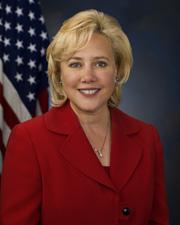
Mr. President. I have been listening to the debate over the past few days, and I think that a common theme on both sides of the aisle has been this is not a perfect bill. There are those on this side…
Mr. President. I have been listening to the debate over the past few days, and I think that a common theme on both sides of the aisle has been this is not a perfect bill. There are those on this side of the aisle who rightly say that this bill does not go as far as it could; that it doesn't
focus enough of the assistance on low-income seniors and could do more to keep employers from reducing or eliminating benefits for their employees. Others have raised concerns about the fact that there is a $1,400 ``doughnut hole'' and an overly restrictive assets test that will mean less help for too many Americans. There are those on the other side of the aisle that have rightly said that this bill does not do enough to address the long-term solvency issues facing Medicare. They contend that this $400 billion expansion, without making additional structural reforms, puts Medicare on an unsure footing for the future. It is for these reasons that Members on both sides of the aisle have said they will vote against this bill.
Many maxims have been used over the past few days to describe the choice before us. Some have said, ``A bird in the hand is worth two in the bush.'' Others have said, ``Let us not make the perfect be the enemy of the good.'' Still others have said, ``Something is better than nothing.'' I have spent the last 25 years in public service, and if there is one thing I have learned, it is that a true compromise is one from which no one side walks away completely happy. If there is anyone who knows that lesson better than I, it is the senior Senator from Louisiana, Senator Breaux. I have often said that if there is a deal to be had, Senator Breaux will find it. He has an amazing talent for bringing two sides together in a way that preserves the key principles of both. I think he has succeeded in doing that again here.
Going into the conference, Democrats insisted that the final bill must include the following: meaningful assistance to low income beneficiaries; providing Federal assistance to Medicare seniors on Medicaid, dual eligibles; strong Government fallbacks; and real incentives for employers to retain coverage. The conference agreement represents major victories in all four of these key areas.
First, and perhaps most importantly, beneficiaries with low incomes will get immediate assistance in paying for their drugs. The premium, deductible and coverage gap would be waived for people earning up to $12,123 a year, $16,362 per couple. Those making up to $13,470, $18,180 per couple will not have to pay a premium or be subject to a coverage gap and would only have a $50 deductible. What this means in real terms is that one-third of all Medicare beneficiaries, over 200,000 of which are from my State, will get immediate assistance to drugs at little to no cost to themselves. These are people who today have no help.
This bill also provides $88 billion in tax incentives to employers to encourage retaining existing retiree drug coverage. CBO estimates those incentives will greatly diminish the number of employers who will reduce or eliminate their coverage because of passage of this bill. It ensures that all beneficiaries will have access to drug coverage by providing a strong government fallback in the event that private plans do not provide adequate coverage in any particular region. Finally, it provides meaningful support to Medicare providers so that they can continue to care for our Nation's elderly.
These are major victories. I am, however, disappointed by some of the provisions that were ultimately included in this bill, most especially the asset test. I understand that the asset test in this bill is fashioned after asset tests used to determine a person's eligibility for Social Security Income (SSI) and Medicaid. I understand that it is, in fact, three times as generous as the asset tests used by those programs. Yet, in my view, further restricting eligibility for vital Government programs so as to separate out the near poor from the poor is a precedent that should be abolished, not furthered. I think the American public would be shocked to learn how restrictive these asset tests are.
In this bill, if a senior whose income is less than $12,123 a year has more than $6,000 in assets, they will no longer qualify for assistance with their premiums or deductibles. The proponents of the asset test claim that they are necessary to ensure that a person doesn't claim to have an income of $12,123 and at the same time have a vacation home in Florida and $50,000 in stocks. But these are not the people that these asset tests affect. Who they end up affecting is a widow who is living on her husband's $600 a month Social Security check, but just so happens to have a $10,000 life insurance policy or home full of furniture valued at $3,000. That is just not fair. While I am not able to change this policy here, I do intent to work to change it later.
Ten years have passed since this body was first presented with the need to reform Medicare. We have long recognized that the ways of medicine have changed. Medications and outpatient services have taken the place of intrusive surgeries and long-term hospitalization. We know that Medicare has not keep pace with those changes nor does it reflect the current needs of our seniors. Over the past 10 years, we have assembled task forces, engaged in numerous studies, held countless hearings and drafted several legislative proposals, but we have never gotten to where we are today, at the brink of passing a bill that will put us on the path of making reform a reality.
I think we must act now. In a time of rising deficits, it is unlikely we will have $400 billion or the political will to make these improvements any time in the near future. The seniors in my State are tired of waiting for the perfect bill. If we do not pass this bill this year, who knows how much more time will pass before we get to this point. It certainly won't be next year. If we had not reduced our surpluses by giving out tax cuts, perhaps we could have done more, but there is no sense in wondering what could have been. What we need to focus on now is what can be.
One year ago, I was in Louisiana running for re-election and I promised the people of Louisiana that while I would be with the President some of the time and I would be with the Democratic caucus some of the time, no matter what, I would be with the people of Louisiana 100 percent of the time. This bill is good for Louisiana. Ultimately, that is why I support it.
In Louisiana, one out of every two seniors has no prescription drug coverage. Today, 72-year-old Ethel Cernigliaro of Homer is one of them. With only her $727 a month Social Security check to depend on, Mrs. Cernigliaro finds a way to pay her utilities, buy groceries and still cover the $300 and more she pays each month for prescriptions. At this point, Mrs. Cernigliaro doesn't know all of the details of how this Medicare reform will help her, but she is certain of one thing: It has got to be better than what she has now. ``I've been following it closely, and it is certainly encouraging to know someone is trying to do something,'' she said. This bill means seniors like Mrs. Cernigliaro will no longer be without assistance for the drugs they need to maintain their quality of life and health. She and the 200,000 seniors like her will, in most cases, pay no more than $5 a prescription for their medications. Because of this reform, no senior citizen in our State will be without some level of coverage for prescriptions.
What's more, this bill will deliver $551 million over the next 10 years in emergency assistance for Louisiana's hospitals, most of which are struggling to keep their doors open. It will provide $156 million in much needed assistance to Louisiana's doctors. Without this assistance, these doctors could no longer afford to care for Medicare patients. It will provide $25 billion in help for our Nation's rural communities, many of which are in Louisiana. This represents the largest, most comprehensive rural package ever passed by Congress. Finally, this bill provides for much-needed prevention services, including screening for heart disease and diabetes, which could have helped to save the lives of the nearly 10,000 Louisiana seniors who died of these diseases last year.
If this bill does not pass, the people of my State will go yet another year without these important interventions. I, for one, cannot ask them to wait. Since Medicare was first passed into law in 1965, it has been amended and modified hundreds of times. This comprehensive reform package is not the first, nor will it be the last. I look forward to working with my colleagues in the months and years to come to ensure that the Medicare program, and this new prescription drug benefit, will be all that it promises to be and more.
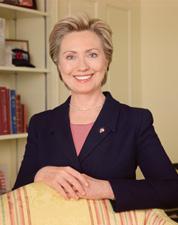
Mr. President, this is a sad day for seniors and a sad day for America. I have long fought for a prescription drug benefit, and I am truly disappointed that this bill fails to adequately address this…
Mr. President, this is a sad day for seniors and a sad day for America. I have long fought for a prescription drug benefit, and I am truly disappointed that this bill fails to adequately address this need. Seniors deserve a comprehensive, reliable prescription drug plan. This is no such bill. It is a weak benefit meant to cover the true intentions of its authors--privatizing Medicare. In short, the bill Republicans are passing today is a wolf in sheep's clothing.
This bill, over time, will bring about the unraveling of the Medicare system, breaking a promise we made to our seniors. It does all this under the cloak of a prescription drug benefit that is far too small and far too weak to justify the negative side effects.
To illustrate how this bill begins the demise of Medicare and sets our Nation back in its effort to care for seniors, we need only to look at the years before Medicare, when the private market failed to adequately serve the elderly. This sicker, costlier population was an unprofitable group for private insurers to cover. It was impossible to take care of this pool and still keep premiums affordable. Before we passed Medicare in 1965, 44 percent of seniors were uninsured. Now 1 percent of seniors are uninsured--a lower rate than any other age group. Medicare does this by being able to spread the per-person costs across a large number of people to pool the risk.
This bill, however, fragments the risk pool and allows private plans to ``cherry-pick'' the healthiest seniors. Left behind will be a group of Medicare applicants that are far more expensive per person. This will create a two-tiered system and start an insurance cost death spiral that will unravel Medicare's financing. Medicare is a promise we made as a nation to guarantee seniors the health care they need in their golden years. This bill betrays that promise. And it does so under the false pretense of a prescription drug benefit. While promising negligible prescription drug coverage, this bill immediately puts benefits at risk for millions of seniors, including retirees, members of state prescription plans and those who are dual-eligible for Medicare and Medicaid--the poorest and the sickest. I voted against this bill for these reasons, and because these flaws will particularly harm New Yorkers.
This bill contains little to prevent employers from dropping retiree coverage. That will disproportionately affect New York, which has a higher percentage of seniors with retiree health than other States. In New York State, 36.5 percent of Medicare beneficiaries have retiree coverage compared to a national average rate of 31.8 percent. Over 200,000 Medicare beneficiaries in New York will lose their retiree health benefits under this bill.
This bill will also reduce drug coverage for the lowest-income and sickest Medicare beneficiaries--those dually eligible for Medicare and Medicaid. In a cost-savings provision, this bill will ban Medicaid from filling in the gaps in coverage by prohibiting Medicaid dollars from covering prescription drugs not covered by the new Medicare drug plan. This could hurt 6 million nursing home residents, people with disabilities, and truly indigent seniors nationwide, and over 400,000 in New York alone.
This bill also fails to protect seniors who hope to stay in state prescription drug plans, like New York's EPIC. Unless corrected, this bill will force EPIC to comply with private drug plans preferred drug list, hampering EPIC's ability to ``wrap around'' Medicare and supplement the drug coverage. The state legislature will be forced to change the law and the design of EPIC to continue to program.
Retirees, dual-eligible and state plan participants are not the only losers in this bill. The premium support provision will also hurt seniors in various regions selected for this experiment. These seniors will incur a surcharge in their Medicare premiums others will not have to pay. The seniors who want to stay in traditional Medicare but fall in a metropolitan area chosen for the premium support ``demonstration'' will have a 5 percent surcharge over their counterparts in other States. In the future that surcharge could spike to 88 percent if the ``demonstration'' is expanded to a full-premium support privatization effort. New York seniors in Rochester and Buffalo are at risk of being treated in that discriminatory manner. New York State also has two other Metropolitan Statistical Areas--Albany-Schenectady-Troy, and Glen Falls--that face the possibility of being chosen and whose seniors are therefore at risk of having to pay more in Medicare part B premiums than other seniors in the U.S.
The bill also hurts seniors and individuals with disabilities by raising every Medicare beneficiary's deductible for physician services immediately, before seniors and people with disabilities even receive any benefits. Yet it fails to deal with the rising price of prescription drugs. It guts re-importation, weakens the generic provisions, and goes through the most unimaginable contortions to undermine government bargaining power, or any other checks on skyrocketing prescription drug prices. At the same time it places a 45 percent general revenue trigger on overall Medicare spending. This puts existing non-drug benefits in jeopardy by placing an arbitrary lid on spending and allowing drug-related spending to grow uncontrollably. That means other Medicare benefits will get squeezed into tighter and tighter fiscal constraints. If they can't fit those constraints, this bill forces those existing benefits onto the chopping block year after year.
I and many of my colleagues have expressed concerns, not just with aspects of this bill, but with the appalling process with which it was thrust upon us. As complex and confusing as this
bill is, the senate discussed it for less than a week now. We have not been given ample time to understand this bill, and our constituents have not been given adequate time to discern how it will affect their lives.
Fortunately, there are some provisions included that I support. I am very glad to see that this bill stops the damaging cuts to physician payments and provides a small increase to physicians instead. I am pleased that the bill includes between $300 and $400 million for rural and small community hospitals and health providers in New York, while also providing additional funds for public and other hospitals who serve a disproportionate number of uninsured or Medicaid patients. And while I would have liked to see all teaching hospital cuts averted, I am pleased that at least some improvements were made for graduate medical education, since New York State trains many of the graduate physicians in the nation. This bill also includes a version of Senator Schumer's proposal, which provides greater market competition for generic drugs. And finally, this bill contains a proposal that I offered as an amendment on the Senate floor--the comparative effectiveness research provision. This will assure that we spend money on drugs that are most effective, not just the ones that are most advertised.
These positive provisions, however, should have been attached to a good bill. They are not enough to justify undermining the promise of Medicare. I believe New York deserves a better bipartisan alternative than the one that passed today, and I will continue fighting this year, as well as in years to come, to correct the deficiencies I've described today so that Congress might deliver on the long-awaited promise of a simple, affordable, comprehensive prescription drug benefit for all seniors.
Like so many other pieces of legislation we have witnessed in the past two and a half years, this bill is designed to please special interest and not the public. It will be a benefit to drug manufacturers. And it will be an benefit to private insurance providers. They are the big winners here, and that's not right.
We need a bill that will benefit seniors. They deserve a benefit that is comprehensive, wide-ranging, and reliable. Today's bill is mainly a bill to privatization of Medicare. And it's not only seniors who will be harmed. All Americans, young and old, will deal with the financial and medical consequences of this bill for years to come. This is a bad bill for seniors and a bad bill for America.
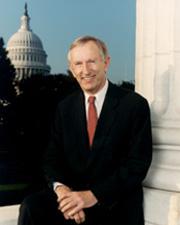
Mr. President, I have listened closely to the debate over providing prescription drugs and improving other benefits under the Medicare Program. This debate has not been limited to the last few days,…
Mr. President, I have listened closely to the debate over providing prescription drugs and improving other benefits under the Medicare Program. This debate has not been limited to the last few days, as we all well know. This debate has been waged for 38 years.
Providing Americans with access to prescription drugs at an affordable cost has been one of the most vexing issues facing Congress in recent years. Many ``solutions'' have been offered to ``fix'' the problems of high cost and lack of access, and Congress has explored and debated various approaches. Of these approaches, providing a Medicare prescription drug benefit is the most important and perhaps the most challenging to accomplish.
For years, progress has been delayed over significant policy differences, not the least of which was the question of whether or not the Government could even afford to create a new and expensive entitlement program. But that question shifted and our debate this week wasn't focused on the question of whether the Government should provide a prescription drug benefit but rather on the details of how to structure a prescription drug benefit.
Last Congress I had the privilege to work with several of my Republican and Democratic colleagues in the Senate to develop a Medicare drug benefit program that became a key option in the ``how to'' debate. Our proposal, which became known as the tripartisan effort, embodied the principles that I believed must be part of a Medicare drug program.
First, the program must make a universal benefit available to all Medicare beneficiaries. It would be unfair to use much needed medicines as a carrot to lure seniors into managed care programs they don't want. We should also avoid providing a benefit only to the poorest of the poor and those with catastrophic costs. Virtually all seniors, regardless of income, need help to make their medicines either outright available or more affordable, and most have indicated a willingness to pay their fair share to support the program.
Second, the program must be comprehensive so that elders would have as generous a benefit as possible, from their initial spending to their catastrophic costs, and they shouldn't have to forego the best medicines for the cheapest ones just in the name of budget savings.
Third, a Medicare drug benefit must be affordable for both beneficiaries and the Government. Seniors should be able to get the best medicine available at the best possible price and the Government must derive the best cost savings through open competition. We should expect to realize as much savings in our pharmaceutical purchase for Medicare as foreign governments realize today.
Finally, for a drug benefit to be truly successful it must be sustainable. It will do little good to repeat the catastrophic failure of years past by beginning a program that we cannot carry on. That is why this must be a shared responsibility of beneficiaries and the Government. A program that combines seniors' contributions with a Government guarantee will have the best chance of enduring into the future.
Since last year, I have listened to the concerns of my colleagues, and I have weighed those concerns seriously. In the last few days of debate, I have given great consideration to the points raised by my colleagues and good friends in this body. I acknowledge their sentiments and I agree that this is not the bill I would have written if I had infinite resources to do it. This bill is not perfect. However, 38 years is just too long for American seniors to wait.
Turning this legislation away would have been a missed opportunity to provide seniors with the most significant modernization of their Medicare benefits since the program's inception in 1965. I believe this bill meets these four standards: It is universal, comprehensive, affordable, and sustainable. Could it be improved? Certainly. But this plan is a good compromise. It offers a respectable and responsible plan within the budget limitations we faced. It is a good compromise. I support this bill.
The conference report includes many significant features for the citizens of my home State of Vermont. It provides a sustainable, universal, and comprehensive prescription drug benefit to all 93,000 Medicare beneficiaries in Vermont.
For 40,000 seniors in Vermont with limited savings and incomes below $13,470 for individuals and $18,180 for couples, the Federal Government will cover most of their drug costs.
In addition, Medicare, instead of Medicaid, will now assume the prescription drug costs of 21,767 Vermont beneficiaries who are eligible for both Medicare and Medicaid. According to the Centers for Medicare and Medicaid Services, this will save Vermont $76 million over 8 years on prescription drug coverage for its Medicaid population.
This bill recognizes the high cost of providing quality care in rural settings and finally puts an end to years of unfair reimbursement gaps between rural providers and their urban counterparts. Specifically, this Medicare package provides $25 billion for rural providers, netting $41 million in additional funds for Vermont hospitals over the next 10 years and $18 million for underreimbursed physicians over the next 2 years.
I am also glad Chairman Grassley and Ranking Member Baucus have worked with me to address another inequity in the system. Critical access hospitals provide care in the some most underserved regions of Vermont as is the case throughout rural America. These hospitals are small yet serve
as critical resources to their communities.
I am very pleased to see that the conferees retained a provision from the Senate measure that will allow critical access hospitals, like the Mount Ascutney Hospital in Windsor, VT, to expand access to psychiatric and rehabilitative services to the most vulnerable citizens in that community.
This bill contains a provision that will allow us to better understand how to provide quality health care, culminating several years of work in concert with Dr. Jack Wennberg at Dartmouth to measure care by the quality of patient outcomes rather than utilization of resources.
In closing, I especially want to salute the efforts of Senator Baucus, Senator Grassley, and Senator Breaux and the other without whose hard work and commitment to working through an agreement we would not have accomplished passage of this legislation and they deserve our accolades. I also thank several of my other colleagues who have contributed so much to this debate over the years. I have worked for more than 3 years with my good friends, Chairman Grassley and Senators Snowe, Breaux and Hatch. In many meetings over many months, we delved into the details of what came to be called the tripartisan bill. This has been one of the finest experiences of my many years in Congress. I am very proud to have been a part of that group and that our efforts led the way to our success today.
A bill such as this is the result of great effort on the part of many different people who are not elected to this body but upon whom we all rely. I would like to recognize the staff members who have worked so hard on this bill and deserve much of the credit for its successful passage.
On Senator Grassley's staff: Ted Tottman, Linda Fishman, Colin Roskey, Mark Hayes, Jennifer Bell, and Leah Kegler, and on Senator Baucus' staff Jeff Forbes, Liz Fowler, Jon Blum, Pat Bousliman, Kate Kirschgraber, and Andrea Cohen deserve considerable recognition for their tireless efforts. Catherine Finley, Tom Geier, and Carolyn Holmes from my friend Senator Snowe's staff; Patricia DeLoatche and Patricia Knight of Senator Hatch's office; and most especially Senator Breaux's legislative director Sarah Walters and his staff Michelle Easton and Paige Jennings deserve enormous credit for this bill.
On my own staff, I particularly want to recognize the contributions of Sherry Kaiman, Eric Silva, and especially Sean Donohue who took up the effort on the tripartisan bill and who has continued to see it through to today's success. Each and all have worked tirelessly to gather the input, analyze the issues, and build a consensus toward achieving this final product.
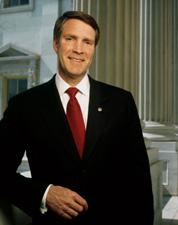
Mr. President, today is an extraordinary day for 40 million seniors. For too long, our medical and health care advances have raced ahead, especially in the last 10 to 15 years, but Medicare, as a…
Mr. President, today is an extraordinary day for 40 million seniors. For too long, our medical and health care advances have raced ahead, especially in the last 10 to 15 years, but Medicare, as a health security program for seniors, has stood still.
But today that will change. And it will change today with overwhelming support. On this chart are 358 organizations who support this change, such as the Seniors Coalition, the AARP, the American Medical Association, the American Hospital Association, the Family Physicians, the American College of Cardiology, the National Alliance for the Mentally Ill, the Rural Hospital Association, the Sickle Cell Foundation, the Society of Thoracic Surgeons--and the list goes on and on.
It has been a long time coming, but it is finally here. With a bipartisan majority, the U.S. Senate will enact prescription drug coverage for the first time under Medicare.
Forty million seniors and individuals with disabilities will finally have the prescription drug coverage they need and the Medicare choices they deserve.
They will finally be able to take full advantage of the tremendous medical advances that have been made in the almost 40 years since Medicare was enacted.
I do not think it can be overstated that today marks a truly historic advance for America.
As a physician, I have written hundreds of prescriptions that I knew would go unfilled because patients simply would not be able to afford them. With this bill, that will change.
As a U.S. Senator, I have watched a decades-old Medicare program operate without flexibility, without comprehensive care, without coordinated care, without preventive care, without disease management and catastrophic protection against out-of-pocket medical costs.
By expanding opportunities for private sector innovation, this Medicare bill offers the possibility of genuine reform that can dramatically improve and strengthen quality of care for our seniors and for those baby boomers who will be seniors in the not too distant future.
At the same time, it preserves traditional Medicare. It strengthens and improves traditional Medicare, and it preserves traditional Medicare for those who wish to choose it.
It combines the best of the public and the private sectors. It improves Medicare for today's seniors and helps, most importantly, lay the foundation for a strong and modern program for seniors today, but also tomorrow's seniors.
The legislation provides all seniors with access to more affordable prescription drugs and targets more substantial assistance to lower income seniors and those with high catastrophic drug costs.
It also dramatically expands health coverage choices for seniors, and improves coordinated care, improves disease management, adds prevention to Medicare, and adds catastrophic coverage both under the traditional Medicare fee-for-service program and under Medicare private health plans.
While it does expand those choices and those opportunities to choose, choices that seniors simply do not have today, it also ensures that those seniors can keep exactly what they have. They do not have to choose that new drug plan. They do not have to choose that new type of health care plan that we might have in the U.S. Senate or that Federal employees have.
They don't have that option today, but they can choose that or they can keep exactly what they have today. All of the options in this legislation, including prescription drug coverage, are voluntary. Beyond increasing competition, we will also take steps to control health care costs both within the Medicare Program and within the broader health care system. For the first time, we will ask those seniors who can afford to do so to pay a higher portion of their Medicare costs. We will increase and index the Medicare Part B deductible for the first time in over a decade. We will make health savings accounts available to all Americans so that they have greater control over their own health care choices and so they can plan and save, tax free, for future health care needs.
We will make other responsible changes such as speeding generic drugs to the marketplace so that seniors will have access to these lower cost prescription drugs.
Indeed, today is an extraordinary day. Today is a fateful day. Today is a red letter day for seniors.
In conclusion, today's historic action is only possible because of the hard work of many dedicated Members of the Senate and the House of Representatives, and the administration.
I would like to take a moment to thank those whose commitment was critical to this effort. First and foremost, President Bush deserves credit for his bold leadership and commitment to improving the health of America's seniors and individuals with disabilities.
Tommy Thompson, the Secretary of Health and Human Services, and Tom Scully, the Administrator of the Centers for Medicare and Medicaid Services, spent hundreds of hours working on this legislation.
In the Senate, Finance Committee Chairman Charles Grassley and Ranking Member Max Baucus put partisanship aside and worked tirelessly from beginning to end to deliver on our promise to America's seniors. Senator John Breaux also deserves credit. He and I have worked together for the better part of 6 years on legislation to improve Medicare. Today, we have finally reached that goal.
All members of the conference committee showed a degree of dedication and resolve seldom seen in either Chamber, especially Senators Orrin Hatch, Don Nickles and Jon Kyl. We would not have reached this point without building on the strong foundation laid by Members who worked so hard on this issue during the past several years, especially Senators Snowe, Jeffords, Gregg, Hagel, Ensign and Wyden. Senators Bunning, Thomas, Smith, Lott, and Santorum also made major contributions to this legislation through their work on the Senate Finance Committee.
Members of this body who voted against final passage, but nonetheless worked to improve this legislation at every step of the way and help pave the way to final passage also deserve great respect and appreciation.
The House Leadership, especially Speaker Dennis Hastert and Leader Tom Delay, also deserves special recognition, as does the Chairman of the Conference, Chairman Bill Thomas, and the Chairman of the House Energy and Commerce Committee, Chairman Billy Tauzin. We would not be here without them.
Finally, I want to thank my hard working and dedicated staff: Dean Rosen, Elizabeth Scanlon, Rohit Kumar, and Craig Burton. They have put in thousands of hours and poured over thousands of details.
To everyone who has worked so hard and given so much to this effort, I thank you. America thanks you. And, most of all, America's seniors thank you.
I ask unanimous consent that a long list of staff who made major contributions to this legislation be printed in the Record.
Mr. President, I ask for the yeas and nays.
Mr. President, I move to reconsider the vote.
Mr. President, this is an extraordinary day for seniors and indeed all Americans. The legislation that we just passed is consequential. It is far reaching for every American. It touches all of us in material ways, in meaningful ways. It is epical in the sense that it modernizes Medicare to provide 21st century care for our seniors, with preventive care, with disease management, and especially with prescription drugs. This bill is notable in its 54-to-44 vote in being a bipartisan bill.
For the information of our colleagues, we will have no more rollcall votes. We currently remain in discussion on the appropriations bills. The bill will not be filed until later today in the House of Representatives. I will be in discussion with the Democratic leadership as to what appropriate time we will be addressing those appropriations bills. There will be no more rollcall votes today. I wish everybody a very happy, enjoyable, and especially safe Thanksgiving.
Mr. President, I cannot support the Medicare prescription drug conference report before us. I share in the disappointment of the many seniors, advocacy groups, providers, and colleagues in Congress…
Mr. President, I cannot support the Medicare prescription drug conference report before us. I share in the disappointment of the many seniors, advocacy groups, providers, and colleagues in Congress who have fought so long to provide Medicare beneficiaries with prescription drug coverage. Drug coverage should be an integral part of any meaningful health care insurance and it is certain that if Medicare were created today, no one would imagine excluding drug coverage. Unfortunately, the bill before us now has wasted an opportunity to give Medicare beneficiaries the affordable and comprehensive coverage they deserve. The conference report provides inadequate coverage while at the same time undermining Medicare, a program that has served our seniors for over 37 years.
Under this bill, Medicare beneficiaries will pay an estimated premium of $35 per month although that premium level is not guaranteed and it could be higher. After meeting a $250 annual deductible, 75 percent of a beneficiary's drug costs are covered up to $2,250. A beneficiary receives no coverage for drug costs between $2,251 and $3,600, though they are still required to continue paying monthly premiums during this coverage gap. Once drug costs exceed $3,600, the drug plan would cover 95 percent of a Medicare beneficiary's drug expenses. This drug benefit is insufficient and much less than many retirees receive through existing coverage.
Those opposed to offering a more substantial prescription drug benefit claimed there are insufficient resources to pay for it. This argument comes from the very people who have pushed through the Congress tax-cut programs that tilt heavily in favor of the wealthy. Over the last several years, the administration has squandered a surplus and left the Nation facing a deficit already approaching half a trillion dollars. These valuable resources could have been used to provide our Nation's seniors the real drug coverage they deserve.
During consideration of the Senate bill, we missed an opportunity to provide Medicare beneficiaries with a substantial, reliable and straightforward prescription drug benefit. I cosponsored and voted for an amendment offered by my colleague from Illinois, Senator Durbin. His alternative would have provided a Medicare-delivered drug benefit that would have allowed the Medicare program to employ negotiating strategies used by the Veterans
Administration--VA--and other government entities to bring down drug prices. Senator Durbin's plan would have begun as soon as practicable, unlike this legislation that leaves beneficiaries waiting until 2006 for the drug benefit to begin.
Under Senator Durbin's plan, seniors would have not paid a deductible, would have paid 30 percent of costs, and would have no coverage gap. Once drug costs reach $5,000, 90 percent of their costs would be covered. In addition, employer contributions would count toward out-of-pocket limits so there would be much less risk of employers dropping retiree coverage. This was the proposal we should be acting on today.
As I emphasized during debate on the conference report, this bill contains a number of provisions that would undermine Medicare. For the first time in history, Medicare beneficiaries will pay more for their Part B premiums based on their income, thereby eroding the universal nature of the program. Medicare enjoys widespread support since everyone pays the same monthly premium for the same service, thereby giving us a social insurance program in which everyone has an equal stake.
The bill before us does not deal effectively with the rising costs of drugs. This legislation does not allow the Federal government to bring its weight to bear to lower drug costs. Medicare is not allowed to bargain on behalf of the millions of beneficiaries who would receive drug benefits. We know that drugs purchased through the VA program cost substantially less than those purchased at retail value. Furthermore, under this bill drug reimportation is completely at the discretion of the Administration. This is the same Administration that has repeatedly expressed its opposition against drug reimportation even if safeguards can be taken to ensure the safety of the reimported drugs.
This bill has the serious potential to cause a number of retirees to lose existing employer-sponsored prescription drug coverage. CBO estimates that 2.7 million retirees would lose existing coverage. This is an unacceptable consequence of legislation that is supposed to make life better for seniors. This serious deficiency has prompted many constituents to call my office to express concern about this bill.
Congress began this debate focused on the best way to provide Medicare beneficiaries drug coverage and efforts to keep those drugs affordable. We now have legislation before us in which the drug benefit appears to be an afterthought. I think a deeply troubling aspect of the bill is that it takes steps toward privatizing Medicare. This legislation relies on private plans to deliver the drug benefit; seniors could be forced to shift from plan-to-plan, year-to-year as they did when Medicare+Choice HMOs pulled out of the Medicare program a few years ago. In my own State of Maryland, insurance companies left the Medicare program, abandoning more than 100,000 seniors.
In addition, the bill includes a six-year premium-support ``demonstration project,'' which would be established in six metropolitan areas. Medicare recipients in these areas would choose between traditional Medicare and private health plans; if the cost of the selected form of coverage exceeded a benchmark level set for the area, the individual pays increased premiums to cover the difference. This bill also contains $12 billion in subsidies for private plans. This funding gives private plans an unfair advantage by enabling them to provide benefits that traditional Medicare does not cover. If private plans were more efficient than Medicare, they would not need this money to compete. This $12 billion should have been used to improve the drug benefit for all Medicare beneficiaries, not to underwrite the private plans.
The inclusion of tax savings accounts to pay out-of-pocket medical expenses further underscores how far the focus of the bill has strayed from providing Medicare beneficiaries prescription drug coverage. The bill makes health savings accounts that are currently a limited demonstration project universally available. These accounts could be used with high-deductible health policies giving healthy, affluent workers a strong incentive to opt out of comprehensive health insurance plans in favor of the new accounts. If large numbers of these workers opt out of comprehensive plans, the pool of people left in comprehensive plans would be older and sicker, causing premiums for comprehensive insurance to rise significantly.
I have long been a strong supporter of providing older Americans and disabled individuals who rely on Medicare an affordable, comprehensive, reliable and voluntary prescription drug benefit. However, I want to ensure we do so in a way that does not worsen the situation in which many seniors find themselves as they face rapidly rising drug costs. As we consider proposals to expand our Nation's major health entitlement programs, it is appropriate to follow a guiding principle in the practice of medicine--do no harm. Our seniors deserve a drug benefit that is a real improvement, not a complex experiment that may cause more trouble than it's worth. We must not enact a law intended to help that might eventually harm millions. The American people deserve better.
Mr. President, since Medicare was established in 1965, people are living longer and living better. Today Medicare covers more than 40 million Americans, including 35 million over the age of 65 and…
Mr. President, since Medicare was established in 1965, people are living longer and living better. Today Medicare covers more than 40 million Americans, including 35 million over the age of 65 and nearly 6 million younger adults with permanent disabilities.
Congress now has the opportunity to modernize this important Federal entity to create a 21st century Medicare Program that offers comprehensive coverage for pharmaceutical drugs and improves the Medicare delivery system.
The Medicare Prescription Drug and Modernization Act would make available a voluntary Medicare prescription plan for all seniors. If enacted, Medicare beneficiaries would have access to a discount card for prescription drug purchases starting in 2004. Projected savings from cards for consumers would range between 10 to 25 percent. A $600 subsidy would be applied to the card, offering additional assistance for low-income beneficiaries defined as 160 percent or below the Federal poverty level. Effective January 1, 2006, a new optional Medicare prescription drug benefit would be established under Medicare Part D.
This bill has the potential to make a dramatic difference for millions of Americans living with lower incomes and chronic health care needs. Low-income Medicare beneficiaries, who make up 44 percent of all Medicare beneficiaries, would be provided with prescription drug coverage with minimal out-of-pocket costs. In Pennsylvania, this benefit would be further enhanced by including the Prescription Assistance Contract for the Elderly, PACE, program which will work in coordination with Medicare to provide increased cost savings for low- income beneficiaries.
For Medical services, Medicare beneficiaries will have the freedom to remain in traditional fee-for-service Medicare, or enroll in a Health Maintenance Organization, HMO, or a Preferred Provider Organization, PPO, also called Medicare Advantage, These programs offer beneficiaries a wide choice of health care providers, while also coordinating health care effectively, especially for those with multiple chronic conditions. Medicare Advantage health plans would be required to offer at least the standard drug benefit, available through traditional fee- for-service Medicare.
We already know that there are many criticisms directed to this bill at various levels. Many would like to see the prescription drug program cover all of the costs without deductibles and without co-pays. There has been allocated in our budget plan $400 billion for prescription drug coverage. That is, obviously, a very substantial sum of money. There are a variety of formulas which could be worked out to utilize this funding. The current plan, depending upon levels of income has several levels of coverage from a deductible to almost full coverage under a catastrophic illness. One area of concern is the so-called ``donut hole'' which requires a recipient to pay the entire cost of drug coverage.
As I have reviewed these projections and analyses, it is hard to say where the line ought to be drawn. It is a value judgment as to what deductibles and what the co-pays ought to be and for whom. Though I am seriously troubled by the so-called donut hole, it is calculated to encourage people to take the medical care they really need, and be affordable for those with lower levels of income. Then, when the costs move into the catastrophic illness range, the plan would pay for nearly all of the medical costs.
I am pleased that this bill contains a number of improvements for the providers of health care to Medicare beneficiaries. Physicians who are scheduled to receive cuts in 2004 and 2005 will receive a 1.5 percent increase over that time. Moreover, rural health care providers will receive much needed increases in Medicare reimbursement through raises to disproportionate share hospitals and standardized amounts, and a decrease in the labor share in the Medicare reimbursement formula. Hospitals across Pennsylvania will benefit from upgrades to the hospital market basket update and increase in the indirect medical education. Furthermore, the bill will provide $900 million for hospitals in metropolitan statistical areas with high labor costs due to their close proximity to urban areas that provide a disproportionately high wage. These hospitals may apply for wage index reclassification for three years staring in 2004.
I would not that I do have concerns with this legislation with regard to oncological Medicare reimbursement and the premium support demonstration project for Medicare Part B coverage. Proposed reductions in the average wholesale price for oncological pharmaceuticals may have a grave effect on oncologists' ability to provide cancer care to Medicare Beneficiaries. Every Medicare beneficiary suffering from cancer should have access to oncologists that they desperately need. I will pay close attention to the effects that this provision has on the quality and availability of cancer care for beneficiaries and oncologists' ability to provide that care. Further, the premium support demonstration project for Medicare Part B premiums poses a concern. Some metropolitan areas may face up to a five percent higher premium for fee-for-service care than neighboring areas. While these provisions remain troublesome, we cannot let the perfect become the enemy of the good with this piece of legislation.
The Medicare Prescription Drug legislation has been worked on for many years. I believe this bill will provide a significant improvement to the vital health care seniors so urgently need. I congratulate the members of the conference committee including majority leader Frist, Senator Grassley, Chairman of the Finance Committee, and the ranking member, Senator Baucus, for the outstanding work which they have done on an extraordinarily complex bill.
Show 11 more
I thank the Chair. Mr. President, I thank Senator Kennedy. We have had a long and quite illuminating debate over the past week on one of the most important issues that our Nation faces; that is:…
I thank the Chair.
Mr. President, I thank Senator Kennedy. We have had a long and quite illuminating debate over the past week on one of the most important issues that our Nation faces; that is: Shall we turn a program which for 40 years has protected older Americans and disabled Americans against illness into a program which promotes wellness?
In order to do that, we understand that fundamentally we will have to make access to prescription drugs affordable, comprehensive, universal, and reliable because prescription drugs are now fundamental to a preventive health care policy.
There is much to criticize about this legislation, and I intend to vote no. We have heard that at great length in recent days. Let me take a slightly different approach. I am assuming that this legislation is going to pass. The challenge will then be before us: What do we do next?
Let me suggest three things that we ought to do next. One is that we have to look realistically at the cost of this bill. As Senator Ensign said during last night's debate, the $400 billion figure is a mirage. This bill is going to cost substantially more than $400 billion. The Congressional Budget Office is estimating that in the second 10 years, it will be over $1 trillion.
What are the suggestions of how to deal with this reality? One of those suggestions is to reduce benefits. Another one is to set some type of a formula relating Medicare expenditures to general revenue, and then scaling back Medicare expenditures when they break through that barrier.
Of course, one of the things that we ought to have done in terms of cost is not start this year by passing a massive tax cut which added substantially to the Federal deficit and narrowed the range of realistic options that we have today.
This has been truly an amazing year for the Congress and the President. We started the year with a proposal for almost a $1 trillion tax cut. We reasserted our commitment to fight and win a war against terror in Afghanistan. We started a war in Iraq. We have seen surging Federal Government expenditures in the nondefense area, and now on what will likely be the last day of the session, we conclude by passing a $400 billion unfunded new entitlement.
My answer to the question of cost, at least a significant part of it, lies in the fact that in this bill we are failing to sanction the use of the tremendous marketing influence which the Federal Government, through the Medicare Program, can have over the cost of prescription drugs.
Just as we did over 10 years ago--and the Presiding Officer's colleague, Senator Murkowski, was a prime sponsor of this legislation-- we authorized the VA to negotiate to get the best prices it could for American veterans. I think the high priority for 2004 should be to give to the administrator of the Medicare Program similar authority.
Second, I think we need to pass a Patients' Bill of Rights. If we are going to be herding millions of older Americans into various forms of health management, we have a responsibility to give them some assurance as to what the standards of that access to health care will be.
Third, we have a strange provision in here for the distribution of prescription drugs. That is, we use private insurance programs rather than traditional Medicare. It would be like having to get a private insurance program to get anesthesiology or any of the other services that have traditionally been provided through Medicare.
Then, in order to encourage--I would say more than encourage--mandate the maximum number of Americans participating in that program, we say there has to be at least one prescription-only insurance provider in the region and, second, then a preferred provider organization, essentially a variant of an HMO, in the region. It is only if both of those fail, there is not one or more drug-only insurance plan or a PPO, only under those circumstances will a person be able to consider using standard fee-for-service Medicare as the means of getting their prescriptions.
It is ironic that in another part of this bill, which is going to create a demonstration project on the totality of Medicare, we line up all of the choices side by side, including staying in traditional fee for service, which over 85 percent of Americans are electing to do, and then choose on an equal basis, as we do in the Federal health insurance program. We do not have to wait until all of the other choices have been rejected, because they are not being provided, and then drop back into a Blue Cross/Blue Shield-type fee for service.
We ought to do the same thing with prescription drugs. If we are going to have what I think is a rather irrational program-- incidentally, the prescription drug-only proposal is not in existence in any other area of American health care. A person cannot buy that through the Federal health care system. A person cannot buy it through their employer system. The reason they cannot buy it is because no insurance company is providing it. That ought to tell us something about what they think of the management and fiscal implications of providing a drug-only prescription plan.
At least we should not require our oldest citizens to go through a so-called fallback process. We should allow older citizens to assess all of the options at the same time and make the decision they consider to be in their best interest.
As I conclude this long debate, I urge that the agenda of cost, patients' rights, and providing the more rational process for elderly determinations as to how they will receive their drugs be the starting point of the agenda for reform next year.
Mr. President, in the limited time we have I would like to go back over and reiterate some points. In the very first instance, looking at the Medicare portion of this bill, right off the bat there…
Mr. President, in the limited time we have I would like to go back over and reiterate some points. In the very first instance, looking at the Medicare portion of this bill, right off the bat there are almost 9 million seniors who are going to be disadvantaged by this legislation. Almost one-quarter of the 41 million seniors who benefit from Medicare are going to be disadvantaged by this bill. There are 2.7 million seniors, according to the Congressional Budget Office, who are going to lose health benefits currently offered by their former employer. In my State, that is 40,000 people right off the bat. Those are CBO numbers; those are not mine, not made up by the minority.
Second, 6.4 million low-income seniors will have to pay more for the drugs they need. In my State, that is 74,000 people. The combined numbers are 9 million people, before anything else happens, who are going to be disadvantaged. This is a fact. If you are on Medicare and Medicaid you currently don't have to have a copay when it comes to prescription drugs. Now, under this bill, you will. It may not seem like a lot to people, but if you are making $13,470 or less than that, believe me, even a slight increase in these drug costs can be very harmful. That is just a fact.
Let me say to my friend from Iowa, I have respect for him and I admire his tenacity and his tremendous effort on behalf of this bill. I say to my friend, $13,470 is not a lot of money for Americans, and if you make $13,471, you are going to pay $420 in premiums, a $250 deductible, and you have to pay 25 percent of the cost of your prescription drugs. If you make $13,471, that is what you are going to be burdened with. I appreciate the fact that the very low income get some help, but I do not know anyone in this country who thinks $13,471 is a lot of money. But if you hit that number, then you are going to pay those kinds of costs, and that is going to be tremendously burdensome to many people.
Second, of course, if you look at chart 2 quickly here, you will see that this bill creates an unlevel playing field. We are told about free competition and choice. But the fact is, under this bill private plans get a 9 percent higher reimbursement than the Medicare plan, and they get $12 billion. If you have two competitors trying to appeal to a consumer and one side gets a 9 percent increase in reimbursement rates, plus $12 billion to help them get into the market, I don't know how you call that a level playing field. That is not level at all, in my view.
If we examine the so-called premium support demonstration programs, seniors effected by this experiment are going to be put in situations where they have less choice. If you end up being pushed into a private plan--and you can be under this bill--then your ability to choose your own doctor is gone. Talk about choice, there is no more fundamental choice to most Americans than the right to choose the physician who will take care of you, particularly for a senior. But under this legislation, if you are pushed into those plans, you lose the right to make that choice, the opportunity to choose your own doctor.
I hardly consider that a step forward or an improvement in the Medicare system. It is a major setback.
With regard to prescription drug costs, this issue has been made very clear by the Senator from Florida. I commend him for it. We are not saying in this legislation that you can go out, as the VA does, and consolidate your membership and then negotiate for prices. As the Senator from Florida pointed out, in the case of a couple that has been married for many years, the price of a drug for the husband, who is a veteran who served in Korea and World War II, is going to be substantially less than the price of the same drug for his wife, who wasn't a veteran. How can you explain that to a couple? Why can we not do with Medicare what we do with the VA? It is a logical choice. This bill prohibits that from happening.
I don't understand, for the life of me, why we are endorsing a proposal that doesn't allow the collective buying power of 41 million Americans to go out and lower the cost of prescription drugs. Yet this legislation would prohibit us from doing that.
When you look at those issues in this proposal, again I say to my friends who have crafted the prescription drug benefit, there are certainly stated advantages of moving forward with something here. But as the lead editorial in my State newspaper pointed out the other day, we can do a lot better with this legislation. It says:
They deserve better than scrambled eggs that Congress,
AARP, and other special interests want to dish out in the
guise of ``reform.''
The centerpiece of this faux reform is prescription drug
coverage. Here is the math: A beneficiary who has
prescription drug bills totaling $2,250 a year would have to
pay premiums of $420, a deductible of $250 and 25 percent of
the cost of medicine.
For someone in that category, that adds up to $1,252 out of pocket in their bills. Once the beneficiary's drugs reach $2,250, then they will have to pay the entire bill up to $3,600. Again, I realize you can't take care of everyone here, but that is a tremendous disadvantage.
I ask unanimous consent that the editorial from the Hartford Courant be printed in the Record.
Mr. President, I urge our colleagues to reject this bill and come back in January and rework it. Forty-one million Americans deserve a lot better than this bill is going to give them.
Mr. President, a vote in favor of this legislation, which is designed to add a prescription drug benefit to Medicare, is a very close call for me. There are some positive elements of this bill, and…
Mr. President, a vote in favor of this legislation, which is designed to add a prescription drug benefit to Medicare, is a very close call for
me. There are some positive elements of this bill, and there are also some flaws about which I am very concerned. In weighing the good and the bad, however, I have decided to support this bill.
The final legislation will provide very generous prescription drug coverage for about one-third of the lowest income senior citizens and disabled Medicare beneficiaries who live in North Dakota. For those Medicare beneficiaries whose incomes are below 150 percent of the poverty level, they will receive a benefit that will cover nearly 95 percent of their drug costs.
However, for senior citizens with incomes above 150 percent of the poverty level, this prescription drug benefit will not be very attractive at all, in my judgment. There is a $35 per month premium that will increase over time, a $250 deductible that will grow to $445 by 2013, and a period of time when seniors' drug expenditures reach $2,250 and seniors will still be paying premiums but have no drug coverage at all. Only after spending a total of more than $5,100 would Medicare beneficiaries receive catastrophic coverage of 95 percent for prescription drugs.
If this prescription drug benefit was a mandatory program, I would vote against it. Because it is optional, I think many senior citizens with incomes above 150 percent of poverty will take a look at the benefit and decide it is not worth it. The one-third of our senior citizens with the lowest incomes will benefit from it.
In addition to providing generous coverage for the lowest income senior citizens, the other feature of this bill that I strongly support are the steps it takes to offer some fairness in Medicare's payments for rural hospitals, doctors and other health care providers.
Hospitals and physicians in rural States have found that their reimbursement rates under Medicare have put them at a serious disadvantage. If these lower reimbursement rates were to continue, the quality and access to health care delivered to rural citizens would diminish. Rural hospitals have to compete for the same doctors and nurses and use the same sophisticated medical equipment as urban hospitals, and yet their reimbursement rates have been dramatically lower. As a result, many of our North Dakota hospitals are in real financial trouble. This legislation begins the process of establishing some fairness in those reimbursement rates, and I strongly support that.
But there are also a number of provisions in this bill that I think are a mistake. First of all, this bill lacks provisions that would begin to contain the rising costs of prescription drugs. That is a dramatic failure. For most senior citizens, the problem with prescription drugs is the steep rise in the prices of those prescription drugs. Unfortunately, the majority party bowed to the pressure of the pharmaceutical industry and failed to put any real cost containment in this bill. That is a serious mistake.
In addition, this bill includes provisions that have nothing to do with adding a prescription drug benefit to the Medicare program but that have the potential to do harm. The Health Savings Accounts established by this bill are at best a costly tax shelter for the wealthy and at worst could drive up costs for the traditional insurance market. Likewise, this bill is cluttered up with subsidies to private insurers and a phony demonstration program that adds additional costs to Medicare and could undermine the Medicare program itself if these provisions are not adjusted in the future.
As I sifted through all of these provisions, I concluded that providing nearly total prescription drug coverage for one-third of our senior citizens with the lowest incomes is a very important objective to achieve. Add to that the improvement in the reimbursement rates to strengthen rural hospitals and health care providers, and I believe that these two features warranted support for the bill.
Again, this bill is a close call because I think those who have written it have created an optional program that is sufficiently unattractive to many senior citizens that they will elect not to sign up for this program.
My hope is that we can lock in the support in this bill for the nearly one-third of the senior citizens with the lowest incomes, address the reimbursement inequity for rural hospitals and doctors, and then come back in future legislation and do what should have been done with the rest of this bill.
That is, we need to add some real cost containment, fix the drug benefit so that senior citizens aren't paying premiums while they're getting no coverage, and dump the extraneous provisions that have nothing to do with adding prescription drug coverage to Medicare.
In summary, I am not pleased with this choice, but I know that if we do not commit the $400 billion that we have now set aside for Medicare prescription drug coverage in the coming 10 years, that funding may not be available in the future. And I know that we may not get another opportunity to fix the reimbursement rates for rural hospitals in the near future.
So I will vote for this bill, but I do so with some real regret because this bill could have been so much better.

Yes, we have heard this criticism often during the debate. And I believe it is important to clarify that this bill will ensure that seniors pay less for prescription drugs than they pay today. Isn't…
Yes, we have heard this criticism often during the debate. And I believe it is important to clarify that this bill will ensure that seniors pay less for prescription drugs than they pay today.
Isn't it also true that if a plan chooses to use a formulary, it must include at least two drugs in each therapeutic category or class, unless the category or class only has one drug and that the plan must use pharmacy and therapeutic committees that consist of practicing physicians and pharmacists to design their formularies?
In addition, I also think it is important to note that the Congressional Budget Office has estimated that the net price increase for prescription drugs under this bill will be 3.5 percent. CBO also found that drug plans bearing full statutory risk levels are estimated to produce an overall higher cost savings of 20 to 25 percent for prescription drugs under this bill, as compared to the 12 to 15 percent that CBO believes is achieved by private prescription benefit managers today. According to CBO, prescription drug prices would be cheaper under this bill. I would like my colleagues to know that should CBO's estimates of the higher savings by drug plans in this bill prove to overestimate prescription drug savings to seniors, I intend to introduce legislation that will provide seniors with lower drug prices.
Mr. President, the Medicare conference report, which includes a reform of the Part B drug payment system, includes significant payment reductions to providers of cancer care. I understand that Senator Grassley does not intend for these payment reductions to force efficient cancer clinics to close, jeopardizing access to care for thousands of cancer patients.
Many physicians depend on overpayments on Part B drugs to make up for inadequate practice expenses. Is it the intent of the Senator from Montana that physicians' practice expenses will be increased sufficient to ensure access to care?
Is it the intent that if this new payment system does not suffice to ensure access to care, that you will revisit the system and revise the payment methodology?
Finally, it is my understanding that practice expense increases for oncology are expected to be about $500 million in 2004, $600 million in 2005, and $560 million in 2006, as shown in the summary which I will submit for the Record. Is it your understanding that the payment expense increases will allow efficient cancer care providers to continue serving cancer patients and not close their doors?
I ask unanimous consent to print the following in the Record.
Mr. President, I am concerned about the impact the Medicare conference report will have on low-income Medicare beneficiaries who are living with HIV/AIDS. I have heard a lot of opposition to this bill from the HIV/AIDS community. My concern is with their access to drug treatment therapy under the Medicare prescription drug benefit. Is it your understanding that the Medicare conference report will not prevent low-income Medicare beneficiaries who are living with HIV/AIDS from getting all the drugs they need through Medicare Part D?
Victims of HIV/AIDS are somewhat unique since the
treatment for HIV/AIDS varies with the individual. To be clear, no low- income Medicare beneficiaries who have HIV/AIDS will be denied access to the drugs they need in Medicare Part D?
Will that apply to all covered drugs required by a person with HIV/AIDS and in all cases?
I would like to quote from a letter I received from Secretary of Health and Human Services Tommy Thompson, the full text of which I will include for the Record. Secretary Thompson says, ``I would not approve a plan for participation in the Part D program if I found that the design of the plan and its benefits, including any formulary and any tiered formulary structure, would substantially discourage enrollment in the plan by any group of individuals. If a plan, however, complies with the USP guidelines then it would be considered to be in compliance with this requirement. Thus, if a plan limited drugs for a group of patients (individuals living with HIV/AIDS) it would not be permitted to participate in Part D.'' Secretary Thompson goes on to say, ``Under the Conference Report, the beneficiary protections in the Medicare drug benefit are more comprehensive than the protections now required of State Medicaid programs. This will ensure access to a wide range of drugs. For example, there are extensive information requirements so that beneficiaries will know the drugs the plan covers before they enroll in the plan. Beneficiaries can also appeal to obtain coverage for a drug that is not on their plan's formulary if the prescribing physician determines that the formulary drug is not as effective for the individual as another drug, or if there are adverse effects. As a result, access to all drugs in a category or class will be available to a beneficiary when needed.''
Is this your understanding as well?
I thank the distinguished Senators from Montana and Iowa.
I ask unanimous consent to print the above-referenced letter in the Record.

I have been listening to the rather remarkable remarks from the other side, that this legislation has been rammed through the Congress, that it is partisan, when it is bipartisan. It has taken us 15…
I have been listening to the rather remarkable remarks from the other side, that this legislation has been rammed through the Congress, that it is partisan, when it is bipartisan. It has taken us 15 years to get here. It could take another 15 years if we do not support this bill right now.
We have been working on Medicare prescription drug legislation for 15 solid years. We have worked day in day out, hours, weeks, and months in order to get to this point. It is bipartisan. It was bipartisan in the House; when it passes today it will be bipartisan in the Senate.
The opponents of this bill keep saying that seniors will be worse off if this Medicare bill becomes law. Give me a break. We are going to put $400 billion out there for senior citizens so they will have a Medicare drug benefit. We are giving seniors a choice in coverage. Medicare beneficiaries may stay in traditional Medicare or they may choose to participate in one of the new Medicare Advantage plans.
We are improving health care for rural communities, something our friends on the other side have ignored for years. The fact is, it is time to realize that we are going to have to pass this legislation because it is the right thing to do and it will be a bipartisan vote.
We are devoting close to a quarter of this bill's funding to retiree health coverage. CBO told us that 37 percent of retirees could have lost their coverage if S. 1, the bill approved by the Senate earlier this year, had become law. This bill reduces that number to under 20 percent. I don't know how anyone can say this bill is going to be harmful to retirees when we are devoting $89 billion towards retaining retiree health coverage.
We also are improving access to less expensive, generic drugs by improving Hatch-Waxman.
The real reason our colleagues do not like this bill is that it is not an $800 billion bill. Our bill is $400 billion which provides for some private sector competitive models. The reason our opponents do not like our legislation is because they do not believe in the private sector.
With regard to their argument that some of the big companies are going to benefit from this legislation, of course they will benefit. The argument I find most amusing is the claim this bill will lead to increased drug company profits.
The reason the bill is so desperately needed is because beneficiaries with low incomes are unable to afford their prescriptions today. They have to choose between food, rent, and taking their medicines. When this prescription drug benefit goes into effect, low-income beneficiaries will finally be able to get their prescriptions filled. This legislation includes generous subsidies so the low-income will be able to receive their prescription drugs without worrying about how to pay for them.
Of course, this is going to lead to increased drug sales. Surely this is no surprise to anyone. Any prescription drug bill that works is going to lead to increased drug sales. Where are the medicines supposed to come from, except from the manufacturers of those medicines? Every single Medicare prescription drug bill introduced by these naysayers also would have increased drug sales, and they know it.
This bipartisan conference report has the same basic drug benefit structure that passed the Senate by a vote of 76 to 21--the same one-- and we are hearing these arguments here today? My distinguished friend from Massachusetts voted for that bill, and the legislation before us has the same drug benefit structure contained in S. 1 earlier this year.
The Congressional Budget Office has concluded that the competitive approach of this bipartisan drug benefit will be better at controlling drug costs than other proposals.
To suggest that no one support a Medicare drug benefit because it will lead to increased drug sales turns logic on its head.
If this were our basic principle, then we should not have food stamps, because that would lead to increased profits of grocery stores and farmers. What about housing subsidies? This might lead to profits by construction companies, utility companies and increased sales of lumber, bricks and nails! So, this is just an absurd issue and it is easy to see why.
I am here to tell you that this bill will strengthen and improve the Medicare program. The spending in this bipartisan prescription drug bill goes toward more improved health benefits for
America's seniors and the disabled. This is a good bill and I urge my colleagues to support it.
Mr. President, today I discuss the energy conference report, and begin by commending the Chairman of the Senate Energy and Natural Resources Committee for his tireless work to pull together such a…
Mr. President, today I discuss the energy conference report, and begin by commending the Chairman of the Senate Energy and Natural Resources Committee for his tireless work to pull together such a comprehensive measure. The energy conference report attempts to improve our Nation's energy supply and reliability, and for that it should be praised. Unfortunately, it also contains numerous provisions that will distort competitive markets for energy through subsidies, tax breaks, special projects, mandates and, last but not least, outlandish amounts of Federal spending.
Mr. President, I have been particularly interested in the provisions in the electricity title that are designed to restructure our electricity markets. Some of my colleagues have been tempted to move immediately to completely unregulated electricity markets; others favored imposing a more stringent regulatory regime as a result of problems in California.
Representing Arizona, I was well aware of the problems stemming from the California energy crisis, but cannot agree with those who say the solution is to return to a command-and-control regulatory structure. I continue to believe that the most efficient way to allocate resources is through competitive markets. The chairman has done an admirable job of trying to encourage competitive markets while making sure that consumers continue to pay the lowest possible price for energy resources.
There are several provisions in this bill that hit the right balance for our electricity policy. The legislation repeals the Public Utility Holding Company Act of 1935. As we all know, our energy markets have evolved significantly since the era of the Great Depression. State regulators are smarter, more well-equipped, and able to protect consumers from the ills that gave rise to the Public Utility Holding Company Act of 1935 nearly 70 years ago.
I am also pleased that the conference report has found the right balance with respect to delineating the jurisdictional reach of the Federal Energy Regulatory Commission, FERC. As a Senator from the West, I've been frustrated by FERC's effort to impose a mandatory ``Government knows best'' one-size-fits all standard electric market design, or SMD, on all regions of the Nation. This proposal has drawn severe criticism from the West and other regions of the country, as being unworkable and potentially disruptive to the functioning of our vital electricity infrastructure, all to the detriment of consumers. This criticism comes from a broad spectrum including State regulators, industry representatives and consumer groups, all of whom express concerns about the inflexibility of the SMD requirements, the untested nature of many of them in regions without a history of RTO operations, and the potential cost burdens on electricity consumers.
Normally, one would have expected an agency like FERC to respond to such comments at a minimum by delaying its SMD proposal, or proposing a more measured approach, both in scope and mandatory application. Instead, FERC has indicated it will proceed with the fundamentals of SMD. As a result, Congress has been forced to take the unprecedented step of mandating a pause in SMD, through 2006, to enable those involved in this critical industry to assess how to proceed. It is unfortunate that Congress must, in effect, admonish a Federal agency in this way; but we have an obligation to see that an agency Congress created proceeds in the deliberate and thoughtful manner that the issue demands.
I hope that FERC follows both the spirit and the letter of this law. The Senate will be watching to make sure that FERC does not move forward on SMD by changing its name to WMP, or using a different legal basis, such as just and reasonable rates, rather than discrimination. Change your agenda, FERC. Don't waste our time by forcing us to save the electrical industry from your zeal to regulate, whether with a standards of conduct rulemaking, a supply margin assessment test, or a yet to be designed mistake.
For example, the standards of conduct rule, as proposed during the SMD development period, represents a direct attack on the internal organization of vertically integrated utilities. Before the proposed rule is finalized, it must be amended to eliminate elements that parallel the SMD proposal. The assertion of jurisdiction over retail sales of vertically integrated utilities is clearly within the scope of
Mr. President, I oppose the Medicare Prescription Drug and Modernization Act. I remind my colleagues that we have a national debt that exceeds $6.9 trillion. The legislation currently before us is…
Mr. President, I oppose the Medicare Prescription Drug and Modernization Act.
I remind my colleagues that we have a national debt that exceeds $6.9 trillion. The legislation currently before us is part of a budget resolution and economic plan that will cause our debt to double over the next 10 years. Make no mistake about it, we will borrow every penny to pay this $394.3 billion bill. How ironic--we are going to borrow money from Social Security to pay for seniors health care. And what do we get in return? Spotty drug coverage for senior citizens, millions of Americans who will lose their existing coverage, massive subsidies for HMOs, the first step toward the destruction of Medicare as we know it, and a larger fiscal noose around the neck of future generations. We can do much better and should go back to the drawing board.
Instead of providing seniors with the stable and affordable benefit they deserve, this bill forces seniors to maneuver a complex maze of premiums, deductibles and copayments for benefits that contain huge gaps in coverage. On top of their premiums, which will vary from region to region and plan to plan, seniors will get no help for the first $250 of their drug costs, pay 25 percent of costs from $251 to $2,250, pay all the costs from $2,251 to at least $5,100, and then pay a fifth of costs above $5,100. With a breakeven point of $810, many healthier Medicare beneficiaries will opt not to participate. Because of the $2,850 coverage gap, many of the sickest patients will have to ration care for months because even though they continue to pay premiums, they receive no government assistance. Furthermore, seniors better not get too comfortable with their prescription drug coverage. Nearly 3 million of them with retiree coverage, including 39,000 residents of South Carolina will lose their coverage. This bill could force those who participate in the new Medicare drug benefit to move in between three separate plans, with three separate formularies, in 3 years.
It should come as no surprise that the authors of this convoluted mess and Karl Rove have decided to wait until after the 2004 election before this new benefit starts up and Medicare beneficiaries see what they are in for. Conferees could have taken a number of steps to address these deficiencies. Instead, they denied the government the ability to negotiate lower drug prices on behalf of all Medicare beneficiaries. This will impose a higher cost on both the taxpayers who foot this bill and the Medicare beneficiaries who will have to make higher copayments. They also created a $12 billion slush fund the government can use to entice private plans to participate against traditional Medicare and diverted $6.7 billion from the amounts saved by companies that will drop retiree coverage to create tax shelters for wealthy individuals. These funds could have been more appropriately spent providing incentives for companies to continue retiree coverage or reducing the size of the ``doughnut.''
I also believe this bill is the first step toward the dismantling of Medicare. The ``premiums support'' demonstration contained in this legislation opens the door to the privatization of Medicare. Seniors in at least six parts of the country will be forced to either pay higher premium to remain in the traditional Medicare system or move into
an HMO. This is unacceptable. Furthermore, this legislation provides an uneven playing field between traditional Medicare and private plans. I have always felt that if a private plan can offer a better benefit package to a beneficiary at an equal or lower cost, then beneficiaries should have the choice of which plan they want to participate in. This bill dramatically slants the playing field in favor of private plans. In addition to a 9 percent higher payment, private plans will have access to a $12 billion fund to further underwrite their costs. These actions undermine the traditional Medicare system generations of our seniors have come to depend on.
The flimsy prescription drug benefit and long-term damage done to Medicare contained in this legislation does not warrant its high price tag. I encourage my colleagues to defeat this bill, take up and pass S. 1926 to improve reimbursement for doctors, hospitals and rural providers, and continue to work toward a meaningful drug benefit.
Mr. President, thank you for recognizing me and letting me speak for a couple minutes. I wish to thank one individual. We wonder from time to time about a bill of this magnitude. We want to be…
Mr. President, thank you for recognizing me and letting me speak for a couple minutes.
I wish to thank one individual. We wonder from time to time about a bill of this magnitude. We want to be careful when we mention Senators we want to thank and are grateful toward. But I don't have any reluctance on this one, having been part of the process, having been part of our distinguished majority leader's life in the Senate before he was majority leader. There is no doubt in my mind when he came to the Senate and learned about Medicare, he made a commitment that he was going to be part of fixing it.
I watched this fantastic, talented man devote his energy and his enthusiasm, put the best people one can imagine around him, and I watched him lead the maneuvering, the activities, and the thinking, and I watched him learn the intricacies of this bill.
I believe if it is done right, history will have a lot of people we can thank for the Medicare modernization bill and the prescription drug bill for our seniors, but I think there will be one person who will stand out, and it will be the distinguished senior Senator from Tennessee, the majority leader.
He has not been here very long. I remember when he arrived. He joined the Budget Committee, the committee that I chaired, and he was at the very end of the committee because he was the least senior of all members. He moved up gradually, and then all of a sudden we all recall what happened, and he became majority leader.
He carried into that majority leadership, on his shoulders, in his brain, and in his ability to make commitments, the idea that there has to be a way to modernize Medicare and provide prescription drugs.
I do not want to let this record on this day close without the Senator from New Mexico--who knows a little bit about this man, who served with him, worked with him, and understands him and is appreciative of the great talent he brought to the Senate when he joined us--thanking him and recognizing his particular involvement in getting this job done.
It just seems as if we go months and years without any good news, and then good news comes in bushels. Today we have a bushel of good news. We passed this bill that our seniors have been asking for. It is amazing, the AARP supports it, and then the other side of the aisle, the Democrats who used to just crave having the AARP on their side, because the AARP found a bill that the Democrats don't like--and I don't know whether they don't like it because it isn't theirs or it isn't good. I would say it is a tossup from what I can tell. Part of the Democrats don't think it is good, but part of them don't think it is good because it isn't theirs. They chose now even to blame the AARP; that there was something nefarious involved in the passage of this bill.
I hope the millions of people in the AARP understand what the Democrats are saying. They are truly accusing the AARP of having a conflict of interest that would cause them to support legislation that is not good for the senior citizens of America. That is it in a nutshell. It is an absolutely ludicrous accusation, but it has been done. It has been done because they saw the tide, and the tide was going in the direction they didn't like but the AARP liked.
Somehow or another, under the leadership of people such as Bill Frist, Republicans started coalescing around it. Because of the ability of people such as Chuck Grassley and our leader, Democrats joined in and we had some very exciting Democratic support. That is one great big basket of news sitting on the floor.
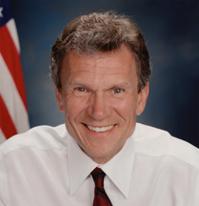
Mr. President, I will use my leader time because I know we are out of the allotted time. I'm told that when Medicare was passed 38 years ago, the House and Senate galleries were filled with senior…
Mr. President, I will use my leader time because I know we are out of the allotted time.
I'm told that when Medicare was passed 38 years ago, the House and Senate galleries were filled with senior citizens who felt a great deal of hope, optimism and excitement about what that bill meant for them and for future Americans.
I don't see any senior citizens in the galleries today. And I think that is a real reflection on what this bill really means.
Why are there no senior citizens in the galleries for this vote? Why isn't there the hope and excitement and enthusiasm and optimism that we saw so vividly 38 years ago?
Mr. President, I think we all know the reason: because there is no excitement. There is no enthusiasm. There is no optimism. There is no real confidence that what we are doing today will help the vast majority of senior citizens. They are not optimistic. They are watching with dismay at the vote we are about to take.
I'll tell you what rooms are filled--not the galleries but the lobbies. The drug companies and the insurance companies are out there in droves. The highly paid representatives of these companies couldn't be happier about this bill. Their job is done for now.
I heard a report on the radio this morning that the final vote was going to be taken early today. Well, that report was wrong, Mr. President. This is not the final vote on prescription drugs for seniors or on Medicare. This is only the beginning, not the end. We will see many, many more votes.
I predict that we will be back within the next 12 months. Seniors will demand that we correct the many deficiencies in this bill, and they will not rest until we do.
This may be the end of this debate. But I predict that a longer debate will begin tomorrow as senior citizens start to fully understand the magnitude of the problems this legislation creates for them.
This bill is deeply flawed. There is a poll in this morning's South Dakota Rapid City Journal. The poll simply asked the question, Do you think the legislation the Senate is about to pass is adequate? Mr. President, 64.5 percent of those who responded said no, it is not adequate. Those of us who have been working on this legislation should not be surprised.
Senior citizens with private coverage already know they could lose those benefits as early as tomorrow as the result of this bill. Seniors on Medicaid already know that they are going to have to pay more for drugs, and may even be refused some of the drugs they need. Seniors in South Dakota already know they may be coerced into an HMO they disdain and out of a Medicare plan they now count on.
Seniors already know they are about to be subjected to a scheme for benefits they cannot even understand, much less afford.
Taxpayers already know they are going to be giving huge handouts to insurance companies, drug companies, and special interests, even though our country is faced with deficits unlike we have ever known.
Many Senators know this is lousy legislation, that we may spend the rest of our careers repairing the flaws of this disappointing bill.
We are going to be called upon to vote today.
My father admonished me many years ago never to put my signature on something I was not proud of. Mr. President, I am not proud of this legislation. I cannot put my signature on this bill. And I do not think anyone else should, either.
I yield the floor.
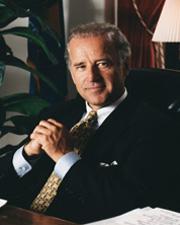
Mr. President, I voted against this bill today because I would never do anything that risks the future of Medicare, and I fear this bill takes the first steps toward the breakup of the traditional…
Mr. President, I voted against this bill today because I would never do anything that risks the future of Medicare, and I fear this bill takes the first steps toward the breakup of the traditional Medicare Program. In addition, this administration's misplaced priorities put enormous tax cuts first and left us little room to provide the comprehensive and fair drug benefit that seniors deserve. We should have done this right and provided a better drug benefit without jeopardizing the Medicare Program that has given seniors health security for 38 years.
My vote today was one of the more difficult decisions I have faced in my Senate career. For starters, let me note that not all of this bill is bad. Some people will get help with their drug costs. We in Delaware are fortunate to already benefit from unique programs that have long helped low-income seniors with their prescription drug costs, and this bill should build upon that foundation. It also offers some coverage to many middle class seniors and disabled citizens. All in all, these aspects of this bill are not enormously different from those in the Senate-passed bill that I voted for earlier this year.
This bill also includes sorely needed payment adjustments for hospitals, doctors, and other health care providers, which will ensure that Medicare patients get quality care and continued access to important medical services.
On the downside, however, this legislation still has a large gap in coverage--forced by budget constraints--in which the Government provides no subsidy for prescription drugs. I know that many people will find this gap confusing, disappointing, and burdensome. I am also very concerned that this bill does not sufficiently protect millions of retirees who currently receive good health care benefits from their former employers.
If we had done this the right way, we would have held back on some of the excessive tax cuts pushed through over the last three years and allocated more of our resources to meeting our obligation to provide a complete prescription drug benefit. Instead, the administration's misplaced priorities tied our hands.
If this legislation were just limited to the prescription drug benefit and the provider payment modifications, it would probably have my vote as being about as good as could be done under the current budget circumstances. But I have very serious concerns about other provisions tacked onto this bill that will take the Medicare Program and the health care benefits for 40 million Americans into uncharted and hazardous waters. This bill takes the first step toward monumental changes in the very foundation of how Medicare operates, beginning a push toward the breakup of the entire program.
The strength of the Medicare system has been its broad coverage, its simplicity, and the open choices patients enjoy. This bill sets in motion a new system that could tear down each of these advantages.
On balance I cannot support this legislation. To me, the negative features have such damaging potential that they overwhelm the benefits. Had the negotiations on this bill been done in the open, with the full participation of both parties, I think we could have crafted a better bill. I cannot vote for a bill that sets us on the path toward undermining the traditional Medicare Program that has worked so well for decades.

Mr. President, one of the criticisms that some have raised about the conference report is the provision that prevents the Department of Health and Human Services Secretary from interfering in the…
Mr. President, one of the criticisms that some have raised about the conference report is the provision that prevents the Department of Health and Human Services Secretary from interfering in the negotiations between private prescription drug plans, drug manufacturers, and pharmacies.
I also believe it is important that we clarify the purpose of the non-interference language. This language is not intended to pad the pockets of drug manufactures. It is not intended to pad the pockets of the insurance companies.
Yes, that is true. The HHS Inspector General has been urging Congress to end these overpayments for years. The conference report addresses these overpayments, while ensuring fair reimbursements for oncologists and other affected physicians to ensure that patient care remains unaffected. Moreover, I think it is important that members of Congress understand the strong consumer protections that are in place to ensure that they receive access to an affordable drug plan, one that provides access to the prescription drugs that they need.
Yes, this is true. It is also true that the Secretary is prevented from approving a drug plan that charges too high of a premium. The premium must reasonably and equitably reflect the costs of the benefits.
Yes, the same one. And I think it is also important to note that conference report has a requirement for a Government-backed fallback plan if fewer than two plans are available. This Government- backed plan is required to negotiate prices with drug manufacturers. And if the fallback plan is unable to negotiate good discounts on its own, then the Secretary will be able to intervene as appropriate to negotiate to achieve lower prices.
Yes, that is my intent. And I am committed to monitoring this new payment system as it is implemented, in order to ensure access to high-quality cancer care.
That is correct.
That is correct, Senator. One of the things I am particularly proud about in this bill is the strong beneficiary protections that will ensure that all Medicare beneficiaries get access to the appropriate medicine they need. You know, Senator Grassley, that there are certain diseases and conditions--like AIDS, and epilepsy-- where having access to just the right medicine is especially important.
Exactly. The bill asks the US Pharmocopeia to develop model formularies with therapeutic classes that can't be gamed. Then we require drug plans to offer at least two drugs in each therapeutic class. And for drugs that treat AIDS, epilepsy, or mental illness, we would expect that plans would carry all clinically appropriate drugs.
That is correct. These beneficiary protections are crucial for these vulnerable Medicare beneficiaries. I would expect that the Secretary will take into account their special medication needs when he writes regulations on this provision and when he is evaluating plan bids. If a plan can't adequately ensure all of the proper medication for beneficiaries living with HIV/AIDS, epilepsy, and certain mental illnesses, that plan should not be doing business with Medicare.
Absolutely.
Bill Text
Latest available legislative text
        [Congressional Bills 108th Congress]
[From the U.S. Government Publishing Office]
[S. 1897 Introduced in Senate (IS)]

108th CONGRESS
1st Session
S. 1897

To amend title XVIII of the Social Security Act to provide a
clarification of congressional intent regarding the counting of
residents in a nonprovider setting for purposes making payment for
medical education under the medicare program.

_______________________________________________________________________

IN THE SENATE OF THE UNITED STATES

November 20, 2003

Ms. Snowe introduced the following bill; which was read twice and
referred to the Committee on Finance

_______________________________________________________________________

A BILL

To amend title XVIII of the Social Security Act to provide a
clarification of congressional intent regarding the counting of
residents in a nonprovider setting for purposes making payment for
medical education under the medicare program.

Be it enacted by the Senate and House of Representatives of the
United States of America in Congress assembled,

SECTION 1. SHORT TITLE.

This Act may be cited as the ``Medicare Education Payment
Clarification Act of 2003''.

SEC. 2. CLARIFICATION OF CONGRESSIONAL INTENT REGARDING THE COUNTING OF
RESIDENTS IN A NONPROVIDER SETTING.

(a) D-GME.--Section 1886(h)(4)(E) of the Social Security Act (42
U.S.C. 1395ww(h)(4)(E)) is amended by adding at the end the following
new sentence: ``For purposes of the preceding sentence time shall only
be counted from the effective date of a written agreement between the
hospital and the entity owning or operating a nonprovider setting. The
effective date of such written agreement shall be determined in
accordance with generally accepted accounting principles. All, or
substantially all, of the costs for the training program in that
setting shall be defined as the residents' stipends and benefits and
other costs, if any, as determined by the parties.''.
(b) IME.--Section 1886(d)(5)(B)(iv) of the Social Security Act (42
U.S.C. 1395ww(d)(5)(B)(iv)) is amended by adding at the end the
following new sentence: ``For purposes of the preceding sentence time
shall only be counted from the effective date of a written agreement
between the hospital and the entity owning or operating a nonprovider
setting. The effective date of such written agreement shall be
determined in accordance with generally accepted accounting principles.
All, or substantially all, of the costs for the training program in
that setting shall be defined as the residents' stipends and benefits
and other costs, if any, as determined by the parties.''.
(c) Application.--The amendments made by this section shall only
apply with respect to approved medical residency training programs in
the fields of allopathic and osteopathic medicine.
<all>