Medicare Prescription Drug Price Reduction Act
Legislative Activity
Stay on top of the latest movement without scrolling through every action
Read twice and referred to the Committee on Finance.
December 9, 2003
View full timeline
Introduced in Senate
December 9, 2003
Sponsor introductory remarks on measure. (CR S16137-16138)
December 9, 2003
Read twice and referred to the Committee on Finance.
December 9, 2003
Floor Debate
12 membersWhat members said about S. 1999 on the floor
 HRC
HRC JW
JW RCB
RCB EMKTAD+7
Floor Debate
12 membersWhat members said about S. 1999 on the floor
Mr. President, I rise to introduce the Protecting American Democracy Act of 2003, legislation that is vital to ensuring that the voting systems used in our Federal elections are as secure as possible…
Mr. President, I rise to introduce the Protecting American Democracy Act of 2003, legislation that is vital to ensuring that the voting systems used in our Federal elections are as secure as possible while also ensuring that each and every voter in our Nation has an equal opportunity to verify his or her vote before that vote is cast and permanently recorded. At its core, this legislation will ensure that every vote is properly counted, ensuring the integrity of each vote, which is at the heart of our democracy.
In recent months, there has been discussion about the increasing use of electronic voting systems such as direct recording electronic systems (DREs), the first completely computerized voting systems. Computerized voting systems can have many advantages. As the Congressional Research
Service has reported, they are arguably the most user-friendly and versatile of any current voting system. Among many features, such voting machines can be easily programmed to display ballots in different languages and can be made fully accessible for persons with disabilities, including the visually impaired. They can also prevent overvotes and spoilage of ballots due to extraneous marks since no document ballot is involved. In addition, fully computerized systems have the ability to notify voters of undervotes. Presently, no other kind of voting system possesses so many features. For this reason, it is expected that within the next two years, with funding authorized under the Help America Vote Act of 2002 (``HAVA''), state and local jurisdictions across the country will begin purchasing fully computerized systems.
One of the disadvantages of these electronic voting systems, however, is that they do not give voters an opportunity to verify their votes-- to confirm that the voting machinery is registering the vote that the voter intended to cast--before the vote is cast and permanently recorded. In addition, electronic voting systems raise other concerns because of the ability of the software in the voting system to be compromised, or worse, maliciously attacked, by someone who may want to alter the voting results. Indeed, a number of recent studies, including the July 2001 study by Caltech/MIT, the July 2003 study by Johns Hopkins and Rice universities, the September 2003 study by the Science Applications International Corporation, requested by the Governor of Maryland, and the two November 2003 studies conducted by Compuware Corporation and InfoSENTRY, requested by the Ohio Secretary of State, pointed to significant and disturbing security risks in electronic voting systems and related administrative procedures and processes.
That is why in addition to ensuring that voters have an opportunity to verify their vote, it is vital that we improve the security of voting system technology, and that means not only the kind of software that is used but also how, for example, that software is designed, stored, disseminated, updated, field tested, and used in an actual election. This is a developing consensus among computer security experts that not only is the security of electronic voting systems wholly inadequate, but that the security policies and procedures that State and local election officials, voting system vendors, and others use are non-existent, inadequate, or, if they exist, are not followed, which is the same as having no policy at all.
Our Nation is the greatest Nation on earth and it is the leading democracy in the world. Central to that democracy is ability of Americans to have confidence in the voting system used to register and record their votes. This is a fundamental standard that must be met. I have concerns, however, that our Nation is falling short of that standard.
That is why I am today introducing the ``Protecting American Democracy Act of 2003,'' which amends by adding a voter verification requirement for voting systems to give each voter an opportunity to verify his or her vote at the time the vote is cast. Voters will be given an opportunity to correct any error made by the voting system before the permanent voting record is preserved.
While requiring that all election jurisdictions give voters the ability to verify their votes, this legislation also gives States and local jurisdictions the flexibility to employ the most appropriate, accurate, and secure voter verification technologies, which may include voter-verifiable paper ballots, votemeters, modular voting architecture, and/or encrypted votes, for their State or jurisdiction in a uniform and nondiscriminatory manner. Any voter verification method used must ensure that voters with disabilities and other affected voters have the ability to cast their vote in private, and language minorities must have equal access in verifying their vote. This is important if we are to ensure that all Americans--including the more than 20 million voters who are visually impaired, the more than 40 million Americans who lack basic literacy skills, and millions of language minorities--will be able to exercise their constitutional right to vote.
To address critical security issues, the ``Protecting American Democracy Act of 2003'' also amends HAVA by adding a security requirement for voting systems to ensure that voting systems are as secure as possible. Specifically, voting systems must adhere to the security requirements for Federal computer systems as required under current law or, alternatively, more stringent requirements adopted by the Election Assistance Commission. Currently no such requirement exists. I believe that, at minimum, the systems used by the people of the United States to exercise their constitutional right to vote, the hallmark of our democracy, should be at least as secure as the computer systems used by the Federal Government.
The security requirements must also provide that no voting system shall contain any wireless device, which reduces the risk that hackers will be able to attack any electronic voting system. In addition, all software and hardware used in any electronic voting system must be certified by laboratories accredited by the Commission as meeting all security requirements.
The Act also requires the Election Assistance Commission to report to Congress within 6 months of enactment regarding a proposed security review and certification process for all voting systems. Within 3 months of enactment, the Government Accounting Office, unless the Commission has already completed the following report, must issue a report to Congress on the operational and management systems that should be employed to safeguard the security of voting systems, together with a schedule for how quickly each such measure should be implemented.
Lastly, immediately upon enactment, the National Institute of Standards and technology (NIST) must provide security consultation services to State and local jurisdiction. Two million dollars in Fiscal Years 2004 through 2006 are authorized to be appropriated to assist NIST in providing these security consultation services.
I cannot think of a more significant risk to our democracy than for Americans to lack complete confidence in the voting systems used to cast and count their votes in Federal elections. For all those who believe that in a democracy, there is no more important task than assuring the sanctity of votes, this should be an easy step to take to assure it. For this reason, I urge all of my colleagues to support this legislation. I ask unanimous consent that the text of this bill be printed in the Record.
Mr. President, today, I am introducing a bill that seeks to begin a dialogue on one of the most important yet neglected aspects of our health care system--health care quality. this is an enormous issue that affects every single one of us who has ever needed medical care, and it affects all taxpayers because quality care has such potential to avoid waste and save millions of dollars in health care costs. I have raised many of these ideas as amendments in other contexts, such as the Medicare debate on S. 1, and the debate over S. 720, the Patient Safety and Quality Improvement Act of 2003. I intend to continue working with my colleagues on improving these ideas and proposing additional concepts. But with this bill today, I seek to put forward a package of ideas, provoke conversation, and present this as a first step in making quality a focus of my health care efforts next year. My goal with these efforts is to both improve quality and outcomes, and reduce costs by encouraging care that is more effective.
There is no reason why we cannot achieve this. We have the most advanced medical system in human history--the finest medical institutions, the newest treatments, the best trained health care professionals. But in spite of the best intentions of clinicians and patients, our health care system is plagued with underuse, overuse, and misuse. currently, only about 50 percent of care that is known to be effective is provided, and the care given is supported by solid scientific evidence, and the pace of dissemination of new evidence is painfully slow. It may take up to 17 years for treatments found to be effective to become common practice.
Much of the overuse or misuse of health services stems from the fragmentation of our system. In a recent study in Santa Barbara, CA, 20 percent of lab tests and x-rays were conducted solely because previous results were unavailable. One in seven hospitalizations occurs because information is unavailable, and a shocking percentage of the time, physicians do not find patient information that had previously been recorded in a paper-based medical record.
Despite all of our Nation's medical advances, health quality is becoming even more endangered in some respects. Nursing care which is often shown to be a decisive factor for hospital patient outcomes, its in grave shortage, and a majority of U.S. physicians surveyed by the Commonwealth Fund perceive their ability to provide quality care as having worsened over the last 5 years.
Additionally, even as the quality of health care we purchase lags, our spending on inadequate and wasteful care is spiraling out of control. Premiums increased 13 percent last year, and health care costs are increasing at nearly 10 times the rate of inflation. To make matters worse, the public health system is straining to meet the challenges of bioterrorism or emerging infections, the number of uninsured Americans is rising, clinicians are leaving practice, and the older adult population is set to double by 2040.
The reason is not because doctors aren't trying hard enough, or hospitals are at fault. That we're able to get good health care at all is testament to the genius and heroism of doctors and nurses who deliver care, despite all the obstacles, despite every effort of the system to hinder them.
But what our medical system requires of providers is a little like asking pilots to routinely land planes without any information from the control tower. The best of them can do it--they could land a plane with one arm around their backs missing key information and confirmations, but why force them to do it? Why deny them critical information when it could be easily available? There is no plausible reason for denying needed information, especially when life and death are at stake.
That's unfortunately exactly what our health care system says to doctors, nurses, and hospitals. Physicians for example spend four years in medical school, and then several years more in their residency training, cramming medical information into their heads. Then we expect them to look at a patient taking four different drugs, with a heart condition, and immediately remember any drug-drug interactions that could occur. We ask them to do it without looking up any reference materials. We ask them to do it in the few minutes that they have with each patient given the ever-shorter visits, and ever-increasing patient and paperwork load. Moreover, in their free time, they are expected to keep up with all the new journal articles and learn about every new drug.
Yet hand-held computers can now allow the doctor to pull up up-to- date information immediately, right at the bedside, if he or she has any question. And NIH spends billions of dollars in research to generate that information. Shouldn't that investment reap results for the patient as quickly as possible? This bill seeks to provide the direction that would support such technology and make it widely available to physicians.
Right now, doctors, nurses, and hospitals are holding the health care system up, preventing utter collapse by sheer, heroic, force of will. Instead of the clinicians supporting the system, we should build a system that supports clinicians instead.
The premise of this legislation is that information, in the hands of the right people at the right time, drives quality and value. We need to empower patients and health care providers to make the right choices. And to do that, health care decisionsmakers--providers, payers, and patients--need to have access to the right information, where and when it is needed, securely and privately.
This legislation seeks to: 1. Generate information about health quality through increased research, increased public reporting along key quality measures, and standardization of those measures to assure comparability and usability of reported information; 2. Ensure that payers, providers and patients get information in a usable form so they can make effective decisions; and 3. Reduce barriers to the development of an IT infrastructure that is so critical to achieving those first 2 goals.
Eighty percent of the care delivered today is not backed by sound clinical
research. That is why we need to do more research, and see if the care we provide today has sound justification in science. But even where we know what to do, we don't always do it because the information is insufficiently disseminated and utilized. Studies have shown some procedures being performed even when they have not met accepted criteria for appropriateness: In one study, of all the non-emergent, noncancerous hysterectomies performed, only 30 percent had been properly worked up and met the full medical criteria for necessity. In another study, about one-fourth of coronary angiographies and upper gastrointestinal endoscopies did not meet standards of medical appropriateness.
On the flip side, in situations where the benefits of an intervention are clear, many patients do not receive the indicated care: Very few hospitalized patients at-risk for pneumococcal pneumonia who had not been previously vaccinated end up being vaccinated during their hospital stay. Routine peak flow measurements are conducted in only 28 percent of pediatric patients with asthma. And only one-half of diabetics receive an annual eye exam.
We know what good health care means in these areas, but we don't practice it, in part because that information may not be readily available, and regardless, there is no incentive for quality. We are suggesting--track the outcomes, share that information with patients, providers, and insurers, and ultimately, pay for performance.
This bill will help us become better purchasers of care, and help us take the first steps toward aligning the incentives so that higher quality is rewarded. I ask unanimous consent that the attached article from last week's New York Times be printed in the Record showing how our current reimbursement system is gravely misaligned. Under the current system, higher quality can be penalized, while worse care can ironically be more profitable.
Today, by introducing these ideas for the purpose of seeking feedback from my colleagues and experts in the field, I am taking the first step toward improving our health care system for everyone and saving money. I invite interested colleagues to join me in partnership on this important venture and look forward to taking strong, positive action next year to improve health quality for all Americans.
Mr. President, I am pleased to introduce today with my distinguished colleague from New York, Senator Clinton, the National Highway Safety Act of 2003. It would be our intention in the course of the…
Mr. President, I am pleased to introduce today with my distinguished colleague from New York, Senator Clinton, the National Highway Safety Act of 2003. It would be our intention in the course of the deliberations next year on the reauthorization or, as we call it, the successive piece of legislation to TEA-21, that this bill, which we introduce today, would be incorporated as an amendment.
As the Congress prepares to consider legislation next year to enact a new 6-year surface transportation law to succeed TEA-21, our foremost responsibility, in my judgment and in the judgment of many, and in the judgment of the President of the United States, must be to improve highway safety for the driving public. Simply by increasing the number of Americans who will buckle up is the most effective step that can be taken to save the their lives and the lives of others. That is the single most important step.
I am privileged to serve on the Environment and Public Works Committee that has now completed its markup of the TEA-21 reauthorization bill. The bill addresses, as it should, highway safety measures, such as how to build safer roads, how to do use new technologies to improve safety. But, statistics show that the greatest measure of safety, again, to drivers, passengers, and possibly third parties not connected with the vehicle, is through the use of a seatbelt. It is remarkable, the lives that have been saved through the use of this simple device. I have, through my career in the Senate--I say with modesty--been associated with, and indeed I think in the forefront of, trying to move forward on seatbelt legislation. I will not belabor what this humble Senator has done working with others through the years, but we are very proud today that America has about a 79 percent use rate of seatbelts. That has been translated into the saving of tens of thousands of lives and injuries in automobile accidents.
Those are the facts. Are we just going to have a standstill, or are we going to move forward? Senator Clinton and I think we should move forward with this somewhat new approach. I will address the technical aspects as we go along.
We have debated the benefits of seatbelt use on many occasions in this body, and elsewhere across America. And whether it is in the town forums we conduct, town meetings, or here on the floor of the Senate, there is always that individual who comes back: Don't tell me what I have to do. What does it matter to you, John Warner--or to any other colleague with whom I am privileged to serve--what does it matter to you whether I buckle up?
Well, let's take a look. No one disputes that the absence of a seatbelt causes more serious loss of life and injury and, to some extent, crashes. The statistics show that with the impact associated with the crash, to the extent the driver can maintain, as best he can control of the vehicle in those fatal microseconds, often fatal, perhaps the severity of the crash, and perhaps the loss of life can be reduced by the use of a safety belt--simply said.
Accidents involving unbelted drivers result in a significant cost to the wallet, out of your pocket. Many people are rushed from the accident scene to various emergency facilities. All of that has the initial cost of the law enforcement that responds, the rescue squads that respond, and eventually the emergency room or whatever medical facility you might have the good fortune to be taken to, to hopefully save you your life. That isn't free. There is a cost. Maybe it is a hidden cost in the budgets of the towns and the communities and the States, but there is definitely a cost. Regrettably, a number of persons who suffer those types of injuries are uninsured. Again, the cost often devolves down on the good old hard-working taxpayers; in most instances, the taxpayers who buckle up.
This also is rather interesting and fascinating. When an accident happens, regrettably, on our roads and highways across this great Nation, we try to refrain from rubbernecking. Nevertheless, chances are that we take a glance. More often than not, the accident with the combined slowdown of those passing the accident causes significant congestion for some considerable portion of time. Either the lane in which we are traveling moves very slowly because of the accident or, indeed, we come to a standstill, as often is the case when a lane is closed to clear an accident. That standstill frequently is necessitated because of the severity of the injuries experienced in that accident. It takes the response team longer in their carefully trained steps to extricate the injured person, to give the initial treatment, and then to carefully transport that individual, if necessary, to a medical facility. That takes time. That road is backed up.
That is lost time for your mission on the road, be it for business, family, or pleasure. That is lost time and productivity. Behind you often are trucks and other vehicles involved in commerce. That is lost time and delay due to the seriousness occasioned by injuries and accidents where there has been the lack of use of seatbelts. It is as simple as that.
The legislation Senator Clinton and I are introducing today will take an important step forward for the States to adopt either a primary safety belt law, or take steps of their own devising to meet a 90 percent seat belt use rate--not the Warner-Clinton bill or the legislative measure put forth by the administration upon which Senator Clinton and I draw for concepts of certain portions. The States can decide for themselves how they achieve a 90-percent goal of the use of seatbelts in their respective States. That is the purpose of this legislation--to move every State to a 90-percent use rate for safety belts.
In a letter dated November 12, 2003, to Chairman Inhofe of the Committee on the Environment and Public Works, on which I am privileged to serve, Secretary Mineta states:
President Bush and I believe that increasing safety belt
usage rates is the single most effective means to decrease
highway fatalities and injuries.
That is explicit and clear. The Secretary goes on to say:
The surest way for a State to increase safety belt usage is
through the passage of a primary safety belt law.
I have had this debate with Governors, former Governors, even in this Chamber with former Governors. I think they would tell you that a primary safety belt law is a tough piece of State legislation to pass solely on its own. Frankly, it needs the impetus of Uncle Sam, the impetus of the Congress of the United States to move that process in the States forward, so the local politicians can shake their fist saying, it is Washington that has done it again--more regulation, more direction--you know the arguments. But I think quietly in the hearts of those State legislatures is the thought that we will improve safety in my State. We will improve the chance of survivability on the roads in my State. So that is why we are here today. I ask unanimous consent that the full text of Secretary Mineta's letter be printed in the Record at the conclusion of my remarks.
As provided in our legislation, the Warner-Clinton bill, States can increase seatbelt use either by enacting, as I said, a primary seatbelt law--everybody knows what a primary seatbelt law is and how it works. It means a law enforcement officer can literally stop a vehicle if they observe that the individual is not wearing his or her seatbelt. It is as simple as that. But a State, if they decide not to enact a primary safety belt law, can, by implementing their own strategies, whatever they may be--and there is a lot of innovation out in the States--that would result in a 90-percent safety belt use rate. So that is a challenge to the States.
The current national belt use, as I said, is 79 percent. But many States--those that have the primary law are sometimes at 90, or even above 90, but those that do not have the primary seatbelt law are down sometimes in the 60 percentile. It is the weight of the primary States that carries the percentile and brings it up to 79 from those States that don't have an effective law. States with their primary safety belt law have the greatest success for drivers wearing seatbelts.
On an average, States with the primary seatbelt law have a 10 to 15 percent higher seatbelt use compared to those with a secondary system. This demonstrates that secondary seatbelt
laws are far more limited in their effectiveness than a primary law.
Essentially, the secondary laws say that if a law enforcement officer has cause other than a perceived or actual seatbelt violation--namely, the driver didn't have it buckled--if they have cause to stop that car, for example, for a speeding offense or a reckless driving offense or indeed an accident and they observed there has been no use of the seatbelt, then in the course of proceeding to enforce the several laws of the State as regards speeding or reckless driving, or whatever the case may be, they can add a second penalty to address the absence of the use of the seatbelt in that State.
Drivers are gamblers. They say: Oh, well, don't worry, I will not buckle up. State law doesn't require it. Unless they stop me--and they are not going to stop me today. It is that gambling attitude that, more often than not, will cause an accident. Then it is too late.
So we come forward today to build on our national programs. We are building on what we did in TEA-21. I was privileged to be on the committee. I was chairman of the subcommittee 6 years ago. I worked with Senator Chafee, who was chairman of the full committee, and we drove hard to make progress with the seatbelt laws, and we did it. We basically put aside a very considerable sum of money to encourage States--again, using their own devices--to increase uses. As a direct consequence of what we did in TEA-21, there has been an 11 percent increase in these 6 years in the use of seatbelts.
Sadly, traffic deaths in 2002 rose to the highest level in over a decade. It is astonishing. Of the nearly 43,000 people killed on our highways, over half were not wearing their seatbelts. That is according to the National Highway Traffic Safety Administration. And 9,200 of these deaths might have been prevented if the safety belt had been used.
Those are alarming statistics. Automobile crashes are the leading cause of death for Americans age 2 to 34. Stop to think of that: age 2, that means a child; that means a parent neglected to buckle up a child. Automobile crashes are the leading cause of death for Americans age 2 to 34. That is our Nation's youth. Do we have a higher calling in the Congress of the United States than to do everything we can to foster the dreams and ambitions and the productivity of our Nation's youth? I think not. And this is one of the ways.
Last year, 6 out of 10 children who died in car crashes did not have the belt on--6 out of 10; that is over half. I plead with colleagues to join with me, join with the President who has taken this initiative.
My primary responsibility in the Senate--and this is one of the reasons I got interested in this subject--is the welfare of the men and women in the Armed Forces. I say to colleagues, again, the statistics are tragic. Traffic fatalities are the leading non-combat cause of death for our soldiers, sailors, airmen, and marines. They are in that high-risk age category, 18 to 35.
Someone even took a look at the statistics, the total of the fatalities last year, and said that represents in deaths approximately the size of the average U.S. Army battalion. That is several companies and maybe a reinforced element. Just think, that is the magnitude in one category of those who serve our United States, the men and women in the Armed Forces.
I cannot think of any reason why we all cannot join behind this effort. That alone is a driving impetus for this Senator.
The time is long overdue for a national policy to strengthen seatbelt use rates. I said a national policy, and that is what this bill represents, either through States enacting a primary seatbelt law or giving far greater attention to public awareness programs that result in more drivers and passengers wearing safety belts. Our goal is 90 percent--90 percent.
I have been privileged to serve on this committee 17 years, and I, together with many others, notably my dear friend and late chairman, Senator Chafee, addressed this issue. Our committee is rich in the history of focusing revenue from the highway trust fund on effective safety programs. It goes back through many chairmen and members of the committee.
With jurisdiction over the largest share of the highway trust fund, our committee has had the vision to tackle important national safety problems. Regrettably, I report to you that the recent markup of the committee on the proposed successor to the TEA-21 legislation, which we will take up next year, does provide more funding to help build safer roads--that is a step forward--but it does not have, in my judgment, that provision which represents a step up from what we did in TEA-21, that provision that would represent a recognition for the President's initiative. He has taken a decidedly strong initiative to increase the use of seatbelts. It is absent from the bill, and that is why, I say respectfully to Chairman Inhofe and others on that committee, we need a provision to strengthen and to move forward the position of the Congress on the issue of increased use of safety belts. That is the purpose of this legislation.
It is just unfortunate, but those with reckless intent quickly disregard responsible behavior and drive unbelted at excessive speeds and many times with the use of alcohol. So no increased dollars for improved road engineering, which is in this bill, can defy in many instances and the type of personal conduct that results in reckless behavior. It is as simple as that.
Our automobiles now come equipped with crash avoidance technologies and are more crashworthy than ever before, but these advances are only part of the solution.
In repeated testimony before the Environment and Public Works Committee, from the administration, our States, safety groups, and the highway insurance industry, we are told that three main causes of traffic deaths and injuries are unbelted drivers, speed, and alcohol.
The formula we have devised in this legislation does have a reduction in the amount a State receives under this proposed bill that we will consider next year when they fail to achieve the 90 percent safety belt use rate. It is as simple as that. But the formula is patterned directly after the law that is on the books now with respect to the .08 legal blood alcohol content level.
The net effect of this legislation is simply to recognize we are asking that the same type of sanction policy with regard to one of the three major causes of death--alcohol--be equated to a second cause of death and injury, and that is absence of the use of seatbelts, bringing into parallel two of the three principal causes of death and injury on today's highways.
The administration put forward an innovative safety belt program, as I said, under the leadership of the President that was a major component of their new core transportation program, the Highway Safety Improvement Program. Regrettably, this recommendation is not included in the bill that will come before my committee next year as a consequence of the markup seeking reauthorization of TEA-21.
The proposed reauthorization bill also does not include the current program, the Safety Belt Incentive Grant program, that we even had in the previous highway bill, of which I was primarily one of the authors. Not only are we not going forward, but in a sense we are stepping backwards. I just cannot understand how we can, as a body, not observe our responsibility to do what we can to provide the necessary incentive to the States to take these steps.
Mr. President, I ask unanimous consent that the text of the bill be printed in the Record.
Mr. President, last week, the Bush administration--in what has become its normal pattern--ignored the pleas of thousands of hardworking Americans. It lifted the steel tariffs it had promised the U.S.…
Mr. President, last week, the Bush administration--in what has become its normal pattern--ignored the pleas of thousands of hardworking Americans. It lifted the steel tariffs it had promised the U.S. steel industry and imposed on foreign imports back in March of 2002.
Despite its earlier pledge to stand by America's steelworkers, the White House, in typical fashion, decided to turn its back on our highest valued workers and most vulnerable retirees. In a fit of pique and hard-hearted hubris, the White House decided to lift U.S. tariffs on foreign steel imports 15
months ahead of time, instead of letting the tariffs stay in place until March 2005, as is permitted by U.S. law.
Why? Why would the White House betray America's steel industry--the backbone of America's industrial base--particularly during this time of war? Of national emergency? No. Because the President feared retaliation from America's trading partners, he quivered at the threat that they would retaliate against U.S. exports if he did not lift the 201 tariffs. He cowered in the face of exactly those nations whose steel exports to the United States have driven 42 U.S. steel companies to their knees and into bankruptcy. His resolve collapsed in the face of retaliatory threats from America's most virulent competitors, whose illegal trade against the United States has already cost nearly 50,000 steelworkers their jobs.
America's foreign trade opponents gambled that this President lacked the resolve to stand up to them and to the WTO. Do you know? They were right. They were sadly correct.
But this President, George W. Bush, did not need to cave like a ``weak willy'' in the face of belligerent foreign bullies. Instead, he could have invoked Article XXI of the GATT, a viable trade tool that has been legitimately and successfully employed by the United States in the past to exempt itself from the GATT, now the WTO, in a time of war or national emergency. The President on July 31, 2003, formally proclaimed our Nation to be in a continued state of emergency. As a result of the President's own misguided and ill-advised actions, we remain engaged militarily in Iraq.
On July 31, 2003, President Bush formally declared that, in accordance with section 202(d) of the National Emergencies Act, he was ``continuing for one year the national emergency with respect to Iraq.'' We also continue to face an ongoing war against terrorism, both here at home and abroad.
So, President Bush had--and has--ample authority to invoke a provision of GATT 1994, negotiated by the United States and available to all WTO Members, that would permit him to exempt protections for the U.S. steel industry from retaliation by foreign countries.
But this President has so far lacked the foresight or the fortitude to take that step. Confronted with real threats of economic retaliation by determined competitors, the President folds like a house of cards astride the San Andreas fault.
That is why, today, I am introducing a bill that will do what the President refused to do. It will reinstate the 201 relief and reimpose the 201 tariffs against foreign steel imports. Under my bill, the 201 tariffs will be put back in place to stop foreign import surges, just as they did before the President so ill-advisedly lifted the tariffs last Thursday. And the tariffs will remain in place through March 5, 2005.
This administration should not have been bullied into abandoning the U.S. steel industry. Our steel industry is key to the national economic security of our Nation. Without steel, we cannot guarantee America's national security. Without steel, we could not have rebuilt after September 11. And I am not the only one who thinks that steel is integral to America's economic and national security. Just a few days before that fateful September day, on August 26, 2001, President Bush told America's steelworkers: ``If you're worried about the security of the country and you become over reliant upon foreign sources of steel, it can easily affect the capacity of our military to be well supplied. Steel is an important jobs issue; it is also an important national security issue.''
With an annual take deficit of almost $500 billion, Americans have a right to expect that international trade rules with work for them; not against them. They also have a right to know that the United States can respond as it must to the type of trade crises that have been suffered by America's steel industry for years.
There was absolutely no reason to lift the steel 201 tariffs. They are fully consistent with both U.S. law and our international agreements--regardless of the view of the WTO. The purpose of 201 relief is to give the domestic industry time to adjust to import competition. Our valiant steel industry is doing just that by pursuing unprecedented restructuring and new investment. Since the 201 tariffs were imposed, flat-rolled steel producers alone have invested more than $3 billion to enhance their productivity.
Critics of the 201 relief have been proved wrong on every significant fact concerning that relief. They said that once the tariffs were imposed, steel prices would go through the roof. Yet, prices have risen only modestly, and much less than abroad. The critics claimed that U.S. steel companies would do nothing to improve their competitiveness. But our Nation is witnessing the most dramatic restructuring in the industry's history. The critics also claimed that the tariffs would be bad for the U.S. economy, but the non-partisan U.S. International Trade Commission, ITC, recently found that the potential costs are minuscule--only about 2 percent of what Americans spend each month at McDonald's--and not even a drop in the bucket compared to the value we gain by restoring a critical U.S. industry to long-term competitiveness.
Other nations' actions in this Section 201 dispute have been truly disgraceful. The European Union originally threatened to retaliate against the United States immediately upon the President's application of the safeguard measures in March 2002. In the end, it hesitated. But its threat was sufficient to extort from the administration nearly unlimited exclusions from the tariffs to benefit foreign producers.
Acquiescing to this type of bullying jeopardizes the future of the U.S. steel industry, and it undermines the integrity of, and support for, the entire international trading system. Americans cannot be expected to support a system that works against them, rather than for them.
By lifting the tariffs, the administration is allowing Brazil, the European Union, Japan, and other nations, once again, to flood the U.S. market with imports. The Bush administration could have stood up for America's steelworkers like those at Weirton, WV, and Wheeling- Pittsburgh Steel in West Virginia, and demanded that other countries respect the legitimate rights of the United States in the world trading system. But this administration chose to back down, to lose face, to sit back and watch, once more, while thousands of additional U.S. steel jobs are destroyed by wave after wave of foreign imports.
The administration does not seem to care if the U.S. steel industry is destroyed at a time of war and in the midst of a national emergency. President Bush did not even care enough to personally inform the U.S. steel industry, its workers, and their families of his decision to lift the tariffs. No!! Instead, he sent a trade negotiator, Mr. Zoellick, to do his dirty work. Ambassador Zoellick had the audacity to tell us that the tariffs are ``no longer necessary.'' No longer necessary. And why did he say that they are no longer necessary? They are no longer necessary because, he said, ``these safeguard measures have achieved their purpose.''
The only purpose that I can see in this decision to shut the tariff program down is to succumb to threats and demands from abroad. The only effect will be the loss of more steel manufacturing jobs here at home.
On October 27, 2000, Mr. Dick Cheney--do you know him? He is now Vice President of the United States--just a few days before the elections he came to Weirton, WV, to campaign for the Bush-Cheney ticket. During that visit, Mr. Cheney forcefully pledged to help America's steelworkers. He said, ``We will never lie to you. If our trading partners violate our trading laws, we will respond swiftly and firmly.''
Promise made, promise broken. Unfortunately, like so many commitments this administration has made, its pledge to help America's steel industry got off to a headline-grabbing start, but has now been discarded, out of the glare of the campaign spotlight.
So now, only 3 years after Mr. Cheney's campaign-season vow of honesty to America's steelworkers, this White House has taken an axe to the 201 tariffs and betrayed the trust of thousands of American families whose paychecks depend on the U.S. steel industry.
Mr. President, the Bush White House has absolutely failed the working families across this country. This White House has traded the best interests of the American people for the big special interests of corporate campaign contributors. It is no surprise that the Bush Administration would turn its back on steelworkers.
When the Bush-Cheney ticket needed West Virginia's votes in 2000, it pledged to help our steel industry. At first, it appeared as though the administration would follow through on that promise. The White House applied the steel tariffs, for which West Virginia was thankful and for which I and other Senators congratulated, commended and thanked the administration. But then the President exempted import after import from those tariffs. Now the President has eliminated the tariffs completely.
The Bush White House may have forgotten the promise made to the steel industry in West Virginia, but thousands of West Virginians and other steelworkers across the Nation will not forget. The recognize a fair- weather friend when they seen one.
Mr. President, today, along with Senator Bob Graham I am introducing the ``Defense of Medicare and Real Prescription Drug Benefit Act.'' Congressman John Dingell is introducing companion legislation…
Mr. President, today, along with Senator Bob Graham I am introducing the ``Defense of Medicare and Real Prescription Drug Benefit Act.'' Congressman John Dingell is introducing companion legislation in the House of Representatives.
The more senior citizens learn about the legislation President Bush has just signed, the more concerned they are. It's a sweetheart deal for big insurance companies and pharmaceutical companies and a raw deal for senior citizens. It's not really a prescription drug bill. It's an anti-Medicare bill.
Our legislation will reverse these destructive policies. Our legislation will protect and preserve Medicare--not turn senior citizens over to the un-tender mercies of HMOs and insurance companies. It will provide prescription drug benefit for senior citizens, without coverage gaps or hidden loopholes. It will protect senior citizens with good retirement coverage from a former employer, and it will protect the poorest of the poor on Medicaid. It will reduce prescription drug costs, by allowing safe importation of drugs from Canada and government negotiations with drug companies for discounts. And it will repeal the program of Health Savings Accounts that help the healthy, wealthy and insurance companies who have contributed heavily to the Republican Party, while harming every family that needs comprehensive, affordable health insurance.
The legislation the President signed is designed to destroy Medicare and turn senior citizens over to the un-tender mercies of HMOs. Our legislation will protect Medicare.
The legislation the President signed provides a skimpy, inadequate, and unreliable drug benefit. Our legislation provides comprehensive drug coverage and assures that senior citizens can get it everywhere in the country without having to join an HMO or other private plan.
The legislation the President signed denies senior citizens the right to get safe drugs at lower prices from Canada and prohibits the government from negotiating with drug companies to get a good deal for senior citizens. This legislation eliminates those special interest, anti-senior provisions.
The legislation the President signed allows unfettered Heath Savings Accounts. These accounts are a bonanza for the healthy, the wealthy, and for favored insurance companies, but they are a disaster for ordinary citizens who need comprehensive coverage and can't afford to put thousands of dollars aside to meet medical needs that insurance is supposed to cover. This legislation repeals this unwise policy.
Senior citizens want prescription drug coverage under Medicare, and they deserve it. Instead, the President and the Republican Party used their control of Congress to attack Medicare itself and force senior citizens into HMOs and other private insurance plans. They want to privatize Medicare, and if they get away with it, they'll try to privatize Social Security too.
Their legislation raises Medicare payments to HMOs so that Medicare can't compete. They use the elderly's own Medicare money to undermine the Medicare program they depend on. According to estimates of the Medicare Actuary, Medicare already pays 16 percent too much for every senior citizen
who joins an HMO or other private insurance plan, because these programs attract the healthiest elderly. IN addition, the Republican legislation raises the base payment to 109 percent of what it costs Medicare to care for an average senior citizen, without even taking into account the health selection bonus the HMOs receive. The total overpayment is 25 percent--a whopping $2,000 per senior citizen. And to top it all off, the legislation establishes a $12 billion slush fund for the new PPO program established by the bill. This isn't competition, its corporate welfare--and senior citizens and the Medicare program are the losers.
Their legislation also creates a vast social experiment--called the ``premium support'' program--using millions of senior citizens as guinea pigs. The sole purpose of the experiment is to raise Medicare premiums so that senior citizens have to give up their Medicare and join an HMO.
Our legislation eliminates these indefensible overpayments and restores parity to the competition between conventional Medicare and private sector alternatives. It repeals the premium support program, so that senior citizens will have choice, not coercion, when they decide whether they prefer conventional Medicare or an HMO.
The assistance with prescription drug costs their program provides is actually very little. Overall, it covers less than 25 percent of the drug expenses faced by the elderly. Senior citizens with $1,000 in drug expenses would pay 86 percent of the cost out of their own pockets. Those with $5,000 in drug expenses would pay 78 percent. When senior citizens' drug costs exceed $2,250, they get no benefits at all until their costs reach $5,100, even though they have to continue to pay premiums. And senior citizens won't necessarily have access to the drugs their doctor's prescribe, if they aren't on the formularies of the private insurance companies that will administer the benefit. A bus ticket to Canada would do more to reduce drug costs for senior citizens than this bill.
Our legislation fills the gaps in the Medicare benefit, so that it truly meets the needs of the elderly and is comparable to the assistance provided under most private insurance plans and that is available to every member of Congress. It assures that the formularies offered by the insurance companies administering the program are not manipulated by the companies to exclude the drugs senior citizens need most.
Nine million senior citizens--almost one of every four--will actually be worse off in their drug coverage under the Bush program than they are today. According to the nonpartisan Congressional Budget Office, almost 3 million senior citizens with good retiree drug coverage through a former employer will lose it as the result of this bill. Six million senior citizens and the disabled who have both Medicare and Medicaid--the poorest of the poor--will actually pay more and have reduced access to the drugs they need. The Bush plan establishes a cruel and demeaning assets test, so that millions of senior citizens with very low incomes are disqualified from the special assistance they need, simply because they have managed to save a little bit for a rainy day, or because they have a car that's worth too much or a burial fund, or personal property like jewelry or furniture.
Our legislation addresses these problems. It ends the discriminatory treatment of senior citizens with private retirement coverage, so that employers do not have an incentive to drop this coverage. It restores benefits to dual eligibles--senior citizens with coverage under both Medicare and Medicaid--so that they will not be made worse off by the new program. It eliminates the assets test.
The Republican bill does nothing about escalating drug prices. Republicans even had the nerve to include a specific prohibition on any role by the Federal government in any negotiation on drug prices. The Congressional Budget Office has estimated that drug prices will actually increase as the result of this bill. No wonder drug company stocks are soaring and senior citizens are concerned. Our legislation will allow reimportation of drugs from Canada--where drug prices are much lower--with stringent controls to assure that any imported drugs meet FDA standards. It will allow the Federal government to negotiate the best possible price for prescription drugs, so that senior citizens and the Medicare program are no longer victimized by exorbitant prices that have little relationship to costs or value.
It's not just seniors who are very concerned. Younger Americans will be hurt too. A separate booby trap in the Republican program includes tax breaks for the healthy and wealthy to buy private policies with very high deductibles that will undermine health insurance for those who are not elderly. These tax breaks, called health savings accounts, encourage people to buy high deductible policies and put money aside in a tax-free savings account. Because the healthy people don't contribute to the cost of regular insurance, premiums skyrocket for people who can't afford thousands of dollars in out-of-pocket costs before their insurance kicks in. The Urban Institute and the American Academy of Actuaries have estimated that premiums for regular insurance policies could increase 60 percent or more. Our bill repeals this unjustified and destructive policy.
The President's signing of the Republican legislation yesterday was the beginning of this fight, not the end. We will never rest until we have protected Medicare and provided senior citizens a prescription drug benefit that truly meets their needs.
I ask unanimous consent that a summary of the ``Defense of Medicare and Real Prescription Drug Benefit Act'' be printed in the Record.
Mr. President, today I am introducing the Oglala Sioux Tribe Angostura Irrigation Project Rehabilitation and Development Act. I have worked with the leadership of the Oglala Sioux Tribe to develop…
Mr. President, today I am introducing the Oglala Sioux Tribe Angostura Irrigation Project Rehabilitation and Development Act. I have worked with the leadership of the Oglala Sioux Tribe to develop this legislation, which is intended to benefit the Lakota people by restoring critical water resources and promoting economic development on the Pine Ridge Indian Reservation.
The Angostura Unit of the Bureau of Reclamation was first authorized by Congress under the Water Conservation and Utilization Act of 1939, and later continued under the Flood Control Act of 1944, otherwise known as the Pick-Sloan Missouri River Basin Project. The program consisted primarily of building the six mainstem dams on the Missouri River, to be operated by the U.S. Army Corps of Engineers, along with several Bureau-operated irrigation and water development projects. The Angostura Unit was designed to provide irrigation to 12,218 acres of farm and ranch land in the Angostura Irrigation District, as well as flood control, fish, and wildlife benefits.
Tribes in South Dakota existed long before the creation of the Bureau of Reclamation or the implementation of the water development projects in South Dakota today. Tribes therefore have a vested interest in the operation of these projects. While the projects have been helpful in meeting their authorized goals, they also contribute to adverse economic and environmental conditions on tribal reservations. In particular, the Missouri River reservoirs managed by the Corps led to the taking of thousands of acres of fertile river land from Indian tribes, and with that taking, the tribes lost valuable natural resources.
Federal agencies were directed through subsequent acts to provide for the rehabilitation of the lost fish and wildlife habitat and to generally improve conditions on the reservations, but results were slow in coming, and often never materialized. Legislation was enacted several years ago to finally address some of these issues, but much more remains to be done before South Dakota's tribes realize the benefits that Bureau of Reclamation and Corps projects have provided other parts of the state.
In addition to the irrigation benefits the Angostura Unit provides to ranchers and agricultural producers in the area, a substantial recreation industry has developed around the reservoir, including boating and fishing. However, members of the Oglala Sioux on the Pine Ridge Indian Reservation have not seen equal economic benefits from the Angostura Unit as those experienced from the recreation and irrigation in Fall River County. The Cheyenne River forms the northern boundary of the reservation, which is just 20 miles downstream from the reservoir, and is an important natural resource for the tribe. The river is essential to the survival of riparian vegetation, traditional medicinal plants, fish, and wildlife habitat. The impoundment of water in the reservoir has curbed the Cheyenne River's natural flow, and water quality is reduced. This, coupled with the worst drought the region has seen in a decade, severely affects water resources on the reservation.
The Oglala Sioux Tribe's leadership has long had a desire to address these problems, and this legislation is an important manifestation of their effort. During revision of the Angostura Unit's water management plan in 2002, the Bureau of Reclamation considered a variety of alternatives for future operations, but the tribe felt their concerns about the economic and environmental effects the reservoir has on the reservation were not adequately addressed. One alternative considered by the Bureau of Reclamation during this review would return natural flows to the Cheyenne River, and would provide more water downstream for the tribe and would improve reservation conditions. The Bureau took a different approach, however--one that calls for improved irrigation operations and a more efficient distribution of water resources in the irrigation district. These improvements would help free up additional water resources and hopefully lead to improved conditions on the Cheyenne River that would benefit the tribe.
The Angostura Irrigation Project Rehabilitation and Development Act would authorize the efficiency improvements proposed by the Bureau of Reclamation, benefitting both existing water users and the tribe. The legislation also would authorize the creation of a trust fund to compensate the tribe for the economic impacts and lost natural resources caused by the operation of the Angostura Unit. This trust fund will be used by the tribe to promote economic development, improve infrastructure, and enhance the education, health, and general welfare of the Oglala Lakota people. This dual track will both help ensure continued and efficient operation of the Angostura Unit and the Angostura Irrigation District, while helping to mitigate the problems facing the Oglala Sioux Tribe, and providing the tribe with the natural and financial resources it needs to plan for the future and improve the quality of life for all tribal members.
This legislation is just one small, yet important, step toward ensuring that U.S. natural resource policies are fair to American Indians, and I look forward to working with my colleagues to enact it.
I ask unanimous consent that the text of the legislation be printed in the Record.
Mr. President, yesterday, the President signed the Medicare Prescription Drug, Improvement, and Modernization Act of 2003. But the name of that Act is completely misleading. In fact, the Act fundamentally damages the successful and popular Medicare program--a long-term Republican goal. And this Act does more to ensure that drug prices remain high than it does to assist beneficiaries in paying for their drugs.
Why? Because drug companies want it that way. Republicans with financial ties to the industry are protecting drug company interests over the interests of seniors and people with disabilities.
America's seniors pay the highest drug prices in the world, even though American taxpayers subsidize the research that produces many of those drugs. The Medicare bill signed by the President squanders our chances of remedying that inequity. Not only does the bill effectively prohibit the reimportation of more affordable drugs from other countries, it actually prohibits Medicare from using its tremendous bargaining power to ensure that beneficiaries pay lower prices and that our scant resources are most effectively used.
Today, Senate Democrats are siding with the seniors. We are introducing legislation that would repeal the provision barring Medicare from negotiating for lower prices. The Medicare Prescription Drug Price Reduction Act would give Medicare the authority to negotiate with drug companies to obtain the lowest possible prices for seniors and people with disabilities. House Democrats introduced a companion bill yesterday. Together, we will fight for the goal of giving Medicare beneficiaries the drug benefit and lower prices they deserve.
Show 8 more
Mr. President, I rise today to introduce the bipartisan Essential Air Service Preservation Act of 2003. I am pleased to have my colleague Senator Snowe as the principal cosponsor of the bill. Senator…
Mr. President, I rise today to introduce the bipartisan Essential Air Service Preservation Act of 2003. I am pleased to have my colleague Senator Snowe as the principal cosponsor of the bill. Senator Snowe has been a long-time champion of commercial air service in rural areas, and I appreciate her continued leadership on this important legislation. Senators Shumer, Leahy, Clinton, Ben Nelson, Lincoln, Hagel, Jeffords, Domenici, and Harkin, are also cosponsors of the bill.
Congress established the Essential Air Service Program in 1978 to ensure that communities that had commercial air service before airline deregulation could continue to receive scheduled service. Without EAS, many rural communities would have no commercial air service at all.
Our bill is very simple. It preserves Congress's intent in the Essential Air Service program by repealing a provision in the FAA reauthorization bill that would for the first time require communities to pay for their commercial air service.
Congress has already barred the Department of Transportation from implementing any cost sharing requirements on Essential Air Service communities for one year. This bill would now make the ban permanent. I believe that implementing any mandatory cost sharing is the first step in the total elimination of scheduled air service for many rural communities.
It is indeed a sad commentary on this Congress that my colleagues and I have to introduce this bill at all. Time and again Congress has gone on record opposing mandatory cost sharing for EAS communities, yet it keeps coming back.
In June, during consideration of the FAA reauthorization bill, Senator Inhofe and I, with 13 bipartisan cosponsors, offered an amendment that struck out a provision in that bill imposing mandatory cost sharing on some EAS communities.
I was pleased the full Senate agreed and voted to eliminate mandatory cost sharing from the FAA reauthorization bill. In parallel, the full House of Representatives adopted a similar amendment to the FAA bill. Thus, the bills that were sent to conference required no cost sharing for EAS communities.
Most students of government would tell you that when a majority of both houses of Congress have voted against a particular measure, the conferees couldn't arbitrarily put it back in. Well, they did. In another example of this Congress's secret back room dealing, the conferees excluded the minority members, flagrantly ignored the will of the majority in the House and the Senate, and restored the very cost- sharing language both houses one month before had voted to reject. I believe adding this extraneous and objectionable provision was an egregious violation of the conference process.
When cost sharing showed up in the FAA conference report, Congress, with bipartisan support, stopped the Department of Transportation from implementing the measure for one year by barring the use of 2004 appropriations for that purpose. The bill we are introducing today permanently repeals the mandatory cost-sharing requirements that the conferees reinserted into the FAA reauthorization bill after both the House and Senate had voted not to include them. I hope both houses of Congress will again do the right thing by passing our bill.
All across America, small communities face ever-increasing hurdles to promoting their economic growth and development. Today, many rural areas lack access to interstate or even four-lane highways, railroads or broadband telecommunications. Business development in rural areas frequently hinges on the availability of scheduled air service. For small communities, commercial air service provides a critical link to the national and international transportation system.
The Essential Air Service Program currently ensures commercial air service to over 100 communities in 34 states. EAS supports an additional 33 communities in Alaska. Because of increasing costs and the current financial turndown in the aviation industry, particularly among commuter airlines, about 28 additional communities have been forced into the EAS program since the terrorist attacks in 2001.
In my State of New Mexico, five cities currently rely on EAS for their commercial air service. The communities are Clovis, Hobbs, Carlsbad, Alamogordo and my hometown of Silver City. In each case commercial service is provided to Albuquerque, the State's business center and largest city.
I believe this ill-conceived proposal requiring cities to pay to continue to have commercial air service could not come at a worse time for small communities already facing depressed economies and declining tax revenues.
As I understand it, the mandatory cost-sharing requirements in the FAA reauthorization bill could affect communities in as many as 22 states. Based an analyses by my staff, the individual cities that may be affected are as follows:
Alabama--Muscle Shoals; Arizona--Prescott, Kingman;
Arkansas--Hot Springs, Harrison, Jonesboro; Colorado--Pueblo;
Georgia--Athens; Iowa--Fort Dodge, Burlington; Kansas--
Salina; Kentucky--Owensboro; Maine--Augusta, Rockland;
Michigan--Iron Mt.; Mississippi--Laurel; Nebraska--Norfolk;
New Hampshire--Lebanon; New Mexico--Hobbs, Alamogordo,
Clovis; New York--Saranac Lake, Watertown, Jamestown,
Plattsburgh; Oklahoma--Ponca City, Enid; Pennsylvania--
Johnstown, Oil City, Bradford, Altoona; South Dakota--
Brookings, Watertown; Tennessee--Jackson; Texas--Victoria;
Vermont--Rutland; Washington--Moses Lake.
As I see it, the choice here is clear: If we do not preserve the Essential Air Service Program today, we could soon see the end of all commercial air service in rural areas. The EAS program provides vital resources that help link rural communities to the national and global aviation system. Our bill will preserve the essential air service program and help ensure affordable, reliable, and safe air service remains available in rural America. Congress is already on record opposing mandatory cost sharing. I hope all Senators will once again join us in opposing this attack on rural America.
I ask unanimous consent that the text of the bill be printed in the Record.

Madam President, I rise today to cosponsor S. 1999, the Medicare Prescription Drug Price Reduction Act, which strikes language known as the ``noninterference clause'' included in the recently passed…
Madam President, I rise today to cosponsor S. 1999, the Medicare Prescription Drug Price Reduction Act, which strikes language known as the ``noninterference clause'' included in the recently passed conference report accompanying the Medicare Prescription Drug and Modernization Act of 2003.
I believe that language preventing the Secretary from leveraging the enormous purchasing power of the Federal Government will mean our seniors may pay more for their drugs than they could be if that language was modified to allow the Secretary negotiating ability. America's seniors already pay the highest drug prices in the world, even though American taxpayers subsidize the research that produces many of those drugs.
So this legislation gives the Secretary of the Department of Health and Human Services, HHS, authority to negotiate contracts with manufacturers of covered Medicare Part D prescription drugs in order to ensure that enrollees in Medicare prescription drug plans, PDPs, pay the lowest possible price. The authority given to the HHS Secretary is similar to that given to other Federal entities that purchase prescription drugs in bulk.
I voted for the Medicare prescription drug conference report because it delivered voluntary prescription drug coverage to this Nation's 41 million Medicare beneficiaries. Too many Americans today face the terrible choice of paying for rent or groceries or paying for their prescription drugs. In fact, some of my constituents have resorted to skipping doses in an attempt to manage prescription drug prices.
One of the strongest features of the Medicare bill is the assistance it provides for low-income Medicare recipients through the elimination or reduction of premiums, deductibles and copays. For those low-income Medicare recipients whose prescription drug spending exceeds the catastrophic limit, or $5,100 in total drug spending, Medicare will pay all of their drug costs. For seniors who do not qualify for the low- income assistance, they will pay no more than 5 percent of their prescription drug costs above the catastrophic limit.
The Medicare prescription drug bill includes essential increases in funding for California's health care providers. California's hospitals are facing financial crises across the State. In fact, over the past 7 years, more than 62 hospitals have been forced to close.
The bill will help hospitals meet the needs of California's communities by providing $882 million in additional Medicare and Medicaid payments over the next 10 years. Physicians will now receive an increase of 1.5 percent per year in Medicare payments in 2004 and 2005, rather than the 4.5 percent payment cut they were expected to incur.
However, one of the most troubling aspects of the bill was language intended to promote competition among prescription drug plans in order to lower prescription drug prices. Section 1860D-11(i) says:
The Secretary may not interfere with the negotiations
between drug manufacturers and pharmacies and Prescription
Drug sponsors.
I believe that this language actually takes away one of the best tools the Medicare program could use to bring down prescription drug prices by denying the Government the ability to negotiate price discounts on behalf of Medicare recipients.
The Veterans' Affairs, VA, system negotiates prescription drug prices. This negotiating authority has been a terrific success in bringing down the cost of drugs purchased by the VA. Why would we prevent the Secretary of HHS from doing the same on behalf of our 41 million Medicare recipients?
Some argue that this noninterference language will spur competing prescription drug plans to drive down the cost of prescription drugs in an effort to secure contracts with the Federal Government. However, since the Secretary may not require a particular formulary or institute a price structure for covered Part D drugs, seniors may be unprotected from escalating drug costs in regions without plan competition.
Here is the most recent picture of health care spending in the United States: Health care spending in the United States increased 9.3 percent to $1.55 trillion in 2002, the largest increase in 11 years. It now accounts for 15 percent of the Nation's gross domestic product. Prescription drug spending rose 15.3 percent to $162.4 billion in 2002, accounting for 16 percent of the overall health care spending increase.
Spending on prescription drugs is often cited as a key contributor to rising health care costs. Unfortunately, the Medicare bill missed a significant opportunity to reign in the escalating cost of prescription drugs in the U.S.
I believe the Medicare Prescription Drug Price Reduction Act will bring real prescription drug cost relief to seniors in California and across the country.
I urge my colleagues to join me in supporting this important legislation.
Mr. President, at the request of the administration, I am pleased to introduce the Additional Protocol Implementation Act of 2003. This important legislation is needed to implement the provisions of…
Mr. President, at the request of the administration, I am pleased to introduce the Additional Protocol Implementation Act of 2003. This important legislation is needed to implement the provisions of the Protocol to the Agreement of the International Atomic Energy Agency, IAEA, Regarding Safeguards in the United States.
The United States signed the Additional Protocol in Vienna on June 12, 1998. President Bush submitted the Additional Protocol to the Senate on May 9, 2002. The State Department sent the implementing legislation to us on November 19, 2003, and asked that it be considered in conjunction with the Senate's advice and consent on the Protocol. The adoption of this agreement is an important step in demonstrating U.S. leadership in the fight against the spread of nuclear weapons. The Additional Protocol will provide the United States and the IAEA with another tool as we attempt to secure broader inspection rights in non- nuclear-weapon states that are parties to the Treaty on the Nonproliferation of Nuclear Weapons, NPT.
When the Committee on Foreign Relations reported out the NPT in 1968, it noted that ``the treaty's fundamental purpose is to slow the spread of nuclear weapons by prohibiting the nuclear weapon states which are party to the treaty from transferring nuclear weapons to others, and by barring the non-nuclear weapon countries from receiving, manufacturing, or otherwise acquiring nuclear weapons.'' Since the Senate ratified the NPT, we have seen 188 states join the United States in approving the treaty. But recently we also have seen a disturbing increase in the global availability of nuclear materials and reprocessing and enrichment technology. To ensure that these materials and technologies are devoted only to peaceful purposes, the IAEA must have the power to conduct intrusive inspections at almost any location in a non-nuclear- weapon state to verify state parties' commitments under the NPT.
The world community has learned that existing safeguard arrangements in non-nuclear-weapon states do not provide the IAEA with a complete and accurate picture of possible nuclear weapons-related activities. It is critical that the IAEA have the ability to expand the scope of its activities in states that pose a potential proliferation threat. At this point, the only means at the IAEA's disposal, beyond existing safeguards arrangements, is the Model Additional Protocol.
The United States, as a declared nuclear-weapon state party to the NPT, may exclude the application of IAEA safeguards on its nuclear activities. Under the negotiated Additional Protocol, the United States also has the right to exclude activities and sites of direct national security significance in accordance with its National Security exclusion. This provision is crucial to U.S. acceptance of the Additional Protocol and provides a basis for the protection of U.S. nuclear weapons-related activities, sites, and materials as a declared nuclear power.
The Additional Protocol does not contain any new arms control or disarmament obligations for the United States. While there are increased rights granted to the IAEA for the conduct of inspections in the United States, the administration has assured the committee that the likelihood of an inspection occurring in the United States is very low. Nevertheless, should an inspection under the Additional Protocol be potentially harmful to U.S. national security interests, the United States has the right, through the National Security Exclusion, to prevent such an inspection.
The Committee on Foreign Relations will hold hearings early next year to consider the Additional Protocol. I am confident the Committee will draft a resolution of ratification that will enjoy the support of the senate. Ratification of this treaty and passage of its implementing legislation would be an important demonstration of the U.S. commitment to vigorous and expansive authority for the IAEA in non-nuclear-weapon states.
I am pleased to introduce this legislation today as a statement of the Committee's strong support for aggressive verification capabilities in the global fight against the spread of weapons of mass destruction. I look forward to working closely with my friend, Senator Hatch, Chairman of the Committee on the Judiciary, to construct legislation that protects U.S. national security interests, while strengthening the ability of the IAEA to discover illegal nuclear weapons activities.
the package I send to the desk today contains a letter from the Department of State, the administration's implementing legislation, and a section-by-section analysis, all submitted by the administration.
I ask unanimous consent that the referenced letter and analysis be printed in the Record.

Mr. President, it is the responsibility of the military departments to ``organize, train, and equip,'' the armed forces of the United States. Yet, reports indicate that nearly a quarter of the…
Mr. President, it is the responsibility of the military departments to ``organize, train, and equip,'' the armed forces of the United States. Yet, reports indicate that nearly a quarter of the 130,000 U.S. troops in Iraq still wait for the latest ``Interceptor'' body armor, which is a Kevlar vest with ``small-arms protective inserts''--boron carbide ceramic plates--that protect critical organs from weapons fired by assault rifles like the Ak-47s favored by Iraqi insurgents.
While the Congress has taken measures to provide the latest personal protective gear to all U.S. forces in Iraq and Afghanistan, over the last several months we have heard alarming reports of family members scurrying to buy bullet-proof vests to send to their loved ones in Iraq. Military families are patriotic and selfless. Their devotion is no less than that of those serving in harm's way. They have more than enough to worry about, let alone whether or not they can find and buy the gear that might save their child's life. This is the responsibility of the Department of Defense, plain and simple. There is no excuse for their failure.
On November 19, 2003, acting-Secretary of the Army Les Brownlee admitted to Congress that the administration failed to provide basic equipment, like body armor, to all of our forces in Iraq because, as he put it, ``Events since the end of major combat operations in Iraq have differed from our expectations and have combined to cause problems.'' The Washington Post reported recently that, ``Going into the war in Iraq, the Army decided to outfit only dismounted combat soldiers with the plated vests, which cost about $1,500 each. But when Iraqi insurgents began ambushing convoys and killing clerks as well as combat troops, controversy erupted.'' I ask unanimous consent that the full text of this article be included in the Record.
Stories abound of family members, fathers and mothers, wives, and others paying for personal body armor out of their own pockets and shipping the much needed equipment to Iraq. Consider the case of Mimi McCreary of Victorville, CA, whose son Olaf received his bullet-proof vest not from his reserve unit, but from his colleagues on the Clinton, SC, police department. Or consider the 120 members of the National Guard from Marin County, CA, who were unsure of when their body armor would be made available. Instead of letting their neighbors go off to war, the men and women of law enforcement in Marin County donated more than 60 vests so that they would have ``at least some protection.'' Or consider Army Specialist Richard Murphy of Sciota, PA, whose parents, Susan and Joe Werfelman, purchased the ceramic plates missing from their son's vest. According to Murphy's step-father, he ``called us frantically three or four times on this . . . We said, ``If the Army is not going to protect him, we've got to do it.''
We owe Mr. and Mrs. Werfelman and Mrs. McCreary and every other military family an incredible debt of gratitude. They raised children who believe in this country and are risking all in service to it. The last thing we should ask of them now is to take money out of their own pockets to buy the gear their kids should have had in the first place. But that's exactly what poor planning has led to.
The legislation I introduce today with Senator Kennedy requires the Department of Defense to reimburse family members who paid money out of their own pockets to provide the personal body armor that the government failed to provide our troops. Lives and blood will always be the cost of war. But it is a dereliction of duty to send anyone into harm's way without basic protective gear, and it is disgusting for family members to have to take this burden of outfitting their loved ones for war. This grateful Nation must make right by those family members and reimburse their expenses in providing these materials to their sons and daughters, husbands and wives. Let families send pictures and letters from home. The Department of Defense should provide the gear.
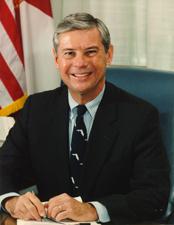
Mr. President, today I rise to introduce the Voter Confidence and Increased Accessibility Act. In 2000, Florida grabbed the national spotlight as an unfortunate example of an electoral process gone…
Mr. President, today I rise to introduce the Voter Confidence and Increased Accessibility Act.
In 2000, Florida grabbed the national spotlight as an unfortunate example of an electoral process gone awry. The question of who would assume our Nation's highest office became contingent on such things as whether a chad was bulging or hanging. In the aftermath of that debacle, Americans demand that Congress improve the accuracy and integrity of our electoral process. Congress responded with the Help America Vote Act (HAVA), which we passed in 2002.
HAVA aimed to modernize our electoral system and there have been some positive developments. Under the law, States have replaced punch card and lever voting systems with modern computer voting machines. Modernization, however, has failed to overcome all the pitfalls seen in recent elections. In 2002, Floridians were subject to another failure of our electoral process when a software error failed to court approximately 100,000 votes.
As it now stands, computer-voting systems--including the popular touch screen models--are not mandated to include a paper record verifying voter intent. In the absence of a paper trail, confirming the accuracy of a computer voting machine is very difficult, sometimes even impossible. Further, voting irregularities, security intrusions and electronic errors can go unnoticed. We have a duty to our democracy to continue to address challenges that threaten to undermine the security and reliability of our electoral system.
The Voter Confidence & Increased Accessibility Act renews our commitment to fulfilling that obligation. It will take us one step closer to our ultimate goal: ensuring that every vote really counts. This legislation responds to a set of challenges presented by computer voting systems. It would require all voting systems produce a verifiable paper record. States would also be given assistance in meeting this standard through funds dedicated to HAVA.
The Voter Confidence & Increased Accessibility Act also stipulates several other provisions to ensure that every vote really counts. It would prohibit the use of unreported software and wireless communication devices in all voting systems. It would also restrict electronic communications from voting machines, permitting outgoing transmissions of vote totals only.
The legislation specifies that voting systems must comply with these standards in time for the November 2004 general election. In the event that a locality is unable to get their computer voting systems compliant by this deadline, they are authorized to use a paper system as an interim measure. The Federal Government would be authorized to pay the cost of these paper systems for the November 2004 election.
The Voter Confidence & Increased Accessibility Act also requires that individuals with disabilities must be accommodated with electronic voting systems by January 1, 2006, a year earlier than mandated by HAVA. While a paper record of a disabled persons vote is not expressly required, voting systems for disabled persons must include a means for voter verification. In the event a jurisdiction cannot meet this standard, disabled voters must be given the option to utilize a temporary paper system, with the assistance of an aide of their choosing.
Finally, the legislation would require the Election Assistance Commission to conduct unannounced recounts in .5 percent of domestic jurisdictions and .5 percent of overseas jurisdictions. This way, Congress and America's voters can be assured that the election equipment is operating properly, and votes are really being counted.
Creating these new standards will help ensure that our elections accurately reflect the intent of the voting public, and put into place an election system in which Americans can have full confidence.

Mr. President, today I am introducing a bill that will fix one of the fundamental flaws in the new Medicare prescription drug benefit. The ``Efficiency in Government Health Care Spending Act'' will…
Mr. President, today I am introducing a bill that will fix one of the fundamental flaws in the new Medicare prescription drug benefit. The ``Efficiency in Government Health Care Spending Act'' will remove language included in the new benefit that prohibits the Medicare program from negotiating prescription drug prices with manufacturers. The new Medicare prescription drug benefit does far too little to bring down the prices of prescription drugs. In fact, it actually takes away one of the best tools the Medicare program could use in bringing down prescription drug prices by denying the government the ability to negotiate price discounts on behalf of Medicare beneficiaries. My bill will allow the Federal Government to take advantage of the purchasing power of the Medicare program Medicare, saving millions of taxpayers' dollars while reducing the costs of prescription drugs for Medicare beneficiaries.
I ask unanimous consent that the text of this legislation be printed in the Record.
Mr. President, today I am introducing a bill that will remove the multi-billion dollar ``stabilization fund'' from the new Medicare prescription drug benefit. This stabilization fund is in essence a slush fund that gives billions of dollars to private insurance companies. This is not an efficient use of taxpayers' dollars. In fact, it's not clear why it's even necessary. If private managed care plans are successful in bring costs down, as backers of the new Medicare bill expect, and if seniors supposedly want to choose private plans, as backers of the new Medicare bill believe, then why should American taxpayers pay private companies more money to get more people to enroll in them?
We should not be subsidizing private health insurance companies in the name of Medicare reform. It is fiscally irresponsible, in a time of record deficits, to use taxpayers' dollars as a giveaway to private insurance companies. By removing this multi-billion slush fund, my bill will save the American taxpayers billions of dollars. Many analysts predict that the new Medicare prescription drug benefit will surpass the $400 billion budgeted for it. We need to look carefully at how we spend Medicare dollars, so that we can ensure that the program remains solvent for future generations.
I ask unanimous consent that the text of this legislation be printed in the Record.
(At the request of Mr. Daschle, the following statement was ordered to be printed in the Record.)
There being no objectin, the bill was ordered to be printed in the Record, as follows:
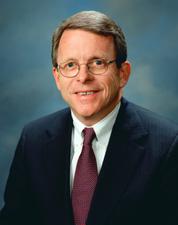
Mr. President, let me first congratulate my colleague from Virginia, Senator Warner, for the very fine statement he just made a moment ago about the bill that he and Senator Clinton are introducing…
Mr. President, let me first congratulate my colleague from Virginia, Senator Warner, for the very fine statement he just made a moment ago about the bill that he and Senator Clinton are introducing with regard to the primary seatbelt law. This is something I have been interested in for some time. I congratulate them for their very fine bill and Senator Warner's very fine statement. He is absolutely correct. If we are serious about saving lives on our highways in this country, there really is nothing more important that we can do than to get our fellow citizens to buckle up.
We have made great progress in this area, but the fact that many of our States do not have a primary seatbelt law on the books costs us thousands and thousands of lives each year. As my colleague from Virginia so eloquently stated in this Chamber a few minutes ago, all the experts--everyone who knows anything about highway safety--will tell you that the most important thing that we could do and the easiest thing we could do would be to have every State of the Union tomorrow, instantly, have a primary seatbelt safety law.
That simply means if law enforcement, instead of having to wait for another type of violation before they could cite someone for not wearing a seatbelt could cite someone directly for not using a seatbelt, the use of seatbelts would dramatically increase in this country. That is what has happened in every single State that has had these laws enacted. Seatbelt use dramatically goes up almost overnight.
We know there is an inverse relationship between the use of seatbelts and auto fatalities. Thousands and thousands of Americans' lives would be saved every single year. I wanted to come to the floor this afternoon after I listened to my colleague's speech in my office. I wanted to thank him. He has been a real leader in the area of highway safety and this is certainly one more example of his leadership.
When we take up the highway safety bill next year, there are a number of highway safety initiatives on which I have been working. I intend to bring them to the floor and talk about them and offer them as amendments, offer them as initiatives. Frankly, there is nothing as important as what my colleague from Virginia has suggested.
I hope the Senate will take this very seriously. This is a great opportunity we will have to save thousands and thousands of lives every year. So I salute my colleague from Virginia.
Mr. President, yesterday, the President signed the Medicare Prescription Drug, Improvement, and Modernization Act of 2003. But the name of that Act is completely misleading. In fact, the Act…
Mr. President, yesterday, the President signed the Medicare Prescription Drug, Improvement, and Modernization Act of 2003. But the name of that Act is completely misleading. In fact, the Act fundamentally damages the successful and popular Medicare program--a long-term Republican goal. And this Act does more to ensure that drug prices remain high than it does to assist beneficiaries in paying for their drugs.
Why? Because drug companies want it that way. Republicans with financial ties to the industry are protecting drug company interests over the interests of seniors and people with disabilities.
America's seniors pay the highest drug prices in the world, even though American taxpayers subsidize the research that produces many of those drugs. The Medicare bill signed by the President squanders our chances of remedying that inequity. Not only does the bill effectively prohibit the reimportation of more affordable drugs from other countries, it actually prohibits Medicare from using its tremendous bargaining power to ensure that beneficiaries pay lower prices and that our scant resources are most effectively used.
Today, Senate Democrats are siding with the seniors. We are introducing legislation that would repeal the provision barring Medicare from negotiating for lower prices. The Medicare Prescription Drug Price Reduction Act would give Medicare the authority to negotiate with drug companies to obtain the lowest possible prices for seniors and people with disabilities. House Democrats introduced a companion bill yesterday. Together, we will fight for the goal of giving Medicare beneficiaries the drug benefit and lower prices they deserve.
Bill Text
Latest available legislative text
        [Congressional Bills 108th Congress]
[From the U.S. Government Publishing Office]
[S. 1999 Introduced in Senate (IS)]

108th CONGRESS
1st Session
S. 1999

To amend part D of title XVIII of the Social Security Act, as added by
the Medicare Prescription Drug, Improvement, and Modernization Act of
2003, to provide for negotiation of fair prices for Medicare
prescription drugs.

_______________________________________________________________________

IN THE SENATE OF THE UNITED STATES

December 9, 2003

Mr. Daschle (for himself, Ms. Stabenow, Mr. Graham of Florida, Mr.
Kennedy, Mr. Pryor, Mr. Dorgan, Mrs. Boxer, Mr. Lautenberg, Mr.
Bingaman, Ms. Mikulski, Mr. Johnson, Mr. Schumer, Mr. Kohl, Ms.
Cantwell, and Mr. Rockefeller) introduced the following bill; which was
read twice and referred to the Committee on Finance

_______________________________________________________________________

A BILL

To amend part D of title XVIII of the Social Security Act, as added by
the Medicare Prescription Drug, Improvement, and Modernization Act of
2003, to provide for negotiation of fair prices for Medicare
prescription drugs.

Be it enacted by the Senate and House of Representatives of the
United States of America in Congress assembled,

SECTION 1. SHORT TITLE.

This Act may be cited as the ``Medicare Prescription Drug Price
Reduction Act''.

SEC. 2. NEGOTIATING FAIR PRICES FOR MEDICARE PRESCRIPTION DRUGS.

Section 1860D-11 of the Social Security Act, as added by section
101(a) of the Medicare Prescription Drug, Improvement, and
Modernization Act of 2003, is amended by striking subsection (i)
(relating to noninterference) and by inserting the following:
``(i) Authority To Negotiate Prices With Manufacturers.--In order
to ensure that beneficiaries enrolled under prescription drug plans and
MA-PD plans pay the lowest possible price, the Secretary shall have
authority similar to that of other Federal entities that purchase
prescription drugs in bulk to negotiate contracts with manufacturers of
covered part D drugs, consistent with the requirements and in
furtherance of the goals of providing quality care and containing costs
under this part.''.
<all>