A bill to amend part C of title XVIII of the Social Security Act to prohibit the comparative cost adjustment (CCA) program from operating in the State of New Jersey.
Legislative Activity
Stay on top of the latest movement without scrolling through every action
Read twice and referred to the Committee on Finance.
February 25, 2004
View full timeline
Introduced in Senate
February 25, 2004
Sponsor introductory remarks on measure. (CR S1591-1592)
February 25, 2004
Read twice and referred to the Committee on Finance.
February 25, 2004
Floor Debate
14 membersWhat members said about S. 2117 on the floor
 RGL
RGL DN
DN GVV
GVV JBJSC+9
Floor Debate
14 membersWhat members said about S. 2117 on the floor
Mr. President, I rise today to introduce the Stabilization and Reconstruction Civilian Management Act. Senator Biden is an original co-sponsor and his involvement in the Committee's work on this…
Mr. President, I rise today to introduce the Stabilization and Reconstruction Civilian Management Act. Senator Biden is an original co-sponsor and his involvement in the Committee's work on this issue and the resulting legislation is deeply appreciated.
Over the past decade the United States has undertaken a series of post-conflict stabilization and reconstruction operations that have been critical to U.S. national security. In the Balkans, Afghanistan, and now in Iraq, the U.S. government has cobbled together plans, people and resources in an ad hoc fashion with the Defense Department in the lead.
The efforts of those engaged have been valiant, but these emergencies have been complex and time sensitive. Our ad hoc approach has been inadequate to deliver the necessary capabilities to deal speedily and efficiently with complex emergencies. The purpose of this bill is to establish a more robust civilian capability to respond quickly and effectively to post-conflict situations or other complex emergencies.
The prevailing inclination to deal with these problems through ad hoc methods has stemmed, in part, from our bipartisan hope that post- conflict stabilization efforts will not be required of us on a frequent basis. But we should not engage in wishful thinking. Crises are inevitable, and in most cases, U.S. national security interests will be threatened by sustained instability. The war on terrorism necessitates that we not leave nations crumbling and ungoverned. Our tolerance for failed states has been reduced by a global war against terrorists. We have already seen how terrorists can exploit nations afflicted by lawlessness and desperate circumstances. They seek out such places to establish training camps, recruit new members, and tap into a black market where all kinds of weapons are for sale.
In this international atmosphere, the United States must have the right structures, personnel, and resources in place when an emergency occurs. A delay of a few weeks, or even days, in our response can mean the difference between success and failure. As a Nation, we have accepted stabilization and reconstruction challenges in the Balkans, Iraq and Afghanistan, but we need to go a step further and create structures that can plan and execute strategies to deal with future emergencies.
While recognizing the critical challenges that our military has undertaken with skill and courage, we must acknowledge that certain non-security missions would have been better served by a civilian response. Our post-conflict efforts frequently have had a higher than necessary military profile. This is not the result of a Pentagon power grab or institutional fights. Rather, the military has led post- conflict operations primarily because it is the only agency capable of mobilizing large amounts of people and resources for these tasks. As a consequence, the resources of the Armed Services have been stretched and deployments of military personnel have had to be extended beyond expectations. If we can improve the surge capacity and capabilities of the civilian agencies, they can take over many of the non-security missions that have burdened the military.
The Senate Committee on Foreign Relations embarked on a bipartisan experiment beginning in late 2003, assembling an impressive array of experts from inside and outside of government to provide advice on how best to achieve this goal. This Policy Advisory Group held a series of discussions in which Senators, group members, and invited experts spoke frankly about their ideas to improve the U.S. response to post-conflict reconstruction problems and complex emergencies. The bill that Senator Biden and I are introducing draws on these discussions and the comments of participants. I believe that we need structural change, accomplished through legislation, to guarantee improvements in our capabilities.
Serving as members of the Policy Advisory Group were Ambassador James Dobbins, Director of International Security and Defense Policy at the RAND Corporation; Dr. John Hamre, President and CEO of CSIS; Gen. George Joulwan, former Supreme Allied Commander Europe; Gen. William Nash, Senior Fellow and Director of the Center for Preventive Action of the Council on Foreign Relations; Mr. Walter Slocombe, former Senior Advisor for National Security to the Coalition Provisional Authority; and Dr. Arnold Kanter of the Scowcroft Group. Other participants included Mr. Marc Grossman, Undersecretary of State for Political Affairs; Mr. Andrew Natsios, Administrator of USAID; Dr. Joseph Collins, Deputy Assistant Secretary of Defense for Stability Operations; Mr. James Kunder, Deputy Assistant Administrator of USAID; Mr. J. Clint Williamson, Director of Transnational Crime Issues on the NSC; Dr. Hans Binnendijk of the National Defense University; Ms. Sheba Crocker of CSIS; Mr. Frank Kramer of Shea and Gardner; Mr. Bernd McConnell, formerly with USAID and now with the Department of Defense; Mr. Larry Nowels of the Congressional Research Service; Ambassador Robert Oakley of the Institute for National Security Studies at the National Defense University; Mr. Robert Perito of the U.S. Institute of Peace; and Ms. Julia Taft of the UNDP.
Although I have tried to incorporate as many of the insights of the group as possible, not every participant will agree with every provision in the bill. This is not surprising given that one of our goals in constructing the group was guaranteeing a diverse set of perspectives. Nevertheless, there were several themes developed that achieved, or at least approached, a consensus: The civilian foreign affairs agencies should be better organized for overseas crisis response and the Secretary of State should play a lead role in this effort. There should be improved standing capacity within the civilian agencies to respond to complex emergencies and to work in potentially hostile environments. The agencies must be capable and flexible enough to provide a robust partner to the military when necessary or to lead a crisis response effort when appropriate. The rapid mobilization of resources must be shared by the civilian agencies and the military. While the need to ensure security will continue to fall on the shoulders of the military, the post-conflict demands on the military for stabilization and reconstruction would be lessened by tapping into the expertise of civilian forces.
During this process, the Bush Administration was extremely helpful and forthcoming. Officials from the State Department, the Defense Department, the NSC, and USAID attended as guests of the group and participated in their private capacities. The participation of these officials does not constitute an official endorsement of this legislation by their employing agencies, but the final product was greatly improved by their collective experience and wisdom. We are extremely grateful to the Administration for its willingness to engage the Foreign Relations Committee during this process.
This bill urges the President to create a Stabilization and Reconstruction
Coordinating Committee to be chaired by the National Security Advisor. This Coordinating Committee would have policy oversight responsibility for ensuring appropriate interagency coordination in the planning and execution of stabilization and reconstruction efforts. The Coordinating Committee would have representation from the Department of State, USAID, and the Departments of Commerce, Justice, Treasury, Agriculture, and Defense and other agencies as appropriate.
This bill would authorize the creation of an office within the State Department to be the focal point for coordinating the civilian component of stabilization and reconstruction missions. The Office would be headed by a Coordinator who is appointed by the President and reports directly to the Secretary of State. The Coordinator would also work to ensure that civilian components of the United States Government are prepared for joint civilian/military operations if they become necessary.
The bill would authorize the Secretary of State to establish a Response Readiness Corps with both active duty and reserve components available to be called upon at a moments notice to respond to emerging international crises. In the reserves would be both federal government officials from the non-foreign affairs agencies who have volunteered to participate and members recruited from the private sector based on the applicable skills each could contribute to the mission.
The bill urges the Foreign Service Institute to work with both the National Defense University and the United States Army War College to establish an educational and training curriculum to bring together civilian and military personnel to enhance their stabilization and reconstruction skills and increase their ability to work together in the field.
I introduce this bill today to set in motion legislative efforts to strengthen the capacity of our civilian agencies to handle complex emergencies overseas, including post-conflict stabilization and reconstruction efforts. I am hopeful that this legislation will garner further bipartisan support. Its intent is not to critique past practices, but rather to improve our stabilization and reconstruction capacity for the future. We recognize that the bill does not address many facets of this issue that fall under the jurisdiction of the military and the Armed Services Committee. I know that my colleagues on that committee have thought about many of these issues, and they may recommend additional steps.
The inevitable post-conflict stabilization and reconstruction demands of future crises will require a formidable capacity to respond to challenges--both military and diplomatic. It is crucial to our success that the necessary resources and plans be put in place now. Let us give the President the tools he needs to carry out these most demanding foreign policy missions.
I ask unanimous consent that the text of the bill be printed in the Record.
Mr. President, as we take time to celebrate President's Day and remember the contributions of two of our greatest leaders George Washington and Abraham Lincoln, I rise along with my colleagues…
Mr. President, as we take time to celebrate President's Day and remember the contributions of two of our greatest leaders George Washington and Abraham Lincoln, I rise along with my colleagues Senator Landrieu and Senator Inhofe to introduce legislation that will guarantee children born to and adopted by American citizens the opportunity to become this country's next great president. The purpose of this bill is to define the term ``natural born Citizen'' as used in Article II of the Constitution to include any person born in the United States, any person born outside the United States to citizen parents, and any foreign-born child adopted by citizen parents.
For many decades legal scholars have debated the meaning of the term ``natural born Citizen.'' There are many law review articles that examine the issue from every angle and come to several different conclusions. Some scholars, such as Pinkney G. McElwee in his article entitled Natural Born Citizen and Isidor Blum's article published in the New York Law School Journal, conclude that the term ``natural born'' is synonymous with ``native born.'' Others, such as Charles Gordon in the Maryland Law Review and Warren Freedman in the Cornell Law Quarterly, decide that the definition of ``natural born'' includes all people who are citizens at birth. And these scholars disagree as to who is a citizen at birth.
The issue came to the public's attention when George Romney was seeking the Republican nomination for President in 1968. He was born of American missionary parents in Mexico. Some questioned his eligibility to be President under the Constitutional requirement that a President be a ``natural born citizen.'' The issue was never decided since Mr. Romney did not become the Republican nominee. Although at least two Federal court decisions have suggested what the term ``natural born citizen'' means, the issue has never been squarely resolved by a court.
Today the question remains unanswered. This bill presents us with an historic opportunity. In this bill, we have the opportunity to end the uncertainty surrounding the qualifications for the presidency, and provide a fair and equal chance to children of American citizens to pursue their dreams.
There is obviously a need for clarification. In the absence of a judicial interpretation, Congress can express a legislative interpretation of Constitutional terms. We should not wait for an election to be challenged and the courts to decide what ``natural born'' means. This bill answers the need for clarification and gives certainty to our citizens whose children may be born abroad such as armed service members, foreign service members, expatriate families, and certainty to families that have adopted foreign born children, that their children, too, are eligible to seek the office of President of the United States.
Part of the American dream is that any child of an American can grow up to be anything he or she wants to be including President of the United States. That it does not matter what your last name is, or how much property you own, or how wealthy you are. That the son or daughter of the humblest upbringing could one day lead this great country. This is why America is truly the land of opportunity. It should not matter if you are born to American parents in a foreign country or adopted by American parents from a foreign country. In either case, you are a child of America.
This bill makes clear that a child born to American citizens abroad is eligible to hold the office of the presidency. The term ``natural born'' was used by the framers of the Constitution to reinforce their wish that the president would feel loyalty and allegiance to the United States. That the president would have a ``native feeling.'' Children born to American citizens abroad, especially those born to members of the American armed forces and foreign service, certainly have that ``native feeling.'' They are as patriotic as any American. Statutorily, they are citizens from birth, raised by Americans with American values. And they should have the same opportunities as children born on American soil. They should not be denied the chance to seek the highest office in our land because they happened to be born while their parents were stationed or working abroad.
The Constitution also requires that the president have resided in the United States for fourteen years. This provision shows us that the framers believed that the president need not spend his whole life in the United States. It is possible for a person to reside in another country for a time and still be eligible to be President of the United States. So it follows that an American child born abroad should be just as eligible to be president just as any child born in the United States that happens to reside abroad for a time. This bill makes it clear that such a child is eligible to be president.
This bill also makes clear that foreign born children adopted by American families will have the same opportunities as biological children of American citizens. All of the same arguments apply for foreign adopted children that apply for children born biologically to citizen parents abroad. These children are no less loyal to the United States. They are raised by Americans in America. They are not any less of a citizen than any other American. And they should be no less
eligible to be president than any other American child.
Furthermore, adoption law says that once a child is fully and finally adopted, they are entitled to the same rights, duties and responsibilities as biological children. They are to be treated as ``natural issue'' of their adoptive parents. All blood ties are severed from their biological families. As such, foreign adopted children living in America are treated as if born to their adoptive American parents. But there is one remaining difference. Without this bill, they will be unable to pursue the opportunity to run for President. Removal of this inequality is the last step needed to truly provide equality to the foreign adopted children of American citizens.
In 1990, Americans adopted more than 7,000 children from abroad. By 2002, that number grew to more than 20,000 children. These children are members of American families, and should be treated as such. They should be allowed to have the same dreams as any other American child, including the dream that they, too, could grow up to be President of the United States. This bill makes sure they can.
Foreign adopted children and children born to American citizens abroad are as invested in the well-being of this country as the rest of us. These children grow up with the benefits of being an American citizen, and they contribute back to this country. They grow up to work here, pay their taxes here, and raise their children here. These children could grow up to be America's next great writers, actors, scientists, lawyers or doctors. They could be ministers or mill workers, farmers or Senators. They should also be allowed to grow up to be the President.
This bill ensures that children born to or adopted by American parents have claim to the full meaning of the American dream. That not only can they have the freedom to speak, the freedom to worship in any style they wish, the freedom to own a home and pursue happiness, but that they can also have the freedom to choose to run for president.
Over my years as a Senator, my office has received letters and inquiries from many foreign adopted children and their families seeking a change in the law to allow them to pursue the office of President of the United States. I ask my colleagues today to join with us in support of this bill to make America truly the land of opportunity for all its citizens' children whether born here, born abroad or adopted abroad.
I ask unanimous consent that the text of the bill be printed in the Record.
Mr. President, today, Senator Breaux and I introduced a bill entitled the ``Uniting Neighborhoods and Individuals to Eliminate Racial Profiling Act of 2004'' (UNITE) that I believe will put us on the…
Mr. President, today, Senator Breaux and I introduced a bill entitled the ``Uniting Neighborhoods and Individuals to Eliminate Racial Profiling Act of 2004'' (UNITE) that I believe will put us on the road to preventing problems caused by racial profiling and help begin reconciliation in communities torn apart by racial unrest.
Rooted in the belief that education and dialogue are the most effective tools for bridging racial divides, our bill bans racial profiling by Federal, State and local law enforcement officers. Our bill also provides important new tools to help law enforcement leaders train their officers in eliminating the practice, including the creation of a National Task Force on Racial Profiling within the U.S. Department of Justice, a Racial Profiling Education and Awareness Program, a nondiscriminatory State-based administrative complaint procedure that allows individuals to file complaints with the State, and a grant program to assist State and local law enforcement agencies in developing programs to eliminate racial profiling.
I am personally aware of this issue because of the time I spent as Mayor of Cleveland. I worked for 10 years to promote understanding and positive race relations, and my work there has spurred me to continue on this path at the national level. We've heard all too often of situations in cities and towns across the country in which poor race relations are creating serious divisions between communities and law enforcement agencies. Despite the shared interest we all have in fighting crime and making neighborhoods safer, mistrust and wariness often stands in the way of cooperation.
To name just a few examples: A January 21, 2004 state study of racial profiling in Massachusetts has found that minority drivers are disproportionately ticketed and searched by police officers in dozens of communities, including Boston. According to a joint study completed by the Council on Crime and Justice (CCJ) and the Institute on Race & Poverty (IRP) at the University of Minnesota Law School and released on September 24, 2003, African-American, Latino and to a lesser extent American-Indian motorists are stopped and their cars searched at rates significantly greater than white motorists. The study found that racial profiling is widespread throughout Minnesota and cuts across urban, suburban and rural police boundaries. In February, 2004, a study was released by the Steward Research Group analyzing data from 413 Texas law enforcement agencies. The study found that based on racial disparities in stop and search rates, there is a pattern of racial profiling by law enforcement agencies across Texas.
While studies such as these are not widespread among the States, I do believe these results, along with many other cases clearly indicate that we have a nationwide problem. And while the overwhelming number of police officers discharge their duties professionally and without bias, I think we need to address those that do not.
As I mentioned before, my experience as Mayor of Cleveland and Governor of Ohio has taught me that reaching the hearts and minds of people is the most effective means of dealing with intolerance and the problems that result.
As mayor of Cleveland I established the city's first urban coalition, the Cleveland Roundtable, to bring together representatives of the City's various racial, religious and economic groups to create a common agenda. When we found that members of the police department weren't receiving proper diversity training, we completely revised the police academy program, establishing sensitivity training for all Cleveland police officers and creating six police district community relations committees to open lines of communication between police officers and community members. We eventually put all City employees through this diversity training, and you know what? It worked.
As governor, in my first State of the State Address I said, ``We must never forget that the infrastructure of good race relations and human understanding is more important than any roads or bridges we might build.'' We launched efforts to increase community outreach by law enforcement in order to foster a cooperative, rather than adversarial, relationship between citizens and law enforcement. Through our biannual ``Governor's Challenge,'' conferences I worked to bring members of local communities together with law enforcement officials and members of the business community in order to educate and break down barriers that lead to intolerance. We recognized and shared ``best practices'' procedures so that communities could benefit from the success of others--all with an emphasis on rewarding those that are doing a good job. We made wonderful progress and outstanding communities were recognized for their efforts.
As I said earlier, the overwhelming majority of state and local law enforcement agents throughout the nation discharge their duties professionally and justly. I salute them for their dedication efforts in what is one of America's toughest jobs. It is unfortunate that the misdeeds of a minute few have such a corrosive effect on the police- community relationship. Based on my experiences in Ohio--10 years as Mayor of Cleveland and 8 years as Governor of Ohio, I know what works. Through education and dialogue we can help turn situations around so that groups who
once thought they had little in common can realize how much they actually have to gain by working together to make our communities safer places to live.
Mr. President, I rise today to introduce legislation that would prohibit the comparative cost adjustment (CCA) or premium support demonstration that was included in the Medicare prescription drug…
Mr. President, I rise today to introduce legislation that would prohibit the comparative cost adjustment (CCA) or premium support demonstration that was included in the Medicare prescription drug bill last year from operating in the State of New Mexico.
There are many problems with the demonstration that I will describe which will have the result of fundamentally undermining the traditional Medicare program and directly conflicts with the President's commitment in his State of the Union address in 2003 when he said, ``Seniors happy with the current Medicare system should be able to keep their coverage just the way it is.'' That would not be the case in what is being referred to as the comparative cost adjustment program.
What is the comparative cost adjustment program? Starting in 2010, the Medicare prescription drug bill provided for a six-year demonstration in selected demonstration sites where private health plans and traditional Medicare would supposedly compete on the basis of price. The demonstration will be conducted in up to six metropolitan areas in which at least 25 percent of eligible beneficiaries are enrolled in some type of managed care plan.
Albuquerque, NM, already has an enrollment in private plans that exceeds 25 percent and so would obviously be a targeted community for the demonstration. Santa Fe, NM, could also be on the demonstration list by 2010 as its current reported managed care enrollment is at 17 percent and that is why Congressman Tom Udall is joining us here today in introducing the companion bill in the House of Representatives.
Congressman Udall and I oppose our Medicare beneficiaries being subjected to a grand experiment, just as similarly proposed premium support demonstrations have been blocked in recent years in Baltimore, Denver, Phoenix, and Kansas City, Missouri.
Just as members of Congress blocked those proposed demonstrations, the legislation I am introducing today would protect the entire State of New Mexico from being subjected to such an experiment. I understand that other Senators and Congressmen are introducing similar legislation today to protect the citizens of their respective states as well.
I am opposed to the comparative cost adjustment or premium support demonstration being imposed upon the Medicare beneficiaries in New Mexico because the demonstration: 1. fails to truly provide for a level playing field of competition between traditional Medicare and private health plans; 2. leads to much higher volatility and uncertainty in the Medicare program as beneficiaries would have their premiums vary dramatically according to the plan chosen during the demonstration from year to year and from region to region; 3. directly contradicts President Bush's guarantee and the promise of the current multi-million advertising campaign by the Centers for Medicare and Medicaid Services that people can keep their traditional Medicare as is; and, 4. pushes traditional Medicare in such regions into what health economists refer to as a ``death spiral.''
Proponents of the premium support demonstration argue that the intent of the experiment is, according to the conference report, ``to test whether competition between private plans and the original Medicare FFS program will enhance competition in Medicare, improve health care delivery for all Medicare beneficiaries, and provide for greater beneficiary savings and reduction in government costs. . . . ''
The conference report adds that the demonstration ``will level the playing field between all options available to Medicare beneficiaries.''
Unfortunately, the demonstration will not focus competition or choice on either price or quality precisely because it fails to provide for a level playing field. Under the guise of making Medicare more efficient, the legislation dramatically overpays private health plans in comparison to traditional Medicare.
In fact, during testimony before the Senate Finance Committee a few weeks ago, Health and Human Services Secretary Tommy Thompson acknowledged that both the Congressional budget Office and the Office of Management and Budget believe the prescription drug bill creates a situation whereby every percentage increase of enrollment by Medicare beneficiaries will cost the Medicare program and American taxpayers billions of dollars. How is this possible?
The bill creates this situation by intentionally paying private health plans, on average, an estimated 107 percent of the cost of traditional Medicare. Health plans are receiving disproportionate share hospital payments, graduate medical education funding, and other complicated formula adjustments that ensure payments well in excess of the Medicare fee-for-service program.
In addition, health plans, by enrolling healthier patients than traditional Medicare, receive an additional estimated benefit of about eight percent over fee-for-service Medicare. Numerous studies, including those by the General Accounting Office, find that high-cost beneficiaries--including the functionally disabled, the mentally impaired, and the chronically ill--were less likely to join a Medicare
Mr. President, I rise today with my colleagues from New Jersey, Senator Frank Lautenberg, and Congressmen Frank Pallone and Rob Andrews, who are introducing comparable legislation in the House of…
Mr. President, I rise today with my colleagues from New Jersey, Senator Frank Lautenberg, and Congressmen Frank Pallone and Rob Andrews, who are introducing comparable legislation in the House of Representatives today, to introduce a bill to protect from privatization the Medicare program that more than 1 million New Jersey seniors rely on.
As a result of a provision in the new Medicare law, more than 1 million Medicare beneficiaries nationwide, including 186,000 New Jersey Medicare beneficiaries who live in Camden, Salem, Burlington and Gloucester counties, will be subject to a risky Medicare privatization scheme beginning in 2010. This scheme, which is called premium support, will give seniors a set Medicare premium payment--similar to a voucher--that would be based on a combination of the prices that private plans in their area charge and the cost of Medicare fee-for- service in their area. Seniors choosing to enroll in a plan that costs more than the amount of that voucher would have to pay the difference.
While it may seem like an easy and straightforward choice to seniors who currently enjoy and thrive on traditional Medicare to choose to remain in the fee-for-service program, under this privatization scheme, those seniors who make that choice will end up paying significantly higher premiums than their counterparts in private plans. Because the private plans will be able to cherry pick the healthiest seniors to enroll in their plans and will receive huge subsidies from the federal government, they will be able to provide lower cost health care than the traditional Medicare program. That means that sicker, older beneficiaries will remain in the traditional Medicare, thereby increasing costs in that program, while younger, healthier beneficiaries will choose to enroll in private plans where they will pay lower premiums.
That's right, Under this privatization scheme, seniors who choose to remain in the Medicare program they know and trust will pay more-- significantly more than they pay now--for their coverage.
Not only will these seniors pay significantly higher premiums than they do now for fee-for-service Medicare, and much more than they would if they enrolled in a private plan, but also depending on where a senior lives they will pay a different price for the same Medicare coverage that a senior in a neighboring community might pay. So, for the first time in history, seniors in some areas will pay higher premiums for their Medicare coverage than seniors in other areas.
How much more will seniors who want to stay in the traditional Medicare program pay? According to documents released by the Centers for Medicare and Medicaid Office of the Actuary on August 9, 2003, seniors living in Gloucester and Hudson counties in New Jersey could pay as much as $1,700 more than they pay now for traditional Medicare. Yet, seniors in these counties could, depending on the plan they select, join an HMO for a premium that is $2,000 less. Why is that? This is because private plans will select healthier seniors will offer fewer choices than traditional Medicare and, at the same time will receive grossly inflated payments from the government.
In fact, the new Medicare law overpays private plans by $1,920 per beneficiary--at a total cost of $14 billion to taxpayers--so that these plans may compete with Medicare. This sounds like socialized privatization to me. Indeed, in the last 6 months I have struggled to understand the logic behind paying private plans more than we pay Medicare. The only logical reason I've come up with is that this is the perfect plan to make the Medicare program fail--to give my Republican colleagues the read meat they need to raid and privatize Medicare.
This is not competition. It is a plan to force seniors into private plans and out of the Medicare program they trust. There is no real choice here. Very few seniors will have the luxury of choosing to pay $2,000 more a year for traditional Medicare. Most seniors will be forced into managed care plans.
Seniors in my State want no part of this privatization scheme. Baby boomers in my State want no part of this. New Jerseyans want to know that the Medicare program, as we know it, will be there for them when they need it. My legislation provides that assurance. Under my bill, no New Jersey county and no New Jersey senior will be subject to this disastrous privatization scheme.
In closing, I urge my colleagues to pass this bill and the many other bills that Democratic members are introducing today to exempt their States from this program and to protect and preserve the Medicare program for our seniors today and our seniors tomorrow.
Show 8 more
Mr. President, I rise today with my colleagues from New Jersey, Senator Frank Lautenberg, and Congressmen Frank Pallone and Rob Andrews, who are introducing comparable legislation in the House of…
Mr. President, I rise today with my colleagues from New Jersey, Senator Frank Lautenberg, and Congressmen Frank Pallone and Rob Andrews, who are introducing comparable legislation in the House of Representatives today, to introduce a bill to protect from privatization the Medicare program that more than 1 million New Jersey seniors rely on.
As a result of a provision in the new Medicare law, more than 1 million Medicare beneficiaries nationwide, including 186,000 New Jersey Medicare beneficiaries who live in Camden, Salem, Burlington and Gloucester counties, will be subject to a risky Medicare privatization scheme beginning in 2010. This scheme, which is called premium support, will give seniors a set Medicare premium payment--similar to a voucher--that would be based on a combination of the prices that private plans in their area charge and the cost of Medicare fee-for- service in their area. Seniors choosing to enroll in a plan that costs more than the amount of that voucher would have to pay the difference.
While it may seem like an easy and straightforward choice to seniors who currently enjoy and thrive on traditional Medicare to choose to remain in the fee-for-service program, under this privatization scheme, those seniors who make that choice will end up paying significantly higher premiums than their counterparts in private plans. Because the private plans will be able to cherry pick the healthiest seniors to enroll in their plans and will receive huge subsidies from the federal government, they will be able to provide lower cost health care than the traditional Medicare program. That means that sicker, older beneficiaries will remain in the traditional Medicare, thereby increasing costs in that program, while younger, healthier beneficiaries will choose to enroll in private plans where they will pay lower premiums.
That's right, Under this privatization scheme, seniors who choose to remain in the Medicare program they know and trust will pay more-- significantly more than they pay now--for their coverage.
Not only will these seniors pay significantly higher premiums than they do now for fee-for-service Medicare, and much more than they would if they enrolled in a private plan, but also depending on where a senior lives they will pay a different price for the same Medicare coverage that a senior in a neighboring community might pay. So, for the first time in history, seniors in some areas will pay higher premiums for their Medicare coverage than seniors in other areas.
How much more will seniors who want to stay in the traditional Medicare program pay? According to documents released by the Centers for Medicare and Medicaid Office of the Actuary on August 9, 2003, seniors living in Gloucester and Hudson counties in New Jersey could pay as much as $1,700 more than they pay now for traditional Medicare. Yet, seniors in these counties could, depending on the plan they select, join an HMO for a premium that is $2,000 less. Why is that? This is because private plans will select healthier seniors will offer fewer choices than traditional Medicare and, at the same time will receive grossly inflated payments from the government.
In fact, the new Medicare law overpays private plans by $1,920 per beneficiary--at a total cost of $14 billion to taxpayers--so that these plans may compete with Medicare. This sounds like socialized privatization to me. Indeed, in the last 6 months I have struggled to understand the logic behind paying private plans more than we pay Medicare. The only logical reason I've come up with is that this is the perfect plan to make the Medicare program fail--to give my Republican colleagues the read meat they need to raid and privatize Medicare.
This is not competition. It is a plan to force seniors into private plans and out of the Medicare program they trust. There is no real choice here. Very few seniors will have the luxury of choosing to pay $2,000 more a year for traditional Medicare. Most seniors will be forced into managed care plans.
Seniors in my State want no part of this privatization scheme. Baby boomers in my State want no part of this. New Jerseyans want to know that the Medicare program, as we know it, will be there for them when they need it. My legislation provides that assurance. Under my bill, no New Jersey county and no New Jersey senior will be subject to this disastrous privatization scheme.
In closing, I urge my colleagues to pass this bill and the many other bills that Democratic members are introducing today to exempt their States from this program and to protect and preserve the Medicare program for our seniors today and our seniors tomorrow.

Mr. President, in accordance with the Medicare legislation that Congress passed and the President signed into law last year included, beginning in 2010, a ``premium support'' demonstration project in…
Mr. President, in accordance with the Medicare legislation that Congress passed and the President signed into law last year included, beginning in 2010, a ``premium support'' demonstration project in up to 6 areas of the country. If included in this project, seniors will face increased premiums if they choose to stay in traditional ``fee-for-service'' Medicare instead of joining an HMO. They call it a ``demonstration project'' but it ought to be called a ``demolition project'' because this plan will demolish Medicare for millions of seniors.
CBO estimates that 1 to 1.5 million Medicare beneficiaries are likely to be involved in the demolition project. In reality, the numbers could be much higher--one in six Medicare beneficiaries could be forced to participate in this experiment. In California, 12 of its metropolitan statistical areas (MSAs) now qualify for the demonstration project. If the two largest MSAs are chosen for this demonstration project, 1.4 million Californians will be forced into this experiment and will be faced with a Hobson's choice. They will be required to join an HMO or pay higher premiums.
We know what happens in these situations. Healthy people will choose the HMO, leaving sicker seniors in fee-for-service plans. As costs in traditional Medicare spiral even higher due to its pool of sicker seniors, the costs of Medicare will rise. Medicare will be weaker.
That brings us to the real question: Why is this necessary? Is it because seniors can't choose HMOs under the current system? No. Seniors can choose to join an HMO right now if they wish. I'll tell you why: It is a backdoor attempt to achieve Newt Gingrich's vision for a Medicare that will ``whither on the vine.''
Twenty-two of my colleagues are introducing bills to exempt their States from this demolition project. Along with them, I am introducing a bill that will exempt California as well. I do not want California seniors to be forced to swallow the bitter choice between high costs or lower quality HMO service.
I urge my colleagues to support this legislation.
Mr. President, we would all agree that we need to protect our children from violence. However, too many of our children continue to be injured or killed by guns. That is why I am introducing the Child Safety Device Act.
This is a very simple measure. Every handgun sold must come with a child safety device. This can be a lock using a key or combination, a device that locks electronically, a lock box, or technology that is built into the gun itself. With this safety measure in place, we can reduce the number of accidental gun deaths among our children.
More than 22 million children live in homes with guns. And more than 3.3 million of them live in homes where the guns are always or sometimes kept loaded and unlocked. The result is the accidental deaths of 182 young people each year--that's one every 48 hours.
We ``childproof'' our medicine bottles; we put gates up near stairs; we make sure that toys are not toxic. But we don't require that guns come with safety devices. We should.
And to ensure that those devices are effective, my bill requires that the Consumer Product Safety Commission establish standards for their design, manufacture, and performance. When parents use a child safety device, they should have confidence that it works as intended.
The Child Safety Device Act will improve the safety of our children-- and it will help save lives.
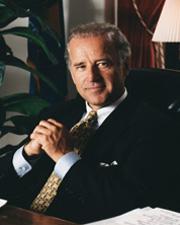
Mr. President, I rise today in support of the Stabilization and Reconstruction Civilian Management Act of 2004, a bill that will increase the ability of our civilian agencies to effectively respond…
Mr. President, I rise today in support of the Stabilization and Reconstruction Civilian Management Act of 2004, a bill that will increase the ability of our civilian agencies to effectively respond to complex emergencies and stabilize countries in the wake of war or crisis.
I commend and express my gratitude to Chairman Lugar for his leadership on this issue. Since December of last year, the chairman and I have been engaged in discussions with experts from
in and outside government on whether the United States is adequately organized and equipped, and its personnel trained, to deal with post- conflict reconstruction. Our premise was this: in the last decade, the United States has taken on post-conflict stabilization missions in countries such as Bosnia, East Timor, Haiti, Somalia, and now Afghanistan and Iraq. In the decade to come, whether we like it or not, nation building will remain vital to our national security.
We have learned a lot from our efforts. And we have made a lot of mistakes in the process. One lesson that I think is clear is that we have not done a very good job of turning our experience into tools for the future. So the chairman and I put together a group of outside advisers who had held senior positions in the last two administrations; we also invited officials from this administration to give their ideas. The bill we are introducing today is the product of those consultations. I wish to thank all of the participants of the group for their invaluable input to this bipartisan initiative.
Addressing the needs present in post-conflict reconstruction--and in particular, in countries that are on the verge of becoming failed states--is one of the greatest challenges we face today. It matters to the people living in those nations, and it matters to the American people. A bipartisan commission organized by the Center for Strategic and International Studies and the Association of the U.S. Army found, to no one's surprise, that ``failed states matter--for national security as well as for humanitarian reasons. If left to their own devices, such states can become sanctuaries for terrorist networks, organized crime and drug traffickers, as well as pose grave humanitarian challenges and threats to regional stability.''
We should not have to reinvent the wheel every time we are faced with a stabilization crisis--it's inefficient and ineffective. Rather than address crises on an ad hoc basis--cobbling together plans, procedures, and personnel--as we have been doing, we need to be forward-thinking, comprehensive, and strategic.
The thrust of this legislation is to do precisely that. The bill authorizes the creation of an office within the State Department that will be the focal point for creating plans and procedures to respond to crises, and it establishes a corps of active duty and reserve personnel who will be able to deploy rapidly when and where critical needs arise.
Mr. President, this bill is not a cure-all. But I believe it is a good start to addressing a critical need: that of strengthening our civilian capacity to handle complex emergencies overseas. Again, I thank Chairman Lugar and the members of our policy advisory group for their work on this issue.
I yield the floor.
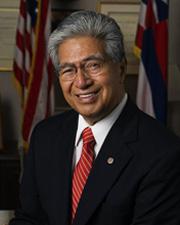
Mr. President, I rise today to introduce legislation to prohibit the comparative cost adjustment program, which is commonly known as premium support, from operating in Hawaii. The Medicare…
Mr. President, I rise today to introduce legislation to prohibit the comparative cost adjustment program, which is commonly known as premium support, from operating in Hawaii.
The Medicare Prescription Drug Improvement and Modernization Act of 2003 included the creation of premium support demonstration programs in select metropolitan statistical areas starting in 2010. In these demonstration programs, seniors would be provided with a defined contribution payment for Medicare Part B rather than a defined benefit. Seniors would receive a set minimum payment to be used towards enrolling in either traditional fee-for-service Medicare or a managed care plan. Seniors that choose options that are more expensive than the defined premium would have to pay the difference themselves.
Many of the older and less healthier seniors stay in the traditional fee-for-service Medicare rather than enrolling in Medicare managed care programs. The defined contribution premium will likely not be able to cover the entire cost of their fee-for-service premium. So, they may not be able to afford to stay in the traditional Medicare program and will be forced to enroll in lowest-cost health maintenance organization, HMO, or preferred provider organization, PPO, in their community. Seniors deserve to have their right to choose whether to remain in traditional Medicare or enroll in a managed care program based on their health care needs and not be forced into managed care programs because they are not able to pay the increased premium required for traditional Medicare.
Now, seniors across the country pay the same premium for Medicare Part B services. After the implementation of the premium support demonstration programs, this will not be the case. Not only are there likely to be wide variations in Medicare Part B premium rates for beneficiaries across the country, but there will even be differences among seniors within the same State. This is unjust. Seniors that receive the same benefits should be paying the same premium in an entitlement program such as Medicare.
Proponents of the premium support plan believe that this will help control Medicare costs and save money. However, this proposal will only work if more of the costs are shifted to seniors who will have to pay higher premiums or have their benefits reduced.
It is my hope that these demonstration projects are never implemented in any state. My legislation would ensure that the residents of Hawaii are protected from having this demonstration program impair their Medicare Part B choices. I am pleased that several of my colleagues have also introduced
legislation to protect seniors in their states from the premium support demonstration projects.
I ask unanimous consent that the text of the bill be printed in the Record.

Mr. President, there is nothing more important we could do for our senior citizens than help them with the soaring cost of health care, especially the high cost of prescription drugs. Unfortunately…
Mr. President, there is nothing more important we could do for our senior citizens than help them with the soaring cost of health care, especially the high cost of prescription drugs.
Unfortunately the Medicare bill passed by this Congress and signed into law by President Bush doesn't do this. In fact, for many seniors this law will do more harm than good.
One provision of this new and overly complicated law establishes ``comparative cost adjustment'' demonstration programs that will take place in six metropolitan areas. ``Comparative cost adjustment'' is just a fancy term that really means: How much you pay for your Medicare premiums depends on where you live.
In other words, some Medicare recipients will pay more than others for the exact same coverage, simply because of where they live.
Medicare premiums for seniors living in the six regions selected to participate in the pilot program would be based on a set payment--like a voucher--from the government. This payment would be based on a combination of the prices charged by private plans and the cost of Medicare fee-for-service in their area.
Seniors would enroll in either a private plan or in fee-for-service Medicare. But those who chose a plan that cost more than the defined contribution would have to pay the difference out of their own pockets.
And since senior citizens in the fee-for-service program tend to be older and sicker than those who enroll in Medicare HMOs, costs for that group would probably be higher, and the defined contribution likely would not cover the entire cost of the fee-for-service premium.
So over time, seniors who want to remain in the traditional Medicare program, because they want to keep choosing their own doctor or for any other reason, would have to pay more and more out of their own pockets.
Under this experimental program, I fear that traditional Medicare would become too expensive for many patients simply because of where they happen to live. We have a large population of retirees in north and south Nevada, and I am told there is a good chance one or both of these areas will be selected for this experimental pilot program. That would place a disproportionate burden on seniors in my State who are already struggling to make ends meet and pay for their health care.
So the legislation I am introducing today will prohibit any of the six demonstration programs from occurring in Nevada.
Senior citizens in Nevada should not have to pay more than their neighbors for the same Medicare services. I will keep fighting to protect Nevadans from being used as guinea pigs in this ill-advised experiment.
I ask unanimous consent that the text of the bill be printed in the Record.
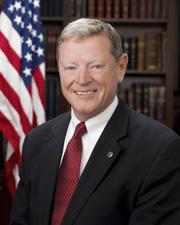
Mr. President, I rise today to join my colleagues, Senator Nickles and Landrieu, in introducing this bill, which will profoundly impact generations to come. It will clarify who is eligible to become…
Mr. President, I rise today to join my colleagues, Senator Nickles and Landrieu, in introducing this bill, which will profoundly impact generations to come. It will clarify who is eligible to become President of the United States of America. The term ``natural born citizen'' as used in the Constitution, would be defined as any person born in the United States, any person born outside the United States to citizen parents, and any foreign-born child adopted by citizen parents.
In the absence of a judicial interpretation of constitutional language, Congress can express a legislative interpretation of constitutional terms. In the Naturalization Act of 1790, Congress used this ability to define ``natural born'' to include children born abroad to citizen parents. Although this language was not kept in the naturalization laws, the ability of Congress to define this term was not challenged.
This bill is intended to further describe the term ``natural born citizen'' as it relates to Presidential qualification. The Framers used this phrase to support the criteria that the President be loyal and faithful to the United States. Children born to military, or State Department parents living abroad have exceeding loyalty to the United States. They should not be punished for their parents' willingness to serve their country abroad.
Furthermore, internationally adopted children should not bear this penalty either. In recent years, the number of children adopted by Americans from overseas has grown to more than 20,000. They are considered ``natural issue'' of their adoptive parents and share a similar loyalty to the United States. These children should have the same rights, duties, responsibilities, and privileges as biological children. They should be able to pursue their dreams.
About two and a half years ago, my daughter adopted a little girl from Ethiopia. While my granddaughter shares most freedoms granted by the Constitution with her biologically born brothers, including the freedom of speech, the freedom to worship, and the freedom to pursue happiness, she does not have the freedom to pursue any job she wants. Without this interpretation she does not have the freedom to run for President of the United States.
I urge my colleagues to join in support of this bill to allow all American citizens, no matter where they are born, an equal opportunity to pursue their dreams, including to run for President of the United States.
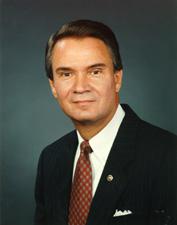
Mr. President, I rise today with my colleague, Senator Voinovich, to introduce the Uniting Neighborhoods and Individuals to End Racial Profiling Act, also known as the UNITE Act. In the fall of 2002,…
Mr. President, I rise today with my colleague, Senator Voinovich, to introduce the Uniting Neighborhoods and Individuals to End Racial Profiling Act, also known as the UNITE Act.
In the fall of 2002, there was a meeting in my office with a number of African-American leaders from Louisiana. They told me that the single most important issue they want to resolve is racial profiling.
I turned to Senator Voinovich, who has been a leader on this in Ohio and in the Senate, to come up with the first, truly bipartisan racial profiling bill to be introduced in the Senate. After more than a year of hard work, we have finally come up with a bill that meaningfully responds to the issue of racial profiling while striking the right balance between the concerns of law enforcement and the minority community. Most importantly, our UNITE Act will begin to end racial profiling in this country.
This bill strives to fix the real incidents of racial profiling through education, public outreach and oversight. It also combats the perception that law enforcement is engaging in racial biased policing. By banning racial profiling, putting safeguards in place and providing the public with a meaningful complaint procedure, this bill responds to the concerns of minority communities and hopefully helps rebuild their trust in law enforcement agencies.
I believe we have crafted the first, reasonable and passable solution to the issue of racial profiling.
I hope as we unveil this legislation publically for the first time today, that both the civil rights and law enforcement communities will see this bill as a good starting point to find a solution to this serious problem. I look forward to working with my colleagues, law enforcement and the civil rights community to get this legislation passed and signed by the President this year.
Mr. President, today I am introducing legislation with my distinguished colleague, Senator Carl Levin, that would protect my State of Michigan from being forced to participate in an experiment that…
Mr. President, today I am introducing legislation with my distinguished colleague, Senator Carl Levin, that would protect my State of Michigan from being forced to participate in an experiment that could lead to the unraveling of Medicare as we know it.
This project, mandated under the Medicare reform bill approved in late 2003, effectively replaces Medicare in the designated demonstration area with private voucher coverage in six sites in 2010. I have strongly opposed the portion of the Medicare bill that authorizes this project, and I particularly oppose Michigan seniors being forced to participate in this ill-advised experiment.
If Michigan is included in one of these areas, then older and sicker seniors who want to stay in traditional Medicare will be forced to pay higher premiums. This is wrong, and my bill will stop this from happening to my constituents.
Show 2 more
Mr. President, I ask unanimous consent that the text of the joint resolution be printed in the Record.
Mr. President, I ask unanimous consent that the text of the joint resolution be printed in the Record.
Mr. President, I ask uanimous consent that the text of the bill be printed in the Record.
Mr. President, I ask uanimous consent that the text of the bill be printed in the Record.
Bill Text
Latest available legislative text
        [Congressional Bills 108th Congress]
[From the U.S. Government Publishing Office]
[S. 2117 Introduced in Senate (IS)]

2d Session
S. 2117

To amend part C of title XVIII of the Social Security Act to prohibit
the comparative cost adjustment (CCA) program from operating in the
State of New Jersey.

_______________________________________________________________________

IN THE SENATE OF THE UNITED STATES

February 25, 2004

Mr. Corzine (for himself and Mr. Lautenberg) introduced the following
bill; which was read twice and referred to the Committee on Finance

_______________________________________________________________________

A BILL

To amend part C of title XVIII of the Social Security Act to prohibit
the comparative cost adjustment (CCA) program from operating in the
State of New Jersey.

Be it enacted by the Senate and House of Representatives of the
United States of America in Congress assembled,

SECTION 1. PROHIBITION ON OPERATION OF MEDICARE COMPARATIVE COST
ADJUSTMENT (CCA) PROGRAM IN NEW JERSEY.

(a) In General.--Section 1860C-1(b) of the Social Security Act, as
added by section 241 of the Medicare Prescription Drug, Improvement,
and Modernization Act of 2003 (Public Law 108-173), is amended by
adding at the end the following:
``(3) No cca areas within new jersey.--A CCA area shall not
include an MSA any portion of which is within the State of New
Jersey.''.
(b) Effective Date.--The amendment made by this section shall take
effect as if included in the enactment of the Medicare Prescription
Drug, Improvement, and Modernization Act of 2003 (Public Law 108-173).
<all>