A bill to amend title 10, United States Code, to exempt abortions of pregnancies in cases of rape and incest from a limitation on use of Department of Defense funds.

Legislative Activity
Stay on top of the latest movement without scrolling through every action
Read twice and referred to the Committee on Armed Services.
March 4, 2004
View full timeline
Introduced in Senate
March 4, 2004
Sponsor introductory remarks on measure. (CR S2229-2230)
March 4, 2004
Read twice and referred to the Committee on Armed Services.
March 4, 2004
Floor Debate
8 membersWhat members said about S. 2166 on the floor
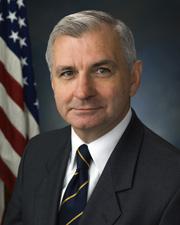 JR
JR BLL
BLL RJD
RJD BGBB+3
Floor Debate
8 membersWhat members said about S. 2166 on the floor
Madam President, we are on a very important piece of legislation. We also, on a daily basis, are confronted with a very important situation internationally, and that is our continued struggle in Iraq…
Madam President, we are on a very important piece of legislation. We also, on a daily basis, are confronted with a very important situation internationally, and that is our continued struggle in Iraq and Afghanistan. Today Senator Hagel and I have announced legislation that would increase the end strength of the U.S. Army by 30,000 soldiers to meet these responsibilities worldwide.
This legislation will address a serious shortcoming in our Nation's defense policy, ensuring that we have sufficient forces to carry out all of our missions around the globe, in Iraq and in Afghanistan. This legislation would increase and authorize the end strength of the U.S. Army from its present total of 482,400, to a total of 512,400.
I am introducing this legislation today not only with Senator Hagel, but also with Senator McCain, Senator Akaka, Senator Bill Nelson, and Senator Clinton.
End strength is the number of personnel permitted to serve in the military. Retired GEN Gordon R. Sullivan once stated that the objective of end strength is:
To have enough soldiers to execute Army missions at the
right time and the right place, have enough in the total to
have both tactical and operational flexibility and to have
adequate depth in numbers to support leader development,
required force structure manning and the requisite balance
needed across the ranks.
Each year in the Defense authorization bill, Congress authorizes the end strength of each branch of the military service, including the National Guard and Reserves.
The importance of the authorized end strength is that it is the number of soldiers the budget funds. On average, each soldier costs $329 a day or about $120,000 a year to fully house, pay, train, and equip.
Last October, when we were debating the emergency supplemental for operations in Iraq and Afghanistan, Senator Hagel and I offered an amendment to increase the active-duty end strength of the Army by 10,000 soldiers and to pay for that increase out of the supplemental.
At that time, the administration vehemently opposed the amendment. The Pentagon argued that an increase was not necessary, that it was too expensive, and using funds from the supplemental would disrupt current plans to win the war in Iraq. The Army stated in its message, ``Increasing end strength is a last resort to fix the challenge'' of balancing forces properly to win the war in Iraq and the global war on terrorism.
Yet on January 28 of this year, a mere 3 months later, Army Chief of Staff General Peter Schoomaker announced he had received emergency authority to add 30,000 soldiers over the next 4 years to help ``rebalance the force.'' Moreover, the Army would pay for these additional troops with funds from the fiscal year 2004 supplemental.
Needless to say, I am happy the Department of Defense has adopted the position Senator Hagel and I had last October. Indeed, they have raised our request of 10,000 up to 30,000. But it is one thing to have the soldiers--it is an important thing--but, unfortunately, the Department of Defense is using the supplemental process to avoid putting these troops in the budget, and I think that is the appropriate way to pay for it.
Our Army is the finest fighting force in the world, but it is in danger of being overextended and, in the process of that overextension, degraded in its quality and its effectiveness.
Despite the heroic efforts of soldiers every day--men and women--who sacrifice themselves for our benefit, without the assistance, the resources, the support they need, they will find it more and more difficult to do the job.
In January 2004, the National Journal summed up the serious situation facing our Army:
The occupation of Iraq, the largest single deployment since
the Vietnam war, is lasting longer than expected, and comes
on top of major deployments elsewhere around the globe. Tens
of thousands of reservists have been sent away on lengthy
tours that they never expected. Emergency ``stop loss''
orders have prevented soldiers from leaving the services
once their enlistments are up. . . . [and] demoralized
families are demanding relief.
The legislation we propose will address the major portion of that relief. On January 21 of this year, LT GEN John Riggs, the director of the Objective Force Task Force, or the Army of the future, told the Baltimore Sun:
You probably are looking at substantially more than
10,000--
Meaning 10,000 personnel.
I have been in the Army 39 years, and I've never seen the
Army as stretched in that 39 years as I have today. . . .It's
not my intent to be provocative but to be intellectually
honest with my feelings on the strategy and commitment of the
Army.
It is not Senator Hagel's and my intent to be provocative but to be intellectually honest.
In a November 23, 2003, article in the Wall Street Journal, retired GEN Barry McCaffrey stated:
The U.S. Army is stretched to the breaking point. We do not
need more U.S. troops in Iraq. We do need to increase active-
duty strength of the U.S. Army in order to sustain the
current effort in both Iraq and Afghanistan--while remaining
prepared to counter North Korea. Many of us are concerned
that we won't be able to carry out the strategy we've
embarked on in Iraq because we won't be able to sustain it.
Next summer, we could be saying that we're breaking the U.S.
Army, and that we can't do a third rotation.
I would disagree with General McCaffrey on the need for additional troops in Iraq. This week's experience of almost 200 civilian casualties and suicide attacks on Shi'a pilgrims suggests there is perhaps a need for more U.S. security, as well as better Iraqi security.
The major point he makes is the point we are making: We have to increase the overall size of the Army if we want to carry out the strategy we embarked upon.
Jeffrey Record of the Army's Strategic Studies Institute stated in a report published in December of 2003 that the ``groundforce requirements in Iraq have forced the U.S. Army to the breaking point.'' He goes on to say that:
The Army appeared incapable of sustaining a commitment of
16 of its 33 active-duty combat brigades in Iraq absent a
reduction in commitments elsewhere or an expansion of its
force structure.
Since 1989, the Army's military end strength has been cut by more than 34 percent and civilian end strength by more than 45 percent while undergoing a 300-percent increase in mission rate. Their force structure is going down both in terms of military and civilian personnel, but their operations tempo has increased dramatically, and they are being stretched and stretched to the breaking point.
Today the Army presently has 492,242 soldiers serving on active duty. This has been the average rate for the past few weeks. This means that on the average, the Army needs 8,000 more soldiers each day to accomplish its mission than Congress has authorized and budgeted for.
We already know there is a shortfall in troops, and unless we adopt increases as we have proposed, this shortfall will become a huge chasm between the missions and capabilities to carry out those missions.
The situation in Iraq remains uncertain, but what is certain is the Army is already planning to have a force of slightly more than 100,000 troops in Iraq through 2006. This is not just a quick spike, a month or two that you can carry out through some emergency funding mechanisms, something temporary; this is several years. Indeed, I would suggest many years to complete the missions.
In order to address the stresses caused by Iraq, the Army is intent on rebalancing its force, or transforming it. The transformation is what General Schoomaker says requires the additional forces.
The Army is caught in a very difficult situation. They have to modernize and transform themselves into a more agile, more technologically sophisticated units, but still they have responsibilities of nation building in Iraq and Afghanistan. Those responsibilities are not amenable to high-tech solutions. They require the old-fashioned solutions: troops on the ground, troops talking to civilians in Iraq and Afghanistan, gathering intelligence, analyzing intelligence and having the force, both the perception of that force and the reality of that force, to ensure our adversaries are in check.
I am glad that today the Department of Defense now agrees with the proposal that was offered last fall by Senator Hagel and myself and 51 of our colleagues who supported us that the Army needs more soldiers. What we disagree on is the way in which we should pay for these forces.
As I stated previously, every U.S. soldier costs the taxpayers approximately $120,000 per year. Therefore, an additional 30,000 troops would cost approximately $3.6 billion annually. There are two possible ways to authorize and fund an increase in end strength with its accompanying costs. One way is to put the end strength increase in the budget, raise the authorization levels in the Defense authorization bill, and find the funds in the $401 billion Defense budget to pay for the troops. That is a method used in the bill we are introducing today.
The Defense Department, however, has chosen a different route. It intends to increase end strength by using the emergency authority granted under 10 U.S. Code section 123a which waives the end strength restrictions for a fiscal year if there is a war or national emergency.
When this authority is used, the $3.6 billion cost of additional 30,000 troops is paid through supplemental or deficit funding.
This year, the extra troops will be paid for out of the fiscal year 2004 supplemental, but that supplemental will be depleted on September 30, 2004, if not earlier. So by my calculation, on October 1, 2004, there will be no funding and those 30,000 additional soldiers, or a significant portion of those troops, will still be in the field as they are recruited, trained, and deployed. That means the Defense Department will have to quickly request the Congress to provide another emergency funding for these troops, troops they know full well will be in the service or be recruited to the service or trained for the service by September 30, 2004.
Moreover, if the Pentagon persists in using this waiver, then they will repeat the scenario year after year. Pretend these troops do not exist when they send the regular budget up and then suddenly come to us with a supplemental at a convenient time and ask for additional money. That is not a way to budget for our forces.
I also point out that I am very concerned because I am hearing reports that the budget sent to us by the Budget Committee will include cuts to the overall defense line. How can the defense line overall be cut at the same time our military leaders are saying they need more troops?
There are those who are talking about the situation of abandoning Iraq. That is absolutely foolish. We are committed. Not only do we have to stay, we have to win. The only way to do that, in my view, is to maintain and provide the real resources for the troops to do their job. It is ironic to me, to say the least, that we would be contemplating a budget that cuts defense spending right now when we literally have so many unmet defense needs directly associated with Iraq and Afghanistan.
There is another problem with this supplemental approach. First, the definition of what is an emergency, the fiscal year 2000 budget resolution states that emergency funding must meet the following criteria: necessity; second, sudden, quickly coming into being, and not building up over time; third, urgent; four, unforeseen, unpredictable, and unanticipated; and five, temporary in nature.
These troops will not be temporary. The need is for several years. Certainly we know already what is coming before us. So this is not something quickly coming into being, something that is being built up suddenly.
The cost of 30,000 additional troops is now predictable and anticipated for at least the next 4 years. It does not qualify as an emergency. This device is simply hiding the true cost of ongoing operations and transformation.
As I said before, there are some who say this is a spike. It is not a spike. It is a plateau, or at least an ascending hill and a very slow decline.
This chart was presented to the Armed Services Committee staff by the Army on February 12, 2004. It shows the transformation plan. It shows the increase in the present end strength of 482,400 up to an end strength of roughly 512,400, from about 33 brigades to about 48 brigades. Then it shows the gradual decline.
I note this decline gets us back to current end strength around fiscal year 2010 or 2011. That is 7 years from now. That is not a spike. That is a tough hike up a steep hill and then a slow decline from that hill.
Also, this scenario assumes there are no other major contingencies such as North Korea; that there can be a successful transfer of military duties to more civilians; that we can reduce the time our soldiers are in training, in transit, in hospitals, and other nondeployed or nondeployable categories. These are all assumptions that might not be met.
The most prudent action today is to increase the forces that we suggest in our legislation. It is much easier to bring a force down than to build it up. When it is brought down, it saves money. When it is brought down, stop-loss orders do not have to be relied upon. These are orders which basically tell soldiers they have reached their enlistment termination date but we are not letting them go. They are no longer a volunteer, in some respects. They are with us until we tell them they can go. So that is something of which we have to be very conscious.
We have to also be concerned that these 30,000 troops might not come online at one moment. Obviously, it takes time to recruit and train. The Army may not need or be able to handle all of these troops. That does not argue against authorizing this increased end strength. What it does is argue for flexibility in the way the Army brings the troops on, and that is something I am sure we can talk about in the conduct of our discussions this year on the defense authorization legislation.
We have a point now where our Army is stretched. It is under tremendous stress, and to a degree this also applies to the Marine Corps, our land forces. We can do the responsible thing, which is to stand up and in the clear light of day increase the end strength of our military forces and pay for that end strength, or we can employ budgetary gimmicks.
We can avoid the reality. Through smoke and mirrors we can try to somehow persuade ourselves and maybe the American public that we do not have to pay for these operations in Iraq or Afghanistan. That would be wrong in terms of our responsibility to the American public and our responsibility, just as importantly, to the troops who are in the field. They have to know we are not playing budget games with our military forces. They have to know we support them, that we just cannot talk about a generational
struggle against terrorism if we have to fund that struggle.
We also have to be particularly cognizant that so many of our National Guard and Reserve forces are engaged in this conflict. Of the 100,000-plus troops who will be in Iraq in the next several weeks after this rotation, 40 percent will be Reserve and National Guard forces, the largest deployment of Reserve and National Guard forces since World War II in a combat area of operations.
What is the message we are sending to them? If we do not increase the size of our Active Forces, the message is simple: When you serve well-- and they are--and honorably, and you return home, do not unpack your bags because you are going back before you know it.
We just do not have the Active Forces to carry out the missions.
I hope in the process of our deliberations on the Defense authorization bill we can include the Hagel-Reed amendment. I thank my colleagues who supported this amendment. Certainly, I think we want to do all we can for our forces in the field.
I yield the floor.
Madam President, I rise today to introduce the Equity in Law Enforcement Act, to extend to sworn, licensed, or certified police officers serving private institutions of higher education and rail carriers, the same Federal benefits that apply to law enforcement officers serving units of State and local government.
Each day, thousands of law enforcement officers put their lives on the line to protect the public's safety on our Nation's university and college campuses and our railways.
The attacks of September 11, 2001, marked a significant change in the way the United States regarded the threat of terrorism against our homeland. These events also highlighted the important role of the nation's law enforcement officers in the security of our country.
Sworn officers on private university campuses protect the public's safety and secure assets similar to those that are found on public university campuses, including nuclear laboratories and critical research and development infrastructure. Events such as last year's bombing at Yale University have highlighted the risks facing our nation's college and university campuses.
In addition, the protection of our transportation systems, such as our railways, is now more important than ever. Railroad police officers are charged with enforcing State and local laws in any jurisdiction in which the rail carrier owns property. They attend the same police academies as State and local police in the state in which they are domiciled, and most come from law enforcement backgrounds.
The Public Safety Officers' Benefits (PSOB) Act of 1976 was enacted to aid in the recruitment and retention of law enforcement officers and firefighters, by providing a one-time financial benefit to the eligible survivors of public safety officers whose deaths are the direct result of traumatic injury sustained in the line of duty. Specifically, Congress enacted this legislation to address concerns that the hazards inherent in law enforcement and fire suppression, and the low level of State and local death benefits, might discourage qualified individuals from seeking careers in these fields.
The same risks also apply to police officers protecting our private universities and railways. Indeed, names of 59 railway officers are inscribed on the National Law Enforcement Officers Memorial in Washington, D.C. Of these 59 officers, 44 of them were shot to death, and the rest were killed in the line of duty. Since 1878, the Union Pacific Railroad has suffered the loss of 16 police officers, 10 of those killed by gunfire, and the Norfolk Southern Railroad has lost another 14 officers in the line of duty. All but one of these 14 officers were killed by gunfire. These sobering facts are evidence of the dangers faced by these officers every day.
Similar dangers face many police officers serving private institutions of higher education. Take the case of Tulane University Police Sergeant Gilbert J. Mast. On January 20, 1996, Sergeant Mast was killed while on patrol, when he was struck by a hit-and-run vehicle. The driver surrendered to officers of the New Orleans Police Department several days later. Although Sergeant Mast had bravely served as a law enforcement officer on Tulane's campus, and the Director of Public Safety at Tulane had filed the required paperwork for survivor benefits, his family was denied because he was not employed by the public sector.
Sergeant Mast is just one example of the many brave police officers who protect our railways and college and university campuses every day, yet who are not covered under the Public Safety Officers' Benefits Act, and are thus excluded from receiving the same Federal death benefits as law enforcement officers serving units of State and local governments.
I am pleased that Senators Leahy and Cornyn have joined me in introducing the Equity in Law Enforcement Act, to help remedy this discrepancy in death benefit payments for law enforcement officers.
This bi-partisan legislation will extend Federal benefits to law enforcement officers who serve private institutions of higher education and rail carriers, including line-of-duty death benefits under the Public Safety Officers' Benefits Program, and eligibility for Bulletproof Vest Partnership Grants through the Department of Justice. The bill would ensure that these public safety officers have access to the protective equipment they need, and that they and their families receive benefits if an officer is killed or seriously injured.
The bill would apply only to sworn peace officers who receive State certification or licensing, and is supported by the International Association of Chiefs of Police (IACP) and the International Association of Campus Law enforcement Administrators (IACLEA).
Indeed, the benefits of this legislation far outweigh the costs. A recent analysis by the Congressional Budget Office has found that there would be no significant budget impact by its enactment.
The importance of police officers on our campuses and railways is more apparent than ever. I believe that it is necessary that these brave men and women are able to receive the same benefits as their counterparts in State and local law enforcement units, and I am pleased that this legislation has also been introduced in the House of Representatives by Congressman Chris Bell, along with 3 bi-partisan cosponsors.
I urge my colleagues to join me, and Senators Leahy and Cornyn, in co-sponsoring and passing the Equity in Law enforcement Act, to ensure that the brave officers that serve our private college and university campuses and railways receive the benefits that they deserve. I ask unanimous consent that the text of the legislation be printed in the Record.
Madam President, I rise today with my colleague, Senator Durbin, to introduce the Small Employer Health Benefits Program Act of 2004. This legislation seeks to address an enormous problem facing…
Madam President, I rise today with my colleague, Senator Durbin, to introduce the Small Employer Health Benefits Program Act of 2004.
This legislation seeks to address an enormous problem facing small businesses in Arkansas and all across the country: accessibility and affordability of health insurance. I have talked with many small business owners in Arkansas who have been forced to drop or dramatically reduce health insurance for their employees even though they desperately want to offer it. Small employers say that offering health insurance has a positive impact on recruitment, retention, employee attitude, performance, health status, and the overall success of the business. What better way to get our economy going again than to help small businesses succeed?
Small businesses are the number one source for jobs in Arkansas. And the smaller the businesses, the less likely they will offer health insurance. Nationally, 58 percent of all private sector employers offer health insurance. Only three States fall below this average: my home State of Arkansas, Mississippi, and Montana. Arkansas, rate for private coverage is 43 percent.
That is why I am proud to introduce legislation today that will offer small employers a real solution to the problem of accessing affordable, comprehensive health insurance for their employees. Our legislation calls for the creation of a new Small Employers Health Benefits Program which will offer small employers affordable choices among private health insurance plans by giving them access to a large purchasing pool and negotiated rates. Our bill combines the best of what government-run health care, but harnesses the power of market competition to bring down health insurance costs by using a proven government negotiator.
Under our bill, small businesses across America would be able to pool their risk and purchasing power together to offer affordable health insurance options for their employees. Based on the successful Federal Employees Health Benefits program, which has provided quality benefit choices to Federal employees for decades, our program would offer small businesses a range of benefit packages from a variety of insurance companies, ensuring them a choice of affordable products.
All small employers with under 100 employees could voluntarily participate in the new SEHBP. Why only 100 employees or less? We target help to those who need it the most. Take Arkansas as an example. 87 percent of the businesses in Arkansas with 100 to 200 employees do offer health insurance. However, most businesses in Arkansas, 76 percent to be exact, have less than 50 employees and less than one- third of them are able to offer health insurance to their employees.
Also under our bill, if employers agree to pay a minimum percentage of the premium for workers making under $25,000, they would receive a refundable tax credit in return. Why only low-wage workers? Studies show that more than half of workers in firms under 100 people make less than $25,000. And firms with a high proportion of low-wage workers are much less likely to offer insurance.
Further, current health tax-credits are not targeted to those who need help the most. A recent study shows that only 28 percent of current health benefit tax expenditures will go to families with incomes below $50,000 this year. This is bad considering that these families account for more than half of all families in our country. In contrast, families with incomes of $100,000 or more comprise 14 percent of the population but will account for 26 percent of all health benefit tax expenditures.
By giving small employers a refundable tax credit to defray part of the employer contribution for low-income workers, we provide help to those struggling families who need it the most.
One of the best aspects of our program is that every person working for a small business anywhere in the country--rural or urban--would have access to a choice of plans. And workers who move from one SEHBP- participating company to another anywhere in the Nation would be able to maintain their same health coverage.
For example, a florist working in Helena, AR, who is enrolled in an SEHBP nationwide plan could move to Carbondale, IL, without changing her health insurance. It's that easy.
Consumers are protected because plans in SEHBP will be subject to the same strict regulatory and solvency standards applied to plans in FEHBP. And small employers would be relieved of the burden of comparing insurers, benefit packages, costs and negotiating contracts.
I hope that our colleagues will take a careful look at our legislation and present it to the small businesses in their States. I hope they will ask them about their struggle to find affordable health insurance in today's market and see if they'd view this as a better alternative.
The number of uninsured in our country is alarming and should be a national priority. It is apparent by the statements of HHS Secretary Tommy Thompson yesterday that President Bush's administration doesn't recognize the severity of this crisis. Secretary Thompson said: ``Even if you don't have health insurance in America, you get taken care of. That could be defined as universal health care.''
With all due respect to Secretary Thompson, I don't know where he's getting his information. Just look at the facts:
Twenty percent of the working-aged adults in Arkansas (who are between 19 and 64 years of age) are uninsured. Forty-four million Americans nationwide don't have health insurance.
Uninsured families have less access to important screenings, state- of-the art technology, and prescription drugs. We just passed a Medicare prescription drug benefit because we know how important access to prescription drugs are in improving health.
Uninsured adults have a 25 percent greater mortality risk than adults with coverage. About 18,000 deaths among people younger than 65 are attributed to lack of health insurance coverage every year.
Uninsured adults with chronic conditions like diabetes, cardiovascular disease, HIV infection and mental illness have less access to preventive care and have worse clinical outcomes than insured patients. They try to buy insurance, but it is virtually impossible to get in the individual market.
Uninsured adults negatively affect our health care providers and local economies too. A community's high rate of uninsurance can adversely affect the overall health status of the community, the financial stability of its health care institutions and providers, and access to emergency departments and trauma centers. My hospitals in Arkansas will tell you how expensive uncompensated care can be.
These facts make it clear: people without health insurance don't ``get taken care of'' as Thompson said. Those who lack health insurance don't get access to timely and appropriate health care. The facts are that Americans without health insurance--children and adults--suffer worse health and die sooner than those who do have health insurance.
In Arkansas, the number one cause of bankruptcy is high medical bills. These working families need help with this problem.
The fact is that people who lack health insurance are sicker and die sooner. You ``don't get taken care of'' if you have no health insurance. You fend for yourself.
That's why our small businesses employers--who make up most of the businesses in Arkansas--want to offer health insurance to their employees. And that is why our bill that Senator Durbin and I are introducing today is good for America.
Mr. President, today I am introducing legislation along with my colleague, Senator Blanche Lincoln, which will help small businesses struggling to make health insurance available to their employees.…
Mr. President, today I am introducing legislation along with my colleague, Senator Blanche Lincoln, which will help small businesses struggling to make health insurance available to their employees.
Health insurance premiums have risen as much as six times the rate of inflation in the past decade. Last year they rose by 13.9 percent, the fourth consecutive year of double-digit increases. Some small businesses in Illinois are facing increases as high as 40 percent annually.
According to a survey conducted by Mercer Consulting, worker health care costs have overtaken taxes as the biggest concern among small business owners; and two-thirds of them are shopping for a new health plan every year in an effort to save money.
The Conference Board, an executive research firm, conducts an annual survey of 120 CEOs. One of the questions they ask is how big an obstacle health care costs are in hiring new workers. This year, 78 percent said it was an obstacle, 35 percent said it was a major obstacle.
Health care costs are hurting small businesses, workers and the economy; and fixing this problem should be a national priority.
There are two main problems for small businesses in obtaining affordable insurance. First, there aren't many insurers offering affordable products to small groups. Many small businesses only have access to one insurer in their area, which make it hard to comparison shop. The second problem is that because of their limited size, small business don't have the purchasing or negotiating power of a big company.
The Small Employers Health Benefits Program Act of 2004 (SEHBP) will address both of these problems while maintaining insurance solvency and benefit standards.
Our bill will create a program based on the successful Federal Employees Health Benefits Program or ``FEHBP,'' which offers Federal employees a range of private sector options at affordable prices. This new program would draw from FEHBP's strengths: plan choice, group purchasing savings, comprehensive benefits, low administrative costs and nationwide availability.
The Office of Personnel Management (OPM), which has forty years of experience running FEHBP, would set up a separate SEHBP national purchasing pool open to businesses with 100 employees or less. OPM would annually negotiate benefit packages with private health insurers interested in offering an insurance plan through the SEHBP program. OPM would send out summaries of health plans available to all participating and interested employers during an annual open enrollment season. Plan guides would include a description of each plan offered and
the associated costs, as well as results of a customer satisfaction survey of the plans.
Each employee would choose a plan right for them and enroll directly with the health insurer. To help defray costs for the employers and encourage them to offer insurance to low-income employees, employers would receive an annual refundable tax credit if they agree to pay at least 60 percent of the insurance premium. The tax credit would be equal to 25 percent of the employer contribution for self-only policies, 30 percent for policies covering married couples with no dependents, and 35 percent for family policies, for workers making up to $25,000 per year.
There would also be a refundable 10 percent bonus tax credit for those employers who enroll in the first year and an additional bonus to employers who cover more than 60 percent of the premium. The bonus would be equivalent to a 5 percent add-on per additional 10 percent of premium covered. So, if an employer covers 70 percent, the employer would receive an additional 5 percent tax credit. If they cover 80 percent of the premium, they would get an additional 10 percent tax credit.
All self-employed persons and employees in small businesses of 100 employees or less would be eligible to enroll in SEHBP health plans. OPM would have the authority to grant waivers to businesses with more than 100 employees.
One of the few differences from FEHBP is that SEHBP plans would be allowed to vary premiums by age, so that younger enrollees would be more likely to enroll. The more young healthy people join the program, the lower the premiums will be for everyone.
SEHBP health plans would not be allowed to impose any preexisting condition exclusions on new SEHBP enrollees who have at least one year of health insurance coverage immediately prior to enrollment in an SEHBP plan. However, to prevent people from waiting until they get sick to enroll, health plans would be allowed to exclude coverage for known preexisting conditions for up to one year for people without coverage immediately prior to enrollment, while covering costs associated with new conditions.
Mr. President, Secretary Tommy Thompson of the Department of Health and Human Services said yesterday that people without health insurance in this country get health care. I disagree. There are millions of Americans forgoing care because they don't have access to affordable health care. Additionally, small businesses are forgoing hiring because of the cost of offering health care to new employees. These problems can and should be solved and I believe this legislation could open the door for many Americans to obtain good health insurance coverage.
SEHBP would provide small employers a way to offer their workers an array of health insurance options at a group discounted rate. With a limited administrative effort and a refundable tax credit, employers would be able to participate in a health insurance program that offers greater affordability, access and choice without compromising benefit and solvency standards.
I yield the floor.
Madam President, the locals call it ``God's country.'' The Apalachicola River, beginning at the confluence of the Chattachoochee and Flint River, near the borders of Alabama, Florida, and Georgia,…
Madam President, the locals call it ``God's country.'' The Apalachicola River, beginning at the confluence of the Chattachoochee and Flint River, near the borders of Alabama, Florida, and Georgia, was and remains an important waterway in the southeast. The river's purpose as a waterway, however, has changed since its colonial fame.
The Apalachicola is the largest river east of the Mississippi. In its heyday, the Apalachicola was an important tributary that served as the largest port of the Gulf of Mexico--harboring ships carrying cotton to Europe and New England.
In the 21st century, while no longer an essential route of transport, the Apalachicola River is an important environmental and commercial asset. The history of the Apalachicola River as an Army Corps of Engineers project began in 1945 and the Rivers and Harbors Act, which authorized dredging of navigation channels. Over the past 59 years, millions of taxpayer dollars have been swept down the river in an effort to dredge and maintain the 9-foot-deep channel.
The Corps has had difficulty maintaining the channel, and combines dredging with water releases in order to raise water levels and provide navigation windows. This system is hopelessly flawed. Dredging is unmanageable and navigation windows are unreliable, making the process a fiscal waste.
Add to this fact that over the last few years, commercial barge traffic has slowed from an intermittent stream to a virtually non- existent trickle. River traffic dropped dramatically in the late 1990s, with fewer than 200 barges a year using the river system. By 2001, only 30 barges used the entire tri-river system with the cost of dredging the channel exceeding $30,000 per barge. Most recently, in 2004 the only company that used barges to carry cargo on the upper reaches of the river ceased operations.
Furthermore, the Congressional Budget Office estimates that the average cost per ton-mile from 1995-98 at 14.1 cents, almost 24 times more than the cost of the Upper Mississippi River at .597 cents. In light of these circumstances, continued dredging of Florida's largest river is not just wasteful, it is foolish.
Ending the dredging is not just about how wasteful this project is-- it is also about the environmental destruction that is being inflicted on the Apalachicola River and Bay. There are beaches of sand where there were once river banks. There are walls of dredged spoil--some towering like buildings four stories high--where the river waters used to meander. To date, dredged sand has resulted in the destruction of approximately one-quarter of the banks of the Apalachicola. The large amounts of sand have choked sloughs and cut off the water supply to surrounding habitat, ultimately threatening the local economy.
Navigation windows remain a imperil threatened and endangered species like the Gulf Sturgeon, the Fat Three-Ridge and the Purple Bank Climber. The April 2000 navigation window resulted in an almost complete failure of sportfish spawn along the entire Apalachicola River and reservoirs upstream. Sportfish population have been in rapid decline along the river since 1990. This time frame corresponds with the Corps' continued reliance on water releases to provide adequate water for navigation.
The constant and gross interruptions of the natural system have degraded the environment of the Apalachicola River and quality of life of those who depend upon it. It comes as no surprise that the Apalachicola has repeatedly earned the designation by American Rivers as one of our Nation's Most Endangered Rivers. The Apalachicola has also been included in the 2000 Troubled Waters Report and the 2001 and 2002 Green Scissors Report.
Manipulation of the Apalachicola poses a serious risk to the local economy. Important businesses, such as farmers who produce Tupelo honey and the fishermen who harvest oysters and shrimp in Apalachicola Bay, are dependent on the river's overall health. Additionally, commercial fishing operations along the Gulf Coast also rely on the Bay for their livelihood.
The negative impacts of dredging and the low commercial use of the Apalachicola River led former Secretary of the Army for Civil Works, Joe Westphal, to describe the project as not ``economically justified or environmentally defensible.''
Dredging the Apalachicola exacts too high a price from both taxpayers and the environment. Clearly it is time to rethink this expensive and ecologically devastating practice.
The bill I offer today, the Restore the Apalachicola River Ecosystem (RARE) Act, was originally introduced in 2002 and subsequently passed by the Committee on Environment and Public Works. It authorizes the actions necessary to reform the Apalachicola River project. It is my hope that this legislation will again be approved by the committee and then by the full Senate.
The first thing my bill does is put an end to the navigational dredging on the river.
Second, it instructs the Corps to submit to Congress a comprehensive restoration plan that corrects the past harms done to the Apalachicola.
The only way to restore the Apalachicola River to its former greatness is to cease navigational dredging. The designation of the Apalachicola as one of the nation's most endangered rivers should be a wake-up call to Congress and the Army Corps of Engineers to permanently end the dredging of the Apalachicola and allow the river to return to its natural state free of man's manipulation.
I urge my colleagues to support this legislation, which is both fiscally sound and environmentally responsible.
I ask unanimous consent that the text of my bill be printed in the Record.
Madam President, over the past several months, we have heard about tragic incidents in which female cadets at the Air Force Academy and military service women in Iraq have been the victims of rape…
Madam President, over the past several months, we have heard about tragic incidents in which female cadets at the Air Force Academy and military service women in Iraq have been the victims of rape and sexual assault. This is deplorable. There are 200,000 women in uniform, yet while they are protecting our Nation, our Nation is failing to protect them from rape and sexual assault.
It is an even greater insult that we are telling our service women that the Department of Defense will not pay if they choose to terminate a pregnancy that is the result of rape.
Current law states that DoD funds may not be used to perform abortions except where the life of the mother would be endangered. It does not provide any exception for cases of rape and incest--such as is the case in the Medicaid program. The Boxer-Snowe bill would add rape and incest to the life exception that is now law.
While current law allows service members to use military treatment facilities for abortions resulting from rape and incest, the service woman must pay for the procedure out of her own pocket. This is an insult.
According to a study by the Iowa Veterans Affairs Medical Center, 30 percent of female U.S. military veterans report having been raped or having been the victim of an attempted rape during their military service. This legislation will provide help for our female troops in cases of such horrific crimes.
I ask unanimous consent that two letters of support for this bill be printed in the Record.
I am pleased to introduce the First Responders Homeland Defense Act of 2004. This bill would help alleviate funding shortages that our Nation's first responders are experiencing, and would help alleviate confusion about Federal grant programs.
The first provision of the First Responders Homeland Defense Act is a grant assistance hotline. When the Department of Homeland Security was created, many local emergency responder agencies were hopeful that a one-stop shop for homeland security resources would be available. Unfortunately, an easily accessible and understandable resource does not yet exist.
In addition to grants from the Department of Homeland Security, there are many grant programs available to first responders from other federal departments. For example, as part of the Department of Health and Human Services, the Centers of Disease Control and Prevention assists state and local public health officials improve hospital preparedness. The Bureau of Justice Assistance at the Department of Justice distributes funding for law enforcement agencies to prepare for terrorist events.
For a local law enforcement agency or fire department, determining eligibility for the wide range of grant programs in a number of different Federal agencies--not to mention even knowing the full range of funding that is available--could be a confusing and daunting task. In order to help make it easier for first responders, my bill would establish a grant assistance hotline at the Department of Homeland Security that would provide local first responders with information on available grants and how to apply for them.
The First Responders Homeland Defense Act also creates a new grant program for tax-exempt non-profit organizations that provide first responder training. Many public and private agencies are creating projects and training programs that involve the business community in defending the homeland. Organizations with non-profit, tax exempt status should be eligible for Federal grant funds when working on community-wide terrorism preparedness. The Department of Homeland Security should fulfill the goal of community-wide preparation by providing Federal assistance to non-profit organizations that operate training programs in conjunction with a local agency.
Finally, the First Responders Homeland Defense Act creates a grant program for another important purpose: interoperable communications systems. Many homeland security experts recognize that while there are many Federal funding opportunities for anti-terrorism activities, there is very little money dedicated to interoperable communications systems. These are systems that allow different local and State agencies to communicate directly with one another--something that is vital to terrorism prevention and response. Yet these systems are all too rare. This bill establishes a grant program at the Department of Homeland Security for the specific purpose of assisting local agencies improve existing communications systems or purchase new systems.
Making the Department of Homeland Security more accessible to local communities and making more resources available to first responders should be a top priority. Many law enforcement officials and other first responders have reviewed this legislation, and I am pleased to introduce the First Responders Homeland Defense Act in response to many of their concerns.
This bill is an important step in fulfilling the Federal responsibility to protect the homeland. I urge my colleagues to support it.
Show 3 more
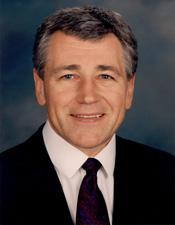
Mr. President, I rise today to join my colleague Senator Jack Reed in introducing legislation to increase the endstrength of the U.S. Army by 30,000 additional troops. Last month, the Army Chief of…
Mr. President, I rise today to join my colleague Senator Jack Reed in introducing legislation to increase the endstrength of the U.S. Army by 30,000 additional troops.
Last month, the Army Chief of Staff, General Peter Schoomaker informed the Congress that the administration had approved an additional 30,000 Army troops on a ``temporary'' basis for the next 4 years.
Over the last year the Congress has been expressing grave concern that our Armed Forces are too small to meet the extraordinary demands being placed on them today. Demands that will likely continue to be with us well into the future.
The United States has over 125,000 troops in Iraq. Global commitments of our Armed Forces have soared since September 11, 2001. In order to prevent back-to-back deployments of our Active-Duty soldiers the Army National Guard and Army Reserve will comprise about 40 percent of the current troop rotation in Iraq.
In addition to dealing with the extraordinary demands being placed on the U.S. Army, the Secretary of defense has tasked General Schoomaker to transform the Army.
By some accounts this transformation will be the most significant and complex undertaking to face the Army in half a century. It will not only directly affect the Active-Duty Army, it will also change the nature of the Army National Guard and the Army Reserve.
Secretary Ramsfeld stated before the Senate Armed Services Committee that the Army must ``move away from the Napoleonic division structure designed for the 19th century, focusing instead on creating a 21st century `Modular Army' made up of self-contained, more self-sustaining brigades that are available to work with any division commander.''
Transformation of the Armed Forces has been a mantra of the Department of Defense. To show unwavering commitment to transformation the Secretary has created the Office of Force Transformation and a Supreme Allied Commander Transformation at NATO. Using the Quadrennial Defense Review as a compass Secretary Rumsfeld has been ``transforming'' almost everything the Pentagon does . . . including senior officer lunch rooms in the Pentagon.
The transformation of the Army's Total Force will affect about 1\1/2\ million people in uniform and a significant number of DOD civilians, employers, and families.
So, why will the transformation of the U.S. Army be done off budget using the emergency supplemental appropriations process? Why will some of the additional manpower that General Schoomaker needs to transform the Army and rebalance the National Guard and Army Reserve come from preventing soldiers from leaving the Army at the end of their enlistments or delaying their retirement? An action referred to by the Pentagon as ``stop loss.''
The Constitution tasks the Congress with significant responsibility regarding our national security.
Article 1, Section 8 of the United States Constitution gives Congress the power ``to provide the common defense . . . to raise and support Armies . . . to provide and maintain a navy . . . and to make laws which shall be necessary and proper for carrying out the foregoing powers.''
In executing this responsibility Senator Reed and I are introducing legislation to permanently increase the endstrength of the U.S. Army by 30,000 troops. This legislation will give the Army Chief of Staff additional help he needs to fight the war on terrorism, stabilize Iraq and Afghanistan, and meet the global demands being placed on the total force today. Our legislation also gives General Schoomaker the manpower ``headroom'' he has testified he needs to transform the total force . . . the Active-Duty Army, the Army Reserve, and the Army National Guard.
This legislation will set the U.S. Army's endstrength at 512,400, 30,000 soldiers higher than it is currently set.
It is not our intention to put the Army in a position that to fund the additional troops they must deplete critical recapitalization, modernization, research, and MILCON accounts. The Department of Defense should be required to better rationalize the department budget to make U.S. Army, Army National Guard, and Army Reserve transformation one of the highest, fully funded, priorities of our Armed Forces.

Mr. President, I am introducing a bill today that I hope will be a useful tool for America's rural schools. The ``Assisting America's Rural Schools Act'' will address the concerns of rural Local…
Mr. President, I am introducing a bill today that I hope will be a useful tool for America's rural schools. The ``Assisting America's Rural Schools Act'' will address the concerns of rural Local Education Agencies (LEAs) that are trying to comply with the teacher quality standards set by the ``No Child Left Behind Act of 2001.''
Every day, rural communities are confronted by a shortage of resources. It may surprise some people to know there are still small towns in rural America where the citizens wait for a doctor to make his rounds, a mail truck to drop off the mail. These families have elected to stay in their communities despite all the obstacles, and they deserve an opportunity to enjoy a good quality of life.
It should come as no shock that there aren't many teachers who want to move to the remotest areas of a State, and teach in the few scattered schools in those areas. Furthermore, rural school districts' salaries and benefits are usually dwarfed by what urban school districts can offer, which presents another barrier to attracting teachers to rural areas.
Imagine the community's sigh of relief when a rural school does acquire a teacher. Now imagine the look on the teacher's face when she realizes she is expected to be ``highly qualified'' to instruct in multiple subjects.
The small town of Austin in Lander County, NV is one such community. Austin boasts a grand total of 63 students in grades K-12. For grades 6-12, there are only three teachers for all subjects. Yes, only three teachers.
These teachers are considered ``highly qualified'' in the areas of science, English, math, and physical education. In order for Austin to acquire a teacher who is ``highly qualified'' in the subject of history, the LEA must either find and recruit another teacher, or send one of its three current teachers back to school to get accredited in history via distance learning. Unfortunately, Lander County doesn't have the money to do either of these things.
Another quandary is presented in the event that one of these three teachers retires, quits, or leaves the school system. Again, it is incumbent upon the LEA to decide how to spend its limited funds.
Make no mistake about it: The issue is not whether teachers in rural areas should be qualified to teach multiple subjects--they should. However, requiring them to attain ``highly qualified'' status in all subjects simultaneously is unreasonable.
The ``Assisting America's Rural Schools Act'' provides rural LEAs with some flexibility in meeting the definition of a ``highly qualified teacher'' without diminishing the accountability standards for such teachers. Once the Department of Education deems a rural school district eligible, it will be allowed to exempt for 1 year any teacher already highly qualified in at least one core academic subject from the Federal requirement to be ``highly qualified'' in every subject taught. A highly qualified teacher who is working toward that certification in another subject can still teach both subjects.
Nevada is not alone in facing this dilemma. While 13 out of 17 counties in my state would qualify as rural LEA's under the bill, it would also provide relief for rural school systems in 48 other states.
There is no question that every child deserves a quality education regardless of whether he or she lives in urban rural America. We have the responsibility in Congress of making sure the door of opportunity is open to all our children.
The ``highly qualified'' teacher provision in the ``No Child Left Behind Act'' is having the unintended consequence of depleting the already scarce supply of teachers in rural areas. To correct this situation, Congress should pass the ``Assisting America's Rural Teachers Act'' in the near future.
This bill was authored by Representative Jim Gibbons of Nevada and has been introduced in the House. I am proud to author the Senate Companion and urge my colleagues to support this bipartisan legislation.
I ask unanimous consent that the text of the bill be printed in the Record.
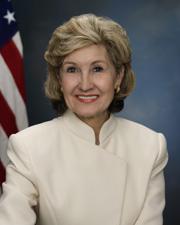
Mr. President, I rise to introduce legislation to recognize the importance and need for increased weather modification research. Weather modification is the general term that refers to any human…
Mr. President, I rise to introduce legislation to recognize the importance and need for increased weather modification research. Weather modification is the general term that refers to any human attempt to alter the weather. While we may not be able to stop Mother Nature entirely, we can sometimes alter her course, changing the weather in small, yet significant ways. These efforts have been used in the U.S. for more than 50 years to reduce crop and property damage, optimize useable precipitation during growing seasons and lessen the impact of periodic, often severe droughts.
The weather modification projects in Texas and other States in the U.S. are much more than well considered responses to drought. They are trying to use the latest technological developments in the science to chemically squeeze more precipitation out of clouds. Moisture that is needed to replenish fresh-water supplies in aquifers and reservoirs. Political subdivisions like water conservation districts and county commissions have embraced the technology of rain enhancement as one element of a long-term, water-management strategy. This is critical to ensure growing populations have enough water to meet future needs.
This bill will develop a comprehensive and coordinated national weather modification policy through federal and state research and development programs. It will also establish a Weather Modification Advisory and Research Board within the Department of Commerce to promote and expand the practical knowledge of weather modification. Further, it recognizes the significance of state and federal collaboration in this endeavor.
I am proud to offer this legislation to bring attention to this important research and I would urge my colleagues to support the Weather Modification Research and Technology Transfer Authorization Act. I ask unanimous consent that the text of the bill be printed in the Record.
Bill Text
Latest available legislative text
        [Congressional Bills 108th Congress]
[From the U.S. Government Publishing Office]
[S. 2166 Introduced in Senate (IS)]

108th CONGRESS
2d Session
S. 2166

To amend title 10, United States Code, to exempt abortions of
pregnancies in cases of rape and incest from a limitation on use of
Department of Defense funds.

_______________________________________________________________________

IN THE SENATE OF THE UNITED STATES

March 4, 2004

Mrs. Boxer (for herself, Ms. Snowe, Mrs. Murray, Ms. Collins, Mrs.
Clinton, Mrs. Feinstein, and Ms. Cantwell) introduced the following
bill; which was read twice and referred to the Committee on Armed
Services

_______________________________________________________________________

A BILL

To amend title 10, United States Code, to exempt abortions of
pregnancies in cases of rape and incest from a limitation on use of
Department of Defense funds.

Be it enacted by the Senate and House of Representatives of the
United States of America in Congress assembled,

SECTION 1. USE OF DEPARTMENT OF DEFENSE FUNDS FOR ABORTIONS IN CASES OF
RAPE AND INCEST.

Section 1093(a) of title 10, United States Code, is amended by
inserting before the period at the end the following: `` or in a case
in which the pregnancy is the result of an act of rape or incest''.
<all>