Coastal Zone Enhancement Reauthorization Act of 2003

Legislative Activity
Stay on top of the latest movement without scrolling through every action
Read the second time. Placed on Senate Legislative Calendar under General Orders. Calendar No. 6.
January 30, 2003
View full timeline
Introduced in Senate
January 29, 2003
Sponsor introductory remarks on measure. (CR S1746-1747)
January 29, 2003
Introduced in the Senate. Read the first time. Placed on Senate Legislative Calendar under Read the First Time.
January 29, 2003
Read the second time. Placed on Senate Legislative Calendar under General Orders. Calendar No. 6.
January 30, 2003
Floor Debate
22 membersWhat members said about S. 241 on the floor
OJS JDR
JDR DKI
DKI PVD
PVD CL+17
CL+17
Floor Debate
22 membersWhat members said about S. 241 on the floor
Mr. President, I rise today to support the Coastal Zone Enhancement Reauthorization Act of 2003. I am pleased to have bipartisan support for this bill and to be joined by the chair and ranking…
Mr. President, I rise today to support the Coastal Zone Enhancement Reauthorization Act of 2003. I am pleased to have bipartisan support for this bill and to be joined by the chair and ranking Democrats of the Commerce Committee and the Subcommittee on Oceans and Fisheries. Senators McCain, Hollings, and Kerry have been instrumental in developing the wide range of support for this bill, and I appreciate their interest in improving the way we manage our Nation's valuable coastal and marine resources.
In 1972, Congress responded to concerns over the increasing demands being placed on our nation's coastal regions and resources by enacting of the Coastal Zone Management Act. These pressures have greatly increased since the act was originally authorized.
Although the coastal zone only comprises 10 percent of the contiguous U.S. land area, nearly 53 percent of all Americans live in these coastal regions, and more than 3,600 people are relocating there annually. This small portion of our country supports approximately 361 sea-ports, contains most of our largest cities, and serves as critical habitat for a variety of plants and animals.
This bill reauthorizes and makes a number of important improvements to the Coastal Zone Management Act. Under the authorities in this act, coastal States can choose to participate in the voluntary Federal Coastal Zone Management Program. States then design individual coastal zone management programs, taking their specific needs and problems into account, and then receive federal matching funds to help carry out their program plans. State coastal zone programs manage issues ranging from public access to beaches, to protecting habitat, to coordinating permits for coastal development.
As voluntary program, the framework of the CZMA provides guidelines for State plans to address multiple environmental, societal, cultural, and economic objectives.
The health of our coastal zone is vitally important not only to the multitude of plants and animals that inhabit this area, but also to the people and communities that are dependent on it for their livelihood. For example, coastal areas provide habitat for more than 75 percent of the U.S. commercial fisheries and 85 percent of the U.S. recreational fisheries. In turn, the commercial fishing industry, along with value- added services included, contributes $40 billion to the U.S. economy each year. Recreational fishing adds another $25 billion to the economy.
The Coastal Zone Management Program can be used to help balance the conservation of fish stocks with the demands that we place on coastal areas. In my State of Maine, a $150,000 study of the State's cargo needs led to a $27 million bond issue for cargo port improvements. As a result, Bath Iron Works built a new $45 million facility, creating 1,000 new jobs. Similar work needs to be done with our fishing ports so that when fisheries stock rebound, the fishermen will be able to realize the returns.
Unfortunately our precious coastal resources are being threatened by environmental problems, including non-point source pollution. Although the States are currently taking action to
address this problem under existing authority, the Coastal Zone Enhancement Reauthorization Act of 2003 encourages, but does not require, them to take additional steps to combat these problems through the Coastal Community Program.
This initiative provides States with the funding and flexibility needed to deal with their specific nonpoint source pollution problems. The States will have the ability to implement local solutions to a broad array of local problems. Many States are actively engaged in nonpoint source pollution programs and all can benefit from this new tool I am proud to say that Maine has risen to the challenge and already spends close to 30 percent of its funding on such activities. This has led to the reopening of hundreds of acres of shellfish beds and the restoration of fish nursery areas. Even with these successes, Maine is looking forward to this new opportunity to do more.
The Coastal Community Program in this bill also aides States in developing and implementing creative initiatives to deal with problems other than nonpoint source pollution. It increases Federal and State support of Local community-based programs that address coastal environmental issues, such as the impact of development and sprawl on coastal uses and resources. This type of bottom-up management approach is critical.
The Coastal Zone Enhancement Reauthorization Act of 2003 significantly increases the authorization levels for the Coastal Zone Management Program, allowing States to better address their coastal management plan goals. The bill authorizes $135.5 million for fiscal year 2004, $141 million for fiscal year 2005 and increases the authorization levels by $5.5 million each year through fiscal year 2008. This increase in funding is necessary to allow the coastal programs to reach their full potential.
Additionally, the Coastal Zone Enhancement Reauthorization Act of 2003 increases authorization for the National Estaurine Research Reserve System, NERRS, to $13 million in fiscal year 2004 with an additional $1 million increase each year through fiscal year 2008. NERRS is a network of reserves across the country that are operated as a cooperative Federal-State partnership.
Currently, there are 25 reserves in 22 States. They provide an important opportunity for long-term research and education in these ecosystems. Additional funds will help strengthen this nationwide program which has not received increased funding commensurate with the addition of new reserves.
I wish to address a very serious problem facing the Coastal Zone Management Program that we have tried to rectify in this bill. The Administrative Grant Program, section 306, serves as the base funding mechanism for the States' coastal zone management programs. The amount of funding each State receives is determined by a formula that takes into account both the length of the coastline and the population of each State.
However, sine 1992, the Appropriations Committee has imposed a $2 million dollar cap per State on administrative grants. This was an attempt to ensure equitable allocation to all the participating States. Over the past 8 years, appropriations for administrative grants have increased by $19 million, yet the $2 million cap has remained. The result has been an inequitable distribution of these new funds. By fiscal year 2000, 13 States had reached this arbitrary $2 million cap. These 13 States account for 83 percent of our Nation's coastline and 76 percent of our coastal population.
It is not equitable to have the 13 States with the largest coastlines and populations stuck at a $2 million dollar cap, despite major overall funding increases. While smaller States have enjoyed additional programmatic success due to an influx of funding, some of the larger States have stagnated.
In an attempt to reassure members of the Appropriations Committee that a fair distribution of funds can occur without this hard cap in place, I have worked with Senator Hollings to develop language that has been included in this bill that directs the Secretary of Commerce to ensure equitable increases or decreases between funding years for each State. It further requires that States should not experience a decrease in base program funds in any year when the overall appropriations increase.
I thank Senator Hollings for his assistance in resolving this matter and his commitment over the years to ensuring that the states are treated fairly.
The Coastal Zone Management Program enjoys wide support among all of the coastal States due to its history of success. This support has been clearly demonstrated by the many members of the Commerce Committee who have worked with me to strengthen this program over the past several years.
I thank Senator Kerry, the ranking Democrat of the Oceans and Fisheries Subcommittee, for his hard work and support of this bill. I would also like to express my appreciation to Senator McCain, the chairman of the Commerce Committee, and Senator Hollings, the ranking Democrat of the Committee, for their support of this measure and for their willingness to discharge this bill out of the committee so that we may begin working with our colleagues in the House of Representatives to enact this critical piece of legislation.
This is a solid, reasonable, and a realistic bill that enjoys bipartisan support on the Commerce Committee. It is time that we now turn to legislation reauthorizing a program with a long track record of preserving our coastal environment while allowing sensible development.
I am pleased to support this legislation that will provide the States with the necessary funding and framework to meet the challenges facing our coastal communities in the 21st Century. I urge my colleagues to support.
Mr. President, I rise today to introduce the Harmful Algal Bloom and Hypoxia Amendments Act of 2003. This bill continues and builds upon the research efforts established in 1998 by the Harmful Algal Bloom and Hypoxia Research and Control Act.
I am very pleased to continue working with my friend and co-sponsor Senator Breaux on this important issue. He and I represent coastal States that are directly affected by harmful algal bloom outbreaks and hypoxia, and we see the ecological and economic damage, as well as the risks to human health, that are caused by these events.
In Maine, for example, harmful algal blooms lead to paralytic shellfish poisoning, a potentially fatal neurological disorder. When humans eat shellfish that have fed on algae in the genus Alexandrium, they are exposed to the toxins that have accumulated in the fish as a result of the algae. Along with human, fish and marine mammals suffer and die from this exposure. This phenomenon, which occurs along thousands of miles of U.S. coastline, has increased dramatically in the Gulf of Maine in the last 20 years.
Although we have learned a great deal about harmful algal blooms and hypoxia in recent years, we still have a long way to go in understanding, predicting, and mitigating these events. Massive fish kills still occur along our coastlines on almost a regular basis, leading to extensive impacts on fish and shellfish populations and fishing industries. Beach-goers and anglers are still being warned of ``no swimming'' and ``no fishing'' alerts when conditions pose a threat to human health. The Woods Hole Oceanographic Institution, in a 2000 study, estimated the annual economic impact from harmful algae to be $49 million, in lost tourism, fishing, and health costs. According to the National Oceanic and Atmospheric Administration, in the U.S. approximately $1 billion could be lost in the next decade due to harmful algae.
Harmful algal blooms and hypoxia present enormous challenges to marine resource managers. For example, consider what happens in the Gulf of Mexico. Thirty-one States drain into the Mississippi River, and the runoff from this massive watershed is carried into the gulf. When the waters heat up in the summer, the heavy loads of nutrients in this runoff likely contribute to massive algal blooms. When these algae die and decompose they are consumed by bacteria, which depletes oxygen from the water. If the algal blooms are extensive enough, they will essentially remove all oxygen from the water. No sea life can live under these conditions, which creates a massive area in the water column known as the
``dead zone.'' At that point, all we can really do is wait it out. Clearly, we need to equip our coastal and ocean managers with better tools for predicting, minimizing, and mitigating these outbreaks.
Harmful algal blooms and hypoxia are just as much of a problem now as they were in 1998, when we passed the original bill. It is clear that these problems have not gone away. Algal blooms are still prevalent around the country, the dead zone still occurs each summer in the Gulf of Mexico, and the management and mitigation measures we set the framework for in our 1998 bill still need to be realized.
Our 1998 bill authorized a cross-section of research and monitoring activities on harmful algal blooms and hypoxia. These activities were to encompass basic and applied sciences, looking at the distribution and frequency of outbreaks, as well as how they may be better mitigated and managed. This research, however, was never fully funded at the authorized amounts for research and monitoring, so many of these research activities still need to occur, and many on-going projects need to continue. These amendments would authorize the funding that will reignite these scientific activities.
Our 1998 bill also codified an Interagency Task Force, chaired by the Department of Commerce. Through this group, experts from the Environmental Protection Agency, the Department of Agriculture, the Department of the Interior, the Department of Health and Human Services, and numerous other appropriate Federal agencies were able to start the long process of collectively understanding and seeking solutions to many aspects of harmful algal blooms and hypoxia. This Task Force spearheaded a technical assessment of the causes and consequences of the northern Gulf of Mexico dead zone, an action plan to eliminate this dead zone, a national assessment of harmful algal blooms, and a national assessment of hypoxia. I would like to express my appreciation for the hard work and accomplishments of this group, yet I realize--as do they--that much more needs to be done.
The 1998 bill allowed the President to disestablish the Task Force after submission of their reports. Considering the great challenges that lay before us and this Task Force, we need to keep this group intact so that they can follow through on their previous recommendations and continue much of their ongoing collaborative efforts. This bill would repeal the Task Force disestablishment clause in the 1998 bill.
This reauthorization continues to seek the valuable contributions of Task Force members on a response and prediction action plan to protect environmental and public health from impacts of harmful algal blooms. This plan would review prediction techniques, develop innovative response measures, and include incentive-based partnership approaches. The Task Force would contribute to this plan, as would coastal zone management experts from State and local governments, Indian tribes, industries, universities, and non-governmental organizations. In developing this process, we mirrored the process used for the dead zone action plan, one of the products of the Task Force from the 1998 bill, to ensure widespread public participation and involvement of the coastal governors.
The dead zone action plan recommended a national framework for reducing nutrients entering the Mississippi River as well as regional plans to implement any needed measures. While a national framework is essential for facilitating the widespread changes that are needed, it is at the local and regional level that solutions must be developed and implemented. The regional plans will help avoid a one-size-fits-all approach, since local and regional variations in the types of land use, landscape geology, and community input should be taken into account when carrying out nutrient reduction and outbreak mitigation measures of this magnitude. By tailoring mitigation and management measures to each location, the overall approach can be more effective.
Local and regional assessments are a key component of this reauthorization as well. Coastal states, Indian tribes, and local governments would be able to request these local and regional assessments of hypoxia and harmful algal blooms, so they can better understand the causes, impacts, and mitigation alternatives for these outbreaks. By having the Commerce Department and the Task Force provide and assist in these assessments, local and regional communities can be more empowered to take action on reducing the magnitude and impacts of these outbreaks.
This bill would authorize $26 million in FY04, and $26.5 million in FY05, and $27 million in FY06. These funding levels reflect modest increases in some of the research and monitoring programs authorized in the 1998 bill and provide funding for the new assessments and implementation of their recommendations.
This reauthorization enables collaborative, science-based research efforts that can help us to better understand how to predict and mitigate harmful algal blooms and hypoxia events. It facilitates action at the local and regional levels, which is a key element for effectively addressing and minimizing the adverse ecological, economic, and health impacts of these outbreaks. I wish to thank Senator Breaux for his continued vigilance and important contributions on this matter, and I encourage my colleagues to support this bill.
I ask unanimous consent that the text of the bill be printed in the Record.
Mr. President, as I rise to speak to the issue of the conference report to H.R. 6, the Energy Policy Act of 2003, I want to first recognize the efforts of Energy Committee Chairman Domenici and…
Mr. President, as I rise to speak to the issue of the conference report to H.R. 6, the Energy Policy Act of 2003, I want to first recognize the efforts of Energy Committee Chairman Domenici and Finance Committee Chairman Grassley for the extraordinary time and effort they have devoted to developing a national energy policy for a 21st century America. Theirs was an arduous task in addressing not only political differences with the bill but also regional ones as well. So I thank them for their work.
This has certainly been a long road. Congress has been debating and voting on a number of energy issues over the past two Congresses, one when under Democratic control and one under Republican leadership. There have been a myriad of issues to consider as we have attempted to shape appropriate policy, and to help increase the public's awareness of the benefits to our health and national security in shifting from foreign fossil fuel imports toward renewable, efficient, and alternative energy sources and manufacturing technologies. Yes, it has been a long, hard road but this conference report simply does not put us on the right road to accomplish these goals for the good of the Nation. We have yet to find that new direction, but we must keep seeking it.
As Theodore Roosevelt once said, ``Conservation is a great moral issue, for it involves the patriotic duty of ensuring the safety and continuance of the nation.'' The conferees had the opportunity to raise the bar for the Nation's future domestic energy systems through new energy policies, through the creation of tax incentives for available and developing technologies, and most of all for incentivizing the entrepreneurial spirit of the American people. But, this goal, in my opinion, has not been reached in the Energy conference report before us.
Since we started to develop new strategies for the Nation's energy policy for the 21st century, we have had to undergo a fundamental reassessment of our energy infrastructure in the aftermath of the horrific events of 9/11 and the ongoing turmoil in the Middle East. We realize now more than ever that we must reduce our vulnerabilities to terrorism with more secure, localized, and reliably distributed energy delivery systems rather than relying solely on our current centralized infrastructure of pipelines, refineries, powerplants, patchwork of electricity grids, and oil tankers berthed in our harbors. The United States simply cannot afford to continue to spend at least $57 billion a year buying oil from the Middle East and continue its upward trend of fossil fuel usage.
The entire world--particularly the developing and fast-growing nations of China, India, and Brazil--desperately needs access to clean, low-cost, energy-efficient and renewable resources. The key is to make the best alternate energy systems that are competitive with today's nonrenewable sources of energy
so that they can be developed and used both at home and sold abroad.
Since 2000, I have been proud to have been a member of the Finance Committee where I worked to develop responsible tax incentives to increase the efficiencies of the electricity we produce, the vehicles we drive, the appliances we use, the homes in which we live, and, in turn, enhance the competitiveness of our domestic manufacturers. Our task is to incentivize, through the Tax Code, our U.S. manufacturers to develop and employ the most promising and cost-effective technologies to the U.S. and global marketplace with all due speed.
Unfortunately, the conference report increases oil and gas tax credits to $11.9 billion while conservation and energy efficiency incentives were decreased to $1.5 billion. An equitable balance has not been achieved nor is it a step forward.
We need to expand the mix of the country's energy sources with the realization that power from nuclear and fossil fuels will continue to be a large part of the energy basket in the next decades--but, at the same time, we must encourage safer, cleaner and decentralized sources as well. The conference report before us simply does not progress far enough in this direction, instead maintaining more of a ``business as usual'' approach to the Nation's energy future.
One of my greatest disappointments is the absence of provisions from the Feinstein-Snowe SUV loophole legislation that would have phased-in changes in CAFE standards requirements in four, attainable stages that would have brought the standards for SUVs in line with passenger cars within the next 8 years. Closing this loophole alone would save our nation approximately 1 million barrels of oil, or fully 10 percent of the oil our vehicles consume on a daily basis.
Right now, all our vehicles combined consume 40 percent of our oil, while coughing up 20 percent of U.S. carbon dioxide emissions--the major greenhouse gas linked to global climate change. To put this in perspective, the amount of carbon dioxide emissions just from U.S. vehicles alone is the equivalent of the fourth highest carbon dioxide emitting country in the world. Given these stunning numbers, I cannot fathom why we continue to allow SUVs to spew three times more pollution into the air than our passenger cars.
Like Senator Feinstein and I, other nations have realized the value of these changes. Even China--a developing country--has great concerns about its increased reliance on foreign oil, so much so that Chinese officials say they have to save energy--and how are they prepared to accomplish this? By implementing more stringent CAFE standards for new vehicles--including those manufactured in the United States--in their country than we currently have in the United States or in this conference report. How ironic that China is more progressive than the United States in their attempts to save energy and decrease dependency in oil imports at the same time that the United States overall fuel economy has actually fallen to its lowest level since 1980.
According to a November 18 New York Times article, vehicles made by Western automakers that do not meet the standards the Chinese Government has drafted may have to be modified to get better gas mileage before the first phase of the new rules becomes effective in July of 2005. I ask unanimous consent to print the November 18 article in the Record.
Mr. President, just consider for a moment how much the world has changed technologically over the past 25 years. We have seen the advent of the home computer and the information age. Computers are now running our automobiles, and global positioning system devices are guiding drivers to their destinations. Are we to believe that technology couldn't have also helped those drivers burn less fuel in getting there? Are we going to say that, while even a developing country like China is transforming, America doesn't have the wherewithal to make SUVs that get better fuel economy?
We should keep in mind that China is expected to pass the United States in the next 10 years as the largest emitter of manmade carbon dioxide, the major greenhouse gas that the vast majority of international scientists believe is causing global climate change. And, it is interesting to note that there is not one mention of climate change in the entire conference report. Not one reference in a report of over 1,000 pages that is supposed to shape the Nation's energy policy for the 21st century.
Last year's Energy bill--which I remind my colleagues is the bill the Senate actually passed this year--had at least three different titles addressing climate change, including research on abrupt climate change. Also, the administration's National Energy Policy of May, 2001, stated, ``Energy-related activities are the primary sources of U.S. man-made greenhouse gas emissions representing about 85 percent of the U.S. man- made total carbon-equivalent emissions in 1998.''
Other grave concerns I have involve provisions in the report that will threaten coastal and marine environments and lead to further degradation of our oceans. As Chair of the Subcommittee on Oceans, Fisheries, and Coast Guard, I am troubled by the ramifications of these provisions, as I strongly believe that any changes to U.S. marine policy should only be developed with contributions and oversight of the subcommittee.
For example, under section 321 of title III, the bill grants sole authority for all energy-related projects in the Outer Continental Shelf to the Secretary of the Interior. Currently, protecting these ecosystems is the responsibility of the Department of Commerce. This section does not suggest that the Department of the Interior should even consult with Commerce.
Two other sections in this bill would limit the ability of the Secretary of Commerce and coastal States to guide, plan, and regulate activities that affect coastal and ocean resources and that occur in offshore areas-- a right they currently have under the Coastal Zone Management Act.
Further, section 325 would shorten the timeframes for submitting information and appealing the permitting decisions for offshore activities that are inconsistent with States' coastal management plans--regardless of the quality or quantity of information received. Another section, section 330 would limit all appeals or reviews of offshore energy action to the Federal Energy Regulatory Commission record. I believe that the Secretary of Commerce should have the discretion to develop a record that is relevant to issues on appeal.
These provisions are inconsistent with the administration's proposed rule amending the appeals processes, and they conflict with the goals and purposes of the Coastal Zone Management Act reauthorization bill, S. 241, I introduced last January. Moreover, the U.S. Commission on Ocean Policy, established and appointed by President Bush pursuant to the Oceans Act of
2000, is poised to present its recommendations to Congress on offshore energy and other ocean-related issues.
All of these provisions have serious consequences for marine environmental health, and they should not be hastily adopted without the thoughtful input of the Commerce Committee, the administration, and the U.S. Commission on Ocean Policy.
Moving from our oceans to our air, there are other disturbing provisions in the conference report that have been raised by many of my colleagues. For instance, the report contains a provision delaying clean air protections for millions of Americans, leading to thousands of additional asthma attacks--and that is of particular concern to me as my State of Maine leads the Nation in per capita cases of asthma.
Also, I am disappointed that the conference report contains no renewable portfolio standard, or RPS, to raise the amount of renewable energy as a source of electricity nationwide by increasing the percentage of electricity produced from wind, solar, geothermal, incremental hydropower, and clean biomass that produces electricity from burning forest waste.
The conference report does not ban MTBE that is polluting our ground water for another decade rather than the 4 years in the Senate bill, while at the same time virtually dismissing pending lawsuits states already have filed against MTBE producers for cleanup. State officials in Maine do not approve of extending the ban on MTBE or the fact that the heavy financial burden of cleanup will shift to the communities and water users because MTBE producers receive a safe harbor from lawsuits in the report.
For hydropower, the conference report provisions give the last say for hydropower permits to industry and does not give equal weight to the agencies/stakeholders process that has worked so well in Maine for reaching consensus on hydropower decisions, especially for dam removals.
On electricity reliability, the report holds up FERC's ability to go forward with its standard market design for regional transmission organizations--or RTOs except on a voluntary basis, until 2007. A voluntary only program, however, does not spur the capital needed right now for increased electricity transmission in New England, for instance. I hope my colleagues are aware that the New England RTO kept the great majority of New England's electricity grid working and the lights on during the blackout of August of 2003. Actually, the only component of the electricity title that effectively addresses the basic causes of the 2003 blackout is the establishment of electric reliability organizations that would enforce reliability standards through improved communication standards and would be overseen by FERC.
Regarding consumer protections, the conference report repeals PUHCA, the Public Utility Holding Company Act, that currently protects consumers from higher electricity prices. However, the conference report contains little language that ensures that consumers are shielded from higher bills resulting from, for instance, large electricity and gas convergence mergers. Public Power, co-ops and municipalities, who represent 25 percent of the industry, are especially vulnerable to the lack of adequate consumer protections in the report.
Also, the conferees stripped the tradable tax credits for Public Power that I and others had included in the Senate Finance Committee amendment. These tradable tax credits would have allowed Public Power to invest in renewable energy and assist them in decreasing their CO2 emissions by moving away from burning as much coal as they currently do.
On fiscal policy, I do not believe the conference report shows fiscal restraint or uses taxpayer dollars wisely. The fiscal year 2004 budget resolution calls for approximately $15.5 billion to be spent on tax incentives, and the Senate Finance Committee stayed within this budget blueprint. The conference report contains $24 billion in tax incentives plus another $5.4 billion in spending and with no offsets.
One of my concerns is that important tax incentives that appeared in the Senate and House Energy bills over the past 2 years have not been included in the conference. Where they have been included, they are so pared back that I question whether the various industries will take advantage of the smaller energy efficiency tax incentives provided, particularly for the construction, lighting, and heating, ventilation and air-conditioning, or HVAC, for commercial buildings.
Gone are provisions for tax incentives to promote the use of more efficient air-conditioners, even though 70 percent of the energy demand in peak periods is for air-conditioners, and that was a significant factor in last August's major blackout in the Northeast. The lack of these provisions that could be instrumental in the short term for energy savings simply does not move the Nation's energy policy forward into this century.
The knowledge of alternative and renewable sources has been known for over a century as the simple principle of fuel cells --combining hydrogen and oxygen to produce electricity and pure water--and the photovoltaic principle behind the solar power of the sun, were both discussed in 1839--164 years ago. We should ask ourselves why, instead of our daily diet of approximately 19 million barrels of oil a day, we are not also choosing to bolster even more the development of these sources of renewable energy for our consumption and to grow our economy.
Imagine automobiles driven by fuel cells--our U.S. auto manufacturers and the Federal Government are beginning to invest in fuel cells. Imagine businesses and homes having their own free-standing and reliable fuel cells--one of the cleanest means of generating electricity--that Senator Lieberman and I have promoted. Fuel cells can provide electricity instead of our current vast, centralized fossil fuel systems that make our air dirtier and less healthy, causing us to spend millions more on health care each year. We need to be more serious about promoting these technologies.
I do not believe that the Energy conference report before us sets the Nation on the right course for the future and well being of the Nation, and I will, regretfully, vote against the conference report with the hope that Congress can continue working toward a more meaningful, secure, and balanced energy-efficient future for the Nation.
Mr. President, I agree with the chairman of the committee, the Senator from Kansas. There is no objection on this side. It has been cleared. There is no objection on our side. I presume the bill will…
Mr. President, I agree with the chairman of the committee, the Senator from Kansas. There is no objection on this side. It has been cleared. There is no objection on our side. I presume the bill will be voted through.
Mr. President, I am pleased to join the distinguished chairman of the Select Committee on Intelligence in recommending passage of the conference report on H.R. 2417, the Intelligence Authorization Act for Fiscal Year 2004.
The bill authorizes appropriations for the Central Intelligence Agency, the Defense Intelligence Agency, the National Security Agency, and the intelligence components of the F.B.I. and other U.S. government agencies. It also contains a number of important provisions intended to lay the foundation for process and organizational changes in the intelligence community.
The classified nature of U.S. intelligence activities prevents us from disclosing publicly the details of our budgetary recommendations. As I described to the Senate when our bill was considered in July, 10 years ago I joined a majority of Senate colleagues in voting to express the sense of Congress that the aggregate amount requested, authorized, and spent for intelligence should be disclosed to the public in an appropriate manner. The House opposed the provision. I continue to believe that we should find a means, consistent with national security, of sharing with the American taxpayer information about the total amount, although not the details, of our intelligence spending. In holding the intelligence community accountable for performance, and the Congress and the President accountable for the resources they provide to the Intelligence Community, citizens should know the Nation's overall investment in intelligence.
The bill includes a number of provisions intended to promote innovations in information sharing, human intelligence, and counterintelligence, among other things. Many of these initiatives represent initial steps rather than solutions, but they are necessary to raise the level of awareness in Congress and the executive branch regarding a variety of urgent and complex challenges and to lay the foundation for reforms the committee will be considering next year.
Section 351 of the bill requires a report on the threat posed by espionage in an era when secrets are stored on powerful, classified U.S. computer networks rather than on paper. A single spy today can remove more information on a disk than spies of yesteryear could remove with a truck. We have already suffered losses, for example, in the Ames, Regan, and Hanssen cases, where sloppy computer security permitted traitors to exploit large quantities of highly classified information. Unfortunately, these cases provide a warning that appears to have gone largely unheeded. We still do not have a cohesive set of policies and procedures to protect our classified networks from cleared insiders who seek to betray their country, Our reliance on classified information systems for warfighting and intelligence is growing daily, yet hundreds of thousands of individuals have virtually unrestricted access to these critical networks.
All but a few Government personnel are honest and patriotic Americans, but the sad fact is that there has not been a day since WWII when we have not had spies within our Government. There have been over 80 espionage convictions in the last 25 years. They include personnel from the Army, Navy, Air Force, Marine Corps, NSA, CIA, FBI, State Department, the National Reconnaissance Office and the Office of the Secretary of Defense. It is a very real and continuing problem and there will undoubtedly be more espionage arrests in the months and years ahead. Espionage is an unfortunate fact of life, and we simply cannot afford to operate classified systems in which thousands of individuals enjoy the ability to download or upload classified information at will.
Other countries are seeking to exploit this situation to collect defense secrets, and no doubt contemplate blinding our Government and troops in time of war. We would never permit such broad access to weapons in an armory, yet these classified systems are of much greater strategic significance than M-16 rifles, tanks, or 500 pound gravity bombs. We simply must develop the policies and capabilities necessary to control input and output devices on these systems and monitor their use.
Section 352 of the bill calls for a review of our cumbersome, outmoded, and many would say ineffective personnel security system. It is a fact that almost every spy has held high-level security clearances. It is also a fact that few, if any of these individuals were identified through routine security clearance updates.
Most people who become spies join the government with no intention of betraying their country. Research by the Defense Department shows that most spies are people who develop grievances as their careers progress, at times having developed money and alcohol problems as well, and then turn to espionage as a way of feeding their egos and their bank accounts.
Yet, we give a young, single Navy recruit seeking an intelligence assignment the same scrutiny as a 30-year intelligence operative with financial troubles who routinely travels to countries of concern. Further, even when derogatory information surfaces, sometimes even very disturbing information which raises serious espionage issues, the government rarely revokes the clearances we rely on so heavily and which cost so much.
In the information age, we cannot wait 5 to10 years to identify employee problems that may be related to espionage. Too much damage can be done too quickly. We need fresh thinking and recommendations that will provide more effective security for the large sums of money the taxpayer is investing.
Section 354 of our bill calls for a review of classified information sharing policies within the Federal Government. This is an issue closely related to the foregoing provisions regarding inadequate security policies. ATM machines, for example, are a wonderfully convenient and effective means of providing access to banking resources--but they could not exist without magnetic cards, personal identification
numbers, cameras and locks. Similarly, improved security is not a barrier to more flexible information sharing, it is a fundamental ingredient. The Joint Inquiry report on the 9/11 attacks highlighted information sharing as a critical shortcoming that prevented the interception of several hijackers. To help accelerate reform, the Joint Inquiry requested an administration report by this past June 30 on progress to reduce barriers among intelligence and law enforcement agencies engaged in counterterrorism. Unfortunately, no report has been submitted.
We have the technology for improved information sharing, and significant progress is being made. A Terrorist Threat Integration Center has been established, and new guidelines regarding sharing of grand jury information have been promulgated. These are very important steps forward. But to truly break down the barriers to information sharing, rather than relying on work-arounds, we need revised policies on sharing classified information which recognize and exploit the opportunities provided by modern information technology. This is especially important as we look to bridging the gap between the Intelligence Community and organizations charged with Homeland Security.
Section 355 of the bill identifies a problem that would probably stun most taxpayers. Simply stated, notwithstanding the many billions of dollars invested in complex intelligence systems, ranging from satellites, to aircraft, to ships, and land-based collection platforms, there is no capability in the executive branch to independently and comprehensively model the performance of these systems. Consequently, new multi-billion-dollar systems are procured without the ability to rigorously evaluate potential trade-offs with other systems.
Questions such as these should be asked: Given projected satellite, aircraft and UAV constellations, what is the marginal value of adding space-based radar satellites? Are there alternative investments that can better satisfy intelligence requirements? Don't senior policymakers need the ability to systematically examine the interactions of these many systems to identify trade-offs that can be achieved?
Currently, most of the analysis of proposed collection systems is performed by the agencies seeking to justify their programs, or by senior policy officials who struggle to apply common sense and spread- sheet level analysis to systems that often have overlapping capabilities. There is no reason that a rigorous, independent and comprehensive capability cannot be developed to support the programmatic reviews of the DCI and the Defense Department. This is but one example, though an important one, of the ways in which we believe the intelligence community can improve its strategic planning and decisionmaking processes.
Section 356 of the bill raises an issue of profound strategic significance for the United States, namely the growing reliance of our country on hardware and software produced overseas. Although specific cases are classified, this is clearly a growing problem.
After 1973, when the risks inherent in America's reliance on foreign oil became clear, many positive steps were taken to ameliorate our national vulnerabilities. Those steps included establishment of a strategic petroleum reserve, establishment of the Central Command, and research into alternative fuels. Unlike our dependence on foreign oil, however, our rapidly growing dependence on foreign hardware and software creates numerous opportunities for espionage and information operations that are extremely difficult to detect. Ironically, the countries identified by the FBI as most actively engaged in economic espionage against the United States are leading producers of the hardware and software we all use on a daily basis.
The plain truth is that even the Defense Department does not know where most of the hardware and software it uses originates. Moreover, the Government does not have the right to examine source code unless voluntarily supplied. Further, at the present time, there are limited capabilities for analyzing source code that is made available. This situation requires serious attention by senior policymakers, including Congress, and the report required by section 356 should help to prompt a long overdue discussion of these issues.
In concluding my remarks, I would like to look beyond our current bill to the issues the Intelligence Committee must contend with next year. Other committees share responsibility for reviewing the funding and systems needed by the intelligence community, but our committee is uniquely positioned to evaluate the intelligence community's performance--both its successes and failures--and to identify the changes required to meet the challenges of the future.
In my view, money alone is not sufficient to enable the intelligence community to reach its full potential. The current structure of the intelligence community is fundamentally unchanged from its establishment in 1947. Serious change is long overdue. I strongly believe that new structures and authorities, coupled with able and aggressive leadership, are required to dramatically improve our intelligence community's efficiency and effectiveness.
In many respects, the organizational issues confronting the intelligence community are analogous to those confronting the Defense Department prior to the Goldwater-Nichols Act. The fundamental problem confronting the Department of Defense prior to Goldwater-Nichols was excessive military service control over military operations, policies and budgets. In response, Congress strengthened the weak integrating mechanisms in DoD, specifically the Chairman of the Joint Chiefs and the Commanders of the Combatant Commands. The difference in military performance before Goldwater-Nichols--e.g., Desert 1, Lebanon, and Grenada--and after--Panama, Haiti, and Iraq--is stark and clear. In fact, I am convinced that the Goldwater-Nichols Act did more to enhance U.S. national security than any weapons system ever procured by the Department of Defense.
Although the Goldwater-Nichols reorganization is not a precise template for restructuring the intelligence community, the problems are fundamentally similar: towering vertical structures--NSA, CIA, DIA, NRO, NIMA, the service intelligence components--and relatively weak integrating mechanisms--the DCI and his Community Management Staff. Any reorganization proposal needs to address this fundamental problem of inadequate integration and coordination. In that regard, I would suggest that the intelligence community's lack of responsiveness to the DCI's declaration of war on al- Qaida prior to 9/11 was in part a result of the DCI's weak community management authorities and inability to move the system. I am convinced that a strengthened DCI could more effectively manage the intelligence community, leading to performance improvements comparable to those achieved by the military in the wake of the Goldwater-Nichols Act.
A conservative, incremental approach would involve the creation of a permanent cadre to staff the DCI much as the Secretary of Defense has an OSD staff. This simple change, coupled with aggressive business process reengineering and ``year of execution budget authority'' for the DCI over NFIP programs, would significantly strengthen the DCI's ability to manage the intelligence community and respond to new threats and opportunities.
A more aggressive and far-reaching plan would have to address the fundamental changes that have occurred since the current structure was established by the National Security Act of 1947. Specifically, it would recognize that the once useful distinction between home and abroad has become not only irrelevant, but dysfunctional. This is not to suggest any need to reduce the protections afforded U.S. persons under the Constitution, merely that globalization and the development of cyberspace, combined with the rise of apocalyptic terrorists groups empowered by lethal new technologies, require a different, more agile structure that is not impeded by outmoded geographic distinctions. In that regard, we should find ways to more effectively coordinate foreign and domestic intelligence.
Achievement of any substantial reorganization will require meticulous research by the congressional oversight committees, a substantial hearing record, and sustained interest by the administration. At the end of the day,
incremental steps will be better than none, and a more aggressive reorganization require a consensus not only on the Intelligence Authorization Committees, but with the Armed Services Committees as well. As challenging as these issues are, we simply cannot fulfill our duty to the American people unless we confront these crucial issues when Congress returns next year.
In conclusion, the important steps we have taken with this measure, to include full funding of the administration's requests for intelligence activities, are the result of lengthy deliberations on matters as complex as they are vital. It is gratifying to see the work that has been done in both Chambers come together today in a bill we can send to the President. It is a useful first step, but only a first step, towards the development of an intelligence community better able to adapt to the rapidly evolving threats confronting our great nation.
Finally, I would like to thank the chairman and the Committee staff for their arduous work on this bill. I look forward to making great strides together next year.
I urge support for this measure.
Mr. President, after much deliberation, I have decided to oppose the conference report to H.R. 6, the Energy Policy Act. The conference report before us today is a serious departure from the…
Mr. President, after much deliberation, I have decided to oppose the conference report to H.R. 6, the Energy Policy Act.
The conference report before us today is a serious departure from the comprehensive and balanced approach to energy policy passed by the U.S. Senate earlier this year by an overwhelming bipartisan vote of 84 to 14. The Senate bill carefully weighed many competing interests and struck a fair and even-handed balance that would have strengthened our national security, safeguarded consumers, and protected the environment.
The conference report has tipped the studied balance of the Senate bill drastically in favor of short-term business interests. Regrettably, I am not surprised by the sweeping changes made to the Senate bill because the conference report was prepared by the Republican leadership behind closed doors, without the participation of their Democratic counterparts. Under these circumstances, one cannot be surprised that balance was lost, and a flawed conference report emerged.
Upon review of the bill, I was initially pleased to note its positive aspects. My completed review of the conference report, however, revealed that these few beneficial provisions were far outweighed by the many items injurious to the American people as a whole. The conference report erodes the careful web of environmental protections that safeguard the public health and our natural resources. It promotes a static energy industry by failing both to encourage the development of alternate fuel sources and energy efficient technologies, and does nothing to police the energy industry to prevent a recurrence of the Enron debacle. For example, the conference report does not include the broad, effective prohibitions against price gouging schemes used by Enron and other energy trading firms, included in the Senate version of the Energy bill.
As science has helped to illuminate the negative impacts of environmental pollutants on public health, Congress has responded by enacting a series of statutory protections designed to safeguard the American people by restricting the levels of pollutants that enter our environment. The conference report substantially undermines these protections.
For example, the report would exempt three major metropolitan areas from meeting the Clean Air Act's ozone-smog standard. While industry in these areas may enjoy a respite as a result of the conference report, people with asthma and other respiratory diseases will not. Moreover, it should be noted that this particular provision appeared for the first time in the conference report, and was never debated by the Senate or the House. Without such debate, my colleagues and I are unable to judge whether there are any mitigating factors that might justify a rollback of the Clean Air Act in these three cases.
Of direct concern to my home state of Hawaii is the treatment of methyl tertiary butyl ether, MTBE, and producers of this common gasoline additive. As a fuel additive, MTBE helps gasoline to burn more cleanly, but outside of our gas tanks, MTBE is a proven cancer causing agent that has contaminated groundwater supplies across the country. In Hawaii alone, there are approximately 500 known contamination sites, and in a state completely dependent on its isolated groundwater, this is an alarming statistic. Under this conference report, the State and its counties would have no legal recourse against the producers of MTBE for the expensive process of environmental cleanup, including the remediation and clean up of contaminated soil, water supplies and wells.
The conference report also exempts all construction activities at oil and gas drilling sites from coverage under the Clean Water Act. It goes further and completely removes hydraulic fracturing--an underground oil and gas recovery method from coverage under the Safe Drinking Water Act. Domestic oil and gas production contributes significantly to the short-term security of our national energy infrastructure, but I do not believe that our security interests outweigh our health interests. Nor do I believe that conventional fuel sources can ever provide a long- term solution to our energy security.
As a further blow to ongoing efforts to reduce our nation's dependence on conventional fuels, the Republican conferees dropped Senate-passed provisions that would have encouraged further research, development, and demonstrations of hydrogen fuel resources, for which Hawaii is rapidly developing a keen expertise. The measure also eliminated the broadly-supported goals for introduction of hydrogen fuel cell vehicles.
I support strong renewable portfolio standards, RPS, that provide incentives for producing renewable energy in this country. These measures--such as RPS for electricity, requirements for measures to reduce dependence on foreign oil, climate change policy, and technology--have been dropped from the conference report.
The conference report further dilutes efforts to reduce our dependence on fossil fuels by weakening Corporate Average Fuel Efficiency, CAFE standards. I believe that strong CAFE standards drive the development and implementation of fuel efficient technologies for use in cars and trucks, and history has proven the strength of this approach. With the volatility of international fossil fuel sources, and the decline of our worldwide stock of this resource, strong CAFE standards are more important than ever. By introducing a variety of new and difficult criteria for the administrative development of CAFE standards, it will prove difficult or impossible for any President to strengthen the current set of standards before being halted by industry lawsuits.
As a Senator from an island state, I am also concerned about provisions that seek to weaken the laws that protect our coastlines such as the Coastal Zone Management Act, CZMA. For example, the conference report shortens
the time within which states can appeal state consistency review determinations made by the Secretary of Commerce, thus limiting the rights of states under the CZMA.
The conference report also jeopardizes federal conservation lands by allowing the Secretary of Energy to determine the siting of transmission lines through certain national forests and national monuments--even over the objections of the Federal agency charged with maintaining and preserving these natural treasures.
Mr. President, I must also express my serious concern with regard to the provisions of H.R. 6 as they relate to the development of energy resources on Indian lands and the impact of these provisions on the United States trust responsibility for Indian lands and resources. To allow this bill to be passed without amendment, would, in my view, alter the bedrock principles upon which relations between the United States and the Indian nations are founded.
The United States trust responsibility is perhaps the most fundamental principle of Federal Indian law. It was first enunciated in 1832 by United States Supreme Court Chief Justice Marshall. It is the polestar which has guided the course of dealings between the Indian tribes and the United States over the last two centuries.
The United States trust responsibility for Indian lands and resources is derived from treaties and agreements between the Indian nations and the United States, statutes, executive orders, court rulings, and regulations. The Congress has legislated on this basis. The Federal courts have ruled on that basis, and the Executive branch has premised policy on this basis and promulgated regulations based upon this fundamental principle of Federal-Indian law.
The Federal Government's trust responsibility for Indian lands and resources is based on the fact that the United States holds legal title to lands that are held in trust for Indian tribal governments. As the principal agent of the United States as trustee for Indian lands and resources, under current law, the Secretary of the Interior must authorize and approve any activities affecting Indian lands and trust assets.
However, recently the United States Supreme Court ruled in the United States v. Navajo Nation case that tribal governments may not hold the Secretary of the Interior accountable for mismanaging trust assets except if there is a specific authorization contained in a Federal statute. As a result of this ruling, tribal governments are looking to the Congress to protect longstanding principles of established trust law and to clarify with certainty the meaning of the trust responsibility after the Court's pronouncement in the Navajo Nation case.
The Indian provisions of H.R. 6 unfortunately fail to provide a means for tribal governments to call upon the United States, as trustee for Indian lands and resources, to assist them in remedying any damages incurred to tribal lands, nor do they establish express statutory standards for the administration of the U.S. trust responsibility.
The bill requires that any tribe attempting to avail itself of the powers to regulate and develop its own energy resources must waive its rights to seek any recourse against the Secretary of the Interior. This requirement signals a dramatic departure from existing law, and tribal governments across the country have expressed serious concern that this bill will erode the United States' trust responsibility, especially in the aftermath of the Supreme Court's ruling in the Navajo Nation case.
As tribal governments seek to further their rights to self- determination in new areas, such as the leases, agreements, and rights- of-way affecting tribal lands that are addressed in this bill, there must also be an evolution of the duties that the trustee for Indian lands and resources--the United States--undertakes on behalf of tribes desiring to develop energy resources.
My view is that there is a well-founded and long-established partnership between Indian tribal governments and their trustee--and that it is this relationship which assures that if there is any harm or damage done to tribal lands and resources caused by other parties, the tribes will have the full force of the United States government to assist them in securing redress for such harm.
With this end in mind, I respectfully suggested that those standards applicable under the Indian Self-Determination Act be incorporated into this bill, such as the annual trust asset evaluation that is authorized in that act to be conducted by the Secretary of the Interior as a condition of the Secretary's approval of a tribal government's right to enter into leases, business agreements, and rights-of-way without the Secretary's approval.
Unfortunately, this language was not adopted, and instead the bill provides that the Secretary will have the discretion to determine the manner in which trust resources will be managed, and what, if any, ongoing oversight there will be as tribal governments move into an arena that is associated with serious financial and environmental risks.
In addition, in the wake of the Supreme Court's ruling in the Navajo Nation case, the absence of expressly-stated statutory standards for the administration of the government's trust responsibilities as they relate to the development of energy resources on Indian lands is, I believe, a further derogation of the trust relationship that cannot be overstated.
In another section of the bill, state and tribal governments are effectively excluded from the process by which conditions for the operation of hydropower projects are established, and as a result, the protection of fish and wildlife resources is left up to those for whom the financial incentives to reduce costs at the expense of the survival of fish and wildlife resources are great.
There are many in Indian country who share these concerns, and would perhaps express them more strongly than I have been able to do. We do not have a record of which we can be proud when it comes to our dealings with the first citizens of this land, and I fear that this measure will not mark a new, more constructive direction in Federal- Indian relations.
Mr. President, two men involved in the process of bringing this conference report to the floor for a vote--Senator Pete Domenici and Senator Ted Stevens--are very dear to me and I have the honor of working with them on a daily basis. I hope they will understand that, as much as I would like to support them and their interests, I must oppose this conference report.
ethanol subsidy
Mr. President, I rise today to introduce again legislation to eliminate one of the great inconsistencies in the Internal Revenue Code. The bill I am introducing today with Senator Bennett is designed…
Mr. President, I rise today to introduce again legislation to eliminate one of the great inconsistencies in the Internal Revenue Code.
The bill I am introducing today with Senator Bennett is designed to restore some internal consistency to the tax code as it applies to art and artists. No one has ever said that the tax code is fair even though it has always been a theoretical objective of the code to treat similar taxpayers similarly.
The bill I am introducing today would address two areas where similarly situated taxpayers are not treated the same.
Internal inconsistency #1 deals with the long-term capital gains tax treatment of investments in art and collectibles. If a person invests in stocks or bonds, holds the asset for the requisite period of time, and sells at a gain, the tax treatment is long term capital gains. The top capital gains tax rate is 20 percent, 18 percent, if the asset is held for five or more years. However, if the same person invests in art or collectibles the top rate is hiked up to 28 percent. Art for art's sake should not incur an additional 40 percent tax bill simply for revenue's sake. That is a big impact on the pocketbook of the beholder.
Art and collectibles are alternatives to financial instruments as an investment choice. To create a tax disadvantage with respect to one investment compared to another creates an artificial market and may lead to poor investment allocations. It also adversely impacts those who make their livelihood in the cultural sectors of the economy.
Santa Fe, NM, is the third largest art market in the country. We have a diverse colony of artists, collectors and gallery owners. We have fabulous Native American rug weavers, potters, and carvers. Creative giants like Georgia O'Keeffe, Maria Martinez, E.L. Blumenshein, Allan Houser, R.C. Gorman, and Glenna Goodacre have all chosen New Mexico as their home and as their artistic subject. John Nieto, Wilson Hurley, Clark Hulings, Veryl Goodnight, Bill Acheff, Susan Rothenberg, Bruce Nauman, Agnes Martin, Doug Hyde, Margaret Nez, Dan
Ostermiller are additional examples of living artists creating art in New Mexico.
Art, antiques, and collectibles are a $12 to $20 billion annual industry nationwide. In New Mexico, it has been estimated that art and collectible sales range between $500 million and $1 billion a year.
Economists have always been interested in the economics of the arts. Adam Smith is a well-known economist. He was also a serious, but little-known essayist on painting, dancing, and poetry. Keynes was a passionate devotee of painting.
Even the artistically inclined economists found it difficult to define art within the context of economic theory. When asked to define jazz, Louis Armstrong replied: ``If you gotta ask, you ain't never going to know.''
A similar conundrum has challenged Galbraith and other economists who have grappled with the definitional issues associated with bringing art within the economic calculus. Original art objects are, as a commodity group, characterized by a set of attributes: every unit of output is differentiated from every other unit of output; art works can be copied but not reproduced; the cultural capital of the Nation has significant elements of public good.
Because art works can be resold, and their prices may rise over time, they have the characteristics of financial assets, and as such may be sought as a hedge against inflation, as a store of wealth, or as a source of speculative capital gain. A study by Keishiro Matsumoto, Samuel Andoh and James P. Hoban, Jr. assessed the risk-adjusted rates of return on art sold at Sotheby's during the 14-year period ending September 30, 1989. They concluded that art was a good investment in terms of average real rates of return. Several studies found that rates of return from the price appreciation on paintings, comic books, collectibles and modern prints usually made them very attractive long- term investments.
William Goetzmann when he was at the Columbia Business School constructed an art index and concluded that painting price movements and stock market fluctuations are correlated.
I conclude that with art, as well as stocks, past performance is no guarantee of future returns but the gains should be taxed the same.
In 1990, the editor of Art and Auction asked the question: ``Is there an `efficient' art market?'' A well-known art dealer answered ``Definitely not. That's one of the things that makes the market so interesting.'' For everyone who has been watching world financial markets lately, the art market may be a welcome distraction.
Why do people invest in art and collectibles? Art and collectibles are something you can appreciate even if the investment doesn't appreciate. Art is less volatile. If buoyant and not so buoyant bond prices drive you berserk and spiraling stock prices scare you, art may be the appropriate investment. Because art and collectibles are investments, the long-term capital gains tax treatment should be the same as for stocks and bonds. This bill would accomplish that.
Artists will benefit. Gallery owners will benefit. Collectors will benefit. And museums benefit from collectors. About 90 percent of what winds up in museums like the New York's Metropolitan Museum of Art comes from collectors.
Collecting isn't just for the hoyty toity. It seems that everyone collects something. Some collections are better investments than others. Some collections are just bizarre. The internet makes collecting big business.
The flea market fanatics are also avid collectors. In fact, people collect the darndest things. Books, duck decoys, chia pets, snowglobes, thimbles, handcuffs, spectacles, baseball cards, and guns.
For most of these collections, capital gains isn't really an issue, but you never know. You may find that your collecting passion has created a tax predicament, to phrase it politely. Art and collectibles are tangible assets. When you sell them, capital gains tax is due on any appreciation over your purchase price.
The bill provides capital gains tax parity because it lowers the top capital gains rate from 28 percent to 20 percent, 18 percent if the asset has been held for five or more years.
Internal inconsistency #2 deals with the charitable deduction for artists donating their work to a museum or other charitable cause. When someone is asked to make a charitable contribution to a museum or to a fund raising auction it shouldn't matter whether you are an artist or not. Under current law, however, it makes a big difference. As the law stands now, an artist/creator can only take a deduction equal to the cost of the art supplies. The bill I am introducing will allow a fair market deduction for the artist.
It's important to note that this bill includes certain safeguards to keep the artist from ``painting himself a tax deduction.'' This bill applies to literary, musical, artistic, and scholarly compositions if the work was created at least 18 months before the donation was made, has been appraised, and is related to the purpose or function of the charitable organization receiving the donation. As with other charitable contributions, it is limited to 50 percent of adjusted gross income, AGI. If it is also a capital gain, there is a 30 percent of AGI limit. I believe these safeguards bring fairness back into the code and protect the Treasury against my potential abuse.
When I introduced this legislation in the last Congress, the Committee on Joint Tax estimated that revenue for the capital gains provision was $2.3 billion over ten years and for the charitable deduction was approximately $48 million over ten years.
I hope my colleagues will help me put the internally consistent into the Internal Revenue Code for art's sake.
I ask unanimous consent that the text of the bill be printed in the Record.
Mr. President, I am pleased to be joined by Senator Bingaman in introducing legislation that declares the United States holds certain public domain lands in trust for the Pueblos of San Ildefonso and Santa Clara in New Mexico. This body, in the 107th Congress, passed this legislation by unanimous consent. The House did not act on it's companion and so we are here today to reintroduce the legislation.
In 1988 the Bureau of Land Management, BLM, pursuant to the Federal Lands Policy and Management Act, declared approximately 4,484 acres located in the eastern foothills of the Jemez Mountains in north central New Mexico, including portions of Garcia and Chupadero Canyons, to be ``disposal property.'' The Garcia Canyon surplus lands qualify for disposal partially because the track is an isolated tract of land almost inaccessible to the general public. It is bordered on three sides by the reservations of Santa Clara Pueblo and the Pueblo of San Ildefonso, and by U.S. Forest Service land on the remaining side. The only road access consists of unimproved roads through the two Pueblo's reservations. These factors have resulted in minimal or no public usage of the Garcia Canyon surplus lands in recent decades.
I understand that currently there are no resource permits, leases, patents or claims affecting these lands; nor is it likely that any significant minerals exist with the Garcia Canyon transfer lands. The Garcia Canyon transfer lands contain a limited amount of lesser quality forage for livestock and have not been actively grazed for over a decade. However, the Garcia Canyon surplus lands constitute an important part of the ancestral homelands of the Pueblos of Santa Clara and San Ildefonso.
Santa Clara and San Ildefonso are two of the Tewa-speaking federally- recognized Indian Pueblos of New Mexico. Both Pueblos have occupied and controlled the areas where they are presently located many centuries before the arrival of the first Europeans in the area in the late 16th century. Their homelands are defined by geographical landmarks, cultural sites, and other distinct places whose traditional Tewa names and locations have been known and passed down in each Pueblo through the generations. Based upon these boundaries, about 2,000 acres of the Garcia Canyon surplus lands is within the aboriginal domain of the Pueblo of San Ildefonso. The remaining approximately 2,484 acres are in Santa Clara's aboriginal lands.
The Bureau of Land Management currently seeks to dispose of the Garcia Canyon surplus lands and the Pueblos of Santa Clara and San Ildefonso seek to obtain these lands. In addition, the BLM and Interior Department for years have supported the transfer of the land to the two Pueblos, provided the Pueblos agree upon a division of the Garcia Canyon surplus lands. In response, the two Pueblos signed a formal agreement affirming the boundary between the respective parcels on December 20, 2000.
The Pueblos of Santa Clara and San Ildefonso have worked diligently in arriving at this agreement. They have also worked collaboratively in seeking community support and garnering supporting resolutions from Los Alamos, Rio Arriba and Santa Fe Counties, the National Congress of American Indians and supporting letters from the National Audubon Society's New Mexico State Office, the Quivira Coalition and the Santa Fe Group of the Sierra Club.
This unique situation presents a win-win opportunity to support more efficient management of public resources while restoring to tribal control isolated tracts of federal disposal property. Upon transfer, the Pueblos of Santa Clara and San Ildefonso intend to maintain these lands in their natural state and use them for sustainable traditional purposes including cultural resource gathering, hunting and possible livestock grazing. Where appropriate, both tribes are interested in performing work to restore and improve ecosystem health, particularly to support habitat for culturally significant animal and plant species. Both Pueblos have experience Natural Resource Management and Environmental Protection programs and are capable of managing these lands for both ecologic health and community benefits.
We want to secure Congressional authorization to transfer control of these lands to the two Pueblos, with legal title being held in trust by the Secretary of the Interior for each of the Pueblos for their respective portions of the property. I urge my colleagues to support this legislation as they did last term. I ask unanimous consent that the text of the bill be printed in the Record.
Show 8 more
Mr. President, it is difficult to oppose a bill that has a number of provisions that I not only support, but worked to have included in the bill. However, the process and the product are deeply…
Mr. President, it is difficult to oppose a bill that has a number of provisions that I not only support, but worked to have included in the bill. However, the process and the product are deeply flawed and I cannot support it.
There are many objectionable provisions that were added to this bill that were not in either the House or Senate versions of this legislation; for instance the retroactive MTBE liability waiver, underground storage tank provisions that would require taxpayers, rather than polluters, to pay $2 billion to clean up leaking underground storage tanks containing gasoline and other toxic chemicals, even at sites where viable responsible parties are identifiable, and the numerable State-specific projects that will cost billions of dollars and were, again, not considered by the House or the Senate.
The Senate passed a comprehensive and balanced Energy bill in July. Then, after weeks of closed-door meetings with virtually no input from Democratic conferees, the Republicans put forward this ``take it or leave it'' Energy bill that is drastically different than the bill that the Senate passed. We have no opportunity to amend this bill, or choose among its good and bad provisions. It is all or nothing.
There are simply too many provisions on the negative side of the ledger. The massive power failure of August 2003, on top of the massive price manipulation perpetrated by Enron and others, provided additional proof, proof that shouldn't have been needed, that the United States' deregulated energy markets are not functioning well. This bill doesn't help that problem. It may make it worse.
The Conference report would repeal the Public Utility Holding Company
Act of 1934, PUHCA, longstanding consumer and investor protection legislation governing energy industry structure and consolidation, 1 year after enactment of this bill. Unfortunately, the bill fails to provide adequate protections to prevent industry market manipulation and consumer abuses. Governor Granholm of Michigan has said that replacing PUHCA with ``weaker anti-fraud and market manipulation rules'' could weaken the States' ability to protect consumers. Further, while the enactment of this legislation's mandatory reliability provisions would be an improvement over the current voluntary system of standards, the bill fails to ensure that regional transmission organizations will have the authority to enforce those standards in order to prevent, or respond effectively to, another blackout. Uncertainty in the power industry threatens our economy and security and creates the loss of investor confidence in U.S. energy markets. If necessary, we should adopt a stand-alone bill that sets mandatory reliability standards, requires utilities to join regional transmission organizations and establishes consistent rules for the enforcement of standards nationwide than pass an Energy bill filled with so many harmful provisions.
In addition, two provisions in this conference report would significantly impede the ability of Federal and State agencies to investigate and prosecute fraud and price manipulation in energy markets. These provisions would make it easier to manipulate energy markets without detection.
Section 1281 of the electricity title states: ``Any request for information to a designated contract market, registered derivatives transaction execution facility, board of trade, exchange, or market involving accounts, agreements, contracts, or transactions in commodities (including natural gas, electricity and other energy commodities) within the exclusive jurisdiction of the Commodity Futures Trading Commission shall be directed to the Commodity Futures Trading Commission.'' Section 332(c) of the oil and gas title contains similar language specifically applicable to investigations by the Federal Energy Regulatory Commission, FERC.
If adopted, this would curtail all State and Federal authority, other than CFTC, to investigate wrongdoing in CFTC-regulated markets. This would impede FERC, Department of Justice, and State investigations of fraud and manipulation in these markets. It would turn the CFTC into an impediment for all other Federal and State investigations into matters within CFTC-regulated markets, which would be an unprecedented intrusion into the enforcement of State and Federal consumer protection laws. Had this approach been in effect in recent years, FERC would not have been able to investigate manipulation of the energy markets, including the fraud and manipulation perpetrated by Enron through EnronOnline.
Section 1282 of the electricity title would impose a higher criminal standard, ``knowingly and willfully,'' for filing false information and for improper round trip trading than exists under current law. The new round trip trading provision is inconsistent with current law and the Cantwell amendment, which prohibited market manipulation in electricity markets, and which recently passed the Senate.
For example, section 4c of the Commodity Exchange Act states it is ``unlawful for any person to enter into . . . a transaction . . . involving the purchase or sale of any commodity for future delivery'' if the transaction ``is, of the character of, or is commonly known to the trade as a `wash sale' or . . . is a fictitious sale.'' There is no requirement that the violation be ``willful.''
Manipulation is difficult to prove even under current law. By raising the burden of proof, this provision will make it nearly impossible to prove illegal round trip trading or wash sales. Rather than weakening the laws preventing fraud and manipulation in energy markets, the Congress should be strengthening these prohibitions.
There are other provisions that would affect FERC's ability to ensure markets are transparent and fair.
The ``Enron loophole'' was attached during the conference on an omnibus appropriation bill in 2000, and was a factor underlying the massive manipulation of the energy markets in 2000 and 2001. The provisions in this bill, attached under hurried circumstances would widen the loophole and increase the chances of more manipulation and dysfunctional markets. This is the wrong response to the current crisis of confidence and integrity in our energy markets.
I am also disappointed that the conference report on this bill directs the Department of Energy, DOE, to ``as expeditiously as practicable, acquire petroleum in amounts sufficient to fill the Strategic Petroleum Reserve to the [1 billion] barrel capacity,'' but does not include any direction to DOE to fill the SPR in a manner that minimizes the cost to the taxpayer or maximizes the overall supply of oil in the United States. That second direction is critical--otherwise the filling of the SPR could lead to continuing high gas prices.
The Levin-Collins amendment, which was adopted unanimously by the Senate last month, directed DOE to develop procedures to fill the SPR in a manner that minimizes the cost to the taxpayer and maximizes the overall supply of oil in the United States. The Levin-Collins amendment expressed the sense of the Senate that the DOE's current procedures for filling the SPR are too costly for the taxpayers and have not improved our overall energy security.
DOE's internal documents state that filling the SPR without regard to the price and supply of oil in the global markets exacerbates price problems in those markets. By increasing demand for oil at a time when oil is in scarce supply, the SPR program pushes the price of oil up even further. Moreover, when near-term prices are higher than future prices, oil companies will meet the additional demand for crude oil by removing oil from their own inventories rather than purchasing high- priced oil on the spot market. Thus, under these price conditions, which have generally prevailed over the past year and a half, adding oil to the SPR will lead to a corresponding decrease in private sector inventories. Since market prices are so closely tied to inventory levels, filling the SPR under these market conditions both depletes private sector inventories and pushes up prices for America's consumers.
Furthermore, according to the Department of Energy's own analyses, taking costs into consideration--as the DOE did prior to early 2002-- can save taxpayers several hundreds of millions of dollars over the span of a few years. Acquiring more oil when prices are low will increase revenues to the Treasury from the sale of high-priced royalty oil that is not needed to fill the SPR. Secondly, allowing oil companies to defer deliveries to the SPR when prices are high in return for the delivery of additional barrels of oil at a later date--as DOE did prior to early 2002--enables the DOE to increase the amount of oil in the SPR without any additional costs.
In summary, the unqualified direction in the bill to DOE to fill the Strategic Petroleum Reserve to 1 billion barrels is likely to increase the cost of crude oil and crude oil products, such as gasoline, home heating oil, and diesel and jet fuel, to American consumers and businesses, as well as to the taxpayer, with uncertain benefits to our national security.
Also, while I support the provision in this legislation that would increase the use of ethanol to 5 billion gallons by 2012 and 3.1 billion gallons by 2005, it needs to be reasonable in a way that ensures the continued viability of the Highway Trust Fund.
Twice the Senate passed legislation that included a Volumetric Ethanol Excise Tax Credit, VTEEC, that would address the shortfall in revenue to the Highway Trust Fund that was caused by the ethanol tax exemption. In addition to taxing ethanol, the VTEEC, as passed by the Senate, would maintain the credit for ethanol production by paying for it from the general treasury, create a biodiesel credit and ensure that all taxes charged on ethanol go to the highway trust fund.
Unfortunately, the arrangement worked out by House and Senate Republicans gives ethanol blenders the new option to receive a 5.2 cent tax credit after paying the federal gas tax or they could continue receiving the current ethanol exemption of 5.2 cents. Since most blenders likely would continue to choose to receive the exemption up front rather than wait for a tax
credit, the highway trust fund would still lose billions of dollars per year. Efforts by Senator Baucus to address this problem were approved by the Senate conferees, but was refused by the House. While I support increased ethanol production, it is imperative that increased ethanol production does not diminish the Highway Trust Fund.
Additionally, I am troubled that this legislation exempts producers of MTBE from liability. MTBE, an oxygenate that can and should be replaced by ethanol, is a potentially harmful product and its producers should not be exempt from liability. In Michigan, it has been estimated that MTBE has contaminated ground water around over 700 leaking underground storage tank sites. Further, as many as 22 water supply wells have been deemed unusable due to MTBE contamination. Because of this MTBE liability waiver, the State of Michigan may have to pay over $200 million to clean up those sites. Governor Granholm has strongly protested that we need to hold manufacturers accountable for the damage that MTBE does to public health and the environment, not guard them from liability which then allows them to pass the cleanup costs on to the States.
As I stated earlier, this bill has a number of provisions that I support and that I worked to have included in it. These include tax credits for advanced technology vehicles and joint research and development between the Government and the private sector to promote the expanded use of advanced vehicle technologies. But in the end, the good provisions must be weighed against the large number of bad provisions, and there are too many objectionable provisions for me to support this bill.
The Senate has worked to create a national energy policy for years. In just a few weeks, without bipartisan negotiation, this piece of legislation was created. We should work to complete a long-term, comprehensive energy plan that provides consumers with affordable and reliable energy, increases domestic energy supplies in a responsible manner, invests in energy efficiency and renewable energy sources and protects the environment and public health.

Mr. President, I rise in the strong opposition to the bill before us, the conference Energy Policy Act of 2003. The bill before us is a pork-laden, budget-busting, fossil-fuel promoting vestige of…
Mr. President, I rise in the strong opposition to the bill before us, the conference Energy Policy Act of 2003. The bill before us is a pork-laden, budget-busting, fossil-fuel promoting vestige of the past, developed largely in secret by a handful of GOP Members. This legislation is a mere shadow of what it was and could be.
This could have been a proud moment for this Congress and for the Nation. Rather than caving to special interests and wallowing in pork barrel politics, we could have risen to the challenge and met our obligation to help prevent such crises as the Enron energy scandal and the blackout of 2003 from reoccurring. We could have acted to promote our economic prosperity, strengthen our national security, and protect the health and welfare of all Americans through bold, balanced legislation. We could have finally tackled global warming--the greatest environmental challenge of our time. We could have considered a real jobs bill, based on opening new markets and spurring new technologies. We could have set American energy policy on a better, brigther course.
Instead, we are stuck with this--a sewer of an Energy bill. The bill that has emerged from the closed door, Republican-only conference, and which we consider today is a legislative disaster. Sadly, it bears little resemblance to the balanced, bipartisan legislation that passed the Senate last July. The Senate bill, which originally passed this body in the 107th Congress, strengthened our national security, safeguarded consumers, and protected the environment, and was developed in open, meaningful, bipartisan fashion.
Before I move to the substance of the conference bill, I must offer a few harsh words with the process of GOP majority employed to produce it. In all my time in the Senate, I have never witnesses a more unfair and unstatesmanlike spectacle. With the exception of the tax provisions of this bill, in which Senator Grassley seized every possibility to involve his Democratic colleagues, this is a thoroughly partisan product.
Here is the way the conference went: One conference meeting at which Democratic conferences offered opening statements only: complete shut out of Democratic conferences from negotiations over the substance of the bill: a few staff-level meetings for show after policy decisions had already been made and reflected in GOP-only developed text; special-interest lobbyists exerting extraordinary influence over the bill; release of a more than 1,000-page document only 48 hours before the scheduled meeting to adopt it--40 percent or more of which was new text. It is inconceivable to me that legislation of this import was developed this way. Quite simply, this process afforded no real opportunity for Democrats to influence the final product and no opportunity for the American public--whom this body is charged to represent--to view and comment on the final product. I second the comments of many of my Democratic colleagues that we will never be subject to a conference like this again.
In dissecting the pork-laden bill that emerged from the smoke-filled back rooms of the conference committee, let me first highlight one provision of extraordinary importance to the State of Connecticut. Connecticut has worked for decades to ensure that the construction and operation of natural gas pipelines and electric cables across our national treasure, the Long Island Sound, fully comply with State and Federal environmental and energy laws. The bill before us contains a provision to permanently activate the Cross Sound Cable--a provision that did not appear in either the House or the Senate bill and as to which no one received advance notice. The Cross Sound Cable had been temporarily activated by Federal order in emergency response to the summer's massive blackout, but had been prevented from permanent activation by the State of Connecticut until it complies with State laws. So much for States rights and environmental and consumer protection. Shameful.
That is only the tip of the iceberg. Let me review the most egregious offenses buried in this bill.
First, subsidies and giveaways to industries and special interests. My good friend, Senator McCain, has labeled this bill the porkiest of the porkbarrel, budget-busting bills. CBO estimates that the bill will cost more than $30 billion in industry tax incentives and direct spending. Taxpayers for Common Sense has estimated that it will cost in excess of $90 billion. This stunning price tag includes millions of dollars in direct incentive payments to mature energy industries, including payments to undertake equipment upgrades they would have to do anyway. The bill authorizes $1.1 billion for a nuclear reactor in Idaho to demonstrate uneconomic hydrogen production technologies. It has loan guarantees to build coal plants in several States, provided as last-minute sweeteners to secure Senatorial support for the bill. The bill contains interesting new ``green bonds'' for five projects throughout the country, by which projects would get financial benefits for ``green'' construction of primarily shopping centers. One project, in Shreveport, LA includes a new Hooters restaurant. Is this groundbreaking energy legislation? How can we approve legislation gushing money this way given the mushrooming budget deficit? Our neediest citizens will surely pay the cost.
Second, inadequate consumer protections. The bill does not adequately protect consumers against utility mergers and electricity market manipulation. For example, broad, effective prohibitions against price gouging schemes used by Enron and other energy trading firms, which passed the Senate 57 to 40 earlier this month, are excluded from the bill. The legislation repeals the requirements of the Public Utility Holding Company Act, PUHCA, without putting adequate consumer protections in place.
Third, electric transmission line and natural gas pipeline and construction. The bill allows the Secretary of Energy to determine the siting of transmission lines through Federal lands, including national forests and national monuments, except those in the National Park System, over the objection of the responsible Federal agency. The bill overrides State energy and environmental legal authorities to give the Federal Government power to site and construct transmission lines and natural gas pipelines.
Fourth, MTBE liability protection. In a provision added in conference to benefit companies primarily based in Louisiana and Texas, the bill provides retroactive and prospective liability protection for producers of methyl tertiary-butyl ether, MTBE, cutting off the rights of injured Americans across the country and imposing a huge financial burden for cleanup on our States and local communities. Simply unbelievable.
Fifth, environmental protection rollbacks and giveaways. The icing on the cake for this bad bill is the significant environmental protections it strips away for the benefit of energy producers. The bill also contains new provisions to make our air much dirtier. The conference bill would exempt metropolitan areas from meeting the Clean Air Act's ozone-smog standard. This issue was never considered by the Senate or the House and was inserted into the conference report during ``conference committee'' meetings. A new report from Clean the Air reveals that the ill-conceived Energy bill would have severe public health consequences around the country, especially for children. Delays in implementing the Clean Air Act could lead to nearly 5000 hospitalizations due to respiratory illness and more than 380,000 asthma attacks and 570,000 missed school days each year. The bill exempts all construction activities at oil and gas drilling sites from coverage under the Clean Water Act and removes hydraulic fracturing, an underground oil and gas recovery method, from coverage under the Safe Drinking Water Act. The conference bill expedites energy exploration and development at the expense of current National Environmental Policy Act, NEPA, requirements. Environmental review is waived for all types of energy development projects and facilities on Indian land.
I want to be fair. The conference bill does contain provisions that make limited progress--baby steps only--toward achieving energy goals. And the bill recognizes the political reality that the Senate has spoken forcefully to the fact that it will not permit the Bush administration to drill in another of our Nation's treasures, the Arctic National Wildlife Refuge. You can search the bill to find requirements for renewable fuels, (increase in sales of renewable fuels, including ethanol, from 2 billion gallons to 5 billion gallons by 2012); Federal energy efficiency standards for energy use and appliances; increase in Federal Government purchase of renewable energy, 7.5 percent of electricity from sources such as wind, solar, geothermal, and biomass; funding for energy research and development, including related to hydrogen fuels; and limited tax incentives for alternative vehicles, renewable energy sources, and energy efficiency. That is why some of my colleagues claim this bill articulates an energy program for the 21st century. Hogwash. These weak provisions do not even register on the scale against the predominant special interest, fossilized provisions of the conference bill.
What is this bill missing? Frankly, the list is staggering. I have time to highlight five key areas:
First, renewable portfolio standards. Our Senate-passed bill required utilities to generate 10 percent of their electricity from renewable energy facilities by 2020. Such a provision would spur new technology development and work to wean the country off foreign oil dependence and the drilling-first-and-only mindset that has predominated American energy policy for generations. In addition, the majority touts this bill as a great jobs creation bill; according to studies of the Tellus Institute and Union for Concerned Scientists, the renewable industry would create new, sophisticated job opportunities for hundreds of thousands of Americans.
Second, climate change. Greenhouse gas emissions from the burning of fossil fuels threaten not only our environment, but also our economy and our public health. Should we continue unabated our current rate of polluting, we threaten to disrupt the delicate ecological balance on which our livelihoods and lives depend. This bill is so short-sighted that it contains no provisions of any kind to address climate change.
Third, fuel economy improvements. No credible Energy bill can lack means to improve fuel economy for automobiles and trucks. This is key to reducing our dependence on foreign oil because the transportation sector is the single largest user of petroleum.
Fourth, oil savings provision and specific hydrogen standards. Amendments agreed to by the Senate last summer contained provisions with specific deadlines--real teeth--to reduce our dependence on foreign oil and to move us to the hydrogen fuel program of the future. Neither appears in this bill.
Fifth, Alaska natural gas pipeline. I strongly support the construction of this pipeline, which will bring millions of gallons of natural gas to the lower 48 States and create almost half of the new jobs, 400,000, touted under this bill. The conference bill, however, fails to provide the necessary incentives to enable construction of the Alaska natural gas pipeline, which would prevent the U.S. from becoming more dependent on natural gas imports.
This abominable bill must not be made law. Any Senator serious about advancing America's energy and environmental policies and curtailing Government waste is compelled to vote against the Energy bill before us. We can and must do better. Americans deserve a real Energy bill, one that we can be proud of. This is not it. Let us reject this legislation and return to the drawing board, recommitting ourselves to producing a balanced, innovative, and responsible energy policy for the 21st century.

Mr. President, I want to take time to comment on the Energy bill before us today. It is disappointing that such a massive bill could do so little to promote our energy independence, national…
Mr. President, I want to take time to comment on the Energy bill before us today.
It is disappointing that such a massive bill could do so little to promote our energy independence, national security, economy, or environment. It does nothing to protect our rate-payers from the type of energy crisis we faced in the Pacific Northwest and California. Those who claim otherwise are simply masking the real mission of this bill which is a taxpayer giveaway to the big energy companies.
A 1,200-page bill has much to comment on, but I will not take time to detail every concern I have. I want to discuss the electricity title, the lack of a true energy policy, and threats to our environment.
First let me discuss the electricity title of the bill. For those of us from the Pacific Northwest this title was of the utmost concern.
For over 2 years the Pacific Northwest has been struggling against the Federal Energy Regulatory Commission's, FERC, effort to deregulate the transmission system through its promotion of regional transmission organizations, RTOs, and standard market design, SMD, rules.
Two simple points: First, FERC had proposed a solution in search of a problem that doesn't exist in the Pacific Northwest. Second, the one- size-fits-all approach being promoted by FERC would neither work nor be cost-effective in our unique hydropower based system.
With those concerns in mind I have been working with many of my colleagues in the Pacific Northwest and Southeast, who have similar regional concerns, to keep FERC from moving forward with these plans. I am pleased that the bipartisan group has been successful in delaying until 2007 FERC's ability to move forward with SMD.
While the bill delays SMD implementation, it does not permanently stop FERC from ultimately pursuing this power grab, and does nothing to stop RTO development.
In fact, the bill is an outright endorsement of the RTO plan, going so far as to provide incentives to utilities for joining such transmission organizations.
FERC has not demonstrated that such a system in the Pacific Northwest will be an economic benefit to the region and, to date, the majority of Washington State utilities remain opposed to the RTOs. Even with the SMD delay provision, this bill is a threat to the electricity system of the Northwest, and I cannot add my voice to this bill's support of RTOs.
Also of great concern in the electricity title is the bill's failure to deal with market manipulation. The Pacific Northwest and California are still feeling the direct effects of the 2000-2001 energy crisis that we now know was caused, in large measure, by energy companies manipulating prices.
Given the lessons we have learned over the past 3 years, one would have hoped that this Energy bill would aggressively attack these known methods of market manipulation. But that is not the case. This bill only bans one type of manipulation and ignores all the other methodologies we know were used.
By remaining virtually silent on market manipulation, this bill is giving a nod to energy companies to once again employ Fat Boy, Get Shorty, and other infamous price-gouging schemes.
This bill is an open invitation for companies to once again seek to fatten shareholders' wallets at the expense of ratepayers. This is more true now that the bill repeals the Public Utility Company Holding Act, PUHCA, without implementing any countervailing laws to protect against abuse in the industry.
In total, this bill promotes schemes that are counter to Washington's rate-payers and fails to protect them against the manipulative practices that have already raised their rates.
The bill also lacks a comprehensive energy policy.
During the past 3 years of debate on energy I have acknowledged we should recognize the current importance of oil, gas, and coal in our energy production today. But to ensure America's energy security for the future, it must strongly promote energy efficiency, conservation, clean, and renewable energy sources, and should diversify our energy sources.
But rather than aggressively promoting renewable energy and conservation, this bill maintains the status quo. This bill directs billions of taxpayer dollars to traditional energy producers who already have healthy market shares and hardly need Government support.
Of the roughly $23 billion in tax credits in this bill, only $4.9 billion, or 20 percent, would go towards renewable energy or conservation.
I support the production tax credits for wind, solar, geothermal, and biomass renewable energy in this bill, but unfortunately public power is left out of the equation.
Many Washington residents are served by publicly owned utilities and cooperatives and they should receive the same incentives to invest in renewable energy as this bill gives to the for-profit utilities.
Earlier drafts of the tax title included a tradable tax credit for public power investment in renewables. I know that Senate Finance committee members fought for this provision, but unfortunately the President and House objected to the provision.
With so much of Washington and the Pacific Northwest served by public power utilities, it will be much harder to get these type of investments made.
We hear constantly that we need to decrease our reliance on oil from the Middle East and yet this bill does nothing substantive to increase automobile efficiency standards. The United States is the most technologically advanced country in the world. There is no reason we cannot build and produce more fuel-efficient cars.
Without addressing fuel efficiency standards, it is hard to praise this bill for promoting energy efficiency or national security.
In the end, this bill does nothing more than preserve the status quo of energy production in the United States. We are not more secure, we are not more independent, and we have not truly diversified our production sources. All we have done is promote the traditional energy sources of oil, coal, and gas at the expense of our national security and environment.
This bill does serious harm to our environment and our health by effectively turning back the clock on decades-old environmental protections.
First, the bill includes a provision that would amend the Clean Air Act to allow more delays for adhering to the EPA's smog regulations. This provision is not just illogical, it is dangerous.
Second, the bill's provisions for our coastal regions present a threat to an area my State wants protected.
For Washingtonians, the coastal areas are some of the most pristine and cherished natural areas in the State. Under this bill, these areas, along with coastal areas in many other States, would be placed in serious jeopardy.
The bill would grant new authority to the Department of the Interior to authorize energy development projects on the Outer Continental Shelf, OCS, including the transport and storage of oil and gas. At the same time, it would undermine the rights of States to manage their coasts. Under the Coastal Zone Management Act, CZMA, States were given the right to have a say in Federal projects that impacted their coastal regions. This bill would severely compromise these rights.
Third, the bill has alarming environmental implications for drilling and construction projects. It would allow an expedited application process for drilling on Federal lands by requiring the Department of the Interior to automatically approve applications once they have met certain standards, regardless of any outstanding environmental concerns.
It also exempts companies from adhering to the Clean Water Act's runoff regulations for construction and drilling sites. Without adherence to these guidelines, the risk of ground water contamination increases dramatically.
Fourth, I am concerned about a measure to provide legal immunity to chemical companies that produce the gasoline additive MTBE. The toxic substance is known to have caused ground water contamination, and this bill shifts costs for cleanup to taxpayers.
Lastly, this bill contains huge amounts of subsidies for the oil and coal industries. Nearly half of this bill's incentives are given to the oil and coal industries, two of the most environmentally destructive fossil fuels that have contributed to global warming. This is not just irresponsible; it is wrong.
We must actively work to reduce our dependence on foreign oil, but subsidizing the industries and rolling back environmental protections is not a logical methodology.
In contrast, the bill provides less than one-quarter of its incentives to industries that produce renewable energy. The facts are clear. Renewables are simply not the top priority of this piece of legislation.
These are some of the many reasons I cannot support this piece of energy legislation. Not only does it put consumers at risk by repealing necessary protections, but it seriously puts at risk our own health and the health of our environment with the special interest giveaways to the oil, gas, and coal industries.
Finally, let me address the claims about job creation in this bill. For Washington State, a more aggressive promotion of renewable energy could have been a boost to local companies involved in this area of generation, but this bill did not provide that direction.
Proponents have argued that the bill encourages the construction of a natural gas pipeline from Alaska, which would create jobs in Washington State. Unfortunately, the bill does not provide the guarantees needed for what could have been an important project. To construct the pipeline, its builders say they would need some protection against gas prices falling below a certain level. But, this bill provides no mechanism for risk mitigation, so according to its own builders, the pipeline will not be built.
The negative aspects of this bill are overwhelming. It fails to adequately address the real problems that we all face. It threatens the environmental progress we have made in the past and the progress we hope to make in the future. Without measures that substantively promote responsible energy use, increased conservation, energy independence, consumer protection, and environmental safeguards, this bill is simply unacceptable.
I cannot support legislation that puts us all in danger, and that is exactly what this bill does. The people of Washington State deserve better, and the people of America deserve better.

Mr. President, I come to the floor today to support the energy bill conference report. I have long believed we need a comprehensive national energy policy. The reality is that our economy depends on…
Mr. President, I come to the floor today to support the energy bill conference report.
I have long believed we need a comprehensive national energy policy. The reality is that our economy depends on affordable energy. We often take it for granted, but just imagine how different our daily lives would be if we did not have plentiful, affordable oil, natural gas, and electricity. We depend on energy in almost everything we do in our lives, from turning on the light in the morning, to driving our cars to work, to cooking our dinner, to watching TV at the end of the day.
And energy is absolutely critical to the functioning of our economy. Our manufacturing sector uses vast amounts of energy to produce the whole range of products we take for granted in stores all across the country. Our services sector--and particularly our high tech sector-- rely on electricity. Our agriculture economy uses enormous energy inputs for planting, harvesting and processing its bountiful production. And without energy, we could not transport these goods and services to consumers.
It is virtually impossible to understate the importance of energy to our daily lives and to our economy. Yet our energy policy is seriously lacking.
As the blackout in the northeast demonstrated last summer, our national electricity infrastructure is decades old and dangerously overloaded. Quite simply, we have under-invested in making sure that the national electricity grid can keep up with demand for electricity. Since 1992, demand for electricity has been growing at 2-3 percent per year while transmission capacity has been growing at only .7 percent per year. At the same time, deregulation of the electricity industry has led to a hodgepodge of control over transmission capacity, without clear rules and responsibility for maintaining the reliability of the system. We need new rules to improve the reliability of the grid and new incentives to increase transmission capacity if we're to avoid future meltdowns.
And, we remain overly dependent on foreign oil. Oil imports now account for nearly 60 percent of consumption, and the projection is for that percentage to continue increasing inexorably. That puts our economy at risk, because it is vulnerable to price spikes caused by
OPEC or supply disruptions in foreign trouble spots. And it creates national security challenges. We currently rely on the vast oil reserves in the Middle East to meet our import demands, and that makes ensuring the free flow of oil from that unstable, undemocratic part of the world a vital national security interest. So we need an energy policy that will reduce our reliance on imported oil.
For these reasons, I have long believed we need to update our national energy policy. The bill we have before us begins to address these challenges. It will improve the reliability of our electric grid. It provides positive incentives for renewable energy. And it promotes conservation.
Let me be clear, though. This is not a perfect bill. It does not go nearly as far as I would like in addressing the issues I have outlined and other critical elements of a comprehensive national energy policy. It contains several provisions that I do not think should be in an energy bill. But on balance, it is a positive step for North Dakota and the national economy, and it will mean additional jobs in my State.
Let me first talk about the provisions I support that will help ensure our national energy security and benefit North Dakota.
First, the bill strongly promotes the use of ethanol and other bio- fuels. The bill will require 5 billion gallons of ethanol by 2012. And it will create a biodiesel tax credit of $1 per gallon for feedstocks such as canola and 50 cents a gallon for recycled feedstock such as restaurant grease. These are clean and renewable fuels, and these provisions are good for the environment, good for our energy independence, and good for North Dakota farmers.
Second, I am very pleased that the bill contains a provision I fought for to extend the production tax credit for wind for 3 years. North Dakota has the highest potential for wind energy of any State in the Nation. This provision will spur the production of wind energy facilities and equipment in North Dakota. That is good for electricity consumers, good for the environment, good for wind energy equipment manufacturing workers, and good for farmers and others who will benefit from having wind turbines on their land.
Third, the bill contains a 15 percent investment tax credit to support the development of clean coal technology that will benefit North Dakota's lignite coal industry. We have a thriving lignite coal industry in North Dakota, with seven lignite plants that use 30 million tons of lignite each year. And jobs in the lignite industry are among the highest paying jobs in my State.
Fourth, the bill contains incentives for adding pollution control equipment on older coal plants and incentives for building new, more environmentally friendly coal plants. This could be a big help in getting a new lignite plant in western North Dakota while maintaining our pristine environment, something I have been working on for years.
Fifth, the bill contains modest steps to promote energy conservation, including a tax credit of up to $2000 to encourage people to better insulate their homes, and provisions to encourage the purchase and use of more energy efficient appliances.
Sixth, there are provisions to encourage small producers of oil and gas. Many people do not think of North Dakota as an oil and State, but we have significant reserves that can be tapped to help reduce our dependence on foreign oil and address the shortage of domestic natural gas production. The bill includes a tax credit for marginal wells, provisions to speed up permitting on Federal lands, and a section to encourage a particularly important process for natural gas extraction.
Seventh, the bill includes a set of provisions to improve the reliability of the national electric transmission grid, reducing the chances of a massive failure like the one that affected the northeast last summer.
Eighth, the electricity title also ensures that small cooperatives will not be subject to burdensome FERC jurisdiction and contains native load protections for co-operatives, which are a major source of electricity in North Dakota. These provisions ensure that North Dakota rural electric co-ops can continue to provide low-cost power to their consumers.
Finally, the bill expands and extends assistance to low income families in meeting their home heating needs. The Low Income Home Energy Assistance Program, LIHEAP, has provided valuable assistance to thousands of North Dakota families in paying their winter heating bills.
Because of all these important provisions, a number of North Dakota groups support the bill. These include the North Dakota Farmers Union, the North Dakota Farm Bureau, the North Dakota Rural Electric Cooperative Association, the Lignite Energy Council, and the Greater North Dakota Association.
As I said earlier, however, this bill is far from perfect. There are a number of areas where it could and should have been much better.
For example, the conference report does not contain a Renewable Portfolio Standard. The bill that passed the Senate required that 10 percent of electricity be produced from renewable energy sources by 2020. This modest RPS would have helped to clean up our environment and spurred wind energy development. I supported this provision and wish it had been included in the conference report.
More generally, the conference report falls short on promoting the use of renewable fuels and emphasizing conservation. If we are ever to overcome our dependence on foreign oil imports, we will need to be more aggressive on these fronts. The conference report could and should have done more in this area.
I am also disappointed that the bill does not contain tradeable tax credits to encourage cooperatives and municipal utilities to further invest in renewable energy sources. Tradeable credits would have leveled the playing field for these electricity suppliers as we build wind farms and other renewable energy facilities. The conference report could and should have included this provision.
And I do not believe the conference report goes nearly far enough in creating new incentives for expanding transmission capacity to reduce the risk of blackouts. I had hoped the conference report would contain provisions to eliminate the transmission bottleneck that is preventing my state from expanding lignite and wind energy plants to export more electricity to regional markets. Here again, the conference report could and should have done more.
Finally, the bill contains a number of unnecessary provisions that I do not support. The liability waiver for the dangerous fuel additive known as MTBE--or methyl tertiary butyl ether--is troubling. Clean Air Act changes that will allow certain cities to postpone compliance with reductions in ozone damaging pollutants have nothing to do with promoting sound energy policy and should not be in the bill.
I believe we have more work to do to produce a truly comprehensive energy policy that addresses our energy, economic and national security challenges. In particular, I will continue to push for an expansion of transmission capacity to protect against the failure of our electricity grid and allow North Dakota to increase its exports of electricity. It is my hope that we will be able to work on these issues in a bipartisan manner.
Despite its shortcomings, on balance the bill before us takes positive steps to address our Nation's energy needs. It will encourage domestic energy production, promote renewable fuels, and modestly encourage conservation to help reduce our reliance on foreign oil. It will help to reduce the likelihood of major transmission breakdowns.
And it will provide significant benefits to my State of North Dakota. Energy is the second largest sector of the North Dakota economy, and it will benefit very directly from a number of provisions in the bill. And agriculture, the largest sector of the North Dakota economy, will also see important benefits from the various renewable fuel incentives.
For those reasons, I support the conference report.

Mr. President, I rise today to announce my support for the Energy Policy Act of 2003. I want to thank Chairmen Grassley and Domenici and Senators Baucus and Bingaman for working with me to include…
Mr. President, I rise today to announce my support for the Energy Policy Act of 2003. I want to thank Chairmen Grassley and Domenici and Senators Baucus and Bingaman for working with me to include renewable energy and energy efficiency provisions important to my home State of Arkansas. While some may say this bill is not perfect, it is a step toward reducing our dependence on foreign oil and
increasing the use of renewable resources in this country.
Nine months ago, I stood before this body and spoke on the dangers of continued reliance on foreign sources of energy. Today, I am pleased to stand here in support of a bill that includes several provisions I believe will take our country's energy policy in the right direction. I know this bill is not perfect, and I am disappointed that some of my colleagues who have been leaders on this issue for many, many years were excluded from the drafting of this bill.
But I am pleased that those who did draft this bill made an effort to address energy concerns in every sector of this industry. In Arkansas, we have investor owned utilities and co-operatives. This bill will help both of these providers serve their customers in a more efficient and reliable manner. And while this bill may not go as far as some would like in the direction of renewable energy, there are many provisions in this package which will help the United States begin the long process of eliminating our dependence on foreign oil. I believe the renewable fuel standard, requiring our government to purchase at least 5 percent of its energy from renewable sources, represents a positive step toward this goal. I personally fought to include provisions that will encourage greater use of renewable resources, increased production of efficient appliances, and greater investment in delivering fuels to rural America.
In Arkansas, we recognize the importance of renewable fuels in helping the United States to become more energy-independent. That's why I am excited about the provisions in this bill that will encourage greater use of a valuable new alternative fuel, biodiesel. Biodiesel, which can be made from just about any agricultural oil, including oils from soybeans, cottonseed, or rice, is completely renewable, contains no petroleum, and can be easily blended with petroleum diesel. It can be added directly into the gas tank of a compression-ignition, diesel engine vehicle with no major modifications. Biodiesel is completely biodegradable and non-toxic, contains no sulfur, and it is the first and only alternative fuel to meet EPA's Tier I and II health effects testing standards. Biodiesel also stands ready to help us reach the EPA's new rule to reduce the sulfur content of highway diesel fuel by over 95 percent. These tax credits are necessary as biodiesel is not yet cost-competitive with petroleum diesel.
This legislation will provide tax incentives for the production of biodiesel from agricultural oils, recycled oils, and animal fats and will ensure that biodiesel becomes a central component of this Nation's automobile fuel market. This legislation is identical to language authored by myself and Senator Grassley included in the last Congress's Energy Bill. It is intended to be a starting point for our debate and discussion as we draft an energy bill for consideration in this Congress.
This legislation will provide a partial exemption from the diesel excise tax for diesel blended with biodiesel. Specifically, the bill provides a one-cent reduction for every percent of biodiesel from virgin agricultural oils blended with diesel up to 20 percent.
The legislation will also provide a half-cent reduction for every percent of biodiesel from recycled agricultural oils or animal fats. With today's depressed market for farm commodities, biodiesel will serve as a ready new market for surplus farm products. Investment now in the biodiesel industry will level the playing field and create new opportunities in rural America. This bill also contains a provision I fought for that will provide a tax credit for production of fuels from animal and agricultural waste.
Thanks to new technological developments, we can now produce significant quantities of alternative fuels from agricultural and animal wastes in an environmentally-friendly manner. The production incentives included in this bill will assure implementation and commercialization of this new generation of technology. I am also pleased this bill includes language to encourage additional collection and productive use of methane gas generated by garbage decomposing in America's landfills. Landfill gas is a renewable fuel that can be used directly as an energy source for heating, as a clean burning vehicle fuel, and as a hydrogen source for fuel cells. Furthermore, it can power generators to produce electricity. There are compelling environmental reasons to encourage these projects.
Even the large landfills that are required under the Clean Air Act to collect their gas and control non-methane organic compounds often find it more cost-effective to simply flare or otherwise waste the gas rather than use the methane to produce electricity. Some smaller landfills are not required to collect the gas, and may continue to emit it for decades under the Clean Air Act. Thus, landfill gas projects will not only reduce local and regional air pollution while yielding a renewable source of energy, they will also reduce the country's yearly emissions of greenhouse gases by a very substantial amount at a relatively small cost. I also worked to include a provision that will encourage new waste-to-energy facilities to produce electricity directly from the combustion of our trash. Arkansas stands with other environmentally conscious States in understanding that waste-to-energy technology saves valuable land and significantly reduces the amount of greenhouse gases that would have been released into our atmosphere without its operation. The volume of waste generated in this country could be reduced by greater than 90 percent by utilizing waste-to- energy facilities, and EPA has confirmed that more than 33 million tons of greenhouse gases can be avoided annually by the combustion of municipal solid waste. Municipal solid waste is a sustainable source of clean, renewable energy and I am proud to see this measure enacted into law.
Another provision I am extremely proud of is one that will provide a tax credit for the production of super energy-efficient clothes washers and refrigerators if those appliances exceed new Federal energy efficiency standards. Conservation and efficiency are the most effective and immediate ways to limit our energy consumption and reduce pollution. I am confident this provision will spur manufacturers to develop super-efficient appliances that will be affordable for consumers.
Another provision of which I am particularly proud relates to the clean-up of Southwest Experimental Fast Oxide Reactor, a decommissioned nuclear reactor near the community of Strickler, Arkansas, in the northwest corner of my State. The site is contaminated with residual radiation, liquid sodium, lead, asbestos, mercury, PCBs, and other environmental contaminants and explosive chemicals. I have been fighting to rehabilitate this site since I came to the Senate, and now we know that persistence pays off.
SEFOR was built by the Southwest Atomic Energy Associates, a consortium of investor-owned electric utilities, and the U.S. Atomic Energy Commission for testing liquid metal fast breeder reactor fuel. SEFOR began operations in 1969 and was permanently shut down in 1972. After the reactor's useful life, the ownership of the site was transferred to the University of Arkansas. The Federal Government helped create these contaminants, and therefore should pay to help clean them up. This is great news for northwest Arkansas, because this site has threatened public health and the environment in one of our state's most beautiful areas for too long. I thank the conferees for retaining my provision related to cleaning up this site.
The final provision I would like to praise relates to improving our country's natural gas infrastructure. I am proud that this bill contains provisions to make it easier for natural gas companies to deliver clean-burning natural gas to this Nation's rural homes, by decreasing the depreciation time for natural gas pipelines.
America's demand for energy is expected to grow by 32 percent during the next 20 years and consumer demand for natural gas will grow at almost twice that rate, due to its economic, environmental, and operational benefits. That level of natural gas use is almost 60 percent greater than the highest recorded level. To satisfy this projected demand, we must substantially expand our existing gas infrastructure and this provision will do that. These are provisions in this bill that I am very proud of, but there are also provisions in this bill that I am not proud of. I am very disappointed by the way in which the
issue of MTBE liability is handled in this bill. I am also disappointed by the lack of a renewable portfolio standard in this bill and I will continue to work to see that a RPS is enacted in coming years.
Our current global situation shows us just how important it is that we takes steps to reduce our dependence on foreign oil. I hope that this bill is taken for what it is: not a comprehensive solution, but a certain step in the right direction. Much more work needs to be done if we ever expect this country to lose its dependence on fossil fuel and foreign sources of energy and I urge my colleagues to continue to work hard until we achieve this goal.
Mr. President, I rise today to support the Coastal Zone Enhancement Reauthorization Act of 2003. I am pleased to have bipartisan support for this bill and to be joined by the chair and ranking…
Mr. President, I rise today to support the Coastal Zone Enhancement Reauthorization Act of 2003. I am pleased to have bipartisan support for this bill and to be joined by the chair and ranking Democrats of the Commerce Committee and the Subcommittee on Oceans and Fisheries. Senators McCain, Hollings, and Kerry have been instrumental in developing the wide range of support for this bill, and I appreciate their interest in improving the way we manage our Nation's valuable coastal and marine resources.
In 1972, Congress responded to concerns over the increasing demands being placed on our nation's coastal regions and resources by enacting of the Coastal Zone Management Act. These pressures have greatly increased since the act was originally authorized.
Although the coastal zone only comprises 10 percent of the contiguous U.S. land area, nearly 53 percent of all Americans live in these coastal regions, and more than 3,600 people are relocating there annually. This small portion of our country supports approximately 361 sea-ports, contains most of our largest cities, and serves as critical habitat for a variety of plants and animals.
This bill reauthorizes and makes a number of important improvements to the Coastal Zone Management Act. Under the authorities in this act, coastal States can choose to participate in the voluntary Federal Coastal Zone Management Program. States then design individual coastal zone management programs, taking their specific needs and problems into account, and then receive federal matching funds to help carry out their program plans. State coastal zone programs manage issues ranging from public access to beaches, to protecting habitat, to coordinating permits for coastal development.
As voluntary program, the framework of the CZMA provides guidelines for State plans to address multiple environmental, societal, cultural, and economic objectives.
The health of our coastal zone is vitally important not only to the multitude of plants and animals that inhabit this area, but also to the people and communities that are dependent on it for their livelihood. For example, coastal areas provide habitat for more than 75 percent of the U.S. commercial fisheries and 85 percent of the U.S. recreational fisheries. In turn, the commercial fishing industry, along with value- added services included, contributes $40 billion to the U.S. economy each year. Recreational fishing adds another $25 billion to the economy.
The Coastal Zone Management Program can be used to help balance the conservation of fish stocks with the demands that we place on coastal areas. In my State of Maine, a $150,000 study of the State's cargo needs led to a $27 million bond issue for cargo port improvements. As a result, Bath Iron Works built a new $45 million facility, creating 1,000 new jobs. Similar work needs to be done with our fishing ports so that when fisheries stock rebound, the fishermen will be able to realize the returns.
Unfortunately our precious coastal resources are being threatened by environmental problems, including non-point source pollution. Although the States are currently taking action to
address this problem under existing authority, the Coastal Zone Enhancement Reauthorization Act of 2003 encourages, but does not require, them to take additional steps to combat these problems through the Coastal Community Program.
This initiative provides States with the funding and flexibility needed to deal with their specific nonpoint source pollution problems. The States will have the ability to implement local solutions to a broad array of local problems. Many States are actively engaged in nonpoint source pollution programs and all can benefit from this new tool I am proud to say that Maine has risen to the challenge and already spends close to 30 percent of its funding on such activities. This has led to the reopening of hundreds of acres of shellfish beds and the restoration of fish nursery areas. Even with these successes, Maine is looking forward to this new opportunity to do more.
The Coastal Community Program in this bill also aides States in developing and implementing creative initiatives to deal with problems other than nonpoint source pollution. It increases Federal and State support of Local community-based programs that address coastal environmental issues, such as the impact of development and sprawl on coastal uses and resources. This type of bottom-up management approach is critical.
The Coastal Zone Enhancement Reauthorization Act of 2003 significantly increases the authorization levels for the Coastal Zone Management Program, allowing States to better address their coastal management plan goals. The bill authorizes $135.5 million for fiscal year 2004, $141 million for fiscal year 2005 and increases the authorization levels by $5.5 million each year through fiscal year 2008. This increase in funding is necessary to allow the coastal programs to reach their full potential.
Additionally, the Coastal Zone Enhancement Reauthorization Act of 2003 increases authorization for the National Estaurine Research Reserve System, NERRS, to $13 million in fiscal year 2004 with an additional $1 million increase each year through fiscal year 2008. NERRS is a network of reserves across the country that are operated as a cooperative Federal-State partnership.
Currently, there are 25 reserves in 22 States. They provide an important opportunity for long-term research and education in these ecosystems. Additional funds will help strengthen this nationwide program which has not received increased funding commensurate with the addition of new reserves.
I wish to address a very serious problem facing the Coastal Zone Management Program that we have tried to rectify in this bill. The Administrative Grant Program, section 306, serves as the base funding mechanism for the States' coastal zone management programs. The amount of funding each State receives is determined by a formula that takes into account both the length of the coastline and the population of each State.
However, sine 1992, the Appropriations Committee has imposed a $2 million dollar cap per State on administrative grants. This was an attempt to ensure equitable allocation to all the participating States. Over the past 8 years, appropriations for administrative grants have increased by $19 million, yet the $2 million cap has remained. The result has been an inequitable distribution of these new funds. By fiscal year 2000, 13 States had reached this arbitrary $2 million cap. These 13 States account for 83 percent of our Nation's coastline and 76 percent of our coastal population.
It is not equitable to have the 13 States with the largest coastlines and populations stuck at a $2 million dollar cap, despite major overall funding increases. While smaller States have enjoyed additional programmatic success due to an influx of funding, some of the larger States have stagnated.
In an attempt to reassure members of the Appropriations Committee that a fair distribution of funds can occur without this hard cap in place, I have worked with Senator Hollings to develop language that has been included in this bill that directs the Secretary of Commerce to ensure equitable increases or decreases between funding years for each State. It further requires that States should not experience a decrease in base program funds in any year when the overall appropriations increase.
I thank Senator Hollings for his assistance in resolving this matter and his commitment over the years to ensuring that the states are treated fairly.
The Coastal Zone Management Program enjoys wide support among all of the coastal States due to its history of success. This support has been clearly demonstrated by the many members of the Commerce Committee who have worked with me to strengthen this program over the past several years.
I thank Senator Kerry, the ranking Democrat of the Oceans and Fisheries Subcommittee, for his hard work and support of this bill. I would also like to express my appreciation to Senator McCain, the chairman of the Commerce Committee, and Senator Hollings, the ranking Democrat of the Committee, for their support of this measure and for their willingness to discharge this bill out of the committee so that we may begin working with our colleagues in the House of Representatives to enact this critical piece of legislation.
This is a solid, reasonable, and a realistic bill that enjoys bipartisan support on the Commerce Committee. It is time that we now turn to legislation reauthorizing a program with a long track record of preserving our coastal environment while allowing sensible development.
I am pleased to support this legislation that will provide the States with the necessary funding and framework to meet the challenges facing our coastal communities in the 21st Century. I urge my colleagues to support.
Mr. President, there is an old adage we have heard many times that says that the journey of a thousand miles begins with a single step. Today we are taking another one of those steps in a long…
Mr. President, there is an old adage we have heard many times that says that the journey of a thousand miles begins with a single step. Today we are taking another one of those steps in a long journey that will hopefully lead to an increase in our energy independence, more reliable sources of energy, and more stable prices that are not so subject to fluctuations in the energy market.
The bill we have before us is something that will truly affect every American, no matter their age, where they work, where they live, or what activities they pursue in life. One of the many things that bonds us as Americans is our love of so many things that makes us consumers of energy. No matter who you are, you are a strong and vital part of that market.
If you drive a car, you won't get very far without a full tank of gas.
If you use a computer, you have to tie it to some source of electricity to get the power you need to access the Internet or the information stored on your hard drive.
If you live in a mobile home, or in a cabin in the woods and cook your food over an open fire, you are still an energy consumer who is using a resource to make your dinner.
Every lifestyle has its own energy needs and we have been incredibly blessed to have had access to an abundance of energy for many, many years.
In fact, we had such relatively easy access to energy we started to take it for granted. That led to calls for conservation and more wise use of our resources when energy costs first started to rise. That was the start of our journey to create an energy policy--one that has seen us through these past years. Unfortunately, it has taken quite a long time to agree on an update to our policy, one that takes into consideration the changes we have seen in our society and in the availability of energy both here and abroad.
Our dependence on foreign sources of energy continues to be a national concern, one that had me and many others calling for the creation of a national energy policy, which we have done since 1973 when OPEC and the Saudi Arabians first pulled the plug on our supply of crude oil.
The irony was the fact that we had an abundance of oil here in the United States at the time. In fact, we still have a huge supply of oil in the country today, but that oil has not been made available for exploration. Because we hadn't taken the steps to develop it, we allowed a foreign government to disrupt and control part of our daily lives. We became vulnerable to their manipulations and it took us months to recover. In some ways, we are continuing to recover from those days of the long gas lines, high prices and short supplies that we saw in the 1970s.
Things were bad enough back then when we didn't have an energy policy. Still, they could have been much worse. I shudder to think what might have happened if we'd had a situation like 9/11 occur at the heart of that crisis. If the terrorists had struck when we were economically crippled and energy supplies were low, what effect could they have had on our national security?
That kind of scenario is exactly the kind of thing that a national energy policy like the one we are taking up today is supposed to avoid.
It has taken us quite a while to get where we are, but we finally have something before us that will provide us with a plan, a blueprint for the future that will also address our needs in the present. It is time now for us to take it off the planning board and put it into action. After all, 30 years ought to be enough time to put the basics of a plan together, and that is how long we have had since the energy crisis of the 1970s to work out a plan like this. Now we have before us the beginning of what will be a long and continuing effort to stabilize our energy markets and protect our national security.
This bill isn't perfect, but it is a good start. It is more than a beginning, but it is not the final answer. It is a temporary remedy that will start producing results immediately while it lets us continue working on a more permanent solution. In other words, it is a chance to grab the brass ring and get another ride on the energy merry-go-round, while providing for the ride we are currently on.
I am pleased that this bill includes a number of important provisions that support and promote clean coal development. Coal is an important product of Wyoming, and one of the most important ways we can reduce our dependence on foreign energy is to find ways to diversify our energy supplies and better utilize our Nation's abundant coal supplies--especially clean burning coal like what we mine in Wyoming.
In addition to our coal supplies, in recent years our new energy development has focused on the increased use of natural gas. I support natural gas development and I hope that our gas industry continues to grow and flourish. IO am also keenly aware of the fact that there isn't enough natural gas or infrastructure available to supply all of the world's energy needs so we are going to have to continue relying on coal for some of our energy uses.
That does not mean we have to continue doing business as usual and continue to push our aging coal-fired power plants well beyond their originally designed lifetimes. We have the technology and the ability to design and build cleaner and more efficient power plants that utilize new clean coal technology, but we won't be able to do that if we cripple our economy and prohibit new development.
This won't surprise anyone, but none of us are going to be enthusiastic about everything in this bill. Again, it is not a perfect bill, but it is a good start on a policy. It does not have everything I want in it, but it does have more than enough to make it worth our support. There is a provision that would have greatly helped Wyoming get the more than $400 million that it is owed by the Federal Government through the Abandoned Mine Lands Trust Fund, but that provision was not included in this bill. We have received assurances from the Finance and Energy Committees that they would take up this matter early next year, and we are grateful for their commitments. However, I would have preferred that the provision had been included in this bill and we didn't have to take up any of the committee's time next year. Still, again, on balance, and taking the whole bill into consideration, it is a good bill and it deserves our support.
I know I am not the only one who feels that one provision or another
could have been added or left out and it would have made for a better bill. Like me, almost every State can point at something that they wish could have been included but was not. It is a reason to be disappointed, but it's not a reason to ignore the task at hand, which is to continue the process and develop a national energy policy.
There are just too many positive things that the bill would do for the country in the long and short term. To begin with, the bill would create nearly 1 million jobs and implement mandatory electricity reliability standards that we believe may prevent future massive blackouts as was experienced in August by the Northeast.
It would encourage the Federal Government to increase energy efficiency in Federal installations.
It would increase assistance for lower income families by raising the base authorization of LIHEAP to $3.4 billion. The bill also includes incentives to increase solar, wind, geothermal and other biomass technologies.
It encourages modernizing and streamlining our Nation's hydropower laws.
It provides incentives for responsible oil and gas development and royalty relief for marginal wells. In other words, it helps keep wells that are slow, but long-term energy suppliers going so we don't always have to rely on short-term, get-rich-quick wells for all of our energy needs.
It provides incentives to encourage consumers to purchase more hybrid and alternative fuel vehicles and authorizes two new programs that would improve the efficiency and quality of our Nation's fleet of school buses.
There are a number of other provisions included in this bill that will contribute to our Nation's energy security and I hope my colleagues will take the time to look at what is in this bill for what it really is: A desperately needed and all-important first step toward a policy that will increase our energy independence, ensure we have a more reliable supply of energy available, and a more stable energy market for consumers to purchase from with prices that are not so subject to as much fluctuation and change.

Mr. President, for our national security, for our economic future, for the health of our environment, our country needs an effective, comprehensive national energy policy. We must free ourselves from…
Mr. President, for our national security, for our economic future, for the health of our environment, our country needs an effective, comprehensive national energy policy. We must free ourselves from dependence on foreign sources of energy. We must leave behind costly, inefficient energy practices and invest in cutting-edge technologies that will keep our economy the most productive in the world. And we must protect and heal the natural environment that we will leave to our children and grandchildren.
The legislation before us fails to meet those needs. When I, and 83 other Senators, voted for the Energy Policy Act on July 31, it was very a different piece of legislation. Unfortunately, the bill has been drastically changed since then. Without sufficient discussion and input from our side of the aisle, unacceptable parts were added to this legislation and crucial parts were taken away. We have been left with a bloated symbol of lost opportunity. I cannot support it.
This is not a trivial matter. This bill would set our energy policy for the next 10 years; we must get it right. Consider how things have changed since we last enacted an energy policy in 1992 and what new challenges we will face in the next 10 years.
Cracks in our energy policy, both in infrastructure and regulation, have become evident in the last few years. They have been most clearly shown during the Enron scandal and the August blackout in the Northeast and Midwest. These were clear signals of serious problems in the current system. Sixty million people were affected by the blackout, and it cost New York City alone $1 billion. This should have been a call to action, but it was not. This bill fails to address the weaknesses in our electrical grid that were exposed over the summer.
The Federal Energy Regulation Commission is prohibited in this bill, until 2007, from reforming the national power grid through mandating Regional Transmission Organizations, which would be necessary to ensure that further blackouts don't occur. This legislation also requires those who want to construct a Regional Transmission Organization to foot the full bill themselves, basically guaranteeing that it won't happen. I have received complaints from the Public Service Commission in Delaware on this very provision.
As our colleagues from the West Coast have reminded us so forcefully, Enron-style energy market manipulation was a major force in undermining the energy system in that part of the country. But this bill does not close the loopholes, with cute names like ``Fatboy'' and ``Get Shorty,'' that allowed Enron to inflate their profits, and that directly caused some of the disruptive and costly power shortages.
The bill also rescinds the Public Utility Holding Company Act without providing an adequate replacement. PUHCA has for decades protected energy customers from energy corporations, like Enron, who might undertake predatory actions or make risky acquisitions or mergers. The repeal of this legislation leaves consumers holding the bag if a power company loses money on a non-energy investment. They could just put it on their customers' electric bills.
Not only does this bill not address the problems of the past, it doesn't plan at all for the future. Our reliance on oil and gas today is inescapable, but the need to move toward something better is undeniable. We will invest billions of taxpayer dollars in this bill for a resource that can't possibly sustain us. Our dependence on oil ties us to internal politics of unstable countries around the world. It condemns us to unsustainable levels of pollution. It should not be a very radical idea to suggest that we need to shift the type of energy that we use in this country. We consume almost 25 percent of the world's daily production of oil, though we hold only 3 percent of the world's oil reserves. This is a deficit that we will pay for with lack of control over our own economy and security. We are bound to the price fixing of Middle East suppliers and unrest in South America and the states of the former Soviet Union, and we will continue to be unless we invest in alternate sources of energy and curb the rate at which we consume.
Unfortunately, this bill takes no major steps toward these goals. In fact, the conference refused to include renewable portfolio standards, supported by 52 Senators, which would have required utilities to generate 10 percent of their electricity from renewable energy sources by 2020.
To deal with our dependence on fossil fuels, we must address both supply and demand. But this bill fails to provide us with a sensible energy conservation program. It doesn't address the need to improve fuel efficiency in our cars and trucks. In that regard, we can now count China among the countries with more foresight than this legislation provides on the issue of automobile efficiency. And this bill simply dropped a measure, accepted 99 to 1 by the Senate, that would have instructed the President to reduce our daily oil consumption by a little more than 5 percent by 2013.
Instead of a forward-looking policy on energy, this bill has been turned into a vehicle to undermine our Nation's environmental laws to the benefit of fossil fuel producers. The bill spends $1.8 billion in taxpayer dollars for the purchase of conventional coal-burning technologies, which reduces future demand for ``clean-coal.'' At the same time, subsidies to promote the cleanest coal technologies have been cut by 20 percent.
It rolls back provisions of the Clean Air Act, by allowing communities to bypass compliance deadlines on ozone attainment standards if they can prove that some of the pollution drifts into their area from upwind locations. Unfortunately, almost all communities with poor air quality can meet this test. The result is a significant weakening of the Clean Air Act and a slap in the face to cities, like Wilmington, DE, who have met clean air standards despite dealing with upwind pollution.
This is not only an environmental problem. Currently, 130 million Americans are living in areas that don't comply with the air quality standards, and non-compliance has been linked to an increased occurrence of respiratory problems. A group of health organizations including Physicians for Social Responsibility and the American Lung Association have estimated that this rollback would cause more than 385,000 asthma attacks and nearly 5,000 hospital admissions per year.
The Clean Water Act has likewise been weakened. Oil and gas drilling sites are exempted in this bill from run-off compliance, and hydraulic fracturing, an oil and gas recovery technique, has been completely removed from regulation under the Safe Drinking Water Act.
These are two major changes, but there are other assaults on the environment. For instance, royalties charged to oil and gas recovery units on public land were reduced; offshore oil drilling in the Outer Continental Shelf was authorized; and, a Senate-approved provision, authorizing research on global climate change, was eliminated. This bill prefers ignorance to understanding when it comes to the most important environmental issues that our planet faces today.
And, in perhaps the most transparent concession to special interests, this bill not only waives liability, retroactively to September 5, for those who have produced the toxic substance, MTBE, that is polluting our ground water supply, but it grants its manufacturers $2 billion in transition funds and doesn't ban the additive until 2014, a provision which can be easily waived by the President or any Governor. This leaves those affected communities with a $29 billion clean up tab.
But, that is not the only tab that this bill leaves with the American people. It leaves us to pay $25 billion,
mostly in pork, almost half in backward-looking tax breaks to fossil fuel producers. That is simply too much to be spent on a bad idea. This is not a roadmap, a vision on the horizon, to guide us for the next decade.
This bill fails to give us the comprehensive energy policy our Nation needs in this new century. It does nothing to free us from our dangerous dependence on fossil fuels. It does not set a clear course toward cleaner, more efficient technologies. And it fails to protect our environment. In too many ways it has sacrificed the long-term interests that we all share for shortsighted special interests. We can, we must do better.
Show 11 more

Mr. President, I rise today to express my strong support for H.R. 6, the Energy Policy Act. It has been a long, long time since we could claim to have a national energy policy, and I am very proud to…
Mr. President, I rise today to express my strong support for H.R. 6, the Energy Policy Act. It has been a long, long time since we could claim to have a national energy policy, and I am very proud to say that we are about to deliver an energy plan to the American people that is comprehensive and forward looking. It is a balanced bill that promotes greater energy independence and cleaner air.
It is no simple task to construct complex legislation of such a broad scope. A good deal of the credit for the fact that we have a conference report today goes to the heroic leadership of Chairman Domenici and Chairman Grassley, and the respective Democratic ranking members Senator Bingaman and Senator Baucus. I congratulate our colleagues for their leadership.
And when it comes to leadership, we all know that it was President George W. Bush who first put us on the path to a national energy plan. One of the President's earliest acts was to establish the National Energy Policy Development Group, which produced the National Energy Policy Report, an early template for the legislation we have before us today.
We don't have to convince the American people that we need this energy bill. They already know. They are the ones who paid more than $2 per gallon to fill their cars this summer. They are the ones who sat in blackouts for days. And, they are the ones who have watched their natural gas bills go through the roof.
I am pleased to report to the American people that the Energy Policy Act addresses each of those problems--and more.
My State of Utah is an energy resource State. Utah has long helped to fuel our Nation's growth, whether it be by supplying the uranium that fueled our early nuclear industry, the oil and natural gas for our vehicles and homes, or the clean coal which powers our coal-fired electricity plants. Utah has also been a leader in producing renewable electricity with our large hydro-power facilities and our significant geothermal plants. Thanks to environmental protections, labor laws, and health and safety regulations, our Nation is cleaner and stronger than ever before. And I am glad these protections are in place. However, the many layers
of these rules and regulations do make energy production more expensive. In Utah, where we have many millions of acres of beautiful public lands, we have the extra difficulty of developing energy while trying to preserve significant portions of scenic areas. In my State we want all the protections our laws provide, but we recognize the need for assistance from the Federal Government to keep this activity going in this country. And in doing so, this legislation leaves almost no stone unturned.
The act will help us to leap forward in creating more efficient buildings and homes in this Nation, and it starts at home by addressing congressional and other Federal buildings. The act takes large strides forward in promoting the use of renewable energy in the United States. The bill also covers solar energy, wind energy, hydro power, and geothermal energy, the latter being particularly important in my State of Utah.
I am pleased that the Energy Policy Act includes important provisions to increase the reliability of our electricity system.
We have seen what happens when we lack a reliable affordable electricity supply; our modern society comes to a near standstill. Reliable electricity is one of the most important services we can provide our Nation. Most of the electricity produced in the United States comes from coal-fired power plants. The newer coal plants which are prevalent in the West are very clean and very efficient. This legislation promotes the most advanced technologies in this industry which will lead to further improvements in the reliability of our electricity system and in the quality of our air. The bill also provides programs to improve electricity service to our Native Americans.
Importantly, the Energy Policy Act addresses our need for a more reliable fossil fuel supply. This includes home heating oil, natural gas, and our other basic transportation fuels, petroleum and gasoline.
The transportation sector in the U.S. accounts for nearly two-thirds of all oil consumption, and we are almost entirely dependent on petroleum for our transportation needs. Is it any wonder, that 50 percent of our urban smog is caused by mobile sources? If we want to clean our air and address our Nation's energy dependency, we must focus on the transportation sector. And we must focus first on those technologies and alternative fuels that are already available and abundant domestically.
To that end, 14 cosponsors and I introduced S. 505, the Clean Efficient Automobiles Resulting from Advanced Car Technologies Act of 2003, or the CLEAR Act. The CLEAR Act is the most comprehensive and effective plan we have seen in this country to accelerate the transformation of the automotive marketplace toward the widespread use of fuel cell vehicles. And it would do so without any new Federal mandates. Rather, it would offer powerful market incentives to promote the advances in technology, in our infrastructure, and in the alternative fuels that are necessary if fuel cells are to ever reach the mass market. As a result our Nation benefits from cleaner air and greater energy independence.
I am very pleased to report that a large portion of the CLEAR Act was included in the Energy Policy Act. And for that I give my heartfelt thanks to Finance Committee Chairman Grassley and Senator Baucus.
First, the bill offers CLEAR Act credits to consumers who purchase alternative fuel and advanced technology vehicles, such as hybrid- electric vehicles. These credits would lower the price gap between these cleaner and more efficient vehicles and conventionally-fueled vehicles of the same type. This is a direct attack on our Nation's huge appetite for petroleum as a transportation fuel, and I am confident that the CLEAR Act credits will accelerate our shift toward a more efficient and cleaner transportation future.
When I introduced the CLEAR Act, it contained a significant tax credit for the installation costs of retail and residential refueling stations. I was disappointed that this provision was weakened in conference and replaced with a provision that extends and expands an existing tax deduction for infrastructure. However, I am pleased that an infrastructure incentive did survive in the Energy Policy Act.
As originally introduced, the CLEAR Act also provided a very important tax credit of 50 cents per gasoline-gallon equivalent for the purchase of alternative fuel at retail. This would have brought the price of these cleaner fuels much closer in line with conventional automotive fuels and contributed significantly to the diversity of our fuel supply.
This was a very important component of the CLEAR Act that did not survive the conference process. It was important because of the combination of this incentive, the infrastructure incentive, and the alternative fuel vehicle credit working together was meant to have a larger effect on the market than could have been accomplished by providing these incentives alone at different times. For instance, the fuel credit would have combined with the vehicle credit for an added incentive to consumers to buy cleaner cars. The fuel credit also would have combined with the infrastructure credit for a very powerful incentive to install new fueling stations. The presence of more fueling stations also opens the way for the purchase of more clean vehicles, and so on. Because all three incentives are not in the final bill, we will not achieve the synergy that would otherwise have been possible, and the potential benefits of the CLEAR Act may not be fully realized.
In spite of this disappointment, I am very pleased that such a large portion of the CLEAR Act was included in the energy bill. I can see the day when alternative vehicle fuels, fuel cells, and other advanced car technologies will be common. And considering the environmental and security costs associated with our petroleum-based transportation system, that day cannot come too soon.
As I have outlined in my statement, the Energy Policy Act will go a long way to bringing our nation into the future. It will increase our energy security and clean our air. I urge my colleagues to support these goals and throw their support behind it.
Mr. President, I rise to support the Energy conference report. While I have some serious concerns about the way this bill was created, I believe our country will be better off with this bill than…
Mr. President, I rise to support the Energy conference report. While I have some serious concerns about the way this bill was created, I believe our country will be better off with this bill than without it. On balance, it will advance our interests.
This bill takes important, major steps toward developing renewable and limitless sources of energy such as ethanol, wind, and biodiesel. It puts us on the road to the development of a new hydrogen fuel cell economy, which is essential if we are to lessen our dependence on foreign oil. And it contains important conservation measures by improving efficient standards on appliances and other devices we use in our daily lives. If we are serious about security our energy future, I believe we must implement these measures without delay.
Additionally, this bill enhances our ability to develop more traditional sources of energy, while protecting our environment. It contains strong provisions to promote clean coal technology so that we can more effectively use our coal resources without degrading our environment. The bill also funds a pipeline to access over 30 million cubic feet of natural gas in Alaska and bring it to the lower 48 States. And it provides additional incentives for the discovery and recovery of oil and natural gas.
There is much in this bill that is positive, and I intend to vote for it. Having said that, I know this bill is far from perfect. But in some important matters, it is a step in the right direction.
The bill omits a renewable portfolio standard, RPS, that would have required utilities to produce 10 percent of their electricity from renewable sources. That is a serious omission. A majority of the Senate conferees voted to add this amendment to the conference measure and it passed. Unfortunately, the House stripped this amendment out without even debating it. I want to make it clear that I have not given up on this issue. I want to inform those who blocked this provision--get ready. I am going to keep fighting until we get an RPS standards enacted into law.
Unfortunately, this bill also provides liability protection for the producers of the fuel additive, MTBE. This is a major mistake. Insulating the big oil companies, while making the mom and pop gas stations of America liable for the costs of cleaning up these contaminated sites is simply wrong and bad policy.
I also want to address concerns that the bill waives a number of other important environmental provisions. For years, the administration has complained that the process of siting and permitting new energy projects is cumbersome and in the name of efficiency needs to be modified. This measure does that. But let me caution the administration for a moment. While Congress has provided discretion to the appropriate agencies in an effort to streamline the process, these agencies will be held accountable if they violate the spirit and trust we have given them. I expect these agencies to make informed decisions based on public input, sound science, and common sense.
Additionally, as a member and former chairman of the Commerce Committee's Consumer Affairs Subcommittee, let me address the issue of consumer protection. This bill repeals the Public Utility Holding Company Act and does not, in my opinion, go far enough to protect consumers from price gouging. Congress will be watching very closely to ensure that the agencies responsible for preventing market consolidation and market manipulation are doing their job. I believe we must keep pushing to get better protections for consumers. The experience on the west coast in recent years is a painful reminder that corporate power, if left unchecked, can cause serious injury to our consumers.
These deficiencies in the Energy bill could have been avoided had the majority party included Democratic conferees in a meaningful dialogue. Instead, Democrats were frozen out of the Energy conference. It was a flawed and arrogant process that prevented the American people from getting the best of what both political parties had to offer in the development of a national energy policy.
However, does the lack of involvement lessen the need for us to take steps to reduce our dependence on foreign oil? Does it lessen our need to promote energy efficiency and energy conservation? Does it lessen our need to promote the use of renewable energy and renewable fuels and vehicles? I believe the answer to all of these questions is no.
I will vote for the conference report, because on balance, this bill is a net plus for America. But my vote is in no way an endorsement of the manner in which the majority conducted this conference. In the future, before conferees are appointed, we will insist on a commitment that both political parties be represented in the deliberations of the conference.
These concerns aside, we must remember that energy is vital to our economy and our way of life. We count on a reliable energy supply for our everyday needs--heat, light, electricity, and all of the things that keep our society productive. Our economy would be devastated if we lost access to that supply, and were left without alternatives.
If, God forbid, terrorists would shut off the supply of oil to our country tomorrow, our economy would be flat on its back. We now import 55 percent of the oil we use, much of it from troubled parts of the world. That holds our economy hostage to this growing dependence on imported oil, in particular to the Middle East.
We need a new energy future that contains strong provisions dealing with conservation, aggressive approaches to renewable and limitless sources of energy, and embraces a new hydrogen fuel cell future which can allow us to break our dependence on foreign oil.
If a meaningful energy policy is analogous to a novel, then this bill is just a first chapter. It is not as comprehensive, as wise, or as bold as the American people have a right to expect. Let me reiterate, this is not a be-all-end-all comprehensive Energy bill, no matter who tells you it is. I am prepared to continue to modify, amend, and reform this measure as many times and as long as it takes in order to ensure it does what it is supposed to do: create a fair and balanced national energy policy, one that works to advance our country's interest.
In closing, we are left with two choices: one, do nothing and pray we don't have further blackouts, further price spikes, or God forbid, a terrorist strike on our supply of foreign oil; or two, enact the proposed energy legislation and use it as the first brick in the foundation of crafting a comprehensive energy policy that will reduce our dependence on foreign oil and strengthen our energy diversity and security.
Given these two choices, I choose action over inaction and urge my colleagues to do the same.

Mr. President, there are several provisions in this conference report that amend the Commodity Exchange Act, which is administered by the Commodity Futures Trading Commission. I appreciate the Energy…
Mr. President, there are several provisions in this conference report that amend the Commodity Exchange Act, which is administered by the Commodity Futures Trading Commission.
I appreciate the Energy Committee's consultation with the Agriculture Committee with respect to the amendments to the Commodity Exchange Act.
The most important change to the act is to the CFTC's antifraud authority in section 4b, which is found in section 33 of the conference report. Section 4b is the CFTC's main antifraud weapon. In November, 2000, the U.S. Court of Appeals for the Seventh Circuit ruled in Commodity Trend Service, Inc., v. CFTC, 233 F.3d 981, 992 (7th Cir. 2000) that the CFTC could only use section 4b in intermediated transactions, thus prompting this clarification. We are amending section 4b to provide the CFTC with clear antifraud authority over non- intermediated futures transactions. Newly revised subsection 4b(a)(2) prohibits fraud in transactions with another person that are within the CFTC's jurisdiction. This new language will make it clear that the CFTC has the authority to bring antifraud actions in off-exchange principal- to-principal futures transactions, including retail foreign currency transactions and exempt commodity transactions in energy and metals. In addition, the new section 4b also clarifies that this fraud authority applies to transactions conducted on derivatives transaction execution facilities as well. The amendments to section 4b(a) of the CEA regarding transactions currently prohibited under subparagraph (iv) are not intended to affect in any way the CFTC's historic ability to prosecute cases of indirect bucketing of orders executed on designated contract markets. See, e.g., Reddy v. CFTC, 191 F.3d 109 (2nd Cir. 1999); In re DeFrancesco, et al., CFTC Docket No. 02-09 (CFTC May 22, 2003) (Order Making Findings and Imposing Remedial Sanctions as to Respondent Brian Thornton).
The next important changes, or clarifications, come in section 9 of the Commodity Exchange Act that deals with CFTC's false reporting authority. These clarifications are also found in section 332 of the conference report.
In the last 12 months the CFTC has received approximately $100 million in settlements from energy trading firms accused of filing knowingly inaccurate reports. Despite these successes, the amendment to section 9(a)(2) has been included in the legislation in response to a recent U.S. Federal District Court decision in the criminal case of U.S. v. Valencia, No. H-03-024 (S.D. Tex.). In this case, the U.S. attorney brought a criminal case against an energy trader for filing false reports regarding fictitious natural gas transactions in an attempt to manipulate natural gas price indexes. The Court, recognizing that the U.S. attorney had to show intent for knowingly inaccurate reports, dismissed some of the false reporting counts because there arguably was no intent requirement for false or misleading reports. The CFTC consistently has maintained that an intent to file a false report is necessary for there to be a violation of section 9(a)(2). Accordingly, to address the concerns of the Court in Valencia, section 9(a)(2) will be revised by inserting the word knowingly in front of both false and misleading so it is clear that the CFTC and the U.S. attorneys must show intent.
The legislation also includes an amendment clarifying Congress' intent that section 9 provides a civil enforcement remedy to the CFTC, in addition to criminal prohibitions. This amendment merely clarifies and confirms the CFTC's longstanding use of section 9, as the CFTC has brought over 60 enforcement actions charging violations of its provisions, including but not limited to false reporting charges under subsection (a)(2).
These amendments will permit the CFTC and U.S. Attorneys to continue to bring false reporting cases in the energy arena for acts or omissions that occurred prior to enactment. The bill expressly provides that these amendments simply restate, without substantive change, existing burden of proof provisions and existing CFTC civil enforcement authority, and do not alter any existing burden of proof or grant any new statutory authority.
The last amendment I will mention is a set of savings clauses for the Natural Gas Act and the Federal Power Act. These savings clauses are intended to help clarify the dividing line between the jurisdiction of the CFTC and the Federal Energy Regulatory Commission. The two savings clauses, which are virtually identical, can be found in section 332 and section 1281 of the conference report.
The savings clauses have two purposes. The first purpose is to make it clear that nothing in the Natural Gas Act or the Federal Power Act affects the exclusive jurisdiction of the CFTC with respect to accounts, agreements and transactions involving commodity futures and options. The CFTC, not FERC, has exclusive jurisdiction over commodity futures and options. This exclusive jurisdiction extends to futures and options on natural gas, electricity and other energy commodities, regardless of whether the futures or options contract goes to delivery, is cash settled or offset in some other fashion.
The second purpose of the savings clauses is to clarify that FERC should follow the existing Commodity Exchange Act statutory scheme for requesting futures and options trading data from futures exchanges through the CFTC. Section 8 of the Act recognizes the highly sensitive nature of futures and options trading data and specifically restricts its public disclosure except in very limited circumstances. The regulatory scheme of the act ensures the confidentiality of futures and options trading data and is one of the reasons that investors have such confidence in the U.S. futures markets. FERC can and should be able to obtain futures and options trading data by directing its request to the CFTC not to a futures exchange such as the New York Mercantile Exchange. The CFTC has a long history of sharing futures and options trading data with other Federal and State regulators that agree to abide by the public disclosure restrictions found in section 8. The savings clauses assure that requests for futures and options trading data will be processed in the same way and be subject to the same protections.
I believe the clarifications to the Commodity Exchange Act included in the conference report will only strengthen what is already a strong and sensible regulatory program administered by the Commodity Futures Trading Commission, and I support passage of the conference report to accompany H.R. 6, the Energy Policy Act.
Mr. President, I rise today in strong support of the energy bill conference report and urge its quick passage. I am deeply troubled by the misinformation being cast about by opponents of this bill on…
Mr. President, I rise today in strong support of the energy bill conference report and urge its quick passage. I am deeply troubled by the misinformation being cast about by opponents of this bill on the Senate floor and in the press. I would like to take just a moment and distinguish some of the fact from fiction.
First, opponents of the bill have been criticizing the energy bill's electricity provisions. They have made sensationalistic allegations about Enron and the August blackout, among others, and conclude that this bill does nothing to improve our Nation's electricity grid. If opponents of this bill were to take the time to read the bill they have been so fervently criticizing, they would have reached far different conclusions.
Opponents have been desperately trying to color a good piece of legislation with known bad guys. I don't know how many times I have heard Enron thrown around, but never have those folks mentioned that this bill includes significant market transparency, consumer protection, and improved enforcement provisions. The fact: this bill improves matters.
Second, critics have criticized this bill for shielding MTBE producers from product liability lawsuits. Many of those Senators represent States that have sued MTBE producers for contaminating groundwater. On one hand, I appreciate why they object to that provision. My State of Colorado too is searching for ways to meet funding shortfalls, and groundwater out West is always a premium. However, MTBE isn't in groundwater because someone put it there. MTBE is in groundwater because the underground storage tanks made to hold gasoline with MTBE leaked.
Another fact: Congress mandated MTBE's use, requiring the oxygenate be added to gasoline to meet Clean Air Act requirements.
My friends on the other side should focus on fairness, and not just the deep pockets their trial lawyer friends are after. Fairness is the special interest opponents of the bill are so adamant on vilifying.
Opponents of the energy bill conference report have made outlandish claims that this bill does nothing for renewable energy. Again, such statements beg the question; have they bothered to read the bill? The fact of the matter is that this bill includes significant financial incentives for wind, biomass, and solar energy, and has the full support of the Solar Energy Industries Association. Further, the bill requires that 7.5 percent of electricity purchased by the Federal Government come from renewable energy.
Opponents have criticized the Indian energy title of the bill as offensive to the environment. They claim that if Indians opt-in to the voluntary provisions, then those tribes can skirt NEPA. Without touching the prejudicial nature of that statement--the assumption that Indians would violate the environment--I seriously doubt that opponents know why NEPA might apply at all. Under current law, if a tribe wanted to build an energy production facility on their own land with their own money, NEPA would not apply. NEPA only applies on Federal land or when there is some Federal action. Although some critics may like to think otherwise, Indian land is treated as their own land. In the example above, there is no Federal action.
However, if the Nation's most disenfranchised and poverty stricken group seeks third-party funding to develop their own resources, then the Secretary of Interior must review the proposed project. This paternalistic Secretarial review, a historical construct in the law, is tantamount to Federal action triggering NEPA. Indians believe that their lands should be treated like other private land under the law.
Opponents of this bill are playing a cruel joke on Indians. On one hand, they argue that Indians should be free to exercise their right to self-determination. Yet, on the other hand they tell the poorest of the poor that they must do so without any third-party financing. It seems that opponents of this bill believe that, for Indians, self- determination may only be exercised through posing for tourist photos and making handcrafts.
The Indian Energy title in the bill under discussion provides Indians with a completely voluntary tool that could help them to develop their own resources. This title could be a significant empowerment vehicle providing much needed jobs and economic development.
Last, my friends on the other side have made several statements criticizing this bill's process. In part, I have to agree with them. Similar to the failed energy bill of the democratically controlled 107th Congress that never benefited from being drafted in the Energy and Natural Resources Committee, the current energy bill has reached the floor in an imperfect way.
However, the fact of the matter is that the energy bill of the 108th Congress is a far reaching piece of legislation that is good for the country, good for my State of Colorado, which still relies heavily on the agricultural industries, and good for workers. It is important to note that all manner of farm groups support this bill, including the American Farm Bureau, the American Corn Growers, the National Farmers Union, and the National Cattleman's Beef Association. Furthermore, this bill is supported by a host of labor organizations; the Brotherhood of Locomotive Engineers, the United Mine Workers, and the United Transportation Union, to name just a few.
Mr. President, the comprehensive energy bill before the Senate is a critical piece of legislation for the country. Its writers had the unenviable task to ask the questions that most in the Nation are never required to consider--where does our energy come from, and how can we meet future demand? This bill provides important answers and plans for the future. I urge its passage.

Mr. President, I rise to oppose the energy bill. I wanted to support this bill, but the many environmentally questionable provisions and the large price tag prevent me from doing so. This bill is not…
Mr. President, I rise to oppose the energy bill. I wanted to support this bill, but the many environmentally questionable provisions and the large price tag prevent me from doing so.
This bill is not an energy policy bill. It is a special interest bill. We are at war in two countries, and we receive more than 50 percent of our oil from sources beyond our shores. But this bill does not provide a way for us to break free from the security threat that poses. It lacks clear vision for how this country moves away from our dependence on foreign oil and dirty fuel and towards new, cleaner sources of energy.
There are no oil saving provisions or climate change provisions. I do support the incentives for nuclear energy, wind energy, solar energy and other renewable energy sources. I also support the provisions for tax credits for the sale of hybrid and alternative fuel vehicles. The repeal of the Public Utility Holding Company Act and reform of the Public Utility Regulatory Act's mandatory purchase obligation are positive changes. But I can't get past the MTBE liability waiver, the coastal zone management changes, and the huge tax credits for the oil and gas industry. Half of the tax benefits--approximately $11.9 billion of the $22.9 billion--in tax provisions will go to the oil and gas industries, some $72 billion in authorized spending, a 50 percent increase over the price tag going into conference. And this price tag is not offset anywhere in this budget.
With regard to MTBE, my State of Florida has more MTBE spills than any other State in the country--more than 20,000--and those communities in Florida may be held responsible for the cleanup of those sites if the liability waiver in this bill passes. And the ratepayer in these communities, instead of the producers of MTBE, will have to pay the price for the cleanup.
In fact, a lawsuit filed by Escambia County Utilities Authority would be nullified by this bill. And at least 11 other water systems serving 629,000 people will be prevented from seeking redress from the refiners of MTBE who caused the contamination.
My staff talked to the Executive Director of the Escambia County Utilities Authority, Steve Sorrell, and he told my staff that if Escambia's suit cannot go forward the County will be on the hook for an expensive cleanup and the ratepayer will have to pay the price. So if this energy bill passes, the main cause of action in Escambia County FL's suit will be taken away and the ratepayers, the citizens of Escambia County, not the producers or oil refiners, who knew this substance was a health and environmental hazard when it was introduced, will pay the price.
Some have said that we shouldn't hold the producers responsible for the contamination, they just produced the MTBE. They didn't know it was a health risk or environmental hazard.
But the successful lawsuits have uncovered that the refiners did know it was a health and environmental risk and why not let the courts decide whether they are at fault instead of the U.S. Congress. In a document dated April 3, 1984 an MTBE producer employee said:
We have ethical and environmental concerns that are not too
well defined at this point; e.g., 1. possible leakage of
[storage] tanks into underground water systems of a gasoline
component that is soluble in water to a much greater extent
[than other chemicals], 2. potential necessity of treating
water bottoms as a ``hazardous waste,'' [and] 3. delivery of
a fuel to our customers that potentially provides poorer fuel
economy . . .
Another memo by an energy company engineer in 1984 is even more egregious.
This memo says:
Based on higher mobility and taste/odor characteristics of
MTBE, Exxon's experiences with contaminations in Maryland and
our knowledge of Shell's experience with
MTBE contamination incidents is estimated to increase three
times following the widespread introduction of MTBE into
Exxon gasoline . . .
Later the memo notes:
Any increase in potential groundwater contamination will
also increase risk exposure to major incidents.
These memos were written more than 5 years before the Clean Air Act amendments passed that ushered in the widespread use of MTBE in gasoline. These documents were uncovered in lawsuits in California in which manufacturers and distributors of MTBE, the very entities immunized from product liability suits in this bill, were found guilty of irresponsibly manufacturing and distributing a product they knew would contaminate water. The jury found by ``clear and convincing evidence'' that these companies acted with ``malice'' by failing to warn customers of the almost certain environmental dangers of MTBE water contamination.
The coastal provisions of this bill are also troubling. Under section 321, of the Oil and Gas title, the Secretary of the Interior will be given broad new authority to grant leases, easements or right-of-ways on the Outer Continental Shelf in moratorium areas. Interestingly, this provision left the Senate prohibiting these oil and gas activities in the moratorium areas, but came back allowing those projects to go forward in moratorium areas--without input from the Department of Commerce as required under the Outer Continental Shelf Lands Act. Section 325 restricts the appeals process for coastal states appealing an oil or gas exploration or development plan to the Department of Commerce. The timeline put in place by this provision is even shorter than that requested by the Bush administration. Section 330 circumvents the Coastal Zone Management Act and deems the Federal Energy Regulatory Commission record the record for a Coastal Zone Management Act appeal-- limiting a State's input into the process. For these reasons, I cannot support the bill.
Mr. President, it is my understanding that the pending business before the Senate is the Intelligence conference report; is that correct? Mr. President, I rise today to urge Senate passage of the…
Mr. President, it is my understanding that the pending business before the Senate is the Intelligence conference report; is that correct?
Mr. President, I rise today to urge Senate passage of the conference report for the Fiscal Year 2004 Intelligence Authorization Act.
On November 20 the conference report was approved by the House of Representatives. In order to quickly provide the Intelligence Community the authorities it requires in order to pay, house, and equip its personnel for our most sensitive and critical national security work, this legislation should be sent to the President without delay. The horrible terrorist attacks in Turkey underscore the urgency of our task.
This conference report is good legislation with important management and budget authorities. I will review just a few of them for you.
In the conference report, the Senate receded to a number of significant House provisions of interest. The most significant of these is a provision that will consolidate and organize existing intelligence-related functions in the Department of the Treasury by creating a new Office of Intelligence and Analysis. This administration-supported provision also creates a new Assistant Secretary position.
Senate managers also accepted a House provision intended to foster better information-sharing among Federal, State and local government officials. The bombings in Turkey illustrate that terrorists remain capable of striking at the heart of peaceful societies. We must be prepared to meet this continuing threat.
The conference report retains a Senate provision on Central Intelligence Agency Compensation Reform, with a House amendment to ensure that Congress will have an opportunity to assess the impact of such reform before it becomes permanent.
The conference report provides important new personal services contracting authority to the Director of the Federal Bureau of Investigations. This authority is intended to permit the Director to exercise greater hiring flexibility as was recommended post-9/11 in order to bring aboard certain categories of critically-needed skills more quickly.
Turning to the budget, when we began to review the President's fiscal year 2004 request I became very concerned at the recent growth in intelligence funding. I am still concerned.
There is clearly not enough money in future years to fully fund the intelligence programs in this year's budget request. That is the sad reality of this budget. The intelligence community is stretched thin, with far more requirements than available funds. Too many projects and activities have been started that cannot be accommodated in the top line. It does not matter what caused this problem. The problem exists. Unless the President directs a dramatic and sustained increase to the intelligence budget next year, we will have to make the hard choices ourselves.
A significant issue that must be addressed by the executive branch is the manner in which cost estimates for the procurement of major intelligence community systems are conducted. The magnitude and consistency in the cost growth on recent acquisitions indicates a systemic intelligence community bias to underestimate the cost of major systems.
This ``perceived affordability'' creates difficulties in the out years as the National Foreign Intelligence Program becomes burdened with content that is
more costly than the budgeted funding. This underestimation of future costs has resulted in significant re-shuffling of NFIP funds to meet emerging shortfalls.
In an attempt to correct this problem, the conference report contains a provision which would mandate a fundamentally more sound approach to cost estimates for major systems. The business-as-usual approach must end.
There is another area I wish to mention in general terms concerning the analytical capabilities of the intelligence community. All recent after-action reports or studies of intelligence failures point to the inability of analysts to process ever-growing quantities of information. In an effort to correct this problem, the conferees agreed to move funds to programs at the Defense Intelligence Agency, the National Security Agency, and the CIA to improve the community's analytic capabilities.
My key objectives in formulating the conference report were to ensure our Nation's continuing effort to prosecute the war on terrorism and to ensure that the ``longer view'' about intelligence community requirements is taken into account. I believe that this conference report meets both objectives.
We met those objectives because we had bipartisan cooperation when and where it counted. I wish to thank the distinguished vice chairman, Senator Rockefeller, as well as the distinguished House chairman, Representative Goss, and his ranking member, Representative Harman, for their assistance in making the conference report possible. The staff of both intelligence Committees must also be commended for their diligent work on this important legislation.
There is no opposition on our side of the aisle. We have worked very hard with the House to come up with a good compromise. This bill is vitally needed on behalf of national security. A similar bill passed the Senate several weeks ago by unanimous consent.
I yield to my distinguished colleague, the vice chairman, Senator Rockefeller.
Mr. President, I ask that the Chair put the question to the body.
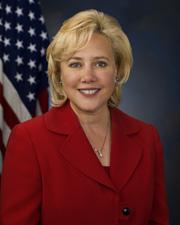
Mr. President, I rise today to reintroduce two bills that I originally sponsored in the 107th Congress. As our Nation prepares to go to war with Iraq and continues the war against terrorism, my bills…
Mr. President, I rise today to reintroduce two bills that I originally sponsored in the 107th Congress. As our Nation prepares to go to war with Iraq and continues the war against terrorism, my bills will give additional tax relief to military families. One will give tax relief to a small group of men and women in our armed services stationed on the island of Diego Garcia in the Indian Ocean, supporting the war on terrorism in Afghanistan. The second bill will exclude from gross income child care benefits paid to members of our armed forces. These are small measures, but both will be of great benefit to the men and women serving our country.
Diego Garcia is a British Territory lying seven degrees South Latitude off the coast of India, in the middle of the Indian Ocean. The island is 40 miles around and encompasses an area of 6,720 acres, most of it dominated by a large lagoon. The land mass is actually very small. It is home to a joint British--United States Naval Support Facility, and while there are only a small handful of British Royal Navy personnel on the island, there is a larger, tight-knit team of American Air Force, Navy, Marine Corps and Army personnel there. These men and women serving on Diego Garcia have been supporting B-52 bombing missions and other operations over Afghanistan. They will be called into service in the event of war with Iraq, they served this purpose in the previous Gulf War.
As a Nation, we provide members of our armed forces with a variety of benefits, all of them deserved. They receive hardship duty pay of $150 per month for serving in austere regions of the World. They get imminent danger pay of $150 per month as compensation for being in physical danger. One of the most generous benefits for those serving in the war on terrorism is the combat zone tax exclusion. Enlisted members of the armed services do not pay Federal taxes on their compensation for any month of service inside a combat zone. Officers pay tax on any amount of income over the highest salary for enlisted personnel. Both officers and enlisted personnel have to serve one day in the combat zone to get this benefit for the entire month. The exclusion only applies to personnel who receive imminent danger pay.
On Diego Garcia, the pilots and flight crews who fly the missions over Afghanistan are eligible for the combat zone income tax exclusion because they receive imminent danger pay. Many of them are from the 2nd Bomb Wing and the 917th Wing. Both units call Barksdale Air Force Base in Louisiana their home. But the men and women who load the bombers, fuel them, and maintain them are not eligible because they do not enter the combat zone. Barksdale is also their home base. My office was contacted by some of the Barksdale officers who fly the bombing missions about this discrepancy. They asked me to help out their support crews, a gesture of selflessness that I seek to honor today.
I recognize that the support crews may not receive imminent danger pay, but their situation is not too different from Naval personnel performing the
same tasks on ships in the Arabian Sea. Naval support crews receive imminent danger pay and are eligible for the tax exclusion, but they do not enter Afghanistan.
Diego Garcia is a beautiful place, but is a long way from home. The least we could do is treat everyone who has served on the island the same. That is what my bill will do.
My second bill will correct an omission in the Tax Reform Act of 1986. That Act contained a provision consolidating the laws regarding the tax treatment of certain military benefits. The Conference Report to that Act contains a long list of benefits to be excluded from gross income of military personnel. According to the report, this list was to be exhaustive. The problem is that child care benefits are not on that list.
I do not know if this omission was intentional. Perhaps at that time, child care benefits were relatively unknown in the military. The Conference Report gives the Treasury Secretary the authority to expand the list of eligible benefits, but so far no Secretary has chosen to provide any guidance to the Department of Defense as to how these benefits should be treated for tax purposes. While military families are not currently being taxed for child care benefits, the Department of Defense has indicated that it would like Congress to clarify that child care benefits are not subject to tax. My bill will give our military families and the Department of Defense a greater degree of certainty.
I am pleased that my dependent care provision has been included in S. 19, the Veterans and Military Personnel Fairness Act of 2003. The same provision had been included in a similar package in the last Congress. I urge the Finance Committee to consider this package very soon and to include my Diego Garcia bill in the final package.
Throughout our history, in time of war we have worked to make sure that our armed forces have everything they need and we have spared no expense in meeting that need. But the men and women on the ground often have families back at home. We should make sure that we support them as well. I urge my colleagues to support this legislation.
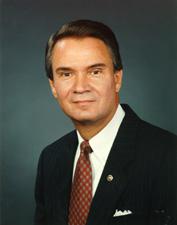
Mr. President, I am pleased to rise today to join Senator Snowe as an original cosponsor of the Harmful Algal Bloom and Hypoxia Amendments Act of 2003. The Gulf of Mexico has a serious hypoxia…
Mr. President, I am pleased to rise today to join Senator Snowe as an original cosponsor of the Harmful Algal Bloom and Hypoxia Amendments Act of 2003.
The Gulf of Mexico has a serious hypoxia condition. The water flowing out of the Mississippi River Delta is loaded with nutrients, nutrients that help things grow. In the gulf, the nutrients fuel accelerated growth of algae and other plankton-like organisms. As the organisms die and descent through the water, they decompose and rob the water of dissolved oxygen. This lack of oxygen, below a level which can sustain marine life, is hypoxia and creates what we call ``the Dead Zone.'' In 1998, the ``Dead Zone'' exceeded 7,000 square miles, equivalent to the combined areas of the States of Rhode Island and Connecticut.
As a Senator from the State that is on the receiving end of this unprecedented problem and as a member of the Senate Commerce Committee, Subcommittee on Oceans and Fisheries, I was very pleased to have worked with Senator Snowe on legislation that first drew national attention to hypoxia and harmful algal blooms, the Harmful Algal Bloom and Hypoxia Control Act of 1998.
Among important issues, the enacted legislation required an interagency task force to develop an assessment of hypoxia in the northern Gulf of Mexico. It also required the task force to submit to Congress a plan based on the assessment for reducing, mitigating, and controlling hypoxia in the northern Gulf of Mexico.
The Mississippi River/Gulf of Mexico Watershed Nutrient Task Force was given a large job, to come up with a national strategy to reduce the size and growth of the ``Dead Zone'' in the Gulf of Mexico off of the coast of Louisiana. They were charged by the Harmful Algal Bloom and Hypoxia Research and Control Act of 1998 to put this strategy in the form of an action plan that could be undertaken by the States and partner agencies at the Federal and State level that make up the task force. They succeeded on both fronts, not only delivering an action plan, but doing so by reaching consensus after a process of strenuous debate and discussion involving many stakeholders and interests. That plan was delivered to Congress in January of 2001 but has yet to be fully funded. Even so, it has been providing some significant benefits to the Mississippi River Basin and the country.
As the action plan states ``the work of the Task Force has provided a basin-wide context for the continued pursuit of both incentive-based, voluntary efforts for non-point sources and existing regulatory controls for point sources.''
The task force made it clear in the action plan that efforts to reduce hypoxia in the Gulf involve cleaning up waters upstream and throughout the Mississippi River Basin, and that the benefits, economic, as well as environmental, can be achieved across the entire basin as well. Their work is providing us with a way to unify the Mississippi River Basin in terms of our common interests and resources, primary of which is the Mississippi River, probably the most important piece of infrastructure in the country.
In Louisiana, we value all of the resources of that vast system, not only our productive coastal fisheries which are endangered by hypoxia, but the corn, grain, and other food sources that are shipped out through our port system.
Solving the problem of the ``Dead Zone'' will require an unprecedented degree of cooperation among many States, agencies, and stakeholders. The task force is continuing to provide us with a forum and a means for expanding that cooperation.
One of the prime research facilities on the hypoxia problem is taking place at the Louisiana University Marine Consortium, LUMON, in Cocodrie, LA. LUMCON has been studying the hypoxia problem in the Gulf of Mexico since 1985 under grants from the National Oceanic and Atmospheric Administration's Coastal Ocean Program.
The combined efforts of the task force has become even more apparent over the past year, as the ``Dead Zone'' reached a new record size in the summer of 2002, exceeding 8,000 square miles and extending from the mouth of the Mississippi River well into the coastal waters of Texas.
I believe that the Harmful Algal Bloom and Hypoxia Amendments Act of 2003 that Senator Snowe and I are introducing today will provide much needed funding and direction to continue the effort to mitigate and eventually eliminate the hypoxic problem in the Gulf of Mexico and harmful algal blooms in our Nation's waters.

Mr. President, I would like to commend the chairman of the Energy Committee for his leadership on this challenging bill both on the Senate floor and through the conference. This is the first…
Mr. President, I would like to commend the chairman of the Energy Committee for his leadership on this challenging bill both on the Senate floor and through the conference. This is the first comprehensive energy legislation this country has seen in more than a decade, and it is a huge step forward for America. This energy bill is about looking forward to our future, and creating the energy and the jobs that will keep this country best in the world.
This is a large and complicated bill. It addresses everything from energy efficiency and conservation, to research and development for new technologies, and policies to encourage a wide variety of energy sources nationwide. People will always find something to criticize in a sweeping piece of legislation, but we need to focus on the huge accomplishments this bill will achieve.
We will advance cutting-edge technologies such as hydrogen fuel cells and improve clean technologies already in place like nuclear power, hydropower, wind, and solar energy. At the same time we will shore up our own domestic production of the resources we use most, including clean coal, oil, and natural gas. We will begin to use 5 billion gallons of ethanol and biodiesel annually as a result of this bill, and that is a very good thing for farmers and consumers across America. Real reforms in the electricity title will result in more reliable service and more investment in the backbone of our electricity infrastructure.
I would especially like to acknowledge Senator Domenici's wise counsel in regard to an amendment I had intended to propose to enhance the economic growth of western States. My amendment would have provided for the study and creation of National Interest Electric Transmission Corridors by the Secretary of Energy, based on national security and energy policy grounds. Pursuant to those designations, the permitting and siting of needed electric transmission lines would be provided for. While most of this additional capacity would probably be achieved by broadening existing rights-of-way, there would no doubt be some need for additional rights of way. Upon the advice of the chairman and his assurance that he would pursue these concepts, I declined to offer that amendment on the Senate floor.
I am very encouraged that the chairman has been successful in having the concept of National Interest Electric Transmission Corridors included in the bill, for any area experiencing electric energy transmission constraints or congestion. Transmission capacity in these western States is one of the significant issues regarding their future economic expansion. Furthermore, if we could unlock the tremendous coal, wind and other resources of these States through mine-mouth electric generation and provide for the transmission of that electricity to load centers it would take significant pressure off our increasing reliance on natural gas as a power source. This is one of the keys to a balanced energy portfolio and lessened reliance on foreign energy sources.
My home State of Montana can make a significant contribution to our Nation's energy independence, provided we can develop the needed transmission infrastructure to move electricity to market if we generate it from our coal and wind resources. This is very important for both the generating States and the end-user markets and is simply good national energy policy and good national security policy.
This energy bill isn't perfect, but it helps us transition into tomorrow's economy without sacrificing our quality of life today. It is a good balance, and a good compromise between the countless demands that have been made by those with opposing viewpoints. No one can win every battle, but without this energy legislation the entire country loses. I am disappointed there are Members in this body who would rather complain about this bill than enact it. We shouldn't let partisanship get in the way of progress, and this bill is progress. No one got all they wanted, but every State in the Union will benefit, and every American will be better off if we ensure this country's energy security by passing this legislation.
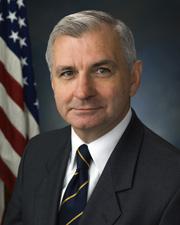
Mr. President, today I rise to introduce that Museum and Library Services Act of 2003. I am pleased to be joined by Senators Kennedy, Cochran, Collins, Snowe, Smith, Daschle, Jeffords, Dodd, Harkin,…
Mr. President, today I rise to introduce that Museum and Library Services Act of 2003. I am pleased to be joined by Senators Kennedy, Cochran, Collins, Snowe, Smith, Daschle, Jeffords, Dodd, Harkin, Clinton, Sarbanes, Levin, Leahy, Corzine, Landrieu, and Baucus in introducing this legislature to strengthen museum and library services.
The Federal Government has a long history of supporting our Nation's libraries and museums, providing direct aid to public libraries since the adoption of the Library Services and Construction Act, LSCA, in 1956 and funding to museums since the enactment of the Museum Services Act in 1976. As a result of this support, our lives and culture have been enriched.
My predecessor, Senator Claiborne Pell, was instrumental in the creation of the Museum Services Act, as well as the development and enactment of the Museum and Library Services Act in 1996. This law reauthorized Federal library and museum programs under a newly created independent Federal agency called the Institute for Museum and Library Services, IMLS.
I am proud to continue Senator Pell's tradition of supporting libraries and museums by introducing this legislation to day to extend the authorization of museum and library services through fiscal year 2009 and to make several important modifications to current law.
The bill ensures that library activities are coordinated with the school library program I authored, which is now part of the No Child Left Behind Act of 2001. It establishes a Museum and Library Services Board to advise the Director of IMLS, and it authorizes IMLS to issue a National Award for Library Service as well as a National Award for Museum Service. The bill also ensures that a portion of administrative funds is used to analyze annually the impact of museum and library services to identify needs and trends of services provided under museum and library programs. Our bill also establishes a reservation of 1.75 percent of funds for museum services for Native Americans, a similar reservation is currently provided for library services under the Library Services and Technology subtitle. Lastly, the bill updates the uses of funds for library and museum programs and increases the authorization under the Library Services and Technology Act, LSTA, from $150 million to $350 million and the Museum Services Act from $28.7 million to $65 million.
I want to specifically highlight one other provision in the legislation. The Museum and Library Services Act of 2003 doubles the minimum State allotment under the LSTA to $680,000.
The minimum State allotment has remained flat at $340,000 since 1971, hampering the literacy and cultural efforts of our Nation's smaller States. An analysis prepared by the staff of the Joint Economic Committee shows that it would take approximately $1.5 million for our small States to keep pace with inflation. The library community has instead suggested a modest, but essential doubling of the minimum state allotment to $680,000. This will enable every State to benefit and implement the valuable services and programs that larger states have been able to put in place. We heard about the importance of this change from David Macksam, Director of the Cranston Public Library, during a Health, Education, Labor, and Pensions Committee hearing that I chaired last April.
Last year, efforts to move this legislation were stymied over concerns about certain IMLS grants and how much funding should be authorized for library and museum programs. The President's forthcoming fiscal year 2004 budget will contain a modest, although record, increase in funding for these programs, which I hope will alleviate these concerns. As such, I hope we can move forward early in this session of Congress on a bipartisan basis on a swift reauthorization of the Museum and Library Services act.
I urge my colleagues to cosponsor this important legislation and work for its passage.
I ask unanimous consent that the text of this legislation be printed in the Record.

Mr. President I regret having to vote against this energy package. The country needs a coherent energy policy to help us tackle the challenges that come with economic growth. Our constituents need to…
Mr. President I regret having to vote against this energy package. The country needs a coherent energy policy to help us tackle the challenges that come with economic growth. Our constituents need to know that when they wake up in the morning, the lights will be on and the energy to power our days will be available.
Our economy needs plentiful, affordable, reliable energy as we struggle to climb out of a devastating period of slow growth and job loss. Unfortunately, this bill does more to meet the needs of special interests than the needs of a growing economy.
We need an energy bill that leads to lower prices, a clean environment, and consumer protection. The bill before us today is a missed opportunity to further any of those goals. It has come up short in its effort to lower natural gas prices for Wisconsin consumers. Natural gas prices have been a roller coaster for the people from my State, and we need a large long term supply to come on line. The North Slope of Alaska was the answer, but this bill has done little to make that supply a reality.
Another problem plaguing consumers in Wisconsin is spikes in gas prices brought on by our overdependence on boutique fuels. Most recently, in southeastern Wisconsin, a fire at a refinery resulted in consumers paying $2 a gallon for gasoline because we could not bring in gasoline from other regions without violating the Clean Air Act. The bill before us could have limited the different blends of gasoline in use around the country, so that if one area had a supply disruption, fuel could be imported from another region. I worked with members of the Wisconsin delegation to include language to solve this problem in the future, but that was not retained in the conference Committee negotiations. Wisconsinites will continue to be held hostage to local refineries during supply disruptions.
I supported provisions in the Senate energy bill that would have created a renewable fuels portfolio standard or RPS. The RPS was going to be an aggressive target that would have created a significant market for renewable energy technologies. While the bill does contain tax provisions to encourage the use of renewable energy, the RPS was a new and exciting effort to wean us of our addiction to fossil fuels. The RPS was dropped in conference, even though it had received several strong votes in the Senate. Many States are creating their own RPS, but a national requirement would have set the renewable energy industry on a path to mainstream success. Instead, we are left with small changes at the margins which will not significantly affect our energy production mix.
High electricity prices over the last few years have made it clear that consumers need better protection from unscrupulous companies. Again the Senate bill contained provisions that would protected consumers from the kind of price gouging schemes created by Enron. My colleagues worked hard to make sure the Federal Energy Regulatory Commission had the teeth and the oversight capability to protect consumers in a world without the Public Utility Holding Company Act. Again the conference turned their back on the Senate provision and embraced House language that defends industry at the expense of State and Federal regulators.
The Congress has squandered another opportunity to craft a far reaching and progressive energy policy for this country. Instead we have chosen to pander to special interests and create a particularly unsavory piece of legislative sausage. The bill before has been laden with three time the tax breaks the President requested, and more than $100 billion in spending. We can do better than this. We should do better than this, which is why I oppose the bill and support the filibuster. Congress owes it to the American people to come back next year and put together a bill that meets the needs of everyone, consumers and industry alike, instead of playing favorites and leaving the taxpayers with the bill.
Bill Text
Latest available legislative text
        [Congressional Bills 108th Congress]
[From the U.S. Government Publishing Office]
[S. 241 Placed on Calendar Senate (PCS)]

Calendar No. 6
108th CONGRESS
1st Session
S. 241

To amend the Coastal Zone Management Act.

_______________________________________________________________________

IN THE SENATE OF THE UNITED STATES

January 29, 2003

Ms. Snowe (for herself, Mr. Kerry, Mr. McCain, and Mr. Hollings)
introduced the following bill; which was read the first time

January 30, 2003

Read the second time and placed on the calendar

_______________________________________________________________________

A BILL

To amend the Coastal Zone Management Act.

Be it enacted by the Senate and House of Representatives of the
United States of America in Congress assembled,

SECTION 1. SHORT TITLE.

This Act may be cited as the ``Coastal Zone Enhancement
Reauthorization Act of 2003''.

SEC. 2. AMENDMENT OF COASTAL ZONE MANAGEMENT ACT.

Except as otherwise expressly provided, whenever in this Act an
amendment or repeal is expressed in terms of an amendment to, or repeal
of, a section or other provision, the reference shall be considered to
be made to a section or other provision of the Coastal Zone Management
Act of 1972 (16 U.S.C. 1451 et seq.).

SEC. 3. FINDINGS.

Section 302 (16 U.S.C. 1451) is amended--
(1) by redesignating paragraphs (a) through (m) as
paragraphs (1) through (13);
(2) by inserting ``ports,'' in paragraph (3) (as so
redesignated) after ``fossil fuels,'';
(3) by inserting ``including coastal waters and wetlands,''
in paragraph (4) (as so redesignated) after ``zone,'';
(4) by striking ``therein,'' in paragraph (4) (as so
redesignated) and inserting ``dependent on that habitat,'';
(5) by striking ``well-being'' in paragraph (5) (as so
redesignated) and inserting ``quality of life'';
(6) by striking paragraph (11) (as so redesignated) and
inserting the following:
``(11) Land and water uses in the coastal zone and coastal
watersheds may significantly affect the quality of coastal
waters and habitats, and efforts to control coastal water
pollution from activities in these areas must be improved.'';
and
(7) by adding at the end thereof the following:
``(14) There is a need to enhance cooperation and
coordination among states and local communities, to encourage
local community-based solutions that address the impacts and
pressures on coastal resources and on public facilities and
public service caused by continued coastal demands, and to
increase state and local capacity to identify public
infrastructure and open space needs and develop and implement
plans which provide for sustainable growth, resource protection
and community revitalization.''.

SEC. 4. POLICY.

Section 303 (16 U.S.C. 1452) is amended--
(1) by striking ``the states'' in paragraph (2) and
inserting ``state and local governments'';
(2) by striking ``waters,'' each place it appears in
paragraph (2)(C) and inserting ``waters and habitats,'';
(3) by striking ``agencies and state and wildlife agencies;
and'' in paragraph (2)(J) and inserting ``and wildlife
management; and'';
(4) by inserting ``other countries,'' after ``agencies,''
in paragraph (5);
(5) by striking ``and'' at the end of paragraph (5);
(6) by striking ``zone.'' in paragraph (6) and inserting
``zone;''; and
(7) by adding at the end thereof the following:
``(7) to create and use a National Estuarine Research
Reserve System as a Federal, state, and community partnership
to support and enhance coastal management and stewardship; and
``(8) to encourage the development, application, and
transfer of innovative coastal and estuarine environmental
technologies and techniques for the long-term conservation of
coastal ecosystems.''.

SEC. 5. CHANGES IN DEFINITIONS.

Section 304 (16 U.S.C. 1453) is amended--
(1) by striking ``and the Trust Territories of the Pacific
Islands,'' in paragraph (4);
(2) by striking paragraph (8) and inserting the following:
``(8) The term `estuarine reserve' means a coastal
protected area which may include any part or all of an estuary
and any island, transitional area, and upland in, adjoining, or
adjacent to the estuary, and which constitutes to the extent
feasible a natural unit, established to provide long-term
opportunities for conducting scientific studies and educational
and training programs that improve the understanding,
stewardship, and management of estuaries.''; and
(3) by adding at the end thereof the following:
``(19) The term `coastal nonpoint pollution control
strategies and measures' means strategies and measures included
as part of the coastal nonpoint pollution control program under
section 6217 of the Coastal Zone Act Reauthorization Amendments
of 1990 (16 U.S.C. 1455b).
``(20) The term `qualified local entity' means--
``(A) any local government;
``(B) any areawide agency referred to in section
204(a)(1) of the Demonstration Cities and Metropolitan
Development Act of 1966 (42 U.S.C. 3334 (a)(1));
``(C) any regional agency;
``(D) any interstate agency;
``(E) any nonprofit organization; or
``(F) any reserve established under section 315.''.

SEC. 6. REAUTHORIZATION OF MANAGEMENT PROGRAM DEVELOPMENT GRANTS.

Section 305 (16 U.S.C. 1454) is amended to read as follows:

``SEC. 305. MANAGEMENT PROGRAM DEVELOPMENT GRANTS.

``(a) States Without Programs.--In fiscal years 2004 and 2005, the
Secretary may make a grant annually to any coastal state without an
approved program if the coastal state demonstrates to the satisfaction
of the Secretary that the grant will be used to develop a management
program consistent with the requirements set forth in section 306. The
amount of any such grant shall not exceed $200,000 in any fiscal year,
and shall require State matching funds according to a 4-to-1 ratio of
Federal-to-State contributions. After an initial grant is made to a
coastal state under this subsection, no subsequent grant may be made to
that coastal state under this subsection unless the Secretary finds
that the coastal state is satisfactorily developing its management
program. No coastal state is eligible to receive more than 4 grants
under this subsection.
``(b) Submittal of Program for Approval.--A coastal state that has
completed the development of its management program shall submit the
program to the Secretary for review and approval under section 306.''.

SEC. 7. ADMINISTRATIVE GRANTS.

(a) Purposes.--Section 306(a) (16 U.S.C. 1455(a)) is amended by
inserting ``including developing and implementing coastal nonpoint
pollution control program components,'' after ``program,''.
(b) Equitable Allocation of Funding.--Section 306(c) (16 U.S.C.
1455(c)) is amended by adding at the end thereof ``In promoting equity,
the Secretary shall consider the overall change in grant funding under
this section from the preceding fiscal year and minimize the relative
increases or decreases among all the eligible States. The Secretary
shall ensure that each eligible State receives increased funding under
this section in any fiscal year for which the total amount appropriated
to carry out this section is greater than the total amount appropriated
to carry out this section for the preceding fiscal year.
(c) Acquisition Criteria.--Section 306(d)(10)(B) (16 U.S.C.
1455(d)(10)(B)) is amended by striking ``less than fee simple'' and
inserting ``other''.

SEC. 8. COASTAL RESOURCE IMPROVEMENT PROGRAM.

Section 306A (16 U.S.C. 1455a) is amended--
(1) by inserting ``or other important coastal habitats'' in
subsection (b)(1)(A) after ``306(d)(9)'';
(2) by inserting ``or historic'' in subsection (b)(2) after
``urban'';
(3) by adding at the end of subsection (b) the following:
``(5) The coordination and implementation of approved
coastal nonpoint pollution control plans.
``(6) The preservation, restoration, enhancement or
creation of coastal habitats.'';
(4) by striking ``and'' after the semicolon in subsection
(c)(2)(D);
(5) by striking ``section.'' in subsection (c)(2)(E) and
inserting ``section;'';
(6) by adding at the end of subsection (c)(2) the
following:
``(F) work, resources, or technical support
necessary to preserve, restore, enhance, or create
coastal habitats; and
``(G) the coordination and implementation of
approved coastal nonpoint pollution control plans.'';
and
(7) by striking subsections (d), (e), and (f) and inserting
after subsection (c) the following:
``(d) Source of Federal Grants; State Matching Contributions.--
``(1) In general.--If a coastal state chooses to fund a
project under this section, then--
``(A) it shall submit to the Secretary a combined
application for grants under this section and section
306;
``(B) it shall match the combined amount of such
grants in the ratio required by section 306(a) for
grants under that section; and
``(C) the Federal funding for the project shall be
a portion of that state's annual allocation under
section 306(a).
``(2) Use of funds.--Grants provided under this section may
be used to pay a coastal state's share of costs required under
any other Federal program that is consistent with the purposes
of this section.
``(e) Allocation of Grants to Qualified Local Entity.--With the
approval of the Secretary, the eligible coastal state may allocate to a
qualified local entity a portion of any grant made under this section
for the purpose of carrying out this section; except that such an
allocation shall not relieve that state of the responsibility for
ensuring that any funds so allocated are applied in furtherance of the
state's approved management program.
``(f) Assistance.--The Secretary shall assist eligible coastal
states in identifying and obtaining from other Federal agencies
technical and financial assistance in achieving the objectives set
forth in subsection (b).''.

SEC. 9. COASTAL ZONE MANAGEMENT FUND.

(a) Treatment of Loan Repayments.--Section 308(a)(2) (16 U.S.C.
1456a(a)(2)) is amended to read as follows:
``(2) Loan repayments made under this subsection--
``(A) shall be retained by the Secretary and
deposited into the Coastal Zone Management Fund
established under subsection (b); and
``(B) subject to amounts provided in Appropriations
Acts, shall be available to the Secretary for purposes
of this title and transferred to the Operations,
Research, and Facilities account of the National
Oceanic and Atmospheric Administration to offset the
costs of implementing this title.''.
(b) Use of Amounts in Fund.--Section 308(b) (16 U.S.C. 1456a(b)) is
amended by striking paragraphs (2) and (3) and inserting the following:
``(2) Subject to Appropriation Acts, amounts in the Fund
shall be available to the Secretary to carry out the provisions
of this Act.''.

SEC. 10. COASTAL ZONE ENHANCEMENT GRANTS.

Section 309 (16 U.S.C. 1456b) is amended--
(1) by striking subsection (a)(1) and inserting the
following:
``(1) Protection, restoration, enhancement, or creation of
coastal habitats, including wetlands, coral reefs, marshes, and
barrier islands.'';
(2) by inserting ``and removal'' after ``entry'' in
subsection (a)(4);
(3) by striking ``on various individual uses or activities
on resources, such as coastal wetlands and fishery resources.''
in subsection (a)(5) and inserting ``of various individual uses
or activities on coastal waters, habitats, and resources,
including sources of polluted runoff.'';
(4) by adding at the end of subsection (a) the following:
``(10) Development and enhancement of coastal nonpoint
pollution control program components, including the
satisfaction of conditions placed on such programs as part of
the Secretary's approval of the programs.
``(11) Significant emerging coastal issues as identified by
coastal states, in consultation with the Secretary and
qualified local entities.'';
(5) by striking ``proposals, taking into account the
criteria established by the Secretary under subsection (d).''
in subsection (c) and inserting ``proposals.'';
(6) by striking subsection (d) and redesignating subsection
(e) as subsection (d);
(7) by striking ``section, up to a maximum of $10,000,000
annually'' in subsection (f) and inserting ``section.''; and
(8) by redesignating subsections (f) and (g) as subsections
(e) and (f), respectively.

SEC. 11. COASTAL COMMUNITY PROGRAM.

The Act is amended by inserting after section 309 the following:

``SEC. 309A. COASTAL COMMUNITY PROGRAM.

``(a) Coastal Community Grants.--The Secretary may make grants to
any coastal state that is eligible under subsection (b)--
``(1) to assist coastal communities in assessing and
managing growth, public infrastructure, and open space needs in
order to provide for sustainable growth, resource protection
and community revitalization;
``(2) to provide management-oriented research and technical
assistance in developing and implementing community-based
growth management and resource protection strategies in
qualified local entities;
``(3) to fund demonstration projects which have high
potential for improving coastal zone management at the local
level;
``(4) to assist in the adoption of plans, strategies,
policies, or procedures to support local community-based
environmentally-protective solutions to the impacts and
pressures on coastal uses and resources caused by development
and sprawl that will--
``(A) revitalize previously developed areas;
``(B) undertake conservation activities and
projects in undeveloped and environmentally sensitive
areas;
``(C) emphasize water-dependent uses; and
``(D) protect coastal waters and habitats; and
``(5) to assist coastal communities to coordinate and
implement approved coastal nonpoint pollution control
strategies and measures that reduce the causes and impacts of
polluted runoff on coastal waters and habitats.''.
``(b) Eligibility.--To be eligible for a grant under this section
for a fiscal year, a coastal state shall--
``(1) have a management program approved under section 306;
and
``(2) in the judgment of the Secretary, be making
satisfactory progress in activities designed to result in
significant improvement in achieving the coastal management
objectives specified in section 303(2)(A) through (K).
``(c) Allocations; Source of Federal Grants; State Matching
Contributions.--
``(1) Allocation.--Grants under this section shall be
allocated to coastal states as provided in section 306(c).
``(2) Application; matching.--If a coastal state chooses to
fund a project under this section, then--
``(A) it shall submit to the Secretary a combined
application for grants under this section and section
306; and
``(B) it shall match the amount of the grant under
this section on the basis of a total contribution of
section 306, 306A, and this section so that, in
aggregate, the match is 1:1.
``(d) Allocation of Grants to Qualified Local Entity.--
``(1) In general.--With the approval of the Secretary, the
eligible coastal state may allocate to a qualified local entity
amounts received by the state under this section.
``(2) Assurances.--A coastal state shall ensure that
amounts allocated by the state under paragraph (1) are used by
the qualified local entity in furtherance of the state's
approved management program, specifically furtherance of the
coastal management objectives specified in section 303(2).
``(e) Assistance.--The Secretary shall assist eligible coastal
states and qualified local entities in identifying and obtaining from
other Federal agencies technical and financial assistance in achieving
the objectives set forth in subsection (a).''.

SEC. 12. TECHNICAL ASSISTANCE.

Section 310(b) (16 U.S.C. 1456c(b)) is amended by adding at the end
thereof the following:
``(4) The Secretary may conduct a program to develop and
apply innovative coastal and estuarine environmental technology
and methodology through a cooperative program. The Secretary
may make extramural grants in carrying out the purpose of this
subsection.''.

SEC. 13. PERFORMANCE REVIEW.

Section 312(a) (16 U.S.C. 1458(a)) is amended by inserting
``coordinated with National Estuarine Research Reserves in the state''
after ``303(2)(A) through (K),''.

SEC. 14. WALTER B. JONES AWARDS.

Section 314 (16 U.S.C. 1460) is amended--
(1) by striking ``shall, using sums in the Coastal Zone
Management Fund established under section 308'' in subsection
(a) and inserting ``may, using sums available under this Act'';
(2) by striking ``field.'' in subsection (a) and inserting
the following: ``field of coastal zone management. These
awards, to be known as the `Walter B. Jones Awards', may
include--
``(1) cash awards in an amount not to exceed $5,000 each;
``(2) research grants; and
``(3) public ceremonies to acknowledge such awards.'';
(3) by striking ``shall elect annually--'' in subsection
(b) and inserting ``may select annually if funds are available
under subsection (a)--''; and
(4) by striking subsection (e).

SEC. 15. NATIONAL ESTUARINE RESEARCH RESERVE SYSTEM.

(a) Section 315(a) (16 U.S.C. 1461(a)) is amended by striking
``consists of--'' and inserting ``is a network of areas protected by
Federal, state, and community partnerships which promotes informed
management of the Nation's estuarine and coastal areas through
interconnected programs in resource stewardship, education and
training, and scientific understanding consisting of--''.
(b) Section 315(b)(2)(C) (16 U.S.C. 1461(b)(2)(C)) is amended by
striking ``public education and interpretation; and''; and inserting
``education, interpretation, training, and demonstration projects;
and''.
(c) Section 315(c) (16 U.S.C. 1461(c)) is amended--
(1) by striking ``Research'' in the subsection caption and
inserting ``Research, Education, and Resource Stewardship'';
(2) by striking ``conduct of research'' and inserting
``conduct of research, education, and resource stewardship'';
(3) by striking ``coordinated research'' in paragraph (1)
and inserting ``coordinated research, education, and resource
stewardship'';
(4) by striking ``research'' before ``principles'' in
paragraph (2);
(5) by striking ``research programs'' in paragraph (2) and
inserting ``research, education, and resource stewardship
programs'';
(6) by striking ``research'' before ``methodologies'' in
paragraph (3);
(7) by striking ``data,'' in paragraph (3) and inserting
``information,'';
(8) by striking ``research'' before ``results'' in
paragraph (3);
(9) by striking ``research purposes;'' in paragraph (3) and
inserting ``research, education, and resource stewardship
purposes;'';
(10) by striking ``research efforts'' in paragraph (4) and
inserting ``research, education, and resource stewardship
efforts'';
(11) by striking ``research'' in paragraph (5) and
inserting ``research, education, and resource stewardship'';
and
(12) by striking ``research'' in the last sentence.
(d) Section 315(d) (16 U.S.C. 1461(d)) is amended--
(1) by striking ``Estuarine Research.--'' in the subsection
caption and inserting ``Estuarine Research, Education, and
Resource Stewardship.--'';
(2) by striking ``research purposes'' and inserting
``research, education, and resource stewardship purposes'';
(3) by striking paragraph (1) and inserting the following:
``(1) giving reasonable priority to research, education,
and stewardship activities that use the System in conducting or
supporting activities relating to estuaries; and'';
(4) by striking ``research.'' in paragraph (2) and
inserting ``research, education, and resource stewardship
activities.''; and
(5) by adding at the end thereof the following:
``(3) establishing partnerships with other Federal and
state estuarine management programs to coordinate and
collaborate on estuarine research.''.
(e) Section 315(e) (16 U.S.C. 1461(e)) is amended--
(1) by striking ``reserve,'' in paragraph (1)(A)(i) and
inserting ``reserve; and'';
(2) by striking ``and constructing appropriate reserve
facilities, or'' in paragraph (1)(A)(ii) and inserting
``including resource stewardship activities and constructing
reserve facilities; and'';
(3) by striking paragraph (1)(A)(iii);
(4) by striking paragraph (1)(B) and inserting the
following:
``(B) to any coastal state or public or private
person for purposes of--
``(i) supporting research and monitoring
associated with a national estuarine reserve
that are consistent with the research
guidelines developed under subsection (c); or
``(ii) conducting educational,
interpretive, or training activities for a
national estuarine reserve that are consistent
with the education guidelines developed under
subsection (c).'';
(5) by striking ``therein or $5,000,000, whichever amount
is less.'' in paragraph (3)(A) and inserting ``therein. Non-
Federal costs associated with the purchase of any lands and
waters, or interests therein, which are incorporated into the
boundaries of a reserve up to 5 years after the costs are
incurred, may be used to match the Federal share.'';
(6) by striking ``and (iii)'' in paragraph (3)(B);
(7) by striking ``paragraph (1)(A)(iii)'' in paragraph
(3)(B) and inserting ``paragraph (1)(B)'';
(8) by striking ``entire System.'' in paragraph (3)(B) and
inserting ``System as a whole.''; and
(9) by adding at the end thereof the following:
``(4) The Secretary may--
``(A) enter into cooperative agreements, financial
agreements, grants, contracts, or other agreements with
any nonprofit organization, authorizing the
organization to solicit donations to carry out the
purposes and policies of this section, other than
general administration of reserves or the System and
which are consistent with the purposes and policies of
this section; and
``(B) accept donations of funds and services for
use in carrying out the purposes and policies of this
section, other than general administration of reserves
or the System and which are consistent with the
purposes and policies of this section.
Donations accepted under this section shall be considered as a
gift or bequest to or for the use of the United States for the
purpose of carrying out this section.''.
(f) Section 315(f)(1) (16 U.S.C. 1461(f)(1)) is amended by
inserting ``coordination with other state programs established under
sections 306 and 309A,'' after ``including''.

SEC. 16. COASTAL ZONE MANAGEMENT REPORTS.

Section 316 (16 U.S.C. 1462) is amended--
(1) by striking ``to the President for transmittal'' in
subsection (a);
(2) by striking ``zone and an evaluation of the
effectiveness of financial assistance under section 308 in
dealing with such consequences;'' and inserting ``zone;'' in
the provision designated as (10) in subsection (a);
(3) by inserting ``education,'' after the ``studies,'' in
the provision designated as (12) in subsection (a);
(4) by striking ``Secretary'' in the first sentence of
subsection (c)(1) and inserting ``Secretary, in consultation
with coastal states, and with the participation of affected
Federal agencies,'';
(5) by striking the second sentence of subsection (c)(1)
and inserting the following: ``The Secretary, in conducting
such a review, shall coordinate with, and obtain the views of,
appropriate Federal agencies.'';
(6) by striking ``shall promptly'' in subsection (c)(2) and
inserting ``shall, within 4 years after the date of enactment
of the Coastal Zone Enhancement Reauthorization Act of 2003,'';
and
(7) by adding at the end of subsection (c)(2) the
following: ``If sufficient funds and resources are not
available to conduct such a review, the Secretary shall so
notify the Congress.''.

SEC. 17. AUTHORIZATION OF APPROPRIATIONS.

Section 318 (16 U.S.C. 1464) is amended--
(1) by striking paragraphs (1) and (2) of subsection (a)
and inserting the following:
``(1) for grants under sections 306, 306A, and 309--
``(A) $83,500,000 for fiscal year 2004;
``(B) $87,000,000 for fiscal year 2005;
``(C) $90,500,000 for fiscal year 2006;
``(D) $94,000,000 for fiscal year 2007; and
``(E) $97,500,000 for fiscal year 2008.
``(2) for grants under section 309A--
``(A) $27,000,000 for fiscal year 2004;
``(B) $28,000,000 for fiscal year 2005;
``(C) $29,000,000 for fiscal year 2006;
``(D) $30,000,000 for fiscal year 2007; and
``(E) $30,000,000 for fiscal year 2008.
of which $10,000,000, or 35 percent, whichever is less, shall
be for purposes set forth in section 309A(a)(5);
``(3) for grants under section 315--
``(A) $13,000,000 for fiscal year 2004;
``(B) $14,000,000 for fiscal year 2005;
``(C) $15,000,000 for fiscal year 2006;
``(D) $16,000,000 for fiscal year 2007; and
``(E) $17,000,000 for fiscal year 2008.
``(4) for grants to fund construction projects at estuarine
reserves designated under section 315, $12,000,000 for each of
fiscal years 2004, 2005, 2006, 2007, and 2008; and
``(5) for costs associated with administering this title,
$6,500,000 for fiscal year 2004 and such sums as are necessary
for fiscal years 2005-2008.'';
(2) by striking ``306 or 309.'' in subsection (b) and
inserting ``306.'';
(3) by striking ``during the fiscal year, or during the
second fiscal year after the fiscal year, for which'' in
subsection (c) and inserting ``within 3 years from when'';
(4) by striking ``under the section for such reverted
amount was originally made available.'' in subsection (c) and
inserting ``to states under this Act.''; and
(5) by adding at the end thereof the following:
``(d) Purchase of Otherwise Unavailable Federal Products and
Services.--Federal funds allocated under this title may be used by
grantees to purchase Federal products and services not otherwise
available.
``(e) Restriction on Use of Amounts for Program, Administrative, or
Overhead Costs.--Except for funds appropriated under subsection (a)(5),
amounts appropriated under this section shall be available only for
grants to states and shall not be available for other program,
administrative, or overhead costs of the National Oceanic and
Atmospheric Administration or the Department of Commerce.''.

SEC. 18. SENSE OF CONGRESS.

It is the sense of Congress that the Undersecretary for Oceans and
Atmosphere should re-evaluate the calculation of shoreline mileage used
in the distribution of funding under the Coastal Zone Management
Program to ensure equitable treatment of all regions of the coastal
zone, including the Southeastern States and the Great Lakes States.

Calendar No. 6

108th CONGRESS

1st Session

S. 241

_______________________________________________________________________

A BILL

To amend the Coastal Zone Management Act.

_______________________________________________________________________

January 30, 2003

Read the second time and placed on the calendar