Childhood Obesity Reduction Act
A bill to reduce and prevent childhood obesity by encouraging schools and school districts to develop and implement local, school-based programs designed to reduce and prevent childhood obesity, promote increased physical activity, and improve nutritional choices.
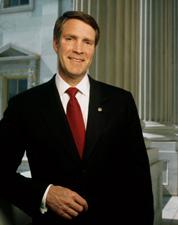 Sen. William H. Frist (R-TN)
Legislative Activity
Stay on top of the latest movement without scrolling through every action
Read twice and referred to the Committee on Health, Education, Labor, and Pensions. (text of measure as introduced: CR S7107-7110)
June 21, 2004
View full timeline
Introduced in Senate
June 21, 2004
Sponsor introductory remarks on measure. (CR S7106)
June 21, 2004
Read twice and referred to the Committee on Health, Education, Labor, and Pensions. (text of measure as introduced: CR S7107-7110)
June 21, 2004
Floor Debate
15 membersWhat members said about S. 2551 on the floor

 +10
Floor Debate
15 membersWhat members said about S. 2551 on the floor
I thank my colleague for his statement about this matter. We worked very hard on the Dietary Supplement Health and Education Act back in 1994. It has served this country very well. There are now…
Mr. President, I concur in the observation of our distinguished colleague. All I am saying is we should look at each one individually rather than establishing a policy at this point--certainly with…
Mr. President, I thank the distinguished chairman of the committee and others for setting aside their amendments, and I call up amendment No. 3197. Mr. President, I ask unanimous consent that reading…
Mr. President, I want to mention in the context of the discussion which has been held between the Senator from Virginia and the Senator from Nevada that I believe the second-degree amendment which I…
No. If the chairman would yield, it is this Senator's intention to call for the regular order, which would bring up the Durbin amendment, and I have a second degree to the Durbin amendment. Then I…
Show 8 more

Mr. President, I send an amendment to the desk. Mr. President, I ask unanimous consent that further reading of the amendment be dispensed with. Mr. President, I ask unanimous consent that the order…
Mr. President, it is very important to keep in focus what Senator DeWine spoke about. There has been much too little focus by all of us on this subject. The leadership of Senator DeWine in reminding…
Mr. President, I ask unanimous consent the order for the quorum call be rescinded. Mr. President, I send an amendment to the desk and ask for its immediate consideration. I ask unanimous consent the…

I thank the Senator from Nevada for his help making it possible to bring up this amendment. I call up amendment No. 3288 and ask for unanimous consent to modify my amendment. I send those…
Mr. President, the reason we have considered these side by side on a number of occasions is the person offering the amendment initially wants a vote on his amendment. The second degree usually wipes…
I thank the Chair, and I thank my colleague from Virginia. Update on Darfur Mr. President, several weeks ago, I came to the floor to talk about the crisis in Darfur, Sudan, where it is estimated at…
Mr. President, I rise to explain why I cannot support either the Warner or the Lautenberg amendment regarding the return of the remains of military personnel to Dover Air Force Base. The Warner…
Mr. President, I ask unanimous consent that the order for the quorum call be rescinded. Mr. President, we are going to have a couple of amendments voted on very shortly. Our good friend, the…
Show 2 more
I announce that the Senator from Tennessee (Mr. Alexander), the Senator from Utah (Mr. Bennett), the Senator from Montana (Mr. Burns), the Senator from Illinois (Mr. Fitzgerald), the Senator from…
I thank the Chair. (The remarks of Mr. Frist and Mr. Wyden pertaining to the introduction of S. 2551 are located in today's Record under ``Statements on Introduced Bills and Joint Resolutions.'')
Bill Text
Latest available legislative text
        [Congressional Bills 108th Congress]
[From the U.S. Government Publishing Office]
[S. 2551 Introduced in Senate (IS)]

2d Session
S. 2551

To reduce and prevent childhood obesity by encouraging schools and
school districts to develop and implement local, school-based programs
designed to reduce and prevent childhood obesity, promote increased
physical activity, and improve nutritional choices.

_______________________________________________________________________

IN THE SENATE OF THE UNITED STATES

June 21, 2004

Mr. Frist (for himself and Mr. Wyden) introduced the following bill;
which was read twice and referred to the Committee on Health,
Education, Labor, and Pensions

_______________________________________________________________________

A BILL

To reduce and prevent childhood obesity by encouraging schools and
school districts to develop and implement local, school-based programs
designed to reduce and prevent childhood obesity, promote increased
physical activity, and improve nutritional choices.

Be it enacted by the Senate and House of Representatives of the
United States of America in Congress assembled,

SECTION 1. SHORT TITLE.

This Act may be cited as the ``Childhood Obesity Reduction Act''.

SEC. 2. FINDINGS.

Congress makes the following findings:
(1) According to the Centers for Disease Control and
Prevention, obesity may soon overtake tobacco as the leading
preventable cause of death.
(2) In 1999, 13 percent of children aged 6 to 11 years and
14 percent of adolescents aged 12 to 19 years in the United
States were overweight. This prevalence has nearly tripled for
adolescents in the past 2 decades.
(3) Risk factors for heart disease, such as high
cholesterol and high blood pressure, occur with increased
frequency in overweight children and adolescents compared to
children with a healthy weight.
(4) Type 2 diabetes, previously considered an adult
disease, has increased dramatically in children and
adolescents. Overweight and obesity are closely linked to type
2 diabetes.
(5) Obesity in children and adolescents is generally caused
by a lack of physical activity, unhealthy eating patterns, or a
combination of the 2, with genetics and lifestyle both playing
important roles in determining a child's weight.
(6) Overweight adolescents have a 70 percent chance of
becoming overweight or obese adults.
(7) The 2001 report ``The Surgeon General's Call to Action
to Prevent and Decrease Overweight and Obesity'' suggested that
obesity and its complications were already costing the United
States $117,000,000,000 annually.
(8) Substantial evidence shows that public health risks can
be reduced through increased public awareness and community
involvement.
(9) Congress needs to challenge students, teachers, school
administrators, and local communities to voluntarily
participate in the development and implementation of activities
to successfully reduce and prevent childhood obesity.

TITLE I--CONGRESSIONAL COUNCIL ON CHILDHOOD OBESITY

SEC. 101. CONGRESSIONAL COUNCIL ON CHILDHOOD OBESITY.

(a) Establishment of Council.--There is established a
``Congressional Council on Childhood Obesity'' (referred to in this
title as the ``Council'').
(b) Purposes.--The purposes of the Council shall be--
(1) to encourage every elementary school and middle school
in the United States, whether public or private, to develop and
implement a plan to reduce and prevent obesity, promote
improved nutritional choices, and promote increased physical
activity among students; and
(2) to provide information as necessary to secondary
schools.

SEC. 102. MEMBERSHIP OF THE COUNCIL.

(a) Composition of the Council.--The Council shall be composed of 8
members as follows:
(1) The majority leader of the Senate or the designee of
the majority leader of the Senate.
(2) The minority leader of the Senate or the designee of
the minority leader of the Senate.
(3) The Speaker of the House of Representatives or the
designee of the Speaker of the House of Representatives.
(4) The minority leader of the House of Representatives or
the designee of the minority leader of the House of
Representatives.
(5) 4 citizen members to be appointed in accordance with
subsection (b).
(b) Appointment of Citizen Council Members.--
(1) Method of appointment.--For the purpose of subsection
(a)(5), each of the 4 members described in paragraphs (1)
through (4) of subsection (a) shall appoint to the Council a
citizen who is an expert on children's health, nutrition, or
physical activity.
(2) Date of appointment.--The appointments made under
paragraph (1) shall be made not later than 120 days after the
date of enactment of this Act.
(c) Vacancies.--Any vacancy in the Council shall not affect its
powers, but shall be filled in the manner in which the original
appointment was made under subsection (a).
(d) Chairperson.--The members of the Council shall elect, from
among the members of the Council, a Chairperson.
(e) Initial Meeting.--The Council shall hold its first meeting not
later than 120 days after the date of enactment of this Act.

SEC. 103. RESPONSIBILITIES OF THE COUNCIL.

(a) In General.--The Council shall engage in the following
activities:
(1) Work with outside experts to develop the Congressional
Challenge to Reduce and prevent Childhood Obesity, which shall
include the development of model plans to reduce and prevent
childhood obesity that can be adopted or adapted by elementary
schools or middle schools that participate.
(2) Develop and maintain a website that is updated not less
than once a month on best practices in the United States for
reducing and preventing childhood obesity.
(3) Assist in helping elementary schools and middle schools
in establishing goals for the healthy reduction and prevention
of childhood obesity.
(4) Consult and coordinate with the President's Council on
Physical Fitness and other Federal Government initiatives
conducting activities to reduce and prevent childhood obesity.
(5) Reward elementary schools, middle schools, and local
educational agencies promoting innovative, successful
strategies in reducing and preventing childhood obesity.
(6) Provide information to secondary schools.
(b) Congressional Challenge Winners.--
(1) In general.--The Council shall--
(A) evaluate plans submitted by elementary schools,
middle schools, and local educational agencies under
paragraph (2);
(B) designate the plans submitted under paragraph
(2) that meet the criteria under paragraph (3) as
Congressional Challenge winners; and
(C) post the plans of the Congressional Challenge
winners designated under subparagraph (B) on the
website of the Council as model plans for reducing and
preventing childhood obesity.
(2) Submission of plans.--Each elementary school, middle
school, or local educational agency that desires to have the
plan to reduce and prevent childhood obesity of such entity
designated as a Congressional Challenge winner shall submit to
the Council such plan at such time, in such manner, and
accompanied by such information as the Council may reasonably
require.
(3) Selection criteria.--
(A) In general.--The Council shall evaluate plans
submitted by elementary schools, middle schools, and
local educational agencies under paragraph (2) and
shall designate as Congressional Challenge winners the
plans that--
(i) show promise in successfully increasing
physical activity, improving nutrition, and
reducing and preventing obesity; or
(ii) have maintained efforts in assisting
children in increasing physical activity,
improving nutrition, and reducing and
preventing obesity.
(B) Criteria.--The Council shall make the
determination under subparagraph (A) based on the
following criteria:
(i) Strategies based on evaluated
interventions.
(ii) The number of children in the
community in need of assistance in addressing
obesity and the potential impact of the
proposed plan.
(iii) The involvement in the plan of the
community served by the school or local
educational agency.
(iv) Other criteria as determined by the
Council.
(c) Meetings.--The Council shall hold not less than 1 meeting each
year, and all meetings of the Council shall be public meetings,
preceded by a publication of notice in the Federal Register.

SEC. 104. ADMINISTRATIVE MATTERS.

(a) Pay and Travel Expenses.--
(1) Prohibition of pay.--Members of the Council shall
receive no pay, allowances, or benefits by reason of their
service on the Council.
(2) Travel expenses.--
(A) Compensation for travel.--Each member of the
Council shall be allowed travel expenses, including per
diem in lieu of subsistence, at rates authorized for
employees of agencies under subchapter I of chapter 57
of title 5, United States Code, while away from their
homes or regular places of business in the performance
of services for the Council, to the extent funds are
available under subparagraph (B) for such expenses.
(B) Limit on travel expenses.--Travel expenses
under subparagraph (A) shall be appropriated from the
amounts appropriated to the legislative branch and
shall not exceed $1,000,000.
(b) Staff.--The Chairperson of the Council may appoint and
terminate, as may be necessary to enable the Council to perform its
duties, not more than 5 staff personnel, all of whom shall be
considered employees of the Senate.

SEC. 105. TERMINATION OF COUNCIL.

The Council shall terminate on September 30 of the second full
fiscal year following the date of enactment of this Act.

SEC. 106. AUTHORIZATION OF APPROPRIATIONS.

There are authorized to be appropriated to carry out this title
$2,200,000 for each of fiscal years 2005 and 2006.

TITLE II--NATIONAL FOUNDATION FOR THE PREVENTION AND REDUCTION OF
CHILDHOOD OBESITY

SEC. 201. ESTABLISHMENT AND DUTIES OF FOUNDATION.

(a) In General.--There shall be established in accordance with this
section a nonprofit private corporation to be known as the National
Foundation for the Prevention and Reduction of Childhood Obesity
(referred to in this title as the ``Foundation''). The Foundation shall
not be an agency or instrumentality of the Federal Government, and
officers, employees, and members of the board of the Foundation shall
not be officers or employees of the Federal Government.
(b) Purpose of Foundation.--The purpose of the Foundation shall be
to support and carry out activities for the prevention and reduction of
childhood obesity through school-based activities.
(c) Endowment Fund.--
(1) In general.--In carrying out subsection (b), the
Foundation shall establish a fund for providing endowments for
positions that are associated with the Congressional Council on
Childhood Obesity and the Department of Health and Human
Services (referred to in this title as the ``Department'') and
dedicated to the purpose described in such subsection. Subject
to subsection (g)(1)(B), the fund shall consist of such
donations as may be provided by non-Federal entities and such
non-Federal assets of the Foundation (including earnings of the
Foundation and the fund) as the Foundation may elect to
transfer to the fund.
(2) Authorized expenditures of fund.--The provision of
endowments under paragraph (1) shall be the exclusive function
of the fund established under such paragraph. Such endowments
may be expended only for the compensation of individuals
holding the positions, for staff, equipment, quarters, travel,
and other expenditures that are appropriate in supporting the
positions, and for recruiting individuals to hold the positions
endowed by the fund.
(d) Certain Activities of Foundation.--In carrying out subsection
(b), the Foundation may provide for the following with respect to the
purpose described in such subsection:
(1) Evaluate and make known the effectiveness of model
plans used by schools to reduce and prevent childhood obesity.
(2) Create a website to assist in the distribution of
successful plans, best practices, and other information to
assist elementary schools, middle schools, and the public to
develop and implement efforts to reduce and prevent childhood
obesity.
(3) Participate in meetings, conferences, courses, and
training workshops.
(4) Assist in the distribution of data concerning childhood
obesity.
(5) Make Challenge awards, pursuant to subsection (e), to
elementary schools, middle schools, and local educational
agencies for the successful development and implementation of
school-based plans.
(6) Other activities to carry out the purpose described in
subsection (b).
(e) Challenge Awards.--
(1) Program authorized.--The Foundation may provide
Challenge awards to elementary schools, middle schools, and
local educational agencies that submit applications under
paragraph (2).
(2) Application.--Each elementary school, middle school, or
local educational agency that desires to receive a Challenge
award under this subsection shall submit an application that
includes a plan to reduce and prevent childhood obesity to the
Foundation at such time, in such manner, and accompanied by
such additional information as the Foundation may reasonably
require.
(3) Selection criteria.--In the program authorized under
paragraph (1), the Foundation shall provide Challenge awards
based on--
(A) the success of the plans of the elementary
schools, middle schools, and local educational agencies
in meeting the plans' stated goals;
(B) the number of children in the community served
by the elementary school, middle school, or local
educational agency who are in need of assistance in
addressing obesity; and
(C) other criteria as determined by the Foundation.
(f) General Structure of Foundation; Nonprofit Status.--
(1) Board of directors.--The Foundation shall have a board
of directors (referred to in this title as the ``Board''),
which shall be established and conducted in accordance with
subsection (g). The Board shall establish the general policies
of the Foundation for carrying out subsection (b), including
the establishment of the bylaws of the Foundation.
(2) Executive director.--The Foundation shall have an
executive director (referred to in this title as the
``Director''), who shall be appointed by the Board, who shall
serve at the pleasure of the Board, and for whom the Board
shall establish the rate of compensation. Subject to compliance
with the policies and bylaws established by the Board pursuant
to paragraph (1), the Director shall be responsible for the
daily operations of the Foundation in carrying out subsection
(b).
(3) Nonprofit status.--In carrying out subsection (b), the
Board shall establish such policies and bylaws under paragraph
(1), and the Director shall carry out such activities under
paragraph (2), as may be necessary to ensure that the
Foundation maintains status as an organization that--
(A) is described in subsection (c)(3) of section
501 of the Internal Revenue Code of 1986; and
(B) is, under subsection (a) of such section,
exempt from taxation.
(g) Board of Directors.--
(1) Certain bylaws.--
(A) Inclusions.--In establishing bylaws under
subsection (f)(1), the Board shall ensure that the
bylaws of the Foundation include bylaws for the
following:
(i) Policies for the selection of the
officers, employees, agents, and contractors of
the Foundation.
(ii) Policies, including ethical standards,
for the acceptance and disposition of donations
to the Foundation and for the disposition of
the assets of the Foundation.
(iii) Policies for the conduct of the
general operations of the Foundation.
(iv) Policies for writing, editing,
printing, and publishing of books and other
materials, and the acquisition of patents and
licenses for devices and procedures developed
by the Foundation.
(B) Exclusions.--In establishing bylaws under
subsection (f)(1), the Board shall ensure that the
bylaws of the Foundation (and activities carried out under the bylaws)
do not--
(i) reflect unfavorably upon the ability of
the Foundation, or the Department, to carry out
its responsibilities or official duties in a
fair and objective manner; or
(ii) compromise, or appear to compromise,
the integrity of any governmental program or
any officer or employee involved in such
program.
(2) Composition.--
(A) In general.--Subject to subparagraph (B), the
Board shall be composed of 7 individuals, appointed in
accordance with paragraph (4), who collectively possess
education or experience appropriate for representing
the fields of children's health, nutrition, and
physical fitness or organizations active in reducing
and preventing childhood obesity. Each such individual
shall be a voting member of the Board.
(B) Greater number.--The Board may, through
amendments to the bylaws of the Foundation, provide
that the number of members of the Board shall be a
greater number than the number specified in
subparagraph (A).
(3) Chairperson.--The Board shall, from among the members
of the Board, designate an individual to serve as the
Chairperson of the Board (referred to in this subsection as the
``Chairperson'').
(4) Appointments, vacancies, and terms.--Subject to
subsection (k) (regarding the initial membership of the Board),
the following shall apply to the Board:
(A) Any vacancy in the membership of the Board
shall be filled by appointment by the Board, after
consideration of suggestions made by the Chairperson
and the Director regarding the appointments. Any such
vacancy shall be filled not later than the expiration
of the 180-day period beginning on the date on which
the vacancy occurs.
(B) The term of office of each member of the Board
appointed under subparagraph (A) shall be 5 years. A
member of the Board may continue to serve after the
expiration of the term of the member until the
expiration of the 180-day period beginning on the date
on which the term of the member expires.
(C) A vacancy in the membership of the Board shall
not affect the power of the Board to carry out the
duties of the Board. If a member of the Board does not
serve the full term applicable under subparagraph (B),
the individual appointed to fill the resulting vacancy
shall be appointed for the remainder of the term of the
predecessor of the individual.
(5) Compensation.--Members of the Board may not receive
compensation for service on the Board. The members may be
reimbursed for travel, subsistence, and other necessary
expenses incurred in carrying out the duties of the Board.
(h) Certain Responsibilities of Executive Director.--In carrying
out subsection (f)(2), the Director shall carry out the following
functions:
(1) Hire, promote, compensate, and discharge officers and
employees of the Foundation, and define the duties of the
officers and employees.
(2) Accept and administer donations to the Foundation, and
administer the assets of the Foundation.
(3) Establish a process for the selection of candidates for
holding endowed positions under subsection (c).
(4) Enter into such financial agreements as are appropriate
in carrying out the activities of the Foundation.
(5) Take such action as may be necessary to acquire patents
and licenses for devices and procedures developed by the
Foundation and the employees of the Foundation.
(6) Adopt, alter, and use a corporate seal, which shall be
judicially noticed.
(7) Commence and respond to judicial proceedings in the
name of the Foundation.
(8) Other functions that are appropriate in the
determination of the Director.
(i) General Provisions.--
(1) Authority for accepting funds.--The Secretary of Health
and Human Services (referred to in this title as the
``Secretary'') may accept and utilize, on behalf of the Federal
Government, any gift, donation, bequest, or devise of real or
personal property from the Foundation for the purpose of aiding
or facilitating the work of the Department. Funds may be
accepted and utilized by the Secretary under the preceding
sentence without regard to whether the funds are designated as
general-purpose funds or special-purpose funds.
(2) Authority for acceptance of voluntary services.--
(A) In general.--The Secretary may accept, on
behalf of the Federal Government, any voluntary
services provided to the Department by the Foundation
for the purpose of aiding or facilitating the work of
the Department. In the case of an individual, the
Secretary may accept the services provided under the
preceding sentence by the individual for not more than
2 years.
(B) Non-federal government employees.--The
limitation established in subparagraph (A) regarding
the period of time in which services may be accepted
applies to each individual who is not an employee of
the Federal Government and who serves in association
with the Department pursuant to financial support from
the Foundation.
(3) Administrative control.--No officer, employee, or
member of the Board may exercise any administrative or
managerial control over any Federal employee.
(4) Applicability of certain standards to non-federal
employees.--In the case of any individual who is not an
employee of the Federal Government and who serves in
association with the Department pursuant to financial support
from the Foundation, the Foundation shall negotiate a
memorandum of understanding with the individual and the
Secretary specifying that the individual--
(A) shall be subject to the ethical and procedural
standards regulating Federal employment, scientific
investigation, and research findings (including
publications and patents) that are required of
individuals employed by the Department, including
standards under this Act, the Ethics in Government Act
of 1978 (5 U.S.C. App.), and the Federal Technology
Transfer Act of 1986 (Public Law 99-502; 100 Stat.
1785); and
(B) shall be subject to such ethical and procedural
standards under chapter 11 of title 18, United States
Code (relating to conflicts of interest), as the
Secretary determines is appropriate, except such
memorandum may not provide that the individual shall be
subject to the standards of section 209 of such
chapter.
(5) Financial conflicts of interest.--Any individual who is
an officer, employee, or member of the Board may not directly
or indirectly participate in the consideration or determination by the
Foundation of any question affecting--
(A) any direct or indirect financial interest of
the individual; or
(B) any direct or indirect financial interest of
any business organization or other entity of which the
individual is an officer or employee or in which the
individual has a direct or indirect financial interest.
(6) Audits; availability of records.--The Foundation
shall--
(A) provide for biennial audits of the financial
condition of the Foundation; and
(B) make such audits, and all other records,
documents, and other papers of the Foundation,
available to the Secretary and the Comptroller General
of the United States for examination or audit.
(7) Reports.--
(A) In general.--Not later than February 1 of each
fiscal year, the Foundation shall publish a report
describing the activities of the Foundation during the
preceding fiscal year. Each such report shall include
for the fiscal year involved a comprehensive statement
of the operations, activities, financial condition, and
accomplishments of the Foundation.
(B) Inclusions.--With respect to the financial
condition of the Foundation, each report under
subparagraph (A) shall include the source, and a
description, of all gifts to the Foundation of real or
personal property, and the source and amount of all
gifts to the Foundation of money. Each such report
shall include a specification of any restrictions on
the purposes for which gifts to the Foundation may be
used.
(C) Public inspection.--The Foundation shall make
copies of each report submitted under subparagraph (A)
available for public inspection, and shall upon request
provide a copy of the report to any individual for a
charge not exceeding the cost of providing the copy.
(8) Liaisons.--The Secretary shall appoint liaisons to the
Foundation from relevant Federal agencies, including the Office
of the Surgeon General and the Centers for Disease Control and
Prevention. The Secretary of Agriculture shall designate
liaisons to the Foundation as appropriate.
(9) Inclusion of the president's council.--The Foundation
shall ensure that the President's Council on Physical Fitness
is included in the activities of the Foundation.
(j) Federal Funding.--
(1) Authority for annual grants.--
(A) In general.--The Secretary shall--
(i) for fiscal year 2005, make a grant to
an entity described in subsection (k)(9)
(relating to the establishment of a committee
to establish the Foundation);
(ii) for fiscal years 2006 and 2007, make a
grant to the committee established under such
subsection, or if the Foundation has been
established, to the Foundation; and
(iii) for fiscal year 2008 and each
subsequent fiscal year, make a grant to the
Foundation.
(B) Rules on expenditures.--A grant under
subparagraph (A) may be expended--
(i) in the case of an entity receiving the
grant under subparagraph (A)(i), only for the
purpose of carrying out the duties established
in subsection (k)(9) for the entity;
(ii) in the case of the committee
established under subsection (k)(9), only for
the purpose of carrying out the duties
established in subsection (k) for the
committee; and
(iii) in the case of the Foundation, only
for the purpose of the administrative expenses
of the Foundation.
(C) Restriction.--A grant under subparagraph (A)
may not be expended to provide amounts for the fund
established under subsection (c).
(D) Unobligated grant funds.--For the purposes
described in subparagraph (B)--
(i) any portion of the grant made under
subparagraph (A)(i) for fiscal year 2005 that
remains unobligated after the entity receiving
the grant completes the duties established in
subsection (k)(9) for the entity shall be
available to the committee established under
such subsection; and
(ii) any portion of a grant under
subparagraph (A) made for fiscal year 2005 or
2006 that remains unobligated after such
committee completes the duties established in
such subsection for the committee shall be
available to the Foundation.
(2) Funding for grants.--
(A) In general.--For the purpose of grants under
paragraph (1), there is authorized to be appropriated
$2,200,000 for each fiscal year.
(B) Programs of the department.--For the purpose of
grants under paragraph (1), the Secretary may for each
fiscal year make available not more than $2,200,000
from the amounts appropriated for the fiscal year for
the programs of the Department. Such amounts may be
made available without regard to whether amounts have
been appropriated under subparagraph (A).
(3) Certain restriction.--If the Foundation receives
Federal funds for the purpose of serving as a fiscal
intermediary between Federal agencies, the Foundation may not
receive such funds for the indirect costs of carrying out such
purpose in an amount exceeding 10 percent of the direct costs
of carrying out such purpose. The preceding sentence may not be
construed as authorizing the expenditure of any grant under paragraph
(1) for such purpose.
(k) Committee for Establishment of Foundation.--
(1) In general.--There shall be established, in accordance
with this subsection and subsection (j)(1), a committee to
carry out the functions described in paragraph (2) (referred to
in this subsection as the ``Committee'').
(2) Functions.--The functions referred to in paragraph (1)
for the Committee are as follows:
(A) To carry out such activities as may be
necessary to incorporate the Foundation under the laws
of the State involved, including serving as
incorporators for the Foundation. Such activities shall
include ensuring that the articles of incorporation for
the Foundation require that the Foundation be
established and operated in accordance with the
applicable provisions of this title (or any successor
to this title), including such provisions as may be in
effect pursuant to amendments enacted after the date of
enactment of this Act.
(B) To ensure that the Foundation qualifies for and
maintains the status described in subsection (f)(3)
(regarding taxation).
(C) To establish the general policies and initial
bylaws of the Foundation, which bylaws shall include
the bylaws described in subsections (f)(3) and (g)(1).
(D) To provide for the initial operation of the
Foundation, including providing for quarters,
equipment, and staff.
(E) To appoint the initial members of the Board in
accordance with the requirements established in
subsection (g)(2)(A) for the composition of the Board,
and in accordance with such other qualifications as the
Committee may determine to be appropriate regarding
such composition. Of the members so appointed--
(i) 2 shall be appointed to serve for a
term of 3 years;
(ii) 2 shall be appointed to serve for a
term of 4 years; and
(iii) 3 shall be appointed to serve for a
term of 5 years.
(3) Completion of functions of committee; initial meeting
of board.--
(A) Completion of functions.--The Committee shall
complete the functions required in paragraph (1) not
later than September 30, 2007. The Committee shall
terminate upon the expiration of the 30-day period
beginning on the date on which the Secretary determines
that the functions have been completed.
(B) Initial meeting.--The initial meeting of the
Board shall be held not later than November 1, 2007.
(4) Composition.--The Committee shall be composed of 5
members, each of whom shall be a voting member. Of the members
of the Committee--
(A) no fewer than 2 of the members shall have
expertise in children's health, nutrition, and physical
activity; and
(B) no fewer than 2 of the members shall have
broad, general experience in nonprofit private
organizations (without regard to whether the
individuals have experience in children's health,
nutrition, and physical activity).
(5) Chairperson.--The Committee shall, from among the
members of the Committee, designate an individual to serve as
the Chairperson of the Committee.
(6) Terms; vacancies.--The term of members of the Committee
shall be for the duration of the Committee. A vacancy in the
membership of the Committee shall not affect the power of the
Committee to carry out the duties of the Committee. If a member
of the Committee does not serve the full term, the individual
appointed by the Secretary to fill the resulting vacancy shall
be appointed for the remainder of the term of the predecessor
of the individual.
(7) Compensation.--Members of the Committee may not receive
compensation for service on the Committee. Members of the
Committee may be reimbursed for travel, subsistence, and other
necessary expenses incurred in carrying out the duties of the
Committee.
(8) Committee support.--The Secretary may, from amounts
available to the Secretary for the general administration of
the Department, provide staff and financial support to assist
the Committee with carrying out the functions described in
paragraph (2). In providing such staff and support, the
Director may both detail employees and contract for assistance.
(9) Grant for establishment of committee.--
(A) In general.--With respect to a grant under
paragraph (1)(A)(i) of subsection (j) for fiscal year
2005, an entity described in this paragraph is a
private nonprofit entity with significant experience in
children's health, nutrition, and physical activity.
Not later than 180 days after the date of enactment of
this Act, the Secretary shall make the grant to such an
entity (subject to the availability of funds under
paragraph (2) of such subsection).
(B) Conditions.--The grant referred to in
subparagraph (A) may be made to an entity only if the
entity agrees that--
(i) the entity will establish a committee
that is composed in accordance with paragraph
(4); and
(ii) the entity will not select an
individual for membership on the Committee
unless the individual agrees that the Committee
will operate in accordance with each of the
provisions of this subsection that relate to
the operation of the Committee.
(C) Agreement.--The Secretary may make a grant
referred to in subparagraph (A) only if the applicant
for the grant makes an agreement that the grant will
not be expended for any purpose other than carrying out
subparagraph (B). Such a grant may be made only if an
application for the grant is submitted to the Secretary
containing such agreement, and the application is in
such form, is made in such manner, and contains such
other agreements and such assurances and information as
the Secretary determines to be necessary to carry out
this paragraph.
<all>