Junk Fax Prevention Act of 2004
A bill to amend section 227 of the Communications Act of 1934 (47 U.S.C. 227) relating to the prohibition on junk fax transmissions.
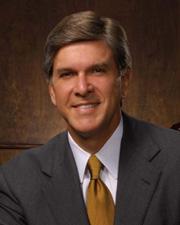 Sen. Gordon H. Smith (R-OR)
Legislative Activity
Stay on top of the latest movement without scrolling through every action
Passed Senate with an amendment by Unanimous Consent.
December 8, 2004
View full timeline
Introduced in Senate
June 24, 2004
Sponsor introductory remarks on measure. (CR 6/25/2004 S7481)
June 24, 2004
Read twice and referred to the Committee on Commerce, Science, and Transportation. (text of measure as introduced: CR 6/25/2004 S7481-7483)
June 24, 2004
Committee on Commerce, Science, and Transportation. Ordered to be reported without amendment favorably.
July 22, 2004
Committee on Commerce, Science, and Transportation. Reported by Senator McCain without amendment. With written report No. 108-381. Additional views filed.
September 28, 2004
Measure laid before Senate by unanimous consent. (consideration: CR S12020)
December 8, 2004
Passed Senate with an amendment by Unanimous Consent.
December 8, 2004
Amendments
1 amendmentOffered to this bill
Amendments
1 amendmentOffered to this bill
Floor Debate
23 membersWhat members said about S. 2603 on the floor


 +18
Floor Debate
23 membersWhat members said about S. 2603 on the floor
Mr. President, today, I rise to introduce the Positive Aging Act of 2004 to improve the accessibility and quality of mental health services for our rapidly growing population of older Americans with…
Mr. President, today, I join my esteemed colleague, the Senator from Iowa, Senator Harkin, and other members, in introducing the Improving Access to Assistive Technology for Individuals with…
Mr. President, I rise today to introduce the Public Land Protection and Conservation Act of 2004. I am pleased to have my esteemed colleagues Senator Frank Lautenberg, Senator Carl Levin, Senator…
Mr. President, I am pleased to join my colleague Senator Alexander as we introduce this very significant conservation legislation. The junior Senator from Tennessee has been a long-time effective…
Mr. President, today I introduce the Health Care Reform Expedited Procedures Act of 2004, legislation that requires Congress to act on what may be the most pressing domestic policy issue of our time,…
Show 8 more
Mr. President, today I join with my colleague from New Hampshire, Senator Gregg, and others to introduce the Assistive Technology Act of 2004. Assistive technology and accessible information…
Mr. President, today, Senator Landrieu and I are introducing the Americans Outdoors Act of 2004, bipartisan legislation that will provide nearly $1.5 billion annually to help Americans in every State…
Mr. President, our Nation wrestles with a medical mystery that affects the health and very lives of millions of Americans every year: Why do patients with similar ailments have such disparate…

Mr. President, I am pleased to join with my colleague from New York in introducing the Positive Aging Act, which will help to increase older Americans' access to quality mental health screening and…

Mr. President, I am introducing today with my colleague, Senator Gordon Smith, a bill that addresses an ecological crisis in California and Oregon that quite literally threatens to change the face of…
Mr. President, today I am joined by my colleague from North Dakota, Senator Dorgan, in introducing legislation intended to address the twin natural disasters that are threatening the livelihoods of…

Mr. President, I rise today to offer a bill that addresses a critical element of defense funding. My bill will very simply compensate men and women from all services who will be deployed even after…
Mr. President, I rise today with Senators Allen, Hollings and Sununu to introduce the ``Junk Fax Prevention Act of 2004.'' This bill will strengthen existing laws by providing consumers the ability…
Show 11 more

Mr. President, I rise today to introduce the NIH Security Act. The National Institutes of Health (NIH) is one of America's most successful investments. NIH saves lives and helps Americans to live…

Mr. President, I rise today to introduce the District of Columbia and United States Territories Circulating Quarter Dollar Program Act. I am proud to cosponsor this important legislation with my…

Mr. President, I am proud to join Senators Gregg and Harkin in the introduction of the Assistive Technology Act of 2004, which will continue and expand our Nation's promise to improve access to…
Mr. President, I rise today to introduce a bill that will facilitate the sharing of information from Federal law enforcement agencies to State and local law enforcement. Right now, existing Federal…

Mr. President, I rise today to introduce the Ensuring Quality and Access to Cancer Care Act of 2004. I want to thank my colleague, Senator Hutchison, for working with me on this critical issue.…
Mr. President, I have sought recognition to co-sponsor legislation to add the likeness of Sojourner Truth to the statue commemorating women's suffrage located in the rotunda of the United States…
Mr. President, I rise as an original cosponsor of the Improving Access to Assistive Technology for Individuals with Disabilities Act of 2004. This important legislation reauthorizes the Assistive…
Mr. President, I rise today with Senators Allen, Hollings and Sununu to introduce the ``Junk Fax Prevention Act of 2004.'' This bill will strengthen existing laws by providing consumers the ability…

Mr. President, I am pleased to announce that I have signed on today as a cosponsor to S. 2603, the Junk Fax Prevention Act of 2004. This legislation is vital in preserving a valuable small business…

I ask unanimous consent that the Senate proceed to the immediate consideration of Calendar No. 741, S. 2603. I ask unanimous consent that the McCain amendment at the desk be agreed to, the bill, as…
Mr. President, I ask unanimous consent that the text of the bill be printed in the Record.
Bill Text
3 versions available
        [Congressional Bills 108th Congress]
[From the U.S. Government Publishing Office]
[S. 2603 Engrossed in Senate (ES)]

108th CONGRESS
2d Session
S. 2603

_______________________________________________________________________

AN ACT

To amend section 227 of the Communications Act of 1934 (47 U.S.C. 227)
relating to the prohibition on junk fax transmissions.

Be it enacted by the Senate and House of Representatives of the
United States of America in Congress assembled,

TITLE I--JUNK FAXES

SEC. 101. SHORT TITLE.

This title may be cited as the ``Junk Fax Prevention Act of 2004''.

SEC. 102. PROHIBITION ON FAX TRANSMISSIONS CONTAINING UNSOLICITED
ADVERTISEMENTS.

(a) Prohibition.--Section 227(b)(1)(C) of the Communications Act of
1934 (47 U.S.C. 227(b)(1)(C)) is amended to read as follows:
``(C) to use any telephone facsimile machine,
computer, or other device to send, to a telephone
facsimile machine, an unsolicited advertisement,
unless--
``(i) the unsolicited advertisement is from
a sender with an established business
relationship with the recipient;
``(ii) in the case of an unsolicited
advertisement sent based on the established
business relationship to a residential
telephone facsimile machine, or, after the date
of enactment of the Junk Fax Prevention Act of
2004, in the case of an unsolicited
advertisement sent based on the established
business relationship to a business telephone
facsimile machine, such number was obtained by
the sender through--
``(I) the voluntary communication
of such number, within the context of
such established business relationship,
from the recipient of the unsolicited
advertisement, or
``(II) a directory, advertisement,
or site on the World Wide Web to which
the recipient voluntarily agreed to
make available its facsimile number for
public distribution; and
``(iii) the unsolicited advertisement
contains a notice meeting the requirements
under paragraph (2)(D), except that the
exception under clauses (i) and (ii) shall not
apply with respect to an unsolicited
advertisement sent to a telephone facsimile
machine by a sender to whom a request has been
made not to send future unsolicited
advertisements to such telephone facsimile
machine that complies with the requirements
under paragraph (2)(E); or''.
(b) Definition of Established Business Relationship.--Section
227(a) of the Communications Act of 1934 (47 U.S.C. 227(a)) is
amended--
(1) by redesignating paragraphs (2) through (4) as
paragraphs (3) through (5), respectively; and
(2) by inserting after paragraph (1) the following:
``(2) The term `established business relationship', for
purposes only of subsection (b)(1)(C)(i), shall have the
meaning given the term in section 64.1200 of title 47, Code of
Federal Regulations, as in effect on January 1, 2003, except
that--
``(A) such term shall include a relationship
between a person or entity and a business subscriber
subject to the same terms applicable under such section
to a relationship between a person or entity and a
residential subscriber; and
``(B) an established business relationship shall be
subject to any time limitation established pursuant to
paragraph (2)(G))''.
(c) Required Notice of Opt-Out Opportunity.--Section 227(b)(2) of
the Communications Act of 1934 (47 U.S.C. 227(b)(2)) is amended--
(1) in subparagraph (B), by striking ``and'' at the end;
(2) in subparagraph (C), by striking the period at the end
and inserting a semicolon; and
(3) by adding at the end the following:
``(D) shall provide that a notice contained in an
unsolicited advertisement complies with the
requirements under this subparagraph only if--
``(i) the notice is clear and conspicuous
and on the first page of the unsolicited
advertisement;
``(ii) the notice states that the recipient
may make a request to the sender of the
unsolicited advertisement not to send any
future unsolicited advertisements to a
telephone facsimile machine or machines and
that failure to comply, within the shortest
reasonable time, as determined by the
Commission, with such a request meeting the
requirements under subparagraph (E) is
unlawful;
``(iii) the notice sets forth the
requirements for a request under subparagraph
(E);
``(iv) the notice includes--
``(I) a domestic contact telephone
and facsimile machine number for the
recipient to transmit such a request to
the sender; and
``(II) a cost-free mechanism for a
recipient to transmit a request
pursuant to such notice to the sender
of the unsolicited advertisement; the
Commission shall by rule require the
sender to provide such a mechanism and
may, in the discretion of the
Commission and subject to such
conditions as the Commission may
prescribe, exempt certain classes of
small business senders, but only if the
Commission determines that the costs to
such class are unduly burdensome given
the revenues generated by such small
businesses;
``(v) the telephone and facsimile machine
numbers and the cost-free mechanism set forth
pursuant to clause (iv) permit an individual or
business to make such a request during regular
business hours; and
``(vi) the notice complies with the
requirements of subsection (d);''.
(d) Request to Opt-Out of Future Unsolicited Advertisements.--
Section 227(b)(2) of the Communications Act of 1934 (47 U.S.C.
227(b)(2)), as amended by subsection (c), is further amended by adding
at the end the following:
``(E) shall provide, by rule, that a request not to
send future unsolicited advertisements to a telephone
facsimile machine complies with the requirements under
this subparagraph only if--
``(i) the request identifies the telephone
number or numbers of the telephone facsimile
machine or machines to which the request
relates;
``(ii) the request is made to the telephone
or facsimile number of the sender of such an
unsolicited advertisement provided pursuant to
subparagraph (D)(iv) or by any other method of
communication as determined by the Commission;
and
``(iii) the person making the request has
not, subsequent to such request, provided
express invitation or permission to the sender,
in writing or otherwise, to send such
advertisements to such person at such telephone
facsimile machine;''.
(e) Authority to Establish Nonprofit Exception.--Section 227(b)(2)
of the Communications Act of 1934 (47 U.S.C. 227(b)(2)), as amended by
subsections (c) and (d), is further amended by adding at the end the
following:
``(F) may, in the discretion of the Commission and
subject to such conditions as the Commission may
prescribe, allow professional or trade associations
that are tax-exempt nonprofit organizations to send
unsolicited advertisements to their members in
furtherance of the association's tax-exempt purpose
that do not contain the notice required by paragraph
(1)(C)(ii), except that the Commission may take action
under this subparagraph only--
``(i) by regulation issued after public
notice and opportunity for public comment; and
``(ii) if the Commission determines that
such notice required by paragraph (1)(C)(ii) is
not necessary to protect the ability of the
members of such associations to stop such
associations from sending any future
unsolicited advertisements; and''.
(f) Authority To Establish Time Limit on Established Business
Relationship Exception.--Section 227(b)(2) of the Communications Act of
1934 (47 U.S.C. 227(b)(2)), as amended by subsections (c), (d), and (e)
of this section, is further amended by adding at the end the following:
``(G)(i) may, consistent with clause (ii), limit
the duration of the existence of an established
business relationship to a period after the last
occurrence of an action sufficient to establish such a
relationship, but only if--
``(I) the Commission determines that the
existence of the exception under paragraph
(1)(C) relating to an established business
relationship has resulted in a significant
number of complaints to the Commission
regarding the sending of unsolicited
advertisements to telephone facsimile machines;
``(II) upon review of such complaints
referred to in subclause (I), the Commission
has reason to believe that a significant number
of such complaints involve unsolicited
advertisements that were sent on the basis of
an established business relationship that was
longer in duration than the Commission believes
is consistent with the reasonable expectations
of consumers;
``(III) the Commission determines that the
costs to senders of demonstrating the existence
of an established business relationship within
a specified period of time do not outweigh the
benefits to recipients of establishing a
limitation on such established business
relationship; and
``(IV) the Commission determines that, with
respect to small businesses, the costs are not
unduly burdensome, given the revenues generated
by small businesses, and taking into account
the number of specific complaints to the
Commission regarding the sending of unsolicited
advertisements to telephone facsimile machines
by small businesses; and
``(ii) may not commence a proceeding to determine
whether to limit the duration of the existence of an
established business relationship before the expiration
of the 3-year period that begins on the date of the
enactment of the Junk Fax Prevention Act of 2004.''.
(g) Unsolicited Advertisement.--Section 227(a)(5) of the
Communications Act of 1934, as so redesignated by subsection (b)(1), is
amended by inserting ``, in writing or otherwise'' before the period at
the end.
(h) Regulations.--Except as provided in section 227(b)(2)(G)(ii) of
the Communications Act of 1934 (as added by subsection (f)), not later
than 270 days after the date of enactment of this Act, the Federal
Communications Commission shall issue regulations to implement the
amendments made by this section.

SEC. 103. FCC ANNUAL REPORT REGARDING JUNK FAX ENFORCEMENT.

Section 227 of the Communications Act of 1934 (47 U.S.C. 227) is
amended by adding at the end the following:
``(g) Junk Fax Enforcement Report.--The Commission shall submit an
annual report to Congress regarding the enforcement during the past
year of the provisions of this section relating to sending of
unsolicited advertisements to telephone facsimile machines, which
report shall include--
``(1) the number of complaints received by the Commission
during such year alleging that a consumer received an
unsolicited advertisement via telephone facsimile machine in
violation of the Commission's rules;
``(2) the number of citations issued by the Commission
pursuant to section 503 during the year to enforce any law,
regulation, or policy relating to sending of unsolicited
advertisements to telephone facsimile machines;
``(3) the number of notices of apparent liability issued by
the Commission pursuant to section 503 during the year to
enforce any law, regulation, or policy relating to sending of
unsolicited advertisements to telephone facsimile machines;
``(4) for each notice referred to in paragraph (3)--
``(A) the amount of the proposed forfeiture penalty
involved;
``(B) the person to whom the notice was issued;
``(C) the length of time between the date on which
the complaint was filed and the date on which the
notice was issued; and
``(D) the status of the proceeding;
``(5) the number of final orders imposing forfeiture
penalties issued pursuant to section 503 during the year to
enforce any law, regulation, or policy relating to sending of
unsolicited advertisements to telephone facsimile machines;
``(6) for each forfeiture order referred to in paragraph
(5)--
``(A) the amount of the penalty imposed by the
order;
``(B) the person to whom the order was issued;
``(C) whether the forfeiture penalty has been paid;
and
``(D) the amount paid;
``(7) for each case in which a person has failed to pay a
forfeiture penalty imposed by such a final order, whether the
Commission referred such matter for recovery of the penalty;
and
``(8) for each case in which the Commission referred such
an order for recovery--
``(A) the number of days from the date the
Commission issued such order to the date of such
referral;
``(B) whether an action has been commenced to
recover the penalty, and if so, the number of days from
the date the Commission referred such order for
recovery to the date of such commencement; and
``(C) whether the recovery action resulted in
collection of any amount, and if so, the amount
collected.''.

SEC. 104. GAO STUDY OF JUNK FAX ENFORCEMENT.

(a) In General.--The Comptroller General of the United States shall
conduct a study regarding complaints received by the Federal
Communications Commission concerning unsolicited advertisements sent to
telephone facsimile machines, which study shall determine--
(1) the mechanisms established by the Commission to
receive, investigate, and respond to such complaints;
(2) the level of enforcement success achieved by the
Commission regarding such complaints;
(3) whether complainants to the Commission are adequately
informed by the Commission of the responses to their
complaints; and
(4) whether additional enforcement measures are necessary
to protect consumers, including recommendations regarding such
additional enforcement measures.
(b) Additional Enforcement Remedies.--In conducting the analysis
and making the recommendations required under subsection (a)(4), the
Comptroller General shall specifically examine--
(1) the adequacy of existing statutory enforcement actions
available to the Commission;
(2) the adequacy of existing statutory enforcement actions
and remedies available to consumers;
(3) the impact of existing statutory enforcement remedies
on senders of facsimiles;
(4) whether increasing the amount of financial penalties is
warranted to achieve greater deterrent effect; and
(5) whether establishing penalties and enforcement actions
for repeat violators or abusive violations similar to those
established under section 1037 of title 18, United States Code,
would have a greater deterrent effect.
(c) Report.--Not later than 270 days after the date of the
enactment of this Act, the Comptroller General shall submit a report on
the results of the study under this section to Committee on Energy and
Commerce of the House of Representatives and the Committee on Commerce,
Science, and Transportation of the Senate.

TITLE II--PROFESSIONAL BOXING SAFETY

SEC. 201. SHORT TITLE; TABLE OF CONTENTS.

(a) Short Title.--This title may be cited as the ``Professional
Boxing Amendments Act of 2004''.
(b) Table of Contents.--The table of contents for this title is as
follows:

Sec. 201. Short title; table of contents.
Sec. 202. Amendment of Professional Boxing Safety Act of 1996.
Sec. 203. Definitions.
Sec. 204. Purposes.
Sec. 205. United States Boxing Commission approval, or ABC or
commission sanction, required for matches.
Sec. 206. Safety standards.
Sec. 207. Registration.
Sec. 208. Review.
Sec. 209. Reporting.
Sec. 210. Contract requirements.
Sec. 211. Coercive contracts.
Sec. 212. Sanctioning organizations.
Sec. 213. Required disclosures by sanctioning organizations.
Sec. 214. Required disclosures by promoters and broadcasters.
Sec. 215. Judges and referees.
Sec. 216. Medical registry.
Sec. 217. Conflicts of interest.
Sec. 218. Enforcement.
Sec. 219. Repeal of deadwood.
Sec. 220. Recognition of tribal law.
Sec. 221. Establishment of United States Boxing Commission.
Sec. 222. Study and report on definition of promoter.
Sec. 223. Effective date.

SEC. 202. AMENDMENT OF PROFESSIONAL BOXING SAFETY ACT OF 1996.

Except as otherwise expressly provided, whenever in this title an
amendment or repeal is expressed in terms of an amendment to, or repeal
of, a section or other provision, the reference shall be considered to
be made to a section or other provision of the Professional Boxing
Safety Act of 1996 (15 U.S.C. 6301 et seq.).

SEC. 203. DEFINITIONS.

(a) In General.--Section 2 (15 U.S.C. 6301) is amended to read as
follows:

``SEC. 2. DEFINITIONS.

``In this Act:
``(1) Commission.--The term `Commission' means the United
States Boxing Commission.
``(2) Bout agreement.--The term `bout agreement' means a
contract between a promoter and a boxer that requires the boxer
to participate in a professional boxing match for a particular
date.
``(3) Boxer.--The term `boxer' means an individual who
fights in a professional boxing match.
``(4) Boxing commission.--The term `boxing commission'
means an entity authorized under State or tribal law to
regulate professional boxing matches.
``(5) Boxer registry.--The term `boxer registry' means any
entity certified by the Commission for the purposes of
maintaining records and identification of boxers.
``(6) Boxing service provider.--The term `boxing service
provider' means a promoter, manager, sanctioning body,
licensee, or matchmaker.
``(7) Contract provision.--The term `contract provision'
means any legal obligation between a boxer and a boxing service
provider.
``(8) Indian lands; indian tribe.--The terms `Indian lands'
and `Indian tribe' have the meanings given those terms by
paragraphs (4) and (5), respectively, of section 4 of the
Indian Gaming Regulatory Act (25 U.S.C. 2703).
``(9) Licensee.--The term `licensee' means an individual
who serves as a trainer, corner man, second, or cut man for a
boxer.
``(10) Manager.--The term `manager' means a person other
than a promoter who, under contract, agreement, or other
arrangement with a boxer, undertakes to control or administer,
directly or indirectly, a boxing-related matter on behalf of
that boxer, including a person who is a booking agent for a
boxer.
``(11) Matchmaker.--The term `matchmaker' means a person
that proposes, selects, and arranges for boxers to participate
in a professional boxing match.
``(12) Physician.--The term `physician' means a doctor of
medicine legally authorized to practice medicine by the State
in which the physician performs such function or action and who
has training and experience in dealing with sports injuries,
particularly head trauma.
``(13) Professional boxing match.--The term `professional
boxing match' means a boxing contest held in the United States
between individuals for financial compensation. The term
`professional boxing match' does not include a boxing contest
that is regulated by a duly recognized amateur sports
organization, as approved by the Commission.
``(14) Promoter.--The term `promoter'--
``(A) means the person primarily responsible for
organizing, promoting, and producing a professional
boxing match; but
``(B) does not include a hotel, casino, resort, or
other commercial establishment hosting or sponsoring a
professional boxing match unless--
``(i) the hotel, casino, resort, or other
commercial establishment is primarily
responsible for organizing, promoting, and
producing the match; and
``(ii) there is no other person primarily
responsible for organizing, promoting, and
producing the match.
``(15) Promotional agreement.--The term `promotional
agreement' means a contract, for the acquisition of rights
relating to a boxer's participation in a professional boxing
match or series of boxing matches (including the right to sell,
distribute, exhibit, or license the match or matches), with--
``(A) the boxer who is to participate in the match
or matches; or
``(B) the nominee of a boxer who is to participate
in the match or matches, or the nominee is an entity
that is owned, controlled or held in trust for the
boxer unless that nominee or entity is a licensed
promoter who is conveying a portion of the rights
previously acquired.
``(16) State.--The term `State' means each of the 50
States, Puerto Rico, the District of Columbia, and any
territory or possession of the United States, including the
Virgin Islands.
``(17) Sanctioning organization.--The term `sanctioning
organization' means an organization, other than a boxing
commission, that sanctions professional boxing matches, ranks
professional boxers, or charges a sanctioning fee for
professional boxing matches in the United States--
``(A) between boxers who are residents of different
States; or
``(B) that are advertised, otherwise promoted, or
broadcast (including closed circuit television) in
interstate commerce.
``(18) Suspension.--The term `suspension' includes within
its meaning the temporary revocation of a boxing license.
``(19) Tribal organization.--The term `tribal organization'
has the same meaning as in section 4(l) of the Indian Self-
Determination and Education Assistance Act (25 U.S.C.
450b(l)).''.
(b) Conforming Amendment.--Section 21 (15 U.S.C. 6312) is amended
to read as follows:

``SEC. 21. PROFESSIONAL BOXING MATCHES CONDUCTED ON INDIAN LANDS.

``(a) In General.--Notwithstanding any other provision of law, a
tribal organization may establish a boxing commission to regulate
professional boxing matches held on Indian land under the jurisdiction
of that tribal organization.
``(b) Standards and Licensing.--A tribal organization that
establishes a boxing commission shall, by tribal ordinance or
resolution, establish and provide for the implementation of health and
safety standards, licensing requirements, and other requirements
relating to the conduct of professional boxing matches that are at
least as restrictive as--
``(1) the otherwise applicable requirements of the State in
which the Indian land on which the professional boxing match is
held is located; or
``(2) the guidelines established by the United States
Boxing Commission.
``(c) Application of Act to Boxing Matches on Tribal Lands.--The
provisions of this Act apply to professional boxing matches held on
tribal lands to the same extent and in the same way as they apply to
professional boxing matches held in any State.''.

SEC. 204. PURPOSES.

Section 3(2) (15 U.S.C. 6302(2)) is amended by striking ``State''.

SEC. 205. UNITED STATES BOXING COMMISSION APPROVAL, OR ABC OR
COMMISSION SANCTION, REQUIRED FOR MATCHES.

(a) In General.--Section 4 (15 U.S.C. 6303) is amended to read as
follows:

``SEC. 4. APPROVAL OR SANCTION REQUIREMENT.

``(a) In General.--No person may arrange, promote, organize,
produce, or fight in a professional boxing match within the United
States unless the match--
``(1) is approved by the Commission; and
``(2) is held in a State, or on tribal land of a tribal
organization, that regulates professional boxing matches in
accordance with standards and criteria established by the
Commission.
``(b) Approval Presumed.--
``(1) In general.--For purposes of subsection (a), the
Commission shall be presumed to have approved any match other
than--
``(A) a match with respect to which the Commission
has been informed of an alleged violation of this Act
and with respect to which it has notified the
supervising boxing commission that it does not approve;
``(B) a match advertised to the public as a
championship match;
``(C) a match scheduled for 10 rounds or more; or
``(D) a match in which 1 of the boxers has--
``(i) suffered 10 consecutive defeats in
professional boxing matches; or
``(ii) has been knocked out 5 consecutive
times in professional boxing matches.
``(2) Delegation of approval authority.--Notwithstanding
paragraph (1), the Commission shall be presumed to have
approved a match described in subparagraph (B), (C), or (D) of
paragraph (1) if--
``(A) the Commission has delegated in writing its
approval authority with respect to that match to a
boxing commission; and
``(B) the boxing commission has approved the match.
``(3) Knocked-out defined.--Except as may be otherwise
provided by the Commission by rule, in paragraph (1)(D)(ii),
the term `knocked out' means knocked down and unable to
continue after a count of 10 by the referee or stopped from
continuing because of a technical knockout.''.
(b) Conforming Amendment.--Section 19 (15 U.S.C. 6310) is repealed.

SEC. 206. SAFETY STANDARDS.

Section 5 (15 U.S.C. 6304) is amended--
(1) by striking ``requirements or an alternative
requirement in effect under regulations of a boxing commission
that provides equivalent protection of the health and safety of
boxers:'' and inserting ``requirements:'';
(2) by adding at the end of paragraph (1) ``The examination
shall include testing for infectious diseases in accordance
with standards established by the Commission.'';
(3) by striking paragraph (2) and inserting the following:
``(2) An ambulance continuously present on site.'';
(4) by redesignating paragraphs (3) and (4) as paragraphs
(4) and (5), respectively, and inserting after paragraph (2)
the following:
``(3) Emergency medical personnel with appropriate
resuscitation equipment continuously present on site.''; and
(5) by striking ``match.'' in paragraph (5), as
redesignated, and inserting ``match in an amount prescribed by
the Commission.''.

SEC. 207. REGISTRATION.

Section 6 (15 U.S.C. 6305) is amended--
(1) by inserting ``or Indian tribe'' after ``State'' the
second place it appears in subsection (a)(2);
(2) by striking the first sentence of subsection (c) and
inserting ``A boxing commission shall, in accordance with
requirements established by the Commission, make a health and
safety disclosure to a boxer when issuing an identification
card to that boxer.'';
(3) by striking ``should'' in the second sentence of
subsection (c) and inserting ``shall, at a minimum,''; and
(4) by adding at the end the following:
``(d) Copy of Registration and Identification Cards To Be Sent to
Commission.--A boxing commission shall furnish a copy of each
registration received under subsection (a), and each identification
card issued under subsection (b), to the Commission.''.

SEC. 208. REVIEW.

Section 7 (15 U.S.C. 6306) is amended--
(1) by striking ``that, except as provided in subsection
(b), no'' in subsection (a)(2) and inserting ``that no'';
(2) by striking paragraphs (3) and (4) of subsection (a)
and inserting the following:
``(3) Procedures to review a summary suspension when a
hearing before the boxing commission is requested by a boxer,
licensee, manager, matchmaker, promoter, or other boxing
service provider which provides an opportunity for that person
to present evidence.'';
(3) by striking subsection (b); and
(4) by striking ``(a) Procedures.--''.

SEC. 209. REPORTING.

Section 8 (15 U.S.C. 6307) is amended--
(1) by striking ``48 business hours'' and inserting ``2
business days'';
(2) by striking ``bxoing'' and inserting ``boxing''; and
(3) by striking ``each boxer registry.'' and inserting
``the Commission.''.

SEC. 210. CONTRACT REQUIREMENTS.

Section 9 (15 U.S.C. 6307a) is amended to read as follows:

``SEC. 9. CONTRACT REQUIREMENTS.

``(a) In General.--The Commission, in consultation with the
Association of Boxing Commissions, shall develop guidelines for minimum
contractual provisions that shall be included in each bout agreement,
boxer-manager contract, and promotional agreement. Each boxing
commission shall ensure that these minimal contractual provisions are
present in any such agreement or contract submitted to it.
``(b) Filing and Approval Requirements.--
``(1) Commission.--A manager or promoter shall submit a
copy of each boxer-manager contract and each promotional
agreement between that manager or promoter and a boxer to the
Commission, and, if requested, to the boxing commission with
jurisdiction over the bout.
``(2) Boxing commission.--A boxing commission may not
approve a professional boxing match unless a copy of the bout
agreement related to that match has been filed with it and
approved by it.
``(c) Bond or Other Surety.--A boxing commission may not approve a
professional boxing match unless the promoter of that match has posted
a surety bond, cashier's check, letter of credit, cash, or other
security with the boxing commission in an amount acceptable to the
boxing commission.''.

SEC. 211. COERCIVE CONTRACTS.

Section 10 (15 U.S.C. 6307b) is amended--
(1) by striking paragraph (3) of subsection (a);
(2) by inserting ``or elimination'' after ``mandatory'' in
the heading of subsection (b); and
(3) by inserting ``or elimination'' after ``mandatory'' in
subsection (b).

SEC. 212. SANCTIONING ORGANIZATIONS.

(a) In General.--Section 11 (15 U.S.C. 6307c) is amended to read as
follows:

``SEC. 11. SANCTIONING ORGANIZATIONS.

``(a) Objective Criteria.--Within 1 year after the date of
enactment of the Professional Boxing Amendments Act of 2004, the
Commission shall develop guidelines for objective and consistent
written criteria for the rating of professional boxers based on the
athletic merits and professional record of the boxers. Within 90 days
after the Commission's promulgation of the guidelines, each sanctioning
organization shall adopt the guidelines and follow them.
``(b) Notification of Change in Rating.--A sanctioning organization
shall, with respect to a change in the rating of a boxer previously
rated by such organization in the top 10 boxers--
``(1) post a copy, within 7 days after the change, on its
Internet website or home page, if any, including an explanation
of the change, for a period of not less than 30 days;
``(2) provide a copy of the rating change and a thorough
explanation in writing under penalty of perjury to the boxer
and the Commission;
``(3) provide the boxer an opportunity to appeal the
ratings change to the sanctioning organization; and
``(4) apply the objective criteria for ratings required
under subsection (a) in considering any such appeal.
``(c) Challenge of Rating.--If, after disposing with an appeal
under subsection (b)(3), a sanctioning organization receives a petition
from a boxer challenging that organization's rating of the boxer, it
shall (except to the extent otherwise required by the Commission),
within 7 days after receiving the petition--
``(1) provide to the boxer a written explanation under
penalty of perjury of the organization's rating criteria, its
rating of the boxer, and the rationale or basis for its rating
(including a response to any specific questions submitted by
the boxer); and
``(2) submit a copy of its explanation to the Association
of Boxing Commissions and the Commission for their review.''.
(b) Conforming Amendments.--Section 18(e) (15 U.S.C. 6309(e)) is
amended--
(1) by striking ``Federal Trade Commission,'' in the
subsection heading and inserting ``United States Boxing
Commission''; and
(2) by striking ``Federal Trade Commission,'' in paragraph
(1) and inserting ``United States Boxing Commission,''.

SEC. 213. REQUIRED DISCLOSURES BY SANCTIONING ORGANIZATIONS.

Section 12 (15 U.S.C. 6307d) is amended--
(1) by striking the matter preceding paragraph (1) and
inserting ``Within 7 days after a professional boxing match of
10 rounds or more, the sanctioning organization, if any, for
that match shall provide to the Commission, and, if requested,
to the boxing commission in the State or on Indian land
responsible for regulating the match, a written statement of--
'';
(2) by striking ``will assess'' in paragraph (1) and
inserting ``has assessed, or will assess,''; and
(3) by striking ``will receive'' in paragraph (2) and
inserting ``has received, or will receive,''.

SEC. 214. REQUIRED DISCLOSURES BY PROMOTERS AND BROADCASTERS.

Section 13 (15 U.S.C. 6307e) is amended--
(1) by striking ``promoters.'' in the section caption and
inserting ``promoters and broadcasters.'';
(2) by striking so much of subsection (a) as precedes
paragraph (1) and inserting the following:
``(a) Disclosures to Boxing Commissions and the Commission.--Within
7 days after a professional boxing match of 10 rounds or more, the
promoter of any boxer participating in that match shall provide to the
Commission, and, if requested, to the boxing commission in the State or
on Indian land responsible for regulating the match--'';
(3) by striking ``writing,'' in subsection (a)(1) and
inserting ``writing, other than a bout agreement previously
provided to the commission,'';
(4) by striking ``all fees, charges, and expenses that will
be'' in subsection (a)(3)(A) and inserting ``a written
statement of all fees, charges, and expenses that have been, or
will be,'';
(5) by inserting ``a written statement of'' before ``all''
in subsection (a)(3)(B);
(6) by inserting ``a statement of'' before ``any'' in
subsection (a)(3)(C);
(7) by striking the matter in subsection (b) following
``Boxer.--'' and preceding paragraph (1) and inserting ``Within
7 days after a professional boxing match of 10 rounds or more,
the promoter of the match shall provide to each boxer
participating in the bout or match with whom the promoter has a
bout or promotional agreement a statement
of--'';
(8) by striking ``match;'' in subsection (b)(1) and
inserting ``match, and that the promoter has paid, or agreed to
pay, to any other person in connection with the match;''; and
(9) by adding at the end the following:
``(d) Required Disclosures by Broadcasters.--
``(1) In general.--A broadcaster that owns the television
broadcast rights for a professional boxing match of 10 rounds
or more shall, within 7 days after that match, provide to the
Commission--
``(A) a statement of any advance, guarantee, or
license fee paid or owed by the broadcaster to a
promoter in connection with that match;
``(B) a copy of any contract executed by or on
behalf of the broadcaster with--
``(i) a boxer who participated in that
match; or
``(ii) the boxer's manager, promoter,
promotional company, or other representative or
the owner or representative of the site of the
match; and
``(C) a list identifying sources of income received
from the broadcast of the match.
``(2) Copy to boxing commission.--Upon request from the
boxing commission in the State or Indian land responsible for
regulating a match to which paragraph (1) applies, a
broadcaster shall provide the information described in
paragraph (1) to that boxing commission.
``(3) Confidentiality.--The information provided to the
Commission or to a boxing commission pursuant to this
subsection shall be confidential and not revealed by the
Commission or a boxing commission, except that the Commission
may publish an analysis of the data in aggregate form or in a
manner which does not disclose confidential information about
identifiable broadcasters.
``(4) Television broadcast rights.--In paragraph (1), the
term `television broadcast rights' means the right to broadcast
the match, or any part thereof, via a broadcast station, cable
service, or multichannel video programming distributor as such
terms are defined in section 3(5), 602(6), and 602(13) of the
Communications Act of 1934 (47 U.S.C. 153(5), 602(6), and
602(13), respectively).''.

SEC. 215. JUDGES AND REFEREES.

(a) In General.--Section 16 (15 U.S.C. 6307h) is amended--
(1) by inserting ``(a) Licensing and Assignment
Requirement.--'' before ``No person'';
(2) by striking ``certified and approved'' and inserting
``selected'';
(3) by inserting ``or Indian lands'' after ``State''; and
(4) by adding at the end the following:
``(b) Championship and 10-Round Bouts.--In addition to the
requirements of subsection (a), no person may arrange, promote,
organize, produce, or fight in a professional boxing match advertised
to the public as a championship match or in a professional boxing match
scheduled for 10 rounds or more unless all referees and judges
participating in the match have been licensed by the Commission.
``(c) Role of Sanctioning Organization.--A sanctioning organization
may provide a list of judges and referees deemed qualified by that
organization to a boxing commission, but the boxing commission shall
select, license, and appoint the judges and referees participating in
the match.
``(d) Assignment of Nonresident Judges and Referees.--A boxing
commission may assign judges and referees who reside outside that
commission's State or Indian land.
``(e) Required Disclosure.--A judge or referee shall provide to the
boxing commission responsible for regulating a professional boxing
match in a State or on Indian land a statement of all consideration,
including reimbursement for expenses, that the judge or referee has
received, or will receive, from any source for participation in the
match. If the match is scheduled for 10 rounds or more, the judge or
referee shall also provide such a statement to the Commission.''.
(b) Conforming Amendment.--Section 14 (15 U.S.C. 6307f) is
repealed.

SEC. 216. MEDICAL REGISTRY.

The Act is amended by inserting after section 13 (15 U.S.C. 6307e)
the following:

``SEC. 14. MEDICAL REGISTRY.

``(a) In General.--The Commission shall establish and maintain, or
certify a third party entity to establish and maintain, a medical
registry that contains comprehensive medical records and medical
denials or suspensions for every licensed boxer.
``(b) Content; Submission.--The Commission shall determine--
``(1) the nature of medical records and medical suspensions
of a boxer that are to be forwarded to the medical registry;
and
``(2) the time within which the medical records and medical
suspensions are to be submitted to the medical registry.
``(c) Confidentiality.--The Commission shall establish
confidentiality standards for the disclosure of personally identifiable
information to boxing commissions that will--
``(1) protect the health and safety of boxers by making
relevant information available to the boxing commissions for
use but not public disclosure; and
``(2) ensure that the privacy of the boxers is
protected.''.

SEC. 217. CONFLICTS OF INTEREST.

Section 17 (15 U.S.C. 6308) is amended--
(1) by striking ``enforces State boxing laws,'' in
subsection (a) and inserting ``implements State or tribal
boxing laws, no officer or employee of the Commission,'';
(2) by striking ``belong to,'' and inserting ``hold office
in,'' in subsection (a);
(3) by striking the last sentence of subsection (a);
(4) by striking subsection (b) and inserting the following:
``(b) Boxers.--A boxer may not own or control, directly or
indirectly, an entity that promotes the boxer's bouts if that entity is
responsible for--
``(1) executing a bout agreement or promotional agreement
with the boxer's opponent; or
``(2) providing any payment or other compensation to--
``(A) the boxer's opponent for participation in a
bout with the boxer;
``(B) the boxing commission that will regulate the
bout; or
``(C) ring officials who officiate at the bout.''.

SEC. 218. ENFORCEMENT.

Section 18 (15 U.S.C. 6309) is amended--
(1) by striking ``(a) Injunctions.--'' in subsection (a)
and inserting ``(a) Actions by Attorney General.--'';
(2) by striking ``enforces State boxing laws,'' in
subsection (b)(3) and inserting ``implements State or tribal
boxing laws, any officer or employee of the Commission,'';
(3) by inserting ``has engaged in or'' after
``organization'' in subsection (c);
(4) by striking ``subsection (b)'' in subsection (c)(3) and
inserting ``subsection (b), a civil penalty, or''; and
(5) by striking ``boxer'' in subsection (d) and inserting
``person''.

SEC. 219. REPEAL OF DEADWOOD.

Section 20 (15 U.S.C. 6311) is repealed.

SEC. 220. RECOGNITION OF TRIBAL LAW.

Section 22 (15 U.S.C. 6313) is amended--
(1) by insert ``or tribal'' in the section heading after
``state''; and
(2) by inserting ``or Indian tribe'' after ``State''.

SEC. 221. ESTABLISHMENT OF UNITED STATES BOXING COMMISSION.

(a) In General.--The Act is amended by adding at the end the
following:

``TITLE II--UNITED STATES BOXING COMMISSION

``SEC. 201. PURPOSE.

``The purpose of this title is to protect the health, safety, and
welfare of boxers and to ensure fairness in the sport of professional
boxing.

``SEC. 202. UNITED STATES BOXING COMMISSION.

``(a) In General.--The United States Boxing Commission is
established as a commission within the Department of Commerce.
``(b) Members.--
``(1) In general.--The Commission shall consist of 3
members appointed by the President, by and with the advice and
consent of the Senate.
``(2) Qualifications.--
``(A) In general.--Each member of the Commission
shall be a citizen of the United States who--
``(i) has extensive experience in
professional boxing activities or in a field
directly related to professional sports;
``(ii) is of outstanding character and
recognized integrity; and
``(iii) is selected on the basis of
training, experience, and qualifications and
without regard to political party affiliation.
``(B) Specific qualifications for certain
members.--At least 1 member of the Commission shall be
a former member of a local boxing authority. If
practicable, at least 1 member of the Commission shall
be a physician or other health care professional duly
licensed as such.
``(C) Disinterested persons.--No member of the
Commission may, while serving as a member of the
Commission--
``(i) be engaged as a professional boxer,
boxing promoter, agent, fight manager,
matchmaker, referee, judge, or in any other
capacity in the conduct of the business of
professional boxing;
``(ii) have any pecuniary interest in the
earnings of any boxer or the proceeds or
outcome of any boxing match; or
``(iii) serve as a member of a boxing
commission.
``(3) Bipartisan membership.--Not more than 2 members of
the Commission may be members of the same political party.
``(4) Geographic balance.--Not more than 2 members of the
Commission may be residents of the same geographic region of
the United States when appointed to the Commission. For
purposes of the preceding sentence, the area of the United
States east of the Mississippi River is a geographic region,
and the area of the United States west of the Mississippi River
is a geographic region.
``(5) Terms.--
``(A) In general.--The term of a member of the
Commission shall be 3 years.
``(B) Reappointment.--Members of the Commission may
be reappointed to the Commission.
``(C) Midterm vacancies.--A member of the
Commission appointed to fill a vacancy in the
Commission occurring before the expiration of the term
for which the member's predecessor was appointed shall
be appointed for the remainder of that unexpired term.
``(D) Continuation pending replacement.--A member
of the Commission may serve after the expiration of
that member's term until a successor has taken office.
``(6) Removal.--A member of the Commission may be removed
by the President only for cause.
``(c) Executive Director.--
``(1) In general.--The Commission shall employ an Executive
Director to perform the administrative functions of the
Commission under this Act, and such other functions and duties
of the Commission as the Commission shall specify.
``(2) Discharge of functions.--Subject to the authority,
direction, and control of the Commission the Executive Director
shall carry out the functions and duties of the Commission
under this Act.
``(d) General Counsel.--The Commission shall employ a General
Counsel to provide legal counsel and advice to the Executive Director
and the Commission in the performance of its functions under this Act,
and to carry out such other functions and duties as the Commission
shall specify.
``(e) Staff.--The Commission shall employ such additional staff as
the Commission considers appropriate to assist the Executive Director
and the General Counsel in carrying out the functions and duties of the
Commission under this Act.
``(f) Compensation.--
``(1) Members of commission.--
``(A) In general.--Each member of the Commission
shall be compensated at a rate equal to the daily
equivalent of the annual rate of basic pay prescribed
for level IV of the Executive Schedule under section
5315 of title 5, United States Code, for each day
(including travel time) during which such member is
engaged in the performance of the duties of the
Commission.
``(B) Travel expenses.--The members of the
Commission shall be allowed travel expenses, including
per diem in lieu of subsistence, at rates authorized
for employees of agencies under subchapter I of chapter
57 of title 5, United States Code, while away from
their homes or regular places of business in the
performance of services for the Commission.
``(2) Executive director and staff.--The Commission shall
fix the compensation of the Executive Director, the General
Counsel, and other personnel of the Commission. The rate of pay
for the Executive Director, the General Counsel, and other
personnel may not exceed the rate payable for level V of the
Executive Schedule under section 5316 of title 5, United States
Code.

``SEC. 203. FUNCTIONS.

``(a) Primary Functions.--The primary functions of the Commission
are--
``(1) to protect the health, safety, and general interests
of boxers consistent with the provisions of this Act; and
``(2) to ensure uniformity, fairness, and integrity in
professional boxing.
``(b) Specific Functions.--The Commission shall--
``(1) administer title I of this Act;
``(2) promulgate uniform standards for professional boxing
in consultation with the Association of Boxing Commissions;
``(3) except as otherwise determined by the Commission,
oversee all professional boxing matches in the United States;
``(4) work with the boxing commissions of the several
States and tribal organizations--
``(A) to improve the safety, integrity, and
professionalism of professional boxing in the United
States;
``(B) to enhance physical, medical, financial, and
other safeguards established for the protection of
professional boxers; and
``(C) to improve the status and standards of
professional boxing in the United States;
``(5) ensure, in cooperation with the Attorney General (who
shall represent the Commission in any judicial proceeding under
this Act), the chief law enforcement officer of the several
States, and other appropriate officers and agencies of Federal,
State, and local government, that Federal and State laws
applicable to professional boxing matches in the United States
are vigorously, effectively, and fairly enforced;
``(6) review boxing commission regulations for professional
boxing and provide assistance to such authorities in meeting
minimum standards prescribed by the Commission under this
title;
``(7) serve as the coordinating body for all efforts in the
United States to establish and maintain uniform minimum health
and safety standards for professional boxing;
``(8) if the Commission determines it to be appropriate,
publish a newspaper, magazine, or other publication and
establish and maintain a website consistent with the purposes
of the Commission;
``(9) procure the temporary and intermittent services of
experts and consultants to the extent authorized by section
3109(b) of title 5, United States Code, at rates the Commission
determines to be reasonable; and
``(10) promulgate rules, regulations, and guidance, and
take any other action necessary and proper to accomplish the
purposes of, and consistent with, the provisions of this title.
``(c) Prohibitions.--The Commission may not--
``(1) promote boxing events or rank professional boxers; or
``(2) provide technical assistance to, or authorize the use
of the name of the Commission by, boxing commissions that do
not comply with requirements of the Commission.
``(d) Use of Name.--The Commission shall have the exclusive right
to use the name `United States Boxing Commission'. Any person who,
without the permission of the Commission, uses that name or any other
exclusive name, trademark, emblem, symbol, or insignia of the
Commission for the purpose of inducing the sale or exchange of any
goods or services, or to promote any exhibition, performance, or
sporting event, shall be subject to suit in a civil action by the
Commission for the remedies provided in the Act of July 5, 1946
(commonly known as the `Trademark Act of 1946'; 15 U.S.C. 1051 et
seq.).

``SEC. 204. LICENSING AND REGISTRATION OF BOXING PERSONNEL.

``(a) Licensing.--
``(1) Requirement for license.--No person may compete in a
professional boxing match or serve as a boxing manager, boxing
promoter, or sanctioning organization for a professional boxing
match except as provided in a license granted to that person
under this subsection.
``(2) Application and term.--
``(A) In general.--The Commission shall--
``(i) establish application procedures,
forms, and fees;
``(ii) establish and publish appropriate
standards for licenses granted under this
section; and
``(iii) issue a license to any person who,
as determined by the Commission, meets the
standards established by the Commission under
this title.
``(B) Duration.--A license issued under this
section shall be for a renewable--
``(i) 4-year term for a boxer; and
``(ii) 2-year term for any other person.
``(C) Procedure.--The Commission may issue a
license under this paragraph through boxing commissions
or in a manner determined by the Commission.
``(b) Licensing Fees.--
``(1) Authority.--The Commission may prescribe and charge
reasonable fees for the licensing of persons under this title.
The Commission may set, charge, and adjust varying fees on the
basis of classifications of persons, functions, and events
determined appropriate by the Commission.
``(2) Limitations.--In setting and charging fees under
paragraph (1), the Commission shall ensure that, to the maximum
extent practicable--
``(A) club boxing is not adversely effected;
``(B) sanctioning organizations and promoters pay
comparatively the largest portion of the fees; and
``(C) boxers pay as small a portion of the fees as
is possible.
``(3) Collection.--Fees established under this subsection
may be collected through boxing commissions or by any other
means determined appropriate by the Commission.

``SEC. 205. NATIONAL REGISTRY OF BOXING PERSONNEL.

``(a) Requirement for Registry.--The Commission shall establish and
maintain (or authorize a third party to establish and maintain) a
unified national computerized registry for the collection, storage, and
retrieval of information related to the performance of its duties.
``(b) Contents.--The information in the registry shall include the
following:
``(1) Boxers.--A list of professional boxers and data in
the medical registry established under section 114 of this Act,
which the Commission shall secure from disclosure in accordance
with the confidentiality requirements of section 114(c).
``(2) Other personnel.--Information (pertinent to the sport
of professional boxing) on boxing promoters, boxing
matchmakers, boxing managers, trainers, cut men, referees,
boxing judges, physicians, and any other personnel determined
by the Commission as performing a professional activity for
professional boxing matches.

``SEC. 206. CONSULTATION REQUIREMENTS.

``The Commission shall consult with the Association of Boxing
Commissions--
``(1) before prescribing any regulation or establishing any
standard under the provisions of this title; and
``(2) not less than once each year regarding matters
relating to professional boxing.

``SEC. 207. MISCONDUCT.

``(a) Suspension and Revocation of License or Registration.--
``(1) Authority.--The Commission may, after notice and
opportunity for a hearing, suspend or revoke any license issued
under this title if the Commission finds that--
``(A) the license holder has violated any provision
of this Act;
``(B) there are reasonable grounds for belief that
a standard prescribed by the Commission under this
title is not being met, or that bribery, collusion,
intentional losing, racketeering, extortion, or the use
of unlawful threats, coercion, or intimidation have
occurred in connection with a license; or
``(C) the suspension or revocation is necessary for
the protection of health and safety or is otherwise in
the public interest.
``(2) Period of suspension.--
``(A) In general.--A suspension of a license under
this section shall be effective for a period determined
appropriate by the Commission except as provided in
subparagraph (B).
``(B) Suspension for medical reasons.--In the case
of a suspension or denial of the license of a boxer for
medical reasons by the Commission, the Commission may
terminate the suspension or denial at any time that a
physician certifies that the boxer is fit to
participate in a professional boxing match. The
Commission shall prescribe the standards and procedures
for accepting certifications under this subparagraph.
``(3) Period of revocation.--In the case of a revocation of
the license of a boxer, the revocation shall be for a period of
not less than 1 year.
``(b) Investigations and Injunctions.--
``(1) Authority.--The Commission may--
``(A) conduct any investigation that it considers
necessary to determine whether any person has violated,
or is about to violate, any provision of this Act or
any regulation prescribed under this Act;
``(B) require or permit any person to file with it
a statement in writing, under oath or otherwise as the
Commission shall determine, as to all the facts and
circumstances concerning the matter to be investigated;
``(C) in its discretion, publish information
concerning any violations; and
``(D) investigate any facts, conditions, practices,
or matters to aid in the enforcement of the provisions
of this Act, in the prescribing of regulations under
this Act, or in securing information to serve as a
basis for recommending legislation concerning the
matters to which this Act relates.
``(2) Powers.--
``(A) In general.--For the purpose of any
investigation under paragraph (1) or any other
proceeding under this title--
``(i) any officer designated by the
Commission may administer oaths and
affirmations, subpoena or otherwise compel the
attendance of witnesses, take evidence, and
require the production of any books, papers,
correspondence, memoranda, or other records the
Commission considers relevant or material to
the inquiry; and
``(ii) the provisions of sections 6002 and
6004 of title 18, United States Code, shall
apply.
``(B) Witnesses and evidence.--The attendance of
witnesses and the production of any documents under
subparagraph (A) may be required from any place in the
United States, including Indian land, at any designated
place of hearing.
``(3) Enforcement of subpoenas.--
``(A) Civil action.--In case of contumacy by, or
refusal to obey a subpoena issued to, any person, the
Commission may file an action in any district court of
the United States within the jurisdiction of which an
investigation or proceeding is carried out, or where
that person resides or carries on business, to enforce
the attendance and testimony of witnesses and the
production of books, papers, correspondence,
memorandums, and other records. The court may issue an
order requiring the person to appear before the
Commission to produce records, if so ordered, or to
give testimony concerning the matter under
investigation or in question.
``(B) Failure to obey.--Any failure to obey an
order issued by a court under subparagraph (A) may be
punished as contempt of that court.
``(C) Process.--All process in any contempt case
under subparagraph (A) may be served in the judicial
district in which the person is an inhabitant or in
which the person may be found.
``(4) Evidence of criminal misconduct.--
``(A) In general.--No person may be excused from
attending and testifying or from producing books,
papers, contracts, agreements, and other records and
documents before the Commission, in obedience to the
subpoena of the Commission, or in any cause or
proceeding instituted by the Commission, on the ground
that the testimony or evidence, documentary or
otherwise, required of that person may tend to
incriminate the person or subject the person to a
penalty or forfeiture.
``(B) Limited immunity.--No individual may be
prosecuted or subject to any penalty or forfeiture for,
or on account of, any transaction, matter, or thing
concerning the matter about which that individual is
compelled, after having claimed a privilege against
self-incrimination, to testify or produce evidence,
documentary or otherwise, except that the individual so
testifying shall not be exempt from prosecution and
punishment for perjury committed in so testifying.
``(5) Injunctive relief.--If the Commission determines that
any person is engaged or about to engage in any act or practice
that constitutes a violation of any provision of this Act, or
of any regulation prescribed under this Act, the Commission may
bring an action in the appropriate district court of the United
States, the United States District Court for the District of
Columbia, or the United States courts of any territory or other
place subject to the jurisdiction of the United States, to
enjoin the act or practice, and upon a proper showing, the
court shall grant without bond a permanent or temporary
injunction or restraining order.
``(6) Mandamus.--Upon application of the Commission, the
district courts of the United States, the United States
District Court for the District of Columbia, and the United
States courts of any territory or other place subject to the
jurisdiction of the United States, shall have jurisdiction to
issue writs of mandamus commanding any person to comply with
the provisions of this Act or any order of the Commission.
``(c) Intervention in Civil Actions.--
``(1) In general.--The Commission, on behalf of the public
interest, may intervene of right as provided under rule 24(a)
of the Federal Rules of Civil Procedure in any civil action
relating to professional boxing filed in a district court of
the United States.
``(2) Amicus filing.--The Commission may file a brief in
any action filed in a court of the United States on behalf of
the public interest in any case relating to professional
boxing.
``(d) Hearings by Commission.--Hearings conducted by the Commission
under this Act shall be public and may be held before any officer of
the Commission. The Commission shall keep appropriate records of the
hearings.

``SEC. 208. NONINTERFERENCE WITH BOXING COMMISSIONS.

``(a) Noninterference.--Nothing in this Act prohibits any boxing
commission from exercising any of its powers, duties, or functions with
respect to the regulation or supervision of professional boxing or
professional boxing matches to the extent not inconsistent with the
provisions of this Act.
``(b) Minimum Standards.--Nothing in this Act prohibits any boxing
commission from enforcing local standards or requirements that exceed
the minimum standards or requirements promulgated by the Commission
under this Act.

``SEC. 209. ASSISTANCE FROM OTHER AGENCIES.

``Any employee of any executive department, agency, bureau, board,
commission, office, independent establishment, or instrumentality may
be detailed to the Commission, upon the request of the Commission, on a
reimbursable or nonreimbursable basis, with the consent of the
appropriate authority having jurisdiction over the employee. While so
detailed, an employee shall continue to receive the compensation
provided pursuant to law for the employee's regular position of
employment and shall retain, without interruption, the rights and
privileges of that employment.

``SEC. 210. REPORTS.

``(a) Annual Report.--The Commission shall submit a report on its
activities to the Senate Committee on Commerce, Science, and
Transportation and the House of Representatives Committee on Commerce
each year. The annual report shall include--
``(1) a detailed discussion of the activities of the
Commission for the year covered by the report; and
``(2) an overview of the licensing and enforcement
activities of the State and tribal organization boxing
commissions.
``(b) Public Report.--The Commission shall annually issue and
publicize a report of the Commission on the progress made at Federal
and State levels and on Indian lands in the reform of professional
boxing, which shall include comments on issues of continuing concern to
the Commission.
``(c) First Annual Report on the Commission.--The first annual
report under this title shall be submitted not later than 2 years after
the effective date of this title.

``SEC. 211. INITIAL IMPLEMENTATION.

``(a) Temporary Exemption.--The requirements for licensing under
this title do not apply to a person for the performance of an activity
as a boxer, boxing judge, or referee, or the performance of any other
professional activity in relation to a professional boxing match, if
the person is licensed by a boxing commission to perform that activity
as of the effective date of this title.
``(b) Expiration.--The exemption under subsection (a) with respect
to a license issued by a boxing commission expires on the earlier of--
``(A) the date on which the license expires; or
``(B) the date that is 2 years after the date of
the enactment of the Professional Boxing Amendments Act
of 2004.

``SEC. 212. AUTHORIZATION OF APPROPRIATIONS.

``(a) In General.--There are authorized to be appropriated for the
Commission for each fiscal year such sums as may be necessary for the
Commission to perform its functions for that fiscal year.
``(b) Receipts Credited as Offsetting Collections.--Notwithstanding
section 3302 of title 31, United States Code, any fee collected under
this title--
``(1) shall be credited as offsetting collections to the
account that finances the activities and services for which the
fee is imposed;
``(2) shall be available for expenditure only to pay the
costs of activities and services for which the fee is imposed;
and
``(3) shall remain available until expended.''.
(b) Conforming Amendments.--
(1) PBSA.--The Professional Boxing Safety Act of 1996, as
amended by this Act, is further amended--
(A) by striking section 1 and inserting the
following:

``SECTION 1. SHORT TITLE; TABLE OF CONTENTS.

``(a) Short Title.--This Act may be cited as the `Professional
Boxing Safety Act'.
``(b) Table of Contents.--The table of contents for this Act is as
follows:

``Section 1. Short title; table of contents.
``Sec. 2. Definitions.
``TITLE I--PROFESSIONAL BOXING SAFETY

``Sec. 101. Purposes.
``Sec. 102. Approval or sanction requirement.
``Sec. 103. Safety standards.
``Sec. 104. Registration.
``Sec. 105. Review.
``Sec. 106. Reporting.
``Sec. 107. Contract requirements.
``Sec. 108. Protection from coercive contracts.
``Sec. 109. Sanctioning organizations.
``Sec. 110. Required disclosures to State boxing commissions by
sanctioning organizations.
``Sec. 111. Required disclosures by promoters and broadcasters.
``Sec. 112. Medical registry.
``Sec. 113. Confidentiality.
``Sec. 114. Judges and referees.
``Sec. 115. Conflicts of interest.
``Sec. 116. Enforcement.
``Sec. 117. Professional boxing matches conducted on Indian lands.
``Sec. 118. Relationship with State or Tribal law.
``TITLE II--UNITED STATES BOXING COMMISSION

``Sec. 201. Purpose.
``Sec. 202. United States Boxing Commission.
``Sec. 203. Functions.
``Sec. 204. Licensing and registration of boxing personnel.
``Sec. 205. National registry of boxing personnel.
``Sec. 206. Consultation requirements.
``Sec. 207. Misconduct.
``Sec. 208. Noninterference with boxing commissions
``Sec. 209. Assistance from other agencies.
``Sec. 210. Reports.
``Sec. 211. Initial implementation.
``Sec. 212. Authorization of appropriations.'';
(B) by inserting before section 3 the following:

``TITLE I--PROFESSIONAL BOXING SAFETY'';

(C) by redesignating sections 3, 4, 5, 6, 7, 8, 9,
10, 11, 12, 13, 14, 15, 16, 17, 18, 21, and 22 as
sections 101 through 118, respectively;
(D) by striking subsection (a) of section 113, as
redesignated, and inserting the following:
``(a) In General.--Except to the extent required in a legal,
administrative, or judicial proceeding, a boxing commission, an
Attorney General, or the Commission may not disclose to the public any
matter furnished by a promoter under section 111.'';
(E) by striking ``section 13'' in subsection (b) of
section 113, as redesignated, and inserting ``section
111'';
(F) by striking ``9(b), 10, 11, 12, 13, 14, or
16,'' in paragraph (1) of section 116(b), as
redesignated, and inserting ``107, 108, 109, 110, 111,
or 114,'';
(G) by striking ``9(b), 10, 11, 12, 13, 14, or 16''
in paragraph (2) of section 116(b), as redesignated,
and inserting ``107, 108, 109, 110, 111, or 114'';
(H) by striking ``section 17(a)'' in subsection
(b)(3) of section 116, as redesignated, and inserting
``section 115(a)'';
(I) by striking ``section 10'' in subsection (e)(3)
of section 116, as redesignated, and inserting
``section 108''; and
(J) by striking ``of this Act'' each place it
appears in sections 101 through 120, as redesignated,
and inserting ``of this title''.
(2) Compensation of members.--Section 5315 of title 5,
United States Code, is amended by adding at the end the
following:
``Members of the United States Boxing Commission.''.

SEC. 222. STUDY AND REPORT ON DEFINITION OF PROMOTER.

(a) Study.--The United States Boxing Commission shall conduct a
study on how the term ``promoter'' should be defined for purposes of
the Professional Boxing Safety Act.
(b) Hearings.--As part of that study, the Commission shall hold
hearings and solicit testimony at those hearings from boxers, managers,
promoters, premium, cable, and satellite program service providers,
hotels, casinos, resorts, and other commercial establishments that host
or sponsor professional boxing matches, and other interested parties
with respect to the definition of that term as it is used in the
Professional Boxing Safety Act.
(c) Report.--Not later than 12 months after the date of the
enactment of this Act, the Commission shall submit to the Committee on
Commerce, Science, and Transportation of the Senate and the Committee
on Energy and Commerce of the House of Representatives a report on the
study conducted under subsection (a). The report shall--
(1) set forth a proposed definition of the term
``promoter'' for purposes of the Professional Boxing Safety
Act; and
(2) describe the findings, conclusions, and rationale of
the Commission for the proposed definition, together with any
recommendations of the Commission, based on the study.

SEC. 223. EFFECTIVE DATE.

(a) In General.--Except as provided in subsection (b), the
amendments made by this title shall take effect on the date of
enactment of this Act.
(b) 1-Year Delay for Certain Title II Provisions.--Sections 205
through 212 of the Professional Boxing Safety Act of 1996, as added by
section 221(a) of this title, shall take effect 1 year after the date
of enactment of this Act.

TITLE III--ARTISTS' RIGHTS AND THEFT PREVENTION

SEC. 301. SHORT TITLE.

This title may be cited as the ``Artists' Rights and Theft
Prevention Act of 2004'' or the ``ART Act''.

SEC. 302. CRIMINAL PENALTIES FOR UNAUTHORIZED RECORDING OF MOTION
PICTURES IN A MOTION PICTURE EXHIBITION FACILITY.

(a) In General.--Chapter 113 of title 18, United States Code, is
amended by adding after section 2319A the following new section:
``Sec. 2319B. Unauthorized recording of motion pictures in a motion
picture exhibition facility
``(a) Offense.--Any person who, without the authorization of the
copyright owner, knowingly uses or attempts to use an audiovisual
recording device to transmit or make a copy of a motion picture or
other audiovisual work protected under title 17, or any part thereof,
from a performance of such work in a motion picture exhibition
facility, shall--
``(1) be imprisoned for not more than 3 years, fined under
this title, or both; or
``(2) if the offense is a second or subsequent offense, be
imprisoned for no more than 6 years, fined under this title, or
both.
The possession by a person of an audiovisual recording device in a
motion picture exhibition facility may be considered as evidence in any
proceeding to determine whether that person committed an offense under
this subsection, but shall not, by itself, be sufficient to support a
conviction of that person for such offense.
``(b) Forfeiture and Destruction.--When a person is convicted of a
violation of subsection (a), the court in its judgment of conviction
shall, in addition to any penalty provided, order the forfeiture and
destruction or other disposition of all unauthorized copies of motion
pictures or other audiovisual works protected under title 17, or parts
thereof, and any audiovisual recording devices or other equipment used
in connection with the offense.
``(c) Authorized Activities.--This section does not prevent any
lawfully authorized investigative, protective, or intelligence activity
by an officer, agent, or employee of the United States, a State, or a
political subdivision of a State, or a person acting under a contract
with the United States, a State, or a political subdivision of a State.
``(d) Immunity for Theaters.--With reasonable cause, the owner or
lessee of a facility where a motion picture is being exhibited, the
authorized agent or employee of such owner or lessee, the licensor of
the motion picture being exhibited, or the agent or employee of such
licensor--
``(1) may detain, in a reasonable manner and for a
reasonable time, any person suspected of a violation of this
section for the purpose of questioning or summoning a law
enforcement officer; and
``(2) shall not be held liable in any civil or criminal
action arising out of a detention under paragraph (1).
``(e) Victim Impact Statement.--
``(1) In general.--During the preparation of the
presentence report under rule 32(c) of the Federal Rules of
Criminal Procedure, victims of an offense under this section
shall be permitted to submit to the probation officer a victim
impact statement that identifies the victim of the offense and
the extent and scope of the injury and loss suffered by the
victim, including the estimated economic impact of the offense
on that victim.
``(2) Contents.--A victim impact statement submitted under
this subsection shall include--
``(A) producers and sellers of legitimate works
affected by conduct involved in the offense;
``(B) holders of intellectual property rights in
the works described in subparagraph (A); and
``(C) the legal representatives of such producers,
sellers, and holders.
``(f) State Law Not Preempted.--Nothing in this section may be
construed to annul or limit any rights or remedies under the laws of
any State.
``(g) Definitions.--In this section, the following definitions
shall apply:
``(1) Title 17 definitions.--The terms `audiovisual work',
`copy', `copyright owner', `motion picture', `motion picture
exhibition facility', and `transmit' have, respectively, the
meanings given those terms in section 101 of title 17.
``(2) Audiovisual recording device.--The term `audiovisual
recording device' means a digital or analog photographic or
video camera, or any other technology or device capable of
enabling the recording or transmission of a copyrighted motion
picture or other audiovisual work, or any part thereof,
regardless of whether audiovisual recording is the sole or
primary purpose of the device.''.
(b) Clerical Amendment.--The table of sections at the beginning of
chapter 113 of title 18, United States Code, is amended by inserting
after the item relating to section 2319A the following:

``2319B. Unauthorized recording of motion pictures in a motion picture
exhibition facility.''.
(c) Definition.--Section 101 of title 17, United States Code, is
amended by inserting after the definition of ``Motion pictures'' the
following:
``The term `motion picture exhibition facility' means a
movie theater, screening room, or other venue that is being
used primarily for the exhibition of a copyrighted motion
picture, if such exhibition is open to the public or is made to
an assembled group of viewers outside of a normal circle of a
family and its social acquaintances.''.

SEC. 303. CRIMINAL INFRINGEMENT OF A WORK BEING PREPARED FOR COMMERCIAL
DISTRIBUTION.

(a) Prohibited Acts.--Section 506(a) of title 17, United States
Code, is amended to read as follows:
``(a) Criminal Infringement.--
``(1) In general.--Any person who willfully infringes a
copyright shall be punished as provided under section 2319 of
title 18, if the infringement was committed--
``(A) for purposes of commercial advantage or
private financial gain;
``(B) by the reproduction or distribution,
including by electronic means, during any 180-day
period, of 1 or more copies or phonorecords of 1 or
more copyrighted works, which have a total retail value
of more than $1,000; or
``(C) by the distribution of a work being prepared
for commercial distribution, by making it available on
a computer network accessible to members of the public,
if such person knew or should have known that the work
was intended for commercial distribution.
``(2) Evidence.--For purposes of this subsection, evidence
of reproduction or distribution of a copyrighted work, by
itself, shall not be sufficient to establish willful
infringement of a copyright.
``(3) Definition.--In this subsection, the term `work being
prepared for commercial distribution' means--
``(A) a computer program, a musical work, a motion
picture or other audiovisual work, or a sound
recording, if at the time of unauthorized
distribution--
``(i) the copyright owner has a reasonable
expectation of commercial distribution; and
``(ii) the copies or phonorecords of the
work have not been commercially distributed; or
``(B) a motion picture, if at the time of
unauthorized distribution, the motion picture--
``(i) has been made available for viewing
in a motion picture exhibition facility; and
``(ii) has not been made available in
copies for sale to the general public in the
United States in a format intended to permit
viewing outside a motion picture exhibition
facility.''.
(b) Criminal Penalties.--Section 2319 of title 18, United States
Code, is amended--
(1) in subsection (a)--
(A) by striking ``Whoever'' and inserting ``Any
person who''; and
(B) by striking ``and (c) of this section'' and
inserting ``, (c), and (d)'';
(2) in subsection (b), by striking ``section 506(a)(1)''
and inserting ``section 506(a)(1)(A)'';
(3) in subsection (c), by striking ``section 506(a)(2) of
title 17, United States Code'' and inserting ``section
506(a)(1)(B) of title 17'';
(4) by redesignating subsections (d) and (e) as subsections
(e) and (f), respectively;
(5) by adding after subsection (c) the following:
``(d) Any person who commits an offense under section 506(a)(1)(C)
of title 17--
``(1) shall be imprisoned not more than 3 years, fined
under this title, or both;
``(2) shall be imprisoned not more than 5 years, fined
under this title, or both, if the offense was committed for
purposes of commercial advantage or private financial gain;
``(3) shall be imprisoned not more than 6 years, fined
under this title, or both, if the offense is a second or
subsequent offense; and
``(4) shall be imprisoned not more than 10 years, fined
under this title, or both, if the offense is a second or
subsequent offense under paragraph (2).''; and
(6) in subsection (f), as redesignated--
(A) in paragraph (1), by striking ``and'' at the
end;
(B) in paragraph (2), by striking the period at the
end and inserting a semicolon; and
(C) by adding at the end the following:
``(3) the term `financial gain' has the meaning given the
term in section 101 of title 17; and
``(4) the term `work being prepared for commercial
distribution' has the meaning given the term in section 506(a)
of title 17.''.

SEC. 304. CIVIL REMEDIES FOR INFRINGEMENT OF A WORK BEING PREPARED FOR
COMMERCIAL DISTRIBUTION.

(a) Preregistration.--Section 408 of title 17, United States Code,
is amended by adding at the end the following:
``(f) Preregistration of Works Being Prepared for Commercial
Distribution.--
``(1) Rulemaking.--Not later than 180 days after the date
of enactment of this subsection, the Register of Copyrights
shall issue regulations to establish procedures for
preregistration of a work that is being prepared for commercial
distribution and has not been published.
``(2) Class of works.--The regulations established under
paragraph (1) shall permit preregistration for any work that is
in a class of works that the Register determines has had a
history of infringement prior to authorized commercial
distribution.
``(3) Application for registration.--Not later than 3
months after a the first publication of a work preregistered
under this subsection, the applicant shall submit to the
Copyright Office--
``(A) an application for registration of the work;
``(B) a deposit; and
``(C) the applicable fee.
``(4) Effect of untimely application.--An action under this
chapter for infringement of a preregistered work, in a case in
which the infringement commenced no later than 2 months after
the first publication of the work shall be dismissed if the
items described in paragraph (3) are not submitted to the
Copyright Office in proper form within the earlier of--
``(A) 3 months after the first publication of the
work; or
``(B) 1 month after the copyright owner has learned
of the infringement.''.
(b) Infringement Actions.--Section 411(a) of title 17, United
States Code, is amended by inserting ``preregistration or'' after
``shall be instituted until''.
(c) Exclusion.--Section 412 of title 17, United States Code, is
amended by inserting ``, an action for infringement of the copyright of
a work that has been preregistered under section 408(f) before the
commencement of the infringement and that has an effective date of
registration not later than the earlier of 3 months after the first
publication of the work or 1 month after the copyright owner has
learned of the infringement,'' after ``section 106A(a)''.

SEC. 305. FEDERAL SENTENCING GUIDELINES.

(a) Review and Amendment.--Not later than 180 days after the date
of enactment of this Act, the United States Sentencing Commission,
pursuant to its authority under section 994 of title 28, United States
Code, and in accordance with this section, shall review and, if
appropriate, amend the Federal sentencing guidelines and policy
statements applicable to persons convicted of intellectual property
rights crimes, including any offense under--
(1) section 506, 1201, or 1202 of title 17, United States
Code; or
(2) section 2318, 2319, 2319A, 2319B, or 2320 of title 18,
United States Code.
(b) Authorization.--The United States Sentencing Commission may
amend the Federal sentencing guidelines in accordance with the
procedures set forth in section 21(a) of the Sentencing Act of 1987 (28
U.S.C. 994 note) as though the authority under that section had not
expired.
(c) Responsibilities of United States Sentencing Commission.--In
carrying out this section, the United States Sentencing Commission
shall--
(1) take all appropriate measures to ensure that the
Federal sentencing guidelines and policy statements described
in subsection (a) are sufficiently stringent to deter, and
adequately reflect the nature of, intellectual property rights
crimes;
(2) determine whether to provide a sentencing enhancement
for those convicted of the offenses described in subsection
(a), if the conduct involves the display, performance,
publication, reproduction, or distribution of a copyrighted
work before it has been authorized by the copyright owner,
whether in the media format used by the infringing party or in
any other media format;
(3) determine whether the scope of ``uploading'' set forth
in application note 3 of section 2B5.3 of the Federal
sentencing guidelines is adequate to address the loss
attributable to people who broadly distribute copyrighted works
without authorization over the Internet; and
(4) determine whether the sentencing guidelines and policy
statements applicable to the offenses described in subsection
(a) adequately reflect any harm to victims from copyright
infringement if law enforcement authorities cannot determine
how many times copyright material has been reproduced or
distributed.

TITLE IV--EXEMPTION FROM INFRINGEMENT FOR SKIPPING AUDIO AND VIDEO
CONTENT IN MOTION PICTURES

SEC. 401. SHORT TITLE.

This title may be cited as the ``Family Movie Act of 2004''.

SEC. 402. EXEMPTION FROM INFRINGEMENT FOR SKIPPING AUDIO AND VIDEO
CONTENT IN MOTION PICTURES.

(a) In General.--Section 110 of title 17, United States Code, is
amended--
(1) in paragraph (9), by striking ``and'' after the
semicolon at the end;
(2) in paragraph (10), by striking the period at the end
and inserting ``; and'';
(3) by inserting after paragraph (10) the following:
``(11) the making imperceptible, by or at the direction of
a member of a private household, of limited portions of audio
or video content of a motion picture, during a performance in
or transmitted to that household for private home viewing, from
an authorized copy of the motion picture, or the creation or
provision of a computer program or other technology that
enables such making imperceptible and that is designed and
marketed for such use at the direction of a member of a private
household, if no fixed copy of the altered version of the
motion picture is created by such computer program or other
technology.''; and
(4) by adding at the end the following:
``For purposes of paragraph (11), the term `making imperceptible'
does not include the addition of audio or video content that is
performed or displayed over or in place of existing content in a motion
picture.
``Nothing in paragraph (11) shall be construed to imply further
rights under section 106 of this title, or to have any effect on
defenses or limitations on rights granted under any other section of
this title or under any other paragraph of this section.''.
(c) Exemption From Trademark Infringement.--Section 32 of the
Trademark Act of 1946 (15 U.S.C. 1114) is amended by adding at the end
the following:
``(3)(A) Any person who engages in the conduct described in
paragraph (11) of section 110 of title 17, United States Code, and who
complies with the requirements set forth in that paragraph is not
liable on account of such conduct for a violation of any right under
this Act. This subparagraph does not preclude liability, nor shall it
be construed to restrict the defenses or limitations on rights granted
under this Act, of a person for conduct not described in paragraph (11)
of section 110 of title 17, United States Code, even if that person
also engages in conduct described in paragraph (11) of section 110 of
such title.
``(B) A manufacturer, licensee, or licensor of technology that
enables the making of limited portions of audio or video content of a
motion picture imperceptible as described in subparagraph (A) is not
liable on account of such manufacture or license for a violation of any
right under this Act, if such manufacturer, licensee, or licensor
ensures that the technology provides a clear and conspicuous notice at
the beginning of each performance that the performance of the motion
picture is altered from the performance intended by the director or
copyright holder of the motion picture. The limitations on liability in
subparagraph (A) and this subparagraph shall not apply to a
manufacturer, licensee, or licensor of technology that fails to comply
with this paragraph.
``(C) The requirement under subparagraph (B) to provide notice
shall apply only with respect to technology manufactured after the end
of the 180-day period beginning on the date of the enactment of the
Family Movie Act of 2004.
``(D) Any failure by a manufacturer, licensee, or licensor of
technology to qualify for the exemption under subparagraphs (A) and (B)
shall not be construed to create an inference of liability for
trademark infringement for any such party that engages in conduct
described in paragraph (11) of section 110 of title 17, United States
Code.''.
(d) Definition.--In this section, the term ``Trademark Act of
1946'' means the Act entitled ``An Act to provide for the registration
and protection of trademarks used in commerce, to carry out the
provisions of certain international conventions, and for other
purposes'', approved July 5, 1946 (15 U.S.C. 1051 et seq.).

TITLE V--NATIONAL FILM PRESERVATION

Subtitle A--Reauthorization of the National Film Preservation Board

SEC. 501. SHORT TITLE.

This subtitle may be cited as the ``National Film Preservation Act
of 2004''.

SEC. 502. REAUTHORIZATION AND AMENDMENT.

(a) Duties of the Librarian of Congress.--Section 103 of the
National Film Preservation Act of 1996 (2 U.S.C. 179m) is amended--
(1) in subsection (b)--
(A) by striking ``film copy'' each place that term
appears and inserting ``film or other approved copy'';
(B) by striking ``film copies'' each place that
term appears and inserting ``film or other approved
copies''; and
(C) in the third sentence, by striking
``copyrighted'' and inserting ``copyrighted, mass
distributed, broadcast, or published''; and
(2) by adding at the end the following:
``(c) Coordination of Program With Other Collection, Preservation,
and Accessibility Activities.--In carrying out the comprehensive
national film preservation program for motion pictures established
under the National Film Preservation Act of 1992, the Librarian, in
consultation with the Board established pursuant to section 104,
shall--
``(1) carry out activities to make films included in the
National Film registry more broadly accessible for research and
educational purposes, and to generate public awareness and
support of the Registry and the comprehensive national film
preservation program;
``(2) review the comprehensive national film preservation
plan, and amend it to the extent necessary to ensure that it
addresses technological advances in the preservation and
storage of, and access to film collections in multiple formats;
and
``(3) wherever possible, undertake expanded initiatives to
ensure the preservation of the moving image heritage of the
United States, including film, videotape, television, and born
digital moving image formats, by supporting the work of the
National Audio-Visual Conservation Center of the Library of
Congress, and other appropriate nonprofit archival and
preservation organizations.''.
(b) National Film Preservation Board.--Section 104 of the National
Film Preservation Act of 1996 (2 U.S.C. 179n) is amended--
(1) in subsection (a)(1) by striking ``20'' and inserting
``22'';
(2) in subsection (a) (2) by striking ``three'' and
inserting ``5'';
(3) in subsection (d) by striking ``11'' and inserting
``12''; and
(4) by striking subsection (e) and inserting the following:
``(e) Reimbursement of Expenses.--Members of the Board shall serve
without pay, but may receive travel expenses, including per diem in
lieu of subsistence, in accordance with sections 5702 and 5703 of title
5, United States Code.''.
(c) National Film Registry.--Section 106 of the National Film
Preservation Act of 1996 (2 U.S.C. 179p) is amended by adding at the
end the following:
``(e) National Audio-Visual Conservation Center.--The Librarian
shall utilize the National Audio-Visual Conservation Center of the
Library of Congress at Culpeper, Virginia, to ensure that preserved
films included in the National Film Registry are stored in a proper
manner, and disseminated to researchers, scholars, and the public as
may be appropriate in accordance with--
``(1) title 17, United States Code; and
``(2) the terms of any agreements between the Librarian and
persons who hold copyrights to such audiovisual works.''.
(d) Use of Seal.--Section 107 (a) of the National Film Preservation
Act of 1996 (2 U.S.C. 179q(a)) is amended--
(1) in paragraph (1), by inserting ``in any format'' after
``or any copy''; and
(2) in paragraph (2), by striking ``or film copy'' and
inserting ``in any format''.
(e) Effective Date.--Section 113 of the National Film Preservation
Act of 1996 (2 U.S.C. 179w) is amended by striking ``7'' and inserting
``12''.

Subtitle B--Reauthorization of the National Film Preservation
Foundation

SEC. 611. SHORT TITLE.

This subtitle may be cited as the ``National Film Preservation
Foundation Reauthorization Act of 2004''.

SEC. 612. REAUTHORIZATION AND AMENDMENT.

(a) Board of Directors.--Section 151703 of title 36, United States
Code, is amended--
(1) in subsection (b)(2)(A), by striking ``nine'' and
inserting ``12''; and
(2) in subsection (b)(4), by striking the second sentence
and inserting ``There shall be no limit to the number of terms
to which any individual may be appointed.''.
(b) Powers.--Section 151705 of title 36, United States Code, is
amended in subsection (b) by striking ``District of Columbia'' and
inserting ``the jurisdiction in which the principal office of the
corporation is located''.
(c) Principal Office.--Section 151706 of title 36, United States
Code, is amended by inserting ``, or another place as determined by the
board of directors'' after ``District of Columbia''.
(d) Authorization of Appropriations.--Section 151711 of title 36,
United States Code, is amended by striking subsections (a) and (b) and
inserting the following:
``(a) Authorization of Appropriations.--There are authorized to be
appropriated to the Library of Congress amounts necessary to carry out
this chapter, not to exceed $530,000 for each of the fiscal years 2004
through 2008. These amounts are to be made available to the corporation
to match any private contributions (whether in currency, services, or
property) made to the corporation by private persons and State and
local governments.
``(b) Limitation Related to Administrative Expenses.--Amounts
authorized under this section may not be used by the corporation for
management and general or fundraising expenses as reported to the
Internal Revenue Service as part of an annual information return
required under the Internal Revenue Code of 1986.''.

TITLE VII--PRESERVATION OF ORPHAN WORKS

SEC. 701. SHORT TITLE.

This title may be cited as the ``Preservation of Orphan Works
Act''.

SEC. 702. REPRODUCTION OF COPYRIGHTED WORKS BY LIBRARIES AND ARCHIVES.

Section 108(i) of title 17, United States Code, is amended by
striking ``(b) and (c)'' and inserting ``(b), (c), and (h)''.

TITLE VIII--ANTICOUNTERFEIT-ING PROVISIONS AND FRAUDULENT ONLINE
IDENTITY SANCTIONS

Subtitle A--Anticounterfeiting Provisions

SEC. 801. SHORT TITLE.

This subtitle may be cited as the ``Anticounterfeiting Act of
2004''.

SEC. 802. PROHIBITION AGAINST TRAFFICKING IN COUNTERFEIT COMPONENTS.

(a) In General.--Section 2318 of title 18, United States Code, is
amended--
(1) by striking the section heading and inserting the
following:
``Sec. 2318. Trafficking in counterfeit labels, illicit labels, or
counterfeit documentation or packaging'';
(2) by striking subsection (a) and inserting the following:
``(a) Whoever, in any of the circumstances described in subsection
(c), knowingly traffics in--
``(1) a counterfeit label or illicit label affixed to,
enclosing, or accompanying, or designed to be affixed to,
enclose, or accompany--
``(A) a phonorecord;
``(B) a copy of a computer program;
``(C) a copy of a motion picture or other
audiovisual work;
``(D) a copy of a literary work;
``(E) a copy of a pictorial, graphic, or sculptural
work;
``(F) a work of visual art; or
``(G) documentation or packaging; or
``(2) counterfeit documentation or packaging,
shall be fined under this title or imprisoned for not more than 5
years, or both.'';
(3) in subsection (b)--
(A) in paragraph (2), by striking ``and'' after the
semicolon;
(B) in paragraph (3)--
(i) by striking ``and `audiovisual work'
have'' and inserting the following:
```audiovisual work', `literary work',
`pictorial, graphic, or sculptural work',
`sound recording', `work of visual art', and
`copyright owner' have''; and
(ii) by striking the period at the end and
inserting a semicolon; and
(C) by adding at the end the following:
``(4) the term `illicit label' means a genuine certificate,
licensing document, registration card, or similar labeling
component--
``(A) that is used by the copyright owner to verify
that a phonorecord, a copy of a computer program, a
copy of a motion picture or other audiovisual work, a
copy of a literary work, a copy of a pictorial,
graphic, or sculptural work, a work of visual art, or
documentation or packaging is not counterfeit or
infringing of any copyright; and
``(B) that is, without the authorization of the
copyright owner--
``(i) distributed or intended for
distribution not in connection with the copy,
phonorecord, or work of visual art to which
such labeling component was intended to be
affixed by the respective copyright owner; or
``(ii) in connection with a genuine
certificate or licensing document, knowingly
falsified in order to designate a higher number
of licensed users or copies than authorized by
the copyright owner, unless that certificate or
document is used by the copyright owner solely
for the purpose of monitoring or tracking the
copyright owner's distribution channel and not
for the purpose of verifying that a copy or
phonorecord is noninfringing;
``(5) the term `documentation or packaging' means
documentation or packaging, in physical form, for a
phonorecord, copy of a computer program, copy of a motion
picture or other audiovisual work, copy of a literary work,
copy of a pictorial, graphic, or sculptural work, or work of
visual art; and
``(6) the term `counterfeit documentation or packaging'
means documentation or packaging that appears to be genuine,
but is not.'';
(4) in subsection (c)--
(A) by striking paragraph (3) and inserting the
following:
``(3) the counterfeit label or illicit label is affixed to,
encloses, or accompanies, or is designed to be affixed to,
enclose, or accompany--
``(A) a phonorecord of a copyrighted sound
recording or copyrighted musical work;
``(B) a copy of a copyrighted computer program;
``(C) a copy of a copyrighted motion picture or
other audiovisual work;
``(D) a copy of a literary work;
``(E) a copy of a pictorial, graphic, or sculptural
work;
``(F) a work of visual art; or
``(G) copyrighted documentation or packaging; or'';
and
(B) in paragraph (4), by striking ``for a computer
program''; and
(5) in subsection (d)--
(A) by inserting ``or illicit labels'' after
``counterfeit labels'' each place it appears; and
(B) by inserting before the period at the end the
following: ``, and of any equipment, device, or
material used to manufacture, reproduce, or assemble
the counterfeit labels or illicit labels''.
(b) Civil Remedies.--Section 2318 of title 18, United States Code,
is further amended by adding at the end the following:
``(f) Civil Remedies.--
``(1) In general.--Any copyright owner who is injured, or
is threatened with injury, by a violation of subsection (a) may
bring a civil action in an appropriate United States district
court.
``(2) Discretion of court.--In any action brought under
paragraph (1), the court--
``(A) may grant 1 or more temporary or permanent
injunctions on such terms as the court determines to be
reasonable to prevent or restrain a violation of
subsection (a);
``(B) at any time while the action is pending, may
order the impounding, on such terms as the court
determines to be reasonable, of any article that is in
the custody or control of the alleged violator and that
the court has reasonable cause to believe was involved
in a violation of subsection (a); and
``(C) may award to the injured party--
``(i) reasonable attorney fees and costs;
and
``(ii)(I) actual damages and any additional
profits of the violator, as provided in
paragraph (3); or
``(II) statutory damages, as provided in
paragraph (4).
``(3) Actual damages and profits.--
``(A) In general.--The injured party is entitled to
recover--
``(i) the actual damages suffered by the
injured party as a result of a violation of
subsection (a), as provided in subparagraph (B)
of this paragraph; and
``(ii) any profits of the violator that are
attributable to a violation of subsection (a)
and are not taken into account in computing the
actual damages.
``(B) Calculation of damages.--The court shall
calculate actual damages by multiplying--
``(i) the value of the phonorecords,
copies, or works of visual art which are, or
are intended to be, affixed with, enclosed in,
or accompanied by any counterfeit labels,
illicit labels, or counterfeit documentation or
packaging, by
``(ii) the number of phonorecords, copies,
or works of visual art which are, or are
intended to be, affixed with, enclosed in, or
accompanied by any counterfeit labels, illicit
labels, or counterfeit documentation or
packaging.
``(C) Definition.--For purposes of this paragraph,
the `value' of a phonorecord, copy, or work of visual
art is--
``(i) in the case of a copyrighted sound
recording or copyrighted musical work, the
retail value of an authorized phonorecord of
that sound recording or musical work;
``(ii) in the case of a copyrighted
computer program, the retail value of an
authorized copy of that computer program;
``(iii) in the case of a copyrighted motion
picture or other audiovisual work, the retail
value of an authorized copy of that motion
picture or audiovisual work;
``(iv) in the case of a copyrighted
literary work, the retail value of an
authorized copy of that literary work;
``(v) in the case of a pictorial, graphic,
or sculptural work, the retail value of an
authorized copy of that work; and
``(vi) in the case of a work of visual art,
the retail value of that work.
``(4) Statutory damages.--The injured party may elect, at
any time before final judgment is rendered, to recover, instead
of actual damages and profits, an award of statutory damages
for each violation of subsection (a) in a sum of not less than
$2,500 or more than $25,000, as the court considers
appropriate.
``(5) Subsequent violation.--The court may increase an
award of damages under this subsection by 3 times the amount
that would otherwise be awarded, as the court considers
appropriate, if the court finds that a person has subsequently
violated subsection (a) within 3 years after a final judgment
was entered against that person for a violation of that
subsection.
``(6) Limitation on actions.--A civil action may not be
commenced under this subsection unless it is commenced within 3
years after the date on which the claimant discovers the
violation of subsection (a).''.
(c) Conforming Amendment.--The item relating to section 2318 in the
table of sections for chapter 113 of title 18, United States Code, is
amended to read as follows:

``2318. Trafficking in counterfeit labels, illicit labels, or
counterfeit documentation or packaging.''.

SEC. 803. OTHER RIGHTS NOT AFFECTED.

(a) Chapters 5 and 12 of Title 17; Electronic Transmissions.--The
amendments made by this subtitle--
(1) shall not enlarge, diminish, or otherwise affect any
liability or limitations on liability under sections 512, 1201,
or 1202 of title 17, United States Code; and
(2) shall not be construed to apply--
(A) in any case, to the electronic transmission of
a genuine certificate, licensing document, registration
card, similar labeling component, or documentation or
packaging described in paragraph (4) or (5) of section
2318(b) of title 18, United States Code, as amended by
this subtitle; and
(B) in the case of a civil action under section
2318(f) of title 18, United States Code, to the
electronic transmission of a counterfeit label or
counterfeit documentation or packaging defined in
paragraph (1) or (6) of section 2318(b) of title 18,
United States Code.
(b) Fair Use.--The amendments made by this subtitle shall not
affect the fair use, under section 107 of title 17, United States Code,
of a genuine certificate, licensing document, registration card,
similar labeling component, or documentation or packaging described in
paragraph (4) or (5) of section 2318(b) of title 18, United States
Code, as amended by this subtitle.

Subtitle B--Fraudulent Online Identity Sanctions

SEC. 811. SHORT TITLE.

This subtitle may be cited as the ``Fraudulent Online Identity
Sanctions Act''.

SEC. 812. AMENDMENT TO TRADEMARK ACT OF 1946.

Section 35 of the Act entitled ``An Act to provide for the
registration and protection of trademarks used in commerce, to carry
out the provisions of certain international conventions, and for other
purposes'', approved July 5, 1946 (commonly referred to as the
``Trademark Act of 1946''; 15 U.S.C. 1117), is amended by adding at the
end the following new subsection:
``(e) In the case of a violation referred to in this section, it
shall be a rebuttable presumption that the violation is willful for
purposes of determining relief if the violator, or a person acting in
concert with the violator, knowingly provided or knowingly caused to be
provided materially false contact information to a domain name
registrar, domain name registry, or other domain name registration
authority in registering, maintaining, or renewing a domain name used
in connection with the violation. Nothing in this subsection limits
what may be considered a willful violation under this section.''.

SEC. 813. AMENDMENT TO TITLE 17, UNITED STATES CODE.

Section 504(c) of title 17, United States Code, is amended by
adding at the end the following new paragraph:
``(3) (A) In a case of infringement, it shall be a
rebuttable presumption that the infringement was committed
willfully for purposes of determining relief if the violator,
or a person acting in concert with the violator, knowingly
provided or knowingly caused to be provided materially false
contact information to a domain name registrar, domain name
registry, or other domain name registration authority in
registering, maintaining, or renewing a domain name used in
connection with the infringement.
``(B) Nothing in this paragraph limits what may be
considered willful infringement under this subsection.
``(C) For purposes of this paragraph, the term `domain
name' has the meaning given that term in section 45 of the Act
entitled `An Act to provide for the registration and protection
of trademarks used in commerce, to carry out the provisions of
certain international conventions, and for other purposes'
approved July 5, 1946 (commonly referred to as the `Trademark
Act of 1946'; 15 U.S.C. 1127).''.

SEC. 814. AMENDMENT TO TITLE 18, UNITED STATES CODE.

(a) Sentencing Enhancement.--Section 3559 of title 18, United
States Code, is amended by adding at the end the following:
``(f)(1) If a defendant who is convicted of a felony offense (other
than offense of which an element is the false registration of a domain
name) knowingly falsely registered a domain name and knowingly used
that domain name in the course of that offense, the maximum
imprisonment otherwise provided by law for that offense shall be
doubled or increased by 7 years, whichever is less.
``(2) As used in this subsection--
``(A) the term `falsely registers' means registers in a
manner that prevents the effective identification of or contact
with the person who registers; and
``(B) the term `domain name' has the meaning given that
term in section 45 of the Act entitled `An Act to provide for
the registration and protection of trademarks used in commerce,
to carry out the provisions of certain international
conventions, and for other purposes' approved July 5, 1946
(commonly referred to as the `Trademark Act of 1946') (15
U.S.C. 1127).''.
(b) United States Sentencing Commission.--
(1) Directive.--Pursuant to its authority under section
994(p) of title 28, United States Code, and in accordance with
this section, the United States Sentencing Commission shall
review and amend the sentencing guidelines and policy
statements to ensure that the applicable guideline range for a
defendant convicted of any felony offense carried out online
that may be facilitated through the use of a domain name
registered with materially false contact information is
sufficiently stringent to deter commission of such acts.
(2) Requirements.--In carrying out this subsection, the
Sentencing Commission shall provide sentencing enhancements for
anyone convicted of any felony offense furthered through
knowingly providing or knowingly causing to be provided
materially false contact information to a domain name
registrar, domain name registry, or other domain name
registration authority in registering, maintaining, or renewing
a domain name used in connection with the violation.
(3) Definition.--For purposes of this subsection, the term
``domain name'' has the meaning given that term in section 45
of the Act entitled ``An Act to provide for the registration
and protection of trademarks used in commerce, to carry out the
provisions of certain international conventions, and for other
purposes'', approved July 5, 1946 (commonly referred to as the
``Trademark Act of 1946''; 15 U.S.C. 1127).

SEC. 815. CONSTRUCTION.

(a) Free Speech and Press.--Nothing in this subtitle shall enlarge
or diminish any rights of free speech or of the press for activities
related to the registration or use of domain names.
(b) Discretion of Courts in Determining Relief.--Nothing in this
subtitle shall restrict the discretion of a court in determining
damages or other relief to be assessed against a person found liable
for the infringement of intellectual property rights.
(c) Discretion of Courts in Determining Terms of Imprisonment.--
Nothing in this subtitle shall be construed to limit the discretion of
a court to determine the appropriate term of imprisonment for an
offense under applicable law.

TITLE IX--COOPERATIVE RESEARCH AND TECHNOLOGY ENHANCEMENT

SEC. 901. SHORT TITLE.

This title may be cited as the ``Cooperative Research and
Technology Enhancement (CREATE) Act of 2004''.

SEC. 902. COLLABORATIVE EFFORTS ON CLAIMED INVENTIONS.

Section 103(c) of title 35, United States Code, is amended to read
as follows:
``(c)(1) Subject matter developed by another person, which
qualifies as prior art only under one or more of subsections (e), (f),
and (g) of section 102 of this title, shall not preclude patentability
under this section where the subject matter and the claimed invention
were, at the time the claimed invention was made, owned by the same
person or subject to an obligation of assignment to the same person.
``(2) For purposes of this subsection, subject matter developed by
another person and a claimed invention shall be deemed to have been
owned by the same person or subject to an obligation of assignment to
the same person if--
``(A) the claimed invention was made by or on behalf of
parties to a joint research agreement that was in effect on or
before the date the claimed invention was made;
``(B) the claimed invention was made as a result of
activities undertaken within the scope of the joint research
agreement; and
``(C) the application for patent for the claimed invention
discloses or is amended to disclose the names of the parties to
the joint research agreement.
``(3) For purposes of paragraph (2), the term `joint research
agreement' means a written contract, grant, or cooperative agreement
entered into by two or more persons or entities for the performance of
experimental, developmental, or research work in the field of the
claimed invention.''.

SEC. 903. EFFECTIVE DATE.

(a) In General.--The amendments made by this title shall apply to
any patent granted on or after the date of the enactment of this Act.
(b) Special Rule.--The amendments made by this title shall not
affect any final decision of a court or the United States Patent and
Trademark Office rendered before the date of the enactment of this Act,
and shall not affect the right of any party in any action pending
before the United States Patent and Trademark Office or a court on the
date of the enactment of this Act to have that party's rights
determined on the basis of the provisions of title 35, United States
Code, in effect on the day before the date of the enactment of this
Act.

Passed the Senate December 8, 2004.

Attest:

Secretary.
108th CONGRESS

2d Session

S. 2603

_______________________________________________________________________

AN ACT

To amend section 227 of the Communications Act of 1934 (47 U.S.C. 227)
relating to the prohibition on junk fax transmissions.