First Amendment Restoration Act
Legislative Activity
Stay on top of the latest movement without scrolling through every action
Read twice and referred to the Committee on Rules and Administration.
July 21, 2004
View full timeline
Introduced in Senate
July 21, 2004
Sponsor introductory remarks on measure. (CR S8555-8556)
July 21, 2004
Read twice and referred to the Committee on Rules and Administration.
July 21, 2004
Floor Debate
10 membersWhat members said about S. 2702 on the floor
 NC
NC JIL
JIL HRC
HRC SMC
SMC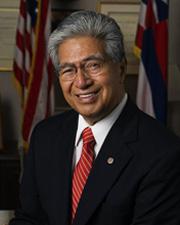 DKA+5
DKA+5
Floor Debate
10 membersWhat members said about S. 2702 on the floor
Madam President, September 11, 2001, was a day that changed America forever. It taught us that oceans cannot protect us from those who are fanatically devoted to harming us. The world has changed…
Madam President, September 11, 2001, was a day that changed America forever. It taught us that oceans cannot protect us from those who are fanatically devoted to harming us. The world has changed after September 11. The American experience, realities, changed after September 11. We live with greater uncertainty. We live with greater fear and concern about attack. We have, even those in this Chamber, gone through the process of thinking the unthinkable, thinking about attacks on our soil, on our towns, on our country.
The good news is that in the last 2\1/2\ years since September 11, America has not experienced another experience like that. It appears as if the measures we have taken have had some effect. The PATRIOT Act was passed with overwhelming support. It is now the subject of some debate, but let's not debate the importance of doing those things that protect this country from attack. The PATRIOT Act has clearly been part of that.
The efforts of our President in rooting out the Taliban and getting rid of Saddam have all had an impact on making this country safer. But there are no guarantees. Clearly, even today--we have the September 11 Commission report coming out tomorrow; we have the Senate Intelligence Committee report coming out, reviewing what we did, should have done, and what we could do better.
The bottom line is we want to make sure this never happens again. The effort to improve our safety and security is important. This is not a game. This is not to raise the fear for political purposes; this is the reality of the world in which we live.
But I do believe there is at least one area where our policy regarding security and measures we are taking to improve security should be examined and changed. That is why today I am introducing the International Student and Scholar Access Act.
Again, we all know there is absolutely no such thing as an absolute guarantee of absolute security in a free society, so what we do is measure the level of threat against the loss of certain other values and then we try to strike a balance. In the area of student visas, I believe we have pushed security concerns beyond the logical point and
need to make adjustments to our policy.
This is what I am talking about. America has been home to foreign students in great numbers for many years. If you go to the University of Minnesota, you see students from all over the world. The same is true in our private schools in Minnesota. The University of St. Thomas has a great international student program. Those are good programs.
What those programs do is provide young people from around the world an opportunity to study in America, to understand the American experience, to understand American values, to understand the American way of life. That is a good thing.
Unfortunately, I believe one of the terrorist hijackers on September 11 was an individual who had a student visa. He did not attend school. No one followed up. As a result of that, what happened is we looked at that student visa policy and said: We have to make changes.
I understand that. I understand we have to tighten up standards. I understand we have to be more careful about those who claim to be students who come into our country.
But I believe the result of what has been well intentioned--what is important, the security of our country; nothing is more important than the role of Government to make sure we are secure--in regard to student visas has been to push the ball a little too far. I think what we are seeing now is there are scores of young people who would like to be part of the American experience, who would like to study in our schools, who would like to understand American culture and American values, young people who, 20 or 30 years from now, when they are the Presidents and Vice Presidents and Ambassadors and Ministers of their country, would have a relationship, saying: I went to the University of Minnesota. I went to the University of Maine. I went to the University of Saint Thomas. I went to Bowdoin College. I understand what you are about and would like to be a partner with you.
I think we are at a point now where, in reaction to 9/11, what we are doing with student visas is to have kind of turned it around. Now that it is a national security issue, I think we are missing the opportunity for a lot of young people to become part of and understand and share in the American experience.
So now we have visa processes that are structured in a way that produces results that I don't think we want. They require that consular officers in our Embassies spend far too much time on people who do not threaten this country and excluding too many of them. That does not leave them enough time to deal with those folks who are a genuine threat.
It is the equivalent of a police roadblock. We are stopping so many innocent people that it calls into question if this is a good use of Government resources and power.
Again, it is in the interest of the United States of America to bring in the best and brightest foreign students to study in America. These are people who will lead their nations one day. The experience they gain with our democratic system and our values gives them a better understanding of what America is and who Americans are.
I had an opportunity the other day to spend time with a young woman from Iraq, a Kurd from Kirkuk. She was there to kind of shadow us and understand a little bit about American--this system of government. I thought--she had 1 day--just think if we had 4 years of her being here, or 5 years, and she came to understand this country and its history and its people and its culture and its ways and its values, and she carried that in her heart back to her country, with the opportunities we would have along the way to strengthen those relationships.
We hear so much today about anger at Americans, about hate directed toward Americans. But this is in a world that, at times, I think may hate us because they don't know us. They don't know us. They know what they see on Al-Jazeera or they know what they hear from some political leader who may disagree with the kind of government and the democracy and the values we have.
International education represents an opportunity to break down those barriers. I think some who hate this Nation do so out of ignorance. Foreign students who return to their nations many times become ambassadors of good will and understanding.
And don't discount the personal relationships. In our lives, we may see friends who we met back in college, people we have not seen in 20 years. When we run into those friends, there is a bond. Our young educated people become our leaders, not just in Government but in business, in industry, in education. The same is true throughout the world. The world is not such a big place. It is not such a big place when you have these human connections.
So these young people go back to their countries, young people who studied here, who learned of our ways, and they become ambassadors of good will and understanding, and they speak with credibility about the freedoms that spur American success.
Foreign students also help our economy. Higher education is a major service sector export, bringing in $12 billion to the U.S. economy every year. Competitors, such as the United Kingdom, Canada, and Australia are gaining market share while the United States is losing. Total international applications to U.S. graduate schools for the fall of 2004 declined 32 percent from the fall of 2003. Fifty-four percent of English as a second language programs have reported declines in applications.
When you think about the economy, it is not just a tourist economy. People are coming here to spend money. I had an opportunity to be involved in a series of meetings with some of my colleagues, chaired by Senator Baucus, the ranking member of the Finance Committee, and bringing in leaders of American industry, the CEOs of some of the largest corporations in America, to talk about what we have to do to ensure American competitiveness in this global economy. One of the issues these CEOs mentioned was the difficulty in having foreign students come to our country and the impact it has on their opportunities for success and innovation, and the impact that has on the American economy.
It is not just a long-term national security issue; it is an economic development and opportunity issue. We are shortchanging ourselves by losing access to talent.
The legislation I introduce today is an effort to reverse the decline in foreign access to U.S. education. My legislation seeks to promote foreign study in America by urging strategic thinking and by making commonsense changes to the way we process visa applications.
This legislation would help to clarify the often overlapping roles between lead agencies that work on international education--the Departments of State, Commerce, Homeland Security, and Education.
It proposes improvements related to SEVIS fees for tracking foreign students, by prorating fees for short-term students and allowing them to make payments in their local currencies. There is a process of payments that are made. If you are here for a short term, you pay as much as for a long term. It is another barrier, another impediment to providing an opportunity for foreign students to be here.
It would set goals for more timeliness and certainty in the visa process. It would press the State Department for commonsense improvements to give more discretion on personal appearance requirements and on the duration of security clearances. It would improve the interoperability between databases of the FBI and the State Department.
Perhaps the most critical part of my bill deals with the criteria for student visas. Currently, consular officers have to prove that a student visa applicant has essential ties which will ensure his or her return to his or her own country after study is complete. This requirement poses an unrealistic burden on students who are typically not yet sufficiently well established in their societies to be able to demonstrate a likelihood of return. In reality, international students are often encouraged to stay in the U.S. after they have completed their studies, by changing their status to that of H-1B, for example.
An observation on this, and let me go just a little bit more about the legislation, because what it does is it calls for
a more realistic standard for student visas. That is what we really need.
My legislation replaces the criteria of expected return with two other criteria. Students would have to demonstrate that they intend to come to the U.S. to complete a legitimate course of study, and that they have the financial means for doing so.
Let me explain why that makes so much more sense. The reality is, if we have a bright and enterprising student from Africa, from Uganda, or from Argentina, from Latin America somewhere, the issue we need to be concerned about is whether they are really coming here to study. The concern over 9/11 is, you had folks who came here who were using that to gain entry into this country. Are they coming here to study? Is it a legitimate course of study? Do they have the means to do so? Are they coming here for the purpose they intended?
Afterwards, if we have a highly trained and highly qualified college graduate from Uganda and they do whatever has to be done legally in terms of dealing with immigration, what is the issue? Why would you not want to have them here a little longer if they are going to contribute to the economic growth, to the increase in brainpower, to all the things that need to be done to make sure America stays competitive in this new global economy?
America is never going to compete with low-scale wages. We are past that. There is no way we can compete with China. Mexico can't compete with China today. America's economic success is tied to innovation and brainpower. That is our future. What we do to encourage that, certainly among folks here but also students from other countries who become part of that pool, who help us become more creative and entrepreneurial, is important.
I have to say--and I wouldn't be surprised if the Senator from Maine has not had the same experience--this issue consumes a lot of my time and that of my case workers back in Minnesota. Time and again they are asked by Minnesota colleges and universities to make a plea to the State Department to help process a foreign student's visa. These are students who want to come to the United States, who have the intellectual assets that all can gain from, who have scholarships or other resources to take care of themselves while in America. But because they don't have spouses or homes in their native lands, they are rejected for their student visas. What sense does that make? How does that further the interests of those in the United States? How does it further the interests of our colleges and universities that benefit from quality students, benefit from the diversity brought by students from Africa or from Asia, benefit from having a broader kind of dialog and exchange about what this world is all about?
I had a particular case of a talented young man from Uganda named Humphrey. Humphrey had a full ride to St. Thomas University in St. Paul, MN, which--I note with great pride--my son entered. He had his orientation just the other day. I have a personal interest in St. Thomas, but that is not the reason I advocated for Humphrey. Humphrey was a research assistant with Professor Martin O'Reilly at Uganda Martyrs University. Dr. O'Reilly stated:
With service for 22 years in African countries, this is the
most impressive student and human being I have ever known. He
is one in a million.
Humphrey is a psychology student. His goal is to return to Africa and offer counseling services on a continent where the psychological scars are so deep. We just heard my friend and colleague from Illinois talking about the brutality, the genocide in Sudan. We know of what happened in Rwanda. We know the scars that need to be healed. Humphrey wants to go back and offer services where psychological scars are deep. Yet his visa application was rejected more than once because he could not prove to a consular officer that he intended to return to Uganda. I called that consular officer at one time, not to pressure as a Senator but just to ask them to take a look at the application. Don't let it just kind of get processed run of the mill because we have a process now that makes it difficult for students to come here. Take a look at it and then make a judgment, if the judgment is pretty clear.
I am happy to say that Humphrey's visa application was finally accepted and he began study in January. I fear that there are too many people like him who will not be educated in America. We will lose not only their wisdom but also the chance to show them what makes America so great. I believe in the tougher measures we implemented after September 11, but I think we have to be smarter with how we use these tools. I think we can strike a better balance between security and the value of bringing the world here to be educated. And that is in America's long-term interest.
I urge my colleagues to consider this important issue and to support this legislation. It is in many ways a national security issue, national security not just in having a process in place that weeds out those who shouldn't be here but long-term national security, making sure that America has those relationships and those contacts with the future leaders of countries around this world and gives them the opportunity to be educated here. Right now they are being educated in other places, in England and France and Germany. We are missing an opportunity. There is no reason. We can do better than that.
Let us look at this issue. It is still my first term, and I haven't finished yet. I haven't finished the second year. I know it takes a while to get things done. But I think the clock is ticking on this issue. Each and every day we are missing an opportunity. Each and every day as we see the numbers of international student applications decline, as we see less and less of the opportunities to establish those relationships because of the policies we have in place, it cries out for change.
My legislation offers that change. I hope this body considers it, and I hope we make the change. As a result, I know we will build a stronger America. We will build a better America. That is the reason I think we are all here.
I ask unanimous consent that the text of the bill be printed in the Record.
Madam President, I rise today with Senator Collins to introduce legislation that would promote the sharing of homeland security information across all levels of our Government, and to provide funding…
Madam President, I rise today with Senator Collins to introduce legislation that would promote the sharing of homeland security information across all levels of our Government, and to provide funding and support necessary to enable our first responders to communicate better with one another than they are able to do now during a terrorist attack.
I am delighted that the chairman of the Governmental Affairs Committee, Senator Collins, is my lead cosponsor on this legislation, and that another member of the committee, Senator Akaka, is a cosponsor, as is Senator Clinton.
One of the most painful and enduring lessons we should have learned from the September 11 attacks is that information about terrorist activities must be shared among Federal and other agencies to protect the American people's security. Unfortunately, almost 3 years after the attacks we have still not seen the kind of improvement and information sharing at all levels we need to have.
The widely respected, nonpartisan Markle Foundation, in alliance with the Brookings Institution and the Center for Strategic and International Studies, has looked at this problem at length and concluded that an entirely new approach is needed to the sharing of security information.
According to the Markle Foundation, the cold war paradigm that strictly limited access to information is simply ill-suited to the challenges we face today in an age of terrorism. Sharing information among relevant law enforcement agencies and other public agencies is vital to protecting our people's security precisely because we cannot predict from which direction the first signs of potential attack will come as we pretty much could during
the cold war. Yet the Federal Government has still developed neither a comprehensive strategy nor actual policies to change the 50-year-old cold war paradigm. We have to catch up quickly to win the war on terrorism.
Equally troubling is that too many first responders still lack, believe it or not, the basic ability to talk to one another when responding to emergencies, including, of course, a terrorist attack, because their equipment does not communicate directly. We use a complicated term called ``interoperability'' to describe this situation.
One of the most painful parts of the September 11 attacks in New York was the loss of more than 300 New York City firefighters and other law enforcement personnel who perished inside the collapsing Twin Towers of the World Trade Center. The look-backs at that day, probably including the one we will hear tomorrow from the September 11 Commission, lead a lot of people to conclude that we lost a lot of New York's finest-- firefighters, police officers, other public servants--because they could not communicate with one another on the equipment they had. That is no longer acceptable.
The legislation we are introducing today addresses those challenges. First, we authorize $3.3 billion over 5 years to provide reliable and consistent funding to help law enforcement agencies around the country find solutions to this so-called interoperability problem. We create an Office of Information Sharing within the Department of Homeland Security to develop and implement a national strategy to achieve that goal. It simply is outrageous that those who are in uniform every day to protect our security cannot communicate with one another in a time of emergency because we have not given them good enough equipment to do that.
Second, our legislation would require the Secretary of Homeland Security, in conjunction with the intelligence community and other Federal agencies, to establish a broad information exchange network modeled after the Markle Foundation recommendations which would break out of the cold war paradigm and allow full sharing of security information.
Third, our legislation requires implementation of performance measures and genuine incentives to encourage employees to implement the changes that are necessary.
As part of the continuing fight to keep America safe from terrorism, the test of our generation, all the cultural, technological, and administrative barriers that impede the flow of critically important homeland security information among different levels of Government and among agencies at the same level simply must be broken down. That requires an act of will and leadership, and then it requires funding. It is not going to come cheaply, but security of the American people never does come cheaply. We have the best military in the history of the world because we have invested in it. We are only going to have the best security at home from terrorism if we invest with similar generosity.
A nonpartisan task force of the Council on Foreign Relations recommended that the Nation spend double what Senator Collins and I are proposing in this bill to ensure dependable interoperable communications. What we are asking seems like a lot of money, but it is half of what an independent group thinks is necessary to protect our Nation. This legislation will help us develop a new structure, a new paradigm of information sharing to guarantee that first responders and preventers can communicate effectively with one another and with other governmental agencies when they respond to terrorist attacks or any other emergencies that threaten the safety or well-being of people throughout our country.
Madam President, I ask unanimous consent that text of the legislation Senator Collins and I are introducing today be printed in the Record.
Mr. President, I rise today to introduce legislation to forge a comprehensive and effective strategy for our homeland security.
Before 9/11, we did not truly perceive the threat of terrorism on our own soil, and what homeland security efforts we did have underway were badly divided. Dozens of agencies responsible for pieces of our homeland security were scattered across the Federal Government, and were largely unconnected to state and local officials and first responders on the front lines in our Nation's cities and towns. There were confusing overlaps and, more critically, treacherous gaps. And because everyone was responsible for parts of the effort, no one was ultimately in charge.
We took one large step to remedy these weaknesses by creating the Department of Homeland Security. The Department brings more than two dozen of the Federal Government's critical homeland security agencies and programs under one roof, allowing for unprecedented coordination and cooperation. It also created a Cabinet Secretary charged with managing the budgets and personnel of these agencies, and capable of providing a focal point for homeland programs and issues in the Cabinet and beyond.
But we knew that in addition to creating a better organization, we would need to lay out a clear roadmap to galvanize our homeland defenses--at all levels of government and the private sector. That is what many of us called for and, regretfully, it is something this Nation still sorely lacks.
The Administration did produce a ``National Strategy for Homeland Security'' in July 2002 that correctly identified many of the challenges we face in preparing to meet the threat of terrorism. But that document predates the creation of the Department of Homeland Security and is already out of date. More significantly, it failed to set priorities, clear deadlines and accountability for the vast array of homeland security tasks we face.
As the highly regarded Gilmore Commission on terrorism noted in its final report last December: ``Much is still required in order to achieve an effective, comprehensive, unified national strategy and to translate vision into action. Notably absent is a clear prioritization for the use of scarce resources against a diffuse, unclear threat as part of the spectrum of threats--some significantly more common than terrorism. The panel has serious concern about the current state of homeland security efforts along the full spectrum from awareness to recovery, worried that efforts by the government may provide the perception of enhanced security that causes the Nation to become complacent about the many critical actions still required.''
While it is true that the Department of Homeland Security is proceeding with some more targeted strategies regarding specific areas of concern, these cannot replace a comprehensive strategy that sets the ultimate policies and priorities for our homeland effort.
That is why I am introducing legislation requiring a new homeland security strategy that can provide the strong, precise national guidance we need on this critical issue.
In a February 3, 2004 report, the General Accounting Office surveyed seven existing Federal strategies related to terrorism--including the National Strategy for Homeland Security--and laid out guiding principles to improve these strategies. My legislation incorporates these principles, which stress accountability and prioritization as requirements for a new homeland security strategy. The new strategy must include a hierarchy of strategic goals and indicate the specific activities needed to achieve those goals, as well as the likely costs, and how such funds should be generated. In other words, the strategy must make real choices about priorities and resources. The current strategy identifies many goals, but rarely provides deadlines for action, standards or performance measures to assess progress, or details on the resources required for stated initiatives.
The strategy must clearly spell out organizational roles and responsibilities, including the proper roles of State, local, private and international actors and the coordinating mechanisms to bring these actors together. Almost three years after 9/11, we still too often must ask ``who is in charge?'' of key pieces of our homeland security agenda. And, critically, the homeland security strategy must address how it relates to other Federal strategies regarding terrorist threats, and how the strategies will be integrated.
The legislation also highlights certain substantive areas that should be addressed, such as a thoroughgoing strategy to maximize information sharing related to homeland security throughout the Federal Government and with state and local officials and, where appropriate, the private sector. The strategy must look at preparing the public health sector to detect and respond to terrorist attacks, at integrating military capabilities into our homeland security planning, at building all- hazards preparedness throughout all levels of government and the private sector, and securing our critical infrastructure, much of which is in private hands.
The bill would require that the strategy be written every four years, with updates every two years and annual progress reports to be submitted in conjunction with the President's annual budget request. Recognizing that many Federal agencies outside the Department of Homeland Security play a critical part in homeland security, it calls on the Assistant to the President for Homeland Security to help the Secretary construct the strategy.
Importantly, it would create an independent panel of experts to review the strategy and offer alternative proposals as appropriate--a so-called ``Team B'' to provide decision makers with alternative perspectives and solutions for consideration. This nonpartisan panel, to be called the Homeland Security Commission, would consist of nine members appointed by the Secretary in consultation with Congress. The members would be recognized experts in the field of homeland security and cannot be current officers or employees of the Federal Government. This Commission is modeled on the successful National Defense Panel, which helped guide strategic planning for our military forces. This Commission can help ensure that we marshal all the best ideas to defend our homeland and do not fall into complacent, or narrow ways of thinking about the threats we face. We know that terrorists are always adapting their strategies and techniques. We must do no less.
We meet today amid ongoing, and indeed heightened, threats of terrorist attacks on our homeland. We need not be intimidated, but we must be prepared. A new and more forceful national strategy will help energize and organize our resources--at all levels of government and within the private sector--to meet this threat. I urge my colleagues to support this legislation to give us such a strategy.
Mr. President, I ask unanimous consent that the full text of the bill be printed in the Record.
Mr. President, today I am pleased to be introducing legislation that expands the supports and services available to grandparents and other relatives who are raising children when their biological…
Mr. President, today I am pleased to be introducing legislation that expands the supports and services available to grandparents and other relatives who are raising children when their biological parents can no longer take care of them. I am happy to have worked with my friend and colleague, Senator Olympia Snowe, in crafting this important bill.
Today there is a phenomenon that is quietly changing the face of the American family and creating new challenges for our Nation's child welfare system--the growth of kinship care. According to the Census, more than 6 million children--1 in 12--live in households headed by grandparents or other relatives.
New York alone has over 409,000 children living in these households. The majority of these children--54 percent--live with their grandparents, while the rest live with aunts, uncles, siblings, and cousins. Sadly, one-fifth of families headed by grandparents are living in poverty.
While extended families have always stepped in to raise children when parents could not, over the past two decades we've seen a rise in the number of children living with grandparents and other relatives. A study conducted by the American Association of Retired Persons found that the number of children living in grandparent-headed households increased by 30 percent between 1990 and 2000.
Parents are unable to raise their own children for many different reasons, and we still have a lot to learn about this trend, but a few statistics are illuminating: Mothers are the fastest growing segment of the U.S. prison population. Approximately 7 in 10 women in correctional facilities have children under age 17. The number of women living with HIV/AIDS increased from 4,000 in the early 80s to close to 60,000 in 2000.
Many of these women are unable to raise their children and often rely on their relatives to fill in. Many other parents die or contract debilitating diseases that also make it impossible for them to fulfill their parental obligations.
Grandparents and other relatives have stepped forward, often at great personal sacrifice, to provide safe and loving homes for the children in their care. This has allowed tens of thousands of children to live with extended family rather than strangers.
Extended families can provide a sense of belonging and a connection with their family history. Children are traumatized when they are separated from their natural parents--being cared for by grandparents or other relatives can soften that blow.
But kinship families, especially those without formal legal custody of the children under their care, face a number of unnecessary barriers. Let me give you an example. Maria Lemmons, of Albany, lost her daughter, a single mother of 3, in a tragic car crash when Maria was 67. Maria immediately stepped in to take custody of her grandchildren, aged 11, 13, and 15. But as you can imagine, she struggled. Maria was financially secure, but she hadn't raised a teenager in over 20 years. She needed guidance about parenting and a support group to help her navigate the tough terrain of parenting.
At the other extreme is Susan Smith. Susan's daughter Cathy almost lost custody of her son, Jacob, when she became addicted to heroin and neglected him for days at a time. Susan intervened to take care of Jacob even though doing so required a significant financial sacrifice. Susan lives on a Social Security check of less than $300 a month. She can barely afford her groceries and her medicine. But she was not willing to let Jacob be raised by a stranger.
At the very least, both of these women need and deserve our compassion. But I believe they also deserve our support as they assume the awesome responsibility of raising children. The Kinship Caregiver Support Act will help women like Maria and Susan in three important ways.
First, it will establish a ``kinship navigator'' program. This program will provide funds to social service agencies to establish toll-free hotlines, websites, and resource guides on the local and State parenting support available to kinship families. These hotlines and websites will give grandparents critical information about enrolling children in school, obtaining SCHIP, Medicaid and other health insurance, safeguarding their homes for small children, applying for housing assistance, obtaining legal services, finding childcare, and identifying parental support groups so that women like Maria have someone to talk to about their experiences.
The kinship navigator program will promote partnerships between government agencies, not-for-profit and faith-based organizations to help them better serve the needs of kinship care families.
The second part of this legislation will make it possible for kinship families who serve as permanent legal guardians to receive the same payments that foster families would receive. This is extremely important because many grandparents want to raise their grandchildren but, like Susan, simply cannot afford to do so.
States will have the option to use their title IV-E funds to provide payments to grandparents and other relatives who have assumed legal guardianship of the children they've cared for as foster parents. Families would be eligible if the child has been under the care of the State agency for at least 12 months and was eligible for foster care maintenance payments.
There are a few States, such as Illinois and Maryland, that have already implemented subsidized guardianship waivers through the Health and Human Services demonstration project. These States have shown that subsidized guardianship is a cost-neutral and effective way to keep families together. My legislation will make it possible for all States to follow in their path. It values families that care for each other.
The final part of this legislation will require States to notify grandparents when children enter the foster care system. Unfortunately, grandparents and other relatives often do not know when their grandchildren or nieces and nephews come under the care of the State. By notifying grandparents and other relatives when children enter the foster care system, we can make it a lot easier for families to stay together.
I also want to note that in May of this year, the Pew Commission on Children in Foster Care recommended that children who live with a permanent legal guardian should receive federal guardianship assistance. This commission is widely considered to be one of the most comprehensive investigation of child welfare financing policy in decades and is chaired by a bipartisan group of child welfare experts, including legislators, state administrators, family service providers, judges, foster and adoptive parents, and former foster youth. It is encouraging that their recommendations are in line with the legislation I am introducing today.
I am very pleased with this legislation; it shows that we are moving in the right direction toward helping the thousands of children and the relatives that care for them in this country. I look forward to working with my colleagues to pass this bill in the Senate.
Madam President, I am very pleased to join my good friend, the Senator from Connecticut, Mr. Lieberman, in introducing legislation that will strengthen our capabilities to prevent and respond to acts…
Madam President, I am very pleased to join my good friend, the Senator from Connecticut, Mr. Lieberman, in introducing legislation that will strengthen our capabilities to prevent and respond to acts of terrorism. The bill we are introducing will improve communications among the various levels of Government and will assist our State and local first responders in upgrading their communications equipment. I thank Senator Lieberman and his staff for their efforts in putting together this very important legislation and for working with me to make this bill a bipartisan effort.
In the immediate aftermath of September 11, the phrase ``connect the dots'' gained a prominent place in our national lexicon. The agencies charged with intelligence gathering, analysis, and enforcement did not have structures in place that would have enabled them to effectively share information and coordinate responses. The dots were there, but our intelligence and law enforcement personnel were, in far too many cases, unable to connect them.
The heroism of our first responders on September 11 will never be forgotten. Their devotion to duty, their courage, and their training saved a great many lives that terrible day. Yet we now know that the lack of a unified command structure, the uneven and in some cases outright absence of interdepartmental coordination and incompatible communications equipment may have prevented them from saving even more lives, and it cost many first responders their own lives.
Throughout the Nation on that day, there was another problem. False reports of car bombings and other terrorist acts spread quickly, overwhelming the immediate efforts and response, preventing a full comprehension of what had actually occurred, and causing needless fear. Our frontline civilian and military agencies struggled to improvise a defense against an attack of unknown nature and scope. As the Chairman of the Joint Chiefs of Staff told the 9/11 Commission:
We fought many phantoms that day.
The enemy we are fighting is no phantom. It is real, and it is deadly. From the agencies of the Federal Government down to the State and local levels, we have dedicated personnel who can defeat that enemy. We must enable them to work together more effectively in this great cause. We cannot expect them to connect the dots if so many dots are hidden from view.
Although the Department of Homeland Security has made remarkable progress in forging cohesive strategies, State and local officials still tell Senator Lieberman and they still tell me that they have difficulty in obtaining needed information from Federal agencies and that they lack a reliable way to convey their own information to Federal officials.
Turf battles, unfortunately, are still being fought among some agencies. There still is no effective system in place for State and local governments to share information with one another.
From computer systems to emergency radios, the technology that should allow these different levels of government to communicate with each other too often is silenced by incompatibility. Clearly, the barrier to a truly unified effort against terrorism is a matter of both culture and equipment. This legislation will help break down that barrier.
A General Accounting Office report on interoperable communications released last week notes that the lives of first responders and those they are trying to assist can be lost when first responders cannot communicate effectively. That is the crux of the matter that the Lieberman-Collins bill seeks to address. A substantial barrier to effective communications, according to the GAO, is the use of incompatible wireless equipment by many agencies and levels of government when they are responding to a major emergency.
Among the GAO recommendations are that Federal grants be used to encourage States to develop and implement plans to improve interoperable communications and that the Department of Homeland Security needs to establish a long-term program to coordinate these same communications upgrades throughout the Federal Government. Our legislation would do much to implement these sensible recommendations.
It is vitally important that we assist the States in getting the right communications technology into the hands of their first responders. That would be accomplished by the interoperability grant program in this legislation. I believe that grant program is the most important feature of our legislation.
At a homeland security conference held in my home State of Maine in May, one of the most persistent messages that I heard from Maine's first responders concerned the lack of compatibility in communications equipment. It remains a substantial impediment to their ability to respond effectively in the event of a terrorist attack. For a State like mine that has three deepwater cargo ports, two international airports, key defense installations, hundreds of miles of coastline, and a long international border, compatible communications equipment is essential. Yet it remains an illusive goal.
Maine's firefighters, police officers, and emergency medical personnel do an amazing job in providing aid when a neighboring town is in need. Fires, floods, and accidents are local matters in which they have great expertise and experience. Their defense of the front lines in the war against terrorism, however, is a national matter. Maine's first responders, along with first responders across the country, are doing their part, but they need and deserve Federal help.
The grant program established by our bill would guarantee every State a share of interoperability funding and makes additional funding available for States with special needs and vulnerabilities. It is designed to get this vital funding to first responders quickly, in coordination with a statewide plan.
At that Maine conference, I was joined by Under Secretary Asa Hutchinson. He, perhaps, best described the mutual responsibilities of this Federal-State partnership when he said:
We cannot secure the homeland of America from Washington,
Mr. President, I rise today to join my colleagues Senators Lieberman and Collins in introducing the Homeland Security Interagency and Interjurisdictional Information Sharing Act of 2004, a piece of…
Mr. President, I rise today to join my colleagues Senators Lieberman and Collins in introducing the Homeland Security Interagency and Interjurisdictional Information Sharing Act of 2004, a piece of legislation critical to improving the communication capabilities of first responders and among all levels of government.
One of the most important lessons our Nation learned on September 11 is that information sharing, both between agencies and levels of government and between emergency first responders, is critical to the prevention of and response to a terrorist attack on our homeland. There has been much talk about breaking down stove pipes and fully equipping our heroic first responders in the past 3 years, but this bill points out those goals have not yet been met.
The world watched as firefighters perished in the World Trade Center because their radios could not function inside the buildings and they did not have updated information about the imminent collapse of the towers. Ten months later it was reported that officers responding to a shooting at Los Angeles International Airport missed crucial information because they were not using the same radio frequency.
Yet almost all cities and counties in the United States still lack an interoperable communications system today and many still lack the infrastructure to provide 100 percent coverage for the radio systems they do have. In my home State of Hawaii, first responders are unable to communicate through radios in 25 percent of the island of Hawaii because of a combination of lack of infrastructure and diverse geography.
This problem can be solved, but it will require a commitment of not only funding but planning, communication and cooperation. The current SAFECOM initiative, which is supposed to address the interoperability problem, has failed in most, if not all, of these areas. While this issue clearly cannot be solved by one agency alone, the cross- government nature of SAFECOM crippled the program from the start. SAFECOM is supposed to be funded by multiple agencies meaning that if one agency is not in agreement with the others it can withhold funding and slow or stop activities. This formula has proven ineffective.
The Homeland Security Interagency and Interjurisdictional Information Sharing Act will address these issues. The bill creates an Office of Information Sharing within the Department of Homeland Security to develop and implement a national strategy and provide the leadership, outreach, and technical assistance necessary to achieve interoperability. The new office would receive a direct line of funding for its operations as well as to provide grants to States and localities to develop interoperable networks.
The bill would also require the Secretary of Homeland Security to develop a Homeland Security Information Sharing Network. The problem of informational stove piping will not be eradicated with ad hoc measures as is the practice today. The administration must institutionalize a system of sharing critical homeland security information among all levels of government. We are no longer in a ``need to know'' world. We must switch to a ``need to share'' mentality.
Three years is too long for the lessons of September 11 to not be implemented. I urge my colleagues to support this important piece of legislation and I thank Senators Lieberman and Collins for their work on this issue.
Show 6 more
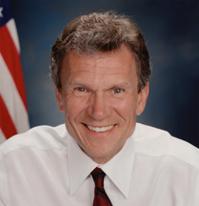
Recently, the Majority Leader pulled the class-action reform legislation from consideration after the Senate failed to invoke cloture on the bill. We all know he would have had the votes for cloture…
Recently, the Majority Leader pulled the class-action reform legislation from consideration after the Senate failed to invoke cloture on the bill. We all know he would have had the votes for cloture if he had not played games with the amendment process. Instead, he proposed allowing Democrats only five non-germane amendments and insisted that he choose which amendments could be offered. He insisted that under no circumstances could we offer a bipartisan bill to legalize the safe importation of lower-priced prescription drugs from Canada and other industrialized countries. The Majority Leader no doubt feared that the re-importation legislation would pass as a result of the broad bipartisan support it enjoys. But the drug industry didn't want lower prices, and we were prevented from offering our amendment.
The re-importation bill is just one of many health measures currently pending in Congress that would help Americans who are struggling with the high costs of care, drugs, and insurance. These bills have broad support--some even have Republican lead sponsors--and we should be considering them here in the Senate. In fact, it is our obligation to do so. Yet most of these bills continue to languish in committee while the majority plays procedural games with the amendment process and spends countless hours on bills and measures that the Majority Leader knows do not have the votes to pass.
In response, over the past week, we have begun the process of putting these measures on the calendar. We are doing so to highlight that these critical bills are available for consideration on the Senate floor, and to show how important it is to pass them and send them to the President for his signature as soon as possible.
Today, I would like to discuss a measure I first introduced on the day the conference report to the Medicare bill passed the Senate. This proposal was included in a broader piece of legislation that we introduced that day in response to the conference report, and, on December 9, I introduced it as a stand-alone measure. It is a very simple bill. It would strike the prohibition contained in last year's Medicare legislation that prohibits the government from using the power of 41 million beneficiaries to negotiate lower drug prices for seniors. Senators on both sides of the aisle have expressed support for striking that provision. Senators who supported the conference report have joined with those who opposed it, such as myself, in cosponsoring my bill. That's because it just makes sense.
The new Medicare law does almost nothing to rein in skyrocketing prescription drug costs. In fact, it actually prohibits Medicare from using its bargaining power to negotiate lower prices. We have seen the VA's success at negotiating lower prices. Similarly, we should use the power of Medicare's beneficiary population to obtain lower prices for seniors and people with disabilities. Rather than fragmenting the population to dilute our ability to negotiate lower costs, we have an obligation--both to Medicare beneficiaries and to American taxpayers-- to secure the lowest possible prices. That's what my bill would do.
It's time for the Senate to side with seniors and taxpayers over the drug industry. It's time for the Senate to pass this bill.
I ask unanimous consent that the text of the bill be printed in the Record.
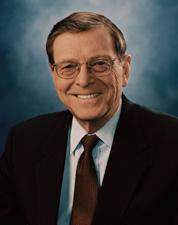
Mr. President, I rise today with my friend Senator Kennedy to introduce a bill that will raise the minimum grant amounts given to States and territories under the PATH program. The PATH program…
Mr. President, I rise today with my friend Senator Kennedy to introduce a bill that will raise the minimum grant amounts given to States and territories under the PATH program. The PATH program provides services through formula grants of at least $300,000 to each State, the District of Columbia and Puerto Rico and $50,000 to eligible U.S. territories. Subject to available appropriations, this bill will raise the minimum allotments to $600,000 to each State and $100,000 to eligible U.S. territories.
When the PATH program was established in FY1991 as a formula grant program, Congress appropriated $33 million. That amount has steadily increased over the years with Congress appropriating $50 million this past year. However, despite these increases, States and territories such as New Mexico that have rural and frontier populations, have not received an increase in their PATH funds. Under the formula, as it currently exists, many States and territories will never receive an increase to their PATH program, even with increasing demand and inflation. This problem is occurring in my home state of New Mexico as well as twenty-five other States and territories throughout the United States.
The PATH program is authorized under the Public Health Service Act and it funds community-based outreach, mental health, substance abuse, case management and other support services, as well as a limited set of housing services for people who are homeless and have serious mental illnesses. Program services are provided in a variety of different settings, including clinic sites, shelter-based clinics, and mobile units. In addition, the PATH program takes health care services to locations where homeless individuals are found, such as streets, parks, and soup kitchens.
PATH services are a key element in the plan to end chronic homelessness. Every night, an estimated 600,000 people are homeless in America. Of these, about one-third are single adults with serious mental illnesses. I have worked closely with organizations in New Mexico such as Albuquerque Health Care for the Homeless and I have seen first-hand the difficulties faced by the more than 15,000 homeless people in New Mexico, 35 percent of whom are chronically mentally ill or mentally incapacitated.
PATH is a proven program that has been very successful in moving people out of homelessness. PATH has been reviewed by the Office of Management and Budget and has scored significantly high marks in meeting program goals and objectives. Unquestionably, homelessness is not just an urban issue. Rural and frontier communities face unique challenges in serving PATH eligible persons and the PATH program funding mechanisms must account for these differences.
Thank you and I look forward to working with my colleague Senator Kennedy on this important issue.
I ask unanimous consent that the text of the bill be printed in the Record.

Mr. President, I rise today in support of a bill I introduced today to set up a national program to reduce the loss of life and property due to windstorms. This bill recently passed the House of…
Mr. President, I rise today in support of a bill I introduced today to set up a national program to reduce the loss of life and property due to windstorms.
This bill recently passed the House of Representatives and it will be addressed and hopefully passed during the Senate Commerce Committee markup tomorrow.
We all know the catastrophic damage that windstorms can cause. In fact, the highest level of material damage and loss of life in this country has been attributed to hurricanes, tropical storms, tornadoes and thunderstorms.
My State of Florida, as a coastal State, has been especially affected.
In 1992, Hurricane Andrew caused losses in excess of $26.5 billion.
And annually the average financial loss due to tornadoes, thunderstorms and hurricanes is $6.3 billion. So increasing our understanding of windstorms, assessing the performance of our buildings, structures and infrastructures during windstorms, reducing the impact of wind hazards through retrofitting buildings and changing construction practices and transferring this knowledge to the pubic and building professionals is desperately needed.
And this bill accomplishes all of those things.
It is a coordinated plan to reduce material losses and human suffering.
An interagency working group consisting of representatives of the National Science Foundation, the National Oceanic and Atmospheric Administration, the National Institute of Standards and Technology and the Federal Emergency Management Agency will be responsible for planning and managing this program.
The program will have three goals: Improved understanding of windstorms, windstorm impact assessment, and windstorm impact reduction.
How do we achieve this? Data collection and analysis, outreach, technology transfer, and research and development.
As a result of this program, we will translate existing and future information and research findings into cost-effective and affordable practices for design and construction professionals, and State and local officials.
And this interagency group will provide biennial updates of their progress to Congress so we know what progress has been made and what more needs to be done.
We'll also get a broad cross-section of interests involved through an advisory committee--so that real-life issues are addressed and onsite expertise is utilized.
And my hope is that the devastation of Hurricane Andrew will never be experienced again in my State of Florda or in any other State.
This bill and help us achieve that and I urge my collegues' support.
Mr. President, I rise today to introduce the First Amendment Restoration Act of 2004, a companion bill to H.R. 3801, which was introduced earlier this year in the House by my former colleague,…
Mr. President, I rise today to introduce the First Amendment Restoration Act of 2004, a companion bill to H.R. 3801, which was introduced earlier this year in the House by my former colleague, Congressman Roscoe Bartlett. In the last few years, we've seen some remarkable restrictions placed on the ability of organizations to exercise their first amendment rights with respect to campaign contributions. One particular example is the Bipartisan Campaign Reform Act of 2002, or BCRA, which contains some provisions that have always troubled me. Although in McConnell v. FEC, the Supreme Court upheld BCRA's restrictions as constitutional, this is not the first time that I've disagreed with the Court's conclusions on
what kind of conduct I think is or is not constitutionally protected.
Specifically, I am concerned with the provisions of BCRA that limit the ways in which some organizations can contribute funds within certain time frames before an election. Under BCRA, labor unions and corporations, which include trade associations and interest groups as diverse as the ACLU and the NRA, are limited to only contributing PAC funds within 30 days of a primary and 60 days of a general election. These limitations apply to contributions for what are know as ``electioneering communications,'' which are any broadcast, cable, or satellite communications that refer to a clearly identified Federal candidate and that reach 50,000 or more people in the relevant district or State.
I believe that Congress can go beyond what the Supreme Court's decision in McConnell v. FEC envisions as what is constitutionally protected speech and that Congress should provide further first amendment protections for organizations wanting to make political contributions. This is why today I am introducing the First Amendment Restoration Act. This bill would repeal those provisions of BCRA that limit corporations and labor unions from making any other contributions than those run through political action committees within the 30- and 60-day periods set out in the act. I am proud to say that Senators Jim Inhofe, George Allen, and Trent Lott have agreed to cosponsor this bill. I look forward to the debate on the First Amendment Restoration Act and on issues of campaign-finance reform in general, as we see how the restrictions we place on speech really play out in the real world.
Mr. President, I rise today to introduce the First Amendment Restoration Act of 2004, a companion bill to H.R. 3801, which was introduced earlier this year in the House by my former colleague,…
Mr. President, I rise today to introduce the First Amendment Restoration Act of 2004, a companion bill to H.R. 3801, which was introduced earlier this year in the House by my former colleague, Congressman Roscoe Bartlett. In the last few years, we've seen some remarkable restrictions placed on the ability of organizations to exercise their first amendment rights with respect to campaign contributions. One particular example is the Bipartisan Campaign Reform Act of 2002, or BCRA, which contains some provisions that have always troubled me. Although in McConnell v. FEC, the Supreme Court upheld BCRA's restrictions as constitutional, this is not the first time that I've disagreed with the Court's conclusions on
what kind of conduct I think is or is not constitutionally protected.
Specifically, I am concerned with the provisions of BCRA that limit the ways in which some organizations can contribute funds within certain time frames before an election. Under BCRA, labor unions and corporations, which include trade associations and interest groups as diverse as the ACLU and the NRA, are limited to only contributing PAC funds within 30 days of a primary and 60 days of a general election. These limitations apply to contributions for what are know as ``electioneering communications,'' which are any broadcast, cable, or satellite communications that refer to a clearly identified Federal candidate and that reach 50,000 or more people in the relevant district or State.
I believe that Congress can go beyond what the Supreme Court's decision in McConnell v. FEC envisions as what is constitutionally protected speech and that Congress should provide further first amendment protections for organizations wanting to make political contributions. This is why today I am introducing the First Amendment Restoration Act. This bill would repeal those provisions of BCRA that limit corporations and labor unions from making any other contributions than those run through political action committees within the 30- and 60-day periods set out in the act. I am proud to say that Senators Jim Inhofe, George Allen, and Trent Lott have agreed to cosponsor this bill. I look forward to the debate on the First Amendment Restoration Act and on issues of campaign-finance reform in general, as we see how the restrictions we place on speech really play out in the real world.
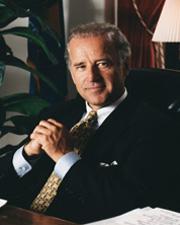
Mr. President, I ask unanimous consent that the text of the bill be printed in the Record.
Mr. President, I ask unanimous consent that the text of the bill be printed in the Record.
Bill Text
Latest available legislative text
        [Congressional Bills 108th Congress]
[From the U.S. Government Publishing Office]
[S. 2702 Introduced in Senate (IS)]

108th CONGRESS
2d Session
S. 2702

To amend the Federal Election Campaign Act of 1971 to repeal the
requirement that persons making disbursements for electioneering
communications file reports on such disbursements with the Federal
Election Commission and the prohibition against the making of
disbursements for electioneering communications by corporations and
labor organizations, and for other purposes.

_______________________________________________________________________

IN THE SENATE OF THE UNITED STATES

July 21, 2004

Mr. Chambliss (for himself, Mr. Inhofe, Mr. Allen, and Mr. Lott)
introduced the following bill; which was read twice and referred to the
Committee on Rules and Administration

_______________________________________________________________________

A BILL

To amend the Federal Election Campaign Act of 1971 to repeal the
requirement that persons making disbursements for electioneering
communications file reports on such disbursements with the Federal
Election Commission and the prohibition against the making of
disbursements for electioneering communications by corporations and
labor organizations, and for other purposes.

Be it enacted by the Senate and House of Representatives of the
United States of America in Congress assembled,

SECTION 1. SHORT TITLE.

This Act may be cited as the ``First Amendment Restoration Act''.

SEC. 2. REPEAL OF CERTAIN REQUIREMENTS RELATING TO ELECTIONEERING
COMMUNICATIONS.

(a) Disclosure of Disbursements for Communications.--Section 304(f)
of the Federal Election Campaign Act of 1971 (2 U.S.C. 434(f)) is
amended by adding at the end the following new paragraph:
``(8) Termination of reporting requirement.--No person
shall be required to file any statement under this subsection
with respect to any disbursement made on or after November 6,
2002.''.
(b) Prohibition Against Making of Disbursements for Communications
by Corporations and Labor Organizations.--Section 316 of such Act (2
U.S.C. 441b) is amended--
(1) in subsection (b)(2), by striking ``or for any
applicable electioneering communication''; and
(2) by striking subsection (c).
(c) Treatment of Coordinated Communications as Contributions.--
Section 315(a)(7) of such Act (2 U.S.C. 441a(a)(7)) is amended--
(1) by striking subparagraph (C); and
(2) by redesignating subparagraph (D) as subparagraph (C).

SEC. 3. EFFECTIVE DATE.

The amendments made by this Act shall take effect as if included in
the enactment of the Bipartisan Campaign Reform Act of 2002.
<all>