A bill for the relief of Rona Ramon, Asaf Ramon, Tal Ramon, Yiftach Ramon, and Noah Ramon.
Legislative Activity
Stay on top of the latest movement without scrolling through every action
Read twice and referred to the Committee on the Judiciary. (text of measure as introduced: CR 10/7/2004 S10574-10575)
October 6, 2004
View full timeline
Introduced in Senate
October 6, 2004
Read twice and referred to the Committee on the Judiciary. (text of measure as introduced: CR 10/7/2004 S10574-10575)
October 6, 2004
Floor Debate
13 membersWhat members said about S. 2901 on the floor
 TRC
TRC JB
JB CJD
CJD RGL
RGL LM+8
LM+8
Floor Debate
13 membersWhat members said about S. 2901 on the floor
Mr. President, a few minutes ago, I was recognized and I spoke about the first State. The first State is Delaware. Delaware became the first State December 7th, 1787, when we ratified the…
Mr. President, a few minutes ago, I was recognized and I spoke about the first State. The first State is Delaware. Delaware became the first State December 7th, 1787, when we ratified the Constitution. For 1 week, Delaware was the entire United States of America. We opened things up for the rest of the country, and Pennsylvania came in, New Jersey, and others. For the most part, we are pleased the way it turned out.
It is ironic that the State that helped start this country, the State whose history is part of the fabric of this country's history, has no national park to celebrate our place in the founding of this country and the growth of this country over the last 200-some years.
A couple of years ago, my family and I were planning a vacation. We were trying to decide where to go. We were thinking about going to Alaska. We actually got on the National Park Service Web site to see about the national parks in Alaska. They have terrific national parks. We went up there and had a wonderful visit. Before we did that, we looked at that National Park Service Web site to see what other attractions there are in the other 49 States. There is a unit of the National Park Service in 49 States in this country, but we found nothing for Delaware.
For years gone by and for the immediate future when families like ours are deciding where they are going to go on their summer vacation in 2005 or 2006, they will have the same choices as they had in 2004 and the years before this, businesses, one of the most enduring businesses, large or small, in the United States.
There are other attractions. The Underground Railroad literally runs the length and breadth of our State. Many slaves found their freedom crossing the Christina River into northern Delaware not far from where the first Swedes landed just down the river.
A second hub would be located in the southern part of New Castle County along the Delaware River. Not far from where the hub would be is Fort Delaware. During the Confederate war, tens of thousands of Confederate soldiers were held prisoner at Fort Delaware, in the middle of the Delaware River. From that hub, Port Penn, along the Delaware River, will emanate to the spokes that lead to attractions, including Fort Delaware.
A third hub is Kent County, DE. Kent County, DE, is home of the Golden Fleece Tavern. On December 7, 1787, a band of several dozen men decided, after studying and debating the Constitution that had been sent out from Philadelphia, from the Constitutional Convention, they decided to ratify at the Golden Fleece Tavern on that cold December morning.
Not far from that is a place called John Dickinson Mansion. That mansion was home of a Delawarean who participated in the Constitutional Convention. At that Constitutional Convention, he worked with folks from Connecticut to develop the compromise that makes it clear that every State gets two Senators today and that all the States have representatives in the House of Representatives right down that hall in coordination with the size of the population of that State. That is just one of the many and those choices will not include a national park in Delaware or a unit of National Park in our State.
Senator Biden, a couple of years ago, tried to address this problem. For a while, the idea of creating a national park gave some thought to creating a national park in the Great Cyprus Swamp in the southeast corner. Those familiar with Bethany, Rehoboth, and Lewes may or may not know there is a huge swamp where the last of the bald cyprus in North America are. We thought of designating the Great Cyprus Swamp as a national park. The idea ran into some disfavor in southern Delaware and was abandoned.
I am delighted Senator Biden has joined in introducing today our legislation to call on the Department of the Interior to conduct a feasibility study to see if what we think is a great idea developed by our park committee in Delaware, led by Dr. Jim Soles over the last year, might find favor with the Department of the Interior, the Congress, and with the President.
The committee has envisioned four wheels, four hubs, starting in the northern part of our State in Wilmington, DE, where the first Swedes
and Finns came in 1638. They landed at Port Christina and established the colony of New Sweden. That hub will serve as a gateway through which visitors might come.
Think of a hub as a bicycle wheel with spokes emanating from the hubs, and the spokes would lead to attractions throughout the northern part of our State. One is the Hagley Museum, where the first powder mills were built along the banks of the Brandywine River providing support for what became the DuPont Company that has endured for over 200 attractions that would lead from the hub down to the spokes that people who come to the central part of our State might visit.
Further south in our State is a place called Lewes. It was settled by the Dutch back in the 1600s. It is a place that had been literally raided, attacked by Indians, wiped out, and came back to be a thriving, prosperous community. The history of early Lewes is captured in the Swaanendael Museum. Not far away is a beautiful State park, Cape Henlopen State Park, which a lot of people visit every year.
We have wildlife refuges in the southern and northern part of the State. There are tens of millions of birds that stop and feed on the way either to the southern hemisphere in the winter or on the way back up North in the spring.
Our State has a lot to offer. Our heritage is one that is rich and reflects the tapestry of our country we have had on the coastal regions of our State over the last 200 years. We do not want to keep it just to ourselves but share it with the rest of the country and the rest of the world.
We are excited to work with the Department of the Interior, our colleagues, and the administration, present or future, to establish a coastal heritage park for the State of Delaware so a year or two from now, when people sit with their families, turn on their computers, and go to the National Park Service Web site to see what is available around the country to visit, they will find a lot of good things about the other 49 States, but they will find some very special things in Delaware, too.
I thank Senators for the time to introduce this with my colleague, Senator Joe Biden.
Mr. President, I rise today to introduce the Delaware National Coastal Special Resources Study Act. I am pleased to be joined in introducing this bill by Senator Biden. This bill authorizes the Secretary of the Interior to study the feasibility of establishing a National Park Service unit in Delaware.
Delaware is first in so many ways. Yet we are the only State without a National Park. Last year, I wondered whether Delawareans agreed with me that we should have a unit of the National Park Service. Through surveys and town meetings, I polled Delawareans on this question in 2003. The answer was a resounding and nearly unanimous ``yes.''
However, folks were less unanimous on where the park should be located and which aspect of Delaware it should feature. So I formed a 12-member committee representing communities throughout the State. They discussed many fine ideas, and narrowed them down to four proposals with a common thread. In one way or another, each proposal related to Delaware's coastal region.
The committee recommended joining these proposals. The result would be a national park highlighting America's history, cultural heritage, commercial progress and natural beauty. The Delaware National Coastal Heritage Park will reveal that the various threads that together make up the fabric of Delaware are an ideal microcosm for the tapestry of America.
To understand our proposal, first let me ask you to stop thinking about Yosemite or Yellowstone or Shenandoah. This proposal is not like those big, traditional national parks. Ours is a different, more innovative and creative way of thinking about a park. Delaware's coastal region is rich in historical sites, museums, parks, and wildlife areas. Together, these sites highlight the threads of history, heritage, commerce, and nature.
A series of four gateway hubs, or interpretive centers, located along the coast will guide visitors to the many existing attractions in the coastal communities that underlie the park. Connecting these attractions through the National Park Service will allow us to tell our unique story to the Nation.
And, as I'd like to demonstrate for you, our story is worth telling.
The history of America, beginning well before the first European settlers, is seen in the Lenni Lenape and Nanticoke Native American tribes. They settled and prospered in the area in and around Delaware thousands of years before the first European settlement in the early 1600s. Members of the modern Nanticoke Indian Association and the Lenape Tribe of Delaware trace their ancestry to the earliest inhabitants of Delaware's coastline. A visit to the Nanticoke Museum brings our early history to life.
Delaware's shores were explored by the Swedes, Dutch and English. Our small State was the subject of competing claims for its territory from the beginning of European settlement. The earliest colonial settlement in Delaware, known as Swaanendael, was established in 1631 in what is present day Lewes. The settlement ended in tragedy when it was wiped out in a clash with the local Native American population. The Swaanendael Museum in Lewes illustrates Delaware's Dutch roots.
The Swedes established the first permanent European settlement in the Delaware Valley. The Kalmar Nyckel, a replica of the ship that carried Swedes to our shores, is docked in Wilmington and currently hosts visitors from around the world.
Founded in Wilmington in 1638, Fort Christina was the earliest lasting bastion in the region. However, as a main line for coastal defense in America, Delaware boasts forts throughout the State. Forts displaying various methods and philosophies of coastal defense can be found along the Delaware River from Fort Delaware and Fort Dupont in New Castle County to Fort Miles in Sussex County. Delaware was the site of military action in both the Revolutionary War and the War of 1812. And at the onset of World War II, the U.S. Army established a military base at Cape Henlopen. You can still see the bunkers and gun emplacements that were camouflaged among the dunes along with the concrete observation towers that were built to spot enemy ships.
Delaware's pivotal role in America's fight for independence culminated in Caesar Rodney's legendary ride to Philadelphia to sign the Declaration of Independence. The Golden Fleece Tavern in Kent County was the meeting place where, on December 7, 1787, it was unanimously decided that Delaware would ratify the Constitution, giving us the distinction of being the First State.
Transportation was dominated by water. New Castle thrived as a port town, second only to Philadelphia. Additional ports in Wilmington and Lewes provided harbor for ocean-going vessels in the export trade. A walk through old New Castle is like stepping back in time.
Delaware historically holds the distinction of being one of America's most prosperous industrial, economic and commercial centers. Some of the Nation's leading ship and rail building establishments were located in the State, as were textile and papermaking companies. Frenchman Eleuthere lrenee duPont founded a gunpowder mill on the banks of the Brandywine River near Wilmington. The history of the DuPont Company is captured at the scenic Hagley Museum.
Delaware's role in the Underground Railroad is too important not to tell. There are documented Underground Railroad sites all over the State. Underground Railroad historians believe that Harriet Tubman made numerous trips through Delaware after her own daring escape. Tubman- Garrett Park in Wilmington overlooks the spot where escaping slaves swam across the Christina River as part of their journey. Wilmington and Camden in Kent County were considered safe stations on the way to freedom. Through the Delaware National Coastal Heritage Park, more Americans could come to understand the historic road to freedom traveled by thousands of enslaved Africans.
Delaware is not only rich in history. It is also famed for its natural refuges and conservatories. William Penn proclaimed that Cape Henlopen and its natural resources were for the common
usage, thus establishing some of the Nation's first ``public lands.'' Some of America's earliest beach resorts sprouted up along the Delaware Bay and coastline during the mid-to-late 19th century. They remain in use to this day. The Bombay Hook National Wildlife Refuge is an important link in the Atlantic Flyway, a trail of wildlife refuges used by migrating birds each year. This makes Bombay Hook a must-see for bird watchers and nature lovers. The Little Creek Wildlife area is a 4,500 acre mecca for crabbers and fishermen.
This is just a taste of the scenic beauty, ethnic heritage, and historical significance that greet visitors to Delaware's coastal shores. The national park selection committee realized that these events and places are threads of human and natural activity that create the very fabric of our society. And the committee realized that a park unit that helped local residents and visitors alike recognize and understand these threads would be a very appropriate and fitting addition to the National Park system. Our national park would demonstrate that coastal regions like those found in Delaware are a vital part of America's past, present, and future.
But the committee also felt that the park itself should be very different from traditional parks. Instead of a large landmass, the park will be structured much like a series of four bicycle wheels, each with a hub and spokes. The hubs will be interpretive centers located strategically along the coastline. Local residents and tourists would learn about how our coastline has contributed to the development of our State and our Nation. These centers would provide information and guidance about the many, many existing historic sites, natural areas, recreational opportunities and other attractions that are part of our coastal region. The spokes will be the multitude of attractions and sites that demonstrate the threads of America's history and scenic beauty.
The gateway hub will be located at the 7th Street Peninsula at the site of the original Fort Christina. There are various attractions within a short walking distance related to the coastal theme of the park. This site would also provide information, advice and directions about other sites in the Wilmington area. It might also include a visitor's center, park headquarters, perhaps a replica of the original Fort Christina.
A second hub would be located along the Delaware River in southern New Castle County. It would provide information on attractions such as Fort Delaware on Pea Patch Island, Fort DuPont and the renowned historic district in the old city of New Castle as well other related attractions in New Castle County.
The third hub would be located in Kent County, also along the coast of the Delaware River. It would provide information on the existing preserved natural areas and on the myriad other attractions in Kent County including the John Dickinson Mansion, Dover's historic Green and others.
A Sussex County hub would be located in the Lewes area and would provide information on the numerous historic sites and natural areas that have made Sussex County's coastal region so pivotal to Delaware.
Together, these four interpretive centers would direct visitors to the many existing attractions that would help our guests understand and appreciate the many threads of Delaware's Coastal Region--threads that help make up the fabric of America.
Every year, millions of Americans plan their vacations around our Nation's national park system. They log onto the Park Service website and search for ideas for their family vacations. Right now, that search will turn up nothing for Delaware. With a national park unit here in Delaware, that will change.
In the future, those families will be considering a trip to Delaware to visit our Coastal Heritage Park. Those trips will be a significant boost to our economy--they will create jobs and economic activity that can only be good for our State.
Just as important--or maybe even more important--these additional visitors will bring more attention to our existing historic sites and other attractions. That additional attention will help guarantee they are preserved for future generations.
By encouraging more Delawareans themselves to visit these wonderful places, a National Park unit will help enrich our own understanding of our own history.
I have described to you today a vision resulting from the hard work of many dedicated Delawareans. Today, I take the next step in making their vision a reality.
The bill I've introduced today--the Delaware National Coastal Special Resources Study Act--authorizes the National Park Service to conduct a ``Special Resource Study'' to make recommendations as to the feasibility of this proposal. The study itself would take from 1 to 2 years to complete and would include estimated costs of implementing the proposal.
I believe this is an exciting proposal and one that, when incorporated into the National Park System, will become an important element in preserving the wonderful human and natural history presented by our coastal region.
l ask unanimous consent that the text of the bill be printed in the Record.
Mr. President, on a late Friday afternoon back on September 3, 2004, the Bush Administration announced, just before the Labor Day holiday weekend, that there will be a 17.4 percent increase in the…
Mr. President, on a late Friday afternoon back on September 3, 2004, the Bush Administration announced, just before the Labor Day holiday weekend, that there will be a 17.4 percent increase in the Medicare Part B premium for seniors and people with disabilities. The increase would raise premiums for seniors and people with disabilities from $66.60 per month to $78.20 per month and represents the largest dollar increase in the history of the Medicare program.
In fairness, the premium is set in statute to reflect 25 percent of Medicare Part B spending. However, a large share of the increase is due directly to provisions that were included in the Medicare prescription drug bill that passed last year that did far more to help HMOs, insurance companies, and drug companies than it did for Medicare beneficiaries. In fact, because of this formula, the dramatic increase in payments made to HMOs and insurance companies also has the very unfortunate effect of increasing the Medicare premium, even for seniors and people with disabilities that either do not have access to an HMO or choose not to enroll in an HMO.
As a result, today I am introducing legislation, the ``Affordability in Medicare Premiums Act,'' with Senators Mikulski, Graham of Florida, Corzine, Harkin, Durbin, Feingold, Rockefeller, and Kohl, that would reduce the 17.4 percent premium increase announced by the Administration and instill greater fairness in the Medicare premium in the future. It would do so in three ways.
First, the bill recognizes that one of the contributing factors in the dramatic increase in the Medicare premium was the enactment of provider and managed care plan payment increases in the Medicare drug bill. In the case of payments targeted exclusively to managed care plans, the Congressional Research Service has estimated that payments to HMOs will increase by 17.4 percent between 2004 and 2005. The CMS Office of the Actuary estimates that the vast majority of the increase comes from payments to HMOs over and above that made to traditional Medicare for either preventive services or in the physician payment adjustment.
As a result of these targeted increases in payments just to HMOs, Dr. Brian Biles, with George Washington University and the Commonwealth Fund, has estimated that HMOs will be paid $2.7 billion, or 7.8 percent, in excess of traditional, fee-for-service Medicare in 2005. Moreover, the Medicare Payment Advisory Commission, or MedPAC, has found that in almost one-third of the counties in the United States will have payments to HMOs that will exceed that of traditional Medicare by more than 20 percent.
I voted against the Medicare prescription drug bill, in part due to the overpayments made to HMOs in that legislation. If the rhetoric behind private insurance plans is that they will modernize and save Medicare money, it certainly makes little sense to overpay them by what the CMS Office of the Actuary estimates to be $50 billion over the next 10 years. That is why I have cosponsored legislation to eliminate that overpayment.
In the meantime, for the 89 percent of Medicare enrollees that choose not to enroll or do not even have access to a Medicare HMO, they certainly should not have to pay 25 percent of the Part B costs of the overpayment or excessive subsidies to managed care plans through what is now called the Medicare Advantage program, as they are required to now.
Consequently, our legislation, the ``Affordability in Medicare Premiums Act,'' would eliminate that part of the Medicare premium that is attributable to the costs associated with these overpayments to HMOs. Just as somebody should not have to pay the premium of another for choosing a more costly health plan, our Nation's senior citizens or people with disabilities should not have to pay higher premiums because the Administration and Congress choose to overpay HMOs in the Medicare program.
Unfortunately, as it works now, if more Medicare beneficiaries decided this year to enroll in Medicare HMOs, then Medicare spending increases, on average, by at least 8.4 percent for each new managed care enrollee. With that increased cost, all Medicare beneficiaries, even those that neither have access to nor choose not to enroll in an HMO must pay higher premiums.
Second, the bill recognizes that HMOs are also overpaid by Medicare even further due to the Administration's decision to not appropriately ``risk adjust'' payments to health plans. As MedPAC explained in its March 2004 Report to the Congress, ``From the time plans were first paid based on capitation, the program has adjusted the capitation rates to reflect expected health care spending differences among plans based on the characteristics of their enrollees.'' In 1997, Congress required the Secretary to improve the risk adjustment system. However, in implementation of the new system, which is phased in to cushion the impact on health plans, the Centers for Medicare and Medicaid Services, or CMS, went further by estimating the impact of the new system on aggregate plan payments and has restored the difference.
MedPAC has argued against this and points out that without accurate adjustments it results in even further inequity between traditional Medicaid and private health plans. As MedPAC says, ``If plans in general attract healthier-than-average beneficiaries, the Medicare program pays more than these same beneficiaries would cost in the [fee- for-service] program.''
Dr. Biles estimates that the CMS policy will add another $1.4 billion, or 4.0 percent, to health plan overpayments. The CMS Office of the Actuary estimates that if this policy continues over the next 10 years that it will cost the Medicare program an additional $54 billion in overpayments. HMOs should not reap a significant financial windfall by avoiding serving Medicare beneficiaries who have greater health care needs than average. Moreover, once again, those that do not have access to or choose not to enroll in a Medicare HMO should not be required to pay higher premiums for these overpayments.
Therefore, the legislation requires CMS to risk adjust health plan payments and dictates that these Part B savings be redirected into reducing the Medicare Part B premiums for all Medicare beneficiaries. Furthermore, Part A savings would be applied to reduce the federal deficit and extend the solvency of the Medicare Trust Fund.
And finally, our bill repeals the $10 billion that was established in the Medicare drug bill to allow the Secretary to pay health plans for what is called a ``health plan stabilization fund.'' This fund truly serves no other purpose than to further increase overpayments and subsidies to health plans. Savings in Medicare Part B from the repeal of the provision are also redirected into reducing Medicare premiums for all Medicare beneficiaries. Once again, Part A savings would be applied to reduce the federal deficit and further extend the solvency of the Medicare Trust Fund.
If nothing is done in the next two months, this premium increase will result in a cumulative increase in premiums of 56.4 percent between 2001 and 2005. That is unacceptable to our nation's senior citizens and disabled citizens who often live on fixed incomes. Rather than hiding this fact, as the Administration has sought to do, we urge them to do something about it by supporting this critical and urgent legislation.
The ``Affordability in Medicare Premiums Act'' is all about priorities. For
the 89 percent of Medicare beneficiaries that are not enrolled in an HMO, they should not have to pay added premiums as a result of an estimated $114 billion in overpayments to HMOs over the next 10 years. We have chosen to help senior citizens and people with disabilities living on fixed incomes over HMOs. It is a matter of simple fairness.
Dr. Biles estimates that the average premium would decline for Medicare beneficiaries by at least $5 per month if our legislation is passed.
I would also underscore that by requiring risk adjustment and repealing the $10 billion PPO fund, about half of those savings would be Medicare Trust Fund or Part A dollars. As a result, the legislation has the effect of both extending the solvency of the Medicare Trust Fund and also saving taxpayers over $30 billion in coming years.
And finally, the Medicaid program would also save hundreds of millions of dollars over the next ten years due to the fact that Medicaid pays the cost-sharing and premiums for low-income senior citizens and the disabled who are both enrolled in Medicare and Medicaid. The Federal Funds Information for States, or FFIS, has estimated that the Medicare Part B premium increase will cost the Medicaid program over $800 million in 2005. By reducing the Medicare premium, the Medicaid program--and thereby, both federal and state governments and taxpayers--will see spending decline in this area.
I would like to thank Senators Mikulski, Graham of Florida, Corzine, Harkin, Durbin, Feingold, Rockefeller, and Kohl for working with me on introducing this important legislation on behalf of our nation's seniors and disabled enrolled in Medicare.
I ask for unanimous consent that the Fact Sheet supporting the legislation and the text of the bill be printed in the Record.
Mr. President, today I am pleased to announce the introduction of the Information Technology for Health Care Quality Act. Let me thank Senator Kennedy for joining me in introducing this bill. By…
Mr. President, today I am pleased to announce the introduction of the Information Technology for Health Care Quality Act. Let me thank Senator Kennedy for joining me in introducing this bill. By encouraging health care providers to invest in information technology (IT), this legislation has the potential to bring skyrocketing health care costs under control and improve the overall quality of care in our nation.
We are facing a health care crisis in our country. The Census Bureau recently released a report showing that 45 million Americans were without health insurance in 2003--an increase of 1.4 million over 2002. In many respects, we have the greatest health system in the world, but far too many Americans are unable to take advantage of this system.
The number of uninsured continues to rise because the cost of health care continues to soar. Year after year, health care costs increase by double-digit percentages. The cost of employer-sponsored coverage increased by 11 percent this year, after a 14 percent increase in 2003. Employers are dropping health care coverage because they can no longer afford to foot the bill.
One of the ways to provide health care coverage to every American is to reign in health care costs. And expanding the use of IT in health care is the best tool we have to control costs. Studies have shown that as much as one-third of health care spending is for redundant or inappropriate care. Estimates suggest that up to 14 percent of laboratory tests and 11 percent of medication usage are unnecessary. Finally, and perhaps most disturbingly,
we know that it takes, on average, 17 years for evidence to be incorporated into clinical practice. Along these same lines, a recent study showed that patients receive the best evidence-based treatment only about half the time.
Significant cost-savings will undoubtedly be realized simply by moving away from a paper-based system, where patient charts and test results are easily lost or misplaced, to an electronic system where data is easily stored, transferred from location to location, and retrieved at any time. With health IT, physicians will have their patients' medical information, at their fingertips. A physician will no longer have to take another set of X-Rays because the first set was misplaced, or order a test that the patient had six months ago in another hospital because she is unaware that the test ever took place. The potential for cost-savings from simply eliminating redundancies and unnecessary tests, and reducing administrative and transaction costs, is substantial.
Of course, when we consider the improved quality of care and patient safety that will result from wider adoption of health IT, the impact on cost is even greater. For example, IT can provide decision support to ensure that physicians are aware of the most up-to-date, evidence- based best practices regarding a specific disease or condition, which will reduce expensive hospitalizations. Given all of these benefits, estimates suggest that Electronic Health Records (EHRs) alone could save more than $100 billion each year. The full benefits of IT could be multiple hundreds of billions annually. Such a significant reduction in health care costs would allow us to provide coverage to millions of uninsured Americans.
The benefits of IT go beyond economics. I am sure that all of my colleagues are familiar with the Institute of Medicine (IOM) estimate that up to 98,000 Americans die each year as a result of medical errors. A RAND Corporation study from last year showed that, on average, patients receive the recommended care for certain widespread chronic conditions only half of the time. That is an astonishing figure. To put it in a slightly different way, for many of the health conditions with which physicians should be most familiar, half of all patients are essentially being treated incorrectly.
Most experts in the field of patient safety and health care quality, including the IOM, agree that improving IT is one of the crucial steps towards safer and better health care. By providing physicians with access to patients' complete medical history, as well as electronic cues to help them make the correct treatment decisions, IT has the potential to significantly impact the care that Americans receive. It is impossible to put a value on the potential savings in human lives that would undoubtedly result from a nationwide investment in health care information technology.
It might seem counterintuitive that we can realize tremendous cost savings while, at the same time improving care for patients. But in fact, improving patient care is essential to reducing costs. IT is the key to unlocking the door--it has the potential to lead to improvements in care and efficiency that will save patients' lives, reduce costs, and reduce the number of uninsured.
Unfortunately, despite the impact that IT can have on cost, efficiency, patient safety, and health care quality, most health care providers have not yet begun to invest in new technologies. The use of IT in most hospitals and doctors' offices lags far behind almost every other sphere of society. The vast majority of written work, such as patient charts and prescriptions, is still done using pen and paper. This leads to mistakes, higher costs, reduced quality of care, and in the most tragic cases, death.
There is no question in my mind that the Federal government has a significant role to play in expanding investment in health IT. The legislation that I am introducing today defines that role. First, this bill would establish Federal leadership in defining a National Health Information Infrastructure (NHII) and adopting health IT standards. While I am pleased that the administration has already appointed a National Coordinator for Health Information Technology, I believe that the authority given to the Coordinator and the resources at his disposal are not equal to the enormity of his task. That is why my legislation creates an office in the White House, the Office of Health Information Technology, to oversee all of the Federal Government's activities in the area of health IT, and to create and implement a national strategy to expand the adoption of IT in health care.
This office would also be responsible for leading a collaborative effort between the public and private sectors to develop technical standards for health IT. These standards will ensure that health care information can be shared between providers, so that a family moving from Connecticut to California will not have to leave their medical history behind. At the same time, this bill would ensure that the adopted standards protect the privacy of patient records. While the creation of portable electronic health records is an important goal, privacy and confidentiality must not be sacrificed.
This legislation would also provide financial assistance to individual health care providers to stimulate investment in IT, and to communities to help them set up interoperable IT infrastructures at the local level, often referred to as Local Health Information Infrastructures--LHIIs. IT requires a huge capital investment. Many providers, especially small doctors offices, and safety-net and rural hospitals and health centers, simply cannot afford to make the type of investment that is needed.
Finally, this legislation would provide for the development of a standard set of health care quality measures. The creation of these measures is critical to better understanding how our health care system is performing, and where we need to focus our efforts to improve the quality of care. IT has the potential to drastically improve our ability to capture these quality measures. All recipients of Federal funding under this bill would be required to regularly report on these measures, as well as the impact that IT is having on health care quality, efficiency, and cost savings.
The establishment of standard quality measures is also the first step in moving our nation towards a system where payment for health care is more appropriately aligned--a system in which health care providers are paid not simply for the volume of patients that they treat, but for the quality of care that they deliver. To this end, my legislation would require the Secretary of Health and Human Services to report to Congress on possible changes to Federal reimbursement and payment structures that would encourage the adoption of IT to improve health care quality and patient safety.
It is time for our country to make a concerted effort to bring the health care sector into the 21st century. We must invest in health IT systems, and we must begin to do so immediately. The number of uninsured, the skyrocketing cost of care, and the number of medical errors should all serve as a wake-up call. We have a tool at our disposal to address all of these problems, and there is no more time to waste. I urge my colleagues to support this legislation.
Mr. President, I rise today in order to express my support for the Nonprofit Athletic Organization Protection Act of 2004. Our country has invested a tremendous number of resources in providing our…
Mr. President, I rise today in order to express my support for the Nonprofit Athletic Organization Protection Act of 2004.
Our country has invested a tremendous number of resources in providing our children with the ability to play sports. In every town in America, you will find boys and girls playing America's most popular sports: baseball, soccer, football and, of course, basketball. A recent study by the Sporting Goods Manufacturers Association showed that in 2000 at least 36 million American children played on at least one team sport. Of those 36 million, 26 million children between the ages of 6- 17, played on an organized team in an organized league. A study by Statistical Research, Inc. for the Amateur Athletic Foundation and ESPN found that 94 percent of American children play some sport during the year.
The ability for children to participate in sporting events provides our society many benefits that government cannot provide. Studies have shown that these benefits include betterment to a child's health, academic performance, social development and safety.
It is no wonder that the most obvious benefit of organized sports is physical fitness. The National Institute of Health Care Maintenance has identified physical activity such as sports as a key factor in the maintenance of a healthy body. Lack of physical activity, along with unhealthy eating habits, has been identified as the leading cause of obesity in children. The center notes: ``Physical activity provides numerous mental and physical benefits to health, including reduction in the risk of premature mortality, cardiovascular diseases, hypertension, diabetes, depression, and cancers.'' The Washington Times reported on May 14th of this year that a Cooper Institute for Aerobics Research study indicated, ``Low fitness outranks fatness as a risk factor for mortality.'' By encouraging our children to participate in organized sports, we increase physical fitness and fight obesity.
A second benefit in the participation of organized sports is an increase in academic performance. The National Institute of Health Care Maintenance has highlighted ``a recent largescale analysis reported by the California Department of Education [has shown] that the level of physical fitness attained by students was directly related to their performance on standardized achievement measures.'' When we encourage our children to participate in organized sports, we increase the ability for them to achieve academically.
A third benefit for young people who participate in organized sports is that they learn positive social development. Organized sports teach values of teamwork, fair play, and friendly competition. Success in organized sports is also a vital self-esteem builder in many children.
These three benefits have been widely discussed on the floor of the Senate and we have acted to implement several programs designed to reduce obesity and increase fitness, educational standards and the social well-being of our children.
The fourth benefit to participation in organized youth sports, providing a safe place to play, is a topic that has not received as much attention as the first three. Nonetheless, it is no less important. Fewer kids are simply going outside to play, due to the attraction of TV, video games, and the Internet, combined with parents' safety concerns about letting children run around outside unsupervised. As a result, organized sports teams are an increasingly important source of safe physical activity in children. The American Academy of Pediatrics has stated, ``In contrast to unstructured or free play, participation in organized sports provides a greater opportunity to develop rules specifically designed for health and safety.''
One primary reason why organized sports provide such an opportunity for safe play is that non-profit, volunteer organizations establish rules to provide a safe place to play. These organizations are made up of professional people who are in the business of providing children a fun and safe avenue for athletic exercise. Organizations like the Boys and Girls Club, the National Council of Youth Sports, the National Federation of State High School Associations and others exist largely to establish rules in order to minimize the risk of injury our children face while participating in sports. No matter how well these organizations perform their work, however, boys and girls will be injured.
Over the last several years, more and more of these rule making bodies have become targets for lawsuits seeking to prove that the rule maker was negligent in making the rules of play. These lawsuits claim that had a different rule been in place, the injury would not have happened. Indeed, these suits place rule makers into a Catch-22. A child can be injured in almost any situation no matter how a rule is written. The result has been to have more and more lawsuits.
As a consequence, the insurance premiums of these organizations have risen dramatically over the past several years. In his testimony before the House Judiciary Committee this past July, Robert Kanaby the Executive Director of the National Federation of State High School Associations testified that: ``Over the last three years, the annual liability insurance premiums for the National High School Federation have increased three-fold to about $1,000,000. We have been advised by experts that given our claims experience and the reluctance of insurers to offer such coverage to an organization `serving 7,000,000 potential claimants,' the premiums will likely increase significantly in years to come. Since we operate on a total budget of about $9,000,000, such an increase would be, to put it mildly, problematical.'' The costs have increased to the point where it is possible that these organizations will cease from providing age appropriate rules and the safety of youth sports will decline.
Because of this problem, I am introducing today the Nonprofit Athletic Organization Protection Act of 2004. This legislation will eliminate lawsuits based on claims that a non-profit rulemaking body is liable for the physical injury when the rule was made by a properly licensed rulemaking body that has acted within the scope of its authority. Lawsuits may be maintained if the rule maker was grossly negligent or engaged in criminal or reckless misconduct. This reasonable legislation will help sports rule makers to do their job. If we do not pass this legislation, it is likely that rule makers will eventually close their doors since they will be unable to afford the insurance needed to provide a safe sporting environment.
No one who has participated in the debate surrounding this problem has disagreed that the current lawsuit culture needs reform. Instead, two concerns have arisen regarding the scope of the legislative remedy: first, that the remedy was overly broad preventing law suits against rule makers on other issues; second, that this legislation would prevent lawsuits against rule makers who are negligent.
To remedy these concerns, the legislation introduced today contains a provision that explicitly says that lawsuits involving ``antitrust, labor, environmental, defamation, tortuous interference of contract law or civil rights law, or any other federal, state, or local law providing protection from discrimination'' are not barred by this bill.
The additional provision would also provide no legal immunity from lawsuit if the rule maker has authority to determine coach eligibility. Additionally, the PROTECT Act passed last year, we authorized a pilot program that enabled the National Center for Missing and Exploited Children to do background checks on coaches who participate in certain programs. This program has been successful, weeding out many who would potentially harm our children. So much so that last Friday, by unanimous consent, Senators Hatch and Biden shepherded through an extension of this program for an additional 18 months with an aim of eventually making this program permanent.
As my colleagues know, I am a runner. I enjoy the activity and the positive effect that running and athletics have played in my life. I would hope
that my nine grandchildren will be able to have an opportunity to participate in organized sports and that lawsuits against rule makers for allegedly faulty rules will not prevent these organizations from functioning properly. I encourage my colleagues to support passage of this legislation.
Mr. President, I was proud to join with my colleagues and tens of thousands of America's first peoples, including a substantial contingent of Alaska Natives, in participating in the opening…
Mr. President, I was proud to join with my colleagues and tens of thousands of America's first peoples, including a substantial contingent of Alaska Natives, in participating in the opening ceremonies for the National Museum of the American Indian. I don't have to tell you what a special week this was for the first peoples of America and particularly for my Alaska Native people. We take pride in our new National Museum of the American Indian and all that it represents. First and foremost, it represents a commitment on the part of the American people that the substantial contributions of American Indians, Alaska Natives and Native Hawaiians be preserved in perpetuity in a prominent location adjacent to the U.S. Capitol. It represents a commitment that the Native experience will not be lost to history.
Today, I want to share with the Senate a piece of Native history that is very significant to the Native people of Alaska and indeed, the first peoples of our entire Nation. It is the story of a Tlingit couple, Roy and Elizabeth Peratrovich. Roy and Elizabeth are to the Native peoples of Alaska what Dr. Martin Luther King, Jr. and Rosa Parks are to African Americans. Everybody knows about Dr. Martin Luther King, Jr. and Rosa Parks, but hardly anyone outside the State of Alaska knows about Roy and Elizabeth Peratrovich. That is going to change today.
Elizabeth was born in 1911, about 17 years before Dr. King. She was born in Petersburg, AK. After college she married Roy Peratrovich, a Tlingit from Klawock, AK; and the couple had three children. Roy and Elizabeth moved to Juneau. They were excited about buying a new home. But they could not buy the house that they wanted because they were Native. They could not enter the stores or restaurants they wanted. Outside some of these stores and restaurants there were signs that read ``No Natives Allowed.'' History has also recorded a sign that read ``No Dogs or Indians Allowed.''
On December 30, 1941, following the invasion of Pearl Harbor, Elizabeth and Roy wrote to Alaska's Territorial Governor:
In the present emergency our Native boys are being called
upon to defend our beloved country. There are no distinctions
being made there. Yet when we patronized good business
establishments we are told in most cases that Natives are not
allowed.
The proprietor of one business, an inn, does not seem to
realize that our Native boys are just as willing to lay down
their lives to protect the freedom he enjoys. Instead he
shows his appreciation by having a `No Natives Allowed' sign
on his door.
In that letter Elizabeth and Roy noted:
We were shocked when the Jews were discriminated against in
Germany. Stories were told of public places having signs,
``No Jews Allowed.'' All freedom loving people were horrified
at what was being practiced in Germany, yet it is being
practiced in our own country.
In 1943, the Alaska Legislature, at the behest of Roy and Elizabeth considered an anti-discrimination law. It was defeated. But Roy and Elizabeth were not defeated. Two years later, in 1945, the anti- discrimination measure was back before the Alaska Legislature. It passed the lower house, but met with stiff opposition in the Alaska Senate.
One by one Senators took to the floor to argue against the mixing of the races. A church leader testified that it would take thirty to one hundred years before Alaska Natives would reach the equality of the white man.
Elizabeth Peratrovich rose from the gallery and said she would like to be heard. She was recognized, as was the custom of the day. In a quiet, dignified and steady voice she said, ``I would not have expected that I, who am barely out of savagery, would have to remind gentleman with five thousand years of recorded history behind them of our Bill of Rights.'' She was asked by a Senator if she thought the proposed bill would eliminate discrimination, Elizabeth Peratrovich queried in rebuttal, ``Do your laws against larceny and even murder prevent these crimes? No law will eliminate crimes but at least you legislators can assert to the world that you recognize the evil of the present situation and speak your intent to help us overcome discrimination.''
When she finished, there was a wild burst of applause from the gallery and the Senate floor alike. The territorial Senate passed the bill by a vote of eleven to five. On February 16, 1945, Alaska had an anti-discrimination law that provided all citizens of the territory of Alaska are entitled to full and equal enjoyment of public accommodations. Following passage of the anti-discrimination law, Roy and Elizabeth could be seen dancing at the Baranof Hotel, one of Juneau's finest. They danced among people they didn't know. They danced in a place where the day before they were not welcome.
There is an important lesson to be learned from the battles of Elizabeth and Roy Peratrovich. Even in defeat, they knew that change would come
from their participation in our political system. They were not discouraged by their defeat in 1943. They came back fighting and enjoyed the fruits of their victory two years later.
Nineteen years before the United States Congress prohibited discrimination in public accommodations in the Civil Rights Act of 1964; eighteen years before Dr. Martin Luther King, Jr. spoke of his dream on the steps of the Lincoln Memorial--Alaska had a civil rights law. Elizabeth would not live to see the United States adopt the same law she brought to Alaska in 1945. She passed away in 1958 at the age of 47.
The State of Alaska has acknowledged Elizabeth Peratrovich's contribution to history by designating February 16 of each year as Elizabeth Peratrovich Day. It has also designated one of the public galleries in the Alaska House of Representatives as the Elizabeth Peratrovich Gallery.
But what about Roy? Why has his role not been recognized? Roy Peratrovich passed away in 1989 at age 81. He died 9 days before the first Elizabeth Peratrovich Day was observed in the State of Alaska. Perhaps it was because Roy was still alive at the time this honor was bestowed; it is Elizabeth that has gotten all the credit for passage of the anti-discrimination law.
Members of the Peratrovich family tell me that this is not entirely unjustified because without Elizabeth's stirring speech the anti- discrimination law would not have passed. But they also point out, as does the historical record, that Elizabeth and Roy were a focused and effective team. History should recognize that the anti-discrimination law was enacted due to the joint efforts of Roy and Elizabeth Peratrovich. I rise today to do my part toward that end.
Joined by my colleague, the distinguished senior Senator from Alaska, Mr. Stevens, the distinguished Chairman of the Senate Committee on Indian Affairs, Mr. Campbell and the distinguished Vice Chairman of that committee, Mr. Inouye, I offer legislation to recognize the contributions of Roy and Elizabeth Peratrovich with a Congressional Gold Medal. Congressional Gold Medals have been awarded to a number of African- Americans who have made contributions to the cause of civil rights, among them, Rosa Parks, Roy Wilkins, Dorothy Height, the nine brave individuals who desegregated the schools of Little Rock, Arkansas and others involved in the effort to desegregate public education.
As our Nation focuses on the many contributions of our first people and the challenges they have faced throughout our Nation's history with the opening of the National Museum of the American Indian, it is high time that we also acknowledge the work of American Indians, Alaska Natives and Native Hawaiians in the struggle for civil rights and social justice. Honoring Elizabeth and Roy Peratrovich's substantial contribution with a Congressional Gold Medal is a fine start.
I ask unanimous consent that the text of the legislation be printed in the Record.
Show 8 more

Mr. President, I seek recognition to introduce the ``Animal Fighting Protection Enforcement Act of 2004'' with my colleagues Senators Feinstein, Ensign, Cantwell, DeWine and Leahy. The bipartisan…
Mr. President, I seek recognition to introduce the ``Animal Fighting Protection Enforcement Act of 2004'' with my colleagues Senators Feinstein, Ensign, Cantwell, DeWine and Leahy.
The bipartisan bill we are introducing today is very similar to S. 736 with the same title, introduced by Senator Ensign and currently cosponsored by fifty-one Senators including me. This new bill is identical to another bill, H.R. 4264, pending in the House of Representatives.
Specifically, this bill provides felony penalties by authorizing jail time of up to two years for violations of Federal animal fighting law, rather than the misdemeanor penalty (up to one year) under current law. Most States have felony-level penalties for animal fighting violations, but federal prosecutors are reluctant to pursue animal fighting
cases without felony-level penalties. Both the Senate and House included this felony provision in their farm bills in 2002, with identical wording, but the provision was dropped in conference. The Senate also passed this as an amendment to the ``Healthy Forests'' bill, but it was again removed in conference.
The bill also outlaws cockfighting implements by prohibiting interstate and foreign commerce of the razor-sharp knives and ice pick- like gaffs are strapped onto birds' legs during cockfighting combat. These devices are specially designed for cockfighting and have no other known purpose.
H.R. 4264 tracks language in Section 26 of the Animal Welfare Act (7 U.S.C. 2156) that prohibits interstate and foreign commerce of animals for fighting purposes. This covers dog fighting, cockfighting, and other fights between animals ``conducted for purposes of sport, wagering, or entertainment,'' with an explicit exemption for an activity ``the primary purpose of which involves the use of one or more animals in hunting another animal or animals, such as waterfowl, bird, raccoon, or fox hunting.''
Under current law, it already is illegal to: 1. Sponsor or exhibit an animal in an animal fighting venture if the person knows that any animal was bought, sold, delivered, transported, or received in interstate or foreign commerce for participation in the fighting venture. 2. Knowingly sell, buy, transport, deliver, or receive an animal in interstate or foreign commerce for purposes of participation in a fighting venture, regardless of the law in the destination State, dog fighting is illegal in all 50 States; cockfighting is illegal in 48 States. 3. Knowingly use the Postal Service or any interstate instrumentality to promote an animal fighting venture in the U.S., e.g., through advertisement, unless the venture involves birds and the fight is to take place in a State that allows cockfighting. As explained on USDA's website explaining the Federal animal fighting law, ``In no event may the Postal Service or other interstate instrumentality be used to transport an animal for purposes of having the animal participate in a fighting venture, even if such fighting is allowed in the destination state''.
The efforts to pass further Federal animal fighting prohibitions have been endorsed by more than 150 local police and sheriffs departments across the country, as well as The Humane Society of the United States, the National Chicken Council, representing 95 percent of U.S. chicken producers/processors, the American Veterinary Medical Association, and many other organizations. I urge my colleagues in the Senate to cosponsor this bill and support its quick passage.
Mr. President, I seek recognition to introduce a bill to authorize the Secretary of the Interior to modify existing right-of-way agreements to allow an increase in the diameter of an existing natural gas pipeline in the Delaware Water Gap National Recreation Area in Pike County, Pennsylvania.
In 1947, Columbia Gas Transmission Corporation installed a 14-inch diameter pipeline, known as Line 1278, that included construction in the then rural areas of Pike, Northampton and Monroe counties. This system has become an important part of the energy delivery system to key eastern markets.
The United States Department of Transportation (DOT) directed Columbia in 2002 and 2003 to take actions going forward with Line 1278, including additional testing, additional cathodic, corrosion, protection and replacement of portions of the pipeline. DOT ordered that the replacement must be completed by 2007. To comply with the DOT instructions, Columbia in December 2003 filed an application with the Federal Energy Regulatory Commission to replace about 43 miles of this pipeline, including 3.5 miles of the line that now lie within the Delaware Water Gap National Recreation Area.
At issue are two right-of-way agreements affecting property now within the Delaware Water Gap National Recreation Area that do not allow Columbia to increase the diameter of the pipeline. The Recreation Area was formed in 1965 through the acquisition of many tracts of private property. Columbia's Line 1278 runs through 14 of these tracts under the terms of right-of-way agreements obtained from landowners prior to the Recreation Area's creation. Agreements affecting 12 of the 14 tracts include language allowing Columbia to increase the diameter of the pipeline. However, two of the agreements, representing about 890 feet of the pipeline, do not include such authorization.
Under current law, the Secretary of the Interior lacks legislative authorization to enter into an agreement to grant a pipeline easement that will allow an increase in the diameter of Line 1278. To complete the planned upgrade to improve energy reliability in the region, enabling legislation is required.
This bill would authorize the Secretary of the Interior to enter into an agreement with Columbia to grant a pipeline easement to allow an increase in the diameter of Line 1278 from 14 inches to 20 inches in diameter. Timely enactment will allow the replacement to be performed efficiently in conjunction with the overall replacement project, and the uniform size will facilitate the use of ``smart pigging'' technology to utilize inspection vehicles inside pipelines to help assure long-term safety and reliability of this important energy infrastructure.
I urge my colleagues to support this legislation for this important project.
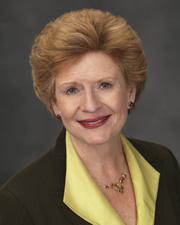
Mr. President, I rise to join my colleague Senator Craig in introducing The Specialty Crop Competitiveness Act of 2004. This legislation would help increase the production and consumption of fruits…
Mr. President, I rise to join my colleague Senator Craig in introducing The Specialty Crop Competitiveness Act of 2004. This legislation would help increase the production and consumption of fruits and vegetables in the United States. I would like to thank my colleague Senator Craig for his hard work and leadership on this legislation, and his outstanding commitment to the specialty crop community.
Fruits and vegetables are vital to good health, and far too many Americans do not consume enough of the fresh fruits and vegetables that they desperately need. Increased consumption of fresh produce will provide tremendous health and economic benefits to consumers and growers.
For far too long, specialty crops have been ignored by the United States Department of Agriculture. The majority of crops grown in America, from apples, pears, and cherries, to tomatoes, carrots, cucumbers, and nursery plants do not receive the same subsidies or USDA consideration as program crops. All of our farmers work hard and take a great gamble every year to produce and receive a return on their crops. They gamble against heat, drought, frost, storms, and more recently a flood of foreign produce to our markets.
I represent a diverse agricultural State, and I want American farmers to understand that this legislation is in no way designed to take away funding from program crops, but rather to bring specialty crops up to the status of program crops. This legislation would address a number of issues critical to our nation's specialty crop growers. First, it would create a specialty crop block grant to state agriculture departments to support production-related research, commodity production, nutrition, food safety and inspection and other competitiveness enhancing programs.
The legislation would also improve our growers' access to foreign markets. Thus far, many of our trade agreements have failed to open new markets to our growers, but rather have created new headaches. Our markets have faced problems from new invasive species, currency manipulation, and a flood of products, such as apple juice concentrate, which have invaded hurt our Nation's growers. Therefore, this legislation would require the Animal Plant Health Inspection Service (APHIS) to create a division that would handle industry petitions on sanitary and phytosanitary barriers to specialty crop exports. It would increase the technical assistance funding for specialty crop and study the effects of recent trade agreements and propose a strategy for specialty crop producers to more effectively benefit from international trade opportunities. In order to benefit our farmers, we must ensure that free trade is fair trade.
Also important to my home State of Michigan is the Tree Assistance Program (TAP), which is designed to provide financial relief to growers who lose trees and vines due to natural causes. This past summer in Michigan, a number of our fruit growers suffered damage from hail storms on the western side of our State. TAP funds will be critical to restoring trees and vines damaged in the storms. However, it take a number of years to obtain a return on new fruit trees. Because of the high per acre cost of establishing perennial crops, our legislation would increase the limitation on assistance under the TAP from $75,000 to $150,000 for each eligible farm.
In addition, this legislation would correct a two year old misinterpretation by the USDA. The 2002 Farm Bill states that at least $200 million must be spent annually on the purchase of specialty crops. The Farm Bill Conference Report emphasizes that the allocated $200 million is to be used for additional purchases, over and above the purchases made under current law. For example in 2001, the USDA purchased $243 million in fresh fruits and vegetables; therefore the new total under the Farm Bill should be $443 million in purchases.
Unfortunately, the USDA is not complying with this provision. Instead of adding the $200 million on top of baseline spending for school lunch and senior programs, USDA has eliminated the baseline spending so there is no guarantee of any new spending on fruits and vegetables for our children. In fact, in 2002 USDA did not even meet the minimum purchase requirement; only $181 million in fresh fruits and vegetables were purchased. The Specialty Crops Competitiveness Act will correct this discrepancy and provide our Nation's children with much needed fruits and vegetables.
Supporting our Nation's specialty crop growers and providing nutritious fruits and vegetables to our nation's consumers is vital to ensuring our own health and the health of our economy. I am proud to introduce this legislation and I hope that my colleagues will join me in its support.
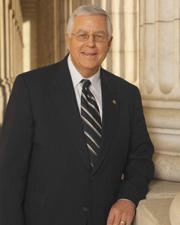
Mr. President, I rise today with my colleague from New York to introduce legislation to stop the sale of questionable financial products through hard sales tactics to our military personnel and their…
Mr. President, I rise today with my colleague from New York to introduce legislation to stop the sale of questionable financial products through hard sales tactics to our military personnel and their families. Over the course of recent months, it has become increasingly clear that the lack of clear lines in the oversight of insurance and securities sales on military bases has allowed certain individuals to push high cost financial products on unknowing military personnel. This practice must be stopped now. Our soldiers and their families deserve much better than that especially since they are putting themselves on the front line day after day for our freedom.
The bill that we introduce today will halt completely the sale of a mutual fund-like product that charges a 50-percent sales commission against the first year of contributions by a military family. Currently, there are hundreds of mutual fund products available on the market that charge less than 6 percent. The excessive sales charges of these contractually based financial products make them susceptible to abusive and misleading sales practices. Unfortunately, a small group of individuals target these products almost entirely to military families.
In addition, certain life insurance products are being offered to our service members disguised and marketed as investment products. These products provide very low death benefits while charging very high premiums, especially in the first few years. Many of these products are unsuitable for the insurance and investment needs of military families.
One of the major problems with the sales of insurance products on military bases is whether State insurance regulators or military base commanders are responsible for the oversight of sales agents. Typically, military base commanders will bar certain sales agents from a military base only to have the sales agents show up at other military facilities. Since there is no record of the bar, State insurance regulators have been unable to have adequate oversight of the individuals. The bill that we introduce today will rectify that problem. It will state clearly that State insurance regulators have jurisdiction of the sale of insurance products on military bases.
In addition, the bill will urge State insurance regulators to work with the Department of Defense to develop life insurance product standards and disclosures. The Department of Defense also will keep at list of individuals who are barred or banned from military bases due to abuse or unscrupulous sales tactics and to share that list with Federal and State insurance, securities and other relevant regulators.
Finally, the bill that we are introducing today will protect our military families by preventing investment companies to issue periodic payment plan certificates, the mutual fund-like investment product with extremely high first-year costs. This type of financial instrument has been criticized by securities regulators since the late 1960s.
We believe that this legislation is but the first step in helping our military families. Last year, I worked with Senators Shelby, Sarbanes, Akaka and Stabenow to develop financial literacy initiatives for the Federal Government and for students. My colleague from New York and I will be working next year to strengthen the financial literacy programs for military personnel. By providing military families with the tools to analyze and compare financial products, we will give them an advantage over sales agents who attempt to sell high cost financial and insurance products ill-suited to military life.
It should be noted that there are many upstanding financial and insurance companies that sell very worthwhile investment and insurance products to military families. They should be applauded for the fine job that they do in helping our families. This bill is targeted at the few who abuse the system and prey upon our military in times when our country needs them the most.
Last night, a similar bipartisan bill passed the House of Representatives by
an overwhelming vote of 396-2. Congress is fully aware of the dangers faced by our military personnel in keeping our country safe from harm. Likewise, we must do all that we can to arm our soldiers when they face the dangers of planning for their financial futures.
I urge my colleagues to take up this bill immediately so that we can help our men and women in the military and their families.
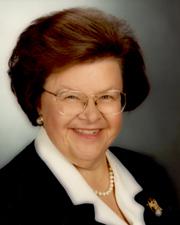
Mr. President, I rise today to join my colleagues in introducing the Affordability in Medicare Premiums Act of 2004. This bill would protect seniors against the outrageous increases in their Medicare…
Mr. President, I rise today to join my colleagues in introducing the Affordability in Medicare Premiums Act of 2004. This bill would protect seniors against the outrageous increases in their Medicare costs. It does this by preventing HMOs from taking money out of the pockets of seniors.
Health care costs are skyrocketing, and seniors are paying a greater share out of their pockets each year. Medicare premiums are on the rise. Prescription drug costs are shooting through the roof. Seniors are facing higher co-pays and deductibles for doctor visits, and hospital and skilled nursing home visits. While seniors are paying more and more, the administration has just announced the largest increase in Medicare premiums in the history of Medicare.
Just last year this administration supported a Medicare benefit that provides seniors only a hollow promise for a prescription drug benefit. This new benefit will force over 2 million seniors to lose their drug coverage, coerce seniors into HMOs, while doing nothing to stop the soaring cost of prescription drugs.
Now this administration announces a 17.4 percent increase in Part B premiums. That's an extra $11.60 out of a seniors pocket each month. Seniors are falling further and further behind, while their Medicare premiums are getting larger, and their Social Security barely keeps up with inflation. Our seniors are struggling to buy the basics like food, clothing and other simple necessities. And that's not okay.
I ran the numbers and here's what I found. Medicare Part B insurance premiums are rising faster and faster every year. In 2003, they rose 8.7 percent. This year, Medicare Part B premiums rose by 13.5 percent. Next year these premiums will rise by 17.4 percent, which is the biggest increase in Medicare history.
In contrast, Social Security cost of living adjustments (COLA's) rose by a mere 1.4 percent in 2003; and 2.1 percent in 2004; and are projected to rise only about 3 percent for 2005. So, there's less and less of a senior's Social Security check to make ends meet.
Medicare provides health insurance coverage to 41 million seniors and disabled. Roughly 570,000 Marylanders rely on Medicare. These benefits need to be stable and secure. That's what I'm fighting for.
I believe honor thy mother and father is not just a good commandment to live by, it is good public policy to govern by. This bill would eliminate the 17.4 percent increase in premiums, which saves seniors $11.60/month. This bill would also lower premiums paid by seniors below today's rate of $66.00/per month by using the savings from stopping subsidies to HMO's. My bill is fully paid for by stopping the overpayments to HMOs. I do not believe that HMO's should not get higher reimbursements to serve seniors than traditional Medicare. My bill would also eliminate the $10 billion HMO slush fund for insurance companies to participate in the new Medicare drug plan. This would save a senior at least $115 next year to a senior on a fixed income. This is a small fortune.
This bill is not an answer to skyrocketing health care costs, but it is a stopgap measure. It will give seniors a little breathing room.
I am working hard on several bills to fix the Prescription Drug Benefit that was passed last year, including legislation that protects seniors Social Security COLA's; legislation that provides a real drug benefit for seniors; and, legislation that allow the government to negotiate with drug companies to lower the cost of prescription drugs. I am fighting to end the giveaways to insurance companies, and use those savings to improve Medicare.
Congress created Medicare to provide a safety net for seniors. It is time to stop putting money in the pockets of HMOs and use that money to provide quality care for seniors. This bill is a good first step down that road, but a you can see, it is not the only step. Seniors cannot afford 17 percent increases in their Medicare premiums.
I urge my colleagues to join me in expressing support for this bill.
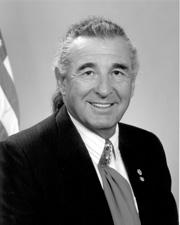
Mr. President, I am today introducing legislation to complete a small land exchange between the U.S. Forest Service, Bureau of Land Management and Pitkin County at the Ashcroft Townsite near Aspen,…
Mr. President, I am today introducing legislation to complete a small land exchange between the U.S. Forest Service, Bureau of Land Management and Pitkin County at the Ashcroft Townsite near Aspen, CO. This exchange is long overdue, as it has been over a decade since work on this proposal began.
I am very pleased to assist this particular land exchange because it will result in the Forest Service acquiring a piece of land known as the ``Ryan Property'', which is one of the most scenic properties in the entire Aspen area . . . and that's saying a lot!
I am personally familiar with the Ryan Property and its truly spectacular scenery, and would like to note that the Ryan Property was the training ground for the U.S. Army's famous 10th Mountain Division during World War II before the more well-known Camp Hale was built near Leadville.
The Ryan Property also has a series of extremely popular cross country skiing trails, which connect the trails on adjacent Forest Service lands, and lie adjacent to the heavily-used Cathedral Lake Trail and trailhead. This is a truly magnificent piece of land that my bill will convey into permanent public ownership.
The acquisition of these lands by the Forest Service will complete the Ashcroft Preservation Project, initiated by the Forest Service in 1980 to protect the scenic and historic beauty of the Ashcroft area.
As I indicated earlier, completion of this land exchange has not been without difficulty. Indeed, the exchange was first suggested by the Forest Service in 1992. In the year 2000, Pitkin County and the Aspen Valley Land Trust purchased the property, at the request of the Forest Service, to keep it from development until a land exchange could be completed.
Unfortunately, since that time, procedural difficulties, personnel changes, and changing priorities have hindered completion of the exchange. As well, various alternative exchange land packages have been discussed and agreed upon by the parties involved over the years.
Finally, this year, an agreement was reached between the Forest Service, BLM, and Pitkin County to go forward with a three-party exchange, and it is my intention to help them finish it. While this exchange will follow according to existing regulations, with my bill Congress will direct that it occur, so that the types of problems which have prevented its completion thus far will not delay it further.
Additionally, with the special provisions written into this legislation, upon completion of the exchange the County and Land Trust will actually be donating land value to the United States, which is a great benefit for the public.
Accordingly, I am introducing my legislation today in the hopes that it still might be able to see some action this fall. I note that the exchange has the support of a broad array of governmental and non- profit entities including Pitkin County, the City of Aspen, the Aspen Valley Land Trust, the Aspen Skiing Company, the Roaring Fork Conservancy, Ashcroft Ski Touring, Wilderness Workshop, Conservation Fund, and many others.
It is my feeling that this is exactly the type of consensus land conservation effort we should all be supporting, and hope for swift and successful passage of this legislation.
I ask unanimous consent that the text of the bill be printed in the Record.
Mr. President, today I rise in support of the Delaware National Coastal Special Resources Study Act and join my colleague, Senator Carper, in asking this body to support our efforts to construct the…
Mr. President, today I rise in support of the Delaware National Coastal Special Resources Study Act and join my colleague, Senator Carper, in asking this body to support our efforts to construct the Delaware National Coastal Heritage Park. Delaware is the only State not to have a national park and we feel strongly that the time has come. Today, through this legislation, we are asking the Secretary of the Interior to study the feasibility of establishing a National Park Service unit in the State of Delaware.
As I stand before you, I know what most of you are thinking. Do we have an area worthy of such designation? Do we have picturesque mountains like the Grand Tetons or the Great Smokey Mountains? Are people drawn to our coasts to find the spirituality of JoshuaTree? Do we possess landscape on par with the beauty and serenity of Acadia National Park? Well, in a word, yes. A little of all of the magnificence found in some of our Nation's most famous parks can be found in our State of Delaware and that is why the proposal presented by Senator Carper is so unique and worthy of the next step.
I have to commend my colleague. Senator Carper brought together a committee of dedicated Delawareans to analyze the validity of a national park in the State of Delaware. After much deliberation, the committee suggested a series of four interpretive centers, scattered throughout the state, to highlight the many treasures of our state. While there are numerous sites identified in the proposal, I would just like to take a moment to speak to several that have been especially close to me in my years in the Senate.
Pea Patch Island is a 228-acre park located off the coast of Delaware City, Delaware that houses Fort Delaware, one of our country's oldest Civil War-era fortifications and Delaware's oldest State Park. The island, with its fort, seawall and other archeological remains, is listed on the National Registry of Historic Places. The island also houses a State nature preserve, providing critical habitat to thousands of wading birds. It is also the largest heronry north of Florida.
Delaware also played a special role in the Underground Railroad and the proposal will highlight the 18 sites in Delaware including a hideout at the Governor's mansion, the court house where abolitionist Thomas Garrett was tried, the Mother African Church in Wilmington where an African American Festival founded in 1814 was used as a cover to help slaves escape is still celebrated, and numerous other sites utilized by the principal Underground Railroad conductor, Harriet Tubman.
Finally, I would like to mention our coastline, our beaches. Now into October, we have said goodbye to another fantastic beach season with millions of people visiting our shores. The historic sites and wildlife refuges that dot our coastline are unique to the area and to the Nation.
These links to Delaware's past are important to our Nation's future and I am proud to join my colleague in supporting this legislation.

Mr. President, I rise today to introduce the ``Specialty Crop Competitiveness Act of 2004.'' This bipartisan legislation co- sponsored by the distinguished Senator from Michigan, Senator Stabenow,…
Mr. President, I rise today to introduce the ``Specialty Crop Competitiveness Act of 2004.'' This bipartisan legislation co- sponsored by the distinguished Senator from Michigan, Senator Stabenow, increases the focus on the contribution that specialty crops add to the United States agricultural economy. This bill specifically provides the proper and necessary attention to many challenges faced throughout each segment of the industry.
Most do not realize the significance of specialty crops and their value to the U.S. economy and the health of U.S. citizens. According to the United States Department of Agriculture Economic Research Service, fruits and vegetables alone added $29.9 billion to the U.S. economy in 2002. This figure does not even include the contribution of nursery and other ornamental plant production.
The specialty crop industry also accounts for more than $53 billion in cash receipts for U.S. producers, which is close to fifty-four percent of the total cash receipts for all crops. A surprising fact to some is that my State of Idaho is the Nation's fourth largest producer of specialty crops. Idaho proudly boasts production of cherries, table grapes, apples, onions, carrots, several varieties of seed crops and of course one of our most notable specialty crops, potatoes.
Maintaining a viable and sustainable specialty crop industry also benefits the health of America's citizens. Obesity continues to plague millions of people today and is a very serious and deepening threat not only to personal health and well-being, but to the resources of the economy as well. This issue is now receiving the necessary attention at the highest levels, and specialty crops will continue to play a prominent role in reversing the obesity trend.
The ``Specialty Crop Competitiveness Act'' will also provide a stronger position for the U.S. industry in the global market arena. This legislation promotes initiatives that will combat diseases both native and foreign that continue to be used as non-tariff barriers to U.S. exports by foreign governments. Additionally, provisions in this bill seek improvements to Federal regulations and resources that impede timely consideration of industry sanitary and phytosanitary petitions. This bill does not provide direct subsidies to producers like other programs. This legislation takes a major step forward to highlight the significance of this industry to the agriculture economy, the benefits to the health of U.S. citizens, and the need for a stable, affordable, diverse, and secure supply of food.
Although we near the end of the 108th Congress. I look forward to working with my colleagues and the Administration now to consider this comprehensive and necessary legislation.
Mr. president, I ask unanimous consent that the text of the bill be printed in the Record.
Mr. president, I ask unanimous consent that the text of the bill be printed in the Record.
Show 1 more
Mr. president, I ask unanimous consent that the text of the bill be printed in the Record.
Mr. president, I ask unanimous consent that the text of the bill be printed in the Record.
Bill Text
Latest available legislative text
        [Congressional Bills 108th Congress]
[From the U.S. Government Publishing Office]
[S. 2901 Introduced in Senate (IS)]

108th CONGRESS
2d Session
S. 2901

For the relief of Rona Ramon, Asaf Ramon, Tal Ramon, Yiftach Ramon, and
Noah Ramon.

_______________________________________________________________________

IN THE SENATE OF THE UNITED STATES

October 6, 2004

Mrs. Hutchison (for herself and Mr. Breaux) introduced the following
bill; which was read twice and referred to the Committee on the
Judiciary

_______________________________________________________________________

A BILL

For the relief of Rona Ramon, Asaf Ramon, Tal Ramon, Yiftach Ramon, and
Noah Ramon.

Be it enacted by the Senate and House of Representatives of the
United States of America in Congress assembled,

SECTION 1. PERMANENT RESIDENT STATUS FOR RONA RAMON, ASAF RAMON, TAL
RAMON, YIFTACH RAMON, AND NOAH RAMON.

(a) In General.--Notwithstanding subsections (a) and (b) of section
201 of the Immigration and Nationality Act (8 U.S.C. 1151), Rona Ramon,
Asaf Ramon, Tal Ramon, Yiftach Ramon, and Noah Ramon shall each be
eligible for issuance of an immigrant visa or for adjustment of status
to that of an alien lawfully admitted for permanent residence upon
filing an application for issuance of an immigrant visa under section
204 of such Act (8 U.S.C. 1154) or for adjustment of status to lawful
permanent resident.
(b) Adjustment of Status.--If Rona Ramon, Asaf Ramon, Tal Ramon,
Yiftach Ramon, or Noah Ramon enters the United States before the filing
deadline specified in subsection (c), he or she shall be considered to
have entered and remained lawfully and shall, if otherwise eligible, be
eligible for adjustment of status under section 245 of the Immigration
and Nationality Act (8 U.S.C. 1255) as of the date of the enactment of
this Act.
(c) Deadline for Application and Payment of Fees.--Subsections (a)
and (b) shall apply only if the application for issuance of an
immigrant visa or the application for adjustment of status is filed
with appropriate fees within 2 years after the date of the enactment of
this Act.
(d) Reduction of Immigrant Visa Number.--Upon the granting of an
immigrant visa or permanent residence to Rona Ramon, Asaf Ramon, Tal
Ramon, Yiftach Ramon, and Noah Ramon, the Secretary of State shall
instruct the proper officer to reduce by 5, during the current or next
following fiscal year, the total number of immigrant visas that are
made available to natives of the country of the aliens' birth under
section 203(a) of the Immigration and Nationality Act (8 U.S.C.
1153(a)) or, if applicable, the total number of immigrant visas that
are made available to natives of the country of the aliens' birth under
section 202(e) of such Act (8 U.S.C. 1152(e)).
(e) Denial of Preferential Immigration Treatment for Certain
Relatives.--The natural parents, brothers, and sisters of Rona Ramon,
Asaf Ramon, Tal Ramon, Yiftach Ramon, and Noah Ramon shall not, by
virtue of such relationship, be accorded any right, privilege, or
status under the Immigration and Nationality Act (8 U.S.C. 1101 et
seq.).
<all>