Alzheimer's Disease Research, Prevention, and Care Act of 2003
A bill to amend the Public Health Service Act to provide for Alzheimer's disease research and demonstration grants.
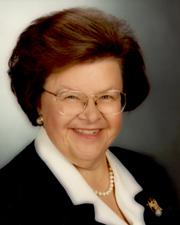 Sen. Barbara A. Mikulski (D-MD)
Legislative Activity
Stay on top of the latest movement without scrolling through every action
Read twice and referred to the Committee on Health, Education, Labor, and Pensions.
March 6, 2003
View full timeline
Introduced in Senate
March 6, 2003
Sponsor introductory remarks on measure. (CR S3325-3326)
March 6, 2003
Read twice and referred to the Committee on Health, Education, Labor, and Pensions.
March 6, 2003
Floor Debate
17 membersWhat members said about S. 566 on the floor
 +12
Floor Debate
17 membersWhat members said about S. 566 on the floor
Mr. President, earlier this week, the Senate, in a 94- 0 vote, went on record expressing its unanimous opposition to last week's decision by the Ninth Circuit Court of Appeals refusing to review a…
Mr. President, today I am introducing a bill that will provide revolutionary changes to the health insurance choices available for small businesses. This bill, ``The Small Business Health Fairness…
Mr. President, this year, due to the rapid and tremendous advancements in our knowledge and in the science of organ transplantation, thousands of Americans will receive a life-saving organ…
Mr. President, today I rise to introduce the Emergency Communications and Competition Act, ECCA, along with my colleague from New Hampshire, Senator Sununu. We are joined by twelve of our colleagues,…
Mr. President, I am pleased to be joined by Senators Inouye and Thomas in introducing key legislation to help stop Indian land fractionation. One of the most enduring and damaging legacies of…
Show 8 more
Mr. President, I am pleased to join my colleague from Illinois in reintroducing this legislation to recognize and promote bicycling's important impact on energy savings and public health. With…
Mr. President, I rise today to introduce the Homeland Protection and Tax Hike Prevention Act of 2003. As I speak, State governments face a budget gap of $80 billion in 2004, according to the National…
Mr. President, for tragic reasons, organ donation has been in the spotlight of late. On Saturday, February 23, 2002, 17-year-old Jessica Santillan died after receiving organs from a donor with an…
Mr. President, I rise to introduce the Alzheimer's Disease Research, Prevention, and Care Act of 2003. I am pleased that Senators Bond, Kennedy, Lincoln, Breaux, and Dodd are joining me as original…
Mr. President, I rise to introduce the Alzheimer's Disease Research, Prevention, and Care Act of 2003. I am pleased that Senators Bond, Kennedy, Lincoln, Breaux, and Dodd are joining me as original…
Mr. President, I rise today to introduce The Paleontological Resources Preservation Act to protect and preserve the Nation's important fossil record for the benefit of our citizens. I am pleased to…

Mr. President, I rise today to introduce the Sunshine in the Courtroom Act of 2003, a bill to allow media coverage of court proceedings. This legislation will provide Federal judges with the…

Mr. President, I rise today to introduce the Conserve by Bike Act to promote energy conservation and improve public health. I am pleased to be joined by my colleagues from Maine, Senator Susan…
Show 5 more
Mr. President, as a senior member of the Senate Committee on Veterans' Affairs, I am proud to reintroduce legislation today intended to strengthen mental health programs within the Department of…

Mr. President, I am pleased today to show my support for the Milk Import Tariff Equity Act of 2003 by being an original cosponsor of Senator Craig's bill. This legislation will prevent foreign dairy…
Mr. President, I rise to introduce legislation to designate the Director of the Indian Health Service as an Assistant Secretary for Indian Health within the Department of Health and Human Services.…

Mr. President, I am pleased to join my colleagues Senator Mark Dayton and Senator Larry Craig in introducing the bipartisan Milk Import Tariff Equity Act. Our bill will prevent importers of dairy…
Mr. President, by request, I introduce for appropriate reference a bill to establish the Millennium Challenge Account and the Millennium Challenge Corporation in order to reduce global poverty…
Bill Text
Latest available legislative text
        [Congressional Bills 108th Congress]
[From the U.S. Government Publishing Office]
[S. 566 Introduced in Senate (IS)]

108th CONGRESS
1st Session
S. 566

To amend the Public Health Service Act to provide for Alzheimer's
disease research and demonstration grants.

_______________________________________________________________________

IN THE SENATE OF THE UNITED STATES

March 6, 2003

Ms. Mikulski (for herself, Mr. Bond, Mr. Kennedy, Mrs. Lincoln, Mr.
Breaux, and Mr. Dodd) introduced the following bill; which was read
twice and referred to the Committee on Health, Education, Labor, and
Pensions

_______________________________________________________________________

A BILL

To amend the Public Health Service Act to provide for Alzheimer's
disease research and demonstration grants.

Be it enacted by the Senate and House of Representatives of the
United States of America in Congress assembled,

SECTION 1. SHORT TITLE.

This Act may be cited as the ``Alzheimer's Disease Research,
Prevention, and Care Act of 2003''.

SEC. 2. FINDINGS.

Congress makes the following findings:
(1) Alzheimer's disease is a disorder that destroys cells
in the brain. The disease is the leading cause of dementia, a
condition that involves gradual memory loss, decline in the
ability to perform routine tasks, disorientation, difficulty in
learning, loss of language skills, impairment of judgment, and
personality changes. As the disease progresses, people with
Alzheimer's disease become unable to care for themselves. The
loss of brain cells eventually leads to the failure of other
systems in the body.
(2) In the United States, 4,000,000 people have Alzheimer's
disease and 19,000,000 people say that they have a family
member with the disease. By 2050, 14,000,000 people in the
United States will have Alzheimer's disease unless science
finds a way to prevent or cure the disease.
(3) One in 10 people over the age of 65, and nearly half of
those over the age of 85 have Alzheimer's disease. Younger
people also get the disease.
(4) The Alzheimer's disease process may begin in the brain
as many as 20 years before the symptoms of Alzheimer's disease
appear. A person will live an average of 8 years and as many as
20 once the symptoms of Alzheimer's disease appear.
(5) The average lifetime cost of Alzheimer's disease, per
person, is $174,000.
(6) In 2000, medicare alone spent $31,900,000,000 for the
care of individuals with Alzheimer's disease and this amount is
projected to increase to $49,300,000,000 in 2010.
(7) Forty-nine percent of medicare beneficiaries who have
Alzheimer's disease also receive medicaid. Of the total
population dually eligible for medicare and medicaid, 22
percent have Alzheimer's disease.
(8) Seven in 10 people with Alzheimer's disease live at
home. While almost 75 percent of home care is provided by
family and friends, the average annual cost of paid care for
people with Alzheimer's disease at home is $19,000.
(9) Nearly 60 percent of all nursing home residents have
Alzheimer's disease or another dementia. The average annual
cost of Alzheimer's disease nursing home care is nearly
$64,000. Medicaid pays nearly half of the total nursing home
bill and helps 2 out of 3 residents pay for their care.
Medicaid expenditures for nursing home care for people with
Alzheimer's disease are estimated to increase from
$18,200,000,000 in 2000 to $33,000,000,000 in 2010.
(10) In fiscal year 2002, the Federal Government spent an
estimated $598,900,000 on Alzheimer's disease research. If our
Nation achieves its research goals (preventing the onset of
Alzheimer's disease in those at risk and treating and delaying
progression of the disease in those who have symptoms), the
projected number of cases of Alzheimer's disease can be reduced
by more than one-third by the middle of the century. The number
of baby boomers with moderate to severe Alzheimer's disease can
be reduced by 60 percent.
(11) A study commissioned by the United Hospital Fund
estimated that the annual value of this informal care system is
$257,000,000,000. Family caregiving comes at enormous physical,
emotional, and financial sacrifice, putting the whole system at
risk.
(12) One in 8 Alzheimer's disease caregivers becomes ill or
injured as a direct result of caregiving. One in 3 uses
medication for problems related to caregiving. Older caregivers
are 3 times more likely to become clinically depressed than
others in their age group.
(13) Elderly spouses strained by caregiving are 63 percent
more likely to die during a given 4-year period than other
spouses their age.
(14) Three of 4 caregivers are women. One in 3 has children
or grandchildren under the age of 18 living at home. Caregiving
leaves them less time for other family members and they are
much more likely to report family conflicts because of their
caregiving role.
(15) Most Alzheimer's disease caregivers work outside the
home before beginning their caregiving careers, but caregiving
forces them to miss work, cut back to part-time, take less
demanding jobs, choose early retirement, or give up work
altogether. As a result, in 2002, Alzheimer's disease cost
American business an estimated $36,500,000,000 in lost
productivity, as well as an additional $24,600,000,000 in
business contributions to the total cost of care.

SEC. 3. PRIORITY TO ALZHEIMER'S DISEASE RESEARCH.

Section 443 of the Public Health Service Act (42 U.S.C. 285e) is
amended--
(1) by striking ``The general'' and inserting ``(a) In
General.--The general''; and
(2) by adding at the end the following:
``(b) Priorities.--The Director of the Institute shall, in
expending amounts appropriated under this subpart, give priority to
conducting and supporting Alzheimer's disease research.''.

SEC. 4. ALZHEIMER'S DISEASE PREVENTION INITIATIVE.

Section 444 of the Public Health Service Act (42 U.S.C. 285e-1) is
amended--
(1) in subsection (d), by inserting ``and training'' after
``conduct research''; and
(2) by adding at the end the following:
``(e) The Director of the National Institutes of Health shall, in
collaboration with the Director of the Institute, the directors of
other relevant institutes, and with volunteer organizations and other
stakeholders, undertake an Alzheimer's Disease Prevention Initiative
to--
``(1) accelerate the discovery of new risk and protective
factors for Alzheimer's disease;
``(2) rapidly identify candidate diagnostics, therapies, or
preventive interventions or agents for clinical investigation
and trials relating to Alzheimer's disease;
``(3) support or undertake such investigations and trials;
and
``(4) implement effective prevention and treatment
strategies, including strategies to improve patient care and
alleviate caregiver burdens relating to Alzheimer's disease.''.

SEC. 5. ALZHEIMER'S DISEASE CLINICAL RESEARCH.

(a) Clinical Research.--Section 445F of the Public Health Service
Act (42 U.S.C. 285e-8) is amended to read as follows:

``SEC. 445F. ALZHEIMER'S DISEASE CLINICAL RESEARCH.

``(a) In General.--The Director of the Institute, pursuant to
subsections (d) and (e) of section 444, shall conduct and support
cooperative clinical research regarding Alzheimer's disease. Such
research shall include--
``(1) investigating therapies, interventions, and agents to
detect, treat, slow the progression of, or prevent Alzheimer's
disease;
``(2) enhancing the national infrastructure for the conduct
of clinical trials;
``(3) developing and testing novel approaches to the design
and analysis of such trials;
``(4) facilitating the enrollment of patients for such
trials, including patients from diverse populations;
``(5) developing improved diagnostics and means of patient
assessment for Alzheimer's disease; and
``(6) as determined appropriate by the Director of the
Institute, the Alzheimer's Disease Centers and Alzheimer's
Disease Research Centers established under section 445.
``(b) Early Diagnosis and Detection Research.--
``(1) In general.--The Director of the Institute, in
consultation with the directors of other relevant institutes
and centers of the National Institutes of Health, shall
conduct, or make grants for the conduct of, research related to
the early detection and diagnosis of Alzheimer's disease and of
mild cognitive impairment or other potential precursors to
Alzheimer's disease.
``(2) Evaluation.--The research described in paragraph (1)
may include the evaluation of diagnostic tests and imaging
techniques.
``(c) Vascular Disease.--The Director of the Institute, in
consultation with the directors of other relevant institutes and
centers of the National Institutes of Health, shall conduct, or make
grants for the conduct of, research related to the relationship of
vascular disease and Alzheimer's disease, including clinical trials to
determine whether drugs developed to prevent cerebrovascular disease
can prevent the onset or progression of Alzheimer's disease.
``(d) National Alzheimer's Coordinating Center.--The Director of
the Institute may establish a National Alzheimer's Coordinating Center
to facilitate collaborative research among the Alzheimer's Disease
Centers and Alzheimer's Disease Research Centers established under
section 445.''.
(b) Alzheimer's Disease Centers.--Section 445(a)(1) of the Public
Health Service Act (42 U.S.C. 285e-2(a)(1)) is amended by inserting ``,
and outcome measures and disease management'' after ``treatment
methods''.

SEC. 6. RESEARCH ON ALZHEIMER'S DISEASE CAREGIVING.

Section 445C of the Public Health Service Act (42 U.S.C. 285e-5) is
amended--
(1) by striking ``Sec. 445C. (a)'' and inserting the
following:

``SEC. 445C. RESEARCH ON ALZHEIMER'S DISEASE SERVICES AND CAREGIVING.

``(a) Services Research.--'';
(2) by striking subsections (b), (c), and (e);
(3) by inserting after subsection (a) the following:
``(b) Interventions Research.--The Director shall, in collaboration
with the directors of the other relevant institutes and centers of the
National Institutes of Health, conduct, or make grants for the conduct
of, clinical, social, and behavioral research related to interventions
designed to help caregivers of patients with Alzheimer's disease and
related disorders and improve patient outcomes.''; and
(4) in subsection (d) by striking ``(d) the Director'' and
inserting ``(c) Model Curricula and Techniques.--The
Director''.

SEC. 7. AUTHORIZATION OF APPROPRIATIONS.

(a) In General.--Section 445J of the Public Health Service Act (42
U.S.C. 285e-11) is amended by striking ``$500,000,000 for fiscal year
1994, and such sums as may be necessary for each of the fiscal years
1995 and 1996.'' and inserting ``$1,100,000,000 for fiscal year 2004,
$1,200,000,000 for fiscal year 2005, $1,300,000,000 for fiscal year
2006, $1,400,000,000 for fiscal year 2007, and $1,500,000,000 for
fiscal year 2008.''.
(b) Aging Process Regarding Women.--Section 445H(b) of the Public
Health Service Act (42 U.S.C. 285e-10(b)) is amended by striking
``2003'' and inserting ``2008''.
(c) Clinical Research and Training Awards.--Section 445I(d) of the
Public Health Service Act (42 U.S.C. 285e-10a(d)) is amended by
striking ``2005'' and inserting ``2008''.

SEC. 8. ALZHEIMER'S DISEASE DEMONSTRATION GRANTS.

Section 398B(e) of the Public Health Service Act (42 U.S.C. 280c-
5(e)) is amended--
(1) by striking ``and such'' and inserting ``such''; and
(2) by inserting before the period ``, $20,000,000 for
fiscal year 2004, and such sums as may be necessary for each of
the fiscal years 2005 through 2008''.
<all>