Health Care Safety Net Oversight Act of 2003
A bill to amend title XI of the Social Security Act to create an independent and nonpartisan commission to assess the health care needs of the uninsured and to monitor the financial stability of the Nation's health care safety net.
 Sen. Max Baucus (D-MT)
Legislative Activity
Stay on top of the latest movement without scrolling through every action
Read twice and referred to the Committee on Finance.
March 27, 2003
View full timeline
Introduced in Senate
March 27, 2003
Sponsor introductory remarks on measure. (CR S4521-4522)
March 27, 2003
Read twice and referred to the Committee on Finance.
March 27, 2003
Floor Debate
16 membersWhat members said about S. 732 on the floor



 +11
Floor Debate
16 membersWhat members said about S. 732 on the floor
Mr. President, I am pleased to join Senator Domenici, Chairman of the Senate Energy and Natural Resources Committee, and my colleagues Senator Lieberman, Senator Kyl, Senator Reid, Senator Bayh, and…
Mr. President, I rise today in order to bring attention to a problem that unfortunately goes largely unnoticed except by those who are directly affected. Livestock and food animal producers, pet…
Mr. President, today I am pleased to introduce the Coast Guard Authorization Act of 2003. The Coast Guard serves as the guardian of our maritime homeland security and provides many critical services…
Mr. President, time after time, coal has been there for this country. Coal has been and will continue to be an important part of America--its history, its economy, and its people. During World War I,…
Mr. President, I am proud today to join with my colleague from West Virginia, Senator Byrd, and Senators Thomas, Burns, Durbin, Allard, Dorgan, Bayh, Voinovich, Enzi, Campbell, and Conrad, to…
Show 8 more

Mr. President, I rise today to discuss the merits of the Coast Guard Authorization Act of 2003. This bill authorizes appropriations for fiscal year 2004 for the Coast Guard and will be introduced by…
Mr. President, it has been said that, ``Good health and good sense are two of life's greatest blessings.'' Senators Hatch, Rockefeller, Jeffords and I hope to further the cause of good health and…
Mr. President, it has been said that, ``Good health and good sense are two of life's greatest blessings.'' Senators Hatch, Rockefeller, Jeffords and I hope to further the cause of good health and…
Mr. President, I rise to introduce the Animal Fighting Enforcement Prohibition Act. I would like to thank my colleagues for their support in this endeavor to protect the welfare of animals. This…

Mr. President, I rise to introduce the ``Colon Cancer Screen for Life Act of 2003.'' I am pleased that my colleagues Senators Collins, Bunning, Dayton, Hollings, and Landrieu have joined me in…
Mr. President, I am very pleased today to introduce the Tribal Transportation Program Improvement Act of 2003. The bill is cosponsored by Senators Feinstein, Dayton, and Leahy. The goal of this…

Mr. President, I rise today to introduce a bill that addresses an inequity facing an important segment of the small business community. This legislation is simple and straight forward--it adjusts the…

Mr. President, today I am introducing a bill that will protect hundreds of thousands of acres of wilderness in Northern California. The Northern California Coastal Wild Heritage Wilderness Act would…
Show 4 more

Mr. President, I rise today, along with Senator Hatch, to introduce the Secure Authentication Feature and Enhanced Identification Defense Act of 2003, also known as the ``SAFE ID'' Act. My good…

Mr. President, I rise today to introduce legislation that would make Election Day a national holiday. After the problems of the 2000 elections, a bipartisan Commission headed by former Presidents…
Mr. President, I ask unanimous consent that the text of the bill be printed in the Record.
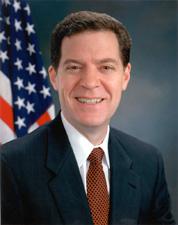
Mr. President, I ask unanimous consent that the text of the bill be printed in the Record.
Bill Text
Latest available legislative text
        [Congressional Bills 108th Congress]
[From the U.S. Government Publishing Office]
[S. 732 Introduced in Senate (IS)]

108th CONGRESS
1st Session
S. 732

To amend title XI of the Social Security Act to create an independent
and nonpartisan commission to assess the health care needs of the
uninsured and to monitor the financial stability of the Nation's health
care safety net.

_______________________________________________________________________

IN THE SENATE OF THE UNITED STATES

March 27, 2003

Mr. Baucus (for himself, Mr. Hatch, Mr. Rockefeller, and Mr. Jeffords)
introduced the following bill; which was read twice and referred to the
Committee on Finance

_______________________________________________________________________

A BILL

To amend title XI of the Social Security Act to create an independent
and nonpartisan commission to assess the health care needs of the
uninsured and to monitor the financial stability of the Nation's health
care safety net.

Be it enacted by the Senate and House of Representatives of the
United States of America in Congress assembled,

SECTION 1. SHORT TITLE.

This Act may be cited as the ``Health Care Safety Net Oversight Act
of 2003''.

SEC. 2. SAFETY NET ORGANIZATIONS AND PATIENT ADVISORY COMMISSION.

(a) In General.--Title XI of the Social Security Act (42 U.S.C.
1320 et seq.) is amended by adding at the end the following new part:

``Part D--Safety Net Organizations and Patient Advisory Commission

``safety net organizations and patient advisory commission

``Sec. 1181. (a) Establishment.--There is hereby established the
Safety Net Organizations and Patient Advisory Commission (in this
section referred to as the `Commission').
``(b) Review of Health Care Safety Net Programs and Reporting
Requirements.--
``(1) Review.--The Commission shall conduct an ongoing
review of the health care safety net programs (as described in
paragraph (3)(C)) by--
``(A) monitoring each health care safety net
program to document and analyze the effects of changes
in these programs on the core health care safety net;
``(B) evaluating the impact of the Emergency
Medical Treatment and Labor Act, the Health Insurance
Portability and Accountability Act of 1996, the
Balanced Budget Act of 1997, the Medicare, Medicaid,
and SCHIP Balanced Budget Refinement Act of 1999, the
Medicare, Medicaid, and SCHIP Benefits Protection and
Improvement Act of 2000, and other forces on the
capacity of the core health care safety net to continue
their roles in the core health care safety net system
to care for uninsured individuals, medicaid
beneficiaries, and other vulnerable populations;
``(C) monitoring existing data sets to assess the
status of the core health care safety net and health
outcomes for vulnerable populations;
``(D) wherever possible, linking and integrating
existing data systems to enhance the ability of the
core health care safety net to track changes in the
status of the core health care safety net and health
outcomes for vulnerable populations;
``(E) supporting the development of new data
systems where existing data are insufficient or
inadequate;
``(F) developing criteria and indicators of
impending core health care safety net failure;
``(G) establishing an early-warning system to
identify impending failures of core health care safety
net systems and providers;
``(H) providing accurate and timely information to
Federal, State, and local policymakers on the
indicators that may lead to the failure of the core
health care safety net and an estimate of the projected
consequences of such failures and the impact of such a
failure on the community;
``(I) monitoring and providing oversight for the
transition of individuals receiving supplemental
security income benefits, medical assistance under
title XIX, or child health assistance under title XXI
who enroll with a managed care entity (as defined in
section 1932(a)(1)(B)), including the review of--
``(i) the degree to which health plans have
the capacity (including case management and
management information system infrastructure)
to provide quality managed care services to
such an individual;
``(ii) the degree to which these plans may
be overburdened by adverse selection; and
``(iii) the degree to which emergency
departments are used by enrollees of these
plans; and
``(J) identifying and disseminating the best
practices for more effective application of the lessons
that have been learned.
``(2) Reports.--
``(A) Annual reports.--Not later than January 1 of
each year (beginning with 2005), the Commission shall,
based on the review conducted under paragraph (1),
submit to the appropriate committees of Congress a
report on--
``(i) the health care needs of the
uninsured; and
``(ii) the financial and infrastructure
stability of the Nation's core health care
safety net.
``(B) Agenda and additional reviews.--
``(i) Agenda.--The Chair of the Commission
shall consult periodically with the
Chairpersons and Ranking Minority Members of
the appropriate committees of Congress
regarding the Commission's agenda and progress
toward achieving the agenda.
``(ii) Additional reviews.--The Commission
shall conduct additional reviews and submit
additional reports to the appropriate
committees of Congress on topics relating to
the health care safety net programs under the
following circumstances:
``(I) If requested by the
Chairpersons or Ranking Minority
Members of such committees.
``(II) If the Commission deems such
additional reviews and reports
appropriate.
``(C) Availability of reports.--The Commission
shall transmit to the Comptroller General and the
Secretary a copy of each report submitted under this
subsection and shall make such reports available to the
public.
``(3) Definitions.--In this section:
``(A) Appropriate committees of congress.--The term
`appropriate committees of Congress' means the
Committees on Ways and Means and Energy and Commerce of
the House of Representatives and the Committees on
Finance and Health, Education, Labor, and Pensions of
the Senate.
``(B) Core health care safety net.--The term `core
health care safety net' means any health care provider
that--
``(i) by legal mandate or explicitly
adopted mission, offers access to health care
services to patients, regardless of the ability
of the patient to pay for such services; and
``(ii) has a case mix that is substantially
comprised of patients who are uninsured,
covered under the medicaid program, covered
under any other public health care program, or
are otherwise vulnerable populations.
Such term includes disproportionate share hospitals,
Federally qualified health centers, other Federal,
State, and locally supported clinics, rural health
clinics, local health departments, and providers
covered under the Emergency Medical Treatment and Labor
Act.
``(C) Health care safety net programs.--The term
`health care safety net programs' includes the
following:
``(i) Medicaid.--The medicaid program under
title XIX.
``(ii) SCHIP.--The State children's health
insurance program under title XXI.
``(iii) Maternal and child health services
block grant program.--The maternal and child
health services block grant program under title
V.
``(iv) FQHC programs.--Each federally
funded program under which a health center (as
defined in section 330(1) of the Public Health
Service Act), a Federally qualified health
center (as defined in section 1861(aa)(4)), or
a Federally-qualified health center (as defined
in section 1905(l)(2)(B)) receives funds.
``(v) RHC programs.--Each federally funded
program under which a rural health clinic (as
defined in section 1861(aa)(4) or 1905(l)(1))
receives funds.
``(vi) DSH payment programs.--Each
federally funded program under which a
disproportionate share hospital receives funds.
``(vii) Emergency medical treatment and
active labor act.--All care provided under
section 1867 for the uninsured, underinsured,
beneficiaries under title XIX, and other
vulnerable individuals.
``(viii) Other health care safety net
programs.--Such term also includes any other
health care program that the Commission
determines to be appropriate.
``(D) Vulnerable populations.--The term `vulnerable
populations' includes uninsured and underinsured
individuals, low-income individuals, farm workers,
homeless individuals, individuals with disabilities,
individuals with HIV or AIDS, and such other
individuals as the Commission may designate.
``(c) Membership.--
``(1) Number and appointment.--The Commission shall be
composed of 13 members appointed by the Comptroller General of
the United States (in this section referred to as the
`Comptroller General'), in consultation with the appropriate
committees of Congress.
``(2) Qualifications.--
``(A) In general.--The membership of the Commission
shall include individuals with national recognition for
their expertise in health finance and economics, health
care safety net research and program management,
actuarial science, health facility management, health
plans and integrated delivery systems, reimbursement of
health facilities, allopathic and osteopathic medicine
(including emergency medicine), and other providers of
health services, and other related fields, who provide
a mix of different professionals, broad geographic
representation, and a balance between urban and rural
representatives.
``(B) Inclusion.--The membership of the Commission
shall include health professionals, employers, third-
party payers, individuals skilled in the conduct and
interpretation of biomedical, health services, and
health economics research and expertise in outcomes and
effectiveness research and technology assessment. Such
membership shall also include recipients of care from
core health care safety net and individuals who provide
and manage the delivery of care by the core health care
safety net.
``(C) Majority nonproviders.--Individuals who are
directly involved in the provision, or management of
the delivery, of items and services covered under the
health care safety net programs shall not constitute a
majority of the membership of the Commission.
``(D) Ethical disclosure.--The Comptroller General
shall establish a system for public disclosure by
members of the Commission of financial and other
potential conflicts of interest relating to such
members.
``(3) Terms.--
``(A) In general.--The terms of members of the
Commission shall be for 3 years except that of the
members first appointed, the Comptroller General shall
designate--
``(i) four to serve a term of 1 year;
``(ii) four to serve a term of 2 years; and
``(iii) five to serve a term of 3 years.
``(B) Vacancies.--
``(i) In general.--A vacancy in the
Commission shall be filled in the same manner
in which the original appointment was made.
``(ii) Appointment.--Any member appointed
to fill a vacancy occurring before the
expiration of the term for which the member's
predecessor was appointed shall be appointed
only for the remainder of that term.
``(iii) Terms.--A member may serve after
the expiration of that member's term until a
successor has taken office.
``(4) Compensation.--
``(A) Members.--While serving on the business of
the Commission (including travel time), a member of the
Commission--
``(i) shall be entitled to compensation at
the per diem equivalent of the rate provided
for level IV of the Executive Schedule under
section 5315 of title 5, United States Code;
and
``(ii) while so serving away from home and
the member's regular place of business, may be
allowed travel expenses, as authorized by the
Commission.
``(B) Treatment.--For purposes of pay (other than
pay of members of the Commission) and employment
benefits, rights, and privileges, all personnel of the
Commission shall be treated as if they were employees
of the United States Senate.
``(5) Chair; vice chair.--The Comptroller General shall
designate a member of the Commission, at the time of
appointment of the member as Chair and a member as Vice Chair
for that term of appointment, except that in the case of
vacancy of the Chair or Vice Chair, the Comptroller General may
designate another member for the remainder of that member's
term.
``(6) Meetings.--The Commission shall meet at the call of
the Chair or upon the written request of a majority of its
members.
``(d) Director and Staff; Experts and Consultants.--Subject to such
review as the Comptroller General determines necessary to ensure the
efficient administration of the Commission, the Commission may--
``(1) employ and fix the compensation of an Executive
Director (subject to the approval of the Comptroller General)
and such other personnel as may be necessary to carry out the
duties of the Commission under this section (without regard to
the provisions of title 5, United States Code, governing
appointments in the competitive service);
``(2) seek such assistance and support as may be required
in the performance of the duties of the Commission under this
section from appropriate Federal departments and agencies;
``(3) enter into contracts or make other arrangements, as
may be necessary for the conduct of the work of the Commission
(without regard to section 3709 of the Revised Statutes (41
U.S.C. 5));
``(4) make advance, progress, and other payments which
relate to the work of the Commission;
``(5) provide transportation and subsistence for persons
serving without compensation; and
``(6) prescribe such rules and regulations as it deems
necessary with respect to the internal organization and
operation of the Commission.
``(e) Powers.--
``(1) Obtaining official data.--
``(A) In general.--The Commission may secure
directly from any department or agency of the United
States information necessary for the Commission to
carry the duties under this section.
``(B) Request of chair.--Upon request of the Chair,
the head of that department or agency shall furnish
that information to the Commission on an agreed upon
schedule.
``(2) Data collection.--In order to carry out the duties of
the Commission under this section, the Commission shall--
``(A) use existing information, both published and
unpublished, where possible, collected and assessed
either by the staff of the Commission or under other
arrangements made in accordance with this section;
``(B) carry out, or award grants or contracts for,
original research and experimentation, where existing
information is inadequate; and
``(C) adopt procedures allowing any interested
party to submit information for the Commission's use in
making reports and recommendations.
``(3) Access of gao to information.--The Comptroller
General shall have unrestricted access to all deliberations,
records, and nonproprietary data that pertains to the work of
the Commission, immediately upon request. The expense of
providing such information shall be borne by the General
Accounting Office.
``(4) Periodic audit.--The Commission shall be subject to
periodic audit by the Comptroller General.
``(f) Application of FACA.--Section 14 of the Federal Advisory
Committee Act (5 U.S.C. App.) does not apply to the Commission.
``(g) Authorization of Appropriations.--
``(1) Request for appropriations.--The Commission shall
submit requests for appropriations in the same manner as the
Comptroller General submits requests for appropriations, but
amounts appropriated for the Commission shall be separate from
amounts appropriated for the Comptroller General.
``(2) Authorization.--There are authorized to be
appropriated such sums as may be necessary to carry out the
provisions of this section.''.
(b) Effective Date.--The Comptroller General of the United States
shall appoint the initial members of the Safety Net Organizations and
Patient Advisory Commission established under subsection (a) not later
than January 1, 2004.
<all>