A bill to designate the Federal building and United States courthouse located at 46 Ohio Street in Indianapolis, Indiana, as the "Birch Bayh Federal Building and United States Courthouse".
Legislative Activity
Stay on top of the latest movement without scrolling through every action
Became Public Law No: 108-35.
June 23, 2003
View full timeline
Introduced in Senate
April 2, 2003
Sponsor introductory remarks on measure. (CR S4704)
April 2, 2003
Read twice and referred to the Committee on Environment and Public Works.
April 2, 2003
Committee on Environment and Public Works. Ordered to be reported without amendment favorably.
April 9, 2003
Committee on Environment and Public Works. Reported by Senator Inhofe without amendment. Without written report.
April 9, 2003
Placed on Senate Legislative Calendar under General Orders. Calendar No. 65.
April 9, 2003
Passed Senate without amendment by Unanimous Consent. (consideration: CR S5395-5396; text as passed Senate: CR S5396)
April 11, 2003
Message on Senate action sent to the House.
April 12, 2003
Received in the House.
April 12, 2003 • 10:04 AM
Referred to the House Committee on Transportation and Infrastructure.
April 12, 2003
Referred to the Subcommittee on Economic Development, Public Buildings and Emergency Management.
April 13, 2003
Mr. LaTourette moved to suspend the rules and pass the bill.
June 3, 2003 • 1:00 PM
Considered under suspension of the rules. (consideration: CR H4806-4809)
June 3, 2003 • 1:01 PM
DEBATE - The House proceeded with forty minutes of debate on S. 763.
June 3, 2003 • 1:01 PM
At the conclusion of debate, the Yeas and Nays were demanded and ordered. Pursuant to the provisions of clause 8, rule XX, the Chair announced that further proceedings on the motion would be postponed.
June 3, 2003 • 1:13 PM
Considered as unfinished business. (consideration: CR H4810-4811)
June 3, 2003 • 1:43 PM
Failed of passage/not agreed to in House: On motion to suspend the rules and pass the bill Failed by the Yeas and Nays: (2/3 required): 235 - 179 (Roll no. 232).(text: CR H4806)
June 3, 2003 • 1:51 PM
On motion to suspend the rules and pass the bill Failed by the Yeas and Nays: (2/3 required): 235 - 179 (Roll no. 232). (text: CR H4806)
June 3, 2003 • 1:51 PM
Mr. Pearce moved to suspend the rules and pass the bill.
June 9, 2003 • 2:21 PM
Considered under suspension of the rules. (consideration: CR H5052-5053)
June 9, 2003 • 2:21 PM
DEBATE - The House proceeded with forty minutes of debate on S. 763.
June 9, 2003 • 2:21 PM
At the conclusion of debate, the Yeas and Nays were demanded and ordered. Pursuant to the provisions of clause 8, rule XX, the Chair announced that further proceedings on the motion would be postponed.
June 9, 2003 • 2:28 PM
Considered as unfinished business. (consideration: CR H5055-5056)
June 9, 2003 • 6:58 PM
Passed/agreed to in House: On motion to suspend the rules and pass the bill Agreed to by the Yeas and Nays: (2/3 required): 383 - 0 (Roll no. 251).(text: CR H5052)
June 9, 2003 • 7:14 PM
On motion to suspend the rules and pass the bill Agreed to by the Yeas and Nays: (2/3 required): 383 - 0 (Roll no. 251). (text: CR H5052)
June 9, 2003 • 7:14 PM
Motion to reconsider laid on the table Agreed to without objection.
June 9, 2003 • 7:14 PM
Presented to President.
June 17, 2003
Signed by President.
June 23, 2003
Became Public Law No: 108-35.
June 23, 2003
Voting History
2 votes recorded • Roll call available
Floor Debate
21 membersWhat members said about S. 763 on the floor
 AS
AS DB
DB CL
CL JRB
JRB RDF+16
Floor Debate
21 membersWhat members said about S. 763 on the floor
Mr. Speaker, due to family reasons, I was unable to vote on rollcall No. 227: H. Res. 159. Had I been present, I would have voted ``yes.'' Mr. Speaker, due to family reasons, I was unable vote on…
Mr. Speaker, due to family reasons, I was unable to vote on rollcall No. 227: H. Res. 159. Had I been present, I would have voted ``yes.''
Mr. Speaker, due to family reasons, I was unable vote on rollcall No. 228: H. Res. 195. Had I been present, I would have voted ``yes.''
Mr. Speaker, due to family reasons, I was unable to vote on rollcall No. 229: H.R. 1465. Had I been present, I would have voted ``yes.''
Mr. Speaker, due to family reasons, I was unable to vote on rollcall No. 230: S. 222. Had I been present, I would have voted ``yes.''
Mr. Speaker, due to family reasons, I was unable to vote on rollcall No. 231: S. 273. Had I been present, I would have voted ``yes.''
Mr. Speaker, due to family reasons, I was unable to vote on rollcall No. 232: S. 763. Had I been present, I would have voted ``yes.''
Mr. Speaker, due to family reasons, I was unable to vote on rollcall No. 233: H. Amdt. to H. J. Res. 4. Had I been present, I would have voted ``no.''
Mr. Speaker, due to family reasons, I was unable to vote on rollcall No. 234: Final passage of H. J. Res. 4. Had I been present, I would have voted ``yes.''
Mr. Speaker, due to family reasons, I was unable to vote on rollcall No. 235: Motion to suspend the rules and pass H. Res. 231. Had I been present, I would have voted ``yes.''
Mr. Speaker, due to family reasons, I was unable to vote on rollcall No. 236: on agreeing to H. Res. 257. Had I been present, I would have voted ``no.''
Mr. Speaker, due to family reasons, I was unable to vote on rollcall No. 237: Motion to suspend the rules and pass H. Res. 177. Had I been present, I would have voted ``yes.''
Mr. Speaker, due to family reasons, I was unable to vote on rollcall No. 238: Motion to suspend the rules and pass H. Res. 201. Had I been present, I would have voted ``yes.''
Mr. Speaker, due to family reasons, I was unable to vote on rollcall No. 239: H.R. 1954. Had I been present, I would have voted ``yes.''
Mr. Speaker, due to family reasons, I was unable to vote on rollcall No. 240: H. Amdt. 154 to H.R. 760. Had I been present, I would have voted ``yes.''
Mr. Speaker, due to family reasons, I was unable to vote on rollcall No. 241: Motion to Recommit to H.R. 760. Had I been present, I would have voted ``yes.''
Mr. Speaker, due to family reasons, I was unable to vote on rollcall No. 242: final passage of H.R. 760. Had I been present, I would have voted ``no.''
Mr. Speaker, due to family reasons, I was unable to vote on rollcall No. 243: On Ordering the Previous Question for H. Res. 256. Had I been present, I would have voted ``yes.''
Mr. Speaker, due to family reasons, I was unable to vote on rollcall No. 244: H. Res. 258. Had I been present, I would have voted ``yes.''
Mr. Speaker, due to family reasons, I was unable to vote on rollcall No. 245: H. Res. 258. Had I been present, I would have voted ``yes.''
Mr. Speaker, due to family reasons, I was unable to vote on rollcall No. 246: on passage of H.R. 1474. Had I been present, I would have voted ``yes.''
Mr. Speaker, due to family reasons, I was unable to vote on rollcall No. 247: S. 222. Had I been present, I would have voted ``yes.''
Mr. Speaker, due to family reasons, I was unable to vote on rollcall No. 248: S. 273. Had I been present, I would have voted ``yes.''
Mr. Speaker, due to family reasons, I was unable to vote on rollcall No. 249: H.R. 1610. Had I been present, I would have voted ``yes.''
Mr. Speaker, due to family reasons, I was unable to vote on rollcall No. 250: H. Con Res. 162. Had I been present, I would have voted ``yes.''
Mr. Speaker, due to family reasons, I was unable to vote on rollcall No. 251: S. 763. Had I been present, I would have voted ``yes.''
Mr. Speaker, due to family reasons, I was unable to vote on rollcall No. 252: H. Res. 263 to H.R. 2143. Had I been present, I would have voted ``yes.''
Mr. Speaker, due to family reasons, I was unable to vote on rollcall No. 253: H. Res. 263 to H.R. 2143. Had I been present, I would have voted ``No.''
Mr. Speaker, due to family reasons, I was unable to vote on rollcall No. 254: H. Amdt. 159 to H.R. 2143. Had I been present, I would have voted ``No.''
Mr. Speaker, due to family reasons, I was unable to vote on rollcall No. 255: Passage of H.R 2143. Had I been present, I would have voted ``yes.''
Mr. Speaker, due to family reasons, I was unable to vote on rollcall No. 256: H. Res. 252: Had I been present, I would have voted ``yes.''
Mr. Speaker, due to family reasons, I was unable to vote on rollcall No. 257: On ordering the previous question for H.R. 2115. Had I been present, I would have voted ``yes.''
Mr. Speaker, due to family reasons, I was unable to vote on rollcall No. 258: On agreeing to the rule for H.R. 2115. Had I been present, I would have voted ``yes.''
Mr. Speaker, due to family reasons, I was unable to vote on rollcall No. 259: On passage of H. Con. Res. 110. Had I been present I would have voted ``yes.''
Mr. Speaker, due to family reasons, I was unable to vote on rollcall No. 260: On passage of H.R. 1320. Had I been present I would have voted ``yes.''
Mr. Speaker, due to family reasons, I was unable to vote on rollcall No. 261: H.R. 2350. Had I been present, I would have voted ``yes.''
Mr. Speaker, due to family reasons, I was unable to vote on rollcall No. 262: H. Amdt. 5 to H.R. 2115. Had I been present, I would have voted ``yes.''
Mr. Speaker, due to family reasons, I was unable to vote on rollcall No. 263: H. Amdt. 4 to H.R. 2115. Had I been present, I would have voted ``yes.''
Mr. Speaker, due to family reasons, I was unable to vote on rollcall No. 264: On passage of H.R. 2115. Had I been present, I would have voted ``yes.''
Mr. Speaker, due to family reasons, I was unable to vote on rollcall No. 265: H. Res. 269 to H.R. 1115. Had I been present, I would have voted ``yes.''
Mr. Speaker, due to family reasons, I was unable to vote on rollcall No. 266: H. Res. 269 to H.R. 1115. Had I been present, I would have voted ``no.''
Mr. Speaker, due to family reasons, I was unable to vote on rollcall No. 268: H. Amdt.
168 to H.R. 1115. Had I been present, I would have voted ``yes.''
Mr. Speaker, due to family reasons, I was unable to vote on rollcall No. 269: H. Amdt. 169 to H.R. 1115. Had I been present, I would have voted ``yes.''
Mr. Speaker, due to family reasons, I was unable to vote on rollcall No. 270: H. Amdt. 170 to H.R. 1115. Had I been present, I would have voted ``yes.''
Mr. Speaker, due to family reasons, I was unable to vote on rollcall No. 271: Motion to Recommit to H.R. 1115. Had I been present, I would have voted ``yes.''
Mr. Speaker, due to family reasons, I was unable to vote on rollcall No. 272: Passage of H.R. 1115. Had I been present, I would have voted ``yes.''
Mr. Speaker, due to family reasons, I was unable to vote on rollcall No. 273: H. Res. 270 to H.R 1308. Had I been present, I would have voted ``no.''
Mr. Speaker, due to family reasons, I was unable to vote on rollcall No. 274: Rule for H.R. 1308. Had I been present, I would have voted ``no.''
Mr. Speaker, due to family reasons, I was unable to vote on rollcall No. 275: Motion to Instruct Conferees H.R. 1308. Had I been present, I would have voted ``yes.''
Mr. Speaker, due to family reasons, I was unable to vote on rollcall No. 276: H.R. 2254. Had I been present, I would have voted ``yes.''
Mr. Speaker, due to family reasons, I was unable to vote on rollcall No. 277: H. Con. Res. 220. Had I been present, I would have voted ``yes.''
Mr. Speaker, due to family reasons, I was unable to vote on rollcall No. 278: S. 703. Had I been present, I would have voted ``yes.''
Mr. Speaker, due to family reasons, I was unable to vote on rollcall No. 279: H. Res. 276. Had I been present, I would have voted ``yes.''
Mr. Speaker, due to family reasons, I was unable to vote on rollcall No. 280: H. Res. 171. Had I been present, I would have voted ``yes.''
Mr. Speaker, due to family reasons, I was unable to vote on rollcall No. 281: Passage of H.R. 658. Had I been present, I would have voted ``yes.''
Mr. Speaker, due to family reasons, I was unable to vote on rollcall No. 282: S. 342. Had I been present, I would have voted ``yes.''
Mr. Speaker, due to family reasons, I was unable to vote on rollcall No. 283: Passage of S. Con. Res. 43. Had I been present, I would have voted ``yes.''
Mr. Speaker, due to family reasons, I was unable to vote on rollcall No. 284: Previous Question to H. Res. 281. Had I been present, I would have voted ``no.''
Mr. Speaker, due to family reasons, I was unable to vote on rollcall No. 285: H. Res. 281 to H.R 8. Had I been present, I would have voted ``no.''
Mr. Speaker, due to family reasons, I was unable to vote on Rollcall No. 286: Approving the Journal. Had I been present, I would have voted ``yes.''
Mr. Speaker, due to family reasons, I was unable to vote on Rollcall No. 287: H. Amdt. 171 to H.R. 8. Had I been present, I would have voted ``yes.''
Mr. Speaker, due to family reasons, I was unable to vote on Rollcall No. 288: Passage of H.R. 8. Had I been present, I would have voted ``no''.
Mr. Speaker, due to family reasons, I was unable to vote on Rollcall No. 289: H. Res. 283 to H.R. 660. Had I been present, I would have voted ``yes.''
Mr. Speaker, due to family reasons, I was unable to vote on Rollcall No. 290: H. Res. 283 to H.R. 660. Had I been present, I would have voted ``no''.
Mr. Speaker, due to family reasons, I was unable to vote on Rollcall No. 291: H. Amdt. 172 to H.R. 1528. Had I been present, I would have voted ``yes.''
Mr. Speaker, due to family reasons, I was unable to vote on Rollcall No. 292: Motion to Recommit H.R. 1528. Had I been present, I would have voted ``yes.''
Mr. Speaker, due to family reasons, I was unable to vote on Rollcall No. 293: Passage of H.R. 1528. Had I been present, I would have voted ``no''.
Mr. Speaker, due to family reasons, I was unable to vote on Rollcall No. 294: Kind amendment to H.R. 660. Had I been present, I would have voted ``yes.''
Mr. Speaker, due to family reasons, I was unable to vote on Rollcall No. 295: On motion to recommit with instructions to H.R. 660. Had I been present, I would have voted ``yes.''
Mr. Speaker, due to family reasons, I was unable to vote on Rollcall No. 296: On final passage to H.R. 660. Had I been present, I would have voted ``yes.''
Mr. Speaker, due to family reasons, I was unable to vote on Rollcall No. 297: H. Res. 264. Had I been present, I would have voted ``yes.''
Mr. Speaker, due to family reasons, I was unable to vote on Rollcall No. 298: H. Res. 177. Had I been present, I would have voted ``yes.''
Mr. Speaker, due to family reasons, I was unable to vote on Rollcall No. 299: H. Con. Res. 209. Had I been present, I would have voted ``yes.''
Mr. Speaker, due to family reasons, I was unable to vote on Rollcall No. 300: Passage of H.R. 2465. Had I been present, I would have voted ``yes.''
Mr. Speaker, due to family reasons, I was unable to vote on Rollcall No. 301: Previous Question to H. Res. 293. Had I been present, I would have voted ``no''.
Mr. Speaker, due to family reasons, I was unable to vote on Rollcall No. 302: Agreeing to H. Res. 293. Had I been present, I would have voted ``no''.
Mr. Speaker, due to family reasons, I was unable to vote on Rollcall No. 303: Passage of H.R. 923. Had I been present, I would have voted ``yes.''
Mr. Speaker, due to family reasons, I was unable to vote on Rollcall No. 304: H.R. 1460. Had I been present, I would have voted ``yes.''
Mr. Speaker, due to family reasons, I was unable to vote on Rollcall No. 305: On sustaining the ruling of the chair on H.R. 2555. Had I been present, I would have voted ``no''.
Mr. Speaker, due to family reasons, I was unable to vote on Rollcall No. 306: Sustain ruling of the chair on H.R. 2555. Had I been present, I would have voted ``yes.''
Mr. Speaker, due to family reasons, I was unable to vote on Rollcall No. 307: H. Amdt. 176 to H.R. 2555. Had I been present, I would have voted ``yes.''
Mr. Speaker, due to family reasons, I was unable to vote on Rollcall No. 308: H. Amdt. 183 to H.R. 2555. Had I been present, I would have voted ``yes.''
Mr. Speaker, due to family reasons, I was unable to vote on Rollcall No. 309: H. Amdt. 188 to H.R. 2555. Had I been present, I would have voted ``no''.
Mr. Speaker, due to family reasons, I was unable to vote on Rollcall No. 310: Passage of H.R. 2555. Had I been present, I would have voted ``yes.''
Mr. Speaker, due to family reasons, I was unable to vote on Rollcall No. 311: Passage to H.R. 1416. Had I been present, I would have voted ``yes.''
Mr. Speaker, due to family reasons, I was unable to vote on Rollcall No. 312: S. 858. Had I been present, I would have voted ``yes.''
Mr. Speaker, due to family reasons, I was unable to vote on Rollcall No. 313: H.R. 2474. Had I been present, I would have voted ``yes.''
Mr. Speaker, due to family reasons, I was unable to vote on Rollcall No. 314: H. J. Res. 49. Had I been present, I would have voted ``yes.''
Mr. Speaker, due to family reasons, I was unable to vote on Rollcall No. 315: H. Con. Res. 49. Had I been present, I would have voted ``yes.''
Mr. Speaker, due to family reasons, I was unable to vote on Rollcall No. 316: H. Res. 199. Had I been present, I would have voted ``yes.''
Mr. Speaker, due to family reasons, I was unable to vote on Rollcall No. 317: H. Res. 294. Had I been present, I would have voted ``yes.''
Mr. Speaker, due to family reasons, I was unable to vote on Rollcall No. 318: On the Hastings amendment to H.R. 2417. Had I been present, I would have voted ``yes.''
Mr. Speaker, due to family reasons, I was unable to vote on Rollcall No. 319: On the Kucinich amendment to H.R. 2417. Had I been present, I would have voted ``no''.
Mr. Speaker, due to family reasons, I was unable to vote on Rollcall No. 320: On the Lee amendment to H.R. 2417. Had I been present, I would have voted ``yes.''
Mr. Speaker, due to family reasons, I was unable to vote on Rollcall No. 321: H. Res. 299 to H.R. 1 and H.R. 2596. Had I been present, I would have voted ``no''.
Mr. Speaker, due to family reasons, I was unable to vote on Rollcall No. 322: H. Res. 299 to H.R. 1 and H.R. 2596. Had I been present, I would have voted ``no''.
Mr. Speaker, due to family reasons, I was unable to vote on Rollcall No. 323: H. Res. 297 to H.R. 1 and H.R. 2596. Had I been present, I would have voted ``no''.
Mr. Speaker, due to family reasons, I was unable to vote on Rollcall No. 324: Ordering the previous question on H. Res. 298. Had I been present, I would have voted ``yes.''
Mr. Speaker, due to family reasons, I was unable to vote on Rollcall No. 325: Passage of H.R. 2559. Had I been present, I would have voted ``yes.''
Mr. Speaker, due to family reasons, I was unable to vote on Rollcall No. 326: Passage of H. Res. 277. Had I been present, I would have voted ``yes.''
Mr. Speaker, due to family reasons, I was unable to vote on Rollcall No. 327: On approval of the Journal. Had I been present, I would have voted ``yes.''
Mr. Speaker, due to family reasons, I was unable to vote on Rollcall No. 328: H.R. 2596. Had I been present, I would have voted ``no''.
Mr. Speaker, due to family reasons, I was unable to vote on Rollcall No. 330: H. Amdt.
197 to H.R. 1. Had I been present, I would have voted ``no''.
Mr. Speaker, due to family reasons, I was unable to vote on Rollcall No. 331: Motion to recommit with instructions to H.R. 1. Had I been present, I would have voted ``yes.''
Mr. Speaker, due to family reasons, I was unable to vote on Rollcall No. 332: Final passage of H.R. 1. Had I been present, I would have voted ``no''.
Mr. Speaker, due to family reasons, I was unable to vote on Rollcall No. 333: On passage of H.R. 2417. Had I been present, I would have voted ``yes.''
Mr. Speaker, let me just say, I am sure that the historical accomplishments of Birch Bayh have been covered well by my colleagues. All I want to say is, though he is in the other party, he is a heck…
Mr. Speaker, let me just say, I am sure that the historical accomplishments of Birch Bayh have been covered well by my colleagues. All I want to say is, though he is in the other party, he is a heck of a nice guy.
You can tell a lot about people by their children. Evan Bayh, who is the United States Senator from Indiana and the son of Birch and Marvella Bayh, is in the other party, and we have our differences like all people do on a political basis, but Evan is a real credit to the institution of the United States Senate, and I think a lot of that is due to his mother and his father. Birch Bayh and Marvella Bayh did an outstanding job in raising Evan, and I think he is doing a good job in the United States Senate.
Let me just say that Birch Bayh, who was elected to the United States Senate, I think, when he was 34 years old, did a good job for the State of Indiana, and his wife Marvella was a real leader in Indiana as well.
One of the things that I most appreciate about Birch Bayh was a personal attachment that I received from him when my wife was suffering from breast cancer. His wife, Marvella, died of cancer, as my wife did, and he showed a great deal of concern for me and my family while we were going through that tragedy. And anybody like that, I think, deserves accolades from people regardless of their party affiliation.
Senator Bayh is a fine human being, and he was a fine United States Senator. His wife Marvella was a credit to the State of Indiana, and their son Evan is doing a fine job in the United States Senate and is a credit to both his mother and father. And I want to add my two cents to the applause for Birch Bayh, and I think it is a fine and fitting thing that we are doing here today by naming the Federal building after him.
Born in Terre Haute in 1928, it seemed that Birch Bayh was destined for success. He received an undergraduate degree in Agriculture with distinction from Purdue University, and divided his time after graduating between farming and politics.
In 1955, Birch Bayh became a member of the Indiana General Assembly, and in 1957, he enrolled in law school. While still a law student, he was elected Speaker of the Indian House.
Senator Bayh was a skilled politician and excellent student. He received the prestigious Edwards Scholarship, which is awarded for merit and he graduated with distinction in 1960. However, as we all know, the story doesn't end there!
In 1962, at the age of 34, he was elected to the U.S. Senate and Senator Bayh went on to serve three terms.
As ranking member of the Senate Judiciary Committee, Senator Bayh was considered one of the Senate's foremost experts in constitutional law. As Chairman of the Subcommittee on the Constitution, he wrote and sponsored two amendments to the Constitution: the twenty-fifth amendment (for Presidential succession in case of death or disability) and the twenty-sixth amendment (lowering the voting age to 18).
From 1977 to 1980, Senator Bayh was Chairman of the Senate Select Committee on Intelligence. During his tenure as Chairman, he helped strengthen intelligence gathering while protecting American citizens from abuses of their rights.
Senator Bayh also served on the Senate Public Works Subcommittee on the Environment for 10 years.
In 1976, Senator Bayh entered the race for President of the United States. I have an Internet copy of a Birch Bayh for President 1976 Campaign Brochure. ``Senator Birch Bayh--The Democratic candidate for President with a plan for economic recovery . . .'' All one has to do is change the date and name and it could be used for the 2004 elections.
Senator Bayh's distinguished career goes beyond the Beltway. He was the founding partner in the Washington DC law firm of Bayh, Connaughton & Malone. He also served as the chairman of the Institute Against Prejudice and Violence from 1984 to 1994.
Senator Bayh is currently working for the Washington, DC law firm of Venable, Baetjer, Howard & Civilette as a member of the Government Division's Legislative.
Also, Senator Bayh was appointed to the J. William Fulbright Foreign Scholarship Board by former President Clinton on July 20, 1995 and was reappointed in 1997 and 2000 for a term expiring September 22, 2003.
Senator Bayh's accomplishments are a source of pride for my home state of Indiana. I wish him congratulations on this designation.
[From a Birch Bayh for President 1976 Campaign Brochure]
Senator Birch Bayh--The Democratic Candidate for President With a Plan
for Economic Recovery . . .
``We need a President who is less concerned that too many
jobs will cause inflation, and more concerned that too few
jobs will cause human suffering.''
Two Republican Administrations following a deliberate
policy of planned unemployment, have led us through two
recessions and record inflation. Only a genius for ineptitude
could have produced recession and inflation together. Only a
totally insensitive Republican Administration could have
tolerated both.
Despite some evidence that the current recession has hit
bottom, the American economy is still a long way from
recovery. Economic recovery will not come naturally. Economic
recovery cannot be sustained by doing nothing. Only positive
government action now can produce and sustain an economic
recovery broad enough to put America back to work. That is
the number one priority for a President today . . . and
tomorrow . . .
With unemployment at 8.6 percent and American industry
operating at two thirds of capacity, the President's concern
that too strong a recovery will reignite an inflationary
spiral is misplaced. We need a President who is less
concerned that too many jobs will cause inflation, and more
concerned that too few jobs will cause human suffering.
Nearly 8 million Americans are still unemployed, while
millions more are either underemployed or have given up
looking for employment. We are losing $200 billion a year in
our gross national product--that's more than $3,000 for each
American family and yet inflation continues because
Republican economics is blind to the cost of oil monopolies
and grain deals.
Unemployment cannot cure our current inflation--not only is
it morally wrong, it is bad economics. Inflation is a serious
problem, but the record of the last 5 years is clear--
increasing unemployment does not reduce the monopolistic
price of energy; increasing unemployment does not drive down
the price of food. It only adds to the welfare rolls and
increases unemployment insurance costs.
jobs . . .
I believe that putting Americans back to work is the single
most important task facing the President. A President
committed to putting Americans back to work can do just that
by:
Proposing a major tax cut for low and middle income
families. We need to restore consumer confidence and
stimulate consumer spending. That is the surest way to expand
production and provide jobs. We need a tax cut plain and
simple, without any political gimmicks about budget-cutting.
The President's proposal to balance a tax cut with a budget
cut is unacceptable economic policy. It will not produce and
sustain economic recovery.
Pressuring the Federal Reserve to expand the money supply
substantially and hold interest rates down. We can't afford
to have the Federal Reserve working against an expansionary
fiscal policy. A restrictive monetary policy and higher
interest rates will short-circuit economic recovery before it
is even underway. In order to avoid repeating the mistakes of
monetary policy, we need to curb the independence of the
Federal Reserve. That requires a Federal Reserve Board
responsive to the public interest--shorter terms for members
and publicly arrived at targets for monetary expansion are
necessary ingredients in reforming the Fed.
Proposing a public service jobs program. We can find useful
employment for the innocent victims of Republican engineered
recessions. For example, I was successful in obtaining funds
for a railroad track rehabilitation program that will put
thousands of unemployed railroad workers back on the job--a
job that needs to be done.
Preventing a New York City default by developing a national
guarantee program that will enable state governments to
assist their hard pressed cities. We will never have economic
recovery if New York City defaults and the municipal bond
market collapses. Our recovery is much too fragile to absorb
the shock of default--to say nothing of the disastrous
consequences of the increased cost of borrowing for every
state and local jurisdiction in the nation.
Proposing an anti-recessionary revenue sharing program that
is triggered on and off by the unemployment rate. We need to
temporarily compensate state and local governments for the
increased costs of welfare and for the fall off in revenues
that both result from a failure of national economic policy.
inflation . . .
Despite a major recession, inflation is still a serious
problem? Why? Because of:
A failure in energy policy;
A failure in food policy; and
The monopoly market power of a few firms.
Energy--Oil and gas prices must be regulated. As long as
OPEC maintains its solidarity and the major domestic oil
companies are permitted to follow their non-competitive
practices, there will be no free market in energy. Decontrol
of oil and deregulation of natural gas prices will force all
prices upward, increasing the Consumer Price Index by four
percent. That is clearly inflationary.
Food--Food prices are subject to wide fluctuations in world
demand, and weather conditions that affect production. We
can't control world demand nor the weather, but we can
insulate food prices from these forces by establishing a
strategic grain reserve to achieve a better balance between
supply and demand. A strategic reserve would have to include
safeguards against dumping for political ends--but properly
administered it could mean adequate supplies with price
stability and that is in the long-term interests of family
farmers and consumers alike.
Monopoly Pricing--When 20 oil companies control more than
75 percent of all oil production, refining and marketing in
the U.S., and more than 90 percent of the oil pipeline
capacity, it is clear they have the ability to set prices
without regard to competition or market forces. And that is
exactly what the oil companies are doing. Instead of letting
the oil and other monopolistic forces repeal the law of
supply and demand, we must take decisive action. That is why
I have introduced and held hearings on legislation to break
up the major domestic oil companies. We have a serious
problem. We need a firm response.
Our economy is at a crucial turning point. The problems of
skyrocketing energy and food costs and the inability of the
free market to function effectively have led me to conclude
that recent policy failures are the result of an outdated
view of the American economy. Therefore, I am proposing the
establishment of a Temporary National Economic Committee--
similar to the Committee established by President Roosevelt
in 1938--to publicly investigate the concentration of
economic power in America today.
If economic power is too heavily concentrated in the hands
of a few, then we need stronger anti-trust action. I want the
free enterprise system to work.
Announcement by the Speaker Pro Tempore
Mr. President, today I am joined by Senators Alexander, Lieberman, McConnell and Schumer in introducing the Private Security Officer Employment Authorization Act of 2003, a bill that would provide…
Mr. President, today I am joined by Senators Alexander, Lieberman, McConnell and Schumer in introducing the Private Security Officer Employment Authorization Act of 2003, a bill that would provide private security firms an opportunity to have national criminal history information searches undertaken to determine whether or not employees or applicants for employment pose a threat to the facilities and persons they are supposed to protect. There would be no expense to the government and the searches would require the consent of the employee or applicant for employment.
Large numbers of critical non-governmental facilities from power plants to schools to hospitals are protected by private security firms and their civilian security officers. Keeping these facilities secure from terrorism or other forms of violent attack is critical to our national security. Yet currently most private security employers cannot request timely national criminal background check information on the very people they need to hire to protect these key facilities. This legislation seeks to correct that. This bill would authorize private security firms to request Federal background checks on current or prospective employees through the appropriate state agencies, thereby permitting relevant criminal history information to be considered in the licensing and employment of private security officers.
The Criminal Justice Information Services Division of the FBI maintains complete criminal history records for both Federal and State crimes on individuals with criminal records in the United States. Searches are most effectively conducted using fingerprints to ensure efficiency and accuracy. We have already passed legislation specifically permitting other industries--for instance, the banking, nursing home, and child care industries--to check their prospective employees against the FBI's comprehensive records. Many of the reasons that supported passage of those laws, particularly the desire to ensure that those who provide certain important services have a background commensurate with their responsibilities, support passage of this bill as well.
This legislation will enhance our Nation's security. As an adjunct to our Nation's law enforcement officers, private security guards are responsible for the protection of numerous critical components of our Nation's infrastructure, including power generation facilities, hazardous materials manufacturing facilities, water supply and delivery facilities, oil and gas refineries, and food processing plants. The approximately 13,000 private security companies in the United States employ about 1.5 million persons nationwide. Given the critical nature of the facilities private security officers are hired to protect, it is imperative that we provide sufficient access to information that might disclose who is unsuitable for protecting these resources.
Currently we do not. Relying upon a Federal bill passed in the early 1970's, 37 states and the District of Columbia have passed legislation authorizing State agencies to request both State and Federal criminal history record searches. Despite this authorization, security firms report that searches of both State and Federal databases for private security officers are the exception rather than the rule. That is because only 20 States plus the District of Columbia regularly access the Federal database for private security officers, and only two-- California and Illinois--do so in a way that ensures a timely response. In many jurisdictions with authorizing statutes, reviews of the Federal database are conducted sporadically, if at all. Indeed, in approximately 17 of the 37 States with authorizing statutes, typically only State databases are searched for private security officers. An additional 13 States have not even passed legislation authorizing any form of Federal criminal background check. What that means is that in approximately 30 States neither the State agencies nor the private security employers typically have any access to any Federal criminal database information. In these 30 States, an employment applicant in one State could have a serious criminal conviction in another State and still be permitted to perform sensitive security work. The state reviewing the applicant would have no idea a conviction in another State existed without access to the Federal database.
Further, even in those few States that actually conduct Federal records searches, the Federal searches conducted on new employees often take 90 to 120 days, if not longer. While checks are pending, security guards frequently are provided temporary licenses. This 90 to 120 day period is more than enough time for a guard with a temporary license to perpetrate dangerous acts. In light of our urgent need to strengthen the security of our homeland, this lack of timely access to criminal history information is unacceptable. An article that appeared earlier this year in USA Today entitled ``Private Security Guards Are Homeland's Weak Link'' got it right when it said, ``more often than not, private security guards who protect millions of lives and billions of dollars in real estate offer a false sense of security.'' We need to act in order to make it easier for States and employers to gain timely access to this crucial criminal history information.
This bill strikes the appropriate balance between the interests of all parties involved.
First, the bill permits private security employers to request a prompt search of the FBI criminal history database for prospective or existing employees. Requests must be made by the employers through their state's identification bureau or similar state agency designated by the Attorney General. Employers will not be granted direct access to the FBI records. Instead, states will serve as intermediaries between employers and the FBI to: 1. ensure that employment suitability determinations are made pursuant to applicable State law; 2. prevent disclosure of the raw FBI criminal history information to the employers and the public; and 3. minimize the FBI's administrative burden of having to respond to background check requests from countless different sources. The program will not cost the Federal Government anything. The legislation allows the FBI, and states if they so choose, to charge reasonable fees to security firms to recover their costs of carrying out this act.
Second, the bill protects employee and prospective employee privacy. Before an FBI background check can be conducted, the employee or applicant for employment must grant an employer written consent to request the FBI database search. In addition, the criminal history reports received by the States will not be disseminated to employers. Instead, in States that have standards regulating private security guard employment, designated State agencies will simply be required to use the information provided by the FBI in applying their State standards. For those States that have no standards, the States will be instructed to inform requesting employers whether or not employees or applicants have been convicted of either: 1. a felony; 2. a violent misdemeanor within the past ten years; or 3. a crime of dishonesty within the past ten years. Thus, in these situations, only the fact that a particular conviction exists or not will be provided by States to employers, and the privacy of the records themselves will be maintained. All information provided to employers pursuant to this act must be provided to the employees or prospective employees. Furthermore, the bill establishes strong criminal penalties for those who might falsely certify they are authorized security firms or otherwise use information obtained pursuant to this act beyond the act's intended purposes.
Third, the bill protects States' interests. The bill does not impose an unfunded mandate on the states. It reserves the right of States to charge reasonable fees to employers for their costs in administering this act. Moreover, if a State wishes to opt out of this statutory regime, it may do so at any time.
This legislation is long overdue. It strikes the right balance between the need for States and employers to gain access to this critical information and the privacy rights of current and prospective security guards. We have
worked with the FBI to expedite the administrative process, and it will cost the Federal Government nothing. There is no undue burden being placed on our States. Most importantly, passage of this act will plug a hole in our homeland defense. I urge my colleagues to support this legislation.
I ask unanimous consent that the text of the bill be printed in the Record.
Mr. President, I rise today to introduce a bill that I believe will bring renewed focus to the battle against child abuse and the services we provide child victims of crimes. Today, I am introducing…
Mr. President, I rise today to introduce a bill that I believe will bring renewed focus to the battle against child abuse and the services we provide child victims of crimes. Today, I am introducing the Victims of Child Abuse Act of 2003, which reauthorizes the Children's Advocacy Centers. These centers bring together law enforcement, prosecutors, child protective services and medical and mental health professionals to provide comprehensive, child-focused services to child victims of crimes. Operating in all 50 States, Children's Advocacy Centers served over 116,000 child victims last year. Of these victims, 26,934 received onsite medical exams, 27,684 received counseling and 69,443 went through a forensic interview process specially designed for children. Seventy-six percent of the children they serviced were under the age of 12.
In 1994, this body passed a piece of legislation that I authored and had been advocating for a number of years, the Violence Against Women Act. When we passed this landmark legislation, what we said as a Congress, and were saying as a Nation as a whole, was that domestic violence is not a family problem to be dealt with quietly behind the scenes, but a national crisis in need of a coordinated response from law enforcement, courts and the medical community. Backed by a nearly $1\1/2\ billion commitment of Federal funds, the Violence Against Women Act spurred a sea change on the Federal, State and local levels in how police, prosecutors, judges, medical personnel and others, process and handle cases of domestic abuse. The Violence Against Women Act made it clear that victims of domestic violence were, in fact, victims: Victims in need of the full extent of this nation's medical and legal resources. The bill I am introducing today is designed to bring this same type of concentrated focus, general awareness, and coordinated response to victims of child abuse, the most heinous and incomprehensible form of violence against the most vulnerable and innocent people in our lives.
In 1987 Congressman Bud Cramer, then District Attorney of Madison, County, AL, founded the Nation's first Children's Advocacy Center. As stated earlier, these centers bring together law enforcement, prosecutors, child protective services and medical and mental health professionals to provide comprehensive, coordinated services to child victims of crimes. Congress responded several years later. As Chairman of the Judiciary Committee, I
sponsored, along with Senator Thurmond, the Crime Control Act of 1990, P.L. 101-647, which created the Court Appointed Special Advocates, (CASA), program, to provide for the appointment of advocates on behalf of abused and neglected children. Two years later, Congress created the Children's Advocacy Centers as part of the 1992 reauthorization of the Juvenile Justice and Delinquency Prevention Act of 1974, P.L. 102-586. The 1992 legislation amended the Victims of Child Abuse Act to include Child Advocacy Centers with a fiscal year 1993 total authorization level of $20 million and such sums as necessary for fiscal years 1994 through 1996. In particular, Senator Nickles and Representative Cramer were instrumental in championing the Children's Advocacy Centers. The Child Abuse Prevention and Treatment Act of 1996, P.L. 104-235, reauthorized the Children's Advocacy Centers through fiscal year 2000 but made no substantive changes to the program, nor did it provide specific authorization levels.
The Children's Advocacy Centers were a logical complement to the CASA program I authored in 1990, by bringing together law enforcement, prosecutors, child protective services and medical and mental health professionals to provide comprehensive, child-focused services to child victims of crimes. The centers provide immediate attention to the young victims of sexual and physical abuse, so that they are not ``twice abused,'' first by the perpetrator and second by a system which used to shuttle them from a medical clinic to a counseling center to the police station to the D.A.'s office.
Communities with Children's Advocacy Centers report increased successful prosecution of perpetrators, more consistent follow-up to child abuse reports, increased medical and mental health referrals for victims, and more compassionate support for child victims and their families. Widely cited as an efficient, cost-effective mechanism of handling child abuse cases, these centers are widely supported by police, prosecutors and the courts. In a May 1998 publication titled, New Directions from the Field, the Department of Justice included Children's Advocacy Centers as their number one recommendation for improving services to children who directly experience or witness violence in their homes, neighborhoods and schools--number one.
Today in my state of Delaware, there are two operational Children's Advocacy Centers. One is located in Wilmington and one is located in Milford. A third center is scheduled to open in Dover. These centers provide a safe, comfortable setting in which cross-trained professionals interview alleged victims and begin initial investigation and evidence collection. Like other centers they offer on-site physical exams by specially trained pediatricians, prosecutors on hand to make immediate contact with victims and families, referrals to mental health services and most importantly, one-time minimally intrusive taped interviews of child victims. This last service, one-time minimally intrusive taped interviews, is particularly important. Let me read to you from a letter I received from John Humphrey, a retired police officer who now acts as executive director of the Delaware Children's Advocacy Centers, to demonstrate why:
I am a retired New Castle County Police Lieutenant that for
12 of my 21 years investigated child abuse and child death
cases. One of the most important pieces of the entire case is
the interview of the child victim. . . . Often times I saw
children subjected to at least 3-4 interviews by 3 or 4
different interviewers, all with varying levels of
interviewing expertise. The end result is three or four
versions of events . . . answers vary because of the manner
in which questions are asked and the skills of the
interviewer. . . . Defense attorneys use that alone to poke
holes in a child's story. . . . Children's Advocacy Centers
bring all of the involved parties to the table at the same
time to work as a team. . . . We use forensic interviewers
specially trained in interviewing children. . . . This
results in video taped interviews of such quality that most
defense attorneys are asking for pleas to escape trial. We
are getting good pleas with good sentences. Most importantly,
this process minimizes the trauma a child victim and witness
must endure by doing one interview of such quality that the
child may be spared from walking into a courtroom full of
strangers to tell what happened. I would have given anything
as a police detective to have a children's advocacy center.
It expedites the process, minimizes the problems associated
with duplicative and unnecessary interviews, opens the lines
of combination between agencies, and provides the best
professional assessment of a case.
Last year Children's Advocacy Centers in Delaware handled 1,000 cases where child victims as young as 3 alleged physical or sexual abuse. Mr. Humphrey estimates that the centers eliminated 2,500 unnecessary interviews by using the multidisciplinary approach.
The child abuse and crime statistics in this country are outrageous. Nationally, 3.9 million of the nation's 22.3 million children between the ages of 12 and 17 have been seriously physically assaulted and one in three girls and one in five boys are sexually abused before the age of 18. We have to do more to protect our children, by reauthorizing Children's Advocacy Centers we can.
I want to believe that we are doing everything we can to prevent crimes against children and, if God forbid they do occur, that we are doing everything we can to treat the victims. This piece of legislation would do just that.
I ask unanimous consent that the text of the bill be printed in the Record.
Mr. President, later this year, the Senate will consider the first reauthorization of the 1996 Personal Opportunity and Work Responsibility Reconciliation Act. This law ended the Aid to Families with…
Mr. President, later this year, the Senate will consider the first reauthorization of the 1996 Personal Opportunity and Work Responsibility Reconciliation Act. This law ended the Aid to Families with Dependent Children program and created our current federal welfare program, the Temporary Assistance for Needy Families, TANF, program.
I supported the legislation that created TANF because I believed that the
welfare system was failing recipients and their families and that we needed to do better. Now, seven years later, the welfare rolls are again on the rise and it is clear that improvements need to be made to the TANF program in order to achieve the goal of breaking the cycle of poverty and moving recipients into well-paying, sustainable jobs.
As we all know, each State's welfare program is different, and the implementation of these programs often varies from provider to provider and from county to county. While we encouraged state-level innovation with the 1996 law and should continue to encourage it with our reauthorization legislation, we should also ensure that all State plans conform to uniform Federal fair treatment and due process protections for all applicants and clients.
I am deeply concerned that a client who applies for or receives benefits in one part of Wisconsin may not be getting the same treatment as another applicant or client in a different part of my State.
The bill that I introduce today, the Fair Treatment and Due Process Protection Act, would improve Federal fair treatment and due process protections for applicants to and clients of State TANF programs by addressing gaps in current law in three areas: access to translation services and English as a Second Language education programs, sanction notification and due process protections, and data collection and analysis.
I am pleased to be joined in this effort by the Senator from Massachusetts, Mr. Kennedy, and the Senator from Louisiana, Ms. Landrieu.
In order for low-income parents whose primary language is not English to understand their rights with respect to availability of benefits, to comply with Federal and State TANF program rules, and to move from welfare to work, we should ensure that translation services and English as a Second Language classes are available.
My bill would require states to provide interpretation and translation services to low-income parents who do not speak English, and provides that the standards currently used in the food stamp program would be used to determine when the requirement to provide such services would be triggered for TANF-funded programs.
States would also be required to advise adults who lack English proficiency of available programs in the community to help them learn English, and to allow individuals who elect to enroll in such programs to participate in them. Individuals who participate in such activities on a satisfactory basis would be considered to be engaged in work activities and these activities would be counted towards the work participation rates.
If we are not only to reduce the welfare rolls but to reduce poverty and to ensure that low-income parents find sustainable jobs, we must ensure that these parents have access to education and training, including ESL classes, and that this training counts toward the work requirement. I support efforts to expand the number of activities that TANF clients are permitted to count as work, and my bill would add ESL classes to that list.
In addition, I am concerned about reports of unfair sanctioning and case closures across the country. We should make every effort to minimize discrimination in the application of sanctions and the termination of benefits. My bill would require that, prior to imposing a sanction, States inform individuals of the reasons for the sanction and what individuals may do to come into compliance with program rules to avoid the sanction. It also would stipulate that sanctions may not continue after individuals have come into compliance with program rules, and that individuals be informed of all other services and benefits for which they may be eligible during the period of the sanction, and of their rights under applicable State and Federal laws.
Finally, this bill would require States to perform enhanced data collection and analysis so that we can get a better picture of the people who apply for and receive TANF benefits and those who leave the welfare rolls.
I share the concern that has been expressed by a number of my constituents regarding the lack of comprehensive, uniform data about State welfare programs, including information on those who apply for benefits and those who have left the welfare rolls. My bill would require States to collect and manage data in a uniform way; to disaggregate the data based on a larger number of subgroups, including race, ethnicity/national origin, gender, primary language, and educational level of recipient; to include information on work participation and about applicants who are diverted to other programs; and to track clients whose cases are closed.
In addition, the federal Department of Health and Human Services would be required to include a comprehensive analysis broken down by these same data groups in its annual report on the TANF program. The Department would also be required to perform a longitudinal study of program outcomes that includes data on applicants for assistance, families that receive assistance, and families that leave assistance during the period of the study. The Secretary of Health and Human Services would be required to protect the privacy of individuals and families applying for or receiving assistance under state TANF programs when data on such individuals and families is publicly disclosed by the Secretary.
These enhanced requirements are not meant to impose an additional burden on the states. Rather, they are intended to measure the success of the program in a more comprehensive and transparent manner.
This legislation is supported by a broad array of more than 40 organizations, including the Leadership Conference on Civil Rights, the NAACP, the AFL-CIO, the American Association of University Women, the American Bar Association, the American Civil Liberties Union, the Center for Community Change, Hmong National Development, Inc., the National Association of Social Workers, the National Campaign for Jobs and Income Support, the National Council of Churches, the National Council of La Raza, the National Organization for Women, the National Partnership for Women and Families, the National Urban League, Nine to Five, and the Welfare Law Center.
I ask unanimous consent that the text of this legislation be printed in the Record.
Show 8 more

Mr. President, I rise today to introduce the ``Protecting Our Children Comes First Act of 2003,'' which will double funding for the National Center for Missing and Exploited Children, NCMEC,…
Mr. President, I rise today to introduce the ``Protecting Our Children Comes First Act of 2003,'' which will double funding for the National Center for Missing and Exploited Children, NCMEC, reauthorize the Center through fiscal year 2007, and increase Federal support to help NCMEC programs to find missing children across the Nation.
I am pleased that Senators Hatch, Kennedy, DeWine, Biden, Shelby and Lincoln join me as the original cosponsors of this bipartisan legislation. Today, Senators DeWine, Lincoln and Shelby launched the new Senate Caucus on Missing, Exploited and Runaway Children. I am honored to join the Caucus co-chairs as a founding member of the Caucus, and thank them for their leadership in this area.
It pains us all to see on TV, in the newspapers or milk cartons photo after photo of missing children from every corner of the Nation. As a father and grandfather, I know that an abducted child is the worst nightmare. Unfortunately, it is a nightmare that happens all too often. Indeed, the Justice Department estimates that 2,200 children are reported missing each day. There are approximately 114,600 attempted stranger abductions every year, with 3,000 to 5,000 of those attempts succeeding. Experts estimate that children and youth comprise between 85 and 90 percent of missing person reports. These families deserve the assistance of the American people and helping hand of the Congress.
As the Nation's top resource center for child protection, the National Center for Missing and Exploited Children spearheads national efforts to locate and recover missing children and raises public awareness about ways to prevent child abduction, molestation, and sexual exploitation.
NCMEC works to make our children safer by being a national voice and advocate for those too young to vote or speak up for their own rights. The Center operates under a Congressional mandate and works in cooperation with the U.S. Department of Justice's (DOJ) Office of Juvenile Justice and Delinquency Prevention to coordinate the efforts of law enforcement officers, social service agencies, elected officials, judges, prosecutors, educators, and the public and private sectors to break the cycle of violence that historically has perpetuated these needless crimes against children.
The Center's professionals have disturbingly busy jobs--they have worked on more than 90,000 cases of missing and exploited children since its 1984 founding, helping to recover more than 70,000 children, and raised its recovery rate from 60 percent in the 1980s to 94 percent today. The Center has set up a nationwide, toll free, 24-hour telephone hotline to take reports about missing children and clues that might lead to their recovery, a National Child Pornography Tipline to handle calls from individuals reporting the sexual exploitation of children through the production and distribution of pornography, and a CyberTipline to process online leads from individuals reporting the sexual exploitation of children. It has taken the lead in circulating millions of photographs of missing children, and serves as a vital resource for the 17,000 law enforcement agencies located throughout the U.S. in the search for missing children and the quest for child protection.
NCMEC is headquartered in Alexandria, Virginia and operates branch offices in five other locations throughout the country to provide hands-on assistance to families of missing children, advocating legislative changes to better protect children, conducting an array of prevention and awareness programs, and motivating individuals to become personally involved in child-protection issues. It has also grown into an international organization, establishing the International Division of the National Center for Missing and Exploited Children, which has been working to fulfill the Hague Convention on the Civil Aspects of International child Abduction. The International Division provides assistance to parents, law enforcement, attorneys, nonprofit organizations, and other concerned individuals who are seeking assistance in preventing or resolving international child abductions.
NCMEC manages to do all of this good work with a $10 million annual DOJ grant, which expires after fiscal year 2003. We must act now both to extend its authorization and increase the Center's funding to $20 million each year through fiscal year 2007 so that it can continue to help keep children safe and families intact around the Nation. There is so much more to be done to ensure the safety of our children, and the bipartisan legislation we introduce today will help the Center in its efforts to prevent crimes that are committed against them.
The Protecting Our children Comes First Act also increases Federal support for NCMEC programs to find missing children by allowing the U.S. Secret Service to provide forensic and investigating assistance to the NCMEC, as well as any State or local law enforcement agency, in any investigation involving missing or exploited children.
The bill also amends of the Missing Children's assistance Act to coordinate the operation of the Center's CyberTipline to provide all online users an effective means of reporting Internet-related child sexual exploitation, including the distribution of child pornography, online enticement of children for sexual acts, and child prostitution. Since its creation in 1998, the CyberTipline has fielded almost 100,000 reports, which has allowed Internet users to quickly and easily report suspicious activities linked to the Internet.
We have before us the type of bipartisan legislation that should be moved easily through the Senate and House. Efforts to protect our children do not deserve to be used as pawns by groups who play politics by attaching it to more controversial measures. I applaud the ongoing work of the Center and hope both the Senate and the House will promptly pass this bill to provide more Federal supply for the NCMEC to continue to find missing children and protect exploited children across the country.
I ask unanimous consent that the text of the bill printed in the Record.
Mr. President, today Senator Leahy and I are introducing the Bulletproof Vest Partnership Grant Act of 2003, a bill to reauthorize an existing matching grant program to help State, tribal, and local…
Mr. President, today Senator Leahy and I are introducing the Bulletproof Vest Partnership Grant Act of 2003, a bill to reauthorize an existing matching grant program to help State, tribal, and local jurisdictions purchase armor vests for use by law enforcement officers. This bill represents another in a series of law enforcement initiatives on which I have had the privilege to work with my friend and colleague from Vermont, Senator Leahy. The Senator brings to the table invaluable experience in this area, from his distinguished service as a State's attorney in Vermont, a nationally recognized prosecutor, and as the ranking member of the Chairman of the Senate Judiciary Committee. We are pleased to be joined in this effort by the distinguished Chairman of the Senate Judiciary Committee, Senator Hatch.
Two years ago, Congress passed, and the President signed into law, the Bulletproof Vest Partnership Grant Act of 2000 (P.L. 106-517), and before that in 1998, P.L. 105-181, which we were privileged to introduce. Since its inception in 1999, this highly successful Department of Justice grant program has provided law enforcement officers in 16,000 jurisdictions with nearly 500,000 vests.
There are far too many law enforcement officers who patrol our streets and neighborhoods without the proper protective gear against violent criminals. Each year, on average, more than 60 law enforcement officers are killed by gunfire in the line of duty. The felonious use of guns and the increased use of larger caliber handguns and assault rifles has created an even greater risk for law enforcement officers and an increasing need for higher threat level, better quality, and more comfortable vests that can be worn in a variety of circumstances. The use of body armor to provide protection against the use of deadly force and assaults as well as its demonstrated value in protecting officers involved in vehicle accidents, provides compelling reasons for officers to be equipped with and to wear body armor.
In 2002, 149 Federal, State and local law enforcement officers gave their lives in the line of duty, well below the decade-long average of 165 deaths annually, and a major drop from 2001 when a total of 230 officers were killed. A number of factors contributed to this reduction including the availability of better equipment and the increased use of bullet-resistant vests.
As a former deputy sheriff, I know first-hand the risks which law enforcement officers face every day on the front lines, protecting our communities. Currently, more than 850,000 men and women who serve this nation as our guardians of law and order do so at a great personal risk. Every year, about 1 in 15 officers is assaulted, 1 in 46 officers is injured, and 1 in 5,255 officers is killed in the line of duty somewhere in America every other day. There are few communities in this country that have not been impacted by the words ``officer down.''
The evidence is clear that a bulletproof vest is one of the most important pieces of equipment that any law enforcement officer can have. Since the introduction of modern bulletproof material, the lives of more than 2,700 officers have been saved by bulletproof vests. In fact, the Federal Bureau of Investigation has concluded that officers who do not wear bulletproof vests are 14 times more likely to be killed by a firearm than those officers who do wear vests. Simply put, bulletproof vests save lives.
Unfortunately, many police departments do not have the resources to purchase vests on their own, especially in America's smaller communities. The Bulletproof Vest Partnership Grant Act of 2003 would continue the partnership with State and local law enforcement agencies to make sure that every police officer who needs a bulletproof vest gets one. It would do so by continuing to authorize up to $50 million per year for the grant program within the U.S. Department of Justice. In addition, the program provides 50-50 matching grants to State and local law enforcement agencies and Indian tribes with under 100,000 residents to assist in purchasing bulletproof vests and body armor.
While we know that there is no way to end the risks inherent to a career in law enforcement, we must do everything possible to ensure that officers who put their lives on the line every day also put on a vest. Body armor is one of the most important pieces of equipment an officer can have and often means the difference between life and death. The United States Senate can help, and I urge our colleagues to support prompt passage of this legislation.
I ask unanimous consent that the text of the bill be printed in the Record.

Mr. Speaker, I yield myself such time as I may consume. Mr. Speaker, as I rise to speak in favor of S. 763, I would like to pay respect to my colleague who also hails from the Midwest, the honorable…
Mr. Speaker, I yield myself such time as I may consume.
Mr. Speaker, as I rise to speak in favor of S. 763, I would like to pay respect to my colleague who also hails from the Midwest, the honorable gentleman from Ohio (Mr. LaTourette). There were several occasions where he felt he was being stalked to move this legislation forward, and I am very happy that he remained a gentleman and a genteel man in terms of allowing us to get this out. He indicated he had to have a companion from the other side of the aisle, and I presume he found a companion on the other side of the aisle.
S. 763, as my colleague has mentioned, is a companion bill to the bill I introduced, H.R. 1082, and it really does not matter whose name appears first as author of this bill; the subject matter is very noteworthy on behalf of an individual who served this country well, the honorable former U.S. Senator Birch Bayh from the State of Indiana.
The bill, as Members know, designates the Federal building of the United States courthouse in Indianapolis, Indiana, in my district, as the Birch Bayh Federal Building and United States Courthouse. This is the second legislation I have authored. The first one I did was to put my predecessor's name on a Post Office, and now we are going to put Birch Bayh's name on the Federal building and United States courthouse, and I am pleased to sponsor, and it is cosponsored by the entire Indiana delegation.
As the gentleman from Ohio (Mr. LaTourette) indicated, the Honorable Birch Bayh was born to two school teachers in Terre Haute, Indiana, on July 22, 1928. He began his political career at the young age of 26 with his election to the Indiana House of Representatives in 1954, and in that body he rose to become minority leader in 1957 and then Speaker of the House in 1959. In 1962, he entered the United States Senate where he distinguished himself on the Subcommittee on the Constitution of the Committee of the Judiciary.
Now, there is some distinction between Terre Haute, Indiana, and a town called Schererville, Indiana, and apparently the United States Senator wants to be known as coming from Terre Haute instead of Schererville, but Schererville is immediately contiguous to Terre Haute so whichever place the gentleman wants him to be born, I am sure it is fine with him. But in all fairness, there has not been a lawmaker since the Founding Fathers who has authored successfully two amendments to the United States Constitution.
Senator Bayh was the principal architect of title IX, the provision of law which helped give access to athletic achievement for many of our daughters. In his 18 years in the United States Senate, he distinguished himself by ushering successfully through the amendment to the Constitution which provides for the succession of the President which was the 25th amendment to the Constitution, and he also successfully authored and ushered through the 26th amendment to the Constitution which lowered the voting age from 21 years to 18 years of age, which was ratified in 1971.
The Federal courthouse in Indianapolis was called the ``Old Post Office,'' but now it rises to a magnificent building of importance, and that is where our Federal courthouse is located. It will now enjoy the name of a very honorable, incredible, dynamic public servant, the Honorable Birch Bayh. It is very suitable historically to name that building for such a person who served this Nation with distinction.
Mr. Speaker, I am happy that the Honorable Birch Bayh is alive and well, and probably watching the presentation of this matter. I also thank Senator Lugar, who is the senior Senator from Indiana, for authoring this bill and ushering it through the United States Senate.
While I do not agree with them most of the time, we have two Republicans, the honorable gentleman from Ohio (Mr. LaTourette), and I hope that does not impugn his motives, Mr. Speaker, and Senator Lugar, and I speak about those two gentlemen very favorably, and I hope that does not violate House rules that I speak about Republicans favorably in this particular instance.
Mr. Speaker, I reserve the balance of my time.
Mr. Speaker, I thank the gentleman from Indiana (Mr. Burton) for those kind remarks, and I know the Chair would not admonish him as much as it would me.
Mr. Speaker, I yield back the balance of my time.
Mr. Speaker, I move to suspend the rules and pass the Senate bill (S. 763) to designate the Federal building and United States courthouse located at 46 East Ohio Street in Indianapolis, Indiana, as…
Mr. Speaker, I move to suspend the rules and pass the Senate bill (S. 763) to designate the Federal building and United States courthouse located at 46 East Ohio Street in Indianapolis, Indiana, as the ``Birch Bayh Federal Building and United States Courthouse.''
Mr. Speaker, I yield myself such time as I may consume.
Mr. Speaker, S. 763, which is identical to H.R. 1082 which was introduced by the gentlewoman from Indiana (Ms. Carson), designates the Federal building and United States courthouse located at 46 East Ohio Street, in Indianapolis, Indiana, as the Birch Bayh Federal Building and United States Courthouse.
This bill has the bipartisan support of the entire Indiana delegation, and I thank the gentlewoman from Indiana (Ms. Carson) for agreeing to bring S. 763 to the floor in lieu of her bill, which the Committee on Transportation and Infrastructure favorably reported out on May 21, 2003. I would like to have inserted into the Record that the gentlewoman from Indiana (Ms. Carson) has been diligent not only in this Congress, but in the last Congress, in attempting to achieve passage of this legislation, not only in this body, but in the other body; and the Bayh family has a great champion on their side when it comes to the gentlewoman.
Senator Bayh was born in Terre Haute, Indiana, in 1928 to school teachers, and it is from them he inherited an ethic of public service. Upon graduation from high school, Senator Bayh volunteered for and served in the United States Army from 1946 to 1948. Upon his return, he attended and graduated from the Purdue University School of Agriculture at Lafayette in
1951. This education served him well, since throughout his long career, he always found time to work on and oversee the family farm, growing corn and soybeans for more than four decades.
Senator Bayh's political career began in 1954, when, at the age of 26, he was elected to serve in the Indiana House of Representatives. While serving in that body, he served as speaker in 1959 and as the Democratic floor leader in 1957 and 1961. Despite these responsibilities, he also found time to attend and graduate from Indiana University School of Law in 1960, and was admitted to the bar in 1961.
In 1962, at the age of 34, Senator Bayh entered the United States Senate where he served three terms from 1963 until 1981. While in the Senate, he served as chairman of the Senate Select Committee on Intelligence, working with the CIA, the National Security Agency and the FBI. He also was a member of the Appropriations Subcommittee on Transportation where he called for and funded efforts to build the District of Columbia's Metro subway system which so many of us enjoy, and to modernize the Amtrak rail system.
Senator Bayh is best known as chairman of the Constitution Subcommittee where he authored two amendments to the Constitution, something we will not see any time soon in subsequent Congresses, the 25th Amendment on Presidential and Vice Presidential succession, and the 26th Amendment which lowered the voting age from 21 to 18.
This is a fitting tribute to a dedicated public servant. I support this legislation and encourage Members to do the same.
Parliamentary Inquiry
Mr. Speaker, I would like to make a parliamentary inquiry of the Chair.
Mr. Speaker, is the Chair aware of any rule of the House which would provide a nexus between this legislation and the tax bill except for the fact that Birch Bayh at one time was a child?
Mr. Speaker, I reserve the balance of my time.
Mr. Speaker, I yield such time as he may consume to the gentleman from Indiana (Mr. Burton).
Mr. Speaker, I yield myself such time as I may consume.
Mr. Speaker, I simply want to say, I will not choose to characterize a sitting Member of the United States Senate favorably or unfavorably. I would note historically that Senator Bayh did vote in favor of the tax package which has been discussed here today.
Mr. Speaker, I yield back the balance of my time.
Mr. Speaker, on that I demand the yeas and nays.
Mr. President, it is a privilege to join Senator Feingold and Senator Landrieu in introducing the Fair Treatment and Due Process Protection Act of 2003, which will benefit low-income families across…
Mr. President, it is a privilege to join Senator Feingold and Senator Landrieu in introducing the Fair Treatment and Due Process Protection Act of 2003, which will benefit low-income families across the Nation by providing inportant civil rights protections to welfare recipients.
Many families who apply for welfare benefits do not speak English or have limited English proficiency. Yet when they arrive at the welfare office, there is no interpreter or translator to assist them. Too often, eligible families leave the welfare office not enrolled in the program and without access to needed benefits and services. Even those who succeed in enrolling often leave the welfare office without understanding the rules for participation, and are later penalized and lose benefits.
In virtually all of these cases, families want to play by the rules, but barriers such as limited English language skills prevent them from doing so. By helping to eliminate the language barriers, we can help them to play by the rules.
Under the Food Stamp program, States are already required to evaluate applicants' English language skills and provide translation and interpreter services when necessary. Our bill will extend this same requirement to the welfare program to ensure that families who need benefits actually get them and can understand how to comply with the program.
States would also be required to advise adults on the programs available in their community to help them learn English. For individuals who elect to participate in an English language program, states would be able to count these activities toward the federal work requirements.
Clearly, families must be able to play by the rules, but the rules must be fair, especially when children are at risk. Today, however, when States impose penalties, they often penalize the entire family. Even money to support the childern in these families is suspended. Our bill provides important protections against unnecessary penalties.
States would be required to inform families of the specific reasons for imposing a penalty and what the families can do to avoid it. States would also be prohibited from continuing a penalty after the family has come into compliance. It is unfair to penalize families for noncompliance because they did not understand the rules. The children in these families deserve to be cared for.
An additional provision in this bill encourages States to collect data on welfare outcomes, including why families leave welfare and how they fare over the long term. It also encourages States to collect data by race, ethnic background, and primary language, so that disparities in access, use, or well-being become known and can be addressed by changes in policy and programs. The knowledge obtained from these data will help to ensure that welfare policies help more people in better ways.
Protecting families from discrimination because of their native language, safeguarding them from unnecessary and harmful penalties, and understanding how policies affect families are important parts of genuine and fair welfare reform. The Fair Treatment and Due Process Protection Act of 2003 will help many more families to obtain the support they so desperately need, and I urge my colleagues to approve these important protections.
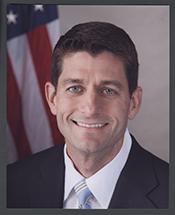
Mr. Speaker, I was absent for legislative business last week from June 2, 2003 through June 5, 2003 due to the birth of my son, Charles Wilson Ryan on Friday, May 30, 2003, As a result, I missed…
Mr. Speaker, I was absent for legislative business last week from June 2, 2003 through June 5, 2003 due to the birth of my son, Charles Wilson Ryan on Friday, May 30, 2003, As a result, I missed rollcall votes 227 through 248.
Had I been present, I would have voted ``yea'' on the following rollcall votes:
227, H. Res. 159, Expressing the Profound Sorrow on the Occasion of the Death of Irma Rangel;
228, H. Res. 195, Congratulating Sammy Sosa of the Chicago Cubs for hitting 500 Major League Home Runs;
229, H.R. 1465, Designating the facility of the United State Postal Service in Iron Station, North Carolina as the ``General Charles Gabriel Post Office'';
230, S. 222, the Zuni Indian Tribe Water Rights Settlement Act;
231, S. 273, the Grand Teton National Park Land Exchange Act;
234, H.J. Res. 4, Proposing an Amendment to the Constitution of the United States Authorizing the Congress to Prohibit the Physical Desecration of the Flag of the United States;
235, H. Res. 231, Supporting the Goals of Peace Officers Memorial Day;
236. H. Res. 257, Providing for Consideration of H.R. 760, The Partial-Birth Abortion Ban Act;
237, H. Con. Res. 177, Recognizing and commending the members of the U.S. Armed Forces, and the allies of the United States and their armed forces, who participate in Operation Enduring Freedom in Afghanistan and Operation Iraqi Freedom in Iraq and the dedication of military families and countless others for their support;
238, H. Res. 201, expressing the sense of the House of Representatives that our Nation's businesses and business owners should be commended for their support of our troops and their families as they serve our country in many ways, especially in these days of increased engagement of our military around the world;
239, H.R. 1954, Armed Forces Naturalization Act;
242, H.R. 760, The Partial-Birth Abortion Ban Act;
243, H. Res. 256, Providing for the consideration of H.R. 1474, Check Clearing for the 21st Century Act;
244, H. Res. 258, On Ordering the Previous Question for the consideration of S. 222, Zuni Indian Tribe Water Rights and Settlement Act and S. 273, Grand Teton National Park Land Exchange Act;
245, H. Res. 258, On Agreeing to the Resolution for the consideration of S. 222, Zuni Indian Tribe Water Rights Settlement Act and S. 273, Grand Teton National Park Land Exchange Act;
246, H.R. 1474, Check Clearing for the 21st Century Act;
247, S. 222, Zuni Indian Tribe Water Rights Settlement Act;
248, S. 273, Grand Teton National Park Land Exchange Act.
Had I been present, I would have voted ``nay'' on the following rollcall votes:
232, S. 763, Birch Bayh Federal Building and United States Courthouse Designation Act;
233, Substitute Amendment offered by Mr. Watt to H.J. Res. 4, Proposing an Amendment to the Constitution of the United States Authorizing the Congress to Prohibit the Physical Desecration of the Flag of the United States;
240, Substitute Amendment offered by Mr. Greenwood to H.R. 760, Partial Birth Abortion Ban Act;
241, Motion to Recommit with Instructions to H.R. 760, Partial Birth Abortion Ban Act.
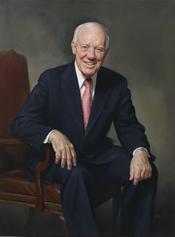
Mr. Speaker, I rise in strong support of S. 763, a bill to designate the federal building located at 46 East Ohio St. in Indianapolis as the ``Birch Bayh Federal Building and United States…
Mr. Speaker, I rise in strong support of S. 763, a bill to designate the federal building located at 46 East Ohio St. in Indianapolis as the ``Birch Bayh Federal Building and United States Courthouse.'' This bill has strong bipartisan support and each member of the Indiana delegation is a co-sponsor. The bill was also introduced during the last Congress, but unfortunately, it stalled at the end of the last term. I urge the 108th Congress to enact this legislation so that we may properly honor Birch Bayh.
Birch Bayh was born on January 22, 1928, in Terre Haute, Indiana. He attended public schools in Indiana and joined the Army in 1946. In 1954, he was elected to the Indiana House of Representatives where he served for eight years, including terms as Minority Leader and later, as Speaker of the House. He is a graduate of both Purdue University and the Indiana University School of Law.
In 1962, when he was only 34 years old, Birch Bayh was elected to the first of three terms in the U.S. Senate. Senator Bayh quickly became a leader on issues of education, equal rights, and Constitutional law. As Chairman of the Constitutional Subcommittee of the Senate Judiciary Committee, Senator Bayh authored two amendments to the Constitution: the 25th Amendment, which sets forth the order of Presidential succession, and the 26th Amendment, which lowers the voting age from 21 to 18 years of age. It should go without saying that authorship of two constitutional amendments is a remarkable achievement. In addition, Senator Bayh was a strong supporter of two landmark pieces of legislation--the 1964 Civil Rights Act and the 1965 Voting Rights Act. He was also highly instrumental in enacting the Juvenile Justice Act, which mandates the separation of juvenile offenders from adult prison populations.
Throughout his career, Senator Bayh was a strong champion for the rights of women, children, and minorities. He authored Title IX to the Higher Education Act, which ensures equal opportunities for women students and faculty in our Nation's schools. One result of this legislation is that women's sports teams have been given unprecedented opportunities to excel. To give just one example, the University of Minnesota-Duluth women's hockey team has excelled in the sport and has won the past three consecutive NCAA championships. It is proper that, as we honor Senator Bayh today, we should remember his commitment to equal opportunity and ensure that the Title IX funding mandates remain strong, especially in light of recent proposals to undercut this important piece of legislation.
Since leaving the Senate in the 1980s, Senator Bayh has continued his commitment to public service. He serves as a member of the William Fulbright Foreign Scholarship Board, National Institute Against Prejudice and Violence, and the University of Virginia's Miller Center Commission on Presidential Disability and the 25th Amendment.
I urge my colleagues to support S. 763 and to honor the contributions of Senator Birch Bayh to his home state of Indiana and to our Nation.
Mr. Speaker, I yield myself such time as I may consume, and I thank the gentleman from New Mexico. Mr. Speaker, Senate bill 763 is a bill that designates the Federal Building and United States…
Mr. Speaker, I yield myself such time as I may consume, and I thank the gentleman from New Mexico.
Mr. Speaker, Senate bill 763 is a bill that designates the Federal Building and United States Courthouse in Indianapolis, Indiana as the Birch Bayh Federal Building and United States Courthouse. Our senior Senator from Indiana, Senator Lugar, who heads the Foreign Relations Committee in the Senate, was so kind and gentle enough
to usher Senate bill 763 through the United States Senate. I had introduced the House version of this bill, H.R. 1082, which is cosponsored by the entire Indiana delegation.
Born to two schoolteachers in Shirkeyville, Indiana, but also call Terre Haute, Shirkeyville on January 22, 1928, he began his political career at the young age of 26 with his election to the Indiana House of Representatives in 1958. Having been a citizen of that State for many years, I grew to admire and respect the kind of leadership that the Senator displayed in the Indiana House of Representatives. Senator Bayh rose to become minority leader in 1957 and then went on to become Speaker of the House in 1959.
In 1962 he entered the United States Senate and distinguished himself on the Subcommittee on the Constitution of the Committee on the Judiciary. His expertise in constitutional law led him to author two amendments to the Constitution, the 25th amendment on Presidential and Vice Presidential successions which was ratified in 1967, and the 26th amendment lowering the voting age from 21 to 18 years of age, which was ratified in 1971. No lawmaker since the Founding Fathers has successfully authored two amendments to the United States Constitution.
In addition to his constitutional work, Senator Bayh wrote landmark legislation on behalf of women. He authored Title 9 of the Higher Education Act, which provided equal opportunities for women, students, and faculty. He also worked diligently on the Juvenile Justice Act and played an integral role in the passage of the landmark Civil Rights Act of 1964 and the Voting Rights Act of 1965.
At present, Senator Bayh is a partner in the Washington, D.C. law firm of Venable, Baetjer, Howard and Civiletti.
As a member of the Government Division's Legislative Group, he counsels corporate interests with business before all three branches of government, helping them to affect pending law, build coalitions, advance their causes, and to ensure that their voices and interests are considered in the public dialogue.
Senator Bayh also continues to work on behalf of his long-held passions of education, citizens' rights, and the fight against bias, bigotry, and racism in America. Senator Birch Bayh is respected and admired throughout the State of Indiana and the Nation as a man of dedication and unwavering principles.
This designation, Mr. Speaker, is a most fitting tribute to the outstanding career of a devoted and thoughtful and committed public servant.
Mr. Speaker, I have no further requests for time, and I yield back the balance of my time.
Show 11 more
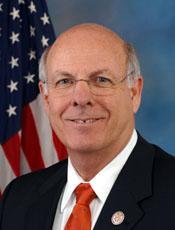
Mr. Speaker, I move to suspend the rules and pass the Senate bill (S. 763) to designate the Federal Building and United States courthouse located at 46 East Ohio Street in Indianapolis, Indiana, as…
Mr. Speaker, I move to suspend the rules and pass the Senate bill (S. 763) to designate the Federal Building and United States courthouse located at 46 East Ohio Street in Indianapolis, Indiana, as the ``Birch Bayh Federal Building and United States Courthouse''.
Mr. Speaker, I yield myself such time as I may consume.
Mr. Speaker, S. 763, which is identical to H.R. 1082 introduced by the gentlewoman from Indiana (Ms. Carson), designates the Federal building and United States courthouse located at 46 East Ohio Street in Indianapolis, Indiana as the ``Birch Bayh Federal Building and United States Courthouse.'' This bill has the bipartisan support of the entire Indiana delegation.
Senator Birch Bayh was born in Terre Haute, Indiana in 1928 to schoolteachers; and it is from them that he inherited an ethic of public service. Upon graduation from high school, Senator Bayh volunteered for and served in the United States Army from 1946 to 1948.
Upon his return, he attended and graduated from the Purdue University School of Agriculture at Lafayette in 1951. This education served him well, since throughout his long career, he always found time to work on and oversee the family farm, growing corn and soybeans for more than 4 decades.
Senator Bayh's political career began in 1954 when at the age of 26 he was elected to serve in the Indiana House of Representatives. While serving in that body, he served as Speaker in 1959 and as Democrat floor leader in 1957 and 1961. Despite these responsibilities, he also found time to attend and graduate from Indiana University School of Law in 1960 and was admitted to the bar in 1961.
In 1962, at the age of 34, Senator Bayh entered the United States Senate where he served three terms from 1963 to 1981. While in the Senate, he served as chairman of the Senate Select Committee on Intelligence, worked with the CIA, the National Security Agency, and the FBI. He also was a member of the Appropriations Subcommittee on Transportation, where he called for and funded efforts to build the District of Columbia's Metro subway system and to modernize the Amtrak rail system.
Senator Bayh is best known as chairman of the Constitution Subcommittee where he authored two amendments to the Constitution; the 25th amendment on Presidential and Vice Presidential succession, and the 26th amendment, which lowered the voting age from 21 to 18 years of age.
This is a fitting tribute to a dedicated public servant. I support this legislation and encourage my colleagues to do the same.
Mr. Speaker, I reserve the balance of my time.
Mr. Speaker, I have no further requests for time, and I yield back the balance of my time.
Mr. Speaker, on that I demand the yeas and nays.

Mr. President, it is a central element of our national character to pay solemn tribute to the service of those who have worn the uniform of our Armed Forces and placed themselves in harm's way to…
Mr. President, it is a central element of our national character to pay solemn tribute to the service of those who have worn the uniform of our Armed Forces and placed themselves in harm's way to defend our freedom and way of life. We raise monuments to the deeds of our great wartime leaders as well as the countless, often nameless heroes of those battles fought throughout our history. We also set aside special days to remember the sacrifice of generations of Americans who have stepped forward in America's defense.
This Nation also sets aside special places, hallowed ground, where we lay to rest those who have served us in our hour of greatest need. Our National Cemetery system is not only hallowed ground, National Cemeteries are monuments to military service, the places where we go on those special days to pay tribute to the sacrifice of so many in our history. National Cemeteries remind us of where we have been as a Nation, and inspires future generations to uphold the legacy of our veterans' devotion and sacrifice.
Today I offer legislation to establish a National Cemetery near Jacksonville, Florida to meet the needs of thousands of veterans who have chosen to live out their lives in Northeast Florida and Southeast Georgia. Florida's veteran population is the second largest in the Nation. Right now in Northern Florida and Southern Georgia, there are nearly half-a-million veterans. Florida has the Nation's oldest veteran population and one of the largest remaining populations of World War II veterans. We are all aware that this greatest of generations is passing away at higher and higher rates.
Unfortunately for these hundreds of thousands of veterans in Florida and Georgia, the nearest National Cemetery is located in Bushnell, FL, which is a three-hour drive from Jacksonville. The National Cemetery in St. Augustine is full and closed. The nearest National Cemetery in Georgia is in Marietta just north of Atlanta.
Our veterans have defended our country in her days of peril, and certainly deserve to rest in honored respect in a National Cemetery. To meet our obligations to the veterans of Northeast Florida and Southeast Georgia, we must act now, in order to have this facility established by 2006 when our World War II veterans' deaths are expected to reach their peak.
I am proud to sponsor this important bill, and look forward to the support of my colleagues as we provide for our veterans who have given so much for our country.
I ask unanimous consent that the text of the bill be printed in the Record.
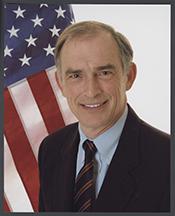
Mr. Speaker, I first came to know Senator Birch Bayh following his election to the United States Senate in 1962, through my father, John Visclosky, the former Mayor of Gary, IN. My father has always…
Mr. Speaker, I first came to know Senator Birch Bayh following his election to the United States Senate in 1962, through my father, John Visclosky, the former Mayor of Gary, IN. My father has always had a deep respect and strong feelings towards Senator Bayh. Later, as a Member of Congress, I have always considered Senator Birch Bayh a friend and a mentor. As a citizen, I am grateful that he chose a life of public service.
We will forever be served by Senator Bayh through the two changes he authored to, what I consider one of the greatest documents ever written, the Constitution. Senator Bayh amended the document first by authoring the Twenty-Fifth Amendment, which created an orderly transition of power in the case of the death or disability of the President and a method of selecting a Vice President when a vacancy occurs in that office. Later, Senator Bayh authored the Twenty-Sixth Amendment, which lowered the voting age from 21 to 18 years old. To think of Birch Bayh improving this document not once but twice is breathtaking, but expected from such a unique person. The structure of the Constitution had not been so impacted by a single lawmaker since its creation by the founding fathers.
Throughout his career, Senator Bayh always remembered that he was working for the people, especially those who were never given a fair chance in life. Senator Bayh fought hard for those who wanted an honest days work at a living wage in order to support their families. For instance, he fought hard and was successful in obtaining crucial funding for a railroad track rehabilitation program that put thousands of unemployed workers back on the job, and improved our nation's infrastructure.
Senator Bayh is a person who developed every talent that God gave him to serve others and is a person of deep compassion and caring. He is also a person who never lost his perspective on life, is fun to be with, and who can always make you laugh. My father would describe Senator Bayh as a ``100 percent guy.'' I would too, and I congratulate him on this great honor.
Mr. Speaker, I first got to know Senator Birch Bayh through my father, John Visclosky, the former Mayor of Gary, Indiana, following his election to the United States Senate in 1962. My father has…
Mr. Speaker, I first got to know Senator Birch Bayh through my father, John Visclosky, the former Mayor of Gary, Indiana, following his election to the United States Senate in 1962. My father has always had a deep respect and strong feelings towards Senator Bayh.
As a Member of Congress, I have always considered Senator Birch Bayh a friend and a mentor. As a citizen, I am grateful that he chose a life of public service, paying constant attention to the needs of working people and those who were not given a fair chance in life. Senator Bayh fought hard for those who wanted an honest days work at a living wage in order to support their families. For instance, he fought hard and was successful in obtaining crucial funding for a railroad track rehabilitation program that put thousands of unemployed workers back on the job.
While I am proud that we are naming a federal building after Senator Bayh today, we will forever be served by him through the two changes he authored to the Constitution. I have always believed that the Constitution is one of the two greatest documents ever written by man. To think of Birch Bayh improving it not once but twice is not only breathtaking, but expected from such a unique person. The structure of the Constitution had not been so impacted by a single lawmaker since its creation by the founding fathers.
Senator Bayh is a person who developed the talents that God gave him to serve others and a person of deep compassion and caring. A person who never lost his perspective, is fun to be with, and who can always make you laugh. My father would describe Senator Bayh as a ``100 percent guy.'' I would too, and I congratulate him on this great honor.

Mr. President, the National Center for Missing and Exploited Children is a critical component of our Nation's battle against child pornography and child exploitation. It is absolutely dedicated to…
Mr. President, the National Center for Missing and Exploited Children is a critical component of our Nation's battle against child pornography and child exploitation. It is absolutely dedicated to eradicating these evils, and its members work tirelessly towards this end. The Center deserves more than just kind words for these heroic efforts; Federal funding is necessary for it to continue this good work. Indeed, Congress has tasked the Center with many missions, including maintaining the cyber-tipline that receives reports of on-line child pornography, which the Center forwards to appropriate law enforcement officials. In this, as well as many other areas, the Center forms a valuable partnership with both Federal and State law enforcement officials and prosecutors in redressing a host of crimes against children.
The Center's cause is just and its history of performance is excellent. I am pleased to be the lead cosponsor of legislation that will continue to authorize funding for the National Center for Missing and Exploited Children for the next four years. Senator Leahy and I introduced this legislation in the 107th Congress, and our bipartisan effort continues in this new Congress. Our bill again authorizes funding at $20 million per year--twice the previous authorization--in recognition of the severity of the problem and the increased duties the Center has taken on.
As the Chairman of the Judiciary Committee, I am confident that this bill will become law very soon. I hope all of my colleagues will join Senator Leahy and me in supporting this bill.
Mr. President, today I am introducing legislation to name the Federal building and United States courthouse located at 46 East Ohio Street in Indianapolis, IN, as the ``Birch Bayh Federal Building…
Mr. President, today I am introducing legislation to name the Federal building and United States courthouse located at 46 East Ohio Street in Indianapolis, IN, as the ``Birch Bayh Federal Building and United States Courthouse.''
I am pleased to introduce this measure today to honor my colleague from Indiana, Senator Bayh. I am joined by my colleagues Mr. Byrd, Mr. Domenici, Mr. Hatch, Mr. Hollings, Mr. Inouye, Mr. Kennedy, Mr. Leahy, Mr. Levin, Mr. Sarbanes, and Mr. Stevens, who served in the Senate with Senator Bayh during his tenure 1963-1981.
Birch Evan Bayh was born in Terre Haute in 1928. He attended the public schools; served in the United States Army 1946-1948; graduated Purdue University School of Agriculture at Lafayette in 1951; and attended Indiana State University, 1952-1953. Bayh graduated from the Indiana University School of Law in 1960; and was admitted to the Indiana bar in 1961.
He worked as a lawyer and farmer in Terre Haute, and served as a representative to the Indiana General Assembly from 1954 to 1962. In the Assembly, he rose to become minority leader in 1957 and 1961 and Speaker of the House in 1959. Senator Bayh was first elected to the U.S. Senate in 1962; reelected in 1968 and 1974; and served from January 3, 1963, to January 3, 1981.
I am pleased to introduce this companion legislation in the Senate at the request of Representative Carson who introduced a bill in the House of Representatives. I hope this measure will be approved by the Congress.
Mr. President, today I am introducing legislation to name the Federal building and United States courthouse located at 46 East Ohio Street in Indianapolis, IN, as the ``Birch Bayh Federal Building…
Mr. President, today I am introducing legislation to name the Federal building and United States courthouse located at 46 East Ohio Street in Indianapolis, IN, as the ``Birch Bayh Federal Building and United States Courthouse.''
I am pleased to introduce this measure today to honor my colleague from Indiana, Senator Bayh. I am joined by my colleagues Mr. Byrd, Mr. Domenici, Mr. Hatch, Mr. Hollings, Mr. Inouye, Mr. Kennedy, Mr. Leahy, Mr. Levin, Mr. Sarbanes, and Mr. Stevens, who served in the Senate with Senator Bayh during his tenure 1963-1981.
Birch Evan Bayh was born in Terre Haute in 1928. He attended the public schools; served in the United States Army 1946-1948; graduated Purdue University School of Agriculture at Lafayette in 1951; and attended Indiana State University, 1952-1953. Bayh graduated from the Indiana University School of Law in 1960; and was admitted to the Indiana bar in 1961.
He worked as a lawyer and farmer in Terre Haute, and served as a representative to the Indiana General Assembly from 1954 to 1962. In the Assembly, he rose to become minority leader in 1957 and 1961 and Speaker of the House in 1959. Senator Bayh was first elected to the U.S. Senate in 1962; reelected in 1968 and 1974; and served from January 3, 1963, to January 3, 1981.
I am pleased to introduce this companion legislation in the Senate at the request of Representative Carson who introduced a bill in the House of Representatives. I hope this measure will be approved by the Congress.
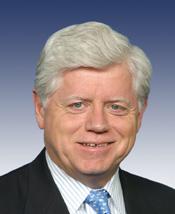
Mr. Speaker, I regret that I could not be present today, Monday, June 9, 2003, to vote on rollcall vote Nos. 249, 250, and 251 due to a family medical emergency. Had I been present, I would have…
Mr. Speaker, I regret that I could not be present today, Monday, June 9, 2003, to vote on rollcall vote Nos. 249, 250, and 251 due to a family medical emergency.
Had I been present, I would have voted: ``yea'' and rollcall vote No. 249 on H.R. 1610, to redesignate the facility of the United States Postal Service located at 120 East Ritchie Avenue in Marceline, MO, as the ``Walt Disney Post Office Building''; ``yea'' on rollcall vote No. 250 on H. Con. Res. 162, honoring the city of Dayton, OH, and its many partners, for hosting ``Inventing Flight: The Centennial Celebration'', a celebration of the centennial of Wilbur and Orville Wright's first flight; and ``yea'' on rollcall vote No. 251 on S. 763, to designate the Federal building and United States courthouse located at 46 East Ohio Street in Indianapolis, IN, as the ``Birch Bayh Federal Building and United States Courthouse.''
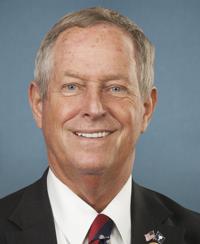
Mr. Speaker, on rollcall numbers 229, 228, and 227, on June 2, 2003, and on numbers 232, 231, and 230 on June 3, 2003, I was unable to cast my vote because I was part of a Congressional Delegation to…
Mr. Speaker, on rollcall numbers 229, 228, and 227, on June 2, 2003, and on numbers 232, 231, and 230 on June 3, 2003, I was unable to cast my vote because I was part of a Congressional Delegation to North Korea.
Had I been present, I would have voted the following:
Rollcall number 232--S. 763--Birch Bayh Federal Building, I would have voted nay.
Rollcall number 231--S. 273--Grand Teton National Park Land Exchange Act, I would have voted yea.
Rollcall number 230--S. 222--Zuni Indian Tribe Water Rights Settlement Act, I would have voted yea.
Rollcall number 229--H.R. 1465--General Charles Gabriel Post Office, I would have voted yea.
Rollcall number 228--H. Res. 195--Congratulating Sammy Sosa, I would have voted yea.
Rollcall number 227--H. Res. 159--Expressing Profound Sorrow on the Occasion of the death of Irma Rangel, I would have voted yea.
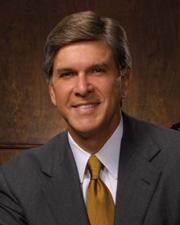
Mr. President, on behalf of myself and my friend and colleague Senator Bayh of Indian, I rise today to introduce legislation that will repeal a ten year old tax increase on our senior citizens. We…
Mr. President, on behalf of myself and my friend and colleague Senator Bayh of Indian, I rise today to introduce legislation that will repeal a ten year old tax increase on our senior citizens. We are joined by Sens. Chambliss, Miller, and Warner. This tax increase was passed in 1993 and has been an onerous and unjust tax on the Social Security benefits of America's seniors.
I am pleased to have the support of the following organizations for this important legislation: United Seniors Association, National Taxpayers Union, The Seniors Coalition, Americans for Tax Reform, The 60 Plus Association.
Mr. President, I ask unanimous consent that their letters be printed in the Record.
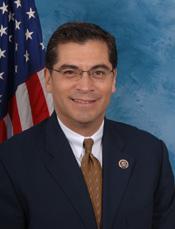
Mr. Speaker, on Monday, June 9, 2003, I was unable to cast my floor vote on roll call numbers 249, 250, and 251. The votes I missed include rollcall vote 249 on Suspending the Rules and Passing H.R.…
Mr. Speaker, on Monday, June 9, 2003, I was unable to cast my floor vote on roll call numbers 249, 250, and 251. The votes I missed include rollcall vote 249 on Suspending the Rules and Passing H.R. 1610, the Walt Disney Post Office Building Designation Act; rollcall vote 250 on Suspending the Rules and Agreeing to H. Con. Res. 162, Honoring the city of Dayton, Ohio for hosting ``Inventing Flight: the Centennial Celebration;'' and rollcall vote 251 on Suspending the Rules and Passing S. 763, the Birch Bayh Federal Building and U.S. Court House Designation Act.
Had I been present for the votes, I would have voted ``aye'' on rollcall votes 249, 250, and 251.
Bill Text
6 versions available
        [Congressional Bills 108th Congress]
[From the U.S. Government Publishing Office]
[S. 763 Enrolled Bill (ENR)]

S.763

One Hundred Eighth Congress

of the

United States of America

AT THE FIRST SESSION

Begun and held at the City of Washington on Tuesday,
the seventh day of January, two thousand and three

An Act

To designate the Federal building and United States courthouse located
at 46 East Ohio Street in Indianapolis, Indiana, as the ``Birch Bayh
Federal Building and United States Courthouse''.

Be it enacted by the Senate and House of Representatives of the
United States of America in Congress assembled,
SECTION 1. DESIGNATION OF BIRCH BAYH FEDERAL BUILDING AND UNITED STATES
COURTHOUSE.
The Federal building and United States courthouse located at 46
East Ohio Street in Indianapolis, Indiana, shall be known and
designated as the ``Birch Bayh Federal Building and United States
Courthouse''.

SEC. 2. REFERENCES.

Any reference in a law, map, regulation, document, paper, or other
record of the United States to the Federal building and United States
courthouse referred to in section 1 shall be deemed to be a reference
to the Birch Bayh Federal Building and United States Courthouse.

Speaker of the House of Representatives.

Vice President of the United States and
President of the Senate.