Chesapeake Bay Watershed Nutrient Removal Assistance Act
Legislative Activity
Stay on top of the latest movement without scrolling through every action
Read twice and referred to the Committee on Environment and Public Works. (text of measure as introduced: CR S5064)
April 9, 2003
View full timeline
Introduced in Senate
April 9, 2003
Sponsor introductory remarks on measure. (CR S5062-5064)
April 9, 2003
Read twice and referred to the Committee on Environment and Public Works. (text of measure as introduced: CR S5064)
April 9, 2003
Floor Debate
17 membersWhat members said about S. 827 on the floor
PSS JFK
JFK MLL
MLL GHS
GHS BG+12
BG+12
Floor Debate
17 membersWhat members said about S. 827 on the floor
Mr. President, today I am introducing a package of five measures to sustain and, indeed, renew the Federal commitment to restoring the water quality and living resources of the Chesapeake Bay…
Mr. President, today I am introducing a package of five measures to sustain and, indeed, renew the Federal commitment to restoring the water quality and living resources of the Chesapeake Bay watershed. Joining me in sponsoring one or more of these measures are my colleagues from Virginia, Pennsylvania, and Maryland, Senators Warner, Allen, Mikulski and Specter.
This year marks the 20th anniversary of the Chesapeake Bay Agreement, the historic Federal-State compact that launched the Chesapeake Bay restoration effort. Over the past two decades, we have made important progress both in putting in place the comprehensive, coordinated Federal-State-local and private sector management structure to guide the program and in specific initiatives to address key problems in the watershed. Three subsequent agreements were signed in 1987, in 1992 and in 2000, respectively, setting specific goals and action plans to restore the Chesapeake watershed. There are today over 700 groups and some 40 committees involved in the Bay Program. More than twenty-five Federal agencies are partnering with EPA and the Bay area States and there are numerous State agencies, local governmental organizations and citizen groups actively engaged in the restoration efforts. The level of public support and the degree of cooperation and coordination among all parties is unparalleled.
Despite these efforts, the job of restoring the Chesapeake to levels of quality and productivity that existed earlier in this century is far from complete. In its latest report card issued in November, 2002, the Chesapeake Bay Foundation gave the Chesapeake Bay a score of 27 out of 100--far short of the ``70'' level believed necessary for the Bay to be declared ``saved.'' The index underscores the continuing serious challenges facing the Bay. Nitrogen pollution from farms and city streets, sewage treatment plants, and air deposition, among other so- called non-point sources, continue to overload the Bay. Many of the living resources--oysters, shad, white perch, crabs--which are indicators of the Bay's health, are still in decline. Toxic chemicals are still present in the Bay's surface and bottom waters, having untold impacts on water quality and wildlife. A recent analysis undertaken by the Chesapeake Bay Commission estimates that the costs to clean the Bay and achieve the goals of the Chesapeake 2000 agreement over the course of the next seven years will exceed projected income by nearly $13 billion. Pollution from all sources will have to be further reduced, thousands of acres of watershed property must be preserved, significant efforts must be made to restore living resources, buffer zones to protect rivers and streams need to be created, education and stewardship efforts must be dramatically expanded.
While $13 billion seems like an enormous sum, we should remember that the health of the Chesapeake Bay is vital not only to the more than 15 million people who live in the watershed, but to the Nation. It is one of our Nation's and the world's greatest natural resources covering 64,000 square miles within six States. It is a world-class fishery that still produces a significant portion of the finfish and shellfish catch in the United States. It provides vital habitat for living resources, including more than 3600 species of plants, fish and animals. It is a major resting area for migratory waterfowls and birds along the Atlantic including many endangered and threatened species. It is also a one-of-a-kind recreational asset enjoyed by millions of people, a major commercial waterway and shipping center for much of the eastern United States, and provides jobs for thousands of people. In short, the Chesapeake Bay is a magnificent, multifaceted resource worthy of the highest levels of protection and restoration.
The five measures that we are introducing today are intended to help address some of the highest priority needs in the watershed and provide a Federal blueprint for restoring the Bay in the years ahead. I want to address each of these measures briefly.
The first measure, the Chesapeake Bay Watershed Nutrient Removal Assistance Act, would establish a grants program in the Environmental Protection Agency to support the installation of nutrient reduction technologies at major wastewater treatment facilities in the Chesapeake Bay watershed. I first introduced this measure during the 107th Congress and provisions of the legislation were included as part of S. 1961, the Water Investment Act of 2002, reported favorably by the Senate Environment and Public Works Committee. Unfortunately, no further action was taken on that legislation. Despite important water quality improvements over the past decade, nutrient
over-enrichment remains the most serious pollution problem facing the Bay. The overabundance of the nutrients nitrogen and phosphorous continues to rob the Bay of life sustaining oxygen. Recent modeling of EPA's Bay Program has found that total nutrient discharges must be reduced by more than 35 percent from current levels to restore the Chesapeake Bay and its major tributaries to health. To do so, nitrogen discharges from all sources must be reduced drastically below current levels. Annual nitrogen discharges into the Bay will need to be cut by at least 110 million pounds from the current 300 million pounds to less than 190 million pounds. Municipal wastewater treatment plants, in particular, will have to reduce nitrogen discharges by nearly 75 percent.
There are 304 major wastewater treatment plants in the Chesapeake Bay watershed: Pennsylvania, 123, Maryland, 65, Virginia, 86, New York, 18, Delaware, 3, Washington, D.C., 1, and West Virginia, 8. These plants contribute about 60 million pounds of nitrogen per year--one-fifth--of the total load of nitrogen to the Bay. Upgrading these plants with nutrient removal technologies to achieve nitrogen reductions of 3 mg/ liter would remove 46 million pounds of nitrogen in the Bay each year or 40 percent of the total nitrogen reductions needed. Nutrient removal technologies have other benefits, as well. They provide significant sayings in energy usage, 20 to 30 percent, in chemical usage, more than 50 percent, and in the amount of sludge produced, five to 15 percent. They are one of the most cost-effective methods of reducing nutrients discharged to the Bay.
My legislation would provide grants for 55 percent of the capital cost of upgrading the plants with nutrient removal technologies capable of achieving nitrogen reductions of 3 mg/liter. Any publicly owned wastewater treatment plant which has a permitted design capacity to treat an annual average of 0.5 million gallons per day within the Chesapeake Bay watershed portion of New York, Pennsylvania, Maryland, West Virginia, Delaware, Virginia and the District of Columbia would be eligible to receive these grants. As a signatory to the Chesapeake Bay Agreement, the EPA has an important responsibility to assist the states with financing these water infrastructure needs.
The second measure, the Chesapeake Bay Environmental Education Pilot Program Act, would establish a new environmental education program in the U.S. Department of Education for elementary and secondary school students and teachers within the Chesapeake Bay watershed. There is a growing consensus that a major commitment to education--to promoting an ethic of responsible stewardship and citizenship among the nearly 16 million people who live in the watershed--is necessary if all of the other efforts to ``Save the Bay'' are to succeed. Expanding environmental education and training opportunities will lead not only to a healthier Chesapeake Bay ecosystem, but a more educated and informed citizenry, with a deeper understanding and appreciation for the environment, their community and their role in society as responsible citizens.
One of the principal commitments of the Chesapeake 2000 Agreement, is to ``provide a meaningful Bay or stream outdoor experience for every school student in the watershed before graduation from high school'' beginning with the class of 2005. Despite important efforts by Bay area states and not-for-profit organizations, only a very small percentage of the more than 3.3 million K-12 students in the watershed have had the opportunity to engage in meaningful outdoor experiences or receive classroom environmental instruction. Many of the school systems in the Bay watershed are only at the beginning stages in developing and implementing environmental education into their curriculum, let alone exposing students to outdoor watershed experiences. What's lacking is not the desire or will, but the resources and training to undertake more comprehensive environmental education programs.
This legislation would authorize $6 million a year over the next three years in Federal grant assistance to help close the resource and training gap for students in the elementary and secondary levels in the Chesapeake Bay watershed. It would require a 50 percent non-Federal match, thus leveraging $12 million in assistance. The funding could be used to help design, demonstrate or disseminate environmental curricula and field practices, train teachers or other educational personnel, and support on-the-ground activities or Chesapeake Bay or stream outdoor educational experiences involving students and teachers, among other things. The program would complement the NOAA Bay Watershed Education and Training Program that we established last year.
The third measure would reauthorize and enhance the Chesapeake Bay Environmental Protection and Restoration Program. This program, which was first established in Section 510 of the Water Resources Development Act of 1996, Public Law 104-303, authorizes the U.S. Army Corps of Engineers to provide design and construction assistance to State and local authorities in the environmental restoration of the Chesapeake Bay. To date, the Corps of Engineers has constructed or approved $9.3 million in projects under the Chesapeake Bay Environmental Restoration and Protection Program including oyster restoration projects in Virginia, shoreline protection and wetland/sewage treatment projects at Smith Island in Maryland and the upgrade of the Scranton Wastewater Treatment Plant in Pennsylvania to reduce the amount of nutrients delivered to the Chesapeake Bay. These projects have nearly exhausted the current $10 million authorization.
This legislation increases the authorization for this program from $10 million to $30 million. Consistent with all other environmental restoration authorities of the Corps of Engineers, it enables States and local governments to provide all or any portion of the 25 percent non-Federal share required in the form of in-kind services. It also establishes a new small-grants program for local governments and nonprofit organizations to carry out small-scale restoration and protection projects in the Chesapeake Bay watershed. The program would be administered by the National Fish and Wildlife Foundation which has extensive experience and expertise in managing these kinds of grants for other Federal agencies. Ten percent of the funds appropriated each year under this program would be set-aside for these grants. In view of the great need and the many requests for assistance from the Bay area states, this legislation is clearly unwarranted.
The forth measure, the Chesapeake Bay Watershed Forestry Act, would continue and enhance the USDA Forest Service's role in the restoration of the Chesapeake Bay watershed. Forest loss and fragmentation are occurring rapidly in the Chesapeake Bay region and are among the most important issues facing the Bay and forest management today. According to the National Resources Inventory, the States closest to the Bay lost 350,000 acres of forest between 1987-1997 or almost 100 acres per day. More and more rural areas are being converted to suburban developments resulting in smaller contiguous forest tracts. These trends are leading to a regional forest land base that is more vulnerable to conversion, less likely to be economically viable in the future, and is losing its capacity to protect watershed health and other ecological benefits, such as controlling storm water runoff, erosion and air pollution, all critical to the Bay clean-up effort.
Since 1990, the USDA Forest Service has been an important part of the Chesapeake Bay Program. Administered through the Northeastern Area, State and Private Forestry, this program has worked closely with Federal, State and local partners in the six-state Chesapeake Bay region to demonstrate how forest protection, restoration and stewardship activities, can contribute to achieving the Bay restoration goals. Over the past 12 years, it has provided modest levels of technical and financial assistance, averaging approximately $300,000 a year, to develop collaborative watershed projects that address watershed forest conservation, restoration and stewardship.
With the signing of the Chesapeake 2000 Agreement, the role of the USDA Forest Service has become more important than ever. Among other provisions, this Agreement requires the signatories to conserve existing forests along all streams and shoreline; promote the expansion and connection of
contiguous forests; assess the Bay's forest lands; and provide technical and financial assistance to local governments to plan for or revise plans, ordinances and subdivision regulations to provide for the conservation and sustainable use of the forest and agricultural lands. To address these goals, the USDA Forest Service must have additional resources and authority, and that is what this measure seeks to provide.
This legislation codifies the role and responsibilities of the USDA Forest Service to the Bay restoration effort. It strengthens existing coordination, technical assistance, forest resource assessment and planning efforts. It authorizes a small grants program to support local agencies, watershed associations and citizen groups in conducting on- the-ground conservation projects. It also establishes a regional applied forestry research and training program to enhance urban, suburban and rural forests in the watershed. Finally it authorizes $3.5 million for each of fiscal years 2004 through 2010, a modest increase in view of the six-State, 64,000 square mile watershed.
The fifth measure, the NOAA Chesapeake Bay Watershed Education, Training, and Restoration Act, would enhance the National Oceanic and Atmospheric, NOAA, Chesapeake Bay Office's authorities to address the living resource restoration and education and training goals and commitments of the Chesapeake 2000 agreement. It builds upon provisions contained in the Hydrographic Services Improvement Act Amendments of 2003, and addresses several urgent and unmet needs in the watershed. To help meet Bay-wide living resource education and training goals, it codifies the Bay Watershed Education and Training or, B-WET, Program-- the first federally funded environmental education program focused solely on the Chesapeake Bay watershed--that we initiated in the Fiscal 2002 Commerce, Justice, State Appropriations bill and establishes an aquaculture education program to assist with oyster and blue crab hatchery production.
To better coordinate and organize the substantial amounts of data collected and complied by Federal, State and local government agencies and academic institutions--data such as information on weather, tides, currents circulation, climate, land use, coastal environmental quality, aquatic living resources and habitat conditions--and make this information more useful to resource managers, scientists and the public, it establishes an internet-based Coastal Predictions Center for the Chesapeake Bay. It also authorizes a shallow water monitoring program to address critical gaps in information on near shore and river area water quality conditions needed for restoration of living resources. And to help meet Chesapeake 2000 living resource restoration goals, it codifies the ongoing oyster restoration program an authorizes a new submerged aquatic vegetation restoration program.
Mr. President, these measures would provide an important boost to our efforts to save the Chesapeake Bay and a blueprint for the course ahead. They are strongly supported by the Chesapeake Bay Commission, the Chesapeake Bay Foundation, and other organizations in the watershed. I ask unanimous consent that the text of the bills and supporting letters to printed in the Record. I urge my colleagues to join with us in supporting the measures and continue the momentum contributing to the improvement and enhancement of our Nation's most valuable and treasured natural resource.
Mr. President, today I am introducing a package of targeted, affordable tax relief provisions designed to help the Nation's small businesses during this time of economic stagnation. After the Easter…
Mr. President, today I am introducing a package of targeted, affordable tax relief provisions designed to help the Nation's small businesses during this time of economic stagnation. After the Easter recess, I know that the Finance Committee will be marking up a wide-ranging tax bill whose ultimate size is yet to be determined. I also know, however, that few of the proposals offered by the President will truly stimulate the economy or help the millions of struggling small businesses. Instead, the Bush tax proposal will reward the richest among us and pass the bill to our children. We can and must do better.
As the Ranking Member of the Senate Committee on Small Business and Entrepreneurship, I have drafted legislation that will truly help small businesses and the Nation. It is a tax proposal with meaningful, affordable reforms that will make a difference without sticking our kids with a huge bill. I hope that all of part of this legislation can be incorporated into a Senate economic stimulus package. I have titled the bill that I am introducing today ``The Affordable Small Business Stimulus and Simplification Act of 2003,'' and it builds upon a bill that I introduced in the 107th Congress.
I call my bill an ``affordable'' stimulus package for small business because it targets the policies that can make the biggest difference and uses our limited resources as wisely and efficiently as possible. It does not include everything that I would like to do for small business, but it includes enough to help stimulate this essential component of our economy. Moreover, the bill will help address the tax complexity concerns of small businesses because it includes the Single Point Tax Filing Act that has passed the Senate on two previous occasions and a new standard deduction that will benefit millions of small businesses.
Let me briefly explain the contents of my bill.
First, my bill increases the expensing limitation for small businesses. It raises it to $35,000, rising to $40,000 in 2008, and it increases the phase-out level, above which expensing is not allowed, to $350,000, rising to $400,000 in 2008. I know that others have proposed raising this limit as high as $75,000, but such an increase is simply unaffordable while we face huge budget deficits. Raising it to $35,000 now, rising to $40,000 in 2008, is a more responsible approach and will provide an immediate investment incentive to many small businesses.
Second, my bill creates a new standard deduction of $500 for sole proprietorships. This provision provides tax relief and real tax simplification to the smallest of small businesses because it would relieve these businesses of the paperwork burden of having to itemize the myriad of small expenses on IRS forms. Of course, businesses with expenses greater than $500 would retain the option of full itemization. But for the very smallest businesses, many of them home-based or part- time, this new provision will be a significant step towards tax simplification.
Third, the bill modifies and expands a provision that was signed into law in 1993 regarding new equity investments in small businesses' stock. Under my bill, new investments in companies with capitalization of up to $100 million at the time of investment will have a 75 percent capital gains exclusion if the investments are held at least four years. The exclusion for such investments will be 100 percent if they are made in a business involved in such critical technologies as transportation or homeland security, defense-related technologies, anti-terrorism, pollution control, energy efficiency, or waste management. The 100-percent exclusion would also be allowed for investments in specialized small business investment companies, or SSBICs, whose investments are made solely in disadvantaged small businesses. Both the 75 and 100 percent exclusion levels would be available for investments made by both individuals and corporations. In addition, the rollover period for such investments would be increased from 60 days to 180 days. The provision passed in 1993 was crafted too narrowly to stimulate substantial new investment. I hope that this new, expanded capital gains treatment will prompt new investments in small and entrepreneurial businesses.
Fourth, my bill recognizes that the current depreciation schedules for high-tech equipment and software are out of date, given how quickly such items become obsolete in our fast-changing economy. My bill would reduce the recovery period for computers or peripheral equipment from five years to three, and for software from three years to two. This change would be permanent.
Fifth, my bill would fix a problem with the tax deductibility of health insurance expenses for the self-employed. Under current law, these expenses are fully deductible in 2003 for the first time--but the Internal Revenue Code denies the deduction to taxpayers who are eligible to participate in another plan, such as their spouse's employer's plan. My bill would clarify that the deduction is denied only if the taxpayer actually participates in the other plan.
Sixth, to simplify tax filing, my bill would include the Single Point Tax Filing Act. This section would simplify the tax filing process for employers that choose to participate by allowing the Internal Revenue Service and State agencies to combine, on one form, both State and Federal employment tax returns. This provision has been passed by the Senate twice before, but has not yet become law. There is currently a demonstration project along these lines in Montana, which is working very well. I believe such authority should extend to all States.
Seventh, my bill clarifies that married couples who co-own a business can elect to be sole proprietors for purposes of filing their Federal income taxes. This provision aligns the law with the way many married couples actually do business. Under present law, married couples who co-own a business technically own that business as a partnership for Federal income tax purposes. This treatment carries with it all the complications of the partnership provisions of the Internal Revenue Code, including having to file partnership returns. But in reality, many married couples in this situation consider themselves sole proprietors and are incorrectly filing tax returns as such. While the IRS may not be strictly enforcing the law against these taxpayers, this technical non-compliance can cause trouble down the road. Upon divorce, for example, it may not be clear that the business had been jointly owned. This same ambiguity might complicate a spouse's ability to get the full Social Security and Medicare benefits to which they are entitled. My bill makes clear that for Federal income tax purposes, married couples who co-own a business can be treated as sole proprietors.
Eighth, my bill would extend the existing income averaging provisions to cover fishing as well as farming. In other words, the choice to average income from a farming trade or business under present law would be extended to cover income from the trade or business of fishing as well. Under my bill, a farmer or fisherman electing to average his or her income would owe the alternative minimum tax, AMT, only to the extent he or she would have owed AMT had averaging not been elected. This is an important change that will benefit not only people in my state, but also throughout New England, the Pacific Northwest, the Gulf of Mexico region, Alaska, and in other areas of the country where fishing is an important industry.
Finally, my bill would modify the tax treatment of investments in debenture small business investment companies, or SBICs, so they are less likely to create unrelated business taxable income, UBTI, liability. The current tax treatment of money borrowed from the government by a debenture SBIC creates taxable income for an otherwise tax-exempt investor, which makes it almost impossible to raise capital from these investors. Free to choose, tax-exempt investors opt to invest in venture capital funds that do not create any UBTI liability. Therefore, my bill would assure that money borrowed from the government by an SBIC does not subject tax-exempt investors to UBTI. In so doing, the bill would encourage greater investment in SBICs, which provide critically needed venture capital to emerging small businesses. These venture capital funds are sorely needed in today's stalled economy.
I believe that ``The Affordable Small Business Stimulus and Stimulus Act of 2003'' will provide a much-needed stimulus to small business in a way that we can afford, particularly if we can find offsets to pay for the bill. I look forward to working with the Chairman and Ranking Member of the Finance Committee to have some or all of its provisions enacted into law.
Mr. President, I rise today to offer a private bill on behalf of Tanya Andrea Goudeau and her family to grant Tanya immediate relative status. The Goudeaus adopted Tanya in 2001, but due to…
Mr. President, I rise today to offer a private bill on behalf of Tanya Andrea Goudeau and her family to grant Tanya immediate relative status. The Goudeaus adopted Tanya in 2001, but due to misinformation and an undue delay in the adoption process, the adoption was not completed until a week after Tanya's 16th birthday. As a result, Tanya was no longer considered a child under the law and therefore was not eligible to receive permanent resident status. Currently, Tanya faces deportation to Sri Lanka where she no longer has a family to care for her. What is more, she is now legally a part of the Goudeau family. Tanya is the Goudeau's daughter and they are her parents.
Tanya Goudeau was born to Mrs. Goudeau's sister in 1984 in Sri Lanka. During a visit with the Goudeaus in 1999 at their home in Baker, LA, Tanya's mother announced that she was moving and that she did not want any further contact with her daughter. Tanya's father had walked out on the family 11 years earlier and could not be located. The Goudeaus realized that Tanya had no family to return to and they decided to adopt her. They could not bear to send their niece back to her native home where she would be on her own at age 14. Without any children of their own, they lovingly took Tanya into their family and have lovingly cared for her for the past 4 years.
Tanya has overcome her mother's and father's abandonment and after a period of adjustment, she has grown to love her new home. She is currently a senior in high school with aspirations to earn an advanced medical degree. Without the passage of this private bill, Tanya could face deportation to Sir Lanka at a time when she should be focused on her college degree with the support of her parents. The Goudeaus' situation is an unintended consequence of the requirement to complete the adoption process before a child's sixteenth birthday. We need to grant Tanya immediate relative status to allow the Goudeaus to remain a family.
Mr. President, throughout the next month, hundreds of thousands of high school seniors across this Nation will open up their mailboxes and receive acceptance letters for college. They will begin planning where they will live and what they will study for the next 2 or 4 years. These students will dream big and have grand ideas about what college will mean for them, but before they can officially enroll, they will be slapped in the face with a very real question: how are they going to pay for it?
Attending an institution of higher education can be expensive. According to the National Center for Higher Education, the cost of attending two or four year, public and private colleges has increased faster than both inflation and family income. In 2000, families in the lowest quartile of the income bracket spent as much as 25 percent of their annual income to send their children to a public, four year college, compared with only 13 percent in 1980. At the same time, though, sources of federal assistance are diminishing. The Federal Pell Grant program, which was designed to help alleviate the financial burden on low income families, covered only 57 percent of the cost of tuition at public, four year colleges in 1999, whereas Pell Grants covered 98 percent of the costs in 1986.
As the cost of college increases and the impact of Federal grants decreases, school loans have become a gateway to attending college for the majority of students. However, because of a provision in the 1998 re-authorization of the Higher Education Act, entitled the ``Single Lender Rule,'' students who have all of their student loans from a single lender are barred from getting a lower rate by consolidating their loans with a different lender. The financial benefits for the consumer by using a different lender for loan consolidation are easily seen in other areas of finance, such as homeowners refinancing their mortgage. What appears to me to be an arbitrarily contrived limitation that protects lenders more than students has prevented college graduates from consolidating their multiple student loans into a single, new loan, thus driving up the cost of attending college.
Having a college degree is fast becoming a necessary pre-requisite to long-term success. That is why I rise today to introduce to my colleagues the ``Consolidation Student Loan Flexibility Act of 2003.'' This bill would repeal the Single Lender rule, and knock down this arbitrarily contrived barrier that hinders students from gaining access to higher education.
Some of my colleagues may be asking, why now? Why not wait to repeal the Single Lender rule when we readdress the Higher Education Act? As the close of this school year fast approaches, and high school graduates begin making important decisions about their educational future, we cannot put off the repeal of the Single Lender rule. The effects of maintaining the Single Lender rule are devastating. In 2001, 143,504 students were forced to pay higher rates on their student loans because the Single Lender rule denied them benefits of loan consolidation. Over 3,300 of these students were from my home State of Louisiana. We cannot force another class of college students to pay more for college than necessary. Studies have shown that a major factor influencing a student's choice of college and degree program is the amount of debt connected with the type of institution of profession. These choices greatly impact not only the lives of the students themselves, but also society as a whole. At a time when our society is in dire need of nurses, teachers, and many other professions, we must not frighten students away from college for fear of substantial debt burdens after their graduation.
The greatest investment we can make in our future is in the education of our children. Today, with the changing world, educating our children includes assisting those who desire to obtain a college degree. By not repealing the Single Lender rule, we will be continuing to drive up the cost of college, thus impeding access, especially for lower-income students. According to the Census Bureau, the income gap between people receiving a bachelor's degree and people receiving only a high school diploma has increased from 57 percent in 1975, to 76 percent in 2002. By financially hindering the entrance into college, we will be adding to this income gap, which only further hurts our already recessed economy.
The Consolidation Student Loan Flexibility Act is an important first step to making college more affordable for all American families. I hope and urge my colleagues to join me in making the dream of a college education a reality for all.
Mr. President, I rise today with my Finance Committee colleague, Senator Lincoln, to introduce the The Mortgage Insurance Fairness Act. This legislation will extend the mortgage interest tax…
Mr. President, I rise today with my Finance Committee colleague, Senator Lincoln, to introduce the The Mortgage Insurance Fairness Act. This legislation will extend the mortgage interest tax deduction to mortgage insurance payment premiums, both government and private. It will make mortgage insurance payments tax-deductible and will boost homeownership in Oregon and across the Nation, for those lower-income, minority and veteran borrowers that typically need mortgage insurance to purchase a home.
It is widely recognized that homeownership helps create stable and safe communities. Thus, the Federal Government has long sought to increase homeownership. The Bush Administration has announced a target of 5.5 million new homeowners by the year 2010. To achieve that goal, groups that have typically had difficulty purchasing homes--young people, low-income families, members of minority groups--must be able to participate in the housing market.
Government and private mortgage insurance programs help first-time, low-income and veteran borrowers afford to purchase a home. The Veterans Affairs, VA, Federal Housing Authority, FHA, Regional Housing Authority, RHA, and Private Mortgage Insurance,
PMI, programs allow buyers to make a down payment of 3 percent or less of the appraised value. Mortgage insurance is a critical factor in allowing middle-income families and minorities to become homeowners. In Oregon, more than 137,000 families held mortgages with either FHA or private mortgage insurance at the end of 2002 and insured mortgages covered 25 percent of home purchase loans originating in 2001. Sixty- two percent of the insured home purchases in Oregon in 2001 were low- income borrowers. The Mortgage Insurance Fairness Act will bring tax relief to those who need it the most.
In 2001, nationwide, mortgage insurance covered 57 percent percent of mortgage purchase loans made to African American and Hispanic borrowers and 54 percent percent of the loans to borrowers with incomes below the median income. The people who use mortgage insurance are regular working families who live in every community throughout the country. Currently, twelve million American families use mortgage insurance.
Presidently, these borrowers cannot deduct the cost of their mortgage insurance payments for Federal tax purposes. If mortgage insurance payments were made deductible, the cost of homeownership would be further reduced for these borrowers, enabling new buyers to get into a home that they might not have been able to afford. It is estimated that the Mortgage Insurance Fairness Act would increase the number of homeowners by 300,000 per year.
Extending the tax deduction for home mortgage interest payments to mortgage insurance payments will significantly contribute to making the American dream of owning a home come true for many more of our citizens. I urge my colleagues to support this important bi-partisan legislation and join us in working towards its enactment at the earliest opportunity this year. I ask unanimous consent that the text of this legislation be printed in the Record.
Mr. President, I rise today to introduce the Early Treatment for HIV Act, ETHA, of 2003. Senator Clinton joins me in introducing this bill, and I want to thank her for her steadfast support for people living with HIV. HIV knows no party affiliation, and I am pleased to say that ETHA cosponsors sit on both sides of the aisle.
Simply stated, ETHA gives States the opportunity to extend Medicaid coverage to low-income, HIV-positive individuals before they develop full-blown AIDS. Today, the unfortunate reality is that AIDS must disable most patients before they can qualify for Medicaid coverage. We can do better, and we should do everything possible to ensure that all people living with HIV can get early, effective medical care.
Current HIV treatments are very successful in delaying the progression from HIV infection to AIDS, and help improve the health and quality of life for millions of people living with the disease. That is why it was so devastating for people in Oregon when, just a few weeks ago, the state announced that its Medically Needy program ran out of money, and that many patients, including those living with HIV, would have to go elsewhere for their treatments. The fact of the matter is that safety net programs all over the country are running out of money, and are generally unable to cover all of the people who need paying for their medical care. As other programs are failing, ETHA gives States another way to reach out to low-income, HIV-positive individuals.
Importantly, ETHA also offers states an enhanced Federal Medicaid match, which means more money for States that invest in treatments for HIV. This provision models the successful Breast and Cervical Cancer Treatment and Prevention Act of 2000, which allows states to provide early Medicaid intervention to women with breast and cervical cancer. Even in these difficult times, forty-five states are now offering early Medicaid coverage to women with breast and cervical cancer. We can build upon this success by passing ETHA and extending similar early intervention treatments to people with HIV.
HIV/AIDS touches the lives of millions of people living in every State in
the Union. Some get the proper medications, and too many do not. This is literally a life and death issue, and ETHA can help many more Americans enjoy long, healthy lives.
I want to thank Senators Collins, Bingaman, Cantwell, Corzine, Feinstein, Landrieu, Murray, and Wyden for joining us as cosponsors of ETHA. I also wish to thank all of the organizations around the country that have expressed support for this bill. I have received a stack of support letters from those organizations, and I ask unanimous consent that those letters be printed in the Congressional Record. In particular, I want to thank the ADAP Working Group and the Treatment Access Expansion Project, led by Robert Greenwald, for helping bring so much attention to ETHA. I hope all of my colleagues will join us in supporting this critical, life-saving legislation.
Mr. President, I rise today with my friend and colleague from Rhode Island, Mr. Chafee, and a bipartisan group of co- sponsors to introduce the Immigrant Children's Health Improvement Act of 2003.…
Mr. President, I rise today with my friend and colleague from Rhode Island, Mr. Chafee, and a bipartisan group of co- sponsors to introduce the Immigrant Children's Health Improvement Act of 2003.
This legislation will give states the option to provide Medicaid and State Children's Health Insurance Program, CHIP, coverage to legal immigrant children and pregnant women during their first five years in this country.
Medicaid and CHIP are vital components of our nation's health care safety net. They provide coverage to over 40 million non-elderly, low- income Americans, most of them children. These programs have helped dramatically reduce infant mortality, and they have provided health care financing for millions of poor children whose families cannot afford the high cost of private health insurance.
However, for many low-income families that are eligible for Medicaid and CHIP, these safety net programs are little more than a mirage in a desert--an illusion to those who need them most. The Personal Responsibility and Work Opportunity Reconciliation Act of 1996, commonly known as the welfare reform law, arbitrarily barred states from using federal funds to provide health coverage to low-income legal immigrants during their first five years in the United States. While the goal of welfare reform was to encourage self-sufficiency in adults, the legislation unintentionally punished children.
Prior to 1996, Medicaid coverage was available to qualified children, parents,
seniors, and people with disabilities in both citizen and legal immigrant families alike. After passage of the 1996 welfare reform law, many low-income and working legal immigrant families were left without a viable option for health insurance coverage.
In fact, while the percentage of our nation's children with health insurance has risen in recent years, the percentage of children in immigrant families with health insurance has fallen. According to the Kaiser Commission on Medicaid and the Uninsured, in 2000, half of low- income children in such families were uninsured.
Florida is home to over half a million uninsured children, many of whom are legal immigrants. Take the Sardinas family of Miami.
The Sardinas family immigrated to the United States from Cuba in 2001. Mr. Sardinas works in a factory assembling airplanes while Mrs. Sardinas maintains a low-wage job. The family's four children--Swani, 17; Sinai, 13; Samuel, 8; and Sentia, 5--have been on a State waiting list for health insurance for almost two years. Sentia has allergies and Swani suffers from asthma. Mrs. Sardinas worries about not having access to regular check-ups for her children, but she has no choice. She does not know what the family will do if Sentia has a severe allergic reaction or Swani is hospitalized after an asthma attack.
The Immigrant Children's Health Improvement Act eliminates the arbitrary designation of August 22, 1996, as a cutoff date for allowing children to get health care. More than 155,000 children like Swani, Sinai, Samuel, and Sentia will have access to health coverage each year, allowing them to receive preventive services, have their chronic conditions properly diagnosed and treated, and receive timely care for acute conditions.
States have asked for this option. In its 2003 Winter Policy Report, the National Governors Association endorsed this common-sense policy proposal. The National Council of State Legislators has also endorsed this bill.
Twenty-two States are already providing health coverage for legal immigrants through State-funded replacement programs. However, severe budget shortfalls may prevent such states from being able to continue these important programs in the future. Our bill provides immediate fiscal relief for these States by allowing them to draw down federal matching funds. It also gives states that are not currently providing health coverage to legal immigrant children and pregnant women the flexibility to do so.
Legal immigrants pay taxes, serve in the military, and have the same social obligations as United States citizens. Legal immigrant children are, as much as citizen children, the next generation of Americans. It is important that all children, both citizen children and legal immigrant children alike, start off on the right foot towards full civil participation.
Our bill is supported by Senators McCain, Daschle, Jeffords, Bingaman, Lincoln, Collins, Kennedy, Feinstein, Corzine, Levin, Sarbanes, Dodd, Landrieu, Boxer, Kerry, and Bill Nelson.
Representatives Lincoln Diaz-Balart of Florida and Henry Waxman of California have also introduced bipartisan companion legislation in the House.
We call upon Congress and the President to act this year and pass this important bill.
Show 8 more

Mr. President, I rise today to introduce legislation that will provide much-needed grants for transitional housing services to victims of domestic violence who are brave enough to leave an abusive…
Mr. President, I rise today to introduce legislation that will provide much-needed grants for transitional housing services to victims of domestic violence who are brave enough to leave an abusive situation and seek a new life of safety and freedom. I am pleased that Senators Kennedy and Biden join me as original cosponsors of this important legislation.
I witnessed the devastating effects of domestic violence early in my career as the Vermont State's Attorney for Chittenden County. Today, more than 50 percent of homeless individuals are women and children fleeing domestic violence. More than half the cities surveyed by the U.S. Conference of Mayors in 2000 cited domestic violence as a primary cause of homelessness. The women and children who leave their abusers tend to have few, if any, funds with which they can support themselves. Shelters offer short-term assistance, but are overcrowded and unable to provide the support needed. Transitional housing allows women to bridge the gap between leaving a domestic violence situation and becoming fully self-sufficient, but such assistance is limited because there is currently no Federal funding for transitional housing specifically for those victims.
If we truly seek an end to domestic violence, then transitional housing must be available to all those fleeing domestic abuse. The stable, sustainable home base for women and their children found in transitional housing allows women the opportunities to learn new job skills, participate in educational programs, work full-time jobs, and search for adequate child care in order to gain self-sufficiency. Without such resources, many women eventually return to situations where they are abused and even killed. This cycle of domestic abuse must end, and transitional housing assistance is one of the tools we can use to end it.
A transitional housing grant program was last authorized for only one year as part of the reauthorization of the Violence Against Women Act in 2000. This program would have been administered through the Department of Health and Human Services and provided $25 million in fiscal year 2001. Unfortunately, funds were never appropriated for the program, and the authorization has now expired.
The grant program established in the bill I introduce today with Senators Kennedy and Biden would establish a new Department of Justice grant program that authorizes the Attorney General, acting in consultation with the Director of the Violence Against Women Office of the Department of Justice, in consultation with the Secretary of Housing and Urban Development and the Secretary of Health and Human Services. This program would have the benefit of a wide range of expertise in the three departments, and has enormous potential to improve people's lives. It would authorize $30 million in DOJ transitional housing grants for each of the fiscal years 2004 through 2008.
This new grant program administered through DOJ will make a big impact in many areas of the country where availability of affordable housing is at an all-time low. There are many dedicated people working to provide victims of domestic violence with resources, such as Rose Pulliam of the Vermont Network Against Domestic Violence and Sexual Assault, but they can not work alone. We should all be concerned with providing victims of domestic violence a safe place to gain the skills and stability needed to make the transition to independence. This is an important component of reducing and preventing crimes that take place in domestic situations, ranging from assault and child abuse to homicide, and helping the victims of these crimes.
I am please that our bill will be included in the conference report on the PROTECT Act, S. 151. I thank the conferees for including in the conference agreement this language for a grant program that will supply to victims fleeing domestic violence situations tangible means by which they may move on with their lives.
I ask unanimous consent that a section by section analysis of this bill be printed in the Record.
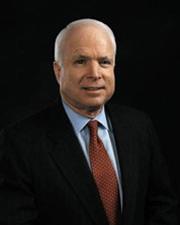
Mr. President, I am pleased to join with Senator Kyl today to introduce the Northern Arizona National Forest Land Exchange Act of 2003. This bill facilitates an exchange of over 50,000 acres of…
Mr. President, I am pleased to join with Senator Kyl today to introduce the Northern Arizona National Forest Land Exchange Act of 2003. This bill facilitates an exchange of over 50,000 acres of Federal and private land in Arizona for the primary purpose of consolidating National Forest lands currently in checkerboard ownership in the northwestern portion of the State. Included in the exchange are a number of other Federal land parcels located in the communities of Flagstaff, Williams, Clarkdale, Cottonwood, and Camp Verde and other lands currently leased by six different camps.
This is a complex land exchange because of its size, the diverse nature of the lands involved, and the range of potential benefits and impacts that would result. The Forest Service has stated that the consolidation of the checkerboard in the Prescott National Forest will yield significant benefits and cost-savings to the public. In putting forth this exchange with the Yavapai Ranch Limited Partnership, the Forest Service has identified opportunities to achieve better and more cost-effective management of Federal lands and resources, to acquire lands that will meet the important public objectives of protection of wildlife habitat, cultural resources, watershed, wilderness and aesthetic values, and also meet the needs of State and local residents and their economies.
The communities of Flagstaff and Williams and the camps are strongly in favor of this bill as it will allow them to acquire federal lands that will be exchanged to Yavapai Ranch, providing them beneficial economic and land use management opportunities. The communities of Clarkdale, Cottonwood, and Camp Verde are also an important part of this exchange. Inclusion of these parcels, totaling more than 300 acres, has focused discussion on essential issues of available water supply, the limits of sustainable growth, and quality of life concerns.
The issue of potential adverse impacts of new development on limited water resources has been addressed in this bill through the establishment of conservation easements which limit water use on the Verde Valley parcels after private acquisition. This foresighted provision is intended to conserve precious surface and ground water resources and protect the water users and State water right holders dependent upon them. Given the uncertainty about available water supplies and future uses, I believe this is a responsible measure which is in the interest of both Arizona citizens and the American public.
Of primary importance to me are the procedural terms and conditions by which the land exchange will be conducted. The Forest Service has stated that the procedures set forth in this bill represent standard practice and will allow for the desired outcome of a fair and equal value exchange of public property. I have also made an effort to
solicit public input on the exchange in order to appreciate the potential benefits and costs involved. I held several public meetings in Arizona on the exchange and have heard and read the differing views of hundreds of interested Arizonans.
After careful consideration, I believe it is appropriate that the bill be introduced at this time. While the proposed exchange has the support of the Forest Service, the elected representatives of the affected communities, and the camps, introduction of this bill advances us to the next phase of public consideration of key aspects and procedural issues associated with the legislation.
I expect that public hearings will be held here and in Arizona on the bill in the near future. The Forest Service will have an opportunity to provide public statements concerning the specific provisions of the bill, as will other parties affected by the exchange. I anticipate that in the next phase of the legislative process, our state delegation will receive the information needed to address any remaining issues and ensure that this exchange will be conducted in a manner that benefits the citizens of Arizona and Federal taxpayers alike.

Mr. President, today I rise to reintroduce a bill that is enormously important to veterans in my State of West Virginia and to all veterans across this great Nation. The bill I am reintroducing will…
Mr. President, today I rise to reintroduce a bill that is enormously important to veterans in my State of West Virginia and to all veterans across this great Nation. The bill I am reintroducing will extend VA's ability to provide long-term care under two specific authorities of the Veterans Millennium Health Care and Benefits Act of 1999.
In November of 1999, Congress passed comprehensive long-term care legislation that required VA for the first time to provide extended care services to enrolled veterans. Section 101 of Public Law 106-117 directed VA to provide nursing home care to any veteran who is in need of such care for a service-connected condition, or who is 70 percent or more service-connected disabled. In addition, VA was to have provided non-institutional care, such as respite care, adult day care, home- based primary care, homemaker/home health aide and skilled home health care to all enrolled veterans. Without extension, both authorities will expire in December, 2003.
Long-term care for veterans has been, and remains, a priority for me. And the extension of these services is critically important to veterans and their families in every State across this country.
Prior to the passage of the Millennium Health Care Bill, when families in West Virginia were told by VA that the long-term care services they needed were not available to them, they would turn to me in despair. I still frequently hear from families of aging, sick veterans who want desperately to keep their husbands, fathers or brothers at home, but in order to do that they need help.
Many of our aging veterans are suffering from debilitating diseases, such as Alzheimer's or Parkinson's, or a stroke. A large number of these veterans are WW II combat veterans, whose wives are lovingly caring for them at home with very limited resources. The noninstitutional long-term care services currently available within VA provide an array of care that can be a lifesaver for the dedicated care givers of critically ill veterans, and allow these veterans to remain at home.
While the purpose of this bill is clear, let me explain the reason it is so necessary. Within three years of the enactment of Public Law 106- 117, VA was to evaluate and report to the House and Senate Committees on Veterans' Affairs on its experience in providing services under both the nursing home care and non-institutional care provisions, and to make recommendations on extending or making permanent these provisions. These programs were given an expiration date of four years.
But unfortunately, very little has happened with these long-term care programs. It was not until October, 2001, that VA addressed the requirements of the law by issuing a directive on such noninstitutional long-term care services as respite and adult day care. And even now, we find that how these services are being provided, if at all, varies widely throughout the VA health care system. The delay in implementing these programs will greatly impede our ability to adequately study their effects.
Additionally, in September, 2001, two years after Congress passed the Millennium Health Care and Benefits Act of 1999, I asked the General Accounting Office to identify the long-term care services that are available at each of VA's medical centers, and the standards and criteria used by VA to determine which veterans may receive these services.
GAO is expected to release their final report on VA long-term care by May 1, but their preliminary report confirms that VA has not made much progress in implementing noninstitutional long-term care services for veterans.
Therefore, I believe it is critical that both long-term care authorities, due to expire in December of this year, be extended for an additional five years, until December 31, 2008, so that we can be properly evaluate the services and, if need be, make appropriate adjustments.

Mr. President, today, I am pleased to join with Senator McCain to introduce the Northern Arizona National Forest Land Exchange Act of 2003. This bill, which facilitates a large and very complex land…
Mr. President, today, I am pleased to join with Senator McCain to introduce the Northern Arizona National Forest Land Exchange Act of 2003. This bill, which facilitates a large and very complex land exchange in Arizona, is the product of months of discussions between the Forest Service, community groups, local officials, and other stakeholders. It will allow communities to accommodate growth and improve the management of our forests; it will also yield many environmental benefits to the public.
This bill will protect some of Arizona's most beautiful ponderosa pine forests from future development by placing approximately 35,000 acres of private land into public use. It consolidates a 110-square mile area in the Prescott National Forest near the existing Juniper Mesa Wilderness under Forest Service ownership, to preserve the area in its natural state and prevent its subdivision. This land has old growth ponderosa pine that is at least 250 years old and juniper that is 500 years old or older. Consolidation will preserve the area for watershed management, wildlife habitat, and outdoor recreation. Without consolidation, these tracts would be open to future development. I am pleased that this bill will preserve them for future generations.
This bill significantly improves management of the Prescott National Forest. The existing checkerboard ownership pattern in the Prescott makes management and access difficult. The exchange improves management of the forest by consolidating this land, and allowing the Forest Service to effectively apply forest-restoration treatments designed to improve forest health and reduce hazardous fuels. In turn, better management will help decrease the fire risk in Arizona's forests. The importance of improved management and efficient restoration treatments cannot be overstated given last year's devastating Rodeo-Chediski fire.
In addition to protecting Arizona's natural resources, this bill allows several Northern Arizona communities to accommodate future growth and economic development, and to meet other municipal needs. The exchange will allow the Cities of Williams and Flagstaff to expand their airports and water-treatment facilities, and develop town parks and recreation areas. The town of Camp Verde will have the opportunity to acquire lands for view shed protection. Several youth organizations throughout northern Arizona will be able to acquire land for their camps.
Even as it addresses environmental and community needs, this bill saves significant taxpayer dollars. It obviates the administrative route for land exchange--doing an exchange of this size administratively would require considerable financial and personnel resources within the Forest Service. The agency estimates that the legislative approach will cost half as much as the administrative alternative--resulting in potential savings to the taxpayers in excess of $500,000.
This land exchange is supported and endorsed by many municipalities, religious institutions, environmental groups, and other nongovernmental organizations in Arizona. Experts from the Arizona Game and Fish Department have reviewed the lands to be exchanged and strongly support the proposal. I have received hundreds of letters and petitions from residents expressing support for it. This exchange is extremely important to the residents of Arizona.
This land exchange is a unique opportunity to protect Arizona's natural resources while accommodating the tremendous growth that my State is experiencing. This bill is good for the state of Arizona and I plan to work with my colleagues to ensure that we pass this important legislation this year.

Mr. President, it is a privilege to join Senator Graham and Senator Chafee in introducing the Immigrant Children's Health Insurance Act, which will benefit tens of thousands of immigrant children and…
Mr. President, it is a privilege to join Senator Graham and Senator Chafee in introducing the Immigrant Children's Health Insurance Act, which will benefit tens of thousands of immigrant children and families across the Nation.
The 1996 welfare reform legislation disqualified legal, taxpaying immigrants from major Federal assistance programs, including health coverage through Medicaid and the State Children's Health Insurance Program. As a result, many of these individuals and families go without needed care or rely on hospital emergency rooms for their care.
This bill will enable States to provide health insurance coverage for legal immigrant children and pregnant women under Medicaid and SCHIP. This is an important step in alleviating the health disparities that exist for immigrant children. Research shows that children of immigrant are twice as likely to be uninsured as children of U.S. citizens. They are more than three times as likely not to have regular care, and more than twice as likely to be in fair or poor health. Enacting this legislation will help to eliminate these inequalities.
This bill will also help to reduce the number of uninsured in our country. Today, there are 42 million uninsured, and 10 million are children. Most of the uninsured are earning incomes below or near the poverty line, and can't afford the high cost of private insurance. The 1996 legislation barring legal immigrants from federally funded health care has contributed to the increase in the number of uninsured. The Congressional Budget Office estimates that this bill will cover an additional 155,000 children and 06,000 pregnant women this year alone.
Throughout our history, immigrants have made important contributions to our country. They work hard, pay taxes, and play by the rules. In fact, immigrants and their children make significant contributions to our long-term economic well-being by adding an estimated $10 billion annually to our economy. However, they are disproportionately employed in low-wage, low-benefit jobs, and are more likely to be uninsured. This bill will enable legal immigrant families to receive the services they are paying for as taxpayers. It is a matter of basic fairness.
The bill makes good economic sense, as well. Twenty-six states and the District of Columbia already use their own State funds to provide medical coverage for legal immigrants, but continuing these programs is becoming increasingly difficult as state budget constraints worsen. In fact, Massachusetts, which currently provides health coverage at State expense, is proposing to eliminate Medicaid for adult immigrants. Allowing States to use Federal funds to support their health care initiatives will provide needed fiscal relief, and ensure that these children receive a health start.
Both good nutrition and adequate health care are fundamental for health child development. Last year, with President Bush's support, Congress restored food stamp benefits to legal immigrants in the farm bill. It is long past time for Congress to guarantee that legal immigrants also have access to health care.
America has a proud tradition of welcoming immigrants, and we must live up to our history and heritage as a nation of immigrants. Restoring these health benefits will ensure that children in immigrant families have the same opportunities for good health as every other child in the Nation. The Immigrant Children's Health Insurance Act is a needed step to achieve this goal, and I urge my colleagues to support this important legislation.

Mr. President, I rise today to introduce the ``Corporate Accountability in Bankruptcy Act.'' This bill would clarify that the bonuses and other excessive compensation of corporate directors and…
Mr. President, I rise today to introduce the ``Corporate Accountability in Bankruptcy Act.'' This bill would clarify that the bonuses and other excessive compensation of corporate directors and wrongdoers can be brought back into a bankruptcy estate when a company goes bankrupt. It is only fair that corporate officers and employees who have engaged in wrongdoing and violated the securities and accounting laws should not be able to make money off of a company which has gone bankrupt, while company employees, shareholders and creditors are left carrying the burden of the bankruptcy. Moreover, corporate officers and insiders should not be allowed to keep their bonuses and loans when a company has done so poorly to go bankrupt.
Currently, the Bankruptcy Code permits a trustee to recover assets which a debtor has previously distributed to
creditors within a certain time period prior to the filing of a bankruptcy petition. This allows a trustee to increase a debtor's assets for the fair treatment and equitable distribution of assets among all creditors, as well as to help shore up a debtor's assets during a reorganization.
Section 547 of the Bankruptcy Code currently allows a trustee to recover assets from an insider made within a year of the filing of a bankruptcy petition. Section 548 of the Bankruptcy Code allows a trustee to recover transfers of assets, made within one year, where there has been a fraudulent transaction or where a debtor has received less than what is reasonably equivalent in value. However, the Bankruptcy Code is not clear as to whether these sections would include the bonuses and other extraordinary or excessive compensation of officers, directors or other company employees. That needs to change.
The Corporate Accountability in Bankruptcy Act clarifies section 547 of the Bankruptcy Code to provide that a trustee may recover bonuses, loans, nonqualified deferred compensation, and any other extraordinary or excessive compensation as determined by the court, made to an insider, officer or director and made within one year before the date of the filing of the bankruptcy petition.
In addition, the bill amends section 548 of the Bankruptcy Code to provide that a trustee may recover bonuses, loans, nonqualified deferred compensation, and any other extraordinary or excessive compensation, as determined by the court, paid to an officer, director or employee who has committed securities or accounting violations, within 4 years of the filing of the bankruptcy petition. The reason that the bill extends the present one year reach-back period for fraudulent transfers to four years is because a majority of States have adopted a four year time period or the Uniform Fraudulent Transfer Act, (which allows for 4 years).
The plain fact is that corporate officers and employees who have violated the law, as well as corporate officials who have not done a good job in managing a company, should not be allowed to benefit where their actions have contributed to the downfall of the company. Corporate mismanagement and irresponsibility should not be rewarded, and the bad guys need to be held accountable. The changes to the Bankruptcy Code contained in this bill are tied to excessiveness and wrongdoing and are fair. We need to do something about bringing more accountability and fairness to the system, and the Corporate Accountability in Bankruptcy Act does that.
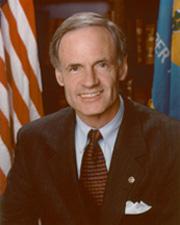
Mr. President, today along with Senators Lincoln Chafee and Judd Gregg, I am introducing comprehensive legislation to reduce harmful emissions from our Nation's power plants. Developed after…
Mr. President, today along with Senators Lincoln Chafee and Judd Gregg, I am introducing comprehensive legislation to reduce harmful emissions from our Nation's power plants. Developed after extensive input from electric generators who would be affected by such legislation, leaders in the environmental community, and State and local regulators who will enforce any new requirements, the Clean Air Planning Act is a balanced approach to a difficult challenge.
The Clean Air Planning Act takes a market-based approach that would aggressively reduce electric power generators' emissions of sulfur dioxide, SO2, by 80 percent, nitrogen oxides, NOX, by 69 percent, mercury by 80 percent, and return carbon dioxide, CO2, emissions to 2001 levels within a decade. It provides planning and regulatory certainty to electric generators who would be required to achieve these regulations.
The negative public health and environmental impacts of SO2, NOX and mercury emissions have been well documented. While there is bipartisan agreement that emissions of these three pollutants from power plants need further control, there is disagreement over how much and how fast. The bill includes a flexible trading system that allows for attainment of the caps
in the most efficient manner and updates the new source review program to help encourage emission reductions to occur.
There is also a growing consensus that greenhouse gases such as CO2 emissions from power plants are contributing to climate change. The time has come to set up mechanisms that will address these emissions without impeding economic growth. The Clean Air Planning Act establishes modest goal of capping CO2 emissions from electrical generators at 2001 levels by 2013. Generators could meet that goal with a flexible system that allows both trading between generators and earning credits through off-system reductions of greenhouse gases.
Today, America's power plants will emit over 6 million tons of harmful emissions. They will also power the world's most productive economy. Reducing emissions while retaining affordable electricity is the goal of the Clean Air Planning Act, and I urge others to join in this effort.
In the months ahead, this clean air bill and others will be compared and debated. Opponents and supporters will be heard, but at the outset I believe we should agree on a set of guiding principles.
Four is better than three: A comprehensive four-emission strategy that includes carbon reductions provides regulatory certainty and offers the greatest environmental and economic benefits.
Markets work: Cape and trade based emission standards provide the maximum incentive to achieve cleaner power.
Stairs are better than cliffs: Prompt but gradual reductions through multi-phase or declining caps are more desirable than single phased cuts.
Eliminate redundancy: Existing regulatory programs will need some modernization in light of tight emission caps.
Clean air is a basic right all Americans deserve. The responsibility to ensure that right falls to Congress and the President. By putting our differences aside and focusing on the challenge at hand the result will be healthy citizens breathing clean air, a vibrant economy with abundant affordable electricity, and a model for the rest of the world to follow.
I ask unanimous consent that the text of the bill be printed in the Record.
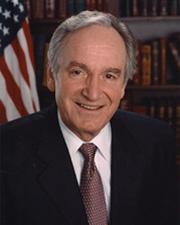
Mr. President, on behalf of myself and Senators Murray, Kennedy, Mikulski, Durbin, Leahy, Akaka, Feingold and Boxer, I am introducing the Fair Pay Act. April 15, tax day, is also Equal Pay Day. If…
Mr. President, on behalf of myself and Senators Murray, Kennedy, Mikulski, Durbin, Leahy, Akaka, Feingold and Boxer, I am introducing the Fair Pay Act.
April 15, tax day, is also Equal Pay Day. If you add what women made last year and so far this year, that would be the same amount men made in all of last year. In other words, it takes women 16 months to make what men make in 12.
There's been a lot of tax talk from Congress and the White House lately. We've got more than 1 million people out of work. And we've got millions of families struggling to make ends meet. The White House believes a new $750 billion tax cut for the rich is the solution.
I disagree. One way we can put more money in the pockets of working families--pay women what they're worth. Nearly 40 years after the Equal Pay Act became law, women are still paid only 76 cents for every dollar a man earns.
Working women at all income and education levels are affected by the wage gap. Last year, the GAO found that the pay gap continues to effect women in management and that, for these women, the pay gap has actually widened since 1995.
Regardless of education, the impact is the same. These women work as hard as men, but have less money to pay the bills, to put food on the table, or to save for their retirement or their child's education. That is simply wrong and it must end. We must close the wage gap once and for all.
First, we need to do a better job by enforcing and strengthening the penalties for the law that demands equal pay for equal work. That's why I support the Paycheck Fairness Act, sponsored by Senator Daschle and Congresswoman DeLauro.
Another part of discrimination against women in the work place is the historic pattern of undervaluing and underpaying so-called ``women's jobs.''
Millions of women today working in female-dominated jobs--as social workers, teachers, child care workers and nurses--are ``equivalent'' in skills, effort, responsibility and working conditions to similar jobs dominated by men. But these women aren't paid the same as men.
That's what the Fair Pay Act--that Congresswoman Norton and I are reintroducing today--would address. Unfairly low pay in jobs dominated by women is un-American, it is discriminatory and our bill would make it illegal.
20 States have ``fair pay'' laws and policies in place for their employees, including my State of Iowa. And Iowa had a Republican legislature and Governor when this bill passed into law. So, ending wage discrimination against women in a nonpartisan issue.
Some say we don't need any more laws; market forces will take care of the wage gap. If we had relied on market forces we would have never passed the Equal Pay Act, the Civil Rights Act, the Family Medical Leave Act or the Americans with Disabilities Act.
I first introduced the Fair Pay Act in 1996 after the Iowa Business and Professional Women alerted me to this problem. And as long as I'm in the U.S. Senate I will continue to fight to pass this important legislation so we can end wage discrimination against women once and for all.
Show 4 more
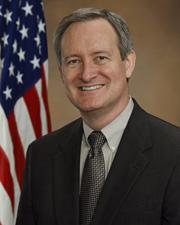
Mr. President, I rise to introduce the Water Adjudication Fee Fairness Act. This bill would require the Federal Government to pay the same filing fees and costs associated with state water rights…
Mr. President, I rise to introduce the Water Adjudication Fee Fairness Act. This bill would require the Federal Government to pay the same filing fees and costs associated with state water rights adjudications as is currently required of States and private parties.
To establish relative rights to water--water that is the lifeblood of many States, particularly in the West--States must conduct lengthy, complicated, and expensive proceedings in water rights' adjudications. In 1952, Congress recognized the necessity and benefit of requiring Federal claims to be adjudicated in these State proceedings by adopting the McCarran Amendment. The McCarran Amendment waives the sovereign immunity of the United States and requires the Federal Government to submit to State court jurisdiction and to file water rights' claims in State general adjudication proceedings.
These Federal claims are typically among the most complicated and largest of claims in State adjudications, and Federal agencies are often the primary beneficiary of adjudication proceedings where states officially quantify and record their water rights. However, in 1992, the United States Supreme Court held that, under existing law, the U.S. need not pay fees for processing Federal claims.
When the United States does not pay a proportionate share of the costs associated with adjudications, the burden of funding the proceedings unfairly shifts to other water users and often delays completion of the adjudications by diminishing the resources necessary to complete them. Delays in completing adjudications result in the inability to protect private and public property interests or determine how much unappropriated water may remain to satisfy important environmental and economic development priorities.
Additionally, because they are not subject to fees and costs like other water users in the adjudication, Federal agencies can file questionable claims without facing court costs, inflating the number of their claims for future negotiation purposes. This creates an unlevel playing field favoring the Federal agencies and places a further financial and resources burden on the system.
I recognize the Federal Government has a legitimate right to some water rights; however, the Federal Government should play by the same rules as the States and other private users. The Water Adjudication Fee Fairness Act is legislation that remedies this situation by subjecting the United States, when party to a general adjudication, to the same fees and costs as State and private users in water rights adjudications.
This measure has the full support of the Western States Water Council and the Western Governor's Association. I ask my colleagues to join me in supporting water users, taxpayers, the States, and welcome their co- sponsorship.
Mr. President, I am pleased to join with Senator Carper today to introduce the Clean Air Planning Act of 2003. Congress needs to advance four-pollutant legislation that offers the best chance for…
Mr. President, I am pleased to join with Senator Carper today to introduce the Clean Air Planning Act of 2003. Congress needs to advance four-pollutant legislation that offers the best chance for broad bipartisan support, and I believe this bill meets that test. The testimony received through hearings in the Environment and Public Works Committee over the past several years has clearly outlined the need for controlling the major emissions from power plants--sulfur dioxide, nitrogen oxide, mercury and carbon dioxide--while at the same time recognizing the added costs of these new controls. We know through experience that we will only be successful at passing legislation if we find middle ground.
The parameters of this debate have been established. Some will say this bill doesn't go far enough in some respects. Others will say the legislation goes too far, especially as it pertains to the mandatory control of carbon dioxide emissions. However, the relationship of fossil fuels to global warming is clear and scientifically validated. The ``U.S. Climate Action Report 2002'' released by the administration last May tells us we need to take real actions to address the problem. The longer we wait, the harder this problem will be to solve. The Rio Convention is a perfect example of why waiting is not reasonable. In 1992, we agreed to voluntarily reduce harmful emissions to 1990 levels. It didn't happen. Now, in 2003 we are told that reductions to 1990 levels will stall the economy. If we wait much longer before taking any action, imagine how much harder it will be to achieve real reductions without harming the economy.
The legislation we are introducing today would achieve significant reductions in a more cost effective way than other proposals. For sulfur dioxide, nitrogen oxide, and mercury, we will establish emissions caps that are superior to reductions that will be achieved under the existing Clean Air Act. In addition, for the first time, we will ensure real reductions of carbon dioxide emissions are achieved. By 2013, the utility sector will be required to reduce carbon dioxide emissions to 2001 levels. This proposal will allow the United States to address carbon pollution for the first time and, when compared to a three-pollutant bill, at very small incremental costs.
I believe that the Carper-Chafee bill offers a real opportunity to break the stalemate that exists today and begin an honest debate that will eventually lead to enactment of strong legislation. I look forward to working with all of my colleagues as we move forward to pass a bill that enjoys the broadest support and adequately addresses the serious health, environmental, and economic issues facing the Nation.

Mr. President, I rise today for myself, Senator Ensign, Senator Hatch, and Senator Bennett to introduce this bill, which will establish a National Heritage Route in eastern Nevada and western Utah.…
Mr. President, I rise today for myself, Senator Ensign, Senator Hatch, and Senator Bennett to introduce this bill, which will establish a National Heritage Route in eastern Nevada and western Utah.
National Heritage areas, corridors, and routes are regions in which residents and businesses, as well as local and tribal governments join together in partnership to conserve and celebrate cultural heritage and special landscapes. The Great Basin National Heritage Route includes historic mining camps and ghost towns, Mormon and other pioneer settlements, as well as Native American communities. The Route passes through classic Great Basin country along the trails of the Pony Express and the Overland Stage. Cultural resources within the route include Native American archaeological sites dating back to the Fremont Culture.
Our bill will also help highlight some of the Great Basin's natural wonders. Passing through Millard County, Utah, and parts of the Duckwater Reservation and White Pine County in Nevada, the Route contains items of great biological and geological interest. In Nevada, it encompasses forests of bristlecone pine, the oldest living things on the earth. In Utah, the Route includes native Bonneville cutthroat trout as well as other distinctive species and ecological communities.
Designation of the corridor as a Heritage Route will ensure the protection of key educational and recreational opportunities in perpetuity without compromising traditional local use of the land. The Great Basin National Heritage Route will provide a framework for celebrating Nevada's and Utah's rich historic, archeological, cultural, and natural resources for both visitors and residents.
The bill will establish a board of directors consisting of local officials from both counties and tribes to manage the area designated by the route. The board will develop a management plan within 3 years of the bill's passage, and the Secretary of the Interior will enter into a memorandum of understanding with the Board of Directors for the management of the resources of the heritage route. Our legislation also authorizes up to $10 million to carry out the Act but limits Federal funding to no more then 50 percent of the project's cost. The bill allows the Secretary to provide assistance for 15 years after the bill is enacted.
Our bill benefits not just the people of Nevada and Utah, but citizens of all States. It highlights an area of outstanding cultural and natural value and brings people together to celebrate values that they can be proud of. I ask unanimous consent that the text of the bill be printed in the Record.
Mr. President, I rise today to introduce the bipartisan Commission on the Accountability and Review of Federal Agencies, CARFA, Act. We need accountability in Federal spending. With our Nation at war…
Mr. President, I rise today to introduce the bipartisan Commission on the Accountability and Review of Federal Agencies, CARFA, Act.
We need accountability in Federal spending. With our Nation at war and with a recovering economy, the Congress needs to take concrete steps to ensure that hard-earned taxpayer dollars are being efficiently used by the Federal Government.
Indeed, few things are more upsetting to my Kansas constituents than to see wasteful Federal spending. Kansans often say to me: ``I do not mind paying my taxes, but it is infuriating to see my hard-earned money being poorly spent by the Federal Government. If I am going to work hard to earn this money, I want it spent wisely.'' These are real concerns that need to be addressed.
The bipartisan legislation that I introduce today with 13 original cosponsors would help to provide accountability to Federal spending by establishing a commission to review Federal domestic agencies and programs within agencies.
The Senate is already on record strongly supporting this concept through an amendment that I offered to the Senate Budget Resolution. On March 21, the Senate passed S.A. 282 to the budget resolution by a voice vote. S.A. 282 briefly describes the CARFA Act, expressing the sense of the Senate that a commission should be established to review Federal domestic agencies and programs within agencies, and that the commission should submit to Congress: (1) recommendations to realign or eliminate wasteful agencies and programs within agencies; and (2) legislation to implement its recommendations.
The CARFA Act is modeled on successful commissions of the past. If enacted, the 12-member presidentially appointed commission would conduct a 2-year review of Federal domestic agencies and programs within agencies, using a narrow set of criteria in its review.
Upon completion of its evaluation, the commission would submit to Congress both its recommendations of agencies and programs that should be realigned or eliminated, and proposed legislation to implement its recommendations. As with successful commissions of the past, the Congress would consider this legislation on an expedited basis with a comment period from the committees of jurisdiction. Within the expedited timeframe, the Congress would take an up-or-down vote on the legislation as a whole without amendment.
I urge my colleagues to support and pass this important piece of legislation.
Bill Text
Latest available legislative text
        [Congressional Bills 108th Congress]
[From the U.S. Government Publishing Office]
[S. 827 Introduced in Senate (IS)]

108th CONGRESS
1st Session
S. 827

To amend the Federal Water Pollution Control Act to provide assistance
for nutrient removal technologies to States in the Chesapeake Bay
watershed.

_______________________________________________________________________

IN THE SENATE OF THE UNITED STATES

April 9, 2003

Mr. Sarbanes (for himself, Ms. Mikulski, Mr. Warner, Mr. Allen, and Mr.
Specter) introduced the following bill; which was read twice and
referred to the Committee on Environment and Public Works

_______________________________________________________________________

A BILL

To amend the Federal Water Pollution Control Act to provide assistance
for nutrient removal technologies to States in the Chesapeake Bay
watershed.

Be it enacted by the Senate and House of Representatives of the
United States of America in Congress assembled,

SECTION 1. SHORT TITLE.

This Act may be cited as the ``Chesapeake Bay Watershed Nutrient
Removal Assistance Act''.

SEC. 2. FINDINGS AND PURPOSES.

(a) Findings.--Congress finds that--
(1) nutrient pollution from point sources and nonpoint
sources continues to be the most significant water quality
problem in the Chesapeake Bay watershed;
(2) a key commitment of the Chesapeake 2000 agreement, an
interstate agreement among the Administrator, the Chesapeake
Bay Commission, the District of Columbia, and the States of
Maryland, Virginia, and Pennsylvania, is to achieve the goal of
correcting the nutrient-related problems in the Chesapeake Bay
by 2010;
(3) by correcting those problems, the Chesapeake Bay and
its tidal tributaries may be removed from the list of impaired
bodies of water designated by the Administrator of the
Environmental Protection Agency under section 303(d) of the
Federal Water Pollution Control Act (33 U.S.C. 1313(d));
(4) nearly 300 major sewage treatment plants located in the
Chesapeake Bay watershed annually discharge approximately
60,000,000 pounds of nitrogen, or the equivalent of 20 percent
of the total nitrogen load, into the Chesapeake Bay; and
(5) nutrient removal technology is 1 of the most reliable,
cost-effective, and direct methods for reducing the flow of
nitrogen from point sources into the Chesapeake Bay.
(b) Purposes.--The purposes of this Act are--
(1) to authorize the Administrator of the Environmental
Protection Agency to provide financial assistance to States and
municipalities for use in upgrading publicly-owned wastewater
treatment plants in the Chesapeake Bay watershed with nutrient
removal technologies; and
(2) to further the goal of restoring the water quality of
the Chesapeake Bay to conditions that are protective of human
health and aquatic living resources.

SEC. 3. SEWAGE CONTROL TECHNOLOGY GRANT PROGRAM.

The Federal Water Pollution Control Act (33 U.S.C. 1251 et seq.) is
amended by adding at the end the following:

``TITLE VII--MISCELLANEOUS

``SEC. 701. SEWAGE CONTROL TECHNOLOGY GRANT PROGRAM.

``(a) Definition of Eligible Facility.--In this section, the term
`eligible facility' means a municipal wastewater treatment plant that--
``(1) as of the date of enactment of this title, has a
permitted design capacity to treat an annual average of at
least 500,000 gallons of wastewater per day; and
``(2) is located within the Chesapeake Bay watershed in any
of the States of Delaware, Maryland, New York, Pennsylvania,
Virginia, or West Virginia or in the District of Columbia.
``(b) Grant Program.--
``(1) Establishment.--Not later than 1 year after the date
of enactment of this title, the Administrator shall establish a
program within the Environmental Protection Agency to provide
grants to States and municipalities to upgrade eligible
facilities with nutrient removal technologies.
``(2) Priority.--In providing a grant under paragraph (1),
the Administrator shall--
``(A) consult with the Chesapeake Bay Program
Office;
``(B) give priority to eligible facilities at which
nutrient removal upgrades would--
``(i) produce the greatest nutrient load
reductions at points of discharge; or
``(ii) result in the greatest environmental
benefits to local bodies of water surrounding,
and the main stem of, the Chesapeake Bay; and
``(iii) take into consideration the
geographic distribution of the grants.
``(3) Application.--
``(A) In general.--On receipt of an application
from a State or municipality for a grant under this
section, if the Administrator approves the request, the
Administrator shall transfer to the State or
municipality the amount of assistance requested.
``(B) Form.--An application submitted by a State or
municipality under subparagraph (A) shall be in such
form and shall include such information as the
Administrator may prescribe.
``(4) Use of funds.--A State or municipality that receives
a grant under this section shall use the grant to upgrade
eligible facilities with nutrient removal technologies that are
designed to reduce total nitrogen in discharged wastewater to
an average annual concentration of 3 milligrams per liter.
``(5) Cost sharing.--
``(A) Federal share.--The Federal share of the cost
of upgrading any eligible facility as described in
paragraph (1) using funds provided under this section
shall not exceed 55 percent.
``(B) Non-federal share.--The non-Federal share of
the costs of upgrading any eligible facility as
described in paragraph (1) using funds provided under
this section may be provided in the form of funds made
available to a State or municipality under--
``(i) any provision of this Act other than
this section (including funds made available
from a State revolving fund established under
title VI); or
``(ii) any other Federal or State law.
``(c) Authorization of Appropriations.--
``(1) In general.--There is authorized to be appropriated
to carry out this section $132,000,000 for each of fiscal years
2004 through 2008, to remain available until expended.
``(2) Administrative costs.--The Administrator may use not
to exceed 4 percent of any amount made available under
paragraph (1) to pay administrative costs incurred in carrying
out this section.''.
<all>