Fair Pay Act of 2003
A bill to amend the Fair Labor Standards Act of 1938 to prohibit discrimination in the payment of wages on account of sex, race, or national origin, and for other purposes.
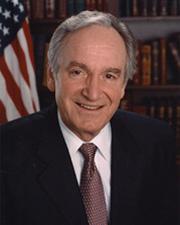 Sen. Tom Harkin (D-IA)
Legislative Activity
Stay on top of the latest movement without scrolling through every action
Sponsor introductory remarks on measure. (CR S6827)
June 16, 2004
View full timeline
Introduced in Senate
April 9, 2003
Sponsor introductory remarks on measure. (CR S5073)
April 9, 2003
Read twice and referred to the Committee on Health, Education, Labor, and Pensions. (text of measure as introduced: CR S5074-5075)
April 9, 2003
Sponsor introductory remarks on measure. (CR S6827)
June 16, 2004
Floor Debate
17 membersWhat members said about S. 841 on the floor

 +12
Floor Debate
17 membersWhat members said about S. 841 on the floor
Mr. President, today I am introducing a package of five measures to sustain and, indeed, renew the Federal commitment to restoring the water quality and living resources of the Chesapeake Bay…
Mr. President, today I am introducing a package of targeted, affordable tax relief provisions designed to help the Nation's small businesses during this time of economic stagnation. After the Easter…
Mr. President, I rise today to offer a private bill on behalf of Tanya Andrea Goudeau and her family to grant Tanya immediate relative status. The Goudeaus adopted Tanya in 2001, but due to…
Mr. President, I rise today with my Finance Committee colleague, Senator Lincoln, to introduce the The Mortgage Insurance Fairness Act. This legislation will extend the mortgage interest tax…
Mr. President, I rise today with my friend and colleague from Rhode Island, Mr. Chafee, and a bipartisan group of co- sponsors to introduce the Immigrant Children's Health Improvement Act of 2003.…
Show 8 more

Mr. President, I rise today to introduce legislation that will provide much-needed grants for transitional housing services to victims of domestic violence who are brave enough to leave an abusive…
Mr. President, I am pleased to join with Senator Kyl today to introduce the Northern Arizona National Forest Land Exchange Act of 2003. This bill facilitates an exchange of over 50,000 acres of…
Mr. President, today I rise to reintroduce a bill that is enormously important to veterans in my State of West Virginia and to all veterans across this great Nation. The bill I am reintroducing will…
Mr. President, today, I am pleased to join with Senator McCain to introduce the Northern Arizona National Forest Land Exchange Act of 2003. This bill, which facilitates a large and very complex land…
Mr. President, it is a privilege to join Senator Graham and Senator Chafee in introducing the Immigrant Children's Health Insurance Act, which will benefit tens of thousands of immigrant children and…

Mr. President, I rise today to introduce the ``Corporate Accountability in Bankruptcy Act.'' This bill would clarify that the bonuses and other excessive compensation of corporate directors and…
Mr. President, today along with Senators Lincoln Chafee and Judd Gregg, I am introducing comprehensive legislation to reduce harmful emissions from our Nation's power plants. Developed after…
Mr. President, on behalf of myself and Senators Murray, Kennedy, Mikulski, Durbin, Leahy, Akaka, Feingold and Boxer, I am introducing the Fair Pay Act. April 15, tax day, is also Equal Pay Day. If…
Show 5 more
Mr. President, on behalf of myself and Senators Murray, Kennedy, Mikulski, Durbin, Leahy, Akaka, Feingold and Boxer, I am introducing the Fair Pay Act. April 15, tax day, is also Equal Pay Day. If…
Mr. President, I rise to introduce the Water Adjudication Fee Fairness Act. This bill would require the Federal Government to pay the same filing fees and costs associated with state water rights…
Mr. President, I am pleased to join with Senator Carper today to introduce the Clean Air Planning Act of 2003. Congress needs to advance four-pollutant legislation that offers the best chance for…
Mr. President, I rise today for myself, Senator Ensign, Senator Hatch, and Senator Bennett to introduce this bill, which will establish a National Heritage Route in eastern Nevada and western Utah.…
Mr. President, I rise today to introduce the bipartisan Commission on the Accountability and Review of Federal Agencies, CARFA, Act. We need accountability in Federal spending. With our Nation at war…
Bill Text
Latest available legislative text
        [Congressional Bills 108th Congress]
[From the U.S. Government Publishing Office]
[S. 841 Introduced in Senate (IS)]

108th CONGRESS
1st Session
S. 841

To amend the Fair Labor Standards Act of 1938 to prohibit
discrimination in the payment of wages on account of sex, race, or
national origin, and for other purposes.

_______________________________________________________________________

IN THE SENATE OF THE UNITED STATES

April 9, 2003

Mr. Harkin (for himself, Ms. Mikulski, Mr. Kennedy, Mrs. Boxer, Mr.
Akaka, Mr. Leahy, Mrs. Murray, Mr. Feingold, and Mr. Durbin) introduced
the following bill; which was read twice and referred to the Committee
on Health, Education, Labor, and Pensions

_______________________________________________________________________

A BILL

To amend the Fair Labor Standards Act of 1938 to prohibit
discrimination in the payment of wages on account of sex, race, or
national origin, and for other purposes.

Be it enacted by the Senate and House of Representatives of the
United States of America in Congress assembled,

SECTION 1. SHORT TITLE AND REFERENCE.

(a) Short Title.--This Act may be cited as the ``Fair Pay Act of
2003''.
(b) Reference.--Except as provided in section 8, whenever in this
Act an amendment or repeal is expressed in terms of an amendment to, or
repeal of, a section or other provision, the reference shall be
considered to be made to a section or other provision of the Fair Labor
Standards Act of 1938 (29 U.S.C. 201 et seq.).

SEC. 2. FINDINGS.

Congress finds the following:
(1) Wage rate differentials exist between equivalent jobs
segregated by sex, race, and national origin in Government
employment and in industries engaged in commerce or in the
production of goods for commerce.
(2) The existence of such wage rate differentials--
(A) depresses wages and living standards for
employees necessary for their health and efficiency;
(B) prevents the maximum utilization of the
available labor resources;
(C) tends to cause labor disputes, thereby
burdening, affecting, and obstructing commerce;
(D) burdens commerce and the free flow of goods in
commerce; and
(E) constitutes an unfair method of competition.
(3) Discrimination in hiring and promotion has played a
role in maintaining a segregated work force.
(4) Many women and people of color work in occupations
dominated by individuals of their same sex, race, and national
origin.
(5)(A) A General Accounting Office analysis of wage rates
in the civil service of the State of Washington found that in
1985 of the 44 jobs studied that paid less than the average of
all equivalent jobs, approximately 39 percent were female-
dominated and approximately 16 percent were male dominated.
(B) A study of wage rates in Minnesota using 1990 Decennial
Census data found that 75 percent of the wage rate differential
between white and non-white workers was unexplained and may be
a result of discrimination.
(6) Section 6(d) of the Fair Labor Standards Act of 1938
prohibits discrimination in compensation for ``equal work'' on
the basis of sex.
(7) Title VII of the Civil Rights Act of 1964 prohibits
discrimination in compensation because of race, color,
religion, national origin, and sex. The Supreme Court, in its
decision in County of Washington v. Gunther, 452 U.S. 161
(1981), held that title VII's prohibition against
discrimination in compensation also applies to jobs that do not
constitute ``equal work'' as defined in section 6(d) of the
Fair Labor Standards Act of 1938. Decisions of lower courts,
however, have demonstrated that further clarification of
existing legislation is necessary in order effectively to carry
out the intent of Congress to implement the Supreme Court's
holding in its Gunther decision.
(8) Artificial barriers to the elimination of
discrimination in compensation based upon sex, race, and
national origin continue to exist more than 3 decades after the
passage of section 6(d) of the Fair Labor Standards Act of 1938
and the Civil Rights Act of 1964. Elimination of such barriers
would have positive effects, including--
(A) providing a solution to problems in the economy
created by discrimination through wage rate
differentials;
(B) substantially reducing the number of working
women and people of color earning low wages, thereby
reducing the dependence on public assistance; and
(C) promoting stable families by enabling working
family members to earn a fair rate of pay.

SEC. 3. EQUAL PAY FOR EQUIVALENT JOBS.

(a) Amendment.--Section 6 (29 U.S.C. 206) is amended by adding at
the end the following:
``(h)(1)(A) Except as provided in subparagraph (B), no employer
having employees subject to any provision of this section shall
discriminate, within any establishment in which such employees are
employed, between employees on the basis of sex, race, or national
origin by paying wages to employees in such establishment in a job that
is dominated by employees of a particular sex, race, or national origin
at a rate less than the rate at which the employer pays wages to
employees in such establishment in another job that is dominated by
employees of the opposite sex or of a different race or national
origin, respectively, for work on equivalent jobs.
``(B) Nothing in subparagraph (A) shall prohibit the payment of
different wage rates to employees where such payment is made pursuant
to--
``(i) a seniority system;
``(ii) a merit system;
``(iii) a system that measures earnings by quantity or
quality of production; or
``(iv) a differential based on a bona fide factor other
than sex, race, or national origin, such as education,
training, or experience, except that this clause shall apply
only if--
``(I) the employer demonstrates that--
``(aa) such factor--
``(AA) is job-related with respect
to the position in question; or
``(BB) furthers a legitimate
business purpose, except that this item
shall not apply if the employee
demonstrates that an alternative
employment practice exists that would
serve the same business purpose without
producing such differential and that
the employer has refused to adopt such
alternative practice; and
``(bb) such factor was actually applied and
used reasonably in light of the asserted
justification; and
``(II) upon the employer succeeding under subclause
(I), the employee fails to demonstrate that the
differential produced by the reliance of the employer
on such factor is itself the result of discrimination
on the basis of sex, race, or national origin by the
employer.
``(C) The Equal Employment Opportunity Commission shall issue
guidelines specifying criteria for determining whether a job is
dominated by employees of a particular sex, race, or national origin.
Such guidelines shall not include a list of such jobs.
``(D) An employer who is paying a wage rate differential in
violation of subparagraph (A) shall not, in order to comply with the
provisions of such subparagraph, reduce the wage rate of any employee.
``(2) No labor organization or its agents representing employees of
an employer having employees subject to any provision of this section
shall cause or attempt to cause such an employer to discriminate
against an employee in violation of paragraph (1)(A).
``(3) For purposes of administration and enforcement of this
subsection, any amounts owing to any employee that have been withheld
in violation of paragraph (1)(A) shall be deemed to be unpaid minimum
wages or unpaid overtime compensation under this section or section 7.
``(4) In this subsection:
``(A) The term `labor organization' means any organization
of any kind, or any agency or employee representation committee
or plan, in which employees participate and that exists for the
purpose, in whole or in part, of dealing with employers
concerning grievances, labor disputes, wages, rates of pay,
hours of employment, or conditions of work.
``(B) The term `equivalent jobs' means jobs that may be
dissimilar, but whose requirements are equivalent, when viewed
as a composite of skills, effort, responsibility, and working
conditions.''.
(b) Conforming Amendment.--Section 13(a) (29 U.S.C. 213(a)) is
amended in the matter before paragraph (1) by striking ``section 6(d)''
and inserting ``sections 6(d) and 6(h)''.

SEC. 4. PROHIBITED ACTS.

Section 15(a) (29 U.S.C. 215(a)) is amended--
(1) by striking the period at the end of paragraph (5) and
inserting a semicolon; and
(2) by adding after paragraph (5) the following new
paragraphs:
``(6) to discriminate against any individual because such
individual has opposed any act or practice made unlawful by
section 6(h) or because such individual made a charge,
testified, assisted, or participated in any manner in an
investigation, proceeding, or hearing to enforce section 6(h);
or
``(7) to discharge or in any other manner discriminate
against, coerce, intimidate, threaten, or interfere with any
employee or any other person because the employee inquired
about, disclosed, compared, or otherwise discussed the
employee's wages or the wages of any other employee, or because
the employee exercised, enjoyed, aided, or encouraged any other
person to exercise or enjoy any right granted or protected by
section 6(h).''.

SEC. 5. REMEDIES.

(a) Enhanced Penalties.--Section 16(b) of the Fair Labor Standards
Act of 1938 (29 U.S.C. 216(b)) is amended--
(1) by inserting after the first sentence the following:
``Any employer who violates subsection (d) or (h) of section 6
shall additionally be liable for such compensatory or punitive
damages as may be appropriate, except that the United States
shall not be liable for punitive damages.'';
(2) in the sentence beginning ``An action to'', by striking
``either of the preceding sentences'' and inserting ``any of
the preceding sentences of this subsection'';
(3) in the sentence beginning ``No employees'', by striking
``No employees'' and inserting ``Except with respect to class
actions brought under subsection (f), no employee'';
(4) in the sentence beginning ``The court in'', by striking
``in such action'' and inserting ``in any action brought to
recover the liability prescribed in any of the preceding
sentences of this subsection''; and
(5) by striking ``section 15(a)(3)'' each place it occurs
and inserting ``paragraphs (3), (6), and (7) of section
15(a)''.
(b) Action by Secretary.--Section 16(c) of the Fair Labor Standards
Act of 1938 (29 U.S.C. 216(c)) is amended--
(1) in the first sentence--
(A) by inserting ``or, in the case of a violation
of subsection (d) or (h) of section 6, additional
compensatory or punitive damages,'' before ``and the
agreement''; and
(B) by inserting before the period the following:
``, or such compensatory or punitive damages, as
appropriate'';
(2) in the second sentence, by inserting before the period
the following: ``and, in the case of a violation of subsection
(d) or (h) of section 6, additional compensatory or punitive
damages''; and
(3) in the third sentence, by striking ``the first
sentence'' and inserting ``the first or second sentence''.
(c) Fees.--Section 16 (29 U.S.C. 216) is amended by adding at the
end the following:
``(f) In any action brought under this section for violation of
section 6(h), the court shall, in addition to any other remedies
awarded to the prevailing plaintiff or plaintiffs, allow expert fees as
part of the costs. Any such action may be maintained as a class action
as provided by the Federal Rules of Civil Procedure.''.

SEC. 6. RECORDS.

(a) Technical Amendment.--Section 11(c) (29 U.S.C. 211(c)) is
amended by inserting ``(1)'' after ``(c)''.
(b) Records.--Section 11(c) (as amended by subsection (a)) is
further amended by adding at the end the following:
``(2)(A) Every employer subject to section 6(h) shall preserve
records that document and support the method, system, calculations, and
other bases used by the employer in establishing, adjusting, and
determining the wage rates paid to the employees of the employer. Every
employer subject to section 6(h) shall preserve such records for such
periods of time, and shall make such reports from the records to the
Equal Employment Opportunity Commission, as shall be prescribed by the
Equal Employment Opportunity Commission by regulation or order as
necessary or appropriate for the enforcement of the provisions of
section 6(h) or any regulation promulgated pursuant to section 6(h).''.
(c) Small Business Exemptions.--Section 11(c) (as amended by
subsections (a) and (b)) is further amended by adding at the end the
following:
``(B)(i) Every employer subject to section 6(h) that has 25 or more
employees on any date during the first or second year after the
effective date of this paragraph, or 15 or more employees on any date
during any subsequent year after such second year, shall, in accordance
with regulations promulgated by the Equal Employment Opportunity
Commission under subparagraph (F), prepare and submit to the Equal
Employment Opportunity Commission for the year involved a report signed
by the president, treasurer, or corresponding principal officer, of the
employer that includes information that discloses the wage rates paid
to employees of the employer in each classification, position, or job
title, or to employees in other wage groups employed by the employer,
including information with respect to the sex, race, and national
origin of employees at each wage rate in each classification, position,
job title, or other wage group.''.
(d) Protection of Confidentiality.--Section 11(c) (as amended by
subsections (a) through (c)) is further amended by adding at the end
the following:
``(ii) The rules and regulations promulgated by the Equal
Employment Opportunity Commission under subparagraph (F), relating to
the form of such a report, shall include requirements to protect the
confidentiality of employees, including a requirement that the report
shall not contain the name of any individual employee.''.
(e) Use; Inspections; Examinations; Regulations.--Section 11(c) (as
amended by subsections (a) through (d)) is further amended by adding at
the end the following:
``(C) The Equal Employment Opportunity Commission may publish any
information and data that the Equal Employment Opportunity Commission
obtains pursuant to the provisions of subparagraph (B). The Equal
Employment Opportunity Commission may use the information and data for
statistical and research purposes, and compile and publish such
studies, analyses, reports, and surveys based on the information and
data as the Equal Employment Opportunity Commission may consider
appropriate.
``(D) In order to carry out the purposes of this Act, the Equal
Employment Opportunity Commission shall by regulation make reasonable
provision for the inspection and examination by any person of the
information and data contained in any report submitted to the Equal
Employment Opportunity Commission pursuant to subparagraph (B).
``(E) The Equal Employment Opportunity Commission shall by
regulation provide for the furnishing of copies of reports submitted to
the Equal Employment Opportunity Commission pursuant to subparagraph
(B) to any person upon payment of a charge based upon the cost of the
service.
``(F) The Equal Employment Opportunity Commission shall issue rules
and regulations prescribing the form and content of reports required to
be submitted under subparagraph (B) and such other reasonable rules and
regulations as the Equal Employment Opportunity Commission may find
necessary to prevent the circumvention or evasion of such reporting
requirements. In exercising the authority of the Equal Employment
Opportunity Commission under subparagraph (B), the Equal Employment
Opportunity Commission may prescribe by general rule simplified reports
for employers for whom the Equal Employment Opportunity Commission
finds that because of the size of the employers a detailed report would
be unduly burdensome.''.

SEC. 7. RESEARCH, EDUCATION, AND TECHNICAL ASSISTANCE PROGRAM; REPORT
TO CONGRESS.

Section 4(d) (29 U.S.C. 204(d)) is amended by adding at the end the
following:
``(4) The Equal Employment Opportunity Commission shall conduct
studies and provide information and technical assistance to employers,
labor organizations, and the general public concerning effective means
available to implement the provisions of section 6(h) prohibiting wage
rate discrimination between employees performing work in equivalent
jobs on the basis of sex, race, or national origin. Such studies,
information, and technical assistance shall be based on and include
reference to the objectives of such section to eliminate such
discrimination. In order to achieve the objectives of such section, the
Equal Employment Opportunity Commission shall carry on a continuing
program of research, education, and technical assistance including--
``(A) conducting and promoting research with the intent of
developing means to expeditiously correct the wage rate
differentials described in section 6(h);
``(B) publishing and otherwise making available to
employers, labor organizations, professional associations,
educational institutions, the various media of communication,
and the general public the findings of studies and other
materials for promoting compliance with section 6(h);
``(C) sponsoring and assisting State and community
informational and educational programs; and
``(D) providing technical assistance to employers, labor
organizations, professional associations and other interested
persons on means of achieving and maintaining compliance with
the provisions of section 6(h).
``(5) The report submitted biennially by the Secretary to Congress
under paragraph (1) shall include a separate evaluation and appraisal
regarding the implementation of section 6(h).''.

SEC. 8. CONFORMING AMENDMENTS.

(a) Congressional Employees.--
(1) Application.--Section 203(a)(1) of the Congressional
Accountability Act of 1995 (2 U.S.C. 1313(a)(1)) is amended--
(A) by striking ``subsections (a)(1) and (d) of
section 6'' and inserting ``subsections (a)(1), (d),
and (h) of section 6''; and
(B) by striking ``206 (a)(1) and (d)'' and
inserting ``206 (a)(1), (d), and (h)''.
(2) Remedies.--Section 203(b) of such Act (2 U.S.C.
1313(b)) is amended by inserting before the period the
following: ``or, in an appropriate case, under section 16(f) of
such Act (29 U.S.C. 216(f))''.
(b) Executive Branch Employees.--
(1) Application.--Section 413(a)(1) of title 3, United
States Code, as added by section 2(a) of the Presidential and
Executive Office Accountability Act (Public Law 104-331; 110
Stat. 4053), is amended by striking ``subsections (a)(1) and
(d) of section 6'' and inserting ``subsections (a)(1), (d), and
(h) of section 6''.
(2) Remedies.--Section 413(b) of such title is amended by
inserting before the period the following: ``or, in an
appropriate case, under section 16(f) of such Act''.

SEC. 9. EFFECTIVE DATE.

The amendments made by this Act shall take effect 1 year after the
date of enactment of this Act.
<all>