Commodity Distribution Act of 2003
Legislative Activity
Stay on top of the latest movement without scrolling through every action
Read twice and referred to the Committee on Agriculture, Nutrition, and Forestry. (text of measure as introduced: CR S5774)
May 6, 2003
View full timeline
Introduced in Senate
May 6, 2003
Sponsor introductory remarks on measure. (CR S5773-5774)
May 6, 2003
Read twice and referred to the Committee on Agriculture, Nutrition, and Forestry. (text of measure as introduced: CR S5774)
May 6, 2003
Floor Debate
10 membersWhat members said about S. 996 on the floor
 JRB
JRB PVD
PVD LEC
LEC RJD
RJD JM+5
JM+5
Floor Debate
10 membersWhat members said about S. 996 on the floor
Mr. President, today I am introducing a bill, along with Senators McCain, Feinstein, Dodd, and Kerry, to make women and children a priority of our assistance of programs, women and children who are…
Mr. President, today I am introducing a bill, along with Senators McCain, Feinstein, Dodd, and Kerry, to make women and children a priority of our assistance of programs, women and children who are suffering the ravages of war and natural disasters, suffering from food shortages and a lack of basic necessities, suffering from the degradation of complex humanitarian emergencies. War has been the major cause.
Over the past fifty years the nature of war has changed dramatically. Increasingly, sadly, women and children seem to bear the brunt of it. According to the United Nations Children's Fund, since 1990, more than 2 million children have been killed and 6 million maimed or injured as a result of war. Today, 90 percent of the casualities in any war are civilians. They are mostly women and children.
It is incomprehensible to me that rape has been used as a weapon of war all over the world from Burma to Bosnia to Sierra Leone. It is equally incomprehensible that forced displacement of civilians, rather than being one of the unfortunate results of war, has actually become a deliberate tactic.
Under these circumstances, what choice do people have but to leave their homes? They leave out of fear for their lives and their children's lives. Some find their way into camps where instead of safety, they suffer extraordinary violence and abuse. Allegations of sexual exploitation by camp residents and humanitarian workers in refugee camps in west Africa and Nepal are all-too-real examples of the sad fact that women and children remain vulnerable even in the very places they flee to find safety.
This bill seeks to do something about this. It seeks to enhance the U.S. Government's ability to ensure that women and children's protection needs are addressed before, during, and after a complex humanitarian emergency.
It does this in several ways. First, it directs the Secretary of State to designate a special coordinator for protection issues. That person will be changed with making sure that our embassies and consular posts are made aware of the earliest warning signs that a complex humanitarian emergency is imminent. The Coordinator is to compile a watch list of such countries and regions so that our aid missions can plan to meet potential need.
Second, the bill specifies basic measures that will improve our ability to help these women and children, help the refugees, help internally displaced people cope during an actual complex humanitarian crisis.
It requires that relief organizations funded by the United States Government review their procedures to ensure adequate measures have been taken to provide adequate physical security for refugees and internationally displaced people, especially the women and children.
The legislation prohibits U.S. funding for relief agencies that do not sign a code of conduct that prohibits improper relationships between humanitarian aid workers and aid recipients, and encourages the Secretary to pressure the U.N. refugee agency to implement a ``whistle- blower'' system under which aid workers, refugees and internally displaced persons can report instances of gender-based violence and exploitation.
Because women have unique health needs that are often unmet when they are forced to flee their homes, the bill includes a provision mandating health services for women within 30 days of the onset of a complex humanitarian emergency.
Additionally, the bill amends the Micro-Enterprise Development Act to expand the availability of micro-loans to refugees and internally displaced women. When women are given access to income generating activities, they are less vulnerable to coercion from those who would demand sexual favors in return for food or other basic necessities.
Finally, the bill deals with rehabilitation and recovery.
The bill requires the Secretary of State and the Administrator for the Agency for International Development to develop and implement economic development programs to assist female heads of households, to help women increase access to ownership of land and other productive assets, to ensure that education and training programs are integrated with economic development programs to encourage reintegration of women who were displaced during war, and programs to politically empower women.
It calls upon the United States Executive Director of the International Bank for Reconstruction and Development to work on ensuring that World Bank demobilization, disarmament and reintegration programs extend the same benefits that ex-combatants receive to women and children who were formally or informally associated with them.
As it now stands, women and children who were used as cooks, porters, and so called ``wives''--a euphemism for women who were kidnaped to serve as sexual slaves--are given nothing with which to rebuild their lives, despite the fact that they rarely served with armed groups by choice. And yet the very people who forced them into such conditions are assisted with no qualms or reservations.
Finally, the bill calls upon the Secretary of State to report to Congress all the programs that they are funding
that are aimed at improving the awareness of foreign law enforcement officials of women's human rights and the ability of foreign law enforcement officials to investigate and prosecute crimes of rape and sexual violence.
This bill is not a panacea. It does not cure all the ills that war and displacement create for women and children. It seeks to provide some relief for those who are entirely reliant--through no fault of their own--on the largess of the international community.
I believe this legislation will improve the way we respond to the needs facing women and children trying to survive in the most dire of circumstances, and I hope my colleagues will join me by supporting it.
I ask unanimous consent that the text of the bill be printed in the Record.
Mr. President, those of us privileged to represent our fellow citizens on this hallowed floor get far too few opportunities to help usher in visionary projects that can potentially transform…
Mr. President, those of us privileged to represent our fellow citizens on this hallowed floor get far too few opportunities to help usher in visionary projects that can potentially transform communities, both of man and of nature. I rise today to tell you about a project that has been discussed before on this floor; I bring it to your attention again because I believe it's a project worth doing and worth doing well. It concerns one of New Mexico's unique natural treasures: the Middle Rio Grande Bosque.
According to an old Chinese Proverb, ``if you are thinking 1 year ahead, sow seed. If you are thinking 10 years ahead, plant a tree. If you are thinking 100 years ahead, educate the people.'' The bill I am introducing today encompasses the wisdom of this proverb.
Two years ago, I joined the Middle Rio Grande Conservancy District and the Army Corps of Engineers in unveiling a vision for the Bosque that would rehabilitate and restore this long neglected treasure of the Southwest. I return here today to begin implementing that vision.
The Albuquerque metropolitan area is the largest concentration of people in New Mexico. It is also the home to the irreplaceable riparian forest which runs through the heart of the city and surrounding towns that is the Bosque. It is the largest continuous cottonwood forest in the Southwest, and one of the last of its kind in the world.
Unfortunately, mismanagement, neglect, and the effects of upstream development have severely degraded the Bosque. The list of its woes is long: it has been overrun by non-native vegetation; graffiti and trash mar locations along its length; the drought and build up of hazardous fuel have contributed to an increased susceptibility to fire. As a result, public access is problematical and crucial habitat for scores of species is threatened. And yet, it remains one of the most biologically diverse ecosystems in the Southwest. My goal is to restore the Bosque and create a space that is open and attractive to the public.
This is a grand undertaking to be sure; but I want to ensure that this extraordinary corridor of the Southwestern desert is preserved for generations to come: not only for generations of humans, but for the diverse plant and animal species that reside in it as well.
Situated in the heart of the State's largest city, its potential to be a special attraction for residents is exciting. Equally exciting are the potential benefits to the ecosystem as a whole. The rehabilitation of this ecosystem leads to greater protection for threatened and endangered species; it means more migratory birds, healthier habitat for fish, and greater numbers of towering cottonwood trees.
This project could be one of the far too rare opportunities to both increase the quality of life for a city while assuring the health and stability of an entire ecosystem. We would be increasing the attractiveness of Albuquerque to businesses while improving the home of the Silvery Minnow. Where trash is now strewn, walking paths and horse trails will run. Where jetty jacks and discarded rubble lie, cottonwood will grow. The dead trees and underbrush that threaten devastating fire will be replaced by healthy groves of trees. School children will be able to study and maybe catch sight of a bald eagle. The chance to help build a dynamic public space like this does not come around often, and I would like to see Congress embrace that chance.
Having grown up in along the Rio Grande in Albuquerque, the Bosque is something I treasure; and I lament the degradation that has occurred. Because of this, I have been involved in Bosque restoration since 1991 and I commend the efforts of groups like the Bosque Coalition for the work they have done, and will continue to do, along the river. I propose to build on that rehabilitation. The effort I put in front of you today is a logical complement to these previous efforts as well as towards Bosque revitalization, restoration, and recovery for the entire Rio Grande.
Already work is underway. Over the past two years, the Army Corps of Engineers has undertaken the task of conducting a study so that we might gain a better understanding of how best to rehabilitate and restore this beautiful Albuquerque greenbelt.
I remain grateful to each of the parties who have been involved with this
idea since its inception. Each one contributes a very critical component. The Middle Rio Grande Conservancy District owns this vital part of the Bosque which runs from the National Hispanic Cultural Center north to the Paseo Del Norte Bridge. The MRGCD has proven to be a valuable local partner in identifying areas for non-native species and other environmental restoration work. Additionally, MRGCD continues to work on the development and implementation of an educational campaign for local public schools on the importance of the Bosque. Finally, MRGCD has continually worked with all parties to provide options on how the Bosque can be preserved, protected and enjoyed by everyone.
The Army Corps of Engineers is developing a preliminary restoration plan for the Bosque along the Albuquerque corridor. The plan is well underway and is moving towards the development of a feasibility study.
Specifically, this bill authorizes $10 million dollars in fiscal year 2004 and such sums as are necessary for the following nine years to complete projects, activities, substantial ecosystem restoration, preservation, protection, and recreation facilities along the Middle Rio Grande. I urge my fellow members to help preserve this rare and diverse ecosystem and to aid the city of Albuquerque and the State of New Mexico in building a place to treasure.
I ask unanimous consent that the text of the bill be printed in the Record.
Mr. President, I rise today to join my colleague Senator Johnson in introducing the Commodity Distribution Act of 2003. Children are our future. I strongly believe each child deserves at least one…
Mr. President, I rise today to join my colleague Senator Johnson in introducing the Commodity Distribution Act of 2003.
Children are our future. I strongly believe each child deserves at least one warm, nutritious meal every day. I stand before you today with a new bill that will restore $500 million to the School Lunch Program. The positive impacts of this program are endless. Children should not have to pay the price of not having enough money for food.
Originally enacted in 1946, the school launch program set goals to improve children's nutrition, increase low-income children's access to nutritious meals, and to help support the agricultural industry. A family of four has to have an income at or below 130 percent of the Federal poverty level to qualify for a free lunch. The income for these families is tragically low. Congress has a role in providing these children with assistance their families cannot provide.
In 1999, Congress enacted the Ticket to Work and Work Incentives Improvement Act. This legislation amended the School Lunch Act to require the United States Department of Agriculture to count the value of bonus commodities when it determines the total amount of commodity assistance provided to schools. This change continues to provide a $500 million budget cut for the school lunch program over its 9-year projection.
In 2001, the school lunch program comprised over 90 percent of schools, with some 99,000 public and private schools enrolling approximately 50 million children. Today over 28 million children receive free or low-cost lunches every school day. Each State and millions of children are affected. This program provides a basic requirement of food for needy children.
The 2002 Farm Bill passed almost a full year ago included language that extended this authorization language until the end of this fiscal year. Without Congressional action, $50 million will be cut from the food budget for school districts. This legislation would further extend this support through 2007, when the Richard B. Russell National School Lunch act is scheduled for reauthorization.
It is my belief that no child should be without food. The Commodity Distribution Act of 2003 would ensure that schools receive the full value of entitlement commodity assistance, and allow the School Lunch Program to continue to meet its dual purpose of supporting American agriculture when it needs it most while providing nutritious food to schools across the country. I urge members to support this bill, support children, and support our future.
Mr. President I rise to introduce legislation that will remove any ambiguity as to the intent of the Central Idaho Wilderness Act of 1980 to provide for continuation of the historical use of outfitter hunting camps on the Salmon River. In short, these lodges were established well before the river designation, have been managed as a part of the river designation for 23 years and allow users, in particular the elderly and the physically challenged, to have access to and enjoy the spirit of this wild area. Their rustic nature upholds the ideals envisioned by Congress, and they are used in accordance with all provisions of the law.
I am mystified as to why someone would want to eliminate this historical use. However, that is what some extreme wilderness organizations would like to do. They want the Forest Service and the Courts to ignore the intent of Congress in establishing the Central Idaho Wilderness Act and re-establish a pristine area which blocks access to many current users.
In the Findings Section of the Central Idaho Wilderness Act, it is clearly stated that ``protection can be provided--to the Salmon River-- without conflicting with established uses.'' It is my understanding that a great deal of time and effort was put into crafting this designation so that established and historic uses of the area would be maintained while preserving one of our Nation's treasures--the River of No Return.
In reading the voluminous hearing record and report language, I found references to ``lodges,'' ``hunting lodges,'' ``outfitters lodges,'' and ``commercial services may be performed'' throughout the record. It is clear to me that Senator Church, of Idaho, the main proponent of the legislation, intended for these lodges to remain. The report language specifically states, ``We favor administration of the main Salmon River under the provisions of the Wild and Scenic River Act so as to permit continuation, as appropriate, of motorized travel on the river and outfitter and camping facilities.''
However, I believe the record shows Senator McClure of Idaho was more of a prophet when he stated, ``Whether it is this year, next year, or 5 years from now, or 10 years from now, some forest administrator in the area is going to say it would be a lot more convenient for us to manage that problem if we did not have to deal with that guy that is there. . . . We all know that it was intended for the wild and scenic river classification as attached to that river, that the existing use was going to be permitted to continue; and then, all of a sudden, we find out that that is now unacceptable.''
Senator McClure is off by only 20 years and it is not a forest administrator, but an extreme wilderness organization that is seeking the elimination of these well established lodges.
This legislation clarifies that these three specific lodges are an established and historical use in the Central Idaho Wilderness Act and should remain a part of the legacy of this great river.
I ask unanimous consent that the text of the bill be printed in the Record.
Mr. President, I rise today to introduce the Healthy Children Learn Act with my colleague from Maine, Senator Collins. I am also pleased to have Senator Clinton as an original cosponsor of this…
Mr. President, I rise today to introduce the Healthy Children Learn Act with my colleague from Maine, Senator Collins. I am also pleased to have Senator Clinton as an original cosponsor of this measure. This legislation focuses on eliminating some bureaucratic barriers that make it more difficult for schools to provide their students with health care services, if they so choose.
Many schools have found that the health of a child can significantly affect his or her ability to learn. To enhance children's learning ability and to increase the well-being of their students, these schools sometimes choose to provide health care services including health care screenings.
One example of a disease that significantly affects children's education is asthma. Asthma is the single greatest reason for school absenteeism today. Over five million children in America suffer from asthma. Forty-nine percent of children with asthma missed school in the last year, and 48 percent of children with asthma are limited in sports and recreation. Lack of physical activity, in turn, can lead to childhood obesity with its concomitant health care problems.
``America is in the middle of an asthma epidemic--an epidemic that is getting worse, not better.'' So says the PEW Environmental Health Commission in its most recent report on asthma. The prevalence of asthma continues to rise at astounding rates, in every region of the country and across all demographic groups, whether measured by age, race or sex.
My home State of Illinois has some of the highest rates of childhood asthma in the country. Unfortunately, Chicago has the highest childhood asthma-related death rate in the Nation. Over 60 percent of childhood admissions to the emergency room in Chicago are for asthma. This disease exacts a very significant toll on children in my State.
For the next 15 minutes, imagine breathing through a tiny straw the size of a coffee stirrer, never getting enough air. Now imagine suffering through the process three to six times a day. This is asthma. Can a child really concentrate on learning when he or she is gasping for air?
Due to the very high rates of asthma in Chicago and its effects on absenteeism and children's ability to learn
when at school, the Chicago Public Schools, CPS, instituted an asthma screening program. The school system developed an asthma manual to provide a standard plan of care for all students with asthma. They provided citywide nurse training to develop a uniform, high standard for approaching students with asthma and their parents and high-quality education about the environmental triggers for asthma and how to lessen them, together with education on how to use asthma inhalers. In 1999, they identified 12,374 cases of asthma. CPS continues to monitor and evaluate this program, and they have also partnered with other organizations such as the American Red Cross Asthma Program, the University of Chicago and the Chicago Department of Public Health Asthma Programs. CPS has also developed parent tutoring programs and has linked asthmatic children with primary health care providers for appropriate follow-up.
All of these efforts are extremely important, but they are resource intensive. This legislation addresses a barrier to children receiving vital health screenings in schools. It provides for a $10 million grant program for school districts such as CPS to apply for funds for asthma screening for those children who are not eligible for either S-CHIP or Medicaid. The grants would be targeted to those districts that have the highest prevalence or deaths associated with asthma.
CPS has also found that a child's ability to learn is affected by impaired vision and hearing, and as a result, children with vision deficits are far more likely to fail academically. In 1998, CPS found that children who were retained failed their school-based vision screening at a rate 50 percent higher than children who were not failing. Likewise, children who have difficulty hearing often struggle with language development, social processes and communication. This can seriously impair all aspects of the educational process. Through these programs, CPS has provided more than 5,000 free eye exams, and 4,000 free pairs of glasses have been dispensed. They currently are reimbursed less than 40 percent of the cost of the vision and hearing screenings. To address some of these funding shortfalls, this legislation creates a $10 million grant program for vision and hearing screening.
This legislation would also remove barriers that prevent school systems from receiving reimbursement for health screenings are services. Schools that make the extra effort to provide their students health care services should be adequately reimbursed. For an example, when they provide Medicaid-eligible children with Medicaid-covered services, they should receive appropriate reimbursement for those services. Likewise, reimbursement for the S-CHIP program should be available for covered services for children enrolled or eligible for the program. and clarifies Medicaid payment rules so that schools can be reimbursed when they provide a Medicaid covered service to a Medicaid child.
No child should have his or her education threatened by the lack of effective screening to diagnose these health problems. The treatments or corrective devices are available and we should see to it that the children receive them when necessary. The Healthy Children Learn Act will help children receive the health care services they need so that they can seize the educational opportunities available to them.
Mr. President, today, I am joined by my colleagues Senators Brownback, Edwards and Graham in introducing the Amateur Sports Integrity Act of 2003. This legislation would make it illegal to gamble on…
Mr. President, today, I am joined by my colleagues Senators Brownback, Edwards and Graham in introducing the Amateur Sports Integrity Act of 2003. This legislation would make it illegal to gamble on Olympic, college, or high school sports, and it would authorize appropriations for the National Institute of Standards and Technology to fund research into methods of detection and prevention of the use athletic performance-enhancing drugs. The bill is similar to legislation that has been reported twice in previous Congresses.
The legislation is designed to respond to a number of troubling issues plaguing amateur athletics, including a gambling epidemic among high school and college students, and a significant increase among our youth in the use of performance-enhancing drugs and supplements. This bill is essential to ensuring the integrity and legitimacy of amateur athletics--an important institution in the social fabric of this country.
This bill would codify a recommendation made by the congressionally- created National Gambling Impact Study Commission, NGISC, to ban betting on collegiate and amateur athletic events. In the summary of its comprehensive report to Congress dated June 1999, the NGISC noted growing concern regarding increasing levels of sports wagering by high school and college students. The NGISC cites a 1996 study sponsored by the National Collegiate Athletic Association, which found that of the over
200 student athletes surveyed in Division I basketball and football programs, more than one in four admitted to betting on college sports while in school.
More recently, a study conducted by the Psychology Department of Central Connecticut State University contends that the problem of gambling among college students has been relatively overlooked when studying student risk-taking behavior. The study links legal and illegal gambling by indicating that, ``it is reasonable to expect that the growth of legalized gambling over the past decade would result in an increase in student gambling and gambling problems, including students who gamble at a pathological level.'' It is important to understand that gambling is not a problem that occurs in a vacuum. The Connecticut study found that one out of nine students at four Connecticut universities suffered from a gambling problem that was ``significantly connected'' to substance and dietary problems, such as marijuana use, cigarette smoking, and binge eating and drinking.
Just as the use of performance-enhancing drugs threatens the integrity of amateur sports, so does gambling, as it invites public speculation as to their legitimacy and transforms student athletes into merely objects to be bet upon. Betting can also provide unnecessary temptation to amateur athletes to agree to point-shaving and other outcome-fixing schemes at the expense of their teammates, their fans, and their futures. Many of the same pressures that lead college players to cheat also push these young people to use performance-enhancing drugs. The combination of stresses placed on student athletes to perform athletically, handle newly-found notoriety, and pursue professional athletic careers drive many to seek an edge through the use of such substances.
Although the Amateur Sports Integrity Act would ban legal gambling on amateur athletics, it may also reduce a substantial amount of illegal gambling. The relationship between legal and illegal gambling was addressed by the NGISC, which observed that ``legal sports wagering-- especially the publication in the media of Las Vegas and offshore- generated point spreads fuels a much larger amount of illegal sports wagering.''
In 1992, Congress recognized the Federal interest in protecting amateur sports from the harmful effects of gambling, and prohibited state-sanctioned sports betting in the overwhelming majority of states. Although Congress ``grandfathered'' Nevada, Oregon, Montana, and Delaware, only Nevada has chosen to permit legal gambling on amateur sports. Recently, however, the gaming industry has lobbied aggressively in an effort to convince the Delaware State legislature to exploit the loophole by legalizing gambling on amateur and professional sports.
Congress must act quickly to close the loophole that currently allows just a handful of States to serve as national clearinghouses for betting on our youth. By allowing betting in any state, we send a confusing message to our youth as to whether gambling on amateur athletics is, in fact, legal or illegal. While I do not pretend that this bill solves all problems associated with gambling and the use of performance-enhancing drugs, I do believe that it will send a clear message that gambling on amateur athletics and the use of these substances is dangerous and wrong.
I urge my colleagues to respond to the pleas of prominent college presidents and coaches, and join in supporting this important measure.
I ask unanimous consent that the text of this bill be printed in the Record.
Show 7 more

Mr. President, I am pleased to introduce today with my respected colleague from Indiana, Senator Lugar, a bill designed to improve the health of our Nation's schoolchildren. I am also pleased to have…
Mr. President, I am pleased to introduce today with my respected colleague from Indiana, Senator Lugar, a bill designed to improve the health of our Nation's schoolchildren. I am also pleased to have the support of Senators Bingaman, Dodd and Jeffords, who have worked with me in past Congresses on this bill. I am hopeful that in the coming weeks many more Senators will join us in this important effort.
We have an obesity crisis in America. Too many children are gaining too much weight. Advertisements for soda and candy bombard them from television, vending machines, and grocery store aisles. Schools, however, should be a healthy refuge from the outside world, where kids can learn to make the right choices when it comes to their diets. Nutrition education needs to be a critical component of every child's school day. But with all of the funds that Congress rightly appropriates each year for nutrition education and healthy school lunches and meals, our Nation's efforts are severely undermined when children have to walk through a gauntlet of vending machines offering unhealthy choices on the way to the cafeteria.
Under current regulations, schools may not offer soda, hard candies or other foods of minimal nutritional value in the cafeteria during lunch or breakfast. Unfortunately, some private companies have offered schools signing bonuses to openly flout this restriction, at times lining the halls to the cafeterias with foods that provide absolutely no nutritional value. In February 2001, the Washington Post reported that a school in Maryland had signed a contract with a soda company that contained a clause forbidding the school from enforcing the Federal ban on soda machines in schools. The clause read ``If the Board of Education actively enforces the policy in which vending machines are turned off during the school day, the commission guarantee will be suspended.'' In other words, the schools could only get commissions from the vending machines if they broke the law.
We can not sell our children's health to the highest bidder on a sodas contract. That is why our bill would give the Secretary of Agriculture authority to more effectively restrict the sale of soft drinks and other foods of minimal nutritional value in schools that participate in the Federal school lunch program. We would give the Secretary authority to regulate these foods throughout the school grounds, until the end of the school lunch period. Our bill also mandates that the Secretary use the best science available to determine which foods provide no nutritional value. My bill will ensure that students are not substituting empty calorie sodas and snacks for their nutritious federally subsidized school meals.
According to a report issued by the Center for Science and the Public Interest, 20 years ago boys consumed more than twice as much milk as soda; now boys and girls drink twice as much soda as milk. This is a huge problem, particularly for girls--the teenage years are critical for building up a woman's lifetime supply of calcium. Girls who substitute soda for milk are at a greater risk for developing osteoporosis later in life. We must provide our kids with better options. I have no problem with vending machines themselves, but let's get vending machines that sell fresh milk, fruits and vegetables into our schools.
Senator Lugar and I have successfully worked together on many important issues relating to child nutrition and agriculture in the past. I am extremely pleased that we can work together again to create healthier schools and healthier children.
I ask unanimous consent that the text of the Better Nutrition for Schoolchildren Act of 2003 be printed in the Record.
Mr. President, today along with Senators Lautenberg, Specter, Schumer, Dodd, Clinton and Lieberman, I am introducing the Highlands Stewardship Act. I am proud to be joining Congressman Rodney…
Mr. President, today along with Senators Lautenberg, Specter, Schumer, Dodd, Clinton and Lieberman, I am introducing the Highlands Stewardship Act. I am proud to be joining Congressman Rodney Frelinghuysen and other colleagues from the New Jersey, New York, and Connecticut congressional delegations, who are introducing identical legislation in the House of Representatives.
This legislation would help to preserve one of the last open space treasures in this country, the Highlands forest region that stretches from northwestern Connecticut, across the lower Hudson River valley in New York, through my State of New Jersey and into east-central Pennsylvania. This region encompasses more than 2 million acres of forests, farms, streams, wetlands, lakes and reservoirs and historic sites. It includes the Green, Taconic and Notre Dame Mountains. It also includes such historic sites as Morristown National Historic Park and West Point.
The value of the ecological, recreational and scenic resources of the Highlands cannot be overstated. One hundred seventy million gallons are drawn from the Highlands aquifers daily, providing quality drinking water for over 11 million people. Two hundred forty seven threatened or endangered species live in the Highlands including the timber rattlesnake, wood turtle, red-shouldered hawk, barred owl, great blue heron and eastern wood rat. There also are many fishing, hiking and boating recreation opportunities in the Highlands that are used by many of the 1 in 12 Americans who live within 2 hours of travel of the Highlands.
Unfortunately, much of Highlands is quickly vanishing. According to the most recent study issued by the United States Department of Agriculture, we have lost over 3,000 acres of forest and 1,600 acres of farmland in New York and New Jersey sections of the Highlands annually to development between 1995 and 2000.
This legislation would designate a Stewardship Area amongst the four States in order to protect the most important Highlands projects. It would create a source of funding for conservation and preservation projects in the Highlands to preserve and protect the open space that remains. Two million dollars a year for 10 years would be provided for conservation assistance projects in the four Highlands States. This funding could be used for items such as smart growth initiatives and cultural preservation projects. Twenty-five million dollars a year over 10 years
also would be provided for open space preservation projects in the four Highlands states. The source of this funding would be the Land and Water Conservation Fund.
I am proud to introduce this legislation to ensure that we protect this resource, which is so critical to our quality of life, and I ask unanimous consent that the text of the bill be printed in the Record.
Mr. President, I rise today to join my colleague Senator Johnson in introducing the Commodity Distribution Act of 2003. Children are our future. I strongly believe each child deserves at least one…
Mr. President, I rise today to join my colleague Senator Johnson in introducing the Commodity Distribution Act of 2003.
Children are our future. I strongly believe each child deserves at least one warm, nutritious meal every day. I stand before you today with a new bill that will restore $500 million to the School Lunch Program. The positive impacts of this program are endless. Children should not have to pay the price of not having enough money for food.
Originally enacted in 1946, the school launch program set goals to improve children's nutrition, increase low-income children's access to nutritious meals, and to help support the agricultural industry. A family of four has to have an income at or below 130 percent of the Federal poverty level to qualify for a free lunch. The income for these families is tragically low. Congress has a role in providing these children with assistance their families cannot provide.
In 1999, Congress enacted the Ticket to Work and Work Incentives Improvement Act. This legislation amended the School Lunch Act to require the United States Department of Agriculture to count the value of bonus commodities when it determines the total amount of commodity assistance provided to schools. This change continues to provide a $500 million budget cut for the school lunch program over its 9-year projection.
In 2001, the school lunch program comprised over 90 percent of schools, with some 99,000 public and private schools enrolling approximately 50 million children. Today over 28 million children receive free or low-cost lunches every school day. Each State and millions of children are affected. This program provides a basic requirement of food for needy children.
The 2002 Farm Bill passed almost a full year ago included language that extended this authorization language until the end of this fiscal year. Without Congressional action, $50 million will be cut from the food budget for school districts. This legislation would further extend this support through 2007, when the Richard B. Russell National School Lunch act is scheduled for reauthorization.
It is my belief that no child should be without food. The Commodity Distribution Act of 2003 would ensure that schools receive the full value of entitlement commodity assistance, and allow the School Lunch Program to continue to meet its dual purpose of supporting American agriculture when it needs it most while providing nutritious food to schools across the country. I urge members to support this bill, support children, and support our future.
Mr. President, I rise today with my colleagues, Senators Craig, Stabenow, and Leahy, to introduce the ``Commodity Distribution Act of 2003.'' Senator Craig and I have introduced similar legislation…
Mr. President, I rise today with my colleagues, Senators Craig, Stabenow, and Leahy, to introduce the ``Commodity Distribution Act of 2003.'' Senator Craig and I have introduced similar legislation in the past, and while it is unfortunate that this legislation is necessary, we are pleased to meet the need that currently exists.
In 1999, Congress enacted the Ticket to Work and Work Incentives Improvement Act, which amended the School Lunch Act to require the United States Department of Agriculture to count the value of bonus commodities when it determines the total amount of commodity assistance provided to schools. This change meant a $500 million budget cut to the school lunch program over a 9-year period.
Senator Craig and I have been successful since the passage of the Ticket to Work Act in preventing this cut from affecting the School Lunch Program for the past 4 years. However, a provision included in the 2002 Farm Bill will expire the end of this fiscal year, leaving the school lunch program vulnerable to cut of over $50 million per year over the next 5 years.
Our legislation, the Commodity Distribution Act of 2003, would prevent this devastating cut to the school lunch program. While not large in overall budget terms, $50 million in commodities for school lunch programs across the country means a great deal in delivering quality meals to our children every day. It also means a great deal to the agricultural producers who benefit from having these commodities taken out of the marketplace, and used for a valuable purpose.
Our Nation faces a unique situation when it comes to feeding our Nation's children. We live in a country where both hunger and obesity co-exist among the children served by our important nutrition programs. We can and must form policy that addresses both of these problems.
The legislation that Senators Craig, Stabenow, and Leahy, and I are introducing today takes an important first step in addressing this unique situation by maintaining the level of commodity support our school districts receive to run their school lunch programs. There could be no worse time to take away these valuable assets to their programs.
The Commodity Distribution Act continues the dual purpose of our school lunch program--supporting American agriculture, while delivering nutritious food to our Nation's children.
Mr. President, I ask that this bill be printed in the Record.
Mr. President, I rise today with my colleagues, Senators Craig, Stabenow, and Leahy, to introduce the ``Commodity Distribution Act of 2003.'' Senator Craig and I have introduced similar legislation…
Mr. President, I rise today with my colleagues, Senators Craig, Stabenow, and Leahy, to introduce the ``Commodity Distribution Act of 2003.'' Senator Craig and I have introduced similar legislation in the past, and while it is unfortunate that this legislation is necessary, we are pleased to meet the need that currently exists.
In 1999, Congress enacted the Ticket to Work and Work Incentives Improvement Act, which amended the School Lunch Act to require the United States Department of Agriculture to count the value of bonus commodities when it determines the total amount of commodity assistance provided to schools. This change meant a $500 million budget cut to the school lunch program over a 9-year period.
Senator Craig and I have been successful since the passage of the Ticket to Work Act in preventing this cut from affecting the School Lunch Program for the past 4 years. However, a provision included in the 2002 Farm Bill will expire the end of this fiscal year, leaving the school lunch program vulnerable to cut of over $50 million per year over the next 5 years.
Our legislation, the Commodity Distribution Act of 2003, would prevent this devastating cut to the school lunch program. While not large in overall budget terms, $50 million in commodities for school lunch programs across the country means a great deal in delivering quality meals to our children every day. It also means a great deal to the agricultural producers who benefit from having these commodities taken out of the marketplace, and used for a valuable purpose.
Our Nation faces a unique situation when it comes to feeding our Nation's children. We live in a country where both hunger and obesity co-exist among the children served by our important nutrition programs. We can and must form policy that addresses both of these problems.
The legislation that Senators Craig, Stabenow, and Leahy, and I are introducing today takes an important first step in addressing this unique situation by maintaining the level of commodity support our school districts receive to run their school lunch programs. There could be no worse time to take away these valuable assets to their programs.
The Commodity Distribution Act continues the dual purpose of our school lunch program--supporting American agriculture, while delivering nutritious food to our Nation's children.
Mr. President, I ask that this bill be printed in the Record.
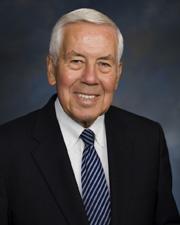
Mr. President, I am pleased to join my good friend and colleague, Senator Patrick Leahy in introducing the Better Nutrition for School Children Act of 2003. This bill takes a common sense, flexible…
Mr. President, I am pleased to join my good friend and colleague, Senator Patrick Leahy in introducing the Better Nutrition for School Children Act of 2003. This bill takes a common sense, flexible approach to the sales of food that competes with federally supported school meals, and represents one component of addressing the overall health of our Nation's children.
This year Congress will address a number of the Federal nutrition programs, including those administered through local school systems. Our Nation's schools provide our children with over 28 million federally subsidized meals each day. For some of these children, these meals provide the bulk of their nutrition needs. As a result, the meals served by schools should meet balanced nutrition standards in order to promote overall health.
Unfortunately, an increasing number of our Nation's children are becoming overweight and obese. Children who are overweight and obese are much more likely to have difficulty controlling their weight in the future, which increases their risk of medical problems such as diabetes and heart disease. In order to address this issue, Congress has a duty to analyze variables at school that affect a child's health, including foods of minimal nutritional value.
In addition to the federally subsidized foods served in our schools, many children have access to and choose to purchase competitive foods from other sources, such as vending machines. This bill asks the Secretary of Agriculture to investigate the sales of foods that are outside the Federal meal programs and issue a regulation that balances the schools' interests with that of overall childhood health. In particular, the regulation must take into consideration the financial benefits a school receives from competitive food sales, how likely a child is to make this choice instead of nutritious foods, and the nutritional needs of children according to their school grade level. This bill does not require the Secretary to implement any further restrictions than what currently exist.
I believe this bill provides a rational approach to one facet of improving the health and fitness of our Nation's children. I urge my colleagues to join us in supporting The Better Nutrition for School Children Act of 2003.

Mr. President, I ask unanimous consent that the text of the bill be printed in the Record.
Mr. President, I ask unanimous consent that the text of the bill be printed in the Record.
Bill Text
Latest available legislative text
        [Congressional Bills 108th Congress]
[From the U.S. Government Publishing Office]
[S. 996 Introduced in Senate (IS)]

108th CONGRESS
1st Session
S. 996

To amend the Richard B. Russell National School Lunch Act to ensure an
adequate level of commodity purchases under the school lunch program.

_______________________________________________________________________

IN THE SENATE OF THE UNITED STATES

May 6, 2003

Mr. Johnson (for himself, Mr. Craig, Mr. Leahy, and Ms. Stabenow)
introduced the following bill; which was read twice and referred to the
Committee on Agriculture, Nutrition, and Forestry

_______________________________________________________________________

A BILL

To amend the Richard B. Russell National School Lunch Act to ensure an
adequate level of commodity purchases under the school lunch program.

Be it enacted by the Senate and House of Representatives of the
United States of America in Congress assembled,

SECTION 1. SHORT TITLE.

This Act may be cited as the ``Commodity Distribution Act of
2003''.

SEC. 2. COMMODITY PURCHASES UNDER SCHOOL LUNCH PROGRAM.

Section 6(e) of the Richard B. Russell National School Lunch Act
(42 U.S.C. 1755(e)) is amended--
(1) in paragraph (1)--
(A) by striking ``in the form of'' and all that
follows through ``(A) commodity assistance'' and
inserting ``in the form of commodity assistance'';
(B) by striking ``; or'' and inserting a period;
and
(C) by striking subparagraph (B); and
(2) in paragraph (2)--
(A) by striking ``the Secretary shall, to the
extent necessary,'' and inserting ``the Secretary--
``(A) shall, to the extent necessary,'';
(B) by striking the period at the end and inserting
``; and''; and
(C) by adding at the end the following:
``(B) shall not use commodities provided under the
authority of any other Act to meet the requirement for the
school year.''.

SEC. 3. EFFECTIVE DATE.

This Act and the amendments made by this Act take effect on October
1, 2003.
<all>