A resolution relative to the death of the Honorable Paul Simon, a former Senator from the State of Illinois.

Legislative Activity
Stay on top of the latest movement without scrolling through every action
Message on Senate action sent to the House.
December 10, 2003
View full timeline
Introduced in Senate
December 9, 2003
Submitted in the Senate, considered, and agreed to without amendment and with a preamble by Unanimous Consent. (consideration: CR S16141, S16213-16214; text as passed Senate: CR S16213-16214; text of measure as introduced: CR S16141)
December 9, 2003
Message on Senate action sent to the House.
December 10, 2003
Floor Debate
24 membersWhat members said about S.Res. 281 on the floor
 JTD
JTD JS
JS JS
JS JFC
JFC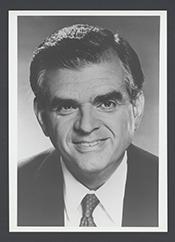 RL+19
RL+19
Floor Debate
24 membersWhat members said about S.Res. 281 on the floor
Mr. Speaker, I move to suspend the rules and agree to the resolution (H. Res. 489) stating the agreement of the House of Representatives with the sentiment expressed by the Senate in Senate…
Mr. Speaker, I move to suspend the rules and agree to the resolution (H. Res. 489) stating the agreement of the House of Representatives with the sentiment expressed by the Senate in Senate Resolution 281.
Mr. Speaker, I yield myself such time as I may consume.
Mr. Speaker, this resolution is a resolution basically concurring with the sentiments expressed in Senate Resolution 281, a resolution regarding, really,
the life of Senator Simon, who unfortunately passed away this last December at the age of 75. The Senator had quite a distinguished life of many accomplishments, was during his lifetime both a journalist and an author as well as a public servant. He was prodigious in his work product, passionate in his concerns for his constituents, and cared a great deal.
I must say he and I would not have agreed on anything probably except perhaps the desire to do the best we could for our country. He was an honorable public servant and someone who is fitting should be commended.
Mr. Speaker, I am pleased to rise today to offer for this body's consideration House Resolution 489, a bill stating the agreement of the House of Representatives with the sentiment expressed by the Senate in Senate Resolution 281 regarding former Illinois Senator Paul Simon, who regrettably passed away on December 9, 2003, shortly after undergoing heart surgery.
The Honorable Paul Simon was born November 29, 1928, in Eugene, Oregon. At the age of 19, Simon became the Nation's youngest editor- publisher when he accepted a local Lion's Club challenge to save the Troy Tribune newspaper in Troy, Illinois. In little time, Paul created a chain of 13 newspapers in southern and central Illinois that were notable for their hard-hitting investigative journalism, as was demonstrated when one of his papers, the Tribune, exposed syndicate gambling connections in Madison County, Illinois.
Paul Simon served our Nation in the U.S. Army from 1951-1953. Following his military service, Paul ran for state office and was elected to the Illinois House in 1954. He then was elected into the Illinois Senate in 1962. During his 14 years in the state legislature, he won the Independent Voters of Illinois' ``Best Legislator Award'' every session.
Simon was elected lieutenant governor of Illinois in 1968, and in this capacity, he became the people's ombudsman. He is widely credited with turning what had been a ceremonial position into a position focused on improving Government's ability to better serve its citizens.
After narrowly losing the 1972 Democratic gubernatorial primary to Dan Walker, Simon started the public affairs reporting program at Sangamon State University in Springfield, Illinois (now the University of Illinois at Springfield), and lectured during the 1972-1973 school year at the John F. Kennedy School of Government at Harvard University.
Simon was elected to the U.S. House of Representatives in 1974 and served Illinois' 22nd and 24th Congressional Districts for 10 years. During his service in the House, Simon played a leading role in drafting and enacting major legislation covering a wide range of issues, including education, disability policy, and foreign affairs. While in the House, he worked closely with former Speaker Newt Gingrich in establishing the Office of House Historian.
In 1984, Simon was elected to the U.S. Senate. During his years as a public official, Paul Simon was known for exceptional constituent service. He also was the Senate's pacesetter in convening town meetings. As a Senator, Simon held more than 600 town meetings throughout the state. He was also known for sporting fashionable bow ties, which became his trademark.
Prior to leaving the U.S. Senate, Simon ranked as Illinois' senior Senator. In November 1994, Paul Simon announced that he would retire from the Senate when his term expired January 3, 1997, ending 12 years of exceptional service to the people of Illinois and to the people of the United States.
Simon holds over 55 honorary degrees and has written 22 books. Paul Simon married Jeanne Hurley of Wilmette, Illinois, in 1960, whom he met while both served in the Illinois House. They had two children, Sheila and Martin, three granddaughters and one grandson. After his first wife passed away, Senator Simon married Patricia Derge in May 2001.
Please join me in honoring the life and service of this fine man and dedicated public servant by supporting House Resolution 489.
Mr. Speaker, I reserve the balance of my time.
Mr. Speaker, I yield 5 minutes to the gentleman from Illinois (Mr. LaHood).
(Mr. LaHOOD asked and was given permission to revise and extend his remarks.)
Mr. Speaker, I yield 5 minutes to the gentleman from Illinois (Mr. Shimkus).
(Mr. SHIMKUS asked and was given permission to revise and extend his remarks.)
Mr. Speaker, I am pleased to yield 3 minutes to the gentleman from Michigan (Mr. Ehlers).
Mr. Speaker, I yield myself such time as I may consume.
On behalf of the Committee on House Administration committee chairman, the gentleman from Ohio (Mr. Ney), and myself, I would like to thank the ranking member, the gentleman from Connecticut (Mr. Larson), and the author of the resolution, the gentleman from Illinois (Mr. Costello), and the committee staff. Please join me in honoring the life and service of this fine man and dedicated public servant, Paul Simon, by supporting House Resolution 489.
Mr. Speaker, I yield back the balance of my time.
Mr. President, on behalf of the leader, I note that in a few minutes the Senate will begin a series of three rollcall votes. With the completion of these three votes, the Senate will have passed two…
Mr. President, on behalf of the leader, I note that in a few minutes the Senate will begin a series of three rollcall votes. With the completion of these three votes, the Senate will have passed two appropriations bills. The first of these votes will be on the Sessions AmeriCorps amendment. Following that vote, the Senate will vote on passage of H.R. 2657, the legislative branch appropriations bill, which will immediately be followed by a vote on passage of H.R. 2559, the military construction appropriations bill. The second and third votes in this series will be 10-minute votes. Therefore, Senators are encouraged to remain in the Chamber until all three votes have been completed. The majority leader will have more to say on the schedule following these votes.
Mr. President, I ask unanimous consent that Senator Cornyn of Texas be added as a cosponsor of this amendment.
Mr. President, this amendment would strike the $100 million for AmeriCorps that is contained in the emergency supplemental portion of this bill. The President did not request these funds. The administration does not support this appropriation as part of an emergency supplemental. These funds are not offset. In fact, every single penny that will be spent of this $100 million will go directly to the debt of the American people. It will increase the debt entirely, because we are in a deficit situation and emergency spending by definition is above our budget, and even our budget takes us into debt.
This is not an emergency. It is just one more typical bureaucratic failure in a governmental program that caused them to run short, and now they want the taxpayers to run up the debt to pay for the shortfall. I think it is just not the right thing to do.
It is suggested that we have to have this money now. But if you read the language in the legislation, it says the funds are to remain available until September 30, 2004. That means this could come up in the regular appropriations bill for VA-HUD, and they could put it within the budget and fund it through next year, fiscal year 2004. That is really what should occur, if they want to spend extra money to bail out the mismanagement of the AmeriCorps program which all Senators-- even those who support this bill--are critical of and are trying to do something about.
In addition, it says the educational awards will remain available until expended. That means they could be spent over a period of years.
Why are we bringing it forward on this emergency supplemental bill? It is because it does not count against the budget allocation the appropriations subcommittee has for all of the programs within their venue.
If they have to come up with extra money for appropriations under the current law and under the budget, that means they may have to be tight across the board and find the money somewhere else, or maybe they will have to reduce what AmeriCorps would like to have.
Those are tough decisions. But that is what we get paid to do every day around here. By allowing them to tack this on top of the bill and add directly to the debt of the American people relieves the pressure that was caused by the mismanagement under these circumstances.
I note the chairman of the House VA-HUD Committee--a Peace Corps volunteer himself, and a strong supporter of the AmeriCorps program, Congressman Jim Walsh of New York--is very strongly opposed to this even though he supported AmeriCorps from the beginning. He issued a news release and full statement dealing with this issue. He makes a number of very important points--from a man who really cares about this program and doing the right thing.
For example, he said:
My opposition to the Senate's supplemental AmeriCorps
appropriations proposal comes down to an issue of
accountability. We shouldn't reward an agency that violates
Federal law and mismanages taxpayer dollars by providing
additional funding until clear and consistent reforms have
been enacted. Should these requested funds be appropriated, I
have little faith that the existing operation could get the
funding out of Washington to local community grantees
effectively or equitably by the end of fiscal year on
September 30.
He goes on to make other points.
I urge my colleagues to read this news release before they commit on how they intend to vote. The emergency bill has disaster relief, space shuttle, wildfires, and AmeriCorps. I would add that Citizens Against Government Waste has written in opposition to this legislation. They urge it to be defeated. I note they intend to score this legislation, as do other groups that care about mismanagement, including Citizens Against Government Waste, the National Taxpayers Union, Americans for Tax Reform, and others.
It is an important vote. We ought not to go around the budget we passed--and I served as a member of the committee--and tack on $100 million for a bureaucratic snafu and running that $100 million directly against the debt of the American people in violation of the Budget Act.
I yield the floor and reserve my remaining time.
I yield such time as is remaining to the Senator from Oklahoma.
Mr. Speaker, not very much will get me motivated enough to wear a bow tie in this world, but now I have done it two days in a row, and it is a Paul Simon tie. When he ran for President, at the…
Mr. Speaker, not very much will get me motivated enough to wear a bow tie in this world, but now I have done it two days in a row, and it is a Paul Simon tie. When he ran for President, at the funeral, at the wake, the lapel pins had the trademark bow tie. This is a Paul Simon bow tie that I have been allowed to use by the Tomasewski family of Washington County, and I thank them for that. It only took me about 4 hours to tie it, but, once I got it down, I kind of slept with it last night and did not change shirts.
Paul was a great man. A lot has been said and gone over with regard to his history, and I will highlight a few other points. But I am going to talk about the man of faith, the man of religion.
I am of the Lutheran faith. Paul comes from a strong family of Lutheran Church, Missouri Synod. His father was a missionary in China. That moral background and upbringing I think helped serve him well in the crusades that he fought in the future.
A lot of the pillars of my congregation in Holy Cross Lutheran Church in Collinsville remember Senator Simon fondly as a member of what was then called the Walther League, which was the youth group. They would meet throughout parts of Southern Illinois. And that friendship transcended partisan idealogy, as a lot of my colleagues have said today, because when Senator Simon walked into any room, whether you agreed or disagreed, you never questioned the integrity, the thought, the desire, the real passion that he brought to any issue. I think we would do well in memory of him to emulate that, to remember that, and to bring that back into the civil discourse that sometimes we do not have here on the floor of the House.
He was also a great crusader. Again, my colleague the gentleman from Illinois (Mr. Costello) mentioned at 19 his getting a newspaper in Troy, Illinois, just down the road from both of us, and using that paper to reform government, to fight corruption. Madison County and St. Claire County was a bastion of illegal activities, of crime and gambling, and at a very young age he really put his life at risk by writing and exposing those that would break the law. That courage, developed at a young age, just led on to a very, very successful career.
When he went to into the legislature, he pushed for and his best known legislation was the State's first act to require open meetings by local governments under most circumstances, the Open Meetings Act, Paul Simon's signature issue, which helped bring the public closer to the real discussions of what elected officials are doing. Now, sometimes we may not like that, but for the discourse and knowing what is really going on, requiring notification, requiring people to have access to these meetings, it is real reform.
Upon his retirement, everyone knows he is a noted author, has written tremendously various issues, he did not retire. He went down to Southern Illinois University in Carbondale around his home in Makanda, and continued to work and in transforming the public policy debate around the world.
I was privileged to call him a fellow member of faith, a friend. I was able to travel with him on airplane rides. He remembered my mother when she had some health issues just around the time when he had health issues. They exchanged greetings and notes. He was just that type of guy that made us all proud.
We will miss Senator Simon, and hopefully the members of the Illinois delegation and the members of both Chambers of Congress will remember his years of service and really dedicate ourselves to some of the higher ideas that Senator Simon really called us all to be. I thank him for his service and I thank him for his friendship.
Mr. Speaker, I would like to thank my friend, the ranking member, for yielding me this time. Mr. Speaker, I rise today in support of House Resolution 489 to honor my good friend Senator Paul Simon,…
Mr. Speaker, I would like to thank my friend, the ranking member, for yielding me this time.
Mr. Speaker, I rise today in support of House Resolution 489 to honor my good friend Senator Paul Simon, who sadly passed away on December 9, 2003.
Senator Simon was a good friend and a dedicated public servant. Paul worked as a newspaper publisher, public servant, author, and teacher. He was elected to the Illinois general assembly in 1954 and the Illinois senate in 1962 and was elected lieutenant governor of Illinois in 1968.
While a member of the Illinois legislature, Paul won the Independent Voters of Illinois' ``Best Legislator Award'' every session of the legislature.
Senator Simon served in this body for 10 years, beginning in 1974 when he was elected to the U.S. House of Representatives, then the United States Senate for 8 years and ran for President of the United States in 1988. Throughout his public service, Paul was known for his honesty and his integrity. That was his hallmark.
As a Member of the U.S. House and the U.S. Senate, he balanced fiscal conservatism with social liberalism. Paul was a champion of a balanced budget amendment and worked to overhaul the Federal student loan program so that students and their families could borrow money directly from the U.S. Government. Paul also led efforts to curb television violence, leading the industry to monitor the amount of violence on their TV screens. In addition, Paul was instrumental in the establishment of the National Center for Missing and Exploited Children.
Paul Simon was always concerned about the cultural isolation of U.S. college students and young Americans in general. One of his first books was ``The Tongue-Tied American'' on the need for American students to learn a second language. Paul sponsored several programs to increase international education and understanding in American schools, and he was working to create a foreign exchange program to allow more American students to study abroad.
As impressive as his legislative record was during his tenure in Congress, he never forgot his constituents and was known for exceptional constituent service. During his service in the U.S. Senate, Paul held over 600 town meetings throughout the State of Illinois to hear the issues that were important to the citizens of Illinois.
Paul's career began at age 19, when he became the youngest editor- publisher of the Troy Tribune in Troy, Illinois, in Madison County, Illinois. By 1966 he had built a chain of 13 newspapers in southern and central Illinois, which he sold in order to concentrate more time on public service and writing.
Upon his retirement from the U.S. Senate, Paul formed the Public Policy Institute at Southern Illinois University in Carbondale to share his wisdom and advocacy with the next generation of students. In addition to chairing the Public Policy Institute, he also taught classes in political science, history, and journalism at SIU.
Senator Simon is survived by his two children, and Martin, his four grandchildren, Reilly Marie, Corey Jeanne, Brennan and Nicholas, and his second wife, Patti and her two children, Jennie and Bill. Jennie currently works right here on the Hill for our good friend and colleague, the gentleman from Georgia (Mr. Norwood).
Mr. Speaker, at Senator Simon's funeral, Senator Ted Kennedy said, ``In another era, he would have been a founding father. He was that good. He will never be forgotten.''
Senator Simon was a great man that served our country with honor and distinction. It is fitting that we honor him with this resolution today.
Mr. Speaker, I thank the gentleman from California (Mr. Doolittle) for yielding me this time. On December 9, 2003, the citizens of Illinois lost one of the true giants in the storied history of…
Mr. Speaker, I thank the gentleman from California (Mr. Doolittle) for yielding me this time.
On December 9, 2003, the citizens of Illinois lost one of the true giants in the storied history of politics in our State. Paul Simon was a leader who transcended political or ideological labels.
To be sure, he was a staunch liberal who fought for better housing, fair wages, a cleaner environment, and civil justice. At the same time, he also leaned conservative when it came to fiscal matters.
But it was the way he carried out the job that made Paul a revered figure in a State that is accustomed to larger-than-life figures. Paul Simon represented an approach to politics that is becoming more and more rare in today's world, an approach in which he not only respected the people he represented but he respected the people who were his peers and the institutions in which he served, including this House and the other body.
When I was first elected to the House in 1994, Paul was the senior Senator from Illinois, and he took time to reach out to me so we could become better acquainted and work on issues of mutual concern.
As a leading Member of the Senate, I am sure that he had many better things to do than getting to know a first-term Member of the House, but that was the way Paul did business. He knew that good relationships were important in politics and legislating, and I am a better Member of the House for Paul Simon's efforts to get to know me.
When Paul retired from the Senate following the 1996 election, he certainly could have landed some lucrative lobbying contracts, but he chose instead to continue influencing public policy through a different arena, one that could have a lasting impression on generations of future public servants, that is, teaching. From his perch as director of Public Policy Institute at Southern Illinois University, he continued to stay in the public eye, and he was able to carry on his advocacy for many of the issues he held so dear. He wrote prolifically on many issues during his time at SIU. He continued to travel the world to talk about the issues in which he so passionately believed. I would imagine he was as busy in his role with the institute as he was during his time in the Senate.
And to this day I am sure Paul Simon's approval numbers in Illinois are higher than any politician in our State.
Paul is someone who should be used as a benchmark, not only for future generations of leaders but for today's politicians as well. Paul Simon taught us that one can really get ahead through civility, common courtesy, and a respect for those with opposing viewpoints. That is a far cry from what many of our citizens believe today about their elected representatives. All of us could do this job a little better if we follow in the footsteps and examples of Paul Simon.
I might say that when I first got to the House, Paul recommended that I get involved in a program called Everybody Wins, which is a reading program
where some of us branch out around the Capital and read as mentors to students; and if it were not for Paul's initiative for me to get involved in that program, which I have been involved with, and it is a great program here in Washington, D.C., I would not have been involved. But that is the way Paul Simon was. He was an example of not only a mentor for children but to all of us who have come to know and love him. And he will be missed in Illinois and certainly missed at Southern Illinois University. And I thank the committee for recognizing him and adopting the Senate resolution.
Show 8 more
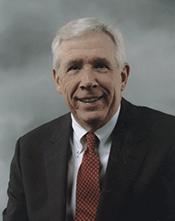
Mr. Speaker, I rise today in strong support of the resolution introduced today to honor the life and legacy of Paul Simon. I learned with great sadness of his death in December. Senator Simon…
Mr. Speaker, I rise today in strong support of the resolution introduced today to honor the life and legacy of Paul Simon. I learned with great sadness of his death in December.
Senator Simon epitomized all that is best about Congress. He served in the House of Representatives and the Senate, and was a distinguished member in both chambers. His presence was a constant example of the importance of hard work, discipline, and compassion. Senator Simon believed that government could serve the people, and serve them in a positive way. He served his State and his Nation beginning in 1954, when he entered the Illinois State legislature. His service would continue until his death as a professor in Illinois, where he shared a lifetime of wisdom with the leaders of the future.
Senator Simon's season of service would take him to the House of Representatives, the United States Senate, and the campaign trail as a candidate for the presidency. His work included fighting against television violence, working for those without jobs, and trying to balance the budget. I was pleased to join with him in raising the issue of gambling's ill effects on families, individuals, and communities. He was concerned about the welfare not only of Illinois, but of the entire Nation.
Senator Simon's talents were not limited to Congress. In his lifetime, he wrote over 20 books and was awarded over 50 honorary degrees. He was cerebral as well as practical. Senator Simon lived a life of the mind as well as a life dedicated to enlightening and lifting up his fellow citizens. After he left the Senate, Paul Simon returned home, and taught at Southern Illinois University, to impart his wisdom to the next generation, to enlighten young minds, and to continue serving his state.
His life was one of constant service in the public interest. Senator Simon lived many lives in one--editor-publisher, legislator, public crusader, professor. That he did so much is impressive. That he did it all so well and so selflessly is inspirational. Congress and the Nation is a lesser place for his passing, but both were greatly enriched by his life and his example. Senator Simon will be missed, but through the lives he touched, the life he lived, and the lives he inspired, he will not be forgotten.
Our sympathies go to his family and our thanks to them as well for sharing this remarkable man with us.
Mr. TOWNS. Mr. Speaker, I rise today to join my colleagues in honoring the late Senator Paul Simon. Certainly, many of us recall his involvement, his active support for U.S. bilateral assistance to Africa and his work in the fight against apartheid in South Africa. Today, however, I want to pay special tribute to the Senator's long time advocacy for historically Black colleges and universities, HBCUs. As the chair for the Postsecondary Education Subcommittees in both the House and the Senate, he lent his unwavering support for these institutions during reauthorizations of the Higher Education Act of 1965 as well as adding a pivotal endorsement of the creation of an endowment fund for HBCUs. While Paul Simon is a colleague who will always be remembered as a supporter of the disadvantaged, he will also be remembered for his belief that the disadvantaged could be successful with the right kind of assistance from government programs. Senator Simon will be sorely missed but we are all better from having known and worked with him.
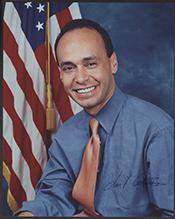
Mr. Speaker, I rise today to express my strong support for this resolution and thank my good friend and colleague, the gentleman from Illinois, for introducing it. My friend Senator Paul Simon was a…
Mr. Speaker, I rise today to express my strong support for this resolution and thank my good friend and colleague, the gentleman from Illinois, for introducing it.
My friend Senator Paul Simon was a statesman, a respected leader, and an unwavering champion of the little guy; and he possessed a heart, a smile, and a baritone voice that could fill a room. He was truly one of a kind, a principled human being, a principled politician, a real reformer, and an unapologetic idealist whose words were followed by genuine and unrelenting action.
From his time as a young journalist rooting out corruption in Illinois, to the 14 years he served in the general assembly in Springfield, to his distinguished tenure in Congress, Paul never wavered in his fight for fairness and justice. He never backed down. No matter the odds, no matter the political ramifications, no matter how unpopular or lonely his positions, he remained fervent and passionate.
Paul was a role model for many of us in the Illinois delegation today and for many who continue to seek public office. I know he is a role model for me.
During his tenure in the Senate, Paul fought ardently and selflessly on the issues that made a real difference in ordinary people's lives. He always saw the good in people and used that good for the benefit and the betterment of our country. He stood up with us in the fight for immigration reform and on so many other issues important to my constituents and to this country.
But my friend's legacy transcends politics. Paul was a beacon of hope for anyone who wished to dream the American Dream. He embodied the type of heart needed to sustain the uphill battles required to make real change, and he was the consummate underdog and dedicated his life to public service. He was always for the underdog and giving a voice to the concerns of the voiceless. Paul simply would have no part in pandering to the special interests. To him, public service was about one thing, people, and he maintained that steadfast commitment to them.
We lost an irreplaceable friend, a teacher, and a mentor. He touched countless lives in countless ways, and we will never forget him.
But just remembering Senator Simon is not enough; just honoring him is not enough. He would have wanted us to do more. He would have wanted us to stand together, to fight together; and I think that is what this resolution is really all about. It is about recognizing and building on Senator Simon's accomplishments, his ideas, his life and, indeed, his legacy. We should not let this enormous loss be the end of his work. We all have a responsibility now in this Chamber and across this country. We must embody Paul's heart and his spirit. We must embrace his honesty and his integrity.
Mr. Speaker, this Congress and this country face many challenges in the coming months and years. I think we would be well served to pause and ask, what would our friend, Senator Simon, do? I am confident that by asking that simple question, we will set ourselves on the right course.

Mr. President, I rise in strong support of the provision sponsored by my colleague, Senator Mikulski, the chairman, Senator Stevens, and others in the Appropriations Committee, and I urge that we…
Mr. President, I rise in strong support of the provision sponsored by my colleague, Senator Mikulski, the chairman, Senator Stevens, and others in the Appropriations Committee, and I urge that we table the amendment.
This $100 million is something that is needed now to continue the President's strong commitment to assuring that we have a robust volunteer program in the United States. The President has spoken very eloquently about the need for volunteers, and I think all of us know how important volunteers are in our communities.
AmeriCorps is a means of providing assistance, and we need those funds now. There are some 20,000 slots ready for volunteers. In previous years they have committed to them. They overcommitted, no question about it. AmeriCorps has been fraught with mistakes and mismanagement, but there have been young people in America who have answered the call to volunteer. There are programs in America waiting for these volunteers. By making these funds available now, we can allow AmeriCorps to commit for the programs that begin with the new school year starting in September and to make sure there is not a hiatus in the programs.
There is no question about the mistakes of AmeriCorps, but we should not punish the young people of this country who want to give something back through community service. The volunteers are ready now, and we should not disappoint them or the communities they serve. This $100 million is necessary to keep the program moving.
As the Senator from Maryland has so eloquently described, we have spent 8 years on the VA-HUD Appropriations Subcommittee trying to straighten this program out. My colleague from Maryland rightly called the Corporation for National and Community Service to task for the continuing problems. We have demanded the administration take corrective action. They are taking that action. Thanks in large part to Senator Mikulski, I think we are getting a response from the Corporation that will fix the problems and restore the accountability. We, I assure you, will continue appropriate oversight. The commitment of my colleague from Maryland to this program is enduring and strong, and we will see that it gets the leadership it needs.
The concerns of the House chairman that were mentioned by my colleague from Alabama are being addressed by requiring the inspector general to audit the AmeriCorps program and defund those programs that have not performed. Further, I have led the congressional efforts of oversight through the GAO and IG audits. That is how we found out about the problems. And we authored the Strengthen AmeriCorps Program Act, which passed Congress in 2 days and was signed by the President last week, to correct the financial accounting problems.
I would not support these funds if I thought there were management problems that were not being corrected. They are. I urge my colleagues to table the amendment.
(At the request for Mr. Reid, the following statement was ordered to be printed in the Record.)
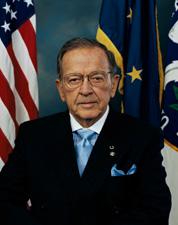
Mr. President, there are 15 minutes on the motion of the Senator from Alabama to strike. He will have 7\1/2\ minutes, and the other 7\1/2\ minutes will be under my control. First, I would like to see…
Mr. President, there are 15 minutes on the motion of the Senator from Alabama to strike. He will have 7\1/2\ minutes, and the other 7\1/2\ minutes will be under my control.
First, I would like to see if the distinguished Democratic whip would like to make some comments. I do have a motion to make.
I ask unanimous consent that the modification I send to the desk to amendment No. 1201, offered by Senator Reid and myself and Senator Feinstein, previously agreed to, be modified pursuant to this amendment, and I ask unanimous consent that the following technical modification to amendment No. 1206, offered by myself and Senator Landrieu, be further modified by the language at the desk.
These amendments were modified on the floor, and last evening we discovered they had to be perfected, so I ask unanimous consent.
The Senator has 7\1/2\ minutes.
Mr. President, I yield 3 minutes to the Senator from Maryland, and 4 minutes to the Senator from Missouri.
Mr. President, how much time remains?
Mr. President, I regret deeply the necessity to move to table the motion of the Senator from Alabama. There has been a serious mistake in this program, and these young people were notified they would be enrolled in August and September.
The statements made on both sides are absolutely correct. Both sides have
a point; that is, this should not have happened. But it did happen, and we felt compelled to keep the commitment to those people who were told they would be enrolled and to put up the money so they will be enrolled for the school year that starts in September.
I do hope the Senate understands we will do everything possible to prevent this from happening again. I commend the Senator from Maryland and the Senator from Missouri for their diligence in finding out what happened and for bringing this to our attention, but there is no other way than to keep the commitment we have made and to see to it that AmeriCorps does continue to enroll these people. The enrollment for next year, as I understand it, will be at the authorized level of 50,000. I think that is the problem, to make certain that does not happen again.
Mr. President, I move to table the amendment. I believe the yeas and nays have been ordered; is that correct?
Mr. President, I ask unanimous consent that it be in order to ask for the yeas and nays at this time on the bill itself.
Mr. President, I ask for the yeas and nays.
Mr. President, I ask unanimous consent that it be in order to ask for the yeas and nays on the military construction bill which will later be before the Senate.
Mr. President, I do ask for the yeas and nays on the military construction bill.
I thank the Chair.
Mr. President, I move to reconsider the vote.
Mr. President, what is the pending business?
Mr. President, this will be a 10-minute vote; is that correct?
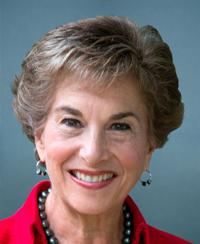
Mr. Speaker, it gives me such great honor and pleasure to join in support of this resolution in memory and to celebrate the life of former Senator Paul Simon who was my friend and my mentor and my…
Mr. Speaker, it gives me such great honor and pleasure to join in support of this resolution in memory and to celebrate the life of former Senator Paul Simon who was my friend and my mentor and my Senator and my role model.
Paul Simon was unique. He was the real thing, though. When we look at him with his bow tie and his suit, he was an authentic person. And those who might make the mistake of kind of relegating Paul Simon to the kind of politician of the past, that would be wrong. Paul Simon, although he had that kind of almost old-fashioned gentlemanly way about him, was someone who we can learn a lot from today. He had incredible courage. The thing that Paul Simon really understood was that it is not only important for your own personal integrity to stand up for your beliefs, but that it was also really good politics.
Paul Simon his whole life was an opponent of the death penalty, not always a popular issue in the State of Illinois; and it is an issue that inspired a lot of hot feelings about that. And yet people who would disagree with him on that or, like me, who disagreed with him on the Balanced Budget Amendment pretty strongly, nonetheless often would come up to Senator Paul Simon and say, you know, Senator, I do not agree with you on this or that, or even, I do not agree with you on most things, but I trust you. I am going to vote for you. I admire the way that you stand up for the State of Illinois and for the things that you believe in. It would be wonderful if more of us would do that.
I went to Iowa. We just finished the Iowa primaries. I went to Iowa for a month for Paul Simon in 1988 and, by the end, of course, everybody could say the speech with him. I could just hear that voice saying, the United States is a great country, but we can be an even better country. And he believed that so much. His desire, as he stated it: I wanted to do something where I could continue to contribute. I did not get into office just because I wanted a title; I wanted to get something meaningful done, and he did. He continued to do that. That is so true. He did not just want to be something; he wanted to do something.
So when he retired from being in the Senate, he continued in his role at Southern Illinois University and all the while prodding all of us. We heard mention of those personal notes. He wrote a book called ``Tapped Out,'' dealing with the water crisis around the world; and he really wanted me to get involved in that. He would write me letters. Then he sent me the book. He said, now look, your name is in the forward of the book. It said, to someone who is going to be working on this issue. I knew what he was saying to me: you better work on this issue; you are in my book.
Paul, I am going to be working on that issue and so many more where you forged the path.
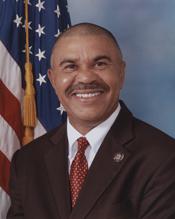
Mr. Speaker, I thank the ranking member from Connecticut for yielding me time. Mr. Speaker, I rise in support of this resolution honoring the late Senator Paul Simon. It was my privilege to have…
Mr. Speaker, I thank the ranking member from Connecticut for yielding me time.
Mr. Speaker, I rise in support of this resolution honoring the late Senator Paul Simon. It was my privilege to have known Senator Simon for most of my life. I have fond memories of watching Congressman Simon on the House floor many years ago when I was a student and a doorkeeper, and he has long been a source of personal inspiration.
When I first came to know Congressman Simon, he represented Southern Illinois and served with my father on the House Committee on Education and Labor. He was among the most active and effective Members in the history of this institution, and I was not surprised when I recently learned that in 1983, Time Magazine cited Congressman Simon for passing more amendments than any other Member of the U.S. House of Representatives.
Paul Simon served in the Illinois House of Representatives, the Illinois Senate, the U.S. House of Representatives and the U.S. Senate. Throughout his career, Paul Simon was famous for championing the causes of working people, children, the disabled and veterans. When he served in the Illinois legislature, he helped to create the State's community college system and the Illinois Arts Council. He also won the Independent Voters of Illinois Best Legislator Award every session in which he served.
While serving in the U.S. Congress, Paul Simon sponsored the Missing Children Act and the legislation establishing the National Center for Missing and Exploited Children. He also wrote the National Literacy Act, the School to Work Opportunities Act and the Job Training Partnership Act amendments. He was a leader in the reauthorization of the Elementary and Secondary Education Act and the establishment of the direct college loan program.
Deeply dedicated to the community that sent him to represent their interests in Washington, Senator Simon held more town hall meetings than any other Illinois senator and his office was legendary for its constituent services.
While in Congress, Paul Simon worked to enact legislation designating the first five federally chartered future high-speed rail corridors, which included the St. Louis-Chicago-Detroit/Milwaukee corridor, and to designate the Illinois-Michigan Canal National Heritage Corridor. He was also instrumental in expanding the Jefferson National Expansion Memorial, which is St. Louis's Gateway Arch National Park, to the State of Illinois.
He possessed a rare knowledge and understanding of the legislative process and manifested an extraordinary energy for public policy- making.
Senator Simon left us all way too soon. He lived a life dedicated to serving others, and he certainly left this world a better place for his time on Earth.
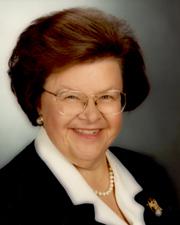
I thank the Senator. I rise in vigorous opposition to the Sessions amendment and urge my colleagues to vote against it. I offered the amendment in the Appropriations Committee to add $100 million for…
I thank the Senator.
I rise in vigorous opposition to the Sessions amendment and urge my colleagues to vote against it.
I offered the amendment in the Appropriations Committee to add $100 million for AmeriCorps in this urgent supplemental. It has strong bipartisan support. Senators Stevens, Byrd, Bond, and many others support my amendment. But it is not about supporting my amendment. It is about supporting AmeriCorps at this very troubled time.
If we do not do this $100 million, there will be a cut of over 15,000 AmeriCorps volunteers right this minute. These cuts are being announced today.
How did this happen? There was a bureaucratic boondoggle. There was a bureaucratic snafu. They overenrolled 20,000 volunteers. Every year, the VA-HUD subcommittee funds 50,000 volunteers. But they overenrolled with 70,000. How did we know about it? Senator Bond chaired the subcommittee leading the fight for reform in fiscal responsibility, and uncovered it at the April 15 hearing. The House put out a press release. We put out performance. We found the mistake.
We worked on a bipartisan basis to correct the accounting. I called for new leadership. But that is not a substitute for the need for new funds.
This is an emergency today. Who are we going to punish, if we don't do the money? Not the bureaucracy, not the boondogglers, but the volunteers in our communities.
There is a question about why now. The law says funding for volunteers and the awards that help them pay off their student debt must be in the Federal checkbook when the volunteers begin their service. For many of them, they are going to begin their service now because they are going to be in school-based programs. Teach America, for example--which we all love--if this is not in there, 1,000 Teach America kids will not be in classrooms; and Jump Start, which works with Head Start and organizes and leverages other volunteers. When we look at what we are doing here, we need to know that if AmeriCorps does not get this funding now they will not be able to sign up volunteers right this minute for these programs.
This is to get AmeriCorps over the troubled waters. The President has announced a new CEO. Senator Bond has led the effort for a new chief financial officer. He has been the leader of the reform effort, and has had my utmost support.
We can't wait until next year. If we do, we are going to squander volunteer opportunities. The President has called for a new spirit of voluntarism. Young people have responded. We need to respond to the call to meet our responsibility and not punish these communities.
I yield the floor.
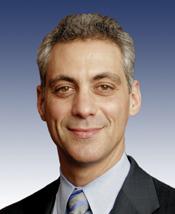
Mr. Speaker, I rise in strong support of this resolution honoring the memory and lasting contributions of Paul Simon. I was honored to work on his election to the Senate, where he made all of the…
Mr. Speaker, I rise in strong support of this resolution honoring the memory and lasting contributions of Paul Simon.
I was honored to work on his election to the Senate, where he made all of the people of Illinois and America proud. When we look across Illinois today, we see that we have an Attorney General who worked for Paul Simon and started a career in politics working for Paul Simon, a Member of Congress, a State Senator, a county commissioner. Although he is very famous for those who say that John Kennedy touched a set of idealisms for people to go into public service, for a number of us in Illinois, regardless of our party, Paul Simon
touched that chord of idealism; and we knew then that reaching for our ideals was possible by seeking a life in public service.
Despite winning five elections and winning elections in five different decades serving his State, his area, and his country in many different capacities, his character, integrity, and intelligence are what endure; and it is why Paul Simon today remains one of the most popular figures in the State of Illinois.
Long before they were fashionable, Paul Simon championed civil rights, education, and campaign finance reform. He saw in those areas his ideals being realized. In everything he did, he was guided by a deep, deep desire to help those who needed a voice. And for a number of us in Illinois, we can still hear his voice with ``how are you today'' and that deep sense that you were Paul Simon's person that he was talking to. And he always had a sense that he was not up here to be a vote, but to be a voice for our values, regardless of what party we came from. He taught many of us, and some of us, in fact, have come to this lesson hard in life, that you can disagree without being disagreeable.
After his retirement from Congress, he did not leave public service. He spent the remaining days of his life pursuing what he cared most about, which was education. As this resolution states, he remained an unapologetic champion of the less fortunate and a constant example of caring and honesty in public service.
Mr. Speaker, I thank my colleagues for the opportunity to recognize a true hero for many of us in Illinois. We will always remember Paul Simon and honor his enduring contributions to the State of Illinois and to this country. His memory will be a blessing to those who follow in his path.
Show 11 more
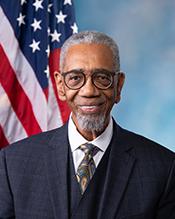
Mr. Speaker, I rise in strong support of this resolution to commemorate my distinguished colleague, Senator Paul Simon. It is with great sentiment that I rise to honor Paul Simon for his life's…
Mr. Speaker, I rise in strong support of this resolution to commemorate my distinguished colleague, Senator Paul Simon. It is with great sentiment that I rise to honor Paul Simon for his life's accomplishments.
In the book of Isaiah, the prophet writes, ``How beautiful upon the mountains are the feet of him who brings good news, who proclaims peace, who brings glad tiding of good things, who proclaims salvation, and who says to Zion, your God reigns.'' Through my personal experiences in working with Senator Simon, he was I believe, the epitome of those prophetic words from Isaiah. Paul, a son of a missionary, was a man who was known for his calm and comforting demeanor, a man that demonstrated a true testament of peace, and a man who believed in breaking barriers and shattering prejudices. I am not telling you what I think, but I am telling you what I know. I had the privilege to know him professionally and personally. Paul Simon was a Senator who earned the tremendous respect from all people who knew him. In my congressional district, he was revered by all. His calm temperament, his respect for mankind, and his unwavering commitment to fairness and equality was deeply admired in my community. He was vigilant in his fight for the struggle to protect and preserve civil liberties and human rights for all people.
Paul Simon was an icon for many political leaders such as myself and a ``giant'' in the history of the American democracy. During his tenure in Congress, Simon was a champion of education and a key advocate for literacy and lifelong learning. In the Senate, he was the author of the National Literacy Act, the School-to-Work Opportunities Act, the Job Training Partnership Act amendments, the 1994 re-authorization of the Elementary and Secondary Education Act and the direct student loan program. Senator Simon held numerous influential committee assignments, including serving as the Chairman of the Senate's Subcommittee on Africa.
Without question, Mr. Speaker, Paul Simon was one of the most effective Senators to have served the citizens of Illinois, and the American people.
Although Senator Simon has been called to answer his new ``heavenly'' assignment, he leaves with us his legacy and principles of nobility that will never be forgotten.
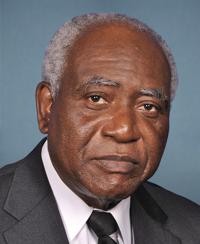
Mr. Speaker, I thank the gentleman from Connecticut for yielding me time. Paul Simon was absolutely the head of that part of the Democrats in Illinois that I have been associated with for so long. As…
Mr. Speaker, I thank the gentleman from Connecticut for yielding me time.
Paul Simon was absolutely the head of that part of the Democrats in Illinois that I have been associated with for so long. As a matter of fact, he was like the Seal of Good Housekeeping. That is, if you could get Paul Simon to say something good about you or endorse you, then it was the highest honor. You could not get any better than that.
I have always remembered when I ran for the House, Senator Simon said to me, ``I don't endorse in primaries generally. This year I am going to make two exceptions. I am going to endorse Dick Durbin for my seat, who has been my protegee and worked with me. I am going to endorse you for the seat that you are running for.'' I have always counted that as one of the high moments of my political career.
Someone mentioned all of the town hall meetings that Senator Simon would hold. I can remember attending many of those. In many instances, there might be only 15 or 20 people there, sometimes 10, and I would be amazed that this United States Senator would be at a small town hall meeting with 10 or 12 people, in an African American community, a little church, a library, and he would stay there two, sometimes three hours, just talking to the two or three people, trying to educate, trying to stimulate, trying to motivate.
I can remember all the small receptions that he and his wife Jennie and the rest of us used to attend, always sort of swimming upstream. The last communication that I had from Senator Simon was just before he died. I got a letter from him in the mail and an article from the Chicago Tribune saying congratulations, I commend you all for the work you are doing on behalf of ex-prisoners, people who are coming home from jail. That was Paul Simon, always seeking to assist the underdog, those that society would sometimes look at the other way at; Africa, food, nutrition, hunger.
At his funeral, as it was coming to a close, I remembered the words of a song that we sometimes sing when a person has done what they can do, that says, ``If when you give the best of your service, telling the world that the Savior has come, be not dismayed when men don't believe you, he'll understand and say well done.''
Senator Simon, well done.
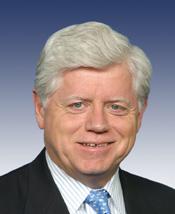
Mr. Speaker, I yield myself such time as I may consume. (Mr. LARSON of Connecticut asked and was given permission to revise and extend his remarks.) Mr. Speaker, it is fitting that we note today the…
Mr. Speaker, I yield myself such time as I may consume.
(Mr. LARSON of Connecticut asked and was given permission to revise and extend his remarks.)
Mr. Speaker, it is fitting that we note today the passing of a distinguished former Member of this House, Paul Simon of Illinois. I thank the gentleman from California (Mr. Doolittle) for offering this motion, and I also thank the gentleman from Illinois (Mr. Costello) for introducing this resolution.
I regret that I did not have the privilege of serving with Paul Simon. He retired from the Senate 2 years before I came to the House. I may not have served with Paul Simon; but like millions of Americans, I certainly knew of him and admired him greatly.
Paul Simon's reputation extended far beyond the geographic borders of the Land of Lincoln. Through a distinguished career that began at age 19 as a newspaper editor and publisher and led him to seats in both houses of the Illinois general assembly, lieutenant governorship, and on to both Houses of the United States Congress, Paul Simon enjoyed a reputation of honesty, integrity, and diligence. Known for his trademark bowties, Simon championed reform and the cause of the less fortunate than himself.
Mr. Speaker, Paul Simon, the statesman, was a great American who made a difference during his long career in public life.
Mr. Speaker, I reserve the balance of my time.
Mr. Speaker, I yield 3 minutes to the distinguished gentleman from Illinois (Mr. Costello), the sponsor of this resolution.
Mr. Speaker, I yield 3 minutes to the gentleman from Illinois (Mr. Davis), the most distinct voice in the House of Representatives and one of the most distinguished Members.
Mr. Speaker, I yield 3 minutes to the distinguished gentleman from Missouri, the ``Show Me State'' (Mr. Clay).
Mr. Speaker, I yield 3 minutes to the distinguished gentleman from Illinois (Mr. Emanuel), former advisor to President Clinton.
Mr. Speaker, I yield 3 minutes to the gentlewoman from Illinois (Ms. Schakowsky), my neighbor and good friend.
Mr. Speaker, I yield 3 minutes to the distinguished gentleman from Illinois (Mr. Gutierrez).
Mr. Speaker, I yield the balance of the time to the distinguished gentleman from California (Mr. Farr).
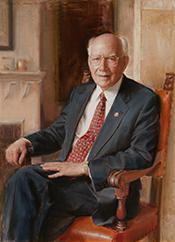
Mr. Speaker, I thank the gentleman for yielding me time. Mr. Speaker, it is a pleasure to get up and speak in honor of Paul Simon. I first knew his brother, Art, through Bread for the World. I had…
Mr. Speaker, I thank the gentleman for yielding me time.
Mr. Speaker, it is a pleasure to get up and speak in honor of Paul Simon. I first knew his brother, Art, through Bread for the World. I had been active in world hunger activities and in fact was a coauthor of a book regarding world hunger. When I read Bread for the World at that time I was very impressed with it. I knew that Senator Simon was Art's brother, so I was very pleased when I first had the opportunity to meet Senator Simon and have a discussion with him.
He was an honorable person, and, even though I never had close contact with him on a continuing basis, I was very impressed with his forthrightness, his thoughtfulness, his ability and his honesty. He set a high standard for all of us to follow.
I also appreciated the help of his wife, who was very interested in the Library of Congress. I was on the Committee on House Administration and served on the Joint House-Senate Committee on the Library of Congress, and she was a great help to me at various times in trying to achieve my objectives. They were a wonderful couple.
My last contact with Senator Simon was just 2 months ago, when I received a very kind, handwritten note from him. He had heard one of my speeches on the floor and sent me a quick note saying, in effect, ``That is the kind of voice we need to hear more in the Congress.'' I thought that was an overwhelming act of kindness on his part, to take time at this point in life, with the difficulties he faced, to write to a relatively unknown Congressman from a neighboring State and express his appreciation.
This indicated what a wonderful person he was, the kindness and the thoughtfulness he had. I am just delighted to join in this accolade for him. He was a great man. We could use many more like that in the Congress.
Mr. President, I compliment my colleague from Alabama for raising an important issue. I hope our colleagues will vote in favor of his amendment for a lot of different reasons. First, this shouldn't…
Mr. President, I compliment my colleague from Alabama for raising an important issue. I hope our colleagues will vote in favor of his amendment for a lot of different reasons.
First, this shouldn't be in the urgent supplemental. There is nothing emergency about it. Frankly, we gave AmeriCorps $64 million just last April.
Second, it wasn't requested by the administration. You would think if it was urgent it would have been requested. It was not.
Third, when you look at this, it is really funding for 2004. We only have 2\1/2\ months left in 2003. The Congressional Budget Office says zero money will be spent in 2003. Not one dime of it will be spent in 2003.
As a matter of fact, if you look at language in the bill, it says $100 million in funds and grants will remain available until September 30, 2004, and funds for educational awards will remain available until expended. So the net essence of this is we are helping out 2004 appropriations bills. This should be done in 2004.
If we want to have a wrestling match over mismanagement of AmeriCorps--and I don't doubt they have had mismanagement--this is a program that purports to be all volunteer, but we find out it costs $20,000 per year per volunteer. Actually, I think it has come down to $18,000 per year per volunteer. Congratulations.
It has been fraught with mismanagement from the get-go, and now we find out we are going to be basically funding a 2004 appropriations bill under the guise of an emergency so it will not be counted for 2003. I am willing to go along with some emergency spending, but I think this is an abuse of the process.
I compliment my colleague from Alabama. I do not think it should be included in the supplemental. I urge my colleagues to support his amendment.

Mr. President, I rise to voice my support for AmeriCorps. The $100 million added in the Appropriations Committee for AmeriCorps is vital to continuing the hard work that so many young people around…
Mr. President, I rise to voice my support for AmeriCorps. The $100 million added in the Appropriations Committee for AmeriCorps is vital to continuing the hard work that so many young people around the country are doing today. Stripping this funding out of the bill would leave thousands of AmeriCorps members in my State, and throughout the country, out in the cold. And it will leave communities without the contributions and hard work of thousands.
There are nearly 8,000 AmeriCorps volunteers in my State, working in 366 program sites. They are in communities from Anaheim to Westminster, helping children read, restoring our environment, and building homes for the needy. Their contributions to the quality of life in our cities and towns are immeasurable. The additional funding in this bill is desperately needed.
Some of my colleagues have argued that bureaucratic blunders by the Corporation for National and Community Service, the agency that runs AmeriCorps, should not be rewarded by giving the program additional funding. We all know, however, that the work of Senators Mikulski and Bond has gone far to correct many of the problems at the corporation. As the accounting reforms continue, AmeriCorps will flourish once again. This $100 million in this bill is a step in that direction.
I hope my colleagues will follow the lead of the distinguished chair and ranking member of the VA-HUD subcommittee, and vote to table this amendment.
Mr. President, it is a privilege to join my colleagues in this effort to keep this promise of AmeriCorps and to support the amendment to add $100 million to the supplemental. It is inspiring to see…
Mr. President, it is a privilege to join my colleagues in this effort to keep this promise of AmeriCorps and to support the amendment to add $100 million to the supplemental.
It is inspiring to see the good work that volunteers do every day, tutoring, mentoring, providing access to health care, and building stronger communities in so many different ways. Over 200,000 young men and women have dedicated a year of their lives to AmeriCorps and these activities. Their service has helped others in urgent need, expanded community-based organizations, and strengthened whole communities. They have transformed the lives of others, and transformed their own lives, too.
Yet, this successful program faces devastating cuts--not because of problems in the services they provide, but because of financial management problems at the Corporation for National Service. That is unacceptable. When mistakes are made inside the Beltway, people across America should not have to pay for those mistakes.
I hope our proposal will have strong bipartisan support and pass as it did in the Appropriations Committee, so that we can correct this situation before even more young volunteers who are ready, willing, and able to serve are denied the opportunity to serve.
I am here for the motion by the Senator. Further Modification to Amendment No. 1201 Amendment No. 1206, As Modified I announce that the Senator from California (Mrs. Boxer), the Senator from North…
I am here for the motion by the Senator.
Further Modification to Amendment No. 1201
Amendment No. 1206, As Modified
I announce that the Senator from California (Mrs. Boxer), the Senator from North Carolina (Mr. Edwards), the Senator from Florida (Mr. Graham), the Senator from South Carolina (Mr. Hollings), the Senator from Massachusetts (Mr. Kerry), the Senator from Connecticut (Mr. Lieberman), the Senator from Georgia (Mr. Miller), and the Senator from Washington (Mrs. Murray) are necessarily absent,
I further announce that, if present and voting, the Senator from California (Mrs. Boxer), the Senator from Florida (Mr. Graham), and the Senator from Massachusetts (Mr. Kerry) would each vote ``yea.''
I announce that the Senator from California (Mrs. Boxer), the Senator from North Carolina (Mr. Edwards), the Senator from Florida (Mr. Graham), the Senator from South Carolina (Mr. Hollings), the Senator from Massachusetts (Mr. Kerry), the Senator from Connecticut (Mr. Lieberman), the Senator from Georgia (Mr. Miller), and the Senator from Washington, (Mrs. Murray) are necessarily absent.
I further announce that if present and voting, the Senator from Massachusetts (Mr. Kerry) would vote ``yea''.
Mr. Speaker, I am not from Illinois, but I have to tell my colleagues that Senator Simon was a man of all seasons, was a mentor and a teacher. And most importantly, when he talked, people listened. I…
Mr. Speaker, I am not from Illinois, but I have to tell my colleagues that Senator Simon was a man of all seasons, was a mentor and a teacher. And most importantly, when he talked, people listened. I remember when the Defense Language Institute, which is our premier language school in the world, and he was very dedicated to having Americans learn languages,
and it was threatened for closure, he called President Clinton and said, do not take that off the list. Clinton said, why are you interested in a base that is in California? And Senator Simon said, because it is an intellectual capital for languages and we need to keep it that way.
A very impressive man. The country will greatly miss him. He was the epitome of politics, the greatness of politics in America.
Mr. Speaker, on Wednesday, January 21, I was unavoidably detained in my congressional district and was unable to be present for recorded votes. Had I been present, I would voted in the following…
Mr. Speaker, on Wednesday, January 21, I was unavoidably detained in my congressional district and was unable to be present for recorded votes. Had I been present, I would voted in the following manner:
On H. Res. 492, Honoring the contributions of Catholic schools, I would have voted ``yea''; on H. Res. 491, Honoring Individuals Who are Mentors and Supporting Efforts to Recruit More Mentors, I would have voted ``yea''; on H. Res. 490, Recognizing and Commending the Achievements of the National Aeronautics and Space Administration, I would have voted ``yea''; and on H. Res. 489, Stating the Agreement of the House of Representatives with the Sentiment Expressed by the Senate in Senate Resolution 281, I would have voted ``yea.''
I ask unanimous consent that the Senate proceed to the immediate consideration of S. Res. 281, a sense-of-the-Senate resolution submitted earlier today by Senators Fitzgerald, Durbin, myself, and…
I ask unanimous consent that the Senate proceed to the immediate consideration of S. Res. 281, a sense-of-the-Senate resolution submitted earlier today by Senators Fitzgerald, Durbin, myself, and Senator Daschle.
I ask unanimous consent that the resolution be agreed to, the preamble be agreed to, the motions to reconsider be laid upon the table, and that any statements relating to this matter be printed in the Record.
Bill Text
Latest available legislative text
        [Congressional Bills 108th Congress]
[From the U.S. Government Publishing Office]
[S. Res. 281 Agreed to Senate (ATS)]

108th CONGRESS
1st Session
S. RES. 281

Relative to the death of the Honorable Paul Simon, a former Senator
from the State of Illinois.

_______________________________________________________________________

IN THE SENATE OF THE UNITED STATES

December 9, 2003

Mr. Fitzgerald (for himself, Mr. Durbin, Mr. Frist, Mr. Daschle, and
Mr. DeWine) submitted the following resolution; which was considered
and agreed to

_______________________________________________________________________

RESOLUTION

Relative to the death of the Honorable Paul Simon, a former Senator
from the State of Illinois.

Whereas the Honorable Paul Simon at the age of 19 became the nation's youngest
editor-publisher when he accepted a Lion's Club challenge to save the
Troy Tribune in Troy, Illinois, and built a chain of 13 newspapers in
southern and central Illinois;
Whereas the Honorable Paul Simon used his newspaper to expose criminal
activities, and in 1951, at age 22, was called as a key witness to
testify before the U.S. Senate's Crime Investigating Committee;
Whereas the Honorable Paul Simon served in the Illinois legislature for 14
years, winning the Independent Voters of Illinois' ``Best Legislator
Award'' every session;
Whereas the Honorable Paul Simon was elected lieutenant governor in 1968 and was
the first in Illinois' history to be elected to that post with a
governor of another party;
Whereas the Honorable Paul Simon served Illinois in the United States House of
Representatives and the United States Senate with devotion and
distinction;
Whereas the Honorable Paul Simon is the only individual to have served in both
the Illinois House of Representatives and the Illinois Senate, and the
U.S. House of Representatives and U.S. Senate;
Whereas the Honorable Paul Simon was the founder and director of the Public
Policy Institute at Southern Illinois University in Carbondale,
Illinois, and taught there for more than six years in the service of the
youth of our Nation;
Whereas the Honorable Paul Simon wrote over 20 books and held over 50 honorary
degrees;
Whereas the Honorable Paul Simon was an unapologetic champion of the less
fortunate and a constant example of caring and honesty in public
service;
Whereas his efforts on behalf of Illinoisans and all Americans earned him the
esteem and high regard of his colleagues; and
Whereas his tragic death has deprived his State and Nation of an outstanding
lawmaker and public servant: Now, therefore, be it
Resolved, That the Senate has heard with profound sorrow and deep
regret the announcement of the death of the Honorable Paul Simon, a
former Senator from the State of Illinois.
Resolved, That the Secretary of the Senate communicate these
resolutions to the House of Representatives and transmit an enrolled
copy thereof to the family of the deceased.
Resolved, That when the Senate adjourns today, it stand adjourned
as a further mark of respect to the memory of the deceased former
Senator.
<all>