A resolution designating the week beginning February 2, 2004, as "National School Counseling Week".
Legislative Activity
Stay on top of the latest movement without scrolling through every action
Resolution agreed to in Senate without amendment and with a preamble by Unanimous Consent. (text: CR S378)
February 2, 2004
View full timeline
Introduced in Senate
January 27, 2004
Sponsor introductory remarks on measure. (CR S288-289)
January 27, 2004
Referred to the Committee on the Judiciary. (text of measure as introduced: CR S288)
January 27, 2004
Senate Committee on the Judiciary discharged by Unanimous Consent. (consideration: CR S378)
February 2, 2004
Resolution agreed to in Senate without amendment and with a preamble by Unanimous Consent. (text: CR S378)
February 2, 2004
Floor Debate
17 membersWhat members said about S.Res. 292 on the floor
 JC
 FJS
 RC"
 JN
 SC+12
Floor Debate
17 membersWhat members said about S.Res. 292 on the floor
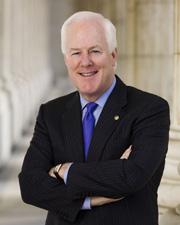
Mr. President, I am pleased that the Senate will approve S. Res. 378, designating today--June 14, 2004--as the National Pledge of Allegiance to the Flag Day. The resolution, which I introduced…
Mr. President, I am pleased that the Senate will approve S. Res. 378, designating today--June 14, 2004--as the National Pledge of Allegiance to the Flag Day.
The resolution, which I introduced earlier today, is cosponsored by several of my fellow Judiciary Committee members--Senators Feinstein, Craig, Grassley, Chambliss, Graham of South Carolina, and DeWine. I thank them.
For Americans across the land, today is a special day.
First of all, today is Flag Day. This morning, I was honored to attend a Flag Day commemoration event at VFW Post 2494, located in the city of Grand Prairie in my beloved home State of Texas. Flag Day is the anniversary of the Flag Resolution of 1777. It was officially established in a proclamation by President Woodrow Wilson on May 30, 1916, and on August 3, 1949, President Harry S. Truman signed an act of Congress designating June 14 of each year as National Flag Day.
I look forward to Flag Day every year, because--as today's resolution notes--Flag Day gives Americans across the land the opportunity to remember and reaffirm that the United States flag is a unique symbol of the United States and its ideals. Millions of Americans instinctively look to the United States flag with reverence, in times of national crisis and triumph alike. No other American symbol has been as universally honored as the United States flag. The United States flag has always played a unique role in honoring the men and women of the Armed Forces who have died in defense of the United States. To the countless families of loved ones who have died in defense of the United States, the United States flag is a treasured possession and a poignant memory of their loss.
But today is also special for another reason. As the resolution also notes, today is the 50th anniversary of the modern version of the Pledge of Allegiance. The pledge has come under attack in recent years, however. Two years ago, a three-judge panel of the U.S. Court of Appeals for the Ninth Circuit, the Federal court of appeals based in San Francisco, ruled in the case of Newdow v. United States Congress, 328 F.3d 466 (9th Cir. 2002), that the establishment clause of the first amendment of the Constitution forbids public school teachers from leading willing students in the voluntary recitation of the Pledge of Allegiance, simply because the pledge confirms that our Nation was founded ``under God.''
Most Americans were alarmed by the decision, and rightly so. In response, a majority of the Senate subcommittee on the Constitution, Civil Rights and Property Rights filed the first amicus brief in the U.S. Supreme Court defending the pledge on the merits. The Senate legal counsel also filed a brief defending the pledge on behalf of the entire U.S. Senate. Clearly, members of both parties reject the views of the Ninth Circuit, the ACLU, and Americans United for the Separation of Church and State, and instead believe in the constitutionality of the Pledge of Allegiance.
Just last week, the subcommittee convened a hearing, entitled ``Beyond the Pledge of Allegiance: Hostility to Religious Expression in the Public Square.'' At that hearing, scholars testified that our courts have become so hostile to democracy and to religious expression that they object even to patriotic references to God, such as those contained in the pledge.
Let us be clear: There is nothing unconstitutional about pledging allegiance to the flag. And thankfully, the U.S. Supreme Court reversed the Ninth Circuit decision in the Newdow case just this morning.
The Court did so, however, solely on procedural grounds--leaving for another day a determination by the Supreme Court as to whether it agrees with the Ninth Circuit's decision striking down the Pledge as unconstitutional.
I am glad to see that at least three members of the Supreme Court-- Chief Justice Rehnquist, Justice O'Connor, and Justice Thomas-- specifically acknowledged the constitutionality of the pledge in their opinions this morning. Their expressions follow a long line of statements in previous Supreme Court decisions supporting the Pledge. See, e.g., Engel v. Vitale, 370 U.S. 421, 440 n.5 (1962) (Douglas, J., concurring) (``The Pledge of Allegiance . . . in no way run[s] contrary to the First Amendment but recognize[s] only the guidance of God in our national affairs.'') (quotations and citations omitted); Sch. Dist. of Abington v. Schempp, 374 U.S. 203, 304 (1963) (Brennan, J., concurring) (``The reference to divinity in the revised pledge of allegiance . . . may merely recognize the historical fact that our Nation was believed to have been founded `under God.' Thus reciting the pledge may be no more of a religious exercise than the reading aloud of Lincoln's Gettysburg Address, which contains an allusion to the same historical fact.''); Lynch v. Donelly, 465 U.S. 668, 676 (1984) (``There is an unbroken history of official acknowledgment by all three branches of government of the role of religion in American life from at least 1789 . . . [E]xamples of reference to our religious heritage are found . . . in the language `One Nation under God,' as part of the Pledge of Allegiance to the American flag. That pledge is recited by many thousands of public school children--and adults--every year.''); Wallace v. Jaffree, 472 U.S. 38, 78 n.5 (1985) (O'Connor, J., concurring) (``In my view, the words `under God' in the Pledge . . . serve as an acknowledgment of religion with `the legitimate secular purposes of solemnizing public occasions, [and] expressing confidence in the future.' ''); County of Allegheny v. ACLU, 492 U.S. 573, 602-3 (1989) (``Our previous opinions have considered in dicta the motto and the pledge, characterizing them as consistent with the proposition that government may not communicate an endorsement of religious belief.''); see also Sherman v. Community Consolidated
Sch. Dist. 21, 980 F.2d 437 (7th Cir. 1992) (upholding constitutionality of school district policy providing for voluntary recitation of the Pledge).
However, the other five Justices of the Supreme Court--Justices Stevens, Kennedy, Souter, Ginsburg, and Breyer--did not see fit to join the other three Justices in supporting the constitutionality of the pledge. They appear to have remained largely silent on the issue. I hope that they are not sending a signal with their silence--a signal that they may strike down the pledge in some future case. Certainly, by reversing the Ninth Circuit on solely procedural grounds, they effectively reserve for themselves the opportunity to strike down the pledge in a future case.
The majority opinion does state that, ``as its history illustrates, the Pledge of Allegiance evolved as a common public acknowledgement of the ideals that our flag symbolizes. Its recitation is a patriotic exercise designed to foster national unity and pride in those principles.'' This passage suggests that the majority would uphold the Pledge of Allegiance against constitutional attack under the establishment clause. I hope that that is ultimately what the Court will do. I hope that the Court will ultimately vote to uphold and protect the Pledge of Allegiance.
I am not so optimistic about the Court voting to protect the flag itself, however--as I wrote in an op-ed published in the Fort Worth Star-Telegram just this morning, a copy of which I ask unanimous consent be printed in the Record at the conclusion of my remarks.
To be sure, from the founding, of our Nation until 1989, the power to protect the flag was not in doubt. In Smith v. Goguen, 1974, the U.S. Supreme Court held, in a decision authored by Justice Lewis Powell, that ``nothing prevents a legislature from defining with substantial specificity what constitutes forbidden treatment of United States flags.'' Justice Byron White stated in that same case that ``[i]t would be foolishness to suggest that the men who wrote the Constitution thought they were violating it when they specified a flag for the new Nation. . . . There would seem to be little question about the power of Congress to forbid the mutilation of the Lincoln Memorial. . . . The Flag is itself a monument, subject to similar protection.'' In Street v. New York, 1969, Chief Justice Earl Warren wrote that ``the States and Federal Government do have the power to protect the flag from acts of desecration and disgrace.'' Justice Hugo Black wrote in that same case that ``[i]t passes my belief that anything in the Federal Constitution bars a State from making the deliberate burning of the American Flag an offense.'' And Justice Abe Fortas noted that ``the States and the Federal Government have the power to protect the flag from acts of desecration committed in public.'' More recently, Chief Justice William Rehnquist, Justice John Paul Stevens, and Justice Sandra Day O'Connor have all expressed their belief that nothing in the first amendment prohibits protection of the flag.
Accordingly, until recently, 48 States have had laws on the books protecting the flag--most of them patterned after the Uniform Flag Act of 1917. The Federal Government enacted its own law in 1967. And Congress reaffirmed that law in 1989 with the support of 91 Senators.
This historic power to protect the flag was eviscerated in 1989, however when the U.S. Supreme Court issued the first of two decisions, both decided by a bare 5 to 4 majority, declaring that flag desecration constitutes speech protected by the first amendment. See Texas v. Johnson, 1989, and United States v. Eichman, 1990.
Legal scholars agree that the flag protection amendment is the only way to restore the law as it existed for most of our Nation's history. Constitutional amendments are the only way for the American people to reverse judicial constitutional decisions they reject. The Eleventh, Fourteenth, Sixteenth, Nineteenth, Twenty-Fourth, and Twenty-Sixth amendments were all ratified in order to reverse judicial decisions with which the American people disagreed.
So I am pleased to be an original cosponsor of the flag protection amendment, S.J. Res. 4. That resolution was introduced by Senator Hatch and by my Democrat cosponsor of today's resolution, Senator Feinstein. The amendment states simply that ``[t]he Congress shall have power to prohibit the physical desecration of the flag of the United States.'' I am proud to be an original cosponsor of the flag protection amendment, because I firmly believe that the flag occupies a unique place in our Nation and deserves constitutional recognition as such.
Of course, the first amendment guarantees freedom of speech, and thankfully so. And of course, the requirement that constitutional amendments be approved by two-thirds of each House of Congress and three-fourths of the States guarantees that the liberties we hold dear will not be taken away, just because we have acted today to protect the U.S. flag against physical desecration.
Moreover, the first amendment itself already contains exceptions. For example, the law does not allow individuals to yell ``Fire!'' in a crowded theater--even though such laws do impose a burden on the freedom of speech, albeit a minor one. Likewise, the vast majority of Americans agree that the Nation is better off when our flag is protected.
The House has approved the flag protection amendment five times in the past five Congresses--including just last year. All 50 State legislatures have approved resolutions asking Congress to give them the opportunity to vote on the amendment. The last time that the amendment was brought to a vote on the Senate floor, in 2000, 63 Senators voted in favor of it--just four votes shy of the necessary two-thirds.
I urge my colleagues at least to give the States the opportunity to consider this amendment. And I urge my colleagues at least to give constitutional recognition to the importance of the United States flag to millions of Americans--even if they ultimately would oppose implementing legislation to protect the flag against physical desecration.
After all, the flag protection amendment does nothing more than to recognize that the United States flag occupies a unique position as the symbol of our Nation and, accordingly, deserves constitutional recognition as such. The amendment would empower Congress to take action to protect the flag, but it would not require Congress to do anything whatsoever.
There are many ways to express one's political views. But there is only one United States flag--and it deserves constitutional protection.
I look forward to the debate over the flag protection amendment, and I look forward to a decision of the U.S. Supreme Court affirming for all time the constitutionality of the Pledge of Allegiance.
Until then, I am pleased that, because of the Senate's action today, today will forever be known as the National Pledge of Allegiance to the Flag Day.
Exhibit 1
[From the Fort Worth Star-Telegram, June 14, 2004]
Our Banner Deserves Constitutional Protection
(By John Cornyn)
For Americans everywhere, Flag Day is special. And today we
mark not only the annual celebration of the U.S. flag but
also the 50th anniversary of the modern Pledge of Allegiance.
The U.S. flag is a uniquely powerful symbol of our nation
and of our commitment to freedom and democracy. Therefore, it
is deeply regrettable that our democratic system of
government to date has not properly protected it.
A June 2 hearing of the Senate subcommittee on the
Constitution, Civil Rights and Property Rights got to the
heart of this problem.
Legal scholars testified that our courts have become so
hostile to democracy and to religious expression that even
patriotic references to God, such as those contained in the
Pledge of Allegiance, are being wrongly struck down by the
courts.
Let's be clear: There is nothing unconstitutional about
pledging allegiance to the flag. Yet a federal appeals court
in San Francisco struck down the pledge anyway simply because
it acknowledges that our nation was founded and exists
``under God.''
The U.S. Supreme Court will soon decide whether the First
Amendment forbids schoolteachers across America from leading
students in voluntary recitation of the pledge.
The vast majority of Americans believe that the pledge is
constitutional and reject
the views of the 9th Circuit Court and the American Civil
Liberties Union. A majority of the Constitution subcommittee
members filed the first amicus brief in the Supreme Court
defending the pledge on its merits.
Many legal observers predict that the Supreme Court will
reverse the 9th Circuit's decision. The same cannot be said,
however, for protecting the flag itself.
The ability to protect the flag against physical
desecration was not in doubt throughout most of American
history. For example, in 1974, the Supreme Court held that
``nothing prevents a legislature from defining with
substantial specificity what constitutes forbidden treatment
of United States flags.''
Congress' power to protect the flag has also been supported
by Chief Justices Earl Warren and William Rehnquist and
Justices Byron White, Hugo Black, Abe Fortas, John Paul
Stevens and Sandra Day O'Connor.
This power, however, was eviscerated in 1989 when the
Supreme Court decided by a 5-4 majority that flag desecration
constitutes speech protected by the First Amendment.
The flag deserves constitutional protection, and legal
scholars agree that the Flag Protection Amendment is the only
way to restore the law as it existed for most of our nation's
history. That is why the Constitution subcommittee recently
approved the amendment, and the full committee is scheduled
to vote on it this month.
The First Amendment guarantees freedom of speech, and
rightfully so. The requirement that constitutional amendments
be approved by two-thirds of each chamber of Congress and
three-fourths of the states guarantees that the liberties we
hold dear will not be taken away just because the American
people decide to take action to protect the U.S. flag against
physical desecration.
The House has approved the Flag Protection Amendment five
times in the past five Congresses--including just last year.
All 50 state legislatures have approved resolutions asking
Congress to give them the opportunity to vote on the
amendment.
The last time that the amendment was brought to a vote on
the Senate floor, in 2000, 63 senators voted in favor of it--
just four votes shy of the necessary two-thirds. This year,
the prospects for passage could be even better.
In times of national crisis and triumph alike, it is the
U.S. flag that Americans look to with reverence. No other
American symbol has been as universally honored.
In a time of war, it is even clearer that the flag plays a
unique role in honoring the men and women of the military who
died for the ideals that the flag represents.
If a soldier dies in defense of our nation, the United
States gives the family a flag in honor of that service. To
countless families, the flag is a treasured possession and a
poignant memory of their loss.
There are many ways to express one's political views. But
there is only one United States flag--and it deserves
constitutional protection.
Mr. Speaker, I move to suspend the rules and agree to the resolution (H. Res. 132) expressing the sense of the House of Representatives that the Ninth Circuit Court of Appeals ruling in Newdow v.…
Mr. Speaker, I move to suspend the rules and agree to the resolution (H. Res. 132) expressing the sense of the House of Representatives that the Ninth Circuit Court of Appeals ruling in Newdow v. United States Congress is inconsistent with the Supreme Court's interpretation of the first amendment and should be overturned, and for other purposes.
Mr. Speaker, I ask unanimous consent that all Members may have 5 legislative days within which to revise and extend their remarks and include extraneous material on House Resolution 132.
Mr. Speaker, I yield myself such time as I may consume.
Mr. Speaker, today we will consider House Resolution 132, which expresses the sense of the House of Representatives that the Ninth Circuit Court of Appeals' recent ruling in Newdow v. United States Congress is inconsistent with the Supreme Court's interpretation of the first amendment and urges the Attorney General to appeal its decision.
We are here today because the United States Court of Appeals for the Ninth Circuit continues to get it wrong.
On February 28, 2003, as our country continued preparations for what is now an impending war to defend the values upon which our great Nation is founded, the Ninth Circuit refused to rehear the case of Newdow v. U.S. Congress. In Newdow, a three-judge panel of the Ninth Circuit Court of Appeals ruled that the voluntary, voluntary recitation of the Pledge of Allegiance by public school students violates the first amendment because it includes the phrase ``one Nation under God.'' In addition, on February 28, the three-judge panel amended its June 2002 ruling and held that the Elk Grove, California, school district policy of opening each school day with the voluntary recitation of the Pledge of Allegiance to the Flag ``impermissibly coerces a religious act'' on the part of those students who choose not to recite the Pledge and, thus, violates the Establishment Clause of the first amendment.
This second preposterous ruling by the most-often reversed appellate court in the Nation impels us to come to the House floor again to voice our profound disagreement. House Resolution 132 expresses the sense of the House that the phrase ``one Nation, under God'' should remain in the Pledge of Allegiance and that the Ninth Circuit Court of Appeals ruling in Newdow v. U.S. Congress is inconsistent with the Supreme Court's interpretation of the first amendment.
It also urges the Attorney General of the United States to repeal the Ninth Circuit's ruling and urges the President to nominate and the Senate to confirm Federal circuit court judges who will interpret the Constitution consistent with the Constitution's text. House Resolution 132 also encourages school districts across the Nation to continue reciting the Pledge daily and praises the Elk Grove School District for its defense of the Pledge of Allegiance against this specious constitutional challenge.
Since the Pledge of Allegiance is not a prayer nor a statement of religious faith, the recitation of the Pledge is not a religious exercise. Rather, it is a patriotic exercise in which one expresses support for the United States of America and pledges allegiance to the flag, the principles for which the flag stands, and to the Nation. To conclude otherwise is to ignore clear precedent from the Supreme Court.
If this latest ruling is allowed to stand, schoolchildren at every public school in nine States, a total of 9,600,000 students, will be prohibited from reciting the pledge. Furthermore, the constitutionality of the voluntary recitation by public school students of numerous historical and founding documents such as the Declaration of Independence, the Constitution, and the Gettysburg Address has been placed into serious doubt. When one considers how this decision distorts Establishment Clause jurisprudence, the importance of appointing judges who will interpret the Constitution consistent with its text becomes clear.
Congress has consistently supported the Pledge of Allegiance by starting each session of the House with its recitation. The House reaffirmed its support for the Pledge when, on June 27, 2002, it adopted House Resolution 459, which I introduced, by a vote of 416 to three. The House should do the same with House Resolution 132 today.
I am proud to serve as an original cosponsor of this measure, and I urge my colleagues to support it.
Mr. Speaker, I reserve the balance of my time.
Mr. Speaker, I yield 1 minute to the gentleman from Texas (Mr. Carter).
Mr. Speaker, I yield 4 minutes to the gentleman from Ohio (Mr. Chabot), the chairman of the Subcommittee on the Constitution.
Mr. Speaker, I yield 3 minutes to the gentleman from California (Mr. Ose), who represents the area that includes the Elk Grove Unified School District, which is the district from which this case arose.
Mr. Speaker, I yield 1\1/2\ minutes to the gentleman from Oklahoma (Mr. Lucas) to get back to debating the Pledge of Allegiance and the Newdow ruling.
Mr. Speaker, I yield 1\1/2\ minutes to the gentleman from Arkansas (Mr. Boozman).
Mr. Speaker, I have no further speakers and am prepared to yield back if the gentleman from Massachusetts will do the same.
Mr. Speaker, I yield back the balance of my time.
Mr. Speaker, on that I demand the yeas and nays.
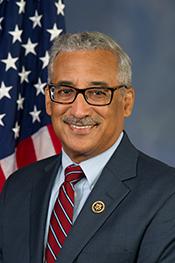
Mr. Speaker, I thank the gentleman for yielding time to me. Mr. Speaker, I come from a State that has a long tradition in supporting religious freedom. In fact, it was Thomas Jefferson who wrote the…
Mr. Speaker, I thank the gentleman for yielding time to me.
Mr. Speaker, I come from a State that has a long tradition in supporting religious freedom. In fact, it was Thomas Jefferson who wrote the Virginia statute for religious freedom which precedes the first amendment to our Constitution.
House Resolution 132 is totally gratuitous, as it will do nothing to change the underlying law. This is because we are dealing with constitutional issues that cannot be altered by resolution. If the judicial branch ultimately finds the Pledge or the motto to be constitutional, then nothing needs to be done; on the other hand, if the Court ultimately finds it to be unconstitutional, then no law that we pass can change that.
Mr. Speaker, I believe the reasoning of the majority opinion in the case was sound. In the case, the appellate court applied three different tests which have been applied in the last 50 years in Supreme Court jurisprudence in evaluating establishment clause cases. One test was whether the phrase ``under God'' in the Pledge constitutes an endorsement of religion. The majority opinion says that it was an endorsement of one view of religion, monotheism, and therefore was an unconstitutional endorsement.
Another test was whether individuals were coerced into being exposed to a religious message, and the majority concluded that the Pledge was unconstitutional because young children who are compelled to attend school ``may not be placed in the dilemma of either participating in a religious ceremony or protesting.''
Finally, the court applied the Lemon test, part of which holds that a law violates the Establishment Clause if it has no secular or nonreligious purpose. For example, cases involving a moment of public silence in public schools, some of those laws have been upheld if the law allows silent prayer as one of many activities which can be done in silence; but courts have stricken laws in which a moment of silent prayer is added to existing moments of silence because that law has no secular purpose.
The court concluded, if the 1954 law, which added ``under God'' to the existing Pledge, had no secular purpose, it was, therefore, unconstitutional.
It is interesting to note the reasoning of the dissent in the Newdow case. The important operative language in the dissent was the following: ``Legal world abstractions and ruminations aside, when all is said and done, the danger that `under God' in our Pledge of Allegiance will tend to bring about a theocracy or suppress someone's belief is so minuscule to be de minimis. The danger that the phrase represents to our first amendment's freedoms is picayune at best.''
Unfortunately, Mr. Speaker, our actions in enacting H. Res. 132 may cause the courts to review the sentiments behind ``one Nation, under God'' because, if the courts look at the importance we apparently affix to the phrase by passing yet another resolution before the judicial branch has even entered final judgment, this attention diminishes the argument that the phrase has de minimis meaning and increases the constitutional vulnerability of the use of that phrase in the Pledge. While one Federal appeals court rejected a call to rehear the controversial ruling that struck down the recitation of the Pledge due to its religious content, the fact remains that this issue is still alive and well; and every resolution we pass chips away at the de minimis argument.
Furthermore, Mr. Speaker, the court may look at this very resolution, understand the Lemon test, and find that today's exercise has no secular purpose and, therefore, adds to the constitutional vulnerability of the Pledge.
Finally, Mr. Speaker, to quote from an editorial that appeared in the Christian Century, a nondenominational Protestant weekly, puts this matter in perspective: ``To the extent `under God' has real religious meaning, then it is unconstitutional. The phrase is constitutional to the extent that it is religiously innocuous. Given that choice, I side with the Ninth Circuit. The government should not link religion and patriotism.''
Mr. Speaker, for those reasons I believe we should reject this resolution.
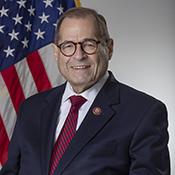
Mr. Speaker, I rise in opposition to this resolution. I rise in opposition because it is wrong in its principles, it is wrong on the stated findings, it is wrong on its facts. Let me just go through…
Mr. Speaker, I rise in opposition to this resolution. I rise in opposition because it is wrong in its principles, it is wrong on the stated findings, it is wrong on its facts. Let me just go through them.
First of all, people may very well, everybody has the freedom to disagree with a court decision. All of us have the right to get up and say that. I do not think it is the role of Congress to say that a court decision is wrong. If we disagree as a body with a court decision, then pass a law if it is a question of statutory interpretation, or propose a constitutional amendment if it is a question of constitutional interpretation. That is our role.
The role of the judiciary is, to quote Chief Justice Marshall, to say what the law is. They say what the law is, and we say what the law should be. It is not our role to tell the court it is wrong; it is our role to change the law if we think so. To pass a resolution which has no power except perhaps the power to intimidate judges is wrong and a violation of our constitutional role.
Secondly, this states as fact that recitation of the Pledge of Allegiance to the flag, including the phrase ``one Nation under God,'' is a patriotic act, not an act or statement of religious faith or belief. It certainly is a patriotic act, but it certainly is a statement of religious faith and belief when you say ``one Nation under God.''
The only way you can get around that conclusion is to say, as the dissenting opinion in the court said, that the phrase ``under God'' is minor, it is de minimis, it does not mean anything. But that is a sacrilege. Since when is God minor? Are we really going to say in this Chamber that God is minor; that belief in God is a minor question, so minor as to not to be worthy of notice?
That is the only ground on which we could say that asking schoolchildren, in the context of a group recitation of a pledge in a classroom, is not a prayer and an affirmation of belief and a religious conviction. To say that God is minor and ``under God'' means nothing, I do not think we want to say that. I certainly hope we do not want to say that. Yet, if we say it means something, then the Pledge of Allegiance with that phrase in it is a statement of a religious belief, or at least a statement of a belief in God.
There are religions in this country, Shintoism, Hinduism, that do not believe in one God. There are people who are atheists. It is factually a wrong statement. It says, as a statement of fact, that the court's ruling in this case is inconsistent with the Supreme Court's interpretation of the first amendment. That is demonstrably wrong, and the Supreme Court will say so.
First, the Supreme Court for the last 40 years in its jurisprudence on school prayers has said that we cannot ask schoolchildren to recite a prayer or a belief in God in the classroom setting, even if we allow the dissenters to walk out of the room; but that is exactly what asking them to say the Pledge of Allegiance with that phrase ``under God'' is. It is exactly consistent with the Supreme Court's last 40 years of jurisprudence and rulings on the school prayer cases. It is, in effect, the school prayer, that as long as you ask schoolchildren to say ``one Nation under God.'' It has all the same pros and cons; and many disagree with the Supreme Court's decisions, but those were its decisions.
In the name of religious liberty, in the name of the separation of powers, in the name of religion, to say that God is not minor, we ought not to pass this resolution and let the Supreme Court uphold or overturn the Court of Appeals decision in Newdow. After that we can worry about a constitutional amendment, which I would propose, and some Members may want to propose. But at this point it is not our function to be correcting a court.
Mr. Speaker, I rise in support of House Resolution 132 expressing the sense of the House that the Ninth Circuit Court of Appeals ruling in Newdow v. United States Congress is inconsistent with the…
Mr. Speaker, I rise in support of House Resolution 132 expressing the sense of the House that the Ninth Circuit Court of Appeals ruling in Newdow v. United States Congress is inconsistent with the Supreme Court's interpretation of the first amendment.
It is clear that the ninth circuit's amended Newdow ruling contradicts any reasonable interpretation of the first amendment. In a long line of cases, the Supreme Court has interpreted the establishment clause as prohibiting not only compelled participation in religious activity in public schools, but even voluntary religious devotional activity if, under the circumstances, children feel coerced to participate.
These cases, however, were based upon the fact that the activity at issue involved compelled participation in prayers and devotional exercises, as in the cases of School District of Abington Township v. Schemp and Engle v. Vitale; or the practice of graduation prayers at issue in Lee v. Weisman.
In fact, the questionable activity in these cases occurred either just before or just after the recitation of the Pledge. In its review of these cases, however, the court not only failed to question the practice of the voluntary recitation of the Pledge by schoolchildren, but instead explicitly limited its holding to the prayer or devotional exercise.
To have applied these cases to the facts in the Newdow case was incorrect because the Pledge is clearly not a religious statement or prayer; thus, its recitation is not a religious exercise. It is a historical fact that our Nation's founding principles were based upon the Founding Fathers' deeply held religious views. The Pledge of Allegiance simply refers to this fact.
The reasoning and holding of the ninth circuit in Newdow turns historical fact, as well as Supreme Court precedent, on its head. Either the judges were incapable or were unwilling to make this distinction.
Those who do not share the beliefs expressed in the Pledge or those who do not wish to pledge allegiance to the flag have a right to refrain from its recitation. This was recognized by the Supreme Court in the 1943 case of West Virginia Board of Education v. Barnett, in which the mandatory recitation of the Pledge of Allegiance was held unconstitutional under the first amendment's free speech clause.
Indeed, it is a cornerstone of the religious faith that the Founding Fathers held dear that no man can force another to say or believe that which their conscience will not allow. I would hope that no court would issue a ruling that tramples upon this right. However, the ninth circuit in Newdow simply ignored Supreme Court precedent and essentially gave those who do not wish to recite the Pledge, and who possess the right to refrain from reciting the Pledge, a heckler's veto over those who do wish to recite the Pledge.
This ruling also places the ninth circuit in direct conflict with the Seventh Circuit Court of Appeals which, in Sherman v. Community Consolidated School District, held that a school district's policy allowing for the voluntary recitation of the Pledge of Allegiance in public schools does not violate the establishment clause of the first amendment.
I believe that this clearly incorrect first amendment interpretation, as well as the split in the circuits created by the Newdow ruling, warrants an appeal by the Attorney General and Supreme Court review.
I urge my colleagues to approve this resolution so, during this time of international conflict in which our young men and women may be hours away from going to war to fight for those values based upon which our Founding Fathers gave birth to this very Nation, our youngest Americans, our children, may pledge their allegiance to those same values.
Show 8 more
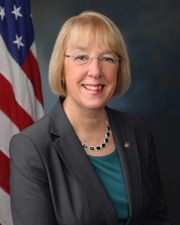
Mr. President, today I am pleased to submit a resolution designating the week of February 2, 2004, as ``National School Counseling Week,'' on behalf of my colleagues Senator Biden, Senator Dorgan,…
Mr. President, today I am pleased to submit a resolution designating the week of February 2, 2004, as ``National School Counseling Week,'' on behalf of my colleagues Senator Biden, Senator Dorgan, Senator Johnson and Senator Dodd. This resolution would honor and celebrate the important work of school counselors, which the Senate has recognized since 1965 through the inclusion of school counseling in the Elementary and Secondary Education Act.
Across the country, there are approximately 95,000 school counselors, including 2,100 in Washington State. School counselors are critical components of a successful school and contribute significantly to the growth and success of students. In fact, school counselors were instrumental in helping students, teachers, and parents deal with the trauma of terrorism on September 11, 2001, and its aftermath. However, despite their important service, counselors are expected to serve, on average 485 students each, and are overwhelmed. The American School Counseling Association, the American Medical Association, and the American Psychological Association recommend the ratio of students to school counselors be 250 students to 1 school counselor.
I want to share just a few examples of how school counselors throughout America are helping students.
In a middle school in southern California, school counselors realized that 257 students were in danger of not passing onto the next grade. They discovered that only 15 percent of the students understood the promotion and retention requirements. The school counselors presented a series of individual and small group lessons on promotion and retention criteria. After the lessons, 100 percent of the students understood the requirements. As a result, 72 of the 257 students, about 28 percent, avoided retention that year.
In a high school in Racine, WI, a math teacher realized that 100 of his students failed algebra in the first quarter of the year. He asked a school counselor for help. Together, they discovered some of the reasons why students were failing. They initiated several programs, such as peer tutoring and homework assistance. As a result, 93 of the 100 students passed algebra by the end of the year and were able to move on to the next level of math.
A school district in Kentucky realized that the retention rate among ninth grade students was unacceptably high. School counselors, teachers and administrators worked together to develop and implement strategies targeted at helping ninth graders move to 10th grade. As a result, retention rates improved in 16 of the 17 high schools in the county in just one year. One school saw the retention rate improve more than 25 percent.
This resolution is merely the beginning of what we need to be doing to support school counselors. We need to reduce the ratio of students to counselors to, at the most, 250 to 1. We need to help schools maintain their funding so that school counselors are not cut from school budgets. And we need to support our school counselors so that they can continue to be integral in the fabric of our schools and help our students achieve success in high school and beyond.
School counselors design and implement comprehensive developmental school counseling programs that are integral to the success of every student. They help students improve academic achievement, develop personally and socially and prepare for successful careers that will enable them to be contributing members of society. National School Counseling Week focuses
public attention on the unique contribution of professional school counselors and highlights the tremendous impact that school counselors have in helping students achieve success in school and beyond.
Mr. Speaker, I yield myself such time as I may consume. Mr. Speaker, judges certainly should not be immune from criticism. I mean, healthy debate on the merits of judicial decisions is an important…
Mr. Speaker, I yield myself such time as I may consume.
Mr. Speaker, judges certainly should not be immune from criticism. I mean, healthy debate on the merits of judicial decisions is an important feature of our democracy. But there is a difference between legitimate criticism and overt pressure that threatens judicial independence.
Like all Americans, Members of Congress are free to criticize judicial decisions with which we disagree. Our collective voice should be heard on matters of profound constitutional significance as we, too, are guardians of the Constitution. In fact, I joined most of my colleagues in voting for a resolution during the last Congress that was referenced by the chairman that expressed disapproval of this very decision on the Pledge of Allegiance and urged that it be overturned.
However, I intend to vote present on this current resolution because it does not stop at expressing disapproval; it goes further, in a way that I believe would set an unwise and dangerous precedent.
It is one thing to urge the judicial branch to use the normal process of appellate review to correct an erroneous decision. It is quite another to imply that judges who issue unpopular decisions in particular cases are unfit for office.
Unfortunately, that is what H.R. 132 does. It not only expresses disapproval of the court's reasoning in the Newdow case, but it states that the President should nominate and the Senate should confirm Federal circuit court judges who interpret the Constitution consistent with the Constitution's text.
By linking future nominations to a particular ruling with which the proponents disagree, the resolution sends a not-so-subtle message to sitting judges, and in particular to potential nominees, that they had better tailor their constitutional views to those of the congressional majority if they wish to be confirmed. That, I submit, goes far beyond our appropriate constitutional role.
The Framers of the Constitution recognized that an independent judicial branch is an essential guarantor of liberty in any democracy. To understand this, one need only observe those nations with a weak judiciary that is subservient to the political branches. Invariably such nations are democracies in name only. Those who profess fidelity to the Constitution must take
great care not to chip away at the independence of the judiciary on which our liberty depends. For that reason, this resolution ought to be rejected.
Mr. Speaker, I reserve the balance of my time.
Mr. Speaker, I yield such time as he may consume to the gentleman from New York (Mr. Nadler).
Mr. Speaker, I yield 5 minutes to the gentleman from Virginia (Mr. Scott), a member of the Committee.
Mr. Speaker, I yield 5 minutes to the gentlewoman from Texas (Ms. Jackson-Lee), a member of the Committee on the Judiciary.
(Ms. JACKSON-LEE of Texas asked and was given permission to revise and extend her remarks.)
Mr. Speaker, I have no additional speakers, and I reserve the balance of my time.
Mr. Speaker, I yield back the balance of my time.
Mr. Speaker, I thank the gentleman from Wisconsin (Mr. Sensenbrenner) for yielding me time. Mr. Speaker, the U.S. Ninth Circuit Court of Appeals recently declared it is unconstitutional to say the…
Mr. Speaker, I thank the gentleman from Wisconsin (Mr. Sensenbrenner) for yielding me time.
Mr. Speaker, the U.S. Ninth Circuit Court of Appeals recently declared it is unconstitutional to say the Pledge of Allegiance, our national recitation and proclamation of patriotism. This ruling is an attack on the history of our Nation and on the display of our patriotic pride.
On Friday, February 28, 2003, the Ninth Circuit Court of Appeals upheld its ruling on Newdow v. U.S. Congress. In its decision, the court declared the phrase ``one Nation, under God'' to infringe on the Establishment Clause of the first amendment and is therefore unconstitutional to recite within our public schools. This issue hits especially close to home because Newdow v. U.S. Congress originated in the Elk Grove Unified School District, which is located in my district in California.
I would like to recognize the school district for its participation in defending our right to say the Pledge. As the party named in the lawsuit, they have shouldered the burden and the cost for standing up for our community and our Nation. Elk Grove Unified has not waivered in their support of the Pledge of Allegiance and remains an example of true patriotism.
In response to the court's ruling, I authored this resolution reaffirming that the Pledge of Allegiance in its entirety is appropriate and calling upon the Supreme Court to review this ruling in order to correct this infirm and historically incorrect decision. The Ninth Circuit is quite plainly wrong and has failed to represent the values of the people of California and the United States of America.
The origin of this phrase is rumored to have come from a speech delivered on a cold fall day in the aftermath of the one of the bloodiest battles in American history. On November 19, 1863, President Lincoln delivered his famous Gettysburg Address while overlooking the massive graves of the soldiers who died there during that famous battle and said the following:
``It is rather for us to be here dedicated to the great task remaining before us, that from these honored dead we take increased devotion to that cause for which they gave the last full measure of devotion, that we here highly resolve that these dead shall not have died in vain, that this Nation, under God shall have a new birth of freedom, and that government of the people, by the people, for the people shall not perish from the Earth.''
Mr. Speaker, there is no better time than today, given the circumstances of our efforts to protect our homeland, that we rise to honor the men and women of the military and reaffirm our patriotism to this great Nation across all generations.
I thank the gentleman from Wisconsin (Chairman Sensenbrenner) and his staff for their assistance on this resolution, for bringing it to the floor in such a timely manner, and I urge Members to support the resolution.
Mr. Speaker, I thank you for the opportunity to revise and extend my remarks and submit them into the Congressional Record. I rise in support of H. Res. 132. Fellow Members, in this time of war, I…
Mr. Speaker, I thank you for the opportunity to revise and extend my remarks and submit them into the Congressional Record.
I rise in support of H. Res. 132. Fellow Members, in this time of war, I think it is more important than ever to be able to express our patriotic and religious views together in unity and solemnity. The Pledge of Allegiance is a beautiful manifest of the feelings of Americans. We are a religious people. We always have been. America has been such since our inception. Granted, we are a people of diverse religious backgrounds, but being able to express our faith in public without fear of government condemnation or censure is without a doubt, the reason why you and I are standing here today. The desire for religious liberty was what brought the first groups of Americans to our country hundreds of years ago to build this shining ``city upon a hill.''
Members, I stand in support of the Pledge of Allegiance as did this great body on Flag Day 1954 when the words ``Under God'' were added. As President Eisenhower, who supported this change, so eloquently stated, ``In this way we are reaffirming the transcendence of religious faith in America's heritage and future; in this way we shall constantly strengthen those spiritual weapons which forever will be our country's most powerful resource in peace and war.'' Eisenhower's words could not be more accurate or more timely. Americans' religious beliefs reach to the core of our being. It is in both times of uncertainty and turmoil, prosperity and blessing that we cling to our beliefs for direction, comfort, guidance and peace. To deny Americans the right to stand together and say the Pledge of Allegiance is to deny the spirit behind the Mayflower Compact, Patrick Henry's great Liberty Speech, the Declaration of Independence, the Gettysburg Address, and all of the other documents that serve as a mission statement of our people.
Members, in this time of war I urge you to support H. Res. 132 to defend the Pledge of Allegiance as a fitting and constitutional written expression for all Americans.
Mr. Speaker, I rise today in strong support of H. Res. 132, a resolution that expresses Congress's disapproval of the recent 9th Circuit Court of Appeals decision that held that a public school's…
Mr. Speaker, I rise today in strong support of H. Res. 132, a resolution that expresses Congress's disapproval of the recent 9th Circuit Court of Appeals decision that held that a public school's policy of opening each school day with the voluntary recitation of the Pledge of Allegiance impermissibly coerced a religious act.
A State sponsored religion is unconstitutional, but there is nothing in our founding documents that requires the removal of every reference to God from the public square. Most Americans can make this distinction, which explains the public outcry to the 9th Circuit's misguided decisions.
The faith of our founding fathers was central to the establishment of our Nation and there are references to God in countless public forums. The Declaration of Independence declares that ``all men are Created equal, endowed by their creator with certain unalienable rights.'' The Supreme Court begins each session with the blessing ``God save the United States and this honorable court.'' Congress opens each day with a prayer, through which we seek divine guidance for the tasks before us. Our currency bears the slogan ``In God We Trust.''
The Pledge of Allegiance is an important affirmation of both our country's faith and patriotism. With our Nation on the brink of war, we must be vigilant in guarding against efforts to strip away the tradition and powerful public expressions of these key values. Instead, we should emphasize our shared heritage, our commitment to freedom, and our rich tradition of national humility before the ultimate author of our liberty. I urge each of my colleagues to vote in favor of H. Res. 132.
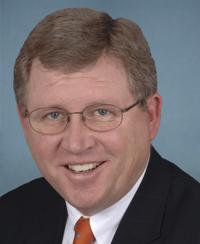
Mr. Speaker, today I rise in support of this resolution and in support of the Pledge of Allegiance. I believe children in schools across America should start their day in the same way we do here on…
Mr. Speaker, today I rise in support of this resolution and in support of the Pledge of Allegiance.
I believe children in schools across America should start their day in the same way we do here on the floor of the United States House of Representatives, by reciting the Pledge of Allegiance.
Mr. Speaker, the Ninth Circuit's decision is outrageous and has set a dangerous precedent that we cannot allow to continue nationwide. I know of no better way to educate our children about the beliefs we stand for in this great Nation of ours than with the Pledge of Allegiance. The Pledge is an important way of educating our children about the value of patriotism, democracy, a reminder that we are one Nation under God. That is why I believe we need to keep the Pledge in our schools, and as my constituents in Oklahoma would say, keep the judges who do not value the Pledge out of our courts.
Mr. Speaker, my constituents are dumbfounded and angered by the Ninth Circuit's actions. That is why I have introduced legislation immediately after the court's original ruling last year that would amend the U.S. Constitution to protect the right of schools to lead willing students in the recitation of the Pledge. I have reintroduced my Pledge of Allegiance Protection Amendment in this Congress; and while I know, I believe in my heart that the U.S. Supreme Court will overturn this foolish ruling, I urge my colleagues' support for its passage if the Supreme Court upholds the Ninth Circuit Court's atrocious decision.
Mr. Speaker, again, I support this resolution in support of the Pledge.
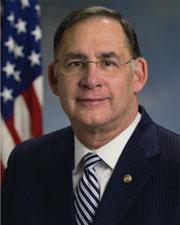
Mr. Speaker, I rise today in support of House Resolution 132. This legislation expresses that the Ninth Circuit Court of Appeals' ruling against the Pledge of Allegiance is inconsistent with the…
Mr. Speaker, I rise today in support of House Resolution 132. This legislation expresses that the Ninth Circuit Court of Appeals' ruling against the Pledge of Allegiance is inconsistent with the Supreme Court's interpretation of the first amendment.
The Pledge of Allegiance brings together people of different backgrounds in a shared expression of support for our country. Before the start of business in the House of Representatives, my colleagues and I proudly recite the Pledge of Allegiance, just as I proudly said it before every school board meeting back home in my hometown of Rogers, Arkansas.
Our pledge to support our country and the beliefs on which it was founded is an important part of our everyday life. Every time an American turns to the flag to recite the Pledge of Allegiance, they are reminded of all that has been sacrificed in the name of our country and for our freedom.
The U.S. Court of Appeals for the Ninth Circuit outraged people across the country by ruling the phrase ``one Nation under God'' makes the Pledge of Allegiance unconstitutional. It is unbelievable that a Federal court would rule that the Pledge of Allegiance violates our first amendment.
Mr. Speaker, perhaps now more than ever the need for the unity in America exists. I commend the gentleman from California (Mr. Ose) for bringing this legislation before us, and I urge my colleagues to vote in favor of House Resolution 132.
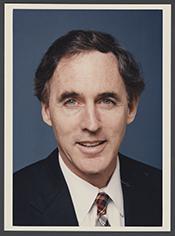
Mr. Speaker, unfortunately, in an arrogant stunt, last summer, the Ninth Circuit Court of Appeals held that the Pledge of Allegiance is an unconstitutional endorsement of religion, stating that it…
Mr. Speaker, unfortunately, in an arrogant stunt, last summer, the Ninth Circuit Court of Appeals held that the Pledge of Allegiance is an unconstitutional endorsement of religion, stating that it ``impermissibly takes a position with respect to the purely religious question of the existence and identity of God,'' and places children in the ``untenable position of choosing between participating in an exercise with religious content or protesting.'' This is an obvious instance of political correctness taken to an absurd extreme.
This court clearly shows that it is out of step with the will of the American people, the U.S. Congress, and traditional American values. Religious expression is the fundamental basis of our freedom in this country. At the earliest moment in this nation's history, the pilgrims signed The Mayflower Compact that declared that the voyage across the Atlantic was taken ``for the Glory of God'' and still today, the Ten Commandments are publicly displayed in the National Archives. In this Nation we have ``In God We Trust'' on our money, and each day the House of Representatives starts its day be reciting the Pledge of Allegiance. We will continue to do so despite the folly of the 9th Circuit Court.
Show 4 more
Mr. Speaker, our Nation was founded on the idea of freedom of religion, the freedom to believe, the freedom to pray, the freedom to worship any time, anywhere. Today more than ever the people of our…
Mr. Speaker, our Nation was founded on the idea of freedom of religion, the freedom to believe, the freedom to pray, the freedom to worship any time, anywhere. Today more than ever the people of our Nation need to have faith, a religion, a belief.
James Madison stated in 1825 that ``The belief in God All Powerful, wise and good, is so essential to the moral order of the world and to the happiness of man that arguments which enforce it cannot be drawn from too many sources nor adapted with too much solicitude to the different characters and capacities impressed with it.''
I believe Madison's statement is accurate, and we as a people should maintain this strong sense of values. We in Congress should do our part by protecting what our forefathers built this Nation on. We should do that today by passing H.R. 132.

Mr. President, I ask unanimous consent that the Senate proceed to the immediate consideration of S. Res. 378, which was submitted earlier today by Senator Cornyn. I thank the distinguished leader for…
Mr. President, I ask unanimous consent that the Senate proceed to the immediate consideration of S. Res. 378, which was submitted earlier today by Senator Cornyn.
I thank the distinguished leader for advising the Senate of that. I had heard of that earlier today. I think it is most appropriate that our colleague from Texas has acted. The Senate will act without any further delay.
I ask unanimous consent that the resolution be agreed to, the preamble be agreed to, the motion to reconsider be laid upon the table, and that any statements relating to this matter be printed in the Record.
Mr. President, I ask unanimous consent that the Judiciary Committee be discharged en bloc from further consideration of S. Res. 292 and S. Res. 294, and that the Senate proceed to their consideration…
Mr. President, I ask unanimous consent that the Judiciary Committee be discharged en bloc from further consideration of S. Res. 292 and S. Res. 294, and that the Senate proceed to their consideration en bloc.
Mr. President, I ask unanimous consent that the resolutions and preambles be agreed to en bloc, the motions to reconsider be laid upon the table en bloc and that any statements relating thereto be printed in the Record, the above occurring with no intervening action or debate, with the consideration of these items appearing separately in the Record.
Mr. President, if I could proceed, it is very appropriate that today--I do not know if the distinguished Chair knows this, being as busy as he has been all day--the Supreme Court upheld our being…
Mr. President, if I could proceed, it is very appropriate that today--I do not know if the distinguished Chair knows this, being as busy as he has been all day--the Supreme Court upheld our being able to pledge allegiance to the flag. They did it on a procedural grounds, but I do not think it matters. We won.
Bill Text
2 versions available
        [Congressional Bills 108th Congress]
[From the U.S. Government Publishing Office]
[S. Res. 292 Agreed to Senate (ATS)]

108th CONGRESS
2d Session
S. RES. 292

Designating the week beginning February 2, 2004, as ``National School
Counseling Week''.

_______________________________________________________________________

IN THE SENATE OF THE UNITED STATES

January 27, 2004

Mrs. Murray (for herself and Mr. Biden, Mr. Dorgan, Mr. Johnson, Mr.
Dodd, and Mr. Feingold) submitted the following resolution; which was
referred to the Committee on the Judiciary

February 2, 2004

Committee discharged; considered and agreed to

_______________________________________________________________________

RESOLUTION

Designating the week beginning February 2, 2004, as ``National School
Counseling Week''.

Whereas the American School Counselor Association has declared the week
beginning February 2, 2004, as ``National School Counseling Week'';
Whereas the Senate has recognized the importance of school counseling through
the inclusion of elementary and secondary school counseling programs in
the reauthorization of the Elementary and Secondary Education Act of
1965;
Whereas school counselors have long advocated that the American education system
must leave no child behind and must provide opportunities for every
student;
Whereas personal and social growth results in increased academic achievement;
Whereas school counselors help develop well-rounded students by guiding them
through their academic, personal, social, and career development;
Whereas school counselors were instrumental in helping students, teachers, and
parents deal with the trauma of terrorism inflicted on the United States
on September 11, 2001, and its aftermath;
Whereas students face myriad challenges every day, including peer pressure,
depression, and school violence;
Whereas school counselors are usually the only professionals in a school
building that are trained in both education and mental health;
Whereas the roles and responsibilities of school counselors are often
misunderstood, and the school counselor position is often among the
first to be eliminated in order to meet budgetary constraints;
Whereas the national average ratio of students to school counselors of 485 to 1
is more than double the 250 to 1 ratio recommended by the American
School Counselor Association, the American Counseling Association, the
American Medical Association, the American Psychological Association,
and other organizations; and
Whereas the celebration of ``National School Counseling Week'' would increase
awareness of the important and necessary role school counselors play in
the lives of the Nation's students: Now, therefore, be it
Resolved,

SECTION 1. DESIGNATION OF NATIONAL SCHOOL COUNSELING WEEK.

(a) Sense of the Senate.--It is the sense of the Senate that the
President should designate the week beginning February 2, 2004, as
``National School Counseling Week''.
(b) Proclamation.--The Senate requests the President to issue a
proclamation--
(1) designating the week beginning February 2, 2004, as
``National School Counseling Week''; and
(2) calling on the people of the United States and
interested groups to observe the week with appropriate
ceremonies and activities that promote awareness of the role
school counselors perform within the school and the community
at large to prepare students for fulfilling lives as
contributing members of society.
<all>