Recognizing the centennial of sustained immigration from the Philippines to the United States and acknowledging the contributions of our Filipino-American community to our country over the last century.
Legislative Activity
Stay on top of the latest movement without scrolling through every action
Message on Senate action sent to the House.
December 15, 2005
View full timeline
Introduced in House
July 26, 2005
Referred to the House Committee on Government Reform.
July 26, 2005
Sponsor introductory remarks on measure. (CR E1629)
July 27, 2005
Committee Consideration and Mark-up Session Held.
November 16, 2005
Ordered to be Reported by Unanimous Consent.
November 16, 2005
Mr. Cannon moved to suspend the rules and agree to the resolution.
December 13, 2005 • 2:45 PM
Considered under suspension of the rules. (consideration: CR H11343-11347)
December 13, 2005 • 2:45 PM
DEBATE - The House proceeded with forty minutes of debate on H. Con. Res. 218.
December 13, 2005 • 2:45 PM
Passed/agreed to in House: On motion to suspend the rules and agree to the resolution Agreed to by voice vote.(text: CR H11343-11344)
December 13, 2005 • 2:57 PM
On motion to suspend the rules and agree to the resolution Agreed to by voice vote. (text: CR H11343-11344)
December 13, 2005 • 2:57 PM
Motion to reconsider laid on the table Agreed to without objection.
December 13, 2005 • 2:57 PM
Received in the Senate.
December 14, 2005
Measure laid before Senate by unanimous consent. (consideration: CR S13687)
December 15, 2005
Resolution agreed to in Senate with an amendment by Unanimous Consent.
December 15, 2005
Message on Senate action sent to the House.
December 15, 2005
Floor Debate
19 membersWhat members said about H.Con.Res. 218 on the floor
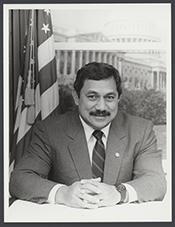 EFH
EFH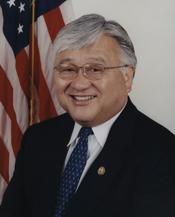 MMH
MMH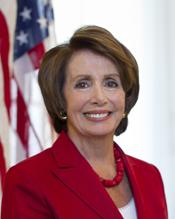 NP
NP MZB
MZB JM+14
JM+14
Floor Debate
19 membersWhat members said about H.Con.Res. 218 on the floor
Mr. Speaker, I would like to thank my colleague and dear friend, the gentleman from California, Mr. Honda, who is managing this Special Order, but more especially also as an outstanding leader in our…
Mr. Speaker, I would like to thank my colleague and dear friend, the gentleman from California, Mr. Honda, who is managing this Special Order, but more especially also as an outstanding leader in our Asian Pacific American community and currently serving as chairman of our Asian Pacific Congressional Caucus.
I want to also commend our Democratic leader, Ms. Nancy Pelosi, for her outstanding remarks. The fact that she also is a Member who has one of the largest constituencies in not only the State of California of our Asian Pacific American community, but, as Ms. Pelosi was making her statement, I recalled also her predecessor, someone whom I have had the highest admiration and respect for, a giant of a man not only in his ways but as an example, with a real great sensitivity and compassion for the needs of the Asian Pacific American community people, none other than the late Congressman Phil Burton.
I would also like to commend my colleagues, Congresswoman Juanita Millender-McDonald and Congressman Al Green, for their outstanding remarks this evening in this Special Order.
Mr. Speaker, I rise today in celebration of the Asian Pacific American Heritage Month to acknowledge the contributions of our Asian Pacific American individuals and communities to the success of our great Nation. I commend my colleagues who founded this celebration in 1977 by introducing a resolution calling upon the President to proclaim the first 10 days in May Asian Pacific Heritage Week, former Representatives Norm Mineta and Frank Horton, and Senators Daniel K. Inouye and Senator Spark Matsunaga.
I think we need to also understand, Mr. Speaker, the dynamics. Those of us who are Americans, and we are very, very proud of being Americans, but whose roots are from the Asian Pacific region, and the dynamics of why the Asian Pacific region is so important, it is in our national interests, not only our national security, the economics, just about every phase of what is really critically important in our Nation in dealing with this region of the world which, by the way, two-thirds of the world's population is the Asian Pacific region. Six of the 10 largest armies in the world are in the Asian Pacific region. Our trade with the Asian Pacific region is four times greater than any other region in the world, including especially that of Europe.
I am reminded a couple of years ago what Senator Inouye said, for every one 747 that flies between the Atlantic and the United States, four 747s fly between the Asian Pacific region and our country.
Mr. Speaker, the Asian Pacific American community is vibrant and growing
with an estimated 14 million Asian American residents and another 975,000 Pacific Americans. I am proud to be a member of this Asian Pacific American community, a community that has produced so many inspiring individuals. In government, in the military, in the sciences, sports, entertainment, business, you name it, we have it.
In government, for example, especially from the great State of Hawaii, among the first, I guess you might say, U.S. Senator Hiram Fong, Senator Daniel Inouye, Senator Daniel Akaka, the first elected Asian American Governor of any State, Governor George Ariyoshi, our first native Hawaiian Governor, Governor John Waihee, our first Filipino American Governor, Governor Ben Cayetano.
We also have Mayor Neal Blaisdell, and the newly elected mayor of the city and county of Honolulu, Mufi Hannemann. We also have Lieutenant Governors Jimmy Kealoha and Duke Ainoa. Norm Mineta, a good friend of mine who is not only partly responsible for initiating this Heritage Month, but was always the first Asian Pacific American mayor of a major U.S. city like San Jose, he was also the first Asian Pacific American to be a member of a Presidential Cabinet when he was appointed as Secretary of Commerce in the year 2000 by former President Clinton and now is U.S. Secretary of Transportation appointed by President Bush.
Elaine Chao, another first. Secretary Chao is the first female Asian American Cabinet member, appointed Secretary of Labor by President Bush.
Gary Locke, first Asian American Governor on the mainland United States, elected Governor of the State of Washington in 1996. And I could never forget and my deepest respect to the late Congresswoman Patsy Mink, first Asian American female elected to the U.S. Congress since 1964. Then our late colleague and friend, my dear friend, the late Congressman Bob Matsui, who inspired me and mentored me throughout our time here together as a senior member of the House Committee on Ways and Means.
As a Vietnam veteran, Mr. Speaker, it would be ludicrous for me not to say something to honor the hundreds of thousands of Asian Pacific Americans who have and continue to serve in all the branches of the armed services of our Nation.
I would like to share with you the contributions of tens of thousands of Japanese American soldiers who volunteered to fight our Nation's enemies in Europe during World War II.
Mr. Speaker, we are all aware of the fact that after the surprise attack on Pearl Harbor on December 7, 1941, by the Imperial Army of Japan, there was such an outrage and cry for an all-out war against Japan. In days afterwards, our President and the Congress formally declared war. But caught in this crossfire were hundreds of thousands of Americans, mind you Americans, who happened to be of Japanese ancestry.
Our national government immediately implemented a policy whereby over 100,000 Americans of Japanese ancestry were forced to live in what were called, supposedly, ``relocation camps''; I call them ``concentration camps.'' Their lands, their homes, and their properties were confiscated without due process of law.
It was also a time in our Nation's history that there was so much hatred and bigotry and racism against our Japanese American community. And yet despite all of this, leaving their wives, their parents, their brothers and sisters behind barbed-wire fences in these prison camps, the White House accepted the requests from tens of thousands of Japanese Americans who volunteered to join the Army, and as a result, two combat units were organized.
One was called the 100th Battalion, and the other was known as the 442nd Infantry Combat Group. Both were sent to Europe to fight. And I might say that I am very, very proud to have been associated and been a former member of the 100th Battalion, 442nd Infantry Combat Group out of the State of Hawaii.
Mr. Speaker, in my humble opinion, history speaks for itself in documenting that none have shed their blood more valiantly for our Nation than the Japanese American solders who served in those two combat units while fighting enemy forces in Europe during World War II.
The military records of the 100th Battalion and the 442nd Infantry are without equal. Those Japanese American units suffered an unprecedented casualty rate of 314 percent, and received over 18,000 individual decorations, many awarded posthumously for bravery and courage in the field of battle.
For your information, Mr. Speaker, 52 Distinguished Service Crosses, 560 Silver Stars, and 9,480 Purple Hearts were awarded to the Japanese American soldiers of the 100th Battalion and 442nd Infantry Group. I find it unusual, however, that only one Medal of Honor was given. Nonetheless, the 442nd Combat Group emerged as the most decorated combat unit of its size in the history of the United States Army.
President Truman was so moved by their bravery in the field of battle, as well as the tremendous sacrifices of the African American soldiers in World War II, that he issued an executive order to finally desegregate all of the branches of the armed services.
Senator Inouye lost his arm while engaged in battle against two German machine gun posts, and he was awarded the Distinguished Service Cross. After a congressional mandate to review again the military records of these two combat units some 5 years ago, I was privileged to attend a White House ceremony where President Clinton presented 19, 19 Congressional Medals of Honor to the Japanese American soldiers who were members of the 100th Battalion and 442nd Combat Infantry. Senator Inouye was one of those recipients of the Congressional Medal of Honor.
I submit, Mr. Speaker, these Japanese Americans paid their dues in blood to protect our Nation from its enemies. It is a shameful mark on the history of our country that when the patriotic survivors of the 100th Battalion and the 442nd Infantry returned to the United States to be reunited with their families, who were locked up behind barbed wire fences, living in prison camps, and could not even get a haircut in downtown San Francisco, simply because they looked Japanese, they were Japanese, and for that reason alone, even with their uniforms on, they were not given the privilege of getting a haircut.
My former colleague and now U.S. Secretary of Transportation, Norm Mineta, and the late Congressman Bob Matsui from Sacramento both spent some of the early years of their lives in these prison camps. Secretary Mineta told me one of the interesting features of these prison camps was posting of machine gun nests all around the camp, and everyone was told that these machine guns were posted to protect them against rioters. But then Secretary Mineta observed, if these machine guns were posted to guard us, why is it that they are all directed inside the prison camp rather than outside it?
I submit, ladies and gentlemen, my good friends, my colleagues, the wholesale and arbitrary abolishment of the constitutional rights of these loyal Japanese Americans should forever serve as a reminder and testament that this must never be allowed to occur again.
When this miscarriage of justice unfolded during World War II, Americans of German and Italian ancestry were not similarly jailed en masse. Some declared the incident as an outright example of racism and bigotry in its ugliest form.
After viewing the Holocaust Museum in Washington, I understand better why the genocide of some 6 million Jews has prompted the cry ``Never again, never again.'' Likewise, I sincerely hope that mass internments on the basis of race alone will never again darken the pages of the history of this great Nation.
Now, to those who say, Well, that happened decades ago, we must say that we have to continue to be on our guard for this kind of thing to happen again. I remember years ago the case of Bruce Yamashita, the Japanese American born and raised in the State of Hawaii, who was discharged from the Marine Corps after a training program as an officer candidate and an ugly display of racial discrimination.
The Marine Corps superiors taunted Yamashita with ethnic slurs and told him, We do not want your kind around here, go back to your own country. The
situation was made worse when a leading officer of the Marine Corps made a statement on the 60 Minutes program who said, Marine officers who are minorities do not shoot, swim or use compasses as well as white officers.
The Commandant later apologized for his remarks, but it was a little too late. And I am really happy to know that after all of the investigations that the Secretary of the Navy finally awarded Mr. Yamashita his commission as an officer and a captain in the United States Marine Corps.
The tradition continues today of the thousands of Asian Pacific Americans who served in the armed services. Retired General Eric Shinseki was the first Asian Pacific American four-star general who served as U.S. Army Chief of Staff.
Our Asian American Pacific Island soldiers are fighting for freedom in Iraq even as I speak. Just this past weekend I was privileged to witness in Germany the swearing in of a Samoan soldier by the name of Command Sergeant Major Iuniasolua Savusa as the Command Sergeant Major for U.S. Army Europe and the 7th Army.
I am very proud of Command Sergeant Major Savusa for his accomplishments. He is an inspiration and a great role model for our youth and other Asian Pacific Americans who currently serve in the military.
Mr. Speaker, I think at this point I want to defer to my good friend, the gentleman from California (Mr. Honda) the manager of this special order this evening. And I am sure that he may want to continue portions of his statement as well.
Mr. Speaker, how much time do we have remaining?
Mr. Speaker, I would like to offer my closing remarks. I say, Mr. Speaker, when I envision America I do not see a melting pot designed to reduce or removal racial differences. The America I see is a brilliant rainbow, a rainbow of ethnicities and cultures with each people proudly contributing in their own distinctive and unique way a better America for generations to come.
Asian Pacific Americans wish to find a just and equitable place in our society that will allow, like all Americans, to grow, to succeed, to achieve and to contribute to the advancements of this great Nation.
I would like to close my remarks by asking all of us here this evening, What is America all about?
I cannot think of it said better than on the steps of the Lincoln Memorial in the summer of 1963 when an African American minister by the name of Martin Luther King, Jr., poured out his heart and soul to every American who could hear his voice when he uttered these famous words, ``I have a dream. My dream is that one day my children will be judged not by the color of their skin, but by the content of their character.''
That is what I believe America is all about, Mr. Speaker. Again, I thank my colleague and my good friend, the gentleman from California, for his management of this Special Order honoring all of the Asian Pacific American community in our country and the contributions that they have made to make our country to form a more perfect union.
I rise today in celebration of Asian Pacific American Heritage Month, to acknowledge the contributions of our Asian Pacific American individuals and communities to the success of our great Nation.
I commend my colleagues who founded this celebration in 1977 by introducing a resolution calling upon the President to proclaim the first ten days in May Asian/Pacific Heritage week--Representatives Norm Mineta and Frank Horton, and Senators Daniel K. Inouye and Spark Matsunaga.
The Asian Pacific American community is vibrant and growing, with an estimated 14 million Asian American residents and another 975,000 Pacific Americans.
I am proud to be a member of this Asian Pacific American community, a community that has produced so many inspiring individuals in government, the military, the sciences, sports, entertainment, and business. In government, for example: from Hawaii
Senators Hyrum Fong, Daniel Inouye, Daniel Akaka.
Governors George Ariyoshi, John Waihee, Ben Cayetano.
Mayors Neal Blaisdell and Mufi Hannemann, Lt. Governors Jimmy Kealoha and Duke Aiona.
Norm Mineta--my good friend was not only partly responsible for initiating APA Heritage Month, but was also the first Asian Pacific American mayor of a major U.S. city (San Jose). He was also the first Asian Pacific American to be a member of the Presidential Cabinet, when he was appointed as Secretary of Commerce in 2000 by former President Clinton and five years ago Mr. Mineta was appointed by President Bush as U.S. Secretary of Transportation.
Elaine Chao--another first, Secretary Chao is the first female Asian- American cabinet member, appointed Secretary of Labor in 2001, also appointed by President Bush.
Gary Locke--the first Asian-American governor on the mainland U.S., elected governor of Washington, 1996.
Patsy Mink--the first Asian-American female elected to Congress, in 1964 from Hawaii.
Bob Matsui--my dear friend and colleague who inspired me and mentored me throughout our time together here as a senior member of the House Committee on Ways and Means.
As a Vietnam Veteran, it would be ludicrous for me not to say something to honor the hundreds of thousands of Asian-Pacific Americans who have and continue to serve in all the branches of armed services of our Nation. I would like to share with you the contributions of the tens of thousands of Japanese-American soldiers who volunteered to fight our Nation's enemies in Europe during World War II.
Mr. Speaker, we are well aware of the fact that after the surprise attack on Pearl Harbor on December 7, 1941, by the Imperial Army of Japan--there was such an outrage and cry for all-out war against Japan, and days afterward, our President and the Congress formally declared war--but caught in this cross-fire were hundreds of thousands of Americans--Americans mind you who happened to be of Japanese ancestry.
Our national government immediately implemented a policy whereby over one-hundred thousand Americans of Japanese ancestry, were forced to live in what were called relocations camps--but were actually more like prison or concentration camps. Their lands, homes and properties were confiscated without due process of law.
It was also a time in our Nation's history that there was so much hatred, bigotry and racism against our Japanese-American community--and yet despite all this--leaving their wives, their parents, their brothers and sisters behind barbed wire fences in these prison camps-- the White House accepted the request from tens of thousands of the Japanese-Americans who volunteered to join the Army. And as a result two combat units were organized--one was the 100th Battalion and the other known as the 442nd Infantry Combat Group--both were sent to fight in Europe.
In my humble opinion, history speaks for itself in documenting that none have shed their blood more valiantly for our Nation than the Japanese-Americans soldiers who served in these two combat units while fighting enemy forces in Europe during World War II.
The military records of the 100th Battalion and 442nd Infantry are without equal. These Japanese-American units suffered an unprecedented casualty rate of 314 percent and received over 18,000 individual decorations, many awarded posthumously, for bravery and courage in the field of battle.
For your information Mr, Speaker, 52 Distinguished Service Crosses, 560 Silver Stars, and 9,480 Purple Hearts, were awarded to the Japanese-American soldiers of the 100th Battalion and 442nd Infantry Group. I find it unusual; however, that only one Medal of Honor was ever given. Nonetheless, the 442nd Combat Group emerged as the most decorated combat unit of its size in the history of the United States Army.
President Truman was so moved by their bravery in the field of battle, as well as that of African-American soldiers during World War II, that he issued an executive order to finally desegregate all branches of the Armed Services.
Senator Inouye lost his arm while engaged in battle against two German machine gun posts and he was awarded the Distinguished Service Cross. After a Congressional mandate to review again the military records of these two combat units 5 years ago--I was privileged to attend the White House ceremony where President Clinton presented nineteen Congressional Medals of Honor to the Japanese-American soldiers who were members of 100th Battalion and 442nd Combat Infantry group--Senator Inouye was one of those recipients of the Medal of Honor.
I submit, Mr. Speaker, these Japanese-Americans paid their dues in blood to protect our Nation from its enemies. It is a shameful mark on the history of our country that when the patriotic survivors of the 100th Battalion and the 442nd Infantry returned to the United States to be reunited with their families who were locked-up behind barbed wire fences, living in prison camps--and could not even get a haircut in downtown San Francisco because they all looked Japanese--despite the fact that they too were Americans.
My former colleague and now U.S. Secretary of Transportation, Norman Mineta, and the late Congressman Bob Matsui from Sacramento both spent some of the early years of their lives in these prison camps.
Secretary Mineta told of one of the interesting features of these prison camps were postings of machine gun nests all around the camp and everyone was told that these machine guns were posted to protect them against rioters.
But then Secretary Mineta observed--if these machine guns are posted to guard us, why is it that they are all directed inside the prison camp compound and not outside?
I submit, ladies and gentlemen, the wholesale and arbitrary abolishment of the constitutional rights of these loyal Japanese- Americans should forever serve as a reminder and testament that this must never be allowed to occur again. When this miscarriage of justice unfolded during World War II, Americans of German and Italian ancestry were not similarly jailed en masse. Some declare the incident as an example of outright racism and bigotry in its ugliest form. After viewing the Holocaust Museum in Washington, I understand better why the genocide of some 6 million Jews has prompted the cry, ``Never Again, Never Again!'' Likewise, I sincerely hope that mass internments of the basis of race alone will never again darken the history of our great nation.
To those that say, well, that occurred decades ago, I say we must continue to be vigilant in guarding against such evil today.
Not long ago, we had the case of Bruce Yamashita, a Japanese-American from Hawaii who was discharged from the Marine Corps officer training program in an ugly display of racial discrimination. Marine Corps superiors taunted Yamashita with ethnic slurs and told him, ``We don't want your kind around here. Go back to your own country.'' The situation was made worse by the Commandant of the Marine Corps, a four star general, who appeared on television's ``Sixty Minutes'' and stated: ``Marine officers who are minorities do not shoot, swim, or use compasses as well as white officers.'' The Commandant later apologized for his remarks, but it was a little too late.
After years of perseverance and appeals, Mr. Yamashita was vindicated after proving he was the target of vicious racial harassment during his officer training program. The Secretary of the Navy's investigation into whether minorities were deliberately being discouraged from becoming officers resulted in Bruce Yamashita receiving is commission as a captain in the Marine Corps.
The tradition continues today of the thousands of Asian-Pacific Americans who serve in the armed services. Retired General Eric Shinseki was the first Asian-American four-star general who served as U.S. Army Chief of Staff. Our Asian-American and Pacific Island soldiers are fighting for freedom in Iraq even as I speak.
Just this past weekend, I was privileged to witness the swearing in of the Samoan soldier CSM Iuniasolua Savusa as the Command Sergeant Major for U.S. Army Europe and the 7th Army. I am very proud of Command Sergeant Major Iuni Savusa for his accomplishments. He is an inspiration and a great role model for our youth and other Asian- Pacific Americans who currently serving in the military.
Other outstanding Asian-Pacific Americans who have made significant contributions to our nation:
Dr. David Ho--pioneered treatment for HIV/AIDS and named by Time Magazine as its ``Man of the Year'' in 1996.
Dr. Hideyo Noguchi--isolated the syphilis germ in 1911, leading to a cure for the deadly disease.
Dr. Subrahmanyan Chandrasekhar--Nobel Prize winner, evolution of stars, led to modern astrophysics.
Ellison Onizuka--the first Asian-American astronaut, 1985, Died aboard the Space shuttle Challenger in 1986.
Kalpana Chawla--Astronaut, first Indian American woman in space.
News, Sports, and Entertainment--
Ellen Nakashima--chief reporter for the Washington Post in Southeast Asia.
Connie Chung--in 1993, became the first Asian American to be a nightly news anchor for a major network.
Keanu Reeves--internationally renown actor.
Apolo Ohno--Olympic Gold & Silver Medalist, speed skating.
Jet Li--movie actor.
Kristi Yamaguchi--Olympic Gold Medalist, figure skating.
Dwayne Johnson--also known as the ``Rock,'' professional wrestler and movie star--Scorpine King, Walking Tell, Doomed.
Dr. Sammy Lee, Olympic gold medalist high diver.
Greg Louganis--Olympic gold.
Michelle Kwan: Olympic Silver and Bronze medalist, Figure skating.
Duke Kahanamokee, gold medalist swimmer.
Angela Perez Baraquio: First Asian American Miss America 2001 (Miss Hawaii).
Sarah Chang: world famous violinist.
Lucy Liu: Actress.
Bruce Lee: Martial Artist and Actor.
Tiger Woods: Golf Professional.
Michelle Wie: Professional Golfer.
Akebono (Chad Rowan): Sumo Wrestler (retired), yokozuna.
Konishiki Salevaia Afigaroe: Sumo wrestler, oyeki.
Musashimaru Peitari, Sumo wrestler, retired, yokozuna.
24 Samoan NFL football players in 2005/2006 season.
9 Native Hawaiian NFL football players.
5 Tongan Americans--NFL football players.
Mr. Speaker, when I envision America, I don't see a melting pot designed to reduce and remove racial differences. The America I see is a brilliant rainbow--a rainbow of ethnicities and cultures, with each people proudly contributing in their own distinctive and unique way--a better America for a generation of Americans yet unborn.
Asian-Pacific Americans wish to find a just and equitable place in our society that will allow them--like all Americans--to grow, to succeed, to achieve and to contribute to the advancement of this great nation.
Mr. Speaker, first as an American, whose roots are from the Asian Pacific Region, I would like to close my remarks by asking all of us here tonight, what is America about? I think it could not have been said better than on the steps of the Lincoln Memorial in the summer of 1963 when an African-American minister named Martin Luther King Jr. poured out his heart and soul to every American who could hear his voice, when he uttered these words: ``I have a dream. My dream is that one day my children will be judged not by the color of their skin, but by the content of their character.''
That is what I believe America is all about.
Mr. Speaker, I would like to recognize the gentleman from Texas, Congressman Al Green. I want to thank the gentleman from Texas for his wonderful words, and we shall be there. Mr. Speaker, I would…
Mr. Speaker, I would like to recognize the gentleman from Texas, Congressman Al Green.
I want to thank the gentleman from Texas for his wonderful words, and we shall be there.
Mr. Speaker, I would like to bring up now the gentlewoman from California, Congresswoman Juanita Millender-McDonald.
I thank my gracious colleague from California for your wonderful words.
Mr. Speaker, I would like to rise today to recognize the Asian and Pacific Islander community and to commemorate Asian Pacific American Heritage Month.
As Chair of the Congressional Asian Pacific American Caucus we call CAPAC, I feel privileged to be here tonight to speak of the Asian and Pacific Islander history and accomplishments. Additionally, I will be highlighting those issues affecting our communities and the priorities for CAPAC.
Mr. Speaker, I would like to take a moment to acknowledge and remember extraordinary community leaders, long-time friends of the APIA community that we have lost this year, Judge Delbert Wong and journalist Sam Chu Lin.
Sam Chu Lin, who began reporting in the 1960s, worked as a correspondent for CBS and Fox. Sam Chu Lin was also a respected print journalist, writing columns and articles on Asian Pacific affairs for Asian Week, Rafu Shimpo and the San Francisco Examiner.
Judge Delbert Wong was the first Chinese American judge in the continental United States. Delbert Wong was a fourth generation American of Chinese heritage. After earning his undergraduate degree in business at U.C. Berkeley, Wong served in World War II as a B-17 navigator and was awarded numerous medals.
After the war, Judge Wong faced a choice between joining his family's grocery business or entering law school. This was not met with much support from his parents, who would say, Who would hire you, a Chinese, they would constantly say. Undeterred, Wong completed his law degree in 1948, becoming the first Chinese American graduate of Stanford Law School.
After graduation, he was appointed deputy legislative counsel, serving the California State legislature in Sacramento and later appointed deputy attorney general, becoming the first Asian American to hold those positions.
In 1992, Congress passed a law that officially designated May of each year as
Asian Pacific American Heritage Month.
I want to thank the following people who have worked to designate May as Asian Pacific Heritage Month: the late Congressman Frank Horton from New York; my good friend, Secretary of Transportation, Norman Mineta; Senators Daniel Inouye and the late Senator Spark, or Sparky, Matsunaga.
Some important dates include the first 10 days of May, which coincide with two important anniversaries, the arrival of Japanese American immigrants on May 7, 1843 to California, settling in El Dorado County; and the completion of the transcontinental railroad on May 10, 1869, by the Chinese laborers.
The first APIA settlement in this country dates to 1763 when Filipinos escaped imprisonment aboard Spanish galleons and established a community near New Orleans.
Today, the APIA community is one of the fastest-growing populations in the country, with over 13 million APIAs living in the U.S. and representing 4.5 percent of the total U.S. population.
My home State of California has both the largest APIA population, approximately 4.6 million, and the largest numerical increase of APIAs since April of 2000.
Mr. Speaker, this year's theme for Asian Pacific American Heritage Month, Dreams and Challenges for Asian Pacific Americans, reflects hardships overcome by the APIA community while highlighting the hope we maintain as we contribute to the prosperity of this great Nation.
This year, I would like to particularly honor the centennial celebration of Filipinos in Hawaii and the 50th year since Dalip Singh Saund became the first Asian American Sikh to be elected to the U.S. Congress.
On December 20, 1906, a group of Filipino plantation workers arrived in Hawaii aboard the Doric, leading the first wave of Filipinos to migrate to Hawaii. The first group of Filipinos was followed by subsequent waves of Filipino immigrants who came to settle in Hawaii and, also, other parts of the United States, contributing to a migration pattern that continues up to this day.
Today, Filipinos with their rich culture and heritage have become a positive influence on mainstream life in Hawaii, with many of them succeeding prominently in their respected professions, in business, politics, government, the academe and the arts.
2006 also marks the 50th year since Dalip Singh Saund became the first Asian American to be elected to the U.S. Congress. While in office, Dalip Singh Saund forged a measure that allowed South Asians to become U.S. citizens.
As our community expands, we must also continue to educate our fellow citizens about the uniqueness of our experiences.
The APIA community is often misperceived as monolithic. Our community is extremely diverse in our languages, ethnicities and culture. Aggregating such a large and diverse group makes it difficult to understand the unique problems faced by the individual and subgroups, such as the Southeast Asian Americans, who are refugees that fled their home countries in the late 1970s and the early 1980s.
As a country, we need to better address the needs of the APIA community when we discuss disaster preparedness, comprehensive immigration reform, voting rights, education, health issues and veterans.
National disasters such as the September 11th terrorist attacks, Hurricane Rita and Hurricane Katrina, exposed serious gaps in the delivery of public services to limited-English-proficient communities, or LEP communities. In fact, the lack of linguistic and culturally competent services within FEMA and related Federal agencies prevented many LEP individuals from accessing critical disaster-relief services such as cash assistance, health care, mental health care, housing and small business loans.
As a result, at least 15,000 families from the gulf coast suffered unnecessary hardships. Many of the Asian Americans in the gulf coast region, hit by Katrina, were shrimpers and fishermen and were significant contributors to the local economy and fishing industry for years.
Plaquemines Parish in southern Louisiana is one of the locations of the main fishing and shrimp sites. Plaquemines Parish commercial landings average $441,181,891 in retail annually. Plaquemines Parish has an average annual landing of 28.8 million pounds of shrimp, valued at $238.3 million in retail value.
Extensive reports from FEMA community relations and local fishermen determined that all but 20 percent of the fishing boats were destroyed in the hurricanes. In order for these families to go back to their old way of life, approximately 430 boats must be repaired and in the water before shrimp season begins May 15.
Many of the fishermen, due to cultural and linguistic barriers, were not accustomed to the American way of accessing public assistance, navigating the intricacies and bureaucracies of public agencies and commercial transactions. The fishermen have been denied Small Business Administration loans, which would help them rebuild their boats, due to the fact that they need to buy insurance prior to getting a loan. But one cannot buy insurance for a boat until it is in a working order.
Fishermen must also prove that they can pay back the loan. But without income, SBA is reluctant to give loans. Due to the complications of the system and of the linguistic and cultural barriers that are posed to them, the Asian Pacific community faces an even bigger struggle.
This month, I will introduce legislation to improve disaster relief and preparedness services for individuals with limited English proficiency by requiring the Federal Emergency Management Agency to bolster Federal resources and outreach to community organizations that serve the limited-English population.
Mr. Speaker, our Nation was founded by immigrants who valued freedom and liberty, who sought to be free from persecution, from a tyrant government. Families fled their home countries to seek refuge in this great Nation, because they too believed in liberty, justice and freedom for all.
APIA families who seek to be reunited with their family members overseas have not seen their dreams come true because of our broken immigration system. Over 1.5 million Asians are caught in the family immigration backlog, and immediate family members from overseas wait as long as 10 years to reunite with their families in the U.S.
Mothers and fathers wait to reunite with their children. But due to the long years of waiting, their children may have already reached the age of 18, and their families will have to start the process all over again.
As we honor the 41st anniversary of the Immigration Nationality Act of 1965 and the 31st anniversary of the Refugee Act of 1975, we need to remember that our country was founded and created to protect our freedom and civil liberties.
I believe we need comprehensive immigration reform to fix our broken immigration system.
Mr. Speaker, I would like to take a break in my presentation to offer the microphone and the floor to our Democratic leader, a great leader from the State of California, from the great City of San Francisco, someplace where you always leave your heart, our leader, Nancy Pelosi.
Thank you, madam leader.
Mr. Speaker, if I may just suspend my remarks and invite my colleague from American Samoa to share his comments with us, the great Congressman who has been here for quite a few years, Congressman Eni Faleomavaega.
(Mr. FALEOMAVAEGA asked and was given permission to revise and extend his remarks.)
Mr. Speaker, I thank the gentleman from American Samoa for adding so much information to this presentation, because I think that when people listen and hear what it is that we are sharing with this country, there may be many, many people out there that say, I did not know that.
Although we talk about many firsts, accomplishments from members of our communities, I am sure also, that those who are first expect never to be last, that they would continue, that we would continue to contribute to this country. And in order to contribute to our country, we have to also defend the Constitution.
Defending the Constitution and defending the rights of our people also entails the voting rights. This past week, H.R. 9, the Voting Rights Act reauthorization was introduced.
The right to vote is keenly felt by the Asian and Pacific Islander American community. Chinese Americans could not vote until the Chinese Exclusion Acts of 1882 and 1892 were repealed in 1943. First-generation Japanese Americans could not vote until 1952 because of the racial restrictions contained in the 1790 naturalization law.
With the markup in Judiciary Committee tomorrow, we need to ensure that important provisions such as section 203, which has been very vital to the API community's ability to participate in the electoral process, gets reauthorized in this Congress.
Language-minority citizens were often denied needed assistance at the polls. In the 1975 amendments to the Voting Rights Act, such assistance became required in certain situations, and we need to ensure that these provisions continue to remain in current law.
Mr. Speaker, as Americans, we need to ensure that our children receive a quality education, but also provide adequate teacher training, funds for after-school and extracurricular activities and ensuring that college is affordable for every student that deserves to receive a higher education.
According to the U.S. Census, 50 percent of Asians age 25 and over have a Bachelor's degree or higher level of education. However, I would like to emphasize that when we disaggregate the data, when we tease apart the information for the API subgroups, we find that the model minority stereotype is in fact a myth.
Only 9.1 percent of Cambodian Americans, 7.4 percent Hmong Americans, 7.6 Lao Americans, 19.5 percent Vietnamese Americans and 16 percent of native Hawaiians and Pacific Islanders who are 25 years and older have a Bachelor's degree.
These numbers show that we must do a better job of disaggregating data and information about our communities to assess the needs of those hard-working Americans who still falter behind. To address the disparities between subgroups of the larger APIA community, we need Congress to pass the Asian American and Pacific Islander Serving Institutions bill, which my colleague from Oregon, Congressman David Wu, will be introducing later this month.
This legislation will provide Federal grants to colleges and universities that have an enrollment of undergraduate students that is at least 10 percent APIA and at least 50 percent of its degree-seeking students receive financial assistance.
As a caucus, we will work to increase the availability of loan assistance, scholarships and programs to allow APIA students to attend a higher education institution; to ensure full funding for teachers and bilingual education programs under the No Child Left Behind law; to support English language learners; and to support full funding of minority outreach programs for access to higher education, such as the TRIO programs to expand services to serve APIA students.
Mr. Speaker, a common misperception of APIAs is that, as a group, we face fewer health problems than other racial and ethnic groups. In fact, APIAs as a group and specific populations within this group do experience disparities in health and health care.
For example, APIAs have the highest hepatitis B rates of any racial group in the United States. APIAs are also five times more likely to develop cervical and liver cancer than any other ethnic and racial group.
According to the Census Bureau, 18 percent of APIAs went without insurance for the entire year in 2000. This means that the uninsured are not only more likely to go without care for serious medical conditions, they are also more likely to go without routine care, less likely to have a regular source of care, less likely to use preventive services and have fewer visits per year.
At the same time, without appropriate language translation services or properly translated materials, limited-English-proficient immigrants cannot receive adequate care, as well as State and Federal benefits for which they may be eligible.
In the APIA community, 76 percent of Hmong Americans, 61 percent of Vietnamese Americans, 52 percent of Korean Americans and 39 percent of Tongans speak limited English. Therefore, eliminating health care disparities in the APIA community must include data collection, linguistically appropriate and culturally competent services, and access to health insurance.
CAPAC has been working with both the Congressional Hispanic and Black Caucuses on the Health Care Equality and Accountability Act to eliminate ethnic and racial health disparities for all of our communities.
I have introduced the Health Care Equality and Accountability Act, which will address expanding the health care safety net by diversifying the health care workforce, combating diseases that disproportionately affect racial and ethnic minorities, emphasizing prevention and behavioral health and promoting the collection and dissemination of data and enhanced medical research.
Mr. Speaker, I would also like to extend my gratitude to the patriotic men and women serving our country in the military, including the 60,813 APIAs serving on active duty in the U.S. armed services, as well as the 28,066 in the Reserves and the National Guard.
I also commend and thank the 351,000 APIA veterans who fought for this country. I would like to highlight and honor the Filipino veterans as my colleague had done who have not been compensated and recognized for their service, which I believe is a national disservice to these brave veterans.
As a country, it is our duty to ensure that these veterans have equal access to all the benefits and treatment that other veterans receive. We believe that our troops should be taken care of when we send them into battle and that they should be given the respect when they return home. Therefore, I stand with my colleagues, Congressman Issa and Congressman Filner, to support their bipartisan legislation, H.R. 4574, to restore full benefits to
these veterans who fought for our Nation during World War II. With Congressman Issa taking the lead and Congressman Filner in a leadership position in the Veterans' Affairs Committee, we have a great chance to get this bill to the floor in honor of the centennial celebration of Filipinos in Hawaii and to keep the word of Congress that we gave to these brave veterans of World War II.
I am proud of our community's accomplishment, Mr. Speaker, and I would like to recognize many of the APIA firsts in areas of art, film, sports, sciences, academia, and politics. In each effort, these folks, who were first, expect that they are not the last:
In 1847, Yung Wing, the first Chinese American graduated from Yale University and the first APIA to graduate from a U.S. college;
In 1863, William Ah Hang, who was Chinese American, became the first APIA to enlist in the U.S. Navy during the Civil War;
In 1944, An Wang, a Chinese American who invented the magnetic core memory revolutionized computing and served as a standard method for memory retrieval and storage;
In 1946, Wing F. Ong, a Chinese American from Arizona, became the first APIA to be elected to State office;
In 1948, Victoria Manalo Draves, a Filipino American diver, became the first woman to win Olympic gold medals in both the 10 meter platform and the 3 meter spring board events;
In 1956, Dalip Singh Saud, the first Indian American to be elected to Congress;
In 1965, Patsy Takemoto Mink, the first Japanese woman and woman of color elected to Congress who championed title IX;
In 1985, Haing Ngor, a Cambodian American, became the first APIA to win an Academy Award for his role in the movie ``Killing Fields'';
In 1985, Ellison Onizuka, a Japanese American, became the first APIA astronaut whose life was lost in a launching tragedy.
In conclusion, Mr. Speaker, the Asian American Pacific Islander American community continues to fight for our civil liberties and our civil rights as Americans.
Even after the internment of the Japanese Americans during World War II, we as a community did not grow embittered or cowed by discrimination; instead, we progressed and moved forward. I am proud to be a member of the APIA community because we continue to serve as positive contributors to our many communities by investing in education, business, and cultural opportunities for all Americans.
In closing, this Asian Pacific American Heritage Month we take pride in our history, accomplishments, and the promise of our future as we continue to pave the way for a better tomorrow in the name of dreams and challenges of Asian Pacific Americans.
Mr. Speaker, the 6 years I have served here I learned that Asian Americans have a unique contribution to make to this body and to this country, and that we because of our history in this country uniquely understand and recognize that our Constitution is never tested in times of tranquility. Our Constitution is always tested in times of trauma, terror, tension and tragedy. And to the point where we can internalize the principles of our Bill of Rights and our Constitution, and to the point where we understand that defending this Constitution and its people will we be able to face as Members of this body, face overwhelming public approval which could be wrong and stand up to them, say it is wrong because it does not follow the Constitution.
These are the kinds of heritage and contributions Asian Americans have made, will make and continue to make in this country so that we may fulfill the phrase in the preamble of our Constitution that says ``to form a more perfect union.''
In the words of Congressman Al Green, ``There will be a tomorrow.''
Mr. Speaker, I yield to my friend.
Thank you very much, my colleague, Congressman Honda, the distinguished Chair of the Asian Pacific American Caucus. I am pleased to join you, and I thank you for your leadership in calling this…
Thank you very much, my colleague, Congressman Honda, the distinguished Chair of the Asian Pacific American Caucus. I am pleased to join you, and I thank you for your leadership in calling this Special Order to acknowledge Asian Pacific American Heritage Month. It is a time when we can focus on and sing the praises of the contributions of the Asian Pacific American community to our great country. I wish to associate myself with your extensive remarks and praise of the proud community that you are a part of and thank you for your leadership in the Congress.
I was interested in your comments, where you talked about Katrina and what happened at a time of natural disaster. As you acknowledged, I represent the great City of San Francisco in the Congress, and we are blessed in our community with a large Asian Pacific American community. They have built our city. They have been part of its growth and its success.
This year, we observed the 100th anniversary of the 1906 earthquake. At that time, it was a sorry, sorry sight to see, San Francisco.
A black mark on that time, but one that was averted, but was suggested, was when the earthquake came and the city burned, thousands of people were displaced in downtown San Francisco's Chinatown. It was a horrible thing. There were those in the press who suggested, who wrote in the daily metropolitan journals which were published almost immediately, they suggested that now might be a good time to get rid of Chinatown, get rid of foreigners and everything that went with it. Of course, they had their eye on this prime real estate that was Chinatown right in the heart of downtown San Francisco. But their motivation was not only commercial; it was also racist, quite frankly.
Fortunately, the city leaders at the time rejected that unfair notion and Chinatown was rebuilt, and it is such a magnificent part of our community to this day. It attracts visitors from all over the world and all over California because it is such a magnificent place. It is so invigorating to go there. When you do, you are constantly reminded of the contribution that our Asian Pacific American community makes to America.
We talk about family values. The Asian Pacific Americans take the lead. Their coming to our shores, whether it was over a century ago to build the railroads, whether it is a few days ago, each one of them brings to our community family values, this wonderful optimism and determination for a better future for their children, this courage. Imagine the courage to leave home to come to America, no matter when it was or is now. And they bring a commitment to community, to academic success. They make America stronger, and we owe a great debt of gratitude to the Asian Pacific Americans in this regard. As I say, I see it firsthand in my own community.
But how similar it was in 1906, when the earthquake came and there were those, for whatever reason, who thought this was a good idea to change the community that was San Francisco. Fortunately, it was rejected.
Sadly, it resembled some of the rhetoric following Katrina in New Orleans; and hopefully those notions will be rejected as well, because as we rebuild these cities, we must always remember to rebuild the communities that strengthen them.
I am proud to pay tribute to AAPI leaders in my City of San Francisco who have recently passed away since we had this meeting last year, but leave their legacies. George Wong was a pioneer in the labor movement who worked until his death to ensure that workers' rights were protected.
The Godmother of San Francisco's Japantown and a leading community activist, ``Sox'' Kitashima, she was just fabulous, Sox was, a driving force behind the Japanese American redress movement.
The late Joe Yuey distinguished himself during his 100 years of life as Asian art enthusiast, amassing a collection that is part of the world-renowned San Francisco Asian Art Museum.
Jade Snow Wong was a famous author, ceramicist and businesswoman, whose book ``Fifth Chinese Daughter'' is included on school reading lists across our Nation.
The legacy of all these outstanding people is one that must be carried on as an example for other Americans to follow.
And let us also remember this year as the centennial of Filipino immigration to the United States. My colleague Mr. Honda has referenced the magnificent contributions of the Filipino American community.
The first Filipinos arrived on the shores of Hawaii to work on the sugar plantations in 1906, again, 1906, a year fraught with meaning, with the belief that a better life could come from hard work and determination. Filipinos continued migrating to the United States, as they are now the second largest AAPI population, making remarkable contributions to our country.
My colleagues have referenced the great contributions, not only the Chinese, the Japanese, the Vietnamese, Cambodians, people from Laos, from South Asia, from India and Pakistan and from so many places in Asia, so different one to the next of these groups, the Korean Americans, the list goes on. They all make a wonderful contribution, and we should acknowledge all of it.
I am very pleased to share in this Special Order with you, Mr. Honda, because you, frankly, laid out some of the problems and challenges that were faced by the community over time.
I am proud to serve with you, and I am proud to serve with Eni Faleomavaega and our colleagues Congresswoman Matsui and David Wu, with you and others.
I also want to acknowledge the loss of our dear friend, Bob Matsui, whom we served with. Over a year-and-a-half ago he left us, but his inspiration is still with us here. And Patsy Mink. There can be no discussion of Asian Americans in Congress without mentioning the exceptional leadership of Congresswoman Patsy Mink, who served from Hawaii.
The list goes on and on, and the legacy does too. But the future is brighter because of the contributions of the Asian Pacific American community, and it is appropriate that this heritage month be established and be commemorated.
Mr. Speaker, I rise today in honor of Asian Pacific American Heritage Month and to recognize the role that Asian and Pacific Islander Americans play in our nation. I want to thank Mr. Honda, the…
Mr. Speaker, I rise today in honor of Asian Pacific American Heritage Month and to recognize the role that Asian and Pacific Islander
Americans play in our nation. I want to thank Mr. Honda, the Chairman, and Mr. Faleomavaega, the Vice Chairman, of the Congressional Asian Pacific American Caucus for their commitment to and leadership of the Caucus and their efforts on behalf of our communities.
Asian Pacific Islanders are leaders in academia, in the arts, in all levels of government and the military, and in the private sector. They contribute to all aspects of American life and, in doing so they enrich the lives of Americans and make this country stronger. This month is set aside to honor their successes and contributions.
As we celebrate Asian Pacific Islander traditions this month, we must remember those pioneers who forged the path on which we walk today. Their work, their sacrifices, and the impacts they made on America provided the foundation of understanding of Asian and Pacific Islander cultures, traditions, and heritage, all of which have opened doors for current and future generations. True to this record, Asian Pacific Islander American achievements today will inspire and support future generations of Asian Pacific Islanders to excel tomorrow.
This year's theme is ``Dreams and Challenges of Asian Pacific Americans.'' It is through these strong dreams that the Asian Pacific Islander community has progressed. As we come together to celebrate another Asian Pacific American Heritage Month, I am reminded of the many contributions and successes of our community. The importance of our community has been recognized by the White House. On May 13, 2004, President Bush signed Executive Order 13339, which created the President's Advisory Commission on the White House Initiative on Asian Americans and Pacific Islanders. This was a significant step in voicing the special needs of the APA community through the Executive branch of government. One of Guam's very own was chosen to serve on this Commission.
Martha Cruz Ruth is one of fourteen APAs appointed by the President to serve on the President's Advisory Commission for the White House Initiative on Asian Americans and Pacific Islanders. The Commission was chosen based on their history of involvement with the APA community and for their expertise in a specific field. Mrs. Cruz's specialties range from media affairs and marketing to local politics, having served a term in Guam's Legislature in 1987, and she brings a unique voice to this Commission.
Asian Pacific Americans have demonstrated a long and distinguished history of service to this country. Many have served in our armed forces. On Guam, our men and women volunteer for military service at higher rates per capita than any state in the union. We owe each and every one of these servicemen and women a debt of gratitude for their service and sacrifice.
Through hard work and dedication, Asian-Pacific Americans have risen through the ranks to the top levels of military leadership. General Eric K. Shinseki, holds the distinction of being the highest-ranking APA in the U.S. Army. Major General Antonio Taguba, who served as the chief investigator during the Abu Ghraib prison scandal, is only the second Filipino American to rise to the position of General in the U.S. Army. Brigadier General Vicente Tomas (Ben) Blaz, of Guam, had a distinguished career with the U.S. Marine Corps, and he made our island proud when he was promoted to Brigadier General in 1977. In 1984, after retiring from the Marines, General Blaz came here to our nation's capital to serve as Guam's Delegate to the U.S. House of Representatives and served in that capacity for eight years.
Among those who have served in the military, I especially want to remember those who have given their lives to protect our freedom, including those who lost their lives in the Global War on Terrorism. Specialist Christopher Jude Rivera Wesley, Lieutenant Michael Aguon Vega, Specialist Jonathan Pangelinan Santos, Specialist Richard DeGracia Naputi, Jr., and Specialist Kasper Alan Camacho Dudkiewicz are five of Guam's sons who were killed in Iraq. In addition, the Micronesian region has lost six of its own sons. Though their deaths sadden us, their courage reminds us that freedom is never free.
The Asian Pacific American communities have embraced America as our home and have thrived through the limitless opportunities this country has to offer.
Today, as we go forward celebrating ``Dreams and Challenges of Asian Pacific Americans,'' let us celebrate the unique histories and stories of our people.
This year the people of Guam will commemorate the 62nd anniversary of our liberation from enemy occupation by U.S. armed forces during World War II. As the only American territory with a civilian population occupied by the enemy during World War II, the people of Guam risked their lives to protect American servicemen from capture and endured great hardships and suffering. I want to recognize the people of Guam for their steadfast loyalty during these trying times.
Guam continues to play an important role in our nation's relations with Asian countries. Recently, Secretary Donald Rumsfeld announced the re-location of marines from Okinawa to Guam as part of a major realignment of forces in Japan. With the impending arrival of 8,000 Marines from Okinawa, our island is planning for a period of tremendous growth. We look forward to making a significant contribution to peace and security in the western Pacific and Asia, and we hope that the realignment of forces will strengthen the U.S.-Japan alliance.
As we celebrate Asian Pacific American Heritage Month, let us honor the contributions of all Asian and Pacific Islander Americans. Let us ensure that their stories are known to the younger generation. Let us celebrate the beauty of our cultures and the richness of our heritage. And let us celebrate how we help make America the great country it is.
Dangkulo na Si Yu'os Ma'ase.
Mr. Speaker, let me thank my dear friend and colleague, Congressman Mike Honda, who is just a great leader, not only for the great State of California, but for this great Nation. He is our chairman…
Mr. Speaker, let me thank my dear friend and colleague, Congressman Mike Honda, who is just a great leader, not only for the great State of California, but for this great Nation. He is our chairman of the Congressional Asian Pacific American Caucus, and I thank him for convening us here tonight.
It is with great pride and pleasure that I rise as a proud member of the Congressional Asian Pacific American Caucus, and on behalf of the over 80,000 Asian Pacific Americans who reside in my district in commemoration of the Asian Pacific American Heritage Month. I am so pleased to call him my friend, and all of my Asian friends, and I am here to celebrate with them this great heritage month because they have provided so much to this country.
Since the early 1800s, Asian Pacific Americans have played a significant role in the development of our Nation. They have joined hands with the many who came to our shores in search of opportunity, freedom of expression and adventure to make this country what it is today. Their work has made this country a proud country.
This year marks the centennial celebration of the first wave of Filipino migrants to the United States. In 1906, Filipino workers came to the United States, particularly to Hawaii, and later California, to work in the fields as laborers.
Many Chinese and Japanese laborers who arrived in the mid-19th century were instrumental in the completion of the transcontinental railroad on May 10 of 1869.
These workers and those who followed in their footsteps have thrived in various fields of endeavor through their work ethic and ingenuity. They are proud Americans. They have done extremely, extraordinarily well in showing us what work ethic is all about.
Today, the U.S. Census reports an estimated 14 million or more U.S. residents classify themselves as Asian Pacific Americans or having Asian Pacific origins, and many of whom have made extraordinary contributions to our Nation.
Additionally, the United States Census reports 1.1 million businesses are owned by Asian Pacific Americans; 312,700 military veterans have contributed in protecting our democracy and our democratic ideals around the world. Our Filipino veterans are still waiting for their due benefits, having served in World War II.
Furthermore, 46 percent of total Asian Americans and 23 percent of Pacific Islanders' population works in management, professional and related occupations. I am so pleased to know that they are in our legislatures. They are judges. Of course, they are business people. They are teachers. They have made profound progress and extraordinary contributions to this country.
The figures show that Asian Pacific Americans have attained high levels of education, employment and high median household incomes. However, Mr. Speaker, many Asian Pacific Americans have yet to achieve their American dream. Twenty-three percent of the Asian Pacific population lives in poverty.
Attention needs to be given to Asian Pacific Americans who, because of inadequate skills like my Cambodian constituents, find themselves working just to make ends meet. We must work to provide job training and other community-based programs that will allow all of our citizens to fulfill their potential.
Asian Pacific Americans also face significant health disparities. They account for over half of the 1.4 million chronic hepatitis B cases in the United States, and they also suffer from high rates of diabetes, cervical and liver cancers.
Furthermore, the incidence of HIV/AIDS is on the rise in Asian Pacific women. The work that I do on my HIV/AIDS and my 5K AIDS Walk with various Asian Pacific organizations seeks to address this.
Some progress has been made in addressing Asian Pacific American health issues, the availability of Asian and Pacific Islander cancer education materials; Web tools that provide cancer information materials in Asian and Pacific Islander languages for those with limited English is a good start, but more needs to be done to address access to affordable health care.
For example, 50 percent of Asian Pacific Americans are medically underserved since the cost of health insurance is a major barrier to Asian Pacific Americans who are either self-employed or working for small businesses that do not provide employee-sponsored health coverage.
As we celebrate May as Asian Pacific American Heritage Month, we must celebrate the legacy, the culture, the rich traditions and achievements of our Asian Pacific Americans, as well as reflect on the challenges faced by their community. This is an excellent opportunity, Mr. Speaker, for all of us here in this House to celebrate these rich cultures, as well as to strive to address the health and education challenges that confront them in our great Nation.
My commendation to all Asian Pacific community groups, especially those in my district, that have worked tirelessly to promote, assist and improve the lives of all Asian Pacific Americans and all Americans.
Mr. Speaker, I would like to thank my dear friend, Congressman Mike Honda, for putting together this special order tonight and his outstanding and extraordinary leadership representing Asian American Pacific Islanders across this country and the profound group of people whom I call my sisters and brothers. He is the chairman of our caucus, and I am pleased to be a part that caucus.
Show 8 more
Mr. Speaker, colleagues and fellow Americans, aloha and mabuhay. I rise today to provide richly deserved recognition in the Halls of our Nation's Congress for a great people and culture whose…
Mr. Speaker, colleagues and fellow Americans, aloha and mabuhay.
I rise today to provide richly deserved recognition in the Halls of our Nation's Congress for a great people and culture whose century-old journey on our shores has personified the very essence of our American experience. I speak in strong support of H. Con. Res. 218 which I introduced with the co-sponsorship of many like-minded colleagues to recognize the centennial of sustained immigration from the Philippines to our country and to acknowledge the incredible contributions of Filipino-Americans to our country over the last century. And I do so with great pride and deep humility as the representative of the congressional district with the most Filipino-Americans and the State with the largest percentage of Filipino-Americans nationally and with sincere gratitude to my cosponsors, to Government Reform Chair Davis and Ranking Member Waxman, to the gentlemen from Utah and Illinois, and to our collective leadership for bringing this measure to this floor expeditiously.
Mr. Speaker, those whose heritage lies in the great archipelago of the Philippines have journeyed to our country and lived among us for centuries. But the modern day Filipino-American immigrant experience which has given rise to our current day Filipino-American community traces its roots to December 1906 when 15 Filipino contract laborers, or sakadas, arrived from Luzon aboard the ship Doric and began work in the sugar cane fields of Keaau on the Island of Hawaii.
In the same year, the first class of pensionados arrived from the Philippines to gain an education with the intent of returning home, although many stayed on.
These early sakada and pensionado roots sparked a sustained emigration from the Philippines to the United States which, over the last century, has numbered upwards of 60,000 a year, marking Filipinos as our second largest immigrant group from the Asia-Pacific region. Many continued to emigrate to Hawaii to work in the sugar
fields. The Hawaii Sugar Planters Association records reflect over 125,000 immigrants from the Philippines up to the year 1946 alone, and they form the base of today's 275,000 Filipino-Americans living in Hawaii, well over 20 percent of our total population. As previously noted, it is not just my State which has benefited from the growth and maturity of our Filipino-American community, which now numbers 2.4 million nationwide, including 1.1 million in California alone.
But it is in Hawaii where the full extent of the trials and tribulations and accomplishments and successes of Filipino-Americans has played out over the past century. Early generations worked long and back-breaking hours to bring the means to bring their families to Hawaii. And then those generations fought for basic rights and benefits on the plantations of Hawaii. And then they began to move beyond the plantations into other aspects of Hawaii society and to take advantage of the equalizing opportunity of education. And then those generations who benefited from the foundation of their forefathers built a broader base in the political, economic and social fabric of Hawaii until, a century later, the successes, both individually and collectively, are everywhere.
Just some of the past few decades in Hawaii alone: Benjamin Cayetano, Governor; Benjamin Menor, Mario Ramil, and Simeon Acoba, justices of the Hawaii Supreme Court; Daniel Kihano and Robert Bunda, speaker of the Hawaii State House and Senate, respectively; Angela Baraquio, Miss America; Antonio Taguba, general, United States Army; Eduardo Malapit and Lorraine Rodero-Inouye, mayors; Emme Tomimbang, TV news anchor; Benny Agbayani, professional baseball player.
These are just some of the more recognizable names, for Hawaii's Filipino-Americans are succeeding like their mainland counterparts throughout the full range of our society, from our military where Filipino-Americans have demonstrated decades of bravery and loyalty to our country and have one of the highest enlistment rates, to the professions, entertainment, business and well beyond.
Last weekend, Hawaii's Filipino-American community and its many admirers and friends kicked off a yearlong celebration of its centennial under the leadership of the Filipino Centennial Celebration Commission, Elias Beniga, chair. This weekend, we will dedicate a marker to the original sakadas at Keaau, where it all began. And nationally, our Smithsonian is undertaking a yearly celebration as well, titled the Filipino American Story, a Century of Challenge and Change, with commemorative events, exhibits and educational opportunities here in Washington, D.C., and at other sites nationally.
Mr. Speaker, I am sure that neither the original sakadas nor many who followed them here could have envisioned what the last century reaped for them and theirs, nor that we would all stand here today and over the next year to commemorate an incredible century, nor that we would collectively look forward with such eager anticipation to the story our Filipino-American community will write over the next century. Yet that is exactly what we are doing and should do for this is the story not just of Filipino-Americans, but the story of our America. Mahalo, dios ti agnina, and salamat po.
Mr. Speaker, I rise today to celebrate Asian Pacific American Heritage Month. I want to congratulate my good friend and colleague, Mr. Honda, for arranging this special order so that we can celebrate…
Mr. Speaker, I rise today to celebrate Asian Pacific American Heritage Month. I want to congratulate my good friend and colleague, Mr. Honda, for arranging this special order so that we can celebrate Asian Pacific American Heritage Month and acknowledge the important contributions of Asian
Americans. This year's theme, ``Dreams and Challenges of Asian Pacific Americans,'' reflects the Asian and Pacific Islander American community's commitment to fairness and equality.
I represent California's 33rd congressional district. It is one of the most ethnically and culturally diverse congressional districts in the U.S. It is emblematic of the emerging ``majority minority'' demographic of the state of California.
California is home to the largest Korean-American population in the country. More people of Korean heritage live and work in Los Angeles than in any place in the world outside Korea; and more Korean-Americans live and work in the 33rd congressional district than in any other congressional district in California.
I want to comment briefly on the recent and, in many ways, historic visit of Super Bowl MVP Hines Ward to Korea last month. His visit, I believe, embodies this year's theme of fairness and equality. The NFL hero, who is of mixed Korean and African-American ancestry, traveled to his native country to express pride in his Korean roots even though he shunned that side of his heritage after he faced prejudice as a child. His Korean mother accompanied him.
By all accounts, South Korea warmly embraced Hines Ward and received him as a hero. The government made him an honorary citizen. Moreover, his visit not only galvanized the Korean community but also brought attention to the plight of Koreans of mixed ancestry.
Korea has 35,000 people of mixed race, and many are subjected to discrimination. 22 percent are unemployed, and only 2 percent have administrative jobs. The rest are laborers. Statistics suggest that 9.8 percent of mixed-race Koreans leave primary school and 17.5 percent middle school. The average drop-out rate for Korean middle school students is 1.1 percent. The Pearl Buck Foundation notes that international marriages between Koreans and non-Koreans are on the rise and that the mixed-race population in Korea is estimated to grow to 2 million by 2020.
My home state of California is a leader in the growth of mixed-race populations in the U.S. In the 2000 Census, 7 million people self- identified themselves as multiracial. Historically, the West has always been very multiracial due to high immigration levels, the rich mix of different ethnic groups, and the historical absence of legal barriers to interracial marriage. Much work, however, remains to be done as mixed-race children in the U.S. and their counterparts overseas suffer from sleights and discrimination.
Hines Ward's visit to Korea has made a positive difference. The government and the ruling Uri Party recently agreed to grant for the first time legal status to people having mixed-race backgrounds and their families. The Ministry of Justice is now reviewing a plan to grant citizenship or residency status to those who marry Koreans. All acknowledge the impact and importance of Hines Ward's visit.
I want to congratulate Mr. Ward on his triumphal return to his homeland. He has used his celebrity status to bring attention to an issue of mutual importance to both the U.S. and Korea. I also want to congratulate the Korean government for taking positive steps to address an issue that until now has been largely ignored.
Finally, Mr. Speaker, as we celebrate Asian Pacific Heritage Month, let us not overlook those Asian-Americans of mixed race who have also made significant contributions to our nation.
Mr. Speaker, I rise today in support of H. Con. Res. 218, a resolution recognizing the centennial of sustained immigration from the Philippines to the United States and acknowledging the…
Mr. Speaker, I rise today in support of H. Con. Res. 218, a resolution recognizing the centennial of sustained immigration from the Philippines to the United States and acknowledging the contributions of our Filipino-American community to our country over the last century.
Filipinos, as part of the Spanish galleons, first reached America as early as 1587, landing in Morro Bay, California. In 1763, the first permanent Filipino settlement was established in Southern Louisiana near Barataria Bay.
A mass emigration of Filipinos to the United States began in 1906. Some Filipinos known as pensionados or government scholars came for the purpose of furthering their education and training in the United States, but most were poor Filipinos who came to work for Hawaii sugarcane and pineapple plantations, California and Washington asparagus farms, Washington lumber and Alaska salmon canneries.
Today there are over 2,300,000 Filipino Americans living in the United States. They and their forebears have made countless economic, cultural, social and other notable contributions to our nation.
They, for example, played pivotal roles as labor leaders organizing unions and strategic strikes to improve working and living conditions in the 1920's. Filipinos have influenced the corporate landscape as CEOs and computer software engineers. Filipinos have won Olympic gold medals as members of U.S. Olympic teams and served as Miss America. Furthermore, Filipinos have made strides politically, helping to increase the diversity of America's leadership. Benjamin J. Cayetano, in 1994, became the first Filipino American and only the second Asian Pacific Islander American elected Governor of a state of the Union.
In addition to these contributions, we should also recognize Filipinos who answered President Franklin D. Roosevelt's call to arms in World War II. At the war's outbreak, Filipino Americans were barred from joining the armed forces. But in 1942, President Franklin D. Roosevelt issued a military order calling all organized military forces of the government of the Philippines into the service of the armed forces of the United States. Filipinos responded, serving under direction of the United States' Military and fighting side by side with the Americans in Europe and Asia. Other Filipinos contributed as civilians involved in the mobilization efforts during the war. At the end of the war, Filipinos had earned the acceptance and admiration of the American public.
The Filipino veterans fought with gallantry under the most difficult conditions during the war and played a heroic role in defending freedom under the American Flag. However, the Recession Act of 1946 diverted Filipino soldiers of the veteran status and, consequently, the veterans' benefits. The Immigration Act of 1990 gave 150,000 Filipino veterans of World War II the opportunity to migrate to the United States and a chance to fulfill an American Dream as promised by President Roosevelt. Although this is a step in the right direction, granting equitable benefits for Filipinos that fought with America in World War II would be an excellent way to recognize contributions Filipino-Americans have made to our country, since we all benefit from the freedom won in that war.
Mr. Speaker, I urge my colleagues to join me in supporting this important piece of legislation.
Mr. Speaker, I rise today in support of House Concurrent Resolution 218, which recognizes the centennial of sustained immigration from the Philippines to the United States and acknowledges the…
Mr. Speaker, I rise today in support of House Concurrent Resolution 218, which recognizes the centennial of sustained immigration from the Philippines to the United States and acknowledges the contributions of our Filipino-American community to our country over the last century. What started out as a few hundred migrant farm workers in California and Hawaii has grown into the second largest Asia Pacific American ethnic group in the United States today, and a cornerstone of the foundation of our nation.
Since they first set foot in the United States in 1587, Filipinos have made extraordinary contributions to our nation's economy, history, politics, and culture. Larry Itliong and the often overlooked Filipino farm workers worked hand-in-hand with Cesar Chavez to form the United Farm Workers. Together, they were responsible for the movement that improved working conditions for farm workers in California, and indeed throughout our nation. Former Los Angeles Rams Quarterback, Roman Gabriel, actor Rob Schneider, and Allan Pineda Lindo, better known as Apl of the Black Eyed Peas, are just some of the Filipino-Americans who continue to raise the profile of Filipino-Americans in the fields of athletics, arts and entertainment. On my home island of Guam, Filipino- Americans are important leaders in our business community, several have served in our local legislature, and countless others have served in the U.S. Armed Forces.
Today, the contributions of the Filipino-American community remain strong throughout the United States, and are particularly evident in the Pacific Islands that are a part of the American family. Filipino- Americans have made the most out of the last 100 years since their ancestors arrived in Hawaii. They have moved up from the sugarcane plantations to assume prominent positions in public office. They have, at various times, served as Members of the Hawaii House of Representatives, State Senators, Cabinet Members, an even Governors.
However, perhaps the most significant Filipino-Americans are the working professionals who continue to provide for their families while lending their strength to the community at large. They are teachers and farmers, lawyers and medical professionals whose work ethic and determination truly embody the spirit of the American dream.
At a time when we are proud to stand up and say that we are American, we must not overlook the individual pieces upon which our nation stands. The contributions of the Filipino-American community to our country are significant, and it is right that we salute all that they have done for our nation.
On this occasion, let us recognize the historical significance of sustained immigration from the Philippines to the United States. On Guam, I want to say ``Maraming Salmat Po'' to our Filipino-American community. Today, the Filipino Community of Guam (FCG) is an organization comprised of over 70 individual community groups through which several thousand Filipino-Americans contribute to our island. I join my colleagues in recognizing and honoring their accomplishments, and those of their Kababayan throughout the United States.
Mr. Speaker, I rise in support of H. Con. Res. 218, a resolution to recognize 2006 as the centennial of sustained immigration from the Philippines to the United States and to celebrate the…
Mr. Speaker, I rise in support of H. Con. Res. 218, a resolution to recognize 2006 as the centennial of sustained immigration from the Philippines to the United States and to celebrate the achievements and contributions of Filipino Americans over the past century.
Immigration from the Philippines to the United States began in 1906 when the first significant numbers of Filipino immigrants arrived in Hawaii to work on the island's sugar plantations. Today, a century later, the Filipino-American community's numbers increase by nearly 60,000 new immigrants per year, making Filipinos the largest immigrant group from the Asia-Pacific region.
The Filipino-American community has added so much to the vibrant culture of Chicago and our country. The 9th Congressional District boasts about 17,000 Filipino residents, which makes it home to the 36th largest number of Filipino-Americans among Congressional districts.
I am particularly proud of the achievements by my constituents like Ms. Aurora Abella-Austriaco, a lawyer, who immigrated here from the Philippines. She was just appointed a member of the Committee on Character and Fitness, First District, by the State of Illinois Supreme Court on October 26, 2005. In addition to being partner of a Chicago law firm, she served as a member of the Filipino American Voters League from 1996-98. She is the current Chair of the Cook County States Attorney's Asian Advisory Council and member of the Attorney General's Asian Advisory Council and Clerk of the Circuit Court's Asian Advisory Council. She is the past Treasurer of the League of Women Voters of Chicago and past Chair of the Chicago Bar Association. She also is Vice President of the Asian American Institute's 2005 Board of Directors.
The history of America's Filipino-American community is the quintessential American immigrant story of early struggle, pain and sacrifice, leading to success in overcoming ethnic, social, economic, political, and legal barriers to win a well-deserved place in our national fabric. Filipino-Americans, like Ms. Abella-Austriaco, have made incredible contributions in all parts of our society, including business, labor, politics, medicine, media and the arts. Filipino- Americans have served and are serving with special distinction in our Armed Forces, from World Wars I and II through the Korean War, the Vietnam War, the Gulf War, and today in Afghanistan and Iraq.
The Smithsonian Institution will be conducting the Filipino-American Centennial Commemoration 2006 with five public programs and at least six more in cities including the city of Chicago, which I represent. The programs will range from scholarly discussions and film showings to cultural performances providing historical overviews of Filipino- Americans in the United States.
This centennial celebration will provide every American an opportunity to celebrate a century of Filipino immigration to the United States.
Mr. Speaker, I move to suspend the rules and agree to the concurrent resolution (H. Con. Res. 218) recognizing the centennial of sustained immigration from the Philippines to the United States and…
Mr. Speaker, I move to suspend the rules and agree to the concurrent resolution (H. Con. Res. 218) recognizing the centennial of sustained immigration from the Philippines to the United States and acknowledging the contributions of our Filipino-American community to our country over the last century.
Mr. Speaker, I ask unanimous consent that all Members may have 5 legislative days within which to revise and extend their remarks and include extraneous material on the resolution under consideration.
Mr. Speaker, I yield myself such time as I may consume.
I rise in support of House Concurrent Resolution 218 introduced by the gentleman from Hawaii (Mr. Case). This resolution would recognize the centennial of sustained immigration from the Philippines to the United States and acknowledge the contributions of our Filipino- American community to our country over the last century.
According to the 2000 census, there are 2.4 million Filipino- Americans currently residing in the United States. Two of the most concentrated States being California with 1.1 million Filipino- Americans and the State of Hawaii with over 250,000. The United States and the Philippines have built a lasting relationship starting with the period of United States governance between 1898 and 1946. After its independence in 1946, the Philippines have proven to be one of this country's most local international allies.
The contributions to the United States of Filipino-Americans are seen in all facets of our society. They have served in the armed forces, in World War I, World War II, the Korean War, the Vietnam War, the Gulf War, and the current fight against terrorism in both Iraq and Afghanistan. Their rich culture and ideals have also surfaced in our society by their contributions to the arts, politics, medicine and many other areas.
In December 2005, the Filipino Centennial Celebration Commission in Hawaii will begin a year-long observance of the 100th anniversary of the first Filipino arrivals in the State. The first 15 Filipino immigrants arrived in Honolulu on December 6, 1906, and presently, the Filipino and part-Filipino component of the State population is now roughly 23 percent.
More and more, Filipinos and Americans of Filipino ancestry are assuming positions of power and responsibility in the State and in the private sector. Filipinos have made their mark on United States soil since they started arriving 100 years ago, and the momentum continues to make that mark even greater and will continue to do so in the years to come.
I urge all Members to join me in recognizing the numerous contributions that the Filipino-American population has made in the United States and celebrate the centennial of sustained immigration from the Philippines to the United States.
Mr. Speaker, I reserve the balance of my time.
Mr. Speaker, I have no further speakers, and I yield back the balance of my time.
Mr. Speaker, I rise today in strong support and as a cosponsor of House Concurrent Resolution 218, a resolution that recognizes the centennial of sustained immigration from the Philippines to the…
Mr. Speaker, I rise today in strong support and as a cosponsor of House Concurrent Resolution 218, a resolution that recognizes the centennial of sustained immigration from the Philippines to the United States and acknowledges the contributions of our Filipino-American community to our country over the last century. The mark that the Filipino-American community has made on my district is immeasurable. It is a privilege to live with and to serve such a culturally rich and vibrant community.
As the premier gateway from Asia, the Bay Area has been the starting point for many Filipino immigrants in America. I am truly proud that many Filipino-Americans decided to make the Bay Area their permanent home. I represent one of the largest populations of Filipino-Americans in the United States, and I would like to recognize two of the many shining lights from our community.
Mr. Speaker, my dear friend Alice Bulos has worked tirelessly in the community at large and with the Filipino-American community in particular. After immigrating to the United States in the late 1970's, Alice became an outspoken leader among Filipino-Americans. She tirelessly worked to urge Filipino-Americans to become politically active. With her husband, she founded the Filipino American Grassroots Movement, a voter registration drive that sought to involve Filipinos in the political process.
Alice became one of the most visible members of the community when she was appointed by President Clinton to serve on the Federal Council on Aging in 1993. In 1998, she was again called upon to serve on the Commission on the Status of Women by the San Mateo County board of Supervisors. Earlier this year, the board appointed her to another term.
I am proud to count Alice as a friend, and her work has made the Peninsula a better place and strengthened the Filipino-American community throughout the United States.
Alex Esclamado left his homeland to pursue a better life and has been inspirational in my district and across America with his newspaper, the Philippine News. Mr. Esclamado began publishing the paper out of his garage, and from the beginning has worked to publish original content with staff-written reports. His operation has grown by leaps and bounds. He no longer drives across the country handing out his newspaper; the Philippine News is now available for delivery in 47 states and is distributed through retailers in many of the largest cities in the nation. I am proud to say that the newspaper calls my district home.
Mr. Speaker, these are but two of the many extraordinary individuals in the Filipino-American community. The vibrancy of my district can be directly attributed to our diversity, and I am
proud to celebrate 100 years of sustained immigration that has so influenced the Bay Area and all of the United States. I urge all of my colleagues to join me in stridently supporting this legislation.
Mr. Speaker, I'd like to thank the gentleman from California for putting together this Special Order to celebrate Asian Pacific American Heritage Month. Mr. Speaker, I proudly represent one of the…
Mr. Speaker, I'd like to thank the gentleman from California for putting together this Special Order to celebrate Asian Pacific American Heritage Month.
Mr. Speaker, I proudly represent one of the largest Vietnamese communities in the world outside of Vietnam in Orange County, California.
Many of them came to the United States only about thirty years ago, seeking refuge from an oppressive regime in an unknown land and facing an uncertain future.
These individuals risked everything for a chance to live freely and provide better opportunities for their children and for their families.
Since their arrival, these Vietnamese refugees have become Americans in the finest and truest sense of the word--hard working people trying to create a better future for themselves and their families.
One success story that I love to mention is that of Mr. Chieu Le, founder and chief executive officer of Lee's Sandwiches in Orange County, California.
In 1981, one year after immigrating to the United States from Vietnam, Mr. Le and his family bought their first catering truck and began serving sandwiches in the community.
Twenty years later, they opened the first Lee's Sandwich Shop in Garden Grove, California.
Today, Lee's Sandwiches is the fastest-growing restaurant chain in the West, with over 35 stores in operation or development.
And Mr. Le and his family have given back to the community as well, raising hundreds of thousands of dollars for victims of the 9/11 attacks and the South Asia tsunami.
But Mr. Le and his family are only one example. Dr. Nguyen-Lam Kim Oanh of the Garden Grove Unified School District is the first Vietnamese-American woman elected to a school board in Orange County.
Or actress Kieu Chinh, who has appeared in numerous movies and TV shows including E.R. and The Joy Luck Club, and was the subject of the Emmy-award winning 1996 documentary ``Kieu Chinh: A Journey Home.''
And groups such as the Union of Vietnamese Student Associations--a non-profit, volunteer-run organization that puts together the annual Tet Festival in Orange County, which draws twenty to thirty thousand attendees.
Or the Orange County Asian and Pacific Islander Community Alliance-- the largest Pan-Asian Pacific Islander organization in Orange County. Their health outreach programs, after-school programs, and policy advocacy programs make a real difference in the lives of Orange County residents.
Through their hard work and dedication, Vietnamese Americans and other Asian-Pacific individuals and groups like these have become an integral part of the Orange County family--as entrepreneurs, as community leaders, and as activists for worthy causes at home and abroad. On behalf of all my colleagues in the House, I offer them our praise and our gratitude.
Show 9 more
Mr. Speaker, I rise to celebrate the contributions of the Asian Pacific Islander American community and to celebrate Asian Pacific American Heritage Month. I also want to take this opportunity to…
Mr. Speaker, I rise to celebrate the contributions of the Asian Pacific Islander American community and to celebrate Asian Pacific American Heritage Month.
I also want to take this opportunity to thank and commend my good friend from California, Congressman Honda, for his strong leadership as Chair of the Congressional Asian Pacific American Caucus.
Mr. Speaker, for over 200 years, Asian Americans have played a pivotal role in the development of our great Nation. When it was time to build the transcontinental railroad, they were there. Chinese immigrants were paid $28 a month to do the very dangerous work of blasting and laying ties over treacherous terrain. It was their labor under harsh working conditions, for meager wages, that helped in the development and progress of our Nation.
When our Nation was drawn into war, they were there. From World War II through the current wars in Iraq and Afghanistan, Asian Americans have been on the front lines in our battle to defend and protect our Nation. There are 32 Asian American Medal of Honor recipients, and thousands of others who have served and continue to courageously serve our Nation.
When hundreds of thousands of people were evacuated from Louisiana and Mississippi after Hurricane Katrina, they were there. The Asian American community in my home city of Houston joined all Americans around the country in welcoming Katrina evacuees and assisting the relief efforts. In Houston, the Asian American community raised more than $200,000 for the Katrina Relief Fund and took in over 15,000 displaced Americans.
And the contributions of this community will continue far into the future. Tomorrow, when it is time to cure the diseases of the future, they will be there. There are more than 105,000 Asian American doctors in the United States.
Tomorrow, when new worlds are to be explored, they will be there. There are thousands of Asian Americans working in the space program.
And tomorrow, when it is time to elect the leaders that will guide our great Nation, they will be there, in Congress, on the Supreme Court, and as President. If our country is to live up to its promises in the Declaration of Independence and the Constitution, every ethnic group will have one of its own to serve as President.
This is why we must protect the voting rights of Asian Americans and others to vote under the Voting Rights Act. We must win this battle now, so that the 14 million Asian Americans, together with all Americans, can have the equitable input that they justly deserve into our political process.
They helped to make America great. The greatness of America rests on the shoulders of all Americans, none more so than our Asian American brothers and sisters.
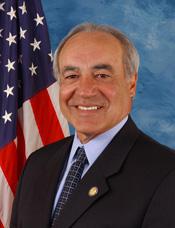
Mr. Speaker, I rise today in celebration of Asian Pacific American Heritage Month and to honor the more than 14 million Asian Pacific Americans that contribute to the success of tour great nation. I…
Mr. Speaker, I rise today in celebration of Asian Pacific American Heritage Month and to honor the more than 14 million Asian Pacific Americans that contribute to the success of tour great nation.
I am proud to be a Representative from the great state of California, which is home to the largest Asian/Pacific Islander American (API) community in the United States. I truly believe diversity is what makes our country great and California benefits greatly from the API community's presence there.
The theme for this year's Asian Pacific American Heritage Month is ``Dreams and Challenges of Asian Pacific Americans'' and it is an idea that resonates especially for those of us from the Golden State. Indeed, much of California's earliest infrastructure and railways were built by the sweat and labor of Chinese and Japanese immigrants. Despite grueling work and harsh discrimination, these workers played a vital role in developing California's early economy and today, Chinese and Japanese Americans are among the largest, most successful API groups in the state.
The API community has also been at the heart of some of California's saddest and darkest hours. During World War II, our state was home to most of the internment camps that unjustly imprisoned more than 112,000 Japanese Americans between 1942 and 1948. Government-sanctioned racism forced many of these law abiding citizens to lose everything they owned and many families remain seared by the memory of this injustice.
However, the suffering and struggle of the API community didn't stop there. As recently as 1992, Americans witnessed a milestone in Asian Pacific American history as the streets of Koreatown exploded in violence during the Los Angeles Riots. Thousands of Korean Americans watched their American Dream go up in flames and they, too, had no choice but to rebuild and rise again.
And the list goes on. America is the home of Vietnamese, Cambodian, Hmong, Filipino, Thai, Malaysian, Native Hawaiian or other API communities. Each of these groups has overcome heartache, oppression, discrimination, and intolerance to achieve their goals in America. They are proud to be Americans and grateful for the opportunity to live freely and pursue their dreams.
The API community is among the fastest growing minority groups in our country and is succeeding in every arena. Asian Pacific Americans proudly serve in our military; they are among some of the most successful entrepreneurs; and some of them are my esteemed colleagues here in the halls of Congress.
I am proud to honor the Asian Pacific American community today not only for their persistence, but also for their accomplishments, contributions, and leadership.
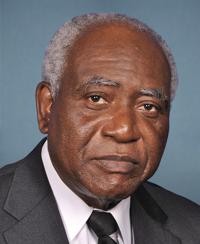
Mr. Speaker, I yield such time as he may consume to the gentleman from Hawaii (Mr. Case), the sponsor of this legislation. Mr. Speaker, I yield myself such time as I may consume. Mr. Speaker, 2006…
Mr. Speaker, I yield such time as he may consume to the gentleman from Hawaii (Mr. Case), the sponsor of this legislation.
Mr. Speaker, I yield myself such time as I may consume.
Mr. Speaker, 2006 marks the centennial anniversary of sustained immigration from the Philippines which demonstrates a warm friendship between the two nations on opposite ends of the world. The Philippines and the United States have enjoyed a long history of friendship and cooperation, including nearly a half century of American control of the archipelago which came to a close in 1947.
Now independent, the Philippines remain one of our strongest allies in the Asian-Pacific region. In 1906, a handful of sugar cane workers immigrated from the Philippines to the then U.S. territory of Hawaii. Later that year, the first group of pensionados arrived to earn degrees from American institutions. Some pensionados returned home to the Philippines to apply their knowledge, but many remained in the United States. Combined with the influx of sugar cane workers, these Filipino immigrants established a vibrant Filipino-American community.
A century of sustained immigration has persisted since 1906, and in some years, more than 60,000 Filipinos have immigrated to the United States. Hawaii and California house the majority of the nearly 2.5 million Filipinos who live in the United States, although strong communities thrive in other parts of our Nation, such as New York, New Jersey and Chicago.
Filipino-Americans now represent the largest immigrant community from the Asia-Pacific region who live in the United States. Filipino- Americans have made major contributions to the arts, labor, business, politics, medicine, media and other areas.
In addition, Filipino-Americans have served with honor in the United States Armed Forces in every war since World War I. They are a valued part of American society.
So I ask my colleagues to join me in recognition of the centennial anniversary of sustained immigration of Filipinos to the United States. Let us also recognize the vibrant history of the Filipino-American community in the United States. Their sustained immigration truly marks a century of achievement, and I commend the gentleman from Hawaii (Mr. Case) for seeking to recognize the contributions of this great part of our population.
Mr. Speaker, I yield back the balance of my time.
Mr. Speaker, I am pleased to join Chairman Honda and other members of the Congressional Asian Pacific American Caucus in commemorating Asian Pacific American Heritage Month. I am even more pleased…
Mr. Speaker, I am pleased to join Chairman Honda and other members of the Congressional Asian Pacific American Caucus in commemorating Asian Pacific American Heritage Month.
I am even more pleased that several Asian Pacific American organizations or governmental initiatives are holding their annual conventions in Hawaii this month. This includes the Federal Asian Pacific American Council and the White House Initiative on Asian Americans and Pacific Islanders.
There are also several Filipino American organizations that will be hosting events this year in Hawaii, including the National Federation of Filipino American Associations, as 2006 marks the centennial of sustained immigration from the Philippines to the United States.
The Filipino Centennial Celebration Commission in Hawaii, led by Elias Beniga, and the Smithsonian Filipino American Centennial Commemoration have done a wonderful job in providing commemorative activities across the country, including in Hawaii and Washington, D.C.
I was pleased that Congress passed in December, H. Con. Res. 218, my resolution recognizing the centennial and acknowledging the contributions of Filipino-Americans to the United States.
While there are many issues of importance, a timely issue I believe should be considered by Congress is the inclusion of my bill, H.R. 901, into any comprehensive immigration reform bill moving through Congress.
H.R. 901 would prioritize the permanent immigration petitions of the sons and daughters of Filipino World War II Veterans who were extended U.S. citizenship under the Immigration and Nationality Act of 1990. Most recently, I wrote to President Bush and Congressional leaders urging their inclusion of this provision in immigration reform legislation.
I believe my bill fulfills one of the bedrock principles of our federal immigration policy--family reunification--and warrants special consideration given the unique history between the United States and the Philippines, as well as the contributions of our Filipino World War II veterans to our country and to U.S. national security interests.
As we commemorate Asian Pacific American Heritage Month, I celebrate the contributions of all Asian Americans and Pacific Islanders who call our country home, and I congratulate the Filipino American community for their centennial celebrations this year!
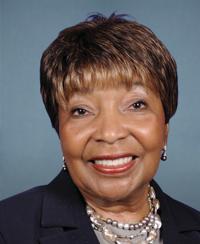
Mr. Speaker, I rise today to honor Asian Pacific American Heritage Month and to pay tribute to the struggles and enormous contributions of Asian Pacific Americans to our Nation's culture. It is an…
Mr. Speaker, I rise today to honor Asian Pacific American Heritage Month and to pay tribute to the struggles and enormous contributions of Asian Pacific Americans to our Nation's culture.
It is an honor to pay tribute to the many achievements and honor the countless unique contributions to the United States made by Asian Pacific Americans across our Nation.
May commemorates the arrival of the first Japanese immigrants in 1843. Therefore, it is appropriate that during the month of May we recognize the contributions made by Asian Pacific Americans to our communities.
May 10, 1869 marks the completion of the transcontinental railroad and its completion is
greatly credited to the labor of the Chinese immigrants. Today, there are over 14 million Asian Pacific Americans living in the United States and this represents 5 percent of the population.
The rich history associated with the Asian Pacific American population has been a great contribution to the culture of the United States.
Over the years, the Asian Pacific American communities have made significant contributions to Texas's diverse culture.
The United States is a land of immigrants, and the history reflects a Nation that has greatly benefited from the many contributions of its immigrants.
The Greater Dallas Asian American Chamber of Commerce (GDAACC) is the largest Asian American Chamber in the United States with 1,200 members currently enrolled.
Located in the Asian Trade District in Northwest Dallas, GDAACC, is the focal point of Asian American economic development and cultural exchange.
In recent years, due to great efforts to expand the number of programs that provide assistance to members, sponsors and partners, the GDAACC initiated the Asian Festival and approximately 15,000 people were in attendance.
GDAACC is also responsible for initiating the Leadership Tomorrow Program; the Multi-Ethnic Education and Economic Development Center; and the Texas Asian American Business Symposium in Dallas, Texas.
The Asian Pacific American community is well deserving of the many accolades they receive because their contributions have greatly enriched the culture and history of our Nation.
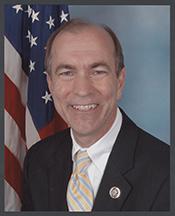
Mr. Speaker, I rise today to express my support for H. Con. Res. 218, recognizing the centennial of sustained immigration from the Philippines to the United States and acknowledging the contributions…
Mr. Speaker, I rise today to express my support for H. Con. Res. 218, recognizing the centennial of sustained immigration from the Philippines to the United States and acknowledging the contributions of our Filipino-American community to our country over the last century.
The United States and the Philippines have a relationship full of tradition and history and both countries have a shared commitment to global peace, security, and prosperity. Currently, there are over 2 million Filipino-Americans, the second largest Asian-American community in the U.S. These Filipino-Americans have made significant contributions in many areas including education, religion, business, labor, and the arts.
Dating back to World War II, when the United States and the Philippines fought side by side against Japan in the Pacific, Filipino- Americans have served with dignity and bravery in the United States Armed Forces. Today, many Filipino-American soldiers are fighting overseas in Afghanistan and Iraq.
The Philippines is working closely with the United States to win the global war on terror. Ongoing Philippines initiatives to improve and expand international counterterrorism cooperation encourage even better levels of communication between our two countries.
I will continue to work with leaders in the Filipino-American community to ensure that relations between the United States and the Philippines continue to grow and prosper in the 21st Century. I urge all of my colleagues to support H. Con. Res. 218.
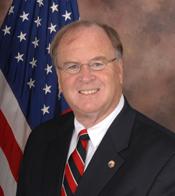
I rise in strong support of H. Con. Res. 218 that commemorates the substantial achievements of Filipino-Americans to our nation's history. My district, comprised of Santa Cruz, Monterey and San…
I rise in strong support of H. Con. Res. 218 that commemorates the substantial achievements of Filipino-Americans to our nation's history. My district, comprised of Santa Cruz, Monterey and San Benito counties in California, owes a particularly large debt to the Filipino-American community.
Starting in the late 1890's, Chinese, Japanese and Filipino farm laborers were the engine for the development and growth of the Salinas Valley agricultural industry. Farm labor work on strawberry and peach farms was often back-breaking; laborers rose at dawn and worked until dusk, and were generally paid very poorly.
Additionally, Filipino immigrants were often treated horribly and harshly discriminated against. Filipino farm workers formed the first organized group in the early history of the United Farm Workers Union. Despite these deplorable working conditions and societal obstacles, over the last hundred years, Filipino-Americans on the Central Coast of California have enriched the quality of life for all Californians and for our nation as a whole. For example, the Filipino Community Club of the Monterey Peninsula is an energetic non-profit community based centers in my district and serves as a cultural and civic hub for Filipinos living on the Central Coast.
I am proud to represent a large and vibrant Filipino population and commend their centennial of accomplishments to the United States. Mabuhay!
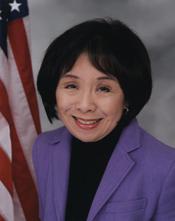
Mr. Speaker, this month we continue a nearly three decade tradition of Asian Pacific American Heritage. Without the sacrifices and contributions that have been made by Asian Americans, the United…
Mr. Speaker, this month we continue a nearly three decade tradition of Asian Pacific American Heritage. Without the sacrifices and contributions that have been made by Asian Americans, the United States would not be the world leader that it is.
During this special month we have the opportunity to acknowledge and pay tribute to the contributions of the 15-million strong Asian Pacific American community--from I. M. Pei, Maya Lin, and astronaut Ellison Onizuka, to Amy Tan, Yo Yo Ma, and General Eric Shinseki. Our Nation would not be what it is today without their immeasurable input. Their unique contributions enhance the moral fabric and character of this great Nation.
As we celebrate the contributions of Asian Americans and Pacific Islanders to the whole of the Nation, we must rededicate our efforts to ensuring equality and opportunities so that all Americans have a chance to reach their full potential. Together, we can make the American dream a reality for all Americans.
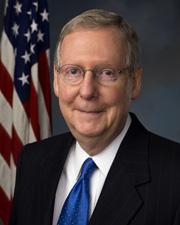
Mr. President, I ask unanimous consent that the Senate proceed to the immediate consideration of H. Con. Res. 218, which is at the desk. I ask unanimous consent that an Akaka amendment at the desk be…
Mr. President, I ask unanimous consent that the Senate proceed to the immediate consideration of H. Con. Res. 218, which is at the desk.
I ask unanimous consent that an Akaka amendment at the desk be agreed to, the concurrent resolution, as amended, be agreed to, the preamble be agreed to, the motion to reconsider be laid upon the table, and any statements relating to the concurrent resolution be printed in the Record.
Bill Text
4 versions available
        [Congressional Bills 109th Congress]
[From the U.S. Government Publishing Office]
[H. Con. Res. 218 Engrossed Amendment Senate (EAS)]

In the Senate of the United States,

December 15, 2005.
Resolved, That the Senate agrees to the preamble to the concurrent
resolution from the House of Representatives (H. Con. Res. 218)
entitled ``Concurrent resolution recognizing the centennial of
sustained immigration from the Philippines to the United States and
acknowledging the contributions of our Filipino-American community to
our country over the last century.''; be it further
Resolved, That the aforesaid concurrent resolution from the House
of Representatives do pass with the following

AMENDMENT:

(1)Page 4, line 8, strike out [requests that the President issue a proclamation
calling on] and insert: urges

Attest:

Secretary.
109th CONGRESS

1st Session

H. CON. RES. 218

_______________________________________________________________________

AMENDMENT