Expressing the sense of the Congress that the Russian Federation must protect intellectual property rights.
Legislative Activity
Stay on top of the latest movement without scrolling through every action
Message on Senate action sent to the House.
December 22, 2005
View full timeline
Introduced in House
July 28, 2005
Referred to the House Committee on Ways and Means.
July 28, 2005
Mr. Shaw moved to suspend the rules and agree to the resolution.
November 16, 2005 • 12:50 PM
Considered under suspension of the rules. (consideration: CR H10326-10329)
November 16, 2005 • 12:50 PM
DEBATE - The House proceeded with forty minutes of debate on H. Con. Res. 230.
November 16, 2005 • 12:50 PM
At the conclusion of debate, the Yeas and Nays were demanded and ordered. Pursuant to the provisions of clause 8, rule XX, the Chair announced that further proceedings on the motion would be postponed.
November 16, 2005 • 1:12 PM
Considered as unfinished business. (consideration: CR H10356-10357)
November 16, 2005 • 5:25 PM
Passed/agreed to in House: On motion to suspend the rules and agree to the resolution Agreed to by the Yeas and Nays: (2/3 required): 421 - 2 (Roll no. 593).(text: CR H10326)
November 16, 2005 • 5:32 PM
On motion to suspend the rules and agree to the resolution Agreed to by the Yeas and Nays: (2/3 required): 421 - 2 (Roll no. 593). (text: CR H10326)
November 16, 2005 • 5:32 PM
Motion to reconsider laid on the table Agreed to without objection.
November 16, 2005 • 5:33 PM
Received in the Senate and referred to the Committee on Foreign Relations.
November 17, 2005
Senate Committee on Foreign Relations discharged by Unanimous Consent.
December 22, 2005
Senate Committee on Finance discharged by Unanimous Consent.
December 22, 2005
Resolution agreed to in Senate without amendment and with a preamble by Unanimous Consent. (consideration: CR S14408)
December 22, 2005
Message on Senate action sent to the House.
December 22, 2005
Voting History
1 vote recorded • Roll call available
Floor Debate
15 membersWhat members said about H.Con.Res. 230 on the floor
 JDS
JDS CSDI
CSDI CW"
CW" TO+10
TO+10
Floor Debate
15 membersWhat members said about H.Con.Res. 230 on the floor
Mr. Chairman, I yield myself as much time as I may consume. I rise in strong support of H.R. 1065, the U.S. Boxing Commission Act, which would establish a national regulatory body for the sport that…
Mr. Chairman, I yield myself as much time as I may consume.
I rise in strong support of H.R. 1065, the U.S. Boxing Commission Act, which would establish a national regulatory body for the sport that has been riddled with corruption, scandals and lax enforcement of regulations, putting the lives of contenders on the line.
I want to thank the chairman of the subcommittee Chairman Stearns with, whom I worked closely on this legislation in a bipartisan way, to produce a product that I hope that our colleagues on both sides of the aisle will readily support.
I want to thank in addition to the bipartisan staff who worked on this legislation, I would like to thank our legislative counsel, Brady Young, for his advice, expertise and the patience that is often required when working with our bipartisan team.
I know that there are some in this body who have just wondered why we are addressing this particular issue of boxing when they argue there are more important issues facing our country. I would respectfully point out that it certainly is not the least important issue that we find time to deal with in this body, and that, in fact, it does deal with the health and the safety of literally thousands of people in our country. So I am happy to be supporting this bill right now.
With the passage of the Professional Boxing Safety Act of 1996 and the Muhammad Ali Act in 2000, minimum Federal standards were set to protect the physical and economic well-being of boxers, and State boxing commissions
were charged with meeting those standards. Some States have strong boxing commissions such as New York, Pennsylvania and Nevada that not only require the Federal standards but set additional regulations beyond the minimum requirements.
I want to point out that nothing in this legislation would prevent those that have stronger regulations from using those. Let me read directly from the legislation on minimum standards: Nothing in this Act prohibits any boxing commission from enforcing local standards and requirements that exceed the minimum standards or requirements promulgated by the commission under this Act.
What we found, however, was that there are too many other States that are ignoring the rules, and boxers are the ones who are paying the price.
Many argue that federally mandated health and safety standards are not being adhered to because no corresponding national regulatory body exists. Let me quote from the letter I received from the College of Sports Medicine, who heavily supports this legislation, when they say that, professional boxing is the only major sport which does not have a governing body to establish and enforce rules and practices. It is the only major sport that does not have that.
When the greatest and prettiest of all times, Muhammad Ali, tells you, ``Boxing reform measures are unlikely to succeed unless a U.S. Boxing Commission is created with authority to oversee a sport that still attracts a disproportionate number of unsavory elements that prey upon the hopes and dreams of young athletes,'' when Muhammad Ali tells you that, as he did to us in our hearing, one listens, and that is what Chairman Stearns and I did with the drafting of H.R. 1065.
Boxing is an enormous enterprise. The sport generates over $500 million in revenues each year. However, because so many parties have a financial stake in each boxing match and because competing interests often run counter to the boxers' well-being and because not every manager is as upright as Clint Eastwood in ``Million Dollar Baby,'' many contenders end up destitute.
In this sense, boxers are like many other kinds of talent or workers. Their gifts and their hard work are others' fortunes, and they are treated as disposable assets.
Boxing is also unlike many other sports in that there are very serious physical repercussions. If health and safety standards are not being met, boxers could die, and they do.
Over the past 50 years, more than 130 fighters have died due to boxing-related injuries in the United States. In 2005, we lost the first woman to boxing, Becky Zerlentes. Dr. Zerlentes, a professor of geography, got her Ph.D. at my alma mater, the University of Illinois at Urbana-Champaign.
I believe that it is our responsibility to ensure that boxers are not being put in the ring without being protected, both physically and economically. We know it is a dangerous sport by its nature, but it is our responsibility to ensure that laws that are already on the books are enforced. That is why I joined Chairman Stearns in drafting H.R. 1065 to establish the United States Boxing Commission. This bill will help to ensure that standards are uniform and enforced and that boxers are protected.
The formation of a national regulatory body is supported by the Association of Boxing Commissioners, the organization of State boxing commissioners. They love their sport, and they want to make sure that the laws that govern it are being enforced, keeping the sport safe and respectable. Our bill also enjoys the support of those who say that boxers' health must come first, the American College of Sports Medicine and the American Association of Professional Ringside Physicians.
Finally, it would be a tribute to the greatest of all times, to Muhammad Ali, who lent his name to the law that is meant to protect boxers from those who see them as just a commodity and is not being enforced as it should be.
We need to pass this bill to do a service to the boxers, to the young athletes who see their dreams and their hopes come to life when they are in the center of that ring and the bell signals the first round.
I urge my colleagues to join in this bipartisan leadership of this legislation and support H.R. 1065.
Mr. Chairman, I reserve the balance of my time.
Mr. Chairman, I yield myself such time as I may consume.
I am aware of some concerns raised by the Governor's office in New Jersey about this legislation, where they are concerned about what they say is the erosion of State authority. So I want to be very clear about this and once again read from the bill and read an additional section from it:
``Section 9, Noninterference with Boxing Commissions. Paragraph a, Noninterference: Nothing in this act prohibits any boxing commission from exercising any of its powers, duties, or functions with respect to the regulation or supervision of professional boxing or professional boxing matches to the extent not inconsistent with the provisions of this act.'' By that we mean anything that has more enforcement powers. We are just setting a floor and the States can exercise all their powers, duties, or functions in addition to that.
And ``b, Minimum Standards: Nothing in this act prohibits any boxing commission from enforcing local standards or requirements that exceed the minimum standards or requirements promulgated by the commission under this act.''
A State like New Jersey that contends that they are doing a good job, we say go ahead and do it. We welcome that. We acknowledge that, and we hope that they will continue to do it. But the fact of the matter is that the vast majority of States, despite the passage of the acts of 1996 and the Muhammad Ali Act in 2000, are not doing that; and that is why most people associated with this sport including State commissioners, including State commissioners have weighed in in support of this legislation and look forward to the Federal Government seeing that boxing alone is not without some kind of national standards, and that is why this commission is so important.
Mr. Chairman, I reserve the balance of my time.
Mr. Chairman, I yield myself such time as I may consume.
I would like to say a special thank you to the gentleman from Illinois (Mr. Rush) for the work he has done on the bill and for his strong support of the legislation.
I would also like to read a statement on behalf of the gentleman from Michigan (Mr. Conyers) who is the ranking Democrat on the Committee on the Judiciary.
He says, ``I rise in strong support of H.R. 1065, the United States Boxing Commission Act, which establishes a Federal commission with oversight responsibilities for professional boxing in the United States. This much-needed commission will establish uniform minimum standards which States must follow. It will also be empowered to issue additional regulations to improve the integrity and safety of the sport.
``Further, the commission will establish a Federal licensing requirement for participation in United States matches for certain boxing personnel, including boxers, managers, promoters, match makers, referees, judges and sanctioning.
``In July 2003, the GAO issued a report on professional boxing and listed elements identified by industry experts as essential to improving the health, safety and economic interests of boxers: medical examinations, monitoring of training injuries, assessments of medical risks, health and life insurance, the presence of appropriate medical personnel and equipment, and enforcement of suspensions for injuries.
``Additionally, the GAO found that industry experts believe additional changes are required in boxing and listed the following needed changes: one, require pension plans for boxers; two, require full disclosure of purses and payments; three, require minimum uniform contractual terms between boxers and promoters; and, four, prohibit conflicts of interest.
``While the Federal law has created requirements for States to follow, these laws are largely being ignored. H.R. 1065 will aid in correcting this injustice.
``Boxers often have little or nothing to show from their match proceeds, despite others earning vast wealth off the boxers' talents. We owe it to our athletes to create laws that protect their interests and to make sure those laws are enforced. I urge my colleagues to support H.R. 1065 and to support professional boxers.''
Mr. Conyers was unable to come down to the floor himself and wanted to make sure that this strong support of the legislation was placed in the Record.
Mr. Chairman, I reserve the balance of my time.
Mr. Chairman, I yield myself the balance of my time.
Mr. Chairman, I want to thank the gentleman from Hawaii (Mr. Abercrombie), who is himself a champion weight lifter, for weighing in on this legislation. I appreciate it very much.
There are literally millions of people who enjoy the sport of boxing, who watch it and follow it and who want to see that there is some integrity in that sport. A lot has been said about the contenders themselves, about the boxers. I would echo what my chairman, Mr. Stearns, has said in response to
the question, why should we care? We should care about these young boxers who are trying to follow their dreams and to help create a sport that does guarantee them some level of standards of health and safety and opportunity. And we should also care because it is a $500 million industry in this country that has been plagued with lots of scandals and irregularities.
So we are not talking about creating a major bureaucracy to oversee this, we are looking at a self-funding body that would now add professional boxing to every other sport that has some national standards and national rules and regulations. I think it is fairly modest in its construction, and I would certainly urge all Members on both sides of the aisle to join us, and thank Members on both sides who came down and supported this regulation.
Mr. Chairman, I yield back the balance of my time.
Mr. Chairman, I ask unanimous consent to claim the time in opposition, although I do not oppose the amendment.
Mr. Chairman, I yield myself such time as I may consume.
I just want to make a few remarks in support of the Stearns amendment. The Stearns amendment would ensure that establishment of the boxing commission would not be a burden to the taxpayers. It would require that the fees collected from the licenses go to offset the cost of running the commission. The amendment is fiscally responsible, and it is consistent with PAYGO principles that helped us achieve budget surpluses in the 1990s.
This amendment was crafted in consultation with the Committee on Appropriations and achieves the stated objective. While I believe that boxing needs to have serious oversight, I also believe it should be paid for by those who profit and promote the ringside event. It is the least they can do for the sport they love, and I urge my colleagues to support this amendment.
Mr. Chairman, I yield back the balance of my time.
Mr. Chairman, as the designee of Mr. Filner of California, I offer an amendment.
Mr. Chairman, this amendment enhances safeguards to protect professional boxers. We all know that boxing is a tough sport with even tougher consequences and it is essential that we protect boxers as much as possible.
Unfortunately, there are varying standards among the States on what type of medical services need to be available during boxing matches. Because appropriate medical care is critical in determining whether the fighter injured in the match will recover, suffer permanent damage or will die, depending on the extent of the injury, this amendment would call on the boxing commission to establish minimum standards and what type of medical services must be available at professional boxing matches.
Additionally, many boxers only have insurance coverage the night of the fight. It is not surprising that many insurance companies do not offer boxers health and life insurance policies at affordable rates for the rest of the time. And not every boxer is a prize fighter taking home a big purse. This amendment would simply encourage the Boxing Commission to establish an insurance fund to cover members of the professional boxing community.
We have all heard of the destitute boxer struggling to get by. This amendment would call on the Boxing Commission to come forward on recommendations regarding the feasibility of the pension system for professional boxing participants. Remember, again, this is asking them to come forward simply with a recommendation regarding the feasibility of a pension system.
Finally, like most other sports, boxing is an international business. As such, I believe it is important for the Boxing Commission to enter into agreements with other foreign boxing entities to set minimum health standards for boxers who fight overseas.
All of these measures are important to improve the sport and to provide additional safeguards to boxing, and I urge support of this amendment.
I yield to the gentleman from Florida.
Mr. Chairman, the gentleman from California (Mr. Filner) named this the Archie Moore Criteria for Rating Boxers. So the reason that he called this amendment the Archie Moore criteria for rating boxers is because Archie Moore, also known as the Old Mongoose, held the light middleweight title for 10 years. By the time of his retirement, after 197 fights, Archie had compiled a truly unassailable sports record of 145 knockouts. All of this is even more remarkable when one considers that he spent a large part of his career, approximately 16 years, traveling to an unending string of boxing honky tonks open to fighters who could not break into the big leagues.
Archie did not get a title shot until he turned 39, a time when most boxers retire. There were many barriers preventing great boxers like Archie from rising through the ranks. One primarily being a broken rating system for boxers.
It is the job of the sanctioning organizations to rate boxers and to designate a champion. Sanctioning organizations make their money by sanctioning champion fights. The higher a fighter is rated, the more likely it will be for him to get high paying fights, especially championship fights.
However, often rankings are not based on objective talent or win-loss records; rather, boxers who belong to certain promoters may be highly ranked regardless of skill and ability. A fighter could be the best in his weight class, but if he is not associated with the right people he may not be ranked and thus lose his chance to further his career.
Previously, Congress passed legislation under the Mohammed Ali act to require all sanctioning organizations to develop credible and consistent ratings criteria. However, there are still problems with the system.
For example, one of the sanctioning organizations had a dead man ranked in the top 10 of a super middle weight division for 4 months. During the 4 months in which the dead man was actually ranked, he moved up in the ratings, going from Number 7 to Number 5.
This is just one incident on a long list of problems associated with the ratings system conducted by boxing sanctioning organizations. Obviously, something is wrong, and something ought to be done.
My amendment will require the Boxing Commission to establish guidelines for rating boxers. These guidelines must be followed by organizations that sanction boxing events. My amendment does not strip boxing sanctioning organizations from ranking boxers; however, it does require them to adhere to a set criteria established by the Boxing Commission.
Boxing will never be the sport it once was until the rating system is made more legitimate and respectable, which is why I am asking you to support my amendment.
Mr. Chairman, I yield to the gentleman from Florida.
Mr. Chairman, I yield myself such time as I may consume. Mr. Chairman, I rise today to express my strong support for H.R. 1065, the United States Boxing Commission Act. This bill will establish for…
Mr. Chairman, I yield myself such time as I may consume.
Mr. Chairman, I rise today to express my strong support for H.R. 1065, the United States Boxing Commission Act.
This bill will establish for the first time the United States Boxing Commission within the Department of Commerce. The USBC will be charged with overseeing licensing and registration of boxers and boxing personnel nationally to improve the current inconsistent and lack of regulation of the sport at the State and also at the local levels.
The sport of boxing with its rich and glorious history is slowly being corroded by corruption and abuse in and outside the ring.
I am no fan of bigger and more intrusive government, but in this case the power and sweep of a Federal regulator can establish a uniform minimum standard for boxing on a national level and will hopefully salvage this great sport and reestablish it as a main
event, not some shady, corrupt business enterprise.
In terms of fiscal impact, there has been a lot of misinformation about this bill, its budgetary impact. But let me be perfectly clear: this bill requires the United States Boxing Commission to be funded through receipts from licensed and registration fees, not from taxpayers' money. The USBC will also sunset in 12 years. Here we have a bill that will sunset. The USBC will not be a drain on government resources. Rather, it will function and operate from revenues derived from its oversight function of licensing and registration.
Later, I intend to offer an amendment to clarify this intent during our consideration. This is an important point to be made and needs to be made crystal clear.
In addition, as I mentioned, professional boxing is suffering today. Boxers are in danger of losing life and limb every day, and likewise, every day, we hear more and more stories about needless injuries and even deaths. We had two boxers die in Nevada just recently.
Boxing obviously is a great American sport, with a rich and glorious tradition, but it is in real danger of becoming marginalized into nothing more than a dangerous and corrupt sideshow. This would be a tragedy.
We have celebrated our Olympic heroes and cheered them when they later fought professionally. I believe that adding a backstop of Federal oversight over the various pockets of inconsistent regulation at the State level will help clean up boxing and honor its positive impact on the lives of young men and women who, despite sometimes difficult financial or social circumstances, achieve greatness through discipline, hard work and simply sheer determination.
One of those obscure fighters that rose to become one of America's most important symbols of athletic and human excellence obviously was Muhammad Ali. He testified at one of our hearings. Unfortunately, he could not testify, so his wife read the speech for him, and this is what he said: ``For all of its difficulties, boxing is still a wonderful sport. It still attracts men and women from all walks of life to reach glory in the ring. For many, it's their first experience with hard work, determination and discipline. For still others, it remains the only way up and out from a life filled with bad choices, failure and worse.''
He went on to say: ``Reform measures are unlikely to succeed unless a U.S. Boxing Commission is created with the authority to oversee a sport that still attracts a disproportionate number of unsavory elements that prey upon the hopes and dreams of young athletes.''
My bill, cosponsored with the gentlewoman from Illinois (Ms. Schakowsky), my colleague and the ranking member of my subcommittee, and the gentleman from Illinois (Mr. Rush), my friend and colleague, will push reform and put the weight of uniform national oversight mechanism behind those reforms to ensure that the United States Boxing Commission is successful and those hopes and those dreams are protected.
Specifically, the manager's amendment I am offering will do the following:
First and foremost, it makes it clear that the United States Boxing Commission will be funded largely through revenues generated by licenses and registrations so that it is essentially self-funding. Specifically, section 5 of the bill has been amended to clarify that fees authorized and collected shall be available to fund the operation of the commission and the administration of the Act. Section 14 of the bill was amended to clarify that offsetting collections are available to the commission subject to appropriations.
The next thing, it empowers the United States Boxing Commission to promulgate uniform standards for professional boxing and oversee all professional boxing in the United States.
It ensures that Federal and State laws applicable to boxing are enforced and requires and issues licenses for all professional boxers and, importantly, boxing personnel.
It allows the United States Boxing Commission to suspend or revoke a license if it finds the holder has violated provisions of this Act.
It requires a study and report on health and safety aspects related to boxing, as well as on the definition of a promoter.
It requires the United States Boxing Commission to provide an annual report to Congress on its activities.
I think Mr. Bruce Spizler, chair of the Legal Committee of the Association of Boxing Commissioners and a former member of the National Association of Attorneys General Task Force on Boxing, in his testimony to our subcommittee, summed up the current situation best when he said: ``The regulation of the sport of professional boxing has been left to those individual States and, more recently, tribal organizations, which, legislatively, have provided for its own boxing commission to regulate the sport in its own particular jurisdiction. Thus, considering that the authority of each regulatory component is restricted by its territorial borders, the effective regulation of the sport of professional boxing in the United States is only as strong as its weakest link; leaving `venue shopping' as an effective tool for those seeking a lighter regulatory `punch.' The glaring absence of regulatory uniformity, together with the difficulty, and varying degrees, of effective enforcement, has lent itself to a perpetuation of the inequities, lack of integrity and, in some instances, non-adherence to health and safety measures for which the inherently dangerous sport of professional boxing, unfortunately,'' by its reputation ``has become known.''
I cannot think of a more powerful argument in favor of a Federal commission, that is sunset, designed to oversee the sport of boxing and ensure uniform minimum standards, especially for those States that do not have programs or have inferior ones. States with mature programs, in my opinion, should be supportive because they are already leading and serving as benchmarks.
In addition to the support of the Association of Boxing Commissioners, this bill has been endorsed by the American College of Sports Medicine and the American Association of Professional Ringside Physicians.
In closing, this is an important opportunity to save a sport that has brought so much pride and glory to the United States. Boxing is suffering from problems that stretch far beyond the boundaries of State regulation. It is a sport worth saving that will need the power of our Federal Government oversight to clean up its act and ensure the safety of all its athletes. All the great champions that have paved the way for the sport should be able to count on us to provide a minimum amount of oversight in this situation.
I urge my colleagues to consider this bill, H.R. 1065, the United States Boxing Commission.
Mr. Chairman, I reserve the balance of my time.
Mr. Chairman, I yield myself such time as I may consume.
Mr. Chairman, I rise just in reply to my colleague who is chairman of the Judiciary Committee who made some points in terms of jurisdiction and also made some points that the bill has minimum impact upon the budget.
I have here a copy of the amendment which is part of the manager's amendment that we have next in place, which takes care of the concerns he has by striking a portion of the bill and in place putting it that the bill is self-sufficient and the money that is appropriated comes from the licensure fees. So I would urge the gentleman to vote for the manager's amendment, which will be coming up shortly. That will take care of his main concern, which appears to be that he is concerned it was $5 million the first year and the GAO audit indicated more money thereafter. But with this manager's amendment, the GAO audit is nullified and we have a self-sufficient bill.
Another point I would like to make is the basic thrust of the bill is a 12-year supervision with three appointees
on the commission from the President of the United States with 3-year duration of tenure. At that point they can be reappointed, or they can continue at the President's request. We have in place something here that is very rare on the House floor, and that is something that is sunsetted. So when people talk about a new Federal bureaucracy, let me be perfectly clear. This is a very, very light, temporary government oversight committee to bring accountability and to bring justice to a great American sport. Everybody in the business who testified wants this type of temporary structure. So I think in a larger sense we have to say to ourselves now is the time to do this and, in so doing, in this way we will do the least amount of harm by making it temporary and at the same time asking them to pick up the ball and run with this as a voluntary organization much like other professional sports do.
So I am glad to rise to point out to my colleague that it is going to be amended so that it is budget neutral; and, two, to point out to him that this is not a new Federal bureaucracy, but instead an oversight board to help guide this sport to its ultimate success.
Mr. Chairman, I reserve the balance of my time.
Mr. Chairman, I yield myself such time as I may consume.
I would point out, as the gentleman from Nebraska did say he offered an amendment to abolish all of boxing, I think in his statement he also made an argument in favor of our bill. When he posed the question why should we care, think about that. Why should we care? That was his question that he asked in the hearing, and it simply came back to him that we should care about these fighters, these young fighters who are starting out, many from very difficult economic situations. We should care. And I think as Members of Congress, I hope they will keep that question in mind when they support the bill and realize that the gentleman from Nebraska really had an amendment to abolish boxing, which is almost in direct counterpoint to the question he posed, Why should we care?
Mr. Chairman, I yield such time as he may consume to the gentleman from Nebraska (Mr. Osborne), the former head coach of the Nebraska Cornhuskers.
Mr. Chairman, I yield such time as he may consume to the gentleman from Hawaii (Mr. Abercrombie).
(Mr. ABERCROMBIE asked and was given permission to revise and extend his remarks.)
Mr. Chairman, I offer an amendment.
Mr. Chairman, I yield myself such time as I may consume.
I am offering today a manager's amendment that will perfect the underlying bill to ensure that H.R. 1065 is a fiscally sound piece of legislation that uses a self-funding mechanism for the United States Boxing Commission established under the act.
Let me be crystal clear to my colleagues, taxpayers are not being forced to pay for the USBC. Boxers, boxing personnel and the sanctioning organization, such as the World Boxing Association, WBA, the International Boxing Federation, IBF, and so on, will provide the funds, through payment of license and other fees, which will be collected by the USBC.
Specifically, my amendment will do the following: Section 5 of the bill will be amended to clarify that fees authorized and collected shall be available to fund the operation of the United States Boxing Commission and administration of this act.
Section 14 of the bill will be amended to clarify that offsetting collections are available to the USBC subject to appropriation. This is a very good amendment. It is bipartisan. The bill itself will save lives, protect vulnerable athletes and help get the sport of boxing back in fighting shape.
First and foremost, it will end the corruption and abuse that has plagued the sport for so long so America will regain its pride in boxing and all of its wonderful champions. Moreover, it will be done in a fiscally responsible way. I urge my colleagues to support this perfecting amendment and support H.R. 1065.
Mr. Chairman, I reserve the balance of my time.
Mr. Chairman, I yield back the balance of my time.
Mr. Chairman, will the gentlewoman yield?
Mr. Chairman, I rise in support of my colleague's amendment, and I think I would accept it. Both our staffs have looked at this. We think it is a good improvement on the bill, and so I commend the gentlewoman for her extra work here on the amendment and the gentleman from California (Mr. Filner) who has also been involved with it.
Mr. Chairman, I thank the gentlewoman from Florida for yielding. I do not rise in opposition. I think this amendment is good. We accept it. I would point out, during the hearing, we had a boxer who died of natural causes and as a result of that he rose in the ranking because of the lack of standards that are set. And so I think, in this case, her amendment would be worthwhile, so that this sort
of anomaly does not occur again in which a boxer dies naturally and he rises in rank in the standing in the overall professional standing. So I rise in support of the amendment.
Mr. Chairman, the gentleman's amendment, I think, improves the bill quite a bit, addresses the fee language to ensure that the fees collected pursuant to the act are credited, as the gentleman mentioned, as offsetting collections only for the purpose of funding the commission. It is important to ensure that any fee collected is used expressly for the purpose intended, namely, the funding of this commission.
User fees are common throughout most industries and are often used to fund activities that, other than the purpose of the fee that is collected. We know that. We see that oftentimes in Congress. But this amendment will ensure that this does not happen. So I think it is very good. And I compliment the gentleman for it. It is a good policy. The insurance commission is the only entity that receives the industry fees that it is collecting from. It has bipartisan support, and I appreciate the gentleman working with me and my staff, and I commend my colleagues to vote and support it.
Mr. Speaker, I object to the vote on the ground that a quorum is not present and make the point of order that a quorum is not present.
Mr. Speaker, as Congress leaves for the upcoming November elections, I would like to raise an issue that will gain more attention over the next few months--a U.S.-Russia bilateral agreement on…
Mr. Speaker, as Congress leaves for the upcoming November elections, I would like to raise an issue that will gain more attention over the next few months--a U.S.-Russia bilateral agreement on Russia's membership in the World Trade Organization. As someone who is watching the U.S.-Russia WTO negotiations very closely with a keen interest in the outcome, I think it is important to acknowledge the obstacles that remain. While a successful U.S.-Russia WTO agreement can be imagined, the reality of the current situation is that both sides are still apart on key issues. I urge my colleagues to keep a watchful eye on these negotiations, which will have important consequences for U.S. industries, workers and consumers.
Some say Russia has made progress in its actions, commitments and negotiations with the United States over the past year. However, both countries were unable to meet the goal of concluding WTO talks at the July Group of Eight meeting in St. Petersburg, Russia. The new goal for the completion of negotiations is when Presidents Bush and Putin meet at the November 2006 Asia Pacific Economic Cooperation (APEC) forum in Vietnam.
The United States and the global community will ultimately benefit when Russia becomes a member of the World Trade Organization. Although Russia's economy in a developing stage in many respects, its economic progress since the end of the cold war and potential for growth are positive trends. The complete integration of Russia into the global economy is an important step that will help Russia and its trading partners. It will also help to support the continuation of positive U.S.-Russia relations.
However, at this stage, significant obstacles to Russia's WTO accession remain and must be addressed. Russia's behavior in a number of areas and its lack of concrete commitments on important issues is contrary to the spirit of free trade and the WTO and must be reversed. In essence, the WTO is a set of rules and commitments and a forum for dispute resolution, factors that make it fundamentally different than most international organizations with extended bureaucracies. In this manner, these rules and commitments must be honored if the WTO is to have any meaning whatsoever.
Russia is failing to uphold standards that many in the U.S., Europe and elsewhere believe are essential for WTO accession. The area of intellectual property is a prime example.
Due in large part to Russia's failure to enforce its anti-piracy and intellectual property protection laws, 421-2 of my House colleagues joined me in passing a resolution in December 2005 (H. Con. Res. 230) that called on Russia to provide adequate and effective protection of intellectual property rights, or it risk losing its eligibility to participate in the Generalized System of Preferences (GSP) program and to ensure that intellectual property is securely protected in law and in practice to demonstrate that it can meet international commitments like the WTO.
Earlier this year, House Ways and Means Chairman Bill Thomas (R-CA) and Ranking Democratic Member Charles Rangel (D-NY) as well as Senate Finance Committee Chairman Charles Grassley (R-IA) and Ranking Member Max Baucus (D-MT) co-signed a letter to President Bush stating that they will not support Permanent National Trade Relations for Russia unless Russia takes definitive action to address current issues.
In the energy sector, the Russian government's interference in the market and de facto renationalization of selected assets calls into question its commitment to free and fair trade. The Council on Foreign Relations, task force on Russia listed a number of disappointing trends in Russia's energy market, including ``the revocation of longstanding Exxon Mobil licenses for the Sakhalin natural gas fields and the destruction of the Yukos Oil company as part of a reassertion of state control over the energy sector.'' The report also mentioned the cut off of natural gas supplies to Ukraine in response to its pro-western orientation. With U.S. oil and natural gas prices reaching record highs, it is very important that we develop a tough, but open, energy trade policy with Russia.
The United States remains concerned about access to the Russian banking, financial services and insurance markets, all of which are substantially restricted for foreign companies. The U.S. is advocating on the opening of bank branches, but Russia has repeatedly insisted that foreign banks be required to open a full subsidiary, not a branch, when entering Russia. In the insurance industry, Russia does not allow foreign insurance companies to underwrite and reinsure mandatory forms of insurance, including motor vehicles, health and government institutional insurance. Before Russia passed legislation in late 2003 to expand foreign ownership to 25 percent, the EU had considered the Russian insurance industry essentially closed.
According to the President's 2006 Trade Policy Agenda and 2005 Annual Report, the U.S. remains concerned about market access for poultry, pork and beef in the wake of a June 15, 2005 agreement with Russia. The issue of how the agreement is being implemented, specifically questions that a U.S. quota could be used by other countries, is currently under discussion.
The United States is currently in the midst of its bilateral negotiations with the Russian Federation to agree to Russia's membership and participation in the World Trade Organization. The United States is one of only a few nations remaining that must conclude a bilateral WTO agreement before Russia formally accedes to the WTO.
As this process continues, it is critical that Congress consider Russia beyond specific commercial issues and commitments on trade issues. Congress should consider that Russia's is regressing in its movement towards a more democratic society and free market
economy because both issues have important ramifications for our trade relationship.
As a member of Congress who serves on the House Judiciary and International Relations Committees and Chairs the Energy and Resources subcommittee of the Government Reform Committee, I am engaged in the formulation of policy on intellectual property, U.S. foreign policy, and energy issues. Therefore, I see the U.S.-Russia trade relationship from a variety of perspectives. I also see the important relationship between market and democracy trends and Russia's WTO accession process.
I urge my colleagues to pay attention to these larger trends, some which are disturbing, as you consider Russia's progress on WTO negotiations with the United States and the eventual consideration of the Jackson-Vanik legislation and granting of PNTR to Russia. Russia must be held accountable under a WTO agreement that protects free and fair trade.
Mr. Chairman, some might not know this, but my State of Mississippi has a great history of boxing. Archie Moore, from Benoit, Mississippi, participated in professional boxing for over 27 years,…
Mr. Chairman, some might not know this, but my State of Mississippi has a great history of boxing. Archie Moore, from Benoit, Mississippi, participated in professional boxing for over 27 years, holding the title of light heavyweight champion, and facing the likes of Rocky Marciano and Cassius Clay, during his career. While he went on to train Foreman and Ali, he will probably be best remembered as holding the record for the most knockouts in a career at 141. What I think is more important and that he may not be remembered as much for was his integrity in such a scandalous and corrupt sport during the years he boxed from 1936 to 1963. While we would have hoped boxing would have progressed and reformed over the years, it has not. The sport is still riddled with many problems, not the least is the exploited nature of its athletes. Muhammed Ali once said this: ``I say get an education. Become an electrician, a mechanic, a doctor, a lawyer--anything but a fighter. In this trade, it's the managers that make the money and last the longest.'' This seemingly benign statement illustrates one small problem among the multitude of problems the sport of boxing faces.
Today, many fans are saddened and upset by the lack of integrity they see in professional boxing that has significantly weakened the sport-- the most deplorable problem of which is the treatment of the sport's athletes. Without a doubt, professional boxers are the most exploited athletes in our Nation. While Congress has made efforts to protect professional boxers before, through the Professional Boxing Safety Act of 1996 and the Muhammad Ali Boxing Reform Act of 2000, these are not enough. The real problem today is the ineffective and inconsistent oversight of professional boxing, which has led to continuing scandals, controversies, unethical practices, and unnecessary injuries and deaths in the sport. That is why we are here today.
Mr. Chairman, through the leadership of members of Congress like Senator John McCain, Representative Cliff Stearns and Representative Peter King, Congress is addressing and hopefully rectifying this harrowing situation. In order to better protect boxers and the integrity of professional boxing, we must establish a Federal regulatory entity to oversee professional boxing and set basic uniform standards for certain aspects of the sport. Consider this--professional boxing remains the only major sport in the United States that does not have a strong, centralized association, league, or other regulatory body to establish and enforce uniform rules and practices. And because a powerful few benefit greatly from the current system of patchwork compliance and enforcement of Federal boxing law, a national self- regulating organization--although preferable to Federal government oversight--is not a realistic option.
Mr. Chairman, I was an original co-sponsor to Representative King's bill, ``The Professional Boxing Amendments Act of 2005,'' which would also establish a United States Boxing Commission that perform substantially similar functions. I am very pleased that this idea is finally being considered on the House floor. The troubles that plague the sport of professional boxing undermine its credibility in the eyes of the public and--more importantly--compromise the health and safety of boxers. The creation of a Federal boxing commission would effectively curb these problems. The Senate has passed Senator McCain's boxing bill, S. 148, the Professional Boxing Amendments Act of 2005, and I think it will be a travesty if the House does not do the same. Therefore, Mr. Chairman, I rise in great support of this legislation today and urge my colleagues to swiftly and expeditiously approve this legislation.
House of Representatives, Committee on Education and the
Workforce,
Washington, DC, September 28, 2005.
Hon. Joe Barton,
Chairman, Committee on Energy and Commerce, Rayburn House
Office Building, Washington, DC.
Dear Chairman Barton: I am writing to confirm our mutual
understanding with respect to consideration of H.R. 1065, the
United States Boxing Commission Act, which was referred to
the Committee on Energy and Commerce and in addition the
Committee on Education and the Workforce. The Committee on
Energy and Commerce reported this bill on July 28, 2005.
As you know, provisions within H.R. 1065, directing a
United States Boxing Commission to establish health and
safety standards and a licensing registry for boxing
personnel, fall within the jurisdiction of the Committee on
Education and the Workforce. In addition, section 11 of the
bill requires the Commission to study and report to Congress
on health and safety standards in the boxing industry; this
provision likewise falls within the jurisdiction of the
Committee on Education and the Workforce.
I do not intend to delay consideration of H.R. 1065, nor
will I object to the scheduling of this bill for
consideration in the House of Representatives. However, I do
so only with the understanding that this procedural route
should not be construed to prejudice the Committee on
Education and the Workforce's jurisdictional interest and
prerogatives on these provisions or any other similar
legislation, and will not be considered as precedent for
consideration of matters of jurisdiction to my committee in
the future. Further, this understanding is based on the
agreement reached between our staffs to provide that the
study commissioned in section 11 of the bill is transmitted
to the Committee on Education and the Workforce, as well as
your committee. Finally, we would expect you to support our
request for appointment of conferees on these provisions
should a conference arise with the Senate.
I would ask that you include a copy of our exchange of
letters in the Congressional Record on this bill. Thank you
for your consideration and cooperation in this matter.
Sincerely,
John A. Boehner,
Chairman.
Mr. Chairman, I thank Chairman Stearns for yielding me this time. Mr. Chairman, I speak in support of H.R. 1065, the United States Boxing Commission Act. When we think about boxing, we often think…
Mr. Chairman, I thank Chairman Stearns for yielding me this time.
Mr. Chairman, I speak in support of H.R. 1065, the United States Boxing Commission Act.
When we think about boxing, we often think about Jack Dempsey and Gene Tunney, Joe Louis, Max Schmaeling, Muhammad Ali, Sonny Liston. These are all high-profile fights, a lot of press coverage, pretty well attended by trainers and doctors, a lot of money involved. But what we do not see is the low profile, the seamy side of boxing, the mismatches, the dishonesty, the lack of medical attention, sometimes the brain damage, the low pay, the high number of people who leave the sport with absolutely no financial resources and many times in pretty poor shape physically. So sometimes this part of boxing has been called the ``red light district'' of professional sports. And I would have to say from my knowledge of it, somewhat limited, I would agree that that is an apt title.
Professional boxing, as has been mentioned, is the only major U.S. sport that does not have a centralized association or league to establish and enforce uniform rules and practices. In football we have the National Football League; basketball, the National Basketball Association; Major League Baseball; National Collegiate Athletic Association; U.S. Olympic Committee.
So people say, why did boxing not do this? Why would this not be something that would be natural? And the reason is there is a lot more organization in those other sports. NCAA is composed of member institutions. The Olympic Committee has a variety of supporting organizations. Boxing is almost something that one would have to say has total anarchy, and it is spread all over the place. Some of these club fights, obviously, are very low-budget items; and it is almost impossible to get any kind of organization involved.
I have spent most of my life working with young athletes, and some of these
athletes came from backgrounds similar to that of most prizefighters. There is a lot of poverty. There is sometimes very little family support, sometimes poor schools, sometimes gang influence. But with somebody to care and supervise and nurture, many will come out of that environment and do reasonably well. But they need a little bit of guidance. They need a little bit of help. But I would say the exploitation is more often the norm than a good outcome.
So years of corruption and abuse in boxing would indicate that no effective regulation would come from within the sport. We have asked the question, why do they not just take care of it themselves? But how long are we going to wait?
We have had years and years and years of this sport, going back to the 1700s, and we have seen no regulatory body emerge. How many people have to die? How many people have to have their brains scrambled? And how many matches do we have to have with no medical attention before we do something about it? We would not do something like this with animals. We are very much against cockfighting and other kinds of contests, and we regulate, and we make some of those illegal as well.
So H.R. 1065 provides a uniform Federal standard to regulate business practices and safety issues within the boxing world. This is something whose time has come. It establishes the United States Boxing Commission which oversees all boxing matches in the U.S.
This is a good bill. It is a needed bill. I would really like to see the States do this. But States, again, in many cases, have abdicated their responsibility. They are all over the place. What goes in one State does not go in another. Again, the medical supervision is the main thing that I am interested in, and the injury factor and the fact that we are not having adequate supervision.
I urge support of this bill. I realize it does add some government responsibility. Generally, as a Republican, I do not like to see those things, but when health and safety is involved, I think we need to intervene.
Show 8 more
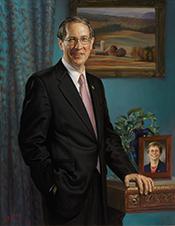
Mr. Speaker, I rise in strong support of House Concurrent Resolution 230, expressing the sense of the Congress that the Russian Federation must protect intellectual property rights. As co-chairman of…
Mr. Speaker, I rise in strong support of House Concurrent Resolution 230, expressing the sense of the Congress that the Russian Federation must protect intellectual property rights.
As co-chairman of the Congressional International Anti-piracy Caucus, I am very concerned about the appalling levels of copyright piracy in Russia. Russia's copyright piracy problem is among the most serious in the world, and it is getting worse. In Russia, 80 percent of all motion pictures and 87 percent of business software are pirated. I have personally witnessed pirated American copyrighted works, movies, music and software, sold openly on the streets in Moscow, even in view of the Kremlin.
Considering that the core copyright industries account for 6 percent of the U.S. gross domestic product and the total copyright industries account for approximately 12 percent of U.S. GDP, it is clear that America's businesses are facing a serious problem in Russia. In fact, the FBI estimates that U.S. businesses lose between $200 and $250 billion a year worldwide to counterfeit goods.
We must make sure that each nation recognizes that piracy is a global problem. The growth of piracy among organized crime rings is illustrative of its global scope.
The combination of enormous profits and practically nonexistent punishments by many foreign governments makes copyright piracy an attractive cash cow for organized crime syndicates. Often specializing in optical disks and business software piracy, these crime rings are capable of coordinating multi-million dollar efforts across multiple national borders. Russia has become one of the largest producers and distributors of illegal media material, and the increasing number of optical disk plants in Russia has a production capacity that far exceeds Russian demand for copyrighted works.
Another disturbing trend is the growing willingness of foreign governments to condone the use of, and even use, pirated materials. At its best, government sets the standards for the protection of rights. At its worst, government encourages and even participates in the breach of those rights.
By recent Russian government accounts, 16 optical disk plants are on Russian State (owned) Restricted Access Regime Enterprises where regular law enforcement is prohibited from visiting. In addition, corruption in Russia's justice system results in the routine dismissal of piracy complaints or inadequate and non-deterrent sentences.
We all must realize that copyright piracy and counterfeiting are serious problems that do not merely affect private companies' bottom lines in the short term. They also discourage investment and innovation in the long term which will eventually lead to fewer consumer choices, a repercussion that affects entire societies and economies. Government must work together to reward creators and punish thieves.
In addition, counterfeit goods can pose serious risk of bodily harm and even death. The U.S. Chamber of Commerce estimates that trade in counterfeit goods makes up between 6 and 9 percent of all world trade. With products as essential as airplane parts and car brakes being faked, we must focus attention on this growing problem for the sake of our citizens' safety.
In passing House Concurrent Resolution 230 today, we send a clear signal to the Russian Federation we will not stand idly by while our copyrights are infringed. The Russian Federation must make fighting copyright piracy a priority for the country and law enforcement authorities. And, if Russia's accession to the World Trade Organization is to be approved by Congress, Russia must make meaningful progress against piracy now.
I urge my colleagues to join me in voting for this important resolution. I commend the gentleman and gentlewoman from California on this issue.
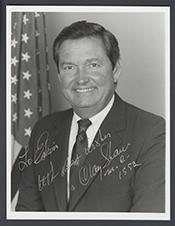
Mr. Speaker, I move to suspend the rules and agree to the concurrent resolution (H. Con. Res. 230) expressing the sense of the Congress that the Russian Federation must protect intellectual property…
Mr. Speaker, I move to suspend the rules and agree to the concurrent resolution (H. Con. Res. 230) expressing the sense of the Congress that the Russian Federation must protect intellectual property rights.
Mr. Speaker, I yield myself such time as I may consume.
Today I rise in strong support for H. Con. Res. 230. I commend the gentleman from California (Mr. Issa) for sponsoring this resolution and focusing congressional attention on this issue.
Russia's copyright piracy problem ranks with China as the two most serious in the world, and it appears to be
getting worse. Russia has become one of the world's largest producers and distributors of illegal compact discs and DVDs. Russia has the capacity to produce more than 20 million compact discs a month, providing ample supply of pirated material for export all over the world. Not only is the Russian Government failing to crack down on piracy, but officials even admit that several illegal plants are on Russian Government-owned classified sites where regular law enforcement is prohibited from visiting.
Intellectual property rights protection is critical to the United States economic competitiveness. According to the United States trade representative, Russia's failure to enforce IPR has ``caused substantial losses for the United States copyright, trademark, and patent industries in the last year,'' estimated by the U.S. copyright industry to amount to $1.7 billion in losses in 2004 alone.
Russia must understand that failure to adequately protect and enforce intellectual property rights will have political and economic ramifications. Specifically, Russia risks losing its eligibility to participate in the Generalized System of Preferences program, under which the United States provides unilateral duty-free treatment to imports from developing countries to encourage economic growth. In addition, it must ensure that intellectual property is securely protected in law and in practice as part of its effort to accede to the World Trade Organization.
I urge Russia to take immediate and effective steps to properly inspect all optical media production facilities and to shut down illegal plants and Internet sites, strengthen border enforcement, combat piracy and counterfeiting, and address deficiencies in its IPR laws.
I urge my colleagues to vote ``yes'' on H. Con. Res. 230 to tell Russia that it must be a responsible and dependable player in the international marketplace.
Mr. Speaker, I reserve the balance of my time.
Mr. Speaker, I yield such time as he may consume to the gentleman from California (Mr. Issa), the author of this resolution.
Mr. Speaker, I yield 4 minutes to the gentleman from Virginia (Mr. Goodlatte), the chairman of the Committee on Agriculture.
Mr. Speaker, I yield 3 minutes to the gentleman from Texas (Mr. Gohmert).
Mr. Speaker, I want to compliment Ms. Watson and Mr. Issa for bringing this most important resolution to the floor in a very fine, but too often rare, bipartisan effort. I urge all Members to vote for it.
In the last 25 years, our relationship with Russia has warmed up considerably and we are enjoying good relations with the Russian Federation. However, to extend this into full trade, we need to be able to respect each other's intellectual property rights. Therefore, I ask for a ``yes'' vote on this resolution, and I hope the Russian Federation is listening to the United States Congress.
Mr. Speaker, I yield back the balance of my time.
Mr. Speaker, on that I demand the yeas and nays.
Mr. Speaker, I ask unanimous consent that all Members may have 5 legislative days within which to revise and extend their remarks and include extraneous material on the subject of the resolution under consideration.
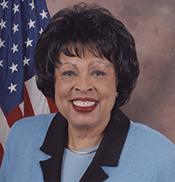
Mr. Speaker, I rise in strong support of the resolution that I coauthored with the gentleman from California (Mr. Issa). It expresses the sense of Congress that the Russian Federation must do more to…
Mr. Speaker, I rise in strong support of the resolution that I coauthored with the gentleman from California (Mr. Issa). It expresses the sense of Congress that the Russian Federation must do more to protect intellectual property or risk losing its participation in the generalized system of preferences and be prevented from joining the World Trade Organization.
I want to thank my colleague, the gentleman from California (Mr. Issa), for his hard work in crafting this most-needed resolution and for being such a strong voice on the global protection of intellectual property assets. The resolution came about, as he described, after a trip that we took with other members of the International Relations Committee to Russia in May of this year.
During the trip, we learned firsthand the extent of the IP piracy problem in Russia which has reached epidemic levels, second only to China in the world. Indeed, the U.S. copyright industry lost over $1.7 billion last year due to Russian piracy and over $6 billion in the last 5 years, and the situation is getting worse.
When we visited in May, the number of optical disk plants was 36. Now it is 42 with a production capacity that far exceeds Russia's demand for CDs and DVDs. Even by recent Russian government accounts, 16 of these plants are the Russian State (owned) Restricted Access Regime Enterprises where regular law enforcement officials are prohibited from visiting. Such information is truly disturbing.
I represent Hollywood, California, the center of the U.S. copyright and creative industry. My constituents inform me that because of corruption, inefficiency and ineptitude in Russia's justice system, U.S. industry complaints have been routinely dismissed. The few sentences that have been handed down are wholly inadequate and non- deterrent.
I fear that, unless Russia substantially improves IPR law and enforcement practices, Russian participation in the world trade system should be restricted.
This is the reason why I introduced this along with Mr. Issa to condition Russia's accession to the World Trade Organization on the Russian government's demonstrated commitment in meeting its international obligations and protecting intellectual property rights.
We understand that to curb the proliferation of IPR violations in Russia, it is not enough to focus on how many laws are passed by the Duma and how many raids on optical disk plants are being conducted each year. We have to generate a sense of urgency and motivate the political will of the Russian government.
Simply put, a healthy and vibrant global trade market should not tolerate the ongoing systemic piracy of intellectual assets, and the Russian political establishment must understand that. I am pleased to note that over 100 Members of Congress have cosponsored this resolution. It will send a clear and convincing message that the United States Congress is looking at the issue closely and that real reform must happen now. Once again, I want to thank the congressman for his leadership on this issue. I urge my colleagues to support this critical resolution.
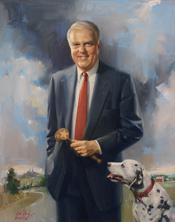
Mr. Chairman, I yield myself as much time as I may consume. Mr. Chairman, I rise in opposition to H.R. 1065, the United States Boxing Commission Act. This is a big government bill that creates a new…
Mr. Chairman, I yield myself as much time as I may consume.
Mr. Chairman, I rise in opposition to H.R. 1065, the United States Boxing Commission Act. This is a big government bill that creates a new Federal agency that provides for more regulation and is not self- financing as has been intimated.
The top of page 13 of the Energy and Commerce Committee's report uses a CBO estimate that says: ``Assuming appropriation of the necessary amounts, CBO estimates that implementing H.R. 1065 would cost $5 million in 2006 and $26 million over the 2006-2010 period.''
That means that we are adding $26 million to the deficit to regulate one sport. That is not right. The Judiciary Committee received the sequential referral of this bill to consider several provisions within the legislation. The Judiciary Committee has long been involved in issues relating to professional sports, including oversight of the U.S. Olympic Committee, Major League Baseball, and the NCAA.
Many are concerned and have raised serious questions about the commercial and legal aspects within the sport of professional boxing. As a result, some have urged the creation of a Federal boxing commission to regulate this sport. The legislation would accomplish that goal.
Although the creation of the U.S. Boxing Commission itself does not fall within the jurisdiction of the Judiciary Committee, significant provisions relating to title 18 of the U.S. Code, which is the criminal code, and the authority of the Attorney General and the commission's executive director are within the committee's purview.
During the markup of this bill, the Judiciary Committee adopted a technical change to ensure that the use of administrative subpoenas comports with existing title 18 provisions. Additionally, as amended by the committee, the legislation will now allow a designee of the Attorney General to represent the commission in judicial proceedings rather than requiring the Attorney General himself to do so. Finally, the Judiciary Committee amendment removed the authority of the commission's executive director to make unilateral determinations regarding violations of this act or to bring action in Federal court. This means that such determinations will be required to be made by the full commission before action can be taken.
Although these Judiciary Committee amendments improved the legislation, the committee reported the bill with no recommendation, no recommendation, as a result of the concerns of many Members on both sides of the aisle regarding the underlying merits of the legislation. I share these concerns and do not support the goal of the legislation.
Notwithstanding the fact that there are well-founded concerns surrounding the support of boxing, I believe that the creation of a boxing commission is unnecessary and urge my colleagues to oppose this legislation.
Mr. Chairman, I reserve the balance of my time.
Mr. Chairman, I yield such time as he may consume to the gentleman from Nebraska (Mr. Terry).
Mr. Chairman, I yield back the balance of my time.
Mr. Chairman, this legislation may seem a bit esoteric to some not only in Congress here but in the public at large. But this issue, and I want to commend you and the ranking member for bringing it…
Mr. Chairman, this legislation may seem a bit esoteric to some not only in Congress here but in the public at large. But this issue, and I want to commend you and the ranking member for bringing it to our attention, this legislation could not be more crucial in terms of what our national responsibilities are.
Boxing and some of the so-called sports that are now associated with physical contact, things called the extreme sports, are interstate in nature, almost by definition. And because they are interstate, without regulation or oversight by the Congress, that means that many of the people associated with, in particular in this instance, the boxers, are in a sense victimized by our failure to take this up as a national question.
The stories may be instructive that are associated with boxing and boxing history. They may be even redemptive in terms of our contemplation of them: People struggling up from the bottom of the economic and social scale, sometimes tragic in nature in terms of those that have succeeded, and then are undone by success. For example, it is well known that the great heavyweight challenger Joe Louis Barrow was considered not only a great champion and a great personality, but was associated in many people's minds symbolically with being able to rise above race to be a symbol for brotherhood, someone who sacrificed financially for the United States by joining the Army during the war. And his reward was to be persecuted by the Internal Revenue Service for not paying taxes on purses and funds that he earned during that period of time. As a result, it had tragic dimensions for him in later life.
These kinds of stories can be replicated over and over again throughout the history of boxing. So what we have right now is the opportunity, Mr. Chairman, for us to put together a commission that will deal with some of the fundamental issues within the purview of the Congress in terms of interstate regulation.
This has to do with health care and the capacity to see to it that anybody engaged in boxing has access to and provision for health care and for pensions for that time when they have to retire. There is no reason why a percentage of every purse cannot be put into some kind of fund that will guarantee a pension and access to a pension for those engaged in boxing.
We have had great champions in Hawaii. Everyone has a story in this regard, Stan Harrington and Bobo Olson, some of the folks that I had an opportunity to know, and some of our champions right now, and potential champions in Hawaii and elsewhere across the country. I ask that everyone give us a chance to move this legislation along so we can complete the opportunity that is before us.
Mr. Speaker, I yield myself such time as I may consume. Mr. Speaker, I am pleased that we are considering this resolution today. I am deeply concerned by Russia's failure to effectively confront…
Mr. Speaker, I yield myself such time as I may consume.
Mr. Speaker, I am pleased that we are considering this resolution today. I am deeply concerned by Russia's failure to effectively confront piracy of DVDs, music, and software. Last year, U.S. companies lost $1.7 billion as a result of Russia's failure to crack down on piracy.
This is not a new problem. Each year since 1997, the administration has cited Russia in its annual Special 301 Report for failing to adequately protect and enforce intellectual property rights; and, unfortunately the problem is getting worse rather than better.
In 2004, Russia's illegal optical disc production capacity continued to increase so much so that Russia is now supplying other countries with pirated products. Pirated discs produced in Russia have been found in more than 27 countries. The largest commercial Web site of pirated music is also based in Russia, and the Russian prosecutors have refused to initiate a criminal investigation to shut it down.
Mr. Speaker, piracy of intellectual property in Russia means lost jobs and opportunities here at home for American workers and businesses, and it must be stopped. I believe that Congress must send a strong message to Russia that the United States will not stand by while Russia robs U.S. workers and businesses of their intellectual property.
The resolution we are considering today would put Russia on notice that it risks losing its preferential trade benefits under the GSP program if it fails to improve its protection of intellectual property rights. The resolution also would put Russia on notice that Congress takes its intellectual property rights violations seriously and will consider whether Russia is making meaningful progress on this issue when we consider whether to grant Russia Permanent Normal Trade Relations status.
I urge my colleagues to join us in supporting this important legislation.
Mr. Speaker, I reserve the balance of my time.
Mr. Speaker, I yield 5 minutes to the gentlewoman from California (Ms. Watson), the co-author of the resolution.
Mr. Speaker, I urge my colleagues to support this very important resolution, and I yield back the balance of my time.
Mr. Chairman, I thank the gentleman from Wisconsin for yielding me this time. I rise in opposition to this bill, and I first want to say that the gentleman from Florida is my chairman. I am a part of…
Mr. Chairman, I thank the gentleman from Wisconsin for yielding me this time.
I rise in opposition to this bill, and I first want to say that the gentleman from Florida is my chairman. I am a part of his subcommittee and really respect and appreciate his efforts on this bill. We have just drawn different conclusions.
I think the fundamental question that we have to ask about this bill is whether or not boxing, professional boxing, and that is what we are here to talk about is professional boxing, is worth creating another bureaucracy within the Department of Commerce. No matter how we cloak this, it is creating a new entity of rules and regulation, enforcement within the Department of Commerce to oversee a professional sport, although I will say ``professional sport'' with quotations around it.
Where we have professional sports, all of the professional sports have their own regulatory body where they themselves have gotten together and formed, like the Mayflower Compact, their own regulatory or government overseeing body with their own rules and regulations within that body. To my knowledge, boxing is the only sport that has come before Congress asking us to save the sport from itself.
We held several hearings on this within our committee and subcommittee. We had several big-name people from the sport, Muhammad Ali, commissioners from around the State, promoters. All testified to the corruptness of professional boxing, and I asked the witnesses before us at one of our panels, I said, if professional boxing wants to eliminate any semblance of legitimacy, make themselves in essence the wrestling of that sport, why should we care? They came back and said, Well, because we have to. We cannot, in essence, get our own act together; and it is for the health of the boxers. That is why if it is for the health of the boxers, I suggested that we should just ban professional boxing. I offered an amendment and withdrew it.
But the issue to me is if the boxing profession wants to make itself irrelevant as a legitimate professional sport, let us give them that opportunity to do so. Let us not create a new Federal bureaucracy to save themselves from themselves.
Mr. Speaker, I want to commend the chairman, the full committee chairman, and my cosponsor of this bill, Congresswoman Watson. We traveled to Russia earlier this year. We saw firsthand that it is not…
Mr. Speaker, I want to commend the chairman, the full committee chairman, and my cosponsor of this bill, Congresswoman Watson.
We traveled to Russia earlier this year. We saw firsthand that it is not just about piracy; it is about a complete absence of a willingness to enforce that. On the main streets of Moscow, in fact, within sight of Red Square, one can every day see advertisements for movies, DVDs of movies that have not yet been released, impossible to exist, literally not existing in the United States; and yet they exist in Russia, already translated into Russian and, yes, as the chairman said earlier, into many other languages and exported around the world.
The Russians admit that they have more than four times as many optical disk producers as they could possibly justify. And although we often talk about DVDs and music, we also need to recognize that Microsoft and other major software producers are being robbed of countless billions in this process.
Many talk of the WTO accession and whether or not it is appropriate for Russia to be granted that, and I certainly agree it needs to be withheld until there is a showing of a willingness and a proven track record of enforcing these laws.
But I want to make one other closing remark here. We pay, we the world pay world-class prices for oil no matter where we buy it in the world, and today that is $60 a barrel. Russia is one of the largest exporters of oil to Western Europe; and yet in a time when they are receiving $60 a barrel on what costs them less than $2 a barrel to get out of the ground, they will tell you they cannot afford the intellectual property produced by Neil Diamond, Steven Spielberg or from Bill Gates' company. This is disingenuous.
Mr. Speaker, if they want to be part of a World Trading Organization, they have to recognize that value is not determined by what you are willing to pay; value is determined by what you are willing to pay for the legitimate goods in an arm's length relationship. We pay world- class prices for oil. They should pay world-class prices for intellectual property and not literally steal it from the inventors here in America and in Europe.
Show 3 more

Mr. Speaker, I want to thank my colleagues from California for pushing this forward. The abuses of intellectual property are not only harmful economically, but they can be harmful to our physical…
Mr. Speaker, I want to thank my colleagues from California for pushing this forward.
The abuses of intellectual property are not only harmful economically, but they can be harmful to our physical well-being and safety, and not just here but also in the Russian Federation.
When Russian companies steal products that are patented, copyrighted or trademarked, but they do not adhere to the proper safety standard such as electrical wiring, car parts and hair driers, consumers can be physically harmed. So there are really two prongs why we must urge Russia to shape up their intellectual property enforcement.
First, because of the harm to our creators and artists; and, second, to the threats to safety since oftentimes the goods that infringe are substandard.
Copyright piracy abroad hurts our economy here and the high-tech industry, since it is such a strong driving force behind our economy, piracy stifles its growth and productivity. Copyright holders should be protected to ensure that we continue to innovate and advance technology both at home and abroad.
Local industries have been crippled when high-quality pirated versions of their products are sold abroad. This can also result in lost tax revenues and lost jobs here at home. The Russian Federation must also work to protect and enforce intellectual property rights for its own good as well.
For example, if the intellectual property rights that encourage innovation and invention are not protected, incentives will be lost, the innovations and inventions will cease; therefore, the Russian Federation as well as the rest of the world will lose out on these life-enhancing innovations.
Nonenforcement of intellectual property rights because of either neglect or greed will figuratively as well as literally kill the goose that is laying the life-enhancing golden eggs.
Mr. Chairman, I offer an amendment. Mr. Chairman, I ask unanimous consent that the amendment be modified by the modification at the desk. Mr. Chairman, I yield myself such time as I may consume. Mr.…
Mr. Chairman, I offer an amendment.
Mr. Chairman, I ask unanimous consent that the amendment be modified by the modification at the desk.
Mr. Chairman, I yield myself such time as I may consume.
Mr. Chairman, the sport of boxing is an amusement. It is a luxury often costing participants hundreds of dollars to attend a single prize fight.
In a time when we are searching for ways to fund necessities, we should not expose the taxpayer to a left hook and the possibility of paying millions of dollars to clean up corruption of a highly profitable business that estimates are brings in a billion dollars a year.
I commend the gentleman from Florida for working with me to ensure that taxpayers keep their guard up to prevent them from sharing the burden of paying for this commission.
I am still uncomfortable with the prospect of the Federal Government serving directly as the referee for licensing and regulating commercial sports.
Other professional sports, baseball, football, hockey, basketball all have their own governing body to thwart the problems now faced by the professional boxing industry.
However, if it must be done, then we must ensure that the costs fall on those that have generated the need for regulation and who benefit the most from boxing industry's revenues.
I believe my amendment will ensure this commission will be funded exclusively by licensing fees on the boxing industry participants and not from appropriations of general funds.
I ask my colleagues to support this amendment to hold the boxing industry accountable to pay for its own regulation.
Mr. Chairman, I yield 2 minutes to the gentleman from Florida (Mr. Stearns).
Mr. Chairman, I yield back the balance of my time.
I ask unanimous consent the Committee on Foreign Relations be discharged from further consideration of H. Con. Res. 230, and the resolution be referred to the Committee on Finance. I ask unanimous…
I ask unanimous consent the Committee on Foreign Relations be discharged from further consideration of H. Con. Res. 230, and the resolution be referred to the Committee on Finance.
I ask unanimous consent that the Committee on Finance be discharged and the Senate proceed to the immediate consideration of H. Con. Res. 230.
I ask unanimous consent the resolution be agreed to, the preamble be agreed to, and the motion to reconsider be laid upon the table.
Bill Text
5 versions available
        [Congressional Bills 109th Congress]
[From the U.S. Government Publishing Office]
[H. Con. Res. 230 Enrolled Bill (ENR)]

H.Con.Res.230
Agreed to December 22, 2005

One Hundred Ninth Congress

of the

United States of America

AT THE FIRST SESSION

Begun and held at the City of Washington on Tuesday,
the fourth day of January, two thousand and five

Concurrent Resolution

Whereas the protection of intellectual property is critical to the
Nation's economic competitiveness in the 21st century;

Whereas Russia remains on the Special 301 Priority Watch List compiled
by the United States Trade Representative (USTR), and the Congress is
gravely concerned about the failure of the Russian Federation to live
up to international standards in the protection of intellectual
property rights, a core American asset;

Whereas the Congress wants to ensure that the Russian Federation
redoubles its efforts to adopt and enforce aggressive laws, policies,
and practices in the fight against piracy and counterfeiting;

Whereas the Congress is particularly concerned that the Russian
Federation is, in the words of Senate Concurrent Resolution 28, a
place where ``piracy that is open and notorious is permitted to
operate without meaningful hindrance from the government'';

Whereas, according to USTR, enforcement of intellectual property rights
in Russia ``remains weak and caused substantial losses for the U.S.
copyright, trademark, and patent industries in the last year. Piracy
in all copyright sectors continues unabated, and the U.S. copyright
industry estimated losses of $1.7 billion in 2004.'';

Whereas the Russian Federation must understand that failure to
adequately protect and enforce intellectual property rights will have
political and economic ramifications for its relationship with the
United States;

Whereas accession to the World Trade Organization (WTO) represents an
agreement to conform one's practices to the rule of law, and to
international standards in the WTO Agreement on Trade Related Aspects
of Intellectual Property Rights (TRIPS);

Whereas notwithstanding some recent legislative improvements, Russia's
regime to protect intellectual property rights does not conform with
TRIPS standards;

Whereas the United States can ill afford deterioration of the world
trading system by permitting the entry of a country into the WTO that
has not demonstrated its willingness and ability to conform its
practices to the requirements of the TRIPS; and

Whereas the leaders of the G-8, including President Putin of the
Russian Federation, recently pledged to reduce intellectual property
piracy through more effective enforcement: Now, therefore, be it
Resolved by the House of Representatives (the Senate concurring),
That it is the sense of the Congress that--
(1) the Russian Federation should provide adequate and
effective protection of intellectual property rights, or it risks
losing its eligibility to participate in the Generalized System of
Preferences (GSP) program; and
(2) as part of its effort to accede to the World Trade
Organization, the Russian Federation must ensure that intellectual
property is securely protected in law and in practice, by
demonstrating that the country is willing and able to meet its
international obligations in this respect.
Attest:

Clerk of the House of Representatives.

Attest:

Secretary of the Senate.