Requiring the President to submit to Congress a plan for the withdrawal of United States Armed Forces from Iraq, and for other purposes.
Legislative Activity
Stay on top of the latest movement without scrolling through every action
Sponsor introductory remarks on measure. (CR E1260)
June 23, 2006
View full timeline
Introduced in House
October 25, 2005
Sponsor introductory remarks on measure. (CR H9077-9078)
October 25, 2005
Referred to the House Committee on International Relations.
October 25, 2005
Sponsor introductory remarks on measure. (CR E1260)
June 23, 2006
Floor Debate
23 membersWhat members said about H.J.Res. 70 on the floor
 JPM
JPM JL
JL HJH
HJH DRO
DRO IS+18
IS+18
Floor Debate
23 membersWhat members said about H.J.Res. 70 on the floor
Mr. Speaker, I ask unanimous consent that the time allocated by House Resolution 868 to the ranking minority members of four committees instead be controlled by the minority leader or her designees.…
Mr. Speaker, I ask unanimous consent that the time allocated by House Resolution 868 to the ranking minority members of four committees instead be controlled by the minority leader or her designees.
Mr. Speaker, I yield to the gentleman from Missouri.
Mr. Speaker, I yield myself 30 minutes.
All of us know, all of us understand stability in Iraq is important, not only to the United States but to the world.
It is no secret that Iraq is of particular importance because of its oil. The United States consumes 20.6 billion barrels of oil per day. Yet we produce only 5.1 billion barrels of oil a day. China is the second largest consumer, with 6.9 million barrels per day, and they produce 3.6 million barrels per day. Iraq has the fourth largest oil reserve in the world. Saudi Arabia is number one, Canada number two and Iran number three. So all of us agree Iraq is important. But how do we get to a conclusion?
Let me compare Gulf War I with Gulf War II. In Gulf War I, Kuwait was attacked by Saddam Hussein. It was a brutal attack. President Bush I immediately reacted. He sent his emissary, Secretary Cheney, to Saudi Arabia. They got an agreement from Saudi Arabia to use their land to put troops in. He immediately sent in the Airborne Division, and he immediately sent in F-16 fighters to deter Saddam Hussein. All of us knew that there was a possibility at that time that he would have complete control of the oil in the Middle East. So we knew how important it was.
Then President Bush started calling up the Reserves. He called a number of Members of Congress over to the White House, and he consulted and talked to them. I do not remember if the gentleman from Illinois was there, but there were seven or eight of us went to the White House. We talked to him about calling up the Reserves and having other people pay.
This is important not only to the United States. This is important internationally. This oil supply, this stability in the Middle East is important to the whole world, and he went to work. He called every major nation. He called Egypt, and this was no easy task for these countries to come around to decide to support the United States.
Matter of fact, President Mubarak said to me that King Hussein came to him and said if you support the United States, you will cut the throat of Saddam Hussein, and yet Egypt decided that they were going to go along with us.
Then he talked about that we needed to have a U.N. resolution, which we did have. Then we had to have a resolution in the Congress of the United States. But the big thing that he promoted was he got a coalition together, and this coalition ended up with 400,000 American troops and 160,000 coalition troops.
And I remember during this debate, I remember calling Secretary Cheney, calling General Scowcroft saying, you have got 250,000 troops over there, you don't need any more. Let's get this war going. And General Scowcroft said something I have never forgotten. He said, we are going to give General Schwarzkopf whatever he wants. He wants more troops, we are going to give him more troops. And Secretary Cheney called me and said we are going to have to send another 180,000 troops. We are going to have overwhelming force when we go into Kuwait.
And they did have overwhelming force. It went on for 6 months. The troops were out in the field, they trained, and when they went in they did a magnificent thing. It was overwhelming. And it was paid for by other countries. Sixty billion dollars came from other countries. President Bush I convinced other countries that they had to help pay for this because it was not only important to the United States, it was important to them, the stability in the Middle East.
Now, let me talk about the second Gulf War. The second Gulf War we had intelligence that said there were weapons of mass destruction; there was an al Qaeda connection. I believed that. As a matter of fact, I listened to the reports, and I was hesitant about the al Qaeda connection, but I believed that they had biological weapons. Matter of fact, a week or so before the war started, Ms. Pelosi, as the new minority leader, wanted to go overseas on her first trip. She wanted to visit the troops. Even though she had been against the resolution to go to war, she wanted to tell the troops she supported the troops. And anybody that votes for the Defense Subcommittee appropriations, anybody that belongs to the Armed Services Committee shows their support of the troops.
So we went over, and on our way over we stopped in Turkey. Imagine, the 4th Division was sitting outside Turkey. It was supposed to outflank the Iraqis. And the State Department asked me, okay, talk to the Turkish government about letting us go through. Now, we had the most modern division, the most technologically advanced division in the whole world sitting there off Turkey. I talked to them and I became convinced they weren't going to let us go through, even though they had voted the very day I was there, and they voted by a majority, but not the supermajority they needed to allow the United States to go through.
I went then to Kuwait and we listened to the commanders. The commanders told us that there is a red line drawn around Baghdad and if we cross the red line they are going to use biological weapons. And I believed that. I believed. As a matter of fact, they said if you cross this red line, we have already verified this by monitoring their telephones, by monitoring their cell phones. When we monitored cell phones of Saddam Hussein's headquarters they said use biological weapons. The troops believed it. They were prepared. They felt like they could go in there with protective gear, they could go in there with what they needed and the hot air, the winds, would dissipate the weapons. And, of course, they crossed the red line and nothing happened.
But I still thought there were weapons of mass destruction. I still thought there were biological weapons. I came back and we sent a team over there.
And the team went over and the team looked for those weapons of mass destruction. Matter of fact, at first a fella named Kay, that was so strong about it, former CIA, said, we will find them. And he looked for months and couldn't find anything at all. Absolutely no evidence of any kind of weapons of mass destruction. No biological weapon, no capability, no nuclear capability, no al Qaeda connection.
When we go to war, we should go to war, first of all, if it is a threat to our national security. It was a threat to our national security when you talk about the first war, because it destabilized and he would have controlled all the oil in the Middle East, which is so important to the free world. The second time was no threat to our national security. Now, we didn't find that out, those of us who voted for it, didn't find this out until after we had gone to war.
The second thing is you go with overwhelming force. I talked to one of the commanders who was in a meeting with five officials; there was him, there was Secretary Rumsfeld, there was Secretary Wolfowitz, General Pace, and General Myers. And he said we recommended 350,000 troops. And as you know, they gave him a lot less troops than that. The coalition troops at the most were up to 30,000 and now they are down to 20,000.
The first war, 160,000. And the first war was all paid for. It cost us $5 billion. The reason I remember this so vividly is I was chairman of the committee at the time the money came through our committee, and we then sent it over, reprogrammed it over to the Defense Department itself. But the discrepancy that we have seen, the mischaracterization, the optimistic predictions are the problems that I have had.
Now, I sent a letter, with Duncan Hunter and a number of other people, and I said to the President, we need 100,000 more troops. Well, the President decided he didn't need 100,000 more troops. Now, imagine this, we are on the ground and we have won the war. The troops did a magnificent job, as we knew they would, but they completely miscalculated the problems that we were going to have afterwards.
Now, I talked to a tribal leader the other day in Anbar Province. He told me that, as far as he saw, the first 6 months we had occupied Anbar. Now, Anbar is the province we are having the most trouble right now. It is where Ramadi and Fallujah are. Those are the areas where there is the most contention. In the first 6 months there wasn't a shot fired. Not a shot fired. I said, let me ask you right now, what kind of progress have we made economically? No water, no electricity, no jobs in Anbar Province. Two million people.
And we talk about Saddam Hussein. Almost 900,000 people left when Saddam Hussein was there. They left the country as refugees. The time we have been there 900,000 people have left the country. They voted with their feet. The President went in the other day, he says he was glad to see democracy in action. You know where he went? The same place I go, in the fortress. In the Green Zone. That is where he went. They are afraid to go outside the Green Zone.
When I first went there, the first two or three trips I went, I could go anyplace. I drove around all over Iraq. The last time I landed at Baghdad Airport, they flew me to Anbar Province down in Haditha, and we flew so low because of the threat we had to come up over the wires in order to get down, and I didn't see a person the whole time. There were 2 million people in Anbar Province. Not one project. Not one.
I said on the floor of the House the most important thing in that first supplemental, in the $87 billion, was the $18 billion that went for reconstruction. And of course there are so many projects that haven't been finished. Now, after we sent the letter about the 100,000, and during that period of time, we asked a fella named Hamre, who was the former Under Secretary of Defense, who went over to Iraq and he did a study for the Defense Department. He came back and said, you have got 3 to 6 months to get this straightened out.
And what did he suggest had to be done? They weren't big projects. He suggested we had to have trash picked up, sewage taken care of, electricity, and jobs. Those are the kinds of things he talked about, and securing the border. Those are the things he said had to be done in 3 to 6 months, and if it is not done, it will go the other way. And all of us know what has happened. All of us know what has happened with the insurgency.
Now, let me go through why I get so distressed by the reports that I get about how well it is going. First of all, the number of daily attacks in Iraq have gone from in 2004, daily, 53 attacks in 2004, 70 attacks in 2005, and in 2006, 90 attacks a day.
Estimated size of the insurgency. Now, we are supposed to be making progress. That is what we hear. The estimated size of the insurgency in 2004 was 15,000. In May of 2005 it was 16,000. In May of 2006 it was 20,000.
This is the way I measure whether there is progress or not progress.
The amount of cash paid to families, this is an important point, to Iraqi civilians killed or maimed by the operation involving American troops went from in 2004, $5 million to $20 million.
Now, what does that mean? The problem is that all of us want to solve the problem, all of us want to have a satisfactory answer in Iraq. The problem is the way we have to operate as a military. The reason we won the first Gulf War is we were fighting a conventional force and we wiped them out. Nobody can match our military. They are the best in the world. But now we are fighting a guerilla war, and that is the type of problem that we have.
For instance, we went into Fallujah, we put 300,000 people outside their homes and only 100,000 have come back now. And when we put 300,000 people outside their home, every one of those are an enemy.
Abu Ghraib. Why did Abu Ghraib happen? Abu Ghraib happened because we had insufficient forces and untrained people and unsupervised people in that prison.
Now, what do I mean by untrained? We had one fella, who happened to be from my district, that had a court order against him because he had abused his family, and he couldn't carry a gun in Pennsylvania. And he said, I can't do this. This is against my nature. I don't know anything about taking care of prisoners. He is now in jail. But the point is he was untrained in that particular job, and even though he told them, they put him in the job. And of course we know the tremendous consequence, at the very time we went into Fallujah, at the very time we put 300,000 people outside their home.
And listen, I endorse this. I know we have to have, when we go into an area, we have to use overwhelming force. That is the way the military has to operate. But, you see, these payments from $5 million in 2004 to $20 million last year, that is because when we go into a place we kill them inadvertently. And when we kill people inadvertently we make enemies, and Abu Ghraib was the biggest public relations disaster we had since My Lai during the Vietnam War.
The number of complete or reconstructed projects, as I said, in al Anbar Province, imagine now, this is one-third of the geography of Iraq, and they have 2 million people, zero. Zero. Number of civilians who died in Baghdad last month, 1,400, in sectarian violence. What is the definition of sectarian violence? A civil war.
All of us want to end this thing. All of us want to find a way to prevail in Iraq. This is a civil war and we are caught in a civil war. There is less than a thousand al Qaeda in Iraq. They have diminished al Qaeda. But we are caught in this civil war between 100,000 Shiias and 20,000 Sunnis fighting with each other.
The average monthly U.S. war expenditure in Iraq: $4.4 billion in 2003, $5 billion in 2004, $6.1 billion in 2005, and $8 billion. The average monthly expenditure, $8 billion. Now, think what I am saying. The first Gulf War, and Duncan Hunter remembers this, they paid internationally. We paid $5 billion. He was on the Armed Services Committee. He knows what I am talking about. We paid $5 billion and they paid $60 billion. They had 160,000 troops in the first Gulf War.
Now, let me talk about the sentiment and talk about the polls taken. We all look at the polls to see what is going on. Now, the only poll taken of U.S. forces in Iraq, about 3\1/2\ months ago: 72 percent of the American troops serving in Iraq think the U.S. should exit the country within a year.
Now, I can understand that. Let me tell you, it is hot, they are wearing 70 pounds every day when they are out there in the field, and I can certainly understand that. Forty-two percent say they do not know what the mission is. And that is devastating when they do not understand the mission.
A public opinion Iraqi poll, a segment of 18 provinces, all 18 provinces: More than half the Iraqis say they are headed in the wrong direction, and 82 percent say the economic situation is either poor or fair. Now, these are the Iraqis. Ninety percent say the security situation is poor or fair.
And who do they trust? Who do they trust for personal security? Forty-three percent trust the Iraqi police, 35 percent trust the Iraqi army, 6 percent trust the insurgents, 6 percent trust the insurgents, 4 percent trust the armed militia, and 1 percent, 1 percent trust the multinational force. In another poll taken at the beginning of this year, 47 percent approve the attacks on the United States forces, and 87 percent of the Iraqis endorse a timetable for withdrawal.
Our global image couldn't have been higher after the first Gulf War, with 80 to 90 percent of the people in the world thinking the United States did a marvelous job. We had recovered from Vietnam, finally, in the first Gulf War.
Ten of 14 countries polled said the war in Iraq has made the world more dangerous, and most of the countries rated the U.S. troops in Iraq a bigger danger to world peace than the threat posed by Iran. Britain, France, Germany, Spain, Russia, Egypt, Indonesia, Pakistan, Jordan, and Turkey all have more favorable ratings of China than the U.S.
Now, this resolution is a restatement of the failed policy of this administration, and it is no surprise that that is what this is.
We can't win this. This cannot be won rhetorically. We cannot sit here, stand here in an air-conditioned office and say we support the troops, say we support the policy.
I visit the hospitals every week, and the only person to visit them more than I do is Bill Young and his wife. I see these young people. I am so impressed by their determination, and I am so hopeful we can end this terrible tragedy.
When I got into this 6 months ago, I got into it because of the troops and because of the fact that I felt we couldn't do anything more militarily. We had done everything we could do militarily, and, second, because of the future of the military.
The bill we are going to pass next week, and very few people are going to vote against it, if you want to really support the troops, that is what you vote for. You vote for that legislation. That will say we will run out of money for personnel for the troops because we cut $4 billion out of the base bill by September. We will take care of that. We will find a way to do it. But the point is the base bill was cut by $4 billion.
Now let me tell you the difference in what I believe is the answer. I believe we redeploy and be ready; that is what I say. I say redeploy and be ready.
We are the targets. We are causing the problem. You know who wants us to stay in Iraq right now, the al Qaeda wants us there because it recruits people for them. China wants us there. North Korea wants us there. Russia wants us there. We are depleting our resources, just like Russia depleted their resources in Afghanistan. The same thing is happening with the United States. We will have spent $450 billion by the end of this fiscal year. Now think, the first gulf war we spent $5 billion. We have spent $450 billion.
Stay and we will pay, not only pay in dollars, in money; we are going to pay long term.
I figure it took us through the Reagan administration to pay for the Vietnam War. We had 18 to 21 percent interest rates during the Reagan administration, and the reason we did was because Lyndon Johnson, the President of the United States, said we can have butter and we can have guns, and he didn't raise the taxes he should have raised when we had the war going on.
So we continue to pay with lives lost in terms of financial treasure and more than $8 billion a month. We pay in terms of international reputation. We pay in terms of the future of our military. We stay and pay. I say redeploy and be ready.
Let me tell this one last story.
When I came out of Vietnam, they gave me this small bullet. It is a 45 caliber without any powder in it. It says: ``First Marines, everything is going to be all right.''
A month after I came out of Vietnam in 1967, Lyndon Johnson said, and I believed in the Vietnam War. I thought we were fighting communism. But Lyndon Johnson said, and they had an election, one month after I came out of Vietnam, everything was going to be all right. Do you know how many people we lost from 1967 until we pulled out? 37,000.
Rhetoric does not answer the problem. Only the Iraqis can solve the problem in Iraq. They are fighting with each other, and our troops are caught in between. I say it is time to redeploy and be ready.
Mr. Speaker, I yield myself 2 minutes.
Let me comment on a couple of things the distinguished gentleman from Illinois said.
He talks about early exit. This war has gone on, Mr. Chairman, this war has gone on longer than the Korean War. It has gone on longer than World War I, and it has gone almost as long as the European War.
If I believed we were making progress, we can't win this militarily. What I am saying is to redeploy, to get our troops out of harm's way is the key. I see no progress at all in this operation. I see the opposite.
When I see, you talk about al Qaeda being encouraged by what we say. Al Qaeda has gone from 15,000 to 20,000. Incidents have gone from 50 a day to 90 a day. That is the thing that worries me. And we are not making progress. We are losing progress.
I yield 10 minutes to the gentleman from Missouri (Mr. Skelton).
Announcement by the Speaker Pro Tempore
Mr. Speaker, I yield myself 2 minutes.
Mr. Speaker, I believe we send them a message when we vote on the armed services bill. Very few people voted against it. I believe we voted, in the defense subcommittee of appropriations, only 15 or 16 people voted against it. But Theodore Roosevelt said, ``If you disagree with a policy and you do not say anything, you are actually treasonous.''
I disagree with the policy. I do not disagree with supporting the troops. There is no one that supports the troops better than the Members of this Congress. And that is shown by the few people that vote against the bill.
One other thing: I think the gentleman made a mistake when he said we are for the war, against the war on terror. We are actually fighting for the war on terror is what we are doing. But I appreciate what the gentleman is saying.
I appreciate the fact that he and I both asked for more troops at one point. He was the lead sponsor at that particular time.
I recognize the gentleman from California for 13 minutes.
Mr. Speaker, I yield myself 1 minute.
This all sounds good. It is all rhetoric. It is rhetoric. The number of daily attacks in Iraq have gone from 2004, 53 attacks per day; May 2005, 70 attacks per day; May 2006, 90 attacks per day. Electricity is less than prewar level. No water available to all, only 1 hour a day, Mr. Speaker, and the oil production which was supposed to pay for the war is less than prewar production.
Mr. Speaker, I yield 3 minutes to the gentleman from California (Mr. George Miller).
(Mr. GEORGE MILLER of California asked and was given permission to revise and extend his remarks.)
I yield myself 1 minute.
One of the Members said, ask Spain about the threat. Fifty-six percent of the population of Spain believes the U.S. in Iraq is the most dangerous threat to world peace. They rank Iran lesser of a threat than the United States.
And one other thing. When we look back at the intelligence cuts, President Bush I felt it was a peace dividend and started to cut the intelligence budget years ago. So we have to make sure we don't let our rhetoric get ahead of the facts.
I yield 4 minutes to the gentleman from Illinois (Mr. Emanuel).
Mr. Speaker, I yield myself 2 minutes.
This is rhetoric. It is not getting better. I spoke out November 17, and things have gotten worse than it was 6 months ago. They are worse today than they were then.
When I left Vietnam in August of 1967, they gave me this bullet, and they said in this bullet that everything is going to be all right. The President of the United States said we just had an election, and we have a new election in Vietnam, and this was a month after I got out of Vietnam, and everything is going to be all right. We lost 37,000 people.
It is not a matter of whether we want to prevail in this operation, it is a matter of how we are going to do it, and I disagree with the way we do it. I disagree with the policy. That is what I disagree with. I think our troops have become the targets. Incidents have increased every day, and more Americans are being killed every day. And we are going to pay a heavy price in people being killed and also we are going to pay a heavy price for the individuals in the future with the debt increasing at $8 billion a month.
I yield 4 minutes to the gentlewoman from Connecticut (Ms. DeLauro).
Mr. Speaker, I yield myself 2 minutes. I was in Beirut the day after the attack, and I recommended to President Reagan, I recommended to the President of the United States, get out of Beirut because we didn't have enough troops; 2 months later he got out of Beirut because he didn't have enough troops.
I know what rhetoric is, and I know what fighting on the front lines are. I know the difference between them. I know that standing here does not solve the problem, and it has gotten better, it has gotten worse. That's the problem. And you are not talking about Iraq. The gentleman up there was talking about the war on terror. I am talking about Iraq. That's what I am talking about.
Mr. Speaker, I recognize the gentleman from South Carolina (Mr. Clyburn) for 4 minutes.
Mr. Speaker, I yield myself 1 minute.
The problem is that the opposite is happening. That is the problem we have. We can stand here and say we want to fight the terrorists in Iraq. Actually, al Qaeda we think is less than 1,000.
We think we are caught in a civil war. It is the way that we are doing it. The military cannot win this war. The military commanders, even General Pace admits we cannot win this militarily.
What we are caught in, we have become the target of the insurgency of the sectarian violence. It is the way that we are doing it is what I disagree with.
Mr. Speaker, I yield 4 minutes to the gentleman from Connecticut (Mr. Larson).
Mr. Speaker, I recognize the gentlewoman from California (Ms. Harman) for 30 minutes.
Mr. Speaker, I ask unanimous consent that the gentlewoman from California control the 30 minutes and yield to people.
Mr. Chairman, I yield myself such time as I might consume. The legislative branch bill, Mr. Chairman, provides for $2.870 billion, an increase of only 1.7 percent over the fiscal year 2005. The bill…
Mr. Chairman, I yield myself such time as I might consume.
The legislative branch bill, Mr. Chairman, provides for $2.870 billion, an increase of only 1.7 percent over the fiscal year 2005. The bill represents a $270 million reduction from the budget request.
Mr. Chairman, although we did not agree on every item on this bill, we worked very closely with the gentleman from Wisconsin (Mr. Obey) to produce a bipartisan bill for the legislative branch. I want to thank all the committee members for their contributions in putting this bill together.
While small in size, this is the bill that funds the work of the Congress, and it is a bill that we all can be very proud of.
The bill includes funding for the operations of the House and several joint items, the Capitol Police, the Compliance Board, the Congressional Budget Office, the Architect of the Capitol, the Library of Congress, the Government Printing Office, the General Accountability Office, and the Open World Leadership Program.
There will be no reductions in the current workforce.
The bill provides for all personnel cost-of-living increases and all other pay-related costs.
The bill also was reported out of the full committee on a voice vote.
The Capitol Visitor Center is funded at the cost-to-complete level of $36.9 million. The bill does not include funding for CVC operating expenses.
The bill establishes an Inspector General for the Capitol Police. The bill terminates the mounted horse unit and transfers the horses and equipment to the U.S. Park Service.
As part of an amendment in the full committee, I offered, and the committee adopted, the Continuity in Representation Act at the Speaker's request. This bill has passed the House twice, and just recently, the vote in March was 329 to 68.
Mr. Chairman, this is a good bill and one that benefits the entire legislative branch. Ultimately, this is the bill that reflects the work of the House. We are all in this together, Mr. Chairman, and because of that, I feel very strongly that this legislation should have the support of the entire House.
[GRAPHIC] [TIFF OMITTED] TH22JN05.001
[GRAPHIC] [TIFF OMITTED] TH22JN05.002
[GRAPHIC] [TIFF OMITTED] TH22JN05.003
[GRAPHIC] [TIFF OMITTED] TH22JN05.004
Mr. Chairman, I reserve the balance of my time.
Mr. Chairman, I yield 7 minutes to the gentleman from Illinois (Mr. LaHood).
(Mr. LaHOOD asked and was given permission to revise and extend his remarks.)
I appreciate very much the gentleman having this colloquy with me and raising this important issue. As we have discussed, the smoking policy in the House office buildings is under the jurisdiction of the House Office Building Commission. That commission is made up of leaders on both sides of the aisle; and, frankly, I am very hesitant to interfere with their responsibility or their work. But I think it is very important that the gentleman is raising this issue today, and I am happy to have this discussion with him.
I would be very happy to join with the gentleman in that discussion. I think I probably will discuss it with my wife as well; but in the meantime, you and I work together on the committee, and I am happy to work with you on almost any issue you might raise.
Mr. Chairman, I am happy to yield 2 minutes to the gentleman from Pennsylvania (Mr. Peterson).
Mr. Chairman, I yield 3\1/2\ minutes to the gentleman from Georgia (Mr. Price).
If the gentleman will yield, I would be pleased to do so.
Mr. Chairman, let me tell the gentleman that I am very appreciative of his interest in the institution's history. As he is aware, the Speaker controls the placement of plaques on the House side of the Capitol. Their placement is very restricted, and we attempt to achieve recognition of events and places normally through other means.
The Capitol Visitors Center is being designed to provide our visitors with a much fuller understanding and history of the House and Senate. Included in the CVC is a 16,000 square-foot exhibit hall. In this exhibit hall, the architectural and legislative history of the institution are highlighted.
As part of the currently proposed CVC exhibits are detailed sections on the history of the Capitol and included in this is the fact that when the Capitol was originally built, it was used for more than legislative meetings. It was commonly used as the community center for the citizens of Washington, D.C. During that time, there were few places for meetings or church services. Thus, it is correct that such religious services were held here.
All these facts are included in the CVC exhibits, and I would encourage that the education of citizens be pursued in this venue so that a more complete history beyond a plaque can be presented.
There have been, and I very much appreciate the gentleman's interest in this matter. He and I will be pursuing it as we go forward in the months and, indeed, the years ahead.
Mr. Chairman, I yield 1 minute to the gentleman from California (Mr. Rohrabacher).
Mr. Chairman, will the gentleman yield?
Mr. Chairman, I must say I understand the points that the gentleman is making. I believe he has a constitutional amendment that proposes an alternative approach. I must say the Speaker has been most concerned, and he asked me to put this in this bill, because a constitutional amendment takes so long to accomplish. We could be out there for Lord knows how long if it is ever accomplished. In the meantime, he has a proposal that will go forward and will be altered significantly as we go forward in order to expedite the process. That is what the Speaker is asking us to do here.
Mr. Chairman, if the gentleman would yield further, he does have a constitutional amendment proposed. He knows how long and how risky constitutional proposals are. They hardly ever happen. And, therefore, the Speaker wants to make sure this proposal goes forward, and that is what we are suggesting.
Mr. Chairman, I yield 3 minutes to the gentleman from Florida (Mr. Mica).
Mr. Chairman, I yield 5 minutes to the gentleman from Georgia (Mr. Kingston).
Mr. Chairman, I rise to yield time to the gentleman from California (Mr. Dreier); but before doing so, I just want to mention that the previous speaker had a constitutional amendment regarding the issue of continuity in the last Congress, and on that constitutional amendment the vote was 63 yeas and 353 nays. To say the least, the constitutional approach is difficult.
Mr. Chairman, I am glad to yield 3 minutes to the gentleman from California (Mr. Dreier).
Mr. Chairman, I yield myself the balance of the time.
Mr. Chairman, it was not my intention to speak in these closing moments.
I yield to the gentleman from Wisconsin.
Mr. Chairman, reclaiming my time, I think it is important for the public to know that all of us are concerned about continuity of government in the event of a tragedy. We certainly would not be having this discussion if it had not been for 9/11.
But, indeed, there are differences in the approach that one might take. Some prefer a constitutional amendment; and yet we have tried that on more than one occasion. We have had the debate, and very few in this House have supported that proposition. So the Speaker has asked us to go forward with an idea that will be worked on carefully between now and the time we finish our work with the Senate.
But from that point forward, let me talk a bit about the Capitol Visitors Center. My colleague, the gentleman from Wisconsin (Mr. Obey), and I, early on in this Congress, were not active supporters of a CVC. But, indeed, his leadership and my leadership, at a higher pay grade, made a different decision; so we are carrying forward their work in this process.
I have looked at the visitors center very carefully. It is rather a fabulous addition to the Capitol, the greatest addition that has been made in this century, I believe. Indeed, within the mix of that, while I might change some things, I prefer not to suggest what the details ought to be that the Architect moves forward with. I am critical of the Architect; but in the meantime, I am not one. Therefore, we are going to add this major change whereby visitors can enter the Capitol, and it will have a very significant piece of our future history in the Capitol complex. It is going to be a fabulous addition. Indeed, it will be a very high-quality addition that we will all be proud of, but I think it would be a mistake for me to try to be the architect between now and then.
So with that, Mr. Chairman, this has been a very interesting debate about the work of the people's House. I am very happy to participate in this with my friend, the gentleman from Wisconsin (Mr. Obey).
Mr. Chairman, I yield back the balance of my time.
Mr. Chairman, I rise to claim the time in opposition to the amendment, and I ask unanimous consent that the gentleman from Wisconsin (Mr. Obey) control 2\1/2\ minutes of that time.
Mr. Chairman, I yield myself such time as I may consume.
Mr. Chairman, I consider myself to be a horse person. As a matter of fact, at one time in my life I thought I might be a veterinarian because I loved horses and ducks so much. In the meantime, I watch them parade around the Capitol, and I have wondered from time to time about their relative value. The GAO has cited that the Capitol Police have difficulty quantifying the benefit the unit provides. GAO was not able to substantiate the claim of one horse doing the work of 10 people.
I do not see how the elimination of five horses is going to impact the patrol. We have scout cars, motorcycles, and mountain bikes all patrolling the same area. The real point is here I was concerned about the horses myself, but when the staff came up with the thought that perhaps we could transfer them to the Park Service and make sure they are well taken care of and used for meaningful activity, I felt very comfortable with this change. So, frankly, I think we ought to proceed with the language that is in the bill.
Mr. Chairman, I reserve the balance of my time.
Mr. Chairman, I yield myself such time as I may consume.
I found one other reason to love the gentlewoman from Virginia (Mrs. Jo Ann Davis). Her caring for horses as much as I do is a thrill to me. The problem is I have studied this material
and cannot find that this is the best way to use our funding, especially when these horses will have a new home where they might be used more effectively.
Mr. Chairman, I yield the balance of my time to the gentleman from Illinois (Mr. LaHood).
Mr. Chairman, I rise to claim the time in opposition to the amendment.
Mr. Chairman, I ask unanimous consent to yield 2\1/2\ minutes of that time to the gentleman from Wisconsin (Mr. Obey) for purposes of control.
Mr. Chairman, I yield myself such time as I may consume.
Mr. Chairman, the fiscal year 2006 appropriations has been held at the fiscal year 2005 level. This is a decrease of $2.5 million below the 2004 level.
The Record is distributed in accordance with title 44, chapter 9 of the U.S. Code; and within that there are 3,000 copies that go to Members, of the House and Senate, 153 copies to the Library of Congress, et cetera. I can provide the balance of this in the Record.
3,018 copies to Members, House 1,479 copies, Senate 1,539 copies; 153 copies to the Library of Congress; 754 copies to public agencies and institutions designated by Senators; 698 copies to Federal agencies that pay for the copies; 521 copies to subsribers who pay for the copies; 692 copies to Federal Depository libraries nationwide.
I would say to the gentleman from Wisconsin (Mr. Obey), that it is my feeling that an amendment like this where people are kind of reacting to the Congressional Record, et cetera, will likely pass overwhelmingly. And if I am correct in that, I would be inclined for us to stand back in this discussion, if the gentleman agrees with me, and perhaps discuss this further as we go to conference.
What would be the gentleman's reaction to that?
And I do as well.
Reclaiming my time, the gentleman is always a gentleman.
Mr. Chairman, I reserve the balance of my time.
Mr. Chairman, I yield 1 minute to the gentleman from Virginia (Mr. Moran).
Mr. Chairman, I reserve the balance of my time.
Mr. Chairman, I yield myself such time as I might consume.
Mr. Chairman, since 1999 we have appropriated over $170 million to the Capitol Police specifically for security enhancement. In addition, we have provided $84 million for the Architect for perimeter security. In addition to the $2,345,000 provided in this bill for general expenses, the Capitol Police have $32,653,000 in unobligated balances, for a total of almost $62 million.
This $2 million amendment is interesting, but the police, in this instance, do not need an additional $2 million, and because of that, I strongly oppose the amendment.
Mr. Chairman, I reserve the balance of my time.
Mr. Chairman, I urge a ``no'' vote, and I yield back the balance of my time.
Mr. Chairman, I yield myself such time as I may consume.
I appreciate very much my colleague's comments. Mr. Chairman, during the markup of this bill, we pared down the total requests considerably from roughly $3 billion to $2.8 billion, a 9 percent reduction from the requested amount.
The bill is currently only 1.7 percent over fiscal year 2005. This increase barely sustains services. It provides for cost-of-living increases, some inflationary items, and a minimal number of projects to keep our buildings and grounds in reasonably good order.
A further reduction of 1 percent will adversely impact the operation of the legislative branch during the fiscal year ahead.
The amendment would reduce the total bill to a level that is less than 1 percent over current services.
The reduction will severely impair the ability of the House and legislative branch agencies to provide the full cost-of-living increases for all of our employees.
This is a good bill that has received balanced consideration. It is nice to say we will cut 1 percent across the board, but frankly, that is really not the way to legislate, and because of that, I strongly oppose the gentleman's amendment.
Mr. Chairman, I yield the balance of my time to the gentleman from Wisconsin (Mr. Obey), my colleague.
Mr. Speaker, by way of suggesting that the leadership on both sides of the aisle made the decision about building our visitors center and that process has gone forward, and many a fit and start, but nonetheless it is going to be the largest expansion of the Capitol in modern time. It is going to be a fabulous visitors center when it is all completed.
The gentleman from Wisconsin (Mr. Obey) and I have been on the other side of that issue in the past; but, nonetheless, like the visitors center, the Speaker has suggested we include the continuity of government item in this package. That too is at a pay grade that is above mine, and I feel very strongly we should have some mechanism to make certain that in times of a real tragedy the House can get its work done.
Mr. Speaker, pursuant to the rule, I call up the resolution (H. Res. 861) declaring that the United States will prevail in the Global War on Terror, the struggle to protect freedom from the terrorist…
Mr. Speaker, pursuant to the rule, I call up the resolution (H. Res. 861) declaring that the United States will prevail in the Global War on Terror, the struggle to protect freedom from the terrorist adversary, and ask for its immediate consideration.
Mr. Speaker, I ask unanimous consent that all Members may have 5 legislative days in which to revise and extend their remarks on H. Res. 861.
Mr. Speaker, I yield to the gentleman from Illinois, the Speaker of the House (Mr. Hastert).
Mr. Speaker, I yield myself such time as I may consume.
Mr. Speaker, I can't help but comment on my good friend Mr. Murtha's eulogy for the first gulf war. The problem we have had there is we quit too soon. We quit before the victory was secure. We left the Republican Army, we left Saddam Hussein, we just washed our hands and left. I hope we learned a lesson from that, what a mistake it was and it led to later difficulties.
Mr. Speaker, so much of what we do in this Chamber is inconsequential; but the subject of this debate is anything but trivial. Let us then be serious as life and death are serious.
The capacity to reproduce that fearful mushroom cloud which first terrorized the world in 1945 is multiplying and becoming the deadly plaything of rogue nations across the globe.
Partisans have charged the President with misleading us into war, ``misleading'' being a pale euphemism for lying. The acquisition is made more grave by the assertion that he concocted the war for purely political purposes.
By any measure this is a monstrous charge, but questions persist that must be answered if we are to honestly examine the President's rationale for intervention. It is essential to first understand the context in which the decision was made.
President Bush has cited two factors for his decision to intervene in Iraq: the first, his belief that Saddam was reconstituting his arsenal of weapons of mass destruction; and, secondly, that the Iraqi dictator was cooperating with al Qaeda and other terrorist organizations.
The threat from Saddam Hussein stretches back much further than many of today's critics care to remember. Saddam's effort to develop a nuclear weapon began in the 1970s, centered around the nuclear reactor being constructed at Osirak.
Despite the alarming evidence of its purpose, the world casually contemplated what it saw as a distant, perhaps even benign, development.
But the luxury of inaction was not available to Israel because her leaders knew that the country was certain to be among Saddam's first targets. They also knew that the responsibility for Israel's safety was theirs alone, and that the world would do nothing to save their country if they failed to act.
So act they did, launching a bold attack in 1981, destroying the reactor complex and setting Saddam's nuclear quest back many years. But far from praising this heroic act that benefited humanity, the world community responded with condemnation, even outrage. Yet, in hindsight, is anyone so foolish as to assert that Israel should have waited for the United Nations to confirm that a threat existed, that Israel should not have taken action to destroy the reactor, even in defiance of the international community?
Had Israel not acted, the future of the Middle East and the West would likely have unfolded quite differently and far more tragically.
Unchastened by this setback, Saddam continued his aggressive campaign to dominate the region and control the world's oil supply, launching a decade-long war against Iran in 1980 during which over a million people were killed and in which he used poison gas and other means of mass slaughter.
After being beaten back from Iran, his attention then turned to Kuwait,
which he invaded and annexed in 1990, assuming the world would meekly accept this fait accompli.
Many forget that for a time that outcome was a real possibility. Much of the initial response in the world community, and in this country, was one of let's look the other way and hope for the best.
Only when the United States decided to forcefully eject Saddam from Kuwait and to assume the principal burden for doing so was the international community finally persuaded to go along. We refused to allow our fate and that of the world to be shaped by a dictator, and all sensible people are glad of it.
What we providentially discovered after that war astonished the entire world. Despite years of inspections and the best efforts of numerous intelligence services, Saddam had managed to secretly construct a massive program to develop nuclear, chemical and biological weapons. The experts estimate that he was only 6 months from an operational nuclear device. Had he postponed his invasion of Kuwait by half a year, the world would now be a much darker place.
This record of unrelenting aggression and implacable menace was the only context in which a reasonable person could view Saddam's future designs. This was the background in which the events of 9/11 occurred.
Imagine yourself as President, confronting the fact that an unknown group of terrorists had incinerated 3,000 Americans in an attack carried out by individuals who gladly committed suicide to create this horror. We had no idea how extensive their resources were, how global the threat was, who were their allies, how massive were the hidden terrorists to come.
In this context, let us consider the alternative to our intervention in Iraq: The President is presented with evidence that once again Saddam Hussein has developing weapons of mass destruction, that he once again refuses to cooperate with international arms inspectors, that he has had contact with al Qaeda and other terrorist organizations, that he is even harboring terrorist organizations. And yet the President decides not to act. He decides to wait, to see if those same inspectors who had previously been deceived by Saddam will again give him a clean bill of health months or years in the future, to wait until our allies or the United Nations grudgingly grant us a narrow warrant to act. To wait until Saddam perhaps gives to some terrorist organization a nuclear, chemical, or biological weapon to detonate in some U.S. city.
To trust our fate to those who would destroy us is to die and leave no descendants.
Is it possible to imagine the storm of condemnation that would justifiably fall on a President who, by not acting, allowed Saddam to arm himself once again with nuclear, chemical or biological weapons? To allow the possibility that these might be made available to a terrorist organization, to acquiesce in the death of thousands, tens of thousands, perhaps of millions of Americans simply because the available evidence was not 99 percent, no, 100 percent certain?
For if al Qaeda had had a nuclear device, there can be no doubt it would have used it on 9/11 and we would be mourning the death of 3 million Americans, not a tragic 3,000.
Which then was the greater risk in the face of decades of evidence? To act or not to act? To trust Saddam? Who in this body is willing to assert that it is ever wise, that it is ever moral to risk the destruction of the American people? That is the context in which the decision to intervene in Iraq was taken.
Was our intelligence imperfect? In retrospect, that is obvious. But when is it ever perfect? Nor was this shortcoming uniquely ours. Every intelligence service in the world assumed that Saddam was once again engaged in developing weapons of mass destruction. After the invasion, we learned the astonishing fact that even Saddam's own generals believed he possessed them and was prepared to use them.
It is certainly worth noting that among the shrillest voices condemning our intelligence failure are many who once devoted their efforts to weakening our intelligence capabilities, who employed their energies towards imposing restrictions, cutting budgets, sounding alarms about imaginary ``rogue elephants.''
Permit me to quote from some of the most strident critics of this administration and its campaign against the terrorists.
The first is a United States Senator now serving with great distinction in the other body. And on September 23, 2001, 12 days after the events of 9/11 this Senator stated: ``The tragedy is at this moment that the single most important weapon for the United States of America is intelligence.
``We are weakest, frankly, in that particular area. So it is going to take us time to be able to build up here to do this properly.'' You will find that on CBS's Face the Nation, September 23, 2001.
But this same Senator, in 1995, introduced a bill, S. 1290, that would have reduced the intelligence budget by $300 million in each of the fiscal years, 1996, 1997, 1998, 1999 and 2000.
Then we have a gentlewoman serving with distinction in this body, from sunny California, and in 1998 she stated, ``it is time to totally eliminate the CIA.'' Congressional Record, March 18, 1997.
On several occasions in the 1990s, following the collapse of the Soviet empire, a majority of Democrats in the House voted to cut the U.S. intelligence budget. Yet, following the horrific events of September 11, the chorus of voices that had previously advocated reducing our intelligence capabilities quickly reversed their theme. Even they must thank God that they had been unsuccessful in their efforts. But on this subject we hear nothing but deafening silence.
One inescapable lesson of history is that passivity in the face of a threat is an invitation to strike. The desire to run away only encourages pursuit. We are seeing that fatal approach gather strength elsewhere in the world manifested in efforts to bind the hands of those who would attack terrorism at its source. The hope is that, as with the passing of a storm, the threat will move on and blue skies reappear and that the nightmare will at last be over. But the terrible reality is by succumbing to the fear of terrorism, by doing too little in the fear that we are doing too much, we condemn ourselves to a future of unending assaults.
Other countries have learned that, however meager their contribution to their own and the world's security, however ineffectual their actions, in the end the United States will rescue them. We will make the world right again. We will defend against all threats. We, however, no longer have that luxury. If we do not take action to defend ourselves, then we are lost because no one exists to rescue us if we fail.
So, aware of its responsibilities, aware of the horrific consequences that might occur from indecision and a reliance on trust and hope, President Bush acted to remove the threat posed by Saddam. What he did is called leadership. And for doing his duty for all of us, he has been denounced by many of the same people who would have denounced him had he not acted, denounced by people who bear no responsibility, who take no responsibility, even for their own actions.
Saddam is no longer a threat to anyone. That is a salutary lesson for those around the world who watch and wait for opportunities for unopposed aggression. They now know that their invulnerability has vanished. Even more important, and almost entirely unnoticed amid the torrent of criticism focused on President Bush, is that his actions have greatly enhanced the credibility of the United States. For the next time this or any President warns a foreign despot to cease actions we believe are threatening to us, there can be little doubt that we will take decisive and forceful action, no matter how great the opposition of the world community.
No one can credibly question that this greatly enhanced credibility paid off with Libya's decision to abandon its efforts to acquire weapons of mass destruction. Qaddafi understood what President Bush's critics still refuse to acknowledge, that this administration is determined to eliminate threats to our country, both actual and potential, and if necessary, will use force to do so.
That is in sharp contrast to the passivity of the previous administration, whose failure to react to the repeated attacks on the United States only encouraged our enemies to make further attacks. What other conclusion could al Qaeda and others have reached from our baffling inaction and response to their assaults on our embassy, on our military, on us? They were taught the false lesson that they were free to slaughter us and we would do nothing.
Incredibly, senior officials from the administration now shamelessly criticize this President for taking decisive measures to address the threat that they themselves could not be brought to contemplate. By acting first in Afghanistan, and then Iraq to remove Saddam, President Bush has rendered the need for future interventions much less likely.
It is unfortunate that the quest for political advantage and a high decibel partisanship have intruded into the national discussions of how best to address the problems we face in Iraq. But there can be no doubt that the more we appear disunited, and the more voluble our dissent into weakness, dissension and inaction, the greater the aid and comfort we give to our enemies.
The world of predictability and relative safety we once knew is gone. We are now engaged in a cruel, brutal struggle with those who would destroy us, one unprecedented in its challenge to our perseverance and courage, and one that will be fought not just in foreign lands but on our own soil.
To insist that decisions must await perfect intelligence, that the risk of action is to be more feared than the risk of inaction, that others will save us, is to guarantee our defeat. But defeat in this new and more dangerous world means annihilation. The smoking gun that some critics insist on might well be some of our cities.
We in this Chamber, our country, the entire world, owe this President not condemnation but our thanks for acting in Iraq, for refusing to wait for an avowed enemy to strike, for not temporizing and letting the forces of destruction wage unopposed their pitiless war to destroy everything we believe in.
To those faint of heart from temporary setbacks in Iraq or who seek to benefit politically from our differences there, permit me to quote from Thomas Paine. Thomas Paine wrote, ``These are the times that try men's souls. The summer soldier and the sunshine patriot will in this crisis shrink from the service of their country. But he that stands by it now deserves the love and thanks of men and women. Tyranny, like hell, is not easily conquered. Yet, we have this consolation with us, that the harder the conflict, the more glorious the triumph.''
Charles De Gaulle once said, ``France would not be true to herself if she weren't engaged in some great enterprise.'' Our great enterprise is the defense of freedom, and may we be worthy of the challenge.
Mr. Speaker, I reserve the balance of my time.
Mr. Chairman, I yield myself 10 minutes. Mr. Chairman, I know this seems a strange thing to say on a bill as small as the bill to fund the congressional budget, but I honestly believe, because of the…
Mr. Chairman, I yield myself 10 minutes.
Mr. Chairman, I know this seems a strange thing to say on a bill as small as the bill to fund the congressional budget, but I honestly believe, because of the attachment of the proposal for the continuity of Congress, that this bill is by far the worst bill to come to the floor in this session of Congress.
I believe that that continuity of representation provision attached to this bill is an assault on constitutional government. I believe it is an assault on checks and balances. It is an assault on the rule of law. It is an invitation to one-man rule and dictatorship. I think it is profoundly misguided, profoundly misgotten, and I think a profound disservice is done in not having months and months of hearings with constitutional scholars before such a drastic proposal is brought before the House.
I think there is a very good reason that the Senate has not taken it up. It is because it is a turkey of a proposal. It could leave us literally with 75 and 80 percent of the congressional districts in this country unrepresented in a time of crisis, at a time of terrorist attack, and unrepresented in the halls of Congress, and I think that is a bad way to do business.
What I would like to do now is to talk about another problem in this bill. That is the Congressional Visitors Center. I really believe that the Congressional Visitors Center has been mismanaged in such spectacular fashion that it is really sort of a metaphor for the way that the entire Federal budget deficit has been mismanaged, and let me explain what I mean.
This project originally started as a $95 million project to have a modest expansion of the Capitol, to give tourists an opportunity to come in and see a movie about what the Congress was all about before they visited the Capitol. But the security assault on this Capitol and 9/11 has, in my view, been used as an excuse to expand this operation. We have also had other efforts from the Library of Congress and other institutions to further expand this proposition; and so as a result, today, this project is a $500 million-plus project. It is more than a year behind schedule, and I think it is wasting taxpayers' money and wasting an opportunity that we had to provide much-needed usable space for the Congress at the same time.
What is happening out on the East Front is that over 2 acres of underground space is being added to the Capitol. Some of that is being added for purposes of a visitors center and some of the other space is being added for the purpose of expanding space under control of the Senate and the House to do their work.
We all know that this Congress needs more working space. In my view, the number one need of the Congress for working space is the need for additional rooms for conference committees between the Senate and the House because most of our hearings, especially on the Committee on Appropriations. When I came here, they were held behind closed doors. The press was not in, the public was not in. So there was plenty of room for a few people to get behind closed doors and work out deals and that is not the way government is supposed to work today.
Today, when we have a conference committee, the press has a right to be there. We need our staffs there, and the public has the right to be there, too. We have no real room in the Capitol for that kind of facility.
This is an opportunity to create that kind of room. Instead, what has happened? Instead, the only appreciable room of any quality in the new House space is what is called the House hearing room, but in plain language, that room is really a media center. That is going to be where the press focuses whenever there is a hearing in that room because it will have all of the creature comforts for the press. That room will have ample room for one hearing, one presentation, and whoever runs the Congress will be able to decide what subject it is that gets that attention. If you are trying to hold another public hearing on another subject in the Capitol, you are going to be stuck in tiny rooms that are worthless in terms of public access.
When I visited the visitors center, I asked the Architect why, with these vaulted ceilings that you have set aside for this hearing room, why could you not simply reduce the height of those rooms and at least provide two rooms of approximately the same size so that we had enough overflow room for the committees to do our work and to have conference committees? I have yet to get an answer from the Architect's office.
That is my problem. My problem is that with all of this space being created, much of it is not usable for the purpose that we need it used for.
Then we come to the other portion of the add-on, which is the portion devoted to the visitors center. Originally, that visitors center was supposed to have two media theaters so that the public could come in, see a short film about the Congress, and then be on its way.
Here is the problem. We have those two small orientation theaters, but in addition to that, we have this huge congressional auditorium, which is going to seat 450-plus people. I asked the Architect, and this is a vaulted theater, I asked why do we need another theater in the Capitol? What I was told by the Architect is, ``Well, you can bring in large constituency groups.'' I would like to know how many Members of the House have ever brought 500 people into the Capitol. I do not think there are going to be many people would raise their hands.
The second thing the Architect told me is that, ``Well, we need a place for where the House of Representatives can meet when the House Chamber is being remodeled.''
That I found a might strange, because we have just redecorated the Committee on Ways and Means room in the Longworth Building. That room was originally created to serve as an alternative meeting place for the House of Representatives when we had to repair this Chamber. So we have already got a spare room.
In addition, we have another spare room I cannot talk about because it is classified, but it is being built off campus somewhere. So in essence we will have three spare rooms. I do not know how much the off- campus room is costing the taxpayers or how much the Committee on Ways and Means room cost the taxpayers, but this room is going to cost a bundle.
I keep asking ``What is the real purpose for this room?'' You finally go back 10 years and look at the original plans, what do we find out. We find out that this was originally included in the plans at the request of the Library of Congress because they wanted another theater to show movies and give presentations. That might be nice for them to have, but this project is already 400 percent over original cost. I do not think it makes any sense. I think this is the last chance that we are going to have to reconfigure this center so we have some additional working space instead of the Taj Mahal show space we are going to have.
Another thing I do not like, we have been told we are likely to have three congressional seals in the new visitors center. Those seals, I have been told, will cost up to a million bucks. Does any Member really want to take the political heat when taxpayers find out that somebody is talking about spending $1 million on three congressional seals? Do Members remember the Cain that was raised when marble floors were put in four of our elevators in the Capitol? Does anybody have any memory? I would like to think so, but I guess not.
Mr. Chairman, I consider myself to be an institutional man. I usually support this piece of legislation; but out of frustration, I am not going to support it today because I think this Capitol Visitors Center, when it is finally built, is going to draw flies in terms of bad stories about waste of taxpayer money, misuse of space, and we are going to wind up not having enough room for the principal function of government. If this is, indeed, supposed to be a working Capitol, then we ought to be able to do better than this floor plan.
I really believe this package has been brought to us by staff who do not really understand how committees work and do not really understand the principal needs of this institution. This is the last time we are going to have a chance to repair this package and
make it more usable for the 100 years at least that it will be used. I urge Members to vote against this bill so we can start over.
Mr. Chairman, I reserve the balance of my time.
Mr. Chairman, I yield 6 minutes to the gentleman from Virginia (Mr. Moran).
Mr. Chairman, I yield 4 minutes to the gentleman from California (Mr. Rohrabacher).
Mr. Chairman, I yield myself 1 minute.
I want to simply say I congratulate the gentleman from California. I agree with the gentleman from California. I would be perfectly willing to vote for this proposition today if we had a constitutional amendment going at the same time, so that the solution in this bill would be only a temporary solution until we got a real one.
Without the Rohrabacher approach, or something similar, and I happen to prefer the one he introduced in the last Congress, but without something like that, we guarantee that we can have the President governing with literally a handful of people in the Congress. We could have hundreds of districts with no representation whatsoever. That is not continuity. That is chaos. That is martial law. That is one-man rule.
Mr. Chairman, I reserve the balance of my time.
Mr. Chairman, I yield 3 minutes to the distinguished gentleman from Oregon (Mr. Blumenauer).
Mr. Chairman, I yield 3 minutes to the gentleman from Washington (Mr. Baird).
Mr. Chairman, I yield 10 seconds to the gentleman from Washington (Mr. Baird).
Mr. Chairman, I yield myself the balance of the time.
Mr. Chairman, with respect to the Congressional Visitors Center, we are not saying there should not be one; all we are saying is that the one that is being proposed is screwed up and spectacularly wasteful and needs to be changed.
With respect to the assertion of my friend from Illinois that we do not have to worry about not having a Congress for 45 days because there will not be anything for Members of Congress to do, all I can tell my colleague is, if that is the case, then I wonder why it is that the gentleman from Florida (Chairman Bill Young) and I negotiated a $20 billion supplemental appropriation just a few days after 9/11; and I wonder why it is we were sitting in the office of the gentleman from Illinois (Speaker Hastert) until 12:30 at night hammering out differences with people on the Senate side who did not agree with what we had done; and why it is that the President made a commitment of $10 billion to New York; and why we had to spend a lot of time backing him up.
I would also remind the gentleman we had a debate on the House floor when the Committee on Transportation and Infrastructure tried to slip into that bill an extra $10 billion appropriation for the airlines.
There was plenty for us to do after 9/11; and thank God, in contrast to the proposition being set out today, thank God that then we had a Congress around to do it.
If you want to vote for a situation in which we can have no Congress whatsoever for 45 days, then by all means vote for this provision. If you do not, if you think we ought to have some kind of balance and check on the Presidency during that period by having somebody here to do the Nation's business, then my colleagues will reconsider and listen to what the gentleman from California (Mr. Rohrabacher) and the gentleman from Washington (Mr. Baird) have to say.
Mr. Chairman, I yield back the balance of my time.
Mr. Chairman, will the gentleman yield?
Mr. Chairman, just one point. We did that 3 days after 9/ 11, 3 days.
Mr. Chairman, I yield 2\1/2\ minutes to the gentleman from Virginia (Mr. Moran).
If the gentleman will yield, could the gentleman share with us the names of these horses?
My understanding is that their names are Justice, Honor, Patriot, Freedom, and Tribute. Great names, but still not much of a purpose for their use.
Mr. Chairman, I would simply say that passing this amendment will not eliminate the distribution of the Record. It will simply create a financial shortfall which will have to be dealt with in the future. I personally prefer to use the printed Record than I do the online Record.
I do my work in lots of places besides the office, and I do not
use a computer. I use a pencil. So I would just suggest that I think the amendment is outrageous and misbegotten; but if the gentleman wants to accept it, we can deal with it in conference. We will work it out.
Mr. Chairman, if the gentleman is willing to stop talking, I am willing to stop talking. I will vote for whichever side stops talking first.
Mr. Chairman, I yield myself such time as I may consume.
As someone considerably more famous once said, The world will little note nor long remember what we either say or do here today on this matter.
Mr. Chairman, I yield back the balance of my time.
Mr. Chairman, let me simply say that while I am opposed to this bill because I think it wastes too much money on the visitors center, I agree that an across-the-board cut is not a responsible way to approach budgeting. If all of this cut came out of the visitors center, I would vote for it in a flash.
Mr. Speaker, I offer a motion to recommit.
I certainly am, Mr. Speaker.
Mr. Speaker, I ask unanimous consent that the motion to recommit be debatable for 4 minutes equally divided and controlled by the chairman and ranking member of the Committee on Appropriations.
Mr. Speaker, I will only take 1 minute.
This is a straight motion to recommit so that we can fix the out-of- control visitors center, which is as out of control as the Federal deficit. It is also the last chance we will be able to have to remove the assault on constitutional government by removing the nongermane continuity provision, and it also is the last chance to establish a Truman-like committee to investigate waste and fraud in Iraq.
I urge an aye vote. And I will ask for a roll call vote.
Mr. Speaker, I demand a recorded vote.
I thank the gentleman for yielding. Mr. Speaker, the media just reported the sad news that we have just reached a sad milestone: 2,500 Americans have lost their lives in the Iraq war. Mr. Speaker, I…
I thank the gentleman for yielding.
Mr. Speaker, the media just reported the sad news that we have just reached a sad milestone: 2,500 Americans have lost their lives in the Iraq war. Mr. Speaker, I respectfully ask at the outset of this very important debate that the House observe a moment of silence for all those who have given the ultimate sacrifice on behalf of our country.
Mr. Speaker, I appreciate the opportunity to speak on this issue today, this important issue for so many Americans across the country, from my home State of Missouri. So many families such as mine have young people in uniform. But this resolution before us today is not what we requested, nor is it what we were told we would have before us to debate. We expected a resolution confined to the country of Iraq and the conflict there. That is not what the resolution is. This resolution covers the Middle East waterfront, trying to blend together the Iraqi war and the war against terrorism, which has its genesis in Afghanistan.
Mr. Speaker, these are two separate and distinct wars. We did the right thing by going into Afghanistan, toppling the Taliban, which supported and protected the al Qaeda terrorists. And then came along the discussion, the international discussion about Iraq and Saddam Hussein and the weapons of mass destruction.
We made the decision, as a country, to go into Iraq. At that time, Mr. Speaker, knowing the history and the culture of the Middle East, I sent two letters to the President of the United States, one on September 4, 2002, and one on March 18, 2003, before we went into Iraq. My letters warned against the aftermath.
They sent an Assistant Secretary of State and an Assistant Secretary of Defense over to see me and said, ``Ike, it will be all right.''
We know what happened in the aftermath insurgency because we allowed the looting, we sent the Iraqi Army home, rather than give them a paycheck and a shovel, and didn't have enough troops to quell any insurgency. And it arose. And here we are, some 3 years later.
Despite the fact that this resolution is a broad one, let's talk about Iraq, which should be the complete subject of the resolution before us.
Mr. Speaker, this Nation is at a strategic crossroads. We are spending $8 billion a month, over $300 billion on this war. And more strikingly, we are losing, Mr. Speaker, a battalion's worth of casualties killed or injured between Iraq and Afghanistan. By far, most of them are, sadly, in Iraq. And there are increasing insurgent inspired attacks.
Now, what makes this resolution so interesting is the fact that it flies in the face of the law that we passed here in the Congress of the United States and the President signed. The bill, the defense bill of 2005 said this: ``Calendar year 2006 should be a period of significant transition to full Iraqi sovereignty with Iraqi security forces taking the lead for the security of a free and sovereign Iraq, thereby creating conditions for the phased redeployment of the United States forces from Iraq.'' That is the law of our land. That is what the defense bill said last year. ``Thereby creating conditions for the phased redeployment of the United States forces from Iraq.''
What does this mean to us in the long run? Well, farmers in Missouri know that the quality of the corn that they plant will bring about the quality of the corn that grows. And we find ourselves militarily eating our seed corn in the country of Iraq. Sadly, a few moments ago we had a moment of silence for the 2,500th American that sacrificed a life in that sad country. But it means eating up the equipment, and we are using equipment right and left and it is going to take 3 years to refurbish the United States Army if the war would stop today equipment- wise. There are challenges in recruiting and retention. But I have to tell you how proud I am of those young people in uniform today. But if we do not take serious thought about the phraseology that is in the law creating the condition for the phased redeployment of United States forces from Iraq, I think that we may be eating our military seed corn. And what does this mean? It means that the United States of America will be less prepared to either deter or defend an attack that might come at some future date.
This is serious business. We need to remain strong militarily. That is the way you deter problems. Should North Korea, somewhere in Asia, somewhere in Latin America, somewhere in Africa that would cause us to be involved, the question is, Mr. Speaker, would we be prepared militarily to meet that challenge?
That is why it is very important that we do our very best to take seriously the law regarding transition this year, the significant transition.
And what will it take? It will take the Iraqi government to stand up on its own, and it is on its way there, to transfer the security problem and situation to their police force and to their military, and we have some 250,000 Iraqi military either fully trained or nearly fully trained. We have to hand the baton over to them. We as a country, whether militarily or not, cannot determine the fate of Iraq. The Iraqis have to do it themselves, their own government, their own military, and their own police force. We can be of help. We have been of help. We have been there some 3 years. I think it is time for us to seriously look at where we are, where we are going, and do our very best to keep ourselves militarily strong for those days that are bound to happen.
And, Mr. Speaker, let me remind the Members I have been in Congress 29 plus years thanks to those wonderful folks in Missouri. During that time, we have had 10 military confrontations with other countries. History being what it is reflects that, and the future may hold something similar. We hope not. But the question is will we be militarily prepared when the time comes?
The Iraq adventure needs to be looked at in light of the law that we passed last year. The calendar year 2006 should be a period of significant transition to full Iraqi sovereignty with Iraqi security forces taking the lead for the security of a free and sovereign Iraq, thereby creating the conditions for the phased redeployment of United States forces from Iraq. That is the law. That is what the Congress passed. That is what the President signed. And that is where we are.
Mr. Speaker, I will enter into the Record at this point my letters in full to the President, dated September 4, 2002, and March 18, 2003.
Committee on Armed Services,
House of Representatives,
Washington, DC, September 4, 2002.
The President,
The White House,
Washington, DC.
Dear Mr. President: Thank you for inviting me to the
briefing this morning. I share your concern about the
continuing threat posed by Saddam Hussein and his efforts to
produce weapons of mass destruction (WMD). I would like to
offer my assistance as the administration considers how to
deal with this threat.
Before Congress can authorize any military action that
might be part of the administration's plan, we must have
answers to more questions than were able to be raised. at
today's meeting. Our constitutional duty requires us to
ensure that all implications of such action are considered in
advance. The case has not yet been fully made as to what the
threat is, why military force is an appropriate way of
addressing the threat, and why action must occur now. In
short, Congress and the American people must be clear on your
strategic vision before we can authorize a specific course of
action. I believe, like Clausewitz, that in strategy there is
an ``imperative . . . not to take the first step without
considering the last.''
Your strategy for dealing with Iraq must address the
fundamental questions of the threat, the method of acting,
and the timing. Furthermore, any strategy to eliminate Iraqi
WMD must also address several component issues, each of which
raises critical questions.
1. How to manage Iraq's transition to a stable post-Saddam
regime:
As I mentioned to you this morning, this is a crucial
question for administration strategy to answer in advance of
any military action. I have no doubt that our military would
decisively defeat Iraq's forces and remove Saddam. But like
the proverbial dog chasing the car down the road, we must
consider what we would do after we caught it.
As Sun-Tzu said in the classic strategic treatise, The Art
of War, ``To win victory is easy; to preserve its fruits,
difficult.'' Military planners and political leaders alike
knew this in World War II. Planning for the occupation of
Germany and Japan--two economically viable, technologically
sophisticated nations--took place well in advance of the
end of the war. The extreme difficulty of occupying Iraq
with its history of autocratic rule, its balkanized ethnic
tensions, and its isolated economic system argues both for
careful consideration of the benefits and risks of
undertaking military action and for detailed advanced
occupation planning if such military action is approved.
Specifically, your strategy must consider the form of a
replacement regime and take seriously the possibility that
this regime might be rejected by the Iraqi people, leading to
civil unrest and even anarchy. The effort must be to craft a
stable regime that will be geopolitically preferable to
Saddam and will incorporate the disparate interests of all
groups within Iraq--Shi'a, Sunni, and Kurd. We must also plan
now for what to do with members of the Baath party that
continue to support Saddam and with the scientists and
engineers who have expertise born of the Iraqi WMD program.
All these efforts require careful planning and long-term
commitment of manpower and resources. The American people
must be clear about the amount of money and the number of
soldiers that will have to be devoted to this effort for many
years to come.
2. How to ensure the action in Iraq does not undermine
international support for the broader war on terrorism:
In planning for military operations in Iraq, we cannot
ignore the lack of international support to date. Pre-emptive
action against Iraq is currently vocally opposed by many of
our allies and friends throughout the world and particularly
in the Middle East.
When we are seen as acting against the concerns of large
numbers of our friends, it calls into question the ``humble''
approach to international relations you espoused during the
presidential campaign. More than that, it has several
potentially damaging long-term consequences. First, it risks
losing the large number of partners needed to prosecute the
global war on terrorism. To ferret terrorist groups out of
their many hiding places, we must have broad allied support.
Second, it risks seriously damaging U.S. moral legitimacy,
potentially providing states like India and Pakistan with a
preemptive option that could drive long-standing conflicts
beyond containable bounds.
Finally and perhaps most dangerously, actions without broad
Arab support may inflame the sources of terrorism, causing
unrest and anger throughout the Muslim world. This dynamic
will be worse if Iraq attacks Israel--perhaps with weapons of
mass destruction--and draws them into the conflict. Iran,
which has the potential to seize a reformist path, may well
move away from the United States in the face of attacks that
could next be taken against them. Together, these dynamics
will make achieving peace in the Middle East more difficult
and may well provide the rationale for more terrorist attacks
against Americans.
These concerns do not make military action in Iraq
untenable. They do, however, highlight the depth and
importance of the issues to be addressed before we strike. We
need to ensure that in taking out Saddam, we don't win the
battle and lose the war.
3. How to ensure that the United States can execute this
operation successfully as well as its other military
missions:
As you are well aware, Mr. President, the consideration of
military action against Iraq comes at a time when U.S. forces
are actively engaged throughout the world in a range of
missions. Given the operational pressures these forces
currently face, we must ask what the risks and trade-offs
will be of defeating Iraq, particularly if Iraqi forces mass
in Baghdad for urban operations. How many casualties must the
American people be prepared to take in a worst-case scenario?
What will the impact of sustained operations be on so-called
high-demand, low-density assets? What military operations
might we have to forego because of continued demands in Iraq?
Will we still be prepared for the range of other threats that
might emerge throughout the world? With little allied support
and contributions, will we still be able to maintain military
spending on transformational technologies and on sound
quality of life for our forces if we are bearing a huge
wartime cost alone? What will be the impact on the domestic
economy of these resources drains and of the long-term costs
of reconstructing Iraq? These questions must be answered
before any military action commences so that the American
people understand the risks and the sacrifices involved.
I ask these questions only to highlight the complexity of
the undertaking and the need for Congress, the American
people, and our friends around the world to understand
exactly what is at stake and why we must act now. Only such a
comprehensive strategic approach will ensure that we commit
U.S. troops consciously and with full knowledge of the range
of challenges we face--both in the initial campaign and in
the long aftermath to follow. Even a strategy that has
military action as its centerpiece will require great
diplomatic efforts to ensure its success. I look forward to
hearing the administration's answers and to working with you
to find the best course of action.
Sincerely,
Ike Skelton,
Ranking Democrat.
Show 8 more
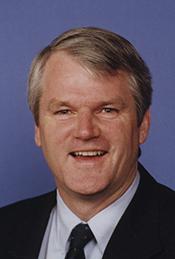
Mr. Chairman, I thank my distinguished colleague, and I appreciate his leadership on this issue. The gentleman from California (Mr. Rohrabacher) spoke eloquently about the need for the Rohrabacher/…
Mr. Chairman, I thank my distinguished colleague, and I appreciate his leadership on this issue. The gentleman from California (Mr. Rohrabacher) spoke eloquently about the need for the Rohrabacher/ Baird amendment; and I would like to address it briefly, if I may.
Madison is quoted on this topic, but let me quote Madison from Federalist 47. He said: ``The accumulation of all powers, legislative, executive, and judiciary in the same hands, whether of one, a few, or many, and whether hereditary, self-appointed, or elected, may justly be pronounced the very definition of tyranny.''
Now, I would like, if I may, to ask my colleagues, before we pass this appropriations bill with legislative language in it alleging to maintain continuity, to maybe address a couple of questions, before my colleagues vote on this, and I will yield time. Not for a filibuster, but just to address some questions.
How will we, given Madison's concern, maintain checks and balances during the 49-day period until we have the special elections? I would be happy to yield 30 seconds to anyone who plans to vote for this bill to address that question.
I yield to the gentleman from Illinois.
Mr. Chairman, reclaiming my time, the fact is this Congress took a number of very important actions, as the distinguished gentleman from Illinois knows, during that same time period. Let me ask this: If what the gentleman is saying is that we are not going to do anything, the executive branch has all the control, then how do we not just define Madison's very definition of tyranny? And if that is the case, are we not with this bill promoting tyranny in this country?
Mr. Chairman, reclaiming my time, I would beg to differ, and the gentleman, I think, is inaccurate historically.
Mr. Chairman, I do not have it on the top of my head, my friend; but I can say that it is much faster than 7 weeks. I would assert, furthermore, that if the gentleman's assertion is that we do not need the United States Congress post a catastrophic attack, I think you are making a mistake and doing a disservice. If that is what you are voting for, then let us be honest with the American public, as apparently the chairman of the Committee on the Judiciary has been.
We are voting with this bill to allow martial law, and I think that is a grave mistake.
Let me continue, if I may, and ask a few other questions. How many millions of Americans are you willing to leave without representation as article I, section 8 responsibility such as declarations of war, appropriations of funds, et cetera, are made? How many millions of Americans is the gentleman willing to leave without representation?
Okay. So we do not have that answer.
Let me ask this question: under the bill, the section that is proposed, I have yet to figure out what happens to this body.
Mr. Chairman, I would suggest that with these questions remaining, we should not be passing this legislation in the manner in which we are. We need a full and open and extensive debate on this.
Mr. Chairman, I offer an amendment.
Mr. Chairman, I yield myself such time as I may consume.
I want to revisit this issue, and I want to clarify a couple of things. The opponents of a real continuity solution have asserted that the gentleman from California (Mr. Rohrabacher) and I would take away the right to election. Nothing could be further from the truth. We believe we need real elections, not hasty elections, not elections in which the candidates are chosen by the party, but elections in which there is time for deliberation, elections in which there is time for overseas people to vote, elections in which we can have real candidates, real debate, real primaries, et cetera.
So we all agree that we should have real elections; that is the ideal. But the question is, should we have a Congress in the interim?
I have heard the chairman of the Committee on the Judiciary point out that in the days post-9/11 it was an elected Congress, not an appointed Congress, that made decisions. He is absolutely right, because we had a Congress. My colleague from Illinois will recall that, in fact, the PATRIOT Act was passed during that 7-week interregnum; and interregnum may be the proper word because if we do not have a Congress, we would have effectively a monarchy or an appointed administration.
Let me raise a couple of other points. Article I, Section 8, of the Constitution, as we all know, details a host of functions of this Congress. I have yet to hear how those functions get carried out during this 7-week period, save for the apparent explanations that the Congress does not have anything to do, and the Constitution Subcommittee chair's explanation that we will have marshal law.
I for one did not run for this seat to bequeath marshal law as our legacy if we are eliminated by terrorists. People on the other side of this argument have said, oh, if we have anything but a direct election, the terrorists have won. I personally consider marshal law a substantial victory for the terrorists, a substantial victory.
Far preferable would be some mechanism in which the terrorists and the rest of the world could see the Congress of the United States reconvening with legitimacy and with distinguished statesmen from both sides of the aisle to conduct the people's business until such time as we had really elections.
It has been argued that we need to do this statutory fix because constitutional amendments take time. Yes, they do. But the Constitution did not say if it is going to take you too long to amend the Constitution, do it by House rule.
At the start of this Congress, the first order of business was to pass the House rules. The second order of business was to pass a rule that was unconstitutional. Sorry. The first order of business was to swear an oath to uphold the Constitution. The second order was to pass a rule that was patently unconstitutional. By that I mean we passed a rule that essentially says a quorum can be one or two people. The first order of business of the first Congress of the United States was to adjourn for lack of a quorum.
Now, the distinguished gentlemen from California (Mr. Dreier) likes to quote Madison. So do I. Madison was present in that first Congress. He was a Member.
He supported movements to adjourn because they lacked a quorum. And yet this body says, well, gee, you know, it takes too long to amend the Constitution, so let us do things unconstitutionally at a time of national crisis.
This is not the way to go about it. The gentleman from Georgia (Mr. Kingston) was right. The gentleman earlier spent some time talking about horse manure. I think we need to spend more time on constitutional issues than we spend on horse manure, but we have not. In this Congress we have spent so much time debating so many things of much less importance, and it is fair enough to say that my amendment did not pass. I respect that. That is what this process is about.
But, here is what you have not said, that myself and the gentleman from California (Mr. Rohrabacher) put forward a rules proposal that would have allowed multiple solutions to this to be debated. Multiple amendments. We could have had a serious and open and extensive debate. I have to tell you, when I talk to my colleagues and I ask them these questions, how many constituents are you willing to leave, how many millions of Americans with no representation at all, no representation, during a time of national crisis; how willing are you to have a Cabinet member serve as President, with no checks and balances, Secretary of Agriculture, Health and Human Services. Most Americans do not even know these folks.
If you are so concerned about elected representation, are you not equally concerned about an unelected President with no checks and balances? I certainly am.
Mr. Chairman, I reserve the balance of my time.
Mr. Chairman, I yield myself the balance of the time.
Mr. Chairman, it is a perverse reasoning that suggests that having no representation here at all somehow provides you better representation than to have someone appointed by the person you last elected.
You are trying to say that we do not have a Democratic Republic if the elected representatives from other States can have a vote equal to someone from your State. I believe the best way to have a Republic is to have representation from all of the constituents.
If that means temporary appointments, so be it. Finally, we have heard so many times one distinguished scholar quoted, and he is indeed a distinguished scholar. But let me point out to the gentleman from California (Mr. Dreier) as he well knows, the bipartisan 9/11 Commission, which included Newt Gingrich, Tom Foley, Alan Simpson, Lloyd Cutler, a host of other scholars, has rejected essentially the proposal by the distinguished gentleman from Wisconsin (Mr. Sensenbrenner), and has concluded with great reluctance that we do indeed need a mechanism to amend the Constitution so that whatever mechanism is arrived at is constitutionally valid.
I would weigh the weight of their testimony and their objectivity and their bipartisanship against one single individual that you continually quote.
Major Votes in the U.S. House of Representatives, September 11-October
26, 2001
September 13, 2001. H.R. 2884, Victims of Terrorism Relief
Act of 2001. The bill exempted individuals killed in the 9/11
terrorist attacks, or who die as a result of injuries
suffered in those attacks, from paying federal income tax in
the year of their death.
September 13, 2001. H.R. 2882, Expedite Public Safety
Office Benefits. This bill directed the Justice Department to
expedite the benefit payment process for the public safety
officers (and their families) that were killed or suffered
catastrophic injuries sustained in the line of duty in
connection with the terrorist attacks of Sept. 11.
September 14, 2001. H.R. 2888, 2001 Emergency Supplemental
Appropriations Act for Recovery from and Response to
Terrorist Attacks on the United States. The bill appropriated
$40 billion in emergency funds to pay for the costs of
recovery from the 9/11 terrorist attacks and to counter,
investigate and prosecute terrorist activities.
September 14, 2001. H.J. RES. 64, Authorization of Force.
The resolution authorized the president to use ``all
necessary and appropriate force against those nations,
organizations, or persons he determines planned, authorized,
committed, or aided the terrorist attacks that occurred on
Sept. 11, 2001.''
September 21, 2001. H.R. 2904, Military Construction
Appropriations for FY 2002. The bill appropriates $10.5
billion for military construction programs in FY 2002.
September 21, 2001. H.R. 2926, Air Transportation Safety
and System Stabilization Act. This bill provided $15 billion
in assistance to the U.S. airline industry to help stabilize
the financial condition of the industry in the wake of the
terrorist attacks on Sept. 11--$5 billion in immediate cash
assistance and $10 billion in loan guarantees.
September 24, 2001. H.J. RES. 65, Continuing Appropriations
for FY 2002.
September 25, 2001. H.R. 2586, Department of Defense
Authorization for Fiscal Year 2002.
September 25, 2001. H.R. 2944, District of Columbia
Appropriations for Fiscal Year 2002.
October 5, 2001. H.R. 2646, Farm Security Act.
October 11, 2001. H.R. 3061, Labor-HHS-Education
Appropriations for Fiscal Year 2002.
October 12, 2001. H.R. 2975, PATRIOT Act.
October 17, 2001. H.R. 3004, Financial Anti-Terrorism Act.
The bill gives the Treasury Department new powers to combat
money laundering by imposing additional record-keeping
requirements and by restricting or banning dealings with
suspect foreign financial entities.
October 17, 2001. H.R. 2904, Military Construction
Appropriations for FY 2002.
October 17, 2001. H.R. 2217, Interior and Related Agencies
Appropriations for FY 2002.
October 23, 2001. H.R. 3160, Bioterrorism Enforcement Act
of 2001. The bill established criminal penalties for the
unsafe or illegal possession or transfer of certain
biological agents and toxins--including anthrax--and it
required the Health and Human Services Department (HHS) to
develop new regulations governing the possession and use of
those substances.
October 24, 2001. H.R. 3090, Tax Incentives for Economic
Recovery. The measure provided business and individual tax
cuts totaling $99.5 billion in 2002 and $159.4 billion over
10 years.
October 24, 2001. H.R. 3162, USA PATRIOT Act Conference
Report.
October 25, 2001. H.J. RES. 70, Continuing Appropriations
for FY 2002.
Mr. Chairman, I demand a recorded vote.

Mr. Chairman, I rise today in support of H.R. 2985 the Legislative Branch Appropriations for fiscal year 2006. However, I find it truly unfortunate that these Appropriations were consistently…
Mr. Chairman, I rise today in support of H.R. 2985 the Legislative Branch Appropriations for fiscal year 2006. However, I find it truly unfortunate that these Appropriations were consistently under-funded because of the tight budget due to the massive tax cuts given to the richest Americans. These Bush Administration tax cuts have created gaps in so many programs and these Legislative Branch Appropriations are no different.
The total funding for this legislation is $2.87 billion which is only 2% more than current levels and $270 million (9%) less than requested by the various legislative offices and agencies. This bill appropriates $1.1 billion for operations of the House of Representatives which is only $13 million (1%) more than current funding and $35 million (3%) less than requested. It is unfortunate that these Appropriations are so tight, when the cost of operating the House of Representatives is in fact getting higher. These costs are becoming higher because the needs of our constituencies are becoming greater. With these unfortunate budget cuts in place it will be our constituents who suffer. Regardless of these cuts, Congress will continue to function properly and we will serve our constituents proudly, but these cuts in our funding undermine our efforts.
In addition to insufficient funding to the House of Representatives, the greatest deficiencies can be found in the legislative branch agencies that directly or indirectly support Congressional operations. This funding is only $32.6 million (2%) more than current levels and a staggering $234.8 million (12%) less than requested. Funding for the Capitol Police, who are entrusted with protecting the Capitol Complex and all those who work and visit here actually received $2 million (1%) less than in FY 2005, and $50.4 million (17%) less than requested in this Appropriation. The Architect of the Capitol who have worked so hard in the last year to make the Capitol Complex more accessible to visitors received only $317.3 million, $16.7 million (6%) more than current funding but a full $123.6 million (28%) less than requested. The Government Printing Office (GPO) which serves the demanding printing needs of hundreds of legislators every year received only $122.6 million which is $2.8 million (2%) more than current funding but $8.5 million (6%) less than requested. Indeed, even the Library of Congress, the resource for Members and staff to conduct research and the institution meant to be our nation's greatest repository of reading materials, even their
funding was cut in this Appropriation. The Library of Congress received $543 million, about equal to the FY 2005 level but $47.8 million (8%) less than requested. It is sad to see these legislative branch agencies, which work so hard and diligently to support the work of Congress, have their funding needs not met. Again, these agencies will continue to support Congress and they will do their jobs well, but these cuts in funding can only lessen their effectiveness.
However, the issue that has me most concerned about this Appropriation is the language of H.R. 841, which would require states to hold special elections within 49 days of the Speaker declaring that more than 100 vacancies exist in the House. First of all, this language has no business being in this Appropriations measure, it clearly legislates on what is supposed to be a spending bill. Truly, the other side of the aisle is trying to sneak in a piece of legislation within this Appropriation in order to force its passage upon the Senate. Furthermore, this language within this bill threatens to weaken the electoral process, to disenfranchise overseas, disabled, and lower- income voters and thereby reduce individual rights. The more expedited the process of replacing the members of the House and the smaller body constituted is, the less legitimacy it will have. Unless the House constitutes members from all 50 States and through a full, fair, and transparent process, this body will lack qualities that make it truly ``representative.''
Despite my objections with certain provisions of this legislation I will vote in favor of this Appropriation because it serves the needs of our Congress. However, I hope that soon our economic and budgeting practices would change so that we are not forced to make so many cuts in vital areas. I also hope that in the future we do not use these Appropriations bills as a way to further our legislative agendas. It is my sincere hope that the institution of Congress, which was made to serve the needs of the people, will continue to be effective no matter the obstacle.
Mr. Chairman, I rise today in strong support of my colleague Mr. Baird's amendment to H.R. 2985 the Legislative Branch Appropriations for fiscal year 2006. The Baird amendment would strike the language of H.R. 841, which would require states to hold special elections within 49 days of the Speaker declaring that more than 100 vacancies exist in the House. First of all, this language has no business being in this Appropriations measure, it clearly legislates on what is supposed to be a spending bill. Truly, the other side of the aisle is trying to sneak in a piece of legislation within this Appropriation in order to force its passage upon the Senate.
Furthermore, this language within this bill threatens to weaken the electoral process, to disenfranchise overseas, disabled, and lower- income voters and thereby reduce individual rights. The more expedited the process of replacing the members of the House and the smaller the body constituted is, the less legitimacy it will have. Unless the House constitutes members from all 50 States and through a full, fair, and transparent process, this body will lack qualities that make it truly ``representative.''
Forty-nine days is simply not enough time for a state to hold the most free and fair elections. Special elections on average, take four months. In the event of a catastrophic disaster, elections should be held on an expedited time schedule. The pillars of what makes American democracy unique, however, should not be toppled in the pursuit to do so. True democracy dictates that every eligible woman or man has the right to run for office and to vote freely and under fair circumstances. Under the guidelines of this language, this would not be possible. Many states would have to forgo party primaries and the system would lend itself to the wealthiest and most well-known candidates' ability to run virtually unopposed. All debate of the candidates' platforms or characters would be nearly muted, and in effect, Americans would vote ``in the blind.''
Significant disenfranchisement will likely occur in the unrealistic time frame that the language of H.R. 841 offers in this Appropriations measure. There would be no way to mail out and receive absentee ballots in time. Overseas Americans, including those in the military, would not have a realistic chance to vote. Yes, the legislation ostensibly offers military and overseas voters an opportunity to be heard, but 15 days simply are not enough. There is something unseemly about denying our men and women of the military the right to vote in the most consequential elections imaginable, when we would be replacing perhaps the entire House. Logistically, many states would not have sufficient time for voter registration. It would be difficult to even print the ballots in the time allotted under this Act. There are only a few ballot printing companies in this country and a limited supply of ballot-appropriate paper stock. In the case of electronic voting, programs must be written, and even under ideal circumstances, not all the technical glitches have been sufficiently worked out to assure voter privacy or the fidelity of the system.
The language of H.R. 841 in this bill proposes to make the issue of state elections a ``federal question.'' However, just because this issue would become federalized does not mean that we should frustrate the essential elements of democracy.The processes of establishing the eligibility of state candidates, voter registration, voter freedom of choice, and equal access to voting under the Civil Rights Act must be preserved--even in the face of a catastrophe. Democracy should not be abandoned simply because our leadership may have to suddenly change.
Clearly, this language does not belong in this Appropriations bill, nor does it serve the best interest of the American people. I urge all my colleagues to support the Baird amendment and remove this improper language from the Legislative Appropriations bill.
Mr. Chairman, I rise today against Mr. Hefley's amendment to H.R. 2985 the Legislative Branch Appropriations for fiscal year 2006, which would reduce this spending bill by 1 percent. The Hefley amendment is inappropriate at this time when funding needs have already been neglected in this Appropriation. Truly, the Committee had difficult decisions to make, but cutting even 1 percent more from this legislation would be a tremendous mistake.
The total funding for this legislation is $2.87 billion which is only 2 percent more than current levels and $270 million (9 percent) less than requested by the various legislative offices and agencies. This bill appropriates $1.1 billion for operations of the House of Representatives which is only $13 million (1 percent) more than current funding and $35 million (3 percent) less than requested. It is unfortunate that these Appropriations are so tight, when the cost of operating the House of Representatives is in fact getting higher. These costs are becoming higher because the needs of our constituencies are becoming greater. If the Hefley amendment is to pass it will be our constituents who suffer. Regardless of any possible cuts, Congress will continue to function properly and we will serve our constituents proudly, but these cuts in our funding undermine our efforts.
In addition to insufficient funding to the House of Representatives, the greatest reason to reject the Hefley amendment can be found in the legislative branch agencies that directly or indirectly support Congressional operations. This funding is only $32.6 million (2 percent) more than current levels and a staggering $234.8 million (12 percent) less than requested. Funding for the Capitol Police, who are entrusted with protecting the Capitol Complex and all those who work and visit here actually received $2 million (1 percent) less than in FY 2005, and $50.4 million (17 percent) less than requested in this Appropriation. The Architect of the Capitol who have worked so hard in the last year to make the Capitol Complex more accessible to visitors received only $317.3 million, $16.7 million (6 percent) more than current funding but a full $123.6 million (28 percent) less than requested. The Government Printing Office (GPO) which serves the demanding printing needs of hundreds of legislators every year received only $122.6 million which is $2.8 million (2 percent) more than current funding but $8.5 million (6 percent) less than requested. Indeed, even the Library of Congress, the resource for Members and staff to conduct research and the institution meant to be our nation's greatest repository of reading materials, even their funding was cut in this Appropriation. The Library of Congress received $543 million, about equal to the FY 2005 level but $47.8 million (8 percent) less than requested. It is sad to see
these legislative branch agencies, which work so hard and diligently to support the work of Congress, have their funding needs not met. Again, these agencies will continue to support Congress and they will do their jobs well, but any further cuts in funding can only lessen their effectiveness.
I urge all my colleagues to reject the Hefley amendment as its passage will only make it more difficult for us to meet the needs of the American people. Cutting 1 percent from the Legislative Appropriations will not lead to any dramatic monetary savings, but it will hinder efforts to provide the best Congressional support services possible. It takes a lot to keep the great halls of Congress going and it is our responsibility to ensure that all of it is properly funded.
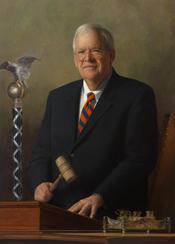
Mr. Speaker, one of our greatest Presidents, Ronald Reagan, was fond of saying that ``Freedom is never more than one generation away from extinction.'' President Reagan's wise words are still true…
Mr. Speaker, one of our greatest Presidents, Ronald Reagan, was fond of saying that ``Freedom is never more than one generation away from extinction.'' President Reagan's wise words are still true today.
Mr. Speaker, I rise in support of H. Res. 861. This resolution is about more than the war in Iraq and Afghanistan. It is about a global war to protect American ideals, and the democracy and values on which this great Nation was founded.
This resolution, Mr. Speaker, like this war itself, is about freedom. Just 12 days ago I returned from Iraq. I can tell this House that the morale of our fighting men and women there is sky high. They are not suffering from doubt and ``second guessing.'' And they are certainly not interested in the political posturing about the war that often goes on in this city. They know why they are there. They know they are liberators doing good. And they believe passionately in their mission.
It is not possible to talk to these men and women without being inspired by their courage, their determination, their professionalism and their patriotism.
I came home from Iraq believing even more strongly, that it is not enough for this House to say ``we support our troops.'' To the men and the women in the field, in harm's way, that statement rings hollow if we don't also say we support their mission.
The clarity with which our men and women in uniform understand the reason they are in Iraq is a stark contrast to some here at home who talk about this war as a ``war of choice.''
The facts are clear. America has been struck repeatedly. Despite the life-ending attacks on Khobar Towers, our East African embassies, the USS Cole and the first World Trade Center bombing, U.S. policy tended to confuse these attacks with isolated law-enforcement events. We failed to recognize them as
the escalating strikes that they were. We failed to identify the networks behind the bombs. We convinced ourselves that these attacks were just somehow random acts of violence. And yet the attacks continued.
The terrorists did not admire or appreciate our limited response. They did not come to the table to discuss points of political concern, and they did not de-escalate, demobilize or disappear. Our response was inconstant and limited, but their reactions were not. They plotted and they practiced, while we hoped for the best and fired an occasional cruise missile into the desert. We were wrong and we slumbered in denial.
And then came the day when terrorism slapped us in the face, awakening us to a stark reality. I remember it as a crisp, fall day. Where the clear blue sky was filled with fluffy white clouds. But that peaceful scene was transformed in an instant when planes went crashing into buildings and the clear sky turned to choking ash and soot.
I stood in my Capitol office, just a few yards from where I am speaking here today. I saw the black smoke rising from the Pentagon. The third plane had hit just across the river from this Capitol building.
On 9/11 the terrorists were not a distant threat, they were in our front yard, and they were very real and very deadly. In that moment, we were afraid. None of us had anticipated the lengths to which our enemies would go to destroy our American way of life, our ideals and our belief.
Of course, we knew that foreign terrorists had caused trouble elsewhere, maybe in Israel or in Northern Ireland, but we found it hard to imagine that they came to our shores hoping to kill tens of thousands of men, women and children, innocent, unarmed people, peacefully going about their daily lives.
It is hard, even now, to comprehend such enormous evil.
As we watched some of our fellow citizens leap from burning buildings to their deaths, our fear turned to anger and then anger to resolute determination.
America's response started high above a corn field in rural Pennsylvania. Brave men and women, armed with nothing more than boiling water, dinner forks and broken bottles, stood up, as Americans always do when our freedom is in peril, and they struck back.
We know from the messages they left behind that their final thoughts were for their families and their loved ones, but they also spoke of their love of their country.
``Freedom is never more than one generation from extinction.'' Perhaps the brave souls on United Flight 93 reflected Ronald Reagan's words because the generation represented on that plane, like the patriots at Concord Bridge, were not going to let freedom be extinguished, not on their watch.
We in this Congress must show the same steely resolve as those men and women on United Flight 93, the same sense of duty as the first responders who headed up the stairs of the Twin Towers.
We must stand firm in our commitment to fight terrorism and the evil it inflicts throughout the world. We must renew our resolve that the actions of evildoers will not dictate American policy. And we must decide, right here, today what kind of a Nation we want to leave for our children and their generation.
We are not alone in the fight on global terror. I cannot list them all, but they include countries large and small, rich and poor: Great Britain, Japan, Canada, Jordan, Portugal, Denmark, Mali, Latvia, Romania, Italy, Poland, South Korea. In fact, the number of countries working to defeat our common enemy continues to grow.
Pakistan, a nation that once recognized the oppressive Taliban regime, has changed its course and now works closely with the coalition to round up terrorists. Yemen, Indonesia, and Saudi Arabia have also moved aggressively within their borders to fight terrorism. Libya has given up her nuclear capability.
Today, more than three-quarters of al Qaeda's known leaders and associates have been detained or killed.
There is no doubt that since 9/11 our military, as well as our law enforcement intelligence agencies, have made great strides in uprooting terrorism. Nearly a dozen serious al Qaeda plots have been stopped since September 11th. But there is good reason for ongoing vigilance because the threat is still very real.
Just recently, our neighbor to the north, Canada, foiled a terrorist plot to storm that country's parliament and one of its major television headquarters. The terrorists planned to behead those they captured.
Mr. Speaker, today in parts of the Middle East, where once oppression choked out freedom, we are now seeing democracy take root.
Afghanistan was once a safe haven for the al Qaeda terrorist network. In remote training camps, terrorists planned and practiced attacks on the United States and other freedom loving peoples. Those camps are now gone. In their place is a developing democracy with an elected President and a new Constitution that gives unprecedented rights and freedoms to all Afghans.
Just 3 years ago, Afghan women were whipped in the streets; schooling was denied to girls. Today, women have the right to vote, and two Afghan cabinet ministers are women.
In Iraq, just 3 years ago, a brutal dictator sat in palatial luxury. Unhampered by the United Nations, Saddam and his family stole the Oil- for-Food money from starving Iraqi children in order to support their lifestyle of debauchery and brutality. Schoolgirls were raped. Iraqi patriots were thrown alive into meat grinders. Unspeakable atrocities of all kinds were common, including the use of chemical weapons on Saddam's own people, the Kurds.
Saddam invaded the sovereign nation of Kuwait. He harbored terrorists in his midst, and he defied 17 United Nations Security Council Resolutions.
Just a few days ago, I was listening to the radio, and a pundit remarked on the sectarian violence in Iraq. He observed that perhaps the Iraqi people were better off under Saddam. Given the unspeakable and systematic brutality of Saddam's regime, such a remark either reflects a serious misreading of history or a very naive and forgiving nature.
It might have been easier for us in America to turn our heads and look the other way, as much as the rest of the world did, but I would submit that Saddam was an evil cancer on the world. He was a threat to our country, and Mr. Speaker, America, not just Iraq, is better off today because Saddam Hussein sits in a court of law, answering for crimes he committed against humanity.
While I was in Iraq, I met with Prime Minister al Maliki as well as my counterpart, the Speaker of the Iraqi Parliament. We talked about the birth of democracy in Iraq.
I looked at the Speaker. I looked him in the eye and I said, ``Mr. Speaker, I admire you. The Iraqi people represent an ancient civilization, but your democracy is just beginning. Your challenges are great, but so too are your opportunities.''
I urged the Iraqi people to look forward and not back, to listen to the voices of reconciliation, not division, I urged them to choose unity.
They told me that they were succeeding in putting together a unity cabinet, and shortly after my return, they announced the names of the last three ministers that deal with critical security issues.
Each Iraqi official I met with, even the Iraqi Speaker, who originally viewed the U.S. presence in Iraq negatively, thanked me for the help America has given their country. He went further and urged us to stay with them while they build up the capacity to take over the task of providing security for their people.
Today in Iraq we are working together with Iraqi patriots, men and women elected by their fellow citizens.
Along with brave Iraqi soldiers and police, we are moving toward a day when the Iraqi Government on its own has the strength to protect their people, a day when our men and women, and their coalition partners, can come home.
The ``stand up'' of this new Iraqi Government, which is the fruit of three elections where Iraqi citizens held up their ink-stained fingers and resisted intimidation, brings us closer to that day.
President Bush told us from the beginning that this road would not be easy. We have lost many American lives. And each one is precious to us.
But our fighting men and women remain committed to the effort. Active duty retention and recruiting is meeting or exceeding all objectives, and we are making progress toward our goal, but the battle is not over.
It is a battle that we must endure and one in which we can, and will, be victorious. The alternative would be to cut and run and wait for them to regroup and bring the terror back to our shores. When our freedom is challenged, Americans do not run.
``Freedom is the very essence of our Nation,'' President Reagan said in 1990 when a section of the Berlin Wall was presented to his Presidential library. America, he said, ``remains a beacon of hope for oppressed peoples everywhere.''
President Reagan also observed that freedom is not passed on at birth. It must be fought for and protected and handed on. And that is happening. Freedom is being handed on.
Our soldiers, sailors, Coast Guardsmen, airmen, marines, and our Reserves are serving proudly and bravely in harsh conditions, far from their families.
When I was in Iraq, I told them that their task was important and how proud we all were of their service. But frankly our men and women in uniform did not need to be told. In fact, it is we who should listen to them.
They know their sacrifices on foreign shores are keeping the battle against terrorists out of our cities. They know that by going into harm's way they are keeping American freedoms safe, and they know that they are helping a proud but brutalized people to throw off tyranny and stand tall once again. They know that they are liberators, not occupiers.
Our men and women in uniform know all this, and they are proud of it. It is time for this House of Representatives to tell the world that we know it too; that we know our cause is right and that we are proud of it.
Stand up for freedom. Adopt this resolution.

Mr. Speaker, I yield myself such time as I may consume. Mr. Speaker, I want to thank the chairman of the Intelligence Committee for allowing me to take a little time early in this debate, although I…
Mr. Speaker, I yield myself such time as I may consume.
Mr. Speaker, I want to thank the chairman of the Intelligence Committee for allowing me to take a little time early in this debate, although I know the Armed Services Committee is going to come up a little later. And I wanted to talk about this war and touch on some of the subjects that my good friend Mr. Murtha has brought up over the last 15 or 20 minutes.
I was a new Member of Congress in 1983 when I went over to Beirut with a lot of those great members of the Armed Services Committee, and we got over there a couple of weeks before the Marines were blown up in the terrorist act that all Americans now have heard about and understand. And the reaction of the United States to that was basically to move out. And I know we all remember the Khobar Towers going up and a similar nonreaction from the United States. And we remember the embassies going up in North Africa and the national derision that followed the sending back of a couple of cruise missiles, one of which was alleged to have hit a drugstore, which was at most a symbolic response to the blowing up of those embassies in Africa. And I remember the Cole, and we all remember the Cole, and the destruction of that ship and the ensuing American casualties and the nonaction by the United States.
And then we were struck on 9/11, and we realized that it was wrong for us to treat these terrorist acts as isolated, compartmentalized acts that were unrelated. And at that point we struck back. And we undertook a mission first to Afghanistan, secondly a mission to Iraq.
And I do not think we have to plow old ground about Iraq. I think everybody understands Saddam Hussein, Gulf I. But I think it is important and it is good that my friend Mr. Murtha has pointed out that, in fact, even as we drove that armored spearhead north in this war against Iraq, taking Baghdad, Tommy Franks was intercepting communications even then from Iraqi officers to the effect that they were on the verge of using the ``special weapon,'' which we interpreted to be poison gas, a weapon of mass destruction, and he gave out orders that were right down to platoon and squad level, get ready for those weapons of mass destruction.
I can also remember giving a briefing, giving an invitation to every Member of this House, Democrat and Republican, before we voted on taking military action in Iraq, to come over and listen to intelligence experts in a closed briefing with no handlers, no White House personnel, and ask any question they wanted to ask about weapons of mass destruction. And they did that. Lots of them. We had over 100 Members at several of the briefings. And we had members of the intelligence apparatus of this country laying out differences. They talked about the aluminum tubes, how some people thought those were to be used in centrifuges for the conversion of uranium, the enrichment of uranium. Others thought they were to be used for rocket bodies. But we invited all the Members before they made that vote to give the President license to go into Iraq. They did that vote from an educated standpoint. They had an opportunity to pull all the information that they wanted.
Now, it has been stated that we did not have enough troops going into Iraq.
And I remember, as we were driving that armored spearhead north, and the Marines taking a piece of it, the Army taking a big piece of it, we had a number of experts appearing on national forums on a daily basis saying there were not enough troops. They used the term we are going to get ``bogged down,'' and what was interesting is even as they were on talk shows saying that there were not enough troops, the talk show would be interrupted with a news flash to the effect that Tommy Franks had taken yet another stronghold. And it was stated at the end of that drive toward Baghdad with what was described by some of the observers, some of the so-called experts, too few troops, that that lightning attack taking Baghdad would go down in history as an example of a low casualty level, and we did have an extraordinarily low casualty level, and a lightning advance in which the enemy in many cases was destroyed long before the American columns got to their land forces.
Now let us talk about troops in the occupation and the level of troops in the occupation because that has been brought up a number of times, and General Shinseki's statement about needing more than the number of troops that we had there has been used many times. There have been two arguments: one, that we needed to have more troops to make sure we could suppress the insurgents; and the other statement that was made, sometimes in the same speech, would be that we needed to put an Iraqi face on the security apparatus. Well, you can't have it both ways. You cannot have an American on every street corner and have an Iraqi face on the security apparatus.
And let me just say one last thing, which is a hard, tough truth for this House. But when the gentleman from Pennsylvania and I, as we watched the last of the 1990s unfold and the Clinton administration left the White House, we noticed in our defense committees that we went into that administration in the early 1990s with 15 American Army divisions. We came out of that administration with 10, count them, 10. Roughly 33 combat brigades. That is a fact of life. That is what we had to go into this operation with. Now we are moving and we are building toward 43 combat brigades right now. But we cut the military, we cut the U.S. Army, by almost 40 percent, and that is what we had to go into this war with.
Now, with respect to the gentleman's statements that in the first war we got lots of folks to chip in and pay for this thing, that is right. On the other hand, you had lots of self-interest. You had Saddam Hussein's tanks in third gear before we threw the 82nd Airborne in between him and his objectives, and you had everybody that had an oil well in that region scared to death and willing to pour money into this operation. So it is no surprise that countries out of self-interest will pile on and will help out. It is also no surprise that we have had lots of times in our national history when it has been tough to bring allies on board, when we had to have big pieces of this operation by ourselves and go it alone. And yet we were able to bring at least 20,000 coalition members into this operation.
And it is true we did not have the French and the Germans. But the French and the Germans were looking forward to major oil contracts with Saddam Hussein, and they did not want to go this time against their pocketbooks, and that is a fact of life.
I would be happy to yield.
I thank the gentleman. And, you know, that takes me to another point, which is the Iraqi Army. It has been said many times, and probably will be said again in this debate, that we should have kept the Iraqi Army intact.
Now, the road that is not taken is always the smoothest. But looking at the Iraqi Army, at Saddam Hussein's army, he had 15,000 Sunni generals. How are you going to maintain an efficient Iraqi Army that is responsive to a new fledgling civilian government with 15,000 Sunni generals running this thing?
We have had to build this army from the ground up. I think that history will show that that was the right thing to do. To have an efficient army, you have got to have a couple of things. You have got to have an army that has a chain of command which is responsive, that means that the private does what the sergeant says and the sergeant does what his platoon leader says, and right up the chain of command.
And you have also got to have an army that is responsive to the civilian government, to that new defense minister that was just put in place. I do not think you are going to do that with 15,000 Sunni generals. I have seen that statement tossed around so much that I hope to be able to talk to some of the folks a couple of years down the line when it is reflected.
Incidentally, people like Barry McCaffrey who have not been great friends of the administration's operation have said that looking at the Iraqi Army now, they see a core of strength, they see leadership emerging, and they see an Iraqi Army that is becoming effective.
So what are we doing? We have a mission, and the mission right now for the military is to provide a shield for this fledgling government as it goes into place, this new government. We are nation-builders. We are building a nation. It is also to train up the Iraqi military, and we are going to hand off this defense burden, that means our people come home after we train up and mature the Iraqi military.
If the question for us is, who is best equipped to decide when we take the training wheels off, when we let the Iraqi military go forward, I think we should leave that judgment up to the people who tracked down and brought to justice Mr. Zarqawi, a gentleman who said that he was going to take this war to Washington, DC, and London.
He is going to be a little late for that one, because we have an extremely competent American military on the ground in Iraq right now. I think the gentleman from Pennsylvania would agree with that.
So let's use that same judgment of those combat commanders who are training those Iraqi units in their areas of operation who say, okay, this battalion is just about matured, this one is not, this one needs more equipment, this one needs some more training. Let's rely on their judgment as to when we can hand that load off to them and let them bear the security burden.
Why should a Senator from Wisconsin or a Congressman from California try to impose an arbitrary date on when that maturity takes place. You cannot do it. So I would just ask my friends to give to those great Americans who are over there working this mission right now, let's send a united statement to them that there is value in this mission, there is value in their operation.
We are going to complete this mission. You know, they are lacking something that the Greatest Generation had. The Greatest Generation in World
War II had a united American public. When the 101st went into Northern Europe, they had a united American public. Let's give the 101st Airborne now in Mosul, and in that tough Sunni Triangle, let's give them the same support we gave them in Europe, a united American public and a united American Congress.
Let's give the 1st Marine Division that is out there in that tough province in the al Anbar Province out in Fallujah the same support we gave them when they were fighting Guadalcanal. The 1st Marine Division deserves a united American public and a united American Congress.
So let's send a message. The main message that is manifested in this resolution is that we should not have an arbitrary cut-off point, an arbitrary deadline, and, secondly, that we will complete this mission. Let's send this message to every soldier, every marine who is watching this thing from the mess halls in Mosul and Tikrit and Baghdad and Fallujah, the message that the United States House of Representatives stands with them.
Mr. Speaker, I reserve the balance of my time.

Mr. Speaker, before we went to war, President Bush and other administration officials made three promises to the American people: one, we would find weapons of mass destruction; two, we would be…
Mr. Speaker, before we went to war, President Bush and other administration officials made three promises to the American people: one, we would find weapons of mass destruction; two, we would be welcomed as liberators; and, three, the reconstruction of Iraq would pay for itself.
Well, all three promises proved to be false. Today I will focus on the reconstruction effort in Iraq and the massive waste, fraud, and abuse that have undermined our efforts.
Stuart Bowen is the Special Inspector General for Iraq reconstruction. He often talks about the reconstruction gap which is the chasm between the President's promises and reality.
Mr. Bowen is absolutely right: the gap is enormous. But it is dwarfed by the incompetency and corruption gaps in Iraq. The consequences of mismanagement and corruption are serious. Waste, fraud, and abuse have flourished. The taxpayer has been repeatedly gouged.
Iraq is not being rebuilt. We have lost credibility and are now viewed in Iraq as occupiers, and our troops did not get essential equipment when they needed it. We have now spent $50 billion on Iraq reconstruction, including $30 billion from U.S. taxpayers.
Let's look at what we got for the money. Despite spending $2 billion, Iraq's oil production is still well below prewar levels, running about a half million barrels below 2003 levels. We have invested $4 billion into improving electricity generation.
Not only is the administration 2,000 megawatts short of reaching its goal for peak output, but generation is actually below prewar levels. And we spent $6 billion on oil production and electricity generation. And we have actually lost ground.
The situation is the same for drinking water. In essence, we have squandered $50 billion. Profiteering has been rampant, and the taxpayer has gotten gouged and the work has not gotten done. And what is especially shameful about the wasteful spending is that we needed this money for our troops. When we first went into Iraq, our troops did not have enough body armor.
Families had to purchase armor off the Internet and ship it to Iraq in a desperate attempt to protect their loved ones. On congressional delegations, individual servicemembers have taken our staffs aside and begged for more night vision goggles.
Patriotic Americans even had to donate their frequent flier miles so troops who were dumped at the Baltimore airport by the Pentagon could make it home for the holidays. This should never have happened. It is inexcusable that our troops face desperate shortages of essential gear while billions of dollars were frittered away.
To understand the magnitude of this, there is no better place to start than Halliburton. Halliburton is the largest private contractor operating in Iraq. The company has three contracts that total more than $20 billion. We now know that political appointees, not career civil servants, decided to give Halliburton a secret no-bid contract for $7 billion to operate Iraq's oil fields.
As GAO has reported, the key decision that led to the award of the secret contract violated Federal procurement law. When a career attorney properly objected, he was simply overruled. And despite statements from the Vice President, we know now that his chief of staff, Scooter Libby, was personally briefed on this entire plan months before the war.
The decision to give those lucrative contracts to Halliburton has been expensive. According to Pentagon audits, Halliburton's total unreasonable and unsupported charges exceed $1.4 billion. Well, the examples of waste, fraud, and abuse are numerous. Halliburton charged $45 for a case of soda; $100 for a 15-pound bag of laundry.
When they had brand-new $85,000 Halliburton trucks, they abandoned them or torched them if they got a flat tire or experienced minor mechanical problems. Halliburton's contracts are cost-plus. That means that Halliburton is reimbursed for all of its costs, and then receives an extra percentage as additional profit.
In practical terms, this means that the more Halliburton spends, the richer it gets. Now we talked to former Halliburton employees who worked in Iraq. They told us the informal company motto was: ``Do not worry about price, it is cost plus.''
Halliburton was supposed to be in Iraq to provide support for the troops, but the company used one standard for the troops and a completely different standard for its own executives. Halliburton employees stayed at the five-star Kempinski Hotel in Kuwait, where it costs taxpayers $10,000 per day. This is the five-star Kempinski. This gorgeous hotel offered maid service, complimentary fruit baskets to Halliburton employees.
Our troops stayed in tents in the desert. At one point, a cost- conscious Army official asked Halliburton to move its employees into air-conditioned tents, but they refused.
To their credit, career government auditors identified these overcharges. When they examined Halliburton's second oil contract, they harshly criticized Halliburton's performance, citing profound systemic problems and exorbitant indirect costs. But their recommendations were rejected.
After reviewing Halliburton's first oil contract in Iraq, auditors recommended that the Army not pay $263 million in unreasonable and unsupported charges. But the Army ignored those auditors and paid Halliburton $254 million, over 95 percent of the disputed charges.
And in spite of the auditor's findings, Halliburton was paid nearly $100 million in profits and bonuses for overbilling taxpayers.
Well, Halliburton symbolizes what went astray in Iraq, but it is not the only contractor abusing the system. Parsons received the contract to rebuild health clinics throughout Iraq. But despite spending $186 million, Parsons completed just 20 of 142 health clinics they promised to build.
Another firm, Custer Battles, received two security contracts. A Federal jury recently found that the company committed 37 separate acts of fraud. These are not isolated instances. There are over 70 corruption investigations currently under way in Iraq. These cases involve allegations of
fraud, false claims, theft, bribery and kickbacks. Some of the worst problems in Iraq are almost beyond comprehension.
The U.S. management of the Development Fund for Iraq, which was the fund that held the proceeds of Iraqi oil sales, is a classic example of what not to do. The Coalition Provisional Authority handed out over $8.8 billion in cash, in cash, to Iraqi ministries. And they had no idea what happened to the money: $8 billion in cash simply vanished.
One former U.S. official who was in Iraq at the time, Frank Willis, described conditions as the Wild West. He said the lack of controls effectively created a free fraud zone.
Iraq was awash in brand-new $100 bills with no accountability to prevent corruption. All the while, the White House looked the other way and Congress put its head in the sand.
Under the Constitution, we are supposed to be a check and balance, but we have abdicated this responsibility. The Republican majority is terrific at applauding the President, and they are proving it again today with this dishonest resolution.
Congress isn't doing the serious and important work it must do to protect our troops, rebuild Iraq, look out for American taxpayers. Congress must be more than a cheerleading section for the White House.
The fiasco in Iraq was a windfall for some. Halliburton made more than $2 billion in profits last year. Its total revenue has increased by 66 percent since 2002. Another beneficiary was David Brooks. He is the CEO of a company that makes bulletproof vests. In 2001, Mr. Brooks reportedly earned $525,000. In 2004, he earned $70 million. Last year, the U.S. Marines recalled more than 5,000 of the company's armored vests. But by that time Mr. Brooks had pocketed $186 million.
Well, the American people might think that Congress would rise up in the face of such unconscionable profiteering. When our troops are willing to sacrifice so much, and they do sacrifice so much, how can we let others create cynical fortunes off their blood?
As we debate this resolution, 2,500 of our bravest men and women, have been killed in Iraq. Over 18,000 have been wounded, and the total cost of the Iraq war is over $300 billion. Those of us privileged to serve here have been spared any of the personal consequences of being on the front line, but we should not be spared the responsibility of doing our job.
We owe more to our troops than slapping ``I support our troops'' bumper stickers on our cars and extolling their courage. Instead of wasting time on bipartisan charades, we should acknowledge and fix our mistakes so that Iraqis can take over and our troops in Iraq can come home.
We owe more than empty promises to American families who are paying for this costly war in Iraq. They count on us to make sure that their money is spent well, and we haven't done that.
An honest unsparing look at the record of the past 3 years tells us a stark truth. The White House and Congress have failed our troops, the taxpayers and the Iraqi people. They deserve better than a partisan resolution that pats ourselves and the White House on the back.
It is shameful that we are squandering money on Halliburton at the very same time that we don't have enough money to protect our troops. It is shameful that Congress has abdicated its oversight and legislative responsibilities to rein in the incompetence and corruption that has undermined our efforts in Iraq.
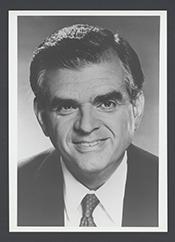
Mr. Chairman, first of all, I want to extend thanks to the chairman of the full Committee on Appropriations, the gentleman from California (Mr. Lewis). By this time next week, we will have completed…
Mr. Chairman, first of all, I want to extend thanks to the chairman of the full Committee on Appropriations, the gentleman from California (Mr. Lewis). By this time next week, we will have completed all of the appropriation bills. This is a history-making event in the House of Representatives. I have been here for 11 years; and for the 11 years I have been here, I do not know of another time when we have completed all of our appropriation bills going right up to the July 4 recess break.
That is in large part due to the cooperation that the chairman received from the ranking member, the gentleman from Wisconsin (Mr. Obey), but in large part also from the leadership exhibited by the chairman of the full committee. He set a very, very high bar, a high standard, and all of the subcommittee chairs comported with that; and we will have sent to the Senate all of our appropriation bills as of a week from today or a week from tomorrow. That is an accomplishment that should not go unnoticed, and I compliment the gentleman from California (Mr. Lewis) and the gentleman from Wisconsin (Mr. Obey) for their leadership and also the subcommittee chairmen for that kind of goal setting and then meeting those goals.
Secondly, this is an important bill. This is the legislative branch bill. This is the bill where we say to all of the people, and I personally say to all of the people around the Capitol campus, thank you for the good work you do. The clerks, the people taking down our words here, the Congressional Record that will be printed overnight, the Parliamentarians who do such good work in directing the proceedings of the House, all of the Capitol Hill police who stand guard 24-7 and protect the Capitol, the attending physician's office who keep us all healthy, the people who work in the cloakrooms, the people who help us write bills, the people at CRS who help us make sure that we get the words correct and get them done correctly in the bills that we prepare and take a lot of credit for.
The folks who work at the Library of Congress. The most magnificent facility on the Capitol campus is the Library of Congress. I hate to say it, but it is even more magnificent than this building, but the Library of Congress is a magnificent facility. Members have an opportunity to take full advantage of many of the books there and research that can be done. The Botanical Gardens is also a part of our campus. This is the bill that funds all of that.
This is Congress' opportunity to say thank you to all of the people who work around here. It includes the lawyers who make sure that we do things correctly, and all of the people who work hard day and night to keep this building open, keep Members on the right track, and make sure that the things we do are done by the book.
So I pay my compliments to all of the people who make this magnificent facility that we call the United States Capitol the great place that it is, where we make the laws and have the debates and have the opportunity to represent the people from all over the country. We could not do it without this bill, without the funding in this bill, and we could not do it without the people who provide all of the services, and are very dedicated, many of whom work late hours to keep this place going. I want to take my hat off to those folks.
I want to say a word about the visitors center. I want to say this: it is a done deal. The leadership decided several years we needed a visitors center. Has it been done all correctly? No. And the points that the gentleman from Wisconsin (Mr. Obey) makes are correct points. A lot of the work that has been done has been done by direction of staff of the principals. The principals really have not been that involved. They said they wanted a visitors center, and then they allowed the staff over the last 4 or 5 years to give direction. The architects have had many masters on this visitors center, unfortunately.
But it is going to be built, and it is going to be a magnificent opportunity for people to have good shelter and safety. And after 9/11, we do not want people standing outside, we do not want people standing in inclement weather, and there will be an opportunity for people to get a little bit of history before they enter the Capitol. To say we should throw the whole bill out because of the visitors center does not make sense.
I also want to say something about a subject I have felt very strongly about for the last few years, thank the architect and the chief operating officer and others for helping me with this, and that is the development of a staff health fitness center. It is under way in the Rayburn garage. It is for the staff around here who work long hours. There will be a health fitness center that they will be able to take advantage of, to stay healthy and be able to exercise, to have an opportunity to do the same thing that all of the Members have the opportunity to do. I am grateful that we are finally getting that kind of opportunity for our staff to be able to make this happen.
With respect to the provision that was put in the bill having to do with respect to what do we do around here if another disaster happens, if the Members are injured or killed in some kind of an attack, there has to be something that guides the direction of the House in the event that something happens. The Speaker decided in order to get this moving and in order to get the Senate to go along with something, it had to be included in a bill, and it was put in this bill. It was put in, really, to get something done, to make something happen, to have some provision in the event that something happens.
It is probably not the best way to do it, but maybe it will end up to be the most efficient way to do it, to get the Senate finally to come around and sit down and talk to us about what do we do if something happens around here and how do we account for succession.
The Constitution calls for elections, not appointment. When there is a vacancy, there has to be an election. That is the way we get Members to congregate in this House. That is the way it should be.
My point is the idea that this was included and is some sort of nonessential thing, it is essential that we have a provision in the law that allows us to account for a situation in the event that Members need to be replaced. That is really the reason it was put in.
It is a part of the process here. If we want to get things moving, this is one of the ways to do it. It is not unprecedented. We have included other provisions in bills before to try and get some compromise with the Senate. I congratulate the Speaker for trying to get something done on this. If it does not happen here, it probably will not happen. We need to have this provision in the law.
I ask every Member to consider the good work that goes on around here, the fact that this is the bill that funds all of this. This is the bill that takes care of all of the work that we do around here. It is a good bill. My compliments go to the gentleman from California (Mr. Lewis) and the gentleman from Wisconsin (Mr. Obey) and the work of the staff people that made it possible for this bill to come to the floor today.
Mr. Chairman, will the gentleman yield?
Mr. Chairman, I will address it in this way: I was here on 9/11, as the gentleman was. There is absolutely nothing for the Members of Congress to do. That is the answer to the gentleman's question. The whole thing was taken over by the administration. There is not going to be anything for any Member of Congress, any major decisions to be made during that period of time. We do not need to be around here.
Mr. Chairman, we were all meandering around here trying to figure out what to do, trying to figure out how to get our phones working. All of the major legislation that was created was created long after the period of time that the gentleman is talking about.
If the gentleman will further yield, what is the time frame?
I was going to respond to the gentleman's other questions.
I yield to the gentleman from Virginia.
Mr. Chairman, this is the second year that we have attempted to do this. That is pretty good time for eliminating a program. We had a big debate about this last year. We had a big debate about it this year. There is nobody who spends any time around here that does not think this place is secure. It is not going to be made any more secure by having a few people riding horses around here. Now, for the aesthetic part of it, it might be lovely; but for the security part of it, it is nonsense. It is a waste of money. They will be better used by the Park Service, certainly, than they will be around here. Vote down the gentlewoman's amendment.
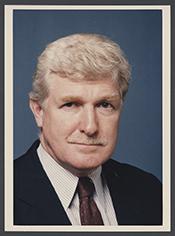
Mr. Chairman, I thank the ranking member of the Committee on Appropriations for yielding me this time, but most particularly for his leadership. The gentleman from Wisconsin (Mr. Obey) made several…
Mr. Chairman, I thank the ranking member of the Committee on Appropriations for yielding me this time, but most particularly for his leadership.
The gentleman from Wisconsin (Mr. Obey) made several points. Some of them were consistent with the comments of the gentleman from Illinois (Mr. LaHood) that there are a lot of good things about this institution and the facilities that we fund.
But the gentleman from Wisconsin (Mr. Obey) pointed out some of the concerns that many of us share over the Capitol Visitors Center. I share those concerns as well, having been the ranking member of the legislative branch subcommittee before it was incorporated in the full committee. We raised these, the gentleman from Georgia (Mr. Kingston), and I.
It is not meant to be argumentative, but we have created a situation where
the Capitol Visitors Center is going to create some substantial problems in the future. We have a facility that is going to cost well over what was originally estimated. The original estimate was $165 million. We are now over half a billion dollars. We were going to try to get private money. It is all Federal money now, of course. We were going to have it ready for the January 2005 inauguration. Obviously, we are way behind schedule; but that happens in a lot of construction projects.
We recognize this is going to be completed, and there will be a number of things that we will be proud to show. But some of these situations are going to cause more problems than they are worth. For example, we are creating an enormous capacity for visitors. One would think that would be a good thing, but what is going to wind up happening, they are going to be given a virtual tour of the Capitol. The reason for that is we have the capacity for twice as many people to come into that Capitol Visitors Center as can ever come into the Capitol itself.
Now, do you want to be the Member who tells your constituents, after traveling from any place in the United States, and for many of them it takes a whole day to get here, they stay here, they are all excited and they get to the Capitol Visitors Center and want to go to the Capitol and you have to tell them well, actually, there is no room?
Half of the people coming into the Capitol Visitors Center are probably going to have to be informed there is no room in the actual Capitol for you to be able to make a visit today. That is a substantial problem. I think we should have figured that out. I am glad we have capacity; but, again, is it consistent with our real objective, which is to enable all our constituents to see the U.S. Capitol itself?
The taxpayer is paying for this. A lot of the decisions have really not been made by the Members as much as staff, I have to say. It is not the staff of the appropriations subcommittee that has made those decisions, but we have got some major concerns. I think they are well- founded concerns.
I want to raise one now, though, that is not a matter of legislation, but it is one that has been brought to my attention as cochair of the Congressional Prevention Coalition. We have tried to do some things to address public health concerns.
One of them is in regard to smoking. We have a ban on smoking in all Federal buildings but we exempt congressional office spaces. I do not want to change that necessarily, I can understand why there is an exemption in place, but we have a particular problem with the Rayburn cafeteria.
With that, I would like to enter into a colloquy with the chairman of the full committee on this because I do think we need to address it. In the Rayburn cafeteria, the main dining room is overflowing with patrons generally every Tuesday, Wednesday and Thursday; and so those patrons are forced to spill over into the designated smoking area. The same thing happens when we close the main cafeteria for receptions and special events. Because that main designated area is the only place available on that floor for smoking, it gets pretty asphyxiating according to many of the staff who have contacted me. I think we need to address it because some of these people have real serious health problems in terms of their breathing capabilities; some have asthma and other related problems. They just cannot deal with all of that smoke and they do not have any choice to avoid it given the situation that frequently occurs.
I yield to the chairman of the full committee to see if he has some suggestions in how we could alleviate this problem for the nonsmokers.
I thank the chairman and I thank the interest of Ms. Johnson, the lead staff for the committee on legislative branch issues. Would the chairman be willing to make sure that this gets raised to the appropriate people so we could address it in a constructive way?
I appreciate the gentleman's suggestion. I think we will pursue it in that manner rather than trying to find some legislative solution.
Mr. Chairman, I thank the esteemed leader from Wisconsin for yielding me this time.
Mr. Chairman, this is a Trojan horse of a new and growing financial obligation that we really need to deal with now and to accept the committee's recommendation that it be consolidated with the U.S. Park Police mounted unit. That is what makes the most sense.
In May of 2004 we began with six horses. We were told it would cost about $100,000. Now it costs $145,000. They want another $10,000 for a replacement horse. But, the salaries and the benefits of the Capitol Police officers that are involved in this come to approximately $600,000. So it is not $145,000, it is three-quarters of a million dollars.
Where they are housed is 20 miles away. These police officers have to travel for at least an hour mile down the whole distance of Route 1 to pick them up, another hour back. We are going to move another 18,000 people down to Fort Belvoir, so it is going to be a lot longer than that.
And now, Mr. Chairman, really, we are now told that they had not figured this out, but they are going to need what is basically a giant pooper scooper to be able to clean the grassy area after the horses have gone by it.
Now, I would suggest to the Chairman and to this body that there is not much grass left to patrol.
I was out jogging today. It was one little grassy area left, and they were putting up a chest-high fence to keep the public off that grassy area. I do not know where these horses are going to be parading. And the little spot, what is left now is about the size of somebody's backyard, and I guess it makes it easier for the pooper scooper, but the problem is that we are paying a substantial amount of money, about three-quarters of a million dollars for very limited benefit.
I just cannot imagine why the Capitol Police need a mounted police unit, particularly given all of our other priorities.
I do not know the names.
Mr. Chairman, will the gentleman yield?
Mr. Chairman, number one, when is the best time to eliminate a program other than before it gets fully established? So I think it is important to follow the committee's recommendation.
The second thing is that we know that the police have asked for stables. Once they establish stables, the costs goes up; the program is more established. We have got more investment. Now is the time to kill it. Consolidate it with the Park Police. I fully agree with the committee's recommendation.
I thank the gentleman for yielding to me.
Mr. Chairman, I thank the gentleman for the time.
The only point I would like to make is that since 1995, this appropriation has only grown by 4 percent. So in more than 10 years we have only had a 4 percent growth, much less than inflation.
We have worked hard to reduce the number of copies. We have eliminated the bound copies of the Congressional Record. I do not know if people have noticed, but we eliminated that which used to be a tradition, and since 1995 we have reduced the number of copies from 18,000 per day to 6,000. I mean, that is substantial progress. The largest cost of the Record is preparing the data for printing and on- line dissemination, and that cost is going to be occurred regardless.
Mr. Chairman, I congratulate the gentleman from Washington for his long-time leadership on this issue. Mr. Chairman, I support this amendment to strike legislation which has nothing to do with the…
Mr. Chairman, I congratulate the gentleman from Washington for his long-time leadership on this issue.
Mr. Chairman, I support this amendment to strike legislation which has nothing to do with the appropriations process, legislation which has been improperly placed in this bill, the text of H.R. 841, the ``Continuity in Representation Act of 2005.'' That bill has already passed the House twice, in slightly different forms, in the spring of 2004 and most recently on March 3, 2005. The Senate refused to consider it the first time, and it is currently pending on the Legislative Calendar in the Senate, where it
will remain unless objections by various senators are dealt with.
Make no mistake: there are senators who strongly oppose this bill, and virtually none who care about it, or strongly support it, or want to take up the Senate's time with it. This means that, if the bill is to move at all, its supporters need to take the objections seriously, be prepared to negotiate, and avoid further antagonizing the opponents.
As Ranking Member of the committee of actual jurisdiction, the Committee on House Administration, I have never been consulted by the Majority about beginning negotiations with the Senate to try to resolve the objections and get a bill which can clear both chambers. Whether such as effort could succeed is unclear, but--nothing ventured, nothing gained. Instead, the House Appropriations Committee has, to its obvious discomfort, effectively been hijacked by the House majority leadership to load the bill onto Legislative Branch Appropriations in the belief that the Senate will meekly submit to anything tucked into the House title.
I am not going to reargue the substantive issues here. H.R. 841 was and is a bad bill. I oppose it and voted against it. We should not be recycling failed legislation. If the bill's supporters ever hope to get it passed in some form, they need to make a serious effort to address the objections rather than to employ parliamentary games. They should not be misled by the margins by which the House has passed the bill. Congress consists of two chambers.
Unfortunately, some of the House sponsors appear to be treating a controversial and sensitive subject as if it were a perk of the House, as though the House alone somehow had acquired, contrary to the Constitution and other Federal laws, the right to control the procedure under which its Members are elected. This position has gotten them nowhere. I believe it is in fact counter-productive.
During the Appropriations markup, there were numerous questions about the continuity amendment which Chairman Lewis, who offered it, was unable to answer. It was obvious that the committee had no idea what it was being asked to do and, based on the thunderous chorus of ``nays'' on the voice vote, was reluctant to be forced to do it.
Mr. Chairman, H.R. 841 is under the jurisdictions of the Committee on House Administration. It has nothing to do with the appropriations process. It has serious problems. The sponsors need to change their tune. Attempting an end run around the regular order on what is, despite their spin, a very controversial bill, does nothing to enhance credibility in potential negotiations with the Senate.
If this bill is to be saved, let the Members who care about and understand the issues engage seriously with those of differing views. That is how legislation becomes law. Not this way.
I urge adoption of the Baird amendment to strike Title 3.
Mr. Chairman, as Ranking Member of the Committee on House Administration, which has jurisdiction over the United States Capitol Police, I rise to oppose the amendment offered by my friend from Virginia (Ms. Jo Ann Davis).
The USCP mounted unit was not authorized by either the Committee on House Administration nor the Senate's Committee on Rules and Administration. It reportedly came into existence as the brainchild of a Senator from Colorado, now retired, without any formal examination of the merits and demerits of using horses in the Capitol Police environment. Unlike the U.S. Park Police, which must patrol thousands of acres of wooded parkland in northwest Washington, the Capitol Police patrols a confined area readily accessible to non-mounted officers, and much of which is not even accessible to the public at all.
Some argue that the mounted unit is especially useful in crowd control, and maybe that is so. However, on those occasions where crowds needing control may develop on the Capitol grounds--and these occasions are usually well anticipated--the Capitol Police can easily ask for assistance from their Park Police colleagues, who are well trained in the use of horses and can also be trained about the Capitol and working here.
Finally, some offer the intangible value of public relations as a justification for spending the hundreds of thousands to maintain the horses and train their handlers. Maybe there is value in that, when elsewhere on and around the grounds, other Capitol Police officers are routinely brandishing automatic weapons. But what about the public relations cost of the horse manure deposited across the grounds, and the tens of thousands it costs to clean it up?
I urge a ``no'' vote on the amendment.
Mr. Chairman, as the Ranking Member of the Joint Committee on Printing, I oppose the amendment offered by my friends from Arizona (Mr. Flake) and Oregon (Mr. Blumenauer).
According to the GPO, the congressional printing and binding appropriation supports the distribution of 3,994 copies of the Congressional Record, of which 2,293 copies, or more than 57 percent, go to the Senate. If there are too many copies of the Record being charged to the Congress, the problem lies in the other chamber.
Mr. Chairman, Congress has addressed this problem in recent years. Not long ago, there were 18,000 copies of the Record produced each day. Now there are fewer than 4,000. The law provides for Members to receive three copies, and Members who don't need three copies can reduce printing costs by informing the Clerk of that fact. This is a reasonable approach, since the Record is available on-line, and perhaps for some Members the on-line version will suffice. But the printed Record remains an important resource for many Members of both Houses, and I don't believe the proper approach to this question is to reduce funds for the Record by 83 percent, as this amendment would do.
I believe the Appropriations Committee has looked at this very carefully over the past several years. Speaking for the minority side of the Joint Committee on Printing, I am certainly willing to examine this question further.
I urge a ``no'' vote.
Mr. Chairman, I oppose the amendment offered by the gentleman from North Carolina [Mr. McHenry].
As the Ranking Member of the Joint Committee on Printing, I can appreciate the gentleman's interest in reducing excessive printing and diverting the funds to more useful purposes. However, rather than shifting spending from GPO to the Capitol Police, the amendment has the potential merely to increase spending.
This is because the congressional printing and binding appropriation is not a traditional appropriation to support a predetermined amount of work by the GPO. It is a pre-payment for the work Congress orders from GPO. The GPO will perform whatever work Congress orders, and Congress will pay for it in a subsequent appropriation, if necessary. Merely reducing the printing and binding appropriation will not reduce the amount of printing.
By contrast, the amendment would shift the GPO funds to the Capitol Police, which could and presumably would spend the money for its general expenses. The Appropriations Committee has recommended the sum of $29.3 million for the Capitol Police's general expenses. As Ranking Member of the House Administration Committee, which has jurisdiction over the Capitol Police, I believe we should accept the Appropriations Committee's recommendation. I urge a ``no'' vote.
Show 11 more
Mr. Speaker, I thank the gentleman for yielding and, as prior speakers have done, I commend him for speaking truth to power. Mr. Speaker, 1,184 days ago American troops invaded Iraq to rid Saddam…
Mr. Speaker, I thank the gentleman for yielding and, as prior speakers have done, I commend him for speaking truth to power.
Mr. Speaker, 1,184 days ago American troops invaded Iraq to rid Saddam Hussein of weapons of mass destruction.
The weapons weren't there. But American troops still are. I have met some of those troops on my three trips to Baghdad and Afghanistan, as well as Pakistan, Qatar, and Saudi Arabia. Our Armed Forces and intelligence personnel are extraordinary. Many are on their third or fourth tours.
As a mother of two sons and two daughters, and as a newly minted grandmother, my heart goes out to families who have lost their dear ones. I am deeply moved by the courage, dignity and patriotism of the men and women recovering from grievous wounds at Walter Reed and other U.S. hospitals. And I have visited with them.
Our action in Iraqi created a failed state and, tragically, our postwar mission, as presently defined, cannot succeed. There are too few troops to stabilize the country. They are inadequately equipped.
They are fighting an insurgency we didn't predict, at constant risk from IEDs we can't find, with no clearly developed goals to help the new Iraq government achieve political and economic security, and no exit strategy.
Two major failures led us to war, and we had best learn some lessons or risk making the same mistakes again. As ranking member on the Intelligence Committee, these failures haunt me.
Had we got the intelligence right, I believe we could have made different choices, and the pain and loss and anger many feel could have been avoided.
First was a massive intelligence failure in assessing Saddam's WMD capability. The second, equally grave, was the politicization of intelligence by the President and a White House determined to push us toward war.
The failure to assess Saddam's WMD capability accurately has been well documented. As CIA weapons inspector David Kay put it, ``we were all wrong.'' Overriding the advice of intelligence professionals, administration officials put stock in bogus sources like CURVEBALL, and self-promoters like Ahmed Chalabi.
But simply calling Iraq an intelligence failure ignores the larger policy failures that created the false momentum toward war.
The administration cherry-picked intelligence and hyped the threat. They talked in ominous tones about ``mushroom clouds,'' even though many questioned evidence suggesting Saddam had nuclear weapons capability.
They made a mantra of the claim that 9/11 hijacker Mohammad Atta met with Iraqi agents in Prague, a claim that has been thoroughly discredited.
Deputy Defense Secretary Paul Wolfowitz famously predicted we would be greeted as liberators, that Iraqis would throw rose petals, ignoring intelligence community assessments about the potential for armed resistance.
Writing in Foreign Affairs, Paul Pillar, the intelligence community's senior Middle East analyst, described how the Bush administration disregarded the community's expertise, politicized the intelligence process, and selected unrepresentative raw intelligence to make its public case.
To date, nobody has been held accountable for this misuse of prewar intelligence.
The intelligence failures did not end when we invaded Iraq. Our President declared ``Mission Accomplished'' in May 2003. Senior U.S. officials in Iraq asserted in July 2003 that insurgent attacks represented ``a limited problem of some bitter-enders'' loyal to Saddam.
Yet, 3 years after Saddam's fall, 2,500 U.S. troops are dead, a number confirmed by the Pentagon just today, and insurgents appear more active than ever.
We have surged intelligence resources into Iraq in a frantic effort to find the next IED. As a result, we have taken our eye off the ball in Afghanistan, where Taliban fighters are reconstituting themselves, even as the United States reduces the number of troops there. Osama Bin Ladin and Ayman al Zawahiri are still at large, inspiring a new generation of recruits to the jihad.
Just as constant deployments to Iraq cause burnout in the Army, National Guard and Reserves, we are also burning out large numbers of intelligence professionals. And assigning them to Iraq means they are not available to address other national security challenges, like Iran and North Korea.
There has been good news. U.S. intelligence agencies operating with Special Operations Forces have tracked down many key terrorist leaders. The takedown of Zarqawi showed the importance of fusing human intelligence, imagery, signals intelligence and a military strike capability in real time. That is how intelligence ought to work. It was a huge tactical victory.
But tactical victories alone are not enough. We need a new strategy for Iraq, a dramatic change of course. We need to hold senior officials accountable for massive policy and management failures. Replacing Donald Rumsfeld, the chief architect of the postwar policy, is long overdue. He ignored the advice of senior military advisers, ignored the careful recommendations of those who understood nation-building, and ignored those horrified by a prison situation careening out of control. And he prides himself, even now, on refusing to change a failed policy.
Congress must also provide aggressive oversight to learn why the administration erred so grievously.
Since I returned from my third trip to Iraq last September, I have been calling on the administration to develop an exit strategy, and I believe it is now time to begin a phased, strategic redeployment of U.S. and coalition forces out of Iraq on a schedule designed by military commanders. A schedule designed by military commanders, not designed by the U.S. Congress.
I believe the U.S. is part of the solution in Iraq, but our large military presence is part of the problem. Beginning to reduce the ``footprint,'' while maintaining an over-the-horizon strike force, will improve our chances for success.
I think we have 3 to 6 months to advance three objectives: first, helping the new Iraqi Government provide electrical power, particularly in Baghdad, and deliver other critical economic and social services to the Iraqi people. Second, supporting the Iraqi Government in its effort to disarm Shiite militias and integrate them into a trained Iraqi national security force. Third, continuing the process, begun by our able Ambassador Khalilzad, of obtaining buy-in from Sunni political leaders. Achieving these objectives will enable us to leave Iraq in better shape than we found it.
Mr. Speaker, the next 3 months are critical. We have a moral obligation to assist Iraq on its path to democracy. But if clearly defined minimum objectives cannot be achieved within that time frame, the prospects for success in Iraq could all but disappear.
So a change in course is urgently needed. The President's visit to Baghdad was important, but it is not a substitute for needed policy changes. And Congress cannot be infinitely passive. This debate today will only have meaning if, in fact, it leads to a change of course in Iraq.
Mr. Speaker, it is time for Congress to lead. This resolution, in my view, is a press release for staying the course in Iraq. It does not signal a change in policy, and thus I cannot support it.
Mr. Speaker, how much time of my 30 minutes remains?
It is now my intention to yield to members of the minority of the House Intelligence Committee who are here.
First, I would yield 3\1/4\ minutes to Representative Boswell who is ranking member on our Subcommittee on Terrorism, Human Intelligence, Analysis and Counterintelligence.
(Mr. BOSWELL asked and was given permission to revise and extend his remarks.)
Mr. Speaker, I now yield 3 minutes to the gentleman from Texas (Mr. Reyes), a senior member of our committee and a member of the Armed Services Committee.
Mr. Speaker, I yield 3 minutes to my California sister, a member of our committee, the ranking member of the Technical and Tactical Intelligence Subcommittee, Ms. Eshoo.
Thank you, Mr. Chairman. Mr. Speaker, some of the worst acts of radical Islamic terrorism have been committed by homegrown terrorists, and homegrown terrorists are citizens or residents of the…
Thank you, Mr. Chairman.
Mr. Speaker, some of the worst acts of radical Islamic terrorism have been committed by homegrown terrorists, and homegrown terrorists are citizens or residents of the Western countries who, without any direct contact with al Qaeda, adopt a militant radical Islamic outlook, and they seek to conduct acts of terrorism in support of the global jihad.
Propaganda on the Internet, as we heard from you and from Mr. Thornberry, drives the movement. Groups like al Qaeda and the Zarqawi network use it to distribute their slick videos, to glorify the violent jihad.
Homegrown terrorists committed, as I think you have said before, recent acts in Spain, the Netherlands and the United Kingdom.
The Madrid attack, for instance, on March 11, 2004, a group of Moroccans living in Spain attacked passenger trains in Madrid killing 190 people; and the plot was conceived, it was organized, and it was equipped with no support from international terrorist groups.
Recent events have demonstrated that Europe is not the only place where homegrown Islamic militants can develop.
On June 4, 2006, the Royal Canadian Mounted Police arrested 17 Canadians for planning to attack Canadian government buildings.
We have seen homegrown Islamic extremist groups in the United States. Our Federal, our State, and our local law enforcement agencies have so far been able to stop them before they could launch attacks.
In August 2005, for instance, the FBI arrested four members of the JIS plotting to bomb military recruiting offices and synagogues in southern California, and this is the interesting part: The JIS was founded by an inmate at the California State Prison in Sacramento, and most members of the JIS are American citizens who were born and raised in the United States. They were radicalized and recruited into JIS while they were in prison; and as far as authorities know, none of these members had any contact with foreign terrorist groups.
Last February, the Justice Department indicted three men in Ohio for aiding insurgents in Iraq and planning to attack U.S. troops there. Two of the men were naturalized U.S. citizens, and one was a permanent legal resident. The men learned their craft by downloading terrorism instructional videos from jihadist Internet sites. They had no contact with al Qaeda. Had they not been arrested, they may have started looking for local targets that they could attack.
We cannot ignore the threat of homegrown terrorism. It is imperative that we understand which elements of our society are vulnerable to jihadist propaganda, how radicalization occurs, and how we can prevent Americans from becoming pawns of al Qaeda.
The British House of Commons concluded that the U.K. counterterrorism community did not anticipate the March 2005 suicide attacks because it did not understand homegrown terrorism and the radicalization process. We cannot make that same mistake.
At the same time, we cannot let our concern about homegrown threats breed suspicion and distrust of our fellow Americans. The diversity and the harmony of the American people is our country's greatest strength, and the global jihadist network we are fighting wants to divide us by inspiring homegrown terrorists whose attacks will spread.
And I think Mr. Thornberry said it best, they are using the media, the Internet. They are using that to divide our country, and that is what will take us down, Mr. Speaker. That is why it is imperative that we continue on this course and we continue to fight this war on the away front, not the home front.
Thank you, Mr. Chairman.
Mr. Speaker, an issue that hasn't received enough attention in the debate on the global war on terror is what happened to American intelligence during the 1990s.
To effectively wage the war on terrorism, we need a robust intelligence community that is capable of gathering intelligence aimed at eliminating the terrorist threat. Unfortunately, as the war escalated in 2001, the intelligence community was still reeling from policies that were implemented in the 1990s which undermined the ability of our intelligence agencies to predict 9/11 and to effectively fight the war today. Simply throwing people and money at the issue, it doesn't solve the problem. Developing expertise to replace what was lost in the 1990s is a long endeavor. It takes 5 to 7 years of training and experience to bring an operations officer up to full performance.
Mr. Speaker, I would like to list a few examples of what happened in the 1990s that hampered our intelligence community efforts leading up to and at the onset of the war.
Between 1992 and 1999, the CIA's presence overseas declined by almost one-third. Our intelligence agencies had their hands tied by the Deutch Doctrine, forbidding recruitment of sources that had shady backgrounds, limiting our ability to get information on potential terrorist attacks. The number of officers declined and overseas facilities were closed. And as a result of the crises in the Balkans and in Africa, et cetera, officers were sent to areas where many times they had little knowledge of the issues there and, in some places, the targets had little and sometimes no presence.
As a result, overall intelligence collection was decimated. James Pavitt, the former CIA Deputy Director for Operations, told the 9/11 Commission in April of 2004 that we were vastly underfunded and did not have the people to do the job, and noted that spending on CIA human collection was cut by 20 percent during the 1990s.
Analysis suffered equally in the 1990s, with low priority accorded to terrorism analysis. Intelligence analysts were
discouraged from writing original out-of-the-box assessments that might have raised awareness to terrorists staging unconventional attacks. And, instead, our analysts were pressured to craft politically correct analysis.
The death of Zarqawi and the arrests of 17 terrorist suspects in Canada are recent successes in the global war on terror. However, we still have a long way to go to rebuilding our networks of human sources. Reform has to continue, and we must acknowledge that many of the problems facing U.S. intelligence agencies today are the product of unwise and neglectful intelligence policies of the past.
It is simple to destroy, but it is much more difficult to build. Over the past 6 years, we have worked to rebuild our Nation's intelligence capability, and it may take a few more years to complete. There is not a moment to waste in carrying out these essential reforms to our intelligence community.
And I will say, Mr. Speaker, that we must continue this war. We must continue to let our intelligence community do their job.

Mr. Speaker, there is no more pressing issue in our country today than bringing an end to the war in Iraq as quickly as possible. I thank my colleagues on the other side who just completed their…
Mr. Speaker, there is no more pressing issue in our country today than bringing an end to the war in Iraq as quickly as possible.
I thank my colleagues on the other side who just completed their discussion of the war on terror. They remind us that it is a war in which we can never yield and about which we have no choice. They also remind us that Iraq has become a recruiting ground for those international terrorists; that Iraq has become a proving ground for those international terrorists; and that Iraq has become the motivation for many of those international terrorists, none of which existed before the President's choice to go to war, a war not of necessity, a war that was unjustified based upon falsified intelligence.
In fact, we see the new CIA Director said that intelligence that the administration used to make the case for war was wrong, inaccurate, and misleading. There were no weapons of mass destruction in Iraq, and there was no connection between 9/11 and Saddam Hussein.
The administration used fear to scare this country into war based upon those lies. He refused to properly prepare for the war and its aftermath, and now our soldiers, our families, and our Nation are paying an enormous price for this President's tragic blunder.
Two thousand five hundred Americans soldiers, we are informed today, have died in Iraq. 19,000 American soldiers have been wounded, many of them missing limbs and suffering other very serious debilitating injuries that will afflict them the rest of their lives. The war has cost almost a half a trillion dollars in taxpayer money, and America's international reputation and respect in the world has been severely damaged.
The President often says that he makes decisions about the future of Iraq based upon what the generals say; but when the time came to listen to the generals prior to Iraq, the President refused to listen to them. He refused to listen to them when they questioned the force structure that was available to us to go into Iraq at that time, but he went anyway. He refused to listen to them when questions were raised the day after we seized Baghdad.
What we now see is massive national chaos for which our soldiers were not trained, not given any instructions on how to deal with, and certainly did not have sufficient numbers to deal with. The President sent the troops into that war with that poor planning, that poor structure, and that poor understanding of what would take place afterwards.
The American public had to witness soldiers being forced to buy their own body armor, have their families buy it because we did not have a proper supply prior to going into that war. Many men and women were sent into battle with unarmored, old Humvees that were used for flood control in the California rivers before they showed up in Iraq, and those soldiers died because of that inadequate equipment and because of the roadside bombs that are the number one killer in Iraq.
We see the torture of detainees was approved at the highest levels in the Pentagon; and this, again, has led to an undermining of our position in the world, our moral position in the war in Iraq and the war against terrorism.
This is a policy blunder of historic proportions by this President, and it is very important that we understand that we are paying a huge price for these mistakes by this administration. Tragically, we stand here on the floor of this Congress today 3 years after the beginning of this war, but for 3 years questions were not raised in this Congress about that force structure, about that preparedness, about the detainee policy, about these actions that have so severely undermined us.
Yes, we saw the taking of Zarqawi, and what do we have there? We have the real use of smart intelligence on the war against terror. As you pointed out, they are not going to come after the 130,000 troops. They are not going to come after our strengths, but that is what people have been saying for a long time. That is what people have been writing about at the military schools, about the networking of terrorism and how you had to go after it. We went after it exactly the wrong way, in exactly the same way, as people who made these historic blunders throughout history, when confronting this kind of force.
Yes, we should provide the special ops; yes, we should provide the surveillance; yes, we should provide the intelligence and we should work together. In the case of Zarqawi, we saw, once the Jordanians were insulted enough by the attacks on their land, they put their intelligence sources to work, combined with ours, and Zarqawi was run down, and we provided the 500-pound bombs. We provided the special ops.
That is not what is happening day to day in the war in Iraq, and our troops are paying a horrible, horrible price for the lack of preparation, the lack of planning and the lack of prosecution of this effort and the initial mistake and lies by the President of the United States.
The President's policies in Iraq have severely undermined America's national security and made the world less safe.
In response to the clear failures in Iraq, the Republican Congress has acted like a rubberstamp for President Bush rather than the elected representatives of the people of America.
Republicans in Congress have hid their heads in the sand and refused to question the President, instead sheepishly pretending success is around the corner.
As a result, Iraq is engaged in a civil war that threatens to consume the country.
Congress has done nothing to stop the civil war in Iraq, nothing to hold the President accountable for the failures in Iraq, and nothing to put our troops on a safe and speedy path toward home, or to other parts of the world where they are needed to fight against terrorism.
The President and his allies in the Republican leadership in Congress have made up their minds.
They have a plan for Iraq. It is the same failed plan they started the war with. It is chaos with no end in sight.
There is no more that we can ask of America's troops. They have done everything they have been asked to do. It is time for them to serve their nation where they are needed most, and that is surely not in Iraq.
Now is not the time to stay the course of failure.
America needs a new direction in Iraq--a new direction that will make Americans safer.
Mr. Speaker, I yield myself such time as I may consume. Mr. Speaker, this resolution in front of us today is about an urgent proposition. We are a nation at war, a nation at war with radical…
Mr. Speaker, I yield myself such time as I may consume.
Mr. Speaker, this resolution in front of us today is about an urgent proposition. We are a nation at war, a nation at war with radical Islamists. The war was not of our choosing, but it is the central struggle of our time, the first major conflict of the Information Age.
This debate is a defining one for the House and for our Nation. It is important to begin by explaining that the threats that we face are real. They are serious, and they are ongoing. We must address these threats by continuing to confront them aggressively rather than shying away from them because they are difficult. We begin the debate framing four fundamental issues that define the war with radical Islam.
First, our Nation is engaged in a long-term war. That war didn't begin on 9/11. We should maybe look back to 2/26. February 26, 1993, perhaps is when this war really did begin to come into focus. What happened on February 26, 1993? That was when the World Trade Center was attacked for the first time.
Second, al Qaeda views Iraq as a central front in its war against Western democracies. Bin Laden's stated goal is to establish a global Muslim caliphate whose historical center includes Iraq, and Zarqawi was operating in Iraq long before American troops entered that country.
Third, al Qaeda is a sophisticated enemy in the first war of the Information Age. In a war against terrorism, a critical battle is over intelligence. We must use every means at our disposal to obtain information about our enemies and counter their sophisticated information war.
Fourth, our Nation must recognize how this battle is evolving. We need to recognize the threat of home-grown terrorism, home-grown terrorism that has already been experienced in Spain, the United Kingdom, Australia, the Netherlands and, most recently, Canada.
We are a nation at war. America has been in an armed struggle with radical Islam for at least 15 years. The first clear declaration was the attack on the World Trade Center, 6 dead, 1,000 wounded. The Khobar Towers were attacked in June of 1996. Our ambassadors were attacked in Kenya and Tanzania in August of 1998 and the USS Cole was attacked in October of 2000.
In 1996 bin Laden declared war against the United States in its fatwa. Throughout the 1990s, there were multiple attacks. Almost 300 people were killed, and there was a minimal U.S. response. No one in the 1990s connected the dots.
But this war is not just limited to the United States. It is a global war against Western democracies. Our enemies are active across the globe, and they must be countered across the globe, not just by the United States but by our allies.
I would like to yield to my colleague from New Mexico, the chairwoman of our Technical and Tactical Intelligence Subcommittee, for a further explanation about the long-term focus of this war.
Reclaiming my time, I thank the gentlewoman for her comments.
A quote from Zawahiri to al Zarqawi in July of 2005: It has always been my belief that the victory of Islam will never take place until a Muslim state is established in the manner of a prophet in the heart of the Islamic world, end of quote.
Al Qaeda views Iraq as a central part of this global war on terror.
I would like to yield to my colleague from Michigan (Mr. Rogers).
I thank my colleague from Michigan for those comments.
The other thing that we have learned is that this is the first war in the Information Age. The Information Age provides some unique opportunities to our enemy. As we work to deny the terrorists their physical sanctuary, radical Islamists, using the tools of the Information Age, are working actively to develop a virtual sanctuary on the Internet which enables them to grow their movement around the globe.
Some have said, well, this is a battle that should be fought in Afghanistan. This battle is not limited to Afghanistan or Iraq. Tell that to the people in Spain, the Netherlands, the U.K., Canada or Australia that this is really just a battle about Afghanistan.
The Information Age is making this a very, very different battle than we have ever fought before. To explain that in more detail is my colleague from Texas (Mr. Thornberry).
I yield to Mr. Thornberry.
Mr. Speaker, this battle continues to evolve. We know that al Qaeda wants to attack us again in our homeland. That is why it is important to stay on the offensive, attacking them where they are and making sure that they do not have a safe haven to plan, to train and to develop the resources to attack us again.
But the other thing that they are trying to do is to develop the concept of homegrown terrorism, and it is something that is evolving.
I would like to yield to our chairwoman of the committee, Mrs. Davis.
I thank my colleague.
Reclaiming my time, it is why this resolution is so important, to send a clear signal that we are going to win this global war on terror; that we are going to be successful in Iraq; that we are going to fight the enemy where they are using all of the techniques that they use in an Information Age; and why we need to redouble our efforts to make sure that they cannot attack us; and that we stop the development of homegrown terrorism in this country.
Mr. Speaker, I reserve the balance of my time.
The historic blunder is that we didn't address this problem in the 1990s when it started rearing its ugly head.
I yield to my colleague for a unanimous consent request.
Mr. Speaker, I yield 3 minutes to our chairwoman, Mrs. Davis.
This Congress will not walk away from a mission, it will not walk away from its troops, and it will not walk away from its allies.
With that, I would like to yield 3 minutes to my colleague from Michigan (Mr. Rogers).
Mr. Speaker, I yield 3 minutes to a colleague from the Intelligence Committee, the gentleman from Alabama (Mr. Everett).
Mr. Speaker, I yield 3 minutes to the gentleman from Kansas (Mr. Tiahrt), my colleague from the committee.
Mr. Speaker, I yield 4 minutes to the distinguished gentleman from Florida, the chairman of the defense appropriations subcommittee, Mr. Young.
Mr. Speaker, I yield 3 minutes to my colleague from Arizona, a member of the Intelligence Committee, Mr. Renzi.
Thank you, Mr. Chairman. Mr. Speaker, Iraq is the central front in the war on terrorism, despite what you hear and, despite the pointing out of problems in a very difficult task, we ought not to be…
Thank you, Mr. Chairman.
Mr. Speaker, Iraq is the central front in the war on terrorism, despite what you hear and, despite the pointing out of problems in a very difficult task, we ought not to be asking politicians here in Washington, we ought to be listening to our enemy.
Osama bin Laden, quote, this third world war is raging in Iraq. The whole world is watching this war. It will end in victory and glory, or it will end in misery and humiliation.
With what you have talked about earlier, Mr. Chairman, from that letter from Zawahiri to al Zarqawi, he went on to say that prophet in the heart of Islam world, specifically Egypt, neighboring states of the peninsula and Iraq, they have declared war against the United States and all those who seek to find democracy and peaceful solutions.
Terrorist Abu Nidal found safe haven in Iraq and was killed in Baghdad in 2002. Zarqawi and his network were operating in Baghdad and the Kurdish-controlled region of Iraq a year at least before the start of the war. As a matter of fact, from that base of operations, they executed the assassination of an American diplomat in Jordan in 2002.
Our troops found a suicide vest factory that had 800 suicide vests equipped and ready to go in south Baghdad in April of 2003. Iraq was on the State Department sponsor of terrorism list. Saddam Hussein paid $25,000 cash to the family of suicide bombers in Israel.
You know, with every sacrifice made by our great American soldiers, for every girl that now walks in Iraq and Baghdad and goes to school, for every young mother that goes to a medical clinic to get treatment where there was none before, for every dead terrorist in Iraq, we make progress every day.
One platoon sergeant in Iraq, and I quote, I have yet to speak to an American here who thinks we are losing. Trust me, no soldier wants to be here. No one wants to cut and run either. Leaving would send the wrong signal to our enemies.
There are only two groups of people who want America to leave and withdraw in humiliation, Mr. Speaker, from Iraq.
President Bush met with the Shiia, the Sunnis, the Kurds just recently, just this last week. None of them, even the Sunnis, wanted the United States to leave. As a matter of fact, they asked for reassurance that we would stay with them in this difficult and tough struggle for freedom.
That would leave only the terrorists who want an early American withdrawal and some politicians in this town.
I would listen to what our enemies said when Zarqawi declared, ``We have declared a bitter war against the principle of democracy and all those who seek to enact it.'' They will kill American families at any given opportunity.
I would say, Mr. Speaker, that we should stand with our soldiers. We should stand with our families here that helped take the fight to the terrorists overseas. We should stand for victory, and we should stand with the United States of America.
Mr. Speaker, I am a little bit saddened by the comments of the gentleman from Illinois. You know, our enemies do not have a first Tuesday in November plan. They have a plan for a caliphate. They have well established themselves to murder Christians, Jews, Muslims, women, and children. They will behead you, they will shoot you, they will blow you up. They do not care.
To have the talk of rhetoric, because the electricity isn't where it is, let's come home in defeat; because the oil isn't going exactly the way we would like it, let's come home in defeat; that is no standard for victory.
What is the standard for victory? Where were we 4 years ago? Let us look at it in the global war, this World War III that Osama bin Laden declared in his own words. Pakistan, 4 years ago, was the only government supporting the Taliban in Afghanistan. They were working against the United States in Afghanistan. They supported, financed, gave as much comfort as they could to the enemy to produce terrorists, to attack Americans and Westerners all over the world. In Iraq, we know that Zarqawi was there a year before the war; that they used that operation to kill an American in Jordan, a diplomat of great service to our country. In Libya, they had a nuclear weapons program and self declared they would share it with anyone.
So 4 years later, not because I gave a great speech on the House floor but because very brave men and women put on the uniform and fought the terrorists with a military uniform so our children wouldn't have to fight it in a school uniform here at home, and now what has happened? Pakistan has joined us in the fight against terror. There are our allies just 4 years later in hunting down al Qaeda.
Afghanistan is now an ally in the war on terror. Their intelligence services, their military, as a matter of fact just this morning, launched a 10,000 troop crackdown on terrorists. This morning. Last week, Iraq launched a 70,000 security personnel crackdown on terrorists. This week, they are our allies now in the war on terror.
Libya. That is the components of the nuclear weapons program of Libya. It is now in the possession of the United States of America. They gave it to us not because we stood here and debated but because we had brave men and women with boots on the ground who showed courage and commitment and said we will take the fight to you. We will not allow you to take the fight to us.
Which country would you have go back? Which one would you say, ah, it wasn't important that they became an ally? Four Muslim nations have stood up against the ravages and the terror and the brutality of terror today because of actions our brave soldiers take overseas.
So don't get confused in every little problem that happens, and there are a lot of them. Sir, you served in Vietnam. You know this challenge. They are great, they are hard, and sometimes they are disappointing, yes. But at the end of the day, every great victory, every great victory ends with our heads held high and safety and security for the United States.
Let us not come home in humiliation. Let us not tell all of those families that their loved ones died in vain because we have a November time frame and not a time frame for victory.
Announcement by the Speaker Pro Tempore
Mr. Chairman, I thank the distinguished gentleman from California, the chairman of the Committee on Appropriations, for yielding me this time; and I want to congratulate him on the fine work that he…
Mr. Chairman, I thank the distinguished gentleman from California, the chairman of the Committee on Appropriations, for yielding me this time; and I want to congratulate him on the fine work that he has done, not only on this legislation, but on all of the appropriations bills.
We have debated this issue, Mr. Chairman. We debated this issue in the 108th Congress. We have had three markups on this issue, two in the Committee on House Administration, one in the Committee on the Judiciary, and we had 122 Democrats who joined with us in support of a responsible piece of legislation which, in fact, encourages the Madisonian vision of an elected people's House.
Now, I heard my friend from Wisconsin talk about the fact that if we are going to pass this legislation, he would support it if we went ahead with a constitutional amendment. It was the distinguished chairman of the Committee on Appropriations who just said we had that debate. Sixty-three Members of this House chose to support a constitutional amendment. The only reason that we are here at this moment having this debate is that the other body has refused, last year and since March of this year, to proceed with acting on this House's housekeeping
matter. It is a housekeeping matter for the House of Representatives to maintain the process of elections.
Now, I think that if we look at the debate that we have had, if we look at the fact that we have continued since September 11 of 2001 to focus on a wide range of matters that impact this institution and the challenge that we never faced in our history, I believe that having this very important legislation that was passed by a margin of 329 in this Congress, 329 to 68, that including it now in the legislative appropriations bill is the most appropriate way to deal with it.
We chose in the Committee on Rules to allow the gentleman from Washington (Mr. Baird) to have an opportunity to strike this measure; and in just a few minutes, we are going to, once again, have a vote on whether or not we allow the process of elections to go ahead.
Now, it is very true, it is very true that it would be difficult, it would be messy, it would be ugly; but Walter Dellinger, the former Solicitor General, a great constitutional scholar from Duke University, made it very clear in his testimony before the Committee on Rules, when we talked about this issue, that he would prefer to see a House of Representatives that is comprised of fewer Members that are actually elected by the people than would be appointed.
Now, my friend from Washington State talks about the fact that these appointed people would be running our country and we would not have elected people. Under the constitutional amendment that my friend supports, we could see this institution, the people's House, consist of individuals who are appointed making decisions over those who are elected; and I think that is counter to the entire intention that was put forward by the Framers of our Constitution.
So when this comes up, I am going to urge a ``no'' vote on the Baird amendment.
Mr. Chairman, I seek the time in opposition.
Mr. Chairman, I would like to begin by yielding 2 minutes to the gentleman from Wisconsin (Mr. Sensenbrenner), the distinguished chairman of the Judiciary Committee, with whom I have been very pleased to work on this issue really since September 11, 2001.
Mr. Chairman, I yield myself the balance of the time.
Mr. Chairman, James Madison said the problems of democracy are solved with more democracy. Now, we regularly talk about the fact that the worst, the worst attack on our soil, was what took place on September 11, 2001.
And it is very true that that is the case for what has happened in modern times. But I would like to remind my colleagues that the Civil War was a very tough time for the United States of America. In fact, the Battle of Antietam saw Southern troops get within miles of this Capitol.
The President of the United States, Abraham Lincoln, made a very firm decision at that point: Proceed with elections. He felt it very important that the American people have an opportunity to participate through elections.
Now, when we think of the unthinkable, a tragic attack which would be launched against the United States of America, what is it that the people would do? Well, obviously, one would think about feeding and clothing their family, ensuring that they have a roof over their head.
And, Mr. Chairman, a very important part of coming together following a tragedy is the important role of choosing one's leaders. Now, I do not believe that appointed Members should be making the decision in the people's House. Yes, they can do that as Members of the other body. Yes, that can even happen for the Chief Executive of the country.
But in the people's House, no one has ever served here in our more than 200-year history without having first been elected. And this notion of creating a scenario whereby people could serve in the people's House without having first been elected is anathema to the entire basis on which the United States of America was founded.
We would have to deal with a crisis, but we would come up with a compromise. Forty-nine days is the amount of time during which people could come together and hold elections and have their representative, that is why we are called representatives, their representative could come here and have the chance to serve.
It is very clear to me that the House of Representatives has, as has been said, spoken. Sixty-three Members of 435 voted in favor of our proceeding with a constitutional amendment. Sixty-three Members for a constitutional amendment. We know that it takes a two-thirds vote. We found that out earlier today. And obviously that is not what the people's House wants.
And so, Mr. Chairman, I urge my colleagues to reject the Baird amendment, and create an opportunity for us to let the other body act on a House provision which is so vitally important to the deliberative nature of this great body.
Mr. Chairman, I yield back the balance of my time.
Mr. Chairman, I offer an amendment. Mr. Chairman, I yield myself as much time as I may consume. Mr. Chairman, my amendment is very simple. It strikes the language from the bill that prevents the…
Mr. Chairman, I offer an amendment.
Mr. Chairman, I yield myself as much time as I may consume.
Mr. Chairman, my amendment is very simple. It strikes the language from the bill that prevents the Capitol Police from continuing the horse mounted unit, and it strikes language that requires the current horse mounted unit to be transferred to the Park Police.
This small yet valuable unit is irreplaceable in protecting the Capitol grounds against potential threats. The benefits of mounted patrols are recognized worldwide by law enforcement communities. Transferring the horse mounted unit to the Park Police is inadequate to meet the security needs of the Capitol complex.
In the past, the Park Police's horse mounted unit has been unavailable when requested by the Capitol Police. Additionally, with the Capitol Police's mounted unit dismantled, in the event the Park Police were able to respond, all of that manure that they were talking about, there would be no one to clean it, no mechanism in place.
The mounted unit is an important component of the Capitol Police's force to protect the Capitol grounds. I and Chief Gainer believe that the mounted unit is an inexpensive and effective resource in guarding the Capitol against potential threats, as well as an important part of improving community relations.
It is my understanding that the cost of maintaining this unit for fiscal year 2006 is somewhere around $155,000 to $160,000. Currently five horses are used by five mounted officers and two sergeants. The mounted unit provides greater mobility, increased visibility and an ability to view a larger area from a greater distance as compared to other officers.
Additionally the work of one mounted officer is akin to the work of 10 officers on foot. In these dangerous times with constant and changing threats against the United States Capitol Complex, the Capitol Police deserve all of the tools that they deem necessary at their disposal.
The mounted unit has proven very successful over the last 6 months. It has assisted with three arrests, worked 33 demonstrations, issued more than 200 notices of infraction, responded to assists in 9 reports of suspicious packages, responded to 16 calls for crowd control assistance, and responded to 28 calls for assistance in traffic accident incidents.
Mr. Chairman, I sincerely hope the Capitol Police's mounted unit can continue, as it provides an invaluable and unmatched service at protecting our Capitol grounds.
Mr. Chairman, I reserve the balance of my time.
Mr. Chairman, how much time do I have remaining?
Mr. Chairman, I yield myself such time as I may consume.
Mr. Chairman, I heard my colleague from Virginia say the cost is now up to three quarters of a million dollars. I do not think we are getting rid of the police officers; I think we are just moving the five horses. Their salaries, I think, would be fungible. So I do not think you can count that. As far as being something we do not need because the Park Police are already out there with their horses, let me state that the Capitol grounds are statutorily defined, and because of that the Park Police do not have jurisdictions over the Capitol grounds, it is my understanding.
This program has only been in existence and operational since May of 2004. The GAO study, as the chairman stated, said that it is hard for them to quantify the benefits of the horse patrol because the performance measures are evolving, he failed to say the rest of it, and that data is still being collected on these measures. So we are trying to get rid of something that we have not even given a chance to see if it works. We are talking about $155,000.
I am quoting from the GAO results that they gave when they appeared before the Committee on Appropriations. The horses right now are housed, I heard my colleague from Virginia say earlier, that they were housed 20 miles away. That is correct, they are. And he says that they have to be under stress whenever they are in traffic. Well, I am a horsewoman. I have seven horses of my own. Let me tell you, it does not cost me $155,000 for seven horses. We have five horses here, and it certainly does not cost three-quarters of a million dollars, and we do not have to provide health benefits and retirement and the like to the horses.
I think we are cutting short a program that we have not given a chance. I urge my colleagues to support my amendment. I think it is a good cause. I think the horses do a great job. It is great PR for us. I see folks going up and talking to our Capitol Police Officers. Yes, the police officers do have the bicycles, but I would venture to say the guys on the bicycles are not sitting up as high as the guys and gals on top of the horses. So if there is a problem, they cannot see over the cars; they cannot see through the crowds.
I am pretty passionate about this whole situation. Yes, I am. I just do not think we have given this program the time it needs to really be evaluated, and I go back to what the GAO study says, that it is still evolving. I will remind Members in the GAO study they do not recommend eliminating the mounted horse patrol. That is critical. They do not recommend eliminating it. Give it time. Let us let them have their day.
Mr. Chairman, I yield back the balance of my time.
Mr. Chairman, I demand a recorded vote.
Mr. Chairman, I thank the gentleman from California for yielding me this time. I wanted to speak on this bill and in support of this bill. As a former chairman of the Legislative Branch Subcommittee,…
Mr. Chairman, I thank the gentleman from California for yielding me this time.
I wanted to speak on this bill and in support of this bill. As a former chairman of the Legislative Branch Subcommittee, I had the honor of serving as the chairman, along with the gentleman from Virginia (Mr. Moran) as ranking member, and during our period of time, holding the gavel for this, we did a lot of reforms, and I think we worked very closely with groups that are well used but underappreciated, such as the Office of Compliance or the Library of Congress or the Government Printing Office. We tried to work with these agencies and come up with some reforms that we thought were helpful, and ideas, and we worked for them.
I wanted to say to the gentleman from Wisconsin (Mr. Obey) we did a lot of work on the Capitol Visitors Center. I think we had a lot of good suggestions. Many of those suggestions were adopted by the House in our bill, but unfortunately as the bill progressed through the Chambers and got on the other side, the other body insisted on doing things which we thought could have addressed some of the concerns which he has raised today.
So I want to say the House is on record as trying to get a grip on the Capitol Visitors Center, unfortunately without the cooperation of the Senate.
Another group that we have had a lot of, I will say, growing pains with is the Capitol Hill Police. There are a lot of concerns about making the Capitol campus a fortress. As we walk up here with the eighth grade class from home to be greeted by officers with machine guns on the House steps, it is a little much; and this is something that we have a good discussion about on a Member-to-Member basis, how much security should we have?
The Chief of Police has suggested in the past, several times, that we build a wall all around the Capitol, to which, on a bipartisan basis, we have rejected the notion; and yet a wall is not just made out of bricks and mortars but can, in fact, be made out of human beings, and I think to some degree we do have that boundary right now.
And that is why it is perplexing to me that the Chief of Police would insist on a mounted horse unit, a unit which the House had decided was not cost efficient in the past and had cut out. This year the bill does not fund the horse mounted unit, and I think that it should remain that way. I know that there is going to be an amendment to restore it, but if we look at the strategic plan of the Capitol Hill Police, they do not even mention their own horse mounted unit. In fact, to quote the GAO report, it says: ``Upon review of the draft United States Capitol Hill Police Strategic Plan for FY 2004 to 2008, and the United States Capitol Threat Assessment, it is unclear how the horse mounted unit supports the Capitol Hill Police strategic mission or how the horse mounted unit would be deployed against threats to the Capitol, because there is no mention of the horse mounted unit in the documents.''
The point is that if the Capitol Hill Police feel that the horses are so important, why are they not mentioning it in their strategic plan? Last year during the debate on this, it was suggested they are better for crowd control. But we do not have crowd control problems here at the Capitol. We do not have demonstrations. We do not have rock concerts. We do not have large masses of people who are coming out to watch or participate in an exhibit. We do have lines of people. We do have lots of people, but mounted police are used best on queuing up large groups of people and pushing back crowds, and that is a threat that we just frankly do not have.
But what is the cost of this? Their budget calls for $145,000, they say, and we get free rent. But they do not mention that the stable for these horses is 20 miles away from the United States Capitol and that each day not only do the horses have to commute, and Members know what stress that must be on the horses because, good gosh, we have to put up for that, and I do not remember the horses being allowed to get on the Metro system.
But in addition to the horses having to commute, so does the manure. That is right. We have a gigantic pooper-scooper program for the mounted horses, that not only do they come here commuting like the rest of us, but then somebody has to follow behind them, I guess with a baggy from Safeway, as they do in the neighborhoods down in Alexandria. But they have to haul manure off campus at a cost, Mr. Chairman, of $53,000 a year. And for what? To keep some guys on horses in a very tight, small area. This is not acres and acres of land that goes all the way to the Washington Monument. This is a confined area called the United States Capitol.
This is just one of the reforms that this House has gone on record of supporting. This bill does support it now. I think that we should pass the bill as it has been passed by the committee.
I do want to say one other thing. I am supporting the bill. I do think that the committee has done a good job on continuing a lot of the reforms that are in it.
Mr. Chairman, I appreciated the gentleman from Illinois' (Mr. LaHood) earlier comments about the fitness center for our employees. When I first came here soon after the gentleman from Illinois (Mr.…
Mr. Chairman, I appreciated the gentleman from Illinois' (Mr. LaHood) earlier comments about the fitness center for our employees. When I first came here soon after the gentleman from Illinois (Mr. LaHood), I was struck that the showers that were available for our employees were kind of secret. We, I think, cracked the code, found out where they were, and published a map. And we were able to work with the gentleman from New York (Mr. Walsh), the gentleman from Virginia (Mr. Kingston), the gentleman from Virginia (Mr. Moran), the former subcommittee chairs and ranking members in slowly moving some things forward. There are now some new showers. Now the fitness center is under construction.
I congratulate the gentleman from Illinois (Mr. LaHood) and the committee. I think this is an important development for our employees. It is important for their health, for their morale, for their efficiency, for their being able to bike and walk and run to work, I think it is an important signal for them that we value their work.
I also appreciated comments that he made about the gem, which is the Library of Congress. I must confess I have some concerns in looking at this budget. We basically flatlined the Library of Congress, and we have missing from this, and part of the reduction is, the money that has been set aside for facilities to deal with the massive amount of information that is compiled by the library. The Library of Congress is the largest repository of information in the world. We have an obligation in Congress to support their efforts, and it is time sensitive. Not only are they running out of space, running out of room, there are issues of being able to protect the materials that they have. And I am afraid that if we slip a year, then we slip another year, we end up putting a burden on the people who run the Library of Congress and we put part of that collection in jeopardy.
Look at what happened to the Library of Congress Jefferson Building being neglected for decades and it took a major renovation for the library, that gem that we are all so proud of, to be fit for use in time for its centennial.
I know the committee has a difficult time because there are tight spending restraints, but I would urge the Committee on Appropriations and, indeed, each Member of this body to take a careful look at our stewardship responsibilities for the Library of Congress.
We all direct our constituents there because we are proud of it. We all take advantage of the material. This is an important little detail that is going to make their job harder; and I am afraid in the long run, if we are not careful, it is going to be the abrogation of our responsibility to maintain this largest collection of information in the history of the world.
Mr. Chairman, I am pleased to join the gentleman in co-authoring this amendment. And I hope that our distinguished chair and ranking member of the Committee on Appropriations will be able to, in fact, deal with this in conference in a serious manner because it is not just a matter here of saving over $5 million a year just in printing costs, and it is not a matter of saving some 57 tons of paper.
What this is about is being able to, with all due deference to the ranking member, not impose on this Congress a regimen of printing 6,000 copies of a relic of the past that is not necessary for everybody. There are 521 subscribers in America to the printed version of the Congressional Record. They will be, under this amendment, available to any Member of Congress who wants them; but it is important for us to have your help as members of the committee to be able to nudge us along to get into the 21st century.
This is an opportunity for us to be able to take advantage of paperless activities, having paper where people need it, having a certified smart person who works for us print off what we need and save us the time not to thumb through to try and find it.
I think it is important for us to approve this. This is not a minuscule item. This is symbolic of what we can do in the vast Federal bureaucracy to break the stranglehold of past action and move to take advantage of this technology that we have invested, not hundreds of millions, but billions of dollars every year.
This is a small important step to move us in the right direction.
Mr. Speaker, since day one of the war in Iraq, Democrats have provided the President with everything he asked for, yet Republicans have denied the President the one thing he needed: Oversight. In a…
Mr. Speaker, since day one of the war in Iraq, Democrats have provided the President with everything he asked for, yet Republicans have denied the President the one thing he needed: Oversight.
In a post-9/11 world, the American people need the vigilance and the patriotic determination of every Member of Congress to demand answers to the questions their constituents are asking. Instead, the Republican Congress sat and watched the administration make mistake after mistake after mistake.
And don't listen to just one Member of Congress. Consider the words of Three Star General Greg Newbold, top Operations Officer for the Joint Chiefs of Staff. After a scathing critique of Secretary Rumsfeld, he says, ``The Bush administration and senior military officials are not alone in their culpability. Members of Congress defaulted in fulfilling their Constitutional responsibility of oversight.''
General Anthony Zinni, former Commander of the U.S. Central Command in the Mideast: ``We are paying the price for the lack of credible planning, or the lack of a plan. Ten years of planning were thrown away.''
Major General Batiste, who commanded 22,000 soldiers on the ground in Iraq. ``Rumsfeld and his team turned what should have been a deliberate victory in Iraq into a prolonged challenge.''
Eight generals have raised serious questions concerning Secretary Rumsfeld's leadership. I don't know, maybe the Pentagon suffers from the soft bigotry of low expectations and social promotion as a policy. Maybe these generals weren't just qualified; or maybe, just maybe, they had to speak up because the Republican Congress was silent. You have adopted an approach of ``see no evil, hear no evil, and speak no evil'' with abandon.
America was told this would be a quick war, and it turned into a long war. This Congress walked away from its oversight responsibility. America was told 130,000 troops would be enough, but more were clearly necessary. This Congress, the Republican Congress, walked away from its oversight responsibility. America was told this would be a conventional war. It turned into an insurgency. This Congress walked away from its oversight responsibility. America was told oil would pay for reconstruction, and the taxpayers are left with a $480 billion tab. This Congress walked away from its oversight responsibility. America was told we would be greeted as liberators, but they have become and are treated like occupiers. This Congress walked away from its oversight responsibility.
And when Don Rumsfeld, a man who expressed contempt for the idea of nation-building, was assigned the responsibility of rebuilding Iraq and mismanaged the war against the insurgency, this Congress, the Republican Congress, walked away from its oversight responsibility.
Mr. Speaker, the Republicans want to portray the greatest foreign policy challenge of a generation as simply the choice between more of the same or a new direction. And we Democrats welcome that. The debate today is about whether the American people want to stay the course, with an administration and a Congress that has walked away from its obligations, or pursue a real strategy for success in the war on terror.
Twenty-five hundred brave Americans, male and female, have given their lives in trying to stabilize Iraq. Last month was the bloodiest in Iraq's history. According to Major General Rick Lynch, attacks against civilians increased 80 percent since November 2005.
We cannot achieve the end of victory and continue to sit and watch, stand pat, the status quo. That is the Republican policy. Democrats are determined to take the fight to the enemy. In the words of President John Kennedy, ``We shall pay any price, bear any burden, meet any hardship, support any friend, oppose any foe in order to assure the survival and success of liberty.''
Democrats will never put American servicemembers in harm's way without a plan and without support. For that, you need the sit-and- watch complacency of a Republican Congress.
Mr. Chairman, I rise in support of this legislation and commend my chairman for the good job that he has done, but I am opposed to one portion of the bill. The Baird/Rohrabacher amendment, which we…
Mr. Chairman, I rise in support of this legislation and commend my chairman for the good job that he has done, but I am opposed to one portion of the bill. The Baird/Rohrabacher amendment, which we will debate in a few moments, will remove title III from this appropriations bill. Title III not only should not be in this appropriations bill; it should not become law no matter how it is brought up. Title III is a statutory plan that has been rejected by the United States Senate because it will not work. It will not work because it was intended to ensure not the continuity of Congress but, as it turned out, it was intended and it is intended by what you can see and what it does to ensure the continuity of the election process, which are two different items.
The task force that got together to try to come up with a solution to this challenge of what we are going to do in case of a catastrophe where many of our people are killed or incapacitated became confused about what they were supposed to be doing. The idea is not to ensure the election process, but to ensure that this Congress can act in a time of emergency.
Instead, what we have gotten as our alternative, which is in title III of this bill, will put us in grave jeopardy for 7 weeks after a national catastrophe. I am pleading with my Republican friends to please open their eyes and not let the ego of the people on this task force who put together this and now will not look at any other alternative get in the way of watching out for the people of the United States.
If al Qaeda or any other enemy of our country manages to create a situation or explode a bomb or murder or incapacitate large numbers of our people, we cannot wait for 7 weeks of a special election in order to deal with that. What we have been offered is a plan that will lead to martial law at exactly the time when we need Congress functioning to represent the interests of the American people.
I am pleading with my Republicans to please not blindly follow along with a task force that got its working orders confused with what they were trying to do. Please think about what will happen if we have another major bombing in this country and it happens in this city. Let us not incapacitate Congress from working for 7 weeks, which is what title III does. Title III would say that we have to wait for special elections for up to 7 weeks. This is outrageous.
There is an alternative. The Baird/Rohrabacher constitutional alternative changes the rules. The alternative to what we have been offered by this task force which, as I say, lost their way on this is that we should change the way we do things so that we can cope with the challenge of this type of threat to our society, that is, we will run, we will select an alternate to run with us, the voters will vote for a team of people so that if we are incapacitated or murdered, the alternate can take that seat right away and Congress will not cease to function for 7 weeks.
That person is elected, just like the Vice President of the United States is elected and will take over for the President of the United States. No one claims that the Presidency would not be elected if the Vice President takes over.
We have to get rid of these cliches. We have got to get rid of these blocks on thinking what will happen. Put ourselves in a position of what will happen in a catastrophe. Waiting 7 weeks for special elections, as presented in this bill, would be a disaster.
I yield to the gentleman from California.
Mr. Chairman, reclaiming my time, is there any reason that we could not move forward with a constitutional amendment and a statutory proposal at exactly the same time that would accomplish the mission rather than leave us vulnerable for 7 weeks after a catastrophe?
Bill Text
Latest available legislative text
        [Congressional Bills 109th Congress]
[From the U.S. Government Publishing Office]
[H.J. Res. 70 Introduced in House (IH)]

109th CONGRESS
1st Session
H. J. RES. 70

Requiring the President to submit to Congress a plan for the withdrawal
of United States Armed Forces from Iraq, and for other purposes.

_______________________________________________________________________

IN THE HOUSE OF REPRESENTATIVES

October 25, 2005

Mr. Price of North Carolina (for himself and Mr. Miller of North
Carolina) introduced the following joint resolution; which was referred
to the Committee on International Relations

_______________________________________________________________________

JOINT RESOLUTION

Requiring the President to submit to Congress a plan for the withdrawal
of United States Armed Forces from Iraq, and for other purposes.

Resolved by the Senate and House of Representatives of the United
States of America in Congress assembled,

SECTION 1. FINDINGS.

Congress finds the following:
(1) United States Armed Forces initiated combat operations
against the military of the Saddam Hussein regime on March 19,
2003, and concluded those operations in April 2004 with the
defeat of the Iraqi military and the collapse of the Hussein
regime.
(2) United States Armed Forces personnel have remained in
Iraq since the beginning of combat operations, and now number
approximately 148,000.
(3) United States Armed Forces personnel have served with
great distinction and valor in Iraq, and have earned the
commendation and thanks of the United States Congress and the
American people.
(4) An interim government of Iraq assumed sovereignty at
the end of June 2004, and conducted an election on January 30,
2005, for a transitional National Assembly to draft a permanent
constitution for Iraq.
(5) The Iraqi people ratified the permanent constitution by
a referendum conducted on October 15, 2005, and parliamentary
elections under that constitution are now scheduled for
December 15, 2005.
(6) The President has failed to state clearly the mission
of the United States Armed Forces in Iraq or to set forth a
specific plan or a time frame for accomplishing that mission.
(7) That failure has contributed to a belief among Iraqis
that the United States intends to occupy Iraq on a long term
basis, which has fueled an insurgency with escalating violence.
(8) The ratification of the Iraqi constitution and the
scheduled parliamentary elections are critical steps in
establishing a functional, stable government in Iraq, and
present an opportunity for the United States to establish a
plan to withdraw United States Armed Forces from Iraq that
would support the legitimacy of the Iraqi Government and the
assumption of responsibility by Iraqi forces for security and
public safety.

SEC. 2. STATEMENT OF POLICY.

Congress declares that it is the policy of the United States--
(1) to begin withdrawing United States Armed Forces from
Iraq;
(2) to recognize the elected Government of Iraq as the
legitimate government of a fully sovereign country with control
over its natural resources, security, and public safety within
its borders;
(3) to accelerate the training of Iraqi forces able to
provide for the security of Iraq, and to urge the North
Atlantic Treaty Organization, other international
organizations, and other countries to participate in that
training;
(4) to complete the withdrawal of United States Armed
Forces personnel occupying Iraq in an orderly manner,
relinquishing to the Government of Iraq full responsibility for
maintaining security and public safety;
(5) to transfer to Iraqi security forces all bases now used
by United States Armed Forces, and to maintain no permanent
bases or other long term United States military presence in
Iraq;
(6) to support reconstruction efforts by the Government of
Iraq and to help involve the international community in those
and other stabilization efforts;
(7) to provide diplomatic and political support to the
Government of Iraq to achieve stability and an enduring
democracy; and
(8) to prosecute without quarter a war on terrorist
organizations and networks around the world.

SEC. 3. REQUIREMENTS TO IMPLEMENT POLICY.

Not later than 30 days after agreement on this Joint Resolution,
the President shall submit to Congress a report on the President's plan
to implement the policy described in section 2. The report shall
describe--
(1) a plan for withdrawing United States Armed Forces from
Iraq, including--
(A) a date for an initial withdrawal of forces;
(B) the expected time period for completing the
withdrawal; and
(C) any circumstances deemed relevant to completing
the withdrawal; and
(2) the remaining mission of United States Armed Forces in
Iraq, including--
(A) the plan to achieve that mission; and
(B) an explanation of how that mission advances the
timely withdrawal of United States Armed Forces.
<all>