To designate the Federal building located at 333 Mt. Elliott Street in Detroit, Michigan, as the "Rosa Parks Federal Building".
Legislative Activity
Stay on top of the latest movement without scrolling through every action
Became Public Law No: 109-98.
November 11, 2005
View full timeline
Introduced in House
June 17, 2005
Sponsor introductory remarks on measure. (CR E1276)
June 17, 2005
Referred to the House Committee on Transportation and Infrastructure.
June 17, 2005
Referred to the Subcommittee on Economic Development, Public Buildings and Emergency Management.
June 20, 2005
Mr. Kuhl (NY) moved to suspend the rules and pass the bill.
October 26, 2005 • 5:49 PM
Considered under suspension of the rules. (consideration: CR H9198-9202)
October 26, 2005 • 5:49 PM
DEBATE - The House proceeded with forty minutes of debate on H.R. 2967.
October 26, 2005 • 5:49 PM
EXTENSION OF DEBATE - Mr. Lantos asked unanimous consent that debate on H.R. 2967 be extended by ten minuntes to be equally divided and controlled. Agreed to without objection.
October 26, 2005 • 6:14 PM
Passed/agreed to in House: On motion to suspend the rules and pass the bill Agreed to by voice vote.(text: CR H9198)
October 26, 2005 • 6:22 PM
On motion to suspend the rules and pass the bill Agreed to by voice vote. (text: CR H9198)
October 26, 2005 • 6:22 PM
Motion to reconsider laid on the table Agreed to without objection.
October 26, 2005 • 6:22 PM
Received in the Senate, read twice.
October 27, 2005
Passed Senate without amendment by Unanimous Consent. (consideration: CR S12099)
November 1, 2005
Message on Senate action sent to the House.
November 1, 2005
Cleared for White House.
November 1, 2005
Presented to President.
November 4, 2005
Signed by President.
November 11, 2005
Became Public Law No: 109-98.
November 11, 2005
Floor Debate
12 membersWhat members said about H.R. 2967 on the floor
 EHNCCK
 JLO
JLO JC
JC CWD+7
CWD+7
Floor Debate
12 membersWhat members said about H.R. 2967 on the floor
Mr. Speaker, I yield myself such time as I may consume. I thank the gentleman for bringing forward this bill; and I rise in strong support of S. 1285, a bill to designate the Federal building located…
Mr. Speaker, I yield myself such time as I may consume.
I thank the gentleman for bringing forward this bill; and I rise in strong support of S. 1285, a bill to designate the Federal building located at 333 Mt. Elliott Street in Detroit, Michigan, as the ``Rosa Parks Federal Building.'' This bill also contains a provision to name the annex to the E. Barrett Prettyman courthouse here in the District of Columbia in honor of Federal District Court Judge William B. Bryant.
Both are legendary African Americans, and the agreement that Federal buildings should be named in their honor is both wide and deep.
I thank my good friend and colleague from Michigan (Ms. Kilpatrick) for her diligent leadership on the Rosa Parks Federal building designation. I also want to thank my good friend of longstanding, the senior Senator from Virginia, Senator John Warner, for tirelessly working with me for more than 3 years to achieve this honor for Judge Bryant. I am deeply grateful as well to Senate Judiciary Committee ranking member Patrick Leahy, who also was particularly conscientious in pressing for this honor for Judge Bryant.
I spoke last Wednesday, Mr. Speaker, concerning the events that led Rosa Parks to challenge the daily humiliation of Montgomery, Alabama's black residents who were required to pay their bus fare to the driver, then get off and reenter through the rear door, and then relinquish their seats and move to the back of the bus upon the demand of any white passenger. Since then, Congress has broken with precedent and voted to allow Rosa Parks to lie in honor in the Capitol Rotunda, and she did so just a few days ago, the first woman and only the second African American who has been accorded this honor. In so doing, the United States of America recognized the unique and extraordinary contribution of Rosa Parks to her country. Her simple act of civil disobedience in refusing to relinquish her seat on demand from a white man on a segregated bus was the functional equivalent of a nonviolent shot heard around the world.
Fifty years later, time may blur the enormous personal risk Rosa Parks took on in America in 1955. During our country's tragic racial history, black men had been lynched for less. Grievances like those of African Americans after 400 years of slavery and humiliating discrimination had been resolved by violent revolution throughout human history.
Our country is enormously in Rosa Parks' debt because the revolution that led to the end of government and legally sanctioned discrimination began with a nonviolent revolutionary act, setting an example that endured. So brave was her act in the South in 1955 that even those of us who were young, in school, and had nothing to lose did not engage in the first sit-ins until 5 years later. The act of one woman finally led to the mass civil rights movement, the missing ingredient in the civil rights struggle. This movement was Rosa Parks' special gift to her people and to those who joined them, especially the residents of the
District of Columbia, who still feed from her inspiration to achieve equality with other Americans, including equal voting rights in the Congress of the United States.
In an era of peacock leaders who strut their stuff, her selfless example is an especially important guide. In great humility, Rosa Parks' gift was not the message that ``I am doing this to free you.'' Her message was far more direct: ``Free yourself.'' It is with gratitude that we bring this bill forward today in that spirit.
The honor for Judge William Bryant has an unusual origin indeed. The Chief Judge of the United States District Court for the District of Columbia, Judge Hogan, for himself and all the members of the trial court, visited my office to request that the annex under construction for the E. Barrett Prettyman Federal building be named for a senior U.S. judge, Judge William B. Bryant. Judge Bryant was unaware of the desires and actions of his colleagues, who unanimously agreed to request that the annex be named for the judge. It is rare that Congress names a courthouse or an annex for a judge who has served in that court and even more rare for a judge who is still sitting.
All who have been involved in this effort recognize and agree that giving an honor to a sitting judge has been granted in the past but only rarely and should be reserved only for the most extraordinary of judges. Judge William Bryant is such a judge.
I am particularly grateful to this House which early understood the unique importance of Judge Bryant's contributions and unhesitatingly passed this bill last session.
Judge Bryant's colleagues who know his work and his temperament best have found a particularly appropriate way for the court, the bar, our city, and our country to celebrate the life and accomplishments of a truly great judge. I know Judge Bryant personally. I know his reputation in this city and in the law, and I know that the request to name the annex for Judge Bryant reflects deep respect for his unusually distinguished life at the bar.
Judge Bryant began his career in private practice in the segregated Washington of the 1940s and 1950s when African American lawyers were barred from membership in the District of Columbia Bar Association and even from using the bar law library. He established his legal reputation as a partner of the legendary African American law firm, Houston, Bryant & Gardner, and taught at Howard University Law School. His reputation as an extraordinary trial lawyer led to his appointment as the first African American Assistant United States Attorney for the District of Columbia. He later rose to become the first African American to serve as chief judge of the United States District Court, whose members now ask that the annex be named for Judge Bryant.
For his representation of criminal defendants in private practice, Judge Bryant was admired as one of the city's best and most respected trial lawyers. Among his many notable cases is the landmark Mallory v. United States, a 1957 Supreme Court decision where the Court ruled that an arrested person must be promptly brought before a judicial officer.
Judge Bryant was born in Wetumpka, Alabama, but grew up in this city and graduated from D.C. public schools, Howard University, and Howard Law School where he was first in his class. After graduation, Judge Bryant served as chief research assistant to Dr. Ralph Bunche when Bunche worked with Gunnar Myrdal, the famous Swedish economist, in his studies of African American racial issues. Judge Bryant served in the United States Army during World War II and was honorably discharged as a lieutenant colonel in 1947.
The judge, who is 94, took senior status in 1982. Chief Judge Thomas Hogan wrote that Judge Bryant ``lost his beloved wife, Astaire, and now lives alone with this court and the law as the center of his life.''
This unusual request from all the judges of the court gives this designation great credibility. I am grateful to the judges of our U.S. District Court here for the thoughtful proposal that honors a Washingtonian and a lawyer of historic proportions. I very much appreciate the many efforts of my friends in the Senate, especially Senators Warner and Leahy, in helping me to get this bill through both Houses. I especially appreciate the leadership of this House who went to extraordinary lengths to make sure that this bill would be accomplished.
The residents of this city and the court that Judge Bryant has served so well, and members of the bar here, join me in gratitude for this tribute. We are all especially pleased to see two notable African Americans celebrated together in this House today in this special way.
Mr. Speaker, I yield back the balance of my time.
Thank you, America, for believing in a greater country. I want to thank the gentleman from Minnesota (Mr. Oberstar), ranking member of our committee, and certainly Chairman Young. I want to thank the…
Thank you, America, for believing in a greater country. I want to thank the gentleman from Minnesota (Mr. Oberstar), ranking member of our committee, and certainly Chairman Young. I want to thank the gentlewoman from the District of Columbia (Ms. Norton), as well as the gentleman from Pennsylvania (Mr. Shuster) and the entire House of Representatives for bringing this bill to the floor at this time.
Rosa Parks lived in my district for almost 50 years. I met her as a young women of 19 years old, after leaving Montgomery, Alabama and coming to Detroit. She lived in my district even two nights ago when she passed, and I was honored when the family called me and asked me to come with them the night of her death.
The building that we are naming in honor of Mrs. Rosa Parks is the Federal building in Detroit that houses our Immigration and Homeland Security Department. It will soon be called the Rosa Parks Federal Building. What a tribute to a young woman who dedicated her life, her very soul, her self-respect to building a better, stronger America for all of its people.
Mrs. Parks was one who did not like a lot of fanfare. She did what she had to do, and she spent her life working with the youth of America, letting them know that they can be and do what they want to be and do, that with the spirit of God they can be that power that we must have in our country. It was young people that she dedicated her life to.
As we name this building the Rosa Parks Federal Building on a very busy thoroughfare in the city of Detroit that goes east and west through many communities, it is with honor that I stand here as a sponsor. I want to thank our entire Michigan delegation, both all the Republicans and all the Democrats, who signed on as cosponsors. It is a glorious occasion.
Before I take my seat, I want to talk about the Rosa and Raymond Parks Institute for Self Development, her foundation that she has had over 20 years that again encourages young people, teaches young people, educates them about the civil rights movement, about math, science and all that goes with that, as well as the struggle for justice and all that goes with that.
I thank the Members of the House of Representatives as we pass this tonight. The Senate has also acted today. On December 1, 1955, 50 years ago this December 1, Mrs. Rosa Parks sat down so that we might stand up. Our country is better for it, and the world is better for Mrs. Rosa Parks. The Rosa Parks Federal Building in Detroit will stand as a witness to her sacrifice, her self-respect, and her courage.
I would ask all my colleagues to support Mrs. Rosa Parks as we soon lay her to rest in the country that she helped to make great.
H.R. 2967 seeks to honor Mrs. Rosa Parks, an iconic figure of the civil rights movement by naming the Federal Building at 333 Mt. Elliott Street at E. Jefferson in Detroit, MI, after Rosa Louise Parks.
H.R. 2967 currently has 22 cosponsors including the entire Michigan delegation.
Rosa Parks was a seamstress and the secretary of the local NAACP. Mrs. Parks refused to give up her seat on a Montgomery, Al. bus in December 1955. She was arrested and fined for violating a city ordinance. Her defiance began a movement that ended legal segregation in America and made her an inspiration to people everywhere.
The bus incident led to the formation of the Montgomery Improvement Association. The association called for a boycott against the city- owned bus company. Black people citywide boycotted the bus system for more than a year. As a result of the boycott and the actions of Rosa Parks, the Supreme Court eventually outlawed racial segregation on public transportation.
December 1, 2005 marks the 50th anniversary of Mrs. Rosa Parks's arrest for refusing to give up her seat on the bus in Montgomery, Al.
It is the courage, dignity, and determination that Mrs. Parks exemplified that allow most historians to credit her with beginning the modern day civil rights movement.
In 1957, Mrs. Parks and her husband Raymond moved to Detroit.
She continued her seamstress career and later served on the staff of Congressman John Conyers in various administrative jobs for 23 years and retired in 1988 at the age of 75.
After the death of her husband, she founded the Rosa and Raymond Parks Institute for Self Development. The Institute sponsors leadership programs for youth, including an annual summer program for teenagers called Pathways to Freedom.
The Rosa and Raymond Parks Institute for Self Development offers educational programs for young people including two signature programs: first, Pathways to Freedom, a 21-day program that introduces students to the Underground Railroad and the civil rights movement with a freedom ride across the United States and Canada, tracing the underground railroad into civil rights; and second, Learning Centers and Senior Citizens, a program that partners young people with senior citizens where the young help the senior citizens develop their computer skills and senior citizens mentor the young;
Honors
Rosa Parks has been honored for her dedication and work with such recognitions as: the NAACP's Spingarn Medal in 1979; The Martin Luther King, Jr., Nonviolent Peace Prize in 1980; The Presidential Medal of Freedom in 1996; and The Congressional Gold Medal in 1999. Time magazine also named Rosa Louise Parks as one of the ``100 most influential people of the 20th century.'' The Henry Ford Museum in Michigan bought and exhibited the bus on which she was arrested, and the Rosa Parks Library and Museum opened in Montgomery in 2000.
legacy
Mrs. Parks passed away on Monday at the age of 92 in Detroit. Rosa Parks' legacy is a symbol of hope and inspiration for all. We can all proudly stand on the shoulders of this great giant.
Rosa Parks' work helped change history. Her contributions to the civil rights movement brought this country a step closer to equality. Her devotion to the civil rights movement and the city of Detroit will always be remembered.
People who make meaningful contributions to society should be recognized and honored. Naming the Federal Building at 333 Mt. Elliott Street at E. Jefferson after Mrs. Rosa Parks will remind everyone who drives by or visits the building of the contribution she made for civil rights.
The life of Rosa Parks shows that one person can make a difference.
Quotes from Rosa Parks
Memories of our lives, of our works and our deeds will continue in others
I would like to be known as a person who is concerned about freedom and equality and justice and prosperity for all people.
Mr. Speaker, I yield myself such time as I may consume. For this side I will be introducing the bill, and after I make an introductory statement, and the next time you go to our side, I want my…
Mr. Speaker, I yield myself such time as I may consume. For this side I will be introducing the bill, and after I make an introductory statement, and the next time you go to our side, I want my colleagues to hear from the gentlewoman who is responsible for this bill, Ms. Kilpatrick, who has indicated she wants me to introduce it.
I want to thank her for this bill to designate the Federal Building, which is located at 333 Mt. Elliott Street in Detroit, Michigan, as the Rosa Parks Federal Building, and I want to thank her for really her quite extraordinary diligence in making sure that this bill came to the floor.
I want to say that this bill happens to come to the floor a few days after the death of Rosa Parks, but who is certainly not responsible for the tardiness of this bill reaching the floor is Ms. Kilpatrick. For months she has been talking to me as the ranking member of the subcommittee. For about the same length of time she has been talking with our ranking member Mr. Oberstar. I am sure nobody on our committee meant to hold this bill up, but the truth is that we very much desired for this bill to come to the floor before Rosa Parks died. We knew she was elderly. We are very grateful, however, to the majority for allowing this bill to come forward now in advance of the funeral so that Ms. Kilpatrick, who has carried this bill for so long, can go home to say the Congress has approved what I know Members on both sides would very much want to approve.
We all know the story of that December evening in 1955 when a 42- year-old black woman riding a bus in Montgomery, Alabama, refused to give up her seat at the demand of a white male passenger. This simple gesture, it was indeed more than a gesture; it was an act, and an action that our country will never forget, led to the disintegration of institutionalized segregation in much of the South and ushered in a
new era now known as the civil rights era of our country.
Characteristically, Ms. Parks always played down her courageous act. Her strength of character and quiet, but determined sense of justice changed our country, however. Montgomery's segregation laws were very complex and deeply humiliating. For example, blacks were required to pay their fare to the driver and then get off the bus and reenter through the rear door. If the white section was full, blacks were required to give up their seats altogether, no matter what their age, and no matter what their infirmity, and move to the back of the bus.
Rosa Parks was very familiar with these humiliations; however, she was a self-educated, early activist with her own local NAACP, her time at the Highland School in Tennessee, but never particularly intending at that moment to engage in an act of civil disobedience. She simply was ready when the moment of humiliation came. For her boldness, she was arrested and found guilty of disorderly conduct.
This action led to the famous Montgomery bus boycott that lasted over a year and, ultimately, to the Supreme Court decision that banned segregation on the city's public transportation systems, and, Mr. Speaker, therefore, on all public transportation throughout the United States. It is impossible to overstate the impact of her act of gentle defiance.
Rosa Parks' story has now become legendary in American history. I am honored to support this bill. It is a most fitting way to respect her life and to acknowledge her lifelong contributions to equality and justice for all Americans.
Mr. Speaker, it is with great pleasure that I yield such time as she may consume to the gentlewoman from Michigan (Ms. Kilpatrick), the sponsor of this bill, who is responsible for its emergence on the floor today.
Mr. Speaker, I yield 4 minutes to the gentleman from Minnesota (Mr. Oberstar), the ranking member who worked so hard on behalf of this bill.
(Mr. OBERSTAR asked and was given permission to revise and extend his remarks.)
Mr. Speaker, I yield 3 minutes to the gentlewoman from Indiana (Ms. Carson).
Mr. Speaker, I yield 3 minutes to the gentlewoman from Texas (Ms. Jackson-Lee).
(Ms. JACKSON-LEE of Texas asked and was given permission to revise and extend her remarks.)
Mr. Speaker, I yield 2 minutes to the gentlewoman from Ohio (Mrs. Jones).
Mr. Speaker, I yield 2 minutes to the gentleman from California (Mr. Lantos).
Mr. Speaker, I yield myself such time as I may consume.
Mr. Speaker, I want to thank the gentleman from California (Mr. Rohrabacher) for the graciousness of his remarks. I want to thank the gentlewoman from Michigan (Ms. Kilpatrick) for her great diligence in making sure that this bill would be introduced and come forward now.
I want to say in closing that we are accustomed to revolutions being made by armies. We must appreciate what it meant for the opening shot, as it were, of the civil rights movement to have come from a gentlewoman who simply sat in her seat. After 400 years of slavery and discrimination, it might have been a bomb. It was instead an act which set the pattern of nonviolent resistance for the entire civil rights movement.
Please understand that Rosa Parks acted at great personal risk to herself. We may forget what life was like in the 1950s. We all know this, that black men had been lynched for less, and yet she stood there not knowing what would happen after she was arrested.
The remarks of the gentleman from California reminds us what she has done for our country, that essentially she has united our country with one message for all time, and that message does not know partisan lines. What she and the nonviolent revolution that she made that saved our country had done is to bring Republicans and Democrats to the same spot, to the understanding that equality under law is a basic American principle. We could celebrate that principle no better than by honoring the woman who set off the revolution with her gentle act, Rosa Parks.
I thank my good friends from the other side for bringing this bill forward.
Mr. Speaker, I yield back the balance of my time.
Mr. Speaker, I thank the gentlewoman from the District of Columbia (Ms. Norton) for yielding, and I join in her commendation and great appreciation to the gentlewoman from Michigan (Ms. Kilpatrick)…
Mr. Speaker, I thank the gentlewoman from the District of Columbia (Ms. Norton) for yielding, and I join in her commendation and great appreciation to the gentlewoman from Michigan (Ms. Kilpatrick) for championing this legislation over so many weeks and months. I join in their regret that we could not have done this in time for Rosa Parks to know that the Nation had recognized her service to equality by naming a Federal courthouse, a Federal building, in her honor.
A headline in The Washington Post today summed it up, in words that Ms. Kilpatrick used herself, summed up the contribution of Rosa Parks: she sat down and we stood up. America did stand up, proud and tall, after this act of righteousness in defiance of a hateful symbol of division in America, segregation on America's buses.
The discussion that the gentlewoman from the District of Columbia had on the NewsHour just last night, with the Reverend Joseph Lowery of the Southern Christian Leadership Council, recalling their association with Rosa Parks, and their great respect for this woman, told of the humility and simplicity but steadfastness of this extraordinary woman.
I recall it rightly, and the gentlewoman from the District of Columbia will verify, it was Reverend Lowery who told the story of Rosa Parks making a wedding gift to his daughter, a check, then of a considerable amount, $25. Three years later, Reverend Lowery's daughter met Rosa Parks, who said to her, why did you not cash my check? You have messed up my accounting. The daughter replied, oh, I would never cash that check. I framed it. This is a treasure. She said no, young lady, you cash that check.
She did not want to be acknowledged and recognized and bowed to as an icon, which she certainly is. She continued a very simple, direct life- style. That is the kind of person that we should respect and honor. It is hard for many of us in northern tier States who have not experience firsthand the pain of segregation, to understand not only the symbolic significance, but the real courage it took to do this, to stand against this kind of discrimination.
I did not understand it fully until I traveled to New Orleans with my wife, who is from New Orleans, rode on the St. Charles street car line, the oldest public transit system in America. She showed me the place on the street cars where the sign was placed, ``no colored ahead of this line.'' No colored ahead of this line. The holder is still in place.
She told me how appalled she was as a child to see white people come and move that device just a little further back so there could be more room for white people, how hateful it was. That no longer exists. But this vestige of the past remains, hopefully as a reminder to us that it should never occur again in America.
Mr. Speaker, I rise in strong support of H.R. 2967, a bill to designate the Federal building located at 333 Mt. Elliott Street, in Detroit, Michigan, as the ``Rosa Parks Federal Building.''
Rosa Parks is known as the ``mother of the civil rights movement.'' With one single act of defiance--when she refused to give up her seat on the Cleveland Avenue bus in Montgomery, Alabama--she galvanized a Nation and changed the course of history. On December 1, 1955, Mrs. Parks was sitting in the middle rows of the bus with three other black riders. The bus driver demanded that all four give up their seats so that a single white man could sit. Three of the riders complied. Mrs. Parks remained seated.
It is important to keep in mind that what is often remembered as a quiet act of civil disobedience took tremendous personal courage. Blacks at that time had been arrested, and even beaten or killed, for refusing to follow the orders of bus drivers. Rosa Parks was arrested, jailed, and fined $14.
As Mrs. Parks herself has said in the years following that pivotal moment, she hadn't planned on taking a stand that day. She hadn't planned on becoming the face of the injustices of segregation. She had simply had enough. She was tired of being treated like a second-class citizen. She had had enough.
Mrs. Parks' act of courage sparked the civil rights movement. A boycott of the public buses was organized for Monday, December 5, the day of Mrs. Parks' trial. The Reverend Martin Luther King, Jr., then a young preacher who was only 26 years old, organized the boycott. The boycott lasted 381 days, ending only after the Supreme Court outlawed segregation on buses. It captured the attention of the Nation and forced people to confront the inequalities that were then commonplace. The civil rights movement ultimately led to the passage of the landmark Civil Rights Act of 1964, which banned racial discrimination in public accommodations, and the Voting Rights Act of 1965.
Rosa Parks is an American icon. By refusing to give up her seat on that Montgomery bus, she changed the course of history. This honor is long overdue.
Mr. Speaker, Rosa Parks died on Monday. She was 92. I'm only sorry that we could not have passed this bill while Mrs. Parks was still alive. Although she suffered from dementia in her later years, I believe that she would have understood and appreciated such recognition from the United States Congress.
The strength and presence of a Federal building perfectly captures the character and personality of this icon of the civil rights movement. It is fitting and just that her life and public accomplishments are acknowledged with this designation.
I strongly support H.R. 2967 and urge its passage.
Mr. Speaker, I rise in strong support of S. 1285, a bill to designate a Federal building in Detroit, Michigan, as the ``Rosa Parks Federal Building'' and to designate the annex of the Prettyman…
Mr. Speaker, I rise in strong support of S. 1285, a bill to designate a Federal building in Detroit, Michigan, as the ``Rosa Parks Federal Building'' and to designate the annex of the Prettyman Federal Building and U.S. Courthouse in Washington, D.C., as the ``William B. Bryant Annex''.
Rosa Parks is known as the ``mother of the civil rights movement''. With one single act of defiance--when she refused to give up her seat on the Cleveland Avenue bus in Montgomery, Alabama--she galvanized a Nation and changed the course of history. On December 1, 1955, Mrs. Parks was sitting in the middle row of the bus with three other black riders. The bus driver demanded that all four give up their seats so that a single white man could sit. Three of the riders complied. Mrs. Parks remained seated.
It is important to keep in mind that what is often remembered as a quiet act of civil disobedience took tremendous personal courage. Blacks at that time had been arrested, and even beaten or killed, for refusing to follow the orders of bus drivers. Rosa Parks was arrested, jailed, and fined $14.
As Mrs. Parks herself has said in the years following that pivotal moment, she hadn't planned on taking a stand that day. She hadn't planned on becoming the face of the injustices of segregation. She had simply had enough. She was tired of being treated like a second-class citizen. She had had enough.
Mrs. Parks' act of courage sparked the civil rights movement. A boycott of the public buses was organized for Monday, December 5, the day of Mrs. Parks' trial. The Reverend Martin Luther King, Jr., then a young preacher who was only 26 years old, organized the boycott. The boycott lasted 381 days, ending only after the Supreme Court outlawed segregation on buses. It captured the attention of the Nation and forced people to confront the inequalities that were then commonplace. The civil rights movement ultimately led to the passage of the landmark Civil Rights Act of 1964, which banned racial discrimination in public accommodations, and the Voting Rights Act of 1965.
Rosa Parks is an American icon. By refusing to give up her seat on that Montgomery bus, she changed the course of history. This honor is long overdue.
Mr. Speaker, Rosa Parks was 92 when she died. Her funeral was today. I'm only sorry that we could not have passed this bill while Mrs. Parks was still alive. Although she suffered from dementia in her later years, I believe that she would have understood and appreciated such recognition from the United States Congress.
The strength and presence of a Federal building perfectly captures the character and personality of this icon of the civil rights movement. It is fitting and just that her life and public accomplishments are acknowledged with this designation.
Mr. Speaker, I also support the provision of this bill to designate the annex to the Prettyman Federal Building and U.S. Courthouse in Washington, D.C., as the ``William B. Bryant Annex''. I thank the Gentlewoman from the District of Columbia (Ms. Norton), Ranking Democratic Member of the Subcommittee on Economic Development, Public Buildings, and Emergency Management, for her steadfastness and support for naming the annex for
Judge Bryant. In the last Congress, Ms. Norton was instrumental in House consideration of H.R. 4294, a bill to name the annex for Judge Bryant. Unfortunately, the Senate did not consider the bill. In this Congress, Ms. Norton introduced H.R. 1015 to continue her effort to honor this distinguished jurist.
Judge Bryant is 94 years old, and is legendary in District legal circles. He practiced law in the 1940's and 1950's when the city was segregated. He could not join the D.C. Bar Association or use its facilities. Yet, he has achieved great stature as a trial lawyer and enjoys an enviable reputation.
Judge Bryant is a lifelong D.C. resident who attended D.C. public schools and Howard University Law School, where he graduated first in his class. He began his legal career in private practice in the District with the legendary African American law firm of Houston, Bryant and Gardner. In 1965, he was nominated by President Johnson to the federal bench and confirmed by the Senate later that year. Judge Bryant is the first African American to hold the post of Chief Judge for the U.S. District Court for the District of Columbia.
During his long, productive legal career Judge Bryant also served as the first African American Assistant U.S. Attorney for the District of Columbia, and taught at Howard University Law School.
The judges of the U.S. District Court for the District of Columbia unanimously agreed to name the annex in honor of Judge Bryant and approached Congresswoman Norton and Senator John Warner for their help. For the past several years, Ms. Norton and Senator Warner have worked to overcome Senate objections to naming the annex in honor of Judge Bryant because he continues to serve in active, senior status.
It is an extraordinary testament to Rosa Parks that, even in her death, her work is not done. The bill to honor her became the unstoppable legislative vehicle to ensure that Judge Bryant, this extraordinary African American jurist, be honored with this designation while he is still living.
I strongly support S. 1285 and urge my colleagues to join me in honoring these legendary American heroes.
Show 8 more
Mr. Speaker, my heartfelt congratulation to the Delegate from the District of Columbia. I rise to pay homage to the honorable Rosa Parks, a woman who I honored in this Chamber when I first came to…
Mr. Speaker, my heartfelt congratulation to the Delegate from the District of Columbia. I rise to pay homage to the honorable Rosa Parks, a woman who I honored in this Chamber when I first came to Congress with a resolution creating the Congressional Gold Medal for Mrs. Rosa Parks and a big ceremony that was held in the rotunda.
Throughout that ceremony, she retained a great deal of humility and appreciation and said to me, I do not deserve this medal for myself, but I deserve it as it is necessary for all the people of the United States to understand the struggle, the fact that while I sat there, it brought attention to the United States that even though we had written years ago, liberty and justice for all people, it still had not come through to fruition.
My heart hurt tonight when you passed the legislation that would deny not-for-profits the right to register voters. That was the most insidious inclusion in the housing bill that I have ever seen in all the week that we celebrate the life of Rosa Parks, who strove hard for voting rights and voting registration, that we would take it away from them, especially during this time of year.
Rosa Parks is very near and dear to me. She represents what many of our beautiful people of color represent in the United States of America. I would hope that if we are sincere about recognizing the life and the work of a woman who lived not just because, but lived for a cause, one of which was voter registration and voting opportunities for all people, that we would withdraw that insidious part of that bill that denies not-for-profits to register voters in a nonprofit, nonpartisan way to enable them to be able to vote in elections.
That is so important. We do it for places across the waters, and there is no better way that we can salute Mrs. Parks than to allow free and open registration for people in the United States of America. I would encourage that we do that. I thank the Delegate from the District of Columbia for allowing me the opportunity to take a little part of this celebration of a Federal building in Detroit to express my sentiments and respect for a woman that I loved dearly and appreciate the long life that God granted to her.
Today we pause to honor the life and legacy of Mrs. Rosa Parks, the Mother of America's Civil Rights Movement.
It was on a bitterly cold day in December 1955 when an unknown seamstress in Montgomery, Alabama forever changed the course of American history. In the face of vicious racism and entrenched segregation, Rosa Parks was arrested for refusing to give up her bus seat to a white passenger.
Her quiet courage inspired a 381-day bus boycott that brought the issue of legal segregation into the national consciousness and launched the beginning of the modern civil rights movement in America.
Today, her simple act of defiance continues to symbolize the power of non-violent protest.
Rosa Parks' actions on that bus a half-century ago marked only the beginning of what became a lifelong fight for equal rights. Along with her husband Raymond, she was an active member of the NAACP, serving first as secretary and later as adviser to the NAACP
youth council. For over 20 years she faithfully served the people of Detroit on the staff of my colleague, Congressman John Conyers. In 1987 she established a training school for Detroit teenagers known as the Rosa and Raymond Parks Institute for Self-Development. The Institute is noted for developing a special program for young people age 11-18 called Pathways to Freedom. Children in the program travel across the country tracing the Underground Railroad, visiting the scenes of critical events in the civil rights movement, tracing their heritage, and learning aspects of America's history.
Five years ago I had the privilege of introducing legislation that authorized President Clinton to award Rosa Parks the Congressional Gold Medal of Honor. Standing in the Capitol Rotunda as such an extraordinary woman received the Nation's highest civilian award was one of my greatest honors as a Member of Congress, and as an American. In keeping with her humble manner and unerring devotion to justice, Mrs. Parks used the occasion to call on the Nation's youth to continue her struggle until all people have equal rights.
Rosa Parks was an American hero. While we honor her life here in Congress today, may we honor her legacy by always remembering that justice is a right we must never take for granted.
Mr. Speaker, I rise in support of H.R. 4500, a bill to designate the Headquarters and Emergency Operations Center building of the Centers for Disease Control and Prevention (CDC) in Atlanta, Georgia,…
Mr. Speaker, I rise in support of H.R. 4500, a bill to designate the Headquarters and Emergency Operations Center building of the Centers for Disease Control and Prevention (CDC) in Atlanta, Georgia, as the ``Rosa Parks Headquarters and Emergency Operations Center Building''. The bill also honors Agnes Gonxha Bojaxhiu, also known as Mother Teresa of Calcutta, by designating the CDC's Global Communications Center building as the ``Mother Teresa Global Communications Center Building''.
Mother Teresa devoted her life to helping the poor and sick throughout the world. Her compassion and humanity, in the face of abject poverty, war, and starvation serves as a reminder to us all that when our hearts are focused on helping those who can not help themselves, our potential for greatness is unlimited. Although, at first sight, she appeared to have been a tiny woman, Mother Teresa was strong enough to carry the weight of the world's suffering on her narrow shoulders and to bring love and dignity to those facing the greatest challenges that life can offer.
Mother Teresa was born in Skopje in modern day Macedonia on August 27, 1910. She recalled being pulled to the work of God at the age of 12 and, by age 18, she left her family to join the Sisters of Loreto, an Irish community of nuns with missions in India. After teaching at St. Mary's High School in Calcutta for 17 years she found that she could no longer simply hear the stories of dismal poverty and despair that existed outside the convent walls. In 1948, Mother Teresa left the convent school to devote her time to working among the poorest of the poor in the slums of Calcutta. There she opened a school for poor children though she had no money herself.
On October 7, 1950, Mother Teresa received permission to start her own order, ``The Missionaries of Charity''. Since its inception in 1950, the Missionaries of Charity has spread to all corners of the world, tending to the most desperately needy in Asia, Africa, Eastern Europe, and Latin America. They also assist in relief work in the wake of natural disasters such as floods, epidemics, famine, and earthquakes, and care for the homeless and those suffering with the AIDS virus.
Mother Teresa's work was not limited to the developing world. In the United States, the Missionaries of Charity have established many soup kitchens, emergency shelters for women, shelters for unwed mothers, homes for the dying, prison ministries, service to hospitals, and nursing homes.
In 1985, she received the Presidential Medal of Freedom; in 1997, she was awarded the Congressional Gold Medal. In 1996, Congress passed and the President signed Public Law 104-218, proclaiming Agnes Gonxha Bojaxhiu--Mother Teresa--to be an honorary citizen of the United States of America. At the time she was only the fifth person to ever receive this honor.
Mother Teresa died on September 5, 1997, in Calcutta. She continued to work with the poor right up until her death.
Mr. Speaker, the bill also designates the headquarters of the Centers for Disease Control and Prevention as the ``Rosa Parks Headquarters and Emergency Operations Center Building''.
As I noted during debate on H.R. 2967, which designates a Federal building in Detroit, Michigan, in honor of Rosa Parks, she is known as the ``mother of the civil rights movement.'' With one single act of defiance--when she refused to give up her seat on the Cleveland Avenue bus in Montgomery, Alabama--she galvanized a Nation and changed the course of history. On December 1, 1955, Mrs. Parks was sitting in the middle rows of the bus with three other black riders. The bus driver demanded that all four give up their seats so that one white man could sit. Three of the riders complied. Mrs. Parks remained seated.
As Mrs. Parks herself has said in the years following that pivotal moment, she hadn't planned on taking a stand that day. She hadn't planned on becoming the face of the injustices of segregation. She had simply had enough. She was tired of being treated like a second-class citizen. She had had enough.
Rosa Parks' act of courage sparked the civil rights movement.
The strength and presence of a Federal building perfectly captures the character and personality of this icon of the civil rights movement.
It is fitting and just that the lives and accomplishments of Mother Teresa and Rosa Parks are acknowledged with these designations.
I strongly support H.R. 4500 and urge its passage.
Mr. Speaker, I move to suspend the rules and pass the Senate bill (S. 1285) to designate the Federal building located at 333 Mt. Elliott Street in Detroit, Michigan, as the ``Rosa Parks Federal…
Mr. Speaker, I move to suspend the rules and pass the Senate bill (S. 1285) to designate the Federal building located at 333 Mt. Elliott Street in Detroit, Michigan, as the ``Rosa Parks Federal Building''.
Mr. Speaker, I ask unanimous consent that all Members may have 5 legislative days within which to revise and extend their remarks and include extraneous material on S. 1285.
Mr. Speaker, I yield myself such time as I may consume.
S. 1285 honors two Americans by designating buildings in their honor. This bill designates the Federal building located at 333 Mt. Elliott Street, Detroit, Michigan, as the ``Rosa Parks Federal Building,'' and the annex of the E. Barrett Prettyman Federal Building and Courthouse located in the District of Columbia as the ``William B. Bryant Annex.''
Last week, the House passed H.R. 2967, which would have named the building in Detroit after Rosa Parks. We are back here today because the Senate amended their version of this bill to include the designation in honor of Judge William Bryant.
Rosa Parks has been eulogized and honored by many people who knew her better than I, but I would like to take this opportunity to express my condolences to those who knew her and praise her to those that will hopefully follow her example.
Rosa Parks is well known for a simple, yet historic, act of defiance. To paraphrase something the Mayor of Detroit said at a service in her honor, ``She stood for what was right, by sitting down.'' This act inspired further acts of civil disobedience and earned her the title of the ``mother of the civil rights movement.''
Hers is an example that we should commend to our children and our grandchildren, an example of fortitude and resolution to do what is right, even when it meant great risk to her personal safety. She is truly deserving of this honor we are bestowing today.
We are also here to honor Judge William B. Bryant, a Federal judge in the U.S. District Court for the District of Columbia. Judge Bryant was the first African American to be named Chief Judge of the United States District Court for the District of Columbia.
Though born in Alabama, William Bryant moved with his family to Washington, D.C., at the age of 1 and made D.C. his home for the past 92 years. After serving in the United States Army and attending Howard University, he began his legal career working in private practice and as an Assistant U.S. Attorney for the District of Columbia. Judge Bryant was appointed to the United States District Court by President Lyndon Baines Johnson and was later named Chief Judge. His appointment to the bench was monumental during the civil rights movement, as African Americans struggled for rights as full and equal citizens of this Nation.
During the civil rights movement, Rosa Parks and Judge Bryant were viewed as heroic icons by African Americans. Today, they are recognized and remembered by people of all races for not only the effect they have on the civil rights movement but also for their subsequent accomplishments.
I believe this is a fitting honor to a woman whose actions helped transform and improve our society and to a distinguished jurist who has served our Nation for over 40 years.
I support this legislation, and I encourage my colleagues to do the same.
Mr. Speaker, I reserve the balance of my time.
Mr. Speaker, I yield back the balance of my time.

Mr. Speaker, all of us would like to claim a personal relationship with Rosa Parks. I thank the gentlewoman from Michigan (Ms. Kilpatrick) for her leadership on the naming of this building, the…
Mr. Speaker, all of us would like to claim a personal relationship with Rosa Parks. I thank the gentlewoman from Michigan (Ms. Kilpatrick) for her leadership on the naming of this building, the timing and the ability for the legislation to make its way to the floor at this time to allow us to share our thoughts. I thank the gentleman from Minnesota (Mr. Oberstar) for his guiding hand, and certainly the gentlewoman from the District of Columbia (Ms. Norton) as well, not only for her leadership, but also for the knowledge that she gives to this issue.
I started by saying that we all would have liked to have had a personal relationship, but at least we can say that we had the opportunity to meet Rosa Parks. As we met her, we stood in awe as we have heard the words on the floor tonight, because, in fact, although she was a humble spirit, she was and continues to be larger than life. As we proceed to mourn her this weekend and through the coming months and weeks, there will be opportunities to name stamps after her and to seek ways of measuring the contributions that she made to America.
I ask my colleagues on both sides of the aisle to join us in the celebration. Let us not diminish the celebration of Rosa Parks and the role that she played in American history by any of the partisan politics that may take place. We are doing too much. Is this not enough? Because as the story is told, as we have already evidenced, she described herself as a simple seamstress. We realize that when she did sit down on that bus and she was arrested, there was no raising of the voice. There was a calmness.
She simply told the bus driver she was not moving. I think the interesting thing for those of us who are trained as lawyers, she did not ask for her lawyer, but she asked for her pastor, Martin Luther King, a pastor of the Dexter Avenue Baptist Church. It symbolized the kind of woman that she was. But it also symbolized the passion that she had for civil rights and freedom in the NAACP and the fact that she wanted to create a movement, and a movement she created. But it was not just a movement. It was a thunderous sound across America that stood up and said no to the divisiveness and the horrific-ness of segregation and told America once and for all, as the only way that a seamstress with a mild manner could say, but like a mother, she said, you will not do this. You have been naughty, and now is the time to stop.
For that I will be ever grateful, for I would not have been a graduate of an institution that I went to that was a majority institution. I would not have been able to go to law school had it not been for the courage of Rosa Parks, would not have been able to come out of the place where I lived, seen a greater day and a better opportunity, because we had, at that time, no thoughts of rising to the level of where we are today.
So, Rosa Parks, may you rest in peace. We thank you for in that simple manner, quiet demeanor, but yet courageous stand, a big heart, a loving heart, be able to set the tone.
As I close, let me join by saying, let us recommit ourselves to be a country that believes in one person, one vote, no barriers or obstructions to voting. No long lines, no bad balloting, no miscounts. No false registration. Let us do that in the name of Rosa Parks, and may she rest in peace.
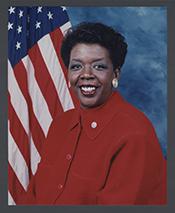
Mr. Speaker, I would like to thank the other side for agreeing to the unanimous consent, and I would like to thank my colleagues for giving me this opportunity. Mr. Speaker, I rise today in…
Mr. Speaker, I would like to thank the other side for agreeing to the unanimous consent, and I would like to thank my colleagues for giving me this opportunity.
Mr. Speaker, I rise today in celebration of the life of a great heroine of the civil rights movement, Rosa Parks, a woman who dared to make a difference.
As a child I traveled to Alabama. My mother was from Chilton County. I experienced the segregated South. I rode in the back of the bus. I used a colored restroom, and I went in the back doors. Thank God for Rosa Parks.
I remember one day getting on a bus between Clinton and Birmingham, and the bus driver would not take my bag and put it on the bus. And I said, Sir, this bus ain't going nowhere unless you put my bag on. And an older woman on the bus said, Girl, you better get on this bus and sit down. It is a long ride between Clinton, Alabama, and Birmingham.
There are few in history of this country that had the courage to stand up to the adversity with the dignity and strength of Rosa Parks. Her brave action in 1955 began a movement that would change the face of the Nation. Oftentimes history has said that her reason for refusing to get up was because her feet hurt. The truth is she was tired, tired of enduring injustices and tired of being a second class citizen. And as Fannie Lou Hamer said, ``Sick and tired of being sick and tired.'' So she decided to make a difference.
Rosa Parks' legacy of courage in the struggle for justice for African Americans in this country will be an inspiration for generations to come. I offer my sincere condolences to her family and friends at this time.
Mr. Speaker, I rise today in celebration of the life of a great heroine of the Civil Rights Movement, Rosa Parks. A woman who dared to make a difference.
As a child I traveled to Alabama and experienced the segregated South. I rode in the back of the bus, I used the colored restroom and I went into the back doors.
I remember riding the bus between Clanton and Birmingham and the bus driver refused to put my bag on. I told him the bus wasn't going anywhere until he put my bag on. An older woman said: ``Girl get on this bus, it's a long ride between Clanton and Birmingham.''
Thank God for Rosa Parks.
There are few in the history of this country who have had the courage to stand up to adversity with the dignity and strength of Rosa Parks. Her brave action in 1955, refusing to give up her seat on a Montgomery, Alabama bus to a white man, began a movement that would change the face of this Nation forever.
Oftentimes history has said that her reason for refusing to give up her seat was because her feet hurt, but that was not the case. The truth is, she was tired. Tired of enduring the injustices of the segregated South. Tired of being treated as a second-class citizen or as Fannie Lou Hamer would say, ``sick and tired of being sick and tired.'' So she decided to make a difference that day in Alabama.
Rosa Parks' legacy of courage in the struggle for justice for African Americans in this country will be an inspiration for generations to come. I offer my sincere condolences to her family and friends during this time.
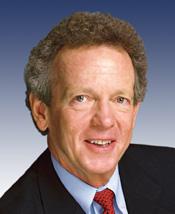
Mr. Speaker, I move to suspend the rules and pass the bill (H.R. 2967) to designate the Federal building located at 333 Mt. Elliott Street in Detroit, Michigan, as the ``Rosa Parks Federal…
Mr. Speaker, I move to suspend the rules and pass the bill (H.R. 2967) to designate the Federal building located at 333 Mt. Elliott Street in Detroit, Michigan, as the ``Rosa Parks Federal Building''.
Mr. Speaker, I ask unanimous consent that all Members may have 5 legislative days within which to revise and extend their remarks and include extraneous material on H.R. 2967.
Mr. Speaker, I yield myself such time as I may consume.
Mr. Speaker, H.R. 2967, introduced by Ms. Kilpatrick of Michigan, designates the Federal building located at 33 Mt. Elliott Street, Detroit, Michigan, as the ``Rosa Parks Federal Building.''
Rosa Parks, who passed away on Monday, is most well known for her simple, yet heroic act of defiance. Fifty years ago she refused to give up her seat on a segregated bus in Montgomery, Alabama. Rosa Parks was arrested, lost her job, and received numerous death threats for her actions. This simple act inspired further acts of civil disobedience and earned her the title of ``mother of the civil rights movement.''
Rosa Parks' dedication to fight for social and economic justice continued well beyond that monumental day in 1955. As a Secretary for the NAACP, she helped organize civil rights cases. She worked in the antiapartheid movement, and established the Rosa and Raymond Parks Institute for Self-Development in her adopted hometown of Detroit, Michigan. She spent the remainder of her life fighting against all forms of discrimination.
In 1999, Rosa Parks was named one of the 20 most influential and iconic figures of the 20th century by Time Magazine. She also received numerous awards for her contributions to the civil rights movement, including the Presidential Medal of Freedom and also the Congressional Gold Medal.
While Rosa Parks has already received significant recognition for her life's work, I believe that this is a fitting honor to a woman whose actions helped change our society for the better. I support this legislation, and I encourage my colleagues to do the same.
Mr. Speaker, I reserve the balance of my time.
Mr. Speaker, I yield 2 minutes to the gentleman from California (Mr. Rohrabacher).
Mr. Speaker, I thank the gentlewoman from the District of Columbia (Ms. Norton) for her comments and the comments of all of our colleagues tonight on both sides of the aisle.
I continue to support this bill, as I know everybody in this Chamber does.
Mr. Speaker, I yield back the balance of my time.
Mr. Speaker, I rise in support of the proposed legislation ``To designate the Federal building located at 333 Mt. Elliott Street in Detroit, Michigan, as the `Rosa Parks Federal Building'.'' More…
Mr. Speaker, I rise in support of the proposed legislation ``To designate the Federal building located at 333 Mt. Elliott Street in Detroit, Michigan, as the `Rosa Parks Federal Building'.''
More than 50 years ago, on December 1, 1955, Rosa Parks boarded her normal bus home and sat down in one of the ``colored'' aisles toward the back of the bus. Soon, the bus began to fill, and Rosa was ordered to vacate her seat to accommodate the white passengers. She simply but stubbornly refused.
This peaceful act of protest sparked a citywide boycott of the bus system by the African American community. Men, women and children of Montgomery, Alabama refrained from riding the bus and instead either walked, rode their bikes or carpooled to work. In an impressive show of strength and courage, the boycott endured for over a year, and people across the nation joined with those in Montgomery. After 381 days, the City bus line finally relented and desegregated the buses.
Four days after the initial incident on the bus, a young man stood up in front of a large audience, having just been appointed as the head of the boycott: ``There comes a time,'' the man said, ``that people get tired. We are here this evening to say to those who have mistreated us for so long, that we are tired, tired of being segregated and humiliated, tired of being kicked about by the brutal feet of oppression.'' The name of that young man spurred to action by Rosa Parks was Dr. Martin Luther King, Jr.
Rosa was found guilty that very same day of breaking the city's segregation law. It was over 50 years ago that Rosa Parks chose to peacefully but willfully stand up--or rather sit down--against the abhorrent laws that segregated this country. Let us honor and celebrate what Rosa Louise Parks helped this country accomplish half a century ago by urging for this federal building be named in her honor. But let us also remember that her fight is not over. Let this building, the ``Rosa Parks Federal Building,'' stand as a pillar of remembrance for this and future generations. Let this building always remind us of the battle she fought for freedom and equality, and the battles still being fought here and across the world today.
I support the proposed resolution for the foregoing reasons, and I urge my colleagues to follow suit.
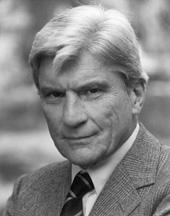
Mr. President, I thank my distinguished colleague. I take this opportunity to propound a unanimous consent request. It has been cleared on both sides. I ask unanimous consent that the Senate proceed…
Mr. President, I thank my distinguished colleague.
I take this opportunity to propound a unanimous consent request. It has been cleared on both sides.
I ask unanimous consent that the Senate proceed to the immediate consideration of H.R. 2967, received from the House.
Mr. President, I ask unanimous consent that the bill be read three times, passed, the motion to reconsider be laid upon the table, and any statements related thereto be printed in the Record.
Mr. President, last week the Senate addressed an identical piece of legislation offered by our distinguished colleagues from Michigan, Senators Stabenow and Levin. Senator Reid was very active in the consideration of that bill at that time. With the consent on that side and the consent of others on this side, I was successful in getting on an amendment that I had been working on for some 3 years, with Senator Leahy and others, to name the new annex to the District of Columbia Federal courthouse system in honor of William Bryant. I have known this outstanding African American much of my life, having served as a young U.S. attorney. He was one of our great teachers at that time, having been a senior U.S. attorney. He was the first African American assistant U.S. attorney, the first African American to become chief judge of the district court. He is 94 years old now and in senior status, and I thought it appropriate that the Senate pass that recognition. That bill by the Senator from Michigan, as amended by the Senator from Virginia, was passed by this Chamber last week. I have been assured by the Speaker of the House of Representatives that bill will be on tomorrow's consent calendar. So both bills will be acted upon in due course. This particular bill was introduced by Congresswoman Kilpatrick, in whose district the courthouse will be named. Therefore, it is appropriate that there be a companion piece of legislation.
I thank all those who participated in this and made it possible.
I yield the floor.
Show 3 more
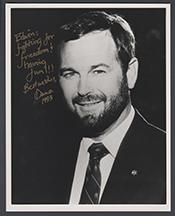
Mr. Speaker, I rise in support of this motion. I think it is important for conservatives and Republicans to speak up at this moment because they did not speak up back in the 1950s when they should…
Mr. Speaker, I rise in support of this motion. I think it is important for conservatives and Republicans to speak up at this moment because they did not speak up back in the 1950s when they should have. I think that this is a fitting moment for this conservative to offer his apology to all those who were active with Rosa Parks in the civil rights movement for not being as supportive as I should have been as well as other conservatives who I know.
At that time many conservatives were blinded by the stupidity of the arguments presented to us called ``States rights,'' which was a bunch of baloney, and we know that now. We know that the people who really were offering that argument, many of them had evil hearts and sinful hearts, and that they hate their fellow human beings and were trying to just oppose the efforts to perfect our country and to make it what our Founding Fathers and Mothers dreamed it would be, a land of liberty and justice for all.
Rosa Parks and the other activists in the civil rights movement at that time were doing their part to try to make our country better, to try to live up to its ideals. So as we name this Federal building, as we talk about this tonight and honor this great lady, I think it is fitting for those Republican conservatives to realize we did not do what was right back then. We recognize it, and we will make sure to do what is right in the future.
I thank the people who have spoken today. I thank the gentleman from California (Mr. Lantos) for reminding us of what hypocrisy really was, and that we really should not be hypocrites in our lives, and we should speak out strongly for wonderful people who gave their lives trying to make this country a better place.
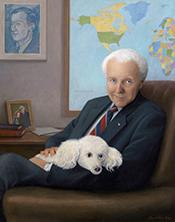
Mr. Speaker, I ask unanimous consent that time for debate be extended for an additional 10 minutes to be equally divided between both sides. This is a very important matter for the entire Nation. We…
Mr. Speaker, I ask unanimous consent that time for debate be extended for an additional 10 minutes to be equally divided between both sides. This is a very important matter for the entire Nation. We are honoring a heroine, a treasure.
Mr. Speaker, I view American history as a long process of closing the hypocrisy gap. When we first heard the words ``all men are created equal,'' they certainly were not
equal, and women were not even mentioned. And many of the people in that great generation of the Founding Fathers themselves owned slaves.
This long and painful process of closing the hypocrisy gap has been closed to a large extent because of the courage, the determination, the perseverance of giants like the one we are honoring today.
Rosa Parks is a national treasure. She has reeducated all of us in the value that we, in fact, are all created equal, men and women, people of all faiths, people of all pigmentation. This is a message that needs to be sent over and over again, and I am proud that this House this evening again reminds all of us that the hypocrisy gap is not yet fully closed. We still have some distance to go. But Rosa Parks is among those giants who closed that gap in large measure, and for that we are eternally grateful.
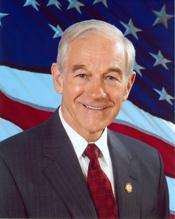
Mr. Speaker, I support S. 1285, a bill naming a federal building in Detroit, Michigan after Rosa Parks and I join my colleagues in paying tribute to Mrs. Parks's courage and high ideals. Rosa Parks's…
Mr. Speaker, I support S. 1285, a bill naming a federal building in Detroit, Michigan after Rosa Parks and I join my colleagues in paying tribute to Mrs. Parks's courage and high ideals. Rosa Parks's simple act of refusing to get up from her seat to comply with an unjust law inspired a movement that brought an end to state-mandated racial segregation. Mrs. Parks was inspired to challenge government power by her conviction that laws that treated African-Americans as second-class citizens violated the natural rights all humans receive from their creator--rights which no government can justly infringe.
Rosa Parks's use of peaceful means of civil disobedience to challenge unjust laws stands as a shinning example of how peaceful means, such as civil disobedience and boycotts, can overcome seemingly insurmountable obstacles and advance the cause of liberty. The example of Rosa Parks shows how an individual with the courage and conviction to stand alone against injustice can make a difference by inspiring others to take a stand. I hope all friends of freedom will draw inspiration from the example of Rosa Parks.
Bill Text
5 versions available
        [Congressional Bills 109th Congress]
[From the U.S. Government Publishing Office]
[H.R. 2967 Enrolled Bill (ENR)]

H.R.2967

One Hundred Ninth Congress

of the

United States of America

AT THE FIRST SESSION

Begun and held at the City of Washington on Tuesday,
the fourth day of January, two thousand and five

An Act

To designate the Federal building located at 333 Mt. Elliott Street in
Detroit, Michigan, as the ``Rosa Parks Federal Building''.

Be it enacted by the Senate and House of Representatives of the
United States of America in Congress assembled,

SECTION 1. DESIGNATION.

The Federal building located at 333 Mt. Elliott Street in Detroit,
Michigan, shall be known and designated as the ``Rosa Parks Federal
Building''.

SEC. 2. REFERENCES.

Any reference in a law, map, regulation, document, paper, or other
record of the United States to the Federal building referred to in
section 1 shall be deemed to be a reference to the ``Rosa Parks Federal
Building''.

Speaker of the House of Representatives.

Vice President of the United States and
President of the Senate.