National Capital Transportation Amendments Act of 2006
 Rep. Tom Davis (R-VA)
Legislative Activity
Stay on top of the latest movement without scrolling through every action
Committee on Homeland Security and Governmental Affairs referred to Subcommittee on Oversight of Government Management, the Federal Workforce, and the District of Columbia.
July 19, 2006
View full timeline
Introduced in House
July 28, 2005
Referred to the House Committee on Government Reform.
July 28, 2005
Committee Consideration and Mark-up Session Held.
October 20, 2005
Ordered to be Reported (Amended) by Voice Vote.
October 20, 2005
Reported (Amended) by the Committee on Government Reform. H. Rept. 109-440.
April 26, 2006
Placed on the Union Calendar, Calendar No. 245.
April 26, 2006
Mr. Davis, Tom moved to suspend the rules and pass the bill, as amended.
July 17, 2006 • 2:25 PM
Considered under suspension of the rules. (consideration: CR H5234-5240)
July 17, 2006 • 2:26 PM
DEBATE - The House proceeded with forty minutes of debate on H.R. 3496.
July 17, 2006 • 2:26 PM
At the conclusion of debate, the Yeas and Nays were demanded and ordered. Pursuant to the provisions of clause 8, rule XX, the Chair announced that further proceedings on the motion would be postponed.
July 17, 2006 • 3:09 PM
Considered as unfinished business. (consideration: CR H5246)
July 17, 2006 • 6:56 PM
Passed/agreed to in House: On motion to suspend the rules and pass the bill, as amended Agreed to by the Yeas and Nays: (2/3 required): 242 - 120 (Roll no. 376).(text: CR H5234-5235)
July 17, 2006 • 7:06 PM
On motion to suspend the rules and pass the bill, as amended Agreed to by the Yeas and Nays: (2/3 required): 242 - 120 (Roll no. 376). (text: CR H5234-5235)
July 17, 2006 • 7:06 PM
Motion to reconsider laid on the table Agreed to without objection.
July 17, 2006 • 7:06 PM
Received in the Senate and Read twice and referred to the Committee on Homeland Security and Governmental Affairs.
July 18, 2006
Committee on Homeland Security and Governmental Affairs referred to Subcommittee on Oversight of Government Management, the Federal Workforce, and the District of Columbia.
July 19, 2006
Voting History
1 vote recorded • Roll call available
Floor Debate
14 membersWhat members said about H.R. 3496 on the floor



 +9
+9
Floor Debate
14 membersWhat members said about H.R. 3496 on the floor
Mr. Speaker, is the gentlewoman opposed to the motion? If not, I request the time in opposition. I am, Mr. Speaker. Mr. Speaker, I yield myself such time as I may consume. (Mr. HENSARLING asked and…
Mr. Speaker, I move to suspend the rules and pass the bill (H.R. 3496) to amend the National Capital Transportation Act of 1969 to authorize additional Federal contributions for maintaining and…
Mr. Speaker, I am not opposed to the legislation, nor should anybody else in this Chamber be. Mr. Speaker, when I was asked did I want to accept time in opposition, when I said nor should any Member…
Mr. Speaker, I want to thank my colleague, Mr. Davis, the chairman of the Government Reform Committee, for his leadership on this very important national issue. As my colleague Ms. Norton pointed…
Mr. Speaker, I thank the chairman of the Government Reform Committee and applaud him for his leadership, as well as Mr. Wolf's, particularly when Mr. Wolf was chairman of the Appropriations…
Show 8 more

Mr. Speaker, I rise in support of the bill. The bill brings accountability. I have a note here and I quote, ``CBO expects that the proposed amendment would not authorize any additional…
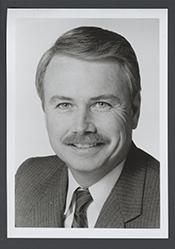
Mr. Speaker, I was unable to vote on following bills on July 17, 2006: H.R. 3729, Federal Judiciary Emergency Tolling Act (roll No. 377): Had I been present, I would have voted ``aye.'' H.R. 3496, To…

Mr. Speaker, I was unable to vote during the following rollcall votes. Had I been present, I would have voted as indicated below: Rollcall No. 375, H.R. 3085--To amend the National Trails System Act…

Mr. Speaker, on Monday, July 17, 2006, I could not be present for rollcall votes 375, 376, and 377 due to a previous commitment in my district. Had I been present, I would have cast the following…
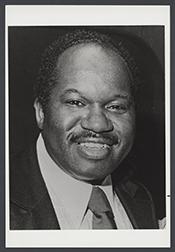
Mr. Speaker, I was absent on Monday July 17, 2006 due to unavoidable circumstances in my Congressional District. Had I been present, I would have voted: ``yea'' to H.R. 3085--To amend the National…

Mr. Speaker, I regret that, due to transportation problems, I missed 3 votes on July 17, 2006. Had I been present I would have voted ``yea'' on H.R. 3085, to amend the National Trails System Act to…

Mr. Speaker, I was absent from the House floor during today's votes on H.R. 3085, regarding the Trail of Tears National Historic Trail; H.R. 3496, the National Capital Transportation Amendments Act;…
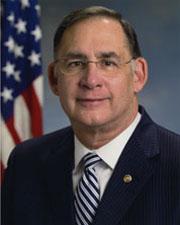
Mr. Speaker, I was absent from votes today, July 17, 2006, due to a delay in my flight back to Washington, DC. Had I been present, I would have voted in the following manner: H.R. 3085-- ``yea'';…
Show 1 more

Mr. Speaker, on Monday, July 17, 2006, I missed rollcall votes Nos. 375, 376, and 377. Had I been present, I would have voted ``aye'' on H.R. 3085, ``nay'' on H.R. 3496, and ``aye'' on H.R. 3279.
Bill Text
4 versions available
        [Congressional Bills 109th Congress]
[From the U.S. Government Publishing Office]
[H.R. 3496 Referred in Senate (RFS)]

109th CONGRESS
2d Session
H. R. 3496

_______________________________________________________________________

IN THE SENATE OF THE UNITED STATES

July 18, 2006

Received; read twice and referred to the Committee on Homeland Security
and Governmental Affairs

_______________________________________________________________________

AN ACT

To amend the National Capital Transportation Act of 1969 to authorize
additional Federal contributions for maintaining and improving the
transit system of the Washington Metropolitan Area Transit Authority,
and for other purposes.

Be it enacted by the Senate and House of Representatives of the
United States of America in Congress assembled,

SECTION 1. SHORT TITLE; FINDINGS.

(a) Short Title.--This Act may be cited as the ``National Capital
Transportation Amendments Act of 2006''.
(b) Findings.--Congress finds as follows:
(1) Metro, the public transit system of the Washington
metropolitan area, is essential for the continued and effective
performance of the functions of the Federal Government, and for
the orderly movement of people during major events and times of
regional or national emergency.
(2) On 3 occasions, Congress has authorized appropriations
for the construction and capital improvement needs of the
Metrorail system.
(3) Additional funding is required to protect these
previous Federal investments and ensure the continued
functionality and viability of the original 103-mile Metrorail
system.

SEC. 2. FEDERAL CONTRIBUTION FOR CAPITAL PROJECTS FOR WASHINGTON
METROPOLITAN AREA TRANSIT SYSTEM.

The National Capital Transportation Act of 1969 (sec. 9-1111.01 et
seq., D.C. Official Code) is amended by adding at the end the following
new section:

``authorization of additional federal contribution for capital and
preventive maintenance projects

``Sec. 18.  (a) Authorization.--Subject to the succeeding
provisions of this section, the Secretary of Transportation is
authorized to make grants to the Transit Authority, in addition to the
contributions authorized under sections 3, 14, and 17, for the purpose
of financing in part the capital and preventive maintenance projects
included in the Capital Improvement Program approved by the Board of
Directors of the Transit Authority.
``(b) Use of Funds.--The Federal grants made pursuant to the
authorization under this section shall be subject to the following
limitations and conditions:
``(1) The work for which such Federal grants are authorized
shall be subject to the provisions of the Compact (consistent
with the amendments to the Compact described in subsection
(d)).
``(2) Each such Federal grant shall be for 50 percent of
the net project cost of the project involved, and shall be
provided in cash from sources other than Federal funds or
revenues from the operation of public mass transportation
systems. Consistent with the terms of the amendment to the
Compact described in subsection (d)(1), any funds so provided
shall be solely from undistributed cash surpluses, replacement
or depreciation funds or reserves available in cash, or new
capital.
``(c) Applicability of Requirements For Mass Transportation Capital
Projects Receiving Funds Under Federal Transportation Law.--Except as
specifically provided in this section, the use of any amounts
appropriated pursuant to the authorization under this section shall be
subject to the requirements applicable to capital projects for which
funds are provided under chapter 53 of title 49, United States Code,
except to the extent that the Secretary of Transportation determines
that the requirements are inconsistent with the purposes of this
section.
``(d) Amendments to Compact.--No amounts may be provided to the
Transit Authority pursuant to the authorization under this section
until the Transit Authority notifies the Secretary of Transportation
that each of the following amendments to the Compact (and any further
amendments which may be required to implement such amendments) have
taken effect:
``(1) An amendment requiring all payments made by the local
signatory governments for the Transit Authority and for the
cost of operating and maintaining the adopted regional system
are made from amounts derived from dedicated funding sources.
For purposes of this paragraph, a `dedicated funding source' is
any source of funding which is earmarked and required under
State or local law to be used for payments to the Transit
Authority.
``(2) An amendment establishing the Office of the Inspector
General of the Transit Authority in accordance with section 3
of the National Capital Transportation Amendments Act of 2006.
``(3) An amendment expanding the Board of Directors of the
Transit Authority to include 4 additional Directors appointed
by the Administrator of General Services, of whom 2 shall be
nonvoting and 2 shall be voting, and requiring one of the
voting members so appointed to be a regular passenger and
customer of the bus or rail service of the Transit Authority.
``(e) Amount.--There are authorized to be appropriated for grants
under this section such sums as are made available to the Secretary of
Treasury to make payments to the Transit Authority pursuant to section
9(k) of the Outer Continental Shelf Lands Act (43 U.S.C. 1338).
``(f) Availability.--Amounts appropriated pursuant to the
authorization under this section--
``(1) shall remain available until expended; and
``(2) shall be in addition to, and not in lieu of, amounts
available to the Transit Authority under chapter 53 of title
49, United States Code, or any other provision of law.''.

SEC. 3. WASHINGTON METROPOLITAN AREA TRANSIT AUTHORITY INSPECTOR
GENERAL.

(a) Establishment of Office.--
(1) In general.--The Washington Metropolitan Area Transit
Authority (hereafter referred to as the ``Transit Authority'')
shall establish in the Transit Authority the Office of the
Inspector General (hereafter in this section referred to as the
``Office''), headed by the Inspector General of the Transit
Authority (hereafter in this section referred to as the
``Inspector General'').
(2) Definition.--In paragraph (1), the ``Washington
Metropolitan Area Transit Authority'' means the Authority
established under Article III of the Washington Metropolitan
Area Transit Authority Compact (Public Law 89-774).
(b) Inspector General.--
(1) Appointment.--The Inspector General shall be appointed
by the vote of a majority of the Board of Directors of the
Transit Authority, and shall be appointed without regard to
political affiliation and solely on the basis of integrity and
demonstrated ability in accounting, auditing, financial
analysis, law, management analysis, public administration, or
investigations, as well as familiarity or experience with the
operation of transit systems.
(2) Term of service.--The Inspector General shall serve for
a term of 5 years, and an individual serving as Inspector
General may be reappointed for not more than 2 additional
terms.
(3) Removal.--The Inspector General may be removed from
office prior to the expiration of his term only by the
unanimous vote of all of the members of the Board of Directors
of the Transit Authority, and the Board shall communicate the
reasons for any such removal to the Governor of Maryland, the
Governor of Virginia, the Mayor of the District of Columbia,
the chair of the Committee on Government Reform of the House of
Representatives, and the chair of the Committee on Homeland
Security and Governmental Affairs of the Senate.
(c) Duties.--
(1) Applicability of duties of inspector general of
executive branch establishment.--The Inspector General shall
carry out the same duties and responsibilities with respect to
the Transit Authority as an Inspector General of an
establishment carries out with respect to an establishment
under section 4 of the Inspector General Act of 1978 (5 U.S.C.
App. 4), under the same terms and conditions which apply under
such section.
(2) Conducting annual audit of financial statements.--The
Inspector General shall be responsible for conducting the
annual audit of the financial accounts of the Transit
Authority, either directly or by contract with an independent
external auditor selected by the Inspector General.
(3) Reports.--
(A) Semiannual reports to transit authority.--The
Inspector General shall prepare and submit semiannual
reports summarizing the activities of the Office in the
same manner, and in accordance with the same deadlines,
terms, and conditions, as an Inspector General of an
establishment under section 5 of the Inspector General
Act of 1978 (5 U.S.C. App. 5). For purposes of applying
section 5 of such Act to the Inspector General, the
Board of Directors of the Transit Authority shall be
considered the head of the establishment, except that
the Inspector General shall transmit to the General
Manager of the Transit Authority a copy of any report
submitted to the Board pursuant to this paragraph.
(B) Annual reports to local signatory governments
and congress.--Not later than January 15 of each year,
the Inspector General shall prepare and submit a report
summarizing the activities of the Office during the
previous year, and shall submit such reports to the
Governor of Maryland, the Governor of Virginia, the
Mayor of the District of Columbia, the chair of the
Committee on Government Reform of the House of
Representatives, and the chair of the Committee on
Homeland Security and Governmental Affairs of the
Senate.
(4) Investigations of complaints of employees and
members.--
(A) Authority.--The Inspector General may receive
and investigate complaints or information from an
employee or member of the Transit Authority concerning
the possible existence of an activity constituting a
violation of law, rules, or regulations, or
mismanagement, gross waste of funds, abuse of
authority, or a substantial and specific danger to the
public health and safety.
(B) Nondisclosure.--The Inspector General shall
not, after receipt of a complaint or information from
an employee or member, disclose the identity of the
employee or member without the consent of the employee
or member, unless the Inspector General determines such
disclosure is unavoidable during the course of the
investigation.
(C) Prohibiting retaliation.--An employee or member
of the Transit Authority who has authority to take,
direct others to take, recommend, or approve any
personnel action, shall not, with respect to such
authority, take or threaten to take any action against
any employee or member as a reprisal for making a
complaint or disclosing information to the Inspector
General, unless the complaint was made or the
information disclosed with the knowledge that it was
false or with willful disregard for its truth or
falsity.
(5) Independence in carrying out duties.--Neither the Board
of Directors of the Transit Authority, the General Manager of
the Transit Authority, nor any other member or employee of the
Transit Authority may prevent or prohibit the Inspector General
from carrying out any of the duties or responsibilities
assigned to the Inspector General under this section.
(d) Powers.--
(1) In general.--The Inspector General may exercise the
same authorities with respect to the Transit Authority as an
Inspector General of an establishment may exercise with respect
to an establishment under section 6(a) of the Inspector General
Act of 1978 (5 U.S.C. App. 6(a)), other than paragraphs (7),
(8), and (9) of such section.
(2) Staff.--
(A) Assistant inspector generals and other staff.--
The Inspector General shall appoint and fix the pay
of--
(i) an Assistant Inspector General for
Audits, who shall be responsible for
coordinating the activities of the Inspector
General relating to audits;
(ii) an Assistant Inspector General for
Investigations, who shall be responsible for
coordinating the activities of the Inspector
General relating to investigations; and
(iii) such other personnel as the Inspector
General considers appropriate.
(B) Independence in appointing staff.--No
individual may carry out any of the duties or
responsibilities of the Office unless the individual is
appointed by the Inspector General, or provides
services procured by the Inspector General, pursuant to
this paragraph. Nothing in this subparagraph may be
construed to prohibit the Inspector General from
entering into a contract or other arrangement for the
provision of services under this section.
(C) Applicability of transit system personnel
rules.--None of the regulations governing the
appointment and pay of employees of the Transit System
shall apply with respect to the appointment and
compensation of the personnel of the Office, except to
the extent agreed to by the Inspector General. Nothing
in the previous sentence may be construed to affect
subparagraphs (A) through (B).
(3) Equipment and supplies.--The General Manager of the
Transit Authority shall provide the Office with appropriate and
adequate office space, together with such equipment, supplies,
and communications facilities and services as may be necessary
for the operation of the Office, and shall provide necessary
maintenance services for such office space and the equipment
and facilities located therein.
(e) Transfer of Functions.--To the extent that any office or entity
in the Transit Authority prior to the appointment of the first
Inspector General under this section carried out any of the duties and
responsibilities assigned to the Inspector General under this section,
the functions of such office or entity shall be transferred to the
Office upon the appointment of the first Inspector General under this
section.

SEC. 4. RESTRICTIONS ON DISPOSITION OF CERTAIN PROPERTIES.

(a) Prohibition on Disposition of Certain Property.--
(1) In general.--The Washington Metropolitan Area Transit
Authority (hereafter in this section referred to as the
``Transit Authority'') may not sell, lease, or otherwise convey
or dispose of the property described in paragraph (2) unless
the Transit Authority meets each of the following conditions:
(A) The Transit Authority has held a separate,
additional public hearing after October 20, 2005,
regarding the disposition of the property at which
members of the general public had the opportunity to
comment.
(B) The Transit Authority has submitted a report to
the Committee on Government Reform of the House of
Representatives and the Committee on Homeland Security
and Governmental Affairs of the Senate on the costs and
benefits associated with the disposition of the
property, the impact of the disposition on parking
facilities available at the Vienna Metrorail station,
and the effect of the disposition on the capacity of
the Vienna Metrorail station and the entire Metrorail
system.
(2) Property described.--The property described in this
subsection consists of approximately 3.75 acres located in
Fairfax County, Virginia, and is contained in all or part of
the following parcels on the Fairfax County tax map:
(A) Parcel 48--1((1)), 90 Portion.
(B) Parcel 48--1((1)), 91B Portion.
(C) Parcel 48--1((6)), 7A.
(D) Parcel 48--1((6)), 8B.
(E) Parcel 48--1((24)), 38A.
(b) Conditions For Disposition of Certain Property.--
(1) In general.--The Transit Authority may not sell, lease,
or otherwise convey or dispose of the property described in
paragraph (2) unless the Transit Authority meets each of the
following conditions:
(A) The Transit Authority has met with the Mayor
and members of the Council of the City of Takoma Park,
Maryland, and community representatives to discuss each
of the following issues related to the disposition of
such property:
(i) The movement of buses and other
vehicles, pedestrians, and bicycles to and from
the Takoma Park Metrorail station.
(ii) The provision of bus bays, based on
recommendations of the Transit Authority and
the Maryland Transit Administration's Ride-On
program.
(iii) The enhancement of public green space
on the property, based on the Central District
Plan for Takoma DC.
(B) The Transit Authority will work with residents
and elected officials of Takoma Park, Maryland, and the
Takoma area of the District of Columbia throughout the
planning phase of the development of such property.
(C) The Transit Authority has submitted a statement
to the Committee on Government Reform of the House of
Representatives and the Committee on Homeland Security
and Governmental Affairs of the Senate certifying that
the Transit Authority has met the conditions described
in subparagraphs (A) and (B).
(2) Property described.--The property described in this
paragraph consists of Lots 820, 821, 822, 823, 829, 831, 832,
833, 839, 840, 841, 845, 846, 847, 848, 849, 850, and 851 in
Square 3352 and Lots 811, 812, and 813 in Square 3353 of the
District of Columbia Real Property Assessment Database.
(c) Restrictions on Development of Certain Properties.--
(1) Restriction.--The Transit Authority may not sell,
lease, or otherwise convey any of the real property described
in paragraph (2) other than in accordance with a development
plan for the property which meets the following requirements:
(A) The plan shall require that any portion of the
property used for residential purposes shall be used
only for owner-occupied, multi-family dwellings.
(B) The plan must provide for the use of a portion
of the property for commercial purposes.
(C) The plan shall be developed in consultation
with appropriate representatives of the local
governments and communities for the area in which the
property is located.
(2) Property described.--The property described in this
paragraph is any real property of the Transit Authority which
is located within one mile of the Largo Town Center Metro Rail
Station.
(d) No Effect on Other Authorities.--Except as specifically
provided, nothing in this section may be construed to affect any law,
rule, or regulation governing the development or disposition of real
property of the Transit Authority.

SEC. 5. STUDY AND REPORT BY COMPTROLLER GENERAL.

(a) Study.--The Comptroller General shall conduct a study on the
use of the funds provided under section 18 of the National Capital
Transportation Act of 1969 (as added by this Act).
(b) Report.--Not later than 3 years after the date of the enactment
of this Act, the Comptroller General shall submit a report to the
Committee on Government Reform of the House of Representatives and the
Committee on Homeland Security and Governmental Affairs of the Senate
on the study conducted under subsection (a).

Passed the House of Representatives July 17, 2006.

Attest:

KAREN L. HAAS,

Clerk.