To redesignate the Mason Neck National Wildlife Refuge in Virginia as the Elizabeth Hartwell Mason Neck National Wildlife Refuge.

Legislative Activity
Stay on top of the latest movement without scrolling through every action
Became Public Law No: 109-269.
August 12, 2006
View full timeline
Introduced in House
September 7, 2005
Referred to the House Committee on Resources.
September 7, 2005
Referred to the Subcommittee on Fisheries and Oceans.
September 12, 2005
Subcommittee on Fisheries and Oceans Discharged.
March 29, 2006
Committee Consideration and Mark-up Session Held.
March 29, 2006
Reported by the Committee on Resources. H. Rept. 109-433.
April 25, 2006
Placed on the House Calendar, Calendar No. 166.
April 25, 2006
Mr. Radanovich moved to suspend the rules and pass the bill.
May 16, 2006 • 2:30 PM
Considered under suspension of the rules. (consideration: CR H2607-2608)
May 16, 2006 • 2:31 PM
DEBATE - The House proceeded with forty minutes of debate on H.R. 3682.
May 16, 2006 • 2:31 PM
Passed/agreed to in House: On motion to suspend the rules and pass the bill Agreed to by voice vote.(text: CR H2606-2607)
May 16, 2006 • 2:36 PM
On motion to suspend the rules and pass the bill Agreed to by voice vote. (text: CR H2606-2607)
May 16, 2006 • 2:36 PM
Motion to reconsider laid on the table Agreed to without objection.
May 16, 2006 • 2:36 PM
Received in the Senate and Read twice and referred to the Committee on Environment and Public Works.
May 17, 2006
Senate Committee on Environment and Public Works discharged by Unanimous Consent.(consideration: CR S8552)
August 1, 2006
Senate Committee on Environment and Public Works discharged by Unanimous Consent. (consideration: CR S8552)
August 1, 2006
Passed Senate without amendment by Unanimous Consent.
August 1, 2006
Message on Senate action sent to the House.
August 2, 2006
Presented to President.
August 2, 2006
Signed by President.
August 12, 2006
Became Public Law No: 109-269.
August 12, 2006
Floor Debate
21 membersWhat members said about H.R. 3682 on the floor
 SJL
SJL PG
PG LMS
LMS JN
JN FJS+16
Floor Debate
21 membersWhat members said about H.R. 3682 on the floor
Mr. Speaker, I am outraged by the incident that the last speaker mentioned. I do not know why there seems to be the ignoring of the obvious. The amendments that Democrats offered in the committee had…
Mr. Speaker, I am outraged by the incident that the last speaker mentioned. I do not know why there seems to be the ignoring of the obvious. The amendments that Democrats offered in the committee had nothing to do with their compassion and lack thereof. In fact, it was to enhance and give a broader opportunity for a tragedy that occurred like that, which is really people with no feelings and no heart. Those are not relatives of that young woman. That was not her parent. That was almost a criminal act. That has nothing to do with the point that the Democrats were trying to make, which is give the opportunity for a greater latitude of those who can counsel and comfort this young woman.
I do not know where the parent was in this instance, but maybe if a grandparent or a godparent was there or a clergy was there, this terrible tragedy that occurred with people who were not her relatives might have been avoided.
So this distorted debate on the floor of the House mischaracterizes many of those who raise these very issues in the Committee on the Judiciary.
So I not only stand outraged for the tragedy that was just articulated by the previous speaker, a child forced to get on abortion, on the floor by the other side of the aisle, but I am equally outraged at the misconstruing of the amendment offered in the Judiciary Committee suggesting that they exempted child predators. The process that the Committee on the Judiciary Committee has used, and my friends on the other side of the aisle have used deserve absolute disregard, and that is to distort, misquote, ``miswrite'', abuse and mischaracterize the amendments that were offered by a number of members of the Committee on the Judiciary. Mine happened to be one. We did not offer amendments to protect child predator rather our amendments offered a safety net to that minor child.
I thank the gentlewoman from New York (Ms. Slaughter); I thank the ranking member, not only for her passion but also her articulation of the long-standing damage. We are Americans, too, and we are also human beings. The Republican staff well knows that somebody somewhere, and forget about an election, but people who you go home to your district, to be able to hold this document up and say that Sheila Jackson-Lee deals with child predators, how dare you do that. It is an outrage. The only issue my amendment dealt with was to give the minor child more protection.
The only thing that I think is appropriate is for the chairman of the full committee to exercise some sort of comity and collegiality to remove this abusive language.
First of all, the specifics of my amendment says that I offered an amendment that would have exempted sexual predators from prosecution under the bill. My amendment dealt specifically with allowing clergy, godparents, aunts and uncles or first cousins, minimally speaking; and then I offered a GAO study. The description in the report language also says I have a GAO study dealing with clergy and godparents. This is an abuse of power and incorrect. And I know this is inside the ballpark, but it also says if you have the votes for this legislation, win fair and square. Do not win by maligning colleagues and defeating the purpose of the rules of this House. Vote this rule down.
Mr. Speaker, I rise in opposition to the restrictive H. Res. 236, the rule governing the debate over H.R. 748, the Child Interstate Abortion Notification Act of 2005--legislation that has come to the Congress before for consideration but that did not pass because of its overwhelming contentious nature. Today is no different.
I thank my Democrat colleagues of the Committee on Rules for their efforts to move this House to bring decorum and professionalism to the committee process. The report as to amendments offered by Mr. Scott, Mr. Nadler, and me was materially inaccurate to the point of being offensive.
My amendment, in particular, made no mention of sexual predators. One can infer virtually anything about amendments until they are taken into context. In fact, one can infer a myriad of negative things from what is not included in the base legislation. The report was, frankly, ludicrous as to this matter. We must take it upon ourselves to accurately interpret our colleagues' amendments; lest we turn ourselves into a body of mud-slinging, vindictive individuals.
As Chair of the Children's Caucus, the report has risen to an inflammatory inference that must be corrected because justice requires it. However, one thing about this debate is different. The manner in which our committee colleagues have elected to report out the amendments that were offered by Mr. Scott, Mr. Nadler, and me has morphed from the simple reiteration of the precise idea of the amendment two years ago when we last debated this to an abomination that insinuates that our amendments would protect sexual predators. As my colleague and partner in offering the amendment I will present today stated before the Committee on Rules, our committee colleagues have behaved in an unfair manner and have made a clear partisan attack when the lives of minor females are at stake.
H. Res. 236, while ruling the amendments of Mr. Scott and of Mr. Nadler and me in order, unreasonably restricts the debate on the highly controversial base bill. The Child Interstate Abortion Notification Act (CIANA), while good in its intention, was written with several areas of vagueness, overly punitive nature, and constitutional violations that very much deserve debate in order to save lives and to obviate the need for piles upon piles of legal pleadings.
The mandatory parental-involvement laws already create a draconian framework under which a young woman loses many of her civil rights. My state, Texas, is one of 23 states (AL, AZ, AR, GA, IN, KS, KY, LA, MA, MI, MN, MS, MO, NE, ND, PA, RI, SD, TN, UT, TX, VA, WY) that follows old provisions of the ``Child Custody Protection Act'' which make it a federal crime for an adult to accompany a minor across state lines for abortion services if a woman comes from a state with a strict parental- involvement mandate. There are 10 states (CO, DE, lA, ME, MD, NC, OH, SC, WI, WV) that are ``non-compliant,'' or require some parental notice but other adults may be notified, may give consent, or the requirement may be waived by a health care provider in lieu of the parental consent. Finally, there are 17 states (AK, CA, CT, DC, FL, ID, IL, MT, NV, NH, NJ, NM, NY, OK, OR, VT, WA) that have no law restricting a woman's access to abortion in this case. The base bill, if passed, would take away the States' rights to make their own determination as to legislating the abortion issue for minors with respect to parental notification.
My amendment to the Child Interstate Abortion Notification Act, would change the prohibitions to exempt grandparents of the minor or clergy persons. This must be done because some minors want the counsel of a responsible adult, and are unable to turn to their parents. In Idaho, a 13-year-old girl named Spring Adams was shot to death by her father after he learned that she planned to terminate a pregnancy caused by his acts of incest. This is an exact situation where the help of a grandparent or clergy would have been more helpful. Spring Adams may still be with us
today if she could have found someone more compassionate and caring to confide in.
H.R. 748, as drafted, will not improve family communication or help young women facing crisis pregnancies. We all hope that loving parents will be involved when their daughter faces a crisis pregnancy. Every parent hopes that a child confronting a crisis will seek the advice and counsel of those who care for her most and know her best. In fact, even in the absence of laws mandating parental involvement, many young women do turn to their parents when they are considering an abortion. One study found that 61 percent of parents in states without mandatory parental consent or notice laws knew of their daughter's pregnancy.
Unfortunately, some young women cannot involve their parents because they come from homes where physical violence or emotional abuse is prevalent or because their pregnancies are the result of incest. In these situations, the government cannot force healthy family communication where it does not already exist--and attempts to do so can have tragic consequences for some girls.
Major medical associations--including the American Medical Association, the American College of Obstetricians and Gynecologists, the American College of Physicians, and the American Public Health Association--all have longstanding policies opposing mandatory parental-involvement laws because of the dangers they pose to young women and the need for confidential access to physicians. These physicians see young ladies on a daily basis and hear their stories. They would not protest this law unless they felt there were severe stakes.
CIANA criminalizes caring adults--including grandparents of the minor, who attempt to assist young women facing crisis pregnancies. In one study, 93 percent of minors who did not involve a parent in their decision to obtain an abortion were still accompanied by someone to the doctor's office. If CIANA becomes law, a person could be prosecuted for accompanying a minor to a neighboring state, even if that person does not intend, or even know, that the parental-involvement law of the state of residence has not been followed. Although legal abortion is very safe, it is typically advisable to accompany any patient undergoing even minor surgery. Without the Jackson Lee-Nadler Amendment, a grandmother could be subject to criminal charges for accompanying her granddaughter to an out-of-state facility--even if the facility was the closest to the young woman's home and they were not attempting to evade a parental involvement law.
In a statement given by Dr. Warren Seigel, a member of the Physician for Reproductive Choice and Health, to the House Judiciary Subcommittee on the Constitution, he says, ``I recognize that parents ideally should be--and usually are--involved in health decisions regarding their children. However, the Child Interstate Abortion Notification Act does nothing to promote such communication. Instead, CIANA places incredible burdens on both young women and physicians; infringes on the rights of adolescents to health care that does not violate their safety and health; makes caring family, friends and doctors criminals; and could be detrimental to the health and emotional well-being of all patients.''
Although this legislation is supposedly aimed at increasing parent- child communication, the government cannot mandate healthy families and, indeed, it is dangerous to attempt to do so. Research has shown that the overwhelming majority of adolescents already tell their parents before receiving an abortion. In fact, the younger the woman is, the more likely she is to tell her parent. The American Academy of Pediatrics, a national medical organization representing the 60,000 physician leaders in pediatric medicine--of which I am a member and leader--has adopted the following statement regarding mandatory parental notification:
Adolescents should be strongly encouraged to involve their
parents and other trusted adults in decisions regarding
pregnancy termination, and the majority of them voluntarily
do so. Legislation mandating parental involvement does not
achieve the intended benefit of promoting family
communication, but it does increase the risk of harm to the
adolescent by delaying access to appropriate medical care.
It is important to consider why some young women cannot inform their parents. The threat of physical or emotional abuse upon disclosure of the pregnancy to their parents or a pregnancy that is the result of incest make it impossible for these adolescents to inform their parents. My amendment would allow other trusted adults to be a part of this process. Support the Jackson Lee-Nadler amendment.
Mr. Speaker, by direction of the Committee on Rules, I call up House Resolution 236 and ask for its immediate consideration. Mr. Speaker, for the purpose of debate only, I yield the customary 30…
Mr. Speaker, by direction of the Committee on Rules, I call up House Resolution 236 and ask for its immediate consideration.
Mr. Speaker, for the purpose of debate only, I yield the customary 30 minutes to the gentlewoman from New York (Ms. Slaughter), pending which I yield myself such time as I may consume. During consideration of this resolution, all time yielded is for the purpose of debate only.
Mr. Speaker, this is a structured rule providing for consideration of H.R. 748, the Child Interstate Abortion Notification Act. The rule waives all points of order against consideration of the bill, it provides that the amendment in the nature of a substitute recommended by the Committee on the Judiciary now printed in the bill, shall be considered as an original bill for the purpose of an amendment.
It makes in order only those amendments printed in the Committee on Rules report accompanying the resolution; it provides that the amendments printed in the report may be offered only in the order printed in the report; may be offered only by a Member designated in the report; shall be considered as read; shall be debatable for the time specified in the report equally divided and controlled by the proponent and an opponent; it shall not be subject to an amendment and shall not be subject to a demand for the division of the question in the House or in the committee of the whole. It waives all points of order against the amendments printed in the report, and it provides one motion to recommit with or without instructions.
Mr. Speaker, I would like to take this opportunity to recognize and to thank the gentlewoman from Florida (Ms. Ros-Lehtinen) for her dedication and leadership, not only on this bill, but also on all matters concerning the well-being and defense of our children. She truly has made this fight her own and I would like to applaud her for her hard work.
Mr. Speaker, I fear that the opponents of this bill will demagogue it as an assault on a woman's right to choose, but this bill has absolutely nothing, let me repeat, nothing to do with a woman's right to choose. Rather, this bill ensures that no minor is deprived of any protection according to not only her but also her parents under the laws of her State.
H.R. 748 is a commonsense bill that will prohibit the transportation of a minor across the State line to obtain an abortion when the child's home State requires parental consent. This bill makes an exception in those extremely rare cases in which the abortion is medically necessary to save the life of the minor. Also, this bill makes another exception allowing for judicial bypass.
This bill also affirms the responsibility of a physician prior to performing an abortion on a minor from another State to make sure that they are acting in accordance with the laws of her State.
Having practiced as an OB-GYN for nearly 30 years, I am uniquely qualified to discuss the medical and legal obligations of a physician to his or her patient. And this law not only ensures the protection of minors but it also clarifies the responsibility of the physician to make sure that he or she is not inappropriately performing an abortion on a minor without the legally mandated consent of her parents.
This bill also affirms the principles of federalism and it prevents the circumvention and violation of laws passed by State legislatures. Over 30 States have passed parental notification laws, Mr. Speaker. In fact, in my home State of Georgia, the legislature just recently passed a new abortion notification law in an overwhelming and bipartisan fashion, and this Congress has the responsibility to defend that federalism and the integrity of State laws in interstate matters.
Mr. Speaker, while I can address this issue both as a Member of Congress and as a medical physician who has delivered a lot of precious infants, I can also talk about this issue as a father. My wife and I had four children. Three of them are now grown women and two of them have children of their own. However, I knew that when they were still young children, minors, I not only had a moral obligation that I proudly still bear to this day, but also a legal obligation to defend them and their well-being against any and every potential and imminent danger.
Mr. Speaker, this legislation recognizes this fundamental bond between parents and child and it recognizes the obligation of a parent to be involved and to assist in making important decisions affecting both the life and the health of a minor. Children cannot even be given aspirin at school without their parents' permission, so I cannot comprehend how anyone could possibly justify that administering an abortion is less traumatic or potentially dangerous than taking an aspirin. Yet, Mr. Speaker, that is exactly what the opponents of this bill are saying through their opposition to H.R. 748.
During this debate, I encourage my colleagues to remain focused on the matter at hand and remember that this legislation seeks to uphold the legislatively guaranteed rights of parents and their minor children. Let us not allow this debate to be bogged down with the same tired rhetoric about a woman's right to choose.
I ask my colleagues to support the rule and the underlying bill for final passage.
Mr. Speaker, I reserve the balance of my time.
Mr. Speaker, I yield myself as much time as I may consume.
Mr. Speaker, I want to take a few moments to address some of the concerns articulated by my colleague on the Committee on Rules. The other side of the aisle has been concerned about how some of the amendments they offered during the Committee on the Judiciary markup have been characterized in the committee report.
Mr. Speaker, this is a question of intent versus effect. During the Committee on the Judiciary markup, there were several amendments offered that would have exempted certain individuals from prosecution under this bill. My colleagues on the other side of the aisle say that they did not intend for sexual predators to be exempt from prosecution. I believe them. I would hope it will never be the intent of anyone in this body to in any way inadvertently or otherwise assist in doing harm to a child to offer protection to those who would.
But, Mr. Speaker, this is where the effect of the amendments come to bear. The effect of the amendments would have been to exempt individual classes of people from prosecution. If a case arose where the sexual predator qualified under one of these classes of individuals, that person could not be prosecuted under this bill. This effect is simply unacceptable.
The minority side argues that their intent, not the effect, should be the language used in the report submitted by the Committee on the Judiciary. However, it is the responsibility, in fact it is the charged duty, of the Committee on the Judiciary chairman to write and file the report. It is the prerogative of the chairman to write the report as he sees fit.
On the other side, the minority has ample opportunity to take up any issue they choose in the dissenting views of the report. In this instance, the dissenting views of the minority are found on pages 121 to 133 of House Report 109-51.
If the minority wants their interpretation of the intent or even effect of an amendment to be in the report, it is wholly appropriate for them to articulate those views in their dissenting views. In fact, this is just exactly what they did.
So on the one hand, we have the chairman stating his understanding of the effect of these amendments; and on the other hand, we have the minority stating their intent. Both the minority and majority positions are stated clearly in the committee report.
It seems to me that both the majority and minority used the committee
report to fairly and appropriately state their views. No one was shut out from the opportunity to voice an opinion in this committee report.
Mr. Speaker, I believe both sides of the aisle used the committee report to discuss their efforts on this legislation, and we should not cloud the merit of this legislation because the other side does not like how the effect of their amendments was characterized.
Mr. Speaker, for further clarification, I would like to yield for as much time as he may consume to the gentleman from Wisconsin (Mr. Sensenbrenner), the distinguished chairman of the Committee on the Judiciary.
Mr. Speaker, it gives me great pleasure to yield 3 minutes to the gentlewoman from Florida (Ms. Ros-Lehtinen), the author of the bill.
Mr. Speaker, I yield myself such time as I may consume. The gentleman from New York had said that the issue of sexual abuse never came up in the committee hearing. If you look at page 84.
Mr. Speaker, I stand corrected in regard to his amendments, but in regard to a number of these other amendments, let me quote from the committee report on page 84. This is the gentleman from Ohio (Mr. Chabot) speaking. ``This amendment would allow abusers potentially to get off scot-free and doom the victims of sexual abuse to even more abuse. If the girl is afraid to tell her parents of the abortion for fear of past or future sexual abuse, she may utilize the judicial bypass process which is available in her State.''
Mr. Speaker, I yield 2 minutes to the gentleman from Pennsylvania (Mr. Pitts).
Mr. Speaker, I yield 2 minutes to the gentleman from South Carolina (Mr. Barrett).
Mr. Speaker, I yield 1 minute to the gentlewoman from Pennsylvania (Ms. Hart).
Mr. Speaker, I yield 2 minutes to the gentleman from Iowa (Mr. King).
Mr. Speaker, I yield 2 minutes to the gentleman from Ohio (Mr. Chabot), who is a member of the Committee on the Judiciary and chairman of the Constitution Subcommittee.
Mr. Speaker, I yield 1 minute to the gentleman from Texas (Mr. Neugebauer).
Mr. Speaker, I yield 15 seconds to the gentleman from Ohio (Mr. Chabot).
Mr. Speaker, I yield myself the balance of my time.
I would again emphasize the importance of this bill as a safeguard of parental rights and protection for minors.
As I listened to the opposition on the other side, I cannot help but notice how they remain unwilling to honestly address and debate this bill. H.R. 748 is a clear example of consensus legislation upon which most Americans agree. According to a recent poll by the New York Times, almost 80 percent of Americans favor parental notification law, and yet these laws are currently circumvented and violated through the interstate transportation of minors. Allowing our children to be carted across State lines by nonguardians to get an abortion is absolutely immoral and fundamentally wrong.
With over 30 States requiring some type of parental notification, Congress cannot turn a blind eye to those who would violate the law and endanger our children.
Mr. Speaker, this Congress has an obligation and absolute moral duty to parents and their children alike to make sure that these State laws are upheld so that nonguardians do not make medical decisions for our children. Parents and children deserve better, Mr. Speaker, and this bill will ensure that they get the care and consideration that they need.
Again I would like to thank the gentlewoman from Florida (Ms. Ros- Lehtinen), the sponsor of the bill, and all my colleagues who support this bill. I encourage each and every Member to think long and hard about this matter, to put rhetoric aside and to listen to their conscience.
Mr. Speaker, I further ask and encourage my colleagues to vote in favor of this rule and the underlying bill.
Mr. Speaker, I yield back the balance of my time, and I move the previous question on the resolution.
Mr. Speaker, I yield myself such time as I may consume. Mr. Speaker, after being brought to task by the American people for meddling in the personal and private life decisions of an American family…
Mr. Speaker, I yield myself such time as I may consume.
Mr. Speaker, after being brought to task by the American people for meddling in the personal and private life decisions of an American family during the Schiavo tragedy, you would think that the majority in this Congress would have learned. You would think that they would have learned that the people of the country do not want the government intruding into the lives of American families; but they have not learned, Mr. Speaker, because here we go again.
This bill is another invasion into the private lives of American families making the decisions for themselves, and it is an invasion into the legal rights afforded all women in this country. I am talking about the legal right for women to choose, which is protected by the Constitution of the United States.
We have a duty in this body to consider legislation which will maximize our freedom and equality, values which are the very fabric of our society. Our job here is to protect the legal rights of those we serve and not to take them away, and I urge a ``no'' vote on this bill.
A report was just recently released that shows that there are more Americans incarcerated than in any other country in the United States. This bill will add Granny and Granddad and the clergy and an occasional cab driver, this is how far this bill goes; but I want to talk for a minute about another abuse which has occurred in this Chamber, a personal affront to three of our colleagues.
The Committee on Rules discovered yesterday that the Committee on the Judiciary report on this very bill, which was offered by the majority staff, contained amendment summaries which had been rewritten by the committee staff for the sole purpose of distorting the intent of the authors.
This committee report took the liberty to mischaracterize and to falsify the intent of several amendments offered in committee by Democrat Members of this body.
At least five amendments of this bill which were designed to protect the rights of family members and innocent bystanders from prosecution under the bill were rewritten as amendments designed instead to protect sexual predators from prosecution and were then included in the committee report as if that was the actual intent of the amendment.
No Member of Congress on either side of the aisle would do such a despicable thing as attempt to protect sexual predators, and these amendments were no more about sexual predators than they were about terrorists or arsonists or any other criminal class in our society. No one was attempting to protect them.
Indeed, what they were trying to do was produce amendments which apparently the fact of writing an amendment was offensive. The amendments were about the rights of the grandmothers and siblings and clergy and the cab drivers, and I asked the chairman of the committee about this deception yesterday at the Committee on Rules hearing.
Instead of decrying what I certainly expected would be revealed as a mistake by an overzealous staffer, the chairman stood by the authored amendment descriptions, to my great surprise. I have known the gentleman from Wisconsin (Mr. Sensenbrenner) since I first arrived in Congress, and I did not believe that he would allow such a thing to happen and particularly not in the Committee on the Judiciary, but he made it very clear to us that the alterations to the Members' amendments were deliberate.
When pressed as to why his committee staff took such unprecedented action, the chairman immediately offered up his own anger over the manner in which Democrats had chosen to debate and oppose the unfortunate piece of legislation we have before us today. In fact, he said, ``You don't like what we wrote about your amendments, and we don't like what you said about our bill.''
To falsely rewrite the intent of an amendment submitted by another Member, to intentionally distort its description as being designed to protect sexual predators is no different than accusing a fellow Member of Congress of being an apologist for sexual predators themselves.
That is, in effect, what the chairman of the Committee on the Judiciary has done here, and he has ensured that these amendment descriptions will be encapsulated in the Record for all time by including those unfair and incorrect amendment summaries in the committee report. He has mischaracterized these Members forever.
This is a new low for this Chamber, Mr. Speaker. This is a clearly dishonest and unethical attack on the credibility and character of other Members; and sadly, it is just the latest in a pattern of unethical and abusive tactics employed by this majority.
How incredibly arrogant it is that they believe they have the right to tamper with official congressional documents for their own political purposes. How unbelievably arrogant is the leadership of this Congress that they would force their own political interpretation of another Member's work upon this body and upon American people in perpetuity in an official committee report.
The majority's actions are not only an affront to the Members in the House but an affront to the American people.
There is no question that we can debate and disagree over the impact the bill can have. We can argue over how well it has been written or what language it should include to be more effective; but regardless of the way the debate turns out, the caption on the top of that bill or amendment serves to instruct the American people as to what the original intent of the legislation was.
It serves as an unbiased reading on what the amendment aims to accomplish. To falsify and rewrite that description as a political attack is not only unprecedented; it is fundamentally dishonest and an abuse of the power given to the majority by the American people and their votes.
I have no doubts, Mr. Speaker, no doubts that unless this Congressional Record is amended to reflect the true captions of these amendments, we will see these erroneous captions again in the form of campaign attack mail pieces. In fact, when pressed last night in the Committee on Rules to have the record amended to reflect the honest and accurate captions that belong on the amendments, we were defeated on a party-line vote.
So now, these honorable and hardworking Members of Congress will be forever branded in the official record as having offered amendments designed to protect sexual predators when nothing, nothing could be further from the truth.
Mr. Speaker, I have often heard the chairman of the Committee on Rules, as well as other Members of the leadership, talk about the loss of civility in this Chamber. How can we be civil under this attack? Is this a disguised attack to say to the Democrat Members of the House, if you have the effrontery to offer an amendment on a bill of ours, we will destroy you in the committee report? Have they reached that low?
Perhaps they have; but if we are going to regain lost civility, they do not need to look any further than the abusive, unethical, and arrogant administration of this House of Representatives and this bill.
Mr. Speaker, I reserve the balance of my time.
Mr. Speaker, I yield 5 minutes to the gentleman from New York (Mr. Nadler), one of those maligned.
Mr. Speaker, I want to yield 3 minutes to the gentleman from Virginia (Mr. Scott), who was also maligned in the report.
Mr. Speaker, I yield 3\1/2\ minutes to the gentlewoman from Texas (Ms. Jackson-Lee), a Member maligned in the report.
(Ms. JACKSON-LEE of Texas asked and was given permission to revise and extend her remarks.)
Mr. Speaker, I yield 2 minutes to the gentlewoman from California (Mrs. Capps).
Mr. Speaker, I am pleased to yield 2 minutes to the gentleman from Massachusetts (Mr. McGovern).
Mr. Speaker, I yield 2 minutes to the gentlewoman from California (Ms. Waters).
(Ms. WATERS asked and was given permission to revise and extend her remarks.)
Mr. Speaker, I yield 2 minutes to the gentlewoman from California (Ms. Harman).
(Ms. HARMAN asked and was given permission to revise and extend her remarks.)
Mr. Speaker, I yield 1 minute to the gentleman from New York (Mr. Nadler).
Mr. Speaker, I ask unanimous consent to insert into the Record the reports.
Mr. Speaker, I yield myself the balance of my time.
First let me say that, once again, the Congress of the United States is beginning to meddle in the affairs of the American public. They tried to tell us in the Schiavo case that they did not care for it, but undeterred by that, Congress is coming back again to make decisions for the American family.
In 19 years in the House of Representatives, I have heard of no single case of any problem that this bill would attach to, and try as I might, I can find that there is no great epidemic or any outbreak of this sort of thing, of coercing young women against their will, or for any other reason; and to occupy this kind of time in Congress is appalling to me.
But I urge Members to vote ``no'' on the previous question so that I can modify the rule to require that the Committee on the Judiciary file a supplemental report to clarify the descriptions of the five Democrat amendments that were so grossly mischaracterized in the original Committee on the Judiciary report on H.R. 748. I attempted to add this language in the Committee on Rules last night, but it was defeated on a party-line vote.
Mr. Speaker, when an amendment to protect grandparents and adult siblings from being called criminals simply for helping a young granddaughter's sister is twisted beyond the pale and labled pro-sexual offender, something is terribly wrong. And when it is included in an official committee report and historic document, it is even worse. We are offended by this kind of character assassination.
I cannot stress enough the importance of a ``no'' vote on the previous question to correct this injustice. A ``no'' vote will not keep us from discussing the underlying bill but will simply correct what is a gross miscarriage of justice that has never happened before.
Mr. Speaker, I ask unanimous consent that the text of the amendment, along with the descriptions of the five amendments, be printed in the Record immediately prior to the vote on the previous question.
Mr. Speaker, again I ask a ``no'' vote on the previous question, and I yield back the balance of my time.
Mr. Speaker, on that I demand the yeas and nays.
Mr. Speaker, it is very difficult to keep my temper when I listen to the sophistry of the distinguished, and I use that word advisedly because of protocol only, Chairman. First of all, it is not true…
Mr. Speaker, it is very difficult to keep my temper when I listen to the sophistry of the distinguished, and I use that word advisedly because of protocol only, Chairman.
First of all, it is not true that the minority had a chance to see these comments. The distinguished chairman is very well aware that we do not see the majority views of the committee until after we hand in the minority views of the committee, the dissenting views, until in fact they are published. The majority sees the dissenting views. We never see the majority views. We have no opportunity to reply, number one.
Number two. The distinguished chairman says, and the other gentleman said that the question is intent versus effect; that it may have been my intent to deal with grandparents and clergy members, but in fact it might have led to a sexual predator being able to take advantage of the amendment. That would be fair comment in a debate. That would be fair comment in the body of the views, if they said in the majority views we oppose this amendment because under certain circumstances it might be used to the advantage of a sexual predator. And to that we could reply and say, no, they are wrong because, in the minority views. But that is not what we are discussing. We are not discussing an exchange of views. We are discussing how the amendment is reported in a one-sentence summary of the amendment without any views.
The amendment, and here the report simply lies about all five Democratic amendments. In reporting the amendment, the first amendment, which reads in its entirety, the actual text of the amendment offered by me was: ``The prohibition of subsection 8 does not apply with respect to conduct by a grandparent or adult sibling of the minor.''
In the 107th Congress House Judiciary Report on the same amendment it was reported as follows: ``An amendment was offered by Mr. Nadler prohibiting H.R. 476 from applying with respect to conduct by a grandparent or adult sibling of the minor.'' That is exactly right. In fact, that is how the amendment, which was made in order for the floor, was reported by the Committee on Rules.
What does this dishonest committee report say? ``Mr. Nadler offered an amendment that would have exempted sexual predators from prosecution under the bill if they were grandparents or adult siblings of a minor.'' I find it strange in the entire debate, and I give the chairman credit for including the transcript of the debate in the committee report, but if you actually turn to the debate and look at the transcript, no one raised the question of the application of this amendment to sexual predators. No member of the majority, no member of the minority. It did not occur to anybody.
Now, maybe it should have occurred to somebody. Maybe the views are valid that this amendment could be used that way. Maybe not. That is a matter of opinion. But that is not what this amendment says. What this amendment says is that these prohibitions shall not apply with respect to conduct by a grandparent or an adult sibling of the minor, period. That is the only honest way to report this amendment.
Second amendment. The second amendment which I offered said that where there is reason to believe that the judicial bypass system in a State is not real, that the local judges are bypassed or whatever, the person can go to Federal court and ask for a Federal judicial bypass. Now, you can agree or disagree with the implications of that amendment, but the proper description of that amendment is to provide a Federal judicial bypass where there is evidence that the local judicial bypass is not available.
It is described on page 45 of the committee report as: ``Mr. Nadler offered an amendment that would have created an additional layer of Federal court review that could be used by sexual predators to escape conviction under the bill.'' Now, it is a judicial bypass of getting an abortion. It has nothing to do with conviction, number one. Number two, this does not even mention judicial bypass. It is entirely dishonest. And, again, in the entire debate in the
committee over this amendment, nobody mentioned the word sexual predators. The first we hear of sexual predators in connection with these amendments is when we are told, when we see the committee report in print that I offered an amendment to protect sexual predators. How dishonest. How disingenuous of an argument that we hear on this floor and in the Committee on Rules last night that these are matters of opinion; that the amendments might be used.
You know, this bill, never mind the amendment, this bill has a provision in it that says that the parents of a minor transported across State lines to get an abortion can sue the person who transported them, can sue the doctor who performs an abortion. Okay, you can debate that provision on the merits, pro and con. But did you stop to think what if the father raped the daughter, committing incest in doing so? Two crimes, rape and incest, and caused the pregnancy that she is now trying to abort. Under this bill, he profits from his wrongdoing. He now, because he raped the daughter and caused the pregnancy, he can now because of this bill go and sue the doctor or the boyfriend or the clergyman or the grandmother who transported her to get the abortion.
Well, that is a defect in the bill. It was not drafted properly. I doubt that that was the intent. And maybe it was the intent, maybe it was not. We can debate that. Would it be fair for a news report or an official report of this Congress to call this entire bill the Rapists and Sexual Predators Right to Sue Act? That is what this bill is, it is the Sexual Predators Right to Sue Act. And if the Democrats were in the majority and the Committee on Rules reported a rule saying we will now consider the Sexual Predators Right to Sue Act, I think the gentleman from Wisconsin (Mr. Sensenbrenner) would say that is a disgusting misuse of power.
This was a disgusting misuse of power. It is a rape of the rules of this House and it must be corrected.
I never said that. I said it did not come up with respect to my amendments.
Mr. Speaker, to show the egregious nature of the misconduct engaged in by the committee report, I have here the reports from the 107th Congress, the 106th Congress, and several other Congresses on these same amendments.
In the 107th Congress, an amendment was offered prohibiting H.R. 476 from applying with respect to conduct by a grandparent or adult sibling of a minor; 106th Congress, to exempt grandparents and adult siblings of the minor from the provisions of the bill; 106th Congress, four amendments were offered en bloc by the gentlewoman from Texas (Ms. Jackson-Lee) to exempt ministers, rabbis, pastors, priests, other religious leaders from the provisions of the bill.
In no case in these prior Congresses was the slander and libel about sexual predators mentioned. That has changed for this Congress. It has changed because of a dishonest report.
Mr. Speaker, I would like to take issue with the characterizations that the distinguished gentlewoman from New York has made about the committee report and about my actions in two respects. First of…
Mr. Speaker, I would like to take issue with the characterizations that the distinguished gentlewoman from New York has made about the committee report and about my actions in two respects.
First of all, every committee report that is filed in the House of Representatives does allow the people who disagreed with the legislation to file dissenting views; and those who did support the legislation can file additional views, all of which are printed in the committee report.
The majority has the responsibility in the committee report to articulate the arguments in favor of the bill because the committee report represents the views of those who voted in favor of the legislation at the committee level.
The amendments that were offered and which are the text, or the description, at issue here in this debate today were all offered by members of the Committee on the Judiciary who oppose the bill. They were all defeated by a majority vote in the committee; and my committee, perhaps in a minority in the Congress, does print the entire text of our committee markups in committee reports. The text of the debate in the markup and the text of the amendments are contained in pages 58 through 120 of House Report 109-51 inclusive.
Now, what the gentlewoman from New York is complaining about is the majority's arguments in favor of the bill and against the amendments which were defeated. To attempt to have those who voted against the bill rewrite the arguments that are in favor of the bill contained in the committee report is just as wrong as those who voted in favor of the bill attempting to rewrite the dissenting views which are appended to the committee report and represent the views of those who voted against the bill.
Second point: it is against the rules of the House of Representatives to impugn the motives of another Member. So the intent of the authors of the amendments that were defeated in the committee and which were described in the committee report is out of bounds. It cannot be done on the floor. It cannot be done in committee reports. So all that can be done in terms of the debate is to look at what the effect of the amendments was.
Perhaps these amendments were not properly drafted by the authors when they were submitted in the committee because they did not contain a specific carve-out of the exemptions that were proposed for the various classes of people that were proposed to be exempted in the amendment. This is not the fault of the majority. That is the fault of the people who drafted the amendments; and because the amendments were not tightly enough drafted, they did not contain a carve-out of the exemptions for sexual predators. That is what we pointed out in the committee report.
It is not the fault of the majority of the Committee on the Judiciary or me as chairman in filing this report to gloss over a defect that did allow exemptions for sexual predators. The minority has the chance in their dissenting views to dispute the conclusion that had been reached in describing what the amendments were. They chose not to do so.
So the committee report and the headers on the amendments accurately reflect the fact that those who authored the amendment did not choose to carve out an exemption for sexual predators in the effect of the amendment in the clear text of the amendment that was submitted.
I rest my case.
Show 8 more
Mr. Speaker, I thank the gentlewoman for yielding me this time. Mr. Speaker, let me speak briefly about the distortion in the description of my amendment in the committee report. First, the…
Mr. Speaker, I thank the gentlewoman for yielding me this time.
Mr. Speaker, let me speak briefly about the distortion in the description of my amendment in the committee report. First, the suggestion, as the gentleman from New York has indicated, the suggestion that we had an opportunity to respond to the majority report is just not accurate. Perhaps we need to change the rules in light of this distortion, but the dissenting views explain our opposition to the bill, and we do not see the majority report prior to the submission of the dissenting views. Therefore, we had no way of knowing that such distortions would be part of the committee report.
Mr. Speaker, the underlying bill makes it illegal to transport a minor across State lines for the purpose of getting an abortion. Let me read my amendment. ``The prohibitions of this section do not apply with respect to conduct by taxicab drivers, bus drivers, nurses, medical providers, or others in the business of professional transport.'' It was described in the report as saying: ``Mr. Scott offered an amendment that would have exempted sexual predators from prosecution if they are taxicab drivers, bus drivers, or others in the business of professional transport.''
Let me just say that if a person is known to be a sexual predator, the last thing a prosecutor would have done would be to say, aha, we have him for transporting a minor across State lines as a taxicab driver, and we can get him for a misdemeanor; when, obviously, if they can show that he is a sexual predator, they have many felonies they could prosecute him for. But my view on the description and the distortion of this amendment is that it says more about the character of the persons responsible for describing the amendment that way, or for those trying to defend the distortion, than it does about the amendment.
I would point out that the Committee on Rules changed the description from the distortion in the committee report and described it as follows: ``Amendment immunizes taxicab drivers, bus drivers, and others in the business of professional transport; doctors and nurses and others, medical providers or their staff, from the transportation provision of the bill.'' A description of what the amendment says, a clarification of the distortion, but again, Mr. Speaker, it just says more about the character of the people who wrote that distortion than it does about the amendment.
I would hope that we would adopt an amendment to the rules that would require the Committee on Rules to eliminate that distortion so that the public will be accurately informed as to what is in the bill and the amendments.
Mr. Speaker, I thank the gentleman for yielding me this time. Mr. Speaker, I rise in support of H.R. 748, the Child Interstate Abortion Notification Act of 2005, introduced by the gentlewoman from…
Mr. Speaker, I thank the gentleman for yielding me this time.
Mr. Speaker, I rise in support of H.R. 748, the Child Interstate Abortion Notification Act of 2005, introduced by the gentlewoman from Florida (Ms. Ros-Lehtinen), and I want to thank her for her leadership on this.
We have passed this bill a number of times in a different form. There is one addition in this particular bill. But it is good legislation. I strongly encourage my colleagues to support it. CIANA is critical to better protecting young girls who fall prey to older men as well as ensuring fundamental parental rights, that parents have the right to be involved in the decisions of their daughters, particularly one that may have the long-term consequences of this particular decision.
CIANA builds on the Child Custody Protection Act by requiring that abortion providers provide 24 hours' notice
to one of the minor's parents, or legal guardians if necessary, prior to performing an abortion, unless one of four carefully crafted exceptions is met. As I said, young girls are increasingly falling prey to older men who do not have the minor's best interests in mind. Parents are being left out of decisions in which they can provide critical information about their child's medical history and medical conditions as well as provide appropriate follow-up care if necessary. CIANA pushes back against this trend by allowing parents to have the chance to exercise their right to be involved in what may be the most important decision of their daughter's life.
There has been, obviously, concern raised and some umbrage taken about the amendments in the committee report. I do not think we should lose track of this important legislation, what it actually does; and I think that the gentleman from Georgia (Mr. Gingrey) made a very important point, and that is that what was being pointed out was in regard to these amendments what the effects would be and how predators could take advantage of these amendments, not the intent of our colleagues on the other side of the aisle.
Mr. Speaker, I thank the gentleman for yielding me this time.
The gentlewoman said she has not heard a single case in which this law would have affected anything. I will send her the transcript of a witness at our hearing, Marcia Carroll, whose daughter was taken. An abortion was provided for that daughter. That daughter said she would do anything to undo what happened that day and that this is something the family should have some involvement in.
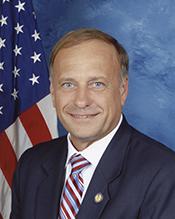
Mr. Speaker, I rise today in support of the rule and the underlying bill, the Child Interstate Abortion Notification Act. Mr. Speaker, eight in 10 Americans favor parental notification laws, and 44…
Mr. Speaker, I rise today in support of the rule and the underlying bill, the Child Interstate Abortion Notification Act.
Mr. Speaker, eight in 10 Americans favor parental notification laws, and 44 States have recognized the important role of parents in a minor child's decision to have an abortion by enacting a parental involvement statute. Even so, many of these laws are being circumvented by people who simply transport girls across State lines to States without parental notification laws for the purpose of getting an abortion.
All too often these other adults are grown men who sexually preyed upon the young girls, and they used the abortions to cover up their crimes. CIANA returns parental rights to parents.
Despite the strong deference it gives to abortion rights, even the U.S. Supreme Court recognizes that parents' rights to control the care of their children is among the most fundamental of all liberty interests. The Supreme Court has consistently recognized that parents have a legal right to be involved in their minor daughter's decision to seek medical care, including abortion.
The court has consistently affirmed a State's right to restrict the circumstances under which a minor may obtain an abortion in ways that adult women seeking abortion are not restricted. The Supreme Court has also observed that ``the medical, emotion, and psychological consequences of an abortion are serious and can be lasting,'' and that ``it seems unlikely that a minor will obtain adequate counsel and support from an attending physician at an abortion clinic where abortions for pregnant minors frequently take place.''
The Supreme Court has also stated that ``minors often lack the experience, perspective, and judgment to recognize and avoid choices that could be detrimental to them.''
No one has the child's best interest at heart more than her parents. Minors have to have parental permission to be given an aspirin by the school nurse. Twenty-six States have laws requiring parental consent before minors can get body piercings or tattoos, and in fact some States prohibit tattooing of minor children even with parental consent. Parents must be able to play a role.
The public, State statutes, and Supreme Court precedent all support parental involvement in a minor's life decision. Please support the rule and the underlying bill.

Madam Speaker, I move to suspend the rules and pass the bill (H.R. 3682) to redesignate the Mason Neck National Wildlife Refuge in Virginia as the Elizabeth Hartwell Mason Neck National Wildlife…
Madam Speaker, I move to suspend the rules and pass the bill (H.R. 3682) to redesignate the Mason Neck National Wildlife Refuge in Virginia as the Elizabeth Hartwell Mason Neck National Wildlife Refuge.
Madam Speaker, I ask unanimous consent that all Members may be given 5 legislative days to revise and extend their remarks and include extraneous material on the bill under consideration.
Madam Speaker, I yield myself such time as I may consume.
Madam Speaker, H.R. 3682 was introduced by two of our distinguished Virginia colleagues, Tom Davis and Frank Wolf. This measure would rename the Mason Neck National Wildlife Refuge after Mrs. Elizabeth Hartwell. While I never had the opportunity to meet this remarkable woman, there seems to be no debate that she dedicated her life to conservation.
After nearly 20 years of tireless work to stop the destruction of the Mason Neck Peninsula, Mrs. Hartwell and her supporters were successful in their efforts to create the Mason Neck National Wildlife Refuge.
This refuge, which was the first established to protect the American bald eagle, has grown to 2,277 acres of land. In addition to one of the largest concentrations of bald eagles in the lower 48 States, Mason Neck is home to the largest great blue heron rookery in the mid- Atlantic region and more than 200 species of birds, 41 species of reptiles and amphibians, and 31 species of mammals.
I am sure the authors of this legislation will attest that this refuge would not exist had it not been for Mrs. Elizabeth Hartwell. Despite powerful and well-financed opponents, she was successful because she lived her life committed to the philosophy of one of our Nation's greatest conservationists, Theodore Roosevelt, who reminds us that ``it is not what we have that makes us a great Nation; it is the way in which we use it.''
This legislation proposes a fitting tribute to someone who was affectionately called the ``Eagle Lady.''
I urge an ``aye'' vote on H.R. 3682.
Madam Speaker, I reserve balance of my time.
Madam Speaker, I yield 4 minutes to the gentleman from Virginia (Mr. Tom Davis).
Madam Speaker, I too have no additional speakers, and I yield back the balance of my time.

Mr. Speaker, I rise in strong opposition to the bill and to the proposed rule for this bill. The two amendments made in order under the proposed rule, the Scott amendment and the Jackson-Lee/Nadler…
Mr. Speaker, I rise in strong opposition to the bill and to the proposed rule for this bill.
The two amendments made in order under the proposed rule, the Scott amendment and the Jackson-Lee/Nadler amendment are very important amendments. At the same time, it is instructive to note that many of the nine Democratic amendments that were not made in order seek to protect the people most directly affected by the bill: the young girls who wish to exercise their constitutional right to end their pregnancy.
For example, I offered an amendment before the Committee on Rules to create an exception to the criminal penalties and a civil suit imposed on a person transporting a young girl across State lines in cases where the minor is a victim of incest. Because the bill lacks a judicial bypass procedure in circumstances where the Federal notification requirements apply, under this bill a young girl could be required to notify a parent who impregnated her before obtaining an abortion even though it would be inappropriate, traumatic, and potentially dangerous to require her to do so.
Mr. Speaker, if a young girl is required to notify a parent who has molested her that she is pregnant before traveling to another State to seek an abortion, I fear that some girls may seek to end their pregnancy without help, whether they do so by traveling alone to another State for the procedure, or even worse, through a self-induced or illegal back-alley abortion. However, the Republican members on the Committee on Rules refused to make this amendment in order on a party- line vote.
Mr. Speaker, the gentleman from New York (Mr. Nadler) and I also offered a commonsense amendment barring a parent who has molested his daughter and caused her to be pregnant from any relief under this bill.
However, this too was rejected on a party-line vote.
Mr. Speaker, this bill should be considered under an open rule that would allow consideration of amendments to protect the young girls who choose to seek an abortion. In its current form, the bill gives rights to a parent who has victimized his daughter.
I urge my colleagues to reject the rule.
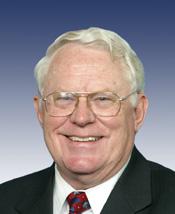
Mr. Speaker, a woman from my district came to Washington last month to tell Congress about how her daughter was taken to New Jersey for an abortion without her knowledge and she said, ``On February…
Mr. Speaker, a woman from my district came to Washington last month to tell Congress about how her daughter was taken to New Jersey for an abortion without her knowledge and she said, ``On February 16th, I sent my daughter to her bus stop with $2 of lunch money. I thought she was safe at school. She and her boyfriend had a prenatal class scheduled after school.''
So the mom knew about the 14-year-old daughter's pregnancy. Her daughter had chosen to keep the baby and was attending prenatal classes.
The mom continues, ``However, what really happened was that boyfriend and his family met with her down the road from the bus stop, called a taxi, they put the children on a train from Lancaster to Philadelphia. From there they took two subways to New Jersey. That is where his family met the children and took them to the abortion clinic. When my daughter started to cry and have second thoughts, they told her that they would leave her in New Jersey. They planned, paid for, coerced, harassed and threatened her into having the abortion. They left her alone during the abortion and went to eat lunch.''
From this incident let us be clear on what the law allows. A 14-year- old girl tells her mom she is pregnant. Mom says she will support her in whatever choice she makes. The daughter chooses to have the baby and begins to prepare for delivery, even chooses the names. Boyfriend's family bullies the girl into having an abortion and sends her to New Jersey. All this time the mother thinks she is sending her daughter to school. Instead, the boyfriend's family dropped this young girl in tears off at an abortion clinic and then went to eat lunch. Her unborn baby is killed and she is in counseling to this day.
Mr. Speaker, this bill would correct this problem. It would protect our children. No parent should be kept in the dark when it comes to a medical issue regarding their children. I urge support for the rule and the bill.
Madam Speaker, I am honored today to speak today in support of H.R. 3682, a bill to rename the Mason Neck National Wildlife Refuge after Elizabeth Hartwell. For almost 20 years, Mrs. Hartwell…
Madam Speaker, I am honored today to speak today in support of H.R. 3682, a bill to rename the Mason Neck National Wildlife Refuge after Elizabeth Hartwell.
For almost 20 years, Mrs. Hartwell spearheaded efforts to protect the Mason Neck area. Her efforts led to the establishment of the 2,300-acre Mason Neck National Wildlife Refuge, the 1,800-acre Mason Neck State Park, and the 1,000-acre Pohick Bay Regional Park.
Mrs. Hartwell began her environmental crusade in February 1965 when she learned about a rezoning application in Fairfax County for the development of a satellite city of 20,000 people on the most ecologically sensitive area of Mason Neck. She decided to lead an effort to stop this development and to preserve Mason Neck habitat for the endangered American bald eagle.
During the ensuing weeks and months, she organized a watchdog group called the Conservation Committee For Mason Neck. She made films of the wildlife that thrived there to show other civic organizations around the region. Mrs. Hartwell even gave tours by boat along Mason Neck's waterways and enlisted the support of several environmental organizations at the local, regional, State, and Federal levels.
The Mason Neck National Wildlife Refuge was established in 1969 for the protection of nesting, feeding, and roosting habitat for bald eagles. It was the first Federal refuge established specifically for the then-endangered bald eagle. Today, there are multiple nests on the refuge and on neighboring public and private lands.
I am pleased to support the effort of several Mason Neck area homeowners associations to rename the Mason Neck National Wildlife Refuge in honor of Mrs. Hartwell, who passed away on December 14, 2000. She dedicated her life to nature and to helping the environment, and it would be a fitting tribute to rename the Mason Neck Refuge after the woman who fought so valiantly for its creation.
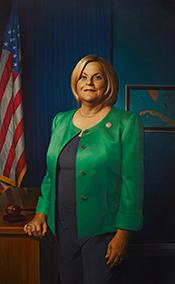
Mr. Speaker, I want to thank my wonderful friend, the gentleman from Georgia (Mr. Gingrey) for yielding me this time and for managing the bill and allowing us to focus once again on the bill and the…
Mr. Speaker, I want to thank my wonderful friend, the gentleman from Georgia (Mr. Gingrey) for yielding me this time and for managing the bill and allowing us to focus once again on the bill and the rule.
I want to thank the distinguished, the very distinguished gentleman who is the chairman of the Committee on the Judiciary, the gentleman from Wisconsin (Mr. Sensenbrenner), as well as the gentleman from Ohio (Mr. Chabot), who has been a champion of this bill, and it was in his subcommittee where it was first heard.
I am so proud to stand here in favor of House Resolution 748, the Child Interstate Abortion Notification Act. This bill will incorporate all of the provisions previously contained in the previous legislation that we had filed, the Child Custody Protection Act, making it a Federal offense to transport a minor across State lines to circumvent that State's abortion parental notification laws.
In addition, this year's bill will require that in a State without a parental notification requirement, abortion providers are required to notify a parent. It will protect minors from exploitation from the abortion industry, it will promote strong family ties, and it will help foster respect for State laws. Similar but not identical legislation has had the support of the overwhelming majority of the Members of Congress who have voted in favor of it, not only in 1998 and in 1999, but also in 2002.
I am extremely hopeful that this commonsense pro-family legislation will pass both the House, the Senate, and will be signed into law by our President. As the mother of two teenage daughters, I believe this bill would protect my girls, and I encourage my colleagues to vote in favor of the rule and support this commonsense legislation on a concept that is supported by the majority of Americans. I believe that it is a bill that pro-choice advocates can support.
Show 8 more
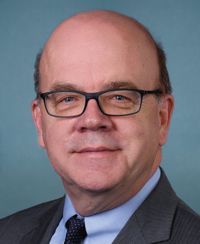
Mr. Speaker, I strongly oppose this bill, and I know some people strongly support the bill. This clearly is an emotional issue. We can debate both sides of this. But I rise to express my deep regret…
Mr. Speaker, I strongly oppose this bill, and I know some people strongly support the bill. This clearly is an emotional issue. We can debate both sides of this. But I rise to express my deep regret over the report from the Committee on the Judiciary that accompanied this legislation.
Mr. Speaker, there is not a civility left in this House, and what little civility is left I want to protect. Listening to my colleagues on the other side talk about, and the way they have mischaracterized and misrepresented and, yes, maligned Democratic Members on this side, and I say maligned because if you use those words that you used to describe their amendments to describe them on this House floor, your words would be taken down.
One of the kinds of traditions or the unwritten rules of this House is when you describe the amendments offered by Republicans or Democrats, it is done so in a nonpartisan way. In the Committee on Rules, we get more amendments than any other committee in this House, and they are all described in a nonpartisan way. We would never describe anybody's amendment in this kind of a political way. If we did, there would be an outcry amongst members on that committee.
I urge my colleagues on the other side of the aisle to kind of take a step back, to correct the report, to demonstrate some civility and some rationality on this issue. Nobody deserves to have their amendments characterized the way these Members did. This is wrong, and I know deep down you know it is wrong.
It is difficult for me to sit by and watch my colleague from Georgia and the chairman of the Committee on the Judiciary, who I have great respect for, try to rationalize this. We are better than this. I would hope there could be a bipartisan consensus when it comes to descriptions of amendments in reports, we could do this in a nonpartisan way.

Mr. Speaker, I thank the gentlewoman for yielding me this time, and I commend her for her leadership on this issue and many important issues. Mr. Speaker, what we are really talking about today is…
Mr. Speaker, I thank the gentlewoman for yielding me this time, and I commend her for her leadership on this issue and many important issues.
Mr. Speaker, what we are really talking about today is the need to prevent teen pregnancy. Let us understand that. We can disagree about this issue. But I strongly feel, as a mother of four children, two daughters and two sons, that by providing them information I am the one who can assure that they behave responsibly. I do not need to criminalize the behavior of others in trying to do my best job as a mother. So I oppose this bill.
I also oppose the rule because it did not make in order something I thought was totally obvious, and that is an amendment that I offered with the gentleman from Connecticut (Mr. Shays) to prevent teen pregnancy by funding programs which accomplish that. The Committee on Rules chose not to make our amendment in order. All it would have done was provide a series of criteria by which to judge teen pregnancy programs. Those that were effective in preventing teen pregnancy would get precious Federal dollars, and those that were not would not.
I would call that, given my background on the Permanent Select Committee on Intelligence, a slam-dunk amendment, but it was not to the Committee on Rules. So I oppose this rule because it shut out our opportunity to offer our amendment. We will be introducing it as a stand-alone bill and it is also part of a comprehensive bill that the gentlewoman from New York has introduced. But I would hope that this body later this year would do the right thing, and that is to put our money where our mouth is. And where our mouth is, is to reduce unwanted teen pregnancy. That is a much better answer than the thrust of this legislation we are considering here today.

Mr. Speaker, I rise in opposition to this rule and to H.R. 748, the Child Interstate Abortion Notification Act. It would be more aptly called the Teenage Abandonment Act because that is what this…
Mr. Speaker, I rise in opposition to this rule and to H.R. 748, the Child Interstate Abortion Notification Act. It would be more aptly called the Teenage Abandonment Act because that is what this bill does. It abandons our teenage children.
When I was a school nurse, I was privileged to administer a school- based program for teen parents and pregnant teenagers, helping them to stay in school and support their children. What I saw firsthand was that for these young women, the discovery that they were pregnant presented them with the hardest choices they would ever face. They needed the help of adults to sort through the issues surrounding their pregnancy, but this bill makes sure that many pregnant teenagers will be all alone as they face this problem.
Ideally, of course, a pregnant teenager will turn to parents for advice and support. Believe me, those who can and are able, they do. But we do not live in an ideal world. Sadly, not all parents are good. Some parents are abusive; other parents are not equipped to deal with this. And in some awful situations, a parent is responsible for the daughter's pregnancy.
In these terrible conditions, it is critical that a young girl coping with severe emotional distress be able to turn to other loving adults for help and guidance: perhaps a doctor, a teacher, a clergy, or a grandparent. This bill discourages that. Judicial bypass sounds easy on paper, not in real life for a teenager. This bill cuts off other support a young woman might have. It abandons her at her time of most critical need.
Mr. Speaker, if we want to be compassionate toward young women, really compassionate, we are going to defeat this bill.
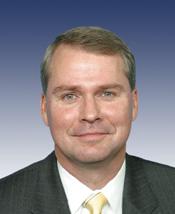
Mr. Speaker, I rise today in support of H.R. 748 and the rule that we have in front of us this afternoon. I commend the sponsor of the legislation, the gentlewoman from Florida (Ms. Ros-Lehtinen),…
Mr. Speaker, I rise today in support of H.R. 748 and the rule that we have in front of us this afternoon. I commend the sponsor of the legislation, the gentlewoman from Florida (Ms. Ros-Lehtinen), for introducing this legislation, legislation of which I am a proud cosponsor.
Mr. Speaker, I find it unacceptable that under the current law any person in this country can take a pregnant minor to another State for the purpose of having an abortion without parents' knowledge and/or consent.
As the father of a teenage daughter myself, it is a frightening scenario. I am particularly happy to see that this bill will require abortion providers to inform a minor's parent or legal guardian within 24 hours before carrying out an abortion procedure.
Parental notification is not a new idea. I have three children, and my wife and I have to sign a parental consent form when our children go on a field trip. But what we are talking about today is the most serious of subjects, and I strongly believe no parent should find out after the fact that such a procedure has been performed on their child.
When it comes to such a serious medical procedure being performed on a minor, we cannot leave that notification up to a scared child. Every parent or legal guardian has a right to know, and this legislation ensures that right. I urge my colleagues to support the rule on H.R. 748 which ensures that right.

Mr. Speaker, I thank the gentleman for yielding me this time on this extremely important issue. I decided it was important to speak some words about it. As a State legislator for a number of years,…
Mr. Speaker, I thank the gentleman for yielding me this time on this extremely important issue.
I decided it was important to speak some words about it. As a State legislator for a number of years, and a lot of us here were, I understand the importance of State laws and the importance of respecting families.
I am just shocked at some of the debate I hear on the other side of the aisle opposing this legislation. The whole point here is to support the family. The whole point here is to prevent the person who may even be a sexual predator or the person who is exploiting this minor from transporting this child across a State line to obtain an abortion and basically get rid of his problem.
It is outrageous that we would not support this legislation. A minor needs parental consent to engage in sports in school, to get a tattoo or a body piercing; yet we are allowing people to take a child across State lines for an abortion.
Mr. Speaker, it is important that we pass this bill. It is important to preserve families. I believe with all my heart we are just nuts not to support this bill.
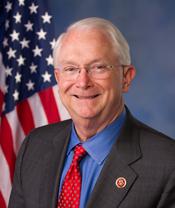
Mr. Speaker, I rise today in support of H.R. 748, the Child Interstate Abortion Notification Act of 2005, and the rule. I want to thank the gentlewoman from Florida (Ms. Ros-Lehtinen) for leading the…
Mr. Speaker, I rise today in support of H.R. 748, the Child Interstate Abortion Notification Act of 2005, and the rule. I want to thank the gentlewoman from Florida (Ms. Ros-Lehtinen) for leading the charge on this important piece of legislation.
Let us talk about what this piece of legislation does. It does three things: one, it upholds the democratic process that has taken place in 44 States; it respects the rights of parents to be involved in the medical decisions for their children; and, most importantly, it protects the health of young daughters.
When someone takes their child to get their teeth cleaned, if they are underage today, they have to have a parent's permission. We should have parents involved in this very important decision in a young woman's life and protect them from those who do not have their best interests at heart.
I encourage the Members of this body to do the right thing today. Let us protect these young women and make sure that this important decision is with a parent's involvement and not with someone who does not have their best interests.
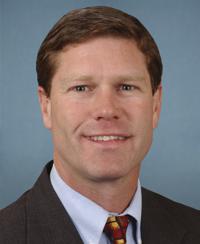
Madam Speaker, I yield myself such time as I may consume. Madam Speaker, we have no objection to this legislation that would rename the Mason Neck National Wildlife Refuge to honor the late Elizabeth…
Madam Speaker, I yield myself such time as I may consume.
Madam Speaker, we have no objection to this legislation that would rename the Mason Neck National Wildlife Refuge to honor the late Elizabeth Hartwell, a local conservationist who dedicated much of her life to protecting this refuge located along the Potomac River.
I encourage my colleagues to support the name change.
Madam Speaker, I reserve the balance of my time.
Madam Speaker, I have no further requests for time, and I yield back the balance of my time.
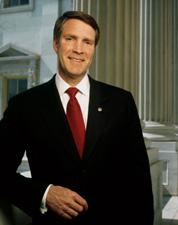
Mr. President, I ask unanimous consent that the EPW Committee be discharged from further consideration of H.R. 3682, and the Senate proceed to its immediate consideration. Mr. President, I ask…
Mr. President, I ask unanimous consent that the EPW Committee be discharged from further consideration of H.R. 3682, and the Senate proceed to its immediate consideration.
Mr. President, I ask unanimous consent that the bill be read the third time and passed, the motion to reconsider be laid upon the table, and that any statements relating thereto be printed in the Record.
Bill Text
6 versions available
        [Congressional Bills 109th Congress]
[From the U.S. Government Publishing Office]
[H.R. 3682 Enrolled Bill (ENR)]

H.R.3682

One Hundred Ninth Congress

of the

United States of America

AT THE SECOND SESSION

Begun and held at the City of Washington on Tuesday,
the third day of January, two thousand and six

An Act

To redesignate the Mason Neck National Wildlife Refuge in Virginia as
the Elizabeth Hartwell Mason Neck National Wildlife Refuge.

Be it enacted by the Senate and House of Representatives of the
United States of America in Congress assembled,

SECTION 1. ELIZABETH HARTWELL MASON NECK NATIONAL WILDLIFE REFUGE.

(a) Redesignation.--The Mason Neck National Wildlife Refuge in
Virginia, is hereby redesignated and shall be known as the ``Elizabeth
Hartwell Mason Neck National Wildlife Refuge''.
(b) References.--Any reference in a law, map, regulation, document,
paper, or other record of the United States to the National Wildlife
Refuge in Virginia referred to in subsection (a) shall be deemed to be
a reference to the ``Elizabeth Hartwell Mason Neck National Wildlife
Refuge''.

Speaker of the House of Representatives.

Vice President of the United States and
President of the Senate.