Madam Speaker, I yield myself such time as I may consume. First, I want to thank the gentleman from Louisiana (Mr. McCrery), my friend and colleague, for joining me in introducing this important…
Madam Speaker, I yield myself such time as I may consume.
First, I want to thank the gentleman from Louisiana (Mr. McCrery), my friend and colleague, for joining me in introducing this important piece of legislation. I also want to thank the gentleman from California (Mr. Thomas), the chairman of the committee, and the gentleman from New York (Mr. Rangel), our ranking member, for their swift action in bringing this bill to the floor, as well as the members of the Committee on Ways and Means.
I also would be remiss if I failed to thank both the Republican and Democratic staff of the committee for their extraordinary bipartisan effort to put this tax package together in such a timely way.
Madam Speaker, the Katrina Emergency Tax Relief Act of 2005 provides much-needed aid and comfort to the victims of Hurricane Katrina and the many thousands of good Samaritans who have opened their arms, wallets and homes to provide food, clothing, shelter and medical care and other necessities to the thousands of Americans who have been uprooted in the wake of this horrible storm.
As we have all seen, while Hurricane Katrina was indiscriminate in the destruction it wrought, the unprecedented property damage, human toll and economic loss fell disproportionately on the backs of our poorest and most vulnerable citizens.
A disproportionate share of the damage in my hometown of New Orleans was meted out on parts of our great city that were already extraordinarily economically disadvantaged. The poverty, disability and economic disenfranchisement in these areas in no small way were factors in the extraordinary loss of life and property experienced by my constituents.
For this reason, I am grateful that the bill we consider today provides important relief to these vulnerable families.
First, families who have been displaced in the wake of Hurricane Katrina are held harmless against the loss of critical economic security and benefits. Damage caused by the hurricane has displaced hundreds of thousands of individuals, who are temporarily living with family, friends or good Samaritans.
Under current law, a prolonged change in their living situation could affect their eligibility for various tax benefits. The proposal allows individuals the option of using their 2004 income tax returns to calculate their child credit and the Earned Income Tax Credit on their 2005 tax returns. This special rule applies to individuals who lived in areas eligible for individual assistance from the Federal Government as a result of the disaster as of August 28, 2005.
The proposal also grants the U.S. Treasury Department authority to ensure that taxpayers do not lose dependency exemptions or child credits for 2005 due to temporary relocations.
In many areas of the gulf coast devastated by Hurricane Katrina, including my hometown of New Orleans, the EITC is a vitally important part of many families' economic security. This bill ensures the continuing eligibility of the thousands of families displaced by Katrina.
Second, the legislation ensures that the victims of Hurricane Katrina are able to account fully for the losses they have suffered in the aftermath of the hurricane. Moreover, it exempts the value of forgiven mortgages and other debt from taxable income. These two very important provisions demonstrate compassion by prohibiting the IRS from kicking these families when, for many of them, they are at the lowest points in their lives.
Madam Speaker, this Act also provides an added measure of financial security to the many victims of this storm by providing them with added flexibility to access the savings they have set aside in 401(k) plans and individual retirement accounts without the usual penalties. In a time when so many have lost jobs and, consequently, their paychecks, denying or penalizing access to their savings is inappropriate, and this bill recognizes that.
As I have said repeatedly over the past 2 weeks, the recovery, reconstruction and revival of the gulf coast region, and particularly New Orleans, will require an unprecedented Federal commitment.
The bill we will pass today takes two important steps toward that recovery.
First, the bill expands the availability of low-interest mortgages for the building and purchasing of homes in the affected areas. We all understand that the most solid foundation for the economic security of our Nation's families is homeownership. By lifting some of the restrictions on the use of mortgage revenue bonds, this bill will help to build a solid economic foundation for the families whose lives have been turned upside down by Hurricane Katrina.
In addition, the Katrina Emergency Tax Relief Act also provides targeted incentives for returning businesses and new businesses to employ the thousands of hardworking Americans who have been displaced or lost jobs to Hurricane Katrina. By encouraging businesses to hire workers from the affected areas, this bill takes another very important step toward our uniform goal of rebuilding and resettling New Orleans and other areas tragically struck by the hurricane.
Finally, Madam Speaker, the legislation we consider today recognizes the important contributions that good-hearted and generous Americans have made to the recovery effort. By increasing the value of the charitable deductions and providing relief to the thousands of Americans who have opened their homes to my constituents who have lost theirs, this bill is an important expression of gratitude from this Congress to the American people for rising to the challenge of Hurricane Katrina in truly extraordinary ways.
Madam Speaker, the efforts of my colleagues in providing the relief we need in the gulf coast has been unparalleled to any I have witnessed during my tenure in Congress. For that, I am extraordinarily grateful. However, we still have a long row to hoe before we have achieved the full recovery that I know we all want. I look forward to working with each of you in the coming weeks and months as we rise to the challenge of ensuring that, like the Phoenix of myth and fable, New Orleans rises from the devastation of Hurricane Katrina as a bright, shining model of American ingenuity and opportunity.
Madam Speaker, I reserve the balance of my time.
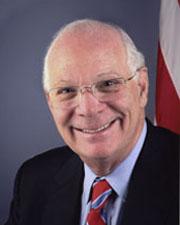
Madam Speaker, I am pleased to yield 3 minutes to the gentleman from Maryland (Mr. Cardin), a distinguished member of the Committee on Ways and Means.
(Mr. CARDIN asked and was given permission to revise and extend his remarks.)
Madam Speaker, I am pleased to yield 3 minutes to my colleague and friend, the gentleman from Mississippi (Mr. Taylor).
Madam Speaker, I am pleased to yield 2\1/2\ minutes to the gentleman from Oregon (Mr. Blumenauer).
Madam Speaker, I am pleased to yield 2\1/2\ minutes to the gentleman from Illinois (Mr. Emanuel), a distinguished member of the Committee on Ways and Means and whose family has donated generously to our food relief efforts in the affected area.
Madam Speaker, I yield myself the balance of my time. I again want to thank my colleague from Louisiana (Mr. McCrery) and others who have worked so carefully on this bill. This has been an important debate, an important discussion about where this Congress is going and how it is helping out and the generosity of this Congress as we tackle these important issues and the difficult issues back home.
To those who say this is not a huge step forward, I should say to them that it is huge for the people who are involved. We take to heart the remarks made by Mr. Emanuel, the bill that he and Mr. Obama are pushing to get this relief out fast. I think it is very important.
This is a huge step, but it simply is not the last step. It is far from the last step in providing relief to our region. We want this Congress to walk along
with us as we make one step after another toward realizing the vision of restoring our area and rebuilding it to a new, better, higher place.
I look forward to this walk with this Congress over the next months and years. I hope that we will stay engaged as fully as we are in these early days throughout this lengthy process.
Madam Speaker, I yield back the balance of my time.