Mr. Speaker, I would like to thank my colleague and dear friend, the gentleman from California, Mr. Honda, who is managing this Special Order, but more especially also as an outstanding leader in our…
Mr. Speaker, I would like to thank my colleague and dear friend, the gentleman from California, Mr. Honda, who is managing this Special Order, but more especially also as an outstanding leader in our Asian Pacific American community and currently serving as chairman of our Asian Pacific Congressional Caucus.
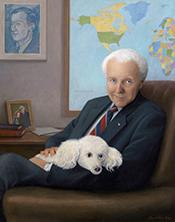
I want to also commend our Democratic leader, Ms. Nancy Pelosi, for her outstanding remarks. The fact that she also is a Member who has one of the largest constituencies in not only the State of California of our Asian Pacific American community, but, as Ms. Pelosi was making her statement, I recalled also her predecessor, someone whom I have had the highest admiration and respect for, a giant of a man not only in his ways but as an example, with a real great sensitivity and compassion for the needs of the Asian Pacific American community people, none other than the late Congressman Phil Burton.
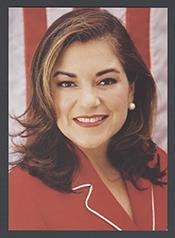
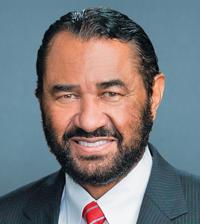
I would also like to commend my colleagues, Congresswoman Juanita Millender-McDonald and Congressman Al Green, for their outstanding remarks this evening in this Special Order.
Mr. Speaker, I rise today in celebration of the Asian Pacific American Heritage Month to acknowledge the contributions of our Asian Pacific American individuals and communities to the success of our great Nation. I commend my colleagues who founded this celebration in 1977 by introducing a resolution calling upon the President to proclaim the first 10 days in May Asian Pacific Heritage Week, former Representatives Norm Mineta and Frank Horton, and Senators Daniel K. Inouye and Senator Spark Matsunaga.
I think we need to also understand, Mr. Speaker, the dynamics. Those of us who are Americans, and we are very, very proud of being Americans, but whose roots are from the Asian Pacific region, and the dynamics of why the Asian Pacific region is so important, it is in our national interests, not only our national security, the economics, just about every phase of what is really critically important in our Nation in dealing with this region of the world which, by the way, two-thirds of the world's population is the Asian Pacific region. Six of the 10 largest armies in the world are in the Asian Pacific region. Our trade with the Asian Pacific region is four times greater than any other region in the world, including especially that of Europe.
I am reminded a couple of years ago what Senator Inouye said, for every one 747 that flies between the Atlantic and the United States, four 747s fly between the Asian Pacific region and our country.
Mr. Speaker, the Asian Pacific American community is vibrant and growing
with an estimated 14 million Asian American residents and another 975,000 Pacific Americans. I am proud to be a member of this Asian Pacific American community, a community that has produced so many inspiring individuals. In government, in the military, in the sciences, sports, entertainment, business, you name it, we have it.
In government, for example, especially from the great State of Hawaii, among the first, I guess you might say, U.S. Senator Hiram Fong, Senator Daniel Inouye, Senator Daniel Akaka, the first elected Asian American Governor of any State, Governor George Ariyoshi, our first native Hawaiian Governor, Governor John Waihee, our first Filipino American Governor, Governor Ben Cayetano.
We also have Mayor Neal Blaisdell, and the newly elected mayor of the city and county of Honolulu, Mufi Hannemann. We also have Lieutenant Governors Jimmy Kealoha and Duke Ainoa. Norm Mineta, a good friend of mine who is not only partly responsible for initiating this Heritage Month, but was always the first Asian Pacific American mayor of a major U.S. city like San Jose, he was also the first Asian Pacific American to be a member of a Presidential Cabinet when he was appointed as Secretary of Commerce in the year 2000 by former President Clinton and now is U.S. Secretary of Transportation appointed by President Bush.
Elaine Chao, another first. Secretary Chao is the first female Asian American Cabinet member, appointed Secretary of Labor by President Bush.
Gary Locke, first Asian American Governor on the mainland United States, elected Governor of the State of Washington in 1996. And I could never forget and my deepest respect to the late Congresswoman Patsy Mink, first Asian American female elected to the U.S. Congress since 1964. Then our late colleague and friend, my dear friend, the late Congressman Bob Matsui, who inspired me and mentored me throughout our time here together as a senior member of the House Committee on Ways and Means.
As a Vietnam veteran, Mr. Speaker, it would be ludicrous for me not to say something to honor the hundreds of thousands of Asian Pacific Americans who have and continue to serve in all the branches of the armed services of our Nation.
I would like to share with you the contributions of tens of thousands of Japanese American soldiers who volunteered to fight our Nation's enemies in Europe during World War II.
Mr. Speaker, we are all aware of the fact that after the surprise attack on Pearl Harbor on December 7, 1941, by the Imperial Army of Japan, there was such an outrage and cry for an all-out war against Japan. In days afterwards, our President and the Congress formally declared war. But caught in this crossfire were hundreds of thousands of Americans, mind you Americans, who happened to be of Japanese ancestry.
Our national government immediately implemented a policy whereby over 100,000 Americans of Japanese ancestry were forced to live in what were called, supposedly, ``relocation camps''; I call them ``concentration camps.'' Their lands, their homes, and their properties were confiscated without due process of law.
It was also a time in our Nation's history that there was so much hatred and bigotry and racism against our Japanese American community. And yet despite all of this, leaving their wives, their parents, their brothers and sisters behind barbed-wire fences in these prison camps, the White House accepted the requests from tens of thousands of Japanese Americans who volunteered to join the Army, and as a result, two combat units were organized.
One was called the 100th Battalion, and the other was known as the 442nd Infantry Combat Group. Both were sent to Europe to fight. And I might say that I am very, very proud to have been associated and been a former member of the 100th Battalion, 442nd Infantry Combat Group out of the State of Hawaii.
Mr. Speaker, in my humble opinion, history speaks for itself in documenting that none have shed their blood more valiantly for our Nation than the Japanese American solders who served in those two combat units while fighting enemy forces in Europe during World War II.
The military records of the 100th Battalion and the 442nd Infantry are without equal. Those Japanese American units suffered an unprecedented casualty rate of 314 percent, and received over 18,000 individual decorations, many awarded posthumously for bravery and courage in the field of battle.
For your information, Mr. Speaker, 52 Distinguished Service Crosses, 560 Silver Stars, and 9,480 Purple Hearts were awarded to the Japanese American soldiers of the 100th Battalion and 442nd Infantry Group. I find it unusual, however, that only one Medal of Honor was given. Nonetheless, the 442nd Combat Group emerged as the most decorated combat unit of its size in the history of the United States Army.
President Truman was so moved by their bravery in the field of battle, as well as the tremendous sacrifices of the African American soldiers in World War II, that he issued an executive order to finally desegregate all of the branches of the armed services.
Senator Inouye lost his arm while engaged in battle against two German machine gun posts, and he was awarded the Distinguished Service Cross. After a congressional mandate to review again the military records of these two combat units some 5 years ago, I was privileged to attend a White House ceremony where President Clinton presented 19, 19 Congressional Medals of Honor to the Japanese American soldiers who were members of the 100th Battalion and 442nd Combat Infantry. Senator Inouye was one of those recipients of the Congressional Medal of Honor.
I submit, Mr. Speaker, these Japanese Americans paid their dues in blood to protect our Nation from its enemies. It is a shameful mark on the history of our country that when the patriotic survivors of the 100th Battalion and the 442nd Infantry returned to the United States to be reunited with their families, who were locked up behind barbed wire fences, living in prison camps, and could not even get a haircut in downtown San Francisco, simply because they looked Japanese, they were Japanese, and for that reason alone, even with their uniforms on, they were not given the privilege of getting a haircut.
My former colleague and now U.S. Secretary of Transportation, Norm Mineta, and the late Congressman Bob Matsui from Sacramento both spent some of the early years of their lives in these prison camps. Secretary Mineta told me one of the interesting features of these prison camps was posting of machine gun nests all around the camp, and everyone was told that these machine guns were posted to protect them against rioters. But then Secretary Mineta observed, if these machine guns were posted to guard us, why is it that they are all directed inside the prison camp rather than outside it?
I submit, ladies and gentlemen, my good friends, my colleagues, the wholesale and arbitrary abolishment of the constitutional rights of these loyal Japanese Americans should forever serve as a reminder and testament that this must never be allowed to occur again.
When this miscarriage of justice unfolded during World War II, Americans of German and Italian ancestry were not similarly jailed en masse. Some declared the incident as an outright example of racism and bigotry in its ugliest form.
After viewing the Holocaust Museum in Washington, I understand better why the genocide of some 6 million Jews has prompted the cry ``Never again, never again.'' Likewise, I sincerely hope that mass internments on the basis of race alone will never again darken the pages of the history of this great Nation.
Now, to those who say, Well, that happened decades ago, we must say that we have to continue to be on our guard for this kind of thing to happen again. I remember years ago the case of Bruce Yamashita, the Japanese American born and raised in the State of Hawaii, who was discharged from the Marine Corps after a training program as an officer candidate and an ugly display of racial discrimination.
The Marine Corps superiors taunted Yamashita with ethnic slurs and told him, We do not want your kind around here, go back to your own country. The
situation was made worse when a leading officer of the Marine Corps made a statement on the 60 Minutes program who said, Marine officers who are minorities do not shoot, swim or use compasses as well as white officers.
The Commandant later apologized for his remarks, but it was a little too late. And I am really happy to know that after all of the investigations that the Secretary of the Navy finally awarded Mr. Yamashita his commission as an officer and a captain in the United States Marine Corps.
The tradition continues today of the thousands of Asian Pacific Americans who served in the armed services. Retired General Eric Shinseki was the first Asian Pacific American four-star general who served as U.S. Army Chief of Staff.
Our Asian American Pacific Island soldiers are fighting for freedom in Iraq even as I speak. Just this past weekend I was privileged to witness in Germany the swearing in of a Samoan soldier by the name of Command Sergeant Major Iuniasolua Savusa as the Command Sergeant Major for U.S. Army Europe and the 7th Army.
I am very proud of Command Sergeant Major Savusa for his accomplishments. He is an inspiration and a great role model for our youth and other Asian Pacific Americans who currently serve in the military.
Mr. Speaker, I think at this point I want to defer to my good friend, the gentleman from California (Mr. Honda) the manager of this special order this evening. And I am sure that he may want to continue portions of his statement as well.
Mr. Speaker, how much time do we have remaining?
Mr. Speaker, I would like to offer my closing remarks. I say, Mr. Speaker, when I envision America I do not see a melting pot designed to reduce or removal racial differences. The America I see is a brilliant rainbow, a rainbow of ethnicities and cultures with each people proudly contributing in their own distinctive and unique way a better America for generations to come.
Asian Pacific Americans wish to find a just and equitable place in our society that will allow, like all Americans, to grow, to succeed, to achieve and to contribute to the advancements of this great Nation.
I would like to close my remarks by asking all of us here this evening, What is America all about?
I cannot think of it said better than on the steps of the Lincoln Memorial in the summer of 1963 when an African American minister by the name of Martin Luther King, Jr., poured out his heart and soul to every American who could hear his voice when he uttered these famous words, ``I have a dream. My dream is that one day my children will be judged not by the color of their skin, but by the content of their character.''
That is what I believe America is all about, Mr. Speaker. Again, I thank my colleague and my good friend, the gentleman from California, for his management of this Special Order honoring all of the Asian Pacific American community in our country and the contributions that they have made to make our country to form a more perfect union.
I rise today in celebration of Asian Pacific American Heritage Month, to acknowledge the contributions of our Asian Pacific American individuals and communities to the success of our great Nation.
I commend my colleagues who founded this celebration in 1977 by introducing a resolution calling upon the President to proclaim the first ten days in May Asian/Pacific Heritage week--Representatives Norm Mineta and Frank Horton, and Senators Daniel K. Inouye and Spark Matsunaga.
The Asian Pacific American community is vibrant and growing, with an estimated 14 million Asian American residents and another 975,000 Pacific Americans.
I am proud to be a member of this Asian Pacific American community, a community that has produced so many inspiring individuals in government, the military, the sciences, sports, entertainment, and business. In government, for example: from Hawaii
Senators Hyrum Fong, Daniel Inouye, Daniel Akaka.
Governors George Ariyoshi, John Waihee, Ben Cayetano.
Mayors Neal Blaisdell and Mufi Hannemann, Lt. Governors Jimmy Kealoha and Duke Aiona.
Norm Mineta--my good friend was not only partly responsible for initiating APA Heritage Month, but was also the first Asian Pacific American mayor of a major U.S. city (San Jose). He was also the first Asian Pacific American to be a member of the Presidential Cabinet, when he was appointed as Secretary of Commerce in 2000 by former President Clinton and five years ago Mr. Mineta was appointed by President Bush as U.S. Secretary of Transportation.
Elaine Chao--another first, Secretary Chao is the first female Asian- American cabinet member, appointed Secretary of Labor in 2001, also appointed by President Bush.
Gary Locke--the first Asian-American governor on the mainland U.S., elected governor of Washington, 1996.
Patsy Mink--the first Asian-American female elected to Congress, in 1964 from Hawaii.
Bob Matsui--my dear friend and colleague who inspired me and mentored me throughout our time together here as a senior member of the House Committee on Ways and Means.
As a Vietnam Veteran, it would be ludicrous for me not to say something to honor the hundreds of thousands of Asian-Pacific Americans who have and continue to serve in all the branches of armed services of our Nation. I would like to share with you the contributions of the tens of thousands of Japanese-American soldiers who volunteered to fight our Nation's enemies in Europe during World War II.
Mr. Speaker, we are well aware of the fact that after the surprise attack on Pearl Harbor on December 7, 1941, by the Imperial Army of Japan--there was such an outrage and cry for all-out war against Japan, and days afterward, our President and the Congress formally declared war--but caught in this cross-fire were hundreds of thousands of Americans--Americans mind you who happened to be of Japanese ancestry.
Our national government immediately implemented a policy whereby over one-hundred thousand Americans of Japanese ancestry, were forced to live in what were called relocations camps--but were actually more like prison or concentration camps. Their lands, homes and properties were confiscated without due process of law.
It was also a time in our Nation's history that there was so much hatred, bigotry and racism against our Japanese-American community--and yet despite all this--leaving their wives, their parents, their brothers and sisters behind barbed wire fences in these prison camps-- the White House accepted the request from tens of thousands of the Japanese-Americans who volunteered to join the Army. And as a result two combat units were organized--one was the 100th Battalion and the other known as the 442nd Infantry Combat Group--both were sent to fight in Europe.
In my humble opinion, history speaks for itself in documenting that none have shed their blood more valiantly for our Nation than the Japanese-Americans soldiers who served in these two combat units while fighting enemy forces in Europe during World War II.
The military records of the 100th Battalion and 442nd Infantry are without equal. These Japanese-American units suffered an unprecedented casualty rate of 314 percent and received over 18,000 individual decorations, many awarded posthumously, for bravery and courage in the field of battle.
For your information Mr, Speaker, 52 Distinguished Service Crosses, 560 Silver Stars, and 9,480 Purple Hearts, were awarded to the Japanese-American soldiers of the 100th Battalion and 442nd Infantry Group. I find it unusual; however, that only one Medal of Honor was ever given. Nonetheless, the 442nd Combat Group emerged as the most decorated combat unit of its size in the history of the United States Army.
President Truman was so moved by their bravery in the field of battle, as well as that of African-American soldiers during World War II, that he issued an executive order to finally desegregate all branches of the Armed Services.
Senator Inouye lost his arm while engaged in battle against two German machine gun posts and he was awarded the Distinguished Service Cross. After a Congressional mandate to review again the military records of these two combat units 5 years ago--I was privileged to attend the White House ceremony where President Clinton presented nineteen Congressional Medals of Honor to the Japanese-American soldiers who were members of 100th Battalion and 442nd Combat Infantry group--Senator Inouye was one of those recipients of the Medal of Honor.
I submit, Mr. Speaker, these Japanese-Americans paid their dues in blood to protect our Nation from its enemies. It is a shameful mark on the history of our country that when the patriotic survivors of the 100th Battalion and the 442nd Infantry returned to the United States to be reunited with their families who were locked-up behind barbed wire fences, living in prison camps--and could not even get a haircut in downtown San Francisco because they all looked Japanese--despite the fact that they too were Americans.
My former colleague and now U.S. Secretary of Transportation, Norman Mineta, and the late Congressman Bob Matsui from Sacramento both spent some of the early years of their lives in these prison camps.
Secretary Mineta told of one of the interesting features of these prison camps were postings of machine gun nests all around the camp and everyone was told that these machine guns were posted to protect them against rioters.
But then Secretary Mineta observed--if these machine guns are posted to guard us, why is it that they are all directed inside the prison camp compound and not outside?
I submit, ladies and gentlemen, the wholesale and arbitrary abolishment of the constitutional rights of these loyal Japanese- Americans should forever serve as a reminder and testament that this must never be allowed to occur again. When this miscarriage of justice unfolded during World War II, Americans of German and Italian ancestry were not similarly jailed en masse. Some declare the incident as an example of outright racism and bigotry in its ugliest form. After viewing the Holocaust Museum in Washington, I understand better why the genocide of some 6 million Jews has prompted the cry, ``Never Again, Never Again!'' Likewise, I sincerely hope that mass internments of the basis of race alone will never again darken the history of our great nation.
To those that say, well, that occurred decades ago, I say we must continue to be vigilant in guarding against such evil today.
Not long ago, we had the case of Bruce Yamashita, a Japanese-American from Hawaii who was discharged from the Marine Corps officer training program in an ugly display of racial discrimination. Marine Corps superiors taunted Yamashita with ethnic slurs and told him, ``We don't want your kind around here. Go back to your own country.'' The situation was made worse by the Commandant of the Marine Corps, a four star general, who appeared on television's ``Sixty Minutes'' and stated: ``Marine officers who are minorities do not shoot, swim, or use compasses as well as white officers.'' The Commandant later apologized for his remarks, but it was a little too late.
After years of perseverance and appeals, Mr. Yamashita was vindicated after proving he was the target of vicious racial harassment during his officer training program. The Secretary of the Navy's investigation into whether minorities were deliberately being discouraged from becoming officers resulted in Bruce Yamashita receiving is commission as a captain in the Marine Corps.
The tradition continues today of the thousands of Asian-Pacific Americans who serve in the armed services. Retired General Eric Shinseki was the first Asian-American four-star general who served as U.S. Army Chief of Staff. Our Asian-American and Pacific Island soldiers are fighting for freedom in Iraq even as I speak.
Just this past weekend, I was privileged to witness the swearing in of the Samoan soldier CSM Iuniasolua Savusa as the Command Sergeant Major for U.S. Army Europe and the 7th Army. I am very proud of Command Sergeant Major Iuni Savusa for his accomplishments. He is an inspiration and a great role model for our youth and other Asian- Pacific Americans who currently serving in the military.
Other outstanding Asian-Pacific Americans who have made significant contributions to our nation:
Dr. David Ho--pioneered treatment for HIV/AIDS and named by Time Magazine as its ``Man of the Year'' in 1996.
Dr. Hideyo Noguchi--isolated the syphilis germ in 1911, leading to a cure for the deadly disease.
Dr. Subrahmanyan Chandrasekhar--Nobel Prize winner, evolution of stars, led to modern astrophysics.
Ellison Onizuka--the first Asian-American astronaut, 1985, Died aboard the Space shuttle Challenger in 1986.
Kalpana Chawla--Astronaut, first Indian American woman in space.
News, Sports, and Entertainment--
Ellen Nakashima--chief reporter for the Washington Post in Southeast Asia.
Connie Chung--in 1993, became the first Asian American to be a nightly news anchor for a major network.
Keanu Reeves--internationally renown actor.
Apolo Ohno--Olympic Gold & Silver Medalist, speed skating.
Jet Li--movie actor.
Kristi Yamaguchi--Olympic Gold Medalist, figure skating.
Dwayne Johnson--also known as the ``Rock,'' professional wrestler and movie star--Scorpine King, Walking Tell, Doomed.
Dr. Sammy Lee, Olympic gold medalist high diver.
Greg Louganis--Olympic gold.
Michelle Kwan: Olympic Silver and Bronze medalist, Figure skating.
Duke Kahanamokee, gold medalist swimmer.
Angela Perez Baraquio: First Asian American Miss America 2001 (Miss Hawaii).
Sarah Chang: world famous violinist.
Lucy Liu: Actress.
Bruce Lee: Martial Artist and Actor.
Tiger Woods: Golf Professional.
Michelle Wie: Professional Golfer.
Akebono (Chad Rowan): Sumo Wrestler (retired), yokozuna.
Konishiki Salevaia Afigaroe: Sumo wrestler, oyeki.
Musashimaru Peitari, Sumo wrestler, retired, yokozuna.
24 Samoan NFL football players in 2005/2006 season.
9 Native Hawaiian NFL football players.
5 Tongan Americans--NFL football players.
Mr. Speaker, when I envision America, I don't see a melting pot designed to reduce and remove racial differences. The America I see is a brilliant rainbow--a rainbow of ethnicities and cultures, with each people proudly contributing in their own distinctive and unique way--a better America for a generation of Americans yet unborn.
Asian-Pacific Americans wish to find a just and equitable place in our society that will allow them--like all Americans--to grow, to succeed, to achieve and to contribute to the advancement of this great nation.
Mr. Speaker, first as an American, whose roots are from the Asian Pacific Region, I would like to close my remarks by asking all of us here tonight, what is America about? I think it could not have been said better than on the steps of the Lincoln Memorial in the summer of 1963 when an African-American minister named Martin Luther King Jr. poured out his heart and soul to every American who could hear his voice, when he uttered these words: ``I have a dream. My dream is that one day my children will be judged not by the color of their skin, but by the content of their character.''
That is what I believe America is all about.