To provide for certain access to national crime information databases by schools and educational agencies for employment purposes, with respect to individuals who work with children.
Legislative Activity
Stay on top of the latest movement without scrolling through every action
Read twice and referred to the Committee on the Judiciary.
August 4, 2006
View full timeline
Introduced in House
March 7, 2006
Referred to the House Committee on the Judiciary.
March 7, 2006
Referred to the Subcommittee on Crime, Terrorism, and Homeland Security.
May 1, 2006
Sponsor introductory remarks on measure. (CR H2312)
May 9, 2006
Subcommittee on Crime, Terrorism, and Homeland Security Discharged.
May 19, 2006
Reported (Amended) by the Committee on Judiciary. H. Rept. 109-497.
June 12, 2006
Placed on the Union Calendar, Calendar No. 278.
June 12, 2006
Mr. Sensenbrenner moved to suspend the rules and pass the bill, as amended.
June 13, 2006 • 12:44 PM
Considered under suspension of the rules. (consideration: CR H3805-3808)
June 13, 2006 • 12:45 PM
DEBATE - The House proceeded with forty minutes of debate on H.R. 4894.
June 13, 2006 • 12:45 PM
At the conclusion of debate, the Yeas and Nays were demanded and ordered. Pursuant to the provisions of clause 8, rule XX, the Chair announced that further proceedings on the motion would be postponed.
June 13, 2006 • 1:10 PM
Considered as unfinished business. (consideration: CR H3816-3817)
June 13, 2006 • 2:41 PM
Passed/agreed to in House: On motion to suspend the rules and pass the bill, as amended Agreed to by the Yeas and Nays: (2/3 required): 415 - 1 (Roll no. 259).(text: CR H3805)
June 13, 2006 • 2:50 PM
On motion to suspend the rules and pass the bill, as amended Agreed to by the Yeas and Nays: (2/3 required): 415 - 1 (Roll no. 259). (text: CR H3805)
June 13, 2006 • 2:50 PM
Motion to reconsider laid on the table Agreed to without objection.
June 13, 2006 • 2:50 PM
Received in the Senate.
June 14, 2006
Read twice and referred to the Committee on the Judiciary.
August 4, 2006
Voting History
1 vote recorded • Roll call available
Floor Debate
17 membersWhat members said about H.R. 4894 on the floor
 FJS
FJS JCJ
JCJ RC"
RC" MK
MK TP+12
TP+12
Floor Debate
17 membersWhat members said about H.R. 4894 on the floor
Madam Speaker, I move to suspend the rules and pass the bill (H.R. 4472) to protect children, to secure the safety of judges, prosecutors, law enforcement officers, and their family members, to…
Madam Speaker, I move to suspend the rules and pass the bill (H.R. 4472) to protect children, to secure the safety of judges,
prosecutors, law enforcement officers, and their family members, to reduce and prevent gang violence, and for other purposes, as amended.
Madam Speaker, I ask unanimous consent that all Members may have 5 legislative days within which to revise and extend their remarks and include extraneous material on H.R. 4472, currently under consideration.
Madam Speaker, I yield myself such time as I may consume.
Madam Speaker, I rise in strong support of H.R. 4472, the Children's Safety and Violent Crime Reduction Act. This legislation contains bipartisan, comprehensive proposals to better protect our children from convicted sex offenders, to enhance judicial security, and to combat violent criminal gangs that terrorize our communities. Last year, the full House overwhelmingly approved three separate bills tailored to address these critical issues.
H.R. 3132, the Children's Safety Act of 2005, passed the House on September 14 of last year by a vote of 371-52. H.R. 1751, the Secure Access to Justice and Courthouse Protection Act, was approved by the House on November 9, 2005, by a vote of 375-45, and H.R. 1279, the Gang Prevention and Deterrence Act, passed the House on May 11, 2005, by a vote of 279-144. H.R. 4472 incorporates core provisions of each bill with some modifications and additions.
Last year our Nation was horrified by news of the sexual assault and kidnapping of Dylan and Shasta Groehne and the brutal murder of their parents and siblings. These heinous acts occurred after 9-year-old Jessica Lunsford was abducted, raped and buried alive, and 13-year-old Sarah Lunde was murdered. All of these terrible crimes were committed by convicted sex offenders.
While these tragedies received the public attention and outrage they demanded, sexual predators continue to exploit current loopholes in our criminal justice system to prey on America's most vulnerable. H.R. 4472 protects America's children by making it much harder for them to do so.
When child sex offenders are brought to justice and serve time for their offenses, they are often released into unsuspecting communities to resume their sexual attacks. There are over 550,000 convicted sex offenders in the country, and it is conservatively estimated that at least 100,000 of them, 100,000, are lost in the system, meaning that nonregistered sex offenders are living in our communities, attending schools and working at locations where they can prey on our children.
The threat to our children grows each day as more unregistered sex offenders move freely within our midst. This bill reduces these unconscionable vulnerabilities by strengthening sex offender notification requirements.
The bill also addresses the problem of violence in and around our courthouses against judges, prosecutors, witnesses, law enforcement and other court personnel, as well as their immediate families. According to the Administrative Office of U.S. Courts, Federal judges receive nearly 700 threats a year, and several Federal judges require security personnel to protect them and their families from violent gangs, drug organizations and disgruntled litigants. Judges, witnesses, and courthouse personnel and law enforcement officers must operate without fear in order to enforce and administer the law without bias.
Finally, the bill includes relevant provisions to address the growing national threat from violent and vicious gangs in our communities. According to the last National Youth Gang Survey, it is estimated that there are now between 750,000 and 850,000 gang members in our country. Every city in the country with a population of 250,000 or more has reported gang activity. There are over 25,000 gangs in more than 3,000 jurisdictions in the United States. In recent years gangs have become organized criminal syndicates with structured associations, many of which are now international in scope. State and local law enforcement have sent us a clear message: update and strengthen America's laws to combat the scourge of violence in our communities.
H.R. 4472 is strongly supported by John Walsh of America's Most Wanted, the National Center For Missing and Exploited Children, and the Boys and Girls Clubs of America, and other victims and representatives of victims organizations, as well as law enforcement agencies around the country.
These tireless advocates for America's children have provided vital assistance in crafting this measure, and their calls for justice for America's children must no longer go unanswered. We must act now to ensure that the tragedy of perverse and sexual attacks on America's children is not compounded by the tragedy of congressional inaction to strengthen our laws to address this national epidemic.
I urge my colleagues to put aside partisan differences and to speak in a clear and united voice to protect our children, to ensure a safe judiciary, and to give America's law-abiding citizens the right to live free from gang violence.
Madam Speaker, I reserve the balance of my time.
Madam Speaker, I yield 1\1/2\ minutes to the gentleman from Wisconsin (Mr. Green).
Madam Speaker, I yield 1\1/2\ minutes to the gentleman from Florida (Mr. Keller).
Madam Speaker, I yield myself 1 minute.
Madam Speaker, this is not giving a pill to a dog. What this legislation does is it combines three bills that the House already debated and passed but which got stalled in the other body. What it does is it takes away the poison pills that have caused the essential legislation to be stalled in the other body. And it makes some amendments, some of which have been requested by people on the other side of the aisle such as getting rid of a certain number of mandatory minimum penalties.
The purpose of this exercise is to get legislation signed into law and it is important legislation on protecting children from pedophiles, protecting Americans from gangs, and protecting judges from kooks who want to try to do them and their families harm. That is why this procedure is being used today so that we can make a law.
Madam Speaker, I yield 1\1/2\ minutes to the gentlewoman from Florida (Ms. Harris).
(Ms. HARRIS asked and was given permission to revise and extend her remarks.)
Mr. Speaker, I yield to the gentleman from Ohio (Mr. Gillmor) for the purpose of a unanimous consent request.
(Mr. GILLMOR asked and was given permission to revise and extend his remarks.)
Mr. Speaker, I yield 1\1/2\ minutes to the gentleman from Florida (Mr. Foley).
Mr. Speaker, I yield 1\1/2\ minutes to the gentlewoman from Florida (Ms. Ginny Brown-Waite).
Mr. Speaker, I yield to the gentleman from Nevada (Mr. Porter) for the purpose of a unanimous consent request.
(Mr. PORTER asked and was given permission to revise and extend his remarks.)
Mr. Speaker, I yield 1\1/2\ minutes to the gentleman from Nevada (Mr. Gibbons).
Mr. Speaker, I yield 1 minute to my Democratic friend from North Dakota (Mr. Pomeroy).
Mr. Speaker, I yield 1 minute to the gentleman from Texas (Mr. Poe).
Mr. Speaker, I yield myself the balance of my time.
Mr. Speaker, I include at this point in the Record a section-by- section analysis of H.R. 4472.
H.R. 4472--The Children's Safety and Violent Crime Reduction Act of
2005
Sec. 101. Short Title. Short Title; Table of Contents, Sec.
102. Declaration of Purpose.
Sec. 111. This section sets forth the definitions for Title
I of the Act.
Sec. 112. This section requires each jurisdiction to
maintain a jurisdiction-wide sex offender registry conforming
to the requirements of this title and authorizes the Attorney
General to prescribe guidelines to carry out the purposes of
the title.
Sec. 113. This section requires a sex offender to register,
and maintain current information in each jurisdiction where
the sex offender was convicted, where the sex offender
resides, where the sex offender is employed and where the sex
offender attends school.
Sec. 114. This section specifies, at a minimum, what
information the registry must include.
Sec. 115. This section specifies the duration of the
registration requirement.
Sec. 116. This section requires a sex offender to appear in
person for verification of registration information.
Sec. 117. This section requires a jurisdiction official to
inform the sex offender of the registration requirements.
Sec. 118. This section establishes the Jessica Lunsford
Verification Program which requires State officials to verify
the residence of each registered sex offender.
Sec. 119. This section requires the Attorney General to
maintain a National Sex Offender Registry.
Sec. 120. This section creates the Dru Sjodin National Sex
Offender Public Website.
Sec. 121. This section requires each jurisdiction to make
available to the public through an Internet site certain
information about a sex offender.
Sec. 122. This section requires an appropriate official to
notify, within 5 days of a change in a sex offender's
information certain agencies.
Sec. 123. This section requires an appropriate official
from the State or other jurisdiction to notify the Attorney
General and appropriate State and local law enforcement
agencies to inform them of any failure by a sex offender to
comply with the registry requirements.
Sec. 124. This section provides that law enforcement
agencies, employees of law enforcement agencies, contractors
acting at the direction of law enforcement agencies, and
officials from State and other jurisdictions shall not be
held criminally or civilly liable for carrying out a duty in
good faith.
Sec. 125. This section requires the Attorney General to
develop software and make it available to States and
jurisdictions to establish, maintain, publish and share sex
offender registries.
Sec. 126. If the Attorney General determines that a
jurisdiction does not have a minimally sufficient sex
offender registry program, he is required to the extent
practicable, to carry out the obligations of the registry
program.
Sec. 127. This section requires jurisdictions to comply
with the requirements of this title within 2 years of
enactment.
Sec. 128. This section imposes a ten percent reduction in
Byrne Grant funds to any jurisdiction that fails, as
determined by the Attorney General, substantially to comply
with the requirements of this Act.
Sec. 129. This section authorizes the Sex Offender
Management Assistance Program to fund grants to jurisdictions
to implement the sex offender registry requirements.
Sec. 130. This section authorizes the Attorney General to
create a demonstration project for the electronic monitoring
of registered sex offenders.
Sec. 131. This section authorizes the Attorney General to
award grants to states that substantially implement
electronic monitoring programs for life for certain dangerous
sex offenders and for the period of court supervision for any
other case.
Sec. 132. This section provides NCMEC with access to
Interstate Identification Index data.
Sec. 133. This section provides NCMEC with limited immunity
related to its CyberTipline.
Sec. 134. This section requires that the Bureau of Prisons
make available appropriate treatment to sex offenders who are
in need of and suitable for treatment.
Sec. 135. This section requires the GAO to conduct a study
to determine the feasibility of using driver's license
registration processes as additional registration
requirements for sex offenders.
Sec. 136. This section requires the Attorney General to
provide technical assistance to jurisdictions to assist them
in the identification and location of sex offenders relocated
as a result of a major disaster.
Sec. 137. For the purposes of this Act, the term
``federally recognized Indian tribe'' does not include
within its purview Alaska Native groups or entities. In
1884 when Congress created the first civil government for
Alaska it decided that Alaska Natives should be subject at
all locations in Alaska to the same civil and criminal
jurisdiction as that to which all non-Native residents of
Alaska are subject. Alaska Natives today are subject at
all locations in Alaska, including in communities that are
``Native villages'' for the purposes of the Alaska Native
Claims Settlement Act, to the criminal statutes of the
Alaska State Legislature and are prosecuted in the Alaska
State courts for violations of those statutes. For that
reason, like all other sex offenders who are physically
present within the State of Alaska, Alaska Native sex
offenders, including offenders who reside in ``Native
villages'', are required by Alaska Statute 12.63.010 et
seq. to register as sex offenders with the Alaska
Departments of Corrections or Public Safety or with an
Alaska municipal police department, as appropriate.
Sec. 138. This section authorizes the Justice Department,
in consultation with the Secretary of State and the
Department of Homeland Security, to establish procedures to
notify relevant jurisdictions about persons entering the
United States who are required to register.
Sec. 139. This section requires the Justice Department to
study risk-based classification systems and report back to
Congress within 18 months of enactment.
Sec. 140. This section requires the Justice Department to
study the effectiveness of restrictions on recidivism rates
for sex offenders and to report back to Congress within 6
months of enactment on this issue.
Sec. 151. This section creates a new federal crime for a
Federal sex offender or offender crosses State lines.
Sec. 152. This section authorizes the Attorney General to
assist in the apprehension of sex offenders who have failed
to comply with applicable registration requirements.
Sec. 153. This section authorizes funding of such sums as
necessary for the Attorney General to provide grants to
States and other jurisdictions to apprehend sex offenders for
failure to comply.
Sec. 154. This section creates an enhanced criminal penalty
for use of a controlled substance against a victim to
facilitate the commission of a sex offense; and a new
criminal offense prohibiting Internet sales of certain
``date-rape'' drugs.
Sec. 155. This section repeals the predecessor sex offender
registry program.
Sec. 156. This section authorizes grants to train and
employ personnel to help investigate and prosecute cases
cleared through use of funds provided for DNA backlog
elimination.
Sec. 157. This section authorizes grants to law enforcement
agencies to help combat sexual abuse of children, including
additional personnel and related staff, computer hardware and
software necessary to investigate such crimes, and
apprehension of sex offenders who violate registry
requirements.
Sec. 158. This section requires the Justice Department to
expand training efforts coordination among participating
agencies to combat on-line solicitation of children by sex
offenders.
Sec. 159. This section amends the probation and supervised
release provisions to mandate revocation when a offender
commits a crime of violence or an offense to facilitate
sexual contact involving a person under 18 years old.
Sec. 161. This section establishes an Office on Sexual
Violence and Crimes Against Children.
Sec. 162. This section provides for Presidential
appointment of a Director of the Office.
Sec. 163. This section states the purpose is to administer
the sex offender registration and notification program;
administer grant programs; and to provide technical
assistance, coordination and support to other governmental
and nongovernmental entities.
Sec. 201. This section amends the DNA Analysis Backlog
Elimination Act to make a correction to ensure collection and
use of DNA profiles from convicted offenders.
Sec. 202. This section directs the Attorney General to give
appropriate consideration to the need for collection and
testing of DNA to stop violent predators against children.
Sec. 203. This section directs the GAO to conduct a study
two years after the publication of the model code on the
extent to which States have implemented.
Sec. 301. This section modifies the existing statute
and adopts new penalties for felony crimes of violence
crimes committed against children.
Sec. 302. This section restricts federal habeas review of
collateral sentencing claims relating to a state conviction.
Sec. 303. This section establishes victim rights
requirements for habeas corpus proceedings.
Sec. 304. This section requires the Attorney General to
study the implementation for a nationwide tracking system for
persons charged or investigated for child abuse.
Sec. 401. This section modifies the criminal penalties for
several existing sexual offenses
against children by amending the current law.
Sec. 402. This section expresses a sense of Congress with
respect to reversal of criminal conviction of Jan P. Helder,
Jr.
Sec. 403. This section authorizes a new grant program for
child sex abuse prevention programs, and authorizes $10
million for fiscal years 2007 to 2011.
Sec. 501. This section amends the Social Security Act to
require each State to complete background checks and abuse
registries relating to any foster parent or adoptive parent
application, before approval of such an application, and
provides access to agencies responsible for foster parent of
adoptive parent placements.
Sec. 502. This section authorizes the Attorney General to
provide fingerprint-based background checks to child welfare
agencies, private and public educational agencies, and
volunteers in order to conduct background checks for
prospective adoption or foster parents, private and public
teachers or school employees.
Sec. 503. This section amends section 2422(a) and (b) of
title 18, United States Code, to increase penalties for
coercion and enticement.
Sec. 504. This section increases mandatory-minimum
penalties for conduct relating to child prostitution ranging
from a mandatory minimum of 10 years to a mandatory minimum
of 30 years depending on the severity of the conduct.
Sec. 505. This section amends several statutes relating to
sexual abuse.
Sec. 506. This section expands the list of mandatory
conditions of probation and supervised release to include
submission by the sex offender under supervision to searches
by law enforcement and probation officers with reasonable
suspicion, and to searches by probation officers in the
lawful discharge of their supervision functions.
Sec. 507. This section expands the federal jurisdiction
nexus for kidnapping comparable to that of many other federal
crimes to include travel by the offender in interstate or
foreign commerce, or use of the mails or other means,
facilities, or instrumentalities of interstate or foreign
commerce in furtherance of the offense.
Sec. 508. This section restricts the scope of the common
law marital privileges by making them inapplicable in a
criminal child abuse case in which the abuser or his or her
spouse invokes a privilege to avoid testifying.
Sec. 509. This section amends 18 U.S.C. Sec. 1153, the
``Major Crimes Act'' for Indian country cases to add felony
child abuse or neglect to the predicate offenses.
Sec. 510. This section authorizes civil commitment of
certain sex offenders who are dangerous to others because of
serious mental illness, abnormality or disorder.
Sec. 511. This section authorizes grants to States to
operate effective civil commitment programs for sexually
dangerous programs.
Sec. 512. This section amends United States Code, to impose
a mandatory-minimum penalties when the offense involved
trafficking of a child.
Sec. 513. This section amends United States Code to
increase maximum penalties for sexual abuse of wards.
Sec. 514. This section authorizes the indictment of a
defendant at any time for a criminal offense for child
abduction and sex offenses.
Sec. 515. This section makes the failure to report child
abuse a Class A misdemeanor rather than a Class B
misdemeanor.
Sec. 601. Findings.
Sec. 602. This section improves the existing record-keeping
regulatory scheme by adding to the types of depictions
covered to include lascivious exhibition of the genitals or
pubic area of any person, and clarifying the definitions
applicable to the inspection regime so that those entities
that produce such materials comply with the record-keeping
requirements.
Sec. 603. This section adopts new record-keeping
obligations on persons who produce materials depicting
simulated sexual conduct.
Sec. 604. This section specifies that depictions of child
pornography discovered by law enforcement must be maintained
within the government's or a court's control at all times.
Sec. 605. This section amends the obscenity forfeiture
provisions to make the procedures for obscenity forfeitures
the same as they are for most other crimes.
Sec. 606. This section criminalizes the production of
obscenity as well as its transportation, distribution, and
sale, so long as the producer has the intent to transport,
distribute, or sell the material in interstate or foreign
commerce.
Sec. 607. This section authorizes compensation of court-
appointed guardians ad litem.
Sec. 701. This section requires that the Director of the
United States Marshals Service consult and coordinate with
the Administrative Office of the United States Courts
regarding the security requirements for the judicial branch.
Sec. 702. This section authorizes $20,000,000 for each of
fiscal years 2006 through 2010 for hiring additional
necessary personnel.
Sec. 703. This section would create a new Federal criminal
offense for the filing of fictitious liens against real or
personal property owned by Federal judges or attorneys.
Sec. 704. This section makes it a Federal crime to
knowingly make available otherwise restricted personal
information to be used to intimidate or facilitate the
commission of a crime of violence against covered officials
or family members of covered officials.
Sec. 705. This section requires the Attorney General to
report to the House and Senate Judiciary Committees on the
security of Assistant United States Attorneys.
Sec. 706. This section makes it a crime punishable by fine
and imprisonment of ten years to flee prosecution for the
murder, or attempted murder, of a peace officer.
Sec. 707. This section raises sentences for those convicted
of murder, or attempted murder, and kidnapping or attempted
kidnapping.
Sec. 708. This section authorizes Federal judges and
prosecutors to carry firearms, subject to regulations
implemented by the Justice Department regarding training and
use.
Sec. 709. This section modifies the existing penalties for
assaults against a federal law enforcement officer.
Sec. 710. This section creates a new criminal offense for
the killing of, attempting to kill or conspiring to kill, any
public safety officer for a public agency that receives
Federal funding.
Sec. 711. This section raises maximum criminal penalties
for violating 18 U.S.C. Sec. 1503 relating to influencing or
injuring jurors or officers of judicial proceedings by
killing, attempting to kill, use force or threatening to kill
or harm an officer or juror.
Sec. 712. This section modifies 18 U.S.C. Sec. 1512 to
increase penalties for killing or attempting to kill a
witness, victim, or informant to obstruct justice.
Sec. 713. This section modifies 18 U.S.C. Sec. 1513 for
killing or attempting to kill a witness, victim, or an
informant in retaliation for their testifying or providing
information to law enforcement by increasing penalties for
causing bodily injury or damaging the person's property or
business or livelihood, or threatening to do so.
Sec. 714. This section amends 18 U.S.C. Sec. 1952 relating
to interstate and foreign travel in aid of racketeering
enterprise by expanding the prohibition against ``unlawful
activity'' to include ``intimidation of, or retaliation
against, a witness, victim, juror, or informant.''
Sec. 715. This section amends section 1513 of title 18 to
clarify proper venue for prosecutions to include the district
in which the official proceeding or conduct occurred.
Sec. 716. This section amends 18 U.S.C. Sec. 930(e)(1) to
prohibit the possession of ``a dangerous weapon'' in a
Federal court facility.
Sec. 717. This section modifies the Federal murder and
manslaughter statutes to include new mandatory minimums.
Sec. 718. This section creates a new grant program for
States, units of local government, and Indian tribes to
create and expand witness protection programs in order to
prevent threats, intimidation and retaliation against victims
of, and witnesses to, crimes.
Sec. 719. This section authorizes grants to State courts to
conduct threat assessments and implement recommended security
changes.
Sec. 720. This section authorizes a new grant program to
provide States with funds to develop threat assessment
databases.
Sec. 721. This section amends 42 U.S.C. Sec. 13862 to
authorize grants to create and expand witness protection
programs to assist witnesses and victims of crime.
Sec. 722. This section authorizes grants for State and
local prosecutors and law enforcement agencies to provide
witnesses assistance programs for young witnesses.
Sec. 723. This section modifies the eligibility
requirements for discretionary grants to allow State court
eligibility.
Sec. 801. This section revises existing section 521 of
title 18, U.S.C., to prohibit gang crimes that are committed
in order to further the activities of a criminal street gang.
Sec. 802. This section expands existing section 1952 of
title 18, U.S.C., to increase penalties and simplifies the
elements of the offense.
Sec. 803. This section amends criminal statutes relating to
definition and penalties for carjacking, illegal gun
transfers to drug traffickers or violent criminals, special
sentencing provisions, and conspiracy to defraud the United
States.
Sec. 804. This section amends existing section 1958 of
title 18, U.S.C., to increase penalties for use of interstate
commerce facilities in the commission of a murder-for-hire
and other felony crimes of violence.
Sec. 805. This section amends existing section 1959(a) of
title 18, U.S.C., to increase penalties and expand the
prohibition on include aggravated sexual abuse.
Sec. 806. This section fills a gap in existing federal law
and creates a new criminal offense for violent acts committed
during and in relation to a drug trafficking crime.
Sec. 807. This section creates a new criminal offense for
traveling in or causing another to travel in interstate or
foreign commerce or to use any facility in interstate or
foreign commerce with the intent that 2 or more murders be
committed in violation of the laws of any State or the United
States.
Sec. 808. This section modifies the list of RICO predicates
to clarify applicability of predicate offense which occur on
Indian country or in any other area of exclusive Federal
jurisdiction.
Sec. 809. This section applies the rebuttable presumption
in pre-trial release detention hearings to cases in which a
defendant is charged with firearms offenses after having
previously been convicted of a prior crime of violence or a
serious drug offense.
Sec. 810. This section amends United States Code to clarify
venue in capital cases where murder, or related conduct,
occurred.
Sec. 811. This section extends the statute of limitations
for violent crime cases from 5 years to 15 years after the
offense occurred or the continuing offense was completed.
Sec. 812. This section permits admission of statements of a
murdered witness to be introduced against the defendant who
caused a witness' unavailability and the members of the
conspiracy if such actions were foreseeable to the other
members of the conspiracy.
Sec. 813. This section authorizes the Attorney General to
charge as an adult in federal court a juvenile who is 16
years or older and commits a crime of violence.
Sec. 814. This section amends title 18 to create a new
enhanced criminal penalty when an illegal alien commits a
crime of violence or a drug trafficking offense.
Sec. 815. This section requires the Department of Homeland
Security to provide to the Department of Justice information
about certain immigration violators so that such information
can be included in national criminal history databases.
Sec. 816. This section requires the Attorney General and
the Secretary of Homeland Security to jointly conduct a study
on illegal immigration and gang membership.
Sec. 901. This section authorizes use of Byrne grants to
State and local prosecutors to protect witnesses and victims
of crimes; to fund new technology, equipment and training for
prosecutors and law enforcement in order to increase accurate
identification of gang members and violent offenders, and to
facilitate coordination among law enforcement and
prosecutors.
Sec. 902. This section reauthorizes the Gang Resistance
Education and Training Program.
Sec. 903. This section authorizes the Justice Department to
provide grants to establish offender reentry courts.
Sec. 1001. This section authorizes a new grant program for
the National Crime Prevention Council.
Sec. 1002. This section requires the Justice Department to
conduct a study.
Sec. 1101. Short Title.
Sec. 1102. This section requires the Secretary of Health
and Human Services, with the Justice Department, to create a
national registry of substantiated cases of child abuse and
neglect.
Mr. Speaker, when I was first elected to the Wisconsin legislature in 1968, one of my mentors warned me against making the perfect the enemy of the good, because if the perfect ends up defeating the good, then bad will prevail.
What we have heard from the opponents of this motion to suspend the rules is that the bill is a good one, but it doesn't do enough, and we ought to add this and this and this and this. But we tried that last year. We passed the core bills of three separate components of this bill, and they ended up getting stuck in the other side of the Capitol Building.
Honestly, our children, our judges, and all Americans can't afford to wait any longer. The gentleman from North Dakota (Mr. Pomeroy), I think, summed it up perfectly, that is, that the victims and their families cannot afford to wait any longer because of parliamentary objections to this, that and everything else.
Now, let us look at what this bill does. It allows a national registration of sex offenders so that we can get the over 100,000 convicted sex offenders who slipped through the registration cracks on the Internet so that people will know if they are in their neighborhood. If you defeat this bill, that is not going to happen.
This bill also prevents the sale of date-rape drugs over the Internet. If you defeat this bill, that is not going to happen.
The bill has a number of provisions to protect Federal judges and their families and courthouse personnel and buildings so that we don't have the tragedy that happened to Judge Lefkos in Chicago when two members of her family were murdered. You defeat this bill, our judges are going to be vulnerable.
Practically every community of over a quarter of a million in this country has faced the scourge of gangs. There is comprehensive gang law in this bill that will help our law enforcement get to the ringleaders of these gangs and to arrest them and throw them into jail. That is going to make all of us safer. You defeat this bill, and that is not going to happen.
I want to see a law made, and those who have spoken in support of this motion to suspend the rules want to see this bill become law as quickly as possible. We have a commitment from the majority leader on the other side of the Capitol, if this bill passes today, to schedule it quickly. In the name of our children and all Americans, vote to suspend the rules.
House of Representatives,
Committee on the Judiciary, Washington, DC, March 7,
2006.
Hon. Howard P. ``Buck'' McKeon,
Chairman, Committee on Education and Workforce, House of
Representatives, Washington, DC.
Dear Chairman McKeon: I am writing to confirm our mutual
understanding regarding H.R. 4472, the ``Children's Safety
and Violent Crime Reduction Act of 2005,'' which is scheduled
for consideration on the House floor on Wednesday, March 8,
2006. I agree that Title XI of the manager's amendment
implicates the jurisdiction of the Committee on Education and
Workforce, and appreciate your willingness to forego
consideration in order to facilitate floor consideration of
this legislation. I agree that your decision to waive
consideration of the bill should not be construed to limit
the jurisdiction of the Committee on Education and Workforce
over H.R. 4472 or similar legislation, or otherwise prejudice
your Committee with respect to the appointment of conferees
to this or similar legislation.
Sincerely,
F. James Sensenbrenner, Jr.,
Chairman.
Mr. Speaker, I yield back the balance of my time.
Madam Speaker, I yield myself such time as I may consume, and I am happy to be here today to join the debate around this bill. I am hoping that my good friend, the chairman of the committee, will…
Madam Speaker, I yield myself such time as I may consume, and I am happy to be here today to join the debate around this bill. I am hoping that my good friend, the chairman of the committee, will somewhere in the course of this suspension explain to us why three bills were mentioned but one that was added by the majority of the House, H.R. 3132, which deals with hate crimes and is arguably one of the most notable pieces of civil rights criminal enforcement protection considered by the Congress, was inexplicably left off. This makes the process very mysterious to me, because
hate crimes is a very important part of any Child Safety and Violent Crime Reduction Act that is before us, and I am very disappointed that somewhere in the night this bill was dropped so that we are now combining three instead of four bills.
It is a Federal crime to hijack an automobile; it is a Federal crime to possess cocaine. It ought to be a Federal crime to drag a man to his death because of his race or to hang a man because of his sexual orientation. We should, and I hope we will through some parliamentary mechanism, seize upon the historic opportunity that is before us to enact legislation that would effectively augment existing Federal law and demonstrate that this Nation will not tolerate violence directed at any individual because of their identity. But instead of supporting this principle, the measure before us takes an opposite direction. I am really, really sorry about this because it does the House an injustice.
I am also, at the same time, wishing to register notice that an amendment offered by the gentleman from New York (Mr. Nadler), which was adopted and would have prevented the sale of a firearm to anyone convicted of a misdemeanor sex offense, was also dropped. This is very troubling. Still others will talk about the 43 new mandatory minimum penalties and over 10 new death penalties that have become eligible by offenses in this new bill.
So I am hopeful that we can work out some kind of agreement or acknowledgment about the unusual parliamentary process by which this matter has been brought to us.
I rise in strong opposition to this legislation and the manner by which it comes before us today. Introduced just over two months ago, this legislation, all 164 pages, has managed to completely circumvent the traditional legislative process.
Without the benefit of a single hearing or committee markup, the legislation has somehow found its way here to the floor of the House of Representatives. To make matters worse, it's being considered under suspension of the rules, leaving with reasonable concerns no opportunity to offer modest amendments.
Some might suggest that hearings or markups aren't necessary under these circumstances; since this measure, in large part, is a combination of three different bills, H.R. 3132; H.R. 1279; and H.R. 1751, which have all been considered by this body in the past. But, I strongly disagree. This measure differs from those various proposals in several meaningful ways.
First and foremost, this measure fails to include the hate crimes amendment that I offered--and which was adopted by a 223-199 vote as part of H.R. 3132. My hate crimes amendment arguably is one of the most notable pieces of civil rights criminal enforcement protection considered by this Congress in the last 30 years.
The FBI has reported a dramatic increase in hate motivated violence since the September 11th terrorist attacks. While the overall crime rate has grown by approximately two percent, the number of reported hate crimes have increased dramatically from 8,063 in 2000 to 9,730 in 2001, a 20.7 percent increase. Racial bias again represented the largest percentage of bias-motivated incidents, 44.9 percent; followed by Ethnic/National Origin Bias, 21.6 percent; Religious Bias, 18.8 percent, Sexual Orientation Bias, 14.3 percent; and Disability Bias, 0.4 percent).
It's worth noting that the amendment I offered would not have created new law. It simply would have amended existing law. Namely, section 245 of title 18, passed in 1968, which allowed Federal prosecution of attacks on the Freedom Riders during their historical civil rights work in the South.
The amendment of Section 245 would make it easier for Federal authorities to prosecute racial, religious, ethnic and gender-based violence, in the same way that the Church Arson Prevention Act of 1996 helped Federal prosecutors combat church arson: by loosening the unduly rigid jurisdictional requirements under Federal law.
Current law limits Federal jurisdiction over hate crimes to incidents that occur during the exercise of federally protected activities, such as voting, and does not permit Federal involvement in a range of cases involving crimes motivated by bias against the victim's sexual orientation, gender or disability. This loophole is particularly significant given the fact that four states have no hate crime laws on the books, and another 21 states have extremely weak hate crimes laws.
It is a Federal crime to hijack an automobile or to possess cocaine, and it ought to be a Federal crime to drag a man to death because of his race or to hang a man because of his sexual orientation. We should seize upon this historic opportunity to enact legislation that would effectively augment existing Federal law and demonstrate that this Nation will not tolerate violence directed at any individual because of their identity, instead of supporting legislation, such as the measure before us today, that takes us in the opposite direction.
Second, this measure fails to include an amendment offered by Mr. Nadler--also adopted by voice-vote--which would have prevented the sale of a firearm to anyone convicted of a misdemeanor sex offense.
By now, members of this body are painfully aware of the fact that sex offenders often use firearms to prey upon their unsuspecting victims. In fact, not long ago Keith Dwayne Lyons, a high-risk sex offender, was convicted of engaging in unlawful sexual intercourse with a minor.
According to published police reports, Mr. Lyons was aided by the use of a firearm in carrying out his crime. Unfortunately, and notwithstanding such tragedies, it appears to be the wisdom of a small minority that the bill before us is not the proper vehicle to address such matters and prevent them from reoccurring in the future.
Finally, the measure under consideration today includes a complex system of categories whereby sex offenders are classified based upon the nature of their offense. They are also routinely forced to verify the accuracy of their registry information based upon this system.
This new system of registration and registry verification has never been discussed by members of our committee. While some may certainly welcome such a system, others most likely will not. In either event, a change of this magnitude should not be undertaken without adequate thought, consideration and debate.
Setting aside these issues, I remained deeply concerned by the legislation's inclusion of at least 43 new mandatory minimum penalties and over 10 new death penalty eligible offenses. In the past, I've gone to great lengths to explain my deep opposition to mandatory minimum sentences and the death penalty, so I won't repeat many of those arguments here. Except, to say that such penalties are completely arbitrary, ineffective at reducing crime and a total waste of taxpayers' money.
Thanks to mandatory minimum sentences, almost 10 percent of all inmates in state and Federal prisons are serving life sentences, a near 83 percent increase from 1992. In two states alone, New York and California, almost 20 percent of inmates are serving life sentences.
And, what do we have to show for such statistics? The answer is simple. A prison system that currently houses more than 2.1 million Americans and costs an estimated $40 billion a year to run and operate.
In the end, the list of lingering concerns associated with this bill is quite staggering.
Over 33 scientific researchers, treatment professionals and child advocates have written in to express their concerns regarding the bill's overly harsh treatment of juveniles.
Advocates from the immigration community have written in to complain about the bill's provisions which will likely encourage state and local law enforcement officials to enforce Federal immigration laws.
And, groups ranging from the Chamber of Commerce to the American Library Association have expressed serious concerns that the provisions outlined in title 6 of the bill will create criminal liability for the producers and distributors of mainstream novels, photographs, Internet content, movies, and TV shows.
With so many outstanding issues and no opportunity to offer even modest amendments, it's hard to see how anyone could lend their support to this measure.
I strongly urge my colleagues to vote ``no''.
Madam Speaker, I reserve the balance of my time.
Madam Speaker, I yield 4 minutes to the gentleman from Virginia (Mr. Scott), and no one has worked harder in this area than he.
Madam Speaker, I now yield 3 minutes to the gentleman from Massachusetts (Mr. Frank), who has worked on a number of issues connected with the measure presently being debated.
Madam Speaker, I yield 16 seconds to the gentleman from Massachusetts (Mr. Frank).
Mr. Speaker, I yield 3 minutes to the gentleman from New York (Mr. Nadler), a distinguished member of the committee.
Mr. Speaker, I yield myself such time as I may consume.
Mr. Speaker, what are we here for, to let the other body off the hook? Anything they do not like, we have to take out? I do not follow that reasoning at all.
Mr. Speaker, I yield 5 seconds to the gentleman from Massachusetts (Mr. Frank).
Mr. Speaker, I yield 15 seconds to the gentleman from Virginia (Mr. Scott).
(Mr. SCOTT of Virginia asked and was given permission to revise and extend his remarks, and include extraneous material.)
Mr. Speaker, I now yield to the distinguished gentlewoman from Texas (Ms. Jackson-Lee) 2\3/4\ minutes.
Mr. Speaker, I am happy to yield the balance of our time to the Congresswoman from Wisconsin, Tammy Baldwin, a former member of the House Judiciary Committee.
Mr. Speaker, I submit the following items for inclusion in the Record regarding the House floor consideration of H.R. 4472 on March 8, 2006.
February 23, 2006.
In New Jersey, the Office of the Public Defender represents
all indigent persons entitled to a court hearing concerning
the Megan's Law tier classification and community
notification proposed for them by the State. Over the past
ten years the Office has served as counsel for 60% of persons
challenging their tier levels in New Jersey--nearly 3000
cases in a state where approximately 5000 such cases have
been adjudicated.
Based upon our long and extensive experience with New
Jersey's system of notification and its registrants, as well
as our contact with renowned experts in the field of sex
offender recidivism, we believe we have a unique perspective
to provide the House with comments concerning H.R. 4472 (the
Children's Safety and Violent Crime Reduction Act of 2005),
currently pending a vote on the House floor.
Our comments focus on four aspects of the current bill.
First, unlike the Senate bill on the same topic (S. 1086) the
House bill will have a significantly negative impact on many
juveniles, subjecting them to notification in their
neighborhoods and via the Internet for possibly 20 years.
This would inflict undue hardship which, given the low risk
of re-offense juvenile sex offenders pose to the public and
their strong amenability to treatment, is often not justified
by a public safety need.
Second, the notification required by H.R. 4472 will apply
to thousands of persons in each state, requiring notice to
registrants' neighborhoods and around their work and school,
and via the Internet. The proposed notification would include
home addresses and places of employment. Neighborhood
notification is currently reserved only for New Jersey's
approximately 160 high risk offenders, but as proposed under
H.R. 4472 would apply to thousands of registrants. Based on
our firsthand experience this form of notification will
predictably lead to large numbers of offenders becoming
homeless and unemployed.
Because this form of notification will undermine the
ability of many registrants to maintain stable housing,
steady employment and ongoing treatment, it will have a
marked impact on registrants' risk levels and opportunities
to remain offense free, and thus will negatively affect
public safety.
Third, by impacting on registrants' abilities to provide
for their most basic needs, H.R. 4472 will severely impede
the implementation of sex offender monitoring programs like
New Jersey's Community Supervision for Life and Parole for
Life programs, which are designed to prevent future
reoffending by registrants. See N.J.S.A. 2C:43-6.3. As
discussed below, due to the form of neighborhood notification
proposed by H.R. 4472 parole officers will be unable to keep
registrants in jobs, maintain their stable home environments
and continue registrants' treatments as those monitoring
programs require. In this way, H.R. 4472 will frustrate New
Jersey's longstanding efforts to monitor sex offenders and
will compromise, not further, community safety.
Fourth,the bill subjects all registrants, including many
juveniles, to the identical
form of Internet and community based notification, without an
individualized risk assessment, despite vast differences
among offenders' risk-of-re-offense levels. By treating
persons with vastly different risk levels identically, H.R.
4472 creates the misimpression that all offenders pose the
same risk. Thus, the bill dilutes the value of notification
and diverts attention from those posing the greatest risk.
1. H.R. Will Inflict Undue Hardship on Juvenile Offenders
Without a Corresponding Benefit to Public Safety.
Sections 111 and 122 of the bill would provide a limited
exception from public notification for juveniles. However,
the bill would require juvenile offenders deemed a tier II to
be subject to 20 years of public notification to communities
and via the Internet. Sec. 111 (6). Some young juveniles may
even unfairly be deemed a tier III since the victim involved
would likely be less than 13 years of age. See Sec. 111 (7).
These tier determinations and the resulting public
notification would occur without any individualized
assessment of whether the juveniles involved posed anything
more than a low risk of re-offense.
Five decades of follow-up studies demonstrate that the vast
majority of juveniles will remain free of sex offense
recidivism. It is consistently found that sex offense
recidivism rates among juveniles are among the lowest of all
such offenders--less than 8% in most treatment follow-up
studies.
Moreover, studies demonstrate that the motivation and
manifestation of sexually inappropriate behaviors of
juveniles are very different than those of adult offenders.
And, children with sexual behavior problems generally respond
well to treatment interventions. If the proposed bill becomes
law, however, it will mean that children will be stigmatized
for life on the basis of their childhood behavior. Despite
the questionable public safety benefits of community
notification with juveniles, it is likely to stigmatize them
fostering peer rejection, isolation, and increased anger.
This impact can prevent juvenile offenders from realizing the
benefits of effective treatments. The proposed notification
and the ensuing stigma will also result in such persons being
denied fair opportunities for employment, education, and
housing despite the low risk of recidivism they typically
pose. Accordingly, the bill will violate the long tradition
in our country of recognizing that most youth who break the
law during childhood can and will mature out of this behavior
with appropriate guidance and treatment.
Thus, the bill would inflict undue hardship on juveniles,
impacting their entire lives, and is not justified by a
public safety need. Rather than resort to such a
counterproductive approach, as the above cited experts
recommend, treatment and supervision should be emphasized for
this group of offenders.
2. The Notification Scheme In H.R. 4472 Will Deprive Many
Registrants, Including Those Who Are a Low or Moderate Risk,
Of The Basic Means To Live Productively In Society With the
Unintended Consequence of Increasing Their Risk Of Re-
Offense.
H.R. 4472 provides that in most cases the same public
notification would be provided to registrant's neighborhoods
and in the vicinity where they work and attend school,
regardless of their danger to the public. Sec. 122(b),(c). In
addition, without determining the actual risk a registrant
poses, that notification will include both a registrant's
home address and the address of his employer. Sec.
114(a)(3),(4). Moreover, the bill applies retroactively to
all applicable offenses.
As set forth above, notification to a registrant's
immediate neighbors is currently reserved for roughly 160
high risk registrants in New Jersey. Due to the impact on an
offender's life that the notice will have, this small number
of registrants is designated ``high risk'' only after an
assessment and court hearing (if requested), showing that the
registrant's risk justifies neighborhood notification. Our
experience demonstrates that notification (whether via the
Internet or provided in a registrant's neighborhood)
containing an employer's name and address will frequently
result in the registrant's termination. This is due to
customers refusing to frequent the business, and neighbors
subjecting the employer to enormous pressure to fire the
offender.
Likewise, New Jersey registrants subject to neighborhood
notification providing their home addresses are often
uprooted from their homes, and eventually become homeless.
Typically this is due to landlords being pressured by
surrounding homeowners to evict the registrant. And in cases
where registrants own their home, significant threats and
vandalism have occurred to drive the offender away. In one
New Jersey case, following notification five bullets were
fired through the front window of a registrant's apartment by
a neighbor, nearly wounding an innocent tenant. Thus, under
H.R. 4472 it is predictable that substantial numbers of
registrants will become homeless.
Registrants pose a much higher risk of re-offense when they
have no job or stable housing. This is agreed upon by studies
in the field of sex offender recidivism, New Jersey's own
actuarial scale for determining registrant risk, as well as
our experience working with registrants over the past ten
years. Therefore, the unintended consequence of providing
many registrants' home addresses and places of employment as
required by H.R. 4472 will be that substantial numbers will
have their re-offense risk increased.
Furthermore, homeless and jobless registrants are, of
course, unable to pay for sex offender and substance abuse
treatment which have been proven to markedly reduce offense
risk. Also, we have witnessed how the desperation caused by
this homeless and jobless state has led our clients to suffer
severe stress, and relapse into substance abuse, and other
high risk behaviors for recidivism. Thus, the notification
proposed by H.R. 4472 to registrants' neighborhoods listing
their place of employment may trigger a new offense, by
removing the supportive components of a person's
rehabilitation. See R. Karl Hanson & Andrew Harris, Solicitor
General of Canada, Dynamic Predictors of Sexual Recidivism
(1998) at 2 (``recidivists showed increased anger and
subjective distress just prior to offending''); ATSA, The
Registration and Community Notification of the Adult Sexual
Offender at 3 (2005) (notification will ``ostracize[]'' sex
offenders and ``may inadvertently increase their danger.'')
Finally, H.R. 4472 would require notification to be
distributed to neighborhoods in cases involving an intra-
familial offense. As this notification will result in
victims' identities being disclosed to neighbors, the
practice will act as a significant deterrent to having
victims of familial offenses report them to police. Sec. 111
(6), (7). Thus, public notification in cases involving a
single intra-familial offense should be eliminated from the
bill.
Given the predictable consequences of the notification
proposed in H.R. 4472, we submit that notice to a
registrant's neighborhood or around his place of employment
which includes his home address, and any notification
including his place of work, should occur only for high risk
offenders, and only after an individualized risk assessment.
Otherwise, H.R. 4472 will run the danger of destabilizing
large numbers of registrants by having them lose the jobs
and housing essential to maintaining offense-free lives.
As mentioned, the notice proposed by the bill will also
discourage victims of intra-familial offenses from
contacting law enforcement.
3. The Notification Proposed in H.R. 4472 Will Undermine
the Ability of States Like New Jersey to Implement Parole for
Life Programs Which Require Law Enforcement Officers to
Monitor Registrants, and Require Registrants to Maintain
Jobs, Housing and Treatment to Reduce their Risk of Re-
Offense.
Since 1994, every adult registrant in New Jersey who
committed a sex offense has been placed on a form of close
monitoring known as community or parole supervision for life.
See N.J.S.A. 2C:43-6.4. The purpose of the program is to
locate and monitor adult registrants, potentially for life,
``as if on parole.'' Id. Applicable State regulations provide
that the registrant must maintain stable housing and a job,
avoid drug or alcohol use (as monitored by urine testing),
occasionally submit to random visits by their parole officer
at home, attend sex offender and/or substance abuse
treatment, as well as other requirements.
The success of this eleven-year-old program depends upon a
parole officer being able to locate the lifetime parolee in
their home, do random drug and alcohol testing, check for
other signs' of instability or loss of employment, and thus
prevent the precursors to re-offending. However, the
notification provisions of H.R. 4472 will lead to large
numbers of offenders becoming homeless and will result in
parole officers being unable to locate registrants and
provide them with the close supervision needed to reduce
recidivism rates. Thus, the State's efforts to assist
registrants in keeping stable housing or a job, basic
requirements of parole, will be frustrated.
When we explained to a New Jersey parole officer that the
proposed legislation will put the addresses of many sex
offenders' employers on the Internet, and be provided to
offenders' neighbors or to persons living around their
employers, she stated that her parolees would ``spiral
downward,'' and that they ``wouldn't care'' about trying to
keep from re-offending. She stated, ``Our job would be so
difficult . . . it's hard enough for them to get jobs.'' She
expressed the view that a significant number might re-offend
because, ``A lot of these things are due to high stress
rates.'' Finally, she expressed concern that most of them
would end up ``in homeless shelters'' where there is an
``increased risk of disappearance or committing a new offense
of some kind''--either a non-sexual criminal offense or
possibly a sexual offense.
In addition to Community and Parole Supervision for Life,
New Jersey also assigns special probation officers to
exclusively monitor sex offenders while on parole (prior to
implementation of their special sentence of community or
parole supervision for life) so they can concentrate on the
particular needs this population presents, and provide the
type of close supervision they require. (Notably, we have
observed that other states appear to be putting more and more
sex offenders on probation for life and similarly long
sentences, even for very minor offenses--so it is likely that
this legislation will strongly affect those states as well.)
When we explained the notification requirements of the bill
to a special probation officer he replied that, ``You'll end
up having many, many people re-offending--what else could
they do?'' When asked if he thought these provisions would
cause many registrants to lose their jobs, he 4 replied,
``Absolutely. I can't imagine anyone would want them.'' He
explained that without ``work,
housing, and normal responsibilities'' the registrants would
have ``no self esteem.'' He said that they ``would not listen
to me,'' and would likely ``go out and assault someone
else.''
Thus, there is serious concern that the basic purpose of
the registration provisions of Megan's law (which is to
enable law enforcement to locate registrants in the course of
investigating new offenses, monitor registrants, and explore
allegations of misconduct by such registrants), will be
substantially undermined by the notification provision of
Madam Speaker, I thank the gentleman for yielding me this time. Madam Speaker, this is a very difficult bill to try to debate because it includes a lot of different bills, everything except the hate…
Madam Speaker, I thank the gentleman for yielding me this time.
Madam Speaker, this is a very difficult bill to try to debate because it includes a lot of different bills, everything except the hate crimes bill, which had broad support at least on this side. It includes a variety of slogans and sound bites, many of which have actually been shown to increase crime, disrupt orderly, proportionate, and fair sentencing, it wastes money and violates common sense.
Among these approaches are trying more juveniles as adults, the mandatory minimums, new death penalties, and habeas corpus restrictions, which is a process by which dozens of innocent people on death row have been able to show their innocence and escape the death penalty because they were innocent of the underlying charges. It also includes a national sex offender registry that includes misdemeanors and juveniles in the same kind of registration as the most serious predatory offenses.
If we are going to be serious about dealing with child sexual abuse, we ought to face the fact that virtually all of the abusers are either related to the child or at least known to the child's family. No studies have shown that these things actually reduce child abuse; and, in fact, anecdotal evidence would suggest that we might be actually increasing crime. Because the people who are the subject of these are unable to get a job, unable to live in any kind of neighborhood, have nothing to lose, the restrictive covenants now restricting where they can live, and all of these things may in fact increase crime. But there are certainly no studies to show that they have reduced by any measurable amounts the amount of child sexual abuse.
We are treating more juveniles as adults. That thing has been studied over and over again, and we know that treating more juveniles as adults will increase the crime rates. In every State, the most heinous crimes are already subject to juveniles being treated as adults. So if this passes, we are talking about those who are not now treated as adults who would be treated as adults under this bill. Those are the marginal cases.
We know that those marginal cases sent to adult court will not have education and psychological services and family services available in the juvenile court. They will either be locked up with adults or just released on probation. Whatever the adult court judge does will be more likely to have crime in the future than if the juvenile court can provide those services.
We know how to reduce juvenile crime. It is the prevention programs. And unlike many bills, there is actually some money in this bill for prevention programs. They work. So those provisions are actually meaningful. We also have reentry programs in here. They work and have been proven to reduce recidivism. So there are at least some provisions of the bill that have something to recommend them.
But the mandatory minimums in the bill have been studied. We know from all the studies that mandatory minimums have been shown to waste money, discriminate against minorities, and violate common sense. This bill includes mandatory minimums for juveniles that includes a 20-year mandatory minimum for a fistfight that results in a serious injury, and 10 years mandatory minimum if there is no serious injury; 10 years mandatory minimum for a fistfight in a school yard. This bill cannot be serious.
We have death penalties which have been proven to have no effect on crime. Innocent people are convicted. We have a habeas corpus provision that will eliminate the possibility that many of those who are innocent on death row, and we know there are many of them, will not have the opportunity to have their cases adjudicated.
We saw in the confirmation hearings for Justice Alito, when he was asked if an innocent person had a constitutional right against execution, and he didn't give a straight answer. We need to make sure people's rights are protected and that habeas corpus provisions are eliminated from the bill.
Mr. Speaker, I want to refer to a letter that says, ``For the first time, the statute would implicate a wide array of legitimate, mainstream businesses that have never been linked in any way to the sexual exploitation of children.'' It continues, ``In some instances, the proposed amendments are vague and offer little guidance as to what is required of those needing to comply, and in others, they impose requirements that are simply impossible to meet.''
The letter is signed by the Chamber of Commerce, the American Library Association, the National Association of Broadcasters, the National Cable and Telecommunications Association, Screen Actors Guild, American Association of Advertising Agencies, the American Association of Law Libraries and others.
February 7, 2006.
Hon. Orrin G. Hatch,
U.S. Senate,
Washington, DC.
Dear Senator Hatch: We are writing to express our
continuing concern with the legislative language contained in
S. 2140, the Prevention of Sexual Exploitation of Children
Act that would significantly expand the scope of Title 18
U.S.C. Sec. 2257. As you know, we strongly support the
objective of increasing the Justice Department's ability to
combat child pornography and exploitation. The members of our
broad coalition are committed to protecting children from
exploitation. That is why we appreciate and acknowledge the
efforts of the sponsors of S. 2140 to address many of the
issues raised by prior attempts to amend Sec. 2257. However,
serious concerns remain.
S. 2140 would significantly expand the types and categories
of conduct that would trigger the requirements of Sec. 2257.
For the first time, the statute would implicate a wide array
of legitimate, mainstream businesses that have never been
linked in any way to the sexual exploitation of children. S.
2140 dramatically expands the class of persons required to
keep records and to label products under Sec. 2257. Many
affected by the proposed expansion are businesses and
individuals that have no actual contact or relationship with
the performers in question. In some instances, the proposed
amendments are vague and offer little guidance as to what is
required of those needing to comply, and in others, they
impose requirements that are simply impossible to meet.
Expansion of Sec. 2257 as envisioned by the proposed
legislation will likely divert even more resources toward
legal challenges to the statute and away from the
legislation's primary objective of prosecuting those who
sexually exploit children.
It is important to note that since Sec. 2257 was passed in
1988, the inspection regime of the law has, to our knowledge,
never been used. Rather than expanding the scope of Sec. 2257
to cover a myriad of lawful, legitimate, Main-street
businesses, we believe effective enforcement of the existing
regime is first necessary. Accordingly, any amendments to the
statute should be narrow and focused on individuals that seek
to harm young people.
Finally, from the outset of this process, we have been
prepared to discuss the serious concerns our coalition has
with the proposals to amend Sec. 2257. However, we are not
involved in the negotiation of the current bill language.
While we remain committed to working with all interested
parties, we do not believe that in its current form, S. 2140
addresses the myriad of legitimate concerns raised by our
coalition.
We applaud you for your continued leadership and dedication
to protecting children
and reiterate our commitment to work with you to address this
serious issue.
Sincerely,
United States Chamber of Commerce; Video Software Dealers
Association; Americans for Tax Reform; American Library
Association; American Conservative Union; National
Association of Broadcasters; National Cable &
Telecommunications Association; Motion Picture
Association of America; Screen Actors Guild; Media
Freedom Project; American Hotel and Lodging
Association; The American Federation of Television and
Radio Artists; Magazine Publishers of America;
Directors Guild of America; Digital Media Association;
Computer & Communications Industry Association;
Association of Research Libraries; The Creative
Coalition; Association of National Advertisers;
Association of American Publishers; American
Association of Advertising Agencies; American
Advertising Federation; American Booksellers Foundation
for Free Expression; Publishers Marketing Association;
Freedom to Read Foundation; American Association of Law
Libraries
Mr. Speaker, I submit the following items for inclusion in the Record regarding the House floor consideration of H.R. 4472 on March 8, 2006.
Oppose H.R. 4472, the Children's Safety and Violent Crime Reduction Act
of 2005
Dear Representative: On behalf of the American Civil
Liberties Union, a non-partisan organization with hundreds of
thousands of activists and members and 53 affiliates nation-
wide, we write to express our opposition to H.R. 4472, the
Children's Safety and Violent Crime Reduction Act of 2005
(``Omnibus Crime''). H.R.4472 would create ten new federal
death penalties and almost 30 new discriminatory mandatory
minimums that infringe upon protected First Amendment speech,
effectively eliminate federal and state prisoners' ability to
challenge
wrongful convictions in federal court, make it more difficult
to monitor sex offenders and create more serious juvenile
offenders by incarcerating children in adult prisons. H.R.
4472 is scheduled for a vote on the House floor on Wednesday,
March 8, 2006; we strongly urge you to oppose this
legislation.
Congress Should Not Expand The Federal Death Penalty Until It Ensures
Innocent People Are Not On Death Row
The death penalty is in need of reform, not expansion.
According to the Death Penalty Information Center, 123
prisoners on death row have now been exonerated. Chronic
problems, including inadequate defense counsel and racial
disparities, plague the death penalty system in the United
States. The expansion of the death penalty for gang and other
crimes creates an opportunity for more arbitrary application
of the death penalty.
In addition to expanding the number of federal death
penalty crimes, this bill also expands venue in capital
cases, making any location even tangentially related to the
crime a possible site for the trial. This raises
constitutional as well as public policy concerns. The U.S.
Constitution states that ``the Trial of all Crimes . . .
shall be by Jury; and shall be held in the State where the
said Crimes shall have been committed.'' This concept is
important in order to prevent undue hardship and partiality
when an accused person is prosecuted in a place that has no
significant connection to the offense with which he is
charged. This proposed change in H.R. 4472 would increase the
inequities that already exist in the federal death penalty
system, giving prosecutors tremendous discretion to ``forum
shop'' for the most death-friendly jurisdiction in which to
try their case.
In carjacking cases, this legislation would effectively
relieve the government from having to prove that a person
intended to cause the death of a person before being subject
to the death penalty. This provision is likely
unconstitutional in the context of capital cases. In
addition, the bill would allow the death penalty for attempt
and conspiracy in carjacking cases, which we believe is
unconstitutional.
H.R. 4472 Erodes Federal Judges' Sentencing Discretion by Proposing
Harsher Mandatory Minimum Sentences
This legislation would create 29 new mandatory minimum
sentences that would result in unfair and discriminatory
prison terms. Many of the criminal penalties in this bill are
increased to mandatory minimum sentences, including the
sentence for second-degree murder that would be a mandatory
sentence of 30 years. Although, in theory, mandatory
minimums were created to address disparate sentences that
resulted from indeterminate sentencing systems, in reality
they shift discretion from the judge to the prosecutor.
Prosecutors hold all the power over whether a defendant
gets a plea bargain in order for that defendant to avoid
the mandatory sentence. This creates unfair and
inequitable sentences for people who commit similar
crimes, thus contributing to the very problem mandatory
minimums were created to address.
people could be convicted of a ``gang'' crime even if they are not
members of a gang
This legislation would impose severe penalties for a
collective group of three or more people who commit ``gang''
crimes. This bill amends the already broad definition of
``criminal street gang'' to an even more ambiguous standard
of a formal or informal group or association of three (3) or
more people who commit two (2) or more ``gang'' crimes. The
number of people required to form a gang decreases from five
(5) people in an ongoing group under current law to three (3)
people who could just be associates or casual acquaintances
under this proposed legislation. Under current law it is
essential to establish that a gang had committed a
``continuing series of offenses.'' By eliminating this
requirement, H.R. 4472 defeats the purpose of a gang law,
i.e. to target criminal activity that has some type of
connection to a tight knit group of people that exists for
the purpose of engaging in illegal activities.
H.R. 4472 Jeopardizes a Person's Right to a Fair Trial
Innocent people could be convicted of crimes they did not
commit if the statute of limitations is extended as proposed
in this legislation. The Omnibus Crime bill proposes to
extend the statute of limitations for non-capital crimes of
violence. Generally, the statute of limitations for non-
capital federal crimes is five (5) years after the offense is
committed. Fifteen years after a crime is committed, alibi
witnesses could have disappeared or died, other witnesses'
memories could have faded and evidence may be unreliable. The
use of questionable evidence could affect a person's ability
to defend him or herself against charges and to receive a
fair trial.
This legislation would also preclude defense attorneys in
child pornography cases from obtaining possession of the
alleged child pornography, possibly depriving the defendant
of a fair trial. This provision is entirely unnecessary,
since federal courts routinely issue extremely restrictive
protective orders regarding alleged child pornography. These
protective orders preclude duplication or review of the
alleged child pornography except as necessary for the
preparation of the defense. Giving the government sole
possession of the material may well harm the defendant's
case. Forensic analysis is often critical in determining
whether the material is, in fact, child pornography.
Title VI Infringes Upon Constitutionally Protected Speech Under the
First Amendment
The legislation would require record keeping for simulated
sexual conduct. Simulated sexual conduct that is not obscene
is protected under the First Amendment. ``Laws that burden
material protected by the First Amendment must be approached
from a skeptical point of view and must be given strict
scrutiny.'' The fact that those laws only burden rather than
prohibit protected material does not save them
constitutionally.
This provision of the bill infringes upon protected speech
and is not narrowly tailored to solve the problems of child
pornography. Understandably, mainstream producers will comply
with the law, but those who are intent on making child
pornography are unlikely to do so. This provision is
therefore constitutionally suspect.
Federal Courts Would Essentially Be Unable To Release Some People on
Death Row Who Were Wrongfully Convicted
Most habeas corpus petitions that challenge a person's
death or criminal sentence are brought to federal court based
on a constitutional error that under the law is considered
``harmless'' or ``non-prejudicial.'' These types of legal
errors do not involve substantial rights and do not
necessarily result in a person being released from custody.
H.R. 4472 would prevent federal courts from hearing claims in
death penalty cases that involve claims of cruel and unusual
punishment under the Eighth Amendment or whether a
defendant's lawyer was ineffective during the sentencing
phase of a capital case.
This provision of the bill has serious implications for the
independence of the federal judiciary. Congress' attempt to
strip Article III courts of their constitutional habeas
corpus jurisdiction is unconstitutional under the doctrine of
Separation of Powers. Removing jurisdiction over many habeas
claims from Federal courts ignores the Separation of Powers
doctrine by eliminating the role of the courts in upholding
constitutional rights of prisoners.
H.R. 4472 Would Result in the Routine Collection and Permanent
Retention of DNA Samples and Profiles From Innocent People
The ``Violence Against Women Act of 2005'' (VAWA) was
signed into law on January 5, 2006, (P.L. No: 109-162) and
dramatically expands the government's authority to collect
and permanently retain DNA samples. Under this law, persons
who are merely arrested or detained by federal authorities
would be forced to have their DNA collected and stored
alongside those of convicted felons in the Federal DNA
database. However, under current law, DNA samples that are
voluntarily submitted to law enforcement authorities are not
included in the Combined DNA Indexing System (CODIS). In
addition, DNA profiles of individuals arrested but not
convicted of crimes can be expunged from CODIS upon receipt
of a ``certified copy of a final court order establishing
that such charge has been dismissed or has resulted in an
acquittal.''
However, H.R. 4472 would permit voluntarily submitted
samples to be included in CODIS and would eliminate the
expungement provision for people whose DNA was incorporated
in the federal database based on an arrest that never
resulted in a conviction. Retaining a person's DNA in a
criminal database renders him or her an automatic suspect for
any future crime. This is problematic for any category of
tested persons, but especially for those who have been
arrested but not convicted of a crime.
In addition, the Omnibus Crime bill would allow states to
upload to CODIS DNA samples submitted voluntarily in order to
eliminate people as suspects of a crime. This will increase
the use by law enforcement of DNA ``sweeps'' and reducing the
willingness of citizens to cooperate with the police.
H.R. 4472 Will Make It More Difficult To Monitor Sex Offenders by
Simply Forcing Offenders Underground
The proposed legislation requires sex offenders to update
registry information within 5 days of a change in residence,
employment or student status. This requirement is unrealistic
and works against the goal of being able to monitor sex
offenders. If the registration requirements are unrealistic,
offenders will fail to register and end up underground, which
is contrary to the goal of tracking and locating them. Under
the Omnibus Crime bill, states will be required to verify sex
offender registry information in persons possibly as
frequently as once every three months and required to verify
their residences as often as once every month depending on
the class of offender. This will be an enormous burden on the
states to create and implement systems to track sex offenders
on a monthly basis.
The bill will also require the work addresses of sex
offenders to be available on the Internet. Publicizing
information about employers and their addresses on the
Internet could ultimately lead to employers refusing to hire
former sex offenders. Research has shown that significant
supervision upon release and involvement in productive
activities are critical to preventing sex offenders from
reoffending. Limiting the opportunities
of sex offenders to maintain gainful employment is counter-
productive to their rehabilitation as well as to keeping
communities safe.
Children Would Be Put in Federal Prison With Little Opportunity for
Education or Rehabilitation
Under the Omnibus Crime bill, more children will become
hardened criminals after being tried in Federal court and
incarcerated in adult prisons. H.R. 4472 would give
prosecutors the discretion to determine when to try a young
person in Federal court as an adult, if the juvenile is 16
years of age or older and commits a crime of violence. The
decision by a prosecutor to try a juvenile as an adult cannot
be reviewed by a judge under this legislation. This
unreviewable process of transferring youth to adult Federal
court is particularly troubling when juveniles are not
routinely prosecuted in the Federal system and there are no
resources or facilities to address the needs of youth.
For the above-mentioned reasons, we urge members to oppose
H.R. 4472 when the House votes on the bill on March 8, 2006.
Sincerely,
Caroline Fredrickson,
Director,
Jesselyn McCurdy,
Legislative Counsel
Mr. Speaker, I want to thank the House and my colleague from Georgia for arranging for this time to talk about a new suburban agenda for the country, one that addresses key issues before families in…
Mr. Speaker, I want to thank the House and my colleague from Georgia for arranging for this time to talk about a new suburban agenda for the country, one that addresses key issues before families in America and reflects the new suburban reality of the way we live our lives.
This Congress is well known for being home to a Rural Caucus and an Urban Affairs Caucus. But to date we have never had a Suburban Caucus addressing the needs of suburban families. For us at this time we should recognize not how Americans lived in the 20th century but how they live now in the 21st century.
In the most recent election, over half of all voters were from suburban families, and suburban communities are under attack. They are under attack from gangs moving to the suburbs and taking on suburban police departments. They are under attack from Internet predators. Over 50,000 of them online at any one time attempting to contact our kids. We see a growing wave, a disappearance of green and open space that need to be protected. And there is a general fear held by three- quarters of the American public that it may be more difficult for their kids to enter the middle class than it was for them.
Five dozen Members of Congress have gathered together to put together a suburban agenda to address these needs. And one of those Members is representing the Atlanta suburbs, Congressman Tom Price, and a member of Suburban Agenda Caucus, and I yield to him.
I thank the gentleman.
One of the critical problems we have is from powerful social networking sites like MySpace.com and other sites that have given online predators powerful tools to reach children. Our leader, the author of the Delete Online Predators Act, is a Congressman from Pennsylvania, Mike Fitzpatrick and I want to yield to him.
I thank the gentleman who has become the leader on protecting kids from these new powerful tools online.
Suburban families have told us consistently that they want congressional action on education, health care, conservation and the economy; and one of our big reforms in the area of health care is accelerating health care information technology. I yield to my colleague from Georgia to talk about that major piece of legislation.
Mr. Speaker, I thank the gentleman. We saw a dramatic testament to the value of fully electronic medical records when Hurricane Katrina hit New Orleans. The many civilian hospitals had not yet upgraded to fully electronic medical records, and their record rooms were flooded out. Many of those patients then lost their medical histories, but the veterans in New Orleans did not have that problem. Their records were already fully digitized, and so a veteran reporting to a VA hospital in Houston or in Baton Rouge had their complete medical history protected.
That is one key issue in the suburban agenda, but another is protecting kids from predators, especially in schools. We heard of the great tragedy of Jessica Lunsford, an example of inadequate screening for people who come in contact with kids, and one of our experts on this field is my colleague from the State of Florida, and I yield to her.
Mr. Speaker, I thank the gentlewoman who lost Jessica Lunsford in her own district.
Our leader on this issue is Congressman Jon Porter from Nevada, the author of the School Safety Acquiring Faculty Excellence Act, and I want to yield to him.
Mr. Speaker, I thank the gentleman from Nevada because he is the author of the lead bill of the suburban agenda, and that will be coming up shortly in the Congress here.
We know that, for example, in the State of Michigan, schools unwittingly hired 2,500 people convicted of sexual assault, murder and other felonies, exactly because these predators fell between the cracks of the various State registries which have been established and were not brought together in a single Federal register.
One of the great problems that we have is also the emergence of international drug gangs moving into suburban communities. There are over 800,000 members of drug gangs now in America. It would be the seventh largest army in the world, and we need action to make sure that these gangs, sometimes suppressed inside large urban cores by capable police departments like the Chicago Police Department, are now moving into the suburbs. This is a phenomenon that we are not immune to in Chicagoland. It is happening all over the country, and I yield to my colleague from Atlanta to talk about the law enforcement situation that they face with gangs in that community.
One of the critical problems we have, we have heard of gangs like the Latin Kings and the Vice Lords and the Gangster Disciples, but we have a new gang emerging called MS-13 that may have reported, we don't know, links to international terror groups coming out of drug activity south of the border that seem to have no compunction with killing police officers, both on the West and East coasts. This is not just a threat to kids in school, it is a homeland defense issue.
We all know Dave Reichert from Washington, who was the national hero who tracked down the Green River killer and is someone who understands well law enforcement challenges east of the Cascades in Seattle.
One of the big issues we are also dealing with is a fear among families in America that it may be more difficult for their children to reach the middle class than it was for them. Another key item of the suburban agenda would establish 401-kids, a tax-deferred savings account for each child.
I want to yield to my colleague who shares Florida with the author of that legislation, Clay Shaw.
I thank the gentlelady.
We have seen a number of gangs morph from the view that we had of them in the 1950s coming out of cartoon images like West Side Story of the Jets and the Sharks, a group of local toughs that no longer exist. These gangs are all connected to international drug cartels, many times having weapons and contacts far exceeding local law enforcement, especially suburban law enforcement.
And now the view that they have is that they merely need to move outside of cities where they take on smaller police departments or high school officials and security officials that are not well experienced with these groups to continue their operations.
Congressman Reichert's Gang Elimination Act of 2006 makes common sense. It simply says to the Attorney General, identify the top three national drug threat gangs and put forward a plan to the Congress to take them down within 4 years. It sets an example of those gangs that if you represent a near and present danger to kids and to the homeland security of the United States, that the U.S. Government is going to take effective action.
The suburban agenda is very much about the security of families from gang violence. It is also about financial security. It is building a nest egg for each child with 401-kids family savings accounts. The Congress should build success upon success. The creation of the 401(k) program transformed the culture of the country to promote much greater savings and investment for people's retirement. In 2001, the Congress created 529 college savings plans, and over 7 million Americans have saved over $75 billion in these accounts.
The 401-kids accounts expands the tax-free savings for each child's college education to also allow the first-time purchase of a home. This is something that much more greatly ensures access of our children into the middle class. That opportunity is not just to build a nest egg for the child, it also gives an opportunity for each parent to sit down with that child and review how their
account is being built, what is the difference between a stock and a bond and a regular savings account, how they did this year, to build a culture of savings and investment for the rest of the child's life.
I yield to my colleague from Georgia.
I would say that we welcome Republicans, Democrats, everyone, to join this agenda, because while this is popular, while people want this to happen, it hasn't happened yet. This is an incomplete agenda, where we have not set a national strategy to eliminate gangs; we have not established 401-kids programs; we have not interlinked the Federal databases on sexual predators; we have not taken sufficient action on social networking sites like myspace.com to protect kids.
All of this, then, builds up to a set of unfinished work which the Congress should now finish in order to protect the lives of Americans.
One of the other issues that we hear about very often from suburban families is that we need to take greater action for conservation, that we support the national park system, we want it to be healthy and we want it to grow, but we also want to protect green and open space right near home. Without action by the Federal and State governments, there might come a day when we would drive to work or school and see an unending series of strip malls and no green or open space taken to protect the environment in our local communities.
The suburban agenda also contains two pieces of legislation, one by Jim Gerlach and the other by Mike Fitzpatrick, both of Pennsylvania, that encourages donations of open space for conservation purposes and also protects farmland from being gobbled up in suburban communities. I think it is critical that we embrace a future in this country of rapidly expanding suburban communities in which families 10 and 20 years from now also see green and open space and that they do not let inaction by the government or a climate which does not encourage the donation of these areas, to let these key properties go.
I yield to my colleague from Georgia.
I thank the gentleman.
It was decisive action of this kind that saved the Wagner Farm in Glenview, Illinois. We still celebrate the cows in that suburban community, now intensely built up, but because of foresighted action by the local community, that farm was preserved and it is helping educate a number of kids in the area about different ways to live and to preserve green space in their community.
I want to speak for a second about another bill, a bill that is later on in the suburban agenda that defends the rights of teachers to be able to search a child to make sure that their classroom is gun and drug free.
A number of us, me included, hesitated seeing a child using our training and our instinct as teachers, knowing that we probably have an issue with a child, but under Federal law and current Supreme Court decisions, we have to show a specific suspicion toward that child before we can execute a search of their book bag, their clothes or their locker.
I think that the country is ready to trust teachers, especially people that are long-experienced, certified, full-time teachers, to use their intuition and experience to defend a fundamental value, which is that Americans have a right to a safe and drug-free school and that the teachers and the administrators in that school know best how to appreciate danger and handle it immediately.
I recently talked with two teachers at Stevenson High School in Lincolnshire, Illinois, where they said that they knew the children, where they had a problem of a weapon potentially coming into the school, but they hesitated. They hesitated because many families in the neighborhood were lawyers, and they would worry about a big lawsuit and jeopardizing their jobs. That hesitation so far in Lincolnshire, Illinois, has not led to a tragedy.
But we have seen other tragedies, like at Columbine High School or in my own district in Winnetka, Illinois, where Laurie Dann led an attack against school kids with a gun.
Defending the rights of teachers to ensure the safety of their classroom is what the Teacher Safety Act is all about from Congressman Geoff Davis, and I think this once again represents commonsense action.
Why do we need to take Federal action on what should be a local issue? Because the Federal courts have continually ruled on this issue, and it is only by action of the Federal legislature that we can define the rights of teachers to protect their classroom.
I yield to my colleague from Georgia.
What we want is to give a message to the country's teachers that when it comes to an issue of the safety and security of kids in the classroom, do not hesitate. Do not worry about some impending lawsuit. Make sure that your classroom is secure. We are going to trust your judgement as a certified teacher, as a full-time employee of the school, to make that call and to make sure the classroom is secure.
When you look at all of this, we know that the House has long been a forum for issues on rural issues, and those are very important issues. We have also been a forum for issues on urban communities, and those are vital to the future of the country.
But there is a reality in the 21st century and it is that Americans, a majority of them, live in suburbs. Suburban families face a number of critical problems. There are drug gangs moving into suburbs that are seeking to take on suburban law enforcement communities that do not have the experience of big-city departments.
There are thousands of online predators who are trying to contact our kids using powerful engines like MySpace.com.
We are watching as green and open space disappear in the suburbs. And millions of Americans worry that it may be tougher for their children to enter the middle class than it was for us.
Suburban families are under attack, and they need a voice in the Congress; and that is why this agenda is coming forward.
These are critical issues in my district of Libertyville, Illinois. They represent commonsense, practical, grass-roots solutions coming from the communities to the Congress in a way that we welcome Republicans and Democrats coming together to move this agenda forward.
We will be outlining all of this in detail tomorrow: a School Safety Acquiring Faculty Excellence Act, which helps us screen and make sure that everyone coming into contact with kids is safe and appropriate; a Delete OnLine Predators Act to make sure that these powerful search engines are not put in the service of online predators; a Gang Elimination Act, making the commonsense step forward of identifying the top gangs that are a threat to kids and the Homeland Security of the country and to take them down; a Health Information Technology Promotion Act to accelerate high technology, health information technology to make sure that your medical record, when appropriately available, is appropriate to every doctor that you see and is in a survivable form in case there is a fire or other catastrophe. And, last, a 401-Kids Tax Deferred Savings Account to have more guaranteed access of children, not just in the suburbs, but also in cities and in rural communities into the middle class with tax deferred savings from the day a child is born.
I yield to my colleague from Georgia to wrap up.
I thank the gentleman. Tomorrow, then, five dozen Members of Congress come together to unveil the suburban agenda, many of these pieces of legislation already with bipartisan support, and it represents commonsense solutions addressing real issues before the country, important issues for all families, and it represents a critical agenda of key items of legislation addressing problems before American families that can be done in this session of Congress.
I thank the gentleman for yielding. I thank the gentleman for his leadership. I appreciate the leadership allowing us to bring this agenda forward. When I go home, I am often times asked, How often…
I thank the gentleman for yielding. I thank the gentleman for his leadership. I appreciate the leadership allowing us to bring this agenda forward.
When I go home, I am often times asked, How often do you get back? How do you get that touchstone? How do you make certain that you are staying in touch with your district? And most Members do go home every weekend and that is important because it is important that we keep in touch with our constituents and hear their views and their concerns. Like most Members, I go home every week, most of us go home every weekend, to my district which is the Sixth District of Georgia. It is a wonderful place to represent. It is the northern suburban Atlanta area. It is kind of the quintessential suburban district. It is full of active and productive families, patriotic Americans, hardworking folks.
And when I am at home, yes, my constituents are concerned about the war on terror, and, yes, they are concerned about the crisis of illegal immigration; but, Mr. Speaker, they are also concerned about school safety; and they are also concerned about easing the difficulty of obtaining health care for themselves and their family and their parents. And they are also concerned about increasing conservation of our Nation's resources, and they are also concerned about being able to afford a college education for their children. So tonight I am honored to join the gentleman from Illinois. I appreciate his leadership in this area, for what has been coined the Suburban Agenda.
I am pleased to support this agenda and this activity. I look forward to assisting the gentleman from Illinois and others in shepherding this legislation through the House. I am so honored to work with him in this endeavor. I look forward to the discussion this evening.
I thank the gentleman from Illinois once again for his leadership and for yielding on this issue.
As you mentioned, right below those top button issues for folks all across this Nation, but especially in the suburban area, if you ask them what is important to them, education and health care are truly right there. They are concerned about being able to have access to health care. They are concerned about being able to afford health care. They are concerned about health care for their parents, and they are concerned about the accuracy of the records that are kept regarding health care and the portability, moving those records around.
As a physician, I practiced medicine for over 20 years; and so many things have changed in medicine, the different medications that we use, the different surgical procedures that we perform. The vast majority of those were not around 20 years ago, but what is around still, not just from 20 years ago but from 40 years ago and 60 years ago is the paper record of one's health care. Most of us go into the doctor and the paper chart shuffles through the office. That was not all bad in that time, but today we can cut down on the errors in health care. We can cut down on the cost of health care. We can improve health care access to folks, to go from a primary care physician to a special physician by the use of health information technology.
Our colleague, Nancy Johnson from Connecticut, is introducing, along with the Suburban Caucus, the Health Information Technology Promotion Act. It will result in a remarkable incentive to fully promote electronic medical records that will cut the costs and reduce medical errors by over 80 percent is what the statistics will tell you. Civilian patient records in New Orleans were wiped out. One of the things that made it so was that there was not the portability of health care for those individuals. But the electronic records for veterans were fully protected and available at any VA hospital.
This is just a case in point for how much advantage we could gain as a Nation having health records available in an electronic form. Over 60 percent of Americans support this, and it is imperative that we move in this direction for safety reasons, for access reasons, and for ease of availability of health care for all citizens across this Nation, and especially in our suburban areas.
So I look forward again to working with my colleague from Illinois and all members of the Suburban Caucus and the House to promote these positive, positive agenda items in the area of health and elsewhere.
Mr. Speaker, I thank my colleague for yielding. I tell you, one of the things that excites me so about this suburban agenda is that it addresses real issues of real people, in real life, in real-time. Oftentimes, we deal with issues and they seem kind of out there. They are far away, and they are issues that are difficult to get your arms around; but I tell you, in my community, the issue of gangs and gang violence has reared its head.
When we have neighborhood meetings or you get together with PTA groups and you talk about this, folks just shake their head. They say, It doesn't make any sense. How can this be going on?
That is why I am so excited about the suburban agenda because what it does is bring issues that people are talking about every single day in our districts back at home and saying, Why can't we do something about that? That is what Congressman Reichert has brought forward. H.R. 5291 is the Gang Elimination Act of 2006.
Will it eliminate gangs? No, but it will go a long, long way because what it does is charge the Attorney General with identifying those gangs that are the most egregious, that are the most violent, that are the most threatening to our communities all across this Nation, a lot of suburban areas, but all across this Nation and says, Let's get a strategy down to make certain that we address these and start knocking these gangs down, start making it so that these gangs are not able to function in the way that they are able to function right now and not able to threaten our families and our children.
You are absolutely right. Apparently, so many of these gangs have a rite of passage that they institute for their members. That rite of passage is often very violent. Sometimes it is the murder of a member of the police force or a member of the community.
And so this again is real-time issues, real issues that face our communities all across this Nation each day. I am proud again to stand with my colleagues here and I am so proud of Congressman Reichert for his leadership on this issue. We look forward to having it passed.
Thank you so much. So much of what you have just said makes sense. You talked about common sense. We could call this suburban agenda the common-sense agenda really, because when moms and dads sit at home and they try to figure out how to take care of their health or their child's safety or their child's college education, they want to know whether or not they are going to be able to make that happen. One of the ways to do that is obviously through increased savings.
When Congress finds something that works, we ought to do it, we ought to do more of it, especially when it results in greater savings and greater prosperity for so many individuals across our land. So with the success of retirement security and the 401(k) plans and the success of the 529 plans that you mentioned, we ought to build on that success.
That is exactly what the 401-kids family savings account does. I think it is important. Education really is a key to advancing in society.
But a college education isn't right for every single person. What the 401-kids family savings account recognizes is that that money may be best used for purchasing a first home, or for starting a new business for a child or with a child. That is expanding the success that we have had with the 529 plans, common-sense kinds of solutions that I think will be embraced by this entire House and, frankly, by all of America.
I thank the gentleman for yielding.
You are absolutely right. As the suburban areas expand, they often eat up the green land and the open space that is available. Before you know it, there is not enough parkland or open space that is left. And you can't get it back. It doesn't come back.
I, like so many of my colleagues here in Congress, had the privilege of serving in the State legislature. One of the bills that I was so very proud of in the State legislature in Georgia was called the Green Space bill. What it does is provide State resources to set aside on future developments a certain percentage of land for open space, green space.
I am so proud and privileged to be able to join my colleagues here in the Suburban Caucus and my two colleagues from Pennsylvania, Mr. Gerlach and Mr. Fitzpatrick, for promoting these bills that will provide encouragement for the purchase of conservation easements, as it does with Mr. Gerlach's bill, and increase tax easements to encourage charitable contributions of real property for conservation and open space purposes, which is Mr. Fitzpatrick's bill.
These are common-sense solutions. They are not mandates. They aren't requirements. They aren't the heavy hand of the law. But what they are are conservative principles being used for conservation.
I am so pleased to be able to stand with my colleagues and support these positive steps forward.
Thank you so much. This is another one of those items, as you mention, it is just common sense. When moms and dads at home wonder why their kids are subjected to the kinds of threats that they are at school, when a teacher stepping in at an appropriate time could have solved that problem, it just doesn't make any sense to them.
And you mention why it needs to be done at the Federal level. When individuals have access to Federal courts for these kinds of issues, then it is imperative that Congress step in and act because the threat of liability of a teacher ought not get in the way of the safety of our children.
When you and I were going to school, our parents would say, look, I don't care what you do, but you ought not upset the teacher. The teacher is right. The teacher is, in essence, your parent while at school, in loco parentis. I am not an attorney, but what that means is that the teacher can act as the parent while the child is at school. When
the child is at home, the parent certainly is able to search the child. So that ought to be the case at school as well. And it is important because of the day and time that we live in. Our children are subjected to risks that you and I never dreamed about, and so it is imperative that adults that are on the scene, the teachers in the classroom, administrators in the school, be trusted to make the right decisions in these areas and not be exposed to liability, not have to think in the back of their mind, if I do that, will I get sued. That's just foolishness, and it threatens our children.
So I am proud once again that you brought that forward.
I thank you so much for yielding and for your leadership on this issue. I want to also thank once again our leadership, the Speaker and majority leader, majority whip, conference Chair, for allowing us to share with the House and with the American people tonight this exciting, commonsense suburban agenda. And it's not just for the suburban area, but the problems and challenges that we have in suburban America oftentimes precede those that we see elsewhere. And so it is so very important that we move this forward, the commonsense suburban agenda.
As I mentioned before, folks in our districts are concerned about all the big issues, the huge issues, the war on terror, the crisis of illegal immigration; but they are also concerned about the issues of school safety. They are also concerned about the issues of making certain that their children are safe when they go on the Internet. They are also concerned about the importance of having private personal medical records and the ease of being able to take them from one doctor to another. They are terribly concerned about making certain that we preserve our Nation's open space and green space. And they are concerned about the ability that they have to assist their children in succeeding, whether it be through starting a business or providing a college education for them.
So I commend the gentleman from Illinois so highly for his leadership on this issue. He has been a champion for the entire length of time, short time, that I have been in the United States Congress. It is a privilege to stand with you this evening, and I look forward to shepherding with you these issues through the United States House and Congress.
Show 8 more
Mr. Speaker, I thank the chairman and include my statement for the Record: I want to thank the Chairman of the Judiciary Committee, Mr. Sensenbrenner, for bringing this bill to the House today. It is…
Mr. Speaker, I thank the chairman and include my statement for the Record:
I want to thank the Chairman of the Judiciary Committee, Mr. Sensenbrenner, for bringing this bill to the House today. It is an important bill that will help protect children and our community's safety.
One section of this package includes H.R. 4894, legislation I introduced, that will provide our school districts with another tool in their extraordinary efforts to bring highly qualified staff to our classrooms and schools.
By providing our school districts with direct access to criminal information records, we can help ensure timely and complete information on prospective school employees. This provision will allow local and state educational agencies to access national criminal information databases and will ensure that schools have the information they need when hiring teachers entrusted with our children and our classrooms.
Teachers are unparalleled in the role they play in children's lives. Most teachers uphold the highest standards of conduct, and they deserve the trust they have earned in educating our children. However, particularly in rapidly-growing communities, a lack of good information may leave schools vulnerable and could endanger our students. This is a common sense opportunity to give states and local schools the tools they need to ensure safety in our schools.
This package also includes legislation I introduced, H.R. 4732, The Sergeant Henry Prendes Memorial Act of 2006. This legislation states that whoever kills, or attempts to kill or conspires to kill, a federally funded public safety officer while that officer is engaged in official duties, shall be imprisoned for no less than 30 years, or life, or, if death results may be sentenced to death. A `public safety officer' in this legislation means an individual serving a public agency in an official capacity, as a judicial officer, law enforcement officer, firefighter, chaplain, or as a member of a rescue squad or ambulance crew.
This is a common sense legislative package that will help keep our children and those who protect our communities safe. I urge my colleagues to support this bill and, again, applaud the Chairman for his leadership on the underlying legislation.
Mr. Speaker, insert the following article on Sergeant Prendes into the Record.
`Our Worst Nightmare': LV Officer Slain in Gunbattle
(By Brian Haynes, Review-Journal)
What was to have been a proud day for the Metropolitan
Police Department on Wednesday ended as one of its darkest.
Fourteen-year police veteran Sgt. Henry Prendes was shot
and killed during a domestic violence call, becoming the
first Las Vegas police officer in 17 years to be slain in the
line of duty.
``I can tell you, for the men and women of the Metropolitan
Police Department this is a very sad day,'' Sheriff Bill
Young said. ``It's our worst nightmare as an agency.''
Prendes, 37, was ambushed as he approached the front door
of a house in southwest Las Vegas. The gunman then held
police at bay by firing more than 50 rounds from a
semiautomatic assault rifle before officers shot and killed
him, Young said.
A second officer was shot in the leg during the gunbattle.
Police identified the gunman as Amir Rashid Crump, 21, an
aspiring Las Vegas rapper who went by the nickname
``Trajik.''
The incident began about 1:20 p.m., just as Young was about
to start an awards ceremony at the Clark County Commission
chambers. Young told the audience of police officers and
their families that he had to leave and explained that an
officer had been shot. He didn't know that Prendes was dead
until he was en route to University Medical Center.
Police had responded to the home at 8336 Feather Duster
Court, near Durango Drive and the Las Vegas Beltway, after
several 911 calls about a man beating a woman with a stick in
the front yard and breaking windows on vehicles and the
house.
Prendes and several officers arrived and found the woman,
who was Crump's girlfriend. Her mother and her brother were
with her. Crump had gone inside the home.
Prendes ``cautiously approached'' the door when he was met
with gunfire, Young said. An officer nearby saw Prendes
``reeling out of the house, saying, `I'm hit,' '' Young said.
Prendes fell on the sidewalk, but other officers could not
reach him because Crump continued firing with his gun, which
was similar to an AK-47, Young said.
Crump fired about 50 rounds and kept the officers pinned
behind cars, walls and whatever cover they could find, he
said. He went upstairs and fired down upon the officers, he
said.
Investigators found several empty ammunition clips at the
scene.
``He was prepared for this,'' Young said. ``He was ready,
waiting and willing to kill a police officer.''
As the gunbattle continued, officers from across the valley
sped toward the area and swarmed the neighborhood. Several
roads were closed as police locked down the scene and
surrounding neighborhood.
Joe Anello, a Manhattan Beach, Calif., resident who was
visiting a relative, watched the incident unfold from a
backyard looking toward Feather Duster Court. He said he
heard a burst of eight to 10 shots, followed by about 15
seconds of silence, then another 15 or 20 gunshots.
Another neighbor, Anthony Johnson, said it sounded like a
gunbattle.
``It sounded like someone was shooting, and then someone
shooting back,'' he said.
Aaron Barnes, who lives on Feather Duster Court, said he
came home from work and saw the police helicopter. He heard
gunfire and looked up the street to see his neighbor, Crump,
firing a gun.
He said his neighbor, a member of the rap group Desert
Mobb, was usually quiet, except for occasional loud music in
the middle of the night.
Despite the barrage of gunfire, police officers tried to
rescue Prendes. A plainclothes officer with the gang unit was
armed with an assault rifle and helped turn the tide.
``His weapon probably saved the day,'' Young said.
That officer was shot in the leg during the rescue attempt.
Police shot and killed Crump outside the front door.
About five or six officers fired their weapons during the
incident. Their names will be withheld until 48 hours after
the incident, which is department policy.
``This could have been a lot worse,'' Young said. ``We are
extremely fortunate that other police officers were not
killed in this incident.''
At UMC, dozens of somber uniformed and plainclothes
officers gathered in front of the Trauma Unit to show their
support for the wounded officer. Police sealed off the Trauma
Unit entrance for hours, allowing only authorized personnel
to use that entrance. Nearly all visitors were told to use a
different hospital entrance.
The last Las Vegas police officer to be shot and killed in
the line of duty was 34-year-old Marc Kahre. He was shot in
October 1988 while responding to a domestic violence call in
east Las Vegas.
Young said domestic violence calls can be the most
dangerous for a police officer, but Las Vegas police officers
handle thousands a year without incident.
``Today, unfortunately, our luck ran out,'' Young said.

Mr. Speaker, I submit the following items for inclusion in the Record regarding the House floor consideration of H.R. 4472 on March 8, 2006. March 7, 2006. Dear Representative Conyers: On behalf of…
Mr. Speaker, I submit the following items for inclusion in the Record regarding the House floor consideration of H.R. 4472 on March 8, 2006.
March 7, 2006.
Dear Representative Conyers: On behalf of the Judicial
Conference of the United States, the policy-making body of
the federal judiciary, I am writing to convey its views
regarding the provisions contained in H.R. 4472, the
``Children's Safety and Violent Crime Reduction Act of
2005.''
We would like to emphasize that there are several ways in
which this bill will be helpful to the Judiciary, even though
there are some provisions about which we have concerns or
would wish to modify. In particular, we greatly appreciate
inclusion in this bill of important measures designed to
improve the security of our federal courts. Some of the
impetus for these court security provisions in the bill arose
from the tragic circumstances surrounding the murder of
family members of Judge Joan Lefkow of the United States
District Court for the Northern District of Illinois. Her
husband and mother were shot and killed by a disgruntled
litigant.
The current bill contains several provisions that are of
particular interest to the federal courts and that are
supported by the Judicial Conference. One provision of the
bill requires the United States Marshals Service to consult
with the Administrative Office of the United States Courts
regarding the security requirements of the judicial branch.
While this is a positive amendment to current law, we believe
that the United States Marshals Service should be required to
``coordinate'' with the judicial branch.
The bill contains two other provisions that are supported
by the Judicial Conference including one that will help
protect judges from the malicious recording of fictitious
liens and another that extends to federal judges the
authority to carry firearms under regulations prescribed by
the Attorney General in consultation with the Judicial
Conference of the United States. The latter provision says
that, with respect to justices, judges, magistrate judges and
bankruptcy judges, such regulations ``may'' provide for the
training and regular certification in the use of firearms.
The Judicial Conference believes that the training and
certification requirement should be mandatory and that
``shall'' should replace ``may.''
While the bill addresses many important issues of interest
to the Conference, the bill also contains some provisions
about which we are concerned, which we briefly address below.
The bill would amend the habeas corpus procedures set out
in 28 U.S.C. Sec. Sec. 2264 and 2254 to bar federal court
review of claims based upon an error in an applicant's
sentence or sentencing that a court determined to be harmless
or not prejudicial, that were not presented in state court,
or that were found by the state court to be procedurally
barred, ``unless a determination that the error is not
structural is contrary to clearly established federal law, as
determined by the Supreme Court.'' This section is similar to
a provision of the Streamlined Procedures Act (H.R. 3035 and
S. 1088, 109th Congress) that was opposed by the Judicial
Conference as described in a September 26, 2005 letter sent
to members of the House Judiciary Committee. The Conference
specifically opposed sections of the Streamlined Procedures
Act that would limit judicial review of procedurally
defaulted claims and harmless errors in federal habeas corpus
petitions filed by state prisoners. Those provisions had the
potential to:
(1) Undermine the traditional role of the federal courts to
hear and decide the merits of claims arising under the
Constitution;
(2) Impede the ability of the federal and state courts to
conduct an orderly review of constitutional claims, with
appropriate deference to state-court proceedings; and
(3) Prevent the federal courts from reaching the merits of
habeas corpus petitions by adding procedural requirements
that may complicate the resolution of these cases and lead to
protracted litigation. . . .
The habeas provision in this bill raises similar concerns
and is opposed by the Judicial Conference.
Another section would make it a federal crime for a person
to knowingly fail to register as required under the Sex
Offender Registration and Notification Act if the person is
either a sex offender based upon a federal conviction or is a
sex offender based on a state conviction who thereafter
travels in interstate or foreign commerce, or enters or
leaves, or resides in, Indian country. Because the
requirement to register under that act would include
convictions in state courts, this has the potential to expand
federal jurisdiction over large numbers of persons whose
conduct would previously have been subject to supervision
solely by the state courts. In addition, as the bill requires
the states to expand systems for supervising all persons
convicted of specified offenses, the expansion of federal
jurisdiction into this area risks duplication of effort and
conflicts between the federal and state systems.
The bill would amend 18 U.S.C. Sec. 5032 to allow a
juvenile who is prosecuted for one of the specified crimes of
violence or firearms offenses to ``be prosecuted and
convicted as an adult for any other offense which is properly
joined under the Federal Rules of Criminal Procedure, and
also [to] be convicted as an adult of any lesser included
offense.'' Given that joinder of offenses is liberally
allowed under the Rules, and that the bill further provides
that the determination of the Attorney General to proceed
against a juvenile as an adult is an exercise of unreviewable
prosecutorial discretion, this provision could result in the
federal prosecution of juveniles for myriad offenses if they
are also prosecuted for a felony crime of violence or a
firearms offense.
The bill contains various provisions that expand the
application of mandatory minimum sentences. The Judicial
Conference opposes mandatory minimum sentencing provisions
because they undermine the sentencing guideline regime
Congress established under the Sentencing Reform Act of 1984
by preventing the systematic development of guidelines that
reduce unwarranted disparity and provide proportionality and
fairness in punishment. While we recognize the desire to
increase the security of persons associated with the justice
system, we believe that this can be accomplished without
resort to the creation of mandatory minimums.
I appreciate having the opportunity to express the views of
the Judicial Conference on H.R. 4472, the ``Children's Safety
and Violent Crime Reduction Act of 2005.'' If you have any
questions regarding this legislation please contact Cordia
Strom, Assistant Director, Office of Legislative Affairs.
Sincerely,
Leonidas Ralph Mecham,
Secretary, Judicial Conference
of the United States.
Mr. Speaker, I move to suspend the rules and pass the bill (H.R. 4894) to provide for certain access to national crime information databases by schools and educational agencies for employment…
Mr. Speaker, I move to suspend the rules and pass the bill (H.R. 4894) to provide for certain access to national crime information databases by schools and educational agencies for employment purposes, with respect to individuals who work with children.
Mr. Speaker, I ask unanimous consent that all Members may have 5 legislative days in which to revise and extend their remarks and include extraneous material on H.R. 4894 currently under consideration.
Mr. Speaker, I yield myself such time as I may consume.
Mr. Speaker, I rise in strong support of H.R. 4894 sponsored by the gentleman from Nevada (Mr. Porter). This legislation provides our Nation's schools with an additional tool to ensure the safety of our schoolchildren when hiring teachers, staff and volunteers.
Children are our Nation's greatest resource. Parents trust that when they send their children off to school they will be provided a safe environment in which to learn. Teachers are vested with a tremendous responsibility of preparing kids for a successful future, and the overwhelming majority of our educators conduct themselves as consummate professionals.
Unfortunately, we sometimes hear about teachers who engage in criminal conduct involving students. These few bad apples not only jeopardize our children's safety, but tarnish the reputation of those in the educational community. While all incidents of this nature are an outrage, the tragedy of some is compounded when these deplorable actions are perpetrated by individuals whose past criminal record should have identified them as potential threats.
Today all States require some type of background check for school employees. Unfortunately, some individuals with alarming records of criminal conduct slip through the cracks. Last year police in Charlevoix, Michigan, discovered that a convicted sex offender was volunteering as the director of the AmeriCorp program for the local school district. The man had an arrest record dating back to 1964, including sex offenses involving children.
School officials submitted the man's date of birth, Social Security number and driver's license number for a background check through the State system. However, his criminal record did not show up because the man had legally changed his name some 20 years earlier. Authorities learned of his criminal history only after he underwent a fingerprint check for a weapons permit.
In May, a California teacher was convicted on 17 counts of molesting nine students. Just last week, a second California teacher was arrested on charges that he molested a third-grade student. Even more disturbing is that this man had been suspected of a similar incident in 1990 and arrested for attempted rape in 1994.
This bill gives States direct access to Federal fingerprint databases to make sure that convicted sex offenders never work in a school again. Many school districts are experiencing a surge in growth that in turn increases the demand for qualified teachers and staff. Schools are under added pressure to expedite the hiring process to meet this demand. H.R. 4894 streamlines access to the Federal fingerprint databases so schools can be confident that they are hiring upstanding teachers and staff.
The bill authorizes the Attorney General to provide States with accurate fingerprint-based background checks for current school employees and prospective faculty, staff and volunteers who work with children. Either the Attorney General or the State may charge a fee for the check. The background information may be released only to the appropriate school official or State education agency, and any person who exceeds this authority or misuses the background information may be fined or imprisoned for up to 10 years.
I commend the gentleman from Nevada (Mr. Porter) for his work on this issue, and urge my colleagues to support this bill.
Mr. Speaker, I reserve the balance of my time.
Mr. Speaker, I yield 3 minutes to the gentleman from Nevada (Mr. Porter), the principal author of the bill.
Mr. Speaker, I yield myself 30 seconds.
Mr. Speaker, the leader on the Democratic side has given two speeches. The speeches are supposedly in support of the bill, but then there is a whole long list of problems with it. Now we cannot make the perfect the enemy of the good when we are trying to protect children.
This is a bill that gives school districts the tool to get additional information on people who might try to harm children. So I think our committee has done a very good job in considering this legislation and making it not maybe a perfect bill but a very, very good one. We do not need a conference. We ought to pass it today, and then the other body ought to pass it and let's get on with it.
Mr. Speaker, I yield 3 minutes to the gentleman from Florida (Mr. Keller).
Mr. Speaker, I yield 1\1/2\ minutes to the gentleman from Pennsylvania (Mr. Fitzpatrick).
Mr. Speaker, I yield 1\1/2\ minutes to the gentleman from Georgia (Mr. Gingrey).
Mr. Speaker, I yield 1\1/2\ minutes to the distinguished Chair of the Republican Conference, the gentlewoman from Ohio, and a former judge, Ms. Pryce.
Mr. Speaker, I have no further requests for time and am prepared to yield back if the gentlewoman from Texas will do the same.
Mr. Speaker, I said I had no further requests for time. Is the gentlewoman from Texas prepared to yield back to allow me to close?
Mr. Speaker, I yield myself the balance of my time.
Mr. Speaker, this bill is not even close to the outer parameters of the Constitution. What it does is it allows the sharing of fingerprint data identification that has all been constitutionally collected with school districts who are hiring new personnel to find out if they have something in their background that would disqualify them from a job working with children. And that is all there is to it.
The fingerprints were valid. It is merely sharing the fingerprints with somebody who has got a legitimate use for them.
Now, there are criminal penalties involved for those who use those fingerprints for other than verifying somebody who is applying for a job at a school or volunteering there, for any other purpose whatsoever.
What has been said in the debate, using the Michigan cases and the two California cases, shows that there are loopholes in the present system that allow people who wish to molest children to get jobs undetected of their past record. And what the gentleman from Nevada is doing is making sure that those people are identified before they can wreck another young life.
What's wrong with that? This doesn't need perfection. It is simple; it is straightforward. And it ought to pass.
I yield back the balance of my time.
Mr. Speaker, on that I demand the yeas and nays.
Mr. Speaker, I am proud to join my colleagues tonight as we unveil the Suburban Caucus' agenda for America. Tonight we bring to the House floor strong forward-looking legislation that would help…
Mr. Speaker, I am proud to join my colleagues tonight as we unveil the Suburban Caucus' agenda for America. Tonight we bring to the House floor strong forward-looking legislation that would help America's families in some of the fastest growing areas of our country.
I, along with our fellow caucus members, understand the issues that suburban families face each day because each one of us lives in the suburbs. I grew up in a place called Levittown, Pennsylvania, which sits just a few miles north of Philadelphia. The majority of my district is situated only 2 hours from New York City. My district borders the Delaware River right across from Trenton, New Jersey, and I am proud to represent neighborhoods in Northeast Philadelphia.
These are all suburban areas, places removed from cities, but impacted by them on a daily basis. The suburbs have held a sentimental sway in America since the fifties. Thousands of my constituents have migrated away from New York and Philadelphia to live in my district in search of a change of pace, the purchase of a new home, more space to raise a family, a new economic opportunity. However, increased urbanization has blurred the line between city and suburb, creating new challenges that were unheard of only a decade before.
My constituents, like millions of other suburbanites, face transportation challenges, threats from increased crime, environmental concerns, financial worries, and concern over the state of their children's education. In many ways they share the same concerns their neighboring cities have, and those concerns need to be met with attention from Congress.
The Suburban Caucus is dedicated to addressing these issues, and I am proud to be a member of the caucus and to take part in tonight's discussion.
Mr. Speaker, my most important job is my role as a father of six children. In a world that moves and changes at a dizzying pace, being a father gets harder all the time. Technology is one of the key concerns I have as a parent, specifically the Internet and the sites my kids visit, register with, and use on a daily basis.
The Internet is a wonderful invention. It has opened a window to the world right in our homes. However, with the limitless possibilities that window offers, we must be mindful of what we view and let into our homes. One of the most interest and worrying development of late has been the growth in what are called ``social networking sites.'' We have all heard of them in one way or another. Sites like MySpace, Friendster, and Face Book have literally exploded in popularity in just a few short years. MySpace alone has just over 76 million users and ranks as the sixth most popular English language Web site and the eighth most popular site in the world. Everyone can use these sites. Companies and colleges, teachers and students, young and old all make use of networking sites to connect with people electronically, to share pictures, information, course work, and common interests. These sites have torn down the geographical divide that once prevented long distance social relationships from forming, allowing instant communication and connections to take place and a virtual second life to take hold.
For adults, these sites are fairly benign. For children, they open the door to many dangers, including online bullying and exposure to child predators that have turned the Internet into a virtual hunting ground for children.
Mr. Speaker, the dangers our children are exposed to by these sites are clear and compelling. A Department of Justice survey found that one in five children have received an unwanted sexual solicitation from online interests in the past year alone. Mr. Speaker, one in five children.
The FBI reports that child pornography cases have increased more than 2,000 percent over the past decade. And MySpace, which is self- regulated, has removed an estimated 200,00 objectionable profiles since it started in 2003. Look closely at local and national news stories and you will see a troubling increase in cases of child sexual assault where sites like MySpace and Friendster were a key component in the crime.
That is why just this evening I introduced the Deleting Online Predators Act, H.R. 5319, as part of the Suburban
Caucus agenda. Parents have the ability to screen their children's Internet access at home, but this protection ends when their child leaves for school or for the library. The Deleting Online Predators Act requires schools and libraries to monitor the Internet activities and implement technology to protect children from accessing commercial networking sites like MySpace.com; and chat rooms which allow children to be preyed upon by individuals seeking to do harm to our children; and visual depictions that are obscene or child pornography.
Additionally, the legislation would require the Federal Trade Commission to design and publish a unique Web site to serve as a clearinghouse and resource for parents, teachers, and children for information on the dangers of surfing the Internet. The Web site would include detailed information about commercial networking sites like MySpace. The FTC would also be responsible for issuing consumer alerts to parents, teachers, school officials, and others regarding the potential dangers of Internet child predators and others and their ability to contact children through MySpace.com and other social networking sites.
In addition, the bill would require the Federal Communication Commission to establish an advisory board to review and report commercial social networking sites like MySpace.com and chat rooms that have shown to allow sexual predators easy access to personal information of and contact with our Nation's children.
Make no mistake, our children on the Internet are at risk. Predators will look for any way to talk to children online, whether through sites like MySpace, instant messaging, or even online games. The best defense against these people is to educate parents and children of the dangers that come along with the Internet and by protecting our children during the school day. There may be no one silver bullet solution to this problem, Mr. Speaker, but this legislation takes a strong step forward in deleting the presence of child predators online.
It is a step that must be taken and an action that families across the Nation expect and deserve from their United States Congress.

Mr. Chairman, I yield myself such time as I may consume. Mr. Speaker, allow me first of all to say that in our work on the Committee on the Judiciary, and particularly the Subcommittee on Crime,…
Mr. Chairman, I yield myself such time as I may consume.
Mr. Speaker, allow me first of all to say that in our work on the Committee on the Judiciary, and particularly the Subcommittee on Crime, there is no doubt that one of the most prevalent issues that we address is a way to protect our children, whether it is against sexual predators, whether it is against the heinous acts of individuals who not
only sexually abuse our children but then ultimately kill them, and certainly we are aware of the far-reaching impact that the lack of structure and process has on our educational system, particularly individuals who are working in our schools, primary and secondary, and work with our children as it relates to sports activities.
So I am certainly in support of H.R. 4894, and clearly I would argue that we have a better product. I do not want to be anywhere suggesting that we are not fighting for our children. I do want to offer the fact that, as I indicated, that we have a better product, that we can agree that the criminal background checks done on individuals working with children is something we all want, and certainly we want to be able to include those who pose a threat.
But we do want to have a criminal background check system, of course, that has the elements of some order and constitutional protection. Might I just say to my colleagues that a version of the language that is in this bill already passed twice in H.R. 3132 and H.R. 4472, which really means in a bipartisan way we agree with this. So I thank the gentleman from Nevada (Mr. Porter) for reinforcing our agreement.
I do hope as we talk about our particular issues that we would recognize that it is important to be able to put in the processes that would question whether all raw data is the kind of data that we should include for access by these institutional entities.
I do believe as we move toward the Senate and have a conference on this bill, we will find common ground so that what we put forward will protect our children absolutely and as well be a system that will be readily accessible to our educational institutions and at the same time give them the information that they need to ensure that those who are apt to injure, harm our children, are weeded out of our educational system.
We like the streamlined process. We like the fact that the Attorney General is, if you will, able to handle the fingerprints and data. But I know as we make our way toward conference we will have even a further opportunity to make this bill the kind of bill that provides the support and safety in the employment place of our educational institutions for all of our children.
Mr. Speaker, I reserve the balance of my time.
Mr. Speaker, I yield myself such time as I may consume.
Mr. Speaker, let me just say as I indicated, I applauded Mr. Porter for his vision on protecting our children and also for responding to many of the educational institutions around America who have asked for some sort of format, some sort of structure to help them be able to, if you will, navigate themselves around this massive criminal justice system that in fact has an impact on how children are cared for in our schools and day care centers and places of sports activities.
But I do think as I support this legislation that Americans also understand that we want people to have an opportunity for rehabilitation, to engage in a productive life and to be able to provide for their families. Putting aside the sexual predators and those who are plagued by violent crimes and violent crimes against children, I would offer to say that we want to make sure as well that those who are perpetrators of nonviolent crimes or individuals charged with petty theft, but people who have been out of the system for decades have the opportunity for employment and rehabilitation.
I hope as we make our way toward conference again that these considerations will be taken into account and we will review this so we can work with Mr. Porter and work with conferees and work with the Senate to make sure that we get constructive legislation to help us all.
Mr. Speaker, I reserve the balance of my time.
I have requests for time, and I would like to proceed.
Mr. Speaker, let me, as well, thank Chairman Sensenbrenner and thank Ranking Member Conyers, as well as Mr. Coble and Ranking Member Scott for bringing forward a constructive answer to all of our concerns.
Mr. Speaker, I don't take a back seat to anyone in terms of advocacy for children, and fighting against child predators that have harassed and, if you will, violently attacked our children across America. We should stand up for them. I hope that this House will eventually take up the DNA legislation that I have that has a separate, distinctive DNA bank for those who are child predators.
We are grateful that in the subcommittee with Mr. Scott and Mr. Coble this bill has addressed many of the issues that look at this in a broader sense. So it is important when we talk about bills that we want to be as near perfect as we can get. And I believe that we have the political will and the good conscience of this House and the Senate that we will get there. The idea is to protect our children, and the idea as well is to recognize that the parameters of our Constitution will allow us to do that while addressing those concerns. So I am hoping that we will have a perfect bill because our children deserve so and, as well, that we will have a bipartisan effort to work on this issue.
Mr. Speaker, I reserve the balance of my time.
Mr. Speaker, I have the great pleasure of yielding 1 minute to the distinguished gentleman from Illinois (Mr. Davis).
I have no further speakers, and I close simply, Mr. Speaker, by thanking the distinguished gentleman from Illinois who has represented the broadness of our view. We must protect our children, and I believe that this bill is on its way to its perfection so that our children will not be subjected to infractions in this legislation, but truly be protected. And I hope that any other legislative
initiative that comes forward to protect our children will receive this bipartisan cooperation that we have achieved in the House Judiciary Committee.
I ask my colleagues to vote for the legislation of Mr. Porter.
I yield back my time.
Mr. Speaker, I rise in strong support of H.R. 4472, the Children's Safety and Violent Crime Reduction Act. This bill combines three measures, previously approved by the House with strong bipartisan…
Mr. Speaker, I rise in strong support of H.R. 4472, the Children's Safety and Violent Crime Reduction Act. This bill combines three measures, previously approved by the House with strong bipartisan support, which seek to protect our children, combat gang violence and ensure the safety of judicial and law enforcement officials.
This legislation sends a strong message to our law enforcement officers and local officials that the Federal government is a key partner in their efforts to keep our communities safe. I represent Los Angeles and San Bernardino Counties, where law enforcement officers are combating gang violence by increasing the number of gang task forces and reaching out into the community to give kids alternatives to gang membership. This legislation imposes the tough mandatory sentences we need to keep gang members off the street and our neighborhoods safer. We are also doing the same for sex offenders, keeping them off the streets longer, and enforcing registration laws to empower parents with the information they need to keep their children safe.
I would like to take a few moments to comment on the judicial and law enforcement protection provisions of the bill. Judges, peace officers and everyone involved in the justice system are protectors of the law and servants of safety. They devote their lives and often place themselves in harm's way so that we may live without fear and danger. Any attack on these dedicated Americans is an attack on the very foundation of our Nation.
H.R. 4472 addresses the growing national problem of violence against those working to uphold the law. Although crime is down nationwide, threats and attacks against police officers, judges, and witnesses continue to escalate. According to the Federal Bureau of Investigation (FBI), between 1994 and 2003, 616 law enforcement officers were murdered in the line of duty. This includes 59 officers from my home state of California, the most of any state.
Murdering a law enforcement officer is an especially despicable and heinous crime. Tragically, California lost one of its courageous officers nearly four years ago and only recently has the suspected killer been apprehended. Los Angeles County Sheriff's Deputy David March was brutally slain execution style during a routine traffic stop on April 29, 2002. The suspect, Armando Garcia, fled to Mexico within hours of Deputy March's death and had eluded prosecution by U.S. authorities. Mexico's refusal to extradite individuals who may face the death penalty or life imprisonment had complicated efforts to bring Garcia back to the U.S. to face justice.
Over the last four years, Deputy March's family and friends, fellow law enforcement officers, local public officials and my colleagues in Congress have worked together to find a resolution to this horrible situation. Mr. Speaker, we must protect our Nation's sovereignty and ensure that criminals who break our laws and flee the country are brought to justice here at home. That is why we urged President Bush and officials at the State and Justice Departments to take aggressive action to change Mexico's extradition policy. We met with officials in the Mexican government to urge them to change their extradition policy. I even argued before Mexican Supreme Court justices on the intolerable nature of their extradition rulings.
Last year, my friend from Pasadena, Mr. Schiff, and I introduced H.R. 3900, the Justice for Peace Officers Act, with the strong support of Los Angeles County Sheriff Lee Baca. The bill makes it a federal crime to kill a peace officer and flee the country; it provides for the possibility of federal prosecution; and it allows for punishment by the death penalty or life imprisonment. I am especially pleased that Chairman Sensenbrenner and Mr. Gohmert included key provisions from this bill in H.R. 1751, and now in H.R. 4472. Specifically, this provision makes it a federal crime to kill a law enforcement officer, and it makes such a crime punishable by the death penalty, life imprisonment or a mandatory minimum of 30 years in prison. In addition, the bill adds a mandatory minimum 10 year penalty on top of the punishment for killing a law enforcement officer if the suspect flees the country to avoid prosecution.
This is a national problem that will now receive national attention. Making it a federal crime to kill a peace officer will provide another critical tool to pursue and punish cop-killers on the federal level. This provision also ensures that criminals who murder law enforcement officers and escape to another country will have the full weight of the Federal Government on their trail.
Mr. Speaker, last year, we experienced a tremendous breakthrough in our efforts. In November 2005, the Mexican Supreme Court
issued a ruling to allow extradition for suspects facing life in prison in the U.S. for their crimes. The decision, which overturns a four year old ban on such extraditions, will now pave the way for more extraditions to the U.S. from Mexico.
And on February 23, Mexican law enforcement agents, acting on information provided by the U.S. Marshals Service, Los Angeles County Sheriff's Department and Los Angeles County District Attorney's Office, apprehended Armando Garcia in the Guadalajara suburb of Tonala. He is now in custody and U.S. authorities are taking steps to extradite him to the U.S.
Mr. Speaker, the capture of Armando Garcia is a victory for justice and, most important, for the March family. Law enforcement on both sides of the border deserve tremendous credit for working together and staying on his trail for nearly four years. This success demonstrates the importance of an ongoing dialogue between our two countries.
While approving H.R. 4472 is a bold step toward enhancing protection of peace officers, we must continue our efforts to prevent tragedies like Deputy March's murder from ever happening again. I firmly believe that the Administration should use all available resources to bring about a change in policy in any country that refuses to extradite murderers to the U.S. because they may face the death penalty or life imprisonment for crimes they committed on our soil.
Mr. Speaker, I strongly support the bill and urge my colleagues to vote in favor of the measure.
Mr. Speaker, I want to thank my colleague and friend from Illinois (Mr. Kirk) for bringing us to together as a caucus that is focused on, I think, issues that are impacting a lot of moms and dads…
Mr. Speaker, I want to thank my colleague and friend from Illinois (Mr. Kirk) for bringing us to together as a caucus that is focused on, I think, issues that are impacting a lot of moms and dads across this country, especially in a part of the country, suburbia, where a lot of these folks are busy taking their kids to school, getting off to work and do not necessarily have a lot of time to show up for congressional hearings.
If we look back through the history, our leadership has been very supportive. I appreciate Mr. Hastert and Mr. Boehner for allowing us this time tonight on these key issues.
If we look back in time, about 40-some years ago, when I was a young man in a small Catholic grade school in the Midwest, in the community of Humbolt, Ohio, a number of challenges for teachers and challenges for parents and students had a lot to do with spitwads. Maybe showing up on time for class, making sure we are on time and making sure we got good grades, of course, was a priority; but think how things have changed. In those days, in my little Catholic grade school, we could not wear blue jeans with rivets because we were afraid we would scratch the desks.
Let us fast forward today into suburbia. Today, we have children in the classroom that are trying to deal with drive-by shooting drills. They have drive-by shooting drills in certain schools across the country. We have children that need our special help more than ever, with an environment that is ever-changing, and it is not about rivets and blue jeans. It is about worrying about the Internet, worrying about predators, worrying about predators that stalk our students, that hang around the playgrounds.
If you look at suburbia and inner city and communities around the country, if you look at police files, you will see that on maps they put dots and marks where sexual predators live and they frequent schools and hang around classrooms and hang around the ball fields.
Well, being a parent myself, and having two children that graduated from the public school system in the community of Nevada and southern Nevada, I trust that when our schools open and when our schools hire teachers, that they are going to have the best tools available to screen teachers, to make sure that we hire the best and the brightest to take care of our children.
We are very fortunate that the bulk of all of our teachers across this country are absolutely some of the finest. They care about their children, they care about the school, and they care about educating our precious resource, that is, our kids.
I cannot imagine the pain of a parent or a child that has been molested or taken advantage of by a teacher or a faculty member at a school somewhere across the country. We pick up the paper every day, and there is a story about someone that slipped through the system, a teacher or a faculty member somewhere that has applied and has found a job and is employed with our children and teaching our children. I will be honest with you, I cannot imagine the pain if my child or a friend of mine's child was molested or assaulted.
In the late 1990s, 1998, this Congress in its wisdom passed legislation to allow for complete background checks on teachers. That was in 1998. Unfortunately, as we fast forward, that bill which was to provide, again, complete knowledge, complete background checks to make sure that our teachers are safe, to date, to 2006, only 26 States are able to use the law that we passed in 1998. Again, that law was passed as a reason to make sure our principals, our administrators have the right tools to check the backgrounds of teachers. Like I said, fortunately, 26 States today are using it; 24 are not. So almost half are not using this tool that is available.
We use Nevada as an example. Clark County School District in southern Nevada hires around 2,000 new teachers a year, another 3,000 or 4,000 faculty members, close to 6,000, 7,000 people a year. You go across the State, you look at our growth, we are one of the fastest growing States in the country. We need to build 2\1/2\ new schools each month. We also need about 2,500 new teachers, but we have run into some problems.
Unfortunately, since 1998 only 26 States are using the background check that is available due to constitutional challenges within their States, due to bureaucratic challenges in their States. We want to make sure in Nevada that when we check the background of a teacher that we have the most up-to-date, up-to-the-minute information without barriers.
Well, again, unfortunately, that tool has not been available to all the States. So I proposed legislation, and it is H.R. 4894, the School Safety Acquiring Faculty Excellence Act, and what it does is allows every State to have access to information, both Federal and State information, on criminal background checks on teachers. Again, unfortunately, some of the States that we checked with, and we are trying to hire new teachers, due to different reasons are not able to provide the information that we need. So I encourage that we pass H.R. 4894.
It does a couple of things. One, it gives the tools to all the States to check backgrounds through the Federal Bureau of Investigation, through all that information so they can feel comfortable that they are getting the latest up-to-date information. Number two, it streamlines the process. Some States now, although they are doing background checks, it could take weeks or months to get information on hiring a new teacher.
So the bill really does two things. It provides immediate access so there are fewer barriers so our administrators can have the proper information to make sure our students are safe, and it provides for those States that cannot currently follow the act of 1998 to gather that information.
Mr. Speaker, I appreciate this opportunity. There is no more precious resource than our children. We want to make sure that our parents, our administrators and our teachers and, most certainly, our children have the best available to them through the teachers that we are hiring; and with that, again, I appreciate the time.
Mr. Speaker, thank you very much. First of all, I apologize. I have a little bit of laryngitis here, but I wanted to join you to express my support for the suburban agenda. You have done a great job,…
Mr. Speaker, thank you very much. First of all, I apologize. I have a little bit of laryngitis here, but I wanted to join you to express my support for the suburban agenda. You have done a great job, and I know I heard Dr. Price say that he goes home every weekend, as most of us do.
My district in Florida, the largest city I have is all of 21,000. I have a lot of suburban areas and areas that we call unincorporated areas, and the suburban agenda clearly is one that my constituents who are not city folk, maybe they used to be but they are not anymore, can really relate to. One of the concepts clearly is protecting our children. Whether it is a grandmother who lives in Florida or whether it is a young family that lives in Florida, they all want to make sure that children are protected.
February 23 marked the 1-year anniversary of Jessica Lunsford's death. Her dad, Mark, and her grandparents, Archie and Ruth Lunsford, live in Citrus County in my district. I actually lived less than 5 miles from Jessica at the time that she was murdered.
If she were still with us today, she would have been in the fifth grade, learning about decimals and fractions, the solar system and certainly American government. Instead, her life was taken by a sex offender who kidnapped, assaulted, and murdered her and then buried her in his backyard. This tragedy all of America grieved for.
The irony of it is that the perpetrator actually worked at her school. He was hired by a company that was doing some construction work at her school.
Congressman Porter introduced the School Safety Acquiring Faculty Excellence Act, which would permit school districts to access FBI criminal data before hiring new employees.
My bill, the Jessica Lunsford Act, requires offenders to wear ankle monitoring devices if they fail to report when they move from area to area. In addition to the current fines and jail time under the Jessica Lunsford Act, offenders would have to wear the GPS monitoring device for 5 years and predators for 10 years.
Probation officers right now are not provided with notification of a probationer's sex offender status from a previous crime. My legislation requires that that record be given to the probation officer. I am sure, Mr. Speaker,
that if the probation officer knew of this record that he never ever would have allowed the predator to work in that school.
We need to make sure that we have this information out there and available; and, certainly, protecting our children from those who would do them harm, those who really are the lowest of our society, is so very, very necessary; and I know that all of the members of the Suburban Caucus are very, very supportive of protecting our children.
Like Dr. Price and many of you all here tonight, I, too, go home every weekend. People are surprised to see me, but I tell them that I do not ever want to start thinking like the Beltway mentality up here. For that reason, I was delighted to participate and was a bit encouraged that the Senate passed a version of the bill that we passed here, actually that we passed to protect children. Whether there is a conference committee or whether it is just something that is worked out between the two chairmen of the Judiciary Committees, the Senate chairman and our chairman here, certainly remains to be seen. But let us make no mistake: we want to make sure that we protect our children.
I am so glad that you have included that issue in this suburban agenda. My hat is off to you, and I am sure that all of the suburban areas that we represent and yours will be very, very happy that we have taken these issues on.
I thank the gentleman for yielding.
Clay Shaw has introduced a bill called 401-kids. What it does is it gives young families the opportunity to save for college for the education expenses of their children tax-free. It is an awfully good idea and one that many, many people are looking forward to taking advantage of.
You know, when children are first born, you tend to think, Oh, it's going to be so long, but as those of us whose children have grown now, the time does fly by. So the best way to save, certainly whether it is a parent or a grandparent, is by using a system similar to that which many working people use, a 401(k) program.
Mr. Shaw's bill is one that allows you to set aside money tax-free so it can grow, so it can help to pay for the education of our children. And it is one that I have heard a lot of support for in my district. We want to make sure that not only parents, but grandparents also can participate in setting aside some money for the future education of the generation who will be in college 18 years from now, or sooner.
One of the things that I wanted to also comment on, if you would allow me, is if you put in the word ``gangs'' and your State into a search engine, it is absolutely astonishing. Coming from Florida, people may think that AARP is the only gang in town. I can assure you that it is not. When we put this information in, we got three-and-a- half pages of gangs that were listed. This is a problem for local law enforcement.
Yesterday, I actually spoke to a man whose son was killed by a gang in Pasco County. I assured him, and he hasn't heard anything from law enforcement, this happened within the last month, that law enforcement is not sitting by idly. Certainly they are involved with it, because it also goes over into the hate crimes area. And the sheriff and the FBI were all involved in this.
Unfortunately, these gangs have no morals, they have no respect for life, and they are taking the lives and terrorizing many, many communities. That is an area that the Suburban Caucus is also focusing on and one that is very, very long overdue.
As I say, if you put in your State and the word ``gangs,'' you would be absolutely amazed. Who would have thought that this would happen in Florida?
Show 11 more
Madam Speaker, I once again skirt the rules of the House by taking note of the fact that people not in this Chamber may be watching us. And I am particularly concerned about members of the Iraqi…
Madam Speaker, I once again skirt the rules of the House by taking note of the fact that people not in this Chamber may be watching us. And I am particularly concerned about members of the Iraqi National Assembly, the newly elected Parliament which we are trying to instruct in democracy. They may be observing this procedure by which this House deals with a number of very important and controversial issues, some of which I fully support, some of which I question. But as they watch us deal with this, it is being dealt with in a manner in which no amendments are allowed, in which only 40 minutes total of debate are allowed. And it is a bill brought forward because the committee leadership didn't like what happened when the House actually voted on it in a democratic manner.
You will remember this bill came before us, many of the elements of this bill some time ago, and the House, working its will, voted to include an amendment to the hate crimes section. That appalled many Members of the majority. In fact, we read in some of the newspapers, members of the majority of the Republican Study Committee lamented the fact that the leadership had actually given the House membership a chance to vote. They said, we can't allow that to happen, we can't allow democracy to be running rampant on the floor of the U.S. House of Representatives.
So today we have the antidote to democracy. We have a bill brought forward that repeats much of what was done before, which adds some other issues that ought to be debated, many
of which I support, some of which I might like to see amended, and it prohibits amendments. It is a very important and somewhat controversial piece. And there can be controversy about better ways to do it or worse ways to do it, but it is brought up in an absolutely undemocratic fashion.
So to those members of the Iraqi National Assembly who may happen to be observing this, I think there is a very important point we need to make: please don't try this at home.
We are trying to instill others in the world to be democratic. The President's inaugural address noted that we are going to bring democracy. Is this what you mean by teaching people to follow democratic procedures, Madam Speaker?
The other side brings up a controversial bill, and because it was amended once, make sure you can bring it back again in an unamendable form, put in other aspects, and leave virtually no time for debate. We will have debated this bill under the same rule that we debate naming of post offices. We will give this bill the same amount of time as we give post offices, or that major piece of legislation, the only vote we cast last Wednesday when this House came out overwhelmingly in favor of Sandra Day O'Connor. That is the bill that we had 40 minutes of debate on, the same as this.
This is a shameful example of the degradation of the democratic process that has befallen this House. What happens is what has happened in the past: things get put in here that cannot be individually examined, they cannot be debated. Members will feel pressured to vote for the overall package. Members, and this is the goal, put a lot of things in here that are very important and very good, many of which I have voted for in the past, many of which I want to vote for. But Members have put in a few other things that are very controversial and do not allow this House to approach looking at things individually and saying an amendment here, yes or no. And then if Members do not buy the whole package, then you go after them.
The Republican majority has decided to legislate in the same manner in which you give a pill to a dog: you take something that the dog wants and you stick a couple of pills in it and you ram it down its throat. That is an inappropriate way for this democratic House to proceed.
Madam Speaker, I just want to point out that the poison pill the gentleman from Wisconsin was referring to was an amendment adopted on the floor of this House by a majority of the House. So the poison pill is the result of a majority of this House. The problem is the gentleman from Wisconsin has Thomas Jefferson confused with Lucretia Borgia. When the will of the House works its will under this regime, and the gentleman from Wisconsin does not like the outcome, it becomes a poison pill and we go through this whole procedure just to get rid of it.
Mr. Speaker, I know some Members here will not remember it, but there used to be something called a conference committee, and if we sent the Senate a bill and they did not like it, they could amend it and send it back. We do not have to do the bidding of the Senate by taking the tough issue off the table for them.
I thank the distinguished gentleman, and I can't thank you enough for the work you have done in a bipartisan effort to preserve a very valuable piece of legislation, the hate crimes legislation that…
I thank the distinguished gentleman, and I can't thank you enough for the work you have done in a bipartisan effort to preserve a very valuable piece of legislation, the hate crimes legislation that this Congress has gone on record any number of times to be able to support.
Mr. Speaker, I wish as I listened to my good friends on the other side of the aisle that we were squarely focusing on protecting our children. In fact, I support the National Sex Offender Registry that is in this particular legislation, the sex crimes, that provides, if you will, a list of the sex offenders all over America. I think that is an important element. I obviously support the idea of preventing sexual assault on juveniles in prison and certainly the vetting of foster care parents that are taking care of our children. But I think the basic fault of this legislation doesn't lie in the House, it lies in the majority leader of the Senate refusing to put this particular legislation on the floor of the Senate and going into conference.
My difficulty, of course, is the various kitchen sink elements that are included. I may want to see the Federal judges that are included and protected in this legislation protected, but have we vetted the question of allowing judges to carry guns in the courtroom? Should we not provide more resources to the U.S. marshals who are there to protect both the families of the judges and the people who are in the courtroom? Are we particularly studied on the issue dealing with juvenile crime? Time after time after time it has shown that the trying of a juvenile as an adult does not work. I believe more studied consideration of these legislative initiatives would represent the work of a studied body who cares about getting legislation that is going to withstand judicial scrutiny.
This legislation, which I am still in dilemma as to its merits for voting on, raises severe questions. Why didn't the gun legislation get in that eliminates sex offenders from being able to recklessly carry guns? We want to protect our children. We want to pay tribute to the legacy and the work of John Walsh and the legacy of his lost child and the many lost children that we don't want to see happen again. But for God's sake, can we do legislation that embraces all of us who believe in the necessity of protecting our children? There is a frustration of wanting to do what is right and yet having legislation that doesn't allow the vetting, the amending and the responsible consideration.
This bill that seeks to protect children has very many merits. I would just beg my colleagues to understand that this process must be one that can last and survive.
I can assure you that this will still have trouble in the Senate, because you have left off the hate crimes legislation which was a bipartisan effort. I ask my colleagues for consideration of this bill in the context in which I have discussed this legislation.
Mr. Speaker, I rise in opposition to H.R. 4472, the Children's Safety and Violent Crime Reduction Act. Once again, this Congress is attempting to address very serious and complicated problems with a…
Mr. Speaker, I rise in opposition to H.R. 4472, the Children's Safety and Violent Crime Reduction Act. Once again, this Congress is attempting to address very serious and complicated problems with a law that substitutes the talking points of ``tough on crime'' politicians for the wisdom of judges, prosecutors, treatment professionals and child advocates. As a father and someone who has fought for better foster care, education, and health care for children, I object to this ill-conceived legislation that is as much an attack on our independent judiciary as it is a bill to protect kids.
Many child advocates themselves oppose this bill because kids in grade school or junior high will be swept up alongside paroled adults in sex offender registries. Many caught in registries would be 13 and 14 year olds. In some states, children 10 and under would be registered.
This bill creates new mandatory minimum sentences, which impose the judgment of Congress over every case, regardless of the circumstances. The Judicial Conference of the United States and the U.S. Sentencing Commission have found that mandatory minimums actually have the opposite of their intended effect. They ``destroy honesty in sentencing by encouraging plea bargains.'' They treat dissimilar offenders in a similar manner, even though there are vast differences in the seriousness of their conduct and their danger to society. Judges serve a very important role in criminal justice, and Congress should not attempt to do their job for them.
Finally, this bill expands the death penalty, which is not a deterrent, costs more to implement than life imprisonment, and runs the risk of executing the innocent.
Nobody, especially the parents and victims of sexual abuse who have contacted me on this issue, should confuse my objections to this bad policy with indifference to the problem of child sex abuse in this country. It is a huge problem, affecting millions of American children. Recent news stories prove that the registry system isn't working well.
I support aspects of this bill, including a strengthened nationwide registry for pedophiles, with strict requirements for reporting changes of address and punishments for failing to report. I support establishing treatment programs for sex offenders in prison, background checks for foster parents, funding for computer systems to track sex crimes involving the Internet, and, at last resort, procedures for committing sexually dangerous persons to secure treatment facilities.
However, I cannot violate my Constitutional duty to protect our independent judiciary nor can I support extreme, dangerous policies, so I will vote against this bill. I hope that, working with the Senate, we can improve this legislation and implement the policies that everyone agrees are needed without the unintended consequences of the bill in its current form.
Mr. Speaker, this bill manipulates the legislative process by repackaging legislation that for the most part has already passed the House, and by taking out of that legislation two amendments that…
Mr. Speaker, this bill manipulates the legislative process by repackaging legislation that for the most part has already passed the House, and by taking out of that legislation two amendments that were passed on the floor of the House and giving us no opportunity, giving the House majority no opportunity to correct this.
The bill includes three previous bills. On one of them I offered an amendment to prohibit gun possession by convicted misdemeanor sex offenders against minors. The amendment was agreed to unanimously and incorporated in the underlying bill. This is one of the poison pills. One of the poison pills, in other words, is that apparently the sponsors of this bill think it is essential to allow people convicted of misdemeanor sex offenses against minors to possess firearms, so they can use firearms against minors the next time.
The other amendment, the ranking member offered an amendment to combat crimes based on race, religion, national origin, disability, gender and sexual orientation by allowing the Federal Government to provide resources to local law enforcement to act as a Federal backup if local authorities do not prosecute these crimes. The amendment passed 223-199.
Now we are faced with this legislation on a suspension calendar. We are told that it is on a suspension calendar and it is unamendable because we have already debated. Yes, but we passed it in different forms, and they are just taking out the two poison pills.
Who has the right to decide that what the majority of the House voted is a poison pill and not give this House the right to vote on whether it agrees with them or not?
If the gentleman brought forth this bill under the regular calendar and said should we remove these two provisions because we cannot pass them in the Senate, let the House debate that. Maybe we would decide it is more important to let the Senate pass this bill and permit misdemeanor sexual offenders to have firearms than not to pass the bill. Maybe we would decide that, but that should be decided in a debate, not because someone behind the scenes decides that the will of the House can be overturned.
I urge Members to oppose this bill because it does not include these two provisions, to ban gun possession by those convicted of misdemeanor sex offenders against minors. We should not go on record today, as a vote for this legislation would be in favor of gun possession by people convicted of misdemeanor sex offenses. And it also does
not include the hate crimes amendment that was sponsored by Mr. Conyers and included by the House by majority vote.
It is wrong to prostitute the procedures of this House to undo the majority votes on the floor by behind-the-scenes manipulation and then say this is democratic procedure.
Mr. Speaker, I thank the chairman and rise in strong support of the bill. Mr. Speaker, as a father and a grandfather I am often reminded of the dangers that surround my loved ones. Specifically the…
Mr. Speaker, I thank the chairman and rise in strong support of the bill.
Mr. Speaker, as a father and a grandfather I am often reminded of the dangers that surround my loved ones. Specifically the growing threat that sexual predators pose to our Nation's children and their families represents an area where our criminal justice system has fallen behind the public need. In order to effectively protect our loved ones, we must provide the American public with unfettered access to know who these dangerous criminals are and where they are living. If a picture is worth a thousand words, than a comprehensive nationwide publicly accessible database is worth at least that many lives.
I was pleased that Chairman Sensenbrenner included provisions from my bill, H.R. 95, that would create a national, comprehensive, and publicly accessible sex offender database into this comprehensive piece of legislation. Additionally, I feel that it is important to have consistency not only with a national registry, but also in how offenders are classified. Currently each State classifies offenders differently according to the risk that they pose to the community. The result is inconsistent and unreliable classifications across state lines. I was pleased that the chairman saw the need to address this issue, and I appreciate him working with me to include a provision to study the merits of a national risk-based classification system that could be integrated into the national sex offender database.
Furthermore, I was delighted at the level of bipartisanship that both my bill and today's legislation have received and I would like to personally thank Mr. Pomeroy from North Dakota for his leadership and support. Also, I would like to extend my gratitude to organizations such as the Big Brothers and Big Sisters of America and the Safe Now Project for the help and cooperation that they provided throughout this process.
Mr. Speaker, today we must come together to make certain that our children grow up in a safe and secure environment and that parents are unafraid to let their children play in their neighborhood because they have the information they need to protect them. Knowledge is power, and today we have an opportunity before us to supply the American public with the tools necessary to protect themselves, their family, and their friends against those that would commit these heinous crimes. I urge all of my colleagues to cast their vote in support of this legislation and collectively answer the American public's call to provide them with additional resources to combat these predators before another life is lost and tragedy befalls another family.
Mr. Speaker, I thank Mr. Sensenbrenner, the majority leader, Mr. Boehner, Mr. McKeon, and my good friend, Mr. Kirk, who has helped me organize this agenda for the country, and the 50 some cosponsors.…
Mr. Speaker, I thank Mr. Sensenbrenner, the majority leader, Mr. Boehner, Mr. McKeon, and my good friend, Mr. Kirk, who has helped me organize this agenda for the country, and the 50 some cosponsors.
Mr. Speaker, we have an epidemic in the United States. We have an epidemic of sexual predators following our children, whether it be on the computers, whether it be in our public parks, whether it be in the workplace, or even our schools.
I would suggest that all Members of Congress take a look at maps that local law enforcement have of the sexual predators that hang around our schools, that move into our school areas, if not adjacent across the streets from our schools. We need tools. We need additional tools to help our teachers and professionals, our administrators in our schools to streamline the process to get as much information as possible.
As Chairman Sensenbrenner mentioned the Michigan example, it is unacceptable that a teacher could change his name legally and still teach, having been in prison for having molested an 8-year-old child. Currently, only 26 States are in the compact approved by Congress in 1999 giving States the tools to do background checks through the FBI. That means there are 27 million students in 24 States that do not have this same tool available to them to make sure their environment is safe.
Mr. Speaker, this bill is common sense. It streamlines the process for all 50 States. It allows access by all 50 States to this information, and will not circumvent existing background checks and procedures by our school districts, who I know are trying to do the right thing.
We are fortunate to have some of the greatest and best teachers in the world, but we want to make sure that those few that try to sneak through the system are caught in advance.
As a Member of Congress from one of the fastest growing States in the country, we hire close to 2,500 new teachers a year, close to 5,000 support staff and faculty. We need to make sure that the fast-growing States and the balance of States in this country have as much information as available because I cannot imagine the pain as a parent myself of having my child molested by someone in our schools.
Mr. Speaker, I am very proud of our teachers and administrators and school boards for what they are doing. We need to make sure they have the latest in technology available. Through this bill, all school districts will have access to this information. I would ask for the support of this body for H.R. 4894. I appreciate the time we have today.
Mr. Speaker, I rise today in support of H.R. 4472, the Children's Safety Violent Crime Reduction Act. Every day it seems the American people are confronted by another heinous case of child abduction…
Mr. Speaker, I rise today in support of H.R. 4472, the Children's Safety Violent Crime Reduction Act. Every day it seems the American people are confronted by another heinous case of child abduction and assault. These crimes are some of the most jarring to our society and more must be done to reduce their occurrence. Last year, I voted in favor of the Child Safety Act and I am proud to support this bill today. H.R. 4472 will strengthen sex offender registration, community notification and publication requirements. Many of the violent crimes against children are preventable if communities know that possibly dangerous offenders live amongst their neighbors. That is why I am pleased to see that this bill includes the Dru Sjodin National Sex Offender Public Website--a resource for families to identify sex offenders in their community.
Also Mr. Speaker, I want to thank Chairman Sensenbrenner for including my legislation, H.R. 4883, the Justice for Crime Victims' Families Act, as part of this necessary bill. As a former County Commissioner for 10 years, I have had the experience of working with my local District Attorney on many important, time sensitive cases. One of the problems I always heard is that the police needed better communication, coordination between their local, state and Federal counterparts.
My legislation focuses on the need to help our nation's criminal investigators conduct investigations into abductions and homicides faster and more efficiently and to fill the gap in communication that was expressed to me in the County. My bill would require the Attorney General to produce a report to Congress outlining the current state of coordination in information sharing between Federal, state and local law enforcement, and the sources of funding currently available for homicide investigators. The Attorney General must also examine what is being done to expand national criminal records databases, enhance the collection of DNA samples from missing persons and improving the performance of medical examinations.
I am concerned that not enough is being done to give our investigators the best information available in the fastest time possible. We can't hinder our investigators with jurisdictional hurdles and information blockades. My legislation will look for ways to make communication and information sharing more efficient and productive especially for time sensitive cases. I call on my colleagues to support this important legislation.
Mr. Speaker, I am proud today to join Mr. Porter and my fellow members of the Suburban Caucus in support of H.R. 4894. It is fitting that this legislation is the first bill to reach the floor for…
Mr. Speaker, I am proud today to join Mr. Porter and my fellow members of the Suburban Caucus in support of H.R. 4894. It is fitting that this legislation is the first bill to reach the floor for consideration as part of the Suburban Agenda. H.R. 4894 follows the commonsense set of issues that frames the Suburban Agenda, protecting kids and families at home and at school, providing families with better ways to save for college, and protecting our resources for a sustainable future.
As the father of six children, I want to know that when I or my wife drop our kids off at school that they will be well taken care of. Our teachers are responsible for our children's welfare for the 6 or 8 hours that they are at school, and we need to know without question that their safety will be paramount on the minds of teachers, faculty, and also volunteers.
Unfortunately, some would take advantage of their students. Instead of guiding our children, they are preying on them. Mary Kay Letourneau and Debra Lafave have become household names. But for each high-profile case of inappropriate encounters between teacher and student, how many go unnoticed, unreported?
That is why today's legislation is so important. H.R. 4894 would give schools the ability to request background checks on candidates for employment. Teachers, janitors, administrative staff, all would be subject to a background search through the Department of Justice's national crime information databases.
This legislation protects our kids, our communities, and maintains the high standard that we set for our educators. I am proud to support the legislation today and call on my colleagues to support it as well.
Mr. Speaker, I thank the chairman for yielding me this time. I rise today in strong support of H.R. 4894. This is a commonsense piece of legislation to protect our schoolchildren from being exposed…
Mr. Speaker, I thank the chairman for yielding me this time.
I rise today in strong support of H.R. 4894. This is a commonsense piece of legislation to protect our schoolchildren from being exposed to convicted pedophiles on a daily basis. Isn't it a matter of common sense that a school in my hometown of Orlando, Florida, can do a nationwide criminal background check to make sure that its janitors, coaches and schoolteachers are not convicted pedophiles from New York, Massachusetts, California, or Texas?
Well, that is not happening right now. What does happen is they perform a background check in-state to make sure that someone hasn't been convicted in Florida of being a pedophile, and they perform a background check in 26 other States that signed on as part of a reciprocity agreement in 1998. What they don't check, however, is if anyone has a pedophile conviction from 24 other States, including the largest States in this country, States like California and New York and Texas and Massachusetts.
I became involved in a mentoring program as a volunteer back when I was practicing law called the Compact Mentoring Program. I personally went out and recruited 700 individuals in my community to be mentors to kids who were at risk of dropping out of high school.
My number one fear is that one of those people I recruited may be a convicted pedophile from another State. We didn't have the tools to do anything about it.
Congressman Jon Porter's bill gives us the tools to do something about it. I think this bill should get an award for the most commonsense piece of legislation we have considered all year.
I urge my colleagues to vote ``yes'' on H.R. 4894.
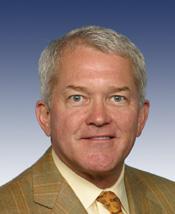
Mr. Speaker, there are a lot of collateral issues being discussed today, but the fact remains that the will of the House is not a mandate on the Senate. The Senate was unwilling to accept some…
Mr. Speaker, there are a lot of collateral issues being discussed today, but the fact remains that the will of the House is not a mandate on the Senate. The Senate was unwilling to accept some provisions. Let us acknowledge that.
But let us talk about what we are here for today, and that is to protect the vulnerable children. You have heard the names repeatedly in this debate. I do not want to read about another one for our failure to act.
This House did overwhelmingly approve this bill because there are a lot of good legislative initiatives in this bill to protect our children. I have said repeatedly on this floor that we protect library books better than we do our children. We have a better system of accountability than we do for our children.
This is about the kids that have perished because they were at the hands of despicable child predators.
Mr. Sensenbrenner has crafted a bill that gets at the heart of this matter. I want to thank John Walsh, who lost his son Adam, as a tireless advocate who went and asked Senator Frist to bring this base bill to the Senate floor, and Senator Frist has agreed to that request, along with the other parents of the children who have lost their lives.
These brave parents have come to this city to urge Congress to not let the tragedies that have happened to their families happen to another child.
I thank Ms. Ginny Brown-Waite, an outstanding advocate who had a resident in her district who died at the hands of a pedophile. We can do better.
Mr. Speaker, I want to thank Mike Volkov, Bradley Schreiber and others who helped craft this important legislation, and I urge passage of this bill.
Madam Speaker, I thank the gentleman for yielding me this time and for his leadership on child safety issues. Madam Speaker, I rise today in strong support of the Child Safety and Violent Crime…
Madam Speaker, I thank the gentleman for yielding me this time and for his leadership on child safety issues.
Madam Speaker, I rise today in strong support of the Child Safety and Violent Crime Reduction Act because it is a commonsense way to protect our school children from pedophiles.
Isn't it a matter of common sense to allow a local school district in Orlando, Florida to do criminal background checks on coaches, janitors, and teachers who work with our children, to make sure they are not convicted pedophiles from Georgia or some other State?
Isn't it common sense to protect young school children in the first place by keeping these pedophiles locked up with lengthy prison sentences?
Isn't it common sense that coddling repeated sex offenders with self- esteem courses and rehabilitation doesn't work, and that locking them up does work?
Madam Speaker, the best way to protect young children is to keep child predators locked up in the first place, because someone who has molested a child will do it again and again and again.
Last year, two young Florida girls, 9-year-old Jessica Lunsford and 13-year-old Sarah Lunde, were abducted, raped, and killed. In both cases the crimes were committed by convicted sex offenders who were out on probation. This law imposes a mandatory minimum punishment of 30 years for those who commit violent crimes against children, as well as a punishment of life in prison or a death sentence when that crime results in a child's death.
It is high time that we crack down on child molesters by implementing these commonsense reforms, and I urge my colleagues to vote ``yes'' on
Bill Text
4 versions available
        [Congressional Bills 109th Congress]
[From the U.S. Government Publishing Office]
[H.R. 4894 Referred in Senate (RFS)]

109th CONGRESS
2d Session
H. R. 4894

_______________________________________________________________________

IN THE SENATE OF THE UNITED STATES

June 14, 2006

Received

August 4 (legislative day, August 3), 2006

Read twice and referred to the Committee on the Judiciary

_______________________________________________________________________

AN ACT

To provide for certain access to national crime information databases
by schools and educational agencies for employment purposes, with
respect to individuals who work with children.

Be it enacted by the Senate and House of Representatives of the
United States of America in Congress assembled,

SECTION 1. ACCESS TO NATIONAL CRIME INFORMATION DATABASES BY SCHOOLS
AND EDUCATIONAL AGENCIES FOR CERTAIN PURPOSES.

(a) In General.--The Attorney General of the United States shall,
upon request of the chief executive officer of a State, conduct
fingerprint-based checks of the national crime information databases
(as defined in section 534(f)(3)(A) of title 28, United States Code, as
redesignated under subsection (e)), pursuant to a request submitted by
an entity of the State, or unit of local government, which is
designated to conduct background checks on individuals employed by,
under consideration for employment by, or volunteering for, a private
or public elementary school, private or public secondary school, local
educational agency, or State educational agency in that State in a
position in which the individual would work with or around children.
Where possible, the check shall include a fingerprint-based check of
State criminal history databases. The Attorney General and the States
may charge any applicable fees for these checks.
(b) Protection of Information.--An individual having information
derived as a result of a check under subsection (a) may release that
information only to an appropriate officer of a private elementary
school, private secondary school, local educational agency, or State
educational agency, or to any person authorized by law to receive that
information.
(c) Criminal Penalties.--An individual who knowingly exceeds the
authority in subsection (a), or knowingly releases information in
violation of subsection (b), shall be imprisoned not more than 10 years
or fined under title 18, United States Code, or both.
(d) Definitions.--In this section, the terms ``elementary school'',
``local educational agency'', ``secondary school'', and ``State
educational agency'', have the meanings given to those terms in section
9101 of the Elementary and Secondary Education Act of 1965 (20 U.S.C.
7801).
(e) Technical Correction.--Section 534 of title 28, United States
Code, as amended by section 905(a) of the Violence Against Women and
Department of Justice Reauthorization Act of 2005 (Public Law 109-162),
is further amended by redesignating the second subsection (e) as
subsection (f).

Passed the House of Representatives June 13, 2006.

Attest:

KAREN L. HAAS,

Clerk.