Physicians for Underserved Areas Act
Legislative Activity
Stay on top of the latest movement without scrolling through every action
Became Public Law No: 109-477.
January 12, 2007
View full timeline
Introduced in House
March 16, 2006
Referred to the House Committee on the Judiciary.
March 16, 2006
Referred to the Subcommittee on Crime, Terrorism, and Homeland Security.
May 1, 2006
Referred to the Subcommittee on Immigration, Border Security, and Claims.
May 12, 2006
Subcommittee Hearings Held.
May 18, 2006
Committee Consideration and Mark-up Session Held.
September 27, 2006
Reported (Amended) by the Committee on Judiciary. H. Rept. 109-715.
December 5, 2006
Placed on the Union Calendar, Calendar No. 427.
December 5, 2006
Mr. Sensenbrenner moved to suspend the rules and pass the bill.
December 6, 2006 • 2:58 PM
Considered under suspension of the rules. (consideration: CR 12/7/2006 H8809-8812)
December 6, 2006 • 3:00 PM
DEBATE - The House proceeded with forty minutes of debate on H.R. 4997.
December 6, 2006 • 3:00 PM
Passed/agreed to in House: On motion to suspend the rules and pass the bill, as amended Agreed to by voice vote.(text: CR 12/7/2006 H8809)
December 6, 2006 • 3:20 PM
On motion to suspend the rules and pass the bill, as amended Agreed to by voice vote. (text: CR 12/7/2006 H8809)
December 6, 2006 • 3:20 PM
Motion to reconsider laid on the table Agreed to without objection.
December 6, 2006 • 3:20 PM
The title of the measure was amended. Agreed to without objection.
December 6, 2006 • 3:20 PM
Received in the Senate, read twice.
December 7, 2006
Passed Senate without amendment by Unanimous Consent. (consideration: CR 12/8/2006 S11830)
December 9, 2006
Message on Senate action sent to the House.
December 11, 2006
Presented to President.
January 3, 2007
Signed by President.
January 12, 2007
Became Public Law No: 109-477.
January 12, 2007
Floor Debate
17 membersWhat members said about H.R. 4997 on the floor
 FJS
 WJJ
 CM
 SJL
 MES+12
Floor Debate
17 membersWhat members said about H.R. 4997 on the floor
Madam Speaker, pursuant to House Resolution 1018, I call up the bill (H.R. 4830) to amend chapter 27 of title 18, United States Code, to prohibit the unauthorized construction, financing, or reckless…
Madam Speaker, pursuant to House Resolution 1018, I call up the bill (H.R. 4830) to amend chapter 27 of title 18, United States Code, to prohibit the unauthorized construction, financing, or reckless permitting (on one's land) the construction or use of a tunnel or subterranean passageway between the United States and another country, and ask for its immediate consideration.
Madam Speaker, I ask unanimous consent that all Members may have 5 legislative days within which to revise and extend their remarks and include extraneous material on H.R. 4830, currently under consideration.
Madam Speaker, I yield myself such time as I may consume.
Madam Speaker, I rise in support of H.R. 4830, the Border Tunnel Prevention Act of 2006, to prohibit the construction and use of border tunnels for the purposes of smuggling.
For over a decade, drug cartels and ``coyotes'' have used border tunnels to smuggle elicit drugs and illegal immigrants into the United States. Border tunnels range from rudimentary gopher holes to more sophisticated tunnels equipped with electricity, ventilation and even rails for electric carts. These tunnels have been used to penetrate both our northern and southern borders. Fifty tunnels have been discovered along the southwest border since 1990, and 36 of them have been unearthed in just the last 5 years.
This January, a joint investigation between the U.S. and Mexican law enforcement led to the discovery of a narcotics smuggling tunnel just east of the Otay Mesa, California, port of entry. Authorities seized nearly two tons of marijuana. The tunnel, approximately 86 feet deep and nearly three-quarters of a mile long, began inside a small warehouse in Otay Mesa, Mexico, and ended inside a vacant warehouse in San Diego, California.
In 2005, Federal agents discovered a 360-foot tunnel between British Columbia, Canada, and Washington State. This tunnel was also used for illegal drug trafficking, though DEA agents noticed that it could easily have been used to smuggle persons or to facilitate terrorism. We were reminded again of the growing problem just a few days ago when another drug smuggling border tunnel was discovered between California and Mexico.
Despite the clearly illegal purposes of these border tunnels, efforts to fully and effectively prosecute the smugglers are hampered by the fact that it is not a crime to construct, finance, or use a border tunnel. If there is insufficient evidence to prosecute these individuals for drug smuggling or alien trafficking, there are virtually no consequences for the criminal organizations that build and use these tunnels.
The Border Tunnel Prevention Act plugs this glaring loophole. The bill criminalizes the construction or financing of a tunnel or subterranean passage across our international border. An individual prosecuted under this offense faces a penalty of up 20 years in prison. Additionally, any person convicted of using a tunnel or subterranean passage to smuggle aliens, weapons, drugs, terrorists, or illegal goods will be punished by doubling the sentence for the underlying offense.
The bill also provides for the forfeiture of assets or property traceable to the construction or use of a border tunnel and instructs the sentencing commission to adopt guidelines that properly reflect the severity of this offense.
Madam Speaker, the bill is supported by Members from both sides of the aisle. This legislation provides a critical tool for protecting our national security and combating the drug and alien smuggling that plagues our borders. I urge my colleagues to support it.
Madam Speaker, I reserve the balance of my time.
Madam Speaker, I yield myself \1/2\ minute.
Madam Speaker, we hear complaints all the time about the fact that Republicans are not acting. We are acting today. We acted in December. We acted last week on the fence. We see the Democrat actions. All they do is say no, no, no, no.
They are not where the American people are. They are not where our priorities ought to be. The Senate has not messaged their bill, even though they passed it in May. We are running out of time in this Congress. The American people say border security first.
Madam Speaker, I yield 3 minutes to the gentleman from Arizona (Mr. Hayworth).
Madam Speaker, I yield myself 1 minute.
First of all, the gentleman from Michigan says that we have not had any hearings in the Judiciary Committee. Since I became the chairman, we have had 68 hearings on the need to strengthen border security and enforcement of immigration law, and I will include the list of all 68 hearings in the Record at this point.
109th Congress
Immigration, Border Security, and Claims 7-27-2006
Oversight--Oversight Hearing on ``Whether Attempted
Implementation of the Senate Immigration Bill Will Result in
an Administrative and National Security Nightmare.''
Immigration, Border Security, and Claims 7-18-2006
Oversight--Oversight Hearing on ``Should We Embrace the
Senate's Grant of Amnesty to Millions of Illegal Aliens and
Repeat the Mistakes of the Immigration Reform and Control Act
of 1986?''
Immigration, Border Security, and Claims 6-22-2006
Oversight--Oversight Hearing on ``Is the Labor Department
Doing Enough to Protect U.S. Workers?''
Immigration, Border Security, and Claims 6-8-2006
Oversight--Oversight Hearing on ``The Need to Implement WHTI
to Protect U.S. Homeland Security.''
Immigration, Border Security, and Claims 5-18-2006
Hearing--Legislative Hearing on H.R. 4997, the ``Phvsicians
for Underserved Areas Act''.
Immigration, Border Security, and Claims 3-30-2006
Oversight--Oversight Hearing on ``Should Congress Raise the
H-IB Cap?''
Immigration, Border Security, and Claims 3-2-2006
Oversight--Joint Oversight Hearing on ``Outgunned and
Outmanned: Local Law Enforcement Confronts Violence Along the
Southern Border.''
Immigration, Border Security, and Claims 11-17-2005
Oversight--Oversight Hearing on ``How Illegal Immigration
Impacts Constituencies: Perspectives from Members of Congress
(Part II).''
Immigration, Border Security, and Claims 11-17-2005
Oversight--Joint Oversight Hearing on ``Weak Bilateral Law
Enforcement Presence at the U.S.-Mexico Border: Territorial
Integrity and Safety Issues for American Citizens.''
Immigration, Border Security, and Claims 11-10-2005
Oversight--Oversight Hearing on ``How Illegal Immigration
Impacts Constituencies: Perspectives from Members of Congress
(Part I).''
Immigration, Border Security, and Claims 9-29-2005
Oversight--Oversight Hearing on ``Dual Citizenship,
Birthright Citizenship, and the Meaning of Sovereignty.''
Immigration, Border Security, and Claims 9-15-2005
Oversight--Oversight Hearing on: ``Sources and Methods of
Foreign Nationals Engaged in Economic and Military
Espionage.'' (Classified portion of hearing begins at 1 p.m.)
Immigration, Border Security, and Claims 9-15-2005
Oversight--CONTINUATION of UNCLASSIFIED PORTION of
Oversight--Hearing on: ``Sources and Methods of Foreign
Nationals Engaged in Economic and Military Espionage.''
Immigration, Border Security, and Claims 9-8-2005 Markup
Subcommittee on Immigration, Border Security & Claims--Markup
of H.R. 1219, the ``Security and Fairness Enhancement for
America Act of 2005.''
Immigration, Border Security, and Claims 7-28-2005 Markup
Subcommittee on Immigration, Border Security & Claims Markup
of H.R. 1219, the ``Security and Fairness Enhancement for
America Act of 2005.''
Immigration, Border Security, and Claims 6-30-2005
Oversight--Oversight Hearing on ``Immigration Removal
Procedures Implemented in the Aftermath ofthe September 11th
Attacks.''
Immigration, Border Security, and Claims 6-28-2005 Hearing
Legislative Hearing on H.R. 2933, the ``Alien Gang Removal
Act of 2005.''
Immigration, Border Security, and Claims 6-21-2005
Oversight--Oversight Hearing on the ``Lack of Worksite
Enforcement & Employer Sanctions.''
Immigration, Border Security, and Claims 6-15-2005
Oversight--Oversight Hearing on the ``Diversity Visa
Program.''
Immigration, Border Security, and Claims 5-12-2005 Hearing
Legislative Hearing on H.R. 98, the ``Illegal Immigration
Enforcement and Social Security Protection Act of 2005.''
Immigration, Border Security, and Claims 5-5-2005
Oversight--Oversight Hearing on the ``New `Dual Missions' of
the Immigration Enforcement Agencies.''
Immigration, Border Security, and Claims 5-4-2005
Oversight--Oversight Hearing on ``New Jobs in Recession and
Recovery: Who are Getting Them and Who are Not?''
Immigration, Border Security, and Claims 4-21-2005
Oversight--Oversight Hearing on ``October 2005 Statutory
Deadline for Visa Waiver Program Countries to Produce
Security Passports: Why It Matters to Homeland Security.''
Immigration, Border Security, and Claims 4-13-2005
Oversight--Oversight Hearing on ``Immigration and the Alien
Gang Epidemic: Problems and Solutions.''
Immigration, Border Security, and Claims 3-10-2005
Oversight--Oversight Hearing on ``Interior Immigration
Enforcement Resources.''
Immigration, Border Security, and Claims 3-3-2005
Oversight--Oversight Hearing on the ``Immigration Enforcement
Resources Authorized in the Intelligence Reform and Terrorism
Prevention Act of 2004.''
108th Congress
Immigration, Border Security, and Claims 6-23-2004
Oversight--Oversight Hearing on ``Families and Businesses in
Limbo: The Detrimental Impact of the Immigration Backlog.''
Immigration, Border Security, and Claims 6-17-2004
Oversight--Oversight Hearing on ``Families & Businesses in
Limbo: The Detrimental Impact of the Immigration Backlog.''
Immigration, Border Security, and Claims 6-3-2004 Markup--
Subcommittee Markup on H.R. 4453, the ``Access to Rural
Physicians Improvement Act of 2004.''
Immigration, Border Security, and Claims 5-18-2004
Oversight--Oversight Hearing on ``Pushing the Border Out on
Alien Smuggling: New Tools and Intelligence Initiatives.''
Immigration, Border Security, and Claims 4-29-2004
Oversight--Oversight Hearing on the ``Diversity Visa Program,
and its Susceptibility to Fraud and Abuse.''
Immigration, Border Security, and Claims 4-1-2004 Hearing--
Legislative Hearing on H.R. 3191, To prescribe the oath of
renunciation and allegiance for purposes of the Immigration
and Nationality Act.
Immigration, Border Security, and Claims 3-24-2004
Oversight--Oversight Hearing on ``How Would Millions of Guest
Workers Impact Working Americans and Americans Seeking
Employment?''
Immigration, Border Security, and Claims 3-18-2004
Oversight--Oversight Hearing on ``US VISIT: A Down Payment on
Homeland Security.''
Immigration, Border Security, and Claims 3-11-2004
Oversight--Oversight Hearing on ``Funding for Immigration in
the President's 2005 Budget.''
Immigration, Border Security, and Claims 3-4-2004
Oversight--Oversight Hearing on ``Alien Removal Under
Operation Predator.''
Immigration, Border Security, and Claims 2-25-2004
Oversight--Oversight Hearing on ``Funding for Immigration in
the President's 2005 Budget.''
Immigration, Border Security, and Claims 10-30-2003
Oversight--Oversight Hearing on the ``Prospects for American
Workers: Immigration's Impact.''
Immigration, Border Security, and Claims 10-16-2003
Oversight--Oversight Hearing on ``Visa Overstays: A Growing
Problem for Law Enforcement.''
Immigration, Border Security, and Claims 10-1-2003
Hearing--Legislative Hearing on H.R. 2671, the ``Clear Law
Enforcement for Criminal Alien Removal Act of 2003'' (CLEAR
Act).
Immigration, Border Security, and Claims 9-11-2003
Oversight--Oversight Hearing on ``Should There Be a Social
Security Totalization Agreement with Mexico?''
Immigration, Border Security, and Claims 7-15-2003 Markup--
Subcommittee Markup of H.R. 2152, To amend the Immigration
and Nationality Act to extend for an additional 5 years the
special immigrant religious worker program.
Immigration, Border Security, and Claims 7-11-2003
Oversight--Oversight Hearing on ``Immigration Relief Under
the Convention Against Torture for Serious Criminals and
Human Rights Violators.''
Immigration, Border Security, and Claims 6-26-2003
Oversight--Oversight Hearing on ``The Federal Government's
Response to the Issuance and Acceptance in the U.S. of
Consular Identification Cards.''
Immigration, Border Security, and Claims 6-24-2003
Oversight--Oversight Hearing on ``The Deadly Consequences of
Illegal Alien Smuggling.''
Immigration, Border Security, and Claims 6-19-2003
Oversight--Oversight Hearing on ``The Issuance, Acceptance,
and Reliability of Consular Identification Cards.''
Immigration, Border Security, and Claims 5-13-2003
Oversight--Oversight Hearing on ``John Allen Muhammad,
Document Fraud, and the Western Hemisphere Passport
Exception.''
Immigration, Border Security, and Claims 5-8-2003
Oversight--Oversight Hearing on ``War on Terrorism:
Immigration Enforcement Since September 11, 2001.''
Immigration, Border Security, and Claims 5-6-2003 Hearing--
Legislative Hearing on H.R. 1714, H.R. 1275, H.R. 1799, H.R.
1814, and H.R. 1685, the ``House Military Naturalization
Bills.''
Immigration, Border Security, and Claims 4-10-2003
Oversight--Oversight Hearing on ``Department of Homeland
Security Transition: Bureau of Immigration and Customs
Enforcement.''
Immigration, Border Security, and Claims 4-2-2003
Oversight, Oversight Hearing on ``Immigration Student
Tracking: Implementation and Proposed Modifications.''
Immigration, Border Security, and Claims 2-27-2003
Oversight, Oversight Hearing on ``New York City's `Sanctuary'
Policy and the Effect of Such Policies on Public Safety, Law
Enforcement, and Immigration.''
107th congress
``Immigration and Naturalization Service and the Executive
Office for Immigration Review'', 5-15-2001 Oversight Hearing
``Guestworker Visa Programs'', 6-19-2001
``United States Population and Immigration,'' 8-2-2001
``Using Information Technology to Secure America's Borders:
INS Problems with Planning and Implementation,'' 10-11-2001
``Immigration and Naturalization Service Performance: An
Examination of INS Management Problems,'' 10-17-2001
``A Review of Department of Justice Immigration Detention
Policies,'' 12-19-2001
``The Operations of the Executive Office for Immigration
Review,'' 2-6-2001
``Implications of Transnational Terrorism and the Argentine
Economic Collapse for the Visa Waiver Program,'' 2-28-2001
``The INS' March 2002 Notification of the Approval of Pilot
Training Status for Terrorist Hijackers Mohammed Atta and
Marwan Al-Shehhi'', 3-19-2001
``Immigration and Naturalization Service and Office of
Special Counsel for Immigration Related Unfair Employment
Practices,'' 3-21-2001
The INS' Interior Enforcement Strategy, 6-19-2002
Risk to Homeland Security from Identity Fraud and Identity
Theft (Held jointly with the Subcommittee on Crime,
Terrorism, and Homeland Security), 6-25-2002
``Role of Immigration in the Proposed Department of
Homeland Security pursuant to H.R. 5005, the Homeland
Security Act of 2002.''
``The INS's Implementation of the Foreign Student Tracking
Program,'' 9-18-2002
``Preserving the Integrity of Social Security Numbers and
Preventing Their Misuse by Terrorists and Identity Thieves
(Held jointly with the Subcommittee on Social Security of the
Committee on Ways and Means),'' 9-19-2002
``The INS's Interactions with Hesham Mohamed Mohamed Ali
Hedayet,'' 10-9-2002
``United States and Canada Safe Third Country Agreement,''
10-16-2002
Secondly, again, this Congress is running out of time. It is not the fault of anybody in the House of Representatives why a conference has not been created. We cannot set up a conference without the other body sending papers to us. They have not sent us the papers on the bill that they passed in May. Once the papers are here, then somebody can make a motion to send the bill to conference, but until the papers are here, there is nothing to send to conference.
On the other hand, when we passed our immigration bill last December, the papers had been sitting over in the other body. They can set up the conference merely by taking up the House-passed bill, striking out all after the enacting clause, inserting the Senate text and asking for a conference. They have not done it.
Madam Speaker, I yield 3 minutes to the gentleman from Indiana (Mr. Souder).
(Mr. SOUDER asked and was given permission to revise and extend his remarks.)
Madam Speaker, I yield myself the balance of the time.
I think we ought to get back to what this bill does so that Members are properly advised on how to cast their votes.
What the bill does is to create a criminal offense to prohibit the unauthorized construction, financing, or reckless permitting on one's land the construction or use of a tunnel or subterranean passageway between the United States and another country.
Now, if you want that to be criminal, vote ``aye,'' and if you don't, vote ``no.'' I am going to vote ``aye.'' I hope all the Members do.
Madam Speaker, I yield back the balance of my time.
Madam Speaker, on that I demand the yeas and nays.
I thank the gentleman for yielding. Madam Speaker, we, as we talk about conditions in Louisiana and Mississippi tonight, we don't want this Congress or the people of America to believe that we are…
I thank the gentleman for yielding. Madam Speaker, we, as we talk about conditions in Louisiana and Mississippi tonight, we don't want this Congress or the people of America to believe that we are ungrateful for the help that we have already received. We are deeply grateful for it. We appreciate it immensely, and it has been a huge help to our people.
But I think what is important to note is that the disaster that we were stricken with is so immense, so pervasive, so once-in-a-lifetime historic, that there is just so much to be done over such a long time to restore opportunity for people to have a chance to reclaim their lives.
So I want to start out by just talking a little bit so people can better understand the dimensions of our problem. If you can imagine that in your city, if your city were ours, and just to talk about New Orleans a minute, a city of 480,000-or-so people, and you woke up one morning and 80 percent of your city was underwater. Eighty percent of your schools, of your hospitals, of your playgrounds, of your homes, of your businesses were all underwater, and that the water didn't recede in a few hours or a few days or even a few weeks. It stayed there for several weeks. And it wasn't just a little water in your house, ordinarily it was 4 feet, 5 feet, 6 feet, and sometimes more than that, over the roof.
This happened in Orleans Parish, and it happened in St. Bernard Parish, where the whole place was obliterated. And it happened in Plaquemines Parish as well. And imagine that 1,000 or 2,600 of your people died from this storm and that another thousand are still missing and no one knows where they are, and families are still searching for them. Imagine that if you were in Mississippi that 200-or-so people lost their lives.
Imagine that if you counted up all the houses that were destroyed in Louisiana and this happened to you, there would be 220,000 houses destroyed, and about 61,000 in Mississippi, and that your people were trying desperately to get back home. They were looking for temporary quarters, and they were willing to live in FEMA trailers or wherever they could find a temporary abode, and there were 98,000. That is how many there are in Louisiana looking for a trailer now, and fewer than half of those requests have been filled. In Mississippi, some number in the 30,000 range were involved, and most of those have been filled.
Imagine if you had been waiting for electricity for your neighborhood for now 6 months and you didn't have it, for the most part. In Orleans Parish, a
little better than half of our folks have their places connected for electricity. A little better than that in Mississippi, but in our place it isn't true. Imagine if you were trying to figure how could you get your hands around your problem, build back your house, get yourself back together and your insurance company wasn't cooperating and they were denying claims left and right, and saying that your homeowner's policy didn't apply. If you didn't have flood insurance, then you had nothing. If you had flood insurance, then you had limits that would be much lower than would ordinarily be expected to be useful to help you build back.
Imagine you were counting on your government, FEMA, to come forth and give you some direction as to how you could build back your place, to what level you had to build back safely, and FEMA had not even given you preliminary elevations that you could use. Imagine if you now were paying rent in one place or a house note somewhere and had a house note to pay in Orleans Parish and you could not get back in your place to live and your bank was calling you at your homestead, your mortgage company saying we cannot carry this anymore; you have to figure out some way to pay it.
Imagine you wanted to get back home, and you had 5,000 hospital beds when you left, a hospital bed count, and now you only had a few hundred and you were worried about your family and your children getting back and having a place to go if they got sick or hurt or needed to see a physician. And all the physicians, a great number of them, are out of town, somewhere else themselves, victims of trying to make the place work.
Imagine if your city had, at the end of the storm, no tax base and your school board had no tax base, and your schools weren't open. That is the situation that you find yourself in not only the day after the storm or the week after the storm or a few months after, but now 6 months after. And not a whole lot has changed because the problems are just so complex and so large and so enduring.
Now, these are not problems that are going to go away overnight. Our country needs to know this. Our friends need to know that all that we have done so far is to start to address these issues, to make down payments on certain aspects of it, but it will be years and years and years before we actually get this done.
Now, imagine also that you were trying to figure how you could avoid having this ever happen to you again and you were looking for a way to secure yourself, and you knew that it would take a real commitment for hurricane protection measures to be taken. And you had taken a trip, as I have, to the Netherlands, other parts of the world, and you had looked around to see what people had done to secure themselves against hurricanes and storms. And you found out that this was technically possible; that in the Netherlands people are living and have lived for 53 years, since their last calamity with a storm there that drowned their people.
For 53 years they have lived with a system of barriers and canals and pumping stations and dikes, as they call them, we call them levees, and dunes and all the rest; an integrated system of water management for flood protection. And they have done this for 53 years now without an incident that has required them to have any loss of life or property. They have spent $18 billion over a long period of time to provide this security, and they were an economy of $485 billion.
In our country, we haven't yet made a decision to support a system in our part of the world that might cost $30 billion, $40 billion, in an economy that is not $485 billion, like theirs was, but is $12.2 trillion, the largest economy in the whole world. Twenty percent of the world's wealth in our country and we haven't been able to make a decision to step up and find a way to use the technology that already exists to support our people and to make them safe over time and to avoid large expenditures in the future.
Because we all know one thing for sure: that while there may not be another terrorist attack on our shores, we may find a way to prevent that, there is no way to prevent these storms that are brewing in the Gulf of Mexico and that are coming more frequently, more ferocious than ever before, and that will be with us for years to come. We can secure ourselves against these storms if we build the coastal barrier protections that we need and if we build our wetlands back and our coastlines back, so that when these storms come, as ferocious as they may be, by the time they reach our population centers, they will be tamped down enough such that they can be handled by a levee system and other flood protection systems that are in place.
So we have made a lot of progress, but there is a great deal for us to do. And we are here tonight to highlight for the people of our country how much there is to be done and to ask them to stand with us and stay with us over this long period of time because it is going to take years and years to bring our people back.
And, look, folks aren't asking for our government to take care of them forever. They know, though, that they can't do this by themselves. Because no one has seen this kind of damage before in this country. It is a catastrophe beyond imagination. It has never happened anywhere on the face of America ever before to this extent, to this dimension.
So we are saying, give us a chance to help ourselves. Let us get back into our home places. Let us get back to the places we live and to the places that we want to live. Recognize the right that our people have to return, to restore their lives, the right to rebuild in their places, the right to reclaim their experiences back home. We want our people back home. We need your help to get them back home, and they can live in New Orleans safely. They can live in our environment safely.
So when people ask this question of what should the footprint of New Orleans be, it is a misplaced question. The issue isn't where can we rebuild. Because we know from the experience of the Netherlands we can build anywhere. If they can live 15 feet below sea level, and in New Orleans we talk about 4\1/2\ feet at the lowest point, if they can secure themselves 15 to 20 feet below sea level, we can secure ourselves 4 and 5 feet below sea level in the lowest points.
We can have this vibrant city restored and have our people in a place to reclaim their lives, and for our city and our region to continue to be the force that it has been for our country in natural resource development and distribution throughout the country; our pipeline system, our oil and gas system that we have invested in across the gulf.
And for our fisheries, the provisions we make for our country and the work that we do with our port system that moves the goods from mid- America to the rest of the world, these are very important assets that New Orleans provides and our country cannot do without. We are extraordinarily valuable, not to mention our cultural contributions to this country.
We want to see the people of America understand how deep our problems are. That is why we have come to the floor tonight, to make that point to the people of this country and to our colleagues in Congress, many of whom we have had a chance to bring down our way, and many others we want to invite down so they can see for themselves what they need to do to help us.
I thank my colleague, Mr. Melancon, for helping to bring this matter to the attention of the American people and giving us a chance to talk about it tonight. I am pleased to join with him and soon with Mr. Gene Taylor of Mississippi and our other colleagues.
I thank the gentleman for yielding. I think it is important to make a point here that often gets lost in these discussions. We did suffer a tremendous natural disaster in our region. But so much of what happened to our people, and what really drowned our city was not the storm itself, but the deluge that came from the breakage of our levees. Our levees gave way because they weren't designed, constructed or maintained properly. This was a Federal responsibility. This was the responsibility of the Corps of Engineers. And therefore, when we talk about the responsibility of our government now to make an appropriate addressing of these issues, it is important to understand that we are asking a government that, in large part, caused the loss and devastation there to step forward now and help us to fix it.
And so our position isn't just that we are victims of a natural disaster alone, but that we are also victims of a manmade disaster made by the men and women who were responsible for building, designing and maintaining our heavy system. And so there is an additional responsibility for this government to come to our aid, not just because we are victims of a storm, but because they had a hand in bringing about the devastation and destruction that occasioned us.
Had it not been for the drowning of our city, we wouldn't be here talking about these issues today in large part. Yes, there would be some overtopping of levees and there would be some flooding, but there would be nothing like the devastation that we witnessed and our people are enduring now. So let us not forget the main reason for our being here. It is because our area was flooded. Flood water stood for many, many weeks because our levees did not hold, after the government told us that they would, assured us that they would.
As Mr. Melancon says, they told people they didn't even have to take flood insurance in many cases because the levees were going to prevent any flooding there. And they did not do that. And so I think we have a moral high ground here with respect to our demand of our government, and not just because we are citizens and taxpayers. That is enough in itself, but because the government had a big hand in bringing about the catastrophe that struck our people.
Our city drowned. Our region drowned because our levees failed. And that was the responsibility of our Federal Government.
And I think, Mr. Melancon, people are coming to realize that now. And they can't embarrass us to say you are just coming as victims asking for more and more. The government did this to us as much as anyone else did, much more than it just being a natural disaster for. We have a right to demand that our government set things right.
Madam Speaker, I thank Mr. Melancon for yielding to me. I want to say how grateful he and I are for the bipartisan approach that was made in our region just a few weeks ago when the Speaker of the House and our Democratic leader, Mr. Hastert and Ms. Pelosi, came together and worked together in that region to address some of the issues we are talking about tonight and to bring to the attention of the American people how crucial it is that all of us pull together for this region.
As Mr. Melancon has said, it is a very important region to our Nation. And so it is not just a matter of helping the folks of Louisiana, it is a matter of helping people across this country. Yes, our folks are strewn in 44 States around the country, but we are not talking about that sort of a national problem, we are talking about one where we actually, the country needs our region and we need our country to come to our aid so we can continue to supply these vital services to the rest of the people of our Nation.
I believe that if someone were to take a poll, Mr. Melancon now, and ask people of this country whether they were standing with New Orleans and with our region and wanted to see us brought back, wanted to see our country helped, I think they would all say yes to that.
We just have to get the message here to the Members of Congress that people out there want to see us rebuild, want to see us recover. And if we keep this measure in front of them, the American people will see us through this. So a part of our mission here tonight is to make sure that the American people understand how deep and abiding and enduring our issues are, and to inform their Members of Congress how much we need their continuing help on a bipartisan basis to see us through this set of problems.
I think it is good for our region, it is imperative for our country, and it is the way that we ought to address these issues. We cannot go out with credibility with the rest of the world and say we are going to fix their issues, their problems, their infrastructure requirements, and not say the same thing for our people here at home with any credibility.
So I thank Mr. Melancon for what he has done to arrange this. I thank Congresswoman Sheila Jackson-Lee for her contribution tonight, for Congresswoman Lee, and for all of our colleague who have joined us in this colloquy tonight. I appreciate the opportunity that the House has given us to bring this message to the people of our country.
Madam Speaker, I appreciate the opportunity to be here tonight. With the recent events that have occurred over the past seven, eight months, since Hurricanes Katrina, Rita and Wilma have hit the gulf…
Madam Speaker, I appreciate the opportunity to be here tonight. With the recent events that have occurred over the past seven, eight months, since Hurricanes Katrina, Rita and Wilma have hit the gulf coast of the United States, in the recent week, a group of us got together, and we have set up the Gulf Coast Disaster Recovery Caucus to basically try to make sure that this Congress and America and this administration do not forget the disaster and the catastrophe that has occurred and inundated people all along the gulf coast.
It is not just a New Orleans thing. It is Louisiana, across the entire breadth of the State. It is Mississippi, across the entire coastal area. It is Alabama, it is Texas and it is Florida, on the west coast this time.
I look at the news articles and such. I have had some concerns with some of the statements that have been made in the past about being below sea level, the honesty and the integrity of elected officials in Louisiana. It really bothers me because I do not see the moneys, the $85 or $87 billion that have been attested to be sent to the gulf coast in the hands of the people that need it, in the hands of the victims. There has been billions of dollars that have gone around that are somewhere between Washington, D.C., and the gulf coast of the United States, and I can tell you, it has not gotten to the people that are in need.
If you look at some of the instances of what is going on, parish governments that want to retain their own contractors cannot get what the cost of the Corps of Engineers and FEMA are paying to their contractors, and it is believed on best information that that price may be double to triple what is being paid by the local contractor, by the local government who is doing the job faster, better, and apparently, we believe, if we can ever get the numbers, more efficiently.
$4.2 billion has just been approved to gravel a 172-acre parking lot for mobile homes in Hope, Arkansas. Now, that goes on top of the $25,000 a month paid to the city of Hope, Arkansas, and I am
glad for the city of Hope, Arkansas, because if it is like rural American towns, it needs every dime of income it can use to sustain itself. But we have got over 11,000 trailers that are stationed there, 450 miles to the closest disaster parish or county, and there is 11,000 trailers up there that FEMA tells us they cannot put in a flood zone.
Well, the hurricane does not hit in the mountains. The hurricane does not hit in the desert. The hurricane hits along the coastal areas of this United States, and that is what these hurricanes have done.
They put up this morgue, a temporary morgue, FEMA did, in Coralville, Louisiana, $17 million, and now it is abandoned. $5.2 million, this was really nice, was spent getting a contract to a contractor that did not exist, and if it would not have been for the Justice Department seeing that these folks were cashing checks for $10,000 at a time, that they bought a brand new mobile home and three brand new automobiles, then we would still probably be out about $5.2 million. Then when they started to doing the work, it had to be turned over to the fire department and another contractor to get the job done.
Congressman Pickering told me today, and I think I recall it is either 90 or 95 percent of all the moneys are being contracted for debris removal and cleanup in Mississippi is going to contractors from outside the State. I can tell you, I get calls daily in my offices from people that are local that have been trying to get jobs, and then those that seem to be able to get some work, which is the bottom tier, are waiting months for their money.
I have one contractor that has been waiting for $50 million because the FEMA people or the State advanced the parish in which they are working some moneys right after the storm, about $30 million. This contractor is not getting his money, and in good faith, he has been working since day one, and has not gotten his money to pay his people and to run his company because the State and FEMA say that the parish that he is working in has not accounted for every dime.
And yet they have assured, the State and the contractor can document that he has not received a nickel from the parish, yet he is held up. There is another contractor across the river in Plaquemines Parish; they are to the tune of $6 million waiting. I have a guy in my hometown that is a very small company, he is waiting on about $150,000. And let me tell you, for a little, small independent guy like that, that is crushing him. That is killing him.
After the Florida hurricanes, three of them a year and a half ago, under section 32, the Department of Agriculture invoked section 32 of Ag Stabilization Act of 1935 and allowed the Secretary at his discretion to start reimbursing and helping those farmers that were in the category covered by section 32 to give them disaster assistance and get them back working.
On October 28, the Department of Agriculture finally invoked section 32. That is 2 months afterward. And to this day, the $250 million that they allowed, out of 780 in the account that has been appropriated for this year, zero has hit the ground in any one of the States that was impacted by any of these hurricanes. No disbursement whatsoever.
The caucus was set up in hopes of doing several things. One is making sure that the people that lived and worked and want to return to their homes will have that opportunity; to make sure that we provide and that this government provides for the safety of these people, protecting their communities, so they can rebuild their families, their homes and their businesses and trying to provide housing and rebuilding and repairing those houses so people can return home.
We need to get the economy back up. We need to create jobs and rejuvenate the entire coastal region, from Galveston Bay to Mobile Bay and all around down in the Tampa area where Wilma hit.
Health care is nonexistent for those that need it in the Orleans area. If you have a broken arm and you need surgery, you better get to another city. If you have cancer, you better get to another city. If you have anything that requires long-term health care, you better get to another city, because health care is in jeopardy in south Louisiana.
The doctors are like any other businessmen, they have to make a living. They cannot make a living if the customers or the clients or the patients, however you want to refer to them, are not back. And the hospitals can't keep themselves running when people are coming to them with injuries with no hospitalization coverage and they are required to take these people into the hospital to take care of them. And then, of course, when they are hurt, to give them a bed, which becomes a free bed. And you have hospitals that have used every dollar of their reserves and are getting ready to fold up and go under.
Education: families won't bring their kids back unless there are schools to attend. We have tried and we are trying. In Chalmette, they have the school system back up very quickly. Of an 8,000 student population, there was 800 the first day. They are hopeful the folks will come back. But one school has pre-K through high school, and they are working with what little they have.
We need to make sure that we respond to the Americans that have been injured, that we do everything in our power. If we can rebuild infrastructure in Iraq, schools, mosques, public buildings, private facilities, spend $100 million on a marsh area to bring it back to life, then surely we can spend some of our money and these taxpayers' money to help them get back on their feet.
The people in my district, the people of the gulf coast are not looking for a handout. They are just looking for a helping hand, and this government owes those folks that.
Madam Speaker, I yield time to Mr. Jefferson first.
Madam Speaker, I yield to the gentlewoman from Texas (Ms. Jackson-Lee).
Thank you, Congresswoman Jackson-Lee. I truly appreciated you and the 23 other people that have joined the caucus that we formed up this past week before going home.
With that I would like to yield time to Congresswoman Barbara Lee.
Thank you, Congresswoman Lee. I want to try, and of course we are getting towards the end of the hour, and Congressman Jefferson and I were hoping to have a few minutes.
I want to thank leadership for their assistance in trying to provide us with time so that we can make the issues known to the Members of Congress that are going to be voting on these issues.
This is not just a Louisiana thing. This is not just a New Orleans thing. This is an issue for the entire gulf coast. These are Americans, good tax paying citizens who have been left, not because they didn't buy the insurance that they were told to buy by their local government, by their insurance agent, by FEMA itself, the mortgage lenders. They bought those things. They did, they paid their taxes. They cared for their homes and now they are totally gone, with insurance companies saying no coverage, that is flood, and many of those houses being outside of flood zone.
Mr. Jefferson can attest to a lot of those issues being from New Orleans and my having Chalmette and South Plaquemines Parish. I would like to yield a little time to Mr. Jefferson.
Thank you, Mr. Jefferson.
Yes, for a minute please.
Let me see if Congressman Jefferson and I can wrap it up. If you use the cost-ratio method that the Corps of Engineers used for projects, and what many Federal and State agencies use to determine whether there is value in investments into areas, the resources and the area that was destroyed, and this is just Louisiana, I am not talking about Mississippi and Texas and Alabama now.
Thirty percent of the United States's energy comes from Louisiana offshore oil fields, straight through the state of Louisiana. 30 percent of the United States seafood comes through Louisiana. 42 percent of every commodity that is exported from this country goes through the Port of New Orleans. And that does not count the other three or four ports that are located on that river.
This city, this region, this southern port of our country is an important part that needs to be revived, needs to be helped back along. We can put money into projects, as I said, rebuilding other countries when they are having problems. We have got to be able to do this for ourselves.
There are a lot of folks that wrap themselves in the American flag and their politics, they are patriots, I am a patriot. There are a lot of people that espouse religion in their politics. And I say to those folks, what would Jesus do?
I do not think that he would leave these people wanting. This is not black, this is not white, this is not rich, this is not poor, this is not Republican, nor is it Democrat, it is about Americans that have been hurt and need the help of the citizenry, their fellow citizens to get back on their feet.
There are people returning to their communities and starting to do the planning in spite of the fact that they cannot get answers to the questions of how high, and when, and is anybody going to do anything at all?
There is resiliency in the people of the gulf coast. They are going to come back one way or another. It is going to be a tough bill. It is going to take time. It would take time whether the Government helped or not. But it sure would make it a whole lot better in my mind for other countries in the world to say Americans help each other.
I yield to Mr. Jefferson.
Madam Speaker, in closing, the days immediately following the storm in Katrina, before Rita even came and devastated southwest Louisiana and eastern Texas, the only way I can get to Chalmette and St. Bernard Parish was by boat on the river. And when I got there, I met the sheriff.
And they were organizing people they were lifting off the roofs at the port facility referred to as the Chalmette Slip. And all of these people, they had lined up about 200 people putting life jackets on them, putting them on a barge to bring them across the rivers to what is known as Algiers Point in hopes that there would be buses there could take them to a good place, because nobody really knew whether the buses would come and where they would ultimately end up.
But we gave them two MREs and we put them on the barge and we sent them out to Algiers Point, one we said for supper tonight with a bottle of water, one for breakfast in the morning with a bottle of water and let's just hope that the buses will get there.
And as the sheriff and I said goodbye to these folks, the first guy that was in line looked at the sheriff and looked, and he said, Sheriff, you know me, told him his name. He says you know my brother, Joe. You know where we live. Joe drowned. Do not forget him.
The next person in line was a lady who just burst into tears and hugged the sheriff and she was excited. She thought she was going somewhere. I do not where that lady is today. She may be in a hotel somewhere waiting to see when she can get back home.
The third person, this guy was standing there with a plastic grocery bag in his hand. And the sheriff said, I see you have got your lunch already. And he told the sheriff, this is not my lunch, this is all I have left now. My house went under 20 feet of water, at least that is about how high my roof is.
There are people that have suffered tremendously. We talked about the voting rights. I think there is enough safeguards. I believe that if America can spend millions of dollars to help Iraqis vote in this country for transitional government and elect officials in their country, then surely we can safeguard and make sure that Americans, regardless of where they are from, can vote in the elections in the communities of their choice where they reside, where they want to reside, where they want to return to.
In closing, I can only say that what we have done, while it is a good beginning, and every bit that is parceled out to the southern coastal States, we are thankful for. But this is far beyond the capacity of people or individuals to comprehend without physically seeing what is down there.
I do not care if it is Biloxi, Mississippi, New Orleans, Louisiana, Venice, Louisiana, Bayou LaBatrie, Alabama, it does not matter, if you go and you see you will understand.
It is inexplicable to try and describe it. I encourage, as I did with the leadership, when the CODEL came down to Louisiana, every Member of this Congress to go down there. If you make the trip, if you see the areas that were hit, and if you do not feel differently about trying to help these Americans, then there is nothing more that I can do.
I want to thank the leadership for allowing us the time. My job I feel is to keep this issue in front of the American public, because the gulf coast area is not back up on its feet and still needs quite a bit of help. Thank you, Madam Speaker.
Madam Speaker, I thank the gentleman for this hour, along with Mr. Gene Taylor and Mr. Bill Jefferson. Sitting and listening to Mr. Melancon and Mr. Bill Jefferson, I believe they have appropriately…
Madam Speaker, I thank the gentleman for this hour, along with Mr. Gene Taylor and Mr. Bill Jefferson.
Sitting and listening to Mr. Melancon and Mr. Bill Jefferson, I believe they have appropriately set the tone for why we are here tonight. I beg the indulgence of my colleagues, because we are obviously concerned about both what we have seen, who has been impacted, and what we can do better. For many of us who are members of the Gulf Coast Disaster Recovery Caucus, this has become a cause, a passion, and a desire to ensure that there is a final resolution for the people who are in need.
Let me just take a moment to acknowledge that this is Congressman Bill Jefferson's birthday. And of course we all know that the good news about birthdays is we have an opportunity to give back, and you have just seen Congressman Jefferson on the floor talking about the needs of his community.
I want to spend just a moment to thank Mr. Melancon, Mr. Bill Jefferson and Gene Taylor. I have never seen more collegiate Members under the auspices or under the umbrella or under the pain of devastation.
Certainly there are other colleagues throughout Louisiana, Mississippi and Alabama, but in our caucus we have seen this unified team, and certainly Mr. Thompson, who is the ranking member of the Homeland Security Committee, has been very helpful to this team, but you all have been the voices of reason and strength, the voices who have refused to back down, yet trying to bring along Members from both sides of the aisle. I want to thank them, particularly as a Member from Texas where many of their constituents are, and seeing how hardworking and diligent so many of the survivors are in our community, wanting nothing more than to return to the quality of life, the love of their community, the service they have given to their community, more than anything.
Many are mourning the loss of loved ones, and still having to toil finding work, maybe temporary work, making sure their children are in school, seeking to get the necessary benefits, benefits for elderly parents and relatives that they are taking care of. And many have had to funeralize relatives.
Madam Speaker, 1,100, possibly more, had to be funeralized. How many of us saw or was able to glean what kind of place New Orleans was by having to bury and funeralize 1,100-plus individuals, and there are those who never found their loved ones.
I want to tip my hat to Mr. Melancon, Mr. Jefferson and Mr. Taylor for continuing to press forward even in spite of the fact that there are many agenda items that take up the time of Members of Congress, but you are saying to us that the lives of our fellow Americans must be premier in our concern, and I am forever grateful. Texans are ever certainly grateful because as we fight for resources in the Gulf region, not in conflict and not in fist fight, but certainly in coordination and in collaboration.
So I rise today to sort of weave into this debate the needs of Louisiana and Mississippi, certainly Alabama to a lesser extent, but also to join with the State of Texas as a partner in the efforts that are necessary to be made.
Madam Speaker, just about 2 weeks ago, we joined with the delegation of 34 Members of Congress who saw fit to meticulously travel through three States and a number of different cities, and of course, we had the hospitality of Mr. Melancon, Mr. Jefferson and Mr. Taylor. We were able to see and hear firsthand not only local officials but real people.
One of the key elements that I want to raise tonight that really brought me to a degree of almost frustration, because when hardworking people do the right thing, when you follow the law, when you provide for your family, when you make sure you have insurance, when you pay your mortgages and pay your taxes and get up every morning and go to work, you should be able to rely on your local, State and certainly your Federal Government.
May I present my frustration in the context of visiting New Orleans and Mississippi and bending down and picking up a family picture, a mother holding her baby. When you go throughout these areas, you find the debris of life scattered about. A picture, teapot, a pink dress of a little girl blowing in a displaced closet, having been blown out of a house and sitting on the side of a road. This is the scene of broken hearts and broken lives for people who have tried to do everything that they thought was right.
One issue that brought great pain was at a stop by the side of a road where a family was in a trailer in Mississippi. It happened to be one of the law enforcement, our first responders of whom we are so proud. To hear him tell the story how he paid his insurance, how he gets a busy signal or no signal or a hang up, and how the insurance company tells him, almost like in the biblical times in the birth of Jesus Christ when Mary and Joseph were looking for places to give birth, and there was no room at the inn and they wound up in a manger. This man could find no relief.
None of his insurance policies, or the main one that he thought he had appropriately paid for and applied to, would provide him recovery. I hope, Mr. Melancon, in the Disaster Recovery Caucus, one of the main issues will be to confront this catastrophe, this crisis that impacted Hurricane Rita victims as well, to be able to rely upon paying insurance and not having to read the fine print to be able to find out whether or not I am going to be covered or denied.
In fact, in going throughout the region, I did not find one person that said, oh, yes, my insurance has covered me. There was one denial after another, one lawsuit after another. Two women that I spoke to said they were still waiting for recovery.
This issue needs to be confronted by Congress. Democrats are taking the lead on this issue. We welcome the joining of our colleagues on the other side of the aisle because we rise today to focus on the needs of people, and we need to rush toward victory by helping individuals who are suffering.
Let me also say that today we stood together to speak against this question of the eviction of almost 40,000 families, we believe, tomorrow. If the Secretary of Homeland Security, the Deputy Secretary of Homeland Security can hear our voices on the floor tonight, we are pleading with an extension of that eviction date. What will be said is we have extended it. In fact, I am looking at a time line hear that talks about October 25, November 15, December 15, November 23, December 12, January 9, and it says FEMA requires all evacuees staying in hotels and motels register for an authorization code by January 30, and then they went on to February 7 and then January 13. They were going to be kicked out, and now it has been extended.
Let me say one simple sentence. Why don't we extend the time to remain in place, if necessary, until the anniversary of the Hurricane Katrina and Hurricane Rita tragedies. Why not just do that.
I want to conclude by mentioning these items, and I see we are joined by Ms. Lee, who has been very helpful on these issues, particularly on the Financial Services Committee, where we have gathered to try to work with that committee on the housing issue. So eviction from a place where you have no place else to go, where countless trailers are lost in Hope, Arkansas, but they are going to evict people from places where they have no place to go. I am asking America, does that make any sense to you?
I am standing here making a plea that even in the midnight hour, that we can get an early morning accountability or response from the Secretary of Homeland Security to extend for a couple more months the idea of those last individuals being able to live.
And I want to make sure that we have a response to the insurance debacle that has opened up a searing wound in America: Pay your dues, and you get smacked in the face.
And then I would like to ensure that we have accountability. What does that mean? I heard Mr. Melancon say, and he was very astute in teaching us when we went down and met with a number of his constituents in his parishes and other areas where the local elected officials said: I just wanted to put our community to work. That is what I asked for. In fact, I went out front to ask the Army Corps of Engineers to ask whether we could put our community to work.
They said if you want anything done quickly, you better go the route we are taking and if you go that route, you will get things done quickly. But lo and behold, we did not know that our contractors would not get paid, our small contractors and minority-owned contractors would not get paid. We did not know that the large contractors would bill and bill and bill and bill, and have excessive amounts of dollars, using of tax dollars, and none of that generating down to those who obviously are in need of those dollars.
So this is a plea for help to this Congress. It is also a plea to recognize that we do have a vehicle that I think will be enormously helpful. So I close by
just counting these points on the omnibus bill H.R. 4197, the Congressional Black Caucus bill, that I hope we will see all Members of Congress use as the vehicle to bring relief to the gulf region.
It has a one-time payment, like 9/11, to all of the survivors; down payment assistance for your new house or rebuilding; bankruptcy protection for individuals who are being asked to pay mortgages and pay taxes and being asked to pay credit cards when they have no money; and voting protection, so that we have satellite voting and the Voter Rights Act is implemented in the April 22 election, particularly in Louisiana.
Environmental cleanup, the opening of hospitals and clinics and mental health coverage for those who are suffering.
I, Mr. Melancon, appreciate you bringing us here to, if you will, vocalize or, more importantly, galvanize our efforts, and our promise to those of you in the gulf region is certainly to continue to work. And as a Texan who will be addressing the supplemental, as we all will, to ensure that there is fair compensation for much of the work that we are doing in education and security in Texas, we are not going to stand against you. We are going to stand alongside of you, and we are going to make sure that our efforts are a unified voice because the relief of the gulf coast is unified not divided, and we can do this together. We can do better. We can do it for Americans, our fellow brothers and sisters.
Will the gentleman yield?
Let me if I might, join and just reaffirm, Mr. Jefferson, what you said one of the reasons, because I come from the gulf coast region. And I really think that as we work in this caucus, Mr. Melancon, we really should focus on the educating of our Congress on the problems or the distinctiveness of the gulf region, which I think America should be proud of its regional diversity.
Tragically, this past weekend we had a number of tornados, I believe, or windstorms throughout the Midwest, loss of life, a loss of property. These are regional climatic issues that come about.
And so I suffered too. Houston is 50 feet underwater. We were almost in the eye of Hurricane Rita. And we don't have exactly levees, but we have bayous and our bayous have tended to overflow, and we have needed the reconstruction of our bayous.
So I think it is important that as we look at the other social needs, the housing and electricity, that we really need to have a separate massive agenda, infrastructure, Army Corps, Department of Transportation, Homeland Security, all the elements that deal with the infrastructure of helping to safely secure the gulf region, all along. And Florida is likewise included, having suffered so many of the hurricanes. We really need that agenda.
And let me finish on this point that I indicated I would make clear. We discussed earlier about the voting, just or in a moment, and this goes directly to the April 22 voting. And I don't want my colleagues and others to think, you know what? They are going to let those people who live in New York and Utah and Houston, they are going to let them vote twice. They are living there and then they are trying to get them to vote in New Orleans.
Well, I don't want, if I might use this terminology, for anyone to apply to us the okey-doke. We are not here standing talking about any fraudulent activities or any suggestion that anyone is voting twice or in two different places. We know under the law that you can choose your residency, and where you choose your residency to be, that is where you will be allowed to vote.
When you pool the thousands of individuals in Houston, and I would imagine elsewhere, they will say to you that they are residents of Louisiana and that is where they want to vote. And that is why, as I yield back, our argument is to have the voting rights protection, to allow residents of Louisiana where they might live, one, to have satellite voting where they might live, but also to ensure them the right to vote, one vote, one person.
Mr. Speaker, I thank the distinguished ranking member for yielding, and I look forward to his leadership in the 110th Congress. I thank him for his leadership on this legislation. I thank the full…
Mr. Speaker, I thank the distinguished ranking member for yielding, and I look forward to his leadership in the 110th Congress. I thank him for his leadership on this legislation. I thank the full committee chairman as well. I pay great respect to my good friend from Kansas, Mr. Moran, for his leadership and authoring of this bill and for his very careful, meticulous work with the committee of jurisdiction, the Judiciary Committee, and the Subcommittee on Immigration, Border Security, and Claims.
This is what you call a stellar example of real immigration reform. Rational, reasonable thinking, putting immigration in a good light. And it is a right light and a positive light. And it is, as Mr. Moran has just previously said, about good health care. And I am delighted to hear his noted examples that this is a real question for good health care in America.
The Physicians for Underserved Areas Act that I have worked on with the chairman of the subcommittee, Mr. Hostettler, would reinstate and extend the J-1 visa waiver program. Foreign doctors who want to receive medical training in the United States on J visas are required to leave the country afterwards. They must return to their own countries for 2 years before they can receive a visa to work in the United States as physicians. In 1994, Congress established a waiver of this requirement. The waiver is available to doctors who will commit to practicing medicine for no less than 3 years in a geographic area designated by the Secretary of Health and Human Services as having a shortage of health care professionals. The good news is that it is both in rural and urban areas that we can find this very vital and important tool.
Just a few weeks ago, I saw a doctors hospital in Houston literally shut down. Shut down for a number of reasons, management care problems. But that means that those doctors will be scattered in many different places. Urban areas can also be the victims of a lack of doctors.
The waiver program has been successful for more than a decade. It permits each State to obtain waivers permitting up to 30 physicians to work in medically underserved areas. It is not a permanent program. It is sunsetted on June 1 of this year. That is why we need the Physicians for Underserved Areas Act. H.R. 4997 would reinstate and extend the program for 2 years. This is the second time that we have co-sponsored this extension with Mr. Hostettler.
We have a longstanding commitment to ensuring that legislation that can be bipartisan moves through this committee and the full committee. The need for physicians in underserved areas is not a partisan issue. The J-1 visa waiver is also known as a Conrad program to reflect the fact that Senator Conrad established it. Senator Conrad and I have worked together on the program and decided that more data was needed on how successfully the program is being implemented. So we asked the General Accounting Office to investigate the implementation of the J-1 visa program. GAO issued a report in November of this year, and among other things, GAO found that the use of the J-1 visa waiver is a major means of providing physicians to practice in underserved areas of the United States. More than 1,000 waivers were requested in each of the fiscal years 2003 through 2005 by States and three Federal agencies, the Appalachian Regional Commission, the Delta Regional Authority, and the Department of HHS. GAO also found that the present system of providing up to 30 waivers per State is not working. A substantial percentage of States do not
need 30 waivers. There were 664 unused waivers in fiscal year 2005. Other States need more than 30 waivers a year for their medically underserved areas. The States that report needing more than 30 waivers only want between 5 and 50 more physicians. Their needs can be met by redistributing some of the unused waivers, but this must be done carefully. Some States expressed concern to GAO about redistributing unused waivers. They are afraid that physicians would wait and apply to more populous States that would be receiving the redistributed waivers. This problem has to be resolved before we can move forward with the development of a redistribution plan. That was a very important issue for some States such as Texas, but out of a commitment to bipartisanship but really the recognition that the J-1 visa extension is so crucial to the health needs of so many Americans, we have come together to look forward into the 110th Congress for the leaders who are going forward on this issue to begin to address how do we make more fair the redistribution of these visas and to ensure the best health care for Americans.
We are hoping that the other body will likewise see the wisdom of delaying this issue which hospitals in the State of Texas have worked very hard on. And I want to make it very clear that I look forward to working with hospitals around America to ensure that this redistribution process is fairly put in place so that we will have the kind of doctor distribution that will help all of us.
Let me also acknowledge, as I bring my remarks to a close, that although this is a bill that simply generates an extension, might I say to you that this has been a long journey to come this far, and I want to thank all of the staff. I want to thank, of course, Mr. Pomeroy, who I hope will make remarks. We worked very closely with his office. And Mr. Moran. As I said, the chair of the full committee, the chair and the ranking member.
As I close, let me acknowledge the fact that this may be the last bill that I will have the opportunity of working with Mr. Hostettler on, and I simply wanted to acknowledge his integrity and his commitment and dedication to important principles, and his work on this particular legislation as we worked together, and thank him again for his service, and also his attentive concern to legislation that we hope will be seen in the next Congress, and that is the energy workers compensation bill, which we have just had five hearings on, which the last one was yesterday, and that will help to compensate many victims.
I conclude by thanking all of the sponsors and saying this a good bill, and I ask my colleagues to support it.
I rise in support of the Physicians for Underserved Areas Act, H.R. 4997, that I have offered with my colleague Representative John Hostettler. It would reinstate and extend the J-l Visa Waiver Program.
Foreign doctors who want to receive medical training in the United States on J visas are required to leave the country afterwards. They must return to their own countries for two years before they can receive a visa to work in the United States as physicians. In 1994, Congress established a waiver of this requirement. The waiver is available to doctors who will commit to practicing medicine for no less than three years in a geographic area designated by the Secretary of Health and Human Services as having a shortage of health care professionals.
The waiver program has been successful for more than a decade. It permits each state to obtain waivers permitting up to 30 physicians to work in medically underserved areas. It is not a permanent program. It sunsetted on June 1st of this year. The Physicians for Underserved Areas Act, H.R. 4997, would reinstate and extend the program for two years. This is the second time that I have cosponsored an extension with Representative Hostettler. We have a long standing relationship of cooperation on this issue. The need for physicians in underserved areas is not a partisan issue.
The J-l Visa Waiver is also known as the Conrad program, to reflect the fact that Senator Kent Conrad established it. Senator Conrad and I have worked together on the program. We decided that more data was needed on how successfully the program is being implemented, so we asked the General Accountability Office (GAO) to investigate the implementation of the J-l Visa Waiver Program.
GAO issued a report in November of this year. Among other things, GAO found that the use of J-l visa waivers is a major means of providing physicians to practice in underserved areas of the United States. More than 1,000 waivers were requested in each of fiscal years 2003 through 2005 by states and three federal agencies--the Appalachian Regional Commission, the Delta Regional Authority, and the Department of Health and Human Services.
GAO also found that the present system of providing up to 30 waivers per state is not working well. A substantial percentage of the states do not need 30 waivers a year. There were 664 unused waivers in FY2005. Other states need more than 30 waivers a year for their medically undeserved areas.
The states that reported needing more than 30 waivers only want between 5 and 50 more physicians. Their needs can be met by redistributing some of the unused waivers, but this must be done carefully. Some states expressed concern to GAO about redistributing unused waivers. They are afraid that physicians would wait and apply to the more popular states that would be receiving the redistributed waivers. This problem has to be resolved before we can move forward with the development of a redistribution plan.
We will continue to work on a distribution system next year. I am confident that we will succeed in developing a new version of the J-l Visa Waiver Program that would facilitate the use of all of the available waivers and place the physicians where they are needed most.
It has been a long journey to get this bill to the floor. In addition to the work it took to get subcommittee and full committee markups, we have had an ongoing dialogue with our counterparts in the Senate. They wanted the program to have a redistribution program now. They do not want to wait until next year. I share their desire for a redistribution system. It would be a great help to my state, the State of Texas. Nevertheless, I do not want to do it at the cost of hurting the states that are finding it difficult to attract waiver physicians. My staff has advised me that the senators are very close to reaching an agreement on postponing consideration of redistribution. We will work on a resdribution program in the 110th Congress.
In closing, I would like to say a few words about my colleague, Representative Hostettler. I have enjoyed working with Mr. Hostettler. He is an honest and sincere man who is dedicated to his principles. Recently, we worked together to respond to attempts by the administration to impose cost containment measures on the Energy Worker's Compensation bill. We both felt that this was outrageous, and we have cooperated in conducting a series of 5 oversight hearings to ensure that everything about the situation would be out in the open and to leave a roadmap for the next Congress. Mr. Hostettler has led this subcommittee with distinction. I wish him well in whatever he chooses to do in the future.
I urge you to vote ``yes'' for H.R. 4997--For good health care in America.
I would like to add my appreciation to all of the staff, majority and minority, who helped in the waning hours of this particular Congress, the 109th Congress, to help move this bill to suspension and to help move it forward. And I do thank Kristen Wells and Nolan Rappaport for their excellent cooperation and work on the minority staff in generating what I think is an important extension for doctors across America.
Show 8 more
Madam Speaker, the gentleman from Michigan has been waging a valiant defense, if you will, of the ongoing efforts that we have made to confront this issue. Might I take some of my time to correct the…
Madam Speaker, the gentleman from Michigan has been waging a valiant defense, if you will, of the ongoing efforts that we have made to confront this issue.
Might I take some of my time to correct the record. A good friend of mine who was just here on the floor did not want to answer some very simple questions. And you need not be the custodian of any records to know whether there have been specific hearings in the Homeland Security Committee on these bills. I am a member of that committee, and the answer is absolutely not. That is regular order. We do that not to hear ourselves talk; we do that so the American people can have a truly vetted bill that really addresses the question that you are concerned about. Then, if we want to know whether they have been in front of the Judiciary Committee, they have not. So we have not had an opportunity to determine the concreteness, if you will, of these bills and whether or not they will work.
The other aspect of it, let me let you attend to this factor, these are authorizing bills. None of these will go anywhere if they are not appropriated, if there are funds that are not appropriated. And that has been the general issue.
I listened to the eloquence of my friend from Indiana, and I agree with
him. There is no debate here on the floor regarding the criminalizing of those who build a tunnel. That is a commonsense, no-debate question. If you have a tunnel, and those who build it, many of the individuals who do it are coming across for criminal reasons, drug smugglers and others, then we should have some response.
But what we do today is only isolated today. There is no question that we have delayed and delayed and delayed and delayed the work of this House and this Senate and this body. We have delayed it because we passed 2, 3, 4 months ago comprehensive immigration reform. You may not have liked the bill out of the House, you may have voted for it or voted against it, but it did pass. You may not have liked the Senate bill. You may have voted ``yes'' or ``no,'' but it passed. Regular order.
And I want to correct the record. Over and over again we hear: we can't do our job because they haven't sent papers. Well, my question is, did they not send papers on the Iraq resolution and we didn't resolve it? Did they not send papers on the Medicare bill? This is a paper response. This is a straw man's response.
Let me tell you what is being discussed. In the Senate bill there are what we call fee enhancers or tax provisions. The only authorizing entity that can increase taxes is the United States House of Representatives. Now, isn't it interesting that the House is controlled by Republicans, the Senate is controlled by Republicans. So, in essence, the Republicans can get together and work it out.
They want to have this conflict because, in fact, one of the Members here, it is alleged, in the House side would blue slip the Senate bill, this is all complicated, and that means they would stop it from going to conference. All of that can be worked out, my friends. That is like a playground squabble between siblings. And we know that it can be worked out. Mother can come to the playground, teacher can stop the siblings. But they want to use that as an excuse so they can frustrate the process and make the American people think we are doing our job.
Even if we pass this bill, which I think it is almost going to be quite a big vote because we are arguing against nothing and we are arguing against something that could have been handled in, if you will, in conference, there is no money. There is no money to do some of the things that many of these bills will be engaged in. And, frankly, that is why we come to the floor with these complaints.
Why not do comprehensive immigration reform, get ourselves in a posture to be able to appropriate immediately even in this session the dollars that we will need to fund comprehensive reform? The Border Tunnel Prevention Act will facilitate the prosecution of people who build or use tunnels across the border illegally. It will not secure our borders. It is not the only thing. I have seen tunnels, I want them to be thwarted, and I want to make sure we have a system of protection of our borders. And, frankly, we have failed. We have failed that we don't have enough Customs and Border Protection agents so that when you come through the northern border and we note something suspicious and we are at the port of entry and we are in the outside area, there is not enough Custom and Border Protection agents that are there for what we call secondary inspection. That is shame on us.
This Congress, this Republican Congress, has refuted time and time again Democratic amendments that would have generated 14,000 detention beds, increased U.S. marshals, increased Border Patrol agents. It is all falling at the feet of this majority. Now they want to rush to the floor bills that have already been passed, but yet we haven't had any hearings to suggest that there might be some additions we might add. The rule is closed so we couldn't give you any enhanced, maybe we want to have immediate 100,000 detention beds. We couldn't even offer an amendment.
So, my friends, I simply want to suggest as the distinguished ranking member, and I want to thank him for his leadership, he has attended and been eloquent at the field hearings. And I think he would agree with me, in the ones that both of us have attended we were looking for the Americans, if you will. When I say that, we were looking for the people in Detroit, we were looking for the people in Iowa, we are looking for the people in New York; and all we had were witnesses. We appreciate those witnesses, who had been here over and over again in testimony in Washington. So when my good friend the chairman speaks about, and others about, these hearings, let me make it very clear. Whether you were against or for immigration, you are outside the room or you were in the audience. You were not witnesses. I mean, I went to many and there were protesters for and against. We didn't let them speak. And so it is disingenuous to suggest that these hearings heard anything from America.
When I went to Iowa, every single religious leader, bishops of the Lutheran Church, of the Methodist Church, and many others stood against the House bill. They were not allowed to testify. And in Houston, the chairman there played a 1992 tape about violence at the border. Couldn't even have current information.
Lastly, as I close, I have been working on this drug issue and drug violence for a number of years. I sit on the Subcommittee on Crime. I have toured the Caribbean and seen some of the work of our DEA agents. It is unfortunate that we mix drug violence at the border, which does occur, and we need funding of drug enforcement agents with this issue of immigration. Drug dealers use any mode so they may be engaged in smuggling, but that issue needs its own hard crush of the law, it needs its own separate funding, it needs its own enhancement of drug enforcement agents who are out there working every day and we are underfunding them.
So when we talk about immigration, I go to my seat by simply saying, bring the tunnel prosecution on. This bill was offered by Senator Feinstein on the Senate side. But the method and the methodology is failed. We need comprehensive immigration reform, we need a pathway to citizenship, we need to stop the farce, and we certainly need to stop telling the American people by passing these bills without funding that they are going to be any more secure than they were yesterday.
Democrats put their money where their mouth was and offered any number of amendments since 2004, all to be defeated by this Republican majority. I would think the question needs to be asked, are you serious, or you playing with the minds and hearts of the American people? My belief is that the American people deserve better, and comprehensive immigration reform is the call of the day.
I rise in opposition to the Border Tunnel Prevention Act of 2006, H.R. 4830. The Border Tunnel Prevention Act would make the construction and financing of tunnels crossing the U.S. international border a crime subject to a fine and up to 20 years of imprisonment. Also, landowners who know about or recklessly disregard the construction or use of a border tunnel would be subject to a fine and up to 10 years of imprisonment.
Border tunnels are a problem. A significant number of tunnels have been detected in recent years, and the fences that will be erected pursuant to a recently passed fence bill will result in even more tunnels. I agree that we need to prosecute people involved in building or using them. The question, however, is not whether we should facilitate such prosecutions but whether we should pass such narrowly focussed legislation before we have addressed the larger immigration problems.
The Border Tunnel Prevention Act will facilitate the prosecution of people who build or use tunnels to cross the border illegally. It will not secure our borders. If tunnels cannot be built to cross under a fence, the immigrants simply will go around the fence. Instead of voting on H.R. 4830 and other bills that raise a few issues on a piecemeal basis, we should be going to conference to resolve the differences between the House and Senate immigration reform bills that have already passed.
If we fix our broken immigration system and provide a sufficient number of visas for lawful entries, we will not need to worry about tunnels that take people across the border.
Madam Speaker, first off, I have had hearings on this very subject, not as a whole, but because certain gentlemen may only be absorbed in their own realm and may not realize that there is a narcotics…
Madam Speaker, first off, I have had hearings on this very subject, not as a whole, but because certain gentlemen may only be absorbed in their own realm and may not
realize that there is a narcotics subcommittee on drug policy and criminal justice. We have had multiple hearings on the border over the past few years, multiple.
It has been brought to the attention in a bipartisan way about this problem with tunnels, and I am thrilled that the Judiciary Committee chairman has brought this bill. There have been 50 of these tunnels, 51 now with the new one just recently. There is a huge problem in the narcotics area.
The reason it is primarily an issue in the narcotics area is because of the cost of building these tunnels, because of the engineering, particularly the ones with lighting and ventilation, that go between warehouse to warehouse is so expensive, that you basically want to use it for high-dollar items. The high-dollar items are usually cocaine, heroin, marijuana. Narco- terrorism on the major streets in the United States is coming through these tunnels, and it is about time we dealt with this subject.
Furthermore, it appears, and the DEA believes, that the people who engineer and design these tunnels are then murdered afterwards, and sometimes the tunnels work night and day. The one in January was a larger one and appeared to be working night and day and were discovered; other ones they would only bring open for high-value targets to move through.
Now, a high-value target is in the eyes of the person willing to pay. Yes, cocaine, heroin, and those are the general things moved through, but a high-value target can also be a terrorist. A high-value target can also be someone who is dealing with chemical, biological or nuclear weapons, because they are willing to pay the amount to move through those tunnels. It is more than worth it to the person who built the tunnel to recoup their costs.
This is extremely important. It is a loophole in the law that we need to address.
I also serve on the border subcommittee on Homeland Security. The fact is we are making progress. We are stopping these people. The fact is the DEA, through their hard effort, have found 51 of these tunnels. What we need is a law that holds the people accountable who have done this, and it is that we cannot sit around and wait for the Senate to come back on all this kind of stuff. This should be done now, and the border needs to be secured.
I favor looking at comprehensive, but first seal this border. I thank the chairman for his leadership.
Mr. Speaker, given the more vigorous efforts in recent years to intercept drug traffickers on the high seas, drug-trafficking organizations (DTOs) have clearly shifted their operations to the U.S.- Mexico border. The vast bulk of these drugs are smuggled through the ports of entry and--to a lesser extent--between those ports. Such illegal shipments are difficult to intercept, in part due to the enormous volume of legitimate traffic of people and goods at these locations. But recent discoveries of sub-terranean tunnels crossing the border point to the problem of a growing sophistication and determination of the DTOs to inflict their deadly product on the people of this country, regardless of expense and labor.
As the lead Federal agency tasked with bringing down the DTOs both in this country and abroad, the Drug Enforcement Administration (DEA) is well aware of this threat and has worked ceaselessly to counter it. Working with their Federal, State, local and foreign counterparts, the DEA has worked hard to develop confidential sources in this country and abroad who will provide information leading to the discovery of more of these tunnels.
It is evident from the size and sophistication of recently discovered tunnels that they are linked to some of the largest and most ruthless DTOs operating along our borders. Financial resources to construct and operate these tunnels cost millions of dollars, which are only available to these large-scale organizations. Tunnels discovered by DEA have been equipped with reinforced ceilings, water evacuation and ventilation systems, and even concrete floors. However, the smuggling of drugs through these tunnels can result in a significant return on this investment. As such, the discovery and removal from service of these tunnels significantly disrupts the operations of these organizations which count on these conduits for entry into the U.S. Most importantly, closing down these underground corridors hits the DTOs where it hurts--their bank accounts.
Recent successes have been encouraging.
The most ambitious of these was discovered on January 26 of this year, a tunnel which opened into a vacant warehouse just east of the Otay Mesa port of entry in California. A tip from a confidential informant to the Tunnel Task Force--staffed by DEA and Immigration and Customs Enforcement (ICE)--led to the discovery of this tunnel, which started 150 yards south of the border and proceeded an incredible one- half mile into the United States. A DEA investigation determined that the tunnel--which was equipped with electric lighting and ventilation-- had probably been operating since November and had been used day and night since its completion to smuggle marijuana and other illegal drugs into the country. Any trucks leaving the warehouse loaded with drugs would have quickly disappeared into the steady and heavy traffic of legitimate goods flowing through that immediate area.
Thanks to the hard work of DEA and other agencies, at least 51 of these tunnels have been discovered and shut down already. Almost all of these are in the San Diego and Tucson sectors of the border. Of note, Federal, state, and local organizations have banded together and fused resources in the establishment of a Tunnel Task Force, which is responsible for bringing to justice those responsible for this threat to our national security. Officers from DEA, ICE, CBP, the San Diego Police Department, Chula Vista Police Department, and the National City Police Department all participate in this endeavor.
But the discovery of a tunnel under the U.S.-Canada border into Washington State shows that our northern border can also be threatened by this new smuggling tactic. DEA agents working with their counterparts in the Royal Canadian Mounted Police discovered the 360- foot long tunnel after setting up secret surveillance on the American side in early July. Three Canadian citizens were recorded moving large bags through the tunnel which later were found to contain heavy loads of marijuana and ecstasy. These individuals were later arrested, pled guilty to various offenses and were sentenced to nine years in Federal prison.
Finally, we can hardly forget that the terrorists who attacked us on September 11, 2001 did so under false pretenses. We have increased our security considerably since then, and this undoubtedly makes the possibility of entering this country through one of these tunnels a more attractive proposition for potential terrorists. While the DTOs are not likely to use their tunnels for smuggling average illegal immigrants, they might allow them to be used by special-interest aliens for the right price. Therefore, we can be thankful for all the efforts of DEA and other agencies to detect and shut down these tunnels before they lead to catastrophic harm to our people.
Mr. Speaker, the problems of cross-border tunnels is urgent and growing, and we would be shirking our duty to the people if we dither any more. We don't need to study and ponder the challenge any longer. We need to pass this bill now and give Federal agencies like DEA stronger leverage in going after those people who seek to use this insidious method to smuggle dangerous narcotics and--potentially-- dangerous people into our country.
Thank you very much. And let me begin by also thanking my colleagues from the gulf coast, of course, Mr. Taylor and Mr. Jefferson, and to you, Mr. Melancon, for organizing this special order tonight.…
Thank you very much. And let me begin by also thanking my colleagues from the gulf coast, of course, Mr. Taylor and Mr. Jefferson, and to you, Mr. Melancon, for organizing this special order tonight. But also more importantly for staying on the front lines, helping your constituents and your communities recover and rebuild. Each of them has suffered tremendous personal loss from the tragedy of Hurricane Katrina. But all of you have worked tirelessly to focus national attention on the Gulf Coast and to win the support of Congress and the President to provide more funding and more assistance.
Also, they continue to ask the tough questions, the tough questions in demanding accountability for this administration's failure to lead and coordinate the response to Katrina. They are a credit to their constituents, to our country, and you deserve our support and our thanks. Thank you, Mr. Melancon.
Let me just say tonight, Madam Speaker, that we know the entire world watched the wealthiest, most powerful country on earth, quite frankly, turn its back on those who couldn't afford to evacuate this horrific hurricane called Katrina. People were left to fend for themselves on rooftops trying to save their lives and the lives of their families. And the majority of these people were African American. And we cannot sweep under the rug the faces of those who were disproportionately abandoned by their government because unfortunately, today, 6 months after the storm, the majority of these people are still fending for themselves.
If we don't deal with this up front we will continue to be in denial about the unfinished business of America in addressing the issues of race and class.
Now, 2 months ago, I had the opportunity to visit New Orleans and Mississippi as part of the first congressional field hearing which was held in the gulf coast. We toured New Orleans. We saw the Ninth ward, New Orleans East, Lakeview and other areas. We went to Mississippi and passed through Waveland, Bay St. Louis and Gulfport. And I tell you, like others who have visited the region, it takes a visit to the region to really fully understand the impact and the devastation that this hurricane brought upon the people of that region.
We saw firsthand this devastation and quite frankly, I will never, ever be able to sleep as well ever again in life based on what I saw during those 2 days.
We heard from victims of the storm who lost their homes and were displaced, who were living with friends and relatives or staying in hotels or motels mostly waiting for their FEMA trailers. They wanted to know that they would have a place to stay so that they could call someplace, just someplace their own. They wanted to know that FEMA wouldn't terminate housing assistance for people living in motels or hotels. They wanted to know that they wouldn't be discriminated against in seeking housing because of their race, ethnicity, age or disability. They wanted to know that the levees would be rebuilt so that they could go back to their homes and their communities to rebuild. And they wanted to know that they wouldn't be evicted from their homes or be gouged.
And we heard of the price gouging over and over and over again. And they wanted us to help them to make sure that they would not be gouged by the high rental prices or that some opportunistic developer wouldn't buy up their land and gentrify their communities. And they wanted to know that they would be hired to carry out Federal contracts to clean up and rebuild the gulf so that they could work, they could work and get a steady paycheck and participate in the equitable development of the region. They wanted to know that their kids could go back to school and still be children. And they wanted to know that they could go to a clinic or a hospital if they got sick.
In short, they wanted to know that they mattered and that their government would do all that it could to take care of them and put them back on their feet quickly.
And, Madam Speaker, the survivors of Hurricane Katrina are still wondering the exact same things today. 6 months after Katrina, virtually nothing has changed. Only now, our government is about to add insult to injury by disenfranchising over 300,000 displaced survivors from New Orleans, who will not be given the right to vote in elections that will determine the future of their city.
And tomorrow, we have learned that FEMA will boot out probably another 7,000 families that are still living in hotels and motels and have no other place to go.
This is a disgrace. The administration failed to prepare a plan of action to respond to Hurricane Katrina, and they have failed to put together a coherent plan to rebuild and restore the gulf coast region.
H.R. 4997, a comprehensive bill to help the gulf coast rebuild, which is supported by Katrina survivors and introduced by the Congressional Black Caucus under the leadership of Congressman Mel Watt should be supported. This bill provides for housing rights, a victim restoration fund in the spirit of 9/11 Victims Fund, expanded opportunities in rebuilding the gulf coast and voting rights for all.
We also work very closely with Mr. Baker and improved upon his will to rebuild New Orleans and to help the region recover; got bipartisan support in the Financial Services Committee for that bill. But the administration has rejected both of these plans.
And now we are 3 months away from the start of the new hurricane season. And we can not afford to allow the continued incompetence of this administration to hinder the recovery and rebuilding process any longer.
Tomorrow, when we vote on the supplemental appropriations bill, I will offer an amendment to basically block FEMA from using, any money to evict people living in hotels or motels as a result of Katrina. We should not allow FEMA to kick people out on the streets. That is just plain and simple. That should not be done. So I urge my colleagues to support my amendment.
And we must continue to stand with the people of New Orleans and gulf coast and send a clear signal to the rest of the world that we must take care of all people. We must put people first regardless of their race or their income or their age or their disability. We have got a lot of work to do, and we don't have a lot of time to do it, Madam Speaker.
And so I just want to thank my colleagues from the region for their tenacity, their continued support for staying strong in the midst of a storm and for allowing those of us from other areas to try to help and try to do something.
I am very proud of my congressional district, immediately raised money to
send to the gulf coast region and to New Orleans. The Ninth Congressional District, like other Congressional Districts and other non profit organizations and charitable groups, should be commended for stepping up to the plate.
But our government must do more and we must do more now.
Madam Speaker, I rise today to express my support for H.R. 4830, the Border Tunnel Prevention Act. Since September 11th, I have been extremely concerned with the security of our Nation's points of…
Madam Speaker, I rise today to express my support for H.R. 4830, the Border Tunnel Prevention Act.
Since September 11th, I have been extremely concerned with the security of our Nation's points of entry and the securing of weapons of mass destruction.
I have worked with my colleagues to establish screening of our air cargo, to deploy radiation detectors at our ports and borders, and to secure nuclear materials throughout the world. Most recently, I have worked with Senators Feinstein and Kyl on securing our seaports from terrorist attacks and sabotage, legislation that was signed into law earlier this year.
That is why the discovery in January of this year of a 2,400 foot tunnel near San Diego which was equipped with sophisticated draining, lighting, and pulley systems should shock the conscience of every Member of Congress. In fact, just this week, the U.S. Drug Enforcement Administration announced that they had discovered yet another cross- border drug-smuggling tunnel beneath a private residence in Calexico, California, that extended nearly 400 feet to a house in Mexicali, Mexico.
This is not a California problem or an Arizona problem--it is a national one.
Madam Speaker, all of our other efforts to secure our Nation's points of entry will be futile if this growing national security problem on our borders is not addressed. Although these tunnels have been principally used to smuggle drugs and illegal immigrants, there is nothing preventing their use for the smuggling of chemical, biological, or radiological material. The 9/11 Commission warned against a ``failure of imagination'', and it takes little to imagine terrorists making use of these holes in our border security.
Since 9/11, U.S. border officials have discovered 40 tunnels along American borders. They range in complexity from short ``gopher holes'' to massive drug-cartel built passages like the one found near San Diego in January.
We know that terrorists have and will continue to try to enter our country via our borders. The 2000 LAX millennium bomb attack plot was foiled when a terrorist was arrested at the U.S.-Canadian border after crossing by ferry. Customs officials found nitroglycerin and four timing devices concealed in a spare tire well of his automobile.
I am proud to be an original cosponsor to the legislation that we are considering today which would impose a punishment of up to 20 years in prison for individuals who are convicted of constructing or financing a subterranean tunnel under the U.S. border. It would, furthermore, impose a punishment of up to 10 years in prison for anyone who permits others to construct or use an unauthorized tunnel on their land. The bill also doubles penalties for those who use a tunnel or subterranean passage to smuggle aliens, weapons, drugs, terrorists or other illegal goods, and permits the seizure of assets of anyone involved in the offense, or any property that is traceable to the offense.
While those attempting to enter our country were being closely scrutinized and airline passengers were taking their shoes off or turning over their nail clippers, 40 border tunnels were being constructed in the United States, and thousands of pounds of illegal drugs and illegal aliens were pouring into our country.
Those patrolling our borders believe there is a direct correlation between the increased fortification of the border and the increase in the number of tunnels being found. If this problem is not addressed, it will just be a matter of time before these tunnels serve as an entry point for weapons and explosives, dangerous materials, and terrorists.
As a former federal prosecutor, I can appreciate how this legislation will serve as a useful tool in going after those who finance or construct these tunnels.
If the tunnel discovered earlier this week in Calexico, California, had been abandoned with no evidence remaining of drug or alien smuggling, those responsible for its construction should not be free from punishment. And those who negligently permit a tunnel opening or passage on their property should not be able to escape harsh penalties.
I appreciate the opportunity to work with Senators Feinstein and Kyl and Representatives Dreier and Hunter on this important legislation and I applaud Senator Feinstein's leadership on this crucial issue.
We must address this crucial national security matter, and I ask my colleagues to join me in supporting this much-needed legislation to stiffen penalties and successfully prosecute those who construct or finance tunnels under the U.S. border.
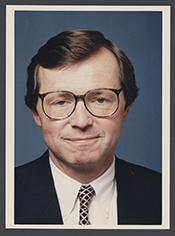
Mr. Speaker, I want to congratulate the gentlewoman from Texas, Sheila Jackson-Lee, for the remarks she just made, particularly in respect to the cooperation with Chairman Hostettler. You know, this…
Mr. Speaker, I want to congratulate the gentlewoman from Texas, Sheila Jackson-Lee, for the remarks she just made, particularly in respect to the cooperation with Chairman Hostettler.
You know, this bill is before us at this critical hour for this program because of the work of the chairman and the persistent advocacy of the gentlewoman. What impresses me in particular is the gentlewoman's agreement to advance this bill forward, even though it was not reformed in ways that she had sought.
For rural areas, this was just so urgent. And we are really pleased that we can get this done, even as the session comes to conclusion. You see, we have trouble in rural areas. We have trouble getting doctors that we need to practice there. And this Conrad 30 program has played an incredibly important role in getting doctors into areas who need them in rural America. In fact, the physician practice vacancies in North Dakota have been cut roughly in half out in the rural areas as a result of this program. If this program were to expire, we would literally have hospitals without doctors. We would have people without the care they need. Frankly, we would have lives lost, because when you are getting into areas of western Kansas or North Dakota, you are talking about vast reaches of territory that take considerable time to cross before you can get someone, who may have an emergency medical condition, to an urban center where they might be treated.
So this program which is tried, true, tested and part of the landscape, is about to expire. Again, to sum up, continuation of it continues what we have got. We have agreed, I have agreed with the gentlewoman to take a look at how we reform it in ways that respond to her concerns. But I am just so pleased that she has agreed to move this forward, and also pleased with the working relationship she has with Chairman Hostettler.
So, at this point in his congressional career, he instilled a sense that this come to the floor for a conclusion. Good for you, madam, gentlewoman, Sheila Jackson Lee, and good for you, Chairman Hostettler. This is one rule America sorely needs. We thank you for it.
Mr. Speaker, I rise today in support of H.R. 4997, the Physicians for Underserved Areas Act, which helps to address the physician shortage in rural areas across America.
H.R. 4997 reauthorizes for two years the Conrad 30 program. This program, which was established by fellow North Dakotan, Senator Kent Conrad, allows graduates of foreign medical schools who complete their training in the United States on a J-l cultural exchange visa to remain in the U.S. for three years if they agree to serve in a medically underserved community.
Many of these medically underserved communities are in rural areas. In fact, only about ten percent of physicians practice in rural America despite the fact that nearly one- fourth of the population lives in rural areas. In my own state of North Dakota, eighty-one percent of North Dakota's counties are designated as health professional shortage areas, or HPSAs.
In communities like Crosby and Tioga, North Dakota, the J-l visa waiver physicians pool serves as the primary resource to meet rural clinics and hospitals physician needs. For example, Dr. Ivan Tsutskiridze, serves Crosby, North Dakota, under the Conrad 30 program and is the communities' sole physician. Prior to the creation of the program, Crosby and other communities were chasing physicians. In fact, since 1994, this program has cut in half the number of family practice physician vacancies in North Dakota.
The importance of this program is evident. Last year alone, over 6,000 physicians participated in the J-l waiver program and it is heavily relied upon by a majority of the states. However, its need for reauthorization remains as the physician shortage in this country is projected to reach 200,000 by 2020. That is why I am pleased to see this bill before the House today to reauthorize this important program that has provided many rural areas with capable, much-needed physicians.
I would like to thank the people who have worked to bring this bill to the floor today, especially Representative John Hostettler, Representative Sheila Jackson-Lee and Representative Jerry Moran. This bill makes a real difference for medically underserved areas across the United States and in North Dakota. I urge a ``yes'' vote on H.R. 4997.
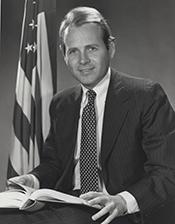
Madam Speaker, illegal border tunnels entering our country undermine our efforts to protect the border and pose a significant threat to our national security. Last January, I was shocked to hear that…
Madam Speaker, illegal border tunnels entering our country undermine our efforts to protect the border and pose a significant threat to our national security. Last January, I was shocked to hear that the San Diego Tunnel Task Force, a group composed of agents from the Border Patrol, Immigration and Customs Enforcement (ICE), and Drug Enforcement Administration (DEA), discovered an elaborate border tunnel connecting Otay Mesa, California and Tijuana, Mexico; a complex 2,500 foot tunnel complete with electricity and ventilation systems, and harboring two tons of marijuana. Just last weekend, officials discovered a 400 foot tunnel connecting Calexico, California and Mexicali, Mexico. This tunnel was equipped with lighting and supported by wooden beams.
The underground corridors prove just how persistent the criminals and drug smugglers who quietly slip into our country are. The existence of these tunnels also points to an even more ominous danger: they could be used by terrorists to exploit our porous borders and strike within the U.S. Unfortunately, the Otay Mesa and Calexico tunnels are just two of several underground corridors discovered between America's land borders, trafficking unknown numbers of individuals and illicit substances. In fact, 38 border tunnels have been discovered since September 11, 2001. All but one was on the Southern border.
Using manpower and technology to find these tunnels and shut them down will not stop others from being built and used. Tunneling will only begin to subside after tough and clear penalties are enacted for anyone involved in this pernicious violation of our border and our sovereignty. Surprisingly, the laws on the books are ineffectual and, in many ways, non-existent. This is a serious problem that deserves serious punishment for anyone who so flagrantly compromises our border security.
The Border Tunnel Prevention Act criminalizes the construction of border tunnels that span our international borders. Specifically, the bill creates a new Federal law to criminalize the construction of illegal border tunnels crossing into the U.S., punishable by a maximum 20 years in prison. It also imposes a maximum 10-year prison sentence on those who recklessly allow others to build such tunnels on their land. In addition, the bill doubles the sentence for using a tunnel to smuggle aliens, weapons, drugs, terrorists, or illegal goods. For example, under current law, knowingly smuggling an illegal alien into the U.S. is punishable by a maximum 10-year prison sentence. Under this bill, that penalty would double to a maximum 20-year prison term if the illegal alien was smuggled in through an illegal border tunnel. Finally, the bill enables the Federal Government to seize any of the assets or property involved in the construction of the illegal border tunnel.
The Border Tunnel Prevention Act is just the latest example of House Republicans taking a strong stand when it comes to border security. House Republicans have provided the funding to hire 1,500 new Border Patrol agents this year and 1,200 next year. Last December, we passed H.R. 4437, the Border Security Protection, Antiterrorism, and Illegal Immigration Control Act to enhance border security and reform our outdated immigration laws. Last week, we approved H.R. 6061, the Secure Fence Act, to construct fences at five specific border zones where deaths are common, drug smuggling is rampant and illegal border crossings are numerous. And today, we will consider legislation to swiftly detain and deport dangerous illegal immigrants and enhance prosecution of alien smugglers, cooperation between local law enforcement and Federal immigration officials, and removal of illegal immigrants.
Cracking down on those who use and construct tunnels, as well as those who allow them to be constructed on their property, is another commonsense step to our full-court press to securing our border. When combined with a strengthened Border Patrol, enhanced use of sensory technology, and strategic fencing in heavily trafficked areas, we will have an across-the-board approach to smarter border
security. Over land, in the air, and underground, we must make a commitment to control and secure the border. I urge all my colleagues to support this important border security bill.
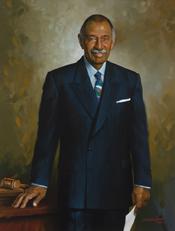
Mr. Speaker, I yield myself such time as I may consume. I am pleased to have reached a bipartisan agreement to extend the J-1 visa waiver program for another 2-year period. This visa waiver program…
Mr. Speaker, I yield myself such time as I may consume.
I am pleased to have reached a bipartisan agreement to extend the J-1 visa waiver program for another 2-year period. This visa waiver program is critically important to bringing essential medical services to residents of underserved rural and urban areas, including my own district in Detroit, Michigan. The J-1 program allows some foreign doctors who have completed their medical training in the United States to remain here to practice medicine for 2 years if they will serve patients in a region of the country that the Federal Government defines as medically underserved. These tend to be less affluent urban areas with high population densities and insufficient access to general practitioners and specialists as well as rural areas that are far from medical centers and may have trouble attracting enough doctors to meet the communities' needs. These communities are particularly desperate for physician services because of the growing national shortage of doctors our country is facing.
This past summer a Los Angeles Times article detailed the looming crisis in medical care in the United States as the demand for medical service explodes. The article noted industry fears that shortages may even become more severe over the next decade due to the flat medical school enrollments, aging baby boomers, and the high number of doctors heading for retirement.
While some communities enjoy a glut of physicians, one in five Americans, in fact, live in rural and urban areas with so few doctors that the Federal Government has classified these regions as ``medically underserved.'' It is these Americans that foreign doctors assist when they get a J-1 visa waiver to practice medicine in communities that don't have enough American doctors.
I believe we need to make improvements in this program so that it better meets the needs of the underserved. Right now some States who receive J-1 doctors through the ``Conrad-30 program'' do not lose their allotment of 30 waivers each year while other States find that 30 waivers are insufficient to meet the medical needs of their communities. In addition, some States may
not need 30 waivers, but other States have trouble recruiting all the doctors they need. The result is that some citizens are still unable to get essential medical care.
We need a plan that ensures that States having trouble recruiting enough doctors will be able to fill their allotment for J-1 doctors and ensure that States which fill their annual allotment of J-1 doctors can get more such doctors to meet their needs without impinging upon those allotted to any other State. In this way the needs of all States and, most importantly, all of the citizens in underserviced areas can be met until U.S. medical schools are able to increase the number of graduates to meet our domestic needs.
I look forward to working with my colleagues in the House and Senate in the 110th Congress to improve, extend, and sustain this vital visa program in the very near future.
Mr. Speaker, I reserve the balance of my time.
Mr. Speaker, I would like to yield such time as she may consume to the distinguished gentlewoman from Texas, Sheila Jackson- Lee, the ranking member of the Subcommittee on Immigration in the Judiciary Committee.
Mr. Speaker, I yield as much time as he may consume to the gentleman from North Dakota (Mr. Pomeroy), who is the original cosponsor of this legislation.
Mr. Speaker, I yield 30 seconds to the gentlewoman from Texas (Ms. Jackson-Lee).
Mr. Speaker, I yield back the balance of my time.
Mr. Speaker, I want to thank Chairman Hostettler and Ranking Member Jackson-Lee and the two chairmen and ranking members of the full committee, who are here today, for their leadership and effort.…
Mr. Speaker, I want to thank Chairman Hostettler and Ranking Member Jackson-Lee and the two chairmen and ranking members of the full committee, who are here today, for their leadership and effort.
This has been a long time coming. The J-1 visa Conrad program has expired 6 months ago, and communities are waiting for the certainty of this legislation's passing, and I am grateful to the leadership of the committee as well as the House to see that this bill is on the floor today.
I came to Congress as a Member who wanted to do something about preserving and improving the way of life in rural America, and one of the things I quickly discovered was if there is going to be a future for rural communities we are going to have to have access to affordable medical care. If you want your community to have that future, you have got to have hospital doors that remain open, physicians in communities, home health care, nursing home care, and other professional health care providers that can meet the needs. Otherwise, our senior citizens that make up such a large portion of our population will reluctantly move away and young families will decide we can't take the risk of living in a community that does not allow us the opportunity to have our children treated with adequate medical facilities.
The J-1 visa program, though not solving all of the challenges we face in meeting the health care needs of Americans, is one step in that direction that needs to be there. It needs to be in place, and I am pleased that the committee has recognized its importance.
The physician shortage that has been mentioned is real. In fact, the U.S. Department of Health and Human Services estimates that although a quarter of the population of our country lives in rural America, only 10 percent of the physicians serve that population. We have a tremendous gap. And the unique thing about this, as is with many what I would call rural health care issues, is it brings urban Members of Congress and rural Members of Congress together because our needs are so identical. We are so underserved that the core center of cities and the most unpopulated areas of the country face the same challenges: How do we meet the health care needs of Americans who choose to live where they live? Kansas has been able to recruit 66 physicians since 2002 when we developed our State program, and it has made a tremendous difference. Three communities, Rush County Memorial Hospital now has had three J-1 visa physicians, the only physicians in the county. The same thing with Greensburg, Kansas. For the last 10 years, no physician in the community but a J-1 visa, and those J-1 visa doctors have attracted three mid-level practitioners. And, finally, the most recent success in Kansas is a community health clinic, the United Methodist Mexican-American Ministries, where they just recruited a J-1 visa doctor from Peru who now can address the needs of many Hispanic members of that community in southwest Kansas. It is wonderful now to have a bilingual J-1 visa doctor.
Again, there are issues that we would love to work on to address the distribution of J-1 visa physicians, and I look forward to trying to meet that challenge with my colleagues from across the country. But this program is important. It saves lives. It is often the only health care opportunity that many Americans will ever receive, and the J-1 visa program is about good health and saving lives.
I am very grateful for the opportunity to be here today.
Show 8 more
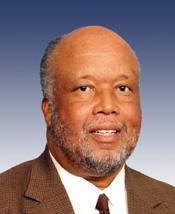
Madam Speaker, it is with great disappointment that I stand before you today to discuss a bill that fails once again to provide us with a comprehensive approach to handling border security. Last…
Madam Speaker, it is with great disappointment that I stand before you today to discuss a bill that fails once again to provide us with a comprehensive approach to handling border security.
Last week, Republicans introduced a border fence bill which was exactly what they voted against in December 2005. Today we are going to discuss three bills already considered by this body. In other words, the Republican leadership is forcing us to participate in their cheap political gambit to mislead the public. Simply put, the Republicans have morphed from a ``do-nothing'' Congress to a ``do-over'' Congress. Unfortunately, we continue to have a long way to go, and we will get nowhere with this piecemeal approach they are masterminding.
The Bush administration has had almost 6 years, and the Republican Congress 11 years, to secure the border.
Since 9/11, House Republicans rejected eight Democratic amendments to enhance border security resources. If these Democratic amendments had been adopted, there would be 6,600 more Border Patrol agents, 14,000 more detention beds, and 2,700 more immigration agents along our borders that now exist.
On December 16, 2005, all 218 House Republicans voting that day opposed a Democratic motion to recommit to H.R. 4437 to improve border security and immigration enforcement by fulfilling the 9/11 Commission's border security recommendations.
Fifty days before election day, the House Republican leadership has scheduled votes on bills we have already voted on. As usual, Republicans are all talk, but cheap on action to securing the border. Last week they voted on a border fence bill, but refused to provide the money needed to build a 700-mile fence along the Texas-Mexico border.
If Republicans were serious, they would have moved forward with a House-Senate conference that protects United States borders, strengthens our Nation's security and addresses the Nation's immigration problems comprehensively. Instead, they spent the summer conducting 22 sham hearings across the Nation.
Republicans talk about the fence as if it is the sole solution. Meanwhile, on September 15, DEA agents discovered yet another tunnel located beneath a residence in Calexico, California, and extending approximately 400 feet to a residence in Mexicali, Mexico.
We are spending $1.5 billion per week in Iraq, but the Republican leadership will not even commit to funding to secure our Nation's borders.
Democrats do not want to pass the buck on State and local governments to enforce immigration laws simply while the Republican-led Congress and administration fail to properly fund border security officers. States and localities are already robbing Peter to pay Paul by using a huge amount of their homeland security grant funding to secure the border, purchase communications equipment, and fortify bridges, ports and buildings.
Democrats do not want to stay the course on President Bush and the Republicans' failed border enforcement.
Madam Speaker, we need a comprehensive border security and immigration plan, not a piecemeal plan.
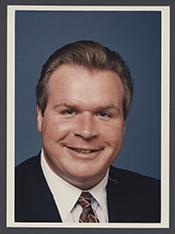
Madam Speaker, I thank the chairman of the Judiciary Committee for the recognition. I come to the well of the House to politely but profoundly take issue with my friend from Mississippi. You see,…
Madam Speaker, I thank the chairman of the Judiciary Committee for the recognition.
I come to the well of the House to politely but profoundly take issue with my friend from Mississippi. You see, party labels do not ensure unanimity any more than trying to cast the challenge we confront as a people through a partisan prism.
I come to the floor of this House to reiterate the basic concern confronting us. The problem we are dealing with at the border is not a Democratic problem. It is not a Republican problem. It is an American problem. And, Madam Speaker, I politely take issue with my friend from Mississippi when he says a comprehensive approach is needed.
The trouble with that notion is that despite the goodwill and best intentions of many, regardless of party affiliation, so-called comprehensive reform subordinates the first and most basic responsibility of government, protection of our citizens to an economic exception of amnesty and special considerations for noncitizens.
To this provision before the House today, which I am proud to bring forward, again from bipartisan concerns, as noted earlier in another debate, the chairman of the Rules Committee mentioned that it was bipartisan, the senior Senator from his State happens to be a Democrat, working with the chairman of the Rules Committee, a Republican; my junior Senator from my State, working with me on this because it is an American problem. The chairman pointed out that there is currently a hole in the law as genuine as some of the holes in our border.
We have to criminalize the financing and construction of border- crossing tunnels that currently serve as smuggler subways and actually promote illegal access to our country. The chairman delineated the threat. Now we see contraband, we see narcotics brought through these tunnels, but the real question before this House and before the American people is this: If narcotics can be smuggled, what of a weapon of mass destruction? Just as assuredly as the House passed the fence bill last week and the other Chamber takes it up in the coming days to move forward, believe me, there will be intense and renewed interest in using subterranean facilities.
We must pass this bill today as part and parcel of what the American people are calling for, and they are calling for enforcement first. Pass this legislation. Let's get this done.
Madam Speaker, will the gentleman yield?
Madam Speaker, I am not a custodian of the hearing record in the United States House of Representatives, any more than the gentleman is, no matter the----
Would the gentleman let me attempt to answer the question?
Madam Speaker, I would answer his question with an interrogative of my own. Is the gentleman aware of the extensive hearings held this summer by many different Members of the House outside Washington, D.C.----
Equally as valid as any committee hearings held in Washington, D.C., no matter the jurisdiction?
Mr. Speaker, I move to suspend the rules and pass the bill (H.R. 4997) to permanently authorize amendments made by the Immigration and Nationality Technical Corrections Act of 1994 for the purpose of…
Mr. Speaker, I move to suspend the rules and pass the bill (H.R. 4997) to permanently authorize amendments made by the Immigration and Nationality Technical Corrections Act of 1994 for the purpose of permitting waivers of the foreign country residence requirement with respect to certain international medical graduates, as amended.
Mr. Speaker, I ask unanimous consent that all Members may have 5 legislative days within which to revise and extend their remarks and include extraneous material on H.R. 4997 currently under consideration.
Mr. Speaker, I yield myself such time as I may consume.
Mr. Speaker, H.R. 4997, the Physicians for Underserved Areas Act, reauthorizes for 2 years the program under which physicians on J-1 visas can work in underserved areas. The program expired on June 1 of this year.
Each year numerous foreign doctors come to the United States to complete their residency training. Many do so using the J-1 visa. One of the requirements for physicians who use the J-1 visa is that the participant return to his or her own country for 2 years upon completion of the training program in the United States. The purpose of this foreign residency requirement is to encourage U.S.-trained physicians to return to their country and to improve medical conditions there.
Since 1994, Congress has waived the 2-year foreign residency requirement for physicians who agree to work in an underserved area of the United States, as designated by the Department of Health and Human Services. Each State receives 30 such waivers a year.
The waiver program allows States to recruit physicians to areas that have trouble attracting newly trained American physicians. Because of this waiver program, many communities that might otherwise have no access to medical services now have physicians nearby. It also responds to an overall shortage of physicians in the United States, which is a disconcerting trend.
A 2-year reauthorization of this program in its current form also gives Congress time to consider whether future changes may be needed to the program. For example, larger States like Texas have expressed a need for additional waivers beyond the 30 currently allowed. It is important that we consider ways to address this problem without putting the small States at a disadvantage. By reauthorizing the waiver program, we will provide States with some relief for the physician shortage they are facing, particularly in rural and underserved areas.
I urge Members to support this bill.
Mr. Speaker, I reserve the balance of my time.
Mr. Speaker, I yield 4 minutes to the author of the bill, the gentleman from Kansas (Mr. Moran).
Mr. Speaker, I yield back the balance of my time.
Madam Speaker, I am pleased to yield such time as he may consume to the gentleman from Mississippi (Mr. Thompson), the ranking member of the Homeland Security Committee. Madam Speaker, I yield myself…
Madam Speaker, I am pleased to yield such time as he may consume to the gentleman from Mississippi (Mr. Thompson), the ranking member of the Homeland Security Committee.
Madam Speaker, I yield myself as much time as I may consume.
(Mr. CONYERS asked and was given permission to revise and extend his remarks.)
While my neighbor and friend J.D. Hayworth is on the floor, let me gain his attention for just a moment. I am sorry that you do not want a comprehensive bill. Most people do in the Congress. And I would like you to respond to this inquiry: Were there hearings held on this bill in the Homeland Security Committee?
I yield to the gentleman from Arizona.
So, in other words, you do not know.
No. Let us ask the gentleman another question----
Announcement by the Speaker Pro Tempore
Yes, ma'am.
Madam Speaker, thank you.
That was for your benefit.
Now, let me ask you another question. Were there Judiciary hearings, even though you are not a custodian of the record? Well, I can answer that one for you. I think you ought to listen to the Madam Speaker a little bit more. You cannot speak on the floor. I know you have been here a while. You cannot interrupt a speaker unless you are yielded to. And I would----
I would be very happy to yield to answer my question.
Is the answer yes or no?
Taking my time back, I assume that the gentleman knows that the Judiciary Committee did not hold hearings either.
And so we have this very urgent, important bill that has not had one hearing anywhere that I know of, and I think it explains something about the gentleman from Arizona's comment about what the American people want.
Because in today's newspaper, I am reading that only 25 percent in a poll voice approval of the Congress, an echo of 1994 findings. Links to special interests are cited. Standing of Bush also lags.
So I do not know if we are doing what the people really want that much. I think it is because we are not doing what the people want and are not moving an immigration bill which has passed this House, the counterpart has passed in the Senate, and we have not gone to conference yet. Somebody in the course of this discussion and debate ought to be able to explain why that is.
Madam Speaker, I reserve the balance of my time.
Madam Speaker, I now yield with pleasure to the ranking member of the Judiciary Subcommittee on Immigration, Ms. Sheila Jackson-Lee, as much time as she may consume.
(Ms. JACKSON-LEE of Texas asked and was given permission to revise and extend her remarks.)
Madam Speaker, I yield back the balance of my time.
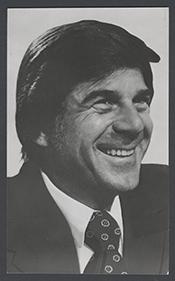
Madam Speaker, I rise in opposition to H.R. 4830, the Border Tunnel Prevention Act, H.R. 6094, the Community Protection Act, and H.R. 6095, the Immigration Law Enforcement Act. Only in the backward…
Madam Speaker, I rise in opposition to H.R. 4830, the Border Tunnel Prevention Act, H.R. 6094, the Community Protection Act, and H.R. 6095, the Immigration Law Enforcement Act. Only in the backward world of Republican campaign strategy would passing more ineffective bills be seen as a way to highlight ``progress'' on illegal immigration.
I hope that the American people ask what happened to the massive immigration bill that the House passed in December. I hope they question why House Republicans are today spending time debating three bills they know the Senate will never consider. The truth is that Republicans aren't interested in stopping illegal immigration. If they were, they'd crack down on employers. Or at least make an effort to resolve differences with their colleagues in the Senate.
If you define progress by anything other than fear-mongering rhetoric, then this Congress is no more likely to secure the border than the Capitol Police are to stop an armed intruder.
Because this Republican Congress long ago abandoned the idea of purposeful governing, they slapped together these three immigration bills without concern for constitutionality or feasibility. No bad idea from a backbench right-winger was too extreme. If these bills became law:
Immigrants could be indefinitely detained at the whim of the Department of Homeland Security. Hey, it hasn't worked at Guantanamo, but why not try it on U.S. soil?
The Attorney General could order immediate deportation of anyone deemed to be a member of a designated street gang, regardless of whether members had committed crimes. In other words, hanging around the wrong crowd, at least in the eyes of Alberto Gonzales, would be a deportable offense.
Federal courts hearing immigration cases would be instructed that any relief granted to immigrants would have to be the ``minimum necessary'' and ``least intrusive'' to government agencies. So if the government wrongly jailed you for 20 years, you might get released, but don't expect any compensation for the loss of your livelihood.
They say that desperate times call for desperate measures, and the Republican Party is clearly desperate to cling to power. I urge my colleagues to vote no.
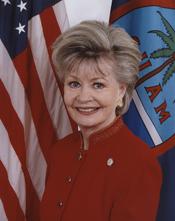
Mr. Speaker, I rise today in strong support of H.R. 4997, the Physicians for Underserved Areas Act. This bill will permanently authorize the J-1 visa waiver program, allowing foreign physicians…
Mr. Speaker, I rise today in strong support of H.R. 4997, the Physicians for Underserved Areas Act. This bill will permanently authorize the J-1 visa waiver program, allowing foreign physicians certain visa waivers in exchange for their service in medically underserved areas within the United States including the territories. A recent study conducted by the Government Accountability Office (GAO) attributed the J-1 visa waivers as a major means through which communities have successfully placed physicians in underserved areas.
The J-1 visa waiver program, since its inception in 1994, has brought physicians from areas around the world to the United States to improve access to primary medical care for individuals in underserved communities. Every year, nearly 1,000 requests for J-1 visa waivers are submitted, which is a testament to this program's popularity and effectiveness among U.S. medical schools and medically underserved communities.
As the representative from Guam, I know first-hand the challenges rural and medically underserved areas face. For instance, there is no oncologist on the island of Guam today. Cancer patients must travel to Hawaii to receive treatment. Because of the J-1 visa waiver program, however, the Government of Guam was able to apply for J-1 visa waivers for two physicians in 2005.
The Physicians for Underserved Areas Act, by making this program permanent, will go far toward helping medically underserved areas like the one I represent. Healthcare is a national priority, and as legislators, we are tasked with doing all that we can at the federal level to ensure that adequate medical care is available to all and that medical professionals can be recruited to serve medically underserved communities.
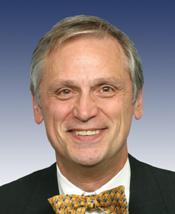
Mr. Speaker, it is time to stop this charade on immigration. Since the Republican leadership is unable to reach an agreement with its members, or even their Republican president, they have become…
Mr. Speaker, it is time to stop this charade on immigration. Since the Republican leadership is unable to reach an agreement with its members, or even their Republican president, they have become more interested in producing harsh rhetoric and meaningless acts than passing comprehensive and realistic immigration reform.
The House and Senate have each passed their respective bills. It is past time to convene a conference committee to reconcile these bills. Both chambers must work together to reach an agreement that produces true immigration reform instead of wasting its time harassing immigrants and local businesses and passing meaningless provisions that have little chance of becoming law.
I ask unanimous consent the Senate proceed to the immediate consideration of H.R. 4997, which was received from the House. I ask unanimous consent the bill be read a third time and passed, the motion…
I ask unanimous consent the Senate proceed to the immediate consideration of H.R. 4997, which was received from the House.
I ask unanimous consent the bill be read a third time and passed, the motion to reconsider be laid upon the table, and any statements be printed in the Record.
Bill Text
6 versions available
        [Congressional Bills 109th Congress]
[From the U.S. Government Publishing Office]
[H.R. 4997 Enrolled Bill (ENR)]

H.R.4997

One Hundred Ninth Congress

of the

United States of America

AT THE SECOND SESSION

Begun and held at the City of Washington on Tuesday,
the third day of January, two thousand and six

An Act

To extend for 2 years the authority to grant waivers of the foreign
country residence requirement with respect to certain international
medical graduates.

Be it enacted by the Senate and House of Representatives of the
United States of America in Congress assembled,

SECTION 1. SHORT TITLE.

This Act may be cited as the ``Physicians for Underserved Areas
Act''.

SEC. 2. WAIVER OF FOREIGN COUNTRY RESIDENCE REQUIREMENT WITH RESPECT TO
INTERNATIONAL MEDICAL GRADUATES.

Section 220(c) of the Immigration and Nationality Technical
Corrections Act of 1994 (8 U.S.C. 1182 note; Public Law 103-416) (as
amended by section 1(a)(1) of Public Law 108-441) is amended by
striking ``June 1, 2006.'' and inserting ``June 1, 2008.''.

SEC. 3. EFFECTIVE DATE.

The amendment made by section 2 shall take effect as if enacted on
May 31, 2006.

Speaker of the House of Representatives.

Vice President of the United States and
President of the Senate.