Truth in Caller ID Act of 2006
Legislative Activity
Stay on top of the latest movement without scrolling through every action
Received in the Senate and Read twice and referred to the Committee on Commerce, Science, and Transportation.
June 7, 2006
View full timeline
Introduced in House
April 6, 2006
Referred to the House Committee on Energy and Commerce.
April 6, 2006
Referred to the Subcommittee on Telecommunications and the Internet.
April 19, 2006
Committee Consideration and Mark-up Session Held.
May 24, 2006
Ordered to be Reported (Amended) by Voice Vote.
May 24, 2006
Reported (Amended) by the Committee on Energy and Commerce. H. Rept. 109-489.
June 6, 2006
Placed on the Union Calendar, Calendar No. 274.
June 6, 2006
Mr. Upton moved to suspend the rules and pass the bill, as amended.
June 6, 2006 • 8:04 PM
Considered under suspension of the rules. (consideration: CR H3386-3388)
June 6, 2006 • 8:04 PM
DEBATE - The House proceeded with forty minutes of debate on H.R. 5126.
June 6, 2006 • 8:04 PM
Passed/agreed to in House: On motion to suspend the rules and pass the bill, as amended Agreed to by voice vote.(text: CR H3386)
June 6, 2006 • 8:18 PM
On motion to suspend the rules and pass the bill, as amended Agreed to by voice vote. (text: CR H3386)
June 6, 2006 • 8:18 PM
Motion to reconsider laid on the table Agreed to without objection.
June 6, 2006 • 8:19 PM
Received in the Senate and Read twice and referred to the Committee on Commerce, Science, and Transportation.
June 7, 2006
Floor Debate
23 membersWhat members said about H.R. 5126 on the floor
 JF
JF FRW
FRW DRO
DRO JES
JES ABM+18
Floor Debate
23 membersWhat members said about H.R. 5126 on the floor
Mr. Chairman, I have an amendment at the desk. Mr. Chairman, yesterday we had quite a discussion on this bill. There were efforts to move money from paying for the census, for example, to other areas…
Mr. Chairman, I have an amendment at the desk.
Mr. Chairman, yesterday we had quite a discussion on this bill. There were efforts to move money from paying for the census, for example, to other areas of the bill or other priorities. There was a lot of talk about limited resources and the limited amount of money in this bill and the need to take money from one area to put into another.
I would submit that one area that we can take some money from that is overfunded, grossly overfunded, in this bill is in some of these earmarks. Now, I will maybe highlight 10 of them today, but there are literally hundreds in the bill that we could take the money from to fund our constitutional obligation, for example, to conduct the census every 10 years.
But I will start today with 250,000 for the Rochester, New York, Tooling and Machining Association for a workforce development program; that is an earmark. This amendment would strip that funding. The Rochester Tool and Machining Association is one chapter of a larger international tooling and machining association, which is the national representative of the custom precision manufacturing industry in the United States.
They maintain a legislative alert center on their Web site so their members can lobby Congress on issues that matter to them. They also retain a lobbying firm to advance their interests with the Federal Government. It would seem that they are doing yeoman's work for their members, as is their Rochester chapter. Their Rochester chapter offers technical training and education to its members.
They assert on their Web site that manufacturing job opportunities are not declining and that manufacturing accounts for 24 percent of the private sector jobs in New York State. They go on to claim that the size of the workforce is declining and that there are insufficient skilled workers to fill these available jobs, which I can only assume is what this earmark is for.
What we have here is simple supply and demand, not enough skilled workers for too many jobs, an equation that is normally balanced by the free market, until this earmark. For those who buy into the idea that it is the Federal Government's responsibility to plan and shape the supply and demands of our workforce, my objection to this earmark will not resonate with you.
But for those who have witnessed the profound failures of central planning in countries around the world during the 1970s and the 1980s, I hope that you will understand that this earmark is a mini-economic boost by a Federal, centralized government, to increase the supply of one industry's workers over another industry.
I would submit that if there is such a demand for skilled manufacturers, as the association claims, then wages will increase, and the workforce will adapt, and they will learn ways and skills necessary to earn those wages. Let the market decide which industries succeed or fail, not politicians in Washington.
I would like to hear the justification for the Federal function in this case, but then I ask, why are we picking winners and losers through the earmarking process? Why is this industry, this sector, these workers, more deserving than others? I don't think Congress should be picking favorites like this.
Mr. Chairman, I reserve the balance of my time.
Mr. Chairman, I would simply say, again, we all say it is our job to represent our constituents, and it certainly is. But we are in a deficit situation. We have a massive deficit and a massive Federal debt.
What if every Member of Congress said, I am going to represent my constituents by getting every Federal dollar that I can back into my district, regardless of the deficit, regardless of the debt.
That is pretty much where we are at right now. When you had, I think last year was $27 billion in earmarks, where does it end? When do we say enough is enough? When do we say, I am not going to pick this industry over that one?
That workforce may be worthy of this kind of help, but what makes it more worthy than another one? Why do we just continue with the spoils system where if you happen to get with this group and they happen to be lucky enough to get your earmark, they get funded, but nobody else does? We simply can't continue this.
I urge support of the amendment.
Mr. Chairman, I yield back the balance of my time.
Mr. Chairman, I offer an amendment.
Mr. Chairman, I am a big fan of Italian food. My district is home to a great Italian restaurant, Anzio's Landing. You can order many of your favorite dishes, good Italian bread, and there are many former New Yorkers in my district, and they know it well. But if the owner of this restaurant, whom I know well, if he approached me to get a Federal earmark to modernize his restaurant, I would have to tell him ``fuhgetaboudit.''
Today I am bringing this amendment to learn whether the rest of the House will agree with me on that premise. The bill before us today asks us to spend $150,000 in Federal taxpayer dollars to the Arthur Avenue Retail Market, an Italian grocery market in a neighborhood labeled Bronx's Little Italy. Over a dozen merchants currently reside in the market, including Joe Liberatore's Garden of Plenty, Peter's Meat Market and Mike's Deli, a two-generation family-owned business that sells antipasti, breads, meats, pasta, and imported cheeses. The market is also home to the La Casa Grande Tobacco Company, which offers hand- rolled cigars.
In 2004, the market received $300,000 in earmarked Federal dollars for renovations. The market received another $400,000 in Federal transportation appropriation dollars for a new parking facility in 2005. We are back.
In 1940, Mayor LaGuardia built an indoor Arthur Avenue Market to take street vendors out of the cold. This is where this originated.
In the 1980s, the merchants of the market formed a co-op and paid for renovations to that market. Now, there are long lines at the market on weekends to get great Italian bread, cheese and salami.
I would ask the sponsor of this amendment why close to $700,000 has been spent on this Italian grocery market and why another $150,000 in taxpayer funds is needed.
There is a lot of Federal prosciutto to bring back to the District, or that is, a lot of Federal prosciutto to bring back to the District for a private Italian grocery market. I think we need to slice off some of this appropriations bill. If there is a place to slice, this is certainly it.
What possible Federal purpose does this earmark serve? Does the taxpayer even get a free Italian cookie assortment? If we allow our tax money to go to this grocery market, what benefit is there for the Federal taxpayer? There are certainly plenty of private benefits, but what Federal benefit? How do we justify this?
I would argue that this is one cannoli the taxpayer doesn't want to take a bite out of.
I reserve the balance of my time.
I thank the gentleman for the invitation. I likely will take him up on it. Maybe I will learn to say ``prosciutto'' properly.
But we simply get back to the point, where does it end? Where do we stop favoring one group, one industry over another? It is mentioned that this is a city-owned facility. Those who are residing there, who have their markets there, already received that kind of subsidy apparently from the city.
Now we are going in addition and giving them further subsidy. $400,000 last year for a parking garage, $300,000 in 2004 for similar upgrades, $150,000 more today. My guess is that there are Italian eateries or restaurants or markets elsewhere in the city that are getting no subsidy at all. How is it fair to them? How is it fair to them to favor one?
And I would say the same if it were in my district. It is not fair to subsidize one and not the other, and that is where we are with this earmarking process.
Mr. Chairman, I yield back the balance of my time.
Mr. Chairman, I demand a recorded vote.
Mr. Chairman, this earmark limitation amendment would prohibit $200,000 in Federal funds from being provided to the Oil Region Alliance of Business, Industry and Tourism.
Now, the mission of the Oil Region Alliance of Business, Industry and Tourism is to ``increase the prosperity and population of the Oil Region'' of Pennsylvania. The point of the alliance is to ``entice people to live, work, learn and play in the valley that changed the world.''
I am certain this is an important organization to the oil region. These folks are working to ensure that the region's future is important as was its past. I have no problem with that. I don't think anyone does. Being the site of the world's first successful oil well in 1859, this area has played a crucial role in the country's history.
My only question is, why should the Federal Government pay to develop this area's business and tourism? Why this area and not other areas?
In April of this year, Governor Rendell congratulated the Pennsylvania tourism industry for having a record-breaking year last year.
The $25 billion tourism industry sold more hotel rooms than ever before and attracted more than 130 million visitors in 2005, making Pennsylvania the fifth most visited State in the Nation. Statewide, tourism accounts for more than 400,000 jobs and is the Commonwealth's second largest industry.
I have said it before, and I will continue to say it: when the Federal Government hands out earmarks like this, we are picking winners and losers. We are encouraging people to visit and to provide tourism to this area. They have to come from somewhere else. Why aren't we subsidizing those whom they choose not to go to? Where does it end? Where do we stop? Why do we simply have a spoils system where one Member of Congress can say, I am going to benefit them but not others?
In this case, the oil region of Pennsylvania receives funding to attract businesses to locate in the region, to try to get families to move there and to stay, and to try to attract tourist dollars.
As I mentioned, there are businesses and families and tourist dollars that won't be heading to other areas of Pennsylvania or surrounding States or anywhere else in the country. Many other localities throughout the country would like to receive as many tourism dollars as possible, but we are favoring one with this earmark.
Simply put, we shouldn't be doing this. The Federal Government shouldn't be picking winners and losers like this.
Mr. Chairman, with that, I will reserve the balance of my time.
Mr. Chairman, I would simply submit that every Member of Congress in 435 districts around the country can point to at least pockets in his or her district that need help, where there is high jobless rates or where there is high crime.
But where does it end? Where do we say, all right, we simply can't pass out earmarks like this and circumvent the normal authorization, appropriation, and oversight process? When does it become our job to say, all right, we are not going to go through that process and authorize these programs, appropriate and then have oversight. Instead, we are just going to slip an earmark in that we don't even know who sponsored until we offer it on the floor today. And if nobody was standing up here, we still wouldn't know.
There are hundreds and hundreds of earmarks in this bill that we wouldn't even know who is offering them or what they are for because the descriptions are often so vague as to what the earmark is supposed to fund.
So where does it end? Why can't every Member stand up and say, I have pockets in my district, if not my entire district, that need workforce development, that need facilities?
He mentioned my district has grown 40 percent in the past couple of years. It has. It has tremendous infrastructure needs. But if I were to come and say we need all the lists that he rattled off there, then the Treasury simply couldn't handle it.
We are put in this position to make decisions and to have priorities; and I would submit that when you have an earmarking process like that, we aren't going through it properly.
Mr. Chairman, I yield back the balance of my time.
Mr. Chairman, this amendment would prevent any funding from going to the Fairplex Trade and Conference Center.
Fairplex is home to the Los Angeles County Fair, the largest county fair in the world. The fair is a great asset to California, contributing a major portion of the $11.6 million in State sales tax revenue generated by Fairplex and $176 million in spending.
The L.A. County Fair Association describes itself as self-supporting and boasts that it does not fall under the auspices of any county or State governmental body.
Surplus revenues that are generated by the fair and other activities are reinvested into the maintenance and development of the facility.
The association also states that Fairplex receives no government funding for the operation or maintenance of its facilities. However, Fairplex received $1 million in Federal funding for fiscal year 2006. If the money is not used for the operation or maintenance of this thriving independent facility, what is it used for?
Maybe the funding is intended for some other activities at the Fairplex, such as the Wally Parks NHRA Motor Sports Museum or the Frank Hawley Drag Racing School. Maybe these funds are for Fairplex Park, a major horse racing facility with a grandstand and air-conditioned clubhouse for satellite gambling.
There is no question that Fairplex delivers major economic benefits for L.A. County and the rest of California. But I do question, however, why the Federal Government is throwing money at an independent facility that generates over $334 million in economic activity nationwide. Fairplex does so well, in fact, that it donates more than $400,000 in cash and in kind to local organizations each year.
So why are we giving this earmark? That is the question.
I reserve the balance of my time.
Mr. Chairman, I have great respect for the gentlewoman and for the gentleman who spoke, and I appreciate their efforts on behalf of this initiative. But, again, I have to say, where does it end? Where does it end when we say, this group, this organization, this facility is worthy of Federal dollars, and another is not? It simply isn't fair to continue to give earmarks like this in this manner.
Mr. Chairman, I yield back the balance of my time.
Mr. Chairman, I yield myself such time as I may consume.
I would ask Members of this body, how would you define irony?
I define it as providing a Federal earmark money to the Bronx Council on the Arts, which is an entity that is advertising an event on its Web site called, Pay to Play.
Pay to Play, according to the Bronx Council's Web site is ``a multimedia exhibition ala Abramoff, Scanlon, Cunningham, Halliburton and on and on and on.'' The Web site states that ``artists are asked to offer a bribe to participate in the show that will be on display alongside selected work. Please note that special consideration will be given to work that addresses corruption, greed, scandal, cover-ups, failures of democracy, the transparent veneer of public interest that masks rampant self-interest, and such other things.''
I am not saying the earmark for Bronx Council of the Arts fits any of these categories, but I am saying that it is sadly ironic that we are funding artistic parodies of congressional earmarking with earmarks.
Mr. Chairman, my amendment would strike funding for the Bronx Council for marketing local arts initiatives. My staff and I were befuddled as to what the Bronx Council originally was. It appears that a Bronx Council got money last year in the same section of the bill, but the earmark was called, ``$150,000 for the Bronx Council for the Arts for its Arts Cultural Corridor Project to promote local arts initiatives.''
So we went from Bronx Council on the Arts to just the Bronx Council. We dropped the ``Arts Cultural Corridor Project,'' and we are no longer promoting local arts, but we are marketing them. I call this the Earmark Protection Program, changing the names of earmarks to make them so vague that no one can recognize them and no amendment can be drafted to strike them.
We often have trouble when we are offering these earmarks. We are told by the Parliamentarian that it has to refer to a specific facility or a specific initiative, and these earmarks this year, many of the names have been changed to be more vague, and it is difficult to know what they actually fund. As mentioned a few weeks ago, we had earmarks to simply fund a facility without reference to what that facility was. It is difficult to have amendments that are actually ruled in order to challenge them because, as the Parliamentarians will tell you, to successfully challenge an earmark, it requires an assumption that the agency that funds the earmark is familiar with the project. Otherwise, we might be legislating on an appropriation bill, which is a violation of our rules. The incentive, therefore, for Members looking to protect earmarks is to become more vague or silent about the project's goals and the project's oversight.
I would submit that we should get used to more earmarks entering this protection program in the near future to prevent them from being stripped from appropriation bills. I would welcome an explanation as to what this earmark actually does.
Mr. Chairman, I reserve the balance of my time.
Mr. Chairman, I yield myself such time as I may consume for a question, and I would like to yield to the gentleman to answer.
Is this the same council that received the earmark last year, just for my clarification?
I will do that. I thank the gentleman.
Mr. Chairman, I yield back the balance of my time.
Mr. Chairman, I yield myself such time as I may consume.
In last year's conference report on the SSJC appropriations bill, there was a $250,000 earmark for the JARI, which stands for Johnstown Area Regional Industries, Workforce Development Program. There was a separate $250,000 earmark for the JARI Small Business Technology Center. This year, there is a $500,000 earmark for the JARI Workforce Development Program and the Small Business Technology Center. We also found a separate $800,000 earmark for JARI for a Regional Business Incubator.
Aside from all other arguments that can be made against this kind of earmarking, I want to point out what appears to be a trend toward obfuscation in the language of earmarks. In drafting a limitation amendment to prevent funding to the JARI Regional Business Incubator, we used the earmark language exactly as it appears in the bill.
We then asked the Parliamentarians to review it to make sure it would be in order. We were informed that the ``region business incubator'' verbiage was too vague to be considered in order. So in drafting this amendment, we had no choice but to limit funding to JARI, period. The effect of this amendment would be to prohibit any funding from the bill going to the organization, whereas our initial intention was to limit the funding to the business incubator.
That is part of the problem we have here. All we have is the language in a report that is so vague or confusing that it is even difficult to draft an amendment to cover it.
Now I have no problem limiting any funding to the organization, let me tell you, but I also want to be clear that I have nothing against JARI. I wish the organization well in its efforts. I do, however, have a problem with the increasingly opaque process by which Congress hands out earmarks.
For the first half of this year, we debated ways to bring transparency to what we do here. When it comes to the earmarking process, Members have proposed a longer notice period before consideration of bills, making bills and reports more accessible, attaching Members' names to earmarks, compiling earmarks in tables, including earmarks in the text of legislation, and on and on and on. I think all these ideas are fine, and I have introduced my own proposal.
After a good deal of compromise, this House approved the Lobbying Accountability and Transparency Act last month. Yet here we are, just a few weeks later, and there has been no apparent effort to comply with the proposals that we made in the House and the entire House approved.
How can we explain this to our constituents? Was the lobbying and transparency legislation just for show? I certainly don't think it was, but it is starting to look that way to most Americans.
We need to demonstrate how serious we are about establishing transparency in Congress. We have made a strong effort, and there is nothing preventing us from making good on what we said. Waiting until this bill becomes law before we act would appear as though we are under compulsion to comply with the public demand for transparency. I think we need transparency now.
A small handful of our colleagues contend that we should not change the process until the other Chamber changes its process, that if we enact unilateral reforms in the House, we would shortchange ourselves.
Who is this about? Are we here to serve our country, the best interests of our country, or simply to look out for the interests of the House?
What are we waiting for? We are almost done with the appropriation process for the year, yet nothing has changed. Where are the names next to earmarks? Where is the transparency that we say that we want?
Mr. Chairman, I reserve the balance of my time.
Mr. Chairman, I yield myself such time as I may consume.
Mr. Chairman, I simply would like to point out that unless the gentleman who defended the earmark is the author of the earmark, and I don't believe that he is, this is an earmark in Pennsylvania. We still don't know who authored the earmark. There is nothing in the conference report that tells us, and we still don't know. Here we are about to vote on it, and we still don't know and we haven't had a defense of that earmark from the author of it, from the Member who authored it. There is something wrong with the process when this is what we are reduced to.
Mr. Chairman, I yield back my time.
Mr. Chairman, I yield myself such time as I may consume.
Mr. Chairman, the committee report for this bill contains an earmark for the Wisconsin Procurement Initiative, and my amendment would limit funding for this item.
The committee report for last year's SSJC appropriations bill did not contain a similar earmark, but the conference report on this bill did include an earmark for the Wisconsin Procurement Institute for the same amount.
Though it is impossible to know by reading the report, it appears that this earmark is destined for the same institution. Again, we simply don't know. We have insufficient information, yet we are going to provide the funding without even knowing, without anybody even asking the question, is it the same thing to give money to the initiative or the institute?
It appears that this is one of several earmarks that have been funded in multiple years with similar but increasingly vague verbiage in the committee report.
The Wisconsin Procurement Institute was founded in 1987 by Les Aspin, a former Congressman and Secretary of Defense. The institute says its purpose is to ``bridge the gap for Wisconsin companies interested in supplying their products and services to Federal, State and local agencies and prime contractors.'' The institute ``guides, trains and provides hands-on assistance to firms in developing government business and improving process and technical capabilities to access and compete in the government workplace.''
When I saw this earmark, it reminded me of the late-night commercials that you see from a fellow by the name of Matthew Lesko. He will stand up and run to the camera, and he has a suit with question marks all over it, and he has a car decorated the same way, and he will wave a book and say, ``There is millions and millions of government dollars just for you, and if you pay me $19.95, I will tell you how can get these contracts, how you can get this money, how you can get these scholarships, how you can get these grants, how you can get these loans.''
This seems to be a process similar to Matthew Lesko. You have an organization here whose job it is to secure projects from the Federal Government, and we are paying money to that organization to help them procure contracts from us. It just seems like a little double-dipping in that way. We are funding an organization whose purpose it is to help other organizations obtain Federal assistance, grants, contracts, et cetera.
According to the Milwaukee Journal Sentinel, the 2003 budget for the Wisconsin Procurement Institute was $340,000. This year's and last year's earmarks were for $400,000 each. It seems that we have doubled their budget, or their entire budget comes from the Federal Government. I am not sure which.
I am sure the Wisconsin Procurement Institute's budget is higher now than it was 3 years ago, but a significant portion must be funded by this earmark.
I certainly support the outsourcing of Federal functions that can be better performed by private companies, but there is something inherently wrong with funding an organization whose purpose it is to help others secure government funding. Just thinking about it makes your head spin.
Mr. Chairman, I reserve the balance of my time.
Mr. Chairman, I yield myself such time as I may consume.
Mr. Chairman, we have done it again. We have come here to talk about an earmark that I am sure will be approved by voice vote and then probably by roll call, and we still don't even know who sponsored it. We don't know if the institute is the same as the initiative. We don't know why the organization claims on its own Web site to have a budget of $340,000, yet has received earmarks in each of the past 2 years for $400,000 each.
It simply doesn't make sense. Are we exercising the proper oversight that we ought to? We said before, both sides
have said, the gentleman and ranking minority member have said we simply don't have the staff to police the kind of earmarking we are doing here. I readily agree. Yet we are continuing to do this. I don't know where we stop. I simply don't.
Mr. Chairman, I yield back the balance of my time.
Mr. Chairman, I yield myself such time as I may consume.
Mr. Chairman, this amendment would prohibit $900,000 in Federal funds from being used by Fairmont State University in West Virginia for a small business initiative.
Fairmont State University is located in Fairmont, the county seat of Marion County, which has a population of 20,000 and is located in north central West Virginia. Similar to other earmarks I have challenged in this appropriations season, this earmark is vague in its description, offering no more than a general sketch of the purpose of the funding and making true oversight nearly impossible.
In addition, this is not the first earmark to benefit the school. In recent years, Fairmont State University and its partners have regularly benefited from earmarks in this appropriation bill.
For example, the 2005 Justice Department budget included a grant for nearly half a million dollars for the Fairmont State partner program looking at decoding criminal digital documents. Similarly, the 2006 SSJC appropriation bill included over $2 million in earmarks assisting the school's aviation program and aerospace curriculum.
And I guess the third time is the charm. We are likely to continue this trend in 2007 with an earmark for $900,000 for a small business development initiative.
In fact, according to some estimates, northern West Virginia has received more than $480 million in earmarks in various appropriation bills over the last 10 years.
This earmark illustrates the problem with earmarks. Year after year, we approve these vaguely described projects by the thousands. Not only do taxpayers not know how the money is being spent, the current earmark process makes those types of patterns, the same area benefiting time and time again at the taxpayers' expense, difficult if not impossible to detect.
My question is, where does it end? Where does Congress start to say enough is enough and add accountability and transparency to this runaway train that earmarks have become? If not with earmarks like this, then I do not know when.
Mr. Chairman, I reserve the balance of my time.
Mr. Chairman, all of the descriptions of Arizona make it sound like Shangri-La, that everything is going so well in Arizona that we have no need for any help with the economy or any sector of the economy. That is simply not the case. We are experiencing rapid growth. There are a lot of infrastructure needs that come with that. We are experiencing transition.
I grew up in northeastern Arizona. There are tremendous problems there with drought and other issues.
But I would defy any Member of Congress to say that his district is not in need of something. But if we all said, all right, we are just going to get it all, get it all for our districts, circumvent the authorization appropriation oversight function that Congress has always had and simply say we are going to earmark it and use kind of a spoil system as to who gets the earmarks, then it is simply going to drain the Treasury, and it is not fair to anyone.
I have universities in my district. Many of them compete for educational grants, for research grants, for other grants that are typically available in this appropriation bill and others that are being depleted. Those accounts for research funds are being depleted by earmarks.
Later today I believe we will be voting on an amendment or some clarification of the TEA-LU bill to replenish a research account or some kind of research account on roads whose account was depleted because of earmarks. So people in Arizona or elsewhere are not going to receive the funding that would come by formula back to them, because of the gas taxes they paid in, because of all of the earmarking that is going on.
So this is a problem. It is not a fair system. It is not a transparent system. If it were a transparent system, we would have names next to the earmarks when they come to the floor. We would have the ability to challenge it at any step. You would have language that is such that a limitation amendment could not be ruled out of order.
This is not a fair process. We need to change it.
Mr. Chairman, I yield back the balance of my time.
Mr. Chairman, if the gentleman would yield, I understand your concerns, Mr. Farr. I agree there is a need to seek a long-term solution to the problems in the Klamath Basin and appreciate your…
Mr. Chairman, if the gentleman would yield, I understand your concerns, Mr. Farr. I agree there is a need to seek a long-term solution to the problems in the Klamath Basin and
appreciate your leadership on this issue. I commit, as we have spoken, to improve the levels of the Pacific Coastal Salmon Recovery Fund in conference for restoration and also for recovery.
Mr. Chairman, I rise in support of the amendment. I think it is a good amendment. Hopefully, the FCC will take note of what Mr. Murphy is doing. I would urge a ``yes'' vote on the amendment.
Mr. Chairman, I ask unanimous consent that the remainder of the bill through page 89, line 9, be considered as read, printed in the Record, and open to amendment at any point.
Mr. Chairman, I support the gentlewoman's amendment. I know the Veterans Corporation is working to get itself revitalized, and I hope we can have this thing authorized. I think the more effort that can be done would help us, particularly as we move into the outyears.
Mr. Chairman, I accept the gentlewoman's amendment.
Mr. Chairman, I yield back the balance of my time.
Mr. Chairman, will the gentlewoman yield?
Mr. Chairman, I thank the gentlewoman. She certainly has raised a very important issue. I pledge to explore this issue further.
It is my understanding that NASA anticipates, because they have a strong education program, building this program using the funding appropriated to the agency for education programs. I do recognize that the Dr. Mae C. Jemison Grant Program is a program charged to NASA, and we look forward to the launch of the program and the benefits that will result.
Thank you.
Sure.
Mr. Chairman, will the gentleman yield?
I agree with the gentleman that the warnings provided by the Space Environment Center are important to protect their satellites and other space-based industries. And I will be happy to work with the gentleman as the bill moves forward through conference to try to find increased funding for the Space Environment Center.
Mr. Chairman, I just want to say, Mr. Davis has convinced me of the merit of his argument. I would never object to him. Since it makes a lot of sense, I concede.
Mr. Chairman, I reserve a point of order on the gentleman's amendment.
Mr. Chairman, I rise in opposition to the amendment.
Mr. Chairman, I yield myself such time as I may consume.
I believe it is an appropriate issue to debate, but the appropriate forum for debate is with the authorizing committees and with an opportunity for both sides on the issue to present their cases.
Today's pending legislation is not a place for the debate, and I would hope that the authorizing committee would schedule hearings and bring forward a bill and let the House work its will. That is the way we do it. Authorizers hold hearings, look at the impact, come back, report out a bill, and let the committee and the House work its will.
Point of Order
Mr. Chairman, I do make a point of order against the amendment because it proposes to change existing law and constitutes legislation in an appropriation bill. Therefore, it violates clause 2 of rule XXI.
The rule states in pertinent part, an amendment to a general appropriation bill shall not be in order if it changes existing law. The amendment directly amends the existing law, and I ask for a ruling from the Chair.
Mr. Chairman, I want to assure the gentlewoman from California that I agree that educational exchange initiatives are an important component of our hemispheric foreign policy.
The fact is, as you were speaking, I thought of my daughter Rebecca who was in an exchange program and actually taught down in Honduras, Tegucigalpa, for 2 years. The relationships, the friendships, and the opportunities she made were life changing. I think you make a very powerful point.
I appreciate the gentlewoman's intention in raising this issue, and I want to assure her that I will be mindful of this issue as this bill moves forward.
Mr. Chairman, I move to strike the last word, and I yield to the gentleman from Florida (Mr. Bilirakis) and the other Members for a colloquy.
I yield to the gentleman from Florida.
I yield to the gentlewoman from New York.
Mr. Chairman, I want to thank both you, Mr. Bilirakis, as well as Mr. Wexler and Mrs. Maloney of New York. It really does offer an opportunity. It is kind of an historic moment, in some respects, for this reconciliation opportunity.
So I support the efforts aimed at bringing a solution to the Cyprus issue and agree that new avenues should be explored. I really commend you for doing this. I share your concerns and really will be pleased to work with my colleagues to explore what might be done to gain support for this new joint initiative to someday bring peace and reconciliation to the area.
Mr. Chairman, I yield myself such time as I may consume, and I will accept the amendment, but I just wanted to highlight how ludicrous it is, and I think the gentleman has pointed it out, but to have those requirements on Taiwan when China is spying against us. In this bill is funding for the FBI to keep the Chinese from spying against us.
There is no persecution in Taiwan. On Monday, we had a meeting with the Cardinal Kung Foundation, and they pointed out that there are now 40, 40 Catholic bishops and priests in jail in China. There are zero in jail in Taiwan. This is serious, and I am glad the gentleman offered this.
There are 4,000 to 6,000 evangelicals, house church leaders, men and women, in prison in China today. The latest figure as of Monday. There are zero in Taiwan. There are Buddhist monks and nuns in Tibet being persecuted, and President Hu was the one who put the policy together. It is against the law to have a picture of the Dalai Lama. But there are no Tibetan monks or nuns being persecuted in Taiwan.
Maybe we should have the Taiwan regulations apply to the embassy in Beijing and reverse it.
Lastly, just so people know this, there is great persecution against the Uighers, the Muslims in China. And to show you how close this comes to home, Mr. Lantos and my office worked to have Reba Kadeer released, she was in prison for 5 years, by agreeing to meet with a congressional delegation. She went through a difficult time. Five years in solitary confinement. She got out. Now there was a staff codel to meet with her kids 3 weeks ago, and they have now arrested her three children and they are in jail. One was beaten and pummeled.
The Chinese security police sent out agents to northern Virginia to spy on her, and they took the license plates down of their cars and their public security police.
So I think the only difference I have with the gentleman's amendment is that these restrictions that are on Taiwan should have been on the American embassy in Beijing. It is just the opposite. It is like that Simon and Garfunkel song, The Boxer: Man hears what he wants to hear and disregards the rest.
There is tremendous growing persecution in China of the Catholic church. Some of these bishops are in their 80s. One, Bishop Su, has not been seen since 8 years ago. He gave Holy Communion to Congressman Chris Smith. I repeat: 4,000 to 6,000 evangelicals, Buddhist monks and nuns, and now the Uighers.
So I am glad the gentleman offered this amendment, and I urge it to be strongly passed.
I yield back the balance of my time.
Mr. Chairman, I thank the gentlewoman from Illinois for her hard work to promote Internet safety.
Just recently, Congressman Kirk, who has been a leader on this, has raised this in our hearings a number of times.
Congressman Kirk and I urged the FTC to issue a national consumer alert to parents and children about the risk of sites like MySpace. I would say if any mother or father is listening, to have your children involved in MySpace is a mistake. So what I think you are trying to do and what Mr. Kirk is doing is very good.
I share the gentlewoman's concerns and commit to continue looking into the matter to ensure the FTC is devoting sufficient resources to fight Internet predators and protect children.
Mr. Chairman, I ask unanimous consent that the amendment be read.
I yield to the gentleman from New York (Mr. Reynolds).
I yield to the gentleman from New York (Mr. Serrano).
Mr. Chairman, I yield such time as he may consume to the gentleman from Pennsylvania (Mr. Peterson).
I yield to the gentleman from California (Mr. Dreier).
I yield to the gentlewoman from California.
Mr. Chairman, I reserve the balance of my time.
Mr. Chairman, I yield such time as he may consume to the gentleman from Wisconsin (Mr. Obey).
Mr. Chairman, I rise in opposition to the amendment, and I yield to the gentleman from West Virginia (Mr. Mollohan).
Mr. Chairman, I offer an amendment. Mr. Chairman, I yield myself such time as I may consume. Mr. Chairman, it has been 9 years since this country has adjusted the minimum wage. During that time, the…
Mr. Chairman, I offer an amendment.
Mr. Chairman, I yield myself such time as I may consume.
Mr. Chairman, it has been 9 years since this country has adjusted the minimum wage. During that time, the food prices have gone up almost 25 percent. Health care costs overall have gone up over 40 percent. Insurance has almost doubled. Gasoline prices have doubled. Energy prices have gone out of sight, and yet people are still struggling along on the same minimum wage that they were paid 9 years ago.
To try to do something about that, we offered an amendment to the Labor-Health-Education-Social Services bill in the full committee. Every Democrat voted for that amendment, and so did seven Republicans. But after that happened and the amendment had passed, the Labor-Health- Education appropriations bill was blocked from consideration by the leadership of this House and by the Rules Committee.
Therefore, when this bill came before the full committee, we attempted once again to adjust the minimum wage in three increments of 70 cents each, because we believe that no one who works 40 hours a week ought to go home in poverty. We, this time, did not receive the support of those same seven Republicans. Five of them voted against us. The other two missed the vote, and so that amendment was lost.
We, therefore, asked the Rules Committee to make in order an amendment on this bill which would adjust that minimum wage, and that is what I am trying to do today.
I recognize that if the point of order is lodged against this amendment, that we will once again be blocked from our effort to provide an increase in the minimum wage, but I just want to say to those who say this is not the proper vehicle and we should try to do it on some other bill, that for 9 years we have been waiting for the majority party to find the right vehicle to accomplish this. And for 9 years, nothing has happened.
The issue comes down to this: Whose side are you on? Are you willing to help adjust that minimum wage upward or are you not? This is one effort to find out.
For those who think this is just a political or an academic exercise, I told the House on the debate on the rule that I recall, after my parents were divorced and my mother was trying to get along on the minimum wage, and I remember how it was to run out of money before you ran out of days on the calendar each month. So she would find some household item that she could take down to Etzkin's Pawn Shop and pawn to get the family through the week.
The outrage is that today that minimum wage has far less purchasing power than it did when she was earning
it years ago. I think that is an absolute disgrace.
The wealthiest 1 percent of people in this country have 33 percent of the Nation's wealth. The poorest 40 percent of the people in this country are struggling to hang on to 3 percent of the Nation's wealth. That kind of gap is wrong.
This is one of the few things the Congress can do to directly impact the size of that gap. I think we have an economic obligation. I think we have a moral obligation to make this happen, and I am not interested in playing jurisdictional dunghill niceties about which committee is supposed to handle this bill. This bill ought to be out on the floor. This amendment ought to pass.
I would ask that the majority party not offer a point of order against the amendment so that we can finally bring some justice to people who are struggling in the shadows of life, who are struggling on life's underside. We can make their lives just a little bit more pleasant by passing this amendment, and I would think that, given the fact that the Congress has just in this House determined to accept a COLA for itself, I would think that we would have significantly less embarrassment if we would recognize that it takes 4 months for someone working at the minimum wage to make the same amount of money that Congress will gain by way of a COLA. It is outrageous to adjust congressional COLAs and not adjust the minimum wage. So I would urge that no one lodge a point of order against this amendment.
Mr. Chairman, I understand that the rules of the House normally indicate that this legislation would be handled by the authorizing committee, but I would note that on the appropriation conference report just several months ago, the majority leader in the Senate added 40 pages of authorizing language to the Defense bill, language which protected the pharmaceutical industry in this country from suit.
And it would seem to me that if it is legitimate for the majority leader of the Senate to do that, in order to protect a privileged industry in this country, that we could find a way in the House rules to protect the interests of the lowest-income wage earners in the country, but I must reluctantly concede the point of order.
Mr. Chairman, I thank the gentleman for yielding.
Mr. Chairman, let me be very clear. The Wisconsin Procurement Institute was indeed organized originally by Les Aspin when he was chairman of the Armed Services Committee in this House. It is an organization that helps many new companies who are new to the procurement process figure out how the Federal procurement process works.
Instead of providing money to individual companies, this money is used to create an institute to educate all kinds of companies so that they can compete for Federal business, especially in the procurement area and most especially in the defense area.
I would make one simple point: Right now, large corporations have the resources and they have the experience to seek Federal business, but many quality companies do not because they are unfamiliar with how the Federal procurement process works.
There are a number of organizations who rank States in terms of how much Federal money they get each year. Wisconsin, Minnesota and Michigan always rank near the bottom. Ninety percent of the difference between them and the number one State in the Union in terms of Federal money occurs because of a difference in the number of Federal employees and because of differences in defense contracts.
The gentleman comes from the State which is the number six State in the Union in terms of getting money out of procurement. You have large companies, such as Raytheon, which produce huge numbers of missiles, so that gives you a lot of Federal procurement dollars.
You also have many talented electronic companies like General Dynamics, a huge company that also gets a large amount of Federal dollars. You have large military installations such as Fort Hauchuca, which contains the Army intelligence operation.
In Federal procurement, unfortunately, the way it usually works is ``Them what has gets more!'' This initiative, the Wisconsin Procurement Institute, which I fully confess that I and the other Members of the Wisconsin Delegation support, this initiative is to help other corporations who are not experienced in the ins and outs of Federal procurement policy, so that we can end the insider advantage that the gentleman's constituents have.
What we are trying to do is to open up the process so that you can enable a large number of companies to come in and compete. I make no apology whatsoever for that. Wisconsin has a right to expect that its corporations should be able to compete, and so does every other State in the Union.
I would simply ask the gentleman, do not begrudge the efforts of Wisconsin to close the gap between our State and yours. Your State gets $7 billion more in Federal procurement than mine does.
This operation is a small operation to try to enhance the ability of companies in our State to close that gap somewhat. We have chosen not to provide money directly to companies but instead to provide an ability for companies to learn how the procurement process works.
We also, under this process, have created a Web site which will enable Federal agencies to review the talents and the qualities of many of the companies in Wisconsin so that if they are looking for particular projects or products they know where to go to find them.
I think that what that will do in the end is help enhance competition, and it will help save taxpayers money by cutting some new companies in on the deal that so many large companies in the gentleman's State enjoy.
Mr. Chairman, the gentleman from Arizona's use of certain ethnic words like ``cannoli'' and ``prosciutto'' indicate that he takes this more lightly than he should. This is a serious thing that he is…
Mr. Chairman, the gentleman from Arizona's use of certain ethnic words like ``cannoli'' and ``prosciutto'' indicate that he takes this more lightly than he should. This is a serious thing that he is trying to do here. I know he is on this mission to destroy every bit of dollar that is sent by Members of Congress.
Let me start off by saying that I am a firm believer that Members know the needs of their districts best, and I am proud to be on the floor today to talk about this project so important to the Bronx.
The Arthur Avenue Retail Market is one of the most prominent, well frequented and historic business locations in my district. It represents a little bit of Italy in the midst of the Bronx. This space serves as an incubator for food-related businesses.
It is, however, not a grocery store, but, instead, a building owned by the City of New York. I think that is important to note. These dollars don't go into these businessmen's pockets or businesses for that matter; it goes into a building owned by the City of New York.
In 1940, during the time of Mayor LaGuardia, Arthur Avenue Market, the first enclosed retail market in the Bronx, was built to house street vendors who were crowding the sidewalks of the borough's Belmont community. Today, it is a local landmark.
So let me be perfectly clear. This is not a privately owned real estate venture but a public market which gives many new merchants a starting point as they work towards full economic participation in the country. This is a place where merchants running their own small businesses sell specialty products to people from the surrounding areas to visitors from throughout the tristate area and to local restaurants. As you know, I represent the poorest congressional district in our country, which is located in the middle of the richest city on Earth.
However, this market is a bright spot, and it is vital to the economic success of the Bronx. It is a place where vendors and other small business owners can fully participate in our economy. This small amount of funding that is being highlighted today is for continued facility improvements and maintenance to keep this historic market running.
Specifically, this funding, which will be used for refurbishments of the market, will include electrical and plumbing upgrades. The Arthur Avenue Retail Market owned by the City of New York is responsible for the maintenance.
The purpose of the Small Business Administration is to assist our small businesses. This is exactly what this market does, help small businesses in the Bronx to flourish and grow.
So I would ask my colleague, Mr. Flake, where his outrage was when lending institutions and insurance companies were taking billions of dollars from the borough of the Bronx in the 1970s and early 1980s through redlining and other forms of disinvestment. Where was he when one of the few commercial locations remained viable in spite of that?
I would also like to take the occasion to personally invite the gentleman
from Arizona to come to the 16th District. You said you had one Italian restaurant in your district. I feel sorry for you. You should have more than one. I can take you all over the Bronx where you could see people hard at work.
Lastly, on a more serious note, I wish you would be as outraged about other things as you are about this one. You voted to rebuild areas of Iraq with markets, schools and everything else you can think of, and yet you would pick on something like this, which helps a small group of businessmen stay vital in the Bronx.
Mr. Chairman, I am sorry Dr. Weldon is reluctantly rising.
But, first of all, I notice that three of the gentleman's 10 amendments are directed at New York. I do not know what you are angry about; the Diamondbacks beat the Yankees in the World Series, so you shouldn't be that upset. But the fact of life is that the more you get up on these, sir, the more I realize that you do not know what you are talking about because you seem to spend so much time on either the wording or how it appears when, in fact, you do very little to understand what it is.
The Bronx Council on the Arts is a private, nonprofit membership organization that has been in existence for over 40 years and is the official cultural agency of Bronx County. It is recognized nationally as a leading art services organization, serving a multicultural constituency of more than 1.2 million residents.
Now, I know that the big problem the gentleman from Arizona has is the word ``arts'' because there seems to be some belief by a lot of Members of Congress, or some, that we should not in any way be involved in promoting the arts, and if the arts express themselves in a way that we do not like, then we shouldn't even go close to them. So I wish that I could just always not call it something like the arts, but I do because that is what it is.
In this case the word ``arts'' is used in conjunction with the words ``small business.'' This funding belongs in the small business account because it will be used to grow our small businesses that have arts- related portfolios. It will specifically promote an Artisans Initiative which will facilitate business
development among local Bronx artisans, especially newly arrived immigrants, and help them establish their own small business. It will help with their skills development and assist their product marketing. It will also be used to train Bronx artists to market their skills and to develop business plans.
Small businesses devoted to the arts have an important role to play. For example, the Bronx Council on the Arts has had success in training the unemployed and underemployed residents of New York City as professional art handlers. Some have gone on to start their own small business as independent contractors.
Let me conclude by saying that I represent, as you know, the poorest congressional district in the Nation. I make no excuses about getting the Federal Government to earmark dollars into that district. Let me repeat that again: I make no excuses about the fact that I earmark dollars to go into the poorest congressional district in the Nation, which is situated in the richest city on Earth.
If the gentleman from Arizona wants to have an impact on our deficit, an impact on how we spend dollars, then let him stand up there the next time we are paying for the war in Iraq, a waste of money that is going to build all kinds of facilities in Iraq, a war based on lies told to this Congress. Then you stand up there and you cut at least 1 billion from the over $400 billion that we are spending in Iraq already. But I never saw you get up and complain about the fact that we are building arts facilities in Iraq, that we are building supermarkets in Iraq, that we are promoting basketball in Iraq, that we are promoting baseball in Iraq. You haven't said a word. But a couple hundred thousand dollars to one group of American citizens, that is a problem for you.
Yes. And I told you it was and I used the name that is appropriate for it. Call it a typographical error.
Mr. Chairman, I move to strike the last word. Mr. Chairman, I yield to the gentleman from California for a colloquy with the chairman. Mr. Chairman, I move to strike the last word. Mr. Chairman, I…
Mr. Chairman, I move to strike the last word.
Mr. Chairman, I yield to the gentleman from California for a colloquy with the chairman.
Mr. Chairman, I move to strike the last word.
Mr. Chairman, I yield to the gentlewoman from Texas (Ms. Jackson- Lee).
Mr. Chairman, I yield such time as he may consume to the gentleman from Colorado (Mr. Udall).
Mr. Chairman, I move to strike the last word, and I yield to the distinguished gentlewoman from California (Ms. Lee) for a colloquy with the chairman.
I yield to the gentleman from Virginia.
Mr. Chairman, I thank the gentlewoman from California.
Mr. Chairman, I move to strike the last word, and I yield to the gentlewoman from Illinois (Ms. Bean) for a colloquy with the chairman.
Mr. Chairman, I would simply point out that this organization operates in a part of the country that has suffered probably the most from government policies, particularly our trade policies, but also our environmental laws; and whatever arguments you could make for our, our free trade policies, they are in large part insensitive to the disproportionate negative impact they have on certain segments of our economy and certain geographical areas of our country.
The basic industry areas of the country where this organization operates
have suffered. It is one of those areas that has suffered disproportionately. The steel industry was a thriving industry there 20, 30 years ago. The Mon Valley, which is close to our area, is devastated and was practically the first steel industry to suffer. There is no steel industry in that area now.
In addition, environmental laws had negative impacts on the burning of fossil fuels. This general region was very prosperous producing the Nation's energy and has suffered greatly because of the impacts of environmental laws. I am not arguing the environmental law issue at all but just simply talking about the economic impact.
Well, these earmarks are contained in the Small Business Administration account, and that is the purpose of the Small Business Administration account, is to help small business. So the purpose of this funding is to look at workforce development, where there is tremendous unemployment as a result of trade laws, environmental laws, and government policy that have had a negative impact
This is self-help. This organization looks at workforce development, assisting in training needs for displaced workers, pursuing funding for mechanisms for training, assisting displaced workers, and working with the training facilities and the colleges and the universities to address those very difficult, midlife retraining challenges that the Trade Adjustment Assistance Program speaks to and that an organization like this can be very helpful in implementing.
The Incubator Project, is the other side of the coin. That is the development and diversification of small business. It is really pay me now or pay me later. As the previous gentleman from Pennsylvania said, you are either going to address the unemployment condition and try to retrain and try to get people back into the community, into the workforce through retraining, and at the same time promoting new industries, new small businesses for those people to work in, or you are going to be paying unemployment and you are going to be dealing with the issues of a deteriorating community.
This funding, which goes to all of those purposes, certainly is in keeping of the mission of the Small Business Administration.
Mr. Chairman, I thank the gentleman for yielding me time. I appreciate the opportunity to speak in opposition to this amendment.
You know, it should be understood that a lot of those earmarks go to help those who are in the greatest need of help.
I am struck by the good fortune of the gentleman and his congressional district and his State, as recounted by the ranking member just a few moments ago. You are indeed very fortunate to have these large defense contractors, Raytheon and General Dynamics, and these large Federal installations like Fort Wachuka in your State. That is a real blessing.
It is particularly a blessing in an economy that marginalizes and that is not nurturing to certain sectors. But certainly I think the gentleman can understand that in the last 20, 25, 30 years, our economy, because of the increased internationalization of it, has been extremely harsh on certain segments and certain geographical areas, as I mentioned earlier.
Those areas that were steel manufacturing areas, those areas that were coal producing areas, those areas that were basically manufacturing, microcosms if you will, for rust belt America were particularly hard hit during this period; and the need in these areas is for economic diversification. And the gentleman may not have been engaged in that much, but this is a very difficult, hard thing to do.
Federal Government assistance, this appropriation, these earmarks, if you will, in the Small Business Administration go directly to help rejuvenate economies, creating a broader, a more flexible, a more dynamic economy through diversification.
It is not an easy process; and if you have not been involved with it, the gentleman probably is not sensitive to that as he might be. But current economic trends in these areas, in these kinds of areas indicate that the sectors that do have potential growth are the heritage, tourism, regional travel; and this program works with the West Virginia Department of Education Travel and Tourism to promote what is the fastest-growing segment of the economic base.
So that is the purpose of the earmark, and I strenuously oppose the gentleman's amendment.
Show 8 more
Mr. Speaker, I move to suspend the rules and pass the bill (H.R. 5126) to amend the Communications Act of 1934 to prohibit manipulation of caller identification information, and for other purposes,…
Mr. Speaker, I move to suspend the rules and pass the bill (H.R. 5126) to amend the Communications Act of 1934 to prohibit manipulation of caller identification information, and for other purposes, as amended.
Mr. Speaker, I ask unanimous consent that all Members may have 5 legislative days within which to revise and extend their remarks on this legislation, and to insert extraneous material on the bill.
Mr. Speaker, I yield myself such time as I may consume.
Mr. Speaker, I rise in strong support of H.R. 5126, the Truth in Caller ID Act of 2006, which was introduced by Chairman Barton and my friend Mr. Engel from New York. I also am a proud cosponsor, original sponsor, of the bill which was the subject of a legislative hearing in the Telecommunications and Internet Subcommittee and favorably reported by the House Energy and Commerce Committee on May 24, 2006.
This legislation protects consumers by prohibiting the deceptive practice of manipulating, or spoofing, caller identification information. Caller ID spoofing occurs when a caller fakes his caller ID information, so that the numbers which appear on their caller ID screen is not the caller's actual phone number. In many cases, such spoofers are actually transmitting someone else's caller ID information instead of their own.
Apparently, some spoofers just do it to play a practical joke on their friends, but there have been reports of much more sinister uses of spoofing.
In some instances, spoofing is being used to trick people into thinking that the person on the other end of the phone is someone from a government agency or perhaps another trustworthy party. For example, in last month's AARP bulletin, there is a consumer alert describing a prevalent scam whereby spoofers get the local courthouse's phone number to pop up on peoples' caller ID screens and then tell the recipients of the calls that they are judicial officials in order to get unsuspecting victims to divulge personal information, whether it be Social Security numbers or driver's license numbers, who knows. Law enforcement officials are particularly concerned about senior citizens' susceptibility to such scams.
Another reported case involved a SWAT team surrounding an apartment building after police received a call from a woman who said that she was
being held hostage in an apartment; and as it turned out, it was a false alarm. Caller ID was spoofed to make it look like it was coming from the apartment. Apparently, it was somebody's idea of a bad prank.
In other instances, criminals are stealing credit card numbers, getting the phone number of the actual card holders, and then using those credit cards to get unauthorized wire transfers. In such cases, the criminals spoof their caller ID information so that the number which pops up on the wire transfer company operator's screen is that of the actual card holder, and because such caller ID information matches the actual card holder's phone number on record with the credit card company, the wire transfer company uses it to authorize the wire transfer. Thus, spoofing enables the crime to be consummated.
And, of course, many of us are familiar with our own credit card companies which may ask us to call from our home phones to authenticate and activate those new cards. If our new cards are stolen out of the mail, then criminals may be able to spoof our home phone numbers and authenticate and activate our new cards from the convenience of their own homes, hotel rooms, or wherever else they might call from.
While such spoofing has been technically possible for some time, it used to require specific phone connections and expensive equipment. However, with the advent of VoIP, voice over Internet protocol, over the computer it has become easier for callers to transmit any caller ID information that the caller might choose. Moreover, there are online companies which offer spoofing services for just a couple of bucks for anyone with any phone.
Unfortunately, nefarious uses of spoofing appear to be proliferating, and there is no law, no law, that protects the American public from it. The Truth in Caller ID Act of 2006 would make spoofing illegal.
More specifically, this legislation adds a new subsection (e) to section 227 of the Communications Act of 1934. New subsection (e)(1) makes it unlawful for any person within the United States in connection with any telecommunications service or VoIP service to cause any caller identification service to transmit misleading or inaccurate caller identification information with the intent to defraud or cause harm.
The carefully crafted language in this legislation ensures that other spoofing activities which are legitimate, such as the uses for domestic violence services or to route-enhanced 911 calls, are not prohibited. Additionally, the bill provides a savings clause to clarify that nothing in the act is intended to alter the obligations of telemarketers under the existing FCC do-not-call regulations.
Mr. Speaker, this is a good strong piece of consumer protection legislation that clearly is bipartisan. I want to thank my friends on both sides of the aisle who have worked particularly hard to create this good bill, including Chairman Barton, Ranking Member Dingell, Ranking Member Markey and, of course, the sponsor of this bill, Congressman Engel from New York. I would urge all my colleagues to support this bill.
Mr. Speaker, I reserve the balance of my time.
Mr. Speaker, I yield 3 minutes to the gentlewoman from Ohio (Mrs. Schmidt), an original cosponsor of the bill.
Mr. Speaker, I yield back the balance of my time as well.
Mr. Chairman, I would begin by stating that if the gentleman from Arizona represented the Fifth District in Pennsylvania and the oil region alliance area, he wouldn't be offering this amendment. He…
Mr. Chairman, I would begin by stating that if the gentleman from Arizona represented the Fifth District in Pennsylvania and the oil region alliance area, he wouldn't be offering this amendment. He represents an area where the average income is 40- some-thousand a year, where the region I represent that we are talking about today is 20-some-thousand, half, an area that used to be the home of Quaker State, just a decade ago, the home of Pennzoil, the home of Wolf's Head, Universal Cyclops. One of the finest steel mills in this country was in that region. I could list you the ex-corporations that used to employ my citizens.
He represents a district that has grown 40 percent in population in the last decade, where I have lost close to 20 percent in this region of population because of the loss of these industries.
Now, you can ignore them. You can let those areas, like he said, let the market work. When you lose the number of jobs that this region has lost, that is not a normal marketplace. And when you reach out and invest a few Federal or State dollars to help communities pull their way back up and build an economic base that will pay taxes into the State treasury, taxes in the Federal Treasury, now, if you let the marketplace work, you will fund unemployment benefits, you will fund welfare benefits and all the social programs, LIHEAP and all of those things to help people who don't have a decent job.
Folks, when we don't invest in areas that have lost major employers to restabilize their base, we are making a mistake as a country. We are making a mistake.
This marketplace is not exactly as he describes it. Let's see what his district is asking for. The Mesa area, on their Web page, they want $42 million for bus fleets this year, $54 million for light rail, $10 million for an airport, $18.6 for another airport, and $1 million for a community college, which we don't have, $30 million for a river restoration project, and $3.5 million for planning new projects.
A measly $200,000 investment in the area that had the greatest economic decline in Pennsylvania in the last decade and is struggling from the loss of not only oil but steel and glass and all other types of manufacturing. This little grant helps an organization not only in one county but four counties, helps local government leaders deal with these losses, help them better manage, train people to write for Federal and State grants, because little governments don't have grant writers.
I want to tell you, folks. This hard, calloused approach of not helping those who have been destroyed by corporate mergers and companies moving away is a mistake when we don't invest. This is
not pork. This is food for survival so people can regrow their economies and pay taxes back into this Treasury. It is about reinvesting in America and a part of America that was the stalwart of this country.
That area furnished us with the transportation system that we have today. When they discovered every oil company in the world has roots in the Oil City, Titusville, Franklin region, that is where they all started.
Folks, to abandon that area is not what America should be about. This is not pork. This is food to help an area survive and fend for themselves and grow and pay taxes into the Treasury.
It is easy for those who represent affluence, growing areas with great prosperity, who really don't need us. But those who are struggling need us, and we should be there to help them.
Mr. Chairman, I offer an amendment. Mr. Chairman, I yield myself 2 minutes. Mr. Chairman, my amendment would provide $1 million for the Secretary of Commerce to contract with the National Academy of…
Mr. Chairman, I offer an amendment.
Mr. Chairman, I yield myself 2 minutes.
Mr. Chairman, my amendment would provide $1 million for the Secretary of Commerce to contract with the National Academy of Sciences for the purpose of preparing a study on which U.S. coastal population centers are most at risk from the impacts of sea level rise due to global warming. These impacts could include inundation, coastal flooding, more intense storms, such as hurricanes, saline intrusion and a host of other damaging effects.
Last November, scientists at Princeton University released a report that found that under a worst case global warming scenario, more than 3 percent of my home State of New Jersey could be underwater by the end of the century. A full 9 percent of the State would be subject to constant coastal flooding, and so-called 100-year storms would occur every 5 years.
But, of course, New Jersey is by no means the only area facing this threat. More than half of the U.S. population lives within 50 miles of an ocean, many in cities that are at or just above sea level. What seems like a small rise in sea level, just a foot or two, could have dramatic effects on the magnitude of storm surges or other flooding events,
causing catastrophic and costly damage in some of our largest cities, including New York, Los Angeles, Miami, Seattle and Boston.
I think a mere $1 million offset from the administrative expenses of the Department of Commerce is but a small price to pay for us to get a better idea of what coastal areas would be most affected by sea level rise due to global warming.
And I would point out, Mr. Chairman, just look at what happened last week in Washington, D.C. I heard on the radio this morning that we actually faced here what is called a 300-year storm. So, in fact, what needs to be done is that cities around the country need to be able to prepare for this.
We had a forum on global warming in my district a few weeks ago. A number of the mayors came there. They reacted to some of the information that is out there and are already preparing plans. So this is just really a preventative measure that I think would be really crucial for a lot of our coastal districts around the country, including the city of Washington, D.C.
I would ask my colleagues whose districts would be affected by sea level rise and others from around the country, who will also see impacts from global warming, to join me in voting to fund this small but critical study.
Mr. Chairman, I reserve the balance of my time.
Mr. Chairman, I appreciate the comments that were made by my colleague, but I have two speakers who would like to speak.
Mr. Chairman, I yield 2 minutes to the gentleman from California (Mr. Waxman).
Mr. Chairman, I yield 1 minute to the gentleman from Rhode Island, the Ocean State.
(Mr. LANGEVIN asked and was given permission to revise and extend his remarks.)
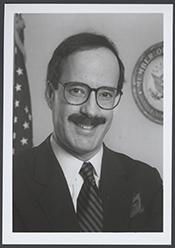
Mr. Chairman, I rise in support of my colleague, Mr. Murphy, and his amendment. It is appropriate for our colleague from Pennsylvania to be offering this amendment because he is himself a victim of…
Mr. Chairman, I rise in support of my colleague, Mr. Murphy, and his amendment. It is appropriate for our colleague from Pennsylvania to be offering this amendment because he is himself a victim of this insidiousness.
I also want to thank Chairman Barton, who with me, introduced the Truth in Caller ID Act that passed the House not long ago. I also want to thank and recognize Mr. Upton, Mr. Dingell and Mr. Markey for their significant contributions to that bill.
I commend our colleague from Pennsylvania for offering this amendment. It will highlight to the FCC that the House of Representatives takes this problem very seriously. We have swiftly passed legislation that is now pending in the Senate. And so we expect the FCC to do whatever it can now--and to move expeditiously once the Truth in Caller ID Act is signed into law.
Not long ago, I was like most Americans--completely unaware that is was so easy for someone to alter their caller ID. Caller ID spoofing is not your grandfather's prank call.
This technology has limited uses that I find legitimate, such as for law enforcement and protecting battered women.
This technology has unlimited uses that I find completely unacceptable. This technology enables people to pretend to be a bank, a doctor's office, a court house, or even a member of Congress. Nefarious people are . . . I say are using this technology to get a hold of private information and engage in identity theft.
The Telecommunications and Internet Subcommittee of Energy and Commerce held a hearing on this matter. We heard stories of people receiving phone calls from their local court houses saying they had missed jury duty and that to confirm a make up the caller needed the person's social security number. Well who wouldn't be flustered when seeing a local court house phone number on the caller ID and being told you had missed jury duty. So these innocent people gave out their social security numbers.
We heard of people make fake calls to police departments claiming to be victims of home intrusion and being held at gun point. The Newark Star Ledger reported on July 12, 2005 that Mr. Wadu Jackson plead guilty to placing ``a fake 911 call that drew dozens of police sharpshooters to a New Brunswick home in March in a mistake belief that a teenage girl was being held hostage.
I know of three of our colleagues in the House who have been victims of caller ID spoofing. Not in the personal lives, but in their professional lives as Members of Congress. They have had people call and leave obnoxious messages that indicate the call is coming from the member's district office.
I can only believe that this was an early effort at testing this technology to interfere with the electoral process of our nation.
I think we do a service to our constituents today by highlighting and alerting them to this problem. I urge the adoption of this amendment.
I thank the gentleman from Massachusetts for yielding to me, and I am proud to rise in strong support of this legislation and proud to be the lead Democrat on the bill. All too often we hear and…
I thank the gentleman from Massachusetts for yielding to me, and I am proud to rise in strong support of this legislation and proud to be the lead Democrat on the bill. All too often we hear and experience the partisan divide in Washington, but this bill and the process that so quickly got this bill to the floor has been truly bipartisan.
I must start with thanking my friend and chairman, Mr. Barton, for his leadership on this bill; and I must also note the invaluable assistance of our subcommittee Chairman Upton, and I thank him for his kind words. I also would like to thank our ranking Democrats, Mr. Markey and Mr. Dingell as well.
When someone looks at caller ID, they have the right to expect that the
person or phone number listed is truly that person. The average citizen has no idea that caller ID can be manipulated so that the person or number appearing is totally false.
I first learned of caller ID spoofing when I read news articles about our colleague from Pennsylvania (Mr. Murphy) becoming a victim of it. His own constituents thought they were receiving calls from his district office, and these calls were far from appropriate.
I then learned that this technology is being used across the country to allow unscrupulous people to trick unsuspecting people to release personal information. It is so easy for someone to pretend to be Chase Manhattan or Citibank or even a person's doctor. These services even provide technology to change the sound of a person's voice. I could set it to sound like a 25-year-old woman or an 80-year-old man.
Mr. Speaker, I quickly became convinced we needed to address this issue quickly, because obviously what these people are doing is legal and we are playing catch-up to catch up with them. Having thought about this issue in great depth, I became convinced what happened to our colleague from Pennsylvania was just a harbinger of what is to come.
I believe that right now there are people in our country who plan to use this technology to interfere with our elections. Just imagine, the day before an election, a group of people using this technology make hundreds of calls pretending to be leaving a message from the office of a candidate. That message could be rude, insulting, crude, slanderous, sexist, or racist, and it would look like the candidate or the candidate's organization made the calls. The damage would be done, and these people who will do anything to destroy our democracy will have won. But today, the House takes a bold step toward protecting our Nation from these insidious criminals.
Finally, I would like to thank my staff and the committee's staff who worked on this legislation. Pete Leon of my staff, Kelly Cole and Will Norwind from the majority, and Johanna Shelton, Pete Filon, and Colin Crowell from the minority.
I hope we can pass this without any opposition.
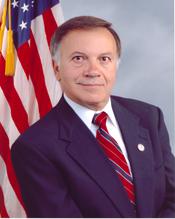
Mr. Chairman, I have an amendment at the desk. Mr. Chairman, I yield myself such time as I may consume. This bipartisan amendment would prevent the State Department from expending any funds to…
Mr. Chairman, I have an amendment at the desk.
Mr. Chairman, I yield myself such time as I may consume.
This bipartisan amendment would prevent the State Department from expending any funds to enforce several arbitrary and archaic ``guidelines'' that inhibit or altogether prevent United States officials from communicating with their counterparts in Taiwan.
These restrictions range from just silly to downright absurd.
These so-called guidelines, among other things, do not permit meetings with Taiwanese diplomats or elected officials in Department of State buildings, the White House, or the Old Executive Office Building.
They prevent executive branch personnel from the foreign affairs agencies and those above the rank of GS-14 from attending Taiwan's annual holiday reception in Washington.
They prevent executive branch personnel from attending meetings at Twin Oaks, which is the former residence of Taiwan's ambassador here in Washington.
They prevent travel to Taiwan by any officials above a certain rank from the Defense Department and the State Department.
They explicitly prohibit executive branch personnel from corresponding directly with Taiwanese officials. Instead, the guidelines mandate that communications be sent through a third party.
The guidelines even stipulate that ``indirect'' communications not be printed on official letterhead, and they prohibit U.S. personnel from using the official title of the Taiwanese official to whom the letter is being sent.
Executive branch officials are even directed ``not to refer to Taiwan's democratically elected government as a `government.''' Instead, they are directed to use the strange term ``Taiwan authorities.''
Mr. Chairman, these guidelines needlessly complicate our ability to effectively communicate with our friends in Taiwan. As a result, Taipei and Washington often find themselves talking past each other through the international media instead of communicating face-to-face. It makes absolutely no sense and helps no one.
Mr. Chairman, these self-imposed guidelines raise serious questions about who is really in charge and calling the shots when it comes to the U.S. policy in Taiwan. Is it the Congress or is it the Communist governments in Beijing?
I ask for an ``aye'' vote on the amendment.
Mr. Chairman, I reserve the balance of my time.
Mr. Chairman, I do not see Mr. Andrews, who was coauthor. Therefore, I will simply say that I would hope that we invalidate these nonsensical guidelines, allow our government to communicate directly with Taiwan's democratically elected government the same way we communicate with other friendly governments.
I ask for an ``aye'' vote.
I yield back the balance of my time.
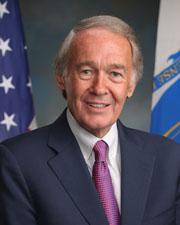
Mr. Speaker, I yield myself as much time as I may consume. Mr. Speaker, spoofing is when a caller masks or changes the caller ID information of their call in a way that disguises the true origination…
Mr. Speaker, I yield myself as much time as I may consume.
Mr. Speaker, spoofing is when a caller masks or changes the caller ID information of their call in a way that disguises the true origination number of the caller. In many instances, a call recipient may be subject to pretexting through spoofing, which can lead to fraud, personal ID theft, harassment or otherwise with the safety of the call recipient in danger. On the other hand, lest we think that spoofing always has nefarious aims, we must recognize that there may be circumstances when a person's safety may be put in danger if the true and accurate call origination information is disclosed as well.
What we seek in caller ID policy is balance, and I believe the legislation before us today, after changes were made in committee consideration, more adequately strikes the historic balance we have sought to achieve for consumer privacy and security.
For instance, Members of Congress often have direct lines in their office, but in order to ensure that such lines do not become generally public and, therefore, remain useful to us, it may be necessary to keep such direct numbers confidential and have the outgoing caller ID information indicate a different number at which our offices can be reached for return calls. That gives the recipient a legitimate phone number to call back, but keeps confidential lines private.
There are many doctors, psychiatrists, lawyers and other professionals who would similarly like to keep direct, confidential lines private in this way who have no direct intention of misleading anyone. In addition, there may be instances, for example, when a woman at a shelter seeks to reach her children, when spoofing is important to safeguard someone's safety. Moreover, informants to law enforcement tip lines or whistleblowers have additional reasons for why their calling information should remain private. We should not outlaw any of these practices, and I think the legislation now incorporates the notion that the intent of the caller is vitally important in gauging whether spoofing unfairly violates privacy and security.
With that, I commend the chairman for the changes he was willing to make in the committee deliberations of the bill, and I congratulate him and I congratulate Mr. Engel from New York for his splendid work on this legislation. Mr. Dingell and I have enjoyed working on this legislation.
Mr. Speaker, I reserve the balance of my time.
Mr. Speaker, I yield 3 minutes to the gentleman from New York (Mr. Engel).
Mr. Speaker, I have no further requests for time, and I yield back the balance of my time.
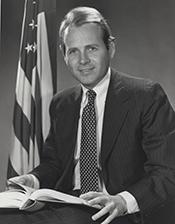
Mr. Chairman, I want to express my appreciation to my friend from Arizona for raising one of the issues that he and I have worked closely on over the years. As the Reading Clerk stated and as my…
Mr. Chairman, I want to express my appreciation to my friend from Arizona for raising one of the issues that he and I have worked closely on over the years.
As the Reading Clerk stated and as my friend from Arizona stated, this is the Fairplex Trade and Conference Center.
Mr. Chairman, 43 percent of the goods coming to and from the consumers and workers of the United States of America come through the ports of Los Angeles and Long Beach. One of the most important centers for trade, planning and strategic meetings has been held at the Fairplex.
It doesn't fall in my district. It is not in my district. It is in the district of my very distinguished colleague, Mrs. Napolitano. But I will tell you, as we look at our quest of trying to open up new markets for U.S. goods and services all around the world and as we look at ensuring that American consumers can have access to the best quality product at the lowest possible price, the utilization of this trade and convention center is critically important.
But, Mr. Chairman, I have got to tell you that, as important as the issue of global trade is, I was really struck when last December I had the opportunity to listen to a friend of mine who happened to be at the Fairplex Trade and Convention Center, where it had taken place 2 weeks before that, unfortunately, of the eight planned voting sites for the Iraqi people who are here in the United States of America, looking forward, on December 15, to having the access to a voting station, one of those had, unfortunately, closed down.
And what happened? The people at the Fairplex Trade and Convention Center came forward, and literally at the drop of a hat, they were able to provide the chance for Iraqis who were in this country on December 15 of last year to exercise that right to vote. Their ability to be on the frontline to participate in the global war on terror is something that I think is vitally important.
I was listening on the phone as applause went up every single time that a ballot was placed into that voting box, and it was a great moment for us. And as, in the last 2 weeks, we have gotten word of the establishment of the completion of that cabinet with the defense and interior ministers there, it reminded me again of those votes that were cast at the Fairplex Trade and Convention Center that falls not in my district but in the district of Mrs. Napolitano. This particular earmark is there helping us in the global war on terror and helping us remain competitive globally.
I thank my friend for yielding.
Show 11 more
I thank the distinguished gentleman from Virginia for yielding. Mr. Chairman, I rise today in strong opposition to the amendment offered by the gentleman from Arizona. It is the responsibility of all…
I thank the distinguished gentleman from Virginia for yielding.
Mr. Chairman, I rise today in strong opposition to the amendment offered by the gentleman from Arizona. It is the responsibility of all Members of this distinguished body to faithfully represent the interests and well being of their constituents.
I come to this Chamber again today to once again support the needs of my home district, where job creation continues to be the number one priority of western New York. The Federal investment included by the Appropriations Committee for the Rochester Tooling and Machining Association is welcome news for western New York.
I appreciate that the chairman of the committee recognizes, as I do, that this project is worthy of Federal involvement through the Small Business Administration and will be used to meet the ultimate objective of creating and retaining good high-paying jobs for the hardworking Americans I represent.
The Rochester Tooling and Machining Association is a nonprofit organization whose mission is to promote the development and improvement of tooling, machining and contract manufacturing industries in Monroe County and western New York. They have been the region's leading association for the tooling and machining cluster for over 60 years.
With more than 500 tooling and machine companies in Buffalo, Rochester, Syracuse communities, employing approximately 16,000 people, these companies clearly have a significant economic impact in my region. The goal in this project is to assist these firms with necessary training in advanced manufacturing methods which will enhance their competitive position by reducing costs and maximizing efficiencies.
The association plans to implement programs in lean manufacturing and Six Sigma training, which will streamline business manufacturing and business practices and cut down on unnecessary expenses. By implementing proven business training techniques, we can ensure our manufacturers increase their competitiveness in today's global marketplace.
This project will be a big boost to the marketability of our manufacturing sector and help with new business activity for the region, which will lead to
job retention and, hopefully, job creation. The stated goal of the Small Business Administration is to ``maintain and strengthen the Nation's economy by aiding, counseling and assisting and protecting the interests of small businesses.'' This funding is completely in line with those principles.
I urge my colleagues to reject this amendment.
Mr. Speaker, I rise in support of H.R. 5126, the ``Truth in Caller ID Act.'' And I commend the Chairman of the Committee on Energy and Commerce, Joe Barton, and Representative Eliot Engel for…
Mr. Speaker, I rise in support of H.R. 5126, the ``Truth in Caller ID Act.'' And I commend the Chairman of the Committee on Energy and Commerce, Joe Barton, and Representative Eliot Engel for introducing this bipartisan bill.
Many consumers subscribe to caller ID services that let them know the number of an incoming telephone call and the name of the caller. Consumers often rely on this caller ID information to decide whether to answer a call. Consumers should be able to trust that the caller ID information has not been changed for fraudulent or harmful purposes.
Until recently, manipulating caller ID information, also called ``spoofing,'' was difficult and required expensive equipment. Unfortunately, advances in technology have allowed individuals with fraudulent intent, and others seeking to do harm, to easily spoof their caller ID information, making calls appear to originate from a different person, organization, or location. As such, the recipient of a call that has been spoofed may answer the call thinking that it is coming from someone from whom it is not.
There are legitimate reasons to spoof caller ID information. For example, a domestic violence clinic may alter its caller ID information to mask its identity. This is important for the safety of victims of domestic violence since many victims seek help while they are still living with their abuser.
Caller ID spoofing, however, can be used for nefarious purposes. In a widely reported case, SWAT teams were dispatched to an apartment building in New Brunswick, New Jersey, last year after authorities received a call from a woman saying that she was being held hostage. The caller had spoofed the caller ID information to make it appear as though the call was coming from inside the building.
Caller ID spoofing is also used to gain personal information from a consumer so a criminal can more easily steal the consumer's identity. Equally troubling is the use of such spoofing by predators to cause physical or emotional harm to their victims.
H.R. 5126 will help put an end to caller ID spoofing for fraudulent or harmful purposes. Specifically, the Act makes it unlawful for someone to change their caller ID information with the intent to defraud or cause harm to another person.
This bill is good consumer protection legislation. I am pleased to support it and I urge my colleagues to do the same.
Mr. Chairman, I rise in support of the Tancredo-Andrews- Chabot-Brown amendment. As my colleagues know, Taiwan is one of our strongest and most loyal allies. It is also a democracy that has a…
Mr. Chairman, I rise in support of the Tancredo-Andrews- Chabot-Brown amendment.
As my colleagues know, Taiwan is one of our strongest and most loyal allies. It is also a democracy that has a multi-party political system that recognizes individual liberty and respects human rights.
Just across the Taiwan Strait is the People's Republic of China. It is not a democracy. It has an abysmal human rights record. It does not recognize the rule of law. It practices religious persecution. It warehouses political prisoners. It carries out a coercive abortion policy. And it has more than 800 missiles pointed at Taiwan.
Our government treats the PRC and Taiwan differently. Now, in a logical world, we would work closely with our democratic ally. We would treat our friend with the respect it deserves. We would welcome the leaders of Taiwan with open arms and conduct frequent high-level exchanges. But we don't do that.
What we do, under the umbrella of our so-called One China policy, is just the opposite. We invite high level military officials from the People's Liberation Army to visit the Pentagon. We welcome the communist dictator to the White House with a twenty-one gun salute.
We treat our democratic friends from Taiwan quite a bit differently. In fact, the democratically elected President of Taiwan is not permitted to come to Washington, D.C. Nor is the Vice-President, the Defense Minister, or the Foreign Minister.
Just a few weeks ago, only two weeks after Communist China's dictator, Hu Jintao, was welcomed to the White House, Taiwan's democratically-elected leader, President Chen Shui-bian was told he could not make transit stops in the United States on his way to Paraguay and Costa Rica. Instead, he was told that he could refuel his aircraft in Alaska and be on his way. Some way to treat a friend.
What kind of message are we sending here?
The Tancredo-Andrews-Chabot-Brown amendment would not change our ``One China'' policy . . . although I would not be averse to that. It simply lifts a number of tired, old guidelines that deter or prevent high level U.S. officials from communicating with their counterparts from Taiwan. We should treat Taiwan like we treat our other allies. It is dangerous to do otherwise.
Mr. Chairman, let's do the right thing. Let's scrap these counterproductive guidelines. Adopt the Tancredo-Andrews-Chabot-Brown amendment.

Mr. Chairman, I offer an amendment. Mr. Chairman, first, I thank the distinguished chairman, Chairman Wolf, for his work on this bill. This amendment is intended to highlight the dangerous practice…
Mr. Chairman, I offer an amendment.
Mr. Chairman, first, I thank the distinguished chairman, Chairman Wolf, for his work on this bill.
This amendment is intended to highlight the dangerous practice of caller ID fraud or ``call spoofing'' and hope the FCC moves quickly and takes immediate action to protect the public from this. It is a deceptive practice being used to defraud people of their money and deceive citizens into releasing private information.
There are now several Web sites where anyone can change their outgoing phone number to any number that they choose on a temporary basis. This practice is not just for harmless pranks but has tremendous identity theft and other security implications.
For example, the AARP bulletin recently reported that people received false calls claiming they missed jury duty and were asked for their Social Security numbers. The phone number of the local courthouse had shown up on their caller ID.
Criminals have engaged in caller ID fraud to gather private consumer information from businesses that rely on caller ID for authentication, such as financial companies that perform wire transfers. Cell phone voice mailboxes often only require verification that an incoming call is from the user's cell phone number.
Lastly, in 2005, SWAT teams surrounded an empty building in New Brunswick, New Jersey, after police received a call from a woman who said she was being held hostage in an apartment. She was not in the apartment, and the woman had intentionally used a false caller ID.
False caller ID information can be used to bypass safety systems made to prevent domestic violence and harassment. Imagine what can happen when predators use false caller ID numbers to prey upon children and senior citizens. I might add that these phone spoofing Web sites also offer to disguise the voice of the caller and to record the call.
The House has already expressed its will on this matter, unanimously passing H.R. 5126 earlier this month; and I am pleased to be a cosponsor of that bill. I have another bill, H.R. 5304, that would go a step further by amending criminal law to protect Americans from this practice.
We cannot keep waiting to deal with this insidious problem and must ask the FCC to move forward quickly.
Mr. Chairman, I reserve the balance of my time.
Mr. Chairman, I yield back the balance of my time.
Mr. Chairman, I thank the gentlewoman for yielding me time. In light of the chairman's support, I will submit my comments for the Record in support of the amendment. Mr. Chairman, I rise today to…
Mr. Chairman, I thank the gentlewoman for yielding me time.
In light of the chairman's support, I will submit my comments for the Record in support of the amendment.
Mr. Chairman, I rise today to express my support for this important amendment offered by the gentlelady Ms. Davis of CA to the Science, State, Justice, and Commerce Appropriations bill to increase by $1 million the amount of funding in this bill to the National Veterans Business Development Corporation--also known as The Veterans Corporation.
Our amendment increases funding for The Veterans Corporation from $500,000 to $1.5 million to match Fiscal Year 2006 levels. Without level funding, The Veterans Corporation will be forced to cut back and reduce entrepreneurship assistance to our veterans.
As the Ranking Member of the Veterans' Affairs Economic Opportunity Subcommittee, which maintains jurisdiction over veterans' employment and re-employment matters, I have been working to explore the perceptions, activities, employment practices, and entrepreneurship opportunities for former servicemembers.
In my view, which I know is shared by many of my colleagues, the men and women serving in the military today are very professional, highly trained, and extremely motivated. I am confident that many of these men and women would add value to our economy if given the opportunity to start their own businesses. In my district--the State of South Dakota-- more than 17,000 veteran owned small businesses are operating-- generating a combined income of more than $816 million.
Mr. Chairman, as the Administration has repeatedly stated, this is a key transitional year for members of our Armed Forces serving overseas. Increasing numbers of servicemen and women are expected to return home from Iraq and Afghanistan--including thousands of National Guard and Reservists. The men and women in uniform who defend this country and make our economic and political systems possible, indeed, have earned our best efforts and a fair opportunity to successfully transition from military service to civilian life and employment.
The Veterans Corporation is working to help these veterans, who would like to enter the world of entrepreneurship, have the opportunity to successfully do so. I ask my colleagues to support these veterans by supporting this amendment.

Mr. Chairman, I thank the distinguished gentleman. I likewise thank you for your leadership and the chairman's leadership, and I would like to enter into a colloquy. It is, I think, appropriate to do…
Mr. Chairman, I thank the distinguished gentleman. I likewise thank you for your leadership and the chairman's leadership, and I would like to enter into a colloquy. It is, I think, appropriate to do so as there is a pending launch going forward in the Nation's space program, space shuttle program, to talk about the next generation of scientists and astronauts.
Mr. Chairman, in 1992, Dr. Mae C. Jemison became the first woman of color to travel into space. After retiring from NASA, she worked as an active advocate of science education, especially for minorities and economically disadvantaged students.
Dr. Jemison is a doctor by training, and she is a pioneer in aeronautics. And through the creation of the Dr. Mae C. Jemison Grant Program, we hope to provide other minorities and women in America with the opportunity to succeed in science and engineering.
Frankly, what we want to do is to create the next generation of our scientists and our astronauts. I would say to you that, unfortunately, we are woefully noncompetitive. The Dr. Mae C. Jemison Grant Program is intended to ensure equal access for minority and economically disadvantaged students to NASA's education programs.
The program facilitates NASA's ability to work with institutions serving minorities to bring more women of color into the field of space and aeronautics. We must pursue this program to safeguard equal opportunities in fields of study and professions that have far too low of a minority ratio.
Mr. Chairman, I hope that as this particular program is authorized in the NASA authorization bill, we will find it in our good graces to be able to fund it. My question, as I yield to the gentleman, is, would the gentleman agree with me to work with me to find a way to recognize and to fund this particular program?
I yield to the gentleman from Virginia.
Mr. Chairman, reclaiming my time. Let me say that it is my hope, Mr. Chairman, that we do recognize this as a grant program and that as you have indicated, that this program be funded under the education programs in NASA, and to be specifically funded, and as indicated in the Record, I had an amendment to offer.
At this time, I will not be offering the amendment. And therefore, I hope to accept the assurances and be able to move forward on this program so that it can be funded
Mr. Chairman, I want to thank the gentleman for yielding. I rise today to engage in a colloquy with the chairman of the subcommittee, Mr. Wolf. I understand and know quite frankly that the chairman…
Mr. Chairman, I want to thank the gentleman for yielding.
I rise today to engage in a colloquy with the chairman of the subcommittee, Mr. Wolf. I understand and know quite frankly that the chairman has been a long-time advocate of public diplomacy and democracy through educational and cultural exchanges, and I would like to express my very strong support of his work. I truly appreciate his willingness to highlight these issues today of mutual concern.
So, Mr. Chairman, I come to the floor today to raise an issue that is important for our hemispheric foreign policy. For quite a few years, many in this body have stressed the importance of improving relations with Latin America and the Caribbean by strengthening educational exchange initiatives.
Many American students who spend time studying abroad are among our Nation's greatest assets, and this is especially true with regards to our hemispheric neighbors.
Many elected leaders in Latin America and the Caribbean spent some time studying here in the United States. They applied the skills and the values that they learned in the United States upon returning to their home countries.
For instance, in the wake of recent natural disasters, many Caribbean leaders who studied here were able to draw on their experience and networks of contacts when facing challenges.
The need for strengthening the human capital and democratic values is ever pressing as natural disasters, perhaps among the most severe destabilizing force, constantly wreak havoc on the region.
Hurricanes, floods, landslides, earthquakes are becoming more frequent. It takes years and sometimes decades to recover, and I know that we can all personally attest to how a natural disaster shakes a nation's foundation to its very core.
Educational exchange opportunities are an investment with the greatest return. By developing human capital, we are securing our hemisphere by planting the seeds of democracy and success.
Mr. Chairman, if the gentleman will further yield, I want to thank the gentleman for his attention to this issue and so many issues that are important to our country. I look forward to working together in standing up for democracy and improving relations with our hemispheric neighbors.
I want to thank you again, and I want to thank you for yielding me the time.
Mr. Chairman, I offer an amendment. Mr. Chairman, I offer this amendment today along with my colleagues, Mr. Evans of Illinois and Ms. Herseth of South Dakota, on behalf of our veterans seeking to…
Mr. Chairman, I offer an amendment.
Mr. Chairman, I offer this amendment today along with my colleagues, Mr. Evans of Illinois and Ms. Herseth of South Dakota, on behalf of our veterans seeking to start and operate their own businesses.
I have been interested in this issue for a number of years after visiting with our servicemembers in Afghanistan. I recall one brave servicemember who told me his dream was to learn about entrepreneurship and start his own business after his tour of duty. So it is up to us to make sure our veterans have access to the training, assistance and capital to start a business.
Mr. Chairman, Congress passed legislation in 1999 establishing the National Veterans Business Development Corporation to provide all of these crucial aspects of entrepreneurship to veterans. As a result, the Veterans Corporation has provided training to over 8,000 veterans and has helped over 550 veterans start businesses during 2006 alone.
Charmaine Burnett is one of those thousands of success stories. She is a service-disabled veteran of the Gulf War living in California, and her construction services company has been awarded several contracts in recent months. She attributes her success in part to the assistance she received from the Veterans Corporation.
Unfortunately, at $500,000, H.R. 5672 does not provide sufficient funding for the Veterans Corporation to train and continue its services to veterans when they need it the most.
Mr. Chairman, why would we cut this funding to veterans when they need it most? The corporation will have to cut back and reduce services for veterans entrepreneurship when many of our servicemembers are returning from Iraq and Afghanistan.
Our amendment increases funding for the Veterans Corporation by a mere $1 million to match its level for fiscal year 2006. Our veterans need this funding.
This amendment is completely budget neutral. It does not increase spending and does not take away from other important programs within the SBA.
I urge my colleagues to support this amendment and to support business ownership for America's veterans.
Mr. Chairman, I appreciate that acceptance, and I know that the veterans will as well.
Mr. Chairman, I yield the balance of my time to the gentlewoman from South Dakota (Ms. Herseth).
Mr. Chairman, I rise in strong support of Congressman Pallone's amendment to provide funding to the National Academy of Sciences to study the impacts of global warming on our coastal areas. Coastal…
Mr. Chairman, I rise in strong support of Congressman Pallone's amendment to provide funding to the National Academy of Sciences to study the impacts of global warming on our coastal areas.
Coastal communities are at serious risk from global warming. We must better understand the specific threats faced by each coastal community to give ourselves a chance to prepare.
As the Earth warms, the sea level is rising. Scientists tell us that global warming likely caused 4 to 8 inches of sea level rise in the last century. Over the next 100 years, we may see up to 3 additional feet of sea level rise.
Warmer water fuels more intense hurricanes and tropical storms. Coral reefs are being damaged by both warmer water and increased ocean acidity from carbon dioxide.
Coastal communities need to know what they are up against. The effects of sea level rise include coastal erosion, land loss, disappearing beaches, saltwater intrusion into underground drinking water supplies, higher storm surges, damages to houses and roads, and harm to fisheries. And we have already seen the devastation that hurricanes and tropical storms could wreak on our coastal communities.
Coastal communities, such as Los Angeles, will be affected by changes inland. One-third of our precious water supplies come from the Sierra snowpack.
Of course, we must do much more than just try to adapt to massive temperature rises. The costs of that are far too high. We must dramatically cut our greenhouse gas emissions over the next few decades to avoid highly dangerous and irreversible warming. That is why last week, together with Congressman Pallone and other colleagues, I introduced the Safe Climate Act. The Safe Climate Act reflects what science says we need to do to protect our children and grandchildren from disastrous climate changes.
While prompt action is necessary to avert the worst effects of climate change, this administration and the Congress are refusing to act. In the meantime, our coastal communities are at risk.
The Pallone amendment is a simple, commonsense measure to assess some of these vulnerabilities. I urge my colleagues to support the amendment.

Mr. Chairman, I thank the gentleman for yielding me time. Mr. Chairman, I would like to enter into a colloquy with Chairman Wolf, of the Science, State, Justice, Commerce Appropriations Subcommittee.…
Mr. Chairman, I thank the gentleman for yielding me time.
Mr. Chairman, I would like to enter into a colloquy with Chairman Wolf, of the Science, State, Justice, Commerce Appropriations Subcommittee.
Mr. Chairman, I had offered to introduce an amendment today to make a
modest increase of $2.2 million for the Space Environment Center, returning its funding to the President's requested level of $7.2 million.
However, Mr. Chairman, after discussing this with your staff, I have decided not to offer the amendment but would like to engage you in a colloquy.
Mr. Chairman, the Space Environment Center is a part of NOAA's National Weather Service, and it is the only civil provider of space weather warnings. These warnings enable government and private sector operators to take actions to minimize disruptions in service and damage to critical infrastructure.
Last year, the Space Environment Center received a $4 million cut, a cut of about 44 percent from its $7 million budget. NOAA, in order to prevent degradation of services reprogrammed funds from other programs to continue the operations of the Space Environment Center.
But in this cycle, if the Center receives $5 million as proposed in the bill, it will be forced to make substantial cuts in its staffing.
As a national critical system, should the capabilities of the center go down, the Air Force currently provides data as a back-up. However, with this proposed budget, the center will not be able to maintain a liaison position with the Air Force, potentially harming its operations and the continuity of its services.
So, in that spirit, with that background, Mr. Chairman, I have two questions. Would you agree that the space weather warnings are a vital service to many of our space-based assets and that more funding is needed for the Space Environment Center? And if so, would you be willing to work in conference to increase funding for the center?
I yield to the gentleman from Virginia.
Mr. Chairman, I appreciate the chairman's response and willingness to work on this issue. I thank my colleague, Mr. Mollohan, from the great State of West Virginia for yielding time to me.
Mr. Chairman, I rise in opposition to the amendment. The gentleman from Arizona and I have had some conversation over this particular issue earlier today, and I did try to impress upon him that this…
Mr. Chairman, I rise in opposition to the amendment.
The gentleman from Arizona and I have had some conversation over this particular issue earlier today, and I did try to impress upon him that this is not just an earmark. This isn't pork.
This is, in fact, funding that would come from the Small Business Administration account for construction of the $25 million trade center that is going to be located at the Pomona State Fairgrounds, which, by the way, is also a proposed staging area for the Los Angeles County emergency staging for terrorism. And this is vital to the city of Pomona and the whole surrounding community not only east of the Los Angeles area but the Inland Empire, as was mentioned by my colleague, Congressman Dreier.
This would create jobs and assist businesses in an economically depressed as well as disadvantaged community and, of course, as many of us already know, the number one crime city in the State of California. The unemployment rates are exceedingly high.
Now, this new addition to the fairgrounds, the Trade and Conference Center, will generate 1,700 full-time jobs, provide a large economic stimulus in the community where now a lot of people are out of work; businesses are moving partly because of NAFTA and others, let me tell you. But 90 small businesses are already signed and registered to work at this new facility or to be able to be exposed there. The Fairplex is a very well respected, nonprofit event center hosting yearly over 300 activities, including the Los Angeles County Fair, and attracts hundreds of thousands of people. It is used for Federal events and, as you just recently heard, for the Iraqi elections. And last but not least, it is also used for naturalization ceremonies.
I wish to thank my colleague, Chairman Dreier, for his support of the project that affects the many surrounding communities of southern Los Angeles. And as the Representative for Pomona, I am proud to support this bid of $750,000, which will benefit jobs and the economy in this area. And in helping this project move forward, I certainly thank you and look forward to the support for defeating the amendment.
Bill Text
4 versions available
        [Congressional Bills 109th Congress]
[From the U.S. Government Publishing Office]
[H.R. 5126 Referred in Senate (RFS)]

109th CONGRESS
2d Session
H. R. 5126

_______________________________________________________________________

IN THE SENATE OF THE UNITED STATES

June 7, 2006

Received; read twice and referred to the Committee on Commerce,
Science, and Transportation

_______________________________________________________________________

AN ACT

To amend the Communications Act of 1934 to prohibit manipulation of
caller identification information, and for other purposes.

Be it enacted by the Senate and House of Representatives of the
United States of America in Congress assembled,

SECTION 1. SHORT TITLE.

This Act may be cited as the ``Truth in Caller ID Act of 2006''.

SEC. 2. PROHIBITION REGARDING MANIPULATION OF CALLER IDENTIFICATION
INFORMATION.

Section 227 of the Communications Act of 1934 (47 U.S.C. 227) is
amended--
(1) by redesignating subsections (e), (f), and (g) as
subsections (f), (g), and (h), respectively; and
(2) by inserting after subsection (d) the following new
subsection:
``(e) Prohibition on Provision of Deceptive Caller Identification
Information.--
``(1) In general.--It shall be unlawful for any person
within the United States, in connection with any
telecommunications service or VOIP service, to cause any caller
identification service to transmit misleading or inaccurate
caller identification information, with the intent to defraud
or cause harm.
``(2) Protection for blocking caller identification
information.--Nothing in this subsection may be construed to
prevent or restrict any person from blocking the capability of
any caller identification service to transmit caller
identification information.
``(3) Regulations.--Not later than 6 months after the
enactment of this subsection, the Commission shall prescribe
regulations to implement this subsection.
``(4) Definitions.--For purposes of this subsection:
``(A) Caller identification information.--The term
`caller identification information' means information
provided to an end user by a caller identification
service regarding the telephone number of, or other
information regarding the origination of, a call made
using a telecommunications service or VOIP service.
``(B) Caller identification service.--The term
`caller identification service' means any service or
device designed to provide the user of the service or
device with the telephone number of, or other
information regarding the origination of, a call made
using a telecommunications service or VOIP service.
Such term includes automatic number identification
services.
``(C) VOIP service.--The term `VOIP service' means
a service that--
``(i) provides real-time voice
communications transmitted through end user
equipment using TCP/IP protocol, or a successor
protocol, for a fee or without a fee;
``(ii) is offered to the public, or such
classes of users as to be effectively available
to the public (whether part of a bundle of
services or separately); and
``(iii) has the capability to originate
traffic to, and terminate traffic from, the
public switched telephone network.
``(5) Savings provision.--Nothing in this Act may be
construed to affect or alter the application of the
Commission's regulations regarding the requirements for
transmission of caller identification information for
telemarketing calls, issued pursuant to the Telephone Consumer
Protection Act of 1991 (Public Law 102-243) and the amendments
made by such Act.''.

Passed the House of Representatives June 6, 2006.

Attest:

KAREN L. HAAS,

Clerk.