Immigration Law Enforcement Act of 2006

Legislative Activity
Stay on top of the latest movement without scrolling through every action
Received in the Senate and Read twice and referred to the Committee on the Judiciary.
September 21, 2006
View full timeline
Introduced in House
September 19, 2006
Referred to the House Committee on the Judiciary.
September 19, 2006
Rules Committee Resolution H. Res. 1018 Reported to House. Rule provides for consideration of H.R. 4830, H.R. 6094 and H.R. 6095. In each case, the bill shall be considered as read; no amendments shall be in order; and the previous question shall be considered as ordered to final passage, without intervening motion, except one motion to recommit.
September 20, 2006 • 7:48 PM
Rule H. Res. 1018 passed House.
September 21, 2006 • 11:54 AM
Considered under the provisions of rule H. Res. 1018. (consideration: CR H6880-6894)
September 21, 2006 • 2:23 PM
Rule provides for consideration of H.R. 4830, H.R. 6094 and H.R. 6095. In each case, the bill shall be considered as read; no amendments shall be in order; and the previous question shall be considered as ordered to final passage, without intervening motion, except one motion to recommit.
September 21, 2006 • 2:24 PM
DEBATE - The House proceeded with one hour of debate on H.R. 6095.
September 21, 2006 • 2:24 PM
The previous question was ordered pursuant to the rule. (consideration: CR H6891)
September 21, 2006 • 3:12 PM
Mr. Gutierrez moved to recommit with instructions to Judiciary. (consideration: CR H6891; text: CR H6891)
September 21, 2006 • 3:13 PM
Point of order sustained against the motion to recommit with instructions.
September 21, 2006 • 3:13 PM
Mr. Sensenbrenner raised a point of order against the motion to recommit with instructions. Mr. Sensenbrenner stated that the provisions of the instructions were not germane to the bill. Sustained by the Chair.
September 21, 2006 • 3:13 PM
Mr. Reyes moved to recommit with instructions to Judiciary. (consideration: CR H6892; text: CR H6892)
September 21, 2006 • 3:19 PM
DEBATE - The House proceeded with 10 minutes of debate on the Reyes motion to recommit with instructions. The instructions contained in the motion seek to require the bill to be reported back to the House with amendments relating to alien smuggling.
September 21, 2006 • 3:21 PM
The previous question on the motion to recommit with instructions was ordered without objection. (consideration: CR H6893)
September 21, 2006 • 3:27 PM
On motion to recommit with instructions Failed by the Yeas and Nays: 196 - 226 (Roll no. 467).
September 21, 2006 • 3:52 PM
Passed/agreed to in House: On passage Passed by the Yeas and Nays: 277 - 140 (Roll no. 468).(text: CR H6880-6881)
September 21, 2006 • 3:55 PM
On passage Passed by the Yeas and Nays: 277 - 140 (Roll no. 468). (text: CR H6880-6881)
September 21, 2006 • 3:55 PM
Motion to reconsider laid on the table Agreed to without objection.
September 21, 2006 • 3:55 PM
Received in the Senate and Read twice and referred to the Committee on the Judiciary.
September 21, 2006
Voting History
2 votes recorded • Roll call available
Floor Debate
21 membersWhat members said about H.R. 6095 on the floor
 JCJFJS
 JPM
JPM LS
LS MU+16
MU+16
Floor Debate
21 membersWhat members said about H.R. 6095 on the floor
Mr. Speaker, I yield myself such time as I may consume. Today, my colleagues, we are going through an exercise to convince the American people that now is the time for comprehensive reform, a week…
Mr. Speaker, I yield myself such time as I may consume.
Today, my colleagues, we are going through an exercise to convince the American people that now is the time for comprehensive reform, a week before recess, with continued disagreement between the House, the Senate, and the administration, and with narrowly repackaged bills.
These bills, and this one before us introduced just 2 days ago, are substantively flawed and do not provide for comprehensive reform.
H.R. 6095 is touted as a law enforcement bill, but it is opposed by our State and local law enforcement officials.
Mr. Speaker, I include for the Record the comments of law enforcement associations and departments, police chiefs, sheriff associations, department heads across this country, and other law enforcement individuals to demonstrate how the policy is considered dangerous in this proposal.
This bill, opposed by State and local law enforcement raises the question: Why would they be opposed to a bill in which they are being invited in to take over some national law enforcement responsibilities?
Well, it is because it will strain the relationship between the police and immigrants and citizens. It will obstruct police in their mission of keeping our streets safe. Essentially the bill is asking the State and local police to pick up the slack for the Federal Government.
Now, title II of this same measure, the Alien Smuggler Prosecution Act, should really be examined carefully. Increasing resources for alien smuggling prosecution is quite appropriate; however, this bill will not decrease immigrant smuggling, and it will not resolve any of the fundamental flaws in our immigration system. The bill has nothing to do with the practice known as ``catch and release'' which has been referred to already. This proposal does little more than tie the hands of courts in immigration cases. Judges will be burdened with new requirements, and other civil cases will be denied their day in court.
Just like the field hearings between the bills passed in the House and the immigration bills passed in the Senate, today's bills are clearly meant to distract the American public. Too bad, though, this country has already gotten wise to the smoke-and-mirrors show. Americans want comprehensive immigration reform and secure borders, and once again this body is failing to deliver.
Proposals To Expand the Immigration Authority of State and Local
Police--Dangerous Public Policy According to Law Enforcement,
Governments, Opinion Leaders, and Communities
LAw ENFORCEMENT ASSOCIATIONS AND DEPARTMENTS
International Association of Chiefs of Police, President
Joseph Estey--``Many leaders in the law enforcement community
have serious concerns about the chilling effect any measure
of this nature would have on legal and illegal aliens
reporting criminal activity or assisting police in criminal
investigations. This lack of cooperation could diminish the
ability of law enforcement agencies to police effectively
their communities and protect the public they serve.'' (IACP
press release, 12/1/2004)
International Association of Chiefs of Police, Legislative
Counsel Gene Voegtlin--``A key concern is that state and
local enforcement involvement in immigration can have a
chilling effect on the relationship with the immigrant
community in their jurisdiction.'' (``Cities and States Take
on Difficult Duty of Handling Undocumented Workers,'' The
Wall Street Journal, 2/2/2006)
Major Cities Chiefs Association--``Such a divide between
the local police and immigrant groups would result in
increased crime against immigrants and in the broader
community, create a class of silent victims and eliminate the
potential for assistance from immigrants in solving crimes or
preventing future terroristic acts.'' (Immigration Committee
Recommendations for Enforcement of Immigration Laws By Local
Police Agencies, adopted June 2006)
California State Sheriffs' Association, President Bruce
Mix--``CSSA is concerned that the proposed CLEAR Act will
undermine our primary mission of protecting the public. In
order for local and state law enforcement associations to be
effective partners with their communities, we believe it is
imperative that they not be placed in the role of detaining
and arresting individuals based solely on a change in their
immigration status.'' (letter to Senator Feinstein, 3/10/
2004)
California Police Chiefs Association, President Rick
TerBorch--``It is the strong opinion of the California Police
Chiefs'' Association that in order for local and state law
enforcement organizations to be effective partners with their
communities, it is imperative that they not be placed in the
role of detaining and arresting individuals based solely on a
change in their immigration status.'' (letter to Senator
Feinstein, 9/19/2003)
Connecticut Police Chiefs' Association, President James
Strillacci--``We rely on people's cooperation as we enforce
the law in those communities. With this [legislation],
there's no protection for them.'' (``Mayor asks for federal
help,'' Danbury News-Times, 3/26/2004)
El Paso (TX) Municipal Police Officers' Association,
President Chris McGill--``From a law-enforcement point of
view, I don't know how productive it would be to have police
officers ask for green cards. It's more important that people
feel confident calling the police.'' (``Immigration proposal
puts burden on police,'' El Paso Times, 10/9/2003)
Virginia Association of Chiefs of Police, Executive
Director Dana Schrad--``There's a real concern among [the
immigrant community] that [a new Virginia law] means police
are going to sweep through neighborhoods and pick up anyone
with immigration violations and deport them; that isn't true.
We are concerned we'll loose cooperation of law-abiding
residents who have helped solve crimes.'' (``Some Immigrants
Can Be Held For Up To Three Days,'' Daily News-Record, 6/30/
2004)
Hispanic American Police Command Officers Association,
National President Elvin Crespo--``The CLEAR Act jeopardizes
public safety, it undermines local police roles in enhancing
national security, it undermines federal law Enforcement
priorities, it piles more onto state and local police
officers' already full platters, it bullies and burdens state
and local governments, it is unnecessary law-making and most
significantly, it forgets the important fact that you can't
tell by looking who is legal and who isn't.'' (letter to
National Council of La Raza, 10/21/2003)
National Latino Peace Officers Association, Founder Vicente
Calderon--``The role of police is to protect and serve. Clear
Law Enforcement for Criminal Alien Removal [CLEAR Act] will
greatly contribute toward hindering police from accomplishing
these goals.'' (letter to National Council of La Raza, 10/16/
2003)
Federal Hispanic Law Enforcement Officers Association,
National President Sandalio Gonzalez--``The CLEAR Act bullies
and burdens State and Local governments by coercing them into
participating, even though it means burdensome new reporting
and custody requirements, because failure to do so means
further loss of already scarce federal dollars.'' (letter to
President Bush and Congress, 9/30/2003)
Costa Mesa (CA) Police Department, Chief John Hensley--
``We're not going to be doing sweeps. We're not going to be
squeezing employers. We do not want to be the enemy of the
immigrant community.'' (``City puts itself on immigration
watch,'' USA Today, 1/26/2006)
West Palm Beach (FL) Police Department, Officer Freddy
Naranjo--``The major thing is to come out and report these
crimes, not hold back.'' (``Here Illegally, Guatemalans Are
Prime Targets of Crime,'' New York Times, 8/27/2006)
Phoenix (AZ) Police Department, Sergeant Andy Hill--``As we
move out deeper into the community, especially with reaching
out to the Spanish-speaking community, we believe there may
be other victims out there that haven't come forward,'' Hill
said. ``We want that information. We need that information.
There will not be sanctions to victims who come forward as
far as their status in this community other than the fact
that they are victims.'' (``Police want Spanish speakers'
help in serial killer search,'' Associated Press, 7/27/2006)
Phoenix (AZ) Police Department, Chief Jack Harris--``There
are a lot of folks here in the Valley that may have limited
English skills, and they can still very much be witnesses or
know something about these crimes, so we want to step forward
and go out to that community and seek their assistance.''
(``Police want Spanish speakers' help in serial killer
search,'' Associated Press, 7/27/2006)
Fresno (CA) Police Department, Captain Pat Farmer--
``Sometimes folks are here illegally, and they're the victim
of a crime. We want them to call us. If someone is a witness,
we want them to trust us. [A month earlier, after a shooting
outside a convenience store] there were numerous witnesses, a
lot of folks who were probably illegal. It was critical that
they talk to our detectives.'' (``Shift Work: Should policing
illegal immigration fall to nurses and teachers?'' Washington
Monthly, April 2006)
Fairfax County (VA) Police Department, Spokesman Jon
Fleischman--``Our job is to protect people. And I'm concerned
that people who are victims of a crime, whether citizens or
not, are not calling us because they're afraid we're going to
check [legal] status only.'' (``Va. Police Back off
Immigration Enforcement,'' Washington Post, 6/6/2005)
Gilroy (CA) Police Department, Assistant Chief Lanny
Brown--``We're not going out and doing sweeps for illegal
immigrants or anything like that, because we don't believe
that's the right thing to do. But it sure makes sense to us
if people are here--committing crimes, convicted of crimes,
and are here illegally--to turn them over to ICE so they can
be deported.'' (``Immigration Officials Ask for Police
Assistance,'' The Gilroy Dispatch (CA), 9/12/2005)
Princeton (NJ) Police Department, Chief Anthony V.
Federico--``Local police agencies depend on the cooperation
of immigrants, legal and illegal, in solving all sorts of
crimes and in the maintenance of public order. Without
assurances that they will not be subject to an immigration
investigation and possible deportation, many immigrants with
critical information would not come forward, even when
heinous crimes are committed against them or their
families.'' (``State orders cops to help U.S. immigration
agents,'' The Record, 9/20/2005)
El Paso (TX) Police Department, Chief Richard Wiles--
``There is no way that we would be able to take any time away
from an officer's busy day to enforce immigration laws.''
(``EP chief opposes bill to let police go after immigrants,''
El Paso Times, 10/6/2005)
San Diego (CA) Police Department, Chief William Lansdowne--
``The only time we work with the Border Patrol is if there is
a criminal nexus.'' (Police Chief William Lansdowne, ``Local
Police, U.S. Agents Differ on Raids,'' Los Angeles Times, 6/
6/2005)
Muscatine (IA) Police Department, Chief Gary Coderoni--
``These proposals are unnecessary, and counterproductive to
the public safety of our city residents. They will place an
added burden in our department and instill fear and non-
cooperation in the community.'' (letter to Congress, 6/2004)
Nashville (TN) Metropolitan Police Department, Chief Ronal
Serpas--``With great respect and deference to our federal
partners, we are not the INS (Immigration and Naturalization
Service). As long as I am chief of the Nashville police
department, I'm going to be steadfastly against police being
INS agents. It's just not our job.'' (``Hispanics press
police for more help,'' Tennessean, 2/24/2004)
Boston (MA) Police Department, Commissioner Paul Evans--
``The Boston Police Department, as well as state and local
police departments across the nation have worked diligently
to gain the trust of immigrant residents and convince them
that it is safe to contact and work with police. By turning
all police officers into immigration agents, the CLEAR Act
will discourage immigrants from coming forward to report
crimes and suspicious activity, making our streets less safe
as a result.'' (letter to Senator Kennedy, 9/30/2003)
Arlington County (VA) Police Department, Spokesman Matt
Martin--``[A] very likely outcome of local enforcement of
immigration laws is] an entire segment of the population
shutting down because they are afraid of you. And what you
create is a group of people who's ripe for additional
victimization.'' (``Some Laborers Arrested In Va. Face
Deportation,'' Washington Post, 10/27/2004)
Dearborn (MI) Police Department, Chief Timothy Strutz--``In
my opinion, the best way to fight criminals of all types,
including terrorists, would be to have an excellent,
trusting, working relationship with the community, with them
being your eyes and ears. I think much of that important
information would be stifled [if the CLEAR Act passed].''
(``Metro police balk at plan to hunt illegal immigrants,''
Detroit News, 5/11/2004)
Seattle (WA) Police Department, Chief R. Gil Kerlikowske--
``Traditionally we have seen that reporting of crime is much
lower in
immigrant communities because many are leaving countries
where the police cannot be trusted for good reason. Adding
the fear of arrest or deportation to this could have a
tremendous impact on the rate of reporting. At a time when
trusting relationships between immigrant communities and the
police are vital, the CLEAR Act would have just the opposite
effect.'' (letter, 3/4/2004)
Clearwater (FL) Police Department, Chief Sid Klein--``It
doesn't take very long for that open door of communication to
be slammed shut. Then we in local law enforcement (pay the
price).'' (``Immigration duty a burden, police say,'' St.
Petersburg Times, 7/19/2004)
Los Angeles County Sheriff's Department, Sheriff Leroy
Baca--``I am responsible for the safety of one of the largest
immigrant communities in this country. My Department prides
itself in having a cooperative and open relationship with our
immigrant community. [The CLEAR] act would undermine this
relationship.'' (letter to Los Angeles County Neighborhood
Legal Services, 10/6/2003)
Kansas City (KS) Police Department, Chief Ronald Miller--
``Our Police Department has taken the lead in establishing a
meaningful relationship with our minority communities,
especially the Hispanic community. If the CLEAR Act becomes
law, it will have a devastating effect on how we provide law
enforcement/police service.'' (letter to Senators Brownback
and Roberts, 11/19/2003)
Hillsborough (FL) Sheriff's Office, Spokesman Rod Reder--
``We obviously need [immigrants] to trust us. Our main focus
is on the crime itself. We're not immigration experts.''
(``Immigration duty a burden, police say,'' St. Petersburg
Times, 7/19/2004)
Montgomery County (MD) Police Department, Captain John
Fitzgerald--``We absolutely do not enforce any immigration
law. We encourage our residents to trust their police
department regardless of their immigration status. We want
them to know that if they are victims, we'll help them, and
if they're witnesses, we need their help.'' (``Groups Fret
Over Giving Police Immigration Control,'' Fox News Channel,
10/29/2003)
Tampa Police Department, Officer Brenda Canino-Fumero--
``[If the CLEAR Act passes], (immigrants) are not going to
come to police and report anything.'' (``Immigration duty a
burden, police say,'' St. Petersburg Times, 7/19/2004)
Lowell (MA) Police Department, Police Superintendent Edward
Davis III--``If the CLEAR Act were passed into law, residents
would be less likely to approach local law enforcement for
fear of exposing themselves or their immigrant family members
to deportation. This would make state and local law
enforcement officers' jobs nearly impossible.'' (letter to
Senator Kennedy, 3/9/2004)
Dearborn (MI) Police Department, Corporal Daniel Saab--
``[If the CLEAR Act passed] people would not work with us. It
would make it very hard for us to do our job.'' (``Metro
police balk at plan to hunt illegal immigrants,'' Detroit
News, 5/11/2004)
Ann Arbor (MI) Police Department, Chief Dan Oates--``I have
a great deal of concern about altering hard-won relationships
with immigrant communities. Having those communities think we
are agents of the federal government--that can do real
harm.'' (``Police could get more power,'' Detroit Free Press,
6/1/2004)
San Jose Police Department, Chief Rob Davis--``We have been
fortunate enough to solve some terrible cases because of the
willingness of illegal immigrants to step forward, and if
they saw us as part of the immigration services, I just don't
know if they'd do that anymore. That would affect our
mission, which I thought was to protect and serve our
community.'' (``CLEAR Act puts cuffs on police; Giving them
another duty, immigration enforcement, would make us all less
safe,'' San Jose Mercury News editorial, 4/15/2004)
Hamtramck (MI) Police Department, Chief Jim Doyle--``It is
important that people learn to trust us without looking over
their shoulders and thinking, These are the guys that are
going to deport us.'' (``Metro police balk at plan to hunt
illegal immigrants,'' Detroit News, 5/11/2004)
Orange County (CA) Sheriff's Office, Assistant Sheriff
George Jaramillo--``We wouldn't be interested in pulling
people over and trying to figure out what their status is.''
(``Police May Join Hunt for Illegal Migrants; Advocates see a
way to boost enforcement, but officers and civil rights
groups fear abuses,'' Los Angeles Times, 11/11/2003)
Bexar County (TX) Sheriff's Office, Sheriff Ralph Lopez--
``I'm totally against [the CLEAR Act]. It plays the race
card, and from that perspective it is just a bad act. We will
not go out and create probable cause just because we think
this person, who is dark-completed or speaks with an accent
or dresses different, should be automatically questioned
about their legal status. That is a total violation of due
process.'' (``Politicians are using fear to push through the
CLEAR Act, one of the most sinister changes in immigration
policy,'' The San Antonio Current, 12/11/2003)
Overland Park (KS) Police Department, Chief John Douglass--
``The CLEAR Act would be a detriment to all who live, work,
and visit Overland Park. We want all to know that the police
are available to protect them no matter whom they are or
where they come from.'' (letter to Representative Moore, 10/
29/2003)
Portland (ME) Police Department, Chief Michael Chitwood--
``As Police Chief of Portland, Maine and someone who has been
involved in law enforcement for nearly forty years, I can
tell you with certainty that the CLEAR Act is a bad idea.''
(letter to Congress, 11/11/2003)
St. Paul (MN) Police Department, Chief William Finney--
``How am I supposed to decide as a police officer who I
should ask for papers? `Well can't you look at them and tell
you should be asking them for papers?' No, I can't! . . . .
So I'd just have to ask everybody. All the `real Americans'
would be very offended, because they've got First Amendment
rights. But people that are brand new here don't. Well,
that's not what the Constitution says; everybody in this
country's got First Amendment rights.'' (``This is your
ministry,'' Minnesota Spokesman-Recorder, 12/11/2003)
Los Angeles Police Commission, President David S.
Cunningham III--``There are safety mechanisms in place for
deporting people who are criminally inclined. In the end, the
policy position on Special Order 40 is that we are a nation
of immigrants and we don't want to dissuade them from having
contact with police.'' (``Is L.A. soft on illegals?'' Los
Angeles Daily News, 11/15/2003)
Lenexa (KS) Police Department, Chief Ellen T. Hanson--``We
are, like many jurisdictions across the country, short on
resources and manpower and struggling to meet our citizen's
service demands. This mandate will magnify that problem and
force us to make cuts in other areas to comply with the CLEAR
Act. . . . The most troubling aspect of this act is that it
would cause members of certain groups to not report crimes or
come forward with information about crimes for fear of being
deported.'' (letter to Representative Moore, 8/26/2003)
South Tucson (AZ) Police Department, Chief Sixto Molina--
``We don't have the time and the personnel to be immigration
agents. Murderers, rapists, robbers, thieves and drug dealers
present a much bigger threat than any illegal immigrant.''
(Tucson Citizen editorial, ``Immigration role not for local
police,'' 10/15/2003)
Des Moines (IA) Police Department, Chief William McCarthy--
``When we don't acknowledge the reality of who is here, we
create our own problems, and we are a better society than
that, frankly. They (illegal immigrants) are family-oriented
people and underpin our churches and society in many ways.
Plus they are human beings. They are here. And we ought to
deal with them as human beings.'' (``Cops shouldn't be INS
agents,'' Des Moines Register editorial, 10/13/2003)
Mr. Speaker, I reserve the balance of my time.
Mr. Speaker, I yield 2 minutes to the gentleman from Texas (Mr. Gene Green).
Mr. Speaker, I am pleased now to yield to a distinguished member of the Committee on the Judiciary, the gentleman from California (Mr. Berman) for 5\1/2\ minutes.
Mr. Speaker, I am pleased to yield such time as he may consume to the gentleman from California (Mr. Berman).
Mr. Speaker, before I yield to Mr. Becerra, I yield myself such time as I may consume.
I always like to hear the gentleman from Georgia describe these bills. He says it only targets violent felons, and I would love to find that place in the bill where that is the case.
Nothing in this bill says that State and local law enforcement are authorized to enforce immigration law but only to focus their efforts on immigrants who are serious felons. In a news release, the gentleman from Georgia said that this bill would provide funding for training and resources for State and local enforcement agencies to voluntarily enforce immigration laws. Nothing in the bill provides any money for training or resources for State and local law enforcement. Not a dime. And that is why I have 25 pages of law enforcement officers that are opposed to the bill. Chiefs of police, mayors, sheriffs are all opposed to this bill. Republicans and Democrats, I might add.
And, of course, I should remind everyone in the body that we can already detain criminals or anyone that commits a criminal act, whether they are an immigrant or a citizen, but the problem is that only the Federal Government can deport anyone. So anybody committing a crime is subject to being detained.
This bill isn't about immigration reform. It is further evidence of a failure of leadership for us to have this body connect with the other body to get a conference going.
The gentleman from California (Mr. Berman) offered to make a phone call. I would offer to bring the news of the passage of the immigration bill in the House to the majority leader of the Senate myself. I will deliver it if that would help them get the news that there ought to be a conference.
I think that patently it is obvious that they know about this, and somewhere in the Republican leadership there is a huge desire not to have a conference.
Mr. Speaker, I yield 3 minutes to the gentleman from California (Mr. Becerra), a former member of the Judiciary Committee.
Mr. Speaker, I yield myself such time as I may consume.
What we are witnessing in the last few days is an effort to make sure somebody believes that we have sincerely worked on immigration rather than going to conference with the two major bills left.
We tried during the recent recess by holding a series of hearings across 13 States, to make sure people thought that we were working and concerned about immigration. As the newspaper reports show, it failed dismally.
So what we are doing now is to say let's keep the immigrants out. Let's keep them out. Let's keep them out. But let's let them in through the back door. Republicans do not prosecute employers, but then they blame Democrats for talking about other ways to deal with those who are already working here. We all know that letting immigrants in helps corporations and businesses that are using immigrants as the cheapest labor that they can find to benefit their activities.
And the reason we are not at conference is because many in our business world need immigrant labor, and the companies that support the Republican Party that says, get tough on immigrants, are the same ones that then turn their back and do nothing.
Mr. Speaker, I yield back the balance of my time.
Mr. Speaker, pursuant to House Resolution 1018, I call up the bill (H.R. 6095) to affirm the inherent authority of State and local law enforcement to assist in the enforcement of immigration laws, to…
Mr. Speaker, pursuant to House Resolution 1018, I call up the bill (H.R. 6095) to affirm the inherent authority of State and local law enforcement to assist in the enforcement of immigration laws, to provide for effective prosecution of alien smugglers, and to reform immigration litigation procedures, and ask for its immediate consideration.
Mr. Speaker, I ask unanimous consent that all Members may have 5 legislative days within which to revise and extend their remarks and include extraneous material on H.R. 6095 currently under consideration.
Mr. Speaker, I yield myself such time as I may consume.
Mr. Speaker, I rise in support of H.R. 6095, the Immigration Law Enforcement Act of 2006, which will allow Federal, State, and local law enforcement officers to more effectively enforce our immigration laws along the border and in the interior of the United States.
Title I of the legislation is based on an amendment to H.R. 4437 offered by the gentleman from Georgia (Mr. Norwood). The title reaffirms the inherent authority of State and local law enforcement to voluntarily, and I emphasize the word ``voluntarily,'' assist in the enforcement of U.S. immigration laws. Many local and State law enforcement officers are eager to assist in the enforcement of our immigration laws to protect their communities and serve as a valuable force multiplier to overburdened Department of Homeland Security officers. We should provide them with the clear authority they seek rather than placing obstacles in their way.
Title II of the bill contains the Alien Smuggler Prosecution Act. Currently, the various United States Attorney offices do not use uniform guidelines to prosecute smuggling offenses. While border area U.S. Attorneys face a heavy workload, a lack of sufficient smuggling prosecutions in some areas has become a serious problem. This has encouraged additional smuggling and demoralized Border Patrol and DHS agents who have seen many of the smugglers they have apprehended released.
This title contains a sense of Congress that the Attorney General should adopt uniform guidelines for the prosecution of smuggling offenses by each U.S. Attorney's office and authorizes an increase in the number of attorneys in U.S. Attorneys' offices to prosecute such cases. The bill requires an increase of not less than 20 new attorneys over the previous years' level in each of fiscal years 2008 to 2013, to affirm the urgency of prosecuting the alien smugglers who prey on the most vulnerable.
Title III provides for ending the Catch and Release Act. DHS is subject to Federal court injunctions entered as much as 30 years ago that impact its ability to enforce immigration laws. For instance, one injunction dating from the El Salvadoran civil war of the 1980s effectively prevents DHS from placing Salvadorans in expedited removal proceedings. DHS is using expedited removal to expeditiously remove other non-Mexican illegal immigrants who are apprehended along the southern border in order to end the policy of catch and release, but not Salvadorans.
Under the catch and release policy, non-Mexican illegal aliens picked up by the Border Patrol were simply released into our communities and told to show up months later for removal hearings. They almost never attended. Catch and release made a mockery of border enforcement and has terribly demoralized Border Patrol agents.
Mr. Speaker, this provides law enforcement agencies at all levels of government with the clear authority to help ensure the integrity and enforceability of our Nation's immigration laws.
I urge my colleagues to support the bill.
Mr. Speaker, I reserve the balance of my time.
Mr. Speaker, I yield myself 2 minutes.
Mr. Speaker, I want to give an example of why this bill is necessary. Again, there is a differentiation between what Republicans and Democrats are saying here. The Democrats want to have a victim first before somebody is deported. Republicans want to make sure that there isn't a victim by making them excludable and, if they are caught, kicking them out.
So let's talk about domestic violence. On Monday, 2 days ago, the strangled and battered body of an as yet unidentified woman was found in a subdivision about 20 miles south of Denver. An orange tow rope was found around her neck, and her face was unrecognizable. Preliminary autopsy results indicated that the woman died of asphyxiation and head injuries after being dragged along a road for more than a mile.
A suspect was arrested Tuesday night in that case. Jose Luis Rubi- Nava, age 36, is being held without bail on a first degree murder charge at the Douglas County, Colorado, jail. The New York Times reported this morning that Mr. Rubi-Nava is an illegal immigrant. News reports suggest that the victim was his girlfriend.
Records obtained by KUSA-TV, the Denver NBC affiliate, showed that Rubi-Nava was arrested on April 1 and charged with false identification and driving without a driver's license and proof of insurance, but was let go.
If local law enforcement had detained this illegal immigrant for ICE, he could have been removed from the United States. He was not, and now there is a woman that is dead. If this bill had been law and there had been a voluntary agreement between local law enforcement and the Federal Government, this horrible crime could have been avoided.
Mr. Speaker, I reserve the balance of my time.
Mr. Speaker, I yield 2 minutes to the gentleman from California (Mr. Bilbray).
Mr. Speaker, I yield myself 1 minute.
Mr. Speaker, once again the gentleman from California repeats the same old refrain that it is the fault of this House that a conference has not been set up.
That is not the case. The Senate never messaged their bill to the House when they passed it in May. The only place where a conference can be set up is in the other body, and they can take up the House-passed bill and strike out all after the enacting clause and set up a conference. And only they can explain why that has not been done.
Secondly, the gentleman from California says that the catch and release change is meaningless. The Secretary of Homeland Security disagrees. I have a letter supporting the changes, specifically stating that the injunction that was issued against expedited removal of Salvadorans is costing the taxpayers money. This bill changes that.
And I will include the letter sent to me by Secretary of Homeland Security Michael Chertoff on September 20 in the Record at this point.
Department of Homeland Security,
Washington, DC, September 20, 2006.
Hon. F. James Sensenbrenner, Jr.
Chairman, Committee on the Judiciary,
House of Representatives, Washington, DC.
Dear Mr. Chairman: Thank you for your support of critical
injunction reform legislation, which will significantly
support the Department of Homeland Security's (DHS) efforts
to maintain ``catch and remove'' of non-Mexican illegal
aliens apprehended along our Nation's borders. DHS urgently
needs Congress to approve this legislation to ensure that
long-outdated court decisions do not frustrate efforts to
secure the border.
DHS has made great strides in increasing the number of non-
Mexican illegal aliens detained for removal along the
Nation's borders. In fact, DHS now detains all eligible
individuals for prompt removal upon apprehension along both
the Southwest and Northern borders. However, I am concerned
that DHS will not be able to maintain this success because of
a 1988 court order that impedes its ability to quickly remove
Salvadorans caught after illegally crossing the Nation's
borders.
The 1988 court decision hinders DHS's ability to place
aliens subject to the injunction into expedited removal
proceedings--proceedings that allow for quicker immigration
processing. Instead, these aliens must be placed into full
administrative immigration proceedings. Consequently, they
are detained for an average of 48 days prior to removal in
contrast to those aliens apprehended on the Southwest border
for illegal entry and placed into expedited removal who are
detained for an average of only 19 days prior to removal. At
an average cost of $95 per day for detention, the inability
to fully utilize expedited removal for this population costs
the taxpayer approximately $2,755 per alien.
In addition, the injunction requires that unrepresented
aliens subject to the court decision be detained in the same
geographic area in which they are apprehended for seven days
prior to transfer in order to afford them the opportunity to
obtain counsel. DHS acquires detention space based on current
migration trends. If aliens shift migration routes to a
jurisdiction outside of the current area where extra bed
space is available, this injunction could have serious
repercussions on DHS's ability to detain such aliens due to
the restriction on transferring them to areas of higher
detention capacity. If the shift is sudden and large, the
injunction could place enormous strain on available detention
space, potentially forcing a return to the recently ended
practice of ``catch and release'' until additional resources
could be obtained, if available, in appropriate locations.
This decision was issued at a time when El Salvador was in
the midst of a civil war and when immigration was governed by
very different statutes. Yet, the decision continues to
dictate the processing of Salvadorans almost 20 years later.
On November 17, 2005, DHS fully explained to the district
court the dramatic changes in the facts and the law that have
occurred since the entry of its perpetual injunction in 1988.
DHS asked the district court to lift its order; but, I have
no firm date for when this process will reach its conclusion
in the district court or upon appeal.
There are additional longstanding civil injunctions that
impede DHS' s ability to effectively enforce the Nation's
immigration laws. These district court decisions have created
onerous operating procedures that require the commitment of
vast amounts of government resources. They detrimentally
impact immigration enforcement on a daily basis, often
frustrating DHS's efforts. One such order has resulted in the
creation of extra procedures requiring substantial additional
resources for routine visa processing. Another such
injunction has resulted in certain Freedom of Information Act
requests being given priority over other pressing work.
For all practical purposes, such invasive court-ordered
requirements hamstring the President and the Congress's
authority over the borders even when the conditions that gave
rise to such requirements may have changed. Under current law
and court procedures, it can be extremely time-consuming and
difficult to end these injunctions. With this legislation,
Congress will be taking significant steps to ensure that DHS
is no longer held hostage by these antiquated court orders.
Thank you again for your support of DHS's immigration
enforcement efforts. I look forward to continuing to work
with you on this and other measures to ensure that this issue
is fully resolved.
Sincerely,
Michael Chertoff.
Mr. Speaker, I now yield 3 minutes to the gentleman from Texas (Mr. Hensarling).
Mr. Speaker, I yield myself 1 minute.
Mr. Speaker, the gentleman from California is right. This is an issue about papers. It is about a pretty important paper that has served our country well called the Constitution of the United States. Article I, section 7 says: ``All bills for raising revenue shall originate in the House of Representatives, but the Senate may propose or concur with amendments as on other bills.
The ``comprehensive amnesty immigration bill'' that the Senate passed and didn't message contains $50 billion in new taxes. They ignore this sacred paper that has been the foundation of our government, and are we supposed to ignore that and thus subject anything they do to endless litigation because they deliberately violated the Constitution? I think not.
Mr. Speaker, I now yield 4 minutes to the gentleman from Georgia (Mr. Norwood).
Mr. Speaker, I yield myself the balance of the time.
Mr. Speaker, during the debate on this bill and the debate on the two previous border security and law enforcement bills, we have heard time and time again why there not a conference between the Senate and the House on the differing bills that we passed, and that this is just merely a matter of papers, and this can be solved with a couple of phone calls over to the other body.
Well, the constitutional problem cannot be solved with a couple of phone calls. Because the Constitution's mandate that revenue-raising bills originate in the House of Representatives is pretty clear, and it has been there since 1789.
Frankly, the other body has not passed a bill that can be sent to conference because of the revenue-raising provisions that were contained in their bill. They chose to do that; we did not. And it is unfair and probably unconstitutional to blame this House for not rolling over and playing dead over the fact that the Senate bill violates article I, section 7 of the Constitution of the United States.
Having said that, let's get down to the nub of this bill. The nub of this bill specifically authorizes voluntary agreements between the Federal Government and local law enforcement to help in the assistance and enforcement of our immigration laws. Let me say again what we are dealing with is voluntary.
No local government agency or local law enforcement agency is forced to do anything under this piece of legislation in helping the Federal Government enforce our immigration laws.
But if they do do it, they should have statutory authorization. And where are the benefits going to be if there is cooperation between the Federal Government and State and local law enforcement in helping enforce our immigration laws? It is going to be in the immigrant communities themselves. Because most of the crimes that are committed by illegal immigrants in our country are against other immigrants, both legal and illegal.
As a result of the current system, which this bill hopes to encourage to change, we will be able to make those immigrant communities safer. Now, the bill specifically states that nothing in it may be construed to require State or local law enforcement personnel to report the identity of a victim or a witness to a criminal offense to the Department of Homeland Security.
So if one of the bad guys hits an illegal immigrant over the head, the local law enforcement that investigates this does not have to report to DHS the fact that the victim is an illegal immigrant, and nor does that illegal immigrant victim have to be arrested because that person is a victim or a witness, and the arrest would be for an immigration law violation.
State and local law enforcement are not going to be reporting victims of crime. And they know best how to integrate immigration law enforcement into their duties in a way that will increase the safety and well-being of immigrant communities.
Now, many immigrant communities are held hostage by violent alien gangs. Many of those gang members have already been deported for criminal activity and have returned to this country illegally. If State and local law enforcement officers identify such aliens, they can either turn a blind eye or wait until the aliens commit new crimes, or they can apprehend the gang members and turn them over to the Department of Homeland Security to get them out of this country.
Clearly, immigration communities will be safer if those vicious criminals are taken off the streets before they can kill or rob again. And what other circumstances are State and local law enforcement likely to report to DHS? As an example, they may report on illegal aliens they come across in the normal course of carrying out their duties, such as after stopping for speeding a smuggling van carrying illegal immigrants.
Mr. Speaker, this is a good bill. It helps leverage the assets that we have. I am for increasing the number of ICE agents and Border Patrol agents and increasing the number of detention beds, but passing this bill is something that we can do now to increase the effectiveness of law enforcement in dealing with these issues.
Mr. Speaker, I will repeat once again that the communities that will be safer will be the immigrant communities, both the legal immigrants that are present there as well as those that are not legal. Pass the bill.
Mr. Speaker, I yield back the balance of my time.
Mr. Speaker, I reserve a point of order on the motion.
Mr. Speaker, I make a point of order against the motion to recommit.
Mr. Speaker, I make a point of order against the motion to recommit for the same reason that I made a point of order against the gentleman from Illinois' previous motion to recommit.
Clause 7 of rule XVI precludes amendments on a subject different from that under consideration.
H.R. 6095 reaffirms the inherent authority of State and local law enforcement to voluntarily investigate, identify, apprehend, arrest, detain or transfer to Federal custody aliens in the United States in order to assist in the enforcement of immigration laws, and clarifies guidelines for the prosecution of smuggling offenses. It also ends the practice of catch and release by DHS to ensure that immigration laws are enforced in the manner in which they were intended.
This motion to recommit pertains to a subject matter different from the legislation under consideration. It is the same motion to recommit that the gentleman from Illinois made to the previous bill by increasing the number of U.S. marshals by 250, which is on page 2, line 15 of the motion to recommit.
The U.S. marshals do not have a role in enforcing the immigration law. Thus, the motion to recommit expands the scope of the bill and is nongermane, and it fails the test of germaneness contained in clause 7 of rule XVI.
Mr. Speaker, point of order.
Mr. Speaker, the gentleman's comments are not addressing the point of order which I have raised.
Mr. Speaker, I reserve a point of order on his motion to recommit as well.
Mr. Speaker, I make a point of order against the motion to recommit. It is the same point of order that I made on the previous motion to recommit. The motion to recommit violates clause 7 of rule XVI and on page 3, lines 1 and 2, it has the same defect of increasing the number of U.S. marshals who do not have jurisdiction over immigration violations.
Mr. Speaker, I withdraw the point of order.
Mr. Speaker, I rise in opposition to the motion to recommit.
Mr. Speaker, this motion to recommit guts the bill. There is no question about the fact. My friends on the other side of the aisle do not want to have cooperative agreements between the Federal Government and State and local law enforcement to help enforce the immigration laws.
The bill that was never messaged by the other body prohibits such a practice, and that means that our State and local law enforcement officials have their hands tied behind their back when they see violations of immigration laws. They have to see a crime actually committed, which means that if the other side has their way, you are going to have victims, and we don't want that. We want to make sure that the immigration laws are enforced, and we need the help, voluntarily, of State and local law enforcement to be able to do that.
The motion to recommit also guts the ability to ensure vigorous enforcement against alien smugglers, and it also guts the ability to end the catch and release of illegal immigrants caught along our borders. Now, in the letter from Secretary Chertoff of the Department of Homeland Security that I introduced into the Record earlier in this debate, clearly shows the problem that has occurred as a result of an injunction against expedited removal of Salvadorans.
Now, what nationality are the people in the MS-13 gangs? Largely Salvadorans. So to get rid of MS-13, we have got to pass this bill and vote down the motion to recommit.
Now, this motion is ineffectual, because only the Appropriations Committee can actually fund increases in any account, whether it is the Department of Homeland Security or anyplace else.
Led by Republicans, the House and Senate Appropriations Committee have done a stellar job in increasing the funding for new agents. Over this year and next, our appropriators will increase Border Patrol strength by 2,700 agents. This is close to the maximum number of new agents who can realistically be recruited and adequately trained in this time span.
Now, the other side can have a pie-in-the-sky number, thousands or hundreds of thousands and the like, but we have a limited capacity to recruit and train new agents, and the appropriators are very close to the max in doing this.
Vote down this pernicious motion; pass the bill.
Mr. Speaker, I yield back the balance of my time.
Mr. Speaker, on that I demand the yeas and nays.
Madam Speaker, I yield myself such time as I may consume. (Mr. McGOVERN asked and was given permission to revise and extend his remarks.) Madam Speaker, I want to thank the gentleman from Georgia…
Madam Speaker, I yield myself such time as I may consume.
(Mr. McGOVERN asked and was given permission to revise and extend his remarks.)
Madam Speaker, I want to thank the gentleman from Georgia (Mr. Gingrey) for yielding me the customary 30 minutes.
Madam Speaker, immigration and border security are not new issues. These issues have been around for a while. They are serious issues, but they have been issues that have been ignored by this Republican leadership and this Republican Congress for years.
Notwithstanding the fact that President Bush has challenged us to come up with comprehensive immigration reform, which also includes tight border security, and notwithstanding the fact that this Congress passed what I believe is an objectionable immigration reform bill and the Senate has passed a more acceptable immigration reform bill and we are supposed to go to conference and work out the differences and produce a comprehensive immigration reform bill, as the President has requested, the leaders of this House have chosen to do nothing, not a thing.
So while many of us may disagree on some of the issues, this is a high priority for all Members of Congress. But some of us are questioning, why not do what we are supposed to do? Why not go to conference and work out the differences and come out with a comprehensive immigration reform bill that deals with border security and that deals with the issue that a lot of people are concerned about, what do you do with the 12 million people here in the United States who are undocumented?
Madam Speaker, the rule before us and the bills that will be considered if this rule is adopted is not about border security and immigration. That is not what we are doing here today. For those who are watching, this is not about real legislative progress. No, Madam Speaker, this rule and these bills are about politics. It is about a press release and trying to convince the voters that we in this Congress are actually doing something when, in fact, we are doing nothing.
Now, before my friends on the other side of the aisle roll their eyes and say, there he goes again, let me urge them to look at the calendar. The Republican leadership cancelled votes for tomorrow and plans to adjourn for the elections next Friday, September 29. The Senate is following a similar schedule. That gives us 1 week to consider these bills in both Chambers, pass and reconcile them before next Friday.
Now, it is not impossible, but the truth is there are competing comprehensive immigration and border security bills that have been passed by the House and Senate, as I have mentioned. The House passed its bill on December 16, 2005, and the Senate passed its version on May 25, 2006, but again, this House has refused to go to conference. It is puzzling because the Republicans, Madam Speaker, control the White House, the Republicans control the House of Representatives, and the Republicans control the Senate. One would think that since the Republicans control everything, they can get along with each other and actually move important legislation forward.
Madam Speaker, what we see on the issue of immigration reform and border security, quite frankly, is a failure of leadership. You have a dismal record on protecting our borders, a dismal record on dealing with illegal immigration. This is a failure of being able to legislate, to be able to do your job.
Instead, we are here again with another set of immigration and border security bills. Let us be honest with the American public. This is not a serious effort to legislate. No, Madam Speaker, this is about election politics. This is about the Republican leadership in the House trying to appeal to the cheap seats and gain some political points 1 week before we adjourn for the November election.
The gentleman from Georgia mentioned with great pride this legislative accomplishment that we passed last week, the border fence security bill which the Senate is now dealing with. It is important to point out to the American people that while it sounds nice, there is no money in it. There is no money to provide for the construction of such a fence. The chairman of the Homeland Security Committee before the Rules Committee last week could not even tell me how much it was going to cost, but we know it is going to be hundreds of millions of dollars, if not billions of dollars. So we pass a bill saying we want to do this, but no money. Guess what? Without the money, you cannot build it.
So what are we really doing here? Are we protecting the borders, or are we trying to put on a show for the American people before elections that somehow we are doing something meaningful when, in fact, we are not? We are wasting time.
The American people want comprehensive, compassionate immigration reform, and they want strict border security plans, not partisan legislation and not just a show to imply that somehow we are doing something when, in fact, we are not.
Madam Speaker, for 5 years the Republican-controlled House, Senate and White House have failed to move forward on comprehensive immigration and border security. Done nothing. We have a crisis today. It is a serious crisis in border security because Republican infighting has crippled anyone's ability to enact comprehensive reform.
Madam Speaker, with 1 week left before we adjourn, we should be considering meaningful legislation that will actually affect people's lives today. Where is a clean bill increasing the minimum wage? The Federal minimum wage is at $5.15 an hour. It has been that way for 9 years. I mean, how can you live on $5.15 an hour? We need to pass an increase in the minimum wage, not a minimum wage increase tied to a tax break for millionaires, but let us all agree that $5.15 an hour is not enough for somebody to live. They cannot get out of poverty on $5.15 an hour. Why can we not pass a clean minimum wage bill today? That would be something meaningful. That would impact people's lives today. We had time this year to vote ourselves a pay raise here in the Congress. Do you not think we could take a few minutes and pass a pay raise for those workers who are earning $5.15 an hour?
Where is legislation implementing the rest of the 9/11 Commission's recommendations? The gentleman talks about homeland security and the need to protect our border security. The nonpartisan 9/11 Commission has given this Congress Ds and Fs on implementing homeland security legislation. We should be ashamed of ourselves. We should be ashamed of ourselves that we have not enacted all of those recommendations. We need to do that. We could do that today. We should stay in session to tomorrow and do it.
Where is the Labor-HHS appropriation bill? Where are some of the other important pieces of legislation?
Madam Speaker, the truth is that this Republican leadership has proven that they are incapable of running the House of Representatives. Their priorities just do not mesh with those of the American people. Bringing divisive bills to the floor to be used as political ammunition in the upcoming elections is not leadership, but time and time again it is how the Republican leadership in the House operates. Instead of doing what is right for the American people, they continue to do what they think is necessary to be reelected.
Madam Speaker, the American people are sick and tired of business as usual. It is time for a change in leadership in this House. It is time for a new direction.
One other thing, Madam Speaker, this is a closed rule. It is a closed rule, which means you cannot amend it. You have to take it as is. No amendments are in order, not one. If these issues are so important, why can Members not have the opportunity to deliberate and to legislate, to be able to offer amendments? Why can we not amend these bills? Why does this have to be brought up under a closed process?
This is one rule we are debating on which is a closed rule, but really it is three closed rules because there are three separate bills we are going to be taking up and all of them under a closed process; you cannot amend them.
Now, it is not surprising that it is being brought to the House in this manner because democracy is dead in the House of Representatives. This place is run poorly and cynically. It has lost the trust of the American people. Every public opinion poll out there shows that we are held in the lowest esteem possible. People have had it. They know the way this place operates. They want this to be the people's House, not the House where a few special interests get to call the shots.
Madam Speaker, over the last several years, the Democrats have tried to offer amendments to various bills to improve our border security. Over the last 5 years, if these amendments were adopted, there would be 6,600 more Border Patrol agents, 14,000 more detention beds and 2,700 more immigration and enforcement agents along the border that now exists. That would be a positive thing if those things were adopted, but each and every time they have been objected to by the Republican majority in this House. They have been against increasing Border Patrol agents, against increasing detention beds, against more immigration enforcement agents along our border that now exists. Instead, we get a fence bill that is not paid for. Instead, we get these bills that are before us today that in all likelihood are going nowhere before we adjourn for Congress.
This is not the way we should run the House of Representatives. This is not the way to deal with border security issues and immigration reform. This is cynical what is going on here today. This is a rifleshot approach to a problem that needs a comprehensive approach.
We need to do so much better. So I am asking my colleagues to defeat this rule.
Madam Speaker, I reserve the balance of my time.
Madam Speaker, I yield myself such time as I may consume.
Madam Speaker, let me again point out to everybody in this Chamber that the Republicans have controlled this place for a long time, and for the last 5 years, they have even controlled the White House. It is puzzling to me why they are all lamenting that we need to get things done when they have been in charge. Why can they not work with each other? Why can you not get things done?
The gentleman from Georgia talked about this comprehensive immigration bill. The one in the House he voted for. The one in the Senate he may not like. When the Senate passes a bill, and the House passes a bill, in this case Republican control both Houses, you get together, work out the differences and come up with a compromise.
You know, we should have a conferees meeting and work out that compromise and do what you are supposed to do, your job. This is not a radical or controversial idea. Let's work it out; let's do it right.
And he has yet to explain why all this has to be brought up under a closed process. Why can't we open this to amendments? We proposed last night in the Rules Committee, the Democrats, that this be an open rule, that Members be able to come down and amend this as they see fit. And that was voted down along party lines; all the Democrats voted for an open process, the Republicans as usual stuck together and voted to shut this process down. That is objectionable. This is so important, we should be able to, it should be open to amendments to any Member.
You know, again, I would say to the gentleman from Georgia, Democrats, if you would follow our lead and you had adopted the amendments that we proposed over the last 5 years, there would be 6,600 more Border Patrol agents, there would be 14,000 more detention beds, and 2,700 more immigration enforcement agents along our border than now exist. That, to me, would have been a positive accomplishment. But you rejected all that time and time again.
So I object to the manner in which you are bringing these bills up. This is all about politics. This is about trying to imply that you are doing something when you are not. And I object, once again, to a closed process. We need a little democracy in the House of Representatives. This should be an open process; it should be open to amendments.
I reserve the balance of my time.
Madam Speaker, first let me say to my colleague, the chairman of the Rules Committee, that I am glad he can point to an instance where he has worked with a Democrat. My question remains, why can't Republicans work with Republicans? The comprehensive Senate immigration bill has a fence provision in it. And if the Senate and the House can go to conference and start working out these differences, he could get his fence and we could also get a lot of other issues solved as well.
I yield to the gentleman from California.
Again, it is frustrating that when the President of the United States is urging us to approach this issue in a comprehensive way, that the Republican leadership of this House can't get together with the Republican leadership of the Senate and address a whole range of issues.
I think it is also important to point out so that there is no misunderstanding for those who may be observing these proceedings that, even if the Senate passes the so-called fence bill, they should be under no illusion that all of a sudden a fence is going to be built along the southern border of this country. The fact of the matter is there is no money for it. This is an authorization, not an appropriation; and nobody has been able to identify where the money is going to come from.
The other thing is, again, I go back to what I said before. We need more border security agents on the border right now. We need more detention beds. We need more immigration enforcement agents along the border. We have tried, we have tried over and over and over again to get the majority to allow us just the right to offer amendments to be able to address some of these issues and have been rejected over and over and over again.
So I would simply restate what I said in the very beginning, and that is that what is going on here today is somewhat cynical, because I think the other side knows that at least with the three bills that we are talking about here today, the chances of them being enacted by the Senate are almost zero between now and a week from Friday; and we are not going to accomplish anything except a press release. And at the same time, we are not addressing the challenge that President Bush has put before us, which is comprehensive immigration reform.
Madam Speaker, I yield 6 minutes to the gentlewoman from Texas (Ms. Jackson-Lee).
(Ms. JACKSON-LEE of Texas asked and was given permission to revise and extend her remarks.)
Mr. Speaker, I yield myself such time as I may consume.
I think we need to be careful with words. Nobody is advocating amnesty. I don't think President Bush is advocating an amnesty. I don't think Senators Hagel or Martinez or McCain are advocating amnesty.
What people want is action. What people are frustrated with is the fact that this Republican Congress has done nothing. We passed the comprehensive immigration reform bill in the House. They passed one in the Senate. We want to go to conference to work out the differences and come up with an approach that will work.
Instead, what have you done? You have gone around the country holding hearings at taxpayers' expense, and the reviews have been dismal. The headlines from the leading newspapers from across the country are ``All Talk No Action on Immigration,'' and ``Immigration Hearings Misfire.'' ``Field Hearings a Waste of Time and Money.'' ``Immigration Hearing Staged to Run Out the Clock'' so we don't do anything meaningful. That is not what we want; we want real action.
Mr. Speaker, I yield 5 minutes to the gentleman from Massachusetts (Mr. Olver).
Mr. Speaker, I would just respond to the gentleman that I think he has conceded that this is a sham by virtue of the fact that it is being brought up under a closed rule, a closed process.
Mr. Speaker, I reserve the balance of my time.
Mr. Speaker, I yield myself the balance of my time.
I hope that all Members will join me and vote ``no'' on the previous question so I can amend the rule and allow the House to consider an amendment by Representative Jackson-Lee that would really take on the issue of border security rather than just pay it lip service. The proposal would amend H.R. 6095 to equip the Department of Homeland Security with the resources the 9/11 Commission says we need to secure our borders, to shut down the alien smuggling business, and to catch and hold illegal immigrants entering our country.
Mr. Speaker, I ask unanimous consent to print the text of the amendment and extraneous materials immediately prior to the vote on the previous question.
Mr. Speaker, the Republican majority in this House continues to approach border security and immigration control in its usual ineffective and piecemeal approach, putting election-year politics ahead of real and responsible solutions. Republicans are big talkers when it comes to border security and immigration reform, but they have never been willing to put their money where their mouth is. The bills we will consider on the House floor today are more of the same. This debate and these bills are supposed to remind voters that Republicans are somehow tough on immigration, but instead they just remind all of us that Republicans have not been able to make any progress on the urgent issue of border security.
So I urge all Members of this body to vote ``no'' on the previous question so that we can bring up this amendment to actually do something about the problems on our Nation's borders instead of just talking about it.
The 9/11 Commission has given this Congress Ds and Fs when it comes to homeland security, and we have a particularly low grade when it comes to protecting our borders. Let us not only do the right thing. Let us do something that is real.
People are cynical. They are tired of politics as usual in this House. They are tired of these last-minute bills that come up before elections to somehow imply that we are doing something when we are not. We have a serious problem on our borders. We need serious action. This is not serious action.
I urge my colleagues to vote ``no'' on the previous question. If that vote does not prevail, vote ``no'' on a closed rule. If these issues are important, we should be able to amend these bills. We need a little democracy in this House. Let's get this right.
Mr. Speaker, I yield back the balance of my time.
Mr. Speaker, I object to the vote on the ground that a quorum is not present and make the point of order that a quorum is not present.
Mr. Speaker, I demand a recorded vote.
Madam Speaker, pursuant to House Resolution 1018, I call up the bill (H.R. 4830) to amend chapter 27 of title 18, United States Code, to prohibit the unauthorized construction, financing, or reckless…
Madam Speaker, pursuant to House Resolution 1018, I call up the bill (H.R. 4830) to amend chapter 27 of title 18, United States Code, to prohibit the unauthorized construction, financing, or reckless permitting (on one's land) the construction or use of a tunnel or subterranean passageway between the United States and another country, and ask for its immediate consideration.
Madam Speaker, I ask unanimous consent that all Members may have 5 legislative days within which to revise and extend their remarks and include extraneous material on H.R. 4830, currently under consideration.
Madam Speaker, I yield myself such time as I may consume.
Madam Speaker, I rise in support of H.R. 4830, the Border Tunnel Prevention Act of 2006, to prohibit the construction and use of border tunnels for the purposes of smuggling.
For over a decade, drug cartels and ``coyotes'' have used border tunnels to smuggle elicit drugs and illegal immigrants into the United States. Border tunnels range from rudimentary gopher holes to more sophisticated tunnels equipped with electricity, ventilation and even rails for electric carts. These tunnels have been used to penetrate both our northern and southern borders. Fifty tunnels have been discovered along the southwest border since 1990, and 36 of them have been unearthed in just the last 5 years.
This January, a joint investigation between the U.S. and Mexican law enforcement led to the discovery of a narcotics smuggling tunnel just east of the Otay Mesa, California, port of entry. Authorities seized nearly two tons of marijuana. The tunnel, approximately 86 feet deep and nearly three-quarters of a mile long, began inside a small warehouse in Otay Mesa, Mexico, and ended inside a vacant warehouse in San Diego, California.
In 2005, Federal agents discovered a 360-foot tunnel between British Columbia, Canada, and Washington State. This tunnel was also used for illegal drug trafficking, though DEA agents noticed that it could easily have been used to smuggle persons or to facilitate terrorism. We were reminded again of the growing problem just a few days ago when another drug smuggling border tunnel was discovered between California and Mexico.
Despite the clearly illegal purposes of these border tunnels, efforts to fully and effectively prosecute the smugglers are hampered by the fact that it is not a crime to construct, finance, or use a border tunnel. If there is insufficient evidence to prosecute these individuals for drug smuggling or alien trafficking, there are virtually no consequences for the criminal organizations that build and use these tunnels.
The Border Tunnel Prevention Act plugs this glaring loophole. The bill criminalizes the construction or financing of a tunnel or subterranean passage across our international border. An individual prosecuted under this offense faces a penalty of up 20 years in prison. Additionally, any person convicted of using a tunnel or subterranean passage to smuggle aliens, weapons, drugs, terrorists, or illegal goods will be punished by doubling the sentence for the underlying offense.
The bill also provides for the forfeiture of assets or property traceable to the construction or use of a border tunnel and instructs the sentencing commission to adopt guidelines that properly reflect the severity of this offense.
Madam Speaker, the bill is supported by Members from both sides of the aisle. This legislation provides a critical tool for protecting our national security and combating the drug and alien smuggling that plagues our borders. I urge my colleagues to support it.
Madam Speaker, I reserve the balance of my time.
Madam Speaker, I yield myself \1/2\ minute.
Madam Speaker, we hear complaints all the time about the fact that Republicans are not acting. We are acting today. We acted in December. We acted last week on the fence. We see the Democrat actions. All they do is say no, no, no, no.
They are not where the American people are. They are not where our priorities ought to be. The Senate has not messaged their bill, even though they passed it in May. We are running out of time in this Congress. The American people say border security first.
Madam Speaker, I yield 3 minutes to the gentleman from Arizona (Mr. Hayworth).
Madam Speaker, I yield myself 1 minute.
First of all, the gentleman from Michigan says that we have not had any hearings in the Judiciary Committee. Since I became the chairman, we have had 68 hearings on the need to strengthen border security and enforcement of immigration law, and I will include the list of all 68 hearings in the Record at this point.
109th Congress
Immigration, Border Security, and Claims 7-27-2006
Oversight--Oversight Hearing on ``Whether Attempted
Implementation of the Senate Immigration Bill Will Result in
an Administrative and National Security Nightmare.''
Immigration, Border Security, and Claims 7-18-2006
Oversight--Oversight Hearing on ``Should We Embrace the
Senate's Grant of Amnesty to Millions of Illegal Aliens and
Repeat the Mistakes of the Immigration Reform and Control Act
of 1986?''
Immigration, Border Security, and Claims 6-22-2006
Oversight--Oversight Hearing on ``Is the Labor Department
Doing Enough to Protect U.S. Workers?''
Immigration, Border Security, and Claims 6-8-2006
Oversight--Oversight Hearing on ``The Need to Implement WHTI
to Protect U.S. Homeland Security.''
Immigration, Border Security, and Claims 5-18-2006
Hearing--Legislative Hearing on H.R. 4997, the ``Phvsicians
for Underserved Areas Act''.
Immigration, Border Security, and Claims 3-30-2006
Oversight--Oversight Hearing on ``Should Congress Raise the
H-IB Cap?''
Immigration, Border Security, and Claims 3-2-2006
Oversight--Joint Oversight Hearing on ``Outgunned and
Outmanned: Local Law Enforcement Confronts Violence Along the
Southern Border.''
Immigration, Border Security, and Claims 11-17-2005
Oversight--Oversight Hearing on ``How Illegal Immigration
Impacts Constituencies: Perspectives from Members of Congress
(Part II).''
Immigration, Border Security, and Claims 11-17-2005
Oversight--Joint Oversight Hearing on ``Weak Bilateral Law
Enforcement Presence at the U.S.-Mexico Border: Territorial
Integrity and Safety Issues for American Citizens.''
Immigration, Border Security, and Claims 11-10-2005
Oversight--Oversight Hearing on ``How Illegal Immigration
Impacts Constituencies: Perspectives from Members of Congress
(Part I).''
Immigration, Border Security, and Claims 9-29-2005
Oversight--Oversight Hearing on ``Dual Citizenship,
Birthright Citizenship, and the Meaning of Sovereignty.''
Immigration, Border Security, and Claims 9-15-2005
Oversight--Oversight Hearing on: ``Sources and Methods of
Foreign Nationals Engaged in Economic and Military
Espionage.'' (Classified portion of hearing begins at 1 p.m.)
Immigration, Border Security, and Claims 9-15-2005
Oversight--CONTINUATION of UNCLASSIFIED PORTION of
Oversight--Hearing on: ``Sources and Methods of Foreign
Nationals Engaged in Economic and Military Espionage.''
Immigration, Border Security, and Claims 9-8-2005 Markup
Subcommittee on Immigration, Border Security & Claims--Markup
of H.R. 1219, the ``Security and Fairness Enhancement for
America Act of 2005.''
Immigration, Border Security, and Claims 7-28-2005 Markup
Subcommittee on Immigration, Border Security & Claims Markup
of H.R. 1219, the ``Security and Fairness Enhancement for
America Act of 2005.''
Immigration, Border Security, and Claims 6-30-2005
Oversight--Oversight Hearing on ``Immigration Removal
Procedures Implemented in the Aftermath ofthe September 11th
Attacks.''
Immigration, Border Security, and Claims 6-28-2005 Hearing
Legislative Hearing on H.R. 2933, the ``Alien Gang Removal
Act of 2005.''
Immigration, Border Security, and Claims 6-21-2005
Oversight--Oversight Hearing on the ``Lack of Worksite
Enforcement & Employer Sanctions.''
Immigration, Border Security, and Claims 6-15-2005
Oversight--Oversight Hearing on the ``Diversity Visa
Program.''
Immigration, Border Security, and Claims 5-12-2005 Hearing
Legislative Hearing on H.R. 98, the ``Illegal Immigration
Enforcement and Social Security Protection Act of 2005.''
Immigration, Border Security, and Claims 5-5-2005
Oversight--Oversight Hearing on the ``New `Dual Missions' of
the Immigration Enforcement Agencies.''
Immigration, Border Security, and Claims 5-4-2005
Oversight--Oversight Hearing on ``New Jobs in Recession and
Recovery: Who are Getting Them and Who are Not?''
Immigration, Border Security, and Claims 4-21-2005
Oversight--Oversight Hearing on ``October 2005 Statutory
Deadline for Visa Waiver Program Countries to Produce
Security Passports: Why It Matters to Homeland Security.''
Immigration, Border Security, and Claims 4-13-2005
Oversight--Oversight Hearing on ``Immigration and the Alien
Gang Epidemic: Problems and Solutions.''
Immigration, Border Security, and Claims 3-10-2005
Oversight--Oversight Hearing on ``Interior Immigration
Enforcement Resources.''
Immigration, Border Security, and Claims 3-3-2005
Oversight--Oversight Hearing on the ``Immigration Enforcement
Resources Authorized in the Intelligence Reform and Terrorism
Prevention Act of 2004.''
108th Congress
Immigration, Border Security, and Claims 6-23-2004
Oversight--Oversight Hearing on ``Families and Businesses in
Limbo: The Detrimental Impact of the Immigration Backlog.''
Immigration, Border Security, and Claims 6-17-2004
Oversight--Oversight Hearing on ``Families & Businesses in
Limbo: The Detrimental Impact of the Immigration Backlog.''
Immigration, Border Security, and Claims 6-3-2004 Markup--
Subcommittee Markup on H.R. 4453, the ``Access to Rural
Physicians Improvement Act of 2004.''
Immigration, Border Security, and Claims 5-18-2004
Oversight--Oversight Hearing on ``Pushing the Border Out on
Alien Smuggling: New Tools and Intelligence Initiatives.''
Immigration, Border Security, and Claims 4-29-2004
Oversight--Oversight Hearing on the ``Diversity Visa Program,
and its Susceptibility to Fraud and Abuse.''
Immigration, Border Security, and Claims 4-1-2004 Hearing--
Legislative Hearing on H.R. 3191, To prescribe the oath of
renunciation and allegiance for purposes of the Immigration
and Nationality Act.
Immigration, Border Security, and Claims 3-24-2004
Oversight--Oversight Hearing on ``How Would Millions of Guest
Workers Impact Working Americans and Americans Seeking
Employment?''
Immigration, Border Security, and Claims 3-18-2004
Oversight--Oversight Hearing on ``US VISIT: A Down Payment on
Homeland Security.''
Immigration, Border Security, and Claims 3-11-2004
Oversight--Oversight Hearing on ``Funding for Immigration in
the President's 2005 Budget.''
Immigration, Border Security, and Claims 3-4-2004
Oversight--Oversight Hearing on ``Alien Removal Under
Operation Predator.''
Immigration, Border Security, and Claims 2-25-2004
Oversight--Oversight Hearing on ``Funding for Immigration in
the President's 2005 Budget.''
Immigration, Border Security, and Claims 10-30-2003
Oversight--Oversight Hearing on the ``Prospects for American
Workers: Immigration's Impact.''
Immigration, Border Security, and Claims 10-16-2003
Oversight--Oversight Hearing on ``Visa Overstays: A Growing
Problem for Law Enforcement.''
Immigration, Border Security, and Claims 10-1-2003
Hearing--Legislative Hearing on H.R. 2671, the ``Clear Law
Enforcement for Criminal Alien Removal Act of 2003'' (CLEAR
Act).
Immigration, Border Security, and Claims 9-11-2003
Oversight--Oversight Hearing on ``Should There Be a Social
Security Totalization Agreement with Mexico?''
Immigration, Border Security, and Claims 7-15-2003 Markup--
Subcommittee Markup of H.R. 2152, To amend the Immigration
and Nationality Act to extend for an additional 5 years the
special immigrant religious worker program.
Immigration, Border Security, and Claims 7-11-2003
Oversight--Oversight Hearing on ``Immigration Relief Under
the Convention Against Torture for Serious Criminals and
Human Rights Violators.''
Immigration, Border Security, and Claims 6-26-2003
Oversight--Oversight Hearing on ``The Federal Government's
Response to the Issuance and Acceptance in the U.S. of
Consular Identification Cards.''
Immigration, Border Security, and Claims 6-24-2003
Oversight--Oversight Hearing on ``The Deadly Consequences of
Illegal Alien Smuggling.''
Immigration, Border Security, and Claims 6-19-2003
Oversight--Oversight Hearing on ``The Issuance, Acceptance,
and Reliability of Consular Identification Cards.''
Immigration, Border Security, and Claims 5-13-2003
Oversight--Oversight Hearing on ``John Allen Muhammad,
Document Fraud, and the Western Hemisphere Passport
Exception.''
Immigration, Border Security, and Claims 5-8-2003
Oversight--Oversight Hearing on ``War on Terrorism:
Immigration Enforcement Since September 11, 2001.''
Immigration, Border Security, and Claims 5-6-2003 Hearing--
Legislative Hearing on H.R. 1714, H.R. 1275, H.R. 1799, H.R.
1814, and H.R. 1685, the ``House Military Naturalization
Bills.''
Immigration, Border Security, and Claims 4-10-2003
Oversight--Oversight Hearing on ``Department of Homeland
Security Transition: Bureau of Immigration and Customs
Enforcement.''
Immigration, Border Security, and Claims 4-2-2003
Oversight, Oversight Hearing on ``Immigration Student
Tracking: Implementation and Proposed Modifications.''
Immigration, Border Security, and Claims 2-27-2003
Oversight, Oversight Hearing on ``New York City's `Sanctuary'
Policy and the Effect of Such Policies on Public Safety, Law
Enforcement, and Immigration.''
107th congress
``Immigration and Naturalization Service and the Executive
Office for Immigration Review'', 5-15-2001 Oversight Hearing
``Guestworker Visa Programs'', 6-19-2001
``United States Population and Immigration,'' 8-2-2001
``Using Information Technology to Secure America's Borders:
INS Problems with Planning and Implementation,'' 10-11-2001
``Immigration and Naturalization Service Performance: An
Examination of INS Management Problems,'' 10-17-2001
``A Review of Department of Justice Immigration Detention
Policies,'' 12-19-2001
``The Operations of the Executive Office for Immigration
Review,'' 2-6-2001
``Implications of Transnational Terrorism and the Argentine
Economic Collapse for the Visa Waiver Program,'' 2-28-2001
``The INS' March 2002 Notification of the Approval of Pilot
Training Status for Terrorist Hijackers Mohammed Atta and
Marwan Al-Shehhi'', 3-19-2001
``Immigration and Naturalization Service and Office of
Special Counsel for Immigration Related Unfair Employment
Practices,'' 3-21-2001
The INS' Interior Enforcement Strategy, 6-19-2002
Risk to Homeland Security from Identity Fraud and Identity
Theft (Held jointly with the Subcommittee on Crime,
Terrorism, and Homeland Security), 6-25-2002
``Role of Immigration in the Proposed Department of
Homeland Security pursuant to H.R. 5005, the Homeland
Security Act of 2002.''
``The INS's Implementation of the Foreign Student Tracking
Program,'' 9-18-2002
``Preserving the Integrity of Social Security Numbers and
Preventing Their Misuse by Terrorists and Identity Thieves
(Held jointly with the Subcommittee on Social Security of the
Committee on Ways and Means),'' 9-19-2002
``The INS's Interactions with Hesham Mohamed Mohamed Ali
Hedayet,'' 10-9-2002
``United States and Canada Safe Third Country Agreement,''
10-16-2002
Secondly, again, this Congress is running out of time. It is not the fault of anybody in the House of Representatives why a conference has not been created. We cannot set up a conference without the other body sending papers to us. They have not sent us the papers on the bill that they passed in May. Once the papers are here, then somebody can make a motion to send the bill to conference, but until the papers are here, there is nothing to send to conference.
On the other hand, when we passed our immigration bill last December, the papers had been sitting over in the other body. They can set up the conference merely by taking up the House-passed bill, striking out all after the enacting clause, inserting the Senate text and asking for a conference. They have not done it.
Madam Speaker, I yield 3 minutes to the gentleman from Indiana (Mr. Souder).
(Mr. SOUDER asked and was given permission to revise and extend his remarks.)
Madam Speaker, I yield myself the balance of the time.
I think we ought to get back to what this bill does so that Members are properly advised on how to cast their votes.
What the bill does is to create a criminal offense to prohibit the unauthorized construction, financing, or reckless permitting on one's land the construction or use of a tunnel or subterranean passageway between the United States and another country.
Now, if you want that to be criminal, vote ``aye,'' and if you don't, vote ``no.'' I am going to vote ``aye.'' I hope all the Members do.
Madam Speaker, I yield back the balance of my time.
Madam Speaker, on that I demand the yeas and nays.
Mr. Speaker, I support H.R. 6095, the Immigration Law Enforcement Act of 2006. It's important to Americans that local law enforcement officials are doing everything possible to arrest and prosecute…
Mr. Speaker, I support H.R. 6095, the Immigration Law Enforcement Act of 2006.
It's important to Americans that local law enforcement officials are doing everything possible to arrest and prosecute criminals.
And it's important that law enforcement officials know under exactly what circumstances they can lawfully arrest or detain a suspected criminal.
Take for instance the situation in which a police officer has reasonable suspicion to stop an individual and finds out that individual is in the United States in violation of our immigration laws. It's contrary to common sense that the police officer would not be able to arrest that person simply because immigration is a Federal responsibility. But this is the argument of those who oppose this bill.
H.R. 6095 affirms the authority of State and local law enforcement officials to investigate, apprehend, and arrest illegal immigrants.
Several Federal Courts of Appeals, including the Tenth and Fifth Circuits, have agreed that State and local law enforcement officials have the authority to do so.
Unfortunately, opponents of this legislation believe that if a police officer comes in contact with a suspected criminal who has violated immigration law, they should simply let the person go.
This situation was addressed in the 1996 immigration legislation that I authored. Because of that law, the Immigration and Nationality Act contains section 287(g), which allows the Attorney General to enter into written agreements with States and localities to set out provisions under which State and local law enforcement officers can help enforce Federal immigration laws.
But the law does not mean that just because there is no such written agreement, the police don't have the authority to arrest illegal immigrants.
Law enforcement officers should arrest anyone who breaks the law. This bill is necessary to settle the debate once and for all.
I urge my colleagues to support the bill.
Ms. JACKSON-LEE of Texas, Mr. Speaker, I rise in opposition to the Immigration Law Enforcement Act of 2006, H.R. 6095. It will not protect United States borders, strengthen our national security, or address the nation's immigration problems comprehensively. Instead of voting on H.R. 6095 and other bills that raise a few issues on a piecemeal basis, we should be going to conference to resolve the differences between the House and Senate immigration reform bills that have already passed.
H.R. 6095 presents a sense of Congress that the Attorney General should adopt, not later than three months after the date of the enactment, uniform guidelines for the prosecution of smuggling offenses to be followed by each United States attorney in the United States. It also requires the hiring of additional personnel for prosecuting alien smuggling cases. For each year from FY2008 through FY2013, subject to the availability of appropriations, the Justice Department would be required to increase by not less than 20 the number of attorneys in the offices of United States attorneys employed to prosecute alien smuggling cases.
I find nothing objectionable about these provisions, but I do not believe that they will substantially improve our ability to deal with the alien smuggling problem. It would be more productive to consider an alien smuggling bill that I introduced a few years ago, the Commercial Alien Smuggling Elimination Act of 2003, the CASE Act. It would establish a three-point program that was drafted with assistance from government officials who are involved in the investigation, disruption, and prosecution of commercial alien smugglers.
H.R. 6095 would give State and local police officers the authority to enforce civil immigration laws. I do not want local police forces to enforce immigration law. Immigration violations are different from the typical criminal offenses that police officers normally face. The typical law enforcement activities of local police officers involve crimes such as murders, assaults, narcotics, robberies, burglaries, domestic violence, and traffic violations. It would require extensive training to prepare them to enforce civil immigration provisions.
If police act as immigration agents, undocumented immigrants are likely to be afraid to contact the police when a crime has been committed. If they as victims, witnesses, or concerned residents contact the police, they or their family members could risk deportation. Experience shows that this fear would extend not only to contact with local police, but also to the fire department, hospitals, and the public school system.
H.R. 6095 also would undermine local police's role in enhancing national security. National security experts and State and local law enforcement officers agree that good intelligence and strong community relationships are the keys to keeping our Nation and our streets safe. Undocumented immigrants who might otherwise be helpful to security investigators would be reluctant to come forward for fear of immigration consequences.
H.R. 6095 has an ``Ending Catch and Release Act of 2006,'' title, but the provisions under that title deal with injunctions in federal immigration litigation. ``Catch and release'' is a reference to the practice of apprehending aliens in the vicinity of the border and then releasing them pending removal proceedings. Apparently, the connection is the permanent injunction in Orantes-Hernandez v. Gonzalez, No. 82- 1107KN (C.D.Cal. 1982). Homeland Security Secretary Chertoff has claimed that the Orantes injunction interferes with efforts to end the catch and release practice.
I am not aware of any provision in the Orantes injunction that would interfere with efforts to end the catch and release practice. In issuing the injunction, the court found that the former Immigration and Naturalization Service had engaged in a pattern and practice of coercing and otherwise improperly encouraging Salvadorans to waive their rights to a deportation hearing and to seek asylum as a defense to deportation.
H.R. 6095 appears to be an attempt to terminate the Orantes injunction through legislation, but its reach goes beyond the injunction. Among other things, a judge would not be permitted to provide relief in any immigration case without attaching a written explanation of the impact the relief would have on national security, border security, immigration administration and enforcement, and public safety. It also would impose arbitrary, unreasonable time limits on courts attempting to provide prospective relief.
DHS has filed a motion to dissolve the injunction. Wilfredo v. Gonzales, No. CV 82-1107MM (C.D.Cal. 2005).
I urge you to vote against the Immigration Law Enforcement Act of 2006.
August 14, 2006.
House of Representatives,
Committee on Homeland Security, Sub-Committee on Immigration,
Washington, DC.
Dear Sub-Committee Members: I am writing to respond to your
invitation to testify before your sub-committee hearing on
Wednesday, August 16th, 2006, at 9:30 a.m., at the Civil
Courthouse 201 Caroline St., Houston Texas. First let me say
as Chief of the Houston Police Department (HPD) and also as
President of the Major Cities Chiefs Association (MCC) that I
appreciate and wish to thank you for the honor and privilege
of putting into the official congressional record Law
Enforcement's comments and concerns on Immigration prior to
the full enactment of any legislation on this important
subject. I will be submitting as an attachment to my
testimony today the MCC's Immigration Committee
Recommendations for Enforcement of Immigration Laws by Local
Police Agencies (chaired by my Deputy Director Craig E.
Ferrell, Jr.), which were adopted on June 7th by the MCC for
inclusion in the official congressional record. I also have
additional attachments for the sub-committee members, but due
to their length I have been told they can not be part of the
written record.
Let me begin by giving my reaction to a recent federal
legislative amendment aimed at eliminating federal law
enforcement funding to local police. In short, both myself
and chiefs of major cities across the country are dismayed by
any legislative action aimed at excluding the City of Houston
and/or other local jurisdictions from receiving needed
federal law enforcement funds. These funds are needed to put
more officers on the streets of Houston, protect our
neighborhoods, investigate and prevent murders, rapes,
assaults, robberies, burglaries, and provide for homeland
security efforts. It seems clear that some in Congress and
the public fervently believe local police should become
involved in enforcing federal civil immigration laws. Given
these strong beliefs, we are left to wonder why the recent
legislative amendments were not written to provide increased
federal funding to local police to support such enforcement.
Instead the amendments have sought to eliminate funding and
penalize not only the City of Houston, but also Harris
County, and other local and national jurisdictions, which
will be negatively effected by this amendment. The end result
of any law enforcement funding exclusion amendment, if it is
applied to Houston and
other communities like Houston would be to make our local
communities less safe. In other words these amendments would
have the opposite effect of their purported purpose.
Illegal immigration is being hotly debated in Congress and
in our local communities. Opinions on how to address this
complex issue differ greatly and emotions run high. Extremes
exist on either side of the debate as represented by the
recent mass demonstrations by immigrant groups and their
supporters and the funding exclusion amendment and the
referendum effort of the group Protect Our Citizens in
Houston. Both myself and chiefs of police in MCC representing
first responders to over fifty (50) million residents
respectfully disagree with any effort to eliminate federal
law enforcement funding and in effort to create an unfunded
mandate. Illegal immigration is an issue that effects our
nation as a whole and any solution should begin first at the
federal level with securing the borders and increasing
enforcement by federal agencies.
Local enforcement of immigration laws raises complex legal,
logistical and resource issues for local communities and
their police agencies. The City of Houston's policies and
those of most major cities across America reflect the
challenges and realities faced by a City and police agency
that is responsible for protecting and serving a diverse
community comprised of citizens, non-citizens, legal
residents, visitors and undocumented immigrants. The City's
policies seek to best protect and serve this diverse
community as a whole, while taking into account: the reality
that the City does not have unlimited resources; its officers
are prohibited by state law from racial profiling and
arresting persons without warrants and without well
established probable cause; is subject to civil liability for
violating such laws; and has the clear need to foster
assistance and cooperation from the public including those
persons who may be undocumented immigrants. In an effort to
clarify the City's reasoned and model approach to this issue
I have provided the following statements regarding the City's
policy and why we oppose the positions represented by the
federal fund exclusion amendment and Protect Our Citizens'
referendum.
City does not have a sanctuary policy
Currently, the police department is operating under General
Order 500-5 [See attached Exhibit 1]. General Order 500-5 was
implemented in 1992 by then Chief Nuchia, who is currently
serving as a Justice in the Texas Judiciary's First Court of
Appeals. The General Order includes the following provisions:
Houston police officers may not stop or apprehend
individuals solely on the belief that they are in this
country illegally.
Officers shall not make inquiries as to the citizenship
status of any person, nor will officers detain or arrest
persons solely on the belief that they are in the country
illegally.
Officers will contact the [Federal Immigration Authorities]
regarding a person only if that person is arrested on a
separate criminal charge (other than Class C misdemeanor) and
the officer knows the prisoner is an illegal alien.''
The department has issued clarifications of our
``immigration'' policies and implemented changes to the
department's enforcement policies to increase cooperation
between the department and federal agencies on immigration
matters that are criminal in nature. [Exhibit 2] In the
summer of 2005, I directed Executive Assistant Chief Thaler,
Assistant Chief Perales and Deputy Director/General Counsel
Craig Ferrell to meet jointly with representatives of the
U.S. Attorney's office and I.C.E. to discuss the department's
response to immigration detainers. Based on those
discussions, the department developed procedures to accept
and act upon criminal immigration detainers issued by I.C.E.
The police department further clarified that our officers are
allowed to take into custody any person who the federal
authorities state is a criminal suspect and for whom they
will authorize detention directly into a federal detention
facility. In addition, whenever the department has a person
in custody on other criminal charges, the department will not
release the person from custody for up to 24 hours after we
have received formal notice from federal authorities that
they are wanted for criminal violations.
The City is committed to assisting I.C.E and any other
federal agency wherever possible and reasonable to enforce
against criminal violations and address criminal matters. The
Houston Police Department has always acted to enforce laws
relative to criminal violations and criminal matters,
accepted criminal warrants and criminal detainers and
assisted in criminal investigations, regardless of whether
they emanated from other jurisdictions or arose out of
federal or state laws. Our officers are currently involved in
various federal task forces addressing criminal matters
including violent criminal gangs. Because we have and will
continue to enforce laws relative to criminal violations
against any and all persons, regardless of their immigration
status, the department and thus the City does not have a
``sanctuary policy'' as opponents of our policies have
alleged. This is not only the City's or the police
department's opinion but also that of Robert Rutt the Deputy
Special Agent in Charge for Immigration and Customs
Enforcement [I.C.E]. In a recent Houston Chronicle article he
stated that ``Houston is not a sanctuary City . . .'' In the
same article he further acknowledged the police department's
significant cooperation with I.C.E. [Exhibit 3]
Concerns with local enforcement of federal immigration law
Local enforcement of federal immigration laws raises many
daunting and complex legal, logistical and resource issues
for the City of Houston and the diverse community it serves.
Like other jurisdictions our policy in this area must
recognize the obstacles, pitfalls, dangers and negative
consequences to local policing that would be caused by
immigration enforcement at the local level.
* * * * *
were detained by the police were later determined to be
either citizens or legal immigrants with permission to be in
the country. The Katy police department faced suits from
these individuals and eventually settled their claims out of
court.
Because local police officers currently lack clear
authority to enforce immigration laws, are limited in their
ability to arrest without a warrant, are prohibited from
racial profiling and lack the training and experience to
enforce complex federal immigration laws, it is more likely
the City/police department will face the risk of civil
liability and litigation if we actively enforced federal
immigration laws.
Show 8 more
Mr. Speaker, it's often said legislating is like making sausage--stuffing various ingredients into one product. But sometimes it's more like slicing salami--cutting something into pieces, to be…
Mr. Speaker, it's often said legislating is like making sausage--stuffing various ingredients into one product. But sometimes it's more like slicing salami--cutting something into pieces, to be swallowed one at a time.
Today, the Republican leadership clearly has decided that sliced salami will be the blue plate special, and that there can be no changes or substitutions. They are saying they favor a piecemeal approach to immigration reform and are more interested in political posturing than in trying to enact legislation that will meet all the challenges involved in strengthening our borders, reducing illegal immigration, and addressing the status of illegal immigrants now in the United States.
So they have cut three pieces off the immigration bill the House passed last year, and are bringing them to the floor under this rule which prohibits us from even debating any amendments or offering any additions to the menu.
In other words, it's take it or leave it, and forget about trying to make any improvements--just like it was with last week's serving, the bill for 730 miles of high-price fencing along the border. I think that is wrong, and I cannot support that procedure.
However, I will vote for the three separate bills covered by this rule, because while I have some concerns about some of their provisions, on balance I think they would improve current law and policies.
That was why last year I voted for H.R. 4437, the Border Protection, Antierrorism, and Illegal Immigration Control Act of 2005, the overall bill from which today's bills have been sliced.
Among other ingredients, that bill also included provisions added by the amendment by our colleague from California, Mr. Hunter. As I mentioned, those provisions were sliced off last week and served up as H.R. 6061, the so-called Secure Fence Act.
I am not opposed to the construction of fencing or other barriers along our borders, but I am not convinced Members of Congress should attempt to substitute our judgment about technical questions of engineering and law enforcement for the expertise of those responsible for border security.
I voted against the Hunter amendment, and against H.R. 6061, because Immigration and Customs Enforcement (ICE) authorities--those with the most experience in border security have not requested such a mandated expenditure, and in fact, have expressed a preference for different resources and tools to do their job. Moreover, I am skeptical that the kind of fence-building mandated by the Hunter amendment and H.R. 6061 is a cost-effective response to the problem of illegal entries into the United States.
According to the Department of Homeland Security, about 730 miles of new fencing would be required by H.R. 6061. They say that it costs about $4.4 million for a single layer of fencing per mile--but the bill calls for double-fencing, which costs more, and also for building all- weather roads in the middle. So, using a conservative estimate of $9 million a mile, it would cost nearly $6.6 billion to build the 730 mile fence called for in H.R. 6061.
I think it would be better from Congress to resist the temptation to micro-manage the Department of Homeland Security and instead to allow it the discretion to spend those billions of dollars on a variety of measures--fences in some places and other kinds of barriers in other places, plus other technology and increased border patrol manpower-- that it decides, based on experience and expertise, will do the best job of securing the border.
And if those steps turned out to cost less than 730 miles of double fencing, the Department could put the rest of the money to good use.
For example, $2 billion would pay for the 35,000 detention beds called for the Intelligence Reform and Terrorism Prevention Act of 2004 (the 9/11 Act) that are need to implement the ending of the so-called catch and release of illegal aliens apprehended after they cross the border. It would take only $360 million to hire, train and equip 2,000 border patrol agents, while $400 million, 250 more port-of-entry inspectors and 25 percent more canine detection teams could be added to the field. Or for $400 million every U.S. port of entry could have a radiation portal monitor, so that all incoming cargo can be screened to detect nuclear or radiological material.
The three bills we will consider today are not perfect, but they are less problematical and I will vote for them.
H.R. 4830, the Border Tunnel Prevention Act would establish new criminal penalties for people involved with constructing illegal tunnels beneath our borders, including those who knowingly finance such actions, with particularly severe penalties for using such tunnels to smuggle illegal immigrants, drugs, weapons of mass destruction or other illegal goods into the United States. I strongly support this strengthening of current law.
H.R. 6094, called the Community Protection Act, like corresponding parts of the larger bill I supported last year, would allow for longer detentions of illegal aliens prior to deportation if they have refused to comply with deportation proceedings, pose a threat to community safety or public health, because they have a highly communicable disease, or if their release would threaten national security or have serious adverse consequences for American foreign policy. It includes provisions for periodic review of such detentions and affords these detained aliens an opportunity to seek reconsideration of their cases and to present evidence in support of their release. In addition, it would centralize judicial review of legal challenges to the detention of illegal immigrants--something that I think is of dubious value but not so bad as to outweigh the rest of the legislation.
Further, the bill would explicitly bar admission to the United States of members of criminal street gangs, allow the deportation of illegal aliens who belong to gangs convicted of threatening or attempting crimes, and requires that they be held in detention prior to deportation and makes criminal street gang members ineligible to receive asylum or temporary protected status. I strongly support these provisions, because criminal street gangs whose members include illegal aliens are a serious and growing problem in too many communities.
Finally--for today, at least--H.R. 6095, the Immigration Law Enforcement Act would establish new procedures to speed resolution of lawsuits brought against the Federal Government that are based on the implementation of immigration laws and require the Justice Department to hire more people to prosecute human smuggling cases.
It also includes language reaffirming the existing inherent authority of the States, their political subdivisions, such as counties or cities, and their law-enforce agencies to investigate, identify, apprehend, arrest, detain, or transfer to Federal custody aliens in the United States . . . for the purposes of assisting in the enforcement of the immigration laws of the United States in the course of carrying out routine duties. I find this acceptable because the bill says ``Nothing in this section may be construed to require law enforcement personnel of a State or political subdivision of a State to--(1) report the identity of a victim of,
or a witness to, a criminal offense to the Secretary of Homeland Security for immigration enforcement purposes; or (2) arrest such victim or witness for a violation the immigration laws of the United States.''
In other words, this is not a mandate and will not interfere with the ability or any state or local government to decide whether and how it will undertake to respond to question of immigration law and policy, matters which are essentially the responsibility of the federal government.
Mr. Speaker, nobody should think that passing these bills today-- something I support--will come close to completing the work that Congress needs to do regarding immigration.
This plateful of slices is not even the full salami the House passed last year--a bill that, by itself, dealt with only part of the full menu of issues that must be addressed.
I voted for that bill because I think improving border security is absolutely necessary. But I am convinced it is not sufficient.
It does not address the most difficult and challenging aspect of immigration reform, namely the question of how to deal humanely and effectively with the millions of illegal immigrants currently living and working in this country or the difficulties that their employers including many Colorado companies that have contacted me--during the transition to a changed labor market that may follow revisions in current immigration laws.
As we all know, the Senate has passed what its supporters--including President Bush--say is intended to be a comprehensive immigration reform measure. We should follow their lead.
Following the Senate's lead does not mean simply accepting their bill as it stands. I think that would be a mistake, because I think that bill has defects that must be remedied. Instead, it means recognizing the full dimensions of the problems that must be addressed and the need to address them without unnecessary delay. It means appointing House conferees and directing them to meet with their counterparts from the other body to resolve differences and shape a final, comprehensive bill that addresses those problems in a way that is in the best interests of our country and the American people.
If that effort succeeds--as I think it can and am convinced it must-- the result not only will be better than any of the bills before us today, it will be better than either the bill we passed last year or the bill that the Senate passed earlier this year and in fact will deserve to be sent to the President for signing into law.

Madam Speaker, the gentleman from Michigan has been waging a valiant defense, if you will, of the ongoing efforts that we have made to confront this issue. Might I take some of my time to correct the…
Madam Speaker, the gentleman from Michigan has been waging a valiant defense, if you will, of the ongoing efforts that we have made to confront this issue.
Might I take some of my time to correct the record. A good friend of mine who was just here on the floor did not want to answer some very simple questions. And you need not be the custodian of any records to know whether there have been specific hearings in the Homeland Security Committee on these bills. I am a member of that committee, and the answer is absolutely not. That is regular order. We do that not to hear ourselves talk; we do that so the American people can have a truly vetted bill that really addresses the question that you are concerned about. Then, if we want to know whether they have been in front of the Judiciary Committee, they have not. So we have not had an opportunity to determine the concreteness, if you will, of these bills and whether or not they will work.
The other aspect of it, let me let you attend to this factor, these are authorizing bills. None of these will go anywhere if they are not appropriated, if there are funds that are not appropriated. And that has been the general issue.
I listened to the eloquence of my friend from Indiana, and I agree with
him. There is no debate here on the floor regarding the criminalizing of those who build a tunnel. That is a commonsense, no-debate question. If you have a tunnel, and those who build it, many of the individuals who do it are coming across for criminal reasons, drug smugglers and others, then we should have some response.
But what we do today is only isolated today. There is no question that we have delayed and delayed and delayed and delayed the work of this House and this Senate and this body. We have delayed it because we passed 2, 3, 4 months ago comprehensive immigration reform. You may not have liked the bill out of the House, you may have voted for it or voted against it, but it did pass. You may not have liked the Senate bill. You may have voted ``yes'' or ``no,'' but it passed. Regular order.
And I want to correct the record. Over and over again we hear: we can't do our job because they haven't sent papers. Well, my question is, did they not send papers on the Iraq resolution and we didn't resolve it? Did they not send papers on the Medicare bill? This is a paper response. This is a straw man's response.
Let me tell you what is being discussed. In the Senate bill there are what we call fee enhancers or tax provisions. The only authorizing entity that can increase taxes is the United States House of Representatives. Now, isn't it interesting that the House is controlled by Republicans, the Senate is controlled by Republicans. So, in essence, the Republicans can get together and work it out.
They want to have this conflict because, in fact, one of the Members here, it is alleged, in the House side would blue slip the Senate bill, this is all complicated, and that means they would stop it from going to conference. All of that can be worked out, my friends. That is like a playground squabble between siblings. And we know that it can be worked out. Mother can come to the playground, teacher can stop the siblings. But they want to use that as an excuse so they can frustrate the process and make the American people think we are doing our job.
Even if we pass this bill, which I think it is almost going to be quite a big vote because we are arguing against nothing and we are arguing against something that could have been handled in, if you will, in conference, there is no money. There is no money to do some of the things that many of these bills will be engaged in. And, frankly, that is why we come to the floor with these complaints.
Why not do comprehensive immigration reform, get ourselves in a posture to be able to appropriate immediately even in this session the dollars that we will need to fund comprehensive reform? The Border Tunnel Prevention Act will facilitate the prosecution of people who build or use tunnels across the border illegally. It will not secure our borders. It is not the only thing. I have seen tunnels, I want them to be thwarted, and I want to make sure we have a system of protection of our borders. And, frankly, we have failed. We have failed that we don't have enough Customs and Border Protection agents so that when you come through the northern border and we note something suspicious and we are at the port of entry and we are in the outside area, there is not enough Custom and Border Protection agents that are there for what we call secondary inspection. That is shame on us.
This Congress, this Republican Congress, has refuted time and time again Democratic amendments that would have generated 14,000 detention beds, increased U.S. marshals, increased Border Patrol agents. It is all falling at the feet of this majority. Now they want to rush to the floor bills that have already been passed, but yet we haven't had any hearings to suggest that there might be some additions we might add. The rule is closed so we couldn't give you any enhanced, maybe we want to have immediate 100,000 detention beds. We couldn't even offer an amendment.
So, my friends, I simply want to suggest as the distinguished ranking member, and I want to thank him for his leadership, he has attended and been eloquent at the field hearings. And I think he would agree with me, in the ones that both of us have attended we were looking for the Americans, if you will. When I say that, we were looking for the people in Detroit, we were looking for the people in Iowa, we are looking for the people in New York; and all we had were witnesses. We appreciate those witnesses, who had been here over and over again in testimony in Washington. So when my good friend the chairman speaks about, and others about, these hearings, let me make it very clear. Whether you were against or for immigration, you are outside the room or you were in the audience. You were not witnesses. I mean, I went to many and there were protesters for and against. We didn't let them speak. And so it is disingenuous to suggest that these hearings heard anything from America.
When I went to Iowa, every single religious leader, bishops of the Lutheran Church, of the Methodist Church, and many others stood against the House bill. They were not allowed to testify. And in Houston, the chairman there played a 1992 tape about violence at the border. Couldn't even have current information.
Lastly, as I close, I have been working on this drug issue and drug violence for a number of years. I sit on the Subcommittee on Crime. I have toured the Caribbean and seen some of the work of our DEA agents. It is unfortunate that we mix drug violence at the border, which does occur, and we need funding of drug enforcement agents with this issue of immigration. Drug dealers use any mode so they may be engaged in smuggling, but that issue needs its own hard crush of the law, it needs its own separate funding, it needs its own enhancement of drug enforcement agents who are out there working every day and we are underfunding them.
So when we talk about immigration, I go to my seat by simply saying, bring the tunnel prosecution on. This bill was offered by Senator Feinstein on the Senate side. But the method and the methodology is failed. We need comprehensive immigration reform, we need a pathway to citizenship, we need to stop the farce, and we certainly need to stop telling the American people by passing these bills without funding that they are going to be any more secure than they were yesterday.
Democrats put their money where their mouth was and offered any number of amendments since 2004, all to be defeated by this Republican majority. I would think the question needs to be asked, are you serious, or you playing with the minds and hearts of the American people? My belief is that the American people deserve better, and comprehensive immigration reform is the call of the day.
I rise in opposition to the Border Tunnel Prevention Act of 2006, H.R. 4830. The Border Tunnel Prevention Act would make the construction and financing of tunnels crossing the U.S. international border a crime subject to a fine and up to 20 years of imprisonment. Also, landowners who know about or recklessly disregard the construction or use of a border tunnel would be subject to a fine and up to 10 years of imprisonment.
Border tunnels are a problem. A significant number of tunnels have been detected in recent years, and the fences that will be erected pursuant to a recently passed fence bill will result in even more tunnels. I agree that we need to prosecute people involved in building or using them. The question, however, is not whether we should facilitate such prosecutions but whether we should pass such narrowly focussed legislation before we have addressed the larger immigration problems.
The Border Tunnel Prevention Act will facilitate the prosecution of people who build or use tunnels to cross the border illegally. It will not secure our borders. If tunnels cannot be built to cross under a fence, the immigrants simply will go around the fence. Instead of voting on H.R. 4830 and other bills that raise a few issues on a piecemeal basis, we should be going to conference to resolve the differences between the House and Senate immigration reform bills that have already passed.
If we fix our broken immigration system and provide a sufficient number of visas for lawful entries, we will not need to worry about tunnels that take people across the border.
I thank the distinguished member of the Rules Committee, and I thank him for highlighting some of the failures in our Achilles heel in this process. Certainly as a member of the House Judiciary…
I thank the distinguished member of the Rules Committee, and I thank him for highlighting some of the failures in our Achilles heel in this process.
Certainly as a member of the House Judiciary Committee and the ranking member on the Judiciary Committee on Immigration, none of these bills have come through the committee. There have been no hearings, no fact finding. Certainly the reason might be given by our colleagues on the other side of the aisle is because we have already passed this bill. This bill is a clone of the Sensenbrenner bill passed through the House and ready for conference.
I think it is important to note that even though my friends in the other body have come to cloture on the tunnel provision or the fence provision, let me make it very clear that Senator Frist, the majority leader, has indicated that there is a heavy, heavy agenda for next week. When the Senate goes out at the end of the week, the question is whether or not this will be an item that will be addressed.
What really should have happened 2 months ago, 3 months ago when both bills had been passed, the Senate passed a bill, the House passed a bill, we could have gone to conference. Maybe my colleagues don't realize that there was fencing language in the Senate bill. That means when you go to conference, you can expand that language if that was the desire.
Now, I know many of my friends on the other side of the aisle will talk about the immigration hearings that they attended, and I would venture to say that at many of them I met them because I had the responsibility and privilege of attending at least one-third to one- half of them. And those hearings were redundant testimonies by people that had already been to Washington. They drove a wedge in whatever community we went to with protesters on both sides. There was a lot of maligning of innocent individuals who happened to be of Hispanic surname, suggesting in one hearing in California that all of the jailhouses were filled up with individuals from Mexico and other places, the mental facilities were filled up, the hospitals were filled up. It was an imbalance.
So we are simply asking that there be a comprehensive approach. And Democrats are not taking a back seat to border security, and that is why I am offering the previous question that indicates the hard work of Democrats, particularly as it relates to the idea of alien smuggling, and that we have offered amendments to enhance immigration enforcement resources. And as my good friend from Massachusetts has said, if our amendments had passed, we would have 14,000 more detention beds today, 2,700 more immigration agents along the borders.
I went to the borders. I saw our Customs and Border Protection agents working 7 days a week, 24 hours a day. And when they have to have what we call a secondary inspection, when you stop a car and then you say it doesn't look right, you must send them to the other building for a secondary inspection. Do you know that there is nobody there because we don't have enough staff. So it befuddles me when my Republican colleagues come forward with these three separate bills that are already in the bills we passed and we can just go to conference right now. And that is why we are offering this previous question so that we can ensure that you know on the record that out of this we will get 250 more immigration agents; detention officers by 250; U.S. marshal officers by 250; 25,000 more detention beds; and by 1,000 the number of investigators of fraudulent schemes and documents would increase.
None of this has happened. But on the other hand, we have three border bills that my friends on the other side of the aisle know for sure have poison pills. We are okay with the tunnel. Who wants to have our Nation exposed? But we want real border security, not forcing local jurisdictions to engage in civil enforcement.
Let me remind you of the Canadian citizen who was mislabeled as a terrorist and sent wrongly to Syria. This bill has provisions to detain people indefinitely who may be just children, mothers, fathers who have come across the border for economic reasons. Of course we want to regulate this process and make sure that we address comprehensively the immigration concern. We want to ask and answer the questions of Americans.
But Democrats have gone on the record year after year, these bills represent a series of poison pills that, if
you read them, embedded in them is violations of the rule of law. The alien gang removal possibly will remove people who live in a house where a gang member is.
So we believe that you vet a bill so that the American people can have confidence in this process. And we have these bills already passed.
My friend is going to get up and show horrific pictures. I come from Texas. There is a drug war at the border, but I go down to the border. I have friends at the border. I interact with the sheriffs and the mayors. There is also trade and jobs at the border. So they want a comprehensive approach. They want the bad guys arrested, drug dealers and smugglers, which we can do. Nobody here is talking about the Drug Enforcement Agency. Nobody is telling you that the Colombia cartels that were raging in the 1990s have been somewhat stomped out, and they moved to Mexico. Mexicans don't want the drug violence going on. Texans don't want the drug violence going on.
But it is not an immigration issue. We need to secure the borders, but we don't want to mix apples and oranges. We want to get rid of the alien smugglers and the drug smugglers, but these poison pills, and these bills are not the way to comprehensive immigration reform. I ask my colleagues to defeat the rule so the previous question can go forward.
I rise in opposition to House Rule H. Res. 1018, which provides for a closed rule on the Border Tunnel Prevention Act, H.R. 4830; the Community Protection Act, H.R. 6094; and the Immigration Law Enforcement Act, H.R. 6095. We need an Open Rule for these immigration bills so that they may properly be considered debated.
The Bush Administration has been in office for 6 years, and the majority has controlled Congress for more than 10 years, but only now, in an election year, have we begun to examine how to address the critical need to fix our broken immigration security systems.
The House and Senate passed their bills on immigration reform and border security months ago. Under regular order, we should be appointing conferees and engaging the process of reconciling the two bills. However, in a substantial deviation from normal practice, the House Majority Leadership decided to launch a traveling road-show of committee hearings in States across the country. The American people saw through this charade and condemned the hearings as a waste of time and taxpayer money, when Congress should have been focused on resolving the immigration problem in conference.
Now that it is September, and the nationwide hearings are over, the House Leadership continues to skirt its duty to conference with the Senate, hiding behind procedural hold-ups and creating busy-work by bringing these same provisions that were passed in H.R. 4437 last December to the floor again, just before the election.
Consistently, the majority has sought great fanfare land publicity for their supposed border security initiatives. But consistently, they have refused to fund these promises and have failed to carry out the security measures for which they seek public acclaim. The problem is that immigration has become about talk and show, and winning elections.
The majority has done nothing to pass real, meaningful immigration reform that addresses all needs--including the 12 million undocumented already in our Nation, the needs for improved family reunification policies, and reforms to the non-functional workplace enforcement, in addition to the critically needed border security and enforcement enhancements.
We know that 5 years after 9-11, the Bush Administration still does not have any control over the borders. If the Bush Administration had properly secured the border, we would not be facing the security issue of millions of unknown people in our country.
If the Bush Administration had enforced the workplace laws, we wouldn't have more than 7 million undocumented aliens working in the United States.
If Congress had funded the 9-11 Commission's recommendations or conducted proper oversight, we would not be voting on these same enforcement provisions for the second or third time. We would be in conference, hammering out a compromise with the Senate as we were elected to do.
When we bring these bills to the floor, bills which we held no hearings on, which did not go through committee, we owe the American people a meaningful debate. We must have an Open Rule and an opportunity to debate our Amendments in the Nature of a Substitute to address the real needs of immigration and border security reform.
I urge you to vote against House Rule H. Res. 1018.
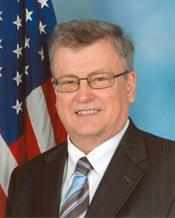
Madam Speaker, first off, I have had hearings on this very subject, not as a whole, but because certain gentlemen may only be absorbed in their own realm and may not realize that there is a narcotics…
Madam Speaker, first off, I have had hearings on this very subject, not as a whole, but because certain gentlemen may only be absorbed in their own realm and may not
realize that there is a narcotics subcommittee on drug policy and criminal justice. We have had multiple hearings on the border over the past few years, multiple.
It has been brought to the attention in a bipartisan way about this problem with tunnels, and I am thrilled that the Judiciary Committee chairman has brought this bill. There have been 50 of these tunnels, 51 now with the new one just recently. There is a huge problem in the narcotics area.
The reason it is primarily an issue in the narcotics area is because of the cost of building these tunnels, because of the engineering, particularly the ones with lighting and ventilation, that go between warehouse to warehouse is so expensive, that you basically want to use it for high-dollar items. The high-dollar items are usually cocaine, heroin, marijuana. Narco- terrorism on the major streets in the United States is coming through these tunnels, and it is about time we dealt with this subject.
Furthermore, it appears, and the DEA believes, that the people who engineer and design these tunnels are then murdered afterwards, and sometimes the tunnels work night and day. The one in January was a larger one and appeared to be working night and day and were discovered; other ones they would only bring open for high-value targets to move through.
Now, a high-value target is in the eyes of the person willing to pay. Yes, cocaine, heroin, and those are the general things moved through, but a high-value target can also be a terrorist. A high-value target can also be someone who is dealing with chemical, biological or nuclear weapons, because they are willing to pay the amount to move through those tunnels. It is more than worth it to the person who built the tunnel to recoup their costs.
This is extremely important. It is a loophole in the law that we need to address.
I also serve on the border subcommittee on Homeland Security. The fact is we are making progress. We are stopping these people. The fact is the DEA, through their hard effort, have found 51 of these tunnels. What we need is a law that holds the people accountable who have done this, and it is that we cannot sit around and wait for the Senate to come back on all this kind of stuff. This should be done now, and the border needs to be secured.
I favor looking at comprehensive, but first seal this border. I thank the chairman for his leadership.
Mr. Speaker, given the more vigorous efforts in recent years to intercept drug traffickers on the high seas, drug-trafficking organizations (DTOs) have clearly shifted their operations to the U.S.- Mexico border. The vast bulk of these drugs are smuggled through the ports of entry and--to a lesser extent--between those ports. Such illegal shipments are difficult to intercept, in part due to the enormous volume of legitimate traffic of people and goods at these locations. But recent discoveries of sub-terranean tunnels crossing the border point to the problem of a growing sophistication and determination of the DTOs to inflict their deadly product on the people of this country, regardless of expense and labor.
As the lead Federal agency tasked with bringing down the DTOs both in this country and abroad, the Drug Enforcement Administration (DEA) is well aware of this threat and has worked ceaselessly to counter it. Working with their Federal, State, local and foreign counterparts, the DEA has worked hard to develop confidential sources in this country and abroad who will provide information leading to the discovery of more of these tunnels.
It is evident from the size and sophistication of recently discovered tunnels that they are linked to some of the largest and most ruthless DTOs operating along our borders. Financial resources to construct and operate these tunnels cost millions of dollars, which are only available to these large-scale organizations. Tunnels discovered by DEA have been equipped with reinforced ceilings, water evacuation and ventilation systems, and even concrete floors. However, the smuggling of drugs through these tunnels can result in a significant return on this investment. As such, the discovery and removal from service of these tunnels significantly disrupts the operations of these organizations which count on these conduits for entry into the U.S. Most importantly, closing down these underground corridors hits the DTOs where it hurts--their bank accounts.
Recent successes have been encouraging.
The most ambitious of these was discovered on January 26 of this year, a tunnel which opened into a vacant warehouse just east of the Otay Mesa port of entry in California. A tip from a confidential informant to the Tunnel Task Force--staffed by DEA and Immigration and Customs Enforcement (ICE)--led to the discovery of this tunnel, which started 150 yards south of the border and proceeded an incredible one- half mile into the United States. A DEA investigation determined that the tunnel--which was equipped with electric lighting and ventilation-- had probably been operating since November and had been used day and night since its completion to smuggle marijuana and other illegal drugs into the country. Any trucks leaving the warehouse loaded with drugs would have quickly disappeared into the steady and heavy traffic of legitimate goods flowing through that immediate area.
Thanks to the hard work of DEA and other agencies, at least 51 of these tunnels have been discovered and shut down already. Almost all of these are in the San Diego and Tucson sectors of the border. Of note, Federal, state, and local organizations have banded together and fused resources in the establishment of a Tunnel Task Force, which is responsible for bringing to justice those responsible for this threat to our national security. Officers from DEA, ICE, CBP, the San Diego Police Department, Chula Vista Police Department, and the National City Police Department all participate in this endeavor.
But the discovery of a tunnel under the U.S.-Canada border into Washington State shows that our northern border can also be threatened by this new smuggling tactic. DEA agents working with their counterparts in the Royal Canadian Mounted Police discovered the 360- foot long tunnel after setting up secret surveillance on the American side in early July. Three Canadian citizens were recorded moving large bags through the tunnel which later were found to contain heavy loads of marijuana and ecstasy. These individuals were later arrested, pled guilty to various offenses and were sentenced to nine years in Federal prison.
Finally, we can hardly forget that the terrorists who attacked us on September 11, 2001 did so under false pretenses. We have increased our security considerably since then, and this undoubtedly makes the possibility of entering this country through one of these tunnels a more attractive proposition for potential terrorists. While the DTOs are not likely to use their tunnels for smuggling average illegal immigrants, they might allow them to be used by special-interest aliens for the right price. Therefore, we can be thankful for all the efforts of DEA and other agencies to detect and shut down these tunnels before they lead to catastrophic harm to our people.
Mr. Speaker, the problems of cross-border tunnels is urgent and growing, and we would be shirking our duty to the people if we dither any more. We don't need to study and ponder the challenge any longer. We need to pass this bill now and give Federal agencies like DEA stronger leverage in going after those people who seek to use this insidious method to smuggle dangerous narcotics and--potentially-- dangerous people into our country.
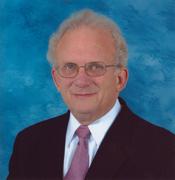
Mr. Speaker, I thank my ranking member for yielding. Mr. Speaker, I would like to remind the body of what we have here. We have a bill with three sections, the first of which, in the chairman's own…
Mr. Speaker, I thank my ranking member for yielding.
Mr. Speaker, I would like to remind the body of what we have here. We have a bill with three sections, the first of which, in the chairman's own words, reinforms the authority of the local governments to do something that he apparently believes and we all accept that they would have the authority to do anyway.
I call that one the let's use the Iraq model for dealing with the issue of illegal immigration; subcontract large functions of it, but unlike in Iraq where we overpay the subcontractors, here tell the local law enforcement people we are giving up at the Federal level trying to deal with this problem, we are not going to give you a penny for more jail cells or a penny for more resources, we are not going to give you a single dime to do anything about it, but we are here to tell you if you want to, you have the authority to arrest and detain people who are in this country illegally without regard to whatever acts they may have committed.
The second section of the bill is alien smuggling. It has a bunch of findings, it has a sense of Congress, and then says we authorize, but no funding, 20 more people to do something about alien smuggling.
And the third one is designed to deal with catch and release, the practice whereby non-Mexicans who are caught in this country in the past have been released rather than returned immediately to the country they came from because Mexico is not the country that they are from.
According to the Director of the Department of Homeland Security, we are currently detaining all El Salvadorans, or virtually all, because we now have enough beds, and we have enough to significantly reduce the total number of non-Mexicans. Catch and release is over. This bill won't make it. It is over. No one should be under the illusion that we are doing anything about the program catch and release by this bill because that program has ended.
What this bill in the larger context is, it is another one-House bill. Let me quote from the September 21 Washington Post. ``With little more than a week left before the September 29 start of the Congress's scheduled recess, GOP leaders are considering appending some or all of the bills to must-pass spending measures before they leave town. But Senate Appropriations Committee Chairman Thad Cochran (R-MS) appeared to close off that avenue last night, saying he will not add any legislative language onto the spending bills that could slow their progress in the final days before the coming recess.''
Another one-House bill. And then what will happen, a week from now we will recess, and the Republicans and the majority hope that the American people will be conned into thinking they have done something about one of the most serious national crises we have, and that is the crisis of inability to enforce our borders. There are 12 million people in this country using false identifiers, the absence of any employer verification system.
But in reality, none of that will have happened. The Republican Congress will have recessed for the elections with the mere hope that maybe when we come back with the lame duck, or maybe if you reelect us next year, we will get serious about this problem.
There is nothing in this bill or other bills that are being sent over to a House that will not take them up and not consider them that will make this crisis better.
And what do we have to do to do something serious? Back in June or July or in the beginning of September, a motion to go to conference on the two larger bills that the Senate and the House passed. This won't work. This bill is nothing. It doesn't do anything for anybody. It won't become law.
So you can have the meaningless gesture act that this bill represents. You can pass some of these other bills that are being brought up at the last minute to go into that vacuum on the other side; but one day I would like to understand how the majority explains the fact that they were not willing to make a motion to go to conference to reconcile the differences between the two bills, because in 1 week we will have done nothing to implement an employer verification system. We will have done nothing about 12 million people who are here under false identifiers, some portion of whom might be actual threats to our own national security. We will have done nothing to provide the meaningful, comprehensive approach, which is the only way to deal with the problem of illegal immigration in this country.
Mr. Speaker, I will be very brief.
There is only one response to my friend the chairman. If the issue is about papers and the only reason we haven't gone to conference committee is because the papers haven't been delivered, I do have Senator Frist's phone number, and I am happy to provide it. I cannot conceive that it is a matter of paperwork and process that is keeping us from going to conference committee on one of the most serious domestic issues this country has faced.
Secondly, in response to the following speaker, the reason we cannot quite unite to do something here, apparently, is because we are not going to unite on a fool's errand. Everyone on your side of the aisle, from the gentleman from Colorado (Mr. Tancredo) to the chairman to others, has acknowledged over and over again we are not going to deport 12 million people. You are not going to have local law enforcement pick up the task for you of deporting 12 million people.
A meaningful response is border security, because there are people there who are national security issues and there are people who are aiming to hurt us who want to cross this border illegally, and dealing with 12 million people who are operating under false identifiers, some of whom are bad people, and finding some system to either isolate and narrow that group or have them come forward, and most important of all, to get an employer verification system in place. None of these bills does anything about it. We are going to leave here in a week doing nothing about it. I don't understand how you are going to explain to your constituents and the people who are understandably upset about this issue that this Congress has addressed a very serious, urgent issue in a serious and coherent fashion. We haven't.
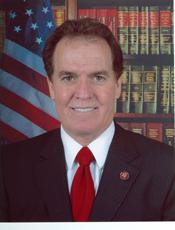
Mr. Speaker, by direction of the Committee on Rules, I call up House Resolution 1018 and ask for its immediate consideration. Madam Speaker, for the purpose of debate only, I yield the customary 30…
Mr. Speaker, by direction of the Committee on Rules, I call up House Resolution 1018 and ask for its immediate consideration.
Madam Speaker, for the purpose of debate only, I yield the customary 30 minutes to the gentleman from Massachusetts (Mr. McGovern), pending which I yield myself such time as I may consume. During consideration of this resolution, all time yielded is for the purpose of debate only.
Madam Speaker, H. Res. 1018 provides for consideration of H.R. 4830 under a closed rule. It allows 1 hour of debate in the House, equally divided and controlled by the chairman and ranking minority member of the Committee on the Judiciary, it waives all points of order against consideration of the bill, and provides one motion to recommit H.R. 4830.
In addition, the rule provides for consideration of H.R. 6094 under a closed rule. It allows 1 hour of debate in the House, again equally divided and controlled by the chairman and ranking minority member of the Committee on the Judiciary, it waives all points of order against consideration of the bill, and provides one motion to recommit H.R. 6094.
Finally, Madam Speaker, the rule also provides for consideration of H.R. 6095 under a closed rule. It allows 1 hour of debate in the House, equally divided and controlled by the chairman and ranking minority member of the Committee on the Judiciary, waives all points of order against consideration of the bill, and provides one motion to recommit
Madam Speaker, I yield to myself such time as I may consume to respond to a couple of the comments that my good friend made in regard to the point of the Senate-passed bill that is more acceptable, the so-called comprehensive reform bill.
Well, I will tell you, my colleague said that would be more acceptable. That comprehensive reform bill, by the way, is just a euphemism for amnesty, and 90 percent of my constituents would beg to differ with him, and I think that is true across this country.
He also made the point about this Congress not doing its work and taking off tomorrow. Well, he knows and all of us know that the reason we are not going to be in session tomorrow is because the leadership of both the Democratic Party and the Republican Party, in deference to the fact that tomorrow is a high Jewish holiday, that we not be in so that people could worship and observe these holidays.
So it is disingenuous these things that my good friend and colleague is mentioning.
The other thing about going to conference with the Senate. Well, he knows that in the Senate bill there is a revenue provision which makes their bill unconstitutional. If they want to remove that provision and then send that bill back over, we can go to conference. So it is just a game that they are playing.
My colleague also, and he is perfectly within his rights to do this, he talks about some issues that are more important to him and maybe to his party and his leadership and brings up the issue of the minimum wage and a stand-alone minimum wage bill. Madam Speaker, if we solve this problem of porous borders and prevent these millions of illegal immigrants from flooding into this country, taking jobs away from American citizens and legal immigrants and, in the process, driving down wages, if we can stop that hemorrhaging, then we will not need to increase the minimum wage because it will be increased automatically by employers.
So he wants to take a rifle approach and say we are taking a shotgun approach. We are going to get the job done, and we are going to solve many of these problems with this bill.
Madam Speaker, I proudly yield 2\1/2\ minutes to the gentleman from Colorado (Mr. Tancredo), my good friend who knows of what he speaks in regard to immigration and secure borders.
Madam Speaker, at this time I want to proudly yield as much time as he may consume to the distinguished chairman of the Rules Committee, the gentleman from California (Mr. Dreier).
(Mr. DREIER asked and was given permission to revise and extend his remarks.)
Madam Speaker, I would like to yield 3 minutes to the gentleman from California (Mr. Royce), who, in his capacity as chairman of the Subcommittee on International Terrorism and Nonproliferation, held hearings in August.
Mr. Speaker, I am proud to yield 1\1/2\ minutes to the gentleman from Arizona (Mr. Hayworth), a member of the Ways and Means Committee.
Mr. Speaker, I yield 2 minutes to the gentlewoman from Florida (Ms. Ginny Brown-Waite).
Mr. Speaker, I yield myself the balance of my time.
Mr. Speaker, in closing, I want to once again thank Chairman Sensenbrenner, Chairman Dreier, and the House leadership for continuing the debate in favor of securing our borders. The pattern in recent years has been to address the issue of immigration and border security once a decade. In 1986 we had an immigration reform bill. In 1996 we had an immigration reform bill. But the results at best were mixed, and this year we have yet another opportunity to get it right. Ninety percent of the American people are demanding that we secure our borders and secure our borders now.
The legislation offered under this rule will help our current agents detain and apprehend criminals, not just those crossing in search of work, Mr. Speaker, but truly dangerous individuals as well. Security on our borders remains a crisis. Our agents on the border need our help. Our constituents are forcefully voicing their support for immigration reform, with an emphasis on border security.
And I ask my colleagues, please support this rule and the underlying bills so we can start to solve this problem and solve it now.
Mr. Speaker, I yield back the balance of my time, and I move the previous question on the resolution.
Madam Speaker, I first want to extend my congratulations to my Rules Committee colleague, Dr. Gingrey, and thank him for his fine work on this rule as he does such a great job on so many other…
Madam Speaker, I first want to extend my congratulations to my Rules Committee colleague, Dr. Gingrey, and thank him for his fine work on this rule as he does such a great job on so many other measures that we bring forward from the Rules Committee.
You know, this issue of working together which my friend from Massachusetts has just talked about is something I am very proud of. Included in this measure is a package that was first brought to my attention by my Democratic colleague from California who serves in the other body, Dianne Feinstein, and she raised concern about the issue of tunnels going between Canada and the United States and Mexico and the United States. And she and I spoke about this, and we said let's see if there would be a way in which we could put into place a commonsense reform.
She was shocked, my Democratic Senator, Dianne Feinstein, as I was shocked, when we found that it is not a crime to bore a tunnel from Mexico into the United States or to bore a tunnel from Canada into the United States. It is not a crime to use property in the United States for the tunnel to come out and for drugs, human trafficking, other contraband to come through.
So we sat down, we joined with our colleagues Duncan Hunter from San Diego, I know that J.D. Hayworth is strongly in support of this effort; and one of the items that we have here is something that I think again is a commonsense reform. Anyone can come to the conclusion that the idea of boring a tunnel between our two countries is just plain wrong. And so I believe that we have done the right thing. We have recognized that border security is national security. And while there is no evidence whatsoever of a Mexican terrorist, the threat of someone utilizing one of those tunnels to pose a terrorist threat to the United States is still there, and I believe that we need to do everything that we can to make sure that we secure it.
Madam Speaker, since September 11 of 2001, 38 tunnels have been discovered between the United States and Mexico and Canada and Mexico. Frankly, 37 of them between Mexico and the United States, one from Canada into the United States. And just this past weekend a tunnel was discovered from Mexicali to Calexico, in my State of California.
We have a problem. It needs to be addressed, and it is being addressed in a bipartisan way: Democrats and Republicans in the House working together, Democrats and Republicans in the Senate working together to try and step up to the plate and deal with this issue.
It is a very clear measure that we have, and I am very proud again to have such strong support for it. We criminalize the utilization of property, and we criminalize those who would bore under the border and come into the United States. And what we also do is we double the penalties for the areas where there already is criminalization. If the drugs are brought by way of a tunnel, we double the penalty, because it is outrageous that this kind of thing is being used.
We have a wide range of things that we have done. I heard my friend talk about the fact that we haven't been able to do a lot of things. The Senate just yesterday had a vote on cloture on bringing up the issue of building these strategic fences. Now, I don't believe that we can fence the entire border. I think that we have got 21st-century technology that can be utilized, with motion detectors, unmanned aerial vehicles, other things that can be used. But in heavy urban areas and in the five areas where we see a large problem with human and drug trafficking, building a fence is the right thing to do.
And I regularly heard my friends in the Rules Committee say, oh, the Senate is never going to bring this up. We passed it last week, and part of the criticism of it was the Senate wasn't
going to bring it up. The Senate has brought it up, and they are going to pass it. And so what we have done is we have found areas of agreement.
It is true there are aspects of the immigration debate that have great disagreement. But when we can find areas of agreement like securing our border and we in the House of Representatives can provide leadership to do that, it is something that needs to be done. Why? Because the American people are expecting us to do this. It is our responsibility; it is the Federal Government's responsibility to secure our borders.
Madam Speaker, I am proud of all three pieces of legislation that we have here. I am proud of the other things that we have done to make sure that we do secure our borders. It is our job to do it, and I am very happy that we are stepping up to the plate and doing that.
I thank my friend for yielding.
Madam Speaker, will the gentleman yield?
Madam Speaker, I would simply say to the gentleman that I very much want us to be able to complete and address a wide range of issues. The fact that we are able to come together now in a bipartisan way and address these areas of agreement is something I think that can be celebrated, because Republicans are working with Republicans, but Republicans are also working with Democrats who are like-minded to try and deal with some of these very important security issues. I thank my friend for yielding.

Mr. Speaker, I stand to explain my votes on the immigration bills that this Congress considered today. I applaud our decision to pass the Border Tunnel Prevention Act (H.R. 4830), which would make it…
Mr. Speaker, I stand to explain my votes on the immigration bills that this Congress considered today.
I applaud our decision to pass the Border Tunnel Prevention Act (H.R. 4830), which would make it illegal for any person to build or finance a cross-border tunnel and for any person to use such a tunnel to smuggle drugs, weapons, or undocumented immigrants. These tunnels have become remarkably sophisticated ways for lawbreakers to enter our country, and I strongly support this bill to ban their construction and use. This is, at least, a small step to better border patrol.
But though we took one small step forward today, it is not enough. Instead of working on real reform, we passed the so-called ``Community Protection Act'' (H.R. 6094). This bill is not about protecting our community; it is about election-year scare tactics and fearmongering.
We need to fight crime and we need to deport criminals. But we can already do that. This bill does not deal with people who are in our country illegally. We can already deport individuals who are here illegally. Nor does this bill relate to non-U.S. citizens who are legally in the United States but commit a crime. We can already deport gang members and any foreign national who is convicted of a crime ranging from murder to shoplifting. This bill gives the Executive Branch unprecedented powers to deport legal immigrants who have not committed any crime. It gives the Attorney General of the United States the unprecedented power to declare any group a gang. And it gives the Department of Homeland Security the power to deport any non-citizen who is legally residing in the United States if they declare, without any due process, that such an individual is a member of those groups. This means the Department of Homeland Security can deport a legal immigrant who has obeyed all of our laws. This violates our First Amendment right of association and our Fifth Amendment right to be treated as individuals and not as guilty by association.
This bill also has an expedited removal process that severely curtails due process and could lead to erroneous removal of people who should not have been deported. This includes U.S. citizens who cannot provide proof of citizenship in the seven-day window, or someone abused or eligible for asylum who cannot build their case in time.
We all want to stop gang violence. It is an insidious problem in my district and in the districts of many of my colleagues. But we already have laws to deport criminals. We need to stop wasting time passing laws we don't need to deport people who aren't committing crimes and start working on real solutions to solve gang violence.
Unfortunately, it seems this Congress consistently passes laws that allow us to avoid real reform. The misnamed ``Immigration Law Enforcement Act'' (H.R. 6095) also passed today, is one such example. This bill should be renamed the ``Pass the Buck for Immigration Law Enforcement Act.'' While it claims to simply ``reaffirm'' the authority of states to enforce immigration law, it actually distracts local law enforcement from their most important job--safeguarding our communities--and forces them to do the job that this Congress has repeatedly failed to do. We should enact real border security and comprehensive immigration reform; instead, we are passing the buck to our local communities and, without direction or funding, making them carry out complicated immigration enforcement. Enforcement of our immigration laws is a federal responsibility. Let's not shirk that responsibility. Let's not pretend this is someone else's problem.
The Montgomery County and Prince George's County Police in my district are opposed to this legislation. They do not have the time or the resources to handle the increased workload that immigration enforcement brings. It is not their job. It is the job of the federal government. And we need to do our job. If we abdicate our responsibility on vital issues, we are failing the American people. Moreover, it is irresponsible to make local police forces handle immigration without giving them any additional resources or any training in immigration law. Our police are already overburdened. We cannot ask them to do our job, too.
I want to be clear--I believe that we should have tougher enforcement of our immigration laws. But we need to do it in a way that makes sense. And it does not make sense to pass the buck to local communities. This is another unfunded mandate from a Congress that repeatedly fails to seriously address the important issues.
So today this Congress has approved a bill that creates a law we don't need to punish those who don't break the law and a bill that passes the buck to local law enforcement. When is Congress going to do the work we were elected to do? When are we going to pass real immigration reform and real security instead of superficial band-aid bills? It's time to stop playing politics, and to start protecting our borders.
Show 11 more
Madam Speaker, I rise today to express my support for H.R. 4830, the Border Tunnel Prevention Act. Since September 11th, I have been extremely concerned with the security of our Nation's points of…
Madam Speaker, I rise today to express my support for H.R. 4830, the Border Tunnel Prevention Act.
Since September 11th, I have been extremely concerned with the security of our Nation's points of entry and the securing of weapons of mass destruction.
I have worked with my colleagues to establish screening of our air cargo, to deploy radiation detectors at our ports and borders, and to secure nuclear materials throughout the world. Most recently, I have worked with Senators Feinstein and Kyl on securing our seaports from terrorist attacks and sabotage, legislation that was signed into law earlier this year.
That is why the discovery in January of this year of a 2,400 foot tunnel near San Diego which was equipped with sophisticated draining, lighting, and pulley systems should shock the conscience of every Member of Congress. In fact, just this week, the U.S. Drug Enforcement Administration announced that they had discovered yet another cross- border drug-smuggling tunnel beneath a private residence in Calexico, California, that extended nearly 400 feet to a house in Mexicali, Mexico.
This is not a California problem or an Arizona problem--it is a national one.
Madam Speaker, all of our other efforts to secure our Nation's points of entry will be futile if this growing national security problem on our borders is not addressed. Although these tunnels have been principally used to smuggle drugs and illegal immigrants, there is nothing preventing their use for the smuggling of chemical, biological, or radiological material. The 9/11 Commission warned against a ``failure of imagination'', and it takes little to imagine terrorists making use of these holes in our border security.
Since 9/11, U.S. border officials have discovered 40 tunnels along American borders. They range in complexity from short ``gopher holes'' to massive drug-cartel built passages like the one found near San Diego in January.
We know that terrorists have and will continue to try to enter our country via our borders. The 2000 LAX millennium bomb attack plot was foiled when a terrorist was arrested at the U.S.-Canadian border after crossing by ferry. Customs officials found nitroglycerin and four timing devices concealed in a spare tire well of his automobile.
I am proud to be an original cosponsor to the legislation that we are considering today which would impose a punishment of up to 20 years in prison for individuals who are convicted of constructing or financing a subterranean tunnel under the U.S. border. It would, furthermore, impose a punishment of up to 10 years in prison for anyone who permits others to construct or use an unauthorized tunnel on their land. The bill also doubles penalties for those who use a tunnel or subterranean passage to smuggle aliens, weapons, drugs, terrorists or other illegal goods, and permits the seizure of assets of anyone involved in the offense, or any property that is traceable to the offense.
While those attempting to enter our country were being closely scrutinized and airline passengers were taking their shoes off or turning over their nail clippers, 40 border tunnels were being constructed in the United States, and thousands of pounds of illegal drugs and illegal aliens were pouring into our country.
Those patrolling our borders believe there is a direct correlation between the increased fortification of the border and the increase in the number of tunnels being found. If this problem is not addressed, it will just be a matter of time before these tunnels serve as an entry point for weapons and explosives, dangerous materials, and terrorists.
As a former federal prosecutor, I can appreciate how this legislation will serve as a useful tool in going after those who finance or construct these tunnels.
If the tunnel discovered earlier this week in Calexico, California, had been abandoned with no evidence remaining of drug or alien smuggling, those responsible for its construction should not be free from punishment. And those who negligently permit a tunnel opening or passage on their property should not be able to escape harsh penalties.
I appreciate the opportunity to work with Senators Feinstein and Kyl and Representatives Dreier and Hunter on this important legislation and I applaud Senator Feinstein's leadership on this crucial issue.
We must address this crucial national security matter, and I ask my colleagues to join me in supporting this much-needed legislation to stiffen penalties and successfully prosecute those who construct or finance tunnels under the U.S. border.
Madam Speaker, illegal border tunnels entering our country undermine our efforts to protect the border and pose a significant threat to our national security. Last January, I was shocked to hear that…
Madam Speaker, illegal border tunnels entering our country undermine our efforts to protect the border and pose a significant threat to our national security. Last January, I was shocked to hear that the San Diego Tunnel Task Force, a group composed of agents from the Border Patrol, Immigration and Customs Enforcement (ICE), and Drug Enforcement Administration (DEA), discovered an elaborate border tunnel connecting Otay Mesa, California and Tijuana, Mexico; a complex 2,500 foot tunnel complete with electricity and ventilation systems, and harboring two tons of marijuana. Just last weekend, officials discovered a 400 foot tunnel connecting Calexico, California and Mexicali, Mexico. This tunnel was equipped with lighting and supported by wooden beams.
The underground corridors prove just how persistent the criminals and drug smugglers who quietly slip into our country are. The existence of these tunnels also points to an even more ominous danger: they could be used by terrorists to exploit our porous borders and strike within the U.S. Unfortunately, the Otay Mesa and Calexico tunnels are just two of several underground corridors discovered between America's land borders, trafficking unknown numbers of individuals and illicit substances. In fact, 38 border tunnels have been discovered since September 11, 2001. All but one was on the Southern border.
Using manpower and technology to find these tunnels and shut them down will not stop others from being built and used. Tunneling will only begin to subside after tough and clear penalties are enacted for anyone involved in this pernicious violation of our border and our sovereignty. Surprisingly, the laws on the books are ineffectual and, in many ways, non-existent. This is a serious problem that deserves serious punishment for anyone who so flagrantly compromises our border security.
The Border Tunnel Prevention Act criminalizes the construction of border tunnels that span our international borders. Specifically, the bill creates a new Federal law to criminalize the construction of illegal border tunnels crossing into the U.S., punishable by a maximum 20 years in prison. It also imposes a maximum 10-year prison sentence on those who recklessly allow others to build such tunnels on their land. In addition, the bill doubles the sentence for using a tunnel to smuggle aliens, weapons, drugs, terrorists, or illegal goods. For example, under current law, knowingly smuggling an illegal alien into the U.S. is punishable by a maximum 10-year prison sentence. Under this bill, that penalty would double to a maximum 20-year prison term if the illegal alien was smuggled in through an illegal border tunnel. Finally, the bill enables the Federal Government to seize any of the assets or property involved in the construction of the illegal border tunnel.
The Border Tunnel Prevention Act is just the latest example of House Republicans taking a strong stand when it comes to border security. House Republicans have provided the funding to hire 1,500 new Border Patrol agents this year and 1,200 next year. Last December, we passed H.R. 4437, the Border Security Protection, Antiterrorism, and Illegal Immigration Control Act to enhance border security and reform our outdated immigration laws. Last week, we approved H.R. 6061, the Secure Fence Act, to construct fences at five specific border zones where deaths are common, drug smuggling is rampant and illegal border crossings are numerous. And today, we will consider legislation to swiftly detain and deport dangerous illegal immigrants and enhance prosecution of alien smugglers, cooperation between local law enforcement and Federal immigration officials, and removal of illegal immigrants.
Cracking down on those who use and construct tunnels, as well as those who allow them to be constructed on their property, is another commonsense step to our full-court press to securing our border. When combined with a strengthened Border Patrol, enhanced use of sensory technology, and strategic fencing in heavily trafficked areas, we will have an across-the-board approach to smarter border
security. Over land, in the air, and underground, we must make a commitment to control and secure the border. I urge all my colleagues to support this important border security bill.

Mr. Speaker, today I rise in strong support of H.R. 6095, the Immigration Law Enforcement Act of 2006 and to affirm the inherent authority of State and local law enforcement to assist in the…
Mr. Speaker, today I rise in strong support of H.R. 6095, the Immigration Law Enforcement Act of 2006 and to affirm the inherent authority of State and local law enforcement to assist in the implementation of our immigration laws.
This year, I had the privilege to participate in two Government Reform Subcommittee field hearings in North Carolina on this very subject, one of which took place in my district.
Illegal immigration has consistently been the No. 1 topic prompting my constituents to write and call my office. It is also the No. 1 problem expressed to me by many of the local officials I represent.
In recent years, State and local governments have had to make extraordinary adjustments to accommodate illegal immigration. Over 300,000 illegal aliens are estimated to reside in North Carolina, and that number is increasing. As a whole, our counties and communities, now saturated with illegal aliens, are spending billions of dollars on public health, public education, law enforcement and social services for people who are residing here illegally. Every dollar spent on an illegal alien is a dollar diverted away from a law abiding, tax-paying citizen. Illegal immigration affects virtually every aspect of life in America.
Few States have had to struggle with this burden as much as North Carolina, where the
illegal immigration population is rapidly approaching half a million. North Carolina is currently one of the six major destination States for illegal aliens and has one of the five highest ratios of illegal immigrants to legal immigrants. During the 90s, the immigrant population of Forsyth County alone exploded by 515 percent, meaning that two-thirds of the county's foreign-born population had entered in just 10 years.
My State's government estimates that Medicaid costs due to illegal immigration have doubled in 5 years. The State is spending over $200 million annually to educate the children of illegal aliens, more than a 2,000 percent increase in 10 years. Across the State, the criminal justice system is disrupted as courts and law enforcement struggle, particularly in rural counties, to find translators to assist in investigations and court proceedings for foreign-speaking defendants.
Too many stresses and strains are being put on State and local governments at once and there is a clear need for government officials at all levels to decisively reverse these trends.
It is in cities like Winston-Salem, as well as smaller communities, that the presence of illegal aliens who've committed other crimes is most keenly felt. One solution to these dilemmas that has been growing in use since it was first tried in 2002 is known as the ``287(g) cross- designation training'' program. By the authority of section 287(g) of the Immigration and Nationality Act, the Department of Homeland Security can enter into assistance agreements with State and local agencies. The 287(g) training and certification gives local law enforcement a vital tool in combating the growing problems from illegal immigration. Many illegal aliens who've committed crimes in America can now be held and processed for deportation or Federal prosecution through use of the 287(g) program. State and local officers can even interview suspects and prison inmates to determine if immigration laws have been violated; they can process and fingerprint them for such violations; and they can prepare documents for deportation and refer criminal aliens to ICE for potential Federal prosecution.
It is the constitutional responsibility of the Federal Government to protect the borders and enforce our laws. Given the scope of the problem of illegal immigration, the Federal Government should move quickly to provide authority to State and local law enforcement to combat illegal immigration. We will never get a handle on this growing problem if we don't.

Mr. Speaker, our Nation desperately needs comprehensive immigration reform, but the Republican majority is more interested in playing politics with this issue than working towards a true solution. We…
Mr. Speaker, our Nation desperately needs comprehensive immigration reform, but the Republican majority is more interested in playing politics with this issue than working towards a true solution.
We need to make sure that we have control of our borders. That is why I support H.R. 4830, the Border Tunnel Prevention Act, and why I have previously supported other efforts to secure our border including the expansion of physical barriers and fencing in key areas.
H.R. 4830 supports the sound policy of amending the federal criminal code to prohibit the construction or financing of an unauthorized tunnel under our border and we are right to ensure strict penalties for anyone who does this.
However, if the Republican leadership was truly serious about securing our borders and preventing the entry of undocumented immigrants, they would fully fund the additional 10,000 border agents that we authorized when we passed the Intelligence Reform and Terrorism Prevention Act, Public Law 108-458, last year. The addition of these agents, which had broad bipartisan support, was a provision that would have a direct impact on securing both our Southern and Northern borders and had broad bipartisan support. However, when it comes time to fund these additional agents, Congress consistently comes up short.
There are two other provisions that we are considering that I do not support--H.R. 6094, the so-called Community Protection Act and H.R. 6095, the so-called Immigration Law Enforcement Act.
I oppose H.R. 6094, the so-called Community Protection Act, because it would overturn two Supreme Court decisions that currently prevent unlawful indefinite detention of non-citizens. If passed, it would permit the indefinite and perhaps permanent detention of non-citizens who cannot be deported due to no fault of their own.
The severe curtailment of Due Process in this provision will lead to erroneous removal of people who should not have been deported, such as U.S. citizens who could not quickly provide proof of their U.S. citizenship, or an abused spouse or child who could not quickly show their eligibility for relief under VAWA or someone who was not in fact inadmissible due to a criminal ground of inadmissibility but could not timely hire a lawyer who knew the complex case law that governed his or her admissibility.
I oppose H.R. 6095, the so-called Immigration Law Enforcement Act, which would harm the relationship between the police and immigrants and citizens. It will obstruct police in their mission of keeping our streets safe. Essentially the bill is asking the State and local police to pick up the slack for the Federal Government.
That is why it is opposed by scores of professional law enforcement associations including the International Association of Chiefs of Police, the International Association of Chiefs of Police and the Major Cities Chiefs Association. They know this is a bad idea and I urge my colleagues to join them in opposition to this bill.
Finally, I want to reiterate my support for comprehensive immigration reform. Not only do these bills fail to adequately address that need, but they could actually make our system more dysfunctional. These bills do not significantly enhance border security or address undocumented immigration; rather, they would limit the basic rights and protections this nation were founded upon.
Mr. Speaker, unfortunately the Republican majority is more interested in looking like they are doing something, than actually solving the problem. The American people know better and they know political maneuvering and inaction when they see it.
Mr. Speaker, I rise today in strong opposition to H.R. 6095--the Immigration Law Enforcement Act of 2006--and H.R. 6094-- the Community Protection Act. Like my colleagues, I am firmly committed to…
Mr. Speaker, I rise today in strong opposition to H.R. 6095--the Immigration Law Enforcement Act of 2006--and H.R. 6094-- the Community Protection Act. Like my colleagues, I am firmly committed to protecting our borders and strengthening our immigration policies. However, these bills do neither.
Instead of a comprehensive immigration reform bill that provides real security to our Nation's borders, these bills are band aids with harmful provisions that will not make us safer or fix our broken immigration system.
For example, the Immigration Law Enforcement Act will empower state and local police to enforce immigration laws. This provision, which is opposed by state and local officials, will take valuable time and resources away from urgent police responsibilities, weakening their ability to respond to serious crimes such as murder, rape, and gang activity. State and local law enforcement officials are also opposed to the legislation because this provision will break down any trust that has been established between the police and local communities and will deter immigrants from reporting crimes or talking to state and local officials, for fear that their immigration status or that of a loved one could come under scrutiny. As a result, crimes and dangerous situations will go unreported, allowing criminals to roam free, and make us all less safe. Dealing with our Nation's immigration issues should remain the responsibility of the federal Department of Homeland Security.
The Community Protection Act would also permit the indefinite and permanent detention of noncitizens, who through no fault of their own, cannot be deported. This includes asylum seekers fleeing persecution from countries such as Iran, North Korea and Vietnam. Mr. Speaker, our government already has clear authority to detain immigrants and seek prolonged detention of suspected immigrants; it is inhumane and dangerous to our democracy and the rule of law to grant the government nearly unrestricted authority to lock up indefinitely individuals who are not serving a criminal sentence.
Finally, the Community Protection Act renders deportable a noncitizen whom the government only suspects to be a gang member. I strongly support efforts to deport criminal aliens out of our country and our efforts to combat gang violence, which threatens communities throughout the country. My objection to this bill is that it makes people deportable who have never committed a crime, but are merely considered by DHS to be a member of a group deemed by the Attorney General to be bad. This makes it possible for immigrants to be deported with little or no opportunity to defend themselves even in the case of guilt by association. Mr. Speaker, this bill is unnecessary because our government can already deport gang members, or any other foreign national convicted of an aggravated felony, or a misdemeanor such as shoplifting.
If we are truly to protect our borders and address our immigration issues, Congress must resolve the differences between the House and Senate passed immigration bills and pass comprehensive immigration and border protection legislation. No one can deny that our borders need protection or that our immigration system is broken and that it is in serious need of overhaul. These bills do nothing to effectively address these critical issues.
It is unfortunate that as serious as our border and immigration problems are these bills ignore the real solutions necessary to effectively address our legitimate immigration and border problems. I urge my colleagues to join me in defeating these two bills.

Mr. Speaker, I thank the gentleman for yielding me this time, and I urge a ``no'' vote on the previous question and on the rule. Mr. Speaker, America needs comprehensive immigration reform. I think…
Mr. Speaker, I thank the gentleman for yielding me this time, and I urge a ``no'' vote on the previous question and on the rule.
Mr. Speaker, America needs comprehensive immigration reform. I think every American who is paying any attention agrees we need comprehensive immigration reform.
Everybody in this people's House, Democrats, Republicans, and even the
Independent, understands that we need comprehensive immigration reform, and every Member of the other body, every Republican, every Democrat, and their Independent, understands that America needs comprehensive immigration reform.
Now every Member of this body, Republican and Democrat and Independent, every Member understands that in order to get a reform bill passed and signed by the President, that one has to have a single piece of legislation that is agreed to by both of the bodies.
So everyone knows that for immigration reform of a comprehensive form to become law, that that must pass both bodies in exactly the same form and be signed by the President or passed over with the President's veto.
Now, the process of doing that is not understood by everybody in this country, but in general form much of the country understands that. And I am not sure whether the majority party here believes that people in this country are not knowledgeable, ignorant of those processes, so much that they think that this kind of a sham that we are going through can be carried out.
The majority party in the House of Representatives is the Republican Party. The majority party in the other body is also the Republican Party. This process that we are engaged in today is a sham. It is meant to mislead people that something is actually being done about immigration before we go home for the elections in November, before we recess for those elections, when, in fact, nothing really is being accomplished.
In our people's House on the 16th of December last year, the Border Protection Antiterrorism and Illegal Immigration Act passed by 239-182, a margin much larger than is the margin by which the majority party holds the majority. So it was a bipartisan bill in part.
In the other body on the 25th day of May of this year, 4 months ago, their Comprehensive Immigration Reform Act was passed by a vote of 62- 36, again by a margin much larger than the margin by which their majority party, also the Republican Party, passed the bill. It is again a comprehensive and bipartisan bill.
So this process where we have legislation where two of the bills are in large part within the legislation that is being put forward today, and also is part of the bill that passed back in December by this body, by this people's body, and the other one has been passed in a different form by the other body, all one has to do is go to conference. It would be possible to go to conference and work out the differences between those two pieces of legislation so a single bill could go to the President and be signed and provide what everyone in America, everyone in this body and everyone in the other body would call comprehensive immigration reform.
That is the way that this ought to be done. The process that we are involved in today is a sham, and we should defeat the previous question and defeat the rule and go to comprehensive immigration reform by going to conference and doing it the way it has to be done in order to have a law be passed in this country.
Mr. Speaker, I thank the gentleman for yielding me the time and for his leadership. Mr. Speaker, with 5 days left in this session, with the failure of this House to pass comprehensive immigration…
Mr. Speaker, I thank the gentleman for yielding me the time and for his leadership.
Mr. Speaker, with 5 days left in this session, with the failure of this House to pass comprehensive immigration reform to accept the challenge posed by
the Senate which did pass comprehensive immigration reform, we are now left with a campaign stunt to try to pass something out of this House so that it can appear that as Members of Congress go home to campaign that we have done something on the issue of our broken immigration system.
Unfortunately, this legislation, like the previous bills that we are debating on this floor, fail to do one very important thing, and that was, ask the very people who this bill would impact most. And that is our local and State law enforcement officers what they think about this.
Because if you would have talked to them, they would tell you, please do not do this. We have had sufficient experience with what the Federal Government wishes to do when it comes to its Federal laws on immigration, and that is, it passes the buck without passing the money. This bill is no different. This passes the buck, but offers not a single cent to enforce the immigration laws that are a Federal responsibility.
For years our State and local governments have been asking Congress to fix the broken immigration laws that we have. Instead, this bill asks State and local police officers to pick up the tab, pick up the slack where the Feds have failed.
Mr. Speaker, you do not need to look very far for proof of that. Take a look at the State Criminal Alien Assistance Program. That is the Federal Government's effort to try to help States deal with the incarceration of criminal aliens.
The President's budget included not a single dime of funding to help States offset the cost of having to incarcerate criminal aliens. The Congress did a little bit better, but still is funding that program for all 50 States at less than one-third of what they are currently spending to incarcerate aliens who should be deported but committed crimes in our country.
What else? Take a look at the Federal Government's enforcement of our laws that prohibit individuals in this country from fraudulently hiring people who do not have permission to work in this country. How many enforcement actions did this government, this Federal Government, take against people who are abusing the laws and taking advantage of the fact that American citizens would like to take those jobs? Three enforcement actions in all of 2004.
State and local law enforcement officers know what happens when those bills are passed: the buck gets passed with it, and no money gets passed along. Mr. Speaker, police officers are also telling us why would we want to have to enforce Federal immigration laws when we have to enforce the local laws to protect our citizenry.
If a crime is committed, why would an immigrant who is already living in the shadows come out of the shadows to report a crime that he or she witnessed, if he or she knows that now we will pick them up on an immigration infraction? This is crazy. But this is what we are left with these last final days.
Mr. Speaker, we can have comprehensive immigration reform. The Senate did it. It is a shame that the House has not decided to follow suit. I would urge Members to vote against this legislation.
Mr. Speaker, I rise very much in support of this bill. Is it exactly like I want? No. Obviously, it is not like what Mr. Berman wants either. And if you don't like the bill, just vote ``no,'' as you…
Mr. Speaker, I rise very much in support of this bill.
Is it exactly like I want? No. Obviously, it is not like what Mr. Berman wants either. And if you don't like the bill, just vote ``no,'' as you have on many immigration bills. But this is what we have today, and the American people want to see us proceed.
This bill reasserts that State and law enforcement can and should help Federal officers on immigration law whenever they reasonably can and if they choose to. What a weird thought. We might get help from our local law enforcement as they do in drug enforcement.
It is a policy that our law enforcement community has conducted successfully for decades in helping this government, the Federal Government, enforce Federal drug and racketeering laws. This is not new.
Why then the outrage and the mass lobbying against it by the pro- illegal immigration crowd, or should I say open border crowd?
Because this bill goes to the heart of our enforcement problem, that is, simply a lack of enforcement. That has been our problem. Across the board, from the borders to the workplace to illegal immigrant crime, we have allowed the odds to become hopelessly stacked against enforcement.
In regards to rounding up criminal illegal aliens, we currently have roughly 5,000 Federal agents trying to apprehend 500,000 illegal aliens with court orders against them. Eighty thousand of them are serious felons, such as murderers, drug dealers, child molesters, and rapists. Vote against this bill if you want those people to stay out on the street. That is all right.
These odds, obviously, are impossible. There is no way we are going to have 5,000 Feds catch 500,000 violent criminals. But if we allow our 700,000 State and local police to volunteer to help, and they are American citizens too, the odds get a lot better. That might start an epidemic of looking at other ways to improve our odds, Mr. Speaker, in fighting overall illegal immigration.
And that undermines the illegal immigration lobby's theme song, which is the lie that we cannot stop illegal immigration. So, well, let's just give up. Let's just give in.
Well, we can stop all these problems if we only have the will. This body needs to have the will. The Senate has to do what it has to do, but we are the people's House. We need to show the gumption to get this done. This legislation proves how using commonsense partnerships between State and Federal authorities to multiply manpower will get the job done.
We are not talking about going after illegal aliens who are otherwise obeying our laws and are just here to work. This bill is targeted only on criminal aliens. Ironically, most of their fellow victims are their fellow immigrants.
Let's make one point absolutely clear. There is nothing in this bill that prevents local police from granting immunity from being reported for deportation to any illegal immigrant crime victim who comes to them for help.
Mr. Speaker, this short bill is the key component in the CLEAR Act that I introduced 3 years ago. It has already passed this House twice as a part of larger legislation. I think my friend from California didn't vote for it, but it did pass this House. Let's send this over to the Senate as a clean, short bill and see what they have got to say about that.
I thank the chairman for yielding me the time.
Madam Speaker, it is with great disappointment that I stand before you today to discuss a bill that fails once again to provide us with a comprehensive approach to handling border security. Last…
Madam Speaker, it is with great disappointment that I stand before you today to discuss a bill that fails once again to provide us with a comprehensive approach to handling border security.
Last week, Republicans introduced a border fence bill which was exactly what they voted against in December 2005. Today we are going to discuss three bills already considered by this body. In other words, the Republican leadership is forcing us to participate in their cheap political gambit to mislead the public. Simply put, the Republicans have morphed from a ``do-nothing'' Congress to a ``do-over'' Congress. Unfortunately, we continue to have a long way to go, and we will get nowhere with this piecemeal approach they are masterminding.
The Bush administration has had almost 6 years, and the Republican Congress 11 years, to secure the border.
Since 9/11, House Republicans rejected eight Democratic amendments to enhance border security resources. If these Democratic amendments had been adopted, there would be 6,600 more Border Patrol agents, 14,000 more detention beds, and 2,700 more immigration agents along our borders that now exist.
On December 16, 2005, all 218 House Republicans voting that day opposed a Democratic motion to recommit to H.R. 4437 to improve border security and immigration enforcement by fulfilling the 9/11 Commission's border security recommendations.
Fifty days before election day, the House Republican leadership has scheduled votes on bills we have already voted on. As usual, Republicans are all talk, but cheap on action to securing the border. Last week they voted on a border fence bill, but refused to provide the money needed to build a 700-mile fence along the Texas-Mexico border.
If Republicans were serious, they would have moved forward with a House-Senate conference that protects United States borders, strengthens our Nation's security and addresses the Nation's immigration problems comprehensively. Instead, they spent the summer conducting 22 sham hearings across the Nation.
Republicans talk about the fence as if it is the sole solution. Meanwhile, on September 15, DEA agents discovered yet another tunnel located beneath a residence in Calexico, California, and extending approximately 400 feet to a residence in Mexicali, Mexico.
We are spending $1.5 billion per week in Iraq, but the Republican leadership will not even commit to funding to secure our Nation's borders.
Democrats do not want to pass the buck on State and local governments to enforce immigration laws simply while the Republican-led Congress and administration fail to properly fund border security officers. States and localities are already robbing Peter to pay Paul by using a huge amount of their homeland security grant funding to secure the border, purchase communications equipment, and fortify bridges, ports and buildings.
Democrats do not want to stay the course on President Bush and the Republicans' failed border enforcement.
Madam Speaker, we need a comprehensive border security and immigration plan, not a piecemeal plan.
Mr. Speaker, I offer a motion to recommit. Yes, I am. Mr. Speaker, my motion to recommit states that the assets would go to the immigration matters that are in the jurisdiction of the Judiciary…
Mr. Speaker, I offer a motion to recommit.
Yes, I am.
Mr. Speaker, my motion to recommit states that the assets would go to the immigration matters that are in the jurisdiction of the Judiciary Committee. It has no reference at all about going to conference. I think those are very germane differences.
Mr. Speaker, before being elected to represent a border district in Congress, I served for 26\1/2\ years in the United States Border Patrol, including 13 years as sector chief in McAllen and El Paso, Texas. I have years of experience of patrolling the tough terrain of the U.S.-Mexico border region, supervising thousands of dedicated Border Patrol agents and working to do everything in our power to strengthen America's borders and to reduce illegal immigration. So I know from firsthand personal experience what works and what doesn't when it comes to border security and to immigration law enforcement.
Given my background, Mr. Speaker, I attended many of the hearings on the border security and immigration that were called by the majority this summer, along with my Republican colleagues. It is obvious from the bill before us today, however, that though the Republicans held these hearings, they did not actually do very much listening. Rather than charging our already overburdened local law enforcement agencies with enforcing immigration law, which is, I might point out, a Federal responsibility, we need to give the
Department of Homeland Security the resources that they need to do their job.
With this motion to recommit, we help rectify the failure of the Republican leadership to fulfill the recommendations of the 9/11 Commission, which, by the way, Mr. Speaker, is 5 years overdue.
Specifically, over the next 4 years, we would authorize a total of 8,000 new Border Patrol immigration agents, 1,000 additional immigration detention officers, 1,000 more U.S. marshals and 100,000 new detention beds.
The idea that we have here, Mr. Speaker, is simple. If we are really serious about helping to stop illegal immigration, we have to give the Department of Homeland Security the personnel and the detention space that they so desperately need today.
Unfortunately, Mr. Speaker, it is clear to me that there are some Members of this House who either have no idea what Congress really needs to do to help keep Americans safe, or they are more interested in scoring cheap political points with the voters back home this election season than in actually protecting our country.
It is now 5 years after the terrorist attacks of 9/11, and the Republican leadership is still wasting our precious time. We need real action now. We don't need more rhetoric. The American people are counting on us, and we cannot fail them yet again. Let's finally give the Department of Homeland Security the resources that they need to keep this great country of ours safe.
I ask all my colleagues to vote in favor of this motion to recommit.
Mr. Speaker, I yield back the balance of my time.
Mr. Speaker, on that I demand the yeas and nays.

Mr. Speaker, it is deeply offensive for this House to continue on a piecemeal approach to the border security and immigration problem. The fact is this Congress has not done any heavy lifting to…
Mr. Speaker, it is deeply offensive for this House to continue on a piecemeal approach to the border security and immigration problem.
The fact is this Congress has not done any heavy lifting to effectively solve our border security crisis.
That's an awful record for the majority party to carry into the election season, so we are forced to deal again with redundant legislation so the majority party can seem to be accomplishing something.
But we aren't accomplishing a single thing.
What we're doing today--in all these bills--is blowing more hot air at voters who are angry that we say we're doing things to improve our border security--but we never pay for them.
Each year since 2001, Democrats have tried to add amendments to defense, homeland security, and emergency supplemental appropriations bills.
Not a single one was passed--if they were, we'd have 6,600 more Border Patrol agents, 14,000 more detention beds, and 2,700 more immigration agents.
On the border, our not funding our promises brings local law enforcement a very large bill--yet another unfunded mandate.
When Border Patrol finds an immigrant lawbreaker--mostly small drug possessions--they take them to the local jail where the local taxpayers foot the bill to hold them.
The same local taxpayers then have to pay for the prosecutors and there aren't enough judges. This is a cycle that won't end.
Now the House Leadership is cutting up legislation we've already passed into many different bills to make it seem like we are working on this issue.
Mr. Speaker, the American people have every right to be angry with this Congress.
Let's use the 9-11 legislation they were embarrassed into passing in December 04 as an example.
Not only did we not fund most of that bill, breaking many of our promises in it we passed virtually the same bill but added extreme provisions to criminalize those here.
In May of 2006, when the Senate passed an astonishingly better bill, the House closed down the process--refused to negotiate a final bill.
Instead, they passed an awful bill last December then spent the summer stalling any negotiation with deceptive ``hearings.''
If the House Republicans were serious about border security, they would have moved forward with a House-Senate conference on border security and actual immigration reform legislation.
Today--in an effort to appear to have accomplished something, anything related to immigration and border security--we are considering the same bill we passed twice already, just chopped into smaller pieces.
This is what it means to fool people.
So, let us remember the old wisdom: you can fool some of the people some of the time, but thank God, you can't fool all the people all the time.
That, I suppose, is the bad news for the crowd that thinks passing the same bills over and over is good politics.
Good politics these days means paying for the Nation's protection and none of these bills take care of that business.
Bill Text
3 versions available
        [Congressional Bills 109th Congress]
[From the U.S. Government Publishing Office]
[H.R. 6095 Referred in Senate (RFS)]

109th CONGRESS
2d Session
H. R. 6095

_______________________________________________________________________

IN THE SENATE OF THE UNITED STATES

September 21, 2006

Received; read twice and referred to the Committee on the Judiciary

_______________________________________________________________________

AN ACT

To affirm the inherent authority of State and local law enforcement to
assist in the enforcement of immigration laws, to provide for effective
prosecution of alien smugglers, and to reform immigration litigation
procedures.

Be it enacted by the Senate and House of Representatives of the
United States of America in Congress assembled,

SECTION 1. SHORT TITLE.

This Act may be cited as the ``Immigration Law Enforcement Act of
2006''.

TITLE I--STATE AND LOCAL LAW ENFORCEMENT COOPERATION IN THE ENFORCEMENT
OF IMMIGRATION LAW ACT

SEC. 101. FEDERAL AFFIRMATION OF ASSISTANCE IN IMMIGRATION LAW
ENFORCEMENT BY STATES AND POLITICAL SUBDIVISIONS OF
STATES.

(a) In General.--Notwithstanding any other provision of law and
reaffirming the existing inherent authority of States, law enforcement
personnel of a State or a political subdivision of a State have the
inherent authority of a sovereign entity to investigate, identify,
apprehend, arrest, detain, or transfer to Federal custody aliens in the
United States (including the transportation of such aliens across State
lines to detention centers), for the purposes of assisting in the
enforcement of the immigration laws of the United States in the course
of carrying out routine duties. This State authority has never been
displaced or preempted by Congress.
(b) Construction.--Nothing in this section may be construed to
require law enforcement personnel of a State or political subdivision
of a State to--
(1) report the identity of a victim of, or a witness to, a
criminal offense to the Secretary of Homeland Security for
immigration enforcement purposes; or
(2) arrest such victim or witness for a violation of the
immigration laws of the United States.

TITLE II--ALIEN SMUGGLER PROSECUTION ACT

SEC. 201. EFFECTIVE PROSECUTION OF ALIEN SMUGGLERS.

(a) Findings.--The Congress finds as follows:
(1) Recent experience shows that alien smuggling is
flourishing, is increasingly violent, and is highly profitable.
(2) Alien smuggling operations also present terrorist and
criminal organizations with opportunities for smuggling their
members into the United States practically at will.
(3) Alien smuggling is a lucrative business. Each year,
criminal organizations that smuggle or traffic in persons are
estimated to generate $9,500,000,000 in revenue worldwide.
(4) Alien smuggling frequently involves dangerous and
inhumane conditions for smuggled aliens. Migrants are
frequently abused or exploited, both during their journey and
upon reaching the United States. Consequently, aliens smuggled
into the United States are at significant risk of physical
injury, abuse, and death.
(5) Notwithstanding that alien smuggling poses a risk to
the United States as a whole, uniform guidelines for the
prosecution of smuggling offenses are not employed by the
various United States attorneys. Understanding that border-area
United States attorneys face an overwhelming workload, a lack
of sufficient prosecutions by certain United States attorneys
has encouraged additional smuggling, and demoralized Border
Patrol officers charged with enforcing our anti-smuggling laws.
(b) Sense of Congress.--It is the sense of the Congress that the
Attorney General should adopt, not later than 3 months after the date
of the enactment of this Act, uniform guidelines for the prosecution of
smuggling offenses to be followed by each United States attorney in the
United States.
(c) Additional Personnel.--In each of the fiscal years 2008 through
2013, the Attorney General shall, subject to the availability of
appropriations, increase by not less than 20 the number of attorneys in
the offices of United States attorneys employed to prosecute cases
under section 274 of the Immigration and Nationality Act (8 U.S.C.
1324), as compared to the previous fiscal year.

TITLE III--ENDING CATCH AND RELEASE ACT OF 2006

SEC. 301. APPROPRIATE REMEDIES FOR IMMIGRATION LITIGATION.

(a) Requirements for an Order Granting Prospective Relief Against
the Government.--
(1) In general.--If a court determines that prospective
relief should be ordered against the Government in any civil
action pertaining to the administration or enforcement of the
immigration laws of the United States, the court shall--
(A) limit the relief to the minimum necessary to
correct the violation of law;
(B) adopt the least intrusive means to correct the
violation of law;
(C) minimize, to the greatest extent practicable,
the adverse impact on national security, border
security, immigration administration and enforcement,
and public safety; and
(D) provide for the expiration of the relief on a
specific date, which is not later than the earliest
date necessary for the Government to remedy the
violation.
(2) Written explanation.--The requirements described in
paragraph (1) shall be discussed and explained in writing in
the order granting prospective relief and must be sufficiently
detailed to allow review by another court.
(3) Expiration of preliminary injunctive relief.--
Preliminary injunctive relief shall automatically expire on the
date that is 90 days after the date on which such relief is
entered, unless the court--
(A) makes the findings required under paragraph (1)
for the entry of permanent prospective relief; and
(B) makes the order final before expiration of such
90-day period.
(4) Requirements for order denying motion.--This subsection
shall apply to any order denying the Government's motion to
vacate, modify, dissolve or otherwise terminate an order
granting prospective relief in any civil action pertaining to
the administration or enforcement of the immigration laws of
the United States.
(b) Procedure for Motion Affecting Order Granting Prospective
Relief Against the Government.--
(1) In general.--A court shall promptly rule on the
Government's motion to vacate, modify, dissolve or otherwise
terminate an order granting prospective relief in any civil
action pertaining to the administration or enforcement of the
immigration laws of the United States.
(2) Automatic stays.--
(A) In general.--The Government's motion to vacate,
modify, dissolve, or otherwise terminate an order
granting prospective relief made in any civil action
pertaining to the administration or enforcement of the
immigration laws of the United States shall
automatically, and without further order of the court,
stay the order granting prospective relief on the date
that is 15 days after the date on which such motion is
filed unless the court previously has granted or denied
the Government's motion.
(B) Duration of automatic stay.--An automatic stay
under subparagraph (A) shall continue until the court
enters an order granting or denying the Government's
motion.
(C) Postponement.--The court, for good cause, may
postpone an automatic stay under subparagraph (A) for
not longer than 15 days.
(D) Orders blocking automatic stays.--Any order
staying, suspending, delaying, or otherwise barring the
effective date of the automatic stay described in
subparagraph (A), other than an order to postpone the
effective date of the automatic stay for not longer
than 15 days under subparagraph (C), shall be--
(i) treated as an order refusing to vacate,
modify, dissolve or otherwise terminate an
injunction; and
(ii) immediately appealable under section
1292(a)(1) of title 28, United States Code.
(c) Settlements.--
(1) Consent decrees.--In any civil action pertaining to the
administration or enforcement of the immigration laws of the
United States, the court may not enter, approve, or continue a
consent decree that does not comply with subsection (a).
(2) Private settlement agreements.--Nothing in this section
shall preclude parties from entering into a private settlement
agreement that does not comply with subsection (a) if the terms
of that agreement are not subject to court enforcement other
than reinstatement of the civil proceedings that the agreement
settled.
(d) Expedited Proceedings.--It shall be the duty of every court to
advance on the docket and to expedite the disposition of any civil
action or motion considered under this section.
(e) Definitions.--In this section:
(1) Consent decree.--The term ``consent decree''--
(A) means any relief entered by the court that is
based in whole or in part on the consent or
acquiescence of the parties; and
(B) does not include private settlements.
(2) Good cause.--The term ``good cause'' does not include
discovery or congestion of the court's calendar.
(3) Government.--The term ``Government'' means the United
States, any Federal department or agency, or any Federal agent
or official acting within the scope of official duties.
(4) Permanent relief.--The term ``permanent relief'' means
relief issued in connection with a final decision of a court.
(5) Private settlement agreement.--The term ``private
settlement agreement'' means an agreement entered into among
the parties that is not subject to judicial enforcement other
than the reinstatement of the civil action that the agreement
settled.
(6) Prospective relief.--The term ``prospective relief''
means temporary, preliminary, or permanent relief other than
compensatory monetary damages.

SEC. 302. EFFECTIVE DATE.

(a) In General.--This title shall apply with respect to all orders
granting prospective relief in any civil action pertaining to the
administration or enforcement of the immigration laws of the United
States, whether such relief was ordered before, on, or after the date
of the enactment of this Act.
(b) Pending Motions.--Every motion to vacate, modify, dissolve or
otherwise terminate an order granting prospective relief in any such
action, which motion is pending on the date of the enactment of this
Act, shall be treated as if it had been filed on such date of
enactment.
(c) Automatic Stay for Pending Motions.--
(1) In general.--An automatic stay with respect to the
prospective relief that is the subject of a motion described in
subsection (b) shall take effect without further order of the
court on the date which is 10 days after the date of the
enactment of this Act if the motion--
(A) was pending for 45 days as of the date of the
enactment of this Act; and
(B) is still pending on the date which is 10 days
after such date of enactment.
(2) Duration of automatic stay.--An automatic stay that
takes effect under paragraph (1) shall continue until the court
enters an order granting or denying the Government's motion
under section 301(b). There shall be no further postponement of
the automatic stay with respect to any such pending motion
under section 301(b)(2). Any order, staying, suspending,
delaying or otherwise barring the effective date of this
automatic stay with respect to pending motions described in
subsection (b) shall be an order blocking an automatic stay
subject to immediate appeal under section 301(b)(2)(D).

Passed the House of Representatives September 21, 2006.

Attest:

KAREN L. HAAS,

Clerk.