To direct the Secretary of Transportation to conduct a study to determine the feasibility of constructing a highway in California connecting State Route 130 in Santa Clara County with Interstate Route 5 in San Joaquin County, and to determine the feasibility of constructing a fixed guideway system along the right-of-way of the highway.

Legislative Activity
Stay on top of the latest movement without scrolling through every action
Referred to the Subcommittee on Highways, Transit and Pipelines.
February 10, 2005
View full timeline
Introduced in House
February 9, 2005
Referred to the House Committee on Transportation and Infrastructure.
February 9, 2005
Referred to the Subcommittee on Highways, Transit and Pipelines.
February 10, 2005
Floor Debate
10 membersWhat members said about H.R. 723 on the floor
 CBR
CBR SJL
SJL CHS
CHS BL
BL SHH+5
SHH+5
Floor Debate
10 membersWhat members said about H.R. 723 on the floor
Mr. Speaker, I rise in support of H.R. 3127, H. Res. 723 and H. Res. 992 and to call your attention to the rapidly deteriorating situation in Darfur. I join the sponsors of these bills in an effort…
Mr. Speaker, I rise in support of H.R. 3127, H. Res. 723 and H. Res. 992 and to call your attention to the rapidly deteriorating situation in Darfur. I join the sponsors of these bills in an effort to express our support of urgent action by the U.S. Government to intervene to stop the genocide which is now occurring. Since the conflict began in 2003 hundreds of thousands of people have died. Nearly 2,000,000 people have been internally displaced, more than 3,000,000 people are dependant on international assistance to survive, and nearly 220,000 refugees are seeking protection in neighboring Chad. And although the UN has deployed nearly 13,000 humanitarian aid workers, the support offered to the region is not enough. In spite of the presence of African Union Mission in Sudan (AIMS) forces, the Sudanese government as well as militia men persists in flagrantly ignoring terms outlined in peace agreements resulting in continued genocidal violence and crimes against humanity. As reported by the International Commission of Inquiry on Darfur ``the extensive destruction and displacement have resulted in a loss of livelihood and the means of survival for countless women, men and children.'' Each day hundreds of innocent civilians are killed, raped, and forced to flee their homes. The world is failing Darfur. The United States is failing Darfur.
Despite continued talk of the United States' commitment to liberate people from tyrannical dictators, spread democracy around the world, and fighting terrorism; we continue to tacitly permit the isolation, displacement, and murder of thousands of people throughout the region. We cannot continue to bear silent witness to the massacres. We must act now.
How long will we allow a government which permits attacks and killings of so many of its citizens to refuse aid? How long will we watch as humanitarian aid workers are killed in the line of duty? How long will we continue to talk about genocide without responding? During a subcommittee on Africa, Global Human Rights and International Operations House International Relations Committee testimony, Roger P. Winter, former special representative
on Sudan of the Deputy Secretary of State asserted ``Sudan's National Congress Party is controlled by an intellectually-capable, radically committed, conspiratorial and compassionless nucleus of individuals, long referred to as the National Islamic Front (NIF).'' Substantiating the fact that the Sudanese government is responsible for perpetuating the atrocities occurring throughout the Sudan, especially in Darfur, Mr. Winter's comments also underscore the necessity for both the United Nations and the United States to step up to the plate.
Let us be clear. The situation is getting worse and it will continue to worsen should we stand idle. In violation of previous agreements, aerial bombings of villages using helicopter gunships have begun. Twelve humanitarian aid workers have been killed in the last two months and 25 humanitarian aid vehicles have been hijacked. The Sudanese government is still opposing a UN force, and has been threatening to throw out the AU if they transition into a UN force, and members of the Sudanese armed forces are disguising themselves and their vehicles to look like those of the AU. Something must be done to stop these atrocities.
There are several steps that can be taken to begin to address some of the egregious wrongs occurring throughout Sudan, particularly in Darfur. We must work both collectively with other governments as well as independently to enforce the provisions outlined in H.R. 3127, the Darfur Peace and Accountability Act including: reinforcing the deployment and operations of an expanded AU peace keeping force; restricting travel of individuals and associates directly responsible for acts of genocide, war crimes, or crimes against humanity in Sudan; and withholding, from the Sudanese government, profits from and/or related to oil and oil related ventures. Immediate deployment of UN peacekeeping forces in accordance with UN SC Res 1706, and implementation of all previously passed UN SC resolutions such as a No Fly Zone and disarming the Janjaweed militia is needed.
In accordance with H. Res. 723 we must take steps toward improving the security situation in Darfur particularly with regard to protecting civilian life. It is of critical importance that we immediately implement an interim civilian protection force that is both well trained and adequately equipped to protect civilians remaining in Darfur as well as those seeking refuge in Chad. In light of a report by Human Rights Watch we must ensure that cross-border raids initiated by Sudanese government forces and Janjaweed militias are countered by stalwart peacekeeping forces backed by stronger mandates. Similarly, appropriations must be made to support the implementation of these forces as well as to fund the missions of both AMIS and NATO in Darfur.
We must also push for allies and other nations including China, India, Malaysia and Russia to extend their support for the Sudanese government. Echoing the sentiments of H. Res. 992 we must employ a special envoy to facilitate the development of an international peacekeeping force and ensuring the implementation of the Comprehensive Peace Agreement among other essential tasks.
Moreover, we must encourage local authorities to exercise their legal right and moral obligation to exercise discretion in how they invest their money. Divesting is one of the many ways that we can send the clear message that we will no longer stand by while hundreds of thousands of innocent people suffer. Lastly, we must ensure that the recently established presidential envoy has a solid, strong mandate, adequate support, and clear channels of communication with the President.
We cannot ignore the great responsibility resting upon our shoulders as a world leader. The people of Darfur can no longer afford to wait. We must hold true to our promises and to our convictions. We must stand up for humanity where human rights are being trampled, thousands are facing death.
Despite the hour, Mr. Speaker, I believe that these initiatives offered by Mr. Lantos, Mr. Payne, and others are probably the most important work that we will do this week. It is that way because we…
Despite the hour, Mr. Speaker, I believe that these initiatives offered by Mr. Lantos, Mr. Payne, and others are probably the most important work that we will do this week. It is that way because we are talking about absolute slaughter. And I thank the gentleman for his leadership in recognizing the horror of the Khartoum government.
And let me just recite for my colleagues the sheer arrogance of the leadership in Khartoum that after the comprehensive peace agreement between the Government of Sudan and others, the Government of Sudan refused a proposal from the Sudanese Peoples Liberation movement to send joint troops to protect civilians and disarm the government- supported militia.
Now, who can understand that? You have a peace agreement, and you only ask the government to adhere to the peace agreement and they refuse to adhere to the peace agreement by providing protection to the civilians. And so this particular legislation is crucial because it provides for NATO support and it provides for the African Union troops to be able to provide security for the area.
It is unbelievable that the President of Sudan would reject U.N. peacekeepers. U.N. peacekeepers come to keep the peace; they do not provoke the government.
And I simply want to share with you the sheer crime of what is going on. Take, for example, the Hashaba camp near the small village of Mersheng in southern Darfur. Each shelter contains a family that has fled the home after terrifying attacks by militia groups. An estimated 1.2 million people in Darfur have been forced from their homes by the fighting and attacks. They are urgently in need of outside help.
Their housing is made of sticks and rags. These are shelters in name only. Against the rains that are beginning to sweep Darfur, they offer no protection. Until recently, no help was available in the camps. The conflict made the region too dangerous for aid agencies to access it. And we know that we have lost humanitarian aid workers in the last couple of weeks.
This is what we are facing in Sudan. Now aid is obviously beginning to trickle in, but Mr. Lantos is right, until we secure the region, no amount of agreements and treaties are going to work. The slaughter will continue.
And so I want to support H. Res. 723 that calls on the African Union to work closely with the United Nations and the North Atlantic Treaty Organization to strengthen its capacity to deter violence and instability until the United Nations peacekeeping force is fully deployed in Darfur. Minimally, minimally the government of Khartoum has to have a sense of mercy for people who are living in the devastating conditions and violence that these refugees are now living in. I ask my colleagues to view this legislation as crucial not in passage but also in its implementation.
Mr. Speaker, I rise today in strong support of H. Res. 723, which calls on the President to take immediate steps to help improve the security situation in Darfur, Sudan, with a specific emphasis on civilian protection.
The genocidal regime in Sudan has left 2.5 million people displaced and at least 400,000 people dead in Darfur. Due to increasing violence, 15,000 innocent civilians continue to die each month. Genocide cannot continue on our watch; the United States must move towards effective action against this most terrible crime. The United Nations Secretary General has described the situation in Darfur as ``little short of hell on earth.'' Expert John Prendergast calls it ``Rwanda in slow motion.'' The United States Congress and Administration are on record as declaring that the atrocities being committed in Darfur, Sudan are genocide.
Until the security situation vastly improves, the people of Sudan will experience increasingly long-term adversity. Civilians can't plan on stability in the future. They can't grow crops, or raise livestock, if there is a likelihood--not a chance, a likelihood--that roving government-sponsored militias will beat, rape, or kill them if they wander outside the protection of makeshift camps. And these government- sponsored criminals burn fields the people have managed to grow, and steal or slaughter the livestock the people have managed to keep.
Over 400,000 people have died in the Darfur conflict since 2003, with 3.5 million people driven into hunger, and another 2.5 million displaced due to violence. Imagine if the entire city of Las Vegas had perished at the hands of government-sponsored bandits, the population of Los Angeles was starving, and both the cities of Houston and Atlanta had all relocated due to conflict. The upheaval of the South after Hurricane Katrina is our closest reference to understanding the devastation Sudan is experiencing, and yet the scale in Sudan is overwhelming. We should all be quaking with anger.
Human rights are not for any government to give and take--they are inherent, self-evident, and vital, as our founding fathers understood so well. We should not be complacent when such rights are violated or refused--we must use what power we have to ensure that people are free to live and thrive safely.
The United States has demonstrated leadership on the Sudan issue for years by: mediating Sudan's North-South Peace Agreement, declaring genocide in Darfur, providing nearly $1 billion in humanitarian assistance over time, and having United States Permanent Representative to the United Nations John Bolton, in his first action as President of the United Nations Security Council, request in February 2006 that Secretary-General Annan initiate contingency planning for a transition from AMIS to a United Nations peacekeeping operation.
Our role is clear, and we must do what we can to alleviate the desperation of the civilians caught in the mayhem in Sudan. I urge my colleagues to support this measure.
Mr. Speaker, I move to suspend the rules and agree to the resolution (H. Res. 723) calling on the President to take immediate steps to help improve the security situation in Darfur, Sudan, with a…
Mr. Speaker, I move to suspend the rules and agree to the resolution (H. Res. 723) calling on the President to take immediate steps to help improve the security situation in Darfur, Sudan, with a specific emphasis on civilian protection, as amended.
Mr. Speaker, I ask unanimous consent that all Members may have 5 legislative days to revise and extend their remarks and include extraneous material on the resolution under consideration.
Mr. Speaker, I yield myself such time as may consume.
Mr. Speaker, 14 months ago, Greg Simpkins on our International Relations staff and I visited Darfur and met some of the heroic survivors of genocide at two camps, Mukjar and Kalma. When the helicopter landed at the remote Mukjar camp, thousands of women and children danced, clapped and sang beautiful traditional African
songs. The people of Darfur have a remarkable generosity and spirit, and it was awe-inspiring.
At first glance, most of the people had a superficial glow of physical wellness, thanks in large part to the brave NGO workers bearing food, clothing and medicine. However, now even those necessities are disappearing due to the insecurity in the camps, further exacerbating the genocide with even more starvation and more disease.
In addition to the horrific loss of life in Darfur, estimated to be at upwards of 400,000 dead and 2 million displaced, I was struck by the appalling fear and trepidation that is ever present, just below the surface, just below the smiles that greet any visitor. Among the refugees and IDPs, emotional woundedness and brokenness is everywhere.
Like you and me, Mr. Speaker, all that the wonderful people of Darfur want is to love God and their families and friends and earn a living and to live in peace. Yet they have had atrocities imposed upon them that no human being should ever have to bear. Just about everyone that we spoke with, especially the women, told us personal stories of rape, senseless beatings and massacres by the Janjaweed and by Sudanese militias.
On that same trip, Mr. Speaker, I also met with Sudanese President Omar Hassan El-Bashir at his presidential suite in Khartoum. Perhaps like some others before me and after me, I pushed hard for the end of genocide. I argued, if peace and a fledgling reconciliation was achievable in southern Sudan, the other genocide that killed 2 million people and displaced 4 million, why not peace in Darfur?
The exchange was not encouraging. All Bashir wanted was to talk about ending U.S. trade sanctions, not the horrific loss of life.
Mr. Speaker, the very important resolution before us today, authored by my good friend and colleague, Mr. Lantos, H. Res. 723, reflects congressional concern about the recent escalation of violence in Darfur and the government of Sudan's continued refusal to create a permissive environment for the deployment of United Nations peacekeepers. It also speaks to the fear that a security vacuum could be left in Darfur if the African Mission in Sudan, AMIS, is not immediately reinforced and transitioned to a larger, more capable UN peacekeeping mission.
On August 31, Mr. Speaker, the administration's skillful and resolute efforts to build international consensus on the need for action in Darfur resulted in the passage of Resolution 1706 by the United Nations Security Council. This urgently needed resolution approved a robust peacekeeping force for Darfur of up to 22,000 soldiers and police officers to relieve a severely undermanned and overfatigued African Union mission which has valiantly struggled against acute disadvantages to maintain some level of protection for innocent civilians.
Still, every day it becomes clear that the government of Sudan is more interested in imposing its own solution in Darfur than in pursuing a swift and lasting resolution to the conflict. Even as the UN Security Council's Resolution 1706 was being debated, the Sudanese government was preparing a major military offensive in Darfur, in direct violation of a peace agreement that it signed on May 5. And despite the government's agreement to accept the deployment of UN peacekeepers in Darfur upon conclusion of the Darfur Peace Agreement, the government then turned around and categorically rejected the passage of Security Council Resolution 1706, renouncing the UN mission as a ``western invasion of Sudan'' and threatening attacks against peacekeepers.
H. Res. 723, Mr. Speaker, calls upon the Sudanese government to comply immediately with UN Security Council Resolution 1706, to support the transition of AMIS to a U.S. peacekeeping mission and to facilitate the deployment of UN peacekeepers. It also demands that the Sudanese government immediately withdraw all offensive military aircraft and personnel from the region, cease all support for the Janjaweed militias and rebels from Chad and disarm the Janjaweed militias themselves.
H. Res. 723 makes clear that the deployment of a capable UN force is our paramount objective, but also calls on the African Union to work closely with UN and NATO to strengthen its capacity to deter violence in the Darfur region during the interim. And while the resolution does not suggest the introduction of U.S. Armed Forces, it does call upon the President to continue urging NATO to extend and expand upon the support it currently is providing to AMIS.
Mr. Speaker, this is a good bipartisan resolution, and I urge its passage.
Mr. Speaker, I reserve the balance of my time.
Mr. Speaker, I yield back the balance of my time.
Mr. Speaker, I thank the distinguished gentleman from California. There is certainly no doubt in your leadership on these issues. The chairman, Chairman Smith, and the members of the International…
Mr. Speaker, I thank the distinguished gentleman from California. There is certainly no doubt in your leadership on these issues.
The chairman, Chairman Smith, and the members of the International Relations Committee, Members of this Congress, this is time for robust action. Frankly, it is time for rolling up the sleeves and the heavy lifting.
Mr. Speaker, I want to congratulate the distinguished gentleman from New Jersey for his persistence on passing the accountability bill and the declaration of genocide. It has been a long journey. We passed it. We are back again. But the people of Darfur cannot take any more bumps in the road, the constant pain of the violence and abuse against women and children and men, the constant moving, the increasing number of refugees, the violence against refugees, the Janjaweed and others.
The government is continuing to play the blame game. It is vital that the envoy have a robust mandate and be able to energize the negotiations that are going on or that are not going on. The President of Sudan has to be addressed and has to be admonished, and then we need NATO to be able to ensure that there is security and that they are much involved in pushing the Sudan.
We need Egypt, we need Jordan, we need Algeria, we need Libya to encourage the president of Sudan to stand down. It is extremely important that we are reminded of the necessary humanitarian aid that is vital in the cause of saving lives.
We need to save lives. Chad cannot take any more of a burden than what it already has. And having been to the camps in Chad, spoken to women who would not look you in the face because they had been raped over and over again, Mr. Speaker, this is a monumental crisis. We must not leave this place, the Senate must not leave the place, the President must not let this Congress go out without signing legislation so that the protection of those who are now under attack can be ensured.
I hope that the presidential envoy will have the robust mandate to push the United Nations and the African Union and the United Nations peacekeepers to ensure peace in the region. I ask for support of these initiatives.
Mr. Speaker, I rise today in strong support of H. Res. 992, which urges the President to appoint a Presidential Special Envoy for Sudan.
The appointment of a Presidential Special Envoy for Sudan with a robust mandate and access to, and support of, senior administration officials, including the President, is crucial. Just a few months ago, we passed the Emergency Supplemental Act, which included $250,000 to appoint this special envoy. It is imperative that the President move rapidly to appoint this envoy, that envoy has now been appointed and his mandate must be vigorous and unyielding for peace and security in Darfur.
The genocidal regime in Sudan has left 2.5 million people displaced and at least 400,000 people dead in Darfur. Due to increasing violence, 15,000 innocent civilians continue to die each month. Genocide cannot continue on our watch; the United States must move towards effective action against this most terrible crime. The United Nations Secretary General has described the situation in Darfur as ``little short of hell on earth.'' Expert John Prendergast calls it ``Rwanda in slow motion.'' The United States Congress and administration are on record as declaring that the atrocities being committed in Darfur, Sudan are genocide.
Until the security situation vastly improves, the people of Sudan will experience increasingly long-term adversity. Civilians can't plan on stability in the future. They can't grow crops, or raise livestock, if there is a likelihood--not a chance, a likelihood--that roving government-sponsored militias will beat, rape, or kill them if they wander outside the protection of makeshift camps. And these government- sponsored criminals burn fields the people have managed to grow, and steal or slaughter the livestock the people have managed to keep.
Over 400,000 people have died in the Darfur conflict since 2003, with 3.5 million people driven into hunger, and another 2.5 million displaced due to violence. Imagine if the entire city of Las Vegas had perished at the hands of government-sponsored bandits, the population of Los Angeles was starving, and both the cities of Houston and Atlanta had all relocated due to conflict. The upheaval of the South after Hurricane Katrina is our closest reference to understanding the devastation Sudan is experiencing, and yet the scale in Sudan is overwhelming. We should all be quaking with anger.
Human rights are not for any government to give and take--they are inherent, self-evident, and vital, as our founding fathers understood so well. We should not be complacent when such rights are violated or refused--we must use what power we have to ensure that people are free to live and thrive safely.
We must work to deter any escalation of violence, and provide unwavering assistance to diffuse the current strife. I commend the tireless efforts of United States officials who have helped secure the Comprehensive Peace Agreement and the Darfur Peace Agreement. And yet there is much to be done, the welfare of a nation lies within our hands.
Our role is clear, and we must do what we can to alleviate the desperation of the civilians caught in the mayhem in Sudan. I urge my colleagues to support this measure.
Mr. Speaker, let me thank the gentleman from California, our ranking member, for yielding and for your leadership. I also want to thank Chairman Smith. I want to thank Mr. Payne for your leadership…
Mr. Speaker, let me thank the gentleman from California, our ranking member, for yielding and for your leadership. I also want to thank Chairman Smith. I want to thank Mr. Payne for your leadership and for helping to get this bill this far.
This is a good step in a direction that I hope will ultimately stop the slaughter, stop the genocide, protect the people of Darfur and allow the people of Darfur to go home.
Over 2 million people have been displaced. We hear upwards of 450,000 people have been killed. This is a horrific genocide. We need the world community to say no, and we need to make sure that the young people who have been working and organizing throughout the country and raising their voices saying ``not on our watch'' that this is not on our watch and that we on our watch allow for the genocide to end.
You do remember very clearly that over a million people were killed in Rwanda. And what we did, unfortunately, was sit back and say later that we were sorry. This should not ever happen again. Not on our watch will it happen again.
So I think even with the difficulties we have had with the language remaining with regard to not preempting States in their divestment movements, this is, again, a good first start.
I just want Members in this body to know, especially, that we are coming back on divestment, because it makes no sense to allow companies with holdings in the Sudan to continue to do this type of business. Pension funds should not have blood in their banks, and that is exactly what has happened.
The people in the United States of America do not want genocide to take place with their money. That is what is taking place. And so we need to allow the wishes and the desires of people throughout the country, including in New Jersey, and today California signed its divestment legislation, Illinois, there are many States that are moving forward.
So we are going to come back with our divestment legislation so that this Federal law will not preempt it.
So thank you again, Mr. Lantos and Mr. Smith.
Mr. Speaker, I would like to thank Chairman Chris Smith and Ranking Member Don Payne for their hard work on H.R. 3127, the Darfur Peace and Accountability Act but have concerns on versions emerging from the other body.
We all agree that the systematic displacement, torture and slaughter of millions in Darfur must be stopped.
However, the legislation before us today is not the same bipartisan bill that received almost unanimous support in the House of Representatives in April of this year--and then awaited consideration in the other body for nearly 6 months.
Mr. Speaker, the original H.R. 3127 legislation that the House approved contained all the steps necessary to bring about peace and justice for the victims in Darfur and criminal penalties and financial sanctions against those who perpetrated the genocide.
H.R. 3127 still contains many strong provisions including: immediately mobilizing support to expand the African Union mission, blocking assets and restricting travel of any individual the President determines is responsible for acts of genocide, war crimes, or crimes against humanity in the Darfur region; and offering U.S. support for the International Criminal Court's efforts to prosecute those responsible for acts of genocide in Darfur.
However, Mr. Speaker, this bill falls short on the issue of divestment.
The bill that came out of the House International Relations Committee and passed by the House included an amendment I authored on divestment.
In particular, the language that was included in the House-passed bill provides pre-emptive protections for states and universities who are mounting divestment campaigns throughout our Nation.
States and localities, and colleges and universities across the Nation have passed legislation mandating divestment of State funds
from companies that conduct business in Sudan.
Mr. Speaker, divestment works.
The lessons from South Africa taught us that divestment is an effective tool--and clearly it's time we hit Khartoum where they'll feel it most, in their pocket books.
We should not provide cover to businesses whose profits maintain Khartoum's systematic torture, rape, murder and displacement of millions.
And moreover, I am profoundly disappointed at my colleagues in the other body.
By removing this key provision, they are sending a message to states and universities nation-wide that stopping divestment is ultimately more import than stopping the genocide.
Without the Lee Section 11 Divestment language a message is also going out to Khartoum and the companies that have been sheltered by the removal of this language--the message is ``With a wink and an eye your profits are more important than the Darfur people.
I will support this bill. But, Mr. Speaker, I will also continue to fight to ensure preemption protections for states and communities and other bodies pursuing divestment strategies.
That is why I introduced H.R. 6140, a bill that bars Federal contracts with firms doing business with Sudan but also protects states' ability to divest their pension funds from such companies.
Mr. Speaker we have a moral responsibility to use every tool at our disposal to stop the genocide. And divestment is a powerful tool and should have been part of the legislation we are considering today.
Show 8 more
Mr. Speaker, I move to suspend the rules and agree to the resolution (H. Res. 992) urging the President to appoint a Presidential Special Envoy for Sudan, as amended. Mr. Speaker, I ask unanimous…
Mr. Speaker, I move to suspend the rules and agree to the resolution (H. Res. 992) urging the President to appoint a
Presidential Special Envoy for Sudan, as amended.
Mr. Speaker, I ask unanimous consent that all Members may have 5 legislative days within which to revise and extend their remarks and include extraneous material on the resolution.
Mr. Speaker, I yield myself such time as I may consume.
Mr. Speaker, the challenges we face today in Sudan are perhaps among the most difficult of our time. The interminable war between Khartoum and the rebels in the south claimed the lives of over 2 million people and was punctuated by brutalities that strain our credulity. The United States poured hundreds of millions of dollars into humanitarian relief for Sudan, but never bothered to effectively engage in a high-level effort to resolve the conflict until 2001 when President Bush appointed Senator John Danforth to serve as a Special Envoy to Sudan.
With Senator Danforth's leadership, the Comprehensive Peace Agreement for Sudan was signed in January of 2005, presenting a historic opportunity for peace, economic development, and democratic aspirations in southern Sudan. Unfortunately, implementation of the peace agreement has been slow and many difficult challenges lie ahead.
While the international community focused on resolving the war in the south, a genocidal campaign was unleashed by the government of Sudan in the Darfur region of western Sudan. As many as 400,000 people have died since 2004, and more than 2 million others have been forced from their homes. Once again, the U.S. Government provided millions of dollars to meet the immediate humanitarian needs of those most affected by the conflict, including more than $150 million to support the deployment and operations of the African Union peacekeepers in Darfur. This time, however, the U.S. immediately engaged at the highest levels to seek a resolution to the conflict.
Two years of intense negotiations, with significant engagement by President Bush himself, finally yielded a peace agreement between the Government of Sudan and the largest rebel faction in Darfur, the SLA, in May of this year. Unfortunately, the agreement has not held and the Sudanese Government has launched military operations against its own civilian population in Darfur.
Mr. Speaker, the United States has significant human rights and security
interests at stake in Sudan. Recall that in 1996 the Sudanese Government made Osama bin Laden available to American law enforcement officials, a point that Salah Gosh reiterated to me with a great deal of sarcasm when I met with him 14 months ago in Khartoum. That offer, as we know, was refused.
We cannot afford to repeat those mistakes of the past. The United States needs a rational, well coordinated policy towards Sudan that puts an end to the violence and terrorism and human rights abuses at the core of our relationship. It is in this context that I welcome, and we welcome as a body, the President's appointment of Andrew Natsios to serve as the Presidential Envoy for Sudan.
The resolution before us today, authored by our good friend and colleague, Chairman Frank Wolf, H. Res. 992, strongly supports the appointment of the Special Envoy for Sudan and suggests a roadmap for the formation of a comprehensive responsible policy towards Sudan.
It states that the Special Envoy's mandate should include all efforts to consolidate peace throughout Sudan, including by ensuring full implementation of the Darfur Peace Agreement and the Comprehensive Peace Agreement. The mandate should also include helping to secure a just and equitable peace in eastern Sudan, supporting reconstruction efforts and the return of displaced persons to the Darfur and southern Sudan and addressing the inextricably linked conflict in northern Uganda.
In essence what will be the Special Envoy's responsibility to ensure that we do not repeat the mistakes of the past by focusing solely on the crisis in Darfur at the expense of solidifying the north-south peace accord and resolving the conflict in the east; by allowing the potential for peace in southern Sudan to blind us to the grave human rights tragedies continuing to unfold in Darfur; and by allowing the government of Sudan's reported cooperation in the war on terror to outweigh human rights concerns in the region. They must be paramount. And also to allow those same human rights concerns to compromise our ability to protect our own citizens.
Again, this is a good resolution. I would note parenthetically that originally it called for the creation, this resolution by Mr. Wolf, of a Special Envoy. Thankfully, events have overcome the resolution and now we are congratulating the administration for doing just that, creating a Special Envoy for Sudan.
Mr. Speaker, I reserve the balance of my time.
Mr. Speaker, I yield 5 minutes to the distinguished gentleman from Virginia, Chairman Frank Wolf, author of the resolution.
(Mr. WOLF asked and was given permission to revise and extend his remarks.)
Mr. Speaker, I reserve the balance of our time.
Mr. Speaker, I yield back the balance of our time as well.
Mr. Speaker, on that I demand the yeas and nays.
I thank my friend Mr. Lantos, and I want to thank my friend Mr. Smith as well. Mr. Smith and I had the honor of co-chairing, he was in the minority at that point in time and I was chairing the…
I thank my friend Mr. Lantos, and I want to thank my friend Mr. Smith as well. Mr. Smith and I had the honor of co-chairing, he was in the minority at that point in time and I was chairing the Helsinki Commission, but there was no distinction in terms of party. Mr. Smith has been a strong and compelling voice on human rights.
Mr. Lantos, my friend of over a quarter of a century, has been a giant on behalf of peace and security and human rights, and I am honored to support his resolution.
Mr. Speaker, I strongly support the bill before us offered by my good friend, the ranking Democrat on the International Relations Committee. It calls on the President to take immediate steps to improve the security situation in Darfur, Sudan.
Mr. Speaker, for 3 years the world has turned effectively a blind eye to the genocide in Darfur, the vast region in Western Sudan; a blind eye not because we did not hear and not because we did not see, but because we have not acted.
Already more than 200,000 civilians have died and more than 2.5 million have been driven from their homes as a result of violent warfare between the government-sanctioned Janjaweed and the disparate rebel groups. Frighteningly, Mr. Speaker, a report in the Washington Post just 2 weeks ago suggested these numbers could indeed be higher, maybe even double the figures I have just cited.
Did we not learn anything from the lessons of Bosnia, Kosovo, Rwanda and other places in Africa? Did we not learn the consequences of our negligence in the 1930s? We watched in horror as troops in blue helmets in Bosnia stood by and witnessed the rape, murder and displacement of thousands.
I don't know how many people, Mr. Speaker, saw Hotel Rwanda. Nick Nolte played the colonel. As Rwanda was imploding and thousands were being murdered, the manager of the Hotel appealed to Nick Nolte, the colonel, in charge of the UN troops, ``Do something.'' And his sad response was, ``My duty is to watch and report. I neither have the troops nor the power to intervene.''
Clearly, Mr. Speaker, the situation in Darfur is the world's worst current human rights crisis. There are others, of course, of significant magnitude, but this clearly is currently the worst.
We must do more to stem the violence. The measure offered by Mr. Lantos as well as those offered by Chairman Hyde and Congressman Wolf are a good start. Mr. Smith's leadership on these three bills is appreciated by all.
Chairman Hyde's bill is the long-awaited Darfur Peace and Accountability Act, which already passed this Chamber once with my support; and I am pleased to support it again. The bill includes key sanctions, provisions and authorizes the support for an expanded African Union mission in Sudan.
A year-and-a-half ago, maybe 2 years ago now, I had a discussion with Secretary Powell about supporting the contingent from the African Union. In fact, we have done that. Moneys have been made available, as has equipment.
H.R. 723, introduced by Congressman Lantos, goes even further, insisting that the President do more to improve the security situation in Darfur by calling for an interim NATO civilian protection force. That was similar to what we did in Bosnia.
Finally, we are considering here H. Res. 992, calling on the President to appoint a special envoy for Sudan. Recognizing that the President appointed former USAID Administrator Andrew Natsios to the job last week, I nevertheless intend to support the resolution. By doing so, I believe we send a
strong message to the President that he should have long ago designated such an envoy, and I applaud him for doing so now. It is never too late to do the right thing.
July, 2004, this Chamber voted unanimously to declare the crisis in Darfur a genocide. July, 2004. July, 2004. Twenty-seven months later, thousands of souls murdered, hundreds of thousands ripped from their home and their security.
And we continue to talk. For more than 2 years we have stood by as the situation deteriorated and ignored the mounting casualty and dislocation rates.
Sadly, Mr. Speaker, the case of Darfur is yet another demonstration of the international community's collective lack of will to confront those who would commit such horrific acts of cowardice.
Mr. Speaker, I believe that the world needs the United Nations. I believe that we need a collective organ for international security and stability. But if that organ cannot act either because the Security Council permanent members veto such action or because of the lack of will of that body, then others must act. If morality plays any part in the consideration of the policies of this country and the civilized countries of this world, there is no course but to act.
I congratulate my friend and a great leader of this House, the gentleman from California, Mr. Lantos, for his leadership on this critically important issue.
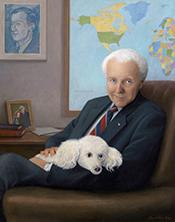
Mr. Speaker, I am delighted to yield such time as he might consume to the gentleman from Maryland (Mr. Hoyer), the distinguished Democratic whip and a strong voice on all human rights issues. Mr.…
Mr. Speaker, I am delighted to yield such time as he might consume to the gentleman from Maryland (Mr. Hoyer), the distinguished Democratic whip and a strong voice on all human rights issues.
Mr. Speaker, I rise in strong support of this resolution and yield myself such time as I might consume.
First, I would like to thank my chief cosponsor, Congressman Joseph Pitts, and the other 116 cosponsors of this resolution who, along with me, continue to demand action to protect civilians and stop the genocide in Darfur.
Mr. Speaker, as we meet here today, the Sudanese Government has launched a new brutal campaign against innocent civilians in Darfur. The only troops standing in their way are the understaffed and underfunded African Union Monitoring Force. But even the days of the African Union forces are numbered. Their mission is scheduled to end in 3 short months, leaving the people of Darfur completely unprotected. I fear, Mr. Speaker, that a full-scale onslaught mass murder against the civilians is imminent.
The signing of the Darfur Peace Agreement on May 5 of this year seemed to offer a ray of hope that the darkest days were behind the innocent men, women, and children of Darfur. But immediately after the negotiators left Abuja with the peace agreement signed and sealed, the security situation in Darfur began to deteriorate. In characteristic fashion, the Sudanese Government launched a massive and indiscriminate assault on civilians, humanitarian efforts, and the rebel forces.
Nearly 1 month ago, the United Nations Security Council authorized the deployment of 22,500 military and police into the Darfur region. To no one's surprise, Khartoum rejected the proposed deployment, and instead launched into unspeakable vitriol against the world community, threatening a terrorist war against the peacekeepers and, in a sickening anti-Semitic rant, invoked a Jewish conspiracy behind the international humanitarian movement to save Darfur. To counter the deployment of U.N. peacekeepers, Khartoum said it would send 30,000 of its own troops to Darfur to protect civilians.
Mr. Speaker, as a Holocaust survivor, I cannot think of more despicable cruelty than to have Khartoum send its armed forces who have raped, tortured, and slaughtered thousands and displaced 2 million to protect civilians in Darfur.
In the past few weeks, the government has escalated its campaign of death in Darfur. Bombers, attack helicopters, and Arab militias have been deployed in a new campaign of terror.
Just recently, the government unleashed its forces on Tawilla Town and seven nearby villages, forcing thousands of residents to flee. The barbed wire fence surrounding the nearby African Union peacekeeping base provided scant protection for terrified civilians fearing for their lives.
Mr. Speaker, it is time for the international community to put words into action whether or not Khartoum agrees to a U.N. peacekeeping force. The international community knows full well that Khartoum should not be given a choice whether to stop the genocide. If necessary, an enforced civilian protection regime must be put in place.
I concluded 2 years ago when I first called for NATO's support to the African Union to protect civilians in Darfur that diplomacy does not move the leaders in Khartoum. The Sudanese Government must be made to understand that there will be severe consequences for further genocidal assaults on the people of Darfur.
Mr. Speaker, H. Res. 723 calls on the world to put actions behind words and to undertake civilian protection once and for all by supporting the transition of the African Union mission to the United Nations and for NATO to broaden its support. The genocide in Darfur is not just an African crisis; it is a crisis of all humanity and obligates all of us to act with urgency.
I urge my colleagues to support this resolution.
Mr. Speaker, I am pleased to yield 2\1/4\ minutes to our colleague from Massachusetts (Mr. Olver), a bold fighter for human rights.
Mr. Speaker, I am pleased to yield 3 minutes to my friend from Texas, Congresswoman Sheila Jackson-Lee, an eloquent voice for human rights.
(Ms. JACKSON-LEE of Texas asked and was given permission to revise and extend her remarks.)
Mr. Speaker, I am very pleased to yield the balance of my time to the ranking member of the African Subcommittee, my good friend from New Jersey, Congressman Payne.
Mr. Speaker, I want to thank members of my staff who worked so hard on this resolution, and I yield back the balance of my time.
Mr. Speaker, on that, I demand the yeas and nays.
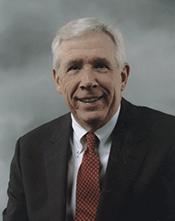
Mr. Speaker, I thank the gentleman for yielding. Mr. Speaker, I stand in strong support of H. Res. 992, supporting the appointment of a Presidential Special Envoy; also, H. Res. 723, calling for the…
Mr. Speaker, I thank the gentleman for yielding.
Mr. Speaker, I stand in strong support of H. Res. 992, supporting the appointment of a Presidential Special Envoy; also, H. Res. 723, calling for the President to take immediate steps to improve the security situation in Darfur; and H.R. 3127, the Darfur Peace and Accountability Act.
I want to commend and personally thank Chairman Hyde, Mr. Lantos, Mr. Payne, and Mr. Smith of New Jersey and their staffs for all the efforts that have gone into this.
Last week at the United Nations, the President renewed our country's commitment to finding peace in Sudan by appointing Andrew Natsios as a Presidential Special Envoy for Sudan. Andrew has a big task ahead of him, but I am confident he goes into this position with the respect of the administration and determination to see peace in Sudan and somebody who understands the issue having been there on numerous occasions. We all support him in this endeavor.
The people of Sudan, north, south, Darfur, all of Sudan, have suffered for too long. What is needed now is immediate action. The women and children are counting on us to end their nightmare. No human should ever have to live through and endure what these people are living through. I have seen through my own eyes during my latest trip to Sudan just 2 years ago the suffering people of Darfur. I visited five refugee camps, all sprawling tent cities jam-packed with thousands of displaced families. Also having visited Sudan in other cases, I have seen the suffering that went on in the north-south issue, people in the south and in the north.
So as Mr. Smith said, this does not only deal with Darfur but also is to make sure that the north-south peace agreement continues to stay alive.
I watched the barbarous Janjaweed militiamen, who are carrying out these attacks, sitting astride camels and horses just a short distance from where young and old sought what they had hoped would be a safe harbor.
In the face of genocide, the international community has been paralyzed to act. The United States Government has led this effort in trying to bring peace in Sudan. Heroes like Roger Winter and others have dedicated their careers to the people of Sudan and should be commended.
But, unfortunately, all of the diplomatic efforts that have been made over the last 3 years have failed to bring peace in Darfur. As we stand here, bombers are taking off, Antonov bombers, strafing villages. Soviet Hind helicopters fly in and attack the villages. Women and children are fleeing for their lives. The Janjaweed militia has continued to rape and kill, wiping out generations of people in Darfur. It is unacceptable, and the world must act.
All three of these measures make it a priority to end the genocide and work to bring a lasting peace for the people of Sudan.
I want to again commend the House for the strong stand. I want to commend Mr. Hyde, who has been a champion on these issues for so many, many times, in a bipartisan effort. I also want to thank Mr. Lantos. Every time one of these issues comes down on the floor, it is Lantos who is sitting over there.
And, lastly, I want to thank my good friend, Mr. Smith, who, quite frankly, on these issues of human rights and religious freedom over the 26 years that I have served with him, he has done more I think than perhaps any other person that has ever served in this institution from the very, very beginning. But it is always Hyde, Lantos, Smith. It is almost like a baseball game and the three.
And, also, I also want to thank Don Payne. Don Payne has been faithful, loyal, always there, always speaking out, always there. Has been there, I do not how many times, but also I want to thank Mr. Payne, and there are so many other Members.
But these four, Hyde, Lantos, Payne and Smith, have been the ones that have really made a tremendous difference. And others again, I stipulate, care about this thing deeply. But it just seems that every time there is a human rights issue on the floor, they are the people that are down there.
So I urge that we pass this thing with a majority vote and send a message to the government of Khartoum.
Mr. Speaker, I yield myself such time as I may consume. I rise in strong support of this resolution. I would first like to commend my good friend from Virginia, Congressman Frank Wolf, who serves…
Mr. Speaker, I yield myself such time as I may consume.
I rise in strong support of this resolution. I would first like to commend my good friend from Virginia, Congressman Frank Wolf, who serves with me as co-chair of the Congressional Human Rights Caucus, for introducing this most important measure. I also want to congratulate former USAID Administrator Andrew Natsios on his recent appointment as Presidential Special Envoy responsible for addressing the crisis in Darfur and for coordinating our policies towards Sudan.
Mr. Natsios brings a remarkable lifetime of experience to this very challenging task. Throughout his career, he has faced many humanitarian and disaster situations, and he has performed brilliantly. The crisis in Darfur will require aggressive diplomacy for which Mr. Natsios is well suited.
Mr. Speaker, 2 years ago this Congress found the atrocities taking place in Darfur were genocide. We thought that this declaration would trigger an outpouring of diplomatic efforts worldwide to rescue the victims of Khartoum's methodical madness. Rather than welcoming our clear-cut declaration, many around the world continued to wring their hands. Some even indulged in a specious debate as to whether the tragedy in Darfur was even a genocide. For too many the term ``genocide'' created the specter of accountability, which few individual leaders and fewer governments and institutions were willing to contemplate.
This same paralysis struck the international community, including our own government, in 1994, when the Rwandan genocide unfolded before us with lightning speed, 1 million people massacred in 100 days. In the aftermath of the genocide in Rwanda, leaders uttered the familiar phrase ``never again,'' never again would the world stand by and allow genocide to take place while we stood by and did nothing about it.
But for 3 years, Mr. Speaker, genocide has been unfolding in Darfur, and the international community has been excruciatingly slow to act.
Mr. Speaker, this Congress and the American people have not given up. Today we are voting on three separate measures that address the crisis in Darfur, including the one before us at the moment. The genocide must stop. Lives must be saved. The people of Darfur must be made whole again and a permanent and just peace must come to Darfur.
Mr. Speaker, I support this resolution because sustained and intensive diplomatic efforts at the highest levels are needed. The Special Envoy must not only engage the parties to the conflict in Darfur. He also will need to galvanize the international community to bring lasting peace to Darfur.
I strongly support this resolution and urge all of my colleagues to do so as well.
Mr. Speaker, I reserve the balance of my time.
Mr. Speaker, I want to thank my friend from Virginia for his most generous comments, and I yield 3 minutes to the ranking member of the Africa Subcommittee, the gentleman from New Jersey (Mr. Payne), my good friend and distinguished colleague, who is our leader on issues relating to Africa.
(Mr. PAYNE asked and was given permission to revise and extend his remarks.)
Mr. Speaker, I yield 2 minutes to the gentlewoman from California (Ms. Lee), always a strong voice on human rights.
Mr. Speaker, I yield 2 minutes to the gentlewoman from Texas (Ms. Jackson-Lee).
(Ms. JACKSON-LEE of Texas asked and was given permission to revise and extend her remarks.)
Mr. Speaker, we have no additional requests for time, and we yield back the balance of our time.

Mr. Speaker, I rise to support H. Res. 723, which urges the President to take steps to improve the security situation in Darfur, Sudan. This resolution urges the President to propose that NATO…
Mr. Speaker, I rise to support H. Res. 723, which urges the President to take steps to improve the security situation in Darfur, Sudan. This resolution urges the President to propose that NATO implement an interim civilian protection force in Darfur and request supplemental funding to support the African Union Mission in Sudan and a NATO mission in Darfur.
Members of Congress already have done everything we can possibly do to stop the genocide in Darfur.
Members of Congress have written numerous letters to the Bush Administration and the United Nations urging action to end this genocide.
We have visited the United Nations and met with Secretary General Kofi Annan.
I wrote to the President back in 2004 and implored that he take action.
In July of 2004, I sent letters to the other members of the United Nations Security Council urging that the United Nations take action
to end the slaughter in Sudan; this letter was signed by 41 Members of Congress, including my good friend from across the aisle, Congressman Spencer Bachus.
On April 28 and again on May 16, several of my colleagues where arrested in front of the Embassy of Sudan, protesting this genocide.
Last April, Members of Congress sent a letter to Secretary of State Condoleezza Rice expressing our support for the appointment of a Special Envoy for Sudan. Last week, President Bush finally appointed a Special Envoy for Sudan. This is a good first step, and we appreciate it, but a single administrative appointment will not put an end to a genocide.
Early this year, I traveled to Sudan as part of a bipartisan congressional delegation led by my good friend from California, Minority Leader Nancy Pelosi. We visited the refugee camps. As far as the eyes could see, there were crowds of displaced people who had been driven from their homes, living literally on the ground with little tarps just covering them. It is unconscionable that this should continue.
Also last April, the House of Representatives passed HR 3127, the Darfur Peace and Accountability Act, by an overwhelming vote of 416 to 3. This bill would impose sanctions on the government of Sudan and block the assets and restrict travel for individuals who are responsible for acts of genocide, war crimes or crimes against humanity in Darfur. Last Thursday, the Senate passed this bill, and the House is acting on the final version today. Hopefully, the President will sign it into law.
More than 450,000 people have died since 2003 as a result of the genocide in Darfur. There are 2.5 million displaced people in camps in Darfur and another 350,000 in refugee camps in neighboring Chad. Almost 7,000 people are dying every month in Darfur. There can be no doubt that what is taking place in Darfur is genocide and the Government of Sudan is responsible.
The world stood by and watched the genocide that occurred in Rwanda. The world has noted over and over again the atrocities of the Holocaust. Yet we cannot seem to get the President and the international community to move fast enough to stop the genocide that is taking place in Darfur.
I urge my colleagues to support this resolution and I urge the Bush Administration and the United Nations to put an end to these crimes before millions more men, women and children are allowed to die.
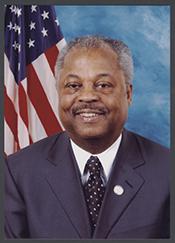
Mr. Speaker, I rise in strong support of H.R. 3127, the Darfur Peace and Accountability Act, a bill which I have worked on for more than a year with many others. I am glad to see it come to the floor…
Mr. Speaker, I rise in strong support of H.R. 3127, the Darfur Peace and Accountability Act, a bill which I have worked on for more than a year with many others. I am glad to see it come to the floor again for final passage.
Let me just say that the bills that are being discussed today, H.R. 3127, the Darfur Peace and Accountability Act of 2006; H.R. 723, calling for the President to take immediate steps to help improve the security in Darfur; and H. Res. 992, urging the President to appoint special envoys for Sudan; really speaks out that we are sick and tired of being sick and tired.
We continue to say to Khartoum that they must stop the genocide. It will not be tolerated. President Bashir, the National Congress party officials, Janjaweed commanders and murderers, and others responsible for genocide must be held accountable and will be brought to justice. This bill is just the first step.
I want to thank Chairman Hyde for working with our Democratic members of the Subcommittee on Africa, Global Human Rights and International Operations.
I also would like to repeat what Congressman Wolf said, that Congressman Lantos has been a steadfast leader on issues of genocide. And as he being a genocide survivor, a Holocaust survivor, we know of his strong passion for this issue, and so we really appreciate his leadership.
There are key provisions in this legislation, Section 7 and Section 8. We want to first say that a peaceful resolution must happen in Darfur, and the Comprehensive Peace Agreement we think is a step towards that to happen.
Section 8 of the legislation exempts the south and the three marginalized areas, deals with a number of issues that have been summarized in the bill.
But let me just conclude by saying that there was an additional provision in the original bill, though, that I just would like to mention briefly, of Congresswoman Barbara Lee, which dealt with States having the ability to withhold pension funds from businesses that are operating in Sudan.
Unfortunately, this was removed by the Senate. We hope to see this legislation, this language put back in, because we believe that States should have the right to divest from companies doing business, international companies doing business in Darfur; and we will continue to work towards that end.
And so, Mr. Speaker, I thank the leadership for moving this bill forward.
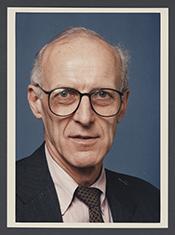
Mr. Speaker, I thank the gentleman from California for yielding time. Mr. Speaker, I rise in strong support of both H.R. 3127, the Darfur Peace Accountability Act of 2006, which was debated earlier,…
Mr. Speaker, I thank the gentleman from California for yielding time.
Mr. Speaker, I rise in strong support of both H.R. 3127, the Darfur Peace Accountability Act of 2006, which was debated earlier, and of H. Res. 723, the bill presently before us. But even stronger steps must be taken if we hope to save the people of Darfur.
Lack of decisive action and follow-through by the international community has made it possible for the genocide in Darfur to continue unabated. The government-backed Janjaweed militia continues to terrorize the Darfurees on the ground while the Sudanese Government itself wages an aerial assault on the region. Officials in Khartoum have been allowed to deflect the clear urgent need for U.N. peacekeepers in Darfur by raising sovereignty claims.
We should commend the African Union for extending its mission in Darfur through the end of the year and for announcing plans to increase the number of troops in Darfur. However, without international support, the African Union will remain powerless to stop the slaughter.
For months, the poorly trained and underequipped African Union force has operated without mandate or means to protect the civilians in Darfur from the ongoing slaughter. Because of its ineffectiveness up to now, the Sudanese Government clearly wants the African Union to remain in place, but, equally clearly, not if they have the mandate or the means to be effective.
President Bush, working with our allies, must take the lead in holding the Sudanese accountable for their actions and send a clear message to the Sudanese Government that it will not be allowed to systematically and indiscriminately kill its own citizens using tactics of terror.
If the Sudanese Government does not withdraw all military aircraft from the region, as this resolution requires, then NATO should immediately coordinate and enforce a no-fly zone over Darfur. Ultimately, the Sudanese Government must agree as U.N. peacekeepers as authorized by the Security Council, or have them imposed. Appeasing the officials has not worked and will not work. It is time for a stronger approach in Darfur, an approach with resolve and the means to finally stop the killing.
Show 1 more
Mr. Speaker, let me once again thank Mr. Lantos for House Resolution 723, calling on the President to take immediate steps to help improve the security situation in Darfur. Let me just say that…
Mr. Speaker, let me once again thank Mr. Lantos for House Resolution 723, calling on the President to take immediate steps to help improve the security situation in Darfur.
Let me just say that things are getting worse. Increased rapes, 500 rapes over the summer in one camp alone; renewed attacks; 12 humanitarian workers killed, including two of the last 6 weeks; 26,000 Sudan armed forces headed to the Darfur region for major offensive; renewed aerial bombings; the Darfur Peace Agreement not being held to by the government of Sudan; continued integration of the Janjaweed into the Sudan armed forces.
United Nations Security Resolution 1706 says that 17,300 U.N. troops and 3,300 policemen should go into Darfur. I think we should urge the U.N. to fulfill this mandate.
President Bush did not ask Aideed to go into Somalia. President Clinton did not ask Milosevic to go into Bosnia. We should not wait for a murderous leader like Bashir to invite us in.
We should even create no-fly zones where we would do as we did in Iraq. A no-fly zone means you don't go in and you don't go out. We were able to protect the Kurds in southern Iraq through all those years of the dictatorship of Saddam Hussein.
We can do the same kind of no-fly zone. You don't use one single human being in a no-fly zone when you use drones and other kinds of sophisticated weaponry. We have to take out some antonovs, destroy some helicopters, and let Bashir know we are not playing.
I think if we sent that message there, you would see that this opposition to the United Nations would simply disappear. They are only bold when they are with unarmed civilians, weak women, small children, elderly men. That is when they show how strong and powerful they are. I think that we should go in.
The United Nations already has U.N. troops in the Sudan. It is simply expanding the mandate that is already there. I commend the President for appointing Andrew Natsios as the Presidential Special Envoy, and I think that is even more significant than the special envoy in the past. I urge passage of this resolution.
Bill Text
Latest available legislative text
        [Congressional Bills 109th Congress]
[From the U.S. Government Publishing Office]
[H.R. 723 Introduced in House (IH)]

109th CONGRESS
1st Session
H. R. 723

To direct the Secretary of Transportation to conduct a study to
determine the feasibility of constructing a highway in California
connecting State Route 130 in Santa Clara County with Interstate Route
5 in San Joaquin County, and to determine the feasibility of
constructing a fixed guideway system along the right-of-way of the
highway.

_______________________________________________________________________

IN THE HOUSE OF REPRESENTATIVES

February 9, 2005

Mr. Pombo (for himself, Mr. Doolittle, and Mr. Nunes) introduced the
following bill; which was referred to the Committee on Transportation
and Infrastructure

_______________________________________________________________________

A BILL

To direct the Secretary of Transportation to conduct a study to
determine the feasibility of constructing a highway in California
connecting State Route 130 in Santa Clara County with Interstate Route
5 in San Joaquin County, and to determine the feasibility of
constructing a fixed guideway system along the right-of-way of the
highway.

Be it enacted by the Senate and House of Representatives of the
United States of America in Congress assembled,

SECTION 1. FEASIBILITY STUDY FOR CONSTRUCTION OF HIGHWAY AND FIXED
GUIDEWAY SYSTEM IN SANTA CLARA AND SAN JOAQUIN COUNTIES,
CALIFORNIA.

(a) Findings.--Congress finds the following:
(1) More than half of the road miles on the Interstate
System are congested during peak travel hours.
(2) Over the next 20 years, the United States population is
projected to increase by 60,000,000 people and highway travel
by more than 40 percent.
(3) Highway capacity must be increased to promote safer
travel conditions.
(4) Forty-two percent of the Nation's major urban roads
carry a high volume of traffic, which is often more than they
were designed to handle.
(5) Traffic congestion creates dangers for motorists, slows
the movement of goods, and hinders economic competitiveness.
(6) Idling vehicles increase air pollution, while wasted
time and fuel cost the United States economy more than
$70,000,000,000 a year.
(b) Feasibility Study.--
(1) In general.--The Secretary of Transportation shall
conduct a study to determine the feasibility of constructing--
(A) a highway in California connecting State Route
130 in Santa Clara County with Interstate Route 5 in
San Joaquin County; and
(B) a fixed guideway system along the right-of-way
of the highway.
(2) Delegation.--The Secretary shall delegate
responsibility for carrying out the study, with funds made
available to carry out this section, to the San Joaquin Council
of Governments upon request of the Council.
(3) Assumptions.--In conducting the study, the Secretary
shall use the following assumptions:
(A) The highway will be open only to passenger
vehicles.
(B) The highway will have a total of 6 lanes,
including 3 lanes in each direction.
(C) A fixed guideway system will be constructed
along the right-of-way of the highway.
(D) The highway and fixed guideway system will be
constructed using innovative financing.
(E) The highway and fixed guideway system will be
constructed using performance-based contracting.
(F) The highway and fixed guideway system will be
constructed using procedures that allow streamlined
compliance with environmental requirements, without
undermining the purpose of the requirements.
(G) The highway may contain high occupancy vehicle
lanes, energy-efficient vehicle lanes, and high
occupancy toll lanes.
<all>