Fannie Lou Hamer, Rosa Parks, and Coretta Scott King Voting Rights Act Reauthorization and Amendments Act of 2006
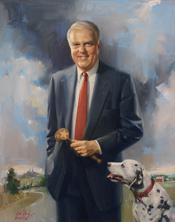 Rep. F. James Sensenbrenner, Jr. (R-WI)
Legislative Activity
Stay on top of the latest movement without scrolling through every action
Became Public Law No: 109-246.
July 27, 2006
View full timeline
Introduced in House
May 2, 2006
Referred to the Subcommittee on the Constitution.
May 3, 2006
Subcommittee Hearings Held.
May 4, 2006
Ordered to be Reported (Amended) by the Yeas and Nays: 33 - 1.
May 10, 2006
Reported (Amended) by the Committee on Judiciary. H. Rept. 109-478.
May 22, 2006
Placed on the Union Calendar, Calendar No. 265.
May 22, 2006
Rules Committee Resolution H. Res. 878 Reported to House. Rule provides for consideration of H.R. 9 with 1 hour and 30 minutes of general debate. Previous question shall be considered as ordered without intervening motions except motion to recommit with or without instructions. Measure will be considered read. Specified amendments are in order.
June 20, 2006 • 10:08 PM
Rules Committee Resolution H. Res. 910 Reported to House. Rule provides for consideration of H.R. 9 with 1 hour and 30 minutes of general debate. Previous question shall be considered as ordered without intervening motions except motion to recommit with or without instructions. Measure will be considered read. Specified amendments are in order.
July 12, 2006 • 4:11 PM
Rule H. Res. 910 passed House.
July 13, 2006 • 11:30 AM
Considered under the provisions of rule H. Res. 878. (consideration: CR H5143-5207; text of measure as reported in House: CR H5177-5178)
July 13, 2006 • 11:31 AM
Rule provides for consideration of H.R. 9 with 1 hour and 30 minutes of general debate. Previous question shall be considered as ordered without intervening motions except motion to recommit with or without instructions. Measure will be considered read. Specified amendments are in order.
July 13, 2006 • 11:31 AM
House resolved itself into the Committee of the Whole House on the state of the Union pursuant to H. Res. 878 and Rule XVIII.
July 13, 2006 • 11:31 AM
The Speaker designated the Honorable Ray LaHood to act as Chairman of the Committee.
July 13, 2006 • 11:31 AM
GENERAL DEBATE - The Committee of the Whole proceeded with 90 minutes of general debate on H.R. 9.
July 13, 2006 • 11:31 AM
DEBATE - Pursuant to the provisions of H. Res. 910, the Committee of the Whole proceeded with 40 minutes of debate on the Norwood amendment.
July 13, 2006 • 1:26 PM
POSTPONED PROCEEDINGS - At the conclusion of debate on the Norwood amendment the Chair put the question on adoption of the amendment and announced by voice vote that the noes had prevailed. Mr. Norwood demanded a recorded vote and the Chair postponed further proceedings on adoption of the amendment until later in the legislative day.
July 13, 2006 • 2:14 PM
DEBATE - Pursuant to the provisions of H. Res. 910, the Committee of the Whole proceeded with 40 minutes of debate on the Gohmert amendment.
July 13, 2006 • 2:16 PM
POSTPONED PROCEEDINGS - At the conclusion of debate on the Gohmert amendment the Chair put the question on adoption of the amendment and announced by voice vote that the ayes had prevailed. Mr. Sensenbrenner demanded a recorded vote and the Chair postponed further proceedings on adoption of the amendment until later in the legislative day.
July 13, 2006 • 3:06 PM
DEBATE - Pursuant to the provisions of H. Res. 910, the Committee of the Whole proceeded with 40 minutes of debate on the King (IA) amendment.
July 13, 2006 • 3:06 PM
POSTPONED PROCEEDINGS - At the conclusion of debate on the King (IA) amendment the Chair put the question on adoption of the amendment and announced by voice vote that the noes had prevailed. Mr. King (IA) demanded a recorded vote and the Chair postponed further proceedings on adoption of the amendment until later in the legislative day.
July 13, 2006 • 3:50 PM
DEBATE - Pursuant to the provisions of H. Res. 910, the Committee of the Whole proceeded with 40 minutes of debate on the Westmoreland amendment.
July 13, 2006 • 3:54 PM
POSTPONED PROCEEDINGS - At the conclusion of debate on the Westmoreland amendment the Chair put the question on adoption of the amendment and announced by voice vote that the noes had prevailed. Mr. Westmoreland demanded a recorded vote and the Chair postponed further proceedings on adoption of the amendment until later in the legislative day.
July 13, 2006 • 4:36 PM
UNFINISHED BUSINESS - The Chair announced that the unfinished business was the question of adoption of specified amendments which were debated earlier and on which further proceedings were postponed.
July 13, 2006 • 4:37 PM
The House rose from the Committee of the Whole House on the state of the Union to report H.R. 9.
July 13, 2006 • 5:19 PM
The previous question was ordered pursuant to the rule. (consideration: CR H5207)
July 13, 2006 • 5:20 PM
The House adopted the amendment in the nature of a substitute as agreed to by the Committee of the Whole House on the state of the Union.
July 13, 2006 • 5:20 PM
Passed/agreed to in House: On passage Passed by recorded vote: 390 - 33 (Roll no. 374).
July 13, 2006 • 5:38 PM
On passage Passed by recorded vote: 390 - 33 (Roll no. 374).
July 13, 2006 • 5:38 PM
Motion to reconsider laid on the table Agreed to without objection.
July 13, 2006 • 5:38 PM
Received in the Senate. Read the first time. Placed on Senate Legislative Calendar under Read the First Time.
July 14, 2006
Read the second time. Placed on Senate Legislative Calendar under General Orders. Calendar No. 521.
July 17, 2006
Measure laid before Senate by unanimous consent. (consideration: CR S7949-8012)
July 20, 2006
Passed Senate without amendment by Yea-Nay Vote. 98 - 0. Record Vote Number: 212.
July 20, 2006
Message on Senate action sent to the House.
July 26, 2006
Presented to President.
July 26, 2006
Signed by President.
July 27, 2006
Became Public Law No: 109-246.
July 27, 2006
Voting History
6 votes recorded • Roll call available
SENATE
Roll Call AvailableJuly 20, 2006 at 4:28 PM
On Passage of the Bill H.R. 9
Majority required: 1/2 (50%)
98 - 0
HOUSE
Roll Call AvailableJuly 13, 2006 at 5:38 PM
On Passage
Majority required: 1/2 (50%)
390 - 33
HOUSE
Roll Call AvailableJuly 13, 2006 at 5:19 PM
On Agreeing to the Amendment
Majority required: 1/2 (50%)
118 - 302
Show 3 more votes
HOUSE
Roll Call AvailableJuly 13, 2006 at 5:13 PM
On Agreeing to the Amendment
Majority required: 1/2 (50%)
185 - 238
HOUSE
Roll Call AvailableJuly 13, 2006 at 5:06 PM
On Agreeing to the Amendment
Majority required: 1/2 (50%)
134 - 288
HOUSE
Roll Call AvailableJuly 13, 2006 at 4:59 PM
On Agreeing to the Amendment
Majority required: 1/2 (50%)
96 - 318
Floor Debate
22 membersWhat members said about H.R. 9 on the floor

 +17
+17
Floor Debate
22 membersWhat members said about H.R. 9 on the floor
Mr. Speaker, I would like to thank my colleague and dear friend, the gentleman from California, Mr. Honda, who is managing this Special Order, but more especially also as an outstanding leader in our…
Mr. Speaker, I would like to recognize the gentleman from Texas, Congressman Al Green. I want to thank the gentleman from Texas for his wonderful words, and we shall be there. Mr. Speaker, I would…
Mr. Chairman, I thank the distinguished gentleman for yielding. Mr. Chairman, I think the focus of the debate has gone awry. You are right. It is not an immigration issue. It is a citizen issue. But…
Mr. Chairman, I move to strike the last word. Mr. Chairman, I yield to the gentleman from California (Mr. Rohrabacher). Mr. Chairman, I yield to the gentlewoman from California (Ms. Linda T.…
Mr. Chairman, I offer an amendment. Mr. Chairman, I yield myself such time as I may consume. Since 1975, the Bilingual Election Assistance Provisions of the Voting Rights Act have forced States and…
Show 8 more
Mr. Chairman, I offer an amendment. Mr. Chairman, I yield myself such time as I may consume. Mr. Chairman, I offer this amendment with Mr. Ramstad and other Members of this body. It is very simple.…
Thank you very much, my colleague, Congressman Honda, the distinguished Chair of the Asian Pacific American Caucus. I am pleased to join you, and I thank you for your leadership in calling this…

Mr. Speaker, I rise today in honor of Asian Pacific American Heritage Month and to recognize the role that Asian and Pacific Islander Americans play in our nation. I want to thank Mr. Honda, the…
Mr. Speaker, let me thank my dear friend and colleague, Congressman Mike Honda, who is just a great leader, not only for the great State of California, but for this great Nation. He is our chairman…
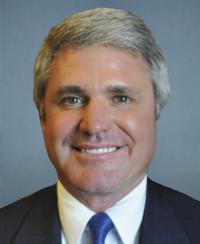
Mr. Chairman, I offer an amendment. Mr. Chairman, I yield myself such time as I may consume. I rise to offer this amendment, which will prevent individuals who are under investigation for human…
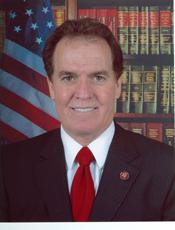
Mr. Chairman, I offer an amendment. Mr. Chairman, I believe our Nation needs to secure its points of entry and we need to do it now. Specifically, I believe we should prevent any additional countries…
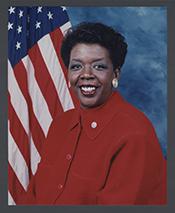
Mr. Chairman, I offer an amendment. Mr. Chairman, my amendment would prohibit any funds under this act to be used for the operation of the National Contact Center of the Equal Employment Opportunity…
Mr. Chairman, I would like to associate myself with the comments of my colleague from Florida (Mr. Lincoln Diaz-Balart). Mr. Chairman, as Chair of the Congressional Asian Pacific American Caucus, I…
Show 11 more

Mr. Chairman, I am here on the floor to present a different amendment. But I listened to the debate on this, and I am really amazed. This House voted overwhelming to require v-chips on television…
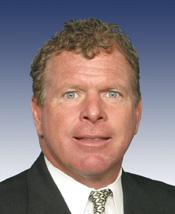
Mr. Chairman, I thank the chairman for yielding me time; and I especially thank him for his strong support for America's space program. The Weiner amendment would take $477 million from NASA's space…
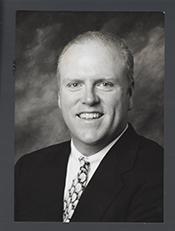
Mr. Chairman, I rise in opposition to this mean spirited Amendment, which would prohibit any federal funds to be used in enforcing bilingual balloting. Let's be crystal clear, we are not talking…
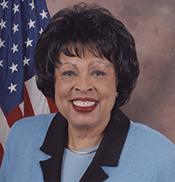
Mr. Speaker, I rise today to celebrate Asian Pacific American Heritage Month. I want to congratulate my good friend and colleague, Mr. Honda, for arranging this special order so that we can celebrate…
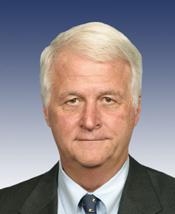
Mr. Chairman, I rise to claim the time in opposition to the gentleman's amendment. Mr. Chairman, I yield myself such time as I may consume. It is unfortunate that the United States did not…
Mr. Chairman, I rise today in strong opposition to the amendment by the gentleman from Florida, Mr. Stearns. Mr. Chairman, the amendment before us seeks to disenfranchise millions of American…
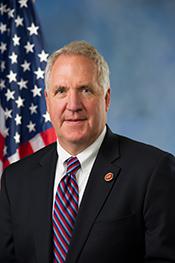
Mr. Chairman, I claim the time in opposition. Mr. Chairman, I have great respect for Dr. Gingrey. We have talked about this amendment prior to him bringing it up; and I know he is very, very sincere.…
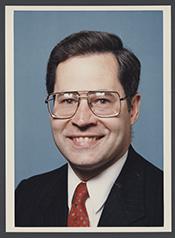
Mr. Chairman, I move to strike the last word. Mr. Chairman, I yield to the gentleman from Georgia (Mr. Lewis). Mr. Chairman, I yield to the distinguished gentleman from Georgia (Mr. Scott). Mr.…
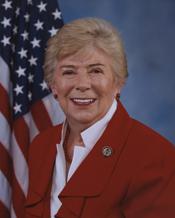
Mr. Chairman, I rise in opposition to the amendment. Mr. Chairman, when the legislation was passed, it was passed with the help of 70 bipartisan Senators. With that, we had many strong certainly gun…
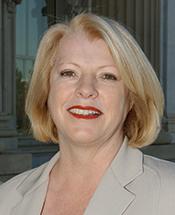
Mr. Chairman, I offer an amendment. Mr. Chairman, I yield myself such time as I may consume. Mr. Chairman, my amendment will prohibit any funds in this bill from being used to enforce the burdensome…
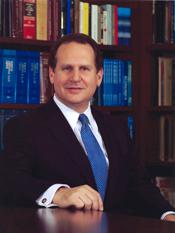
Mr. Chairman, I rise to claim the time in opposition to the amendment. Mr. Chairman, I yield myself such time as I may consume. I rise in opposition to the amendment of my good friend, whom I admire…
Bill Text
6 versions available
        [Congressional Bills 109th Congress]
[From the U.S. Government Publishing Office]
[H.R. 9 Enrolled Bill (ENR)]

H.R.9

One Hundred Ninth Congress

of the

United States of America

AT THE SECOND SESSION

Begun and held at the City of Washington on Tuesday,
the third day of January, two thousand and six

An Act

To amend the Voting Rights Act of 1965.

Be it enacted by the Senate and House of Representatives of the
United States of America in Congress assembled,

SECTION 1. SHORT TITLE.

This Act may be cited as the ``Fannie Lou Hamer, Rosa Parks, and
Coretta Scott King Voting Rights Act Reauthorization and Amendments Act
of 2006''.

SEC. 2. CONGRESSIONAL PURPOSE AND FINDINGS.

(a) Purpose.--The purpose of this Act is to ensure that the right
of all citizens to vote, including the right to register to vote and
cast meaningful votes, is preserved and protected as guaranteed by the
Constitution.
(b) Findings.--The Congress finds the following:
(1) Significant progress has been made in eliminating first
generation barriers experienced by minority voters, including
increased numbers of registered minority voters, minority voter
turnout, and minority representation in Congress, State
legislatures, and local elected offices. This progress is the
direct result of the Voting Rights Act of 1965.
(2) However, vestiges of discrimination in voting continue to
exist as demonstrated by second generation barriers constructed to
prevent minority voters from fully participating in the electoral
process.
(3) The continued evidence of racially polarized voting in each
of the jurisdictions covered by the expiring provisions of the
Voting Rights Act of 1965 demonstrates that racial and language
minorities remain politically vulnerable, warranting the continued
protection of the Voting Rights Act of 1965.
(4) Evidence of continued discrimination includes--
(A) the hundreds of objections interposed, requests for
more information submitted followed by voting changes withdrawn
from consideration by jurisdictions covered by the Voting
Rights Act of 1965, and section 5 enforcement actions
undertaken by the Department of Justice in covered
jurisdictions since 1982 that prevented election practices,
such as annexation, at-large voting, and the use of multi-
member districts, from being enacted to dilute minority voting
strength;
(B) the number of requests for declaratory judgments denied
by the United States District Court for the District of
Columbia;
(C) the continued filing of section 2 cases that originated
in covered jurisdictions; and
(D) the litigation pursued by the Department of Justice
since 1982 to enforce sections 4(e), 4(f)(4), and 203 of such
Act to ensure that all language minority citizens have full
access to the political process.
(5) The evidence clearly shows the continued need for Federal
oversight in jurisdictions covered by the Voting Rights Act of 1965
since 1982, as demonstrated in the counties certified by the
Attorney General for Federal examiner and observer coverage and the
tens of thousands of Federal observers that have been dispatched to
observe elections in covered jurisdictions.
(6) The effectiveness of the Voting Rights Act of 1965 has been
significantly weakened by the United States Supreme Court decisions
in Reno v. Bossier Parish II and Georgia v. Ashcroft, which have
misconstrued Congress' original intent in enacting the Voting
Rights Act of 1965 and narrowed the protections afforded by section
5 of such Act.
(7) Despite the progress made by minorities under the Voting
Rights Act of 1965, the evidence before Congress reveals that 40
years has not been a sufficient amount of time to eliminate the
vestiges of discrimination following nearly 100 years of disregard
for the dictates of the 15th amendment and to ensure that the right
of all citizens to vote is protected as guaranteed by the
Constitution.
(8) Present day discrimination experienced by racial and
language minority voters is contained in evidence, including the
objections interposed by the Department of Justice in covered
jurisdictions; the section 2 litigation filed to prevent dilutive
techniques from adversely affecting minority voters; the
enforcement actions filed to protect language minorities; and the
tens of thousands of Federal observers dispatched to monitor polls
in jurisdictions covered by the Voting Rights Act of 1965.
(9) The record compiled by Congress demonstrates that, without
the continuation of the Voting Rights Act of 1965 protections,
racial and language minority citizens will be deprived of the
opportunity to exercise their right to vote, or will have their
votes diluted, undermining the significant gains made by minorities
in the last 40 years.

SEC. 3. CHANGES RELATING TO USE OF EXAMINERS AND OBSERVERS.

(a) Use of Observers.--Section 8 of the Voting Rights Act of 1965
(42 U.S.C. 1973f) is amended to read as follows:
``Sec. 8. (a) Whenever--
``(1) a court has authorized the appointment of observers under
section 3(a) for a political subdivision; or
``(2) the Attorney General certifies with respect to any
political subdivision named in, or included within the scope of,
determinations made under section 4(b), unless a declaratory
judgment has been rendered under section 4(a), that--
``(A) the Attorney General has received written meritorious
complaints from residents, elected officials, or civic
participation organizations that efforts to deny or abridge the
right to vote under the color of law on account of race or
color, or in contravention of the guarantees set forth in
section 4(f)(2) are likely to occur; or
``(B) in the Attorney General's judgment (considering,
among other factors, whether the ratio of nonwhite persons to
white persons registered to vote within such subdivision
appears to the Attorney General to be reasonably attributable
to violations of the 14th or 15th amendment or whether
substantial evidence exists that bona fide efforts are being
made within such subdivision to comply with the 14th or 15th
amendment), the assignment of observers is otherwise necessary
to enforce the guarantees of the 14th or 15th amendment;
the Director of the Office of Personnel Management shall assign as
many observers for such subdivision as the Director may deem
appropriate.
``(b) Except as provided in subsection (c), such observers shall be
assigned, compensated, and separated without regard to the provisions
of any statute administered by the Director of the Office of Personnel
Management, and their service under this Act shall not be considered
employment for the purposes of any statute administered by the Director
of the Office of Personnel Management, except the provisions of section
7324 of title 5, United States Code, prohibiting partisan political
activity.
``(c) The Director of the Office of Personnel Management is
authorized to, after consulting the head of the appropriate department
or agency, designate suitable persons in the official service of the
United States, with their consent, to serve in these positions.
``(d) Observers shall be authorized to--
``(1) enter and attend at any place for holding an election in
such subdivision for the purpose of observing whether persons who
are entitled to vote are being permitted to vote; and
``(2) enter and attend at any place for tabulating the votes
cast at any election held in such subdivision for the purpose of
observing whether votes cast by persons entitled to vote are being
properly tabulated.
``(e) Observers shall investigate and report to the Attorney
General, and if the appointment of observers has been authorized
pursuant to section 3(a), to the court.''.
(b) Modification of Section 13.--Section 13 of the Voting Rights
Act of 1965 (42 U.S.C. 1973k) is amended to read as follows:
``Sec. 13. (a) The assignment of observers shall terminate in any
political subdivision of any State--
``(1) with respect to observers appointed pursuant to section 8
or with respect to examiners certified under this Act before the
date of the enactment of the Fannie Lou Hamer, Rosa Parks, and
Coretta Scott King Voting Rights Act Reauthorization and Amendments
Act of 2006, whenever the Attorney General notifies the Director of
the Office of Personnel Management, or whenever the District Court
for the District of Columbia determines in an action for
declaratory judgment brought by any political subdivision described
in subsection (b), that there is no longer reasonable cause to
believe that persons will be deprived of or denied the right to
vote on account of race or color, or in contravention of the
guarantees set forth in section 4(f)(2) in such subdivision; and
``(2) with respect to observers appointed pursuant to section
3(a), upon order of the authorizing court.
``(b) A political subdivision referred to in subsection (a)(1) is
one with respect to which the Director of the Census has determined
that more than 50 per centum of the nonwhite persons of voting age
residing therein are registered to vote.
``(c) A political subdivision may petition the Attorney General for
a termination under subsection (a)(1).''.
(c) Repeal of Sections Relating to Examiners.--Sections 6, 7, and 9
of the Voting Rights Act of 1965 (42 U.S.C. 1973d, 1973e and 1973g) are
repealed.
(d)  Substitution of References to ``Observers'' for References to
``Examiners''.--
(1) Section 3(a) of the Voting Rights Act of 1965 (42 U.S.C.
1973a(a)) is amended by striking ``examiners'' each place it
appears and inserting ``observers''.
(2) Section 4(a)(1)(C) of the Voting Rights Act of 1965 (42
U.S.C. 1973b(a)(1)(C)) is amended by inserting ``or observers''
after ``examiners''.
(3) Section 12(b) of the Voting Rights Act of 1965 (42 U.S.C.
1973j(b)) is amended by striking ``an examiner has been appointed''
and inserting ``an observer has been assigned''.
(4) Section 12(e) of the Voting Rights Act of 1965 (42 U.S.C.
1973j(e)) is amended--
(A) by striking ``examiners'' and inserting ``observers'';
and
(B) by striking ``examiner'' each place it appears and
inserting ``observer''.
(e) Conforming Changes Relating to Section References.--
(1) Section 4(b) of the Voting Rights Act of 1965 (42 U.S.C.
1973b(b)) is amended by striking ``section 6'' and inserting
``section 8''.
(2) Subsections (a) and (c) of section 12 of the Voting Rights
Act of 1965 (42 U.S.C. 1973j(a) and 1973j(c)) are each amended by
striking ``7,''.
(3) Section 14(b) of the Voting Rights Act of 1965 (42 U.S.C.
1973l(b)) is amended by striking ``or a court of appeals in any
proceeding under section 9''.

SEC. 4. RECONSIDERATION OF SECTION 4 BY CONGRESS.

Paragraphs (7) and (8) of section 4(a) of the Voting Rights Act of
1965 (42 U.S.C. 1973b(a)) are each amended by striking ``Voting Rights
Act Amendments of 1982'' and inserting ``Fannie Lou Hamer, Rosa Parks,
and Coretta Scott King Voting Rights Act Reauthorization and Amendments
Act of 2006''.

SEC. 5. CRITERIA FOR DECLARATORY JUDGMENT.

Section 5 of the Voting Rights Act of 1965 (42 U.S.C. 1973c) is
amended--
(1) by inserting ``(a)'' before ``Whenever'';
(2) by striking ``does not have the purpose and will not have
the effect'' and inserting ``neither has the purpose nor will have
the effect''; and
(3) by adding at the end the following:
``(b) Any voting qualification or prerequisite to voting, or
standard, practice, or procedure with respect to voting that has the
purpose of or will have the effect of diminishing the ability of any
citizens of the United States on account of race or color, or in
contravention of the guarantees set forth in section 4(f)(2), to elect
their preferred candidates of choice denies or abridges the right to
vote within the meaning of subsection (a) of this section.
``(c) The term `purpose' in subsections (a) and (b) of this section
shall include any discriminatory purpose.
``(d) The purpose of subsection (b) of this section is to protect
the ability of such citizens to elect their preferred candidates of
choice.''.

SEC. 6. EXPERT FEES AND OTHER REASONABLE COSTS OF LITIGATION.

Section 14(e) of the Voting Rights Act of 1965 (42 U.S.C. 1973l(e))
is amended by inserting ``, reasonable expert fees, and other
reasonable litigation expenses'' after ``reasonable attorney's fee''.

SEC. 7. EXTENSION OF BILINGUAL ELECTION REQUIREMENTS.

Section 203(b)(1) of the Voting Rights Act of 1965 (42 U.S.C.
1973aa-1a(b)(1)) is amended by striking ``2007'' and inserting
``2032''.

SEC. 8. USE OF AMERICAN COMMUNITY SURVEY CENSUS DATA.

Section 203(b)(2)(A) of the Voting Rights Act of 1965 (42 U.S.C.
1973aa-1a(b)(2)(A)) is amended by striking ``census data'' and
inserting ``the 2010 American Community Survey census data and
subsequent American Community Survey data in 5-year increments, or
comparable census data''.

SEC. 9. STUDY AND REPORT.

The Comptroller General shall study the implementation,
effectiveness, and efficiency of the current section 203 of the Voting
Rights Act of 1965 and alternatives to the current implementation
consistent with that section. The Comptroller General shall report the
results of that study to Congress not later than 1 year after the date
of the enactment of this Act.

Speaker of the House of Representatives.

Vice President of the United States and
President of the Senate.