Providing for consideration of motions to suspend the rules.
Legislative Activity
Stay on top of the latest movement without scrolling through every action
Motion to reconsider laid on the table Agreed to without objection.
September 8, 2005 • 11:55 AM
View full timeline
Introduced in House
September 7, 2005
The House Committee on Rules reported an original measure, H. Rept. 109-217, by Mr. Diaz-Balart, L..
September 7, 2005
Placed on the House Calendar, Calendar No. 82.
September 7, 2005
Considered as privileged matter. (consideration: CR H7749-7759)
September 8, 2005 • 10:14 AM
DEBATE - The House proceeded with one hour of debate on H. Res. 426.
September 8, 2005 • 10:15 AM
On ordering the previous question Agreed to by the Yeas and Nays: 221 - 193 (Roll no. 458). (consideration: CR H7757)
September 8, 2005 • 11:46 AM
Passed/agreed to in House: On agreeing to the resolution Agreed to by recorded vote: 235 - 179 (Roll no. 459).(text: CR H7749)
September 8, 2005 • 11:55 AM
On agreeing to the resolution Agreed to by recorded vote: 235 - 179 (Roll no. 459). (text: CR H7749)
September 8, 2005 • 11:55 AM
Motion to reconsider laid on the table Agreed to without objection.
September 8, 2005 • 11:55 AM
Voting History
2 votes recorded • Roll call available
Floor Debate
14 membersWhat members said about H.Res. 426 on the floor
LD LMS
LMS RB
RB ALH
ALH DRO+9
DRO+9
Floor Debate
14 membersWhat members said about H.Res. 426 on the floor
Mr. Speaker, by direction of the Committee on Rules, I call up House Resolution 426 and ask for its immediate consideration. Mr. Speaker, for the purpose of debate only, I yield the customary 30…
Mr. Speaker, by direction of the Committee on Rules, I call up House Resolution 426 and ask for its immediate consideration.
Mr. Speaker, for the purpose of debate only, I yield the customary 30 minutes to the gentlewoman from New York (Ms. Slaughter), pending which I yield myself such time as I may consume. During consideration of this resolution, all time yielded is for the purpose of debate only.
(Mr. LINCOLN DIAZ-BALART of Florida asked and was given permission to revise and extend his remarks.)
Mr. Speaker, House Resolution 426 provides that suspensions will be in order at any time on the legislative day of Thursday, September 8, 2005. This resolution will allow the House to consider and debate legislation to address the needs of the hurricane-ravaged areas of the Gulf Coast in our country, such as increased borrowing authority for the National Flood Insurance program, the Student Grant Hurricane and Disaster Relief Act, the Temporary Assistance for Needy Families Emergency Response and Recovery Act, and a supplemental emergency appropriations bill.
Mr. Speaker, my community in South Florida was very fortunate that we did not have to bear the full brunt of this latest hurricane, Hurricane Katrina. Over a million of us in South Florida lost electricity. Many homes and businesses were flooded and some structural damage was caused to homes and businesses, but we did not bear the full brunt, the full fury of this latest hurricane, Katrina.
We in South Florida were very fortunate as well to receive generous aid from fellow Americans in the wake of Hurricane Andrew in 1992. As a Hurricane Andrew survivor, I have an idea of the trials and tribulations that face hurricane survivors. I am also very much aware that assistance from the Federal Government is essential for a comprehensive and robust recovery effort.
With that said, I wish to make clear to our friends in the Gulf Coast that we will continue to mobilize nationwide in response to this tragedy, we will remain steadfast in our commitment to the recovery effort, and we will not walk away from our obligations to our fellow Americans. Just as we did after Hurricane Andrew, Mr. Speaker, together it is that we will rebuild and together it is that we will recover.
In response to this terrible disaster, the majority leadership of this House has set out a plan to continue helping the victims of this terrible catastrophe. Last week, the House of Representatives passed emergency funding totaling $10.5 billion to provide urgently needed relief to the victims of Hurricane Katrina. Congress needs to do more for the victims of this catastrophe, and we will. We will consider, I am certain, other supplemental bills, and they will provide additional billions for recovery and rebuilding efforts in the Gulf Coast.
The American people have demonstrated their resiliency before and will do so again. We will continue to work to comfort those who suffer. Rescue workers are at this moment lined up across this great Nation to support the recovery effort that is under way, and volunteers from every corner of America are ready to support those efforts. Our prayers continue to go out to the victims, to their families and to all the valiant rescue workers. The spirit of community, of generosity and good will across the country gives me confidence that Louisiana, Mississippi and Alabama will recover from this tragedy, and they will be better than ever before.
House Resolution 426, Mr. Speaker, is a necessary rule for our efforts to assist the victims of Hurricane Katrina. I would like to say a special word of thanks to the Speaker, to the majority leader, to the chairman of the Appropriations Committee and to the minority leadership for their swift action on this issue as was begun to be demonstrated last week. I urge my colleagues, Mr. Speaker, to support both the rule and support the emergency legislation that is authorized under this rule.
Mr. Speaker, I reserve the balance of my time.
Mr. Speaker, I yield myself such time as I may consume.
Mr. Speaker, I am very proud to be bringing forth to the floor today a rule that will permit the consideration of various pieces of legislation to continue to provide very needed assistance to those who are suffering as we speak.
As I mentioned before in my prior remarks, Mr. Speaker, there are four pieces of legislation that this rule that we will be voting on this morning authorizes consideration of: the national flood insurance program, assistance for that program; the Student Grant Hurricane and Disaster Relief Act, assistance for that program; the Temporary Assistance For Needy Families Emergency Response and Recovery Act, assistance for that program; and an emergency supplemental. Those four pieces of legislation, the rule that we are debating on at this time, are authorized to be debated by this House.
I wish to commend the two Senators from the State of Louisiana who, I was just able to read some of their joint statements, I think are demonstrating great responsibility in a spirit of bipartisanship. For example, the two Senators from Louisiana have stated, they say there will be ample time, and I agree with them, for Congress to thoroughly investigate the event.
They say, as well, and I also agree with them, that the focus now needs to be on food, on housing, on employment, on education and on health care, not on investigations. There will be plenty of time for this Congress, in its constitutional duty of oversight, to investigate. But I agree, as I say, with the Senators from Louisiana.
The focus now, and our focus in bringing forth authorizing consideration of the four pieces of legislation this morning, is on food, housing, employment, education and health care, assistance to those and for those who are suffering.
I see the Senators from Louisiana also made another point. In a joint bipartisan statement they say, please do not make the citizens of Louisiana victims once again by allowing our immediate needs to be delayed by partisanship.
Now, we do not want to delay assistance by partisanship or any other reason, and that is why we are bringing forth this rule. We have brought forth this rule to authorize consideration of four measures to take assistance, to
continue to make available assistance to those who are suffering at this time, Mr. Speaker.
Mr. Speaker, I reserve the balance of my time.
Mr. Speaker, I yield myself such time as I may consume.
Mr. Speaker, I am proud of the fact that the rule that we have brought forth this morning, and I reiterate that I am so, authorizes consideration by this House today of four legislative measures, four, to continue to increase assistance to those who are suffering pursuant to the destruction caused by that extraordinary tragedy in the Gulf Coast.
Four pieces of legislation are being brought forth today, are being authorized to be brought forth today with the rule that we are considering this morning. Yes, I am very proud of that, Mr. Speaker.
Now, I have questions as well. I have questions as well with regard to a number of Federal agencies, State agencies, local agencies as well in the Gulf Coast.
My wife was reminding me last night that on the Friday before this horrible storm hit the Gulf Coast, she saw the director of the National Hurricane Center on national television with the Governor of Florida, by the way. We had the Governor of Florida and our local officials speaking to us continuously before and at the time and after the hurricane passed through us in south Florida before it went into the Gulf and then gathered all that strength that bore down with such horrible power on the Gulf Coast. And she was reminding me that the director of the National Hurricane Center, this is Friday before the hurricane hit late Sunday night, early Monday morning, the Gulf Coast, said it is headed to the Gulf. It is going to pick up strength and it could hit, it is going to land anywhere from the Florida Panhandle to New Orleans.
Now, as I was discussing with my wife last night, when we had the four hurricanes in Florida last year, and this one in south Florida this year, immediately our local officials, the mayor, the county commissioners, the mayors and the Governor, the State officials, they were speaking to the populace and instructing people to leave, evacuating people. Five times we have done so in 1 year.
So, yes, I have questions as to why that was not done in Louisiana, why it was not ordered by the mayors and by the county commissioners and by the Governors. I have questions. Of course I have questions, Mr. Speaker. We all have questions, and those questions need to be addressed. And they will be addressed as we proceed with our oversight function, which is legally required.
But today what we need to do is to get help to the people who need the help, and that is what we are doing, Mr. Speaker. That is why we have brought forth the legislation to authorize consideration of four measures to take assistance to those in need. That is what we are debating this morning.
Mr. Speaker, I reserve the balance of my time.
Mr. Speaker, I yield myself such time as I may consume.
Mr. Speaker, again with regard to what we have brought forth this morning, a rule for consideration of four pieces of legislation to provide assistance and to increase the aid that is going to those who are in desperate need in the Gulf Coast area now due to the great catastrophe that has just been suffered, that is what we are doing. We are authorizing consideration of four pieces of legislation to increase assistance to those in need.
Now, last night in the Committee on Rules, Mr. Speaker, our friends on the other side of the aisle, the minority party, brought forth one amendment to the rule that we are considering this morning and that amendment called for what is known as an open rule. In other words, that any Member of this House could bring forth any and all amendments that they may wish to do so, that they may have wished to do so with regard to any of the four pieces of legislation.
Now, I generally, Mr. Speaker, am for open rules. I think that is an appropriate goal and I think that we should, as much as possible, permit the free flow of debate on as many ideas as Members have. But if there has ever been a time when we could not, when we should not have an open rule which would permit, even if each of us only had one idea, and I think the Obey amendment is a very interesting one, he just explained it a few minutes ago, even if each of us had one idea in the form of an amendment like the one that was just explained by the gentleman from Wisconsin (Mr. Obey), we would have 435 amendments, Mr. Speaker, to debate.
This is not the time to have 435 or 100 or 50 amendments. This is the time to bring forth legislation, a rule in this case to authorize consideration of four pieces of legislation to assist those in need.
Mr. Speaker, I yield 3 minutes to the distinguished gentlewoman from Illinois (Mrs. Biggert).
Mr. Speaker, I yield myself such time as I may consume.
Mr. Speaker, I think it is important that we realize that in the same fashion in which last week's supplemental legislation was considered under a unanimous consent request, it is the hope and wish of the majority leadership that the next supplemental bill also be considered in that way under unanimous consent.
With regard to additional time for debate or other matters, that could be obviously worked into a unanimous consent agreement like the one that brought forth and permitted debate and permitted passage of the first supplemental.
So what we are voting on today, the rule does not preclude that. On the contrary, as I say, it is the wish of the majority leadership to continue to engage in dialogue and hopefully have a unanimous consent agreement. I wanted to make that clear because sometimes I think the facts are important to be made clear.
Mr. Speaker, we reserve the balance of our time.
Yielding myself such time as I may consume, Mr. Speaker, we will have time for any and all of the measures that are brought forth if this rule passes, under authorization of this rule, for rational and any other kind of debate. I can assure my colleagues of that, Mr. Speaker.
Mr. Speaker, we reserve the balance of our time.
Mr. Speaker, I yield myself such time as I may consume.
We are considering today, or authorizing consideration, bringing forth today under this rule, the national flood insurance program, assistance for that program for those in need in the
Gulf; the Student Grant Hurricane and Disaster Relief Act, assistance for the people in the Gulf with regard to student grants and disaster relief; the Temporary Assistance for Needy Families Emergency Response and Recovery Act, assistance for those in need under this act, under that law, with that program, through that program.
We are bringing those measures, those specific measures to the floor today, in addition to a significant and substantial supplemental appropriations bill to get aid immediately to those in need.
Mr. Speaker, I yield 5 minutes to the gentleman from Utah (Mr. Bishop), my distinguished friend and colleague from the Committee on Rules.
Mr. Speaker, I yield such time as he may consume to the gentleman
from California (Mr. Dreier), the chairman of the Committee on Rules.
(Mr. DREIER asked and was given permission to revise and extend his remarks.)
Mr. Speaker, I yield myself such time as I may consume.
What we are doing today, Mr. Speaker, is not shoving words down anybody. We are authorizing consideration for this House to pass assistance for the National Flood Insurance program, the Student Grant Hurricane and Disaster Relief Act, the Temporary Assistance for Needy Families Emergency Response and Recovery Act, and an emergency supplemental bill to continue the assistance to those in dreadful need as we speak.
Mr. Speaker, I reserve the balance of my time.
Mr. Speaker, I yield myself such time as I may consume, and I thank all of our colleagues who have debated this important issue this morning.
I would like again to also thank the two Senators from Louisiana, Senators Landrieu and Vitter for their joint bipartisan statement where they say that Congress will have ample time to thoroughly investigate this event and that they plan, as many of us do, to play a major role in those important investigations, but they continue saying, please do not make the citizens of Louisiana a victim once again by allowing our immediate needs to be delayed by partisanship.
Now, we have heard a number of ideas today brought forth, really for sweeping policy changes. They definitely should be considered. And perhaps many of those ideas will become law. But today what we need to do is what we are doing. We are getting the assistance and we are increasing it to those who are in desperate need.
So, Mr. Speaker, I would urge my colleagues to support this rule that brings forth four pieces of assistance, legislation for assistance to those in desperate need, and would also urge, obviously, favorable consideration of the underlying pieces of legislation that we are authorizing being considered today.
Mr. Speaker, I yield back the balance of my time, and I move the previous question on the resolution.
Mr. Speaker, I thank the gentleman from Florida for yielding me the customary 30 minutes, and I yield myself such time as I may consume. (Ms. SLAUGHTER asked and was given permission to revise and…
Mr. Speaker, I thank the gentleman from Florida for yielding me the customary 30 minutes, and I yield myself such time as I may consume.
(Ms. SLAUGHTER asked and was given permission to revise and extend her remarks.)
Mr. Speaker, the vitally important bill before us today will help to begin the process of rebuilding one of our Nation's greatest regions and the lives of the people within it. It comes to us in the wake of what was last week nothing short of a catastrophic failure of responsible and competent governance. And not surprisingly, the way in which we are going about passing this bill is itself a tremendous failure, the most recent in a seemingly endless line.
It is a failure, Mr. Speaker, because almost no time has been provided for discussion of this bill and because no amendments have been permitted to be introduced. This body is about to spend more than $50 billion and all the minority wants is to spend it wisely. All we want is to give the Members a chance to know where the appropriations are going and to actually give Representatives from the affected States a chance to make suggestions to the legislation before it becomes law. We want to ensure that that this body will address as quickly as possible the tremendous errors which have been made by our Federal Government in its response to Hurricane Katrina.
Last night in the Rules Committee we implored the majority to allow even a mere 2 hours of debate and to allow Members to offer amendments which would make this a better, more effective bill. Their response? Sorry, America, we don't have time for that. We don't have time? After 5 weeks of recess in the Chamber, 40 minutes is all the time the United States Congress has to give? It took our government 5 days to even respond to the crisis, and we cannot give more than 40 minutes here today to craft a bill that will provide relief and help rebuild an entire region of our country? We tried to break through, but they simply would not hear us.
They would not hear us because they do not want to be challenged or blamed or to deal with alternative solutions. It simply wants us to accept its leadership, once again quietly and without comment. But what the American people want is reform. They want change. They want us to work hard here in the House and try to fix this mess. And so we will not keep quiet because our Nation is demanding that we speak out.
This government failed the people of Louisiana and Mississippi and Alabama. This government, one so willing to tell other nations and peoples how they should live their lives and organize their states, has revealed itself to be unable to save the lives of its own citizens and to protect its own States when they are in need. Indeed, that neglect has cost lives. It was unable to meet its most basic responsibility and the ultimate reason for its very existence, the defense of life within its own borders.
It is obvious that the current administration and departments in its care did not have a plan sufficient to handle the kind of crisis they were confronted with. Disturbingly, however, they were armed with a plan to shift blame away from themselves. And so a few days ago, Homeland Security Director Michael Chertoff tried to blame local government officials for what had happened. Such an argument is embarrassing and shameful because this Federal Government has not been adequately supporting those State and local officials in the years that led up to last week, and it did not give them what they needed after the hurricane struck. Instead, it neglected them and then kicked them when they were down.
This kind of situation is exactly why FEMA exists. That is why it is called Federal emergency management. That is exactly why it was part of the Homeland Security Department. The $90 billion that has been spent on the Homeland Security agency has left us more vulnerable than ever. If there is an American that feels safer after the expenditure of that $90 billion, I would like to meet them. Do they feel safer? Absolutely not.
There was a tremendous outpouring of help coming from locations around America and the world during the first days of this crisis, but FEMA and Homeland Security were unable to use it constructively. One thousand firefighters sent from Utah and nearby areas were asked to do community relations work, handing out leaflets, instead of putting out blazes and rescuing children. Aid and rescue technology offered by more than 90 countries has often been unable to penetrate FEMA's bureaucracy and has yet to be used. Wal-Mart sent three trailer trucks of water to New Orleans early last week but were turned back by FEMA officials. They said they did not need it. To people who had no water.
FEMA would not let a nearby Coast Guard ship distribute 1,000 gallons of fuel to people on land. And while that particular ship was able to take on patients and treat them and give them medical care, they were awaiting the orders that never came. FEMA cut the emergency communication lines that authorities in Jefferson Parish were using, for who knows what reason. The president of Jefferson Parish had the sheriff's department replace those lines and put them under armed guards to protect them from? FEMA.
Mr. Speaker, this is just the tip of the iceberg. The tales of failure go on and on and on. Failure before Katrina, failure during Katrina and failure after Katrina.
Ours is a government which has spent much of the last 4 years focused on national security. Ours is government which has spent tens of billions of dollars theoretically preparing our country for impending disasters. Ours is a government which has justified its hold on power by warning us that only this administration's leaders could keep America safe. But the administration was not up to the task. Nor was FEMA. Nor was the Department of Homeland Security. Our government failed. Until every aspect of our emergency response system is analyzed and reevaluated, this government will have a hard time finding its credibility in the debris.
I suggest that we should start trying to regain that credibility right here, today. This administration and this Congress and the agencies of this Federal bureaucracy concerned with emergencies like Katrina have a great debt to pay back to the American people. This Congress owes them more than a mere 40 minutes of consideration of the Nation's response to what is quickly becoming the worst national disaster in American history. We owe them more than to silence the voice of the American people on this floor. We owe America more than to intentionally prevent this body from crafting the very best hurricane recovery legislation that it can by refusing to allow any amendments to even be considered and by shutting out almost half of this House from any consideration of this bill.
And because this leadership does not want to lose a vote or have their ideas challenged or suffer the indignity of disagreement in the people's House, we will not be able to do a thorough discussion today. It is the very mentality, the arrogance of this government, its unwillingness to allow accountability to be brought into the process which they have reduced to a game. They call it the blame game. It is not a game, Mr. Speaker; it is a tragedy. We cannot afford to go on like this, not even for one more day.
Mr. Speaker, I reserve the balance of my time.
Mr. Speaker, I yield 6 minutes to the gentleman from Florida (Mr. Hastings), a member of the Rules Committee.
(Mr. HASTINGS of Florida asked and was given permission to revise and extend his remarks.)
Mr. Speaker, I yield 6 minutes to the gentleman from Wisconsin (Mr. Obey), the ranking member on the Appropriations Committee.
Mr. Speaker, I yield 2 minutes to the gentleman from Mississippi (Mr. Thompson), the ranking member of the Committee on Homeland Security and a victim himself.
Mr. Speaker, I am pleased to yield 2 minutes to the gentleman from Oregon (Mr. Blumenauer).
Mr. Speaker, I am pleased to yield 2 minutes to the gentleman from Illinois (Mr. Emanuel).
Mr. Speaker, I yield 2 minutes to the gentleman from Washington (Mr. Inslee).
(Mr. INSLEE asked and was given permission to revise and extend his remarks.)
Mr. Speaker, I yield myself such time as I may consume to note that we would be happy to come together if the Republicans will just tell the Democrats where the meeting is.
Mr. Speaker, I yield 1\1/2\ minutes to the gentleman from Oregon (Mr. DeFazio).
Mr. Speaker, I yield myself such time as I may consume, and I will be asking Members to vote ``no'' on the previous question. If it is defeated, I will amend the rule to allow the House to consider an amendment by the gentleman from Wisconsin (Mr. Obey) to the emergency supplemental bill to reestablish the Federal Emergency Management Agency as a freestanding independent agency.
An amendment would do a number of important things to fix the problems with FEMA. It will reestablish it as an independent agency, allow the director to report directly to the President, require the director to have emergency response experience, limit the director's term to 5 years, and establish a deputy director for disaster relief.
Mr. Speaker, I know all of us in the House were truly stunned and horrified by the terrible and heartbreaking scenes from New Orleans and the other Gulf Coast States that unfolded last week. And to make matters even worse was the failure on the part of the White House and the lead Federal agency on disaster relief to take immediate action that might have saved hundreds of lives and alleviated the immense and immeasurable suffering that was inflicted on so many of our fellow Americans.
Members should be aware that a ``no'' vote will not in any way prevent the House from considering and approving the desperately needed supplemental for the victims of Hurricane Katrina. We all agree hurricane relief must happen immediately and it will happen today, but a ``no'' vote will let us debate the serious and urgent matter regarding FEMA's future ability to respond immediately and responsibly to any disaster that occurs on our soil so that we may never see such a thing again as we have witnessed with FEMA's work.
I urge Members to vote ``no'' on the previous question.
Mr. Speaker, I ask unanimous consent to insert the text of my amendment immediately prior to the vote on the previous question.
Mr. Speaker, I yield back the balance of my time.
Mr. Speaker, I object to the vote on the ground that a quorum is not present and make the point of order that a quorum is not present.
Mr. Speaker, I demand a recorded vote.
Mr. Speaker, I appreciate my good friend, the gentleman from Florida, for yielding such time right now. This is obviously a time of great emotional sadness for all of us, as we are attempting to help…
Mr. Speaker, I appreciate my good friend, the gentleman from Florida, for yielding such time right now.
This is obviously a time of great emotional sadness for all of us, as we are attempting to help fellow Americans who are in a special need, a special time of need. It is a trying time; and, hopefully, it is one where we can keep focus on the true issue, which is how to get emergency relief as quickly as possible to people who desperately need it.
The rule that is being proposed here, and sometimes in our rhetoric on these rules we kind of go far afield from what the issue is, the issue is still the rule, does not prevent any kind of unanimous consent for more time for more issues to be raised at such time in the future, but it does provide a backup to guarantee that the issue at the end of this day will be decided and that relief money can be moved on without any kind of impediments or Congress trying to add extraneous issues to the debate or discussion, unless there is unanimous consent, obviously, for that.
There is precedent for what we are doing. This is not unusual. It has been done before. It will be done again in the future. It does, though, try to state that there is a time and a place for everything that we do. There is a time to try and pass emergency relief and get that relief moving as quickly as possible, to really hit what is human suffering.
This particular request deals with temporary assistance. It deals with providing temporary housing, money for home repairs, medical, dental costs, repair work, cleanup, ensuring that the firemen get their pay. It is emergency equipment.
Much of the discussion we have heard this morning deals with long- range policy issues. I am not saying they are bad, because that policy discussion needs to take place. It should take place. We need to determine what the city of New Orleans did well and what it did poorly; what the State of Louisiana did well, what it did poorly; what the Federal Government did well. We even need to discuss what the United States Congress has done well and poorly in this particular issue.
But those need to be discussed with dispassion in some way so that when we make broad policy decisions, those broad policy decisions can be made with a clear conscience and clear focus on what the issue really is. That takes regular order, and for some who would like to bypass regular order to quickly pass some of these, we are doing a disservice to long-term policy discussions.
The senior member of the Committee on Appropriations from Wisconsin is someone I have enjoyed listening to. He oftentimes will say those things which ring true. What he wants to discuss is significant, but it needs to be done in the regular order, not on top of this emergency bill; and I am sure that will take place.
Mr. Speaker, I would also be remiss if I did not take this opportunity just to say a few things that are positive. Though I do not know what has been happening throughout the entire world, I do know what has been happening in my backyard of Utah where some of these evacuees are presently residing. I guess the State of Utah took the Jazz; we should also take some of the evacuees at the same time.
In addition to those evacuees who are in my State, the State of Utah is also stepping up. There are in the State of Utah 475 volunteers who have been working since Saturday with these evacuees. They have done everything from having a child care center on site, to providing 6,000 meals, to even having a volunteer life guard manning the pool at the base at which these evacuees are staying. $2 million since Saturday have been donated in Salt Lake City as well; 7,000 people have called asking what they can do. Some of them have been very creative in what they are trying to do.
A Ronna Guidera who lives in Salt Lake City, and actually in Draper, went down there and took trips from the military base where the evacuees are staying into Salt Lake City for sightseeing, for shopping trips.
Steve Gordon had the idea of actually providing as many tickets as he can get to go to the Utah-Utah State game. It may not be what they necessarily wanted to see that Saturday, but it is the best game in town that we have to offer.
People are stepping up from their hearts for this disaster. It is also time for Congress to step up with their hearts and provide the temporary relief, and then use our minds to go back and discuss the policy issues and policy initiatives, but go through the regular order so that we do not jump to conclusions, we do not make mistakes as we go through.
All of these discussions are important, they are there, but the rule at hand is to get emergency relief on the floor to help people right now, and we should not lose sight of that in our efforts to try to expand it into other areas, legitimate discussion areas, but other areas that do not pertain specifically to this point at hand as to how we get that $50 billion to help people right here right now.
With that, Mr. Speaker, I appreciate the gentleman's indulgence. I appreciate the time. I support this rule because it is the right thing to do to help people right now and put everything in its proper perspective.
Mr. Speaker, I thank the ranking Democrat of the Rules Committee for the time. Mr. Speaker, I rise today in support of the four bills which the House will consider today under suspension of the rules…
Mr. Speaker, I thank the ranking Democrat of the Rules Committee for the time.
Mr. Speaker, I rise today in support of the four bills which the House will consider today under suspension of the rules should this rule pass.
However, I also rise with great trepidation about the way in which the majority continues to run this body without regard for general order and procedure. The gentleman from Florida (Mr. Lincoln Diaz- Balart) said that he is proud to be bringing this rule under the suspension provisions. I would ask the gentleman whether or not in his conference all of the T's were crossed and the I's were dotted to bring a matter out, since in your conference and in our caucus we have a provision that as a general measure we will not bring a matter under suspension for more than $100 million.
Under suspension of the rules, Members are afforded limited time for debate with zero opportunity to amend the legislation. When this rule passes, that is exactly what we will get. That is just wrong, regardless of the urgency of the legislation.
Mr. Speaker, this administration that is in charge of this Nation's negligence in responding to Hurricane Katrina strongly resembles the incompetence that Florida saw in the Federal emergency management organization last year. The Bush administration's refusal to accept responsibility for its inaction mirrors the arrogance that we continue to deal with today in Florida as we recover from last year's disastrous hurricane season.
Certainly our first priority has to be the rescue of those who are still alive and to provide them with housing, medical attention, food and water. However, as the Gulf Coast turns to the recovery and rebuilding process, the billions that Congress will spend will not be enough to fix the problems that exist within FEMA.
Based on my own personal experience dealing with Under Secretary Brown directly over the last year, I warn the Members of this body that the problems you see today are just the tip of the iceberg, as the gentlewoman from New York (Ms. Slaughter) just said. And it has nothing to do with the magnitude of this awesome disaster.
My colleague says that he is proud. I wonder if my colleague from Florida is proud of the fact that $1.5 billion from last year's hurricanes are still outstanding. I wonder if my colleague is proud of the fact that his county, Dade, and my county, Broward, were denied Federal assistance from FEMA this year with this same Hurricane Katrina. I wonder if my colleague is proud of that fact that there are blue roofs in Florida where people's roofs are still not covered, and it does not even rise to the magnitude of what is going on in the Gulf Coast; but last year's FEMA problems are not corrected.
Inconsistency in FEMA regulations, constant reinterpretations of the Stafford Act, Federal officials treating local emergency operation centers like revolving doors, lack of coordination and FEMA's fluid and unclear chain of command are just a few of the many significant and real problems that Floridians dealt with last year and are still dealing with today.
I have literally begged the committee of jurisdiction in this body to hold hearings on these shortcomings. I even introduced bipartisan legislation in March with the gentleman from Florida (Mr. Shaw) to address a slew of institutional problems within FEMA that we experienced firsthand last year. Yet, every time we take our concerns to the committees, we are told it is not big enough as a problem to consider on its own.
Well, Mr. Speaker, is the problem big enough now? How many people must die in a disaster before something becomes a big enough problem in this Congress?
The new mantra that I hear from my colleagues in the majority is that there will be time to investigate. It is almost as if we cannot chew gum and walk at the same time. We must do what we are doing for the Gulf Coast, but we also must do what we have to as a responsibility in Congress in the nature of oversight.
Later today I will introduce legislation establishing an independent commission to examine the failures of the Federal Government in responding to Katrina, as well as evaluate our current ability to respond to any type of large-scale disaster, natural or man-made.
The President and congressional Republicans argue that we should not play the blame game because they may be in part to blame. Congress placing FEMA in the Department of Homeland Security and allowing the agency to operate completely unchecked helped create the disaster that we are in today. We created the problem, and now we need to fix it.
I question, however, whether there are enough in this body who have the courage to do what is right and not only criticize the administration, not only criticize local and State officials, criticize this Congress as well for our incompetence and inaction. But actually doing something is what is required. Accountability is the only way to restore integrity in a broken system, and an independent commission is the first step in repairing our disaster response system which we all now know is woefully inadequate.
Mr. Speaker, last week I returned to Washington along with about 20 other Members of the House in order to assure passage of the initial down payment of $10 billion for the victims of Hurricane…
Mr. Speaker, last week I returned to Washington along with about 20 other Members of the House in order to assure passage of the initial down payment of $10 billion for the victims of Hurricane Katrina.
Today we will be voting to provide $52 billion more in aid. I am all for it. We will all vote for it. Any suggestion in any way that the delivery of that money would be delayed is pure nonsense. That money will be voted today.
But the problem we have is that the bill is being brought to the floor in a manner which prevents Congress from exercising any independent judgment whatsoever about how best to use taxpayers' money. And the problem is that the agency that we are appropriating most of the money to has demonstrated with great clarity that it is spectacularly dysfunctional; and there are a number of reasons for that.
The problem we have with FEMA is that what was an efficient, professional and qualified agency under James Witt during the Clinton administration has now once again become a dumping ground for political cronies.
Three years ago this Congress in the wake of 9/11 merged FEMA into a huge, new, gargantuan agency, the Department of Homeland Security. Since that time the White House, the Congress, and the Department of Homeland Security all together have squeezed the resources available for FEMA. They have hollowed out that agency and they have cut more than 500 people out of that agency.
To top it off, the President appointed to run that agency a gentleman who before he joined FEMA had no previous disaster experience whatsoever, and whose only apparent connection to the disaster world was that he was the college roommate of the former director of FEMA. We have seen the disastrous results of that appointment.
I want to provide the $50 billion that the legislation is going to provide today, and I will vote for it and so will ever other sane Member of this House, I assume. But I deeply regret the fact that the manner in which this legislation is being brought to the floor today will prevent me or any other Member from taking an action which I think is essential to restore the professionalism of FEMA and to depoliticize that agency.
I wanted to offer an amendment to the bill which would have allowed the money to flow immediately, but which would have done five additional things. It would have restored FEMA status as an independent agency with no intervening bureaucracy between the White House and that agency, it would have reestablished the position of the FEMA director to one who reports directly to the President, it would have required the FEMA director to have extensive experience in emergency or disaster-related management, it would have made that directorship confirmable for a specific 5-year term to reduce the likelihood of the position being used as political patronage of any President by any party, and it would have established a deputy director with primary responsibility to assure that a direct connection is retained with the Department of Homeland Security so that in the process of dealing with domestic disasters, we do not neglect our responsibilities to also protect the country against terrorism.
Our friends on the majority side of the aisle declined to allow us to have that vote.
I do not object to the majority saying ``We do not believe that that is the right solution.'' or ``We do not believe that this is the right time to discuss this.'' That is a legitimate position. But what we are asking for is to at least have the ability to debate that issue, to discuss that issue, because every day that we delay professionalizing FEMA and depoliticizing it is another day that taxpayers' money is being spent by an agency which has been demonstrated under these circumstances to be incompetent.
The President has a responsibility, each and every Member of this Congress has a personal responsibility to see to it that if we are going to provide $50 billion today and another $50 billion down the road, as we most surely will, we have a responsibility to know that that money is going to be spent in the most efficient, the most effective way to save lives, to rebuild communities. We cannot have that confidence under the existing management of this agency. And so I think we have an obligation to move as quickly as possible to fix the problem.
The amendment I would have offered would have given us 120 days to make those changes. I regret deeply the fact that we will not be able to at least discuss that matter on the floor today.
Show 8 more
Mr. Speaker, I rise in support of the emergency funding bill that the House will consider later today to continue relief and recovery operations in the aftermath of Hurricane Katrina. We need to…
Mr. Speaker, I rise in support of the emergency funding bill that the House will consider later today to continue relief and recovery operations in the aftermath of Hurricane Katrina. We need to approve this measure today with all deliberate speed. I do object to the procedure in which the House will take up this emergency measure, which provides just 40 minutes to debate a $51 billion appropriation, with no amendments allowed.
I urge the House to reject this procedure and allow Representative Obey to offer an amendment to strengthen the Federal Emergency Management Agency and re-establish FEMA as a separate, independent agency whose Director reports directly to the President. The Obey amendment would also require that the Director of FEMA have extensive experience in emergency and disaster-related management. The amendment is very similar to the legislation introduced earlier this week by my colleague, Representative Dingell, which was cosponsored by myself and 64 other members of the House. This is a proposal that should enjoy bipartisan support, since I note that Representative Foley and other Republican members have introduced similar legislation.
Let me speak candidly. The response of the federal government to Hurricane Katrina was woefully inadequate. Four years after 9-11, the federal government was not ready to respond to a national catastrophe that has left a major American city uninhabitable. In the weeks and months ahead, we need an investigation of why the federal government's response fell so far short of the mark, and we need accountability. One thing is already clear: the federal agency with lead responsibility for responding to national disasters--FEMA--has lost its way since it was transferred to the Department of Homeland Security. This is simply not the same agency that responded so effectively to the Oklahoma City bombing in 1995. Since being transferred to the Department of Homeland Security in 2001, FEMA's ability to respond to natural disasters has been eroded.
I believe we need to restore FEMA's status as an independent agency. In addition, the Director of FEMA should be an experienced professional in areas of emergency management, and not the former head of the International Arabian Horse Association with no previous background in disaster relief.
I urge my colleagues to vote to allow Representative Obey the opportunity to offer his amendment. The next natural disaster could happen next week, and we need to restore FEMA's ability to respond to it. I also ask all my colleagues to join me in voting for the underlying bill.
The text of the amendment previously referred to by Ms. Slaughter is as follows:
At the end of the resolution add the following new
sections:
Sec. 2. The amendment specified in section 3 shall be in
order at any time during the consideration of a motion to
suspend the rules and pass H.R. 3673. Such amendment shall be
considered as read, shall be debatable for one hour equally
divided and controlled by the proponent and an opponent,
shall not be subject to amendment, and shall not be subject
to a demand for a division of the question. All points of
order against such amendment are waived.
Sec. 3. The amendment by Representative Obey referred to in
Section 2 is as follows:
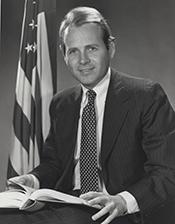
Mr. Speaker, I rise in strong support of this rule for a very obvious reason. It is absolutely essential that we do everything that we can at this moment to ensure that our fellow Americans who are…
Mr. Speaker, I rise in strong support of this rule for a very obvious reason. It is absolutely essential that we do everything that we can at this moment to ensure that our fellow Americans who are in desperate need have that need met.
What is it we hope to do under this suspension rule? We want to make sure we provide for flexibility when it comes to the flood insurance program. That seems to me to be a strong bipartisan priority that we have.
What else do we want to do? We want to ensure that education assistance for non-Pell grant recipients gets to them.
What else do we want to do? One of the very important programs, the TANF program, Temporary Assistance to Needy Families, we want to make sure we can expedite that aid to these people who have been victimized by this storm just as quickly as we possibly can.
Mr. Speaker, a vote against this rule is in fact a vote which would deny us the opportunity to move as quickly as possible to provide that kind of aid relief.
Now, I know there is a lot of discussion over what it is that we will see for the structure for debate during consideration of this large, multibillion dollar supplemental appropriations bill. Nothing in this rule whatsoever, nothing in this rule whatsoever, Mr. Speaker, will in any way impinge on the ability of the chairman of the Committee on Appropriations, the gentleman from California (Mr. Lewis), and the ranking minority member, the gentleman from Wisconsin (Mr. Obey), from striking a unanimous consent agreement that would allow for an extension of debate as they consider that appropriations bill.
We all know how imperative it is that we act as quickly as we possibly can to not only address the three items that I mentioned, but to get the aid to those who need it on the dollar level. Why? Because we know it is quite possible that just this evening, as early as this evening, we could see the $10.5 billion that we, under a unanimous consent agreement appropriated at the end of last week, run out. And we do not want that to run out. We want to make sure that that continued flow of assistance can flow in as expeditiously as possible. The responsible thing is for us to come together in this time of crisis.
This Sunday marks the fourth anniversary of September 11. Tragically, 3,000 lives were lost in New York City, in Pennsylvania, and here in the metropolitan area. The projections are that as many as three times as many people, maybe even more than that, have lost their lives in this horrible crisis that we have seen take place in Louisiana and Mississippi. Now, Mr. Speaker, I believe that what we should do is just as we did following September 11 of 2001. We should come together, pass this rule with strong bipartisan support, move ahead with this appropriations bill, and, yes, work on a bipartisan unanimous consent agreement that will allow an extension of debate so that every Member who wants to have an opportunity to be heard on this can be heard. But do not vote ``no'' and impinge on our ability to meet this very important need.
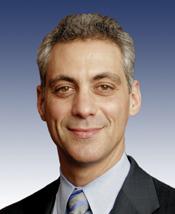
Mr. Speaker, I would like to thank my colleague from New York for yielding time. Mr. Speaker, our most important task right now is to help our fellow Americans rebuild their lives. The task of this…
Mr. Speaker, I would like to thank my colleague from New York for yielding time.
Mr. Speaker, our most important task right now is to help our fellow Americans rebuild their lives. The task of this Congress and the task for this Nation is to restore communities, help people rebuild their lives and have a retrospection of what happened. We must pinpoint the errors made prior to the storm and flooding. Failing to respond in a time of need, when fellow Americans have lost their lives, their loved ones, their homes, failing to respond in a time of need is unacceptable.
Identifying failures is not pointing fingers. It is pointing the way to improve the system for the future. We cannot solve a problem if we do not think we had a problem. We can both help Americans, which is our primary task, rebuild their lives, reestablish their communities, but we must also for all Americans understand what happened here so as it comes to future crises, future natural disasters, we are able and capable of responding. Because saying everything worked well, acting Pollyannish is unacceptable, as much as trying to point fingers and trying to get political advantage in this situation.
We can do this right. The American people ask the Congress to do this right.
What does it mean to help people rebuild their lives? First, there should be universal health care for all children 0 to 18. Second, a $3,000 education voucher for people going to college, GED, continuing their education. A housing program to get people in the communities back to work building their homes, highways and rebuilding all the infrastructure. Lastly, making sure the recently enacted bankruptcy law does not affect people in that area, freezing their credit at that time so they do not go into bankruptcy.
These are the types of things that Congress needs to do to help those Americans, our fellow Americans, get their lives and their communities back together and also taking the time to look into what happened here so this never, ever, ever happens again.
The American people deserve better; and in a time of crisis, they look to their fellow countrymen and their government, and this Congress must rise to the task to do that. Today, the way this is handled is not the right way. We can do better as we seek ideas from all corners to help our fellow Americans restore their lives.
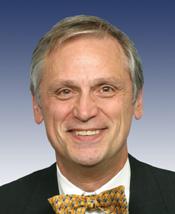
Mr. Speaker, I appreciate the gentlewoman's courtesy in permitting me to speak on this bill. Mr. Speaker, I have come to the floor of this House repeatedly over recent years using this specific…
Mr. Speaker, I appreciate the gentlewoman's courtesy in permitting me to speak on this bill.
Mr. Speaker, I have come to the floor of this House repeatedly over recent years using this specific example of New Orleans as a call to arms to change how we do business. I cannot tell my colleagues how disappointed I am that we are having before us today a proposal that does not provide an opportunity for this Chamber to adequately discuss what is at stake and to deal with opportunities.
The devastation of Hurricane Katrina has presented us with an unprecedented opportunity to focus the spotlight of public attention and political concern on how to do not just the best job of helping the victims of this tragic storm but in making it less likely that others suffer needlessly in the future. Preventing future devastation is the best way to honor the memory of thousands who have died and respect the losses of hundreds of thousands or more who are living.
But we are not going to have the opportunity now to come forward with important issues that bear on over $50 billion. We need to be debating how the Federal Government can use taxpayer dollars to put people, places, and property back in harm's way. We should be working to make sure that citizens are directly engaged in the work of disaster recovery and mitigation, planning the future of their communities and putting them to work immediately, the same way I saw when I was in the tsunami region earlier this year. In just 1 week we were already putting tsunami victims to work on a cash-for-work program restoring their communities.
We need to clarify the role that the Federal Government is going to play in disaster prevention, mitigation, and relief because we are throwing billions of dollars at problems that we could have taken steps to minimize in the beginning. Congress should encourage and support State and local responsibility for disaster prevention, mitigation, and recovery; and we must employ natural solutions wherever possible.
We cannot do that today. There is no reason that we are not able to have a rational discussion. I hope this is the last time the Committee on Rules treats us this way.
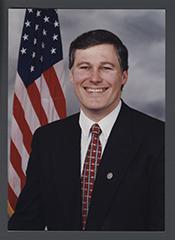
Mr. Speaker, this Labor Day weekend I flew from Seattle to Houston to join thousands of Texans to volunteer in the Astrodome to help these evacuees, and there I met an incredible family with such…
Mr. Speaker, this Labor Day weekend I flew from Seattle to Houston to join thousands of Texans to volunteer in the Astrodome to help these evacuees, and there I met an incredible family with such courage and grace, trying to keep their family together on the floor of the Astrodome.
A woman named Penny told me that her mother named Alice was trapped at a specific address on Bell Street in New Orleans, and I pitched in to try to help to get her rescued. For 3 days, the most powerful Nation in the world was incapable of going to a specific address on Bell Street and rescuing this 80-year-old lady named Alice.
While that was going on, a lot of the lower level FEMA people were working hard to effectuate that, but they were handicapped by a lack of senior leadership, senior leadership who failed to anticipate the breaching of the levees; senior leadership who failed to call for help, who waited 5 hours to call for help after landfall of the hurricane; senior leadership that allowed FEMA's job to protect us from hurricanes to be totally overwhelmed by the responsibility regarding terrorism.
This senior leadership led me to conclude, and millions of Americans to conclude, that we cannot have confidence in senior leadership at FEMA today. This is not a matter of finger-pointing or accountability. It is a matter of whether we have confidence in dealing with the next hurricane that is getting ready in the Atlantic Ocean right now. This is the middle. I heard one person say this is the third inning of a nine inning game of the hurricane season. We have to get this problem fixed now.
After the debacle at Pearl Harbor, America did not wait until the end of World War II to fix the problem that led us to be caught with our pants down at Pearl Harbor with such fatality, and we have suffered probably more fatalities here than we did at Pearl Harbor.
We need, on a bipartisan basis, to fix this problem now; and we need to help the President do that because of his attitude of saying, Brownie, you did a great job, it just will not wash with the American people. It is a shame that this rule will not allow Americans to get what they deserve, a working FEMA.
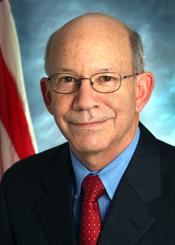
Mr. Speaker, I would suggest to the chairman of the Committee on Rules that more time for words would be great, but what would be better would be action by this Congress to fix a dysfunctional…
Mr. Speaker, I would suggest to the chairman of the Committee on Rules that more time for words would be great, but what would be better would be action by this Congress to fix a dysfunctional Federal Emergency Management Agency. Dysfunctional at the top, not at the bottom. People at the bottom want to get out there. The first responders want to be out there. They still do not have effective interoperable communications 4 years after 9/11.
Given the befuddled response at the top, I am not confident that this $51.8 billion we are going to borrow, indebting a generation of Americans of probably another $100 billion or $200 billion, will be well and effectively spent and get the relief and the rescue efforts and the rebuilding efforts to the people and the communities that are devastated.
We are not putting in place oversight and protection against crisis profiteering. We are not trying to improve the agency. It is the middle of a hurricane season. What if there is another tomorrow or next week? Will the terrorists wait until we are done with our natural disasters? No. We need to begin the review and oversight now. They say, Oh, you cannot do that in the middle of a crisis.
What is the greatest crisis this country has experienced in the last 100 years? I think it might have been World War II. In the middle of World War II, Harry Truman chaired a committee investigating war profiteering under FDR, the greatest President of the last century, and reforms were put in place. Congress did its job.
We need to improve FEMA. We need a better response. The first responders need better tools. The people that have been affected need effective relief, they need compassion, and they need assistance. Shoveling money at them and more words will not do it. We need to make some changes, and you are not going to allow any changes or any amendments here on this floor today, but you will allow us a few more words. We might get up to $1 billion a minute instead of $1.2 billion a minute.
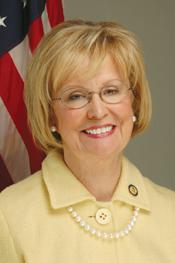
Mr. Speaker, I support the rule and the underlying bills. I would encourage FEMA to work with the Department of Education to utilize the Education for Homeless Children and Youth Program to meet the…
Mr. Speaker, I support the rule and the underlying bills. I would encourage FEMA to work with the Department of Education to utilize the Education for Homeless Children and Youth Program to meet the educational needs of all students displaced by this storm.
As we consider the rule and all of these bills, I think we have to remember the children. As part of the No Child Left Behind Act, the Education for Homeless Children and Youth Program requires that school districts immediately enroll homeless children. It provides children with much-needed stability and allows for the delivery of other critical services, including such things as health care and counseling.
The bill also addresses school transportation issues, assures that eligible children participate in Federal, State and local food programs, and allows for frequent moving as evacuated families find more permanent housing.
When we included this provision in No Child Left Behind we, frankly, never contemplated that it could be so useful and effective at this time of national crisis. We have happily discovered over recent days that this measure has provided a ready-made system of communication and contacts and information networks that could serve us well in this time of need.
The program also contains a funding structure that efficiently distributes Federal dollars to the local level. Utilizing the Education for Homeless Children and Youth Program would save time, money and allow more Federal dollars to flow more quickly to the areas in need. This program provides a tried and tested framework for States and school districts to meet the immediate educational and social service needs of homeless children displaced by Hurricane Katrina.
Encouraging FEMA and the Department of Education to utilize this program to coordinate relief efforts is a commonsense step that can quickly and dramatically improve assistance to displaced children.
I would urge support for the rule and the underlying bill.
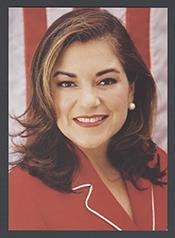
Mr. Speaker, on Wednesday, September 7, 2005, I was unavoidably absent due to a previously scheduled engagement. Had I been present and voting, I would have voted as follows: (1) Rollcall No. 464. On…
Mr. Speaker, on Wednesday, September 7, 2005, I was unavoidably absent due to a previously scheduled engagement.
Had I been present and voting, I would have voted as follows:
(1) Rollcall No. 464. On H. Res. 427, relating to the terrorist attacks against the United States on September 11, 2001, ``yes.''
(2) Rollcall No. 463. On H. Res. 428, expressing the sincere gratitude of the House of Representatives to the foreign individuals, organizations, and governments that have offered material assistance and other forms of support to those who have been affected by Hurricane Katrina, ``yes.''
(3) Rollcall No. 462. On H.R. 3668, the Student Grant Hurricane and Disaster Relief Act, ``yes.''
(4) Rollcall No. 461. On H.R. 3669, to temporarily increase the borrowing authority of the Federal Emergency Management Agency for carrying out the national flood insurance program, ``yes.''
(5) Rollcall No. 460. On H.R. 3673, further Emergency Supplemental Appropriations, Hurricane Katrina, 2005, ``yes.''
(6) Rollcall No. 459. On H. RES. 426, providing for consideration of motions to suspend the rules, ``no.''
(7) Rollcall No. 458. On H. RES. 426, providing for consideration of motions to suspend the rules, ``no.''
Show 1 more
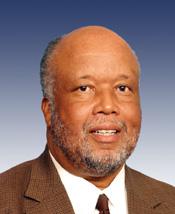
Mr. Speaker, I rise in opposition to this rule. Twenty minutes per side is not enough to argue a catastrophe of this size. The rule does not allow any amendments from our side. A number of Democratic…
Mr. Speaker, I rise in opposition to this rule. Twenty minutes per side is not enough to argue a catastrophe of this size. The rule does not allow any amendments from our side. A number of Democratic districts have been affected, those of the gentleman from Mississippi (Mr. Taylor), the gentleman from Alabama (Mr. Davis), and the gentleman from Louisiana (Mr. Jefferson), as well as myself. We do not have an opportunity for input into what relief opportunities we can give in our districts.
This is not right. If this is a democracy, we ought to have an opportunity to participate in providing for the relief of our particular districts.
The Republican side has taken a position that Democratic input is not needed. This is not the way to go. This is a democracy. We need a rule that allows for the maximum input from both sides.
I am sorry to say that even in this time of devastation, our Republican colleagues have decided that America should not pull together and work for the common good. Unfortunately, the people of Mississippi, Alabama and Louisiana are the ones who will suffer because of this lack of total input from Members of Congress.
Bill Text
2 versions available
        [Congressional Bills 109th Congress]
[From the U.S. Government Publishing Office]
[H. Res. 426 Engrossed in House (EH)]

H. Res. 426

In the House of Representatives, U.S.,

September 8, 2005.
Resolved, That it shall be in order at any time on the legislative day of
Thursday, September 8, 2005, for the Speaker to entertain motions that the House
suspend the rules. The Speaker or his designee shall consult with the Minority
Leader or her designee on the designation of any matter for consideration
pursuant to this resolution.
Attest:

Clerk.