Providing for the consideration of the resolution (H. Res. 437) to establish the Select Bipartisan Committee to Investigate the Preparation for and Response to Hurricane Katrina.
Legislative Activity
Stay on top of the latest movement without scrolling through every action
Motion to reconsider laid on the table Agreed to without objection.
September 15, 2005 • 12:23 PM
View full timeline
Introduced in House
September 14, 2005
The House Committee on Rules reported an original measure, H. Rept. 109-221, by Mr. Dreier.
September 14, 2005
Placed on the House Calendar, Calendar No. 85.
September 14, 2005
Rule provides for consideration of H. Res. 437 with 1 hour of general debate. Previous question shall be considered as ordered without intervening motions except motion to recommit. Measure will be considered read. Bill is closed to amendments.
September 14, 2005 • 9:16 PM
Considered as privileged matter. (consideration: CR H7965-8014)
September 15, 2005 • 10:39 AM
DEBATE - The House proceeded with one hour of debate on H. Res. 439.
September 15, 2005 • 10:39 AM
On ordering the previous question Agreed to by the Yeas and Nays: 222 - 193 (Roll no. 471). (consideration: CR H8013; text: CR H8013)
September 15, 2005 • 12:11 PM
Passed/agreed to in House: On agreeing to the resolution Agreed to by recorded vote: 221 - 193 (Roll no. 472).(text: CR H7965)
September 15, 2005 • 12:23 PM
On agreeing to the resolution Agreed to by recorded vote: 221 - 193 (Roll no. 472). (text: CR H7965)
September 15, 2005 • 12:23 PM
Motion to reconsider laid on the table Agreed to without objection.
September 15, 2005 • 12:23 PM
Voting History
2 votes recorded • Roll call available
Floor Debate
22 membersWhat members said about H.Res. 439 on the floor
DD LMS
LMS NP
NP ALH
ALH TC+17
TC+17
Floor Debate
22 membersWhat members said about H.Res. 439 on the floor
Madam Speaker, pursuant to House Resolution 439, I call up the resolution (H. Res. 437) to establish the Select Bipartisan Committee to Investigate the Preparation for and Response to Hurricane…
Madam Speaker, pursuant to House Resolution 439, I call up the resolution (H. Res. 437) to establish the Select Bipartisan Committee to Investigate the Preparation for and Response to Hurricane Katrina, and ask for its immediate consideration.
Madam Speaker, I ask unanimous consent that all Members may have 5 legislative days within which to revise and extend their remarks on H. Res. 437.
Madam Speaker, I yield myself such time as I may consume.
Madam Speaker, this debate that we are beginning here is about a very clear choice that is before us. Will we take the responsibility delegated to us as Members of the People's House by the framers of our Constitution to ask the hard questions, admit our mistakes and improve our Nation's government for the benefit of all? Or will we rely on proxies to do our work for us because we have judged ourselves incapable of carrying out our constitutional duty to ensure that we are providing for the general welfare, which is what the preamble of the Constitution clearly states we have a responsibility to do.
I, for one, believe as James Madison, the father of our Constitution, did, that the Constitution vests this responsibility with us. I am ready to accept the challenge as a Member of the House of Representatives. I believe that we have already started this work.
Last night, in the Committee on Rules, many of my Democratic colleagues asked excellent questions. The gentlewoman from New York (Ms. Slaughter), my friend from Rochester, asked very thoughtful and important questions that need to be raised. I noted that the gentlewoman from Sacramento, California (Ms. Matsui) similarly asked some very, very good questions that should be posed to those dealing with the preparation for and the aftermath of Hurricane Katrina.
Just yesterday the governor of my State, Pete Wilson, and I should say the former governor of my State, Pete Wilson, testified. I do know very well that we have a new governor. His name
is Arnold Schwarzenegger, I should say for the Record. But Pete Wilson testified before the Senate Committee on Homeland Security and Governmental Affairs. It was a hearing that they held on recovering from Hurricane Katrina, and he did this to share his experience and very valuable lessons that he learned from dealing with many, many very, very difficult challenges, disasters that we faced in California, earthquakes, fire, mudslides, the devastation that we faced.
I will tell Members that Pete Wilson handled every single one of those challenges in his 8 years as governor extraordinarily well, and we learned tremendously from the tragedies that we faced in those instances.
As he said, obviously while nowhere near the scale of Hurricane Katrina, and we all know that Hurricane Katrina has been described as the worst natural disaster to ever hit our country, some of the things that were faced in California, there were terrible California floods in January of 1997 that resulted in eight deaths, the evacuation of 120,000 people, relocation of 55,000 people to 107 shelters, damage or destruction of 30,000 residences and 2,000 businesses, and total damage estimates at about $2 billion. That in 1997.
I talked earlier today, during the rule considering the establishment of this committee, about the Northridge earthquake in 1994, and it resulted in 51 deaths and injured over 9,000 people, left 22,000 people homeless.
The interesting thing, as we look at these figures, is we all know that they pale in comparison to the tragedy of Hurricane Katrina. But, Madam Speaker, I will tell the Members that these were learning experiences for us. One of the things that was most impressive to me and one of the things that we have already found here to be very beneficial was the fact that the private sector has stepped forward and is in many ways doing things the government cannot do. And I think it is often joked about the fact that the private sector is there, ready to meet a need, a need that the government in no way could meet.
We know that for an emergency response like that we faced, clearly the government had to step in. When I say government, I am talking about the local government, the State government, and the Federal Government as well. The Federal Government, obviously, is not the first. It is really the last step. We know that State and local governments have the responsibility to make those recommendations to the Federal Government and then bring them in. We also know that at virtually all these levels of government, we have heard the leadership, from President Bush when it comes to the Federal Government, to Governor Blanco in Louisiana, state that things were not handled as well as they could have been; and both President Bush and Governor Blanco, Republican and Democrat, have taken responsibility for dealing with this situation.
I mentioned the fact that we learned things, and I mentioned the private sector. And one example that I like to point to, and I have got this right here, is in the 1994 Northridge earthquake, we had the Santa Monica Freeway collapse over La Cienega Boulevard. The Santa Monica Freeway is the most traversed interstate in the country. A quarter of a million vehicles a day go on the Santa Monica Freeway right over the La Cienega off-ramp. And the earthquake took place in January of 1994, and I happened to be by there, and one of the police officers let me go up, and I actually took a chunk of the Santa Monica Freeway. This has been sitting in my living room out in California for a long period of time. Most people think it is a piece of the Berlin Wall, but it is actually from the Santa Monica Freeway. We can see the rebars here, and this is obviously the freeway itself. And when it collapsed, we saw Southern California, clearly the most populous spot in the Nation, come to a standstill because of the importance of Interstate 10, the Santa Monica Freeway there.
Some projected that it would take as much as a year or 2 years to repair this freeway that had collapsed over La Cienega Boulevard. And Governor Wilson stepped up to the plate and did everything that he could to provide incentives to ensure that it got completed. He wrote a piece on this the day before yesterday in The Wall Street Journal in which he referred to the fact that people said it would take a long period of time.
They looked and established this contract with the Myers Company and they were told that they would have a $200,000 fine for every day beyond what they had contracted for if they did not complete it, but they got a $200,000 bonus, Madam Speaker, for every day that they got this completed earlier than had been projected.
As I said, some predicted it would take a year or 2 years to complete this. Madam Speaker, in 66 days the Santa Monica Freeway reopened, working 24 hours a day, 7 days a week.
This is the kind of incentive that we need to put in place to ensure that they deal with this circumstance. And, ironically, Interstate 10 is the exact same route that is going into New Orleans that collapsed following Hurricane Katrina and the breaking of the levees.
So I think that we have the ability to respond, to deal with this, and the United States Congress is in a position to make sure that we look at encouraging the most creative ways to address this challenge, look in a bipartisan way at these problems.
And we have set guidelines. We have got deadlines. But, obviously, if it is necessary, those can be moved if it is essential. But we have a desire to ensure that, as an institution, we come together as the elected representatives of the American people to do our job. And I am convinced that we are going to have the ability to do that, and we look forward to seeing Members of both political parties join this very important effort, and I am convinced that they will be able to look at all levels of government and the private sector and get to the bottom of that.
Madam Speaker, I reserve the balance of my time.
Madam Speaker, I yield myself such time as I may consume.
Madam Speaker, before I yield time to my friend from Pasco, I would just like to say over the last 24 hours I have been hearing about this ABC/Washington Post poll to which my friend from Rochester has regularly referred, and I have actually taken the opportunity to look closely at the poll itself.
We all know that when one looks at a public opinion poll, it depends on how the question is asked. We continue to hear that 76 percent of the American people support an independent commission and they do not want Congress to take this action. Actually, I looked at the poll itself, and I would like to enlighten my friend from Rochester, if I might. Question No. 19 says: ``The Republican leaders of Congress have called for a full-scale congressional investigation of the government's hurricane preparedness and response effort. Apart from this investigation, would you support or oppose an investigation by an independent commission like the one that investigated the 9/11 attacks?'' Seventy-six percent support that. Well, of course. Who would not support that? Who would not be supportive of that notion? But we continue that somehow the American people oppose having Congress do its job and they only want this independent commission of unelected people to do their job.
Then one has to look at Question No. 18 just before that. And I hesitate to raise this, but the fact that this public opinion poll has been continually utilized as the bible when it comes to consideration of our legislative proposal here, Question No. 18 says: ``Do you think Democrats who criticize the way the Bush administration has handled the hurricane response mainly want to find out what went wrong or mainly want to use the issue for political advantage?'' And, Madam Speaker, 60 percent said that Democrats want to use this issue for political advantage rather than trying to get at what went wrong.
I would have never brought this up, Madam Speaker, had I not heard that 76 percent of the American people are opposed to having Congress do its job and instead want an independent commission.
Madam Speaker, I yield 3 minutes to the very distinguished gentleman from Pasco, Washington (Mr. Hastings), subcommittee chairman from the Committee on Rules and the chairman of the Committee on Standards of Official Conduct.
Madam Speaker, I yield myself such time as I may consume.
Let me just respond to a couple of points. First of all, under consideration of the establishment of this select committee, we will be operating under the standard rules of the House. The standard rules of the House allow not individuals, but allow a committee to come together and determine who is subpoenaed. And I will tell my colleagues that I know with absolute certainty that the people who are providing the leadership of this committee will clearly want to be in consultation with the Democrats, with members of the minority to ensure that any witness who could help get to the bottom of this problem, to the root of this problem is called before the committee.
And I will tell my colleagues why. I do not represent Hollywood, California, by the way, I should say for the record; I represent areas around Hollywood in suburban Los Angeles, an area that has been impacted by a wide range of disasters.
I think it is absolutely reprehensible to believe that any Member of this House, Democrat or Republican, would want to do anything that would jeopardize the ability to find out exactly what happened leading up to Hurricane Katrina and exactly what happened in the aftermath of Hurricane Katrina. So I can assure my colleagues that I am convinced that everyone is determined to do that.
I should say that, as I sat down, one of my staff members reminded me that I mentioned this poll from The Washington Post and ABC that is the model, I guess, that we are following for the establishment of this committee; and even though it said that 60 percent of the American people believe that the Democrats would use this issue for political advantage rather than trying to get to the root of this problem, I do not believe it for one minute. I hesitate to say that the American people are wrong, but I will tell my colleagues this: I do not believe that the American people are right when they claim, to a number of 60 percent, that Democrats do not want to get to the root of this problem, which is what they have said in this much-hailed ABC News-Washington Post poll.
I yield to the gentleman from Mississippi.
Madam Speaker, reclaiming my time, I will say that that is exactly what exists. The rules of the House that apply for the subpoena process for other committees in the House will apply similarly for this new select committee that is charged with dealing with this circumstance.
Madam Speaker, I am happy to yield 2 minutes to the gentleman from Lafayette, Louisiana (Mr. Boustany), another individual who was victimized by Hurricane Katrina.
Madam Speaker, I have listened to these terms: ``sticking our head in the sand''; ``ignoring the problem.'' I have no idea what anyone is talking about when they say things like that. It is absolutely absurd to believe that any Member of this institution does not want to do everything possible to ensure that we find out what happened leading up to Hurricane Katrina and what has happened since Hurricane Katrina has hit.
Because we, at this moment, live with the threat of Hurricane Ophelia off the Carolinas, so we are moving as expeditiously as possible to get this bipartisan committee put together, where the committee itself will determine how someone is subpoenaed, just as is the case with every committee.
I hope very much that the gentleman from Mississippi is appointed to serve as a member of this select committee. He obviously has strong feelings. He has made it very clear that, as someone who was victimized by Hurricane Katrina, he should in fact be able to subpoena; and I can assure him, under the standing rules of the House, as a member of the committee, if the minority leader chooses to appoint him to that committee, he will be able to participate in determining who testifies before that committee.
So we are in this together, Madam Speaker, whether Members like it or not.
Again, I do not believe that Washington Post poll that the Democrats want to use this for political gain. I believe the Democrats, along with Republicans, want to find out exactly what has created this challenge at all levels of government and even in the private sector, with which we are contending at this point.
Madam Speaker, I yield such time as he may consume to the gentlemen from Florida (Mr. Shaw).
Madam Speaker, coming together is what this is all about. This is a bipartisan committee that has been proposed by the Speaker, and we look forward to seeing those minority Members who are going to be part of this process.
Madam Speaker, I yield 2 minutes to the gentleman from Miami, Florida (Mr. Lincoln Diaz-Balart), the very distinguished chairman of our Subcommittee on Budget and Process Reform.
Mr. Speaker, I reserve the balance of my time.
Mr. Speaker, I yield myself the balance of my time.
Mr. Speaker, the United States of America has gone through the worst natural disaster in our Nation's history. Time and time again, we have been hearing people say that. It is unimaginable what people have gone through. I have to admit I cannot imagine the suffering. I have seen it on television, I have heard it reported by my colleagues on both sides of the aisle who have been victimized themselves, but it is impossible, it is impossible to imagine how horrible this has been.
We do know one thing, both President Bush, Republican, and the Democratic governor of Louisiana, Governor Blanco, said that mistakes were made
leading up to Hurricane Katrina and mistakes were made in the aftermath of Hurricane Katrina. Everyone has acknowledged that.
We have an opportunity, we have an opportunity to come together, as we have in previous disasters, and deal with it, meet our constitutionally mandated responsibility for oversight of the executive branch to investigate and look at what happened at all levels of government, local government, State government, the Federal Government, even the private sector. We have a chance, Mr. Speaker, now to do that.
That is exactly what the gentleman from Illinois (Speaker Hastert) has proposed, working with our colleagues in the other body, to come together with a committee that will allow Members of both political parties to raise any question that they want, to allow this committee to have the authority to subpoena witnesses, bring them forward. I have to say that it is very obvious to me that this is our chance to do it.
We are dealing with a hurricane right now in the Carolinas. We are dealing with other potential disasters on the horizon. I believe I have a responsibility to the people whom I represent, I have a responsibility to all the American people, just as we all do, to make sure that the problems that we faced leading up to and in the aftermath of Hurricane Katrina never happen again.
Mark my words, everyone, Democrat and Republican alike, wants to ensure that we are able to address those concerns. That is exactly what the establishment of this commission will do.
I am perplexed, Mr. Speaker, with the arguments that I have heard from my colleagues on the other side of the aisle. They want to increase their level of participation, they want to be able to get to the bottom of this, and yet they are saying let us give up our responsibility under article 1, section 8 of the Constitution that charges us with this duty.
This is our responsibility. This is a very important part of the reason the American people elected us as representatives, to come here and do their bidding, to do their job, to make sure that we find the answers to these very important questions.
I hope that we will be able to have that sense of solidarity, and so I am saying on behalf of the gentleman from Illinois (Speaker Hastert), I know that he looks forward to having our colleagues on the other side of the aisle appointed, along with those who he will appoint to serve on this very important committee, and with that, with our quest of trying to ensure that we never go through what we have gone through in the past several weeks, I urge support of this very important resolution.
Mr. Speaker, I yield back the balance of my time.
Mr. Speaker, I object to the vote on the ground that a quorum is not present and make the point of order that a quorum is not present.
Mr. Speaker, by direction of the Committee on Rules, I call up House Resolution 439 and ask for its immediate consideration. Mr. Speaker, for the purpose of debate only, I yield the customary 30…
Mr. Speaker, by direction of the Committee on Rules, I call up House Resolution 439 and ask for its immediate consideration.
Mr. Speaker, for the purpose of debate only, I yield the customary 30 minutes to the gentlewoman from Rochester, New York (Ms. Slaughter), pending which I yield myself such time as I may consume. During consideration of this resolution, all time yielded is for the purpose of debate only.
(Mr. DREIER asked and was given permission to revise and extend his remarks.)
Mr. Speaker, House Resolution 439 is a closed rule providing for 1 hour of debate for consideration of H. Res. 437, a resolution establishing a select bipartisan committee to investigate the preparation for and response to Hurricane Katrina.
The rule waives all points of order against consideration of the bill and provides one motion to recommit which may not contain instructions.
Mr. Speaker, the human suffering and physical damage wrought by Hurricane Katrina is heart-wrenching and overwhelming. We all know that very well. Lives have been lost and uprooted. Families are separated without homes and without jobs.
Our initial focus has been on restoring hope and rebuilding community on the gulf coast. With great urgency Congress came together and with virtual unanimity passed legislation to fund the very important relief efforts. Over $60 billion has been appropriated so far. Also critical has been the outpouring of support and generosity from fellow Americans and very importantly from 94 countries around the world. From small businesses to large corporations, people are pitching in.
That said, as President Bush has stated, there were aspects of the immediate response to Hurricane Katrina that were not acceptable. He said that this week, and I am sure that it will be made clear in the remarks that he gives to the Nation this evening.
Already we have seen the head of the Federal Emergency Management Agency resign. Clearly, many lessons are to be learned from what has happened. As debris is removed, water recedes and homes are rebuilt, we in Congress must now assume our very serious and consequential constitutional oversight role of the executive branch and Federal agencies so that we can find out exactly what went wrong and what went right in the early response to Hurricane Katrina.
We need to get to the bottom of what happened, when it happened and why it happened.
Mr. Speaker, to fulfill our oversight responsibility, we are following precedent and honoring tradition by creating a bipartisan select committee to look at the response of the government to Hurricane Katrina. This select committee will allow us to take a sober, serious, nonpartisan look at the development, coordination and execution of relief by State, local and Federal authorities.
At the same time, we must take great care not to interfere with the ongoing Hurricane Katrina recovery efforts. Critical personnel are still on the ground and actively involved in a time-sensitive, decision-making process. Congress can help uncover a better way forward, but it should not disrupt the progress that is being made at this moment.
Mr. Speaker, this rule serves as the most practical vehicle by which to consider this critically important legislation. I urge my colleagues to support the rule and the underlying legislation.
Mr. Speaker, I reserve the balance of my time.
Mr. Speaker, I yield myself such time as I may consume.
As I prepare to yield to my friend from Charleston, let me just say that the short answer to the question posed by my friend from Rochester about why it is we would not establish a commission, it is very clear. Article 1, section 8 of the Constitution states it, that we have to do our job. We have the responsibility to deal with this issue.
There are very important questions that have been raised by Democrats and Republicans and people from the outside community; and we, as the representatives of the people, have the responsibility to get to the bottom of this. That is what the establishment of this bipartisan committee is, in fact, going to do.
Mr. Speaker, I am happy to yield 2 minutes to the gentlewoman from Charleston, West Virginia (Mrs. Capito), my very good friend and hardworking member of the Committee on Rules.
Mr. Speaker, I yield myself such time as I may consume, and as I prepare to yield to my friend from Moore, Oklahoma (Mr. Cole), I want to say to my good friend from Massachusetts that it is very clear that Members of the United States House of Representatives do have the ability to deal with a disaster and at the same time engage in a very, very important investigatory process.
It is also very important to note that this is not going to simply be Republicans asking questions of other Republicans. As I said earlier, and I know my friend from Rochester raised this when she said it was nice of me to say that Democrats would have the opportunity to ask questions, but we know that Democrats, by virtue of this being a bipartisan committee, will be able to be deeply involved and engaged in this process as well.
Once again, I think it is important to note, as my colleague and friend from West Virginia said, that we are the elected representatives of the American people and this is our constitutionally mandated responsibility which we should not pass on to someone else.
Mr. Speaker, I yield 3 minutes to the gentleman from Oklahoma (Mr. Cole), a hard-working member of the Committee on Rules.
Mr. Speaker, I yield 2 minutes to the gentleman from Marietta, Georgia (Mr. Gingrey), a hard-working member of the Committee on Rules.
Mr. Speaker, I yield myself such time as I may consume.
Mr. Speaker, as we deal with this great challenge, one cannot help but think back to the days following one of the most tragic events in our Nation's history, that being, of course, the attacks on the World Trade Center, flight 93 going down in Pennsylvania and, of course, the plane hitting the Pentagon. We all know that, following that tragedy, Democrats and Republicans came together. They came together committed to ensuring that we would never see the kind of terrorist threat that happened on September 11 hit the United States or our allies or anyone in the world again. And that really embarked us upon this massive global War on Terror, and that has been the focus of the Federal Government. We know that the top priority on September 11, 2001, became this bipartisan goal of trying to deal with the global War on Terror.
Mr. Speaker, I am very proud of the Democrats in this House who have come together in a bipartisan way to work with Republicans in our shared goal of winning the global War on Terror. It is an important struggle, and it is one which many say will last beyond our lifetimes, but I am convinced that Democrats and Republicans will continue to work together to ensure that we win that global War on Terror.
We know that 2\1/2\ weeks ago we faced another kind of disaster. It was a natural disaster that hit our fellow Americans, our fellow citizens, on the gulf coast. And we know that, as we sit here today, another hurricane, Hurricane Ophelia, continues to pose a threat in the Carolinas. And I will tell the Members, as I stand here at this moment, Mr. Speaker, I live constantly with the prospect of a massive earthquake hitting the largest, most important State in the Union, which I am proud to represent here.
We in California deal with the threat of fires on a regular basis. I represent the Angeles National Forest, and that threat is a very serious one. And in the wake of those fires following that, we, of course, have terrible mudslides which impact tremendous numbers of people.
We have gone through disasters in the past. Obviously, as President Bush has said, this is the worst natural disaster in our Nation's history, Hurricane Katrina. But we have faced many, many struggles. In California, one of the most prominent was the Northridge earthquake on January 16 of 1994. I know my friend from San Francisco, the distinguished minority leader, suffered the Loma Prieta quake.
And I will say that, having gone through all of this, Mr. Speaker, it is absolutely absurd, it is absurd, to believe that any Member of this House, that any Member of this House would not want to get to the truth of exactly what happened in the case of Hurricane Katrina.
Now, earlier this week, President Bush came forward and said that he takes full responsibility for the Federal Government's problems when it came to the preparation for and the response to Hurricane Katrina. Just yesterday, Governor Blanco, the Democratic Governor of Louisiana, said that she takes responsibility for what took place in her State.
Now, Mr. Speaker, we have a Republican President and a Democratic Governor coming forward and saying they take responsibility for their roles in the governments that they serve, the Federal Government and the State government.
The gentleman from Illinois (Speaker Hastert) has come forward saying that it is very important for us to work in a bipartisan way. He has tried to work with the minority leader to make sure that, in appointing this select committee, we will have a chance to work in a bipartisan way. Speaker Hastert has just called for members of the Committee on Appropriations to go to the gulf coast to look at this situation and to report back to us, because the very important responsibility of oversight right now that the Committee on Appropriations has over the $60 billion-plus that we, in a bipartisan way, have appropriated to deal with this, needs to be addressed. So this notion that there is not a bipartisan commitment to get to the bottom of this is absolutely ludicrous.
I want to make sure that if my State faces an earthquake, a fire, a mudslide that we are able to have the best response possible. I will tell my colleagues that this bipartisan committee is something that I think can play a very important role in ensuring that for all of us who face the prospect of a disaster in our States that we will be able to address it in a better way.
Mr. Speaker, I am a proud institutionalist. I know that is not a popular thing to say; but I serve on the Committee on Rules, and by virtue of that, I think it makes me an institutionalist. This is my 25th year serving here, and I am proud of the role that I have been able to play in trying to address very important institutional concerns, and we have been able to address many issues in a bipartisan way.
Now, I will acknowledge that, on occasion, the Committee on Rules can be a very partisan place; but on occasion we also can be very bipartisan. We just reported out a rule that enjoyed strong bipartisan support dealing with Coast Guard reauthorization, and passage of rules like that are noncontroversial, they do not get attention, and those are things that we have worked on. In fact, I would argue that we do more things coming out of even the Committee on Rules in a bipartisan way than we do the things that we do that are very, very strident and partisan. But if you look at other committees around this place, Mr. Speaker, such as the Committee on Transportation, the Committee on Energy and Commerce, the Committee on Financial Services, you can go right down the line, Democrats and Republicans come together to address major public policy concerns that are out there.
Now, Mr. Speaker, everyone wants to make sure that no one suffers again as the people have along the gulf coast. I do feel for our colleague Mary Landrieu in the other body, and the gentleman from Mississippi (Mr. Taylor); but I also think it is important for us to note that in the other body, our colleague Trent Lott lost his home. We have seen tremendous loss from people like the gentleman from Louisiana (Mr. Jindal) on our side. So the point is that this is a disaster which has impacted Democrats and Republicans, and that is why I believe that it is incumbent upon us.
Because article I, section 8 of the U.S. Constitution makes it very clear that we have the responsibility for congressional oversight, oversight of the executive branch; and this bipartisan select committee, Mr. Speaker, will focus not just on the Federal Government. It will focus on State government, on local governments, on even private entities that have been involved in this process.
Accountability is something that an independent commission will not have anything to do with. The 9/11 Commission was not accountable at all. We are
accountable as the elected representatives of the American people to the American people. And I think that it is very clear that moving quickly is the right thing to do. The reason that I believe that it is important for us to move quickly is that, as I said, Hurricane Ophelia is at this moment posing a threat to the Carolinas, and there are other disasters on the horizon.
I believe that Democrats and Republicans should come together. The Speaker, again, has reached out to the Democratic leader and very much wants to have appointments made, and Democrats will be able to ask any question that they want; they will be able to participate in the process of bringing witnesses before the committee. Again, everyone wants to make sure that we take the steps to ensure that this never happens again.
Mr. Speaker, I urge my colleagues to support this rule. I urge my colleagues to support the underlying legislation which will establish this very important committee so that we can address this question and ensure that the American people will not go through what we have seen happen in the last several weeks.
Mr. Speaker, I yield back the balance of my time, and I move the previous question on the resolution.
Mr. Speaker, I yield myself such time as I may consume. Mr. Speaker, on Tuesday, President Bush said that he took responsibility for the recent failure of the Federal Government to fulfill its…
Mr. Speaker, I yield myself such time as I may consume.
Mr. Speaker, on Tuesday, President Bush said that he took responsibility for the recent failure of the Federal Government to fulfill its ultimate duty of saving the lives of its own people within its own borders.
But what does responsibility mean? If it means anything, it means the sincere concern for what has happened under his watch. It means stopping at nothing to find out why a Nation led by officials who claim to care about keeping Americans safe presided over a recovery effort which left behind so many innocent men, women and children as they were crying out for help. It means caring about the truth, and it means putting people before politics.
Today, this Congress has to offer the American people its own definition of responsibility. The appalling aftermath of Hurricane Katrina, which swept over citizens from Louisiana to Alabama to Mississippi, was the product of a combination of failures: failures of planning, failures of execution, failures of accountability. It is the responsibility of this body to examine why our Federal Government was behind so many of those failures.
There is only one way to do this and only one path the public will respect, only one route to producing real answers to real questions which the American people will trust. We need a 9/11-type commission for Hurricane Katrina. The 9/11 Commission was our government's response to the tragedy of September 11, 2001; and after an exhaustive study, it produced a report that was trusted by the American people and by the members of our government.
This trust was earned. The 9/11 Commission was not beholden to any interests besides those of its own integrity and the good of the country.
This honorable response to the tragedy of September 11 puts to shame what has been proposed today in the wake of Hurricane Katrina. What was perhaps our Federal Government's greatest failure to date to defend life at home is being met with a failure of leadership and openness and honesty in this Chamber today.
The Republican leadership of the House and Senate has called for the creation of an overtly partisan congressional committee to investigate the government's pre- and post-Katrina actions. They have specified that it would be a committee appointed by Republicans, with a Republican majority. They would give Republicans control of every aspect of the proceedings, and they alone would control who would be subpoenaed. They alone would control which documents could be examined, and they alone would control the scope of the investigation. They would have the power to take the investigation in any direction they chose, with no checks, no balances and no incentives to get real answers. They have nominated the fox to guard the hen house.
Mr. Speaker, I do not object to such a plan because Republicans would be in control as opposed to Democrats. I object to it because it is the Republican Party which controls the levers of government and, as such, manages FEMA and the Department of Homeland Security and every other Federal institution which must be examined.
The conflicts of interest that are present are so obvious that it is incredible anyone would deny them, but the members of the majority do not only do this, but they put forth one justification after another for their plan, each one less convincing than the one before it. They tell us that the structure of the committee is based on precedent and cite the bipartisan commission which investigated the Iran-Contra affair as evidence of this. Never mind that in that situation a Republican President was being investigated by a Democratically controlled committee, eliminating the political pressure to sweep truths under the rug.
Last night, in the Committee on Rules, they told us, rather incredibly, that nobody is better to evaluate in this body than its own Members. But the American people do not believe that. After all, accountability has not exactly been the hallmark of this Republican leadership.
This majority did not investigate those who concealed the Department of Health and Human Services' real estimate of how much the 2003 Medicare legislation that we passed would cost. It did not investigate the role of top Bush campaign contributors in writing Vice President Cheney's energy plan. It did not investigate the Valerie Plame scandal. It did not investigate what led to our dehumanizing and shameful treatment of detainees at Guantanamo Bay in Cuba and Abu Ghraib in Iraq.
Why did these investigations not take place? The majority has no answer, except promising to us that this time things will be different.
Last night, the chairman did offer his personal assurances again and again that the commission would allow the Democrats to ask questions. It probably never occurred to us that we would not have been able to do that, but this is ultimately a promise that he cannot keep.
Only allowing a hand-picked group of witnesses to be questioned prejudices the investigation before it has even begun. If a true interest in a fair, open, thorough and independent investigation runs that deep with my Republican colleagues, why not just create the independent panel?
That is the central question I have for my colleagues today. Why will you not support the creation of an independent commission? What are you afraid of? The American people clearly had faith in the 9/11 Commission model. Why do you not?
A commission controlled by the politicians of one party charged with investigating itself will face tremendous internal political pressure to eliminate embarrassing truths from the public eye, to defer blame and to hide facts. That is the fundamental truth, because we all know how politics works.
Politics, by the way, is exactly why those recent scandals I just mentioned were never investigated.
Is the creation of an independent commission an abdication of our responsibility? Absolutely not. In fact, exactly the opposite is the case. If we intentionally create a partisan, political investigation, that, Mr. Speaker, would be an abdication of our responsibilities.
The American people need answers, they need true accountability, and the only way that we can live up to our responsibility and give them answers they can trust is through an independent commission.
The public already overwhelmingly supports the creation of such an independent commission by 76 percent, and over 160 Members of this body, representing more than 100 million of our Nation's people, have already supported the creation of such a commission through a substitute resolution by the gentleman from Florida (Mr. Hastings), my colleague. Its findings would not just help us to prevent another terrible disaster from taking place, they would also help our government to regain its credibility in the eyes of the public.
A Newsweek poll from earlier this week found that fully 57 percent of the general population has doubts that government officials will respond well the next time a disaster strikes. Those doubts would not be reduced until people believe that a real, independent investigation of Katrina has taken place. But the findings of the congressional commission being proposed by the Republican leadership will be forever tainted by the pervasive public belief that details were overlooked or truths hidden for political reasons. We have plenty of evidence to believe that.
Mr. Speaker, 2 weeks ago, our government missed an opportunity to rise to the occasion when it was sorely needed. The consequences were worse than we could have imagined. We cannot afford to miss another opportunity here today, and we object to the fact
that this resolution is titled ``bipartisan commission'' because, truly, there will not be one.
Mr. Speaker, I reserve the balance of my time.
Mr. Speaker, I yield 3 minutes to the gentleman from Massachusetts (Mr. McGovern), a member of the Committee on Rules.
Mr. Speaker, if an independent commission is an abdication of our authority, why did we all vote unanimously to establish the 9/11 Commission?
Mr. Speaker, I am pleased to yield 5\1/2\ minutes to the gentleman from Florida (Mr. Hastings).
(Mr. HASTINGS of Florida asked and was given permission to revise and extend his remarks.)
Mr. Speaker, I am pleased to yield 4 minutes to the gentlewoman from California (Ms. Matsui), a member of the Committee on Rules.
Mr. Speaker, I yield 3 minutes to the gentleman from Mississippi (Mr. Thompson), the ranking member on the Committee on Homeland Security.
(Mr. THOMPSON of Mississippi asked and was given permission to revise and extend his remarks.)
Mr. Speaker, I yield 2\1/2\ minutes to the gentleman from Oregon (Mr. DeFazio).
Mr. Speaker, I yield 2\1/2\ minutes to the gentleman from California (Mr. George Miller).
(Mr. GEORGE MILLER of California asked and was given permission to revise and extend his remarks.)
Mr. Speaker, I yield 1 minute to the gentlewoman from California (Ms. Pelosi), the minority leader.
Mr. Speaker, I yield myself the balance of my time.
I ask for a ``no'' vote on the previous question so I can amend the rule and allow the House, instead of H. Res. 437, to consider H.R. 3764, which creates an independent 9/11-like commission to investigate the events involving Hurricane Katrina. I offered this amendment in the Committee on Rules last night, but, sadly, it was rejected.
I want to reiterate that 76 percent of Americans in a recent ABC/ Washington Post poll preferred that a commission of outside experts, similar in nature to the 9/11 Commission, and, in fact, I wish for the same people, to investigate the devastating events surrounding Hurricane Katrina, and that is not just Democrats that were asked. Sixty-four percent of Republicans in that same poll said they, too, supported an independent commission to investigate the government's preparedness and response effort.
Please vote ``no'' on the previous question so we can authorize an independent commission that will not be influenced by partisan politics instead of a Republican-controlled committee investigating the failings of a Republican-controlled administration. Too many people's lives were turned upside down because of the failure of governmental officials to adequately prepare for and respond to the impact of Hurricane Katrina. Let us not fail them a second time.
I urge a ``no'' vote.
Mr. Speaker, I ask unanimous consent that the text of the amendment be printed in the Record immediately prior to the vote on the previous question.
Mr. Speaker, I yield back the balance of my time.
Mr. Speaker, I object to the vote on the ground that a quorum is not present and make the point of order that a quorum is not present.
Madam Speaker, I demand a recorded vote.
Mr. Speaker, I thank the ranking member, the gentlewoman from New York (Ms. Slaughter), for yielding me this time and commend the members of the Committee on Rules for their important work on this…
Mr. Speaker, I thank the ranking member, the gentlewoman from New York (Ms. Slaughter), for yielding me this time and commend the members of the Committee on Rules for their important work on this subject, particularly the gentleman from Florida (Mr. Hastings) who is the author of the legislation, along with the gentleman from New Jersey (Mr. Menendez), the chairman of our caucus, on legislation which will bring truth to this situation, an independent commission, modeled after 9/11, respected by the American people.
Following the tragedy of 9/11, the American people expected and deserved
the truth. People of New York and New Jersey were strong advocates for such a commission. The people in Louisiana and Mississippi and the gulf region are displaced. They are trying to put their lives back together. They have lost their homes, their jobs, their livelihoods, their communities. They really do not have time to lobby Congress for an independent commission.
But our country is grateful to the 9/11 families because they not only gave us that commission to review that terrible tragedy that befell our country, they gave us a tradition of transparency and finding the truth and holding people accountable and hoping to do so in a way that prevents future loss of life.
We endanger the American people when we ignore the truth. So on behalf of the people in the region, I plead with my colleagues in this body to reject any sham committee. Supposedly bipartisan; not so. Supposedly bicameral; not so. One thing we know, it is a vehicle to whitewash, to whitewash, and not have a true look into what went wrong.
There was a natural disaster, a terrible natural disaster in the gulf coast States. It was compounded by a manmade disaster because the Federal response of FEMA fell so very, very short. And FEMA, now its Director has resigned, but FEMA is fraught with problems systemically throughout it.
That does not mean that many, many people who work for FEMA and many people, our first responders, police and fire, health care providers in the area and volunteers from every walk of life did not rise to the occasion. They certainly did, and we commend them for the sacrifice they were willing to make to rescue others in the time of the immediate recovery. But there are so many unanswered questions; and instead of having a sham, why can we not have a real commission to look into this?
So the choice on the floor today, we have heard all of this discussion over and over. The fact is that we should be spending our time figuring out how we are going to help the people of the region rebuild their communities, to create jobs, to educate their children, to rid themselves of the toxic, literally toxic, environment, and that is the situation that they are in there. Instead, we are wasting the public's time on a subject that is unworthy of this tragedy, and it did not have to be.
I certainly respect the congressional role of oversight. We have called for it over and over again, whether it was the war in Iraq or the price gouging at the pump of gasoline for America's consumers, whether it is Abu Ghraib or Guantanamo. Name it. There are so many subjects that this Congress has been delinquent in its duty in doing oversight. So I fully support congressional oversight by the committees of jurisdiction.
In order to expedite help to the region, I suggested to the Speaker that we have a truly bipartisan committee that could streamline how we would go forward. At the time, I intended it just to be on the positive side, and that was early, when Katrina was just hitting, and then when we saw things go wrong, we added the charge that we would see what went wrong. So the idea of this Congress having a role in terms of oversight in a bipartisan special committee is one that I supported. I suggested it.
But what the Republicans came back with was really a slap in the face to the people who were affected in the region. We owe them the truth. Why is this Congress afraid of the truth? Over and over again, Iraq, name it, price at the pump, why is this Congress afraid of the truth? Sometimes it is really important, as we try to find our common ground, we stand our ground where we cannot find that common ground, but we always have to come down in favor of the people, to yield on points. Because we are here to get a job done. Maybe not exactly the way we would want to get it done, but get a job done. So now, today, the Republicans are putting up an obstacle to doing just that.
So I urge my colleagues to honor the sacrifice, the situation, that has affected the people in the region by at least telling them the truth and vote against this committee today, to vote against this committee, to say come back to the drawing board when they want to have honesty in what we are doing. But, first and foremost, we must have a truly independent commission, again, in the manner of the 9/11 Commission that took testimony, that issued a report, that gave transparency and openness to the process and gave some level of truth to the American people.
Because the people in the gulf States, many of them affected are poor and economically disadvantaged and not as sophisticated, perhaps, as some of the people stricken with grief in the New York/New Jersey area at the time of 9/11, and in Pennsylvania and in the Pentagon. Because these people are of a different economic status and because they are living in shelters and the rest and not really able to speak for themselves to the Congress of the United States, we, the House Democrats, will speak for them in asking for the truth and appealing to our Republican colleagues for us to work together in a completely nonpartisan way to help meet their needs.
I know that some Members have visited the region, certainly those affected. The gentleman from Mississippi (Mr. Taylor) spoke with such eloquence on the floor yesterday. Senator Landrieu, in the Senate last week, brought the Nation to tears with her presentation on what she saw in her beloved State of Louisiana. And the gentleman from Louisiana (Mr. Jefferson) has told us firsthand of what he has seen there. The gentleman from Mississippi (Mr. Thompson), our ranking member on the Committee on Homeland Security, spoke from authority in standing on the committee but experience as a Mississippian. They know because they see firsthand.
I could only see secondhand, joining the gentlewoman from Texas (Ms. Jackson-Lee), the gentleman from Texas (Mr. Al Green), the gentleman from Texas (Mr. Gene Green), going to Houston to meet with the victims of Katrina in the Astrodome and also in the George R. Brown Convention Center. We saw children, little children, adorable little babies that we could hold in our arms, and 90-year-old great grannies, all of them, not the little babies, they did not speak for themselves, but their older siblings said, ``We want to go home.''
They praised the hospitality, the warmth, the generosity of the people of Houston. And they are to be commended. As I said when I was in Houston, I do not know of any city in America that could have risen to the occasion so quickly and so compassionately as Houston. Mayor White, Judge Eckels, the Commissioner of Harris County; Representative Noriega, so many people in the community came together to help the victims of Katrina. But still, with all of the respect that they extended to their guests, with all the health care, with all the care and feeding, still, of course, there is no place like home.
So let us find out how we can bring these people home. And a good way to have them come home and have confidence in the future that, should another hurricane strike, and we know that it will, that the precautions will have been taken, the accountability will be assigned, and that the people will be protected. We can do that by finding the truth. We can find the truth with the gentleman from Florida (Mr. Hastings), the gentleman from New Jersey's (Mr. Menendez) commission, Senator Clinton leading the way in the Senate on this important issue, and we can do it by rejecting this committee.
I stand open and welcome to any cooperation with the Republicans when the Speaker is ready to cooperate on true bipartisanship, true openness, and true accountability to the American people.
With that, I just close again to say that our hopes and prayers are always with the people of the region. It is our resolve that they will be made whole as soon as possible, and that has to be a bipartisan commitment.
Madam Speaker, I yield myself such time as I may consume. Madam Speaker, high talk from the majority follows the abysmally low performance of the Federal organizations that they oversee and that our…
Madam Speaker, I yield myself such time as I may consume.
Madam Speaker, high talk from the majority follows the abysmally low performance of the Federal organizations that they oversee and that our people trusted to protect them in their hour of need. And today we are told it is our constitutional duty to find out why the government was so unable to protect life here at home during and after Hurricane Katrina.
I would like to remind our friends on the other side that one of our constitutional duties as representatives of the will of the people is actually to represent the will of the people of the United States. So let the record show that as of today, according to the Republican leadership, the will of the American people no longer matters.
The fact that 76 percent of the citizens of our Nation want an independent commission to investigate the Katrina disaster does not mean a thing. The fact that over 60 percent of Republicans want an independent commission does not register with them either. Apparently, the people of the United States are to be patted on the head and told, Do not worry. We will find out what happened here.
The fact that thousands of men, women, and children are dead; the fact that hundreds of thousands more have become evacuees in the richest country in the world shows that we do not have everything under control. The fact that we cut corners and underfunded those responsible for maintaining the levees that protected New Orleans by tens of millions of dollars only so that later thousands of lives would be needlessly lost, tens of billions of dollars would have to be spent cleaning up the mess left behind shows that we do not have anything under control. That is really a case of being penny wise and pound foolish.
And now, to show how seriously it takes its constitutional responsibility to get the government back on track, to show that it is not interested solely in rhetoric but also in results, the majority has seen fit to create a partisan political body, which we all know will care more about the political survival of the leadership than the actual survival of the people.
How do we know this? Because the committee put forth by the majority is intentionally designed to be partisan. It has a Republican majority. It includes subpoena power controlled by the majority. And the scope of the investigation will be the whim of the
leadership of the majority. The idea of having a truly bipartisan commission to investigate the tragedy was never seriously entertained. If it was, joint subpoena power would exist in this bill, as would joint control of the committee's operation, scope, and direction.
Instead of this, platitudes promising cooperation and shared power have filled this hall, leaving no room for a resolution calling for either a truly bipartisan committee or, what would be infinitely better, the creation of an independent commission which will actually eliminate politics from what will otherwise be an incredibly politicized investigation.
All of this is obvious to nearly every observer, and yet the leadership tells the Democrats if we are objecting to their Republican- first agenda, we, the Members of the minority, are being partisan. Apparently, in the wake of disaster comes hypocrisy.
Along with its assurances of a fair and honest investigation of the failures of the Federal response to Katrina, assurances which are the product of wishful thinking as opposed to a sincere review of recent history, the majority puts forth empty arguments in favor of this bill.
We created the Department of Homeland Security and FEMA, so only we can investigate it, they argue. That means that this leadership also helped to create the systemic problems which caused DHS and FEMA to fail. What exactly is their incentive to publicize their lack of vision and errors in judgment?
As the gentleman from California (Mr. George Miller) said earlier today, it would be like nominating Enron to investigate stock fraud because they helped to perfect it, and it would not make much sense.
But the gentleman from California (Mr. Dreier) told us this morning that none of this matters. It would be absurd, he says, to think that any Member of this body would not want to get to the bottom of the failures. Madam Speaker, more absurd things happen in this House all the time. For example, some might say that appointing a man with absolutely no experience in emergency management to head the Federal Emergency Management Association was absurd, and yet nobody challenged that appointment until it was far too late.
Madam Speaker, I do not mean to say that the chairman and his colleagues do not care about improving our national preparedness for a future emergency, because I know that they do; but the fact that political pressures have in the past and will again in the future distort and in some cases destroy investigations of government failings when the investigations are carried out by us, this is so obvious that it should be beyond question.
The only real question left before us today is why does the majority find an independent commission to investigate the tragedy so objectionable? Would any of them like to claim here that the 9/11 Commission was a mistake? They all voted for it. Should we reject the findings of that body? Should we here and now state that because it was not run by those managing the government on September 11, 2001, for that reason, what it discovered was illegitimate? Is there anyone here who would like to state for the record that the creation of the 9/11 Commission was an abdication and denial of our constitutional responsibility as Members of the House of Representatives?
Not one Member of this body would make such a claim, and yet the majority makes this claim about the creation of a similar body to investigate what happened on the gulf coast.
There is only one explanation for it. Dare I say this absurd stance is control. The majority wants to keep the investigation under its control so it can make sure that the answers that the committee produces toe the party line. Thinking about crass political considerations when Americans are dying and are homeless, that, and only that, is an abdication of our constitutional responsibilities as Members of this Congress.
Madam Speaker, I reserve the balance of my time.
Madam Speaker, I yield 2 minutes to the gentleman from Mississippi (Mr. Taylor), a man who knows of what he speaks.
Madam Speaker, I yield 4 minutes to the gentleman from New Jersey (Mr. Menendez).
(Mr. MENENDEZ asked and was given permission to revise and extend his remarks.)
Madam Speaker, I yield 2 minutes to the gentleman from Maryland (Mr. Hoyer).
Madam Speaker, I am pleased to yield 2 minutes to the gentleman from Texas (Mr. Doggett).
Madam Speaker, I yield 2\1/2\ minutes to the gentleman from New Jersey (Mr. Pascrell), a member of the Homeland Security Committee and ranking member of the First Responder's Committee.
Mr. Speaker, I yield 4 minutes to the gentleman from California (Mr. Waxman).
Mr. Speaker, I yield 3 minutes to the gentleman from Illinois (Mr. Emanuel).
Mr. Speaker, I yield 2 minutes to the gentlewoman from Texas (Ms. Jackson-Lee).
(Ms. JACKSON-LEE of Texas asked and was given permission to revise and extend her remarks.)
Mr. Speaker, I yield 1 minute to the gentleman from North Dakota (Mr. Pomeroy).
Mr. Speaker, I yield 1\1/2\ minutes to the gentleman from Connecticut (Mr. Larson).
Show 8 more
Mr. Speaker, I thank the gentlewoman from New York (Ms. Slaughter), the distinguished ranking Democratic member on the House Committee on Rules, for yielding me this time. A footnote right there, Mr.…
Mr. Speaker, I thank the gentlewoman from New York (Ms. Slaughter), the distinguished ranking Democratic member on the House Committee on Rules, for yielding me this time.
A footnote right there, Mr. Speaker. I hope the irony is not lost on the House that the gentlewoman, a New York Member, is being lectured to about homeland security issues and why there is no need for an independent Katrina commission. New Yorkers were told 3 and 4 years ago that there was no need for an independent commission on 9/11.
I note peripherally that the distinguished chairman of the Committee on Rules has other business and has left the floor; but I was prepared to ask him, and perhaps his replacement in the chair for the majority can answer for me, what did the House of Representatives do in the last 3 years with reference to the tragedy of 9/11? What we wound up doing, because the victims and New York pressed forward, was establishing an independent commission.
The chairman pontificates that we should exercise our constitutional mandate; and so does his replacement, my friend and colleague on the Committee on Rules, say what our constitutional duty is. Every one of us is mindful of our constitutional duty. But are you then prepared to admit that we did not exercise it correctly in the 9/11 Commission period and that is why the 9/11 Commission came into existence in the first place?
Last year, as we all know, four hurricanes ravaged my home State of Florida and some of the gulf coast. Three of them literally destroyed parts of the district that I am privileged to represent. In the immediate and long-term aftermath, our communities saw FEMA's shortcomings. We saw that a once-reliable agency had been placed on the back burner as an afterthought in the Department of Homeland Security. Natural disaster preparedness and response programs have become trapped in a homeland security bureaucracy.
FEMA has lost its focus, and Floridians and others know that. Our delegation literally begged the committees of jurisdiction to hold hearings on what we saw in Florida. I even introduced bipartisan legislation in March with our colleague on the majority side, the gentleman from Florida (Mr. Shaw), to address what we perceived to be FEMA's largest problems. Yet every time we took our concerns to the committees, we were told it is not a big enough problem to consider on its own. Our staff was told we do not think that an oversight hearing is needed.
Well, Mr. Speaker, what America saw in the gulf coast resembles the Federal Government's absolute incompetence that Florida saw last year. Despite a whole lot of lip service, nothing has changed.
The 9/11 Commission was created to provide a full and complete accounting of the 2001 terrorist attacks. Implicit in this mandate is the simple fact that Congress alone would not or could not provide such a full and complete accounting. There is no reason to expect that the Republican Katrina commission will do any better.
That is why I and the gentleman from New Jersey (Mr. Menendez) and 156 of our colleagues yesterday introduced H.R. 3764, legislation establishing a real independent commission, immune from political influence and absolute partisanship. And while they cannot officially cosponsor our bill, a significant part, 76 percent, of the American people agree with us. They question this Congress' ability to exercise real oversight and are calling for an independent and bipartisan Katrina commission.
Supporting the American people's concerns, you, Mr. Speaker, said at one point, and I quote, ``Our party controls the levers of government. We're not about to go and look beneath a bunch of rocks to try to cause heartburn.'' Put another way, Mr. Speaker: we helped create this mess, and we are not going to be able to investigate it ourselves. So forgive me, Mr. Speaker, if I question the majority's ability to conduct effective oversight with this type of political candor.
Substantively, the Republican plan is partisan. And because my colleagues say it is bipartisan does not make it so. It is inadequate. In stark contrast to the 9/11 Commission, Republicans outnumber Democrats on the majority's partisan Katrina commission. In contrast to the 9/11 Commission, which was given 18 months to do its job, the majority's partisan Katrina commission is only given 5 months. As the chairman put it last night, do it quick, do it fast. Quickly, he said.
Despite the 9/11 Commission's $15 million budget to do its job, the majority's commission they propose is only given $500,000.
Footnote right there. What about the committees of jurisdiction already in existence in Congress? And what about creating a circus atmosphere that drains resources from this Congress do you not understand?
Shamefully, the House will not have an opportunity to vote on the Hastings-Menendez independent Katrina commission legislation, because Republicans have blocked us from offering it. Just as they always do, Republicans block what they cannot defeat.
Despite what Republicans will suggest, today's debate is not about politics. It is about the need for truth to
assure the American people that we all know their needs. For my constituents, it is about the failures of this Congress, and for others it is about the failures in New Orleans and in the States and at the Federal Government. It is about saving lives and rebuilding communities.
Mr. Speaker, will the gentleman yield?
Mr. Speaker, I beg to differ with the gentleman about what the Permanent Select Committee on Intelligence did. I serve on the Permanent Select Committee on Intelligence. The Senate Permanent Select Committee on Intelligence conducted an investigation; the House did nothing.
Mr. Speaker, I rise in support of House Resolution 439 and in support of the underlying resolution. Mr. Speaker, the minority objects to House Resolution 437 on the basis that the bipartisan…
Mr. Speaker, I rise in support of House Resolution 439 and in support of the underlying resolution.
Mr. Speaker, the minority objects to House Resolution 437 on the basis that the bipartisan committee it creates will be inherently unbalanced and unfair. One suspects they believe it will be unfair largely because while they will have full rights of representation on the committee in question, they will inevitably be the minority on any panel that fairly represents the composition of both the House of Representatives and the other body.
It would be easy and entertaining to lampoon the consistency of the so-
called Party of the People rejecting a committee composed of the elected representatives of the American people in favor of one made up of individuals who are both unelected and unaccountable to the voters of this country, but I will avoid that temptation.
Frankly, there are deeper issues here. The first is our faith as individuals in the efficacy of democracy itself. As the minority in this House for 11 years, I fear my friends on the other side of the aisle have lost their faith in the American people, because of the choices they have made at the ballot box in recent years. Having served as a member of a seemingly permanent minority in the Oklahoma State Senate earlier in my career, I understand the frustration on which that sentiment is based.
However, as adherents to the ideals of democracy, we should trust that over time the people will get it right and that if our views are sound, they will prevail. In the meantime, our job is to argue our point of view in the court of public opinion and accept the outcome at the polls when the verdict is rendered.
The second issue at stake here is the wisdom of empowering people who are neither elected nor accountable to perform the task our Constitution assigns to the elected representatives of the American people. Frankly, I share the sentiments Winston Churchill famously voiced when he said ``democracy is the worst form of government, except for all those others that have been tried.''
Mr. Speaker, it is fundamentally unsound and undemocratic to turn over the function of congressional oversight to a group of individuals who have neither been elected by the people nor accountable to the people for their actions or recommendations. Appointing a commission is the easy way out. It is a way for us, the representatives of the people, to avoid our responsibilities. Its members, however expert and well-intentioned, did not design or create the agencies and processes we wish to examine in connection with Hurricane Katrina. We did. Similarly, they will not be responsible for reforming these agencies or finding the solutions to our current problems. Those duties belong to the elected representatives of the American people.
My colleagues on the other side of the aisle often complain there is insufficient congressional oversight. This is our chance to exercise that oversight, and the voters will surely hold all of us accountable for how well we do the job.
My fellow Members, let us have faith in the American people, our democratic institutions, and ourselves. Let us do the job we were elected to do, rather than hand it off to those who were neither asked nor chosen by the American people to govern their affairs. I urge support of House Resolution 439 and the underlying House Resolution 437.
Mr. Speaker, I ask unanimous consent to temporarily control the time of the gentleman from California (Mr. Dreier).
Mr. Speaker, I just want to make a couple of quick points, and then I will reserve the balance of my time.
I would disagree very strongly with my good friend from Florida about the 9/11 Commission. There were, in fact, many investigations in this Congress about the tragedy that took place on 9/11, the Permanent Select Committee on Intelligence amongst them. We did actually do oversight.
I yield to the gentleman from Florida.
Reclaiming my time, Mr. Speaker, and I respect the opinion of my good friend from Florida, but I think there was oversight.
But I would actually agree with his fundamental point in the sense that I think oversight is more effectively done by the elected representatives of the people, by the appropriate people who are responsible for implementing the solution. I do not think we should take that model and follow it again here.
I also would suspect that the situation between a deliberate attack on the United States and a natural disaster are very different.
Mr. Speaker, I reserve the balance of my time.
Mr. Speaker, I rise today in opposition to House Resolution 437. This resolution puts a partisan congressional committee in charge of the investigation. The rule that has been offered does not allow…
Mr. Speaker, I rise today in opposition to House Resolution 437. This resolution puts a partisan congressional committee in charge of the investigation.
The rule that has been offered does not allow for meaningful debate. It also does not allow for an amendment offered by the gentleman from Florida (Mr. Hastings) that would create an independent commission to investigate this catastrophe. I am also an original cosponsor of that amendment. Letting Congress investigate the government failures of Hurricane Katrina is like letting the fox guard the hen house. We are not protecting what we need to protect, and there will be a lot more questions than answers in the end.
More than ever, the last 2 weeks have shown that we need an independent assessment of what happened. Where did the Federal Government go wrong? What could the State and locals have done better? What happened to citizens' preparedness?
In my role as ranking member of the Committee on Homeland Security, I have looked for answers and have tried to put together a timeline of events. I am submitting with my statement today for the Record a timeline that the staff of the committee has put together for me showing what happened compiled from public sources. This document shows the complexity of the issues and the need for an independent assessment of what happened.
I do not understand the opposition from the other side of the aisle against creating an independent commission that the American people have asked for. It was done, with opposition from Republicans, after 9/ 11; it was done after Pearl Harbor; and after the Khobar Towers terrorist attacks. We have always had it. Indeed, the type of commission proposed by the gentleman from Florida (Mr. Hastings) and others has historically been used after large events that affect the country. Why not here? What does Congress want to protect? What is Congress trying to hide?
After 9/11, Congress did the right thing. On September 20, they sent the largest contingent ever to travel to New York City to view the devastation of the World Trade Center and console the families of the victims. It has been nearly 3 weeks since Hurricane Katrina hit the gulf Coast, and there have been no official congressional delegations to the region.
Mr. Speaker, what do we have to hide? Indeed, I have twice requested the Committee on Homeland Security to travel to the area and was refused. I was told that it did not make good sense for Congress to go down and conduct oversight and fact-finding missions at the time. Yet we went to New
York, but now we cannot go to my area of the country.
Now we want Congress to take charge of this investigation. For the good of the Nation, let us put aside partisan politics and not create a strawman committee. I encourage a vote against the rule so we can consider the independent commission option, give it a vote and let the American people know we are listening to their requests.
[GRAPHIC] [TIFF OMITTED] TH15SE05.001
[GRAPHIC] [TIFF OMITTED] TH15SE05.002
[GRAPHIC] [TIFF OMITTED] TH15SE05.003
[GRAPHIC] [TIFF OMITTED] TH15SE05.004
[GRAPHIC] [TIFF OMITTED] TH15SE05.005
[GRAPHIC] [TIFF OMITTED] TH15SE05.006
[GRAPHIC] [TIFF OMITTED] TH15SE05.007
[GRAPHIC] [TIFF OMITTED] TH15SE05.008
[GRAPHIC] [TIFF OMITTED] TH15SE05.009
[GRAPHIC] [TIFF OMITTED] TH15SE05.010
[GRAPHIC] [TIFF OMITTED] TH15SE05.011
[GRAPHIC] [TIFF OMITTED] TH15SE05.012
[GRAPHIC] [TIFF OMITTED] TH15SE05.013
[GRAPHIC] [TIFF OMITTED] TH15SE05.014
[GRAPHIC] [TIFF OMITTED] TH15SE05.015
[GRAPHIC] [TIFF OMITTED] TH15SE05.016
[GRAPHIC] [TIFF OMITTED] TH15SE05.017
[GRAPHIC] [TIFF OMITTED] TH15SE05.018
[GRAPHIC] [TIFF OMITTED] TH15SE05.019
[GRAPHIC] [TIFF OMITTED] TH15SE05.020
[GRAPHIC] [TIFF OMITTED] TH15SE05.021
[GRAPHIC] [TIFF OMITTED] TH15SE05.022
[GRAPHIC] [TIFF OMITTED] TH15SE05.023
[GRAPHIC] [TIFF OMITTED] TH15SE05.024
[GRAPHIC] [TIFF OMITTED] TH15SE05.025
[GRAPHIC] [TIFF OMITTED] TH15SE05.026
[GRAPHIC] [TIFF OMITTED] TH15SE05.027
[GRAPHIC] [TIFF OMITTED] TH15SE05.028
[GRAPHIC] [TIFF OMITTED] TH15SE05.029
[GRAPHIC] [TIFF OMITTED] TH15SE05.030
[GRAPHIC] [TIFF OMITTED] TH15SE05.031
[GRAPHIC] [TIFF OMITTED] TH15SE05.032
[GRAPHIC] [TIFF OMITTED] TH15SE05.033
[GRAPHIC] [TIFF OMITTED] TH15SE05.034
[GRAPHIC] [TIFF OMITTED] TH15SE05.035
[GRAPHIC] [TIFF OMITTED] TH15SE05.036
[GRAPHIC] [TIFF OMITTED] TH15SE05.037
[GRAPHIC] [TIFF OMITTED] TH15SE05.038
[GRAPHIC] [TIFF OMITTED] TH15SE05.039
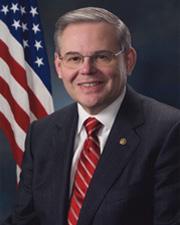
Madam Speaker, I rise in strong opposition to this partisan resolution that spits in the face of the American people's call for a robust inquiry that is independent of politics. Yesterday's report by…
Madam Speaker, I rise in strong opposition to this partisan resolution that spits in the face of the American people's call for a robust inquiry that is independent of politics.
Yesterday's report by the 9/11 Commission provides data to back up what every American learned by watching the government's dismal response to Hurricane Katrina: that 4 years after 9/11, our Nation is still not prepared to respond to a major crisis, in this case a disaster that had been predicted, game-played in an exercise run by FEMA, and which we knew about 24 hours in advance.
As the relief and recovery process continues and the rebuilding process begins, the American public must have complete confidence that their government is up to the task. Unfortunately, the Republicans have chosen to play politics and flaunt the will of the American people by instead proposing a select committee that is not bipartisan, that will not have an equal number of Democrats and Republicans, and will not have bipartisan subpoena power.
Let us be honest. How can the American people trust this Congress to not only investigate this administration but also Congress itself? Because the actions of the Congress are definitely one of the things that needs to be investigated. The Republican Congress was responsible for cutting the budget of FEMA and the funding for the levees around New Orleans. An outside evaluation of Congress's actions is needed, not an internal review.
Can the American public all of a sudden expect the Congress to investigate this administration after 4 years of basically no congressional oversight? Yes, the rules of the House have been used to stifle honest, robust inquiry. This is the Republican Congress that has not conducted true oversight hearings into the decision to go to war in Iraq, the lack of a success strategy in Iraq, the outing of a CIA operative, among many others.
So we can stick our heads in the sand and pretend the government has handled the recovery well and basically do nothing, or we can appoint a truly independent commission to help avoid these mistakes in the future. The vast majority of the American public supports the establishment of an independent, bipartisan commission so that the inquiry focuses on the facts instead of getting bogged down in partisan politics.
That is why the gentleman from Florida (Mr. Hastings) and I introduced legislation to establish an independent, bipartisan commission modeled after the successful 9/11 Commission to investigate the government's response to Hurricane Katrina and make recommendations for reforming the Nation's disaster response system.
The commission would be charged with evaluating what the government could have done to avoid the mistakes that exacerbated the crisis faced by hundreds of thousands of Americans along the gulf coast and caused untold loss of life. I mean, how is it possible, for example, that 4 years after September 11, our local first responders still do not have interoperable communications systems that can talk with each other as they carry out their lifesaving work? That is why the commission would have the full authority to question the government officials, examine government documents, and hold public hearings.
Finally, I want to remind my colleagues that despite overwhelming public support, it took months to overcome White House opposition and establish a 9/11 Commission, basically only getting the President and the Republican Congress to that point by dragging them along, kicking and screaming. We have heard all the same lame excuses we heard today as we did when we were trying to establish the 9/11 Commission.
Today, there is unanimous agreement that the commission had the courage to ask the tough questions that Congress did not and that developed reforms that, if implemented, would make our Nation safer. That is what we need to do. Let us create an independent commission. Let us not deceive the American people through this committee that will do absolutely nothing to get to the bottom of the problem.
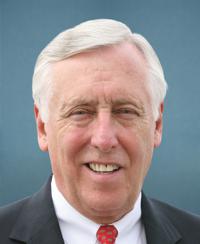
Madam Speaker, Democrats want to make sure that we help the victims of Katrina first; secondly, we want to make sure that there is oversight on the money that we are spending, a lot of money; and,…
Madam Speaker, Democrats want to make sure that we help the victims of Katrina first; secondly, we want to make sure that there is oversight on the money that we are spending, a lot of money; and, thirdly, we want to have an oversight, meaningful, in depth, honest, searching, courageous as to why the Federal Government was so inept in its response and so late.
The good news is that the men and the women of the National Guard, the Coast Guard and other elements of the Federal Government are now acting so courageously and effectively. That is what we want, and that is why we oppose this bill which would create a partisan congressional committee to investigate the inept Federal response to Katrina. Because we believe it is imperative to establish an independent commission modeled on the highly regarded 9/11 Commission.
I will ask my friend who chairs the Rules Committee, who used to come to this floor on a regular basis and say, when Democrats were in the majority, why will you not allow us to consider an alternative? Are you afraid that the majority of this House will say, yes, a commission is the right way to go? Are you afraid that you cannot keep your Members in line? Are you afraid and therefore do not give us an amendment, do not give us a motion to recommit with instructions?
What is the fear? It is the fact that you are so focused on not having meaningful oversight, of keeping it in-house, of not having independence, that you do not allow us and the American public's representatives to have that alternative considered on the floor.
Ladies and gentlemen, oppose this resolution and continue to demand an independent commission, just as the American people want. We did it with 9/11. We can do it with Katrina. We can do the work that the people expect us to do. Vote against this resolution.
Madam Speaker, let no one be mistaken about why Democrats oppose this legislation.
We oppose this bill--which would create a partisan congressional committee to investigate the inept Federal response to Hurricane Katrina--because we believe it is imperative to establish an independent commission modeled on the highly regarded 9/11 Commission.
We are not alone.
In fact, a Washington Post-ABC news poll revealed this week that 76 percent of Americans support an independent commission.
Some Republicans support such a commission, as well.
Just this week, the Republican Senator Vitter of Louisiana--whose constituents were directly affected by this devastating hurricane-- expressed his support for a commission.
Yet, Madam Speaker, this Republican majority today has denied Democrats the opportunity to even consider the bill offered by Mr. Hastings, which would create such an independent commission to investigate the local, State and Federal response.
Let's be clear: There is not bipartisanship coming from the other side of the aisle regarding the creation of real oversight.
The Speaker and Senate majority leader announced this proposal without even consulting Democrats.
The reality is, if this Republican majority were charged with investigating the actions of a Democratic administration, there is no doubt in my mind that its oversight would be real and vigorous.
But as the columnist David Broder pointed out recently: ``Majority Republicans see themselves first and foremost as members of the Bush team--and do not want to make trouble by asking hard questions.''
This majority has refused to conduct oversight over this administration during the last 4 years.
Why should we believe that it is prepared to fulfill its constitutional responsibilities now? We have no basis for believing that. And, that is why an independent commission is needed.
I urge my colleagues to vote against this bill.
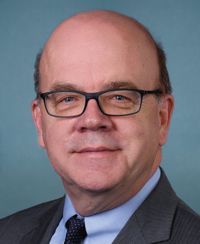
Mr. Speaker, I rise in opposition to the rule and to the underlying resolution. The Federal response to Hurricane Katrina was absolutely unacceptable. The American people deserve to know what went so…
Mr. Speaker, I rise in opposition to the rule and to the underlying resolution.
The Federal response to Hurricane Katrina was absolutely unacceptable. The American people deserve to know what went so terribly wrong and what we must do to make sure it never, ever happens again.
Unfortunately, the partisan committee being proposed by the Republican majority will not give the American people any confidence that Congress is asking tough questions and demanding straight answers.
Apparently, Mr. Speaker, after the flood comes the whitewash.
For over 4 years, the Republican majority has refused at every turn to hold the Bush administration accountable for its mistakes. There has been no meaningful oversight, no tough investigations on anything.
Instead, Congress has turned a blind eye, and the bill we have before us represents more of the same.
The gentleman from Florida (Mr. Hastings), our colleague, has a different approach, a better approach. The commission established by his legislation would be truly independent, and its recommendations would carry far more weight. This independent commission would be similar to the 9/11 panel that was such an effective, meaningful force for change.
Because what the American people deserve at the end of this process is a document that does not necessarily agree with everything I say or does not cover the President's back, which is what the Republicans are trying to do today, but that actually helps fix the problems that Hurricane Katrina exposed.
Let me be clear, Mr. Speaker. The purpose of the commission established by the gentleman from Florida's (Mr. Hastings) bill is not simply to assign blame. Rather, an independent commission would take a tough, honest approach to an incredibly complicated problem.
Pre-identifying vulnerable areas, strategically deploying resources, anticipating potential stumbling blocks as we prepare for disasters, these need to be the guiding principles of our national response plan. An independent commission would produce recommendations that enhance our national response plan and enable FEMA to be structured appropriately.
Furthermore, this commission will show whether or not, as I believe, FEMA lacked appropriate leadership, leadership with experience in disaster management, and then recommend ways in which the agency can be better prepared, both in terms of personnel and resources. Unlike the President, I do not think Brownie did a heck of a job. An effective response to a disaster or crisis cannot happen unless the best qualified people are coordinating the efforts, equipped with the best resources.
The partisan committee put forward by the Republican majority just does not cut it. Instead, it would be made up of Members of Congress, and there are three problems with that approach:
First, there are some Members whose time would be better spent dealing with the immediate recovery and reconstruction needs created by the hurricane. Second, Republican politicians would be ``investigating'' other Republican politicians. And, third, some of the problems we saw in the gulf coast include bad funding choices made by Congress itself.
Mr. Speaker, the Federal Government's response to Hurricane Katrina was a national disgrace. The job of this Congress is not to run interference for the Bush administration; it is to do what is best for the American people. Seventy-six percent of the public want an independent commission because, quite frankly, they do not trust the Republican majority to do it right. They have a pattern of sweeping problems under the rug, of turning everything into a political fight. That pattern has to stop, and we can stop it today.
Mr. Speaker, I urge my colleagues to reject this rule.
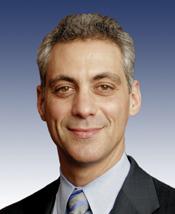
Mr. Speaker, following Hurricane Katrina there are many questions that must be answered. To answer them this body should create a bipartisan commission of experts to investigate the failures and…
Mr. Speaker, following Hurricane Katrina there are many questions that must be answered. To answer them this body should create a bipartisan commission of experts to investigate the failures and flaws of the system just like we did after 9/11, which I would like to remind my colleagues led to enactment of legislation that helped this country protect itself because the process had integrity.
The enacting and recommended legislation also received bipartisan support. The purpose of a 9/11-like independent commission is not to fix blame, but to fix a problem. And what we are debating today is not sufficient because if it were truly bipartisan, it would be bipartisan from this point of origin. And the beginnings of this commission, or the beginnings of this select committee, do not bode well for what was intended as a bipartisan effort by both Democrats and Republicans to find out
what happened and what needs to be done.
Rather than debate a bipartisan commission, what we are debating today will amount to nothing more than a whitewash because of the long list of items that my colleague from California (Mr. Waxman) just mentioned. From the intelligence failures to the true cost of the prescription drug bill, all these missed opportunities were left purposefully and consciously, not looked into, not asked into. If you do not think you have a problem, you will not fix a problem.
Mr. Speaker, hundreds have died, thousands have lost everything, billions will be spent rebuilding the infrastructure and people's lives. The stakes are simply too high not to know what went wrong.
Look what happened today in the New York Times. Michael Brown, the former head of FEMA, talked about where the Louisiana Governor failed, but also talked about where Secretary Chertoff failed. Brown's statement can probably be discounted somewhat as sour grapes, but recent stories by KnightRidder and others raised serious questions. KnightRidder raised questions about whether Mr. Chertoff delayed the Federal response. Memos were written to him, and according to a Presidential directive, he had authority and control and did not act for over 36 hours and was nowhere to be found.
While everyone has blamed Mr. Brown, it was Mr. Chertoff who was responsible for managing the national response plan according to the Presidential directive.
At the same time, an independent commission could monitor the contracts awarded during the reconstruction. Already a disturbing trend has emerged of awarding no-bid contracts, reconstruction contracts, to politically connected firms.
USA Today points out many of these companies have been fined millions of dollars for overbilling the government during hurricane rebuilding efforts and other government projects. In fact, one company is fined a $3.2 million fine for what they overcharged during Hurricane Hugo. So the same cronyism that led to Mr. Brown's appointment is now guiding the awarding of contracts to the rebuilding of New Orleans.
We need a 9/11-type commission, an independent commission, that basically takes the facts where they lead them, has the integrity of this body and the American people and the confidence so they can recommend the changes. Because after 4 years from September 11, what we saw and over the last 3 weeks is not the best of America in the sense of government's response. We saw the best of America from the American people, and we now need a commission to make sure that we finally fix our response for when a natural disaster or other type of disaster hits this country. We need a bipartisan 9/11-style commission.
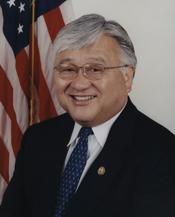
Mr. Speaker, I rise in strong opposition to House Resolution 437, legislation that proposes to establish a partisan committee to investigate the Bush Administration's clumsy response to Hurricane…
Mr. Speaker, I rise in strong opposition to House Resolution 437, legislation that proposes to establish a partisan committee to investigate the Bush Administration's clumsy response to Hurricane Katrina. This Congress has a proven history of lax oversight of the Administration, and I do not believe it can be trusted in this case to undertake a truly independent and probing inquiry.
Like most Americans, I welcomed the resignation of FEMA director Michael Brown. He proved himself grossly under-qualified for the important job of FEMA chief, the key position for coordinating governmental response to domestic catastrophes. His previous professional experience with the Arabian Horse Association proved inadequate training for the awesome challenges any FEMA chief can expect to face. Mr. Brown's appointment to this critical position, when compared to his woeful qualifications, reveals a disturbing willingness to place cronyism over competence.
Mr. Brown's unjustifiable appointment to FEMA is not the only outrage in the Katrina tragedy. President Bush himself has acknowledged his own failure and that of the entire Bush Administration. As the floodwaters rose and the cries went out from stranded victims, George Bush seemed not to notice. Only when his handlers realized the gravity of the situation--days after federal action could have pre-empted untold numbers of deaths--did the President rouse himself from the vigors of ranch life and deign to respond. This he did by cutting his five-week vacation short by two days, and dipping the wing of Air Force One as he jetted by.
The American people witnessed the Bush Administration negligent response to Hurricane Katrina, and they want a full account of the political and systemic shortfalls that contributed to the inept and late federal response. That is why so many Americans oppose a partisan committee like the one proposed in this legislation. In fact, 71 percent of the public said that the proposed congressional investigation would ``get bogged down in politics'' rather than ``focusing on the facts.''
Such skepticism is well-founded. The Republican majority of this Congress consistently refuses to ask tough questions of the Administration or hold it responsible for its misguided policies and outright dishonesty. The Congress, for example, did not probe the Administration's faulty rationale for war with Iraq, unlawful disclosure of a CIA agent's identity, deceptive cost estimates for its prescription drug proposal, and unethical dealings with energy lobbyists. Having turned a collective blind eye to these wrongdoings, there is no reason to believe that Congress will suddenly reverse course and put national interests above their political loyalty to President Bush.
A recent poll revealed that 76 percent of Americans support the creation of an independent commission akin to the one formed by Congress after the September 11 terrorist attacks. My Democratic colleagues and I have proposed just such a commission to examine the conduct of the Federal Government, including the Congress, before, during, and immediately after Hurricane Katrina swept through the Gulf Coast region.
Many in Washington, DC prefer a partisan inquiry into the Federal Government's response to the worst disaster in a Nation's history, but my constituents have been clear: the government's response was appalling and
they want a full and independent investigation. They want to know the truth, so that in the future, such tragedies are minimized and responded to with speed, skill, and experience.
Show 11 more
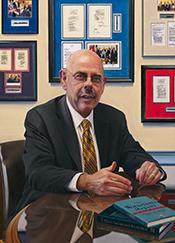
Mr. Speaker, I want to address the House on this subject that is before us today. I have served in the Congress for 30 years, the first 19 in the majority, the last 11 in the minority, so I have seen…
Mr. Speaker, I want to address the House on this subject that is before us today. I have served in the Congress for 30 years, the first 19 in the majority, the last 11 in the minority, so I have seen life from both sides. And let me tell you, today is one of the low moments.
We have just experienced a national tragedy that has caused immeasurable pain to countless Americans, and yet here in the House of Representatives, nothing seems to have changed. The House is not rising above raw partisanship even in a time of national tragedy.
Republicans are saying, well, we should just trust them because they have created something they are calling bipartisan. Well, the right way to create something that is bipartisan is for the two parties to talk. Instead, the Republicans met among themselves without talking to the Democrats and have proposed this select committee on a take-it-or- leave-it basis.
The majority cannot define bipartisanship for the minority. The majority has to make the real effort and be willing to do some work, maybe hard work with the minority to achieve bipartisanship.
Well, why are we suspicious? They did not talk to us. The committees in the House and the Senate that have oversight jurisdiction were starting to hold hearings and suddenly the Republican leadership said, well, we are going to have a House-Senate committee. And suddenly it is not a House-Senate committee; it is a select committee.
Well, look at the record how Republicans have done oversight. Have we really looked at how the White House used the intelligence, as faulty as it was, that was the basis for going to war in Iraq? No, we have not had hearings on that. We have not looked at that.
Has the House looked at the question of the outing of a CIA agent by people in the White House in order to punish her husband who was critical of the Iraq war? No, no hearings on that.
The actuary working for this administration withheld from Congress on the costs of the Medicare prescription drug bill. Should we not try to find out what happened? Both Republicans and Democrats were denied the facts before we voted on the bill. No, nothing on that.
We had more hearings when the Republicans were in charge and there was a Democratic administration on whether President Clinton misused his Christmas card list for political purposes. That meant 7 or 8 days of hearings. But we cannot get hearings on these important subjects. And now we are told there is a bipartisan committee, a select committee, that is going to look into this matter.
Well, if you really wanted bipartisanship, I say to my Republican friends who run the House, you need to at least talk to the Democrats and make an effort. But when you do not make an effort and you have a record of abusing the power that you have in running this institution and ignoring the oversight responsibilities on really important matters in order to protect a Republican administration from possible embarrassment, we have no confidence whatsoever that we are going to get to the facts of what went wrong in dealing with Hurricane Katrina.
We need to rise above this raw partisanship and join together, if not on an independent commission which I think makes the most sense, at least on a committee that is equally divided, with the powers equally divided, where the intent is to work together. But we looked at what is being proposed, and the only conclusion that many of us can reach is that this is going to be a committee to pretend to do an investigation but not find out the truth.
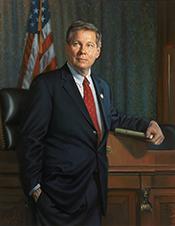
Mr. Speaker, I rise today in support of H. Res. 437, establishing a select bipartisan committee to investigate the preparation and response for Hurricane Katrina. We have all spent much of the past…
Mr. Speaker, I rise today in support of H. Res. 437, establishing a select bipartisan committee to investigate the preparation and response for Hurricane Katrina.
We have all spent much of the past two weeks witnessing and examining the aftermath of this catastrophic disaster. It has become increasingly clear that local, State, and Federal Government agencies failed to meet the needs of the residents of Louisiana, Mississippi, and Alabama. Now it's this Congress's job to figure out why, and to make sure we as a country are better prepared for the future.
First and foremost, our thoughts and prayers go out to the hurricane's victims, their families, and their friends. The loss of life, of property, of livelihoods and dreams has been enormous. And we salute all Americans who have stepped to the plate to help in any way they can.
Congress has a responsibility to conduct oversight, but at this stage, the oversight needs to conduct oversight in a manner that does not interfere with rescue and relief efforts. Many questions need to wait; no one wants to take people away from the massive job at hand.
But I also think some issues can and should be looked at now. Members want to begin doing oversight, and the American people are demanding it as well.
The formation of a bipartisan select committee, composed of Members from the numerous House committees that bear responsibility for various aspects of our Nation's failure to respond to this disaster, would enable this Congress to take a thoughtful.
Whatever the threat, Katrina has forced officials across America to take another look at disaster plans that may not be as solid as they previously thought.
It has forced officials across America to take another look at the laws and regulations governing disaster response to identify ways to cut bureaucratic red tape in order to respond as quickly as possible.
This is not the time to attack or defend government entities for political purposes. This is a time to do the oversight we're charged with doing. Our goal should be to investigate aggressively what went wrong and what went right. We'll do it by the book, and let the chips fall where they may.
It's hard not to point fingers and assign blame in the aftermath of tragedy. I understand human nature, and I understand politics. But I think most Americans want less carping and more compassion. I think most Americans want a rational, thoughtful, bipartisan review of what went wrong and what went right. I think most Americans want to know we'll be better prepared the next time.
It remains difficult to understand how government could respond so ineffectively to a disaster that was predicted for years, and for which specific dire warnings had been issued for days. If this is what happens when we have advance warning, I shudder to imagine the consequences when we do not. If ever there were a time for leaders at all levels of government to come together and review and coordinate their emergency plans, it's now.
Some people are suggesting that only an independent body could properly investigate the Katrina tragedy. I think that point of view diminishes this House and the Members of this House. The voters didn't send us here to appoint commissions to do our jobs for us.
All over this country Americans are digging deep and making sacrifices. If we can't lead this Country then let's at least follow their lead and stand up and do our job.
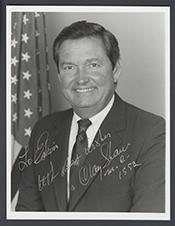
Madam Speaker, reading the resolution, it simply says that there is hereby established a select bipartisan committee to investigate the preparation for and the response to Hurricane Katrina. There is…
Madam Speaker, reading the resolution, it simply says that there is hereby established a select bipartisan committee to investigate the preparation for and the response to Hurricane Katrina.
There is so much we can learn, so many missteps, but so many things that were done right. And I think it is time for us to come together.
I have served in this body now 25 years; and in that 25 years, a little over half of it was under a Democrat House and Democrat leadership, Tip O'Neill, Jim Wright, three Speakers in all on the Democrat side. And I can tell you, the ratio of this committee, we would have just rejoiced in getting 9 out of the 20 spots during that period of time. I think it is tremendously fair, and I think the Speaker has been very fair in what he has talked about.
Now anyone in this House that would suggest that any Member of this House or any Member of either party would whitewash or push something under the rug that could mean the life and death of the American people or the destruction of property because it is politically expedient, I just cannot imagine that. I cannot imagine that possibly happening.
There is going to be good people appointed to this committee, and they are going to be people that really care. And I think after they look at it and after this report comes out, the American people will have faith once again in their Government.
You know, criticism has always been made suggesting that Congress cannot have oversight over the laws that we pass ourselves. What do we do every day? We do that in committees every day. We have hearings. I do not care whether it is a Ways and Means Committee, the Appropriations Committee,
Transportation Committee, whatever committee we are talking about, we are constantly examining and reexamining the laws that we have passed and the laws that have been passed by previous Congresses. That is our job. That is what we are supposed to do. And for us to suggest or for me to suggest that we need to push this off to some independent body and not do it ourselves does not make a whole lot of sense.
And, by the way, one of the recommendations that came out of the independent body from 9/11 was to put FEMA under Homeland Security. Now everybody is clamoring, saying that was a mistake. I think it was a mistake, and I think we need to very closely examine what we are doing.
We need to do something else, too. We have appropriated an awful lot of money to be spent down in that area, and we are going to appropriate a lot more. I think the President estimated that it could be $200 billion. And we have to watch and see how that money is being spent.
We saw FEMA make some big mistakes in the past down in Miami/Dade County, where they were paying for funerals last year where there was not a hurricane. They were paying for funerals where there was not even a corpse. They were paying for all kinds of things, and that area should have been actually taken out of the disaster relief area when it was passed.
So this the committee has a big, big job; and it should be done in the Congress. I do not want an oversight committee, independent of the Congress, not elected people, that are overseeing it and seeing how this money is being spent, $200 billion of American taxpayers' money.

Madam Speaker, I thank the chairman for yielding me this time. Madam Speaker, I rise today in support of House Resolution 437 to establish a select bipartisan committee to investigate the preparation…
Madam Speaker, I thank the chairman for yielding me this time.
Madam Speaker, I rise today in support of House Resolution 437 to establish a select bipartisan committee to investigate the preparation for and the response to Hurricane Katrina.
Madam Speaker, Congress has an important constitutional role to play in providing oversight to the executive branch and Federal agencies. But more importantly, Congress has a responsibility to the people we represent to investigate the preparation and response efforts to Hurricane Katrina and make recommendations on how we can better prepare and respond to disasters in the future.
Madam Speaker, some of my colleagues on the other side of the aisle oppose the idea of a bipartisan congressional committee held accountable to the people and by the people who elect us. But, Madam Speaker, a bipartisan investigative committee held directly accountable by the people is exactly what is needed
Because we never know when or where the next disaster will strike, it is vital that Congress move swiftly to investigate how local, State, and Federal governments, along with the private relief agencies, can better communicate with one another and coordinate the relief efforts. America must be better prepared to handle disasters in the future.
Madam Speaker, I am saddened that hours after Hurricane Katrina rescue and recovery efforts began, lawmakers were publicly pointing fingers rather than focusing on how to help the victims. Clearly, clearly in hindsight there are things that could have been done better. Only now that victims have been rescued and their immediate basic needs are being met is it appropriate that an investigation of what happened begin.
There is no question that Hurricane Katrina caused great devastation, the magnitude of which becomes more evident every day. But, Madam Speaker,
one of America's greatest strengths is our long-standing tradition of pulling together in times of need.
I am proud that in my home State of Washington, which is located 2,500 miles from Louisiana and the gulf coast, families are reaching out to help those affected. Communities are collecting food, clothing, and cash donations. For example, Washington apple growers have contributed truckloads of world-class apples to people living in Mississippi and the other hard-hit areas and throughout America. Families are opening up their homes, businesses are employing dislocated workers, citizens are traveling to the gulf coast region to help with recovery and rebuilding efforts, and schools are teaching children who have been displaced from their schools, homes, and friends.
America has been challenged by natural disasters in the past, and we will no doubt be challenged by disasters in the future. Only by Republicans and Democrats working together in a bipartisan fashion will the best interests of our Nation prevail.
Madam Speaker, there is much to be learned from this disaster. We must examine what worked, what did not, and what we need to do to be better prepared. The primary focus of this bipartisan investigative committee should be that we should begin to prepare for the disasters ahead and not to assign blame. I, therefore, urge my colleagues to support House Resolution 437.

Mr. Speaker, I thank the gentlewoman from New York for yielding me this time. Mr. Speaker, when Hurricane Katrina came ashore and ravaged the gulf States and the levees in New Orleans, Americans…
Mr. Speaker, I thank the gentlewoman from New York for yielding me this time.
Mr. Speaker, when Hurricane Katrina came ashore and ravaged the gulf States and the levees in New Orleans, Americans united in their support of those in need and the communities devastated by this terrible disaster. As Katrina passed over the gulf States and in the days that followed, Americans saw firsthand the devastation and human suffering that resulted. We were also eyewitnesses to the tragedy of hundreds of thousands of people who had escaped the wrath of the terrible storm only to then be stranded in the Superdome, the convention center, or trapped on the roofs, surrounded by rising flood waters with little in the way of food, water, or medical care. Mr. Speaker, we saw and felt the ensuing heartbreak. Mothers became separated from their children, elderly parents were unaccounted for, and siblings were trying to look after each other.
With the passage of time, our outrage and frustration set in. Reporters and the media managed to get to the heart of the disaster; yet there was little sign of our Federal relief efforts. Just as the American people united to aid the victims of Katrina, so too must Congress. Our constituents demand no less. They are more interested in getting answers than pointing fingers. They want to know that we are finding solutions and making recommendations to ensure our responses are never again at a snail's pace.
It is time for Congress, as part of the Federal Government, and therefore an element of the relief response, to shoot straight with the American people. An independent commission, removed from the partisan fray, is better positioned to find answers. Why were we not preparing our responses to Katrina near land? Where was the coordination between Federal, State, and local efforts? There are many questions that must be answered and an independent commission is a means that can provide the answers.
We saw the successful implementation following the tragedy of September 11, and following this model Congress will reassure the American people the answers that the independent commission finds and the recommendations they make are ones in which the Nation can trust.
I know my constituents are closely following this. My hometown of Sacramento lies in a floodplain at the confluence of two great rivers and faces the constant threat of floods. If we find ourselves in dire circumstances, can my constituents be assured that they can count on prompt Federal Government response?
This is not a blame game. I am not interested in pointing fingers, nor are the American people. They are more interested in identifying areas of weakness and making the necessary improvements. This is about preventing another tragedy similar to what we witnessed in New Orleans and the gulf States. We must ensure that the Federal Government does its job of protecting the American people, and with an independent commission we will do so.
Madam Speaker, I recently heard the gentleman who represents Hollywood speaking about how it is somehow fair that the only Member of this body that I know of who was there on Ground Zero, who rode…
Madam Speaker, I recently heard the gentleman who represents Hollywood speaking about how it is somehow fair that the only Member of this body that I know of who was there on Ground Zero, who rode with the National Guard to distribute food because FEMA so thoroughly screwed up, who realizes that if it were not for the United States military doing FEMA's job for them, people would have starved to death, people would have died of dehydration, hospitals would not have gotten needed medical supplies, that I will not be allowed to subpoena witnesses.
So as a Member of this body who was elected by as good a margin as anyone else here, I do object that I could not ask for a witness, that I could not subpoena a witness to deliver the message that needs to be delivered about the lessons learned in Mississippi. We do not need to make the same mistakes when the next hurricane hits.
The bottom line is FEMA did make horrible mistakes that came very close to costing people their lives. FEMA could have avoided millions of dollars in unnecessary aerial replenishment of people that we could get trucks to, because they insisted on one point of delivery in a county where very few people still had cars that were running and those that had cars that ran could not get gasoline.
FEMA could have sent thousands of people on their way to their families in other parts of the State, but did not bring gasoline in for them. There are a number of mistakes that we never need to make again as a Nation. And I would hope that I would have the opportunity to subpoena some of the people that need to speak on this. It does not need to be Bush-bashing; it does not need to be anybody-bashing. It needs to be an honest account of what happened.
But how can we do that when one of the people that was at Ground Zero cannot ask questions of witnesses, cannot subpoena witnesses? Is that really fair? Does that really get to the solution of the problem? I do not think so. I think our Nation works best when we work together, and a 9/11-type commission composed of whoever needs to be subpoenaed is what we need to do.
At the end of the day, I am going to vote for a commission no matter how bad, because something is better than nothing; but the American people deserve for us to do it right.
Madam Speaker, will the gentleman yield?
Madam Speaker, given the gentleman's desire to see that we get to the bottom of this, given that the gentleman is elected by a majority of the people from California, and given that I am elected by a majority of people in the most affected area, does the gentleman not think it would be fair that I would have the same right, as someone from the affected area, to subpoena witnesses as the gentleman from the west coast of this country would have?
Mr. Speaker, for so many reasons my colleagues on this side of the aisle have articulated, this resolution should be rejected. Because it is neither bipartisan in terms of its authority, nor…
Mr. Speaker, for so many reasons my colleagues on this side of the aisle have articulated, this resolution should be rejected. Because it is neither bipartisan in terms of its authority, nor bipartisan in terms of its power, nor bipartisan in terms of its subpoena power. That will all rest with the majority.
The question that must be answered is how is it that FEMA, which 5 years ago was a world-class agency that was being praised by Republicans and Democrats alike, by local officials, by governors, by mayors, by the international community, who were coming and visiting and taking lessons from FEMA, how in 5 years was that agency so incredibly hollowed out that it could not respond to Hurricane Katrina?
This President and this administration made some horrible decisions about putting political hacks and their cronies in charge of the agency that is in charge of the safety of the people of the United States, whether it is western fires, earthquakes, floods, tornadoes or hurricanes. He appointed political hacks. Is he going to investigate that himself, as he says?
This Congress, powerful Members of the Senate and the House, made decisions about using FEMA as a honey pot to take resources out of and divert them elsewhere. The Committee on Appropriations chairmen of both houses, the leadership, the Republican leadership of both houses, are they going to investigate that themselves?
That is like asking Enron to investigate corporate ethics, baseball to investigate steroids, Dick Cheney to investigate energy policy. It just cannot happen, and the American people know that. That is why, when they are asked on this question, 75 percent of the American people want a 9/11 Commission. They want a 9/11 Commission because they saw that the 9/11 Commission was the only way that the citizens of this country were going to get the answers, not the answers the politicians wanted them to get, and that is what this bipartisan, phony committee is about. They want to give you the answers they want you to get. The citizens want the answers to the questions that they want to ask.
The power in our democracy is with the citizens, and the citizens want a citizens' committee. They want a citizens' committee to answer these questions because the questions are going to have to be asked of a Republican President, a Republican Congress, a Democratic mayor, a Democratic governor, a Republican governor and that simply will not be able to be done.
The President has said he takes responsibility. The question that must be asked is: Did he act responsibly as the President of the United States to protect the people of this country? So far, the question is a resounding, no.
Mr. Speaker, this is a very important debate for our country. I cannot imagine anything more important to the American people than an independent investigation of why the response to Hurricane…
Mr. Speaker, this is a very important debate for our country. I cannot imagine anything more important to the American people than an independent investigation of why the response to Hurricane Katrina fell so short of expectations. We need a full accounting of what went wrong at all levels of government so such failures don't happen again.
I support the appointment of a non-partisan, independent commission-- modeled after the successful 9/11 Commission--to investigate the response to Hurricane Katrina. An independent commission is the only way to get to the bottom of this. The commission would look into every aspect of the preparation and response to Hurricane Katrina, and let the chips fall where they may. The American people have made it clear this is what they want as well. A new Washington Post/ABC poll found that 76 percent of the public supports the creation of an independent commission. The Leadership of the House badly misreads the public mood when it disregards the clear wishes of the American people for a non- partisan investigation. We need to look at our government's weaknesses and correct them.
I oppose the straightjacket procedure under which the House is considering this legislation. The Majority calls this a ``Select Bipartisan Committee,'' but the legislation was drafted behind closed doors with no input from Democrats. This is bipartisanship? The Leadership of the House will not even allow Democrats the opportunity to offer a substitute and have a straight up-or-down vote on it. Is the Majority's position so weak that it cannot withstand a debate?
I don't think the American people are going to have much patience for partisanship on this issue. They want answers and a measure of public accountability, not a partisan whitewash. There are hard questions to be asked about the slow, disorganized, and woefully inadequate response to a natural disaster that left a major U.S. city uninhabitable.
The proposal before the House calls for a House investigation that would be completely controlled by the Republican party. Republicans would outnumber Democrats on the Committee 11 to 9. There would be no bipartisan subpoena power. With all due respect, this would be an investigation in name only. It would have no credibility with the American people. You can't have a comprehensive and fair investigation when the people controlling that investigation have a vested interest in the outcome.
I urge the House to reject this unfair procedure and reject the very partisan investigation it seeks to establish.
Mr. Speaker, time and time again here on the floor of the House I hear speeches: ``We will never forget 9/11; we will better prepare and defend America.'' But the most basic lesson of September 11,…
Mr. Speaker, time and time again here on the floor of the House I hear speeches: ``We will never forget 9/11; we will better prepare and defend America.''
But the most basic lesson of September 11, where we tragically lost so many first responders in the collapse of the towers, was that they lacked secure interoperable communications. They could not talk and communicate with those first responders, and many died needlessly. We have not learned that most basic of lessons.
In fact, President Bush this year zeroed out Federal assistance to local communities for secure interoperable communications. How quickly some have forgotten, yet they say it will never happen again.
Well, Hurricane Katrina was not a terrorist attack, but the Federal response was worse and degraded from the capabilities that we had on 9/ 11. On that day, FEMA was a high-functioning, independent, professionally run agency. Today, it is subsumed into this gigantic morass of the homeland security bureaucracy, downgraded to subagency level with a political hack as its director, and most of the professional staff has resigned and gone on to run State management agencies around the country. There are still some good professionals there, but the leadership, appointed by the White House, and the fact it was subsumed in the bureaucracy at the insistence of the Republican majority and the White House, they took away its independent agency status.
We had a vote on the floor to restore its independent agency status. We predicted these problems, but they opposed that amendment. Now they want to investigate themselves. Will the other side of the aisle fess up, like the White House never does, that they were wrong to follow the lead of the White House to downgrade this agency, to politicize it, subsume it in a huge bureaucracy, and that we are less capable than we were on 9/11 to respond to these types of disasters? I think not.
Mr. Speaker, we need an independent agency outside of this highly partisan body. They will not admit to those mistakes. There were certainly mistakes made at the local level, and they will probably highlight those, and those should be rectified, too. But all mistakes should come out, the failings of the Federal Government, the State government, and the local governments, with an independent, nonpartisan commission. That would be greatly preferable to this coverup that is going to go on here.
Mr. Speaker, I rise in strong opposition to H. Res. 437, which would establish a partisan committee to investigate the Hurricane Katrina preparation and response. I agree with the vast majority of…
Mr. Speaker, I rise in strong opposition to H. Res. 437, which would establish a partisan committee to investigate the Hurricane Katrina preparation and response. I agree with the vast majority of the American people, who favor an independent commission of experts similar to the 9/11 Commission.
Perhaps the American people, like me, are skeptical of the investigative integrity of the Republican Majority. After all, these are the same people who took more than 140 hours of testimony to investigate whether the Clinton White House misused its holiday card database but less than five hours of testimony about prisoner abuse in Iraq. The Downing Street Memo has sent shockwaves through the world and confirmed our worst fears about the Iraq war sham, but mum's the word from Republicans in Congress. You also won't find a single committee hearing about Valerie Plame, no-bid Halliburton contracts, or U.S. citizens being imprisoned without a trial.
However, now they say that we should trust them to do a thorough investigation and not hide any damaging evidence regarding the woefully inadequate response to Katrina. Given their history, I think the American people deserve better than an empty promise. It is an insult to the thousands of dead, the victims of rape at the Convention Center, the people who waited five days for buses that never came and so many others who suffered needlessly, to suggest that one year before an election, this Republican Congress is going to pursue indictments not only of their President, but of themselves.
After all, the senior Members of Congress who would populate this Committee are the same ones who advocated moving FEMA into the Homeland Security Department, zealously pursued the downsizing of disaster prevention and response programs, starved wetlands restoration and Army Corps of Engineers funding, and presided over rising poverty rates that make Americans all the more vulnerable.
These foxes have already systematically dismantled the henhouse, sat idly by while the hens suffered, and now want to appoint a committee of foxes to find out what went wrong. I vote no on this ridiculous proposal.
Madam Speaker, and so it continues. This is a partisan, counterfeit commission if I have ever seen one proposed today, and I have two simple questions: Will the administration escape accountability…
Madam Speaker, and so it continues. This is a partisan, counterfeit commission if I have ever seen one proposed today, and I have two simple questions: Will the administration escape accountability again? And the second question is this: Will the administration get away with another failure?
Please note the word ``escape''. In fact, if you look in the Bible, the Old Testament, Leviticus, chapter 16, verse 8, we find the origin, the etymology of the word scapegoat, the goat that departs.
In scripture, you had two goats. One was sacrificed for our sins; the other escaped, was let go. That is from the English word scapen, the Old English, a form of escape.
So, Brownie, he was sacrificed, and yesterday all of his minions resigned, all of these people that were hired. We better have an objective review of what happened. We better have an objective view, or else we are never going to get to the truth.
This is the most redactive, the most secretive administration in the history of the United States. It has nothing to do with political partisanship either. None whatsoever.
We have seen it repeatedly. This is the administration that can show negligence, ineptitude, and dangerous arrogance without ever enduring the burden of even limited liability. Policy disasters abound, yet culpability is never encountered.
No one who has followed the workings of this body believes that a commission made up of apologists will ever hold the administration accountable for anything.
This is far too important for business as usual. I implore my colleagues to vote against the bill, to demand the creation of a truly independent commission. It worked 4 years ago. It will work now.
I do not think there is anything wrong with this. And when you talk about the ability to subpoena, the majority will have the right to oversee whether we can subpoena particular people. This is phony. All we ask for is to let us come together. We agree we need to send help down there. We are doing our best, both sides of the aisle.
Let us have an independent review of what has happened and what is going on. We are talking about people's lives here.
Bill Text
2 versions available
        [Congressional Bills 109th Congress]
[From the U.S. Government Publishing Office]
[H. Res. 439 Engrossed in House (EH)]

H. Res. 439

In the House of Representatives, U.S.,

September 15, 2005.
Resolved, That upon the adoption of this resolution it shall be in order
without intervention of any point of order to consider in the House the
resolution (H. Res. 437) to establish the Select Bipartisan Committee to
Investigate the Preparation for and Response to Hurricane Katrina. The
resolution shall be considered as read. The previous question shall be
considered as ordered on the resolution to final adoption without intervening
motion except: (1) one hour of debate equally divided and controlled by the
chairman and ranking minority member of the Committee on Rules; and (2) one
motion to recommit which may not contain instructions.
Attest:

Clerk.