Condemning in the strongest terms the terrorist attacks that occurred on November 9, 2005, in Amman, Jordan.
Legislative Activity
Stay on top of the latest movement without scrolling through every action
Motion to reconsider laid on the table Agreed to without objection.
November 18, 2005 • 1:49 AM
View full timeline
Introduced in House
November 10, 2005
Referred to the House Committee on International Relations.
November 10, 2005
Ms. Ros-Lehtinen moved to suspend the rules and agree to the resolution, as amended.
November 16, 2005 • 3:36 PM
Considered under suspension of the rules. (consideration: CR H10343-10345)
November 16, 2005 • 3:37 PM
DEBATE - The House proceeded with forty minutes of debate on H. Res. 546.
November 16, 2005 • 3:37 PM
At the conclusion of debate, the Yeas and Nays were demanded and ordered. Pursuant to the provisions of clause 8, rule XX, the Chair announced that further proceedings on the motion would be postponed.
November 16, 2005 • 3:52 PM
Considered as unfinished business. (consideration: CR 11/17/2005 H10645-10646)
November 18, 2005 • 1:39 AM
Passed/agreed to in House: On motion to suspend the rules and agree to the resolution, as amended Agreed to by the Yeas and Nays: (2/3 required): 409 - 0 (Roll no. 602).(text: CR 11/16/2005 H10343)
November 18, 2005 • 1:49 AM
On motion to suspend the rules and agree to the resolution, as amended Agreed to by the Yeas and Nays: (2/3 required): 409 - 0 (Roll no. 602). (text: CR 11/16/2005 H10343)
November 18, 2005 • 1:49 AM
Motion to reconsider laid on the table Agreed to without objection.
November 18, 2005 • 1:49 AM
Voting History
1 vote recorded • Roll call available
Floor Debate
24 membersWhat members said about H.Res. 546 on the floor
 JDD
JDD NP
NP BG
BG JN
JN SJL+19
Floor Debate
24 membersWhat members said about H.Res. 546 on the floor
Mr. Speaker, I yield 2 minutes to the distinguished gentleman from California (Mr. Waxman). Mr. Speaker, I yield 2 minutes to the distinguished gentleman from Massachusetts (Mr. Markey). Mr. Speaker,…
Mr. Speaker, I yield 2 minutes to the distinguished gentleman from California (Mr. Waxman).
Mr. Speaker, I yield 2 minutes to the distinguished gentleman from Massachusetts (Mr. Markey).
Mr. Speaker, I yield 2 minutes to the distinguished gentleman from Ohio (Mr. Brown).
Mr. Speaker, I yield 2 minutes to the distinguished gentleman from Maine (Mr. Allen).
Mr. Speaker, I yield 1\1/2\ minutes to the gentlewoman from California (Ms. Eshoo).
Mr. Speaker, I yield myself the balance of my time.
(Mr. DINGELL asked and was given permission to revise and extend his remarks.)
Mr. Speaker, I can understand why my Republican colleagues do not want to get close to the facts. What are the facts? First of all, when this administration came into office, there was a $2 trillion surplus. Now we have increased the national debt by $3 trillion, and they have spent the $2 trillion besides. No wonder they do not want to talk about the facts.
They are cutting $11.4 billion out of Medicaid. Why are they doing so? To fund additional tax cuts. The richest 0.2 percent of the country has already gained an average of $103,000 from the Republican tax cuts, but the Republicans have a fine program: they are going to cut funds for women, poor children, individuals with cystic fibrosis and other chronic diseases, elderly widows in nursing homes, and others who rely on Medicaid.
If this bill passes, the following will happen: in 1 year alone, 110,000 Medicaid beneficiaries will lose coverage
due to the new burdensome health care premiums imposed by this bill; destitute elderly will be denied needed nursing home care right when they need it the most. These provisions will force many seniors out of homes that they may have lived in for decades, and those elderly persons who try to help their families to pay medical bills or go to school are going to be penalized.
Children will be hurt. According to CBO, half of those affected by higher cost-sharing and half of those affected by reduced benefits will be children. Those with disabilities will be particularly hurt by the newly allowed State benefit cuts and increased cost-sharing. They already pay a greater portion of their income for out-of-pocket medical expenses than privately insured individuals with higher income.
The simple fact of the matter is this bill is going to take from those who have the least and give to those who have the most and the smallest needs. This is an outrageous piece of legislation.
The simple fact of the matter is my Republican colleagues are entitled to their own opinion, but they cannot have their own facts; and the facts say this is a bad proposal. It is going to hurt the poor. It is going to benefit those who have no need.
This is an outrageous piece of legislation, and it should be rejected by this body. And I would point out that one of the reasons for these cuts in benefits is so that there can be a tax cut. I would remind my good friends on the Republican side that one of the interesting things about this piece of legislation is that when all is said and done, it is actually going to increase the deficit.
There is no question that the cuts proposed by the Republicans will harm beneficiaries. First, according to the Congressional Budget Office (CBO)'s November 9th study on the bill as it left the Budget Committee, of the $11.9 billion in cuts to Medicaid, 75 percent--nearly $9 billion--is due to provisions that hurt beneficiaries. These cuts will have harsh effects, reducing needed care and causing millions to lose coverage and benefits. For example:
The vast majority (80 percent) of the savings from cost-sharing increases come from forcing beneficiaries to cut back on their use of healthcare services. Some six million children from families with incomes just above the poverty line would lose all current Federal cost-sharing protections if this bill is adopted. This bill would offer children who live just above the poverty line significantly less protection than in the State Children's Health Insurance Program. The remaining savings from cost-sharing come from $300 million in payment cuts to providers over five years.
Half of those affected by the reductions in benefits--so called ``benefit flexibility''--will be children. By 2015, five million individuals, including 2.5 million kids, will face benefit cuts. Most of the services that beneficiaries will lose in the reduced benefit packages would be for mental health, certain therapies, dental, and vision. There will also be new restrictions on the amount, duration, and scope of services covered.
Benefit reductions result in $18 billion in Federal savings over 10 years. The actual magnitude of lost coverage, however, will be much higher over those 10 years, closer to $32 billion, when you count the State share, because CBO only considers Federal savings. Therefore, the total benefit-related reductions would be nearly twice as high.
New premium charges will force hundreds of thousands more who are covered today to drop their coverage. A full quarter of the savings associated with new higher premium charges come from individuals no longer being able to afford Medicaid. In 2015, for example, 110,000 enrollees will lose coverage because of premium increases. And, for those elderly citizens lucky enough to own the home they live in, the Republicans want to force them to sell it in order to get care.
Second, the numbers tell only part of the story. Examine, for example, the hurtful effect these changes will have on individuals with disabilities. Over the past number of years, individuals with disabilities have made significant gains in improving options for community living. Would we really want to enact legislation that would force people, who were previously able to live in their community, to live in institutions? Because that is exactly what this Reconciliation package will do.
The healthy among us do not need extensive health services, but those with disabilities and chronic illnesses such as diabetes, multiple sclerosis, spina bifida, schizophrenia, and AIDs, do. The Reconciliation package allows States to cut critical benefits that these individuals need, with the burden placed on those who need the most care.
Together, these changes will only result in more individuals with disabilities being forced back into institutions, rather than enabling them to live in the community. Increased costs and decreased benefits for individuals with disabilities will leave them with no other option but to return to an institution where they can get needed medical care.
Those with disabilities who are under Medicaid already have higher out-of-pocket medical expenses than higher-income, privately insured people, even with the current protections the program offers. Out-of- pocket costs consumed an average of 5.6 percent of the incomes of these beneficiaries in 2002. On the other hand, privately-insured adults with incomes over $19,140 spent 0.7 percent of their incomes on out-of- pocket medical costs. Individuals with disabilities already have their incomes stretched to the limit. In 2004, a national average rent for a modest one-bedroom unit consumed more than the entire monthly payment (109.6 percent) for a person receiving SSI.
In addition to these increased out-of-pocket expenses, the working disabled may find they must sell their homes if they wish to continue receiving the needed long-term care services provided under Medicaid that enables them to work. And it is difficult to keep people in the community if they are forced to sell or mortgage the home they reside in.
According to CBO, Congress could achieve $20 billion in savings by simply not overpaying Medicare HMOs. Yet these provisions are nowhere to be found in the Republican legislation. Clearly the profits of health insurers are protected while the poor and working families are squeezed to fund Republican tax priorities.
The Republican solution to the hard economic times facing many families is to charge them more for their health care, take away needed benefits, and make it easier for States not to cover those in need. Rather than provide States with the tools to slash coverage and impoverish more families through higher medical expenses in order that their tax cuts for the wealthy may stay intact, Congress should seek ways to join with the States to shore up healthcare coverage for our most vulnerable citizens.
Mr. Speaker, will the gentleman yield?
Let me observe that, first of all, the gentleman is dead wrong. I said that that particular package of reforms was not something which was acceptable. I encouraged the Governors to reject it and I urge you to reject it. I have never supported it. But I have never said that reform of Medicaid would pass over my dead body.
Mr. Speaker, today we are considering what my colleagues on the other side of the aisle call budget reconciliation. Ironically, the hurricanes are being used to rationalize cutting the very programs the hurricane survivors rely on. In fact, this budget will do more harm to the poor and unfortunate than the storms.
Let us be clear about the purpose of the legislation before us today: all of these spending cuts are going towards financing tax cuts. In recent years, deficits have been the largest in history--indicate that we are spending far beyond our means. I find it ironic that Republicans are calling this bill the ``Deficit Reduction Act,'' because it will actually increase the deficit.
Republicans are asking working families to foot the bill for a massive tax giveback for the wealthy. Due to the President's previous tax policies, millionaires get an average tax cut of $103,000 a year and the new bill will continue this trend. Americans, the young, aged, sick, poor and the unfortunate will get a reduction in benefits.
I have been before this body on numerous occasions to discuss priorities, so it is not necessary to go into detail about how misguided this legislation is. I hear time and time again how the Republican fiscal policy has been working to stimulate the economy and create jobs. No one has yet seen the evidence of this so-called success. My people back in Michigan certainly are not celebrating any successes of the GOP Congress. And not just in Michigan--poll after poll shows two-thirds of the American people disapprove of the way the President is handling the economy.
I frequently hear from constituents who are struggling just to make ends meet. From veterans who are not getting medical treatment, students trying to pay for college, farmers and laborers alike--all of these people are working hard to scrape by and make a decent living in this country. At minimum wage, they would earn $10,700 per year, barely one-tenth of the average tax giveback for millionaires.
Meanwhile, my colleagues will ask these hard-working Americans to foot the bill for another massive tax giveback. Those with particularly low incomes will be hurt the most. The reconciliation package will cut food stamps, student aid and Medicaid--all are programs which largely benefit the most vulnerable members of our society.
The current conflict in Iraq has been entirely funded by the deficit. During times of war, past presidents have found ways to curb the deficit through increased revenue, closing tax loopholes and budgetary enforcement rules such as PAYGO. President Reagan realized that his tax act was causing large deficits and so in 1982 he supported a repeal of the parts of his tax bill that had not been enacted. President George H.W. Bush also realized that the deficit was getting too large and increased taxes in 1990. It may not have been politically popular, but it was the right thing to do. Shocking as it may seem to Republicans, President Bush's tax increase, along with President Clinton's balanced budget, led us into an unprecedented period of surplus and economic well-being.
This Administration and this Congress have chosen to ignore the obvious, opting instead to keep the blinders on and march forward with their reckless tax policies. Republicans complain incessantly about ``tax and spend'' liberals, but all I see in Congress and the White House are ``spend and spend'' Republicans who cut programs which benefit ordinary Americans.
I know that many of my colleagues on both sides of the aisle have doubts about this legislation and I urge them to oppose it. This is not sound policy. We can do far better.
Mr. Speaker, up until now I think we have had a very civil debate here this evening on a very important matter to the American people, a matter that consumes a great deal of the time of the Congress,…
Mr. Speaker, up until now I think we have had a very civil debate here this evening on a very important matter to the American people, a matter that consumes a great deal of the time of the Congress, the blueprint for what we do in the year, the budget.
Tonight, the Republicans are launching an attack on America's children and America's families; and they are also launching an attack on America's middle class, all of this to give a tax cut to the wealthiest people in our country.
This budget is a sham, and it is a shame. Democrats believe that together America can do better.
I am so proud of my Democratic colleagues tonight because they have stood proudly for fiscal responsibility.
I am so proud of the Blue Dogs and how they led this debate tonight for pay-as-you-go, for no deficit spending, for fiscal soundness so that future generations will not have to bear the brunt of the fiscal irresponsibility that the Republicans are continuing to present to the Congress.
I am proud of the gentleman from South Carolina (Mr. Spratt) for his tremendous leadership as our ranking Democrat on the Budget Committee. He, indeed, has put forth an alternative budget, a Democratic budget, that would eliminate the deficit in 2012, was balanced in terms of its values, its priorities and in addition to its funding.
Mr. Rangel led the way from the Ways and Means Committee in terms of tax fairness in our country. Mr. Dingell spoke in and his members spoke so eloquently about what would happen to Medicaid in this Republican proposal, and Mr. Miller, of course, was relentless in his advocacy for America's students.
I have heard my Republican colleagues talk about those who disagree with their budget priorities as hypocrites and demagogues. Well, let me introduce some others to this debate who might fall into that category by our Republican colleagues' characterization.
Let me start with the National Council of Churches USA. They have written to every Member of Congress and very carefully dissected this budget, and this is what they say: ``The role of government is to protect the people and work for the common good. This is not the time for the budget reconciliation process to create greater hardships for those who are already experiencing great suffering. To do so is not only unjust; it is a sin. It violates all the fundamental Christian principles of loving thy neighbor, caring for the poor, and showing mercy. As religious leaders, this is a violation that is unacceptable to us.
``How is it that we show mercy for oil millionaires and not hurricane survivors? We urge you to change this destructive course of action for the sake of our Nation and for generations to come.''
I submit this for the Record. But first I want to read a list of those who signed the letter so that they perhaps will be labeled by our colleagues on the Republican side as hypocrites and demagogues.
The National Council of Churches USA, the Alliance of Baptists; the Diocese of the Armenian Church of America; the Evangelical Lutheran Church
in America; Friends United; Philadelphia Religious Society of Friends; Greek Orthodox Archdiocese of America; International Council of Community Churches; Moravian Church in America; National Baptist Convention USA; National Missionary Baptist Convention of America; Polish National Catholic Church of America; Presbyterian Church USA; Progressive National Baptist Convention; Swedenborgian Church; United Church of Christ; General Board of Church and Society, United Methodist Church.
I am very proud, also, that we have a letter from Catholic Charities. And Catholic Charities says that it is our ``tradition that teaches us that society, acting through government, has a special obligation to consider first the needs of the poor. Yet the proposed budget cuts put a disproportionate burden on the poor, those that can least afford it.''
``We urge you to oppose these proposed cuts.''
And that letter I wish to submit for the Record because it carefully goes into every detail of this budget and urges opposition. And, in fact, leaders of the faith community, indeed, came to the Capitol Rotunda to pray that Congress would make the right decision. On November 3, they said that the House Republicans seem to be saying that they literally want to take food out of the mouths of children to make rich people richer. They said budgets are moral documents and they reflect our national priorities and values. In the name of social conscience, fiscal responsibility, equality of opportunity, protecting our communities, and the very idea of the common good, they said that the faith community is drawing a moral line in the sand against these provisions in this budget.
Democrats will join the faith community in drawing a moral line in the sand, because we know that together America can do better.
My Democratic colleagues have eloquently made an indictment against this budget, which is immoral because, with more than $70 billion tax cuts which mainly benefit the wealthiest people in America, this Republican budget decimates the very programs that millions of middle class Americans rely upon to get ahead. As the number of people without health insurance has increased for 4 years in a row under the Bush administration, Republicans are charging ahead with billions of dollars in cuts in Medicaid, the health insurance program that provides medical care to America's poorest children, many of them Katrina survivors. Republicans give new meaning to the words ``suffer little children.''
The number of people in America go to sleep hungry because they cannot afford to buy food has risen by 7 million people in the 5 years of the Bush administration. Seven million more people go to sleep hungry because they cannot afford to buy food. That is a 12 percent increase. Republicans are slashing food assistance for America's poor children; slashing funds for preventative services and foster care for abused and neglected children when more help, not less, is needed; drastically reducing funding for child support enforcement programs, which could result in billions in reduced child support from delinquent dads for their children.
And how about this one: For our troops serving in combat zones in Iraq, they are prevented from fully accessing the low-income tax credit. How is that for honoring our men and women in uniform?
The Republicans, as the people of faith said in their document, are literally taking food out of the mouths of children to give tax cuts to America's wealthy. This is not a statement of American values. In their years in the majority, Republicans have turned budget surpluses into seas of red ink. These budget deficits are the result of misplaced Republican priorities, a refusal to join Democrats in putting forth fiscally responsible budgets, Pay-As-You-Go, no deficit spending, and shared sacrifice in spending cuts. Democrats believe that together America can do better.
And we did. I want to join my distinguished colleague from Maryland (Mr. Hoyer), our distinguished whip, in singing the praises of the Democrats. In August of 1993, Democrats passed an economic package that led to historic growth in our economy, and we did so without one Republican vote. As Mr. Hoyer said, in the Clinton administration, we had zero deficits. In fact, we had surplus for the last several years of the Clinton administration. We were on a trajectory of $5.6 trillion in surplus. And then the Bush administration began and that all reversed. They have taken us on a trajectory of over $4 trillion, a swing of about $10 trillion, the largest swing from surplus to deficit in our history by far, and a disgraceful one at that. The surpluses were based on Pay-As-You-Go, no deficit spending, and they were implemented with not one Republican vote for fiscal soundness.
The Republican Congress wants to give tax cuts to the rich, to subsidize oil companies which are enjoying obscene profits while American consumers are paying an increased price at the pump and an increased price for their home heating gas and oil. As the religious community said, why are we giving relief to the oil companies and not the people? They are increasing taxes on the middle class. Nineteen million middle-income Americans will have their taxes increased under this bill.
This is not a values-based budget. It is not worthy of our support. I urge my colleagues to reject this resolution that will increase our swollen budget deficits by another $20 billion, hurt our most vulnerable citizens and the middle class. Again, together, America can do better with a budget that would help Katrina and Rita survivors, veterans, students, working families struggling to fill their gas tanks, heat their homes, and afford medical care.
Democrats are proud to join the faith community in rejecting this immoral budget. I urge my colleagues to vote ``no.''
Mr. Speaker, I thank the chairman for his good work on this important legislation. Mr. Speaker, we have heard a lot of rhetoric from this side of the aisle about what this is about today. Let me tell…
Mr. Speaker, I thank the chairman for his good work on this important legislation.
Mr. Speaker, we have heard a lot of rhetoric from this side of the aisle about what this is about today. Let me tell Members what this is about. This is about reforming programs that are important to the American people, but they do not always work properly. They do not always reach the people that the programs are intended to reach; and these positive reforms which are a modest, a tiny percentage of the $2.5 trillion that this government will spend next year, more than $12.5 trillion over the next 5 years, to save $50 billion is not a very big percentage.
I would say to my colleagues, Where is your plan to reform programs? Where is your plan to achieve savings? What are you doing for the American people, the American taxpayers? And, yes, even the people who depend upon the programs that you claim to so strongly support. And yet you will do nothing to protect the programs by
putting in the reforms that are necessary.
I will tell you where their plan is, it is locked up. And I will tell you why it is locked up, because what that plan primarily consists of is raising taxes on the American people. The reason they want to raise taxes is because they are opposed to the effort to do what has done wonders for our economy in the last few years, and that is to extend the tax relief that we have provided to stimulate the economy, create jobs, bring the unemployment rate below 5 percent; and they have done nothing except wait in the wings to raise taxes on the people of this country. That is what this is all about.
That is the party of spending. They will not come forward with any savings. That is the party of taxes, the tax and spend Democrats, the same way they have always been. That is why we are here today with a responsible plan in response to this abuse that they would sit here and attack modest reforms of important programs and suggest that, as a result of that, they can sit back with nothing and wait for the opportunity to raise taxes yet again on the American people.
The last time they were in power, the last thing they did was to impose the largest tax increase in history on the American people, and we should not ever allow them that opportunity again. That is what they are trying to achieve here by bringing down this plan, and they should not be allowed to succeed.
Let me talk briefly in the time remaining about the reforms we have made in important programs under the jurisdiction of my committee.
First of all, we have approached this across the board. We have achieved fair savings in farm programs which keep the programs intact. We have achieved savings in conservation programs that make those programs work better. We have achieved savings in research for agriculture. We have achieved savings in other areas that are important. And, yes, we have also achieved savings from the food stamp program: one-half of 1 percent of the $180 billion that will be spent on food stamps in the next 5 years is what we are hoping to achieve. It is less than one-half of 1 percent. It will affect less than 1 percent of the 24 million Americans that receive food stamps. And it is targeted at whom? People who are not citizens of the United States who signed a document that said they would not become wards of the State and who by virtue of having been in this country for more than 5 years are eligible to apply for United States citizenship and avoiding the savings we are attempting to achieve by not giving food stamps to people who are not citizens of this country.
Secondly, we say that under the food stamp program if you are attempting to achieve food stamp benefits through a particular State's programs, you ought to qualify for real welfare programs like the TANF program. The bridge from welfare to work ought to be sustained, but it ought not be abused by those who would do so. Those are the savings we want. They are good reforms, and we ought to pass them.
We are here today in a good faith effort to continue putting the Nation's fiscal house in order. Some have questioned the need or the degree to which mandatory spending should be reduced. I would remind my colleagues that mandatory spending today takes up almost 55 percent of the total federal budget and, if left on its current path it will, within a decade, consume 60 percent of the federal budget. Clearly, it is unrealistic to think we can meet the pressing challenges facing our Nation without reducing Federal spending and redirecting priorities.
The House and Senate agreed to reduce mandatory spending by $34.7 billion earlier this year to start reining in mandatory spending. Paying for hurricanes and other disaster assistance--in addition to addressing the threat of international terrorism here and abroad--has necessitated targeted reductions in spending by all authorizing committees, including agriculture.
Eight House Committees were instructed to put together a reform savings plan to reduce the growth in mandatory spending over the next five years to reduce spending and address some of the Nation's most pressing financial needs. The committees were asked to do more and I am pleased to report that the committee on agriculture headed this call and reported out savings above the $3 billion we were originally asked to find.
From the beginning of this process it was the goal of the House Agriculture Committee that no single program should bear a disproportionate share of the spending reductions. The committee's final recommendations are balanced terms of the impact they will have on the many diverse interests that will be affected by this reform savings plan.
The Agriculture Committee's savings plan includes an overall reduction in mandatory spending of $3.48 billion over five years (FY06- 10). The savings package includes reductions in a variety of programs under the committee's jurisdiction including commodity, conservation, energy, rural development, research, and food stamp programs.
There are some who have suggested that food stamps take a disproportionate share of the spending reductions. This is simply not the case. While food stamps comprise nearly 60 percent of the agriculture committee's mandatory spending, they account for only 19 percent of the total savings under the package. The proposed reductions account for less than a half a penny for every dollar spent on the food stamp program.
Under the agriculture's reform savings plan, eligibility requirements are harmonized between Federal assistance programs so that food stamp benefits go to those truly in need.
By tightening the categorical eligibility for some temporary assistance to needy families (TANF) recipients as well as the eligibility requirements for non-citizens, this legislation ensures that the Nations most needy will continue to receive this Federal assistance.
When an individual enters the country to become a legal permanent non-citizen, an affidavit is signed indicating that they will not participate in programs such as food stamps; however, this is not the reality. Under current law, non-citizens are eligible for food stamps after five years of resident status. The house agriculture committees savings reform plan extends this time requirement to seven years.
This provision will not affect children non-citizens. Non-citizens who are 60 years old and above and are currently receiving food stamp benefits on the date of enactment will not be affected. Additionally, non-citizens who have submitted their citizenship application by date of enactment and currently receive food stamps would still be eligible to receive food stamps.
After five years, non-citizen residents can apply for U.S. citizenship. If approved, they can apply for food stamps immediately. If someone chooses to remain a non-citizen, that choice will result in a longer waiting period to qualify for food stamps.
It is essential that the House approves a reform savings plan. While all government safety net programs--including agriculture--need to be sustainable, the burden of addressing the nation's budget pressures needs to be broadly shared in order to be effective. Let me also say that in an ideal situation we would have had the support of the minority in moving this reform savings plan forward, However, in the absence of bipartisan cooperation, it is incumbent on those of us who are privileged to serve in the people's house that we address the budgetary problems facing the Nation. I urge my colleagues to support the deficit reduction act.
Mr. Speaker, how much time remains on each side? Mr. Speaker, I reserve the balance of my time. Mr. Speaker, I yield myself as much time as I may consume to respond to just say I have had a chance to…
Mr. Speaker, how much time remains on each side?
Mr. Speaker, I reserve the balance of my time.
Mr. Speaker, I yield myself as much time as I may consume to respond to just say I have had a chance to check out Matthew in the Bible, and I want to let you know that Matthew was referring to Jesus's speech to people.
Jesus did not say raise a bunch of taxes, create 1,000-page tax code, hire millions of government workers, build hundreds of big white fancy buildings, stick them in there, create a system, pass a bunch of mandates, a bunch of regulations, all sorts of paperwork, measure your compassion by increases only in order to feed the hungry and clothe the naked. He said you do it as an individual.
So do not measure compassion by government. Measure it by what you are willing to do for the least of your brothers.
Mr. Speaker, I yield 1\1/2\ minutes to the gentleman from Florida (Mr. Crenshaw), a member of the committee.
Mr. Speaker, I yield 1\1/2\ minutes to the distinguished gentleman from Mississippi (Mr. Wicker), a member of the committee.
Mr. Speaker, it is all politics.
Mr. Speaker, I yield 1\1/2\ minutes to the distinguished gentleman from Kansas (Mr. Ryun), member of the committee.
Mr. Speaker, I yield 1\1/2\ minutes to the distinguished gentleman from North Carolina (Mr. McHenry).
Mr. Speaker, these are the same arguments we heard before we reformed welfare and unlocked 30 million Americans from the dependency of government.
Mr. Speaker, I yield 1\1/2\ minutes to the gentleman from Florida (Mr. Mario Diaz-Balart).
Mr. Speaker, I yield 4 minutes to the gentleman from Virginia (Mr. Goodlatte), one of the eight very distinguished committee Chairs who worked on the bill.
(Mr. GOODLATTE asked and was given permission to revise and extend his remarks.)
Mr. Speaker, the Education and the Workforce Committee has contributed to this effort, and I yield to the gentleman from Georgia (Mr. Price) for 2 minutes.
Mr. Speaker, I yield 2 minutes to the distinguished gentlewoman from North Carolina (Ms. Foxx).
Mr. Speaker, I yield 2 minutes to the gentleman from Nevada (Mr. Gibbons) from the Resources Committee.
(Mr. GIBBONS asked and was given permission to revise and extend his remarks.)
Mr. Speaker, I yield 6 minutes to the gentleman from Texas (Mr. Barton), the very distinguished chairman of the Energy and Commerce Committee, and ask unanimous consent to allow him to control the time for the purposes of yielding.
Mr. Speaker, I yield 1 minute to the gentlewoman from Missouri (Mrs. Emerson).
Mr. Speaker, I yield 1\1/2\ minutes to the gentleman from New York (Mr. King).
Mr. Speaker, I am trying to find where we are taking away picnics now. I am looking for picnics in here. I may not vote for this now. I did not realize we were taking away picnics, of all things. My goodness. How could we do that, my friend.
I would now like to yield to the very distinguished gentlewoman from Florida (Ms. Ginny Brown-Waite) for 2\1/2\ minutes.
Mr. Speaker, I yield 2 minutes to the gentleman from California (Mr. Herger), a member of the Ways and Means Committee, and the Ways and Means Committee has contributed reform to this package.
Mr. Speaker, I yield 2 minutes to the gentleman from Colorado (Mr. Beauprez).
Mr. Speaker, except the gentleman forgot Osama bin Laden, and I thank the gentleman for that.
Mr. Speaker, I yield 2 minutes to the very distinguished gentleman from Wisconsin (Mr. Ryan), a member of the committee, so maybe he can answer some of the diatribe that we heard.
Mr. Speaker, I yield 2 minutes to the gentleman from Florida (Mr. Shaw), a very distinguished gentleman from the Ways and Means Committee.
Mr. Speaker, I yield myself 4\1/2\ minutes.
Mr. Speaker, it is interesting. The Democrats come to the floor and they want us to only remember two parts of a very large story. They want us to remember back in May now of 2001. It is kind of an interesting date they picked out of the air, May of 2001. What a wonderful time. Can we all remember back to that time of innocence? Can we all remember back to that time? They want us to remember a time of surpluses. Everything was perfect. They make it sound like such a blissful time.
What they do not want to remind you is that we were suffering at that very moment from a Clinton recession, a Clinton recession where the stock market bubble burst, the dot-coms were failing. We had corporate scandal, and the stock market was plummeting.
We saw some real challenges. We stepped into that breach. We made a very important economic decision that people spending their own money, investing their own money, making decisions in the towns and cities and suburbs and counties of our great land is the best way to grow our economy. It worked and we did create jobs, and we did provide prosperity, and we do know how to do it again.
But then they jump ahead. They do not want you to remember any more of 2001, not 2002, not 2003, 2004. All the way to 2005 is where their story goes next, and it is deficits as far as the eye can see. They do not want you to remember about what happened on September 11. They do not want you to remember the fact that we are now in the middle of prosecuting a global war on terror with our men and women in the field that now they want to recklessly call home and not even want to fund.
What they do not want to recall is the fact that we had reforms that we needed to put into our homeland security to protect our country. They do not want us to recall any of the emergency spending for New York or for the Pentagon. They do not want you to remember the needs that we had when natural disaster struck our country and where, in minutes, the Congress was willing to come back and spend whatever it took to make sure our people were taken care of.
They do not want you to remember any of that. They voted for it. They voted for a lot of that spending, but they do not want you to remember that. They just want you to think that Clinton caused surpluses and now we are in deficits; do not think of anything else in between.
Well, you know, there is a lot in between. It may be a good political plan what they are putting on the floor today. It may be great in a press release. It may be good in a 12-step press release by a Blue Dog budget. It may be great if you are going to go home and run attack ads. It may be great if you are just getting ready for the next election.
But if you want to govern, you need a plan. If you want to govern, you have got to put it on the table. If you want to govern, you have to be serious about the activities and not just come to the floor and be negative. If you want to govern, you need to put it out so that we can decide whether it is the right way to go or not.
Well, we have a plan. It reforms government. It grows the economy, it protects America, and it gets us moving again in a positive way that trusts Americans to make the correct decisions about their future and not trust government to do it for them.
People, individuals and families, make much better decisions about their daily lives than the government can for you. When Democrats come to the floor, their plan will be tax increases and trusting bigger government, bigger bureaucracy, more big, fancy, white buildings filled with bureaucrats to provide the compassion that they do not believe the American people will have for themselves. They have got to manufacture it through government and government bureaucracy; and that is the reason that we are here tonight, because that has not worked. Our government bureaucracy has let down the American people.
We have got to reform those programs so they deliver a quality product, and we have to do it tonight, and we are the only ones to do it. There is no point in talking to the Democrats. They are all in lock-step going to vote ``no.'' They have decided tonight they are going to wait for the election for the American people. They are not going to do anything in the meantime except be negative.
So we have got to do it. We have got to put the plan out. We have got to support it. We have got to provide the reforms, and we have to provide the savings so that we can reduce the deficit and get back to fiscal responsibility.
Mr. Speaker, but still no plan.
But to close on our plan, Mr. Speaker, I yield the balance of my time to the distinguished gentleman from Illinois (Mr. Hastert), the Speaker of the House.
Mr. Speaker, I thank the distinguished gentleman for yielding me this time. It is interesting that the good friend on the other side wants to quote the Bible. Let me simply remind him that the Good…
Mr. Speaker, I thank the distinguished gentleman for yielding me this time.
It is interesting that the good friend on the other side wants to quote the Bible. Let me simply remind him that the Good Samaritan says that we are, in fact, our brothers' and sisters' keepers.
This budget, which causes an offset not on taxes and the rich but the offset on the backs of those in Hurricane Wilma, Hurricane Katrina, Hurricane Rita, what would you give to the answer of those who are going to be evicted in 2 weeks from hotels because this government says it has no money? And then we add insult to injury by cutting Medicaid $11 billion, student loans $14 billion, food stamps another $796 million, and we throw the crying mothers and the hungry babies to the streets.
This is a budget that cries for shameless disgraceful attention to the other side of the aisle.
Why are we mad, Mr. Speaker? We are mad because the American people are suffering the brunt of the inconsistencies of the other side of the aisle who want to give taxes to the rich and do not want to give equipment to the soldiers, but they want to break the backs of Americans.
Vote ``no'' on this budget reconciliation and send us to victory in 2006 so we can take back America from these people who do not understand.
Mr. Speaker, we have before us perhaps the most important piece of legislation that we will vote on all year, H.R. 4241, the Budget Reconciliation Spending Cuts Act. This $50 billion of spending cuts have turned everything we believe in as a country on its head. The Republicans are actually asking the poor, the downtrodden, the disabled and the young to sacrifice on behalf of the rich. I want to emphasize that these cuts are not meant to free up money to rebuild the gulf coast. In fact, many of these proposed cuts will actually hurt those affected by Katrina. Overall, the plan before the House will increase the deficit and the national debt.
From a Homeland Security standpoint, H.R. 4241 proposes to cut funding for the COPS program by $480 million and to remove important funding for local firefighters by $215 million--cuts of 80 percent and 30 percent, respectively. As ranking member of the Judiciary Subcommittee on Immigration, Border Security, and Claims, I am outraged at the fact that its provisions seek to break the promise of putting an additional 2,000 border patrol agents on the job in 2006, as promised in landmark intelligence reforms passed late last year and endorsed by the 9/11 Commission. The budget provides funding for only 210 agents. Overall, the plan before the House will increase the deficit and the national debt.
In the Homeland Security Committee, we completed a markup of a border security measure, H.R. 4312, that proposes to enhance the way our Department of Homeland Security protects our international borders and ports of entry. The cuts contained in the legislation on the Floor will render this measure a nullity if there are no resources available to execute its provisions.
From a healthcare perspective, there are 45 million Americans living today without any health insurance at all, but this budget cuts $11.4 billion over 5 years from Medicaid, and $46 billion over 10 years. The budget includes a proposal to expand enrollment in high-deductible health savings accounts would actually increase the number of Americans without insurance by 350,000. It also includes language which allows States to increase premiums and decrease coverage to children. This bill decimates health care funding for children, the elderly, and people with disabilities and making it even harder for families to afford nursing home care.
As founder and co-chair of the Congressional Children's Caucus, as a person who understands the value of our Nation's youth, and as a mother of two children, I really want to bring focus on the effect this bill will have on our nation's children. If you have children who are in, or who are considering going to college, I want you to listen to this: this republican spending cut will place an added burden of $7.8 billion dollars directly on our students over the next five years. This is accomplished. through added fees of $4.8 billion, and increases of interest rates. A typical student borrowing money for college could pay up to $5,800 more. This is in the face of college costs up over 7 percent this past year alone.
Allow me to cite some of the specific cuts I, and our constituents across the country, find so objectionable:
Medicaid--The bill cuts Medicaid spending by$11.4 billion nationwide.
Student Loans--The bill cuts spending on student loan programs by $14.3 billion over 5 years.
Food Stamps--The bill imposes cuts to food stamps of $796 million over 5 years, affecting nearly 300,000 people.
Child Support--The bill cuts $4.9 billion from child support programs over 5 years. Custodial parents will receive $7.1 billion less child support over 5 years and $21.3 billion less over 10 years.
Foster Care--The bill cuts $397 million from foster care over 5 years.
These are some big numbers, and we politicians love to throw around big numbers, but often times it is difficult to understand the true impact of what these numbers mean. Let me break some of these numbers down to what they will mean to my State of Texas, because the devil really is in the details for this legislation.
One program the Republicans are trying to cut is Child support enforcement. It is said that for everyone $1 the government puts in to collecting money from de ad- beat dads, the family receives $4 back In Texas, this bill will cut $411 million from child support enforcement in the next 5 years.
In Texas, this bill will cut $110.2 million from Elementary and Secondary Education. This breaks down to $52.8 million for education for the disadvantaged, $18.9 million for special education, and $34.7 million for school improvements.
In Texas, this bill will cut $6.8 million in vocational and adult education--in other words, job training.
In Texas, this bill will cut $5.9 million from Low Income Home Energy Assistance. This program helps poor families heat their homes, not forcing a family to choose between paying heat and groceries. This bill is projected to cut 3,600 recipients from this program next year. Nearly 600,000 people will lose the program nationwide.
In Texas, this bill will cut nearly $1 billion from WIC, the Nutrition Program for Women, Infants and Children. Eighteen thousand recipients will be cut from this program in Texas.
In Texas, this bill will cut $45.5 million in Children and Families Services, including Head Start and Services for Abused and Neglected Children; 2,000 children will be cut from this program next year.
In Texas, 4,700 people will lose their housing vouchers as a result of cuts offered in this bill.
In Texas, this program will cut $2.8 million from the Maternal and Child Health block grants, which provide money to support the efforts of our public health departments to reduce infant mortality, improve prenatal care for pregnant women, provide child health prevention services, and more.
In Texas, we have 400,000 students borrowing money for school. For the typical student borrower, new fees and higher interest charges in this bill could cost each student as much as $5,800.
This is not how we take care of our own in Texas, and this is not how we do things in the United States. The Republicans are launching an unabashed attack on the American way by slashing funding towards those that are most vulnerable. And don't you be fooled. These spending cuts aren't meant to offset the costs of rebuilding the gulf coast, these spending cuts are meant to offset tax cuts that will benefit the rich.
Mr. Speaker, we can not allow the burden of the $70 billion in tax cuts to be placed on the backs of our Nation's neediest families. The decision to vote up or down on this legislation isn't a blurry line involving political ideology; it isn't a debate of republican vs. democratic philosophy. This is black and white. This cut hurts the children, it hurts the poor, it hurts the old and it hurts the young. I am strongly opposed to this legislation, and I implore my colleagues on both sides of the aisle to vote against these unreasonable cuts.
Show 8 more
Mr. Speaker, I yield myself 2 minutes. (Mr. BARTON of Texas asked and was given permission to revise and extend his remarks.) Mr. Speaker, I want to make a couple of very quick comments on the…
Mr. Speaker, I yield myself 2 minutes.
(Mr. BARTON of Texas asked and was given permission to revise and extend his remarks.)
Mr. Speaker, I want to make a couple of very quick comments on the process. I had the privilege to attend a National Governors Association Conference early
last spring on the issue of Medicaid reform, and Subcommittee Chairman Nathan Deal was with me at that conference, and Ranking Member Dingell and, I believe, even subcommittee Ranking Member Brown was at that conference. And the Governors, on a bipartisan basis, said they wanted to work with the House Energy and Commerce Committee to help reform Medicaid this year.
They supported legislative action. Mr. Deal and I said we would be happy to work with the Governors to try to come up with a bipartisan package. Ranking Member Dingell, at that conference, I cannot remember his exact quote, but it was something to the effect that it would be over his and the other Democrats on the committee's dead political bodies that they tried to do anything to reform Medicaid.
And they have been true to their word. I do not believe any Democrat on my committee, the Energy and Commerce Committee, voted at any level to help reform and improve and maintain the integrity of our Medicaid program, which is one of the most important health care programs in this country for low-income and senior citizens, low-income Americans and senior citizens.
Today, the House will make important reforms in telecommunications and Medicaid in the title provided by the committee I chair, the Energy and Commerce Committee. By going to conference with the Senate, we also keep hope alive for a critical energy policy--safe and limited crude oil production from the Alaskan north slope.
The legislation before us effectively sets Thursday, January 1, 2009, as the day America goes all digital. The analog television signals that have come into our homes over the air since the birth of TV will end the night before, and a great technical revolution that has been in the making for years will finally be complete.
In June 2004, at my first DTV hearing since becoming chairman of the Energy and Commerce Committee, I announced that expediting the DTV transition would be a top priority. I also noted that the 85-percent loophole in current law is delaying the consumer benefits of digital television and preventing the clearing of broadcast spectrum for critical public safety and wireless broadband uses.
The DTV legislation brings needed certainty to allow consumers, broadcasters, cable and satellite operators, manufacturers, retailers, and government to prepare for the end of the transition. It includes a strong consumer education measure. And it helps ensure that all consumers have continued access to broadcast programming, regardless of whether they use analog or digital televisions, or whether they watch television signals broadcast by a local station or subscribe to pay-TV.
We're also here today to consider Medicaid reforms. Medicaid is a victim of its own success. The program has grown so expansive that it is unsustainable in its current form. The Nation's governors understand the grim future of Medicaid without reform. They tell us that Medicaid will begin to bankrupt the States unless some reasonable reforms are enacted. They were Democrats and they were Republicans. They came to us and told us what they needed done, and we did it.
Our proposal contains common-sense reforms and will help fix some of the flaws in the current Medicaid program to ensure that it can continue to be the safety net that protects our Nation's most vulnerable citizens.
The reforms in this legislation include allowing States to charge basic co-pays to higher income beneficiaries, reducing Medicaid overpayment for drugs, and providing States with the flexibility to tailor their benefit package to meet the specific health care needs of beneficiaries. We'll also make it difficult for lawyers to hide assets so wealthy clients can pretend to be poor enough to qualify for Medicaid coverage of nursing home services.
We were tasked in the budget resolution to reduce the growth of Federal spending. However, these changes are the right thing to do, regardless of the budget implications.
I recognize that some critics will argue that even the most modest reforms will hurt the poor. I would submit to you that Medicaid in its current form is already hurting the poor.
Between 2002 and 2005, 38 States reduced eligibility; and 34 States reduced benefits. This year, hundreds of thousands of beneficiaries are losing Medicaid eligibility or facing reduced benefits because of State action. This committee will not stand by and do nothing while Medicaid slowly collapses.
The reforms we are offering today will help to save the program while at the same time protecting the poorest of our society. In fact, most provisions in the legislation include additional protections for the most vulnerable recipients, such as children, pregnant women, the disabled, the mentally ill and those in hospice care.
It is perplexing to me that so many who say they care the most, want to do the least. If you want Medicaid patients to lose health care, the best thing to do is nothing.
I want fairness and efficiency from Medicaid, and a vote for reform is a vote to save it. A vote to keep what we have is a vote for waste and for bankruptcy. It is a vote to cut health care for those who can't afford it, and certainly can't afford to lose it.
We also can't afford to keep locking up our critical energy resources. A small, small part of ANWR was set aside by Congress twenty-five years ago for consideration as an energy resource. We have learned since then just how great those resources are. Today's gasoline prices would go down if we produced in ANWR. Dropping ANWR is ignoring what Katrina taught us--we need diversity of energy supply.
I will vote for this bill today because it includes the right set of reforms and saves the taxpayers money. Let's get to conference with the Senate and come back with ANWR.
I yield to the gentleman from Michigan.
Reclaiming my time, I have the utmost respect for the gentleman from Michigan. But at that first conference with the Governors there was not any package on the table. We were talking concepts. There was no package on the table. It was just the concept.
Mr. Speaker, I yield 1 minute to the gentleman from Georgia (Mr. Deal).
Mr. Speaker, I yield 1\1/2\ minutes to the distinguished gentleman from Michigan (Mr. Upton), Telecommunications Subcommittee chairman.
Mr. Speaker, I yield myself the balance of my time.
Mr. Speaker, the Energy and Commerce reconciliation package consists of two components. There is a Medicaid reform package and there is a digital television transition package. Both of those packages have widespread support outside of the halls of this body. Cumulatively, together, they are going to change the baseline for Medicaid from a rate of growth of a little over 7.3 percent to 7 percent per year for the next 5 years, and in terms of the digital television transition package, expected to raise in the neighborhood of $10 billion and put America on a digital broadcasting and receiving footing beginning January 1, 2009. Both components of the package are worthy of support. I would hope we could support those components in this package.
Mr. Chairman, will the gentleman yield?
I appreciate the comments of the gentleman from New York, who is also the chairman of the Committee on Homeland Security.
Chairman King, I agree the Department of Homeland Security should have a strong consultative role in administering this new program. The Department of Homeland Security standards and grant guidance for interoperable communications must be used to ensure consistency in the administration of this new $500 million program.
It is too late at this point to amend the language establishing the program, but I pledge to work with you and your committee to resolve this issue during conference.
Mr. Speaker, 75 percent of the so-called savings from Medicaid come from higher cost sharing, reduced services, or barriers to sick people getting care and old people and people just scraping by…
Mr. Speaker, 75 percent of the so-called savings from Medicaid come from higher cost sharing, reduced services, or barriers to sick people getting care and old people and people just scraping by having their needs met. But mostly they come from kids.
Fully half of the people affected by the reduced benefits will be children, and many of them will be children with special needs and disabilities. These are the kids with spina bifida, cerebral palsy. These are the kids with developmental disabilities and autism. These are the kids with mental illness. These are the children that need a full array of medical support and rehabilitative services. These are the kids where the care demands are endless, where families need help to support them and care for them. Parents of special needs children know that. They know that the idea of cost sharing for these kids so that they do not overutilize services is ridiculous.
One of Medicaid strength for all children, but particularly special needs children, has been the benefit known as EPSDT, or early and periodic screening, diagnosis and treatment. That is a lot of words for one simple concept. Screen kids early. Find and diagnose their health problems. Give them the care they need. Give them eyeglasses. Give them mental health services, give them physical therapy. Make them into the healthiest individuals possible. Let them realize their full potential.
But this bill changes that. It takes away these services for millions of kids with family incomes just above the poverty line. It takes away benefits. It imposes premiums and cost sharing that we know will be barriers to care. In fact, CBO estimates the savings because people will not get the care they need. What kind of sense does this make?
I urge my colleagues to vote against it.
Mr. Speaker, this bill, the so-called Deficit Reduction Act, is not about reducing the deficit. If that were the concern of the majority, they wouldn't be cutting taxes for the wealthy and adding to the deficit for all Americans.
This bill is not about taking on the special interests who can afford to give up some of their corporate welfare. You don't see provisions in this bill that take away overpayments for HMOs. You don't see any provisions asking the big drug companies to give a fairer price to Medicaid.
This bill isn't about helping Children's Hospitals or providers that serve the uninsured get better support. Instead, this bill requires them to take inadequate payments when managed
care enrollees end up in their emergency rooms. This bill asks them to absorb lost dollars because they either have to eat the cost of copayments that poor kids and persons with disabilities can't afford to pay--or else turn them away without giving them the medical care they need.
What this bill is about is putting the burden of reducing Medicaid expenditures on those least able to bear it. Fully three of every four dollars this bill ``saves' in Medicaid come from higher cost-sharing or reduced services ir barriers to care for the people who need help the most.
Who are we talking about here? This is going to have the greatest effect on low-income children. Fully half of the people affected by the reduced benefits will be kids. And many of those children are children with special needs and disabilities.
These are kids with spina bifida and cerebral palsy. These are kids with developmental disabilities and autism. These are kids with mental illness.
These are children that need a full array of medical, support and rehabilitative services. These are kids where the care demands are endless, where families need help to support them and care for them. Parents of children with special needs know that.
They know that private health insurance, even if they could get it, doesn't have the services these kids need. They know that the idea of cost-sharing so that services aren't overutilized for these kids makes no sense.
One of Medicaid's strengths has been the benefit known as EPSDT, or early and periodic screening, diagnosis and treatment. That's a lot of words for one simple concept. Screen kids early and find and diagnose their health problems, and then give them the care they need to treat them. Give them eye glasses. Give them mental health services. Give them physical therapy. Make them into the healthiest individuals possible. Let them realize their full potential.
This bill changes that. It takes away these services for millions of kids, with family incomes just above the poverty line. It takes away benefits. It imposes cost sharing so that there will be barriers to getting service.
So what if their family is struggling to exist on a little over $1000 month. Let's ask them to pay 5 percent of that in cost-sharing. If they can't afford it, and it keeps their kids from getting services, well it's just too bad.
What kind of sense does this make. Noone benefits if kids don't get the health services they need to grow up as healthy and productive individuals.
The Republican majority tries to justify this by saying copayments haven't been increased for years. That is a bogus argument. The fact is low-income people spend an increasing portion of their income on out- of-pocket medical expenses. A recent study showed that between 1997 and 2002, their out-ofpocket obligations increased twice as fast as their incomes. That's the relevant point.
This bill also puts some heartless barriers in the way of moderate income seniors who need nursing home care. People who innocently help their children or their grandchildren by giving them some small amount of their savings, or people who unselfishly give money to their church or to charities, find themselves unable to get Medicaid help when they need it.
They are accused of transferring their assets to get Medicaid to pay their nursing home bills. At the very point when they are desperately in need of Medicaid help, they get penalized for a transfer that might have occurred 5 years ago. They haven't got the money to pay for their own care. They can't get Medicaid. What will happen to them? And if they do get into a nursing home, what will happen to the quality of care that nursing home can provide if they aren't being paid? Is this the way we want to treat our seniors?
This bill deliberately tries to evoke the fear of illegal immigrants to take benefits away from needy people. With food stamps, the rhetoric is about illegal immigrants, but the reality is that immigrants who are here legally, and have been in the country legally for 5 years, get food stamps taken away. Why? Because the Republican majority evidently feels they can take help away from them with impunity because they are powerless.
It is similar in Medicaid. This bill imposes a requirement of documentation of citizenship that is going to block many needy citizens from getting necessary care. In order to be covered, people will have to document their citizenship with passports or birth certificates. Many poor and elderly people don't have those papers available. So they simply won't be helped.
There is a pattern here. Whether we are talking about arbitrarily taking food stamps from legal immigrants or putting barriers to care in front of sick children, this bill takes its savings from people who are the most vulnerable and in need of help.
They haven't got high priced lobbyists to argue for them. They're not getting special treatment and big tax breaks. They are just at the end of the line, relying on our health care programs.
If you've got a conscience, if you've got compassion, you cannot support this budget reconciliation bill. Stand up and insist on finding a fairer way. I urge my colleagues to vote ``no.''
Mr. Speaker, as one who has long urged my colleagues to cut spending, and who has consistently voted against excessive and unconstitutional expenditures, I am sure many in this body expect me to be…
Mr. Speaker, as one who has long urged my colleagues to cut spending, and who has consistently voted against excessive and unconstitutional expenditures, I am sure many in this body expect me to be an enthusiastic supporter of H.R. 4241, the Deficit Reduction Act. After all, supporters of this bill are claiming it dramatically reforms federal programs and puts Congress back on the road to fiscal responsibility.
For all the passionate debate this bill has generated, its effects on the federal government and taxpayers are relatively minor. H.R. 4241 does not even reduce federal expenditures. That's right--if H.R. 4241 passes, the federal budget, including entitlement programs, will continue to grow. H.R. 4241 simply slows down the rate of growth of federal spending. The federal government may spend less in the future if this bill passes then it otherwise would, but it will still spend more than it does today. To put H.R. 4241 in perspective, consider that this bill reduces spending by less than $50 billion over 10 years, while the most recent ``emergency'' supplemental passed by this Congress appropriated $82 billion to be spent this year.
H.R. 4241 reduces total federal entitlement expenditures by one half of one percent over the next five years. For all the trumpeting about how this bill gets ``runaway entitlement spending'' under control, H.R. 4241 fails to deal with the biggest entitlement problem facing our nation--the multi-billion dollar Medicare prescription drug plan, which will actually harm many seniors by causing them to lose their private coverage, forcing them into an inferior government run program. In fact, the Medicare prescription drug plan will cost $55 billion in fiscal year 2006 alone, while H.R. 4241 will reduce spending by only $5 billion next year. Yet, some House members who have voted for every expansion of the federal government considered by this Congress will vote for these small reductions in spending and then brag about their fiscal conservatism to their constituents.
As is common with bills claiming to reduce spending, the majority of spending reductions occur in the later years of the plan. Since it is impossible to bind future Congresses, this represents little more than a suggestion that spending in fiscal years 2009 and 2010 reflect the levels stated in this bill. My fiscally responsible colleagues should keep in mind that rarely, if ever, does a Congress actually follow through on spending reductions set by a previous Congress. Thus, relying on future Congresses to cut spending in the ``out years'' is a recipe for failure.
One provision of the bill that would have undeniably benefited the American people, the language opening up the ANWR region of Alaska and expanding offshore drilling, has been removed from the bill. As my colleagues know, increased gas prices are a, if not the, top concern of the American people. Expanding the supply of domestically produced oil is an obvious way to address these concerns; yet, Congress refuses to take this reasonable step.
Mr. Speaker, some of the entitlement reforms in H.R. 4241 are worthwhile. For example, I am hopeful the provision allowing states to require a copayment for Medicaid will help relieve physicians of the burden of providing uncompensated care, which is an issue of great concern to physicians in my district. Still, I am concerned that the changes in pharmaceutical reimbursement proposed by the bill may unfairly impact independent pharmacies, and I am disappointed we will not get to vote on an alternative that would have the same budgetary impact without harming independent pharmacies.
I also question the priorities of singling out programs, such as Medicaid and food stamps, that benefit the neediest Americans, while continuing to increase spending on corporate welfare and foreign aid. Just two weeks ago, Congress passed a bill sending $21 billion overseas. That is $21 billion that will be spent this fiscal year, not spread out over five years. Then, last week, Congress passed, on suspension of the rules, a bill proposing to spend $130 million on water projects--not in Texas, but in foreign nations. Meanwhile, the Financial Services Committee, on which I sit, has begun the process of reauthorizing the Export-Import Bank, which uses taxpayers' money to support business projects that cannot attract capital in the market. Mr. Speaker, the Export-Import Bank's biggest beneficiaries are Boeing and communist China. I find it hard to believe that federal funding that benefits Fortune 500 companies and China is a higher priority for most Americans than Medicaid and food stamps.
H.R. 4241 fails to address the root of the spending problem--the belief that Congress can solve any problem simply by creating a new federal program or agency. However, with the federal government's unfounded liabilities projected to reach as much as $50 trillion by the end of this year, Congress can no longer avoid serious efforts to rein in spending. Instead of the smoke-and-mirrors approach of H.R. 4241, Congress should begin the journey
toward fiscal responsibility by declaring a 10 percent reduction in real spending, followed by a renewed commitment to reduce spending in a manner consistent with our obligation to uphold the Constitution and the priorities of the American people. This is the only way to make real progress on reducing spending without cutting programs for the poor while increasing funding for programs that benefit foreign governments and corporate interests.
I thank the gentleman for yielding. Mr. Speaker, I would like to address comments made by distinguished Chairman regarding a provision of the bill that addresses the FCC's proceeding on unlicensed…
I thank the gentleman for yielding.
Mr. Speaker, I would like to address comments made by distinguished Chairman regarding a provision of the bill that addresses the FCC's proceeding on unlicensed operation of wireless broadband devices in the vacant broadcast bands, commonly known as ``white spaces.'' I thank the Chairman Barton for recognizing the importance of additional unlicensed spectrum.
Unlicensed, wireless broadband devices have spurred entrepreneurship, technological innovation and phenomenal new capabilities for the country. Hot spots in coffee shops and airports, and wireless access in homes and offices, have made it easier and easier for people to access the Internet. These unlicensed uses have generated billions in new business for U.S.-based manufacturers, retailers and providers. However, these devices could do more to bridge the digital divide and bring more broadband choices to consumers if they could operate in spectrum below 1 GHz, (spectrum below 1 GHz propagates over greater distances and through tougher obstacles than does the spectrum being used by today's unlicensed wireless broadband devices).
Mr. Chairman, I know you are aware that in some smaller markets, only a handful television stations are actually operating. In some rural or suburban markets, there may be dozens of TV channels available for other uses. Nationwide, the white spaces offer hundreds of megahertz of spectrum for unlicensed wireless broadband devices to operate in. In its white spaces proceeding, the Commission proposes to allow unlicensed devices to operate in those spaces where the spectrum allocated to broadcast television stations is not being used, subject to the additional condition that the devices do not cause harm to licensed television broadcasters and certain other users of the spectrum. The Commission's proposal outlines possible noninterference requirements.
In response to the Chairman's point on preventing harm to broadcast signals, I would note that interference should be easily avoided, because ``smart'' unlicensed devices identify frequencies in use with ``listen-before-talk'' technology and similar capabilities. Developers and producers of equipment for wireless broadband operation in the white spaces have every incentive to demonstrate that their equipment is designed so as to prevent interference to television signals, where such signals are actually being transmitted. The reward of preventing interference is tremendous; the risk of being forced to exit a market because of an engineering mistake is equally weighty. The Commission has had this proceeding open for over a year, and meanwhile, innovation that could occur to deploy broadband to a greater number of Americans has been delayed.
In ordering the Commission to complete the white spaces proceeding within one year, my colleagues and I expect the Commission to promote robust and efficient use of vacant spectrum by unlicensed wireless broadband devices and networks. I thank the Chairman for his efforts on this issue, and I look forward to continuing to work with the Chairman to promote the use of additional unlicensed spectrum in the vacant broadcast bands.
Mr. Speaker, it is true that dogs collect fleas, and so do large fiscal year bills. This bill is no exception. I want to talk about one of those fleas infesting this bill. One of the worst infestations in this bill is a provision slipped in in the dead of night, like many of these things happen, that will essentially give away America's most pristine areas in our national forests to the special interest friends of the majority party.
There is a provision in this bill that will allow places that have been ``patented for mining,'' to be essentially given away to these special interest companies that can take our most pristine national forests, somewhere between 300,000 and 20 million acres, and
give it away to special interests, give it away to special interests and increase the deficit at the same time.
What will happen with that property? Anything the special interests of the majority party wants. It is not about mining. There is a provision in this bill that will allow your special interest friends to come into the Mount Baker National Forest in Washington, the national forest in Colorado, the national forests of California, take that property, pay the taxpayers nickels, literally nickels, and take that property away from the people that want to enjoy those national forests right now.
It is bad enough that that bill will leave future generations $1 billion of debt. You would think you would give them the Cerces to take their kids out to be able to have a picnic in the national forest, portions of which will be gone because you want to feed the rapacious appetites of your special interest friends.
This is a rip-off of American taxpayers. It is unfair to the kids that want to go up to the national forests and enjoy this property. There is no excuse for it. You are doing it in the dead of the night. You ought to be ashamed.
There is nothing sacred to the Republican Party except tax cuts. You would sell anything in America to finance your tax cuts. The Washington monument could be next. This is a shame.
Announcement by the Speaker Pro Tempore

Mr. Speaker, I hope everybody in America knows, I say to the gentlewoman from Florida (Ms. Ginny Brown-Waite), your party has been in charge for all 5 of the years that spending has gone out of…
Mr. Speaker, I hope everybody in America knows, I say to the gentlewoman from Florida (Ms. Ginny Brown-Waite), your party has been in charge for all 5 of the years that spending has gone out of control, and your conservatives are telling you just that, including Mr. Dick Armey, your former majority leader. It is you who have allowed spending to go out of control.
Mr. Speaker, I tell my friend, the chairman of the Budget Committee, this bill is no picnic.
Mr. Speaker, for 5 years, the Republican Party in Washington has pursued the most irresponsible and dangerous fiscal policies in the history of this country. Today, they claim they are getting tough on spending, that they are restoring fiscal discipline. I suppose that is the fiscal discipline that they threw away over the last 5 years.
I say to my friends on the other side of the aisle, I have been a Member of this House for 25 years. For 17 of those years, there has been a Republican President in the United States of America. The one person that can stop spending in its tracks, none of the rest of us can, we can vote but only one of us in the government can stop spending in its tracks and that is the President of the United States. And during those 17 years that we have had Republican Presidents, every year without exception we have had large deficits. For 8 years, we had a Democratic President, and for 4 years we had surpluses, 4 straight years.
In every single one of those years that the Republican Presidents presided we had large and growing deficits. This bill today will perpetuate that Republican performance.
Five years ago, the Bush administration and this Republican Congress inherited a projected 10-year surplus of $5.6 trillion according to President Bush. President Bush promised the American people when he offered his economic program, ``We can proceed with tax relief without fear of budget deficits even if the economy softens.'' But almost immediately, the Washington Republicans enacted policies that instigated deficit and debt that will immorally force our children to pay our bills and then threaten our Nation's future.
Under President Clinton, we had $559 billion of surplus in his last 4 years. Under your 5 years, I tell the amused chairman of the Budget Committee, you have planned and achieved $1.57 trillion of debt. At the very same time, Republicans have raised the debt limit four times. $4.15 trillion of additional debt during your last 5 years.
Do you know how much during the last 4 years of the Clinton years we raised it? Zero. Zero. You talk about fiscal responsibility and the gentleman from California (Mr. Thomas) says you had a Republican majority. Is that not wonderful? My, my, my, you could do it when you had President Clinton as President but you cannot do it when you have President Bush. Is that not a strange thing to happen? In 5 short years they have driven us $3 trillion deeper in debt.
Today Republicans say they want to restore fiscal discipline. All of America must ask, Why do you insult our intelligence?
President Bush has not vetoed one spending bill that you have offered. If spending is out of control, it is out of control because you let it get out of control, you planned to get it out of control, and you passed bills that put it out of control.
Republicans rammed a prescription drug bill through. They told us, which was not true and they knew it not to be true, it was going to cost $395 billion. Why? Because your budget said you were going to spend $400 billion. That was a lie. You knew it was not true. In fact, 2 months later, you came by and said, no, it is 524. Now, it is over a trillion dollars.
You claim that you are cutting spending by $50 billion, but you are coming with a tax bill that is going to cut $57 billion in revenue, a net increase of the deficit. That is why you have had 17 straight years under your Presidents of deficits.
Look at the facts. I implore my colleagues on the other side of the aisle, face fiscal reality. Stop posturing, vote no on this irresponsible bill. Join Democrats in adopting a budget plan as we offered that balanced the budget in ten years. You did not even plan to balance it.
Let me read now a quote. ``We do not touch Social Security. It does not touch Medicare. This budget accomplishes the largest reduction of the debt held by the public in our history. By the end of 10 years of this budget, we will have eliminated the debt held by the public.'' Chairman Jim Nussle, May 25, 2001.
$1.57 trillion in budget deficits and $3 trillion later additional debt on the national debt. The gentleman from Iowa's (Mr. Nussle) representation was totally, absolutely, unconscionably wrong in 2001, and your predictions today are equally in error.
Vote against this bad bill.
Mr. Speaker, I thank the gentleman for the time.
1984, it was Good Morning in America, the economy was growing, President Reagan was President, Bob Dole the Republican the majority leader of the United States Senate, and big deficits, big deficits, big deficits, big deficits, big deficits, big deficits.

Mr. Speaker, I rise today to oppose strongly the budget reconciliation bill under consideration. Those who support this bill claim it imposes spending discipline to pay for the costs of hurricane…
Mr. Speaker, I rise today to oppose strongly the budget reconciliation bill under consideration. Those who support this bill claim it imposes spending discipline to pay for the costs of hurricane relief; in truth, it only continues the majority's pattern of taking from the middle class and the needy to give it to the wealthiest percent.
The American people came together to respond to the devastation caused by Hurricane Katrina. Families donated record amounts to charities and opened their doors to those displaced by the storm. But now the Republicans are using Katrina to divide our Nation again. They claim that deep cuts of $54 billion are needed in programs like Medicaid, food stamps and child support enforcement to pay for hurricane relief. These cuts will neither pay for Katrina relief nor reduce the deficit. These are being used to pay for a portion of the $70 billion in tax cuts for the wealthiest Americans that we will be considering shortly.
Mr. Speaker, these cuts are being made on the backs of the working class, seniors and middle class families. In many cases, those who have the least are being made to sacrifice the most. For example, there are about one million Medicaid recipients in New Jersey. Almost half of them are children. This budget reconciliation bill would slash funding for Medicaid by $11.4 billion, putting our nation's most vulnerable citizens, including those affected by Hurricanes Katrina, Rita, and Wilma, at risk of losing the only health insurance they have.
Another provision in the bill cuts $796 million from food stamps. Again, how can the majority even consider these cuts when the hurricanes cost hundreds of thousands of Americans their homes and livelihoods? Cutting food stamps for the impoverished while giving tax breaks to wealthiest America is not just bad policy, it is immoral.
New Jersey is hit particularly hard by many of the cuts in this bill. We all know that the price of heating a home, either with natural gas or heating oil will be extremely high this year because of rising energy prices. Families are bracing for higher bills. And yet, the Low Income Home Energy Assistance Program, which helps people pay their energy bills when it is needed most is being cut by more than $10 million in New Jersey alone. As a result, about 20,000 New Jerseyans are expected to lose much needed assistance. I assume those well-to-do families receiving tax breaks instead will sleep in warm homes this winter. Why the majority is choosing this path baffles and sorely disappoints me.
The list of cuts goes on. In New Jersey alone 3,000 mothers will be dropped from the Women Infant Children (WIC) program which helps mothers care for their babies before and after birth by ensuring they get proper healthcare, food and training for being a parent. Five hundred children in New Jersey currently attending Head Start will be cut out of this important childhood education and development program. Two thousand, nine hundred low-income and disabled people will be cut from Section 8 housing vouchers, all in New
Jersey alone. New Jersey will lose $11 million for cleaning water for drinking and recreation. Child support enforcement is also slashed. Mr. Speaker, I thought the majority believed in accountability and in fathers paying a fair share for the upbringing of their children. If they do, why are they cutting funding for enforcing child support collections by nearly $5 billion?
A college education will soon get even more expensive if this bill passes. 125,000 college students in New Jersey will be affected. That's because the plan makes $14.3 billion in cuts to federal student financial aid, the largest cut in history. The result will be nearly $8 billion in new charges that will raise the cost of college loans-- through new fees and higher interest--for millions of American students and families who borrow to pay for college. For the typical student borrower, already saddled with $17,500 in debt, these new fees and higher interest charges could cost up to $5,800.
It is wrong to cut financial aid for students and families struggling to pay for college in order to pay for more tax breaks for the richest Americans. Financial barriers should never prevent a qualified student from going to college, and that is why America has long since made the commitment to help all Americans pay for it. Federal support for student loans is good for our economy and world leadership. Using these funds to pay for tax breaks for people who need them least robs us of an important investment in our future.
Mr. Speaker, this budget reconciliation bill is terribly misguided. Why should we have yet another tax cut for the top one percent, paid for with cuts to investments in critical areas like health, environment and education? And why, further, should we go even deeper into debt-- borrowing even more money from China--for plans that we should be ashamed to force upon our children and grandchildren? Together we can do better, Mr. Speaker. I urge my colleagues to oppose this bill.
Mr. Speaker, rise in strong opposition to H.R. 4241, legislation that will require approximately $57 billion in federal spending reductions. Deceptively titled the Deficit Reduction Act, the bill…
Mr. Speaker, rise in strong opposition to H.R. 4241, legislation that will require approximately $57 billion in federal spending reductions. Deceptively titled the Deficit Reduction Act, the bill resorts to trickery--a sleight of hand in which fiscal responsibility is promised, but never delivered. H.R. 4241 could actually increase the budget deficit by $35 billion, while instituting draconian cuts to essential federal programs, such as Medicaid and student loan.
Proponents of the bill suggest that such cuts are necessary to offset the recovery and reconstruction costs of Hurricanes Katrina and Rita. This assertion is curious at best. Since 2003, Congress has approved three colossal supplemental spending bills for the war and reconstruction effort in Iraq without providing any offsets as proposed by Democrats. Why are Republicans suddenly so interested in offsetting the reconstruction of Biloxi, but not the reconstruction of Baghdad?
The American people should not be misled. These long-planned spending cuts have little to do with Biloxi or Baghdad. They, instead, are a necessary prelude to another Republican effort to shepherd through Congress tax cuts that disproportionately benefit the wealthiest Americans. In fact, the so-called Deficit Reduction Act is a part of a much broader budget resolution that calls for a total of $106 billion in additional tax cuts.
With tax cuts for the rich in the offing, Republicans propose to restore fiscal restraint by imposing cuts to federal programs that benefit the most vulnerable Americans. The bill, for example, cuts Medicaid spending by $11.4 billion. Medicaid currently provides critical health care to 50 million low-income children, families, seniors, and people with disabilities. Cutting the program will force thousands into the ranks of the uninsured.
The bill would allow states to increase cost-sharing and impose new premiums on many categories of Medicaid beneficiaries. Research shows that when cost-sharing is increased significantly for low-income people, their use of health care services declines and their health status worsens. To make matters worse, H.R. 4241 allows states, for the first time, to let health care providers refuse care if a beneficiary cannot afford the co-payment. In doing so, a state can bypass an entitlement in current law that provides children with coverage of medical care and health services. This change could negatively affect more than 1/5 of children covered by Medicaid--more than 5 million children overall.
This Republican budget reconciliation bill also calls for $14.3 billion in cuts to student loan programs. The State of California has the highest number of student borrowers at 496,822. Tuition at public universities has skyrocketed by 57 percent over the last five years, and yet the GOP proposes the largest cut in the history of student aid--resulting in the typical student borrower having to pay as much as $5,800 more for his or her college
loans. Ultimately, cutting the student loan program compromises America's global competitiveness and the economic vitality of Silicon Valley.
H.R. 4241 also requires $4.9 billion in cuts to child support enforcement, dramatically impairing states' ability to enforce child support orders. In fact, the Congressional Budget Office has estimated that the bill will lead to $24.1 billion in reduced child support collections over the next ten years, including a $4.9 billion loss to California's single parents that rely on child support to survive.
The Republican leadership's reprehensible cuts sadly extend to other equally important federal priorities, including $577 million in cuts to foster care programs, $796 million to food stamps, and $732 million from the Supplemental Security Income (SSI). Millions of Americans rely on these critical federal programs as a safety net and a platform for upward mobility.
As an advocate for fiscal responsibility, I cannot support a proposal that will worsen the federal budget's bottom line, while giving short shrift to the needs of working Americans. I am proud to belong to the party of fiscal responsibility. In the 1990s, President Clinton and Congressional Democrats erased record deficits and ushered in an era of record surpluses. Our Nation now needs to return to the very practices that offered prosperity in the 1990s, which is what my Democratic colleagues and I sought to do earlier this year during debate on the FY2006 Budget Resolution. The Democratic plan would have instituted pay-as-you-go rules and balanced the budget by 2012.
The federal budget should embody our nation's values, not undermine them as this budget amendment does. President Bush and his allies in Congress have been poor stewards of our national finances by placing special interests above the people's interests, and now they expect working Americans to shoulder the costs of their reckless policies.
I oppose the appalling cuts required by H.R. 4241, and I encourage my colleagues on both sides of the aisle to vote against this harmful measure.
Mr. Speaker, the federal government is facing a serious deficit due to recession, attacks on our Nation and the ongoing war on terrorism. The good news is that the deficit is going down and, although…
Mr. Speaker, the federal government is facing a serious deficit due to recession, attacks on our Nation and the ongoing war on terrorism. The good news is that the deficit is going down and, although it doesn't go as far as I would like, this legislation reduces the deficit further.
Much-needed tax relief helped boost the economy and create more than 4 million jobs since May of 2003. Following three straight years of tax relief, tax revenues are up and the deficit is down by nearly $200 billion.
The growing economy makes a difference, but Congress must also take action on the spending side of the equation. For the first time in more than 20 years, we are on track to reduce discretionary spending by almost one percent. However, more than half of federal spending takes place through programs with budgets that essentially run on auto-pilot. Until we address the runaway spending growth in these programs, which is outpacing growth of the economy, Congress will never be able to balance the budget.
Republicans in Congress have developed a plan that will reform these auto-pilot programs and save taxpayer dollars in order to reduce the deficit. The Deficit Reduction Act includes program reforms totaling nearly $50 billion in net savings over the next five years. To put this in perspective, this slows the rate of growth in the automatic portion of the budget by one-tenth of a percent. No, this is not nearly enough to close the deficit gap, but it is an important start that will have positive effects.
Although I support the savings in this bill, I am extremely disappointed that the portion of our plan that would reduce dependency on foreign oil by allowing exploration in a small portion of the Arctic Refuge was struck from the bill. Raising $3.678 billion over five years through oil and gas leases would not only help reduce the deficit but would also increase our energy security. The House has overwhelmingly voted to open ANWR in the past, and there is no good reason why this bill should not include it.
All areas of government must contribute to the savings in this bill, and agriculture is no exception. However, with high fuel costs, the last thing our producers need is to bear a disproportionate burden of the deficit-reducing effort. I worked to ensure that agriculture's contribution treats farmers fairly, protects the core policies of the 2002 Farm Bill, and looks at all areas of spending within USDA. Our plan reduces farm program direct payments by just one percent for the next four years and delays elimination of the Step 2 cotton competitiveness program until August, 2006.
I support the reforms we are making in the food stamp program to help ensure that benefits are going to those who are truly eligible and in need. Despite the claims to the contrary, we are not reducing nutrition assistance for a single U.S. citizen who meets the eligibility requirements. Rather, our reforms will direct benefits to U.S. citizens and discontinue
the practice of automatically granting enrollment to certain groups of recipients without first determining their eligibility. This irresponsible practice has resulted in millions of dollars of benefits going to those who are not eligible.
Our plan strengthens Medicaid, which has helped many low-income Americans gain access to healthcare. Federal Medicaid spending has increased 97 percent since 1995 and will continue to grow by an unsustainable seven percent each year if no reforms are made.
Because Medicaid also represents a large share of state budgets, provisions offered by a bipartisan coalition of governors are included in our plan. These provisions include requiring more accurate prescription drug pricing and closing loopholes that have allowed wealthy Americans to deplete their assets and collect benefits intended for those who truly need them. We also require states to better enforce current laws and prevent illegal immigrants from getting Medicaid. These reforms will save $12 billion through the end of this decade.
Some in Congress, and their allies outside these halls, attack this plan and willfully misrepresent the effects it will have on Americans. Let's be clear: Congress is not cutting programs. What we are doing is taking a step to slow the unsustainable growth rate of these programs and reform them to prevent waste and abuse.
Those who criticize this effort have offered no alternative of their own. Because they are bereft of new ideas, they are content to carp from the sidelines. But left to their own devices, they would increase taxes on hard-working American families to grow the size of an already massive and wasteful government. The bottom line is that real solutions and responsible leadership are needed to balance the federal government's checkbook. By reforming government and renewing our commitment to hardworking American taxpayers, our plan will continue to reduce the deficit and expand the economy.
Show 11 more

Mr. Speaker, while the Rule governing the pending budget reconciliation bill through a self-executing clause eliminated provisions that would have opened ANWR to energy development and enabled…
Mr. Speaker, while the Rule governing the pending budget reconciliation bill through a self-executing clause eliminated provisions that would have opened ANWR to energy development and enabled long-standing moratoria on OCS oil and gas drilling to be lifted, largely flying under the radar screen are provisions still contained in the pending legislation which would amount to the largest fire sale of federal lands in our Nation's history.
These provisions would turn the clock back on federal public land policy to the days of the Homestead Act of 1862, signed into law by President Lincoln, with a cruel twist.
The Homestead Act was appropriate in its era to help settle the West, transferring roughly 270 million acres of federal lands into the hands of private citizens for homes and farms. Largely as a result of that law, the West was transformed, it was populated, States were created, cities were built, and these areas became an integral and valuable part of the United States.
However, when the usefulness of this Act expired, it was repealed, and since the Federal Land and Management Policy Act of 1976 it has been the official policy of the United States not to divest public domain land holdings, allowing exceptions when in the public interest.
The provisions pending in the budget reconciliation bill before us today, however, would under the guise of reforming the Mining Law of 1872, signed into law by President Grant, and still on the books today, transform this law into a general federal lands sale program with no nexus to mining.
As the Denver Post editorialized today, ``the amendments really aren't about mining; they're about real estate speculation.'' The editorial noted: ``It's an invitation to condo developers, mini-mansion homebuilders and other speculators to snatch up federal lands that otherwise would never leave federal ownership.''
With a wink and a nod, this budget proposal sells not just the minerals under these federal lands, but the pristine lands that just happen to be located near high-priced zip codes.
Because these provisions eliminate the existing moratorium on the patenting--the sale--of mining claims and dissociate the act of staking and maintaining a mining claim on western federal lands from having to make a showing that a valuable mineral deposit actually exists--under the subterfuge of a `mining law' vast areas of federal lands would be put on the sales block for either $1,000 an acre or the fair market value of the surface estate, regardless, and I stress, regardless, of whether there are billions of dollars worth of underlying valuable hardrock minerals such as gold and silver.
Ironically, these provisions have the potential to put on the sales block more than 270 million acres of federal lands, equivalent to what was disposed of under the Homestead Act of 1862.
And to be clear, these land sales could take place in National Forests, Wilderness Study Areas and Areas of Critical Environmental Concern. Further, while the legislation purports to exempt National Parks, it does nothing to stop the sale of the 900 mining claims already existing in park units to developers.
We are literally looking at the prospect of McDonalds, Wal-Marts, condos, or any other type of commercial or private developments springing up smack dab within some of America's most cherished units of the National Park System.
Incredible, simply incredible, and all being done without a single Congressional hearing on these provisions.
I am on record as having requested the Rules Committee to omit these provisions from the budget reconciliation bill or in the alternative, allow me to offer an amendment which I am certain would have garnered sufficient votes to strip these egregious provisions from the legislation.
I was not afforded an opportunity to offer that amendment. But I can guarantee one thing, as this proposed massive give-away of the public's lands become more known to the American public there will be a great hue and cry.
These provisions not only turn over many of our most cherished natural resource heritage sites to development, but will rob the public of recreational activities and tourism. They will be met with ``no trespassing signs'' on lands they have traditionally used for hunting, fishing and other recreational pursuits.
There are alternatives. Rather than enact these horrific provisions which CBO estimates would raise a paltry $158 million over the next five years, we could, as I have long advocated, engage in real reform of the Mining Law of 1872.
We should maintain the bipartisan moratorium on the patenting of mining claims that I advocated and which has been in place since fiscal year 1994, and impose an 8% royalty on the production of valuable minerals from mining claims which would raise $350 million over the next five years.
For these reasons, and many others, I urge a no vote on this ill- conceived budget bill.
Mr. Speaker, someone on the other side has said we have hit a new low tonight. I certainly agree with that. I have never heard so much hypocrisy and hyperbole, and I doubt that the American public…
Mr. Speaker, someone on the other side has said we have hit a new low tonight. I certainly agree with that. I have never heard so much hypocrisy and hyperbole, and I doubt that the American public has either.
I rise, Mr. Speaker, with my colleagues today because Federal spending has been out of control. Just because former Congresses and Presidents have foolishly increased spending does not mean we must continue along this destructive path in the future.
This Congress must become a better steward of taxpayers' dollars, and we must do it now. Contrary to what our colleagues on the other side of the aisle are saying, we are not finding these savings on the backs of college students. These reforms will actually strengthen student aid programs and expand student benefits.
Republicans are proposing rational solutions that will increase student benefits and expand college access without expanding the deficit.
The Deficit Reduction Act provides key benefits to students including lower loan fees, higher loan limits for borrowers, low market-based interest rates, new loan flexibility, and a simplified financial aid process. Our constituents deserve to send less of their hard-earned dollars to Washington and spend more on their families, businesses, and dreams. It is the taxpayers' money we spend and we must be accountable, meticulous, frugal, and effective in the ways the Federal Government spends money. This budget reconciliation bill does just that. And on behalf of all of my hard-working constituents, I hope that all of my colleagues join me in supporting this great bill.
Mr. Speaker, as a lawmaker, we constantly must make important decisions while various forces pressure us one way or the other. Frequently ``doing the right thing'' is not the most popular choice. Often, ``doing the right thing'' for the majority of Americans could negatively impact small factions in the process. Rarely is ``doing the right thing'' an easy thing to do.
But ``doing the right thing'' is what my constituents elected me to do. ``Doing the right thing'' is why I first sought public office, and why I will continue to do so as long as my body allows. ``Doing the right thing'' is why I have consistently called for budget reconciliation and restrained spending. My constituents work hard for their money, and that money is not meant for the federal government to take and waste.
I cast a difficult vote against the massive Hurricane spending bill because it was the right thing to do. It was not easy and it was not initially popular, but it was the right thing to do. Unfortunately I lost that vote, and as a result our government slipped even deeper into a budget deficit. Just as my constituents spend less on other things when they encounter emergency costs, the federal government must do the same.
Although it wasn't the easy thing to do, we are now doing the right thing by slowing the growth of government spending to accommodate for the hurricane funding. Our Committee chairmen have been meticulous in cutting wasteful and duplicative spending so that the slowed growth that federal programs face will be minor. I am proud to have played a role in that process in the Education and Workforce and Agriculture Committees.
Over the past few weeks I have met with community pharmacists from North Carolina and my staff has spoken with dozens on the phone. The pharmacists believe that slowing the growth of the Medicaid bureaucracy will negatively impact them to the point that their pharmacies can no longer operate. As their Representative and as a customer of community pharmacies, those concerns are extremely important to me.
I approached Chairman Barton and his staff on the issue, and if the changes made in this bill indeed adversely affect community pharmacists in the long term to the point that they can no longer operate, we must promptly revisit the topic with stand alone legislation or some other technical fix. However, I can not in good conscience vote against a bill so important to our nation's prosperity because of its effect on one important interest. That is not to say that their concerns did not weigh heavily on my mind; the good simply could not be thrown away for the perfect.
Voting for this bill is the right thing to do, and I hope we will continue to slow the growth of our federal government. My constituents know how best to spend their money--not politicians.
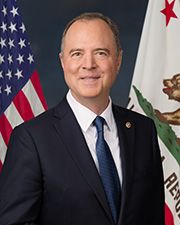
Mr. Speaker, I rise in strong support of House Resolution 546 and yield myself such time as I may consume. I first want to thank the gentlewoman from Florida (Ms. Ros- Lehtinen), the chairwoman for…
Mr. Speaker, I rise in strong support of House Resolution 546 and yield myself such time as I may consume.
I first want to thank the gentlewoman from Florida (Ms. Ros- Lehtinen), the chairwoman for the Subcommittee on Middle East and Central Asia, for offering this important and timely resolution.
I would also like to acknowledge my friend and ranking member of the Middle East Subcommittee, the gentleman from New York (Mr. Ackerman), for his role in the crafting of the measure.
Mr. Speaker, 1 week ago today, hateful and heartless fanatics committed a vile crime against the people of Jordan. The terrorists' immediate victims were the unsuspecting guests of three hotels, in one particularly sickening case, a wedding party at the height of its celebration where both bride and groom were of the Islamic faith.
This brutal attack killed scores of civilians, injured hundreds of others, and forever scarred the hearts of the victims' loved ones. Through these heinous acts against their own brothers and sisters, the terrorists demonstrate once again that they are not merely enemies of Western Civilization but of all civilization.
But the broader target of this assault was the public of a country that has been a stalwart ally of the United States in the global war on terrorism. This is not the first time that the people of Jordan have been victimized in a terrorist attack, but it is by far the most extensive offense against innocent civilians in Jordan by ruthless fanatics since the war on terrorism began.
To their great credit, the Jordanian people are not retreating in defeat, but are declaring their defiance. They are not making excuses for these vile enemies of all mankind, but are demanding accountability. They are not cowering in their homes, but taking to the streets in protest.
Mr. Speaker, the resolution before us condemns last week's reprehensible events in Amman and expresses our solidarity with the people of Jordan. It also declares our country's readiness to support Jordanian authorities in their efforts to bring the perpetrators to justice and to eradicate the networks that plot and carry out such attacks.
As our country knows all too well after September 11, and as all others who have sustained years of wanton terrorist carnage in the name of religious fundamentalism know all too well, there can be but one response to such inhumanity: unified resolve to bring it swiftly and irreversibly to an end.
This vicious crime must also serve as a cautionary tale to those in the Arab world who are content to stand by and watch as Iraqi security forces and American troops battle to defeat the vicious insurgency and the foreign jihadis who are indiscriminate in their slaughter.
We may be the primary targets of Zarqawi today, but he and his ilk are determined to destroy modernity and retard social and political progress throughout the Muslim world in the name of a perverted interpretation of Islam. As the carnage in Amman made clear, the war on terror is a shared endeavor in which the Arab people must play a central role in the victory over terror.
Mr. Speaker, this resolution expresses our profound outrage at this vicious attack and our profound sympathy and solidarity with our Jordanian friends at this time of their sorrow. I urge all of my colleagues to support the resolution.
Mr. Speaker, I reserve the balance of my time.
Mr. Speaker, I yield myself such time as I may consume.
Mr. Speaker, we now enjoy a tragic kinship with the people of Jordan, just as we enjoy with the people of London, the people of Madrid; and we all remember what it was like on September 11. Perhaps one of the only positive repercussions at the time was the outpouring of support that we enjoyed from around the world as countries around the globe expressed their solidarity with the United States in confronting this new and terrible force.
We now join the people of Jordan in their time of sorrow, in their time of need. We express our solidarity with our Jordanian friends. Our hearts break with their losses and our resolve is united with theirs to combat this terrible evil confronting the world. I want to just, in closing, once again thank our wonderful chairwoman of the subcommittee.
Mr. Speaker, I yield back the balance of my time.
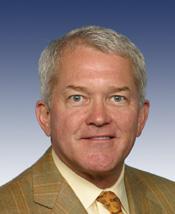
Mr. Speaker, let me thank the gentlewoman from Florida (Ms. Ros-Lehtinen) for yielding me time and commend her for bringing forward this resolution, this resolution of both sorrow and outrage. King…
Mr. Speaker, let me thank the gentlewoman from Florida (Ms. Ros-Lehtinen) for yielding me time and commend her for bringing forward this resolution, this resolution of both sorrow and outrage.
King Abdullah said it best when he expressed his country's collective outrage by declaring the world must join in the war on terror. The world must join in the war on terror.
I know at times countries are loath to engage on issues that they feel are not theirs, but we are now starting to see a global and collective problem that must be dealt with. We have seen recently in France horrific rioting in their streets, not necessarily tied to al Qaeda, but it is by a radical Muslim group that is feeling oppressed and put upon.
When I went to the Vatican for Pope John Paul's funeral, I spoke to the head of the Vatican state, the president who is a Cardinal. He suggested too one of Italy's greatest growing menaces is a gathering of radical Muslim extremists who are taking root in Italy, and he fears for the country and for the stability in the region.
Other groups like Hezbollah, al Qaeda, Islamic jihad are excited when incidents like an Amman, Jordan occur because they feel that they have us on the run.
We recognize that there are so many people of Muslim faith in the world, Arabs and others, who truly believe in peace and tranquility and the best that life has to offer for their children; but there are those who distort the Koran, as the gentlewoman has clearly suggested. They distort the meaning of the higher purposes and they use that to twist the logic and convince unsuspecting young people that in order to attain an ultimate joy in heaven that they too should commit acts of violence, of suicide.
This is a sad commentary on those innocent people who choose a desperate path of destruction based on the tutelage of someone who simply does not care. Interestingly enough, many of those who are training the suicide bombers stand aside and watch as other innocents kill themselves convinced they are doing something right. How sad that they have twisted the minds of individuals to the degree that they would not only kill themselves but kill other human beings, and they sit there and watch and celebrate after the fact.
We are joined together as the United States of America in this battle not because it is one of our choosing, but it is one we accept based on our ability to help guide and govern the world to a safer, better place for all people.
The Middle East and other places have been rocked by turmoil over decades, but now this greater and growing menace of al Qaeda threatens friends, allies and, yes, even enemies. Even people that may not agree with us on certain geo-political issues may find themselves sacrificed at the hand of this evil group of people.
So I join with King Abdullah in his declaration; and I urge Members of Congress, I know there are political and partisan battles going on, I know there is disagreement on the war in Iraq, I know there is a tendency to sit here and criticize constantly our Commander in Chief, but there is one thing for certain, if we are going to divide, we will not conquer. If we are going to criticize publicly and openly, then we will not give our troops in the field the strength to fight the battle ahead.
However and whatever reasons we came to Iraq, we now know that it is not just about Iraq. The World Trade Center bombings in 1993 and 2001 were not about our presence in Iraq, because we were not there then. Al Qaeda knows no boundaries. They know no group that they will not willingly sacrifice for their higher mission. And when they detonate a bomb in a wedding ceremony among fellow Arabs, among fellow Muslims in order to prove a point that they simply can, indicates how sad and despicable this group is.
So I thank the gentleman from California (Mr. Schiff) and the gentlewoman from Florida (Ms. Ros-Lehtinen) and members of the committee who found it appropriate not only to signal our displeasure but to record in the annals of the Congressional Record, because I know in my heart if we stand together we will, in fact, beat this scourge around the world and save humanity.
Mr. Speaker, I move to suspend the rules and agree to the resolution (H. Res. 546) condemning in the strongest terms the terrorist attacks that occurred on November 9, 2005, in Amman, Jordan, as…
Mr. Speaker, I move to suspend the rules and agree to the resolution (H. Res. 546) condemning in the strongest terms the terrorist attacks that occurred on November 9, 2005, in Amman, Jordan, as amended.
Mr. Speaker, I ask unanimous consent that all Members may have 5 legislative days to revise and extend their remarks and to include extraneous material on the resolution under consideration.
Mr. Speaker, I yield myself such time as I may consume.
Last Wednesday the world once again looked in horror at the destruction caused by Islamic extremist homicide bombers, this time in Jordan. We were compelled to act and first express our deepest condolences to the victims of this radical movement that has perverted the Koran to fit their extreme twisted ideology of hatred.
Perhaps, most importantly, we were compelled to offer every possible form
of cooperation in investigating these al Qaeda attacks and in assisting in efforts to bring the perpetrators to justice, led by al-Zarqawi. Jordan is our strategic ally in an international war on terror. Jordan has demonstrated its commitment to secure its borders to prevent foreign fighters from entering Iraq to attack our U.S. forces and our Coalition forces as well as innocent Iraqis. It has cooperated in providing critical information that may have helped prevent countless deaths at the hands of these Islamic extremists.
Just as critical has been Jordan's leadership in addressing the conditions that breed instability and are manipulated by the likes of al Qaeda and other Islamic extremists to recruit and advance their notorious agenda. Jordan has been a leader in reforming politically and economically for the benefit of its people serving as an example for other Arab Nations.
King Abdullah's efforts to facilitate and serve as a positive force between Israel and the Palestinians towards peace are noteworthy. Mr. Speaker, the attacks in Amman last week remove the facade that these dastardly acts by Islamic extremists are about anything other than death, destruction and hunger for power, control and continued oppression.
These attacks clearly demonstrate the callous and cowardly nature of the Islamic extremist enemy that we are facing, an enemy that is willing to bomb a wedding reception, kill innocent people of all backgrounds and injure over 100 others in order to advance their radical al Qaeda agenda.
Freedom threatens them. Al Qaeda mastermind al-Zarqawi, who is believed to be behind the bombings in Jordan last week, acknowledged in a February 17, 2004 letter to al Qaeda operatives, he says our enemy is growing stronger day after day. By God, this is suffocation. We will be on the roads again.
One of Osama bin Laden's closest associates wrote in a book published in September 2003 that a far more dangerous threat is secularist democracy. He cautions against democracy's seduction as it drives Muslims to refuse to take part in jihad.
I would like to commend the government and the people of Jordan for their courage and their commitment to true democratic reforms. Congress thanks the Jordanian people for their support in the cooperation and the aftermath of our 9/11 attacks, and we stand by Jordan as it tries to give face to this Islamic extremist movement that seeks to pervert Islam and to give Muslims worldwide a bad name.
We render our support in your efforts to bring to justice those Islamic extremist operatives, and we will continue to work together to pursue, to disrupt, to undermine and to dismantle the al Qaeda and other Islamic radical networks that have made possible the attacks like the ones in Amman on November 9.
Mr. Speaker, I ask my colleagues to support this resolution.
Mr. Speaker, I reserve the balance of my time.
Mr. Speaker, I yield such time as he may consume to the gentleman from Florida (Mr. Foley).
Mr. Speaker, I have no further requests for time, and I yield back the balance of my time.
Mr. Speaker, on that I demand the yeas and nays.

Mr. Speaker, I rise today in strong opposition to this reckless and misguided budget reconciliation package. At their heart, budgets are about our priorities. And the priorities we choose reflect the…
Mr. Speaker, I rise today in strong opposition to this reckless and misguided budget reconciliation package.
At their heart, budgets are about our priorities. And the priorities we choose reflect the values we hold dear.
Mr. Speaker, I do not believe this budget represents the priorities of the American people--and it flies directly in the face of the values that have always made this nation shine.
First of all, let's dispense with the fiction that this measure is some kind of down payment on the majority's newfound commitment to fiscal responsibility. In point of fact, the net effect of these spending cuts--when paired with their accompanying tax cuts--will be to actually increase the deficit by $20 billion. So much for fiscal responsibility.
And where are these cuts coming from? Are we scaling back the billions in excess payments to HMOs and drug companies in the Medicare bill? Or the billions in tax breaks for corporate interests in the FSC/ ETI bill? Or the billions in subsidies to the fossil fuel industry in the energy bill? Of course not.
Instead, in the aftermath of a lethal hurricane, with stagnant wages and rising poverty, 45 million Americans uninsured, and unprecedented global competition, we are slashing Medicaid for the poor, food stamps for the hungry and financial assistance to families trying to afford college.
This budget is a disgrace. Parts of our Nation were recently devastated by a natural disaster. Tonight, the damage being done is entirely man-made, and entirely avoidable. The wounds are self- inflicted.
Because I sit on the Education and Workforce Committee, I want to say a word about the Republicans' unprecedented Raid on Student Aid.
When the Higher Education Act was signed into law in 1965, it began a 40-year federal commitment to throw open the doors of higher education to every college-ready student, regardless of their family's income. It was the right thing to do for our students--and the smart thing to do for our country.
You see, in addition to the importance of giving every child the opportunity to reach his or her full potential, the reality is that college graduates earn $1 million more over their lifetimes than their counterparts who don't attend college. That's an enormous return the taxpayers' original investment--an investment that is only going to get more important as we compete to win in the global marketplace of the 21st century.
Which is why it is simply astonishing that this package includes the single largest cut to federal student aid in the 40-year history of the Higher Education program. By draining $15 billion out of student financial assistance, we are effectively tacking $5800 onto the cost of college for today's average student. We are making college less affordable at a time when we should be doing precisely the opposite. Predictably, the result will be less people going to college.
The Congressional Advisory Committee on Student Financial Assistance has already projected that financial barriers will prevent 4.4 million high school graduates from attending a four-year public college over the next decade, and another two million high school graduates from attending any college at all. This reconciliation package is going to make that statistic much, much worse.
And for what? To pay--or I should really say partially pay--for tax cuts, over 50 percent of which go to the top .2 percent of households already earning over $1 million a year.
Mr. Speaker, the choices in our budgets should reflect the values and priorities of the American people. This budget fails that test. I am confident that if this budget was supposed to be a mirror of American values, the American people would not recognize themselves. We can do so much better than this.

Mr. Speaker, I thank the gentleman, the distinguished ranking member for yielding me time. Mr. Speaker, we know that the reconciliation package the Republicans have put together before us tonight is…
Mr. Speaker, I thank the gentleman, the distinguished ranking member for yielding me time.
Mr. Speaker, we know that the reconciliation package the Republicans have put together before us tonight is unfair and will increase the deficit. We have an analysis documenting that unfairness by the Democratic staff of the Joint Economic Committee which I will be placing in the Record.
The spending cuts hit programs that benefit middle and lower income families while the tax cuts go overwhelmingly to very high income people. For example, families in the bottom fifth of the income distribution receive only 3 percent of family income, but they are being asked to absorb 22 percent of the cuts in spending for individuals. When you put together the tax cuts and the spending cuts, you see that the richest 20 percent of the income distribution receives benefits from tax cuts that far outweigh their losses from the spending cuts.
In contrast, middle and lower income families, the remaining 80 percent of all families in our country, lose more from program cuts than they gain from tax cuts. This is terribly unfair. This plan does not reflect American values. We can do better.
The Impact on Families of the House Budget Reconciliation Package
Joint Economic Committee Democrats
Senator Jack Reed (D-RI)--Ranking Democrat
Representative Carolyn Maloney (D-NY)--Senior House Democrat
November 17, 2005
Summary
The FY 2006 House budget reconciliation plan will increase
the federal budget deficit and is unfair in its impact on
families.
The deficit will increase because reconciled spending cuts
of $50 billion are not sufficient to offset reconciled tax
cuts of nearly $60 billion, which could rise to $70 billion
in a future conference agreement.
The plan is unfair because the spending cuts affect
programs that benefit middle and lower-income families, while
the tax cuts go mainly to very high-income people.
Spending Cuts
Of the $50 billion in reconciled spending cuts, about $22
billion are in payments for individuals that can be allocated
by family income group (Table 1).
That $22 billion is spread relatively evenly across
families in all income groups. But because income is so
unevenly distributed, the share of spending cuts borne by
low-income families is substantially larger than their share
of total income (Table 2). For example, families in the
bottom fifth of the income distribution receive only about 3
percent of total income, but they bear 22 percent of the
total cuts in spending on payments for individuals.
The remaining reconciled cuts and offsetting receipts do
not directly reduce payments for individuals, such as the
proceeds from auctioning electromagnetic spectrum licenses.
Nevertheless, some of the additional cuts will hurt
vulnerable families. For example, the roughly $5 billion in
cuts to child support enforcement efforts will reduce
payments to single parents and their children by over $7
billion.
Tax Cuts
Of the $57 billion in tax cuts, $28 billion are in taxes on
individuals that are allocable by income group (Table 3).
By far the largest amount ($23 billion) of the tax cuts for
individuals that can be allocated by family income group
accrue to the richest 20 percent of families (Chart 1).
Most of the taxes that are not directly allocated in this
analysis are business tax cuts that would also end up
benefiting high-income taxpayers.
Net Impact
The top 20 percent of the income distribution receives
benefits from the tax cuts that far offset losses from the
spending cuts (Chart 1).
Middle and lower income families (the bottom 80 percent of
all families) lose more from program cuts than they gain from
tax cuts.

Mr. Speaker, I yield myself 2 minutes. Mr. Speaker, last week the Republicans were unable to pass this bill because of the severity of the cuts. They have since then done a lot of horse trading about…
Mr. Speaker, I yield myself 2 minutes.
Mr. Speaker, last week the Republicans were unable to pass this bill because of the severity of the cuts. They have since then done a lot of horse trading about those cuts and apparently, now tonight, they have the votes. But the one thing that remained consistent throughout all of that horse trading was they never lost their appetite to raise the cost of student loans. According to the CBO, this budget will add almost $8 billion in new cost onto the backs of students and onto their parents as they borrow money to pay for higher education, a higher education that is absolutely essential today to fully participate in the American economy.
They will add almost $5 billion in new consolidation loan fees and higher interest rates that go directly to those students borrowing money. They mandated a 1 percent insurance fee, $1.47 billion, on the backs of these students. Repealing the lower interest rate caps, $505 million to these students. A 1.5 percent origination fee, $350 million to these students. So that the average student today who borrows $17,500, you will increase their cost of that loan, and that education $5,800. Not according to me, but according to the Congressional Budget Office.
You can say all you want, but none of you apparently raised your hand and said, How about helping the students? How about reducing the taxes on the students? How about reducing the $8 billion in new taxes on these students? Students who are going to Kansas, they are going to UT, 30 students here are going to Georgetown. Nobody raised their hand on behalf of these students or their families who are going deeper and deeper in debt.
Just 2 weeks ago, we got a report that the cost of a college education is outstripping the ability of middle-class families to pay for it, and certainly lower income families to pay for it.
Earlier this day, you took away the promise of this President to increase
the Pell grant by $50. He originally promised to raise it to $5,100. But, no, you couldn't keep that promise, the President couldn't keep his, you didn't keep his promise, nobody kept the promise to the students. Somehow you are just not able to keep your promises. What happens is that these students here are punished because of your inability to keep your promises.
No, the House is not out of order, you are out of order because you are hurting the students of this Nation, you are hurting their families, you are piling on the debt, you are piling on the interest rates, you are increasing the cost to the students and to their families. You ought to be ashamed of it. Because the taxes that these kids are going to have to pay and their families pay are way beyond what is fair to do to them. It is a tragedy, an absolute tragedy that you would do this to young people.
Announcement by the Speaker Pro Tempore
Mr. Speaker, I yield 1\1/2\ minutes to the gentleman from Michigan (Mr. Kildee).
Mr. Speaker, I yield 1\1/2\ minutes to the gentleman from New York (Mr. Bishop).
Mr. Speaker, I yield 1\1/2\ minutes to the gentlewoman from Minnesota (Ms. McCollum).
Mr. Speaker, I yield 1\1/2\ minutes to the gentleman from Virginia (Mr. Scott).
Mr. Speaker, I yield 2 minutes to the gentleman from Wisconsin (Mr. Kind).
Mr. Speaker, I yield the remaining time to the gentleman from Washington (Mr. Inslee).
(Mr. INSLEE asked and was given permission to revise and extend his remarks.)
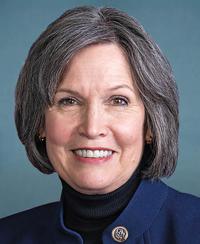
Mr. Speaker, I rise today to support America's college students. Our competitiveness in the global economy is built on a foundation of a highly educated workforce. My Republican colleagues feel…
Mr. Speaker, I rise today to support America's college students. Our competitiveness in the global economy is built on a foundation of a highly educated workforce. My Republican colleagues feel higher education is a privilege and not a necessity for American students. The Republican strategy to cut and gut Federal financial aid by over $14 billion for its students hurts families and threatens America's competitiveness. The Republican raid on student aid makes the largest cut in the history of financial aid while also increasing the deficit by $20 billion, adding more debt on the backs of hardworking Americans and students.
Tim McDonald who attends Hamline University in St. Paul, Minnesota, told me and other students last week: ``The generation that benefited from highly subsidized affordable higher education is now pulling the ladder up with them and forcing us to finance debt not only of our own education but of their tax cuts.''
Congress should promote hope and opportunity and provide America's scientists, engineers, entrepreneurs, police, nurses and teachers, our future leaders, with the skills and knowledge and opportunity to keep America strong and prosperous. These budget cuts cut and gut the resources that students depend upon to achieve their career goals and to contribute to America. Instead of investing in students, instead of investing in America's future, this reconciliation forces students to pay the price for the mismanaged Republican budget.
I rise today to support America's college students and our nation's higher education institutions.
Our competitiveness in the global economy is built on the foundation of a highly educated workforce.
My Republican colleagues feel financial aid for higher education is a privilege, not a necessity for American students.
The Republican strategy to cut and gut federal financial aid by over $14 billion hurts students, hurts families and threatens America's competitiveness. Harming higher education harms America.
The Republican raid on student aid makes the largest cut in the history of financial aid, while also increasing the deficit by $20 billion--adding more debt on the backs of hard working Americans . . . and students.
Tim McDonald attends Hamline University in St. Paul, Minnesota. Last week speaking against these cuts Tim said:
``The generation that benefited from highly-subsidized, affordable higher education is now pulling the ladder up with them and forcing us to debt finance not only our own education, but their tax cuts . . .''
Congress should promote hope and opportunity. Vocational and technical schools and our colleges and universities provide America's scientists, engineers, entrepreneurs, police, nurses, and teachers--our future leaders with the skills, knowledge and opportunity to keep America strong and prosperous.
This budget cuts and guts the resources students depend upon to achieve their career goals and contribute to America.
Instead of investing in students, instead of investing in America's future, this reconciliation forces students to pay the price for a mismanaged Republican budget.
I ask my Republican colleagues to protect America's economic future, to not abandon the next generation and to DEFEAT the cutting and gutting of hope and opportunity for American students.
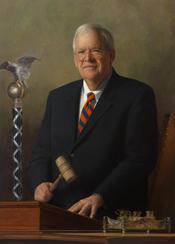
Mr. Speaker, I thank the chairman for yielding me this time. I guess we have heard it all. We have heard an argument wrapped in religious morality. We have heard revisionist history. We have actually…
Mr. Speaker, I thank the chairman for yielding me this time.
I guess we have heard it all. We have heard an argument wrapped in religious morality. We have heard revisionist history. We have actually heard a lot of words tonight. We have had epithets thrown back and forth across this hall, which does not make me proud and probably does not make the American people. But what we have to do is do the people's work. We were elected by the American people to make a difference.
Now, I remember 1993. I remember the largest tax increase in American history. That is what they call ``fiscal integrity.'' The American people rejected that. I also remember 1997. Maybe I have been around too long, but in 1997, we did deficit reduction. We also did welfare reform. If I remember right, we passed it once; it got vetoed. We passed it twice; it got vetoed. We passed it three times, and the President decided if he was going to get re-elected, he had better sign it, and then he took credit for it.
In this body it has been the people on this side of the aisle that have done the tough work, that have done their homework, and have made a difference.
I also remember in 1999, 2000, and 2001, we paid down $500 billion of public debt. We wiped that debt off. I will tell my colleagues in 2001 we had 9/11. Three thousand people got killed in 45 minutes in this country. And we probably had to respond to that. And we have. Then we had a deficit. The great bubble of that economy burst. It did not burst on their watch, but it burst because people were overleveraged and it was overheated. But we have responded. And we have had 10 consecutive quarters of 3 percent-plus economic growth because this party has worked hard to do what the American people sent us here to do.
You can talk about meanness and mean spiritedness, but I will tell you the most mean spirited thing we can do is to leave our children with a debt that they cannot pay. We can leave our children with a deficit. And you are right. You are right. Stand up and clap because we will leave our children with a deficit that they cannot spend down or save.
I will tell my colleagues when we look at this bill, we talk about the growth in Medicaid. Governors are calling us from both parties and saying, Help us do something, help us to have a plan to reform Medicaid so that we can save some money, so that we can offer more services to more people in a better way.
And you know what? We worked at it. We did have reform. And Medicaid is growing at a 7.3 percent growth rate per year. A 7.3 percent growth rate. It has been growing for years.
Is there a better way to do it? Is there a more efficient way to do it? Should we find some reforms to make it better? Yes, we should. And we are bending that growth rate from 7.3 to 7 percent. Think about it.
The American people expect us to do what is right. The American people do not want all of these platitudes of moral indignity. They want us to go to work. They want us to do our job. They want us to provide a better life for themselves and their children, and this majority will do it. It is our responsibility. We can start right now by voting for this bill.
Mr. Speaker, this Republican-controlled Congress has run higher annual deficits and accrued more debt than ever before in the history of our Nation. This budgetary irresponsibility is leading us down…
Mr. Speaker, this Republican-controlled Congress has run higher annual deficits and accrued more debt than ever before in the history of our Nation. This budgetary irresponsibility is leading us down a dangerous path and must be stopped.
After the devastation of Hurricanes Katrina and Rita, and with the continuing costs of our ill-advised war in Iraq, restoring fiscal discipline has taken on added urgency.
Our responsibility today is to decide how to begin to allocate the burden of restoring financial order. Our choice is straightforward: we can place the burden on those least able to bear it by cutting financial assistance to the poor and social services programs to the needy, or we can place it on those far more able to bear it by deferring the billions in tax cuts which were enacted just two years ago, some provisions of which have yet to take effect.
How we exercise this responsibility will reflect our philosophy on government, our faithfulness to the concept of a caring community, and the values of compassion and fairness we hold most important.
The Federal Government should not retreat from its role of caring for those Americans who are most in need and of enabling every individual to participate in the remarkable opportunities that America has to offer. I believe that all Americans have a responsibility, and most have a desire, to share in our national burdens and to participate in our national response to crisis. And I believe that every action this Congress takes must reflect the values and principles that make this country so unique in its greatness.
This bill is contrary to each of these beliefs, for it imposes practically the entire burden of putting our fiscal house in order on the members of our national community who are least able to bear it.
This bill cuts more than $50 billion in mandatory spending on vital programs, such as food stamps, Medicaid, child support, student loans, SSI, and child care--$15 billion more than the $35 billion in mandatory cuts in the original budget resolution.
The bill will lead to 250,000 people losing food stamps, will result in children missing mental health treatment or simple aids like eye glasses because of the $12 billion in cuts from Medicaid, and will make it more difficult for students to pay back student loans.
The bill will cut child support programs and SSI benefits, and will force a decline in the number of children who receive child care while their single mothers work.
Soon after considering this bill, we will consider another bill that proposes to reduce federal taxes by $70 billion. These tax cuts, and the corresponding benefits, will affect a much different segment of Americans than the bill now under consideration. Indeed, the majority of these tax benefits will go to the 0.2 percent of Americans with annual incomes over $1
million. They don't need this largesse, and we cannot afford to give it to them.
Taking from the poor to give to the rich is wrong, and I believe that our constituents recognize that it's also un-American.
Bill Text
2 versions available
        [Congressional Bills 109th Congress]
[From the U.S. Government Publishing Office]
[H. Res. 546 Engrossed in House (EH)]

H. Res. 546

In the House of Representatives, U.S.,

November 17 (legislative day, November 18), 2005.
Whereas on November 9, 2005, a series of terrorist bombs exploded at the
Radisson, Hyatt, and Days Inn hotels in Amman, Jordan, resulting in the
deaths of scores of civilians and the injuries of hundreds of others;
Whereas the people and Government of the Hashemite Kingdom of Jordan have been
targeted in several terrorist attacks over the past few years;
Whereas Jordan has arrested suspected terrorists with possible ties to Osama bin
Laden's Al Qaeda organization, including suspected killers of a United
States diplomat, Lawrence Foley, who headed the United States Agency for
International Development (USAID) mission in Jordan but was shot on
October 28, 2002, while leaving for work, marking the first lethal
attack on a United States official in Jordan in more than 30 years;
Whereas Jordan is a stalwart ally of the United States in the global war on
terrorism; and
Whereas on November 10, 2005, President George W. Bush expressed his heartfelt
sympathies for the people of Jordan and his condolences to the families
of the victims during his visit to the Embassy of Jordan: Now,
therefore, be it
Resolved, That the House of Representatives--
(1) condemns in the strongest terms the terrorist attacks that
occurred on November 9, 2005, in Amman, Jordan;
(2) joins with President George W. Bush in expressing its
condolences to the families and friends of those individuals who were
killed in the attacks and in expressing its sympathies to those
individuals who have been injured;
(3) expresses solidarity and support of the people and Government of
the United States with the people and Government of the Hashemite
Kingdom of Jordan as they recover from these cowardly and inhuman
attacks; and
(4) expresses its readiness to support and assist the Jordanian
authorities in their efforts to bring to justice those individuals
responsible for the recent attacks in Jordan and to pursue, disrupt,
undermine, and dismantle the networks which plan and carry out such
attacks.
Attest:

Clerk.