Mr. Speaker, I rise today to speak in support of this resolution. I was happy to offer this resolution honoring a constituent of mine, Tony Stewart, for one of the greatest accomplishments in motor…
Mr. Speaker, I rise today to speak in support of this resolution. I was happy to offer this resolution honoring a constituent of mine, Tony Stewart, for one of the greatest accomplishments in motor sports, winning the 2005 NASCAR Nextel Cup.
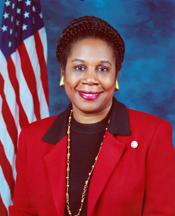
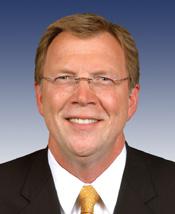
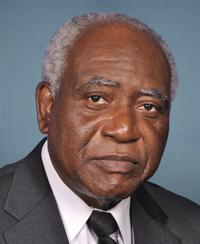
This resolution is co-sponsored by several of my colleagues from Indiana, Mr. Pence, Mr. Burton, Mr. Souder, Mr. Hostettler and Ms. Carson. This achievement is even more amazing considering this is Mr. Stewart's second NASCAR Cup win in only his seventh season competing on the NASCAR circuit. Not only has Mr. Stewart won two NASCAR championships, his resume is more impressive when you consider he has also won eight other auto racing championships, including the Indy Racing League.
This season, NASCAR fans and even the casual spectator watching highlights on ESPN SportsCenter all saw Mr. Stewart's number 20 Home Depot/Joe Gibbs racing car capture the checkered flag in an orange and black blur six times during the season. These victories came at the Gatorade Duel 2, the Dodge Save Mart 350, the Pepsi 400, the New England 300, the Sirius Satellite Radio at the Glen and the Allstate 400 at the Brickyard. It was at the Brickyard, Indiana's crown jewel on the NASCAR circuit, where Mr. Stewart started in the 22nd position and worked his way through the pack to lead the most laps on his way to victory.
Mr. Stewart's path to his second championship started in his hometown of Columbus, Indiana. Just outside of Columbus is a town called Westport where he raced go-carts in 1978.
Mr. Speaker, I will be submitting an article from the December 1, 2005, edition of Sports Illustrated which eloquently highlights the career of Mr. Stewart.
Sports Illustrated writer Lars Anderson writes about Mr. Stewart's hardworking Hoosier roots and his entry into the racing world: ``Tony Stewart was 22 years old and living rent-free in a friend's house in Rushville, Indiana, when he hit a crossroads. For months, he had been working in a machine shop 8 hours a day, 5 days a week, running a drill press for $5 an hour and wondering if he had what it took to become a professional racer. Then, one afternoon early in 1993, he asked his boss if he could borrow money for a ticket to Phoenix. The Copper World Classic, a USAC event for open-wheel cars at Phoenix International Raceway, was going to be held in a few days, and Stewart, who raced on the weekends in the Midwest, wanted to test his talent against West Coast drivers. So he asked his boss for a loan, and neither Stewart's life nor American motor sports have been the same since.''
Indeed, American motor sports have never been the same since.
Mr. Stewart won three carting championships, four USAC titles and the IRL crown before becoming the NASCAR Rookie of the Year in 1999 and winning his first NASCAR Winston Cup title in 2002.
Mr. Stewart recalls to Mr. Andrews how he entered the world of professional auto racing. He said, ``I got the loan and wound up finishing second in the race, and I made $3,500.'' ``When I got home from Phoenix, I looked at the paycheck and calculated how long it would take me to make that much in the machine shop. I said to myself, It's now or never, and that's when I decided to go for it.''
Mr. Speaker, that is the American dream, going for it; taking the risk; taking advantage of the opportunities. Mr. Stewart's rise to the top is indicative of his Hoosier work ethic and pride in a job well done. But Mr. Stewart should also be recognized for his accomplishments outside of motor sports. His commitment to philanthropy led him to start the Tony Stewart Foundation to help terminally ill children and to aid the families of drivers injured in motor sports.
For his contributions to the State of Indiana, a State rich in motor sports history, Mr. Stewart was awarded the Sagamore of the Wabash, the State of Indiana's highest honor. Governor Mitch Daniels presented the award after Mr. Stewart's number 20 car and his crew won Indiana's only NASCAR Nextel Cup race, the Brickyard 400.
This race is held annually at the most storied of racetracks in the world, the Indianapolis Motor Speedway in Speedway, Indiana. Mr. Stewart is not only held in respect by his fellow Hoosiers but by his fellow racers as well. His colleague Mark Martin said, ``Tony Stewart, in my eyes, is the greatest race car driver I have watched drive in this era. A.J. Foyt might have been that when I was a little boy, but Tony Stewart is my driving hero.''
Dale Earnhardt, Jr., said, ``Tony's as talented as they come. He's also one of the most genuine guys in our sport. He was one of the few people who stepped up for me when my dad died. He's a guy who really cares about his friends, and I guarantee you this won't be the last championship he wins.''
Jeff Gordon, a fellow Hoosier and four-time NASCAR Cup champion said, ``Tony is a true American racer. You can put him in any car on any track and he'll be fast. He's good on the short tracks, the intermediate tracks, the restrictor-plate tracks and the road courses.''
I am proud to honor Mr. Stewart, an American driver at the top of the racing world, a Hoosier, and a Ninth District constituent. I ask for my colleagues to support this resolution to congratulate him on his accomplishments.
[From Sports Illustrated, Dec. 2005]
The Champion
(By Lars Anderson)
Tony Stewart was 22 years old and living rent-free in a
friend's house in Rushville, Ind., when he hit a crossroads.
For months he had been working in a machine shop, eight hours
a day, five days a week, running a drill press for $5 an hour
and wondering if he had what it took to become a professional
racer. Then, one afternoon early in 1993, he asked his boss
if he could borrow money for a ticket to Phoenix. The Copper
World Classic, a USAC event for open-wheel cars at Phoenix
International Raceway, was going to be held in a few days,
and Stewart, who raced on weekends in the Midwest, wanted to
test his talent against West Coast drivers. So he asked his
boss for a loan, and neither Stewart's life, nor American
motor sports, has been the same since.
``I got the loan and wound up finishing second in the race,
and I made $3,500,'' Stewart recalled as he sat in the back
of an Agusta helicopter that was carrying him to Homestead-
Miami Speedway on Nov. 17 for the start of what Stewart would
later call the most important racing weekend of his life.
``When I got home from Phoenix, I looked at the paycheck and
calculated how long it would take me to make that much in the
machine shop. I said to myself, It's now or never. And that's
when I decided to go for it.''
In NASCAR's season finale at Homestead, almost 13 years
after he made his decision, Stewart solidified his status as
one of the top drivers of his generation when he wrapped up
his second career Cup championship by coming in 15th in the
Ford 400. Stewart, who finished 35 points ahead of Greg
Biffle and Carl Edwards in the final standings, joined an
exclusive club: He became the 14th driver in NASCAR's 58-year
history to win multiple titles. Among current drivers,
Stewart is only the second to have won more than one Cup
championship. (Jeff Gordon, who has won four, is the other.)
Though Stewart didn't win any of the final 10 races of 2005,
his average finish of 8.7 during the Chase was second only to
Carl Edwards's 8.4. And during the final two thirds of the
season, Stewart was as consistent as any NASCAR driver in
recent memory: Over the final 22 races of '05 he finished in
the top 10 an astonishing 19 times.
``Tony Stewart, in my eyes, is the greatest race car driver
I've watched drive in this era,'' says Mark Martin. ``A.J.
Foyt might have been that when I was a little boy, but Tony
Stewart is my driving hero.''
``Tony is a true American racer,'' says Gordon. ``You can
put him in any car on any track, and he'll be fast. He's good
on the short tracks, the intermediate tracks, the restrictor-
plate tracks and the road courses.''
``Tony's as talented as they come,'' says Dale Earnhardt
Jr. ``He's also one of the most genuine guys in our sport. He
was one of the few people who stepped up for me when my dad
died. He opened his home to me and offered me his car, his
helicopter. He's a guy who really cares about his friends,
and I guarantee you this won't be the last championship he
wins.''
For Stewart, though, it will be a hard one to top in terms
of satisfaction. ``It's been a very special year,'' he says
of a title run that was far less stormy than his previous
one. ``This championship means 10 times more than the one I
won in 2002. I've had more fun this year than at any time in
my life.''
All season long Stewart could be seen smiling when he
talked to his crew and hamming it up with the media. Which
prompts the question: What happened to Tempestuous Tony, the
hothead nicknamed Smoke, who infamously shoved a photographer
in 2002 and used to challenge other drivers to fights in the
garage?
To understand Stewart's dramatic change in demeanor, you
must go back to the final race of 2004. Minutes after Stewart
hopped out of his Home Depot Chevy at Homestead,
he told friends that he was packing his bags and heading
west. For six years he had lived just north of Charlotte, the
hub of NASCAR, but now he had decided to move back to his
childhood home in Columbus, Ind. The move made Stewart happy,
and it transformed his team. ``I can hit the reset button
here--and nobody bothers me,'' he said one day last summer.
``My neighbors think of me as the same punk kid who smacked
baseballs into their aluminum siding.''
Relaxed and upbeat, Stewart improved not just his attitude
but also his listening skills. The communication between
Stewart and his crew in 2005 was as free-flowing as it has
ever been in his six-year Cup career. In October '04, in a
meeting at Joe Gibbs Racing in Charlotte, several crewmen
told Stewart that in the past his heat-of-the-moment tongue-
lashings had bruised egos. As a result, some in the crew were
reluctant to speak to Stewart when problems arose.
``That meeting really opened my eyes,'' says Stewart. ``I'm
only 5'8'' and 185 pounds, but I can intimidate people. That
had to stop because my guys need to be able to talk to me
about anything.''
``Tony moving home has meant everything to our team,'' says
shock specialist Ronny Crooks. ``Instead of looking at
problems, Tony now looks at solutions.''
That positive attitude carried the team all year, from the
ups and downs of spring, through a red-hot summer (sparked by
a test session at Michigan in which Stewart and crew chief
Greg Zipadelli hit on a key suspension setup), to a carefully
controlled Chase, to the final lap at Homestead, ending a
season that will stand out in NASCAR history. ``I've never
really thought about where my place in the history of the
sport will ultimately be,'' says Stewart. ``I've got a lot
more to accomplish, and hopefully I'll win a few more
championships.''
While Stewart is clearly driving toward the pantheon of the
alltime great American racers--a place where Earnhardt, Foyt,
Pearson and Petty all reside--he already shares one trait
with the legends: He likes to give the fans a show. So, late
in the evening of Nov. 20, at the urging of a few hundred
fans still in the Homestead grandstand an hour after the
race, Stewart scaled the catch-fence at the start-finish
line. As he triumphantly raised his arm, flashbulbs popped,
capturing what surely will be the defining image of NASCAR's
2005 season.
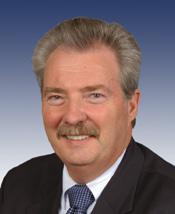 Rep. Michael E. Sodrel (R-IN)