Congratulating the International AIDS Vaccine Initiative on ten years of significant achievement in the search for an HIV/AIDS vaccine, and for other purposes.
Legislative Activity
Stay on top of the latest movement without scrolling through every action
Motion to reconsider laid on the table Agreed to without objection.
July 28, 2006 • 11:41 PM
View full timeline
Introduced in House
May 25, 2006
Referred to the House Committee on International Relations.
May 25, 2006
Committee Consideration and Mark-up Session Held.
June 27, 2006
Committee Agreed to Seek Consideration Under Suspension of the Rules, (Amended) by Unanimous Consent.
June 27, 2006
Ms. Ros-Lehtinen moved to suspend the rules and agree to the resolution, as amended.
July 26, 2006 • 10:16 PM
Considered under suspension of the rules. (consideration: CR H5937-5939)
July 26, 2006 • 10:16 PM
DEBATE - The House proceeded with forty minutes of debate on H. Res. 844.
July 26, 2006 • 10:16 PM
At the conclusion of debate, the Yeas and Nays were demanded and ordered. Pursuant to the provisions of clause 8, rule XX, the Chair announced that further proceedings on the motion would be postponed.
July 26, 2006 • 10:26 PM
Considered as unfinished business. (consideration: CR H6170-6171)
July 28, 2006 • 11:37 PM
Passed/agreed to in House: On motion to suspend the rules and agree to the resolution, as amended Agreed to by the Yeas and Nays: (2/3 required): 407 - 0 (Roll no. 423).(text: CR 7/26/2006 H5937-5938)
July 28, 2006 • 11:41 PM
On motion to suspend the rules and agree to the resolution, as amended Agreed to by the Yeas and Nays: (2/3 required): 407 - 0 (Roll no. 423). (text: CR 7/26/2006 H5937-5938)
July 28, 2006 • 11:41 PM
Motion to reconsider laid on the table Agreed to without objection.
July 28, 2006 • 11:41 PM
Voting History
1 vote recorded • Roll call available
Floor Debate
24 membersWhat members said about H.Res. 844 on the floor
 GM
GM JAB
JAB WMT
WMT SML
SML HP"+19
Floor Debate
24 membersWhat members said about H.Res. 844 on the floor
I yield 2 minutes to the gentleman from Washington (Mr. McDermott). (Mr. McDERMOTT of Washington asked and was given permission to revise and extend his remarks.) Mr. Speaker, I yield 3 minutes to…
I yield 2 minutes to the gentleman from Washington (Mr. McDermott).
(Mr. McDERMOTT of Washington asked and was given permission to revise and extend his remarks.)
Mr. Speaker, I yield 3 minutes to the gentleman from New Jersey (Mr. Andrews).
(Mr. ANDREWS asked and was given permission to revise and extend his remarks.)
Mr. Speaker, I yield 2 minutes to the
gentleman from Maryland (Mr. Cardin).
Mr. Speaker, I yield 3 minutes to the gentlewoman from California (Ms. Woolsey).
Mr. Speaker, I yield myself 30 seconds just to correct the record.
The legislation does not require the funding of these plans. Executives can continue to get benefits out of these plans if they are only 60 percent funded. The gentlewoman from California was correct. Workers can only get benefits if they are 80 percent funded.
So the executives can continue to draw down the assets of the corporations, but the employees cannot.
Mr. Speaker, I yield 2 minutes to the gentleman from Massachusetts (Mr. Neal), a member of the Ways and Means Committee.
(Mr. NEAL of Massachusetts asked and was given permission to revise and extend his remarks.)
Mr. Speaker, I yield 15 seconds to the gentleman from North Carolina (Mr. Etheridge).
Mr. Speaker, I yield 2 minutes to the gentleman from New York (Mr. Owens).
(Mr. OWENS asked and was given permission to revise and extend his remarks.)
Mr. Speaker, I yield 4 minutes to the gentleman from North Dakota (Mr. Pomeroy).
Mr. Speaker, I reserve the balance of my time.
Mr. Speaker, I continue to reserve the balance of my time.
Mr. Speaker, I yield 2 minutes to the gentleman from Massachusetts (Mr. Tierney).
Mr. Speaker, I yield myself such time as I may consume.
Mr. Speaker and Members of the House, this is a complicated piece of legislation and Members of the House and Members of the Senate have struggled with it for some period of time. That struggle really hasn't been completed yet because this legislation was taken from the conference committee and it is here tonight to be passed unilaterally within the House and be presented to the Senate in the future.
It is difficult to understand all of the things that have been done in this legislation, certainly for the Democratic Members of the House since we were not included in this conference committee. We were not invited into any of the sessions, nor was the information shared with us as it was developed during the conference committee because they chose to run it simply on a partisan basis among the House conferees.
But I think it is clear to understand also that this legislation does, in fact, as my colleague from Massachusetts said, miss a number of opportunities. And that is why we are concerned with it tonight.
We understand the changes that have been made that allow companies to continue to underfund those pension plans and then increase the contributions that those plans will have to make in later years, and it is pretty clear that as businesses sit down and make the decisions about the allocation of resources and they look at those increased contributions, the burden will really push them in the direction of freezing or terminating their plans. That is why we see the quote that was given this last day or so, ``We will see an unprecedented number of companies freezing their plans in 2007 because they will recognize the difficulties of the new pension regime.'' That comes from the American Benefits Council, which deals with so many of these plans, because this tilts the table toward the decisions by companies to terminate or to freeze those plans.
And if that happens, of course, we have been warned now, under this legislation by the Pension Benefit Guaranty Corporation that as they contribute less to those plans and then make that decision, it also heightens the likelihood that these underfunding problems will become worse, according to this legislation as represented to us by the Pension Benefit Guaranty Corporation. And they also make it clear
the Pension Benefit Guaranty Corporation that absorbs these plans on behalf of a safety net paid for by other plans that as they suffer from a huge deficit, a $23 billion deficit, they expect that this legislation that is before us tonight will add some $2 billion to that deficit over the next 10 years.
But there are other decisions that the conferees could have made or that you could have made in drafting this bill as you brought it to the floor. You could have erred on the side of working people. You could have made a decision that in these plans that are distressed and underfunded that we would, in fact, treat the employees and the executives alike. But we set two different standards. We said that if your plan is not 80 percent funded, then the employees can get no additional benefits in terms of their retirement out of that plan. But if a plan is only 60 percent funded, executives can continue to draw and add on and accrue pension benefits. So we have set two different standards here. Both people, I assume, are working very hard for the success of that corporation. One is just going to get treated entirely differently than the other. It is a matter of simple fairness. A matter of simple equity. But when we see the greatest disparities in the history of this country for a long time now, when we see these disparities, this bill increases those disparities between the executives and the employees.
You could have made a decision not to harm the pilots that were harmed after 9/11 because they were forced to retire early. Federal law made them retire at 60. Then 9/11 and the high fuel costs come along, and that drives United Airlines into bankruptcy, a bankruptcy I didn't agree with, but they went into bankruptcy; so you lost 40 percent of your pension. PBGC took over their plan, but you lost an additional amount because you retired at 60. Those pilots had no chance. We could have taken care of them in this bill. One would have thought that that was somewhat of a humane thing to do, a compassionate thing to do. They were victims of 9/11. They were victims of the downturn in the travel economy after 9/11. They were victims of high fuel costs. They did not do anything wrong, and Federal law forced them to retire. But we just blew off their cause in this legislation.
The issue of older workers, a missed opportunity there, to make sure, as we transition from defined benefits plans to cash balance plans, that we would protect the oldest of those workers, the closest to retirement, that we would make sure that they would be taken care of because, as we know, people who are 55, 60 years old, 5 years from retirement, have very little opportunity to accumulate the kind of economic resources that are necessary to match the retirement that they were expecting. You didn't have to do it. It was recommended by the administration.
The Secretary of Treasury, former Secretary Mr. Snow, said it should be done. He said he did it in his corporation at CSX. He voted to do it as a member of the board of Verizon. It was done by Honeywell. It was done by Wells Fargo Bank. It was a compassionate thing to do. They still realized the savings that they wanted by changing their pension plans, and I do not object to their doing that. I just thought that we could make an effort to try to protect those people who the GAO tells us would lose almost half of their benefits with those kinds of conversions. But that was not done in this legislation.
So I really think that we ought to understand that those kinds of decisions really do harm a number of people that could have been helped in this legislation, a significant number of people that could have been helped in this legislation. And we could have done some more to try to help keep these plans out of the PBGC.
We could have also made sure that before people went to bankruptcy in the manner in which United did, that they would have made the last ditch effort, the kind of effort that we just talked about earlier, where airlines made these kinds of efforts to freeze their plans, but they did not. But I think before we rush to bankruptcy and then we turn these plans over to the PBGC and maybe ultimately to the taxpayer that there ought to be a burden, there ought to be a showing, there ought to be evidence that, in fact, you made every effort. I am not asking you to destroy the company. I am asking you to make the kind of effort that we saw others make but they chose not to make it at United, and as a result of that, those machinists, those flight attendants, the pilots, the ramp workers, and so many others have taken such a serious hit on their pension benefits with no ability to recover. So those are my objections to this legislation.
We started this session with an unprecedented attack on Social Security. And as people started to look at that attack, and they saw the Federal privatization of Social Security, they started to look at their own pension plans, and they realized, as what we are doing with here today, that their own pension plans are very insecure. There is probably no employer in this country that can tell you that that pension plan will be there for their employees 75 years from now, 65 years from now, and be paying out 80 percent of the benefits. So people have come to realize that they need retirement security. And I do not believe that this legislation provides that kind of security that individuals need.
I recognize the transitions in pension plans. I recognize the changes in pension plans. But I really think that this legislation, in many ways, was drafted looking in the rear-view mirror as opposed to the future of these plans and how we encourage savings and how we encourage participation.
There is no question this legislation deals with some of those issues, but I do not believe that we did the kind of job that will serve us well in the future.
And I would encourage Members to oppose this legislation. We will have a motion to recommit, a motion that will protect those older workers, a motion that will treat those airlines the same. If they all freeze their plans, they should get the same number of years to do that, and we think it will provide them a greater margin of safety if they do that, and provide for that kind of transition and the protection of those pension plans as they originally requested, as the Senate originally voted to do. But the conferees didn't go there, and certainly this legislation being offered in the House tonight didn't go there. But that will be offered in a few minutes.
I urge opposition to this legislation.
Mr. Speaker, I yield back the balance of my time.
Mr. Speaker, I offer a motion to recommit.
I am in its current form.
Mr. Speaker, this motion does two things. First, it sends the pension bill back to committee to include all of the airline protection provisions that were included in the Senate-passed pension bill. Second, it seeks to send back to the committee to add the Senate-passed provisions providing for the transition protections for older workers affected by cash balance conversions.
Both of these are critical to protecting America's workers' pensions and their retirement security. All across America, employees are worried sick about their retirement nest egg. They have seen big airlines like U.S. Air and United cut and run on their obligations to pay promised benefits and are wondering if they are next.
The House bill protects Delta and Northwest and enables them to extend their pension payments over 17 years at the plan's interest rate. However, the bill only provides American and Continental a 10- year payment and at a much lower interest rate, making their pension payments much higher. We would extend the same period of time, work-out time, for the airlines if they chose to provide for the freezing of their plans.
The bill does nothing for airline pilots who are forced to retire at age 60 and who received PBGC pensions reduced by 35 percent because of their age. All airlines were hurt by 9/11 and the skyrocketing fuel prices and the downturn in the economy.
It would be devastating to hundreds of thousands of workers across the Nation if more airlines were permitted to dump their plans into the PBGC. When this happens, the big losers are the employees. Look at what happened to the pilots at United, for example. They had vested pension benefits cut in half. The average pilot lost $1,270 a month. That is why we offer these protections.
Finally, the motion would report back this pension bill to provide for the
protection of older workers who are facing conversions in cash balance plans. This means the older workers who the companies are now putting on notice that they will lower their benefits will now get a substitute plan called a cash balance plan.
Despite overwhelming votes in support of protecting older workers' pensions in the House and Senate, Republican leadership has excluded these vital transition protections. Many workers will lose hundreds of dollars a month in expected retirement benefits. Many of these workers will be in excess of 50 years of age, and it is highly unlikely they will be able to recover the retirement benefits that they have been counting on for many years, that they signed a contract for in exchange for their labor with their employers.
Today, the Congress is getting ready to tell them they are not going to make the employers live up to their agreements, and we are not going to even provide a transition to soften the economic blow when those agreements are changed.
Here is what AARP CEO William Novelli said about the backroom Republican deal for older workers: ``AARP cannot support legislation that would undermine the age discrimination laws and prevent the reduction of pension benefits for older workers, thus discouraging older workers from continuing to participate in the workforce,'' unless they get a second job to make up for the loss of their retirement, of course. ``Our members and older workers in general care a great detail about these issues.'' That is why we brought this motion to recommit.
Again, time and again the House and Senate have voted to provide these protections for older workers. We would have carried that message to the conference committee, but we were not allowed into those discussions and apparently the conference committee couldn't hear the Members of this House on the bipartisan basis that voted overwhelmingly to provide these protections, both to the airlines and to the older workers.
Mr. Speaker, I yield back the balance of my time.
Mr. Speaker, on that I demand the yeas and nays.
Mr. Speaker, let me thank my colleague for yielding. And, Mr. Miller, let me say hello to you and thank you for your loyal opposition. Even though over the last 7 years that we have worked on this…
Mr. Speaker, let me thank my colleague for yielding.
And, Mr. Miller, let me say hello to you and thank you for your loyal opposition. Even though over the last 7 years that we have worked on this project together, much of what is in here you should be very proud of because you and Mr. Andrews, Mr. Thomas, Mr. McKeon, Mr. Johnson, and others, all of us, over the last 6 or 7 years, have spent a lot of time bringing this bill together.
And I am pleased that this bill is on the floor tonight. It could be here in a different form. It could be here in a different way. But the fact is that we have worked together in a bipartisan way to craft a very good bill to protect American workers' pensions.
Simply put, I think these reforms that we have put in place tonight represent the most sweeping changes to America's pension system in 30 years. And they will ensure that workers and retirees can continue to count on their hard-earned retirement benefits. And these reforms, I think, deserve the support of every Member in this House.
Over the past few years, we have seen more and more companies get out of their pension system, freeze their pension plan, go bankrupt, turn it over to the Pension Benefit Guaranty Corporation, and put the pension benefits for American workers in jeopardy. And what we are attempting to do tonight, in a bipartisan way, is to protect the American workers and the benefits that they have earned and try to make sure that the commitments that companies make to their workers are kept. And the way to do that is to make sure that we put more money into these pension funds.
Now, my friend from California, who was down here arguing against this bill, had a two-sided argument. One, the bill is too strong. We are going to require companies to put more money into their pension plans, and as a result, they are going to freeze their plans. Yet on the other hand, he is complaining that we are not protecting the interests of the American worker. Now, we spent years on this, both of us together, and we know the only way you get there is to walk a very fine line, to make sure that promises made to American workers are kept, that plans are better funded, and that we try to prevent a taxpayer bailout of the Pension Benefit Guaranty Corporation.
As my colleague from California said, 7 years ago, when I was bounced out of the Republican leadership after the 1998 election, I became chairman of the Employer-Employee Relations Subcommittee of the Education and the Workforce Committee, a subcommittee most of you have never heard of. And my ranking member was my good friend from New Jersey, Mr. Andrews, and we began a series of hearings in 1999 to uncover what was happening in the pension system in America today. And we had dozens of hearings and worked hard. And some of the things that we learned, I think we have dealt with very comprehensively in this bill.
The bill ensures that employers better fund their pension plans. It closes loopholes that allow underfunded plans to skip their pension payments. It prohibits employers and union leaders from digging the hole even deeper by promising extra benefits when their plans are severely underfunded. The bill enhances disclosure to give workers and retirees more information about the condition of their own pension fund that they are a member of. It protects taxpayers from a multi-billion dollar bailout of the Pension Benefit Guaranty Corporation. It better protects multi-employer pension plans for both workers and the employers who fund them. And it gives access to critical investment advice for those who have 401(K) plans and IRAs.
I want to also mention the last issue, the fact that one of the issues I have worked on for these 7 years and never given up on is trying to get critical investment advice into those who have self- directed plans. My colleague from Massachusetts sits over there with a smile on his face because we worked on this together, although he disagrees with me. He is still my friend. But helping those who have to make decisions in their 401(k) plan or their IRA is critically important if we want to help them get the type of retirement security that they want for themselves. We all know that many of these plans are underfunded.
There is not enough diversification in their portfolios, and if we don't get real investment advice and personalized investment advice into their hands, we know they are not going to have the type of retirement that they are expecting. Thankfully, those provisions are included in this bill to help make sure that investment advice gets there.
Another big issue is bringing legal certainty to those cash balance plans, these hybrid plans. It is not a defined benefit plan; it is not a 401(K). And over 2,000 companies in America today have these hybrid pension plans, and they are in some legal jeopardy. And I think we have struck the right balance in this legislation to protect the interest of older workers that are in defined benefit plans as these conversions take place.
Now, not every Member favors every provision of this bill, as my friend from California pointed out. And if I had to write this bill myself, it would be different than what we see today. The fact is that I think we have made good on our promise to help American workers keep their retirement benefits they have earned, to make sure that those commitments are kept.
I want to thank my friend from California, Chairman Bill Thomas, whom I have worked on this proposal with for the last 5 years. We all know Bill is a sweet, lovable human being. This is his last year as chairman of the Ways and Means Committee. And I have got to tell you that all of us in the House, whether we agree with Bill or disagree with Bill every day, Bill is someone who works hard, puts his mind to it, and no one has worked harder in bringing this bill to the floor tonight than my colleague and friend from California, Mr. Thomas.
Also I want to thank Chairman McKeon, the man who took my place as Chairman of the Education and Workforce Committee some 6 months ago, for his hard work.
I want to thank my staff. Stacey Dion, Stacey, everybody that has worked on this knows Stacey. She has been one of the principal authors of this. I want to thank Paula Nowakowski, Jo-Marie St. Martin, Kevin Smith, Mike Sommers, Greg Maurer, Dave Schnittger and George Canty on my staff for all of their work on this bill now and in the past.
I also have to thank some of my former staff on the Education and the Workforce Committee, Ed Gilroy, Steve Forde, Jim Paretti and Steve Perrotta, for all of the work they have done continuing to assist not only me when I was chairman, but Mr. McKeon as well.
Let me also thank the staff from the Ways and Means Committee and our Democrat staff who have worked hard over many years to get us to this point.
This is a very important bill. I think all of my colleagues on both sides of the aisle know it is a very important bill.
When we started this process, Mr. Andrews and I in 1999, it wasn't many months into this when we asked ourselves, why haven't these laws been cleaned up and straightened out? Well, Mr. Andrews, I can tell you, I found out why, because it is hard work and there are a lot of people who have a lot of different interests.
But at the end of the day, the work that we started I think is going to pay dividends tonight, because what we have here is a process and a product that has been developed together that will in fact meet the goals that we set out to do. And it wouldn't have happened without the work of a lot of Members on both sides of the aisle.
With that, Mr. Speaker, I ask my colleagues to support this bill, to defeat the motion to recommit, and move this bill to the Senate and on to the President's desk.
Mr. Speaker, let me thank my colleague for yielding.
There is a very delicate balance in this bill. My colleague from California talked about the airline provisions. I am going to talk about one of the most important provisions in this bill, and that is the protection for hybrid plans, or cash balance pension plans.
This was a very difficult issue in the House; it was a very difficult issue in the conference. It has been worked out in a bipartisan way to the satisfaction of those on the farthest on the left in the Senate and the farthest on the right in the House. And to rewrite this provision in a motion to recommit I think is irresponsible.
I would say to my colleagues who have worked on this bipartisan pension bill for a long time, the balance of this bill is right. Let's support the underlying bill and reject the motion to recommit.
Mr. Speaker, pursuant to House Resolution 966, I call up the bill (H.R. 4) to provide economic security for all Americans, and for other purposes, and ask for its immediate consideration. Mr.…
Mr. Speaker, pursuant to House Resolution 966, I call up the bill (H.R. 4) to provide economic security for all Americans, and for other purposes, and ask for its immediate consideration.
Mr. Speaker, I yield myself such time as I may consume.
Mr. Speaker, the title of this bill, as we indicated, is the Pension Protection Act of 2006; but it is much more than that. Within the bill also are tax items, trade items, charitable provisions.
One of the reasons I am pleased to bring this to the floor is that it is in essence the combination of more than 5 months of working on a very important area of public law that affects tens of millions of Americans. It is about the agreement workers have with their employers as to what they are going to be able to earn, not for the time they are working but for the time they are retired.
Our current pension system is, frankly, broken. It moved rapidly into a known broken situation, and we have responded, not as quickly as perhaps we would have liked, but I think we have responded in a way that, as we discussed, this bill I think you will find there is, at least there was on the conference committee and there should be in this House, broad bipartisan support.
For example, on this side of the aisle, I could say I hold a letter from the General Motors Corporation endorsing the changes we are making in pension law. And someone would say, aha. But then I would pick up a letter and say, I hold a letter from the United Auto Workers who are supportive of this pension change. And I could do that for industry after industry showing that you not only have the corporate structure in support but you have the workers in support.
This is a bill that makes fundamental changes in transparency, in payment arrangements, which means the promise made from employers to employees and employees to employers has a greater chance than a long, long time of being honored. It is important legislation. The Ways and Means Committee will spend some time on the text, trade, and charitable provisions, but I want to say that I am very proud of the product that has been produced. It will move off this floor, it will move through the Senate, and it will be signed by the President. And the time line in doing that will save many employees from what would have been a certain failure to have pensions if we did not act before we adjourned for our summer district work period.
Mr. Speaker, I reserve the balance of my time.
Mr. Speaker, I yield myself such time as I may consume.
It is times like these that you have to resist the temptation of saying, okay, let's just go home and not pass this bill. But the gentleman from Washington, from Seattle, perhaps wouldn't be able to get back if he were flying Northwest Airlines, and so the fervor of his speech not to act would in fact have to bump into reality sooner than I think he might like.
Mr. Speaker, I would like to yield the remainder of the time to be controlled by the gentleman of Michigan, a fellow conferee on the pension conference (Mr. Camp).
I thank the gentleman very much.
Mr. Speaker, of necessity, this bill, H.R. 4, governing pension rules is very complex. A detailed, plain-English explanation is available from the Joint Committee on Taxation and will be a key resource in understanding the intent underlying the bill's provisions and, therefore, obviously of the legislative intent behind the bill.
Mr. Speaker, reserving the right to object, I know some people complained about having only a number of hours to read the bill, but this was just handed to me, and I am tempted to say that perhaps 30 seconds ought to be allowed, because it could have been handed anytime during the debate. But I know you were very busy over there, so you were only able to get it to us at the close of debate. We appreciate that.
Mr. Speaker, I withdraw my reservation of objection.
Mr. Speaker, I rise in opposition to the motion to recommit.
Mr. Speaker, I have in high regard those Members who focus on issues which they are concerned about in the pension bill, and I know that there are a number of sections that people could focus on in terms of their concern about the bill. And I know it is absolutely, totally a coincidence that one Member on this side of the aisle spoke against the bill.
Yet, as I am going through this particular motion to recommit, page after page after page refers to, you got it, the airline provisions. So I am quite sure on the basis of wanting to go through a 1,000-page bill to create a motion to recommit, that the fact that the one area that appears to be a bit sensitive on this side of the aisle is what the motion to recommit is all about.
I guess in that regard I hold in minimum high regard, on something as important as this legislation, to get it on the books as quickly as we can, that this motion to recommit is focused in a way, in my opinion, to advance political interests rather than policy interests.
I guess I am just a little bit bewildered when the gentleman from Ohio, the majority leader, handed me a letter, because as a conferee I received a letter that said we want you in the areas of key concern to be supportive of what we do in this pension bill.
There were two signatures on that letter. One was the majority leader, the gentleman from Ohio. The other one was the senior Senator from Massachusetts, Senator Kennedy, urging us to make sure key provisions in the pension bill are preserved, because we want to preserve those, and not the whole bill, or in fact send the Senate the whole bill because Senator Kennedy will be supportive of this bill once it is received in the Senate.
The idea that members of the conference don't know what is in it and aren't supportive is absolutely and totally refuted by the signature of the senior Senator from Massachusetts, Senator Kennedy.
Mr. Speaker, I yield to the majority leader, the gentleman from Ohio (Mr. Boehner).
Mr. Speaker, I yield back the balance of my time.
Mr. Speaker, House Republicans are bringing this bill, rather than a final conference report, for one reason and one reason only--to prevent the inclusion of long-overdue provisions to extend…
Mr. Speaker, House Republicans are bringing this bill, rather than a final conference report, for one reason and one reason only--to prevent the inclusion of long-overdue provisions to extend important business tax credits that reward things like research and development and efforts to hire low-wage workers. Those credits expired 7 months ago and are now hostage to the Republican quest to pass tax cuts for a tiny number of incredibly wealthy families. That is an outrage.
However much I deplore the process by which this bill was rushed to the floor, and however flawed it may be, it does include some critically important and very time-sensitive provisions, and its worst elements have been significantly improved since the original Bush administration proposal. For that reason, I have decided to vote in favor of this bill.
The bill includes provisions which must be enacted quickly if we hope to save pension benefits for large numbers of workers in the airline industry and in the building trades and other industries with multi- employer pension plans.
Without a provision in this bill which would give airlines more time to fully fund their pension plans, Northwest Airlines has said it will have to terminate its pension plan and turn it over to the Federal Pension Benefit Guaranty Corporation. That's a bad outcome for everyone. It's a bad outcome for Northwest employees, because many of them will not receive their full earned pensions if that happens. It's a bad outcome for taxpayers, because we will assume Northwest's debt, even though the company is eager to pay it, given time.
The bill also includes long-overdue reforms to multi-employer pension plan law. These long-overdue reforms will allow multi-employer pension plans to address what for some plans is a short-term funding crisis, and will give all plans flexibility they didn't have before to advance fund and guard against a future crisis. Republican leaders unfairly dropped multi-employer pension plan reform from the pension reform bill that addressed similar problems for single-employer plans several years ago.
This final bill also represents a substantial improvement over the original proposal put forth by the Bush administration, and the bills that passed the House and Senate. Under the improved bill:
Companies will be spared the extreme funding unpredictability proposed by the Bush administration, which advocated forcing companies to respond to every short-term fluctuation in interest rates and workforce composition, without any ``smoothing'' of interest rates at all.
A provision which would have unfairly classified pension plans as ``at risk'' and subject to penalty if the company had a poor credit rating, even if the plan itself was well-funded, has been removed. That provision might have forced companies like General Motors to divert resources from addressing business challenges and into an already well- funded pension plan.
Plans will be allowed to amortize both gains and losses in their pension plans over time, and will be able to use accurate assumptions about early retirement to predict future liabilities so that the plans are properly funded.
The flawed Bush administration proposal to deny all workers plant shutdown benefits was mitigated, though not removed, and the conferees adopted provisions from the Senate bill which we hope will prevent employers from using pension plan underfunding as a tactic to cut retirement benefits negotiated in collective bargaining.
Despite my decision to support the bill and address immediate needs, I must admit I continue to have deep reservations about this bill's long-term impact on our defined benefit pension system, which provides guaranteed retirement income for millions of Americans. Knowing how committed President Bush and his allies in the House are to Social Security privatization increases my concerns, especially given the way this bill came to the House floor.
The final bill includes fundamental changes to the way companies determine their contributions to pension plans. The new ``yield curve'' methodology proposed by the Bush administration is completely untested, and is likely to make required pension obligations much more unpredictable. Many companies have suggested that this new unpredictability may be the final straw that leads them to terminate their guaranteed pension plans.
The final bill includes a requirement that companies subtract credit balances they earned by making advance pension contributions before calculating their plan funding level, a change which will provide a strong disincentive to advance fund, since advance contributions will be treated as if they don't exist in the future. Advance funding is critical if companies are to balance the need to fully fund retirement benefits with the need to direct resources to current operations in difficult times.
The final bill included provisions which may make workers pay the price when companies don't fund their pensions, including provisions
which restrict benefits for workers when plants shut down and a dangerous provision which would allow deeply underfunded multiemployer pension plans to cut benefits that workers have already earned. The bill also misses a real opportunity to enact better protections for workers whose companies declare bankruptcy and terminate their pension plans.
I regret that this bill was not crafted in a Congress that genuinely believed in guaranteed retirement benefits and preserving them for the future. There is much bad with the good, and much of the effort that went into this bill was directed toward mitigating problems with the original bill, rather than addressing real problems with retirement security. I hope that in the next Congress, we will be in a position to pass legislation that will strengthen retirement security for all workers.
Mr. Speaker, I yield myself such time as I may consume. Mr. Speaker, I rise in support of H.R. 4, the Pension Protection Act, and I ask my colleagues to join me in doing the same. We followed a long…
Mr. Speaker, I yield myself such time as I may consume.
Mr. Speaker, I rise in support of H.R. 4, the Pension Protection Act, and I ask my colleagues to join me in doing the same. We followed a long road to get to this point, and there have been many bumps along the way. But when you are considering such substantial legislation, such fundamental reforms, especially in a bill where we haven't had reforms like this for over 20 years, that is to be expected.
At the end of the day, however, what we have brought to the floor tonight represents the reform package agreed upon by House and Senate pension conference principals after many, many meetings. After a long and sometimes difficult process, this bill provides us just what we were looking for at the outset: Reforms that significantly strengthen outdated worker pension laws for workers, retirees, and taxpayers. And that is a major and a long, overdue victory.
In the fall of 2004, nearly 2 years ago, the House Education Workforce Committee, led by then-Chairman Boehner, unveiled six principles to fix our Nation's outdated pension laws. These pillars represented the foundation for the defined benefit pension overhaul Congress was about to embark upon, and our committee pledged to incorporate them into the final legislative product we would send to President Bush. Mr. Speaker, the Pension Protection Act meets that pledge.
We pledged to craft a bill that provides certainty by establishing a permanent interest rate to more accurately calculate employers' pension liabilities so they fund their pension promises. We have done just that.
We pledged to craft a bill that relies on common sense by enabling employers to build a cushion in their pension plans during good economic times. And we have done just that.
We pledged to craft a bill that establishes stability by enclosing funding loopholes and ensuring employers make adequate and consistent cash payments to their plans. And we have done just that.
We pledged to craft a bill that promises greater transparency by giving employees timely and straightforward information about the health of their plans. And we have done just that.
We pledged to craft a bill that values honesty by ending the practice of allowing employers and union leaders, when faced with a severely underfunded pension plan, to dig their hole even deeper by promising extra benefits to employees and retirees. And we have done just that.
And, finally, we pledged to craft a bill that enhances retirement security portability by ensuring that hybrid plans, such as cash balance pensions, which offer portable, more generous worker benefits, remain a viable part of the defined benefits system. And we have done just that.
In short, this bill will reform broken pension rules that no longer serve the interests of workers who count on their retirement savings being there for them when they need it. I am proud to have played a role in crafting it, and I thank Chairman Thomas, my neighbor from California, chairman of the Ways and Means Committee, and, in particular, my former chairman, Leader Boehner, for leading the charge on this important issue. Going all the way back to his days as Employer-Employee Relations Subcommittee Chair,
our majority leader has been a tireless advocate for the reforms we are considering tonight, and I thank him for his commitment.
I also want to thank my committee staff for their work on this legislation. Ed Gilroy, Jim Paretti, Steve Perrotta, and Mr. Boehner's pension policy adviser, Stacey Dion. They have been truly remarkable throughout this process, putting in innumerable hours, and we literally would not be here tonight without them.
Mr. Speaker, I urge swift passage of H.R. 4, both here in the House this evening and in the Senate next week.
Mr. Speaker, I reserve the balance of my time.
Mr. Speaker, I am happy to yield 3 minutes to a member of the committee, a member of the conference committee, and thank him for his work on this bill, the gentleman from Minnesota (Mr. Kline).
Mr. Speaker, I yield 1 minute to the chairman of the Ways and Means Committee, Mr. Thomas.
I am happy to yield 3 minutes to a subcommittee chairman of the Education Committee, a member of the conference committee, a good friend of mine from Texas, a hero of this country, Mr. Sam Johnson.
I yield to the gentleman from Georgia, a member of the committee, for purposes of a unanimous consent request.
(Mr. PRICE of Georgia asked and was given permission to revise and extend his remarks.)
At this time I would like to yield to my good friend from across the aisle, the ranking member of the Transportation Committee, Mr. Oberstar, for 2 minutes.
May I inquire how much time remains.
Mr. Speaker, I am happy to yield at this time 2\1/2\ minutes to a member of the committee, Mr. Ehlers from Michigan.
Mr. Speaker, it gives me great pleasure to yield the balance of my time to our majority leader, who started this project as a subcommittee chairman and then full committee chairman of the Education Committee, Mr. Boehner from Ohio.
Show 8 more

Mr. Speaker, I yield myself such time as I may consume. Mr. Speaker, I rise in strong support of the Pension Protection Act. By approving this bill, the House of Representatives is taking an…
Mr. Speaker, I yield myself such time as I may consume.
Mr. Speaker, I rise in strong support of the Pension Protection Act. By approving this bill, the House of Representatives is taking an important step towards safeguarding employee pensions and reforming the current system to ensure all American workers receive their full promised retirement benefits. This bill is a significant improvement over current law.
The bill before us today shores up the single defined benefit system so that companies cannot escape their obligations. Instead of allowing firms to routinely underfund their plans, H.R. 4 requires employers to fund 100 percent of their liabilities. The bill also requires employers to make up contributions faster than the 30 years under current law.
More importantly, the Pension Protection Act lives up to its name by not allowing companies to make promises to their workers they cannot hope to fulfill. If pension plans are critically underfunded, executives will no longer be able to commit new pension benefits to workers under the false premise that they have the money to make good on those faulty assurances.
In Michigan, the auto industry is critical to our State's economy. I want to thank Chairman Thomas and Mr. Leader Boehner for their leadership, ensuring Michigan's manufacturers continue to operate robust pension plans. I am particularly pleased H.R. 4 has the support of United Auto Makers and the United Automobile Workers. I worked hard to ensure the auto sector and its workers are not subject to unfair, unrealistic rules that would unnecessarily penalize this critical sector of the American economy.
H.R. 4 also provides relief to the struggling airline industry. The Pension Protection Act is a huge victory to the pilots, flight attendants, baggage handlers, and other employees in the airline industry that have worked hard for their pensions and expect them to be there upon retirement. This bill allows airline companies that have frozen their plans and taken that responsible step more time to make good on their commitments and preserve their workers' benefits.
Absent legislation, some airlines would be forced to terminate their pension plans. If this were to happen, the PBGC would incur billions of additional pension liability, and employees would receive a fraction of their promised benefits. The Pension Protection Act prevents this and enables airlines to fully meet the obligations to their workers. I urge all of my colleagues to pass this important bill for America's workers.
Mr. Speaker, I reserve the balance of my time.
Mr. Speaker, I yield 2\1/4\ minutes to the gentlewoman from Connecticut, a distinguished member of the Ways and Means Committee (Mrs. Johnson).
(Mrs. JOHNSON of Connecticut asked and was given permission to revise and extend her remarks.)
Mr. Speaker, I yield 2\1/4\ minutes to the gentleman from Arizona (Mr. Hayworth), a distinguished member of the Ways and Means Committee.
(Mr. HAYWORTH asked and was given permission to revise and extend his remarks.)
Mr. Speaker, I yield 2 minutes to the gentlewoman from Pennsylvania (Ms. Hart), a distinguished member of the Ways and Means Committee.
Mr. Speaker, what is the time remaining?
Mr. Speaker, I yield 1\1/2\ minutes to the distinguished gentleman from the Ways and Means Committee, the gentleman from Wisconsin (Mr. Ryan).
(Mr. RYAN of Wisconsin asked and was given permission to revise and extend his remarks.)
Mr. Speaker, I yield myself the balance of my time.
I urge Members to vote for this Pension Protection Act because this bill reforms the current system. What we have seen through the years in the steel industry and some of the airline industry, and the auto industry is on the brink, we have seen plans terminated and put over on the PBGC. Everybody loses there, certainly potentially the American taxpayer, but more importantly, the workers in those companies end up not receiving the benefits they remember promised.
This legislation requires plans to be fully funded. That is an important step forward. It also ensures that the plans have a realistic reflection of the value of their plan so that we don't have some rule that doesn't make any sense that values a plan at an unrealistic amount. The plans are fully funded at a mark-to-market amount that actually reflects the value of the market.
This bill represents a compromise between the House and Senate on multiemployer provisions, which strengthens the multiemployer plans as well as the defined benefit plans. This legislation also would allow shutdown benefits if plans are funded above a certain level, which are so important as we have this changing dynamic in our economy that will continue to protect our workers.
This legislation is better than current law, reforms current law, strengthens our plans, and will ensure that plans are not terminated and put on the PBGC.
Mr. Speaker, I yield back the balance of my time.
I am pleased to follow the preceding speaker, who like me is on the Ways and Means Committee. He knows darn well the Ways and Means Committee had nothing to do with this bill. This bill has been…
I am pleased to follow the preceding speaker, who like me is on the Ways and Means Committee. He knows darn well the Ways and Means Committee had nothing to do with this bill. This bill has been marked up in a nontransparent conference committee, and then last night, on the eve of the vote, the Republicans walked and didn't vote. It is utter nonsense the gamesmanship that has been played.
But there have been deals cut. A lot of deals have been cut. So some unions
cut their deal and they are for it; some companies are for it; some industries are for it. And I don't have any problem with any of them. What I have a problem with, with this bill, is the great majority of plans, covering 20 million workers in the workforce today, with pension protection, pensions that they are counting on to pay that monthly payment in old age.
We have seen this argument before. Remember last year, when the President wanted to privatize Social Security? Suddenly, we heard about how Social Security was on the rocks; we had to end Social Security as we knew it to save it. We had to privatize it to protect it. This is the same thing that is going on now. They are saying pensions are on the rocks. We have to pass this bill to save pensions.
Baloney. Don't believe a word of it. Jane Bryant Quinn, noted commentator on financial matters, writes in a recent column about the recovering health of pension funding. ``Plans are coming back to sounder footing, thanks to rising interest rates, massive corporate catch-up contributions to their plans, limitations on benefits and the recovery in the markets.''
And in addition to that, my colleagues, we passed a big premium increase in that budget and so more money is coming in yet. But none of that is mentioned. And so there is a lot of confusion on the floor.
Does this bill toughen that funding requirement or not? It is the wrong question, my colleagues, and I used to be a solvency regulator as a former insurance commissioner. The right question here is: Will this bill continue pensions or will this bill make their freezing and termination more likely? And on that, consider the words of David Wyss, chief economist for Standard & Poor's. ``The more that is required of plans, the sooner they will go extinct.'' Private pensions are going the way of the Dodo.
Because, you see, when you make funding too onerous or too unpredictable, you force the executives to cancel or terminate or freeze the plan. And that is exactly what is at foot. So the enemies of pensions can stand on the floor and say they are protecting workers by increasing funding, but they know all along they are going to cause the freezing of plans.
We have a trend here that is very worrisome, because my friends, this is the mounting number of frozen pension plans. And I am telling you, if we pass this bill, this number is going to skyrocket. Indeed, one trade group with expertise in this area predicts 60 percent of the plans might freeze if the bill is passed.
Let me tell you what happens when a plan freezes. It means that you no longer get to count future years' earnings in your retirement benefit. So baby boomers in the workforce today, following this debate, you are going to get killed under this bill. You are not going to get final rate of pay as considering your pension benefit. Instead, you are going to get a reduced pension than you ever counted on, and they are going to swap you for a 401(k).
Is that a fair trade? Well, Jane Bryant Quinn's column says that workers in this situation may take an annual company contribution in their 401(k) of 15 percent to be equal. Now, how many of you know of 401(k)'s where they put in 15 percent?
So what we are seeing here, directed right at the baby boom workers, is a bill that will cause the freezing of their pension, the reduction of their benefit, and yet the majority, in their hypocrisy, has the nerve to suggest they are doing it to protect workers. Kill this bill. Protect worker pensions.
Mr. Speaker, I move to suspend the rules and agree to the resolution (H. Res. 844) congratulating the International AIDS Vaccine Initiative on ten years of significant achievement in the search for…
Mr. Speaker, I move to suspend the rules and agree to the resolution (H. Res. 844) congratulating the International AIDS Vaccine Initiative on ten years of significant achievement in the search for an HIV/AIDS vaccine, and for other purposes, as amended.
Mr. Speaker, I ask unanimous consent that all Members may have 5 legislative days to revise and extend their remarks and include extraneous material on the resolution under consideration.
Mr. Speaker, I yield myself such time as I may consume.
I rise tonight to request the support of my colleagues for House Resolution 844, a resolution congratulating the International AIDS Vaccine Initiative on 10 years of achievement in advancing the search for an HIV/AIDS vaccine.
Since emerging in 1981, HIV/AIDS has viciously spread across the globe, compromising economic and political stability in developing countries and indiscriminately taking the lives of over 25 million men, women and children. The cost of HIV/AIDS has been staggering.
Thankfully, the global response has accelerated. From the beginning, countless organizations and individuals took up the battle against HIV/ AIDS, committing extensive resources and giving deeply of themselves to fight an epidemic which would prove to be a formidable foe. Until 1996, however, insufficient attention and resources were being devoted to the development of a preventive HIV/AIDS vaccine, a development that would have the potential to end a plague that has devastated much of our world for a quarter century. It was this realization, Mr. Speaker, that led to the founding of the International AIDS Vaccine Initiative in 1996.
Founded as a public-private partnership, the Initiative's mission is the development of safe, effective and accessible HIV/AIDS vaccines, especially in developing countries where the need is greatest. With a philosophy that has galvanized scientists, academics, nonprofit organizations, governments and faith communities, the Initiative's progress has been substantial. The Initiative has opened a Core Clinical Immunology Laboratory and a network of field laboratories throughout the countries hit worst by HIV/AIDS, conducting numerous vaccine trials in countries such as Kenya, India and South Africa. As a testament to their vitality, activism and commitment, the majority of new HIV/AIDS vaccine candidates are due in large part to the efforts of the International AIDS Vaccine Initiative.
We are reminded that HIV/AIDS is a global obstacle which continues to challenge our collective goal of a free, prosperous and peaceful world. In the struggle against this disease which infects nearly 14,000 people a day, the Initiative's work is of tremendous importance and its progress has been notable.
I urge my colleagues to support this resolution to extend the House's congratulations to the International AIDS Vaccine Initiative on 10 years of achievement.
With that, Mr. Speaker, I reserve the balance of my time.
Mr. Speaker, I also have no further requests for time, and I yield back the balance of my time.
Mr. Speaker, on that I demand the yeas and nays.
I thank the gentleman for yielding. Mr. Speaker, I think that there are some provisions in this bill that merit our hesitation before we proceed forward on it here tonight. This will be the second…
I thank the gentleman for yielding.
Mr. Speaker, I think that there are some provisions in this bill that merit our hesitation before we proceed forward on it here tonight. This will be the second bill that we have passed in this House on the same subject, and both of them have missed opportunities.
This bill misses an opportunity to encourage companies to keep offering traditional pensions to their employees. As my colleague Mr. Neal from Massachusetts said earlier, it could be the demise of the defined contribution plan, defined benefit plan for employees, a plan that many, many people rely on and the best type of pension/retirement plan that people could have. This in the face of a majority of this body and a White House that are already intent on attacking and privatizing Social Security.
This bill misses an opportunity to protect taxpayers from footing the bill for the bailout of the Pension Benefit Guaranty Corporation. The PBGC estimates that this bill will increase its deficit by $2 billion over the next 10 years.
This bill misses an opportunity to prevent companies from using bankruptcy to dump workers' pension plans, and we have seen that happen too often in a number of instances very recently. We had every opportunity to put provisions in this bill that would force companies to try alternative means and other financing and ways to stop from having to dump their plan into bankruptcy and therefore hurt their retirees. We fail to do it in this bill.
The bill misses an opportunity to save pension benefits for older workers by allowing conversion to cash balance plans without protecting those that are 45 years or older, and estimates are that they stand to lose up to half of the accumulated value in their pension plans.
And the bill misses an opportunity to stop companies from awarding lavish retirement compensation packages to executives at the same time they cut
workers' benefits. The fact of the matter is that the executives that are responsible for driving these plans into the ground ought to have their fate and their retirement hooked onto the fate of their employees so that they will make sure that these plans succeed every possible time.
And the bill misses an opportunity to protect workers' pension assets. The investment advice exemptions in the bill don't adequately protect against conflicted investment advice.
Mr. Speaker, they miss opportunity after opportunity. We can do better. Let it go back to conference, let's correct it, and let's come out with a good pension plan to protect America's workers.
Mr. Speaker, I rise in support of H. Res. 844, and I yield myself as much time as I may consume. Mr. Speaker, I am pleased that the House of Representatives will honor the 10th anniversary of the…
Mr. Speaker, I rise in support of H. Res. 844, and I yield myself as much time as I may consume.
Mr. Speaker, I am pleased that the House of Representatives will honor the 10th anniversary of the founding of the International AIDS Vaccine Initiative (IAVI) today. This important nonprofit scientific and advocacy organization, founded in 1996, is working to develop safe, effective and accessible HIV vaccines for use around the world but especially for use in developing countries. IAVI is headquartered in New York, with offices in Nairobi, Johannesburg, New Delhi and Amsterdam, and conducts research and advocacy activities in a total of 23 countries.
As you are well aware, the HIV/AIDS pandemic continues to decimate lives and families worldwide. AIDS has already claimed the lives of 25 million people, and there are currently nearly 40 million people living with HIV/AIDS today.
The United States has demonstrated our commitment to fighting the AIDS crisis by significantly increasing funding for treatment and care for the worst affected countries. Ultimately, however, a vaccine to prevent the spread of this disease will have a greater effect to slow and eventually halt new infections. IAVI's work focuses on four areas: accelerating scientific research on an AIDS vaccine; mobilizing public support through advocacy and education; encouraging industrial involvement in AIDS vaccine development; and assuring rapid global access to a vaccine.
This resolution is timely because in a few weeks an estimated 20,000 scientists, health care providers, community and business leaders, journalists, government, nongovernmental and intergovernmental representatives and people living with HIV/AIDS will meet at the 16th international AIDS conference held this year in Toronto, Ontario, Canada. With over 400 sessions, meetings and workshops dedicated to exploring the latest developments in HIV science, policy and practice, this is sure to provide a meaningful discourse on the global AIDS crisis.
Mr. Speaker, I am proud to honor the International AIDS Vaccine Initiative's 10 years of outstanding work. I urge the adoption of this measure. It is a pleasure to once again sponsor this and speak on this with my good friend and partner, the gentlewoman from Florida, Ms. Ileana Ros-Lehtinen, with whom I have had the pleasure of working on so much important legislation.
Mr. Speaker, I have no further requests for time, and I yield back the balance of my time.

Mr. Speaker, I rise to congratulate the International AIDS Vaccine Initiative (IAVI) on their 10 years of hard work in searching for an HIV/AIDS vaccine. HIV/AIDS has taken the lives of over 250,000…
Mr. Speaker, I rise to congratulate the International AIDS Vaccine Initiative (IAVI) on their 10 years of hard work in searching for an HIV/AIDS vaccine. HIV/AIDS has taken the lives of over 250,000 people worldwide and poses a serious threat to the economic and political stability of the countries hit hardest by this terrible epidemic. The IAVI was founded 10 years ago as a public- private partnership with a mission to ensure the development of safe, effective, accessible, preventive HIV/AIDS vaccines for use throughout the world. The IAVI had a particular focus on developing countries, since their need is most urgent regarding care.
Unfortunately, 10 years ago insufficient attention and resources were devoted to the need for, and advantages of, a vaccine to bring an end to this disease. Currently, we are armed with increasingly powerful knowledge and treatments, and yet we face an ever steeper climb toward victory. HIV/AIDS is no longer a scary, unknown entity. A diagnosis is no longer the sealing of fate, even if it means the beginning of a battle. We know enough to educate, even if we do not yet know enough to cure.
The groundbreaking research and policy programs of the IAVI have galvanized scientific efforts and substantially increased financial and political support for this vital effort. Today, the majority of newly designed HIV/AIDS vaccine candidates are focused on preventing HIV/AIDS in the developing world, in large part due to the efforts of the International AIDS Vaccine Initiative. The IAVI has also received accolades from the G8 as being an important actor in the quest for a vaccine, after they became a founding member of the Global HIV/AIDS Vaccine Enterprise.
Today over 42 million individuals are infected with HIV/AIDS globally and 1 million here in the United States. Fifty percent of these cases in the United States are in young adults between the ages of 15 and 24. Every year, 40,000 new cases are diagnosed. Thankfully, the IAVI has continued to work effortlessly to unite scientists, academics, nonprofit organizations, and governments from the north and south, including communities of faith, communities of color, and many others, in an effort to develop a vaccine to stop global HIV infection rates of 14,000 a day.
We all admire the commitment of the IAVI in discovering a vaccine and I want to again express my support for the continued success of the International AIDS Vaccine Initiative.

Mr. Speaker, I would first like to commend my good friend and colleague from New York, Eliot Engel, for introducing this important resolution. His leadership in Congress on the global battle against…
Mr. Speaker, I would first like to commend my good friend and colleague from New York, Eliot Engel, for introducing this important resolution. His leadership in Congress on the global battle against HIV/AIDS is greatly appreciated.
Mr. Speaker, over 14,000 people are infected with the deadly HIV/AIDS virus each day. Let me repeat that statistic, Mr. Speaker--14,000 individuals each day are infected with HIV/AIDS.
HIV/AIDS has infected 65 million people and killed nearly 25 million since June 1981 when it was first detected.
For many in the developing world, contracting the HIV/AIDS virus is a death sentence. No drugs. No doctors. No hospitals. No hope.
And for family members left behind--often young children--there is equally little hope. Many will be forced to live with over-burdened and impoverished extended family, in understaffed orphanages or on the streets.
Treatment has brought the promise of life back to many individuals who were on the brink of death. However, palliative care is not a long term solution to relieve the suffering from this deadly disease.
That is why there is an absolute moral imperative to develop a vaccine to stop the
transmission of the HIV/AIDS virus. A successful vaccine will literally save millions of lives in the poorest countries of the world, restore people to their livelihoods, and prevent children around the globe from becoming AIDS orphans.
The resolution before the House brings attention to the intensive work over the past decade to develop a successful HIV/AIDS vaccine. The International AIDS Vaccine Initiative has built bridges between the developed and developing world that did not exist before. It also has conducted vitally important vaccine trials in the developing world that hopefully will lead to a successful vaccine in the near future.
I commend the Bill and Melinda Gates Foundation for recently awarding $23.7 million towards financing this network of committed researchers working around the clock to find a cure.
Mr. Speaker, there will be a successful HIV/AIDS vaccine one day, and it is our collective hope that this will occur before millions more of the world's citizens lose their lives. This resolution congratulates the International AIDS Vaccine Initiative for 10 years of significant achievement in the search for an HIV/AIDS vaccine towards this goal.
Mr. Speaker, I urge my colleagues to supports its passage.
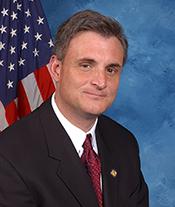
Mr. Speaker, this bill offers much to recommend in improving pension law. In particular, I applaud the inclusion of relief for multi-employer plans and the clearing up of some of the contradictions…
Mr. Speaker, this bill offers much to recommend in improving pension law. In particular, I applaud the inclusion of relief for multi-employer plans and the clearing up of some of the contradictions and ambiguities around hybrid defined benefit plans. But I must rise in opposition to this bill for two reasons.
The first is that the bill makes a mistake that the majority said from the very outset it did not want to make, which was to favor one industry over another in affording relief for single-employer plans. Not only does this bill afford more protection for some industries over others, but within an industry, within the airline industry, it exhibits I believe unwise favoritism for some airlines over others. The majority started this process by saying it did not want to choose winners and losers among industries. What in fact I believe it has done is to choose winners and losers within an industry, which I think is unwise and a bad precedent to set.
Secondly, I must rise in opposition to this bill because of its procedural irregularity. There is a conference which was seated several months ago that is dealing with these issues. What is before us tonight is a brand-new bill, not a conference report. This does not recognize months of negotiation between the two Houses and between the two parties. It is a brand-new bill that starts without anyone I think truly vetting or understanding.
And I must say that my Democratic colleagues who are conferees on this bill, Mr. Miller, Mr. Rangel, Mr. Payne, among the three of them they have 90 years of experience in this House, and they were afforded no opportunity to attend a meeting of the conference, to ask a question at the conference, to express their views at the conference. This is not disrespect to them; it is disrespect to their constituents and to the millions of people whose views are represented by Mr. Miller and Mr. Rangel and Mr. Payne and others.
This is an awfully important area of legislation. To rush head on with a bill that no one has read, ignoring a conference that has never met, that ignores 90 years of experience from Members on this side I think is a mistake. So despite the good that I know is in this bill, I would urge a ``no'' vote.
Show 11 more
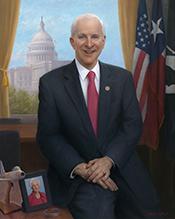
Thank you, Mr. Chairman, for that time. I normally don't do this, but I rise in opposition to this pension bill on which I am a conferee. The original House pension bill had no specific industry…
Thank you, Mr. Chairman, for that time.
I normally don't do this, but I rise in opposition to this pension bill on which I am a conferee. The original House pension bill had no specific industry relief. In the House bill we did not pick winners and losers.
However, the Senate bill did contain specific airline industry relief. The four legacy carriers that maintain pension plans were all treated the same. Within that industry, there was no picking winners and losers. Yet this bill that we are debating chooses to favor two bankrupt airlines, Delta and Northwest. I appreciate the comments previous on Northwest. I think they need the help. It gives them extra relief for having run their pension plans even into the ground.
The two airlines that are not threatening the retirement security of their employees, American and Continental, are being punished for having gotten wage and benefit concessions from their employees during very hard-fought, but successful, negotiations. American Airlines has been working closely with their pilots, flight attendants, and ground crews to be sure that this is an airline that keeps flying and keeps its promises to its employees.
Yet the bill debated here tonight will give Delta and Northwest a huge competitive advantage. I will vote against this bill because all four legacy carriers should get the same interest rate, I believe, for unfunded promises.
The Senate bill and the draft conference report that has been circulated by the Senate would provide for parity for all four airlines on the interest rate. Those who support this deal say American and Continental are being greedy. I say American and Continental need the same interest rate as the other two or they are going to be hundreds of millions of dollars at a disadvantage against their direct competitors. As a matter of fact, American just reported, I think, somewhere around $300 million profit in this year, and $600 million is what they would be cost by this bill each year.
I am standing with the Texas delegation and airlines that keep their word. Our Texas airlines have worked hard to keep their word with their employees. This Congress must give equal treatment for our major airlines.
I urge a ``no'' vote.
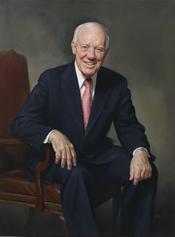
I thank the gentleman for yielding. As the chairman of the Ways and Means committee said earlier, he did say that the pension system is broken. I wouldn't say it is quite broken, but it does have…
I thank the gentleman for yielding.
As the chairman of the Ways and Means committee said earlier, he did say that the pension system is broken. I wouldn't say it is quite broken, but it does have some cracks. We forget that when ERISA was enacted in 1973, it was hailed in particular in my district by my predecessor for whom I was administrative assistant as the great salvation for iron ore mines that were about to go into bankruptcy and for workers whose pension plans would have been lost without PBGC set up under ERISA.
We find now that there are some oversights that should have been plugged over the years and failings that should have been corrected. But they weren't done. And now we are at a situation where there is an opportunity to make an adjustment and that is in the airline sector.
If the steel industry had been as responsible as I submit Northwest Airlines has been and Delta in working with their employees to protect the pensions, freeze the pensions, require the company to pay in over a period of time, we wouldn't have billions of dollars in unfunded liabilities for the steel industry in the PBGC, and we would have more steel industry still operating and more workers getting their fair pensions.
Now, the plan that Northwest has set before its workers was negotiated with the pilots, the flight attendants and the machinists, and they said, We'll freeze the plan, but we'll continue to pay into it so that you get the full amount you're entitled to and then we'll substitute a defined contribution plan.
Now, two other carriers, American and Continental, say that is unfair to them. But what is unfair to them would be if we do nothing tonight, defeat this bill, and then Northwest simply turns over in the month of August their pension plan to the PBGC and thousands of employees from both Northwest and Delta are out of luck, they lose huge amounts of money over the balance of their retirement years, and then American and Continental have a real disparity in competition because those companies don't have that burden of liability to pay.
So pass this bill and give those carriers an opportunity to do the right thing.
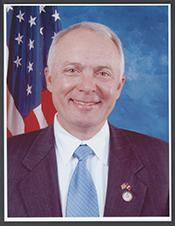
Mr. Speaker, I thank the gentleman, my chairman, for yielding. Mr. Speaker, I rise today in very strong support of H.R. 4, the Pension Protection Act of 2006. This legislation provides security and…
Mr. Speaker, I thank the gentleman, my chairman, for yielding.
Mr. Speaker, I rise today in very strong support of H.R. 4, the Pension Protection Act of 2006. This legislation provides security and peace of mind for working families across our Nation. Many Americans have worked their entire lives for their pensions, and nothing is more important to them than making sure these obligations are met. This legislation protects the interest of workers, retirees, and taxpayers, and it helps employers continue to offer these benefits.
As vice chairman of the Employer-Employee Relations Subcommittee, I have worked over the last few years with my colleagues to reform these antiquated pension laws. This legislation reflects our negotiations with House and Senate leaders concluded in recent days. I am proud to have championed the inclusion of airline relief in this final package.
The Pension Protection Act strikes the necessary balance between the many diverse groups with an interest in a healthy pension system. The passage of this bill protects the pensions of more than 9,000 Northwest Airline pension plan participants who live in my district alone. I am honored to represent these individuals here in Congress and to support this much needed legislation on their behalf and on behalf of all my constituents.
Without this legislation, Mr. Speaker, it is not a matter of if the airline terminates its plans; it is a matter of when. This bill will allow Northwest Airlines to emerge from bankruptcy with its pension plans intact.
Curtis Shoemake, a 30-year Northwest Airline pilot from Minnesota, summed up the situation when he remarked, ``It's a win-win for everybody. It's a win because it protects our pensions. It's a win because the PBGC is not burdened with the termination of our pension. I'm hopeful that Congress will step up to the plate and do the right thing.''
Tonight, Mr. Speaker, I am asking my colleagues to join me in doing the right thing. Let's take the next step toward solving our Nation's pension crisis. Vote for this legislation and strengthen America's pension system for the workers of today and of tomorrow.
This is a very complex issue, and we have worked on this bill for a considerable amount of time in the Committee on Education and the Workforce, of which I am a member. I am puzzled, because there is…
This is a very complex issue, and we have worked on this bill for a considerable amount of time in the Committee on Education and the Workforce, of which I am a member.
I am puzzled, because there is a little confusion on the floor tonight about the airlines issue, and I hope I can help to clarify that. The impression that has been given, and I have heard it in other discussions and not just in this debate, that there is one plan here for Northwest and Delta and a different plan here for Continental and American Airlines. That is simply not true.
There are two plans, but it does not specify which airlines. Any of the airlines can pick one of the two plans. It is an open choice. One plan is for an airline which chooses to freeze their pensions. In that case, they will pay what they owe to the PBGC at a certain rate of interest over a certain period of time. In the other plan, airlines do not have to freeze their pensions and they pay their obligation to the PBGC at a certain rate over a certain amount of time.
Now, those rates and times are different because the two plans are different. The liabilities of the airlines are different. But Continental or American Airlines can choose to use the frozen plan with no problem whatsoever. If they think Northwest and Delta are getting a better deal, they can join them. They can freeze their plans and get the same repayment rate, same interest rate, same time to repay as Northwest and Delta. It is very simple. Two plans, but no airline is tied to a particular plan. They can make the choice they wish. In fact, Continental is using both plans.
And so the argument that we are being unfair and are picking winners and losers among the airlines simply does not apply in this case. As Mr. Oberstar said, this is a fair arrangement which will preserve the pension funds for the employees of the airlines and will prevent a further load from being assigned to the PBGC, the Pension Benefit Guaranty Corporation, which would lose a lot of government money and which we may have to bail out if we do not adopt this plan.
I urge an ``aye'' vote.
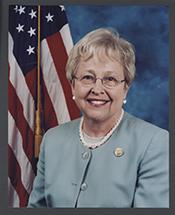
Mr. Speaker, I rise in strong support of this Pension Protection Act of 2006. Not only does it ensure that employers and unions will fund their plans, but it enables individuals to make a much…
Mr. Speaker, I rise in strong support of this Pension Protection Act of 2006. Not only does it ensure that employers and unions will fund their plans, but it enables individuals to make a much greater effort toward providing for their retirement security as well.
Nothing is more important to Americans than the gut-wrenching issue of being secure in their old age. It is important to seniors, it is important to their families, it is important to young people to know that they can plan for the future. And it is a pity that only 50 percent of America's workers participate in pension plans. This bill makes a simple change that will result in 85 to 90 percent of working Americans who work for companies with pension plans participating in those plans, as opposed to 50 percent. That is big. That is important. It is a simple mechanism, but it will help many, many more young people get into those pension plans, take advantage of employer contributions, and prepare for their retirement.
It also does something else we don't know much about, we don't pay attention to it, we don't think about it: it makes permanent the saver's credit. If you don't make much money, putting money aside for retirement is really hard. We have a little plan by which the government gives you a dollar for every dollar you save for low- and middle-income earners. This makes that permanent, and that will enable us to grow that program appropriately. It also indexes it to inflation so those people can never be robbed of the power of this help in saving for their retirement.
This is not a perfect bill, but it does some really important things for working people and it helps us think ahead. We have a lot of people with 401(k) plans, and at 65, they are blowing them. One of the things this bill does is to encourage new products to plan for our future by changing the tax treatment of 401(k) money invested in an annuity that can provide a paycheck for life or cover long-term care if needed.
We need to be thinking anew about all the challenges of retirement, not just the income challenge.
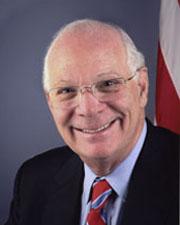
Mr. Speaker, I thank my friend for yielding me this time. Mr. Speaker, I am really conflicted on this bill because there are good provisions in it. The provisions which I had the opportunity to work…
Mr. Speaker, I thank my friend for yielding me this time.
Mr. Speaker, I am really conflicted on this bill because there are good provisions in it. The provisions which I had the opportunity to work with our former colleague, Mr. Portman, provisions that would make permanent the changes in the tax law in 2001, makes it easier for people to save for their retirement, employers to provide pension plans; provisions for automatic enrollment so that employees have a better chance of having a retirement savings. The permanency and indexing of the saver's credit, I think, is a very important provision. The split tax refund, I can go on and on and on.
But I must tell you, I was listening to Mr. Andrews and I think that he raises a very valid point on the process. You have to, at times, understand that process is important so we do the right thing here.
I heard reference to approving a conference report, but this is not a conference report. We have a letter from the Senate Members of the conference report urging the House Members of the conference committee to join them in a product that is different than what we have before us today.
There are concerns in this legislation that I do not know if they have been addressed, including the airline industry, including the way we treat employers who have well-funded plans today as to whether they will continue those plans.
So, Mr. Speaker, this bill is coming up with no notice, no opportunity for us to review it, and without an opportunity for our conferees to present their report.
So I do not know what to tell the Members to do here. I doubt if we will have time to review all the provisions that are in this bill. I doubt whether we will know exactly what is involved, and we do not have the comfort of knowing that it is the product of a conference committee. It is a new bill that is before us.
So I just urge my colleagues to be very careful in consideration of this legislation. It is very important legislation. It does some very good things, but I am concerned there may be some unintended consequences.
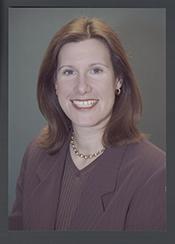
Mr. Speaker, I thank the gentleman for yielding, and I especially thank the chairman for answering the call of families across the Nation to make 529 qualified tuition programs permanent. What are…
Mr. Speaker, I thank the gentleman for yielding, and I especially thank the chairman for answering the call of families across the Nation to make 529 qualified tuition programs permanent.
What are those plans? For those of you who do not know, the 529 section allows for tax-free college savings. This is something that has encouraged so many families to save for college. The figures in assets in 529 plans have grown from $13 billion in 2001 to more than $65 billion today. This has provided for so many families to save for education, and it is more important than ever because we know workers with the least education have generally experienced the slowest wage growth over the past three decades. Making this plan permanent allows families to plan for the future and make sure that they will get that education.
Also, the pension changes are so very important. In the communities that I represent, we experienced terrible, really unfairness, on pension plans when US Airways filed for bankruptcy and turned their pension plans over to the PBGC, and unfortunately, their executives took a golden parachute.
The gentlewoman who just spoke before me was wrong in her statement that those executives continue to do this. The plans must be funded before these executives could have a special set-aside pension plan for themselves. We ended that practice of unfairness of these large company executives stealing the money away while their rank-and-file workers lose.
The bill encourages greater transparency for the employees to know the health of their pension plan. These are such important changes that anyone who does not support it is not supporting the retirement security for the people in their district. It is so important that people know the status of their finances as they work through their working life so they have expectation of their pension, they have expectation of how much income they will receive, and this bill will help them get there.
Mr. Speaker, I encourage my colleagues to support this.
Mr. Speaker, I thank the gentleman. When you hear this argument and this debate, remember, a year ago, these are the people that were going to abandon the Social Security system. These are the people…
Mr. Speaker, I thank the gentleman.
When you hear this argument and this debate, remember, a year ago, these are the people that were going to abandon the Social Security system. These are the people that were going to throw the Social Security system overboard.
I heard the gentleman from Arizona say, well, there is good things in the legislation and there is bad things in the legislation. Does anybody remember the S&L issue around here or did we have amnesia? There were good things about deregulating the S&Ls, and it cost the American taxpayer $500 billion, but a decade later.
The Wall Street Journal published a poll yesterday. I hear my Republican friends talking about how great everything is. How good everything is on Wall Street.
The American people are asked, in what direction is the country headed, right or wrong? And by almost two-thirds they say the wrong direction. They are paying $3.15 a gallon for gasoline, their health care plan is being taken away, and their retirement plan is being compromised, if not jeopardized. 401(k) plans are replacing the defined benefit that we had all come to know.
That is where the anxiety is coming from. That is why the American people think the country's headed in the wrong direction.
You are about to hasten the demise of the defined benefit plan by embracing this legislation tonight, and I want to say something as well to those who are witnessing the debate.
It has not been vetted through the committee system. It has not been presented back and forth between two parties. It is being put up on a Friday night, once again because they think you are not watching. That is the way the Ways and Means Committee has operated during the last few years. That is the way legislation's brought to the floor, no opportunity for the minority to ever be heard. We simply put it in front of this body, late at night so people cannot witness it, and then we move on from there. Whether it is good or bad, we will not have our fingerprints on it.
Mr. Speaker, we have not an accidental shipwreck here. We have a deliberate shipwreck being set up. I am not the oldest person in this body tonight, but I have been here a long time and seen the…
Mr. Speaker, we have not an accidental shipwreck here. We have a deliberate shipwreck being set up.
I am not the oldest person in this body tonight, but I have been here a long time and seen the great swindle of the savings and loans collapse. This is a swindle that will be even bigger.
We have the full faith and credit somewhere behind the pension guaranty fund. It is not there, we are going to put it behind there, and it is the American taxpayers who are going to pay when this whole pension system collapses.
I do not know what grand formula is in motion here and who the genius is, but the looting of America is going along very well, and this is one more step in that direction.
It is going to be a huge, like an economic asteroid collapsing on the economy when this pension benefit guaranty fund collapses as the savings and loans did.
We can't even get a figure as to how many billions of dollars were lost in the savings and loans. If you go looking for it, it is nebulous. But at least $1 trillion of taxpayer money has gone down the drain, and is still going, partially because it was funded with 30-year bonds.
I watched while it unfolded. And the savings and loans criminals, really, were not punished. It was a great example of how you could steal millions and get away with it. Silverado Bank comes to mind, because we had relatives of the administration involved in that one, and on and on it goes, with Members of Congress on the boards, and all kinds of things that happened, and they got away with it.
Now we have corporate America having mismanaged these pensions all this time, having looted them in many different ways. Enron certainly shows us how they can do that in quite a clear fashion. But there are many other different ways that the people in control have looted the pension funds, destroying them, and they are going to ask the American people to bail them out. That is what is most devastating about tonight.
Mr. Speaker, I thank my colleague from Michigan for his hard work as part of the conference, and I rise in strong support of the Pension Protection Act. I listened with great interest to the…
Mr. Speaker, I thank my colleague from Michigan for his hard work as part of the conference, and I rise in strong support of the Pension Protection Act.
I listened with great interest to the criticisms offered from the other side of the aisle, especially my friends from New Jersey and California, and indeed, it is somewhat reminiscent of the initial evaluation by a Hollywood agent of a young actor. The shorthand note was, ``can't sing, can't act, dances a little.'' And of course, it turned out to be the great Fred Astaire.
Now, with all due respect to Mr. Astaire and his song and dance, the song and dance offered by the other side, the criticisms, when you take a look, focus on process, not policy. Indeed, my friends from New Jersey and Maryland readily concede that there are many desirable policies in this bill, reforming the outdated single employer defined benefit pension plans.
We heard the chairman of the committee say not only was there a letter from General Motors but also from the United Auto Workers, and yet we hear the process is somehow terribly flawed and that even within the airline industries some airlines are treated differently. Mr. Speaker, the different airlines are reacting differently to the concerns they face. It is not some sort of vast conspiracy with malice aforethought to pick winners and losers. It comes from different responses from the businesses involved.
No, a clear level look at what we are doing says that this is, in fact, precisely the bill at this time.
As to the process, we heard mention made of the other body. We are mindful that there are those who aspire to become part of the other body, but Mr. Speaker, without impugning any action, although I know we have changed the rules, the fact is a lot of folks basically want to blow up this agreement.
We need this bill. It is a good bill. Vote for it.
Mr. Speaker, I rise today in support for H.R. 844. AIDS is the greatest worldwide health crisis of our time. Presently, there are more than 40 million people that are either infected with the HIV…
Mr. Speaker, I rise today in support for H.R. 844.
AIDS is the greatest worldwide health crisis of our time. Presently, there are more than 40 million people that are either infected with the HIV virus or are living with AIDS. At least 14,000 people are infected each day. Putting an end to AIDS is one of the most pressing humanitarian challenges we must face. For this reason, the development of a preventive vaccine has been a stepping-stone toward achieving this end.
The International AIDS Vaccine Initiative has been working for the past ten years to create a safe and effective HIV/AIDS vaccine. They have worked hard with the public and private sector to garner financial and political support in order to make the vaccine accessible to all those in need, especially in the developing world, where ninety-five percent of those infected with the virus live.
Today, I am honored to congratulate the International AIDS Vaccine Initiative for its advances in scientific progress, which have been instrumental in bringing about a worldwide effort and support for this important cause. It is their research and devotion to finding an HIV/ AIDS vaccine that brings hope of ending an epidemic that has already killed more than 25 million people worldwide. However, there is more to be done. We must take this opportunity to commit ourselves to fighting for the dignity and lives of our brothers and sisters around the world by promoting innovative research in finding a cure.
AIDS is presently a formidable adversary--one that cannot be ignored, one that does not only exist in faraway places, but one that is here, in our neighborhoods and homes, infecting 40,000 of our people each year. The efforts of the International AIDS Vaccine Initiative have brought us closer to the day when we will live in a world that is free from AIDS.
Bill Text
2 versions available
        [Congressional Bills 109th Congress]
[From the U.S. Government Publishing Office]
[H. Res. 844 Engrossed in House (EH)]

H. Res. 844

In the House of Representatives, U.S.,

July 28, 2006.
Whereas HIV/AIDS has killed over 25,000,000 people worldwide and poses a serious
threat to the economic and political stability of the countries hit
hardest by this terrible epidemic;
Whereas the International AIDS Vaccine Initiative (IAVI) was founded in 1996 as
a public-private partnership with a mission to ensure the development of
safe, effective, accessible, preventive HIV/AIDS vaccines for use
throughout the world, with a particular focus on developing countries,
where the need is most urgent;
Whereas the International AIDS Vaccine Initiative's research and policy programs
have galvanized scientific efforts and substantially increased financial
and political support for this vital effort;
Whereas since its founding, the International AIDS Vaccine Initiative has
advanced six vaccine candidates from concept to clinical trials,
targeting the subtypes of HIV circulating in the developing world--a
record matched only by one large pharmaceutical company;
Whereas ten years ago only a few developing countries had participated in HIV/
AIDS vaccine trials, but today several countries in sub-Saharan Africa
and Asia are actively participating in HIV/AIDS vaccine trials, a
reflection of the International AIDS Vaccine Initiative's activism and
commitment to working collaboratively with developing country partners;
Whereas the model of the International AIDS Vaccine Initiative, which closely
links clinical trial site investigators to product developers, has
resulted in the first HIV/AIDS vaccine trials being conducted in Kenya,
Rwanda, and India, as well as trials in Uganda and South Africa;
Whereas the International AIDS Vaccine Initiative is a founding member of the
Global HIV/AIDS Vaccine Enterprise, recognized by the G-8 as an
important actor in the quest for a vaccine; is an affiliated member of
the National Institutes of Health's Partnership for AIDS Vaccine
Evaluation; and is hosting NIH trials at International AIDS Vaccine
Initiative sites in Africa;
Whereas the International AIDS Vaccine Initiative's Core Clinical Immunology
Laboratory was the first Good Clinical Laboratory Practices (GCLP)
accredited laboratory in the world to assess HIV/AIDS vaccines, and the
International AIDS Vaccine Initiative's laboratory in Uganda was the
first to receive such accreditation in Africa; and
Whereas the International AIDS Vaccine Initiative established a ground-breaking
Neutralizing Antibody Consortium to address one of the key scientific
challenges to vaccine design: Now, therefore, be it
Resolved, That the House of Representatives--
(1) congratulates the International AIDS Vaccine Initiative on ten
years of significant achievement in the search for an HIV/AIDS vaccine;
(2) recognizes the role of the International AIDS Vaccine Initiative
in raising awareness and increasing financial and political support for
this important cause;
(3) admires the commitment of the International AIDS Vaccine
Initiative to collaborating with developing country researchers,
governments, and civil society in the common goal of finding a vaccine;
(4) expresses support for the continued success of the International
AIDS Vaccine Initiative; and
(5) directs the Clerk of the House of Representatives to transmit an
enrolled copy of this resolution to the International AIDS Vaccine
Initiative.
Attest:

Clerk.