Expressing the sense of the House of Representatives that a National Historically Black Colleges and Universities Week should be established.
Legislative Activity
Stay on top of the latest movement without scrolling through every action
Motion to reconsider laid on the table Agreed to without objection.
July 26, 2006 • 3:54 PM
View full timeline
Introduced in House
July 19, 2006
Referred to the House Committee on Education and the Workforce.
July 19, 2006
Mr. Boustany moved to suspend the rules and agree to the resolution, as amended.
July 26, 2006 • 3:23 PM
Considered under suspension of the rules. (consideration: CR H5889-5894)
July 26, 2006 • 3:23 PM
DEBATE - The House proceeded with forty minutes of debate on H. Res. 928.
July 26, 2006 • 3:23 PM
Passed/agreed to in House: On motion to suspend the rules and agree to the resolution, as amended Agreed to by voice vote.(text: CR H5889)
July 26, 2006 • 3:53 PM
On motion to suspend the rules and agree to the resolution, as amended Agreed to by voice vote. (text: CR H5889)
July 26, 2006 • 3:53 PM
Motion to reconsider laid on the table Agreed to without objection.
July 26, 2006 • 3:54 PM
Floor Debate
7 membersWhat members said about H.Res. 928 on the floor
 MRO
MRO CWB
CWB DKDEBJ
 WJJ+2
WJJ+2
Floor Debate
7 membersWhat members said about H.Res. 928 on the floor
Mr. Speaker, I yield myself such time as I may consume. (Mr. OWENS asked and was given permission to revise and extend his remarks.) Mr. Speaker, I want to congratulate the distinguished Member from…
Mr. Speaker, I yield myself such time as I may consume.
(Mr. OWENS asked and was given permission to revise and extend his remarks.)
Mr. Speaker, I want to congratulate the distinguished Member from Texas, Eddie Bernice Johnson, and all the cosponsors of this important legislation.
I am quite pleased to be able to state, at this point, after my 23 years in Congress, I will be retiring at the end of this year, that my association with Historically Black Colleges and Universities is one of the most uplifting experiences of my career.
I came in 1986, early, and I am proud of the fact that it was as a result of bipartisan support that the Historically Black Colleges and Universities were funded for the first time by the Federal Government. So this designation today is not empty ceremonial action.
I am pleased to support the congressional acknowledgement of the importance of Historically Black Colleges and Universities, but Congress has already done something to help these institutions. There is great substance behind this designation.
Historically, Black Colleges and Universities will have the benefit of, have the designation of September 10, 2006, as National Historically Black Colleges and Universities Week as a result of this legislation. But I just want to highlight some of the things that Congress has already done before I yield to the sponsor of the bill.
HBCUs continue to serve, as you said before, a critical role in our Nation; and HBCUs have had the support of Congress over the last 20 years, since 1986.
In 1986, Black Colleges and Universities faced a time of significant, almost desperate, financial turmoil. Several old schools had been shut down by 1986. Of the approximately 4,000 such institutions of higher learning in America, all the institutions of higher learning, only 135 both historic and predominantly black are black founded and administered, and at that time, only about 107 Historically Black Colleges existed.
After conducting a hearing at Atlanta University, where 13 of these college presidents testified, the Owens title IIIB amendment received both authorization and appropriation in 1986. Since 1986, with the support of both parties, the Congress has provided $3.9 billion. I want to repeat: 3.9 billion has flowed as direct aid to black colleges. This is a wise investment for a small but vital sector of our much-needed accelerated mobilization for education.
Later on, I will indicate some of the kinds of money that has been received by these colleges, one or two which would not still be in existence had they not had the Federal funding.
Mr. Speaker, I reserve the balance of my time.
Mr. Speaker, I yield such time as she may consume to the gentlewoman from Texas, the sponsor of the bill (Ms. Eddie Bernice Johnson).
Mr. Speaker, I yield myself such time as I may consume.
I want to just note the fact that as Congresswoman Johnson mentioned, the Paul Quinn College is one of the oldest HBCUs in the country. Since 1996, they have received $15.753 million from title IIIB of the Higher Education Assistance Act, title IIIB, which funds HBCUs.
Texas, in general, has received money for several colleges: Huston- Tillotson, which is relatively small; Prairie View A&M University received $38 million since 1986; St. Phillip's College has received $42 million since 1986. The largest of all rewards, I think, has been to the big Texas Southern University, which has received $47 million since 1986.
This is not an empty resolution, as I said before. Congress can be proud of the fact that it has been involved in maintaining these colleges, which were financially strapped in 1986 and still struggle financially.
I think Alabama receives the most aid of the colleges. They have a long list. Alabama State University, $37 million; Alabama A&M University, $35 million. Miles College, I would like to note, is one of the colleges that was almost about to go under. Because my office in 1986 and 1987 had many conversations with the administration of Miles College, and if there had not been a title IIIB funding, Miles College may not be here. They have received $21 million over the last 20 years. In Alabama, also, we have the smallest university that has received aid. I do not think they exist anymore. That is Selma University. They had received $3 million over the course of the funding period.
Also, I think significant, in Florida the largest amount of money has been received by Florida A&M University; $59.268 million has been received. Georgia does very well with Albany State College, $31 million; Clark Atlanta University, $33 million. These are relatively small colleges that are known throughout the whole country. Morehouse College, $25 million; and Spelman College, $26 million.
In Louisiana, as mentioned before, most of these colleges receiving aid from title IIIB were colleges affected by Katrina and the subsequent flood: Dillard University, over the years, has received $25.846 million; Grambling State University, $47.179 million; Southern University, $24 million; Southern University A&M College, $57 million; Southern University at New Orleans, $34 million; and Xavier University, $31 million.
So I think we have certainly supported those colleges up to date, and they need extra help, as everybody knows, now.
We also have Virginia, which has done very well: Hampton University, which had one of the largest private endowments, has still received $33 million; Norfolk State University, $44 million; and Virginia State University, $30 million.
So we have an impressive record over the 20-year period of title IIIB funding for Historically Black Colleges and Universities. And I will submit this list for the Record.
Mr. Speaker, I yield such time as he may consume to the gentleman from Illinois (Mr. Davis).
Mr. Speaker, I yield myself 3 minutes.
Mr. Speaker, I will comment on Mr. Davis' comments about going to the University of Arkansas at Pine Bluff. Since 1986, the University of Arkansas at Pine Bluff has received $31 million from the title IIIB congressional funding, and I think that his story is a story of many of my generation.
I was a child in a family of eight. Our father worked in a furniture factory as a laborer. He never made more than minimum wage, and I think the minimum wage at that time was less than $3. He was often laid off. We were very poor, and I had determined that I would never go to college.
I was a lucky one. The Ford Foundation had an experiment at that time going where they would allow youngsters who had talent to take a test, and they could come out of college even from the 10th or 11th grade and get 2 years of college before they were eligible for the Korean War draft. The Korean War draft was under way at that time, and they were going to give bright youngsters a chance to get at least 2 years of college.
I took the test, and I had all of my expenses paid to Morehouse College in Atlanta, Georgia. For the first 2 years, all of my expenses were paid, and I was on a partial scholarship for the second 2 years.
But that was a pattern which was not experienced by most of my colleagues at college. They had to struggle much harder to maintain themselves. Tuition was kept very low. The entire regimen of the college understood the students were poor and was geared to many of the problems that we had financially at home and the problems we had coming from schools that often had not prepared us for college work. So it is just personal experience that is certainly very relevant here.
I would like to note that at the time of the funding for the Historically Black Colleges title IIIB, I said that these few jewels in the crown all deserve to be preserved. The fact that there are only 135 Historically Black Colleges of 170 total black colleges in the United States right now, in a constellation of 4,000, they deserve to be preserved, and they serve a great purpose.
Such schools before 1986 were welcome to apply for competitive higher education grants, but they had to compete with Harvard, Yale and 4,000 other institutions. There was no direct channel for Federal funding to this special category. The historic and unique struggle for the creation and maintenance of such schools was accorded no official recognition.
Fortunately, we went to Atlanta and had a hearing. As a result of that hearing, 13 college presidents testified; and we won the support of the Education and Labor Committee members and later on the support of members of the Appropriations Committee. In that very same year, 1986, we authorized and had an appropriation which started the process of funding the Historically Black Colleges.
I will submit for the Record a statement prepared for the National Association of Equal Opportunity in Higher Education along with my list of actual funding for each college.
[Statement from National Association for Equal Opportunity In Higher
Education]
Our Champion: Congressman Major Owens
Congressman Major Owens has been a tremendous champion for
blacks in higher education and has served a distinguished 24-
year congressional tenure. Elected to the United States House
of Representatives in 1982 from New York's 11th Congressional
District. Representative Owens is a member of the vitally
necessary Education and the Workforce Committee, which guides
all Federal involvement in education, job training, labor
law, employee safety and pensions, programs for the aging and
people with disabilities, and equal employment opportunities.
As Chairman of the Subcommittee on Select Education and Civil
Rights for six years, Representative Owens' record for
passing legislation was second only in New York to Adam
Clayton Powell.
In 1986, Historically Black Colleges and Universities
(HBCUs) faced a time of significant financial turmoil.
Several old schools had been forced to shut down. Of the
approximately 4 thousand U.S. institutions of higher learning
only 107 had been established specifically to educate Blacks
and most were located in the South.
``These few jewels in the crown all deserve to be
preserved,'' counseled Congressman Major Owens, the only
graduate of an HBCU (Morehouse College, '56) on the Education
and Labor Committee. While such schools were welcomed to
apply for competitive higher education grants along with
Harvard, Yale and the four thousand other institutions, there
was no direct channel for Federal funding to this special
category. The historic and unique struggle for the creation
and maintenance of such schools was accorded no official
recognition. When Congressman Owens offered Title IIIB as a
modest but vital possible funding stream, the first obstacle
encountered was a gross lack of familiarity in Washington.
Fortunately, then Chairman of the Education and Labor
Committee, Augustus Hawkins, was curious and supportive and
agreed to allow Owens to hold a hearing in Atlanta, Georgia,
at Atlanta University's Robert W. Woodruff Library. The first
witness was then mayor of Atlanta, Andy Young. The presidents
of thirteen other Southern Black colleges followed Mr. Young
in testifying. Chairman Hawkins and other Education and Labor
Committee members became enthusiastic converts following that
historic session. Beyond the expectations of Congressman
Owens there was a smooth passage of the authorizing
legislation with five graduate schools added to the original
list. As a major force on the Appropriations Committee,
Congressman Lou Stokes obtained an immediate appropriation.
Funds are disbursed on the basis of a formula and every HBCU
is guaranteed an annual allocation.
Since the passage of the legislation in 1986, HBCUs went
from zero dollars in Federal funding to receiving a total of
$3,988,099,314.00 billion dollars. In his year of retirement,
Congressman Owens has worked diligently to introduce
legislation that would afford Predominately Black
Institutions similar support to other Title IIIA schools.
Congressman Owens has been a stalwart guardian and advocate
of predominately and historically black colleges and
universities throughout his congressional tenure. He is the
leader of the CBC's Braintrust on Education and in this
regard has been and continues to be the opinion shaper on
higher education issues impacting Black America. The entire
Nation owes him a great deal of gratitude for keeping
important issues regarding black colleges and blacks in
higher education at the center of the national education
policy debate. As Congressman Owens completes his final term,
we commend and honor him for his tremendous contributions to
the black higher education community. Thank you, Mr. Owens!
Mr. Speaker, I yield myself the balance of my time.
Mr. Speaker, I just wanted to comment that I have a statement here called ``Black Colleges: Tiny But Still Jewels in the Crown,'' which I would like to submit also for the Record, which talks about the role that black colleges play in the larger need for an overall national mobilization for education.
I again want to thank the gentlewoman from Texas, Ms. Eddie Bernice Johnson, and the other sponsors and cosponsors of this important bill, which in recognizing Historically Black Colleges and Universities will recognize the contribution that black colleges can make in general to higher education throughout America
[From the Congressional Black Caucus Foundation Newsletter]
Black Colleges: Tiny But Still Jewels in the Crown
(By Major R. Owens)
In 1986 Black colleges and universities faced a time of
significant, almost desperate, financial turmoil. Several old
schools had been shut down. Of the approximately four
thousand such U.S. institutions of higher learning only abut
135 are Black founded and administered. After conducting a
hearing in Atlanta University, where thirteen college
presidents testified, the Owens' title IIIB amendment
received support for both authorization and appropriation.
Since 1986, with the support of both parties, the Congress
has provided 3.9 billion dollars in direct aid to Black
colleges. This is a wise investment for a small but vital
sector in our much needed accelerated mobilization for
education.
Our nation must more fervently embrace its duty to the
mission of indispensable leadership for our earth
civilization. Education must be at the core of the
comprehensive plan, strategy, mobilization which accomplishes
this vital goal. Economic competitiveness, cultural
creativity, governance genius, freedom of outlook, the
determination to pursue happiness, stubbornness in philosophy
and ideology, and the continuing commitment to the spiritual
and moral belief that we are born to serve a purpose beyond
day-to-day individual survival; these are objectives which
cannot be achieved without a massive and ongoing dynamic
emphasizing education.
Military shock and awe can defend us from fanatics and
guarantee that we never lose a violent war. Winning,
prevailing in the effort to keep humankind moving more
rapidly away from our savage animal roots toward a paradise
on earth can be achieved only if we accept education as the
heart and blood of our political and social body. Aspiring
toward such a healthy national physique must make use of
every organ and resource we possess. The brainpower in our
inner cities and poor rural areas we can no longer allow to
be wasted. Like the small veins in the heart or the tiny
hormone producing glands in the throat, Black colleges have
an unseen but critical role to play.
The brainpower deposited among the uneducated poor and
minorities is the great untapped human resource of America.
To better recognize the need for this resource consider the
following: A generally accepted barometer of degrees of
global competitiveness is the size of a nation's ``middle
class.'' Beyond mere income, ``middle class'' should be
defined as the segment of society able to earn a decent
living for themselves and also capable of contributing
something of value to society. Those who are not in this
class would be persons lacking the capacity to support
themselves and even in extreme cases becoming dysfunctional
threats to society. Of its 1.2 billion populace China is
predicted to have one fourth or 300 million people in its
middle class by the end of this decade. India will have the
same number or more--and they speak English. Add the very
potent middle classes of Russia, Japan and Europe and you
will see an overwhelming imbalance against the potential
middle class of the United States. These are the workers who
will be our well-prepared competitors in the global market-
place. These ``middle class'' citizens will challenge our
present lead in hi-tech products and services.
Consider the following:
Our total population is only 300 million. To maintain a
position of global competitiveness our entire populace must
become ``middle class.'' Japan and Ireland have achieved
this level. It is not an impossibility but a massive
education mobilization must be mounted for the U.S. to catch
up. And one great untapped brainpower resource is in the
Black community. Black colleges and universities can be the
catalysts for saving and developing this diamond mine.
Republican and Democratic bi-partisan support for Black
colleges over the last twenty years has paid off and this
investment could yield far more profitable results if we
expand it.
Mr. Speaker, I move to suspend the rules and agree to the resolution (H. Res. 928) expressing the sense of the House of Representatives that a National Historically Black Colleges and Universities…
Mr. Speaker, I move to suspend the rules and agree to the resolution (H. Res. 928) expressing the sense of the House of Representatives that a National Historically Black Colleges and Universities Week should be established, as amended.
Mr. Speaker, I ask unanimous consent that all Members may have 5 legislative days in which to revise and extend their remarks on H. Res. 928.
Mr. Speaker, I yield myself such time as I may consume.
Mr. Speaker, I rise in support of H. Res. 928, recognizing the contributions
of Historically Black Colleges and Universities; and I want to thank the gentlewoman from Texas (Ms. Eddie Bernice Johnson), my colleague, for introducing this resolution. Ms. Johnson certainly recognizes the important role that Historically Black Colleges and Universities play in the postsecondary education environment.
The HBCU community is extremely diverse. The community of Historically Black Colleges and Universities includes 2- and 4-year institutions, public and private institutions, as well as single sex and co-ed institutions. Even with this diversity of student body, geographical location and population served, the principal mission of all these institutions is unified, and that is to provide a quality education for African Americans. It is also important to remember that these institutions, in many instances, serve some of our most disadvantaged students.
The contributions made by Historically Black Colleges and Universities deserve recognition. While comprising less than 3 percent of the Nation's 2- and 4-year institutions, Historically Black Colleges and Universities are responsible for producing a significant number of all bachelor's, master's and professional degrees earned by African Americans. In many instances, Historically Black Colleges and Universities do not have access to the resources or endowment income that other institutions can draw upon. Yet they are still able to provide quality education to an underserved population.
Since 1995, we have worked to improve the Nation's support for Historically Black Colleges and Universities. The Higher Education Amendments of 1998 made improvements to the programs designed to aid Historically Black Colleges and Universities in strengthening their institutions and graduate and professional programs. These changes included allowing institutions to use Federal money to build their endowments and to provide scholarships and fellowships for needy graduate and professional students.
Between 1995 and 2006, congressional funding for the strengthening Historically Black Colleges and Universities program rose from $109 million to $238 million, a 118 percent increase. And what is more, funding for Historically Black Colleges and Universities graduate programs increased from $19.6 million to $57.9 million, an increase of 195 percent.
It is important that we pause to recognize the contributions of Historically Black Colleges and Universities and their graduates by celebrating Historically Black Colleges and Universities Week. My State of Louisiana is home to five of such institutions: Grambling State University, Southern University A&M College, Southern University at New Orleans, Dillard University, and Xavier University. These institutions have dramatically improved the quality of life and economic opportunities on the gulf coast. These institutions provide valuable leadership and excellence in education, and they certainly should be commended.
I was pleased to see that the White House Initiative on Historically Black Colleges and Universities is coordinating a 3-day national conference in September where they will continue to discuss the progress of gulf coast recovery efforts.
I urge my colleagues to recognize the important contributions made by Historically Black Colleges and Universities and their graduates and to vote ``yes'' on this worthy resolution.
Mr. Speaker, I reserve the balance of my time.
Mr. Speaker, I thank the gentleman for the passion he brings to this debate and for the hard work he has done to help Historically Black Colleges and Universities.
Mr. Speaker, I reserve the balance of my time.
Mr. Speaker, I yield myself such time as I may consume.
I commend the gentlewoman again for bringing this resolution to the floor.
Let me just say that as we recover on the gulf coast, and I mentioned the Historically Black Colleges and Universities in my home State of Louisiana, they played a vital role in the leadership in helping us recover.
So, again, I thank the gentlewoman from Texas for bringing this valuable resolution to the floor.
Mr. Speaker, I reserve the balance of my time.
Mr. Speaker, I yield 1 minute to my friend, the gentleman from Florida (Mr. Hastings).
Mr. Speaker, I yield myself such time as I may consume.
Mr. Speaker, I want to thank all my colleagues on the other side of the aisle for the hard work that they are doing to ensure that all Americans have access to education. I urge my colleagues to recognize the important contributions made by Historically Black Colleges and Universities and their graduates and to vote ``yes'' on this worthy resolution.
Mr. Speaker, I yield back the balance of my time.
Mr. Speaker, let me just, first of all, thank the gentleman from New York for yielding. And I also want to thank and commend the gentlewoman from Texas for her introduction of this resolution. I want…
Mr. Speaker, let me just, first of all, thank the gentleman from New York for yielding. And I also want to thank and commend the gentlewoman from Texas for her introduction of this resolution. I want to commend the gentleman from New York because for as long as I have been a Member of Congress, he has been the chief spokesperson for the Congressional Black Caucus on issues of higher education.
Mr. Owens, you have represented us well and done an outstanding job, and I commend you.
This is one of the most delightful moments that I have had since I have been a Member of Congress because had it not been for a Historically Black College, I would not be here. There is no doubt in my mind. I left home on my 16th birthday to attend what was then Arkansas A&M College at Pine Bluff, which is now the University of Arkansas at Pine Bluff. Following me were six of my brothers and sisters who also attended the University of Arkansas at Pine Bluff. Three nephews, one niece, and a half dozen first cousins.
We lived in the southeast corner of the State, which was a rural area in Arkansas. The money that Representative Owens talked about is so important because when I got there, I had $20 in my pocket and a $50 scholarship. The scholarship, of course, was good as long as you maintained a B average, and if you ever fell below, then you no longer had the $50 scholarship.
It was not uncommon for friends of mine and myself to actually skip classes on light days and go out and pick cotton so that we would have money to purchase our books.
So the Historically Black Colleges and Universities, as all black colleges and universities, have played a significant role. They provide a rich heritage and lay the foundation for men and women of color. W.E.B. Du Bois, who is considered the father of sociology due to his thesis called the ``Study of the Philadelphia Negro,'' is a product of Fisk University in Nashville, Tennessee, a Historically Black College. Dr. Martin Luther King, Jr., all of his eloquence and analysis of social problems came from his experiences not only in the black church, but also came from the education that he received at Morehouse, located in Atlanta, Georgia, a Historically Black College.
Thurgood Marshall, the first black Chief Justice of the United States Supreme Court, is the product of Lincoln University in Chester, Pennsylvania, which is historically known as the first Historically Black College founded in 1854.
These institutions are not only necessary for individuals who come from certain economic backgrounds, but they contain a great deal of the history and culture. So when Representative Owens talks about how important the money is that we have been able to provide for them, many of them provide the kind of nurturing environment that students often cannot get from a big university. So they get the special help.
This, Mr. Owens, and the work that you have done and the introduction of this resolution by Representative Eddie Bernice Johnson make all of the work that we do to try to keep these institutions alive and vibrant.
And I also want to thank my CBCF intern, who is currently attending Fisk University, Dante Pope, and is a singer with the renowned Fisk Jubilee Singers, who traveled all over the world to raise money so that Fisk could continue to exist.
I thank all of those who will support this resolution.
Mr. Speaker, I ask unanimous consent to claim the time of the gentleman from New York. Mr. Speaker, I want to thank my colleague from Texas, Representative Eddie Bernice Johnson, for her leadership…
Mr. Speaker, I ask unanimous consent to claim the time of the gentleman from New York.
Mr. Speaker, I want to thank my colleague from Texas, Representative Eddie Bernice Johnson, for her leadership in making this week happen. Her resolution, H. Res. 928, passed the House on July 26, 2006, designating the week of September 10, 2006, as National Historically Black Colleges and Universities Week. I also want to commend Minority Whip Steny Hoyer for organizing this discussion this evening.
Mr. Speaker, there are 103 Historically Black Colleges and Universities in the United States that serve over 260,000 undergraduate students, with just over a quarter of all HBCUs offering either a first professional degree, a master's degree in business administration, or a J.D. or doctorate degree.
Historically Black Colleges and Universities are defined as institutions established prior to 1964 with the principal mission of educating African Americans. HBCUs educated approximately 14 percent of the Nation's African American undergraduate students, awarding almost one-quarter, 23.1 percent, of all bachelor's degrees to black students. Almost half, 46.8 percent, of the undergraduate students attending HBCUs received Pell Grants, indicating that these institutions provide key educational opportunities for low-income African Americans.
Mr. Speaker, I have 10 brothers and sisters. We grew up in rural Arkansas, where my parents were low-income sharecroppers. Seven of us attended the University of Arkansas at Pine Bluff. I also have three nephews and a niece who attended the same school, plus a number of cousins. I strongly believe that perhaps none of us would have been able to attend college had it not been for the fact that the University of Arkansas at Pine Bluff, which then was Arkansas AM&N College, existed.
These schools provide a nurturing environment and provide instructors that I remember even to this day. I remember the President, we called him ``Prexy,'' Dr. Lawrence A. Davis, Sr., who would often let us register, whether we had the money to pay our tuition or not. His son, Dr. Lawrence A. Davis, Jr., is now the current chancellor and is just doing an outstanding job.
I remember a cousin of mine who graduated from UAPB and then moved to Champaign, Illinois, got his master's degree, Willie Summerville, who was honored by the City of Champaign a few weeks ago for being its outstanding citizen. He organized a choir and took it to Rome to sing for the Pope.
I could go on and on and think of just any number of outstanding individuals who were able to demonstrate their abilities and competency because of these institutions.
I think of many of my colleagues. As a matter of fact, a majority of my colleagues who are African American graduated from Historically Black Colleges and Universities: Jesse Jackson, Jr., and his daddy, Jesse Jackson, Sr. I think of Representative Alcee Hastings, who went to Fisk University, and on and on and on and on.
But the real deal is these institutions are worth their weight in gold. They have contributed significantly to the development of our country. They need all of the support that they can get.
So, again, I thank Representative Eddie Bernice Johnson for establishing this week and congratulate all of these institutions for the tremendous job that they do.
Mr. Speaker, I am pleased to be able to offer this resolution recognizing National Historically Black Colleges and Universities Week, and I want to thank Mr. Owens for all of his efforts over the…
Mr. Speaker, I am pleased to be able to offer this resolution recognizing National Historically Black Colleges and Universities Week, and I want to thank Mr. Owens for all of his efforts over the years and thanks to all the cosponsors.
For over 170 years, our Historically Black Colleges and Universities have been on the forefront of preparing our Nation's youth for a bright path and successful future. Many struggling, almost closing, and some did close, but determined to finish their mission.
Originally founded for the purpose of providing educational opportunities for African Americans, HBCUs have profoundly changed the American economic and social climate. The fact is that until 1964, HBCUs represented one of the only opportunities African American students had to obtain a degree in higher education. HBCUs have changed the face of this Nation and have opened the doors for many generations of African American students.
Today America's HBCUs continue to provide excellent educational opportunities for all Americans. Over 200,000 diverse students across the United States attend HBCUs today.
I am proud to represent Paul Quinn College, the oldest historical black college west of the Mississippi River. For over 130 years, Paul Quinn has provided their student with the tools to become successful leaders. Because of their unique resources, HBCUs continue to be extremely effective in graduating African American students and preparing them to compete in the global economy. While they may start behind going into the college, they have always been able to compete equally and competitively on the graduate level. HBCU graduates over half of all American professionals, and 50 percent of all African American school teachers graduate from HBCUs. Additionally, the
Historically Black Colleges and Universities remain extremely successful in graduating African American Ph.D.s and scientists.
The fact is that we cannot move forward as a country until all of our children have the opportunity to succeed academically. Each day, HBCUs help us bridge that achievement gap. Celebrated the week of September 10, National Historically Black Colleges and Universities Week allows us to reflect upon the impact these institutions have had on our history and to celebrate their continued commitment for outstanding education.
I would like to thank the House leadership and the Education and the Workforce Committee for allowing me to bring this important resolution to the floor, and I request the support of all my colleagues of Resolution 928.
Show 3 more
Mr. Speaker, I am here today to speak in support of establishing a National Historically Black Colleges and Universities Week. I am not only the product of an HBCU--Southern A&M College in Baton…
Mr. Speaker, I am here today to speak in support of establishing a National Historically Black Colleges and Universities Week. I am not only the product of an HBCU--Southern A&M College in Baton Rouge--but I represent three of these colleges in my district, Xavier, Dillard and Southern University in New Orleans.
These universities are the leaders in Louisiana in graduating African-Americans. Xavier graduates more black pharmacists than any university in the country and has a near 100 percent bar passage rate. The university also sends more African-Americans than any other university to medical school. Dillard University is nationally known for its nursing program and Southern University educates nearly 100 percent New Orleans residents who may not have received a college degree if SUNO was not open. These universities, as well as the other schools in the Southern University system and Grambling State University, have been vital in producing the best and brightest African-Americans in the American workforce. For their work in educating African-American students for over 100 years and their continued need for those who may not have the opportunity to go to college otherwise, they certainly should be recognized.
The Historically black institutions in my district were the hardest hit of our university system in New Orleans after Hurricane Katrina. SUNO is operating out of a trailer campus and Dillard will reopen this spring in the Hilton Hotel again. And all of the universities are struggling to recruit and retain students. We need the continued support of Congress to recognize the importance of these institutions in our community. Graduates of these universities often stay in New Orleans to work as teachers, doctors, or nurses in underserved communities because they want to give back to the community in which they have fostered an education. We need this to continue. Furthermore, these universities are critical to the recovery of our professional workforce in New Orleans. We could not rebuild our community without the support of the students who come to learn in our city or the professors who commit to stay in our city.
This resolution is important to me personally because without Southern A&M College, I might not be here today. But beyond that, the continued need for the opportunity that HBCU's provide and the local need for these universities to be involved in the recovery of the Gulf Coast region makes this resolution even more timely and necessary and I encourage all of my colleagues to support it.
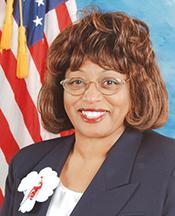
Mr. Speaker, I rise in strong support of Ms. Johnson's bill, House Resolution 928. This bill, which expresses the sense of the House of Representatives that our Nation adopt a week each year to honor…
Mr. Speaker, I rise in strong support of Ms. Johnson's bill, House Resolution 928. This bill, which expresses the sense of the House of Representatives that our Nation adopt a week each year to honor our Nation's Historically Black Colleges and Universities, is a measure that would serve as an outstanding tribute to Historically Black Colleges and Universities.
There are four HBCUs in the State of Florida: Florida Memorial in Miami; Florida Agriculture and Mechanical University in Tallahassee, of which I am a graduate; Edward College, which is in the heart of my district; and Bethune Cookman College, a great institution in Daytona Beach, a school I work very closely with.
The importance and the outstanding work HBCUs do around the country is most noteworthy. In addition to educating African American students nationwide, they provide resources for our communities, such as mentoring and tutoring programs for our youth.
Nationwide, HBCUs enroll 14 percent of all African American students in higher education, even though they make up just 3 percent of our Nation's 4,000 institutions of higher education. HBCUs have awarded master's degrees and first professional degrees to about one in every six African American men and women, and awarded 24 percent of all baccalaureate degrees earned by African Americans nationwide.
I commend Ms. Johnson in her efforts on behalf of the Historically Black Colleges and Universities, and I strongly support House passage of this bill.
I also want to commend you, Mr. Ranking Member and Mr. Education, for all the work that you have done to help black colleges throughout the years. I do know that we have representatives on the Hill today, and they have been so important working with black colleges. I want to welcome them to their Capitol.
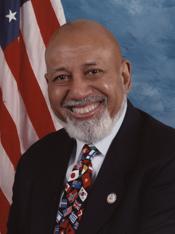
Mr. Speaker, I thank my friend from Louisiana. I appreciate it very much. I just rise to thank Major Owens for his steadfastness, not only in this particular area but in the area of education…
Mr. Speaker, I thank my friend from Louisiana. I appreciate it very much.
I just rise to thank Major Owens for his steadfastness, not only in this particular area but in the area of education generally. The time is coming when Major will not shepherd any longer any of these measures, but certainly all of us are grateful to him.
Also, I am grateful to my classmate and colleague for bringing this legislation to the floor. Quite frankly, Mr. Speaker, I can join the list. I heard Danny Davis, my good friend from Illinois, speak of his experiences.
In 1953, I left Sanford, Florida, on a train for Nashville to attend Fisk University, one of the Historically Black Colleges that has been recognized. I left there and came here to Howard University and left there and went to Florida A&M University, where I achieved my JD degree.
Ms. Brown, my colleague and classmate, spoke momentarily about Florida's schools. I have taught at Florida Memorial, been a Board of Trustee member at Bethune, and I am a graduate of Florida A&M University.
If it were not for those Historically Black Colleges, I would not be here. That may be something that a lot of people wish didn't happen, but it happened, and I am proud of it, and I thank my colleagues.
Bill Text
2 versions available
        [Congressional Bills 109th Congress]
[From the U.S. Government Publishing Office]
[H. Res. 928 Engrossed in House (EH)]

H. Res. 928

In the House of Representatives, U.S.,

July 26, 2006.
Whereas there are 103 historically Black colleges and universities in the United
States;
Whereas historically Black colleges and universities provide the quality
education essential to full participation in a complex, highly
technological society;
Whereas historically Black colleges and universities have a rich heritage and
have played a prominent role in the history of the United States;
Whereas historically Black colleges and universities have allowed many
underprivileged students to attain their full potential through higher
education;
Whereas the achievements and goals of historically Black colleges and
universities are deserving of national recognition; and
Whereas the Senate, in S. Res. 528 passed on July 13, 2006, designated the week
beginning September 10, 2006, as ``National Historically Black Colleges
and Universities Week'': Now, therefore, be it
Resolved, That the House of Representatives--
(1) recognizes the achievements and goals of historically Black
colleges and universities in the United States;
(2) supports the designation of an appropriate week as ``National
Historically Black Colleges and Universities Week''; and
(3) requests the President to issue a proclamation designating such
a week, and calling on the people of the United States and interested
groups to observe such week with appropriate ceremonies, activities, and
programs to demonstrate support for historically Black colleges and
universities.
Attest:

Clerk.