Sex Offender Registration and Notification Act
 Sen. Orrin G. Hatch (R-UT)
Legislative Activity
Stay on top of the latest movement without scrolling through every action
Held at the desk.
May 8, 2006 • 5:10 PM
View full timeline
Introduced in Senate
May 19, 2005
Sponsor introductory remarks on measure. (CR S5539)
May 19, 2005
Read twice and referred to the Committee on the Judiciary.
May 19, 2005
Committee on the Judiciary. Ordered to be reported with an amendment in the nature of a substitute favorably.
October 20, 2005
Committee on the Judiciary. Reported by Senator Specter with an amendment in the nature of a substitute. Without written report.
October 20, 2005
Placed on Senate Legislative Calendar under General Orders. Calendar No. 251.
October 20, 2005
Passed Senate with an amendment by Unanimous Consent. (consideration: CR S4079-4090; text as passed Senate: CR S4079-4089)
May 4, 2006
Message on Senate action sent to the House.
May 5, 2006
Received in the House.
May 8, 2006 • 2:02 PM
Held at the desk.
May 8, 2006 • 5:10 PM
Floor Debate
20 membersWhat members said about S. 1086 on the floor


 +15
+15
Floor Debate
20 membersWhat members said about S. 1086 on the floor
Madam Speaker, I move to suspend the rules and pass the bill (H.R. 4472) to protect children, to secure the safety of judges, prosecutors, law enforcement officers, and their family members, to…
Madam Speaker, I yield myself such time as I may consume, and I am happy to be here today to join the debate around this bill. I am hoping that my good friend, the chairman of the committee, will…
Mr. President, I rise today to introduce the Preserving Patient Access to Physicians Act of 2005. This bill updates Medicare physician reimbursement for 2006 and 2007 according to the recommendations…
Madam Speaker, I thank the gentleman for yielding me this time. Madam Speaker, this is a very difficult bill to try to debate because it includes a lot of different bills, everything except the hate…
Mr. President, I begin speaking to this legislation by thanking my buddy. And I know that is a colloquial expression in this formal place we work when I say ``my buddy,'' but Senator Hatch and I have…
Show 8 more
Mr. President, this coming month it will be 2 years since the body of a young woman named Dru Sjodin was found in Crookston, MN. Dru Sjodin was a young woman, a college student at the University of…
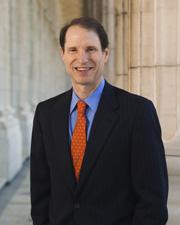
Mr. President, I ask unanimous consent that the order for the quorum call be rescinded. Mr. President, I ask unanimous consent to speak in morning business for up to 20 minutes. Mr. President, last…
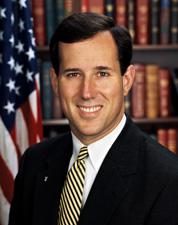
Mr. President, I will pick up where the Senator from Delaware left off and the Senator from Utah, also thanking John Walsh and his wife Reve for their tremendous contribution to our society but in…
Is there an order of speaking this evening, if I might inquire of the manager. First, let me say to the Senator from Utah, as well as to my colleague, the Senator from Delaware, that their leadership…
Mr. President, today we have the opportunity to do something very important for a precious national resource: our children. We must seize this opportunity and approve H.R. 4472, the Adam Walsh Child…
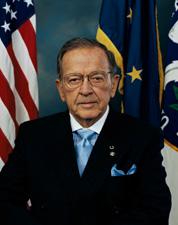
Mr. President, I ask Unanimous consent that the Committee on Agriculture, Nutrition and Forestry be authorized to conduct a business meeting during the session of the Senate on Thursday, October 6,…
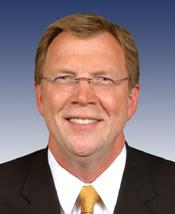
Mr. Speaker, I thank the chairman and include my statement for the Record: I want to thank the Chairman of the Judiciary Committee, Mr. Sensenbrenner, for bringing this bill to the House today. It is…

Mr. Speaker, I submit the following items for inclusion in the Record regarding the House floor consideration of H.R. 4472 on March 8, 2006. March 7, 2006. Dear Representative Conyers: On behalf of…
Show 11 more
Mr. President, today I rise to introduce the National Language Coordination Act of 2005 which provides a framework for leading and coordination the learning of foreign languages and cultures, with my…

Mr. President, I ask unanimous consent that the Committee on Banking, Housing, and Urban Affairs be authorized to meet during the session of the Senate on October 20, 2005, at 10 a.m. to conduct a…
Mr. Speaker, I rise in strong support of H.R. 4472, the Children's Safety and Violent Crime Reduction Act. This bill combines three measures, previously approved by the House with strong bipartisan…
Mr. President, I ask unanimous consent that the Committee on Banking, Housing, and Urban Affairs be authorized to meet during the session of the Senate on September 22, 2005, at 10 a.m., to conduct a…
Mr. President, I thank my colleagues for granting unanimous consent to pass the most comprehensive child crimes and protection bill in our Nation's history--H.R. 4472, the Adam Walsh Child Protection…
Mr. President, I ask unanimous consent the Senate proceed to the immediate consideration of Calendar No. 251, S. 1086. I ask unanimous consent the committee-reported amendment be agreed to, the bill…
Mr. President, I ask unanimous consent that the Committee on Armed Services be authorized to meet during the session of the Senate on September 29, 2005, at 9:30 a.m., in open session to receive…

Mr. President, I ask unanimous consent that the Committee on Armed Services be authorized to meet during the session of the Senate on July 28, 2005, at 9:30 a.m., in open session to consider the…
Madam Speaker, I once again skirt the rules of the House by taking note of the fact that people not in this Chamber may be watching us. And I am particularly concerned about members of the Iraqi…

Mr. President, I ask unanimous consent that the Committee on Banking, Housing, and Urban Affairs be authorized to meet during the session of the Senate on July 14, 2005, at 10 a.m., to conduct a…
But before doing that, Mr. President, I ask unanimous consent that the Senate proceed to the immediate consideration of Calendar No. 251, S. 1086. I ask unanimous consent that the committee- reported…
Bill Text
3 versions available
        [Congressional Bills 109th Congress]
[From the U.S. Government Publishing Office]
[S. 1086 Engrossed in Senate (ES)]

109th CONGRESS
2d Session
S. 1086

_______________________________________________________________________

AN ACT

To improve the national program to register and monitor individuals who
commit crimes against children or sex offenses.

Be it enacted by the Senate and House of Representatives of the
United States of America in Congress assembled,

SECTION 1. SHORT TITLE; TABLE OF CONTENTS.

(a) Short Title.--This Act may be cited as--
(1) the ``Jacob Wetterling, Megan Nicole Kanka, and Pam
Lychner Sex Offender Registration and Notification Grant Act'';
(2) the ``Sex Offender Registration and Notification Act'';
or
(3) the ``Jetseta Gage Prevention and Deterrence of Crimes
Against Children Act of 2006''.
(b) Table of Contents.--The table of contents for this Act is as
follows:

Sec. 1. Short title; table of contents.
Sec. 2. Effective date.
TITLE I--JACOB WETTERLING, MEGAN NICOLE KANKA, AND PAM LYCHNER SEX
OFFENDER REGISTRATION AND NOTIFICATION GRANT PROGRAM

Sec. 101. Jacob Wetterling, Megan Nicole Kanka, and Pam Lychner Sex
Offender Registration and Notification
Grant Program.
Sec. 102. Definitions.
Sec. 103. Assistance grants to participating States.
Sec. 104. Duty of covered individuals to provide information.
Sec. 105. Duties of Attorney General and participating States.
Sec. 106. Participating state sex offender registries.
Sec. 107. Development and availability of registry management software.
Sec. 108. Election by Indian tribes.
Sec. 109. Provision of notice and access to Indian tribes.
Sec. 110. Applicability to minors.
Sec. 111. Rule of construction.
Sec. 112. Immunity for good faith conduct.
Sec. 113. State unconstitutionality.
Sec. 114. Regulations.
Sec. 115. Authorization of appropriations.
Sec. 116. Effect on current law.
TITLE II--DRU SJODIN NATIONAL SEX OFFENDER PUBLIC DATABASE ACT OF 2006

Sec. 201. Short title and definitions.
Sec. 202. National sex offender public registry.
Sec. 203. Release of high-risk inmates.
TITLE III--JETSETA GAGE PREVENTION AND DETERRENCE OF CRIMES AGAINST
CHILDREN ACT OF 2006

Sec. 301. Short title.
Sec. 302. Assured punishment for violent crimes against children.
Sec. 303. Increased penalties for sexual offenses against children.
TITLE IV--JESSICA LUNSFORD AND SARAH LUNDE ACT

Sec. 401. Short title.
Sec. 402. Pilot program for monitoring sexual offenders.
TITLE V--MISCELLANEOUS PROVISIONS

Sec. 501. Access to Interstate Identification Index.
Sec. 502. Limitation on liability for NCMEC.
Sec. 503. Missing child reporting requirements.
Sec. 504. Treatment and management of sex offenders in the Bureau of
Prisons.
Sec. 505. Authorization for American Prosecutors Research Institute.
Sec. 506. Sex offender apprehension grants.
Sec. 507. Access to Federal crime information databases by educational
agencies for certain purposes.
Sec. 508. Grants to combat sexual abuse of children.
Sec. 509. Severability.
Sec. 510. Failure to provide information a deportable offense.
Sec. 511. Repeal.
Sec. 512. Conforming amendments to title 18, United States Code.
TITLE VI--COMPREHENSIVE EXAMINATION OF SEX OFFENDER ISSUES

Sec. 601. Comprehensive examination of sex offender issues.

SEC. 2. EFFECTIVE DATE.

This Act and the amendments made by this Act take effect on the
date that is 6 months after the date of the enactment of this Act.

TITLE I--JACOB WETTERLING, MEGAN NICOLE KANKA, AND PAM LYCHNER SEX
OFFENDER REGISTRATION AND NOTIFICATION GRANT PROGRAM

SEC. 101. JACOB WETTERLING, MEGAN NICOLE KANKA, AND PAM LYCHNER SEX
OFFENDER REGISTRATION AND NOTIFICATION GRANT PROGRAM.

The Attorney General shall establish guidelines for States' sex
offender registration programs pursuant to this title. Collectively,
the guidelines and the programs shall be known as the ``Jacob
Wetterling, Megan Nicole Kanka, and Pam Lychner Sex Offender
Registration and Notification Program''.

SEC. 102. DEFINITIONS.

In this title:
(1) Covered individual.--The term ``covered individual''
means any adult or juvenile in a participating domicile State,
participating work State, or participating school State
convicted as an adult--
(A) who has been convicted of a covered offense
against a minor;
(B) who has been convicted of a sexually violent
offense;
(C) who has been convicted of an offense described
in paragraph (2);
(D) who has been convicted of an offense under
State law that is similar to the offenses described in
described in paragraph (2);
(E) who is described in section 4042(c)(4) of title
18, United States Code, except for those convicted of a
violation of section 2257 or 2258 of title 18, United
States Code; or
(F) who has been sentenced by a court martial for
conduct in a category specified by the Secretary of
Defense under section 115(a)(8)(C) of title I of Public
Law 105-119 (10 U.S.C. 951 note).
(2) Covered offense against a minor.--
(A) In general.--Except as provided in subparagraph
(C), the term ``covered offense against a minor'' means
an offense (whether under the law of a State, Federal
law, or military law) that is comparable to or more
severe than any of the following offenses:
(i) Kidnapping of a minor, except by a
parent or guardian of the minor, if sexual
conduct toward the minor is proved beyond a
reasonable doubt.
(ii) False imprisonment of a minor, except
by a parent or guardian of the minor, if sexual
conduct toward the minor is proved beyond a
reasonable doubt.
(iii) Criminal sexual conduct toward a
minor.
(iv) Solicitation of a minor to engage in
sexual conduct.
(v) Use of a minor in a sexual performance.
(vi) Solicitation of a minor to practice
prostitution.
(vii) Possession, production, or
distribution of child pornography, as described
in section 2251, 2252, or 2252A of title 18,
United States Code.
(viii) Use of the Internet to facilitate or
commit a covered offense against a minor or to
attempt to commit such an offense against an
agent of the government who has been
represented to be a minor.
(ix) Video voyeurism as described in
section 1801 of title 18, United States Code,
when committed against a minor.
(x) An attempt or conspiracy to commit any
of the offenses listed in this definition.
(B) Convictions under the laws of a foreign
country.--The term ``covered offense against a minor''
includes convictions for offenses specified in
subparagraph (A) that have been obtained under the laws
of any foreign nation that has been certified by the
Attorney General, after notice and an opportunity for a
hearing, as having a sufficiently reliable criminal
justice system.
(C) Exception for certain offenses.--The term
``covered offense against a minor'' does not include an
offense if the conduct on which the offense is based is
criminal only because of the age of the victim, and if
individual had committed the offense either had not
attained the age of 18 years or was less than 4 years
older than the victim when the offense was committed.
(3) Domicile.--The term ``domicile'' means, with respect to
an individual, any place that serves as the primary place at
which the individual lives.
(4) Domicile state.--The term ``domicile State'' means,
with respect to an individual, the State within the
jurisdiction of which is the individual's domicile.
(5) Educational institution.--The term ``educational
institution'' includes (whether public or private) any
secondary school, trade or professional institution, and
institution of higher education.
(6) Employment.--The term ``employment'' includes carrying
on a vocation and covers any labor or service rendered (whether
as a volunteer or for compensation or for government or
educational benefit) on a full-time or part-time basis.
(7) Minor.--The term ``minor'' means any person who has not
attained the age of 18 years or the age of consent in the
relevant jurisdiction, whichever age is lower.
(8) National sex offender registry.--The term ``National
Sex Offender Registry'' means the database maintained by the
Attorney General pursuant to section 105.
(9) National sex offender public registry.--The term
``National Sex Offender Public Registry'' means the Internet
site maintained by the Attorney General pursuant to section
202.
(10) Participating state.--The term ``participating State''
means a State participating in the grant program authorized
under this title.
(11) School state.--The term ``school State'' means, with
respect to an individual, the State within the jurisdiction of
which the educational institution at which the individual is a
student is located.
(12) Sexually violent offense.--The term ``sexually violent
offense'' means an offense (whether under the law of a State,
Federal law, military law, or the law of a foreign country)
that is comparable to or more severe than any of the following
offenses:
(A) Aggravated sexual abuse or sexual abuse (as
described in sections 2241 and 2242 of title 18, United
States Code).
(B) An attempt or conspiracy to commit such an
offense.
(13) State.--The term ``State'' means any of the following:
(A) A State.
(B) The District of Columbia, the Commonwealth of
Puerto Rico, Guam, American Samoa, the United States
Virgin Islands, or the Northern Mariana Islands.
(C) A federally recognized Indian tribe that has
elected in accordance with section 108 to carry out
this Act as a jurisdiction subject to its provisions.
(14) Student.--The term ``student'' means an individual
who, whether on a full-time or part-time basis, enrolls in or
attends an educational institution.
(15) Tier i individual.--The term ``Tier I individual''
means an individual required to register under this title who
is subject to the least intensive registration requirements, as
determined in accordance with criteria promulgated under
section 106(b)(1)(E).
(16) Tier ii individual.--The term ``Tier II individual''
means an individual required to register under this title who
is subject to more intensive registration requirements than
Tier I individuals, as determined in accordance with criteria
promulgated under section 106(b)(1)(E).
(17) Tier iii individual.--The term ``Tier III individual''
means an individual required to register under this title who
is subject to the most intensive registration requirements, as
determined in accordance with criteria promulgated under
section 106(b)(1)(E).
(18) Work state.--The term ``work State'' means, with
respect to an individual, the State within the jurisdiction of
which the individual's current place of employment is located
or, if the individual is unemployed, the individual's most
recent place of employment.

SEC. 103. ASSISTANCE GRANTS TO PARTICIPATING STATES.

(a) Sex Offender Management Assistance Program.--
(1) In general.--From amounts made available to carry out
this subsection, the Attorney General shall carry out a
program, to be known as the Sex Offender Management Assistance
program (in this section referred to as the ``SOMA program''),
under which the Attorney General may award grants to
participating States to offset costs directly associated with
implementing this title.
(2) Distribution of funds.--Each grant awarded under the
SOMA program shall be distributed directly to the participating
State for distribution by that participating State to public
entities, including local governments and law enforcement
agencies, within that participating State.
(3) Uses.--Up to 10 percent of a grant awarded under the
SOMA program may be used to participate in 1 or more databases
that identify individuals in custody.
(4) Eligibility.--
(A) In general.--To be eligible to receive a grant
under the SOMA program in a fiscal year and except as
provided in subparagraph (B), the chief executive of a
participating State shall submit to the Attorney
General an application (in such form, at such a time,
and containing such information as the Attorney General
may reasonably require) assuring that--
(i) the participating State has
substantially implemented (or is making a good
faith effort to substantially implement) this
title; and
(ii) the participating State has made the
failure of a covered individual to register as
required a felony.
(B) Exception.--The Attorney General may waive the
requirement of subparagraph (A) if a participating
State demonstrates an overriding need for assistance
under the SOMA program.
(5) Allocation of funds.--In allocating funds under the
SOMA program, the Attorney General may consider the number of
covered individuals registered in each participating State's
registry.
(6) Incorporation of certain training programs.--
(A) Study.--During the course of implementing the
SOMA program, the Attorney General shall study the
feasibility of incorporating into the SOMA program the
activities of any technical assistance or training
program established as a result of section 40152 of the
Violent Crime Control and Law Enforcement Act of 1994
(42 U.S.C. 13941).
(B) Incorporating.--In a case in which
incorporating such activities into the SOMA program
will eliminate duplication of efforts or administrative
costs, the Attorney General shall take administrative
actions, as allowable, and make recommendations to
Congress to incorporate such activities into the SOMA
program.
(b) Incentives; Bonus Payments for Early Compliance.--
(1) Bonus.--A participating State that has substantially
implemented this title within 2 years after the date of the
enactment of this Act is eligible for a bonus payment under the
SOMA program for the fiscal year after the Attorney General
certifies that the participating State has achieved substantial
implementation.
(2) Amount.--The amount of the bonus payment under
paragraph (1) shall be--
(A) equal to 5 percent of the funds that the
participating State received under the SOMA program for
the preceding fiscal year; or
(B) if the participating State has substantially
implemented this title within 1 year after the date of
enactment of this Act, the amount of the bonus payment
shall be equal to 10 percent of the funds that the
participating State received under the SOMA program for
the preceding fiscal year.
(3) One payment.--A participating State may receive a bonus
payment under this subsection only once during the course of
the SOMA program.
(c) Reports to Congress.--Each year, the Attorney General shall
submit to Congress a report identifying the extent to which each
participating State has implemented this title.

SEC. 104. DUTY OF COVERED INDIVIDUALS TO PROVIDE INFORMATION.

(a) Information Required Periodically.--A covered individual shall,
for the life of that individual (except as provided in this section),
provide information as follows:
(1) Registration information.--Initially during the time
period specified in accordance with paragraph (4), and
thereafter as provided in paragraph (5), the individual shall--
(A) appear before persons designated by the
individual's participating domicile State,
participating work State (if different from the
participating domicile State), and participating school
State (if different from the participating domicile
State); and
(B) provide to such persons--
(i) the individual's name and aliases;
(ii) the individual's Social Security
number;
(iii) the address where the individual
maintains or will maintain his domicile;
(iv) a photocopy of a valid driver's
license or identification card issued to the
individual from the Department of Motor
Vehicles in the individual's domicile State;
(v) the license plate number of, and other
identifying information with respect to, each
vehicle owned or operated by the individual;
(vi) the name and address of the place
where the individual is employed or will be
employed; and
(vii) the name and address of any
educational institution at which the individual
is a student or will be a student.
(2) Photograph.--Initially during the time period specified
in accordance with paragraph (4), and thereafter at least once
every 12 months, the individual shall appear before persons
designated by the individual's participating domicile State,
participating work State (if different from the participating
domicile State), and participating school State (if different
from the participating domicile State) and submit to the taking
of a photograph.
(3) Fingerprints.--During the time period specified in
accordance with paragraph (4), the individual shall appear
before persons designated by the individual's participating
domicile State, participating work State (if different from the
participating domicile State), and participating school State
(if different from the participating domicile State) and submit
to the taking of fingerprints. This paragraph does not apply if
the State determines that it already has a valid set of
fingerprints in its possession.
(4) Timing of initial registration.--The Attorney General
shall prescribe the time period within which a covered
individual must fulfill the initial registration requirements
set forth in paragraphs (1), (2), and (3).
(5) Ongoing registration.--
(A) In general.--The ongoing registration
requirement under paragraph (1) is--
(i) for Tier I individuals every 12 months;
(ii) for Tier II individuals every 6
months; and
(iii) for Tier III individuals every 3
months.
(B) Exemption.--A covered individual is exempt from
the ongoing registration requirement of this subsection
if the covered individual is incarcerated at the time
specified in subparagraph (A).
(6) Covered individual in custody of a state other than
domicile state.--A covered individual who, during the time
period specified in accordance with paragraph (4), is in the
custody of a participating State that is not the individual's
participating domicile State, shall fulfill the initial
registration requirements set forth in paragraphs (1), (2), and
(3) by providing the specified information to an appropriate
official of the jurisdiction that is holding the individual in
custody. The official shall promptly make available that
information to the individual's domicile State.
(7) Individual in federal or military custody.--Whenever an
individual is a covered individual on the basis of subparagraph
(C), (E) or (F) of section 102(1), the procedure upon release
or sentencing of the individual shall be as provided in section
4042(c) of title 18, United States Code, or section
115(a)(8)(C) of title I of Public Law 105-119. The individual
shall promptly register and continue to register as provided in
this section in each participating domicile, work, and school
State of the individual. To the extent that any procedure or
requirement of this section cannot be applied to the
individual, the Attorney General may specify alternative
procedures and requirements for the registration of such
individuals in participating domicile, work, and school States.
(8) Retroactive application.--The Attorney General shall
have the authority to--
(A) specify the applicability of the requirements
of this title to individuals who are covered
individuals based on a conviction or sentencing that
occurred prior to the date of enactment or who are, as
of the date of enactment of this Act, incarcerated or
under a non-incarcerative sentence for some other
offense;
(B) specify the applicability of the requirements
of this title to all other individuals who are covered
individuals based on a conviction or sentencing that
occurred prior to the enactment date of enactment of
this Act or the implementation of the requirements of
this title by a participating State; and
(C) specify procedures and methods for the
registration of individuals to whom the requirements of
this title apply pursuant to subparagraph (A) or (B).
(b) Requirement To Register and Keep Registration Information
Current.--
(1) Registration requirement.--A covered individual shall,
for the life of that individual (except as provided in this
section), promptly register in each participating domicile,
work, and school State of the individual and keep the
registration information current. To the extent that the
procedures or requirements for registering or updating
registration information in any participating domicile, work,
or school State are not fully specified in this section, the
Attorney General may specify such procedures and requirements.
(2) Changes to registration information of certain
offenders.--The following shall apply to changes of
registration information under this section for Tier II and
Tier III individuals:
(A) Change of name.--Not more than 5 days after
changing his or her name, the individual shall appear
before persons designated by the individual's
participating domicile State, participating work State
(if different from the participating domicile State),
and participating school State (if different from the
participating domicile State) and provide the new name.
(B) Change of address.--Not more than 5 days before
or after establishing a new domicile, the individual
shall--
(i) appear before persons designated by the
individual's participating domicile State,
participating work State (if different from the
participating domicile State), and
participating school State (if different from
the participating domicile State) and provide
the address of the new domicile and the address
of the previous domicile; and
(ii) if the new domicile and the previous
domicile are not both within the jurisdiction
of a single participating State under this
Act--
(I) appear before a person
designated by the individual's previous
participating domicile State (and
appear before persons designated by the
individual's participating work State
(if different from the previous
participating domicile State) and
participating school State (if
different from the previous
participating domicile State)) and
fulfill the requirements of clause (i);
and
(II) appear before a person
designated by the individual's new
participating domicile State to--
(aa) provide the designated
person the address of the new
domicile and the address of the
previous domicile; and
(bb) submit to the taking
of a photograph and, unless the
participating State determines
that it already possesses a
valid set, fingerprints.
(C) Change of employment.--Not more than 5 days
before or after beginning, or ceasing, employment by an
employer, the individual shall appear before, and
provide notice of the beginning or ceasing, and the
name and address of the employer, to--
(i) a person designated by the individual's
participating domicile State; and
(ii) if the individual's participating work
State is different from the domicile State, a
person designated by the individual's
participating work State.
(D) Change of student status.--Not more than 5 days
before, after beginning, or ceasing to be a student at
an educational institution, the individual shall appear
before, and provide notice of the beginning or ceasing,
and the name and address of the educational
institution, to--
(i) a person designated by the individual's
participating domicile State; and
(ii) if the individual's participating
school State is different from the domicile
State, a person designated by the individual's
participating school State.
(c) Punishment.--
(1) In general.--Whoever--
(A) knowingly fails to register in any jurisdiction
in which such person is required to register under this
title; and
(B)(i) has been convicted of a Federal offense, an
offense under the Uniform Code of Military Justice, or
a tribal offense, for which registration is required by
such Act or law; or
(ii) travels in interstate or foreign commerce.
shall be fined under this title and imprisoned according to the
penalties in paragraphs (2) and (3).
(2) First conviction.--On the first conviction under
paragraph (1)--
(A) a Tier I individual shall be fined under title
18, United States Code, or imprisoned not more than 3
years, or both;
(B) a Tier II individual shall be fined under title
18, United States code, or imprisoned not more than 5
years, or both; and
(C) a Tier III individual shall be fined under
title 18, United States Code, or imprisoned not more
than 10 years, or both.
(3) Subsequent convictions.--On any conviction after the
first under paragraph (1)--
(A) a Tier I individual shall be fined under title
18, United States Code, or imprisoned not more than 10
years, or both;
(B) a Tier II individual shall be fined under title
18, United States code, or imprisoned not more than 20
years, or both; and
(C) a Tier III individual shall be fined under
title 18, United States Code, or imprisoned for any
term of years or for life, or both.
(4) Affirmative defense.--In a prosecution for a violation
under this section, it is an affirmative defense--
(A) that uncontrollable circumstances prevented the
individual from complying;
(B) the individual did not contribute to the
creation of such circumstances in reckless disregard of
the requirement to comply; and
(C) the individual complied as soon as such
circumstances ceased to exist.
(5) Continuing violations.--A violation under this section
is a continuing violation for purposes of the statute of
limitations.
(6) Exceptions.--An individual may petition for relief from
the requirements of subsections (a) and (b) based on a claim
that--
(A) the conviction that subjected the individual to
those requirements has been overturned;
(B) the individual's inclusion on the applicable
registry is the result of an administrative or clerical
error; or
(C) the individual has been pardoned by the chief
executive of the jurisdiction in which the individual
was convicted of the crime that subjected the
individual to the requirements of subsections (a) and
(b).
(d) Exceptions for Certain Individuals.--Subsections (a) and (b)
apply to any covered individual, except as provided as follows:
(1) Tier i individuals.--The individual is a Tier I
individual and both of the following apply:
(A) The individual has only 1 conviction for an
offense that qualifies the individual as a covered
individual.
(B) A period of at least 10 years, excluding
ensuing periods of incarceration, has expired since the
date on which the individual was sentenced for, or
completed the term of imprisonment for, the conviction
described in subparagraph (A).
(2) Tier ii individuals.--The individual is a Tier II
individual and both of the following apply:
(A) The individual has only 1 conviction for an
offense that qualifies the individual as a covered
individual.
(B) A period of at least 20 years, excluding
ensuing periods of incarceration, has expired since the
date on which the individual was sentenced for, or
completed the term of imprisonment for, the conviction
described in subparagraph (A).

SEC. 105. DUTIES OF ATTORNEY GENERAL AND PARTICIPATING STATES.

(a) Duty To Obtain Acknowledgment of Obligations.--
(1) In general.--During the time period specified in
paragraph (2), an appropriate official shall--
(A) inform each covered individual of the duty to
register and of that individual's ongoing obligations
under this title;
(B) require the individual to read and sign a form
affirming that--
(i) the duty to register has been explained
to the individual;
(ii) the individual's ongoing obligations
under this title have been explained to the
individual; and
(iii) the individual understands the
registration requirements; and
(C) ensure that the individual has completed the
initial registration process.
(2) Appropriate time period.--The Attorney General shall
prescribe an appropriate time period during which the
requirements set forth in paragraph (1) shall be fulfilled.
(3) Fulfillment.--The requirements of paragraph (1) shall
be fulfilled--
(A) before a covered individual has been released
from custody; or
(B) if the covered individual is not in custody,
shortly after the individual has been sentenced.
(b) Obtaining and Sharing Information.--
(1) Obtaining information.--When an individual appears
before the Attorney General or a participating State to provide
information pursuant to this title (including information such
as photographs and fingerprints), the Attorney General (or the
participating State, or both, as the case may be) shall--
(A) ensure that the individual complies with the
applicable requirements of this title;
(B) ensure that the information provided is
accurate and complete; and
(C) ensure that the information provided is
promptly entered into the appropriate records or data
system of the participating State.
(2) Sharing information.--
(A) Domicile state.--The domicile State of an
individual, and the State which originally registers
the individual if different from the domicile State,
shall promptly notify each domicile, work, and school
State of the individual of which it is aware concerning
the individual's domicile, employment, or student
status in such State and shall make available to each
such State the information concerning the individual.
(B) Change in domicile.--If a domicile State of an
individual is informed by the individual, or otherwise
becomes aware, that there will be or has been a change
in the individual's domicile State, the domicile State
shall promptly notify the new domicile State and make
available to the new domicile State the information
concerning the individual.
(C) Available information.--A domicile State shall
promptly make available the information concerning an
individual to a law enforcement agency or agencies in
the State having jurisdiction where--
(i) the individual's domicile is located;
(ii) the individual's place of employment
is located; and
(iii) any educational institution at which
the individual is a student is located.
(c) Entry of Information Into the National Sex Offender Registry.--
(1) Maintenance of a national sex offender registry.--The
Attorney General shall maintain a national database at the
Federal Bureau of Investigation, to be known as the National
Sex Offender Registry, which shall include information
concerning covered individuals who are required to register in
the sex offender registry of any jurisdiction. Information may
be released from the National Sex Offender Registry to criminal
justice agencies, and to other entities as the Attorney General
may provide.
(2) Participation in the national sex offender
registries.--Each participating State shall, in the time and
manner provided by the Attorney General--
(A) submit to the Attorney General the information
concerning each covered individual under this title,
which shall be included in the National Sex Offender
Registry or other databases as appropriate;
(B) submit the information described in
subparagraph (A) in a manner that allows the Attorney
General to include it in the National Sex Offender
Registries; and
(C) participate in the National Sex Offender Public
Registry maintained pursuant to section 202.
(d) When a Covered Individual Is Missing.--
(1) State.--Whenever a participating State is unable to
verify the address of or locate a covered individual, the
participating State shall promptly notify the Attorney General.
(2) Attorney general.--Whenever information is made known
to the Attorney General under paragraph (1) that a State is
unable to verify the address of or locate a covered individual,
the Attorney General shall--
(A) revise the National Sex Offender Registry to
reflect that information; and
(B) add the name of the individual to the wanted
person file of the National Crime Information Center
and create a wanted persons record if an arrest warrant
that meets the requirements for entry into the file is
issued in connection with the violation.
(3) Investigation.--The Attorney General shall use the
authority provided in section 566(e)(1)(B) of title 28, United
States Code, the authority to investigate offenses under
chapter 49 of title 18, United States Code, and the authority
provided in any other relevant provision of law, as
appropriate, to assist States and other jurisdictions in
locating and apprehending covered individuals and any other
individuals who violate sex offender registration requirements.
(e) Authorization of Appropriations.--There are authorized to be
appropriated such sums as may be necessary for fiscal years 2006
through 2008 to carry out this section.

SEC. 106. PARTICIPATING STATE SEX OFFENDER REGISTRIES.

(a) Statewide Registry Required.--Each participating State shall
maintain, throughout its jurisdiction, a single comprehensive registry
of information collected under this title.
(b) Release of Information in Registry.--Each participating State
shall have in effect, throughout its jurisdiction, a single public
information program that includes the following elements:
(1) Internet site.--
(A) Information.--
(i) In general.--Except as provided in
clause (iii), the participating State shall
release to the public, through an Internet site
maintained by the State that shall have
multiple field search capability, the following
information for Tier II and III individuals
whose domicile State, work State, or school
State is the same as the participating State:
(I) The name and any known aliases
of the individual.
(II) The date of birth of the
individual.
(III) A physical description of the
individual.
(IV) The current photograph of the
individual.
(V) The domicile address of the
individual.
(VI) The address of the
individual's place of employment.
(VII) The address of any
educational institution at which the
individual is a student.
(VIII) The nature and date of all
offenses qualifying the individual as a
covered individual.
(IX) The date on which the
individual was released from prison, or
placed on parole, supervised release,
or probation, for the most recent
offense qualifying the individual as a
covered individual.
(X) Tier designation for the
individual.
(XI) Compliance status of the
individual.
(ii) Tier i individuals.--The participating
State may, at its discretion, include
information about Tier I individuals on its
Internet site.
(iii) Victims.--The participating State
shall make every effort not to disclose the
identity of the victim of an offense.
Information about a covered individual whose
duty to register is based solely on offenses
against intrafamilial minors may, after
consultation with the victim, be limited or
withheld in its entirety from an Internet site
or registry, at the discretion of the
participating State.
(iv) Links.--The site shall include, as
much as practicable, links to sex offender
safety and education resources.
(B) Integration of state sites.--The participating
State shall consult with other States to ensure, as
much as practicable, that the site integrates with and
shares information with the sites maintained by those
other States.
(C) Correction of errors.--The site shall contain
instructions on the process for correcting information
that a person alleges to be erroneous.
(D) Warning.--The site shall include a warning that
the information presented should not be used to injure,
harass, or commit a criminal act against any individual
named in the registry or residing or working at any
reported address. The warning shall note that any such
action could result in criminal prosecution.
(E) Tier designation.--
(i) In general.--The participating State
shall establish 3 tier designations. The tier
designation of an individual shall be
determined under criteria promulgated by the
participating State in accordance with the
participating State's resources and local
priorities.
(ii) Sexually violent offenders.--All
individuals convicted of sexually violent
offenses shall be designated as Tier III
individuals.
(iii) Physical contact of a sexual nature
with a minor.--All individuals convicted of any
offense, an element of which is physical
contact of a sexual nature with a minor, shall
be designated as Tier II or Tier III
individuals.
(2) Community notification.--
(A) Tier ii individuals.--Appropriate law
enforcement agencies in participating States shall
release information collected under this title relating
to Tier II individuals to public and private schools,
including institutions of higher learning, child care
providers, and businesses that provide services or
products to children, located within a radius,
prescribed by the participating State, of the home or
work address of the individual.
(B) Tier iii individuals.--Appropriate law
enforcement agencies in participating States shall
release information collected under this title relating
to Tier III individuals to--
(i) public and private schools, including
institutions of higher learning, child care
providers, and businesses that provide services
or products to children, located within a
radius, prescribed by the participating State,
of the home or work address of the individual;
and
(ii) residents who reside within a radius,
prescribed by the participating State, of the
home or work address of the individual.
(c) Publication of Number of Offenders Registered.--
(1) In general.--Every 6 months, the Attorney General shall
collect from each State information on the total number of
covered individuals included in the registry maintained by that
State.
(2) Public availability and contents.--The Attorney General
shall--
(A) release information under paragraph (1) to the
public in a manner consistent with this title; and
(B) include in such a release the number of
individuals within each tier and the number of
individuals who are in compliance with this title
within each tier.
(3) Double-counting.--In reporting information collected
under paragraph (1), the Attorney General shall ensure, to the
extent practicable, that offenders are not being double-
counted.

SEC. 107. DEVELOPMENT AND AVAILABILITY OF REGISTRY MANAGEMENT SOFTWARE.

(a) Development of Software Required.--The Attorney General, in
consultation with participating States, shall--
(1) develop a software application that can be used by
participating States for purposes of this title; and
(2) ensure that such software operates in such a manner
that a participating State can, by using the software, fully
comply with all the requirements under this title for managing
and exchanging information (including exchanging information
with other States).
(b) Availability to States.--The Attorney General shall make the
software developed under this section available to States. The first
complete edition of the software shall be made available within 2 years
after the date of the enactment of this Act.
(c) Support.--The Attorney General shall ensure that States are
provided technical support for the installation of the software and for
maintaining the software.

SEC. 108. ELECTION BY INDIAN TRIBES.

(a) Election.--
(1) In general.--A federally recognized Indian tribe may,
by resolution or other enactment of the tribal council or
comparable governmental body--
(A) elect to carry out this title as a jurisdiction
subject to its provisions; or
(B) elect to delegate its functions under this
title to a participating State or participating States
within which the territory of the tribe is located and
to provide access to its territory and such other
cooperation and assistance as may be needed to enable
such participating State or participating States to
carry out and enforce the requirements of this title.
(2) Election.--A tribe shall be treated as if it had made
the election described in paragraph (1)(B) if--
(A) it is a tribe subject to the law enforcement
jurisdiction of a participating State under section
1162 of title 18, United States Code;
(B) the tribe does not make an election under
paragraph (1) within 1 year of the enactment of this
Act or rescinds an election under paragraph (1)(A); or
(C) the Attorney General determines that the tribe
has not implemented the requirements of this title and
is not likely to become capable of doing so within a
reasonable amount of time.
(b) Cooperation Between Participating State and Tribal
Authorities.--
(1) Nonduplication.--A tribe subject to this title is not
required for purposes of this title to duplicate functions
under this title which are fully carried out by a participating
State or participating States within which the territory of the
tribe is located.
(2) Cooperative agreements.--A tribe may, through
cooperative agreements with such a participating State or
participating States--
(A) arrange for the tribe to carry out any function
of the participating State under this title with
respect to sex offenders subject to the tribe's
jurisdiction; and
(B) arrange for the participating State to carry
out any function of the tribe under this title with
respect to sex offenders subject to the tribe's
jurisdiction.

SEC. 109. PROVISION OF NOTICE AND ACCESS TO INDIAN TRIBES.

(a) Conforming Amendment to Title 18, United States Code.--Section
4042(c)(1)(A) of title 18, United States Code, is amended by striking
``State'' and inserting ``State, Indian Country,''.
(b) Responsibility of Participating States.--An appropriate
participating State official, pursuant to this title and exercising
jurisdiction pursuant to Public Law 93-280, shall ensure that notice is
provided to any Indian tribe of the release into the jurisdiction of
the Indian tribe of a covered individual.
(c) Access to National Sex Offender Registry.--From funds made
available under section 107, the Attorney General shall use such
amounts as the Attorney General determines to be appropriate to make
grants to Indian tribes for the development of electronic databases to
provide access to information in the National Sex Offender Registry.

SEC. 110. APPLICABILITY TO MINORS.

Notwithstanding any other provision of this Act, the requirements
of this Act are not applicable with respect to any individual who is
only subject to such requirements because of a delinquent adjudication
that occurred when the individual was a minor, unless that individual
was charged and convicted as an adult.

SEC. 111. RULE OF CONSTRUCTION.

The provisions of this title that are cast as directions to
participating States or their officials constitute only conditions that
must be substantially met, in accordance with section 107, in order to
obtain Federal funding under this title.

SEC. 112. IMMUNITY FOR GOOD FAITH CONDUCT.

The Federal Government, participating States and political
subdivisions thereof, and their agencies, officers, employees, and
agents shall be immune from liability for good faith conduct under this
Act.

SEC. 113. STATE UNCONSTITUTIONALITY.

(a) In General.--Nothing in this title shall be deemed to require a
participating State to take any action that would violate that
participating State's constitution.
(b) Funds.--The Attorney General shall not withhold funds to any
participating State under section 107 if the participating State
declines to implement any provisions of this title on the ground that
to do so would place the participating State in violation of its
constitution or a ruling by the participating State's highest court.
(c) Deference.--In considering whether compliance with the
requirements of this title would likely violate the participating
State's constitution or rulings by the participating State's highest
court under this section, the Attorney General shall defer to the
participating State's interpretation of the participating State's
constitution and rulings of the participating State's highest court
unless those interpretations are clearly erroneous.

SEC. 114. REGULATIONS.

The Attorney General shall issue guidelines and regulations to
interpret and implement this title.

SEC. 115. AUTHORIZATION OF APPROPRIATIONS.

There is authorized to be appropriated for each of fiscal years
2006 through 2009 such sums as may be necessary to carry out this
title.

SEC. 116. EFFECT ON CURRENT LAW.

This title does not diminish any existing conditions on
participating and non-participating States under current law.

TITLE II--DRU SJODIN NATIONAL SEX OFFENDER PUBLIC DATABASE ACT OF 2006

SEC. 201. SHORT TITLE AND DEFINITIONS.

(a) Short Title.--This title may be cited as the ``Dru Sjodin
National Sex Offender Public Database Act of 2006''.
(b) Definitions.--The definitions in section 102 shall apply in
this title.

SEC. 202. NATIONAL SEX OFFENDER PUBLIC REGISTRY.

(a) In General.--The Attorney General shall maintain a national
Internet site, to be known as the ``National Sex Offender Public
Registry,'' through which the public can access information in the
public sex offender Internet sites of all States by means of single-
query searches.
(b) Information Available in Public Registry.--With respect to Tier
II and Tier III individuals and except as provided in subsection (e),
the National Sex Offender Public Registry shall provide the following
information:
(1) The name and any known aliases of the individual.
(2) The date of birth of the individual.
(3) A physical description of the individual.
(4) The current photograph of the individual.
(5) The domicile address of the individual.
(6) The address of the individual's place of employment.
(7) The address of any educational institution at which the
individual is a student.
(8) The nature and date of all offenses qualifying the
individual as a covered individual.
(9) The date on which the individual was released from
prison, or placed on parole, supervised release, or probation,
for the most recent offense qualifying the individual as a
covered individual.
(10) Tier designation for the individual.
(11) Compliance status of the individual.
(c) Search Capabilities.--The National Sex Offender Public Registry
shall have multiple search capabilities, including--
(1) searches by name; and
(2) searches by geographic area including searches by zip
code area and searches within a radius specified by the user.
(d) Tier I Individuals.--The Attorney General shall also provide,
in accordance with this section, information related to a Tier I
individual only if such information is provided by a State on that
State's Internet site.
(e) Family Member Offense.--The Attorney General shall provide, in
accordance with this section, information related to a covered offense
against a minor committed by a family member of the minor only if such
information is provided by a State on that State's Internet site.

SEC. 203. RELEASE OF HIGH-RISK INMATES.

(a) In General.--From amounts made available to carry out this
section, the Attorney General may make grants to participating States
for activities specified in subsections (b) and (c).
(b) Civil Commitment Proceedings.--
(1) In general.--Any participating State that provides for
a civil commitment proceeding, or any equivalent proceeding,
shall issue timely notice to a State official responsible for
considering whether to pursue such proceedings upon the
impending release of any person incarcerated by the
participating State who--
(A) has been convicted of a sexually violent
offense; or
(B) has been deemed by the participating State to
be at high risk for recommitting any covered offense
against a minor.
(2) Review.--Upon receiving notice under paragraph (1), the
State official shall consider whether or not to pursue a civil
commitment proceeding, or any equivalent proceeding required
under State law.
(c) Monitoring of Released Persons.--Each participating State shall
intensively monitor, for not less than 1 year, any person who--
(1) has been deemed by the participating State to be at
high risk for recommitting any covered offense against a minor;
(2) has been unconditionally released from incarceration by
the participating State; and
(3) has not been civilly committed pursuant to a civil
commitment proceeding, or any equivalent proceeding under State
law.
(d) Authorization of Appropriations.--There are authorized to be
appropriated for each fiscal year such sums as may be necessary to
carry out this section.

TITLE III--JETSETA GAGE PREVENTION AND DETERRENCE OF CRIMES AGAINST
CHILDREN ACT OF 2006

SEC. 301. SHORT TITLE.

This title may be cited as the ``Jetseta Gage Prevention and
Deterrence of Crimes Against Children Act of 2006''.

SEC. 302. ASSURED PUNISHMENT FOR VIOLENT CRIMES AGAINST CHILDREN.

Section 3559(d) of title 18, United States Code, is amended to read
as follows:
``(d) Mandatory Minimum Terms of Imprisonment for Violent Crimes
Against Children.--A person who is convicted of a Federal crime of
violence against the person of an individual who has not attained the
age of 12 years and has the intent to commit a serious sex crime as
defined in section 2241 of title 18 shall, unless a greater mandatory
minimum sentence of imprisonment is otherwise provided by law and
regardless of any maximum term of imprisonment otherwise provided for
the offense--
``(1) if the crime of violence results in the death of a
person who has not attained the age of 12 years, be imprisoned
for not less than 30 years to life;
``(2) if the crime of violence is a kidnapping or maiming
(or an attempt or conspiracy to commit kidnapping or maiming)
or results in serious bodily injury (as defined in section
1365), be imprisoned for not less than 20 years to life; and
``(3) if a dangerous weapon was used during and in relation
to the crime of violence, be imprisoned for not less than 10
years to life.''.

SEC. 303. INCREASED PENALTIES FOR SEXUAL OFFENSES AGAINST CHILDREN.

(a) Sexual Abuse.--
(1) Aggravated sexual abuse of children.--Section 2241(c)
of title 18, United States Code, is amended by--
(A) designating the second sentence as paragraph
(4); and
(B) striking the first sentence and inserting the
following:
``(1) Whoever crosses a State line with intent to engage in a
sexual act with a person who has not attained the age of 12 years, or
in the special maritime and territorial jurisdiction of the United
States or in a Federal prison, knowingly engages in a sexual act with
another person who has not attained the age of 12 years, or attempts to
do so, shall be fined under this title and imprisoned for not less than
10 years to life, or both.
``(2) Whoever crosses a State line with intent to engage in a
sexual act under the circumstances described in subsections (a) or (b)
with a person who has not attained the age of 12 years, or in the
special maritime and territorial jurisdiction of the United States or
in a Federal prison, knowingly engages in a sexual act under the
circumstances described in subsections (a) or (b) with another person
who has not attained the age of 12 years, or attempts to do so, shall
be fined under this title and imprisoned not less than 30 years to
life, or both.
``(3) Whoever crosses a State line with intent to engage in a
sexual act under the circumstances described in subsections (a) or (b)
with a person who has not attained the age of 12 years, or in the
special maritime and territorial jurisdiction of the United States or
in a Federal prison, knowingly engages in a sexual act under the
circumstances described in subsections (a) or (b) with another person
who has attained the age of 12 but has not attained the age of 16 years
(and is at least 4 years younger than the person so engaging), or
attempts to do so, shall be fined under this title, imprisoned for any
term of years or life, or both.''.
(2) Sexual abuse of children resulting in death.--Section
2245 of title 18, United States Code, is amended--
(A) by striking ``A person'' and inserting ``(a) In
General.--A person''; and
(B) by adding at the end the following:
``(b) Offenses Involving Young Children.--A person who, in the
course of an offense under this chapter, engages in conduct that
includes a sex act with a person who has not attained the age of 12
years and that results in the death of that person, shall be punished
by death or imprisoned for not less than 30 years to life.''.
(b) Sexual Exploitation and Other Abuse of Children.--
(1) Sexual exploitation of children.--Section 2251(e) of
title 18, United States Code, is amended by striking ``any term
of years or for life'' and inserting ``not less than 30 years
to life.''
(2) Using misleading domain names to direct children to
harmful material on the internet.--Section 2252B(b) of title
18, United States Code, is amended by striking ``or imprisoned
not more than 4 years'' and inserting ``or imprisoned not more
than 10 years.''.

TITLE IV--JESSICA LUNSFORD AND SARAH LUNDE ACT

SEC. 401. SHORT TITLE.

This title may be cited as the ``Jessica Lunsford and Sarah Lunde
Act''.

SEC. 402. PILOT PROGRAM FOR MONITORING SEXUAL OFFENDERS.

(a) Definition.--In this section, the term ``sexual offender''
means an offender 18 years of age or older who commits a sexual offense
against a minor.
(b) Sexual Predator Monitoring Program.--
(1) Grants authorized.--
(A) In general.--The Attorney General is authorized
to award grants (referred to as ``Jessica Lunsford and
Sarah Lunde Grants'') to State and local governments to
assist such States and local governments in--
(i) carrying out programs to outfit sexual
offenders with electronic monitoring units; and
(ii) the employment of law enforcement
officials necessary to carry out such programs.
(B) Duration.--The Attorney General shall award
grants under this section for a period not to exceed 3
years.
(2) Application.--
(A) In general.--Each State or local government
desiring a grant under this section shall submit an
application to the Attorney General at such time, in
such manner, and accompanied by such information as the
Attorney General may reasonably require.
(B) Contents.--Each application submitted pursuant
to subparagraph (A) shall--
(i) describe the activities for which
assistance under this section is sought; and
(ii) provide such additional assurances as
the Attorney General determines to be essential
to ensure compliance with the requirements of
this section.
(c) Innovation.--In making grants under this section, the Attorney
General shall ensure that different approaches to monitoring are funded
to allow an assessment of effectiveness.
(d) Authorization of Appropriations.--
(1) In general.--There are authorized to be appropriated
$10,000,000 for each of the fiscal years 2006 through 2008 to
carry out this section.
(2) Report.--Not later than April 1, 2008, the Attorney
General shall report to Congress--
(A) assessing the effectiveness and value of this
section;
(B) comparing the cost effectiveness of the
electronic monitoring to reduce sex offenses compared
to other alternatives; and
(C) making recommendations for continuing funding
and the appropriate levels for such funding.

TITLE V--MISCELLANEOUS PROVISIONS

SEC. 501. ACCESS TO INTERSTATE IDENTIFICATION INDEX.

(a) In General.--Notwithstanding any other provision of law, the
Attorney General shall ensure access to the Interstate Identification
Index (established under the National Crime Prevention and Privacy
Compact (42 U.S.C. 14616)) by---
(1) the National Center for Missing and Exploited Children,
to be used only within the scope of the Center's duties and
responsibilities under Federal law to assist or support law
enforcement agencies in administration of criminal justice
functions; and
(2) governmental social service agencies with child
protection responsibilities, to be used by such agencies only
in investigating or responding to reports of child abuse,
neglect, or exploitation.
(b) Conditions of Access.--The access provided under this section,
and associated rules of dissemination, shall be--
(1) defined by the Attorney General; and
(2) limited to personnel of the Center or such agencies
that have met all requirements set by the Attorney General,
including training, certification, and background screening.
(c) Limitation on Liability.--
(1) In general.--Except as provided in paragraphs (2) and
(3), the National Center for Missing and Exploited Children,
including any of its directors, officers, employees, or agents,
is not liable in any civil action sounding in tort for damages
related to its access to the Interstate Identification Index.
(2) Intentional, reckless, or other misconduct.--Paragraph
(1) does not apply in an action in which a party proves that
the National Center for Missing and Exploited Children, or its
officer, employee, or agent as the case may be, engaged in
intentional misconduct or acted, or failed to act, with actual
malice, with reckless disregard of a substantial risk of
causing injury without legal justification, or for a purpose
unrelated to its performance of activities or responsibilities
under Federal law.
(3) Ordinary business activities.--Paragraph (1) does not
apply to an act or omission related to an ordinary business
activity, such as an activity involving general administration
or operations, the use of motor vehicles, or personnel
management.

SEC. 502. LIMITATION ON LIABILITY FOR NCMEC.

Section 227 of the Victims of Child Abuse Act of 1990 (42 U.S.C.
13032) is amended by adding at the end the following:
``(g) Limitation on Liability.--
``(1) In general.--Except as provided in subparagraphs (2)
and (3), the National Center for Missing and Exploited
Children, including any of its directors, officers, employees,
or agents, shall not be liable in any civil or criminal action
for the performance of its CyberTipline responsibilities and
functions as defined by section 227 of the Victims of Child
Abuse Act of 1990 (42 U.S.C. 13032) and section 404 of the
Missing Children's Assistance Act (42 U.S.C. 5773), or for its
efforts to identify child victims.
``(2) Exception for intentional, reckless, or other
misconduct.--The limitation on liability under subparagraph (1)
shall not apply in any action in which a plaintiff or
prosecutor proves that the National Center for Missing and
Exploited Children or its officers, employees, or agents
described in subparagraph (1), as the case may be, engaged in
intentional misconduct or acted, or failed to act, with actual
malice, with reckless disregard to a substantial risk of
causing injury without legal justification, or for a purpose
unrelated to the performance of responsibilities or functions
under section 227 of the Victims of Child Abuse Act of 1990 (42
U.S.C. 13032) and section 404 of the Missing Children's
Assistance Act (42 U.S.C. 5773), or for its efforts to identify
child victims.
``(3) Exception for ordinary business activities.--The
limitation on liability under paragraph (1) shall not apply to
any alleged act or omission related to an ordinary business
activity, such as an activity involving general administration
or operations, the use of motor vehicles, or personnel
management.''.

SEC. 503. MISSING CHILD REPORTING REQUIREMENTS.

(a) In General.--Section 3702 of the Crime Control Act of 1990 (42
U.S.C. 5780) is amended--
(1) by redesignating paragraphs (2) and (3) as paragraphs
(3) and (4), respectively;
(2) by inserting after paragraph (1) the following:
``(2) ensure that no law enforcement agency within the
State establishes or maintains any policy that requires the
removal of a missing person entry from its State law
enforcement system or the National Crime Information Center
computer database based solely on the age of the person;''; and
(3) in paragraph (3), as redesignated, by striking
``immediately'' and inserting ``within 2 hours of receipt''.
(b) Definitions.--Section 403(1) of the Comprehensive Crime Control
Act of 1984 (42 U.S.C. 5772) is amended by striking ``if'' through
subparagraph (B) and inserting a semicolon.

SEC. 504. TREATMENT AND MANAGEMENT OF SEX OFFENDERS IN THE BUREAU OF
PRISONS.

Section 3621 of title 18, United States Code, is amended by adding
at the end the following new subsection:
``(f) Sex Offender Management.--
``(1) In general.--The Bureau of Prisons shall make
available appropriate treatment to sex offenders who are in
need of and suitable for treatment, as follows:
``(A) Sex offender management programs.--The Bureau
of Prisons shall establish non-residential sex offender
management programs to provide appropriate treatment,
monitoring, and supervision of sex offenders and to
provide aftercare during prerelease custody.
``(B) Residential sex offender treatment
programs.--The Bureau of Prisons shall establish
residential sex offender treatment programs to provide
treatment to sex offenders who volunteer for such
programs and are deemed by the Bureau of Prisons to be
in need of and suitable for residential treatment.
``(2) Regions.--At least 1 sex offender management program
under paragraph (1)(A), and at least 1 residential sex offender
treatment program under paragraph (1)(B), shall be established
in each region within the Bureau of Prisons.
``(3) Authorization of appropriations.--There are
authorized to be appropriated to the Bureau of Prisons for each
fiscal year such sums as may be necessary to carry out this
subsection.''.

SEC. 505. AUTHORIZATION FOR AMERICAN PROSECUTORS RESEARCH INSTITUTE.

In addition to any other amounts authorized by law, there are
authorized to be appropriated for grants to the American Prosecutors
Research Institute under section 214A of the Victims of Child Abuse Act
of 1990 (42 U.S.C. 13003) $7,500,000 for each of fiscal years 2006
through 2010.

SEC. 506. SEX OFFENDER APPREHENSION GRANTS.

Title I of the Omnibus Crime Control and Safe Streets Act of 1968
is amended by adding at the end the following:

``PART II--SEX OFFENDER APPREHENSION GRANTS

``SEC. 2992. AUTHORITY TO MAKE SEX OFFENDER APPREHENSION GRANTS.

``(a) In General.--From amounts made available to carry out this
part, the Attorney General may make grants to States, units of local
government, Indian tribes, other public and private entities, and
multi-jurisdictional or regional consortia thereof for activities
specified in subsection (b).
``(b) Covered Activities.--An activity referred to in subsection
(a) is any program, project, or other activity to assist a State in
enforcing sex offender registration requirements.''.

SEC. 507. ACCESS TO FEDERAL CRIME INFORMATION DATABASES BY EDUCATIONAL
AGENCIES FOR CERTAIN PURPOSES.

(a) In General.--The Attorney General shall, upon request of the
chief executive of a State, conduct fingerprint-based checks of the
national crime information databases (as defined in section
534(e)(3)(A) of title 28, United States Code), pursuant to a request
submitted by a local educational agency or a State educational agency
in that State, on individuals under consideration for employment by the
agency in a position in which the individual would work with or around
children. Where possible, the check shall include a fingerprint-based
check of State criminal history databases. The Attorney General and the
States may charge any applicable fees for these checks.
(b) Protection of Information.--An individual having information
derived as a result of a check under subsection (a) may release that
information only to an appropriate officer of a local educational
agency or State educational agency, or to another person authorized by
law to receive that information.
(c) Criminal Penalties.--An individual who knowingly exceeds the
authority of subsection (a), or knowingly releases information in
violation of subsection (b), shall be imprisoned not more than 10 years
or fined under title 18, United States Code, or both.
(d) Definition.--In this section, the terms ``local educational
agency'' and ``State educational agency'' have the meanings given to
those terms in section 9101 of the Elementary and Secondary Education
Act of 1965 (20 U.S.C. 7801).

SEC. 508. GRANTS TO COMBAT SEXUAL ABUSE OF CHILDREN.

(a) In General.--The Bureau of Justice Assistance is authorized to
make grants under this section to--
(1) each law enforcement agency that serves a jurisdiction
with 50,000 or more residents; and
(2) each law enforcement agency that serves a jurisdiction
with fewer than 50,000 residents, upon a showing of need.
(b) Use of Grant Amounts.--Grants under this section may be used by
the law enforcement agency to--
(1) hire additional law enforcement personnel, or train
existing staff, to combat the sexual abuse of children through
community education and outreach, investigation of complaints,
enforcement of laws relating to sex offender registries, and
management of released sex offenders;
(2) investigate the use of the Internet to facilitate the
sexual abuse of children; and
(3) purchase computer hardware and software necessary to
investigate sexual abuse of children over the Internet, access
local, State, and Federal databases needed to apprehend sex
offenders, and facilitate the creation and enforcement of sex
offender registries.
(c) Authorization of Appropriations.--There are authorized to be
appropriated such sums as may be necessary for fiscal years 2006
through 2008 to carry out this section.

SEC. 509. SEVERABILITY.

If any provisions of this Act, any amendment made by this Act, or
the application of such provisions or amendment to any person or
circumstance is held to be unconstitutional, the remainder of the
provisions of this Act, the amendments made by this Act, and the
application of such provisions or amendments to any person or
circumstance shall not be affected.

SEC. 510. FAILURE TO PROVIDE INFORMATION A DEPORTABLE OFFENSE.

Section 237(a)(2)(A) of the Immigration and Nationality Act (8
U.S.C. 1227(a)(2)(A)) is amended--
(1) by redesignating clause (v) as clause (vi); and
(2) by inserting after clause (iv) the following new
clause:
``(v) Failure to provide registration
information as a sex offender.--Any alien who
is convicted under subsection (d) of section
103 of the Sex Offender Registration and
Notification Act of a violation of subsection
(a) or (b) of such section is deportable.''.

SEC. 511. REPEAL.

Sections 170101 and 170102 of the Violent Crime Control and Law
Enforcement Act of 1994 (42 U.S.C. 14071, 14072) are repealed.

SEC. 512. CONFORMING AMENDMENTS TO TITLE 18, UNITED STATES CODE.

Title 18 of the United States Code is amended--
(1) in sections 3563(a)(8) and 3583(d) by striking ``and
that the person register in any State where the person resides,
is employed, carries on a vocation, or is a student (as such
terms are defined under section 170101(a)(3) of the Violent
Crime Control and Law Enforcement Act of 1994)'' and inserting
``and that the person comply with the Sex Offender Registration
and Notification Act'';
(2) in section 4042(c)(3) by striking ``shall be subject''
and all that follows through ``1994)'' and inserting ``must
comply with the Sex Offender Registration and Notification
Act''; and
(3) in section 4209(a) by striking ``register in any
State'' and all that follows through ``1994)'' and inserting
``comply with the Sex Offender Registration and Notification
Act.''.

TITLE VI--COMPREHENSIVE EXAMINATION OF SEX OFFENDER ISSUES

SEC. 601. COMPREHENSIVE EXAMINATION OF SEX OFFENDER ISSUES.

(a) Definition.--In this section, the term ``sexual offender''
means an offender 18 years of age or older who commits a sexual offense
against a minor.
(b) In General.--The National Institute of Justice shall conduct a
comprehensive study to examine the control, prosecution, treatment, and
monitoring of sex offenders, with a particular focus on--
(1) the effectiveness of State, tribal, and local responses
to the requirements of this Act, including the effectiveness of
particular jurisdictions as compared to others;
(2) compliance by sex offenders with the registration
requirements of this Act;
(3) how this Act has affected the number of reported sex
crimes against children;
(4) how this Act has affected the number of prosecutions
and convictions of sex crimes against children;
(5) the utility of the National Sex Offender Public
Registry to the public;
(6) the costs to States, tribes, and local entities of
compliance with this Act and the relative costs and benefits of
approaches undertaken by different jurisdictions;
(7) the effectiveness of treatment programs in reducing
recidivism among sex offenders;
(8) the potential benefits to Federal, State, and local law
enforcement agencies of access to taxpayer information
pertaining to sexual offenders and the privacy implications to
those individuals and others; and
(9) the potential benefits to Federal, State, and local law
enforcement agencies of access to Social Security information
pertaining to sexual offenders and the privacy implications to
those individuals and others.
(c) Recommendations.--The study described in subsection (b) shall
include recommendations for reducing the number of sex crimes against
children and increasing the rates of compliance with registration
requirements.
(d) Reports.--
(1) In general.--Not later than 5 years after the date of
enactment of this Act, the National Institute of Justice shall
report the results of the study conducted under subsection (b)
together with findings to Congress, through the Internet to the
public, to each of the 50 governors, to the Mayor of the
District of Columbia, to territory heads, and to the top
official of the various Indian Tribes.
(2) Interim reports.--The National Institute of Justice
shall submit yearly interim reports.
(e) Appropriations.--There are authorized to be appropriated
$3,000,000 to carry out this section.

Passed the Senate May 4, 2006.

Attest:

Secretary.
109th CONGRESS

2d Session

S. 1886

_______________________________________________________________________

AN ACT

To improve the national program to register and monitor individuals who
commit crimes against children or sex offenses.