Vessel Hull Design Protection Amendments of 2005
 Sen. John Cornyn (R-TX)
Legislative Activity
Stay on top of the latest movement without scrolling through every action
Message on House action received in Senate and at desk: House amendments to Senate bill.
December 6, 2006
View full timeline
Introduced in Senate
September 28, 2005
Sponsor introductory remarks on measure. (CR S10600)
September 28, 2005
Read twice and referred to the Committee on the Judiciary. (text of measure as introduced: CR S10600)
September 28, 2005
Senate Committee on the Judiciary discharged by Unanimous Consent.(consideration: CR S13412)
November 18, 2005
Senate Committee on the Judiciary discharged by Unanimous Consent. (consideration: CR S13412)
November 18, 2005
Passed Senate without amendment by Unanimous Consent. (text: CR S13412)
November 18, 2005
Received in the House.
November 18, 2005 • 8:38 PM
Message on Senate action sent to the House.
November 18, 2005
Referred to the House Committee on the Judiciary.
November 18, 2005
Referred to the Subcommittee on Courts, the Internet, and Intellectual Property.
February 6, 2006
Subcommittee Consideration and Mark-up Session Held.
March 1, 2006
Forwarded by Subcommittee to Full Committee by Voice Vote.
March 1, 2006
Mr. Sensenbrenner moved to suspend the rules and pass the bill.
December 6, 2006 • 3:30 PM
Considered under suspension of the rules. (consideration: CR 12/7/2006 H8813-8818)
December 6, 2006 • 3:30 PM
DEBATE - The House proceeded with forty minutes of debate on S. 1785.
December 6, 2006 • 3:30 PM
Passed/agreed to in House: On motion to suspend the rules and pass the bill, as amended Agreed to by voice vote.(text: CR 12/7/2006 H8813-8815)
December 6, 2006 • 3:42 PM
On motion to suspend the rules and pass the bill, as amended Agreed to by voice vote. (text: CR 12/7/2006 H8813-8815)
December 6, 2006 • 3:42 PM
Motion to reconsider laid on the table Agreed to without objection.
December 6, 2006 • 3:42 PM
The title of the measure was amended. Agreed to without objection.
December 6, 2006 • 3:42 PM
Message on House action received in Senate and at desk: House amendments to Senate bill.
December 6, 2006
Floor Debate
12 membersWhat members said about S. 1785 on the floor


 +7
+7
Floor Debate
12 membersWhat members said about S. 1785 on the floor
Mr. President, I rise to introduce the CARE Act of 2005 along with Senator Lieberman, a bill we have been trying to push through Congress since 2000. However, at no point in the past five years has…
Mr. President, I rise today to introduce the Downed Animal Protection Act, legislation intended to protect people from the unnecessary spread of disease. This bill would prohibit the use of…
Thank you, Chairman Sensenbrenner, for yielding this time. Mr. Speaker, H.R. 5120, which is incorporated into section 202 of S. 1785 has drawn bipartisan sponsorship from 23 of our colleagues in the…
Mr. President, just this past May, I stood at a gas station in Salt Lake City and announced the introduction of S. 1039, the Gas Price Reduction Through Increased Refining Capacity Act of 2005. By…
Mr. President, I am pleased today to introduce legislation that will improve patient safety while helping to provide some relief to health care providers dealing with escalating medical liability…
Show 8 more
Mr. Speaker, I move to suspend the rules and pass the Senate bill (S. 1785) to amend chapter 13 of title 17, United States Code (relating to the vessel hull design protection), to clarify the…
Mr. President, it is my pleasure to join Senator Clinton to introduce legislation that will help us all find common ground on the debate over patient safety and medical malpractice claims. Today,…
Mr. President, I rise today along with the Senior Senator from Vermont in introducing the Vessel Hull Design Protection Act Amendments of 2005. This is the third recent piece of legislation on which…
Mr. President, I rise today along with the Senior Senator from Vermont in introducing the Vessel Hull Design Protection Act Amendments of 2005. This is the third recent piece of legislation on which…
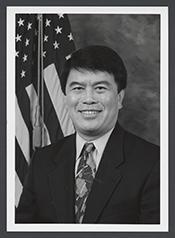
I thank the ranking member, and I thank the chairman. Mr. Speaker, I rise in support of section 201 of S. 1785 and, in particular, its well-deserved commendation of the Bayh-Dole Act of 1980. This…
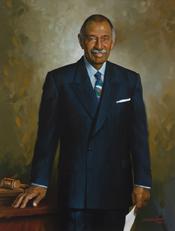
Mr. Speaker, I am pleased to yield myself as much time as I may consume. Mr. Speaker, I rise in support of the legislation consisting of these intellectual property bills that have been very fully…

Mr. President, Senator Cornyn and I have already worked together on significant Freedom of Information Act legislation and on counterfeiting legislation during the first session of this Congress.…
Mr. President, Senator Cornyn and I have already worked together on significant Freedom of Information Act legislation and on counterfeiting legislation during the first session of this Congress.…
Show 2 more
Mr. President, Senator Cornyn and I have already worked together on significant Freedom of Information Act legislation and on counterfeiting legislation during the first session of this Congress.…

I ask unanimous consent the bill be read a third time and passed, the motion to reconsider be laid on the table with no intervening action or debate, and any statements be printed in the Record.
Bill Text
4 versions available
        [Congressional Bills 109th Congress]
[From the U.S. Government Publishing Office]
[S. 1785 Engrossed Amendment House (EAH)]

In the House of Representatives, U. S.,

December 6, 2006.

Resolved, That the bill from the Senate (S. 1785) entitled ``An Act to amend
chapter 13 of title 17, United States Code (relating to the vessel hull design
protection), to clarify the distinction between a hull and a deck, to provide
factors for the determination of the protectability of a revised design, to
provide guidance for assessments of substantial similarity, and for other
purposes'', do pass with the following

AMENDMENTS:

Strike out all after the enacting clause and insert:

SECTION 1. TABLE OF CONTENTS.

The table of contents of this Act is as follows:

Sec. 1. Table of contents.

TITLE I--VESSEL HULL DESIGN PROTECTION

Sec. 101. Short title.
Sec. 102. Designs protected.
Sec. 103. Definitions.

TITLE II--INTELLECTUAL PROPERTY PROVISIONS

Sec. 201. Sense of Congress relating to Bayh-Dole Act.
Sec. 202. Filing of applications for extensions of a patent term.

TITLE I--VESSEL HULL DESIGN PROTECTION

SEC. 101. SHORT TITLE.

This title may be cited as the ``Vessel Hull Design Protection
Amendments of 2006''.

SEC. 102. DESIGNS PROTECTED.

Section 1301(a) of title 17, United States Code, is amended by
striking paragraph (2) and inserting the following:
``(2) Vessel features.--The design of a vessel hull or
deck, including a plug or mold, is subject to protection under
this chapter, notwithstanding section 1302(4).''.

SEC. 103. DEFINITIONS.

Section 1301(b) of title 17, United States Code, is amended--
(1) in paragraph (2), by striking ``vessel hull, including
a plug or mold,'' and inserting ``vessel hull or deck,
including a plug or mold,'';
(2) by striking paragraph (4) and inserting the following:
``(4) A `hull' is the exterior frame or body of a vessel,
exclusive of the deck, superstructure, masts, sails, yards,
rigging, hardware, fixtures, and other attachments.''; and
(3) by adding at the end the following:
``(7) A `deck' is the horizontal surface of a vessel that
covers the hull, including exterior cabin and cockpit surfaces,
and exclusive of masts, sails, yards, rigging, hardware,
fixtures, and other attachments.''.

TITLE II--INTELLECTUAL PROPERTY PROVISIONS

SEC. 201. SENSE OF CONGRESS RELATING TO BAYH-DOLE ACT.

(a) Findings.--The Congress finds the following:
(1) Article I, section 8, clause 8, of the United States
Constitution provides that Congress shall have the power ``[t]o
promote the Progress of Science and useful Arts, by securing
for limited Times to Authors and Inventors the exclusive Right
to their respective Writings and Discoveries''.
(2) The 96th Congress enacted Public Law 96-517, entitled
``An Act to amend the patent and trademark laws'' (commonly
known as the ``Bayh-Dole Act'', in honor of its two lead
sponsors in the Senate, the Honorable Birch Bayh and the
Honorable Bob Dole), in 1980.
(3) For 15 to 20 years before the enactment of the Bayh-
Dole Act, Members of Congress considered, discussed, and
deliberated on the proper resolution of issues implicated by
the Act.
(4) Before the enactment of the Bayh-Dole Act, the United
States was confronted by great economic uncertainty and
presented with unprecedented new challenges from foreign
industrial competition.
(5) Before 1980, only 5 percent of patents owned by the
Federal Government were used by the private sector--a situation
that resulted in the American people being denied the benefits
of further development, disclosure, exploitation, and
commercialization of the Government's patent portfolio.
(6) The Bayh-Dole Act established a ``single, uniform
national policy designed to . . . encourage private industry to
utilize government financed inventions through the commitment
of the risk capital necessary to develop such inventions to the
point of commercial application'', and eliminated the 26
different Federal agency policies that had existed regarding
the use of the results of federally funded research and
development.
(7) The Bayh-Dole Act fundamentally changed the Federal
Government's patent policies by enabling inventors or their
employers to retain patent rights in inventions developed as
part of federally funded research grants, thereby promoting
licensing and the leveraging of contributions by the private
sector towards applied research, and facilitating the transfer
of technology from the laboratory bench to the marketplace.
(8) Examples of the tangible products and technologies that
have resulted from the Bayh-Dole Act include, inter alia, an
improved method for preserving organs for transplant, a
lithography system to enable the manufacture of nano-scale
devices, the development of new chemotherapeutic agents, the
discovery of new therapies for the treatment of patients
diagnosed with rheumatoid arthritis, and countless other
advances in materials, electronics, energy, environmental
protection, and information technologies.
(9) These new therapies, technologies, and inventions,
which have resulted from the collaborative environment fostered
by the Bayh-Dole Act, have directly contributed to the ability
of medical researchers to discover and commercialize new
treatments that alleviate patient suffering, enhance the
ability of doctors to diagnose and treat disease, and target
promising new medical research.
(10) The Bayh-Dole Act has stimulated two of the major
contemporary scientific trends of the last quarter century--the
development of the biotechnology and information communications
industries--and the Act is poised to continue playing a central
role in new fields of innovative activities, including
nanotechnology.
(11) The Bayh-Dole Act has resulted in benefitting
taxpayers by generating millions of dollars in annual licensing
royalties for universities and nonprofit institutions--revenues
that are reinvested in furtherance of additional research and
education programs.
(12) The incentives provided under the Act and the exchange
of technology and research between and among the research
community, small businesses, and industry, have resulted in new
cooperative ventures and the emergence of sophisticated high-
technology businesses, which provide a major catalyst for
innovation and entrepreneurial activity.
(13) More than 4,000 new companies have been created to
develop and market academic research and development since
1980, and it is estimated that nearly 2300 of these companies
were still in operation at the end of fiscal year 2003.
(14) Lita Nelsen, director of the Technology Licensing
Office at the Massachusetts Institute of Technology, has
described the Bayh-Dole Act as ``one of the most successful
pieces of economic development and job-creation legislation in
recent history''.
(15) The Bayh-Dole Act was described in a 2002 article in
The Economist (US) as ``[p]ossibly the most inspired piece of
legislation to be enacted in America over the past half-
century. . . . More than anything, this single policy measure
helped to reverse America's precipitous slide into industrial
irrelevance''.
(16) The Government Accountability Office (GAO) found that
university administrators and small business representatives
considered the Bayh-Dole Act to have had ``a significant impact
on their research and innovation efforts''.
(17) A study of business executives found that 9 out of 10
identified the Bayh-Dole Act as an ``important factor'' in
decisions to fund research and development in academia.
(18) Howard Bremer, who served as patent counsel to the
Wisconsin Alumni Research Foundation from 1960 to 1988, once
observed that, ``[o]ne important factor . . . is that the
success was achieved without cost to the taxpayer. In other
words, no separate appropriation of government funds was needed
to establish or manage the effort''.
(19) A 1998 GAO study found that the law had a positive
impact on all involved and that the increased commercialization
of federally funded research that resulted from implementation
of the Act had positively affected both the Federal Government
and the American people.
(20) The President's Council of Advisors on Science and
Technology reported to the President in May 2003 that the Act
``dramatically improved the nation's ability to move ideas from
research and development to the marketplace and into commerce''
and that the system put in place for transferring technology
from nonprofit institutions, which includes universities and
Government laboratories, to the private sector has worked well.
(21) The Bayh-Dole Act states, ``[i]t is the policy and
objective of the Congress to promote the utilization of
inventions arising from federally-supported research or
development; . . . to promote collaboration between commercial
concerns and nonprofit organizations, including universities; .
. . to promote the commercialization and public availability of
inventions made in the United States by United States industry
and labor; [and] to ensure that the Government obtains
sufficient rights in federally-supported inventions to meet the
needs of the Government and protect the public against nonuse
or unreasonable use of inventions''.
(22) The Congress finds that the policies and objectives of
the Bayh-Dole Act have been achieved and that the patent law
has played a critical role in stimulating technological
advances and disclosing useful technical information to the
public.
(23) The Congress finds that federally-funded research at
universities and Government laboratories and the partnerships
between such nonprofit institutions and the private sector play
a critical role in developing the technologies that allow the
United States to lead the world in innovation.
(24) The Bayh-Dole Act and its subsequent amendments, which
include the Trademark Clarification Act of 1984 (Public Law 98-
620), have played a vital role in enabling the United States to
become renowned as the world leader in scientific research,
innovation, ingenuity, and collaborative research that involves
institutions of higher education and the private sector.
(b) Sense of Congress.--It is the sense of Congress that--
(1) the Bayh-Dole Act (Public Law 96-517) has made
substantial contributions to the advancement of scientific and
technological knowledge, fostered dramatic improvements in
public health and safety, strengthened the higher education
system in the United States, served as a catalyst for the
development of new domestic industries that have created tens
of thousands of new jobs for American citizens, strengthened
States and local communities across the country, and benefitted
the economic and trade policies of the United States; and
(2) it is appropriate that the Congress reaffirm its
commitment to the policies and objectives of the Bayh-Dole Act
by acknowledging its contributions and commemorating the silver
anniversary of its enactment.

SEC. 202. FILING OF APPLICATIONS FOR EXTENSIONS OF A PATENT TERM.

(a) Findings.--The Congress finds the following:
(1) The Congress historically has provided vigorous support
for innovation in the useful arts by establishing a system of
patent protection for products and processes.
(2) Through section 156 of title 35, United States Code,
the Congress sought to promote the development of innovative
drugs by granting patent term restoration to companies to
recover a portion of the patent term for such drugs that was
consumed during the approval process conducted by the Food and
Drug Administration.
(3) Consistent with the historic purpose of promoting
innovation, patent legislation, and subsequent rules
promulgated by the United States Patent and Trademark Office
(PTO), have routinely given the PTO wide discretion to excuse
late filings and other mistakes that might otherwise result in
the forfeiture of underlying patent rights.
(4) Contrary to this routine practice, however, under
section 156 of title 35, United States Code, the PTO has no
discretion to excuse a filing that is even one day late.
(5) In order to be consistent with the intent of protecting
patent rights and promoting further innovation, the PTO should
be granted limited, circumscribed discretion to consider patent
term restoration applications filed in an untimely manner.
(b) Filing of Applications.--
(1) In general.--Section 156 of title 35, United States
Code, is amended by adding at the end the following new
subsection:
``(i) Unintentional Delay.--The Director may accept an application
under this section that is filed not later than 5 days after the
expiration of the 60-day period provided in subsection (d)(1) if the
applicant files a petition showing, to the satisfaction of the
Director, that the delay in filing the application was unintentional.
Such petition must be filed with the application in the case of an
application filed on or after the date of the enactment of this
subsection and must be filed not later than 5 days after such date of
enactment in the case of an application which, on such date of
enactment, is pending, is the subject of a request for reconsideration
of a denial of a patent term extension under this section, or has been
denied a patent term extension under this section in a case in which
the period for seeking reconsideration of such denial has not yet
expired. The Director shall make a determination on a petition under
this subsection not later than 30 days after the date on which the
petition is received. If no determination has been made on the petition
within that 30-day period, the petition shall be deemed to be
denied.''.
(2) Revival fees.--Section 41(a)(7) of title 35, United
States Code, is amended--
(A) by striking ``or for an'' and inserting ``for
an''; and
(B) by inserting after ``reexamination
proceeding,'' the following: ``or for an
unintentionally delayed application for patent term
extension,''.
(3) Effective date.--The amendments made by this section
shall take effect on the date of the enactment of this Act, and
shall apply to any application for patent term extension under
section 156 of title 35, United States Code, which--
(A) is filed on or after the date of the enactment
of this Act; or
(B) on such date of enactment--
(i) is pending;
(ii) is the subject of a request for
reconsideration of a denial of a patent term
extension under section 156; or
(iii) has been denied a patent term
extension under such section 156 in a case in
which the period for seeking reconsideration of
such denial has not yet expired.

Amend the title so as to read ``An Act to make certain
improvements relating to intellectual property, and for other
purposes.''.
Attest:

Clerk.
109th CONGRESS

2d Session

S. 1785

_______________________________________________________________________

AMENDMENTS