A bill to designate the facility of the United States Postal Service located at 57 Rolfe Square in Cranston, Rhode Island, shall be known and designated as the "Holly A. Charette Post Office".
Legislative Activity
Stay on top of the latest movement without scrolling through every action
Became Public Law No: 109-175.
February 27, 2006
View full timeline
Introduced in Senate
November 10, 2005
Sponsor introductory remarks on measure. (CR S12684)
November 10, 2005
Read twice and referred to the Committee on Homeland Security and Governmental Affairs. (text of measure as introduced: CR S12684)
November 10, 2005
Senate Committee on Homeland Security and Governmental Affairs discharged by Unanimous Consent.(consideration: CR S13413)
November 18, 2005
Senate Committee on Homeland Security and Governmental Affairs discharged by Unanimous Consent. (consideration: CR S13413)
November 18, 2005
Passed Senate without amendment by Unanimous Consent. (text: CR S13413)
November 18, 2005
Received in the House.
November 18, 2005 • 8:38 PM
Message on Senate action sent to the House.
November 18, 2005
Referred to the House Committee on Government Reform.
November 18, 2005
Committee Consideration and Mark-up Session Held.
February 1, 2006
Ordered to be Reported by Unanimous Consent.
February 1, 2006
Mrs. Miller (MI) moved to suspend the rules and pass the bill.
February 14, 2006 • 2:57 PM
Considered under suspension of the rules. (consideration: CR H237-238)
February 14, 2006 • 2:58 PM
DEBATE - The House proceeded with forty minutes of debate on S. 1989.
February 14, 2006 • 2:58 PM
At the conclusion of debate, the Yeas and Nays were demanded and ordered. Pursuant to the provisions of clause 8, rule XX, the Chair announced that further proceedings on the motion would be postponed.
February 14, 2006 • 3:07 PM
Considered as unfinished business. (consideration: CR H239-240)
February 14, 2006 • 6:52 PM
Passed/agreed to in House: On motion to suspend the rules and pass the bill Agreed to by the Yeas and Nays: (2/3 required): 408 - 0 (Roll no. 9).(text: CR H237)
February 14, 2006 • 7:08 PM
On motion to suspend the rules and pass the bill Agreed to by the Yeas and Nays: (2/3 required): 408 - 0 (Roll no. 9). (text: CR H237)
February 14, 2006 • 7:08 PM
Motion to reconsider laid on the table Agreed to without objection.
February 14, 2006 • 7:08 PM
Cleared for White House.
February 14, 2006
Message on Senate action sent to the House.
February 15, 2006
Presented to President.
February 17, 2006
Signed by President.
February 27, 2006
Became Public Law No: 109-175.
February 27, 2006
Voting History
1 vote recorded • Roll call available
Floor Debate
17 membersWhat members said about S. 1989 on the floor
 JS
JS TH
TH JFK
JFK HK
HK JMJ+12
Floor Debate
17 membersWhat members said about S. 1989 on the floor
Mr. President, I want to express my appreciation for Senator Craig's comments. I think they are so appropriate as we approach Veterans Day tomorrow, November 11. As he said, it is important that we…
Mr. President, I want to express my appreciation for Senator Craig's comments. I think they are so appropriate as we approach Veterans Day tomorrow, November 11. As he said, it is important that we give gratitude to these soldiers. But it is also very important--maybe even more important--that this Senate and this Congress give our support to them, we back them up, we affirm them in the courageous service they are giving and not undermine what they are doing by thoughtless and unfair criticisms. That is what is on my heart today and I
want to talk about it a little bit. I think it goes to the core of our integrity and our personal self-discipline as Senators.
I have to say, with great respect, that politics on too many occasions has overridden our commitment in this Senate to the soldiers who serve on the battlefield. We are a free and open society. We value and protect free and public debate in our country, and in the Senate one has the freedom to say or write almost anything he or she desires, whether wise or foolish. To secure and maintain that freedom and our other freedoms, on many occasions we have sent our soldiers to battle hostile forces around the globe.
Over 1 million personnel have died in combat to preserve the freedoms and liberties we take for granted today. Young soldiers, volunteers, and draftees have been called over the years to defend the values and liberties our Nation cherishes. As Senators, we are a key part of the process by which this Nation authorizes hostilities and calls them up. If there is any maturity of judgment in us at all, we understand that such a decision, when we make it, is a grave one and we know the lives of our military personnel will be placed at risk when we send them out. History and common sense tells us so. Any Senator not understanding this is not fit for the office they hold.
It is my view that there is and are no glorious wars. All war is bad. The Lord did not want His children to fight. But I am resigned to the fact that, throughout history, human efforts to maintain peace at any price have failed and that the option of war at certain times becomes better than the alternatives.
Let me speak frankly about the war on terrorism. We in this Senate are not children led about like the Pied Piper of Hamelin by President Bush or Vice President Cheney. We are not and were not ignorant concerning the situation we found ourselves in after 9/11. We cheered President Bush's strong and determined response to terrorism at that time, and even when he warned us it would be a long, protracted, and bitter struggle, which he said repeatedly, the Senate promptly authorized the attack on the Taliban, who oppressed their own people in Afghanistan and who harbored and provided training for al-Qaida and Osama bin Laden. This Senate supported the President's demand on Mullah Omar that the Taliban cease these training bases and turn over bin Laden or face military action. We supported that. And when Mullah Omar and his oppressors refused, the Senate supported military action against the Taliban. When the war went so well, virtually everyone was pleased and said it was a good and proper thing we had done.
We are proud of what is happening in Afghanistan today. We have soldiers there, as Senator Craig said, working directly with the people of Afghanistan to try to lift them up and give them a period of sunshine and peace, after decades of war. These good results happened, however, not because we voted to authorize force but because this Nation was able to call on great soldiers, sailors, airmen, and marines to go into harm's way, facing what they had to know would be great danger, to execute the policy we voted for and that the President was authorized to execute.
The military action in Afghanistan went well. But make no mistake, we Senators knew the mission was dangerous and most predicted far more casualties than occurred in that effort. The credit goes to our military's brilliant tactics.
At this same time, Iraq was continuing its systematic, illegal, and unconscionable actions against its own people, against the United States, and against the United Nations--continuing violation of 16 U.N. resolutions. These resolutions in essence were a result of Iraq's plea for peace after the coalition forces ejected it from the nation of Kuwait. Surely this Nation has not forgotten that. Surely this Senate has not forgotten that. Surely we remember that Saddam's Iraq had, by surprise and brutality, attacked and occupied its peaceful neighbor Kuwait. At that time, with the United States in the lead, the coalition demanded that Saddam withdraw or face military force.
In 1991, he refused and, in a brilliant strike, our forces, under the command of General Norman Schwarzkopf, forcibly ejected Saddam's military from Kuwait and liberated that nation. Then Kuwait's was a responsible voice on the world scene, as it is today.
To stop the coalition forces from moving to Baghdad to remove him from office, Saddam made a series of agreements under the supervision of the United Nations. He did not keep them, of course. First he declared he had not lost the war but was in fact the victor. Such a statement was a clear indication of his plans to continue his drive to dominate that region and to lead a fight against the west. When a U.N. plan was developed to allow the sale of Iraq's oil so food could be made available to the Iraqi people, he cheated on the Oil for Food Program to rebuild his military and his personal palaces, leaving millions of his own people hungry.
He attacked his own people, brutally repressing the Shiites in the south and the Kurds in the north. He had earlier used poison gas, a weapon of mass destruction, against his own people, the Kurds. He effectively ejected U.N. inspectors and refused to provide assurance that he was not creating or was not in possession of weapons of mass destruction. He had previously promised not to possess or develop these weapons. He fired missiles regularly at American and British aircraft as they sought to enforce the no-fly zones to protect the Kurds and the Shiites from oppression.
In response, President Clinton and President Bush authorized hundreds of military responses against Iraq, dropping bombs on military positions and carrying out missile strikes. Surely we have not forgotten--we were in a state of hot hostility with Iraq, leading up to our decision to remove him from power.
The megalomania of Saddam, and his brutality, presented the decent nations of the world with a direct challenge. With the growth of terrorism that had culminated in the 9/11 attacks, and which threatened the peaceful world, it became clear that the reconstituting of Saddam's forces in violation of the United Nations could not be allowed to continue. Once again, our Nation led a huge international coalition to demand that he comply with the U.N. resolutions. The vote in this Senate to authorize that and to insist that he comply and use force if he refused to do so was 78 to 22, with a clear majority of our Democratic Senators in support to authorize military force with or without U.N. approval if Saddam refused to comply with these resolutions.
Our decision was not taken lightly or in haste. The issue had been openly discussed for months. The Senate debate was full and free. Most felt there was no other option.
I remember the Economist magazine of London said the embargo was failing. We either give up or fight. They concluded in their editorial: Our choice is to fight. The British Government reached the same conclusion, as did many others.
Of course, our vote was consistent with the 1999 resolution of this Senate signed by President Clinton to make it the official policy of our Government to effect a regime change in Iraq, so bad had Saddam's actions become even at that time. Still, there was no rush to war. President Bush powerfully made his case abroad and at the U.N. Countless efforts were undertaken to bring Saddam into compliance, but they all failed. The demands on Saddam became more and more direct, the warnings more and more explicit, and his utter refusal to comply with the agreements on weapons inspections and other U.N. resolutions became more and more obvious. He had made up his mind. The stark reality became clear. He would not ever voluntarily comply.
He thought he could break the coalition, that we would not invade, that he could continue on with his fantasy that Iraq, under his leadership, would dominate this whole region of the world. Please remember, the Senate vote consisted not just of a majority of the Democratic Members but it included the Democratic Party's Presidential candidate, its Vice Presidential candidate, its leader, its former Vice Presidential candidate, and then and current leaders. The decision was a bipartisan decision. Only then did we send our finest soldiers into harm's way--a bipartisan decision, after extensive debate by this body.
Our soldiers, as a result of this process, were then directed to engage and
defeat one of the world's largest armies, to effect a regime change in Iraq. The men and women of our military heard their Nation's call, as they have for so many years. They responded with professionalism, courage, and determination. The challenge was great. The initial hostilities and military actions went exceedingly well, but it was very dangerous and there were important threats that they faced throughout that effort. Saddam's forces were vast, but they collapsed relatively quickly in the face of our aggressive forces executing General Frank's superb battle plan. While the effort was fraught with dangers, as our media told us every night, and indeed there was considerable tough fighting, our soldiers were again magnificent. We all rejoiced to see the Iraqi celebrations break out.
Some said, What happened to the celebrations? They were there. We saw them on TV, to see the fall of the statue of Saddam. The coalition then set about to help this exhausted nation, brutalized by decades of oppression, rebuild itself with freedom and prosperity.
While the initial military conflict went better than we could have hoped, our vision for a prosperous and democratic Iraq is still on track. But it definitely has presented more difficulties than most of us anticipated. It has been hard. It has been difficult. Suicide bombers persist in their hateful bombings. Terrorists are still active against our forces and the people in Iraq, attacking their own people. Still, despite the violence, initial elections were completed with blue fingers held high and a separate election ratified the Constitution. Now the first democratic elections are set for December and are on track.
Vicious, terroristic suicide bombers remain. While they will be able to inflict suffering and fear on the people of Iraq and death on our soldiers, their efforts are and must be doomed. The terrorists offer no hope, no plan, no vision. They simply desire, like Saddam, to seize power and run Iraq for their own purposes, to control the reins of power for their own radical and twisted purposes.
But, our military personnel, soldiers, marines, sailors, and airmen, all one force, have performed magnificently. I have been to Iraq three times, and visited with active, Guard and Reserve units. I talked to the soldiers and we are so proud of them. They have not whined or advocated retreat. They want the war to be successful. Every day they go out on patrol placing their lives on the line to carry out the policies and directions we, the Senate, the House of Representatives, and the President gave them. Our soldiers know their civics. They are placing their lives on the line for America. Because in this Republic, the proper governmental authorities of the people have spoken.
Consistently, they tell me, their parents, and their friends that they believe in what they are doing. They know the Iraqi people want a better life. They, by countless acts of kindness and courtesy, amid the violence and strain of war, work to create good will, to explain democracy, and promote harmony. They want to help the Iraqi people to have a better life, and then, then they want to come home.
You bet they want to come home. But they truly desire that our noble goal, their mission for a better Iraq, be realized.
Who, more than our soldiers, knows the dangers from hidden and sneak attacks? Who knows the reality on the ground better than they? Certainly not the television networks constantly focusing on violence and contention who drop in and bug out.
But, colleagues, the greatest concern our soldiers have is that this Senate, our Congress, will lose its nerve and pull back before the job is done. You see, losing our nerve will undermine what they have accomplished by blood and sweat.
While remarkably steadfast and determined, they do not like what they see and hear from Congress or the media. Their successes ignored, the problems exaggerated. Their errors are highlighted. I am particularly concerned that our Senate debate in recent months has become infected by personal animosity and political venom. The rhetoric coming out of Congress is astounding. It was somewhat understandable last year, when we were in a Presidential election campaign, that the political language would be overheated. But, now, after the American people have affirmed President Bush's leadership by reelecting him with the first majority vote for President in many years, there seems to be a blind force driving some of my Democrat colleagues to prove their votes for military force in Iraq were wrong, and that our election was not an affirmation of our Nation's bipartisan Iraqi policy, but that this policy was a result of ``lies.'' What false and damaging rhetoric this is. I urge my colleagues to remember that the world, our enemies, and our soldiers fighting for our policies are listening. While there were intelligence failures, our leaders did not lie us into war. We Senators heard the same intelligence estimates and we voted to authorize war. The truth is this: We all heard the intelligence and we authorized those hostilities. Some of the intelligence was wrong, but it was not wrong that an unleashed Saddam, freed from his box, would again become a dangerous threat to world peace. That is a true fact. That is a strategic issue we faced. As we wrestle over the intelligence failures that occurred, we must not overreact. This Senate should never parrot the false charges of our enemies. If we make errors, confront them honestly and fix them. But undermining our Nation's position in the world, encouraging the enemy to falsely believe the U.S. is divided, and leading the enemy to believe that we may quit if they can just kill a few more American soldiers or marines is wrong, wrong, wrong. Political animosity in some cases seems to have so infected our rhetoric that criticism has become not constructive but destructive.
So my plea to my colleagues is insistent. Please remember that the world hears what we say here. Please remember that exaggerated political charges can do more than sting officials at home. The world hears what is said, and many believe what is being said.
This war was not based on a lie. I have explained how we came to our final vote. The issue of the existence of weapons of mass destruction in Iraq was important, but it was the strategic recognition that an unrepentant and triumphant Saddam, unloosed from the U.N. embargo and in acting violation of 16 U.N. resolutions, was the fundamental threat to us and to the world. And we certainly all knew that weapons of mass destruction would surely be his easiest tool for international intimidation.
The United Nations' final report when they exited the country concluded that Saddam had weapons of mass destruction and virtually all intelligence agencies in the world, including the French that certainly were not under, our control agreed. The Intelligence Committee report, phase I, unanimously passed 17 to 0, concluded, however, that the intelligence given to the President and Congress was wrong in part. The report specifically concluded that President Bush was not lying to the American people. And, importantly, the report concluded that the intelligence community was not pressured to alter or shape their views to please the President or anyone else.
Another major report, the Robb-Silberman Report--Senator Robb, a former Democratic Member of this body, was cochairman--on weapons of mass destruction, was clear. They found ``no evidence of political pressure to influence the Intelligence Community's pre-war assessments of Iraq's weapons programs . . . analysts universally asserted that in no instance did political pressure cause them to skew or alter any of their analytical judgements. We conclude that it was the paucity of intelligence and poor analytical tradecraft, rather than political pressure, that produced the inaccurate pre-war intelligence assessments.''
So why do our colleagues continue to promote what I believe are falsehoods? Why call the President and the Vice President liars? Why accuse them of sending soldiers to death based on some secret agenda? We debated it openly here for months. For the life of me, I can't understand it. We all--all of us--know the facts today; we knew the situation then; we know the score. There was no mystery when we voted to authorize military force, nor is there mystery now. The going, though, is tough in Iraq now. The need, therefore, is even greater for us to all work
together to meet the challenge and successfully conclude our policies to create a better, positive, democratic, and prosperous future for Iraq. We must pull together and focus on the goal we endorsed when the war started.
I thank the Chair. I yield the floor.
Mr. President, when we talk about moving toward energy independence in this country, we are really speaking to the issue of reducing America's dangerous dependence on imported oil. Our addiction to…
Mr. President, when we talk about moving toward energy independence in this country, we are really speaking to the issue of reducing America's dangerous dependence on imported oil. Our addiction to oil is most acute in the U.S. transportation sector where a stunning ninety-seven percent of our fuel comes from petroleum--97 percent. In the electricity sector we have largely turned away from oil but not so in transportation.
Fortunately a growing percentage of transportation energy is now coming from clean, domestically-produced renewable fuels like ethanol and biodiesel. With the nearly 8-billion-gallon Renewable Fuels Standard now the law of the land, renewable fuels will supply 5 percent of the energy for our passenger vehicles by 2012, perhaps more. These home-grown, environmentally friendly alternatives made from corn, soybeans and other sources of biomass are helping to improve air quality, reduce greenhouse gas emissions and enhance the rural economy while substantially reducing dependence on foreign oil.
The best part of this trend is that the health, community, and domestic security benefits of renewable fuels come with the bonus of price savings at the pump. Ethanol prices in this country can be as much as 70 cents a gallon less than regular gasoline. Drivers in my State of Iowa are saving as much as 10 cents a gallon on E10--a blend of just 10 percent ethanol and 90 percent gasoline. This is a savings of about $100 a year for a typical family.
A report earlier this year by the Consumer Federation of America found that consumers throughout our country would experience similar savings if all refiners offered E10. That is a significant savings in all regions of the country. Now, consider the savings if ethanol and other renewable fuels were blended not at 10 percent, but at 85 percent or more. That $100 a year savings turns into hundreds of dollars each year for a typical family.
Unfortunately, right now only about two percent of vehicles on the road in the United States can use ethanol blends of 85 percent--what we call E85. It turns out standard gasoline engines aren't designed for the different fuel to oxygen ratio.
The good news is, manufacturing a new vehicle to run on E85 or other clean alternative fuel blends is simple--the manufacturer adds a fuel sensor and modifies the engine calibration and fuel line to allow the vehicle to run on gasoline or a combination of gas and alternative fuels.
Right now, these ``flex-fuel'' vehicles cost at most an additional $100 or so to produce. Some cost estimates are as low as $50. Many auto manufacturers offer them to customers at no additional cost. But few Americans are even aware of the option.
At a time of record-high gas prices and continued instability in the Middle East and other oil-producing countries of the world, I believe that all Americans deserve the option to choose the fuel they put in their car.
In Brazil, all new vehicles on the road are expected to be flex-fuel- ready by 2008--meaning every new vehicle owner will have the choice to fill up with gasoline, ethanol, or a combination of the two. If the Brazilians can do it, why can't we?
That's why today Mr. Lugar, Mr. Obama and I are introducing the Fuel Security and Consumer Choice Act to require that automobile manufacturers equip a growing percentage of new vehicles sold in the U.S. for flexible fuel operation. Mr. Lugar is a leader in promoting research and development into the conversion of cellulosic biomass into useable fuels. Mr. Obama is a leader in promoting renewable fuels and in particular E85.
Starting eighteen months after the bill's enactment, manufacturers will be required to equip 10 percent of their cars and light trucks with flex-fuel vehicle, FFV, capability. This is a modest proposal. Several manufacturers are close to meeting or beating this requirement already.
Each model year thereafter, the requirement increases 10 percentage points, so in the second year the manufacturers would have to make at least 20 percent of their vehicles FFVs, and so on, until in about ten years' time 100 percent of new vehicles sold in the United States are flex fuel. I recognize that we could be more aggressive in our timetable, but I believe we've struck the right balance here in pushing and prodding.
In addition, the bill allows auto manufacturers to bank and trade FFV credits toward meeting the requirements. In other words, if one company produced more than its required percentage of FFV vehicles in a given year, it could trade or sell extra credits earned to another company that would then use them to meet the bill's requirements. Credits would have a three-year window if banked or traded. This banking and trading provision is similar to others in law, in the RFS for example, making it that much easier for companies to meet statutory obligations at the lowest possible cost.
Finally, the bill would leave intact the corporate average fuel economy (CAFE) credits for FFV production. However, the bill would change the way the credits are calculated for vehicles produced above the required percentages. Rather than keeping the assumption that the vehicle runs 50 percent of the time on fuel like E85, which isn't an appropriate figure since most don't run yet on E85, we phase-down the assumed use from 50 percent in the first model year the requirement applies to 30 percent in the second year, 10 percent the third year, and 0 percent thereafter. This should still spur interest among automakers in the early years of the requirement to go beyond the minimum FFV production levels outlined in the bill to get the extra credits. And in the meantime the FFV requirement is kicking in and the ramp up of FFVs won't dilute or weaken CAFE.
This bill will give American consumers true choice in fuel selection for the first time. Drivers will have the option to choose low-price, high-performance E85, or another fuel. My firm belief is that consumers will choose to buy home-grown renewable fuels that directly reduce oil dependence rather than buy traditional fossil fuels often derived from unstable regimes around the globe.
Now, I don't doubt some automobile manufacturers will complain that this requirement is unduly onerous, that it will hurt the industry somehow. Well, I heard the same thing back in 1989 when I proposed another revolutionary idea: closed captioning for TV sets. Industry was in an uproar when I suggested that the hearing impaired should have access to television programming on the public airwaves. The industry said closed captioning would bankrupt it and drive the price of televisions through the roof.
But then, an amazing thing happened. Electronics manufacturers realized that they could reach a broad range of new audiences, including not just the hearing impaired, but also the learning disabled, and immigrants for whom English is a second language. Sales for several companies reached an all-time high, and with implementation across the electronics industry, the cost of the closed captioning chip dropped dramatically to less than a dollar a set.
I have no doubt that vehicle manufacturers will discover similar unexpected efficiencies and benefits with flex fuel vehicles. As more Americans discover the savings from flexible fuels, the more they will seek them out. What better way to boost car sales than to market the fuel cost savings that flexible fuel vehicles offer? Any very small additional cost of the flex-fuel vehicle will be more than offset by the price benefits drivers will achieve from a flexible fuel supply over time, not to mention the tremendous energy security benefits for our Nation.
The country will benefit from cleaner air, reduced greenhouse gas emissions, reduced dependence on foreign oil, and an enhanced rural economy. Simply, put, this is a low-cost measure with a tremendous payoff.
It is already well-established that federal auto standards for the benefit of our Nation are an appropriate policy option. It's also important to note that auto manufacturers already comply
with literally dozens of other requirements having to do with the make- up, design, and performance of their vehicles. Making an FFV is a lot cheaper than putting in air bags, or many other components.
Agriculture and renewable fuels producers are ready to provide the fuel. Automobile manufacturers have the technology to do it. Given the country's great energy and security challenges, all sectors must do their part to chart a path toward energy independence: government, individual citizens, energy companies, and yes, auto manufacturers.
I'm grateful that this legislation has been endorsed by a wide array of renewable fuel, agriculture, clean energy and security organizations, including the Renewable Fuels Association, American Coalition for Ethanol, Alliance to Save Energy, Set America Free, and National Corn Growers Association.
In closing I want to recognize Mr. Lugar and Mr. Obama for co- sponsoring this legislation with me today. Mr. Lugar and I have teamed up many times over the years, most recently to enact the national Renewable Fuels Standard, which we did as part of the comprehensive energy bill. This bill builds upon the RFS, to guarantee that renewable fuels which are being produced in ever greater abundance can find a home in just about any vehicle on the market a few short years from now. I am thankful for his leadership on this and so many other important energy security issues. I am also grateful to Mr. Obama for his leadership.
I hope we can rapidly enact this legislation.
Mr. President, today, I am introducing the School Energy Crisis Relief Act. This bill would authorize the Secretary of Energy to award School Energy Grants to the poorest school districts in each State. I am pleased that Senators Schumer, Clinton, and Bingaman have joined me in sponsoring this bill.
With cold weather setting in, people all across the country are worried about the sky-high cost of energy. Americans are feeling pain at the pump, and they are feeling even more pain at home, with home- heating costs expected to rise as much as 70 percent above last year's levels.
At the same time, many public school districts across the country are struggling to cope with a dramatic, unexpected surge in their energy costs. Schools are facing a double hit: they operate large fleets of buses, and they must heat large, sprawling buildings. This problem is especially acute in the West and Midwest, where many school districts cover large geographic areas, and in urban areas, which are burdened with some of the nation's oldest and often least energy-efficient buildings.
For affluent suburban districts, these unanticipated energy costs are a challenge. But for poor school districts, they are a full-blown crisis. Many school boards face a choice between paying their higher energy bills or cutting instructional staff and programs.
My bill would allow the Secretary of Energy to award grants to schools districts with the highest percentage and highest number of students eligible for Title I assistance. The grant amounts would be awarded based on the population of school-age children in the district, as well as the regional costs of transportation and heating fuel.
This is a nationwide crisis, and it calls for an urgent Federal response. School districts across the country are already implementing drastic measures in response to higher energy costs. In Kentucky, for instance, several school districts have cut back to four days of classes per week. In September, most of Georgia's schools cancelled classes for two days in an effort to conserve energy and cut costs.
In my State, the Iowa Association of School Boards estimates that, this winter, there will be $40 million shortfall in funding to cover school heating costs. Higher fuel costs for school buses could worsen the shortfall by another $8 million. And because that will come out of the fixed general fund for public education, every additional dollar spent on energy costs will come at the expense of classroom and instructional quality. For example, Charles City, IA, expects to spend $140,000 more on fuel this winter. That's enough to pay the salaries of four teachers.
According to the Iowa Association of School Boards, school districts are responding to the energy crisis by reducing staff, increasing class sizes, reducing course offerings, postponing technology purchases, or cutting Headstart transportation programs. Many school districts are lowering their thermostats to unhealthful levels. In fact, just yesterday, I heard that the school district in Ottumwa, IA, has asked parents to start sending kids to school with coats to keep them warm indoors. This is just not acceptable.
In addition, I remind my colleagues that school districts--especially high-poverty school districts--are struggling heroically to try to meet the requirements of the No Child Left Behind Act. It is penny wise and pound foolish to force these districts to cut instructional staff and classroom resources in order to pay their higher energy bills. And none of us can be comfortable with the prospect of children sitting at their school desks in coats and scarves to fight off the chill. As I said, this is just not acceptable.
The poorest school districts all across America are in desperate need of assistance with their energy costs. Low-income children deserve the opportunity to learn and achieve in classrooms that are properly heated. And we certainly don't want schools to be eliminating school days and laying off teachers because of higher energy costs. So we need to act. I urge my colleagues to support the School Energy Crisis Relief Act so we can respond to this emergency as expeditiously as possible. According to the Iowa Association of School Boards, this has led to some schools deciding to scale back after-school activities because of heating costs and to cut non-varsity sports because they lack funding necessary to take them to games. It is very troubling to me that schools have been forced to make cuts that have directly affected the educational experience of the children in their schools, in the name of rising fuel costs. For instance, some schools have had to cut back on field trips, put off buying new text books and school supplies, while reducing course offerings in fine arts and academics.
In addition, the Iowa Association of School Boards has reported that schools have cut back on staff and increased class sizes while also turning down the thermostat in the classroom. I ask, Mr. President, are we supposed to expect students to learn at a high-level when rising energy costs have put them in overcrowded, cold classrooms?
But this problem is not specific to my home State of Iowa. As the sponsor of companion legislation in the House of Representatives, Congressman Joe Baca, pointed out that some schools in Kentucky have cut back to four-day school weeks to keep their energy costs down. Recently, Georgia schools cancelled two days of classes in an attempt to keep their costs down. In Colton Joint Unified District in Congressman Baca's congressional district, the price of a gallon of diesel fuel has risen from under a dollar at one point to $2.72 a gallon increasing annual fuel costs by over $300,000.
So I have come to the floor today to introduce the School Energy Crisis Relief Act. This legislation meets the needs of struggling school districts by authorizing the Secretary of Energy to award grants to poor school districts struggling to balance skyrocketing energy costs with providing a quality education. Grants would be awarded to the poorest urban and rural school districts in each state. In Iowa alone, this means both poor rural and urban districts would be eligible to receive grants.
I ask for my colleagues support for the School Energy Crisis Relief Act and urge the Senate to work quickly to pass this crucial legislation and provide relief to those school districts in need.
Mr. President, today I am introducing legislation that would transfer the YouthBuild program from its current home in the Department of Housing and Urban Development to the Department of Labor.…
Mr. President, today I am introducing legislation that would transfer the YouthBuild program from its current home in the Department of Housing and Urban Development to the Department of Labor. Transferring departmental jurisdiction over this program will help ensure that Youthbuild continues to receive the funds it needs to help unemployed and undereducated young people ages 16-24 work toward their GED or high school diploma while learning job skills by building affordable housing for homeless and low-income people. It is supported by the YouthBuild Coalition.
Poverty, neglect, abuse, and deprivation of all kinds can prevent people from reaching their true potential. Many of those who have fallen off track, suffered losses, and made mistakes can recover. If given the opportunity, they can learn to cope with obstacles and care effectively about themselves, their families and their communities. YouthBuild helps young people who have lost their way to turn their lives around.
YouthBuild is a uniquely comprehensive program that offers at-risk youth an immediate productive role rebuilding their communities. While attending basic education classes for 50 percent of program time, students also receive job skills training in the construction field, personal counseling from respected mentors, a supportive peer group with positive values, and experience in civic engagement. They build houses for homeless and low-income people while earning their own GED or high school diploma.
YouthBuild is built on success. The first YouthBuild program was created in 1978. At that time, YouthBuild's future founder, Dorothy Stoneman, formed the Youth Action Program to rebuild homes in New York City. The successful renovation of an East Harlem tenement led to a city-wide coalition and in 1990, led to YouthBuild USA, an organization created to replicate this program around the Nation.
In 1992, I introduced legislation which was enacted into law as part of the Cranston-Gonzalez National Affordable Housing Act, authorizing federal funding for YouthBuild through the Department of Housing and Urban Development.
In its first 10 years of Federal funding, YouthBuild has demonstrated the ability to bring the most disadvantaged youth into productive employment, higher education, and civic engagement. Since 1994, more than 40,000 YouthBuild students have helped rebuild their communities, creating more than 12,000 units of affordable housing, while transforming their lives at the same time.
YouthBuild has earned majority bipartisan support for Federal funding in the Senate due to its great success in local communities. Today there are 226 YouthBuild programs in 44 States engaging 7,000 young adults.
The number of programs could easily be expanded. Last year alone, 260 communities were denied YouthBuild funding. The programs that exist could easily grow. In 2004, local programs turned away 10,000 applicants solely for lack of funds.
The expansion of YouthBuild would help address critical national problems: the construction industry is short 80,000 workers; over 500,000 youth are dropping out of high school every year with no prospects of becoming gainfully employed; states are spending huge amounts on prisons, housing 365,000 16 to 24 year olds, 65 percent of whom have dropped out of high school.
Consider this story of success: Manny Negron grew up in New Britain, CT. He left school during his Sophomore year after having some personal problems. He started selling drugs and getting into trouble. Then he joined YouthBuild, obtained a GED and learned more about the construction industry. ``Before YouthBuild, I didn't know what I wanted to do with my life.'' Manny said. ``I had no goals, no plans--I had nothing. If it was a weekend when I was partying and in the street, I had no plans. Now it's completely different and YouthBuild did that for me. Now that I'm away from all that, I actually see a future for myself and see what I'm capable of and what I can do with my life.''
Research on 900 YouthBuild graduates several years after program completion showed that 75 percent were employed at an average wage of $10/hour or in college. They were voting and paying taxes. Of those who had committed felonies, the recidivism rate was a strikingly low, 15 percent.
The legislation I am introducing today responds to the Bush administration's attempt to move YouthBuild from HUD to DoL in its FY 2006 budget request. I did not agree with the Administration attempt to transfer YouthBuild in the budget; it was simply the wrong approach. However, my staff has met with Administration officials, with YouthBuild and with YouthBuild's strong supporters. And I believe that we can find a way to do this, and I appreciate that the Administration has shown a willingness to work with us so far. If done properly, I transferring YouthBuild from HUD to DoL could increase YouthBuild's scope, helping it to reach the communities and young people that are currently denied access due to a lack of funds. This legislation not only authorizes the transfer of YouthBuild from HUD to DoL, but also allows unlimited future federal funding, continues centralized management at DoL and continues the historic role of YouthBuild USA as the partner and contractor for quality assurance.
This legislation is an attempt to help move the process of transferring the YouthBuild program forward. I look forward to working with Senators Enzi and Kennedy, the Chairman and Ranking Member of the Senate Committee on Health, Education, Labor and Pensions to develop compromise legislation that will ensure that YouthBuild continues to assist young people around the nation. I ask that all my colleagues support this legislation and continue to support the YouthBuild.
Mr. President, I would like to address an issue that I know my constituents in Wisconsin are worried about; indeed, something that all Americans should be concerned about. On Tuesday, the Energy…
Mr. President, I would like to address an issue that I know my constituents in Wisconsin are worried about; indeed, something that all Americans should be concerned about. On Tuesday, the Energy Information Administration (EIA) announced the most recent outlook for home heating costs. For the average family, the cost of heating oil will increase approximately $325. And for families relying on propane, they can expect to pay an increase of about $230. I would like to stress that this is the average; in some areas, the prices could be much higher. And while these increased costs will place an undue burden on all sectors of the economy, the heaviest toll will clearly be on middle and low-income families.
Yesterday, executives from several major oil companies were called to Capitol Hill, to defend the nearly $33 billion they earned last quarter. The answers they gave, for why Americans could expect to pay significantly more to heat their homes this winter, often were directed at the economics of supply and demand. The Chairman and CEO of ConocoPhillips argued that prices are ``a function of longer-term supply-and-demand trends, and lost energy production during the recent hurricanes.'' John Hofmeister, the President of Shell Oil Company, told Senators that the industry is doing everything in its power to ``supply shortfalls.''
Given the testimony of Mr. Hofmeister, I find it surprising to note that currently, American companies are actually exporting products that could be used for home heating. According to the EIA, between January and August 2005 more than 48 million barrels of refined product was exported out of the U.S. This amount is 24 times the size of what is stored in the Northeast Heating Oil Reserve. While some of this went to both Canada and Mexico, large quantities were also sent to Argentina, Chile, France and Peru.
I believe my constituents would be shocked to hear that while the oil companies are blaming high prices on low supplies, they are also reaping the benefits of exporting home heating oil abroad. That is why, on November 4th, I, along with 11 of my colleagues, wrote to several of the major oil companies and refiners, asking them to voluntarily halt all unnecessary exports of products that could be used for home heating. Such action would not be without precedent: in 2000, some refiners, including Shell Oil, voluntarily suspended heating oil exports after consulting with then Energy Secretary Richardson. We have not yet heard a response from any of the companies.
I remain hopeful that these companies will help American consumers by temporarily suspending their unnecessary exports. Yesterday's hearing, however, did not inspire confidence in the companies to act on behalf of consumers rather than profits. That is why I am introducing the Stop Heating Oil Exports bill today.
My legislation would grant emergency powers to the Energy Secretary to halt all unnecessary exports in the face of a serious price spike or supply shortfall. It is that simple. If the Secretary finds that demand will heavily outpace supply, then he or she should be able to stop exports--thereby temporarily improving supply, and preventing a major price spike, such as the one we can expect this winter.
Yesterday, the oil companies cautioned those of us in Congress against policy changes that would amount to long-term involvement in energy markets. I would assure these executives that my legislation is a simple, short-term answer that is designed to protect American consumers. The companies have a chance to do the right thing, to increase supply and avoid the significantly increased home heating prices that have been forecasted.
I believe that in the future, if they fail to use such an opportunity, the Energy Secretary should have the power to intervene on behalf of consumers. I would remind my colleagues that in 2000, as many as 4 refiners voluntarily suspended exports, citing ``market conditions'' and the desire to ensure adequate supplies of home heating oil for the winter. And I would remind the President of Shell that his company was one of them.
Americans across the country could face potentially life-threatening conditions this winter, when temperatures drop and home heating prices soar. I believe that the oil companies have it in their power to prevent such a crisis--if they fail to use it, I believe it is the responsibility of the Federal Government to protect American families. I ask unanimous consent that the text of our legislation be printed in the Record.
Mr. President, today I rise to introduce the Wastewater Treatment Works Security Act of 2005. This legislation is designed to improve the safety and security of our Nation's wastewater treatment…
Mr. President, today I rise to introduce the Wastewater Treatment Works Security Act of 2005. This legislation is designed to improve the safety and security of our Nation's wastewater treatment systems.
There are 16,000 wastewater treatment facilities across the United States serving almost 190 million people. Approximately 1,600 facilities are located near large metropolitan areas. These industrial facilities use large quantities of toxic chemicals in their treatment and disinfection processes, and their collection systems run beneath every city and town in America.
A recent Department of Homeland Security planning scenario estimates that a chlorine tank explosion could result in 17,500 deaths, 10,000 severe injuries, and 100,000 hospitalizations. In February 2005, the Government Accountability Office (GAO) released a report on wastewater security which ranks the release of chlorine as the number two security risk after damage to sewer collection systems.
In the past few years alone, fatal accidents involving large quantities of chlorine have reminded us of the highly volatile nature of this popular wastewater disinfection agent. In January 2005, 9 people were killed in South Carolina when a train carrying chlorine gas was involved in a crash. In June 2004, 3 people died when two freight trains collided in Texas and caused a chlorine tank to rupture.
At the very least, wastewater facilities that use chlorine should evaluate how the chemical is stored on site and how to react in the event of a harmful intentional act. The GAO report on wastewater security recommends mandatory vulnerability assessments and emergency response plans as an immediate step towards addressing the security concerns.
The Wastewater Treatment Works Security Act takes the essential first step in closing the security gaps that make our wastewater treatment systems vulnerable to terrorist attack. The provisions contained in this bill are the product of four years worth of lessons learned since 9/11, mirroring similar legislative efforts to secure critical infrastructure and minimize potential terrorist targets.
This legislation requires all wastewater facilities to conduct vulnerability assessments and to develop or modify site security and emergency response plans to incorporate the results of the vulnerability assessments. Treatment works must certify that alternative approaches, such as using smaller quantities or replacing substances of concern, were considered in their site security plans. It requires that these documents be submitted to EPA for review, and it includes significant security measures to protect this information from unauthorized disclosure.
Additionally, the legislation authorizes $250 million for assistance in completing vulnerability assessments, for immediate security improvements, and for assistance to small treatment works. Finally, it authorizes $15 million for research to identify threats,
detection methods and response actions. This bill makes tangible progress towards more secure and better prepared wastewater treatment works.
By contrast, drinking water facilities have conducted vulnerability assessments under the Safe Drinking Water Act since 2002, when Congress passed H.R. 3448, the Public Health and Bioterrorism Preparedness Response Act, P.L. 107-188. These plants are often co-located. It makes no sense to adopt strong standards for one infrastructure sector and not the other. In anticipation of congressional action on wastewater security, EPA has already issued guidance on conducting vulnerability assessments of wastewater treatment works, and many plants have already completed them.
The Wastewater Treatment Works Security Act will codify what are now voluntary prevention and security measures and require all wastewater facilities to complete vulnerability assessments and emergency response plans, just as drinking water facilities have done since 2002.
Our homeland security strategy begins with protecting critical infrastructure, and wastewater treatment facilities can no longer remain the exception. I urge my colleagues to support this legislation.
Show 8 more

Mr. President, I rise today to honor our Nation's veterans for their service and their sacrifice. We will celebrate Veterans Day tomorrow, and I am proud of the improvements we have made in providing…
Mr. President, I rise today to honor our Nation's veterans for their service and their sacrifice. We will celebrate Veterans Day tomorrow, and I am proud of the improvements we have made in providing benefits and care to our country's heroes.
In the past 10 years, since I first came to Congress, the veterans budget has increased by 77 percent, an annual average increase of over 7 percent. The VA's health care budget has increased over 85 percent during this time. We have also enacted a fix to the concurrent receipt problem and made groundbreaking progress with computerized health records at the Veterans Department. I am proud of these efforts, but I certainly understand the need to do more to stay ahead of the curve.
I also want to detail the recent growth in the veterans population in North Carolina. Our State's veteran population has increased by over 100,000, to 780,000 veterans since 1980.
This growth rate comes at a time when the number of veterans in the United States is decreasing. Veterans are moving to the State because many of them were stationed there while on active duty, and they have moved back because of the quality of life in North Carolina.
I have two bills I have introduced today that I believe will improve the services we currently provide to our veterans. The first is the Services to Prevent Veterans Homelessness Act which makes grants to nonprofit and faith-based organizations to provide services to extremely low-income veterans who are in permanent housing. The goal is to keep them from becoming homeless. The services provided for in this bill--from vocational counseling and personal finance planning to health and rehabilitation--were designed to address the root causes of homelessness.
The VA estimates on any given night as many as 200,000 veterans are homeless and as many as 400,000 are homeless at some point during the year. We also know that 45 percent of the homeless veterans have a mental illness, and 50 percent have some sort of addiction.
The cost of this bill is $25 million annually, a small sum to help the poorest of our veterans. In North Carolina alone, over 43,000 veterans live below the poverty line. This bill would allow the VA to partner with nonprofits in order to help poor veterans escape the root causes of homelessness. I urge the Senate to consider whether we are doing enough on this issue. More importantly, I invite my colleagues to study this bill and to become a cosponsor.
Next, I introduced the Veterans Outreach Improvement Act which authorizes the Secretary of Veterans Affairs to partner with State and local governments for outreach to veterans. This bill provides grants to State veterans agencies and county veterans service offices to help them with outreach and claims development and to provide education and training of officers. The bill would also authorize $25 million annually for this outreach program.
County veterans service officers are charged with assisting veterans and their dependents in seeking benefits as a supplement to the work being performed by the Department of Veterans Affairs. They are overseen by the Division of Veterans Affairs in North Carolina and receive accreditation from organizations approved by the Secretary of Veterans Affairs. Many veterans need assistance in filing claims in order to make sure that the claim is accurate and complete. County veterans service officers and officials from State veterans agencies are often the officials who can actually sit down face to face with a veteran to develop a claim and to send it to the VA. This bill makes the VA a partner in that outreach process.
On the eve of Veterans Day this year, I join my colleagues in honoring veterans across this country for their heroic service to our Nation.
Mr. President, oil companies recently announced record profits. Those of us who drive cars and trucks could feel our wallets shrink at the news. Throughout most of this year, American drivers have…
Mr. President, oil companies recently announced record profits. Those of us who drive cars and trucks could feel our wallets shrink at the news. Throughout most of this year, American drivers have paid the highest gas prices of all time--more so in the wake of refinery disruptions caused by Hurricane Katrina. While petroleum company shareholders enjoy healthy stock dividends, the rest of us hemorrhage the cash. Industry analysts explain it away as ``business is business.''
Sound familiar? In the 1970s, political conflicts compelled Middle East oil sheiks to tighten their reins on oil production, sending shockwaves throughout our economy and creating long lines at the gas pump. Congress responded with laws promoting energy conservation and fuel efficiency that we thought would reduce our dependence on foreign oil.
Unfortunately, 30 years later, here we are again. The Middle East remains in turmoil, and the engines of America remain firmly fueled on foreign oil. Exacerbating the problem is that the economies of China and India--two nations totaling over 2 billion citizens--are quickly expanding, and they are competing with the U.S. for the same pool of oil. Quite simply, worldwide production capacity cannot keep pace. And that means U.S. gas prices likely will remain high for the foreseeable future.
More so than at any other time in a generation, our economy is exposed. In the year 2035, will the American market be shackled still to foreign oil? Will we question whether bolder past policies could have prevented future crisis?
The response to these questions can be ``no'' if we begin now.
For about $100 worth of hoses and sensors, we can make our cars run on ethanol made from homegrown corn. Automakers made 1 million of these cars this year. We have the technology, and it is proven. With 200 million cars on the road, and 17 million more each year, why can't more cars run on ethanol?
The answer is they can, and that is why I am pleased to join my colleagues from Iowa and Indiana, Senators Harkin and Lugar, in introducing legislation to require all cars made in the United States to be ethanol-capable vehicles within 10 years.
Making ethanol cars is not expensive. It is less than the cost of airbags. It is less than the cost of a sunroof. It is less than the cost of foglights. It is less than the cost of a fancy CD player. It is less than the cost of heated seats.
Making ethanol cars is not restrictive. These cars are known as flexible fuel vehicles. Where ethanol is not yet available, you simply fill up with regular gas.
And making ethanol cars is good for American automakers, because American automakers have a head start. Already, 5 percent to 7 percent of their fleet can run on ethanol. We are only asking for an increase over a decade.
I remind my colleagues that the renewable fuels standard enacted in the Energy bill of 2005 will incorporate enough ethanol into our fuel supply to reduce the use of foreign oil. The Harkin-Lugar-Obama bill, if enacted, would accelerate that reduction. And we can do it without hardship, without requiring drivers to purchase matchbox cars, without proposing futuristic technologies that only our great-great- grandchildren's children will see.
The Harkin-Lugar-Obama bill transforms existing, inexpensive, and simple technology into a genuine movement towards energy independence for the United States within a time period that we all can witness. I urge my colleagues' swift approval of this legislation.
Mr. Speaker, last June I had the sad duty of coming to the floor to announce the loss of a brave marine in Iraq, Lance Corporal Holly Ann Charette, a citizen of Cranston, Rhode Island. Today, I am…
Mr. Speaker, last June I had the sad duty of coming to the floor to announce the loss of a brave marine in Iraq, Lance Corporal Holly Ann Charette, a citizen of Cranston, Rhode Island.
Today, I am proud to honor her service as we dedicate a post office in her memory. I would like to thank my friend and colleague, Senator Jack Reed, for introducing this measure, as well as the Government Reform Committee for bringing it to the floor today.
After the loss of Holly Charette, I was touched by the memories shared by her neighbors, friends, and family. One common theme that emerged was that Holly's smile and personality cheered all those around her. Those who knew her well spoke of her optimistic outlook on life and her ability to make the most of any situation.
She aimed to help others, and that dedication to service encouraged her to join the Marines. In Iraq, Holly held an administrative job, and her duties included serving as the mail distributor for her camp.
She was exceptionally well suited to that assignment, not only because of her outstanding organizational skills, but also because of her aspirations to one day become a postal worker. Despite the procedures and physical challenges of the position, she always maintained her professionalism and sunny disposition.
She recognized the importance of that task and worked so hard so that she could brighten the days of her fellow marines with the messages of their loved ones back home.
However, Holly's service was not without risk. As one of few women at
her post, she also traveled into Fallujah to perform searches of female Iraqis, a task that men were prohibited from doing. It was returning from one such trip that Holly's convoy was attacked by insurgents.
Three men and three women were killed that day, and 13 men and women were wounded. This sacrifice reminds us of the courage of our men and women in uniform who are faced with ongoing dangers in Iraq. It also underscores how important it is that we as Members of Congress do everything in our power to protect those who defend our Nation.
Designating a post office in memory of Lance Corporal Holly Ann Charette is a fitting tribute to a woman who touched the lives of so many. When her friends and family visit the facility at 57 Rolfe Square in Cranston, they will be reminded of her smile, her cheerful personality, and her dedication to helping others.
It will also remind future generations of the sacrifice of one exceptional person who gave so much to her Nation. I ask my colleagues to honor Holly Charette, a truly amazing woman by supporting this legislation today.
Mr. President, I rise today to pay tribute to one of Rhode Island's brave soldiers, Lance Corporal Holly A. Charette, who was killed in Iraq on June 23, 2005. In honor of her sacrifice, I am…
Mr. President, I rise today to pay tribute to one of Rhode Island's brave soldiers, Lance Corporal Holly A. Charette, who was killed in Iraq on June 23, 2005. In honor of her sacrifice, I am introducing a bill, along with Senator Chafee, to name the post office at 57 Rolfe Square in Cranston, RI, the ``Holly A. Charette Post Office.''
Twenty-one year old Holly Charette died when a suicide bomber in Fallujah attacked the military convoy in which she was riding. This was the deadliest attack on women in the U.S. military since the start of operations in Iraq, and yet another example of the violence that continues to plague our soldiers serving in this conflict.
Those who were close to Holly describe her as a happy and positive young woman loved by all those who knew her. She was a cheerleader at Cranston East High School, where she worked hard in college-prep courses. Her teachers remember her as a ``bright, shining star.''
Holly had dreams of becoming a postal worker. Instead, in 2002, she made the choice to serve her Nation by joining the U.S. Marine Corps.
She was deployed to Iraq in March of this year with her unit from Camp Lejeune, NC, and assigned to Headquarters Battalion, 2nd Marine Division, II Marine Expeditionary Force. It was here that Holly was able to combine her dreams of postal service with that of serving her Nation.
During her service in Iraq, Holly utilized her strong organizational skills to take on and complete various administrative tasks, including that of mail delivery to the troops. She became known as the ``Marine who brought the good news.'' Holly never forgot a name, and would often stop Marines in the mess hall to let them know that they had mail.
The day that Holly was killed, she was working with Iraqi security forces to prevent insurgents from gaining a foothold in that country.
Her tragic passing has touched the lives of Rhode Islanders. Holly's presence will be deeply missed by all those who knew and loved her.
This legislation will pay proper tribute to this remarkable young woman, and commemorate her valor for future generations. I ask my colleagues to join me in honoring Lance Corporal Holly A. Charette by supporting this bill.
I ask unanimous consent that the text of this legislation to name the post office in Cranston after Lance Corporal Charette be printed in the Record.
Mr. President, I rise today to pay tribute to one of Rhode Island's brave soldiers, Lance Corporal Holly A. Charette, who was killed in Iraq on June 23, 2005. In honor of her sacrifice, I am…
Mr. President, I rise today to pay tribute to one of Rhode Island's brave soldiers, Lance Corporal Holly A. Charette, who was killed in Iraq on June 23, 2005. In honor of her sacrifice, I am introducing a bill, along with Senator Chafee, to name the post office at 57 Rolfe Square in Cranston, RI, the ``Holly A. Charette Post Office.''
Twenty-one year old Holly Charette died when a suicide bomber in Fallujah attacked the military convoy in which she was riding. This was the deadliest attack on women in the U.S. military since the start of operations in Iraq, and yet another example of the violence that continues to plague our soldiers serving in this conflict.
Those who were close to Holly describe her as a happy and positive young woman loved by all those who knew her. She was a cheerleader at Cranston East High School, where she worked hard in college-prep courses. Her teachers remember her as a ``bright, shining star.''
Holly had dreams of becoming a postal worker. Instead, in 2002, she made the choice to serve her Nation by joining the U.S. Marine Corps.
She was deployed to Iraq in March of this year with her unit from Camp Lejeune, NC, and assigned to Headquarters Battalion, 2nd Marine Division, II Marine Expeditionary Force. It was here that Holly was able to combine her dreams of postal service with that of serving her Nation.
During her service in Iraq, Holly utilized her strong organizational skills to take on and complete various administrative tasks, including that of mail delivery to the troops. She became known as the ``Marine who brought the good news.'' Holly never forgot a name, and would often stop Marines in the mess hall to let them know that they had mail.
The day that Holly was killed, she was working with Iraqi security forces to prevent insurgents from gaining a foothold in that country.
Her tragic passing has touched the lives of Rhode Islanders. Holly's presence will be deeply missed by all those who knew and loved her.
This legislation will pay proper tribute to this remarkable young woman, and commemorate her valor for future generations. I ask my colleagues to join me in honoring Lance Corporal Holly A. Charette by supporting this bill.
I ask unanimous consent that the text of this legislation to name the post office in Cranston after Lance Corporal Charette be printed in the Record.
Mr. Speaker, I yield such time as he may consume to the gentleman from Rhode Island (Mr. Langevin). (Mr. LANGEVIN asked and was given permission to revise and extend his remarks.) Mr. Speaker, I…
Mr. Speaker, I yield such time as he may consume to the gentleman from Rhode Island (Mr. Langevin).
(Mr. LANGEVIN asked and was given permission to revise and extend his remarks.)
Mr. Speaker, I yield myself such time as I may consume.
As a member of the Government Reform Committee, I am pleased to join my colleagues in the consideration of S. 1989, legislation naming a postal facility in Cranston, Rhode Island, after Holly A. Charette.
This measure, sponsored by Senator Jack Reed, was introduced on November 10, 2005, and unanimously reported by our committee on February 1, 2006.
A 2001 graduate of Cranston High School East in Cranston, Rhode Island, Holly Charette was a cheerleader, athlete and active student in high school. A year later she enlisted in the United States Marines, where she was assigned to Headquarters Battalion, Second Marine Division, Second Marine Expeditionary Force.
She held an administrative position, keeping records and delivering mail to fellow soldiers. Sadly, she was killed on June 23, 2005, when her convoy was ambushed by a suicide bomber as it departed from Fallujah.
Lance Corporal Holly Charette, who was awarded the Purple Heart posthumously, will be remembered as a fine marine and soldier, someone who dearly wanted a career in the U.S. Postal Service when she completed her tour of duty.
A soldier in Operation Iraqi Freedom, she enjoyed delivering mail to her fellow soldiers and fighting for her country.
I commend my colleague, Senator Reed, for seeking to honor her sacrifice by naming a post office in her hometown.
Mr. Speaker, I think it is so important in reality that we take note of this very young person who had a serious sense of duty and sense of commitment, even to the extent of saying that when I leave I want to continue to serve my country in one way. And one way that I can do that is to make sure that the communication continues, that the letters and parcels and packages that people use to communicate with each other are in fact delivered?
I do not think one can give any more than giving their life in service to others and in service to humanity. I am very pleased to urge swift passage of S. 1989 and commend both gentlemen from Rhode Island for their introduction of it.
Mr. Speaker, I yield back the balance of my time.
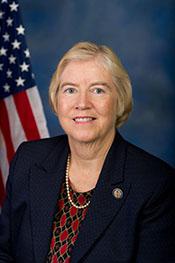
Mr. Speaker, I move to suspend the rules and pass the Senate bill (S. 1989) to designate the facility of the United States Postal Service located at 57 Rolfe Square in Cranston, Rhode Island, shall…
Mr. Speaker, I move to suspend the rules and pass the Senate bill (S. 1989) to designate the facility of the United States Postal Service located at 57 Rolfe Square in Cranston, Rhode Island, shall be known and designated as the ``Holly A. Charette Post Office.''
Mr. Speaker, I ask unanimous consent that all Members may have 5 legislative days within which to revise and extend their remarks and include extraneous material on the bill under consideration.
Mr. Speaker, I yield myself as much time as I might consume. Mr. Speaker, S. 1989, offered by the distinguished gentleman from Rhode Island, Senator Reed, would designate the post office building in Cranston, Rhode Island, as the Holly A. Charette Post Office.
United States Marine Corps Lance Corporal Holly Charette, a Cranston resident, was killed on June 23, 2005, while serving our country in Iraq. Charette served as a mail clerk at the Marine Camp Blue Diamond in Ramadi, which is the headquarters battalion of the Second Marine Division.
Holly Charette was recognized by every soldier who had the pleasure of receiving mail from her, as she always greeted them with a smile and with a kind word. She was known for her ability to sort through thousands of letters and parcels, identifying each name with a face, never letting down those who relied on her. In fact, Holly Charette was quoted as saying, I never really thought too hard about being a mail person, but it is really an important job and people depend on me.
There are a lot of stresses involved, but it is really worth it at the end of the day. After her service in the military, Charette had planned to apply at the U.S. Postal Service, where she could continue to serve the citizens of the United States. About her future plans, she stated, It will not be the same as being a marine, but at least I am still in uniform.
I would urge all Members to come together and to honor this dedicated young woman in her efforts to serve our country. I thank Senator Reed for his diligence in bringing this important measure forward.
Mr. Speaker, I reserve the balance of my time.
Mr. Speaker, I would urge all Members to support the passage of S. 1989, and I yield back the balance of my time.
Mr. Speaker, on that I demand the yeas and nays.
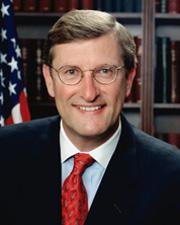
Mr. President, it is an honor for me to introduce the Stolen Valor Act of 2005. This legislation will honor the brave veterans of our Nation who have been awarded valorous medals for their service to…
Mr. President, it is an honor for me to introduce the Stolen Valor Act of 2005. This legislation will honor the brave veterans of our Nation who have been awarded valorous medals for their service to our Nation. It is only appropriate that this bill be introduced today, the day before our country remembers all servicemen and women--past and present--who have served America in uniform.
Recipients of the Medal of Honor, Distinguished Service Awards, Silver Star, or Purple Heart have made incredible sacrifices for our country. They deserve our thanks and respect.
Unfortunately, however, there are some individuals who diminish the accomplishments of award recipients by using medals they have not earned. These imposters use fake medals--or claim to have medals that they have not earned--to gain credibility in their communities. These fraudulent acts can often lead to the perpetration of very serious crimes.
Currently, Federal law enforcement officials are only able to prosecute those who wear counterfeit medals. The statute does not apply to individuals who claim to be award recipients either verbally or in writing, or to those who display fake medals in their offices or homes.
My legislation will allow law enforcement officials to prosecute those who falsely claim, either verbally or in writing, to be medal recipients. It calls for a six-month jail sentence and a fine for improper use of most medals, and includes a maximum sentence of one year for perpetrators who claim to have earned the Medal of Honor, Distinguished Service Awards, Silver Star, or Purple Heart.
The Military Order of the Purple Heart, the VFW, and the FBI Agents
Association have endorsed this legislation because of the capabilities it will provide law enforcement officials to prosecute these fraudulent acts.
It is my hope that this legislation will serve to honor the courageous heroes who have rightfully earned these awards. We must never allow their service and sacrifice to be cheapened by those who wish to exploit these honors for personal gain.
Show 5 more
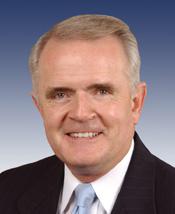
Mr. Speaker, I rise today to explain how I would have voted on February 14, 2006 during Rollcall votes No. 8 and No. 9 during the second session of the 109th Congress. The first vote was for H. Con.…
Mr. Speaker, I rise today to explain how I would have voted on February 14, 2006 during Rollcall votes No. 8 and No. 9 during the second session of the 109th Congress. The first vote was for H. Con. Res. 322--Expressing the sense of Congress regarding the contribution of the USO to the morale and welfare of our servicemen and women of our armed forces and their families, the second was S. 1989-- Holly A. Charette Post Office Designation Act.
If I had been present, I would have voted ``yea'' on these rollcall votes.
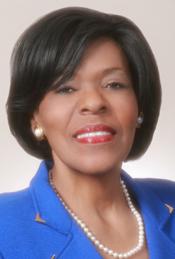
Mr. Speaker, personal reasons require my absence from legislative business scheduled for today, Tuesday, February 14, 2006. Had I been present, I would have voted ``yea'' on H. Con. Res. 322, a…
Mr. Speaker, personal reasons require my absence from legislative business scheduled for today, Tuesday, February 14, 2006. Had I been present, I would have voted ``yea'' on H. Con. Res. 322, a resolution expressing the sense of Congress regarding the contribution of the USO to our service men and women of our armed forces (rollcall No. 8) and ``yea'' on S. 1989, the Holly A. Charette Post Office Building Designation Act (rollcall No. 9).
Mr. Speaker, I was absent on Tuesday, February 14, 2006, due to unavoidable circumstances in my Congressional District. Had I been present, I would have voted: Yea to H. Con. Res. 322--Expressing the…
Mr. Speaker, I was absent on Tuesday, February 14, 2006, due to unavoidable circumstances in my Congressional District. Had I been present, I would have voted: Yea to H. Con. Res. 322--Expressing the Sense of Congress regarding the contribution of the USO to the morale and welfare of our servicemen and women of our armed forces and their families; and Yea to S. 1989--the Holly A. Charette Post Office Designation Act.
Mr. President, I ask unanimous consent the Homeland Security and Governmental Affairs Committee be discharged from further consideration, and the Senate proceed to the immediate consideration of S.…
Mr. President, I ask unanimous consent the Homeland Security and Governmental Affairs Committee be discharged from further consideration, and the Senate proceed to the immediate consideration of S. 1989, H.R. 2062, H.R. 2183, and H.R. 3853, all en bloc.
I ask unanimous consent the bills be read a third time and passed and the motions to reconsider be laid on the table en bloc.
Mr. Speaker, on Tuesday, February 14, 2006 due to urgent personal matters I missed Rollcall votes Nos. 8 and 9. Had I been present, I would have voted ``aye'' on H. Con. Res. 322 and S. 1989.
Mr. Speaker, on Tuesday, February 14, 2006 due to urgent personal matters I missed Rollcall votes Nos. 8 and 9. Had I been present, I would have voted ``aye'' on H. Con. Res. 322 and S. 1989.
Bill Text
5 versions available
        [Congressional Bills 109th Congress]
[From the U.S. Government Publishing Office]
[S. 1989 Enrolled Bill (ENR)]

S.1989

One Hundred Ninth Congress

of the

United States of America

AT THE SECOND SESSION

Begun and held at the City of Washington on Tuesday,
the third day of January, two thousand and six

An Act

To designate the facility of the United States Postal Service located at
57 Rolfe Square in Cranston, Rhode Island, shall be known and designated
as the ``Holly A. Charette Post Office''.

Be it enacted by the Senate and House of Representatives of the
United States of America in Congress assembled,

SECTION 1. HOLLY A. CHARETTE POST OFFICE.

(a) Designation.--The facility of the United States Postal Service
located at 57 Rolfe Square in Cranston, Rhode Island, shall be known
and designated as the ``Holly A. Charette Post Office''.
(b) References.--Any reference in a law, map, regulation, document,
paper, or other record of the United States to the facility referred to
in subsection (a) shall be deemed to be a reference to the ``Holly A.
Charette Post Office''.

Speaker of the House of Representatives.

Vice President of the United States and
President of the Senate.